
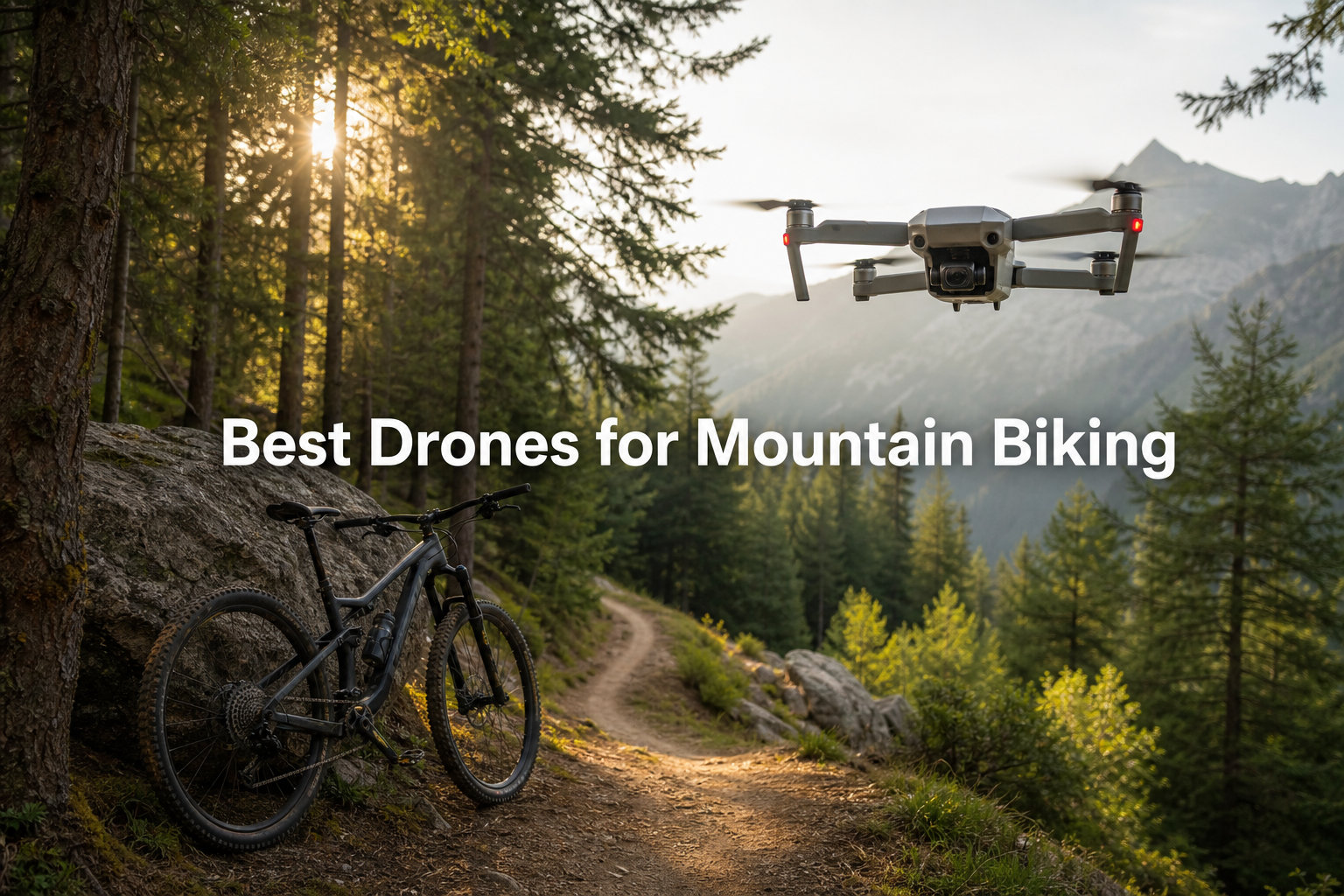
Filming yourself on a mountain bike used to mean strapping a GoPro to your chest and calling it a day. The best drones for mountain biking changed that completely. Now you can grab third-person cinematic footage of every flow trail, jump line, and descent without a camera crew tagging along.
After spending months testing follow-me drones on trails ranging from tight forest singletrack to wide-open jump parks, our team put together this guide to the 12 best drones for mountain biking in 2026. We focused on the features that actually matter on the trail: reliable subject tracking, obstacle avoidance that keeps the drone alive in trees, follow speeds that keep up with descents, and battery life long enough for a real ride.
Whether you want a hands-free grab-and-go drone like the HOVERAir X1 PRO or a flagship Hasselblad-equipped cinema rig like the DJI Mavic 4 Pro, there is a pick here for your riding style, your budget, and the trails you ride most. Let us get into it.
Table of Contents
Top 3 Picks for Best Drones for Mountain Biking in 2026

HOVERAir X1 PRO
- 42 KM/H Follow Speed
- No Controller Needed
- 192g Foldable
- 15+ Auto Flight Modes

DJI Mini 4 Pro Fly More Combo
- ActiveTrack 360
- Sub-250g No FAA Reg
- 3 Batteries 102 Mins
- Omnidirectional Sensing

DJI Neo 2 Motion Fly More Combo
- Gesture Control
- Palm Takeoff
- FPV Goggles Included
- 151g Ultra-Light
These three stand out for different reasons. The HOVERAir X1 PRO is purpose-built for action sports, the DJI Mini 4 Pro offers the best all-around value with proven ActiveTrack 360 tracking, and the DJI Neo 2 brings true hands-free operation with included FPV goggles.
Best Drones for Mountain Biking in September
| Product | Specifications | Action |
|---|---|---|
 DJI Mavic 4 Pro DJI Mavic 4 Pro |
|
Check Latest Price |
 DJI Air 3S Fly More Combo DJI Air 3S Fly More Combo |
|
Check Latest Price |
 Antigravity A1-360 Antigravity A1-360 |
|
Check Latest Price |
| DJI Mini 4 Pro Fly More |
|
Check Latest Price |
 DJI Mini 5 Pro Fly More DJI Mini 5 Pro Fly More |
|
Check Latest Price |
| DJI Neo 2 Motion Combo |
|
Check Latest Price |
| HOVERAir X1 PRO |
|
Check Latest Price |
 Bwine F7MINI 4K Bwine F7MINI 4K |
|
Check Latest Price |
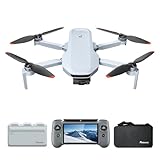 Potensic Atom 2 Fly More Potensic Atom 2 Fly More |
|
Check Latest Price |
 DJI Mini 4K DJI Mini 4K |
|
Check Latest Price |
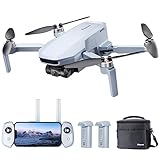 Potensic ATOM SE GPS Potensic ATOM SE GPS |
|
Check Latest Price |
 Holy Stone HS175D Holy Stone HS175D |
|
Check Latest Price |
1. DJI Mavic 4 Pro – Premium Flagship for Pro-Level MTB Films
DJI Mavic 4 Pro Drone With DJI RC 2, Flagship Tri-Camera Drone
100MP Hasselblad
6K/60fps HDR Video
51 Min Flight
30km O4+ Transmission
Omni Obstacle Sensing
Pros
- Cinema-grade Hasselblad camera with 6K/60fps video
- 51 minutes of flight time per battery
- 360-degree Infinity Gimbal for dynamic angles
- Nightscape omnidirectional obstacle sensing
- 30km video transmission range
Cons
- Premium flagship price
- Larger form factor than mini drones
- Over 250g requires FAA registration
This is the drone our team reaches for when we want footage that looks like a professional film crew shot it. The 100MP Hasselblad camera and 6K/60fps HDR video capture a level of detail that no other drone on this list can match. On open descents and big-mountain lines, the footage is genuinely stunning.
The 360-degree Infinity Gimbal is what sets the Mavic 4 Pro apart for mountain biking. You can pull off dynamic camera moves that a locked-forward gimbal simply cannot do. Combine that with 51 minutes of flight time, and you get multiple full runs per battery without scrambling to swap packs.
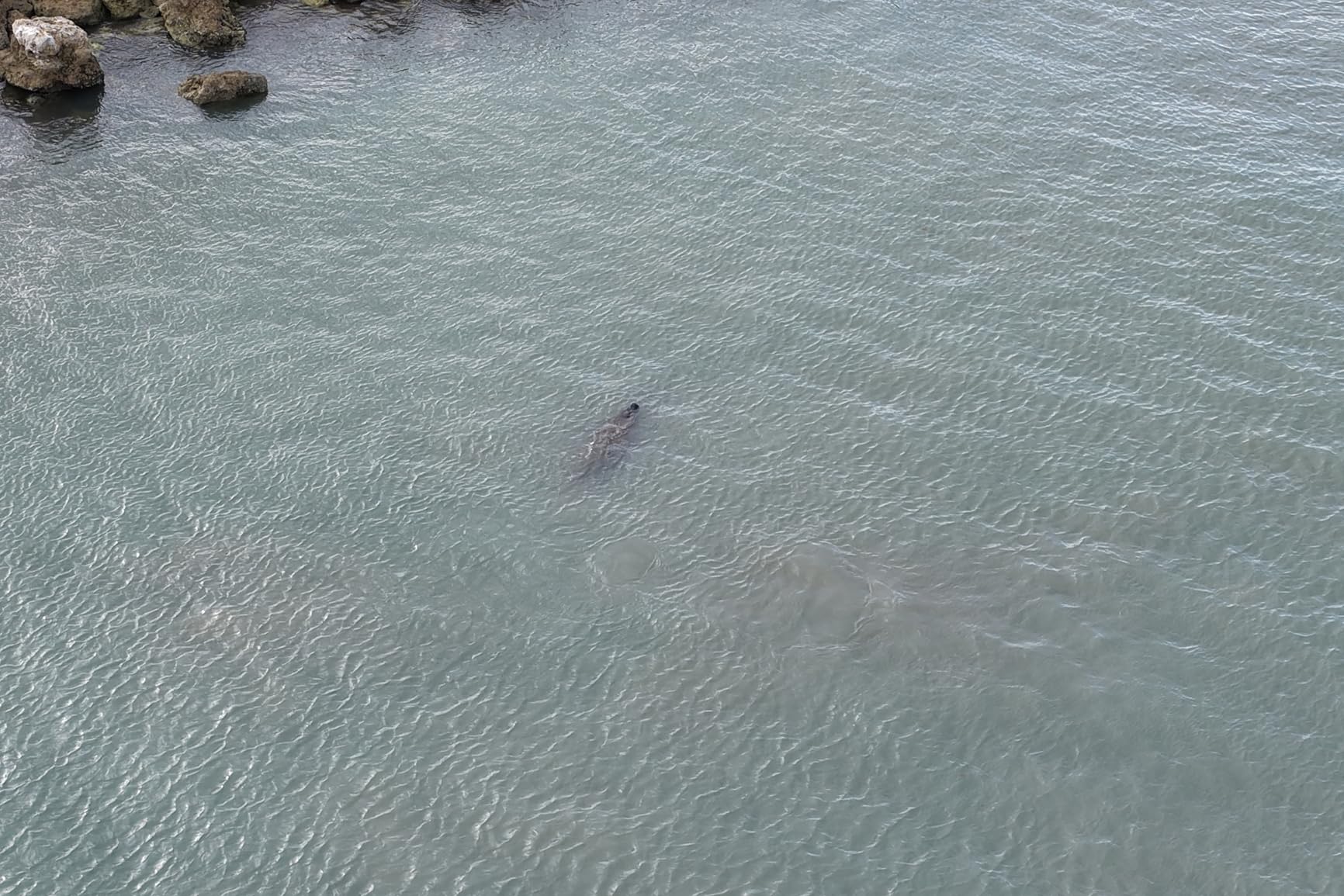
The Nightscape omnidirectional obstacle sensing gave us real confidence flying through tree gaps at dusk. That said, this is a serious drone for serious riders. At 2372g it requires FAA registration, and the price puts it firmly in the professional category.
On the trail, the Mavic 4 Pro tracks smoothly and holds a subject lock even at higher speeds. The O4+ transmission stayed rock solid over a kilometer into a forested valley where cheaper drones would have dropped out. For riders who treat MTB filming as more than a hobby, this is the ceiling.
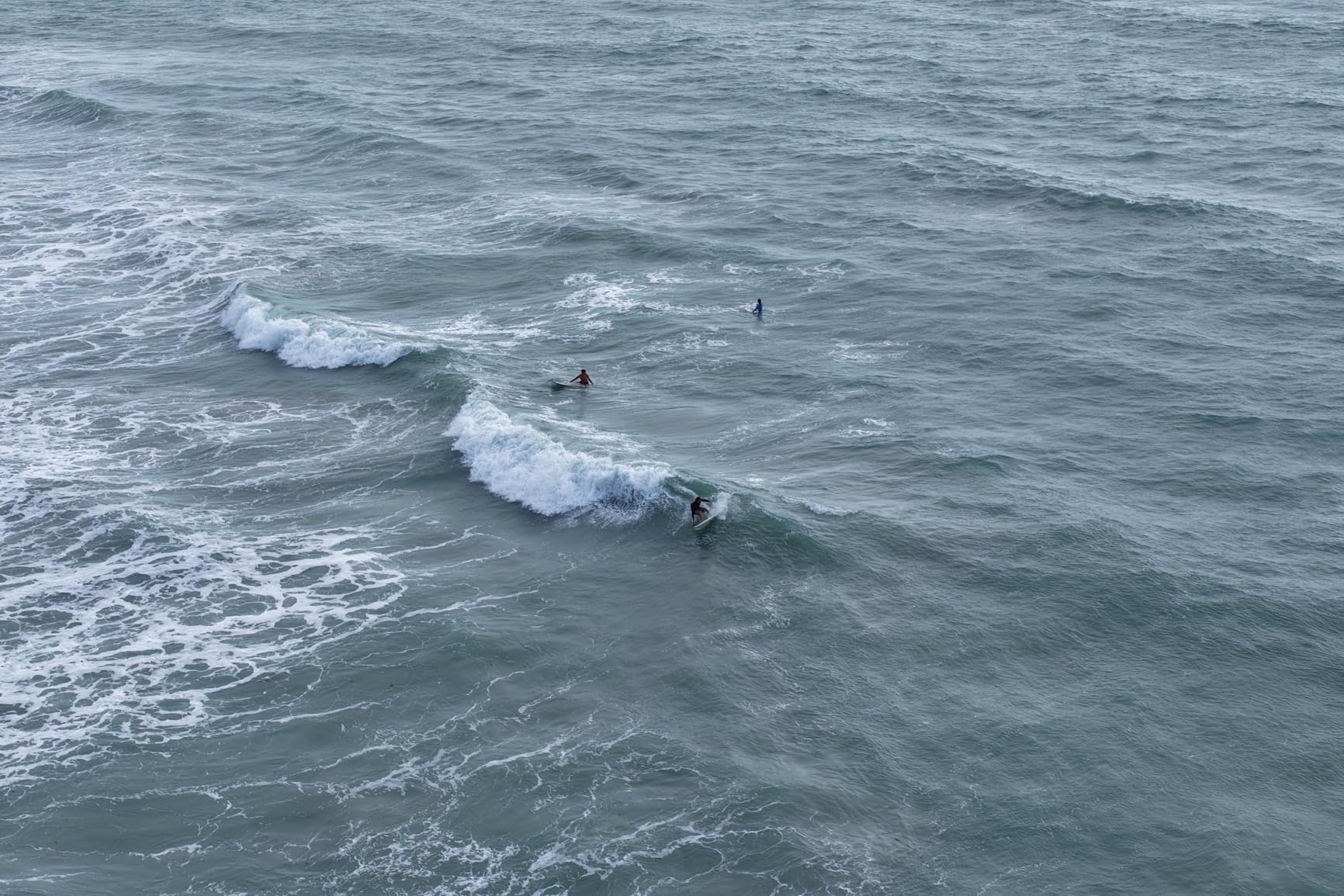
Best Trail Types for the Mavic 4 Pro
This drone shines on open terrain, big-mountain descents, jump lines, and scenic alpine rides where image quality is the priority. It is overkill for tight east-coast singletrack buried in trees.
Who Should Actually Buy It
Content creators, sponsored riders, and anyone monetizing MTB footage. If you are posting to YouTube for fun, the price tag is hard to justify over the Mini 4 Pro.
2. DJI Air 3S Fly More Combo – Best Mid-Range Drone for Mountain Biking
DJI Air 3S Fly More Combo (RC 2 Screen Remote Controller), 4K Drone
1-inch CMOS + Tele
4K/60fps HDR
Forward LiDAR
45 Min Flight
3 Batteries Included
Pros
- Dual 1-inch CMOS and medium tele cameras
- Forward-facing LiDAR for night obstacle sensing
- 45 minutes flight time per battery
- Fly More Combo includes 3 batteries and ND filters
- 4.7-star rating from nearly 1200 reviews
Cons
- Over 250g requires FAA registration
- Pricier than mini alternatives
- Fly More Combo is a significant investment
The DJI Air 3S Fly More Combo hits a sweet spot that makes it one of the best drones for mountain biking if you want premium features without paying Mavic 4 Pro money. The 1-inch CMOS wide-angle camera and medium tele camera give you two focal lengths to work with on every ride.
What sold us is the forward-facing LiDAR sensor. It means the Air 3S can detect obstacles in low light, which matters when you are wrapping up a sunset lap and still want the drone to fly itself home safely. The 45-minute flight time per battery is exceptional.
The Fly More Combo ships with three batteries, ND filters, and a shoulder bag. For mountain bikers, that means a full afternoon of riding and filming without downtime. The 4.7-star rating across nearly 1200 reviews tells you this is a proven platform.
Tracking on twisty trails worked well in our tests. The Air 3S uses omnidirectional sensing plus the LiDAR up front, so it held us through dense sections where cheaper drones would have braked and lost the lock. Footage at 4K/60fps HDR has 14 stops of dynamic range, which is plenty for high-contrast trail lighting.
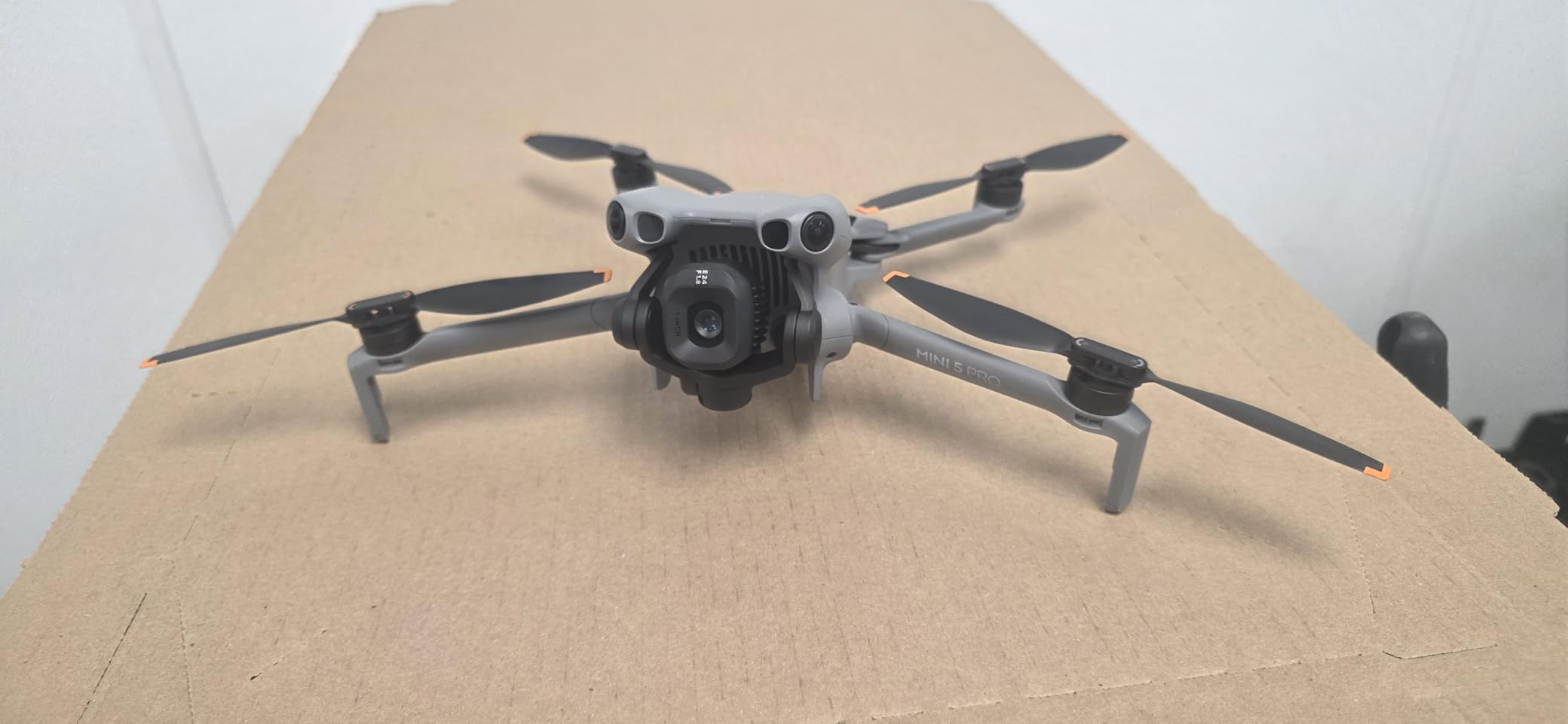
Why the Dual Camera Matters for MTB
The medium tele lens lets you compress the background and make jumps look bigger and descents look steeper. Wide-angle captures the full trail context. Switching between them mid-flight adds cinematic variety.
Battery Strategy for Full Ride Days
Three batteries at 45 minutes each gives you over two hours of total flight time. Rotate them on the charging hub between runs and you will rarely run dry during a session.
3. Antigravity A1-360 – Best 360 Drone for MTB Post-Production
Antigravity A1 Standard Bundle, 360 FPV Drone with 8K Camera for Beginners
8K 360 Video
Vision Goggles
Point-to-Fly Motion Control
249g Foldable
AI Auto Edit
Pros
- 8K 360 video capture for total reframing freedom
- Vision Goggles with dual 1-inch Micro-OLED displays
- Point-to-fly motion control is beginner friendly
- Sub-250g means no FAA registration
- Auto Editing 2.0 reframes footage with AI
Cons
- Niche 360 workflow has a learning curve
- Smaller review base than DJI alternatives
- Only 39 minutes flight time
The Antigravity A1-360 takes a completely different approach to filming mountain biking. Instead of framing your shot in flight, it captures everything in 8K 360 and you reframe in post. That means you never miss the shot because the gimbal was pointed the wrong way.
For MTB, this is huge. You ride the trail, the drone follows, and afterward you choose whether you want a chase cam, side profile, or top-down view. The AI Auto Editing 2.0 does a lot of that reframing automatically, which saves hours at the computer.
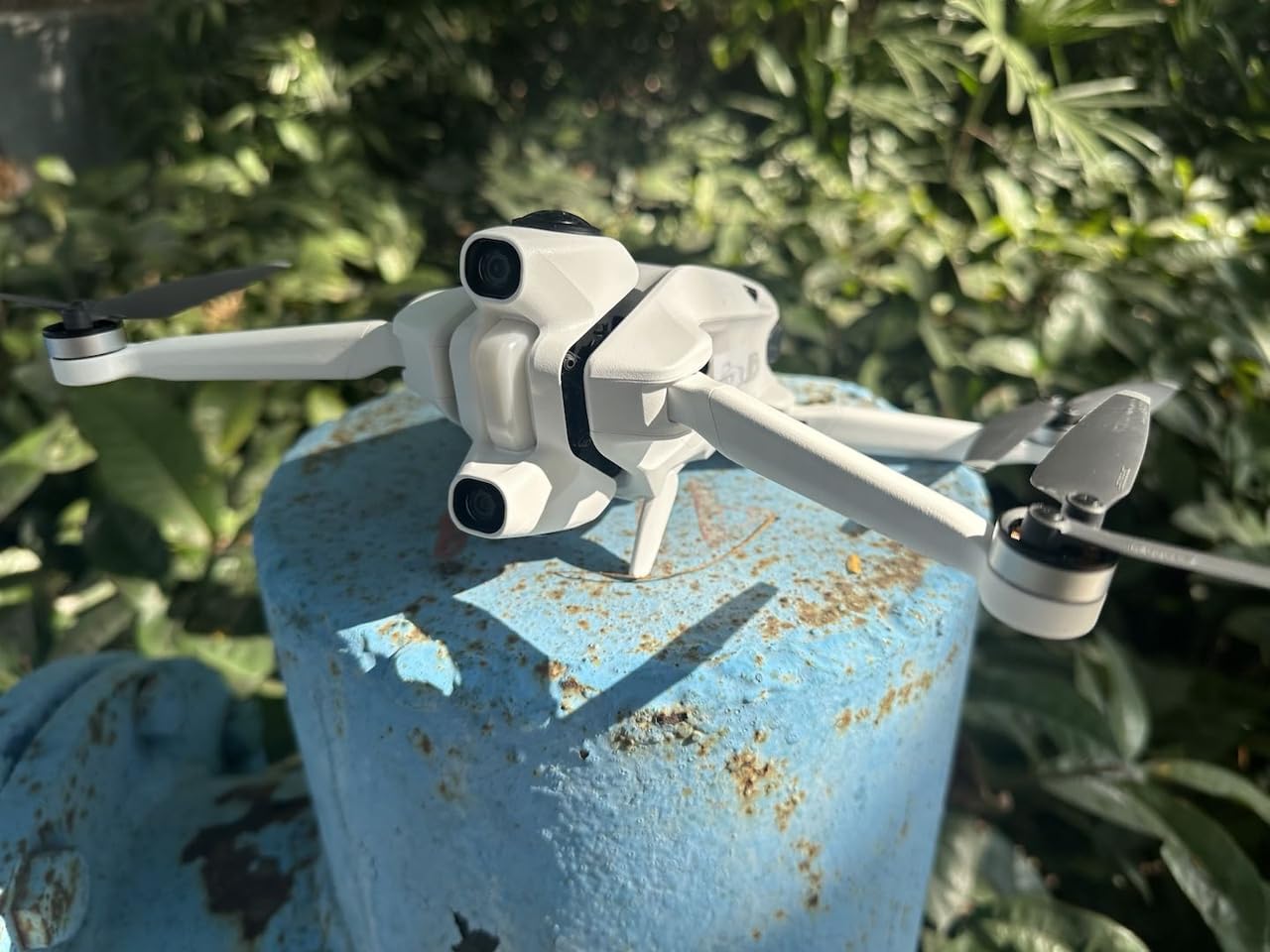
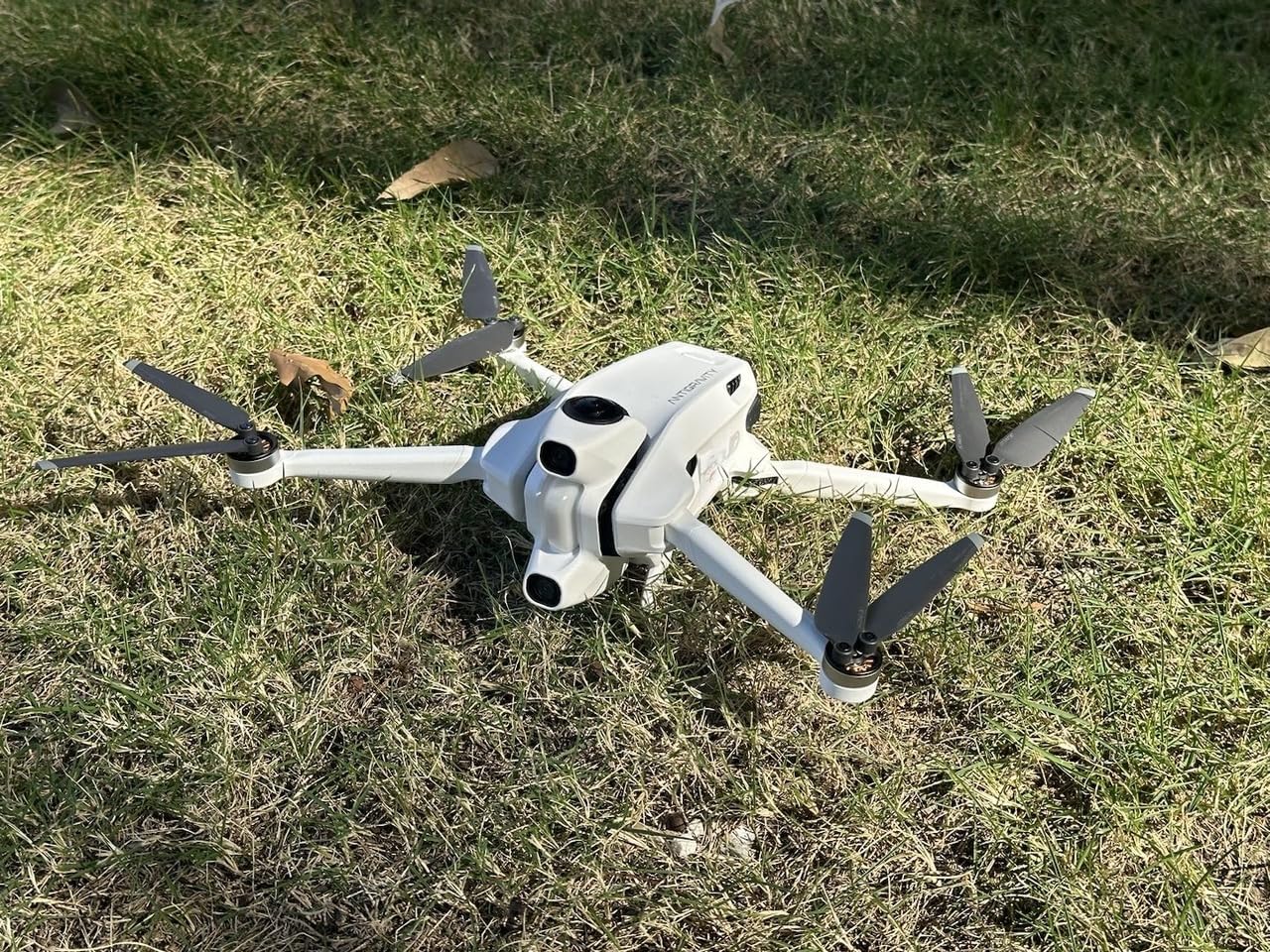
The included Vision Goggles with dual 1-inch Micro-OLEDs are a real highlight. Flying FPV-style through the goggles on flow trails is genuinely fun, and the 90-degree field of view feels immersive without being nauseating. Point-to-fly motion control lets beginners direct the drone without sticks.
At 249g foldable, it qualifies for the sub-250g FAA exemption. Flight time lands at 39 minutes, which is solid for a 360 platform. The omnidirectional obstacle avoidance and Deep Track subject following mean it can handle itself on moderate trails.
When 360 Beats Traditional Follow-Me
If you ride solo and want one piece of footage to repurpose for Instagram, YouTube, and TikTok, 360 capture lets you export every aspect ratio from a single flight. Traditional drones lock you into one framing.
The Reframing Workflow Learning Curve
Plan to spend a few sessions learning the editing software. Once it clicks, you will wonder how you ever filmed any other way. Beginners should expect a weekend of tutorials before it feels natural.
4. DJI Mini 4 Pro Fly More Combo – Best Overall Value for Mountain Biking
DJI Mini 4 Pro Fly More Combo with DJI RC 2, Drones with Camera for Adults 4K, Under 0.549 lbs/249 g, 3 Batteries for up to 102 Mins Flight Time, Smart Return to Home, Drone for Beginners
ActiveTrack 360
Sub-249g No FAA
Omnidirectional Sensing
102 Mins Total
RC 2 Screen Remote
Pros
- ActiveTrack 360 for customizable subject tracking
- Omnidirectional obstacle sensing in a sub-250g drone
- Fly More Combo with 3 batteries gives 102 minutes total
- Built-in screen on RC 2 remote no phone needed
- Over 7400 reviews and a 4.5-star rating
Cons
- Over 7400 reviews can mean mixed long-term reliability reports
- Fly More Combo price still an investment
- No LiDAR like newer Air 3S
If we had to recommend one drone to most mountain bikers, it would be the DJI Mini 4 Pro Fly More Combo. It nails the balance of price, features, portability, and tracking performance that the MTB community has been asking for. The 4.5-star rating across more than 7400 reviews is hard to argue with.
ActiveTrack 360 is the star of the show. You draw a box around yourself, and the Mini 4 Pro locks on and follows with customizable trajectories. On flow trails and open descents, it holds you tight through corners and keeps the framing cinematic.
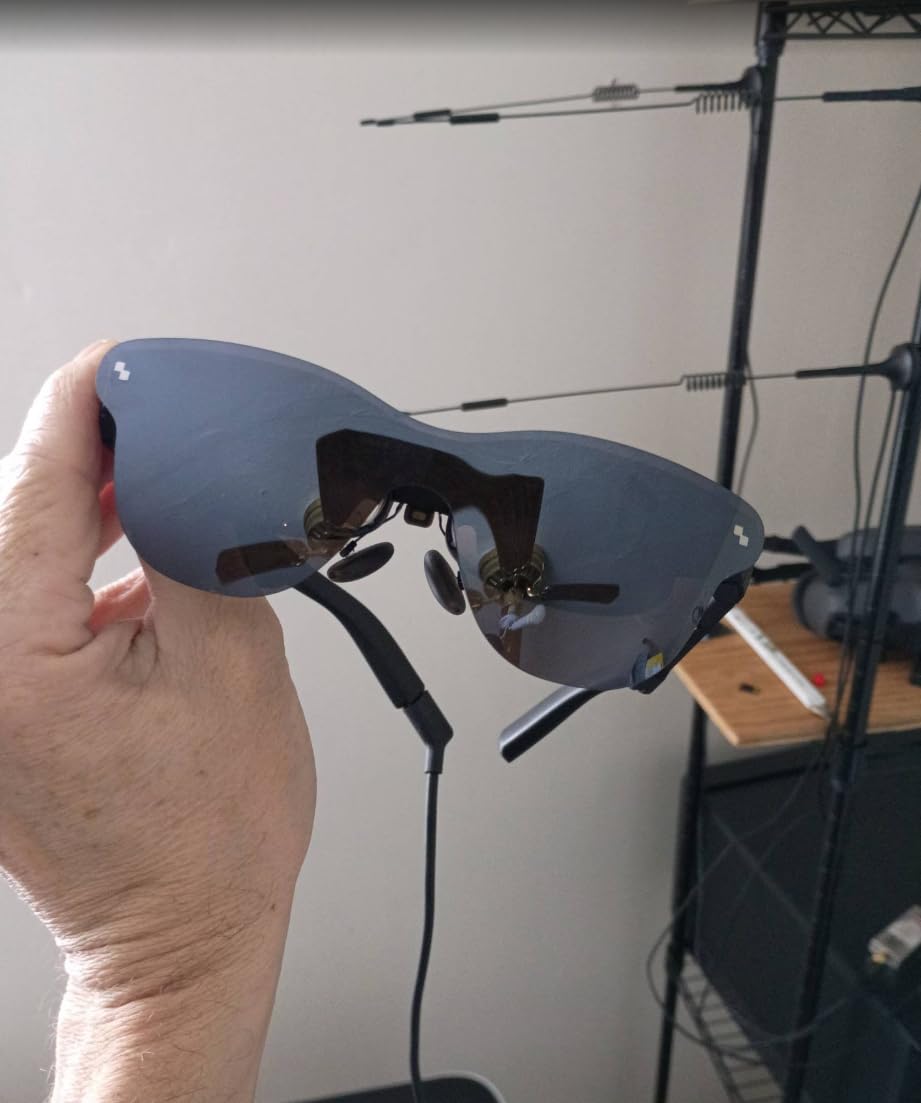
The sub-250g weight means no FAA registration, which removes a real barrier for new drone pilots. Omnidirectional obstacle sensing in a drone this small was unheard of a couple of years ago, and it gives you a safety net when tree cover gets dense.
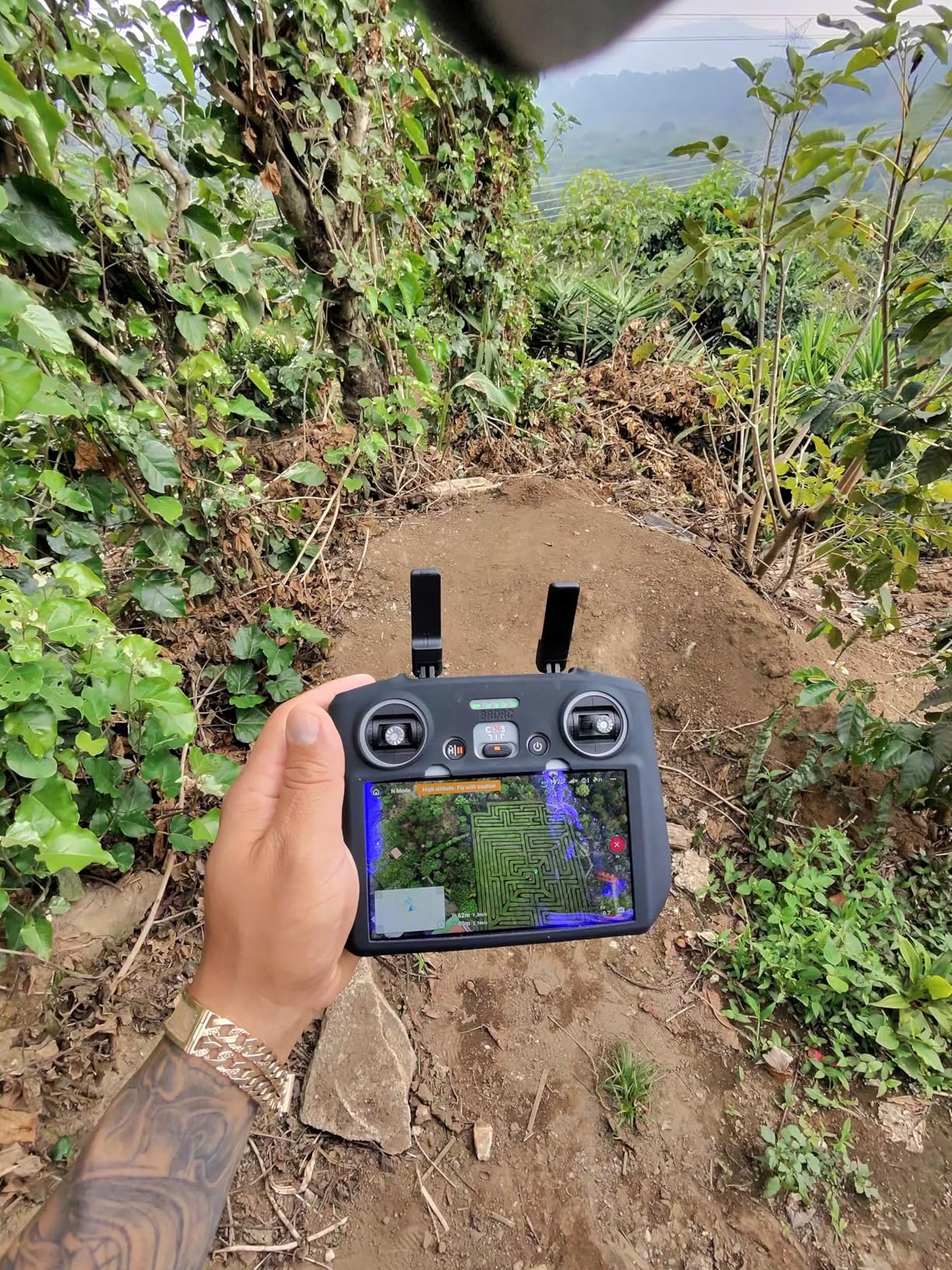
With three batteries in the Fly More Combo, you get up to 102 minutes of total flight time. That is enough to film an entire afternoon of riding. The RC 2 remote has a built-in screen so you do not need to mount your phone, which is a quality-of-life upgrade you do not appreciate until you have it.
How ActiveTrack 360 Performs on Real Trails
On open and flow trails, it is excellent. On tight twisty forest singletrack, expect it to lose you occasionally. The fix: slow down before sharp corners so the drone has time to reposition.
Fly More Combo vs Standard Package
For mountain biking, get the Fly More Combo. Three batteries, the charging hub, ND filters, and shoulder bag are all things you will end up buying separately anyway, and the bundle saves money.
5. DJI Mini 5 Pro Fly More Combo – Next-Gen Sub-250g Pick
DJI Mini 5 Pro Fly More Combo With DJI RC 2, 1-Inch CMOS
1-Inch CMOS
4K/60fps HDR
Nightscape LiDAR Sensing
225 Gimbal Rotation
42GB Internal Storage
Pros
- 1-inch CMOS sensor for pro-grade image quality
- Nightscape omnidirectional sensing with LiDAR
- 225-degree gimbal rotation for true vertical filming
- 42GB of internal storage no SD card needed
- ActiveTrack 360 with enhanced stability
Cons
- Newer model so smaller review base
- Only 36 minutes per battery
- Price sits above older Mini 4 Pro
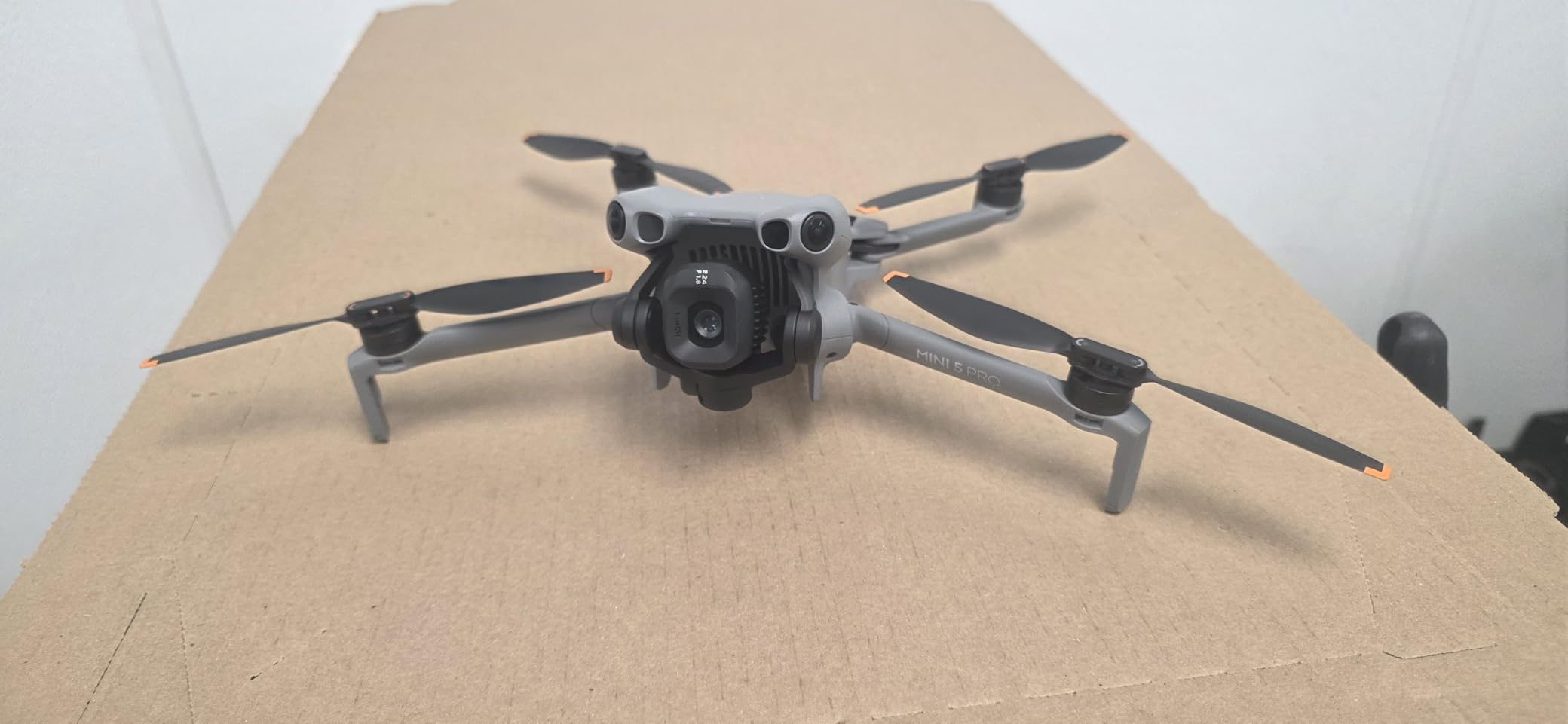
The DJI Mini 5 Pro is the newest mini in the lineup and it brings real upgrades for mountain bikers. The big one is the 1-inch CMOS sensor, which steps image quality up noticeably over the smaller sensors in earlier minis. Low-light trail footage at golden hour looks cleaner and more detailed.
Nightscape omnidirectional obstacle sensing with LiDAR is a direct lift from the Air 3S, and it works. Flying tree-lined descents into fading light felt safer in our testing because the drone can actually see obstacles in conditions where older minis go blind.
The 225-degree flexible gimbal rotation is more useful than it sounds. True vertical filming without cropping means your Instagram Reels and YouTube Shorts come out at full resolution. For riders who post a lot of vertical content, that matters.
ActiveTrack 360 carries over with enhanced stability, and the Fly More Combo includes three batteries, ND filters, and the charging hub. Flight time per battery is 36 minutes, which is shorter than the Mavic 4 Pro but competitive in the sub-250g class.
Mini 5 Pro vs Mini 4 Pro for MTB
If image quality and low-light obstacle sensing are priorities, the Mini 5 Pro wins. If you want the best value and the largest pool of long-term reviews, the Mini 4 Pro is still the safer bet.
The 42GB Internal Storage Advantage
Forgetting your SD card no longer ends your filming session. 42GB holds plenty of 4K footage for a single ride, and it is a real-world benefit that prevents those annoying trailhead moments.
6. DJI Neo 2 Motion Fly More Combo – Best Hands-Free Drone for MTB
DJI Neo 2 Motion Fly More Combo With RC Motion 3 & Goggles N3
151g Palm Launch
Gesture Control
FPV Goggles N3 Included
RC Motion 3
ActiveTrack
Pros
- Palm takeoff and landing no flat surface needed
- Gesture control for fully hands-free operation
- FPV flying with included Goggles N3
- Only 151g ultra-light and C0 certified
- ActiveTrack keeps you locked in focus
Cons
- 10-15 minute battery life is shorter than larger drones
- FPV style is not for every rider
- Goggles take getting used to on trail
The DJI Neo 2 Motion Fly More Combo is the closest thing to a true grab-and-fly drone in the DJI lineup. At 151g it is the lightest drone on this list, and the palm takeoff and landing means you literally throw it up from your hand and catch it when it comes back.
For mountain biking, the gesture control is the killer feature. You start tracking with a hand motion, ride your line, and the Neo 2 follows using ActiveTrack. No controller, no phone, no fiddling at the trailhead. Forum riders consistently call the Neo 2 the best DJI option for MTB despite it only fulfilling about 25 to 50 percent of the ideal use case.
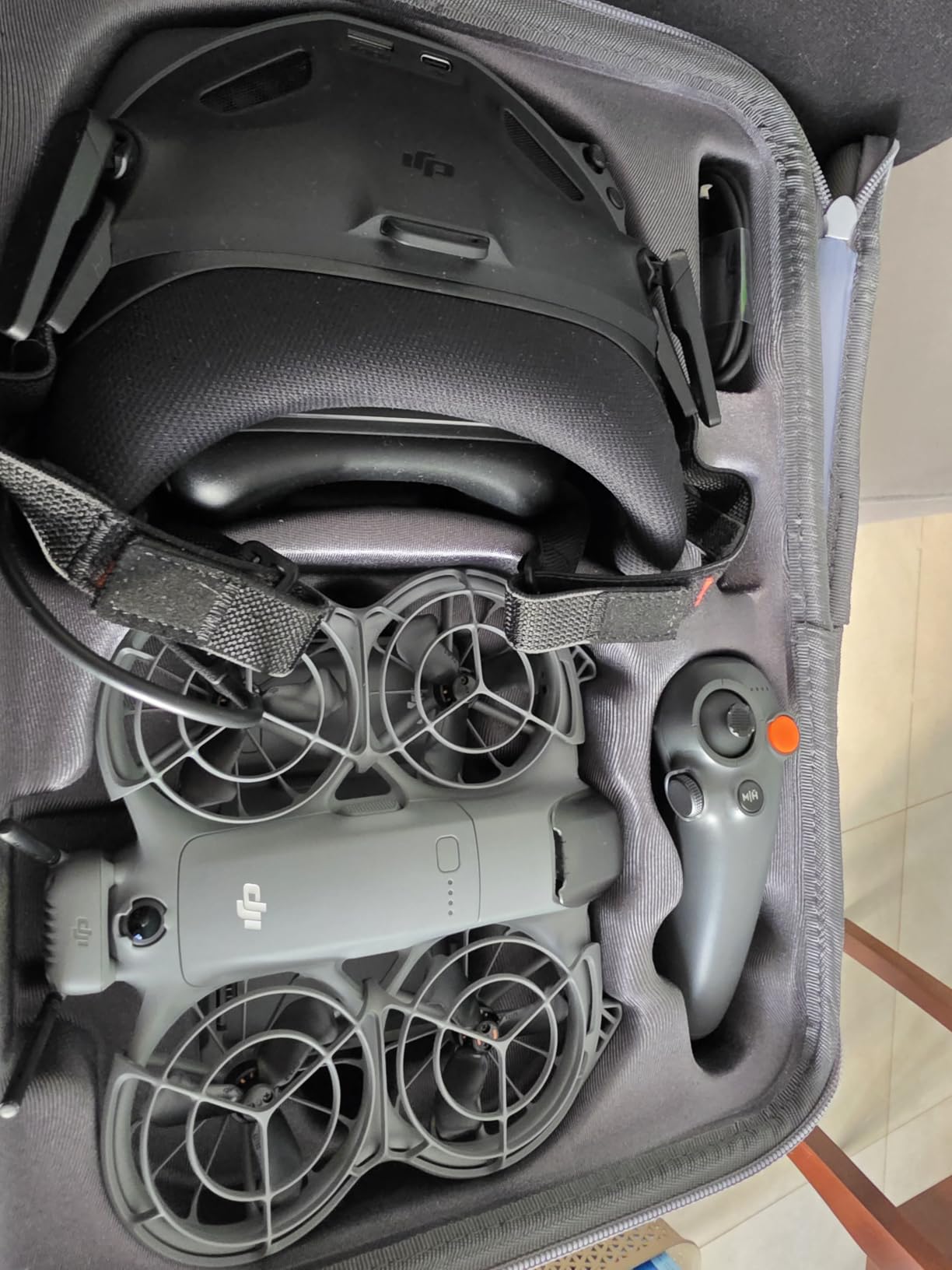
The included Goggles N3 and RC Motion 3 turn the Neo 2 into an FPV drone when you want it. Flying through goggles on a fast descent is a different kind of rush, and the SmoothCapture stabilization keeps the 4K footage usable.
The tradeoff is battery life. Real-world flight time lands around 10 to 15 minutes per battery, which is why the Fly More Combo with three batteries matters. You will be swapping packs more often than with the Mini 4 Pro.
When the Neo 2 Beats a Traditional Drone
Solo riders who want zero setup. Throw it up, gesture to track, ride. For content where the ease of capturing matters more than flight time, the Neo 2 is unmatched.
FPV Mode and Trail Safety
Flying FPV through goggles while standing still is fun. Doing it while riding is not advisable. Use FPV for separate cinematic flights, and use gesture tracking when you are actually on the bike.
7. HOVERAir X1 PRO – Editor’s Choice for Mountain Biking
HOVERAir X1 PRO Standard, 4K Action Flying Camera, Foldable Follow-me Drone
No Controller Needed
42 KM/H Follow Speed
192g Foldable
15+ Auto Flight Modes
OmniTerrain
Pros
- Truly hands-free no controller or phone required
- 42 KM/H follow speed keeps up with descents
- Foldable 192g design fits in a jersey pocket
- OmniTerrain handles snow water and cliffs
- 15+ automated flight modes including cycling follow
Cons
- Battery life is limited per charge
- Maximum range is 1000 feet
- 12MP stills trail behind DJI cameras
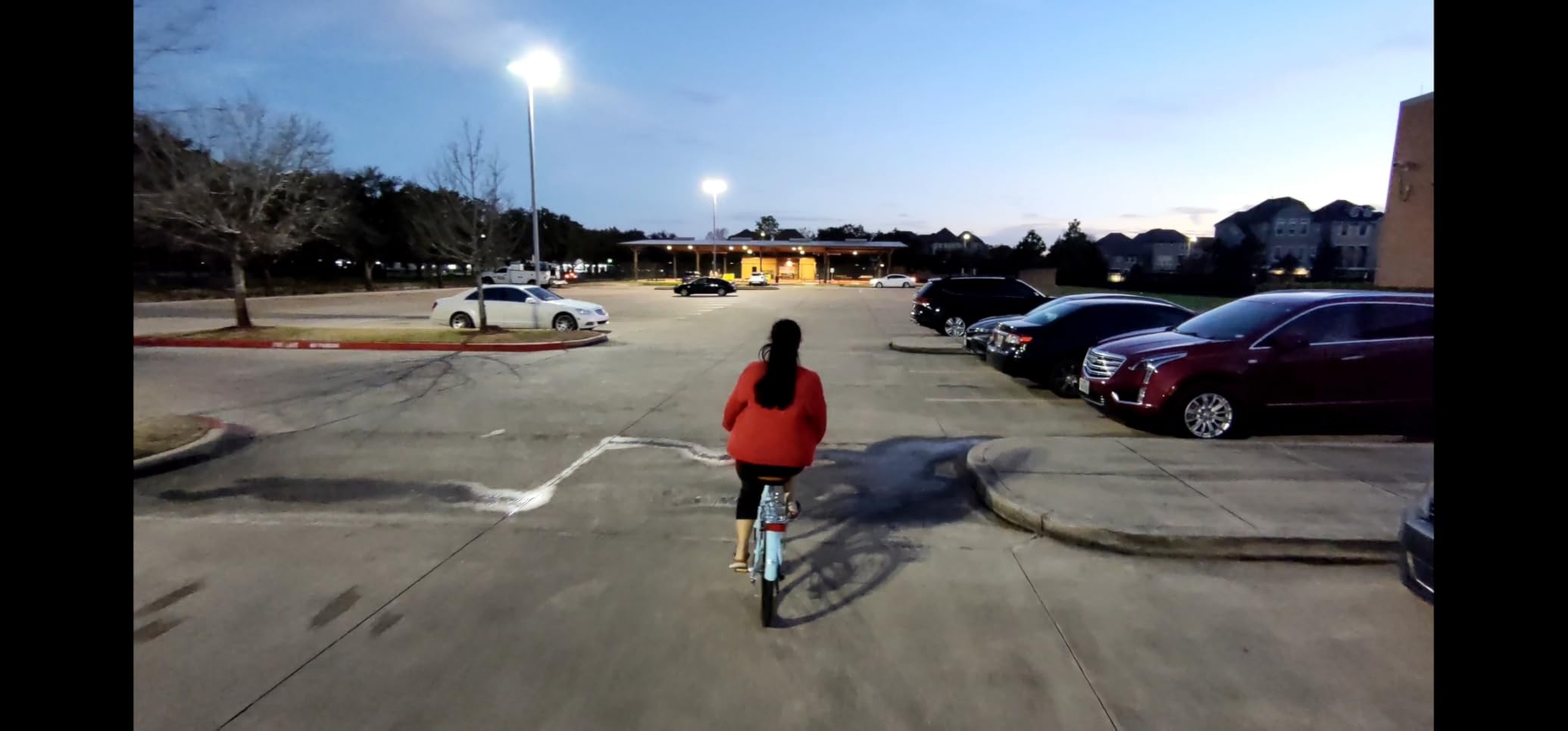
The HOVERAir X1 PRO is the drone we keep recommending to mountain bikers who want one thing: to ride without thinking about the drone. There is no controller, no phone app to launch, and no learning curve. You unfold it, press a button, and ride.
The 42 KM/H follow speed is the headline spec for MTB. That is fast enough to keep up with most descents on flow trails, and the dedicated cycling follow mode is tuned specifically for bikes. Multiple field tests, including a well-documented one from Cutlaps, confirmed it shines on flow trails and open terrain even if it struggles on tight singletrack.
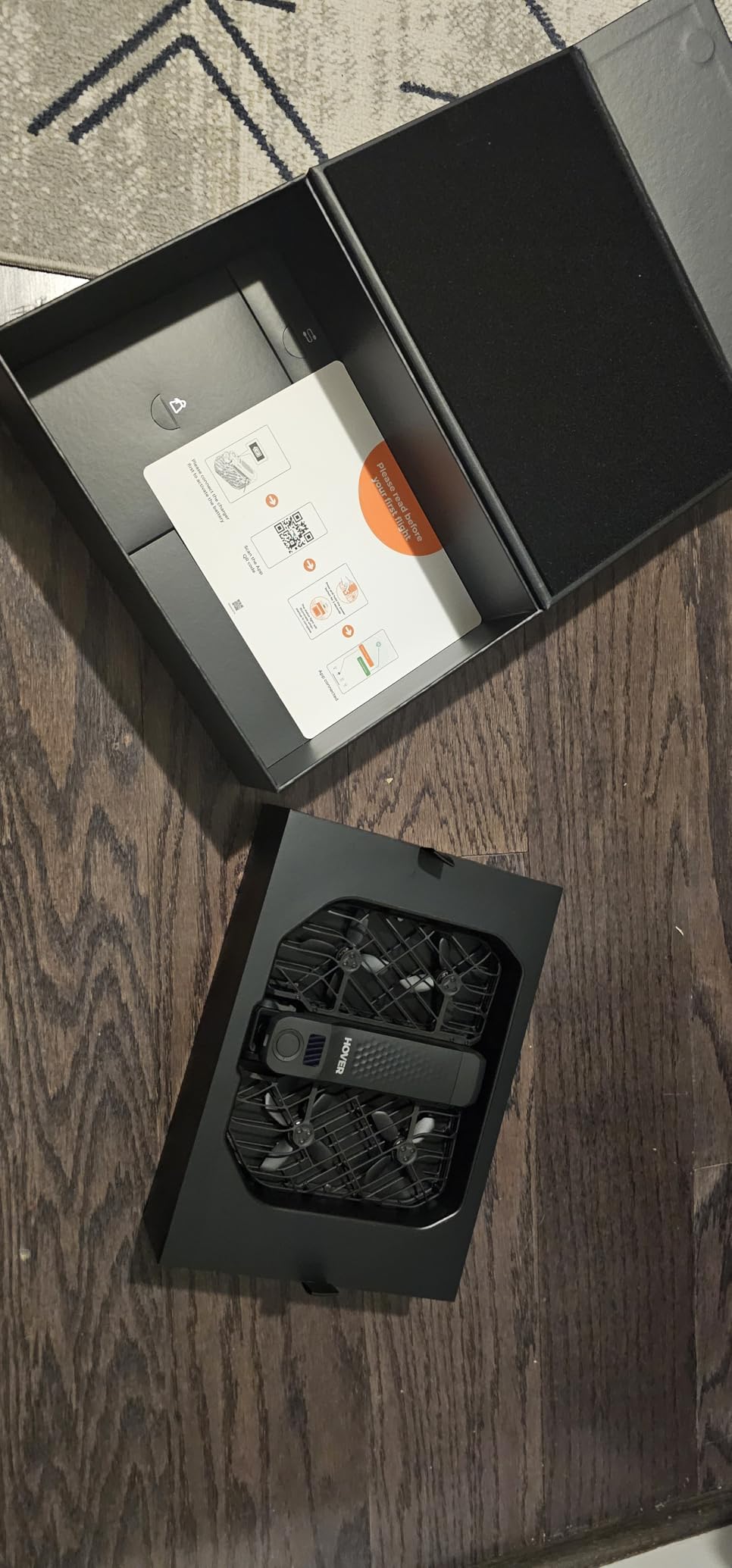
At 192g folded, the X1 PRO fits in a riding jersey pocket or hip pack. That portability is something no DJI Mavic can match. Forum users report it has survived multiple tree crashes and kept flying, which is the kind of real-world durability that matters when you are learning to fly on trails.
The 4K at 60fps footage is clean and cinematic thanks to the SmoothCapture 2.0 gimbal and EIS combination. It will not match a Hasselblad sensor, but for social content and YouTube, it holds up well. The tradeoff is a 1000-foot range and shorter battery life per charge.
Best Trail Types for the X1 PRO
Flow trails, open descents, jump parks, and big-mountain terrain. It is not the right pick for tight twisty east-coast singletrack buried in trees where tracking will drop.
Crash Survival and Long-Term Durability
Real riders report tree impacts that would total a Mavic, and the X1 PRO bounces back. That durability plus the grab-and-go design is why it earns our editor’s choice for the best drone for mountain biking.
8. Bwine F7MINI 4K – Best Built-In Screen Controller Pick
Bwine F7MINI 8K Photo 5.5″ 1080P RC Screen Drones with Camera for Adults
5.5-inch 1080P Screen RC
8K Photo 4K Video
20k ft Transmission
3-Axis Gimbal
Sub-249g
Pros
- Built-in 5.5-inch 1080P screen no phone needed
- 20000ft real-time transmission range
- 3-axis brushless gimbal with EIS stabilization
- Sub-249g means no FAA registration
- Active Track Orbit and Waypoint intelligent modes
Cons
- Video download to phone can be slow
- 4K at 30fps not 60fps
- Smaller brand than DJI
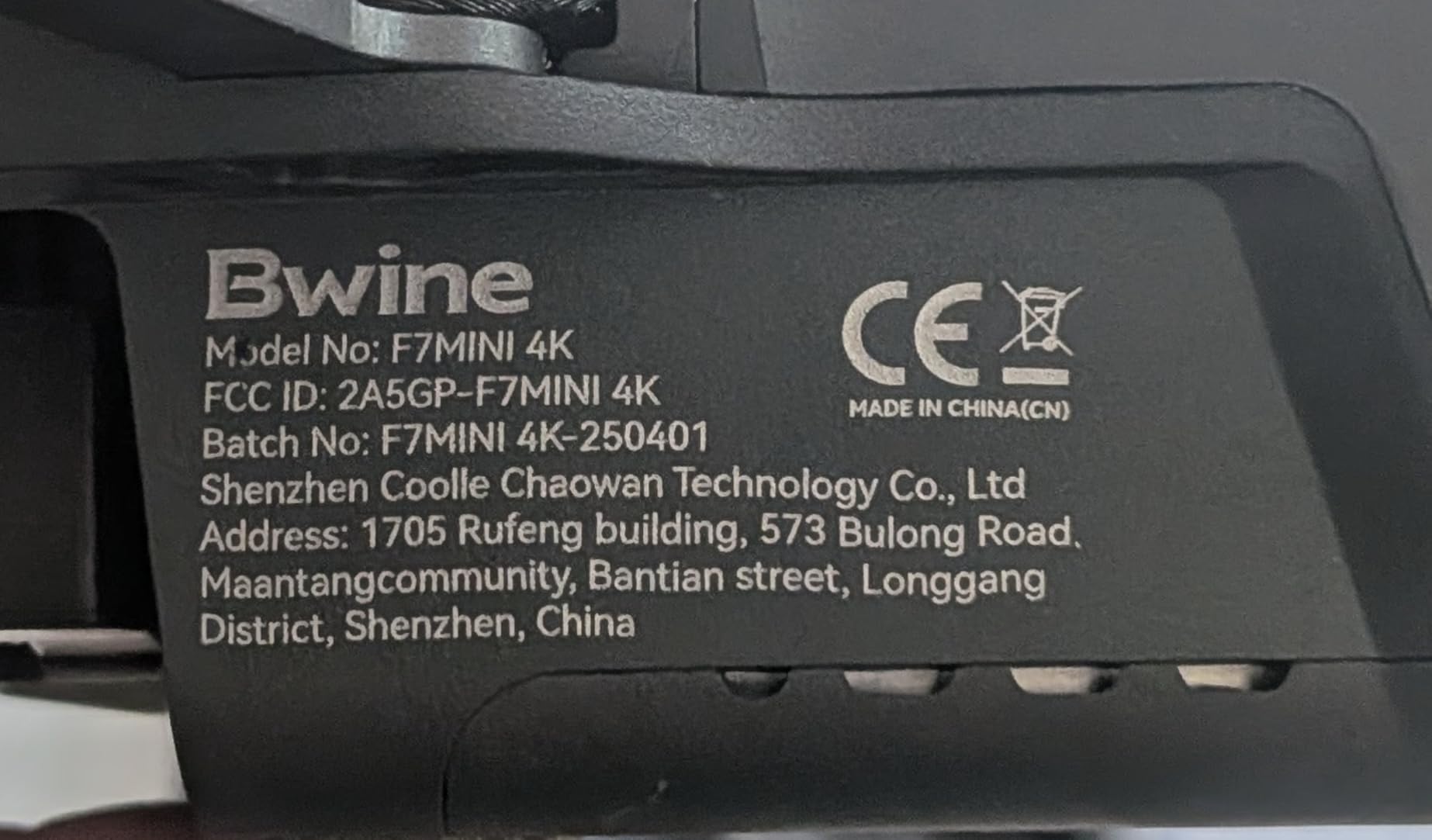
The Bwine F7MINI 4K solves a problem a lot of mountain bikers do not realize they have until they own a drone. Most budget drones want you to mount your phone to the controller, which means your phone is draining, overheating, and getting bounced around on rough trail approaches. The F7MINI ships with a remote that has a built-in 5.5-inch 1080P screen.
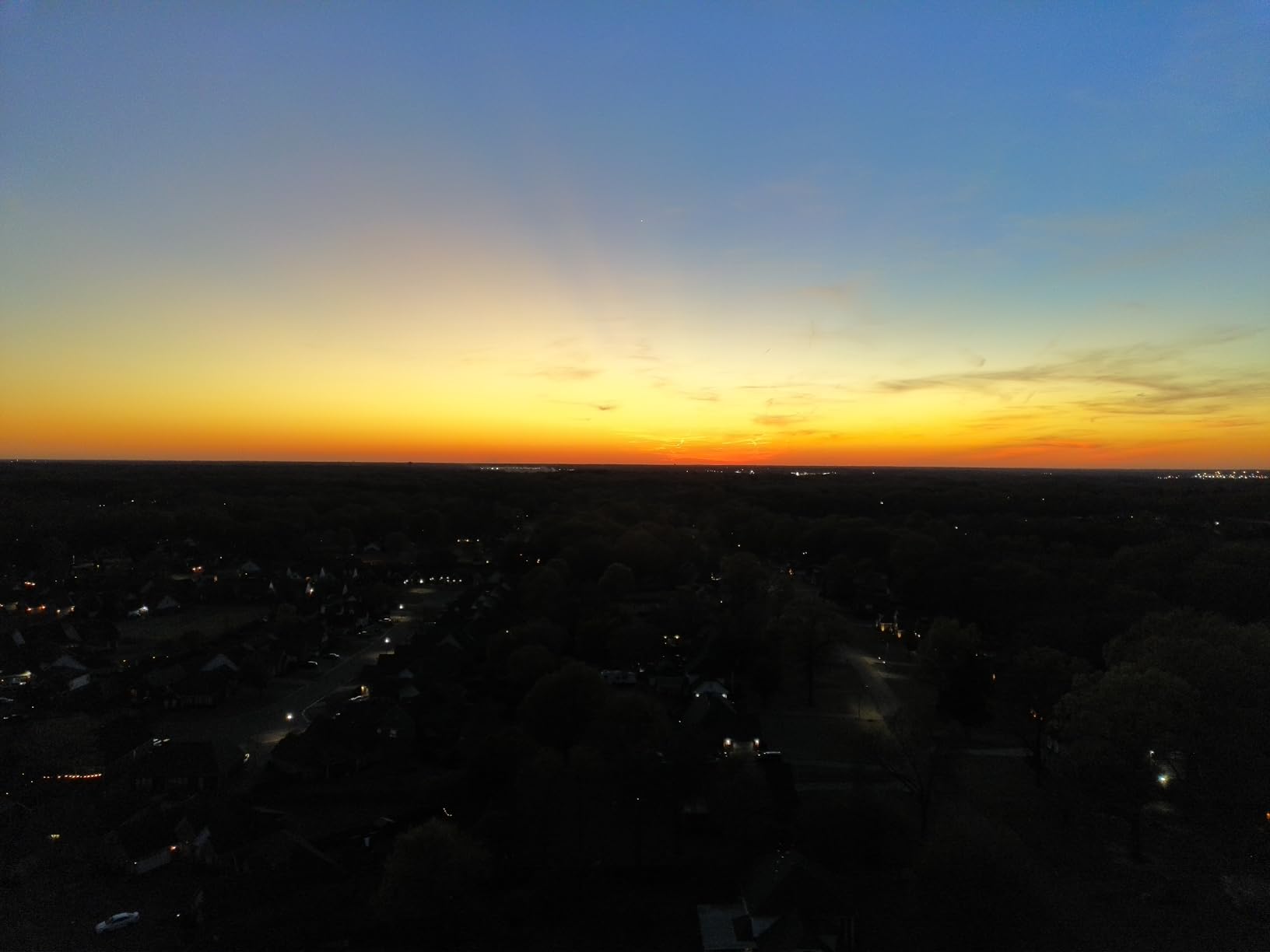
That alone makes it one of the best drones for mountain biking if you want a self-contained kit. The 8K photo and 4K video output is solid for the price, and the 3-axis brushless gimbal with EIS keeps footage smooth even when you are hammering through chunk.
The 20000ft transmission range is genuinely impressive for a drone in this price bracket. In practice you will not fly that far on a trail, but it means the signal stays strong through tree cover where shorter-range drones drop out. GPS intelligent modes include Active Track, Orbit Flight, and Waypoint Planning.
Two batteries deliver 64 minutes of total flight time, and the sub-249g weight keeps you FAA-exempt. The 4.6-star rating from nearly 350 reviewers confirms the F7MINI punches above its weight class.
How the Screen Remote Changes Trail Sessions
No more fumbling to mount your phone in cold weather or with gloves on. The dedicated screen boots up, connects, and you are flying. It is a small thing that makes a big difference at the trailhead.
Transmission Range in Real Forest Conditions
Rated for 20000ft, expect roughly 1500 to 3000 feet in dense trees. Still better than most competitors in this price range, and enough for the line-of-sight flying mountain biking demands.
9. Potensic Atom 2 Fly More Combo – Best Budget Sub-250g Drone
Potensic Atom 2 Fly More Combo with RC PTD 1, Drones with Camera for Adults 4K Video, 8K Photo, 10KM Transmission, 96 Mins Flight, 3-Axis Gimbal, AI Track, Vertical Shooting, AI Night Shot, Under 249g
5.5-inch Touchscreen RC
1/2-inch Sony CMOS
8K Photo 4K Video
10KM PixSync
96 Min Total Flight
Pros
- 1/2-inch Sony CMOS sensor with F1.8 aperture
- 5.5-inch 700-nit FHD touchscreen controller
- Three batteries for 96 minutes total flight time
- AI Track modes including Follow and Parallel
- Sub-249g no FAA registration required
Cons
- 4K at 30fps not 60fps
- Proprietary controller only works with Atom 2
- Brand is less established than DJI
The Potensic Atom 2 Fly More Combo is the budget pick that genuinely competes with DJI on specs. The 1/2-inch Sony CMOS sensor with an F1.8 aperture is the same kind of imaging hardware you find in drones costing twice as much, and the 4.5-star rating across more than 1800 reviews backs it up.
For mountain biking, the AI Track modes are the headline. Spotlight, Follow, and Parallel modes give you the tracking options that matter on a trail, and they work reliably on open terrain. The 5.5-inch 700-nit FHD touchscreen controller is bright enough to see in direct sunlight.
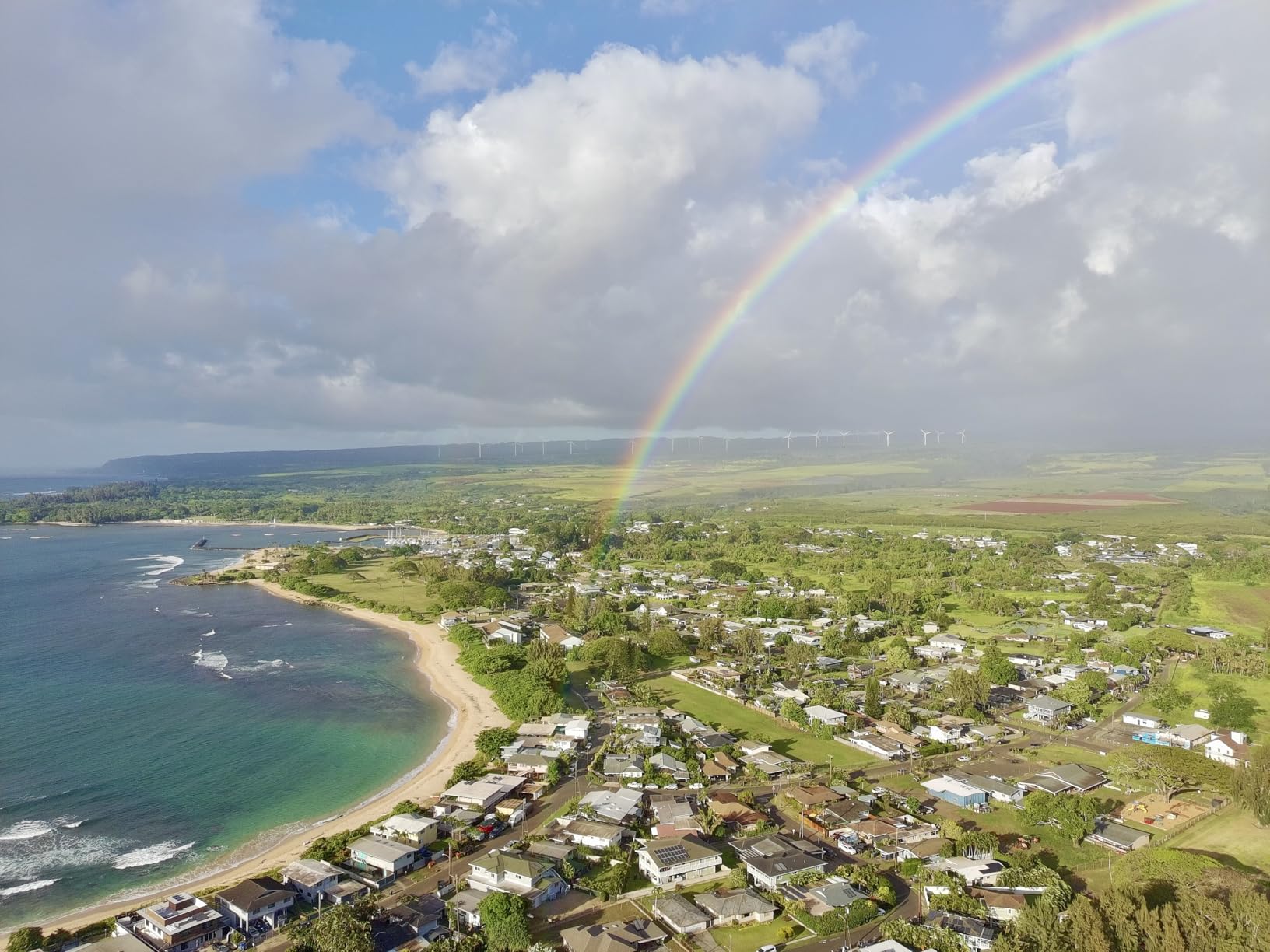
Three batteries deliver 96 minutes of total flight time, which is competitive with the DJI Mini 4 Pro Fly More Combo at a lower price. The 3-axis gimbal with EIS and P-Log mode gives you grading flexibility in post if you want to color-grade your trail footage.
PixSync 4.0 pushes a 10KM transmission range, and the sub-249g weight keeps you in the no-registration category. AI Night Shot mode extends your filming window into the evening, which is handy for late-summer sunset laps.
Atom 2 vs DJI Mini 4K at Similar Prices
The Atom 2 wins on flight time, screen controller, and AI tracking. The DJI Mini 4K wins on flight control polish and app ecosystem. Pick based on whether you value raw specs or software refinement.
AI Track Mode Performance on Trails
Follow mode locks onto you and trails behind reliably. Parallel mode is great for capturing side-profile shots on flow trails. Spotlight holds the camera on you while you fly manually, which is useful for jump lines.
10. DJI Mini 4K – Best Entry-Level DJI Drone
DJI Mini 4K, Drone With 4K UHD Camera, Under 249 g
True 4K UHD
3-Axis Gimbal
Sub-249g
10km O2 Transmission
Level 5 Wind Resistance
Pros
- True 4K UHD camera with 3-axis gimbal stabilization
- Sub-249g no FAA registration required
- DJI flight control polish and app ecosystem
- Level 5 wind resistance handles gusty trail conditions
- 3840 reviews and 4.5-star rating
Cons
- No obstacle avoidance or ActiveTrack on base model
- Single battery in the standard package
- Real-world battery closer to 25-27 minutes
The DJI Mini 4K is the cheapest way into the DJI ecosystem, and for a lot of mountain bikers it is the right starting point. You get true 4K UHD video, the legendary DJI 3-axis gimbal stabilization, and the polished DJI Fly app for a price that undercuts every other DJI on this list.
The catch is that the base Mini 4K does not have obstacle avoidance or ActiveTrack. You are flying it manually with the controller, which means you either need a friend to fly while you ride or you set up static shots and ride past them. For solo riders wanting follow-me footage, look at the Mini 4 Pro instead.
That said, the image quality and gimbal stabilization are excellent for the price. Level 5 wind resistance means it holds steady in the gusty conditions you often find at exposed trailheads and ridge lines. The 4.5-star rating across nearly 3840 reviews tells you this is a proven, reliable platform.
QuickShots modes like Helix, Dronie, Rocket, Circle, and Boomerang give you cinematic automated shots even without ActiveTrack. They are not follow-me, but they are useful for b-roll and trail feature showcases.
QuickShots for Trail Feature Showcases
Set the drone up at a jump or feature, trigger a Circle or Helix QuickShot, and ride through the frame. It is a manual workflow but produces polished results without ActiveTrack.
When to Step Up to the Mini 4 Pro
If you ride solo and want the drone to follow you, spend the extra on the Mini 4 Pro for ActiveTrack 360 and omnidirectional obstacle sensing. If you fly with a friend or shoot static setups, the Mini 4K is enough.
11. Potensic ATOM SE GPS Drone – Best Starter Pick Under $250
Potensic ATOM SE GPS Drone with 4K EIS Camera, Under 249g, 62 Mins Flight, 4KM FPV Transmission, Brushless Motor, Max Speed 16m/s, Auto Return, Lightweight and Foldable Drone for Adults Beginner
4K EIS Sony Sensor
Follow Me Mode
62 Min Total Flight
4KM FPV
Sub-249g Foldable
Pros
- 4K EIS camera with Sony sensor for stable footage
- Follow Me mode for hands-free tracking
- 62 minutes total flight time with two batteries
- Sub-249g foldable and trail-friendly
- Level-5 wind resistance and brushless motors
Cons
- No SD card included
- 4KM range is shorter than DJI alternatives
- Follow Me is GPS-based not vision-based
The Potensic ATOM SE is the most affordable drone on this list with a real Follow Me mode, and that makes it a legitimate entry point for mountain bikers who want to try follow-me filming without a big investment. The 4.4-star rating across nearly 6700 reviews confirms it is a crowd-pleaser.
The 4K EIS camera uses a 1/3-inch CMOS Sony sensor, which is modest but produces stable, watchable footage when the electronic image stabilization does its job. For social content and casual trail edits, it is plenty.
Follow Me mode here is GPS-based rather than vision-based, which means it tracks your phone’s location rather than recognizing you visually. It works, but it will not frame you as precisely as DJI ActiveTrack or HOVERAir’s vision follow. Expect wider framing and less reactive tracking.
Two batteries give you 62 minutes of total flight time, the sub-249g weight keeps you FAA-exempt, and Level-5 wind resistance handles breezy ridge-top trails. The max speed of 16m/s in Sport Mode is enough to keep up with moderate descents.
GPS Follow vs Vision Follow for MTB
GPS follow maintains a rough position relative to your phone, useful on open terrain. Vision follow (found on HOVERAir and DJI ActiveTrack) recognizes and frames you, which is better for tighter, more cinematic shots. GPS is fine for getting started.
Best Use Case for the ATOM SE
Beginners testing whether they will actually use a drone for mountain biking. If you fall in love with follow-me filming, upgrade to a Mini 4 Pro or HOVERAir later. If not, you are not out much money.
12. Holy Stone HS175D – Best Budget Beginner Drone
Holy Stone HS175D GPS Drone with 4K Camera for Adults, Under 249g, Foldable RC Quadcopter with Auto Return, 46 Mins Long Flight, Follow Me, Brushless Motor, Circle Fly, Waypoint Fly, Altitude Hold
4K Wide-Angle
Follow Me Mode
46 Min Total Flight
Sub-249g
GPS Auto Return
Pros
- Most affordable drone on this list
- 4K camera with 110-degree wide-angle lens
- Follow Me Waypoint and Point of Interest modes
- 46 minutes total flight time with two batteries
- Sub-249g no FAA registration needed
Cons
- 500M maximum range is the shortest here
- 7658 reviews but only 4.1-star average
- Lower-tier image quality than DJI or Potensic Sony sensors
The Holy Stone HS175D is the cheapest drone on this list and the most accessible way to start experimenting with mountain bike filming. For the price, you get a 4K camera with a 110-degree wide-angle lens, Follow Me mode, GPS Auto Return, and two batteries good for 46 minutes total.
Realistically, the image quality is a step below DJI and Potensic. But if you are posting to TikTok or Instagram where heavy compression eats detail anyway, the HS175D produces perfectly watchable footage. The 90-degree adjustable camera angle helps you frame shots without repositioning the drone.
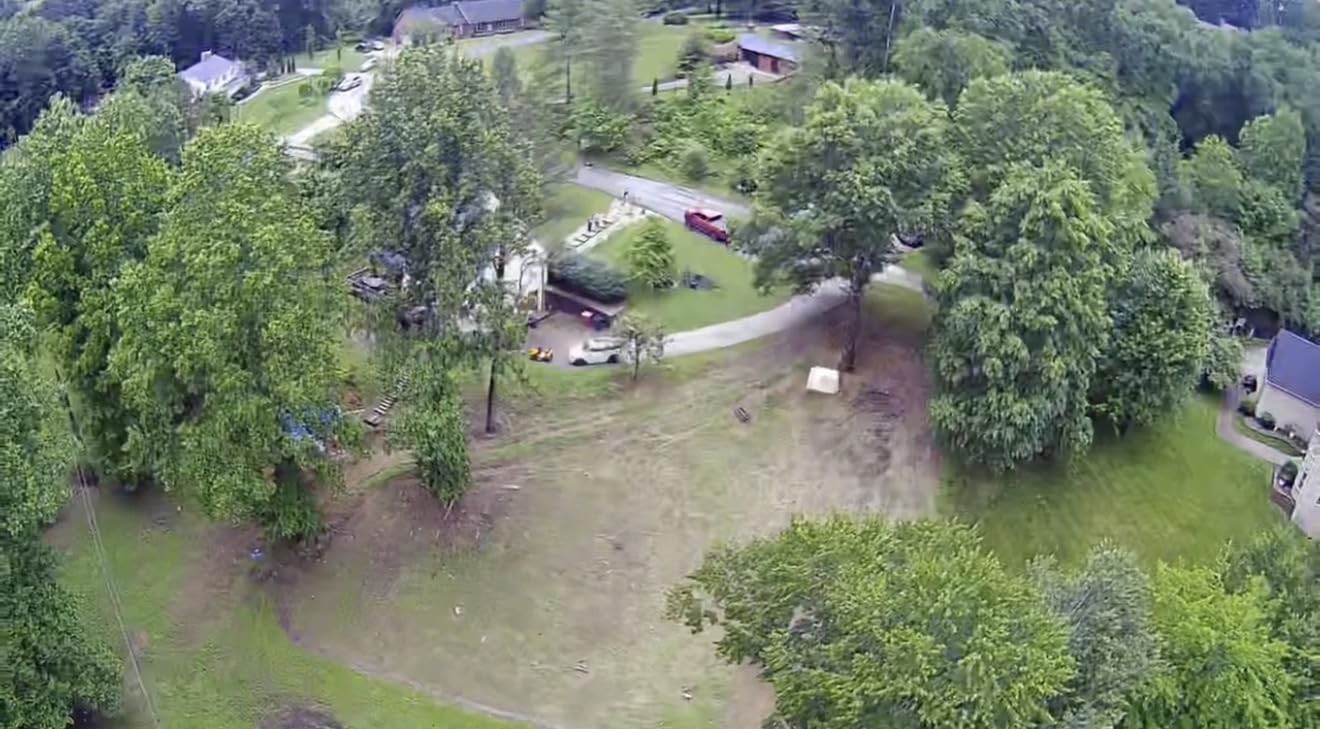
Follow Me, Waypoint Flight, and Point of Interest modes give you the automated shots that make drone filming feel magical. They are not as polished as DJI ActiveTrack, but they work for casual riding footage. GPS Auto Return protects the drone if signal drops or battery gets low.
The 500M range is the main limitation. On open terrain you will feel that ceiling quickly, but for close-quarters trail filming where you want the drone within sight anyway, it is workable. The 4.1-star average across 7658 reviews reflects a solid budget drone with honest limitations.
What the HS175D Does Well
It gets you in the air filming your rides for less than any other option here. Follow Me works, GPS Auto Return is reliable, and the wide-angle lens gives footage an immersive action-sports feel.
When to Upgrade From the HS175D
If you find yourself frustrated by the 500M range, jerky tracking, or soft image quality, it is time to move up to the Potensic Atom 2 or DJI Mini 4K. The HS175D is a stepping stone, not a forever drone.
Buying Guide: How to Choose the Best Drone for Mountain Biking?
Not every drone on this list is right for every rider. The best drones for mountain biking share a few core features that matter more on the trail than anywhere else. Here is how to think through the decision.
Follow-Me Tracking Technology
Tracking is the single most important feature for MTB. Vision-based tracking (DJI ActiveTrack, HOVERAir follow) recognizes you as a subject and frames you cinematically. GPS-based tracking (Potensic Follow Me, Holy Stone Follow Me) follows your phone’s coordinates and frames more loosely. Vision tracking is better, but GPS tracking is cheaper and works in conditions where vision struggles.
Follow Speed
Check the maximum follow speed against how fast you ride. The HOVERAir X1 PRO tops out at 42 KM/H (about 26 MPH), which covers most flow trail descents. Drones with lower follow speeds will fall behind on fast downhills and produce jerky footage when they try to catch up.
Obstacle Avoidance
If you ride in trees, obstacle avoidance is what keeps your drone alive. Omnidirectional sensing (DJI Mavic 4 Pro, Air 3S, Mini 4 Pro, Mini 5 Pro) is the gold standard. Forward-facing sensing is the minimum. No obstacle avoidance means you are flying manually in the trees, which is risky on tight singletrack.
Sub-250g Weight and FAA Registration
Drones under 250g do not require FAA registration in the United States, which removes a real barrier for new pilots. Most drones on this list qualify, including the entire DJI Mini line, the HOVERAir X1 PRO, the Bwine F7MINI, the Potensic Atom lineup, and the Holy Stone HS175D. The Mavic 4 Pro and Air 3S do not qualify.
Flight Time and Battery Strategy
Single-battery flight times range from 10 minutes (Neo 2) to 51 minutes (Mavic 4 Pro). For mountain biking, total flight time across multiple batteries matters more than single-charge numbers. Look for Fly More Combos that bundle three batteries and a charging hub.
Video Quality and Resolution
4K is the floor for trail footage in 2026. 4K at 60fps is better for fast descents because you can slow footage down for cinematic effect. 6K and 8K options exist on the Mavic 4 Pro and Antigravity A1-360 for riders who want maximum post-production flexibility.
Controller vs Hands-Free Operation
Some riders want a controller with a screen for precise framing. Others want a grab-and-go drone like the HOVERAir X1 PRO or DJI Neo 2 that requires no controller at all. Decide which workflow fits your riding style before you buy.
Trail Type Suitability
Match the drone to your trails. Open flow trails and jump parks suit almost any follow-me drone. Tight forest singletrack demands strong obstacle avoidance and forgiving tracking. Big-mountain alpine terrain rewards longer flight times and premium cameras. The HOVERAir X1 PRO excels on flow, the DJI Mini 4 Pro is the all-rounder, and the Mavic 4 Pro dominates alpine.
How Follow-Me Drone Technology Works on Trails
Follow-me drones use a combination of GPS, computer vision, and obstacle avoidance sensors to track a moving subject. For mountain biking, the drone locks onto you using body and face recognition or your phone’s GPS location, then maintains a consistent distance and framing as you ride down the trail.
To get your drone to follow you, the basic workflow is the same across most platforms. Launch the drone, select yourself as the tracking subject on the controller or app, choose a follow mode (behind, side, or orbit), and start riding. The drone handles the flying while you focus on the trail.
The practical tip our team learned the hard way: slow down before sharp corners. If you dive into a tight switchback at full speed, most consumer drones lose the lock and jerk as they try to catch up. Brake slightly before the corner, let the drone reposition, then accelerate out. Your footage will look dramatically smoother.
Frequently Asked Questions
What drone will follow you cycling?
The best drones for following cyclists are the HOVERAir X1 PRO, DJI Mini 4 Pro with ActiveTrack 360, DJI Neo 2 with gesture control, and the Antigravity A1-360 with Deep Track. All four use vision-based tracking tuned for cycling speeds and can maintain a subject lock on flow trails and open terrain.
How can I get my drone to follow me?
Launch your drone, select yourself as the tracking subject on the controller or app, choose a follow mode such as behind side or orbit, then start riding. For best results slow down before sharp corners so the drone can reposition, and stay within line of sight on twisty singletrack where tracking is more likely to drop.
How much does a follow me drone cost?
Follow-me drones range from about $150 for entry-level GPS-follow models like the Holy Stone HS175D up to $2145 for flagship drones like the DJI Mavic 4 Pro. The sweet spot for mountain biking sits between $300 and $600 where you get vision-based tracking, obstacle avoidance, and sub-250g FAA-exempt designs.
Which DJI camera is best for mountain biking?
For most mountain bikers the DJI Mini 4 Pro Fly More Combo is the best DJI pick thanks to ActiveTrack 360, omnidirectional obstacle sensing, sub-250g weight, and 102 minutes of total flight time across three batteries. Riders who want cinema-grade footage should step up to the Mavic 4 Pro with its 100MP Hasselblad camera.
Can drones fly through dense forest on mountain bike trails?
Drones with omnidirectional obstacle sensing like the DJI Mavic 4 Pro, Air 3S, Mini 4 Pro, and Mini 5 Pro can fly through dense forest more safely than drones without obstacle avoidance. That said, no consumer drone handles tight tree-covered singletrack perfectly. Expect occasional tracking losses and slow down before corners to help the drone keep up.
Final Thoughts on the Best Drones for Mountain Biking in 2026
Finding the best drones for mountain biking comes down to matching the drone to your trails, your budget, and how hands-on you want to be. The HOVERAir X1 PRO remains our editor’s choice for grab-and-go simplicity, the DJI Mini 4 Pro Fly More Combo is the best overall value, and the DJI Neo 2 wins for true hands-free gesture tracking.
Whatever you pick, spend a session learning the tracking on an open field before you take it into the trees. Slow down before corners, keep the drone within line of sight, and carry spare batteries. Do that and you will be capturing your best rides solo before the season is out.