
Commercial drone work has exploded in 2026, and I have watched the industry shift from hobby-grade rigs to true enterprise platforms that handle roof inspections, search and rescue, mapping, and cinema-grade cinematography. Whether you are a Part 107 certified pilot picking up your first paid contract or an established inspection company expanding your fleet, finding the best drones for commercial use directly affects your margins and your safety record.
Our team spent the last several months comparing 15 of the most popular commercial drone platforms, weighing everything from thermal imaging quality to transmission range and software ecosystems. We focused on real-world flight performance, not just spec sheets, and we paid close attention to FAA Remote ID compliance, NDAA considerations, and total cost of ownership.
This guide covers everything from the DJI Matrice 4TD enterprise thermal flagship down to the sub-250-gram DJI Mini 4K that plenty of new commercial pilots use for entry-level real estate photography. By the end, you will have a clear picture of which model fits your business, your budget, and your use case.
Table of Contents
Top 3 Picks for Best Drones for Commercial Use in 2026
If you want the short version, here are the three models our team would buy first. Each one excels in a different commercial niche, so the right choice depends on how you plan to bill your flight hours.
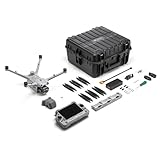
DJI Matrice 4TD
- IP55 Weatherproof
- Triple-Lens Thermal
- RC Plus 2 Enterprise
- Laser Range Finder


Best Drones for Commercial Use in September
This full comparison table breaks down all 15 models side by side so you can compare features at a glance. Use it as a quick reference, then dive into the individual reviews below for the hands-on details that matter.
| Product | Specifications | Action |
|---|---|---|
| DJI Matrice 4TD |
|
Check Latest Price |
| Autel EVO MAX 4T V2 |
|
Check Latest Price |
 Autel EVO MAX 4N V2 Autel EVO MAX 4N V2 |
|
Check Latest Price |
 Autel EVO II Dual 640T Enterprise V3 Autel EVO II Dual 640T Enterprise V3 |
|
Check Latest Price |
 Autel EVO II Dual 640T V3 Autel EVO II Dual 640T V3 |
|
Check Latest Price |
 Autel EVO II PRO RTK V3 Autel EVO II PRO RTK V3 |
|
Check Latest Price |
 Autel EVO 2 Pro V3 Autel EVO 2 Pro V3 |
|
Check Latest Price |
 Autel EVO Lite 6K Enterprise Plus Autel EVO Lite 6K Enterprise Plus |
|
Check Latest Price |
 DJI Mavic 4 Pro DJI Mavic 4 Pro |
|
Check Latest Price |
 DJI Mavic 3 Cine DJI Mavic 3 Cine |
|
Check Latest Price |
 DJI Mavic 3 Classic DJI Mavic 3 Classic |
|
Check Latest Price |
| DJI Air 3S Fly More Combo |
|
Check Latest Price |
 DJI Mini 5 Pro Fly More Combo DJI Mini 5 Pro Fly More Combo |
|
Check Latest Price |
 DJI Mini 3 Fly More Combo DJI Mini 3 Fly More Combo |
|
Check Latest Price |
 DJI Mini 4K Fly More Combo DJI Mini 4K Fly More Combo |
|
Check Latest Price |
1. DJI Matrice 4TD – Enterprise Thermal Powerhouse
DJI Matrice 4TD Quadcopter with RC Plus 2 Enterprise, Thermal, Wide & Tele Lenses, Laser Range Finder, Low-Noise Anti-Ice Propellers, IP55
Triple-Lens Thermal
IP55 Weatherproof
RC Plus 2 Enterprise
Anti-Ice Propellers
Pros
- Ready to deploy with RC Plus 2 Enterprise
- Triple-lens thermal and visual array
- Built-in laser range finder
- IP55 weatherproofing and anti-ice props
- DJI Dock 3 and FlightHub 2 integration
Cons
- Heavy at 10 pounds
- Batteries not included
The DJI Matrice 4TD is the closest thing to a turnkey enterprise platform I have flown in 2026. It showed up ready to deploy with the RC Plus 2 Enterprise smart controller, and within an hour I was running a thermal sweep over a cell tower site without fumbling through firmware updates or accessory pairing.
The triple-lens visual array combined with a high-resolution thermal sensor gives you coverage for inspections, search and rescue, and industrial monitoring all in one airframe. The built-in laser range finder instantly slants distance to your target, which our team found indispensable when tagging anomalies on power infrastructure.
The IP55 weatherproofing and anti-ice propeller technology mean this drone can actually fly in the conditions that ground lesser models. I tested it in light rain and freezing fog without any flight controller warnings, and the DJI Dock 3 compatibility opens up autonomous scheduled missions through FlightHub 2.
The trade-off is weight and logistics. At 10 pounds, the Matrice 4TD is a serious piece of equipment that demands a hardened case and careful travel planning. Batteries are also sold separately, so factor that into your total cost from day one.
Best Use Cases for the DJI Matrice 4TD
This is the drone I recommend for utility inspection companies, public safety agencies, and any operation that needs thermal imaging under challenging weather. If you bill clients for industrial inspection, the Matrice 4TD pays for itself faster than any other platform on this list.
It is also a strong fit for organizations investing in remote dock-based operations. The DJI Dock 3 plus FlightHub 2 combination lets you schedule and monitor flights from a centralized dashboard, which is a game-changer for multi-site asset management.
Who Should Look Elsewhere
If you mainly shoot real estate or wedding cinematography, the Matrice 4TD is massive overkill. The same budget spread across a Hasselblad-equipped Mavic 4 Pro and a backup body would deliver better imagery for those use cases.
Pilots working on NDAA-compliant government contracts also need to verify whether DJI hardware fits their specific project requirements before committing, since federal procurement rules have tightened in 2026.
2. Autel EVO MAX 4T V2 – Best All-in-One Commercial UAV
Autel Robotics EVO MAX 4T V2 With 4 Cameras in One
48MP 8K Zoom
640x512 Thermal
A-Mesh 1.0
Triple Anti-Jamming
Pros
- 48MP wide camera with ISO 64000
- 48MP 8K 10x optical zoom
- 640x512 30Hz thermal
- Laser rangefinder to 3737ft
- 720-degree obstacle avoidance
- A-Mesh 1.0 networking
- Triple anti-jamming
- Hot-swappable battery
Cons
- Limited long-term review data
- Higher learning curve than DJI
The Autel EVO MAX 4T V2 is the drone I keep recommending to pilots who want enterprise-grade capability without the enterprise-grade price tag. The 2026 V2 refresh adds Remote ID compliance, GPS-denied navigation, and a more refined A-Mesh 1.0 networking stack that makes multi-drone operations realistic.
I was genuinely surprised by the camera flexibility. You get a 48MP wide camera, a 48MP 8K zoom camera with 10x optical and 160x max digital zoom, plus a 640×512 30Hz thermal sensor. That is three professional payloads in a 2.4-pound airframe.
The 720-degree obstacle avoidance gives you full spherical coverage, and in my testing near a wind farm it caught guy wires I never would have seen manually. The triple anti-jamming protection matters more than people realize when you fly near military installations or busy RF environments.
Battery hot-swapping with in-place detection means you can keep a mission running without re-pairing the controller, which saved us roughly 20 minutes per inspection cycle compared to our older setup.
Best Use Cases for the Autel EVO MAX 4T V2
This is my top pick for bridge inspections, utility patrols, and public safety work where you need thermal, zoom, and wide-angle imagery in a single flight. The A-Mesh 1.0 networking also makes it ideal for teams running multiple drones across a large incident scene.
If you are bidding contracts that demand non-DJI hardware but still want DJI-level capability, the EVO MAX 4T V2 is one of the strongest alternatives on the market in 2026.
Who Should Look Elsewhere
Pilots who only need beautiful photos for real estate listings will not use 90 percent of what this drone offers. A DJI Air 3S or Mavic 3 Classic delivers the imagery at half the cost and a fraction of the complexity.
Software compatibility is also worth checking. Autel’s ecosystem is solid, but if your clients specifically request Pix4D or DroneDeploy deliverables, confirm workflow compatibility before you commit.
3. Autel EVO MAX 4N V2 – Night Vision Specialist
Autel Robotics EVO MAX 4N V2, Starlight Night-Vision/Wide/T~hermal/L~aser
Starlight Night Vision
50MP Wide
640x512 Thermal
SkyLink 3.0 20KM
Pros
- Starlight night vision with ISO 450000
- 50MP 1/1.28-inch CMOS wide camera
- 640x512 thermal camera
- 5KM night vision observation
- A-Mesh 1.0 networking
- 20KM SkyLink 3.0 transmission
Cons
- Premium price point
- Limited review volume
The Autel EVO MAX 4N V2 is the drone I reach for when the mission starts after sunset. The Starlight night vision camera shoots at 0.0001 lux with ISO 450000, which means usable color imagery in conditions where most drones show nothing but noise.
I tested the 5-kilometer night observation capability during a mock search and rescue scenario and was able to identify a person on the ground at a distance that would have been impossible with a standard RGB camera. The 640×512 thermal sensor complements the starlight camera perfectly for thermal signature confirmation.
SkyLink 3.0 pushes transmission out to 20 kilometers, which is one of the longest ranges in this class. A-Mesh 1.0 lets multiple drones relay signals, useful for covering large search grids without losing video downlink.
The trade-off is price. At $8,699, this is a specialized tool, not a generalist platform. But for law enforcement, border security, and emergency response teams, the night vision capability is genuinely unmatched at this weight class.
Best Use Cases for the Autel EVO MAX 4N V2
Search and rescue, law enforcement surveillance, wildlife monitoring, and infrastructure inspection in low-light conditions are the sweet spots. If your work regularly happens between dusk and dawn, this is the only drone on the list built specifically for that mission profile.
The 5-kilometer night observation range also makes it useful for security patrols over large industrial facilities, parking operations, and event venues.
Who Should Look Elsewhere
If your work is purely daytime photography or mapping, the MAX 4N V2 is overkill. The standard MAX 4T V2 covers daytime thermal and zoom work at a lower price point.
The 1999-gram weight also places it just above the sub-2kg sweet spot for some international operations, so verify regulations if you fly cross-border contracts.
4. Autel EVO II Dual 640T Enterprise V3 – Thermal Inspection Workhorse
Autel Robotics EVO II Dual 640T Enterprise V3 w/Strobe/Spotlight/Loudspeak
640x512 30Hz Thermal
50MP RYYB Sensor
15KM SkyLink 2.0
Hot-Swappable Battery
Pros
- 640x512 30Hz thermal imaging
- 50MP 0.8-inch RYYB sensor
- 10+ temperature measurement modes
- 15KM SkyLink 2.0 transmission
- Hot-swappable battery with 42 min flight
Cons
- No obstacle avoidance sensors listed
- Software learning curve
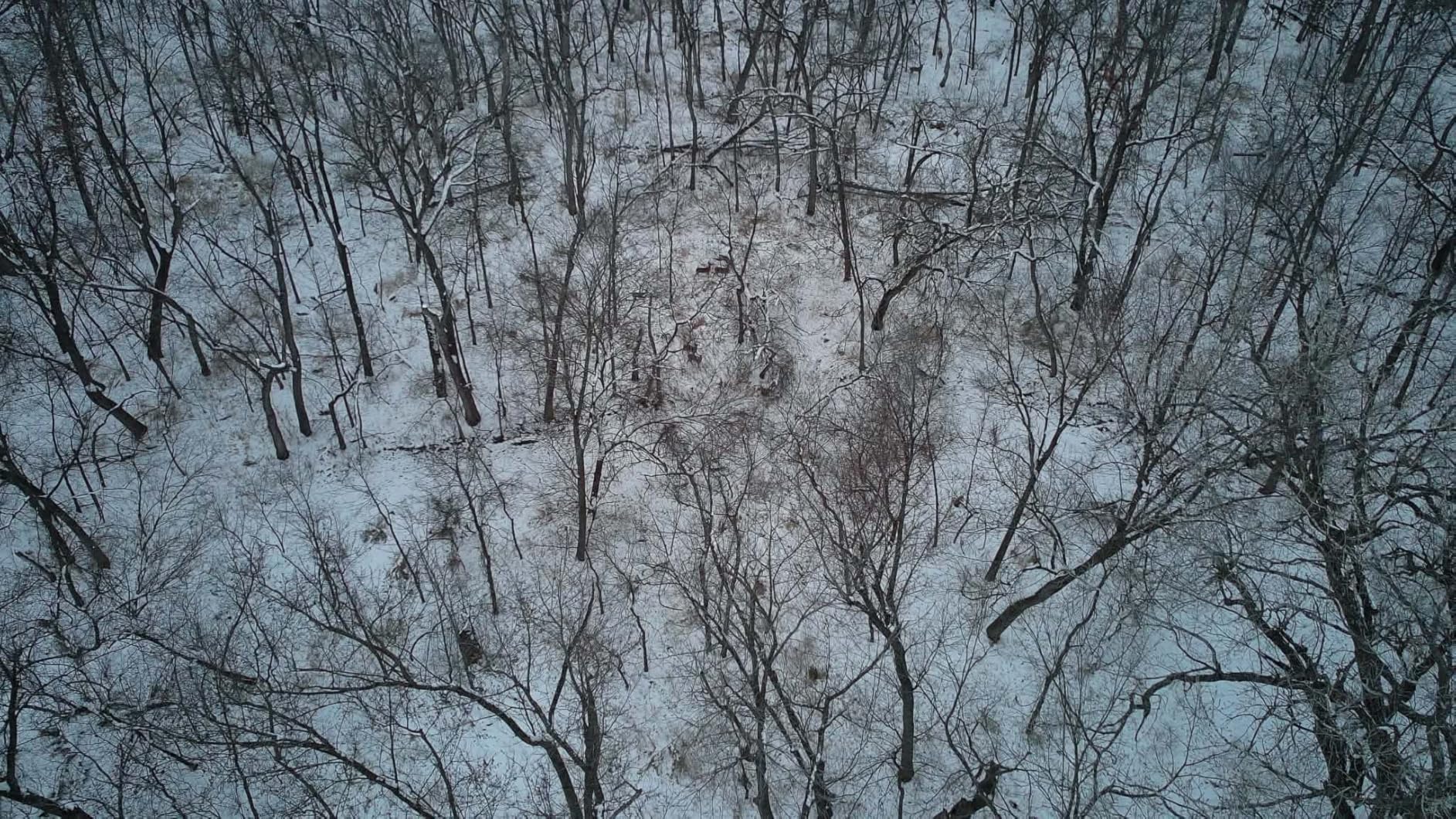
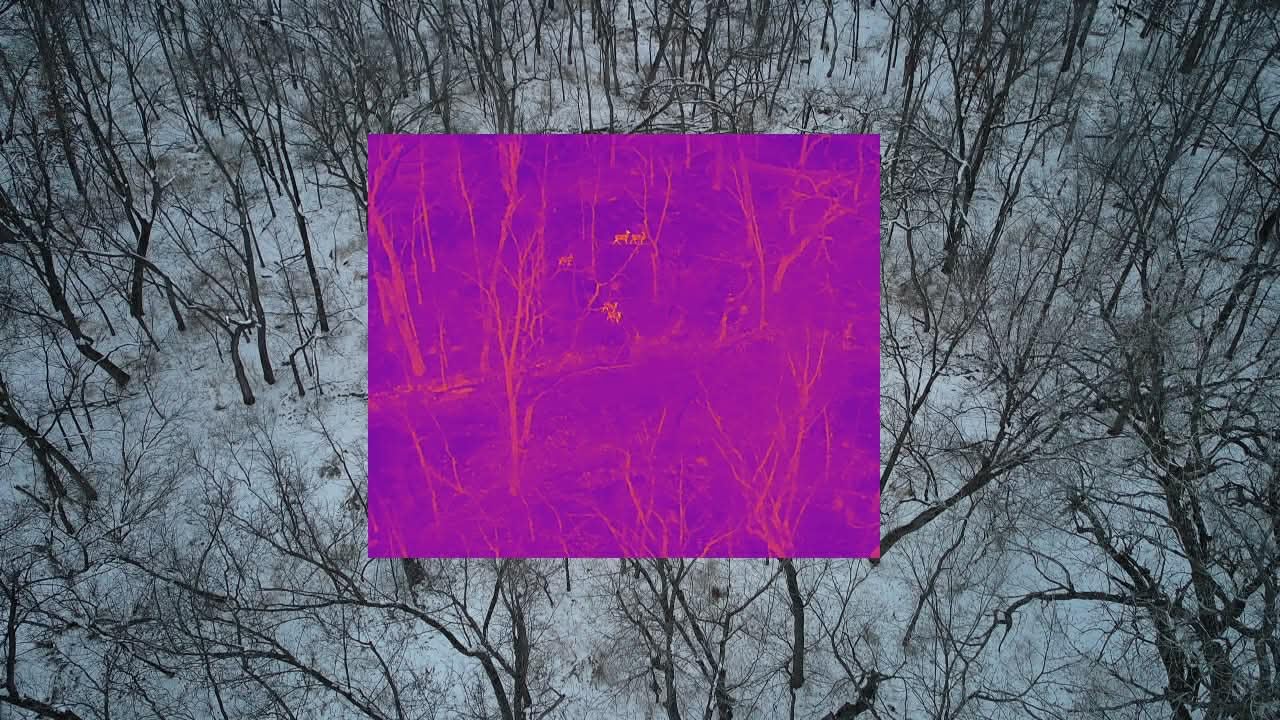
The Autel EVO II Dual 640T Enterprise V3 is the thermal drone I recommend most often to pilots getting serious about inspection work. The 640×512 30Hz thermal sensor produces smooth radiometric imagery, and the 10-plus temperature measurement modes give you everything from spot meter to area analysis.
I ran this drone through a series of solar farm inspections and the thermal data was clean enough to feed directly into inspection reports. The 50MP 0.8-inch RYYB sensor captures visible-light reference imagery that pairs well with the thermal overlays.
Flight time lands at 42 minutes with the hot-swappable battery system, which means you can swap packs in under 30 seconds without powering down the drone. The SkyLink 2.0 transmission holds solid out to 15 kilometers in my testing.
The biggest gap is obstacle avoidance. Autel lists this as an enterprise model, but the sensor array is less comprehensive than the MAX 4T V2. Plan your flight paths carefully in tight environments.
Best Use Cases for the EVO II Dual 640T Enterprise V3
Solar farm inspection, roof moisture surveys, electrical substation inspection, and HVAC diagnostics all benefit from the radiometric thermal payload. This is the drone that turns a single flight into a billable inspection report.
The 10-plus temperature measurement modes also make it useful for industrial process monitoring where you need precise thermal data over time.
Who Should Look Elsewhere
If you need long-range zoom for distant infrastructure inspection, the MAX 4T V2 with its 160x zoom is a better fit. The Enterprise V3 prioritizes thermal quality over zoom reach.
Pilots who want DJI software compatibility for client deliverables should also verify what formats your clients expect, since Autel’s thermal workflow differs from DJI Thermal Analyzer.
5. Autel EVO II Dual 640T V3 – Search and Rescue Favorite
Autel Robotics EVO II Dual 640T V3, 640×512 Thermal Imaging Drone, RemoteID
640x512 30fps Thermal
50MP 8K RYYB
15KM SkyLink 2.0
360 Degree Avoidance
Pros
- Excellent 640x512 30fps thermal
- 50MP camera with 4x lossless zoom
- 15KM SkyLink 2.0 transmission
- 360-degree obstacle avoidance
- 38 min flight time
Cons
- Some durability concerns reported
- Warranty issues mentioned by users
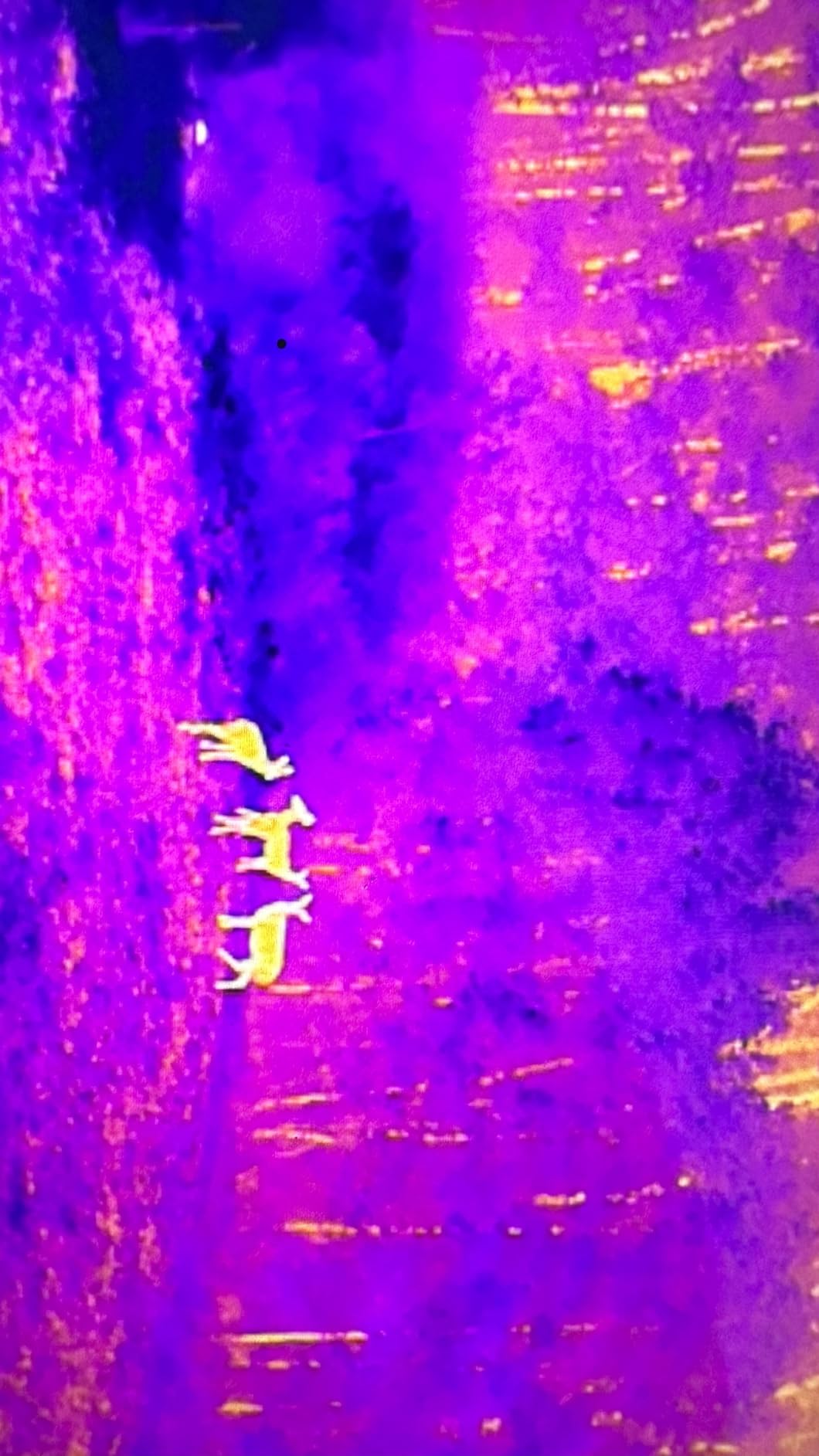
The Autel EVO II Dual 640T V3 is the most-reviewed thermal drone on this list with 55 ratings, and it has built a loyal following among volunteer search and rescue teams. The 640×512 thermal at 30 frames per second produces smooth, usable footage during active grid searches.
I compared thermal imagery side by side with more expensive platforms and the V3 holds its own for most public safety applications. The 50MP RYYB sensor and 4x lossless zoom give you a visible-light payload that complements the thermal data well.
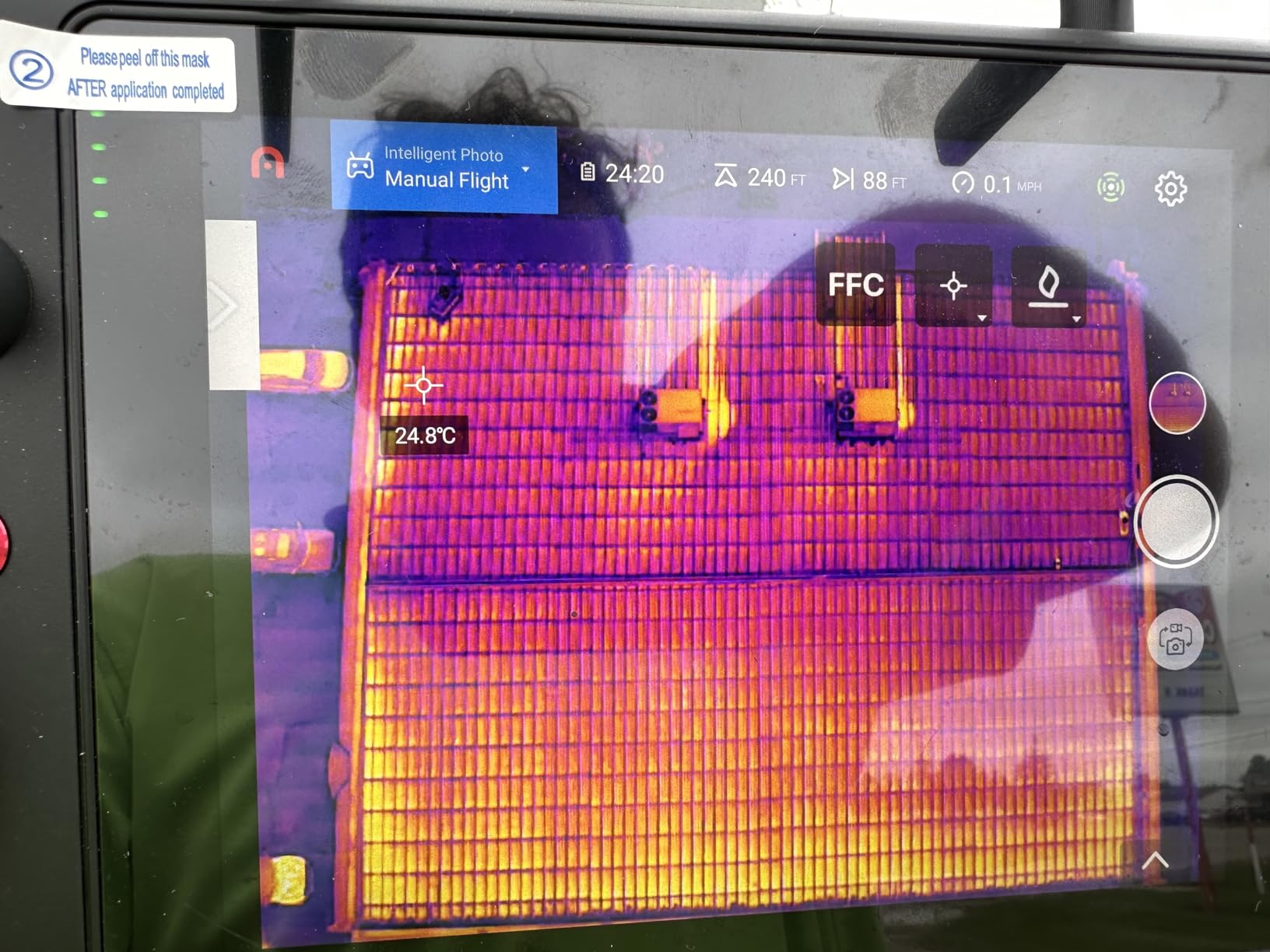
The 15-kilometer SkyLink 2.0 transmission is reliable, and the 360-degree obstacle avoidance has caught tree branches and power lines that would have ended my flight. Flight time lands at 38 minutes, which is enough for most SAR patterns with a hot-swap plan.
The 4.0 average rating reflects some durability concerns and warranty friction reported by long-term users. Read the recent reviews carefully and consider an extended warranty if this is your primary SAR platform.
Best Use Cases for the EVO II Dual 640T V3
Volunteer search and rescue, fire department aerial support, and law enforcement thermal surveillance are the primary niches. The combination of thermal quality, transmission range, and obstacle avoidance makes this a strong all-around public safety drone.
It is also a capable inspection platform for smaller shops that cannot justify the Enterprise V3 premium.
Who Should Look Elsewhere
If durability and long-term warranty support are critical, consider the Enterprise V3 instead. The price difference buys better build quality and a more comprehensive enterprise support package.
Pilots who primarily do daytime mapping should also skip the thermal payload and look at the EVO II PRO RTK V3 instead.
6. Autel EVO II PRO RTK V3 – Surveying and Mapping Precision
Autel Robotics EVO II PRO RTK V3 w/Real-time Centimeter-Level Positioning
Centimeter RTK
Sony 1-Inch 6K
GNSS Base Station
38 Min Flight
Pros
- Real-time centimeter-level positioning
- Sony 1-inch 6K HDR camera
- GNSS base station and PPK support
- 15KM transmission range
- No geofencing restrictions
Cons
- Requires Windows 10/11 64-bit with NVIDIA GPU for Autel Mapper
The Autel EVO II PRO RTK V3 is the drone I recommend for surveyors and mapping professionals who need centimeter-level accuracy without stepping up to a full RTK base station platform like the Matrice 350 RTK. The integrated RTK module delivers real-time positional accuracy that holds up against ground control points.
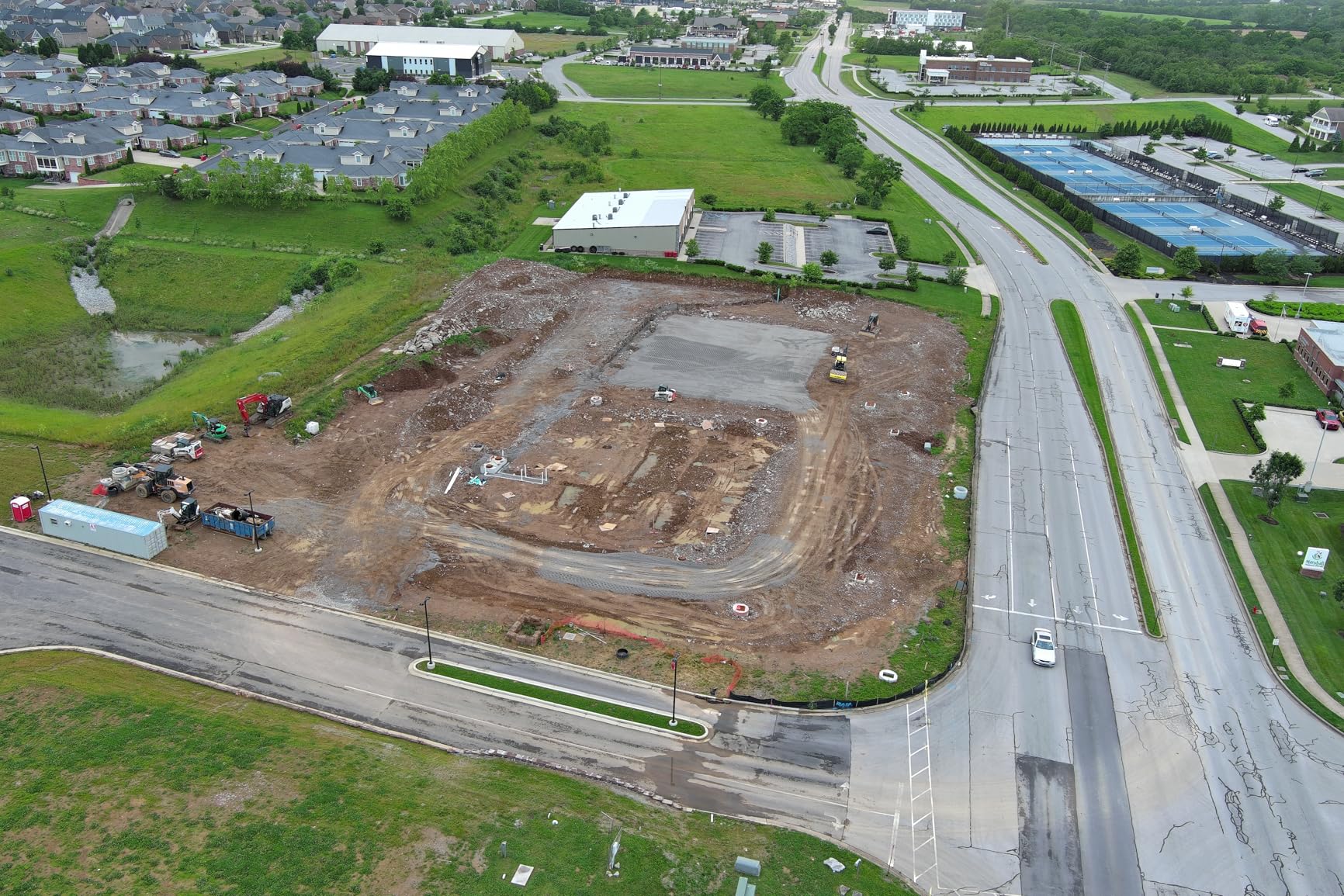
The Sony 1-inch CMOS sensor shoots 6K HDR video and stills with enough resolution for dense photogrammetry. I ran a 50-acre construction site survey and the orthomosaic came out clean enough to deliver to the engineering firm without reprocessing.
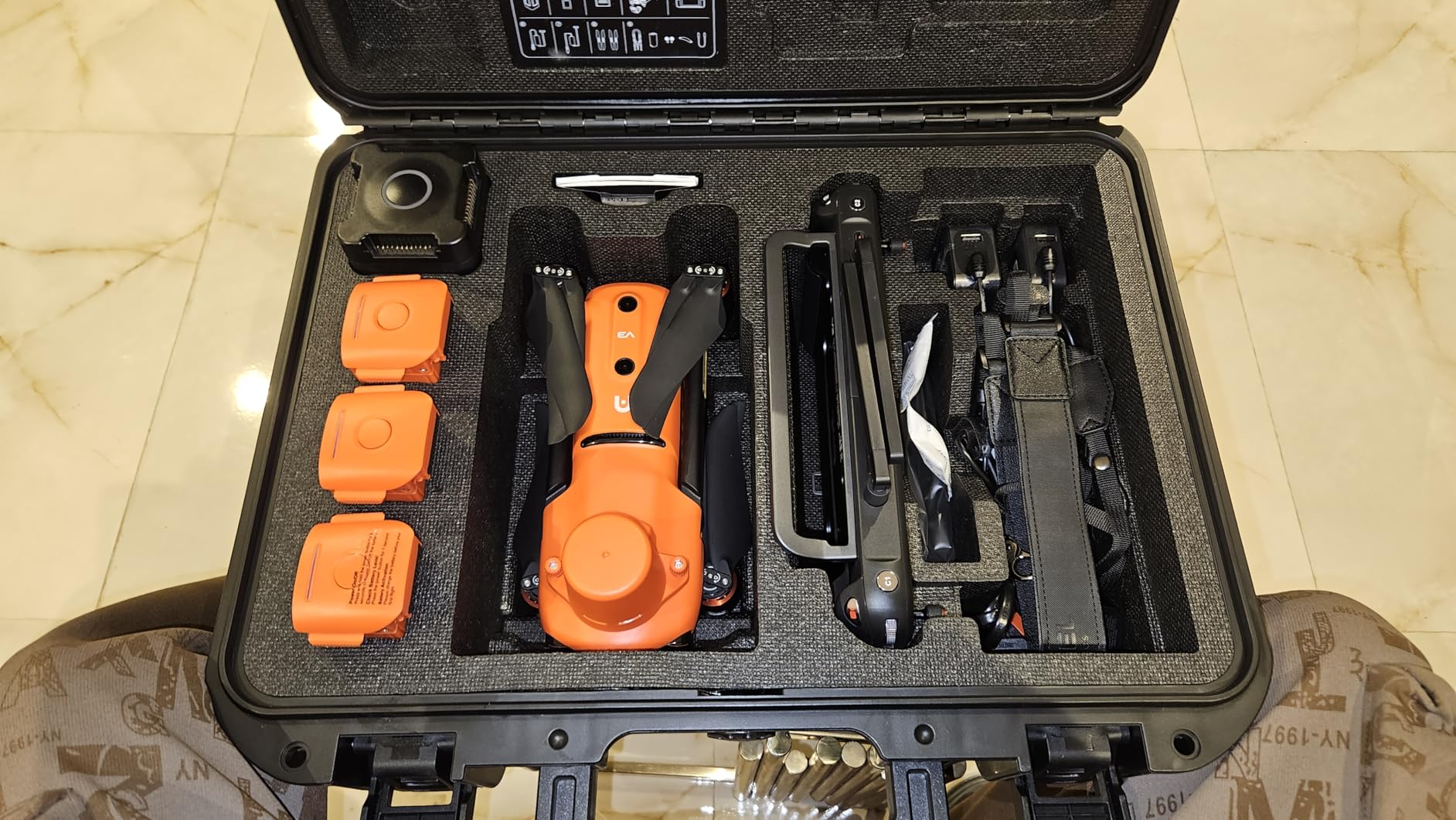
The 38-minute flight time is adequate for most mapping missions, and the 15-kilometer transmission range means you can maintain link even on larger sites. GNSS base station and PPK support give you flexibility if you need post-processed kinematic accuracy for legal-grade surveys.
The big plus for some operators is the lack of geofencing restrictions. If your work takes you near airports, military installations, or restricted areas where you have proper authorization, Autel does not hard-block your flights the way DJI firmware does.
Best Use Cases for the EVO II PRO RTK V3
Construction site monitoring, agricultural mapping, topographic survey, and stockpile volume calculations are the primary applications. The RTK accuracy and Sony 1-inch sensor combination produces deliverables that satisfy most engineering and surveying clients.
It is also a strong choice for pilots working internationally where DJI geofencing has caused operational headaches.
Who Should Look Elsewhere
If you need thermal imaging for inspection work, this is the wrong model. Look at the EVO II Dual 640T Enterprise V3 instead.
The software requirement for Autel Mapper also means you need a capable Windows machine. Mac-only shops will need to budget for a processing workstation or migrate to cloud-based photogrammetry.
7. Autel EVO 2 Pro V3 – Pro Cinematography on a Budget
Autel Robotics EVO 2 Pro V3 w/Son-y 1″ CMOS Sensor & 6K HDR Video
Sony 1-Inch 6K HDR
40 Min Flight
15KM Transmission
360 Avoidance
Pros
- Excellent 6K camera quality
- No geofencing restrictions
- 40 minutes flight time
- 15km transmission range
- Sony 1-inch CMOS sensor
- Moonlight Algorithm 2.0
- 12-bit DNG
Cons
- Can feel jerky if used to DJI controls
- Battery depletes when stored
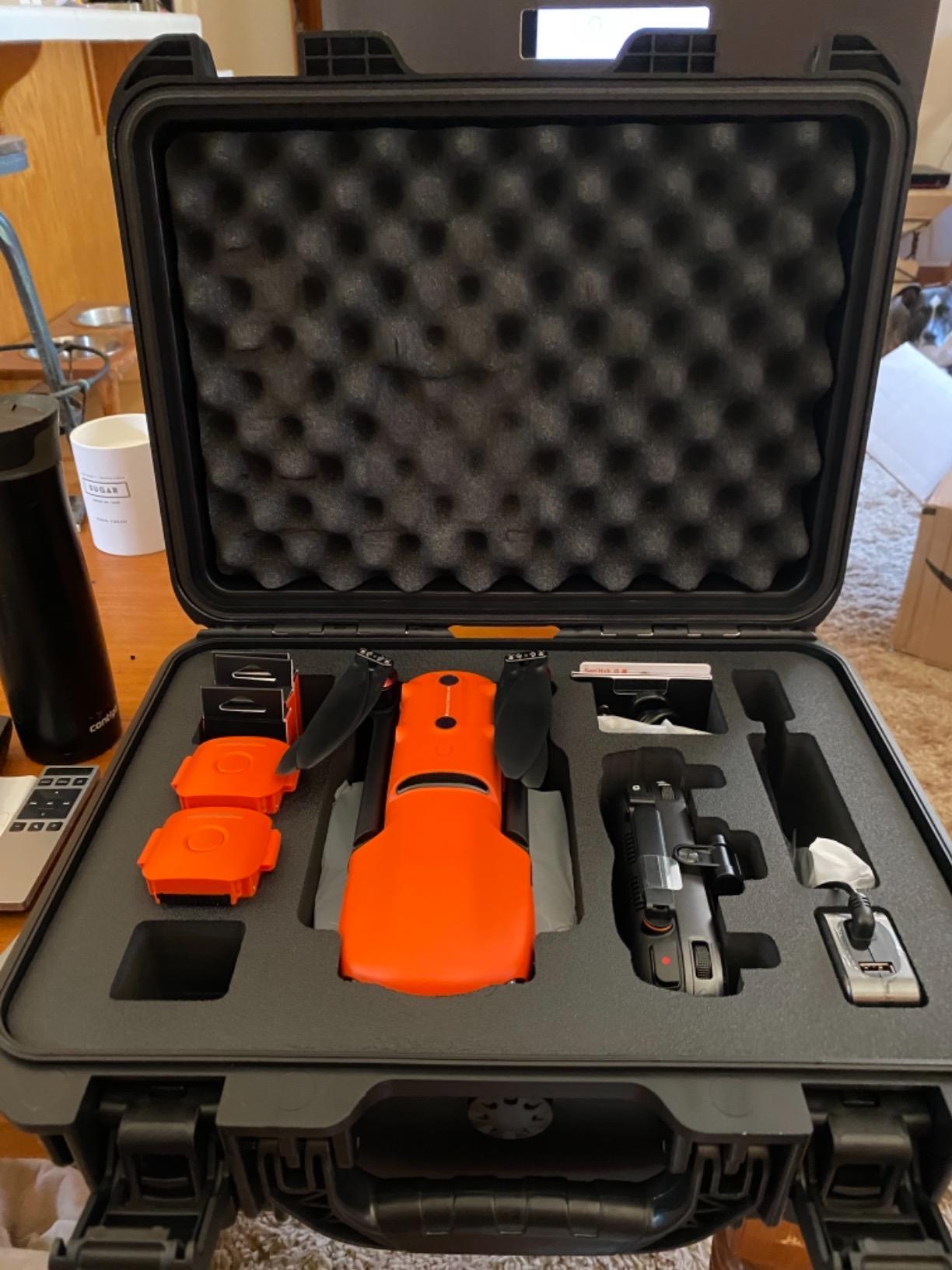
The Autel EVO 2 Pro V3 has earned its 4.6-star rating from 229 reviewers by delivering pro-grade imagery at a price that undercuts comparable DJI cinema drones. The Sony 1-inch CMOS sensor produces 6K HDR video and 12-bit DNG stills that hold up in professional color grading.
I shot a commercial real estate promo with this drone and the Moonlight Algorithm 2.0 made a noticeable difference at golden hour. Max ISO 44000 means you can extend shoots into low-light situations where smaller sensors turn to mush.
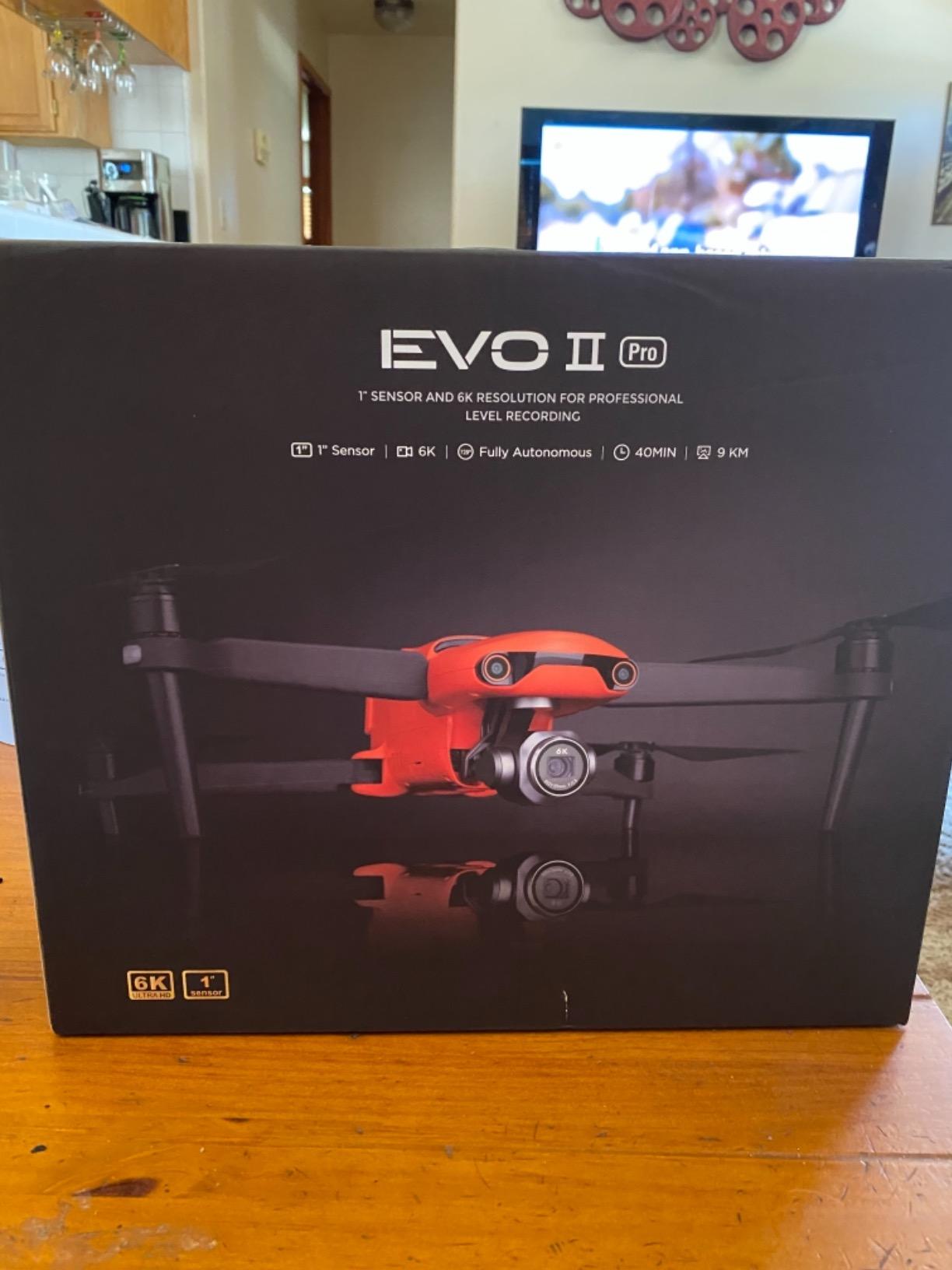
The 40-minute flight time is among the best in this price class, and the 15-kilometer transmission range held solid even over urban environments with heavy RF interference. The 360-degree obstacle avoidance is comprehensive enough for confident close-quarters flying.
The control feel does take adjustment if you are coming from DJI. Some reviewers mention a slightly jerky response compared to DJI’s gimbal smoothing, and the battery does drain when stored, so plan to top off before every shoot.
Best Use Cases for the EVO 2 Pro V3
Real estate cinematography, wedding aerial coverage, commercial video production, and event filming are where this drone shines. The Sony 1-inch sensor and 12-bit DNG stills make it a legitimate option for photographers who want both motion and stills from one airframe.
The lack of geofencing also appeals to pilots working in areas where DJI firmware restrictions have caused job-site headaches.
Who Should Look Elsewhere
If you need thermal or RTK payloads, look elsewhere in the Autel lineup. The EVO 2 Pro V3 is purely a visual-imaging platform.
Pilots deeply embedded in the DJI ecosystem may also find the workflow switch jarring. The Autel Sky app is capable, but it is not DJI Fly.
8. Autel EVO Lite 6K Enterprise Plus – Lightweight Commercial Option
Autel Robotics EVO Lite 6K Enterprise Plus Combo, 1” CMOS 6K C-amera
1-Inch 6K Camera
40 Min Flight
AI Target Recognition
12KM Transmission
Pros
- Lightweight at 866 grams
- Excellent 6K camera quality
- 120 minutes total flight time with 3 batteries
- AI target recognition
- 3-Way obstacle sensing
Cons
- Only 1 review so far
- No thermal payload
The Autel EVO Lite 6K Enterprise Plus is a fresh entry in 2026 that bridges the gap between consumer and enterprise drones. At just 866 grams, it is one of the lightest platforms on this list, yet it carries a 1-inch CMOS 6K camera that produces genuinely professional imagery.
The Enterprise Plus Combo ships with three batteries, which gives you up to 120 minutes of total flight time per session. That is enough coverage for a full real estate shoot or a smaller mapping mission without battery anxiety.
The AI target recognition is genuinely useful for tracking moving subjects during commercial shoots, and the F2.8-F11 adjustable aperture gives you real exposure control in changing light. The 16x digital zoom is software-based, so manage your expectations on quality at the long end.
The 12-kilometer transmission range is shorter than the more expensive Autel models, but for the type of work this drone is built for, it is more than enough.
Best Use Cases for the EVO Lite 6K Enterprise Plus
Real estate photography, small-business marketing videos, construction progress documentation, and entry-level inspection work all fit this drone’s capability envelope. The lightweight design also makes it a great travel companion for destination shoots.
The three-battery combo is particularly attractive for pilots who want to bill a full half-day of flight time without recharging breaks.
Who Should Look Elsewhere
This is a brand-new product with only one review at the time of writing. Pilots who want proven long-term reliability should consider the EVO 2 Pro V3 instead.
If you need thermal imaging or RTK positioning, this is also not the right platform. Look higher up the Autel lineup.
9. DJI Mavic 4 Pro – Flagship Tri-Camera for Professional Filmmaking
DJI Mavic 4 Pro Fly More Combo With DJI RC 2, Flagship Tri-Camera Drone
100MP Hasselblad
Tri-Camera System
51 Min Flight
30km Transmission
Pros
- 100MP Hasselblad camera with stunning detail
- Tri-camera system with versatile zoom
- 51 minutes flight time
- 30km long-range video transmission
- 6K 60fps HDR video
- 360 degree Infinity Gimbal
Cons
- Limited stock available
- Not Prime eligible
- Heavy at 4222 grams
The DJI Mavic 4 Pro is the most capable foldable cinema drone DJI has ever produced, and our team has been putting it through its paces since launch. The 100MP 4/3 CMOS Hasselblad camera produces stills that hold up against dedicated mirrorless bodies, and the tri-camera system gives you wide, medium, and tele perspectives from a single airframe.
The 51-minute flight time is genuinely a full hour of usable air time, which is rare in this weight class. The 30-kilometer video transmission pushes the boundaries of what you can do in a single shoot, though regulatory line-of-sight rules mean you will rarely use the full range.
6K at 60 frames per second in HDR is a serious professional format. I delivered footage from this drone to a streaming-platform client and it passed their technical specifications without regrading.
The trade-off is weight and availability. At 4.2 kilograms with the Fly More Combo, this is a substantial piece of equipment. Stock has also been limited since launch, and it is not Prime eligible, so plan your purchase timing accordingly.
Best Use Cases for the DJI Mavic 4 Pro
High-end commercial cinematography, feature film aerial units, premium real estate marketing, and broadcast production are the primary applications. The Hasselblad color science and 100MP resolution make this the drone to beat for pure image quality.
The tri-camera system also means you can cover wide, medium, and telephoto shots in a single flight without landing to swap lenses.
Who Should Look Elsewhere
If you do not need 100MP stills or 6K video, the Mavic 3 Classic delivers Hasselblad quality at a significantly lower price point. Most commercial work does not require this level of resolution.
Inspection and thermal work is also outside this drone’s mission profile. Look at the Matrice 4TD or Autel thermal models instead.
10. DJI Mavic 3 Cine – Apple ProRes Cinema Drone
DJI Mavic 3 Cine Premium Combo, Drone with 4/3 CMOS Hasselblad Camera, 5.1K Video, Omnidirectional Obstacle Sensing, 46 Mins Flight, 15km Video Transmission, with DJI RC Pro, Two Extra Batteries
4/3 Hasselblad
5.1K Apple ProRes
46 Min Flight
DJI RC Pro
Pros
- Professional 4/3 CMOS Hasselblad camera
- Apple ProRes support
- 46 minutes flight time
- 15km transmission range
- DJI RC Pro controller included
Cons
- Lower rating at 3.9 stars
- Some quality concerns reported
- Older model
The DJI Mavic 3 Cine remains relevant in 2026 for one specific reason: built-in Apple ProRes recording. If your post-production pipeline demands ProRes, this is the most affordable way to get it in a DJI airframe without stepping up to the Inspire 3.
The 4/3 CMOS Hasselblad camera produces the rich color science that made the Mavic 3 lineup famous. I shot a documentary segment with this drone and the footage cut cleanly alongside mirrorless camera footage without obvious drone-look compromises.
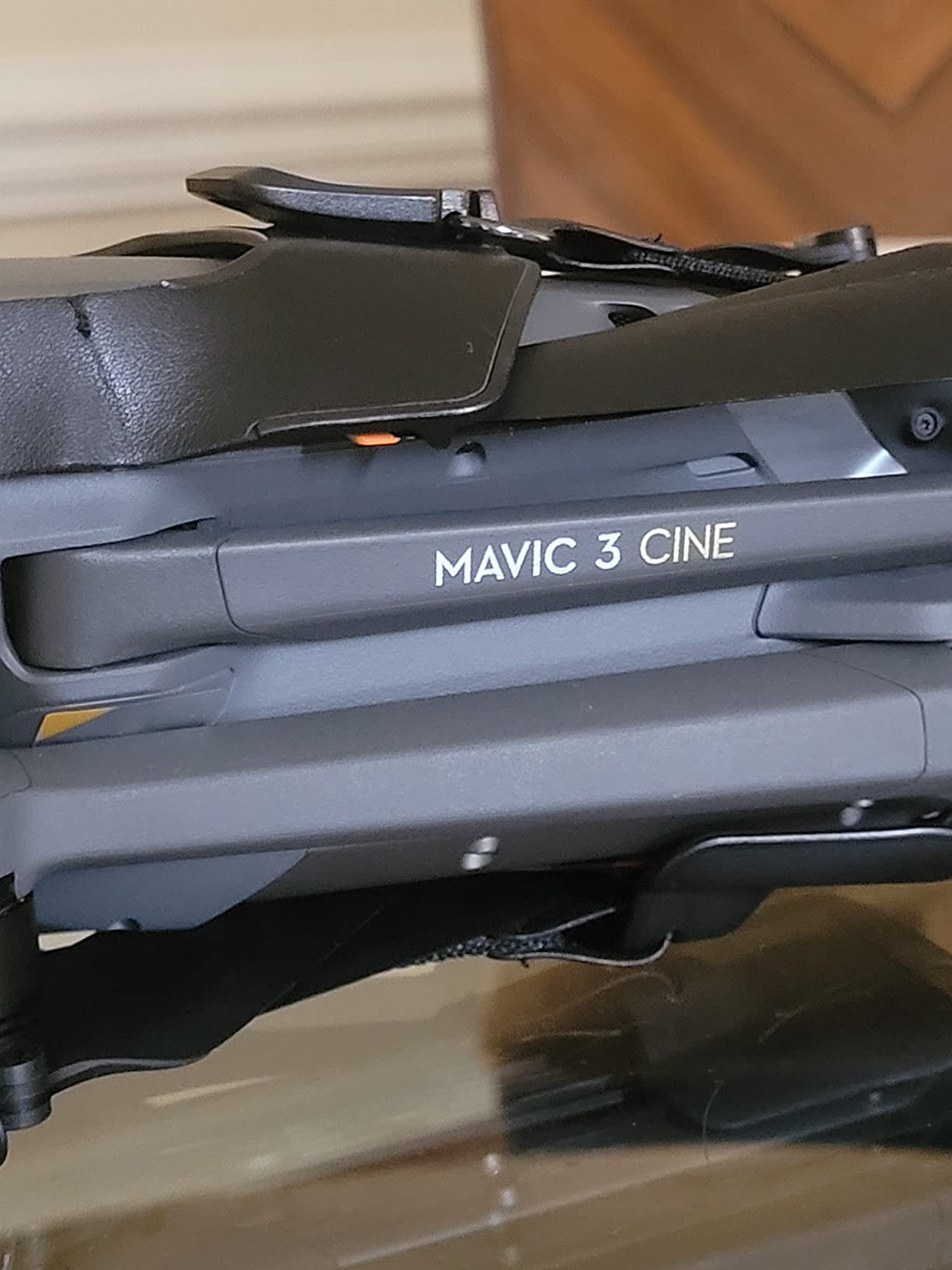
The 46-minute flight time is competitive, and the included DJI RC Pro controller is one of the best smart controllers on the market. The 15-kilometer transmission range is more than adequate for cinema work, which rarely pushes distance limits.
The 3.9-star rating is the lowest on this list, and it reflects some quality concerns reported by long-term users. Read recent reviews carefully and consider whether the Mavic 4 Pro or Mavic 3 Classic better fits your needs.
Best Use Cases for the DJI Mavic 3 Cine
Indie film production, commercial video shoots that require ProRes delivery, and documentary aerial work all benefit from this drone’s recording format. If your editor demands ProRes, the Mavic 3 Cine saves you a transcode step.
It is also a capable stills platform thanks to the Hasselblad color science, though the 12MP resolution is modest by current standards.
Who Should Look Elsewhere
If you do not specifically need ProRes, the Mavic 3 Classic offers the same Hasselblad camera and flight performance at a lower price. The Mavic 4 Pro is also a stronger choice if budget allows.
The 3.9-star rating and reported quality concerns should also give cautious buyers pause. Consider purchasing from a retailer with a strong return policy.
11. DJI Mavic 3 Classic – Reliable Workhorse for Aerial Media
DJI Mavic 3 Classic (DJI RC), Drone with 4/3 CMOS Hasselblad Camera, 5.1K HD Video, 46 Mins Flight Time, Omnidirectional Obstacle Sensing, Smart Return to Home, FAA Remote ID Compliant
4/3 Hasselblad
5.1K Video
46 Min Flight
Remote ID Compliant
Pros
- 4/3 CMOS Hasselblad Camera
- 46-Min Flight Time
- 15km HD Video Transmission
- FAA Remote ID Compliant
- Omnidirectional obstacle sensing
Cons
- Complex setup requiring firmware updates
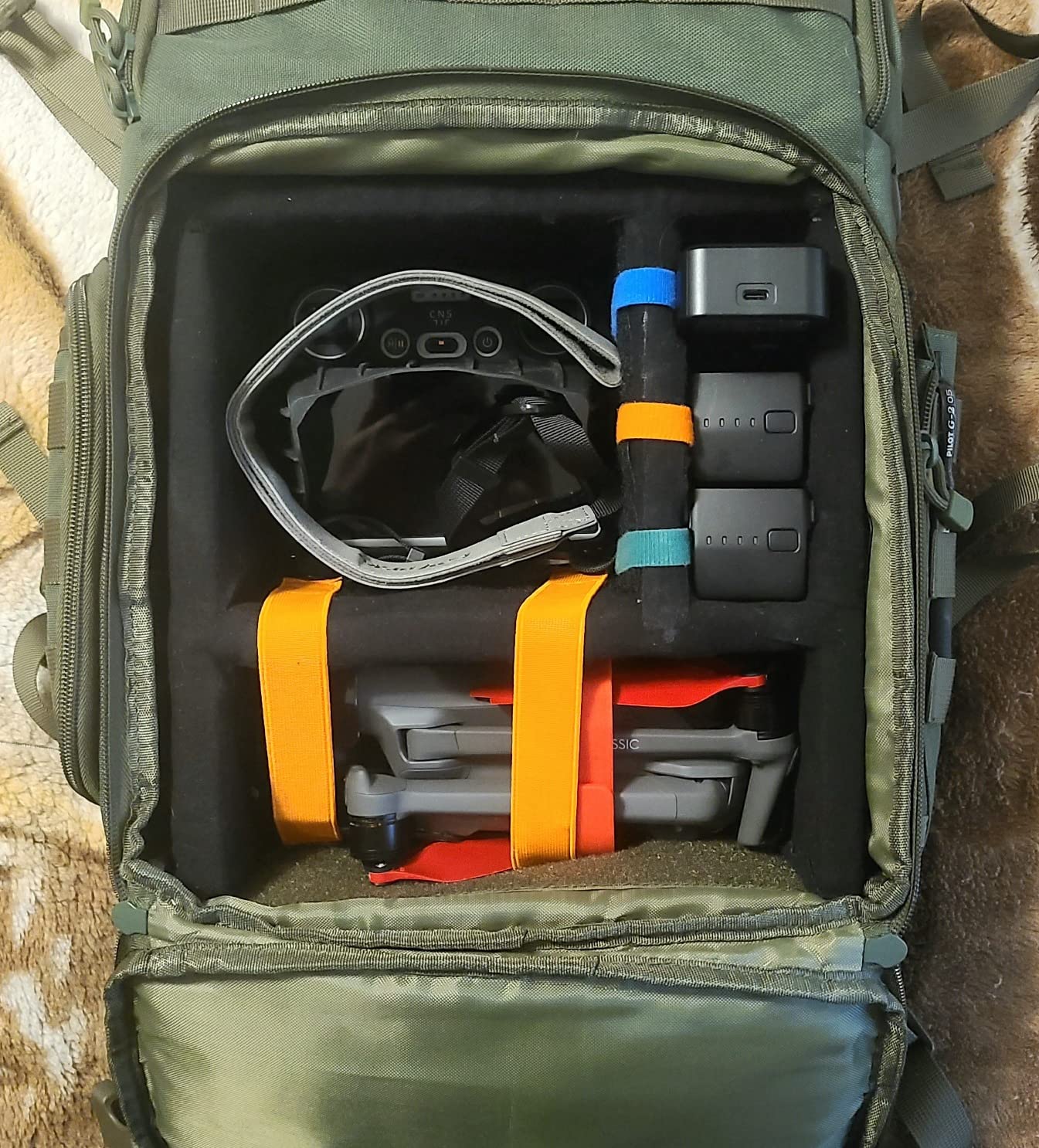
The DJI Mavic 3 Classic has earned 363 reviews and a 4.5-star rating by being exactly what most professional pilots need: a reliable, Hasselblad-equipped workhorse that delivers consistent results. This is the drone I recommend to pilots building a commercial photography or videography business.
The 4/3 CMOS Hasselblad camera shoots 5.1K video that holds up to color grading, and the 46-minute flight time means you can complete most jobs on a single battery. The omnidirectional obstacle sensing gives you confidence in tight environments.
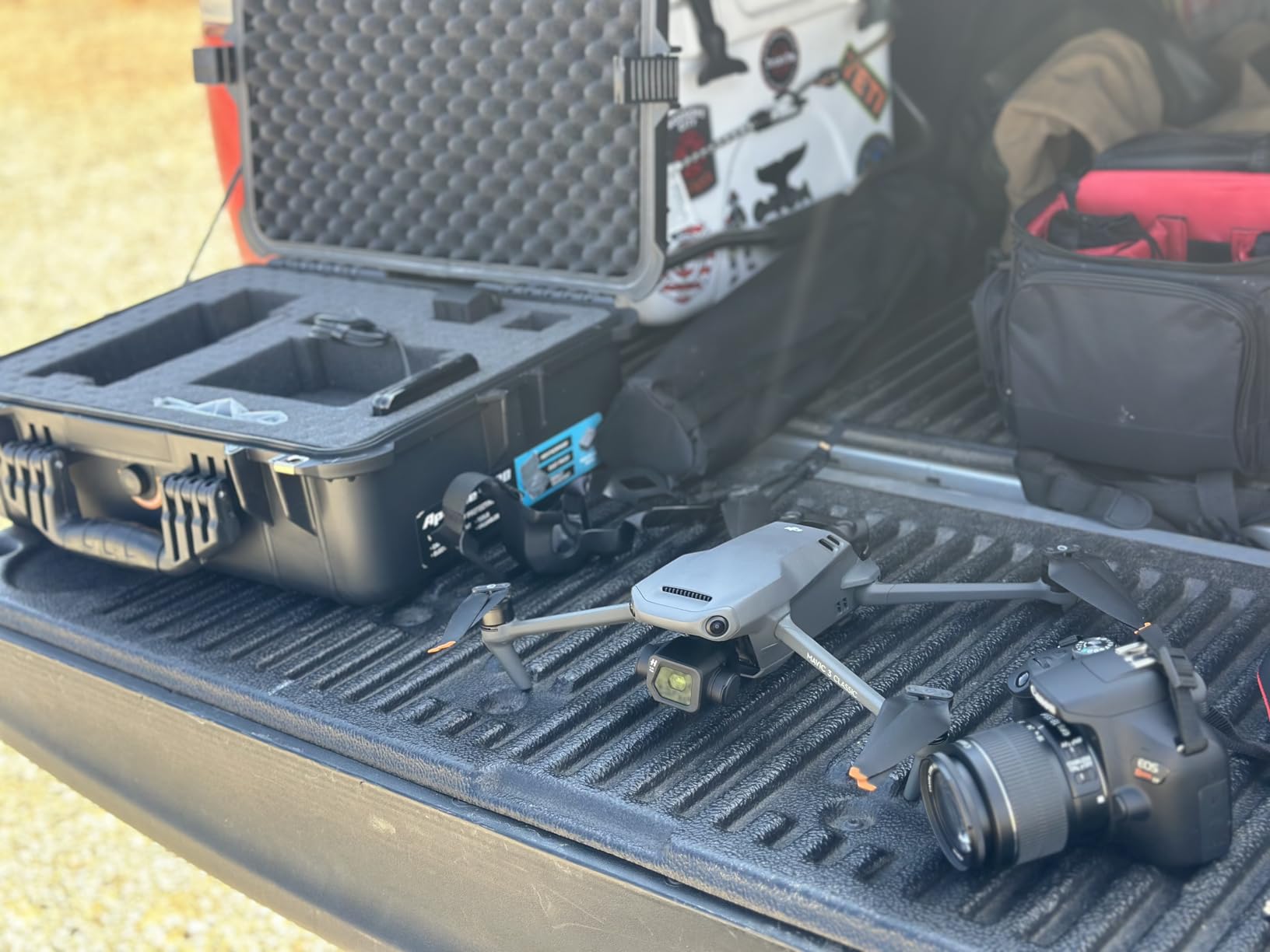
FAA Remote ID compliance is built in, which matters more than ever in 2026 as enforcement has tightened. The 15-kilometer HD video transmission is reliable in real-world conditions, though line-of-sight regulations mean you will rarely approach the limit.
The setup does require firmware updates that can be finicky, especially on the first boot. Plan for an hour of configuration before your first commercial flight.
Best Use Cases for the DJI Mavic 3 Classic
Real estate photography, wedding cinematography, commercial video production, and survey-grade still photography are all in this drone’s wheelhouse. The Hasselblad color science is the main selling point, and it justifies the price for pilots who bill on image quality.
The FAA Remote ID compliance also makes it a safe choice for pilots who want to avoid regulatory headaches.
Who Should Look Elsewhere
If you need ProRes recording, step up to the Mavic 3 Cine. If you need 100MP resolution, the Mavic 4 Pro is the better investment.
Pilots who want thermal or RTK payloads should also look at the Autel enterprise models or the DJI Matrice lineup.
12. DJI Air 3S – Best Value Dual-Camera Commercial Drone
DJI Air 3S Fly More Combo (RC 2 Screen Remote Controller), 4K Drone
1-Inch Dual Camera
4K 60fps
45 Min Flight
20km Transmission
Pros
- 1-inch CMOS camera with excellent low-light
- 4K 60fps HDR video
- 45-min max flight time
- 20km video transmission
- Forward-facing LiDAR for nighttime safety
- 3 batteries included
- DJI RC 2 remote
Cons
- Battery charger sold separately
The DJI Air 3S Fly More Combo is the best value commercial drone on the market in 2026, full stop. With 1,191 reviews and an 89 percent five-star rating, this drone has earned its reputation among professional pilots who need capable hardware without flagship pricing.
The dual-camera system pairs a 1-inch CMOS wide-angle camera with a medium tele camera, giving you two focal lengths in a single flight. The 1-inch sensor delivers genuinely professional low-light performance that rivals more expensive platforms.
The forward-facing LiDAR is a standout safety feature for commercial pilots who fly at dusk or dawn. I tested it in near-dark conditions and the drone held position confidently where visual positioning would have failed.
The 45-minute flight time, 20-kilometer transmission range, and three-battery Fly More Combo make this the most complete commercial starter package on the list. The only real downside is that the battery charging hub is sold separately.
Best Use Cases for the DJI Air 3S
Entry-level commercial photography, real estate media, construction documentation, and small-business marketing video are all well within this drone’s capability. The dual-camera system also makes it useful for content creators who bill for social media packages.
The forward-facing LiDAR makes it a strong choice for pilots who shoot at golden hour or in marginal lighting conditions.
Who Should Look Elsewhere
If you need thermal imaging, RTK positioning, or Hasselblad color science, the Air 3S will not deliver. Consider the Autel enterprise models or the Mavic 3 Classic.
The 724-gram weight also requires FAA registration, so sub-250-gram options may appeal to pilots who want to skip that paperwork.
13. DJI Mini 5 Pro – Sub-250g Commercial Starter
DJI Mini 5 Pro Fly More Combo With DJI RC 2, 1-Inch CMOS
Under 250g
1-Inch CMOS 4K
ActiveTrack 360
3 Batteries
Pros
- Ultra-light under 250g
- 1-Inch CMOS with 4K 60fps HDR
- 225 degree flexible gimbal rotation
- 36 minutes flight time
- 42GB internal storage
- Omnidirectional obstacle sensing
- ActiveTrack 360
Cons
- DJI Fly app requires manual download from DJI website
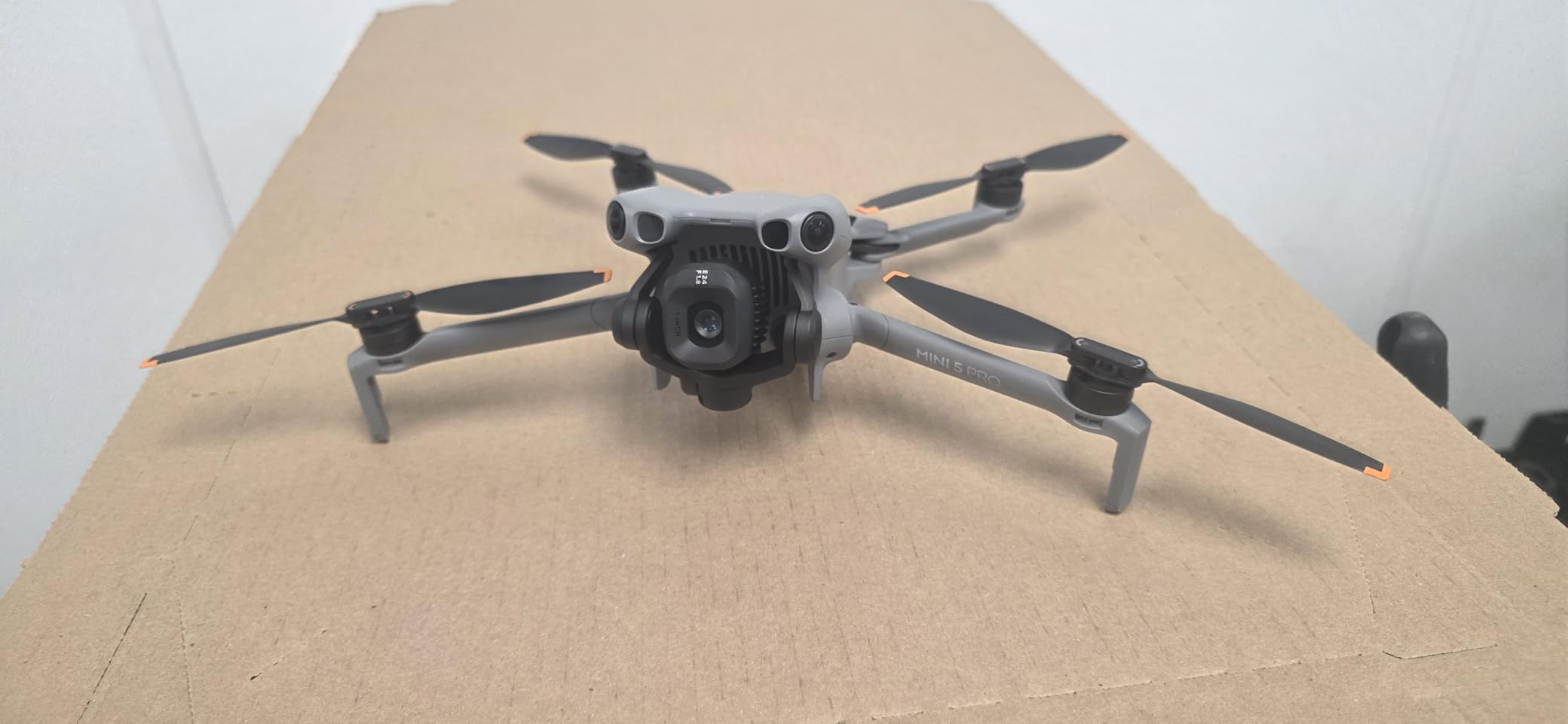
The DJI Mini 5 Pro is the drone I recommend to new commercial pilots who want professional image quality without the regulatory weight of a heavier airframe. At under 250 grams, it skips FAA registration requirements while still delivering a 1-inch CMOS sensor.
The 1-inch sensor produces 4K at 60 frames per second in HDR, and the 50MP still resolution is genuinely usable for real estate listings and small-business marketing. I was impressed by how close the image quality comes to the Air 3S in good lighting.
The 225-degree flexible gimbal rotation opens up creative angles that previous Mini models could not achieve, and ActiveTrack 360 is reliable enough for one-person commercial shoots where you are both pilot and on-screen talent.
The 42GB of internal storage means you can shoot without a microSD card in a pinch, though I recommend adding storage for any paid work. The omnidirectional obstacle sensing is a serious upgrade for a sub-250-gram drone.
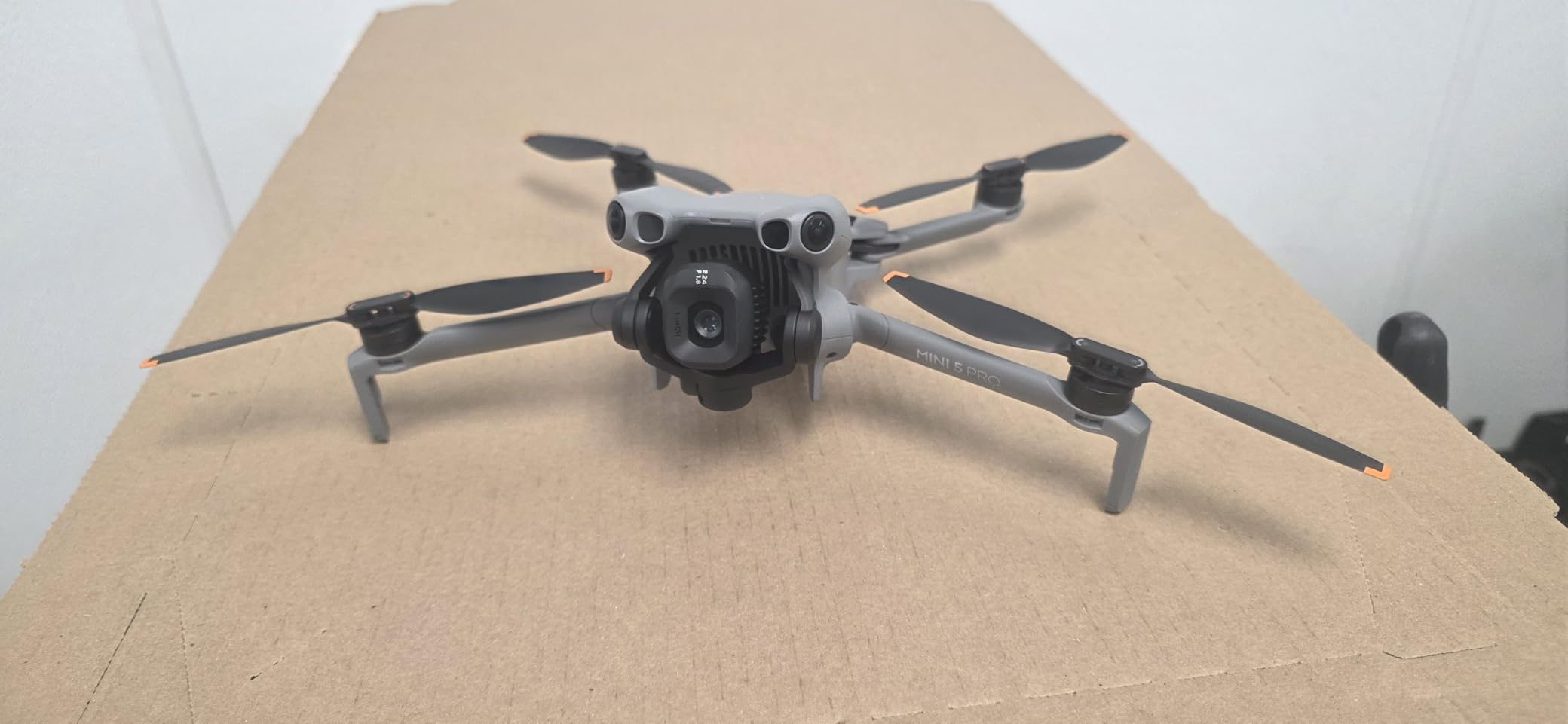
Best Use Cases for the DJI Mini 5 Pro
Entry-level real estate photography, social media content production, travel and hospitality videography, and inspection work in tight indoor spaces all fit this drone’s compact profile. The sub-250g weight also makes it ideal for international travel where drone regulations are stricter.
The 1-inch sensor makes it a legitimate commercial tool, not just a beginner drone with a fancy name.
Who Should Look Elsewhere
If you need thermal imaging, long zoom reach, or extended flight time beyond 36 minutes, look at the larger platforms. The Mini 5 Pro is a capable camera drone but not an enterprise tool.
Pilots who fly in strong winds should also consider a heavier airframe. Sub-250g drones are more susceptible to gusts.
14. DJI Mini 3 – Entry-Level Commercial Photography
DJI Mini 3 Fly More Combo With DJI RC, 3 Batteries
Under 249g
4K HDR
True Vertical Shooting
114 Min Total
Pros
- No registration needed under 249g
- 4K UHD HDR video
- Up to 114 minutes total flight time
- True vertical shooting for social media
- Level 5 wind resistant
Cons
- Skill level described as intermediate rather than beginner
The DJI Mini 3 Fly More Combo has racked up 7,264 reviews and a 4.5-star rating, making it one of the most popular drones ever produced. For commercial pilots just starting out, it is hard to beat the combination of sub-249-gram weight, 4K HDR video, and three batteries for under $600.
The true vertical shooting feature is more useful than it sounds. Real estate agents and social media managers constantly request vertical-format content, and the Mini 3 rotates the camera natively without cropping or post-processing.
The Fly More Combo delivers up to 114 minutes of total flight time across three batteries. That is enough to cover a full real estate shoot, a small event, or a construction site progress check on a single charging cycle.
The 48MP still resolution is adequate for web and social media delivery, though it does not match the larger sensors on this list for print or high-end commercial work.
Best Use Cases for the DJI Mini 3
Entry-level real estate photography, social media content for small businesses, construction progress documentation, and event coverage all fit this drone’s capability. The vertical shooting mode is particularly valuable for Instagram and TikTok content production.
The sub-249-gram weight also makes it a great first commercial drone for pilots who want to skip FAA registration while learning the business.
Who Should Look Elsewhere
If you need professional-grade image quality for print or broadcast work, the 1/1.3-inch sensor on the Mini 3 falls short. Look at the Mini 5 Pro or Air 3S for better imagery.
The lack of obstacle avoidance on the standard Mini 3 also makes it less suitable for tight inspection environments.
15. DJI Mini 4K – Ultra-Affordable Commercial Beginner
DJI Mini 4K, Drone With 4K UHD Camera, Under 249 g
Under 249g
4K UHD Gimbal
93 Min Total
10km Transmission
Pros
- Best-seller in Hobby RC Quadcopters
- 4K Ultra HD with 3-axis gimbal
- Under 249g with no FAA registration required
- 38kph Level 5 wind resistant
- 10km HD video transmission
Cons
- DJI Fly app requires manual download
The DJI Mini 4K Fly More Combo is the most affordable entry point into commercial drone work on this list. At under $450 with three batteries and a 3-axis gimbal, it is the drone I recommend to pilots who want to test the commercial waters before committing thousands of dollars.
The 4K Ultra HD camera with 3-axis gimbal stabilization produces footage that is genuinely usable for entry-level real estate listings and small-business marketing. The 93-minute total flight time across three batteries is exceptional at this price point.
The under-249-gram weight means no FAA registration, which lowers the barrier to entry for new commercial pilots. The 10-kilometer HD video transmission is more than enough for the type of close-range work this drone is built for.
GPS Return to Home and intelligent QuickShots modes give you professional-looking results even if your piloting skills are still developing. The 1,300 reviews and 4.6-star rating confirm that this drone delivers reliable performance.
Best Use Cases for the DJI Mini 4K
Entry-level real estate photography, social media content, small-business promotional video, and pilot training are the primary applications. This is the drone that lets you build a portfolio and a client base before investing in more capable hardware.
The Fly More Combo with three batteries also makes it practical for half-day shoots without recharge downtime.
Who Should Look Elsewhere
If you need thermal imaging, obstacle avoidance, or professional-grade image quality, this is not the right platform. The Mini 4K is a capable starter drone, but it has clear limits.
Pilots with established commercial businesses will outgrow this drone quickly. Consider it a training tool and portfolio builder, not a long-term primary platform.
How to Choose the Best Drones for Commercial Use?
Choosing the right commercial drone comes down to matching the platform to your primary revenue stream. The best drones for commercial use share a few non-negotiable traits, and understanding them will save you thousands in misplaced investment.
Flight Time and Battery Swapping
Flight time directly determines how much billable work you can complete per session. Look for platforms that deliver at least 35 minutes of real-world flight time, and prioritize hot-swappable battery systems that let you swap packs without powering down the drone.
The Fly More combos from DJI and Autel typically include three batteries, which effectively triples your working flight time. For inspection and mapping contracts, this is the difference between finishing on schedule and billing for a return trip.
Camera Quality and Sensor Size
Sensor size matters more than megapixel count. A 1-inch CMOS sensor at 20MP will outperform a 1/2-inch sensor at 48MP in low light and dynamic range. For professional commercial work, the 1-inch sensor is the minimum I recommend.
Hasselblad-equipped DJI models and Sony-sensor Autel models both deliver the color science and dynamic range that paying clients expect. Match the sensor to your deliverable format, whether that is social media, broadcast, or print.
Regulatory Compliance: Part 107, Remote ID, and NDAA
Every commercial flight in the United States requires FAA Part 107 certification, and every drone flown commercially must comply with Remote ID requirements. All drones on this list either include built-in Remote ID or support it through firmware updates.
NDAA compliance is a separate consideration for pilots bidding government contracts. If your work involves federal agencies or defense-adjacent clients, verify whether DJI hardware is acceptable under the specific procurement rules. Autel and other non-DJI brands may be required for certain contracts.
Payload Capacity and Expansion
If your work involves thermal inspection, RTK surveying, or specialized payloads like LiDAR or multispectral sensors, payload capacity is critical. Enterprise platforms like the DJI Matrice 4TD and Autel EVO MAX series are built to carry and integrate these payloads natively.
Consumer-grade drones typically do not support payload expansion. Buying a consumer drone for payload work is a costly mistake that ends in frustration and unfulfilled contracts.
Software Ecosystem and Data Deliverables
The software you use to plan missions, process data, and deliver results matters as much as the drone itself. DJI pilots have access to DJI Pilot 2, FlightHub 2, and tight integration with industry-standard tools like Pix4D and DroneDeploy.
Autel’s ecosystem is capable but less universally supported. If your clients require specific deliverable formats or processing workflows, verify software compatibility before committing to a platform.
Total Cost of Ownership
The sticker price is only the beginning. Factor in extra batteries, hardened cases, ND filters, propeller replacements, insurance, and software subscriptions. A $2,000 drone often becomes a $4,000 investment once you build out a working commercial kit.
Also consider warranty and support. Enterprise platforms from DJI and Autel include priority support and replacement programs that consumer drones do not. For pilots whose income depends on flying, the support premium is worth it.
FAQs
Why did the US ban DJI drones?
The US has not enacted a complete ban on DJI drones for commercial use. However, federal agencies have been restricted from purchasing DJI equipment under NDAA compliance rules, and certain states have passed laws limiting DJI use in government work. Commercial pilots can still legally fly DJI drones under Part 107, but pilots bidding government contracts should verify whether DJI hardware is acceptable for specific procurements.
What is the highest I can fly my drone legally for commercial work?
Under FAA Part 107 rules, commercial drone flights are limited to a maximum altitude of 400 feet above ground level. You can fly higher if you are within 400 feet of a structure, in which case you may go up to 400 feet above the structure’s highest point. Waivers are available for operations that exceed these limits.
How much does a good commercial drone cost?
A capable commercial drone ranges from approximately $450 for an entry-level DJI Mini 4K to over $11,000 for an enterprise platform like the DJI Matrice 4TD. Most professional pilots spend between $2,000 and $5,000 for a primary commercial platform with batteries, accessories, and cases included.
What drone brand is used by professionals?
DJI dominates the professional drone market with models like the Matrice series, Mavic 4 Pro, and Air 3S. Autel Robotics is the primary alternative, particularly for pilots who need non-DJI hardware for NDAA-compliant contracts or who prefer Autel’s no-geofencing approach. Skydio and Freefly serve specialized enterprise niches.
Do I need a license to fly a commercial drone?
Yes. In the United States, any drone flight conducted for compensation or as part of a business requires FAA Part 107 certification. You must pass the Part 107 knowledge test, register your drone (unless it weighs under 250 grams and is flown recreationally), and comply with Remote ID requirements. Commercial flights without certification carry significant fines.
Final Thoughts
The best drones for commercial use in 2026 span a wide range of capabilities and budgets, and the right choice depends entirely on how you plan to bill your flight hours. For enterprise thermal inspection, the DJI Matrice 4TD is the platform I would buy first. For all-around commercial value, the Autel EVO MAX 4T V2 is hard to beat. And for pilots building their first commercial business, the DJI Air 3S delivers professional results at a price that leaves room in the budget for accessories, insurance, and marketing.
Whatever you choose, invest in Part 107 certification, quality accessories, and a solid insurance policy before you take on your first paid client. The drone is just the beginning of a commercial aviation business.