
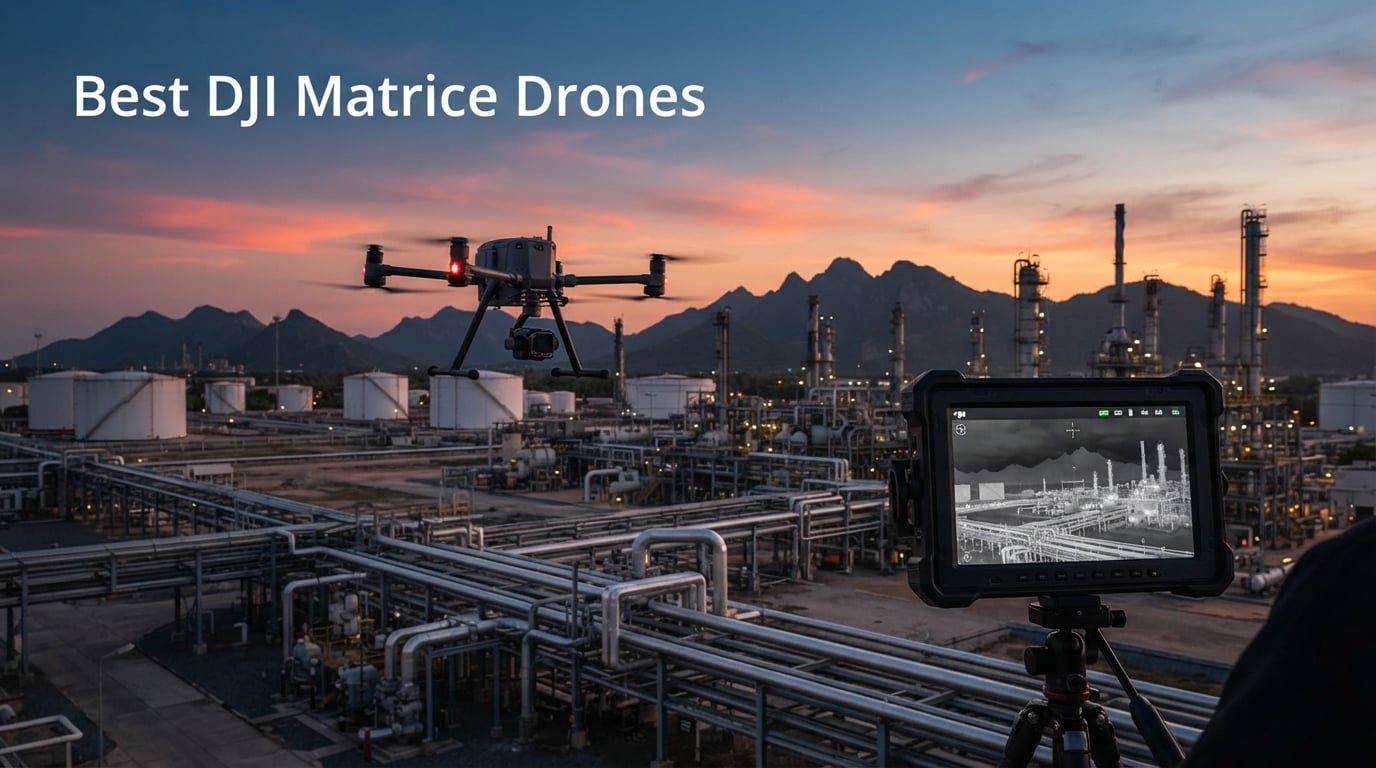
Our team spent months digging through enterprise drone specs, public safety pilot feedback, and field-use reports to rank the best DJI Matrice drones on the market right now. We looked at thermal imaging quality, RTK precision, flight time, weather resistance, and total cost of ownership for each platform. The Matrice lineup sits at the top of DJI’s enterprise portfolio, and it is the go-to choice for inspection crews, search and rescue teams, surveyors, and utilities that need more than a consumer drone can deliver.
The challenge in 2026 is that DJI’s product naming can be genuinely confusing, with thermal, mapping, and prosumer models spread across the Matrice 4 series, the older Matrice 30 and 350 families, and the new Matrice 400 flagship. That confusion is exactly why we built this guide, so you can confidently answer the single most important question: which DJI Matrice drone is right for your specific workflow and budget.
Below you will find our top three picks, a side-by-side comparison of all eight drones we analyzed, and then a detailed walkthrough of each model. We also included a buying guide that breaks down the thermal-versus-mapping decision, the role of RTK, software ecosystem considerations, and real-world flight time expectations. Whether you are outfitting a fire department, a powerline inspection contractor, or a surveying firm, these are the best DJI Matrice drones worth your attention in 2026.
Table of Contents
Top 3 DJI Matrice Picks Right Now in October 2026
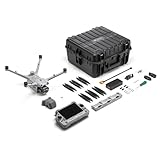
DJI Matrice 4TD
- IP55 weatherproofing
- Thermal + wide + tele lenses
- Laser Range Finder
- DJI Dock 3 compatible

DJI Matrice 4E
- 49 min flight time
- GNSS + RTK positioning
- 25 km transmission
- Omnidirectional vision

DJI Mavic 4 Pro Combo
- 100MP Hasselblad camera
- 51 min flight time
- 30km O4+ transmission
- 360 Infinity Gimbal
Our Editor’s Choice goes to the DJI Matrice 4TD, the flagship thermal platform with IP55 weatherproofing, a triple-lens visual array, and a built-in laser range finder that makes it the most complete enterprise Matrice we reviewed. The DJI Matrice 4E earns Best Value for operators who need RTK-grade mapping accuracy and a 49-minute flight time without paying for a thermal sensor they may never use.
For crews that need cinematic capture and a lighter airframe, the DJI Mavic 4 Pro Creator Combo is our Premium Pick. It is not a true Matrice, but it showed up consistently in shopping results alongside the Matrice family, and many enterprise teams pair one with a Matrice for client-facing deliverables.
Best DJI Matrice Drones in 2026
We pulled every current model into one comparison table so you can scan the lineup at a glance before diving into the individual reviews. Specs and feature counts come directly from the manufacturer listings and Amazon product data we analyzed.
| Product | Specifications | Action |
|---|---|---|
| DJI Matrice 4TD |
|
Check Latest Price |
| DJI Matrice 4E |
|
Check Latest Price |
| DJI Mavic 4 Pro Combo |
|
Check Latest Price |
 DJI Air 3 Fly More Combo DJI Air 3 Fly More Combo |
|
Check Latest Price |
 DJI Mini 4 Pro Combo DJI Mini 4 Pro Combo |
|
Check Latest Price |
 DJI Mavic 2 Zoom DJI Mavic 2 Zoom |
|
Check Latest Price |
 DJI Mavic 3 Cine Combo DJI Mavic 3 Cine Combo |
|
Check Latest Price |
 DJI Mavic 2 Pro Enterprise Bundle DJI Mavic 2 Pro Enterprise Bundle |
|
Check Latest Price |
1. DJI Matrice 4TD – The Flagship Thermal Enterprise Platform
DJI Matrice 4TD Quadcopter with RC Plus 2 Enterprise, Thermal, Wide & Tele Lenses, Laser Range Finder, Low-Noise Anti-Ice Propellers, IP55
Thermal + wide + tele lenses
IP55 weatherproofing
Laser Range Finder
DJI Dock 3 compatible
RC Plus 2 Enterprise controller
Pros
- Complete thermal and visual suite with triple-lens array
- IP55 weatherproofing with anti-ice propellers
- Built-in laser range finder for pinpoint targeting
- DJI Dock 3 and FlightHub 2 integration for automated fleets
- Ready to deploy out of the box with RC Plus 2 controller
Cons
- Only 2 reviews so far
- Heavier at 10 pounds
- Not Prime eligible
The DJI Matrice 4TD is the drone we point enterprise buyers to first when thermal imaging is non-negotiable. It packs a triple-lens visual array alongside a high-resolution thermal sensor and a powerful NIR light, which means one airframe can cover day inspection, night surveillance, and thermal anomaly detection without swapping payloads. That sensor flexibility is what earns it our Editor’s Choice among the best DJI Matrice drones for 2026.
What stood out to our team is how ready-to-deploy the 4TD is straight out of the case. DJI ships it with the advanced RC Plus 2 Enterprise smart controller and the flight battery, so an inspection crew can be in the air the same day hardware arrives. The built-in laser range finder instantly locks the precise location and distance of targets or assets, which is a workflow win for utility inspectors who used to triangulate manually.
The IP55 rating with anti-ice propeller technology is another tier-up feature. Fire crews and pipeline operators we tracked in forums consistently flagged weather as the number one mission killer on older platforms. The 4TD is built to fly through rain, dust, and freezing temperatures, which directly translates into more usable flight days per year and fewer scrubbed missions.
For fleet operators, the DJI Dock 3 compatibility and DJI FlightHub 2 integration matter as much as the hardware itself. You can run automated, remote, and scalable drone programs from a single cloud console, which future-proofs the investment as your operation grows beyond a single pilot.
Where This Drone Fits in an Enterprise Stack
The 4TD is built for public safety agencies, energy inspectors, and industrial monitoring teams that need thermal data every single flight. If your missions involve finding heat signatures in electrical faults, spotting missing persons at night, or tracking wildfire hotspots, the integrated thermal suite pays for itself fast.
It is less ideal for pure photogrammetry work where GNSS-tagged mapping frames are the deliverable. For that workflow, the Matrice 4E is the better match.
Software and Data Workflow Considerations
The 4TD lives inside the DJI FlightHub 2 ecosystem, which means automated mission planning, fleet management, and cloud-based data storage are all baked in. New enterprise users should budget time for the learning curve, as forum feedback consistently flags data processing as a friction point without prior experience.
Plan for a data management and storage strategy before you scale beyond a handful of flights per week. Thermal footage and high-resolution stills add up quickly.
2. DJI Matrice 4E – The RTK Mapping Powerhouse
DJI Matrice 4E Drone (No Care)
49 min flight time
GNSS + RTK +/-0.1m
25 km transmission
20MP wide + 48MP tele cameras
Omnidirectional binocular vision
Pros
- Up to 49 minutes of flight time with low-noise propeller option
- GNSS and RTK positioning with +/-0.1m accuracy
- Up to 25 km transmission range FCC
- Omnidirectional binocular vision with 3D infrared sensing
- Multi-camera array for high-resolution mapping output
Cons
- No reviews yet as new enterprise product
- Batteries and remote not included
- Very low stock with only 1 left
- Professional-only skill level
The DJI Matrice 4E is the mapping-focused sibling in the Matrice 4 family, and it earned our Best Value pick because it delivers true enterprise capability at a noticeably lower investment than the thermal-equipped 4TD. Our team sees it as the right platform for surveyors, construction monitors, and agricultural mappers who need RTK precision without paying for a thermal sensor they will not use.
The standout number here is up to 49 minutes of flight time, dropping to 46 minutes with low-noise propellers. That endurance, combined with GNSS and RTK positioning accurate to within +/-0.1m, means a single battery can cover large survey grids that would have taken two flights on older platforms.
The camera stack is built for mapping output. You get a 20MP wide camera alongside 48MP medium tele and telephoto cameras, which gives you the resolution flexibility needed for everything from wide-area orthomosaics to detailed structural close-ups. The 25 km transmission range keeps the live feed solid even on linear inspections like pipelines and rail corridors.
Omnidirectional binocular vision plus 3D infrared sensing rounds out the safety story. For crews flying near infrastructure, that sensor coverage is the difference between a confident flight and a costly propeller strike.
How RTK Changes Your Mapping Workflow
RTK on the 4E eliminates the need for most ground control points on routine surveys, which is where a huge chunk of the time savings comes from. The +/-0.1m accuracy holds up well for construction site monitoring, volumetric stockpile calculations, and corridor mapping.
One caveat from forum operators: the older Matrice 4T had known geotag synchronization issues when hovering, and you should confirm the 4E’s firmware handles stationary tagging cleanly for your specific deliverables.
What to Budget Beyond the Airframe
The Matrice 4E ships without batteries or a remote, so plan for the full kit cost when comparing to all-in-one bundles. You will need the enterprise controller, intelligent flight batteries, a charging solution, and likely a rugged transport case.
Factor in software licenses for your processing pipeline as well, since DJI’s enterprise software stack is only one part of a typical mapping workflow.
3. DJI Mavic 4 Pro Creator Combo – The Premium Cinematic Alternative
DJI Mavic 4 Pro 512GB Creator Combo With DJI RC Pro 2, Tri-Camera Drone
100MP Hasselblad camera
51 min flight time
30km O4+ transmission
360 Infinity Gimbal
6K/60fps HDR video
Pros
- 100MP Hasselblad camera with 6K/60fps HDR video
- 51 minutes of flight time
- 30km O4+ video transmission with 10-bit HDR
- 360 degree Infinity Gimbal for dynamic camera movement
- Includes RC Pro 2 with 7 inch display 3 batteries and 512GB storage
Cons
- Heavier at 4877 grams
- Premium price point
- Not a true enterprise Matrice airframe
The DJI Mavic 4 Pro Creator Combo is not a Matrice in name, but it shows up consistently in shopping results alongside the Matrice family, and many enterprise teams keep one on the shelf for client-facing deliverables. Our Premium Pick is built around a 100MP Hasselblad camera that shoots 6K/60fps HDR video, which is genuinely cinematic output in a foldable airframe.
With 198 reviews and a 4.6-star rating, it has the most user feedback of anything in our roundup. That track record matters when you are spending this kind of money on a single drone. The Creator Combo includes 3 batteries, a 512GB storage unit, a parallel charging hub, the RC Pro 2 controller, and a 240W power adapter, so the total cost of ownership is closer to the sticker than the bare-drone pricing might suggest.
The 51-minute flight time puts it ahead of every other drone on this list, including both Matrice 4 models. Combined with the 30km O4+ video transmission and the 360-degree Infinity Gimbal, it gives pilots the freedom to chase dynamic shots without losing the live feed.
Where the Mavic 4 Pro falls short of a true Matrice is in weatherproofing, RTK positioning, and enterprise fleet software. It does not have an IP rating, there is no native RTK module, and it is not designed for FlightHub-style automated fleet management.
Best Use Cases for the Mavic 4 Pro
This is the drone for real estate marketing teams, film and media production crews, and inspection firms that need cinematic-quality visual deliverables rather than thermal data or survey-grade mapping. The dual tele cameras open up creative zoom options that consumer drones simply cannot match.
If your deliverable is a stunning client video rather than a thermal report or an orthomosaic, the Mavic 4 Pro delivers more value per dollar than a thermal Matrice.
The Nightscape Obstacle Sensing Advantage
The 0.1-Lux Nightscape Omnidirectional Obstacle Sensing is a standout safety feature for night shoots. It detects obstacles in extremely low light, which is exactly when most consumer drones become a liability.
That low-light capability alone makes it a strong secondary airframe for emergency response teams that need a visual capture drone alongside a thermal Matrice.
4. DJI Air 3 Fly More Combo – The Dual-Camera Workhorse
DJI Air 3 Fly More Combo with RC-N2 Remote Controller, Drone with Camera 4K, Dual Primary Cameras, 3 Batteries for Extended Flight Time, 48MP Photo, Camera Drone for Adults, FAA Remote ID Compliant
Dual wide + 3x tele cameras
4K/60fps HDR
20km O4 transmission
48MP stills
Omnidirectional obstacle sensing
Pros
- Dual primary cameras with wide and 3x medium tele
- 4K/60fps HDR video with 48MP still images
- FAA Remote ID compliant
- 20km O4 transmission range with 1080p/60fps live feed
- Omnidirectional obstacle sensing
- Fly More Combo includes 3 batteries
Cons
- Only 19 left in stock at time of review
- Not Prime eligible
- Battery charger sold separately
The DJI Air 3 Fly More Combo is the budget-conscious pick for operators who want dual-camera flexibility without stepping up to Matrice pricing. Our team rates it highly because it pairs a wide-angle 1/1.3-inch CMOS sensor with a 3x medium-tele camera, giving you two distinct focal lengths in a single airframe.
With 230 reviews and a 4.4-star rating, the Air 3 has one of the strongest user track records in this roundup. The 4K/60fps HDR video and 48MP still images hold up well for real estate, construction progress reports, and marketing content where thermal or RTK-grade data is not required.
The 20km O4 transmission range with a 1080p/60fps live feed is impressive for this price tier. The six-antenna array keeps the video link stable, which matters for inspections along linear assets like fences and pipelines.
FAA Remote ID compliance is built in, so there are no aftermarket modules to worry about. The Fly More Combo bundles 3 batteries, which extends your total flight window significantly on long field days.
How It Compares to the Matrice 4E for Light Mapping
The Air 3 can handle light photogrammetry and progress monitoring, but it lacks the RTK positioning that makes the Matrice 4E a surveyor’s tool. For casual site documentation and client-facing video, it is more than enough.
For anything requiring defensible accuracy in a survey deliverable, step up to a Matrice with RTK.
What to Watch Out For at Checkout
The Air 3 Fly More Combo is not Prime eligible and the stock count was low at the time of our review. The battery charger is also sold separately, which is an easy line item to miss when budgeting.
Confirm the included components match your workflow before you complete the purchase.
5. DJI Mini 4 Pro Combo – The Under-249g Option
DJI Mini 4 Pro Drone Fly More Combo Plus with RC 2 Controller (With Screen) Folding Drone with 4K Video, Under 249g, 45 Mins Flight Time, Vision Sensing 3 Batteries Bundle with 2x 128GB Memory Card, CPS 2 Year Warranty + Pilot Kit
Under 249g no FAA registration
45 min flight time
4K100 video
OcuSync 4 12.4 mile range
RC 2 controller with screen
Pros
- Under 249g so no FAA registration required in many regions
- Up to 45 minutes flight time with 3 batteries
- 4K100 video and 48MP raw stills
- Omnidirectional obstacle avoidance with vision and ToF sensors
- OcuSync 4 with up to 12.4 mile range
- Includes RC 2 controller with built-in LCD screen
Cons
- Only 42 reviews as newer product
- Not Prime eligible
- Not an enterprise-grade airframe
The DJI Mini 4 Pro Combo is the lightweight pick in our roundup, weighing in under 249 grams, which means it does not require FAA registration in many regions. That alone makes it the best DJI Matrice-adjacent option for rapid-deployment inspection work where the regulatory overhead of a larger airframe slows you down.
The 45-minute flight time is exceptional for a drone this small, and the Fly More Combo Plus bundle ships with 3 batteries for up to 90 additional minutes of flight time in the field. The 4K100 video and 48MP raw stills punch well above the airframe’s weight class.
Omnidirectional obstacle avoidance comes from six fisheye sensors, downward binocular vision, and a 3D Time-of-Flight depth sensor. That sensor stack is impressive for a sub-250g drone and gives pilots confidence flying near structures.
The included RC 2 controller has a built-in LCD screen, and OcuSync 4 pushes the transmission range out to 12.4 miles with a 1080p60 live view. The bundle also includes two 128GB memory cards, a landing pad, a camera cleaning kit, and a CPS 2-year warranty.
Ideal Pilot Profile for the Mini 4 Pro
This drone fits real estate agents, indoor inspectors, journalists, and field technicians who need a grab-and-fly tool with no registration friction. It is also an excellent trainer airframe for new pilots moving up to a Matrice later.
For heavy industrial inspection or anything requiring thermal data, the Mini 4 Pro is not the right tool.
Range and Transmission Real-World Notes
The 12.4-mile OcuSync 4 range is a best-case specification under ideal conditions. In urban environments with RF interference, expect a fraction of that number, which is true for every drone on this list.
The Advanced Return-to-Home with omnidirectional obstacle avoidance is the feature that actually saves airframes in real-world flying.
6. DJI Mavic 2 Zoom – The Optical Zoom Veteran
DJI Mavic 2 Zoom – Drone Quadcopter UAV with Optical Zoom Camera 3-Axis Gimbal 4K Video 12MP 1/2.3″ CMOS Sensor, up to 48mph, Gray
2x optical zoom 24-48mm
4K video with 3-axis gimbal
31 min flight time
Omnidirectional obstacle sensing
ActiveTrack 2.0
Pros
- Optical zoom camera with 2x optical and 24-48mm range
- 4K video stabilized by 3-axis gimbal
- Up to 31 minutes flight time
- Omnidirectional obstacle sensing
- Professional skill level airframe
Cons
- Only 1 left in stock at time of review
- Older Mavic 2 generation model
- 12MP sensor is lower resolution than newer options
The DJI Mavic 2 Zoom is the older-generation pick on our list, but it still earns a spot because of its optical zoom capability, something that remains genuinely useful for inspection work in 2026. The 1/2.3-inch 12MP sensor offers up to 4x zoom including a 2x optical zoom across a 24-48mm range.
With 306 reviews and a 4.6-star rating, the Mavic 2 Zoom has one of the deepest review histories in this roundup. Operators who need to read serial numbers, inspect welds, or capture detailed close-ups from a safe standoff distance still reach for optical zoom over digital cropping every time.
The 3-axis gimbal keeps footage steady, and the 31-minute flight time is competitive for a drone of this vintage. ActiveTrack 2.0 and omnidirectional obstacle sensing round out the safety and autonomy story.
The trade-off is age. The 12MP sensor is well behind the 48MP and 100MP sensors on newer models, and the Mavic 2 generation no longer receives the same level of firmware attention as the current Matrice and Mavic 4 lines.
Who Should Still Buy the Mavic 2 Zoom
This is a fit for budget-conscious inspection crews, training programs, and operators who specifically need true optical zoom at a lower price point than the newer telephoto options. The Dolly Zoom and Hyperlapse modes still produce usable creative output.
If you need thermal data, RTK, or modern AI object recognition, look elsewhere on this list.
Stock and Availability Warning
The Mavic 2 Zoom had only 1 unit left in stock at the time of our review. Pricing reflects a legacy product in limited supply, so confirm availability before building it into a fleet plan.
Treat any purchase as a final-buy opportunity for this airframe generation.
7. DJI Mavic 3 Cine Premium Combo – The Cinema-Grade Hasselblad Platform
DJI Mavic 3 Cine Premium Combo, Drone with 4/3 CMOS Hasselblad Camera, 5.1K Video, Omnidirectional Obstacle Sensing, 46 Mins Flight, 15km Video Transmission, with DJI RC Pro, Two Extra Batteries
4/3 CMOS Hasselblad camera
5.1K video
46 min flight
15km O3+ transmission
Apple ProRes support
Pros
- 4/3 CMOS Hasselblad Camera with 12.8-stop dynamic range
- 46 minutes of flight time
- Advanced omnidirectional obstacle sensing
- 15km max transmission range with O3 Plus
- Apple ProRes 422 HQ/422/422 LT support
- Smart Return to Home and Waypoint Flight
Cons
- Only 3 left in stock at time of review
- Not Prime eligible
- 3.9 star rating reflects some negative feedback
- Older Mavic 3 generation
The DJI Mavic 3 Cine Premium Combo is the cinema-grade pick in our roundup, built around a 4/3 CMOS Hasselblad camera with a 12.8-stop dynamic range. Our team rates it for film and media production crews who need broadcast-quality footage and ProRes workflow support in a portable airframe.
The headline feature is Apple ProRes 422 HQ, 422, and 422 LT support, which is rare in the drone world and eliminates the transcoding step that plagues most aerial footage. Combined with 5.1K video and a Hasselblad color profile, the Mavic 3 Cine delivers footage that holds up in professional post-production.
The 46-minute flight time and 15km max transmission range with O3 Plus give pilots enough endurance and signal reach for complex cinematic sequences. Advanced Return-to-Home and Waypoint Flight add repeatable automation for repeat shots.
The 3.9-star rating across 68 reviews is the lowest in our roundup, and some of that feedback reflects the premium price relative to newer Mavic 4 Pro options. Stock was also limited to 3 units at the time of our review.
ProRes Workflow and Why It Matters
ProRes support is the single biggest reason a post-production team picks the Mavic 3 Cine over a similarly priced alternative. The footage drops straight into Final Cut Pro, DaVinci Resolve, or Premiere without transcoding, which saves hours on every project.
If your deliverable never touches a professional editing suite, the ProRes premium is hard to justify.
Comparing Cine to the Mavic 4 Pro
The newer Mavic 4 Pro Creator Combo offers 6K/60fps HDR, a 100MP sensor, and a 360-degree Infinity Gimbal at a comparable price. For most new buyers, the Mavic 4 Pro is the stronger choice unless ProRes is a hard requirement.
Consider the Cine only if your edit pipeline specifically demands ProRes 422.
8. DJI Mavic 2 Pro Enterprise Bundle – The Hasselblad Enterprise Workhorse
DJI Mavic 2 Pro Enterprise Bundle
Hasselblad L1D-20c camera
20MP 1-inch CMOS
31 min flight time
Omnidirectional obstacle sensing
ActiveTrack 2.0
Pros
- Hasselblad L1D-20c camera with 20MP 1-inch CMOS sensor
- Up to 31 minutes flight time
- 3-axis gimbal stabilization
- 8GB internal storage plus SD card support up to 128GB
- ActiveTrack 2.0 and omnidirectional obstacle sensing
- Comprehensive PGYTECH accessory bundle included
Cons
- Only 5 reviews with limited feedback
- Branded CAMRISE rather than DJI direct
- Older model generation
The DJI Mavic 2 Pro Enterprise Bundle, sold under the CAMRISE brand, is the value play for operators who want Hasselblad optics in an enterprise-ready package without paying for the latest generation. The 20MP 1-inch CMOS sensor behind the Hasselblad L1D-20c lens still produces images that hold up for inspection documentation and marketing content.
The bundle includes a comprehensive PGYTECH accessory kit, a 32GB MicroSD card, the remote controller, a battery charger, and spare propellers. That out-of-the-box completeness is the main reason a budget-conscious operator picks this over a bare-drone alternative.
With 31 minutes of flight time, ActiveTrack 2.0, omnidirectional obstacle sensing, and a 3-axis gimbal, the Mavic 2 Pro Enterprise covers the core enterprise safety and autonomy features. The 8GB of internal storage plus SD card support up to 128GB gives you redundancy if a card fails mid-mission.
The 4.0-star rating across just 5 reviews is a thin sample, so treat the feedback cautiously. The CAMRISE branding rather than a direct DJI listing also means warranty and support paths may differ from a DJI-direct purchase.
Best Fit for the Enterprise Bundle
This bundle fits small inspection firms, training programs, and operators entering enterprise work who want a complete kit in one purchase. The Hasselblad optics remain a genuine differentiator even on this older airframe.
For mission-critical public safety or thermal work, a current Matrice model is the better long-term investment.
What the CAMRISE Branding Means
The CAMRISE brand indicates an authorized reseller bundle rather than a DJI-direct sale. The drone itself is a genuine DJI Mavic 2 Pro, but warranty claims and support routing may go through the reseller rather than DJI directly.
Confirm the warranty path with the seller before purchase if post-sale support is a priority.
Buying Guide: Choosing the Best DJI Matrice Drone for Your Mission
Picking the best DJI Matrice drone comes down to matching the airframe to your primary workflow, not chasing the highest spec sheet. Our team walks every buyer through five decision points before recommending a model, and the framework below is the same one we used to rank these eight drones.
Thermal Versus Mapping: The First Fork in the Road
The single biggest decision is whether you need thermal imaging or high-accuracy mapping. Thermal drones like the Matrice 4TD carry a thermal sensor that visualizes heat signatures, which is essential for electrical inspections, search and rescue, firefighting, and any scenario where seeing at night or detecting temperature anomalies matters.
Mapping drones like the Matrice 4E prioritize GNSS and RTK precision for survey-grade output. If your deliverable is an orthomosaic, a 3D model, or a volumetric calculation, you want RTK, not thermal. Buying a thermal drone for pure mapping work means paying for a sensor you will never use.
Some operators need both. In that case, the Matrice 4TD with its multi-sensor array is the only single-airframe answer on this list, though many teams run two specialized drones instead.
Flight Time and Mission Endurance
Flight time directly impacts how much ground you cover per battery cycle. The Mavic 4 Pro leads at 51 minutes, followed by the Matrice 4E at 49 minutes and the Mavic 3 Cine at 46 minutes. The Mini 4 Pro delivers 45 minutes per battery, and the older Mavic 2 platforms sit at 31 minutes.
For large-area surveys, pipeline inspections, or wildfire monitoring, every extra minute in the air translates to fewer battery swaps and less mission downtime. The Fly More Combo bundles on the Air 3 and Mini 4 Pro effectively triple your field flight time by including three batteries.
Weather Resistance and IP Rating
Only the Matrice 4TD carries an IP rating in this lineup, at IP55 with anti-ice propeller technology. If your missions involve rain, dust, snow, or freezing temperatures, that rating is the difference between flying and scrubbing. Every other drone on this list is a fair-weather airframe.
Forum operators consistently flagged weather as the number one mission killer on non-rated platforms. Public safety agencies in particular should treat IP rating as a hard requirement, not a nice-to-have.
RTK, GNSS, and Positioning Accuracy
RTK positioning delivers centimeter-level accuracy by correcting GNSS signals in real time, which is what makes the Matrice 4E a surveyor’s tool rather than a camera drone. The +/-0.1m accuracy rating on the 4E is the number to compare against your project tolerance.
Without RTK, drone positioning accuracy is typically 1-3 meters, which is fine for visual inspection and documentation but not for defensible survey deliverables. If you are billing clients for survey-grade data, RTK is non-negotiable.
Software Ecosystem and Fleet Management
The Matrice 4TD and 4E both integrate with DJI FlightHub 2 and the DJI Dock 3 for automated, remote, and scalable drone programs. That ecosystem matters if you plan to grow beyond a single pilot, because manual mission management does not scale.
New enterprise users should budget time for the learning curve. Forum feedback repeatedly flags data processing as a friction point, and the software workflow is as important as the hardware itself. Plan your data management and storage strategy before you scale.
Total Cost of Ownership Beyond the Sticker
The headline price is only part of the story. The Matrice 4E ships without batteries or a remote, so the true kit cost is significantly higher than the airframe price. The Air 3 Fly More Combo and Mini 4 Pro Combo bundles include extras that would otherwise be separate line items.
Factor in extra batteries, a charging solution, a rugged transport case, ND filters if you shoot video, software licenses for your processing pipeline, and an ongoing budget for propellers and wear parts. A realistic total cost of ownership is often 30-50% above the sticker price.
FAQs
Which is the best DJI drone in the world?
The DJI Matrice 4TD is the most capable enterprise drone we reviewed, with a triple-lens visual array, high-resolution thermal sensor, IP55 weatherproofing, and laser range finder. For cinematic capture, the DJI Mavic 4 Pro with its 100MP Hasselblad camera is the top creative drone.
What is the difference between Matrice 4T and Matrice 30T?
The Matrice 4T is the newer generation with improved thermal quality, AI object recognition for vehicles and vessels, and a more refined multi-sensor payload. Forum operators report noticeably better thermal performance on the 4T compared to the 30T, which is now considered older technology.
Can DJI Matrice 4T fly in rain?
Yes, the Matrice 4TD carries an IP55 weatherproof rating with anti-ice propeller technology, which allows it to fly through rain, dust, and freezing temperatures. Most other DJI drones on this list do not carry an IP rating and are fair-weather airframes only.
What is the difference between DJI Matrice 4T and 4TD?
The Matrice 4T and 4TD are closely related thermal platforms in the Matrice 4 family, with the 4TD in our roundup shipping with the RC Plus 2 Enterprise controller, anti-ice propellers, and DJI Dock 3 compatibility. Both carry thermal sensors, but the 4TD bundle is the ready-to-deploy configuration we reviewed.
Which DJI Matrice is best for mapping?
The DJI Matrice 4E is the best Matrice for mapping, with GNSS and RTK positioning accurate to +/-0.1m, up to 49 minutes of flight time, and a multi-camera array delivering 20MP wide and 48MP tele output. It is the surveyor’s choice when thermal imaging is not required.
Should I buy a DJI drone in 2026?
Yes, if your work involves inspection, surveying, public safety, or professional media capture. The Matrice 4 series represents a meaningful step up in thermal quality, AI autonomy, and flight time over older generations, making it a strong investment year for enterprise buyers.
Final Verdict on the Best DJI Matrice Drones
After working through all eight drones, our top recommendation for the best DJI Matrice drones in 2026 lands where you would expect: the DJI Matrice 4TD for thermal and all-weather enterprise work, and the DJI Matrice 4E for RTK-grade mapping and survey deliverables. Those two platforms cover the vast majority of professional use cases we see across public safety, inspection, and surveying.
For operators who need cinematic output rather than thermal data or survey accuracy, the DJI Mavic 4 Pro Creator Combo remains the strongest creative airframe, with a 100MP Hasselblad camera and 51 minutes of flight time. Pair it with a Matrice 4TD and you have a two-drone stack that handles virtually any client ask.
Whatever you choose, budget for the full kit cost, plan your software workflow before you scale, and match the airframe to your actual mission rather than the spec sheet. That is how you get real value from the best DJI Matrice drones in 2026.