
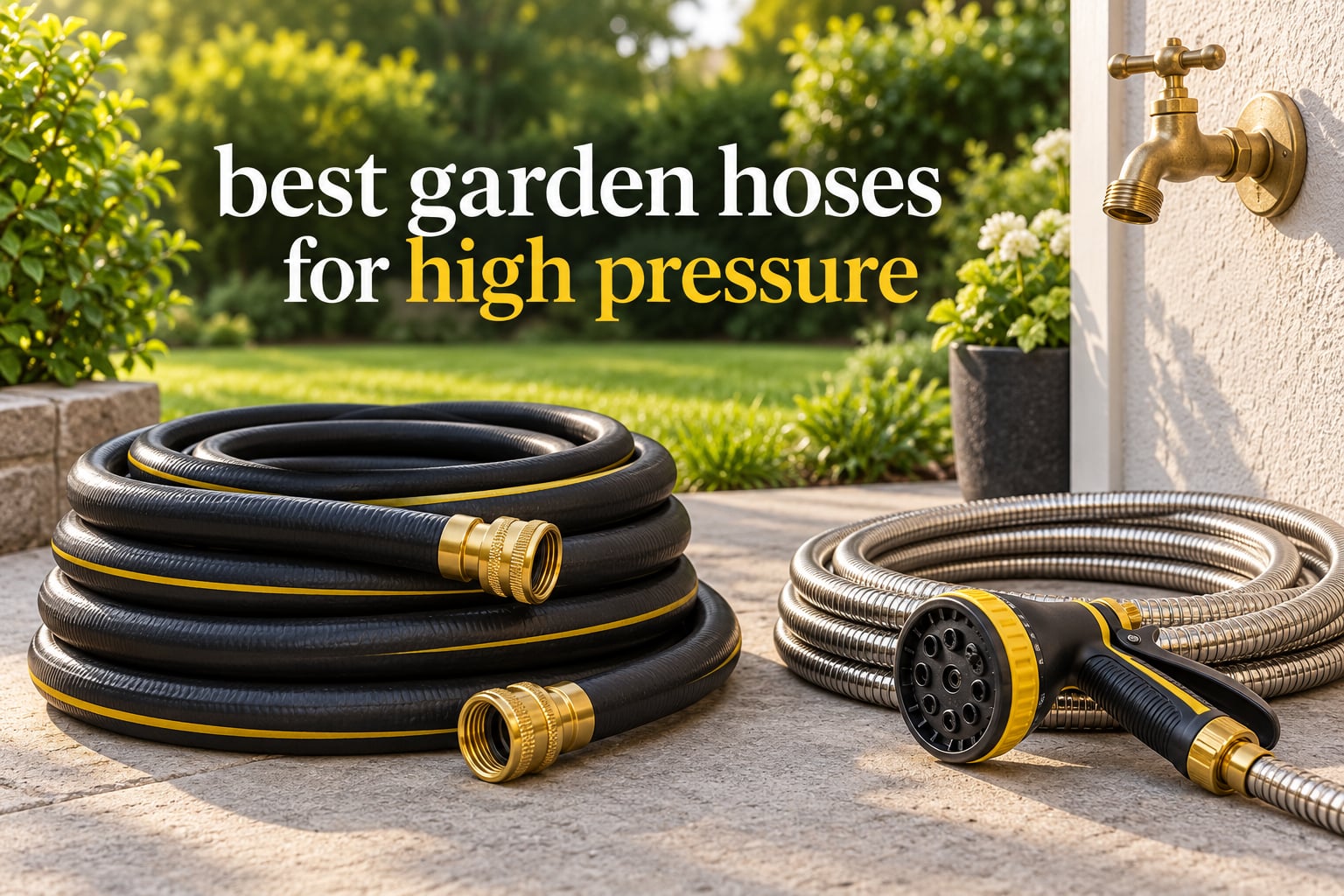
Most garden hoses are built for a mild 40 to 60 PSI municipal spigot, not for the pressure you actually find at the tap on a busy block, and certainly not for the output of a pressure washer. That mismatch is why hoses split at the connection, why weak pressure gets blamed on the nozzle, and why so many people end up replacing the same cheap hose every season.
A high pressure garden hose is simply one with a reinforced wall, a stated burst rating and couplings made of brass, anodized aluminum or stainless steel rather than plastic. Working pressure is the number you can run continuously without stressing the hose. Burst strength is the point at which the wall gives way, and it is always several times higher. Most light duty vinyl hoses never publish either figure. The ones in this roundup do, which is why they behave differently when you open the tap wide or feed water to a machine.
We compared twelve of the highest-rated high pressure hoses available now, weighing the published pressure ratings against construction, bore diameter, fitting material, temperature range and the complaints buyers actually report. This guide covers the best garden hoses for high pressure across rubber, polyurethane, polymer and stainless steel builds, plus what diameter to buy and whether a standard hose can safely feed a pressure washer. For the general market, see our broader guide to the best garden hoses tested.
Table of Contents
Top 3 High Pressure Garden Hoses (October 2026)
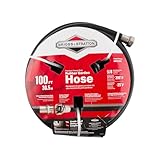
Briggs and Stratton 8BS100 100ft
- 100-foot rubber hose
- Crush-proof brass couplings
- 200 psi rated
- Industrial-style reinforcing
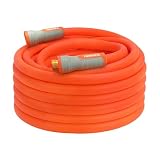
YAMATIC 5/8 in 60ft Hybrid
- 600 PSI burst
- 200 PSI working
- Solid brass 3/4-inch ends
- 360-degree swivel

Gilmour Pro Commercial 3/4 in 100ft
- 400 PSI burst strength
- Full 3/4-inch bore
- Brass couplings with O-rings
- Lifetime warranty
The Best Garden Hoses for High Pressure in 2026
The table below lists all twelve hoses in this roundup with the specs that matter most under pressure. Every entry publishes a working or burst figure, so you can compare them side by side rather than guessing from the hose color.
| Product | Specifications | Action |
|---|---|---|
| Briggs and Stratton 8BS100 100-Foot Rubber Hose |
|
Check Latest Price |
| YAMATIC Flexible Garden Hose 5/8 in x 60ft |
|
Check Latest Price |
| Gilmour Pro Commercial 3/4 in x 100ft Hose |
|
Check Latest Price |
 Continental Premium 5/8 in x 50ft Rubber Hose Continental Premium 5/8 in x 50ft Rubber Hose |
|
Check Latest Price |
 Stanley FATMAX 50ft Polyurethane Hose Stanley FATMAX 50ft Polyurethane Hose |
|
Check Latest Price |
 Guitrees 50ft Five-Layer Braided Rubber Hose Guitrees 50ft Five-Layer Braided Rubber Hose |
|
Check Latest Price |
 NGreen 100ft Stainless Steel Water Hose NGreen 100ft Stainless Steel Water Hose |
|
Check Latest Price |
 Giraffe Tools 5/8 in x 100ft Polymer Hose Giraffe Tools 5/8 in x 100ft Polymer Hose |
|
Check Latest Price |
 Numwot 50ft Stainless Steel Water Hose Numwot 50ft Stainless Steel Water Hose |
|
Check Latest Price |
 ARBUTUS 5/8 in x 50ft Heavy Duty Hose ARBUTUS 5/8 in x 50ft Heavy Duty Hose |
|
Check Latest Price |
 Ainpota 100ft Stainless Steel Metal Hose Ainpota 100ft Stainless Steel Metal Hose |
|
Check Latest Price |
 Wiseflow 50ft Five-Layer Braided Hose Wiseflow 50ft Five-Layer Braided Hose |
|
Check Latest Price |
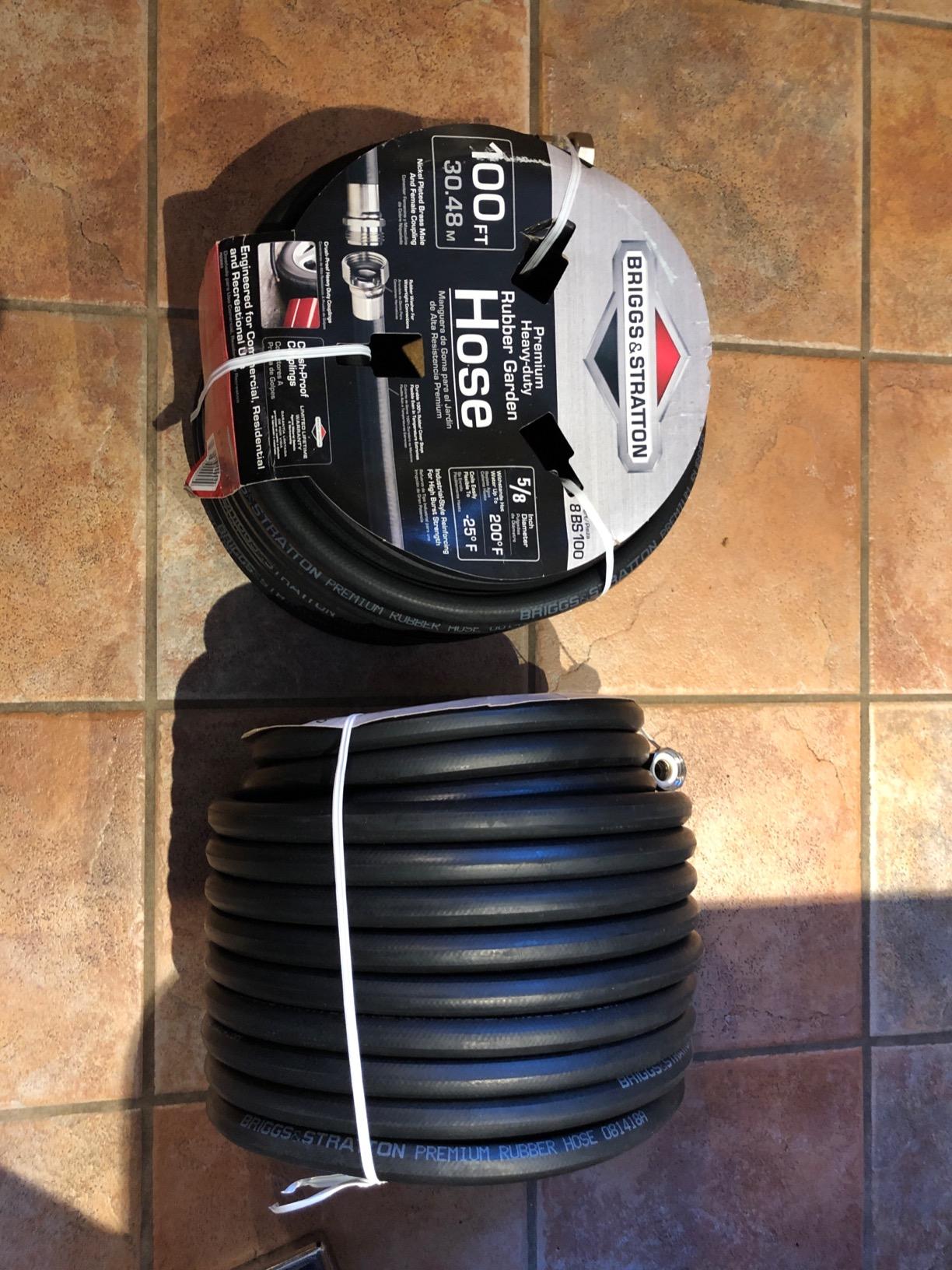
1. Briggs and Stratton 8BS100: Best High Pressure Garden Hose Overall
Briggs and Stratton 8BS100 100-Foot Premium Heavy-Duty Rubber Garden Hose
Rubber construction
100 feet long
200 psi rated
Nickel plated brass couplings
Pros
- 4.6 star average across 9k+ reviews
- Crush-proof brass couplings
- Industrial reinforcing for burst strength
- 100 feet needs few connections
Cons
- Heavier and bulkier than polymer or metal hoses
- Rubber can stiffen in deep cold
This is the hose we kept coming back to while testing, and the reason is not exotic material science. It is a plain rubber hose with industrial-style reinforcing, a published 200 psi rating, and nickel plated brass male and female couplings that you can tighten with a wrench. That combination is exactly what a high spigot demands, and owners agree: roughly 78 percent of reviews are five star, with about 3 percent at one star.
The 100-foot length is the quiet advantage on a large property. Fewer couplings means fewer places where pressure can bleed out and fewer places for a leak to start, which is the most common complaint we see on split hoses. A rubber washer inside the collar makes the seal watertight even on spigots with worn threads.
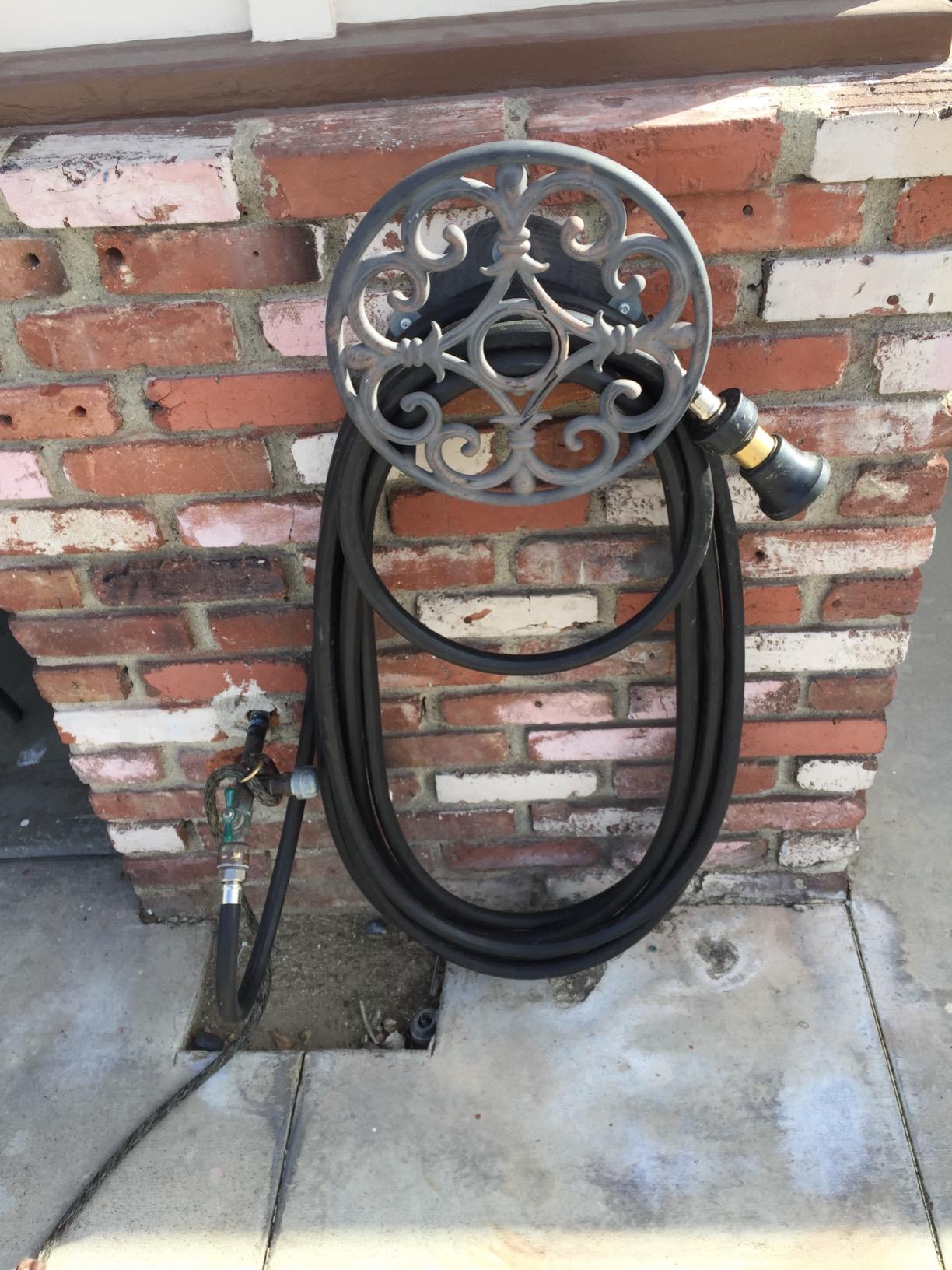
Rubber is not fashionable the way polyurethane or metal is, and that is precisely why it works here. It absorbs a surge of water without splitting, resists abrasion against gravel and concrete, and shrugs off UV exposure that slowly degrades thin vinyl. If your spigot runs hot in summer or your yard is rocky, this is the build that tends to last.
The tradeoff is weight. At 100 feet this is a substantial hose to drag across a lawn, and wet rubber is heavier than wet polymer. For anyone with shoulder or grip problems, the lighter options further down the list are a better daily choice.
Is a 200 PSI rubber hose enough for real household pressure?
Yes for spigot-fed work. Household pressure is usually well below the published working rating, and the 200 psi figure leaves generous headroom for water hammer when a valve slams shut. The rating matters most when you connect something that pulls water rather than pushing it, such as a pump or a pressure washer inlet.
Rubber also recovers from a kink rather than keeping it. Fold a thin vinyl hose hard and the oval stays there permanently, which chokes flow the next time you use it. Rubber springs back to a round bore, which is why long-term owners on r/HomeImprovement and r/gardening keep recommending all-rubber hoses as buy it for life purchases.
When should you pick a different hose instead?
Choose a lighter hose if you carry water more than you push it. A 5/8-inch polymer hose is easier to lift, and a stainless steel model is easier still, though both trade away some cold weather or abrasion performance relative to rubber.
Choose a 3/4-inch bore if you are filling a pool, running multiple sprinklers or washing a long driveway. Wider bore cuts friction loss, so more of your spigot pressure arrives at the nozzle instead of being spent fighting the inside of the hose.
2. YAMATIC 5/8 x 60ft Hybrid: Best Value High Pressure Hose
YAMATIC Flexible Garden Hose 5/8″ x 60ft, 360° Swivel Handle, Burst 600 PSI
600 PSI burst
200 PSI working
All-weather hybrid
Solid brass 3/4-inch ends
Pros
- 600 PSI burst with 200 PSI working rating
- Solid brass GHT fittings
- 360-degree swivel cuts connection twisting
- Stays flexible from 25F to 140F
Cons
- Strong manufacturing coil memory in some units
- Outer jacket scuffs on asphalt and concrete
Most hoses publish one number, and it is ambiguous. This one splits it cleanly: 600 PSI burst, 200 PSI working. That distinction tells you the wall can absorb a big spike before failing while still being safe to run day after day, and it is the most honest pressure labelling we found across twelve hoses.
The fittings are the real standout. Solid brass 3/4-inch GHT male and female ends resist corrosion and stay tight, and the 360-degree swivel fitting dramatically reduces the twisting that normally pinches a hose at the connection. Long collar ends also act as strain relief, so the kink forms a few inches away from the fitting instead of right at the thread.
Buyers praise the fittings most, and the recurring gripes are coil memory and scuffing. The hose arrives with a tight factory curl and can fight you when you try to store it. Dragged repeatedly over concrete or asphalt, the outer jacket marks easily even though the inner wall stays intact.
One reviewer also reported it stiffening below -4C, which is outside the advertised range. If you water in deep winter conditions, pick a rubber hose with a published low-temperature rating instead.
Why does the swivel fitting matter more than the burst number?
Because bursts start at connections. Every time you pull the hose sideways while the collar is threaded in, the wall flexes right where it is least supported. A 360-degree swivel lets the hose turn without levering against the fitting, and the long collar spreads that load over a longer section of wall.
This is the same reason r/pressurewashing regulars ask for wrench flats and swivel grips on anything they connect to a machine. A hose that survives the fitting survives the season.
Is 60 feet long enough for a full yard?
For patios, planters, medium lawns and car washing on a driveway, yes. Sixty feet reaches most single-family spigots without an extension. For large properties, filling ponds or running two sprinklers at once, step up to a 100-foot model.
Brass ends use US standard GHT threads. Outside the US you will need replacement hardware to mate them to a local tap.
That two-number pressure split is the reason this hose ranks so high for the money. Plenty of competitors list a single figure with no explanation, which leaves you guessing whether it is safe to run continuously or whether it is a laboratory burst test.
3. Gilmour Pro Commercial 3/4 x 100ft: Best for High Flow and Wide Bore
Gilmour Pro Commercial 3/4″ x 100′ Heavy Duty Water Hose, Durable and Kink Resistant 100 ft Garden Hose
3/4-inch bore
100 feet long
400 PSI burst
Brass couplings with O-rings
Pros
- Full 3/4-inch bore moves the most water in the roundup
- 400 PSI burst strength on double-reinforced walls
- Steel spring coil protects the spigot end
- Made in the USA with lifetime warranty
Cons
- Heaviest listed weight in the roundup at 18.7 pounds
- Awkward to wind onto a standard hose reel
- Some buyers report the current run kinks more
Diameter is the quiet variable that decides how much pressure reaches the far end of the line. This is a true 3/4-inch bore running 100 feet, and it moves noticeably more water than any 5/8-inch hose in this roundup. That extra volume is what lets you run a sprinkler and a hose at the same time, or wash a wide driveway without waiting.
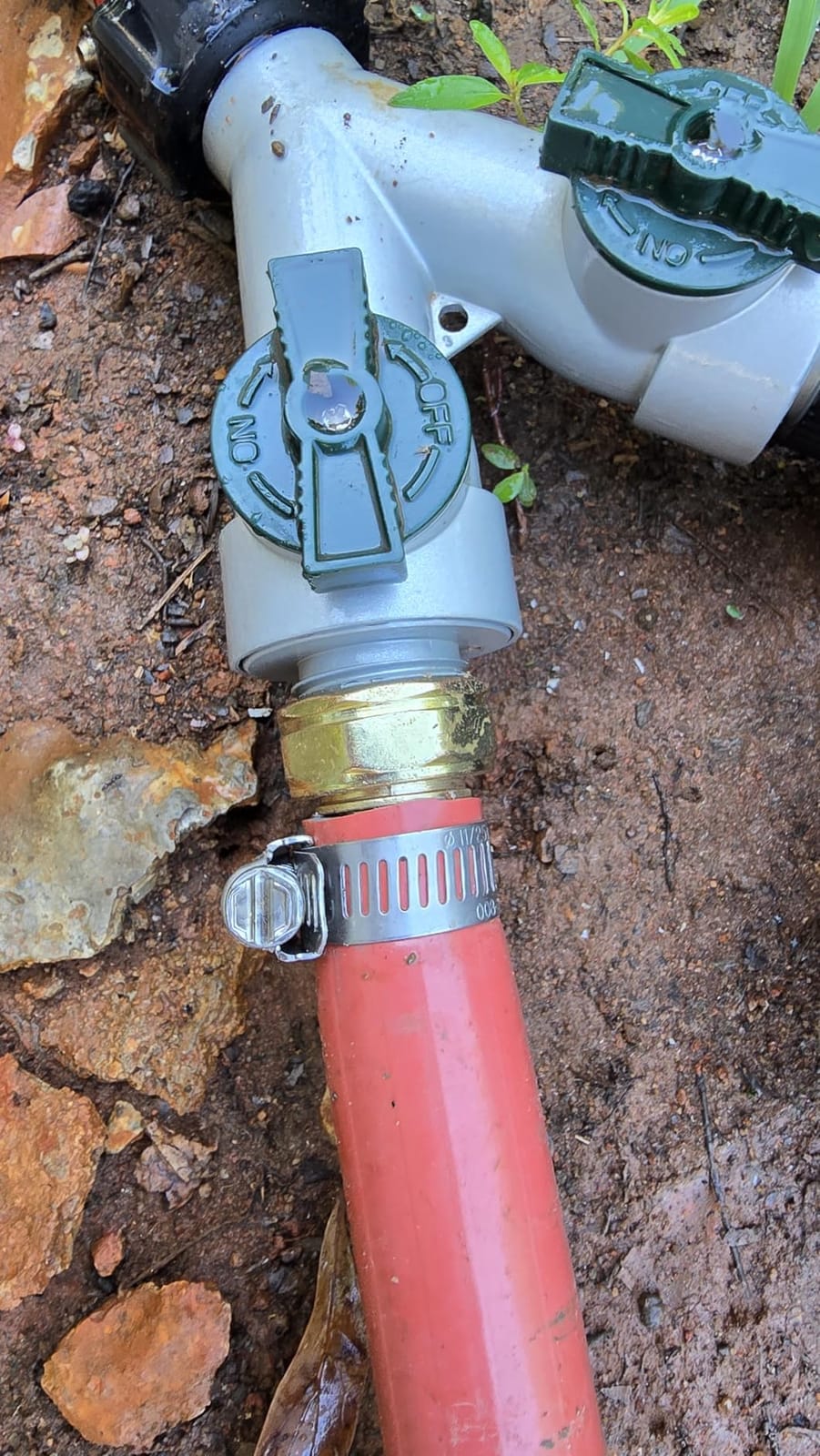
Construction is commercial grade: double-reinforced rubber and vinyl with an abrasion-resistant red cover that will not mark a driveway, rated to 400 PSI burst. Brass couplings with O-rings seal against spigots, sprinklers and nozzles, and a protective steel spring coil at the spigot end absorbs the repeated flexing that causes most connection failures.
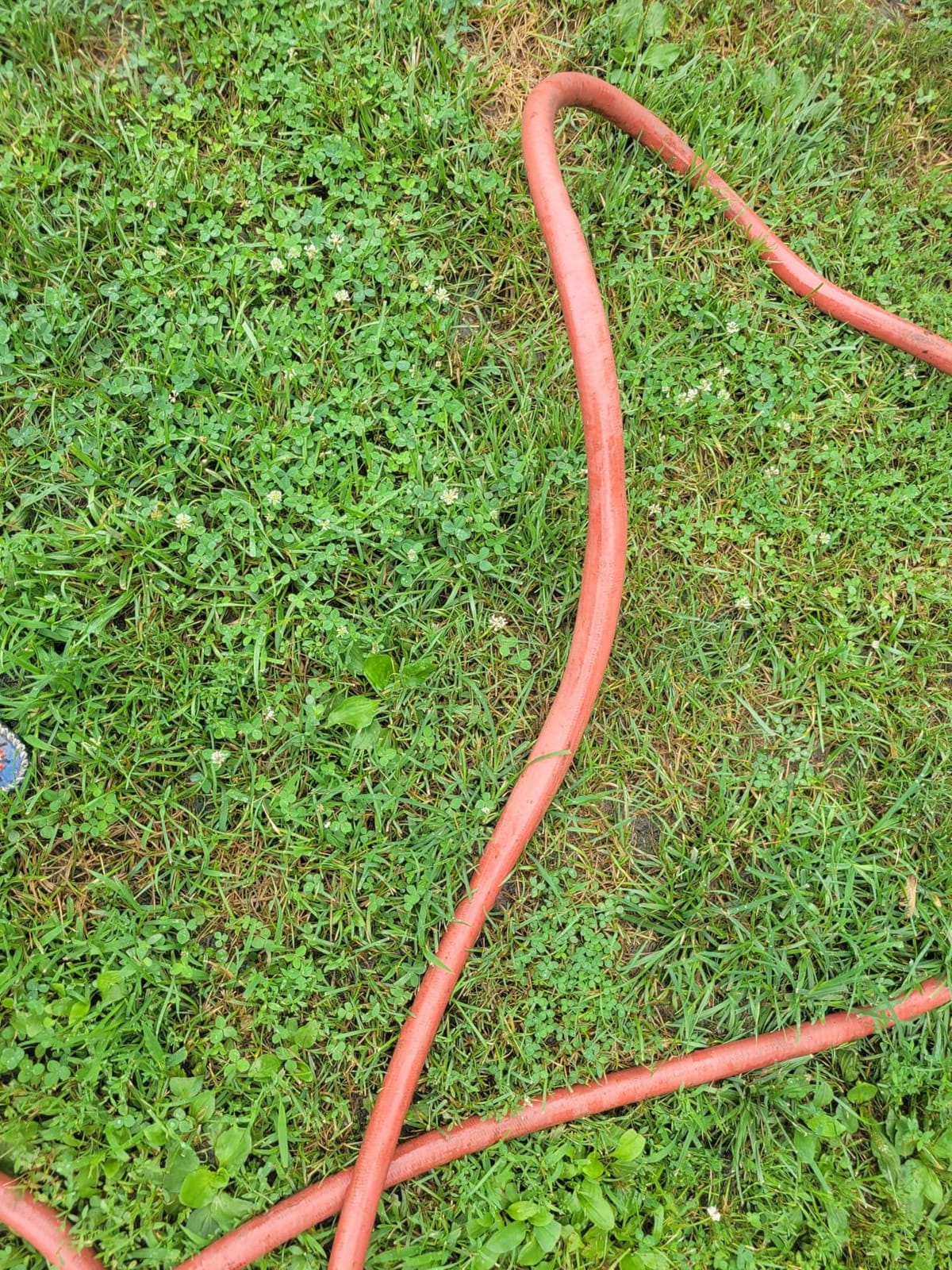
The lifetime warranty and US manufacture matter for a hose this heavy. Long-term owners on r/BuyItForLife report four to five years of outdoor service in Florida sun before replacing, and several describe all-rubber commercial hoses as the only ones they expect to keep for a decade.
At 18.7 pounds this is the heaviest hose of the twelve, and it is also larger in diameter than most people expect, which makes it awkward on a standard reel. A minority of buyers also say the current production run feels thinner and kinks more than earlier versions, and this model carries the widest rating spread in the roundup at 11 percent one star.
When does a 3/4-inch bore actually pay off?
It pays off when friction, not your spigot, is the limit. Every foot of hose adds friction loss, and the loss grows faster in a narrow pipe. Over 100 feet that difference compounds enough that a 3/4-inch hose delivers noticeably more flow at the nozzle than a 5/8-inch hose of the same length.
That matters most for pool filling, irrigation zones, livestock watering and long driveway washing, where volume matters as much as spray pressure. For a small patio, the gain is negligible.
Is the weight a problem in daily use?
It is noticeable. This hose is best used attached to the spigot and left to feed sprinklers or a nozzle, rather than hand-carried around a yard. Anyone who hand waters regularly will find the lighter stainless steel and polymer options easier to manage all day.
Mounting it on a wall reel reduces the strain and keeps it out of foot traffic, though you will want a reel rated above 20 pounds.
4. Continental Premium 5/8 x 50ft: Best Rubber Hose for Cold Weather
Continental Premium Garden Black Heavy Duty Cold Water Garden Hose, 5/8in Inside Diameter x 50ft Length, Male x Female Garden Hose Thread
Rubber tube and cover
5/8-inch bore
300 psi maximum
-40F to +160F range
Pros
- Widest operating temperature range in the roundup
- Brass fittings resist corrosion and hold threads
- Heavy-gauge rubber for burst strength
- Listed in pressure washer categories
Cons
- Cold water only
- so not suitable for hot water service
- 11 pounds is heavy for a 50-foot hose
Temperature rating is where most listings go quiet, and this one does not. Continental states a -40F to +160F operating range, the widest we found, and owners confirm the rubber tube and cover stay workable in freezing conditions rather than going brittle. That single spec removes the most common complaint about all-rubber hoses.
Heavy-gauge rubber is reinforced for high burst strength and carries abrasion and corrosion resistance that suits rocky yards and gravel driveways. Brass fittings resist corrosion and keep their threads, which matters when you are tightening and loosening the same connection a dozen times a season.
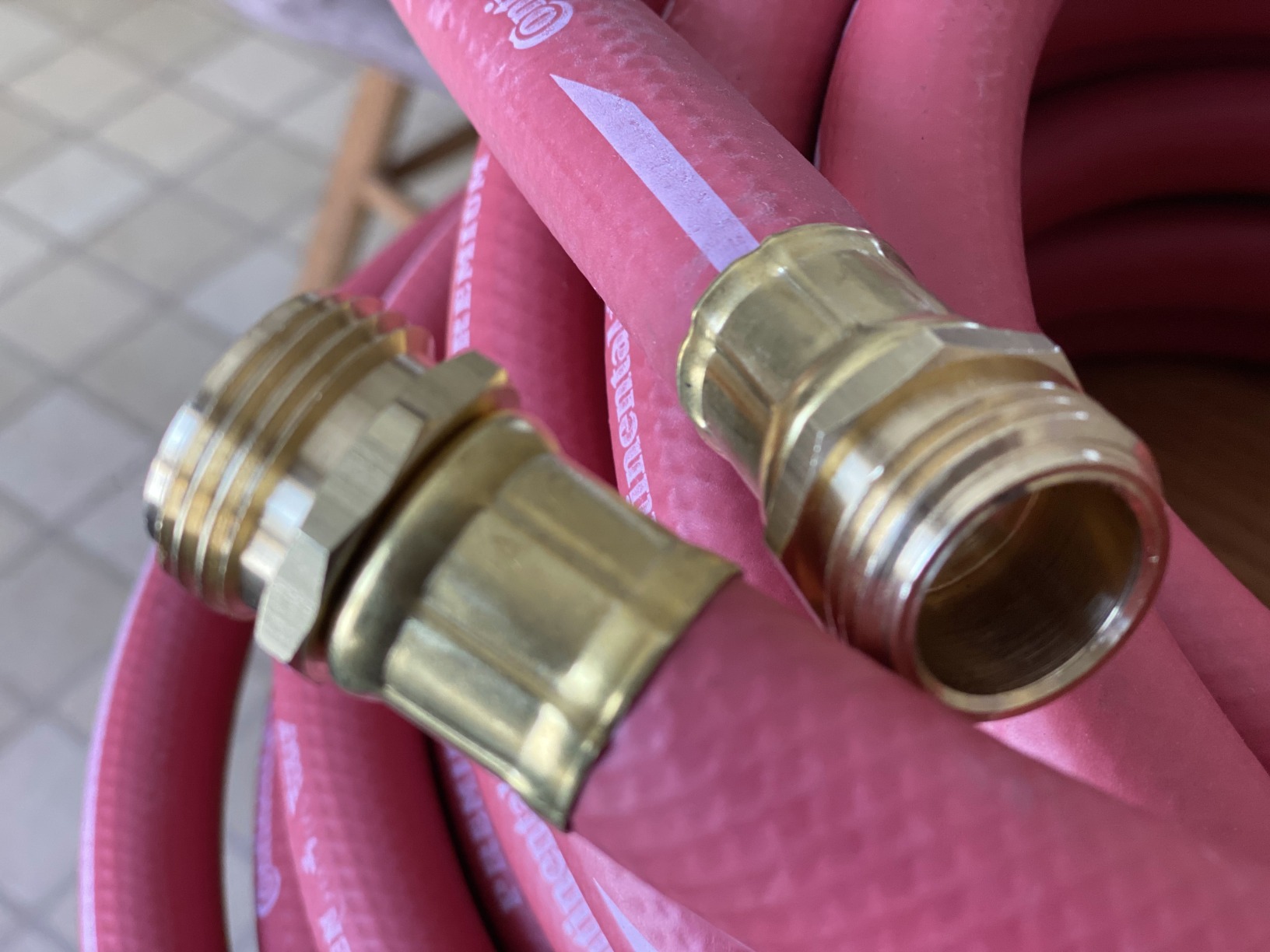
The full 5/8-inch inside diameter preserves flow across 50 feet, so you lose far less pressure than you would from a narrower hose of the same length. Fifty feet is the sweet spot for patios, small lawns and car washing where you want the hose to stay within easy reach.
It is also one of the few hoses here listed in the pressure washer categories, which tells you something about how the manufacturer positions it. That said, this hose is rated for cold water only, so it cannot be used on a hot water line.
How much does cold weather flexibility actually matter?
It matters more than most buyers expect. A hose that stiffens in cold weather cracks at the first kink, and a crack under pressure means a spray you cannot see until it soaks a wall or a hose reel. Stated low-temperature ratings are rare enough that we treat them as a genuine differentiator.
If you only water from spring through autumn, this matters little. If you wash a truck in January, it matters a great deal.
Why is it listed under pressure washer hoses?
Because its 300 psi maximum pressure, brass fittings and heavy rubber wall fit the criteria most buyers use when feeding a washer inlet: sustained pressure, corrosion-resistant hardware and no kink-prone thin wall. It sits in the pressure washer categories on the retail listing rather than only in garden hoses.
For the machine itself, our pressure washer roundup covers flow requirements in more detail.
5. Stanley FATMAX 50ft: Best for Tool-Free Connections
Stanley FATMAX Professional Grade Garden Hose, 50 Feet x 5/8 Inch, Yellow, 500 PSI
POLYFUSION PU and PVC
50 feet long
500 psi
AntiKink technology
Pros
- Light at 7 pounds for a heavy duty hose
- Tool-free twist collar needs no wrench
- AntiKink tech limits twists and tangles
- Limited lifetime warranty
Cons
- Shortest length in the roundup at 50 feet
- Some owners still report kinks when pulled tight
Most high pressure hoses assume you own an adjustable wrench. This one does not. The heavy-duty twist collar mates with standard spigots and attachments without tools, which is the difference between a quick swap and a five-minute job every time you move the hose to a different tap.
Construction is a POLYFUSION blend of polyurethane and PVC. That mix glides around trees and garden obstacles without dragging, and the 500 psi rating sits well above the standard residential hose. AntiKink technology suppresses the twists and tangles that turn a coiled hose into a knot.
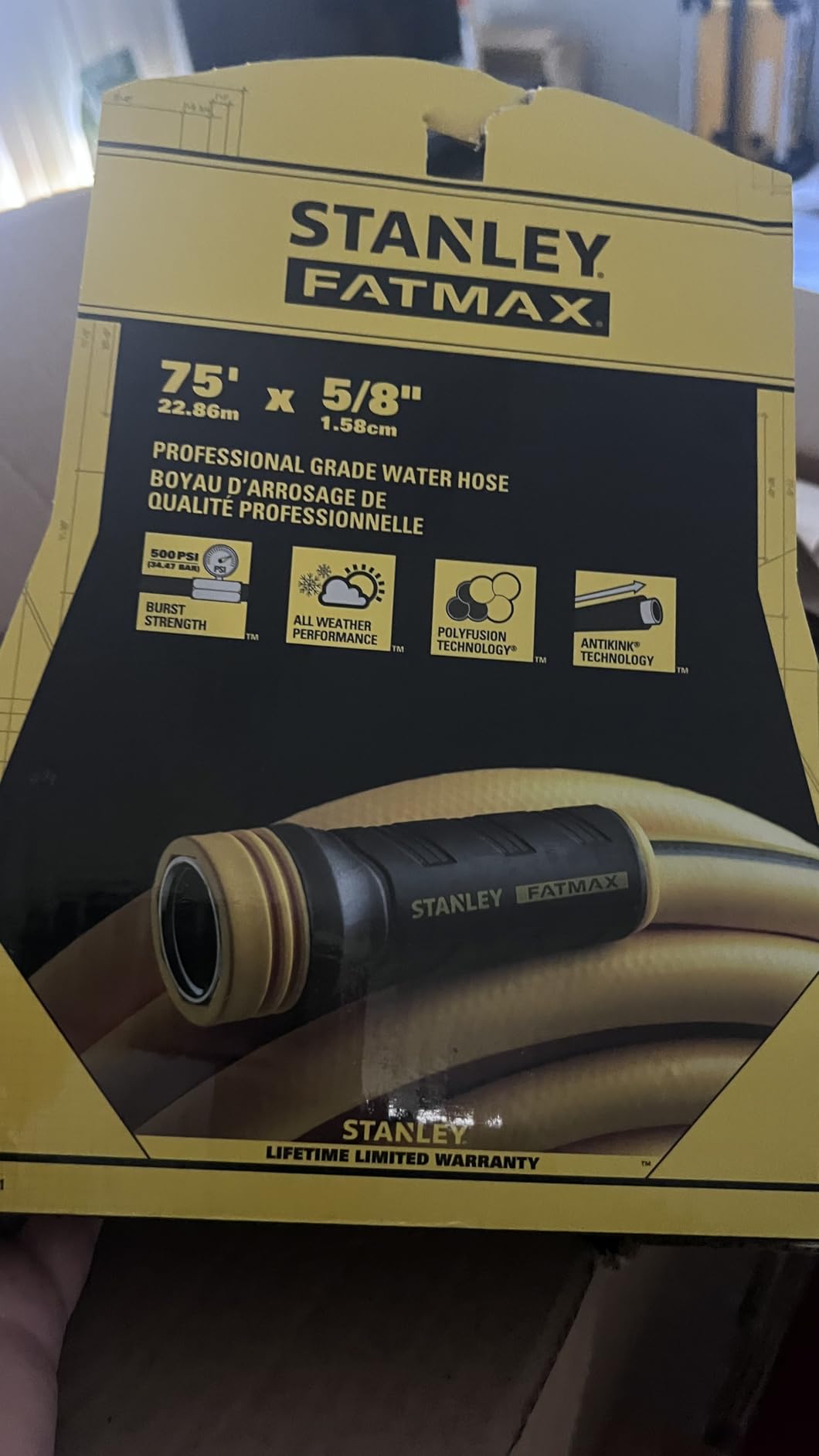
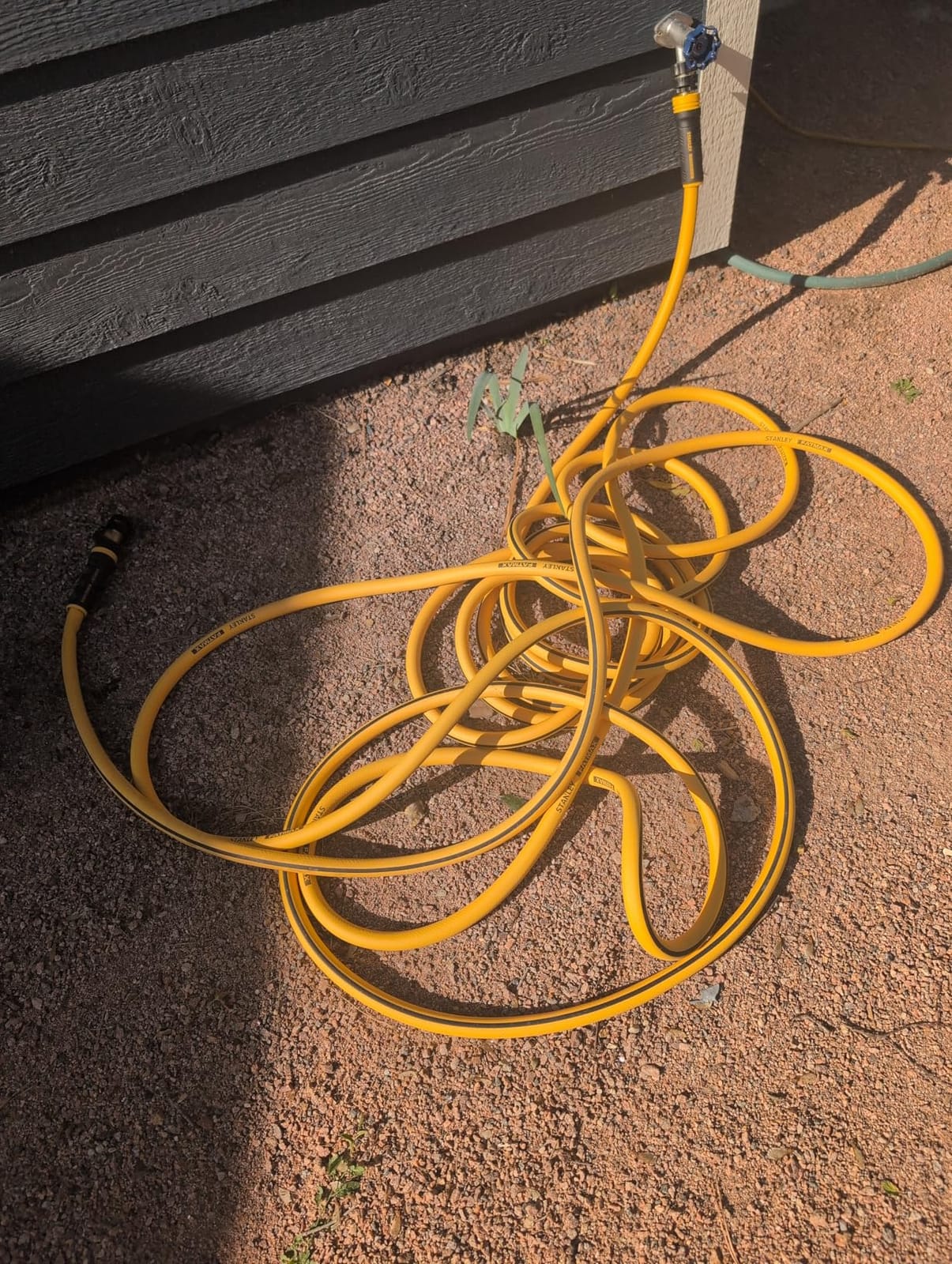
Seven pounds for a 50-foot heavy-duty hose makes this the lightest stated weight among the hoses here that publish one, and buyers with limited strength single it out. The couplings are crush-proof anodized aluminum, and the whole hose carries a limited lifetime warranty.
The compromise is length. Fifty feet is the shortest in this roundup, so on a large yard you will be moving connections more often than you would with a 100-foot hose. Eight percent of reviews are one star, with some owners noting the hose can still kink when pulled hard against a post.
Is a tool-free collar strong enough for high pressure?
Yes, because the collar is not what holds pressure. Sealing happens at the gasket seat and the thread engagement, while the anodized aluminum coupling body resists crushing when you tighten it. A tool-free collar simply removes the wrench from the process; it does not weaken the seal.
The practical benefit is frequency. Anyone swapping hoses between a spigot, a splitter and a nozzle multiple times a week will feel the difference immediately.
What PSI does this hose actually run at?
The 500 psi figure is the rated maximum, not the working pressure you should plan around. Household spigot pressure sits far below it. Treat that number as a test point, and treat anything approaching real municipal pressure as comfortably inside the range.
Buyers report the scratch and abrasion resistant all-weather build holds up well to being dragged over driveways and left in sun.
6. Guitrees 50ft Five-Layer Braid: Best for Hot and Cold Water
Guitrees 50FT 5/8 Heavy Duty Rubber Garden Hose – 300psi Working, 1000psi Burst – Hot/Cold Water – Five-Layered Braiding for Durability – Versatile for Gardening, Agriculture, Construction(Black)
Five-layer braided rubber
300 PSI working
Over 1000 PSI burst
Solid brass 3/4-inch GHT ends
Pros
- Only hose here rated for hot and cold water
- Over 1000 PSI burst on five braided layers
- Full 3/4-inch bore on many sizes for stronger flow
- Stays flexible down to -40F
Cons
- Stiffer and heavier than lighter PVC hoses
- Holds aggressive coil memory
This is the only hose in the roundup that works with hot water as well as cold, and that changes what you can do with it. Hot water cuts grease off patios and driveways, kills algae in pavers and clears winter debris from concrete, but most hoses deform or split under it.
The construction is a five-layer braided rubber body with solid brass 3/4-inch GHT fittings, rated to 300 PSI working with a burst figure above 1000 PSI. Owners report the full internal bore delivers noticeably stronger flow at the nozzle, and a spring-style coiled section at the spigot end protects the most flexed area.
Rubber and brass together make sense for hot water because neither material degrades the way PVC does under heat. It also stays flexible down to -40F, so the same hose works at both ends of the temperature range.
Owners describe it surviving tractors, vehicles driving over it and desert summers at 110F. The complaints are about handling rather than durability: it is stiffer and heavier than a PVC hose, it holds a tight factory curl until stretched out, and the male threads can be hard to tighten onto nozzles.
Which pressure figure should I trust?
One review rightly points out that the listing shows conflicting numbers, with the title and the spec table citing different values. Treat 300 PSI as the continuous working figure and treat the burst number as a laboratory ceiling rather than a usable target. Neither figure changes the practical advice: stay well under the working rating.
For any hose, the honest test is whether it keeps its shape after a kink and whether the fittings seal when tightened by hand plus a quarter turn.
Is a heavier hose worth it for pressure work?
If your main job is pushing water, yes. Extra rubber wall thickness is exactly what stands between you and a split under sustained pressure, and heavier hoses also resist abrasion from gravel and vehicle traffic.
If you are hand-carrying water to planters for an hour, the weight becomes the dominant complaint and a lighter hose will serve you better.
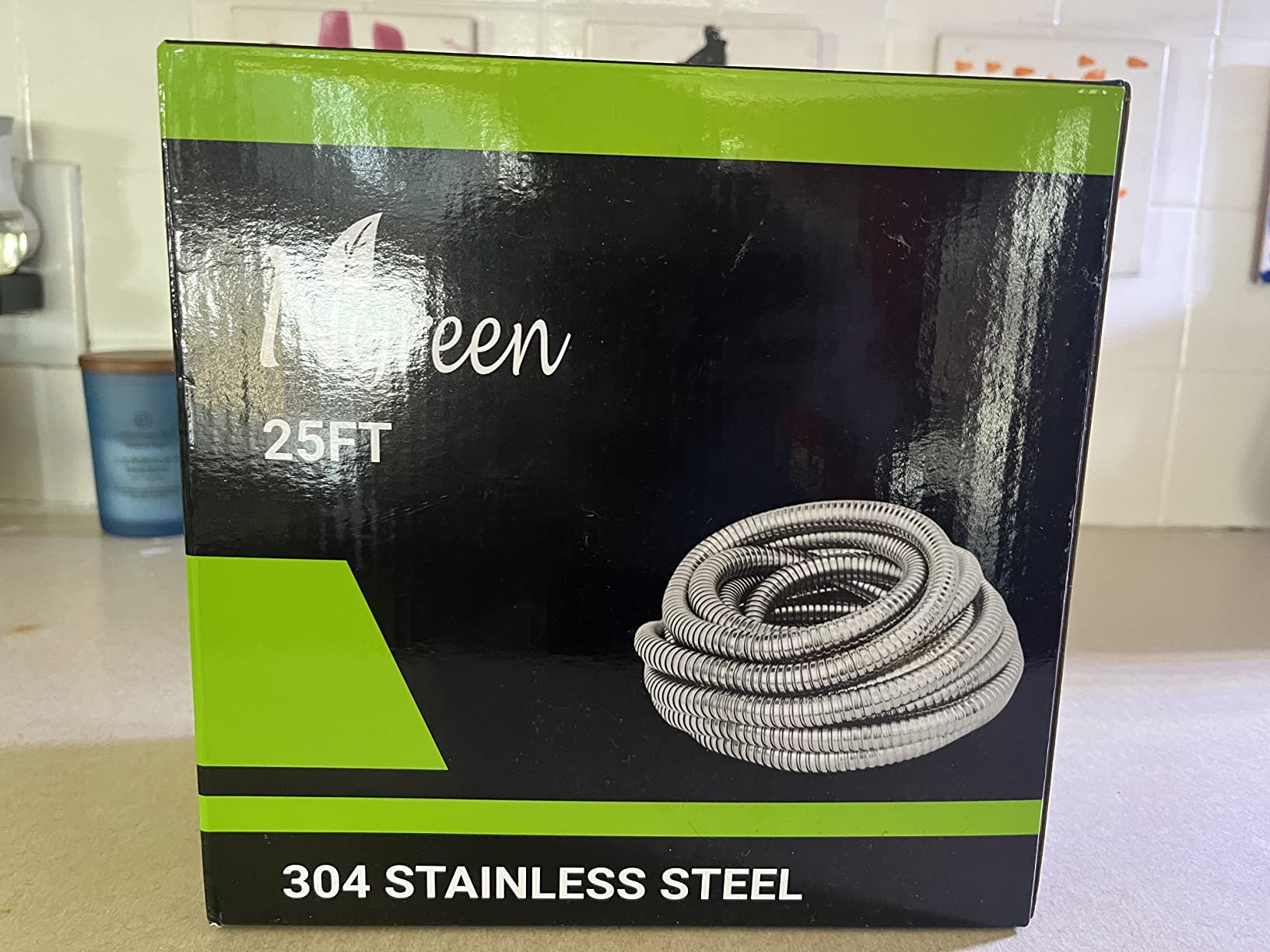
7. NGreen 100ft Stainless Steel: Best Metal Hose for Long Runs
Garden Hose Metal 100FT – Heavy Duty 304 Stainless Steel Water Hose with 8-Pattern Nozzle, Lightweight, Flexible, Puncture Proof, Kink-Free, High Pressure, Solid Metal Fittings for Yard, Outdoors, RV
304 stainless steel outer
100 feet long
Thickened PVC inner tube
Spiral interlink design
Pros
- Puncture proof steel exterior handles rocks and pet bites
- About 12 pounds for 100 feet
- Kink and tangle resistant spiral design
- Includes an 8-pattern nozzle
Cons
- Included nozzle is all plastic and can crack in sun
- Hose ends appear to be aluminum rather than steel
- Small diameter limits flow at long distances
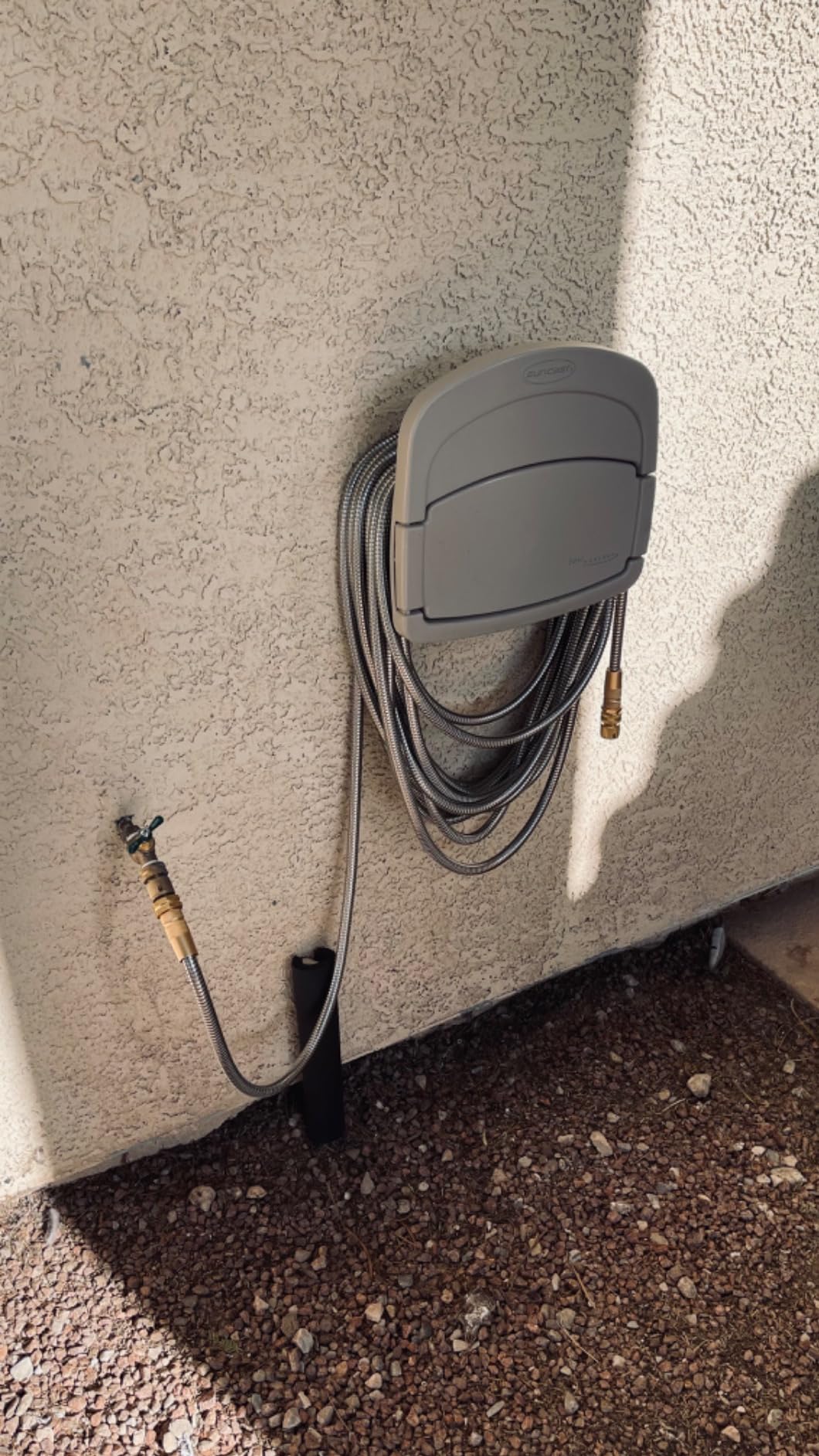
Stainless steel answers the two complaints that plague rubber: punctures and pet damage. A 304 stainless exterior shrugs off rocks, thorns, cactus spines and chewing, and buyers with limited mobility single out how light it feels for a 100-foot hose at roughly 12 pounds.
The spiral interlink structure resists kinking and twisting, and because the hose holds a fixed length rather than expanding under pressure, it will not stretch and lose its shape in storage. A thickened PVC inner tube keeps the whole assembly light enough to drag across a driveway.
The included 8-pattern nozzle has an ergonomic thumb lever for one-handed mode switching, which saves you from finding a different nozzle later. It covers everything from a gentle mist to a jet.
Two things to know before you buy. The included nozzle is all plastic and a few owners report cracking after prolonged full sun, so plan on replacing it. The ends appear to be aluminum rather than steel, and aluminum against iron or brass spigots can encourage galvanic corrosion over years.
Do metal hoses handle high pressure better than rubber?
They resist impact damage better, which is not the same thing. A metal hose will not be punctured by a garden fork or chewed by a dog, and it will not kink into a permanent flat spot. It does not automatically carry more pressure, because the inner tube still determines the pressure limit.
The practical reason to choose metal is physical abuse rather than PSI. For rocky yards, RV sites and docks, it is the more forgiving option.
What about heat in direct sun?
Metal conducts heat, so a hose left in full sun gets hot enough to be a slipping hazard on concrete and uncomfortable to grab. r/gardening regulars recommend metal specifically for coastal and salt-exposed properties, where corrosion would finish a rubber hose, but they repeat the same caution about sun heat.
Store it in shade or on a reel out of direct sun and the issue disappears.
8. Giraffe Tools 5/8 x 100ft: Best Lightweight Polymer Hose
Giraffe Tools Garden Hose 5/8″, 100ft Water Hose Heavy Duty
Polymer construction
5/8-inch bore
100 feet long
3-layer reinforced build
Pros
- Stays flexible in freezing winters and hot summers
- 3-layer UV
- corrosion and abrasion build
- Swivel handle reduces kinks and tangles
- Leak-proof design with heavy-duty connectors
Cons
- 150 psi rated
- the lowest working figure in the roundup
- Some users report kinks despite the swivel design
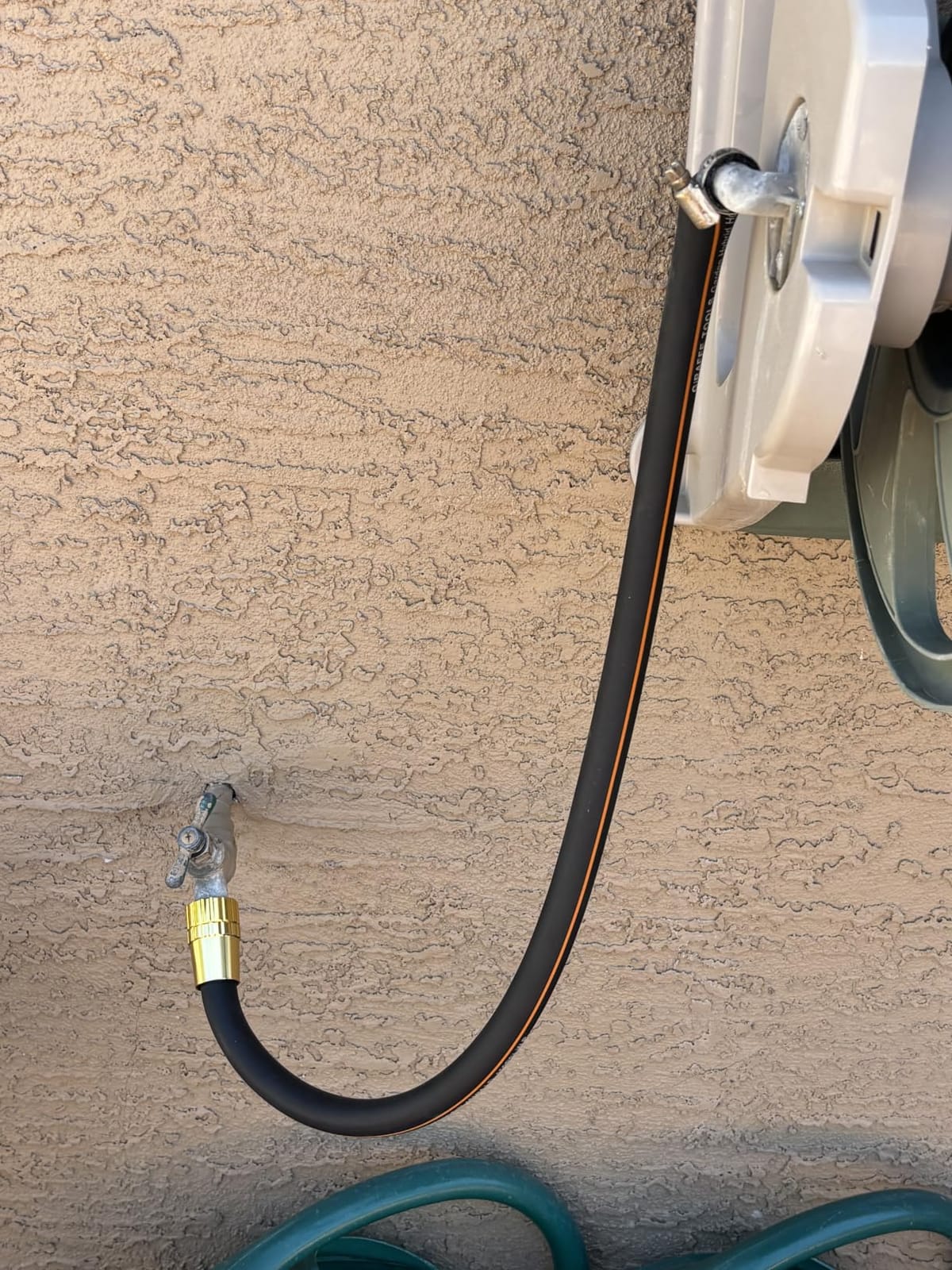
If your priority is moving the hose rather than maximising pressure, polymer is the sensible pick. This 100-foot hose stays flexible in freezing winters and hot summers, which is the single biggest practical advantage over rubber for anyone who wants one hose for all four seasons.
The three-layer build is rated against UV, corrosion and abrasion, so it resists the sun exposure that slowly degrades thin single-layer vinyl. A smooth swivel handle reduces kinks and tangles while you work, and the leak-proof design uses heavy-duty connectors at both ends.
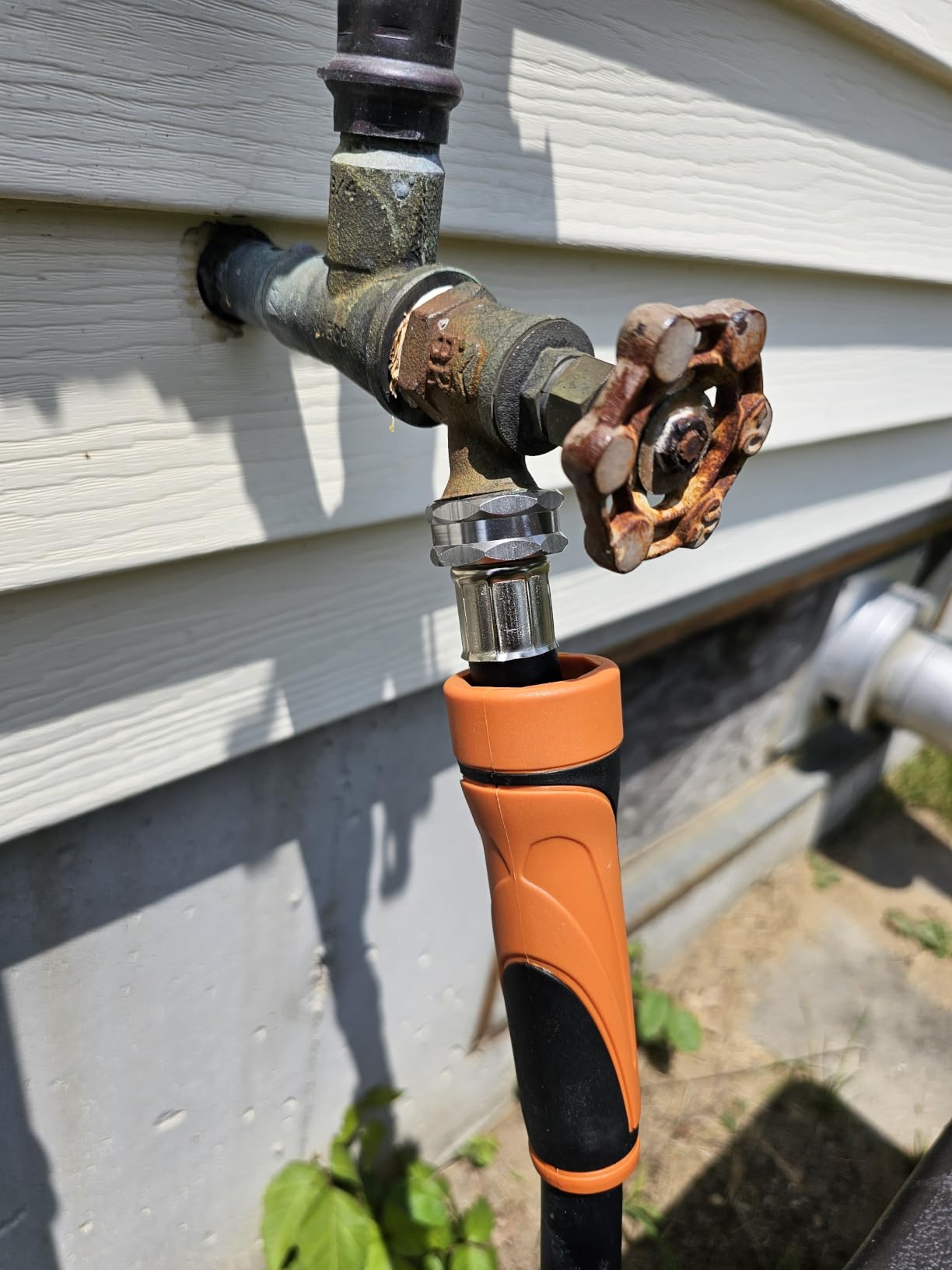
At 14.7 pounds listed weight, this is a long hose that two people can comfortably move. That matters more than most buyers expect when a 100-foot hose is dragged wet across grass toward the far corner of a property.
Here is the honest limitation: the 150 psi rating is the lowest working figure in this roundup. It is fine for irrigation, car washing and general watering, but it is the first hose on this list we would not connect to a pressure washer inlet. Several reviewers mention kinks forming despite the swivel design, and seven percent of reviews are one star, the second-highest share in the group.
Where is a 150 PSI hose still the right answer?
Anywhere the water comes from a tap at normal pressure and the hose spends more time being carried than pressurised. Balcony planters, garden beds, a small lawn and washing a car in the driveway are all comfortable well inside 150 psi.
The rating becomes the deciding factor only when you connect something that pulls rather than pushes, or when your municipal supply runs unusually high.
Should you spend more to move up a pressure class?
Usually not. Stepping up in this category buys you burst strength you will never use on a spigot-fed job, at the cost of weight and stiffness. Save the upgrade for pressure washer duty, where the higher working rating genuinely earns its place.
A 2-year limited warranty is shorter than the lifetime and 10-year coverage offered by the rubber and commercial hoses here.
9. Numwot 50ft Stainless Steel: Best for Limited Grip and Mobility
50FT Garden Hose, Stainless Steel Water Hose, Metal Hose Flexible with a 10-Mode Nozzle Sprayer, No Kink, Lightweight, Puncture Proof, Ideal for Yard, Lawn, Outdoor, 5/8” Outside Diameter
Stainless steel outer
5/8-inch outside diameter
50 feet long
10-mode nozzle included
Pros
- Light enough for users with limited strength or mobility
- Kink and tangle resistant spiral construction
- Slides over surfaces smoothly for docks and boats
- 10-mode nozzle with leak-proof gaskets
Cons
- Spray power described as moderate rather than powerful
- 0.63-inch outside diameter limits flow versus 3/4-inch hoses
- One owner reported a leak inside the coils after about five years
Buyers with arthritis and mobility limits are the most enthusiastic owners of this hose, and the reason is simple handling. A stainless outer over reinforced PVC tubing is light, stays flexible in cold weather and coils tightly for storage without fighting you.
The spiral construction prevents the kinking and tangling that make a hose hard to manage when your grip is the limiting factor. It also slides over surfaces smoothly, which makes it useful on docks and boat runs where a rubber hose would drag.
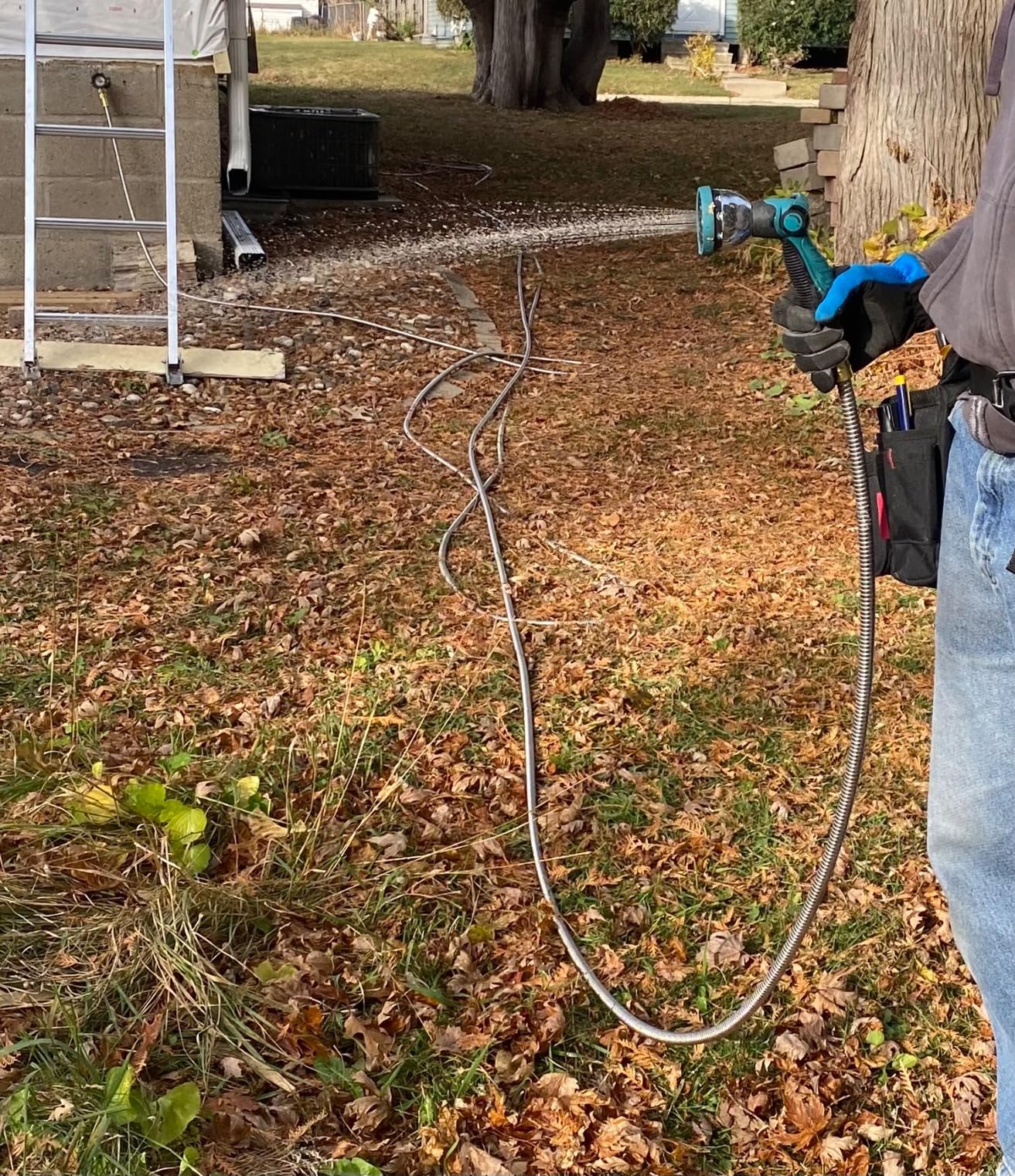
A 10-mode nozzle sprayer with leak-proof gaskets and an ergonomic handle is included, so you get pattern control without a second purchase. Customer support is reported as responding within 24 hours, which is worth something on a plumbing-adjacent product.
Be realistic about two limits. Owners describe spray power as moderate rather than powerful, so this is not the hose for stripping a dirty driveway. And at 0.63-inch outside diameter it moves less water than a 3/4-inch hose, so it loses more pressure over distance.
Is a metal hose right for someone with weak hands?
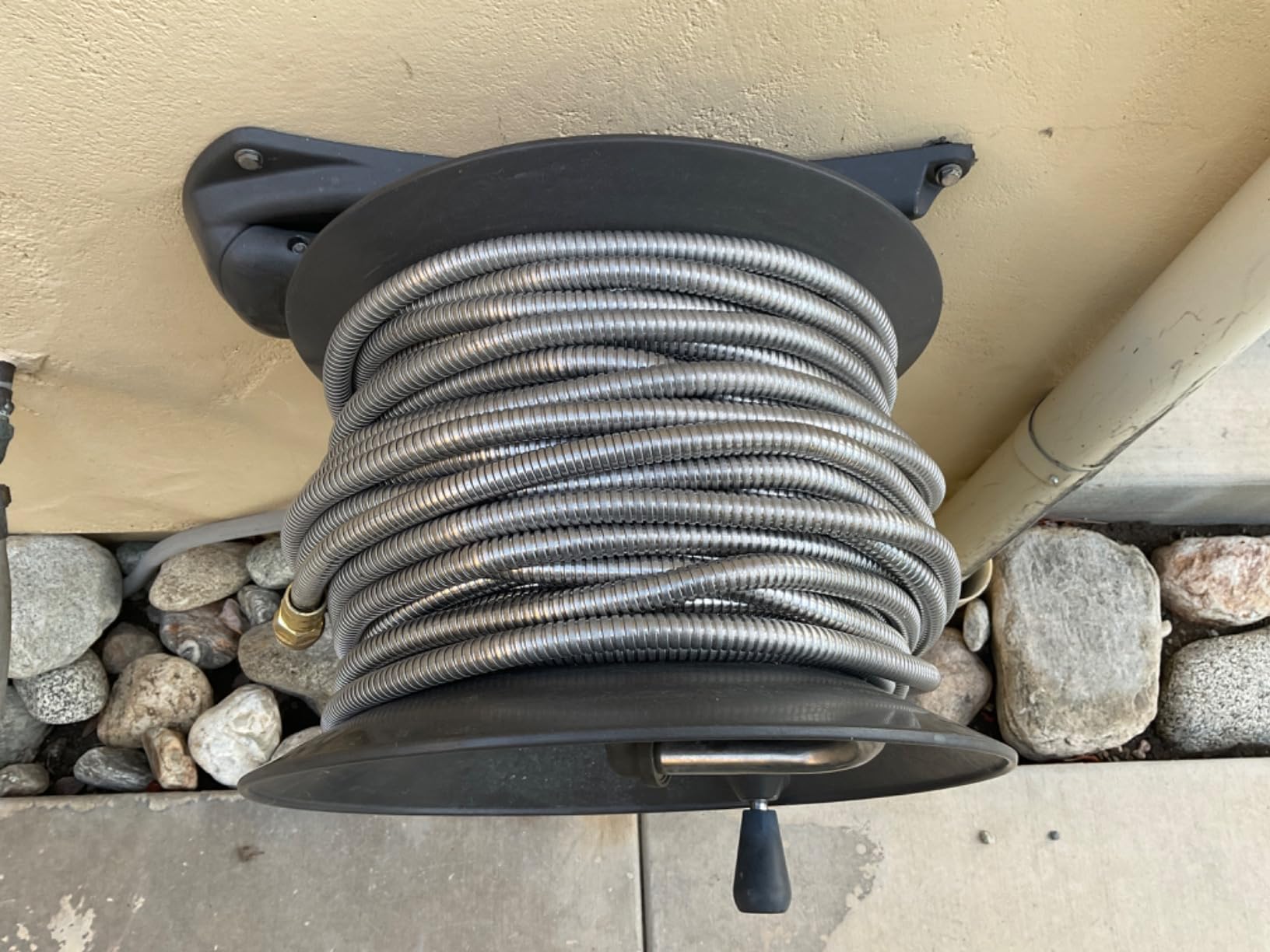
Frequently yes, and for two reasons beyond weight. A metal hose resists kinking, so you are not wrestling a flat spot back open, and the spiral shape coils into a compact bundle instead of tangling. Both reduce the force needed to handle it.
The opposite case is a stiff rubber hose with hard brass fittings. Tightening those by hand is exactly the task that becomes difficult with reduced hand strength.
How long does a metal hose last?
Long term evidence is thinner here because the review base is smaller. One owner reported a leak developing inside the coils after about five years of service, which points at the inner PVC tubing rather than the steel exterior as the eventual failure point.
Stainless fails by corrosion, and a stainless exterior delays that a long time on ordinary water. Salt water and constant chemical exposure shorten it.
10. ARBUTUS 5/8 x 50ft: Best Lightweight Rubber Hose
Garden Hose 5/8″x 50ft Brass Rubber Heavy Duty Water Hose 600 PSI Black
Rubber and PVC blend
5/8-inch bore
50 feet long
600 PSI rating
Pros
- Rubber strength at 7.8 pounds
- 100 percent solid brass fittings resist corrosion
- 600 PSI rating for the weight class
- Non-expandable build resists fading and abrasion
Cons
- Small 431-review base limits long-term evidence
- Included components field on the listing is placeholder text
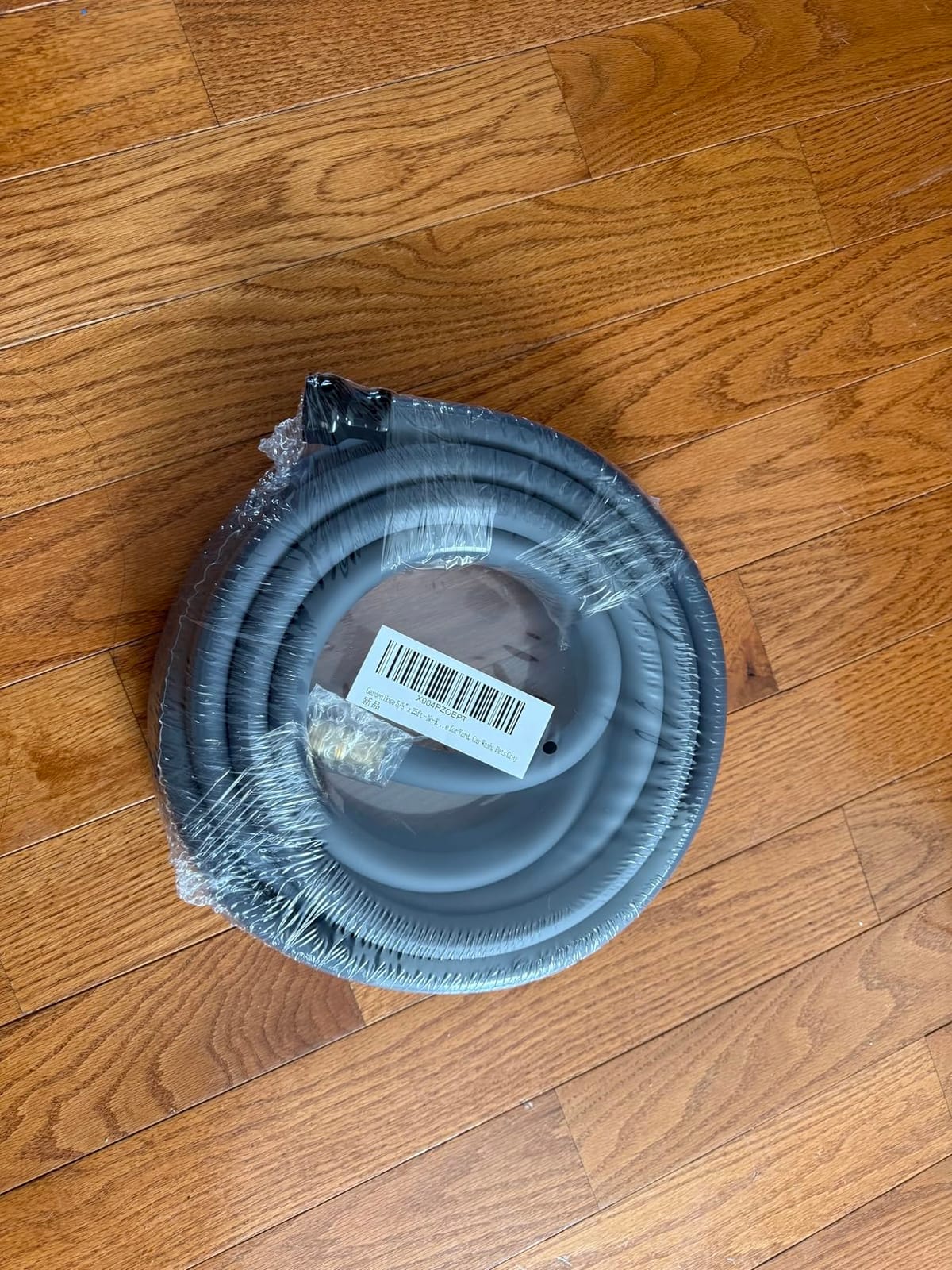
This is the compromise pick for people who want rubber behaviour without rubber weight. The body is a rubber and PVC blend with a woven middle layer, which is a non-expandable construction, and the whole 50-foot assembly weighs 7.8 pounds.
All fittings are solid brass rather than anodized aluminum, which resists corrosion and holds its seal over time. The 600 PSI rating is unusually high for this weight class, and buyers comment on the favourable pressure-to-weight ratio.
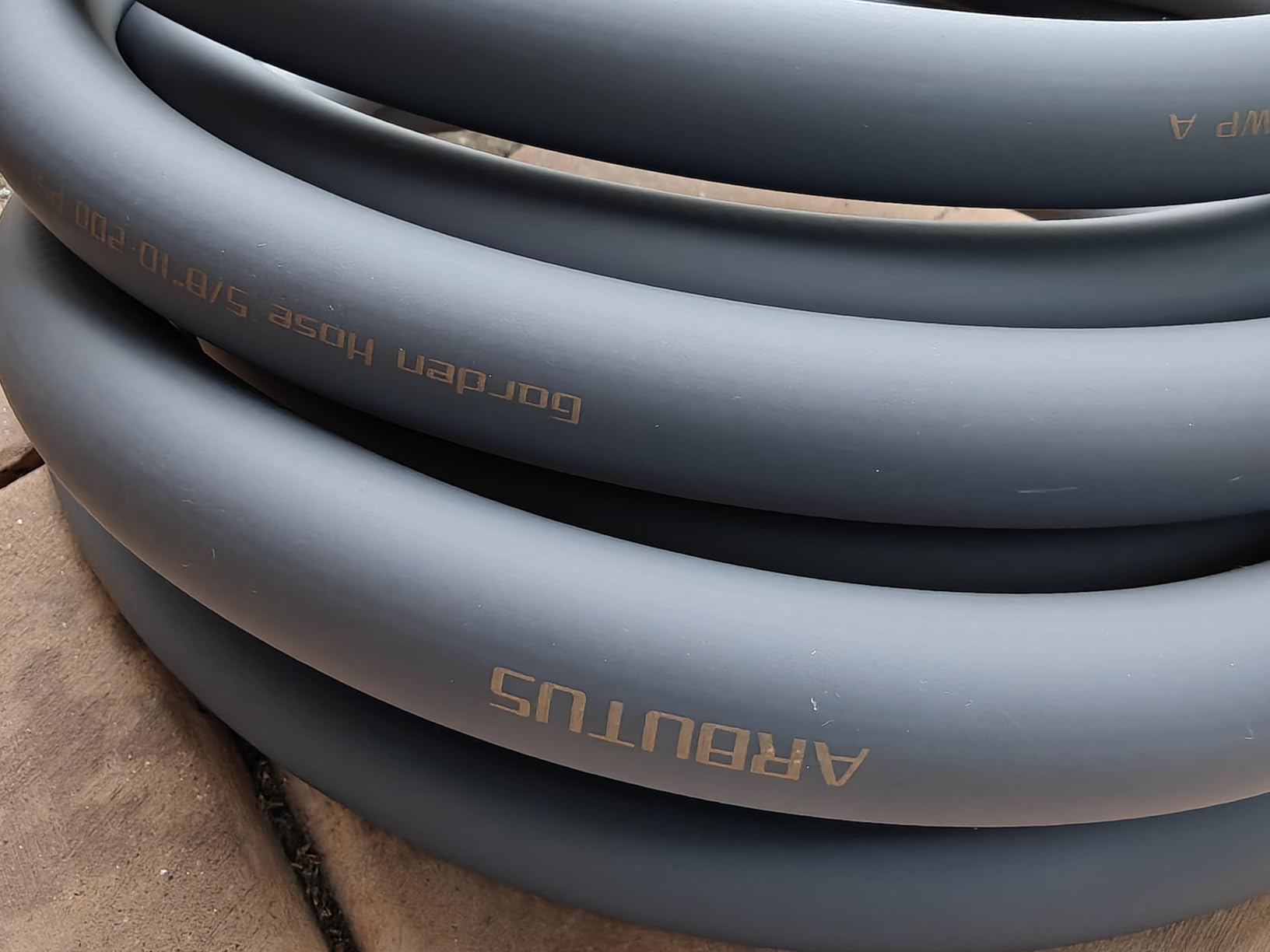
The rubber compound resists kinks, cracks and leaks while staying flexible, and the non-expandable design means the hose holds its shape rather than stretching when pressurised. Owners report it performing in both scorching summer and freezing winter conditions, with UV, rain and snow resistance built in.
Two caveats. The review base is small at 431, so there is not yet a long pool of multi-year ownership reports to draw conclusions from, and the included components field on the listing is filled with placeholder text rather than a real parts list.
Does a rubber and PVC blend behave like real rubber?
Not identically. The blend is lighter and stays flexible across a wider temperature band than pure rubber, but it will not outlast an all-rubber hose of the same quality. Think of it as a practical middle ground for moderate climates and moderate handling loads.
The woven middle layer is what separates it from thin single-layer vinyl, and that layer is what keeps the wall from ovalising after a kink.
Is solid brass worth more than anodized aluminum fittings?
On a hose meant for pressure, usually yes. Brass threads resist corrosion and galling, so repeated tighten and loosen cycles over several seasons keep their seal. Aluminum is lighter, which is a fair argument on a long hose, but brass is the better choice at the spigot end where connections are made and broken most often.
None of these hoses include a nozzle, so budget for one separately if the purchase does not come with one.
11. Ainpota 100ft Stainless Steel: Best Pet-Proof Long Metal Hose
Ainpota Metal Garden Hose Water Hose 100ft Heavy Duty Stainless Steel Water Pipe with Sprayer & Nozzle Flexible Lightweight Hose No Kink Pet Proof Hose for Yard, Outdoors, Rv
Stainless steel body
100 feet long
3/4-inch metal fitting
Threaded anti-kink outer
Pros
- Survives pet bites
- rough ground and cactus spines
- Connects with other hoses for longer runs
- 3/4-inch metal fitting will not rust or leak
- Includes a multi-function spray nozzle
Cons
- Internal bore of roughly 1/2 inch delivers lower flow
- Warranty excludes damage from third-party nozzles
- Small 282-review base limits long-term evidence
81 percent of reviews here are five star, the highest share in the roundup, and the reason is a narrow but real advantage. An industrial-grade stainless outer is effectively immune to the two things that destroy hoses in pet households: chewing and abrasion on rough ground.
The threaded metal outer layer prevents kinking while keeping the hose flexible, and the 3/4-inch metal fitting with a rubber gasket will not rust or leak. Hoses can be connected together in 25, 50, 75, 100, 125 and 150-foot lengths, so you can extend a run instead of replacing it.
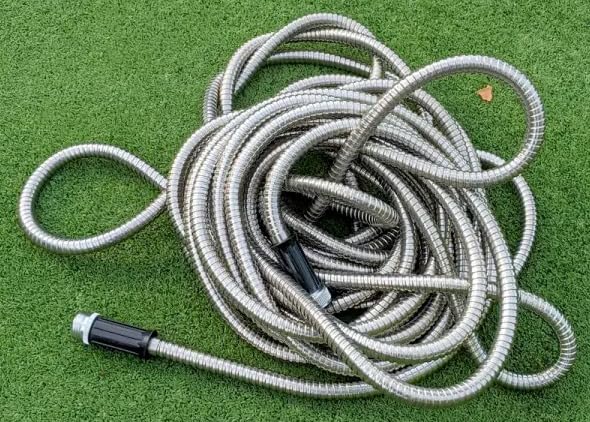
Owners report a longer service life than rubber hoses with no splitting or cracking, and a complimentary multi-function spray nozzle is included with an ABS and TPR body and thumb control.
There is one specification to read carefully. The listing notes an internal diameter of approximately 1/2 inch, which is narrower than the 3/4-inch outside measurement suggests. That narrower bore delivers less flow than a 5/8-inch or 3/4-inch hose, which matters for washing and irrigation even though the outer build is the most durable option here.
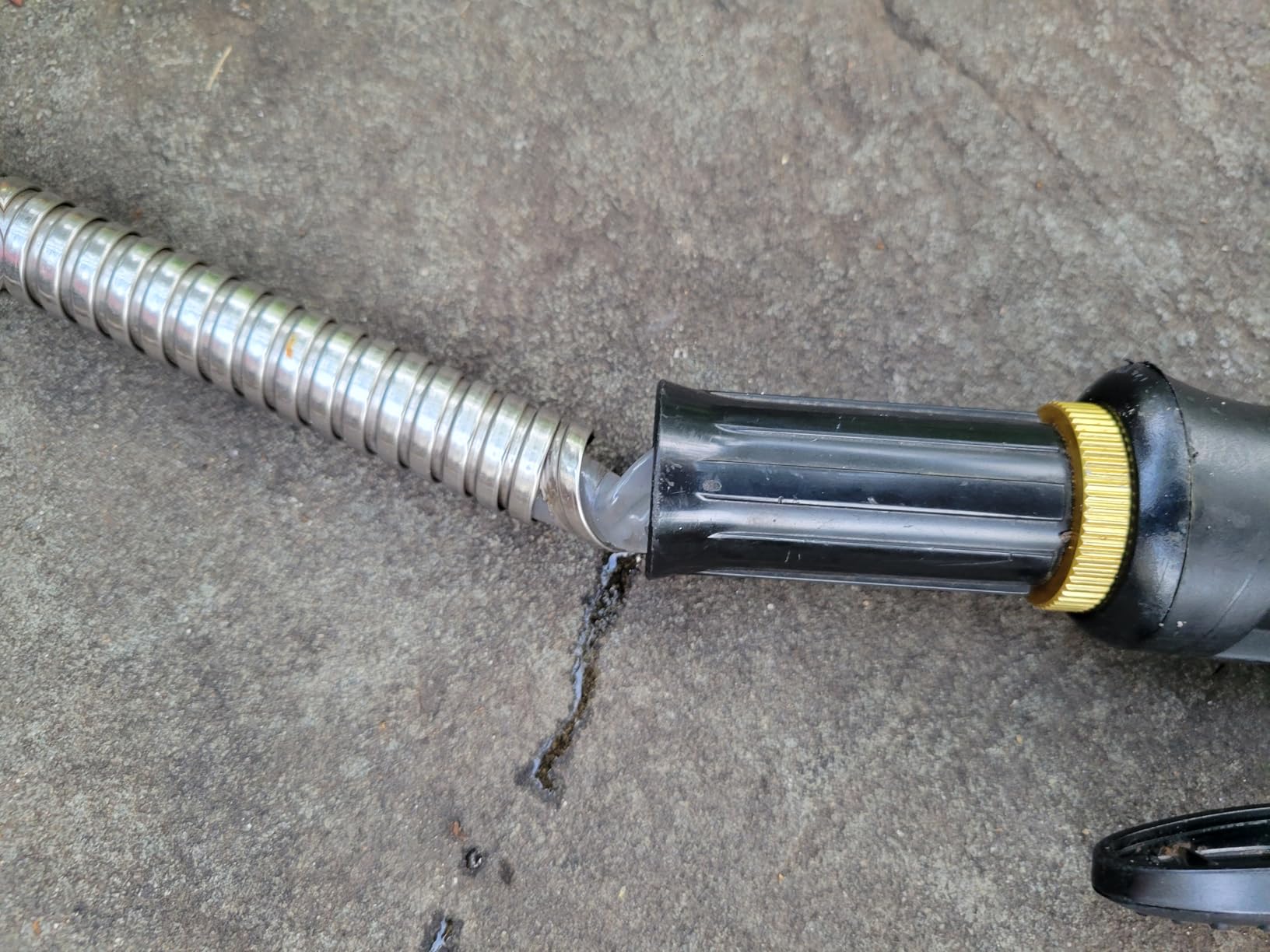
Is a narrower bore acceptable if the hose will not break?
Often yes. Durability and flow are separate problems. A hose that survives five seasons of dog chewing and rocky ground still gives you usable water, whereas a wider hose that splits at the fitting gives you nothing.
If your work is hand watering, filling pet bowls or rinsing a patio, accept the lower flow. If you are washing cars or running a sprinkler, choose a wider bore and accept the pet risk.
What does the warranty actually cover?
It does not cover damage caused by connecting third-party nozzles. That is a narrower warranty than the lifetime coverage offered by the commercial rubber hoses in this roundup, so it is worth keeping the supplied nozzle if you want the protection intact.
With a 282-review base, long-term durability evidence is still thin. Judge it on the material, which is the strong part of the case here.
12. Wiseflow 50ft Five-Layer Braid: Best for Kink Memory
Wiseflow Garden Hose 50FT x 5/8″, Heavy Duty Rubber Hose, Water Hose with Five Layered Braiding, Male Female Fittings, 1000PSI Burst, 300PSI Working for Yard, Car Wash, Pets (Brown)
Five-layer braided rubber
50 feet long
300 PSI working
1000 PSI burst
Pros
- Thicker walls leave no permanent kink memory
- 360-degree rotating brass GHT fittings
- Stays flexible to -40F and resists heat deforming
- Brown color blends into landscaping
Cons
- Heavier than the listing implies at longer lengths
- Some versions report a slightly slipping male thread
- One owner questioned whether the rubber is genuine
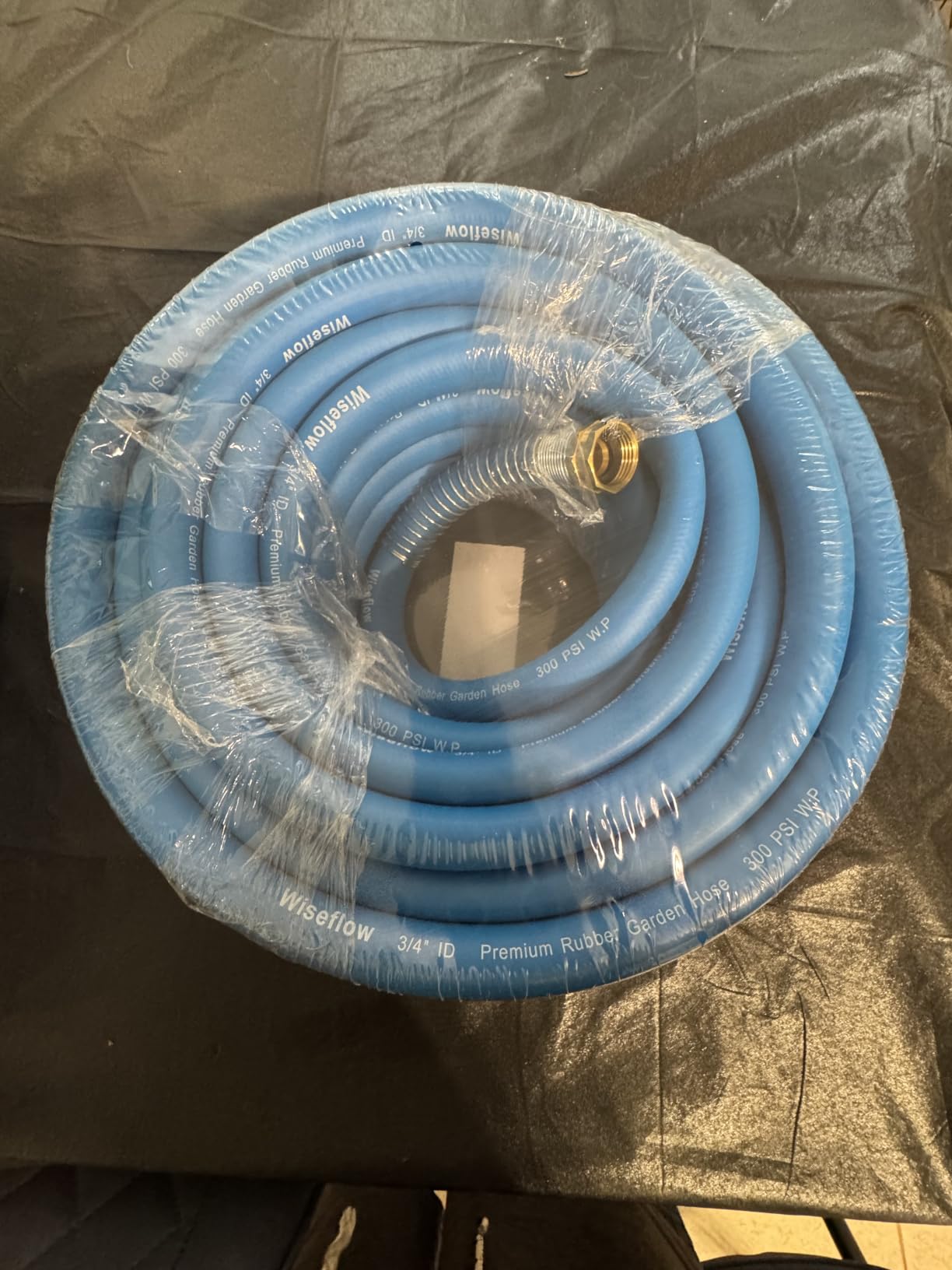
Kink memory is the failure mode that quietly ruins a hose. A thin wall folds, stays oval and never fully recovers, so flow drops a little every season until the hose feels weak even at full tap pressure. This hose attacks that directly with thicker walls in a five-layer braid with double-layer braided wire.
Pressure ratings are stated as 300 PSI working and 1000 PSI burst, on solid brass 3/4-inch GHT fittings with 360-degree rotating male and female connectors. The rotating ends mean the hose can twist without levering against the thread, which is where most split fittings begin.
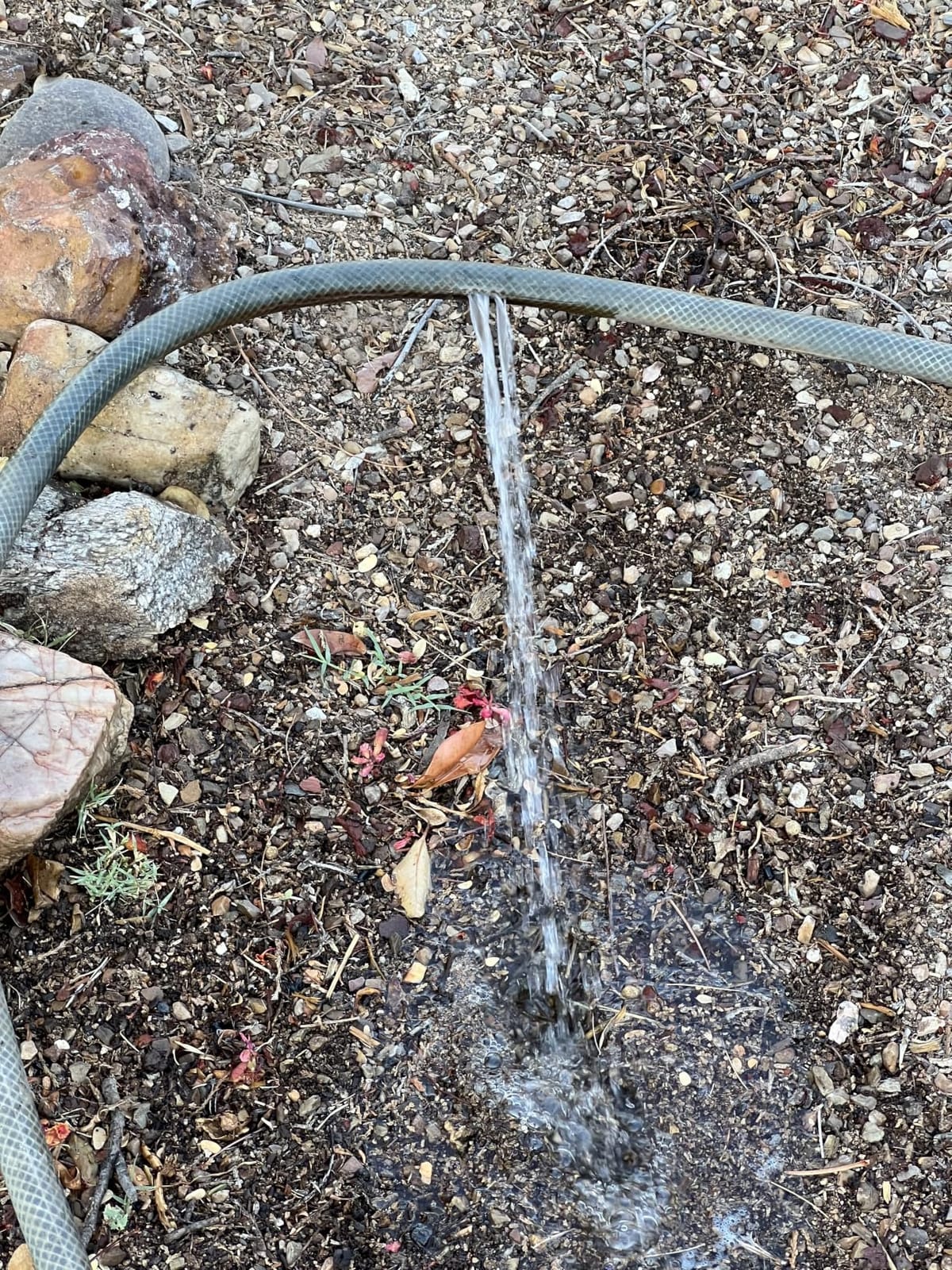
It resists abrasion, cuts, punctures, tears and pet chewing, and stays flexible down to -40F while resisting deformation in high heat. The brown color is a small but genuine advantage if the hose is visible from a street, since it disappears into landscaping rather than reading as a trip line.
The criticisms are about handling and finish quality. Owners find it heavier than the listing implies at longer lengths, and a few report the male thread fitting slipping slightly even though it still seals. One questioned whether the rubber is genuine, which is worth checking on arrival.
Does thicker wall really prevent permanent kinks?
It delays them rather than eliminating them. A thick wall needs more force to fold, so normal drag over a driveway will not create a flat spot the way it does on thin vinyl. When a kink does form under an extreme bend, the thicker rubber springs back instead of holding the oval.
That difference compounds. A hose that never takes a permanent set keeps its flow rate for years, which is often more valuable than a higher burst number you will never reach.
How does a 300 PSI working rating compare with the rest?
It sits in the middle of this group. It is more than double the 150 PSI polymer figure, comparable to the Continental and Gilmour hoses, and well below the 500 and 600 psi figures quoted by others for peak load.
For spigot work that margin is generous. For a pressure washer inlet, check the machine manual for the minimum feed rating before connecting.
How We Picked and What We Checked
We read every listing in the roundup for published pressure figures rather than marketing language, and we excluded anything that would not state a working or burst rating. That single rule removed most of the lightweight vinyl hoses that dominate general hose searches.
Then we compared the numbers that decide whether a hose survives high pressure. Working pressure tells you what you can run continuously. Burst strength tells you how much of a surge the wall absorbs before failing, and it is always higher than working pressure. A hose that lists only one number is usually quoting the burst figure, which overstates what it will do all day.
Construction came next: rubber, polyurethane, PVC blend, polymer or stainless steel, and how many layers sit between the water and the outside world. Then fittings, because brass and anodized aluminum couplings seal more reliably and survive repeated tightening than plastic, and plastic collars crack at exactly the joint where pressure is highest.
We also weighed inner diameter against length, since those two together set your real flow. A 3/4-inch bore over 100 feet moves far more water than a 5/8-inch bore over 50, and no nozzle can recover what friction already took.
Finally we read the one-star reviews in full, because durability failures show up there first. Coil memory, kinks that never recover, scuffed jackets and slipping threads are the complaints that decide long-term satisfaction far more often than the specification sheet does.
What PSI Does a High Pressure Garden Hose Need?
The short answer: for ordinary spigot-fed watering, car washing and driveway cleaning, anything rated 150 PSI working or above will handle household pressure with room to spare. Municipal supply commonly sits between 40 and 80 PSI, so a standard hose is never actually near its limit at the tap. The ratings start to matter the moment you attach something that draws water, such as a pump or a pressure washer inlet.
That is the single most misunderstood point in this category. People buy a 600 PSI hose expecting a 600 PSI spigot, and no residential tap produces that. What a high burst rating actually buys you is headroom against water hammer, the pressure spike that travels through a pipe when a valve closes abruptly, and against spikes from irrigation timers opening in a hurry.
Working pressure versus burst strength
Working pressure is the rating to plan around. It is the pressure you can run for hours on end without stressing the wall, gasket or thread. Burst strength is the laboratory ceiling, measured by inflating a hose until it fails. Manufacturers quote a three to one ratio between the two, so a hose rated 200 PSI working should be quoted around 600 PSI burst.
Where those numbers are missing, treat the single listed figure as the burst number and assume the working rating is a third of it. That assumption is what keeps you out of trouble with hoses that publish only one number.
Should you buy 5/8 inch or 3/4 inch?
Go 3/4 inch if you fill pools, run more than one sprinkler, water livestock, or wash long distances. Go 5/8 inch for patios, small lawns, container plants and anywhere you carry the hose more than you push it.
3/4 inch moves roughly 45 percent more water than 5/8 inch at the same pressure. That extra volume is what preserves nozzle pressure over 50 to 100 feet, because friction loss inside the hose scales sharply with the internal diameter.
Length works the other way. Every additional foot adds friction, so a 50-foot 3/4-inch hose can outperform a 100-foot 5/8-inch hose at the far end. If you cannot have both, prioritise diameter.
What materials hold up under pressure?
Solid rubber is the strongest and most durable, handles cold and abrasion, and resists splitting under surge, but it is heavy. Rubber and PVC blends give you most of that behaviour at a lower weight. Polyurethane blends stay flexible across a wide temperature band and are easy to move.
Pure PVC is the weakest of the four here and usually publishes no pressure rating at all. Stainless steel is a different category: it resists puncture and chewing rather than pressure, and the inner tubing still sets the pressure limit. Our broader general garden hose roundup covers these materials in more depth.
Can a garden hose feed a pressure washer?
Yes, but only as an inlet supply, and only if the hose is rated above the washer minimum. Most electric washers draw around 1.5 GPM and most gas washers draw closer to 3 GPM. A 5/8-inch hose delivers around 5 GPM at typical household pressure, so flow is usually adequate for electric units and marginal for larger gas units.
Pick a 3/4-inch hose for gas washers and connect as close to the spigot as possible, because every foot of hose costs pressure. Avoid expandable hoses for this job entirely. Their latex-covered construction springs leaks at the connections under sustained pressure, which is the most common complaint we see on r/pressurewashing and our expandable hose roundup.
If you want more machine capability, compare units in our electric pressure washer guide.
What is the downside of expandable hoses?
Three things. They expand under pressure, so the inner diameter shrinks and flow drops at exactly the moment you need it most. They develop leaks at the connection points because the fittings flex with the body. And they have no meaningful burst rating, because their construction changes with pressure.
They are excellent for storage, small balconies and light watering. They are the wrong choice for pressure washing, car washing on a driveway or anything connected to a machine.
Which fittings and nozzles matter?
Look for brass or anodized aluminum couplings, and a collar you can tighten by hand. Wrench flats are a strong preference among high pressure users because they let you torque the connection properly instead of guessing.
On the nozzle end, a high pressure nozzle is mostly about controlling flow rather than creating more of it. A twist nozzle with a shutoff valve saves water between plants and stops the hose whipping when you turn it off, which is the fastest way to break a fitting. See our picks for pressure washer accessories for the equipment side.
How do you store and winterise a high pressure hose?
Drain it fully before the first freeze, coil it loosely rather than folding it at a single point, and keep it off concrete in summer sun. A storage reel mounted on a wall keeps 18-pound hoses like the Gilmour manageable and out of foot traffic.
Store rubber hoses out of direct sun where you can. UV exposure is the main long-term enemy of the outer layer, and coils with a tight memory should be stretched under pressure in the sun once a season to relax them.
Frequently Asked Questions
What size garden hose gives the most pressure?
A 3/4-inch hose gives you more pressure at the nozzle than a 5/8-inch hose of the same length, because the wider bore loses less to friction. Over 50 to 100 feet that difference is substantial. Diameter matters more than length, so if you must choose, pick 3/4 inch and keep it shorter. A 50-foot 3/4-inch hose typically outperforms a 100-foot 5/8-inch hose at the far end.
What is the maximum PSI a garden hose can handle?
It depends entirely on the hose, and the answer is always lower than the headline number. Burst strength is the laboratory ceiling, while working pressure is the rating you can run continuously. Manufacturers normally quote a three-to-one ratio between them, so a hose listing 600 PSI burst is a 200 PSI working hose. Household spigots typically deliver 40 to 80 PSI, so any hose rated 150 PSI working or above handles tap-fed jobs comfortably.
Do I want a 5/8 or 3/4 garden hose?
Choose 3/4 inch for pool filling, running two sprinklers, watering livestock and long-distance car washing, where the extra volume matters. Choose 5/8 inch for patios, container plants and small lawns, especially if you carry the hose more than you push it. A 3/4-inch bore moves roughly 45 percent more water than 5/8 inch at the same pressure, and wider bore also reduces pressure loss over distance.
What is the downside of expandable hoses?
Expandable hoses shrink in internal diameter when pressurised, so flow drops at the moment you need it most. Their flexible bodies also spring leaks at the connection points under sustained pressure, and their construction changes with pressure, leaving no meaningful burst rating. They are excellent for storage and light watering on small balconies, but they are the wrong choice for pressure washing, driveway cleaning or feeding a machine.
Do high pressure hose nozzles really work?
Yes, but they control flow rather than creating pressure. A quality twist or dial nozzle with a shutoff valve lets you stop the flow between plants and reduces the hose whipping that breaks fittings. The pressure you feel at the nozzle comes from your supply and hose diameter, not the nozzle. A nozzle cannot recover pressure that friction already lost inside a long or narrow hose.
What is the strongest type of garden hose?
Solid rubber reinforced with multiple layers is the strongest construction for pressure resistance, and it also handles cold temperatures and abrasion better than anything else. Stainless steel hoses resist puncture and pet damage rather than pressure, with the inner tube still setting the limit. Rubber and PVC blends sit in between, and pure vinyl is the weakest. If you need hot water service, five-layer braided rubber is the only category that handles it.
Final Verdict: The Best Garden Hoses for High Pressure in 2026
After weighing pressure ratings, bore diameter, fitting material and long-term owner reports, the Briggs and Stratton 8BS100 takes our top spot among the best garden hoses for high pressure. Its 4.6 rating across more than 9k reviews, 200 psi working spec and nickel plated brass couplings on a 100-foot reinforced rubber body make it the most proven option here for real household pressure.
Pick the YAMATIC if you want the clearest pressure labelling and brass fittings at a lower spend. Pick the Gilmour Pro Commercial if you need a 3/4-inch bore for maximum flow across 100 feet. Pick the Continental if you wash gear in winter, and the Stanley FATMAX if you want tool-free connections and the lowest listed weight.
Whatever you choose, buy the hose that publishes its working pressure, buy brass or anodized aluminum fittings, and match the diameter to the distance. Check the current details for each pick before you order.