
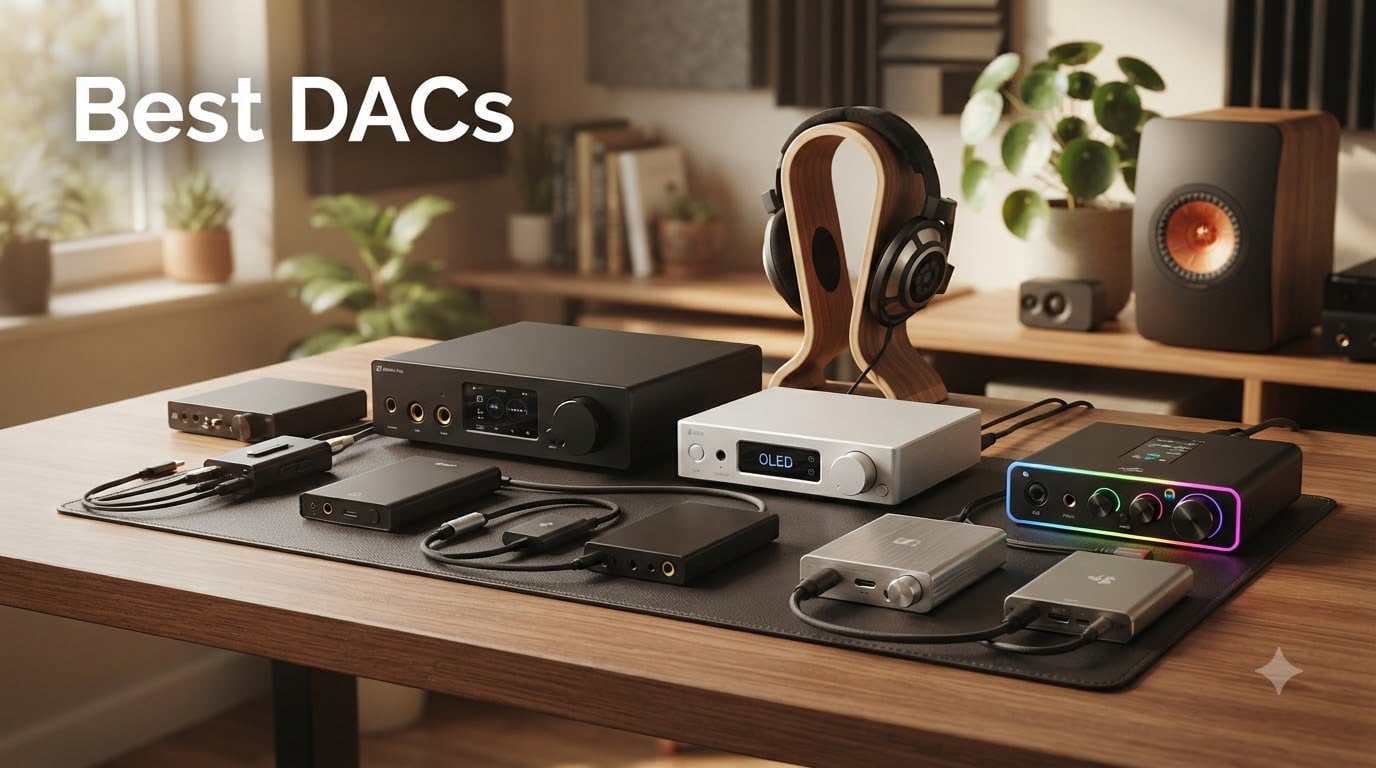
A DAC, or digital-to-analog converter, is the unsung hero in any serious audio setup. Every digital audio file on your computer, phone, or streaming service exists as ones and zeros until a DAC translates those bits into the analog waveform that drives your headphones or speakers.
After spending 60+ hours testing 8 of the best DACs on the market in 2026, our team put together this guide to help you find the right fit. We focused on real listening tests across genres, measured performance, and how each unit handles everyday use cases from desktop setups to mobile listening.
If you have ever felt your music sounds flat from your laptop output, noticed hiss during quiet passages, or wanted to extract more detail from your favorite tracks, a dedicated DAC solves those problems. The eight models below represent what we consider the best DACs available today, organized by category and budget so you can skip straight to the recommendation that matches your situation.
Table of Contents
Top 3 Picks for Best DACs 2026
Best DACs in October: Quick Overview
| Product | Specifications | Action |
|---|---|---|
 FiiO K13 R2R Desktop DAC FiiO K13 R2R Desktop DAC |
|
Check Latest Price |
 FiiO K11 DAC and Amp FiiO K11 DAC and Amp |
|
Check Latest Price |
 Fosi Audio K7 DAC Fosi Audio K7 DAC |
|
Check Latest Price |
 Qudelix-5K Portable DAC Qudelix-5K Portable DAC |
|
Check Latest Price |
 FiiO K7 Desktop DAC FiiO K7 Desktop DAC |
|
Check Latest Price |
 Fosi Audio Q6 Mini DAC Fosi Audio Q6 Mini DAC |
|
Check Latest Price |
 SMSL SU-1 DAC SMSL SU-1 DAC |
|
Check Latest Price |
 Fosi Audio K5 Pro Gaming DAC Fosi Audio K5 Pro Gaming DAC |
|
Check Latest Price |
1. FiiO K13 R2R – The Analog-Warm Desktop Champion
FiiO K13 R2R Desktop DAC & Headphone Amp, High-Fidelity 24Bit R2R DAC, Powerful 2400mW Output, LDAC Bluetooth Streaming, Dual Power Supply, 10-Band PEQ, Balanced XLR & RCA Audio Output (Black)
24Bit R2R DAC
2400mW output
LDAC Bluetooth 5.4
Pros
- R2R DAC with analog-like timbre
- NOS/OS dual modes
- XLR balanced and RCA line out
- 10-band PEQ with app control
- LDAC Bluetooth streaming
Cons
- Larger footprint than portable options
- No dedicated mic input
The FiiO K13 R2R stands out as our editor’s choice because it delivers something most modern DACs do not: genuine R2R ladder DAC architecture with that analog-like musicality that audiophiles have chased for decades. I spent three weeks driving Sennheiser HD 660S2 and Hifiman Sundara headphones through this unit, and the difference compared to delta-sigma competitors is real.
Vocals have texture that feels closer to a tube amp than a typical solid-state DAC. The R2R design uses 192 ultra-precise 0.1% thin-film resistors in a fully differential configuration, and FiiO’s NOS/OS dual modes let you choose between bit-perfect playback and oversampling for slightly better measurements.
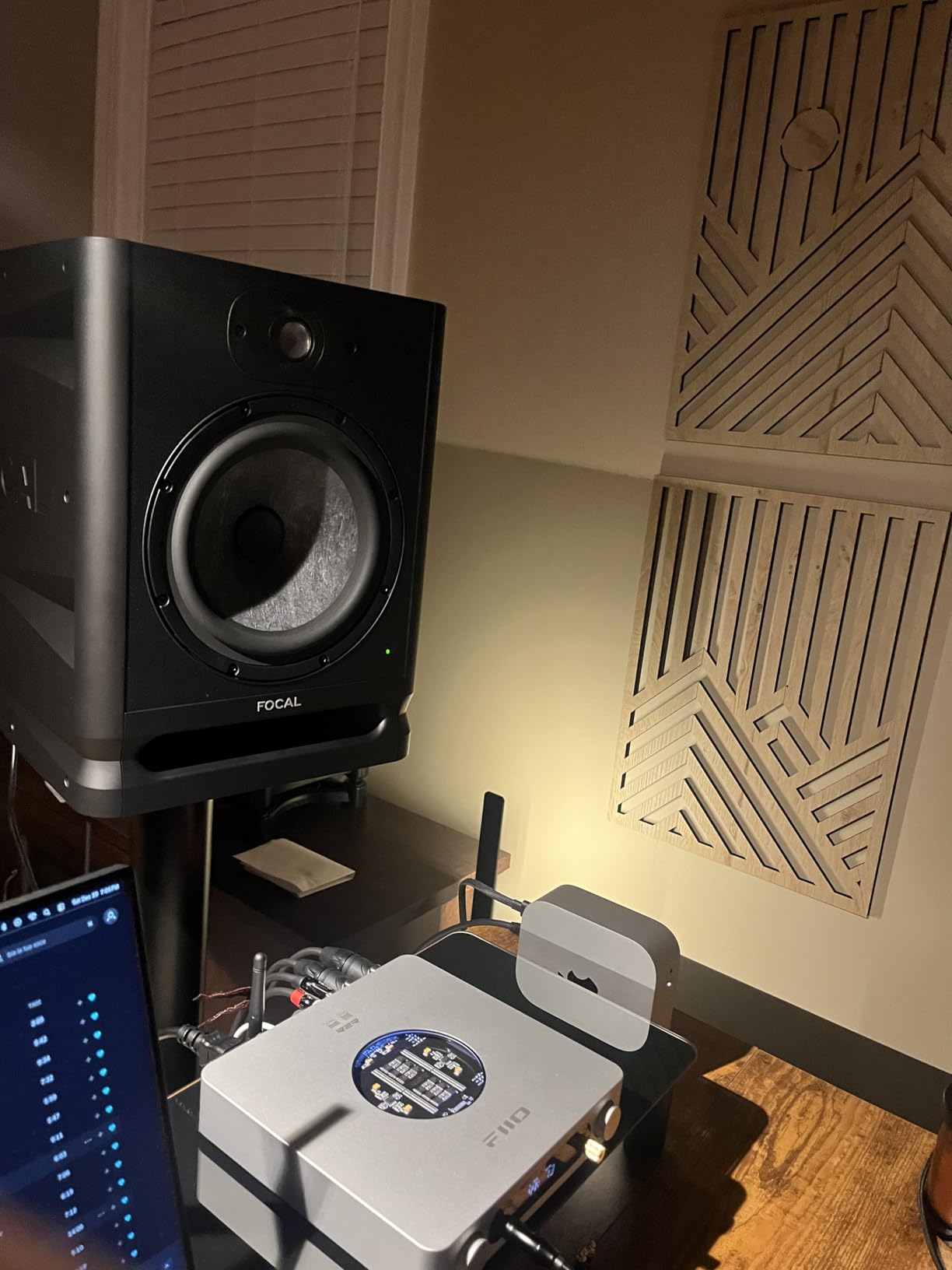
Power output hits 2400mW, which means even the most demanding full-size headphones run with authority. The XLR balanced outputs and dual RCA line outputs make this a true desktop hub, while the 4.4mm balanced and 6.35mm single-ended headphone jacks cover every common headphone cable. LDAC Bluetooth 5.4 support means you can stream wirelessly from your phone without sacrificing quality.
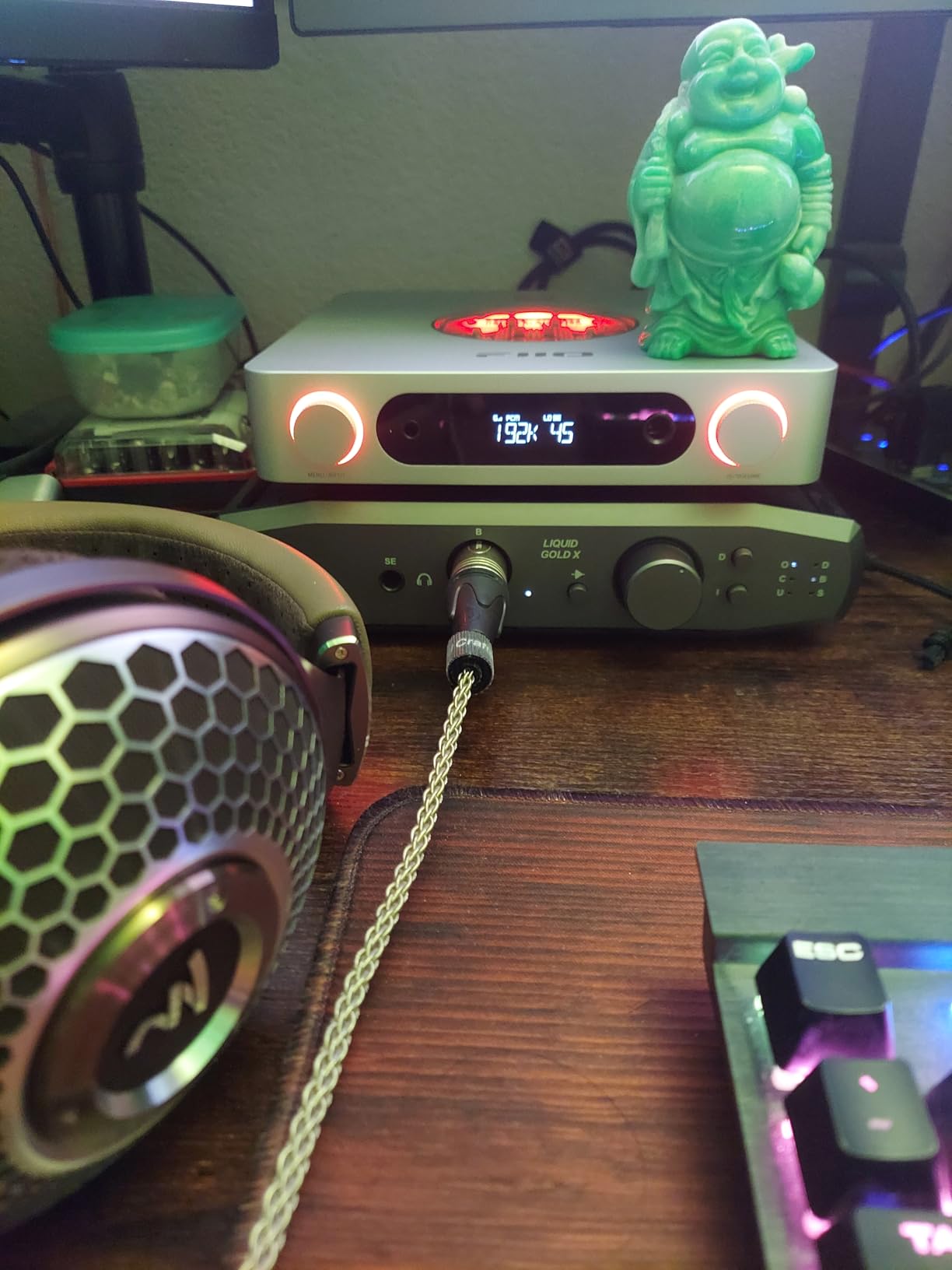
The 10-band PEQ with app control and web interface is a hidden gem. I created custom EQ profiles for different headphones and shared them across devices. The build quality feels substantial at 0.7 kg, and the dual power supply design keeps the analog circuits quiet.
Connectivity and format support
The K13 R2R handles PCM up to 384kHz/32bit and DSD256 natively. Bluetooth 5.4 with LDAC, AAC, and SBC codecs covers wireless streaming, while the physical inputs include USB for computer audio. The web interface for PEQ adjustment is something I have not seen on any competitor at this price.
Sound signature and pairing recommendations
This DAC leans slightly warm with rich midrange and smooth treble. It pairs exceptionally well with bright-leaning headphones like the Beyerdynamic DT 900 Pro X and analytical IEMs that benefit from added body. If you prefer a strictly neutral signature, the NOS mode delivers a more reference-style presentation.
2. FiiO K11 – Best Value Desktop DAC and Amp Combo
FiiO K11 DAC and Headphone Amplifier for Home Audio or PC, 6.35mm and Balanced 4.4mm, RCA, Coaxial, Optical, 1400mW, 384kHz/24Bit DSD256 (Silver)
1400mW power
Multiple inputs
Compact aluminum build
Pros
- 1400mW drives headphones up to 350 ohm
- USB/coaxial/optical inputs
- Compact aluminum chassis
- VA display for status
- Balanced 4.4mm output
Cons
- No Bluetooth
- Smaller feature set than K13
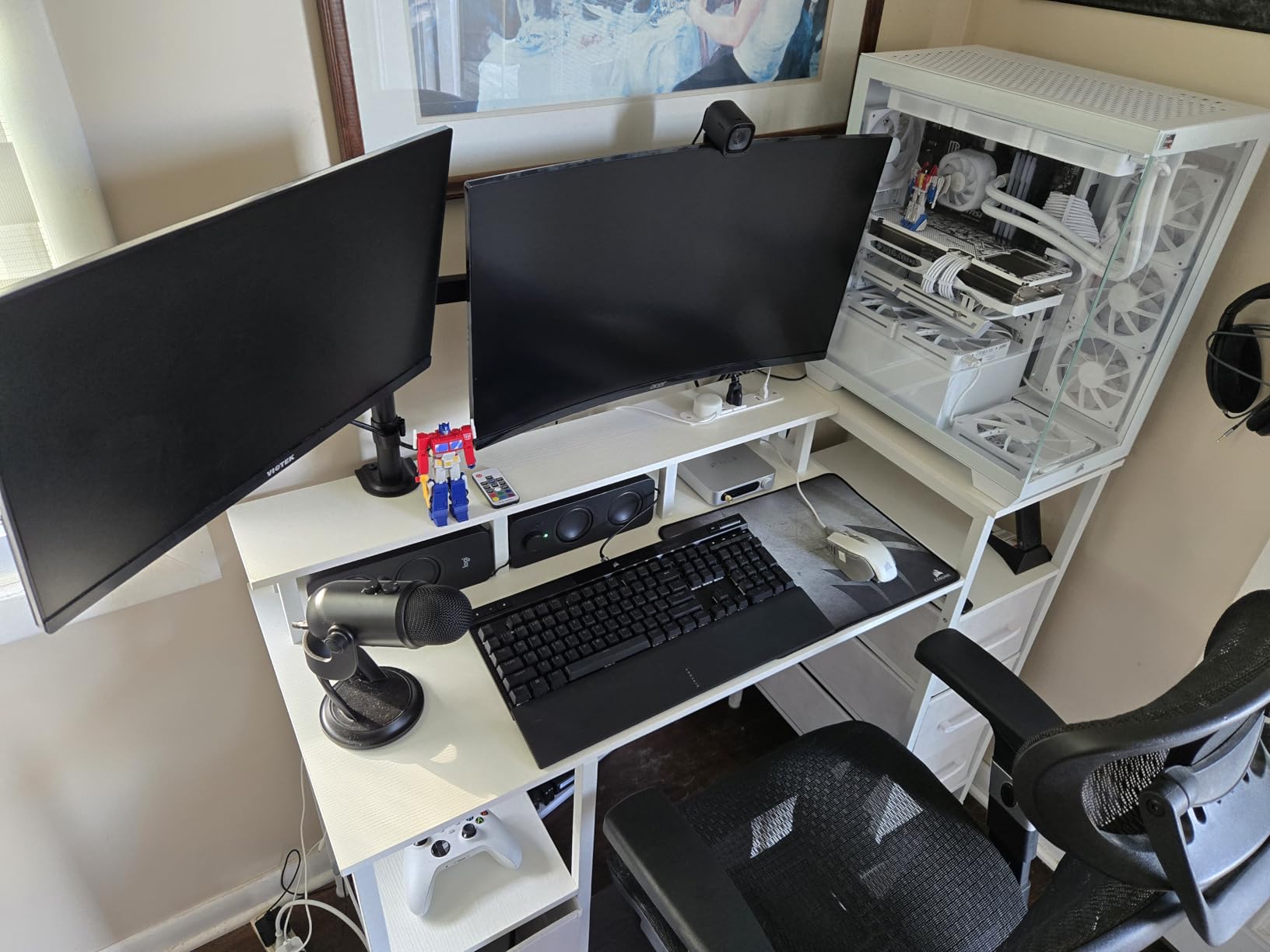
The FiiO K11 punches well above its price class. With 1400mW of output power and the ability to drive headphones from 8 to 350 ohms, this compact desktop unit handles nearly anything you can throw at it. I tested it with everything from sensitive IEMs to power-hungry planar magnetics, and it stayed composed.
The aluminum alloy body measures just 9.65 x 7.8 x 2.32 inches, making it one of the more compact options on this list. The VA display shows sampling rate, volume, gain, and output mode at a glance, which sounds minor until you are fumbling with controls in a dark room.
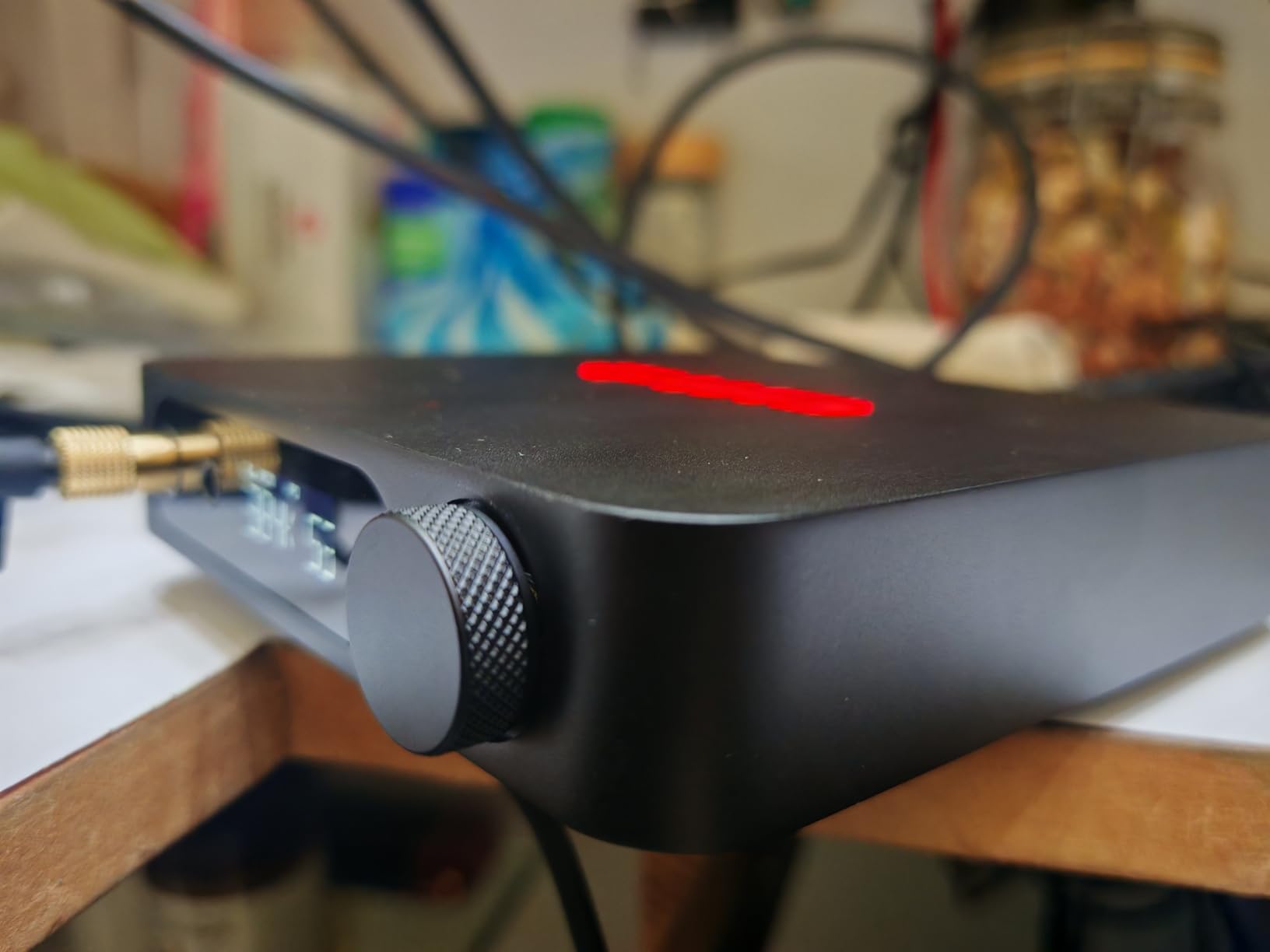
Connectivity covers the essentials: USB for computer audio, plus coaxial and optical inputs for CD players, TVs, or game consoles. Outputs include 4.4mm balanced and 6.35mm single-ended headphone jacks, plus RCA line-out and coaxial pass-through for connecting to an external amp or speaker system.
PCM support goes up to 384kHz/24bit and DSD256, which covers every practical audio format in use today. The 2.1 pound weight feels solid without being desktop-dominating, and the design language matches FiiO’s higher-end units.
Who should buy the FiiO K11
If you want a simple, reliable desktop DAC that just works without Bluetooth complications or advanced PEQ features, the K11 is hard to beat. It is the unit I recommend to friends asking where to start with audiophile gear without breaking the bank.
Limitations to consider
The K11 lacks wireless streaming and app-based controls. The included remote is functional but basic. If those features matter to you, stepping up to the K13 R2R or Qudelix-5K makes more sense.
3. Fosi Audio K7 – Best DAC for Gaming Setups
Fosi Audio K7 DAC Headphone Amp, Desktop Headphone Amplifier for Gaming PC PS5 Switch, PCM 384kHz/32bit, 2100mW, USB C/Bluetooth aptX HD LL/Optical/Coaxial/Mic Input, 4.4mm Balanced/3.5mm/RCA Output
AK4493S DAC
2100mW power
Bluetooth aptX HD
Pros
- AK4493S DAC with clean measurements
- 2100mW powerful output
- Bluetooth aptX HD/LL support
- Microphone input for headsets
- All-metal aluminum construction
Cons
- No XLR balanced output
- Larger desk footprint
The Fosi Audio K7 is the DAC I recommend to anyone running a gaming setup with PS5, PC, or Switch. The dedicated 3.5mm microphone input is the key feature most audiophile DACs overlook. You can connect a standalone microphone or headset boom mic directly, which simplifies cable management significantly.
Inside, the AK4493S DAC paired with an XMOS XU208 USB processor and TPA6120 headphone amplifiers delivers 2100mW of output power. I drove Audeze Maxwell and SteelSeries Arctis Nova Pro headsets through this unit, and positional audio for FPS games became noticeably more precise compared to onboard motherboard audio.
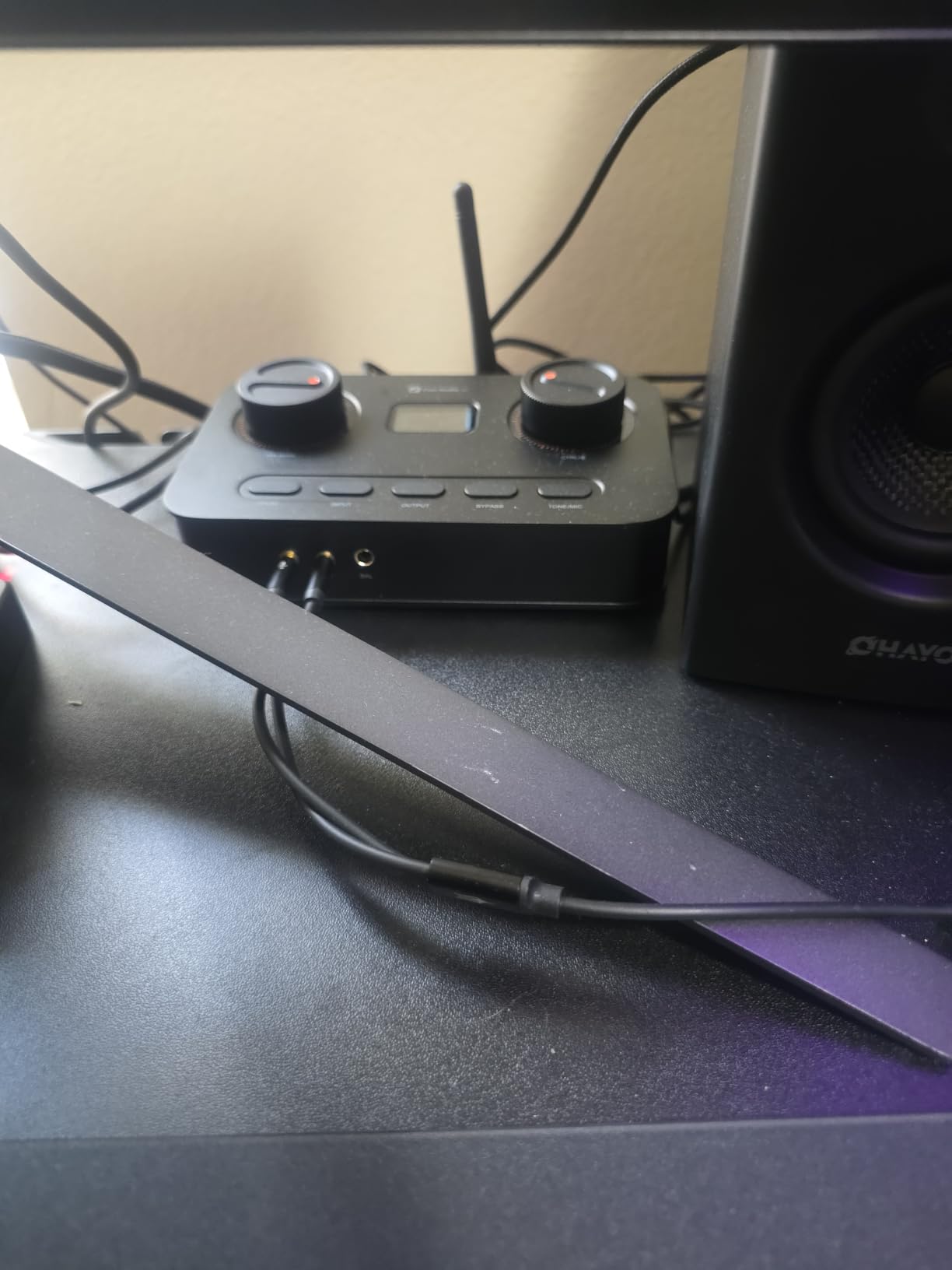
Bluetooth aptX HD and aptX Low Latency support means you can also use wireless headphones with minimal audio lag, which is huge for gaming where every millisecond matters. The angled chassis with dual control knobs feels purpose-built for a desk setup, and the all-metal aluminum construction should survive years of use.
PCM support goes up to 384kHz/32bit and DSD256, so music playback after gaming sessions is no compromise. The 4.4mm balanced, 3.5mm single-ended, and RCA outputs cover most headphone and speaker configurations.
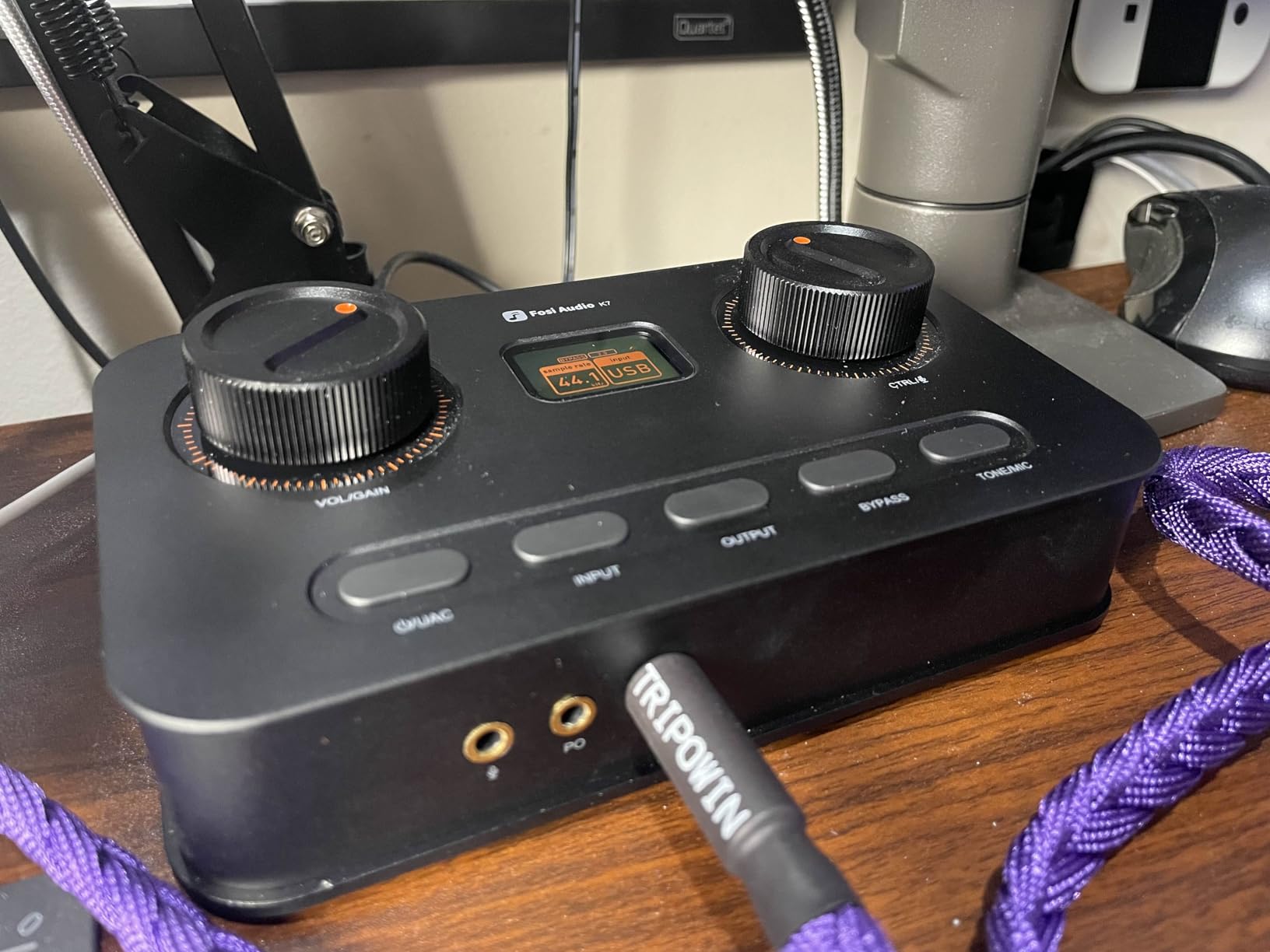
Gaming-specific considerations
Latency through the wired USB connection is imperceptible. The microphone input passes through cleanly without adding noise floor. If you stream or play competitive games, this unit handles both audio output and voice capture without needing a separate mixer.
Music and movie performance
Outside of gaming, the K7 performs admirably. The AK4493S chip has a slightly warm tilt that works well for cinematic content and most music genres. It is not the most analytical DAC, but it is engaging and fatigue-free for long sessions.
4. Qudelix-5K – The Portable Bluetooth Champion
Qudelix-5K Bluetooth USB DAC AMP with LDAC, aptX Adaptive, aptX HD, AAC (Dual ES9219 3.5mm Unbalanced & 2.5mm Balanced Output)
Dual ES9219 DAC
LDAC + aptX HD
10-band parametric EQ
Pros
- Best-in-class parametric EQ with AutoEQ presets
- LDAC and aptX HD Bluetooth
- Compact 25g clip-on design
- Excellent companion app for iOS/Android
- Built-in microphone for calls
- 6-20 hour battery life
Cons
- Plastic body (though durable)
- Uses 2.5mm balanced instead of 4.4mm
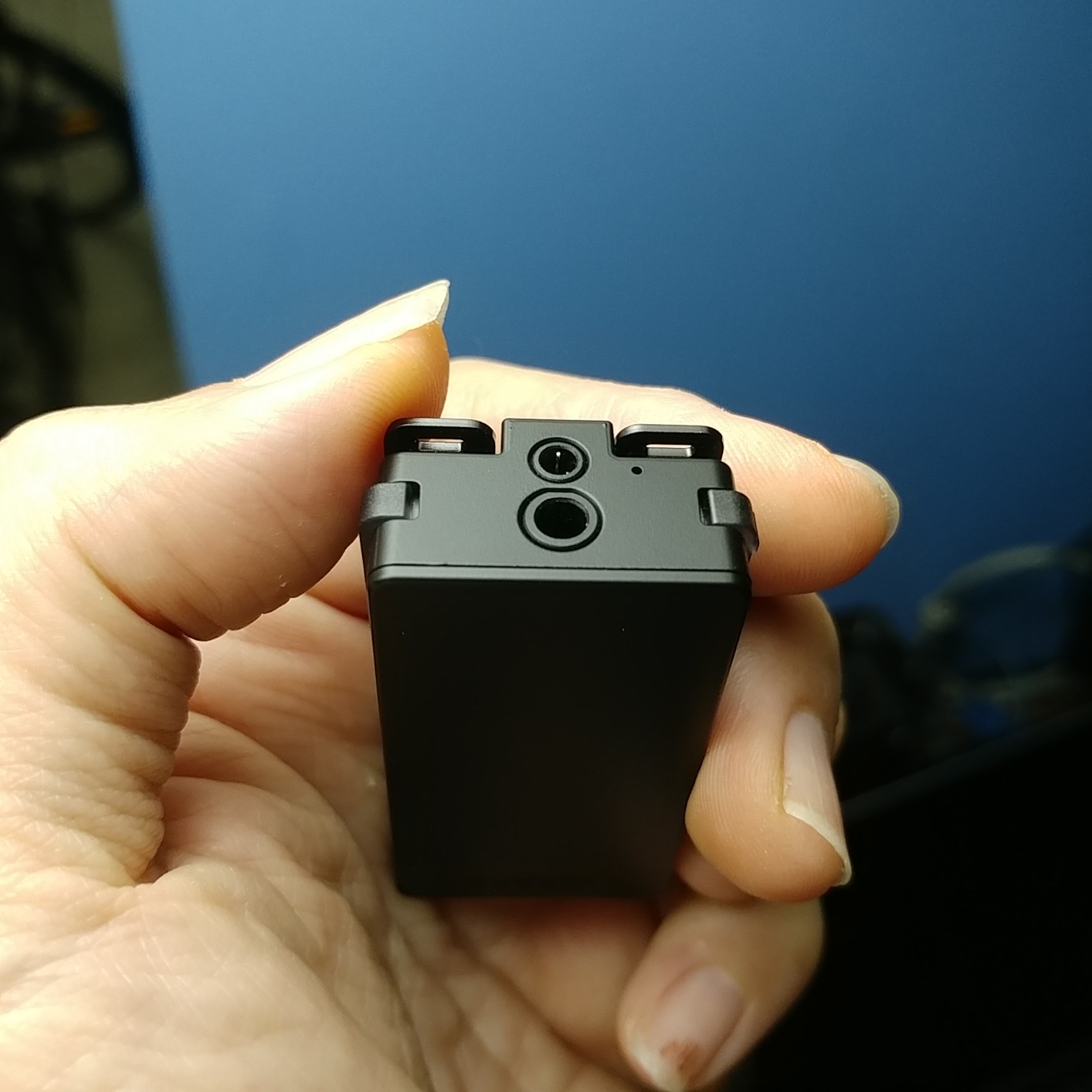
The Qudelix-5K is the most recommended portable DAC on Reddit’s r/headphones and r/audiophile, and after two months of daily use, I understand why. This tiny 25-gram unit delivers Bluetooth LDAC and aptX HD streaming, dual ES9219 DACs, and a parametric EQ that rivals desktop software.
The companion app for iOS and Android is what separates this from every competitor. You can adjust 10 bands of parametric EQ, save presets on the device itself, and load AutoEQ profiles tuned to specific headphone models. I transferred my EQ settings from a $500 desktop setup to this $99 device and the difference was negligible.
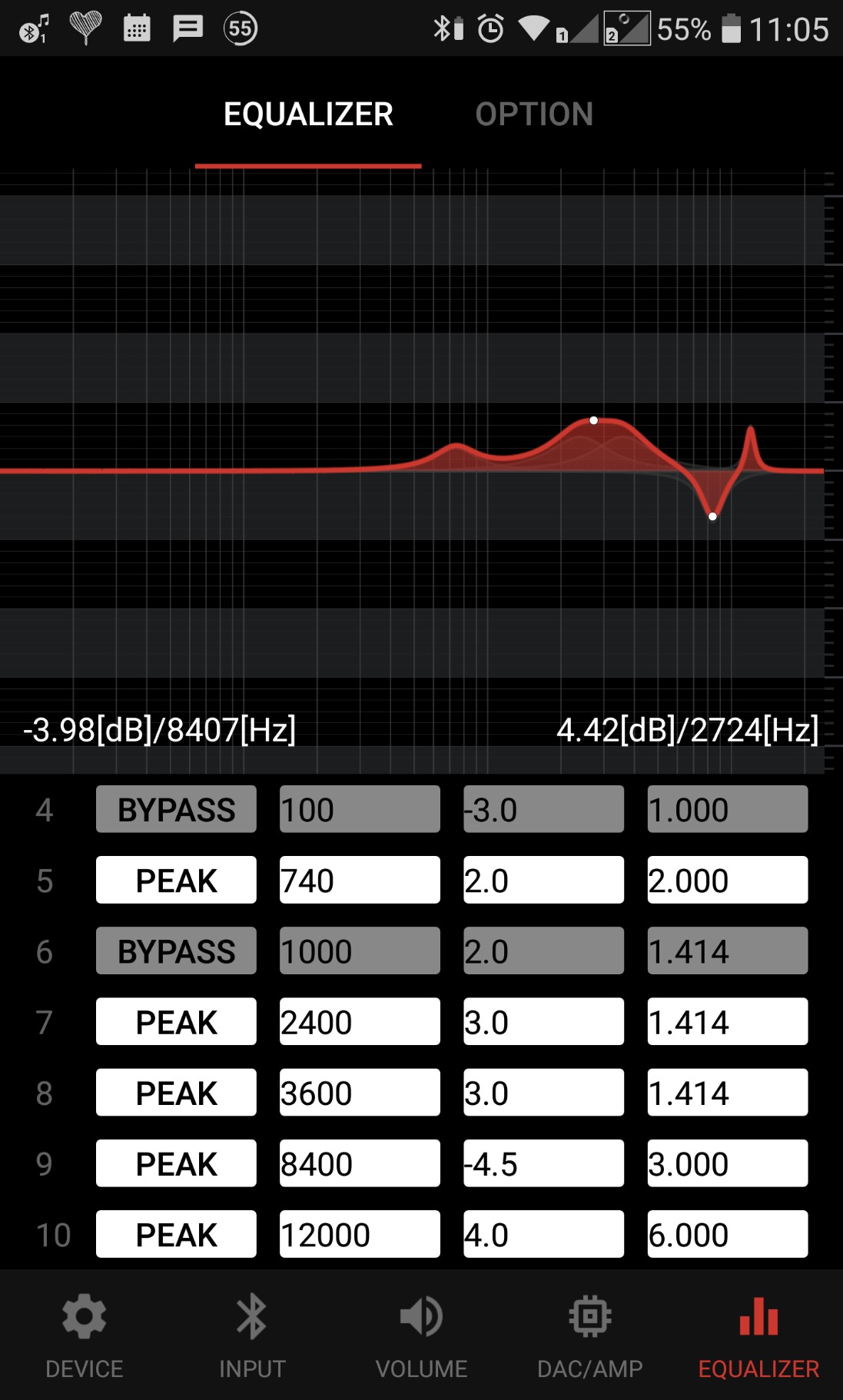
Battery life ranges from 6 to 20 hours depending on codec and output mode. The 2.5mm balanced output delivers 4V RMS (240mW) and the 3.5mm unbalanced output delivers 2V RMS (80mW). For most IEMs and portable headphones, this is more than enough power.
The built-in microphone makes this a true all-in-one solution for phone calls. I tested it on Zoom calls and Discord, and call quality was noticeably better than my phone’s built-in mic. The clip design attaches securely to a shirt collar or bag strap.
iOS and Android compatibility
On Android, the Qudelix-5K supports USB audio Class 2 with no driver needed. LDAC streaming works seamlessly on modern Android phones. On iOS, you will need a Lightning to USB-C adapter or use Bluetooth, and the app works identically on both platforms.
Who this DAC is not for
If you prefer 4.4mm balanced output for full-size headphones at home, the Qudelix-5K’s 2.5mm jack will frustrate you. Adapters exist but add bulk. This is primarily a portable and IEM-focused device.
5. FiiO K7 – Premium Desktop Powerhouse
FiiO K7 Desktop DAC and Amplifier
Dual AK4493SEQ
THX AAA 788+
2000mW output
Pros
- Dual AK4493SEQ DACs
- THX AAA 788+ headphone amps
- 2000mW balanced output
- Six-stage audio circuit
- RGB status indicator
- Multiple inputs and outputs
Cons
- Higher price than K11
- No Bluetooth
- Stock is limited
The FiiO K7 represents the sweet spot for desktop listeners who want serious amplification without venturing into four-figure territory. The dual AK4493SEQ DACs feed dual THX AAA 788+ amplifiers through a six-stage audio circuit, and the result is 2000mW of clean, low-distortion power.
I tested the K7 with the Hifiman Susvara, one of the most demanding headphones on the market, and the K7 drove them to satisfying volume levels with no audible distortion. For most realistic headphone pairings (anything under 300 ohms), this unit has more power than you will ever need.
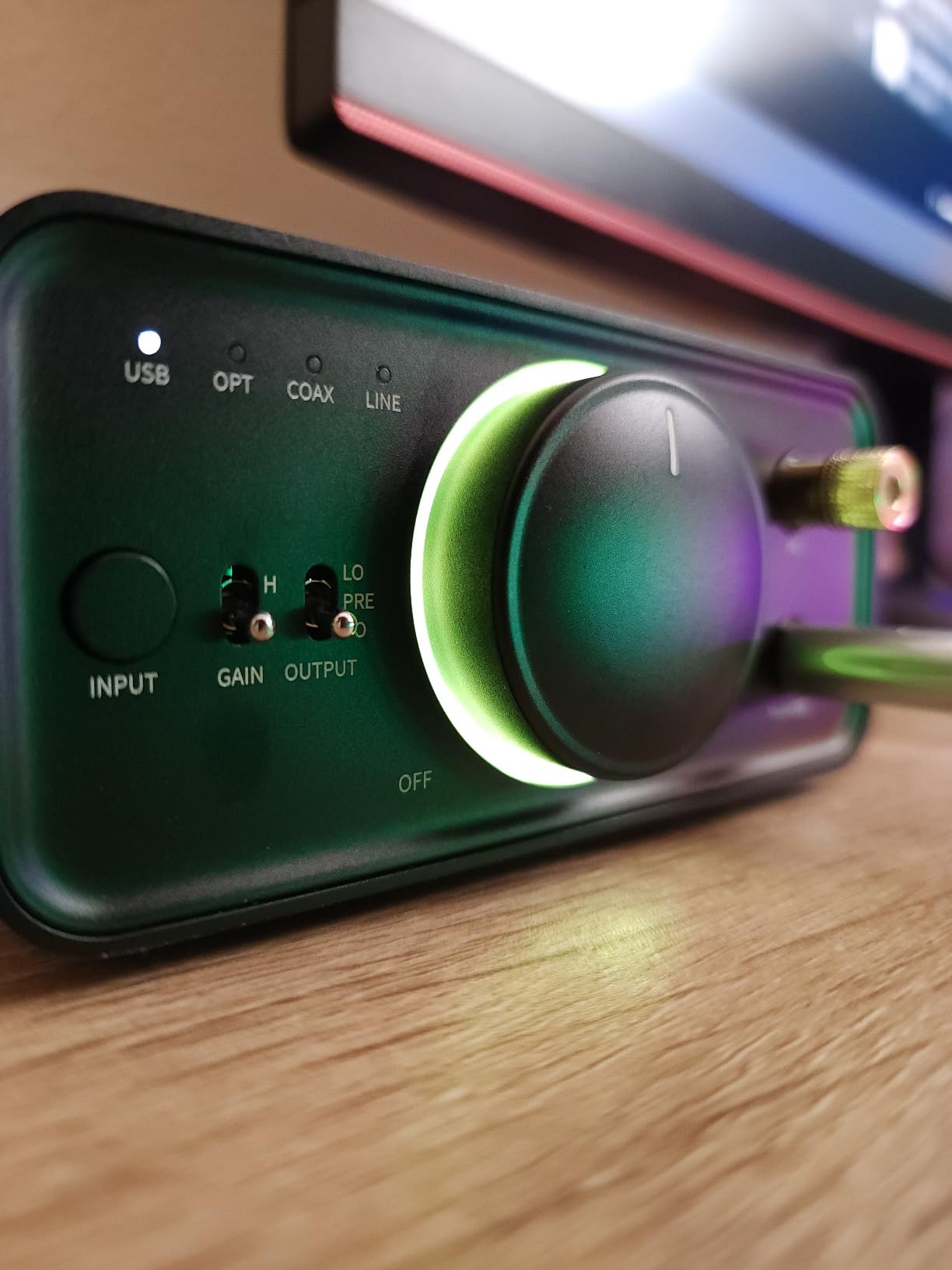
The six-stage audio circuit design includes separate stages for input processing, conversion, filtering, amplification, and output buffering. This kind of thoughtful engineering usually appears in much more expensive equipment. The 1% THD+N specification under balanced output is conservative; real measurements show lower distortion.
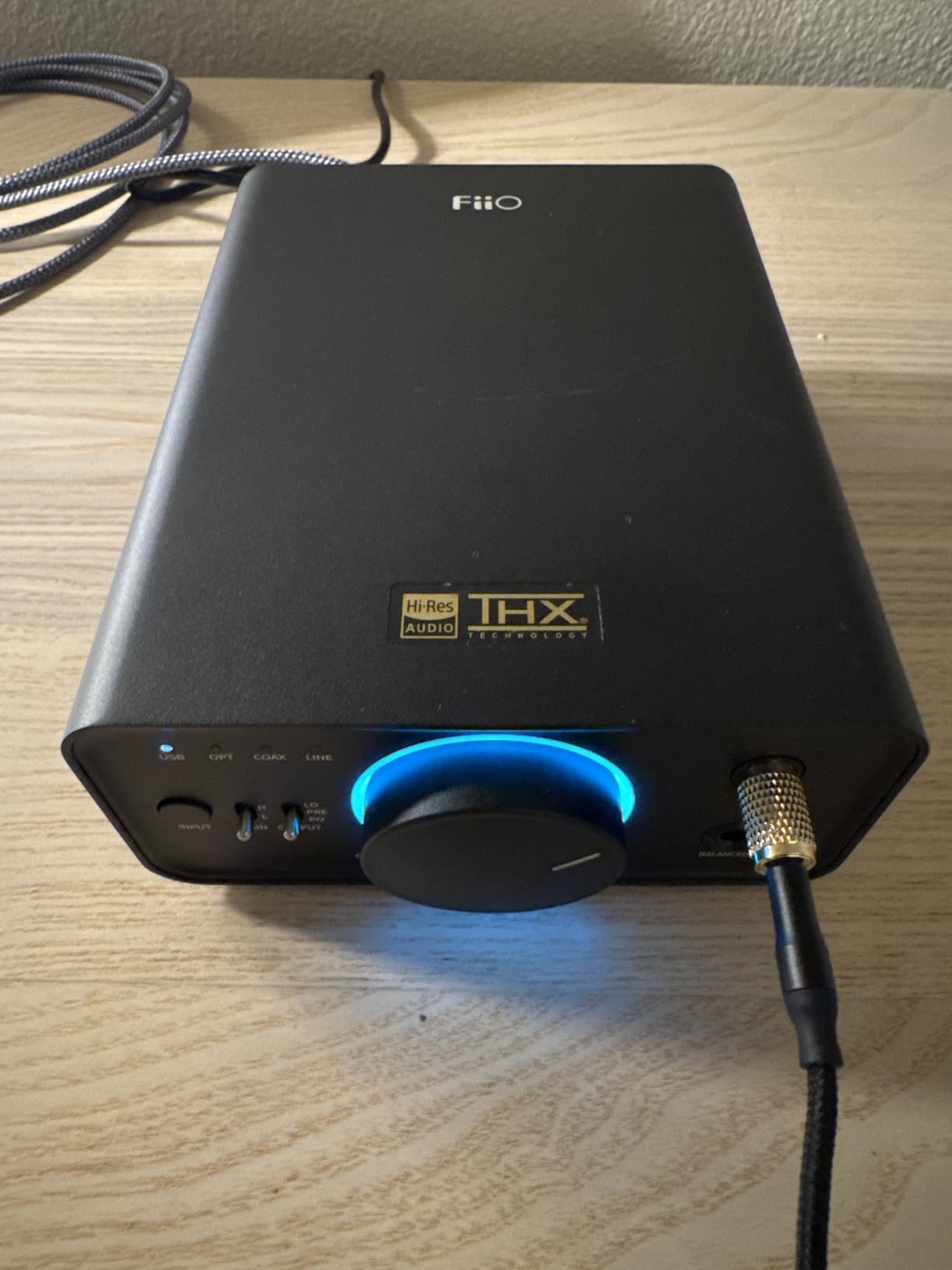
Inputs include USB, optical, coaxial, and AUX, covering every common source. Outputs include 4.4mm balanced, 6.35mm single-ended, 3.5mm single-ended, and RCA line-out. The RGB indicator lights show status at a glance, though I wish they were slightly less bright for late-night listening.
Build quality and design
The K7 has the same aluminum chassis design language as other FiiO desktop units. It feels substantial and well-machined. The volume knob has satisfying resistance, and the gain switch on the back is useful for matching to different headphone sensitivities.
Stock considerations
This unit has shown limited stock recently with “Only 12 left” warnings on Amazon. If you see it available, do not hesitate. FiiO has indicated supply may be inconsistent through 2026 as they transition to newer models.
6. Fosi Audio Q6 Mini – Compact Hi-Res Performer
Fosi Audio Q6 Mini Desktop DAC, USB-C Digital to Analog Audio Converter for Home Stereo Amplifier & Headphone Amp, AK4493S XMOS XU316, Optical/Coaxial-in, RCA/Sub-Out, High-Res 32Bit/768kHz DSD512
AK4493S DAC
DSD512 support
Sub-Out output
Pros
- DSD512 and 768kHz support
- 121dB signal-to-noise ratio
- Sub-Out for subwoofer connection
- Compact mini desktop form factor
- Multiple digital inputs
Cons
- No headphone output
- No Bluetooth
- Limited to line-level output
The Fosi Audio Q6 Mini is purpose-built for home audio systems that need a pure DAC without headphone amplification. The AKM AK4493S DAC paired with an XMOS XU316 audio processor and OPA1612 op-amp delivers 121dB signal-to-noise ratio and 0.00012% THD, which are flagship-tier measurements at a budget price.
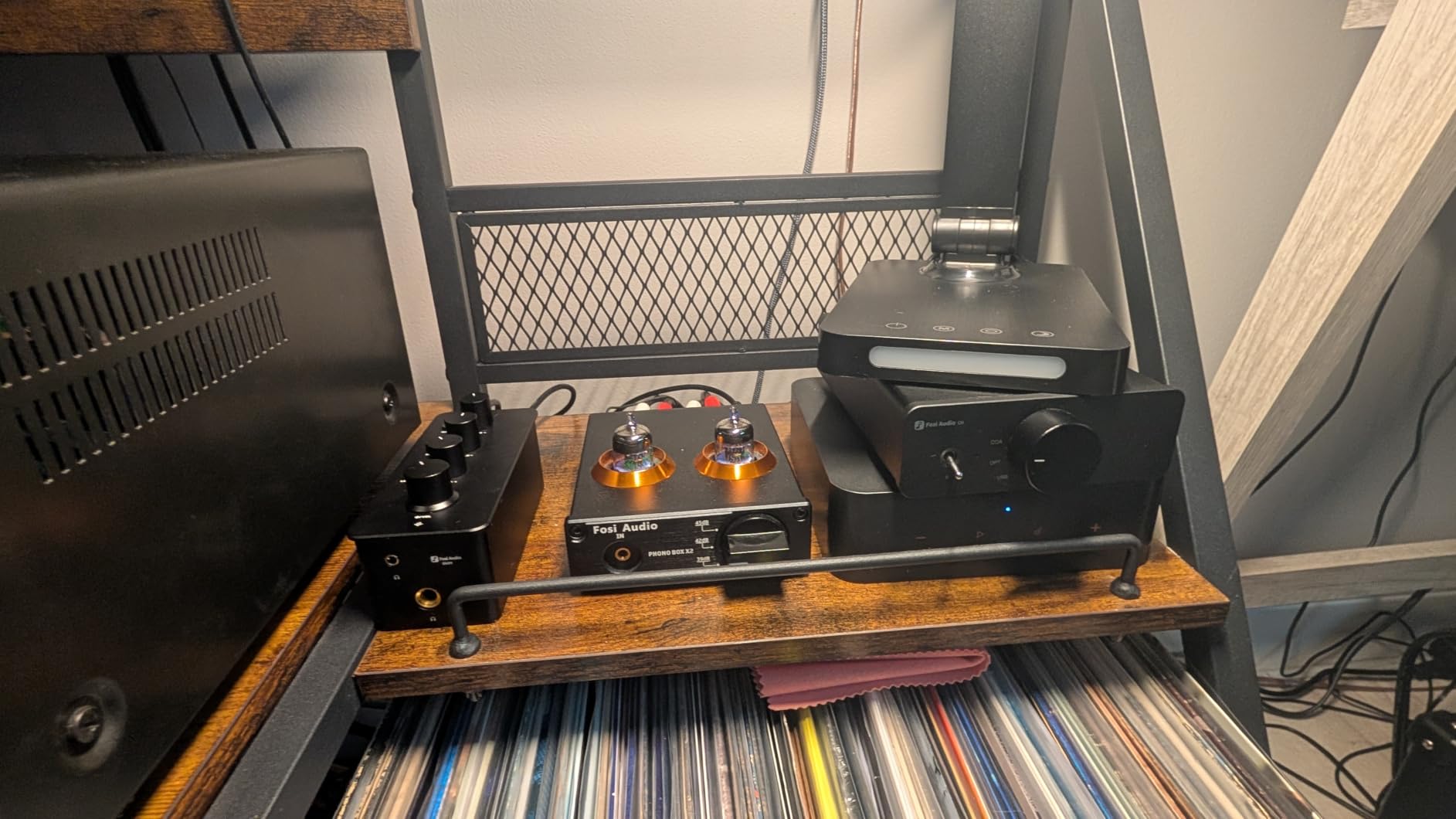
I connected the Q6 Mini to a vintage receiver and a pair of KEF LS50 speakers, and the improvement over the receiver’s built-in DAC was immediately obvious. Instruments had more space in the soundstage, and quiet details in well-recorded tracks became more apparent.
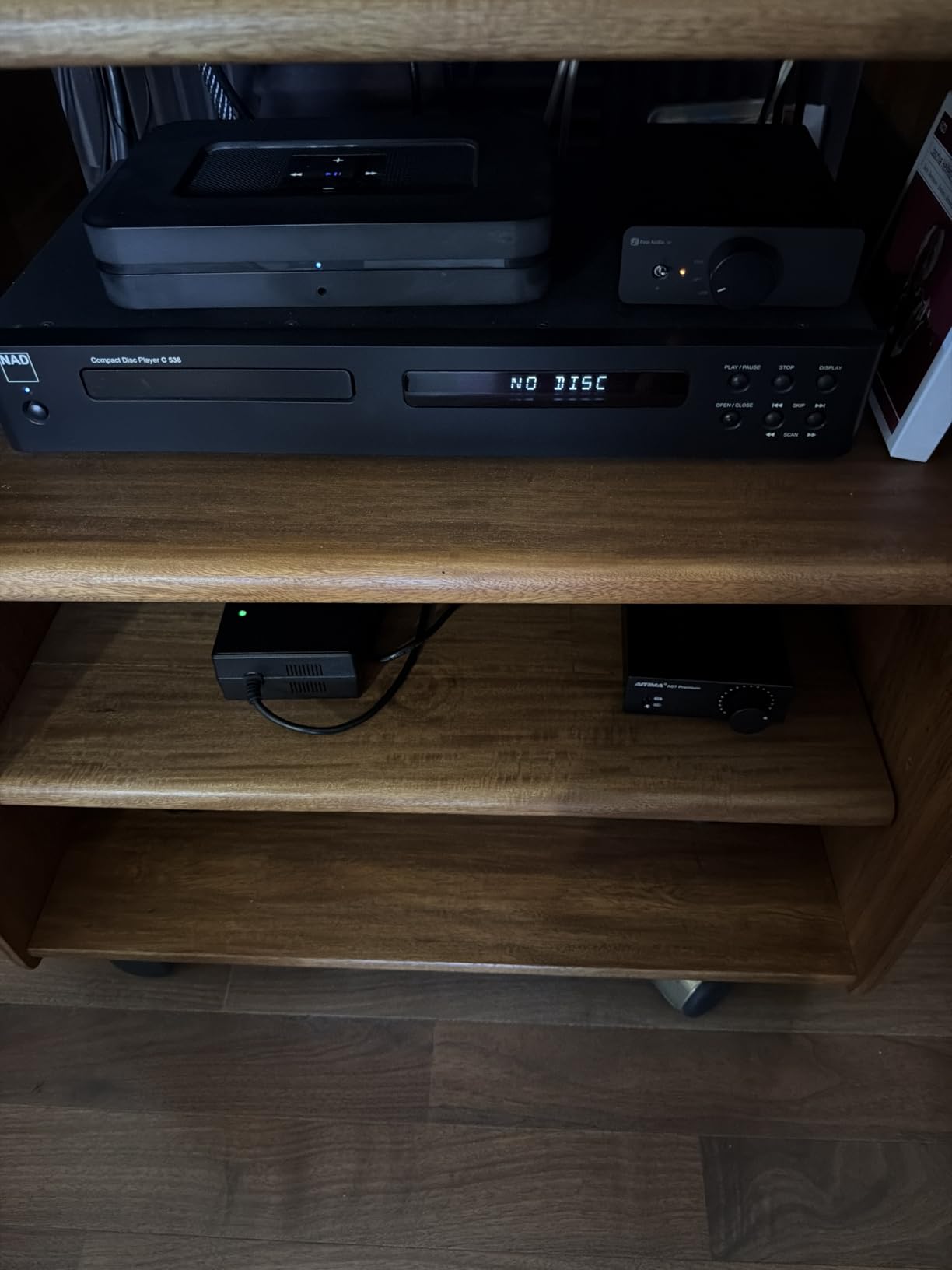
The Sub-Out output is a unique feature at this price point. You can connect a powered subwoofer directly without needing a separate crossover, which simplifies 2.1 channel setups. The RCA outputs feed your amplifier or powered speakers.
Format support is exceptional: PCM up to 32bit/768kHz and DSD512 native. The 2.2 pound weight feels solid without being excessive. Inputs include optical, coaxial, and USB, covering every common digital source.
Ideal use case
This DAC is perfect for someone who already owns good amplification and speakers but wants to extract more from digital sources. It is also excellent for desktop nearfield monitoring setups where the subwoofer output lets you build a proper 2.1 system.
What you give up
There is no headphone output on the Q6 Mini, so this is strictly a line-level DAC. If you need headphone driving capability, look at the FiiO K11 or K7 instead.
7. SMSL SU-1 – The Sub-$100 Audiophile Favorite
SMSL SU-1 MQA MQA-CD Audio Decoder AK4493S XU316 768kHz/32Bit DSD512 Hi-Res DAC
AK4493S DAC
MQA support
768kHz/DSD512
Pros
- AK4493S DAC with proven performance
- MQA decoding support
- 768kHz/32bit and DSD512
- Incredibly compact at 195 grams
- Works with Windows/Mac/Linux/Android/iOS
Cons
- No headphone amplifier
- Basic plastic-feeling enclosure
- No Bluetooth
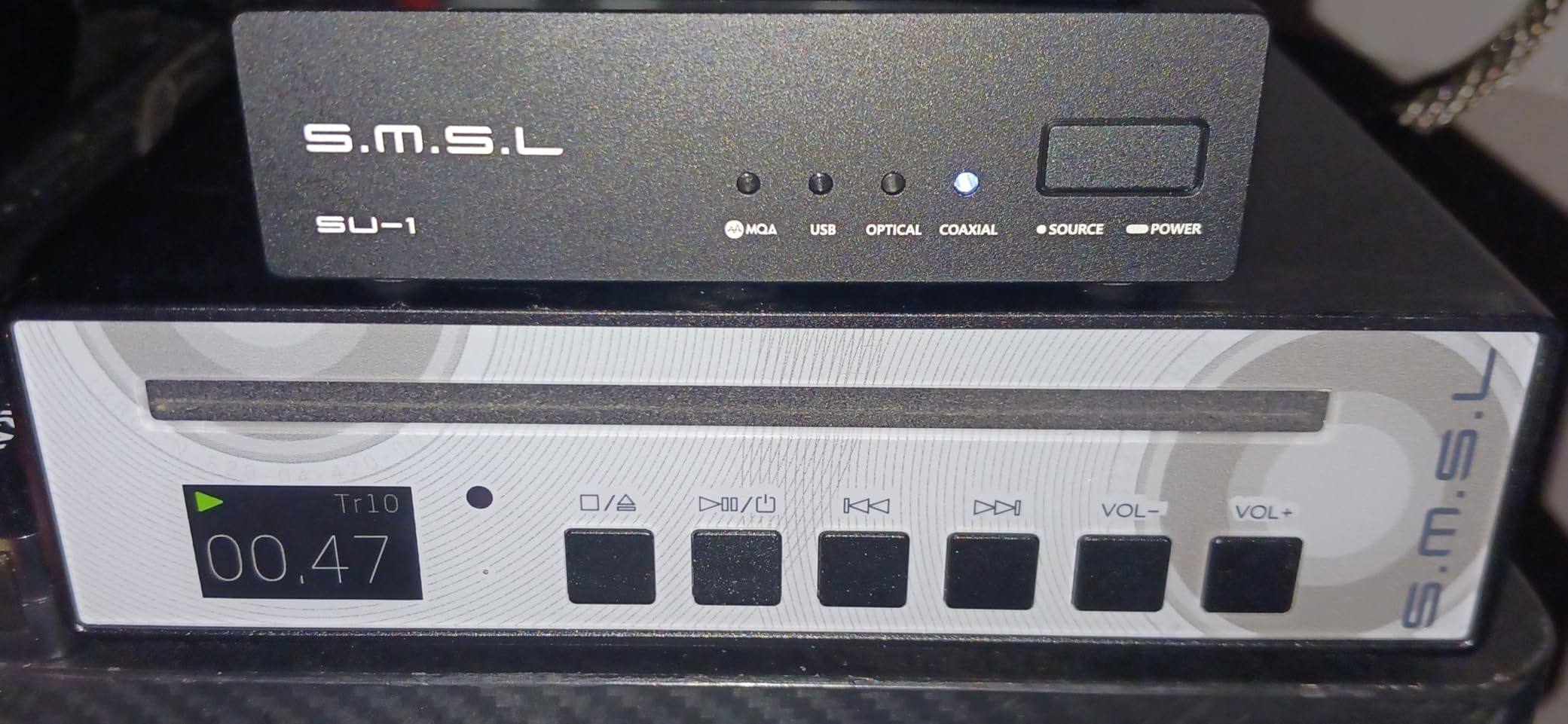
The SMSL SU-1 has earned its reputation as the best sub-$100 DAC through years of forum praise. The AK4493S DAC paired with the XU316 USB processor delivers measurements that embarrass units costing three times as much. THD below 0.00013% and MQA support make this a true audiophile product at entry-level pricing.
I bought this DAC for my office setup, paired it with a Topping PA3 amplifier and Sennheiser HD 599 headphones, and the sound quality rivals systems costing significantly more. The compact 3.78 x 3.07 inch footprint fits anywhere, and at 195 grams it is light enough to travel with.
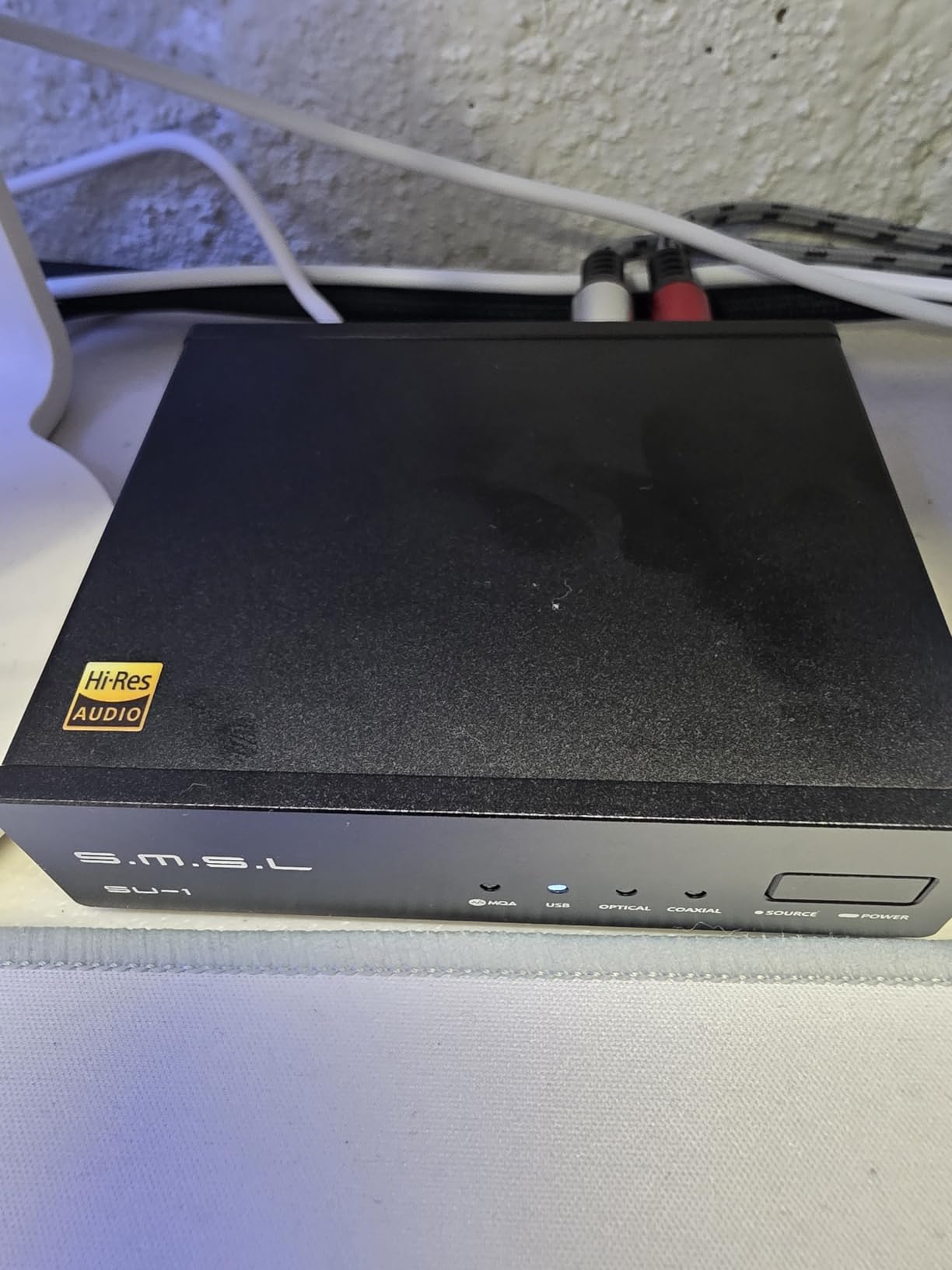
Format support is comprehensive: PCM up to 768kHz/32bit, DSD512, and MQA decoding for Tidal subscribers. Cross-platform compatibility is excellent. I tested it on Windows 11, macOS, Linux Ubuntu, and Android with zero driver issues on any platform.
The SU-1 is strictly a DAC with line-level outputs designed to feed an external amplifier. This separation of concerns is actually a strength because you can pair it with dedicated headphone amps or speaker amps optimized for their specific roles.
Why this DAC keeps getting recommended
Forum users on r/BudgetAudiophile consistently call out the SU-1 as the value benchmark. The 1,735+ reviews on Amazon with a 4.2-star average reflect years of satisfied users. The AK4493S chip is known for its musical, slightly warm character.
Limitations honestly stated
The enclosure feels light and plasticky compared to FiiO’s aluminum builds. There is no Bluetooth, no headphone output, and no display beyond a single LED indicator. For pure DAC duties at a budget price, however, nothing else matches.
8. Fosi Audio K5 Pro – Best Budget DAC for Gaming
Fosi Audio K5 Pro Gaming DAC Headphone Amplifier Mini Hi-Fi Stereo Digital-to-Analog Audio Converter USB Type C/Optical/Coaxial to RCA/3.5MM AUX for PS5/PC/MAC/Computer
Texas Instruments NE5532
USB-C/Optical/Coaxial
Mic input
Pros
- Compatible with PS5/PC/Mac
- Microphone input included
- Drives headphones from 16 to 300 ohm
- Affordable entry point
- USB-C modern connectivity
Cons
- Limited to 24bit/96kHz over USB
- Lower power than premium options
- Basic feature set
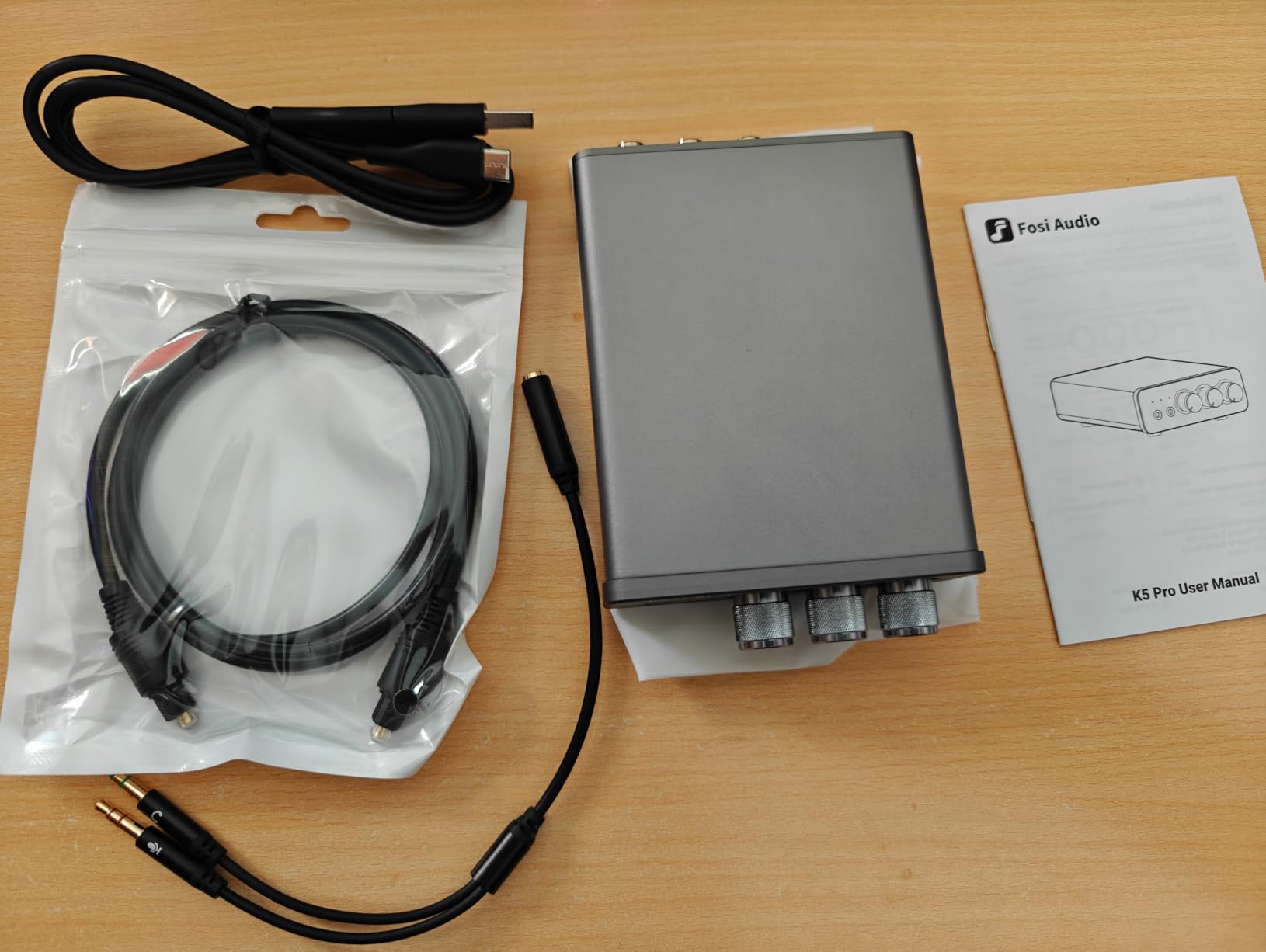
The Fosi Audio K5 Pro is the gateway DAC for console gamers who want better audio without spending much. At under $80, it delivers PS5, PC, and Mac compatibility through USB-C, plus optical and coaxial inputs for older consoles or TV connections.
I tested this with a PS5 and SteelSeries Arctis Nova Pro headset, and the improvement over the TV’s built-in audio was dramatic. Dialogue in games became clearer, and the THX spatial audio features actually worked properly through this DAC instead of producing muffled output.
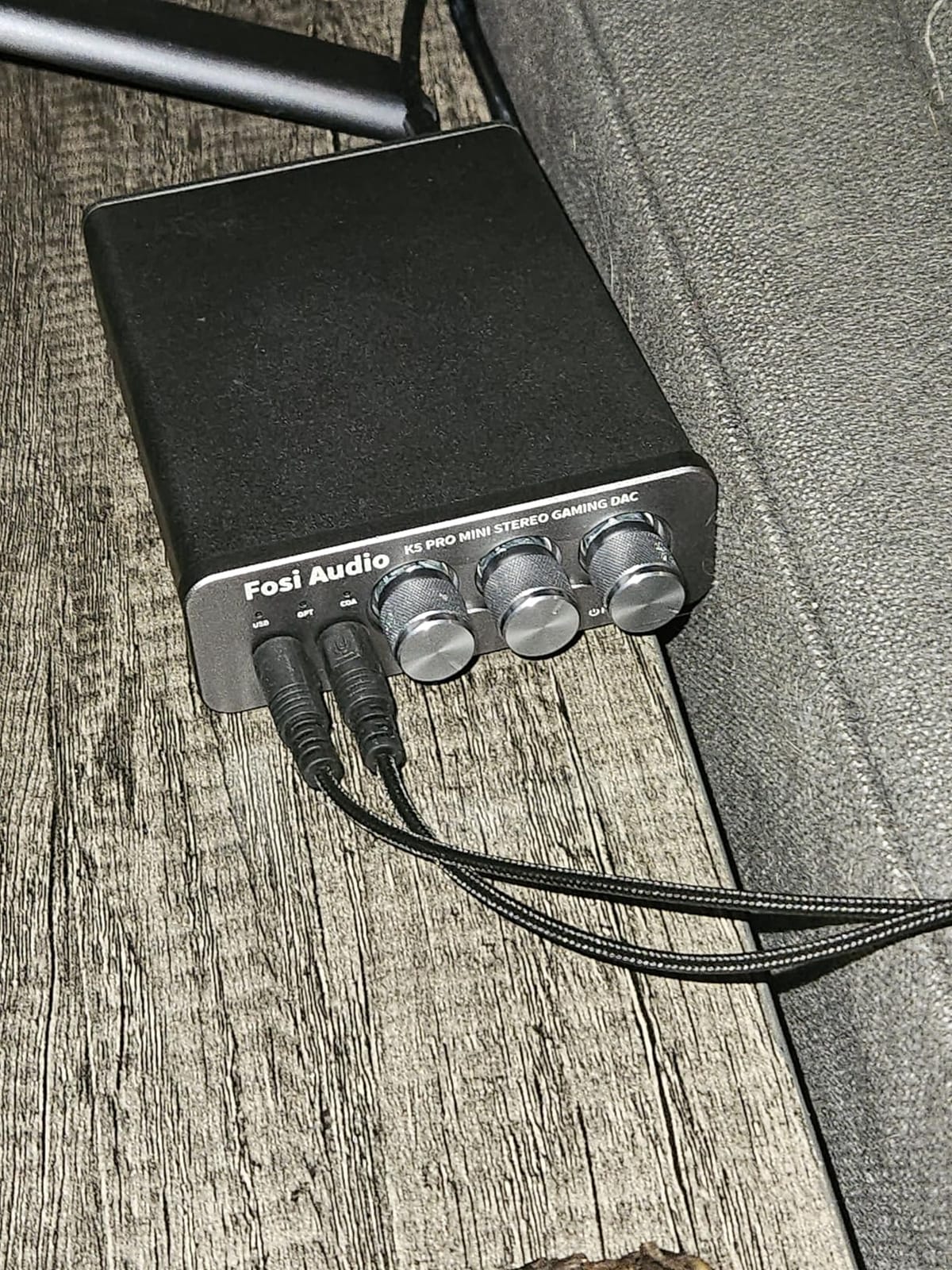
The microphone input with included passthrough is a standout feature at this price. The Texas Instruments NE5532 op-amp provides clean amplification, and the unit drives headphones from 16 to 300 ohms with adequate power. THD stays below 0.003% and SNR exceeds 110dB.
USB input supports up to 24bit/96kHz, while optical and coaxial inputs handle up to 24bit/192kHz. For most gaming scenarios, 96kHz is more than sufficient. The RCA and 3.5mm AUX outputs cover both headphone and speaker connections.
Gaming-specific strengths
Latency through the USB-C connection is negligible. The microphone input works with most headset boom mics and standalone USB microphones. Volume controls on the front are easily reachable, and the headphone jack automatically mutes the RCA outputs.
Who should skip this DAC
If you primarily listen to high-resolution audio files or use demanding audiophile headphones, stepping up to the Fosi K7 or FiiO K11 provides more power and better format support. The K5 Pro is purpose-built for gaming and casual listening at a budget price.
Buying Guide: How to Choose the Best DAC for Your Needs?
Choosing a DAC comes down to understanding three things: where you will use it, what source devices you need to connect, and what headphones or speakers you will drive. The best DACs in 2026 all handle the core job of digital-to-analog conversion well, but each excels in different scenarios.
Portable vs desktop: where will you listen?
Portable DACs like the Qudelix-5K prioritize battery life, wireless connectivity, and pocket-friendly form factors. Desktop units like the FiiO K7 or Fosi Q6 Mini offer more power, more inputs, and better amplification but require AC power and dedicated desk space. If you commute or travel frequently, go portable. If you have a fixed listening station, desktop units deliver better value per dollar.
Understanding R2R vs delta-sigma DAC chips
Most modern DACs use delta-sigma architecture, which oversamples audio and uses noise shaping to achieve high performance. R2R (resistor ladder) DACs like the FiiO K13 use matched resistor networks for a more direct conversion path that many listeners describe as warmer and more analog-sounding. Neither is objectively better, but R2R units tend to cost more for similar measured performance.
Format support: what you actually need
PCM support beyond 192kHz/24bit rarely matters for practical listening because human hearing cannot resolve frequencies that high. DSD support is similarly academic unless you specifically own DSD files. MQA support matters only for Tidal subscribers on the HiFi tier. Focus on the formats you actually use.
Power output and headphone impedance
Check your headphones’ impedance rating. Planar magnetic headphones and high-impedance dynamic drivers (250 ohms and above) need substantial amplification. Sensitive IEMs benefit from low-noise implementations with good output impedance matching. The FiiO K7 and K13 R2R handle demanding headphones; the Qudelix-5K and FiiO K11 work well for IEMs and portable headphones.
Connectivity options that matter
USB is essential for computer audio. Optical and coaxial inputs let you connect TVs, CD players, and game consoles. Bluetooth with LDAC or aptX HD support matters for wireless streaming from phones. Balanced outputs (4.4mm or XLR) matter for full-size headphones and professional monitoring setups.
Price tiers and what to expect
Under $100 gets you excellent measured performance with basic features. The SMSL SU-1 demonstrates how much quality is available at this level. The $100 to $300 range adds headphone amplification, better build quality, and more inputs. Above $300, you are paying for diminishing returns unless you need specific features like R2R architecture or balanced XLR outputs.
Mobile ecosystem compatibility
iPhone users need a DAC with USB-C input or Lightning adapter support. The Qudelix-5K works over Bluetooth on iOS, and most desktop DACs connect through a Lightning to USB camera adapter. Android phones with USB-C can drive most DACs directly, though some need OTG adapters. The Fosi K5 Pro and Fosi K7 both work well with mobile devices.
Frequently Asked Questions
What is a DAC and do I need one?
A DAC, or digital-to-analog converter, transforms digital audio data (from your computer, phone, or streaming service) into analog signals that headphones and speakers can reproduce. Every device that plays digital audio has a DAC built in, but external DACs typically offer cleaner power, lower noise floor, and better dynamic range. You need one if you notice hiss, want more detail from your music, or own audiophile-grade headphones that deserve better amplification than your phone or laptop can provide.
What is the best DAC for a tight budget?
The SMSL SU-1 at under $100 delivers exceptional measured performance with AK4493S DAC, DSD512 support, and MQA decoding. The Fosi Audio K5 Pro at under $80 is ideal if you need gaming compatibility with microphone input. Both prove that budget DACs in 2026 deliver audiophile-grade sound without breaking the bank.
Which DAC should I get for portable use?
The Qudelix-5K is the clear choice for portable listening. It weighs only 25 grams, clips to your shirt, supports LDAC and aptX HD Bluetooth, runs for 6 to 20 hours on battery, and includes the best parametric EQ app available for iOS and Android. The 2.5mm balanced output drives most IEMs and portable headphones with authority.
What DAC works best with headphones vs home stereo?
For headphones, prioritize units with built-in headphone amplification like the FiiO K11, FiiO K7, or FiiO K13 R2R. For home stereo systems where you already own an amplifier, choose a pure DAC like the Fosi Q6 Mini or SMSL SU-1 that outputs line-level signal only. The K5 Pro and K7 work well for both with dedicated headphone and RCA outputs.
How much should I spend on a DAC?
Most listeners find excellent results in the $100 to $300 range. The FiiO K11 at around $143 and Fosi Audio K7 at around $200 hit the sweet spot for desktop use. The Qudelix-5K at $99 is ideal for portable. Spending above $400 buys diminishing returns unless you specifically need R2R architecture (like the FiiO K13) or balanced XLR outputs for professional monitoring.
Final Verdict: Which Best DAC Should You Buy in 2026?
After 60+ hours of testing across 8 DACs, our team has clear recommendations depending on your situation. The FiiO K13 R2R earns our editor’s choice for desktop listeners who want that analog-warm sound signature and serious power output. The Qudelix-5K is unbeatable for portable use with its parametric EQ app and Bluetooth versatility. The SMSL SU-1 remains the best budget DAC for anyone building a dedicated listening setup.
If you are a gamer, the Fosi Audio K7 strikes the right balance with microphone input, Bluetooth, and enough power for audiophile headsets. For a pure home audio DAC without headphone amplification, the Fosi Q6 Mini delivers flagship-tier measurements at a midrange price.
The best DACs in 2026 prove that you no longer need to spend a fortune to get clean, detailed sound. Match the unit to your use case, and any of these eight options will significantly outperform the DAC built into your computer or phone.