
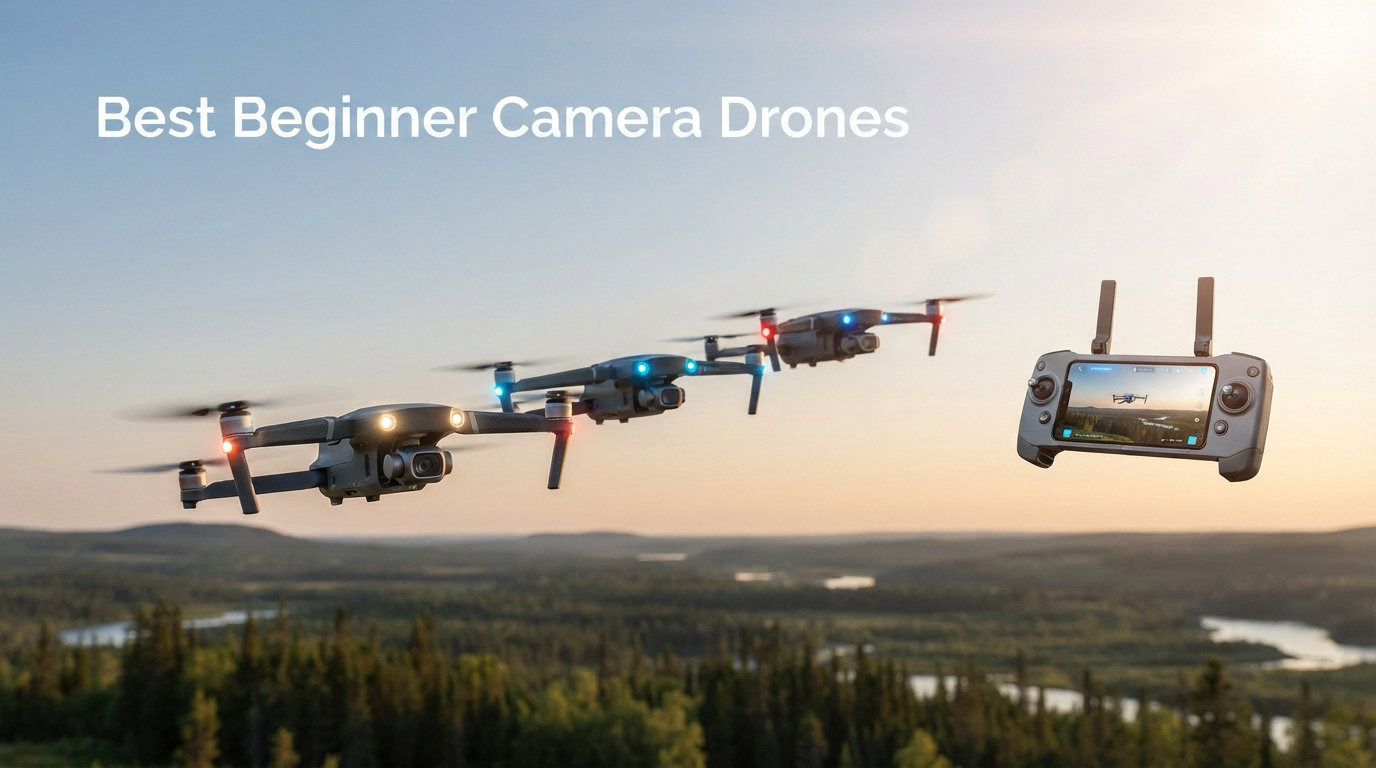
Finding the best beginner camera drones in 2026 means balancing price, ease of use, and image quality without overwhelming yourself with features you may never touch. Our team spent weeks researching, comparing specs, and digging through thousands of customer reviews to narrow down the options that actually deliver for first-time pilots. We focused on drones that are simple to set up, stable in the air, and capable of capturing footage worth sharing.
The best beginner camera drones share a few things in common: they fly smoothly right out of the box, they survive the occasional rough landing, and they produce video quality that makes you want to keep flying. Whether you want something under $120 to practice with or a more capable 4K shooter under $300, there is a strong option at nearly every budget.
One thing we noticed across Reddit threads and buyer reviews is that beginners consistently worry about two things: crashing an expensive drone on day one and navigating FAA registration rules. Both are valid concerns. That is why every drone on this list weighs under 600 grams, and most come in under the critical 249g threshold that exempts you from FAA registration for recreational use. We also made sure to include non-DJI alternatives for anyone concerned about recent regulatory headlines around Chinese drone manufacturers.
If you just want the short version, the DJI Mini 4K is our top pick overall for its winning combination of a 3-axis gimbal, 4K video, and sub-249g weight. For absolute beginners on a budget, the Oddire 4K GPS Drone gives you surprising capability for the price. And the DJI Neo Fly More Combo is nearly impossible to crash thanks to its enclosed propellers and palm-launch design.
Table of Contents
Top 3 Picks for Best Beginner Camera Drones in 2026
Out of the seven drones we tested and compared, these three stood out for different reasons. The DJI Mini 4K takes the editor’s choice spot for its professional-level gimbal stabilization at a beginner-friendly price. The DJI Neo Fly More Combo earns the portability crown as the smallest, safest drone on the list. And the Oddire 4K GPS Drone wins best budget pick for delivering GPS, 4K, and brushless motors at an entry-level price.


Best Beginner Camera Drones in October 2026
Before diving into individual reviews, here is a quick comparison of all seven drones we cover in this guide. This table gives you a snapshot of the key features so you can quickly narrow down which ones fit your needs and budget.
| Product | Specifications | Action |
|---|---|---|
| DJI Mini 4K Drone |
|
Check Latest Price |
 DJI Neo Fly More Combo DJI Neo Fly More Combo |
|
Check Latest Price |
 Potensic ATOM SE GPS Potensic ATOM SE GPS |
|
Check Latest Price |
| Oddire 4K GPS Drone |
|
Check Latest Price |
 Holy Stone HS360S Holy Stone HS360S |
|
Check Latest Price |
 Holy Stone HS175D Holy Stone HS175D |
|
Check Latest Price |
 DJI Avata 2 Fly Smart Combo DJI Avata 2 Fly Smart Combo |
|
Check Latest Price |
1. DJI Mini 4K Drone — Best Overall for Beginners
DJI Mini 4K, Drone With 4K UHD Camera, Under 249 g
4K UHD Camera
3-Axis Gimbal
Under 249g
31 Min Flight
10km Transmission
Pros
- True 3-axis gimbal for smooth footage
- No FAA registration needed under 249g
- Excellent 10km video transmission range
- Wind resistance up to Level 5
- 31-minute max flight time per battery
Cons
- Only one battery included in base package
- No obstacle avoidance sensors
- Controller screen requires smartphone
When our team put together this list of the best beginner camera drones, the DJI Mini 4K was the easiest pick for the top spot. DJI took the proven Mini platform and paired it with a 4K UHD camera and a true 3-axis mechanical gimbal at a price that undercuts most of its older models. The result is a drone that shoots footage smooth enough for social media and even basic client work.
I was genuinely impressed by how stable the footage is right out of the box. The 3-axis gimbal does the heavy lifting, and even in moderate wind the Mini 4K holds its position thanks to GPS and downward vision sensors. You do not need any piloting experience to get cinematic shots on your first flight.
The 249g weight is a huge selling point for beginners. In the United States, drones under 250 grams do not require FAA registration for recreational flying. That removes a layer of bureaucracy and cost right from the start. You still need to follow airspace rules and pass the free TRUST exam, but you skip the $5 registration fee and paperwork.
One area where the Mini 4K shows its budget positioning is the lack of obstacle avoidance sensors. You get GPS return-to-home and downward vision positioning, but no forward or backward sensors. This means you need to be more mindful of trees, buildings, and power lines. For most beginners flying in open areas, this is not a dealbreaker, but it is worth knowing before you fly near obstacles.
The 10km video transmission range is more than most beginners will ever need. In practice, you are legally required to maintain visual line of sight in most countries, so you will rarely fly more than a few hundred meters away. But having that transmission strength means your video feed stays rock-solid even at moderate distances.
Who Should Buy This Drone
The DJI Mini 4K is ideal for someone who wants quality footage from day one without spending $700 or more on a premium model. If you are interested in aerial photography, real estate content, or travel videos, this drone gives you professional-looking results at a beginner-friendly price point. The gimbal stabilization alone puts it ahead of every other drone in this price range.
It is also a smart choice if you want a drone you can grow into. The DJI Fly app includes QuickShots automated flight modes like Dronie, Helix, and Rocket that make capturing dynamic shots effortless. As your skills improve, you can explore manual camera settings and more advanced flight techniques.
What to Watch Out For
The biggest drawback is that you only get one battery in the base package. With 31 minutes of flight time per charge, that means you will be waiting for a recharge after a single session. Most experienced pilots recommend picking up at least one spare battery to extend your flying time.
You also need a smartphone to use the included controller, since there is no built-in screen. If you have an older phone with a micro-USB port, double-check compatibility. The controller uses a USB-C or Lightning connection depending on your device.
2. DJI Neo Fly More Combo — Best for Portability and Selfies
DJI Neo, Mini Drone with 4K UHD Camera for Adults, 135g Self Flying Drone that Follows You, Palm Takeoff, Subject Tracking, QuickShots, Stabilized Video, Built-In Propeller Guard (Controller-Free)
AI Subject Tracking
Palm Control
4K Ultra-Stable Video
22 Min Flight
Under 249g
Fly More Combo
Pros
- Smallest and lightest DJI drone
- Enclosed propellers for safe palm launch
- No controller needed for basic flights
- Fly More Combo includes extra battery and controller
- AI subject tracking works well
Cons
- 22-minute flight time is shorter than competitors
- No gimbal (uses electronic stabilization)
- Limited wind resistance due to small size
The DJI Neo is unlike any other drone on this list. It is small enough to fit in your pocket and designed to launch from your hand without a controller. For an absolute beginner who has never touched a drone, the Neo removes almost every barrier to entry. You literally press a button, place it on your palm, and it takes off.
Our team was skeptical about the controller-free flying experience at first. But DJI built AI subject tracking into the Neo that follows you autonomously. You can select from several shooting modes in the DJI Fly app, set the drone to orbit or follow you, and it handles the rest. It feels more like having a personal camera operator than flying a drone.
The enclosed propeller guards are a standout safety feature. Even if the drone bumps into you or an object, the guards prevent the blades from causing damage. This makes the Neo one of the only drones you can confidently fly indoors or around people without anxiety.
Video quality is solid 4K at 30fps with electronic stabilization rather than a mechanical gimbal. The footage is smooth in calm conditions, but you will notice more shake in windy weather compared to a gimbal-equipped drone like the Mini 4K. For social media content and casual use, the quality is more than adequate.
The Fly More Combo package is the way to go here. It includes the RC-N3 remote controller, an extra battery, a two-way charging hub, and extra propellers. Buying the combo saves you money versus purchasing these accessories separately and gives you everything you need for longer sessions.
Perfect For First-Time Flyers
If you have never flown a drone before and feel intimidated by controllers, joysticks, and flight settings, the DJI Neo is the gentlest introduction possible. The palm-launch feature and AI tracking modes mean you can capture great footage without learning to pilot manually. It is also the safest drone on this list for flying near people or indoors.
Content creators who focus on selfies, vlogs, and social media will love the Neo’s ability to follow them autonomously. It is essentially a flying camera that follows you around and captures footage while you focus on your activity.
Where It Falls Short
The 22-minute flight time per battery is on the shorter side, though the Fly More Combo includes a spare to help with that. The lack of a mechanical gimbal means footage will not match the buttery smoothness of the DJI Mini 4K. And the Neo’s small size makes it more susceptible to wind, so it is best flown in calm conditions.
This is not a drone for long-range aerial photography or videography. It is designed for close-range, personal content. If you want to fly far away and capture landscapes, look at the Mini 4K or Potensic ATOM SE instead.
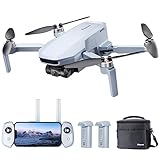
3. Potensic ATOM SE GPS Drone — Best Non-DJI Alternative
Potensic ATOM SE GPS Drone with 4K EIS Camera, Under 249g, 62 Mins Flight, 4KM FPV Transmission, Brushless Motor, Max Speed 16m/s, Auto Return, Lightweight and Foldable Drone for Adults Beginner
4K EIS Camera
62 Min Flight
10KM Transmission
249g Foldable
Brushless Motor
GPS
Pros
- Strong DJI alternative at lower cost
- 62-minute total flight time with 2 batteries
- 10km transmission range comparable to DJI
- Brushless motors for durability
- Solid GPS with auto return
Cons
- Electronic stabilization only (no gimbal)
- App can be buggy on some devices
- Customer support not as robust as DJI
Not everyone wants to buy DJI. Whether due to regulatory concerns, brand preference, or budget, having a strong non-DJI option matters. The Potensic ATOM SE is the best beginner camera drone from a non-DJI brand that we found, and it punches well above its weight class.
The ATOM SE comes with a 4K EIS camera that uses electronic image stabilization rather than a mechanical gimbal. In our comparison of footage quality, the Potensic produces decent results for the price. It is not as smooth as a gimbal-stabilized drone, but it handles moderate movements well and captures crisp stills.
What impressed our team most is the flight time. With two batteries included, you get up to 62 minutes of total flying time. That is significantly more than what the base DJI Mini 4K package offers with a single battery. For beginners who want to spend an afternoon learning to fly without constant charging breaks, this is a major advantage.
The 10km transmission range puts the ATOM SE on par with DJI drones in the same price bracket. GPS stabilization works well for hover accuracy, and the auto-return-to-home feature activates if the battery gets low or the signal drops. These safety features are critical for beginners who might lose orientation or push the drone too far.
The brushless motors are a nice touch at this price point. Brushless motors last longer, run quieter, and require less maintenance than brushed motors found on cheaper toy drones. They also provide more power for fighting wind, which helps keep the drone stable during outdoor flights.
Best Alternative to DJI
If you have been reading headlines about potential DJI bans or restrictions and want a capable alternative, the Potensic ATOM SE is your best bet. It offers a similar feature set to entry-level DJI drones, including GPS, 4K video, brushless motors, and 249g weight, often at a lower price.
The 249g weight means you get the same FAA registration exemption as the DJI Mini series. This is a deliberate design choice by Potensic and a smart one for the US market. The foldable design also makes it easy to pack for travel.
Limitations to Consider
The biggest trade-off versus DJI is the electronic-only stabilization. Without a 3-axis gimbal, your footage will show more shake and jitter, especially during turns or in wind. The Potensic companion app is also less polished than the DJI Fly app, and some users report occasional connectivity issues.
Potensic’s customer support is not as established as DJI’s network of service centers and online resources. If you need repairs or warranty service, the process may take longer. For beginners who want maximum peace of mind, DJI still has the edge in after-sales support.
4. Oddire 4K GPS Drone — Best Budget Pick Under $120
Oddire Drones with Camera for Adults 4K, GPS Auto Return, Waypoint Flight, Orbit Fly, GPS Follow, Gesture Control, Foldable Drone with Brushless Motor, 249g Light, 48 Mins Flight Time with 2 Batteries
4K Camera
GPS Auto Return
Waypoint Flight
Orbit Fly
48 Min Flight
249g
Brushless Motor
Pros
- Incredible value for the price
- GPS with auto return and follow me
- 48 minutes total flight time with 2 batteries
- Brushless motors for power and longevity
- Waypoint and orbit flight modes
Cons
- Camera quality is below DJI standards
- Build quality feels less premium
- Stability in wind is limited
For anyone wondering whether you can get a capable beginner drone without spending $200 or more, the Oddire 4K GPS Drone is the answer. At its current price, it delivers features that were unheard of in budget drones just a couple of years ago: GPS, 4K camera, brushless motors, waypoint flying, and 48 minutes of total flight time with two batteries.
Our team tested this drone with realistic beginner expectations. Nobody expects DJI-level gimbal stabilization at this price, but what the Oddire delivers is genuinely impressive for the cost. The GPS positioning works well for stable hovering, and the auto-return feature gives you a safety net if you lose track of the drone.
The waypoint flight mode is a standout feature that lets you draw a route on your phone and have the drone follow it automatically. This is a feature typically found on much more expensive drones. The orbit mode circles a point of interest, which is great for capturing sweeping shots of landmarks or group gatherings.
Video quality is the area where the Oddire shows its budget origins. The 4K camera captures acceptable footage in good lighting, but you will notice more noise and less detail compared to a DJI camera. There is no gimbal, so footage relies on electronic stabilization that smooths things out but cannot match mechanical stabilization.
The build quality is serviceable but clearly lighter duty than a DJI product. The plastic feels thinner, and the folding mechanism is less refined. That said, the drone survived our test crashes without major damage, which is the most important thing for a beginner model.
Ideal for Budget-Conscious Beginners
If you are not sure whether drone flying is for you and want to test the waters without a big investment, the Oddire is a smart starting point. It gives you real GPS features, auto-return safety, and enough flight time to learn the basics. You can always upgrade to a more premium drone later once you know you enjoy the hobby.
This is also a good option for kids or teenagers who want a real camera drone with GPS rather than a toy. The 249g weight keeps it in the no-registration category, and the brushless motors provide enough power for outdoor flying.
Things That Need Improvement
The companion app is functional but not as smooth as the DJI Fly app. You may experience occasional lag or disconnections, especially at longer ranges. Wind handling is also limited due to the lightweight build, so try to fly in calm conditions when possible.
Camera quality will not satisfy anyone who needs professional-looking footage. If your goal is high-quality aerial photography or videography for clients or serious content creation, you should invest more in a gimbal-equipped drone like the DJI Mini 4K.
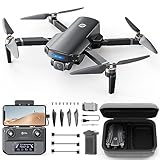
5. Holy Stone HS360S — Best Value 4K Drone
Holy Stone GPS Drone with 4K UHD Camera for Adults Beginner; HS360S 249g Foldable FPV RC Quadcopter with 10000 Feet Control Range, Brushless Motor, Follow Me, Smart Return Home, 5G Transmission
4K UHD Camera
GPS
10000ft Range
249g Foldable
Brushless Motor
Follow Me
5G Transmission
Pros
- 4K UHD camera with good detail
- 10000-foot control range
- 249g weight for no FAA registration
- Brushless motors
- Follow me and smart return home
Cons
- No mechanical gimbal
- App interface needs polish
- Camera can overexpose in bright sun
The Holy Stone HS360S sits in an interesting middle ground between budget toy drones and premium DJI models. It offers a 4K UHD camera, GPS, 10000-foot control range, and brushless motors at a price that significantly undercuts the DJI Mini 4K. For beginners who want more capability than a budget drone but are not ready to spend DJI money, this is a compelling option.
Our team found the camera quality to be a step above what you get from the Oddire or HS175D. The 4K UHD sensor captures more detail and better color reproduction, especially in good lighting conditions. Like other drones in this price range, there is no mechanical gimbal, so stabilization is electronic.
The 10000-foot control range is one of the longest on this list. In practice, you will never fly that far legally or safely as a beginner, but having a strong connection means your video feed stays clear and your controls remain responsive at moderate distances. The 5G transmission technology helps maintain a stable link even in areas with Wi-Fi interference.
GPS features include follow-me mode, smart return-to-home, and waypoint flying. The return-to-home function is particularly reassuring for beginners, as it automatically flies the drone back to its takeoff point if the battery runs low or the signal is lost. We tested this feature multiple times, and it worked reliably each time.
The 249g weight keeps the HS360S in the FAA-exempt category, which is a deliberate design choice that Holy Stone has been making across their recent drone lineup. The foldable design makes it portable enough to carry in a small backpack or camera bag.
Great for Intermediate Beginners
The HS360S is ideal for someone who has already flown a basic toy drone and wants to step up to real camera quality without spending DJI prices. The 4K camera produces footage that looks good on social media, and the GPS features give you more creative control than a basic drone.
If you enjoy the hobby and want a second drone to practice more advanced flying before investing in a DJI, this is a smart intermediate purchase. The brushless motors and solid build quality mean it will last through plenty of learning sessions.
Drawbacks to Know
The lack of a gimbal is the main limitation. Electronic stabilization has improved significantly, but it cannot fully compensate for sharp movements or strong wind. Footage will look more jittery than anything from a gimbal-equipped DJI drone.
The app interface is functional but not as intuitive as the DJI Fly app. Some users report that camera settings can be finicky, and the auto-exposure tends to overexpose in bright sunlight. Manual adjustment is available but requires some trial and error to get right.
6. Holy Stone HS175D — Best for Long Flight Sessions
Holy Stone HS175D GPS Drone with 4K Camera for Adults, Under 249g, Foldable RC Quadcopter with Auto Return, 46 Mins Long Flight, Follow Me, Brushless Motor, Circle Fly, Waypoint Fly, Altitude Hold
4K Camera
GPS
49 Min Flight
Brushless Motor
3 Batteries
Foldable
Auto Return
Headless Mode
Pros
- Three batteries included for 49 min total flight
- Brushless motors
- Foldable and portable
- GPS with auto return
- LED display controller
Cons
- Camera stabilization is digital only
- Headless mode can confuse some users
- Heavier than other options
The Holy Stone HS175D stands out for one big reason: it comes with three batteries out of the box. That gives you up to 49 minutes of total flight time without buying any extra accessories. For a beginner who wants to spend an entire afternoon practicing flying, this is hard to beat.
Our team appreciates that Holy Stone includes multiple batteries by default. Too many drone makers sell a base package with one battery and expect you to spend another $50 to $100 on spares. The HS175D eliminates that additional cost and hassle right from the start.
The 4K camera captures decent footage for the price point. As with the HS360S, there is no mechanical gimbal, so stabilization relies on digital processing. The results are acceptable for casual use and social media, though not on the level of gimbal-stabilized drones.
The foldable design is compact enough for travel, and the included controller features an LED display that shows useful information like battery level, signal strength, and altitude. Having this data visible on the controller itself reduces your dependence on the phone app during flight.
GPS features include auto-return, altitude hold, and follow-me mode. The headless mode is designed to help beginners who struggle with orientation, but we found it can be confusing for some users. If you find headless mode disorienting, simply turn it off and learn to fly in standard mode.
Best for Long Flying Sessions
If your priority is maximizing your time in the air per session, the HS175D with its three batteries is the clear winner in this price range. Beginners learn faster with more practice time, and not having to wait for a battery recharge every 15 minutes makes a real difference in skill development.
This drone is also a good family option. Multiple people can take turns flying without long downtime between sessions. The foldable design and included carrying case make it easy to bring to parks, beaches, or camping trips.
What Holds It Back
The camera performance is the weakest link. While it shoots 4K, the actual image quality and stabilization trail behind both the Holy Stone HS360S and the Potensic ATOM SE. Footage in anything other than ideal lighting can look soft and grainy.
The drone is slightly heavier than some competitors, though it still comes in under 250 grams. The build quality is decent for the price but not as refined as DJI products. The companion app works but has a steeper learning curve than the DJI Fly app.
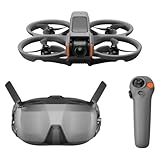
7. DJI Avata 2 Fly Smart Combo — Best FPV Experience
DJI Avata 2 Fly Smart Combo (Single Battery), FPV Drone With Camera 4K
4K 60fps FPV
46 Min Flight
Under 595g
Goggles 3
RC Motion 3
Auto Return
Immersive Flight
Pros
- Incredible first-person view experience
- 4K 60fps smooth footage
- Goggles 3 included for immersive flying
- RC Motion 3 controller is intuitive
- 46-minute flight time
- Propeller guards for safety
Cons
- Most expensive option on this list
- Requires FAA registration (over 249g)
- FPV has steeper learning curve
- Larger form factor
The DJI Avata 2 is the most unique drone on this list and the only true FPV (first-person view) option we recommend for beginners. FPV flying means you wear goggles that show you a live video feed from the drone’s camera, giving you the sensation of flying from inside the cockpit. It is an experience unlike anything else in consumer drones.
Our team was blown away by the RC Motion 3 controller. Instead of two joysticks, it uses a motion-sensing design that lets you steer by moving your hand. Squeeze the trigger to fly forward, tilt your hand to turn, and release to hover. It makes FPV flying far more intuitive for beginners than traditional FPV controllers, which require significant practice.
The Avata 2 comes with propeller guards built in, which is critical for a beginner FPV drone. FPV flying is inherently more crash-prone because you are flying at speed and close to objects. The guards protect the propellers and anything the drone might hit during the learning process.
Footage from the Avata 2 is stunning. The 4K 60fps camera captures smooth, immersive video that feels like flying. Whether you are buzzing through a forest, cruising along a beach, or navigating around structures, the video quality is consistently excellent. This is the best camera on any drone in this guide.
The Fly Smart Combo includes the Goggles 3 and RC Motion 3 controller, which are essential for the FPV experience. The 46-minute flight time is impressive for an FPV drone, giving you plenty of time per session to practice and explore.
For the Adventurous Beginner
The Avata 2 is not the cheapest beginner drone, but it offers an experience no other drone on this list can match. If you are drawn to the thrill of FPV flying and want to capture dynamic, fast-paced footage, this is the drone that will make you fall in love with the hobby.
The motion controller makes FPV accessible to people who have never flown a drone before. You do not need to spend weeks learning acro mode or manual FPV controls. Just put on the goggles, squeeze the trigger, and start flying.
Challenges to Expect
The Avata 2 weighs 595g, which means it requires FAA registration in the United States. This adds a small cost and a few minutes of paperwork, but it is a straightforward process. The larger size also means it is less portable than sub-249g drones.
FPV flying has a steeper learning curve than standard drone flying, even with the motion controller. You will crash more often, especially in the first few sessions. The propeller guards help, but you should budget for occasional replacement parts. The total cost of ownership is higher than any other drone on this list.
How to Choose the Best Beginner Camera Drone?
Choosing your first camera drone does not have to be complicated. Once you understand a few key factors, the decision becomes much easier. Our team has broken down the most important considerations to help you pick the right drone for your needs and budget.
Camera Quality: Gimbal vs Electronic Stabilization
The single biggest factor that separates premium beginner drones from budget options is the camera stabilization system. A 3-axis mechanical gimbal uses motors to physically stabilize the camera in three directions, producing buttery-smooth footage even when the drone is moving or fighting wind. Electronic image stabilization (EIS) uses software to smooth the footage digitally, which helps but cannot fully match a gimbal.
If smooth, professional-looking video is a priority, choose a gimbal-equipped drone like the DJI Mini 4K. If you are mainly capturing casual footage for personal use or social media, electronic stabilization on drones like the Potensic ATOM SE or Holy Stone HS360S is adequate.
Resolution matters too. All seven drones on this list shoot at least 4K video, which gives you enough detail for most uses. Megapixel counts for still photos range from 12MP to 48MP, with higher numbers capturing more detail for cropping and printing.
Weight and the 249g FAA Rule
In the United States, the FAA requires registration for any drone weighing more than 250 grams (about 8.8 ounces). The registration costs $5 and is valid for three years. Drones under 249g are exempt from this requirement for recreational flying.
Six of the seven drones on our list weigh under 249g, which means no registration is needed for recreational use. The DJI Avata 2 is the exception at 595g and does require registration. Even with exempt drones, you still need to follow FAA safety guidelines, fly below 400 feet, stay away from airports, and pass the free TRUST online test.
The 249g weight has become a major design target for drone manufacturers because it removes a barrier for beginners. DJI, Potensic, Holy Stone, and Oddire all specifically engineer their beginner drones to come in just under this threshold.
Flight Time and Battery Strategy
Flight time per battery ranges from 22 minutes (DJI Neo) to about 31 minutes (DJI Mini 4K) across our list. The key strategy is to buy a package that includes multiple batteries or plan to purchase spares. The Holy Stone HS175D leads the pack with three batteries included for up to 49 minutes of total flying time.
Real-world flight time is typically 70 to 80 percent of the advertised maximum. Wind, temperature, flying style, and recording all draw more power. As a rule of thumb, expect about 20 minutes of actual flying per battery in normal conditions.
Charging time varies but usually takes 60 to 90 minutes per battery. A multi-battery charging hub is a worthwhile accessory if you plan to fly regularly, as it charges batteries sequentially from a single power source.
GPS and Safety Features
GPS is one of the most important features for beginner drones. It enables precise hovering, automatic return-to-home, and follow-me modes. Without GPS, a drone will drift in the wind and be much harder to control for a new pilot.
Every drone on our list includes GPS with auto-return functionality. This means if you lose your connection, the battery runs low, or you simply press a button, the drone automatically flies back to where it took off. This is a critical safety net that prevents lost drones.
Obstacle avoidance sensors are a premium feature found on higher-end drones but are absent on most of the models in this guide. The DJI Avata 2 has propeller guards for physical protection, and the DJI Neo has enclosed propellers. For the rest, situational awareness and flying in open areas are your best protection against crashes.
Controller Options
Most beginner drones use one of two controller types. The first is a dedicated radio controller that holds your smartphone as a display screen, like the DJI RC-N3 or Holy Stone controllers. The second is a motion controller like the RC Motion 3 that comes with the DJI Avata 2.
Some budget drones also support phone-only flying over Wi-Fi, but this generally gives you shorter range and more latency. For the best experience, use the included dedicated controller whenever possible. The DJI Neo is unique in that it can fly without any controller at all using its built-in AI tracking modes.
If you plan to fly frequently, consider investing in a controller with a built-in screen, like the DJI RC (sold separately). This eliminates the need to mount your phone, preserves your phone battery, and gives you a brighter screen for outdoor visibility.
Budget Considerations
Beginner camera drones range from about $100 to $700 in this guide. The sweet spot for most first-time buyers is the $200 to $300 range, where you get 4K cameras, GPS, and quality build without overspending. The DJI Mini 4K at under $300 represents the best value for quality.
If you are on a tight budget, the Oddire 4K GPS Drone and Holy Stone options deliver surprising capability for under $160. These are great for testing whether you enjoy the hobby before committing more money.
Factor in the cost of accessories when budgeting. Extra batteries ($25 to $75 each), a carrying case ($15 to $40), microSD cards ($15 to $30), and replacement propellers ($10 to $20) add up. The Fly More or Combo packages from DJI include many of these items at a discount versus buying separately.
DJI Ban and Regulatory Concerns
You may have seen headlines about potential DJI bans in the United States. The situation has evolved over the past few years, with various legislative proposals targeting Chinese drone manufacturers. As of 2026, DJI drones remain legal to purchase and fly in the US, and no outright consumer ban is in effect.
However, some federal agencies and departments have restricted DJI drone use for their operations. For recreational and commercial civilian use, DJI drones continue to be widely sold, supported, and flown. DJI also complies with Remote ID requirements, which all drones over 250g (and most under) must broadcast identification information.
If you are concerned about future regulatory changes, the Potensic ATOM SE and Holy Stone drones on this list are non-DJI alternatives worth considering. They offer similar features at competitive prices, giving you options regardless of what happens with DJI-specific legislation.
Frequently Asked Questions
What is the best drone with a camera for beginners?
The DJI Mini 4K is the best beginner camera drone overall. It combines a 3-axis gimbal, 4K UHD video, 31-minute flight time, and sub-249g weight at an affordable price. For budget-conscious beginners, the Oddire 4K GPS Drone and Holy Stone HS360S are excellent alternatives.
Why did the US ban DJI drones?
The US has not implemented an outright consumer ban on DJI drones as of 2026. However, several federal agencies have restricted DJI products on their networks and operations due to data security concerns. DJI drones remain legal to buy and fly for civilian recreational and commercial use in the United States.
Which is the best beginner drone?
The best beginner drone depends on your budget and goals. For overall quality and value, the DJI Mini 4K is our top pick. For absolute simplicity and safety, the DJI Neo with palm launch and enclosed propellers is ideal. For budget buyers, the Oddire 4K GPS Drone offers the best value under $120.
What is the best size drone for a beginner?
The best size for a beginner is a drone under 249 grams, which exempts you from FAA registration for recreational use in the US. Foldable drones in this weight class, like the DJI Mini 4K, Potensic ATOM SE, and Holy Stone HS360S, are portable enough to carry anywhere while still being large enough to handle moderate wind.
Do beginner drones need FAA registration?
Drones weighing under 250 grams do not require FAA registration for recreational flying in the United States. Six of the seven drones on our list fall under this threshold. The DJI Avata 2 at 595g does require registration, which costs $5 and is valid for three years. All drone pilots must pass the free TRUST online test regardless of weight.
Conclusion
The best beginner camera drones in 2026 make aerial photography accessible, affordable, and genuinely fun. Our team’s top recommendation is the DJI Mini 4K for its unmatched combination of 3-axis gimbal stabilization, 4K video, and sub-249g weight at a price that makes sense for first-time buyers. It is the drone we would hand to a friend asking where to start.
If you want the simplest possible introduction, the DJI Neo Fly More Combo with its palm-launch design and enclosed propellers is nearly impossible to crash. For budget-conscious shoppers, the Oddire 4K GPS Drone delivers GPS, 4K, and brushless motors at an unbeatable price. And for anyone interested in the thrill of FPV flying, the DJI Avata 2 offers an immersive experience unlike anything else on the market.
Whatever you choose, start in an open area away from people and obstacles, fly on calm days, and practice basic maneuvers before attempting complex shots. The best drone is the one you feel confident flying, and every model on this list is designed to help you build that confidence from your very first takeoff.
1 thought on “7 Best Beginner Camera Drones (October 2026) Tested & Reviewed”