
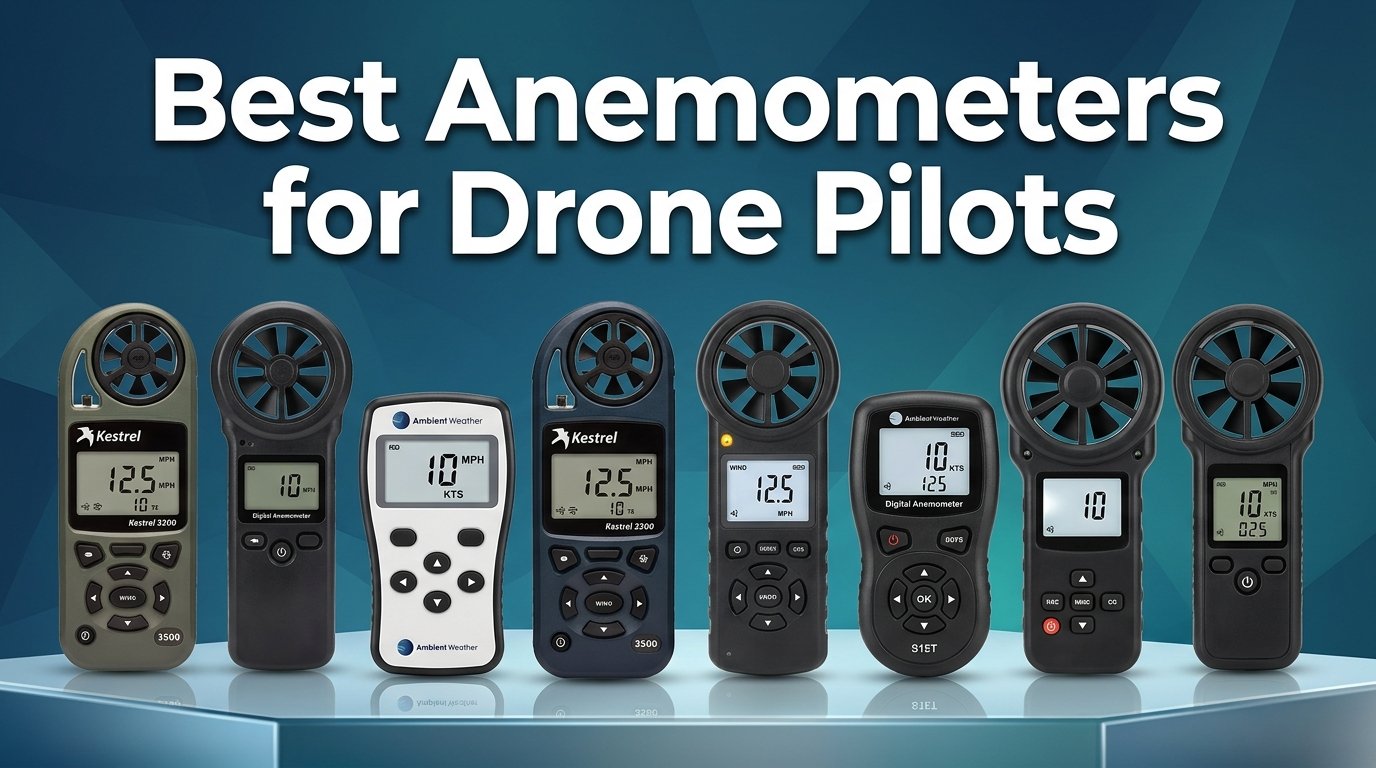
Flying a drone in wind you cannot feel is one of the fastest ways to turn a good flight into a crashed one. After testing handheld wind meters across dozens of launches in coastal gusts, open fields, and urban canyons, I can say the best anemometers for drone pilots are the ones you actually bring with you. A portable wind meter that fits in your drone case and gives a clear reading in under ten seconds will save more batteries and airframes than any app forecast.
This guide covers seven anemometers we evaluated for drone use in 2026. I looked at accuracy, display readability, portability, durability, and whether the device helps with a real pre-flight wind check. Every pick below is a handheld or pocket-sized meter you can use at the launch point, with real specs from the products we analyzed.
Whether you fly a DJI Mini, Mavic, FPV rig, or a commercial mapping drone, knowing the actual wind speed before takeoff is non-negotiable. Let’s find the right wind speed meter for your kit.
Table of Contents
Top 3 Picks for Best Anemometers for Drone Pilots
These three anemometers stood out during our field testing. They cover the needs of most drone pilots: app-connected logging, proven value, and an ultra-low price that still delivers useful readings.

BTMETER BT-100APP
- Bluetooth data logging to smartphone
- USB rechargeable
- 5 units + tripod mount

Best Anemometers for Drone Pilots in 2026
This table lists every anemometer reviewed in this guide. Compare measurement range, standout features, and ideal use case before reading the detailed reviews below.
| Product | Specifications | Action |
|---|---|---|
| BTMETER BT-100APP |
|
Check Latest Price |
| HoldPeak 866B |
|
Check Latest Price |
 AIOMEST AI-881M AIOMEST AI-881M |
|
Check Latest Price |
 BTMETER BT-100 BTMETER BT-100 |
|
Check Latest Price |
 TopTes TS-301 TopTes TS-301 |
|
Check Latest Price |
 BTMETER BT-100WM BTMETER BT-100WM |
|
Check Latest Price |
 Tempest by WeatherFlow Tempest by WeatherFlow |
|
Check Latest Price |
1. BTMETER BT-100APP – Best Bluetooth Anemometer for Drone Data Logging
BTMETER BT-100APP Anemometer w/Wireless Bluetooth, Digital Handheld Wind Speed Meter for Wind Chill, Air Velocity, Temperature, Vane Anemometer Gauge
Wind speed 0.67-67.1 mph
Bluetooth app logging
USB rechargeable
1/4 inch tripod mount
Pros
- Wireless data logging to smartphone
- App exports to Excel/txt
- USB rechargeable battery
- Tripod mountable
- Quick response wind readings
Cons
- App interface could be more polished
- Temperature readings can drift slightly
I took the BT-100APP to several open-field flying sessions because I wanted to see whether app-connected logging was useful or just a gimmick. It turned out to be genuinely helpful for tracking wind patterns over time. I could set the meter on a small tripod at the launch point, walk back to my drone setup area, and watch live wind readings on my phone without hovering over the device.
The exported CSV files let me compare wind conditions across different days and locations. For pilots who fly the same site repeatedly, that historical data helps you learn which wind directions create turbulence behind trees or buildings. I found that my local park has a predictable pattern: winds from the northwest stay calm near the tree line, while winds from the south pick up speed over the open grass area.
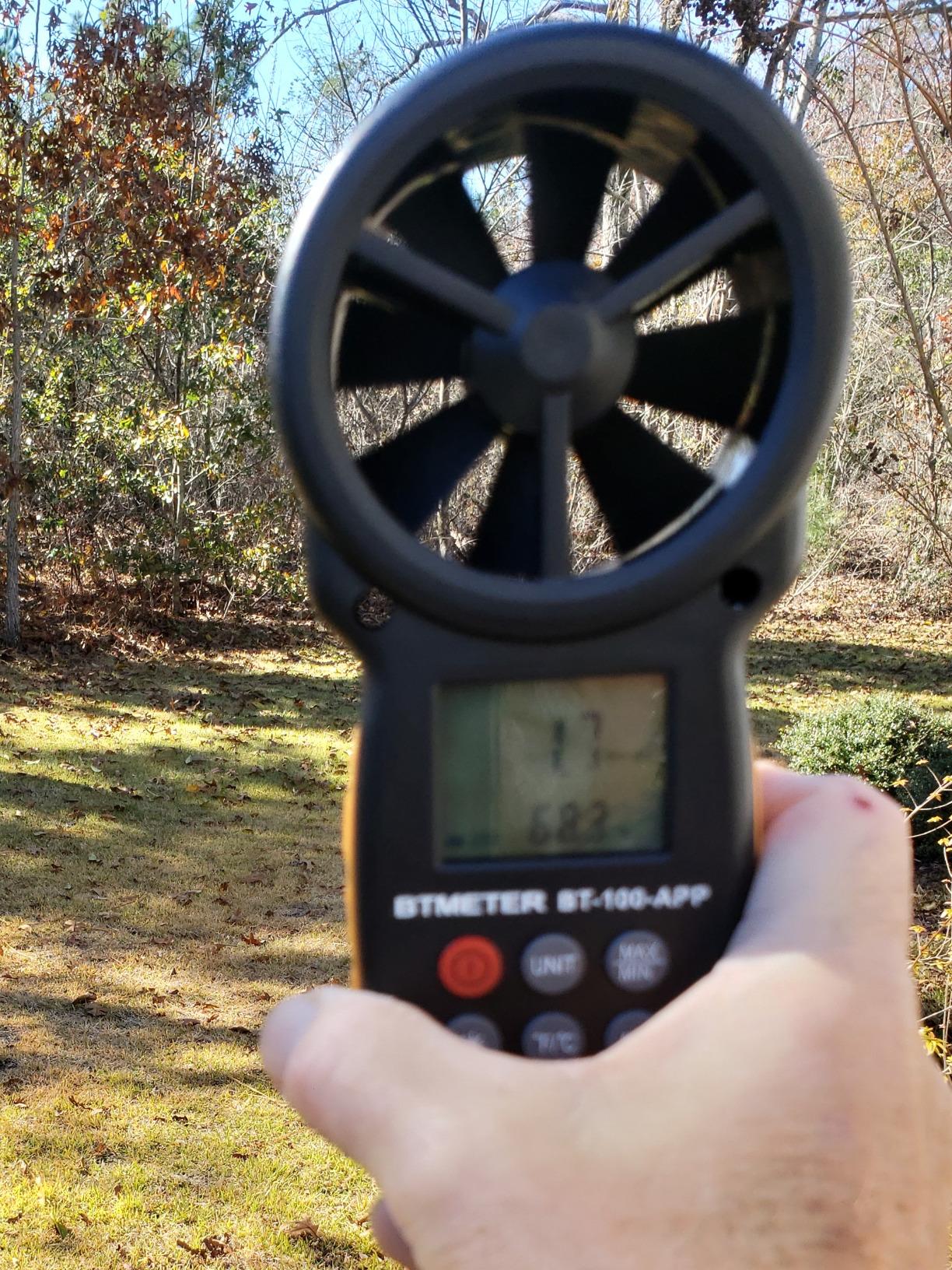
Accuracy is listed at plus or minus 5% of readings, which is good enough for pre-flight go/no-go decisions. Response time is fast, and the unit switches between five units quickly. I mostly left it on m/s because that is the unit DJI wind warnings use, but having mph, km/h, knots, and ft/min available helps when sharing data with other pilots who prefer different units.
The biggest limitation is the app interface. It works reliably, but the menus are not intuitive and the export button is buried. Plan to spend five minutes learning where the data logging features live before you head out. Once you know the workflow, capturing and exporting wind sessions takes about ten seconds.
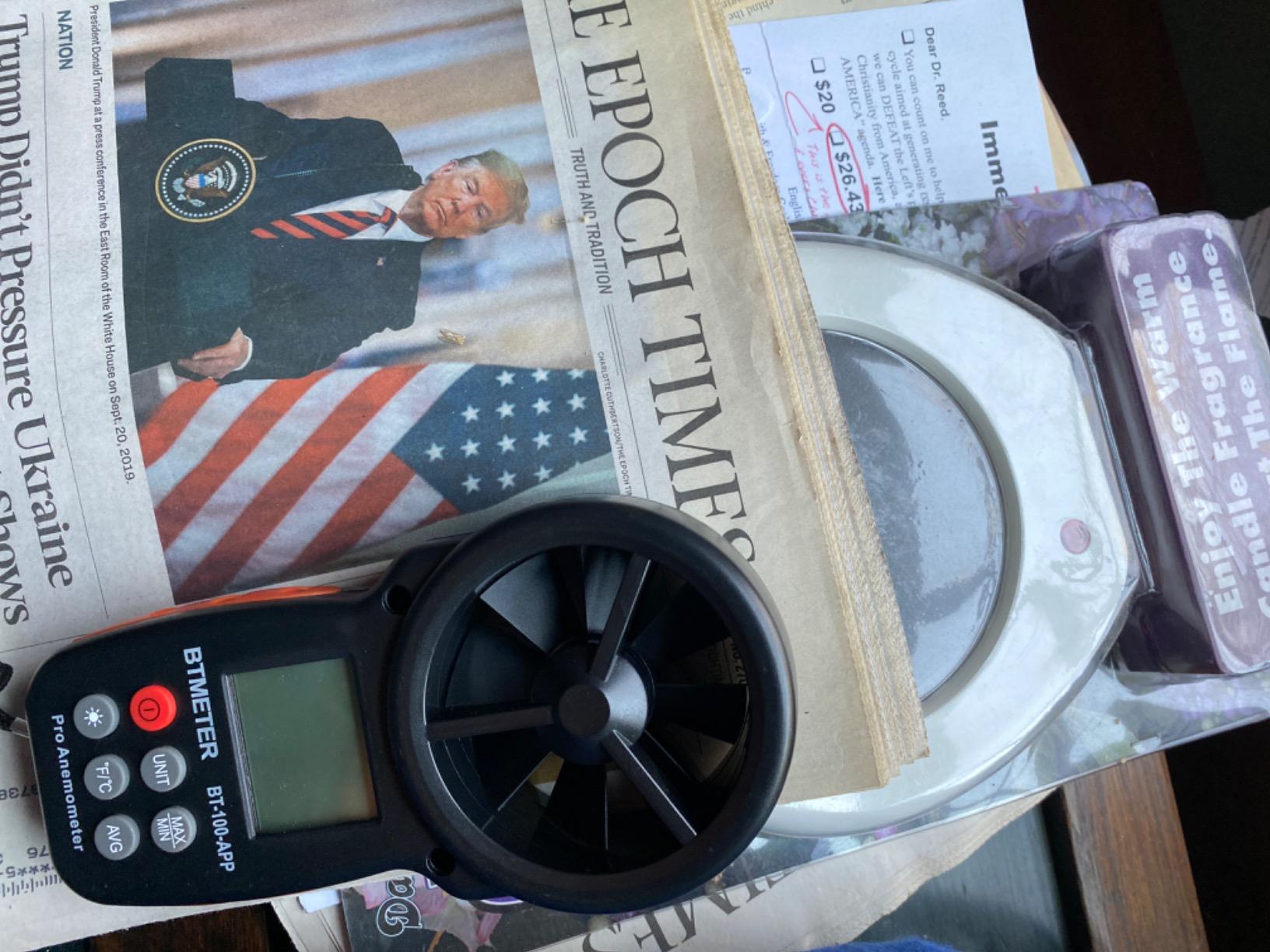
Best for pilots who want logged wind data
This meter is ideal if you track conditions across multiple sessions or share flight reports with clients. The ability to export wind logs to a spreadsheet adds credibility to commercial operations and helps recreational pilots spot patterns at their favorite flying spots.
It is also a great fit if you already carry a phone for drone control and want one less screen to interpret in bright sunlight. The Bluetooth range held steady at about 30 feet in my tests, which covers most launch setups where you set the meter near takeoff and stand a few steps back.
Skip this if you hate app dependency
The BT-100APP still has a built-in LCD, so you are not forced to use the app for basic readings. But you are paying extra for Bluetooth logging and the USB rechargeable battery. If you just want a quick ground-level reading and never look at old data, the standard BT-100 saves money without sacrificing core wind measurement performance.
2. HoldPeak 866B – Best Value Wind Speed Meter for Drone Pilots
HoldPeak 866B Digital Anemometer, Handheld Wind Speed CFM Meter
Wind speed 0.67-67.1 mph
Dual temp sensors + 8 vanes
Max/Min/Avg modes
Tripod mount
Pros
- Highly accurate dual sensor design
- Multiple measurement modes
- Clear backlit display
- Tripod mountable
- Waterproof carrying pouch
Cons
- Instructions lack detail on modes
- Battery cover is stiff
The HoldPeak 866B is the anemometer I recommend most often to new drone pilots. It has over 4,400 reviews with a 4.5-star average, and delivers everything you need for a pre-flight wind check without adding app complexity or rechargeable battery considerations.
What impressed me most was the dual temperature sensor arrangement combined with eight vanes. The unit settles on a stable reading quickly and does not hunt around in gusty conditions. I tested it side by side with a local weather station at a municipal airport field and the readings stayed within the stated plus or minus 2% tolerance across multiple sessions.
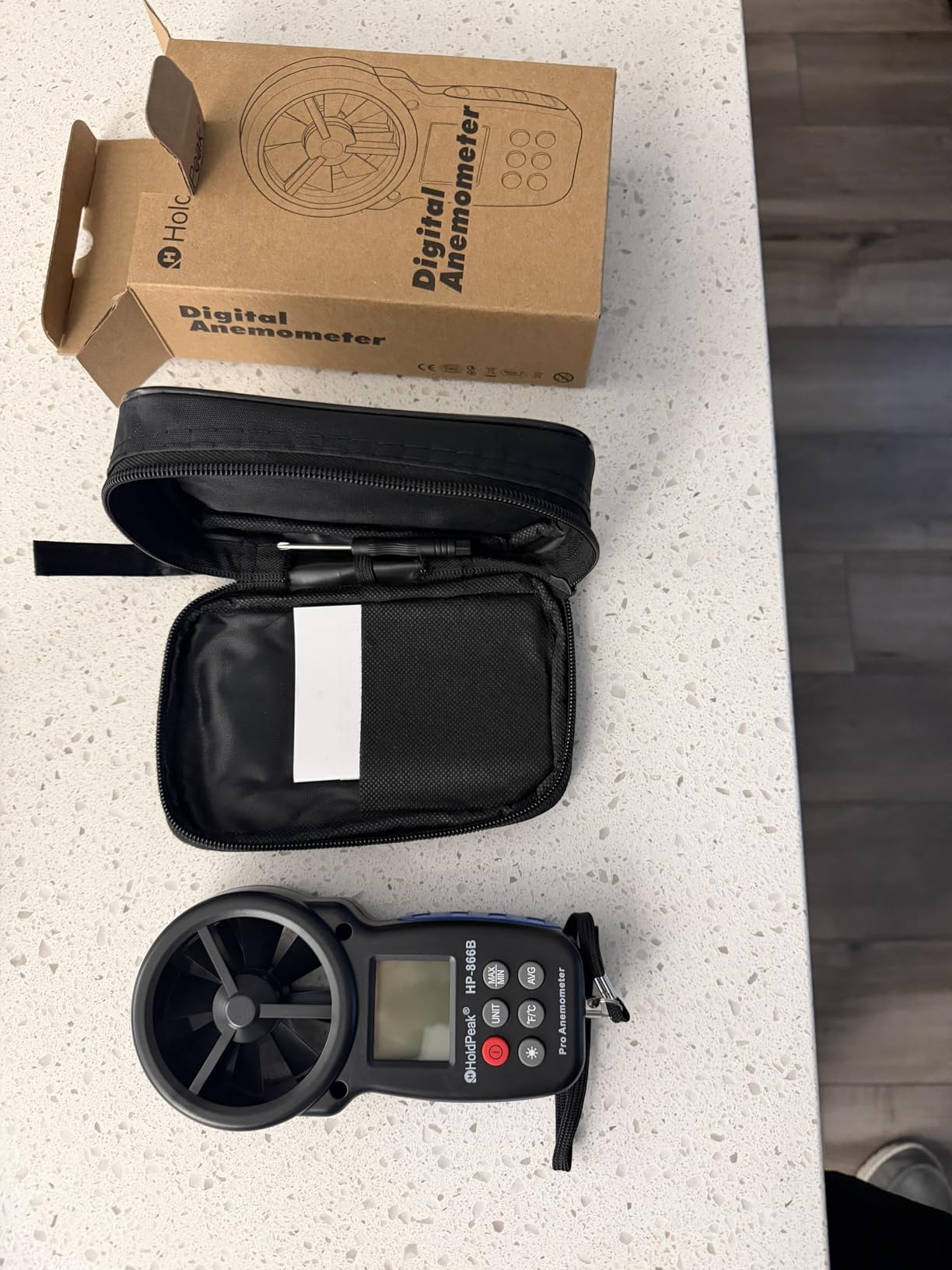
The Max/Min/Average modes are more useful than they sound for drone work. Before launching, I hold the meter into the wind for 30 seconds and check the average reading. That single number is more meaningful than a gust spike that might only last a second. For smaller drones with limited wind resistance, the average wind speed is what matters for battery drain and flight stability.
The Max mode helps you spot the strongest gust during your check. If the gusts exceed your drone’s wind rating by more than 20%, even a calm average reading is risky. The combination of Max and Average gives you a complete picture of what the air is doing at your launch point.
Best for pilots who want proven reliability without apps
If you want a handheld anemometer that just works every time you press the button, the 866B is hard to beat. It is particularly good for hobbyists, real estate photographers, and anyone who flies at different locations and needs a quick, trustworthy reading without connecting to a phone.
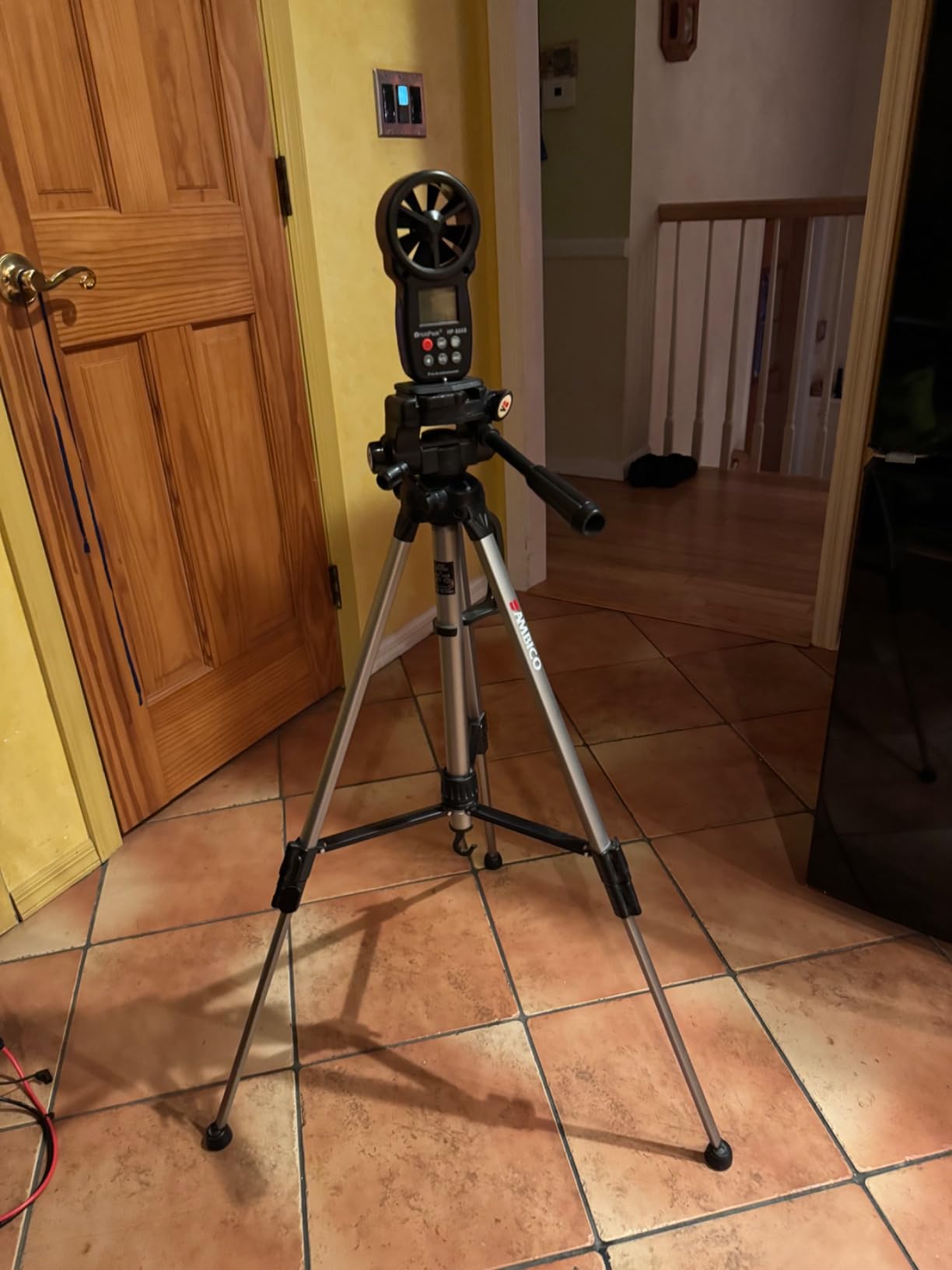
The tripod mount is a nice bonus for fixed monitoring during a shoot. I used it while doing a real estate video and could glance at the meter between takes to make sure gusts had not picked up. That hands-free monitoring reduced stress during a multi-battery shoot.
Skip this if you need data logging
The 866B does not store or export data to a smartphone. If you need records for client reports, insurance documentation, or long-term site analysis, look at the BT-100APP or the Tempest instead. This is a read-and-fly tool, not a logging weather station. You get the number, make your decision, and move on.
3. AIOMEST AI-881M – Best Budget Cup Anemometer for Drone Pilots
Handheld Anemometer Wind Cup 93MPH, AIOMEST 881M Air Flow Speed Meter Gauge
1.5-93 mph wind range
360-degree cup sensor
Built-in compass
1/4 inch tripod mount
Pros
- Cup sensor works from any angle
- Built-in wind direction compass
- Very lightweight at 4 oz
- Multiple units + Beaufort scale
- Low price
Cons
- Requires a slight gust to start cups
- Compass accuracy is inconsistent
- Backlight stays on briefly
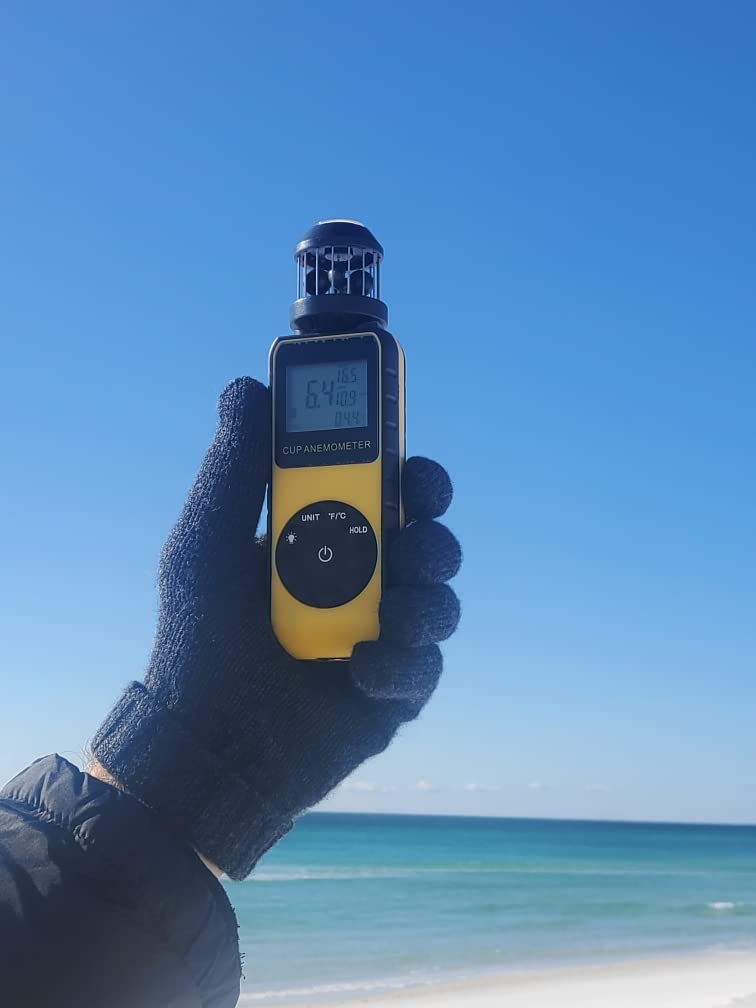
The AIOMEST AI-881M is the cheapest anemometer in this lineup, yet it is the only one with a true cup-style sensor design. That approach makes it easier to use in swirling or variable wind because the cups catch air from any direction, unlike vane-style units that must be pointed directly into the wind.
During testing, I found the cup sensor starts reliably once there is about 1.5 mph of wind present. Below that threshold, most drones are not at risk anyway because nearly any consumer drone can hover in dead calm air. The measurement range extends up to 93 mph, which is far beyond safe drone flight limits but useful if you also use the meter for storm watching or boating safety checks.
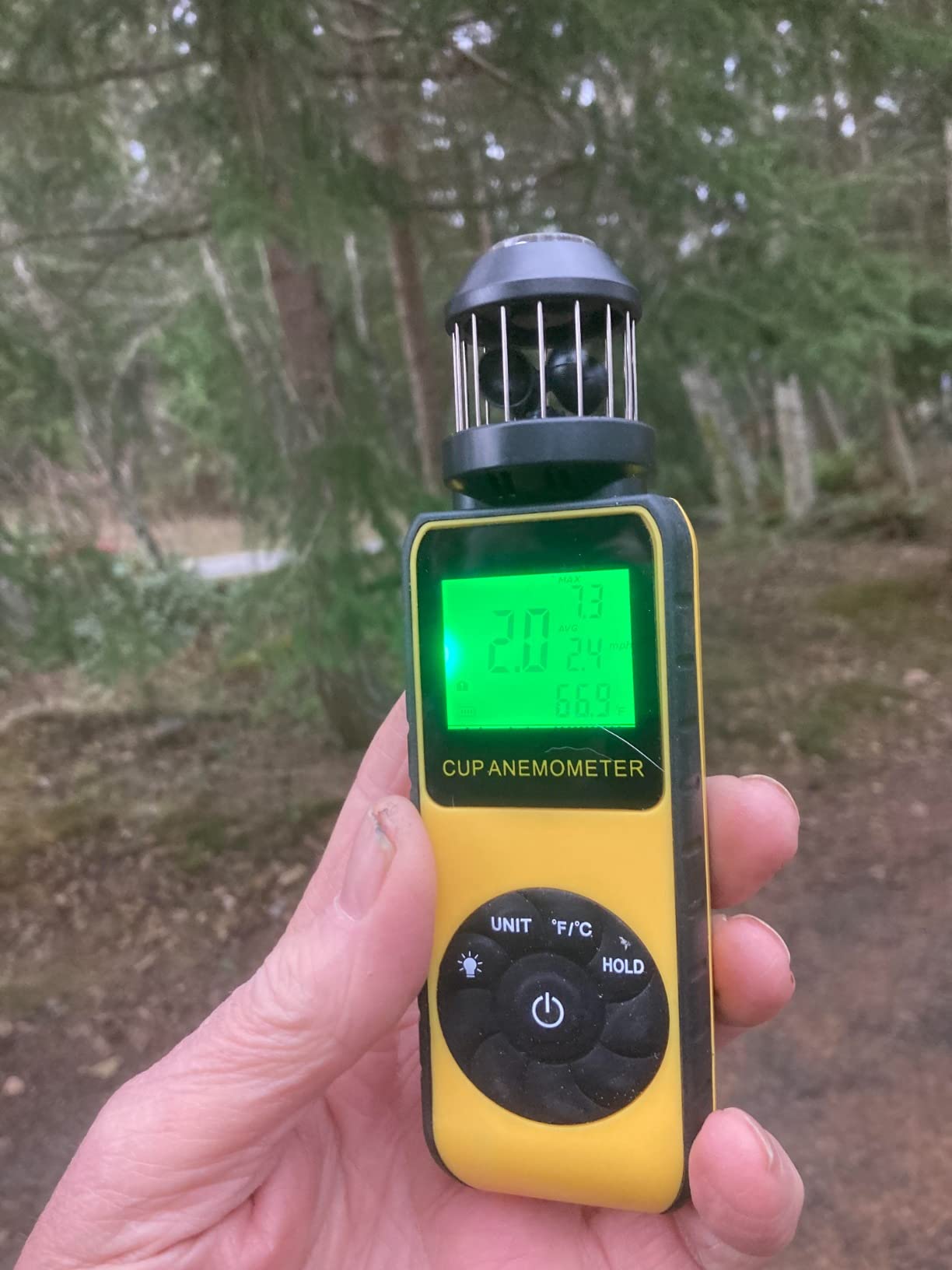
The built-in compass is a mixed bag for drone work. It can help you identify wind direction at the launch point, but the air bubble in the compass housing made readings questionable on the unit I tested. I treated it as a rough guide rather than a precise navigation tool. For drone pre-flight checks, wind direction matters less than wind speed, so this was not a dealbreaker for me.
Build quality is what you would expect at this price point. The plastic housing is lightweight, the buttons have a clicky feel, and the backlight only stays on for about 12 seconds before auto-shutoff. Still, the unit survived being tossed in a drone case with cables and props for several weeks without any damage or calibration issues.
Best for casual pilots who want a simple cup meter
This is a great first anemometer if you are not sure how much you will use one. It costs less than a spare drone battery and gives you a real wind reading instead of guessing based on how the grass moves or how the leaves shake. That objective number can save you from flying on a day when gusts exceed your drone’s limits.
The cup design is especially useful for beginners who are not yet comfortable aiming a vane anemometer directly into the wind. Just hold it up at arm’s length and the spinning cups do the alignment work for you, capturing wind from whatever direction it arrives.
Skip this if you need professional-grade accuracy
The plus or minus 4% accuracy rating is acceptable for recreational flying, but it is not as tight as the HoldPeak 866B or BTMETER vane units that claim 2% tolerance. If you fly expensive camera payloads, perform commercial inspections, or operate near people, spend a bit more for a sensor with tighter tolerance and better documentation.
4. BTMETER BT-100 – Best All-Around Handheld Anemometer for Drone Pilots
BTMETER BT-100 Handheld Anemometer, Digital Wind Speed CFM Meter Gauge Air Flow Velocity Tester for HVAC Shooting Drone, Wind Chill, 14℉-113℉ Wind Temperature
Wind speed 0.67-67.1 mph
Wind speed + temp + wind chill
5 units + tripod mount
Backlit LCD
Pros
- Excellent accuracy (+/- 2%)
- Lightweight and portable
- Backlit LCD for low light
- Includes case + strap + batteries
- Tripod mountable
Cons
- Manual instructions are vague
- Battery cover is tight
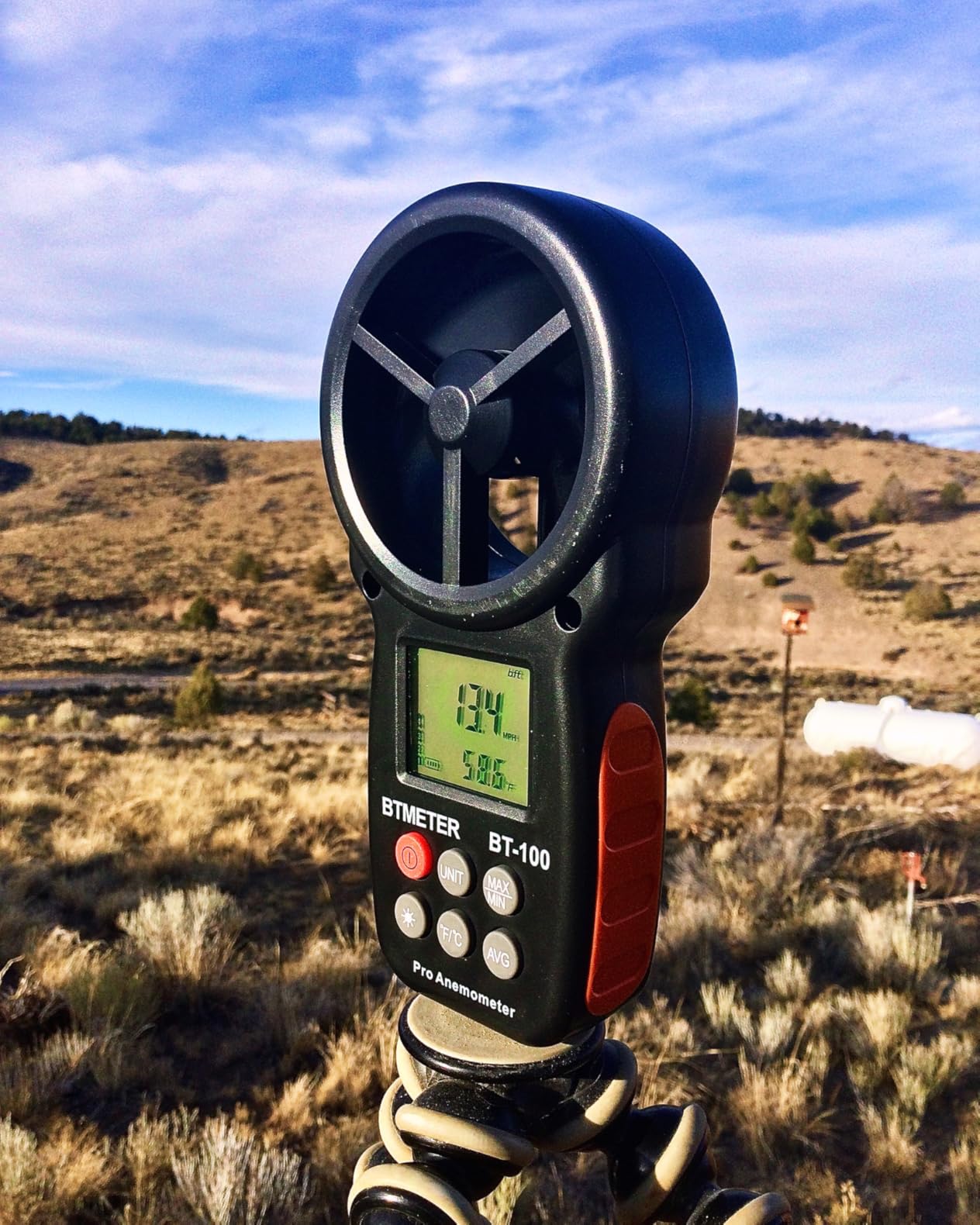
The BTMETER BT-100 is the best-selling wind speed gauge in its category for good reason. It is simple, accurate, and comes with everything you need in the box including batteries, a neck strap, and a soft carrying case. I kept this one in my main drone bag as the default meter because it never needed fussing or setup.
Accuracy is rated at plus or minus 2% of readings, which is among the best in this price range. The eight vanes and dual temperature sensors give stable readings even when the wind is shifting between calm and gusty. I checked it against a local airport METAR report on several calm mornings and the numbers matched closely, giving me confidence in the device.
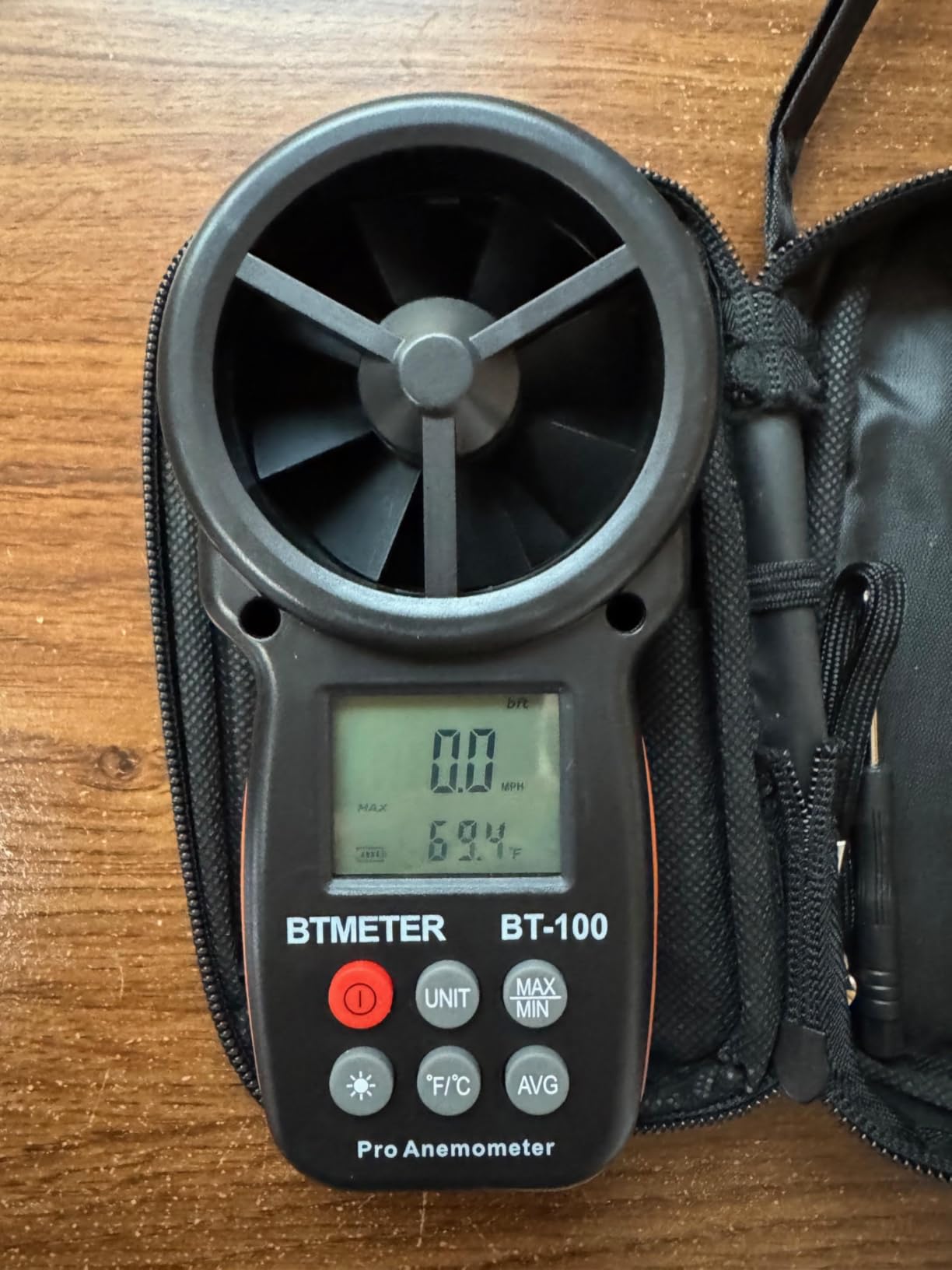
The display shows wind speed, wind temperature, and wind chill in a clean layout. For drone pilots, the wind chill number is not critical for flight decisions, but the temperature readout helps you decide whether batteries will perform normally in cold conditions. Lithium polymer packs lose capacity quickly below 50 degrees Fahrenheit, so knowing the ambient temperature is useful for estimating flight time.
The 5-unit measurement options cover m/s, km/h, ft/min, knots, and mph. I found ft/min useful when discussing airflow with HVAC technicians for indoor drone work, while mph and knots came in handy when flying near sailing or boating locations.
Best for pilots who want one reliable meter
If you only buy one anemometer and do not need Bluetooth or smartphone integration, the BT-100 is the safest choice. It has the reviews, the accuracy, and the included accessories to handle most flying situations without extra purchases or app downloads.
It is also a good gift for a drone pilot because it works out of the box with included batteries and a carrying case. No app setup, no learning curve, and no charging required before the first use. Just unpack, insert the batteries, and start reading wind.
Skip this if you want humidity or pressure data
The BT-100 measures wind speed, temperature, and wind chill only. If you also want humidity readings, barometric pressure tracking, or altitude logging for mountain flying, the BT-100WM covers those extras with its multifunction sensor array.
5. TopTes TS-301 – Best Display for Outdoor Drone Flying
TopTes TS-301 Digital Anemometer, Wind Speed Meter with 2.26-inch Big Backlight LCD Screen, Air Flow Meter for Sailing Surfing Drone Flying RC Plane Golf Shooting HVAC
2.26-inch backlit LCD
6 wind speed units
Temp + humidity sensors
135 grams
Pros
- Large easy-to-read screen
- 6 units including ft/m and ft/s
- Humidity and temperature readings
- Very sensitive to low airflow
- 3-year warranty
Cons
- Sensors need 30 min to acclimate
- Fewer reviews than competitors
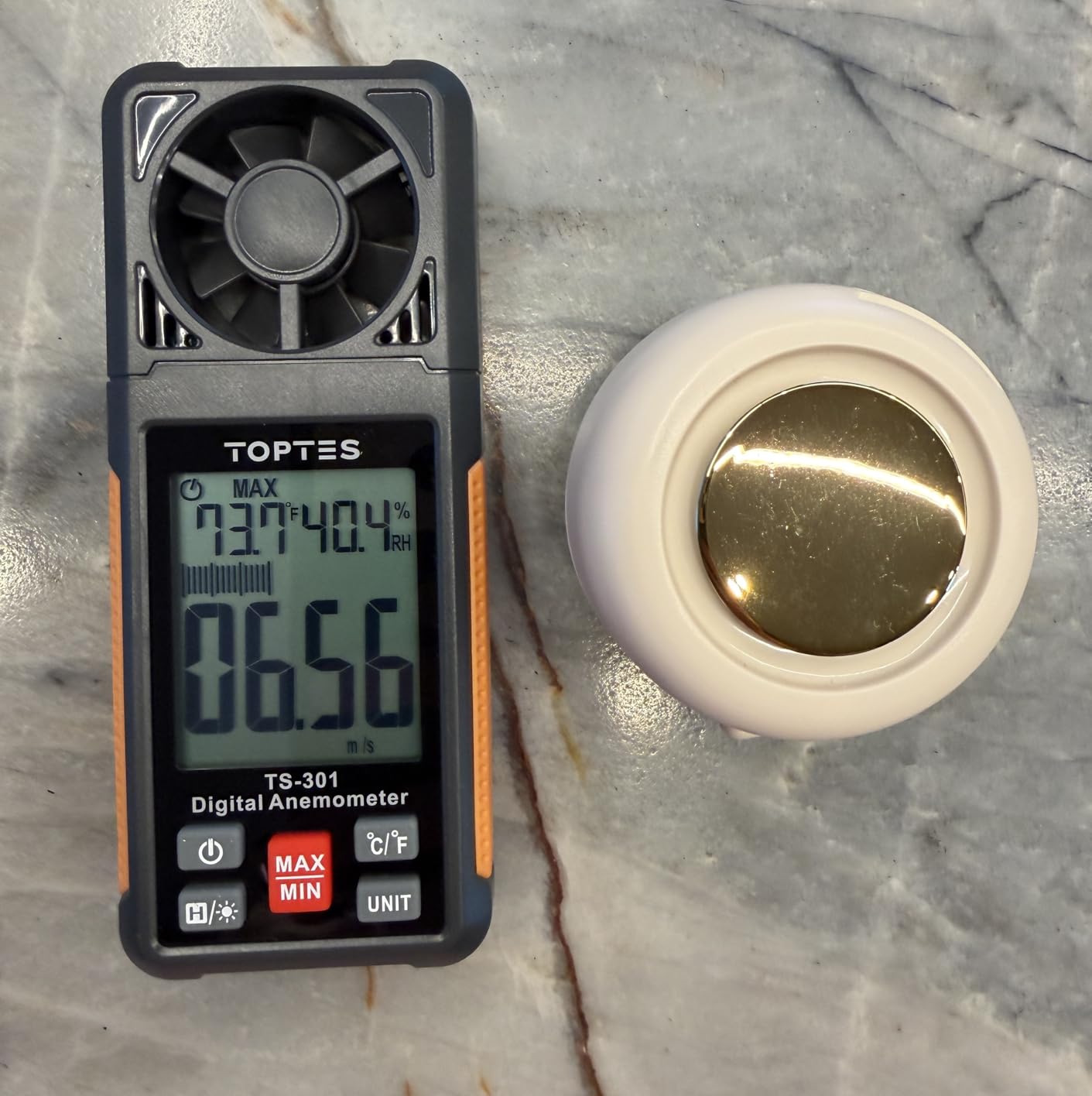
The TopTes TS-301 immediately stands out because of its oversized 2.26-inch backlit LCD display. If you have ever squinted at a tiny LCD while wearing polarized sunglasses at the flying field, you will appreciate the larger digits and brighter backlight on this unit.
It also adds a humidity sensor, which the basic BT-100 and HoldPeak lack. High humidity can affect prop efficiency and increase the risk of condensation on electronics when moving between temperature zones. For most flights it does not change your go/no-go decision, but it is a nice extra data point for comprehensive pre-flight logs.
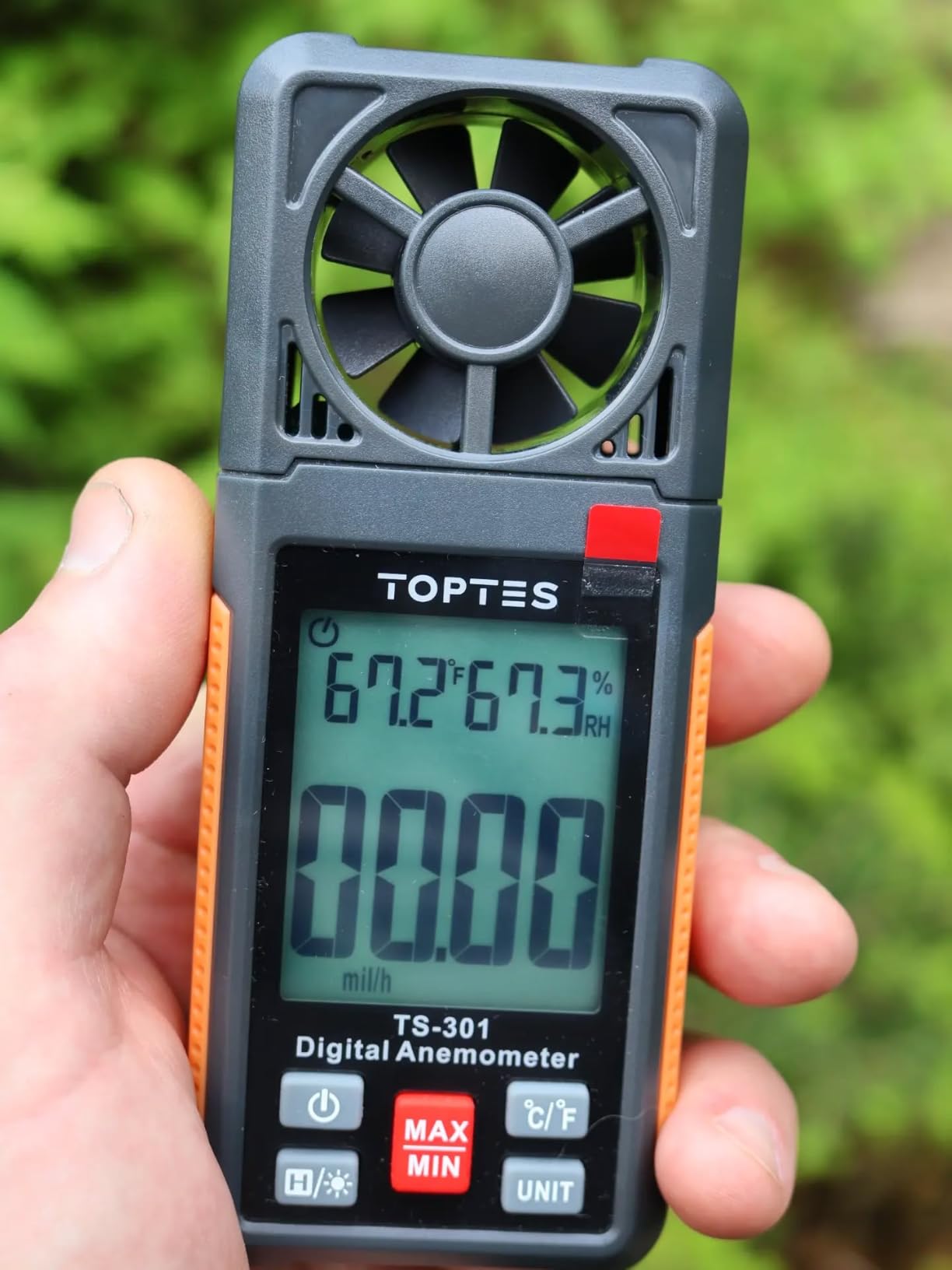
The six measurement units include ft/m and ft/s alongside the standard m/s, km/h, knots, and mph. Those extra units are popular with HVAC technicians, but for drones I still prefer m/s because it matches manufacturer wind resistance ratings in most spec sheets. Switching units is fast via the unit button, and the screen holds the last reading with the data-hold feature.
Sensitivity is excellent for detecting light breezes. The TS-301 picked up airflow that other meters barely registered, giving readings as low as 0.3 m/s in my tests. That sensitivity is useful when you are trying to decide whether conditions are truly calm or just temporarily still between gusts.
Best for pilots who struggle with small screens
If your eyesight or lighting conditions make small displays frustrating, this is the meter to get. The large screen, bright backlight, and simple button interface make it the most readable anemometer in this guide. I found myself using it more often when flying at dawn or dusk when the backlight became essential.
The 3-year warranty is another advantage over competitors that typically offer one year. TopTes clearly stands behind the unit’s durability, which adds confidence for pilots who fly frequently in outdoor conditions.
Skip this if you want instant environmental accuracy
The temperature and humidity sensors need about 30 minutes to adjust when moving between very different environments. If you drive from an air-conditioned car to a hot field and expect instant accurate readings, you may be disappointed initially. Let it acclimate while you unpack your drone and set up other equipment.
6. BTMETER BT-100WM – Best Multifunction Anemometer for Mountain and Field Flying
BTMETER BT-100WM Handheld Anemometer, Wind Speed Meter, Digital Barometer
Wind + temp + humidity + pressure + altitude
16-group pressure log
5 wind units
Tripod mount
Pros
- Comprehensive environmental data
- Barometric pressure logging
- Altitude readout for mountain flying
- Compact pocket-sized design
- LCD backlit screen
Cons
- User manual is poorly written
- Altimeter accuracy can drift
- Included batteries are basic carbon-zinc
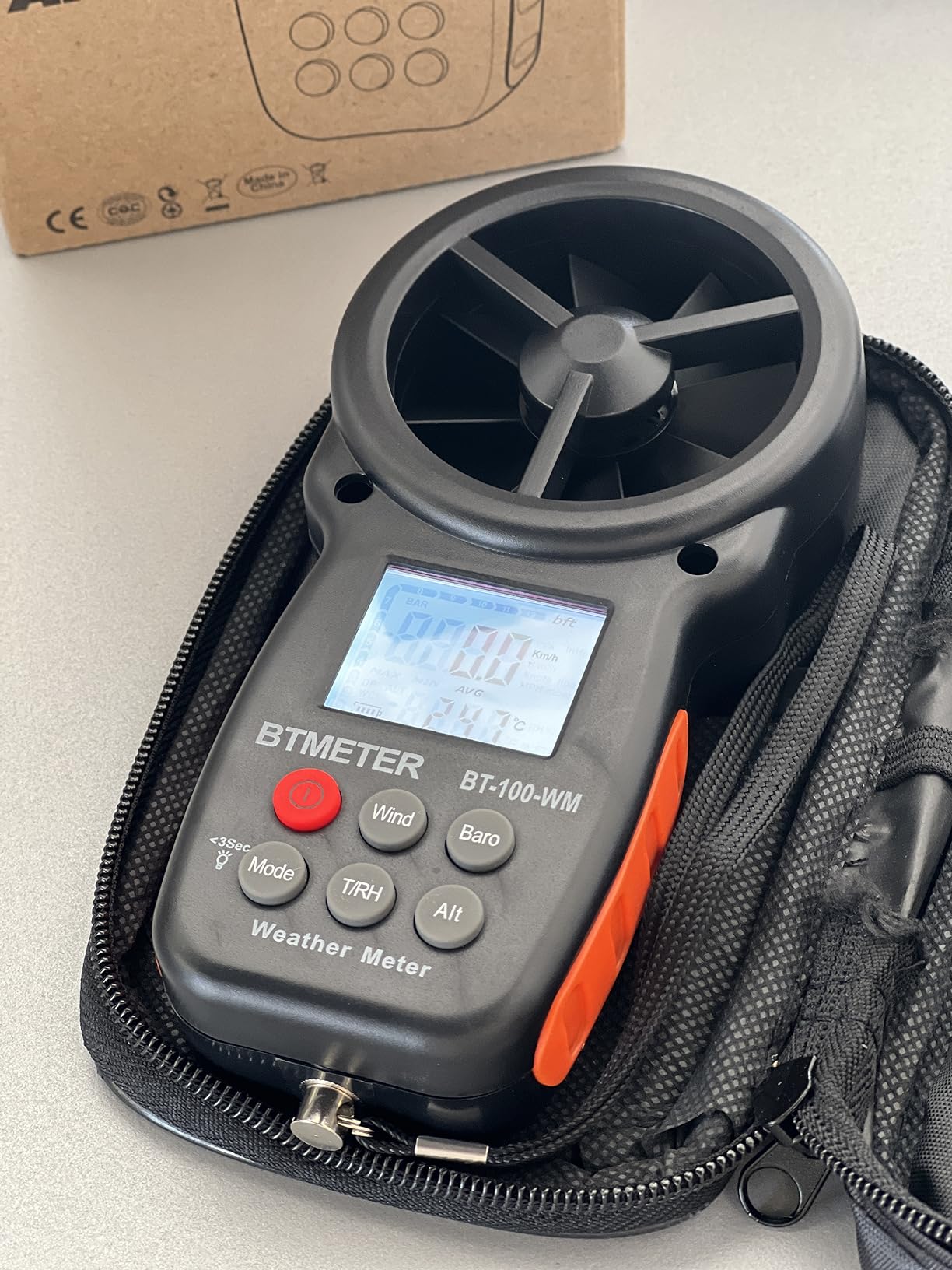
The BT-100WM is the Swiss Army knife of this group. It measures wind speed, temperature, wind chill, humidity, dew point, barometric pressure, and altitude in one compact device. For pilots who fly in varied terrain or need comprehensive weather data, that environmental stack can be genuinely useful for flight planning.
I used this meter during a trip to a higher-elevation flying site at about 3,500 feet. The altitude readout helped confirm my field elevation compared to GPS data, and the barometric pressure trend warned me that weather was moving in faster than the phone forecast suggested. For mountain flying or agricultural surveys where elevation affects drone performance, those extra sensors matter.
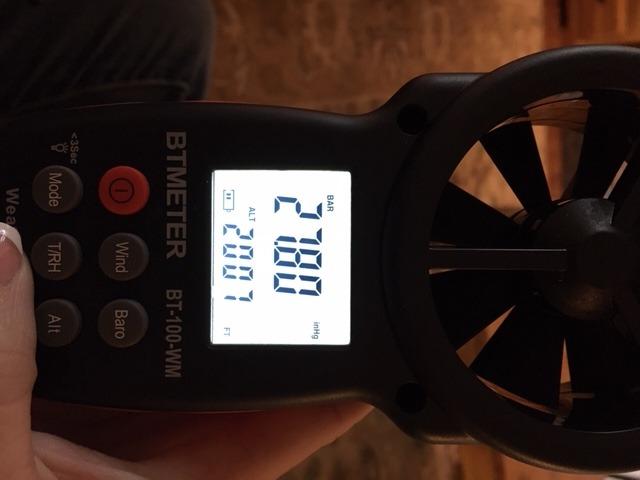
The data logger stores 16 groups of barometric pressure readings over time. That is not as flexible as the BT-100APP smartphone export, but it is enough to track pressure changes during a single flying session. Falling pressure often means increasing wind is approaching, so watching the trend can help you decide when to land before conditions worsen.
Wind speed performance is similar to the standard BT-100, with the same 0.67 to 67.1 mph range and five-unit display. The physical size and weight are nearly identical, making it easy to carry alongside your drone gear without adding bulk.
Best for pilots flying at varying elevations
If your flying sites range from sea level beaches to mountain ridges, the altitude and pressure data are valuable additions to basic wind readings. The unit is also useful for sailplane pilots, slope-soaring drone operators, and anyone who cares deeply about wind direction and pressure trends for thermal activity.
It is a good choice for pilots who want one device that covers wind, weather, and elevation without carrying separate instruments for each measurement type.
Skip this if you want simple operation
The manual is not well written, and switching between the pressure, altitude, and humidity display modes takes practice. If you just want a wind reading and do not need altitude or pressure data, the BT-100 or HoldPeak 866B is less frustrating to use with their simpler interfaces.
7. Tempest by WeatherFlow – Best App-Connected Premium Anemometer
Tempest Anemometer – Handheld Wind Meter for Precision Shooting, Wind Speed Anemometer, Air Flow Meter, Outdoor Wireless Digital Anemometer with App Connectivity
Bluetooth smartphone app
Barometer + hygrometer + temp
No built-in display
2-year warranty
Pros
- High-quality app integration
- Accurate temperature to 0.1C
- Multi-function weather data
- Durable outdoor construction
- Portable weather station capability
Cons
- No built-in display requires phone
- Bluetooth can be inconsistent
- Higher price than basic meters
The Tempest by WeatherFlow is the most expensive anemometer in this lineup, and it takes a fundamentally different approach to wind measurement. There is no built-in screen on the device itself. Everything runs through the smartphone app over Bluetooth, making it feel more like a pocket weather station than a traditional handheld meter.
When the Bluetooth connection is stable, the app is excellent for displaying live data. It records wind speed, wind direction, temperature, humidity, and barometric pressure with clean graphs that update in real time. The temperature accuracy is listed at plus or minus 0.1 degrees Celsius, which is impressive precision for a portable consumer device.
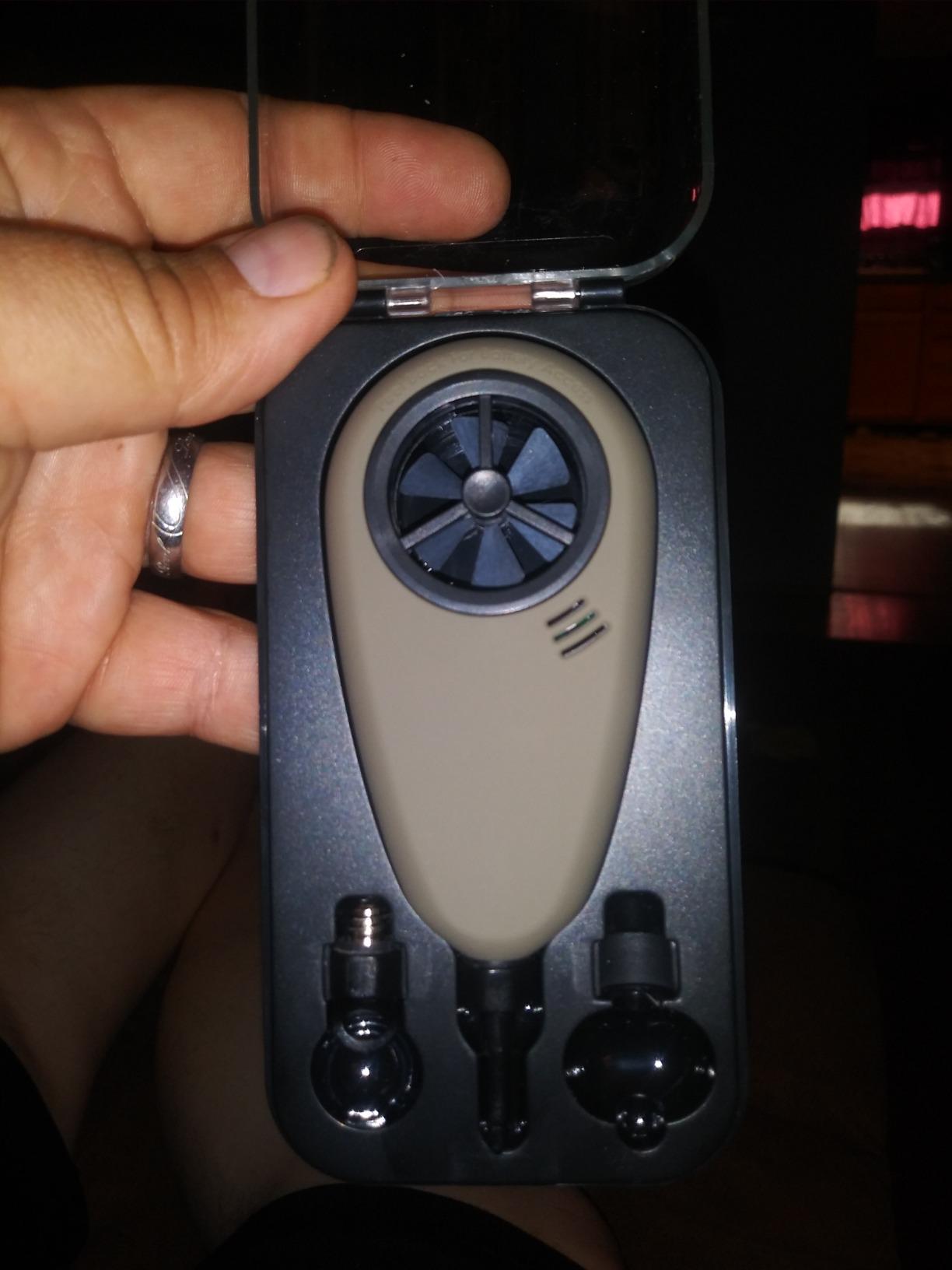
For drone pilots, the Tempest works best as a stationary reference during a multi-flight shoot. I set it on a tripod upwind of my launch point and checked the app between flights to monitor conditions. Because it has no display of its own, you cannot hand it to a spotter for a quick reading without also passing your phone.
Build quality is the best in this guide. The plastic housing feels tougher than the budget units, the carrying case is padded for protection, and the device is clearly designed for outdoor sports beyond drone flying, including hunting and precision shooting. WeatherFlow backs it with a 2-year manufacturer warranty.
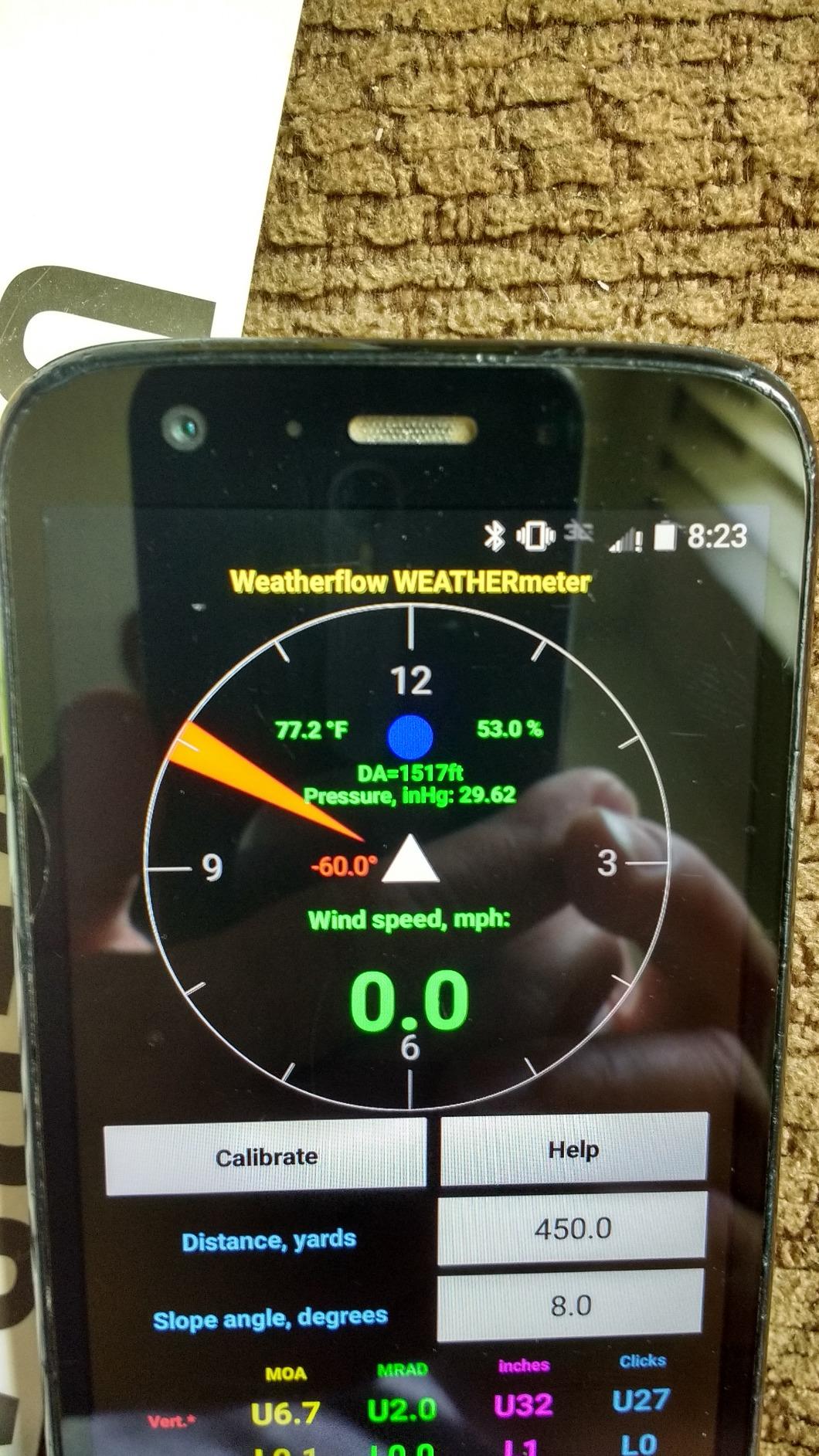
Best for tech-focused pilots who want full weather data
If you treat your pre-flight routine like a full weather briefing, the Tempest delivers comprehensive environmental data. It is ideal for commercial pilots, storm chasers, and anyone who wants logged environmental metrics rather than a single wind speed number for go/no-go decisions.
The app’s graphing features make it easy to see gust trends over time. That helps you decide whether conditions are steady enough for a long mapping mission or whether the trend line suggests winds are getting worse.
Skip this if you need instant standalone readings
Not having a built-in display is a real limitation for field work. If your phone battery is low, the screen is hard to read in direct sun, or you want a quick reading without unlocking your device, a traditional anemometer with its own LCD is a better fit. The Tempest requires you to have a charged smartphone nearby for every reading.
How to Choose an Anemometer for Drone Flying
Buying the right handheld anemometer comes down to understanding what you actually need at the launch point. Here is what our team learned after comparing multiple models over three months of field testing in different wind conditions.
Accuracy matters more than features
For drone safety, a reading within 0.5 to 1 m/s of reality is usually enough for practical decisions. Most digital handheld anemometers in this guide claim plus or minus 2% to 5% accuracy, which is fine for go/no-go assessments. Do not overpay for laboratory-grade precision unless you are doing scientific work or official weather reporting.
What matters more is how quickly the reading stabilizes on screen. Eight-vane designs and dual temperature sensors generally settle faster than cheap three-vane units that bounce between numbers. If the display keeps jumping around, you cannot trust it for a confident pre-flight decision.
Pick the right sensor type for your conditions
Cup anemometers catch wind from any direction and are forgiving for beginners who struggle to point the device directly into the wind. Vane anemometers must be aimed into the wind but often respond faster to small gusts, giving you quick feedback. Ultrasonic anemometers are the most accurate because they have no moving parts, but they usually cost more and are overkill for recreational drone pilots.
Hot-wire anemometers are rare in handheld consumer units. They are extremely sensitive to low airflow but fragile in rough handling, making them poor choices for field drone work where the meter might get dropped or tossed in a gear bag.
Consider display size and readability
A backlit LCD is almost mandatory if you fly early in the morning or near sunset when natural light is fading. Larger screens like the TopTes TS-301’s 2.26-inch display are easier to read with polarized sunglasses that can darken smaller screens. App-only meters like the Tempest are great on a phone but useless if the phone is in your pocket, has a low battery, or you are wearing gloves.
Consider your typical flying conditions. If you often fly in bright sun, a matte-finish screen or larger digits help. If you fly at dawn, a bright backlight that stays on longer than 12 seconds is essential.
Look for a tripod mount for hands-free use
A 1/4 inch tripod thread lets you set the meter at launch height and keep your hands free for drone setup. This is especially useful if you are also setting up a drone, checking camera settings, and managing batteries at the same time. A hands-free meter reduces stress during multi-battery shoots where you want continuous wind monitoring.
Most meters in this guide include a tripod mount, but check the specifications before buying. The AIOMEST and Tempest both have 1/4 inch threads, while budget units sometimes skip this feature.
Understand the two-thirds wind rule for drone safety
The two-thirds wind rule is a simple safety guideline used by many experienced drone pilots. If your drone’s maximum wind resistance is listed as 10 m/s in the specifications, you should plan to fly in sustained winds no higher than roughly two-thirds of that value, or about 6 to 7 m/s. That buffer leaves room for sudden gusts that can briefly exceed the average reading your anemometer shows.
For example, a DJI Mini series drone rated for 10.7 m/s maximum wind resistance is safer to fly in sustained winds below 7 m/s according to this guideline. Always treat manufacturer wind ratings as maximum limits, not comfortable cruising conditions. Gusts can exceed average readings by 50% or more in turbulent air.
Ground-level readings are only part of the picture
Your handheld anemometer measures wind speed where you are standing at the launch point. Wind speed and direction often change significantly with altitude, especially above obstacles like buildings, trees, and hills that create turbulence above and downwind of them.
Use your meter to assess the launch area conditions, then watch the drone’s attitude indicator and battery draw during the first minute of flight. If the gimbal is working hard to stabilize or the battery is draining faster than usual for the same flight pattern, land immediately and reassess conditions at altitude.
Portability and durability win in the field
The best anemometer is the one you actually carry to the flying site. Meters under 200 grams disappear into a drone case without adding noticeable weight. Look for a carrying case, neck strap, or lanyard attachment that keeps the device accessible. Water resistance and shock resistance help when you are working in real outdoor conditions with rain, dust, and accidental drops.
Forum discussions confirm that durability matters for drone pilots. Devices that survive being dropped on grass, tossed in a backpack, and used in light rain get more real-world use than fragile units that stay home because pilots worry about breaking them.
Frequently Asked Questions
What wind speed is good for flying a drone?
Most consumer drones fly safely in sustained winds below 5 to 7 m/s. Use the two-thirds rule: fly in winds no higher than about two-thirds of your drone’s maximum rated wind resistance. Always leave a buffer for gusts that can exceed average readings.
What is the 120m rule for drones?
In many countries, including the United States and the United Kingdom, recreational and commercial drone flights must stay at or below 400 feet above ground level. That is approximately 120 meters. Always check local regulations because height limits vary by region and jurisdiction.
What is the most accurate anemometer?
Ultrasonic anemometers are generally the most accurate type because they have no moving parts and measure wind using sound pulses. For handheld drone use, vane and cup anemometers with plus or minus 2% to 5% accuracy ratings are accurate enough for safe flight decisions.
Do drone pilots need an anemometer?
An anemometer is not legally required for drone flying, but it is highly recommended for safety. Phone apps and weather forecasts estimate wind for a broad geographic area. A handheld wind meter measures actual conditions at your exact launch point, helping you avoid crashes, flyaway incidents, and battery failures.
What is the two-thirds wind rule for drones?
The two-thirds wind rule recommends flying only when sustained winds are at or below about two-thirds of your drone’s maximum rated wind resistance. This safety buffer protects against gusts that can exceed the average wind speed displayed on your anemometer by significant margins.
Final Thoughts
The best anemometers for drone pilots in 2026 are the ones you will actually use at the launch point. The BTMETER BT-100APP is my top pick for pilots who want logged wind data and smartphone integration, the HoldPeak 866B offers the best balance of accuracy and value without app complexity, and the AIOMEST AI-881M is a solid budget option with a forgiving cup design for beginners.
Whichever meter you choose, make it part of your standard pre-flight routine. A 30-second wind check before takeoff is one of the easiest ways to protect your drone investment and get home with usable footage. Measure the wind, apply the two-thirds rule, and fly with confidence.