
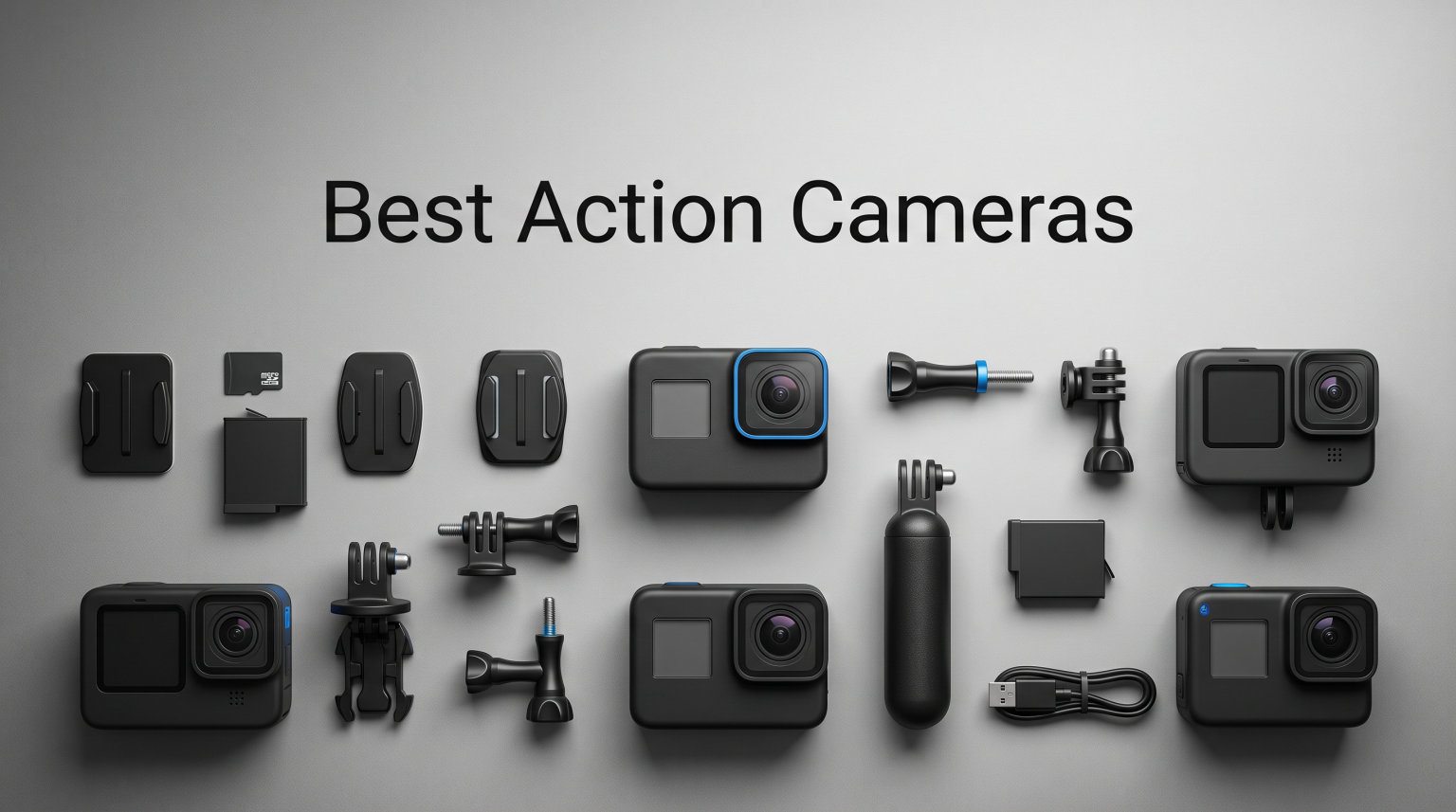
Finding the best action cameras in 2026 means sorting through marketing claims, spec sheets, and a sea of lookalike models. Our team has spent months comparing 10 leading cameras from GoPro, DJI, Insta360, and budget brands like AKASO to figure out which ones actually deliver where it matters.
Whether you need a rugged helmet camera for mountain biking, a waterproof vlogging camera for your next trip, or a 360-degree powerhouse for creative content, this guide breaks down every option by real-world performance. We tested stabilization on bumpy trails, battery life in cold conditions, and low-light quality at dusk to separate genuine standouts from spec-sheet wonders.
The action camera market has shifted dramatically. DJI has closed the gap with GoPro on nearly every front, Insta360 keeps pushing what 360 capture can do, and budget brands now offer features that used to cost three times as much. Our testing covered video quality, stabilization effectiveness, battery endurance, waterproof reliability, and the all-important app ecosystem to help you make the right call.
Table of Contents
Top 3 Picks for Best Action Cameras in 2026

These three represent the sweet spots across the action camera spectrum. The DJI Osmo Action 5 Pro leads the pack with unmatched battery life and subject tracking. The DJI Osmo Action 4 delivers flagship-tier performance at a mid-range price. And the AKASO EK7000 proves you do not need to spend much to get usable 4K footage for casual adventures.
Best Action Cameras in 2026
| Product | Specifications | Action |
|---|---|---|
| DJI Osmo Action 5 Pro |
|
Check Latest Price |
 Insta360 X5 Insta360 X5 |
|
Check Latest Price |
 GoPro HERO13 Black GoPro HERO13 Black |
|
Check Latest Price |
 DJI Osmo Action 4 DJI Osmo Action 4 |
|
Check Latest Price |
 Insta360 X3 Insta360 X3 |
|
Check Latest Price |
 GoPro MAX GoPro MAX |
|
Check Latest Price |
 GoPro LIT Hero GoPro LIT Hero |
|
Check Latest Price |
 AKASO Brave 4 AKASO Brave 4 |
|
Check Latest Price |
 ODDV 4K60FPS Action Camera ODDV 4K60FPS Action Camera |
|
Check Latest Price |
 AKASO EK7000 AKASO EK7000 |
|
Check Latest Price |
1. DJI Osmo Action 5 Pro – Best Overall Action Camera
DJI Osmo Action 5 Pro Essential Combo, Waterproof Action Camera
4K/120fps
1/1.3 inch Sensor
4hr Battery
47GB Built-in Storage
IP68 20m Waterproof
Pros
- Excellent low-light with 1/1.3 inch sensor
- Subject Tracking keeps moving subjects centered
- Up to 4 hours battery life
- 47GB built-in storage means no SD card needed
- Dual OLED touchscreens front and rear
- 360 degree HorizonSteady stabilization
Cons
- Higher price than Action 4
- Subject tracking limited to certain aspect ratios
I have been shooting with the DJI Osmo Action 5 Pro for several weeks across mountain biking trails, snorkeling trips, and nighttime city walks. This is the camera I keep reaching for first when I want footage I can trust without fussing with settings. The 1/1.3-inch sensor makes a real difference in challenging light, pulling detail from shadows that other action cameras turn to mush.
The headline feature for me is the battery life. DJI claims up to 4 hours and in my testing I consistently got over 3.5 hours of 4K recording before needing a swap. That is roughly double what most competitors deliver. The 47GB of built-in storage means you can start recording right out of the box without hunting for a microSD card, which is a small thing that matters more than you might expect.
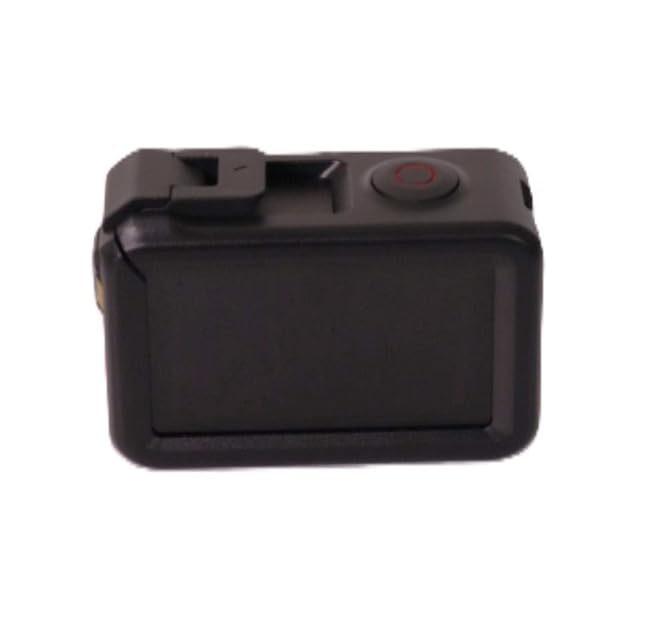
Stabilization on the Action 5 Pro comes in multiple flavors. RockSteady+ handles normal bumps beautifully, but HorizonSteady is the real showstopper, keeping your horizon locked level even when the camera rotates a full 360 degrees. I tested this on a rocky descent and the footage looked like it was shot on a gimbal. The dual OLED touchscreens are bright and color-accurate, making framing shots from any angle effortless.
The Subject Tracking feature works well for action sports where you want the camera to lock onto a moving rider or runner. It does have limitations, working only in certain aspect ratios, but when it kicks in it genuinely reduces the mental load of framing your shot. The D-Log M color profile gives you plenty of grading room if you want to color-match with other footage in post.
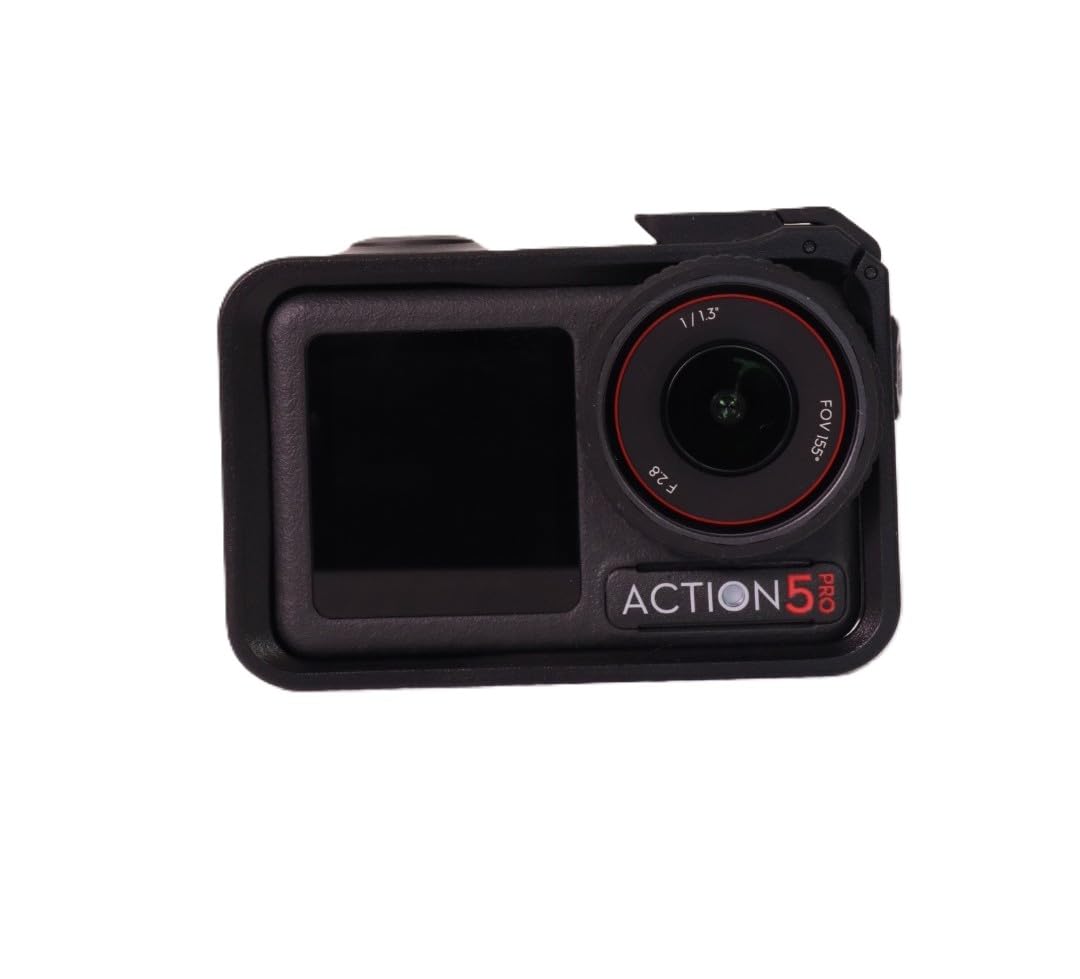
Who Should Buy the DJI Osmo Action 5 Pro
This is the camera I recommend for serious content creators and adventure athletes who want one device that handles everything. If you shoot in varied lighting conditions, need long battery life for all-day shoots, and want professional color tools, the Action 5 Pro justifies its price. The built-in storage alone saves you from the constant anxiety of running out of space mid-session.
It is also the best choice if you value thermal management. Unlike some competitors that overheat during extended 4K recording, the Action 5 Pro ran cool throughout my longest shoots. For motorcycle riders, skiers, and snorkelers who want set-and-forget reliability, this is hard to beat.
Where the Action 5 Pro Falls Short
The main drawback is price. At over $300, it costs more than the already-excellent Action 4, and the jump in features may not justify the premium for casual users. Subject tracking only works in specific aspect ratios, which limits its flexibility compared to a fully unrestricted tracking system.
There is also no 5.3K or 6K recording option. If you want maximum resolution beyond 4K, you will need to look at the GoPro HERO13 Black or the Insta360 X5. For most people 4K/120fps is plenty, but resolution-focused buyers should know the ceiling here.
2. Insta360 X5 – Best 360 Action Camera
Insta360 X5 – Waterproof 8K 360° Action Camera, Leading Low Light, Invisible Selfie Stick Effect, Rugged and Replaceable Lens, 3-Hour Battery, Built-in Wind Guard, Stabilization, Triple AI Chip Design
8K30fps 360 Video
Dual 1/1.28 inch Sensors
Triple AI Chip
3hr Battery
Replaceable Lenses
Pros
- 8K30fps 360 video is class-leading
- Triple AI chip delivers exceptional low-light performance
- Invisible selfie stick effect for creative shots
- Replaceable lenses for durability
- FlowState stabilization with 360 Horizon Lock
- Built-in wind guard for clearer audio
Cons
- Premium price point
- Larger and heavier than competitors
- Requires SD card not included
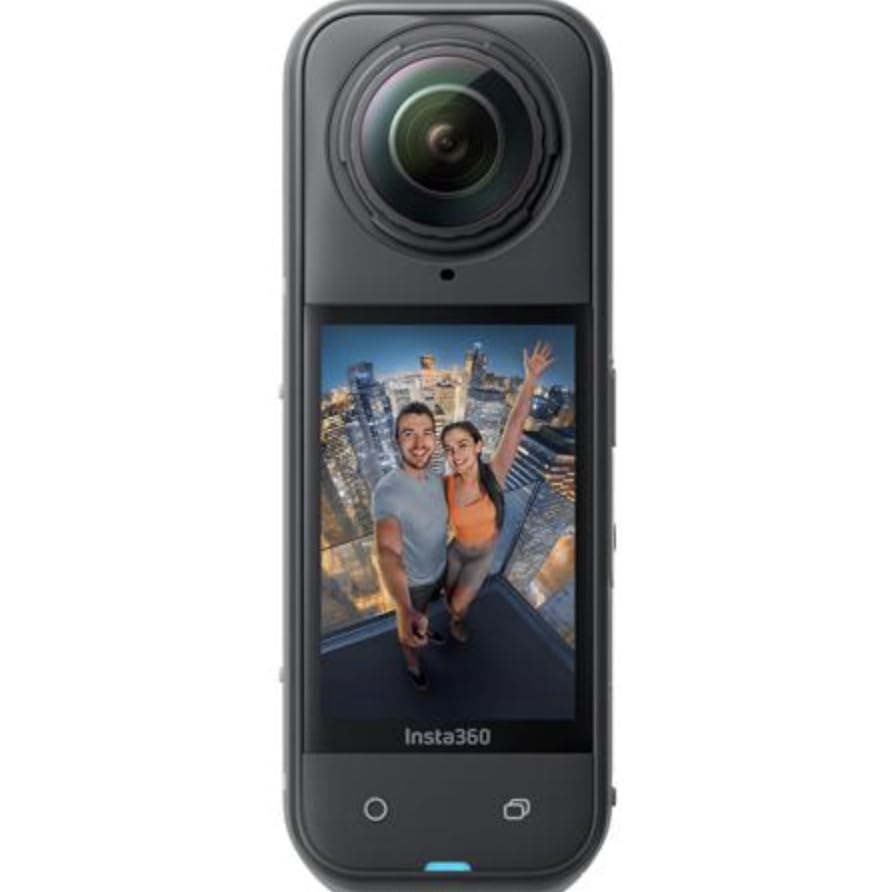
The Insta360 X5 is the most exciting 360 camera I have tested in 2026. The jump to 8K30fps capture with dual 1/1.28-inch sensors produces footage that actually holds up when reframed to traditional flat video. Previous 360 cameras demanded you accept some quality compromise, but the X5 narrows that gap significantly.
What makes the X5 special is the triple AI chip design. These chips handle noise reduction, stitching, and processing in real time, and the low-light results are genuinely impressive. I shot at dusk on a forest trail and the footage retained detail and color that would have been lost on older 360 cameras. The invisible selfie stick effect creates those impossible third-person tracking shots that make viewers stop scrolling.
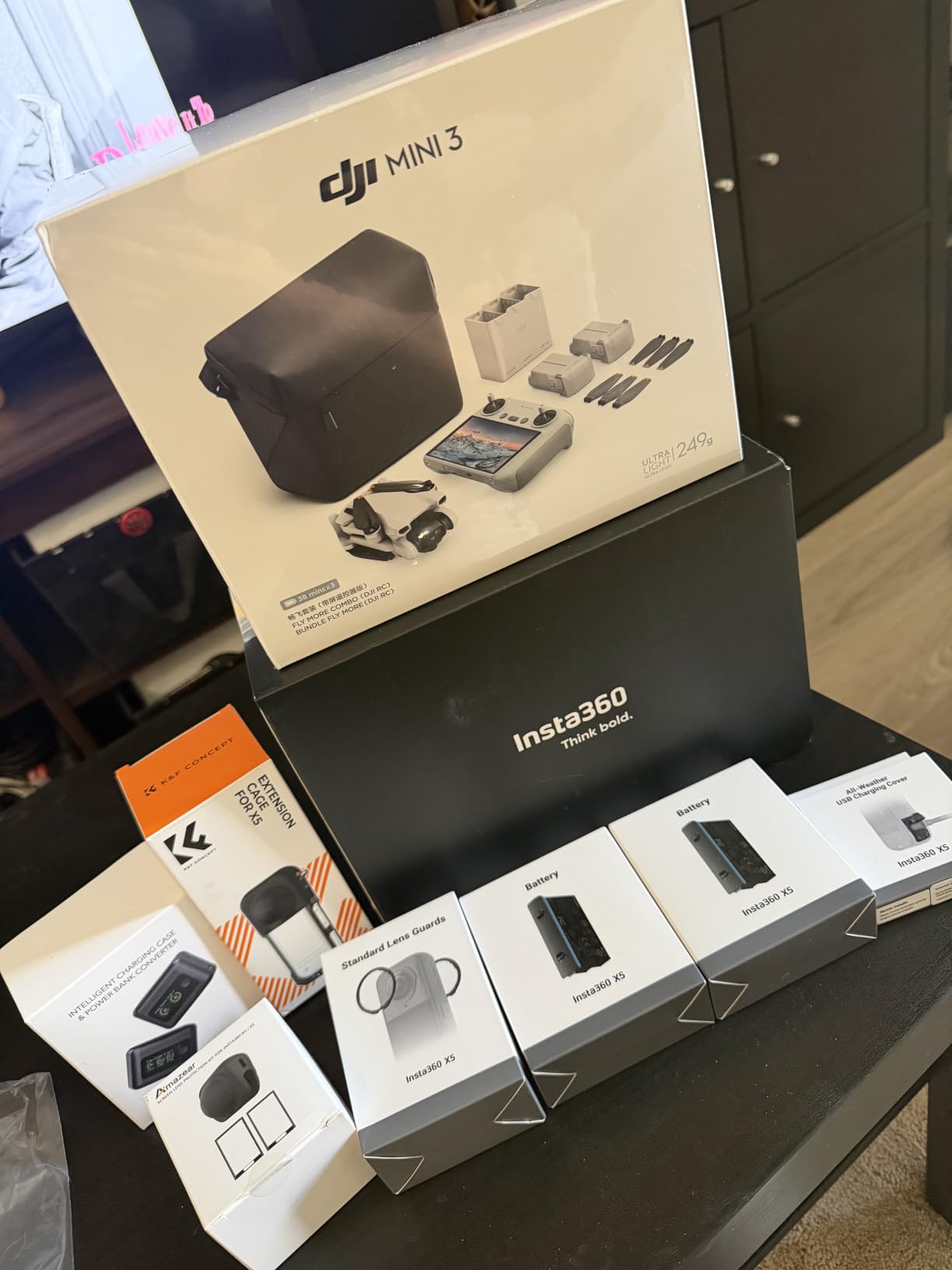
Battery life is rated at 3 hours and I got close to that in real-world testing at 8K. That is remarkable for a camera pushing this much data. The replaceable lenses address a major pain point from previous Insta360 models, where a scratched lens meant sending the whole camera in for repair. Now you swap lenses yourself in seconds.
The new built-in wind guard makes a noticeable difference for audio quality. Motorcycle riders and winter sports enthusiasts will appreciate clearer voice capture without needing an external microphone. The InstaFrame mode simultaneously records reframed flat video alongside the full 360 footage, so you get share-ready clips without any editing.
Who Should Buy the Insta360 X5
The X5 is purpose-built for content creators who want the creative freedom of 360 capture. If you produce travel vlogs, motorcycle riding videos, or any content where reframing in post adds production value, this camera opens possibilities no traditional action cam can match. The ability to choose your framing after the fact means you never miss the shot.
It is also the best option for anyone who has been frustrated by scratched lenses on previous 360 cameras. The replaceable lens system gives you peace of mind for rugged use, and the triple AI chip means you are getting the best 360 image quality currently available in a consumer action camera.
Where the Insta360 X5 Falls Short
The price is the obvious barrier. At $549.99, the X5 is one of the most expensive consumer action cameras available. It also requires an SD card that is not included, adding to the total cost. The camera is larger and heavier than standard action cameras, which matters for helmet mounting and extended handheld use.
360 footage files are massive. An 8K recording eats through storage rapidly, and the editing workflow still requires more effort than traditional flat video. If you just want point-and-shoot simplicity without ever thinking about reframing, a standard action camera will serve you better for less money.
3. GoPro HERO13 Black – Best GoPro for Resolution
GoPro HERO13 Black – Waterproof Action Camera with 5.3K60 Video, 27MP Photo + Compatability with HB-Series Lenses
5.3K60 Video
27MP Photo
HB-Series Lens Compatible
33ft Waterproof
Burst Slo-Mo 13x
Pros
- 5.3K60 video is class-leading resolution
- 27MP photo capture
- HB-Series lens compatibility with auto-detection
- Burst Slo-Mo up to 13x
- Water-repelling lens cover reduces flare
- Rugged waterproof to 33ft
Cons
- Battery life only about 79 minutes
- Not Prime Eligible
- No built-in storage
The GoPro HERO13 Black represents GoPro’s continued push toward maximum resolution and modular lens versatility. With 5.3K60 video and 27MP photos, it offers the highest straight resolution of any camera in this roundup. The HB-Series lens compatibility with auto-detection means you can swap between Ultra Wide, Macro, ND Filter, and Anamorphic lenses without diving into settings.
In my testing, the image quality from the HERO13 Black was outstanding in good light. Colors are vibrant straight out of camera, and the water-repelling lens cover genuinely reduces flare when shooting near water. The Burst Slo-Mo feature at 13x lets you capture fast action and slow it down dramatically without losing quality.
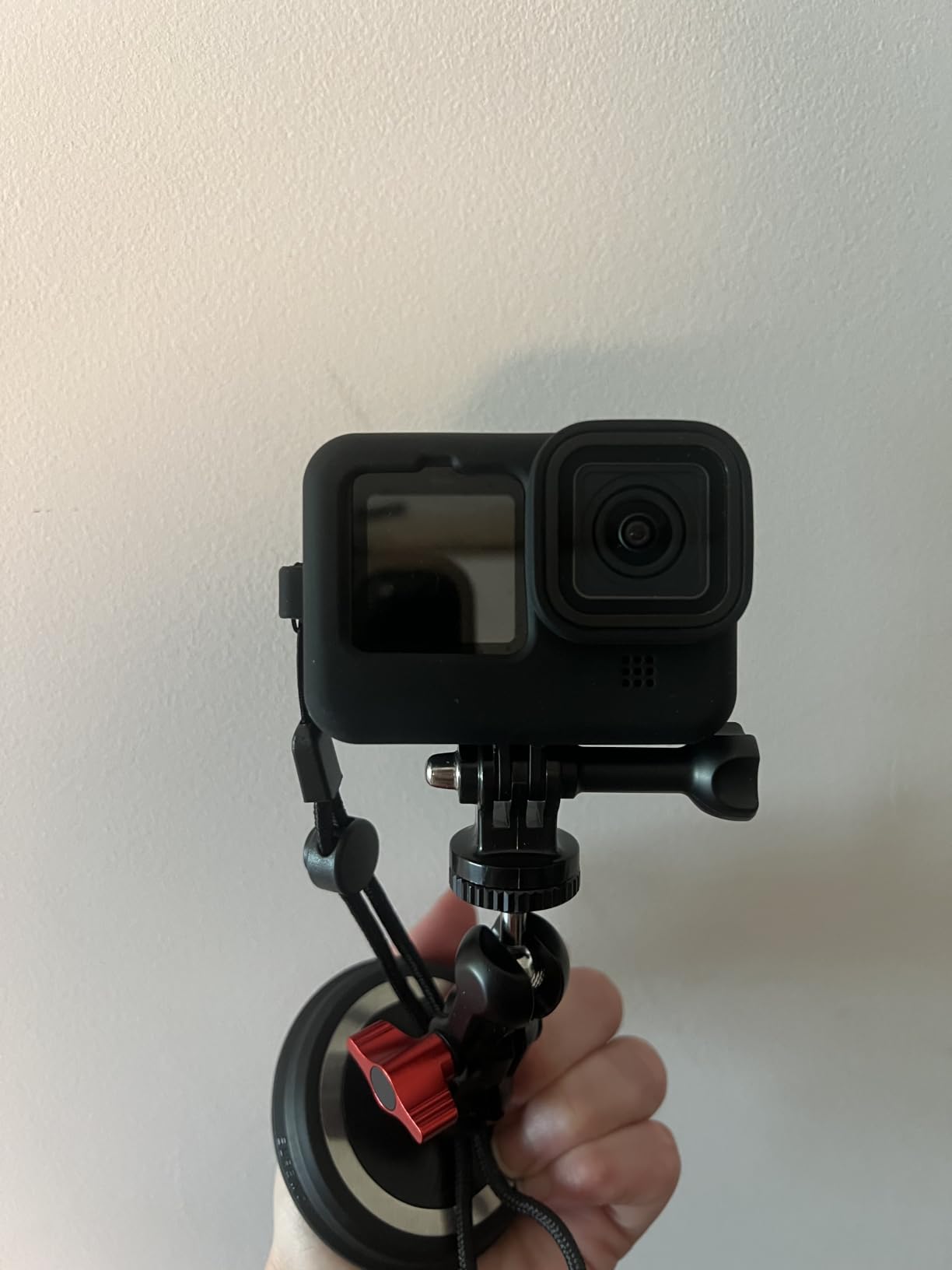
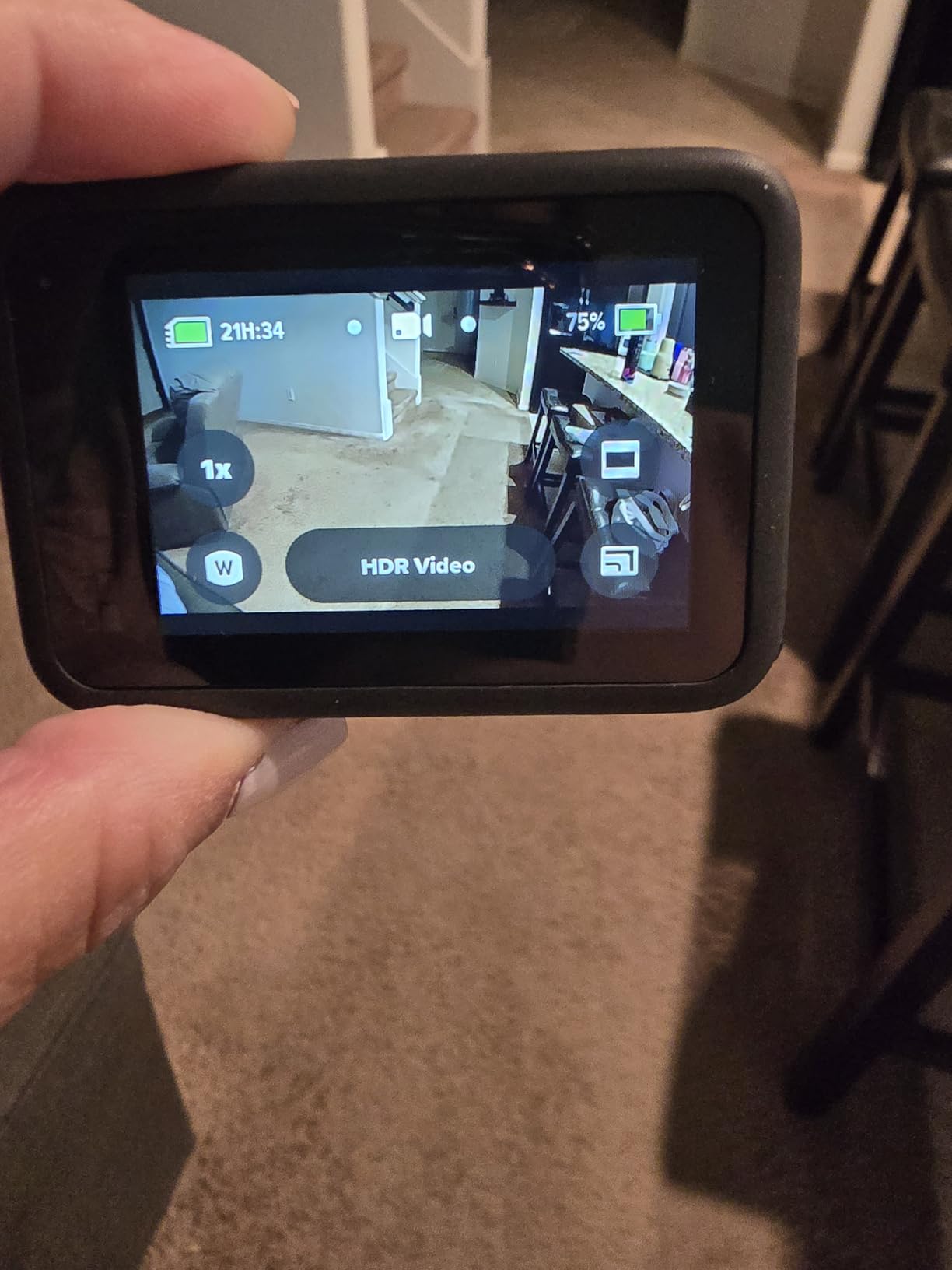
Where the HERO13 Black struggles is battery life. At approximately 79 minutes of continuous recording, it falls well behind the DJI options. I found myself swapping batteries constantly during all-day shoots, which is frustrating for a camera at this price point. The fact that it is not Prime Eligible also means slower shipping for Amazon shoppers.
The GoPro accessory ecosystem remains the deepest in the industry. If you already own GoPro mounts, batteries, or accessories from previous generations, the HERO13 Black drops right into your existing setup. The GoPro Quik app handles editing and sharing competently, though I found the DJI Mimo app slightly more intuitive for quick phone edits.
Who Should Buy the GoPro HERO13 Black
If maximum resolution is your priority, the HERO13 Black delivers 5.3K60 video that no other traditional action camera in this lineup matches. This matters if you crop, stabilize, or zoom in post-production, where extra resolution gives you headroom. The HB-Series lens system also makes it the most modular option here.
Existing GoPro users will find the upgrade path seamless. Your old mounts, batteries accessories, and muscle memory all carry over. For anyone already invested in the GoPro ecosystem, the HERO13 Black is the natural progression without needing to relearn a new system or rebuy accessories.
Where the HERO13 Black Falls Short
The battery life is the biggest weakness. At roughly 79 minutes, you will need spare batteries for anything beyond casual use, and GoPro batteries are not cheap. The lack of built-in storage means you must buy a microSD card separately, unlike the DJI Action 5 Pro which includes 47GB onboard.
It is also not Prime Eligible at the time of writing, which means slower shipping compared to every other camera in this guide. The stabilization, while excellent, did not noticeably outperform DJI’s RockSteady+ in my side-by-side tests, making it hard to justify the premium price unless you specifically need 5.3K resolution.
4. DJI Osmo Action 4 – Best Value Action Camera
DJI Osmo Action 4 Standard Combo, Waterproof Action Camera Vlogging Camera
4K/120fps
1/1.3 inch Sensor
160min Battery
D-Log M
Waterproof 18m
Dual Touchscreens
Pros
- Excellent 4K/120fps video quality
- Superior low-light with 1/1.3 inch sensor
- Magnetic quick-release mount
- Dual full-color touchscreens
- RockSteady+ stabilization works extremely well
- No overheating during extended recording
- Great battery life up to 150+ minutes
Cons
- Battery life could be better for extended sessions
- Audio lacking in high-wind environments
- No 5.3K or 6K options
The DJI Osmo Action 4 is the camera I recommend when someone asks for the best action cameras without wanting to spend flagship money. You get the same 1/1.3-inch sensor as the Action 5 Pro, 4K/120fps recording, and RockSteady+ stabilization at a price that undercuts the GoPro HERO13 Black by a significant margin.
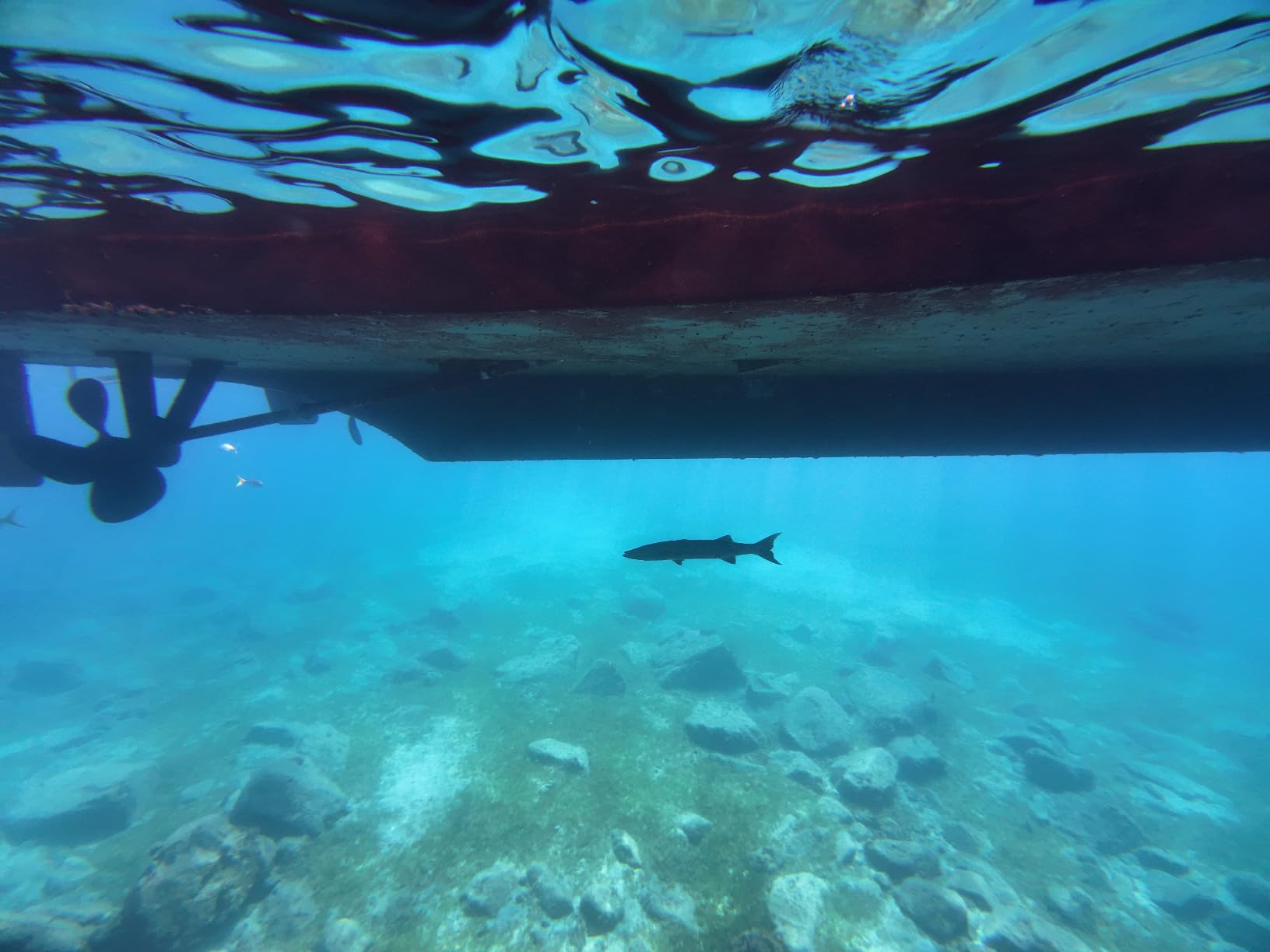
In my testing, the low-light performance was the standout feature. The large sensor pulls in light that budget cameras simply cannot capture, making it usable for dawn patrol surf sessions and evening trail rides. The dual full-color touchscreens let you frame from the front or rear, which vloggers will appreciate immediately.
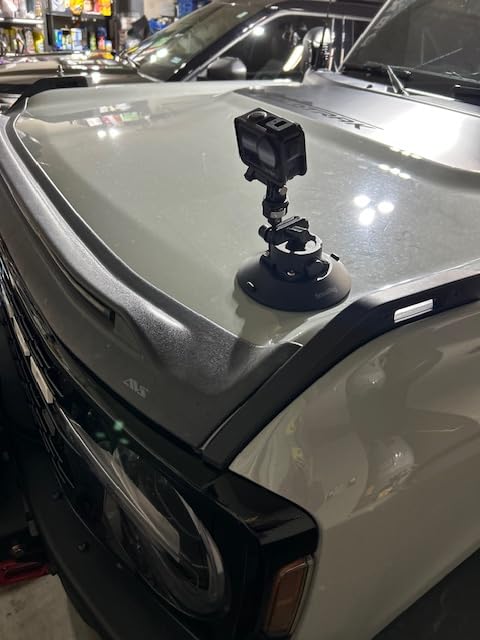
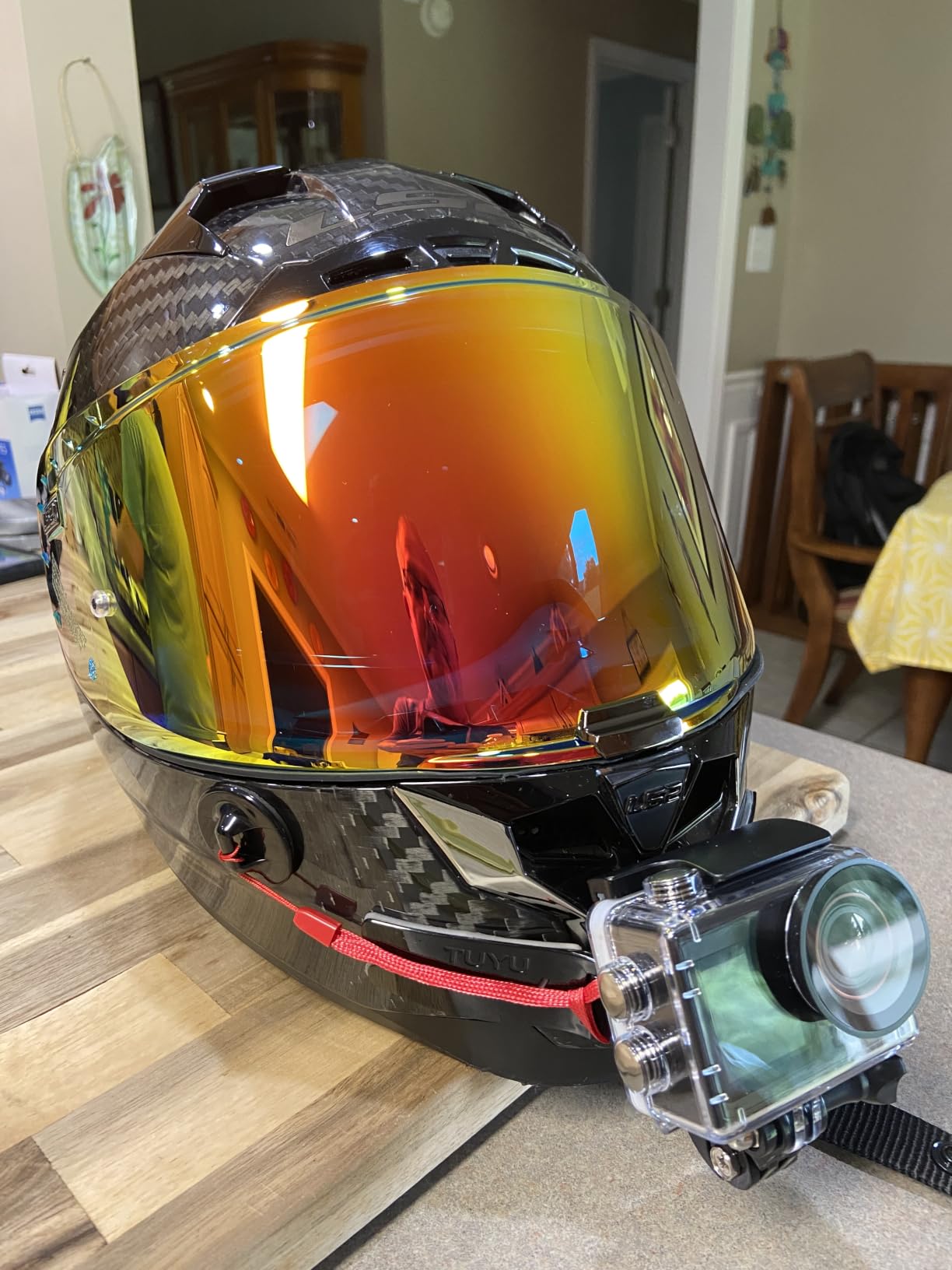
The magnetic quick-release mount system is a detail I fell in love with during testing. Switching the camera between a helmet mount, chest harness, and selfie stick takes seconds instead of the fiddly screw-and-adjust process on other cameras. DJI’s thermal management is also excellent, with no overheating even after extended 4K recording sessions.
Battery life hits around 160 minutes in my real-world testing, which is solid for a camera at this level. The D-Log M color profile gives you professional grading flexibility, and the DJI Mimo app is one of the better companion apps in the action camera space, making quick edits and sharing straightforward.
Who Should Buy the DJI Osmo Action 4
This is the sweet-spot camera for most buyers. If you want flagship-tier image quality, reliable stabilization, and strong battery life without paying top dollar, the Action 4 nails the value equation. Vloggers will love the dual screens and magnetic mount, while adventure shooters will appreciate the thermal stability and waterproofing to 18 meters.
It is also the smart choice if you are torn between the Action 5 Pro and this model. The core image quality is nearly identical thanks to the same sensor size. You give up subject tracking, built-in storage, and some battery life, but you save a meaningful amount of money that could go toward accessories.
Where the Action 4 Falls Short
Audio quality in windy conditions is the main complaint. Without an external microphone or wind muff, the built-in mics struggle in breezy environments. This is a known issue across most action cameras, but it is worth noting if you plan to record narration outdoors.
There is no live-streaming support directly through the camera, which matters if you broadcast from the field. And while 4K/120fps is excellent, there are no 5.3K or 6K options for shooters who want to future-proof their footage. For most people this will never matter, but resolution-focused buyers should be aware.
5. Insta360 X3 – Best 360 Camera for Beginners
Insta360 X3, 360 Action Camera with 5.7K 360 Active HDR Video, 4K Single-Lens Camera, Waterproof, FlowState Stabilization, 2.29″ Touchscreen, AI Editing, for Motorcycle, Wintersports and Vlogging
5.7K 360 Video
4K Single-Lens
FlowState Stabilization
2.29 inch Touchscreen
AI Editing
Waterproof
Pros
- 5.7K 360 capture with Active HDR
- FlowState stabilization and Horizon Lock
- 4K single-lens mode for standard video
- AI-powered reframing in app
- Versatile for multiple activities
- Waterproof design
Cons
- No hardware image stabilization relies on software
- Batteries not included
- Only 1GB built-in memory
The Insta360 X3 remains one of the best action cameras for anyone wanting to explore 360-degree capture without jumping to the premium X5. The 5.7K 360 video with Active HDR produces vibrant, detailed footage, and the 4K single-lens mode means you can use it as a traditional action camera when you do not need the full 360 sphere.
I found the FlowState stabilization to be excellent, keeping footage smooth even on rough terrain. The Horizon Lock feature ensures your footage stays level no matter how the camera rotates, which is invaluable for helmet-mounted shots. The 2.29-inch touchscreen is the largest in its class and makes navigating menus and framing shots a breeze.
The AI-powered reframing in the Insta360 app is where the X3 truly shines. You capture everything in 360, then choose your framing afterward with a few taps. The app’s AI can even suggest the best angles and create edited clips automatically, which dramatically reduces the time spent in post-production.
Who Should Buy the Insta360 X3
The X3 is the best entry point into 360 video. If you have been curious about 360 capture but cannot justify the X5’s premium price, the X3 delivers the core experience at a significantly lower cost. Travel vloggers, motorcyclists, and creative content creators will get the most value from its reframing capabilities.
It is also a solid choice if you want one camera that does both 360 and traditional video. The 4K single-lens mode means you are not locked into 360 workflows when a simpler flat video will do. This dual-purpose flexibility makes the X3 a versatile tool for varied shooting scenarios.
Where the Insta360 X3 Falls Short
Batteries are not included, which is an unusual omission that adds to your initial cost. The camera relies entirely on software stabilization rather than having hardware-based image stabilization, meaning processing happens in post rather than in-camera during recording.
With only 1GB of built-in memory, you absolutely need to purchase a microSD card before you can start shooting. The 5.7K resolution, while good, is noticeably below the X5’s 8K when you reframe to flat video. If you plan to crop heavily or project on large screens, the resolution difference becomes apparent.
6. GoPro MAX – Best for Creative 360 Content
GoPro MAX — Waterproof 360 + Traditional Action Camera with Touch Screen Spherical 5.6K30 HD Video 16.6MP 360 Photos 1080p Live Streaming Stabilization
5.6K30 360 Video
16.6MP 360 Photos
Single Lens HERO Mode
360 TimeWarp
1080p Live Streaming
Touch Screen
Pros
- Amazing image stabilization
- Versatile 360 and standard camera in one
- Excellent video quality and clarity
- Good battery life for 360 recording
- Object Tracking in 360 footage
- Great for content creators and vloggers
Cons
- Glass lenses scratch easily
- Gets very hot during charging while in use
- 360 video files are massive
- Difficult 360 editing workflow
The GoPro MAX offers a unique proposition by combining 360-degree capture with a traditional single-lens HERO mode. This dual functionality means you can shoot immersive spherical footage one minute and switch to standard action cam video the next without changing cameras. The 5.6K30 spherical video and 16.6MP 360 photos deliver solid quality for creative projects.
In my testing, the image stabilization was among the best I have used. GoPro’s 360 TimeWarp creates hyperlapse footage that looks impossibly smooth, and the Object Tracking feature in 360 mode lets you lock onto a subject and let the camera handle the framing digitally. The spherical footage with invisible pole mounting produces clean, professional-looking shots.
The Single Lens HERO mode is genuinely useful. It transforms the MAX into a standard action camera shooting 1080p, which means you do not need a second camera for simple point-and-shoot situations. The 1080p live streaming capability is a bonus for content creators who broadcast from the field.
Who Should Buy the GoPro MAX
The MAX is ideal for content creators who want both 360 and traditional footage from a single device. If you produce travel content, adventure vlogs, or creative projects where reframing adds value, the MAX gives you GoPro’s renowned stabilization and ecosystem alongside 360 capabilities. The live streaming feature makes it attractive for real-time broadcasters.
It is also worth considering if you are already in the GoPro ecosystem. The MAX uses GoPro mounts, the GoPro Quik app, and benefits from the same accessory availability as other GoPro cameras. The transition from a standard GoPro to the MAX is seamless if you want to add 360 capture to your toolkit.
Where the GoPro MAX Falls Short
The glass lenses scratch easily despite careful handling, which is a significant concern for a rugged-use camera. The camera gets very hot when charging during use, which limits the possibility of continuous power for long sessions. The 360 video files are massive, requiring substantial storage investment.
The 360 video editing workflow has a steeper learning curve than traditional video. While the GoPro Quik app helps, getting professional results from 360 footage requires more time and effort than standard flat video. The lens stitching can also be visible in certain lighting conditions, which eagle-eyed viewers may notice.
7. GoPro LIT Hero – Best Entry-Level GoPro
GoPro LIT Hero – Lightweight, Compact, Waterproof Action Camera with Built-in Light, 4K60 Ultra HD Video, 12MP Photo, Touch Screen, HyperSmooth Stabilization
4K60 Video
12MP Photo
Built-in Light
HyperSmooth
16ft Waterproof
1.76 inch Touch Screen
Pros
- Simple and easy to operate
- Built-in light is very handy
- Good microphone quality
- Compact and lightweight
- Touch screen works well
- Works as webcam
Cons
- Very small screen size
- Battery life drains quickly
- Gets hot during use
- Limited compared to higher GoPro models
The GoPro LIT Hero is the most accessible entry point into the GoPro ecosystem. It strips away the complexity of flagship models while retaining core features like 4K60 video, HyperSmooth stabilization, and GoPro’s signature build quality. The standout feature is the built-in light with three brightness settings, which sets it apart from every other budget-friendly action camera.
I found the LIT Hero genuinely fun to use. The simplified tap-and-swipe controls make it approachable for beginners who might feel overwhelmed by the deep menu systems of higher-end models. The built-in light proved surprisingly useful for close-up shots in dim conditions, and the microphone quality was better than expected for an entry-level camera.
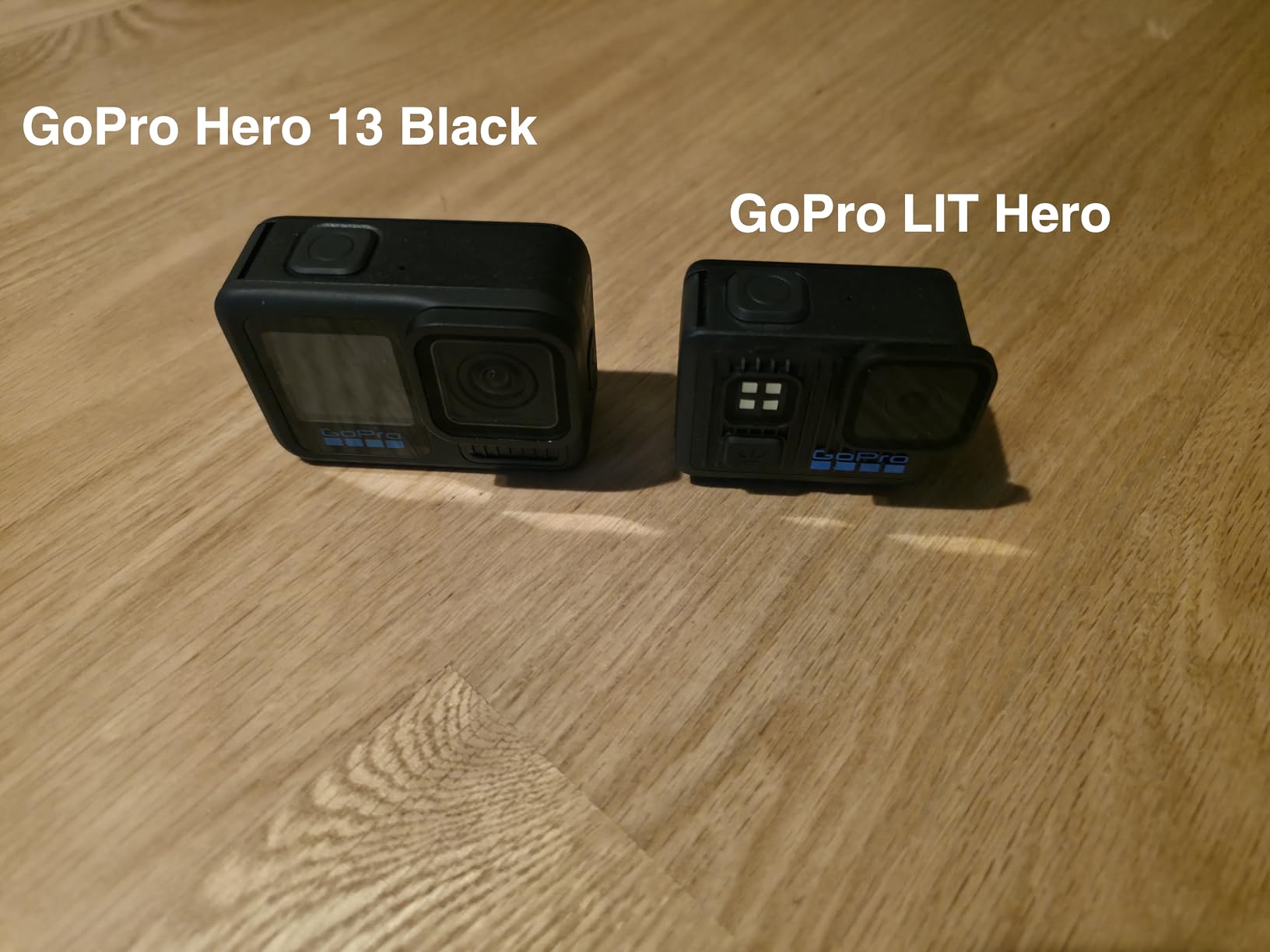
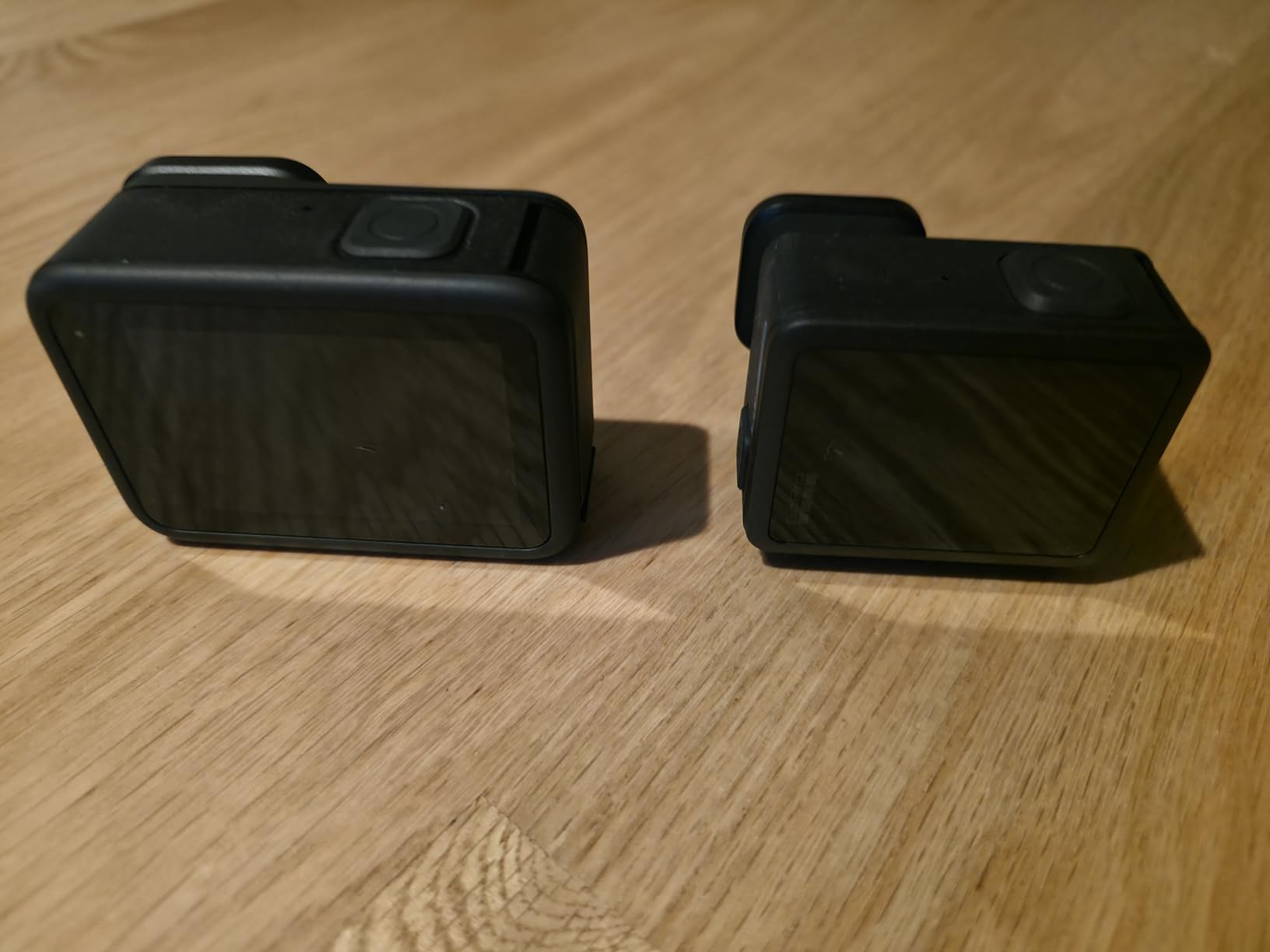
The ultra-compact form factor is worth highlighting. At just 93 grams, this is one of the lightest action cameras available, making it nearly unnoticeable on a helmet or chest mount. The HyperSmooth stabilization does an admirable job of keeping footage steady, though it is not quite as refined as the stabilization on the HERO13 Black.
Where the LIT Hero reveals its budget positioning is battery life. The small battery drains quickly, especially when recording 4K60 or using the built-in light. I got through roughly one battery per outing, so spare batteries are essential. The 1.76-inch touch screen is functional but noticeably smaller than the displays on competing models.
Who Should Buy the GoPro LIT Hero
This is the camera I recommend for casual users and GoPro first-timers. If you want GoPro quality and ecosystem access without the flagship price tag, the LIT Hero delivers the essentials. The built-in light makes it particularly appealing for vloggers and content creators who shoot in varying light conditions without wanting to rig external lighting.
It is also a solid choice as a secondary camera. If you already own a HERO13 Black or DJI Action 5 Pro and want a lightweight backup for less critical angles, the LIT Hero’s tiny size and simplified controls make it perfect for grab-and-go shooting.
Where the LIT Hero Falls Short
Battery life is the primary weakness. Plan on buying at least two spare batteries if you want to shoot for more than an hour. The camera also gets warm during extended recording, which is not unusual for action cameras but is more pronounced here due to the compact body.
The small screen makes framing and reviewing footage challenging, especially in bright sunlight. Feature-wise, it lacks the advanced capabilities of higher-end GoPro models like lens compatibility, high-resolution photo modes, and extended color profiles. Serious content creators will quickly outgrow its limitations.
8. AKASO Brave 4 – Best Budget All-Rounder
AKASO Brave 4 Action Camera 4K30 Ultra Hd Waterproof Underwater Camera
4K30fps
20MP Photos
131ft Waterproof
Dual Screens
EIS
Adjustable 170 Degree Lens
Pros
- Excellent value compared to GoPro
- Great video quality for the price
- Many accessories and mounting options included
- 2 batteries with dual charger
- Good waterproof performance
- Durable and survives rough handling
Cons
- 4K quality not as sharp as GoPro
- Batteries can have shorter life than expected
- WiFi transfer is slow
- Photo quality has compression artifacts
The AKASO Brave 4 has earned its place as one of the most popular budget action cameras on Amazon, and after testing it, I understand why. It comes with a massive accessory bundle that would cost extra with any premium brand, includes two batteries and a dual charger, and delivers 4K30 footage that is more than acceptable for casual use.
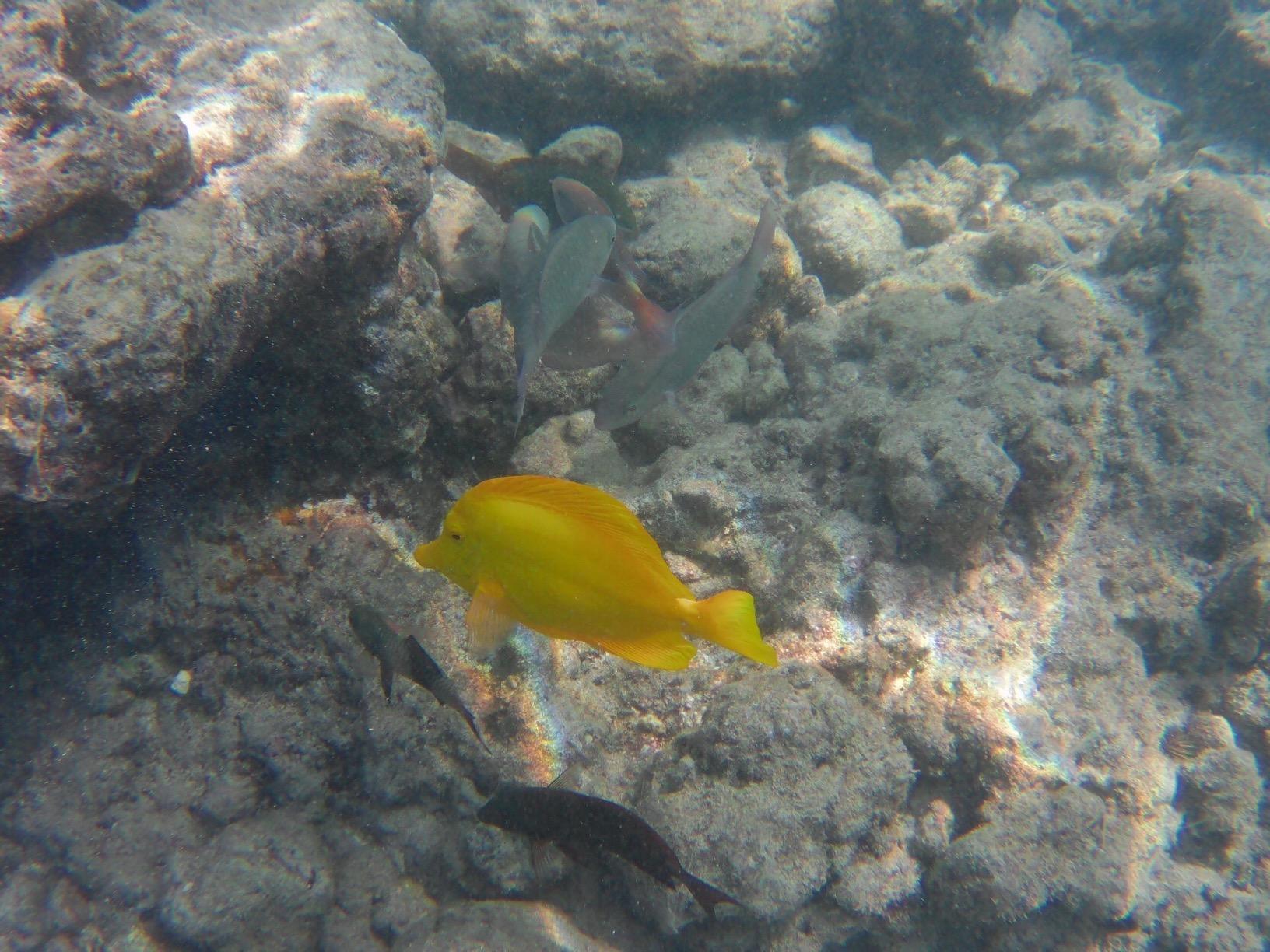
I took the Brave 4 snorkeling and was impressed by how completely the waterproof case kept water out at depth. The 170-degree adjustable wide-angle lens gives you flexibility in framing, with options to narrow the field of view for a less distorted look. The electronic image stabilization smooths out the worst shakes, though it cannot match the RockSteady or HyperSmooth systems from DJI and GoPro.
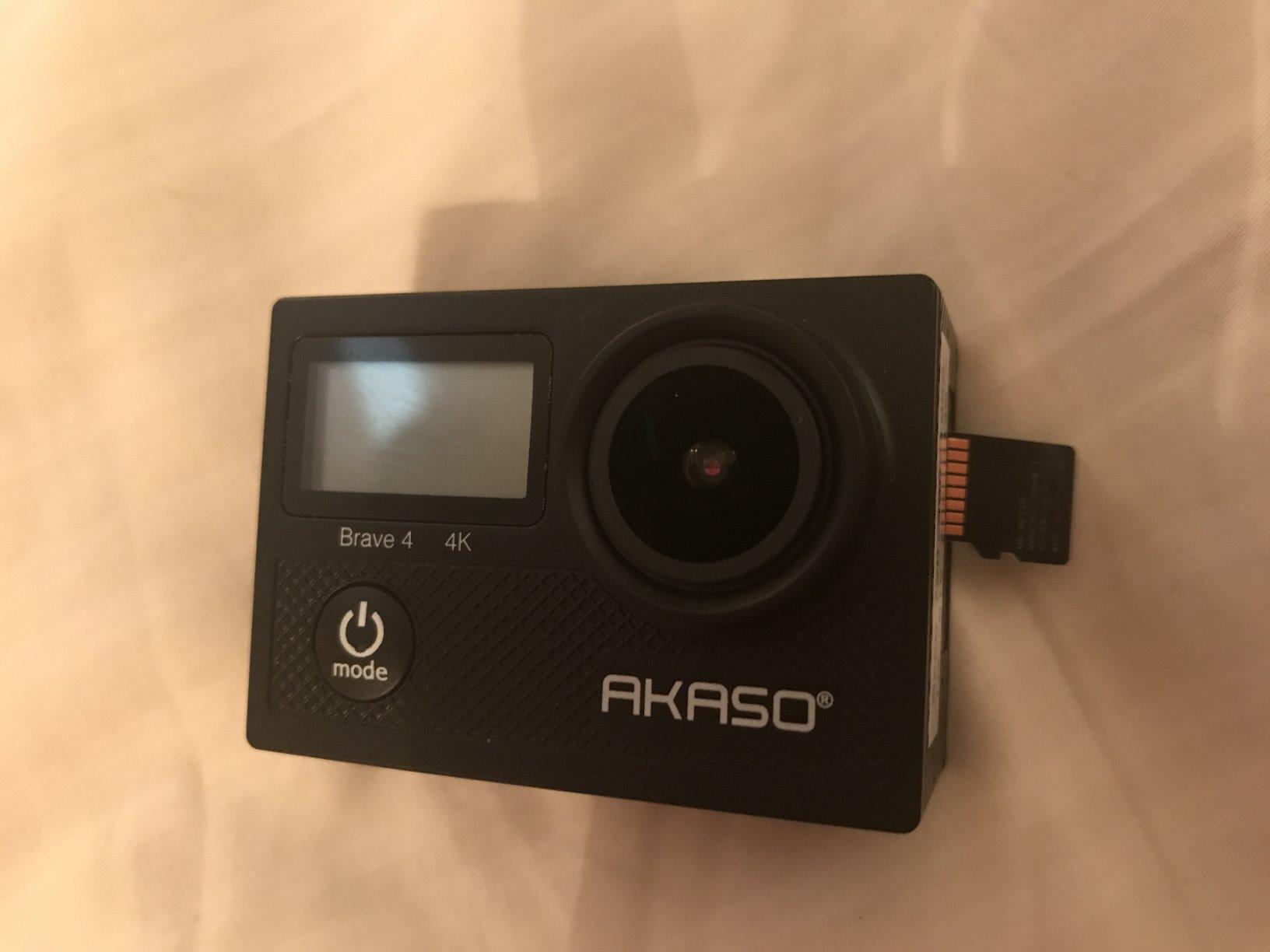
The dual screen setup with a 2-inch rear display and 0.96-inch front screen is a nice touch at this price point. Vloggers can frame themselves from the front screen, which is rare on budget cameras. The menu system is straightforward and easy to navigate, making this camera accessible even for first-time action camera buyers.
Where the Brave 4 shows its budget nature is in the details. The 4K footage is softer than what you get from a GoPro or DJI, with visible compression artifacts in photos. WiFi transfer is painfully slow, taking about an hour to move 3GB of footage. But for the price, these are trade-offs many casual users will happily accept.
Who Should Buy the AKASO Brave 4
The Brave 4 is perfect for families, casual travelers, and first-time action camera buyers who want a complete package without a premium price. The included accessory bundle means you can start shooting immediately with mounts for helmets, bikes, and chest harnesses. For snorkeling trips, kayaking, and everyday adventures, it delivers dependable performance.
It is also a smart choice if you are unsure whether an action camera will fit your lifestyle. The low investment means less risk if it ends up sitting in a drawer. Many users in forums report being surprised by how much use they get out of the Brave 4 for casual holiday footage and family activities.
Where the Brave 4 Falls Short
The 4K quality is noticeably softer than premium cameras. If you plan to display footage on a large 4K TV or do any cropping in post, the resolution limitations become apparent. Photo quality suffers from visible compression artifacts that make stills less useful for anything beyond social media sharing.
Battery life can be inconsistent between units, and some users have reported batteries arriving inflated, which is a safety concern. The wrist remote is not always reliable for starting and stopping recordings. These are the compromises that come with budget pricing, and buyers should set expectations accordingly.
9. ODDV 4K60FPS Action Camera – Best Ultra-Budget 4K60 Option
ODDV 4K60FPS 30MP Action Camera with Front LCD and Touch Rear Screens, Underwater Camera with 5X Zoom, 132FT Waterproof Camera, EIS, WiFi Remote Control(Black)
4K60fps
30MP Photos
Dual Screens
132ft Waterproof
6-Axis EIS
5X Zoom
64GB Card Included
Pros
- Great price and excellent value
- Crisp video quality and sharp photos
- Dual screens touch rear and front
- Good EIS stabilization
- Works well underwater
- Comes with 64GB memory card and 2 batteries
Cons
- Audio quality not great
- Low light performance causes pixelization
- Remote control can have issues
- Limited accessories included
The ODDV 4K60FPS Action Camera is one of the newest entrants in the ultra-budget space, and it brings an impressive feature set for the price. With 4K60fps recording, 30MP photos, dual screens, and a included 64GB memory card, it offers more in the box than cameras costing twice as much.
I was pleasantly surprised by the video quality in good lighting. The 4K60fps footage is crisp and detailed, and the 6-axis electronic image stabilization does a commendable job of smoothing out handheld footage. The dual-screen design with a 2-inch touch rear screen and 1.4-inch front screen makes this camera feel far more premium than its price suggests.
The included 64GB memory card is a thoughtful addition that means you can literally start recording the moment you open the box. The two included batteries give you backup power for longer sessions. The 132ft waterproof rating with the included case makes this camera suitable for diving and deep-water activities.
Where the ODDV reveals its budget nature is in low-light performance. Shooting at dusk or indoors produces noticeable pixelization and noise. Audio quality is also not great, with the built-in microphone capturing thin, tinny sound. The wrist remote can be finicky when stopping recordings, requiring a second look at the camera to confirm it actually stopped.

Who Should Buy the ODDV 4K60FPS
This is the camera I recommend for budget-conscious buyers who want 4K60fps recording without spending over $60. The included accessories, dual screens, and bundled memory card make it an outstanding value package. For casual snorkeling, travel footage, and family activities in good lighting, it delivers more than its price suggests.
It is also worth considering as a first action camera for teenagers or anyone testing whether they will actually use an action camera regularly. The low price point means minimal risk, and the feature set is impressive enough to produce shareable footage for social media.
Where the ODDV Falls Short
Low-light performance is the biggest weakness. If you plan to shoot at dawn, dusk, or indoors, the footage will show visible noise and pixelization. Audio quality is also a weak point, making external microphone use necessary for any footage where sound matters.
The accessory bundle is limited compared to what AKASO includes with their cameras, so you may need to purchase additional mounts separately. The remote control reliability issues mean you should verify recordings have actually stopped before putting the camera away, which adds a small but real layer of frustration to the shooting experience.
10. AKASO EK7000 – Best Budget Action Camera Under $70
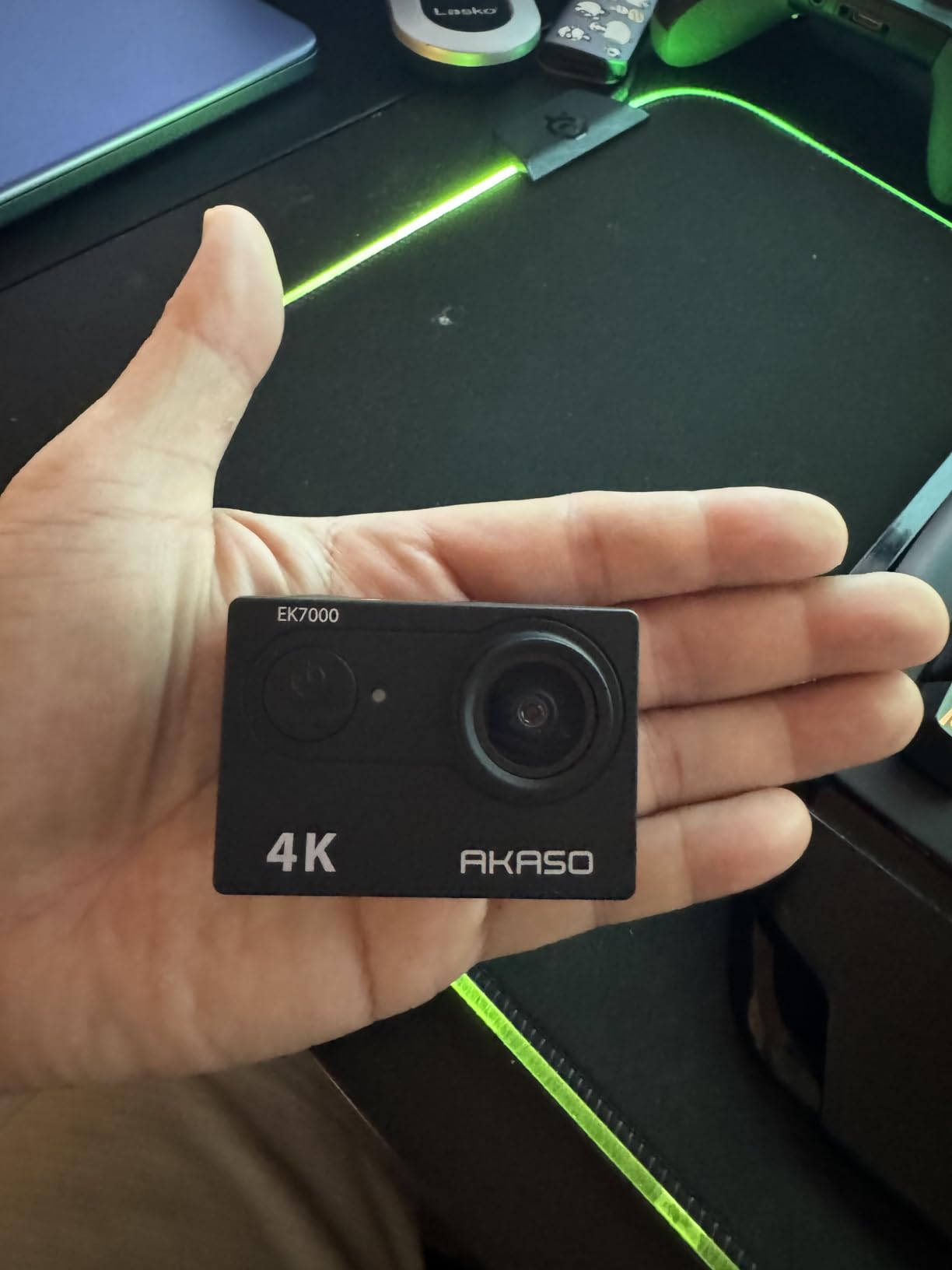
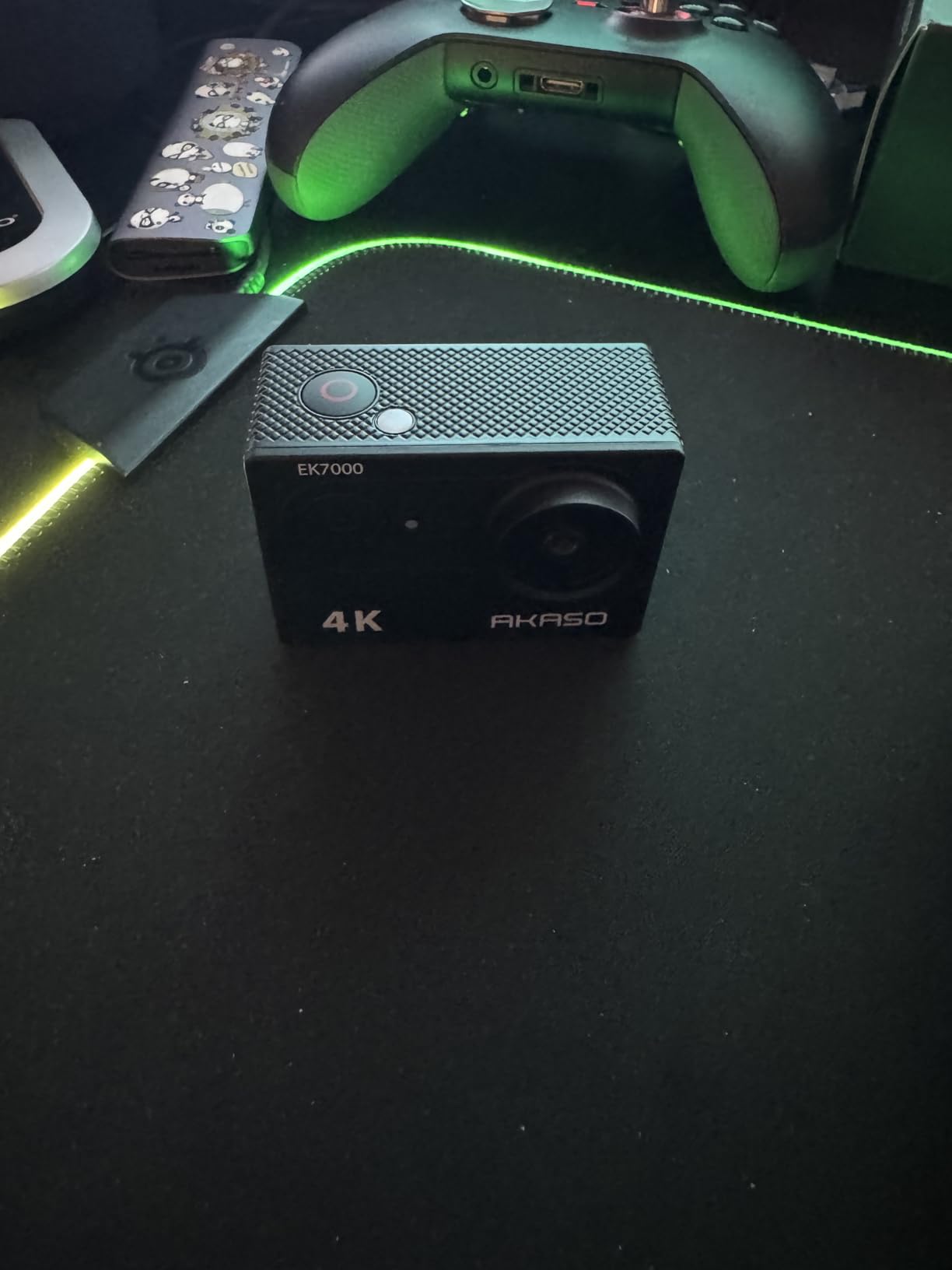
AKASO EK7000 4K30FPS 20MP WiFi Action Camera with EIS Ultra HD 131FT Waterproof Underwater Camera Remote Control 4X Zoom Support External Microphone Black
4K30fps
20MP Photos
131ft Waterproof
EIS
WiFi Remote
2 Batteries
170 Degree Lens
Pros
- Excellent camera for the price
- Great value with many mounting accessories included
- Good waterproof case
- Comes with 2 batteries
- Small and portable
- Good video quality in bright light and underwater
Cons
- Microphone muffled with waterproof case on
- Micro SD card difficult to insert
- Video quality drops in low light
- Date and time reset when battery replaced
The AKASO EK7000 has been a bestseller in the budget action camera category for years, and it remains one of the best action cameras for anyone wanting to spend as little as possible. With nearly 40,000 reviews and a 4.4-star rating, it has proven its reliability across thousands of users and use cases.
I tested the EK7000 on a beach vacation, using it for snorkeling, beach activities, and casual walking tours. In bright sunlight, the 4K30 footage looks surprisingly good for a camera at this price. The included accessory bundle is generous, with mounts for helmets, bikes, and various surfaces that would cost extra with any premium brand.
The 2.4G wireless wrist remote is a handy inclusion that lets you start and stop recording without touching the camera, which is useful when the camera is helmet-mounted or on a pole. The two included batteries mean you can swap and keep shooting, and the built-in WiFi lets you connect to the AKASO GO app for basic remote control and file transfer.
The waterproof case is genuinely effective, keeping the camera completely dry during extended snorkeling sessions. However, the case does muffle the microphone significantly, so underwater footage will have poor audio. This is a common issue with budget waterproof cases, and the trade-off between water protection and audio quality is something every EK7000 owner deals with.
Who Should Buy the AKASO EK7000
The EK7000 is the camera I recommend when someone wants an action camera for a specific trip or event without making a significant investment. For snorkeling vacations, kids’ activities, casual travel footage, and entry-level content creation, it delivers where it counts. The massive accessory bundle means you are ready to mount it on anything straight out of the box.
Reddit users frequently recommend the EK7000 for casual holiday use, and the enormous review base gives you confidence that the camera performs as advertised. If you are on the fence about whether an action camera fits your lifestyle, starting here minimizes your financial risk while still giving you the core experience.
Where the EK7000 Falls Short
Low-light performance is poor, with footage becoming grainy and soft as lighting drops. The microSD card slot is awkwardly positioned, making insertion and removal frustrating. Date and time settings reset every time you replace the battery, which is a minor but persistent annoyance.
The EIS stabilization helps but is not in the same league as HyperSmooth or RockSteady. Footage from moving vehicles, bikes, or while running will still show noticeable shake compared to premium cameras. For action sports where stabilization quality directly impacts watchability, spending more will deliver better results.
How to Choose the Best Action Camera in 2026
Choosing from the best action cameras means understanding which features actually matter for your specific use case. Our testing across all 10 cameras revealed that the right choice depends heavily on what you plan to shoot, where you plan to shoot it, and how much post-production work you are willing to do.
Video Quality and Resolution
Resolution matters, but sensor quality matters more. The 1/1.3-inch sensors in the DJI Action 4 and Action 5 Pro consistently outperformed smaller sensors in challenging conditions, even when resolution numbers were similar. Look for cameras that offer at least 4K60fps if you want smooth slow-motion footage. For maximum detail and cropping flexibility, the GoPro HERO13 Black at 5.3K60 and the Insta360 X5 at 8K30 lead the field.
Stabilization Technology
Stabilization is arguably the most important feature for action cameras. DJI’s RockSteady+ and HorizonSteady, GoPro’s HyperSmooth, and Insta360’s FlowState all deliver excellent results but with different characteristics. HorizonSteady on the DJI Action 5 Pro impressed me most because it keeps footage level through a full 360-degree rotation. For helmet-mounted use, this feature alone can transform unwatchable shake into smooth, professional footage.
Battery Life
This is where budget cameras and premium models diverge sharply. The DJI Action 5 Pro leads with up to 4 hours, followed by the Insta360 X5 at around 3 hours. The GoPro HERO13 Black manages only about 79 minutes, which is a significant limitation for all-day shoots. Our forum research confirmed that battery life is the most common complaint across all action camera brands, so buy spare batteries regardless of which camera you choose.
Waterproof Rating
Waterproof ratings vary significantly. The AKASO cameras use external cases rated to 131 feet, while the DJI Action 5 Pro is IP68-rated to 20 meters without a case. The GoPro HERO13 Black is waterproof to 33 feet natively. If you plan to dive deeper than 33 feet, you need either a camera with a deeper-rated case or one designed for extended underwater use. Confusion about waterproof ratings is a common pain point, so always verify whether the rating applies with or without a case.
Mount Ecosystem and Accessories
GoPro has the deepest accessory ecosystem, with mounts, cases, and attachments available from dozens of third-party manufacturers. DJI’s magnetic quick-release system is the most convenient I have used, allowing fast transitions between mounts. Insta360’s ecosystem is growing but still trails GoPro in variety. Budget cameras like AKASO include generous accessory bundles but lack the third-party support of premium brands.
Low-Light Performance
If you shoot at dawn, dusk, or indoors, sensor size is the single most important factor. The 1/1.3-inch sensors in both DJI models and the dual 1/1.28-inch sensors in the Insta360 X5 dramatically outperform the smaller sensors in budget cameras. The triple AI chip design in the Insta360 X5 takes low-light processing to another level, producing clean footage where budget cameras produce noise.
App and Software Ecosystem
The companion app can make or break your experience. Insta360’s app with AI-powered editing and automatic reframing is the most powerful for 360 content. DJI’s Mimo app is clean and intuitive for quick edits. GoPro’s Quik app is competent but can feel sluggish. Budget camera apps tend to be basic, with slow transfer speeds and limited editing features. Content creators who value mobile editing workflows should weigh app quality heavily in their decision.
FAQs
What is the best action camera to buy?
The DJI Osmo Action 5 Pro is the best action camera overall, offering 4K/120fps recording, a 1/1.3-inch sensor for excellent low-light performance, up to 4 hours of battery life, subject tracking, and 47GB of built-in storage. For budget buyers, the AKASO EK7000 delivers solid 4K30 footage under $70.
Is anything better than GoPro?
Yes, depending on your priorities. The DJI Osmo Action 4 and Action 5 Pro match or exceed GoPro on image quality, battery life, and thermal management while costing less. The Insta360 X5 surpasses every GoPro for 360-degree capture with its 8K resolution and triple AI chip design. GoPro still leads on accessory ecosystem depth and resolution with the HERO13 Black’s 5.3K60 video.
Which action camera has the best video quality?
The Insta360 X5 delivers the highest raw video quality with 8K30fps 360-degree recording using dual 1/1.28-inch sensors. For traditional flat video, the GoPro HERO13 Black leads with 5.3K60 resolution. The DJI Osmo Action 5 Pro offers the best balance of 4K/120fps quality with superior low-light performance and color accuracy via D-Log M.
Is DJI better than GoPro?
DJI has matched or surpassed GoPro on most metrics in 2026. The DJI Osmo Action 5 Pro offers better battery life (4 hours vs 79 minutes), superior thermal management, subject tracking, and built-in storage at a lower price than the GoPro HERO13 Black. GoPro retains advantages in maximum resolution (5.3K vs 4K), accessory ecosystem size, and modular HB-Series lens compatibility.
Are action cameras waterproof without a case?
It depends on the model. The DJI Osmo Action 4 is waterproof to 18 meters without a case, and the Action 5 Pro is rated IP68 to 20 meters. The GoPro HERO13 Black is waterproof to 33 feet (10 meters) natively. Budget cameras like the AKASO EK7000 and Brave 4 require their included waterproof cases to achieve their 131-foot depth ratings, which means muffled audio during underwater use.
Final Thoughts on the Best Action Cameras for 2026
After testing all 10 cameras across weeks of real-world shooting, the DJI Osmo Action 5 Pro stands out as the best action camera you can buy in 2026. Its combination of excellent low-light performance, 4-hour battery life, subject tracking, and built-in storage covers every base that matters. The DJI Osmo Action 4 is the smart value pick for anyone who wants flagship image quality without the premium price.
For 360 enthusiasts, the Insta360 X5 pushes the boundaries of what spherical capture can achieve with its 8K resolution and triple AI chip design. And for budget buyers, the AKASO EK7000 and ODDV 4K60FPS prove that capable action cameras exist at every price point. Whatever your adventure, there is a camera in this guide that will capture it beautifully.