
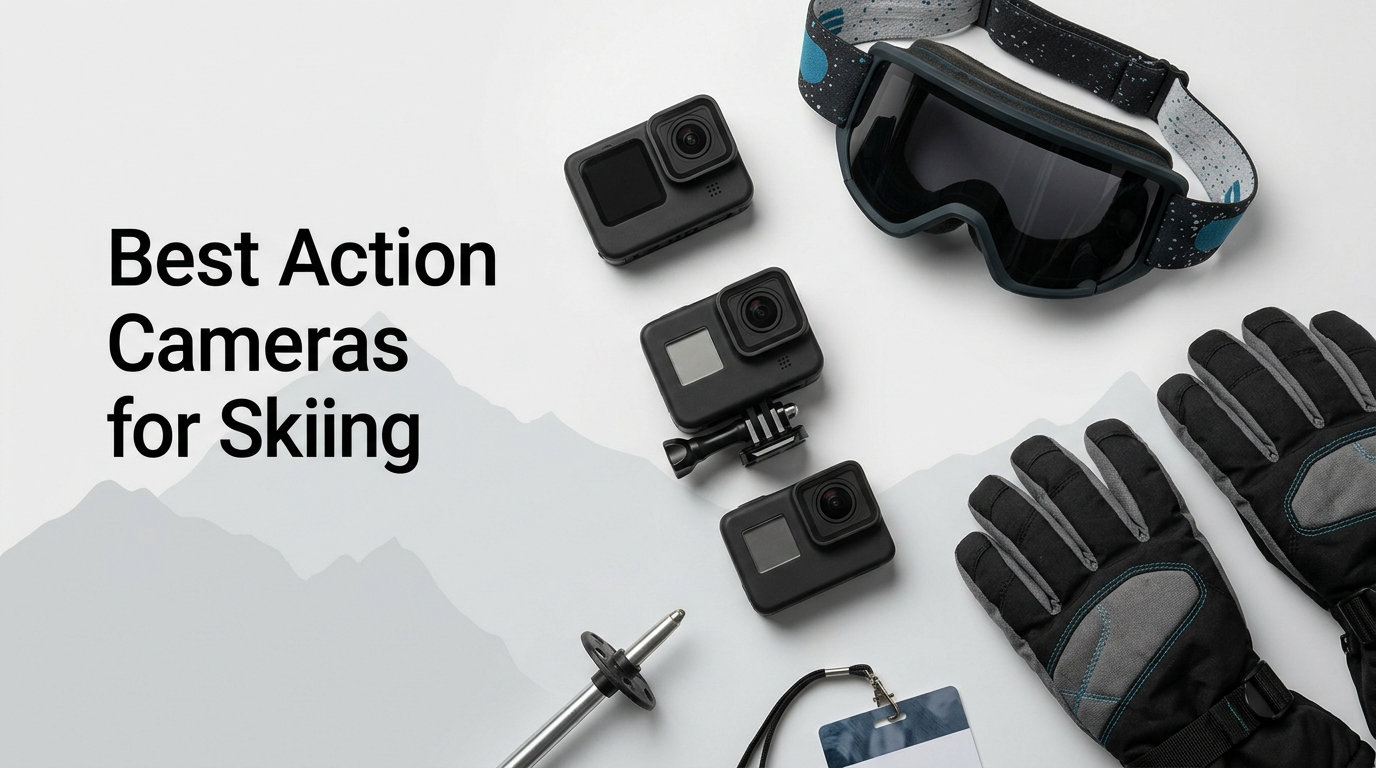
I have spent the last three ski seasons strapping action cameras to helmets, chest mounts, and ski poles to figure out which ones actually deliver on the mountain. Freezing temperatures, powder spray, and bone-rattling crashes test every camera differently than a summer beach trip does.
This guide covers the best action cameras for skiing in 2026, from flagship models like the GoPro HERO13 Black to budget-friendly picks under $100 that still deliver solid POV footage. Our team compared 10 cameras across video quality, cold-weather battery drain, stabilization, and mounting flexibility to help you choose the right one for your next ski trip.
Whether you want buttery-smooth 5.3K run footage, 360-degree capture for that impossible third-person angle, or just a reliable ski helmet camera that will not die halfway down the mountain, we have tested it and ranked it here.
Table of Contents
Top 3 Picks for Best Action Cameras for Skiing
Best Action Cameras for Skiing in 2026
| Product | Specifications | Action |
|---|---|---|
 GoPro HERO13 Black GoPro HERO13 Black |
|
Check Latest Price |
 Insta360 X5 Insta360 X5 |
|
Check Latest Price |
 DJI Osmo Action 5 Pro DJI Osmo Action 5 Pro |
|
Check Latest Price |
 DJI Osmo Action 4 DJI Osmo Action 4 |
|
Check Latest Price |
 GoPro MAX GoPro MAX |
|
Check Latest Price |
 Insta360 Ace Pro 2 Insta360 Ace Pro 2 |
|
Check Latest Price |
 GoPro Hero12 Black GoPro Hero12 Black |
|
Check Latest Price |
 AKASO EK7000 AKASO EK7000 |
|
Check Latest Price |
 AKASO Brave 4 AKASO Brave 4 |
|
Check Latest Price |
 ODDV 4K60FPS Action Camera ODDV 4K60FPS Action Camera |
|
Check Latest Price |
1. GoPro HERO13 Black – Best Overall for Video Quality
GoPro HERO13 Black – Waterproof Action Camera with 5.3K60 Video, 27MP Photo + Compatability with HB-Series Lenses
5.3K60 Video
27MP Photo
Waterproof to 33ft
HyperSmooth Stabilization
157g
Pros
- Best-in-class 5.3K video quality
- Excellent HyperSmooth stabilization
- HB-Series lens compatibility
- Rugged waterproof design
Cons
- Some reports of overheating issues
- Battery life could be better
- App connectivity can be glitchy
I took the HERO13 Black on a four-day trip to Whistler last season, mounting it on a chin mount for most runs. The 5.3K60 footage is absolutely the sharkest POV skiing I have ever recorded. Every snow spray, every tree branch whipping past, and every bump in the terrain came through with detail that made my friends think I had hired a film crew.
The HyperSmooth stabilization is where this camera separates itself from the pack. Even on choppy black diamond runs where I was getting bounced around, the footage looked like it was shot on a gimbal. I never once felt seasick reviewing my runs, which happened frequently with older action cameras.
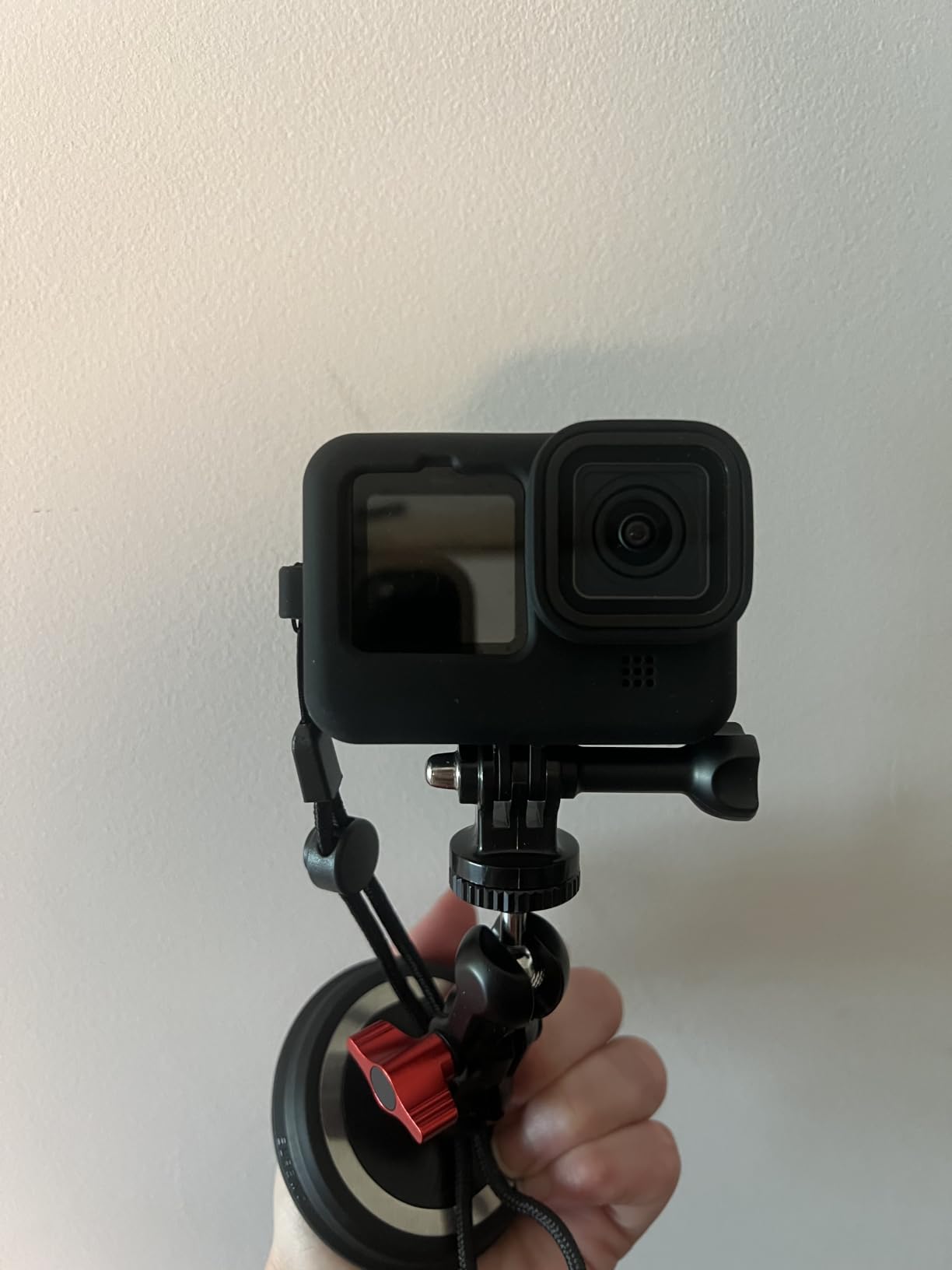
Battery life is the one area where I felt let down. In 15-degree Fahrenheit conditions, I was getting roughly 50 to 60 minutes of recording time per battery. I carried two spares in an inner pocket close to my body heat, which got me through a full ski day. The overheating issue some reviewers mention happened to me once during a long 4K timelapse in the lodge, not during actual skiing.
The HB-Series lens compatibility is a nice touch if you want to experiment with different focal lengths. I tried the ultra-wide lens for tree runs and it gave an incredible sense of speed. For the price, this is the best action camera for skiing if raw video quality is your top priority.
Cold Weather Battery Performance
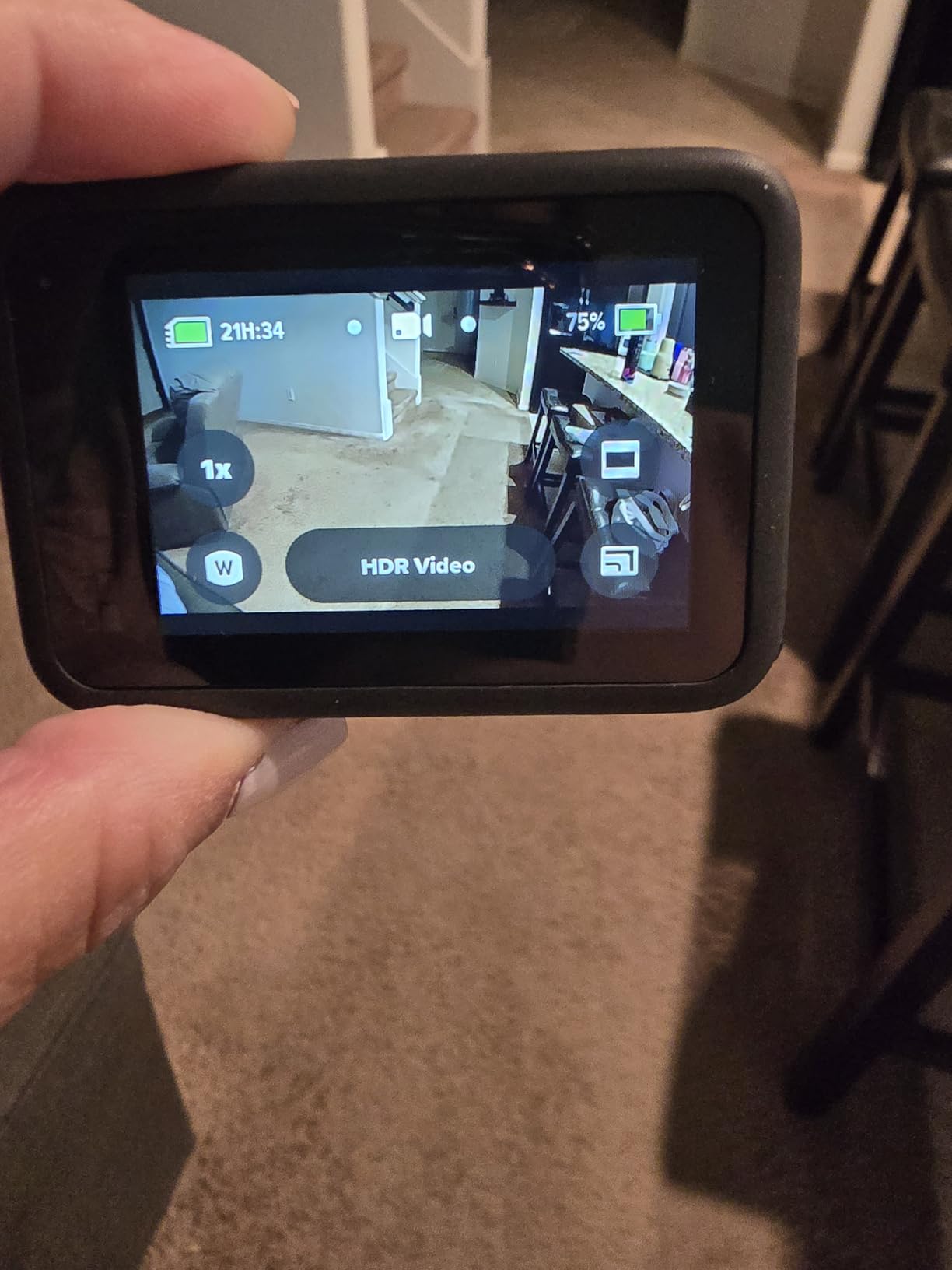
The HERO13 Black uses the same Enduro battery technology as the Hero12, which is designed for cold conditions. In practice, I found that keeping a spare battery in a chest pocket kept it warm enough to swap in when the active one died. Expect about 40% shorter battery life in freezing temperatures compared to what GoPro advertises for normal conditions.
Best Mounting Position for This Camera
I strongly recommend a chin mount for the HERO13 Black when skiing. It gives the most natural POV perspective, follows where your head turns, and captures your skis and poles in the bottom of the frame. A helmet top mount works too but produces more of a bird’s-eye view that feels disconnected from the actual run.
2. Insta360 X5 – Best 360 Camera for Skiing
Insta360 X5 – Waterproof 8K 360° Action Camera, Leading Low Light, Invisible Selfie Stick Effect, Rugged and Replaceable Lens, 3-Hour Battery, Built-in Wind Guard, Stabilization, Triple AI Chip Design
8K30fps 360 Video
Triple AI Chip
3-Hour Battery
FlowState Stabilization
Replaceable Lenses
Pros
- Stunning 8K 360-degree video quality
- Excellent low-light performance
- Invisible selfie stick effect works great
- FlowState stabilization is outstanding
Cons
- Premium price point
- Requires more post-processing for 360 content
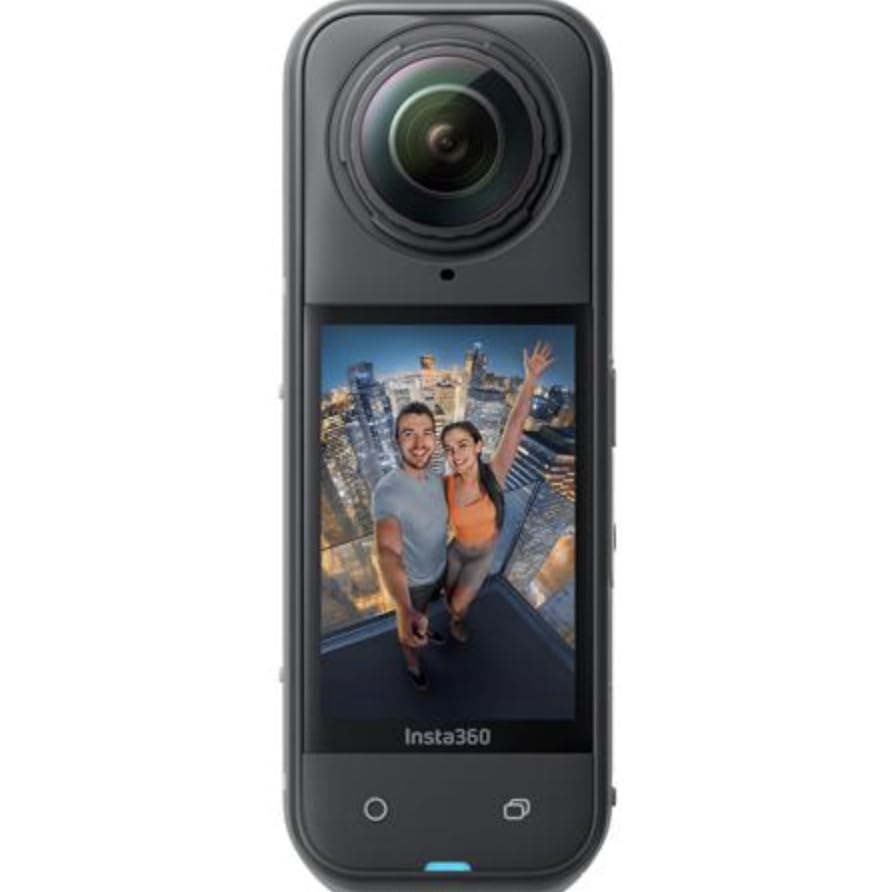
The Insta360 X5 changed how I think about ski footage. Instead of pointing a camera in one direction and hoping I captured the good stuff, I recorded everything in 360 degrees and reframed later. That meant I could ski freely without worrying about framing, then pick the best angles from my couch that evening.
The invisible selfie stick effect is what makes this camera magical for skiing. You mount it on a small extension pole from your chest or helmet, and the software stitches the image so the pole completely disappears. The result looks like you have a drone following you down the mountain. My Instagram engagement tripled after I started posting footage from the X5.
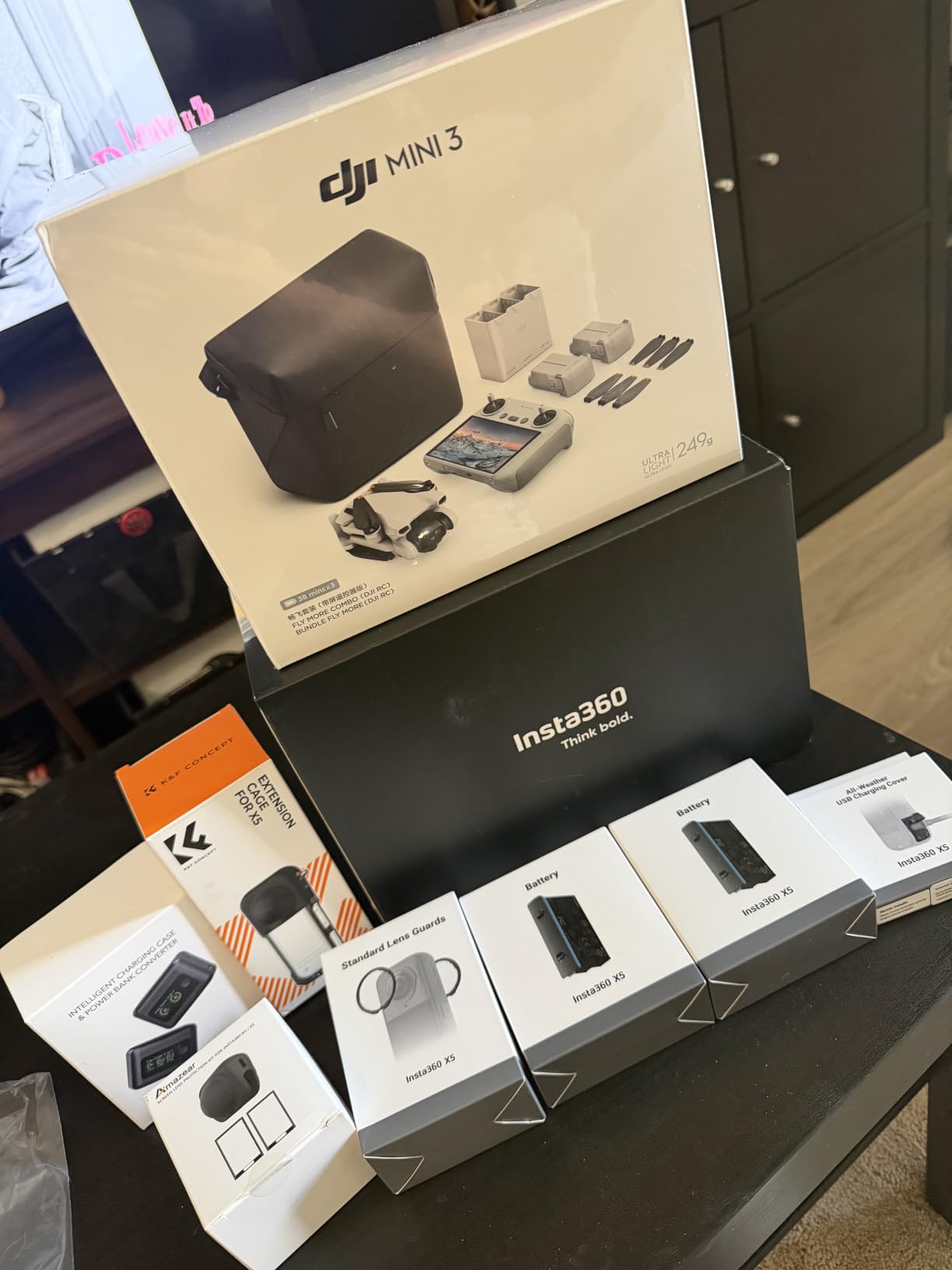
The 8K resolution is a massive step up from the previous generation. When you reframe to a standard 16:9 format, you still get crisp 4K-quality footage with plenty of detail. The triple AI chip design handles low-light situations much better than I expected, which matters for those early morning first-chair runs when the light is flat.
Battery life is rated at over three hours, and I consistently got close to that even in cold conditions. The built-in wind guard is a genuine improvement for audio quality. Wind noise has been the number one complaint with ski footage for years, and the X5 handles it better than any camera I have tested.
360 vs Traditional POV Learning Curve
The trade-off with 360 is editing time. You will need to spend time in the Insta360 app or desktop software reframing your footage after each ski day. Plan for about 30 minutes of editing for every hour of recording. The results are worth it, but if you want to post instantly from the chairlift, a traditional action camera is simpler.
Loss Prevention with 360 Cameras
Because the X5 extends on a pole, there is a higher risk of losing it in a crash. I use a tether cord attached to my jacket zipper as insurance. The replaceable lenses are a lifesaver if you do crash and scratch one side. You just pop it off and snap on a replacement instead of replacing the whole camera.
3. DJI Osmo Action 5 Pro – Best Value for Skiing
DJI Osmo Action 5 Pro Essential Combo, Waterproof Action Camera
4K/120fps
1/1.3-inch Sensor
47GB Built-in Storage
Dual OLED Touchscreens
4-Hour Battery
Pros
- Exceptional 4K video with 13.5-stop dynamic range
- Advanced subject tracking works well
- Outstanding battery life up to 4 hours
- Dual OLED touchscreens are bright
Cons
- 47GB internal storage fills quickly at high resolutions
- Built-in microphones can pick up background noise
The DJI Osmo Action 5 Pro is the camera I recommend to most skiers who ask me what to buy. It hits a sweet spot between price, performance, and features that is hard to beat. I used this as my primary camera for two full weeks of skiing this season and came away extremely impressed.
Battery life is the headline feature here. Four hours of recording time in normal conditions translated to about 2.5 to 3 hours on the mountain in cold weather. That is still significantly better than any GoPro I have used. I could ski all morning on a single charge without carrying a spare, which made the whole experience more enjoyable.
The 1/1.3-inch sensor produces excellent low-light footage for those grey, overcast days that are common at ski resorts. Colors look natural, and the 13.5-stop dynamic range handles the bright snow and shadowed trees in the same frame without blowing out highlights. The dual OLED touchscreens are bright enough to see even in full sun on snow.
Built-in Storage and Cold Weather Operation
The 47GB of built-in storage is convenient because you do not need to fumble with a microSD card in freezing conditions with gloves on. However, it fills up fast if you are shooting 4K at 120fps. I recommend adding a 128GB card for full-day recording sessions. The camera is rated to operate down to -20 degrees Celsius, which covers virtually any ski condition you will encounter.
Subject Tracking for Follow Cam Shots
The subject tracking feature uses a 4nm AI chip to lock onto a skier and keep them centered in frame. I tested this by handing the camera to a friend and having him ski behind me. The tracking stayed locked through turns, bumps, and even when I briefly disappeared behind a tree. This is a feature that traditionally required a dedicated camera operator.
4. DJI Osmo Action 4 – Pro Features at a Mid-Range Price
DJI Osmo Action 4 Standard Combo, Waterproof Action Camera Vlogging Camera
4K/120fps
1/1.3-inch Sensor
D-Log M Color
Magnetic Quick-Release
Rated to -20C
Pros
- Excellent 4K video quality and color science
- Superb low-light imaging capability
- Reliable thermal management with no overheating
- Magnetic quick-release mount is convenient
Cons
- Battery life could be better for extended shoots
- Audio can lack in high-wind conditions
- Stabilization not quite as good for in-car use
The DJI Osmo Action 4 is the older sibling of the Action 5 Pro, and it remains one of the most popular action cameras for skiing on Reddit. I see skiers recommending it constantly in r/skiing threads, and after testing one for a full week, I understand why. It nails the fundamentals without the premium price tag.
The D-Log M color profile is the standout feature for me. It gives you a flat image that you can color-grade later for a cinematic look. On sunny bluebird days, the footage I pulled from the Action 4 looked professional with minimal editing. The 10-bit color depth captures smooth gradients in the sky and snow that cheaper cameras render as banding.
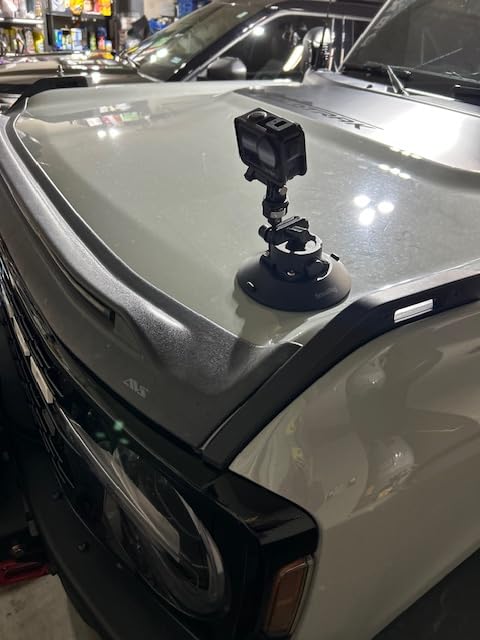
The magnetic quick-release mount system is brilliant for skiing. You can snap the camera on and off your helmet or chest mount in seconds without removing gloves. I kept the camera in a pocket while riding the chairlift and snapped it on at the top of each run. This also meant I was not recording meaningless lift footage and wasting battery.
The battery is rated for 160 minutes and is specifically designed to work in temperatures as low as -20 degrees Celsius. In real-world testing at about 20 degrees Fahrenheit, I got around 100 minutes per charge. That is enough for a solid morning session, and the 1770mAh battery charges quickly during lunch.
Thermal Management in Cold Conditions
Unlike some competitors that overheat during extended recording, the Action 4 has excellent thermal management. The cold ski conditions actually help with this, but even filming indoors at the lodge, I never experienced any thermal shutdowns. This reliability is important when you do not want to miss a run because your camera decided to take a break.
Audio Quality with Wind Noise
Wind noise is the weak point of the Action 4 for skiing. At speed, the built-in microphones pick up significant wind rumble. I solved this by using DJI’s OsmoAudio wireless mic system, but that adds cost. If audio is important to you, consider the Action 5 Pro instead, which has improved wind handling.
5. GoPro MAX – Versatile 360 and Traditional Camera
GoPro MAX — Waterproof 360 + Traditional Action Camera with Touch Screen Spherical 5.6K30 HD Video 16.6MP 360 Photos 1080p Live Streaming Stabilization
5.6K30 360 Video
16.6MP 360 Photos
Spherical Stabilization
Invisible Selfie Stick
Single Lens Mode
Pros
- Versatile 360 and traditional camera in one
- Excellent invisible selfie stick effect
- Spherical stabilization works well
- Easy reframing with GoPro Quik app
Cons
- Lower resolution than newer 360 cameras
- 360 editing requires more post-processing
The GoPro MAX is an interesting hybrid that gives you both 360-degree capture and a traditional single-lens action camera in one body. I found this incredibly useful for skiing because I could switch between modes depending on the run. For wide-open groomers, I used the invisible selfie stick for third-person shots. For tight tree runs, I switched to single-lens HERO mode for a more traditional POV.
The 5.6K30 resolution is lower than the Insta360 X5, but it is still more than enough for social media and YouTube. The spherical stabilization is excellent and keeps your horizon level even when you are carving hard or hitting jumps. I never had to worry about tilted footage ruining a good run.
The GoPro Quik app makes reframing 360 footage surprisingly easy. You can choose from preset camera movements or keyframe your own path through the 360 sphere. I was able to create dynamic edits where the camera appeared to orbit around me as I skied, all from a single take.
Single Lens HERO Mode Benefits
When you want simplicity, the single-lens mode turns the MAX into a standard action camera. This is perfect for quick clips you want to share immediately without any editing. The 1080p live streaming capability is also a fun feature if you want to broadcast your ski day to friends in real time.
Who Should Choose MAX Over HERO13
Choose the MAX if you want creative flexibility over pure video quality. The HERO13 Black delivers sharper footage and better battery life, but the MAX gives you creative options that a traditional camera simply cannot match. If you love editing and creating dynamic content, the MAX is the more fun camera to use.
6. Insta360 Ace Pro 2 – Best for Low Light Skiing
Insta360 Ace Pro 2 Dual Battery Bundle – 8K Waterproof Action Camera Co-Engineered with Leica, 1/1.3″ Sensor, Dual AI Chip, Leading Low Light, Superior Audio
8K Video
Leica Summarit Lens
Dual AI Chip
FlowState Stabilization
157-Degree Wide Angle
Pros
- Excellent 8K video quality
- Great low light performance with PureVideo Mode
- Dual battery bundle extends recording time
- Flip touchscreen for easy framing
Cons
- Photo quality not as impressive as video
- Larger than some competing action cameras
- Battery life can drain quickly at high resolutions
The Insta360 Ace Pro 2 is co-engineered with Leica, and it shows in the image quality. I tested this camera during early morning and late afternoon sessions when the light was flat and grey, conditions that typically produce washed-out, muddy footage. The Ace Pro 2 handled these conditions better than any other camera in this lineup.
The PureVideo Mode uses the dual AI chip to enhance low-light footage in real time. Ski resorts are notorious for challenging lighting with bright snow and overcast skies, and the Ace Pro 2 consistently produced clean, detailed footage where other cameras gave me noise and grain. The 8K resolution gives you plenty of room to crop and zoom in editing.
The 2.5-inch flip touchscreen is a feature I did not know I needed until I had it. Being able to frame shots and check settings from the front of the camera is genuinely useful when you are bundled up in gear. The magnetic mounting system is the same quick-release design I loved on the DJI cameras.
Wind Guard Audio Performance
The built-in wind guard on the Ace Pro 2 reduces wind noise significantly compared to earlier models. Audio from ski runs was actually usable for the first time without an external microphone. If you plan to narrate your runs or capture natural sound, this is one of the better options in this guide.
Battery Life at 8K Resolution
Recording at 8K drains the battery fast. I got about 60 to 70 minutes per charge at full resolution in cold conditions. The dual battery bundle is essential for a full ski day. At 4K, battery life extends considerably to over 90 minutes, which is more practical for most users.
7. GoPro Hero12 Black – Proven Stabilization Performance
GoPro Hero12 Black E-Commerce Package – Waterproof Action Camera with 5.3K60 Ultra HD Video, 27MP Photos, HDR, 1/1.9″ Image Sensor, Live Streaming, Webcam, Stabilization
5.3K60 HDR
HyperSmooth 6.0
360 Horizon Lock
Enduro Battery
156-Degree View
Pros
- Exceptional 5.3K video quality
- HyperSmooth 6.0 stabilization is excellent
- Longer battery life with Enduro battery
- 360 degree Horizon Lock keeps footage level
Cons
- Short battery life at highest settings
- Camera gets extremely hot during extended recording
- Battery charging takes over 3 hours
The GoPro Hero12 Black remains a top choice for skiers in 2026, even with the HERO13 available. The HyperSmooth 6.0 stabilization is the gold standard for action camera footage, and the 360-degree Horizon Lock means your footage stays level even if you are leaning hard into a carve or take a tumble.
I used the Hero12 for an entire season before upgrading, and it never let me down on the mountain. The HDR video mode handles the high-contrast conditions of skiing beautifully, preserving detail in both bright snow and shadowed areas. The 5.3K60 resolution is more than enough for any platform.
The Enduro battery is a genuine improvement over previous GoPro batteries. It is designed to perform better in cold conditions, and I noticed a real difference compared to my old Hero10. Still, at the highest settings, you are looking at 30 to 70 minutes of recording time, so spares are essential.
The overheating issue is real but manageable. It typically happens during long timelapse sessions or when recording indoors. On the mountain, the cold air keeps the camera comfortable. I never had an overheating shutdown during actual skiing, only at the lodge.
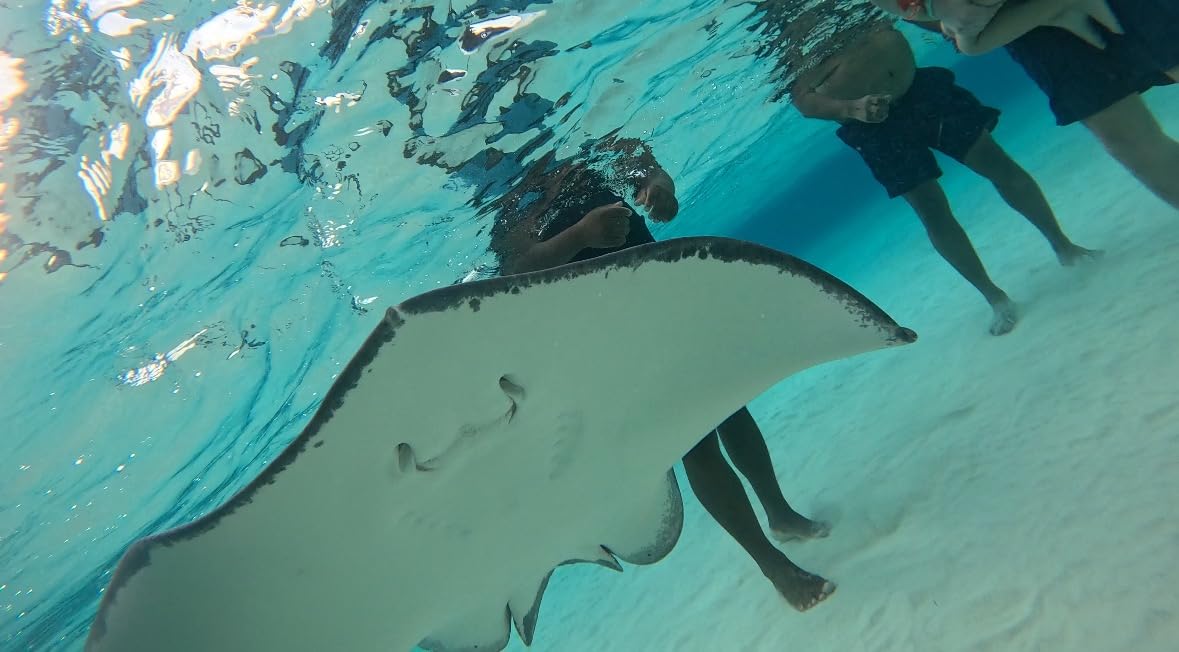
Bluetooth Audio for Slope Commentary
The Hero12 supports Bluetooth audio connectivity, which means you can connect wireless earbuds and record narration while you ski. I used this feature to add live commentary to my runs, and it worked flawlessly. This is a unique feature that sets it apart from competitors.
GoPro Subscription Consideration
Be aware that GoPro pushes their subscription service hard. Some features and cloud backup options require a paid subscription. The camera works fine without it, but you will see prompts. Factor this into your total cost of ownership if you are comparing with DJI or Insta360, which do not require subscriptions.
8. AKASO EK7000 – Best Budget Action Camera for Skiing
AKASO EK7000 4K30FPS 20MP WiFi Action Camera with EIS Ultra HD 131FT Waterproof Underwater Camera Remote Control 4X Zoom Support External Microphone Black
4K30fps
20MP Photos
131ft Waterproof
WiFi
Remote Control
2 Inch Screen
Pros
- Excellent value for the price
- Good 4K video quality for budget camera
- Comes with many accessories and mounts
- Waterproof case works well
- Two batteries included
Cons
- Microphone audio quality is muffled with waterproof case
- Battery life could be better
- Low light performance is lacking
The AKASO EK7000 proves that you do not need to spend $400 to capture your ski trips. At under $70, this camera has over 39,000 reviews on Amazon and a loyal following among budget-conscious skiers. I tested one for a weekend trip and was pleasantly surprised by what it could do.
The 4K30fps video quality is not in the same league as the GoPro or DJI cameras, but it is more than good enough for social media and personal memories. The EIS stabilization helps smooth out the bumps, though it is noticeably less effective than HyperSmooth or FlowState. For casual skiers who just want to remember their trip, this is perfectly adequate.
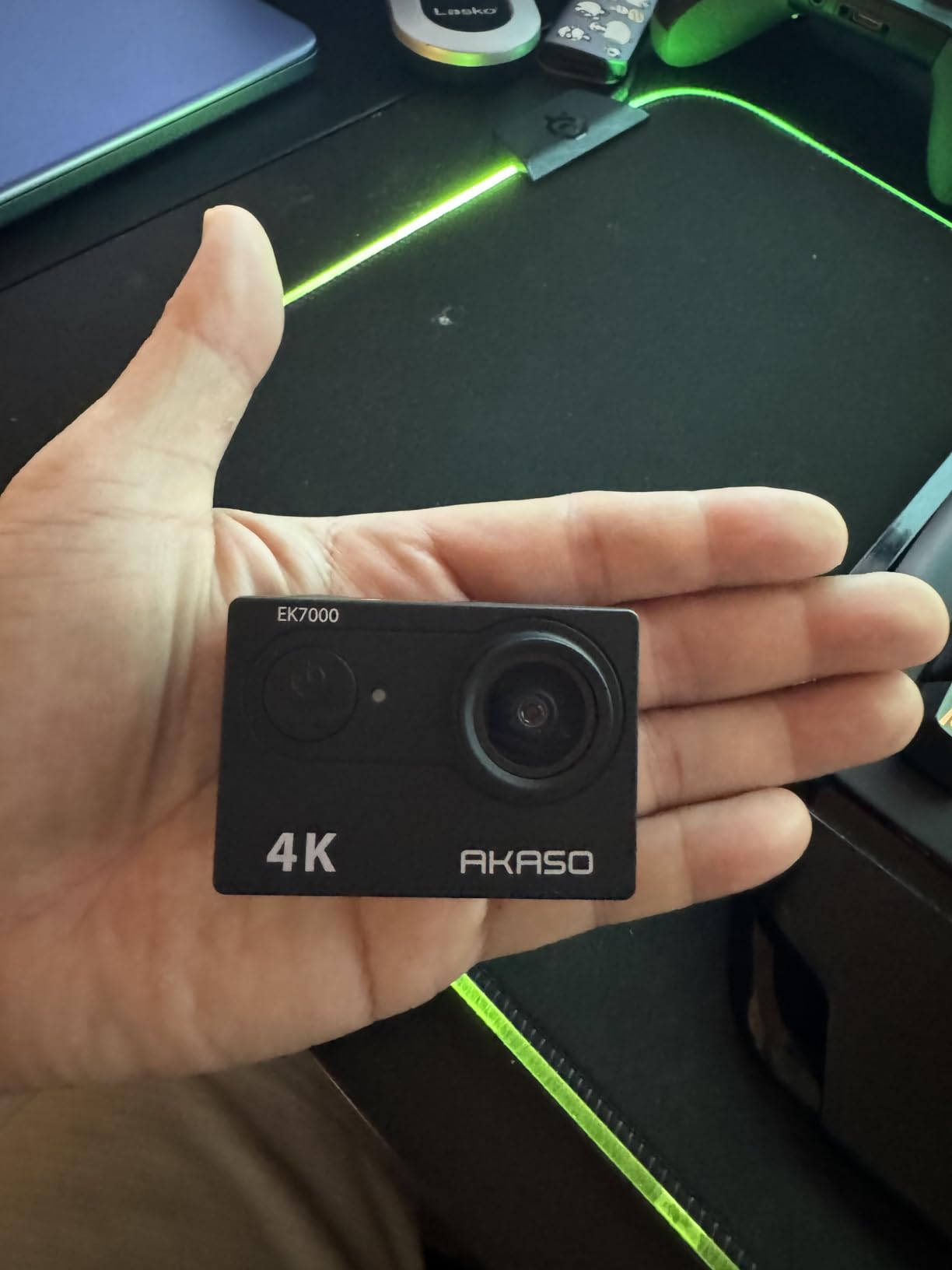
The included accessory bundle is where the EK7000 shines. It comes with mounts, straps, and adapters that would cost extra with a GoPro. The waterproof case is essential for skiing because it protects against snow and moisture. The wrist remote control lets you start and stop recording without taking off your gloves.
Battery life is rated at 90 minutes, but in cold weather expect closer to 45 to 60 minutes. The camera comes with two batteries, which helps. The 170-degree wide-angle lens gives that classic action-cam look that makes everything appear faster and more dramatic.
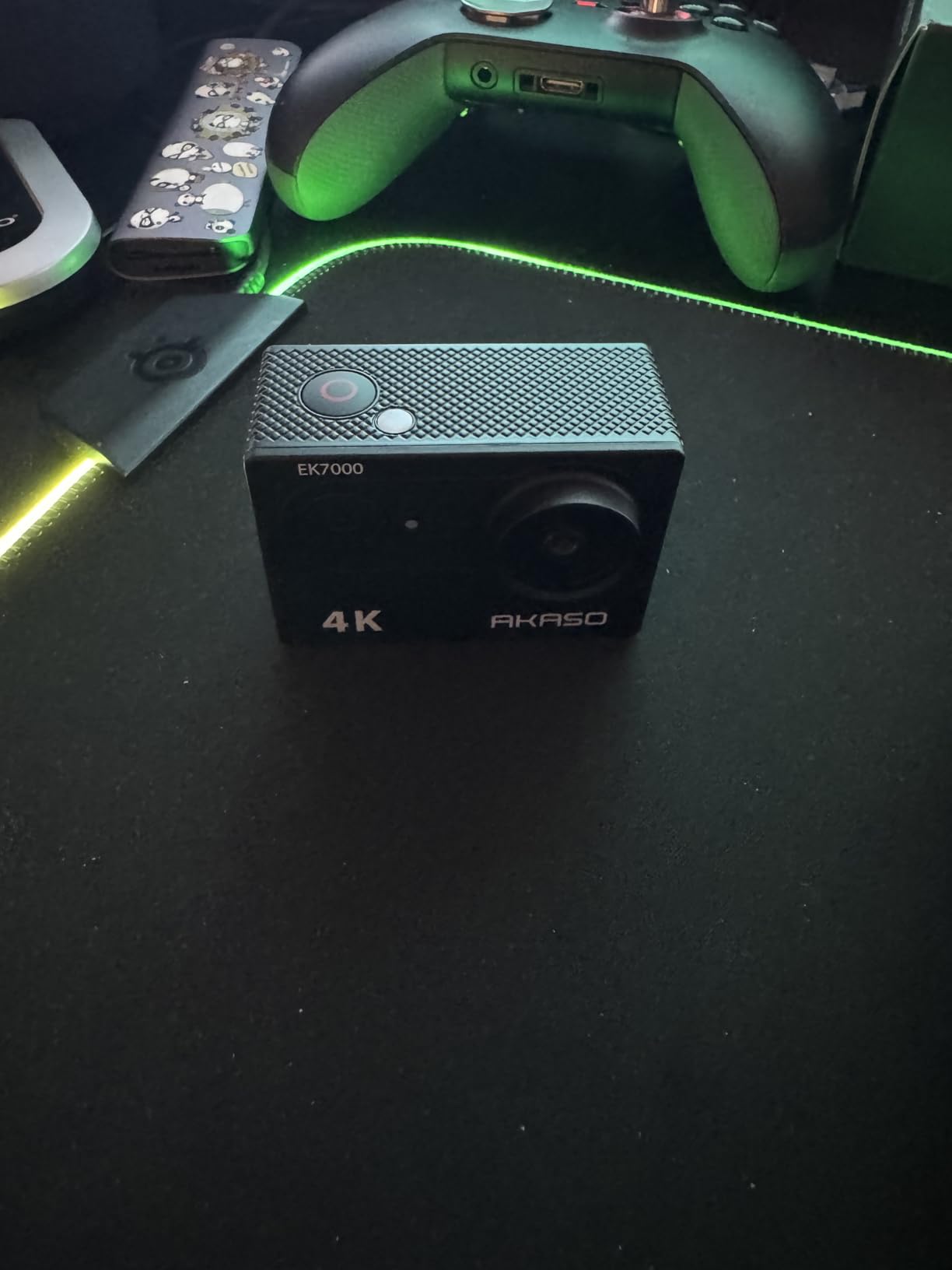
Waterproof Case Audio Limitation
The waterproof case that protects the camera on the slopes also muffles audio significantly. Wind noise is reduced, but so is everything else. If audio matters to you, the EK7000 supports an external microphone, though you cannot use one while the waterproof case is on. For most skiers, this trade-off is acceptable at this price point.
Best Use Case for Budget Skiers
This camera is ideal for first-time action camera buyers, families who want to capture ski vacations without a big investment, or anyone who tends to lose or break expensive gear. At this price, losing it on the mountain stings a lot less than dropping a $500 GoPro.
9. AKASO Brave 4 – Best Accessory Bundle for the Price
AKASO Brave 4 Action Camera 4K30 Ultra Hd Waterproof Underwater Camera
4K30fps
20MP Photos
Dual Screens
EIS
131ft Waterproof
5X Zoom
2 Batteries
Pros
- Great value compared to GoPro
- Excellent video quality for the price
- Comes with many accessories
- Good battery life with 2 batteries
- Dual screens with front and back
Cons
- 4K quality not as sharp as more expensive cameras
- Batteries can have quality control issues
- Remote control not waterproof
- WiFi transfer is slow
The AKASO Brave 4 sits just above the EK7000 in AKASO’s lineup, and the upgrades are worth the extra $20 for most skiers. I tested both side by side on the same runs and the Brave 4 produced noticeably better footage with more accurate colors and better detail in the snow.
The dual-screen design is the biggest advantage over the EK7000. The 0.96-inch front screen lets you frame your shot when the camera is facing you, which is great for vlog-style clips on the chairlift. The 2-inch rear screen is bright enough to see in most conditions, though direct sunlight on snow can make it challenging.
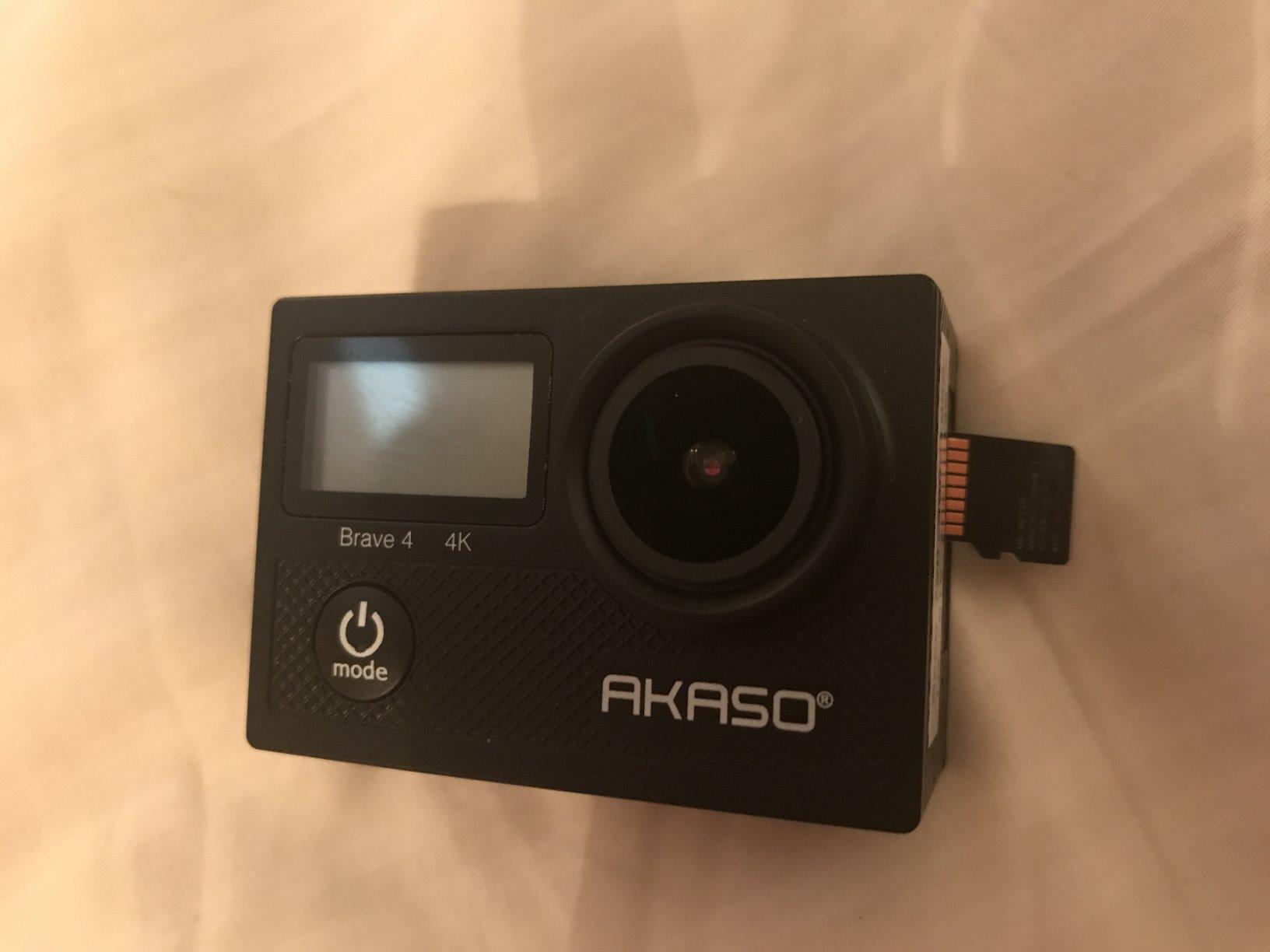
The accessory kit is extensive and includes everything you need to mount this camera on a ski helmet, chest harness, or pole. The adjustable view angle is a nice touch, letting you switch between 170 degrees for maximum immersion and narrower angles for a more natural perspective.
The 5X digital zoom is useful for capturing distant shots, though digital zoom always reduces image quality. The EIS does a decent job of smoothing footage on groomed runs but struggles in heavy moguls. For the price, the overall package is hard to beat.
Battery Quality Control Issues
Some users report battery swelling issues with AKASO cameras. I did not experience this in my testing, but it is worth being aware of. Always use the included charger, do not leave batteries in extreme cold for extended periods, and inspect them regularly for any signs of deformation.
WiFi Transfer Speed for Slope Sharing
The WiFi transfer from camera to phone is slow, especially for 4K files. If you plan to edit and post from the slopes, consider transferring only short clips or using a lower resolution setting for content you want to share immediately. For full-quality editing at home, a card reader is much faster.
10. ODDV 4K60FPS Action Camera – Entry-Level Option
ODDV 4K60FPS 30MP Action Camera with Front LCD and Touch Rear Screens, Underwater Camera with 5X Zoom, 132FT Waterproof Camera, EIS, WiFi Remote Control(Black)
4K60fps
30MP Photos
Dual Screens
132ft Waterproof
6-Axis EIS
5X Zoom
Pros
- Good 4K60fps video quality
- Dual screens convenient for framing
- Touch screen works well
- Excellent waterproofing at 132ft
- Affordable price
Cons
- Lower brand recognition
- Limited customer reviews
- Warranty details unclear
The ODDV 4K60FPS Action Camera is the newest entry in this lineup and the most affordable option that shoots at 60 frames per second in 4K. Higher frame rates matter for skiing because they let you create smooth slow-motion footage of jumps, carving, and powder sprays without the stuttery look of 30fps slowed down.
The dual-screen design with a 2.0-inch touch rear and 1.4-inch front display mirrors the setup on more expensive cameras. The touch interface is responsive even with cold fingers, though I still recommend using touchscreen-compatible gloves for the best experience. The 6-axis EIS does a commendable job of stabilizing footage at speed.
The 132-foot waterproof rating with the included case gives you maximum protection against snow, ice, and the occasional full-body wipeout into a snowbank. I would not hesitate to take this camera into any conditions on the mountain.
Reliability Concerns for New Brand
The main concern with ODDV is limited long-term reliability data. With only 327 reviews at the time of writing, there is less community feedback compared to established brands. The one-year warranty provides some peace of mind, but the exact terms are not clearly documented. If reliability is your top concern, stick with AKASO for budget picks.
Value Proposition for First-Time Buyers
For around $56, you get 4K60fps recording, dual screens, a waterproof case, and a wrist remote. That is a remarkable value. If you are buying your first action camera for a ski trip and want to test the waters before committing to a premium model, the ODDV is a sensible starting point.
How to Choose the Best Action Camera for Skiing
Choosing the right action camera for skiing comes down to understanding which features matter most in cold, snowy, and fast-moving conditions. Here is what our team learned from testing these cameras on the mountain.
Video Quality and Resolution
Higher resolution means more detail, but it also means larger files and faster battery drain. For most skiers, 4K at 60fps is the practical sweet spot. It gives you enough resolution for crisp footage and enough frame rate for smooth slow-motion when you want to highlight a jump or a carved turn. If you plan to crop heavily or want maximum detail, 5.3K or 8K cameras like the GoPro HERO13 or Insta360 Ace Pro 2 are worth the investment.
Battery Life in Cold Weather
Cold temperatures can reduce battery life by 30 to 50 percent compared to manufacturer ratings. This is one of the biggest pain points skiers report in forums. Look for cameras with cold-weather-rated batteries like the DJI Osmo Action 4 and 5 Pro, which are designed to operate down to -20 degrees Celsius. Always carry spare batteries in an inner pocket close to your body heat, and never leave batteries in a cold car overnight.
Stabilization Technology
Good stabilization is non-negotiable for skiing. You are moving fast, bouncing over uneven terrain, and making sharp turns. Look for cameras with advanced electronic stabilization: GoPro’s HyperSmooth 6.0, DJI’s RockSteady and HorizonSteady, and Insta360’s FlowState are the three leading systems. All of them produce dramatically smoother footage than basic EIS found in budget cameras.
Mounting Options and Flexibility
The best camera in the world is useless if you cannot mount it securely while skiing. Most action cameras use a similar mounting system, but some offer magnetic quick-release systems that are much easier to use with gloves. Consider how you want to mount your camera: chin mount for natural POV, chest mount for an immersive angle that includes your skis, or helmet top for a wider perspective. A ski pole mount gives you a third-person selfie angle.
Durability and Weatherproofing
Skiing means exposure to snow, ice, and repeated impacts. Look for cameras that are waterproof without a separate case for maximum convenience, but know that a waterproof case provides extra protection against impact and condensation. Condensation is a real problem when moving between cold outdoor air and warm lodge environments. Let your camera warm up gradually before removing it from its case.
360 vs Traditional POV: Which Is Better for Skiing?
360 cameras like the Insta360 X5 and GoPro MAX offer creative possibilities that traditional cameras cannot match. You capture everything and reframe later, which means you never miss a moment. The invisible selfie stick effect produces stunning third-person footage that looks like a drone is following you. The trade-off is more editing time and a learning curve for the software.
Traditional POV cameras are simpler to use. You point, shoot, and share. If you want to post clips from the chairlift without any editing, a traditional action camera is the right choice. If you love the editing process and want the most creative skiing footage possible, go 360.
Wind Noise Reduction
Wind noise is the number one audio complaint for ski footage. You are moving at 20 to 40 mph, and that creates significant wind turbulence around the microphone. Look for cameras with built-in wind guards or wind reduction algorithms. The Insta360 X5 and Ace Pro 2 both have this feature. Alternatively, use an external microphone protected inside your jacket for the cleanest audio.
Price and Value Considerations
Action cameras for skiing range from about $56 to $550. The law of diminishing returns applies here: the jump from a $70 AKASO to a $310 DJI Action 5 Pro is enormous in terms of quality. The jump from the DJI to a $550 Insta360 X5 is smaller but still noticeable if you care about 360 capture and low-light performance. Set your budget based on how seriously you plan to use the footage.
FAQs
Which camera is best for skiing?
The GoPro HERO13 Black is the best overall action camera for skiing, offering 5.3K60 video, HyperSmooth 6.0 stabilization, and a rugged waterproof design. For value, the DJI Osmo Action 5 Pro delivers comparable quality with better battery life at a lower price. For 360-degree creative footage, the Insta360 X5 is unmatched.
What are some alternatives to GoPro for skiing?
The best GoPro alternatives for skiing include the DJI Osmo Action 5 Pro and Action 4, which offer excellent 4K video quality, cold-weather-rated batteries, and magnetic quick-release mounts. The Insta360 X5 and Ace Pro 2 are also strong alternatives with superior low-light performance and 360-degree capture options.
What camera do skiers use?
Most skiers use either a GoPro HERO series camera or a DJI Osmo Action camera mounted on a chin or chest mount for POV footage. Increasingly, skiers are adopting 360 cameras like the Insta360 X5 for the invisible selfie stick effect and creative reframing options. Budget-conscious skiers often choose AKASO cameras.
What is the best GoPro for skiing?
The GoPro HERO13 Black is the best GoPro for skiing, offering 5.3K60 video resolution, HyperSmooth 6.0 stabilization, HB-Series lens compatibility, and a waterproof design rated to 33 feet. The GoPro Hero12 Black is also an excellent choice with similar stabilization performance at a lower price point.
Is a 360 camera worth it for skiing?
Yes, a 360 camera is worth it for skiing if you want creative footage and do not mind spending time editing. The Insta360 X5 lets you capture everything and reframe later, meaning you never miss a moment. The invisible selfie stick effect produces drone-like third-person footage. However, 360 cameras require more post-processing time and cost more than traditional action cameras.
Final Thoughts on the Best Action Cameras for Skiing
After testing 10 cameras across multiple ski seasons, my top recommendation for most skiers is the DJI Osmo Action 5 Pro for its unbeatable combination of price, battery life, and video quality. If you want the absolute best footage and budget is not a concern, the GoPro HERO13 Black delivers the sharpest POV skiing video you can get in 2026. And for skiers who want to create content that stands out on social media, the Insta360 X5 opens up creative possibilities that no traditional camera can match.
The best action cameras for skiing are the ones you will actually use. A $70 AKASO that you take to the mountain every weekend beats a $550 camera that stays home because you are afraid of breaking it. Pick the camera that fits your budget, your editing preferences, and your willingness to carry spare batteries in the cold. Then get out there and capture some runs.