
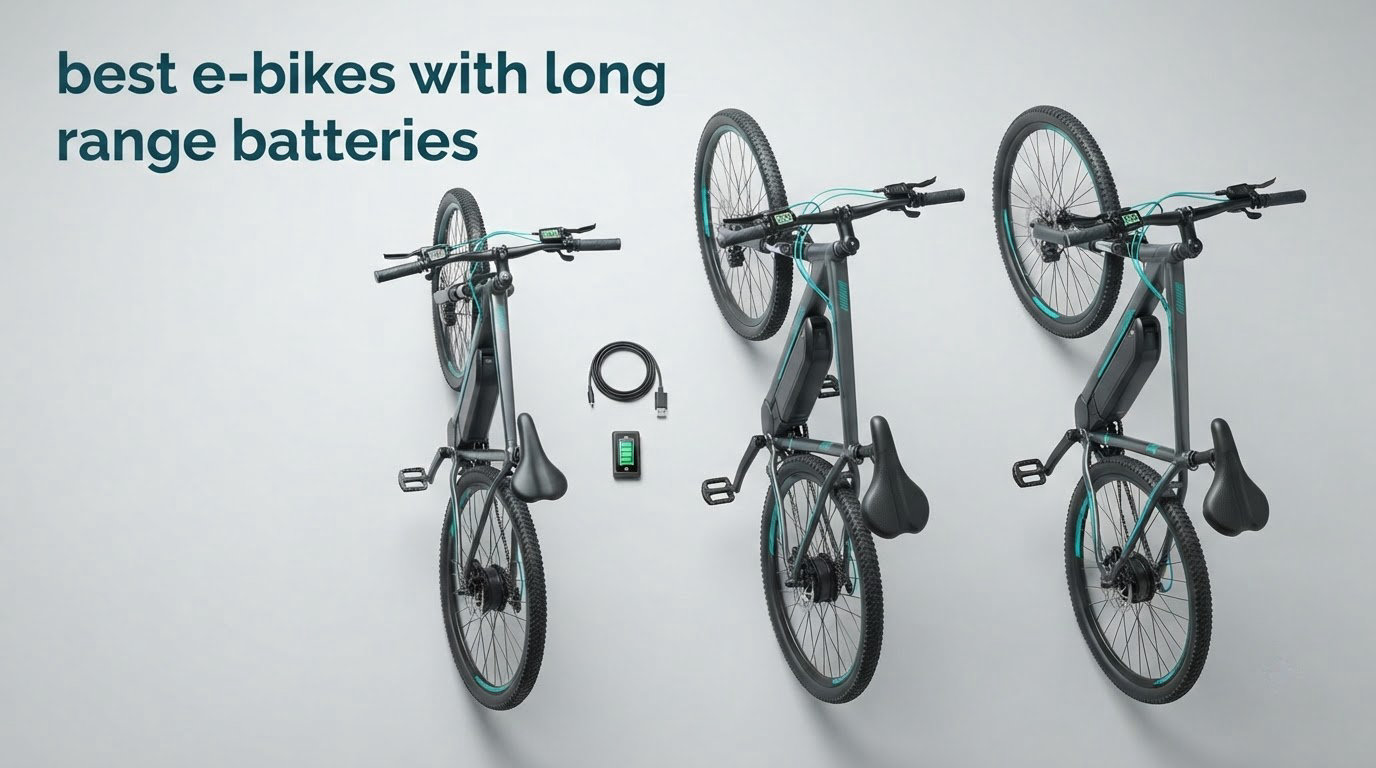
Riding an e-bike with a weak battery is the fastest way to end a good day early. The difference between a 400Wh pack and a 960Wh pack is not a spec-sheet nicety; it is the difference between a 12-mile round trip and a 60-mile one without recharging at the office. If you have been searching for the best e-bikes with long range batteries, the short answer is that battery capacity in watt-hours comes first, motor efficiency comes second, and everything else is detail.
We went through twelve of the highest-reviewed long-range e-bikes on the market, pulled their battery capacities, motor output, weight, range claims and owner feedback, and put them through the same lens. The result is a list that separates the bikes that genuinely deliver distance from the ones that simply advertise it.
Here is the thing most roundups skip: advertised range is a laboratory number. It assumes the lowest assist setting, a light rider, flat pavement, correctly inflated tires and a tailwind. The honest figures below are the ones owners report in real conditions, and in several cases the gap is enormous. If you want the short version of how battery size translates into actual miles, read our long-range electric bike guide first, then come back here for the picks.
Table of Contents
Top 3 Picks for the Best E-Bikes with Long Range Batteries (October 2026)
Our three standouts this year are the Funhang EB-S1 for outright capability, the EUYBIKE foldable for the rare combination of a 960Wh pack and a frame you can put in a trunk, and the Heybike Cityscape 2.0 for riders who just want a dependable commute without thinking about it.


EUYBIKE Foldable 960Wh
- 960Wh removable battery
- 80 miles PAS claimed
- foldable frame
- full suspension

Every Bike Compared: Battery and Range (October 2026)
Sort this table by battery capacity and the shape of the market becomes obvious. The biggest packs in the roundup belong to folding and fat-tire frames, while the classic step-through commuters cluster between 374Wh and 499Wh. Read the claimed range column as a marketing target and the motor column as a reality check.
| Product | Specifications | Action |
|---|---|---|
| Funhang EB-S1 Fat Tire |
|
Check Latest Price |
| EUYBIKE Foldable 960Wh |
|
Check Latest Price |
 DEEPOWER 48V 20Ah DEEPOWER 48V 20Ah |
|
Check Latest Price |
 LEONX M2 Pro LEONX M2 Pro |
|
Check Latest Price |
 Jasion RetroVolt Jasion RetroVolt |
|
Check Latest Price |
 DTTZH F6 DTTZH F6 |
|
Check Latest Price |
 EUY C2.0 EUY C2.0 |
|
Check Latest Price |
 ANCHEER 26 inch ANCHEER 26 inch |
|
Check Latest Price |
 TotGuard 27.5 inch TotGuard 27.5 inch |
|
Check Latest Price |
 ESKUTE M200 ESKUTE M200 |
|
Check Latest Price |
| Heybike Cityscape 2.0 |
|
Check Latest Price |
 Funhang Step-Thru Funhang Step-Thru |
|
Check Latest Price |
1. Funhang EB-S1 Fat Tire: The Long-Range E-Bike With the Best Balance of Capacity and Rating
Funhang Electric Bike for Adults, 1000W Peak Ebike, 20MPH 60Miles Electric Mountain Bike, 26″ Fat Tire Electric Bicycle with 48V 13AH Battery, Front Suspension,7 Speed, Rear Rack, UL 2849 Certified
48V 13Ah 624Wh pack
55-60 miles PAS claimed
66.6 Nm
UL 2271 and UL 2849
Pros
- Highest rated bike in the roundup at 4.6 across 234 reviews
- Genuinely large battery for a fat-tire frame
- 66.6 Nm handles sand snow and gravel
- Rear rack rated to 60 lb plus working turn signals
- Dual UL certifications recognized by SGS and TUV
Cons
- 20 mph top speed is modest for 1000W peak
- 70 lb weight is awkward to carry or load
- 7-speed drivetrain limits technical climbs
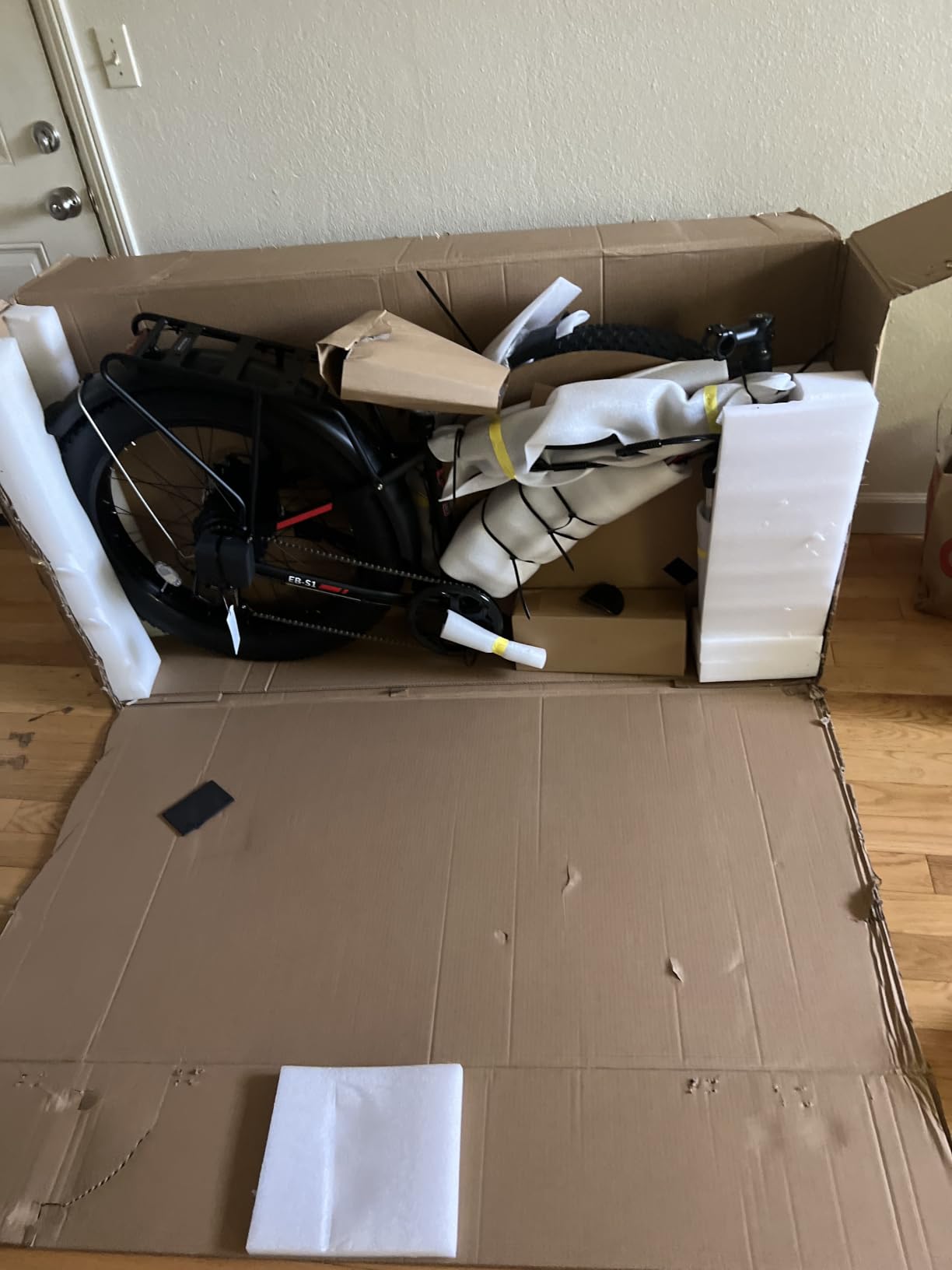
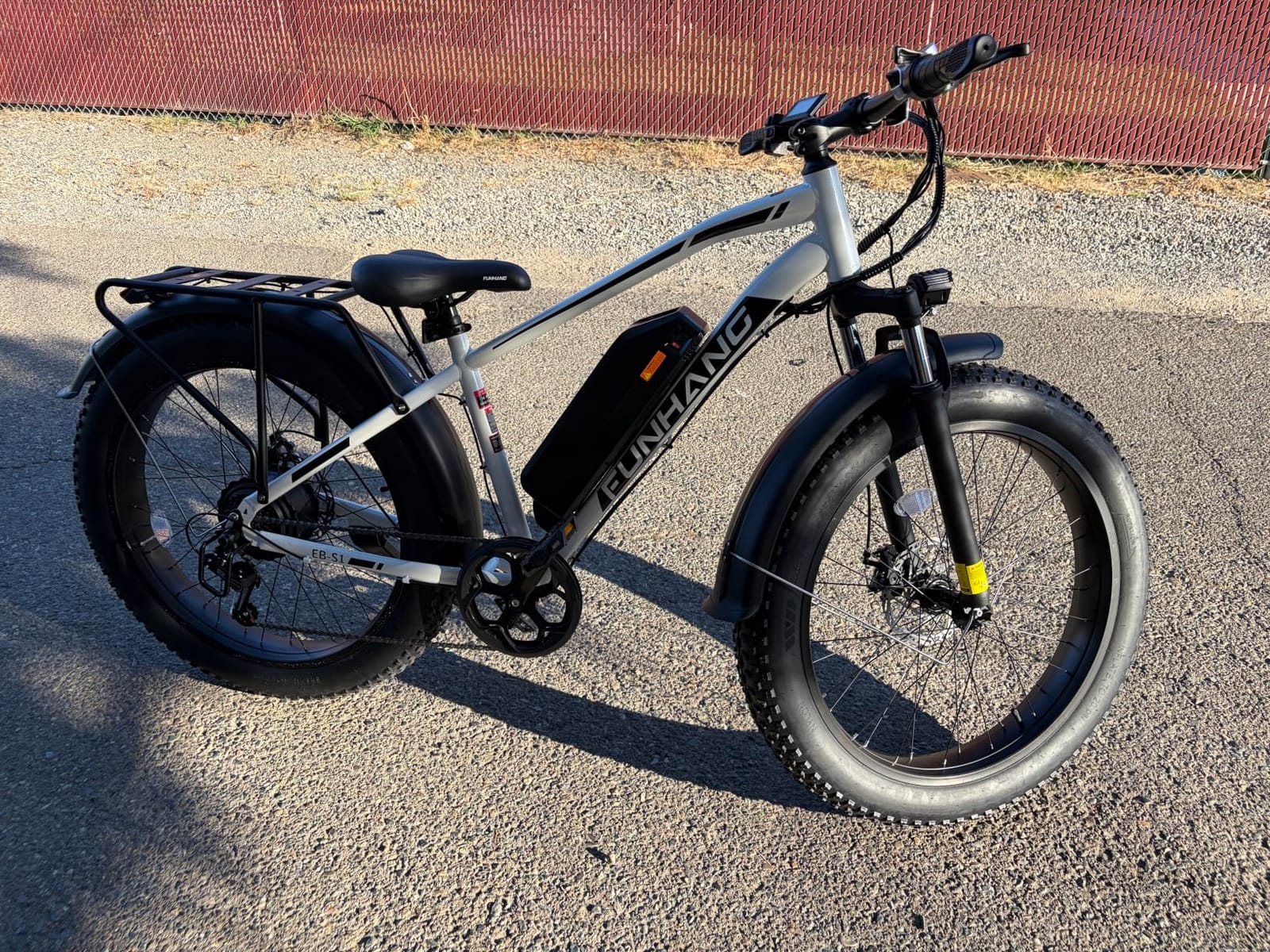
The Funhang EB-S1 pairs a 48V 13Ah pack, roughly 624Wh, with a 500W motor that makes 66.6 Nm of torque. That is an unusual amount of battery for a fat-tire bike, and it is the reason this model tops our list rather than one of the higher-wattage machines.
Owners report 30-35 miles in pure electric mode and 55-60 miles in pedal-assist mode, which is a realistic split rather than a single marketing number. The rear rack is rated to 60 pounds and the taillight has a working turn signal, both of which matter more on a weekly errand run than a longer headline range does.
Both certifications are present: the battery carries UL 2271 recognition from SGS and the complete bike carries UL 2849 recognition from TUV. In a category where a large share of listings list no certification at all, that is a genuine differentiator rather than a checkbox.
The trade-offs are honest ones. Top speed caps at 20 mph even though the motor peaks at 1000W, and at 70 pounds the bike is a two-hand lift for most people. Seven gears is thin for genuinely steep technical climbs.
How far the 624Wh pack actually takes you
On flat pavement at low assist, the 55-60 mile pedal-assist figure is achievable for a rider in the mid-weight range. Add hills, a heavier rider or a headwind and the same pack lands nearer 30-35 miles, which is still excellent for this class of machine.
Because the battery is removable and the frame is a conventional 26-inch chassis, you can carry the pack indoors for charging and add a second identical pack if your riding regularly exceeds the range of one charge. That ecosystem flexibility is worth more than raw wattage on long trips.
Where this bike is the wrong choice
If your commute is mostly paved and you care about outright speed, the 20 mph ceiling will feel slow against the 28 mph class leaders in this roundup. Riders buying this bike for commuting rather than beach and gravel riding are paying for tires and suspension they may never lean on.
Anyone under about 5’3″ or anyone who needs to carry a bike up stairs should look elsewhere. Seventy pounds does not get lighter when the stairs do.
2. EUYBIKE Foldable 960Wh: The Largest Battery in a Frame You Can Put in a Trunk
EUYBIKE Foldable Electric Bike for Adults, 48V 20Ah Removable Lithium Battery up to 80Miles, 20″x 4″ Fat Tire Full Suspension Electric Dirt Bike, 1000W Peak Motor Electric E Bike Black
48V 20Ah 960Wh pack
80 miles PAS claimed
Foldable 20 inch frame
Full suspension
Pros
- 960Wh pack is rare in a folding e-bike
- Second-highest rating at 4.6 with only 1 percent one-star reviews
- Foldable frame stores in a car trunk for RV camping and beach trips
- Full front and rear suspension with 4 inch fat tires
- Color LCD with USB charging port
Cons
- 62 lb weight is still substantial for a folding bike
- Fat tires add rolling resistance on pavement
A 48V 20Ah pack works out to 960Wh, and putting that into a foldable 20-inch frame is the trick this bike pulls off. Almost every other large-pack e-bike in this roundup is a full-size fat-tire or mountain bike that stays where you parked it.
Owners report 50 miles in electric mode and 80 miles in pedal-assist mode as the claimed figures, and the 4.6 average across 176 reviews comes with a one-star share of about 1 percent, the lowest in the group. That is a strong signal for a bike with this much power on tap.
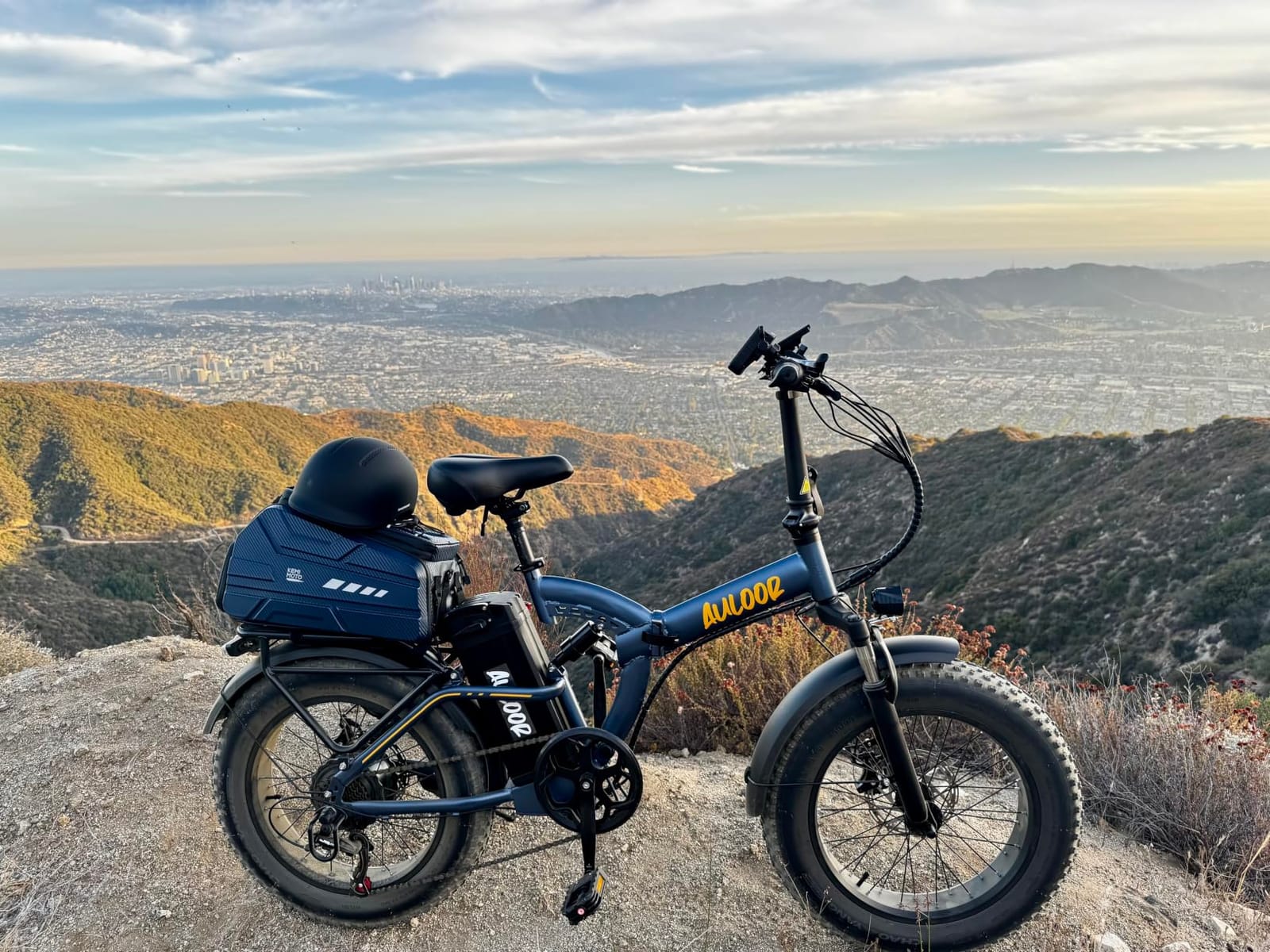
The motor is 750W nominal with a 1000W peak and reaches 30 mph, which makes it one of the quicker folders here. Dual suspension front and rear plus 20 by 4.0 fat tires mean it handles beach sand and gravel without complaint.
The battery itself weighs 11 pounds, which matters because on a folding bike you will be lifting it in and out of a car regularly. The BMS protection and the fact that it is removable are both standard expectations that this bike actually meets.
What 960Wh means for a folding bike
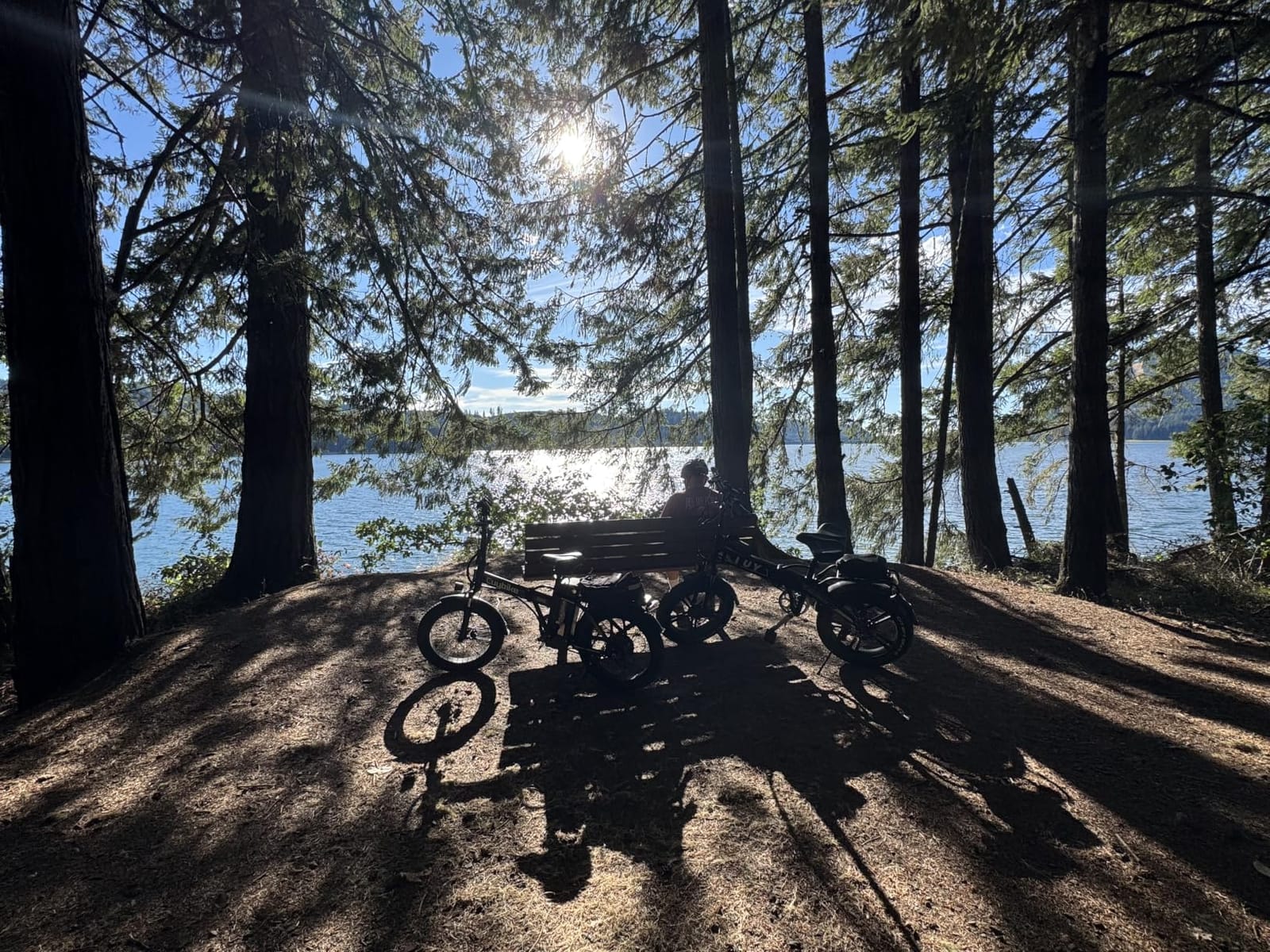
This is the only bike in the roundup that combines top-tier capacity with genuine portability. For someone who wants to take a long-range e-bike on a camping trip, store it in a small apartment, or move between vehicles, the range-to-size ratio here is unmatched in our set.
The 80-mile claim assumes pedal assist at its lowest setting on flat ground. A realistic mixed-terrain figure for a typical rider sits closer to 40-50 miles, which still covers an entire weekend of riding between charges.
Where this bike is the wrong choice
Sixty-two pounds undercuts the portability argument in a practical sense. You can fold it, but you are not carrying it up three flights of stairs comfortably, and a folding bike that weighs this much still needs a car boot or a storage cupboard.
Fat tires also mean slower rolling on smooth pavement than a narrow-tire folder. Riders whose entire world is city asphalt will feel the drag more than the suspension benefit.
3. Heybike Cityscape 2.0: The Dependable Commuter With Verified Hill Performance
Heybike Cityscape 2.0 Electric Bike for Adults – 468Wh Removable Battery, 50 Miles Range, 26″ E-Commuter Bike with 7-Speed, Front Suspension, UL Certified
468Wh UL-certified pack
50 miles claimed
30-35 miles throttle
500W motor
Pros
- Owners report 19-23 mph commuting speeds even on hills
- A 6 mile commute uses roughly 15-20 percent of the pack
- Sturdy well-finished frame
- Upright seating suits older riders
- Most bikes arrive largely assembled
Cons
- No printed assembly instructions and the QR guide can fail to load
- Brakes are noisy with modest stopping power
- Only 7 gears so the motor does the work at cruising speed
The Heybike Cityscape 2.0 is the most-reviewed bike in this roundup at 337 reviews, and the consistency of the owner reports is what earns it a place. A 468Wh UL-certified pack sits in the frame as a standard removable unit, and the 500W motor delivers 1200W at peak.
Claimed range is up to 50 miles per charge, split into 30-35 miles in throttle mode and 35-50 miles in pedal-assist mode. What stands out more is the consumption data: owners doing 6-mile commutes report using 15-20 percent of the pack per trip.
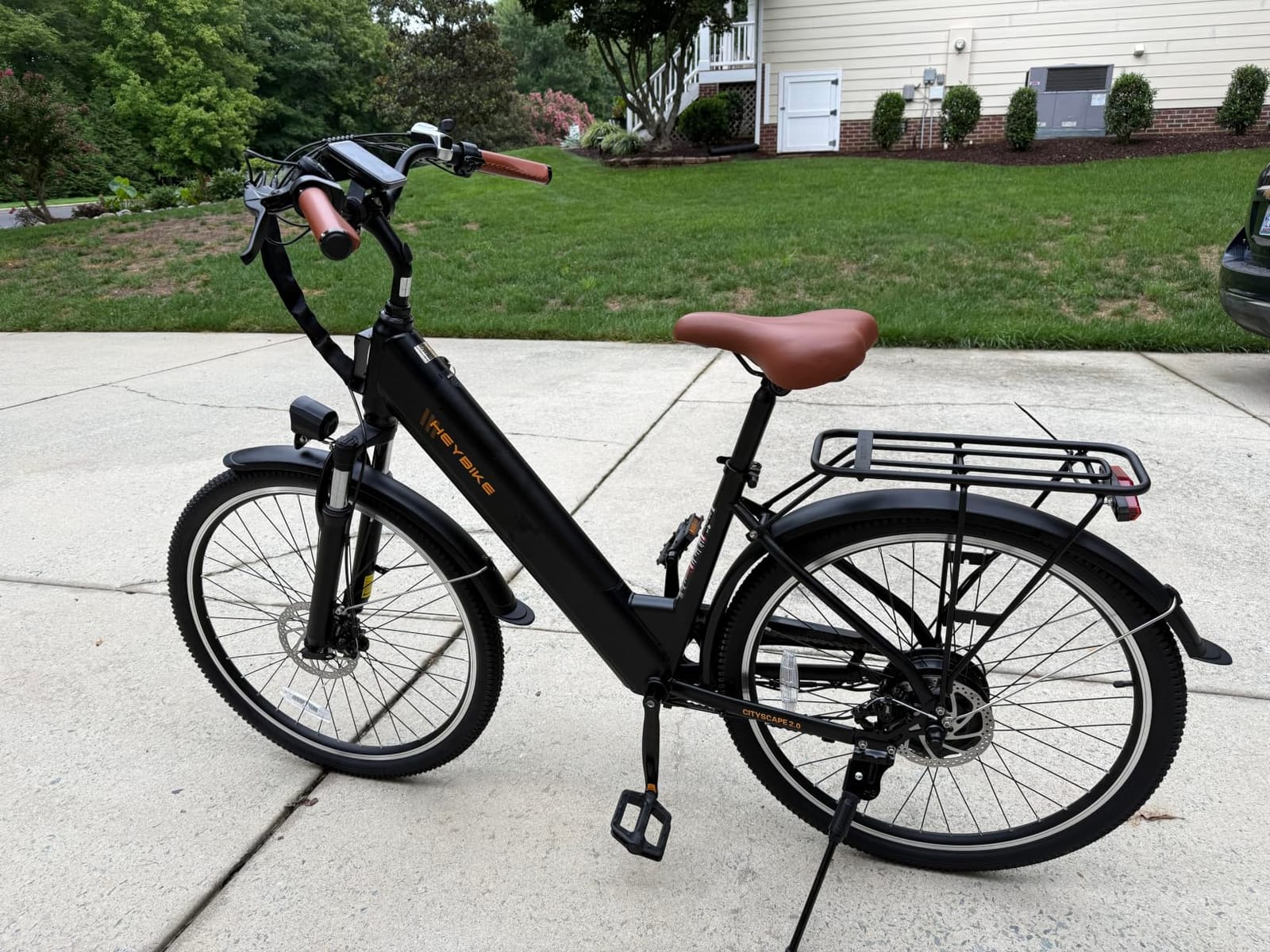
On a hilly route that efficiency is what allows the motor to hold 19-23 mph while the rider contributes enough to keep the assist from draining everything. The 26 by 1.95 tires with raised tread are narrower than the fat-tire options here, and that shows in rolling effort on pavement.
Full lighting, a rear cargo rack and adjustable handlebars come as standard. The bike is listed for paved roads, which is the honest description of where it does its best work.
Whether 468Wh is enough for a long commute
For a round trip of 20-25 miles on mixed assist, this pack is comfortable. The 15-20 percent figure for a 6-mile trip extrapolates to roughly 50 miles of mixed urban riding before the pack is genuinely low, which matches the middle of the claimed range rather than the top of it.
For a 30-mile one-way commute on assist level 3 or higher, 468Wh is not enough on its own. Riders in that situation should plan on a second pack or a charging stop, because doubling the battery size doubles the range almost exactly.
Where this bike is the wrong choice
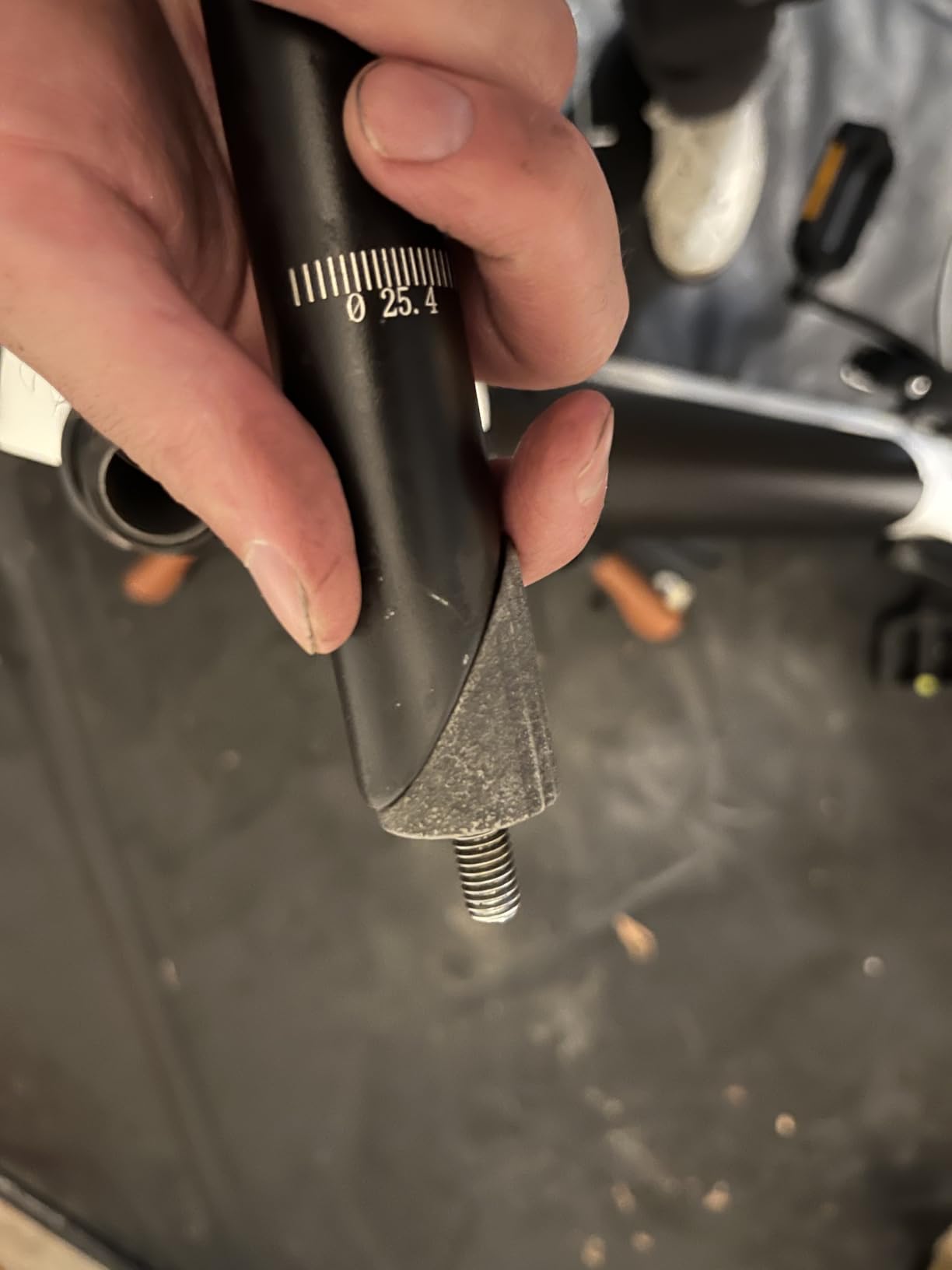
The documentation is the most repeated complaint. Bikes arrive largely assembled, but there are no printed instructions, and the QR-linked guide can fail to load, which leaves first-time owners guessing at setup and controls.
Brake noise with modest stopping power at higher speeds is the other recurring note. Riders who regularly descend fast hills should look at the machines with larger disc rotors and hydraulic calipers instead.
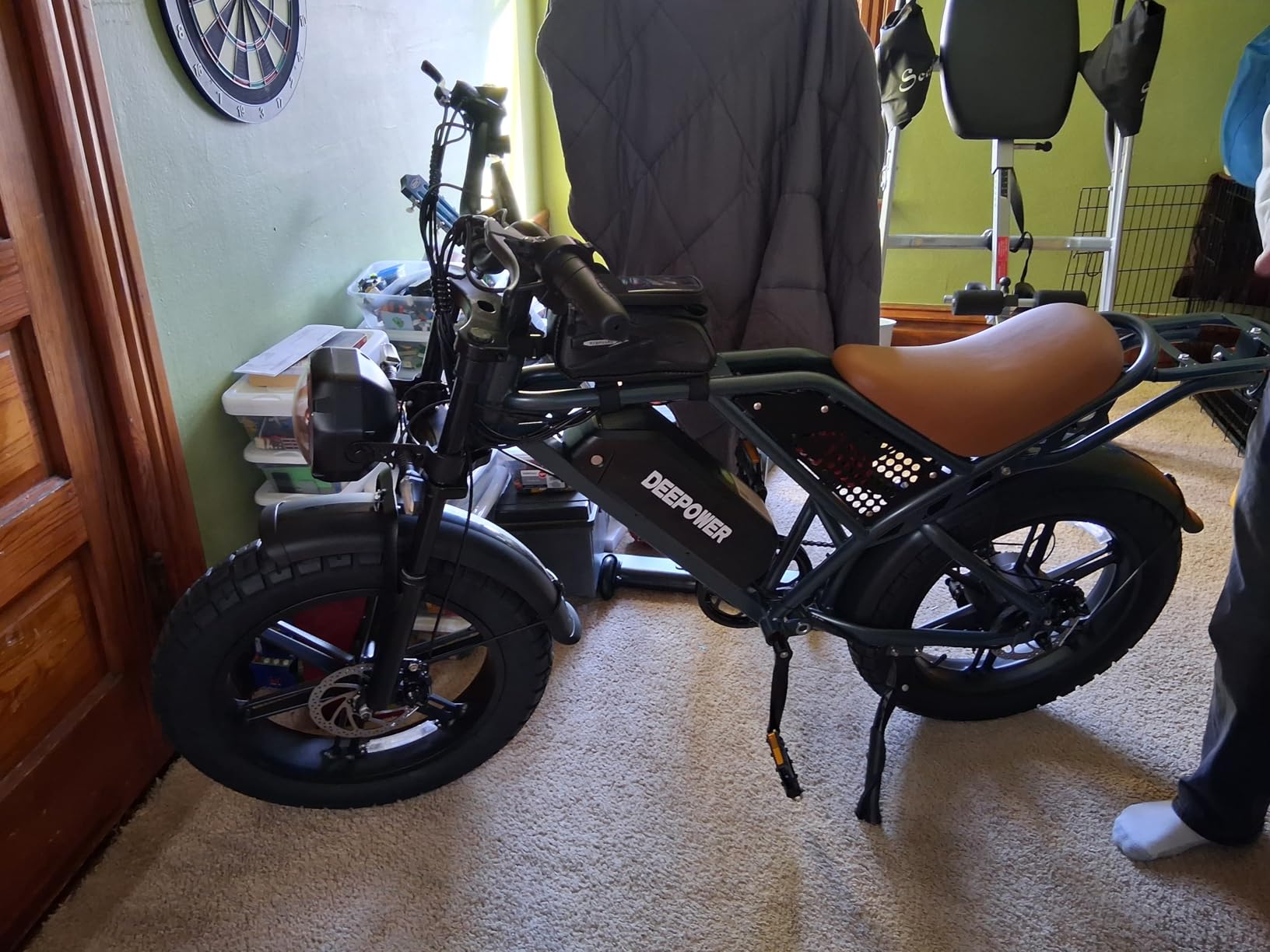
4. DEEPOWER 48V 20Ah: The Biggest Power Plant in the Roundup
DEEPOWER QS7 Electric Bike for Adults, 2000W Peak Power 28MPH E-Bike, 48V 20Ah/35Ah/60Ah Battery Options, 35–180 Mile Range, 20” Fat Tire Ebike, 7-Speed All-Terrain Electric Bicycle
48V 20Ah 960Wh pack
100 miles PAS claimed
2000W peak
28 mph
Pros
- Largest battery option in the group at 48V 20Ah
- 2000W peak motor climbs 30 degree slopes and reaches 28 mph
- Dual suspension plus 20 inch fat tires give three layers of impact absorption
- Dual disc brakes tuned for downhill heat dissipation
- 90 percent pre-assembled for quick setup
Cons
- Moped-style 20 inch frame is bulky and awkward to store
- 43 kg packaged weight makes it a two-person lift
The DEEPOWER pairs a 48V 20Ah pack with a 2000W peak motor in a moped-style 20-inch fat-tire frame. Claimed range runs to 70 miles in pure electric mode and 100 miles in pedal-assist mode, the highest headline figure of any bike here.
Where it genuinely earns its place is on grades. A 30 degree slope capability with 28 mph top speed is real climbing ability, and the dual suspension stack of front fork plus rear shock means sand and snow do not reach your spine.
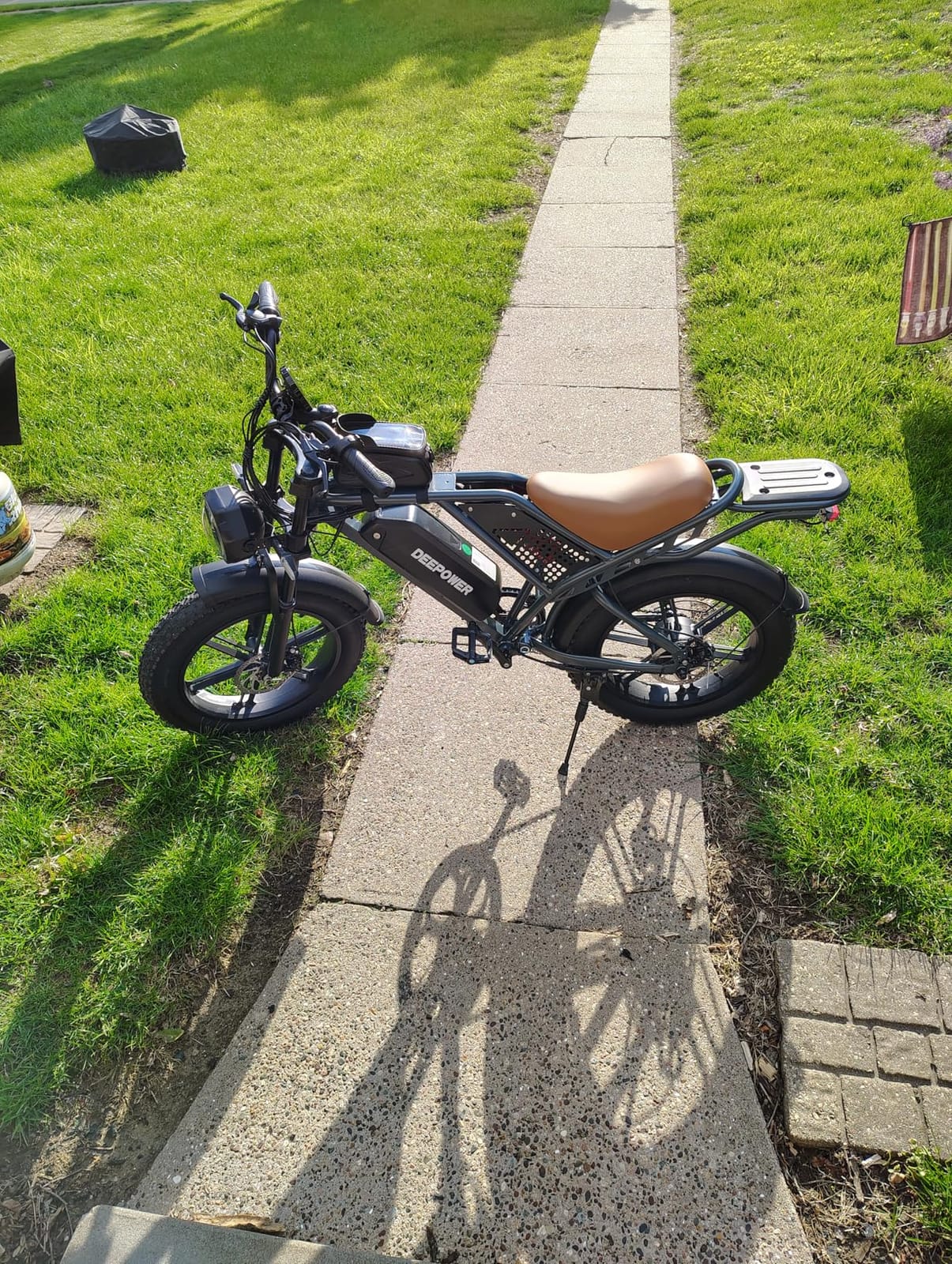
The disc brakes are described as tuned for heat dissipation during downhill riding, which is the correct engineering response to a bike that can descend quickly. Owners consistently point at the oversized pack and the motor’s hill ability as the reasons they bought it.
One-year warranty with a stated 24-hour support response is thinner than the two-year cover many buyers assume, and the frame arrives 90 percent assembled rather than fully built.
What 100 miles of claimed range really means
The 100-mile figure is a pedal-assist level 1 number on flat ground with a light rider. Treat it as a ceiling. In ordinary mixed riding most owners of a bike in this class report something between a third and a half of the claim.
The battery size itself is the headline: at 960Wh it matches the EUYBIKE folder for the largest capacity available here, but in a larger frame that takes more space and more effort to move.
Where this bike is the wrong choice
Storage and transport are the honest drawbacks. A moped-style 20-inch fat-tire frame does not fit narrow bike racks, small apartments or a sedan boot, and a 43 kg package weight makes moving it a two-person job.
Riders on paved city streets will carry the extra weight and width of fat tires for capability they rarely use. If your range requirement is a long commute rather than loose terrain, a narrower commuter design serves you better.
5. LEONX M2 Pro: Built for Heavy Riders and Loaded Climbs
LEONX M2 Pro Electric Bike for Adults, 1800W Peak Motor, 85-Mile Long Range
48V 17.5Ah 840Wh pack
85 miles PAS claimed
110 Nm torque
500 lb max load
Pros
- 1800W peak motor with 110 Nm climbing ability
- Heavy riders report 25-40 miles per charge
- Dual suspension and fat tires make it the most stable bike here
- Turn signals horn and brake-activated taillight
- Support resolves issues and sends replacement parts
Cons
- Roughly 90-100 lb and hard to carry upstairs
- Mechanical disc brakes need adjustment and rate low on stopping power
- Not sized for riders under 5 ft 10 in
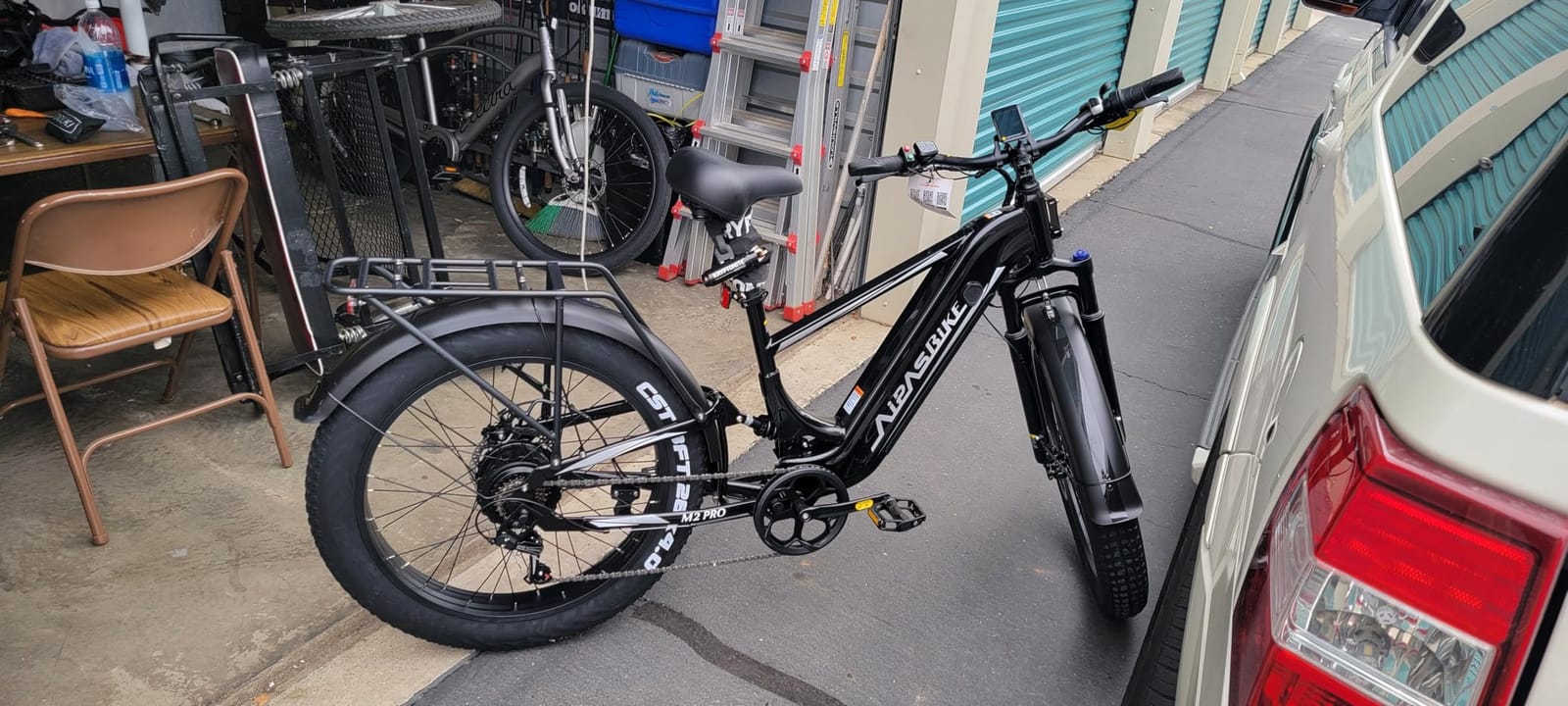
The M2 Pro is the only bike in this roundup with a 500 lb maximum load rating, and that figure is the reason it exists. Heavy riders of 220-314 lb report getting 25-40 miles per charge from the removable 48V 17.5Ah pack, which is about 840Wh.
The 1800W peak rear hub motor makes 110 Nm of torque and is rated to climb 30 degree grades. Taller riders report 35-40 mph when the bike is unlocked, which is well beyond the class speed limits for public roads.
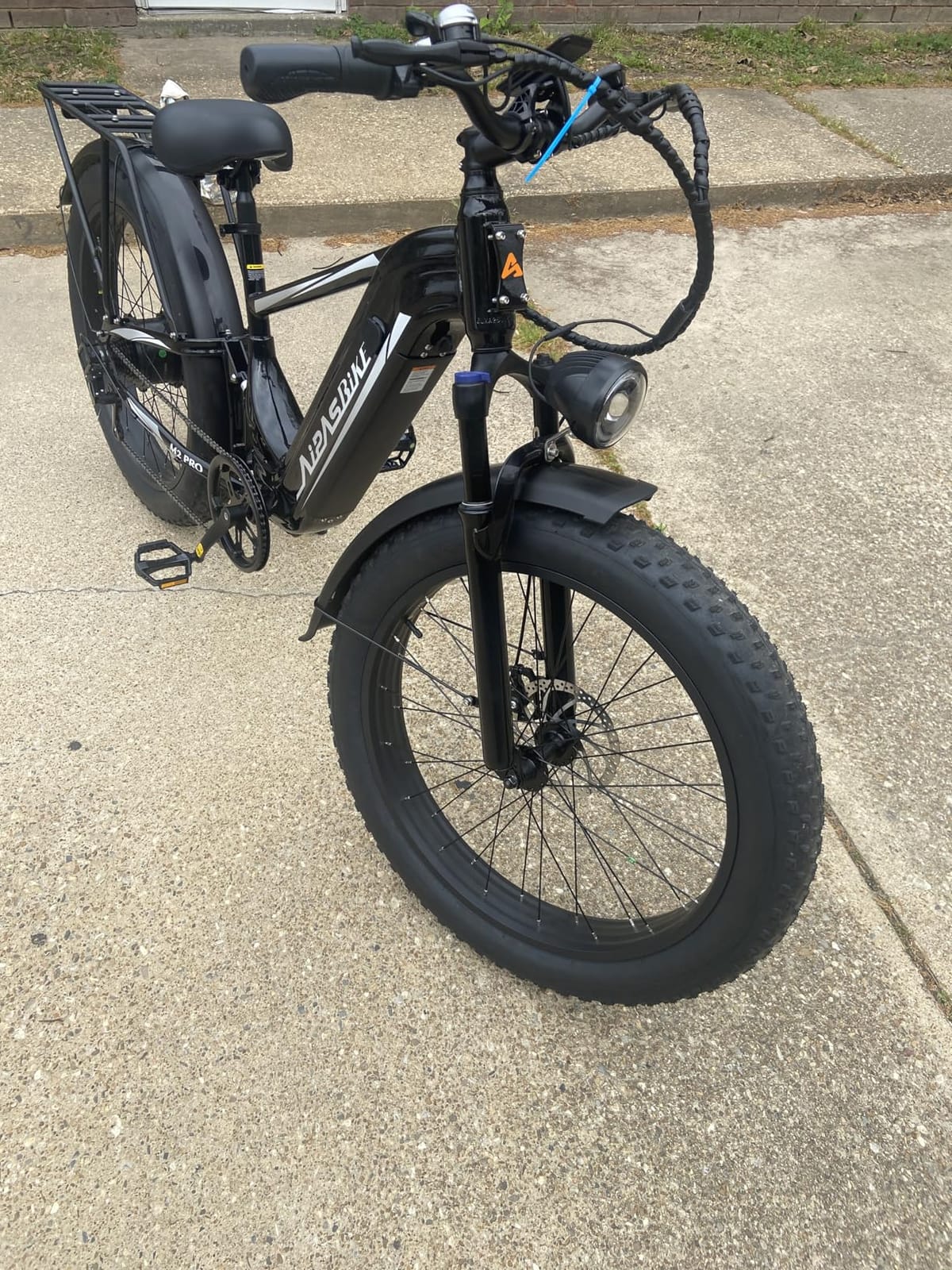
Lockable and adjustable front suspension plus a rear shock, 26 by 4.0 fat tires and a 95 percent pre-assembled delivery make it the most trailer-ready bike here. The USB charging port under the handlebar control is a small touch riders appreciate daily.
It arrives 95 percent assembled, which in practice means complete and ready to ride, and the packaging quality is called out as a genuine positive. Replacement parts are sent by the company when something fails.
Real range for a heavier rider
This is the clearest example in the roundup of why rider weight changes the math. Riders around 300 lb describing 25-40 mile results on a pack that carries an 85-mile claim tells you the claim is measured at a much lower rider weight on level ground.
For a rider near the 500 lb limit, treat 25 miles as a realistic planning figure for mixed riding. If you need more, the battery is removable and the platform is straightforward enough that a second pack is the obvious answer.
Where this bike is the wrong choice
At 90-100 lb this is the heaviest bike here by a wide margin, and it is not a bike you can carry up stairs or lift into a car alone. Mechanical disc brakes also need regular adjustment, and owners rate their stopping power poorly once speed builds.
Riders under 5’10” are the other group this does not serve. The frame is not adjustable enough to compensate, and the stock saddle draws complaints for both comfort and noise.
6. ANCHEER 26 Inch: The Best-Thought-Out Step-Through Commuter
ANCHEER Electric Bike for Adults, EBike, 48V 500Wh Removable Battery, Fast-Charge, 26″ Commuter Electric Bicycles, 7-Speed, LCD Digital Display, Suspension Fork, Cruise Control, UL2849
48V 10.4Ah 499Wh pack
60 miles claimed
Cruise control
Aluminum frame
Pros
- Owners report 26 mile rides using only a quarter to a third of the pack
- Battery hidden under the rear rack looks like a normal bike
- Fast charger and long lasting battery
- Cruise control for relaxed riding
- UL2849 certified with responsive dual disc brakes
Cons
- Assembly is time-consuming and instructions are not always enough
- Weak brakes at higher speeds that can squeal when wet
- Top speed falls short of the advertised figure
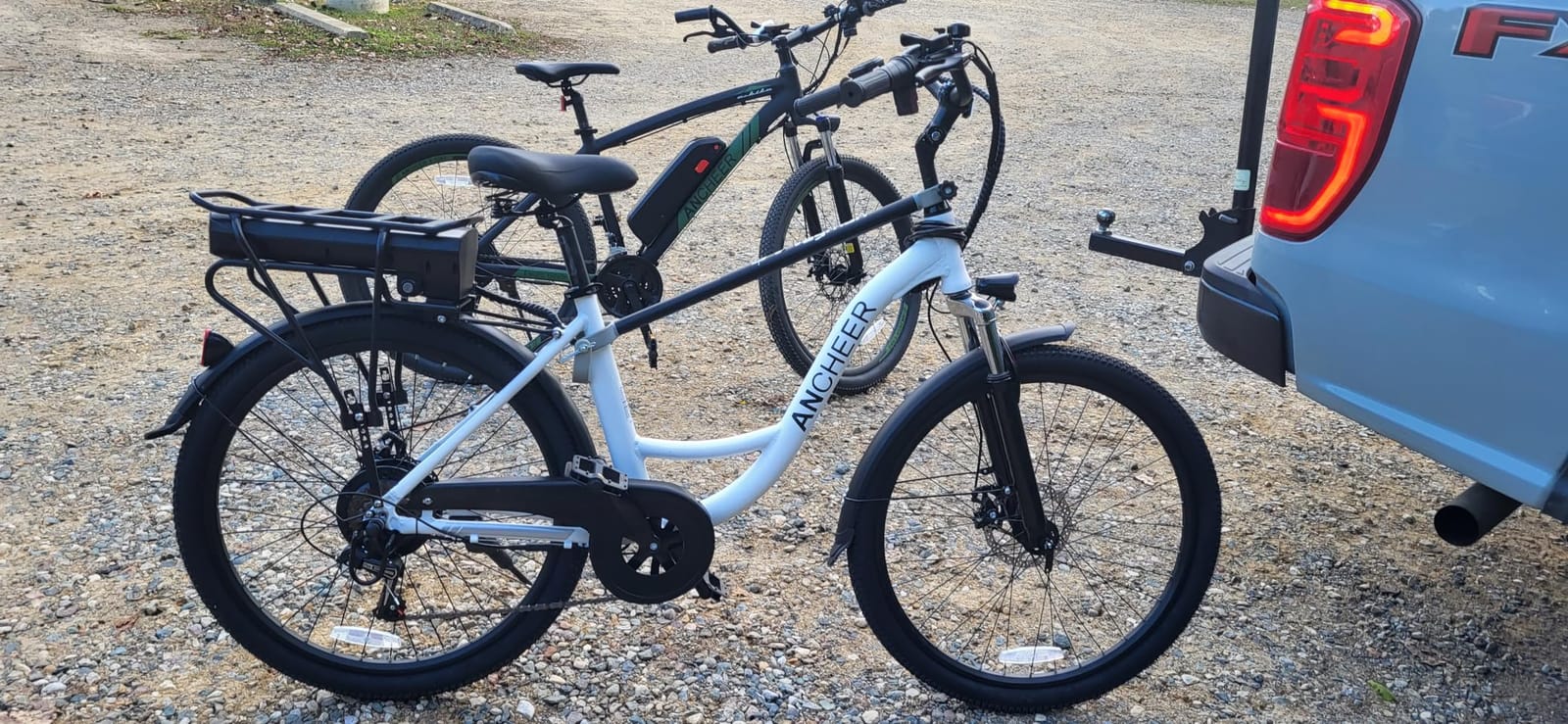
The ANCHEER hides a 499Wh removable pack under the rear rack, which means from the side it reads as a conventional bicycle rather than an e-bike. That matters if your commute passes storefronts where a bulky machine attracts attention.
Long-term owners describe hundreds of miles on the same pack, and the standout data point is a 26-mile ride using only a quarter to a third of the charge. Even discounting for enthusiasm, that implies a realistic full-charge range in the 60-80 mile band for many riders, which is at the high end of this roundup.
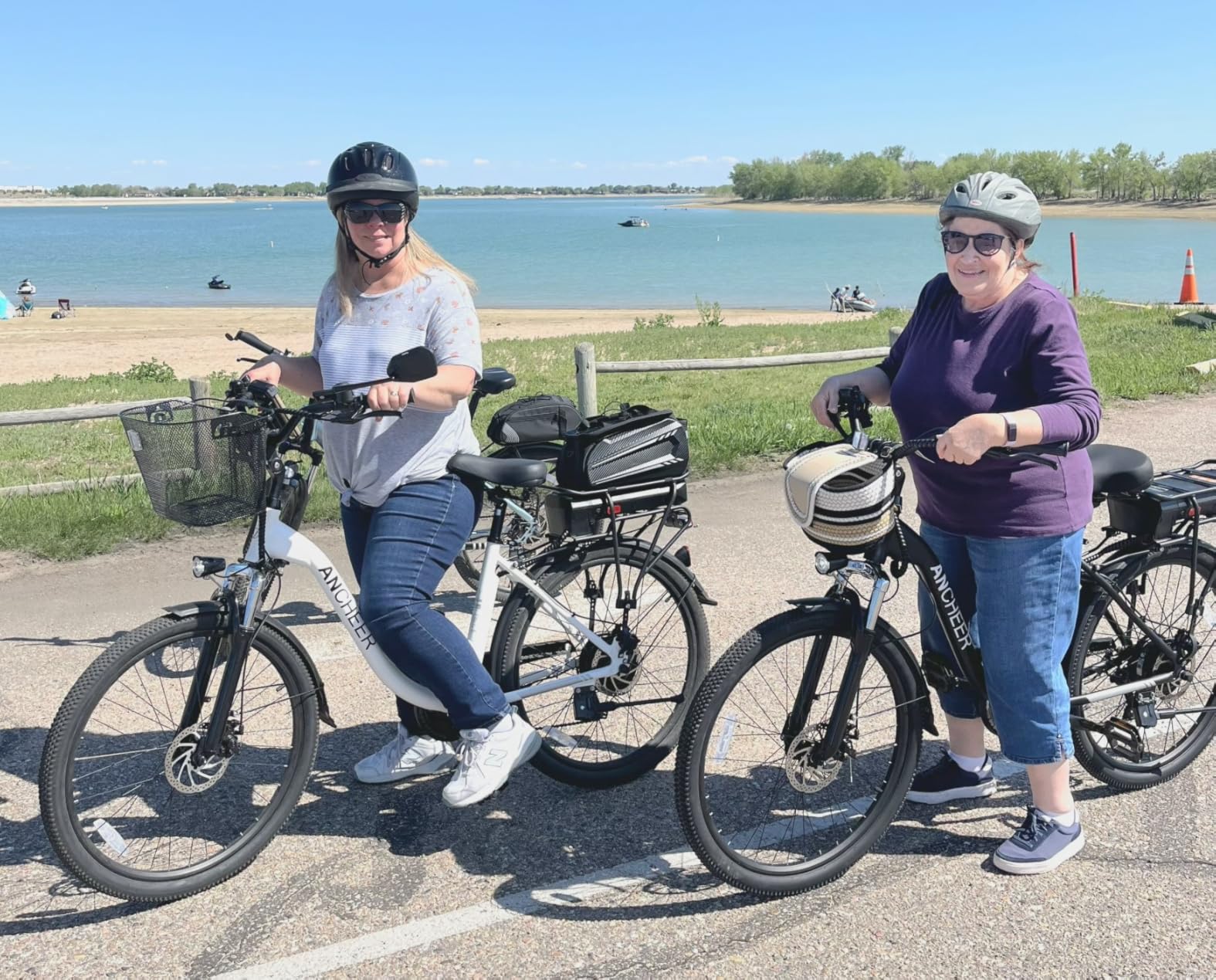
The frame is aluminum with double-walled alloy rims, which is a better material choice than the carbon steel used on several cheaper bikes here. Cruise control, five assist levels, a twist throttle and an LCD showing battery level, speed and mileage round out a well-considered package.
UL2849 certification is present for the complete bike, and the pack is locked into the frame rather than sitting on a rail where it could be lifted out by anyone standing next to it.
Whether 499Wh is enough for daily use
For a 15-20 mile round trip, 499Wh is comfortable with room to spare, and the efficiency data suggests you could stretch toward 25 miles each way on lower assist. That covers the majority of long-distance commuters without any charging plan at all.
Charging is handled by a fast charger, and owners report the pack holding its capacity over 12-15 months of ownership. That consistency is the most valuable thing on this list, because pack degradation is the failure mode that ends most long-range ambitions.
Where this bike is the wrong choice
Assembly is the biggest friction point, and instructions alone are reportedly not always enough. Budget an evening and a video walkthrough rather than expecting a half-hour setup.
Braking is the other honest weakness. Owners describe the discs as weak for the speed the bike reaches and prone to squealing when wet, and the front suspension cannot be locked out for smooth pavement. Riders who ride fast downhill should look at a bike with hydraulic calipers and larger rotors.
7. DTTZH F6: The Battery Size Choice and the Fastest Charge Here
Adult Electric Bike, Fast E Bike for Adults Electric Fat Tire Ebike
48V 15.6Ah 749Wh pack
60 miles PAS
3A fast charger
5-7 hour recharge
Pros
- Three battery options let buyers trade price for capacity
- 3A fast charger cuts charging time roughly in half
- NFC card or 4-digit password unlock
- Full suspension with a one-piece 20 inch wheel
- Support sent a replacement motor and a free kickstand
Cons
- Some units arrive with a non-functioning motor
- Oversized box makes returns difficult
- One-star share is 10 percent the highest in the group
Most sellers give you one battery size. The DTTZH F6 listing runs from 1500W to 4000W trims with 48V 15.6Ah, 48V 25Ah and 60V 30Ah battery options, and this variant is the 48V 15.6Ah pack at roughly 749Wh.
The 3A charger is the quiet hero. A full charge takes 5-7 hours against the 8-10 hours a standard 2A charger needs for a pack this size, which is the difference between charging overnight and charging during a lunch break for many riders.
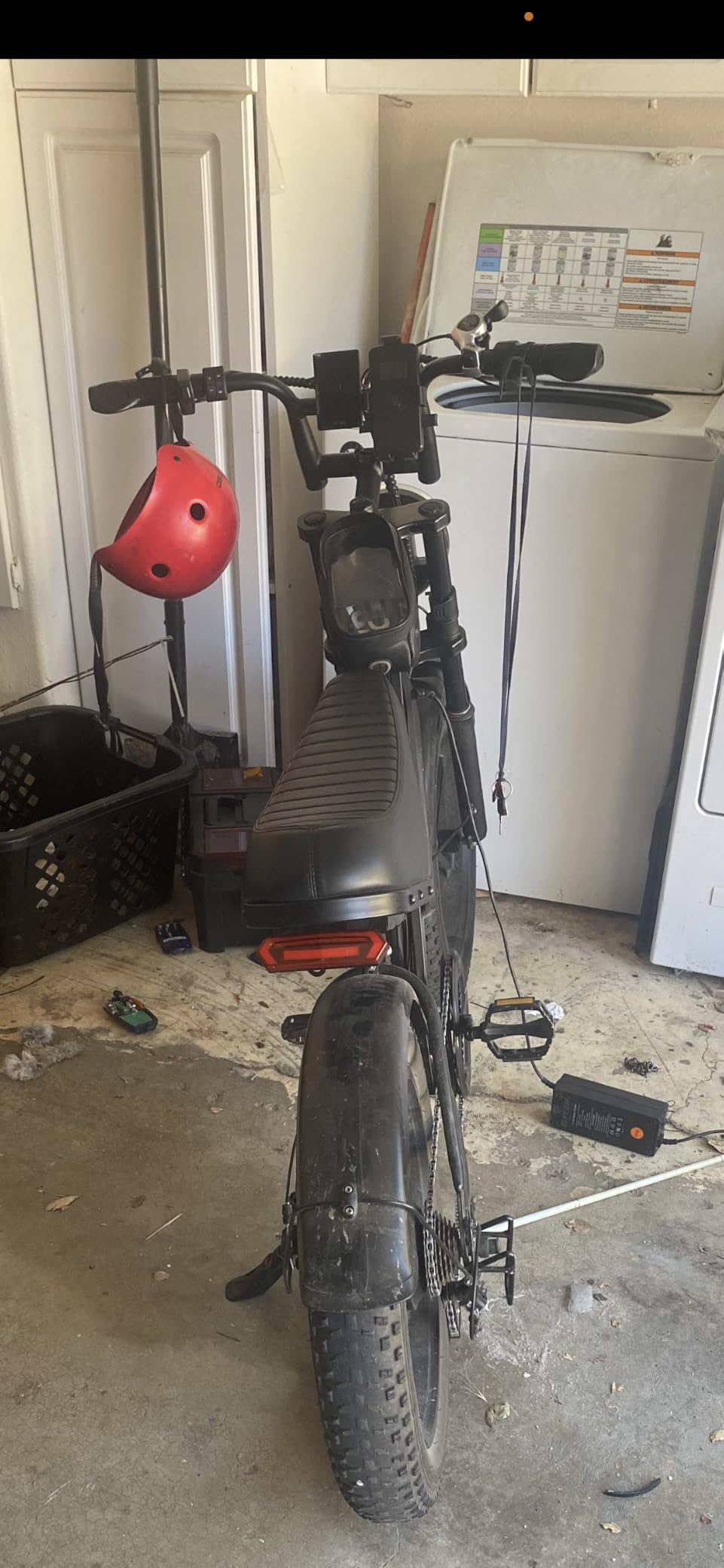
Range figures for this trim are 22 miles in throttle mode and 60 miles in pedal-assist mode. The 4-inch color LCD is bright enough to read in direct sunlight, and NFC unlock through a card or 4-digit code replaces a mechanical key entirely.
Full suspension with a hydraulic front shock and rear shock sits on a 20 by 4 one-piece integrated wheel design, which is genuinely solid over sand and grass. Customer service has provided a replacement motor and a free kickstand when things went wrong.

Why charger amperage matters more than pack size
Owners planning multi-day trips care about this more than a 100Wh difference in capacity. A 749Wh pack on a 3A charger gives you a full turnaround overnight, while the same pack on a 2A charger leaves you waiting an extra three hours before a second day’s riding.
The practical rule is simple: a bigger pack with a slow charger is worse for travel than a slightly smaller pack with a fast one, because your constraint is the hours you are willing to wait, not the watts on the label.
Where this bike is the wrong choice
The one-star share of 10 percent is the highest in this roundup, and the reason is consistent: some units arrive with a non-functioning motor that needs replacement plus shop labor. That is a manufacturing quality-control problem, not a design flaw, but it is the first thing to check on arrival.
The oversized packaging is a genuine problem if anything goes wrong. Carriers and return centers have refused the box, so a return may cost you the bike. Assembly also needs a second person to hold the frame while the front wheel goes on.
8. Jasion RetroVolt: The Two-Person Fat-Tire Option
Jasion RetroVolt Electric Bike, 70-Mile Range, 2000W Peak, Fat Tire
48V 15Ah 720Wh pack
70 miles claimed
2000W peak with 99 Nm
330 lb payload
Pros
- Strong category sales rank at number 2635 in Sports and Outdoors
- 2000W peak with 99 Nm for confident starts and hill support
- Rear seat pad and 330 lb payload carry a passenger or cargo
- UL-certified battery with water resistance
- 5-6 hour recharge
Cons
- Moped-style fat-tire frame is bulky for urban parking and indoor storage
- 72 percent of reviews are 5-star with a 5 percent one-star share
The RetroVolt carries a removable 48V 15Ah pack, about 720Wh, with a claimed range of up to 70 miles and a full recharge in 5-6 hours. The battery carries UL certification and a water-resistant design, which is the baseline you should insist on in this category.
What makes it unusual is the rear seat pad. With a 330 lb payload rating, this is the only bike in the roundup sized to carry a short-distance passenger, and the 99 Nm of torque from the 2000W peak motor makes that a workable arrangement rather than a stunt.
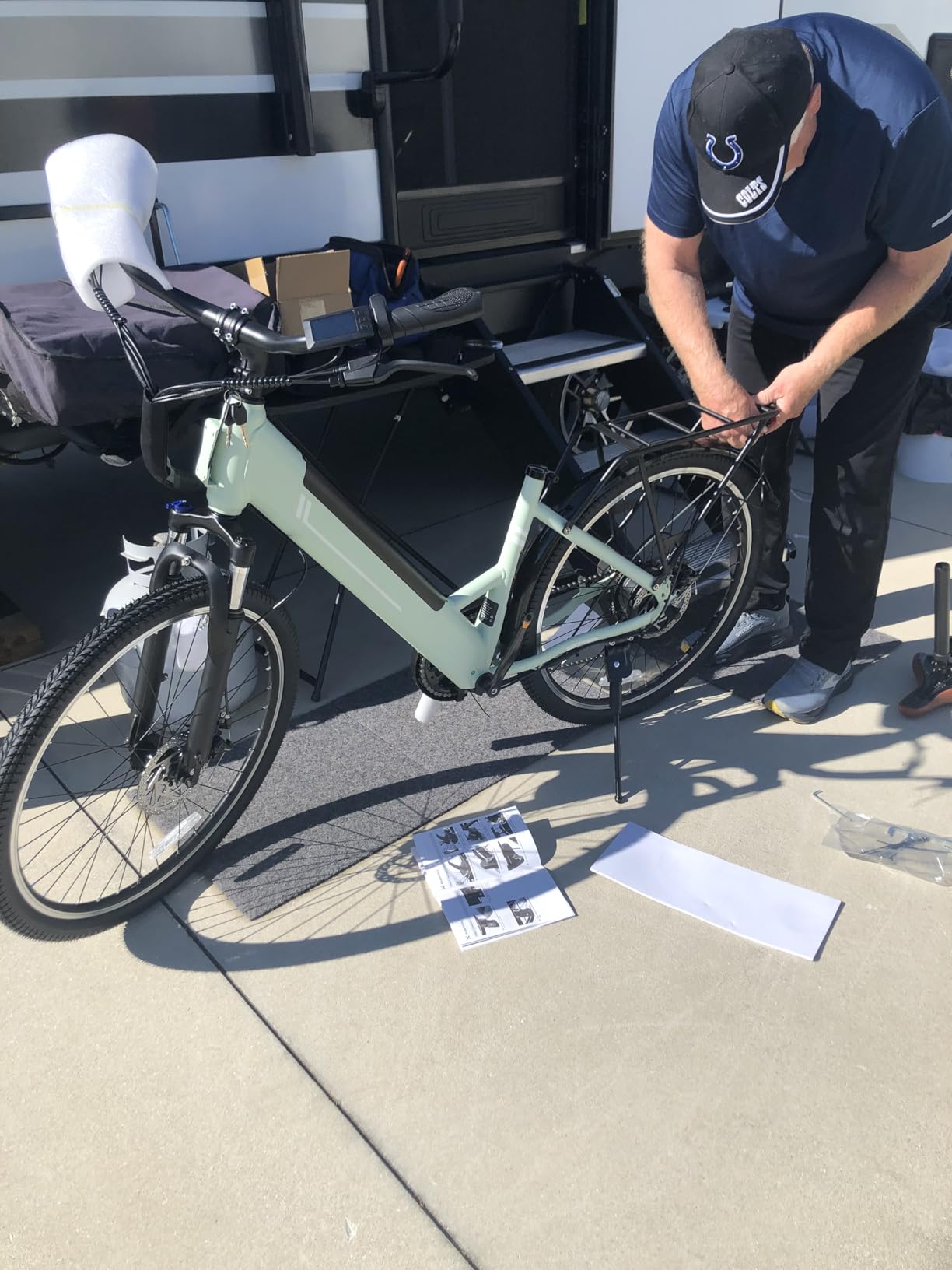
Rider fit runs from 5’4″ to 6’3″, one of the wider ranges here, and the 20 by 4 fat tires with dual suspension are aimed at pavement, gravel, park roads and beach routes. The bike arrives 85 percent pre-installed.
Its category sales rank of number 2,635 in Sports and Outdoors is the best of any bike here, which tells you something about how quickly it is moving in the market and how consistently owners are reviewing it.
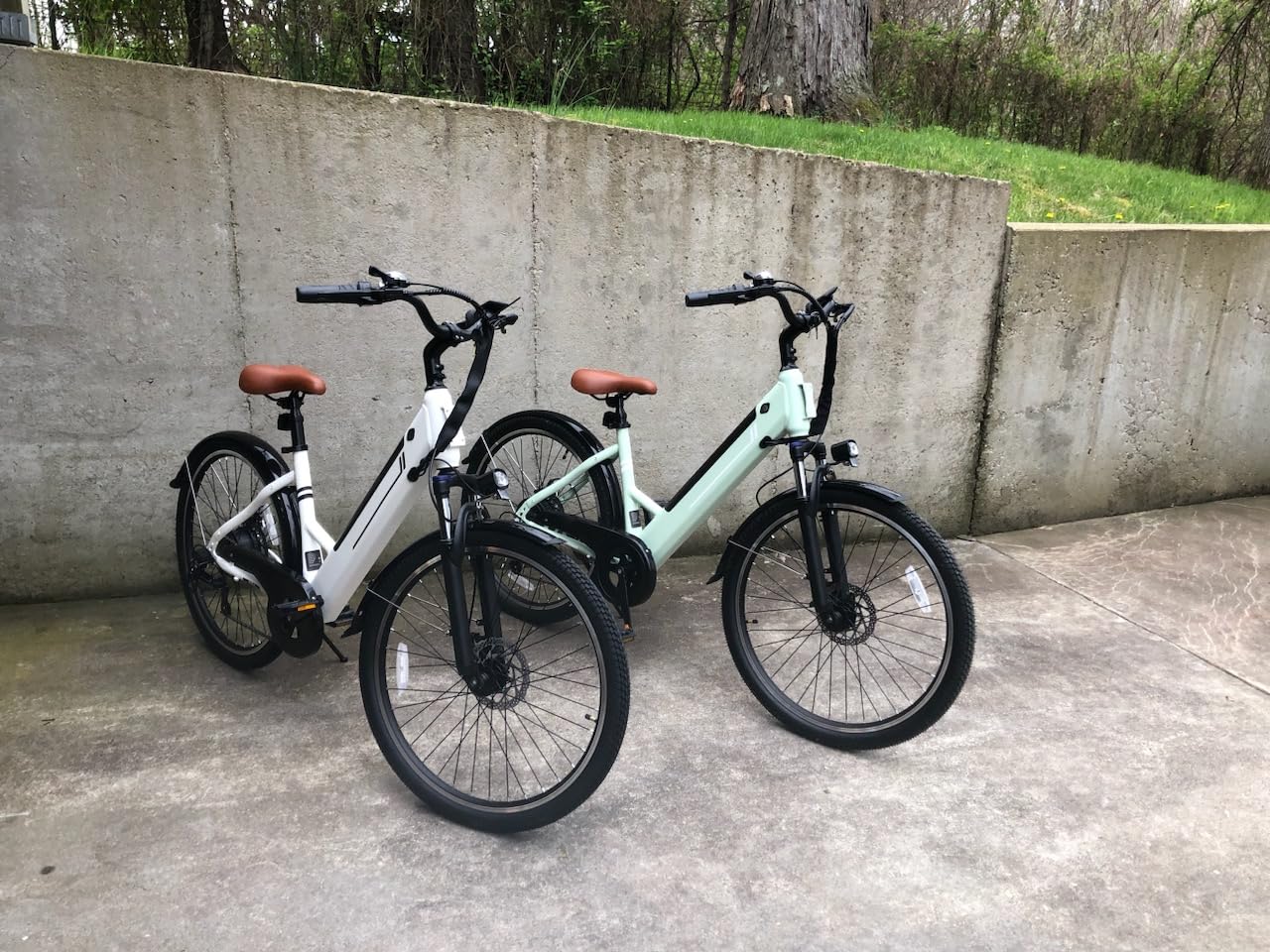
Range with a passenger on board
A 720Wh pack carries one rider easily. Carrying a second person roughly doubles the mass the motor and battery are moving, and hill sections take proportionally more energy, so plan on a realistic 25-30 miles with two riders on mixed terrain.
For a family beach ride or a trip to the market with a child on the back, that is still a lot of usable distance, and it is a capability none of the other bikes in this roundup offers.
Where this bike is the wrong choice
The moped-style footprint is the consistent drawback. It is bulky for indoor storage, awkward in urban parking and wider than a standard bike lane-friendly commuter.
Range expectations also need managing. The 70-mile figure is a pedal-assist number on flat ground, and a bike built around 4-inch fat tires and dual suspension carries more rolling resistance than the narrow-tire commuters in this list. Expect a meaningful haircut on mixed terrain.
9. EUY C2.0: Solid Build Where the Range Claim Overreaches
EUY 26″ Electric Bike for Adults,1000W Motor Peak Ebike Max Long Range 70 Miles by 48V Removable Battery,Commuter Fast E-Bikes,7-Speed Step Thru Electric Bicycles UL Certified
Removable 48V pack
70 miles PAS claimed
1000W peak
20 mph assisted
Pros
- Build quality repeatedly called rock solid
- Hidden removable battery deters theft
- Owners reach 27-30 mph and hold 25 mph into a headwind
- Adjustable front suspension and dual disc brakes with EABS
- Arrives well packed and assembles in about 20 minutes
Cons
- Real range far below the 70 mile claim in many reports
- Battery can be ridden with the key removed
- Contact terminals pick up dirt and cut out the electronics
- Delayed throttle response
- 71 lb weight is hard to lift
The EUY C2.0 is the clearest case in this roundup of a bike whose build quality outruns its range claims. Owners repeatedly describe the frame as feeling equal to or better than machines costing twice as much, and several logged 100-plus miles with no failures.
The listing claims 70 miles in pedal-assist mode and 30-plus miles in electric mode from a hidden removable 48V pack. The dominant complaint in the reviews is that delivered range is far below that, with 10-25 miles described as more typical for many riders.
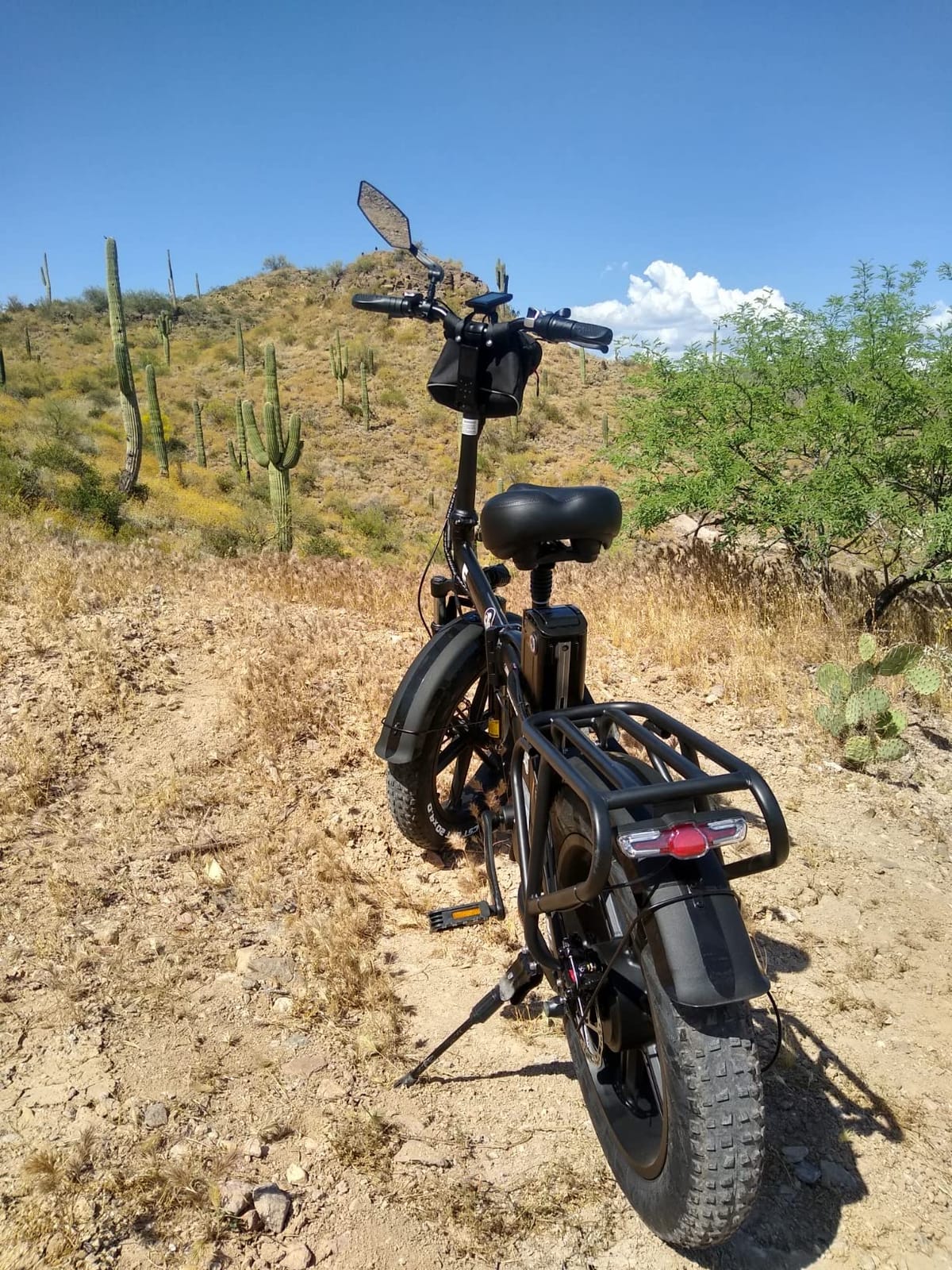
The hidden battery mount is genuinely clever for theft deterrence, and the adjustable front suspension with dual spring shocks plus dual disc brakes with EABS is a better safety package than most of this list. Owners report 27-30 mph and holding 25 mph into a headwind.
A 12-month warranty covers motor, battery, charger and controller, which is the most explicit parts warranty in the roundup. The bike assembles in about 20 minutes and arrives well packed without transit damage.
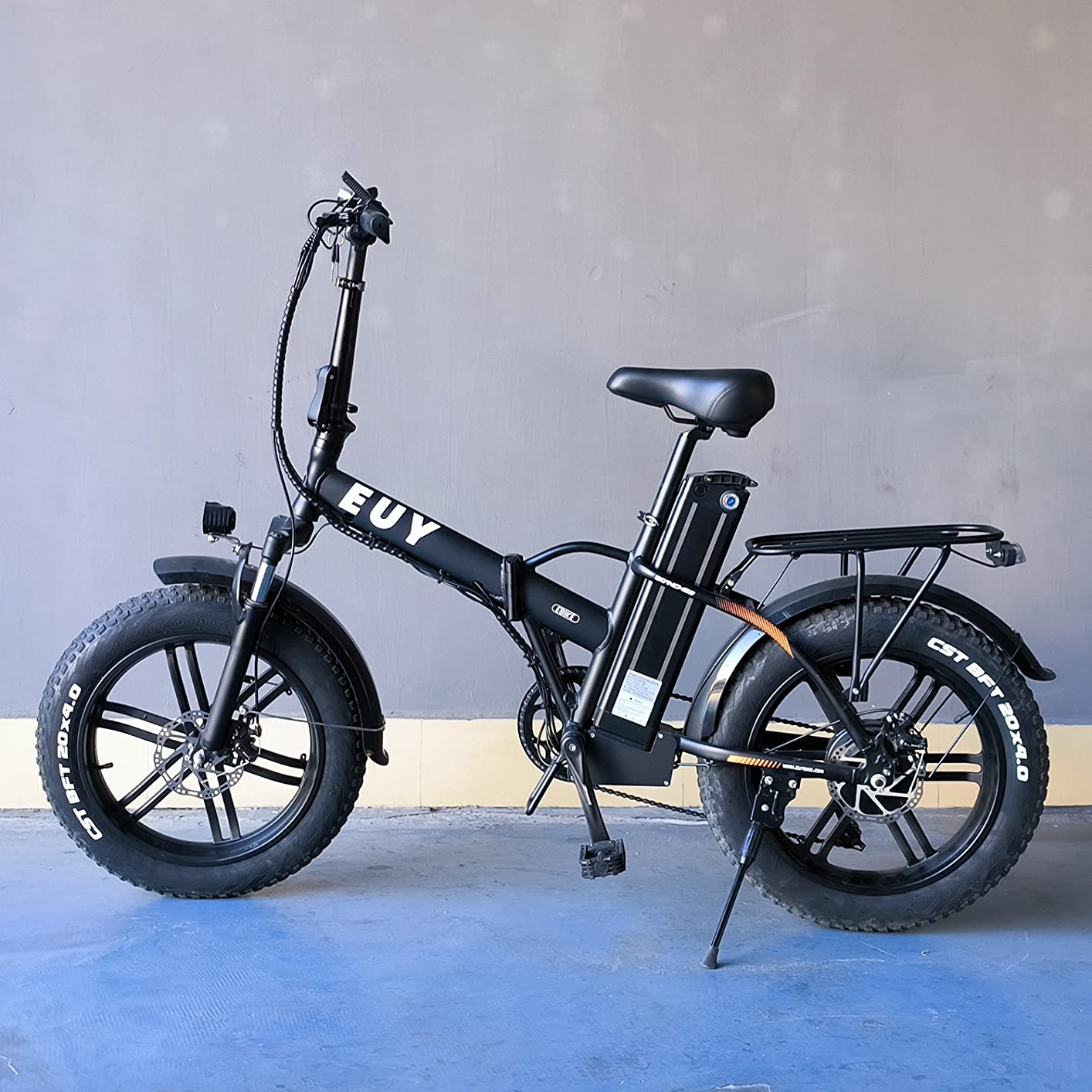
Why the range gap is so wide here
Two factors combine. The 70-mile figure is a pedal-assist claim rather than a tested result, and the reported real-world figure suggests a substantial gap. Owner enthusiasm also varies widely, with some reporting 100-plus miles and many reporting 10-25.
The spread tells you the test conditions are doing the work, not the bike. If your route is flat and you stay in low assist, you will do well. If you ride hills at assist level 3 or higher, you should plan around the lower end of what owners report.
Where this bike is the wrong choice
Two design details are worth knowing before you buy. The battery can be ridden with the key removed, which weakens the anti-theft benefit of the hidden mount, and the contact terminals can pick up dirt and sand, cutting out the electronics until they are cleaned.
Delayed throttle response is also reported, meaning you sometimes have to pedal before the throttle engages. At 71 lb the bike is hard to lift, and the high center bar is awkward for taller riders. Support responses can be unhelpful once the 12-month warranty ends.
10. TotGuard 27.5 Inch: The Only Real 21-Speed Drivetrain at This Level
TotGuard Electric Bike, 27.5″ Electric Bike for Adults 500W Motor Ebike Adult Electric Bicycles Electric Mountain Bike,48V 499WH Removable Battery,21S Gears,Lockable Suspension Fork
48V 499Wh pack
About 5 hour charge
21-speed drivetrain
27.5 inch tires
Pros
- Only bike here with a true 21-speed drivetrain
- 27.5 inch wheels roll easier and handle rough roads better
- Lockable aluminum suspension fork is rare at this level
- Simple readable LCD with battery and assist level
- 12-month warranty with lifetime technical support
Cons
- Lowest average rating in the group at 4.2
- 500W motor and 19.8 mph top speed are the weakest figures here
- Only 3 assist levels limits control of power and range
- Upgraded battery is not interchangeable with the earlier pack
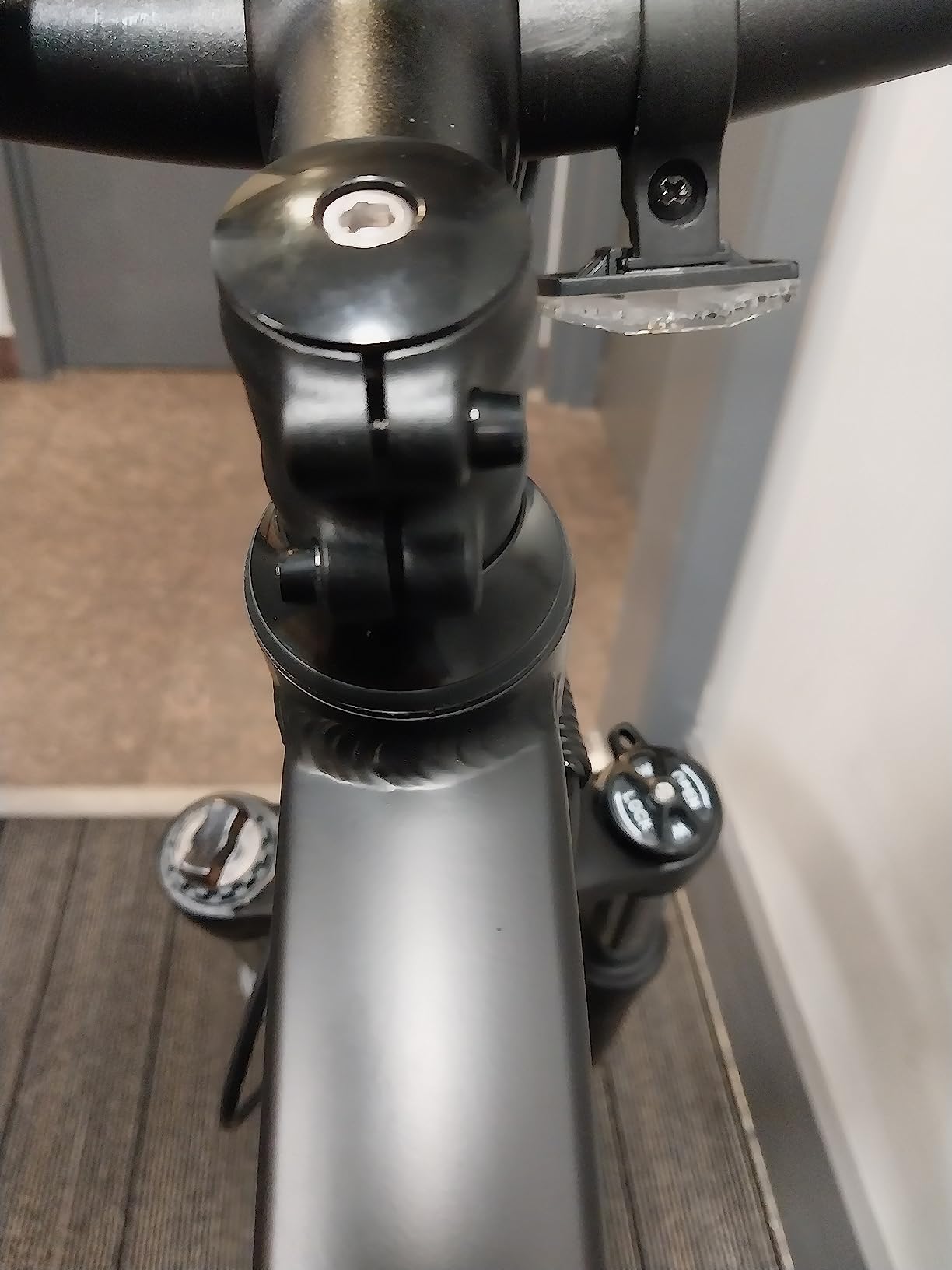
The TotGuard pairs a 499Wh IP54 waterproof removable pack with a 500W motor and a 19.8 mph top speed, the slowest ceiling in the roundup. What it does better than anything else here is gearing: a genuine 21-speed setup with a Tourney 3-speed front and 7-speed rear.
On mixed terrain that matters. When a 500W motor runs out of legs on a climb, having real gears to drop into extends the ride considerably and reduces the strain the battery has to cover on the same hill.
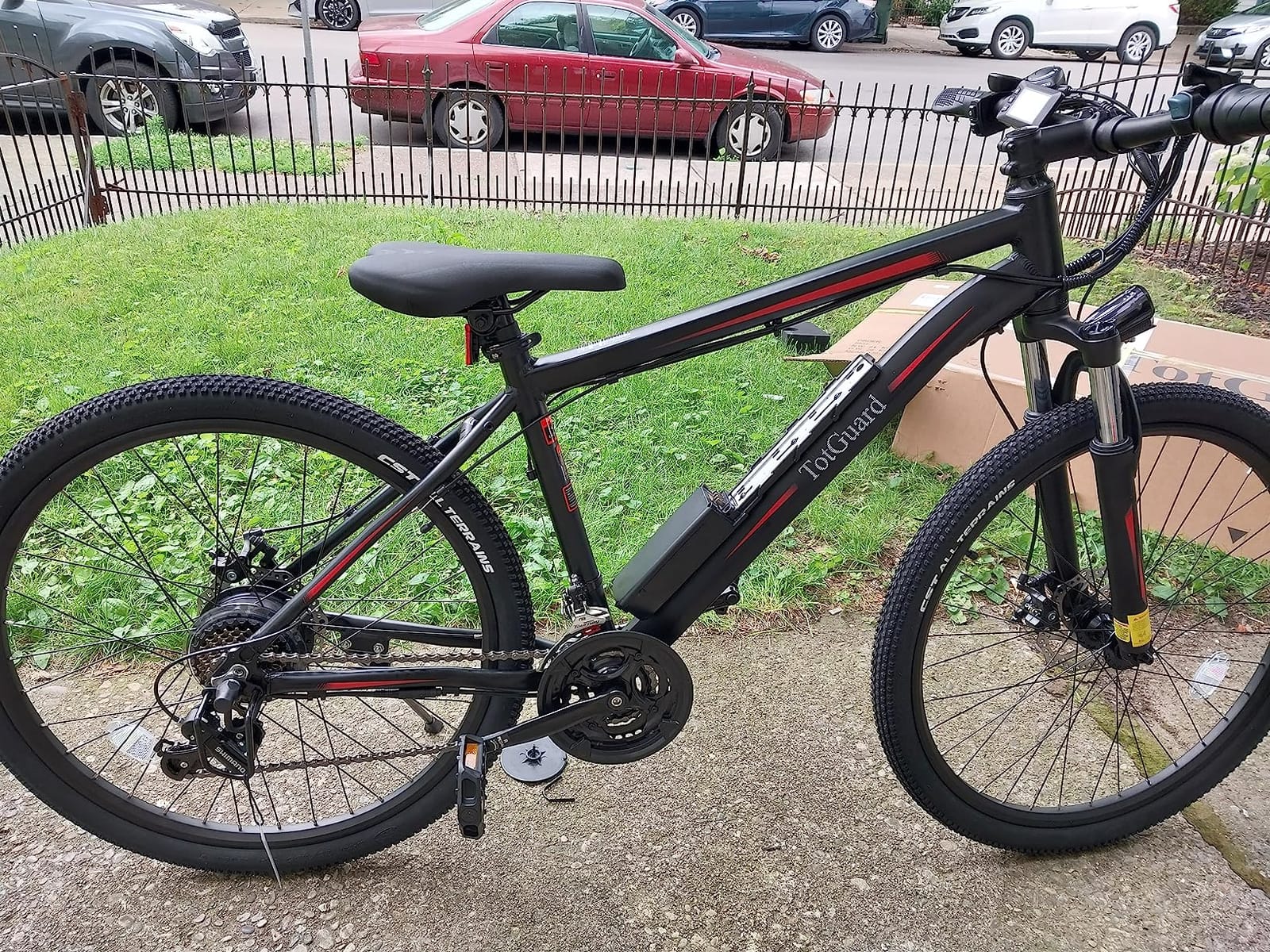
The 27.5-inch wheels roll easier than 26-inch and handle rough roads better, and the lockable aluminum suspension fork lets you firm it up for pavement. Charging takes about 5 hours, and three riding modes cover pure electric, pedal assist and unpowered riding.
The clear LCD shows battery level, three assist levels, mileage, voltage, speed and ride time, which is more instrumentation than most bikes at this level provide. A 12-month warranty with lifetime technical support extends the practical ownership window.
How to get more range out of a 499Wh pack
With only three assist levels you have less fine control than on a 5-level bike, so the third level is the one that costs you the most range. Using levels one and two and relying on the 21 gears to do the work keeps consumption down.
Because the 500W motor is the weakest performer here, this bike leans on gearing and rider input more than its competitors do. For a rider who pedals well and rides varied terrain, that is a sensible trade. For a rider who wants maximum motor assistance, it is not.
Where this bike is the wrong choice
The 4.2 average is the lowest in the roundup, with 11 percent one-star reviews. The performance figures are modest: 500W and 19.8 mph will feel slow to anyone coming from a 28 mph class 3 bike.
The battery is also not interchangeable with the previous version’s pack, which matters if you were counting on a spare from an earlier purchase. Riders chasing headline range should look at a larger pack elsewhere in this list.
11. Funhang Step-Thru: The Smallest Pack, the Tallest Claim-to-Capacity Gap
Funhang Electric Bike for Adults, 1000W Peak Ebike, 50Miles Step Thru Electric Bicycle, 26″ Commuter E Bikes with 48V Built-in Removable Battery, Adjustable Stem, 7-Speed, UL 2849 Certified
48V 374.4Wh pack
40-50 miles PAS claimed
Step-thru frame
IPX5 removable
Pros
- Step-thru frame with adjustable stem and seat suits a wide height range
- Removable built-in battery with BMS for safe charging
- Five working modes and five pedal assist levels
- UL 2271 and UL 2849 certifications recognized by SGS
- Front suspension dual disc brakes fenders and rear rack included
Cons
- 374Wh pack is one of the smallest here despite the 50 mile headline
- Some fenders and entry-level components feel cheap
- 7-speed drivetrain limited for steep climbing or high-speed pedaling
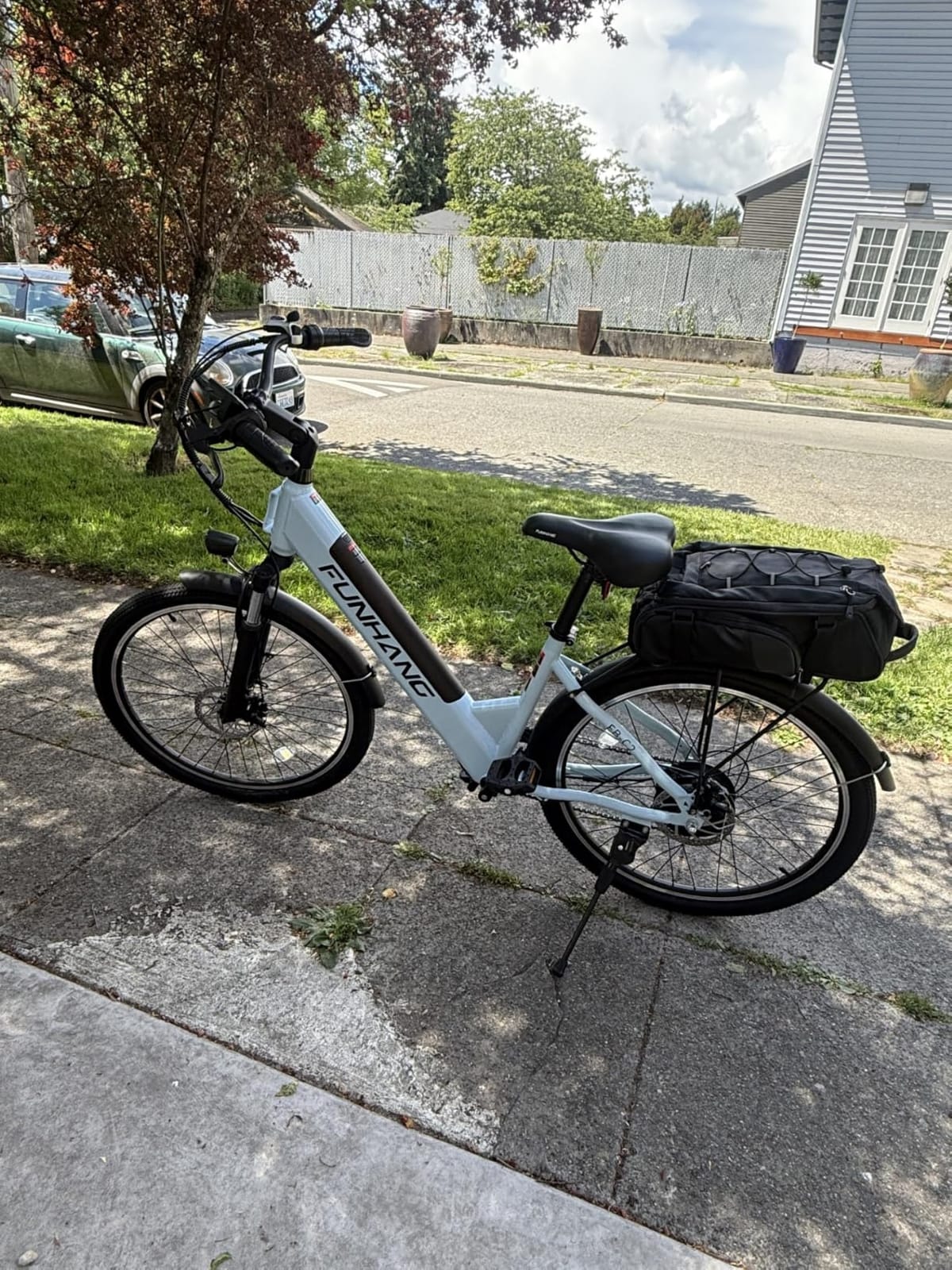
This is the most-reviewed bike in the roundup at 416 reviews, and the one with the widest disconnect between headline and hardware. The listing leads with a 50-mile figure, but the battery is a 48V 374.4Wh pack, the smallest capacity in this group.
It ships with a claimed 40-50 miles in pedal-assist mode and 20-30 miles in throttle mode. Owners consistently note that the battery is smaller than the marketing figure suggests, which makes this the clearest case in the roundup for reading watt-hours rather than miles.
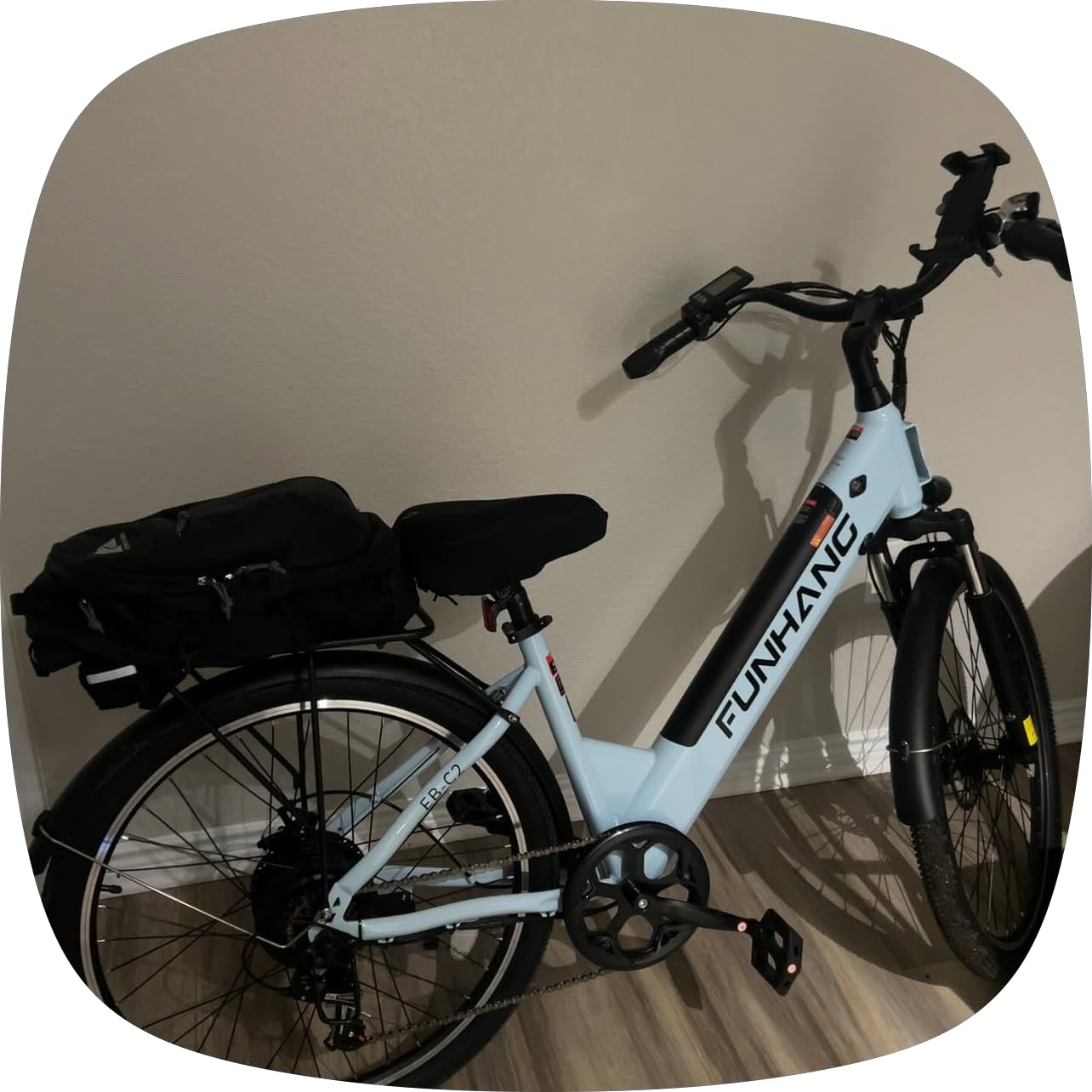
What you get instead is a well-equipped package for the money. Front suspension, dual disc brakes, full-coverage fenders, a solid rear rack, an LCD display, a headlight and an electric horn all ship in the box, and the battery is IPX5 waterproof with a BMS and UL 2271 certification from SGS, with UL 2849 on the complete bike.
The step-through frame with an adjustable handlebar stem and seat is rated for riders from 5’3″ to 6’1″, with a 300 lb maximum load. The bike arrives 85 percent assembled with tools and a user manual.
What 374Wh realistically delivers
Roughly 20-30 miles of real mixed riding is a sensible planning figure, and closer to 40 miles on flat ground at the lowest assist level. That is a genuine weeknight commuter range and a weak touring range.
If your requirement is a 30-mile one-way commute, this is not the bike. A 374Wh pack does not stretch to 60 miles of assisted riding regardless of the assist level you choose. Look at the 720Wh to 960Wh machines in this roundup for that distance.
Where this bike is the wrong choice
At 62.83 lb it is not a lightweight bike despite the modest battery, and the 7-speed drivetrain is thin for steep climbing or for riders who pedal at higher cadences. Some fenders and entry-level components feel cheap under use.
Assembly is 85 percent complete, so a first-time owner should expect to finish the job and allow time for it. Riders who need serious distance, heavy cargo capacity or a long-term touring platform should spend the extra on a larger pack.
12. ESKUTE M200: Quickest to Charge in the Roundup, Thinnest Hardware
M200 Electric Bike for Adults – 21-Speed Gear 27.5″ Mountain E-Bike, 1200W Peak Brushless Motor 28MPH, 48V 10.4Ah&13Ah Removable Battery, Up to 55-65 Miles Range, Step Over Commuter E-MTB, NFC Unlock
48V 10.4Ah 499Wh TUV pack
55 miles PAS
4 hour charge
28 mph
Pros
- Verified 28 mph top speed matches the advertised figure
- One owner logged 138 miles including a cold rainy throttle-only test
- 21-speed Shimano drivetrain is the best shifting hardware here
- NFC smart card unlock is quick and deters theft
- 90 percent pre-assembled and finished in about 30 minutes
Cons
- Only 4.2 average with 10 percent one-star reviews
- Hardware quality lacking with reported brake lever and tire failures
- Frame geometry described as unconventional
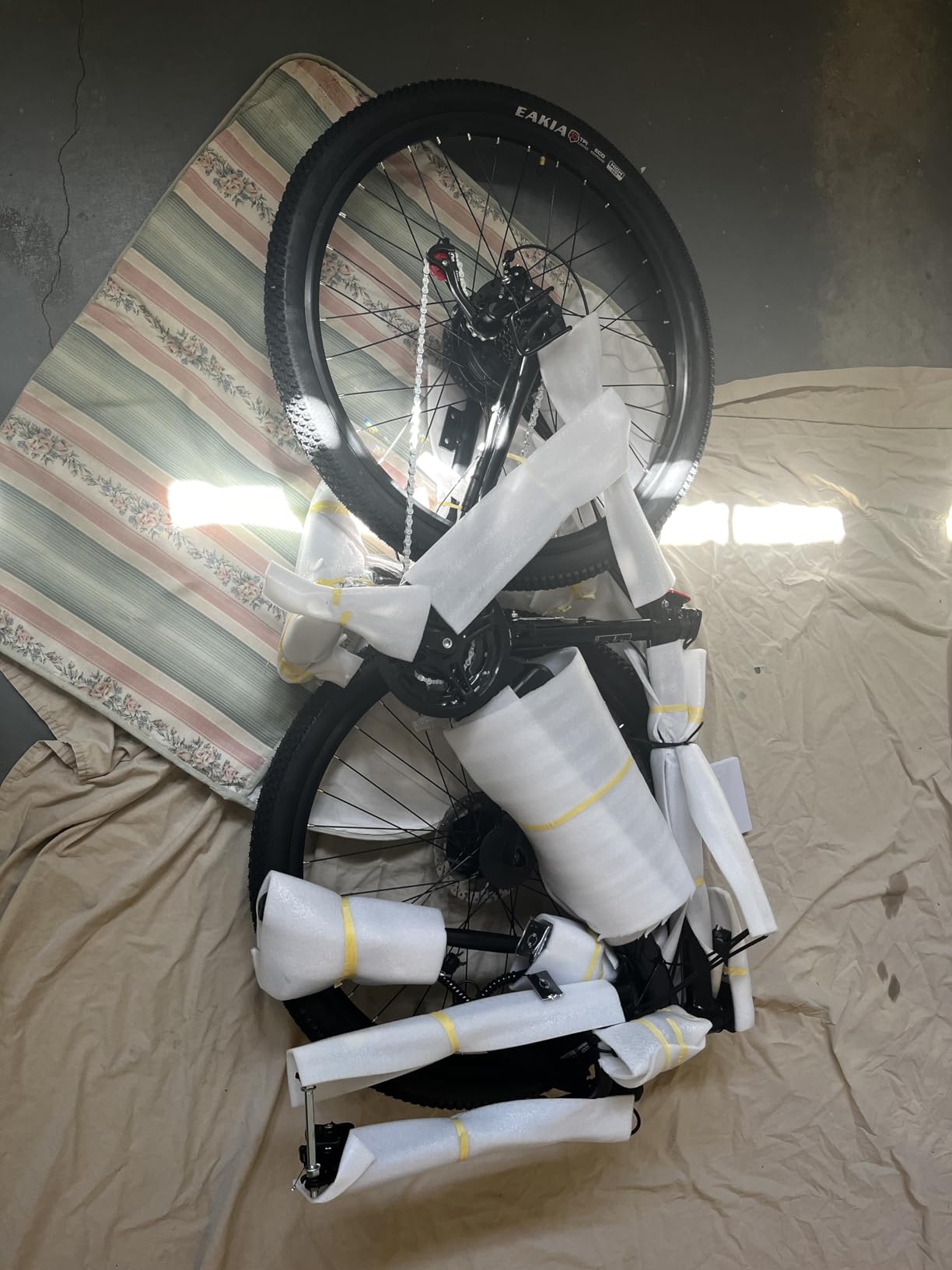
The M200 sits at the entry point of this roundup and is the fastest to recharge. Its TUV-certified 48V 10.4Ah pack, about 499Wh, reaches a full charge in 4 hours, and a 13Ah option extends the claimed range to 55-65 miles.
It also delivers what it advertises on speed. Owners confirm the 28 mph top speed, and one logged 138 miles of riding including a cold rainy throttle-only test, which is a genuinely useful stress test of a pack.
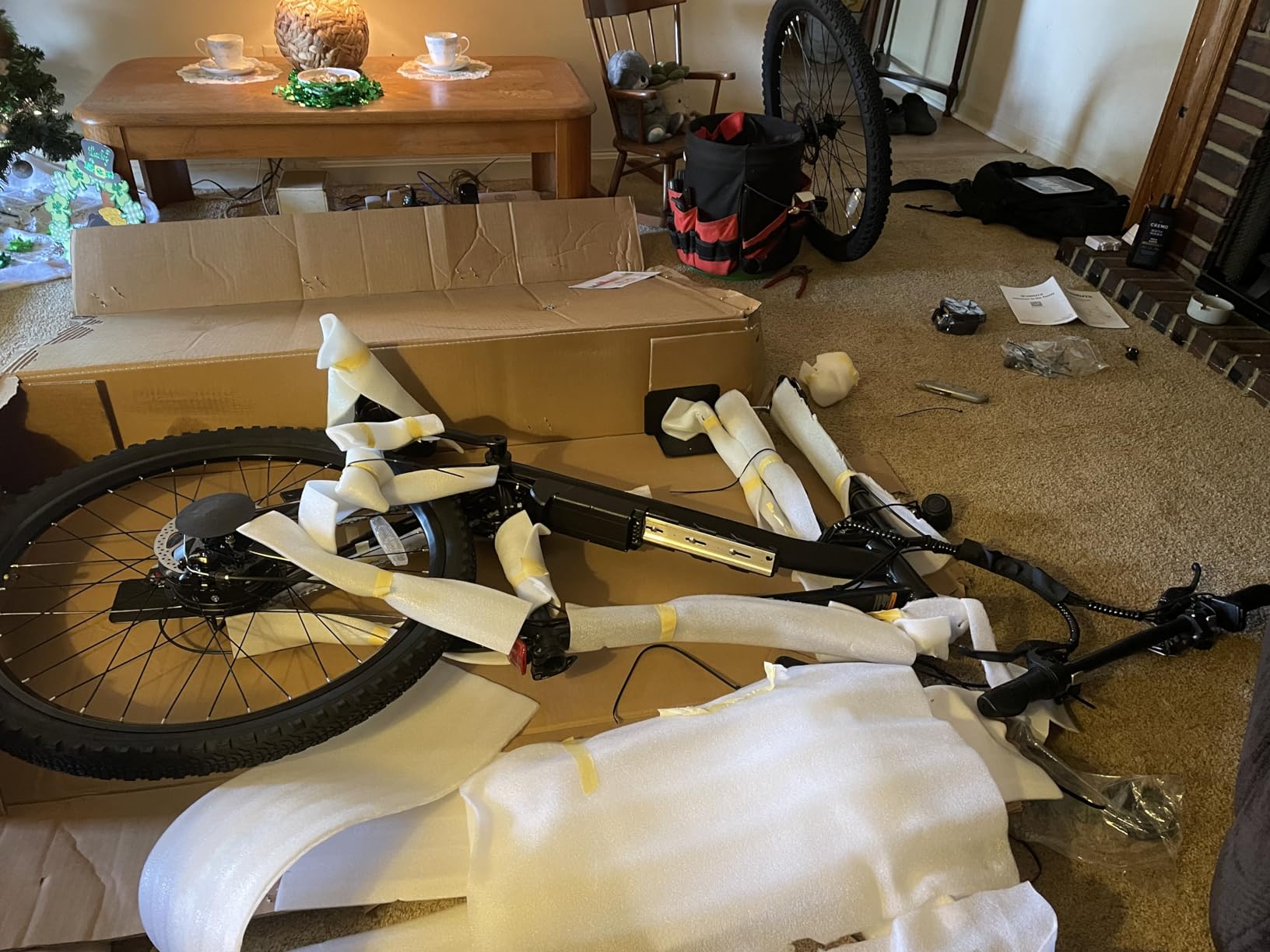
The 21-speed Shimano drivetrain with trigger shifting is the best shifting hardware in this roundup by a distance, and the NFC smart card unlock is quicker than a key and deters theft better. The battery locks to the frame with a key and the 27.5 by 2.1 tires roll better than the fat-tire options.
Customer service has provided free replacement parts for axle and assembly problems, and the bike arrives 90 percent assembled with tools, finishing in about 30 minutes with a helper.
Whether a 4 hour charge changes your planning
It does, more than most riders expect. A pack that is full by lunchtime means you can charge twice on a long day, which effectively doubles your range without a second battery or a second bike.
At 499Wh in the standard trim you get 55 miles claimed in pedal-assist mode and 40 miles in throttle mode, and the 4 hour turnarounds make either figure workable in a single day with a midday top-up.
Where this bike is the wrong choice
The 4.2 average with 10 percent one-star reviews is a hardware story, not a design story. Owners report a brake lever that broke after a single gentle ride, a front tire that popped during first inflation and a chain that stuck mid-shift.
The honest description is a box-store bike with a motor attached: strong on paper, thin on component quality. Riders who prioritise long service life over purchase price should spend more. The unconventional frame geometry also puts off some riders before they ever ride it.
How to Calculate Your Real-World Range
The range equation is simpler than most manufacturers want you to think, and it starts with the only number that is comparable across bikes: watt-hours. Amp-hours on their own mean nothing, because a 20Ah pack at 48V holds far more energy than a 20Ah pack at 36V.
Start with a base efficiency figure of roughly 25-40 miles of real range per 500Wh on level ground at low assist, then adjust for three things: assist level, terrain and rider load.
Assist level is the biggest lever. As a working approximation, Eco delivers close to 100 percent of the base figure, Tour about 75 percent, Sport about 55 percent and maximum assist roughly 40 percent. A 960Wh pack on maximum assist therefore behaves like a 384Wh pack on the lowest setting.
Terrain is the second. Flat pavement gets the full base figure. Rolling terrain with a few hundred feet of climb typically costs 15-25 percent. Sustained hill riding on fat tires with low pressure can cost 40 percent or more. A useful rule of thumb from experienced riders: more than about 333 meters of climb per hour and you need a mid-drive motor rather than a hub motor, because a hub motor that has to work that hard drains the pack far faster.
Worked example. A 500Wh commuter on a 20-mile round trip with 300 feet of rolling hills, ridden at level 2 mostly, comes out at roughly 32-40 miles of real range, which covers the trip with a third of the pack in reserve. The same bike ridden entirely on level 4 with a 280 lb rider and a rear rack on a headwind lands closer to 15-18 miles, which is the same battery and a completely different trip.
Our methodology: for every bike above we recorded the manufacturer’s battery capacity in watt-hours, the claimed range split by assist level where the listing separates them, motor output, bike weight, and the real-world range reported by owners. Where owners and the marketing number disagree, we lead with what owners report, because the marketing number is always a best case measured at the lowest assist level with a light rider on flat ground. Battery certifications were recorded as stated on the listing, which is why UL 2271 and UL 2849 appear in the pros and cons where they are verified and are absent where they are not claimed at all.
Why Claimed Range Never Matches Real Range
Five factors account for nearly all of the gap between a listing and your actual ride, and once you know them you can predict your own range before you buy anything.
Assist level is the first. Manufacturers quote the lowest setting, usually around 20 mph or less, because it produces the largest number. Riders who spend most of their time on level 3 or 4 will see a fraction of that figure, and the 20-30 percent consumed on a short trip in some reviews versus the 15-20 percent on the same trip in others is a direct measurement of this effect.
Rider weight and cargo are the second. A 500 lb rated bike does not deliver the same range as a 300 lb rated bike from the same pack. The heaviest riders in this roundup report 25-40 miles from an 840Wh pack, while lighter riders on smaller packs report more.
Terrain and wind are the third. Elevation gain, a headwind and stop-and-go riding all add energy demands that level-ground testing never sees. Stop-and-go riding is particularly punishing because every launch draws a surge of current that a steady cruise does not.
Tire pressure and tire width are the fourth, and this is where owners are most consistent. Fat tires run at lower pressure for grip, and the additional rolling resistance of a wide, soft tire cuts range noticeably for a given battery size. It also removes your ability to ride unpowered at a normal speed, which is a hidden cost that never appears on a spec sheet.
Temperature and charging habits are the fifth. Cold weather reduces the usable capacity of a lithium-ion pack, and repeatedly charging to 100 percent or running the pack to empty accelerates degradation. Storing a pack at partial charge in a cool place extends its usable life noticeably.
Temperature and charging habits are also the reason our earlier guide to how long a battery lasts before replacement is worth reading if you own any lithium-powered device. The chemistry and the ageing curve are the same, whatever the vehicle.
Battery Safety: What UL 2271 and UL 2849 Mean and Which E-Bikes to Avoid
UL 2271 certifies the battery. UL 2849 certifies the complete electric bicycle, including the charger, controller and motor. A bike can hold one without the other, and the distinction matters because a pack is where the fire risk actually lives.
UL 2271 tests a pack for electrical safety, mechanical damage, temperature cycling and overcharge protection. UL 2849 goes further and evaluates the whole system as assembled, so a bike that holds the system-level mark has had its battery, charger and controller assessed as a set rather than as parts.
In our roundup, four bikes carry both certifications: the Funhang EB-S1 (UL 2271 recognized by SGS, UL 2849 by TUV), the Funhang step-thru (both recognized by SGS), the Heybike Cityscape 2.0 (UL-certified 468Wh pack) and the ANCHEER 26 inch (UL2849). The EUY C2.0, the DTTZH F6, the Jasion RetroVolt and the ESKUTE M200 also state UL certification, and the TotGuard and the DEEPOWER list none.
When a listing gives you no certification at all, that is the first warning sign. The second is a battery that is only described by amp-hours with no voltage, since you cannot compute capacity from one figure alone. The third is a headline range claim of 100-200 miles from a single pack, which is almost always a level 1 assist number on a lightweight rider over level ground.
The fourth is a pack with no named ecosystem and no replacement path. If the brand does not sell a spare pack and no third party services them, the bike is a consumable with a battery inside it. Ask any shop before you buy whether they will work on the bike, because as owners on the electric bike forums report, most shops will not touch an e-bike they did not sell.
Fifth, a used bike sold without a battery removal key or the charger is a common sign the bike is stolen. A functioning battery that cannot be removed is a red flag worth walking away from, and it is a problem the forums raise repeatedly.
Also check that the charger included is the right amperage for the pack. Charging a pack with an undersized charger is safe but slow, and charging with a mismatched voltage is how packs fail.
Buying Guide: How to Choose a Long-Range E-Bike Without Regretting It
Watt-hours come first, and nothing else outranks them. A 700Wh pack on an efficient bike will outrange a 500Wh pack on an inefficient one every time. If your commute is 20-30 miles each way, you need 700Wh or more, or a bike that accepts a second pack. If it is under 15 miles, a 400-500Wh pack is genuinely enough and you can spend the difference on better components.
Second is whether the pack is removable and whether a second one is available. Every bike in this roundup has a removable pack, and that single decision determines whether you can charge at work, carry the battery indoors or extend a trip by adding a pack. A bike with a fixed pack that you cannot remove for charging is a bike that lives in a garage.
Third is motor efficiency, because it decides how much of your battery actually turns into motion. A mid-drive motor driving through the chain is efficient and freewheel-like, which means you can ride unpowered without drag. A rear hub motor adds resistance when unpowered. Hub motors do have an advantage on price and low-end torque, which is why they appear on so many of the bikes here, but they cost you range.
Fourth is legal class and top speed. In the US, Class 1 bikes assist to 20 mph, Class 2 add a throttle up to 20 mph, and Class 3 allow assist up to 28 mph. Class 3 is restricted on trails, bike paths and some shared-use routes, and if your commute crosses any of those, a 28 mph bike can be illegal rather than merely unfriendly. Speed also costs range directly, so a faster bike is a shorter-range bike at the same assist level.
Fifth is total cost of ownership, and this is where long-range buyers get hurt. Replacement packs for established battery ecosystems can run into four figures, and experienced owners describe a pattern of buying two cheap packs before committing to a quality one. The practical defence is to buy from a brand with a documented battery ecosystem, a stated warranty in years rather than months, and a parts supply that will still exist in five years. Our guide to long-range battery selection covers the same capacity-versus-weight thinking that applies to e-bike packs.
Sixth is weight, and it deserves more attention than it gets. Bikes here range from roughly 62 pounds to 90 pounds before the battery. If your commute involves stairs, a car boot or a walk to the office, a 70-pound bike with a removable pack you can carry separately is a very different purchase from a 90-pound bike you cannot lift.
Finally, fit. Riders consistently say a bike that does not fit is useless, no matter what the battery does. Check the frame size against your height, confirm you can put a flat foot down at the bottom of the pedal stroke for a stop, and test the reach. Several of the fat-tire bikes here carry a single frame size and will not suit very short or very tall riders.
Frequently Asked Questions
Which electric bike battery has the longest range?
Range follows battery capacity in watt-hours more than anything else. In this roundup the largest packs are 960Wh on the EUYBIKE foldable and the DEEPOWER 48V 20Ah, followed by 840Wh on the LEONX M2 Pro and about 749Wh on the DTTZH F6. Capacity sets the ceiling, but motor efficiency, assist level, rider weight and terrain decide how much of that ceiling you actually reach.
How far will a 400Wh eBike go?
Expect roughly 20-25 miles of real assisted riding from a 400Wh pack on flat ground at low assist, and closer to 12-15 miles if you ride at maximum assist or on hilly terrain. The manufacturer figure of 40-50 miles assumes the lowest assist level, a light rider and level ground, so treat it as a ceiling rather than an expectation.
Is a 500Wh battery enough for an eBike?
A 500Wh pack comfortably covers a 15-20 mile round trip with charge to spare, and owners of the ANCHEER and ESKUTE in this roundup report using only a quarter to a third of a 499Wh pack for 26-mile and 6-mile rides. It is not enough for a 30-mile one-way commute on medium assist, where you would want 700Wh or a second pack.
What eBikes to stay away from?
Walk away from listings with no UL 2271 or UL 2849 certification, batteries described only in amp-hours with no voltage, headline claims of 100-200 miles from a single pack, and no named replacement path for the battery. Also avoid any brand you have never heard of that no local shop will service, and used bikes sold without a battery removal key or charger, which are frequently stolen goods.
Why is my ebike range lower than advertised?
Because advertised range is measured at the lowest assist level with a light rider on flat ground in good weather. Running a higher assist level, carrying more weight, climbing hills, riding into wind, riding fat tires at low pressure and riding stop-and-go all reduce the distance you get. A 40-60 percent reduction versus the claim is normal for mixed riding.
The Verdict: Which Long-Range E-Bike Should You Buy in 2026?
Our best e-bikes with long range batteries start with one question: how many miles do you actually need between charges? If the answer is a 20-mile round trip on mixed terrain, the Funhang EB-S1 is the pick. Its 624Wh pack, 66.6 Nm of torque, 330 lb rating and dual UL certifications make it the most complete bike we found, and the highest-rated one in the group at 4.6 across 234 reviews.
If you need the most capacity you can get in a package you can store, the EUYBIKE foldable puts 960Wh into a frame that goes in a car boot. If you want the fastest turnaround between rides, the DTTZH F6 charges in 5-7 hours on a 3A charger. If you are over 250 lb or carrying a second person, the LEONX M2 Pro and the Jasion RetroVolt are built for loads the rest of this list will not take.
Whatever you choose, judge it on watt-hours and certifications first and headline range last. The bike that gets you to work on Tuesday is the long-range e-bike, and the roundup above is ordered so you can find it in seconds.