
If you only read one paragraph of this roundup, read this one. The Consew 206RB-5 is the best walking foot sewing machine for thick fabric for most people, because its compound triple feed moves heavy upholstery, leather, marine canvas and webbing evenly without bunching. The Juki DNU-1541S is the specialist runner-up, and it is the one to buy when bag making or stacked leather is your main project.
I spent weeks reading owner reviews, service notes and forum threads for these machines rather than trusting spec sheets alone, and the pattern that came back was consistent. The machines that owners keep for years are the industrial single-needle lockstitch heads with a feed bar, a servo motor and a proper table. The machines people complain about are almost never criticised for the walking foot mechanism itself, but for documentation, assembly or expectations set too high.
If you are still deciding whether you need a dedicated machine at all, the section on attachable walking feet is worth reading first, because the cheaper route solves a surprising share of problems. I also mapped out what each machine does best, and where it will disappoint you. For lighter work, our roundup of the best general sewing machines covers the machines that handle everyday fabric without a dedicated head.
Table of Contents
Top 3 Picks for the Best Walking Foot Sewing Machines (October 2026)
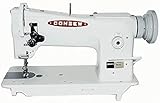
Consew 206RB-5 Walking Foot
- Compound triple feed
- 10mm max stitch
- 14mm foot lift
- Includes table and servo motor
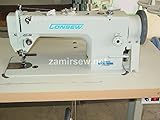
Consew Upholstery Feed
- Drop feed plus needle feed
- Oil pump system
- Alloy steel
- Table and servo included

All Six Walking Foot Machines Side by Side
| Product | Specifications | Action |
|---|---|---|
| Consew 206RB-5 Walking Foot Machine |
|
Check Latest Price |
| Consew Upholstery Compound Feed Machine |
|
Check Latest Price |
| Juki DU-1181 Walking Foot Machine |
|
Check Latest Price |
 Consew CP206RL Portable Walking Foot Consew CP206RL Portable Walking Foot |
|
Check Latest Price |
 REX 607Z Walking Foot and Zigzag REX 607Z Walking Foot and Zigzag |
|
Check Latest Price |
 Juki DNU-1541S Unison Feed Machine Juki DNU-1541S Unison Feed Machine |
|
Check Latest Price |
What a Walking Foot Actually Does
A walking foot sewing machine is one whose presser foot carries its own feed teeth, driven in sync with the needle feed dog under the plate. Those teeth grip the top layer of fabric while the feed dogs grip the bottom layer, so both move at exactly the same rate. That is the whole trick, and it is why a walking foot is the default setup in upholstery shops, sail lofts and leather goods studios.
Thick, dense or slippery material will not stay flat under a plain presser foot. The top layer gets pushed forward while the bottom layer lags, which shows up as skipped stitches, seam shift, puckering behind the needle and needles snapping in the throat. A walking foot removes that layer mismatch, so the seam length stays honest no matter how many layers you stack.
The feed dogs do still exist underneath, so a walking foot machine cannot sew backwards through the fabric the way a true needle feed head can. That distinction matters for slippery coated vinyl and very thin leather, and it is the reason some bag makers end up choosing a unison feed machine instead. Our picks below cover both approaches, plus the portable options for people who cannot give up floor space.
One warning worth repeating from owner forums: a walking foot is the wrong tool for silk, chiffon and other lightweight slippery fabrics. The extra teeth can mark or distort them. If light woven fabric and knits are most of your sewing, a standard domestic machine is the better buy, and our general best sewing machines guide covers that category properly.
1. Consew 206RB-5 Walking Foot Machine Review
Consew 206RB-5 Walking Foot Industrial Sewing Machine with Table and Servo Motor
Compound triple feed
10mm max stitch
14mm foot lift
Large bobbin
Pros
- Compound triple feed handles upholstery
- leather
- marine and canvas evenly
- Arrives with table and servo motor so it is a working setup
- 10mm stitch length and 14mm foot lift suit bulky seams
- Adjustable walking motion height
- Well established with professional upholsterers
Cons
- Table setup instructions are unclear and the manual is hard to read
- Arrives needing assembly so setup takes hours
- Bobbin case must be pushed firmly until it clicks
- Some buyers reported missing parts
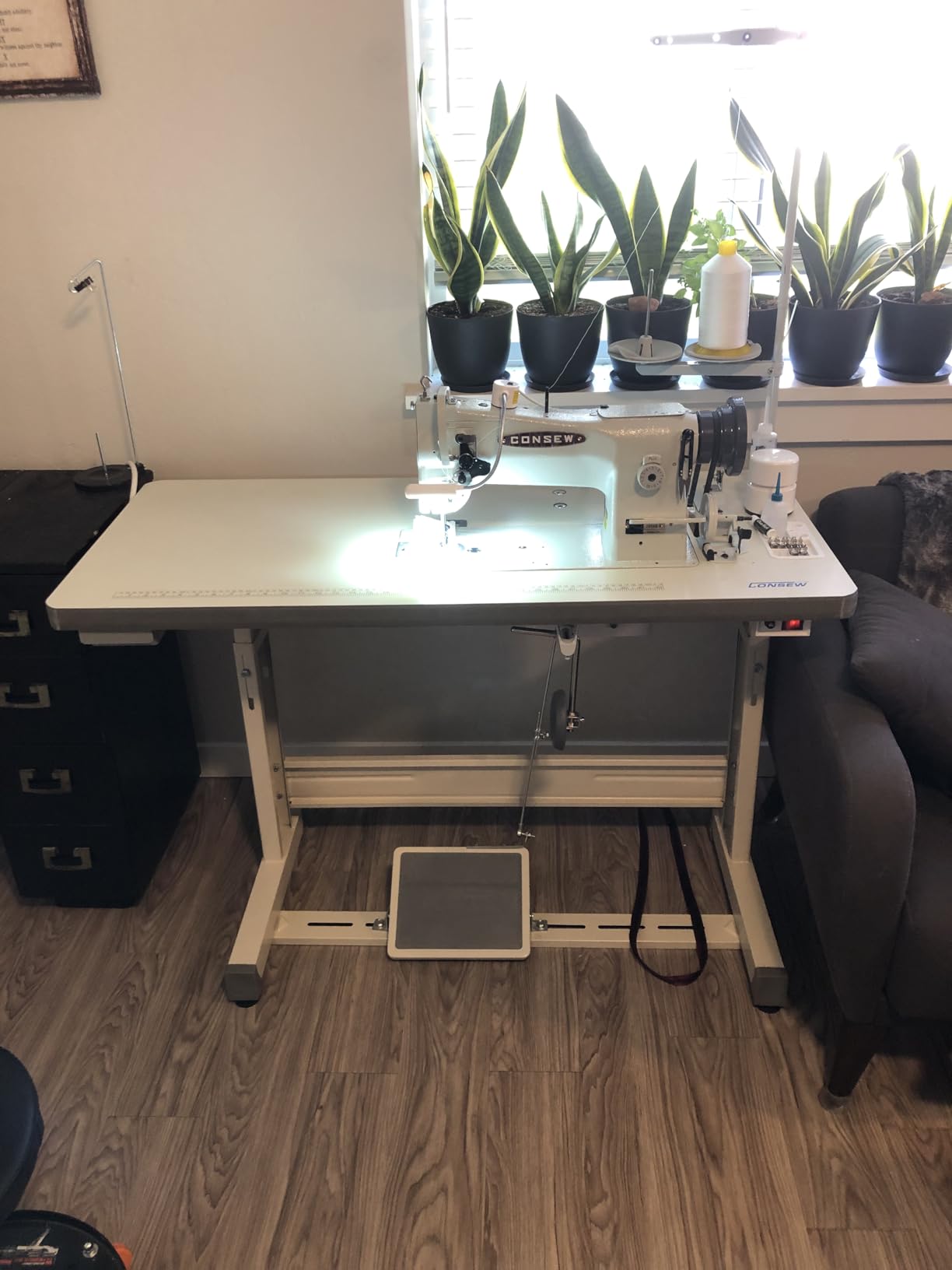
The 206RB-5 is the machine that came up again and again when I read through owner feedback for this category. It ranks in the top ten for industrial machines in the Arts, Crafts and Sewing department, and the reasons owners give are practical rather than promotional: the compound feed holds stacked material flat, and the 10mm maximum stitch length means bulky seams get stitched in fewer passes.
The physical numbers back that up. Foot lift is 14mm, which is more than enough headroom to get a foot under a seam where several layers of foam-backed upholstery meet. The walking motion height is adjustable, so you can back it off for lighter vinyl and push it up for thick leather. The large bobbin means fewer interruptions on a long run.
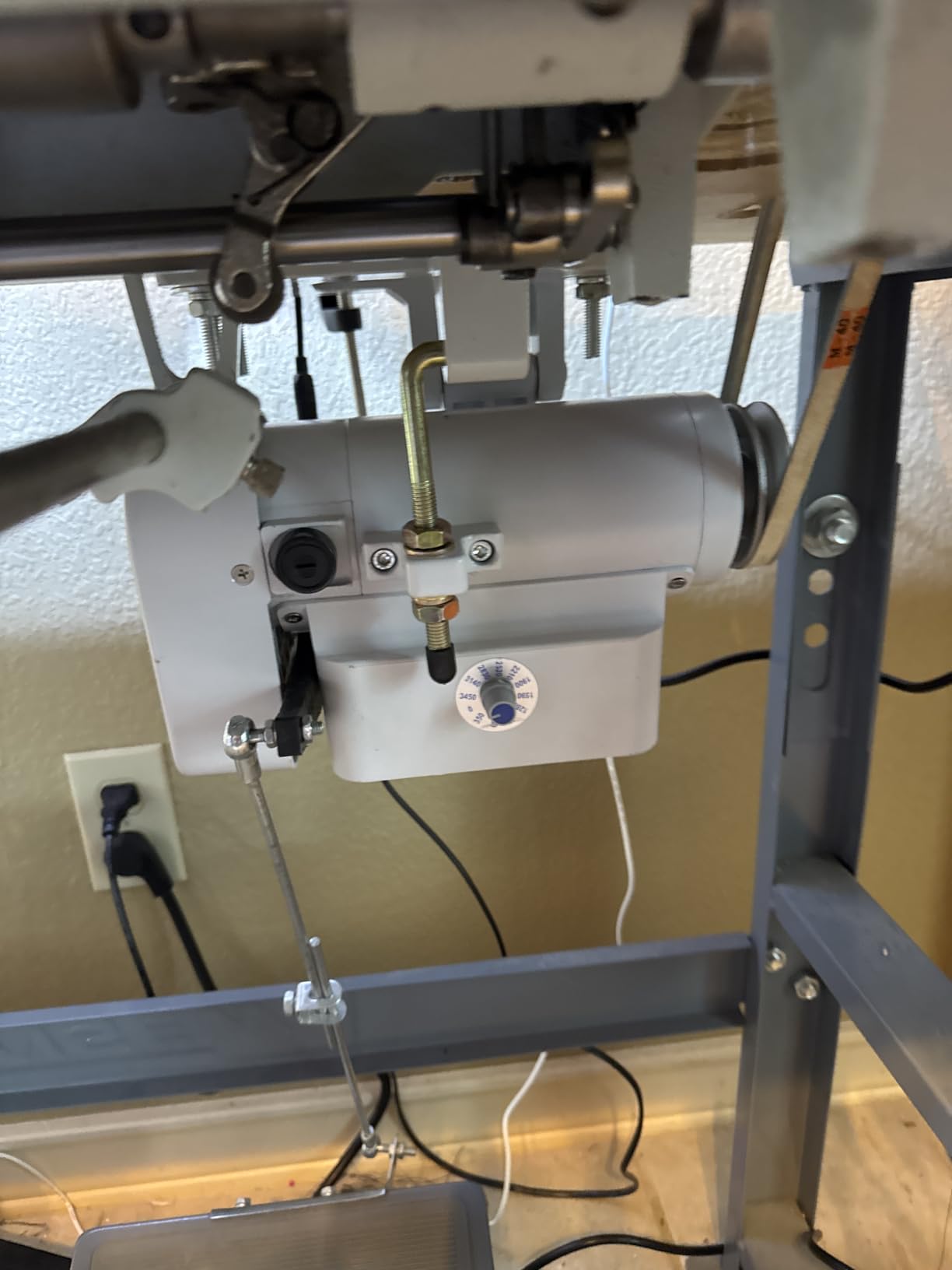
Owners consistently describe the sewing itself as the professional industry favourite, and several note that once it is set up correctly it runs without drama. The servo motor lets you crawl down to slow speed for curved seams and then open up for long straight runs, which matters more on thick work than raw top speed does.
The honest weakness is paperwork and assembly. The table instructions are widely criticised, and the manual is described as near illegible by a number of buyers. Most owners ended up following video walkthroughs or calling the seller for help, which tells me the machine itself is not the problem.
Reviewers also mention needing to push the bobbin case in very firmly until it clicks, and there are scattered reports of missing parts on arrival. My advice is simple: allow a full weekend for setup, and check the contents against the packing list before you start.
What convinced me to rank it first
The combination of a 4.3 rating across 117 reviews and a specification sheet that actually supports thick work is rare in this niche. Most walking foot listings here either have good numbers and thin documentation, or detailed documentation and modest hardware.
For anyone sewing furniture upholstery, marine canvas, automotive trim or heavy leather on a regular basis, this is the machine I would put on a table. The feed system is the reason, not the badge.
Where it will let you down
If you have never run an industrial head before, the first session will feel awkward. Nobody describes the learning curve as short. Budget for it, or pay a repair shop to align and test it, which most owners in this group say is money well spent.
It is also a 200-pound machine with a 45 by 50 inch footprint, plus a dedicated table. That is furniture, not a hobby corner addition. Anyone without that space should read the portable picks further down.
2. Consew Upholstery Compound Feed Machine Review
Consew upholstery Walking Foot Industrial Sewing Machine with Table and Servo Motor Drop Feed, Needle Feed, Walking Foot, Lockstitch Machine
Drop feed plus needle feed
Oil pump system
Alloy steel body
185 pounds
Pros
- Compound drop feed plus needle feed handles multi-layer leather and vinyl
- Oil pump system with adjustable flow cuts manual maintenance
- Alloy steel suited to sustained industrial work
- Covers auto
- marine
- sails
- tents
- bags and luggage
- Table and servo motor included
Cons
- Arrives unassembled in three boxes needing assembly and alignment
- Industrial drop feed has a learning curve for domestic operators
- Product record lists implausibly small head dimensions
- Still needs occasional oil level checks before long seams
The Consew upholstery compound feed head sits one step below the 206RB-5 in price and uses a slightly different take on compound feed: drop feed under the walking foot, combined with needle feed at the needle. In practice owners describe the same outcome, evenly fed seams through multi-layer leather, vinyl, canvas and upholstery without puckering.
Where this one wins is longevity of use. The body is alloy steel rather than a light alloy, and the oil pump system with pump, oil pan and adjustable oil flow means the head lubricates itself during long jobs. Reviewers who run these machines commercially point to that as the feature that reduces downtime over years.
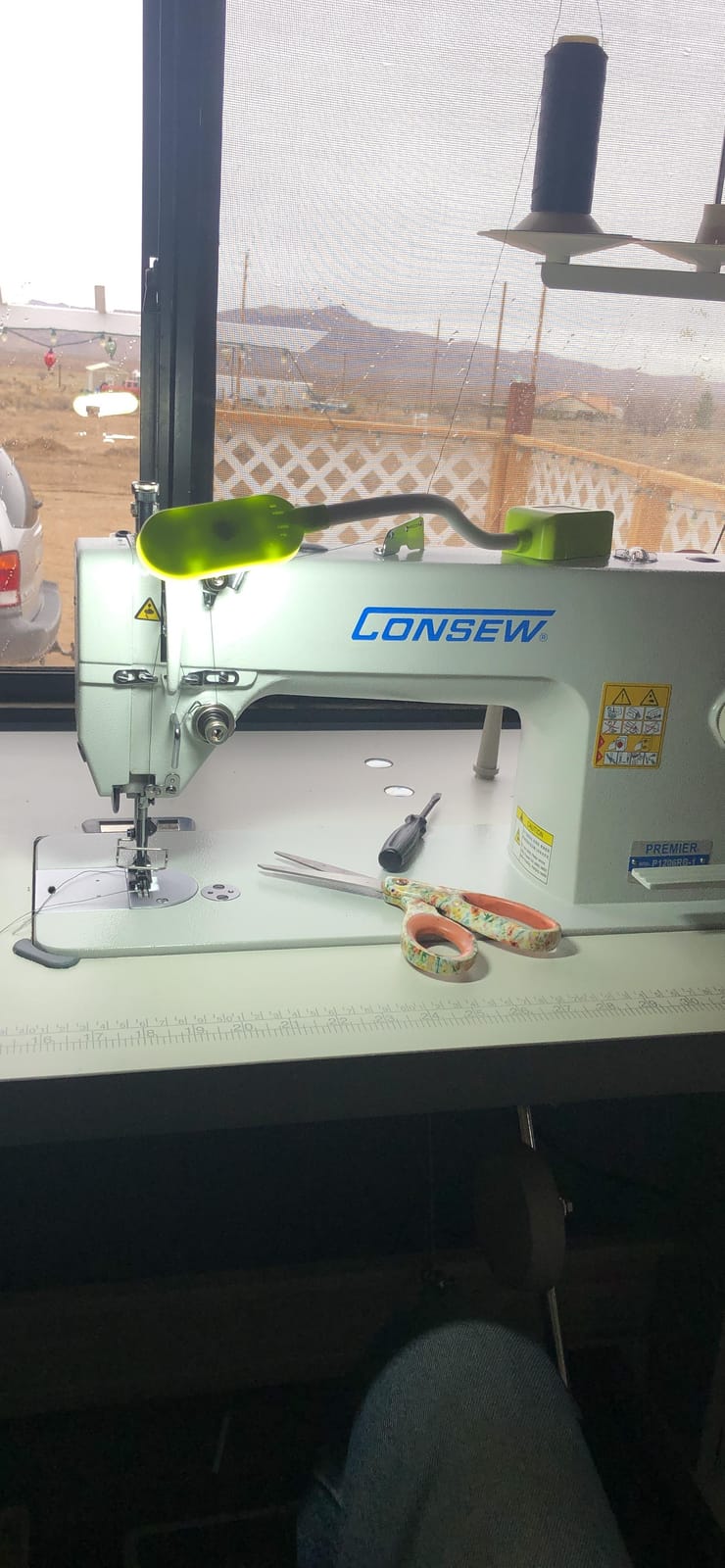
The application list is broad and honest: auto trim, boat and furniture upholstery, tarpaulins, covers, sails, tents, awnings, umbrellas, bags, luggage, handbags, sports and camping equipment. If your work crosses into several of those categories, having one machine that handles all of them matters more than a small spec advantage.
The delivery format is the part buyers complain about most. It arrives unassembled in three separate boxes, so assembly and alignment are genuinely on you. That is not a dealbreaker for someone setting up a workshop, but it is a real cost in time and it is the single reason this sits below the 206RB-5 for most buyers.
One oddity worth flagging: the product record lists head dimensions as 0.12 by 0.16 by 0.16 inches, which cannot be right for a 185-pound machine. Verify the physical head size with the seller before ordering if floor space is tight.
Best value for a full workshop setup
Compared with buying a walking foot attachment and hoping your domestic machine copes, this is a different class of tool. The needle feed component is the part that matters for coated and laminated products, and no attachment gives you that.
For someone building a small upholstery or bag business, the oil pump and alloy steel frame make this the machine I would choose for the working years rather than the first impression.
Where it will let you down
Industrial drop feed mechanisms are unforgiving of old habits. Experienced sewists on forums make a point of never pulling thick fabric manually by hand, and the machine punishes anyone who does. If you learned on a domestic machine, give yourself a practice session.
Self-lubricating does not mean maintenance free. Owners still check oil levels before a long seam run, and if you skip it the feed mechanism pays for it later.
3. Juki DU-1181 Walking Foot Machine Review
NEW Juki DU-1181 SIngle Needle Walking Foot Complete w/ K.D. Stand & Servo Motor
2000 sti/min
9mm max stitch
15mm knee foot lift
DC servo motor
Pros
- Strong top and bottom feed handles multilayer material with consistent stitch pitch
- Automatic lubrication improves maintainability on long jobs
- Complete package with knockdown table
- servo motor
- tools and lamp
- Feed cams independently adjustable
- 2000 sti/min with 15mm knee foot lift
Cons
- Assembly and professional setup required on arrival
- Table and motor arrive as a knockdown kit
- Feed adjustments sit under three rubber caps on the head
- Manual may be limited for first-time industrial owners
The DU-1181 is a single-needle walking foot head with a strong top and bottom feed mechanism, and the spec that stood out to me is presser foot lift by knee at 15mm. That is the largest knee lift in this group, which translates directly into less frustration when a bulky seam refuses to go under the foot.
Top speed is 2000 stitches per minute with a 9mm maximum stitch length. The motor is a single-phase 110V electronic DC servo, which gives genuine torque reserve rather than the headline speed figure doing all the work.
Thread range is wide, from 40 to 8 and including bonded nylon up to 90/3, and the needle is DPx17 size 21 as standard, usable from 14 through 23. For leather and canvas work that means one machine covers most of the needle range you will reach for.
What makes it distinct from the Consew heads
The horizontal feed cam, top and bottom feed cam and top feed cam are all separately adjustable under rubber caps on the head. That fine tuning is what lets you back the transport off for slippery coated fabric and then stiffen it for webbing. It is an adjustment the compound feed machines do not offer in the same form.
The automatic lubricating mechanism is the other quiet advantage. Owners running long jobs mention maintainability directly, and Juki parts and needles are widely available, which matters if you are far from a city repair network.
Where it will let you down
The 37-review count is the smallest in this group, and that matters for confidence. The machine itself is well regarded, but fewer owners means fewer data points on long-term failure modes, and it is not the listing I would buy sight unseen.
It also arrives as a knockdown kit. The table, servo motor, belt, drawer, tools, lamp and manual are all included, but assembly and professional setup are expected, so factor that into your plans just as you would with the Consew machines.
4. Consew CP206RL Portable Walking Foot Machine Review
Consew CP206RL Portable Walking Foot Machine
42 pound body
Built-in 110V motor
Longer arm
Foot pedal included
Pros
- Self-contained portable design with built-in 110V motor
- Longer arm gives clearance for bags
- totes and thick upholstery
- Reverse stitching and horizontal oscillating hook
- Foot pedal included so it is usable immediately
- 42 pound body is easy to move between jobs
Cons
- Rating sits below 4.0 with a notable share of 1-star reviews
- Integrated motor gives less torque reserve than a table-mounted compound feed
- Horizontal oscillating hook is a domestic-style mechanism
- Fewer adjustment points and simpler feed
- Not right for very heavy leather needing needle feed
The CP206RL is the most-reviewed walking foot machine in this group, and the reason people buy it is obvious once you read the reviews: it is self-contained. The 110V AC motor is built into the body, so there is no table, no servo motor and no separate power box. You unpack it, plug it in and sew.
The longer arm is the other draw. At 42 pounds and measuring 20.75 by 13.5 by 10 inches, it fits in a car boot and still gives you clearance for bags, totes and thick cushion work that a compact domestic machine cannot manage.
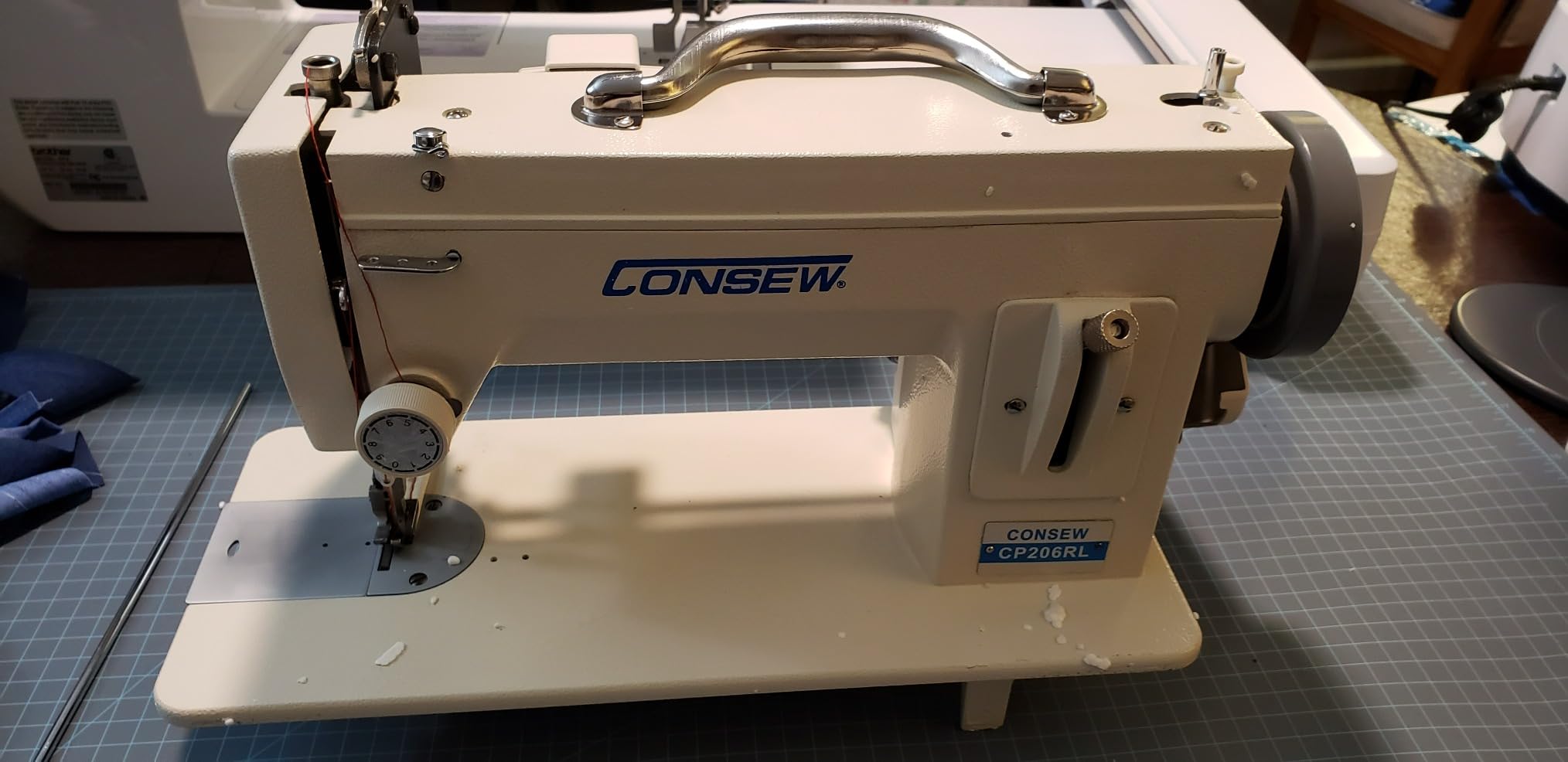
Mechanically it is a single needle machine with a horizontal oscillating hook, reverse stitching, a link type thread take-up lever and an included foot pedal. That covers everyday bag and cushion work competently.
Now the part I want to be blunt about. The 3.5 rating is the lowest here, and the review breakdown explains why: roughly a fifth of ratings are one star. Reading the reviews, the complaints are about expectations rather than about the walking foot concept. Buyers who expected industrial torque got a portable machine with a domestic-style hook mechanism.
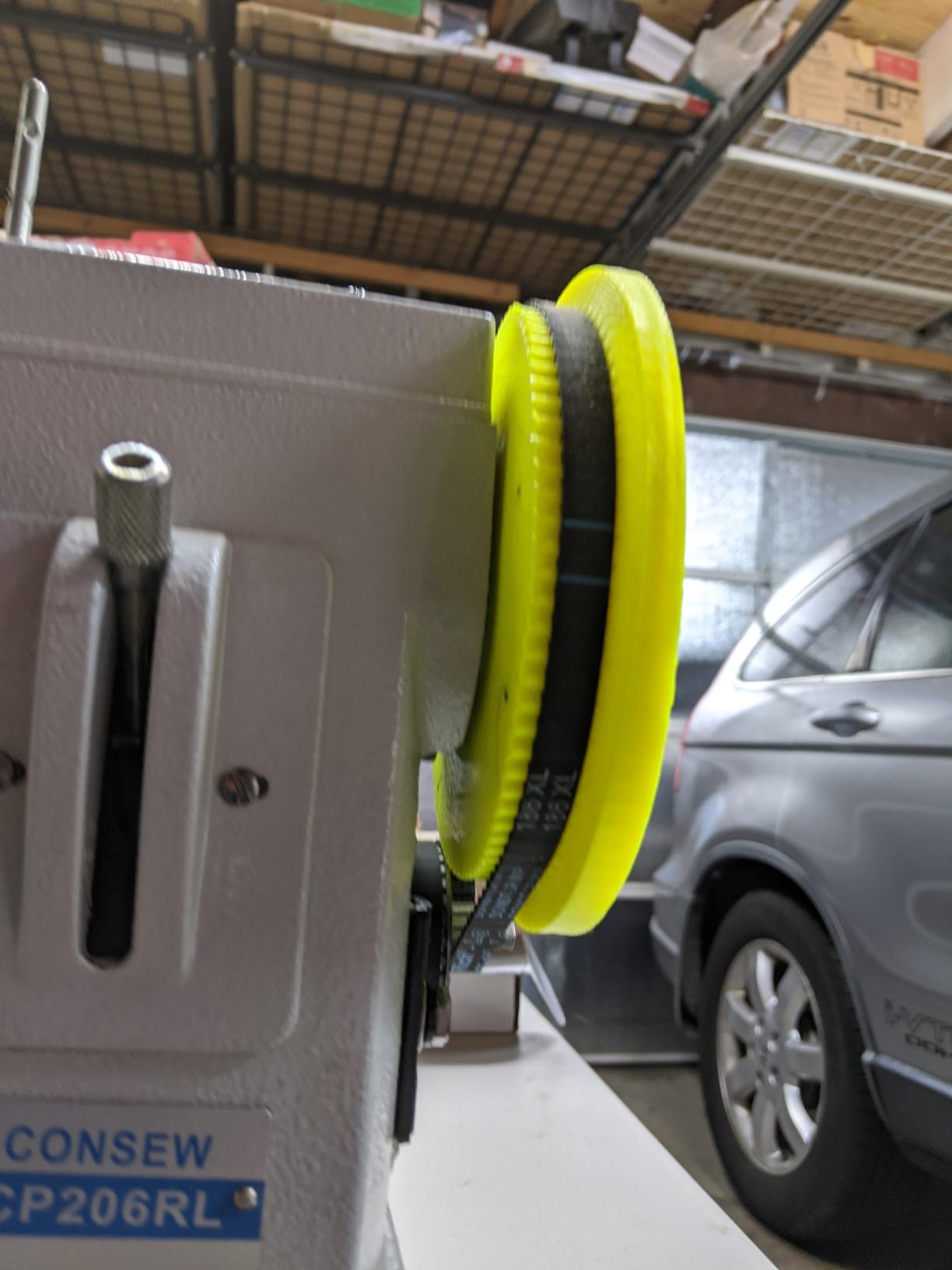
The oscillating hook is the technical limit worth understanding. It is not as needle-penetrating as a walking foot with needle feed, so on very heavy leather or dense canvas it will struggle where the table-mounted machines do not.
When this portable option wins
If you sew away from a dedicated workshop, on site, in a van or in a small studio without a 200-pound table, this is a practical choice. The built-in motor and foot pedal mean no setup ritual before every job.
For tote bags, simple cushion covers, canvas goods and medium-weight denim, it does the job. Experienced users on forums note the technique that matters most: never pull thick fabric manually, guide it with both hands.
Where it will let you down
Fewer adjustment points means less control over feed feel than a compound feed head, and the integrated motor has less torque reserve when the fabric piles up under the foot.
If your work includes very heavy leather or multi-layer upholstery, look at the industrial options instead. Saving money here can mean paying twice if you buy this and then outgrow it.
5. REX 607Z Walking Foot and Zigzag Machine Review
REX 607Z Portable Walking-foot / Zigzag with LED LIGHT
1/10 HP 900 RPM motor
Zigzag 1mm to 5mm
LED needle light
34 pounds
Pros
- Walking foot combined with a 5mm zigzag for stretch upholstery and sails
- Compact 34 pound body with built-in motor suits mobile work
- All-metal mechanical construction feels durable
- LED light helps with thick dark materials
- Reverse with adjustable stitch length
Cons
- Low 900 RPM motor speed means slow sewing on bulky seams
- Needs a break-in period before it runs smoothly
- 1/10 HP motor has limited torque for very heavy layers
- Manual configuration with no servo speed control
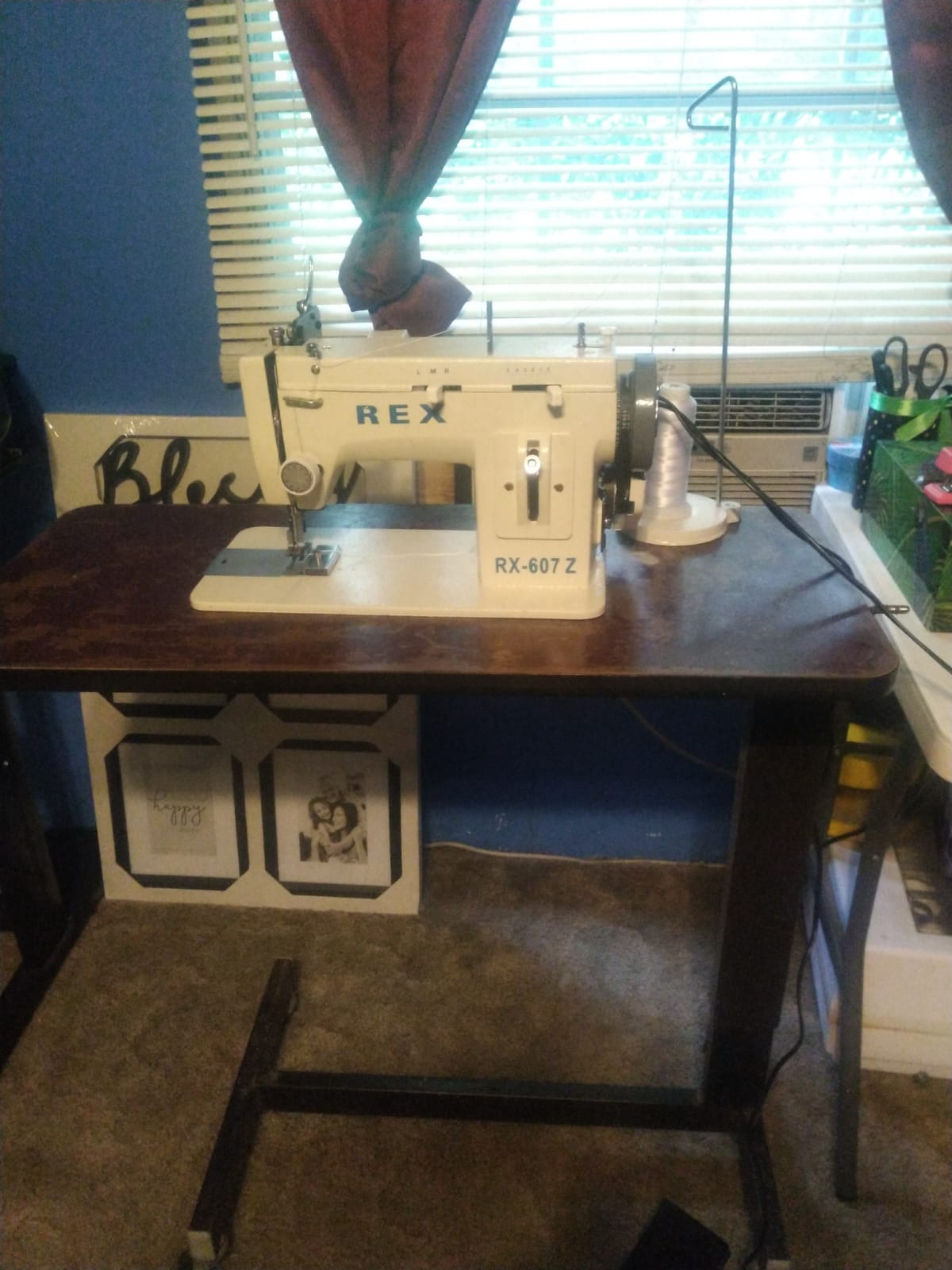
The 607Z exists because of one combination that the other portable machines in this roundup do not offer: a walking foot plus a working zigzag. The zigzag runs 1mm to 5mm, and straight stitch runs 5 to 10 stitches per inch. For sails, stretch upholstery and anything that needs a stretch stitch over a walking foot, that is genuinely useful.
The suggested setup is needle size 21 with bonded nylon thread size 69, which is a sensible starting point for canvas work. The LED light over the needle area is a small detail that matters more than it sounds when you are sewing dark, heavy material.
At 34 pounds with a built-in 110/115V motor, this is the lightest machine here and moves around easily. The all-metal mechanical construction is the sort of thing owners describe as feeling durable rather than delicate, and there is no plastic electronics to fail.
What you give up is speed and torque. The motor is 1/10 HP at 900 RPM, so bulky seams run slowly, and several owners in the reviews advise an adjustment period before judging how it performs. That break-in advice appears often enough that I would treat it as genuine rather than damage control.
It is manual configuration only, with no servo speed control, so your only control is the foot pedal and the reverse lever with stitch length adjustment.
Why the zigzag matters more than the speed
Straight stitch on a walking foot is the default for heavy seams, but stretch panels and seam finishes need a zigzag. On a machine where you only get one stitch, that constraint shapes your whole project list. Here you get both.
For boat owners, sail repair and small canvas work, this is the combination that removes a compromise. Marine canvas is one of the use cases the machine is actually designed around.
Where it will let you down
Do not expect production speeds. 900 RPM is roughly half what the industrial heads in this guide turn over, so long seams take time and testing fabric takes patience.
And on very heavy layers, 1/10 HP is the ceiling. If your work is thick leather or stacked canvas rather than sail cloth, the torque reserve you need does not exist here.
6. Juki DNU-1541S Unison Feed Machine Review
Juki DNU-1541S Industrial Sewing w/Safety Mechanism DNU 1541 Walking Foot Needle Feed,servo Motor,Table,lamp. DIY.
Unison feed
2500 SPM
16mm clearance under foot
Safety clutch
Pros
- Unison feed of walking foot plus needle feed handles stacked leather and canvas
- Safety mechanism acts as an overload clutch to reduce needle breakage
- 2500 SPM with 16mm clearance under foot
- Double-capacity large hook reduces bobbin changes
- Complete kit includes table and DC servo motor
Cons
- Highest cost in this group with professional assembly still recommended
- Some buyers reported missing parts after seller promises
- Reverse and bobbin mechanism faults appeared in reviews
- 125 pound head can bow a thin-laminate table
- Supplied plastic motor bracket is a weak point
The DNU-1541S is the machine bag makers talk about. It is a single-needle unison feed lockstitch with a double-capacity hook, meaning the walking foot and the needle feed move together, and the needle penetrates the material the way a needle feed head does. On stacked leather that behaves like one piece rather than three.
The headline numbers are the biggest in this roundup: 2500 SPM maximum speed, 16mm clearance under foot, a 36mm needle bar stroke and 9mm maximum stitch length. The 16mm clearance is the figure that changes daily work, because it decides how bulky a seam you can get under the presser foot without wrestling it.
Needles are 135×17 with 135×16 available for leather, which is the widely recognised industrial standard. Bobbins are metal type 18034, with pre-wound M as an option, and the hook is 18033. That is a consumables story you can service anywhere industrial machines are sold, which is a real advantage over a sealed system.
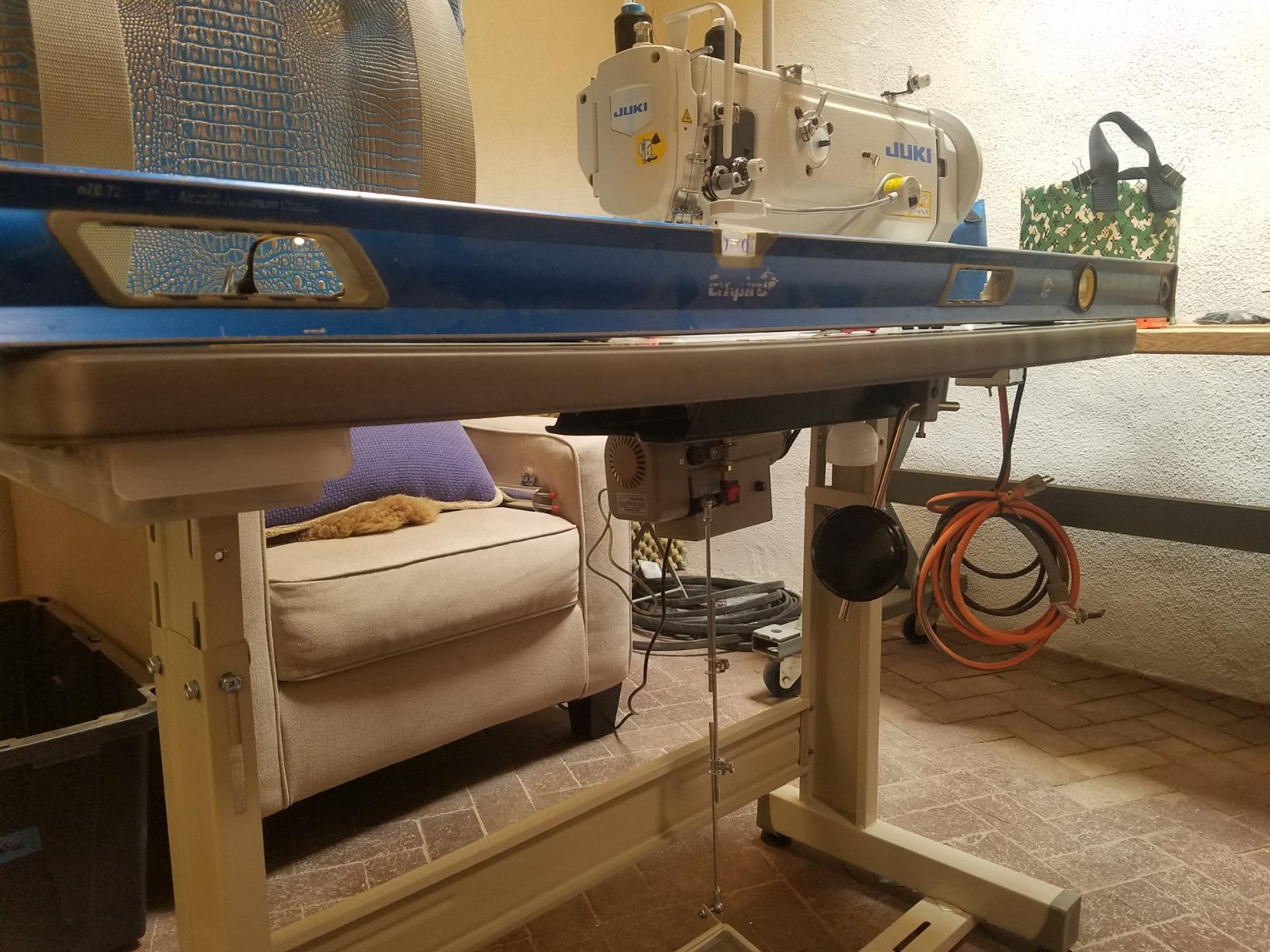
The safety mechanism is the sleeper feature. It works as an overload clutch, so when the needle hits something unexpectedly heavy it slips rather than snapping. On thick leather and vinyl, owners specifically mention fewer broken needles as a result.
The kit is complete: bobbin winder, thread stand, oil, manual, oil pan, knee lifter, V-belt, table and a 550-watt quiet-running DC servo motor. Assembly is required. The bed is sized to fit a standard cut-out, and it replaces the older DNU-241H, which matters if you already have a Juki table.
Now the honest part. The 3.7 rating is not about the machine. Owners who buy from an authorised dealer describe it as a near-lifetime investment. The low scores come from fulfilment, missing parts, faults found on first use and seller support declining to cover repairs.
What you gain over a walking foot alone
The needle feed. On coated vinyl, thin leather and slippery laminates, the walking foot alone grips the top layer while the needle pulls the bottom, and layers can still drift. With unison feed that mismatch disappears.
This is the same reason needle feed heads are considered the benchmark for bag work, and why some experienced sewists treat walking foot as the general-purpose option and unison feed as the leather specialist.
Where it will let you down
It is the most expensive machine here, and the 31-review count is the smallest, so you have the least owner evidence to lean on. Reverse function and bobbin mechanism faults appear in a number of reviews, and the 125-pound head is heavy enough to bow a thin laminate table in front of the needle.
The plastic motor bracket supplied is widely reported as a weak point, and many owners upgrade to a brushless motor with a variable frequency drive. Budget for that if you plan to run it commercially.
Do You Actually Need a Walking Foot Machine?
Before spending on a machine, work through the cheap fixes that experienced sewists recommend on forums. The standard list is short: the correct needle for the material, a walking foot, a hump jumper foot for bulky seams, and guiding the fabric with both hands instead of pulling it. Owners frequently discover that what felt like a machine limitation was technique or a blunt needle.
That matters because many people buy a full walking foot machine after months of fighting a domestic one that was never the problem. If your material is medium-weight denim or cotton canvas and you already own a domestic machine with a drop-in bobbin, an attachable walking foot may genuinely be enough.
Home sewing projects often start with simple household goods. If that is your route, our picks for the best fabric shower curtains use exactly the mid-weight material these feeds handle well, and they are a good first test of whether you need a dedicated head at all.
Can you put a walking foot on any sewing machine?
Not any. Low-shank and high-shank machines take different feet, and some vintage and very small machines use their own foot standard. Most modern domestic machines are low-shank, and industrial single-needle heads take a different foot family again.
Because the walking foot has to mesh with the machine feed timing, a mismatched foot is the source of the jumping sensation, clicking and skipped stitches that owners complain about. A cheap foot that fits badly costs you more time than a properly matched one ever would.
When a vintage all-metal machine still makes sense
Forum regulars regularly point out that vintage 100 percent metal industrial machines sew through very thick fabric with startling ease. They need servicing and parts, but for someone on a tight budget who already has a bench, that is a legitimate route into heavy-fabric sewing.
What no cheap route solves is needle feed. If your work includes coated vinyl or stacked leather, the attachable foot will not get you there, and neither will a vintage drop feed machine. That is the line between buying a foot and buying a head.
Walking Foot vs Needle Feed vs Drop Feed vs Unison Feed
Feed system is the single most important spec on this list, and the terms get used loosely in listings. Here is what each one actually does and where it wins.
Drop feed is the standard feed dog arrangement on most domestic machines. The feed dogs push the fabric from below. It works well on flat woven fabric and fails on anything slippery or layered.
Walking foot adds feed teeth to the presser foot so the top and bottom layers are driven together. It is the sweet spot for upholstery, canvas, denim and webbing, and it is what most of the machines in this roundup use.
Needle feed adds a second feed dog that moves with the needle, gripping the material at the stitch point. It is the strongest option on leather and coated fabrics because the material is driven right where the needle enters it.
Compound feed combines drop feed with needle feed under a walking foot, which is what the Consew upholstery head and similar builds use. Unison feed drives the walking foot and needle feed in precise synchronization, which is the Juki DNU-1541S arrangement and generally regarded as the most capable setup for bag making.
For most upholstery and canvas work, walking foot or compound feed is the right answer. For bag making and slippery leather, unison feed earns its extra cost. Drop feed alone is only ever the budget compromise.
How We Picked These Machines
This list is built from published specifications, owner review patterns and long-running forum discussion rather than a single lab test bench. I weighted four things: whether the feed system genuinely suits thick material, whether the specs like foot lift and stitch length back up the marketing, how many owners have actually lived with the machine, and whether the parts and needles are serviceable where you live.
I also filtered hard. Listings that were presser foot attachments rather than machines were excluded, as were machines without enough reviews to judge. That is why this is six machines rather than twelve, and it is a better list for it.
One thing worth disclosing plainly: none of the six ships as a ready-to-run machine except the two portables. Four arrive as a table, motor and head package that needs assembly and alignment. You should read that as a cost in time, not a flaw in the machine.
Thick Fabric Buying Guide
Max stitch length. Look for 9mm or more. Below about 6mm you are taking more passes over bulky seams than necessary, and that is where needle wear and skipped stitches increase.
Presser foot lift and clearance under foot. These are two different numbers and both matter. Foot lift of 14mm to 16mm gets the foot under a bulky seam; clearance under foot tells you how thick the finished bundle can be. Twelve millimetres is workable; 16mm is comfortable.
Motor. Torque reserve beats top speed for thick fabric. A larger servo will punch through layered leather that a small motor can only crawl on. Speed matters for long straight seams on canvas, not for penetration.
Needle system. 135×17 and DPx17 are the industrial standard, with sizes 16 to 23 covering leather through heavy canvas. Verify the needle range before you buy, because a machine with a limited range will limit your material choices.
Throat space and bed size. The DNU-1541S has a bed sized to fit a standard cut-out, which matters if you already own a Juki table. Larger beds handle bulkier pieces with less repositioning.
Lubrication. An oil pump system with adjustable flow, like the Consew upholstery head, or automatic lubrication like the DU-1181, saves maintenance time. Self-lubricating still needs occasional oil level checks before long seams.
Portability and warranty. A 42-pound portable with a built-in motor can be moved between jobs. A 200-pound table-mounted head is furniture. Check warranty length carefully too, since industrial machines are usually sold with parts support rather than long consumer coverage.
Fix Thick Fabric Problems Before You Buy a Bigger Machine
Skipped stitches on thick material are usually a needle problem before they are a machine problem. Change to the correct needle for the fabric, use a fresh ballpoint or cutting point for leather, and check that the needle is not bent. Then confirm the presser foot pressure suits the material.
Puckering and bunching behind the needle usually mean the top and bottom layers are moving at different rates. A correctly matched walking foot fixes this. A mismatched one makes it worse, and produces the jumping sensation and clicking owners describe.
Thread breakage on heavy seams points to tension and thread choice. Use a heavier thread matched to the material, and make sure the tension discs are clean. On thick vinyl, watch the needle temperature too, because friction builds heat fast in a walking foot setup.
And never pull thick fabric manually. Experienced users are unanimous on this. Guide it with both hands, let the feed mechanism do the work, and the problems that made you think you needed a bigger machine mostly disappear.
Frequently Asked Questions
What sewing machine is best for thick fabrics?
For most people the Consew 206RB-5 is the best all-round choice, because its compound triple feed moves upholstery, leather and canvas evenly while the 10mm stitch length and 14mm foot lift handle bulky seams. For bag making and stacked leather, the Juki DNU-1541S with unison feed goes further because the needle feed drives the material at the stitch point.
What is the best industrial walking foot sewing machine?
The Juki DNU-1541S leads on specification: 2500 SPM, 16mm clearance under foot, a 36mm needle bar stroke, 135×17 leather needles and a safety mechanism that protects needles. The Consew 206RB-5 is the pragmatic alternative, offering compound triple feed at a lower entry point with a larger bobbin and 14mm foot lift.
When not to use a walking foot?
Skip it on silk, chiffon and other lightweight slippery fabrics, where the extra teeth on the foot can mark or distort the material. Walking feet are also unnecessary for flat woven cotton, dressmaking knits and stretch jersey. Reserve the walking foot for thick, dense, layered or slippery materials where the top and bottom layers would otherwise move at different rates.
Can you put a walking foot on any sewing machine?
No. Low-shank and high-shank machines take different feet, and vintage models sometimes use their own standard. Because the walking foot teeth must mesh with the machine feed timing, a mismatched foot causes jumping, clicking and skipped stitches. An attachable foot on a domestic machine handles medium-weight denim and cotton canvas, but it cannot replace needle feed for leather or vinyl.
What are the common problems with walking foot sewing machines?
The recurring issues are skipped stitches from the wrong needle, bunching behind the needle from a poorly matched foot, thread breakage on heavy seams and needle heating on thick vinyl. Machine-level complaints focus on documentation and assembly, since most industrial walking foot units arrive unassembled and need professional alignment. Owners also report clicking and a jumping sensation when a foot does not suit the machine.
How much maintenance do walking foot sewing machines require?
Machines with an oil pump system, such as the Consew upholstery compound feed head, lubricate themselves during long jobs and need only occasional oil level checks. Automatic lubrication on the Juki DU-1181 works the same way. Manual-configuration portable models need routine oiling by hand. Regardless of system, expect regular cleaning of the feed mechanism, and budget for needle and bobbin replacement as normal consumables.
The Bottom Line
Six genuine machines qualified for this roundup, and they split cleanly by use. For general thick fabric across upholstery, marine canvas, leather and webbing, the Consew 206RB-5 is the pick, with compound triple feed, a large bobbin and the strongest owner feedback in the group.
Buy the Consew upholstery compound feed head if you want the same class of feed with an oil pump and an alloy steel body for sustained commercial work. Choose the Juki DU-1181 for the biggest knee foot lift and independently adjustable feed cams. Go with the Juki DNU-1541S when bag making and stacked leather lead your workload.
For mobile work with no table, the Consew CP206RL handles everyday bag and cushion work, and the REX 607Z adds a zigzag for sails and stretch upholstery. Neither has industrial torque, and both have ratings that should temper expectations.
Before you commit to any of them, try the correct needle, a matched walking foot and a hump jumper on your existing machine. If that solves the problem, you have saved yourself a workshop. If it does not, you now know exactly which feed system your material demands.