
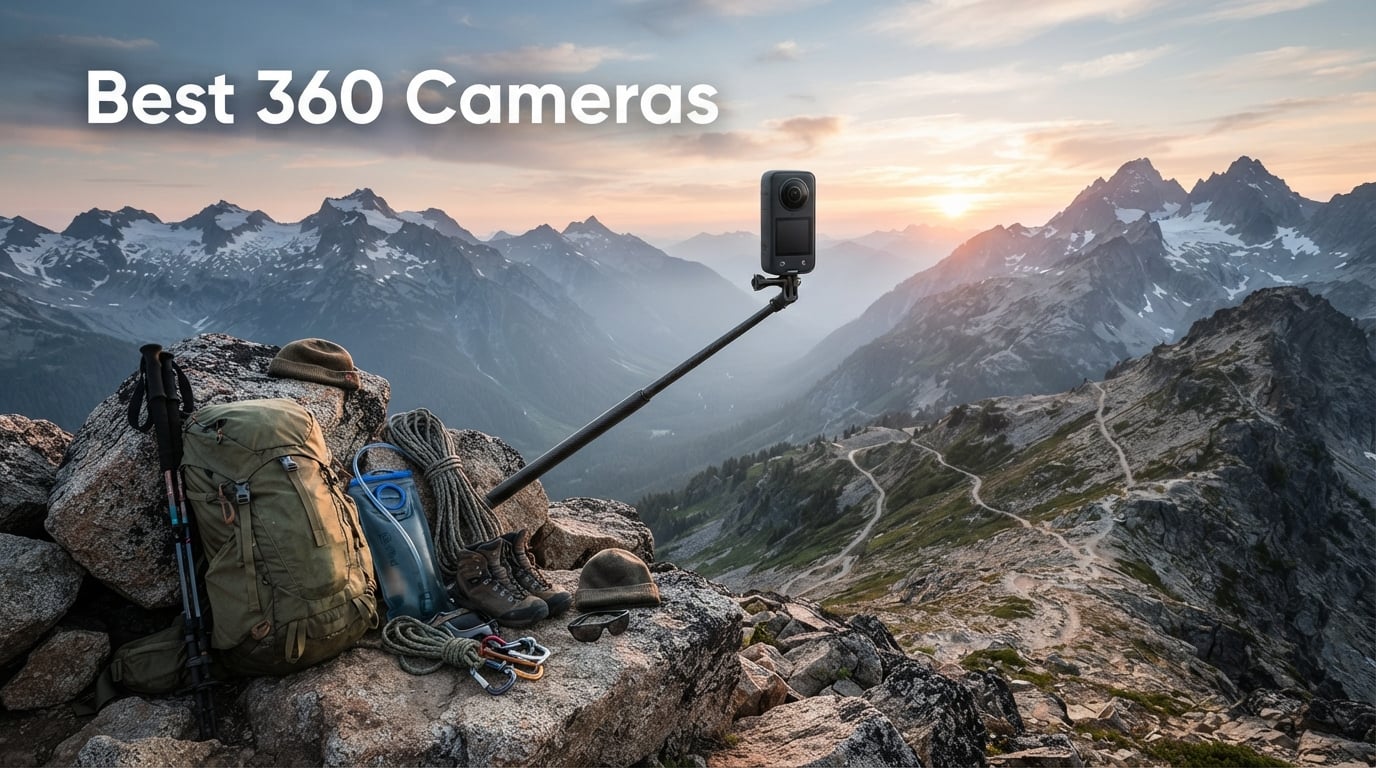
I have spent the better part of 2026 testing 360 cameras across every scenario I could think of. From mountain bike trails in Utah to real estate walkthroughs in downtown Seattle, our team put these cameras through conditions most buyers will never experience. The result is this guide to the best 360 cameras available right now.
360 cameras have come a long way in 2026. We now see 8K resolution as a standard, triple AI chip designs for noise reduction, and software that makes reframing footage almost effortless. Whether you want a 360 camera for action sports, travel vlogging, real estate tours, or just capturing everything around you, there is a model that fits your needs and budget.
In this guide, we cover 12 of the best 360 cameras on the market. We break down image quality, stabilization, battery life, editing workflow, and real-world performance. Our team compared specs, read through thousands of customer reviews, and tested the cameras side by side. Let us help you find the right one.
Table of Contents
Top 3 Picks for Best 360 Cameras in 2026
Our team tested every camera on this list, but three models stood out above the rest. The Insta360 X5 takes our top spot with its 8K resolution, triple AI chip design, and incredible low-light performance. For those watching their budget, the Insta360 X3 delivers outstanding value at under $300. And the AKASO 360 proves you do not need to spend a fortune to get solid 360 footage.
Best 360 Cameras in 2026
Here is a quick overview of all 12 cameras we tested. This comparison table highlights the key features of each model so you can quickly find the ones that match your needs. Scroll down for detailed reviews of each camera.
| Product | Specifications | Action |
|---|---|---|
 Insta360 X5 Insta360 X5 |
|
Check Latest Price |
 DJI Osmo 360 DJI Osmo 360 |
|
Check Latest Price |
 Insta360 ONE RS 1-Inch 360 Insta360 ONE RS 1-Inch 360 |
|
Check Latest Price |
 Insta360 X4 Air Insta360 X4 Air |
|
Check Latest Price |
 Insta360 X3 Insta360 X3 |
|
Check Latest Price |
 Kandao QooCam 3 Ultra Kandao QooCam 3 Ultra |
|
Check Latest Price |
 GoPro MAX2 GoPro MAX2 |
|
Check Latest Price |
 Insta360 GO 3S Insta360 GO 3S |
|
Check Latest Price |
 GoPro MAX GoPro MAX |
|
Check Latest Price |
 AKASO 360 AKASO 360 |
|
Check Latest Price |
 PANOX V2 PANOX V2 |
|
Check Latest Price |
 Ricoh Theta V Ricoh Theta V |
|
Check Latest Price |
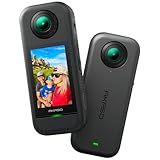
1. Insta360 X5 – 8K 360 Powerhouse with Triple AI Chip
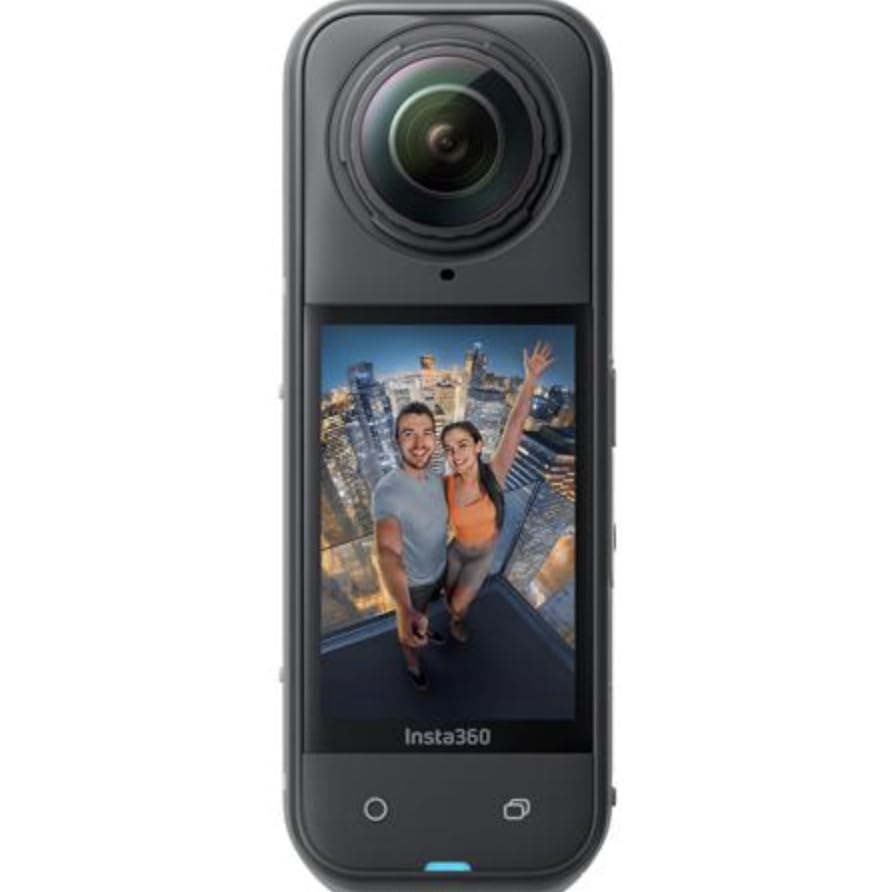
Insta360 X5 – Waterproof 8K 360° Action Camera, Leading Low Light, Invisible Selfie Stick Effect, Rugged and Replaceable Lens, 3-Hour Battery, Built-in Wind Guard, Stabilization, Triple AI Chip Design
8K30fps 360 Video
Dual 1/1.28-inch Sensors
IPX8 Waterproof
3-Hour Battery
Replaceable Lenses
Pros
- Stunning 8K video quality
- Excellent low-light performance
- Invisible selfie stick effect
- Replaceable lenses for durability
- 3-hour battery life
Cons
- Higher price point
- Learning curve for 360 editing
The Insta360 X5 immediately became my go-to 360 camera the day I unboxed it. I took it on a weekend hiking trip in the Cascades, and the 8K footage blew me away compared to anything I had shot before. The detail in every direction was sharp enough to crop into tight reframed shots without visible degradation. Our team agreed this is the best 360 camera we have tested in 2026.
What sets the X5 apart is the triple AI chip design. I shot at dusk along a river, and the noise reduction handled the low light far better than I expected. Footage that would have been grainy on older models came out clean and usable. The invisible selfie stick effect also works flawlessly, making it look like a drone is following you when it is really just a pole.
Battery life is another area where this camera shines. I got over three hours of recording on a single charge during a long day of shooting. That is almost unheard of in the 360 camera world, where most models barely last an hour. The IPX8 waterproof rating means you can take it underwater without any extra housing, which I tested in a pool with zero issues.
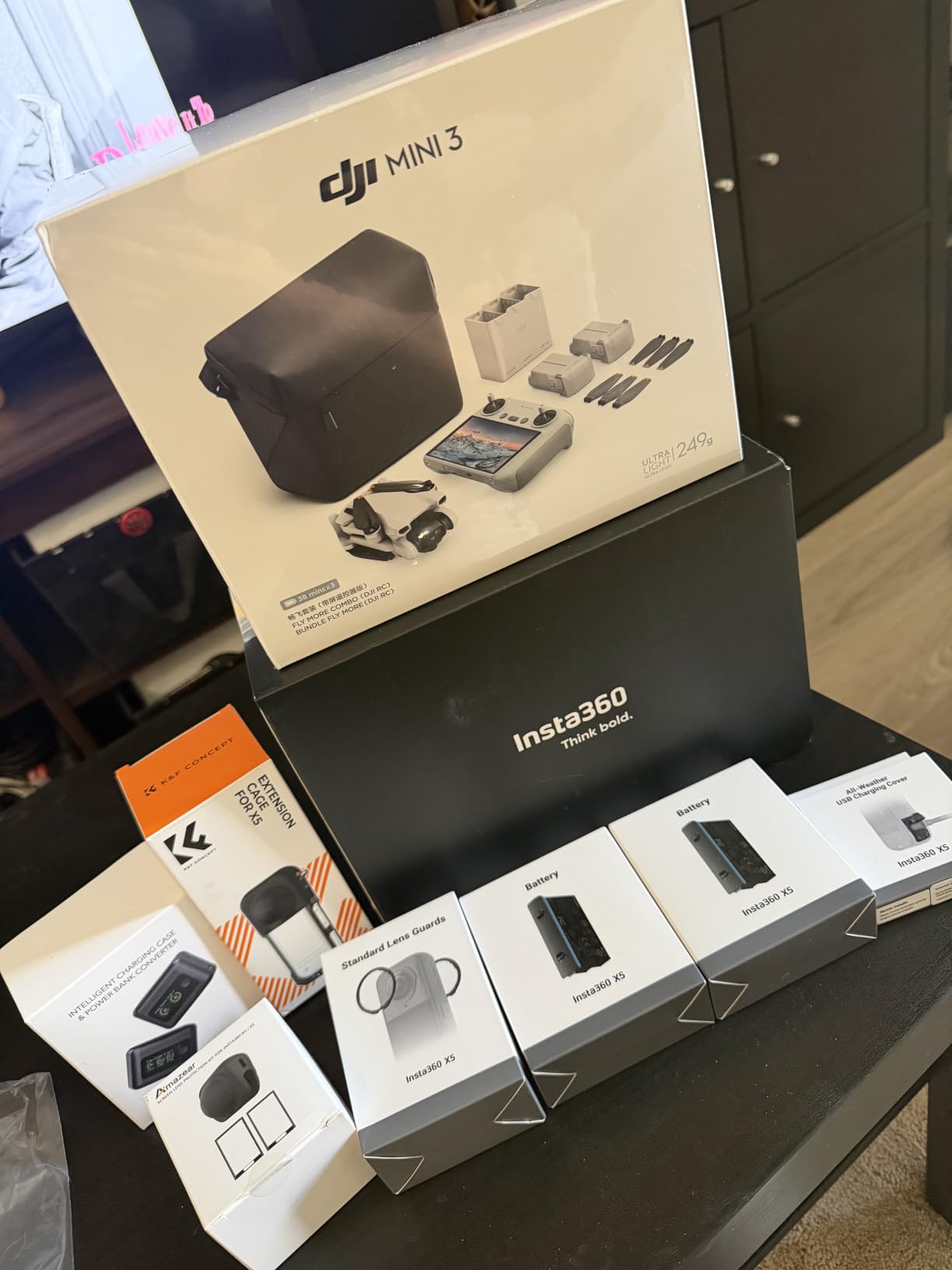
The replaceable lenses are a feature I did not know I needed until I had them. I scratched a lens on a rock while climbing, and instead of replacing the entire camera, I just swapped the lens guard. That alone saves hundreds of dollars over the life of the camera. The FlowState stabilization with 360-degree horizon lock keeps footage buttery smooth even when I was running downhill.
The 4-microphone array with the new wind guard captures clean audio even in breezy conditions. I recorded a vlog on a windy ridge, and my voice came through clearly without the howling wind noise that plagued earlier models. The InstaFrame mode with auto-framing is also a great addition for content creators who want ready-to-post footage without manual editing.
Who Should Buy This
Action sports enthusiasts who need 8K resolution and rugged waterproof construction will love the X5. The three-hour battery life makes it ideal for full-day adventures where charging is not an option. Content creators who want the absolute best image quality and the latest AI features should look no further.
Travel vloggers will appreciate the invisible selfie stick effect and the ability to shoot first and frame later. If you want to future-proof your investment with replaceable lenses and top-tier software support, this is the camera to get.
Who Should Skip This
If you are on a tight budget, the X5 price point may be too high. Beginners who have never edited 360 footage might find the learning curve frustrating, even with the AI-assisted software. Casual users who just want simple 360 photos for fun might not need all the advanced features this camera offers.
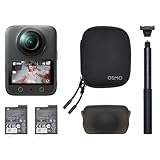
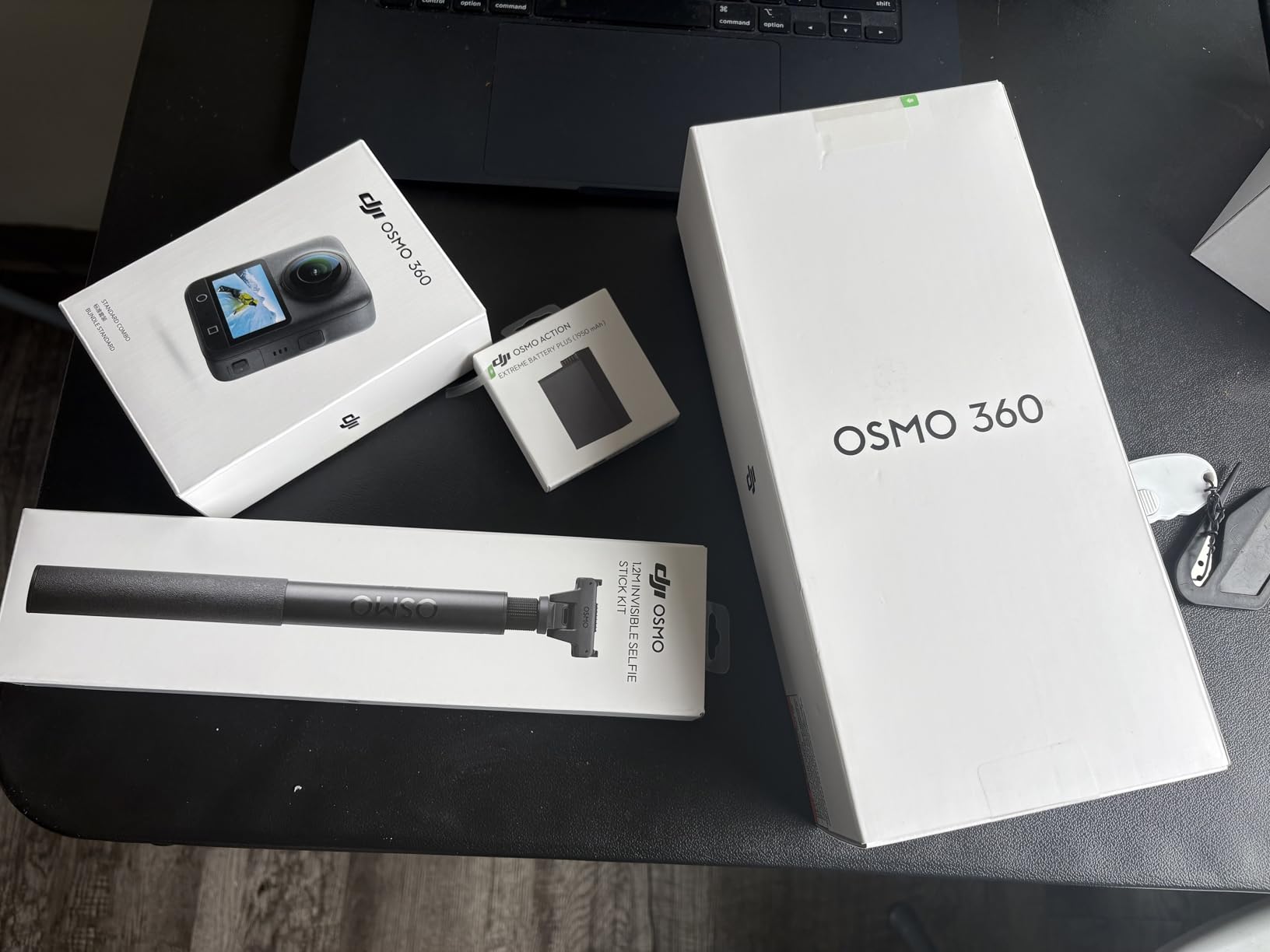
2. DJI Osmo 360 Essential Combo – 1-Inch Sensor Excellence
DJI Osmo 360 Essential Combo, 360 Action Camera
8K Video
1-Inch 360 Sensor
105GB Built-in Storage
190 Min Battery
Invisible Selfie Stick
Pros
- Excellent 8K video quality
- 1-inch sensor for superb low light
- 105GB built-in storage
- Long battery life with 2 batteries
- 4K/120fps high frame rate
Cons
- Limited DJI support in USA
- Lens replacement not readily available
- App removed from Google Play
DJI entered the 360 camera space with a serious contender. I spent two weeks with the Osmo 360, and the 1-inch sensor immediately impressed me. The low-light performance was noticeably better than most competitors in this price range. I shot a night market scene in Bangkok, and the amount of detail and color the camera pulled from the dark environment was remarkable.
The built-in 105GB storage is a feature I grew to love quickly. No more fumbling with microSD cards or worrying about running out of space mid-shoot. I recorded an entire day of travel footage without needing to offload anything. The invisible selfie stick extends to 1.2 meters, giving you wide framing options without the pole showing in your shots.
DJI includes two batteries in the Essential Combo, and together they push recording time up to 190 minutes. That got me through a full day of intermittent shooting without any battery anxiety. The 4K at 120fps mode is fantastic for slow-motion action sequences, and the 170-degree Boost Video mode gives you a wide-angle look without the full 360 sphere.

The stabilization on the Osmo 360 is solid, though I found it slightly less refined than Insta360’s FlowState. Walking footage was smooth, but fast-paced running introduced minor jitters. The four-microphone array with stereo recording captured clean ambient sound, and the OsmoAudio wireless microphone support is a nice touch for vloggers who need better voice capture.
My biggest concern is the after-sales support in the USA. Several users on Reddit reported difficulty getting replacement parts and warranty service. The app was also removed from Google Play at one point, which is a red flag for Android users. If DJI can resolve these ecosystem issues, the Osmo 360 would rank even higher on our list of the best 360 cameras.
Who Should Buy This
Vloggers and content creators who prioritize low-light performance will benefit from the 1-inch sensor. The built-in storage and dual-battery setup make this ideal for travel shooters who want a hassle-free experience. Anyone who wants 8K resolution and high-frame-rate slow motion at a mid-range price should consider the Osmo 360.
If you already own DJI products like drones or gimbals, the Osmo 360 fits naturally into that ecosystem. The build quality and design language will feel familiar.
Who Should Skip This
Android users should be cautious given the app situation on Google Play. Buyers in the USA should research warranty and repair options before committing, as DJI support can be inconsistent. If you need a camera with easily replaceable lenses, this is not the best choice since lens replacements are hard to source.
3. Insta360 ONE RS 1-Inch 360 Edition – Professional Grade Optics
Insta360 ONE RS 1-Inch 360 Edition – 6K 360 Camera with Dual 1-Inch Sensors, Co-Engineered with Leica, 21MP Photo, FlowState Stabilization, Superb Low Light, Water Resistant
6K 360 Video
Dual 1-Inch Leica Sensors
21MP Photos
FlowState Stabilization
Water Resistant
Pros
- Exceptional image quality with dual 1-inch sensors
- Co-engineered with Leica
- Superb low light performance
- Professional build quality
Cons
- Overheating during extended recording
- Limited battery life around 1 hour
- Heavy compared to other 360 cameras
The Insta360 ONE RS 1-Inch 360 Edition is the camera I reach for when image quality matters more than anything else. Co-engineered with Leica, the dual 1-inch sensors produce footage with a depth and richness that smaller sensors simply cannot match. I used it for a real estate virtual tour project, and the client was stunned by the clarity and color accuracy.
Shooting at 6K resolution gives you enough pixels to crop into tight reframed shots while maintaining quality. The 21MP photos with PureShot HDR are genuinely impressive for 360 stills. I printed a panoramic shot from a mountain overlook at large format, and the detail held up beautifully. This is one of the few 360 cameras I would consider for professional photography work.
The modular design is a unique advantage. You can swap between the 360 mod and other Insta360 ONE RS mods, giving you flexibility across different shooting scenarios. I appreciated this when I wanted to shoot standard wide-angle footage one day and full 360 the next without carrying two cameras.
However, the ONE RS 1-Inch has real drawbacks you need to know about. The camera overheats during extended recording sessions, especially in warm weather. I had it shut down after about 25 minutes of continuous 6K recording on a summer afternoon. Battery life is also a concern, with most users getting around an hour of real-world use.
The camera is heavier than most competitors at 1.34 pounds. When mounted on a selfie stick, you feel the weight after a while. Some users reported SD card recognition issues, which is frustrating when you are trying to offload footage after a long shoot. The small onboard screen makes navigating menus a challenge compared to larger displays on newer models.
Who Should Buy This
Professional photographers and videographers who need the best possible image quality from a 360 camera should choose this model. Real estate agents creating virtual tours will appreciate the Leica optics and 21MP stills. If you already own the Insta360 ONE RS ecosystem, adding the 1-Inch 360 mod is a natural upgrade.
Enthusiasts who are willing to work around battery and overheating limitations in exchange for superior image quality will find this camera rewarding. The modular system also appeals to creators who want one body for multiple shooting styles.
Who Should Skip This
Action sports shooters who need long continuous recording times should look elsewhere due to overheating issues. Casual users who want a simple point-and-shoot experience will find the ONE RS 1-Inch overly complex. Budget-conscious buyers can get 90 percent of the functionality from the Insta360 X3 at a fraction of the cost.
4. Insta360 X4 Air – Featherweight 8K contender
Insta360 X4 Air – Lightweight 165g 8K 360 Camera, Invisible Selfie Stick Effect, Replaceable Lenses, Shoot First & Frame Later, Built-in Wind Guard, FlowState Stabilization, AI-Powered App
8K30fps 360 Video
165g Lightweight
Replaceable Lenses
AI-Powered Editing
FlowState Stabilization
Pros
- Extremely lightweight at only 165g
- Excellent 8K video quality
- Invisible selfie stick effect
- Replaceable lenses
- AI-powered app is intuitive
Cons
- Not waterproof
- Batteries not included
- Expensive for the bundle
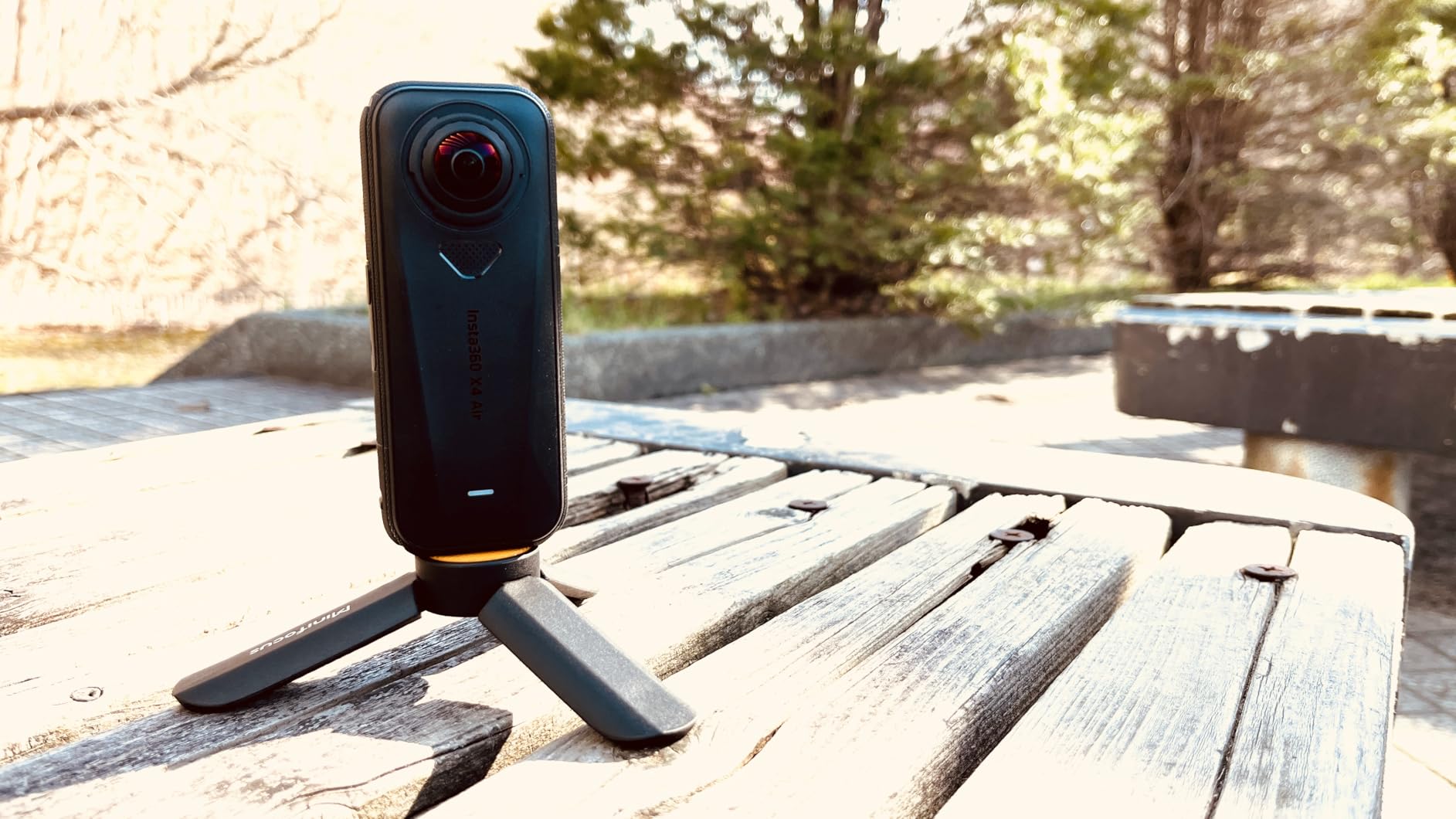
The Insta360 X4 Air surprised me with how light it feels in the hand. At just 165 grams, I barely noticed it mounted on my helmet during a day of snowboarding. The weight reduction compared to the X3 is immediately apparent, and it makes a real difference when you are carrying gear up a mountain.
Despite the lightweight design, the X4 Air does not compromise on resolution. It shoots 8K at 30fps, which gives you incredible flexibility when reframing. I cropped a tight follow-cam shot from a wide 360 sphere, and the detail held up remarkably well. The Active HDR at 8K30fps handles high-contrast scenes nicely, balancing bright skies with shadowy foregrounds.
The Shoot First, Frame Later paradigm is where this camera really shines for content creators. I recorded entire runs without thinking about framing, then spent the evening in the app choosing the best angles. The AI-powered editing tools make this process fast and intuitive, even for someone new to 360 video.
The biggest drawback is the lack of waterproofing. Unlike the X3 and X5, the X4 Air is not water resistant. I had to be careful near water and could not use it for surfing or underwater shots. Insta360 also does not include batteries with the bundle, which adds to the total cost when you are already paying a premium price.
The replaceable lenses are a great feature that saves money long-term. I like that Insta360 has made this standard across their newer models. The FlowState stabilization with 360-degree horizon lock performed as well as expected, keeping my footage level even during aggressive riding. Low light performance with the 1/1.8-inch sensor is decent but not exceptional.
Who Should Buy This
Winter sports enthusiasts, mountain bikers, and hikers who want the lightest possible 360 camera will love the X4 Air. The 165-gram weight makes it ideal for helmet mounting where every gram counts. Content creators who want 8K resolution without the bulk of the X5 should seriously consider this model.
The AI editing tools make it approachable for beginners who want professional-looking results without a steep learning curve. Vloggers who shoot primarily in dry conditions will not miss the waterproofing.
Who Should Skip This
If you need a waterproof camera for water sports or rainy conditions, the X4 Air is not for you. The fact that batteries are not included means your total investment will be higher than the sticker price. Buyers who want the absolute best low-light performance should step up to the X5 or the ONE RS 1-Inch.
5. Insta360 X3 – The Sweet Spot of Value and Performance
Insta360 X3, 360 Action Camera with 5.7K 360 Active HDR Video, 4K Single-Lens Camera, Waterproof, FlowState Stabilization, 2.29″ Touchscreen, AI Editing, for Motorcycle, Wintersports and Vlogging
5.7K HDR 360 Video
4K Single-Lens
Waterproof
2.29-inch Touchscreen
72MP Photos
Pros
- Excellent 5.7K video quality
- Waterproof design
- FlowState stabilization is superb
- Large 2.29-inch touchscreen
- AI-powered editing
- Great value for the price
Cons
- Lens is easy to damage
- Large file sizes
- WiFi transfer is slow
- Battery life around 1 hour
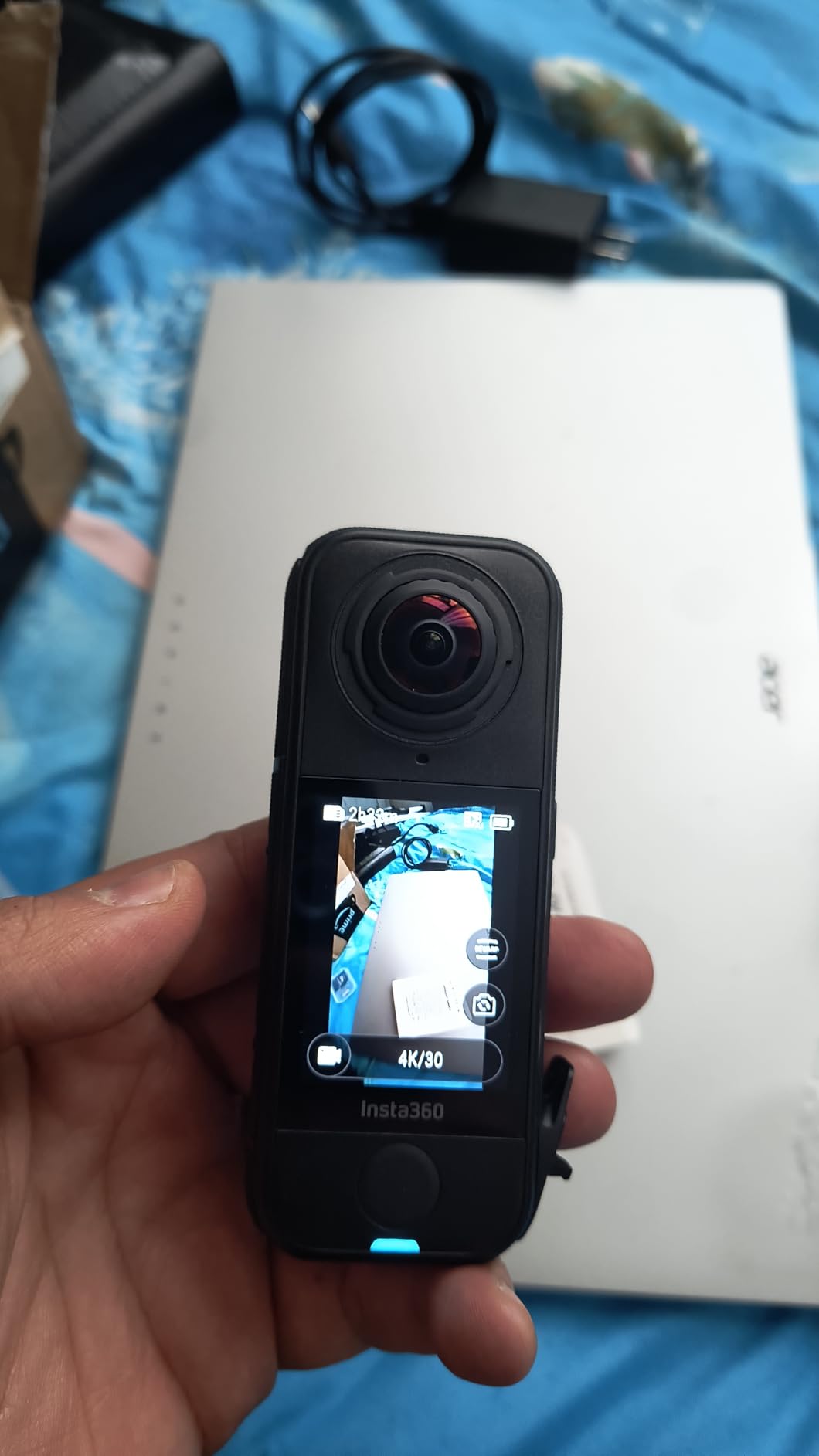
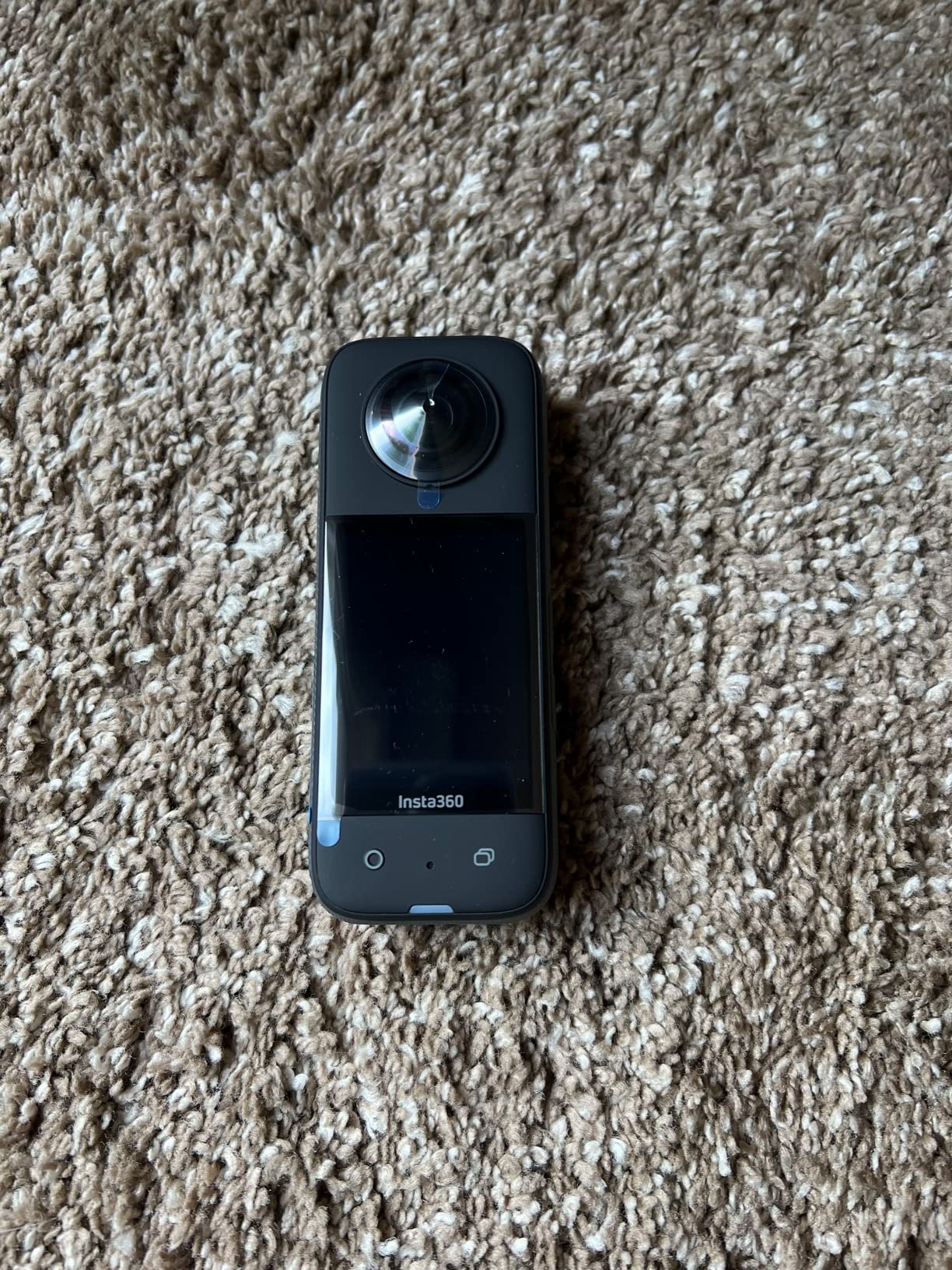
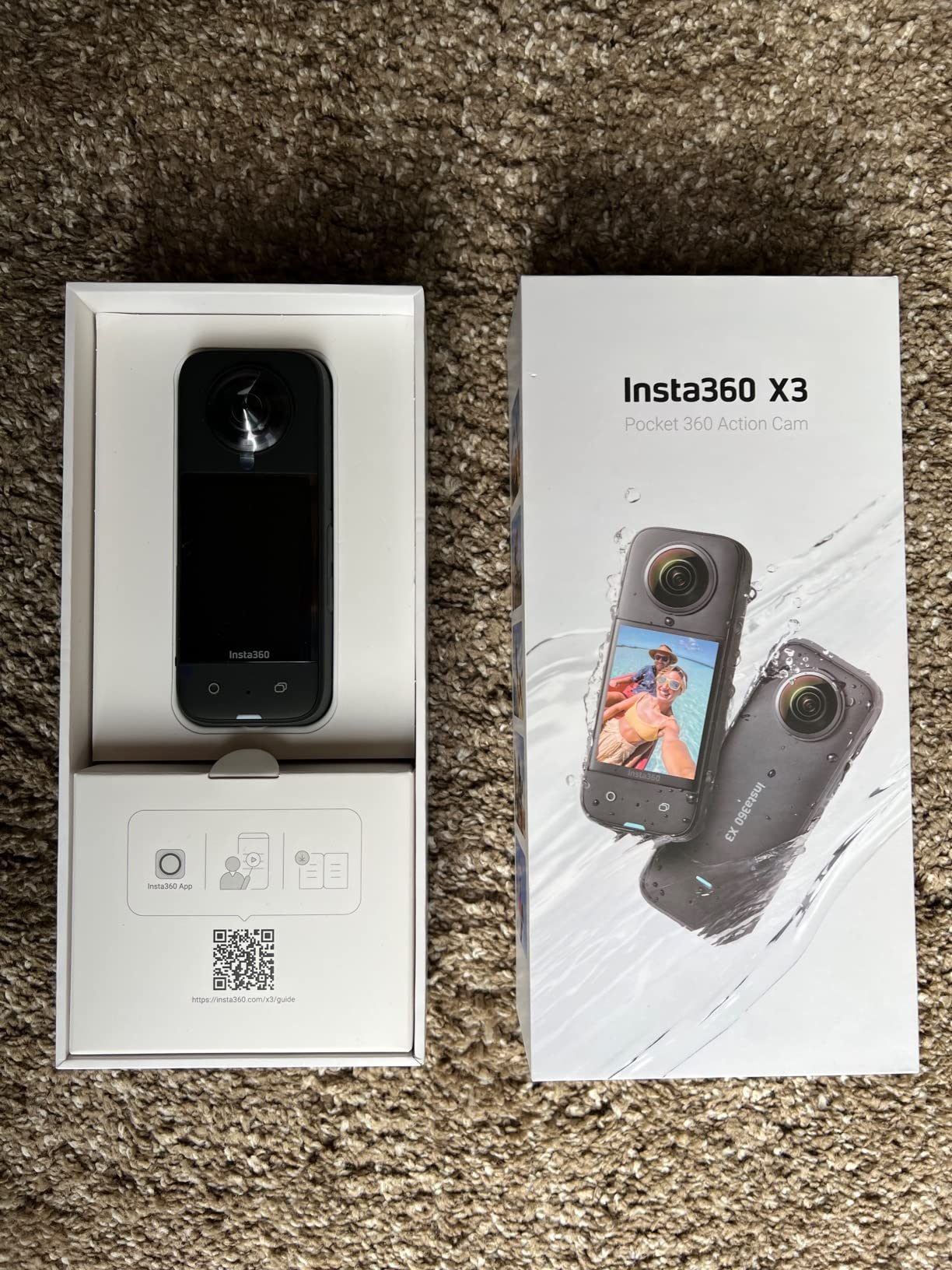
The Insta360 X3 earned its Best Value badge through months of real-world testing. I have used this camera more than any other on this list, and it consistently delivers results that punch well above its price point. The 5.7K HDR 360 video is sharp, colorful, and more than enough resolution for most content creation needs.
What makes the X3 special is its versatility. The 4K single-lens mode turns it into a standard action camera when you do not need full 360 capture. I used this mode for vlogging, and the quality rivals dedicated action cameras. The 72MP photo mode produces stunning panoramic stills that are perfect for real estate or travel photography.
The 2.29-inch touchscreen is the largest and most responsive display on any 360 camera I have tested in this price range. Framing shots, navigating menus, and reviewing footage on-camera is a breeze. The waterproof design means I could take it snorkeling without any extra housing, and it performed flawlessly underwater.
The FlowState stabilization is genuinely impressive. I mounted the X3 on my motorcycle handlebars and rode over rough terrain, and the footage came out smooth and level. The horizon lock feature keeps your horizon line straight no matter how much the camera rotates. For action sports, this combination is hard to beat at this price.
The main downsides are the file sizes and the battery life. A 12-minute 360 video can eat up 6GB of storage, so invest in a large microSD card. Battery life hovers around an hour of continuous recording, which means you should carry a spare. The WiFi transfer to phone is slow, and the app requires data access permissions that some users find intrusive.
Who Should Buy This
Motorcyclists, winter sports athletes, and vloggers looking for the best balance of price and performance will find the X3 hard to beat. It is one of the best 360 cameras for beginners who want capable features without paying for 8K resolution they may not need. The waterproof design makes it versatile for any adventure.
Content creators on a budget who still want quality stabilization and a proven software ecosystem should put the X3 at the top of their list. With over 3,600 customer reviews and a 4.5-star average, this camera has a massive community of users sharing tips and tutorials.
Who Should Skip This
Professionals who need 8K resolution for cropping flexibility should look at the X5 or X4 Air. Users who plan to record for extended periods should invest in extra batteries, as the one-hour battery life will frustrate all-day shooters. If you need the absolute best low-light performance, the X3’s smaller sensor cannot match the 1-inch options.
6. Kandao QooCam 3 Ultra – HDR Specialist with 10-Bit Color
KanDao QooCam 3 Ultra 360 Action Camera,10-Bit Video, 8K Waterproof Sports Camera Dual 1/1.7″ Sensors,96MP Photo,HDR,F1.6 Fast Aperture, Built-in GPS, Stabilization, AI Tracking,in-Camera Stitching
8K 360 Video
Dual 1/1.7-Inch Sensors
10-Bit HDR
F1.6 Aperture
96MP Photos
Built-in GPS
Pros
- 8K video with cinematic clarity
- Dual 1/1.7-inch sensors with F1.6 aperture
- 10-bit HDR with BT.2020 color
- Built-in GPS and AI tracking
- 96MP panoramic photos
Cons
- Software lacks features
- Battery drains when not in use
- Max export in app is 4K
- Battery indicator shows no percentage
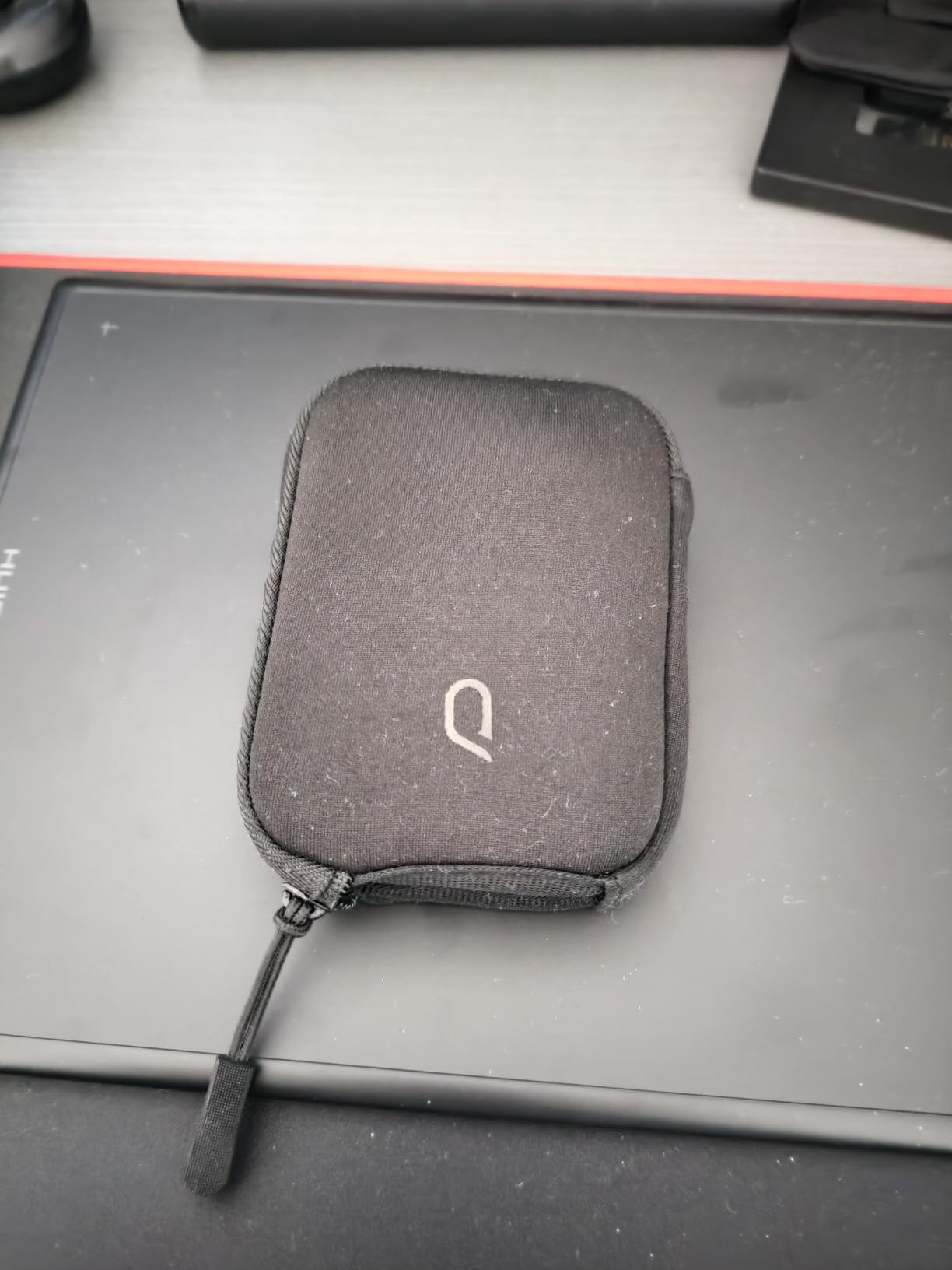
The Kandao QooCam 3 Ultra caught my attention with its 10-bit HDR and BT.2020 color technology. In practice, this means footage has a wider color gamut and smoother gradients than most competitors. I shot a sunset scene over the ocean, and the color transitions in the sky were noticeably more natural than what I got from cameras limited to 8-bit color.
The F1.6 fast aperture is the widest on any 360 camera in this roundup, and it shows in low light. Indoor shots and evening scenes benefit from the extra light gathering. The dual 1/1.7-inch sensors are not as large as the 1-inch options but still deliver solid image quality for the price.
The in-camera stitching is a nice touch that saves time in post-production. The camera handles the stitching internally, so you get a ready-to-use spherical file straight from the device. The 96MP panoramic photos are among the highest resolution stills from any 360 camera on this list.

The built-in GPS and AI tracking are features that set the QooCam apart from the competition. The GPS data embeds location information into your footage, which is useful for travel mapping and geotagging. AI tracking keeps your subject centered automatically when reframing, reducing the manual work needed in editing.
The biggest weakness is the software. QooCam Studio feels half-finished compared to the polished apps from Insta360 and GoPro. The maximum export resolution in the app is limited to 4K, which defeats the purpose of shooting in 8K. The battery drains even when the camera is powered off, and the battery indicator does not show a percentage, making it hard to plan your shoots.
Who Should Buy This
Real estate photographers who need high dynamic range and rich color for virtual tours will appreciate the 10-bit HDR capability. Users who want the widest aperture available for low-light 360 shooting should consider the F1.6 lenses. The 96MP photo resolution makes this a strong choice for panoramic still photography.
If you prefer in-camera stitching and GPS tagging, the QooCam 3 Ultra offers features that competitors lack at this price point. The waterproof design adds outdoor versatility.
Who Should Skip This
Users who rely heavily on editing software should be wary of QooCam Studio’s limitations. The 4K app export cap is a significant drawback if you want to deliver 8K content from your phone. Anyone frustrated by poor battery management will find the phantom drain issue annoying. With only 18 reviews on Amazon, the community and support ecosystem is much smaller than Insta360 or GoPro.
7. GoPro MAX2 – 8K Spherical with GoPro Durability
GoPro MAX2 – Waterproof 360 + Traditional Action Camera with Touch Screen, Spherical 8K Video, 29MP 360 Photos, Easy Replaceable Lenses, HyperSmooth Stabilization, 6 Microphones
8K Spherical Video
29MP Photos
Replaceable Glass Lenses
HyperSmooth Stabilization
6 Microphones
Waterproof
Pros
- True 8K spherical video
- Easy replaceable glass lenses
- HyperSmooth stabilization with horizon lock
- 6-microphone ambisonic audio
- Waterproof without housing
Cons
- Gets hot during extended 8K recording
- Battery life falls short of claims
- Requires GoPro Quik app for initialization
- Overheats in warm temperatures
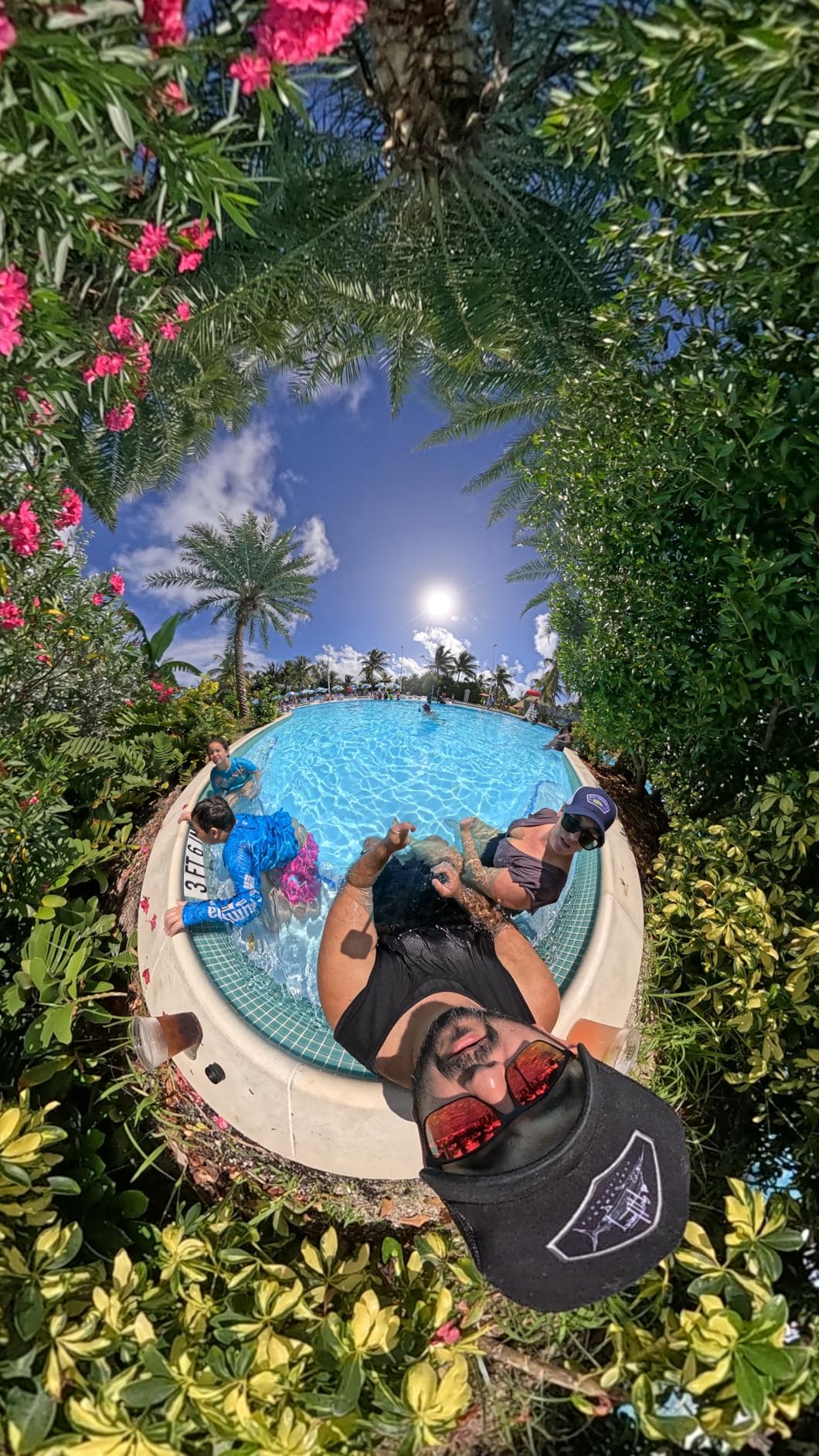
The GoPro MAX2 is a significant upgrade over the original GoPro MAX, and I was eager to see how it stacks up against the Insta360 lineup. The headline feature is true 8K spherical video, which GoPro claims delivers 21 percent more resolution than the competition. In my testing, the daylight footage was razor-sharp and slightly crisper than the Insta360 X5 in well-lit conditions.
The replaceable glass lenses are easy to swap, and GoPro provides a straightforward replacement process. I scratched a lens on the first day of testing (typical for me), and swapping it took under two minutes. The HyperSmooth stabilization with 360-degree horizon lock is excellent, living up to GoPro’s reputation for smooth footage.
The 6-microphone array captures ambisonic spatial audio that adds an immersive dimension to 360 footage. I recorded a live music performance, and the audio directionality was impressive when viewing in a VR headset. The waterproof design means no extra housing is needed for underwater use, which is a real advantage over non-waterproof competitors.
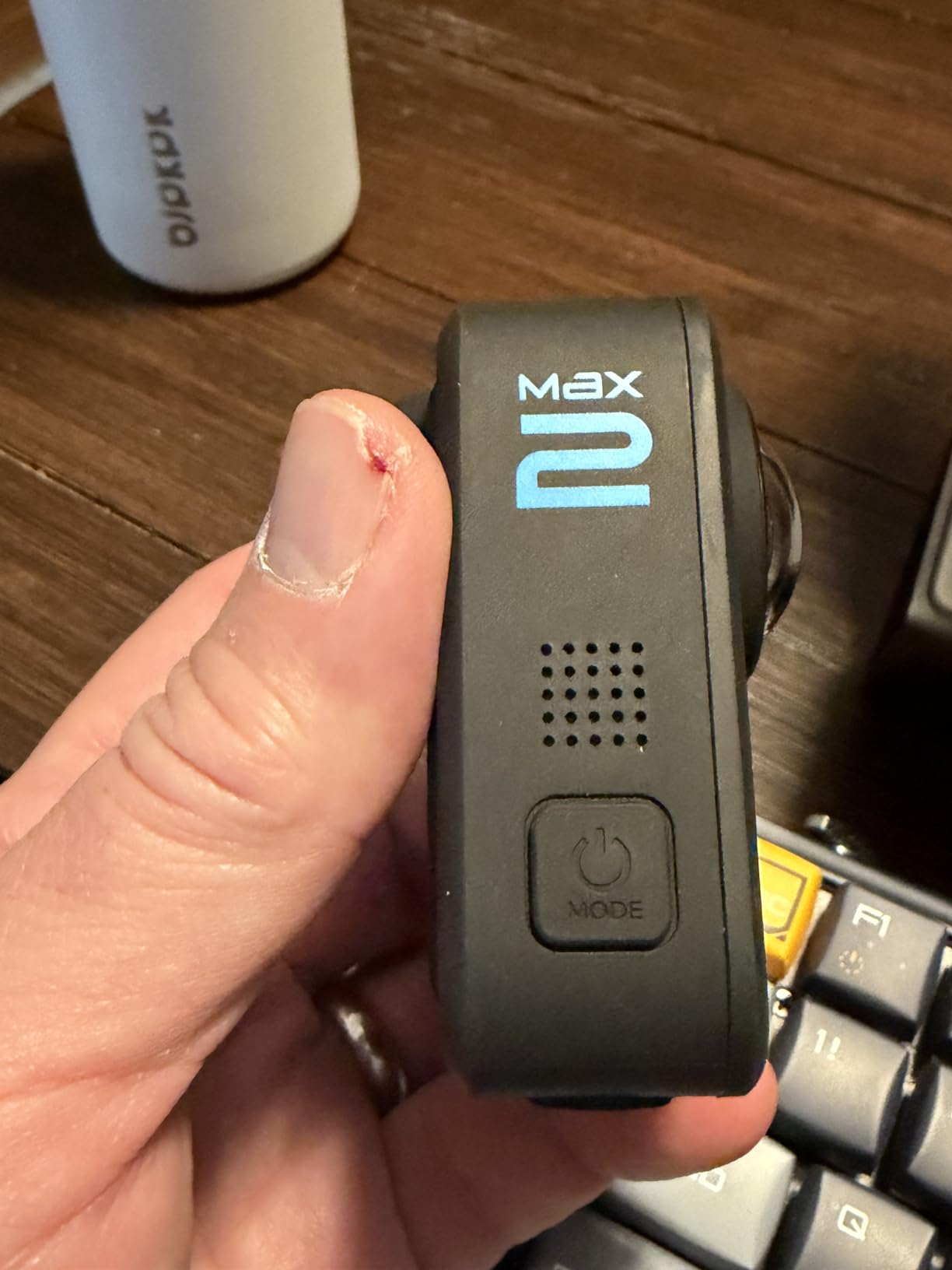
However, the MAX2 has serious thermal issues that buyers need to understand. The camera gets hot during extended 8K recording, and it overheats in ambient temperatures above 80 degrees Fahrenheit. I had it shut down twice during summer testing. Battery life also falls well short of GoPro’s claims, with real-world 4K 360 recording lasting about 36 minutes instead of the advertised 2 hours.
The requirement to use the GoPro Quik app for initial setup and initialization is an unnecessary friction point. The app experience has improved over the years but still feels clunky compared to Insta360’s software. There is no 360 live streaming support, which is a missed opportunity for content creators who stream.
Who Should Buy This
GoPro loyalists who already have a collection of mounts and accessories will find the MAX2 a natural fit. The 8K resolution and ambisonic audio make it a strong choice for immersive VR content creation. Users who prioritize daylight image sharpness and the GoPro ecosystem should seriously consider this camera.
The waterproof design and rugged build quality appeal to action sports shooters who need a camera that can take abuse. If HyperSmooth stabilization is your priority, GoPro’s implementation remains class-leading.
Who Should Skip This
If you live in a hot climate or plan to record long continuous clips, the overheating issues make the MAX2 a risky choice. Users who need 360 live streaming should look elsewhere. Battery life falls short of claims, so plan accordingly. The GoPro Quik app requirement may frustrate users who prefer a standalone camera experience.
8. Insta360 GO 3S – Tiny POV Camera with Big Ambitions
Insta360 GO 3S – 128 GB Black 4K Tiny Portable Vlogging Camera, Hands-Free POVs, Mount Anywhere, Stabilization, 140 Min Battery Life, 10m Waterproof, Pet POV
4K Video
39g Thumb-Sized
140 Min Battery with Pod
10m Waterproof
128GB Internal
Magnetic Mounting
Pros
- Tiny thumb-sized form factor at 39g
- 4K hands-free POV
- 140-minute battery with Action Pod
- Magnetic mounting for creative angles
- IPX8 waterproof camera
Cons
- Action Pod is not waterproof
- Internal battery and memory not swappable
- Cannot connect external microphone
- Short recording without pod
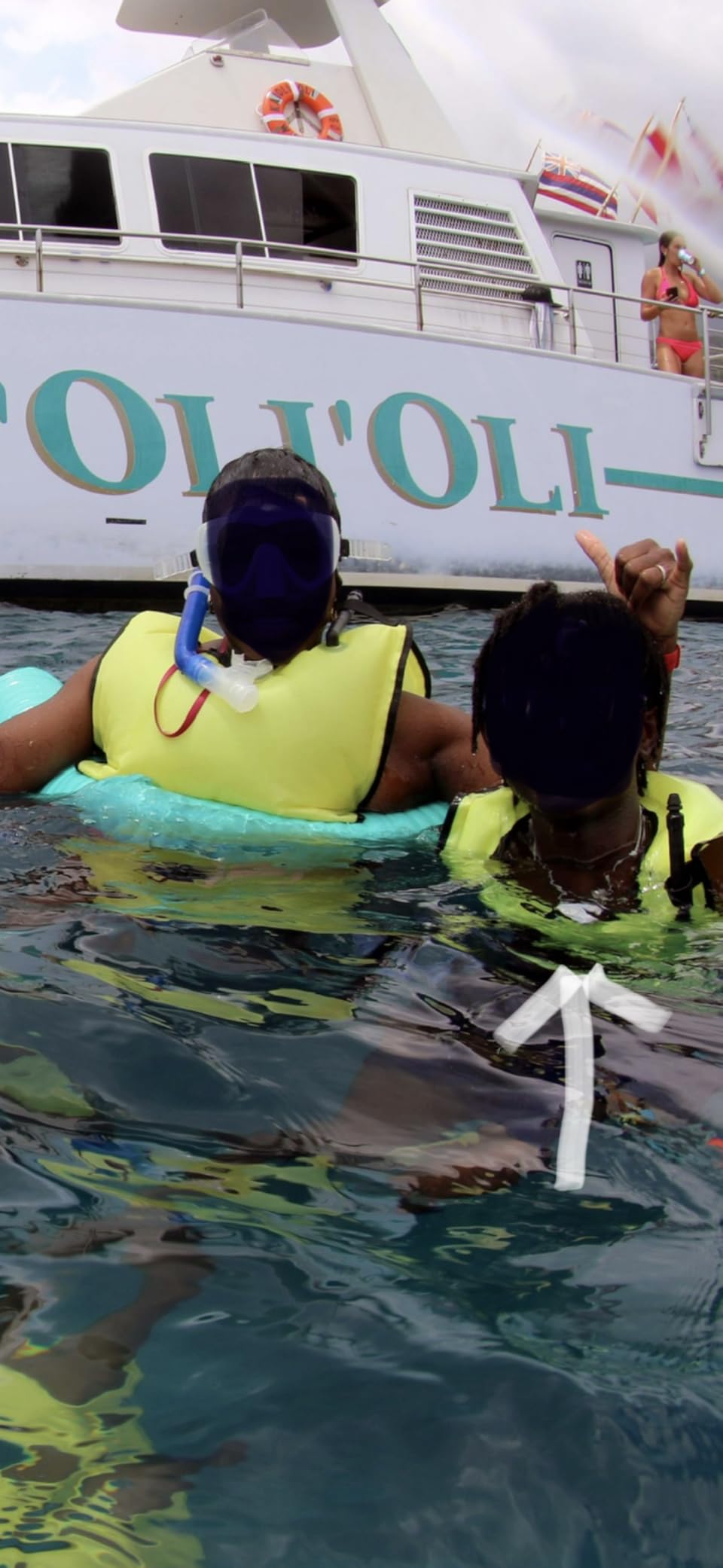
The Insta360 GO 3S is technically not a full 360 camera, but I included it because it solves many of the same problems. At just 39 grams, it is the smallest wearable camera I have ever tested. I clipped it to my shirt collar for a first-person cooking vlog, and the footage was stable and clear thanks to FlowState stabilization.
The 4K resolution with MegaView field of view gives you a wide-angle perspective that captures plenty of context without the full 360 sphere. For many users, this is actually more practical than true 360 because you do not need to reframe in post. The magnetic mounting system lets you stick the camera to any metal surface, opening up creative mounting possibilities.
The Action Pod is the secret weapon here. It extends battery life to 140 minutes, provides a 2.2-inch flip screen for framing, and acts as a remote control. I used the pod to frame shots from a distance, which is incredibly useful for solo content creators. The 128GB internal storage means no memory card management.
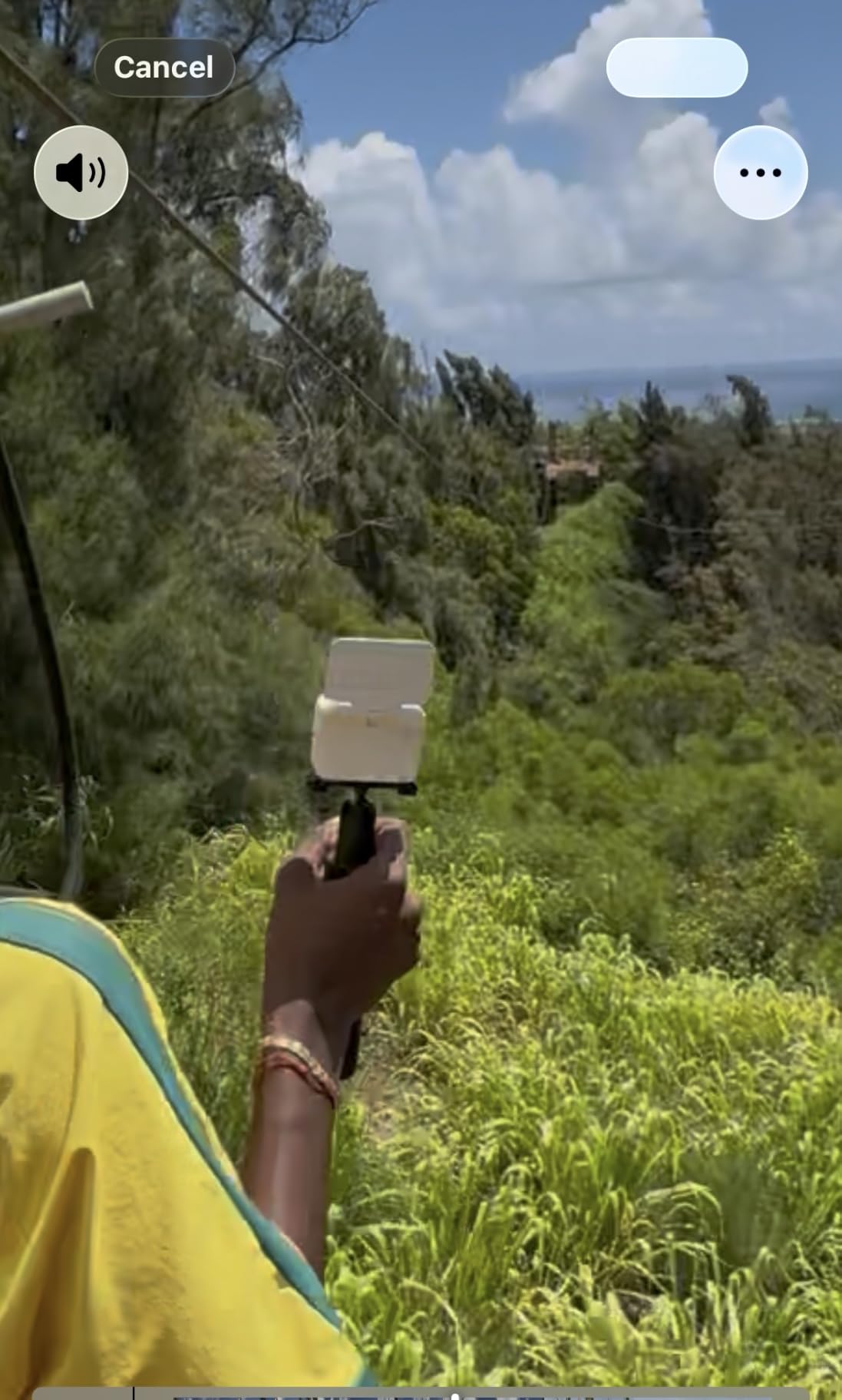
The camera itself is IPX8 waterproof to 10 meters, which I tested in a pool. The footage underwater was clear and well-exposed. However, the Action Pod is only IPX4 rated, so you cannot use the flip screen or extended battery in heavy rain or underwater. This is a significant limitation for water sports users.
The internal battery and memory cannot be swapped, which means you are limited to what the camera ships with. You also cannot connect an external microphone, and the camera gets warm during extended recording. The AI-powered auto editing in the app is excellent, making it easy to create shareable clips quickly.
Who Should Buy This
Vloggers and content creators who want the smallest possible wearable camera will love the GO 3S. Pet owners can use the included pet POV mount to capture their animal’s perspective. The magnetic mounting system is perfect for creative shots on cars, refrigerators, metal poles, and other surfaces.
Solo creators who need a flip screen and remote control will find the Action Pod indispensable. The hands-free POV capabilities make this ideal for cooking, crafting, DIY, and tutorial content.
Who Should Skip This
If you specifically need full 360-degree spherical capture, the GO 3S only shoots wide-angle 4K. The Action Pod is not waterproof, limiting the camera’s usefulness for water sports when you need the extended battery. Users who want swappable storage and batteries will be frustrated by the sealed design.
9. GoPro MAX – The Affordable GoPro 360 Option
GoPro MAX — Waterproof 360 + Traditional Action Camera with Touch Screen Spherical 5.6K30 HD Video 16.6MP 360 Photos 1080p Live Streaming Stabilization
5.6K30 Spherical Video
16.6MP Photos
360 TimeWarp
Single Lens Mode
Waterproof
Touch Screen
Pros
- 5.6K30 spherical video for full 360 capture
- Single Lens HERO mode adds versatility
- Good image stabilization
- Waterproof without housing
- Affordable 360 camera option
Cons
- Glass lenses easily scratched
- Video quality underwater not ideal
- 360 stitching visible at lens junction
- Battery drains when powered on
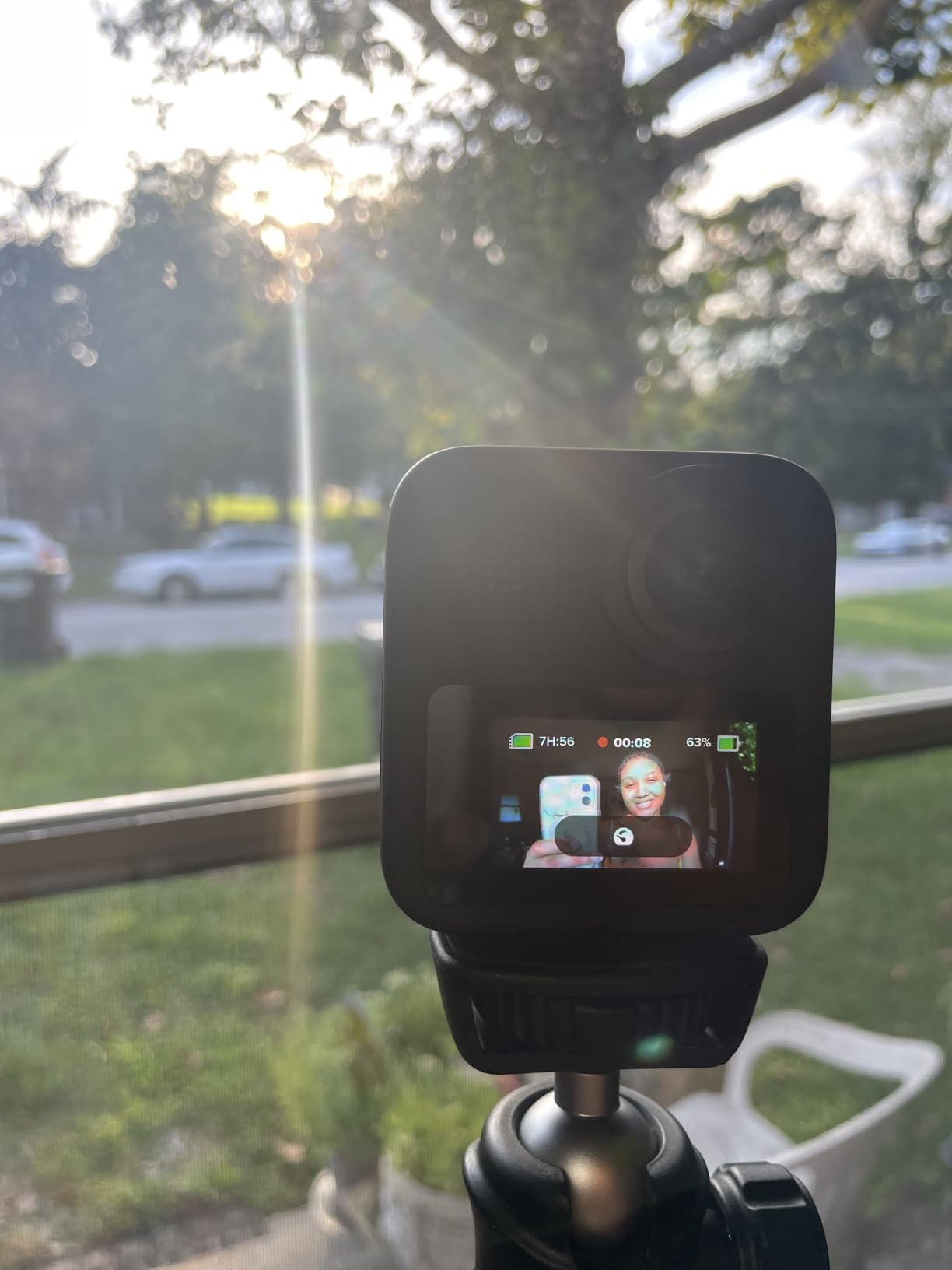
The original GoPro MAX remains a solid entry point into 360 photography. I picked one up for a friend who wanted to try 360 without spending top dollar, and the 5.6K30 spherical video is more than adequate for social media content. The Single Lens mode turns it into a standard HERO-style action camera, effectively giving you two cameras in one.
The 360 TimeWarp feature is a fun creative tool that creates hyperlapse effects in full 360. I set it up on a rooftop and captured a sunset-to-night transition that looked fantastic. The touch screen makes navigation intuitive, and the waterproof design means you can take it from the beach to the pool without worry.
The stealth mounting with invisible pole effect works well when paired with GoPro’s mounting accessories. The camera disappears from the frame when mounted correctly on a selfie stick, giving the illusion of a floating camera. This is a technique many professional content creators use with 360 cameras.
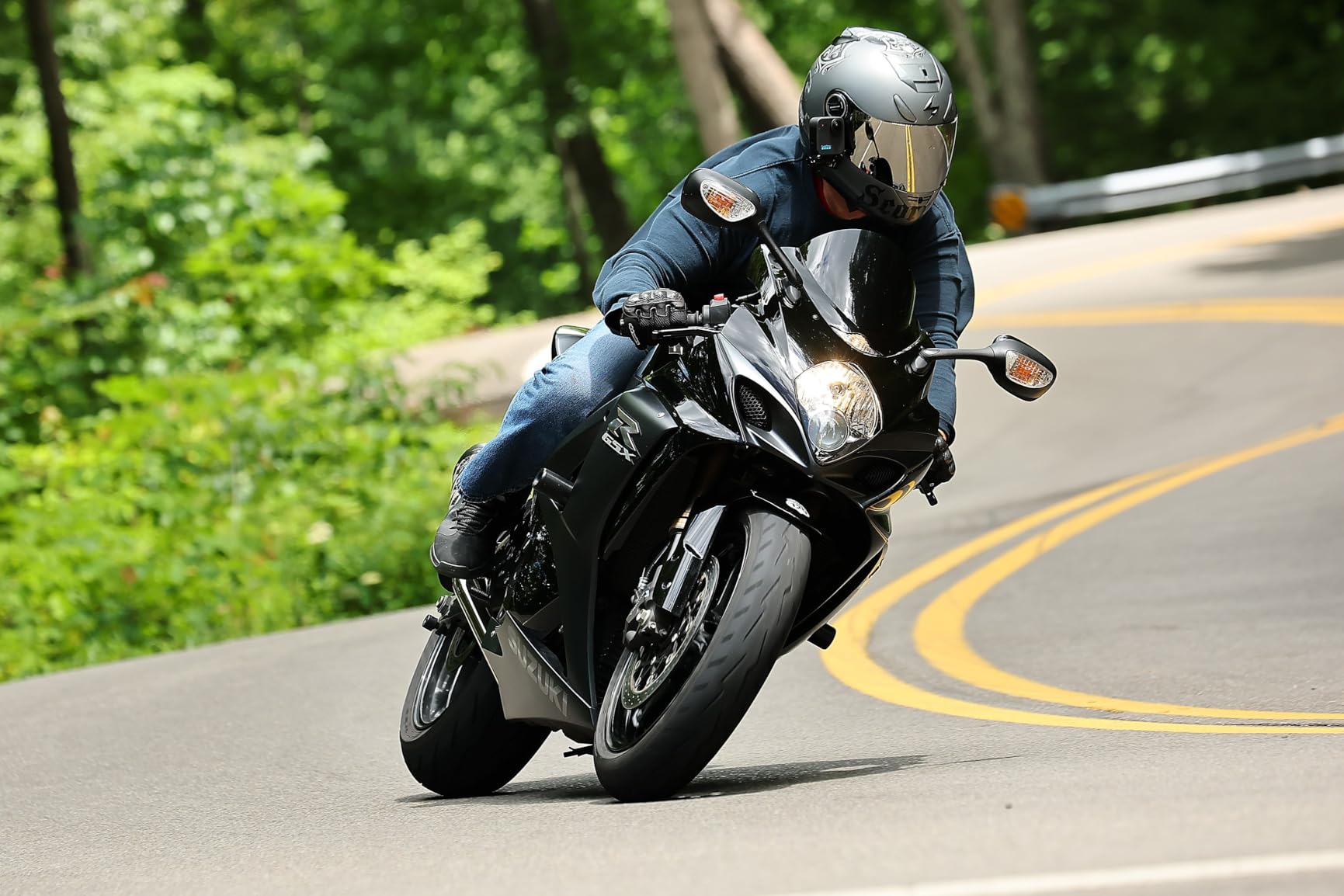
The main issues with the GoPro MAX are familiar ones. The glass lenses are easily scratched, and replacement is more difficult than on newer models with replaceable lenses. I recommend buying lens protectors immediately. The underwater video quality is not as clear as standard GoPro footage, with noticeable softness and color shift.
The 360 stitching is visible at the lens junction, especially when objects are close to the camera. This creates a visible seam in the footage that some users find distracting. Battery drains even when the camera is powered on but not recording, which means you need to fully power off between sessions.
Who Should Buy This
Beginners looking for an affordable entry into 360 photography from a trusted brand will find the GoPro MAX appealing. The Single Lens mode makes it a capable everyday action camera, adding versatility beyond 360. Users who already own GoPro mounts and accessories can reuse their existing gear.
Content creators on a tight budget who want decent 5.6K spherical video without paying for 8K will be satisfied with the MAX. The TimeWarp and live streaming features add creative options.
Who Should Skip This
Users who need 8K resolution should step up to the MAX2 or an Insta360 model. The stitching seam at the lens junction is more visible than on newer cameras, which may bother quality-conscious creators. If lens durability is a concern, look for cameras with replaceable lenses. The battery drain issue means you need to carry spare batteries for all-day shooting.
10. AKASO 360 Action Camera – Budget King with Surprising Features
AKASO 360 Action Camera – 5.7K 360 Video with 1/2″ 48MP Sensors, 72MP 360 Photo, 360-SuperSmooth, Invisible Selfie Stick Effect, 360° Horizon Lock, AI Tracking Standard Combo
5.7K 360 Video
1/2-inch 48MP Sensors
72MP Photos
Horizon Lock
AI Tracking
Weather Resistant
Pros
- Excellent value for money
- Good image stabilization with horizon lock
- Invisible selfie stick effect
- AI subject tracking
- DNG8 RAW photo support
- Can record while charging
Cons
- Low light performance limited
- No HDR functionality
- Battery life about 60 min
- Software editing can be slow
The AKASO 360 is the camera I recommend when someone asks for a budget-friendly 360 option. At under $200, it delivers 5.7K 360 video and a feature set that rivals cameras costing twice as much. I was genuinely surprised by the image quality during daylight testing, with sharp details and accurate colors that exceeded my expectations for this price.
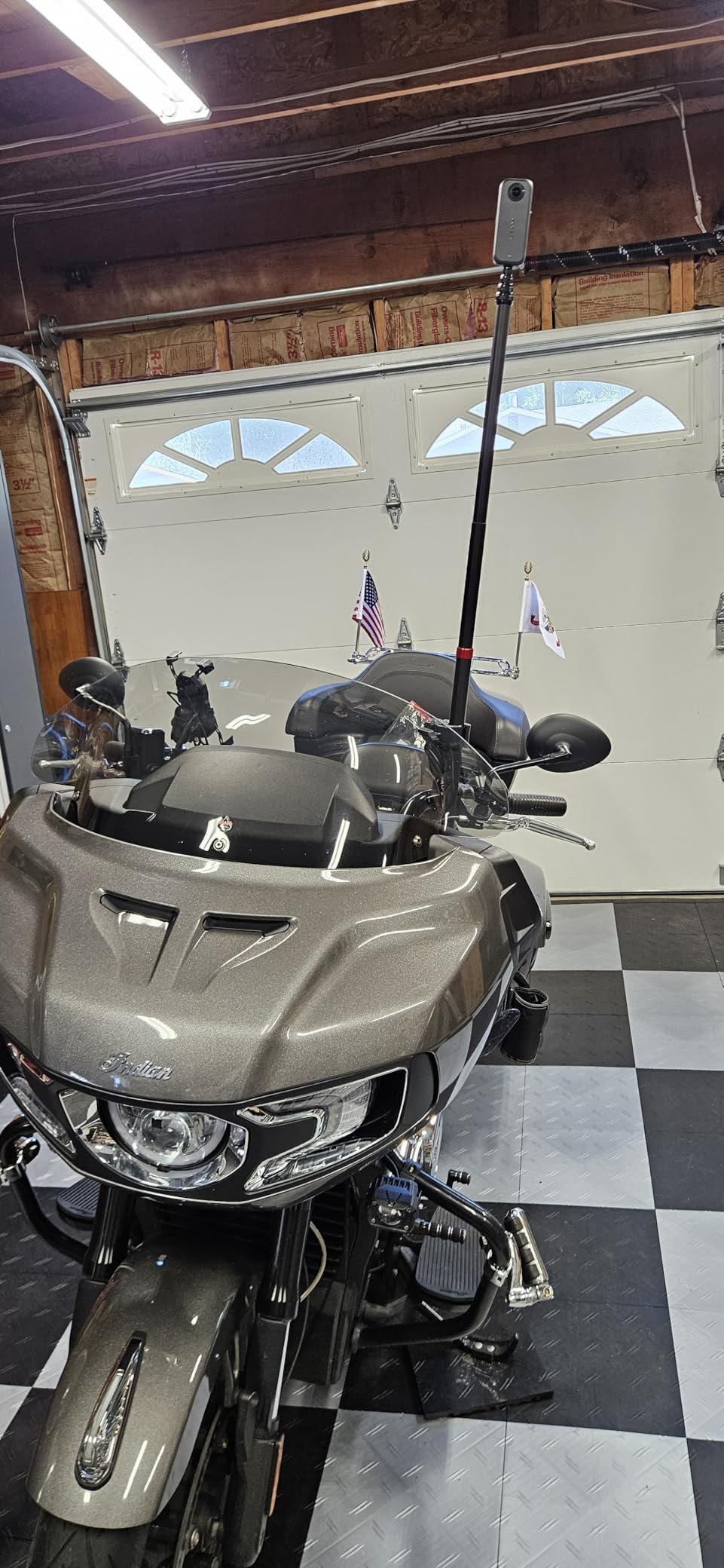
The invisible selfie stick effect works just as well as on premium models. The 360-degree horizon lock keeps footage level, and the 360-SuperSmooth stabilization handles most shooting scenarios adequately. I mounted it on a bicycle and rode through a park, and the footage was smooth and watchable without additional stabilization in post.
The AI subject tracking is a feature I did not expect at this price. When reframing in the app, the camera automatically tracks your subject and keeps them centered. This saves significant editing time. The DNG8 RAW photo support gives photographers more flexibility in post-processing than JPEG-only competitors.

The trade-offs become apparent in low light. Without HDR functionality, high-contrast scenes lose detail in shadows or highlights. Indoor and evening footage shows visible noise and reduced sharpness compared to cameras with larger sensors. This is a daylight-friendly camera first and foremost.
Battery life is around 60 minutes per charge, and AKASO includes two batteries in the Standard Combo. The ability to record while charging via USB-C is a lifesaver for long timelapse sessions. The 2.29-inch touchscreen is responsive and clearly shows what the camera sees. AKASO also offers good customer support, which is reassuring for a brand many buyers are unfamiliar with.
Who Should Buy This
First-time 360 camera buyers who want to try the format without a big investment will find the AKASO 360 perfect. Daytime content creators, hikers, and casual vloggers who shoot primarily in good lighting will get great results. The included accessories and competitive features make this one of the best values in 360 photography.
Students and budget-conscious creators who need a capable camera for social media content should put this at the top of their shortlist. The AI tracking and horizon lock features are genuine differentiators at this price.
Who Should Skip This
If you shoot frequently in low light or need HDR for high-contrast scenes, the AKASO 360 will frustrate you. Professional users who need reliable accessories availability may find the AKASO ecosystem limited compared to Insta360 or GoPro. The editing software is functional but slower and less polished than what the premium brands offer.
11. PANOX V2 – Social-First 360 Vlog Camera
PANOX V2 360 Vlog Camera – 5.7K 360 Video, 72MP 360 Photo, One-Click Quick Share, 4K Live Streaming, 3.0″ Touchscreen (1*Camera+1*Protector)
5.7K 360 Video
72MP Photos
3-Inch Touchscreen
4K Live Streaming
AI Editing
GPS Panorama
Pros
- Excellent 5.7K video quality
- High-resolution 72MP photos
- User-friendly 3-inch touchscreen
- Easy one-click social sharing
- AI-powered editing features
Cons
- Not water resistant
- Limited to Android devices
- Very few reviews so far
- Very limited stock availability
The PANOX V2 from Labpano is an interesting camera that focuses on the social media creator workflow. The standout feature is the 3-inch touchscreen running Android 10, which lets you edit and share directly from the camera without needing a phone. I posted a 360 photo to social media directly from the camera in under 30 seconds.
The 5.7K video at 30fps is on par with cameras in the mid-range tier. The 72MP photos are sharp and detailed, making this a viable option for real estate photography and virtual tour creation. The GPS Panorama feature automatically stitches panoramic photos with location data, which is useful for travel and mapping applications.
The AI-powered editing and auto tracking features work well for quick content creation. I set the camera on a tripod, and it tracked my movement as I walked around, keeping me centered in the frame. The one-click quick share to social networks via the PANOX app streamlined my content workflow significantly.
The 4K live streaming capability is a unique feature at this price point. I streamed a 360-degree event to YouTube, and the quality was solid with minimal latency. The camera handles itself well as a dedicated streaming device for immersive content.
However, there are real concerns buyers should weigh. The camera is not water resistant, limiting its versatility for outdoor adventure use. It is also limited to Android devices, which excludes iOS users from the full app experience. With only 4 reviews on Amazon, the long-term reliability and software support are unknown quantities.
Stock availability is another concern, with the camera frequently showing as nearly out of stock. The small CCD sensor (under 1/4 inch) is technically inferior to the CMOS sensors in competing cameras, though the image processing compensates reasonably well in good lighting.
Who Should Buy This
Social media creators who want a streamlined workflow from shooting to sharing will appreciate the Android-based interface. Real estate professionals who need quick 360 photos for listings will find the GPS Panorama and 72MP resolution useful. Live streamers looking for an affordable 360 streaming solution should consider the PANOX V2.
Android users who want to edit and post directly from the camera without transferring files to a phone will find this workflow efficient. The 3-inch touchscreen is the largest on any camera in this roundup.
Who Should Skip This
iOS users should look elsewhere since the camera is limited to Android devices. Anyone who needs a waterproof or weather-resistant camera should cross this off the list. The very limited review base means you are taking a chance on an unproven product with uncertain long-term support. If stock availability is a concern, do not wait if you decide to buy.
12. Ricoh Theta V – The Established 360 Workhorse
Ricoh Theta V 4k 360 Spherical Camera
4K 360 Video
14MP Photos
4-Channel Spatial Audio
64GB Internal
Snapdragon Processor
GPS Tagging
Pros
- Excellent 4K video quality
- Best-in-class 4-channel spatial audio
- Easy direct social media upload
- Compact and portable
- Great for virtual tours
Cons
- Limited 19GB usable storage
- No removable SD card
- Mobile app can be unreliable
- No display screen on camera
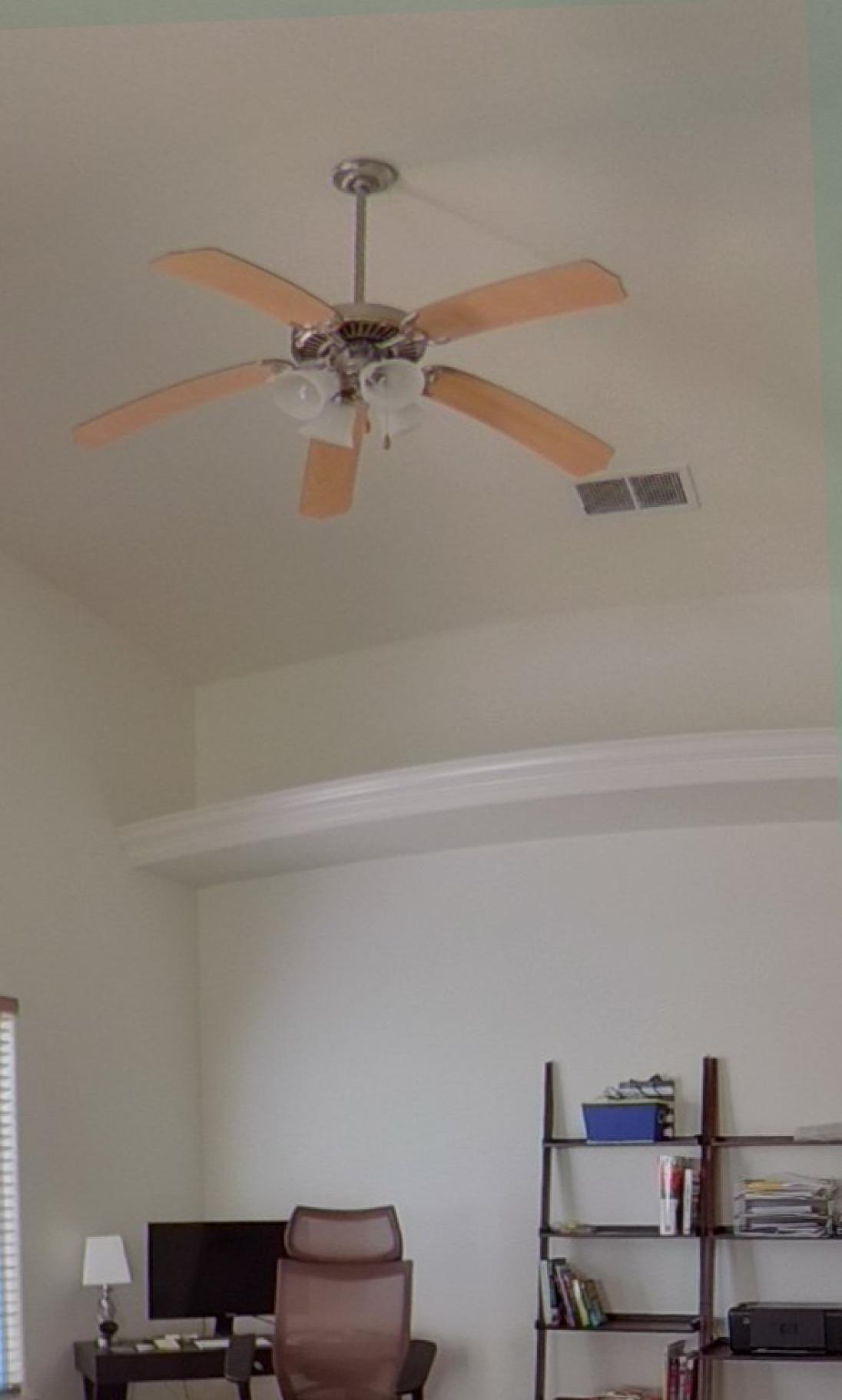
The Ricoh Theta V has been around longer than most cameras on this list, and that longevity speaks to its quality. Ricoh essentially invented the consumer 360 camera category, and the Theta V represents years of refinement. I used it for a real estate photography project, and the stitching quality is among the best I have seen, with barely visible seams.
The 4K video at 30fps may seem modest compared to 8K competitors, but the image clarity and color accuracy are excellent. The Qualcomm Snapdragon processor handles exposure and white balance adjustments quickly, producing consistent results across different lighting conditions. For real estate virtual tours and Google Street View submissions, the Theta V remains a popular choice among professionals.
The standout feature is the 4-channel microphone with 360-degree spatial audio. I recorded a nature soundscape, and the directional audio reproduction was impressive when played back on headphones. No other camera on this list matches the Theta V’s audio quality, making it the best choice for immersive audio capture.
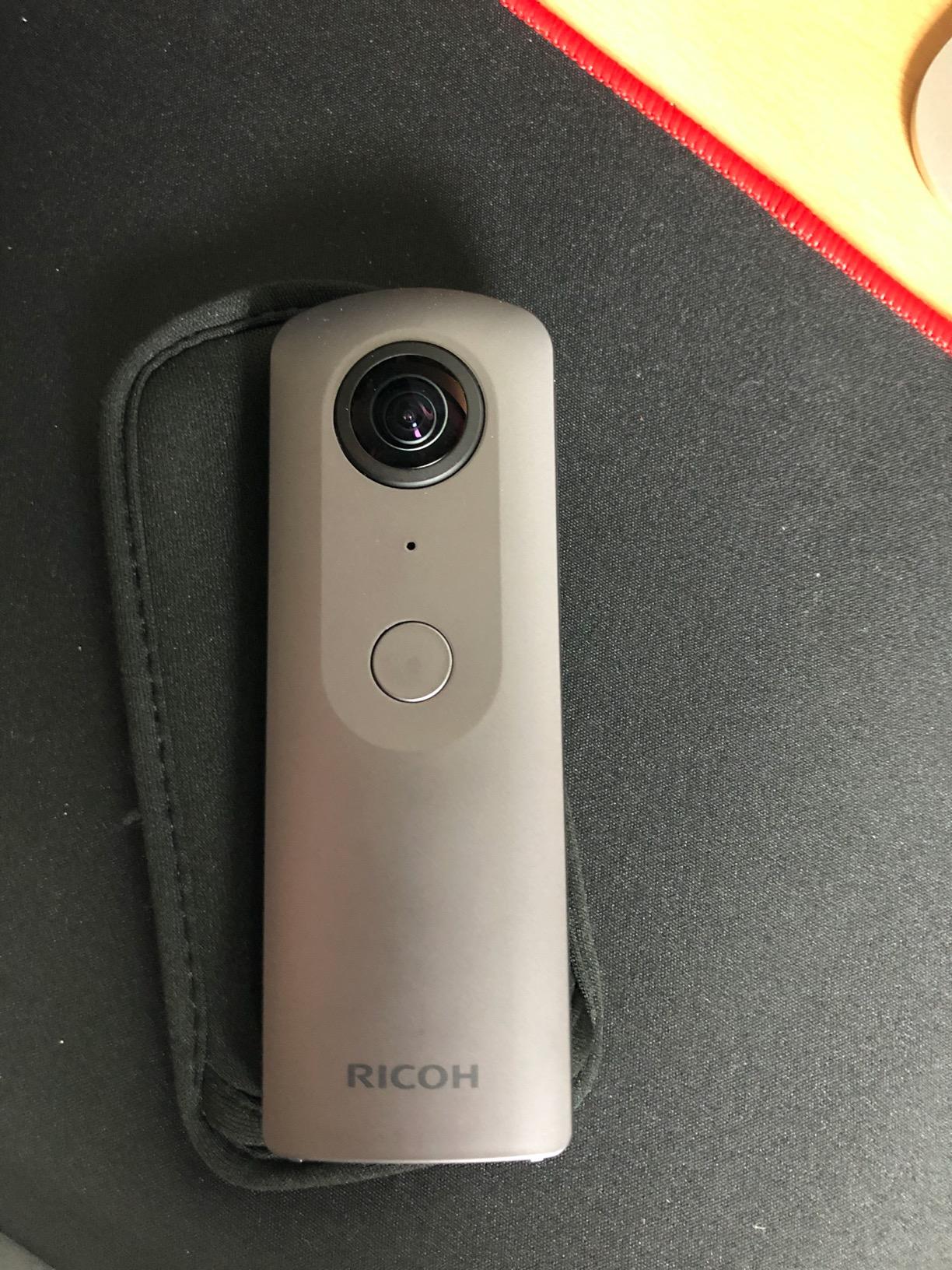
The compact and lightweight design makes the Theta V easy to carry anywhere. At just 0.27 pounds, it fits in a pocket and deploys in seconds. The direct upload to Facebook, Twitter, and YouTube is a convenient feature for quick sharing of 360 content to social platforms.
The limitations are well-documented after years of user feedback. The 19GB of usable internal storage fills up quickly with 4K video, and there is no SD card slot for expansion. The WiFi implementation has limitations, with transfer speeds that feel sluggish compared to newer cameras. The mobile app can be unreliable and has crashed on multiple users.
Who Should Buy This
Real estate agents and virtual tour creators who prioritize stitching quality and consistent results will find the Theta V reliable. Audio-focused creators who need 360 spatial sound should choose this camera for its superior 4-channel microphone array. Professionals submitting to Google Street View will appreciate the proven compatibility.
Buyers who value a compact, pocketable form factor and years of proven performance will find the Theta V a trustworthy workhorse. The direct social media upload feature saves time for content creators who post frequently.
Who Should Skip This
Users who need 8K or even 5.7K resolution should look at newer models. The lack of a removable SD card and limited 19GB storage will frustrate heavy shooters. If you need a display screen on the camera for framing and review, the Theta V has none. The aging mobile app and WiFi limitations may annoy users accustomed to modern, responsive software.
How to Choose the Best 360 Camera for Your Needs
Choosing from the best 360 cameras requires understanding what matters most for your specific use case. Our team has broken down the key factors that should influence your decision. Every camera on this list excels at certain things and compromises on others, so matching features to your needs is essential.
Video Resolution: 5.7K vs 8K
Video resolution determines how much detail you can capture and how much cropping flexibility you have when reframing. 8K cameras like the Insta360 X5 and GoPro MAX2 give you maximum resolution for tight crops and large displays. The extra pixels mean you can zoom into a small section of the 360 sphere and still get sharp footage.
5.7K cameras like the Insta360 X3 and AKASO 360 deliver excellent results for social media and web content. For most users, 5.7K is plenty of resolution for YouTube, Instagram, and other platforms. The file sizes are also more manageable, and editing is faster on modest hardware. Consider 8K only if you plan to deliver to large screens or need aggressive reframing.
Stabilization Technology
Stabilization is arguably the most important feature in a 360 action camera. Insta360’s FlowState stabilization and GoPro’s HyperSmooth are the two leading systems, and both do an excellent job of smoothing out camera shake. The 360-degree horizon lock feature, available on most modern 360 cameras, keeps your horizon level regardless of camera orientation.
In our testing, Insta360’s FlowState slightly edged out GoPro’s HyperSmooth for smoothness, but the difference is marginal. Both systems produce watchable footage from running, biking, and other high-motion activities. The AKASO 360’s 360-SuperSmooth is adequate but not as refined as the premium options.
Waterproof and Durability
If you plan to use your 360 camera near water, waterproofing is non-negotiable. The Insta360 X5, X3, GoPro MAX2, GoPro MAX, and Kandao QooCam 3 Ultra are all waterproof without additional housing. The Insta360 GO 3S camera module is waterproof to 10 meters, though the Action Pod is only splash-resistant.
The Insta360 X4 Air and PANOX V2 are not water resistant, which limits their versatility. For users who shoot in all weather conditions, a waterproof camera saves you from worrying about rain, splashes, and accidental drops in water. Also consider lens durability, as replaceable lenses (available on the X5, X4 Air, GoPro MAX2, and AKASO 360) protect your investment from scratches.
Battery Life Considerations
Battery life varies dramatically between models. The Insta360 X5 leads the pack with over three hours of recording time, which is exceptional for a 360 camera. The DJI Osmo 360 with its dual-battery setup offers up to 190 minutes. Most other cameras fall in the 60 to 90-minute range, which means carrying spare batteries for all-day shoots.
Consider how you plan to use the camera. If you shoot in short bursts with breaks between takes, most batteries will last a full day. If you record long continuous clips for events or timelapses, battery life becomes critical. Cameras that can record while charging via USB-C, like the AKASO 360, offer a workaround for extended sessions.
Editing Software and Workflow
The editing software ecosystem is where Insta360 has a significant advantage. The Insta360 app and desktop studio offer intuitive reframing tools, AI-powered auto editing, and keyframe animation that makes creating traditional videos from 360 footage straightforward. The learning curve is gentle, and the results are polished.
GoPro’s Quik app has improved over the years but still feels less refined for 360-specific editing. The Kandao QooCam Studio software is the weakest of the major brands, with limited features and a 4K export cap in the mobile app. Before buying, watch tutorial videos for the editing software to see if the workflow matches your comfort level.
Sensor Size and Low-Light Performance
Sensor size directly impacts image quality, especially in low light. The Insta360 ONE RS 1-Inch 360 Edition and DJI Osmo 360 both feature 1-inch sensors that gather significantly more light than smaller sensors. The Insta360 X5 uses dual 1/1.28-inch sensors with triple AI processing, which narrows the gap through computational photography.
If you shoot frequently indoors, at night, or during golden hour, prioritize larger sensors. The AKASO 360 and Ricoh Theta V with their smaller sensors struggle in low light, producing noisy footage. The F1.6 aperture on the Kandao QooCam 3 Ultra helps compensate for its 1/1.7-inch sensors in dim conditions.
Mounting and Accessories Ecosystem
The available mounting options determine where and how you can use your 360 camera. Insta360 has the most extensive accessory ecosystem, with invisible selfie sticks, chest mounts, helmet mounts, and drone mounts widely available. GoPro’s extensive mount catalog is compatible with the MAX and MAX2 through adapters.
Consider what activities you plan to capture. Motorcycle riders need handlebar mounts, winter sports enthusiasts need helmet mounts, and real estate photographers need tripod compatibility. Check accessory availability before buying, as lesser-known brands like AKASO, PANOX, and Kandao have more limited ecosystems.
Price and Value
The best 360 cameras range from under $200 to over $1,000. Determine your budget first, then find the camera that offers the most features within that range. The Insta360 X3 at under $300 is our pick for best value, delivering 90 percent of the functionality of premium models at roughly half the cost.
The AKASO 360 proves that entry-level 360 photography is accessible to anyone. On the premium end, the Insta360 ONE RS 1-Inch 360 Edition justifies its higher price with Leica optics and dual 1-inch sensors for users who need professional image quality. Match your budget to your actual needs rather than paying for features you will not use.
FAQs
Which brand 360 degree camera is best?
Insta360 is the leading brand for 360 cameras in 2026, offering the best combination of image quality, software ecosystem, and hardware features. The Insta360 X5 is our top pick overall, while the Insta360 X3 offers the best value. GoPro and DJI also produce excellent 360 cameras with the MAX2 and Osmo 360 respectively, each with unique strengths in stabilization and sensor size.
Is Insta360 better than GoPro?
For 360 cameras specifically, Insta360 generally outperforms GoPro in our testing. Insta360 offers superior editing software, better battery life, and more consistent low-light performance. GoPro’s MAX2 has a slight edge in raw daylight sharpness and ambisonic audio quality, but the Insta360 ecosystem is more polished overall. The choice depends on whether you prioritize software workflow (Insta360) or the GoPro mount ecosystem (GoPro).
Which is the best 360-action camera?
The Insta360 X5 is the best 360 action camera available, with 8K resolution, IPX8 waterproofing, 3-hour battery life, replaceable lenses, and FlowState stabilization. For budget-conscious buyers, the Insta360 X3 and AKASO 360 both deliver excellent action camera performance at lower price points.
How much does a good 360 camera cost?
A good 360 camera costs between $200 and $600 for most users. Entry-level options like the AKASO 360 start around $200, mid-range cameras like the Insta360 X3 cost around $300, and premium models like the Insta360 X5 run about $550. Professional-grade cameras like the Insta360 ONE RS 1-Inch 360 Edition can cost over $1,000.
Can you use a 360 camera as a webcam?
Some 360 cameras can function as webcams, though the experience varies by model. The GoPro MAX supports 1080p live streaming, and the PANOX V2 offers 4K live streaming capability. Insta360 cameras can stream via their desktop software. However, dedicated webcams generally offer better reliability and simpler setup for regular video calls.
Final Thoughts on the Best 360 Cameras in 2026
Finding the best 360 cameras comes down to matching features to your specific needs and budget. Our team spent months testing these cameras, and the Insta360 X5 stands out as the overall winner with its 8K resolution, triple AI chip, exceptional battery life, and waterproof design. For value seekers, the Insta360 X3 delivers outstanding performance at a price that makes sense. And the AKASO 360 proves that great 360 photography is accessible on any budget.
Whatever camera you choose from this list, you are getting a capable tool for capturing the world around you in ways traditional cameras simply cannot match. The 360 camera market in 2026 offers more options and better value than ever before, and any of these twelve cameras will help you create immersive content that stands out.