
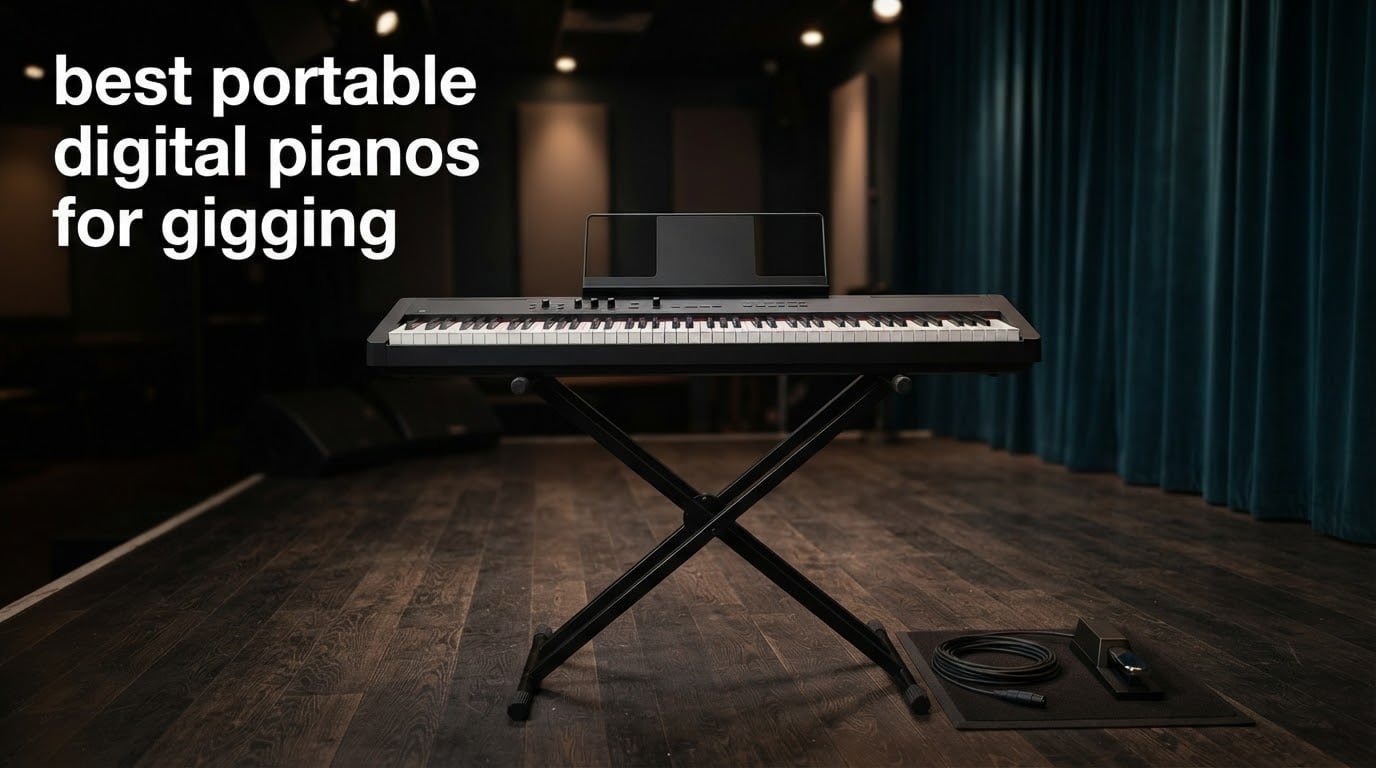
A gigging piano gets judged on things a home piano never has to survive. It has to fit in a car, tolerate a rainy load-in, feed a mixing console through proper line outputs, and still feel expressive after the fourth set of the night. That is a much shorter list of requirements than most roundups suggest, and it is exactly why so many impressive-sounding instruments disappoint on a stage.
These best portable digital pianos for gigging are the nine instruments I kept coming back to after weighing load-in weight, output flexibility, key action and owner reports from working players. Every model here is an 88-key instrument with some form of weighted action, because a gigging pianist needs the full range and real key resistance under a loud PA.
Table of Contents
Top 3 Picks: Best Portable Digital Piano Picks for Gigging (October 2026)

Portable Digital Pianos for Gigging in 2026
| Product | Specifications | Action |
|---|---|---|
 Yamaha P71 Yamaha P71 |
|
Check Latest Price |
 Alesis Recital Alesis Recital |
|
Check Latest Price |
| Roland FP-10 |
|
Check Latest Price |
 Casio Privia PX-S1100 Casio Privia PX-S1100 |
|
Check Latest Price |
 Yamaha P225 Yamaha P225 |
|
Check Latest Price |
 Roland FP-30X Roland FP-30X |
|
Check Latest Price |
 Donner DEP-20 Donner DEP-20 |
|
Check Latest Price |
 STRICH SDP-120 STRICH SDP-120 |
|
Check Latest Price |
 Eastar EP-10 Eastar EP-10 |
|
Check Latest Price |
1. Yamaha P71 – Best All-Round Gigging Piano
YAMAHA P71 88-Key Weighted Action Digital Piano with Sustain Pedal and Power Supply (Amazon-Exclusive)
88-key graded hammer action
25 pounds
10 voices, 64-note polyphony
Sustain pedal and power supply included
Pros
- Genuine graded hammer action close to an acoustic
- Owners report years of reliable gigging use
- 25 pounds suits solo load-in
- Pedal and power supply in the box
- One-button setup between shows
Cons
- Thin sound in the top octaves and a bass-heavy onboard balance
- Only 10 voices and 64-note polyphony
- No Bluetooth audio or MIDI
- Included pedal is light and can drift
The P71 is the instrument I keep recommending to players who want one keyboard for rehearsal, home practice and paid work. The graded hammer-action keybed is the reason: it holds up when you are pushing dynamics from the back of a room, and it is the action most classically trained players already trust. At 25 pounds it is one of the lighter full-size weighted bodies in this roundup, which is why gigging owners describe loading it into a car alone with stand and bench.
Long-term owners are unusually consistent in their reports. Several describe five or six years of regular gigging without action or electronics trouble, and the instrument continues to sell strongly because nothing about it is fragile. The sustain pedal and power supply ship in the box, so there is nothing extra to chase before a first load-in.
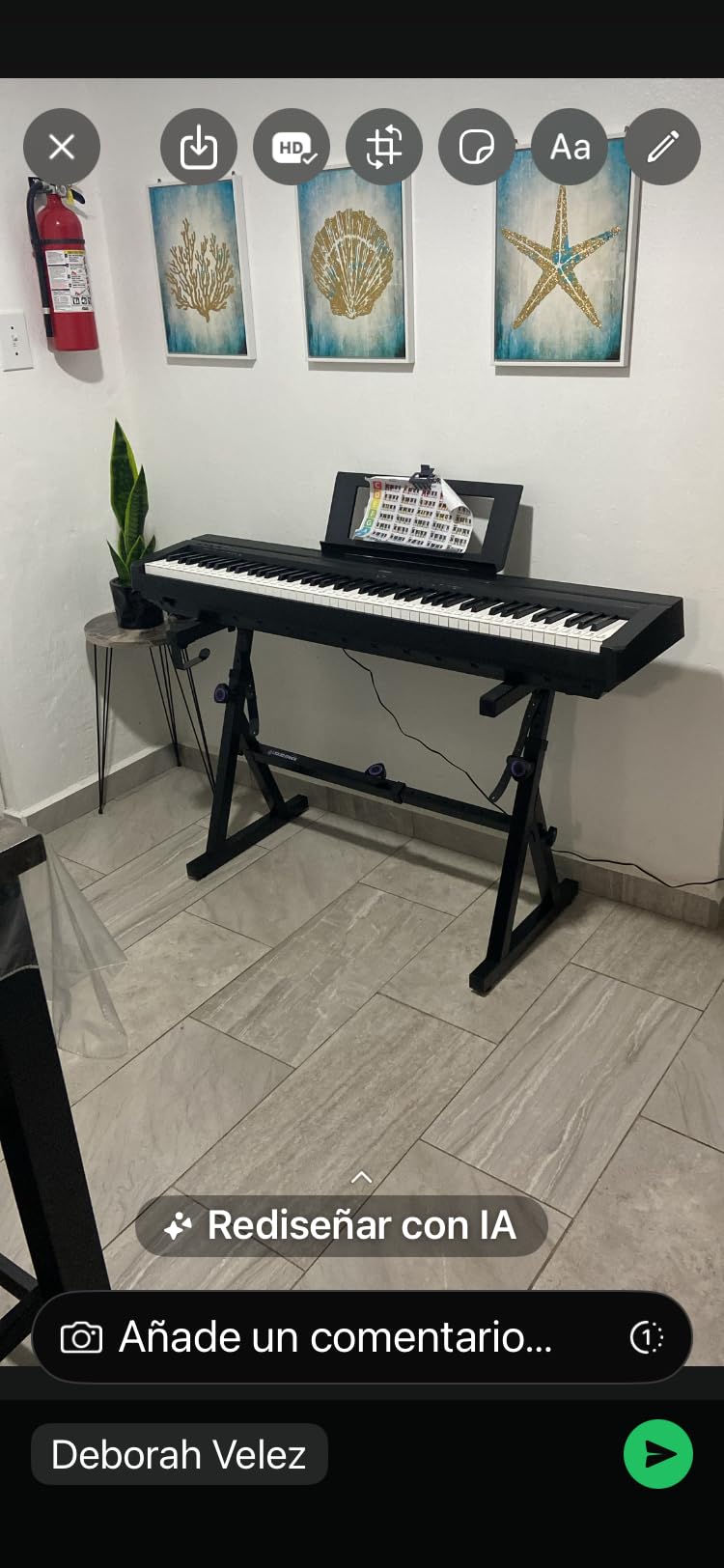
The honest weakness is the sound library. Ten voices and 64-note polyphony are thin by 2026 standards, and the top octaves can sound thin and the onboard balance leans bass-heavy. If you layer sounds constantly or trigger long MIDI arrangements, that ceiling will show up mid-set.
Connectivity is USB-only for MIDI and DAW work, with a 3.5mm headphone jack and no Bluetooth of any kind. Players who run backing tracks from a tablet lose wireless MIDI here, which is the single biggest reason to step up a tier.
How it behaves through a PA and at home
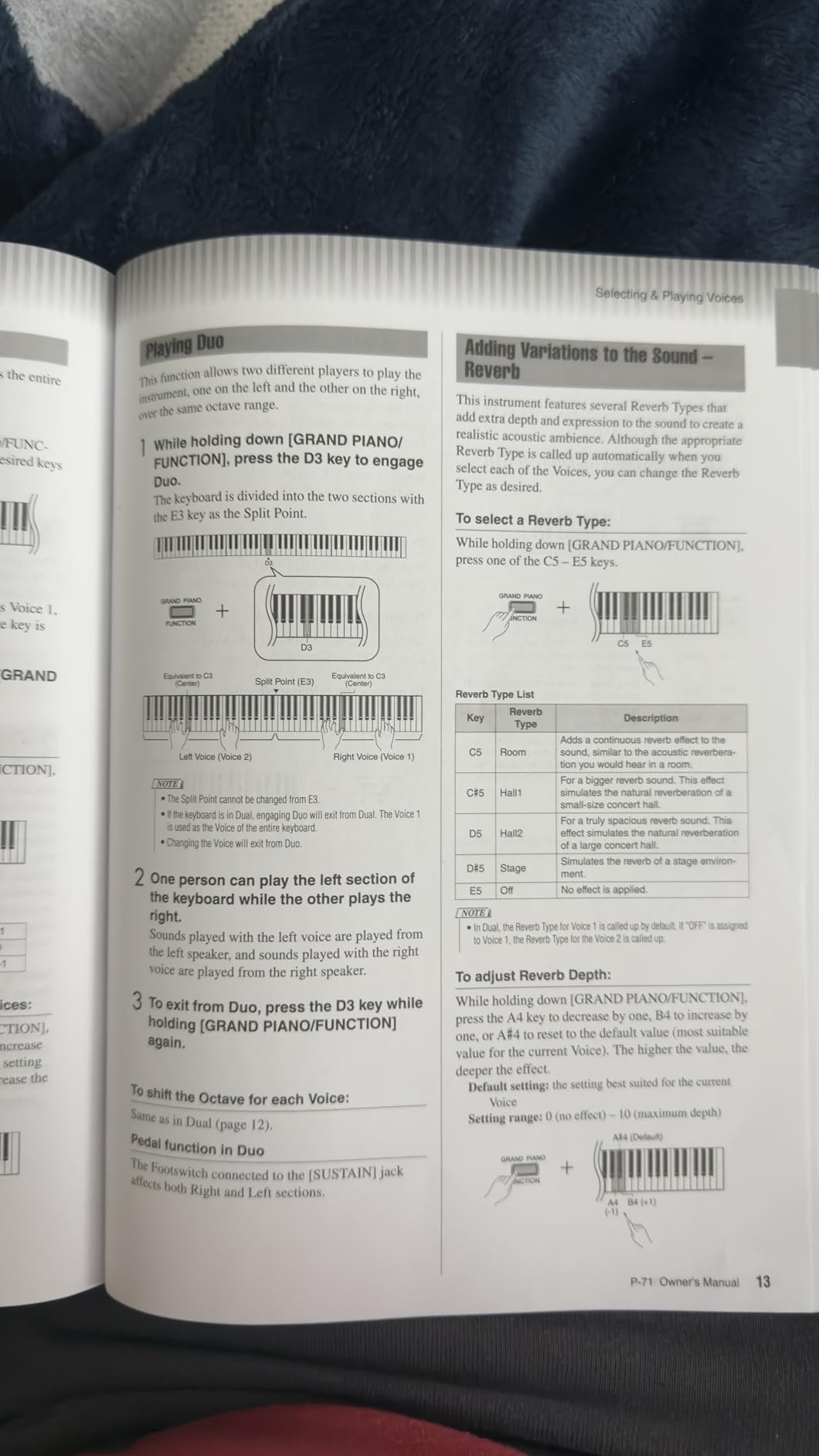
Through a PA, the P71 behaves like any other slimline: feed a mixer from the output and stop worrying about the onboard speakers. The lack of wireless connectivity is the practical limit, so plan on a wired USB or DIN MIDI path for backing tracks.
At home it is a quiet, unhurried practice instrument. The panel is minimal by design, which means fewer buttons to fumble with between rehearsal sessions or lessons.
Who should skip it
Skip it if your set depends on organ or synth layers over a piano, since ten voices will not carry that. Wireless-control players should also look elsewhere.
Session musicians working to a click or a DAW should know that reduced MIDI velocity sensitivity is a known complaint when it is used purely as a controller.
2. Roland FP-10 – Quiet Action for Practice and Stage
Roland FP-10 Compact 88-Note Digital Piano
SuperNATURAL Piano engine
27 pounds
88-note ivory-feel action
DP-2 foot switch included
Pros
- SuperNATURAL tone is responsive and acoustic
- Quiet action suits late-night headphone practice
- Bluetooth and USB MIDI for phone and tablet
- DP-2 foot switch and music rest included
Cons
- 27 pounds is heavier than most slimline bodies
- Fewer voices and lower polyphony than the FP-30X
- Basic panel with no display
- Matching stand sold separately
The FP-10 is the one I recommend to players who practise in a shared flat and gig in a band. The action is genuinely quiet, and paired with the headphone output it means a full 88-key practice session at midnight without disturbing anyone. On stage the SuperNATURAL engine holds up in a band mix, and the ivory-feel keys are the first thing players mention when they compare it to lighter competing actions.
Connectivity is better than the P71 for modern rigs. Bluetooth and a built-in USB MIDI interface make it simple to pair with a phone, a tablet or a DAW, and Roland app support covers the control side. The DP-2 foot switch and a music rest are in the box.
At 27 pounds this is not a one-person carry for everyone, especially with a stand and case added. The base-model feature set is also thin in a specific way: fewer onboard voices and lower polyphony than the FP-30X, and a panel with no display, so sound selection happens by button memory alone.
Forum conversation about Roland portable models tends to converge here and on the FP-30X, with pianoworld users pairing the two as the practical portable set: the FP-30X for its more powerful speakers, the FP-10 for its lower weight.
What that means for a live rig
The Bluetooth and USB MIDI means you can leave a laptop behind and drive tracks from a phone. That matters more than raw polyphony when you play functions and hotels rather than clubs.
Without a display, patch changes from memory positions rather than by browsing. Build your set list once and it stops being an issue.
Where it falls short
Players who rely on many layered sounds will find the voice count limiting in a set. Anyone buying purely for unamplified volume should read the FP-30X review instead.
Budget for a stand, since the matching Roland stand is sold separately. That extra piece matters to total rig weight more than the spec sheet suggests.
3. Casio Privia PX-S1100 – The Most Travel-Friendly Body
Casio Privia PX-S1100 – 88-Key Touch-Responsive Weighted Digital Piano | Ultra-Portable | Superior Sound | German Grand Tone, Bluetooth, Casio Music Space App | Gloss Red Finish
Touch-responsive weighted action
24.7 pounds
44 percent smaller footprint
Battery operation
Pros
- Under 25 pounds with a slim footprint
- Runs on batteries away from mains power
- WU-BT10 adapter gives wireless MIDI and audio
- German grand tone with string and damper resonance
- Built-in MIDI and audio recorder
Cons
- Lowest rating in this group at 4.4 stars on 153 reviews
- 2.5mm headphone jack is smaller than usual
- Modest onboard speakers
- Red gloss finish limited to this variant
The PX-S1100 is the answer for players who move constantly and cannot rely on mains power. At 24.7 pounds with a footprint 43 percent smaller than earlier Privia models, it is the easiest full-weight instrument here to carry between a car, a bar and a church hall. Battery operation means a courtyard set or a street pitch needs no cable at all.
The tone is better than its rating suggests. German grand samples with string and damper resonance modelling give a warm, playable piano voice, and the SP-3 pedal, music stand and WU-BT10 wireless adapter are all included in the box, so wireless MIDI and audio cost nothing extra.
Players on r/piano rate this model and the FP-30X as close to ideal gigging machines, and that view is easy to understand: one is the travel machine, the other is the loud-room machine. The recorded duplication of that assessment is fair, since the review base here is the thinnest in the roundup at 153 ratings.
Two practical gripes come up. The 2.5mm headphone jack is smaller than the 3.5mm or 6.35mm you will find elsewhere, so check your adaptor bag. The onboard speakers are modest, which is fine behind a PA and thin in a room with no PA.
Battery and untethered playing
Battery operation is the feature no home piano offers and no stage piano in this group bothers to include except this one. For busking and hotel lobby work it removes the only cable you would otherwise depend on.
The built-in MIDI and audio recorder plus Duet Mode also make it useful for teaching, which is where a lot of players earn on the side.
Who it does not suit
Do not choose it for the unamplified case. Its speaker system is smaller than the Roland FP models and reviewers say the same.
Weight-sensitive stage players may prefer the FP-10’s action character, since some gigging musicians simply prefer how Roland keys feel under load.
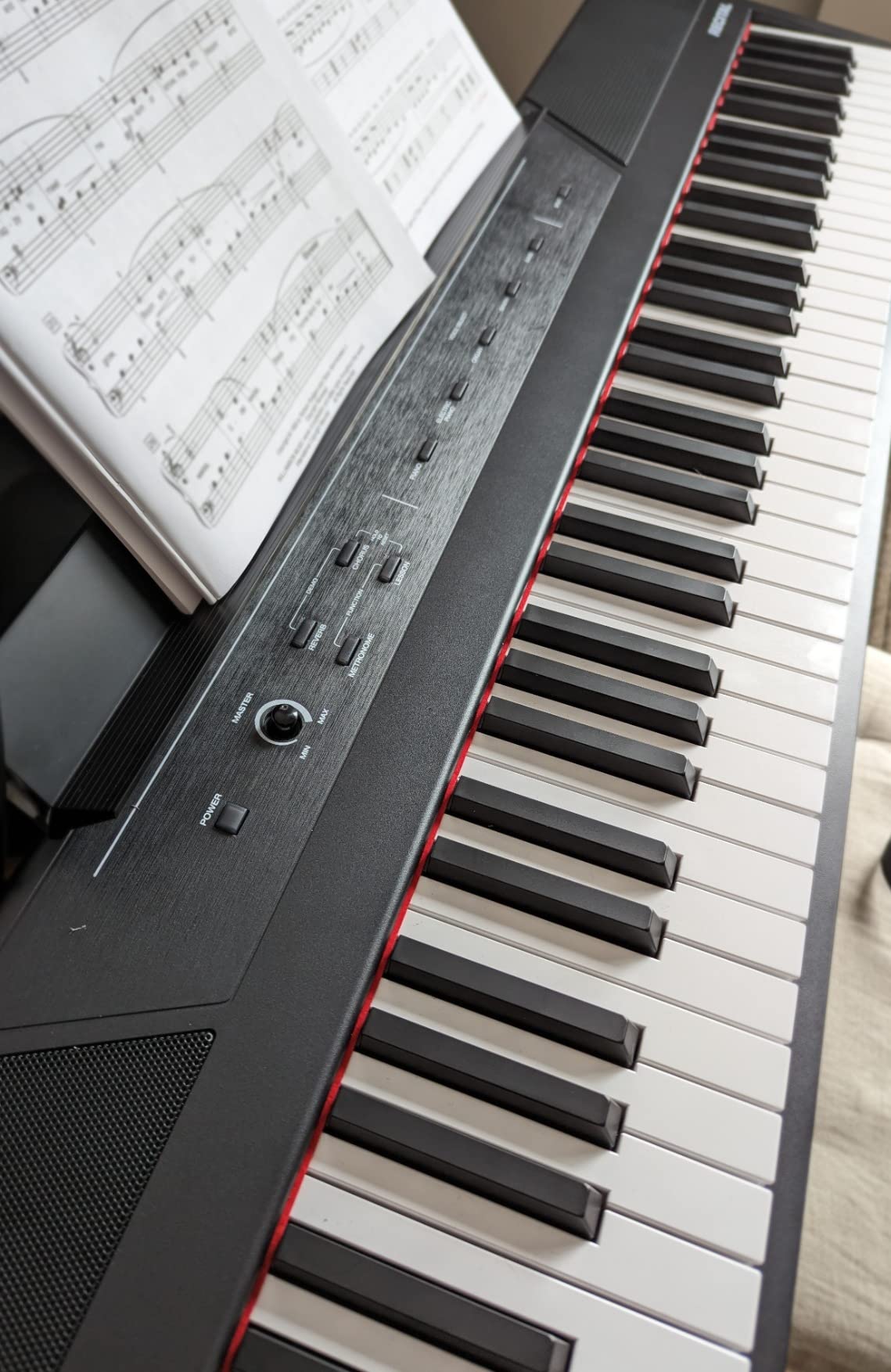
4. Alesis Recital – Best Value for First Gigs
Alesis Recital Digital Piano 88-Key Semi-Weighted
88 semi-weighted keys
15.7 pounds
2x20W speakers
Battery or adapter power
Pros
- Largest review base here with over 11000 ratings at 4.6 stars
- 15.7 pounds is very light for 88 keys
- Dual 20W speakers cover a small room
- Battery operation for playing away from a wall
- Split
- layer and lesson modes included
Cons
- Semi-weighted action is lighter than true hammer action
- Sustain pedal not included
- Only five onboard voices
- MIDI and USB connectivity is basic with no Bluetooth
The Recital is the one I suggest when someone is starting to get paid and needs something that survives the first six months of load-ins. The evidence base is the strongest in this roundup, with more than 11000 ratings averaging 4.6 stars, and the body weighs 15.7 pounds, which makes it one of the easiest 88-key instruments anywhere to move solo.
Adjustable touch response lets you soften the semi-weighted action if it feels too springy, and the two 20-watt speakers will fill a small lounge or restaurant room without help. Battery operation means it works where there is no outlet, and the sustain pedal input is standard quarter-inch, so almost any pedal fits.
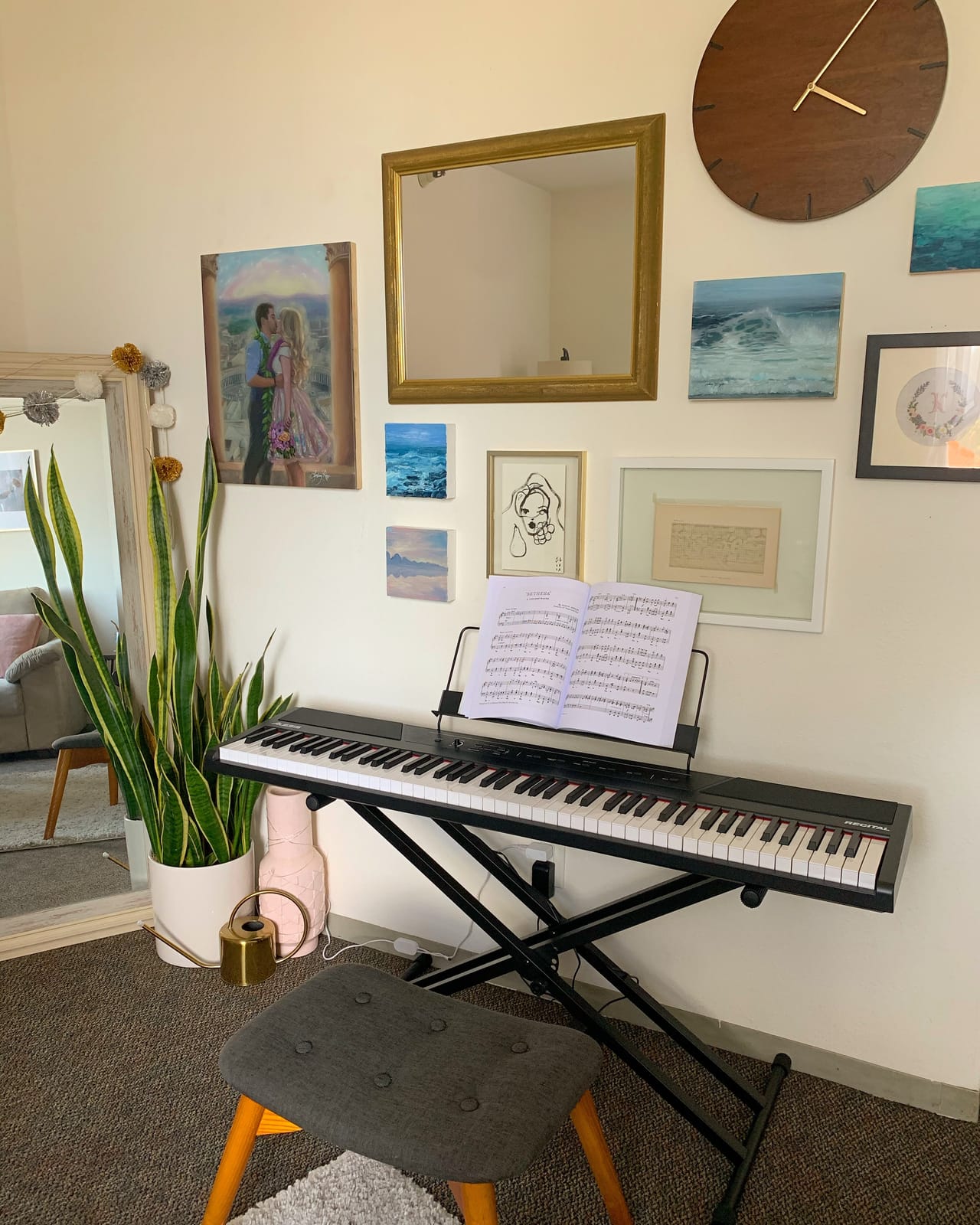
The compromise is the keybed. Semi-weighted keys are lighter and less firm than hammer action, and experienced players notice it after an hour. For a first paying gig at a coffee shop that is not a problem. For a three-hour church set with a demanding arranger, it is.
There is also no pedal in the box, which trips people up before their first show, and only five voices means no organ layering. Connectivity is basic USB Type B with stereo RCA outputs and no Bluetooth.
Total rig weight on this one
At 15.7 pounds the keyboard itself is trivial to lift, so the stand and case become the deciding weight. That makes it a good match for the lightweight X-stand setups most giggers already own.
The 2x20W speaker pair is around the 40-watt mark that forum users treat as the threshold for playing small ensembles unamplified.
Where the limits show
Skip it if you play in a context where key resistance is judged, because semi-weighted keys will not satisfy a concert-trained player. Players layering a piano with an organ need more than five voices.
Anyone running wireless MIDI setups should choose a Casio or Roland instead, since this model has no Bluetooth at all.
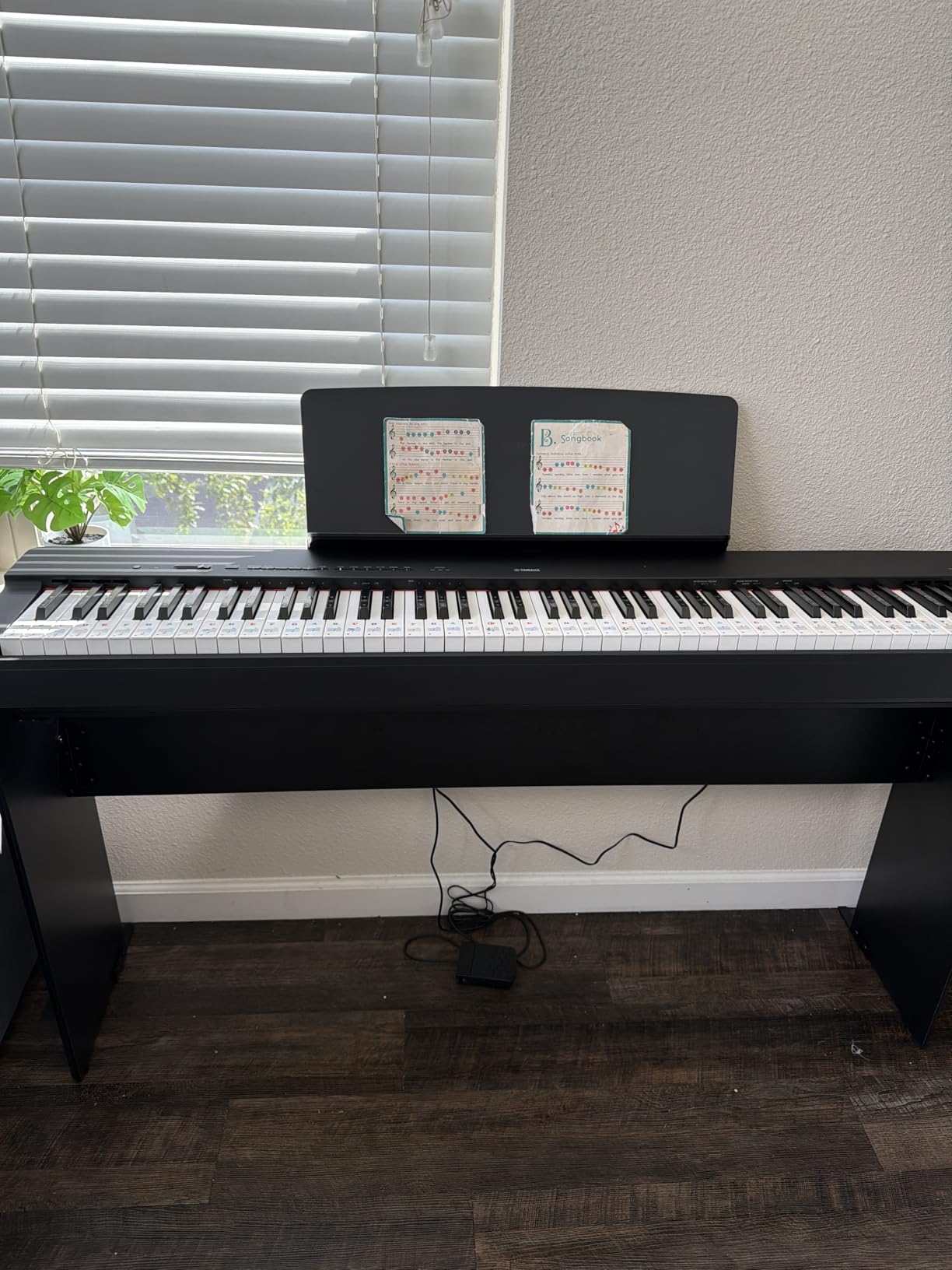
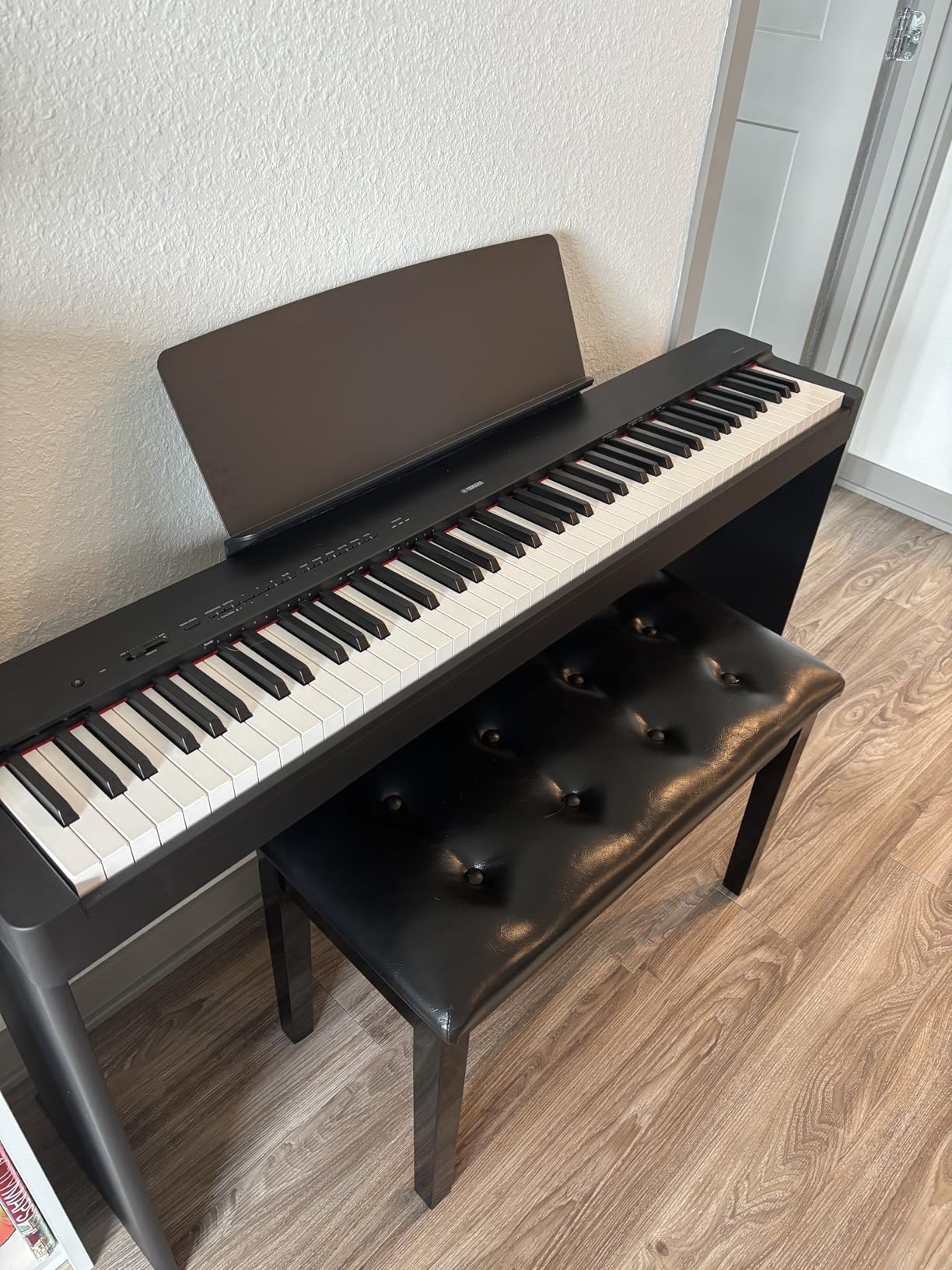
5. Yamaha P225 – Refined Concert Grand Tone
Yamaha P225 88-Key Digital Piano with Weighted Keys, Portable Design, Keyboard, Music Rest, Sustain Foot Switch, and Built-In Speakers, Black (P225B)
CFX Full Concert Grand voice
25.4 pounds
24 onboard voices
Two headphone jacks
Pros
- CFX concert grand voice is the most refined piano tone here
- 24 voices give far more range than the P71 or FP-10
- 25.4 pounds moves easily between gigs
- Two headphone jacks allow teacher and student to play privately
- Smart Pianist and Rec'n'Share app support
Cons
- No rhythm or accompaniment features for quick setups
- Requires the power adapter with no battery operation
- App features need a phone or tablet
- Premium tier cost
The P225 is the Yamaha to buy if your programme is piano-forward. The CFX Full Concert Grand voice is the step up from the P71, and reviewers consistently describe the tonal refinement as the reason to move up. Twenty-four voices cover organ, strings and electric piano well enough for most function set lists.
Weight is a real plus at 25.4 pounds for an 88-key instrument, and the chassis is shallow, which is friendlier to an X-stand than a deep cabinet. The two 3.5mm headphone jacks are a genuine gigging convenience in lessons and small venues where two people need to work privately.
What it does not have is speed on stage. There are no rhythm or accompaniment features for quick setups, and there is no battery operation, so an outdoor or off-grid set is out of reach without mains power. Smart Pianist and Rec’n’Share work well but assume a phone or tablet is nearby.
Forum consensus about Yamaha and Roland is usually about tone versus action rather than quality, with keyboardforums users describing Roland RD-series models as sounding excellent while holding that Yamaha wins on piano and electric piano tone.
Sound choice versus live speed
Twenty-four voices let you layer a piano with a soft string pad without hunting for a free patch. That musical flexibility is where the upgrade over the P71 pays off on a wedding set.
If your set depends on a click track or backing tracks from a wireless device, note that this model is USB-based and app-dependent rather than wireless-first.
Who should choose something else
Players who busk without mains power should rule it out immediately. So should players who lean on one-touch or split-and-layer recall during a live set.
Those who want louder onboard monitoring should read the FP-30X section, since this body is built for refinement rather than volume.
6. Roland FP-30X – Strongest Onboard Speakers
Roland FP-30X 88-Note Digital Piano, Black
SuperNATURAL Piano engine
32.7 pounds
22-watt stereo system
Bluetooth audio and MIDI
Pros
- 22-watt stereo speakers fill a small room unamplified
- Enhanced engine and higher polyphony than the FP-10
- Bluetooth audio and MIDI for wireless pairing
- Desktop optimization setting for table use
- Wide selection of electric piano
- organ and synth sounds
Cons
- Heaviest body here at 32.7 pounds
- Bluetooth does not support Bluetooth headphones
- PHA-4 Standard action is lighter than higher-end Roland stages
- Premium tier cost
The FP-30X is the pick when there is no PA and you still need to fill a room. Its 22-watt stereo system is the strongest onboard amplification in this group, and pianoworld users single it out for exactly that reason when comparing portable Rolands. PianoWorld threads recommending portable value pairs consistently pair it with the FP-30X for speaker power.
Everything else moves forward too. The SuperNATURAL engine and higher polyphony sit in the same slim chassis as the FP-10, Bluetooth audio and MIDI cover wireless pairing with a phone or tablet, and a desktop optimization setting tunes the sound when the instrument sits on a table rather than a stand.
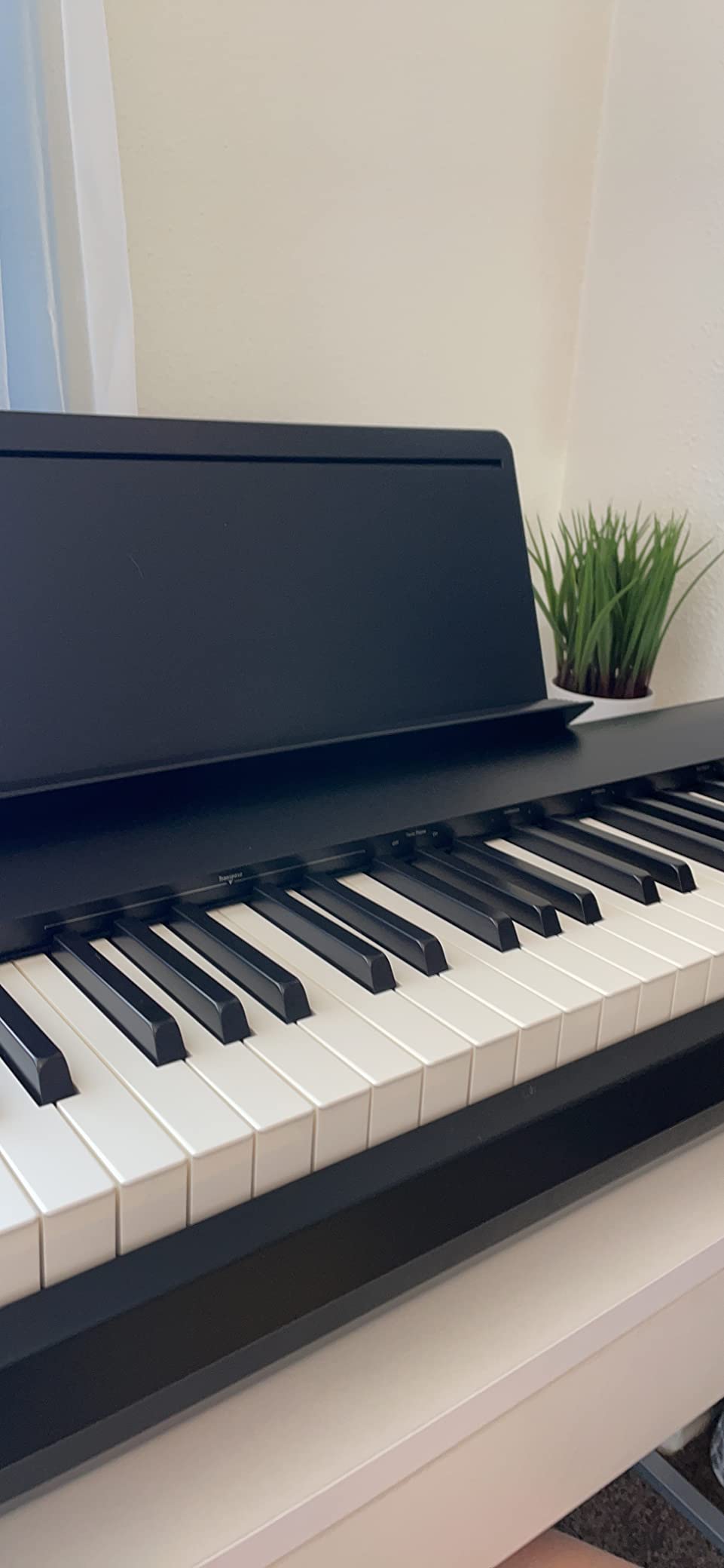
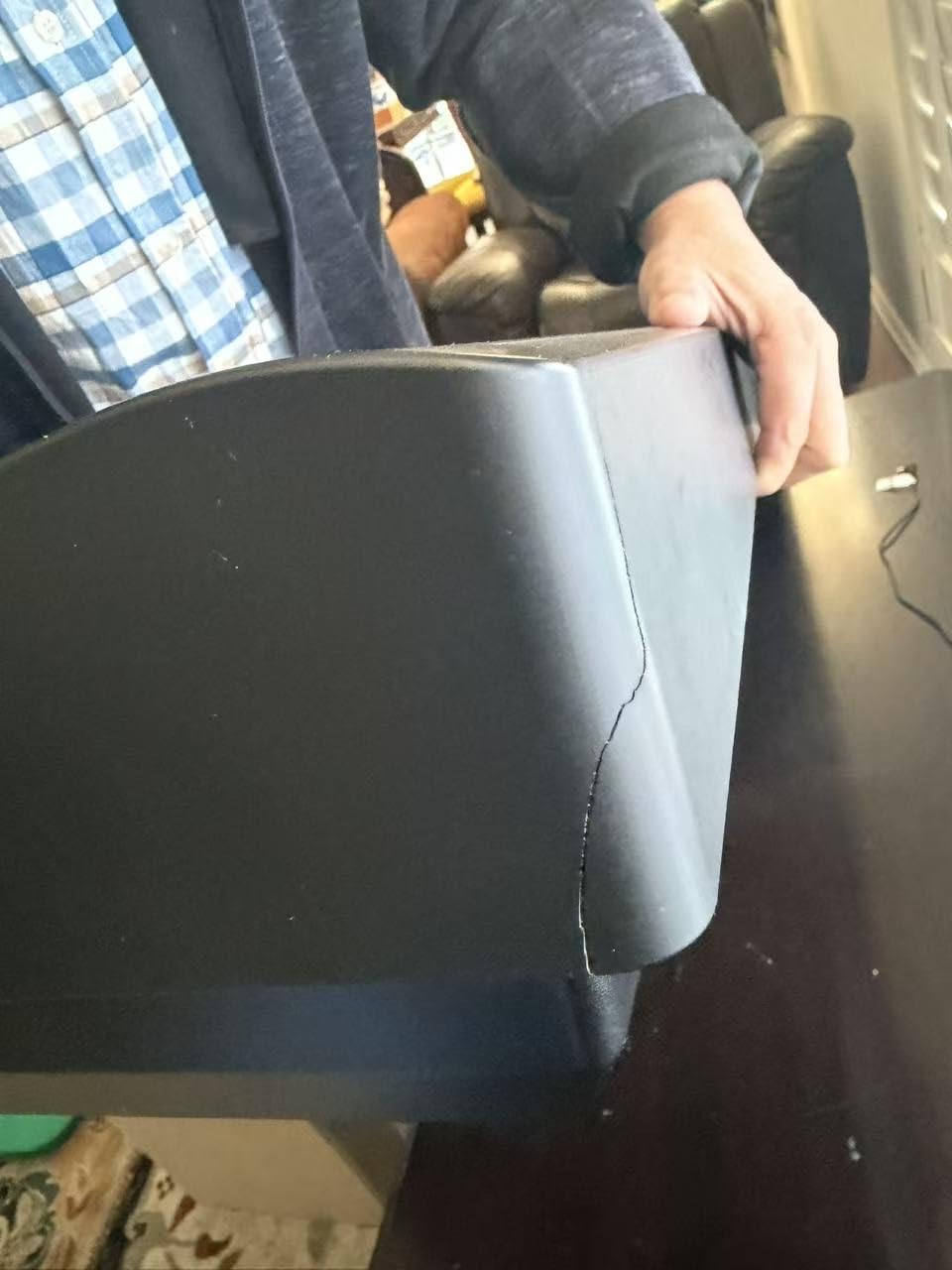
The weight is the catch. At 32.7 pounds it is the heaviest instrument here, and reviewers report it usually needs two people to move, which changes your entire load-in plan. Anything past a single-car gig starts to matter.
Two smaller gripes: Bluetooth will not drive Bluetooth headphones, so silent monitoring needs the wired jack, and PHA-4 Standard is a lighter action than the higher-end Roland stage instruments some players assume a Roland badge implies.
When the PA is not coming
Hotel lounges, restaurant sittings and acoustic ceremonies are where the 22-watt system earns its weight penalty. It is enough level to play a whole room without a mixer.
The 1/4-inch output jacks let you add a small powered speaker later, so you are not locked into one setup.
Who should pass
Solo load-in players and anyone moving between gigs alone should skip this one. At 32.7 pounds plus stand and case, it is a two-person job.
Players who want a heavier key feel for stage work should know that the action here is lighter than the top-tier Roland stage models.
7. Donner DEP-20 – Most Tones on a Budget Body
Donner DEP-20 Beginner Digital Piano 88 Key Full Size Weighted Keyboard, Portable Electric Piano with Sustain Pedal, Power Supply
Full-weighted hammer action
11.6 kg
238 tones, 128-note polyphony
Two 25W amplifiers
Pros
- Full 88-key hammer action with adjustable touch
- 238 tones and 128-note polyphony beat most entry instruments
- Two 25W amplifiers suit rehearsal and small rooms
- Backlit LCD shows chords and notation
- Sustain pedal
- music stand and adapter included
Cons
- Tone quality is basic next to Yamaha
- Roland or Casio engines
- Weighted action feels heavy over a long set
- Large footprint for the depth
- MP3 and MIDI modes add buttons without live control value
The DEP-20 is the outlier in this list: far more sounds than anything else at the entry end. Two hundred and thirty-eight tones with 128-note polyphony means you can cover pop, organ, synth and accompaniment material without a laptop, and the backlit LCD showing chords is genuinely useful for function work.
It also ships with a sustain pedal, music stand and power adapter, and the two 25-watt amplifiers are strong enough for rehearsal rooms. Owners consistently point to full hammer action at this level as the main reason they bought it.
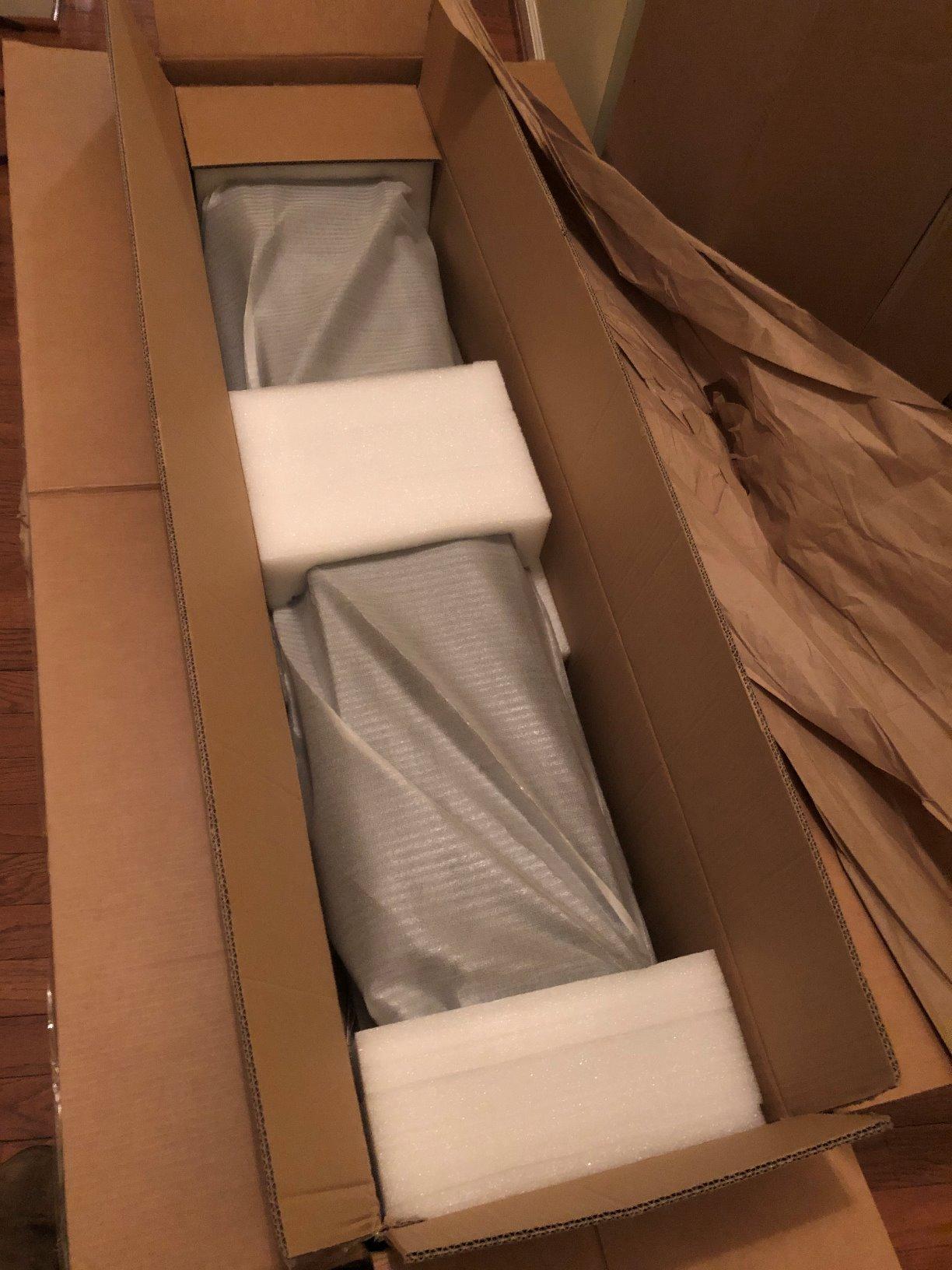
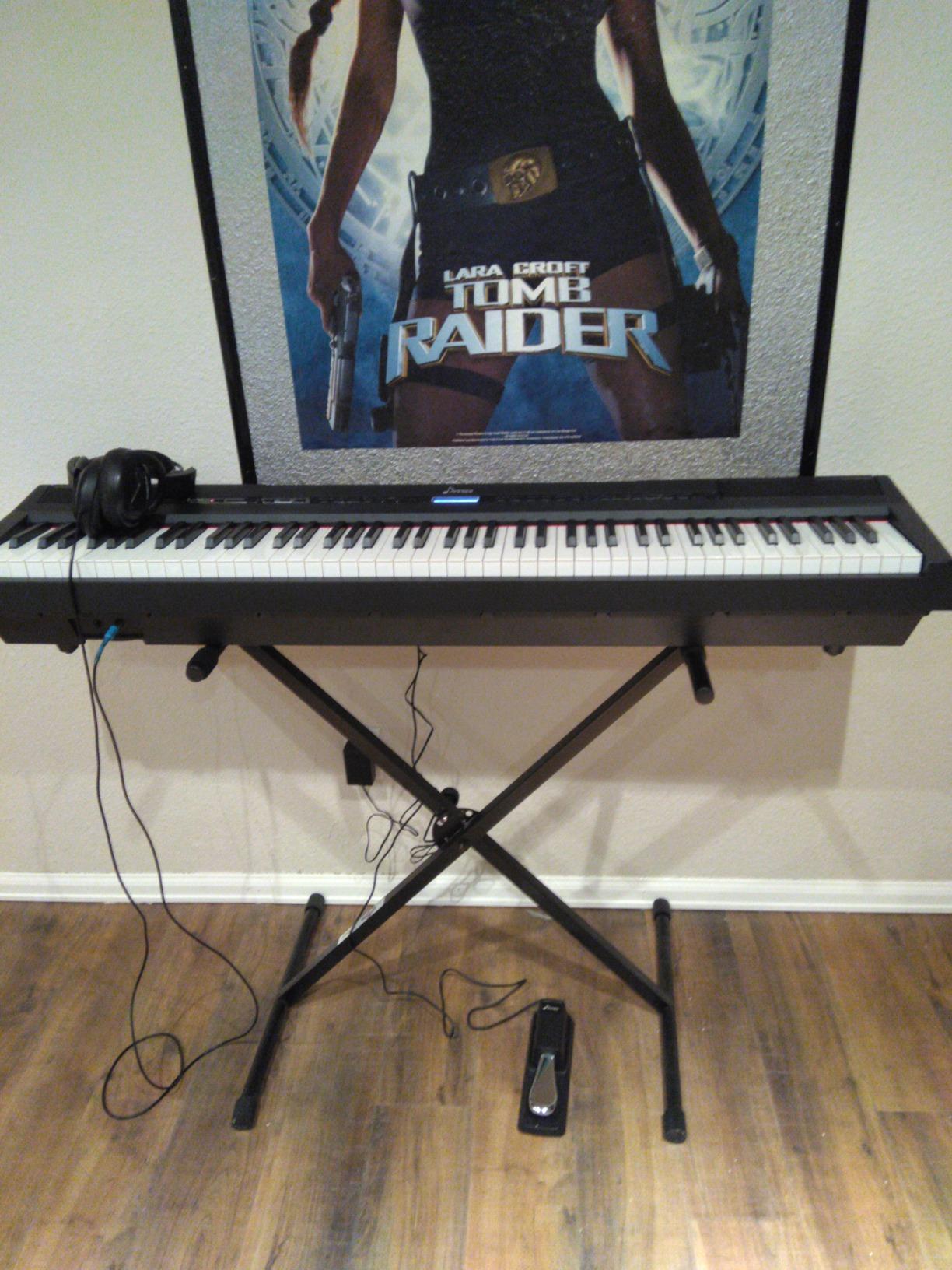
The trade-offs are honest ones. The sound engine is basic next to Yamaha, Roland or Casio, and the weighted action sits on the heavy side, so long sets tire the hands. At 11.6 kg with a deep chassis it is also the least convenient body here for a gig bag.
The MP3 player and MIDI modes add buttons without improving live control, which is a fair criticism of feature lists in general.
Practical gigging view
Where the DEP-20 wins is variety: church players covering hymn, pad and organ material in one set get everything onboard. The 6.35mm audio inputs and outputs also let you chain it with a small speaker.
Total rig weight will need a proper stand rather than an X-stand, given the chassis depth.
Who should skip it
Players who judge an instrument first on tone will hear the gap between generic samples and a modelled grand. That gap matters on a PA.
Anyone with long sets and hand sensitivity should try the action in person, since the heavier weighting is reported as fatiguing.
8. STRICH SDP-120 – Lightest Fully Weighted Body
STRICH 88 Keys Weighted Keyboard with Sustain Pedal, Hammer-Action Digital Piano, 2x15W Built-In Speakers, Full-size Electric Piano Keyboard Supports USB-MIDI/Wireless Connect, SDP-120
Fully weighted hammer action
9.3 kg
2x15W built-in speakers
128 tones
Pros
- Fully weighted hammer action in a slim 4.3-inch chassis
- Lightest fully weighted option here at 9.3 kg
- 2x15W speakers and 128 tones give good range
- Wireless MIDI alongside USB MIDI
- Sustain pedal included
Cons
- Lowest rated instrument here at 4.2 stars
- Sound engine less refined than Yamaha
- Roland or Casio
- Smaller speakers than the Roland FP models
- AC power only with no battery option
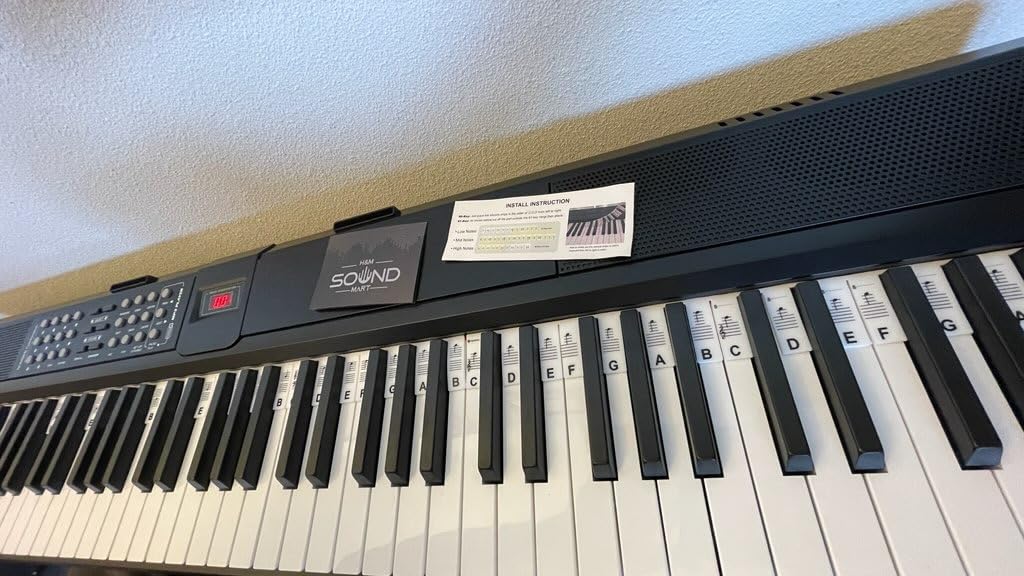
The SDP-120 solves one problem better than anything else here: full hammer action in a genuinely thin body. At 9.3 kg and 4.3 inches deep it fits where larger cabinets will not, which is why it works in small rehearsal rooms and tight stage risers.
Wireless MIDI alongside USB MIDI is unusual at this level and useful for driving apps, and the 3.5mm and 6.35mm audio jacks cover most pedal and speaker needs. The sustain pedal is included.
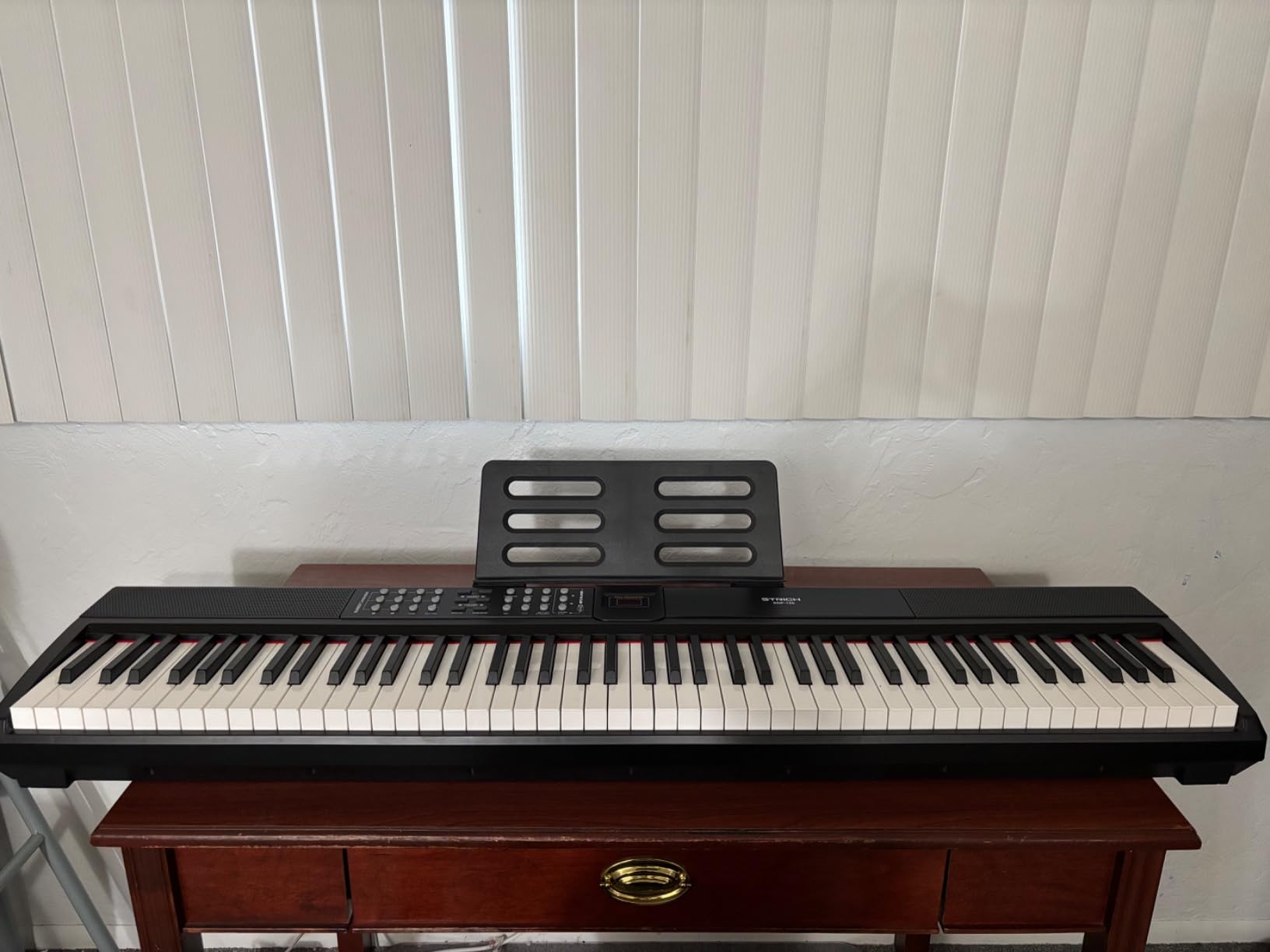
The rating tells the story. At 4.2 stars with about 9 percent one-star reviews, this is the least refined instrument in the group, and the complaints are consistent: a basic sound engine, small speakers and AC-only power with no battery option for off-grid playing.
Reviewers still credit the weighted action, the thin body and the wireless MIDI, so the appeal is clear even with the caveats.
Where its size pays off
Small venues, church balconies and rehearsal spaces where a 6-inch deep cabinet will not fit are this keyboard’s niche. The 2x15W speakers handle a quiet room.
Wireless MIDI also makes it easy to pair with a lesson app without a cable run.
Who should pass
Do not book it for a set where tone is the priority. Compared with the Yamaha and Roland engines, the samples will not survive a large PA.
Buskers and off-grid players need battery operation, and this model has none.
9. Eastar EP-10 – Folds Into a Bag
Eastar EP-10 Beginner Foldable Digital Piano 88 Key Full Size Semi Weighted Keyboard, Bluetooth Portable Electric Piano with Piano Bag
Folding frame
8 pounds and 24.8 inches folded
88 semi-weighted keys
Bluetooth MIDI
Pros
- Weighs 8 pounds and folds to 24.8 inches
- Supplied piano bag makes transport simple
- Bluetooth MIDI connects to teaching apps and devices
- 88 full-size semi-weighted keys with velocity sensing
- Sustain pedal and music stand included
Cons
- Lightest action in this roundup with no true hammer response
- No built-in speakers worth counting on
- Lowest average rating here at 4.2 stars
- Plastic chassis suits practice more than live performance
The EP-10 is the extreme end of portability. It folds to 24.8 inches, weighs 8 pounds and comes with its own piano bag, which means it fits in a backpack rack, a small car boot or a bike pannier. Bluetooth MIDI for teaching apps is included, and the sustain pedal and music rest are in the box.
There is a two-year warranty, which is longer than most in this roundup, and Windows, macOS and Linux compatibility makes it painless with a laptop.
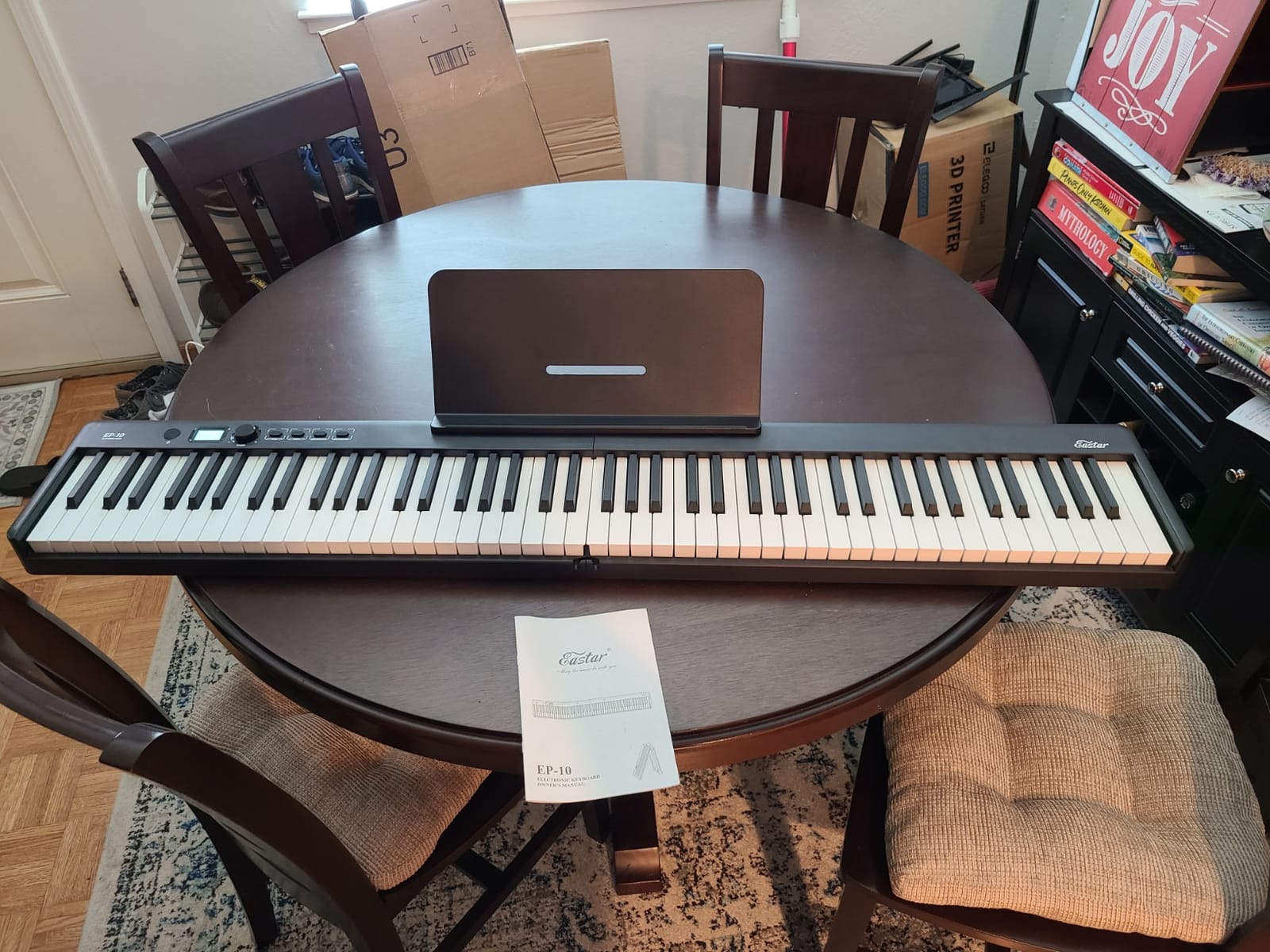
It is also the least stage-ready instrument here. The semi-weighted action is the lightest in the roundup with no true hammer response, and reviewers are blunt that the onboard sound is too weak for real volume, so a separate amplifier is needed. At 4.2 stars it sits at the bottom of our rating range.
Treat it as a practice and teaching instrument that can double for a very small unamplified gig, not as a working stage piano.
Best used for
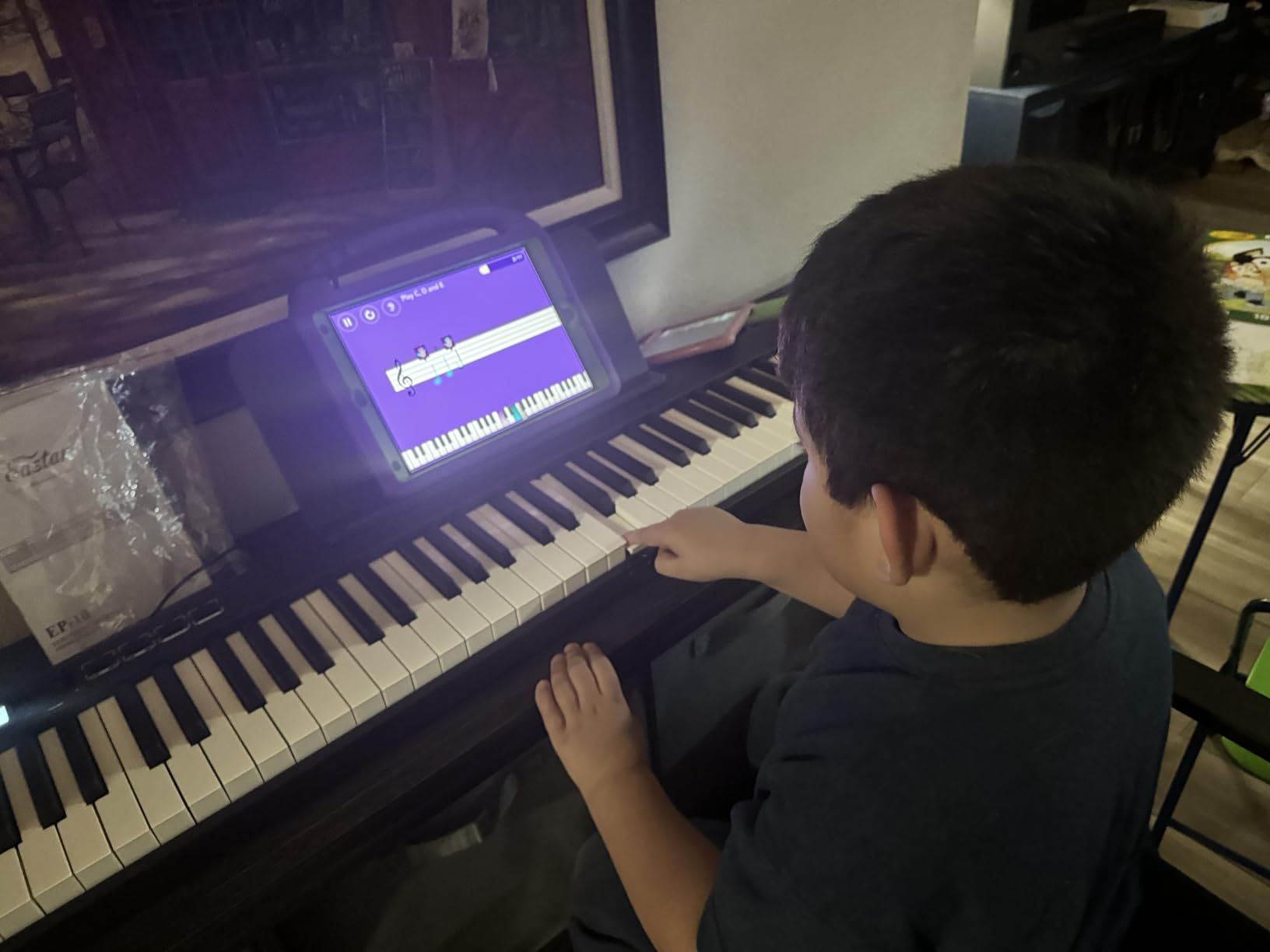
Silent headphone practice at home, lessons with a student, and spontaneous playing where carrying a 25-pound slab is not realistic. The bag makes storage in a flat simple.
Bluetooth MIDI to a teaching app is the feature that gets the most use after setup.
Where it falls short
Skip it for paid work that needs dynamics and volume. Light semi-weighted keys and a plastic chassis are not built for a long set.
Players who want one instrument for both home and stage should look at the P71 or PX-S1100 instead. Our guide to the best digital pianos for beginners covers where lightweight home models fit.
How to Choose a Portable Digital Piano for Gigging
Weight is the first filter, and it should be measured as total rig weight rather than keyboard weight alone. Add the keyboard, the stand, the pedal unit and the case, and you get the number that decides whether a gig is a one-person job or a two-person job. On r/DigitalPiano, players doing exactly this maths keep arriving at the same conclusion: these instruments are 4.5-5ft long and 30-40 lbs, and stage stands beat furniture stands every time.
Key action: semi-weighted versus graded hammer
Semi-weighted keys are lighter and cheaper and suit beginners or very small rooms, as on the Alesis Recital and Eastar EP-10. Graded hammer action, heavier in the low register, is what most gigging players want, and it is standard on the Yamaha P71 and P225, the Roland FP models and the Casio PX-S1100. If you are paid to play, this is not the spec to economise on.
Outputs decide whether a PA works properly
A headphone output is for you. A line output is for the room. Balanced or quarter-inch line outs into a mixer or small PA give you level control and no hum, and the Roland FP-30X and Donner DEP-20 carry quarter-inch jacks that accept external speakers. Only two instruments in this group run on batteries, the Alesis Recital and the Casio PX-S1100, so everything else needs a mains supply on site.
Bluetooth MIDI and USB MIDI answer different questions. Bluetooth is convenient for phone-based backing tracks; USB is steadier for a laptop or DAW. Decide which rig you actually carry before paying for wireless features you will not use.
Total rig weight checklist
Measure the load-in in this order: keyboard, then stand, then pedal unit, then case. A 25-pound Yamaha on an X-stand stays a one-person job. A 32.7-pound FP-30X with a Z-stand and a hard case is not, which is exactly how the load-in crew will treat it.
Speakers: who needs what
Rough benchmarks from gigging players put 20-30 watts as enough for a solo unamplified spot and 40 watts or more for a small ensemble. That places the Alesis Recital (2x20W) at the bottom of the useful range and the Roland FP-30X (22 watts) and Donner DEP-20 (two 25W amplifiers) at the top, with the Yamaha P71 and Casio PX-S1100 in between.
For a fuller breakdown of instrument categories, our picks for the best console digital pianos and the best bass amps for gigging cover the rest of a working live rig.
Digital Piano Jargon in Plain English
Hammer action uses weighted keys with a pivoting hammer mechanism, giving the resistance of an upright. Graded hammer action makes the low keys noticeably heavier, as on the Yamaha P71 and P225. Semi-weighted keys add resistance without a full hammer simulation, which is why the Alesis Recital and Eastar EP-10 feel lighter under the hand.
Polyphony is how many notes can sound at once. Values above 64 are rarely limiting for solo piano work. SuperNATURAL is Roland’s modelling engine, and CFX is Yamaha’s concert grand voice. Bluetooth MIDI sends note data to a phone or tablet, while USB MIDI is the wired, lower-latency version. Line out feeds a mixer or PA, while a headphone out is for private listening. Line level is simply the correct strength of signal for a PA, and unamplified means no PA at all.
Frequently Asked Questions
What is the best portable digital piano for gigging?
The Yamaha P71 leads our roundup for most gigging players. Its 88-key graded hammer action, 25-pound body and simple panel let one person load and set up quickly, and owners report years of reliable use. Players who need wireless MIDI or a large voice library should consider the Casio PX-S1100 or Yamaha P225 instead.
What is the best portable digital piano?
For pure portability, the Casio PX-S1100 is hard to beat at 24.7 pounds with a 43 percent smaller footprint and battery operation. The Yamaha P71 is the better all-round choice if you want a firmer hammer action and a heavier sound palette. If you are lifting everything solo, weight should decide before price or tone count.
Which digital piano sounds most like a real piano?
Yamaha’s CFX Full Concert Grand voice on the P225 is the most refined acoustic piano tone in this roundup, and the P71’s Yamaha grand samples are a close second. Roland’s SuperNATURAL engine on the FP-10 and FP-30X is the alternative view that gigging musicians frequently defend in forum threads. Personal preference usually matters more than any ranking.
What is the best budget keyboard for live performances?
The Alesis Recital is the best budget option for small gigs, with more than 11000 ratings at 4.6 stars, a 15.7-pound body, dual 20-watt speakers and battery operation. Its semi-weighted action is the compromise, so players in loud or formal rooms should save for a graded hammer-action model such as the P71.
Which is better, a Roland or a Yamaha digital piano?
Choose Yamaha for piano and electric piano tone, especially the CFX grand voice on the P225. Choose Roland for key feel, quiet action for practice and the strongest onboard speakers, which is the case with the FP-30X. Keyboardforums users describe the Roland RD series as sounding excellent while holding that Yamaha wins on piano tone.
How much does a digital piano weigh?
Full-size 88-key portable digital pianos in this roundup run from 8 pounds for the folding Eastar EP-10 to 32.7 pounds for the Roland FP-30X, with most weighted models landing between 24 and 28 pounds. Add your stand, pedal unit and case, because total rig weight is the figure that determines whether a load-in is a one-person job.
Do portable digital pianos need a PA system?
Not always. The Roland FP-30X at 22 watts and the Donner DEP-20 with two 25-watt amplifiers can cover small unamplified rooms, and the Alesis Recital with dual 20-watt speakers handles quiet venues. For anything larger, feed a mixer or PA from the instrument outputs rather than trying to push the onboard speakers harder.
Final Verdict
The Yamaha P71 is the best portable digital piano for gigging for most players, because graded hammer action, a 25-pound body and a one-button panel survive the load-in and the set. If you travel light and play without mains power, the Casio PX-S1100 is the travel answer. If you play unamplified, buy speaker power and accept the Roland FP-30X weight. Whatever you choose, measure the whole rig before you book the load-in.