
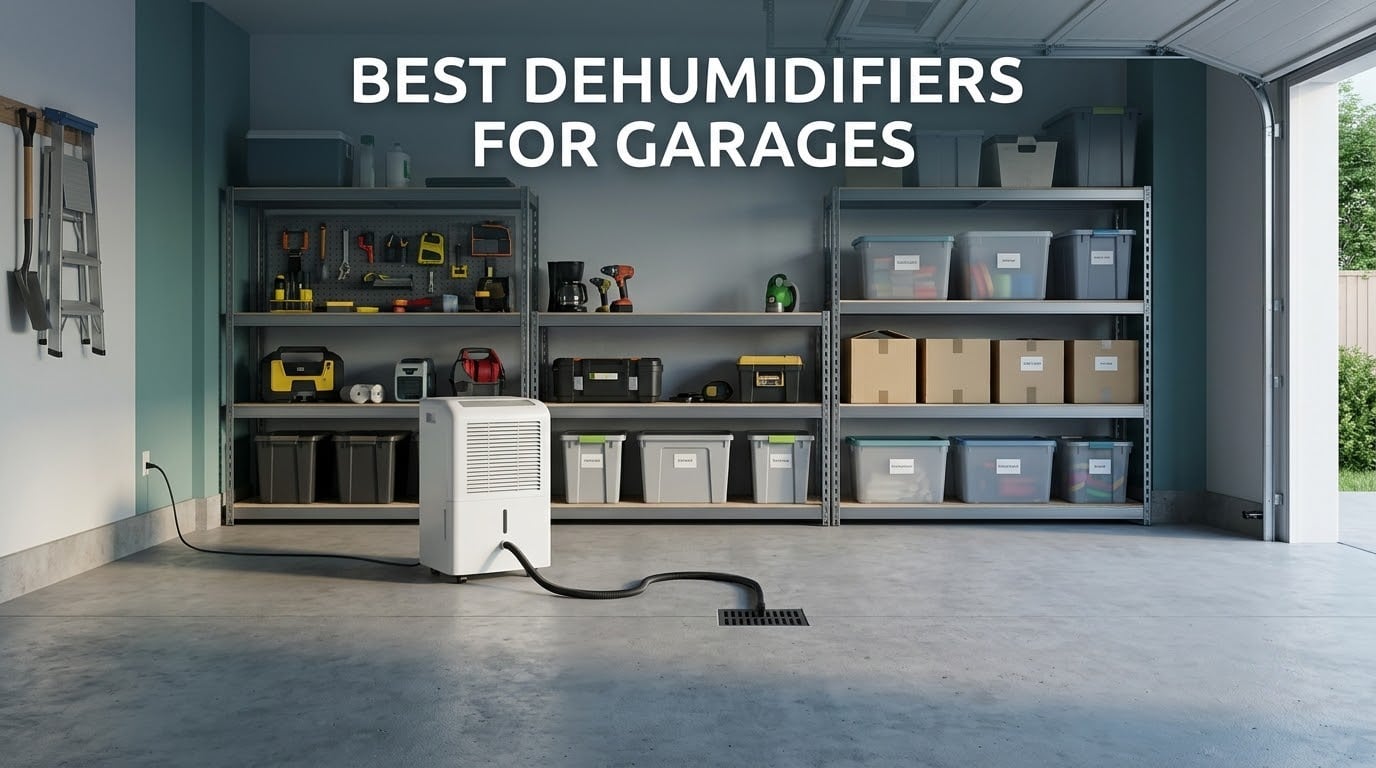
A garage is the easiest room in most homes to forget about, which is exactly why it turns into the room with the rust. Damp air settles into a concrete slab, seeps up through the base of your parked car, and settles on steel tools, cardboard boxes and electrical outlets as a fine film of condensation. By the time you notice a musty smell or a patch of orange on a wrench, the damage has usually been happening for a season.
The fix is mechanical, not chemical. A dehumidifier pulls moisture out of the air, condenses it on a cold coil, and either collects it in a tank or sends it down a hose. What makes garages different from basements is temperature. An unheated garage can sit below 40°F on a winter night, and most basement-rated machines will ice their coil solid and shut down at exactly that point. That single fact, more than any other, decides whether a unit is worth owning.
We compared ten machines against what garage owners actually need: low-temperature operation with automatic defrost, enough extraction for the square footage, drainage that does not require daily trips to a bucket, and hardware that survives sawdust and concrete dust. This guide covers the best dehumidifiers for garages, what size to buy, where to put it, and the mistakes that leave people with the same rusty tools six months later. If you want the wider picture first, our picks for the best dehumidifiers overall and best dehumidifiers for basements cover adjacent spaces well.
One point worth stating early: none of the ten machines we reviewed publishes a hard minimum operating temperature. Most list automatic defrost in the feature list, and several reference a 65°F operating threshold, which tells you the coil defrosts but not that the machine stays efficient all the way down to freezing. We flag where that gap matters for your climate.
Table of Contents
Top 3 Picks: Best Dehumidifiers for Garages (October 2026)
The three machines below cover the widest range of garage situations. One is the all-round workhorse, one maximises raw extraction, and one is an inexpensive way to get a handle on a small damp space.


Quick Overview: Best Dehumidifiers for Garages in 2026
Every machine below is compared side by side. Use the table to narrow the field, then read the full review for the one that fits your square footage and climate.
| Product | Specifications | Action |
|---|---|---|
| Waykar 80 Pint 5000 Sq. Ft Dehumidifier |
|
Check Latest Price |
| yaufey 120 Pint 6000 Sq. Ft Dehumidifier |
|
Check Latest Price |
| VEAGASO 34-36 Pint 2500 Sq.Ft Dehumidifier |
|
Check Latest Price |
 ALORAIR Sentinel HD55S Crawl Space Dehumidifier ALORAIR Sentinel HD55S Crawl Space Dehumidifier |
|
Check Latest Price |
 AEOCKY 50 Pint 3500 Sq.Ft 40 dB Dehumidifier AEOCKY 50 Pint 3500 Sq.Ft 40 dB Dehumidifier |
|
Check Latest Price |
 Aiusevo 130 Pint Dehumidifier with Pump Aiusevo 130 Pint Dehumidifier with Pump |
|
Check Latest Price |
 AEOCKY 5000 Sq.Ft Energy Star Version 6.0 AEOCKY 5000 Sq.Ft Energy Star Version 6.0 |
|
Check Latest Price |
 Gasbye 115 Pint Energy Star Dehumidifier Gasbye 115 Pint Energy Star Dehumidifier |
|
Check Latest Price |
 boglvr 100 Pint Smart WiFi Dehumidifier boglvr 100 Pint Smart WiFi Dehumidifier |
|
Check Latest Price |
 hOmeLabs 7000 Sq Ft 50 Pint Dehumidifier hOmeLabs 7000 Sq Ft 50 Pint Dehumidifier |
|
Check Latest Price |
1. Waykar 80 Pint 5000 Sq. Ft Dehumidifier – Best Overall for Garages
Waykar 80 Pints 5000 Sq. Ft 2025 Energy Star Dehumidifier for Basement
80 pints/day for 5000 sq. ft.
30 to 80 percent RH
ENERGY STAR at 270 watts
42 dB, two fan speeds
Pros
- 80 pint per day extraction rated for open garage bays
- 30 to 80 percent RH control range at both ends
- ENERGY STAR certified so 24 hour runs stay affordable
- continuous gravity drainage out of the box plus a removable tank
- intelligent sensing triggers automatic defrost and overload protection
Cons
- Larger footprint than compact units
- only two fan speeds and no app control
- tank only operation means manual emptying if no drain hose is run
The Waykar JD025CE-80 is the machine we would put in a typical two-car garage, and the reason is simple arithmetic. Eighty pints per day of rated extraction across 5000 square feet gives you real headroom, which matters because a garage rated for 5000 square feet rarely stays at exactly 5000 square feet once you stack shelving and park a vehicle against the wall.
The 30% to 80% humidity control range on the Waykar gives you room at both ends of the scale. That low end is what you want for a workshop or a space holding cardboard and fabric, because you can hold the room below the threshold where mould and surface rust begin rather than just chasing a round number.
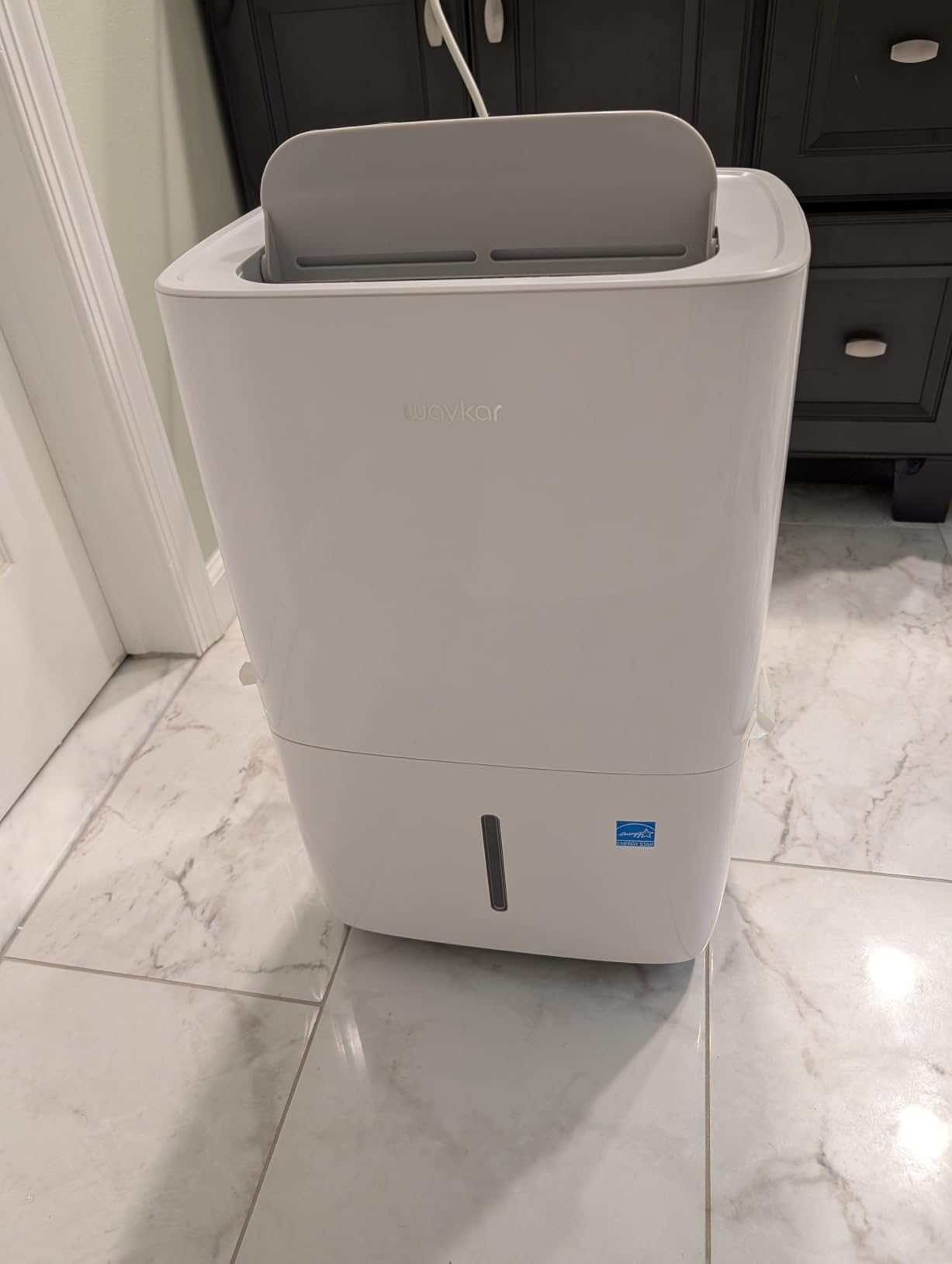
Owners consistently point to three things: strong moisture removal in open floor plans, an easy continuous drain hookup, and no unpleasant surprise on the electricity bill thanks to ENERGY STAR certification at 270 watts. The 42 dB figure keeps it usable in an attached garage where you might be working a few feet away from it.
The 90 degree auto swing louver does more than look good. In a wide rectangular garage a fixed-direction unit leaves dead zones along the far wall, and the louver throws conditioned air across the full width as the fan cycles.
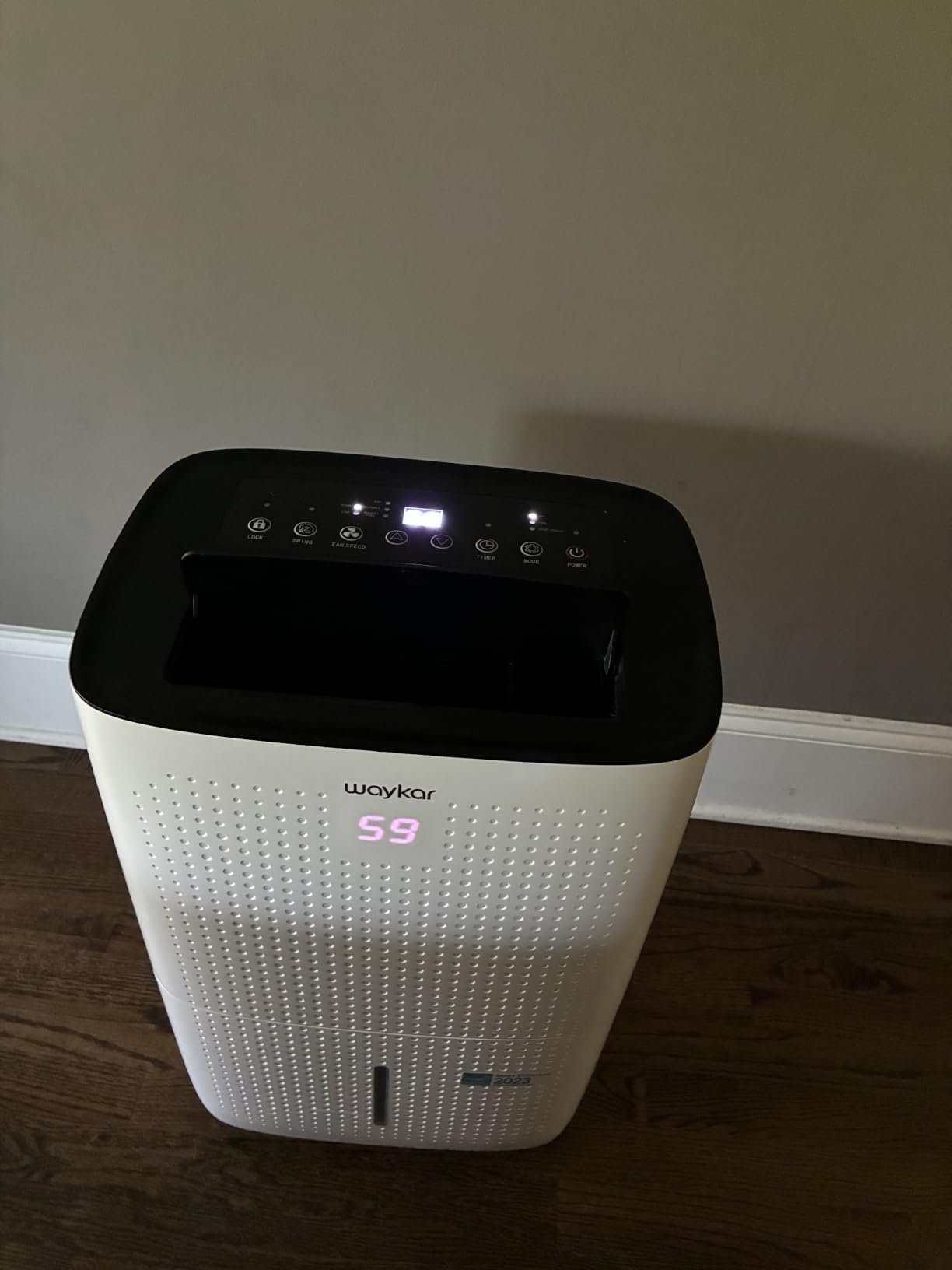
Check the tank size and the lack of app control
The weakness that shows up again and again is the bucket rather than the machine. The tank holds 1.14 gallons, and on a humid spring day in a leaky garage that can mean emptying it more than once in 24 hours. Plan the drain line on day one rather than treating it as an afterthought.
There is also no Wi-Fi here. If you want to check the garage from your phone while you are at work, look at the smart unit further down this list instead of adding a Wi-Fi hub to this one.
Who should and should not buy this unit
Buy it if you have a standard attached or detached two-car garage that stays above freezing most of the winter, and if you want a set-and-forget machine that a weekend installer can put on continuous drainage in under an hour.
Skip it if your garage drops regularly below 40°F and you are storing a classic car or a wooden boat hull down there. The automatic defrost is there, but 80 pints at 86°F is a different proposition from sustained extraction in a 38°F space, and this listing does not claim otherwise.
2. yaufey 120 Pint 6000 Sq. Ft ENERGY STAR Dehumidifier – Maximum Extraction for Garages
120 Pint Dehumidifier for Basement 6000 Sq. Ft with Drain Hose, ENERGY STAR
120 pints per day for 6000 sq. ft.
ENERGY STAR at 355 watts
Four modes, three fan speeds
55 dB on low
Pros
- Very high 120 pint per day rating for large unconditioned spaces
- four dedicated modes including a true continuous setting
- humidity control across 30 to 80 percent
- auto shut-off plus memory restart and a 24 hour timer
- quiet at 55 dB on low
Cons
- 355 watts is a heavier running load than smaller machines
- no built-in pump so gravity drainage needs the unit above the drain line
- small 1.06 gallon tank if you are not continuously drained
The yaufey JD025Q-120 sits at the top of the consumer class on capacity, rated at 120 pints per day at 95°F and 90% relative humidity, with 90 pints per day at the more realistic 86°F and 80% test point. For a four-car workshop, a shared garage with a second fridge, or a space that takes on condensation every time it rains, that headroom is the whole point.
What separates it from a raw-capacity machine is the control set. Four modes cover sleeping area, living area, basement and continuous, and the temperature and humidity sensors respond in milliseconds, so the unit reacts quickly when a door opens or a wet vehicle comes home.
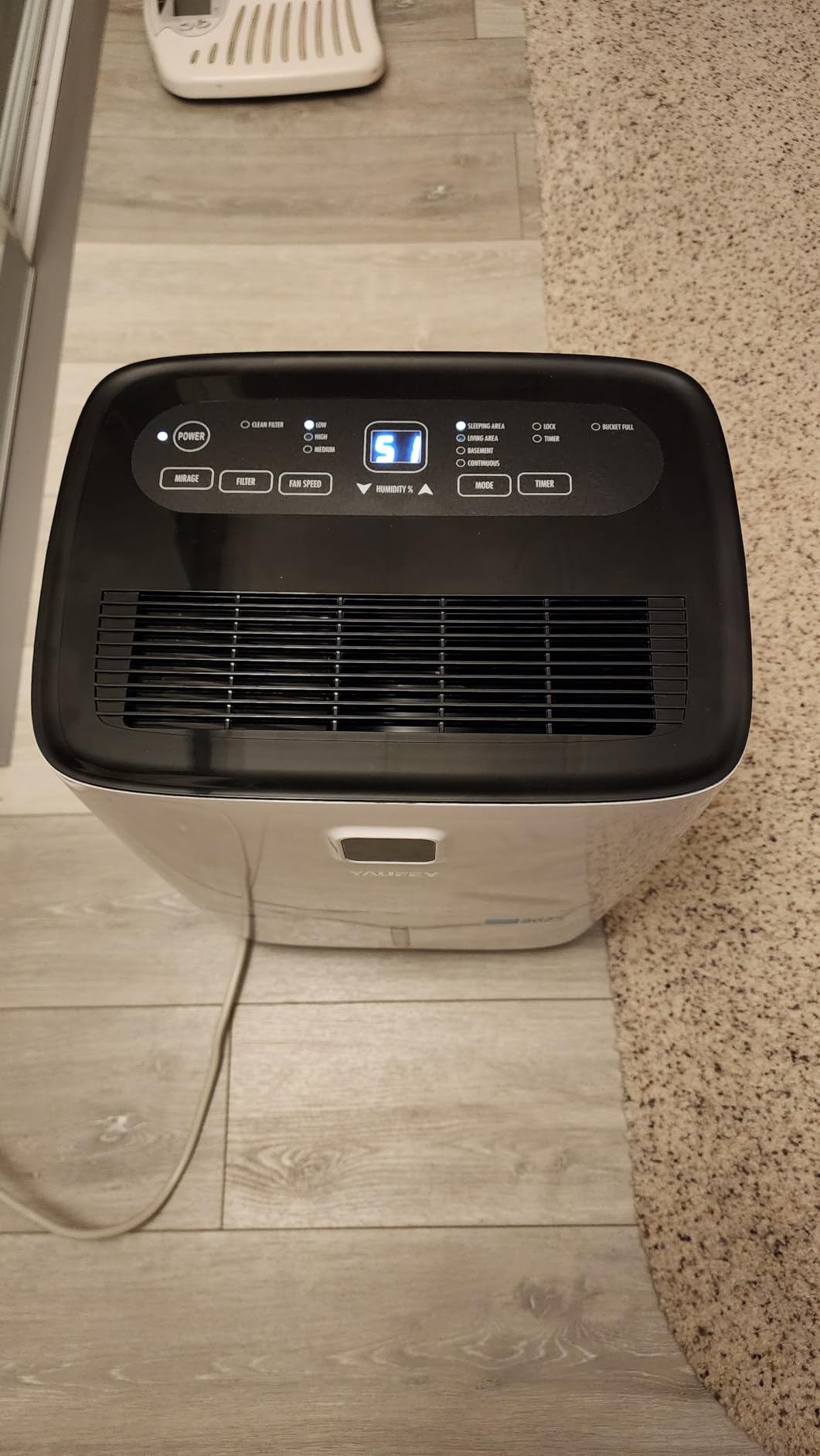
Memory restart and auto shut-off matter more in garages than most product pages admit. If a breaker trips while you are away, the machine resumes where it left off instead of waiting for someone to walk out to the building and press a button.
Reviewers rate ease of drainage setup as one of the strongest points, and nearly 7000 reviews averaging 4.4 stars give it a solid track record for large-space removal.
Mind the drain height and the wattage
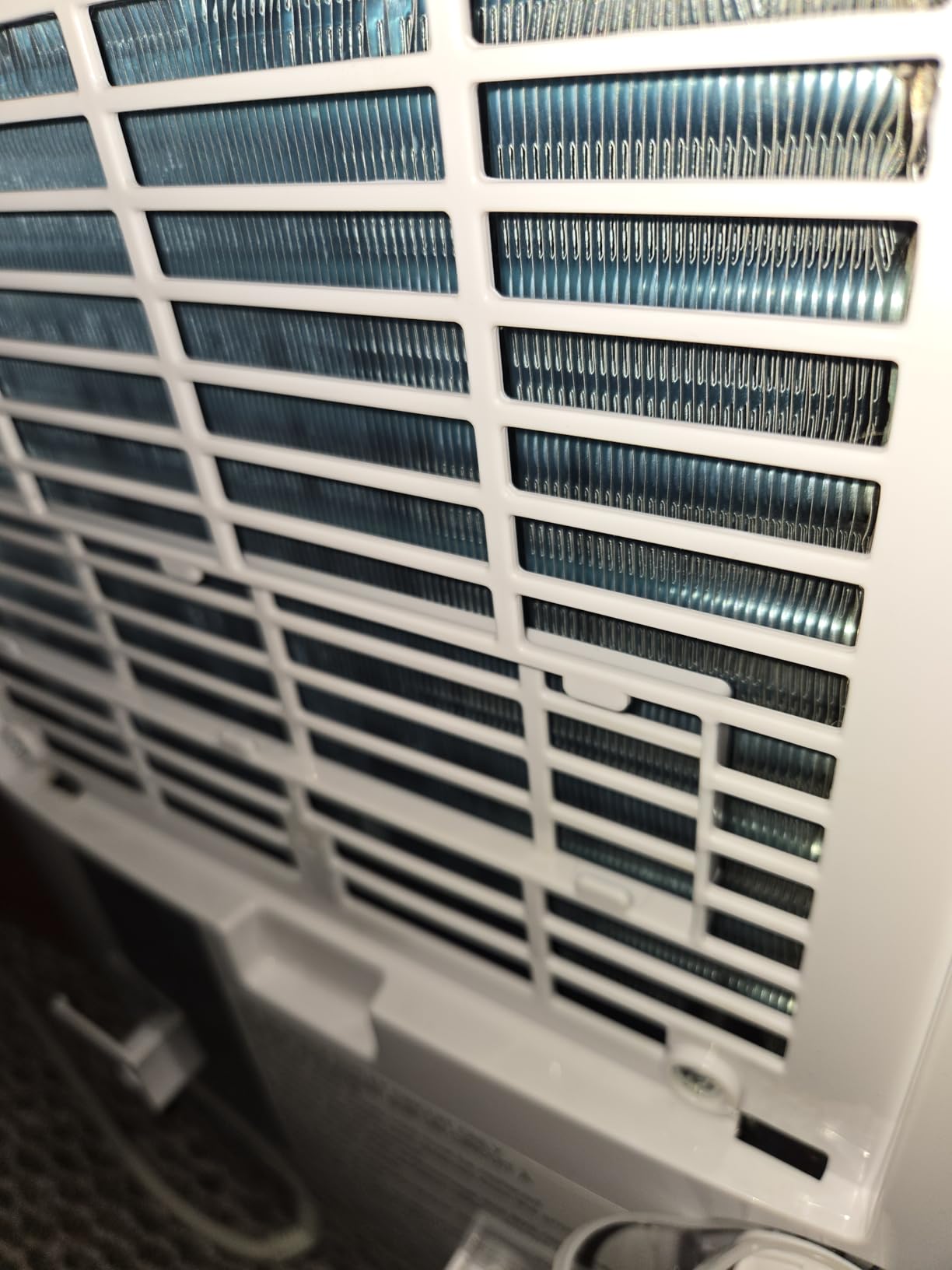
There is no built-in pump. The included hose is 3.28 feet, and an 8 mm garden hose connection is available, so the drain outlet has to sit above whatever it empties into. On a slab with no floor drain, that means routing to a floor-level sink, a sump, or a container the unit can sit above.
At 355 watts, a unit running 20 hours a day draws meaningful power. Running continuously through a humid summer is fine on an ENERGY STAR compressor, but factor it into the same budget line as a second refrigerator.
Who should and should not buy this unit
This is the right pick for a large workshop, a garage shared with a chest freezer, or any space where the load is heavy enough that a 50-pint machine would run constantly without ever getting below target humidity.
It is the wrong pick for a single-car detached garage in a mild climate, where you would carry capacity you never use and a footprint you do not need. Pair it with a proper drainage plan and it is a long-term workhorse.
3. VEAGASO 34-36 Pint 2500 Sq.Ft Dehumidifier – Best Budget Pick for Small Garages
VEAGASO 34-36 Pint/D, 2500 Sq.Ft Dehumidifier for Basement with Drain Hose
34 to 36 pints per day
Up to 2500 sq. ft.
Under 40 dB on low
Three modes and auto defrost
Pros
- Quiet at under 40 dB on the low speed
- compact body with 360 degree swivel casters
- three modes including a clothes drying setting
- automatic defrost for cool unheated spaces
- drain hose and washable filter included
- 2 year warranty
Cons
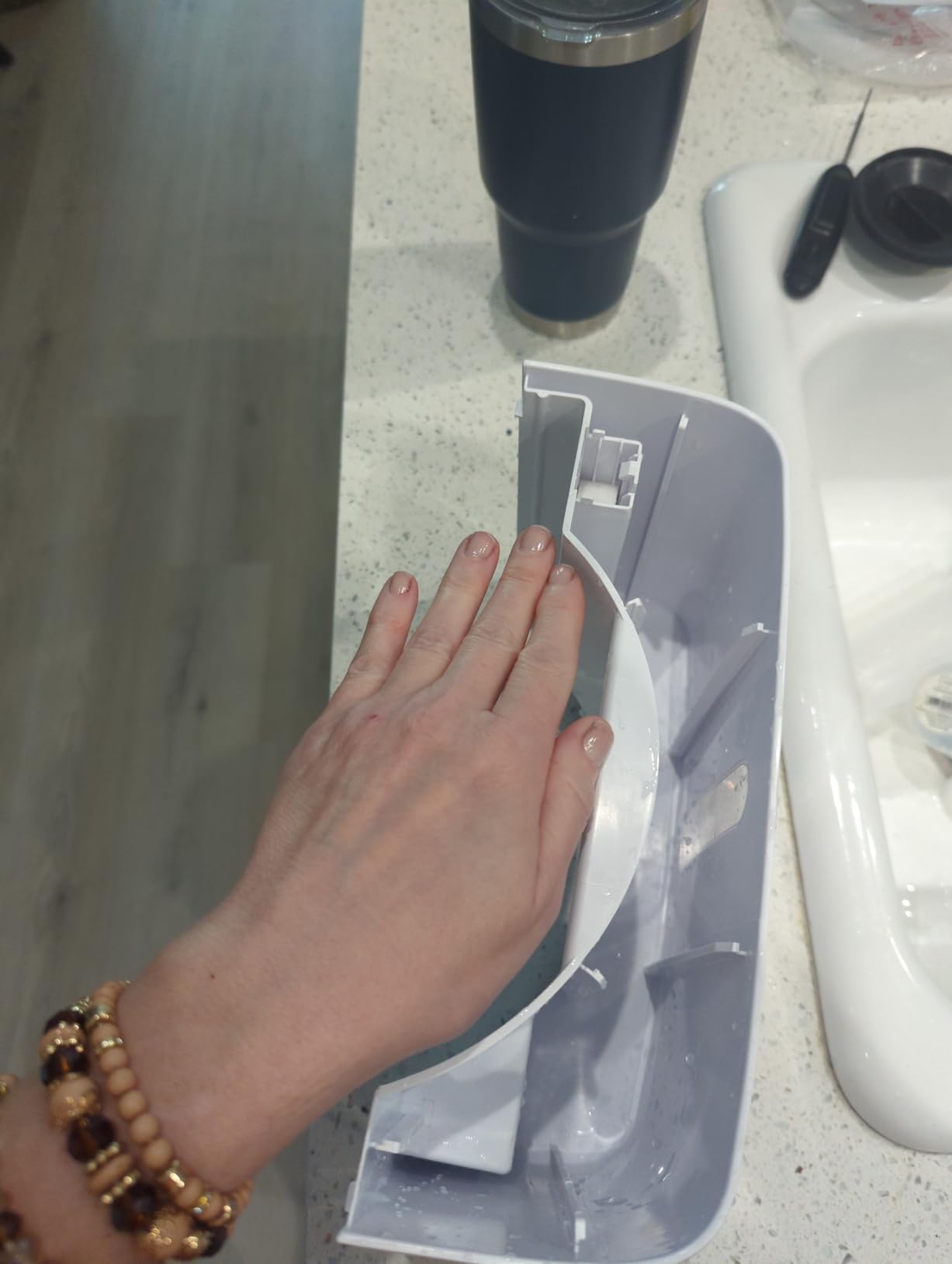
- 0.53 gallon tank needs emptying several times a day
- 2500 sq. ft. rating is optimistic in open floor plans
- clearly louder on the high fan setting
- non-locking casters make tank removal awkward
The VEAGASO VG380 is the answer to a very common garage problem: a single-car space, or a half of a two-car garage, that is damp enough to smell but nowhere near big enough to justify a commercial machine. At 34 to 36 pints per day it is sized for roughly 1000 to 1200 square feet of real, controlled space, and the 4.5-star average across more than 3000 reviews says owners are largely satisfied.
Quietness is the standout. Under 40 dB on the low setting means you can run it overnight next to a bedroom wall in an attached garage without it becoming the reason you wake up.
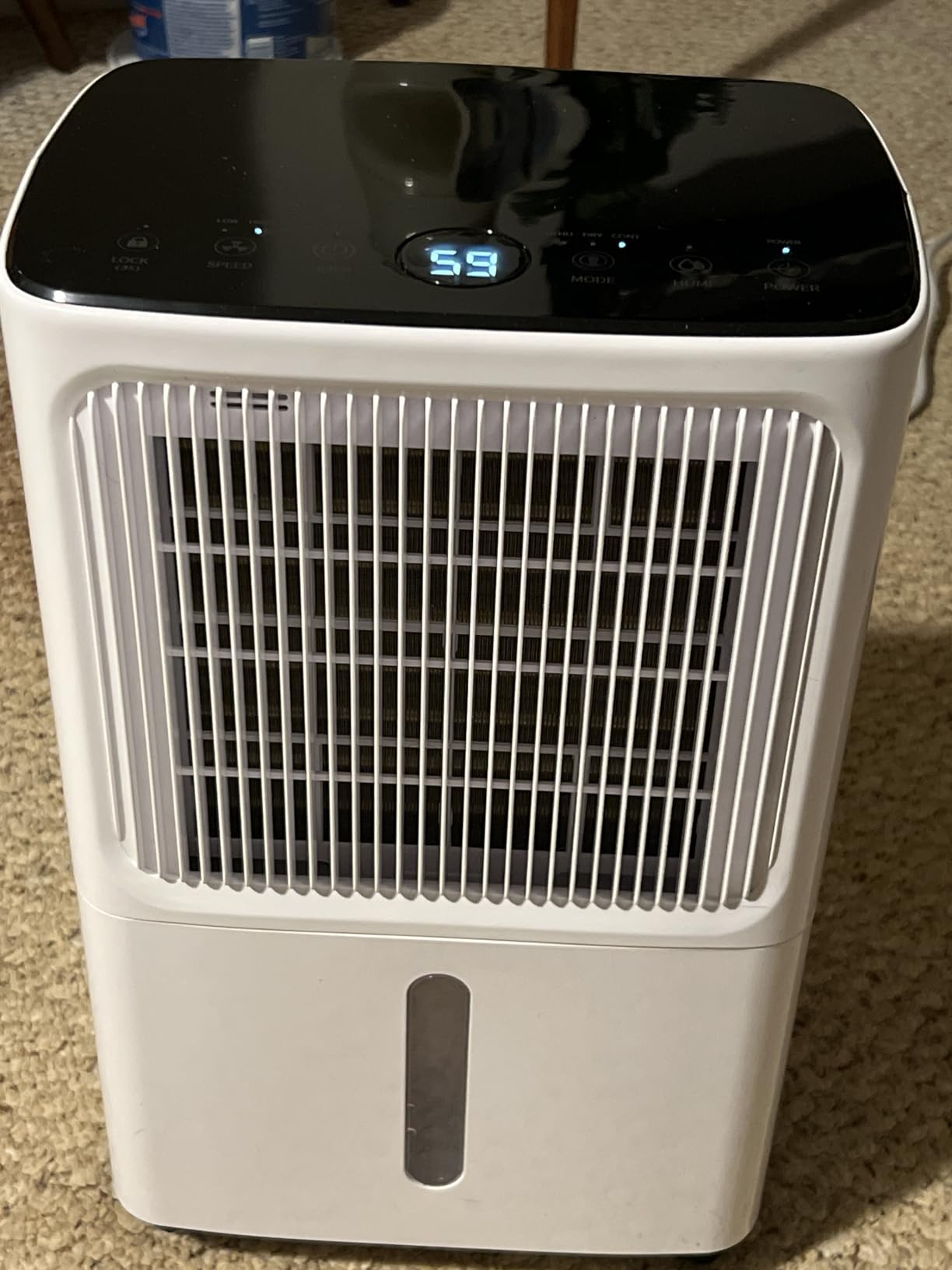
The three modes are worth understanding. Dehumidify is the standard setting, Continuous runs until you stop it and pairs with the drain hose, and Dry is a clothes-drying mode that moves more air than it dehumidifies. That last one is genuinely useful in a garage used as a drying space for gear in winter.
A 1-24 hour timer and power-failure memory mean you can set it overnight during a rainstorm and have it resume its settings after an outage without intervention.
Size it down from the coverage claim
This is the most important thing to understand about this machine. The 2500 square foot figure assumes normal residential air exchange and moderate climate. Reviewers in large open rooms consistently report it struggling to keep pace, so treat the rating as a ceiling rather than a target.
Run the drain hose rather than the tank. A 0.53 gallon bucket in a humid garage means multiple daily trips across a cold floor, and that is the single most common complaint in the reviews.
Who should and should not buy this unit
Buy it for a one-car detached garage, a workshop corner, an RV or boat storage bay, or any situation where you want the lowest possible noise and the smallest possible machine footprint.
Skip it if you have an open three-car bay or a garage with a bare concrete floor that sweats heavily. Portability is excellent, but you cannot fix an undersized machine by rolling it to a different corner.
4. ALORAIR Sentinel HD55S – Best for Cold and Unheated Garages
ALORAIR 120 Pints Energy Star Crawlspace Dehumidifier, Sentinel HD55S
120 pints at saturation, 55 pints at AHAM
Metal housing
Automatic defrost
ETL listed, 130 cfm
Pros
- Rugged metal housing built for garages and warehouses
- continuous drainage with no tank to empty
- automatic defrost works reliably in cool unheated spaces
- ETL listed with a 6 year limited warranty
- MERV-1 filter blocks dust and debris from the coils
- quiet for a machine of this size
Cons
- Heavy at nearly 42 pounds
- gravity drain only so it must sit above the outlet
- live humidity monitoring needs a separately purchased accessory
- some reports of machines arriving with non-cooling coils
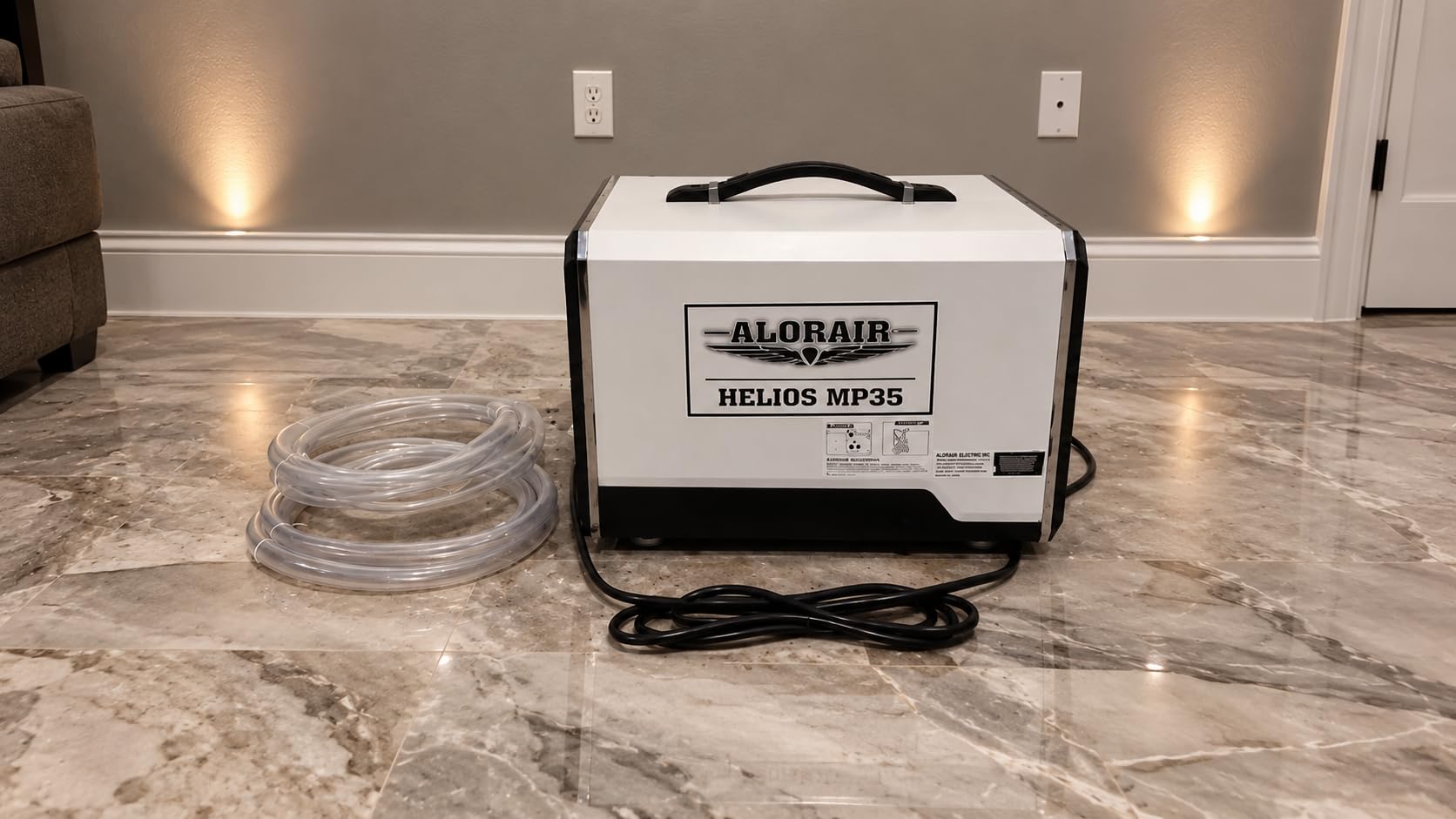
The Sentinel HD55S is the machine we would trust with an unheated garage that sees real winter. Where consumer models use thin plastic cabinets and a one-year exchange, this one uses a metal housing, is ETL listed, and carries a 6-year limited warranty with three years of parts and labour on the refrigeration system and five years of parts.
The auto defrost here is described as pausing the compressor while the fan clears frost, which is the correct mechanism. Periodic defrost that simply runs the fan cannot clear ice bonded to a coil, so this is the design you want when the garage drops to the high 30s overnight.
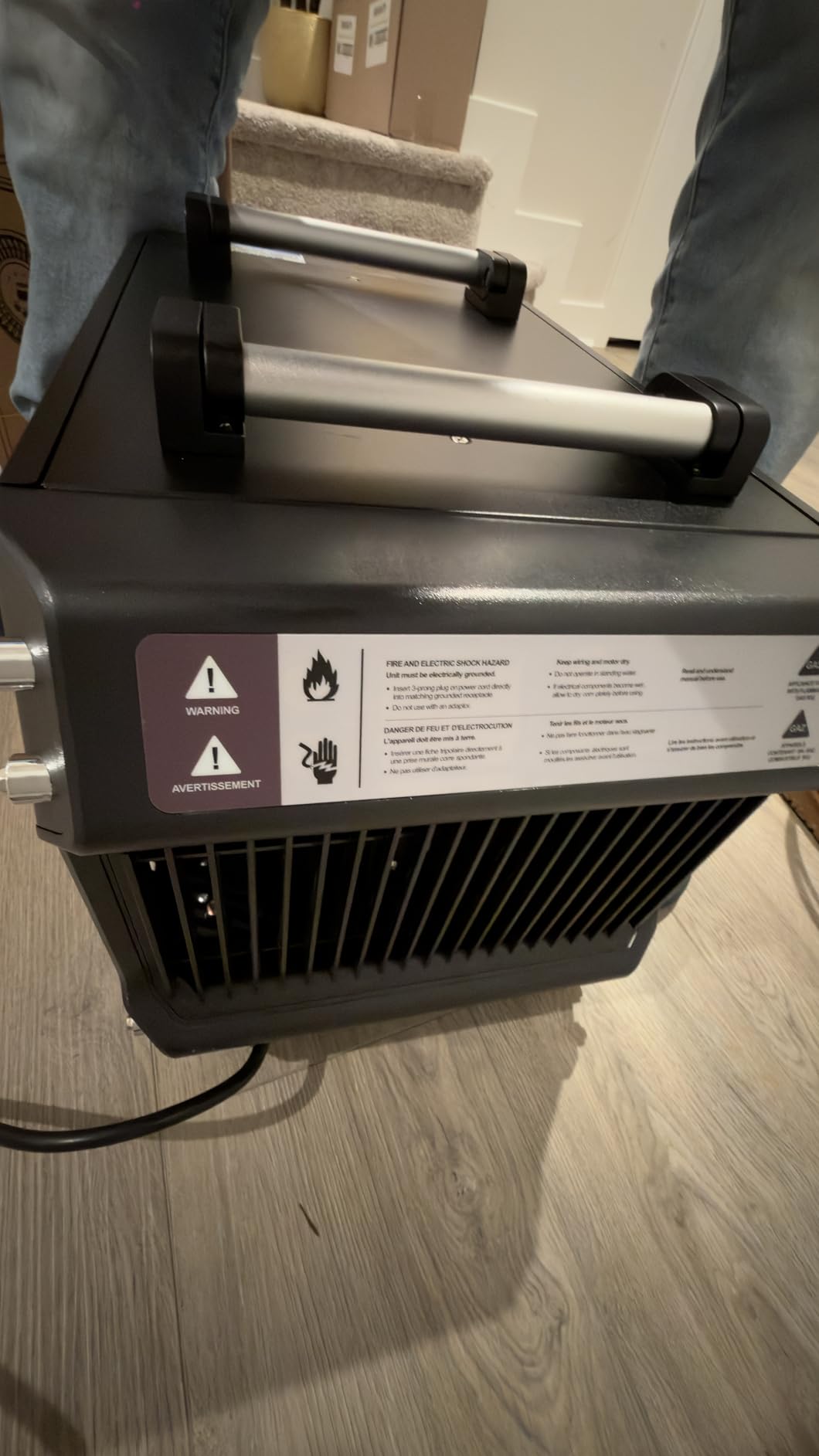
The MERV-1 filter is a quietly important detail for garages. Concrete dust, drywall sanding residue and sawdust coat evaporator fins, and a fouled coil loses capacity long before it fails visibly. A clean filter gives you back real extraction for almost nothing.
Owners running this in pool houses, attics and workshops consistently describe it as quiet for its size, and the continuous drain eliminates the single most tedious part of garage dehumidification.
Understand the two capacity numbers
This unit is rated at 120 pints per day at saturation and 55 pints per day at AHAM conditions. Those are very different test conditions, and marketing pages routinely quote only the first. Plan on the 55-pint figure for a realistic mild-climate garage and the 120 only for extreme saturation.
The 1300 square foot coverage figure is also crawl-space conservative. It reflects poor air exchange, not a hard ceiling for a two-car garage with a closed door.
Who should and should not buy this unit
Buy it if your garage is unheated, drops below 40°F regularly, or sits in a coastal or northern climate where corrosion is already a problem. It is the choice for tool rust prevention in an unheated space.
Skip it if you want a small, cheap unit for a dry garage or if moving 42 pounds into a tight corner is a problem. Two people can place it comfortably, one person cannot, and there is no built-in pump.
5. AEOCKY 50 Pint 40 dB Dehumidifier – Best for Quiet Attached Garages
AEOCKY 50 Pint/Day, 3500Sq.Ft Ultra-Quiet 40dB Dehumidifier with Drain Hose
50 pints per day at 95F
About 40 dB
Advanced auto-defrost at a 65F watershed
Copper tubing, 25.3 pounds
Pros
- Genuinely quiet at roughly 40 dB for the output class
- compact and light at 25.3 pounds with smooth-glide casters
- 50 pints per day rated in hot humid conditions
- advanced auto defrost keeps it running in cooler spaces
- 3 year machine warranty
- garden hose adapter stores in the tank
Cons
- 0.8 gallon tank fills fast if you do not run a drain
- tank must stay installed even on continuous drainage
- 380 watts is higher than some machines in the same class
The AEOCKY BOREAS-001 solves a narrow problem very well: getting real extraction out of a garage that shares a wall with a living space. Fifty pints per day at 95°F and 95% relative humidity is meaningful capacity for a 1000 to 1400 square foot space, and doing it at about 40 dB is what makes it usable next to a bedroom.
The listed noise figure is at the highest dehumidification setting, which is the honest way to quote it. Many pages instead quote the low fan speed, where almost any machine sounds acceptable.
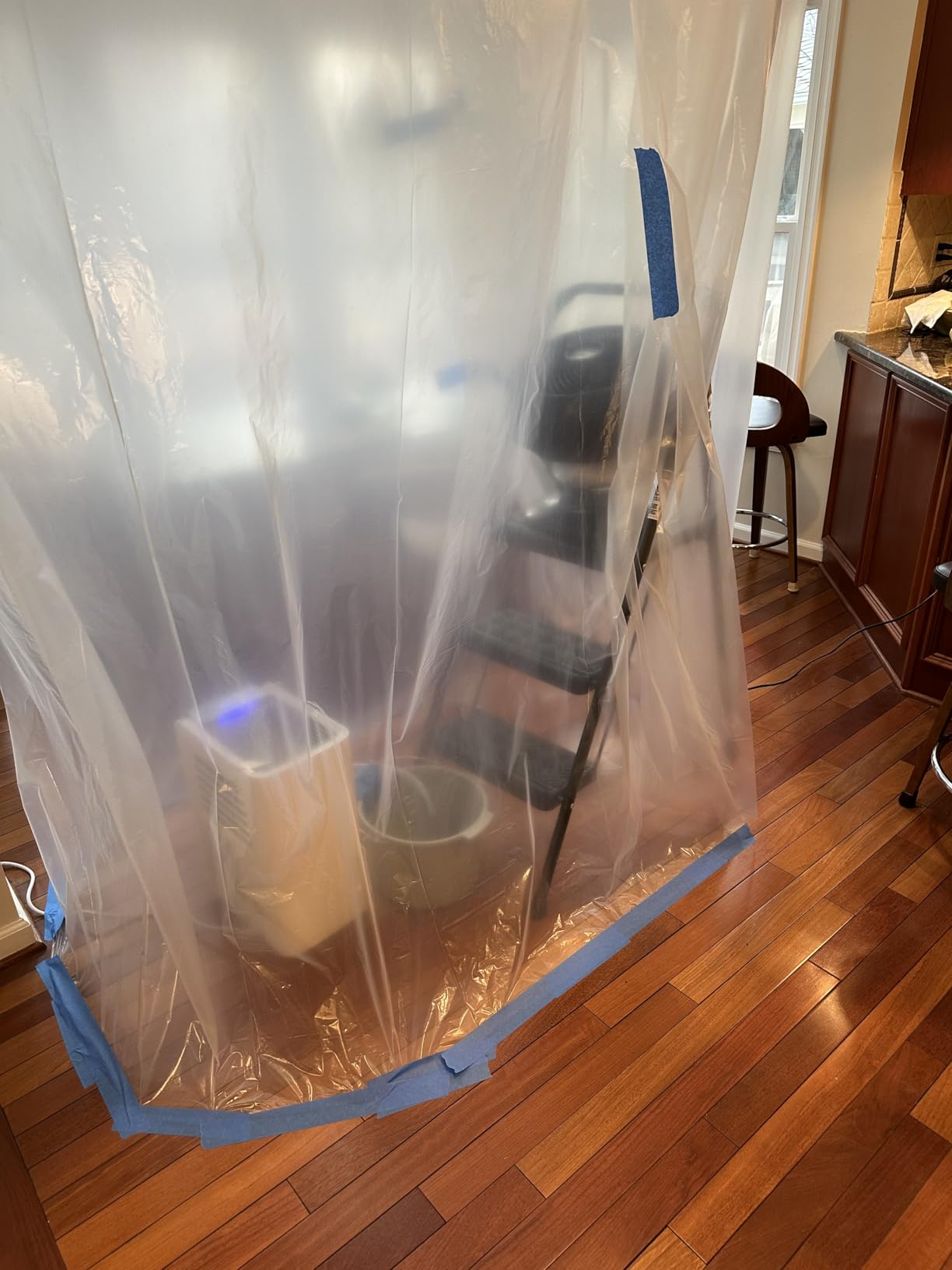
Build details suggest this one was engineered for damp, dusty rooms rather than a climate-controlled basement. It uses 7 mm high-tooth pure copper tubing with blue hydrophilic-coated fins, a coating that slows corrosion in humid air and helps condensate drain off the coil instead of clinging.
Three colours of ambient humidity light give you a glanceable readout from across a two-car bay without walking over to the panel, and the 24-hour timer plus child lock round out the unattended operation features.
Set it and let it stand before the first run
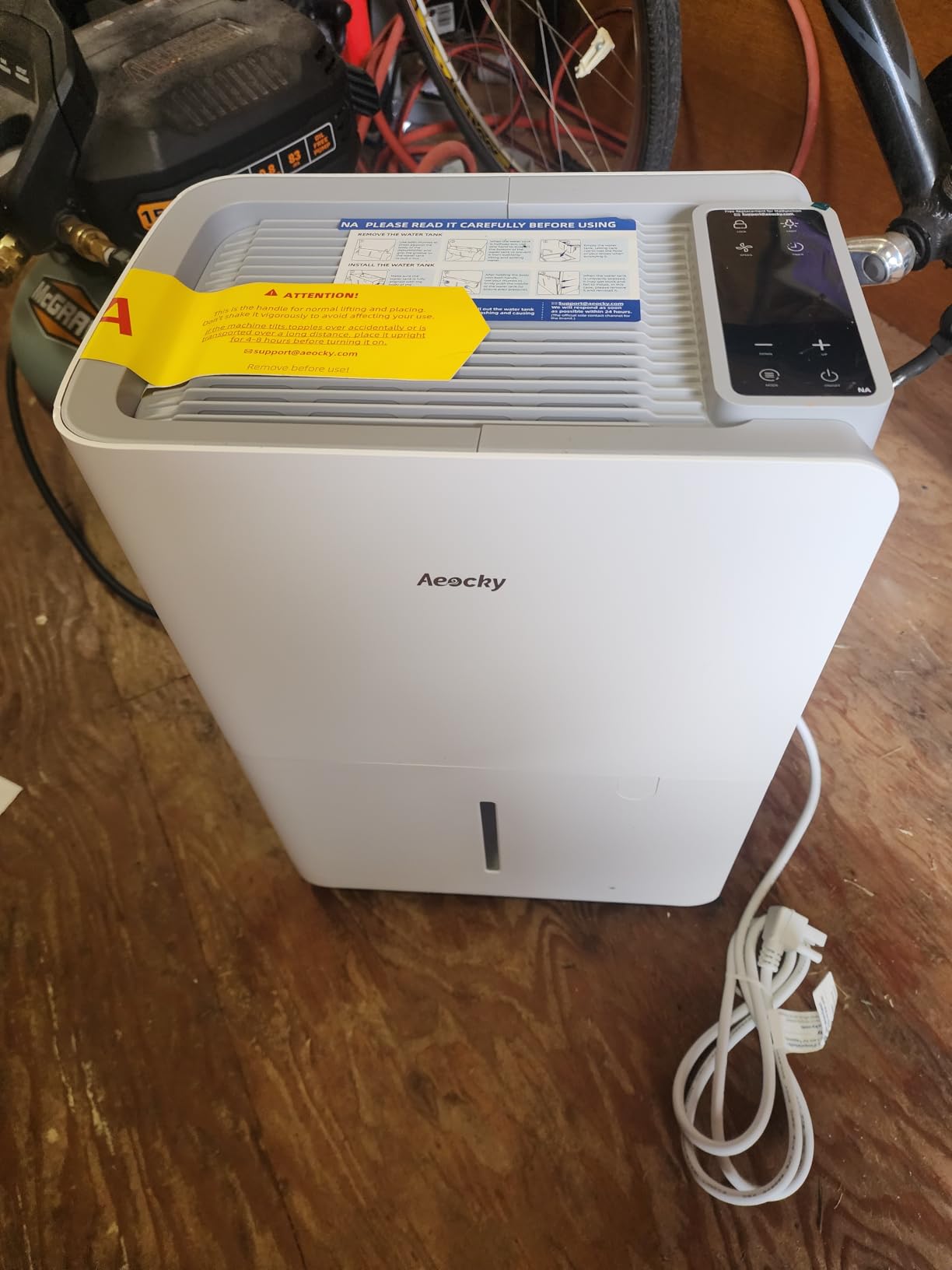
One instruction appears repeatedly in the reviews and is worth repeating: leave the unit upright for 24 hours before powering it on if it has been in transit. Refrigerant needs to settle back into the compressor oil, and starting it immediately after moving can shorten compressor life.
Also note the tank has to remain in place even when you run the hose continuously, which is unusual and catches people out the first time they try to reclaim the footprint.
Who should and should not buy this unit
This is the best fit for an attached garage in a warm climate, a garage gym, or a workshop where you want extraction running while you work nearby and conversation has to stay normal.
It is the wrong pick for a large open bay needing 70-plus pints per day, or for a garage where absolute silence matters more than throughput.
6. Aiusevo 130 Pint Dehumidifier with Pump – Best Pump Drainage for Garages
130Pints Crawl Space Dehumidifier with Pump and Drain Hose up to 6500 Sq.Ft
Up to 130 pints per day
265 CFM airflow
Built-in pump with 16.4 ft hose
6 inch ductable outlet
Pros
- Built-in pump drains uphill or over long distances
- compact 19.3 by 17.8 by 17.5 inch body
- high 265 CFM airflow with 130 pints per day rated capacity
- ductable outlet allows attic or ceiling distribution
- metal casing and washable filter suit dusty spaces
- optional wired remote control
Cons
- Heaviest machine on this list at 51 pounds
- only a 2 year warranty
- some buyers report machines that would not power on reliably
- a few reviews describe only modest humidity reduction in small rooms
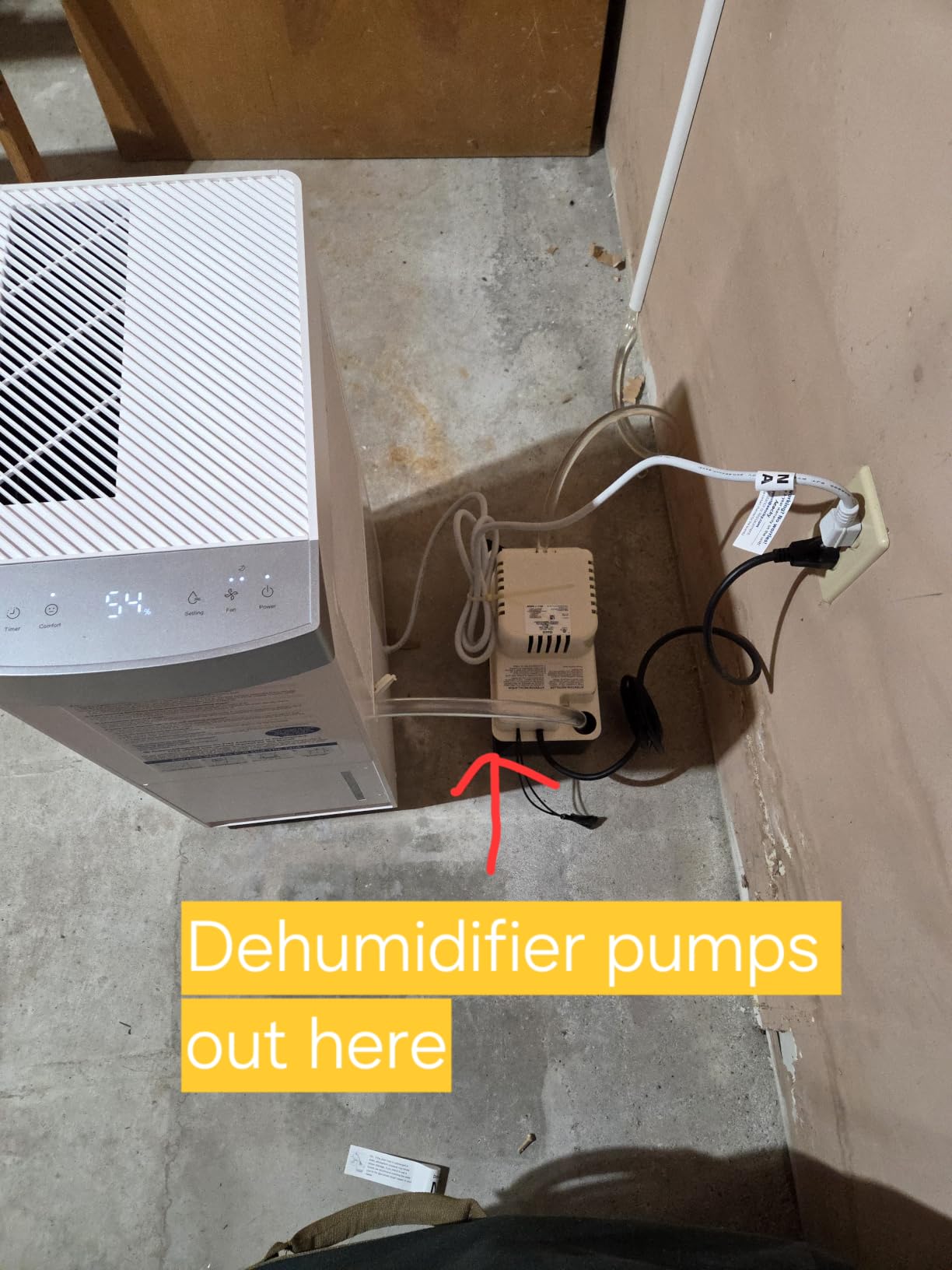
The Aiusevo AS610 is the machine to look at when drainage is what is stopping you. Almost every other machine on this list drains by gravity, which means the outlet must sit lower than the machine. A built-in pump with a 16.4 foot hose changes that completely: you can run the line up a wall, across a ceiling joist, or out to a drywell on the far side of the building.
There is a second 6.6 foot gravity hose included, so you can choose the plumbing path at installation rather than committing to the pump route.
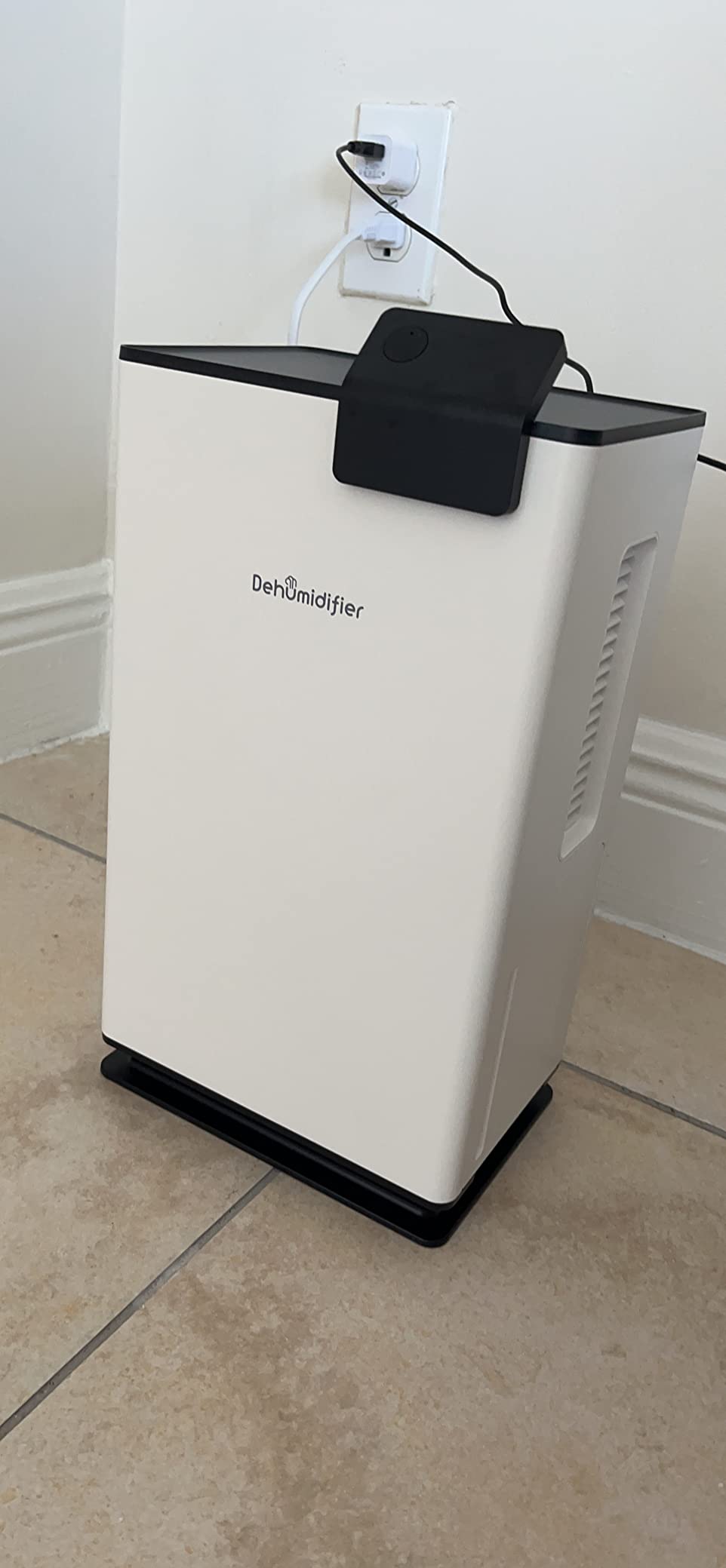
The 265 CFM airflow figure is the highest of the machines we reviewed, and it matters more than raw pint ratings in a garage with tall ceilings and no air movement. Dehumidifiers pull air through a coil; if the air is not being moved through the room, the coil never sees the humid air sitting near the floor and the ceiling.
A 6-inch ductable outlet lets you distribute conditioned air into an attic or tie it into existing HVAC ductwork, which is unusual at this capacity and useful if you want one machine serving a workshop plus a storage loft.
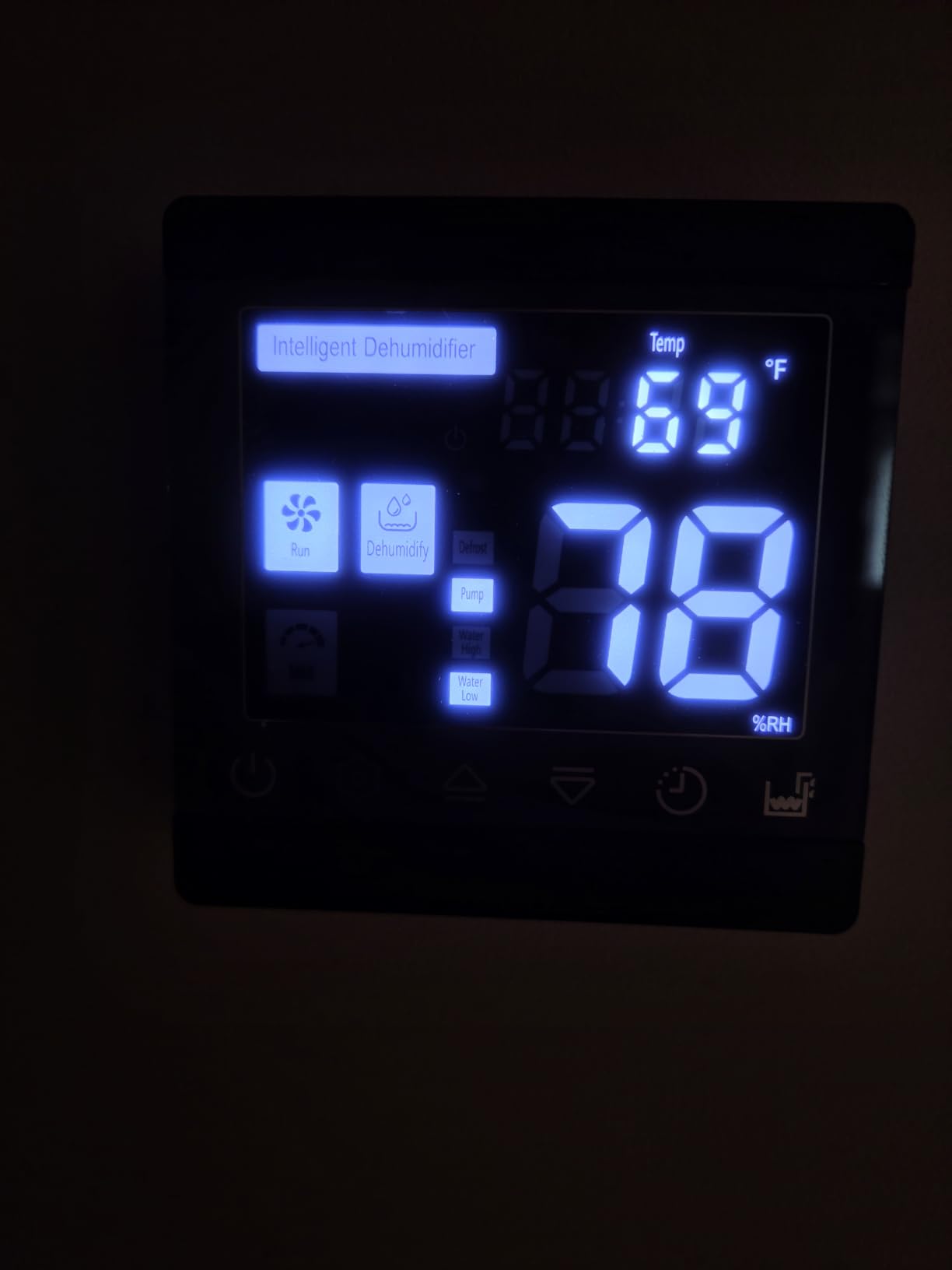
Weigh the warranty against the features
Two years is a shorter warranty than most of the machines we reviewed, and the reviews do contain a cluster of reports about machines that would not power on reliably. That is worth factoring in if you plan to run this unattended in an unheated space for years.
The other caution is a review pattern describing only a few percent of humidity reduction in small rooms despite the headline capacity. Confirm the room is actually large enough to use the machine, since oversized capacity in a small space cycles on and off without doing much work.
Who should and should not buy this unit
Buy it if your garage has no floor drain, if the nearest drainage point is uphill or far away, or if you want to duct conditioned air into adjacent spaces from a single unit.
Skip it if gravity drainage is easy, if warranty length is your top concern, or if 51 pounds is a real lifting problem in your space. The pump and ductability are genuinely useful, but they are not free compromises.
7. AEOCKY 5000 Sq.Ft Energy Star Version 6.0 – Best Low Power Draw for Garages
AEOCKY 5000Sq.Ft Energy Star Version 6.0 Dehumidifier for Basement
74 pints per day
ENERGY STAR Version 6.0
44 dB on the lowest speed
1.45 gallon tank
Pros
- Very quiet at 44 dB on the low setting
- ENERGY STAR Version 6.0 efficiency holds down power draw
- generous 1.45 gallon tank that goes days between empties
- automatic defrost maintaining operation below 65F
- 7 mm pure copper tubing with hydrophilic foil fins
- 3 year coverage
Cons
- Audibly present on the high fan setting
- some buyers want an even larger tank
- single fan speed on this model
- a small number of machines arriving with cracked housings
The AEOCKY LEO-Lite is the efficiency pick. ENERGY STAR Version 6.0 is a tighter standard than the original certification, and 74 pints per day of output across 5000 square feet with a 1.45 gallon tank is a combination that works well in a garage you intend to run every day rather than occasionally.
That tank size is the sleeper feature. Most machines in this capacity class ship with roughly a gallon, which in humid conditions means daily trips to the sink. This one asks you to check the bucket every couple of days rather than every morning.
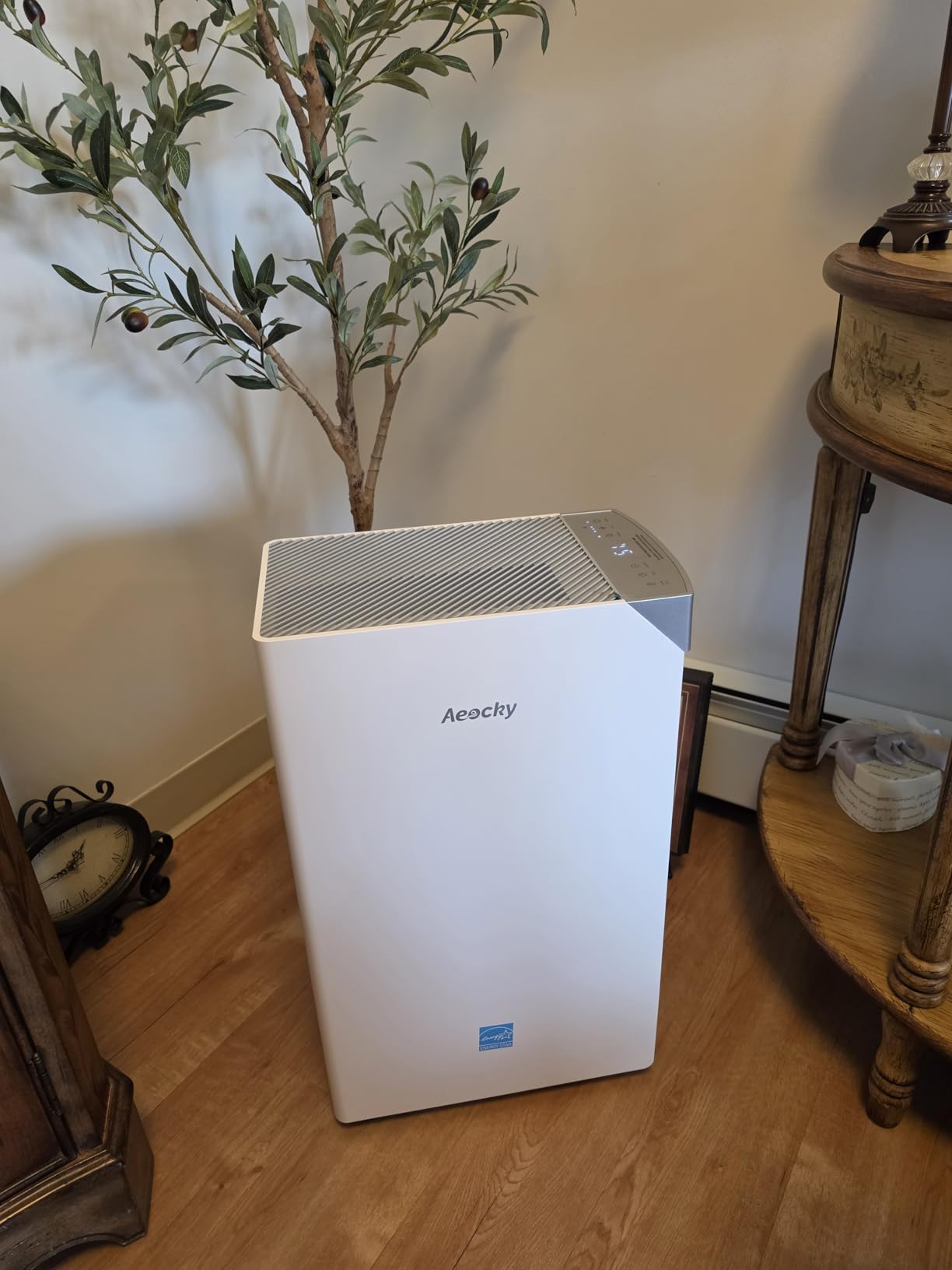
It shares core compressor components with the brand’s flagship model and uses the same 7 mm high-tooth pure copper evaporator and condenser tubes with blue hydrophilic foil, which is the corrosion-resistant construction owners across this category repeatedly single out as a reason to trust a unit in a dusty garage.
Owners running it in shops and garages report steady humidity control, and several mention responsive customer service that shipped replacement units when problems came up.
Understand what the 65°F defrost reference means
The automatic defrost is described as maintaining operation below 65°F, which is a statement about when the defrost cycle activates, not a guarantee of extraction at that temperature. Most compressors lose a large share of rated output as intake air cools, so treat the 74 pints per day figure as a rating rather than a promise.
With a single fan speed on this model, you have less control over the noise-versus-airflow trade-off than on a machine with two or three speeds.
Who should and should not buy this unit
Buy it if your garage is moderately to heavily damp and you want a machine you can set a target humidity on and stop thinking about, particularly if you would rather not run a drain hose.
Skip it if you need maximum extraction in a very large bay or if you want to run it through an HVAC system. It is a standalone room machine, not a distribution unit.
8. Gasbye 115 Pint Energy Star Dehumidifier – Best Copper Build for Garages
Gasbye 6000 Sq.Ft 2026 Energy Star Dehumidifier for Basement Max 115Pints/D
Up to 115 pints per day
5 tier copper coil
About 45 dB
ENERGY STAR 2026 certified
Pros
- Rating of 4.6 stars with a large review base behind it
- publishes honest tested capacity numbers across three temperatures
- solid copper build at 43 pounds
- large 1.72 gallon tank with three drainage options
- ENERGY STAR 2026 certified
- 45 dB operation suits garages
Cons
- 500 watts is the highest power draw among these picks
- heavy at 43 pounds without built-in wheels
- compact 11 inch depth limits placement options
- only a 2 year warranty
What sets the Gasbye DryPrime-50-B apart is that it publishes its capacity at three temperatures instead of one: 115 pints per day at 86°F and 80% relative humidity, 73 pints at 80°F and 60%, and 50 pints at 65°F and 60%. That last figure is the one most manufacturers hide, and it is the number that tells you what will actually happen in a cool garage.
The 4.6-star average is among the best we saw, and owners specifically call out the honest capacity claims as a reason to trust the rest of the listing.
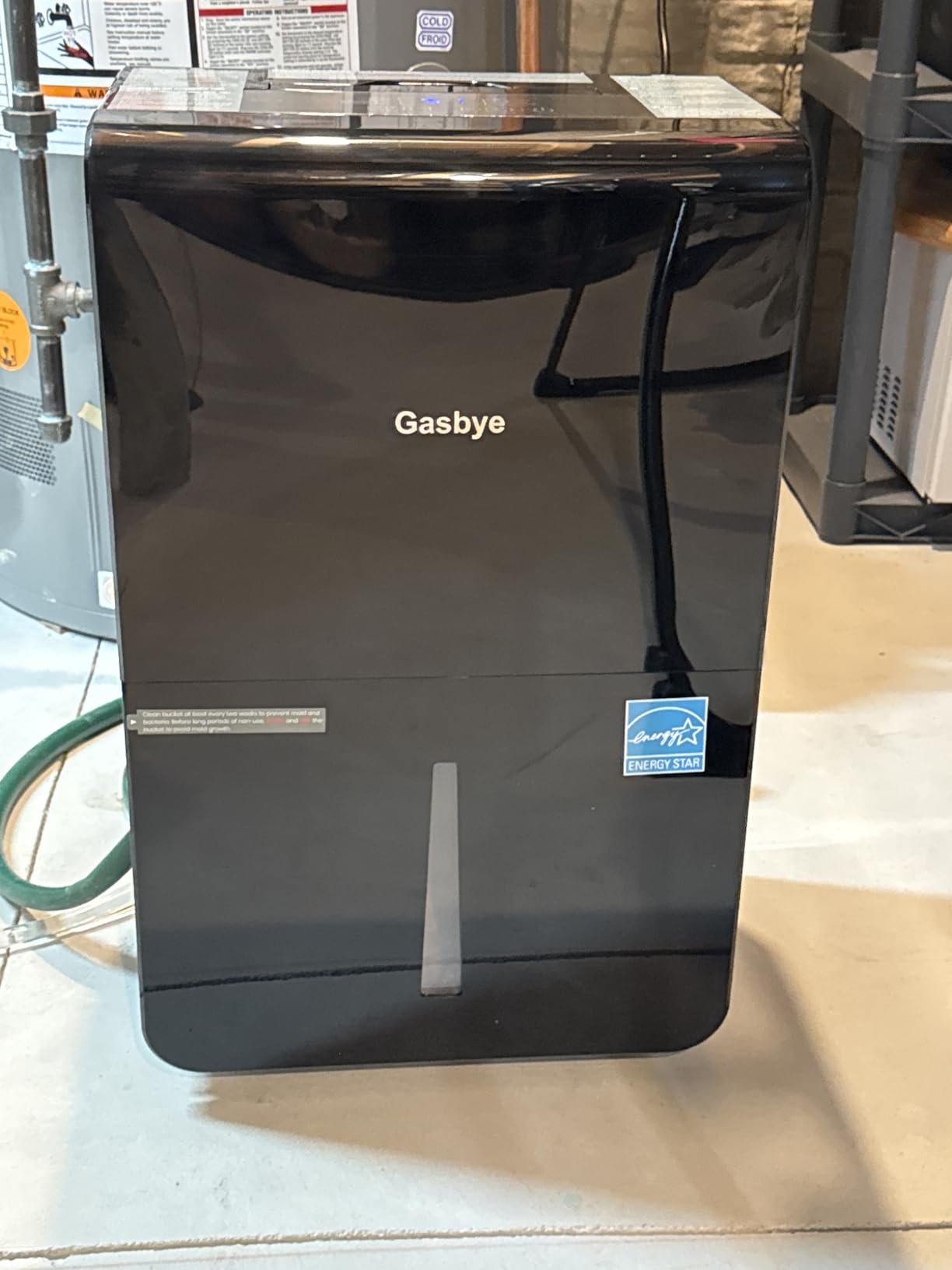
Construction is a 5-tier copper coil with reinforced copper tubing and a 43 pound solid build. For garage humidity control over multiple seasons that is the part that matters most, because the coil is what fails first when exposed to damp air and metal dust.
Control logic is precise: the compressor shuts off 3% below your target and restarts 3% above it, which reduces short-cycling and wear compared with units that bounce on and off at the setpoint.
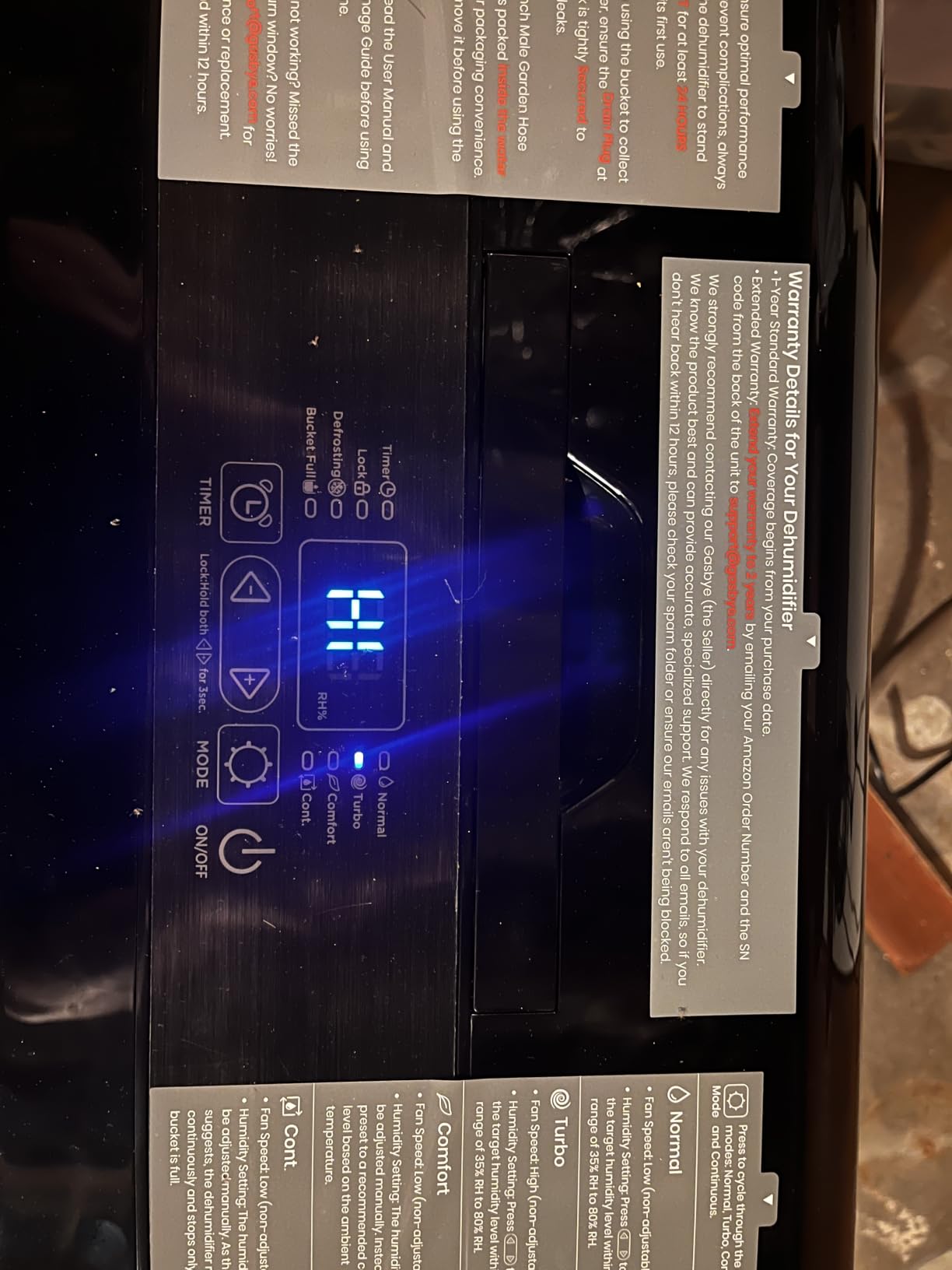
Plan for power draw and weight
At 500 watts this is the highest electricity draw of the ten machines listed. Run continuously through a humid summer and it becomes a visible line item, so check that your circuit and your monthly expectations can absorb it.
The 11-inch depth is genuinely useful against a wall but limits corner placement, and at 43 pounds with no built-in wheels you will want a hand truck or a second person to move it around.
Who should and should not buy this unit
Buy it if durability over years matters more than the lowest possible wattage, and if you like seeing real performance numbers rather than a single maximum figure.
Skip it if your budget is fixed around energy costs, or if the garage has a very constrained corner. U.S.-based support and fast replacement units are consistent strengths here.
9. boglvr 100 Pint Smart WiFi Dehumidifier – Best App Control for Garages
6000 Sq.Ft. Energy Star Dehumidifier for Basement, Max 100Pint/Day Smart WiFi Dehumidifier with Drain Hose, Voice & APP Control, Adjustable Humidistat for Home, Bedroom, Bathroom, Garage, RV(White)
Up to 100 pints per day for 6000 sq. ft.
Wi-Fi and Alexa control
45 dB at the top setting
275 watts
Pros
- Wi-Fi
- app and Amazon Alexa voice control with simple setup
- three presets plus free 30 to 80 percent humidity adjustment
- weekly scheduling for genuinely unattended running
- 45 dB even at the highest fan speed
- wheels
- hidden handle and a front-loading tank for easy repositioning
Cons
- Only 284 reviews so limited long-term field history
- short 3.3 ft included drain hose limits reach without an adapter
- the perfect 5.0 rating rests on a small recent review base
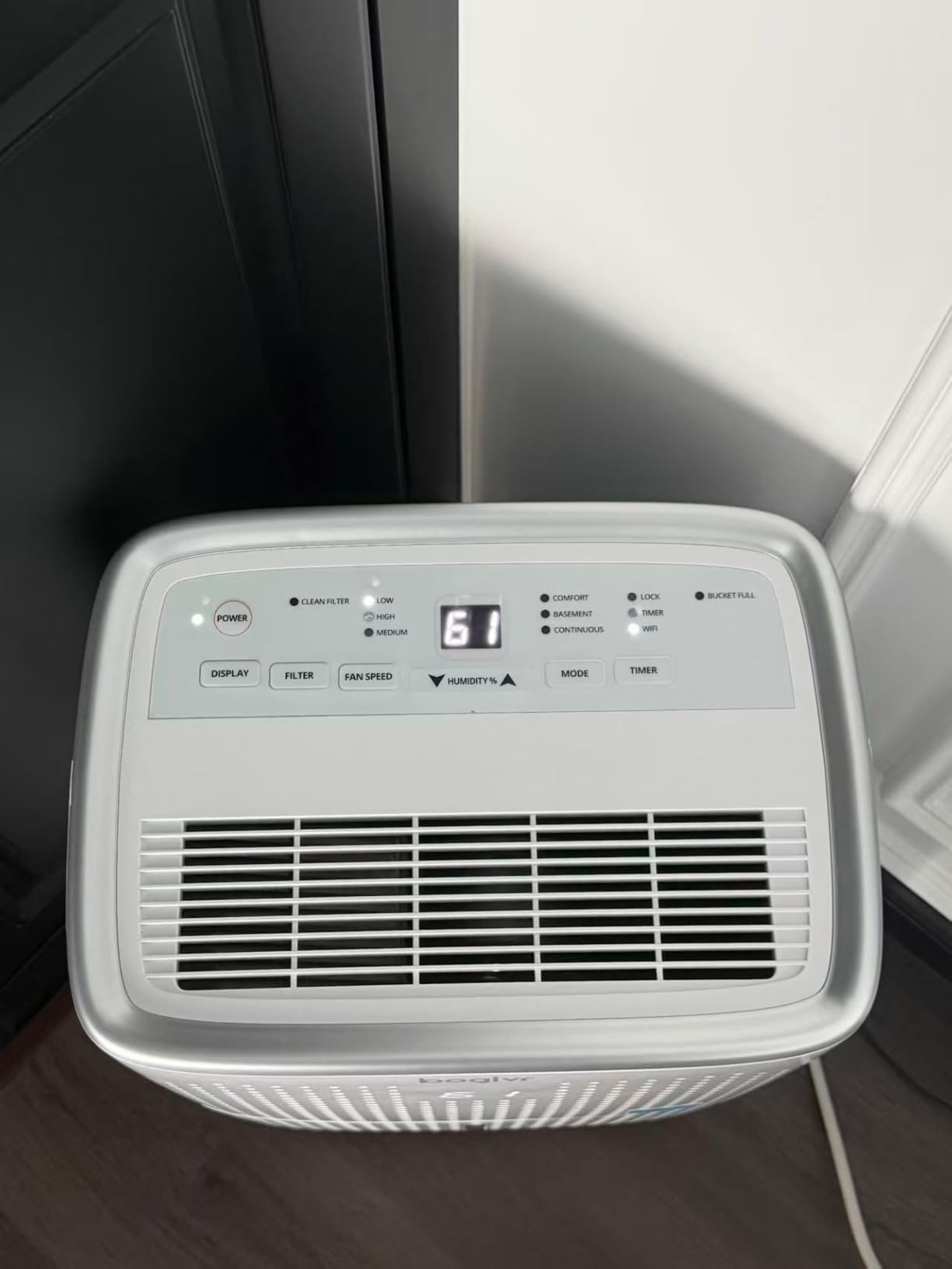
The boglvr D025A-25Pt3 puts remote monitoring at the centre of the design, and for a detached garage that changes what ownership feels like. Through the Tuya or Smart Life app you can read the current humidity, change the target, and check whether the tank has filled, without driving across town.
Alexa voice control works with the same setup, which sounds like a gimmick until you have asked how wet the garage is while sitting at your desk.
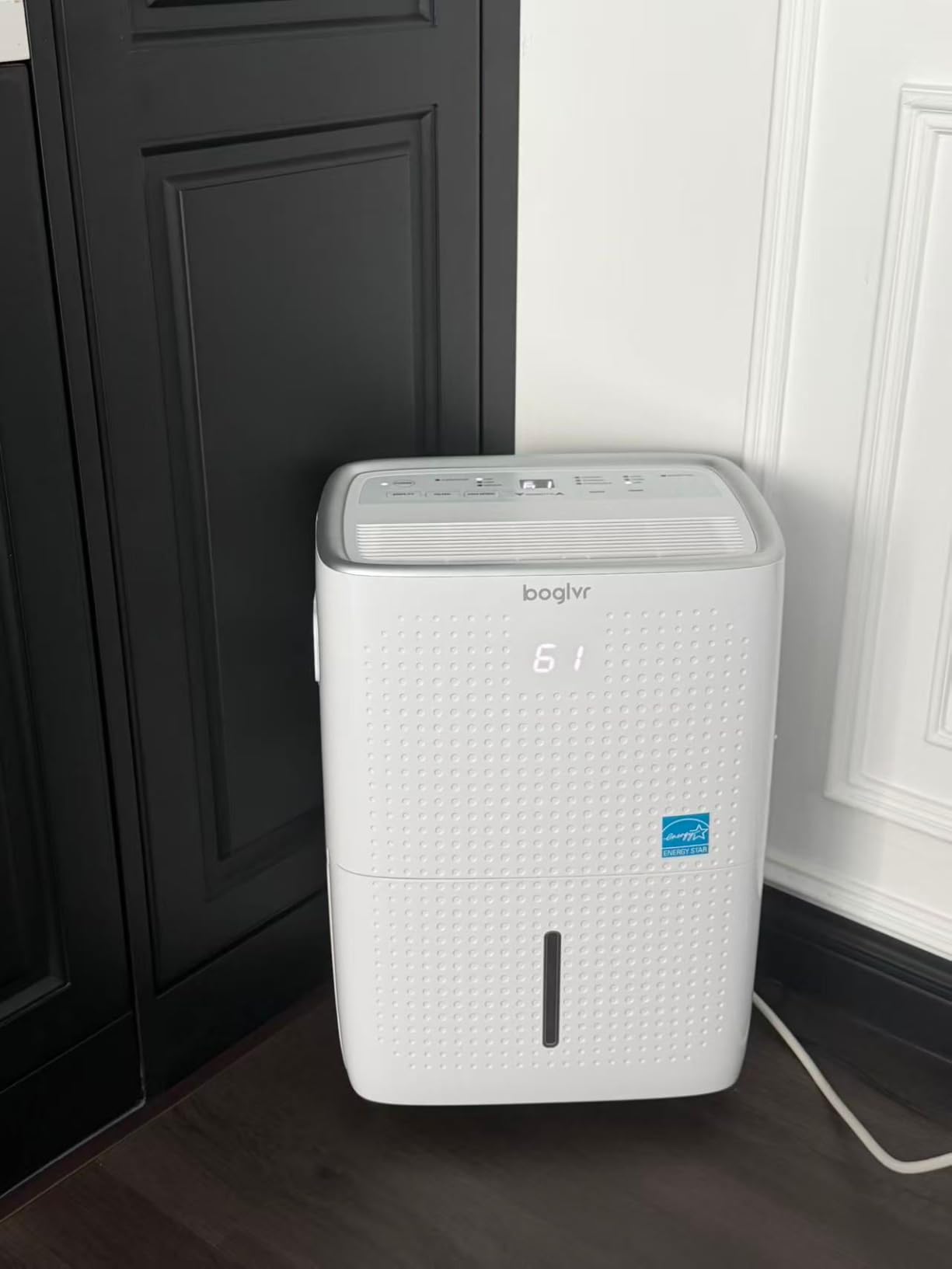
Three presets cover Comfort mode at roughly 50% RH, Basement mode at roughly 40%, and Continuous, plus a free setting across 30% to 80% if you want to hold a specific number for stored electronics or a wooden project.
Weekly scheduling is the practical one. Set it to run only during the hours that actually matter, such as overnight and during working hours, and you cut energy use without giving up control.
Weigh the review history honestly
All 284 reviews are five stars, which sounds perfect until you notice it is also the smallest review base of any machine on this list. A young product with a flawless early record is not the same as a proven one, and the listing is transparent about that.
The included drain hose is 3.3 feet and the unit accepts a 3/4 inch garden hose, so plan to buy your own hose if the drain point is more than a few feet away.
Who should and should not buy this unit
Buy it if the garage sits away from the house, if you are already running a smart home ecosystem, or if you want to know what the humidity is doing during and after a storm without walking out to check.
Skip it if you want a proven long-term record. In that case the hOmeLabs unit further down, with tens of thousands of reviews behind it, is the more conservative choice.
10. hOmeLabs 7000 Sq Ft 50 Pint Dehumidifier – Best for Wide Coverage Garages
hOmeLabs Dehumidifier 7,000 Sq Ft 50 Pint (MAX 120 Pint at 95°F, 90% RH)
50 pints per day at 80F, up to 120 at 95F
Coverage to 7000 sq. ft.
Wi-Fi and Turbo mode
1.6 gallon tank
Pros
- Most proven machine here with over 25000 reviews
- coverage claim of 7000 sq. ft.
- 1.6 gallon tank reduces emptying frequency
- Turbo mode boosts airflow for faster initial pull-down
- built-in Wi-Fi for remote monitoring
- automatic defrost plus restart and washable filter
Cons
- Drain hose not included though the outlet accepts a garden hose
- 50 pints per day is modest against the larger machines here
- 40 pounds makes two-person moving advisable
- not rated for crawl space or harsh low-temperature use
The hOmeLabs K-66 is the choice we make when the priority is a unit with a proven record rather than a headline specification. More than 25,000 reviews averaging 4.4 stars is the kind of evidence base we look for before recommending that you run something unattended in an unheated building for years.
Coverage is quoted to 7000 square feet, which suits open-plan shops and multi-bay garages. Turbo mode raises airflow from 188 to 218 CFM for a faster initial pull-down after you bring a wet vehicle in.
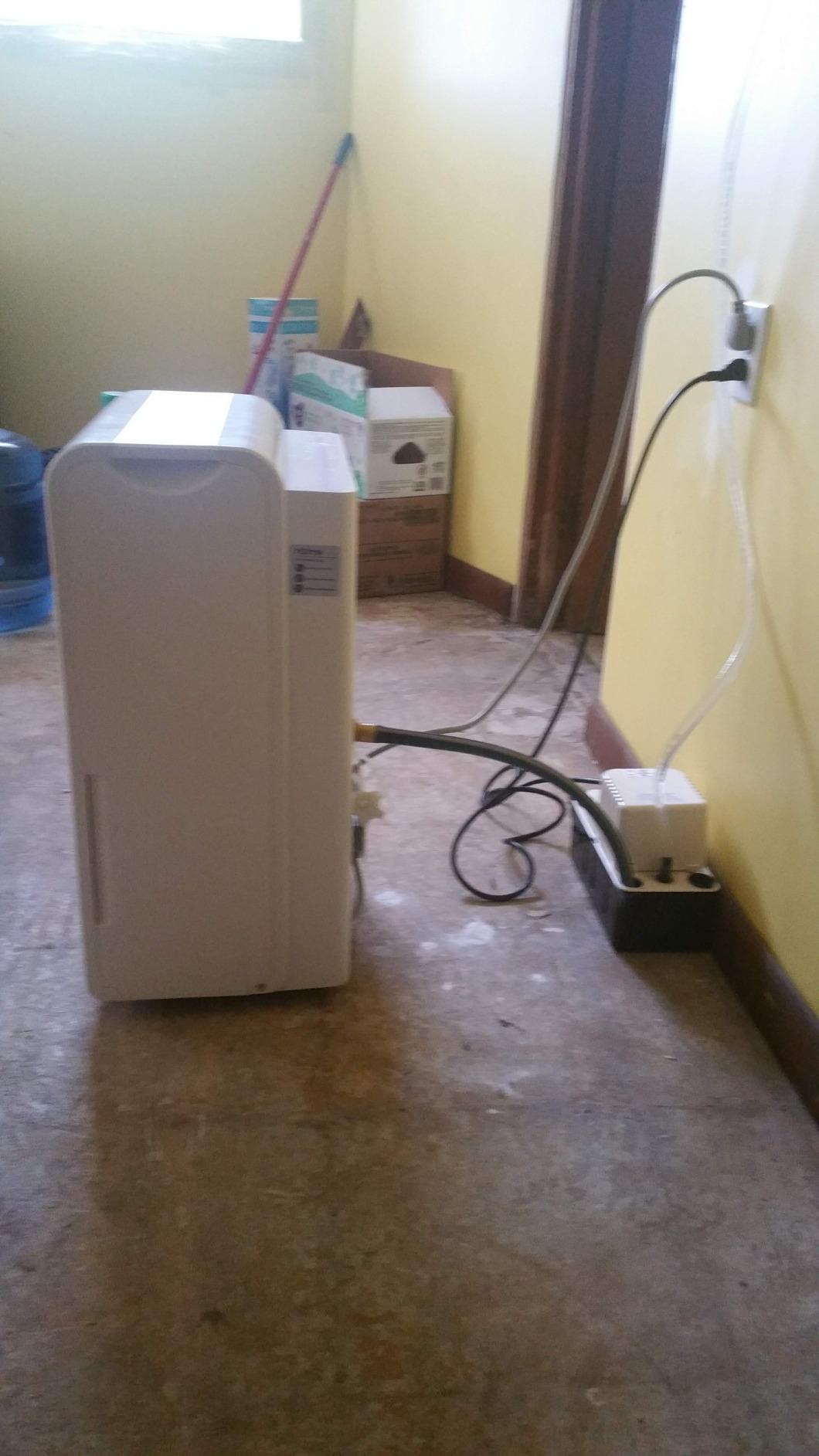
The 1.6 gallon tank is among the larger here and the roomiest on the consumer-style machines. It runs continuously until full and then shuts off automatically, so even without a drain line you are not walking over every morning.
Owners consistently mention the modern, understated styling, which sounds cosmetic but is real if the machine is going to sit in view rather than in a closet.
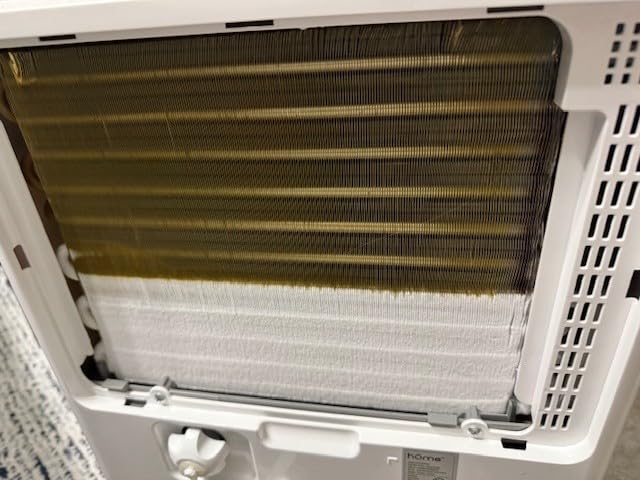
Read the two capacity numbers carefully
The 50 pints per day rating is at 80°F and 60% relative humidity, which is the honest test condition. The 120 pint headline figure is at 95°F and 90%, a combination that occurs on the worst afternoon of a humid summer and not in January.
For a garage that regularly drops below 40°F, the listing is explicit that it is not rated for crawl space or harsh low-temperature environments, so choose a unit built for that if winter is your main concern.
Who should and should not buy this unit
Buy it if you want the safest default: a proven record, large tank, remote control, and enough capacity for a wide shop without going to a commercial machine.
Skip it if maximum extraction is the priority, since 50 pints per day is modest next to the 80, 115 and 120-pint machines here, or if you need a frost-free cold-weather specification.
How to Choose a Dehumidifier for Garages: A Practical Buying Guide
Most garage dehumidification mistakes come down to four numbers: minimum operating temperature, rated extraction, drainage method and noise level. Get those right and the choice is straightforward.
1. Low-temperature rating is the one spec that decides everything
A compressor dehumidifier works by pulling humid air across a coil chilled below the air’s dew point. Water condenses, drips off and collects. In a warm basement that is efficient. In a garage sitting at 38°F, the same coil can drop below freezing, and moisture freezes onto the fins instead of running down.
That frost reduces airflow, blocks heat transfer and eventually stops the machine cold. Auto-defrost exists to fix it by periodically warming the coil. What it does not do is restore capacity: as intake air cools, the compressor’s ability to pull water out of it falls off sharply, which is why the Gasbye unit’s published 50 pints per day at 65°F is far more useful information than its 115-pint maximum.
Match the machine to your climate. A mild climate where the garage holds above 55°F most of the year is fine with a standard consumer unit. A garage that drops into the 30s on winter nights needs a unit with genuine low-temperature capability and a documented defrost cycle, and above roughly 40°F you should be looking at a desiccant unit instead.
2. Compressor or desiccant: the cold garage decision
Compressor machines are cheaper to run, quieter and far more powerful in warm conditions, which covers most garages most of the year. The problem is only at temperature.
Desiccant units use a chemical or adsorption material in a rotating wheel instead of a refrigeration cycle. They cost more to operate and move less water per hour, but they have no coil to freeze, so they work below the freezing point and handle low dew points well. For classic car storage in an uninsulated garage that hovers just above freezing, or for winter use in a northern climate, that trade is worth making. Passive desiccant tubs are a third option that need no power at all, at the cost of regular replacement.
3. Size by square footage, then by how damp it really is
Coverage claims are marketing ceilings. The useful rule is to size on actual moisture load, not floor area. A one-car garage of about 240 square feet with a bare slab in a humid climate will keep a 35 to 50 pint machine busy. A 500 square foot workshop with shelving, a compressor and stored cardboard needs 50 to 70 pints. A four-car shop or a garage with a chest freezer alongside a vehicle wants 80 pints or more.
Conservative practice is to size up one step rather than down. An oversized machine cycles on and off rather than running nonstop, while an undersized one runs continuously and never reaches your target. If you plan to add a workshop bench or stored furniture later, buy for the finished garage.
4. Pick drainage before you buy the machine
There are three drainage arrangements and they rank clearly by convenience.
A built-in pump with a long hose is the most convenient arrangement. It lets you drain uphill or across the building to a drywell, and it removes the daily bucket routine entirely. The pump option on our list handles 16.4 feet of lift and reach.
Continuous gravity drainage is the practical default. Run a garden hose to a floor drain, a sink, or an outdoor gravel bed below the outlet height. It costs nothing and works indefinitely, but the machine has to sit above the drainage point.
Tank-only operation is the fallback. Every machine ships with a tank and full-tank shut-off, but in a damp garage that can mean several trips a day. Treat it as a backup rather than a plan, and never pair it with a garage you cannot get into easily in the dark.
5. Noise, air movement and electricity
Anything below about 45 dB is usable in an attached garage while you work. Below 40 dB is comfortable next to a bedroom. Anything above 55 dB on the low setting is a workshop-only machine.
Airflow in CFM matters as much as pints per day in a tall garage, because a machine that cannot move air across the room never reaches the damp air sitting at floor level. This is also why a machine with an auto-swing louver performs better in a wide rectangular bay than a fixed-direction model of the same rated capacity.
On electricity, multiply the wattage by your hours per day and by your local rate, then multiply by 30. The figures on these machines range from 230 to 500 watts, which is the difference between a negligible line item and a noticeable one on a long summer run.
6. A five-step setup that avoids the common mistakes
First, place the unit at least 18 inches off a wall and away from any opening. It pulls roughly a cubic foot of air per second or more, and against a wall that airflow short-circuits back to the intake instead of circulating the room.
Second, run the drain line on day one. Slope it continuously, avoid kinks, and secure it so it cannot pull the machine off its feet. If you route it outside, insulate the section that passes through cold air to prevent the line itself from sweating.
Third, set a target between 40% and 50% relative humidity. That range protects tools, cardboard and electronics without pushing a compressor into short cycling.
Fourth, plug into a GFCI-protected outlet on a dedicated circuit. Avoid extension cords entirely for a continuous-duty machine. In a damp garage, a corroded outlet face is the same corrosion problem you are trying to fix elsewhere in the building.
Fifth, buy a cheap hygrometer and learn to read it. Owners routinely assume a running dehumidifier is working while relative humidity stays above 60%, usually because the intake is drawing stale air from one corner or the drain line filled and the unit shut off unnoticed.
7. Mistakes we would not repeat
Buying a basement-rated machine for a freezing garage. Undersizing for a bare concrete slab. Running tank-only in a space you cannot easily reach. Ignoring the washable filter, which on a dusty garage machine needs regular cleaning. Setting the target too low, which wastes energy without protecting anything. Placing the machine in the corner nearest the door. And assuming a drainage hose solves everything when the real source is rain getting under the garage door.
That last point deserves emphasis. If water tracks in under the door, no dehumidifier keeps up with it. Seal the gap, run the door down to the slab when it is not in use, and add weatherstripping before you buy the machine. If you want more detail on whole-building moisture control, our whole-house dehumidifier guide covers the bigger systems, and the crawl space dehumidifier picks cover low-clearance installations.
Frequently Asked Questions
Is it a good idea to put a dehumidifier in a garage?
Yes, provided the unit is rated for the temperature range your garage actually sees. Damp air in a garage causes surface rust on tools and vehicles, mould on stored cardboard and fabric, musty odours and corrosion on electrical outlets. Check the lowest temperature the space reaches in winter before choosing, and look for automatic defrost. If the garage regularly drops below 40°F, a desiccant unit is a better fit than a compressor model.
What type of dehumidifier is best for a garage?
A compressor dehumidifier with automatic defrost is the best type for most garages, because it removes more moisture per kilowatt-hour and runs far quieter than a desiccant unit. Choose a desiccant dehumidifier instead when the garage drops below roughly 40°F, since a compressor coil can freeze in that range. Desiccant units cost more to run and pull less water per hour, but they have no coil to ice up.
What is the recommended dehumidifier size for a garage?
A one-car garage of roughly 240 square feet with a bare slab usually needs a 35 to 50 pint per day machine. A 500 square foot workshop needs 50 to 70 pints. A four-car shop, or a garage holding a chest freezer alongside a vehicle, needs 80 pints or more. Size on actual dampness rather than floor area alone, and when in doubt step up one size, because an oversized machine cycles on and off while an undersized one never reaches target.
What type of dehumidifier is best for a cold garage?
For a garage that regularly falls into the 30s or 40s Fahrenheit, look for a unit with a documented low-temperature rating, a metal housing, continuous drainage and a long warranty, such as the crawl-space and commercial-style machines. Below about 40°F, a desiccant unit becomes the more sensible choice because it has no refrigeration coil to freeze. Whichever type you choose, confirm that auto-defrost pauses the compressor while clearing frost rather than simply running the fan.
What is the best heavy-duty dehumidifier for a garage?
For heavy-duty garage use, look for 80 pints per day or more of rated extraction, 200 CFM or higher airflow, continuous drainage and a metal casing with washable filter. Metal housing and copper tubing resist corrosion in dusty damp air far better than thin plastic cabinets. Units in this class should also carry a three-year or longer warranty, since continuous unattended operation is the point. Choose a pump-equipped model when there is no floor drain and the nearest outlet is uphill.
Final Verdict on the Best Dehumidifiers for Garages in 2026
The Waykar 80 Pint machine is our pick for the best dehumidifiers for garages because it pairs real extraction capacity with humidity control that reaches down to 30%, quiet operation and continuous drainage in the box. It is what we would put in a standard two-car garage and stop thinking about.
For an unheated garage that sees real winter, the ALORAIR Sentinel HD55S earns the nod with its metal housing, working auto-defrost and 6-year limited warranty. For a small damp space on a tighter budget, the VEAGASO VG380 runs quietly and costs little to own. If there is no floor drain anywhere near, the Aiusevo pump model removes the last excuse people have for not running continuous drainage.
Whatever you choose, set the target between 40% and 50%, run the hose on day one, plug into a GFCI outlet, and check the hygrometer after the first storm. That routine matters more than the model on the floor.