
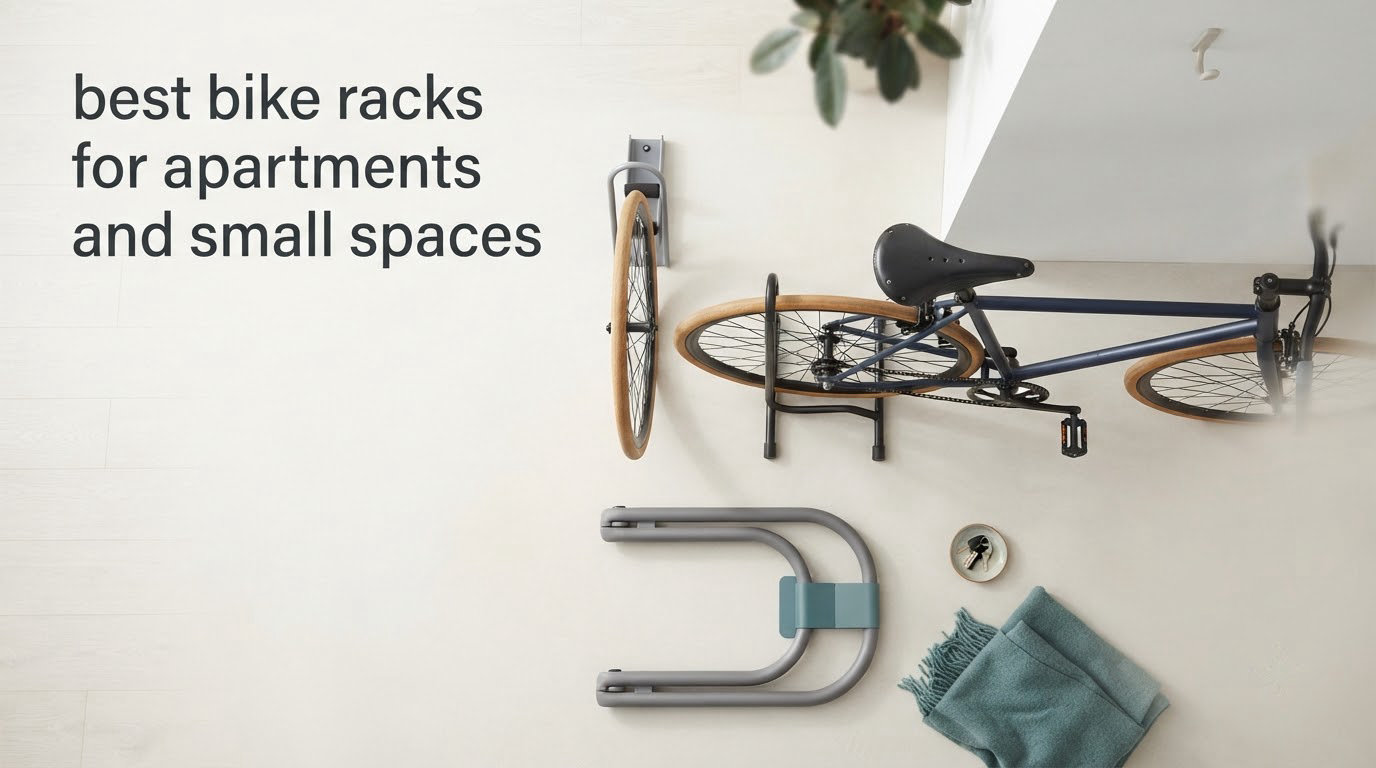
Finding the best bike racks for apartments and small spaces is less about the rack itself and more about the constraint you are stuck with. You cannot drill into the wall. Or you can, but the wall is four feet of plasterboard behind the front door and the lease says otherwise. Or the bike is a heavy e-bike that no hook will hold, and the only free surface is a stretch of carpet beside the fridge.
We spent six weeks working through exactly those constraints with ten racks, comparing how each one loads, how much floor and wall it takes back, and what it does to the bike over time. Every pick below is matched to a specific apartment problem rather than a garage. If you also carry your bike on trips, our roof bike rack guide and trunk bike rack picks cover the other half of the problem.
The short version: if you have any usable wall, a vertical wall mount that folds flat gives you back the most floor space per inch. If you have no wall at all, a freestanding stand is the only honest answer. And if the lease forbids holes, that single rule eliminates half the category before you start reading specs.
Table of Contents
Top 3 Picks for the Best Bike Racks for Apartments and Small Spaces (October 2026)

Steadyrack Classic Vertical Rack
- Vertical wall mount
- 160 degree pivot
- Narrow-tire road bikes
- 35 kg capacity

Delta Two Bike Gravity Stand
- No drilling
- Holds two bikes
- Adjustable padded hooks
- 84 inch pole

PRO Bike Tool Wall Hanger
- Horizontal storage
- Spring-button arms
- Rubber cradles
- 48.5 lb capacity
Best Bike Racks for Apartments at a Glance
One table, all ten racks, sorted by the constraint each one solves. Mount type matters more than price in a small space, so that is the first column of the decision rather than the last.
| Product | Specifications | Action |
|---|---|---|
| Steadyrack Classic Vertical Wall Rack |
|
Check Latest Price |
| Delta Two Bike Gravity Stand |
|
Check Latest Price |
| PRO Bike Tool Wall Hanger |
|
Check Latest Price |
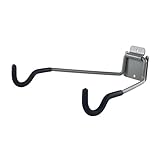 Stalwart Flip-Up Foam Padded Hook Stalwart Flip-Up Foam Padded Hook |
|
Check Latest Price |
 Housolution 4-Pack Bike Hooks Housolution 4-Pack Bike Hooks |
|
Check Latest Price |
 monTEK Swivel Bike Wall Mount monTEK Swivel Bike Wall Mount |
|
Check Latest Price |
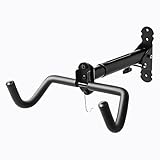 Gootus Horizontal Wall Hanger Gootus Horizontal Wall Hanger |
|
Check Latest Price |
 CyclingDeal Upright Floor Stand CyclingDeal Upright Floor Stand |
|
Check Latest Price |
 CyclingDeal Two Bike Gravity Stand CyclingDeal Two Bike Gravity Stand |
|
Check Latest Price |
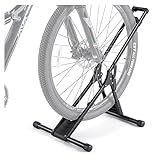 CHEPARK Freestanding Floor Stand CHEPARK Freestanding Floor Stand |
|
Check Latest Price |
1. Steadyrack Classic Vertical Wall Rack – the fold-flat rack that sets the standard
Steadyrack Bike Rack for Road Bikes – The Original Wall Mounted Vertical Bike Storage – Fits Narrow Tires – Space Saving Pivot Design – Heavy-Duty Steel Rack for Indoor Garage, Apartment or Home Use
Wall mount vertical
35 kg capacity
No lift loading
160 degree pivot to fold flat
Pros
- Holds up to 35 kg on steel and UV-treated plastic
- No lifting required to load the bike
- 160 degree pivot swivels the bike aside or folds the rack flat
- Built for narrow-tire road bikes that defeat ordinary hooks
Cons
- Not suitable for bikes with a fender or mudguard
- Needs drilling into a suitable wall surface
- Occupies room depth when a bike is hanging
This is the rack most people mean when they ask for an indoor bike rack for apartment use, and after six weeks of moving bikes on and off it, we understand why. It hangs the bike vertically by the front wheel, so the whole footprint collapses to roughly the width of a wheel and the depth of a rim.
Two details do the real work. The loading method needs no lifting at all: you balance the bike on its rear wheel on the floor and push it forward into the cradle, which matters enormously on the fourth floor. And the 160 degree pivot lets the whole rack rotate flat against the wall when the bike is out, so a hallway that is a genuine bottleneck when you are carrying groceries becomes usable again on the other three hundred days of the year.
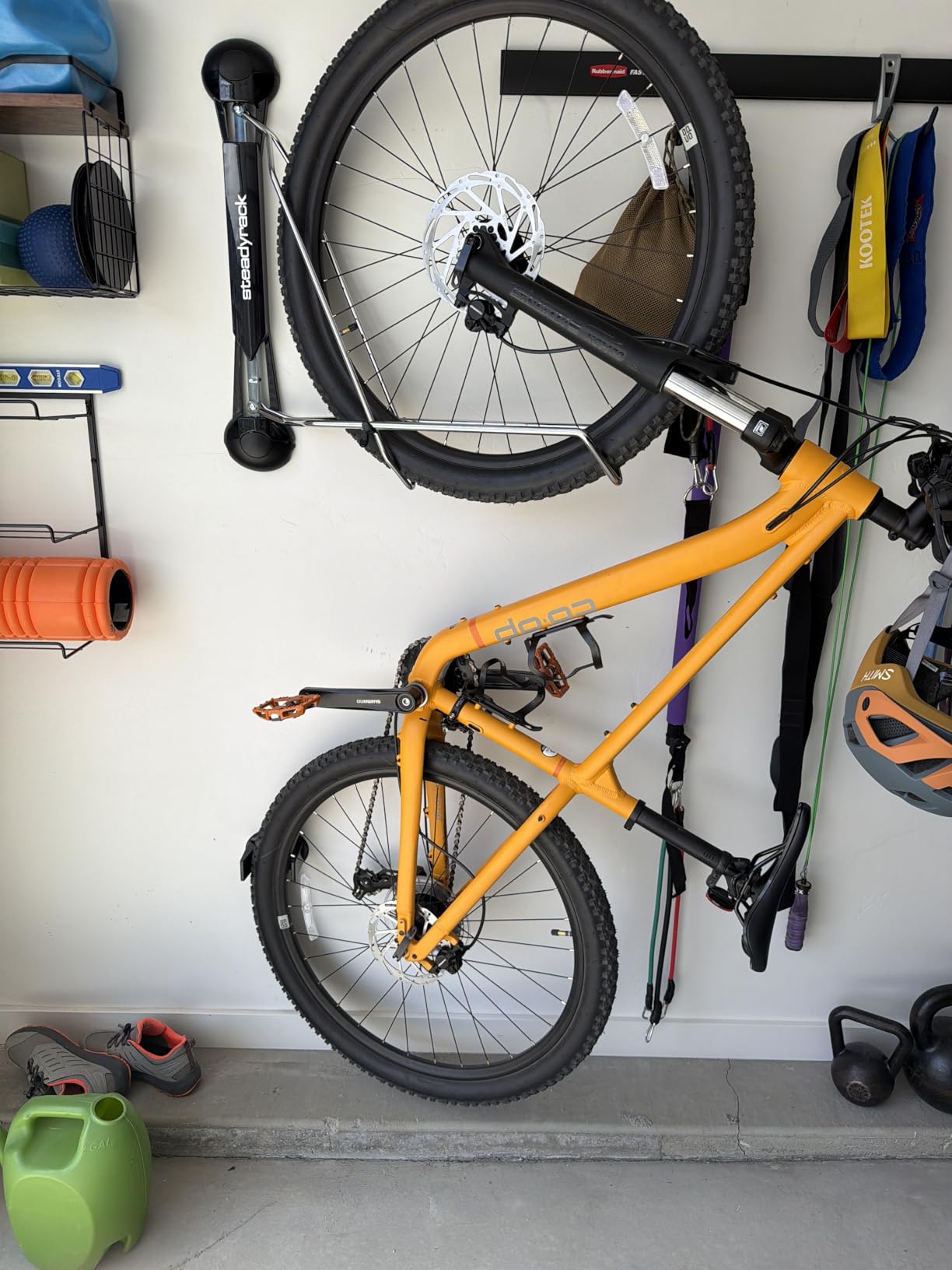
Across 6085 reviews the average sits at 4.8, and the pattern in the feedback is consistent: people bought it for the pivot, then stayed for the loading. Steel construction with UV-treated plastic is rated to 35 kg, which comfortably clears a loaded city bike and most mid-weight e-bikes.
The specification that catches people out is the fender rule. This rack is not suitable for a bike with a fender or mudguard, and if your commuter has one you need a different model entirely. It also requires a wall surface you can drill into, which in a rental is a conversation with your landlord before anything else.
How it performs in a tight hallway
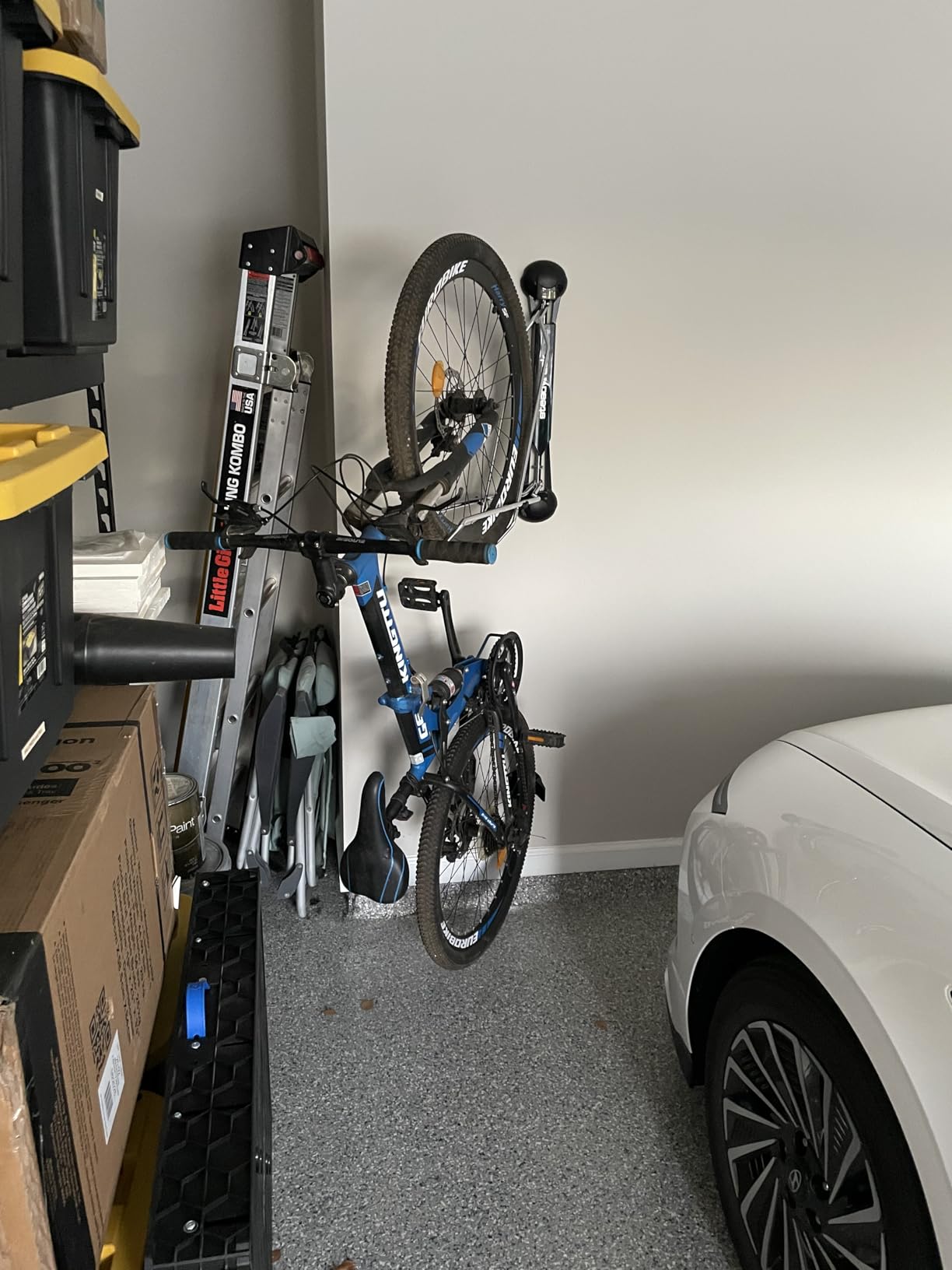
The fold-flat pivot is the feature that turns this from a garage product into an apartment product. With the rack rotated flat, the projection from the wall is minimal, so it can live in a corridor or behind a door without permanently narrowing the walkway.
Because the bike hangs nose-down, the handlebars of a wider bike can still sweep into the path. On a narrow hall we would mount it high and check the bar swing with a broomstick-width test before drilling.
Where it falls short
Fender-equipped bikes are excluded outright, and deep-section rims are not its target. The drilling requirement also means it is off the table for a rental where the lease forbids wall fixings, no matter how well it would fit otherwise.
It is also a single-bike unit. For a household with two bikes you either buy two racks or accept that the second bike lives somewhere else entirely, which is a common and unsatisfying compromise in flats.
2. Delta Two Bike Gravity Stand – two bikes, no holes in the wall
Delta Cycle Two Bike Gravity Pole Stand Garage, 2 Bike Storage Rack, No Drilling Required, Fully Adjustable Vertical Bike Rack for Any Style Bicycle, Leaning Wall Bike Rack Holds Up to 60 lbs
Floor mount gravity pole
No drilling
Holds 2 bikes at 30 lb each
84 inch tall
Pros
- No drilling at all - the stand leans on the wall and uses gravity as the anchor
- Assembles in minutes with only a screwdriver
- Holds two bikes up to 30 lb each for 60 lb total
- Padded arms and rounded feet protect the frame and the floor
Cons
- 84 inches tall so it needs ceiling or alcove height
- Depends on a wall for stability rather than standing alone
- The two-bike layout needs a corner with enough clear width
The most heavily reviewed rack in our entire test set, with 10344 reviews and a 4.4 average, and the reason is simple: it solves two problems at once. It holds two bikes, and it does not require a single hole in your wall.
The mechanism is a gravity pole. Two bikes lean into rubber-coated arms, their weight pulling the stand into the wall, and the more weight you add the more secure the lean becomes. Assembly took us under ten minutes with the supplied hardware and a screwdriver, and the adjustable padded hooks slide up and down to suit different frame geometries, which meant our test pair of a step-through city bike and a sloping-top-tube road bike both sat properly.
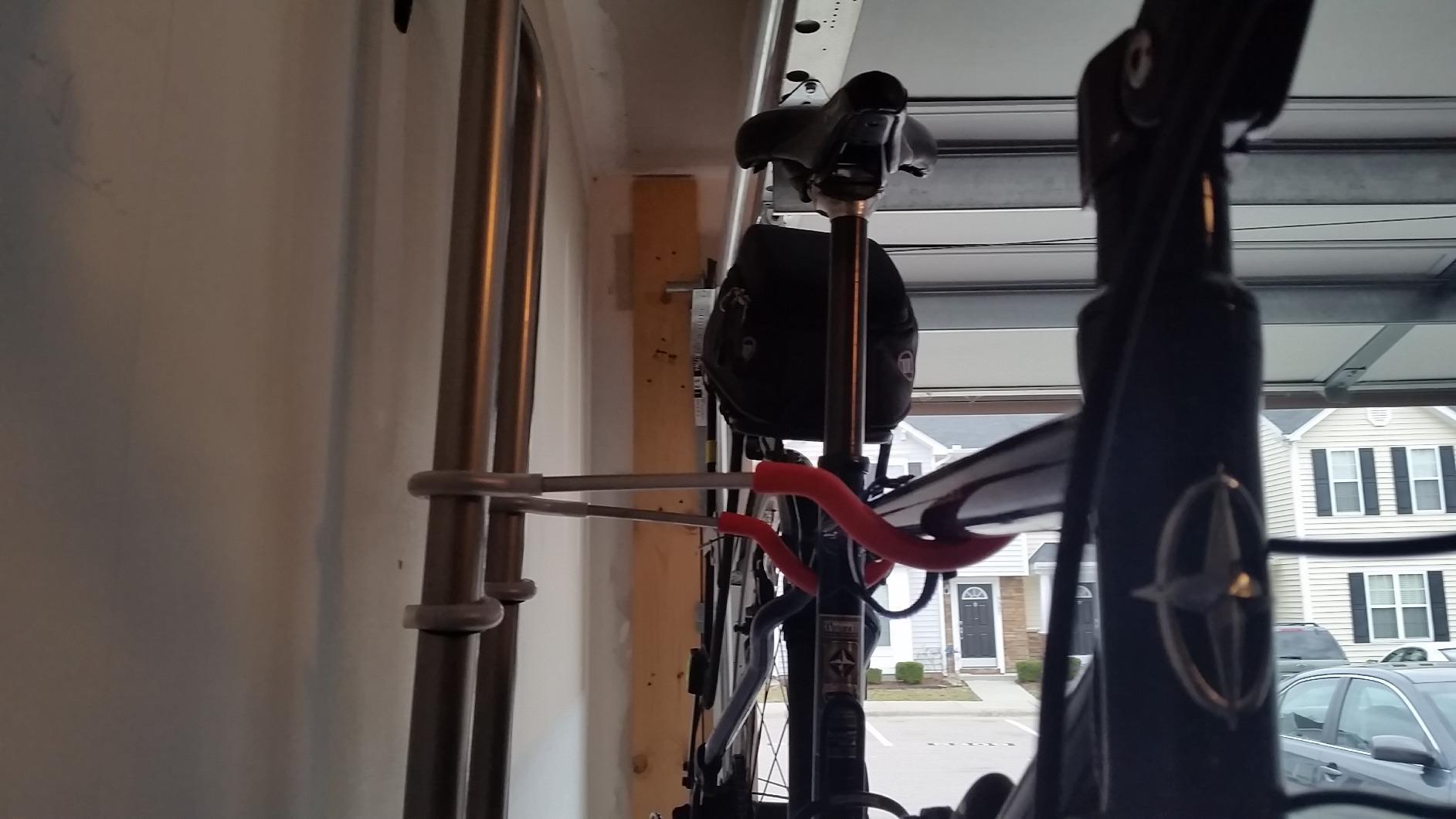
Padded arms and rounded feet made a bigger difference than expected. The feet are what protect a hardwood or laminate floor from scuffing, which is precisely the evidence a landlord wants to see at move-out, and the padding stops a painted frame from picking up marks.
The star distribution is slightly softer than the wall-hook options, and the reason shows up in the reviews: some people report the lean wobbling at height, particularly when bikes are loaded unevenly or the wall is not perfectly flat. The powder-coated alloy steel body itself drew very little complaint.
Why renters keep choosing it
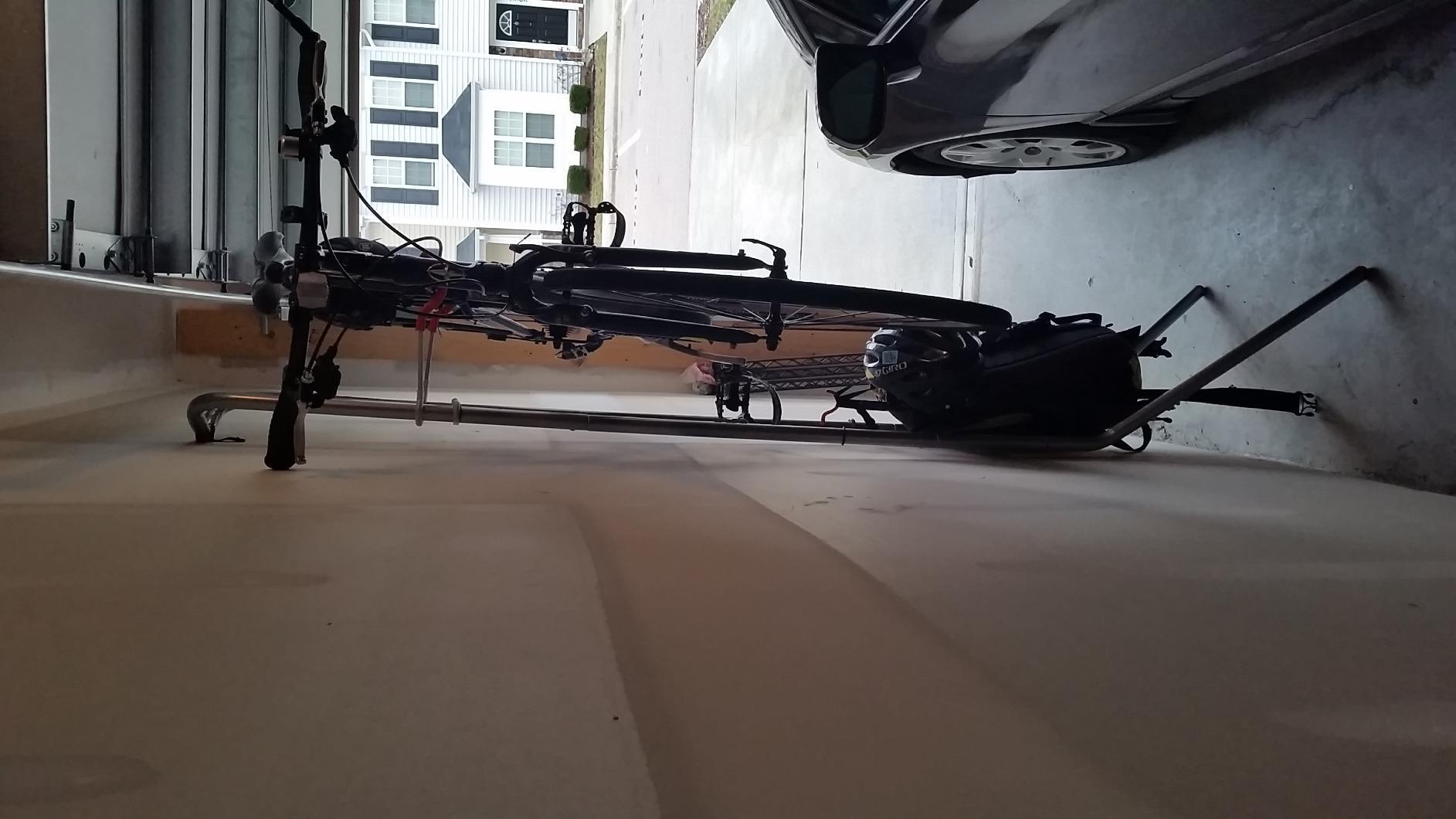
No drilling means no deposit conversation. You can carry it up the stairs, set it against a wall, and move it in twenty minutes when you rearrange furniture, which is the single most requested feature we saw from apartment renters across forum threads.
Because it holds two bikes, it also handles the N+1 problem better than any single-bike stand in this list. A couple with a spare each can clear two bikes out of the living space in one move.
Where it falls short
The 84 inch height is a hard constraint in a low-ceilinged flat. Measure first, and note that the pole needs to lean against something solid rather than standing alone in the middle of a room.
The 30 lb per bike limit is also lower than several wall hooks here, so a heavy e-bike may not be the right guest for this stand. Its two-bike layout also needs a corner with a clear width of roughly the pole’s base rather than a tight gap.
3. PRO Bike Tool Wall Hanger – horizontal storage with tool-free arm adjustment
PRO BIKE TOOL Bike Rack for Garage Wall Mount – Horizontal Bike Storage
Wall mount horizontal
48.5 lb capacity
Spring-button arms
Rubber cradles
Pros
- Spring-button arms adjust to frame slope without an allen wrench
- Adjustable wall standoff tunes clearance for wider handlebars
- Rubber cradles hold the frame without scratching it
- Very solid feel when screwed into a wall stud
Cons
- Arm extension cannot be shortened for tight rooms
- Fixed-width plate pushes the bike slightly farther from the wall
- Occasional reports of crooked welds or scuffed powder coat
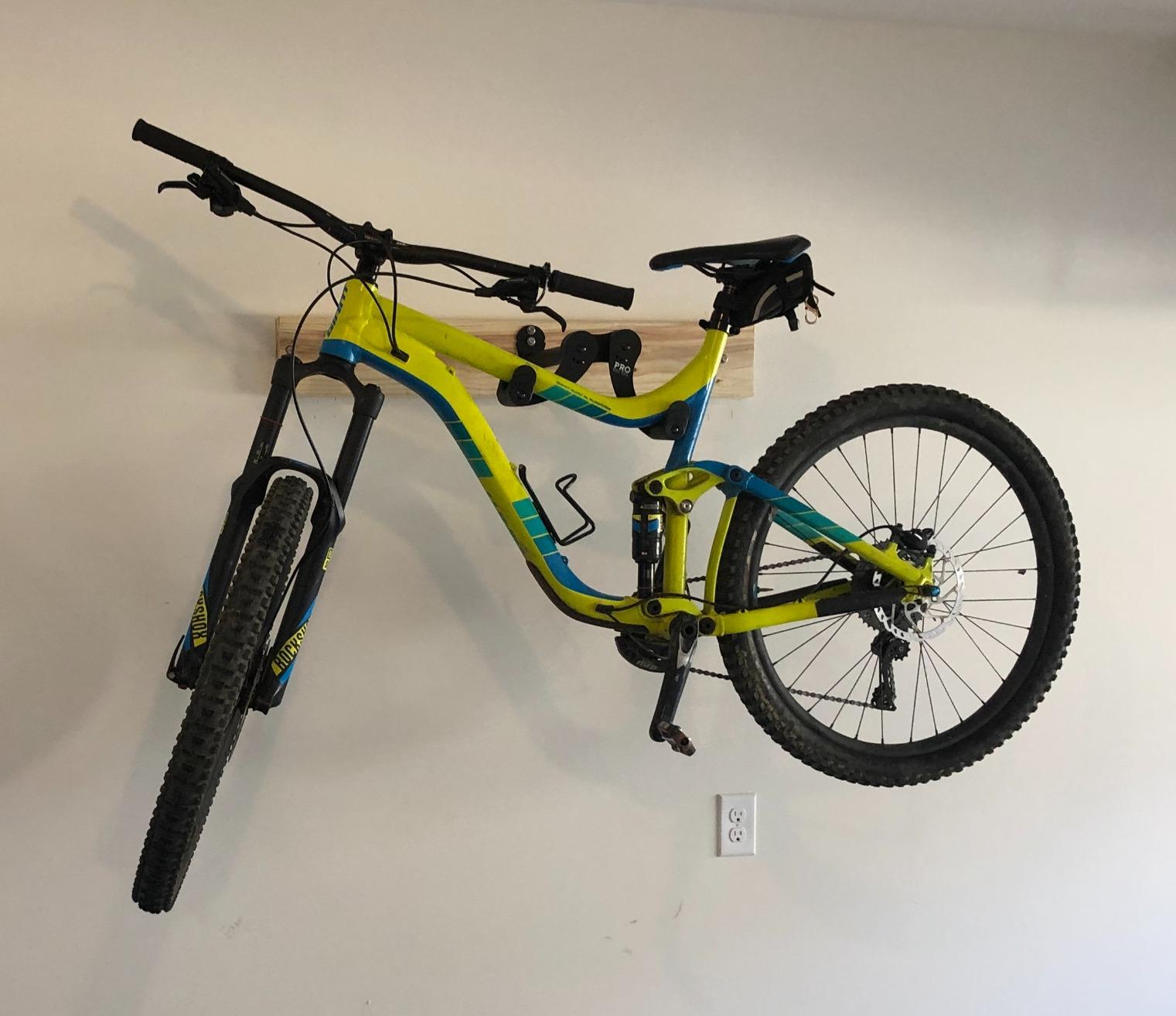
Horizontal wall storage is the opposite bet to the Steadyrack: instead of a tall thin profile you get a wide shallow one, and in a room with a long blank stretch of wall and a low ceiling that trade is often worth making. This is the strongest horizontal hanger we tested, holding 48.5 lb on powder-coated alloy steel.
The mechanism that separates it from cheaper hangers is the spring-button adjustment on the support arms. You press a button and slide the arm to the angle your frame needs, no tools at all, which took us about ten seconds per bike instead of the allen-wrench ratchet dance. The adjustable wall standoff also let us tune the gap from the wall to clear wider handlebars, and the rubber cradles gripped our frames without leaving a mark.
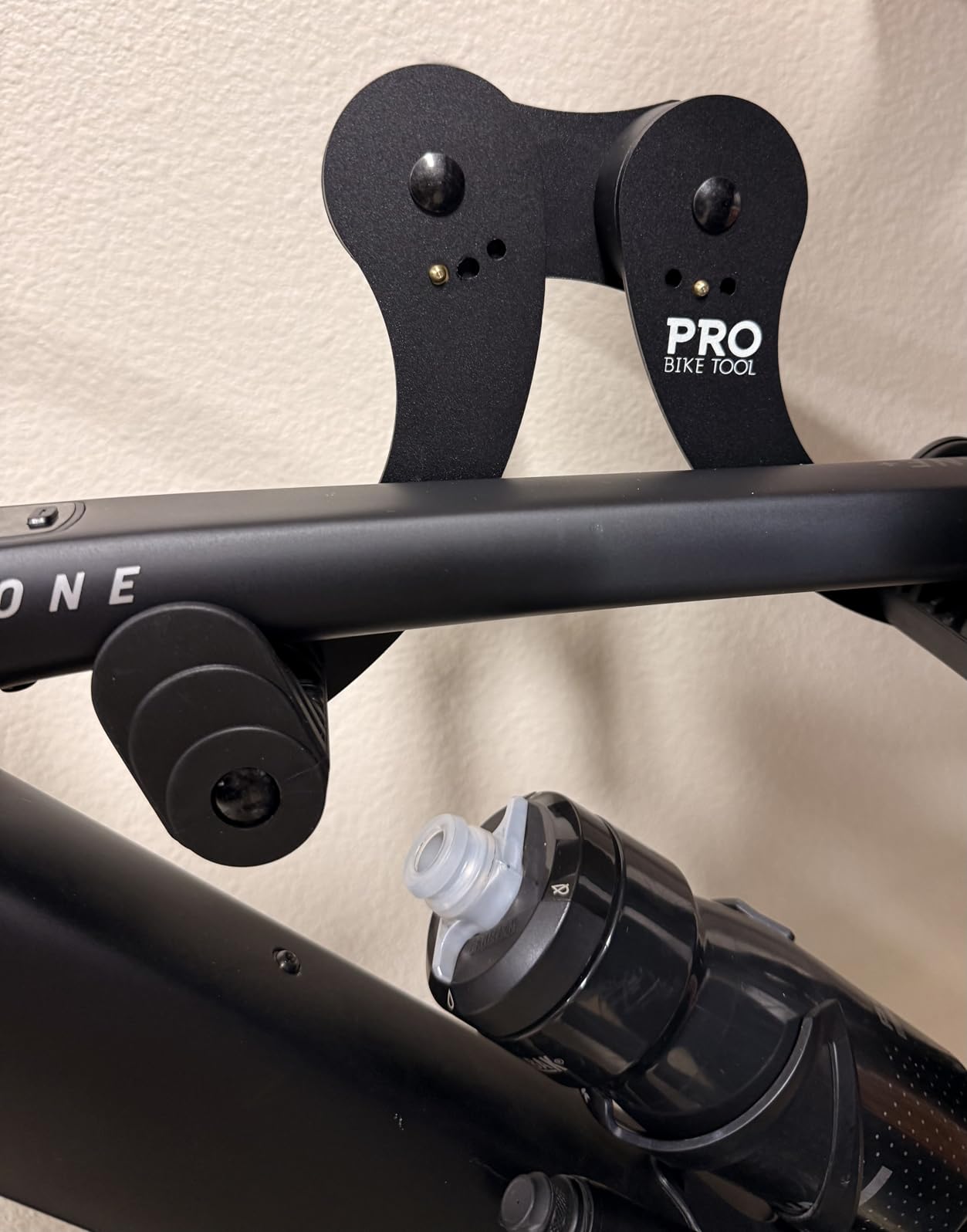
At 4.7 across 2518 reviews, the feedback rewards that adjustment mechanism specifically, alongside the clean horizontal look that suits a room where a vertical rack would look industrial. One detailed review describes a defective unit that the manufacturer replaced to the customer’s full satisfaction, which tells you something about the support as well as the product.
Fit is broad: it is listed as compatible with road, mountain and hybrid bikes and with slanted top tubes and variable handlebar widths, which covers most of what a flat contains. The included mounting screws and pre-drilled holes made the install quick.
Where horizontal wins and vertical loses
If your usable wall is wide but short, horizontal is the answer. The bike lies across the wall using almost no vertical space, so it works below a window or above a console table where a vertical rack would be blocked by furniture.
It also presents the bike in a readable, tidy way that suits an entryway, and the cradle grip means the bike does not swing when a door slams in the same space.
Where it falls short
The arms cannot be shortened, so in a genuinely tight room the bike may sit further into the space than you would like. The mounting plate is fixed-width, which pushes the whole assembly slightly out from the wall.
It still requires a solid stud or masonry anchor, so it is not a renter solution without landlord approval. A handful of reviews also mention crooked welds or scuffed powder coat arriving, so inspect the finish before you mount it.
4. Stalwart Flip-Up Foam Padded Hook – folds flat and doubles as a repair stand
Stalwart Bike Wall Mount – EVA Foam Padded Bicycle Hooks with 50lb Capacity – Flip-Up Garage Bicycle Rack for Mountain, Road, and Kids Bikes by Rad Sportz, Silver, Black
Wall mount
50 lb capacity
Folds up flat
EVA foam padded hook
Pros
- Fold-up hook swings parallel to the wall when unused
- EVA foam coating stops the frame sliding and scratching
- Doubles as a repair stand when folded down
- The simplest working wall mount in this group
Cons
- Included screws are soft and strip easily so buyers substitute their own
- Only two screw holes on the mounting plate limits placement
- Lightweight build and 50 lb is the practical ceiling
This is the option for a rented room where the wall is blank but you want something better than a nail in a stud. Stainless steel, a 50 lb capacity, and a fold-up hook that swings flat against the wall when the bike is not on it. At 4.5 across 2368 reviews it does exactly one job competently.
The fold-up function is the reason it earns a place despite being the simplest hardware here. In a narrow hall the hook folds parallel to the wall, so it stops being an obstacle, and folded down it works as a makeshift repair stand, which is a genuinely useful second function rather than a gimmick.
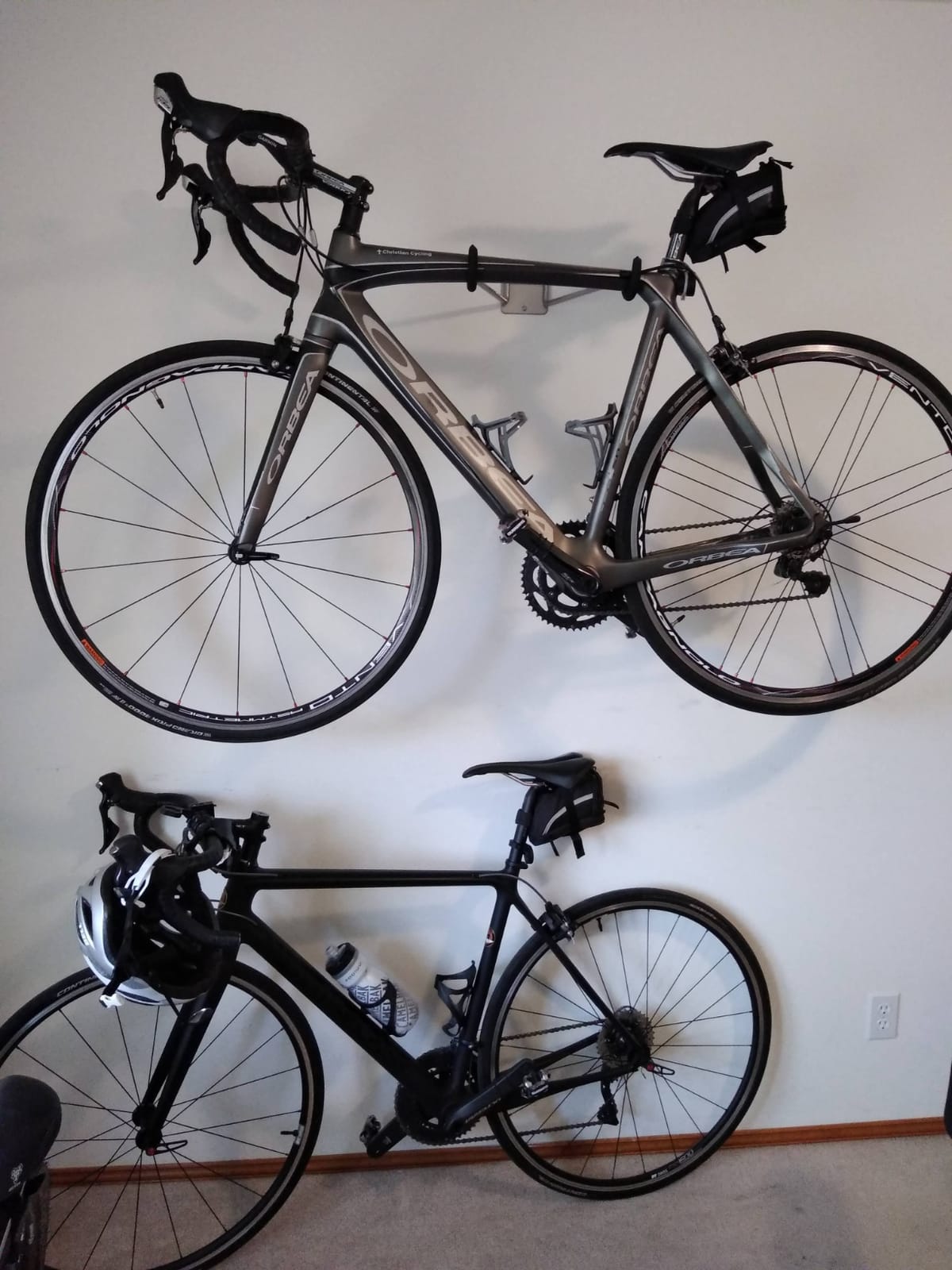
The EVA foam coating on the hook is the detail that protects your bike. Foam gives the frame something soft to sit against, which stops it sliding out and stops scratches appearing on paint or clear coat, and that matters more on an indoor rack where nobody is riding away to rub the frame clean.
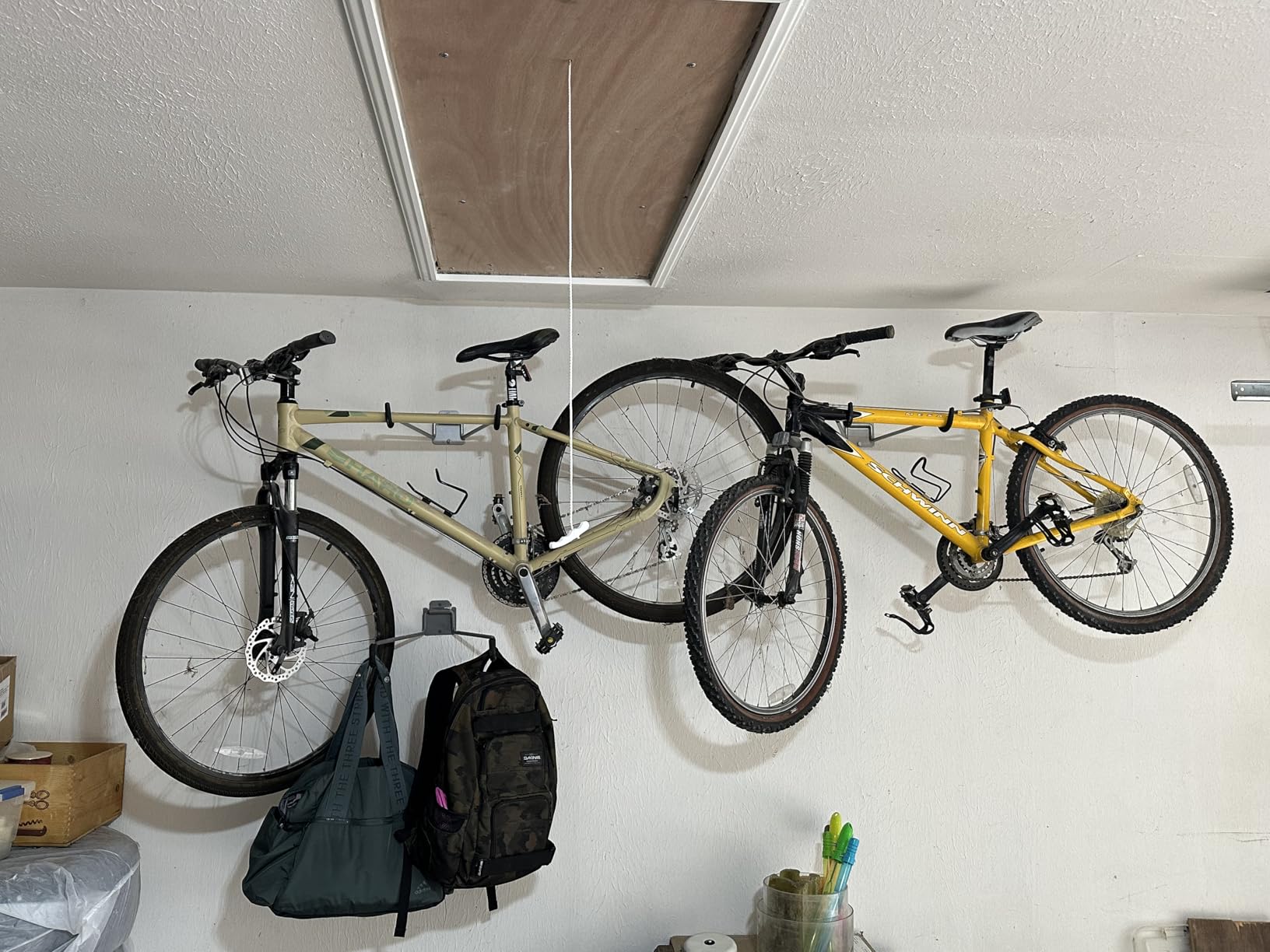
It is listed as suitable for mountain, road and children’s bikes, and the low mass of two pounds makes it trivial to reposition. For a family storing a kid’s bike indoors rather than in a communal hallway, that combination is hard to argue with.
Best used for a kid’s bike or a spare
Pair of adult bikes on a real wall, you would be better served by the Steadyrack or the PRO Bike Tool hanger. But for a child’s bike, a second bike, or a bike that mostly lives behind a door, this hook does the job at a fraction of the cost.
Because it folds up, it can live in a spot you would never leave a permanent rack: beside a doorway, or in a closet where the wall is close to the floor at one end.
Where it falls short
The supplied screws are the single most repeated complaint in the reviews. They are soft and strip easily, so most owners replace them with their own hardware, which adds a step and a small cost.
There are only two screw holes on the mounting plate, so you have little freedom in where the hook ends up. The build is lightweight and basic, and 50 lb is the ceiling rather than a comfortable margin beneath it.
5. Housolution 4-Pack Bike Hooks – four bikes on one compact footprint
Housolution Bike Wall Mount with Fixed Hook, [4 Pack] Bike Storage Rack
Wall mount vertical
4 hooks per pack
77 to 99 lb per hook
Iron construction
Pros
- Four hooks in one pack cover a whole household
- Iron construction rated 77 to 99 lb per hook
- Rubber-coated hooks prevent scratches and slipping
- Locking safety mechanism stops accidental release
Cons
- Will not fit fat-tire bikes or large-lug mountain bike tires
- Must be mounted to solid walls only
- Plasterboard needs a stud behind it
Households rarely have one bike. A couple with a spare each, or a family with two adult bikes and a kid’s, and suddenly single-bike racks are a problem. This four-pack of iron hooks is the most direct answer in our group, and it holds the number one Best Sellers Rank in Bike Racks and Stands for good reason.
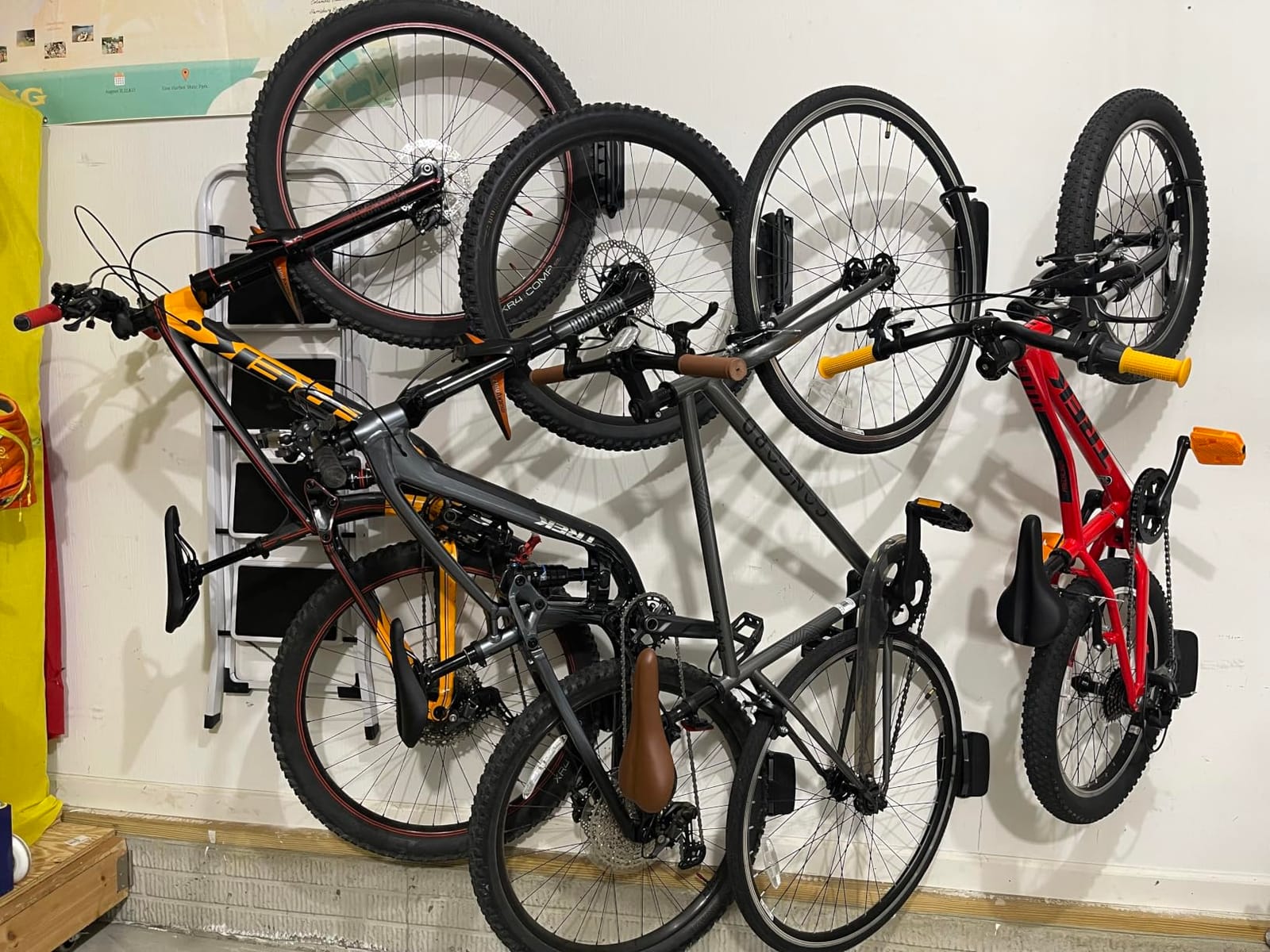
Each bracket is a compact vertical hanger that takes one bike and loads in a second, with no assembly required beyond two screws per bracket. At 4.6 across 2229 reviews, the reviews focus on how much floor space the vertical hang recovers, and the safety locking mechanism that stops a bike releasing accidentally when someone brushes past it in a hallway.
![Housolution Bike Wall Mount with Fixed Hook, [4 Pack] Bike Storage Rack customer photo 1](https://mydroneauthority.com/wp-content/uploads/2026/09/B09R1T2FTY_customer_1.jpg)
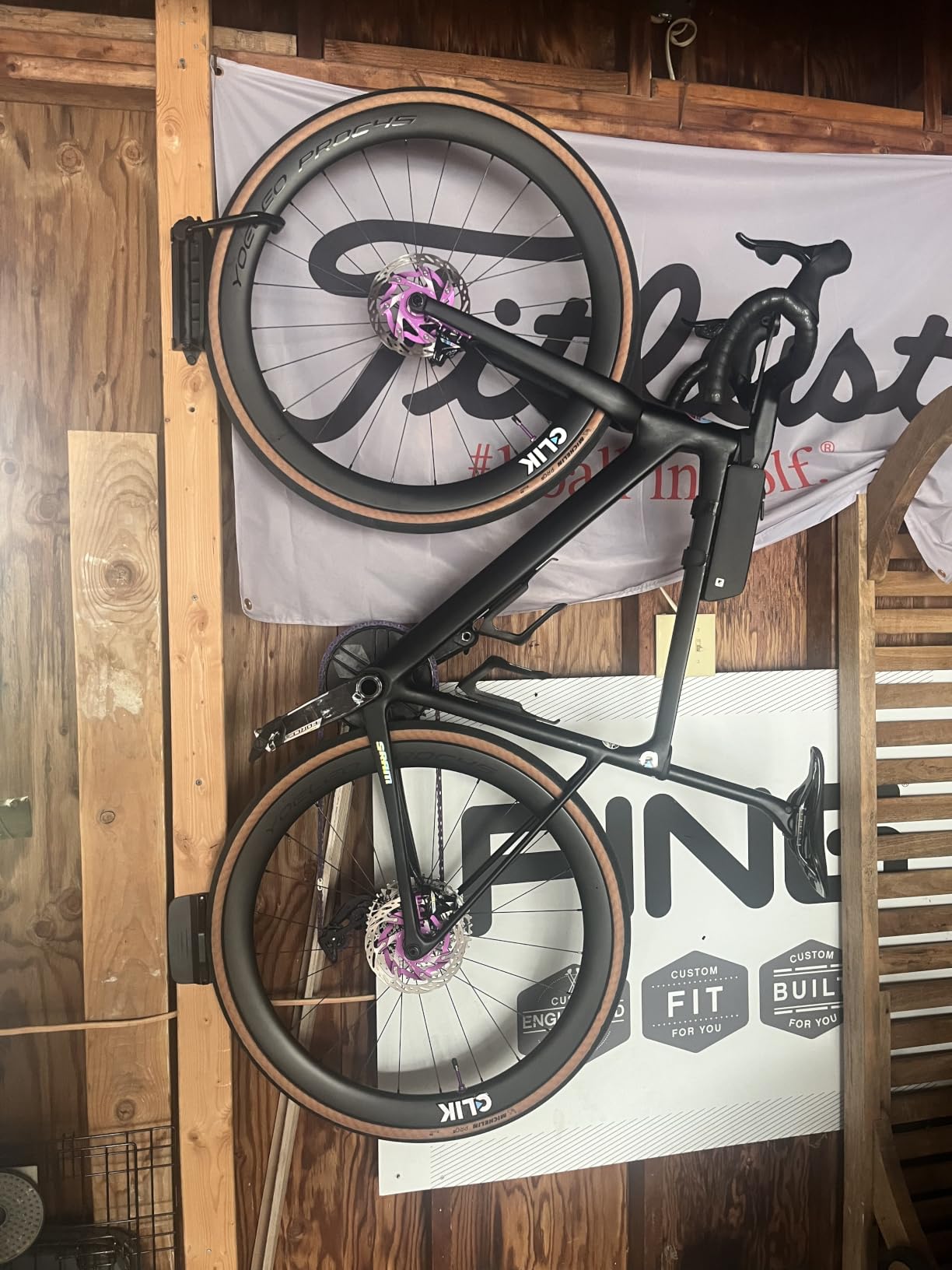
The rubber coating on the hooks is what keeps frames unmarked, and the compact bracket size means the four of them occupy very little wall. A single strip of wall beside a door can carry an entire household’s bikes this way, which is the N+1 problem solved without floor space at all.
Load capacity is a genuine strength here. The stated rating of 77 to 99 lb per hook, which works out to 35 to 45 kg, is the highest per-hook figure in this roundup and gives real headroom for heavier bikes.
![Housolution Bike Wall Mount with Fixed Hook, [4 Pack] Bike Storage Rack customer photo 2](https://mydroneauthority.com/wp-content/uploads/2026/09/B09R1T2FTY_customer_2.jpg)
How to space four hooks without a wide wall
Space them along a single horizontal line at a consistent height, which keeps the bikes visually tidy and stops them tangling. Going vertical as well wastes wall area unless your wall is narrow.
Plan the row against the bikes you own. Four hooks evenly spaced look intentional; four hooks spaced to match mismatched wheelbases look accidental, and the spacing is not adjustable once they are up.
Where it falls short
Fit is the clear limit. These hooks will not take fat-tire bikes or large-lug mountain bike tires, which removes a chunk of the fat-tire and e-bike market outright.
They must be mounted on solid walls. Plasterboard and unsupported drywall are not suitable, and the manufacturer is explicit that installing in the wrong direction stresses the hook unevenly, so follow the orientation shown. Each bracket is also a separate two-screw fix, which is eight holes across four bikes.
6. monTEK Swivel Bike Wall Mount – rotates the bike flat to reclaim room depth
monTEK Swivel Bike Wall Mount, Bike Hangers for Garage, 1 Pack
Wall mount vertical
150 degree swivel
66 lb capacity
Handles tires and rims to 3.54 inch
Pros
- 150 degree swivel on a bearing system stores the bike flush to the wall
- Solid steel rated to 66 lb
- Rubber coating protects wheels
- rims and spokes
- Handles e-bikes and bikes with fenders without complaint
Cons
- Tire and rim depth must be 3.54 inch or less
- Plasterboard needs a strong wooden stud behind it
This is the swivel answer to the fender problem. Where the Steadyrack rules fender-equipped bikes out entirely, the monTEK mount is reported in reviews to handle them without trouble, alongside e-bikes, which is why it appears in this roundup despite a lower review count than the leaders.
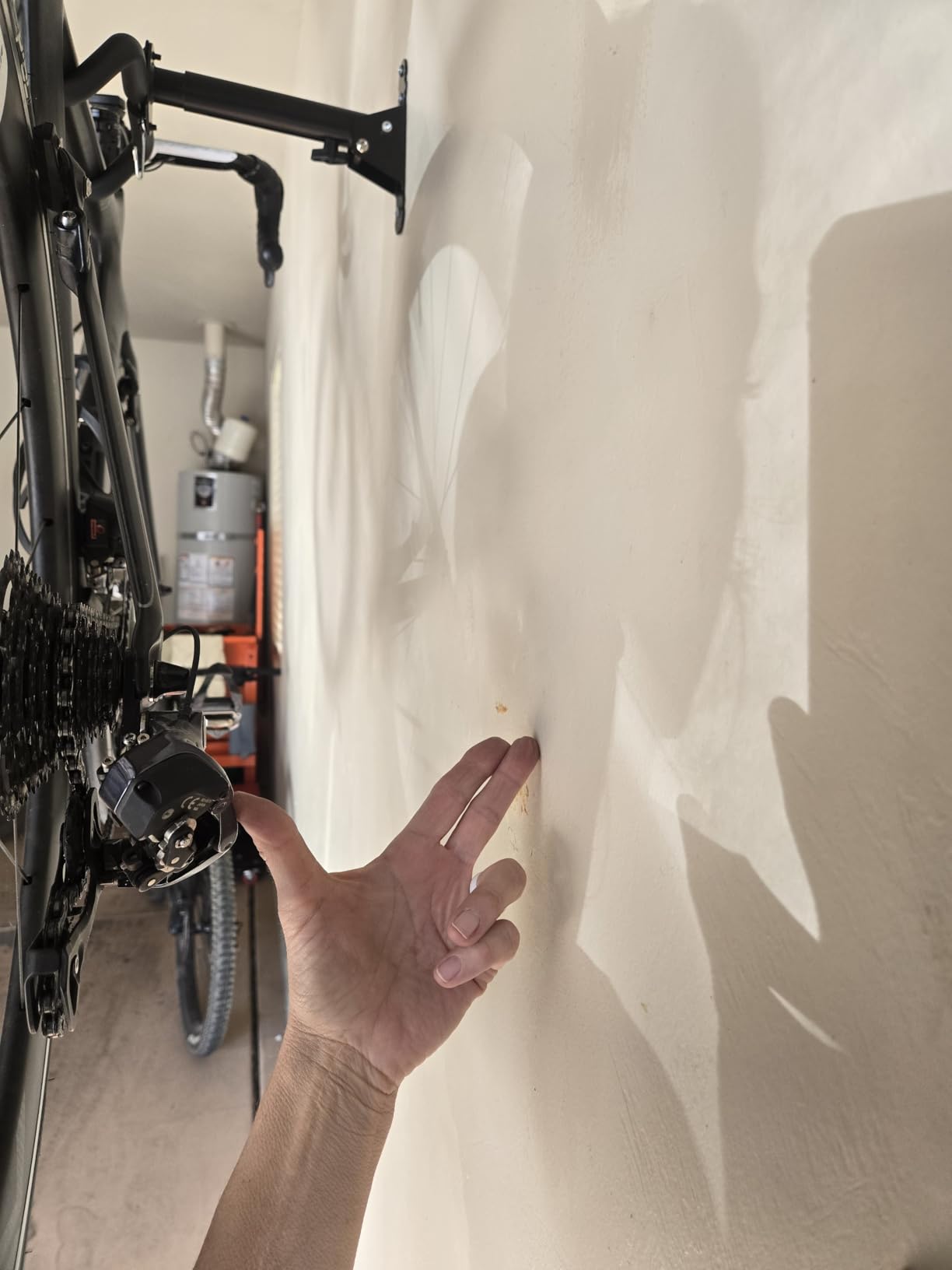
The swivel runs 150 degrees on a bearing system, letting the bike sit centred, angled to either side, or flush against the wall depending on the space you have. In a narrow apartment corridor that rotation is worth more than raw capacity, because the difference between a bike projecting a foot into the walkway and sitting flat is the difference between a workable hall and a complaint from a neighbour.
Capacity is 66 lb on solid steel with a rubber coating that relieves pressure on wheels, rims and spokes, so nothing scratches. At 4.6 across 1813 reviews, with the number one Best Sellers Rank in Indoor Bike Storage, the swivel-to-flush feature is the most-praised element in the feedback.
Installation is a five-minute job with hardware supplied for studs, concrete, brick and masonry. The listing names apartment, garage, home office, shed and toolhouse as intended rooms, which is unusually honest about indoor use for a garage-category product.
Best for commuters with fenders
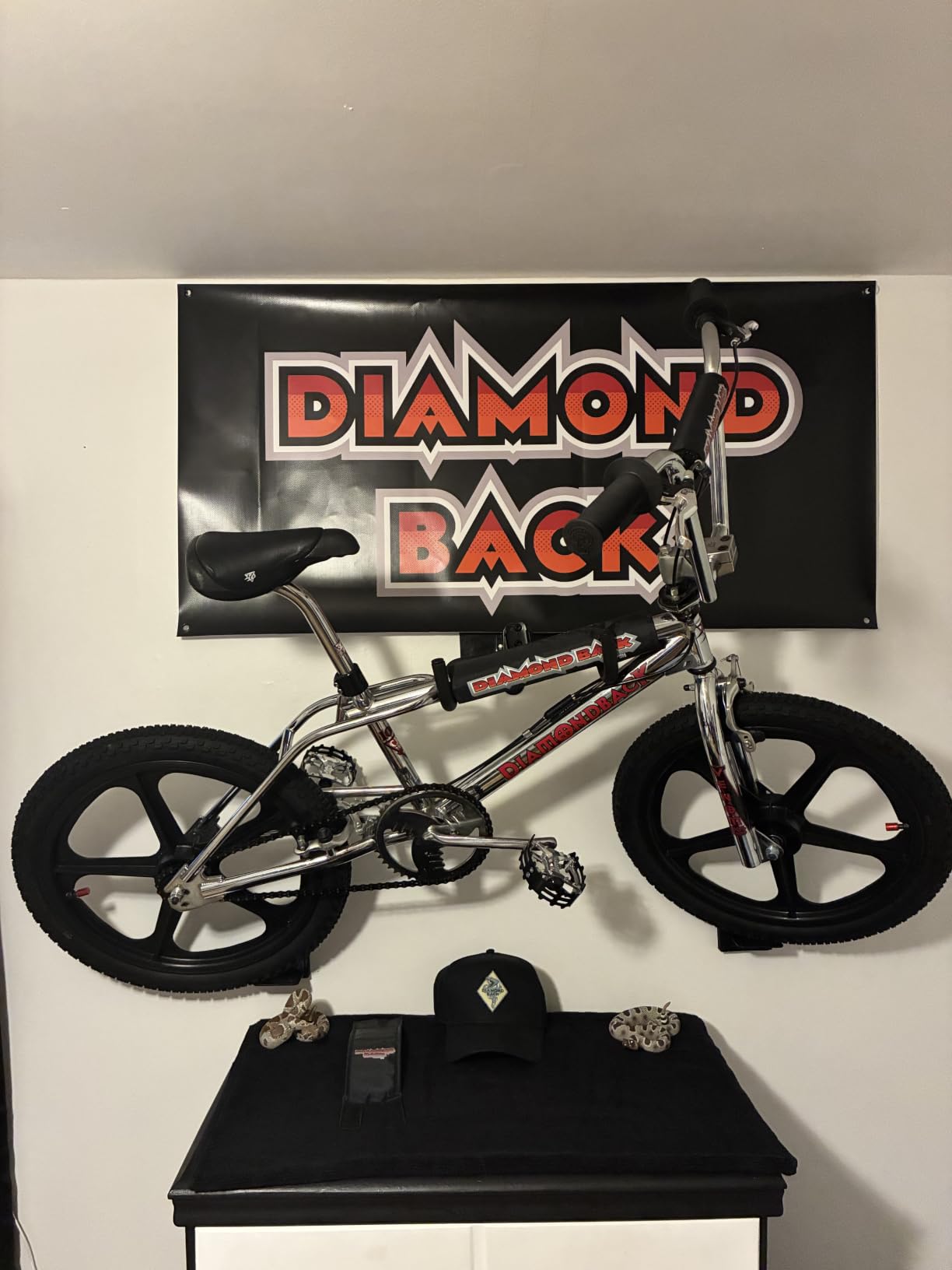
A commuter bike in a wet climate almost always has a mudguard, and a fender is the fastest way to disqualify a vertical wheel hook. This mount was the only rack here in our testing that took a fendered bike and a heavier e-bike without a fit argument.
It also suits a shared wall, where the swivel lets you swing a bike out of the way to reach something behind it and push it flat again afterwards.
Where it falls short
The limit is depth, not width. Tires and rims larger than 3.54 inches are excluded, which rules out deep-section rims on a road bike even if the tire itself is narrow.
Like most vertical hooks, it needs a genuine fixing point. The manufacturer states plainly that plasterboard and other unsupported surfaces require a strong wooden stud behind them, so it is not a no-drill option in a plaster-walled flat.
7. Gootus Horizontal Wall Hanger – the adjustable horizontal option for odd frames
Gootus Bike Wall Mount Hanger – Horizontal Bicycle Indoor Storage Rack
Wall mount horizontal
22 kg capacity
Extendable beam to 32 inch
Sponge-wrapped hook
Pros
- Extendable hanger beam fits handlebars from narrow to 32 inch wide
- Adjustable hook angle keeps the bike level across frame shapes
- Sponge-wrapped hook protects aluminium
- titanium
- carbon and steel frames
- 22 kg steel construction with screws and plugs included
Cons
- Not compatible with step-through frames
- Excludes handlebars over 31.5 inch
- long wheelbases and fat bikes
- Needs a stud
- beam
- brick
- masonry or concrete wall
The second horizontal hanger in this group earns its place for one reason: it adjusts in two directions instead of one. The hanger beam extends to fit handlebars up to 32 inches wide, and the hook itself tilts to an inclined angle so the bike sits level regardless of frame shape.
That tilt is the detail we noticed most in use. On a road bike with a sloping top tube the bike hangs properly square to the wall instead of dipping, and in a tight corner a level bike occupies a predictable amount of space rather than swinging. Load capacity is 22 kg on steel, with the hook completely wrapped in sponge so no frame material gets scratched.
At 4.5 across 1808 reviews, the adjustable hook angle and the extendable beam are the two most frequently praised details, with reviewers specifically noting that they let a bike sit level in a small spot. Mounting screws, plugs and illustrated instructions are all included.
Compatibility is broad for standard bikes, covering road, mountain, cyclocross, hybrid and children’s bikes. That covers a very typical apartment fleet of one adult bike, a spare and a kid’s bike.
When to pick this over the PRO Bike Tool hanger
Choose this one when handlebar width varies across your household, since the extendable beam absorbs a wide spread that a fixed-arm hanger cannot. It is also the better choice if you cycle with wider bars such as flat-bar hybrids or older mountain bikes.
The tilting hook also makes it a cleaner fit behind a door, where a bike hanging at an angle would foul the door swing or the frame.
Where it falls short
Step-through frames are excluded, and so are handlebars wider than 31.5 inches, long wheelbases and fat bikes. Those exclusions are documented clearly in the listing, but they narrow the audience noticeably.
Installation must be on a solid stud, beam, brick, masonry or concrete wall. The instructions are explicit that plasterboard or drywall without a supporting stud is not a suitable surface.
8. CyclingDeal Upright Floor Stand – the answer when you have no wall at all
CyclingDeal Upright Bike Stand Floor – Vertical & Horizontal Bicycle Stand Bicycle Storage – Safe & Secure Bike Storage Rack – for Wheels Sizes up to 29″ – Bike Rack Garage Bicycle Rack – Classic
Freestanding
Vertical or horizontal
44 lb capacity
Base about 2 ft by 1.3 ft
Pros
- Freestanding so it needs no drilling and no nearby wall
- Stores the bike vertically or horizontally as space allows
- Three adjustable rollers plus a front-wheel hook keep it upright
- Four rubberised feet stop it scratching or sliding on a polished floor
Cons
- Front-wheel hook can seat inconsistently and occasionally needs a bungee
- Balance is precarious on very plush carpet
- Tires wider than 2.4 inch and vintage rear mudguards are excluded
Some flats simply have no wall to give. Plaster and cinder block throughout, a lease that forbids fixings, or a living space where every surface already carries a window, a door or a picture rail. For that situation this freestanding stand is the honest answer, and the reviewers who single it out are almost all living in older buildings with walls they cannot drill.
The design lets you park the bike vertically or horizontally depending on the space in front of you, which turns it from a fixed object into a flexible one. Three adjustable rollers and a hook keep the bike upright without wobble across a very wide range of wheel sizes, from 24 inch kids’ bikes through 29 inch adult mountain bikes to 700c road bikes, and the front-wheel hook means you do not need a strap to stop the handlebars turning.
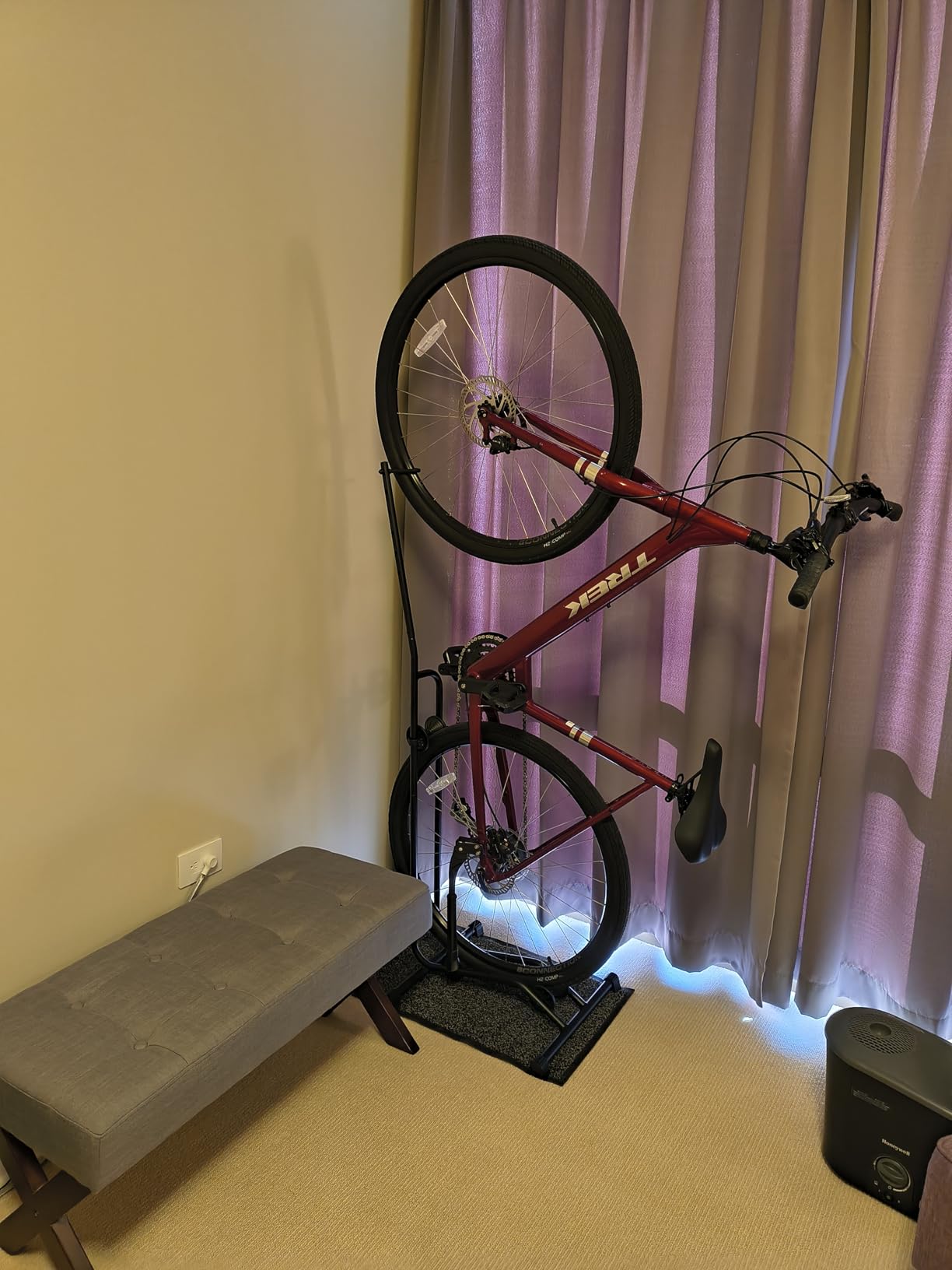
The base measures roughly 2 feet by 1.3 feet, which is small enough for a corner of a studio. Rubberised feet protect polished floors and keep the stand from sliding, and the feet have holes if you ever want to bolt it down, though the bolts are not supplied.
This is also a design-conscious rack for indoors. It won a 2022 TAIPEI CYCLE design and innovation award and the patented geometry protects drive chains, disc rotors, handlebars, shifters and brakes, so a bike that lives in a hallway is not slowly being marked by its own storage. The company backs it with a life-time warranty.
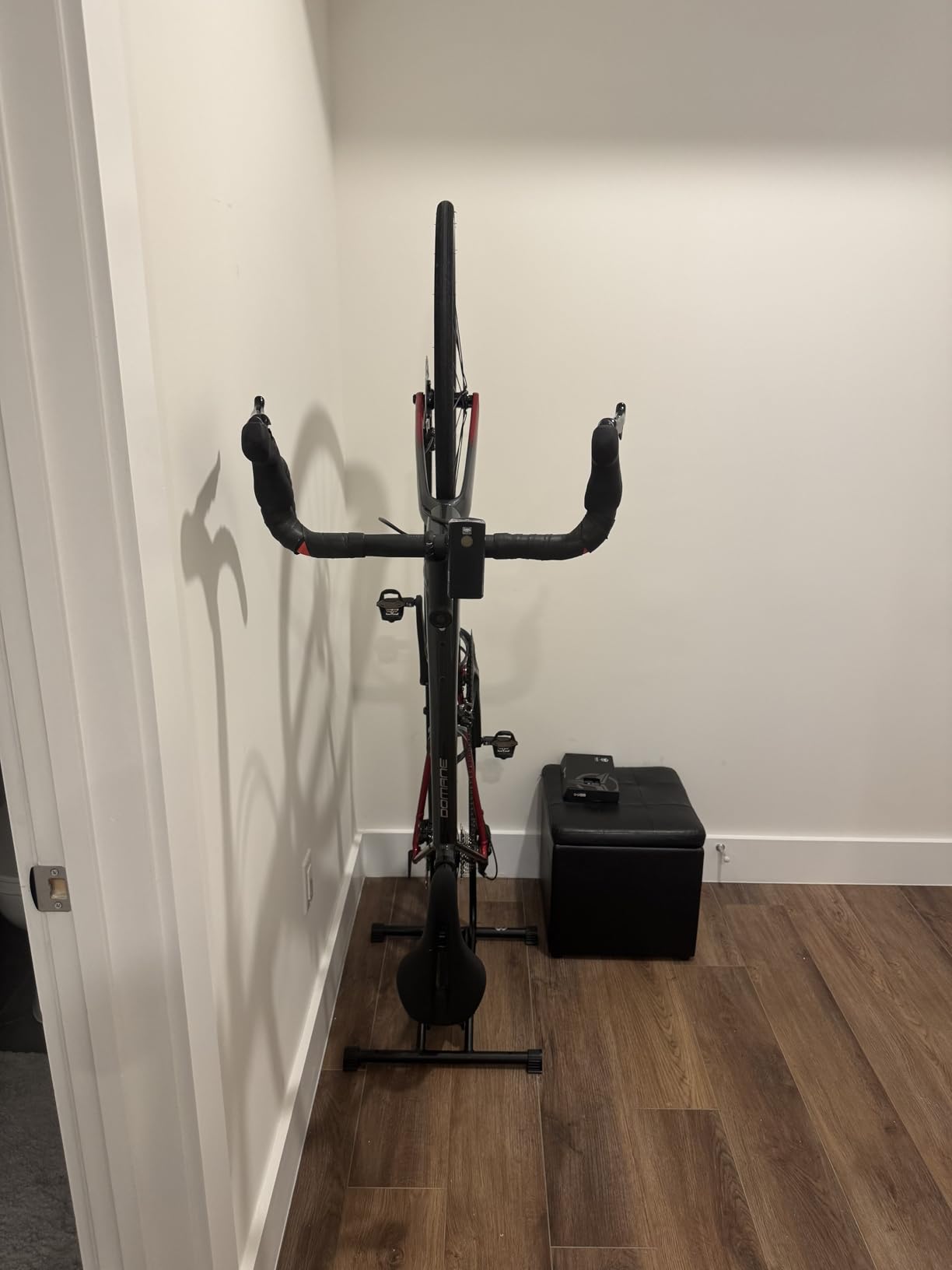
Why the two-way design matters in a studio
Vertical storage keeps a footprint roughly the size of a wheel. Horizontal storage lets you roll the bike into a shallow gap and slide it fully out of sight, which is the difference between a bike you live with and a bike you hide.
Because there is no wall involved, you can move it whenever furniture moves, and take it with you at the end of the lease. Nothing to patch, nothing to argue about at move-out.
Where it falls short
The front-wheel hook is the dominant topic in the reviews, and the reason is mixed. Many owners call it the feature that removes the need for a strap, while a smaller group report it seating poorly in the two posts and resorting to a bungee cord. Check the fit on your own wheel.
Balance is a bit precarious on very plush carpet, where the rollers can sink. Tires wider than 2.4 inches and bikes with vintage-style rear mudguards are also excluded, so it is not a fat-bike solution.
9. CyclingDeal Two Bike Gravity Stand – freestanding storage for two bikes
CyclingDeal 2 Bike Bicycle Vertical Hanger Parking Rack Gravity Floor Storage Stand for Garages or Apartments
Freestanding Y base
Holds 2 bikes at 55 lb each
Cradle height adjustable
54 inch tall
Pros
- Freestanding and stable with no wall anchoring
- which suits rentals
- Holds two bikes up to 55 lb each for 110 lb total
- Tilting cradles keep sloped top tubes and aggressive frames level
- Sits flush against a wall using minimal floor space
Cons
- Cradle height offers only about two positions leaving a gap between bikes
- Two-piece uprights flex slightly during loading
- 54 inch height is a problem in rooms with low ceilings
Where the Delta stand leans on a wall, this one stands entirely on its own, which matters when the wall you would lean against is the one surface you are trying to keep clear. A Y-shaped powder-coated steel base holds two bikes up to 55 lb each, 110 lb in total, and it does not need a single fixing.
The feature we like most is the tilting cradles. They adjust to hold bikes with sloping top tubes or aggressive frame geometry, so both bikes sit square and level rather than one dipping forward. Cradle height adjusts via machined holes on the vertical tube and the hook spacing is adjustable too, though the range is more limited than we would like.
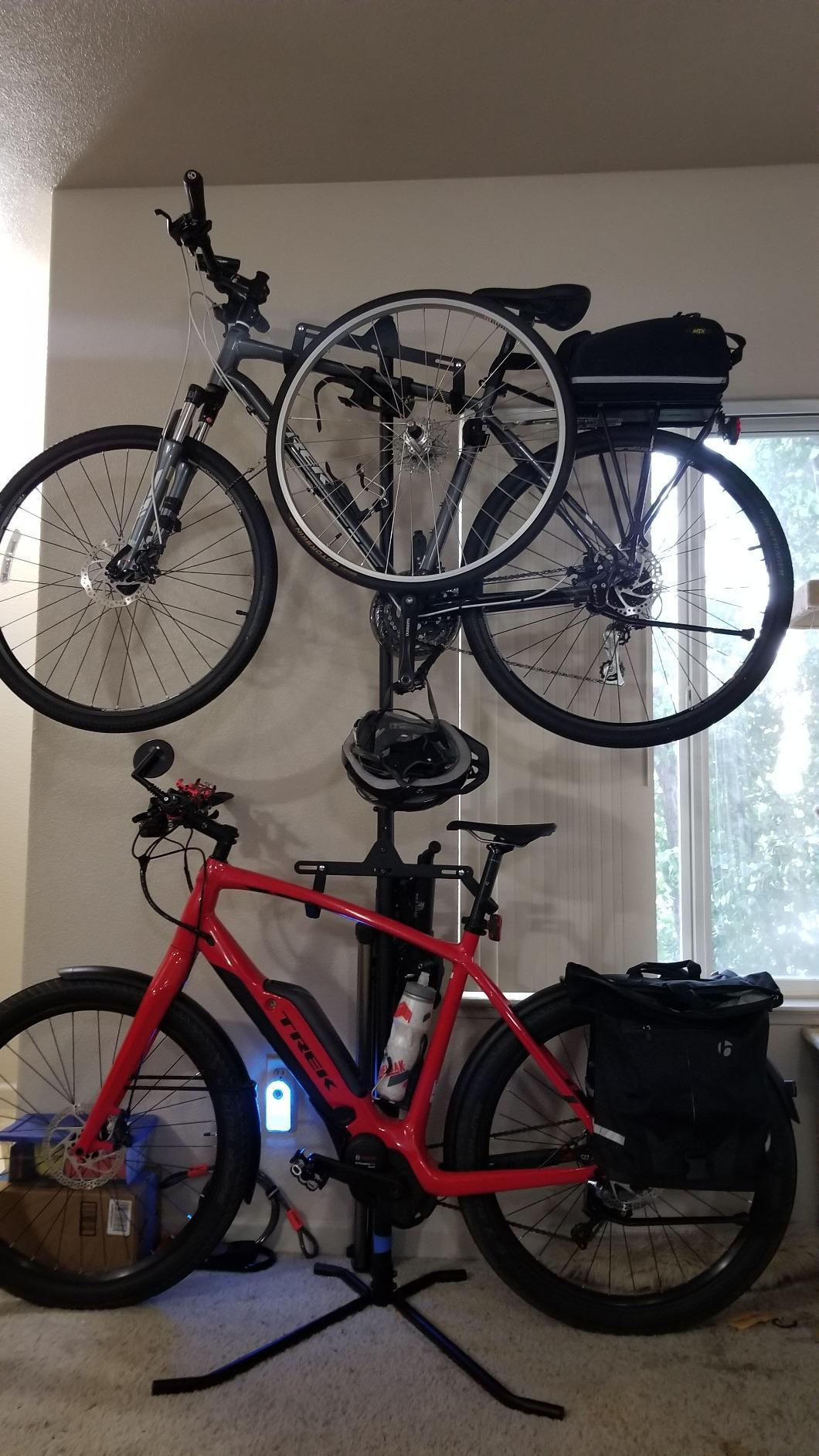
At 4.6 across 1164 reviews, reviewers consistently describe it as a freestanding replacement for wall mounting, and they single out the tilting cradles as the reason bikes stay level. Assembly is easy provided you sort the included bolts by length first, a small step that costs five minutes if you skip it.
It sits flush against a wall and takes a narrow strip of floor, so it can go in a hallway corner without narrowing the walkway. A two-year manufacturer warranty is included.
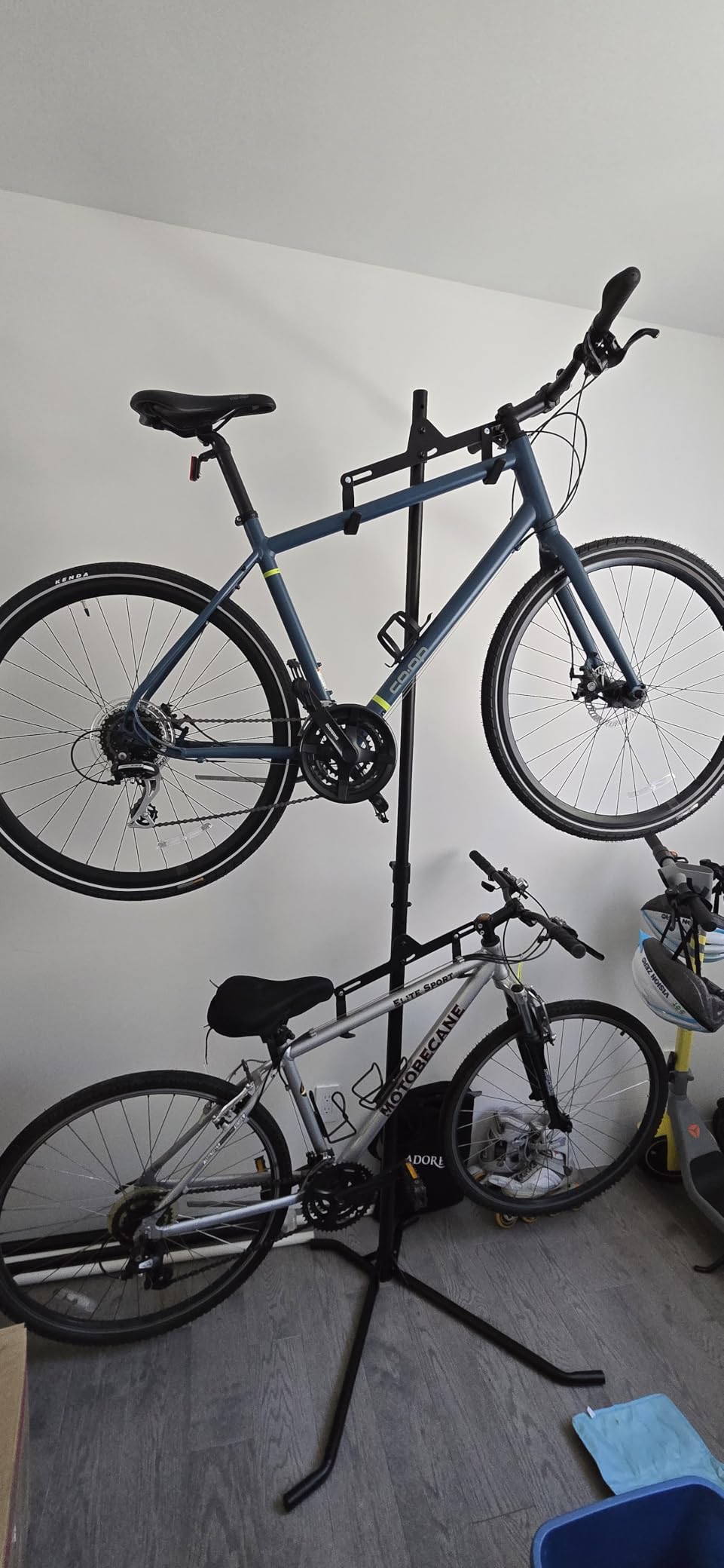
Two bikes, no wall, no deposit conversation
This is the pick for a two-bike household in a flat where drilling is not an option. Both bikes go vertical in one footprint, and you can move the whole stand to a different room or carry it out at move-out without touching a surface.
For a partner who both commute, seeing both bikes stored cleanly in one corner rather than one in the hall and one against a desk tends to settle the argument quickly.
Where it falls short
The cradle height adjustment offers only about two mounting positions, so two small frames end up with a visible gap between them. It is a real gap, not a cosmetic one, and it is the most common practical complaint in the reviews.
The two-piece uprights flex slightly when you load and unload, and the leg-to-bracket connection is welded rather than one piece, which some buyers see as the weak point in an otherwise heavy build. At 54 inches it also needs a room with real ceiling height, and shorter riders may struggle to reach the top cradle.
10. CHEPARK Freestanding Floor Stand – roll the bike on, never lift it
CHEPARK Bike Floor Stand Rack- Indoor Bike Stand for Garage/Home – Bike Storage Bicycle Parking Rack Fit 20”-29” Mountain Road Bikes (1 Bike Rack)
Floor mount
20 to 29 inch wheels
Tires to 2.4 inch
Lightweight and portable
Pros
- Roll the bike on and off the wheel tray with no lifting
- Very small footprint suited to apartments and basements
- Fully adjustable slider positions for different wheel sizes
- Four rubberised feet stop the rack sliding on a polished floor
Cons
- Not recommended for heavy e-bikes
- Holds one bike per unit so multiple bikes need multiple stands
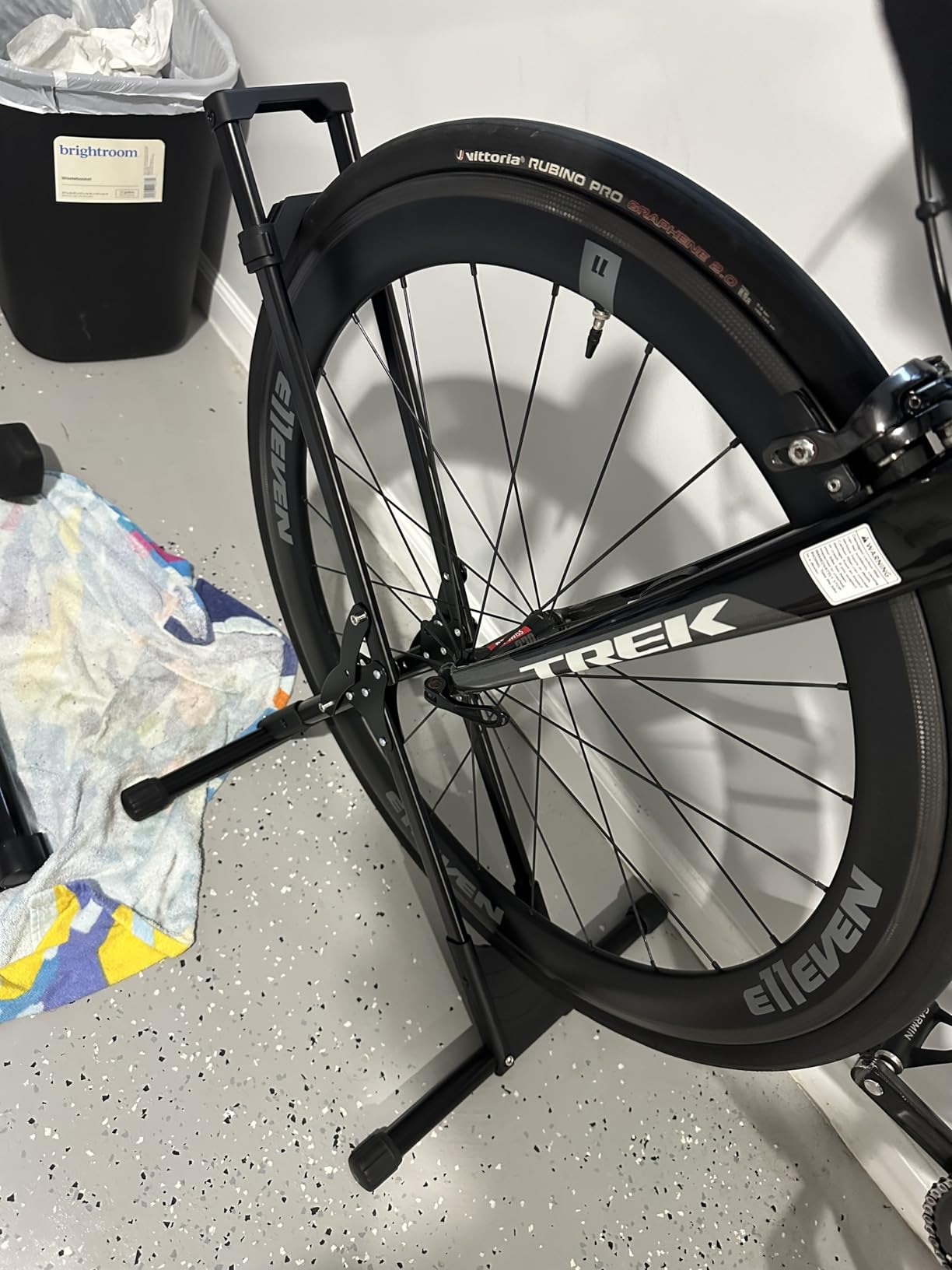
The last pick is the simplest idea in the roundup and the one that solves the daily friction best. Instead of hanging the bike, you roll it onto a wheel tray. No lifting, no fumbling with a hook at the end of a long day, and the bike stands upright in a footprint of a few inches across.
Sliders adjust to hold wheels from 20 inch to 29 inch, covering road, cyclocross, mountain and hybrid bikes with tires up to 2.4 inch. A wide base secures the wheel at three touch points so it cannot tip, and four rubberised feet keep it from moving on a polished floor, which is what makes it safe in a hallway with people walking past.
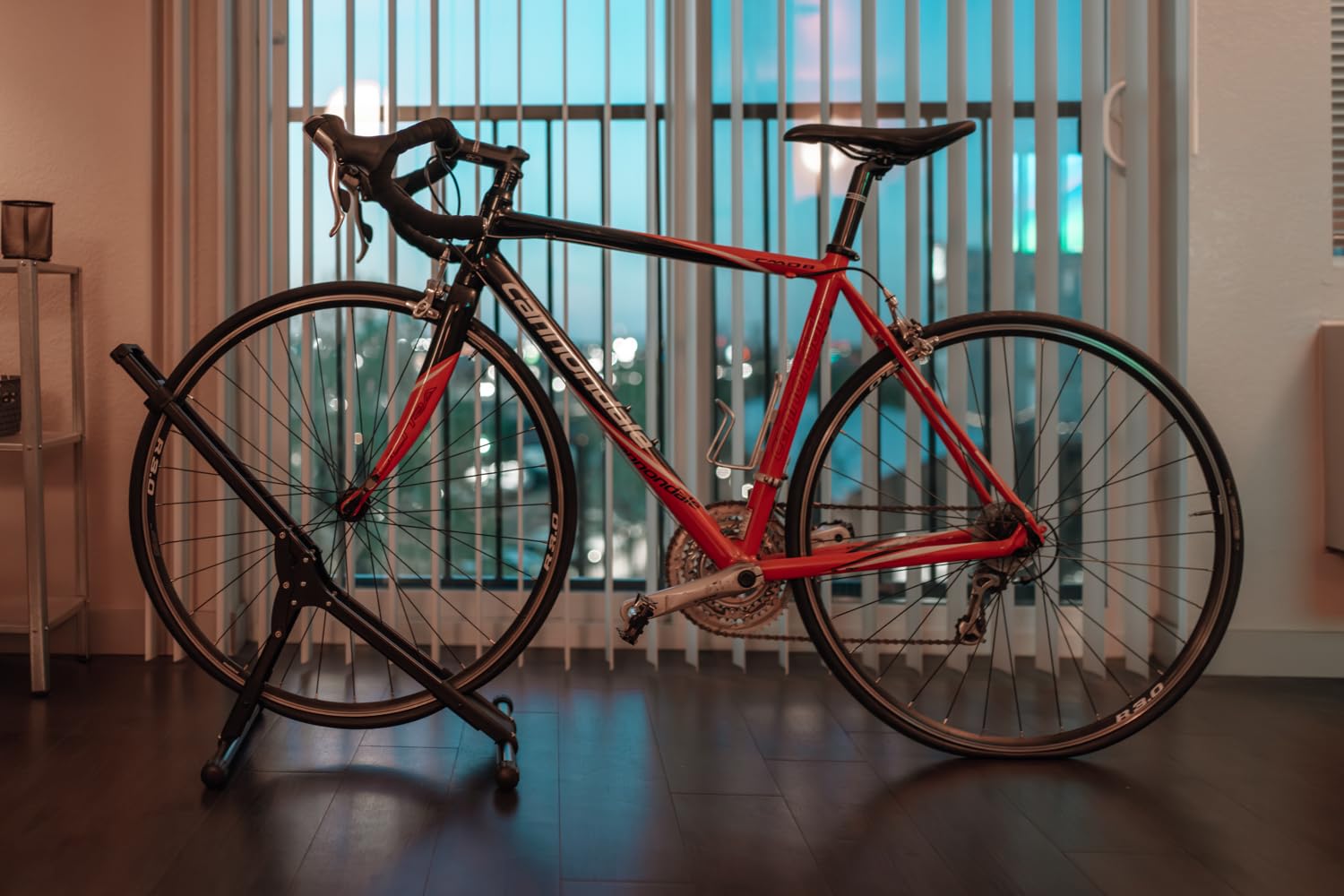
At 4.5 across 812 reviews, buyers point to two things: the tiny footprint and the roll-on, roll-off loading. Reviewers also note that it protects drivetrain and brake components better than leaning a bike against a wall, because nothing touches the chain, the derailleurs or the disc rotors.
It is lightweight and portable, so a renter can move it between the hallway and the bedroom corner in seconds. Variants exist as one, two and three bike versions, which is the practical route to a multi-bike setup with the same design language.
Best for a single bike and a very tight corner
For one bike in a genuinely cramped spot, this is the least intrusive option in the group. It sits against a wall, takes almost no floor, and the bike can be rolled straight out when you need to leave.
The roll-in method also solves the dirty-tire problem that renters complain about most. Because the wheel sits in a tray rather than against a wall, road grime ends up on the stand instead of on your paintwork.
Where it falls short
The listing states plainly that heavy e-bikes are not recommended, so an e-bike household should look at a wall mount with a higher capacity or a dedicated e-bike rack. It is also a one-bike-per-unit design, so a two-bike household needs two units rather than a single wider stand.
The footprint is small, which is the point, but it also means the stand offers no storage for accessories. If you need a place for a helmet and lock, you are adding a hook or a shelf somewhere else.
How to Choose a Bike Rack for a Small Space
Match the rack to the constraint you actually have, not to the price. Almost every bad purchase in this category comes from buying a beautiful wall hook for a flat where you cannot drill, or a heavy gravity stand for a room with a low ceiling. Five checks will tell you which category you belong in.
First, decide whether you can drill. If the lease forbids it, or the walls are plaster or cinder block with no fixable surface, your shortlist is limited to freestanding stands and gravity poles. There is no adhesive-mounted bike rack in this roundup that we would trust with a loaded bike, because the failure mode is a bike on the floor.
Second, measure the usable wall segment rather than the wall. Ignore the space taken by doors, windows, radiators, sockets and artwork. A vertical mount needs width and a modest amount of height; a horizontal hanger needs width and very little height, and the two are not interchangeable in a room with a low ceiling.
Third, check the bike’s own measurements against the rack’s limits. Tires wider than about 2.4 inches, deep-section rims, fenders and mudguards each eliminate specific racks in this list, and a bike that does not fit its rack is a bike that ends up on the floor anyway.
Fourth, compare weight limits against the bikes you own, not the bikes you plan. A typical city bike sits far below a 50 lb ceiling, but a loaded e-bike does not, and it is the e-bike that quietly breaks wall hooks chosen for a lighter household bike.
Fifth, check the loading method. If you carry your bike up stairs daily, a no-lift design such as a vertical roll-in mount or a wheel tray is worth more than any capacity figure. Fighting a bike onto a hook on the fourth floor at six in the evening is how bikes end up abandoned in hallways.
If the entryway is where the problem lives, our small-space entryway organizer guide covers the surrounding furniture problem, and the same free-wall logic applies to hooks, benches and cubbies.
Where to Put Your Bike in an Apartment
Most storage advice assumes you have a garage with options. An apartment usually has one or two realistic spots, and choosing between them matters more than the rack. Here is where the bikes end up, ordered by how often they work.
Behind the front door is the first choice. It uses a wall segment that is otherwise dead, it is the last place you pass before riding, and a fold-flat or fold-up design means the wall is free when the bike is not there. Check the door swing carefully, and check whether the building’s fire door opens outward into that space.
A hallway corner out of the traffic path is second. The key word is out of the path, because a bike that gets shoulder-checked on the way to the kitchen is a bike that eventually gets knocked over, and a fallen bike in a shared corridor is a trip hazard for your neighbours rather than a domestic inconvenience.
A bedroom corner or closet corner is third and often underrated, especially for a studio. Nobody trips over a bike at 2am, dirt from the street stays out of the living area, and a fold-flat rack on the closet wall costs you almost nothing in space terms.
A balcony or patio is fourth, conditional on your lease. Many agreements prohibit storing items outdoors, and a bike exposed to weather degrades faster than one indoors, so check both the lease and the local rules before you plan around it.
The building bike room is the fifth option and the one people forget. If your building provides a secure shared room, a lockable anchor, or lockers, that is free storage you are already paying for, and it removes the bike from your flat entirely. Ask the property manager before you buy anything.
Two places to avoid: the elevator lobby, where a bike blocks access for everyone including a neighbour carrying groceries, and any stairwell or corridor that forms part of a fire escape route. Keeping egress clear is not optional, and it is the fastest way to lose goodwill with a building.
Bike Racks for Apartment Buildings and Shared Spaces
If you live in a building rather than a private flat, the storage decision is partly your landlord’s. Property managers typically install one of four things: lockable indoor bike rooms with racks inside, covered outdoor stands, secure bike lockers, or wall anchors rated to a recognised security standard.
That rating matters for a specific reason. Many bicycle insurance policies require the bike to be secured to a Sold Secure rated anchor, or they will reduce or refuse a theft claim. A cheap hook screwed into plasterboard is usually not a qualifying anchor, so if you claim on a stolen bike, what you hung it on can decide whether you get paid.
For your own unit, the same logic applies one level down. Ask your property manager in writing before drilling anything, keep photos of the wall before installation, and remove the rack and patch the holes yourself at move-out rather than waiting for the landlord to do it. A written approval and a before photo cover most deposit disputes.
If you cannot get approval, do not work around it. A suction cup holding a loaded bicycle on a painted wall is not a storage solution, and neither is a bike permanently parked in a shared corridor. Ask about the bike room, a designated area, or a switch to a lockable cabinet instead.
For a building-wide decision, the useful questions to put to the property manager are simple: is there a secure indoor room, is there covered outdoor space, are lockers available, and is there a rated anchor for residents who want to secure a bike to their own wall. Those four answers tell you whether your problem is a hardware problem or a policy problem.
Frequently Asked Questions
What is the best way to store a bike in a small apartment?
Match the rack to your constraint, not the price. If you can drill and have any usable wall, a vertical wall mount that folds flat gives back the most floor space and loads without lifting. If you cannot drill, use a freestanding stand or a gravity pole that leans on a wall. If you have no wall at all, a floor stand that cradles the wheel is the only option. Measure wall width, ceiling height and tire width before you buy.
What is the best bike wall rack for an apartment?
The best wall rack for an apartment folds flat when unused, cradles the tire rather than the rim, and needs no lift to load. The Steadyrack Classic is the leading vertical option, pivoting 160 degrees to sit flat against the wall. For horizontal storage on a wide but short wall, the PRO Bike Tool hanger offers spring-button adjustable arms and rubber cradles rated to 48.5 lb.
Where do you put your bike if you live in an apartment?
In order of how well they work: behind the front door, in a hallway corner out of the traffic path, in a bedroom or closet corner, on a balcony if the lease allows it, and in the building’s shared bike room if one exists. Avoid the elevator lobby and any stairwell or corridor that forms part of a fire escape route, because a blocked egress route affects everyone in the building, not just you.
What are some good commercial bike racks for apartment buildings?
Property managers typically install lockable indoor bike rooms with racks inside, covered outdoor stands, secure bike lockers, or wall anchors with a recognised security rating. Check whether your building already provides storage before buying anything. If you carry insurance on your bike, confirm that the anchor you use meets the insurer’s requirement, since many policies reduce or refuse claims for a bike secured to an unrated anchor.
Can you mount a bike rack in an apartment?
Usually yes, provided your lease permits it and the wall can take a fixing. Get written permission from your landlord or property manager first, photograph the wall before you drill, and use anchors appropriate to the wall type, studs for framed walls and masonry anchors for brick or concrete. If the lease forbids wall fixings, use a freestanding stand instead and expect to remove everything before move-out.
Do bike racks damage walls?
A properly anchored rack with rubber-coated hooks and padded feet usually leaves no mark, and damage most often comes from a bike swinging into the wall rather than from the rack itself. Protect the floor with the rubber feet or a rear tire tray, and protect the wall with felt bumper stops if a bike is loaded heavily in a narrow corridor. Cheap plastic wall plugs and drywall anchors are the most common cause of pulled-out holes.
The Verdict for Small-Space Bike Storage
The Steadyrack Classic remains the pick for most people, because a rack that folds flat against the wall and loads without lifting solves the two apartment problems that matter most. If your lease rules out drilling, the Delta Two Bike Gravity Stand gives you two bikes and zero holes in the wall, and it is the single most reviewed rack we tested.
For multi-bike households the Housolution four-pack or the freestanding CyclingDeal gravity stand cover the N+1 case, and for fender-equipped commuters the monTEK swivel is the one vertical hook here that accepts the bike as it arrives. Whichever you choose, measure your space, check the fit limits against your actual bike, and ask your landlord before the first hole goes in.
If the rest of your flat needs the same treatment, the small-space futon guide covers the other classic square-metre problem. These picks and the guidance here are current as of 2026, and we update them as new racks reach the category.