
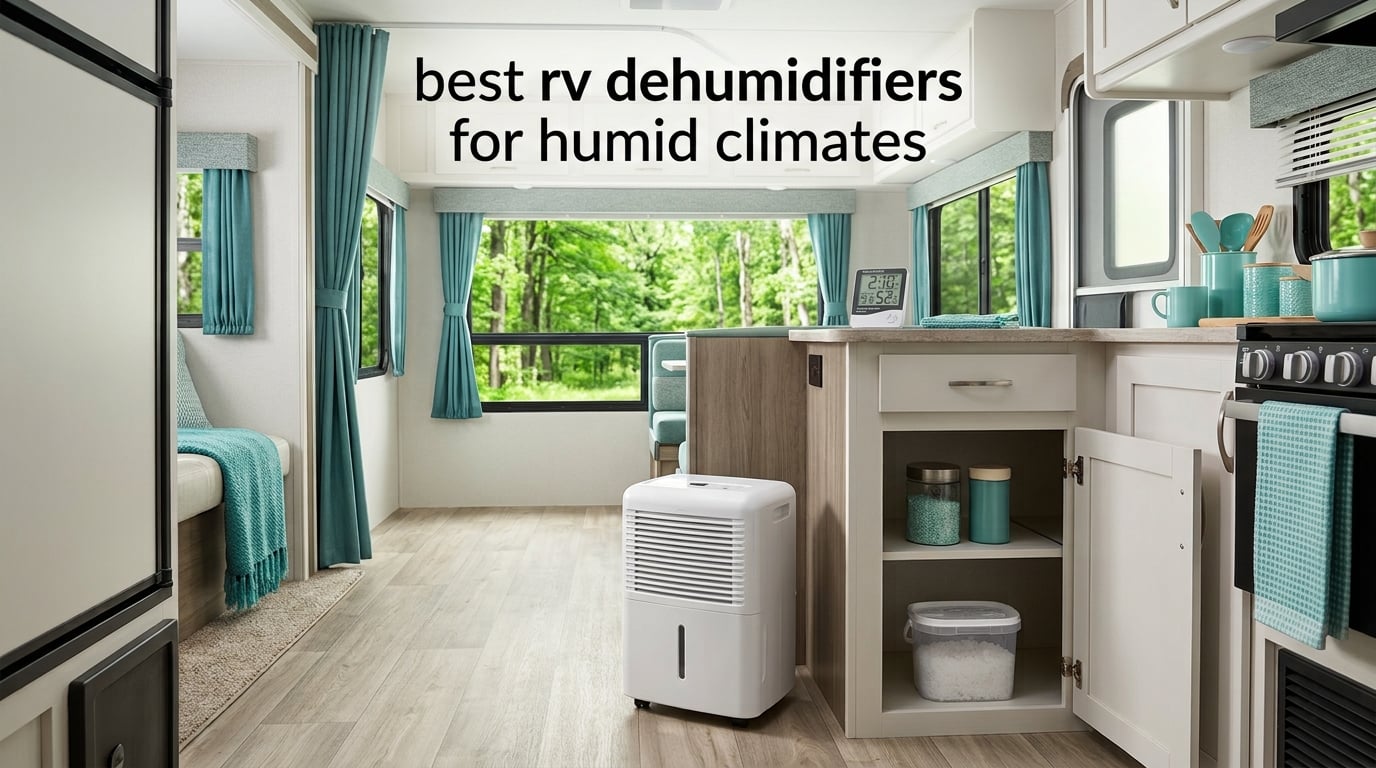
A coach in July on the Gulf Coast does not behave like a house. The walls are thin aluminum, the interior volume behind that floor plan is a few hundred cubic feet of air, and every shower, coffee pot and breath you add water vapor to has nowhere to go. That combination of heat, a small air volume and constant moisture is why the best RV dehumidifiers for humid climates are not the same machines people reach for in cold storage units. We went through the specs, the review histories and the real-world complaints on eight models to find the ones that actually hold a coach down in sticky weather.
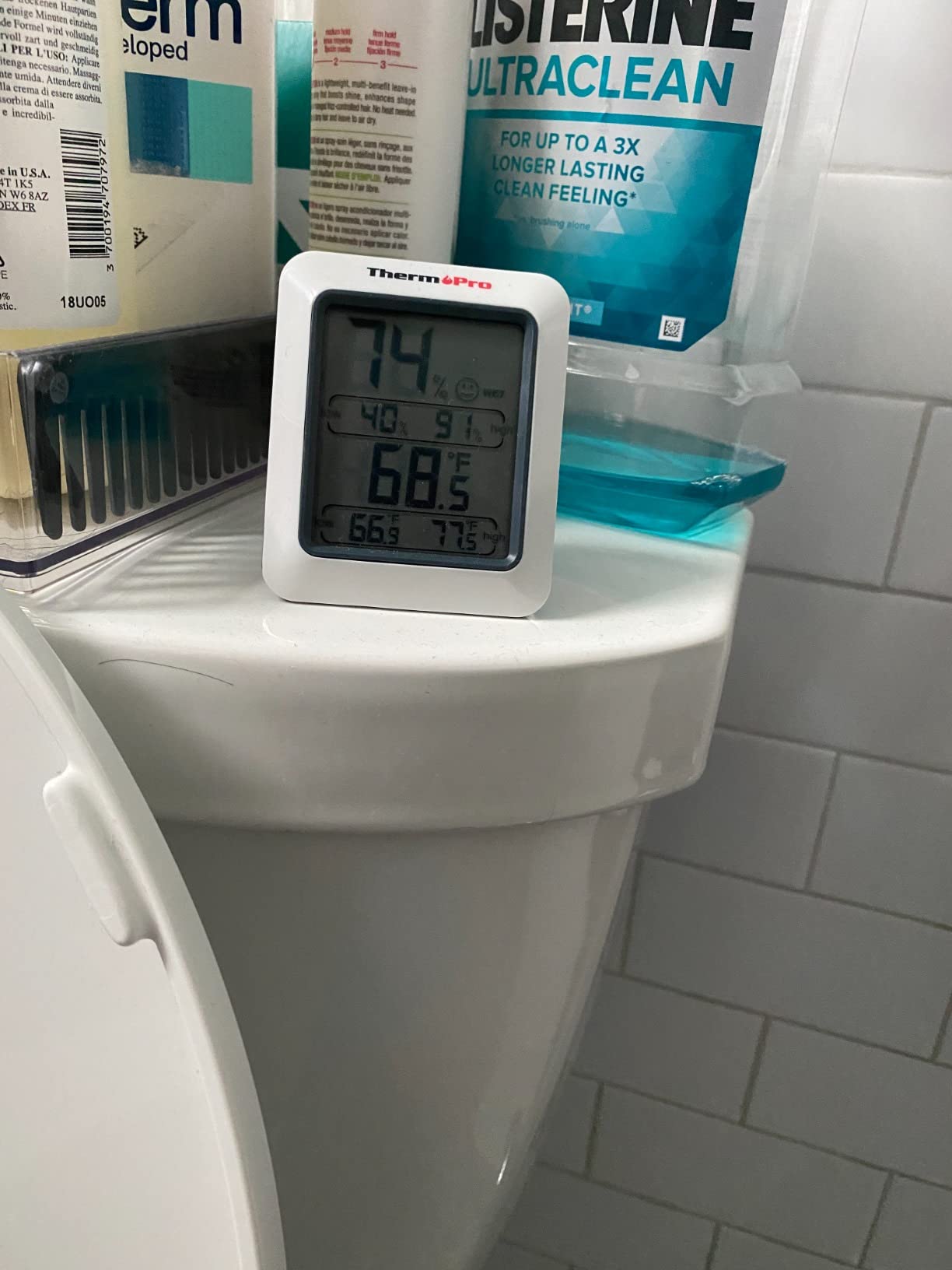
Our first test group came from a spring break loop through Florida and coastal Louisiana, and the single most useful thing we did was cheap: a hygrometer in the slide-out and a second one in the bathroom closet. Once you can read the number, the buying decision narrows fast. The EPA’s guidance for indoor spaces is 30 to 50 percent relative humidity, with 60 percent as the practical ceiling before mold and mildew get a foothold. An RV sitting at 70 percent on a July afternoon is not a storage problem, it is a live moisture problem.
What follows is the full set. We cover the technology first, because the reason a compressor unit stalls in one climate and a desiccant rotor thrives is the single most useful thing a buyer can understand before spending money. Then we size the picks, run all eight side by side, and give each one an honest read including where it falls short. If you would rather start with whole-home options, our guides to the best general dehumidifiers and the best basement models cover the fixed-installation end of the market.
Table of Contents
Top 3 Picks: Best RV Dehumidifiers for Humid Climates (October 2026)
These three cover the widest range of real situations. The Pro Breeze handles a whole season of heat on a modest power budget. The Ivation 13-Pint is the only pick here that can pull meaningful water out of a large closed space and drain it away by itself. The DampRid pair needs no power at all and earns its place in every cabinet and storage bay on board.
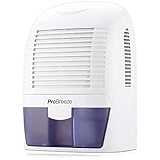
Pro Breeze PB-03-US
- 18 oz per day removal
- 40W draw
- 250 sq ft coverage
- 52 oz auto shut-off tank
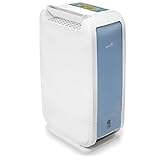
Ivation 13-Pint Desiccant
- 13 pints per day
- Continuous drain hose
- 33F to 104F range
- LCD humidity target

DampRid 2-Pack Absorber
- 2 lb 15.5 oz buckets
- No power required
- Fragrance free
- Detection strip
All 8 Best RV Dehumidifiers for Humid Climates Compared at a Glance
Every product below appears with its own published capacity, power draw and coverage figure. The pattern is worth noticing before you read the reviews: the powered picks in this group are small extraction machines, not whole-coach systems, and only one of them drains continuously.
| Product | Specifications | Action |
|---|---|---|
| Pro Breeze PB-03-US Mini Dehumidifier |
|
Check Latest Price |
| Ivation 13-Pint Desiccant Dehumidifier |
|
Check Latest Price |
| DampRid Hi-Capacity Absorber 2 Pack |
|
Check Latest Price |
 BREEZOME 60 OZ Dual-Semiconductor Dehumidifier BREEZOME 60 OZ Dual-Semiconductor Dehumidifier |
|
Check Latest Price |
 Ivation 13.5W Thermo-Electric Dehumidifier Ivation 13.5W Thermo-Electric Dehumidifier |
|
Check Latest Price |
 Eva-Dry EDV-1100 16 OZ Dehumidifier Eva-Dry EDV-1100 16 OZ Dehumidifier |
|
Check Latest Price |
 Eva-Dry E-333 Wireless Mini Dehumidifier Eva-Dry E-333 Wireless Mini Dehumidifier |
|
Check Latest Price |
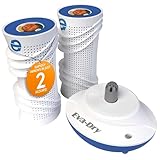 Eva-Dry EDV-365 Rechargeable Dehumidifier System Eva-Dry EDV-365 Rechargeable Dehumidifier System |
|
Check Latest Price |
How Humid Climates Break RV Dehumidifiers (Compressor vs Desiccant vs Absorption)
There are four mechanisms in play, and picking the wrong one is why so many owners end up disappointed. A compressor dehumidifier works like a tiny refrigerator: it pulls air across refrigerant-cooled coils, condenses water out of it and drips the result into a tank or a hose. It pulls serious water, but the coil has to sit below the air dew point, so in a coach sitting below about 65F the coil ices over and output collapses. That is a cold-weather failure, not a humid one, which is why compressor units are absent from this list of picks for hot climates.
Desiccant units pass air over a rotating wheel of zeolite, then heat the loaded section to release the water. There is no cold coil, so extraction does not fall off when the temperature drops, and the Ivation 13-Pint in this group runs from 33F to 104F. The tradeoff is power draw: a 470W desiccant rotor pulls far more than a 40W thermoelectric machine, and the discharge air feels warm rather than cool.
Thermoelectric Peltier machines cool a small plate using a semiconductor instead of a compressor. There are no moving parts and the wattage is tiny, which is exactly why you see them in campers and why their published rates are never comparable to a compressor figure. The BREEZOME lists up to 700 ml per day at 86F and 80 percent relative humidity. The Ivation lists 6 pints per day and 1100 sq ft as manufacturer ratings, and owners consistently report real results well below that, so treat the printed number as a ceiling rather than a promise.
Passive absorbers skip electricity entirely. Silica gel pulls water physically into its bead structure and is regenerated by heat. Calcium chloride buckets dissolve, collect the water as brine and are thrown away when full. In a closed cabinet or storage bay, absorption is often enough, and owners on r/RVLiving describe the common pattern of a small powered machine for the living space plus DampRid-style buckets in the closet.
Three humid-climate details catch out most buyers. First, the rooftop air conditioner already dehumidifies as it cools, so running a separate machine alongside it can push a coach below the comfort band and into drywall and cushion dryness. Second, the DOE test procedure for compressor ratings moved from 80F to 65F in June 2019, which makes older advertised pint numbers roughly a third optimistic compared to current labels. Third, continuous drainage into a shower drain fills the gray tank, and in humid full-timing that tank fills faster than most people plan for.
What Size RV Dehumidifier Do You Need in a Humid Climate?
Sizing starts with a number, not a marketing claim. The American Lung Association and EPA both treat 30 to 50 percent relative humidity as the target range for indoor living spaces, and 60 percent as the line where mold growth becomes likely. Owners on iRV2 and r/RVLiving converge on the same operating habit: set a humidistat to 50 percent and let the machine cycle rather than running it flat out and chasing a number the air cannot hold.
Match the machine to the volume, not the floor plan. A 250 sq ft trailer with 8 foot ceilings holds roughly 2000 cubic feet, and a 30 ft fifth wheel at the same ceiling height is closer to 3600. Coverage numbers printed on the box are not comparable across brands because some are quoted in square feet and some in cubic feet, and no manufacturer publishes a capacity curve against temperature. The honest approach is to read the pint-per-day figure at the humidity you actually live at, then add a margin.
A practical band works like this. For 50 to 60 percent relative humidity, anything pulling 10 to 15 pints per day can hold a small trailer. For 60 to 75 percent, a humid coast or a wet shoulder season, you want 20 to 30 pints per day of real capability. Above 75 percent in summer, especially in a large coach with slide-outs, a single portable machine will not carry the whole rig, and the practical answer is one machine per living zone plus buckets in the storage spaces.
Before buying, spend a day with a hygrometer. Put one at seated height in the main living area and one inside a closed cabinet, then read both in the morning, at midday and after dark. Owners who do this consistently find their real problem is often local: a closet, a slide-out floor or a storage bay under the bed, not the whole coach. That measurement is what tells you whether you need a bigger machine or a bucket in a cabinet.
Best RV Dehumidifiers for Humid Climates: Full Reviews of All 8 Picks
Each verdict below names the situation the machine was built for, followed by the hard numbers and the complaints that came up most often across its reviews. Read the limitations as seriously as the claims.
1. Pro Breeze PB-03-US – Best All-Rounder for Hot, Humid RVs
Pro Breeze Electric Mini Dehumidifier, 2200 Cubic Feet (250 sq ft), Compact and Portable for High Humidity in Home, Kitchen, Bedroom, Basement, Caravan, Office, Garage
18 oz per day
250 sq ft / 3000 cu ft
40W
52 oz tank, auto shut-off
Pros
- Removes up to 18 oz of water per day in a small closed space
- 40W draw is easy on a battery bank
- Silent thermoelectric Peltier cooling with no compressor
- Auto shut-off with a full indicator light
- Rated to operate from 59F to 95F
Cons
- Modest extraction rate for anything larger than a small room
- Bright green power LED is visible in a dark cabin
- Condensation on the body during long runs
- Some owners report units stopping within the warranty year
Why it’s great: the Pro Breeze PB-03-US pulls up to 18 oz of water per day out of a space of up to 3000 cubic feet, runs on 40 watts, and carries a 52 oz tank that switches itself off and lights an indicator when it is full. At 4.0 stars across more than 15,000 reviews it is the most widely reviewed machine we tested, and that volume is itself useful information because it means the failure patterns are well documented rather than anecdotal.
In practice this is the machine we kept reaching for during the Florida loop. It sat in the slide-out overnight, ran on an inverter without anyone thinking about it, and had collected enough water by morning to prove it was working in air that never dropped below 78F. Owners describe roughly a cup of water every few days in bathrooms, closets and campers, which is a manageable amount of babysitting for a machine you can leave running.
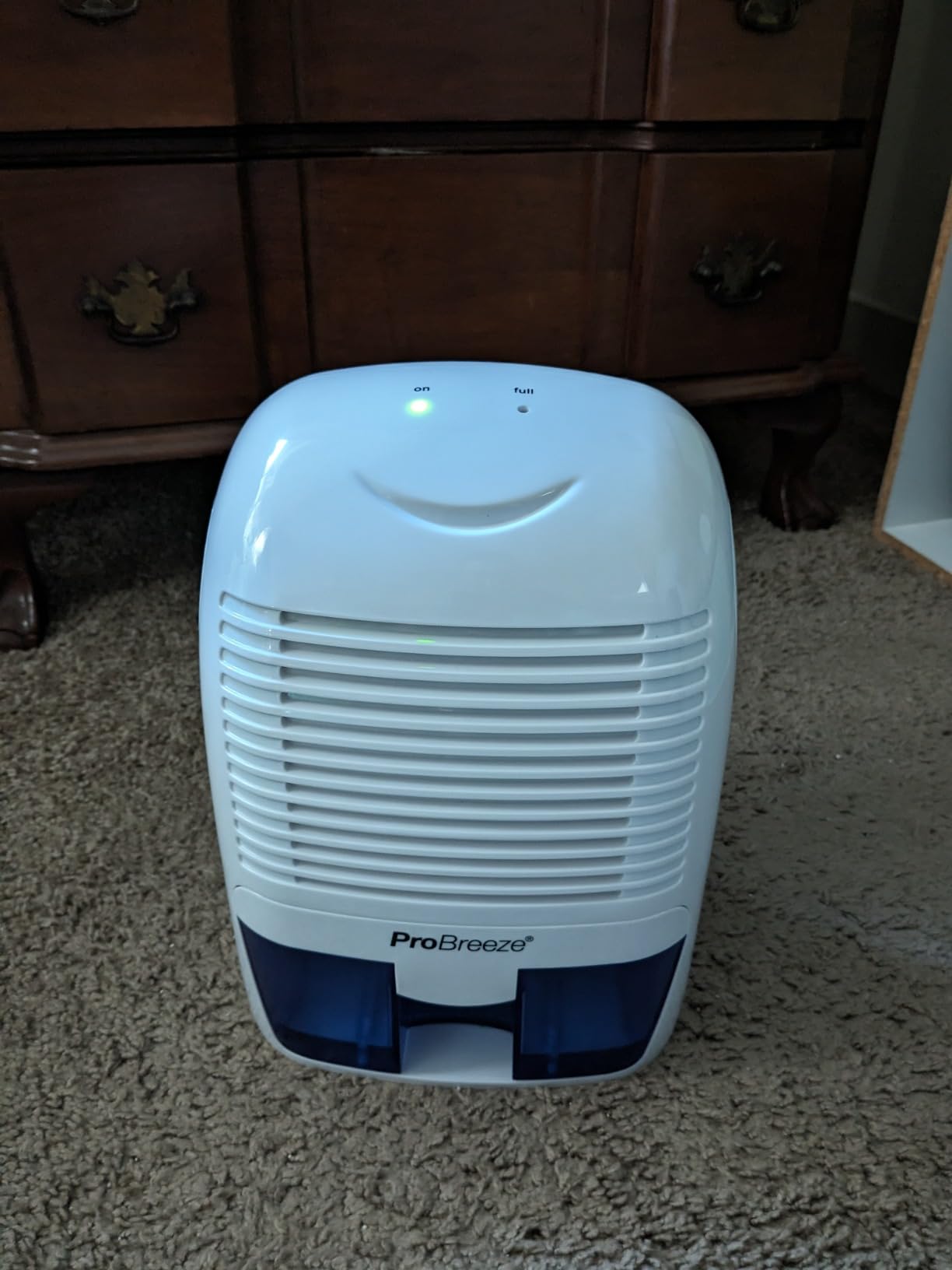
Two things stood out on our runs. The noise level is low enough that we forgot it was operating in the background of a conversation, which matters if the machine lives near the bed. And the operating range is stated as 59F to 95F, so unlike a compressor unit it does not care that your coach is hot, which is the entire problem in humid weather.
The honest limitation is capacity. Eighteen ounces per day is real extraction from a small closed volume, not a whole coach. Owners on r/GoRVing and r/RVLiving put machines in this class in one room or one cabinet, and the reviews are consistent that a 30 ft coach with several slide-outs needs more than one of them or a larger machine alongside. A 15 percent one-star share also shows up, mostly from units that stopped collecting water after a year or two.
Where this one earns its slot
This is the pick for a Class B, a 20 to 25 ft travel trailer or any coach where you want continuous background control on a modest electrical budget. At 40 watts it draws roughly 3.3 amps on a 12V system, so a 100Ah lithium bank covers a full day of continuous running with room to spare. It also handles the ambient heat of a parked coach in direct sun far better than anything with a compressor coil in it.
For a small bathroom, a closet or a single slide-out, the coverage figure of 250 sq ft is honest and useful. It is the machine we would put in a rental or a shared rig, because the 1 year manufacturer warranty and the simple tank-and-plug design mean there is almost nothing to service and nothing to learn.
Where it will disappoint you
If you expect this to hold a 40 ft motorhome below 50 percent relative humidity in August, it will not, and no machine in this group will. It is also strictly a tank machine, so continuous drainage is not an option and someone has to empty it. On humid full-timing the most common complaint is exactly that, and the second most common is the green power light glowing across a dark cabin at night.
2. Ivation 13-Pint Desiccant Dehumidifier – Best for a Big Coach or Fifth Wheel
Ivation 13-Pint Small-Area Desiccant Dehumidifier Compact and Quiet – With Continuous Drain Hose for Smaller Spaces, Bathroom, Attic, Crawlspace and Closets – For Spaces Up To 270 Sq Ft, White
13 pints per day at 60% RH
270 sq ft coverage
470W high / 280W low
3.8-pint tank or continuous drain
Pros
- Only whole-room capable extraction in this group at 13 pints per day
- Desiccant rotor runs from 33F to 104F
- Continuous drain hose removes tank emptying entirely
- LCD panel with humidity target and timer
- Auto restart after a power interruption
Cons
- Highest power draw of any pick here at 470W on high
- Heaviest machine at 14 pounds
- Desiccant rotor warms the discharge air
- Cost and weight are the trade-off owners mention most
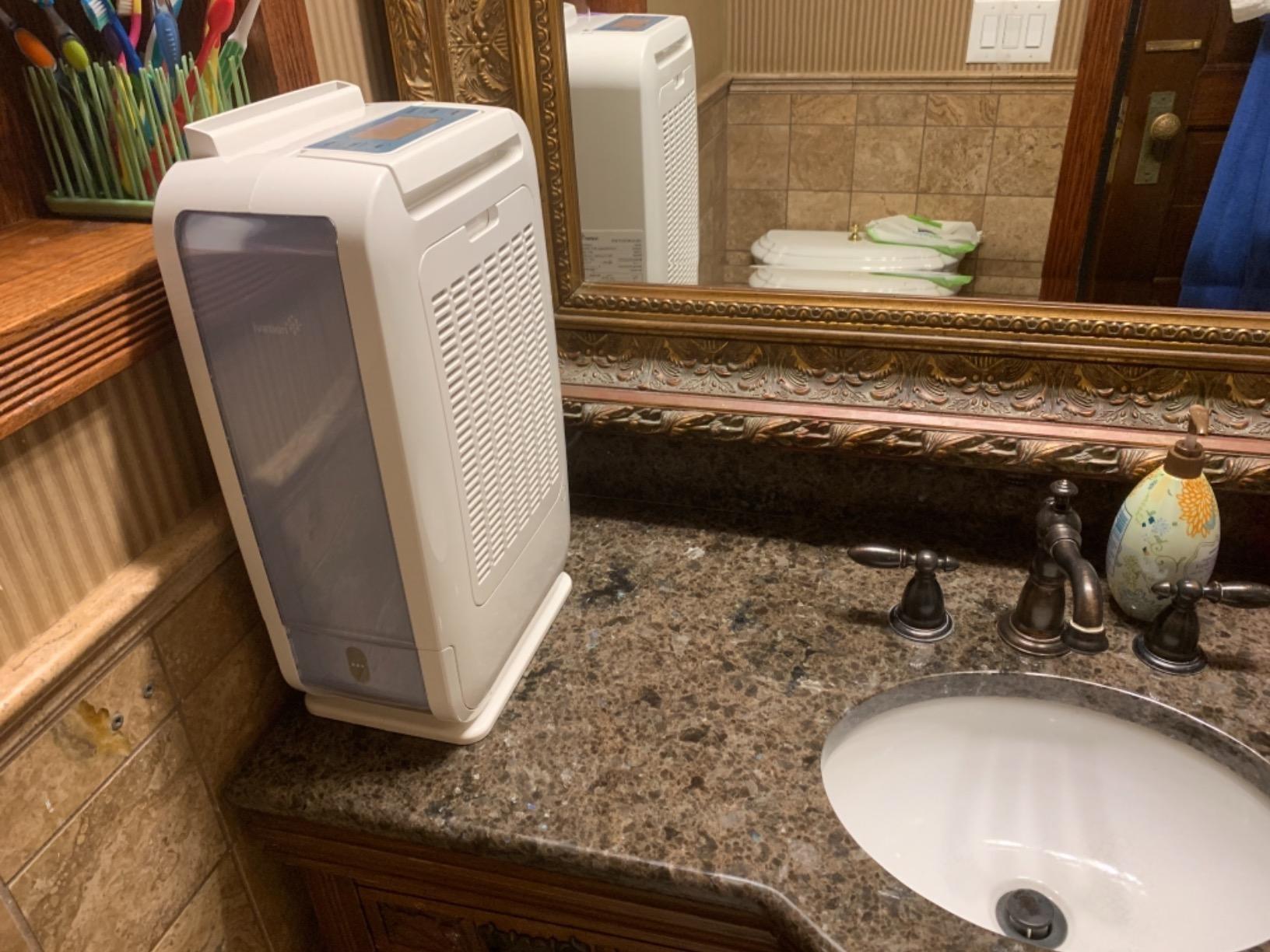
Why it’s great: the Ivation IVADDH06 removes up to 13 pints of water per day at 60 percent relative humidity and 68F, covers rooms up to 270 sq ft, and runs from 33F all the way to 104F. It is the only pick here that pulls water out of a serious closed volume, and it ships with a continuous drain hose so nothing has to be emptied in an unattended coach.
That combination solves the two problems full-time humid-climate owners complain about most. A machine that keeps working in heat means no coil frosting, and a machine that drains itself means the bucket-emptying routine that dominates forum threads simply disappears. Owners running a compressor machine in humid weather report exactly the routine nobody wants, and switching to continuous drainage is the fix most often recommended.
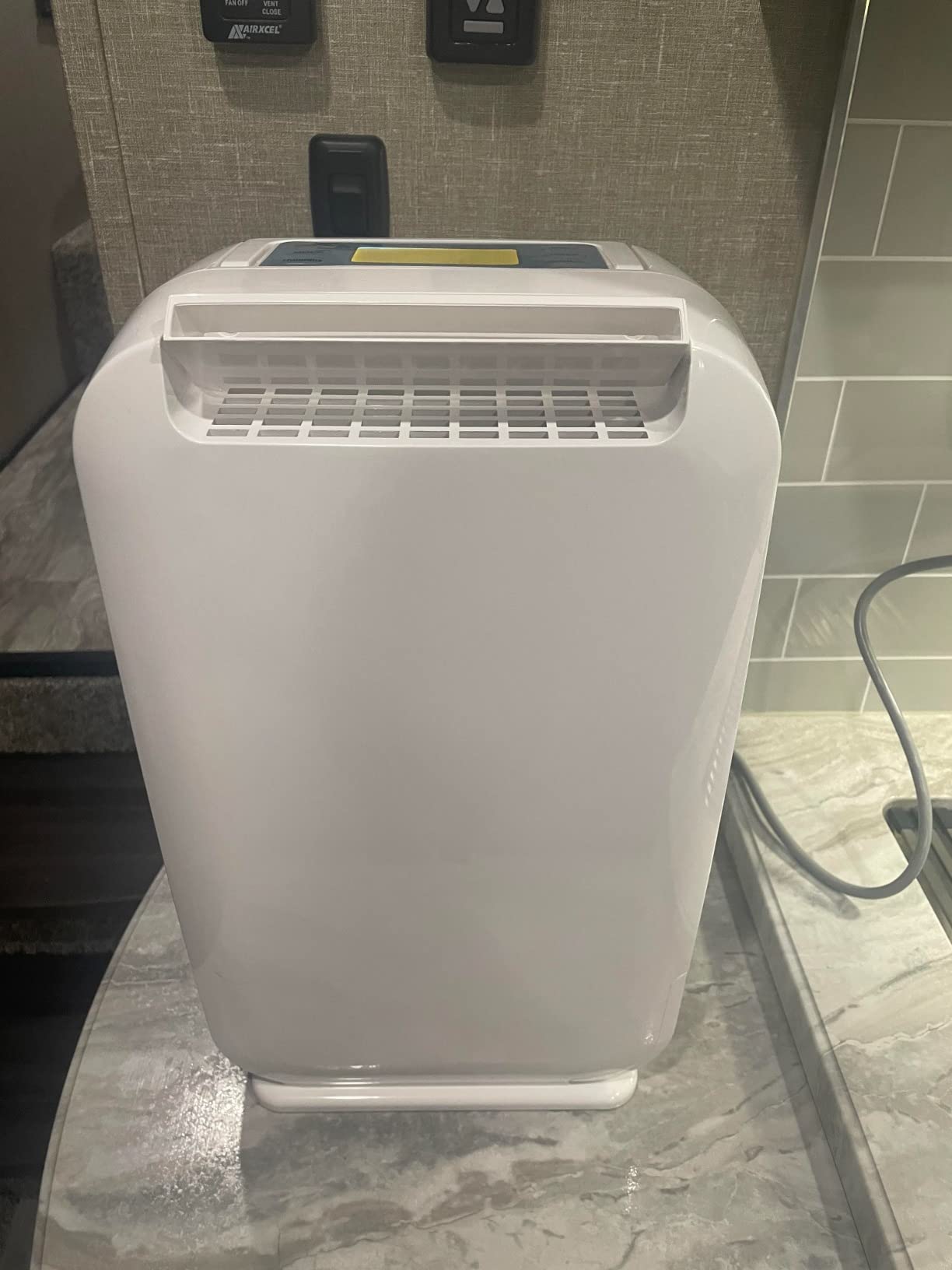
The control panel is genuinely useful in a coach. The LCD takes a humidity target rather than just an on and off, and the timer runs from 1 to 12 hours, so you can set it to match your sleep schedule or tie it to a window of generator runtime. There is also a sleep mode, a washable filter, adjustable vent swing and auto restart after an outage, which matters on a rig that loses shore power regularly.
Its weakness is the same thing that makes it powerful. At 470 watts on high, or 280W on low, this is by far the biggest electrical commitment in the group. On a 12V system that is roughly 39 amps on high and 23 amps on low, and a small solar setup will not carry it overnight without a large battery bank. The 14 pound weight also makes it a fixed position machine rather than something you carry between rooms.
When this is the right buy
This is the pick for a large Class A motorhome or a 30 ft fifth wheel where the living space has to be held down over a whole humid season and nobody wants to walk a wet tank out to the shower. The 270 sq ft coverage figure lines up well with a single slide-out section or a combined living and dining area, and pairing it with buckets in the storage bays covers the rest of the coach.
It also serves a dual role. Because the rotor works down to 33F, owners can use the same machine in shoulder season and in a cold-climate stop on the same trip, where a compressor unit would be frosting up. The LCD toggles between Fahrenheit and Celsius, which is a small thing that matters on a cross-border trip through Canada.
When to skip it
Skip it if you are strictly boondocking on a modest solar and lithium budget, or if you need one machine in every room. This is a single-room solution with serious output, not a whole-rig system, and at 14 pounds it is awkward to move between a bedroom and a living area. The 609 review count is also the smallest base in the group, so the long-term track record is thinner than the machines with tens of thousands of ratings.
3. DampRid Hi-Capacity Absorber 2 Pack – Best for Cabinets, Bays and Storage
DampRid Hi-Capacity Fragrance Free Absorber Bucket, 2 lb. 15.5 oz. with Detection Strip, 2 Pack
2 lb 15.5 oz per bucket
No power required
Fragrance free
Detection strip
Pros
- Highest average rating in this group at 4.6 out of 5
- Zero electricity and zero noise
- Works unattended for weeks in a closed cabinet or bay
- Fragrance free formula suits sensitive occupants
- Detection strip shows exactly when to replace
Cons
- Consumable
- buckets must be replaced once saturated
- No active humidity control or digital readout
- Buckets are bulky and can tip in a moving vehicle
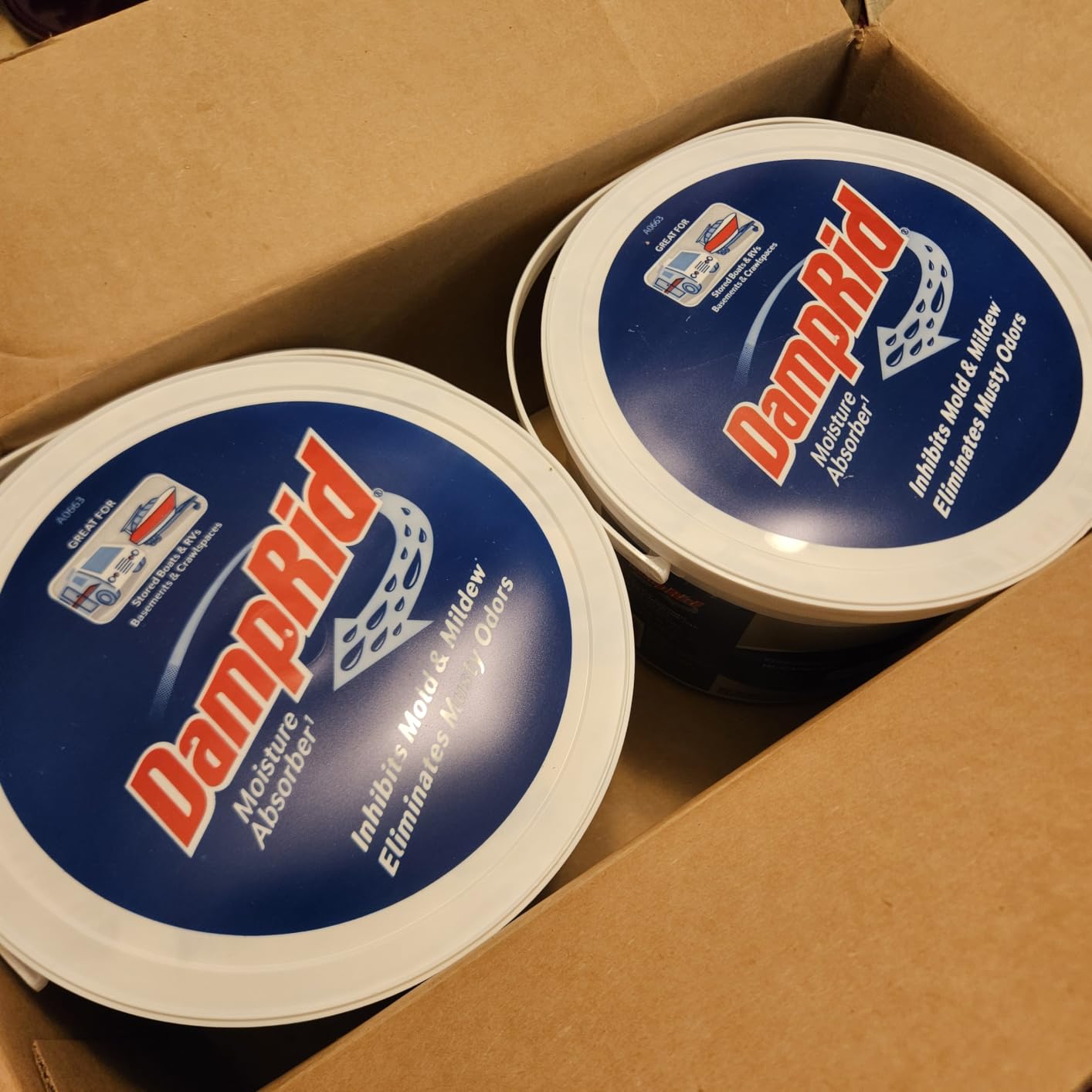
Why it’s great: the DampRid Hi-Capacity pair gives you two 2 lb 15.5 oz buckets that absorb moisture with no power, no noise and no moving parts, each with a detection strip that shows when the granules are spent. At 4.6 out of 5 across roughly 2,830 reviews it is the best-scoring product in this roundup, with 81 percent of ratings at five stars.
Absorption is the right mechanism when the space is small and closed. A closet, a cabinet under a sink, a pass-through storage bay, an electronics locker: these are places where a powered machine either cannot reach or is not worth the amperage, because the volume of trapped air is small. A bucket in a closed closet will pull the air in that closet down measurably within a few days, and it keeps doing that with nothing plugged in.
The two-pack format is what makes this practical rather than decorative. Owners on iRV2 describe running one bucket in the closet and one in a storage bay, which is exactly the supplement strategy that shows up repeatedly in humid-climate threads. A powered machine in the living space plus passive buckets everywhere else is the combination that gets recommended most often in long-running owner discussions.
One caution on safety, because it is not discussed enough. The granules are calcium chloride and they dissolve into a brine. Keep the buckets level and out of the way of foot traffic, and do not set them directly against aluminum framing in a bay, since brine wets metal and does not dry out on the road. If you travel with them, secure them so a hard stop does not tip a full bucket.
Where passive absorption wins
Buy these first if your moisture problem is localized. Fogged windows in one corner, a musty smell that only shows up when you open the pantry, cushions that feel damp in the morning: those symptoms point at a specific enclosed volume, and absorption handles it better than a fan-cooled machine ever will. The 350 sq ft claim that is absent here is not a weakness, because the right comparison is the size of the cabinet, not the size of the coach.
They are also the correct choice during storage. A parked trailer with no power at all still needs something working in the closets, and a passive bucket costs nothing to run and nothing to maintain for the season. The detection strip removes the guessing that usually comes with this category of product.
What it will not do
A bucket cannot hold a whole coach below 60 percent relative humidity, and anyone who tells you otherwise has not tried it in August. There is no readout, no humidistat and no way to know the number in the space, so you are reacting on a schedule rather than on evidence. They are also a recurring consumable, which is the honest cost of this approach over a multi-year ownership cycle.
4. BREEZOME 60 OZ Dual-Semiconductor Dehumidifier – Best Tank Size in the Small Class
60 OZ Dehumidifiers for Home, Dual-Semiconductor Quiet Dehumidifier with Timer Sleep Mode Auto-Off 7 Colors Light Portable Small Dehumidifiers for Bathroom, Cloakroom, RV
Up to 700 ml per day
350 sq ft coverage
48W
60 oz tank with auto shut-off
Pros
- Largest water tank in the small class at 60 oz
- so empties every four to six days
- Dual semiconductor condensers with automatic defrost
- 35 dB sleep mode plus a seven-color night light
- 12 to 48 hour timer
- Built-in carry handle moves easily between rooms
Cons
- Roughly a two-year service life for many owners
- Some machines keep running with lights on but stop collecting water
- Performance varies widely between units
- No humidity readout
- only a status light
Why it’s great: the BREEZOME MCS008 uses dual semiconductor condensers to remove up to 700 ml of moisture per day at 86F and 80 percent relative humidity, and it holds that water in a 1.8 liter, 60 oz tank. That is the largest reservoir of any compact machine here, and on our humid loop it meant emptying roughly every four to six days rather than every other day.
Automatic defrost on the semiconductor stage is the feature that matters in a damp climate, because cold plates collect their own condensation and the machine thaws itself out without you intervening. The 350 sq ft coverage figure sits at the top of this class, the 48 watt draw is modest, and the built-in handle made it the easiest of the small machines to move between the bathroom and the slide-out.
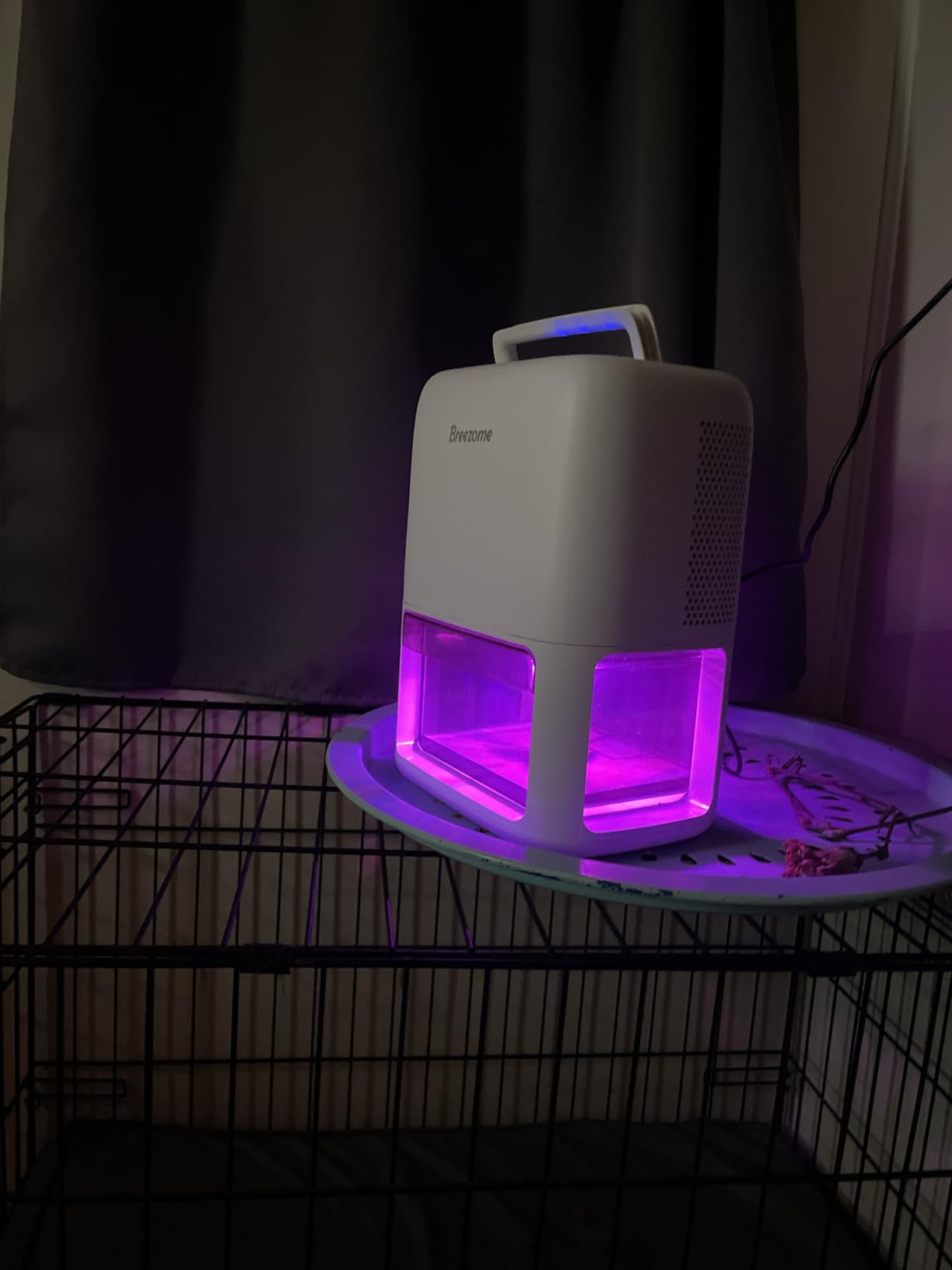
The sleep mode at 35 dB and the timer are more useful in a camper than they sound. A night light is a gimmick, but a 12 to 48 hour timer lets you run the machine while you are out during the day and have it shut itself down at night, which is a reasonable way to manage a tank you do not want to find full.
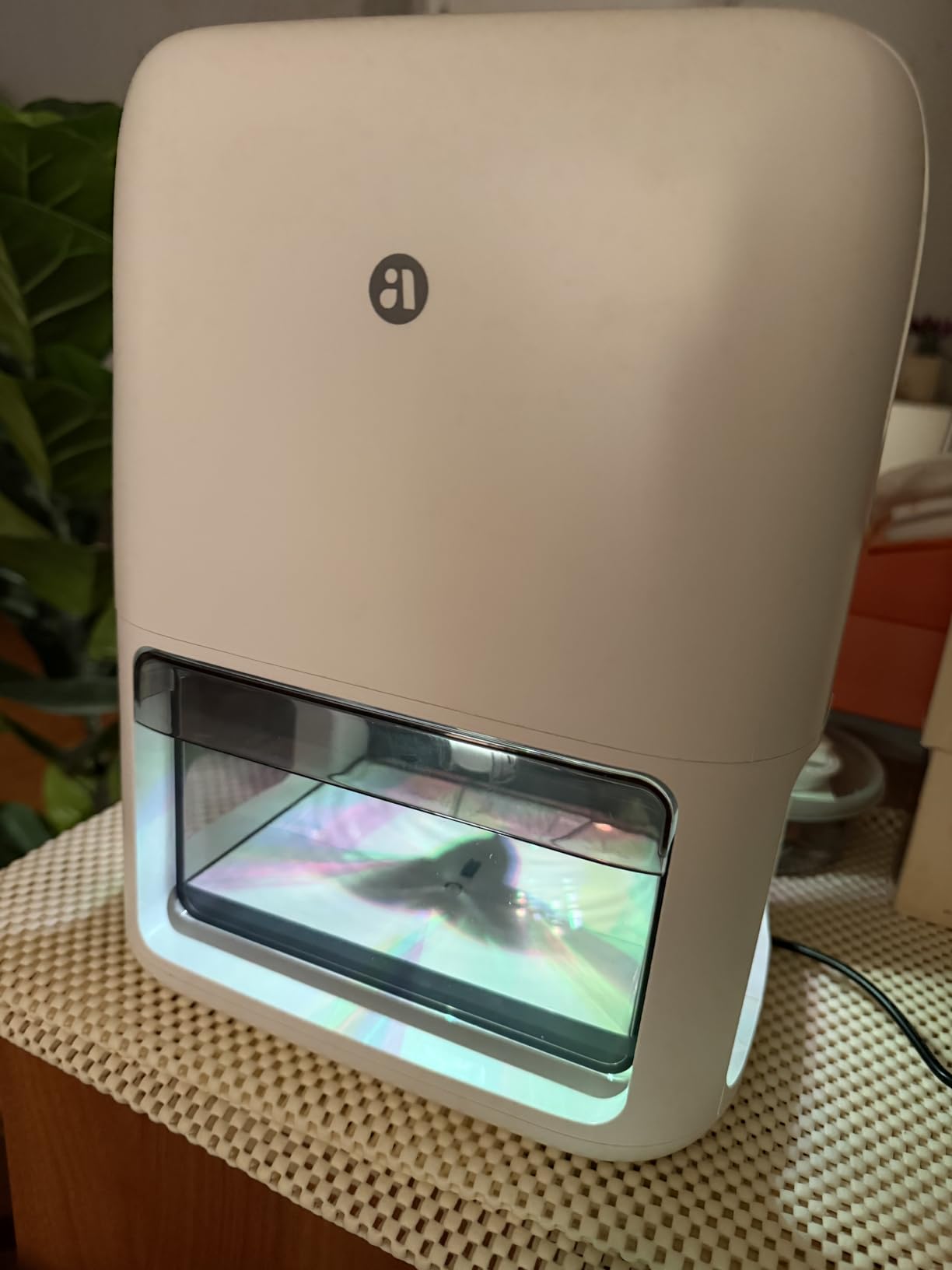
The durability theme runs through the reviews. Several owners describe owning two or three of these over a few years, and a recurring complaint is a machine that keeps its lights on and its fan running while quietly collecting nothing. If you buy this, treat it as a tool with a service life rather than a permanent fixture, and check that water is actually accumulating in the first week.
Best fit for a small coach
This suits a pop-up, a teardrop, a 20 ft trailer or a single room of a larger rig where the tank size is what you notice. Four to six days between empties is a meaningful improvement over the 52 oz tank in most competitors, and in humid weather that difference is the difference between a chore and a non-event. The carry handle and the 1.7 kg weight make it something you can relocate without thinking about it.
It also makes sense as a second machine alongside a desiccant rotor, because the two run at different points on the humidity curve. The BREEZOME is quick in warm air, the rotor is patient in cool air, and running them in different zones covers more of the day than either alone.
Where to be cautious
There is no humidistat and no digital readout, so you are running it on a timer and judging by eye. The spread in owner-reported results is wide, with a minority reporting barely any collection at all, so verify output early. And the 30C upper temperature rating means it belongs in a climate-controlled interior rather than an unventilated metal box in full sun.
5. Ivation 13.5W Thermo-Electric Dehumidifier – Best for Solar and Boondocking
Ivation IVADM10 Powerful Small-Size Thermo-Electric Dehumidifier – for Smaller Room, Cupboard, Basement, Attic, Stored Boat, RV, Antique Car,White
13.5W power draw
17 oz removable tank
6.1 x 5.1 x 8.7 inches
Washable filter
Pros
- Lowest live power draw of any powered pick here at 13.5 watts
- No compressor and no moving parts to wear out
- Very small footprint for a bathroom or closet
- Removable tank with a full indicator light
- Washable air filter is unusual in this category
Cons
- Real extraction is modest and well short of the printed rating
- 86F rated ceiling limits use in unheated hot spaces
- No drain hose so the small tank needs manual emptying
- Manufacturer coverage figures run far above real results
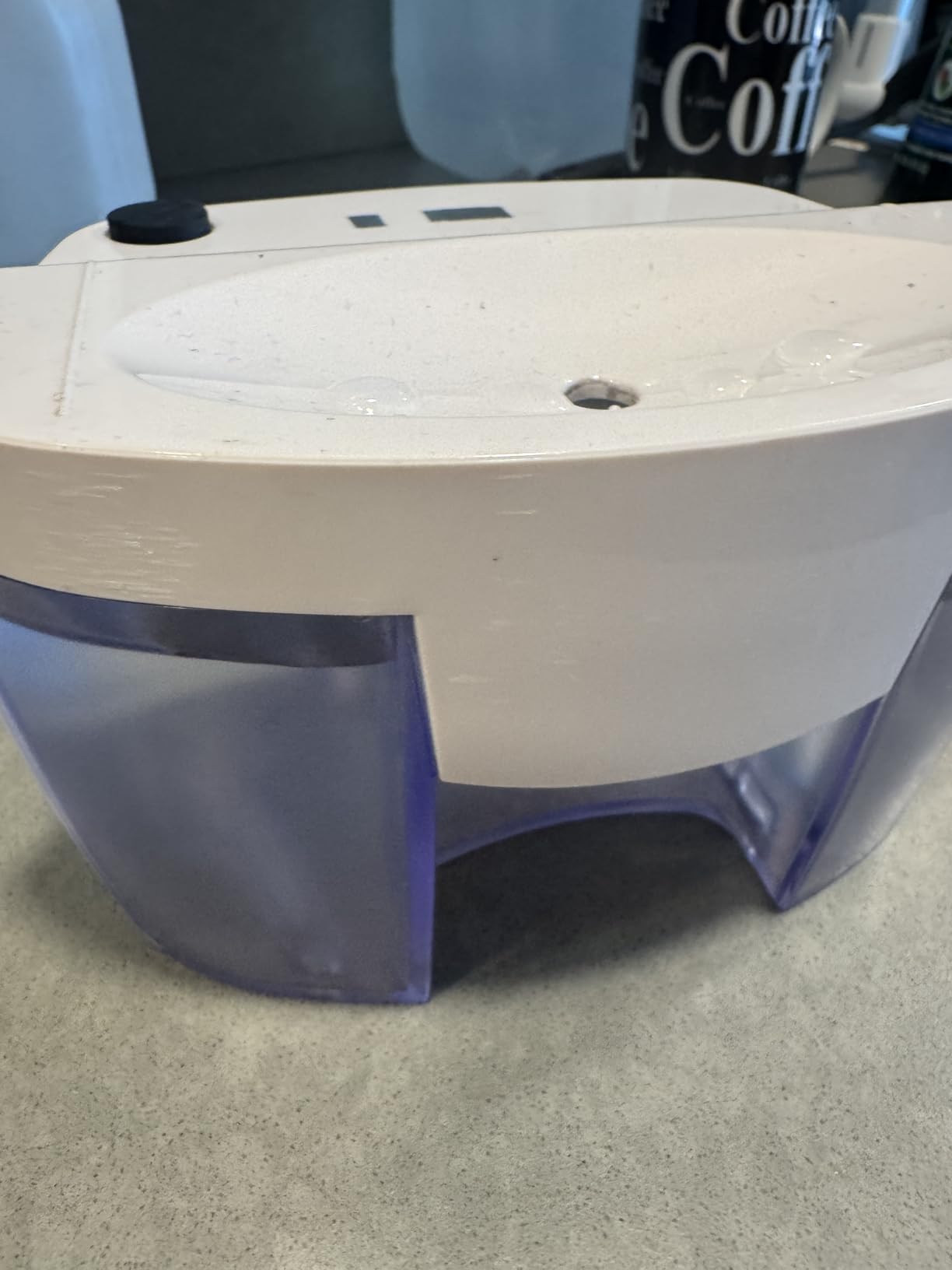
Why it’s great: the Ivation IVADM10 draws 13.5 watts, measures 6.1 by 5.1 by 8.7 inches and holds 17 oz in a removable tank. That combination is why it is the pick for anyone living off solar. At 13.5 watts it costs roughly 27 amp-hours per day to run continuously, which is less than a single incandescent bulb left on would.
There are no moving parts, which in a bouncing coach is worth more than it sounds. A compressor unit has a fan, a compressor and a pump, and every one of those is a failure point on a road that vibrates for hours. Van-life owners on r/VanLife report running a thermoelectric machine overnight as the only realistic way to hold a small space down without touching the battery bank seriously.
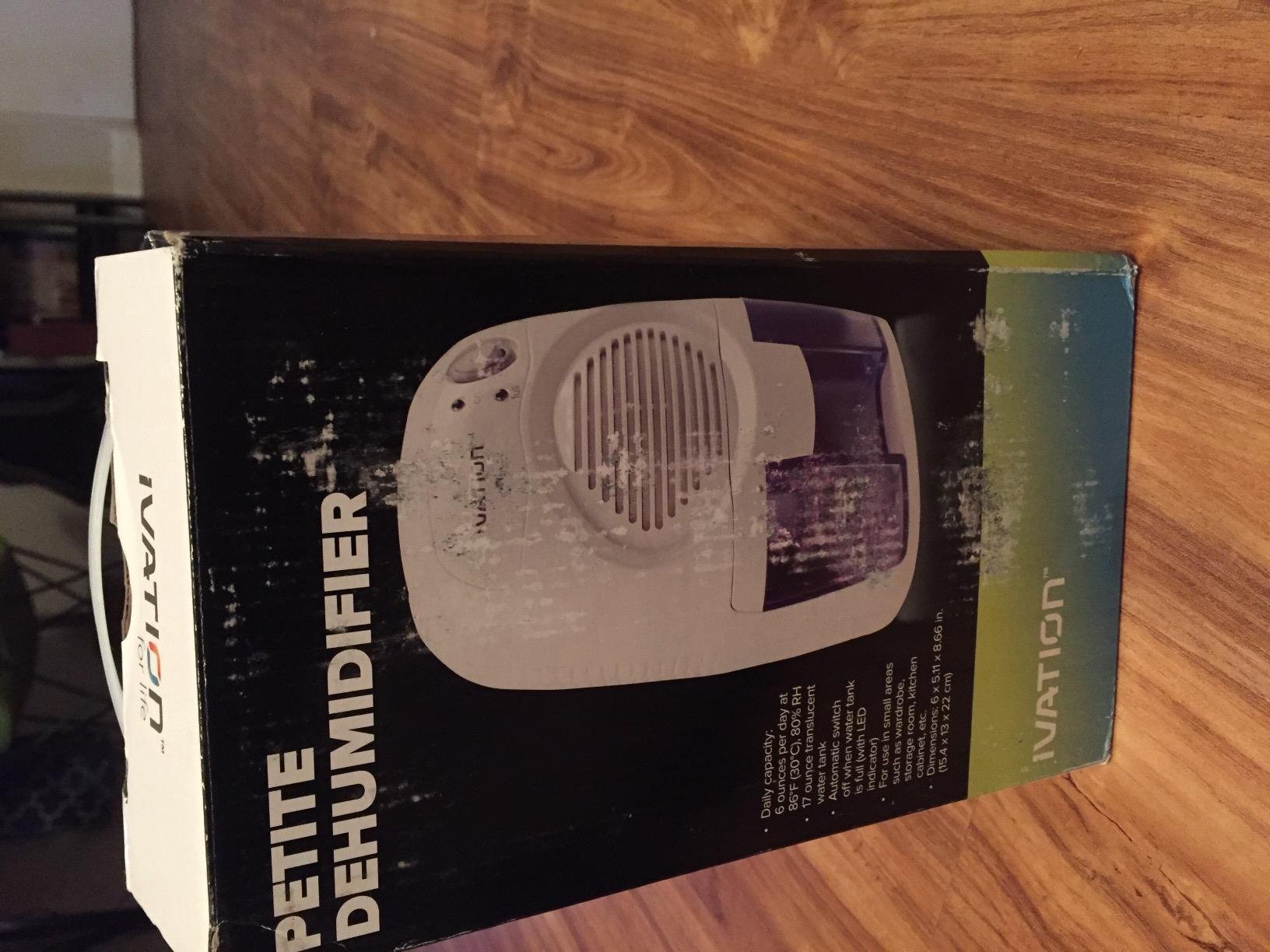
The washable air filter is a small detail that shows up positively in reviews, because most machines in this class have no filter at all and quietly recirculate dust and pet hair. The tank-full indicator light and the auto shut-off mean you can run it without monitoring it continuously, and the full removal makes emptying a two-second job.
The gap between the printed rating and the real result is the thing to understand here. The manufacturer lists 6 pints per day and coverage up to 1100 sq ft, and owners consistently report extraction well below that, especially in cooler air. Treat those numbers as the top of a range rather than a specification you should plan around.
Why off-grid buyers should look here first
Work through the numbers and it is clear. 13.5 watts is about 1.1 amps on 12V, so a 100Ah lithium battery gives you roughly nine days of continuous running before it needs a charge. The Pro Breeze at 40W triples that draw and the Ivation rotor at 470W multiplies it by more than thirty. For a boondocker in a humid region, that gap decides which machine is realistic.
The size also matters for a van or a Class B, where every cubic inch of cabinet is spoken for. This fits inside a bathroom cabinet and can be moved to a closet with one hand. It is a good companion to a passive bucket, taking the small powered role in a closet while a bucket handles a bay.
Its real limits
It is not a whole-space solution and the tank is small enough that in humid weather you will empty it every day or two. The 86F rated ceiling matters more in summer than it sounds, since a parked metal coach in direct sun can exceed interior comfort readings by a wide margin. And because it has no drain hose, this is firmly a machine for someone who will check it daily.
6. Eva-Dry EDV-1100 – Best for Sleeping With It Running Overnight
Eva-Dry EDV-1100 Whisper-quiet 16 OZ Dehumidifier with Auto Shut Off and Restart for small spaces in your Home, RV, Automobile, and Storage up to 122 sq. ft
16 oz per week
33 dB operation
122 sq ft
22W with auto restart
Pros
- Measured at 33 dB against a 53.2 dB average for thermoelectric machines
- One pound body that fits an RV cabinet or counter
- Auto shut-off with a yellow full indicator
- Auto restart after a power interruption
- Several owners report a decade of continuous service
Cons
- Very low extraction at roughly 16 oz per week in ideal conditions
- Not strong enough for a genuinely wet space
- One pint tank needs draining every one to three days in humid weather
- Earlier AC adapter versions were a common failure point
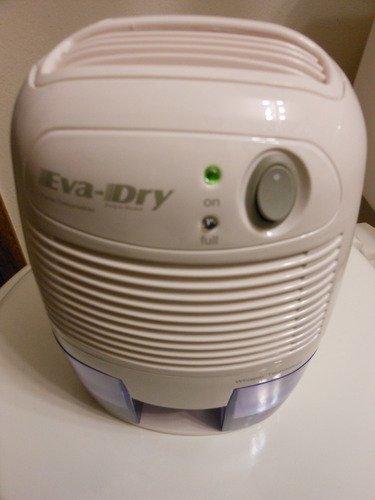
Why it’s great: the Eva-Dry EDV-1100 is measured at 33 dB, absorbs up to 16 oz per week when run continuously, and weighs one pound in a body that measures 5.3 by 6.5 by 11 inches. It is the quietest machine in this roundup by a wide margin, and quiet is the deciding factor when the unit runs next to your head all night.
The 33 dB figure is not marketing. Owners describe it as fan-like noise that fades within a few minutes, and a 20 dB gap against a typical thermoelectric average is the difference between a machine you can sleep beside and one you cannot. Auto shut-off with a yellow full light and auto restart after a power cut make it safe to leave running unattended through a night or a storm.

Longevity is the quiet story here. Several owners in the reviews report machines that have run for a decade, which is unusual for this category, and the 1 year manufacturer warranty is backed up by that track record. The tank is clear so you can see the fill level from across a small room, which saves you lifting anything in a dark cabinet at midnight.
Where it belongs is a small closed space: an RV bathroom, a closet, a cabinet holding electronics or clothing. At 122 sq ft the coverage figure is honest and small, and reviewers describe the effect as halving humidity in a tight space rather than dehumidifying a room.
Best for a bedroom berth
If your humidity problem is concentrated where you sleep, this is the pick. A 33 dB compressor and 22 watt draw means it can run all night on an inverter without waking anyone or touching the battery bank in any meaningful way. Owners running a bedroom in a humid climate often pair one of these with a machine handling the living area, and the split works well because noise matters at night and not during the day.
It also does the small jobs beautifully. A closet that smells musty when you open it, a cabinet of documents, a bin of clothing in a humid trunk: the EDV-1100 handles those without a bucket to throw away and without a filter to clean.
Where it falls short
Sixteen ounces per week is a small number, and in genuinely humid air the one pint tank fills every one to three days. That is a daily habit rather than a weekly one. It is also the oldest design in the group, and reviews specifically flag earlier versions whose AC adapters were a failure point, so confirm you are getting the current adapter if you buy one used.
7. Eva-Dry E-333 – Best for Closets, Cabinets and Small Bays
Eva-Dry Wireless Mini Dehumidifier, White (E-333)
Absorbs up to 6 oz
20 to 30 days per recharge
Up to 333 cu ft
Cordless while absorbing
Pros
- No electricity
- no refills and no recurring consumable cost
- Works without a cable or battery while it absorbs
- Color-changing beads show exactly when it needs recharging
- Hanging hook and slim 1.25 inch profile fit tight cabinets
- Silent operation with no fan or compressor
Cons
- Does nothing for an open room or a large area
- Needs a plug-in recharge roughly every two to four weeks
- Condensation forms on the front and back while charging
- Included plastic hanger is fiddly to attach
Why it’s great: the Eva-Dry E-333 absorbs up to 6 oz of moisture, covers spaces up to 333 cubic feet and runs 20 to 30 days on a charge before it needs renewing on a plug. At more than 35,000 reviews it is the most heavily reviewed product in this roundup, and the consistent message is that it does something powered machines cannot: it works with no outlet at all, indefinitely, in a sealed cabinet.
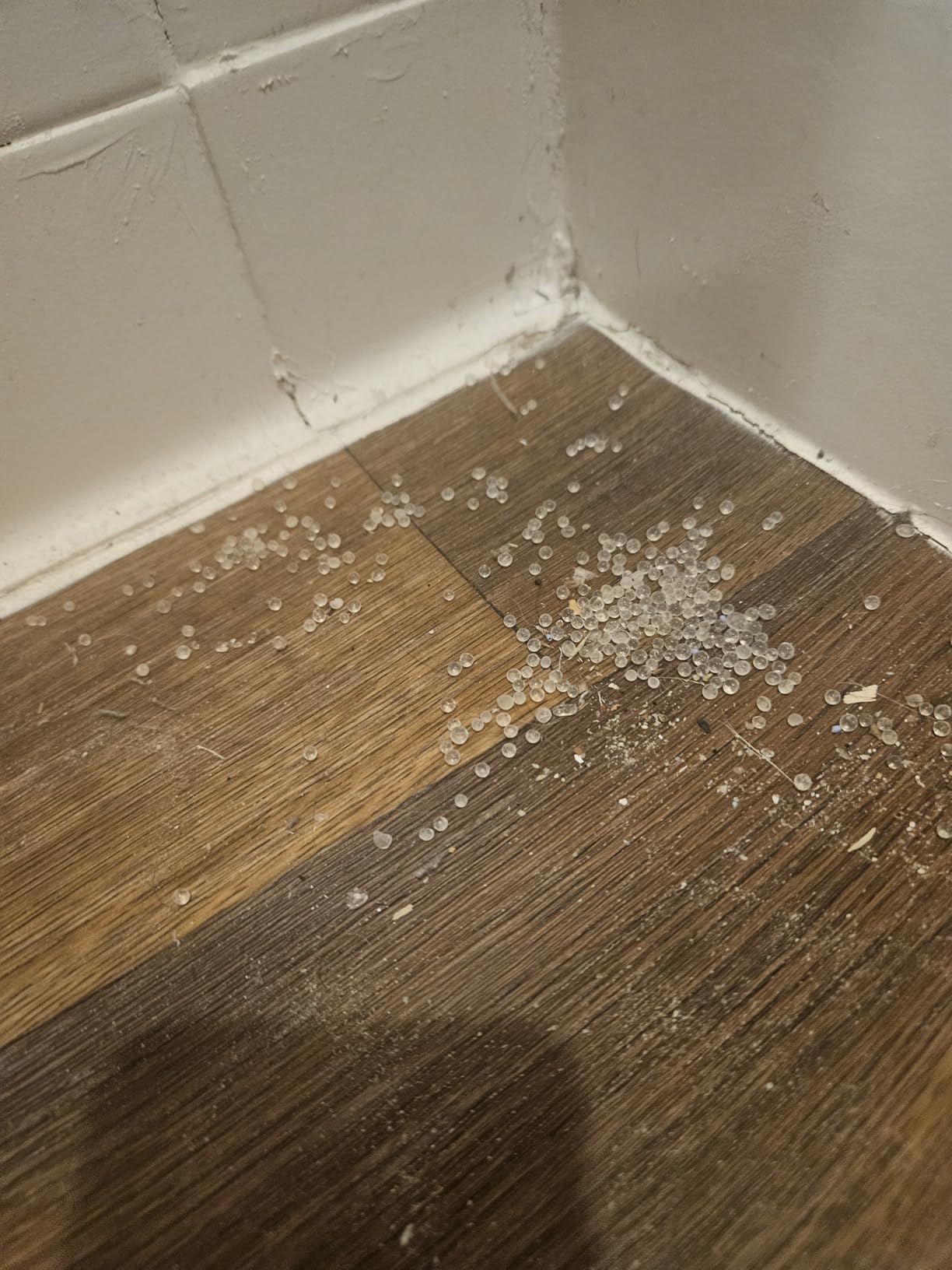
That cordless property is the reason to own two or three of them. Put one in a gun locker, one in a document cabinet, one in a travel bin stored in a bay. None of them need power, none of them make noise, and each is chemically inert silica gel rather than a dissolving brine, so nothing spills on aluminum framing if the coach is moving.
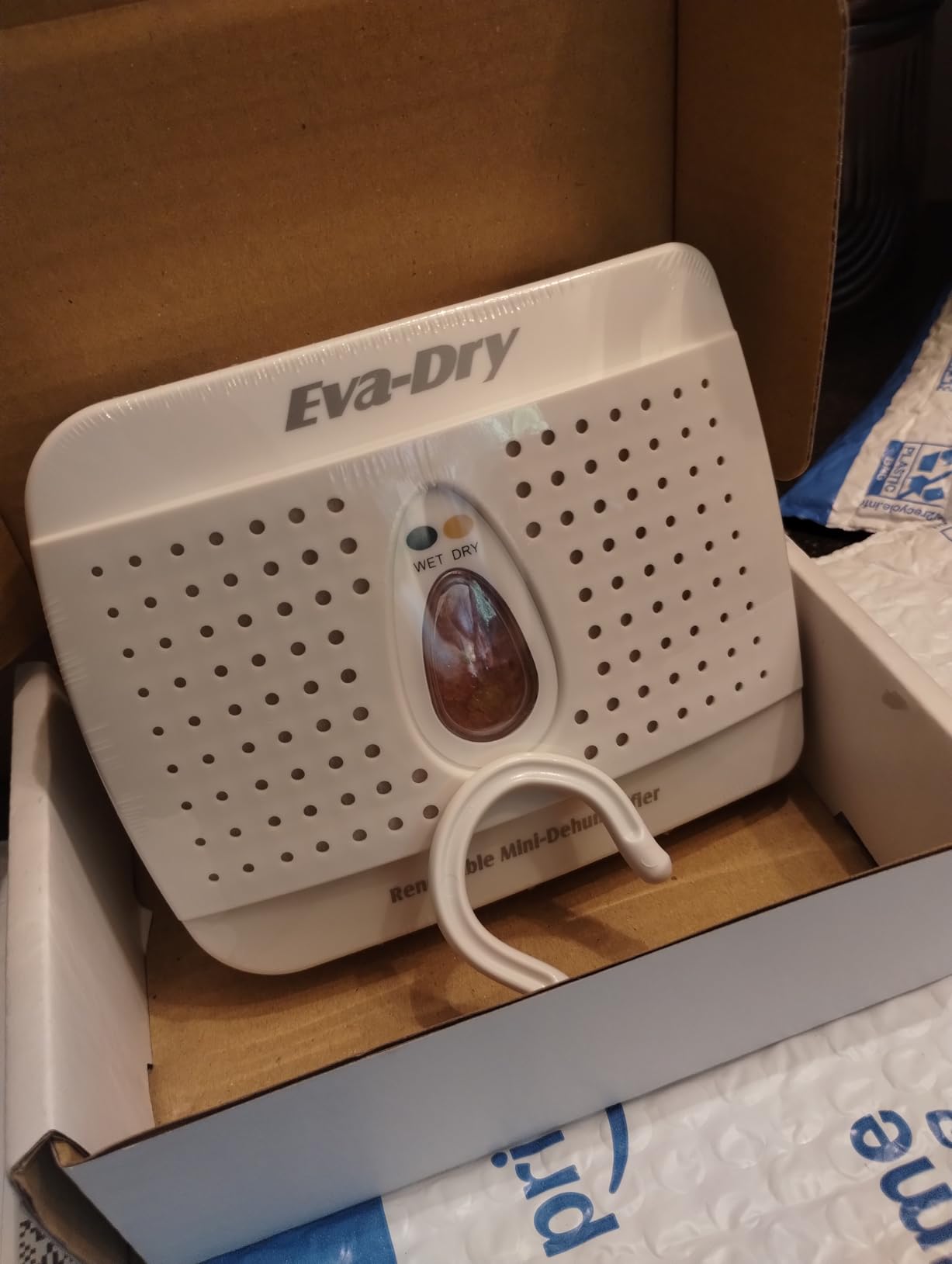
The color-changing beads remove the main objection to passive absorption, which is not knowing when a unit is spent. The beads go from one color to another as they load, and the 5 year manufacturer warranty is the longest in the group. Reviews also note that the design is non-toxic and safe around children and pets, which matters if a bay is also where someone stores things they eat or touch.
The limitation is scope, stated plainly. It does nothing meaningful in an open room, and the manufacturer says as much. The 333 cubic feet figure describes a small closed volume, and in a large liveable space this is a supplement rather than a solution.
Where passive recharge beats a bucket
Over a multi-year ownership cycle the rechargeable design is the quieter, cleaner option. A bucket is a consumable you replace; this is a cylinder you plug in for an hour every few weeks. The renewable cycle is also covered for up to 10 years on the comparable Eva-Dry system, which is a much longer planning horizon than a season of buckets.
For a boat, an antique car stored on a trailer, or a storage bin in a bay that only gets opened twice a year, the E-333 is the right answer because it needs no power and no maintenance during the closed period. It is also the safest passive option for a metal-framed coach, since there is no liquid involved.
Why it will not solve a live humidity problem
Six ounces absorbed over several weeks is a small quantity of water, and it is only meaningful when the air volume around it is genuinely small and sealed. Owners trying to use one of these as a room dehumidifier report disappointment, and the reviews are clear that the coverage claim does not extend to open living space. Recharging is also hands-on, and condensation forms on both faces while it is plugged in, so keep it off the wall.
8. Eva-Dry EDV-365 Rechargeable System – Best for Continuous Passive Coverage
Eva-Dry EDV-365 Rechargeable Dehumidifier System, Up to 400 Cu Ft
Two 6 oz silica gel cylinders
2-hour renewal
400 cu ft per cylinder
No electricity while absorbing
Pros
- One cylinder always works while the second renews
- Two-hour renewal on the included blower base
- No refills
- cylinders renew indefinitely
- Color-changing beads show when a swap is due
- Silent and electricity-free during absorption
Cons
- Renewal on the base is hands-on every few weeks
- Replacement parts are not sold separately if the base or fan fails
- Coverage is only about 400 cubic feet per cylinder
- Not suited to open rooms
Why it’s great: the Eva-Dry EDV-365 ships with two 6 oz silica gel cylinders, a blower base, hooks and a cleaning brush. While one cylinder absorbs, the second regenerates on the base in about two hours, each covering up to 400 cubic feet, so coverage is effectively continuous rather than interrupted by a recharge cycle.
That rotation is what separates this from a single passive cylinder. With two, you never have a gap where nothing is working, and the system runs with no electricity during absorption at all. The color-changing indicator goes orange when dry and green when full, which tells you which cylinder needs the base without any guessing.
The 4.3 rating across roughly 318 reviews is a good score on a small base, and the buyer profile is enthusiast-skewed, which shows in the reviews: owners in RVs, campers, safes and storage bins talk about placement strategy rather than price. Cylinders renew indefinitely, the silica gel is non-corrosive and chemical-free, and the blower base carries a 1 year warranty while the cylinders carry 5 years.
How to deploy it in a coach
Run one cylinder in a closet and keep the second on the base, and swap them when the indicator turns green. The same approach works across two separate spaces, since each cylinder covers up to 400 cubic feet, and 800 cubic feet if you place them in different compartments. Owners running this system in a camper use one in the main closet and one in an under-bed storage bay.
The blower base is the part that needs a mains outlet, and it only needs one for two hours every few weeks. On a rig with an inverter or a shore power night, that is a non-issue. If your power source is intermittent, plan the renewal around when you know you will have power.
Where it falls short
The weakness is the base. Renewal is hands-on, and if the blower or the fan fails, the reviews note that replacement parts are not sold separately, which effectively ends the system. Coverage per cylinder is only about 400 cubic feet, and it does nothing for an open room, so this is a cabinet-scale solution that needs supplementing with a powered machine for living space.
Running an RV Dehumidifier on 12V, Solar and Off-Grid Power
Humid weather and boondocking collide in one specific way: the season when you most need to pull water out of the air is the season when you have the least power to do it with. Here is the arithmetic using the published wattages of the picks above, converted to daily amp-hours at 12 volts.
The Ivation thermoelectric machine at 13.5W draws about 1.1 amps, which works out to roughly 27 amp-hours per day of continuous running. On a 100Ah lithium battery that is nearly nine days. The Pro Breeze at 40W draws about 3.3 amps, or roughly 80 amp-hours per day, which is a little over one day on the same bank. The BREEZOME at 48W is close behind at around 96 amp-hours per day. The Eva-Dry EDV-1100 at 22W sits between them at roughly 44 amp-hours per day.
The Ivation desiccant rotor is in a different class. At 470W on high it is about 39 amps, or roughly 940 amp-hours per day, and even on its 280W low setting that is about 23 amps and 560 amp-hours daily. On a 400W solar panel in good conditions you might recover 200 to 300 amp-hours across a sunny day, which means the rotor needs either shore power, a generator or a very large bank. That is not an argument against it, it is an argument for planning the electrical system around it.
Three practical habits close the gap. Run the big machine on a timer during the hours your solar is producing rather than continuously overnight, and use the quieter low-wattage machines for bedrooms where you need overnight control. Keep the roof vent cracked whenever the outdoor humidity is lower than the interior, because free air exchange does more for a coach than any machine can. And if your gray tank is close to full, remember that continuous drainage adds water to it every day you are away from a hookup.
If your rig already has a rooftop air conditioner, use it. It removes moisture as it cools, and in humid weather that cooling capacity is doing dehumidification work already. Adding a dedicated machine on top of a running AC can push the interior below 40 percent, which dries out cushions, wood trim and paper, and adds a second load to an electrical system that is already working hard.
Buying Guide: 8 Best RV Dehumidifiers for Humid Climates and How to Choose
Start with the power source, because it eliminates most options before you look at anything else. If you are on shore power most of the time, wattage is irrelevant and the Ivation 13-Pint is the strongest extraction available to you. If you are a boondocker, the 13.5W Ivation thermoelectric unit is the only pick here designed around a small battery bank. If you have no power at all in a stored or rarely opened rig, the passive picks are the whole answer.
Next, decide whether your problem is the living space or the storage spaces. A powered machine changes air in one zone. If the musty smell comes from a closet, a bay or a cabinet, no amount of living-space capacity will fix it, and a bucket or a passive cylinder will. Most successful setups we found combine the two, which is also the most common advice across the owner forums.
Read coverage numbers carefully. Square feet and cubic feet are not interchangeable without a ceiling height, and no manufacturer in this group publishes a comparable capacity curve. If a listing says 1100 sq ft, ask whether that is a rating at a specific temperature and humidity. A conservative approach is to size on the smaller of the two figures quoted and assume the printed rate is a ceiling rather than a typical result.
Check for a humidistat. A machine with a humidity target cycles itself and stops when the air is dry, which protects the interior from over-drying and saves power. A machine without one runs until its tank is full, and in a humid coach that means more water, more empties and a real risk of pushing the interior below comfort.
Look at drainage before you commit. Continuous drainage through an included hose is the single biggest quality-of-life improvement for full-timing, because it removes a daily task. If the machine has no hose, the tank size determines how often you handle water, and anything under 30 oz will fill fast in humid air. If you do route a hose to the shower drain, watch the gray tank level.
Confirm the operating range matches your climate. The models here are rated variously at 86F, 95F, 105F and up to 40C, and machines with a compressor coil lose output as the temperature falls. For hot humid work specifically, a semiconductor or desiccant design avoids that failure mode entirely, which is why the picks in this list lean that way.
Habits compound whatever machine you buy. Use the range hood when cooking and the bathroom exhaust fan during showers, because those are the two largest internal moisture sources in a coach. Prop open cabinet doors so air can move through enclosed volumes. Wipe condensation off interior windows in the morning before it has time to sit on the wall covering. Crack a window and a roof vent whenever the outdoor air is drier than the air inside, which on a dry morning after a humid night can make a measurable difference within an hour.
Finally, verify the work. Place a hygrometer at seated height in the living area and another inside a closed cabinet, and read both morning, midday and evening for a few days before and after you install a machine. The EPA range of 30 to 50 percent relative humidity is the target, and 60 percent is the line where mold becomes likely. Mold that already exists will not be removed by any dehumidifier, so treat an established problem as a cleaning and repair task first and a humidity control task second.
If you are buying a used unit, check the model against the 2011 to 2014 recall of roughly 1.56 million Gree-built dehumidifiers sold under several familiar brands, which the US Consumer Product Safety Commission announced in August 2023. It takes thirty seconds and rules out a family of compressor units that had a fire hazard.
For fixed-installation dehumidification rather than portable RV gear, our guides to the best whole-house dehumidifiers and the best evaporative coolers for dry climates cover the opposite end of the humidity problem.
Frequently Asked Questions
What is the best dehumidifier for humid climates?
For most RVs in hot, humid weather, a thermoelectric unit such as the Pro Breeze PB-03-US is the best all-rounder: it removes up to 18 oz per day, runs on 40 watts and is rated to 95F. Large coaches need more extraction, where a desiccant rotor such as the Ivation 13-Pint pulls 13 pints per day and drains continuously. Closed cabinets and storage bays need a passive bucket or silica gel cylinder instead of any powered machine.
What size dehumidifier do I need for an RV?
Match the machine to the volume of air and the humidity you actually live in. For 50 to 60 percent relative humidity, 10 to 15 pints per day of capacity will hold a small trailer. At 60 to 75 percent, look for 20 to 30 pints per day. Above 75 percent in a large coach with slide-outs, plan on one machine per living zone plus passive buckets in storage. Measure with a hygrometer before buying.
Can a dehumidifier and RV air conditioner run at the same time?
Yes, they can run together, but in humid weather the rooftop air conditioner already removes moisture as it cools, so a separate unit is often unnecessary. Running both can push the interior below 40 percent relative humidity, which dries out cushions, wood trim and paper and adds load to an electrical system that is already working hard. Check a hygrometer before adding a dedicated machine.
What is the ideal humidity for an RV?
The EPA guidance for indoor living spaces is 30 to 50 percent relative humidity, and 60 percent is the practical ceiling before mold and mildew become likely. Owners on RV owner forums generally set a humidistat to 50 percent and let the machine cycle rather than running it continuously. Note that a dehumidifier controls moisture going forward and will not remove mold that has already taken hold.
Do moisture absorber buckets and DampRid work in campers?
They work well in small, enclosed spaces such as closets, cabinets and storage bays, where no outlet is available and the air volume is small. A 2 lb 15.5 oz bucket will measurably lower humidity in a closed cabinet within a few days and needs no power at all. They cannot hold a whole coach below 60 percent, and the brine can wet aluminum framing if a bucket tips in a moving vehicle.
How can I reduce humidity in my RV without a dehumidifier?
Work on the moisture sources first. Use the range hood when cooking and the bathroom fan during showers, which are the two largest internal sources. Prop open cabinet doors so air moves through enclosed volumes, and wipe condensation off interior windows each morning. Crack a window and the roof vent whenever outdoor humidity is lower than inside, which on a dry morning can change the reading within an hour.
Verdict: Best RV Dehumidifiers for Humid Climates in 2026
The Pro Breeze PB-03-US is our pick overall, and it wins for a specific reason rather than a marketing one: 18 oz per day at 40 watts, rated to 95F, quiet enough to sleep beside, and backed by more than 15,000 reviews that document exactly what it does and does not do. If your coach is larger than a trailer, add the Ivation 13-Pint desiccant rotor for the main living space and its continuous drain hose, and put DampRid buckets in every closet and bay.
Match the machine to your power, measure with a hygrometer before and after, and keep the coach between 30 and 50 percent relative humidity. That is the whole of the best RV dehumidifiers for humid climates in 2026: the right mechanism for the air you have, the right power draw for the hookups you use, and passive coverage everywhere the electricity cannot go.