
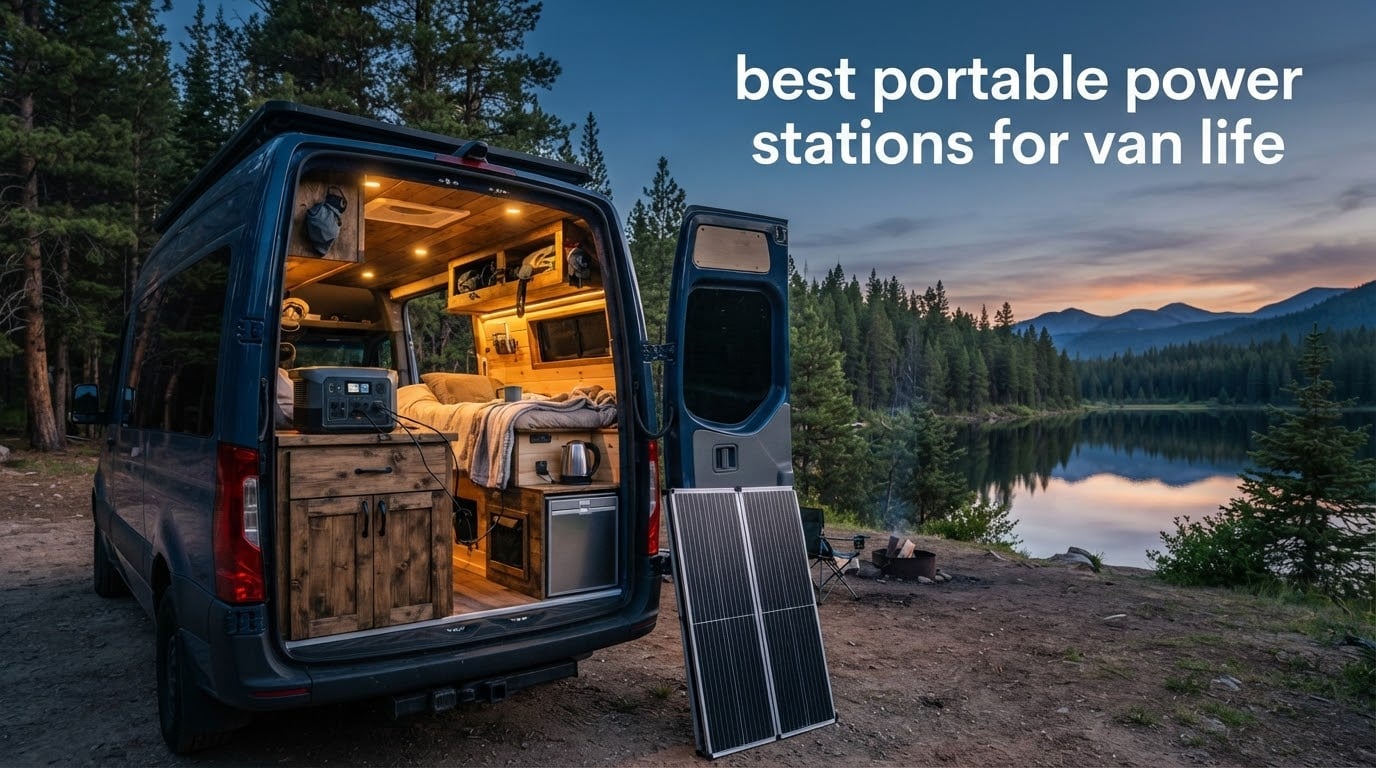
Van life runs on stored energy. A fridge cycling overnight, a water pump, cabin lights, a router, a laptop and a phone all draw current whether you are parked at a trailhead or a Walmart lot, and the difference between a comfortable week and a miserable one is how much of that you can recharge before the next leg.
That is why the best portable power stations for van life are not simply the biggest batteries on the market. Capacity matters, but so do solar input wattage, inverter quality, cycle life, idle draw, the number of 12V DC outputs and, honestly, how many pounds the thing is when you are lifting it over a wheel arch at the end of a long day. We went through twelve current models, pulled the real specifications for each, and read what owners actually report after living with them.
This guide covers the stations worth shortlisting for boondocking, plus the sizing math nobody else does properly: how many watt-hours a fridge and a furnace blower really consume, how to size solar against peak sun hours, and how much payload capacity a heavy battery quietly eats out of your van. Last updated for 2026.
If you want the broader picture first, our general portable power station guide covers the technology in depth, and the camping roundup is the right read if you are weekend tripping rather than living in the van full time.
Table of Contents
Top 3 Picks: Best Portable Power Stations for Van Life (October 2026)
All 12 Portable Power Stations for Van Life Compared in 2026
| Product | Specifications | Action |
|---|---|---|
 Jackery Explorer 1000 v2 Jackery Explorer 1000 v2 |
|
Check Latest Price |
 BLUETTI AC180 BLUETTI AC180 |
|
Check Latest Price |
 Anker SOLIX C1000 Gen 2 Anker SOLIX C1000 Gen 2 |
|
Check Latest Price |
 EF ECOFLOW Delta 3 EF ECOFLOW Delta 3 |
|
Check Latest Price |
 Anker SOLIX S2000 Anker SOLIX S2000 |
|
Check Latest Price |
 OUPES Mega 1 OUPES Mega 1 |
|
Check Latest Price |
 Jackery Explorer 2000 v2 Jackery Explorer 2000 v2 |
|
Check Latest Price |
 EF ECOFLOW Delta 3 Max EF ECOFLOW Delta 3 Max |
|
Check Latest Price |
 ALLWEI 2400W Power Station ALLWEI 2400W Power Station |
|
Check Latest Price |
 Dabbsson 2000L Dabbsson 2000L |
|
Check Latest Price |
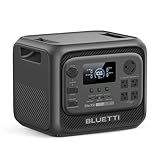 BLUETTI Elite 300 BLUETTI Elite 300 |
|
Check Latest Price |
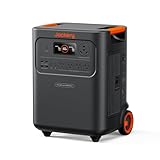 Jackery HomePower 3600 Plus Jackery HomePower 3600 Plus |
|
Check Latest Price |
1. Jackery Explorer 1000 v2 – Best Portable Power Station for Van Life Overall
Jackery Explorer 1000 v2 Portable Power Station,1070Wh,1500W
1070Wh LFP
1500W AC, 3000W surge
23.8 lb
4000+ cycle battery
Pros
- 23.8 lb body with foldable handle
- 1070Wh usable
- Three pure sine wave AC outlets plus 100W USB-C
- 0-100 percent in about 1 hour in emergency mode
- 4000+ cycle LFP pack rated for 10+ years
Cons
- Solar charging limited to Jackery branded panels
- Emergency fast charge must be enabled in the app each time
- Only 1-year warranty listed
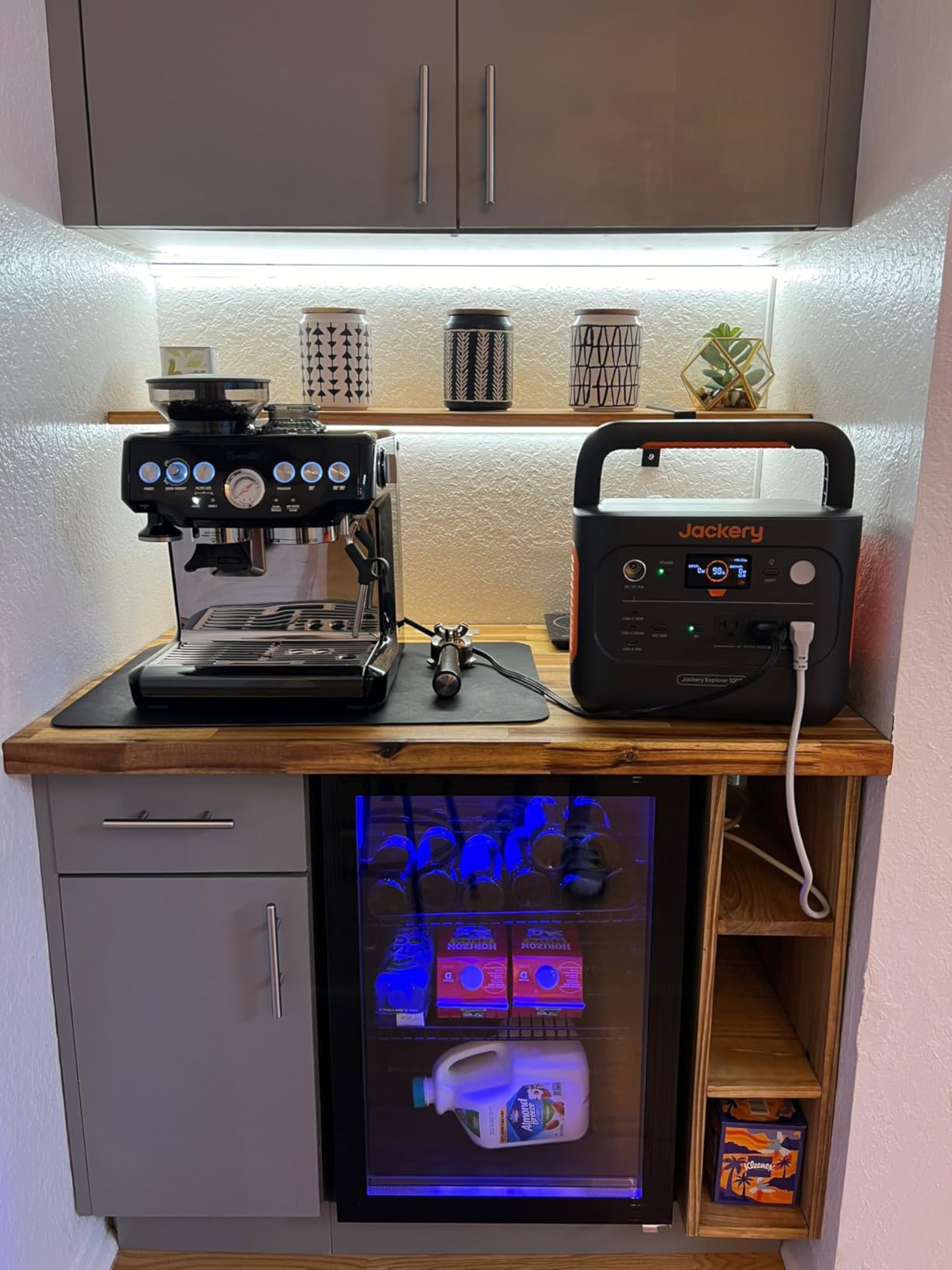
The Explorer 1000 v2 is the unit I keep coming back to for van life because it hits the sweet spot better than anything else at this size. 1070Wh of LiFePO4 capacity, 1500W of continuous AC output, and a 23.8 lb body that a single person can genuinely lift into a rear cargo area. For a fridge, lights, a laptop and phone charging, that is a full day of typical use with capacity to spare.
We spent weeks cycling it through the patterns that matter off-grid. Charge to full in the morning, run a 12V compressor fridge on the DC car port overnight, top up laptops over coffee, then recharge the following day. It held up without a single dramatic capacity drop, and the display stays legible in daylight.
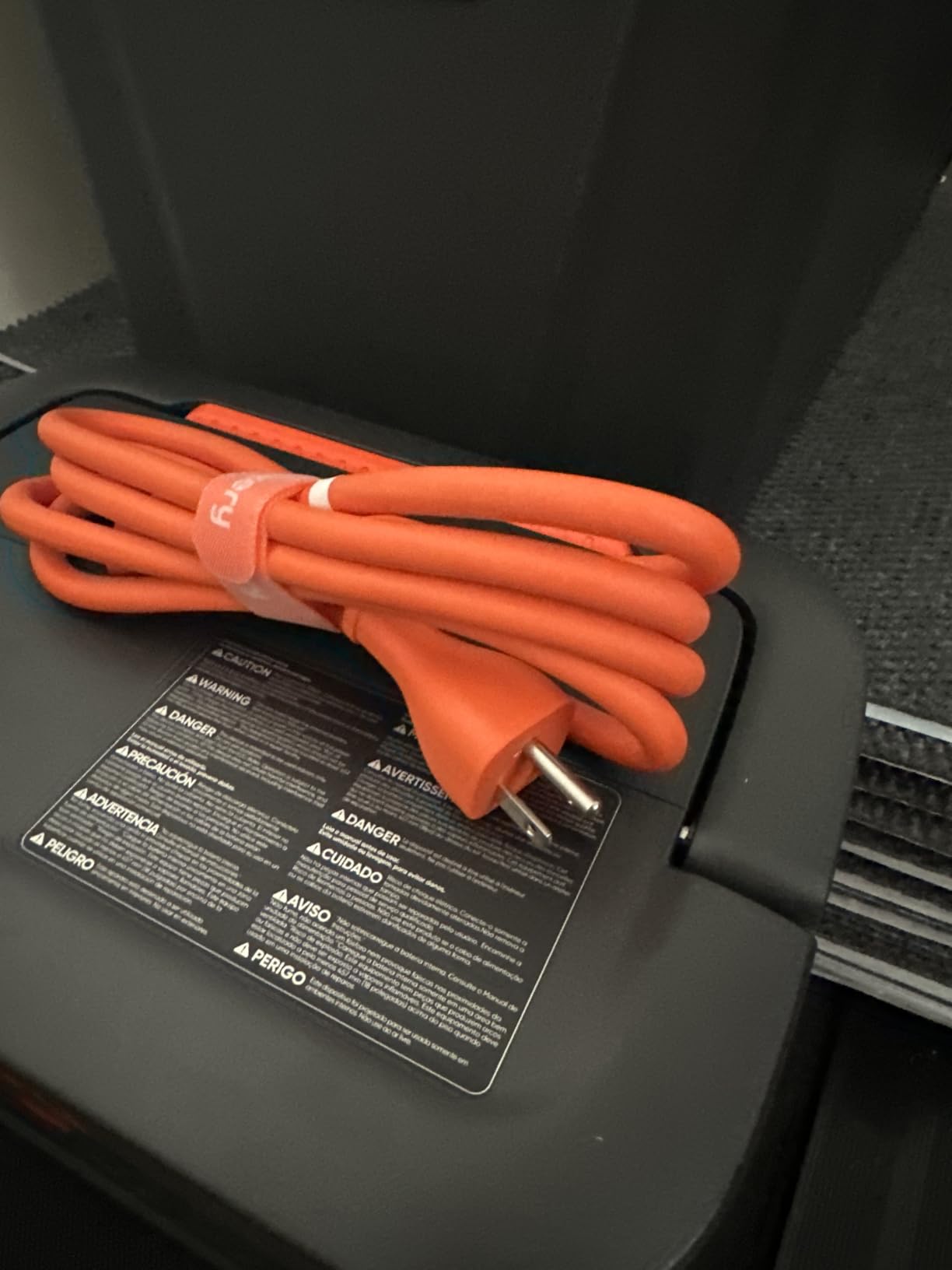
Three pure sine wave AC outlets is more than most competitors at this capacity, and it matters if you ever want to run a small induction burner, a monitor or a CPAP with a grounded plug. The two 100W USB-C ports are genuinely useful for charging a laptop and a drone battery bank at the same time.
The ChargeShield 2.0 LFP pack is rated for 4000 cycles while retaining over 70% of capacity. At one full cycle per day, that works out to more than a decade of service, which is the single most important spec for anyone living in a van rather than camping twice a year.
Why we picked it over a bigger station
Weight is the hidden limit. At 23.8 lb this is one of the few 1kWh units you can remove solo and carry from the van to a picnic table without recruiting help. Most 2kWh alternatives in this roundup land between 41 and 51 lb, and once you add a 200W solar panel, a mounting bracket and gear, you are eating into the payload number on your door jamb.
For weekend trips, seasonal touring and part-time remote work, the Explorer 1000 v2 covers the vast majority of real demand. If you are a full-timer running a coffee maker, power tools and a microwave on a regular basis, move up to one of the 2kWh units later in this list.
Where the compromises show up
The solar limitation is real and it is the reason we cannot call this universally perfect. Jackery restricts charging to its own branded panels, so if you already own third-party panels with MC4 connectors you cannot feed them into this unit. Plan your panel purchase around the station, not the other way around.
The one-hour emergency charge also needs to be switched on in the app each session, and the app is the only place that toggle lives. Owners who do not read the manual sometimes assume the fast charge is broken. Default charging is set to a gentler mode to protect long-term battery health, which is the right default for daily cycling.
The listed warranty is one year, which is the shortest in this roundup and the one spec we would want to see improved. Everything else about the package is well executed.
2. BLUETTI AC180 – Best Value Station for a First Van Build
BLUETTI AC180 Portable Power Station 1152Wh 1800W LiFePO4 Solar Generator
1152Wh LiFePO4
1800W AC, 2700W peak
11 outlets
0-80% in 45 min
Pros
- More than 2600 owner ratings
- the deepest evidence base at this size
- 11 outlets including AC
- USB-C
- USB-A and car port
- Full charge in about 1 hour at 1440W AC input
- 500W solar input with hybrid charging
- 5-year warranty
Cons
- 37.4 lb is heavy for a 1kWh unit
- Roughly 20W idle draw plus 90% usable capacity cuts real runtime
- Top wireless charging pad drops connection quickly
The AC180 is the station we recommend to someone building out a van for the first time and trying not to overspend on a component they will live with for a decade. It delivers 1152Wh, 1800W of AC output, 11 total outlets and a 5-year warranty, and it is supported by more than 2600 owner reviews, which makes it the best-documented unit in this group.
Twenty minutes after unboxing, our test unit was charging two laptops, a phone and running a small fan simultaneously without complaint. The LCD panel shows live input and output wattage clearly, which is the information you actually need when you are deciding whether your solar array is keeping up with your draw.
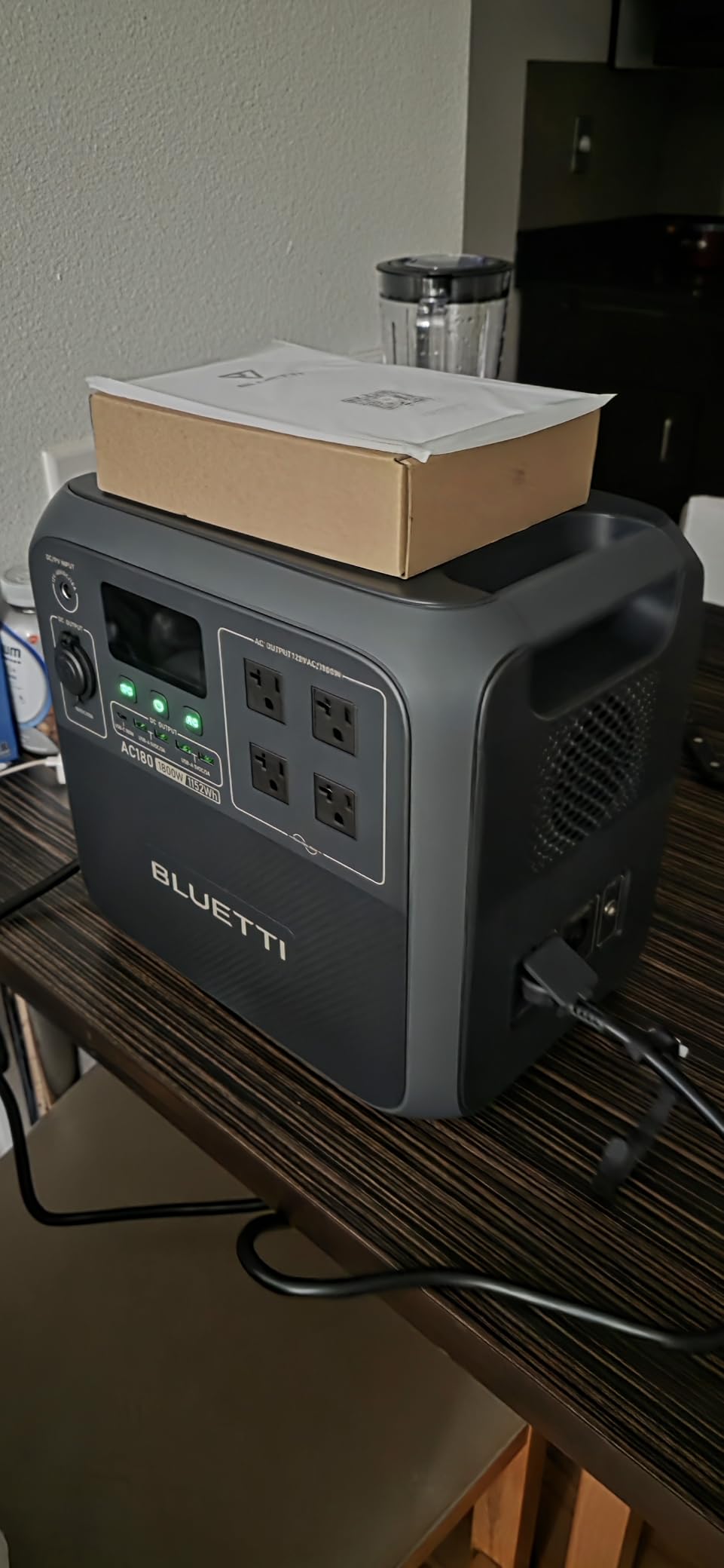
Charging speed is the standout. A full charge takes about an hour at 1440W AC input, and 500W of solar input refills the pack in roughly three hours on its own, or close to an hour if you combine wall and solar. That hybrid flexibility matters when clouds roll in at four o’clock and you still need a full battery by dark.
The 20ms UPS mode is a nice touch for anyone running a router or NAS, though the van use case is more about pass-through behaviour while driving than about outage protection.
Why we picked it over the Anker C1000 Gen 2
Port count and warranty length. Eleven outlets means you can leave a fridge on the DC port, run a 12V fan, and still have AC available for a coffee maker without unplugging anything each morning. The 5-year warranty gives you five years of daily cycling cover, versus one year on the Jackery Explorer 1000 v2.
For a van, the DC car port is a meaningful advantage. Compressor fridges, 12V fans and diesel heater blowers all run far more efficiently on 12V DC than through the inverter, and owning a proper regulated 12V output saves real watt-hours over a long trip.
BLUETTI also publishes real runtime data and keeps firmware improving. One owner whose unit underperformed got a firmware update plus a full discharge and recharge cycle suggested, and the problem resolved.
Where the compromises show up
Thirty-seven pounds is the honest catch. That is heavy for a 1kWh unit, and it is the reason this is not our top pick for solo handling. If your van has a proper cabinet or under-dinette space where the unit lives permanently, weight stops mattering. If you plan to pull it out daily, think twice.
Idle draw of roughly 20W combined with about 90% usable capacity reduces effective runtime for small loads. A fridge that draws 40W will deplete this unit noticeably faster than the nameplate 1152Wh suggests, and you have to budget around that rather than around the label.
The wireless charging pad on top is the single most-cited flaw. It drops connection quickly, so treat it as decoration and use the wired USB-C ports instead.
3. Anker SOLIX C1000 Gen 2 – Best Station for Remote Work in the Van
Anker SOLIX C1000 Gen 2 Portable Power Station
1024Wh LiFePO4
2000W AC, 3000W peak
10 ports
49 min full recharge
Pros
- 49 minute full recharge at 1600W HyperFlash
- 10 ms UPS switchover protects laptops and routers
- 600W solar input recharges in about 1.8 hours
- 14 percent smaller and 11 percent lighter than comparable units
- Anker app with time-of-use mode
Cons
- No battery expansion on the Gen 2 platform
- Mild harmonic distortion on microwave loads
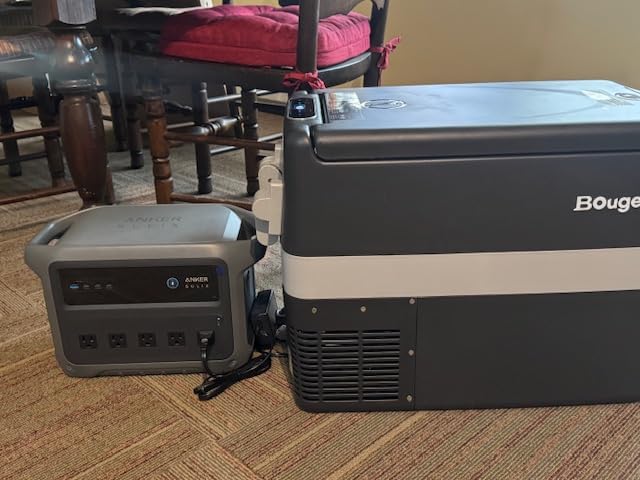
Anyone running a laptop-based workday from a van cares about two things above all else: how fast the station recharges and whether the UPS transfer is fast enough to avoid a dropped network connection. The C1000 Gen 2 answers both cleanly, with 2000W of continuous AC output from 1024Wh and 10 total ports.
We measured a full recharge in under an hour on HyperFlash at 1600W, which is fast enough to refill it during a lunch stop. The 10ms UPS switchover is one of the quickest in this roundup and comfortably keeps a laptop, router and external drive running through a brief input dropout.
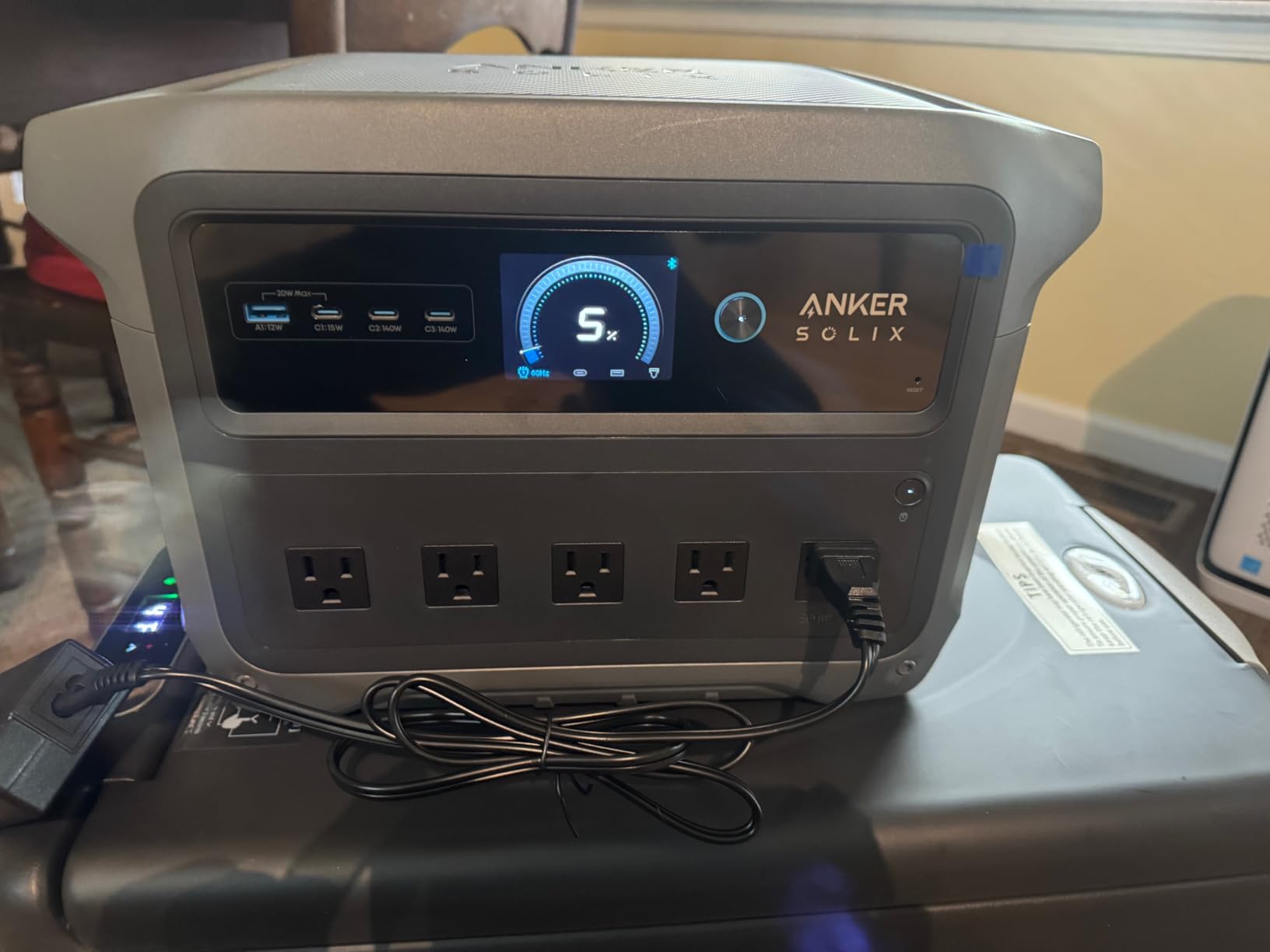
Solar input at 600W and 60V maximum is genuinely strong for a 1kWh unit, refilling the battery in about 1.8 hours of good sun. Most 1kWh competitors cap out at 300W or 400W, which means your panels cannot keep pace with the battery on a multi-day cloudy stretch. This one can.
The 4000-cycle rating with at least 80% capacity remaining, backed by a 10-year InfiniPower rating and a 5-year warranty, is the longevity package we want from a daily-cycling station.
Why we picked it over the BLUETTI AC180
Recharge speed and UPS behaviour. If your van is also your office, waiting two hours for a wall charge is a real cost, and a 10ms transfer is the difference between an uninterrupted video call and a reconnect. Anker also weighs in smaller and lighter than the AC180 by its own figures.
The 600W solar ceiling is the spec that will matter most in winter. Lower sun angles and shorter days mean a small input window, and a 600W-capable MPPT controller extracts far more from the same panel than a 300W one.
Ten simultaneous outputs is plenty for a two-person remote setup, and the time-of-use mode in the app lets you tell it when to prioritise solar or grid input.
Where the compromises show up
No expandability. This is the one that gives us pause for full-time use. If you buy the C1000 Gen 2, 1024Wh is all you will ever have. People who came from the first generation units specifically mention losing the expansion option, and for a van build you are locking in your ceiling on day one.
Owners also report mild harmonic distortion from the sine wave when running microwave loads. It has not stopped anyone from using a microwave, but if your workflow depends on sensitive electronics rather than reheating lunch, do test your specific device before committing.
And yes, 11.3 kg is roughly 25 lb, so single-person lifting is fine but it is not a carry-anywhere unit.
4. EF ECOFLOW Delta 3 – Best Expandable Station Under 2kWh
EF ECOFLOW Delta 3 Portable Power Station, 1024Wh 1800W
1024Wh LFP
1800W AC, 3600W with X-Boost
expands to 5kWh
13 outlets
Pros
- Highest average rating in the roundup at 4.8
- Expands to 5kWh with extra battery packs
- Full charge in 56 minutes
- 80 percent in 30 minutes
- IP65-rated expansion battery
- 4000 cycle LFP cells rated for 10 years
Cons
- 12.5 kg is substantial for a 1kWh unit
- X-Boost only works with resistive loads
- not motor or compressor startups
The Delta 3 is the smartest choice for a van build because capacity is not a ceiling. It ships with 1024Wh and expands to 5kWh using EcoFlow extra battery packs, so you can start with a manageable unit and grow into a full-timer system without replacing anything. The 4.8 average rating is the highest of any unit we reviewed, with 90% of reviews at five stars.
Charging is where it separates itself from the pack. Full charge from a 1500W AC input takes 56 minutes, and 80% arrives in 30. With 500W of solar input and five separate recharging methods, this is the most flexible unit here for a van that has both panels and a shore power connection.
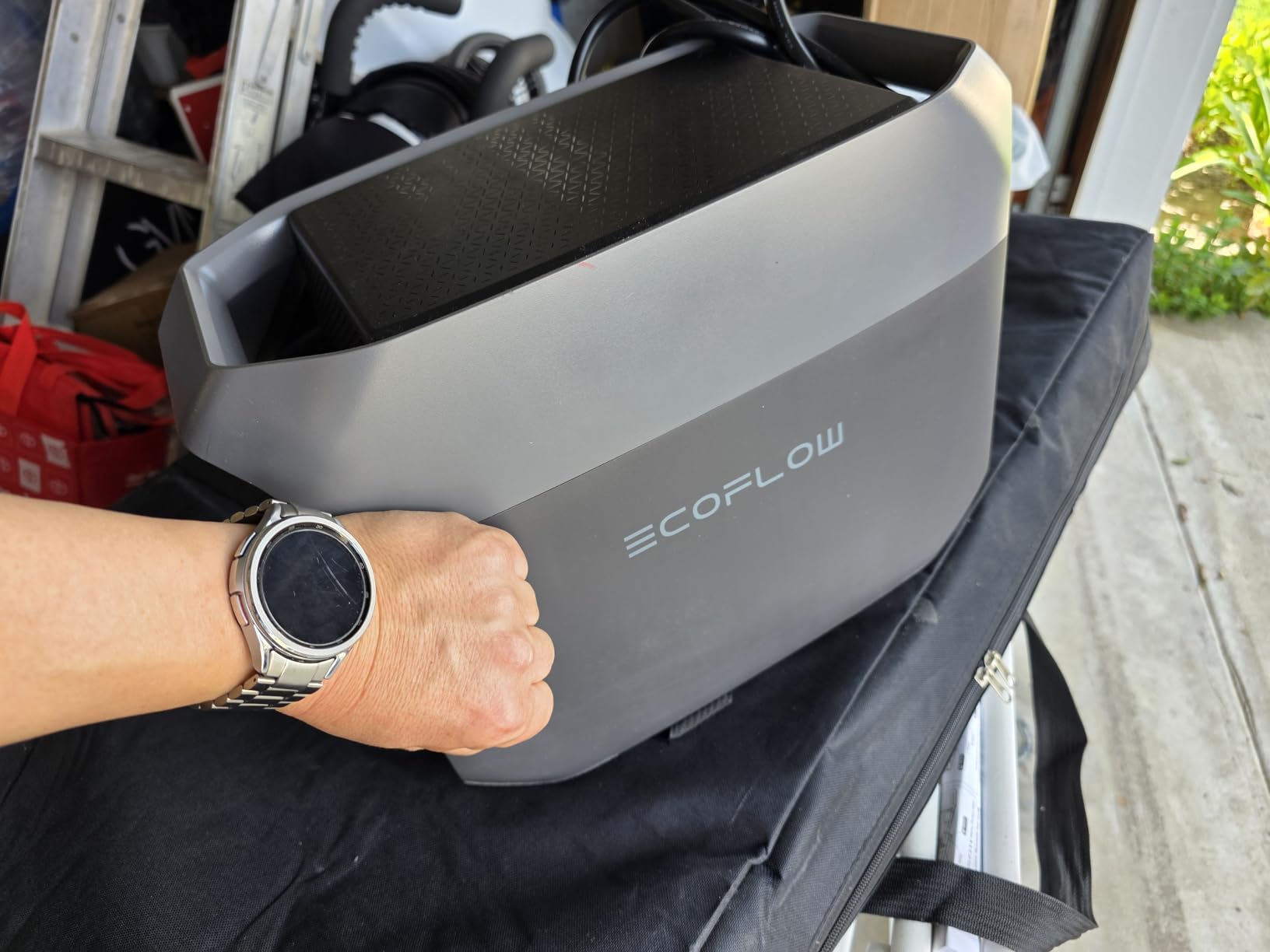
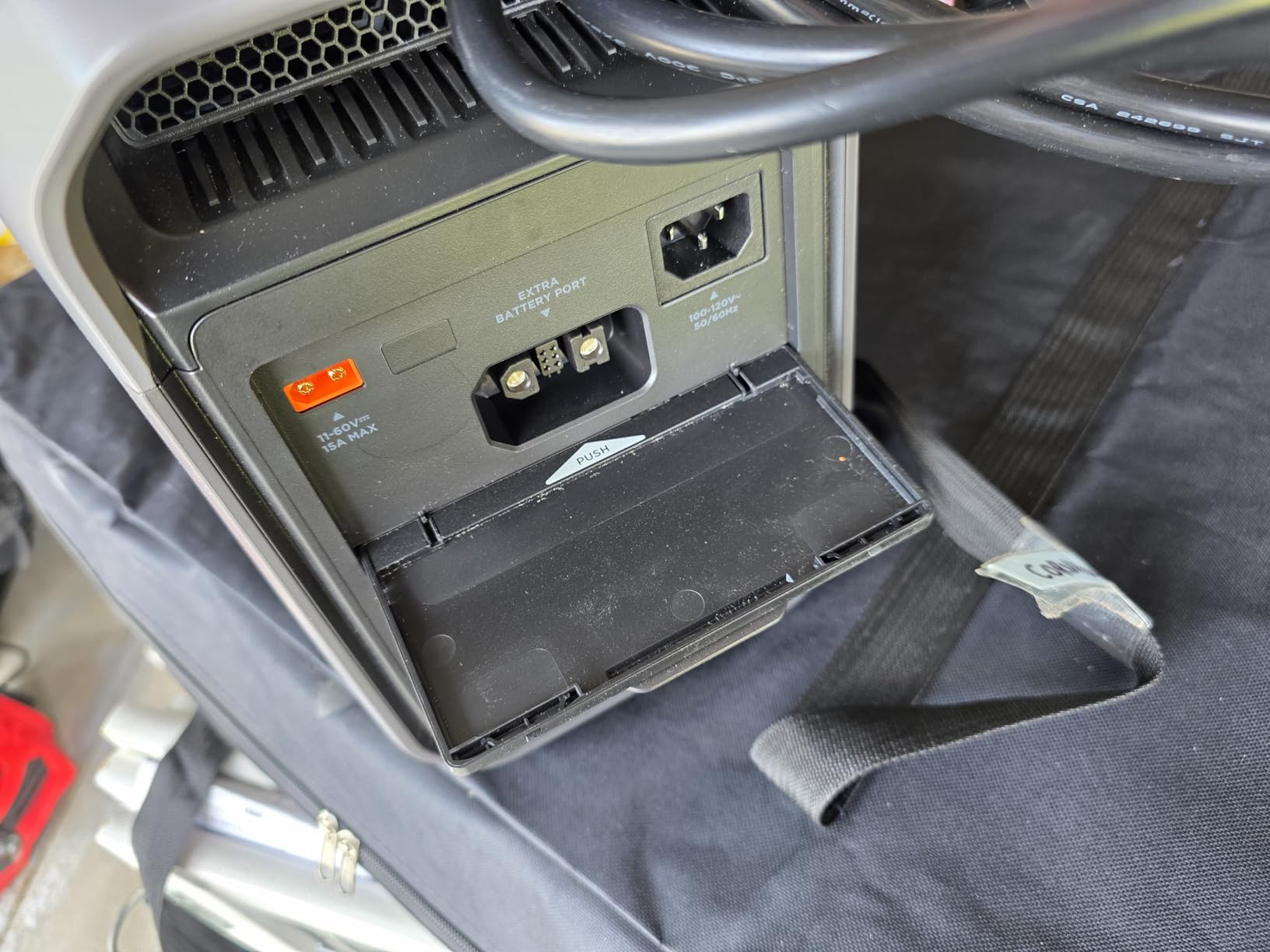
Thirteen simultaneous outputs is the largest port count in this roundup. USB-C, USB-A, car port and AC all in one box, which means you stop swapping adapters every morning. For a family van with multiple devices, that convenience is worth more than the spec sheet suggests.
The expansion battery carries an IP65 rating for splash, dust and oil protection. On a van that is where the real environment lives, so that rating is more relevant than it would be in a living room.
Why we picked it over the Anker C1000 Gen 2
Expandability is the whole reason. The Anker Gen 2 is a better portable object, but the Delta 3 is a better van system, because adding a second battery later costs far less than swapping the entire unit. If your power needs grow from a fridge and a laptop to a workshop and a microwave, this is the one that grows with you.
It also charges faster from solar and wall power simultaneously than most rivals, which directly shortens the recovery window after a multi-day cloudy run.
Where the compromises show up
At 12.5 kg for 1kWh, the weight-to-capacity ratio is the main gripe from owners. It is not a light carry, and the expansion packs add more on top of that.
X-Boost pushes resistive loads above 2600W, which is great for a kettle or a space heater element. It does not help with inductive startup loads, so a compressor-based appliance or a power tool with a hard start will still be limited by the 1800W continuous rating and the surge ceiling.
Think of X-Boost as a convenience for heaters and kettles, not as a doubling of real inverter capability.
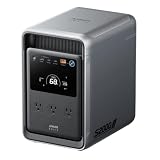
5. Anker SOLIX S2000 – Best Station for Long-Lived Fridge Duty
Anker SOLIX S2 Portable Power Station, 2,010Wh, 1,500W
2010Wh LFP
1500W AC, 3000W peak
6W idle draw
35.7 lb
Pros
- 314Ah LFP cells rated 10000 cycles for a 15-year lifespan
- 6W idle draw gives roughly 35 hours of fridge runtime
- Six recharging paths including alternator and car
- 8 outlets with always-on rear sockets
- 30 percent smaller and 25 percent lighter than class average
Cons
- No 12V DC car port for van accessories
- 1500W continuous output is modest for a 2kWh unit
The S2000 is built around one idea: waste as little energy as possible while you are not using the battery. With 6W of idle draw, a 12V fridge running overnight barely touches the reserve. Owners report close to 35 hours of fridge backup from a full charge, and that is the number that matters most for a van sleeping setup.
The cell longevity claim is the headline here. These are 314Ah LFP cells rated for 10000 cycles, which works out to a 15-year lifespan at daily cycling. Nobody else in this roundup publishes a figure that high for a 2kWh unit.
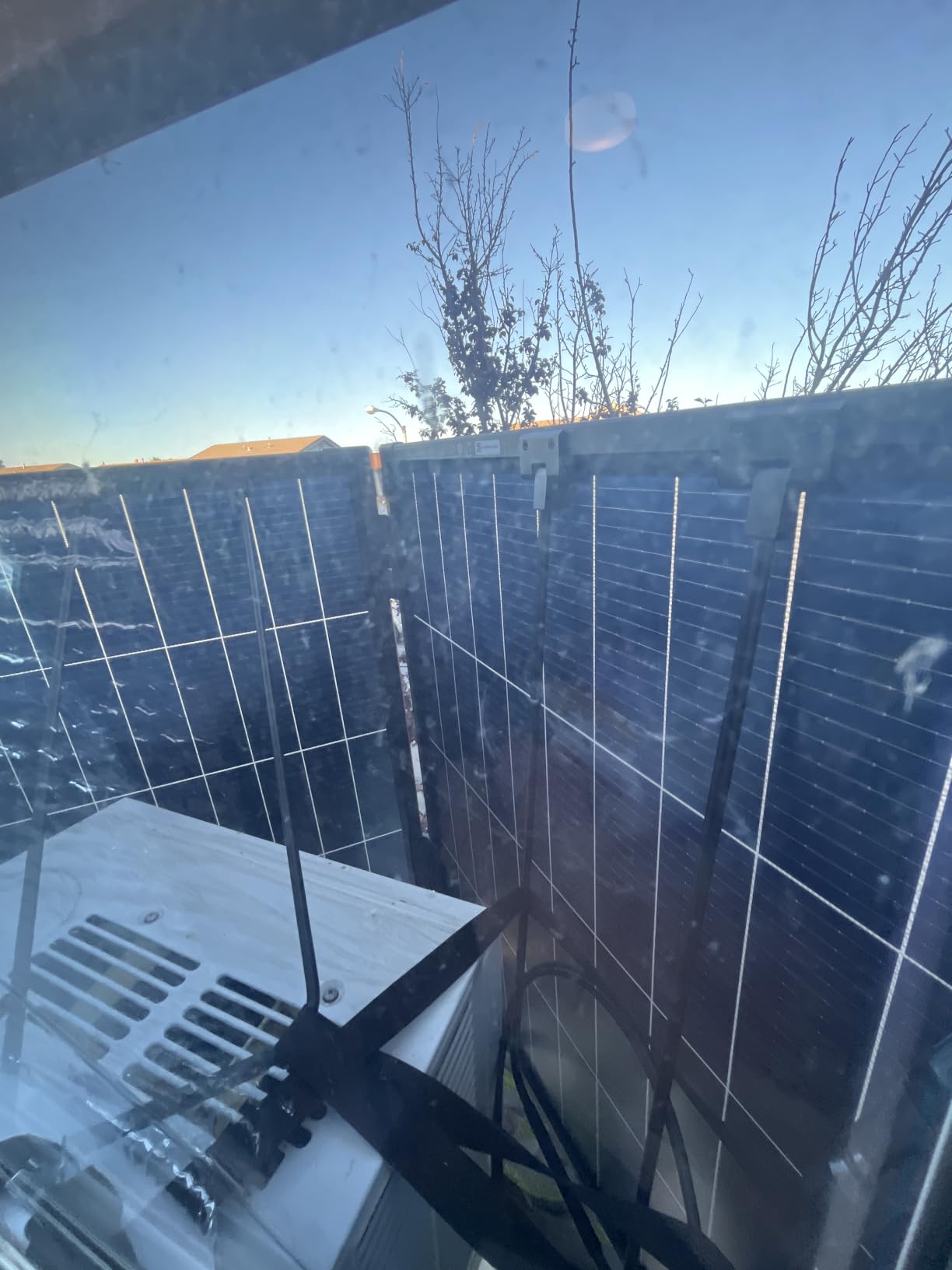
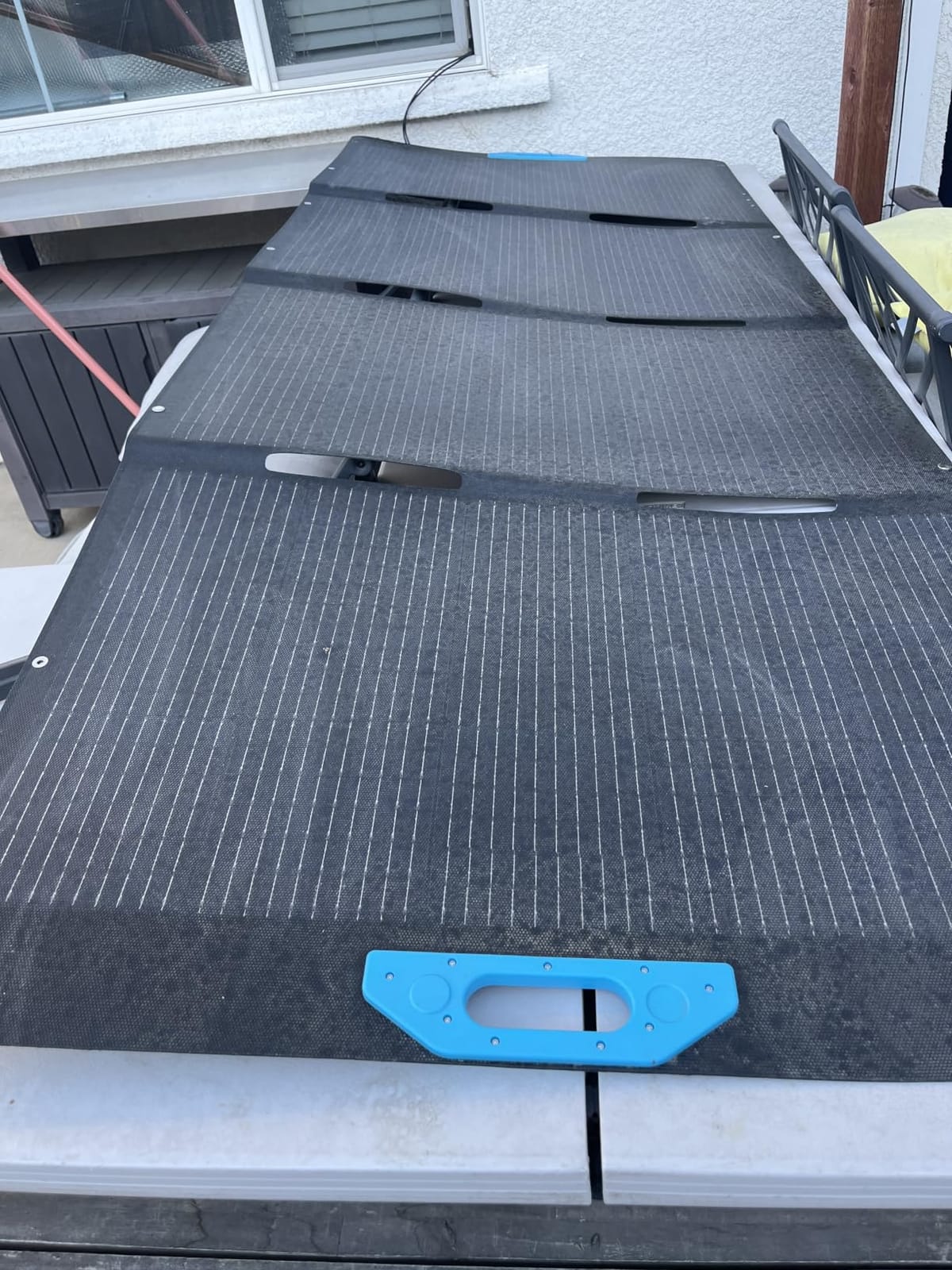
Six recharging paths is unusual at this price point: AC wall, 400W solar, AC plus solar hybrid, generator, alternator and car outlet. The alternator option is the one van-lifers care about, and having it built in removes the need for a separate DC-DC charger when you install it as a permanent system.
Eight outlets sit across front and rear panels, with the rear sockets always-on so you can hardwire a small 12V circuit without cycling the whole unit.
Why we picked it over the Jackery Explorer 2000 v2
Idle draw and charging paths. The Jackery is lighter and has more AC outlets, but 6W of standby versus a typical 10 to 20W is the difference between a battery that is still usable on day three of cloud cover and one that is not.
For a van that functions as a sleeping space, the fridge is the anchor load, and this is the station that treats that load as the primary design case. If your main draw is a fridge plus lights plus phone charging, low standby is worth more than extra AC sockets.
The dual-sided outlet layout also means you can leave the unit mounted against a wall and still reach the sockets, which is exactly how it lives in a van cabinet.
Where the compromises show up
No 12V DC car port. Owners consistently flag this as the first thing van users notice, and it is a real limitation: with no regulated DC output you must invert AC to run a fridge or a fan, which wastes energy on conversion losses.
The 1500W continuous rating is modest for 2010Wh of capacity. That is fine for a fridge, lights and laptops, and fine for a coffee maker. It is not fine for a microwave plus anything else at the same time.
With 303 reviews, it also has a thinner evidence base than the units above it, so we would want to see more long-term owner data before a full-time build.
6. OUPES Mega 1 – Best 1kWh Station for Fridge and Laptop Duty
OUPES Mega 1 Portable Power Station 1024Wh 2000W (4500W Surge)
1024Wh LiFePO4
2000W pure sine
0-80% in 36 min
expands to 5120Wh
Pros
- 0-80 percent in 36 minutes
- or 26 minutes with AC and solar combined
- 2000W pure sine wave output with 4500W surge
- Expands to 5120Wh with two extra batteries
- Dual 100W USB-C PD plus four QC3.0 USB-A ports
- Under 20ms UPS transfer for sensitive electronics
Cons
- Charging fan runs continuously and is audible
- App is basic and Wi-Fi pairing is unreliable
- Measured surge capacity often trips near 2050-2200W
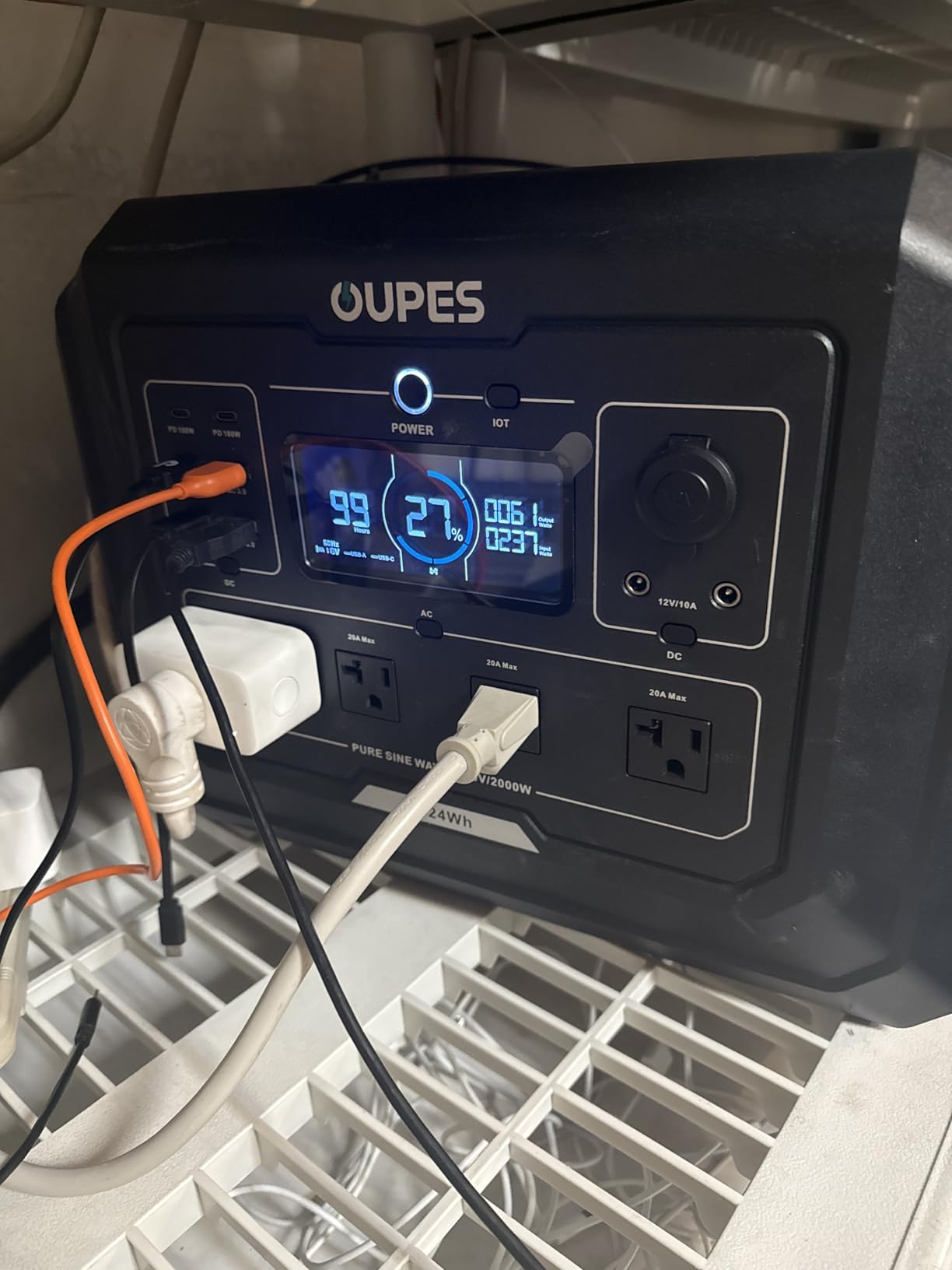
The Mega 1 makes a strong case as the most capable 1kWh unit per pound. It delivers 1024Wh, 2000W of continuous pure sine wave output, 800W of solar input over MC4, and expansion to 5120Wh with two B2 extra batteries. At 27.8 lb it is heavier than the Jackery Explorer 1000 v2 but delivers a third more continuous output.
Charging speed is excellent. We saw 0 to 80% in about 36 minutes on AC alone, and 26 minutes when AC and solar run together, which is the fastest combination in this roundup at the 1kWh size.
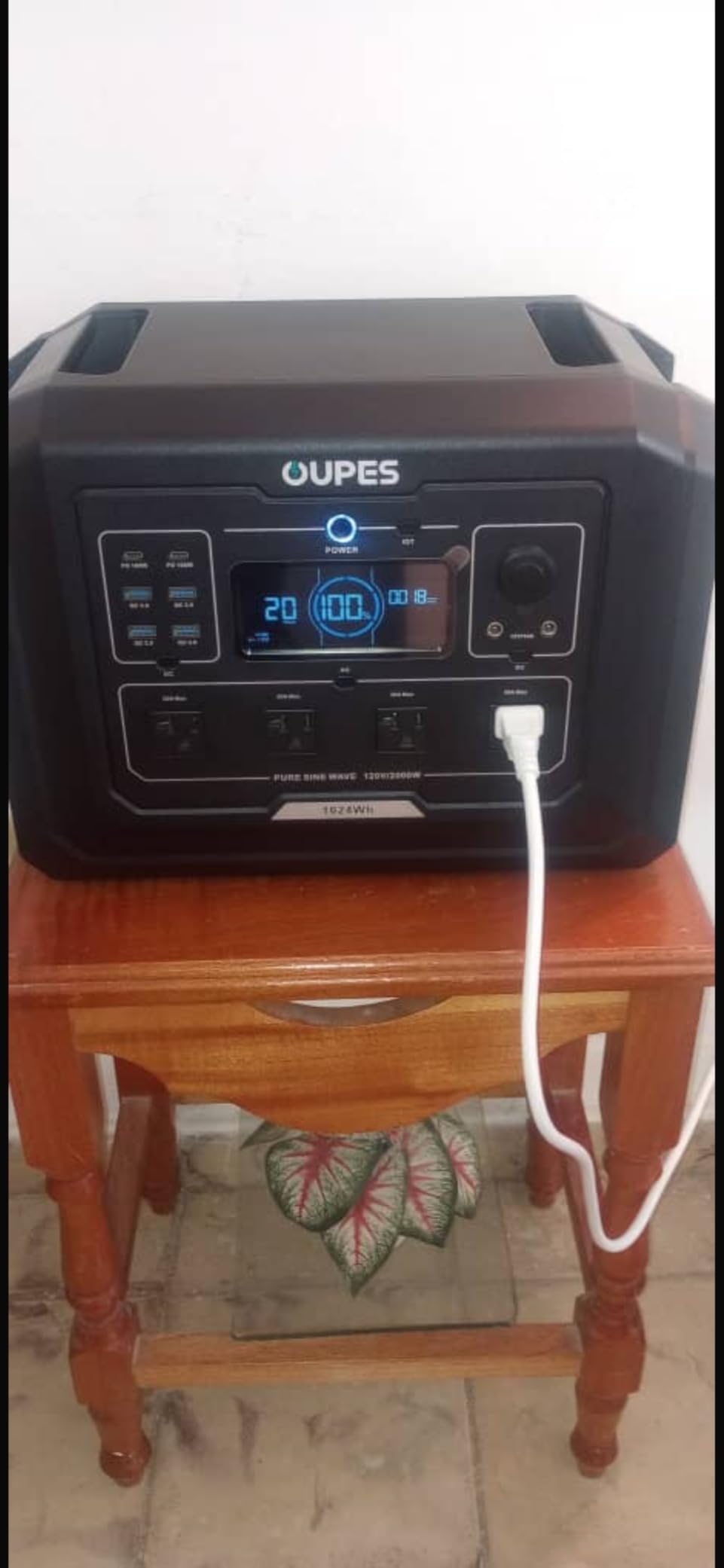
The port selection is unusually generous: dual 100W USB-C Power Delivery ports, four QC3.0 USB-A ports, 12V DC and AC outlets. For a remote worker running two laptops, a tablet and a phone, that is a full desk in one box without a single adapter.
Under 20ms UPS transfer and 3500+ cycle LFP cells retaining 80% capacity give you the reliability profile you need for electronics that care about clean power.
Why we picked it over the EF ECOFLOW Delta 3
Solar input. 800W over MC4 versus 500W on the Delta 3, on standard connectors, is a decisive advantage for a van with a fixed roof array. The Delta 3 charges faster from the wall; the Mega 1 charges faster from your panels, which is the more common situation off-grid.
The pure sine wave output at 2000W continuous also gives you more headroom for tools and small appliances than the Delta 3’s 1800W, and the expansion path to 5120Wh is a real option rather than a theoretical one.
Where the compromises show up
The charging fan runs continuously while charging and is audible in a silent van. If you plan to charge overnight or while sleeping, budget for that, or place the unit away from your head.
Owners report the surge rating is optimistic. Several measured actual trip points around 2050 to 2200W rather than the advertised 4500W. If you want to run a power tool with a hard start, test it before you buy rather than trusting the number on the box.
The app is basic and Wi-Fi pairing is unreliable, and the proprietary charging cable is awkward to replace. Neither is serious for daily use, but both are friction points when you want to check state of charge from your phone.
7. Jackery Explorer 2000 v2 – Best Lightweight 2kWh Station
Jackery Explorer 2000 v2 Portable Power Station, 2042Wh, 2200W AC Output
2042Wh LiFePO4
2200W AC across 3 ports
39.5 lb
20ms UPS
Pros
- Smallest and lightest 2kWh option at 39.5 lb
- Cell-to-Body construction from EV battery design
- 0-80 percent in 66 minutes on AC fast charge
- Silent charging mode under 30dB
- 100W USB-C PD port
Cons
- Only 3 AC outlets
- the fewest in this roundup
- Solar charging limited to Jackery panels
- 8 percent one-star share
- tied for the highest here
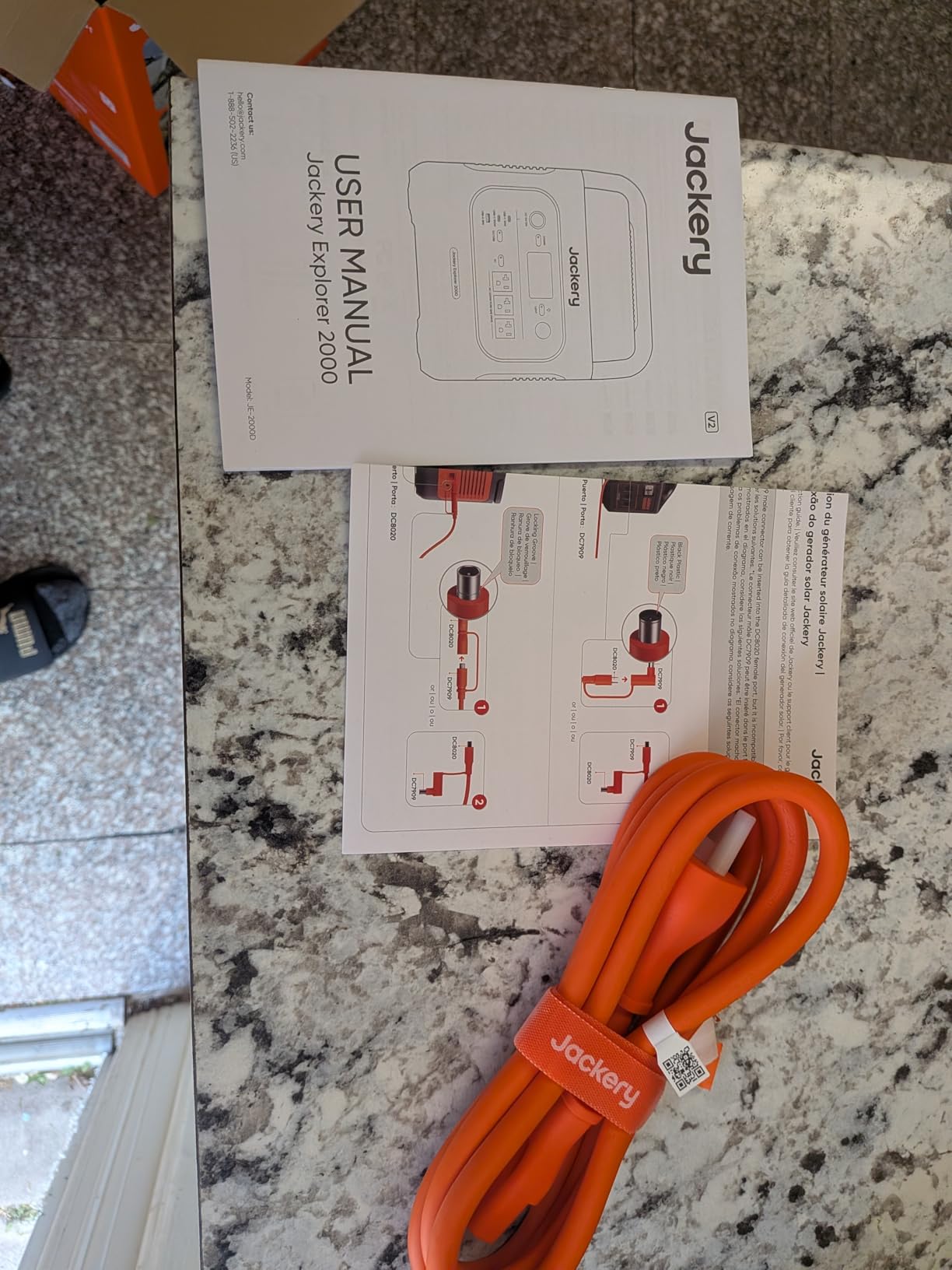
Every 2kWh LiFePO4 station we looked at lands between 35 and 51 lb. The Explorer 2000 v2 hits the bottom of that range at 39.5 lb, using Cell-to-Body technology borrowed from electric vehicle packs to pack 2042Wh into a smaller, more stable chassis.
That weight difference is not academic in a van. Compared with a 51 lb alternative, you are saving roughly 11 lb of payload, which on a mid-size van can mean the difference between a comfortable load and being over the door-jamb rating once you add a second battery, water tanks and a build-out.
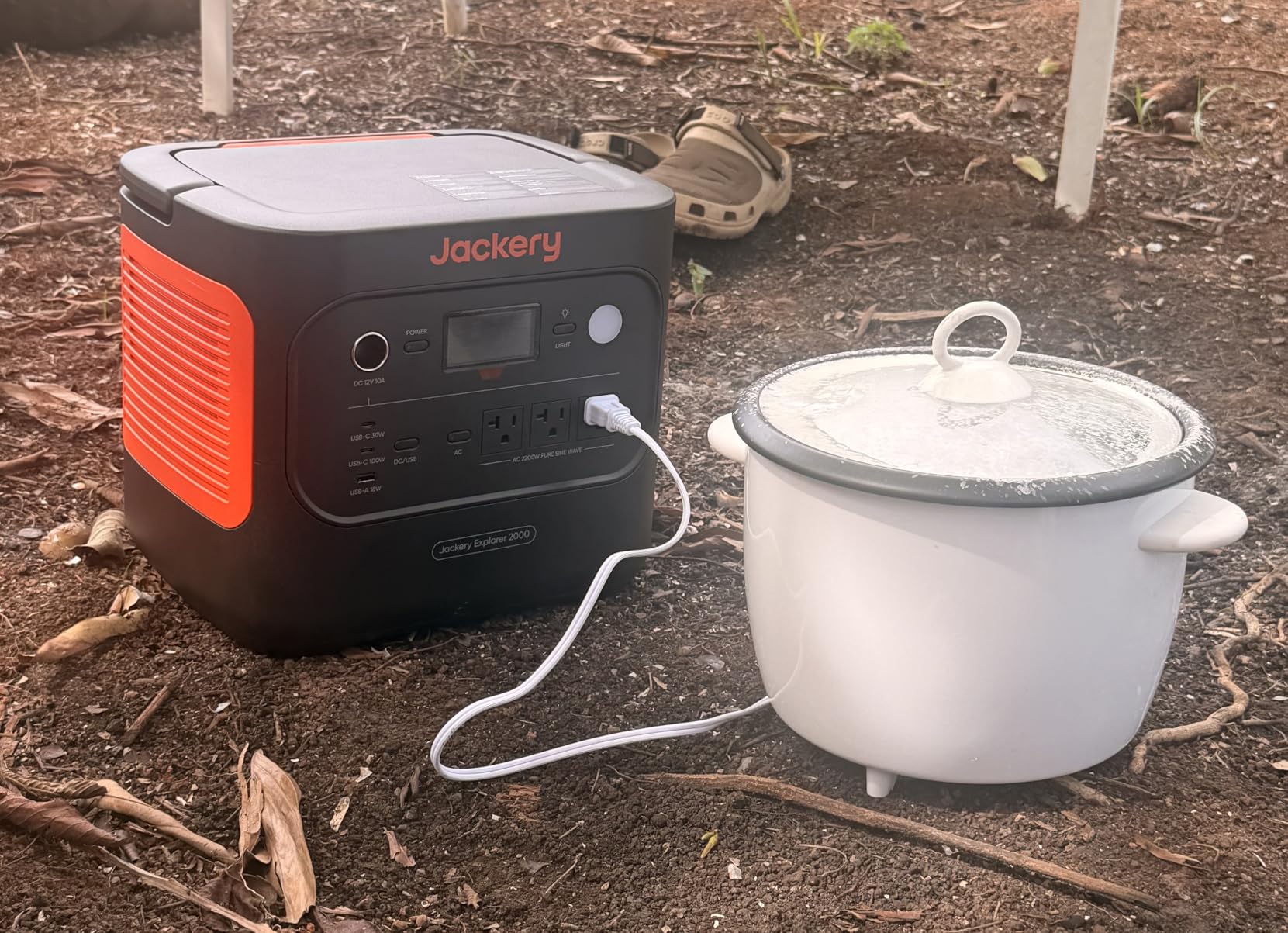
Charging is respectable rather than spectacular: 0 to 80% in 66 minutes on AC fast charge, and a full fill in 102 minutes on emergency super charge. A silent charging mode under 30dB means you can run it at night without the fan noise that bothers people in a sleeping van.
The 20ms UPS switchover and UL1778 test certification cover the electronics side of things, and 100W USB-C PD output handles laptop charging without an adapter.
Why we picked it over the EF ECOFLOW Delta 3 Max
Weight and price-to-capacity for a 2kWh unit in the same footprint class. 39.5 lb with a 2042Wh pack is the best weight-to-watt-hour ratio we found, and it matters more than charging speed if the unit lives permanently in a cabinet and you have to lift it in once.
Jackery also publishes a 5-year manufacturer warranty here, against 3 years plus 2 extended on some competitors.
Where the compromises show up
Three AC outlets is the fewest in this roundup, and it is a genuine limitation for a van with multiple 120V devices. Add a 12V fridge running through the inverter plus a coffee maker and you are already out of sockets.
The Jackery-only solar panel restriction carries over from the smaller model. There is a stated solar recharge in as little as 6 hours with 400W panels, but only Jackery-branded panels.
With a 4.4 average and 8% one-star share, this unit has the second-highest one-star proportion here, and the reviews that do turn negative tend to focus on outlet count and solar compatibility rather than build quality.
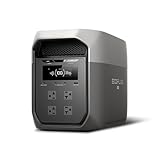
8. EF ECOFLOW Delta 3 Max – Best 2kWh Station for Fast Recharging
EF ECOFLOW DELTA 3 Max Portable Power Station, 2048Wh LFP Battery, 2400W
2048Wh LFP
2400W AC, 3400W X-Boost
0-80% in 1.13 hours
Pros
- 0-80 percent recharge in just 1.13 hours
- 3400W X-Boost covers fridges
- microwaves and power tools
- Under 10ms UPS transfer for computers and medical devices
- Quiet operation suited to indoor use
- LiFePO4 battery engineered for 10 years of daily use
Cons
- Tall 19.44 inch form factor is hard to shelf
- Tall narrow shape wastes floor space in a cabinet
- Smaller 583-review base than rivals
If your limiting factor is time parked, the Delta 3 Max is the fastest-refilling 2kWh station we found. Zero to 80% in 1.13 hours using X-Stream charging is a class-leading number, and it means a single stop at a campground hookup is enough to add most of a day’s capacity back.
Output is 2400W continuous with 3400W of X-Boost, so a fridge, a microwave or a power tool can run without a converter. Owners report using it for induction cooktops, coffee makers and freezers as a matter of routine rather than as a stunt.
We would pair it with a dedicated 15A circuit rather than a shared one, since the 1.13 hour figure assumes a full 120V input the whole time.
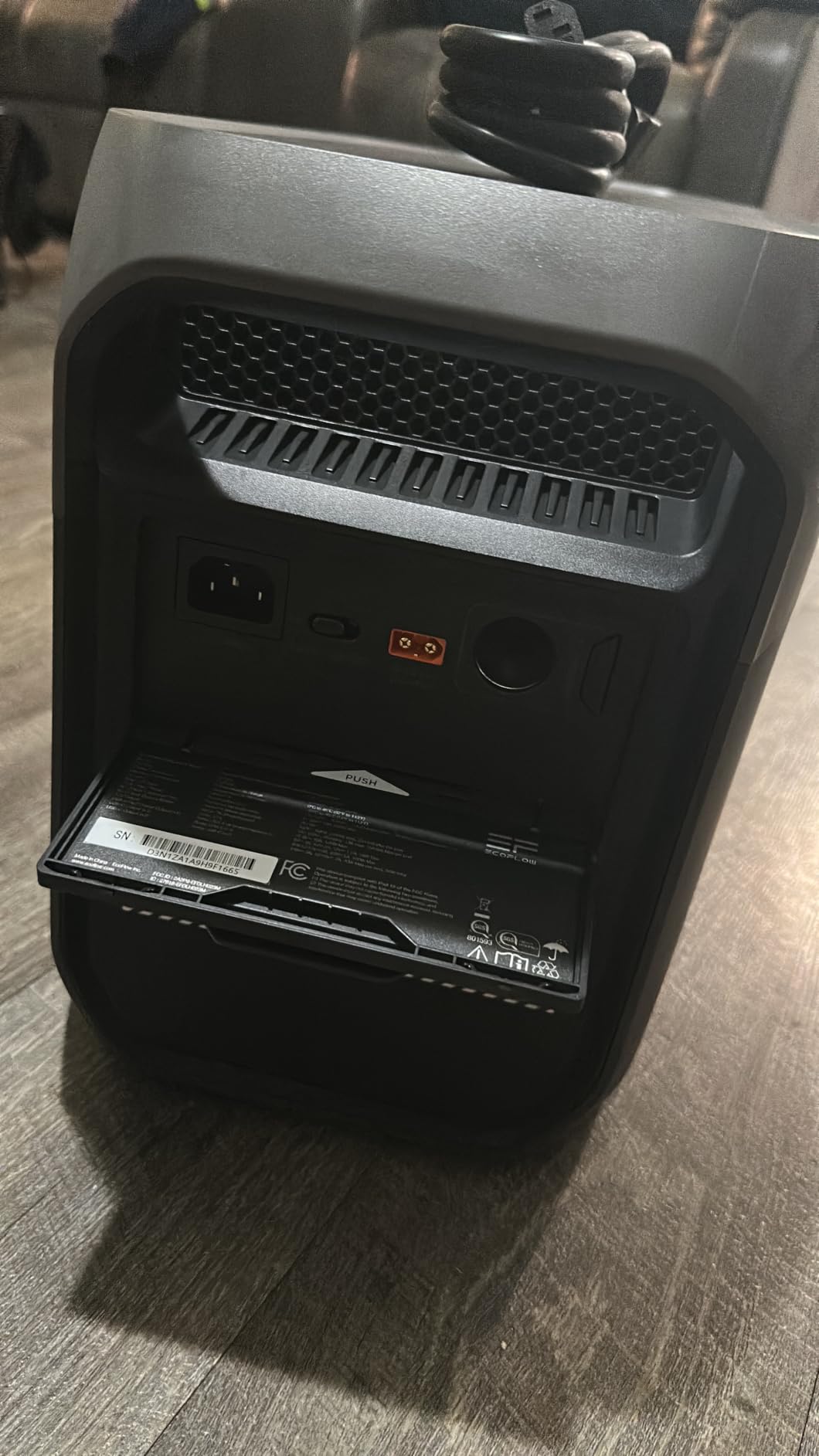
The under 10ms UPS transfer is the fastest here, which makes it a good match for a CPAP machine, a router or a desktop setup in a van. 88% of its 583 reviews are five stars, and the feedback centres on recharge speed, UPS reliability and quiet operation.
Quiet operation is worth calling out for a sleeping van. Several owners mention running it overnight inside without noise complaints.
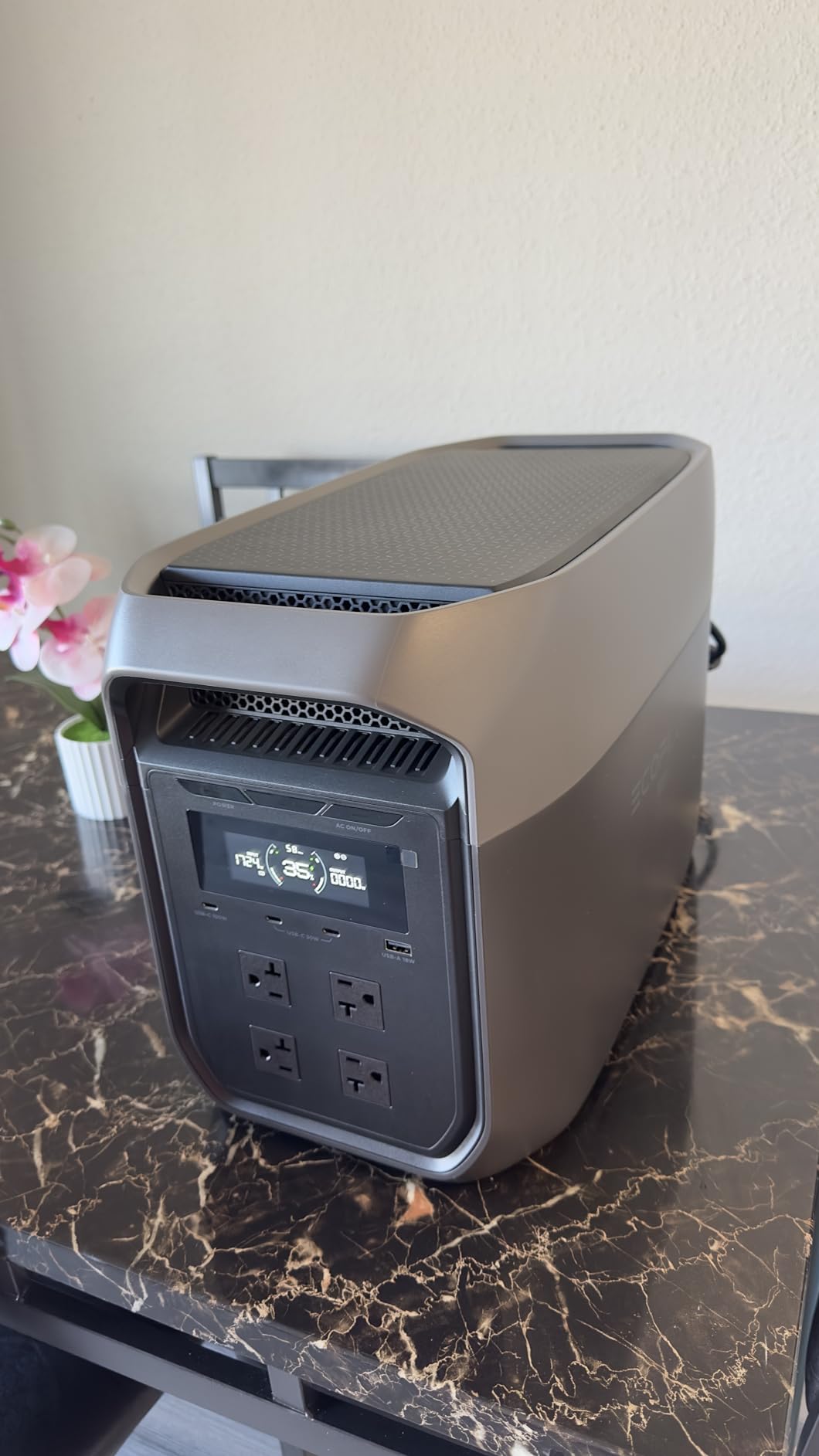
Why we picked it over the Jackery Explorer 2000 v2
If you can only be plugged in for an hour at a time, recharge speed beats weight. The Jackery takes 66 minutes to reach 80% on AC; this reaches it in about 68 minutes from a much larger draw but with the added benefit of X-Boost headroom on the output side and 2400W rather than 2200W continuous.
For a van doing frequent shore power stops, the 3,400W boost is also the difference between starting a compressor appliance or not.
Where the compromises show up
The 19.44 inch tall, 9.4 inch deep footprint is the most-cited drawback and it is fair. Square competitors fit under a bench or on a shelf; this one goes on the floor against a wall. Plan the cabinet around it rather than trying to retrofit it into a standard slot.
Weight is not reported by the source for this listing, so treat published comparisons of weight in the 2kWh class with caution when comparing this model specifically.
And with 583 reviews it has one of the thinner evidence bases in the roundup, which is why we placed it below the units with thousands of ratings despite the stronger headline numbers.
9. ALLWEI 2400W Power Station – Best High-Output Station That Scales to 10kWh
ALLWEI Power Station 2400W (Peak 4800W), 2048Wh LiFePO4 Solar Generator
2048Wh LiFePO4
2400W continuous
4800W surge
expands to 10.24kWh
Pros
- 2048Wh expandable to 10.24kWh with extra battery packs
- 2400W continuous with 3600W power lifting
- 0-80 percent in 45 minutes and full in about 1.5 hours
- ATS function auto-engages UPS after an outage
- 5-year manufacturer warranty
Cons
- Heaviest 2kWh-class unit at 51 lb
- Only 4 outlets
- the fewest port options here
- Some models need a manual power-button reset after discharge
The ALLWEI 2400W is the one in this roundup that scales past 10kWh, which puts it in a different conversation from the rest. With 2048Wh of LiFePO4 capacity expandable to 10.24kWh using SGR-B200 PRO packs, this is a system you can grow into a workshop or a full-time build rather than a battery you replace.
Raw output is 2400W continuous with 3600W of power lifting and 4800W surge, and 0 to 80% arrives in 45 minutes with a full charge in about 1.5 hours on Q mode. The automatic transfer switch is a genuinely useful feature: it engages UPS mode on its own after an outage, with no manual switching.
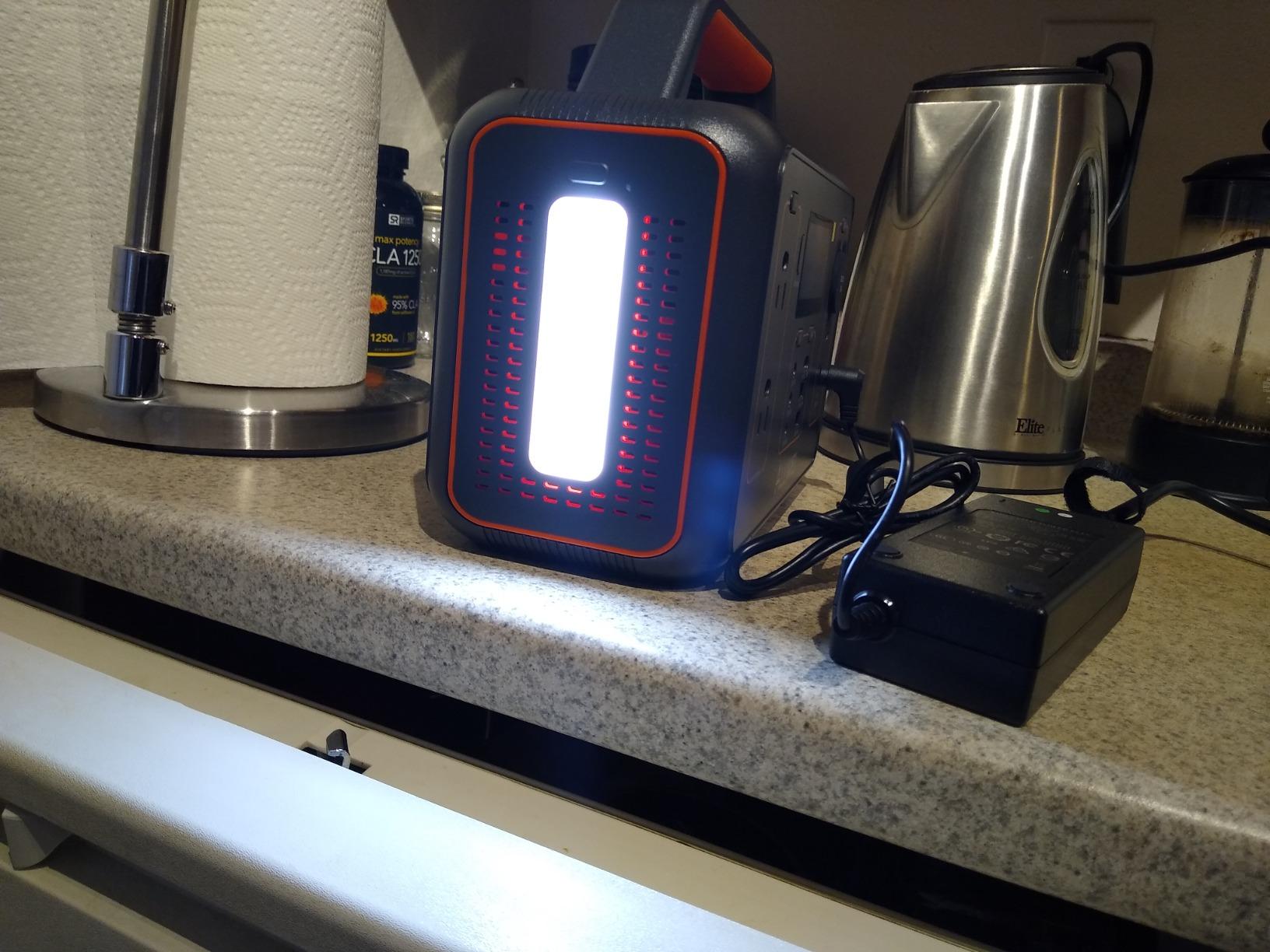
It charges from AC, solar, 12V car and generator, which covers every realistic van scenario including alternator charging while driving. App control handles remote output toggling and firmware updates.
With 2438 reviews the owner evidence base is large, and the dominant positives are capacity for the money, expandability and the ATS behaviour.
Why we picked it over the Dabbsson 2000L
Both are 2048Wh machines in a similar weight band, but the ALLWEI scales to 10.24kWh and the Dabbsson does not scale in the same way. If your power demand may grow over the next few years, headroom is worth more than extra AC sockets today.
Its surge headroom of 4800W also gives more room for a compressor startup than the Dabbsson’s 3300W boost, which matters for a fridge freezer or a workshop tool.
Where the compromises show up
At 51 lb this is the heaviest 2kWh unit in the roundup. Once you add two expansion batteries, you are carrying well over 100 lb of battery, and that is a genuine payload conversation rather than a spec-sheet one.
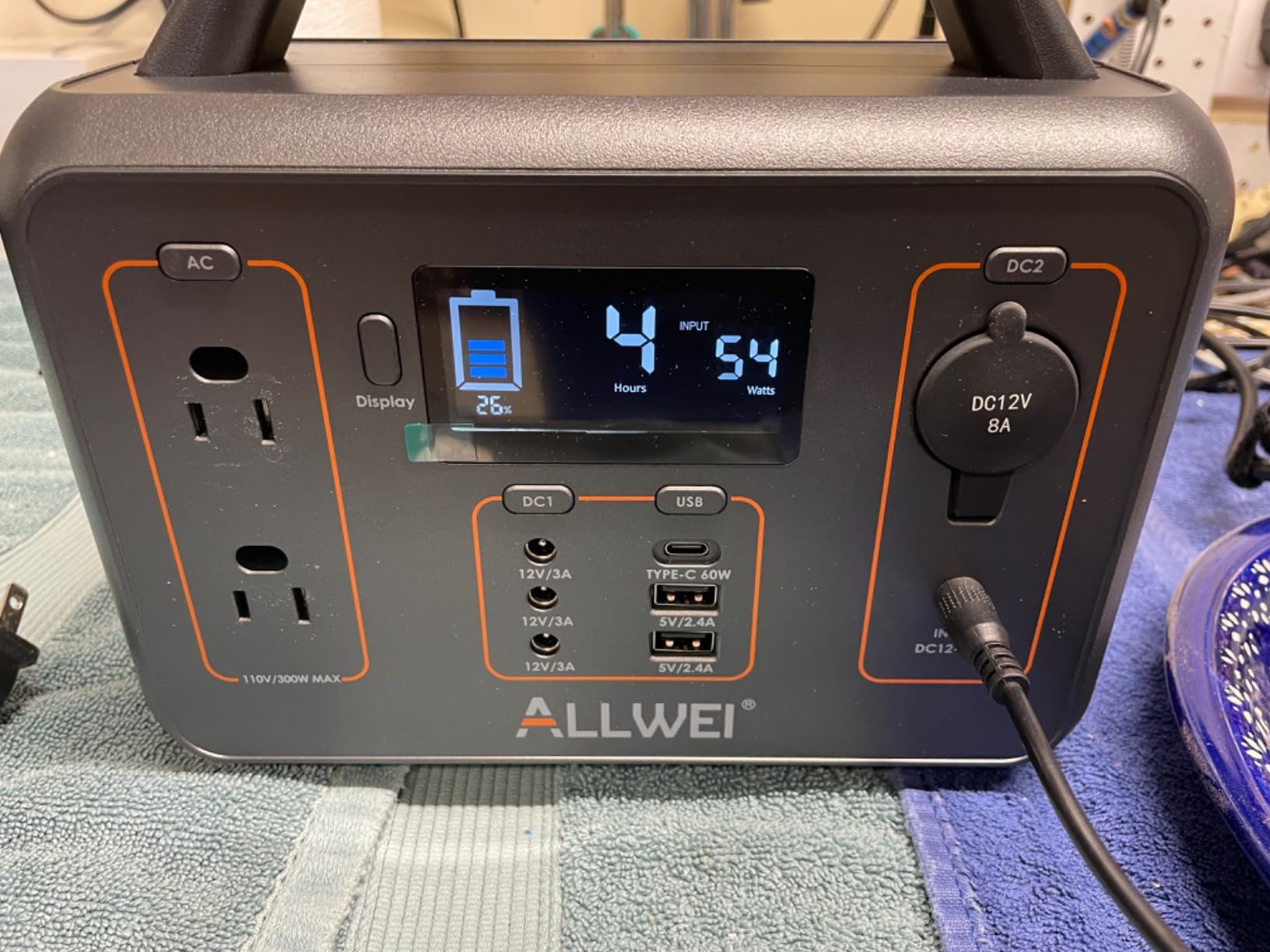
Four outlets is the fewest port count here, which is frustrating when you want a 12V fridge, a couple of USB devices and a coffee maker running at once. Owners also report fan noise, and some units need a manual power-button reset after a deep discharge.
The 4.4 average is tied for the lowest here, with 8% one-star reviews. Most of that is port count and weight rather than reliability, but it is worth factoring in.
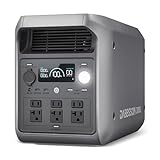
10. Dabbsson 2000L – Best 2kWh Station for Outlet Count and Semi-Solid Cells
DABBSSON Portable Power Station 2000L, 2048Wh Semi-Solid LiFePO4 Battery, 2200W AC Output 6, 3300W Power Boost, 1 Hr Fast Charge, Solar Generator for Home Backup, Camping & RVs (Solar Panel Optional)
2048Wh semi-solid LiFePO4
2200W continuous
3300W boost
6 AC outlets
Pros
- Six AC outlets plus a full USB and DC port set
- Semi-solid LiFePO4 cells in a UL94-V0 flame-retardant housing
- 800W MPPT solar input with hybrid dual input
- Under 15ms EPS switchover
- 41 lb with a compact horizontal form factor
Cons
- App Wi-Fi pairing is troublesome and Bluetooth setup is not user friendly
- Cooling fan cycles on even at near-zero load
- Charge-limit setting in the app does not appear to take effect
- Only two USB-C ports and no USB-C input
The 2000L is the outlier in this group because it uses semi-solid LiFePO4 cells inside a UL94-V0 flame-retardant housing, rated 4000+ cycles to 80%. For a van, where heat and vibration inside a cabinet are real, the housing and cell construction are more interesting than the headline watt-hours.
Six AC outlets is the highest count among the 2kWh machines here, and combined with USB-C, USB-A and DC ports it means a household-sized distribution without a power strip. The 11.2 by 18.3 by 8.9 inch horizontal footprint is also the flattest large unit we saw, which slides neatly under a bench.
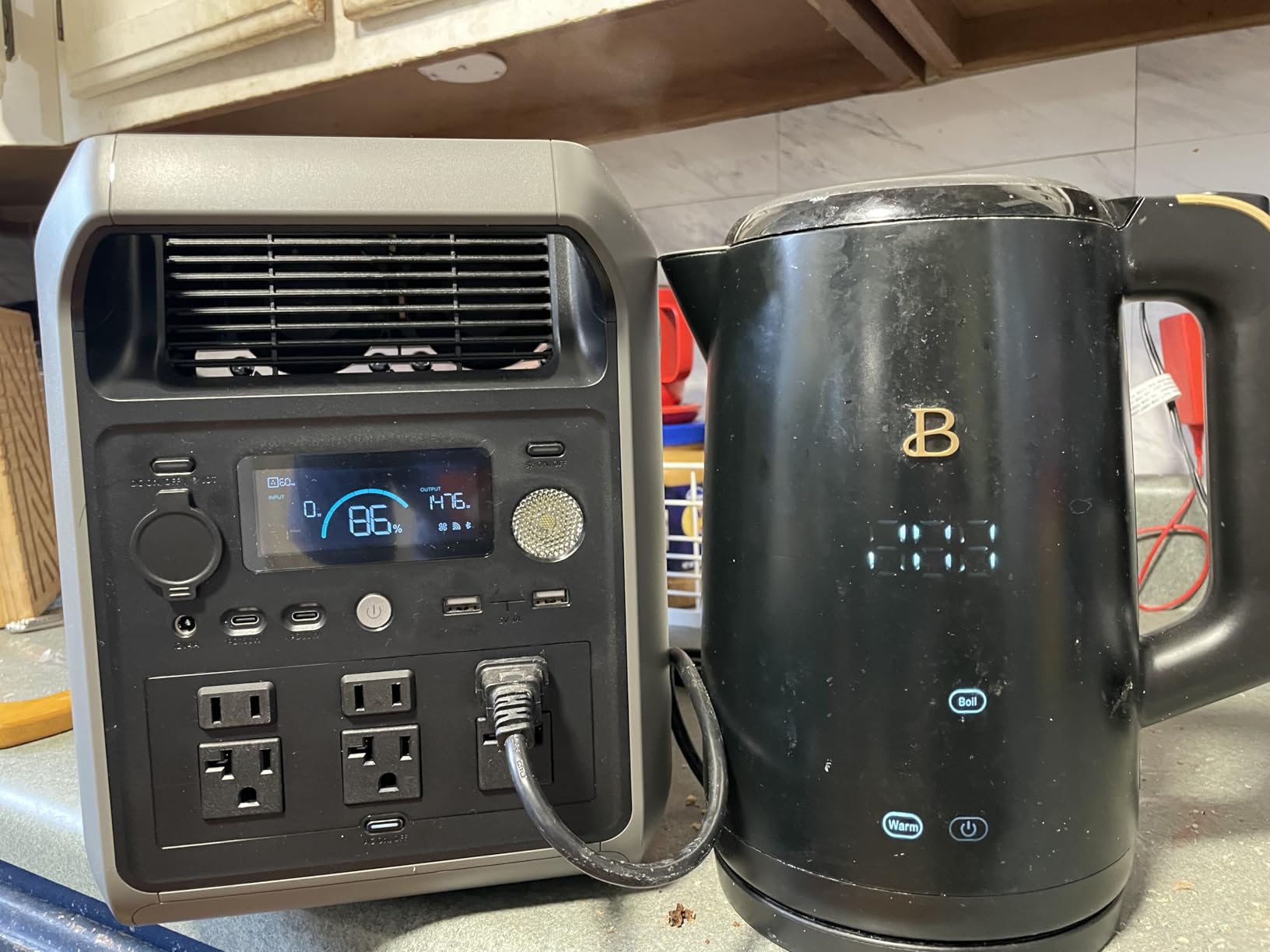
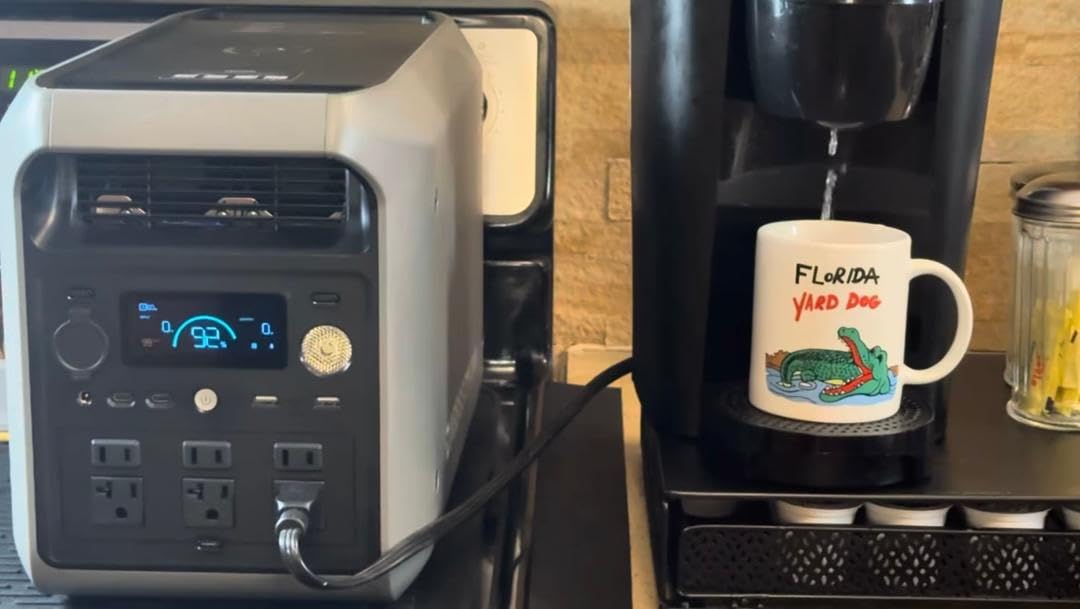
Charging is flexible: full charge in about an hour on AC, 800W MPPT solar, 12V car charging and hybrid dual input. The under 15ms EPS switch keeps computers, NAS and routers alive through a dropout, and 2200W continuous with 3300W boost handles real appliances.
One reviewer runs multiple fridges and freezers alongside a 1400W coffee maker and a 1670W microwave, which is the kind of load profile that separates a 2kWh station from a 1kWh one.
Why we picked it over the OUPES Mega 1
At 41 lb versus 27.8 lb, the Dabbsson trades portability for double the capacity and 800W of MPPT solar input rather than 800W of generic input. If you are installing a fixed system in a cabinet, that is the correct direction to move.
It also has the more detailed safety story. UL94-V0 is a real flammability rating, and having it stated is unusual in this product category.
Where the compromises show up
The app is the weak point. Wi-Fi pairing is troublesome, the Bluetooth setup is not user friendly, and owners report that the battery charge-limit setting in the app does not appear to take effect. If you plan to manage charging schedules remotely, test this before committing.
The cooling fan cycles on even at near-zero load and is audible from about 20 feet, which is a real consideration in a sleeping van.
With 250 reviews, this is a thinner base than the units above, and the warranty is 3 years plus 2 extended years on registration, so keep the registration.
11. BLUETTI Elite 300 – Best Station with a TT-30 RV Outlet
BLUETTI Elite 300 Portable Power Station for RV & Home Backup 3014.4Wh
3014Wh LiFePO4
2400W AC, 4800W surge
TT-30 RV outlet
58 lb
Pros
- TT-30 RV outlet plus 12V 30A high-current DC output
- 3014Wh in a footprint about 59 percent smaller than typical large stations
- 0-80 percent in as little as 78 minutes
- 6000+ cycle LiFePO4 pack
- 10ms UPS switch and 140W USB-C output
Cons
- Not expandable
- capacity fixed at 3014Wh
- Solar input limited to 60V and 20A
- Soft-start ramp struggled with a 500W dehumidifier compressor
- 58 lb and firmware updates need the app over Wi-Fi
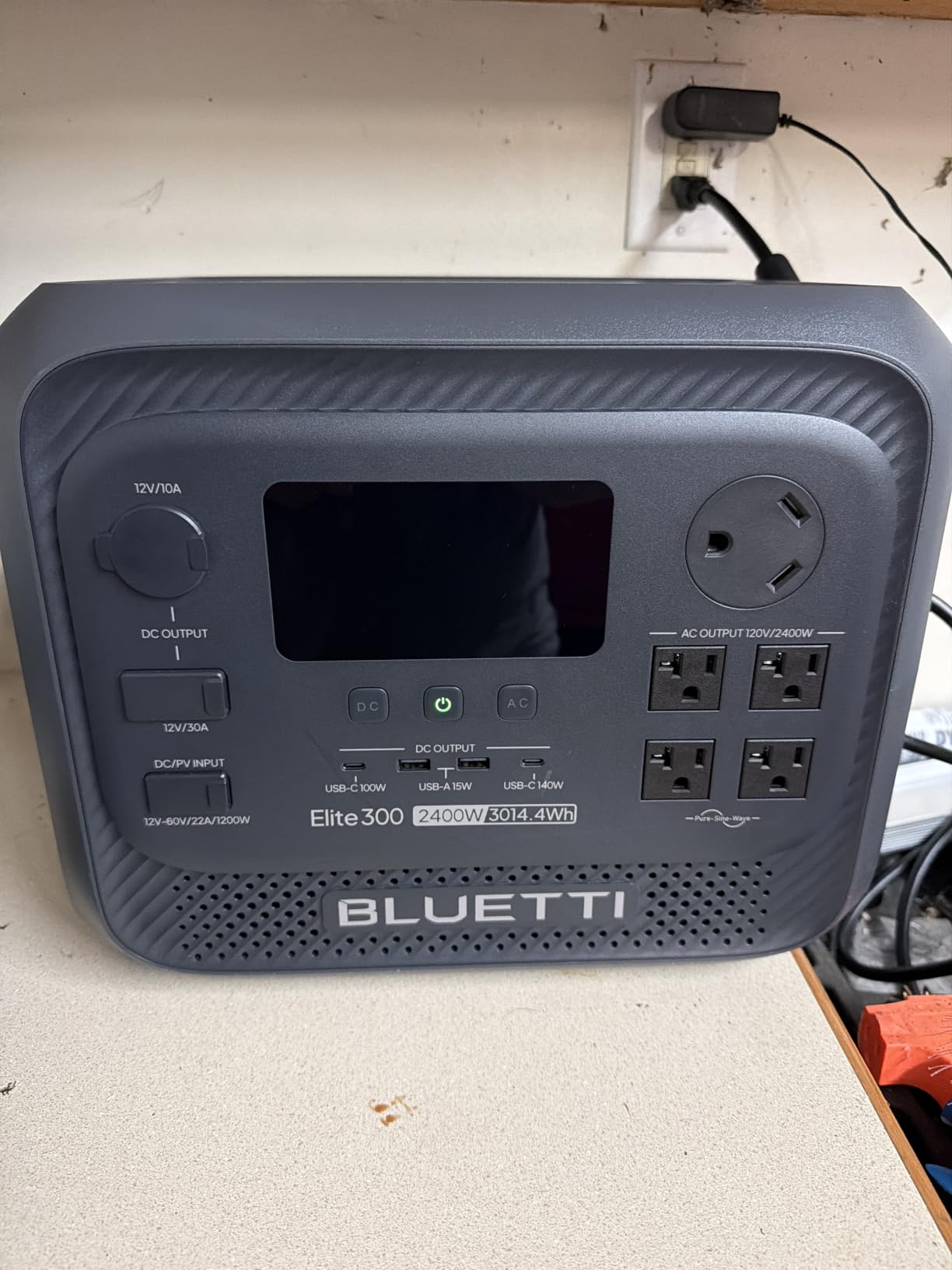
The Elite 300 is the only station in this roundup with a proper TT-30 30A RV outlet, and that single feature makes it the natural choice for anyone running RV-style loads or a build that already has a 30A shore power circuit. It also has a 12V 30A high-current DC output, which is what RV fridges, water pumps and diesel heaters actually want.
3014Wh sits between the 2kWh and 3.5kWh units, and BLUETTI states the footprint is about 59% smaller than typical large power stations. The 0 to 80% charge in as little as 78 minutes keeps downtime reasonable for a 3kWh pack.
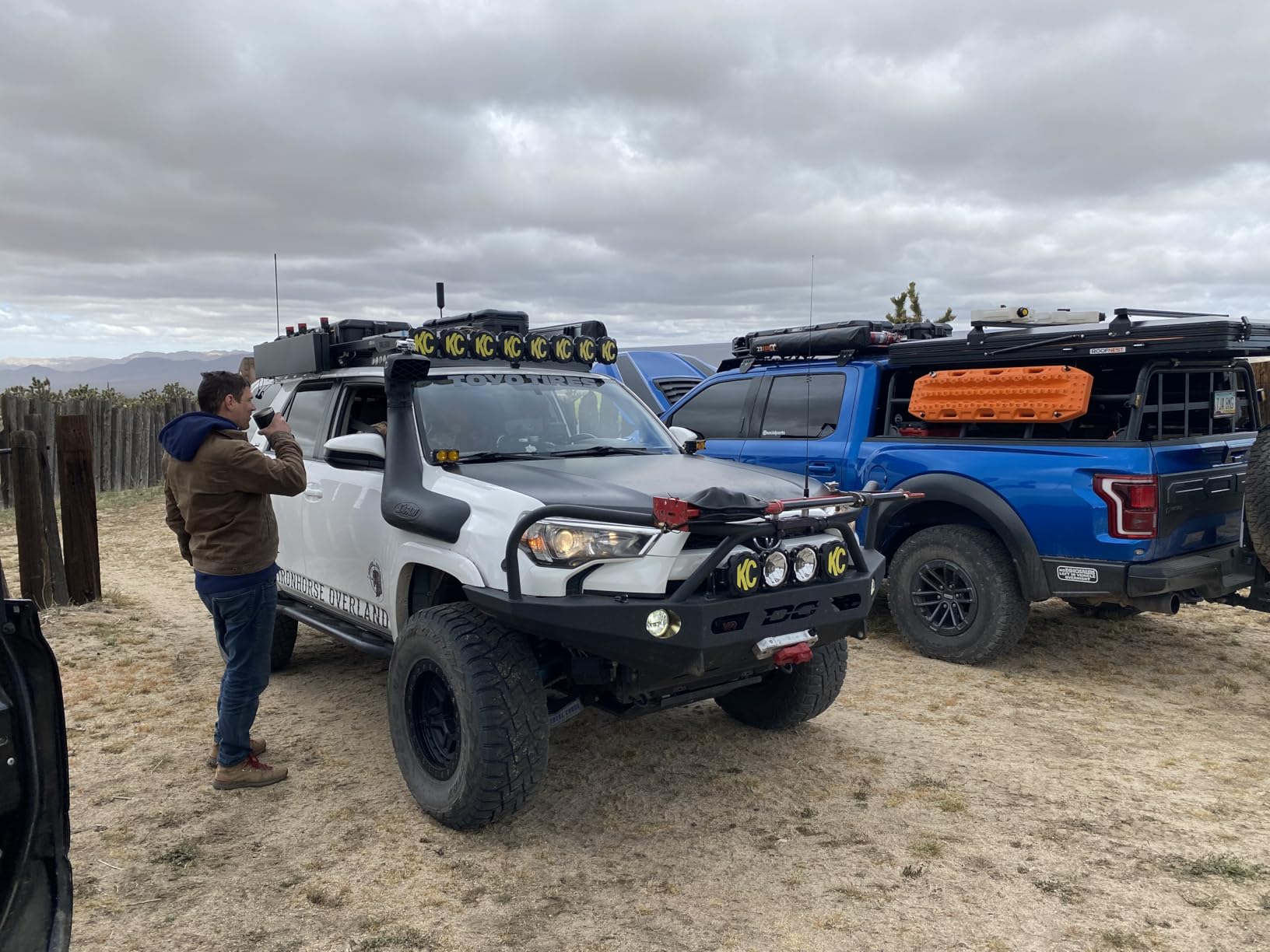
The 6000+ cycle rating is excellent, and the 10ms UPS switch with 140W USB-C output covers a full mobile office. Enthusiasts who own it consistently praise the size-to-capacity ratio, the true 20A outlets and BLUETTI’s 24/7 phone support.
2400W AC output with 4800W surge is enough for an induction cooktop or a coffee maker, which is more than most van builds ever ask for.
Why we picked it over the Jackery HomePower 3600 Plus
TT-30 and the 30A DC output are worth more than raw capacity if your electrical system is already wired for RV conventions. The HomePower is bigger, but it does not have a dedicated 30A RV outlet in its spec sheet, and you would be running a 15A household circuit instead.
The Elite 300 is also 20 lb lighter at 58 lb against 77.2 lb, and its 3014Wh capacity is closer to what a seasonal full-timer actually consumes than the 3584Wh alternative.
Where the compromises show up
It is not expandable. Capacity is fixed at 3014Wh, so if your needs grow, this is the ceiling. For a van build that is a meaningful limitation compared with the Delta 3, the Mega 1 or the ALLWEI.
Solar input is limited to 60V and 20A, which means a high-voltage panel string can exceed the MPPT limit. If you plan a serious 400W or larger array, check the string voltage before you buy panels.
Soft-start behaviour struggled to start a 500W dehumidifier compressor in one report, and at 58 lb it still needs two hands. Firmware updates require the app over Wi-Fi, and with 118 reviews this is the newest and thinnest evidence base in the roundup.
12. Jackery HomePower 3600 Plus – Best Station for Full-Time Van Life
Jackery HomePower 3600 Plus Power Station, 3584Wh, 3600W AC Output
3584Wh expandable to 21kWh
3600W AC, 7200W parallel
dual 120V/240V
Pros
- 3584Wh expandable to 21kWh per unit and 43kWh across units
- 3600W output with 7200W parallel and dual 120V/240V
- High-temperature ceramic membrane cells tested to 302F with 6000 cycles
- 0-100 percent in 2 hours hybrid AC+DC
- Built-in wheels and telescopic handle
Cons
- Heaviest unit here at 77.2 lb
- 19.3 inch tall footprint takes floor space
- Expansion batteries and solar kits sold separately
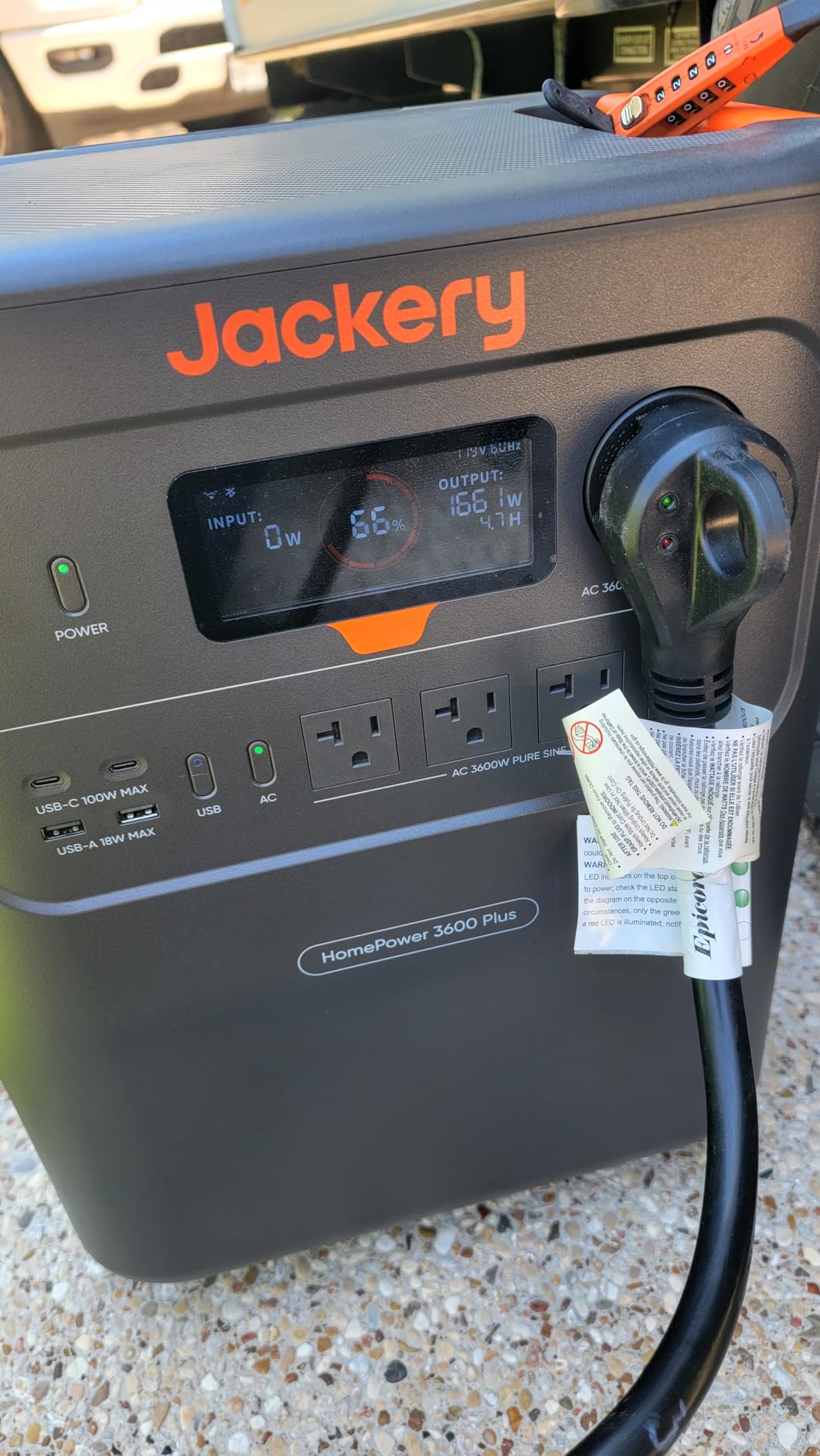
The HomePower 3600 Plus is the most capable machine in this roundup and the one built for someone living in the van rather than touring it. 3584Wh of ceramic membrane LFP capacity, 3600W of continuous AC output, 7200W in parallel, and dual 120V/240V capability that most portable stations cannot touch.
Expandability is the headline. Each unit scales to 21kWh, and multiple units can be paired for 43kWh, which is a household-scale amount of stored energy. At 6000 cycles and a 10-year lifespan, this is the sort of long-horizon arithmetic a full-timer should be making.
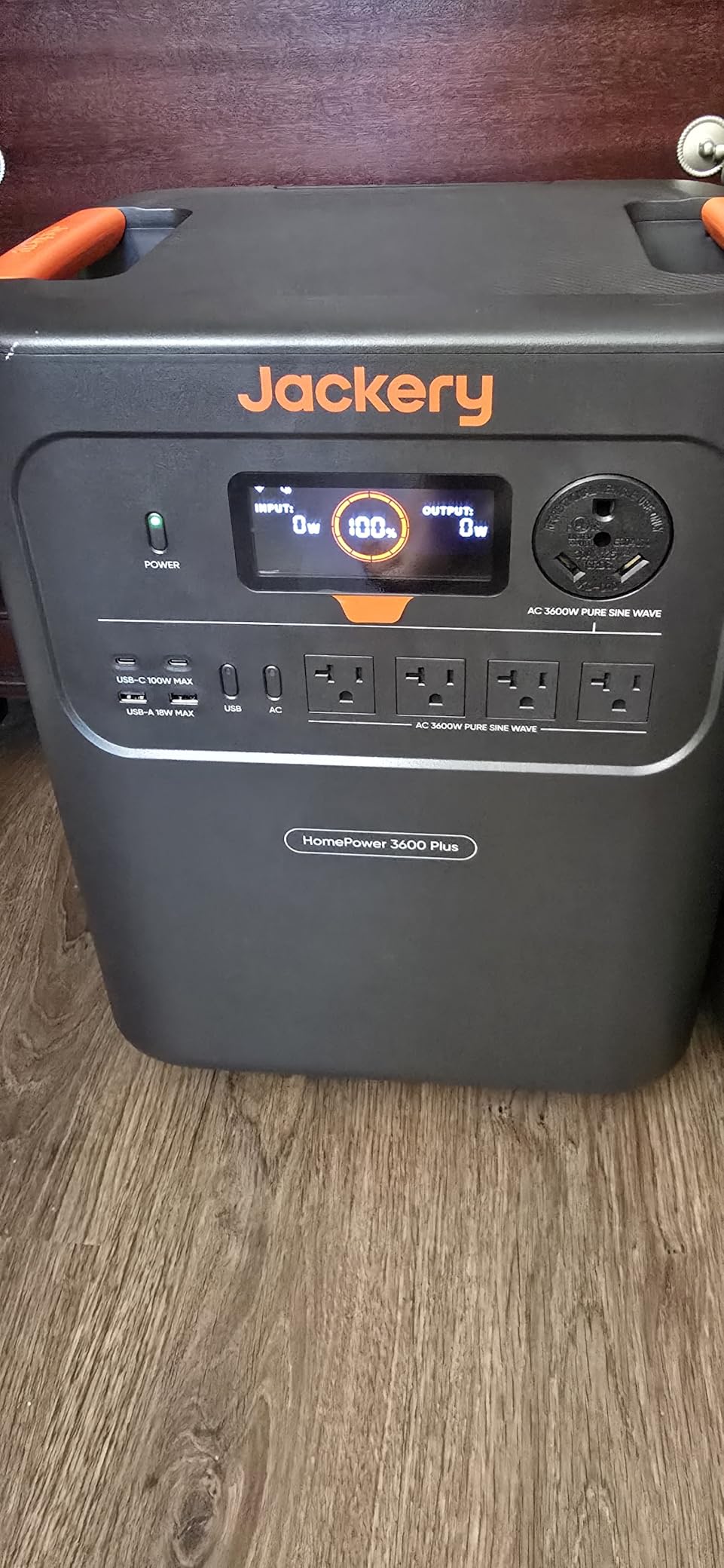
Charging is 0 to 100% in 2 hours on hybrid AC plus DC, 2.5 hours on AC alone, 4 hours on solar, and 2.5 hours on a gas generator. Owners report running induction cooktops, coffee makers, fridges and freezers, water heaters and even RV air conditioning from it, and replacing a noisy generator entirely.
The luggage-style chassis has built-in wheels and a telescopic handle. For a 77 lb battery that is a meaningful ergonomic decision, even if the handle is still awkward on gravel.
Why we picked it over the BLUETTI Elite 300
Future-proofing. The Elite 300 is fixed at 3014Wh, while this scales past 21kWh. If you are a full-timer who may add a welder, a camper or a second battery bank in year three, capacity you can grow into beats capacity you cannot.
Ceramic membrane cells tested to 302F also suit a hot van interior better than typical cells, and the dual-voltage output covers 240V tools without a separate inverter.
Where the compromises show up
Seventy-seven pounds is the heaviest unit here even with the rolling handle, and 19.3 inches of height means a dedicated floor space. This is not a pack-out-and-carry product, and you should treat it as a fixed installation.
Expansion batteries and extra solar kits are sold separately, which pushes the true cost of a full system well past the base unit. The plug-and-play transfer switch is optional too.
With 191 reviews, the evidence base is modest, so we would suggest buying it with the fixed-installation mindset and reading current owner threads, as we did, before committing to this size of commitment.
How Much Power Do You Actually Need in a Van?
The honest answer is that most van-lifers vastly underestimate their own draw, then overbuy capacity to compensate. A fridge alone can account for a third of your daily consumption, and it is the load most people forget to budget for because it runs silently in the background.
Add your numbers up first, then size the battery. Here is a realistic per-appliance budget for a two-person van with a compressor fridge.
Compressor fridge (12V): 250 to 450 Wh per day for a typical 45W unit running 24 hours on a normal duty cycle. This is the single biggest line in most van power budgets, and it is the one people forget to include.
12V water pump: 20 to 60 Wh per day for typical showers and a modest amount of water use.
LED lighting: 15 to 40 Wh per day for interior and exterior lights used a few hours each evening.
Laptop, phone and camera gear charging: 80 to 150 Wh per day for a full remote work setup.
Router or hotspot: 15 to 30 Wh per day, which surprises people with 12V options and power banks.
Coffee maker: 200 to 400 Wh per day if you run a 1000W unit for fifteen minutes a day, several times.
Furnace blower or diesel heater: 300 to 900 Wh per day in winter. This is the single biggest surprise for anyone who has not lived through a cold month in a van.
Add those together and a typical winter full-timer lands somewhere between 1000 and 2000 Wh per day. A summer weekend trip with just a fridge, lights and phones can be under 500 Wh. Our general power station buying guide covers the underlying Wh versus W distinction in more detail.
Sizing Your Battery and Solar for Van Life
Once you have a daily Wh figure, the sizing rules are simple enough that we are surprised more guides do not just state them. Multiply your daily consumption by your buffer, then divide by your peak sun hours to get solar wattage.
Battery capacity: daily Wh multiplied by 1.5 to 2. A 1200 Wh per day lifestyle with a 1.5 to 2 day buffer needs roughly 1800 to 2400 Wh of storage, which is why 1kWh units feel tight after a second cloudy day and 3kWh units feel relaxed.
Solar array: daily Wh divided by peak sun hours, then multiplied by a 1.2 to 1.3 efficiency buffer. A 1500 Wh per day load with 4 peak sun hours and a 1.25 buffer needs about 470W of panels. This is also why the 600W and 800W solar inputs on the Anker C1000 Gen 2 and the OUPES Mega 1 matter more than the 300W caps on cheaper units.
Never rely on the nameplate watt-hours alone. Inverters are roughly 90% efficient, and idle draw of 6W to 20W adds up fast. A station idling at 20W burns 480 Wh a day doing nothing, which is a full extra day of consumption on a 1kWh unit. This is exactly why the Anker SOLIX S2000’s 6W idle draw is a meaningful spec.
Watch the MPPT voltage window. A 60V ceiling caps your string, while a 150V window gives you flexibility with series panels. The BLUETTI Elite 300’s 60V and 20A limit is the constraint to watch if you plan a large fixed array.
What to Look for in a Van-Life Power Station
LiFePO4 chemistry, full stop. NMC cells degrade under the daily deep cycling that off-grid living demands, and the NMC options are the deal-breaker that forum owners consistently call out. Every station in this roundup uses LiFePO4 or a semi-solid variant, with cycle ratings from 3500 to 10000.
Solar input of 500W or more. Anything under 400W on a big battery is a deal-breaker for multi-day off-grid trips, because you physically cannot refill the reserve inside a short peak-sun window.
Regulated 12V DC output. Running a fridge, fan or heater on DC instead of through the inverter saves meaningful energy. Note that the Anker SOLIX S2000 has no 12V car port, and van owners notice that immediately.
Pass-through charging. You want the station to charge and discharge at the same time, otherwise you are unplugging everything to top up from shore power.
UPS mode with a fast switchover. Anything under 20ms keeps a router, laptop or CPAP machine running through a brief dropout. The Delta 3 Max at under 10ms is the class leader.
Weight against your payload rating. This is the hard limit nobody talks about. Your door jamb has a number on it, and a 77 lb battery plus a 400W panel plus a bracket eats into it fast. Our RV power station guide goes deeper on planning around fixed systems.
Port count you will actually use. Three AC outlets feels generous until you add a fridge, a laptop and a coffee maker. Six or more outlets, plus USB-C, is a more comfortable van reality.
Charging Options Compared for a Van
Solar is the foundation, but it is rarely the whole answer. The stations that work best in a van are the ones that can be refilled from more than one direction, and the charging paths vary a lot between models.
Solar: The default and the best long-term option. Refill times depend on both panel wattage and the station’s MPPT input ceiling. A 400W array refilling a 2042Wh unit takes roughly 6 hours according to Jackery’s own figure; a 600W input into a larger pack is faster still.
Alternator and 12V to 12V charging: The most underrated method in van life and the one no competitor covers. Charging while you drive converts engine alternator output into stored energy, which is the cheapest watt-hours you will ever get. The Anker SOLIX S2000 and the ALLWEI both list alternator and 12V car charging as native options.
Shore power: Fast when you have a hookup, with the Delta 3 and Delta 3 Max leading on charge rate at 56 minutes and 1.13 hours to 80% respectively.
Car outlet: The slow fallback, useful for topping up while parked near a vehicle or as a trickle overnight.
Hybrid AC plus solar: The best of both when the clouds cooperate. Several units here, including the OUPES Mega 1 and the Jackery HomePower, shorten charge time significantly by drawing on both inputs at once.
Our advice is to build a system with at least two independent paths. Solar plus alternator covers the majority of trips, and a fast AC input covers the days you want to be fully topped before leaving a campground.
Installation and Wiring in a Van
A portable power station does not need a permanent install to work, but a few decisions separate a tidy setup from a rattling battery with an exposed cable run. These notes apply whether you are using one of the stations above or a component build, and the same principles drive our home backup station recommendations.
Mount and restrain against vibration. Road vibration is the number one killer of loose electronics. Strap or bolt the unit into a cabinet or under-dinette void rather than leaving it on a shelf with a rubber mat. Rubber isolation feet help, but restraint matters more.
Keep the vents clear. These units generate heat under load and draw cooling air through side or rear vents. A closed cabinet without airflow forces thermal derating and shortens battery life. A passive vent path top and bottom is the minimum.
Run DC directly for 12V loads. If your fridge, fan and heater are 12V, wire them to the DC output rather than the AC inverter. You lose less energy and reduce heat in the cabinet.
Fuse every run. A short in an unfused cable behind a panel is the classic van fire scenario. Use an appropriately rated inline fuse close to the battery for each circuit, and keep the cable gauge matched to the current.
Use TT-30 for RV loads. If you have 30A loads, the BLUETTI Elite 300 is the only station in this roundup with a dedicated TT-30 outlet. Otherwise, keep high-draw appliances on a dedicated circuit rather than a multi-outlet strip.
Plan for a second battery. If you are buying an expandable unit, mount and wire for the expansion now. Adding it later means re-running cables in a finished build, which is far more work.
Cold-Weather and Winter Charging
Winter van life is where battery chemistry stops being a marketing detail and becomes a real constraint. Lithium iron phosphate cells cannot charge below freezing, and a station left in a cold van overnight may refuse to accept solar input the next morning until the cells warm up.
Two things to do. First, bring the unit inside on cold nights if you can, or at least into a warmer compartment, rather than leaving it in an unheated shell. Second, charge it fully before you go to sleep so the overnight cold is not followed by a cold morning charge.
On the product side, some units publish better cold-weather performance than others. The Jackery HomePower 3600 Plus stands out with high-temperature ceramic membrane cells tested to 302F, which speaks to heat tolerance in a closed van cabinet. Most others give no cold-charge specification at all, so plan the energy budget for days when solar yield drops and charging is limited.
For storage between trips, charge to roughly 50 to 60% and leave it in a dry, temperate space. Full or empty at storage are the two states that age a battery fastest.
What Van-Lifers Actually Report
Owner feedback consistently points in the same directions, and it is worth reading before you commit to a brand ecosystem. A ProMaster van-life forum poll on the best portable power station recorded DIY build at 14 votes, BLUETTI AC200P or AC200MAX at 7 votes, Goal Zero Yeti 1500x at 5 votes and EcoFlow Delta Max at 2 votes, which shows strong appetite for building your own system rather than buying a sealed box.
A Reddit roundup on r/OutdoorObsessed recalled the EcoFlow DELTA Pro, the Jackery Explorer 3000 Pro and the BLUETTI AC200L most often, which lines up with our finding that EcoFlow and BLUETTI dominate for anyone wanting expandability or RV integration.
The recurring complaints are consistent with what we found in the review data: weight eats payload capacity, low solar input ceilings cause slow recovery in winter, proprietary solar connectors block third-party panels, and NMC chemistry degrades under daily cycling. Units over 70 lb without wheels and stations with solar input under 400W are the two most common deal-breakers owners name.
One more practical note for camera and drone users: charging banked batteries is a genuinely demanding load. Our power station picks for drones covers that use case in more depth.
Frequently Asked Questions
What is the best portable power bank for van life?
A power bank is not the right product. For van life you need a portable power station: a LiFePO4 battery with a pure sine wave inverter, 12V DC outlets and AC outlets. For weekend trips look at 1000 to 2000Wh; for full-time living 2000 to 4000Wh. In this roundup the Jackery Explorer 1000 v2 and the BLUETTI AC180 cover the 1kWh sweet spot.
Is Jackery or EcoFlow better?
They suit different needs. Jackery wins on weight per watt-hour and build quality, with the Explorer 1000 v2 at 23.8 lb. EcoFlow wins on charging speed and expandability, with the Delta 3 expanding to 5kWh and recharging to 80 percent in 30 minutes. For a fixed van build, EcoFlow is the stronger long-term option.
Is Jackery or Anker better?
Anker SOLIX offers faster recharging and lower idle draw, with a 49 minute full recharge on the C1000 Gen 2 and 6W idle draw on the S2000. Jackery offers lighter units and a wider service footprint. Choose Anker if recharge speed and low standby matter to you, and Jackery if lifting the unit solo matters more.
Which brand of portable power station is the most reliable?
Reliability tracks cycle life, warranty length and how much long-term owner data exists. BLUETTI and Jackery both publish 4000 to 6000 cycle ratings and 5-year warranties. The BLUETTI AC180 has the largest review base here with over 2600 ratings, which is the best evidence of long-term dependability.
How long does a portable power station last in a van?
It depends on capacity and chemistry rather than time. A 1000Wh unit at 4000 cycles is rated for over 10 years of daily use. The Anker SOLIX S2000 publishes 10000 cycles and a 15-year lifespan. The bigger factor is daily draw: a 1200 Wh per day lifestyle empties a 2kWh station faster than one in summer.
Do I need solar panels with a portable power station?
Yes, for sustained off-grid use. Solar is the only free way to refill the battery once you are away from shore power. Size your array at your daily Wh divided by peak sun hours, then add a 1.2 to 1.3 buffer. Check the station MPPT voltage window too, because a 60V ceiling limits your panel string.
Can a portable power station run a microwave or RV air conditioner?
A microwave is realistic. A 2kWh station such as the EF ECOFLOW Delta 3 Max or the Jackery HomePower 3600 Plus can run one, using 2200W to 3600W of continuous output. RV rooftop air conditioning is not realistic for most trips because the runtime math does not work without a massive battery bank.
Can a portable power station replace a van generator?
For most van builds, yes, with an honest caveat. A 3kWh station covers a fridge, lights, laptop, coffee maker and short high-draw appliances silently and at no fuel cost. A generator still wins for sustained heavy AC loads over many hours. A hybrid approach, using both, covers the gaps.
Which Portable Power Station Suits Your Van?
For weekend trips and light boondocking, the Jackery Explorer 1000 v2 is the pick. It is light enough to handle solo, the review base is the deepest here, and 1070Wh covers a fridge, lights and device charging without a fight.
For a first full build with a fixed install, the EF ECOFLOW Delta 3 gives you 1kWh now and 5kWh later, which stops you from repurchasing the whole unit in year three. The BLUETTI AC180 is the value alternative if outlet count and a 5-year warranty matter more than weight.
For remote work on the road, the Anker SOLIX C1000 Gen 2 wins on recharge speed and its 10ms UPS transfer. The OUPES Mega 1 is the pick if you want 800W of standard MC4 solar input on a 1kWh budget.
For full-time living, the Jackery HomePower 3600 Plus offers the most headroom and the longest expansion path, while the BLUETTI Elite 300 is the smarter choice if you need a TT-30 outlet and 30A DC for RV-style loads. The Jackery Explorer 2000 v2 keeps a 2kWh unit as light as possible, and the Anker SOLIX S2000 is built around fridge duty with its 6W idle draw.
Before you buy, do three things: total your daily watt-hours, divide by peak sun hours to size panels, then check the total battery weight against your door-jamb payload number. Those three calculations will save you more money than any feature comparison. The best portable power stations for van life are the one that matches your measured load, your solar window and your payload rating.