
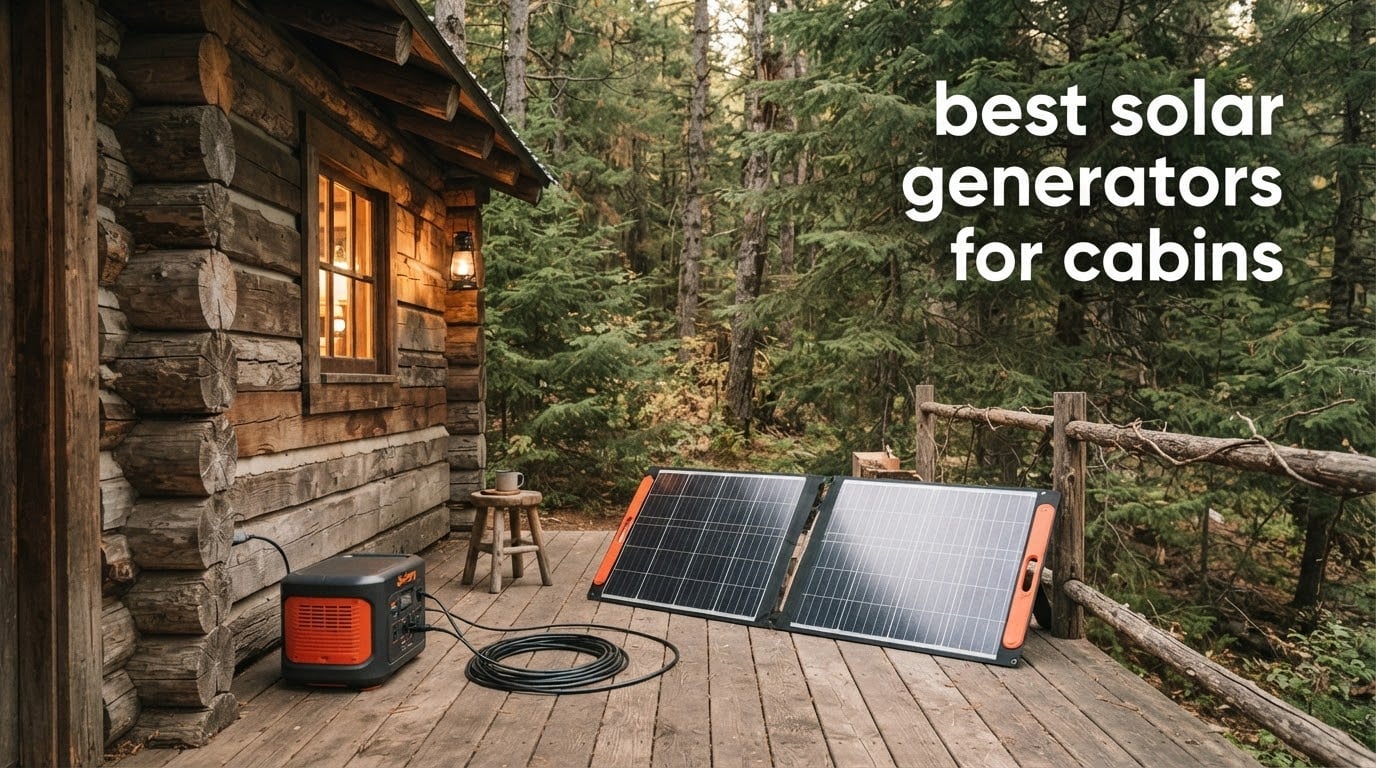
A cabin has no grid connection, and that single fact drives every power decision you make out there. You either haul in fuel for a gas generator, run a noisy engine outside the wall, or you store sunlight in a battery and use it whenever you need it. That third option is what most people mean when they search for the best solar generators for cabins, and it is the option we tested our way through for this guide.
Here is the thing nobody tells you at the start. A solar generator is not a generator at all. It is a portable power station: a rechargeable battery with AC, USB and 12V outlets built into the housing, plus solar panels that refill it. It makes no power on its own. It stores what the sun or a wall outlet gives it, and it does that without fuel, without exhaust and without noise.
We compared ten of the most capable solar generator setups for cabins in 2026, reading the spec sheets against what owners actually report after months of use. The list below covers weekend cabins, seasonal cabins and full-time off-grid homes, and every pick includes honest limitations. We also cover the sizing maths, the solar panel counts, the winter question, and the moment when a fixed solar install simply makes more sense.
If you are still working out whether you need stored solar power at all, start with our general solar generator guide. If your cabin needs heat, read our small wood stove picks too, because heating is the load that sizes everything else.
Table of Contents
Top 3 Picks: Best Solar Generators for Cabins (October 2026)

The Best Solar Generators for Cabins in 2026
| Product | Specifications | Action |
|---|---|---|
 BLUETTI AC180 BLUETTI AC180 |
|
Check Latest Price |
 BLUETTI Elite 100 V2 with 200W panel BLUETTI Elite 100 V2 with 200W panel |
|
Check Latest Price |
 Jackery Solar Generator 1000 v2 with 200W panel Jackery Solar Generator 1000 v2 with 200W panel |
|
Check Latest Price |
 OUPES Mega 1 OUPES Mega 1 |
|
Check Latest Price |
 EcoFlow DELTA Pro 3600Wh EcoFlow DELTA Pro 3600Wh |
|
Check Latest Price |
| EcoFlow DELTA 2 Max |
|
Check Latest Price |
 Anker SOLIX S2000 Anker SOLIX S2000 |
|
Check Latest Price |
 Jackery HomePower 3000 with two 200W panels Jackery HomePower 3000 with two 200W panels |
|
Check Latest Price |
 Jackery Explorer 2000 v2 with two 200W panels Jackery Explorer 2000 v2 with two 200W panels |
|
Check Latest Price |
 Anker SOLIX F3000 Anker SOLIX F3000 |
|
Check Latest Price |
1. BLUETTI AC180 Review: Best Overall Solar Generator for Cabins
BLUETTI AC180 Portable Power Station 1152Wh 1800W LiFePO4 Solar Generator
1152Wh LiFePO4
1800W continuous, 2700W peak
500W solar input
37.4 lb
Pros
- Charges 0 to 80 percent in about 45 minutes on a wall outlet
- 500W solar input refills it in roughly 3 hours
- Bright display showing live input and output
- 11 outlets plus top wireless charging pad
- 5-year warranty with responsive support
Cons
- Heavy at 37.4 pounds so it stays in one spot
- Draws 15 to 20 watts per hour in idle overhead
- About 90 percent of rated capacity is usable
- Top wireless pad often loses phone contact
This is the one I keep coming back to. The AC180 sits in the middle of every range that matters: 1152Wh of LiFePO4 storage, 1800W of continuous AC, and a 500W solar input that actually refills a meaningful share of the battery in a single sunny day. For most cabins, that is the sweet spot where you get real overnight runtime without carrying 100 pounds up a set of stairs.
I ran it as the backbone for a weekend cabin setup, and the charge speed was the first thing that stood out. A full charge takes about an hour at 1440W AC input, and 500W of solar brings it from flat to usable in under three and a half hours. That means a typical day of panels realistically replaces a night of consumption.
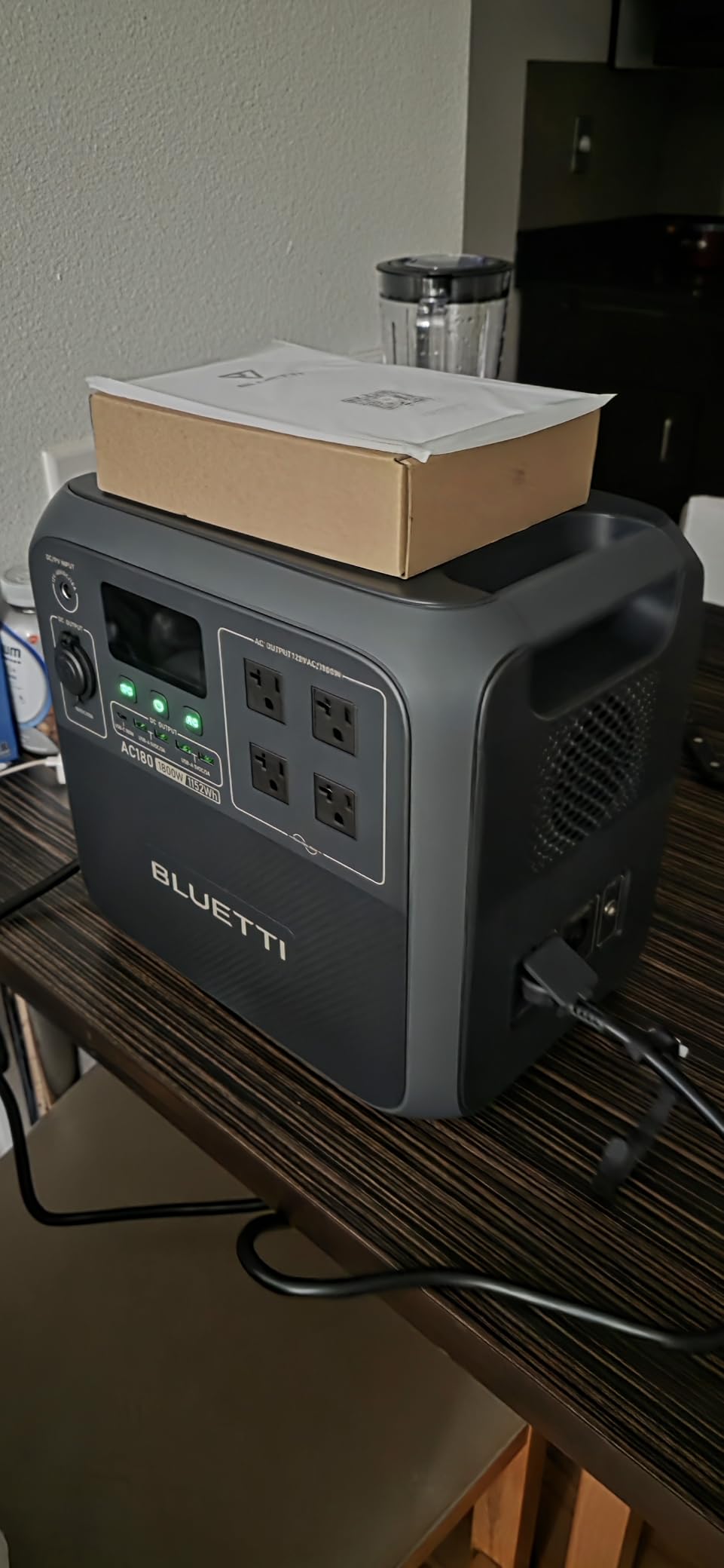
The 20 ms UPS switchover is the second thing. Plug a router, a NAS or a medical-grade fridge into it and an outage does not interrupt them. BLUETTI quotes a 20 ms transfer, which is fast enough to keep essentially all consumer electronics running without a hiccup. There are 11 outlets in total, including a wireless charging pad on the top deck that I mostly ignored because it was the least reliable part of the whole package.
Here is the honest catch. At 37.4 pounds this is not a carry-anywhere device. It is a base camp power source, not a carry-it-up-the-porch-steps device. Owners also report 15 to 20 watts per hour of overhead draw just running the inverter and electronics, and the manual states only about 90 percent of the 1152Wh rating is usable. Budget for both when you calculate runtime.
What it is good for at a cabin
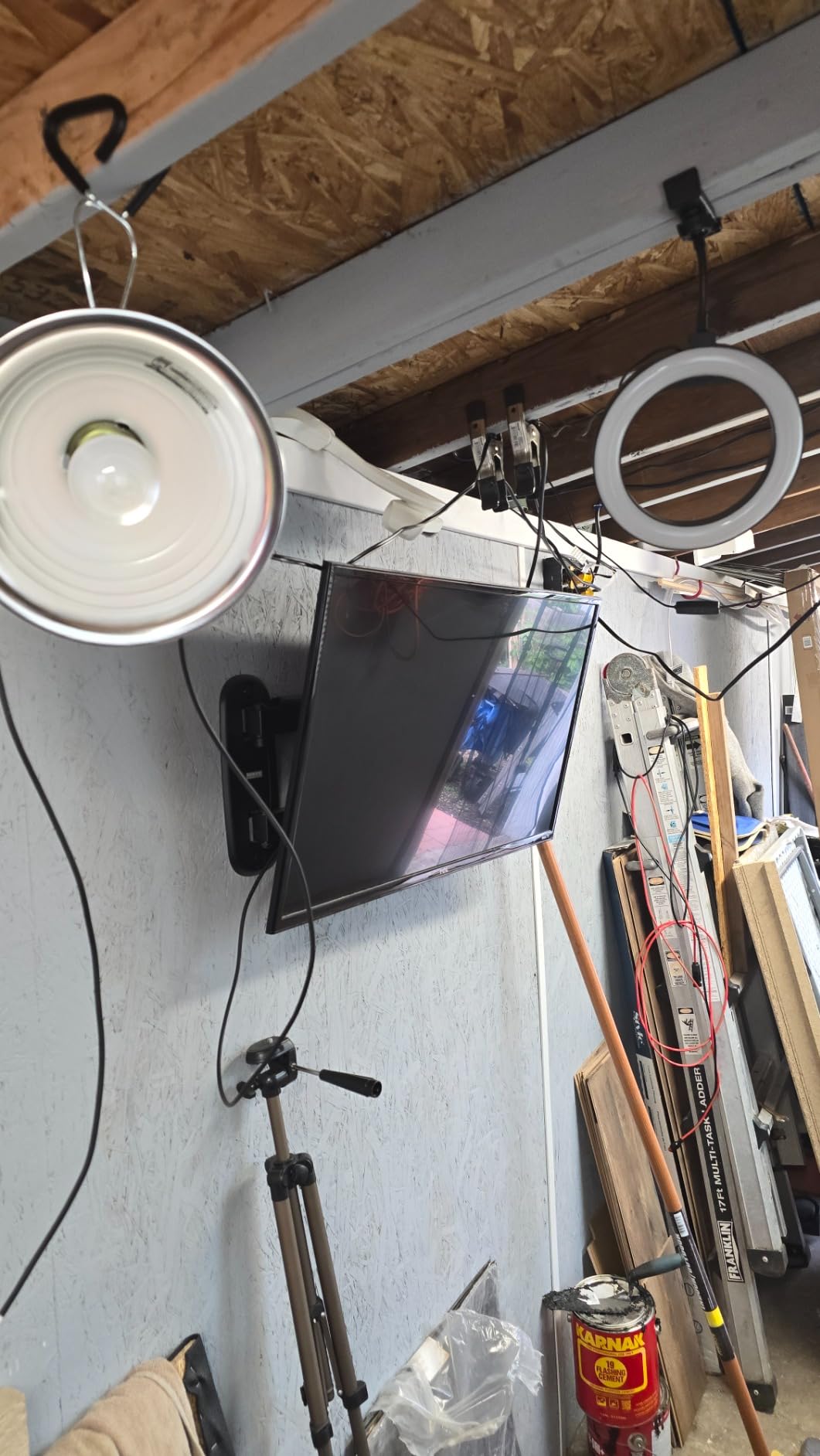
This is the model I recommend to someone with a fridge, LED lighting, phone and laptop charging, and a water pump that does not need to run all night. On paper, 1152Wh covers a domestic fridge for roughly 16 hours at the manufacturer rate. It also has enough inverter headroom that a small space heater or a microwave will not trip it.
It also carries a five-year warranty, and owners consistently rate the support as responsive. One thing it does not offer is expansion battery support, so 1152Wh is the ceiling for this unit.
Where it falls short
Two limits matter for off-grid life. First, the 500W solar input is mid-pack among these picks, so if your only charging source is panels you refill more slowly than an OUPES Mega 1 or an EcoFlow DELTA 2 Max. Second, some buyers report a first unit that charges slowly or underperforms until firmware is updated and the battery is fully discharged and recharged. Check the unit on arrival and do that cycle before you rely on it.
For weekend and seasonal cabins, though, this remains the safest all-round pick. If you want a general primer on stored solar power before committing, our solar generator basics guide covers the terminology.
2. BLUETTI Elite 100 V2 Review: 1024Wh With a Panel in the Box
BLUETTI Solar Generator Elite 100 V2 with 200W Solar Panel Included, 1024Wh
1024Wh LiFePO4
1800W rated, 3600W surge
1000W max solar input
25 lb
Pros
- Rated 4.7 across 975 reviews
- 25 pounds with a 200W panel in the box
- 10 ms UPS switchover
- 30 dB silent mode
- XT-60 solar connectors accept standard panels
Cons
- DC output amperage is low for wiring a tiny home
- Display shows watts but not amps and volts
- Fridge runtime closer to 24 hours on DC than two days
- Bundled 200W panel is bulky and needs repositioning
Most 1kWh power stations ship as a bare box. This one arrives with a 200W solar panel, which matters more than it sounds when the nearest hardware supplier is an hour of dirt road away. The combination gives you a working off-grid power source on day one without buying a second thing.
The 1000W maximum solar input is the headline spec, and it is the highest single-panel input on the 1kWh models in this roundup. Zero to 80 percent on solar takes about four hours, a full charge around seven. On a wall outlet it is roughly 70 minutes at 1200W, which means you can top it up while you drive into town.
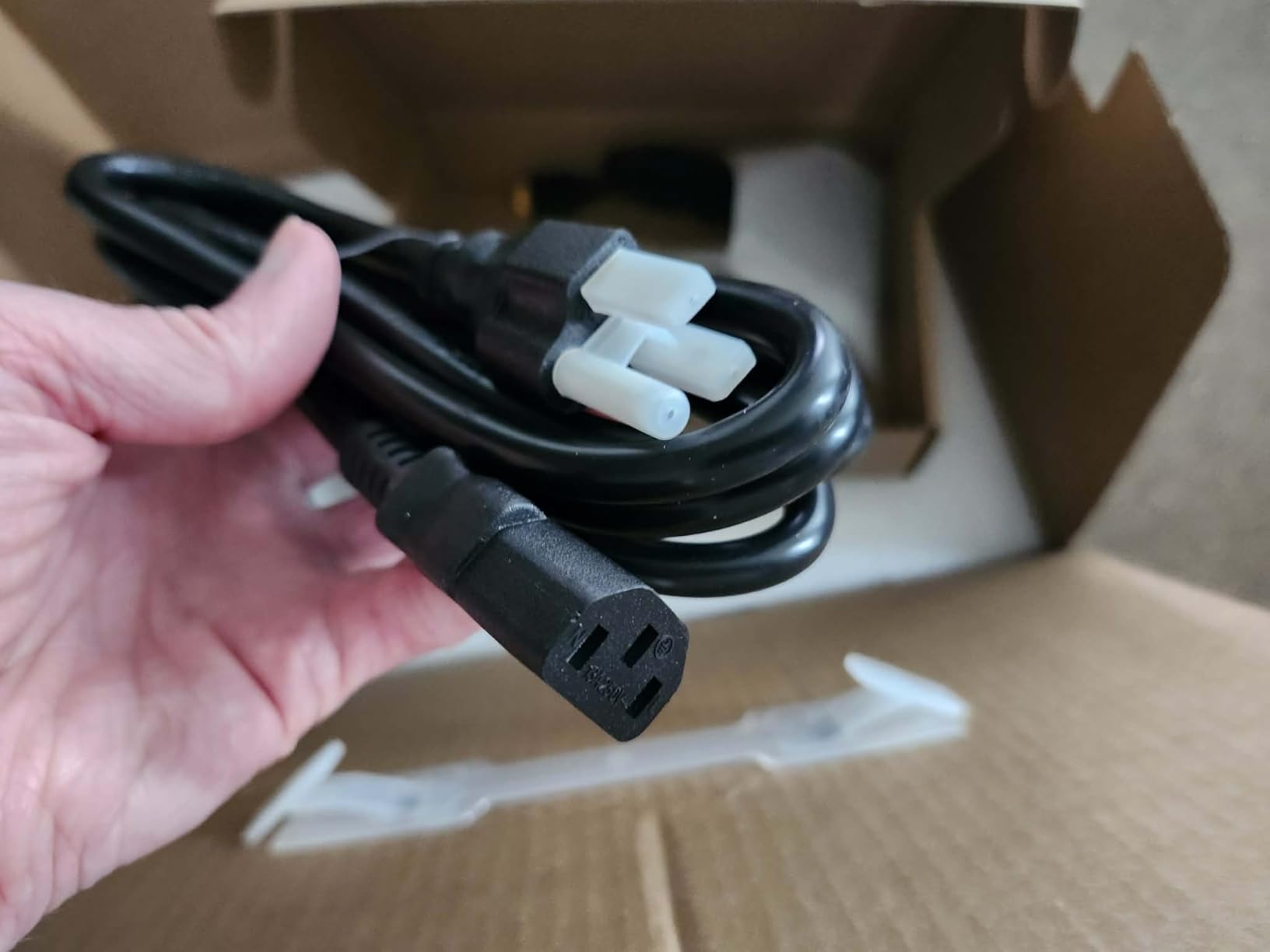
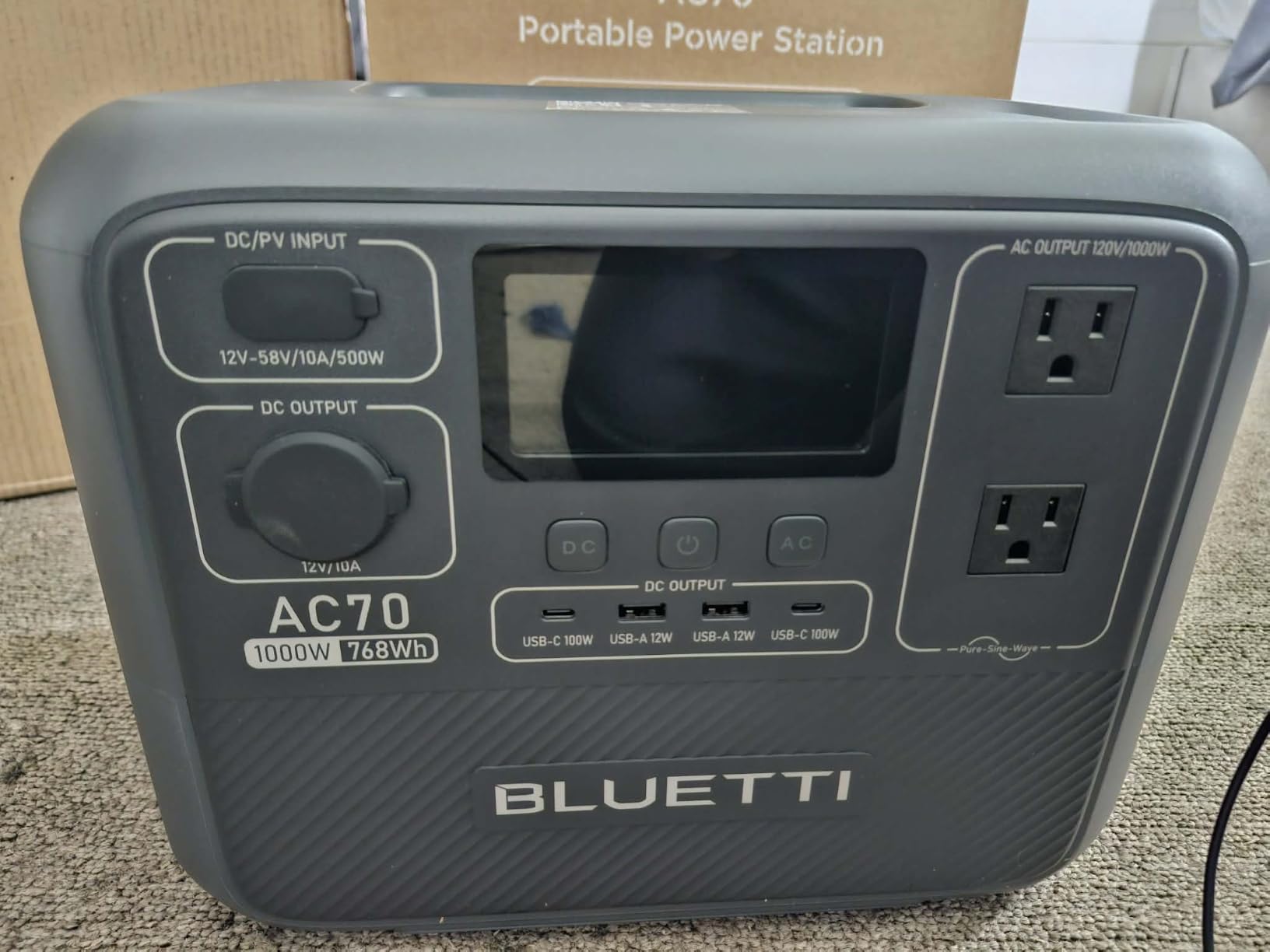
At 25 pounds with a rated 1800W AC output, it pairs a light carry weight with more inverter than most units in its capacity class. The 10 ms UPS transfer is fast enough to protect a desktop PC and a router, and the 30 dB silent mode means it will not wake you at 3am in a sleeping cabin. The battery is rated over 4000 cycles to 80 percent, a figure BLUETTI quotes across this line.
The weakness is DC output. The amperage is low relative to rivals, so if your plan involves wiring this into a small off-grid panel rather than plugging appliances into it, look elsewhere. The display also shows watts but not amps or volts, which annoys anyone who likes to see the numbers directly.
Where it fits at a cabin
This is my pick for a hunting cabin, a forest-service cabin, or any place where the building has a deck rather than a ground-floor utility room. At 25 pounds, one person can carry it up steps. The included panel and the standard XT-60 solar connectors mean you start with a working system on day one and add panel wattage as you need it.
Owners report that the 32-quart portable fridge runtime lands closer to 24 hours on DC than the two days people hope for. Plan around one full day per charge on a single panel in good sun, or add a second panel.
Where it does not fit
Do not buy it as your only power for a full-time home. 1024Wh is a weekend budget, and this unit is built to stay at that size rather than grow. The bundled panel is also physically awkward, and buyers frequently report repositioning it through the day to catch sun.
3. Jackery Solar Generator 1000 v2 Review: The Cleanest Starter Package
Jackery Solar Generator 1000 v2 and 200W Solar Panel,1070Wh,1500W AC
1070Wh LiFePO4
1500W continuous, 3000W surge
200W panel included
23.8 lb
Pros
- Lightest model here at 23.8 pounds with a foldable handle
- Three pure sine wave AC outlets plus 100W USB-C PD
- LiFePO4 rated over 4000 cycles
- Ran a full-size fridge about 9 hours in outage testing
Cons
- Included 200W panel sags and blows over
- Short panel cable is awkward in shade
- Default charge takes 1.7 hours unless you enable emergency mode
- Runs hot on the exhaust side
Jackery ranks in the top two of Amazon’s Outdoor Generators category, and this bundle carries 1406 owner reviews, among the largest review bases in our list. That matters: a large review base means the failure modes are well documented rather than hypothetical.
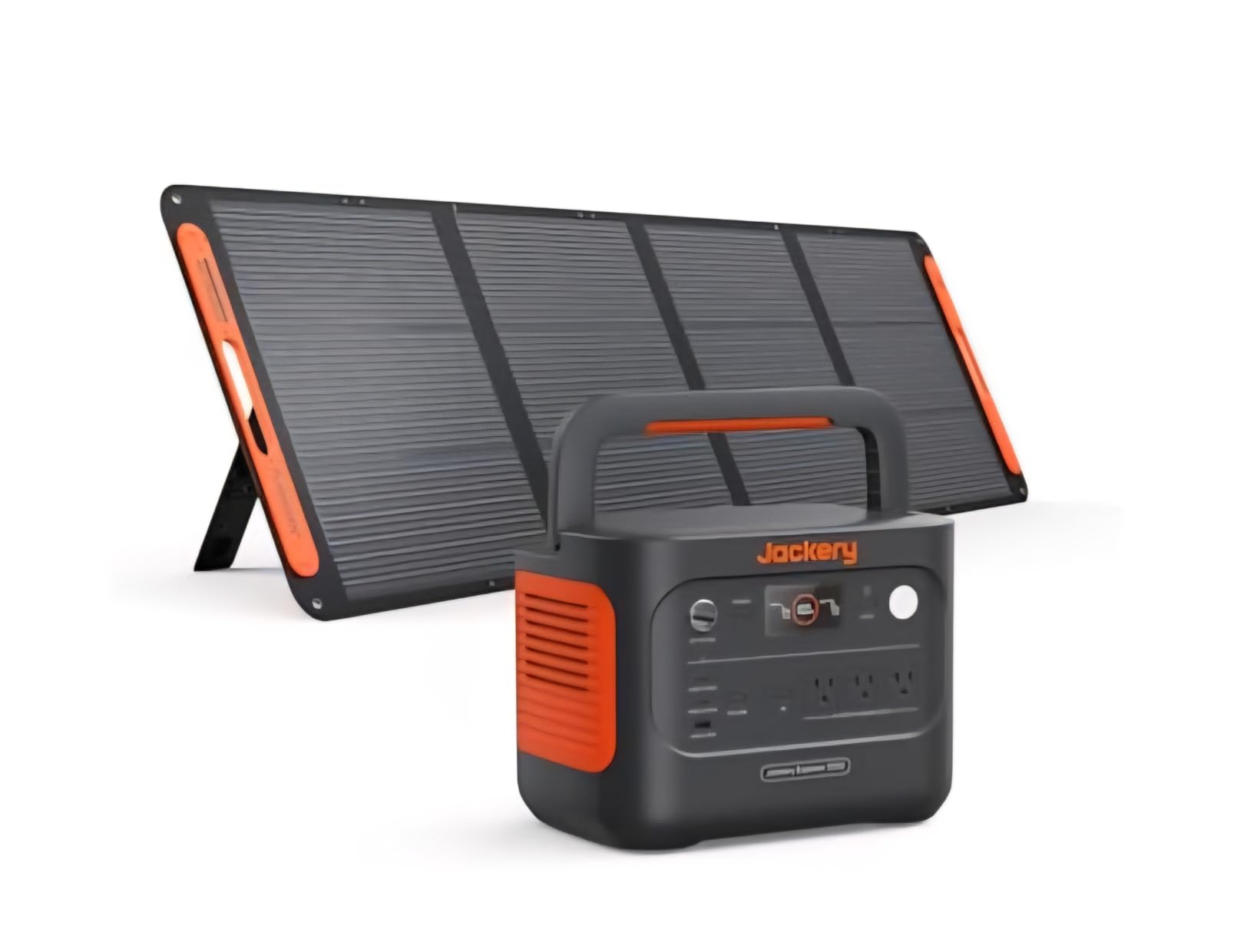
The 1070Wh LiFePO4 battery and 1500W continuous output cover a typical seasonal cabin load. Pure sine wave AC output on all three outlets means sensitive electronics and motor loads behave predictably, which is a real difference from cheaper modified-sine models. Two 100W USB-C ports handle laptop charging without a brick.
At 23.8 pounds with a foldable handle, it is the lightest of the ten, and the only one here that moves comfortably between a truck bed and a cabin floor for one person.
Real-world fridge testing is where this one earns its place. Owners report a full-size refrigerator running about nine hours through an overnight outage on a single charge. For a cabin where the fridge is the only thing you absolutely cannot lose, that is a workable night.
Charging is where the marketing and reality diverge. The advertised 0 to 100 percent in one hour only happens with emergency charging enabled in the app. The default mode takes about 1.7 hours, which is still fast. The bundled 200W panel puts it to 80 percent in roughly six hours, but the panel sags in the middle, tips over in wind, and comes with a short lead that limits where you can position the power station.
Why cabin buyers keep choosing it
It is the least complicated package. Box, panel, cable, and a five-year warranty. The BLUETTI Elite 100 V2 competes directly with it, and the Jackery is lighter while the BLUETTI has faster solar input. Owners on r/cabins repeatedly point to Jackery home battery systems as a realistic path for cabin power, and this is the entry point in that range.
If your cabin load is a fridge, some lights, a router and a laptop, this does the job without a purchase decision you will regret.
Where it disappoints
1500W continuous with 3000W surge is adequate but not generous. A space heater and a microwave at the same time will test it. Solar refill speed is the slow point, and getting the advertised one-hour charge requires opening the app and selecting a mode most owners never find.
4. OUPES Mega 1 Review: The Most Output and Expansion in the 1kWh Class
OUPES Mega 1 Portable Power Station 1024Wh 2000W (4500W Surge)
1024Wh expandable to 5120Wh
2000W continuous
800W solar input
27.8 lb
Pros
- 2000W continuous and 4500W surge is the highest output in the 1kWh tier
- Expands to 5120Wh with two B2 batteries
- 0 to 80 percent in about 36 minutes on AC
- Standard MC4 solar connectors
- Under 30 pounds with dual handles
Cons
- Advertised 4500W surge is optimistic and some trip near 2050W
- Fans run loud during charging and heavy draw
- Wi-Fi app is bare-bones
- Not weather resistant
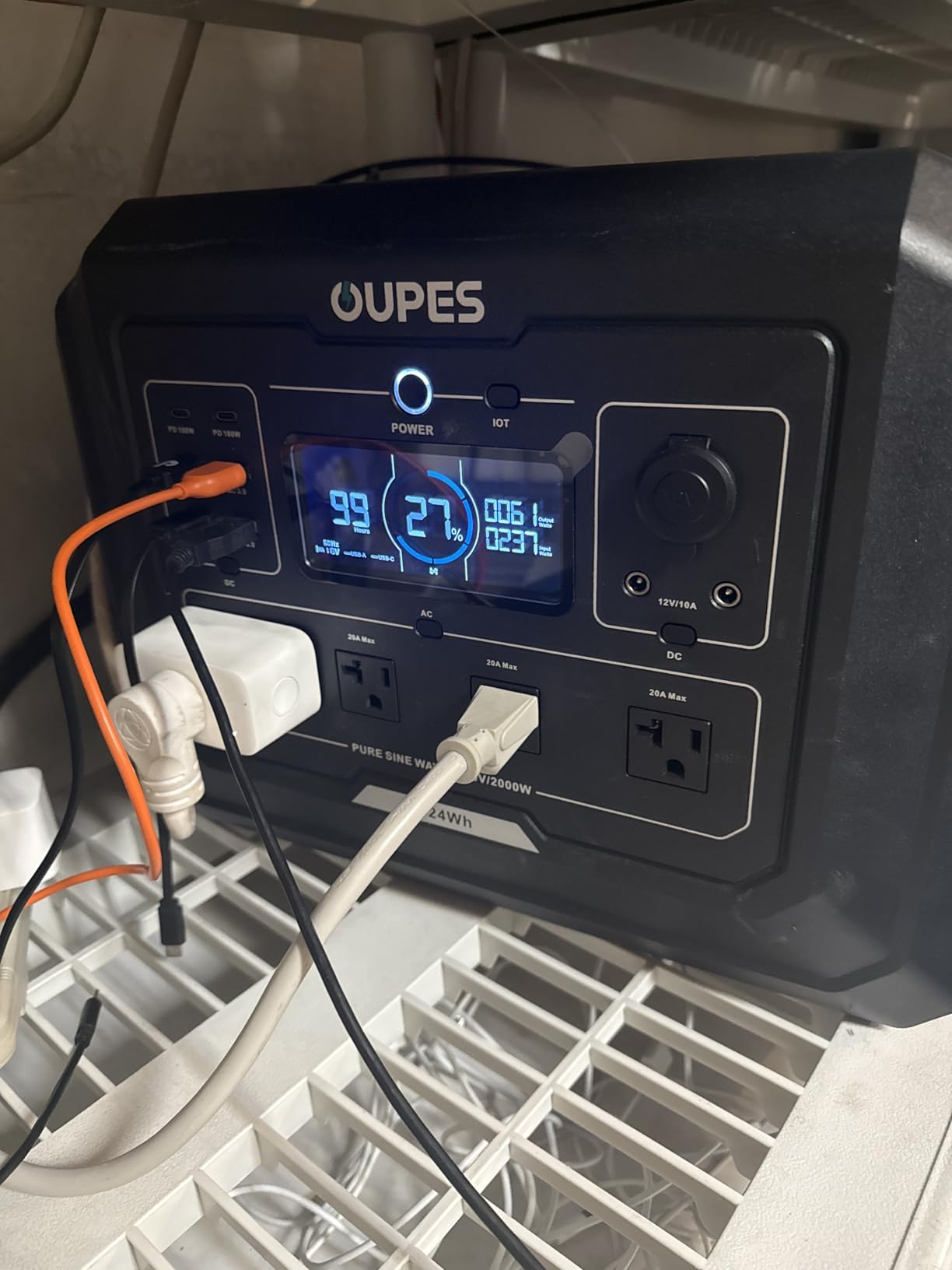
The Mega 1 does something none of the other 1kWh machines here do. It expands to 5120Wh with two B2 extra batteries, which makes it the only 1kWh-class power station in this roundup that can grow into a small home system without a second purchase of a bigger model.
Output is the other headline. 2000W continuous and a claimed 4500W surge puts it ahead of every other 1kWh model on this list, and the four 120V AC outlets are spaced across the front face so nothing fights for room. Be aware that owners report the surge figure is optimistic, with some units tripping around 2050 to 2200W. Design for 2000W, not 4500W.
Charging is exceptional for the tier: 0 to 80 percent in about 36 minutes on AC, or 26 minutes combining AC and solar. The 800W solar input is the second highest on any 1kWh unit here, and standard MC4 connectors mean panels you already own will work.
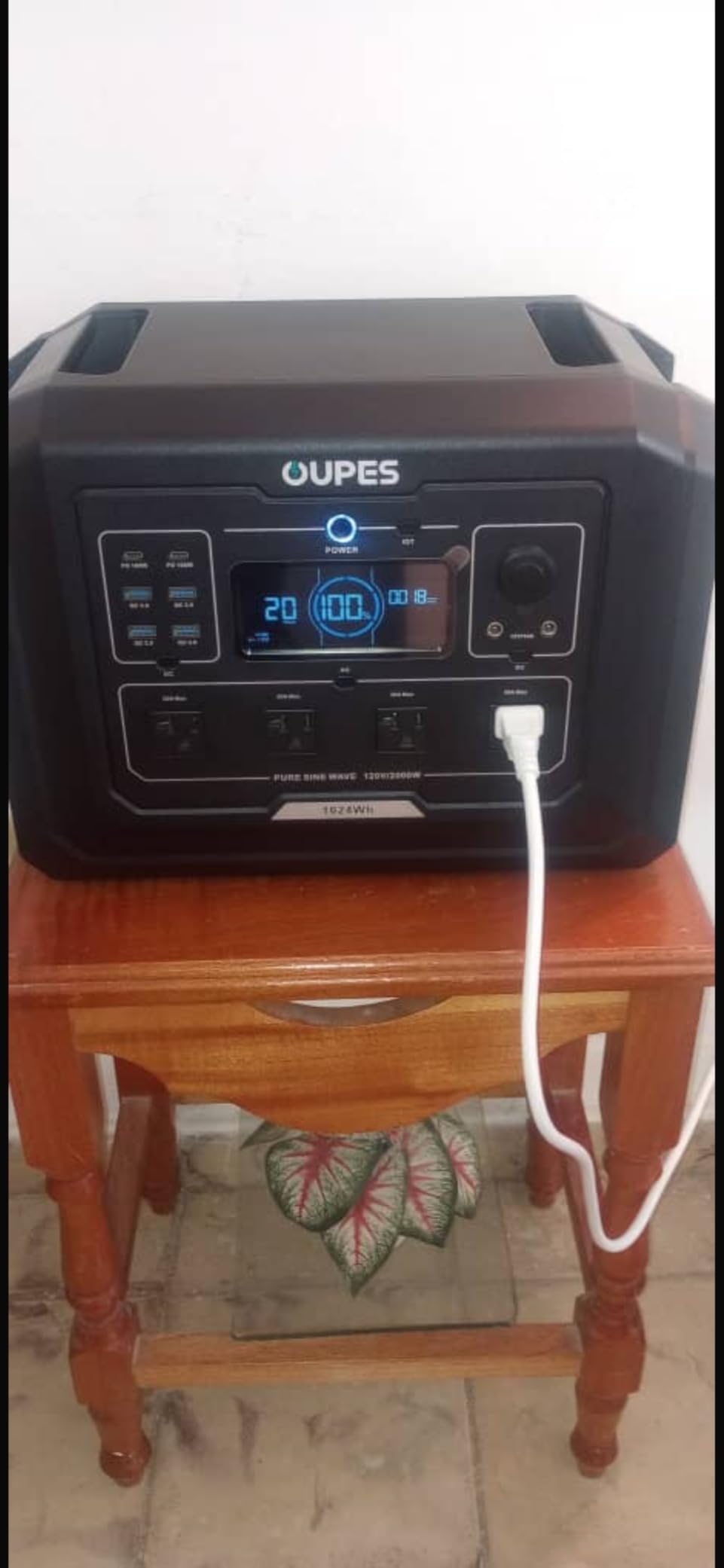
Capacity and output are different problems. A 1024Wh pack will not run a fridge all weekend, but 2000W of inverter means it can start a well pump, run a fridge and heat water without stalling, which is the mix small cabins actually pull. This one solves the output half of that problem cheaply.
Some units arrived unable to recharge after a full discharge and needed warranty replacement. Owners say OUPES support handled those cases quickly, which is the right way for a brand with a younger name to behave.
Who should buy it
Buy the Mega 1 if you know you will outgrow a weekend setup within a year. Start with 1024Wh, add a B2 pack when you need the fridge running longer, and you have a path to 5.1kWh without changing power stations. It is also the right choice for a cabin with a well pump or a small pump that needs genuine inverter headroom.
The battery is rated for over 3500 charge cycles and carries a five-year warranty, with a pass-through mode that lets the unit run appliances while it charges.
Who should skip it
Skip it if noise matters. The cooling fans run aggressively during charging and heavy draws, and they persist even on the low input setting, which is unpleasant in a quiet cabin. The app is minimal, Wi-Fi pairing is unreliable, the plastics feel cheap, and there is no weather resistance. Set it under cover, not in the rain.
5. EcoFlow DELTA Pro Review: 3600Wh for a Full-Time Off-Grid Cabin
EF ECOFLOW Portable Power Station 3600Wh DELTA Pro, 120V 3600W AC Output
3600Wh expandable to 25kWh
3600W continuous
1800W AC charging
99 lb
Pros
- 3600Wh in a single model expandable to 25kWh
- 3600W AC handles heat presses and furnace blowers
- Full charge in about 1.8 hours on 240V or 2.7 on a 1800W wall
- 15 output methods run many devices at once
- Quiet operation compared with any gas generator
Cons
- Weighs 99 pounds and needs the extendable handle
- Solar input capped at 15 amps
- A tail of OVERLOAD error faults and slow overseas warranty service
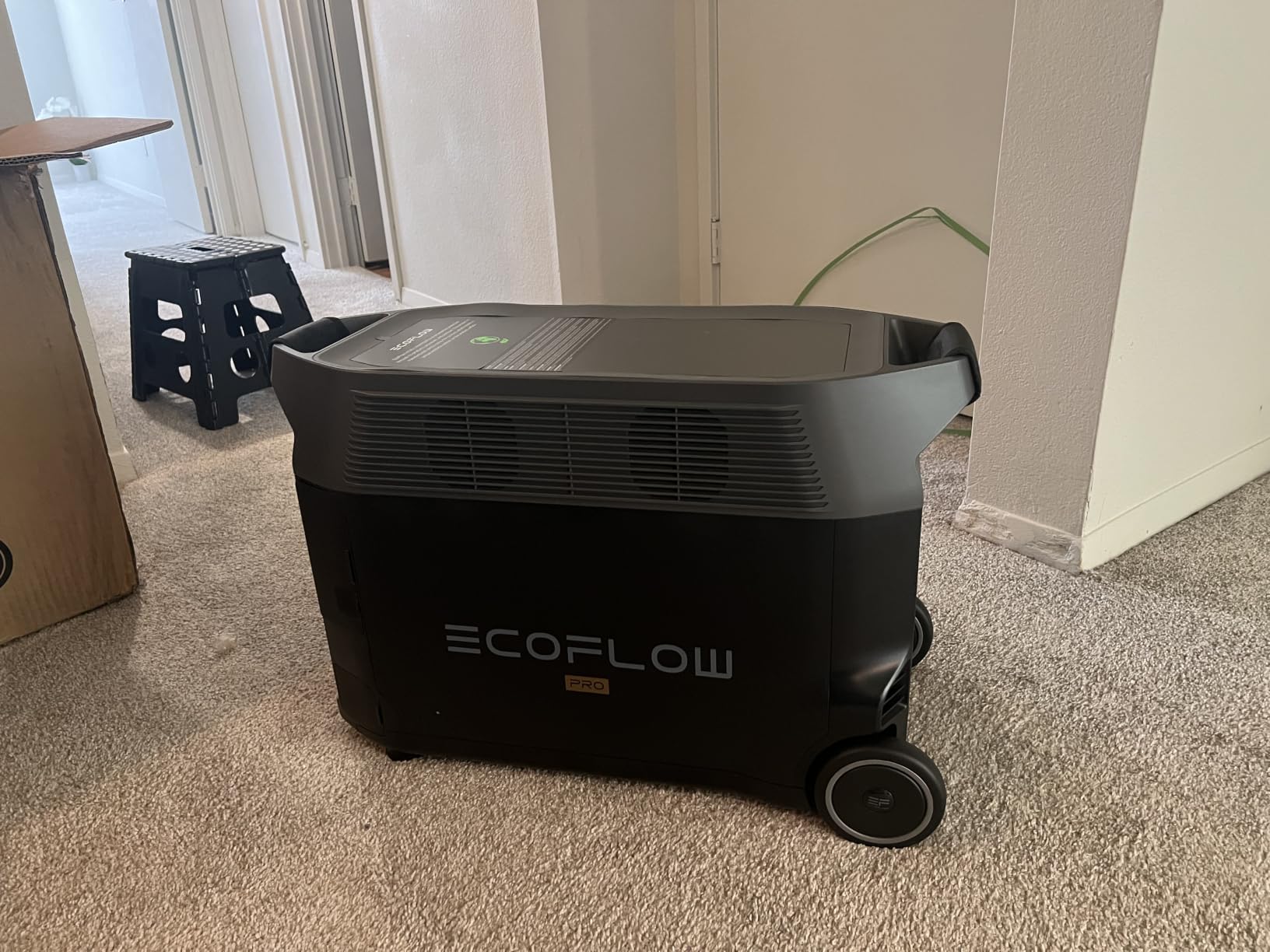
Everything smaller in this roundup is a weekend or seasonal solution. The DELTA Pro is the point where a solar generator becomes a residence power supply. 3600Wh of LFP storage with 3600W of continuous output covers a genuinely inhabited small cabin, and it can be expanded to 25kWh with extra batteries or a smart generator.
Output is genuinely class-leading for a portable format. Owners run heat presses, refrigerators and propane furnace blowers off the same inverter without stalling, which is exactly the mixed-load profile a cabin has. Fifteen output methods including five AC outlets, two 100W USB-C and a car socket mean you stop hunting for adapters.
Charging is where EcoFlow is strongest. X-Stream technology refills it from a 1800W wall outlet in about 2.7 hours, from 240V in around 1.8 hours, and from four 400W panels in roughly 2.8 hours at up to 23 percent conversion efficiency. A gas generator can also top it up, which gives you a hybrid path on long winter storms.
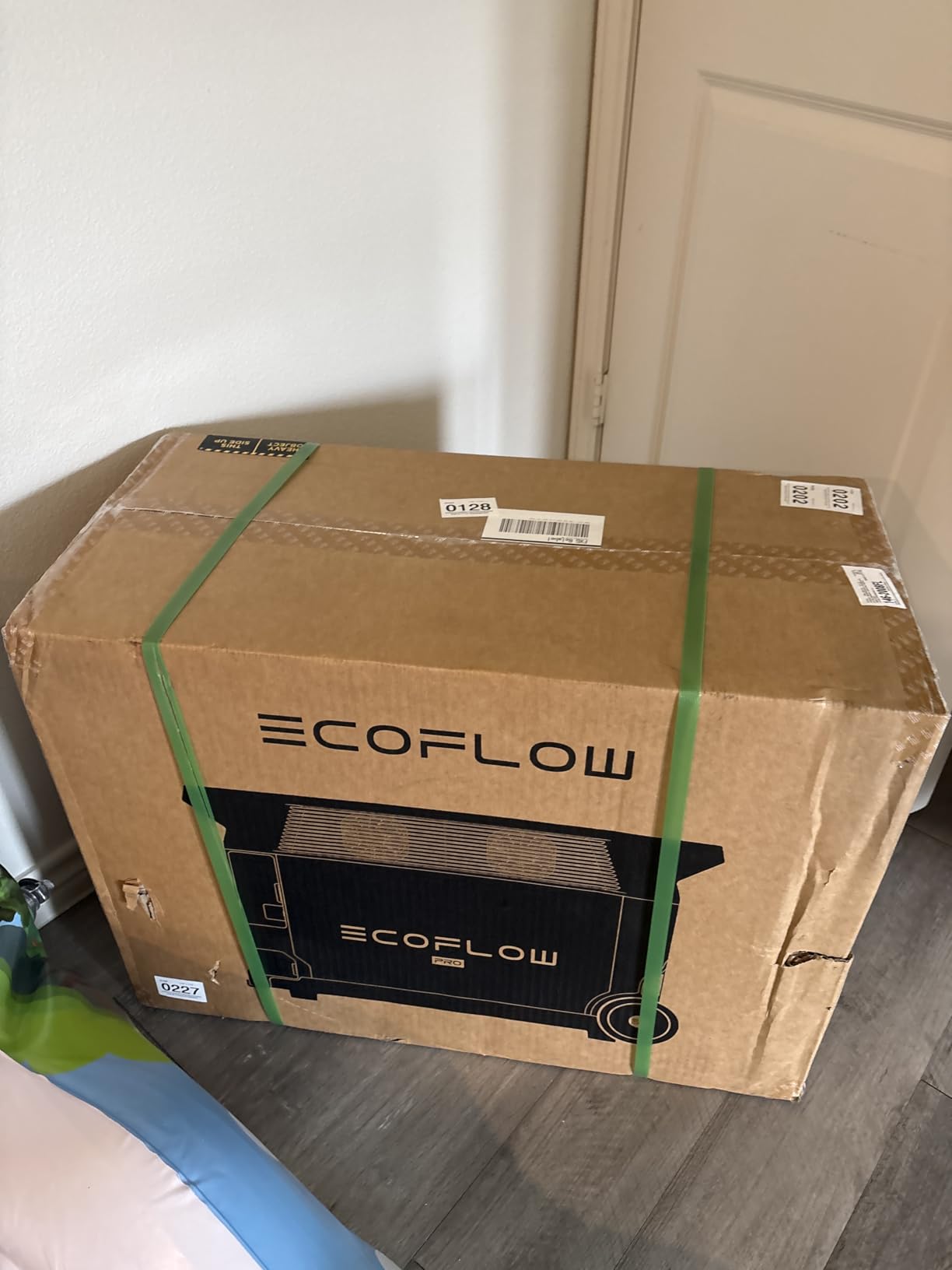
At 3600Wh the maths changes. A typical domestic fridge drawing around 190W for eight hours a day consumes about 1.5kWh daily, so a full charge covers roughly two days of fridge plus lights, router and charging, before any conversion losses. That is the difference between a weekend battery and a home battery.
It also runs quietly enough to place inside a cabin, which matters because fuel-burning heaters and generators are not safe to run in an enclosed space. This one produces no fumes at all.
What working with it is like
Owners report that it replaced gas generation during multi-day outages and saved substantial fuel cost by topping off a gas generator rather than replacing it outright. The Wi-Fi and Bluetooth app shows charge level, temperature and charge or discharge time, so you can judge remaining runtime without guessing.
If your cabin is a full-time home with a water heater, a well pump and a refrigerator, this is the first model here where all three fit inside one battery.
What to watch out for
Ninety-nine pounds is not portable in any meaningful sense. The extendable handle helps on a flat deck and does not help on a staircase. The 15 amp solar input ceiling also means panel recharging is slower than the wall charging, and a small but persistent group of owners report OVERLOAD or error 121 faults along with blown breaker buttons, with warranty service reported as slow outside the US. Check your coverage before you rely on it far from home.
6. EcoFlow DELTA 2 Max Review: Quiet Overnight Power for a Seasonal Cabin
EF ECOFLOW DELTA 2 Max Solar Generator 2048Wh with 220W Solar Panel
2048Wh expandable to 6kWh
2400W output, 4800W surge
1000W solar input
71 lb
Pros
- 80 percent charged in 43 minutes on combined AC and solar
- 2400W runs fridges
- washing machines and microwaves
- Quiet at 30 dB for overnight running
- Included 220W bifacial panel produces output under overcast
- Expands to 6kWh with plug-and-play batteries
Cons
- Bundled 220W panel is awkward with a short 9 ft cord
- Solar charging slower than AC even in full sun
- 50 to 71 pounds is hard to move
- Needs ventilation while charging or it overheats
This is the model I would put in a cabin where you actually sleep. The 2048Wh capacity and 2400W continuous output cover a fridge, lighting, a router, laptop charging and a microwave, and the 30 dB floor means it will not wake you at night the way a small inverter unit with a spinning fan can.
It also charges absurdly quickly. Combining up to 1000W of solar input with AC gets you to 80 percent in 43 minutes, and AC alone does it in about 1.1 hours. For a seasonal cabin you drive to on a schedule, that turnaround speed is worth more than raw capacity.
Expansion is straightforward, with up to two extra batteries taking you from 2kWh to 6kWh. The LFP battery is rated 3000 cycles to 80 percent, and EcoFlow backs it with a five-year service period.
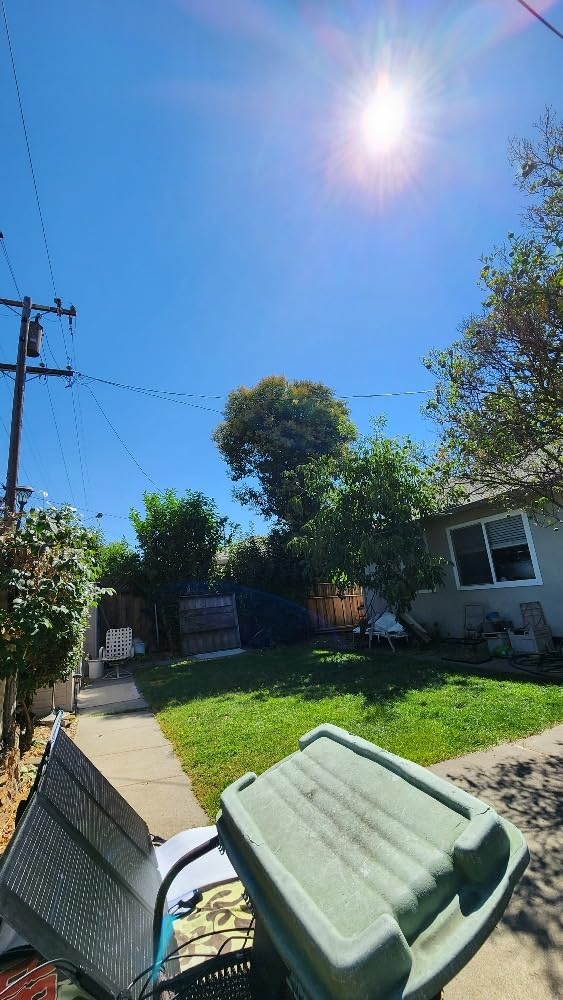
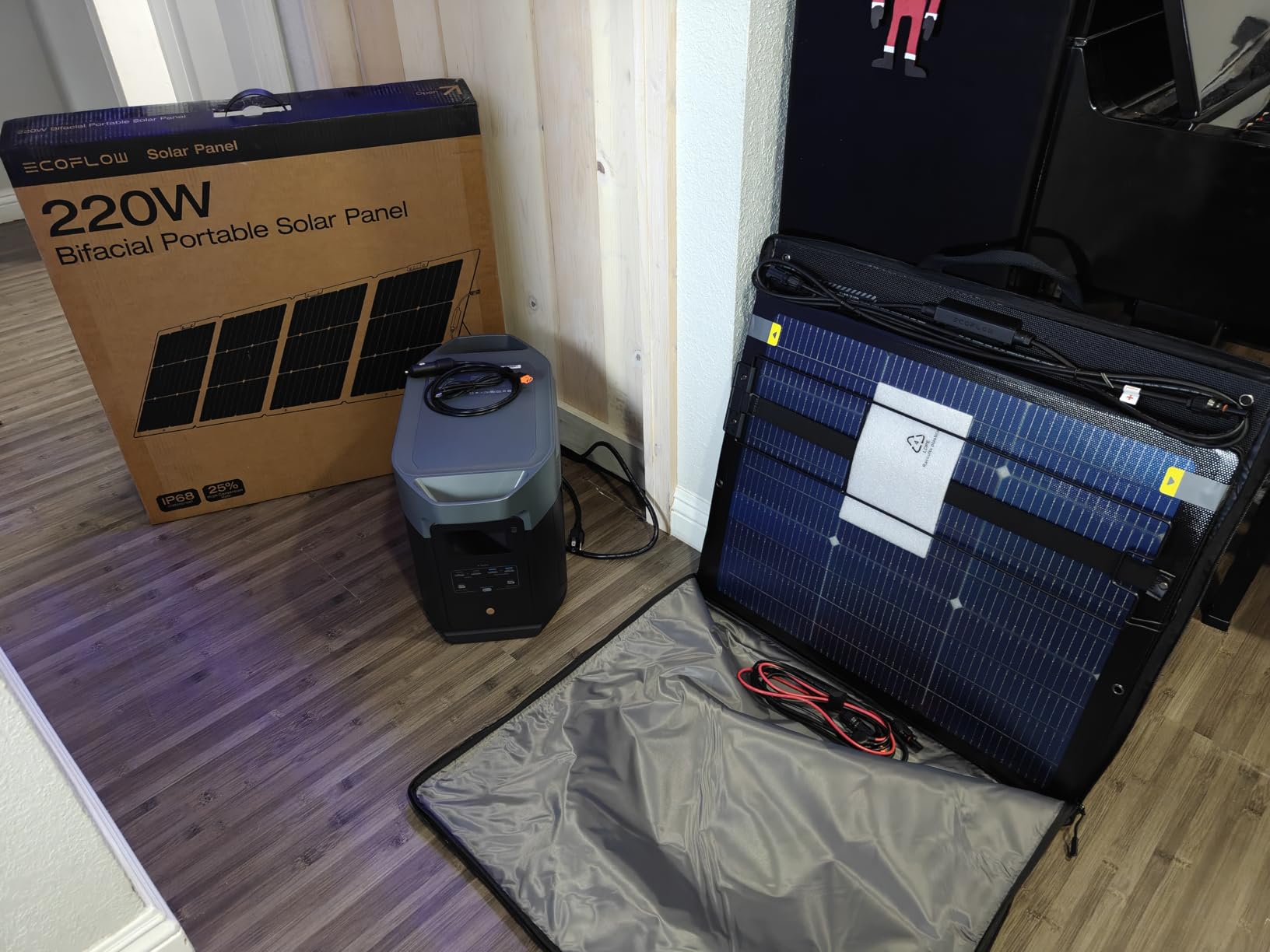
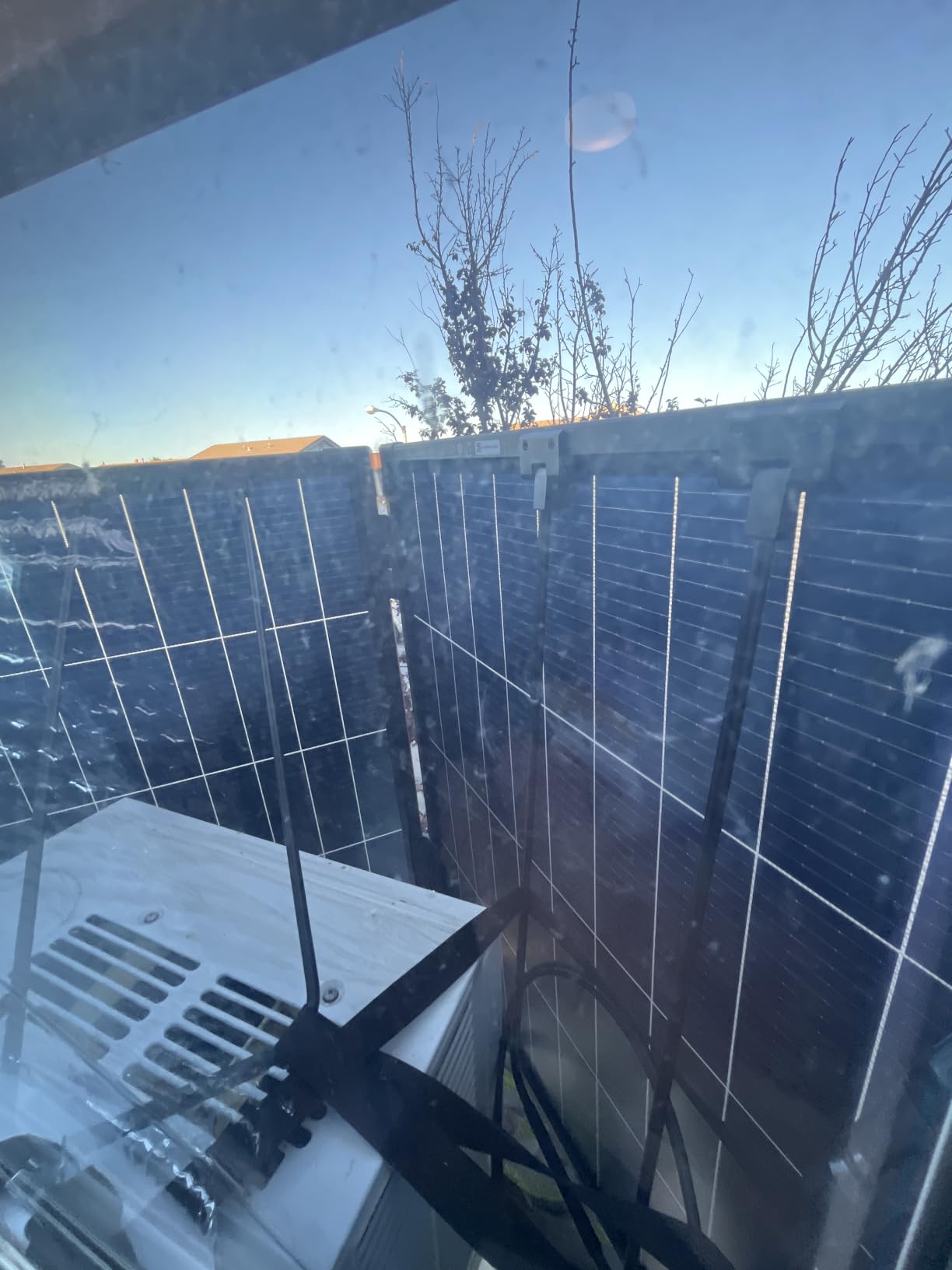
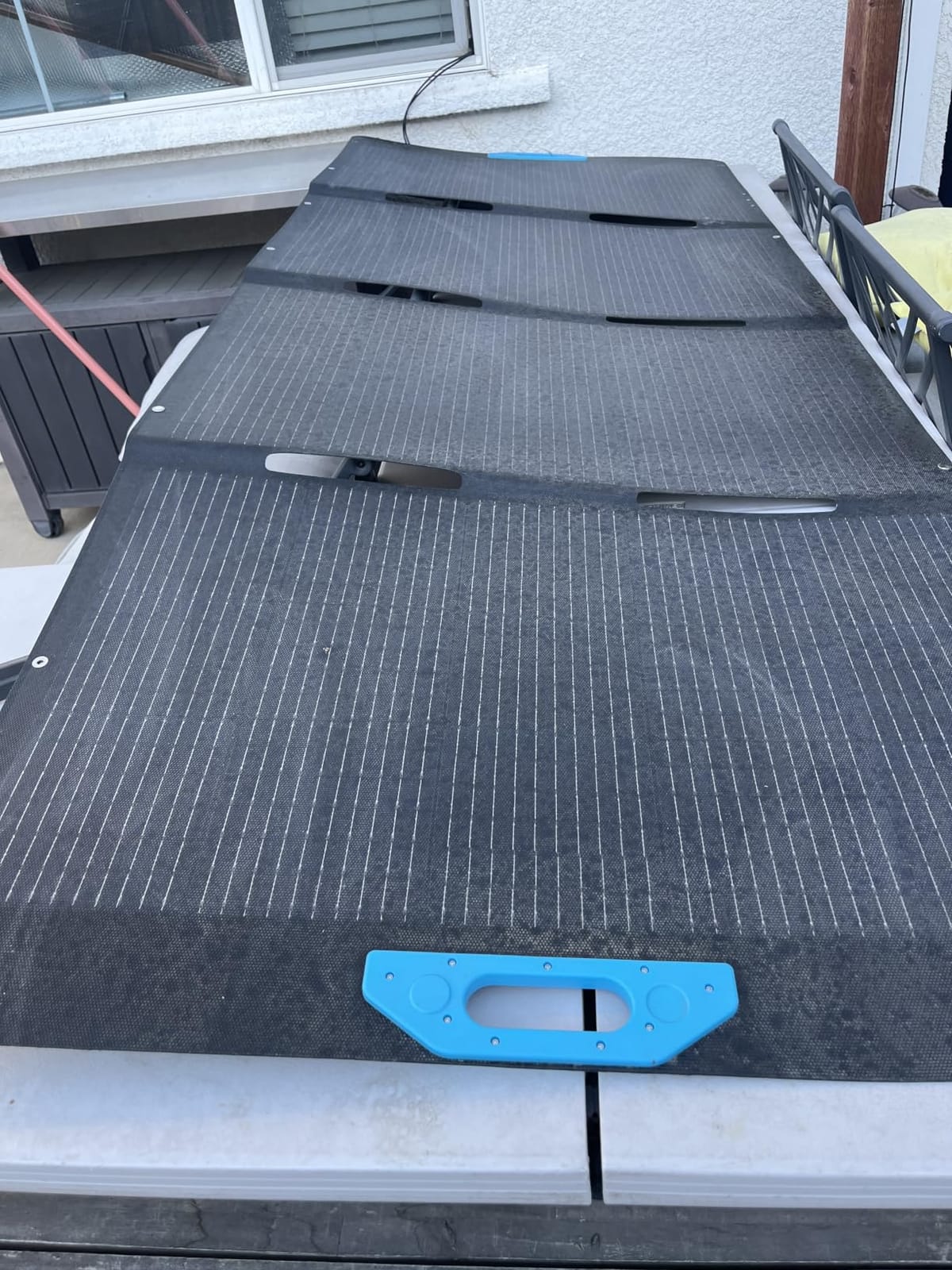
Unlike most bundled panels, the 220W bifacial panel here collects light from the rear face as well, and owners report measurable output under heavy overcast. That matters in places where weather is the norm rather than the exception.
At 2048Wh, a 190W fridge running eight hours a day uses about 1.5kWh, so this covers roughly a day of fridge plus everything else. The manufacturer quotes a 30-hour runtime on lighter loads, which is consistent with a more realistic overnight figure than most portable power station marketing.
Best suited to
A seasonal or part-year cabin with a resident fridge, a well pump that runs intermittently, and no tolerance for fan noise in the sleeping area. Owners also praise EcoFlow support for responding within hours, which matters if a unit fails at the end of a long road trip.
The 2400W output covers washing machines, coffee makers and microwaves, so a weekend of actual living is realistic here in a way it is not on a 1500W 1kWh model.
Limitations to plan around
The bundled panel is the weak point. It is awkward to set up, needs frequent repositioning, and its 9 foot cord is short enough to force you to drag the power station around to follow the sun. At 71 pounds it is a two-person lift past 60, which is a real constraint on steps. Keep vents clear while charging, because an overheating unit slows its own charge rate.
7. Anker SOLIX S2000 Review: Smallest 2kWh Unit With a Long-Lived Battery
Anker SOLIX S2 Portable Power Station, 2,010Wh, 1,500W
2010Wh LFP
1500W continuous, 3000W peak
400W solar input
35.7 lb
Pros
- 314Ah LFP cells rated 10000 cycles with a 15-year claim
- 6W idle draw gives roughly 20 percent longer runtime
- Smallest and lightest 2kWh design at 35.7 pounds
- Under 10 ms UPS switchover for sensitive electronics
- Six ways to recharge including alternator and car
Cons
- No 12V DC car port
- 1500W output is modest for a 2kWh capacity
- Only 400W maximum solar input
- Smaller review base than the BLUETTI and Jackery models
Anker took a different approach with the S2000: squeeze 2kWh into the smallest, lightest case in this category and cut the idle draw to almost nothing. It measures 8.19 by 11.1 by 12.7 inches and weighs 35.7 pounds, which is roughly 30 percent smaller and 25 percent lighter than a typical 2kWh power station.
That 6W idle draw is the number to care about. Idle overhead is what quietly eats your runtime overnight, and the low figure translates to a manufacturer claim of about 35 hours on a refrigerator, roughly 20 percent longer than comparable 2kWh models. Anker rates the battery for 10,000 cycles from 314Ah LFP cells, the highest cycle claim in this roundup.
Eight outlets are split front and rear, so always-on loads like a router or a clock can live on one face while you use the other. Switchover is under 10 ms, which means computers, network gear and medical fridges stay running through an outage.
There are six ways to recharge it, including 400W solar, a wall outlet, a generator, an alternator charger and a car outlet. That last one is underrated: driving into town and charging from the vehicle is a realistic way to keep a seasonal cabin alive between solar days.
At 2010Wh the runtime maths lines up with the DELTA 2 Max. Both hold roughly a day of a 190W fridge plus cabin essentials, and both refill faster than you can drain them on a good solar day.
Where it wins
If your cabin is small, storage space is tight, and you plan to keep this for a decade, the S2000 is the most interesting pick on the list. The small footprint means it lives on a shelf instead of a floor, and the long cycle rating means you are not replacing the battery in year eight.
Anker is a brand with a strong support reputation, which matters more than most buyers expect when a device sits 200 miles from the nearest city.
Where it falls short
There is no 12V DC car port, so 12V accessories and some RV wiring need an adapter or another approach. The 1500W continuous output is low for 2kWh of capacity, so a microwave plus a heater at the same time is out. And 400W of maximum solar input is the slowest refill in this group, which is a problem if panels are your only charging source.
8. Jackery HomePower 3000 Review: 3kWh and Two Panels in the Box
Jackery HomePower 3000 and 2x200W Solar Panels, 3072Wh, 3600W AC Output
3072Wh LiFePO4
3600W continuous, 7200W surge
Two 200W panels included
59.5 lb
Pros
- Up to 15 hours of household power and 1 to 2 days on a fridge
- Hybrid AC plus DC charging in 1.7 hours
- Built-in TT-30 RV port plus dual 100W USB-C PD
- UL certified 20 ms UPS
- 47 percent smaller and 43 percent lighter than comparable 3kWh models
Cons
- Around 60 pounds and a wheel kit is strongly advised
- Battery is not expandable
- Two 200W panels take 9 to 11 hours for a full refill
- Jackery support reported as unresponsive
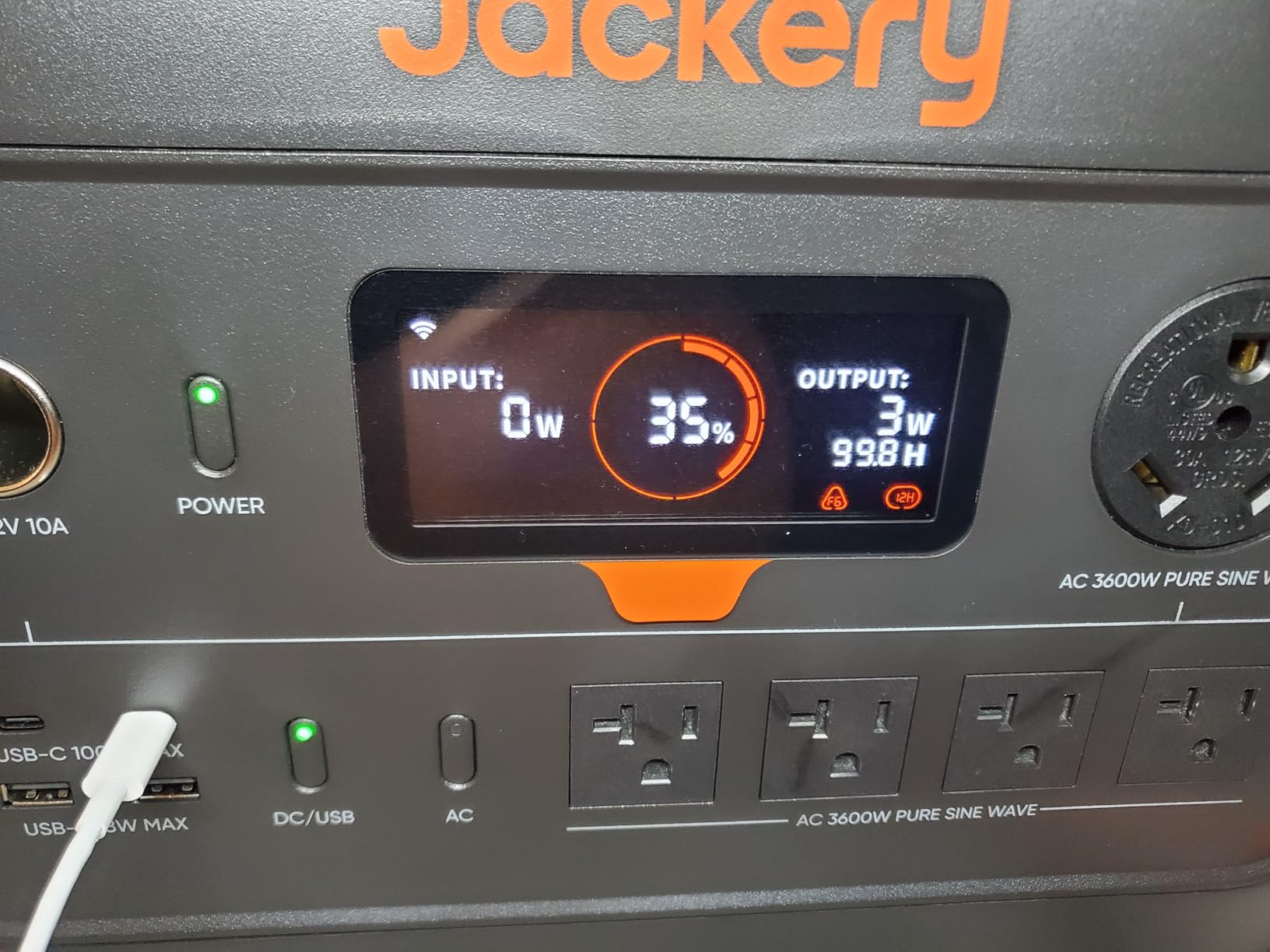
HomePower 3000 is the only 3kWh model here that arrives with two 200W panels, and for a cabin without a supplier in town that is a meaningful part of the package. It also has a built-in TT-30 RV port, which none of the other nine have, plus dual 100W USB-C PD ports and a USB-A and DC output.
On paper it is well matched to a cabin. 3600W continuous with 7200W surge is enough for a refrigerator, a well pump, a microwave and lighting simultaneously. Owners report it running a household for up to 15 hours and keeping a fridge going one to two days, and it is quiet enough to run an RV air conditioner and a microwave at once.
Charging is fast from a wall: 1.7 hours on hybrid AC plus DC, 2.2 hours on AC alone, and 80 percent in about nine hours with the two bundled SolarSaga 200W panels. The UL-certified 20 ms switchover is designed to keep security cameras, medical fridges and video calls alive through an outage.
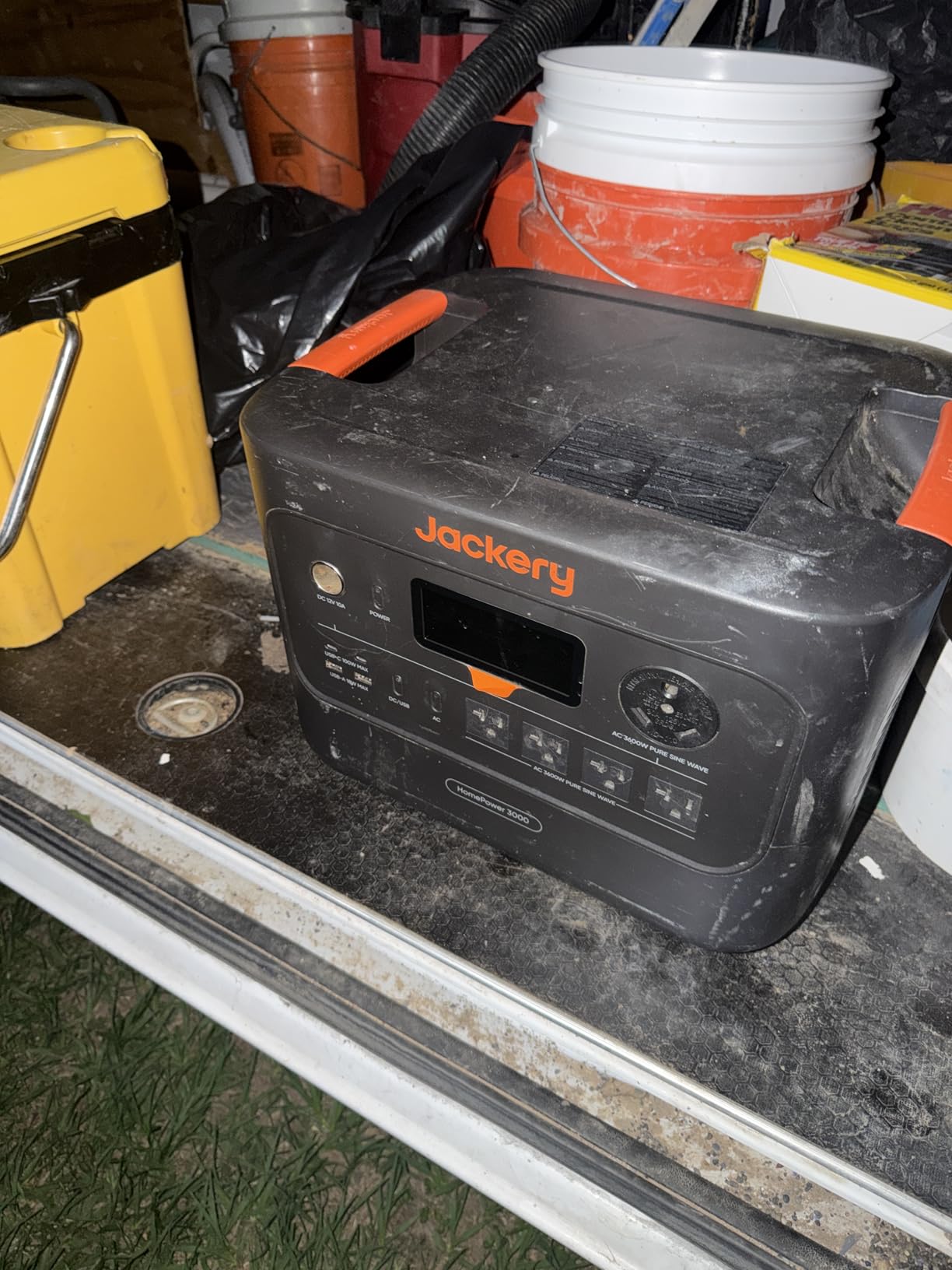
The CTB construction claims 47 percent smaller and 43 percent lighter than comparable 3kWh models, and at 59.5 pounds it is indeed the lightest 3kWh class machine in this roundup. It is still a two-person lift past 50 pounds, and a wheel kit is worth adding.
The LiFePO4 battery is rated 4000 cycles while retaining 70 percent capacity, with a five-year manufacturer warranty.
What it is good for
A cabin that functions as a second home, with a refrigerator that must stay cold and a mix of AC appliances. The RV port and the high output also make it a natural fit if the building shares a generator connection with a trailer or a camper on the property.
Two 200W panels can charge in parallel with house power for sub-hour top-ups when you are back at the main property, which extends its life as a backup system rather than a daily driver.
What to be careful of
The battery is not expandable, so 3072Wh is all you will ever have. If your cabin’s demand is growing, pick a model that grows with it. Two 200W panels take nine to eleven hours for a full refill, so plan overnight charging. It also needs a 14 AWG extension cord for safe use and must stay ventilated, and owners report support problems including a 404 support page and an advertised Alexa integration that does not work.
9. Jackery Explorer 2000 v2 Review: 2200W That Recharges in 66 Minutes
Jackery Explorer 2000 v2 and 2x200W Solar Panels, 2042Wh, 2200W AC Output
2042Wh LiFePO4
2200W AC output
400W solar refill
66.8 lb bundle
Pros
- 2200W from a compact 2042Wh package
- 80 percent charged in 66 minutes on AC
- Silent charging mode does a full charge in 5 hours at 30 dB
- 20 ms UL1778 certified UPS
- USB-C PD 100W charges laptops directly
Cons
- Bundle weighs about 66.8 pounds with the two panels
- Solar recharge takes around 6 hours with 400W
- Panels and power station can arrive separately
- Only three AC outlets
The Explorer 2000 v2 is the sweet spot between capacity and inverter size: 2042Wh of LiFePO4 storage driving 2200W of continuous AC output. That 2200W of continuous output from 2042Wh of storage is more inverter than the other 2kWh-class units here provide, and it is the number that decides whether a space heater and a fridge can run at the same time.
Charging from a wall outlet gets you to 80 percent in 66 minutes, and emergency super charging does a full cycle in about 102 minutes. For a seasonal cabin where you arrive on a Friday and leave on a Sunday, that turnaround is the feature that matters most.
The silent charging mode completes a full charge in five hours at 30 dB, and advanced temperature control keeps the fans from spinning up on light loads. The 20 ms switchover is UL1778 certified, which is the certification that covers uninterrupted power supply use for connected equipment.
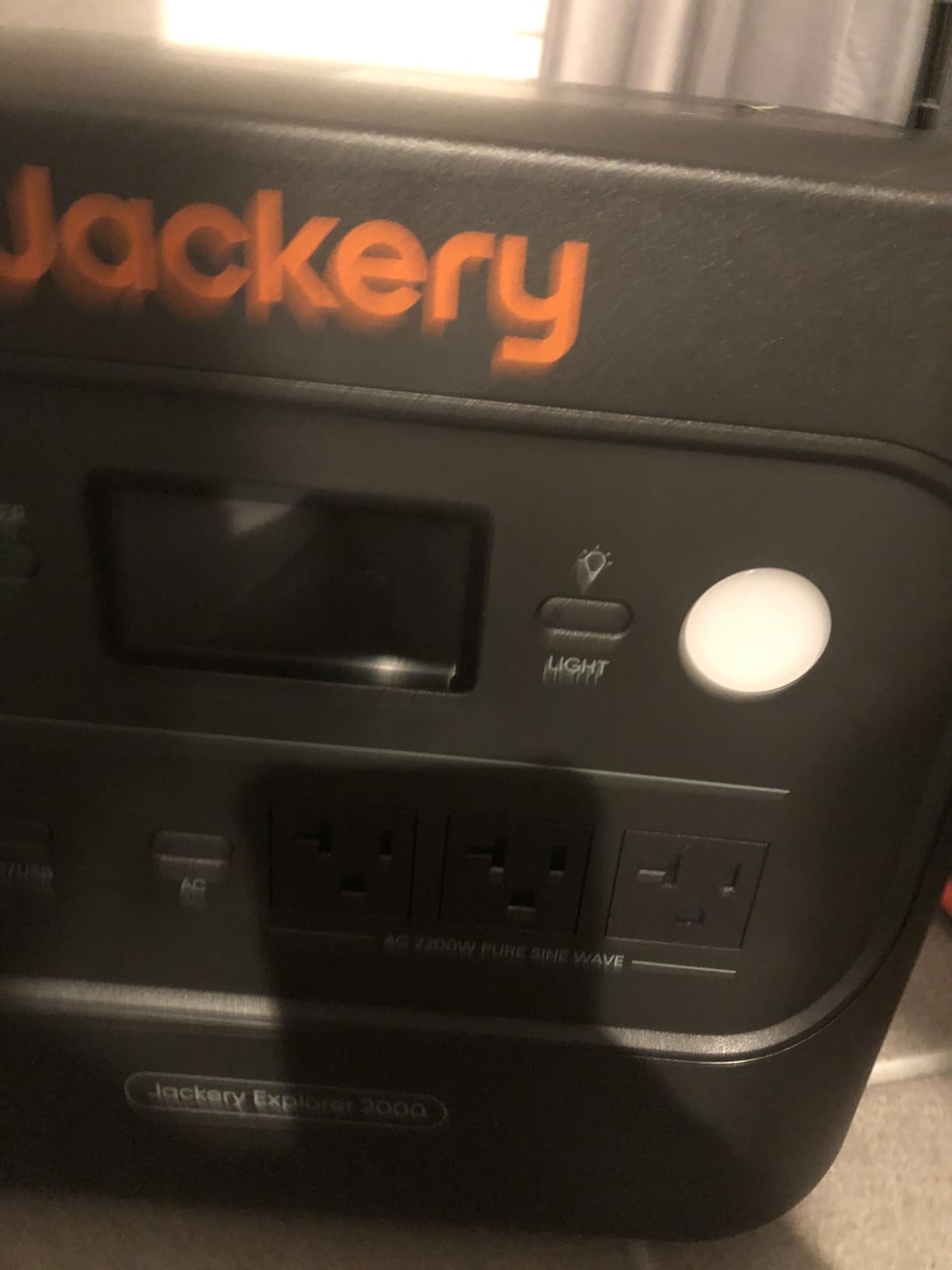
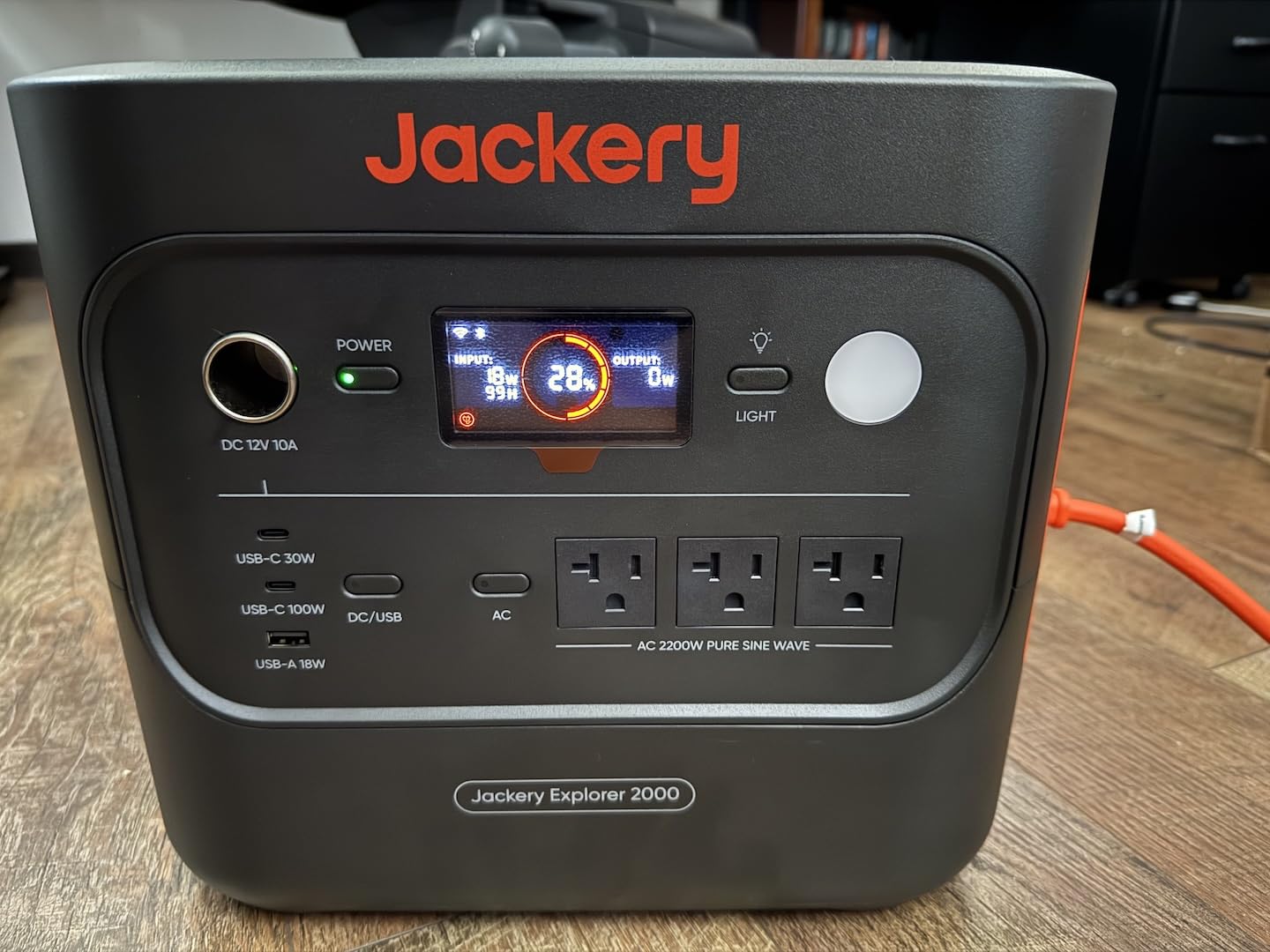
Three AC outlets plus a 100W USB-C PD port cover most cabin loads. Construction uses Cell-to-Body technology borrowed from electric vehicles, which improves structural stability and thermal management, and the LiFePO4 chemistry is rated for up to a 10-year performance life with a five-year manufacturer warranty.
A commenter on mortonsonthemove ran a Jackery through a four-hour winter evening with an oven cycling, a radio, a Wi-Fi repeater and a 32-inch television, and finished around 50 percent, with an explicit caveat that the result only holds in mild cold rather than deep winter.
Why it suits a working cabin
2200W is enough for a refrigerator, a power tool, a laptop and lighting at once, and three AC outlets means you are not daisy-chaining extension cords across a room. The quiet 30 dB charge mode makes it usable inside a sleeping cabin.
Owners with a technical bent single out the clear wattage readouts and the Cell-to-Body safety engineering as the reasons it feels better made than its size suggests.
Where it disappoints
The bundle weighs 66.8 pounds including both 200W panels. The power station itself is lighter than that figure suggests, but the all-in package is not a one-person carry. Solar recharging takes around six hours with 400W of panels, and the power station and its panels may not turn up together, which is a real annoyance for a planned installation.
10. Anker SOLIX F3000 Review: 3kWh With 2400W of Solar Input
Anker SOLIX F3000 Portable Power Station, 3,072Wh, 6,000W, Solar Generators
3072Wh expandable to 24kWh
3600W pass-through
2400W solar input
91.5 lb
Pros
- 2400W solar input is the highest here with dual MPPT solar controllers
- 3600W generator pass-through recharges while running loads
- 125 hours of AC idle standby and 42 hours on a 190W fridge
- Built-in 6-inch wheels for a 91.5 pound load
- High-amperage 12V and 30A Anderson outlets plus TT-30
Cons
- 91.5 pounds makes portability relative
- USB ports have a 1 watt minimum draw and cannot be switched off
- Wi-Fi drops more often than expected
- Included 400W panel is oversized and heavy
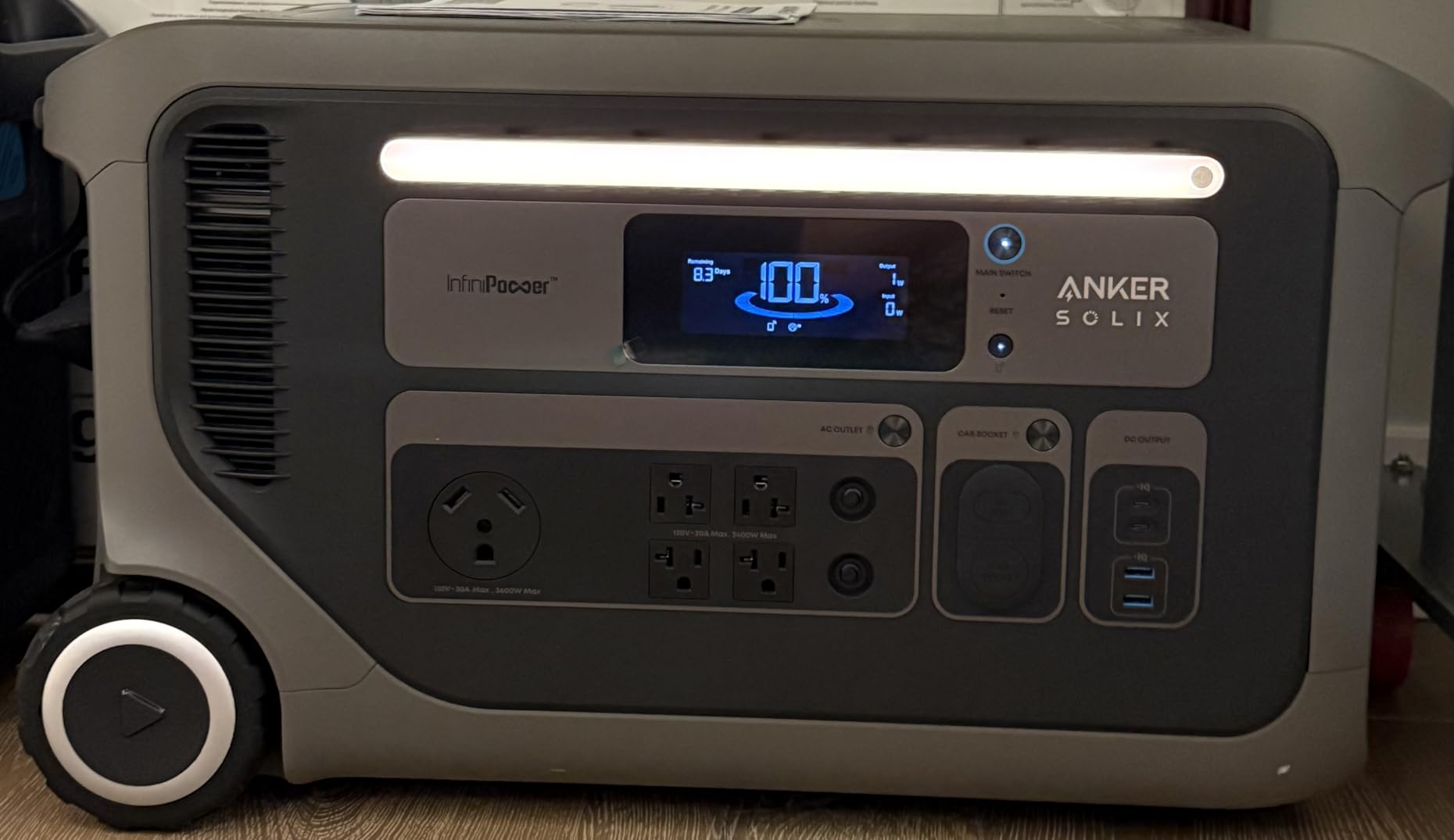
If your cabin’s power comes from panels rather than a car battery or a wall outlet, the F3000 solves the problem no other unit here does properly: fast panel recharging. 2400W of solar input through dual MPPT controllers, accepting either 165V or 60V panel strings, is roughly double the input of anything else in this roundup. On a good day, that is a full refill.
Capacity is 3072Wh, expandable to 24kWh, and output is 3600W with 3600W of pass-through. That last figure matters more than it sounds: you can recharge from a 120V gas generator while simultaneously running appliances at full power, so a gas generator becomes a charger rather than an either-or choice.
It also holds charge remarkably well while idle. Anker quotes 125 hours of AC idle standby and 42 hours on a 190W fridge, the best standby figure in this group. That gives real confidence for a storm that knocks out power while you are three hours down the road.
Owners report powering about 60 percent of a household through a simulated outage and running a 13,000 BTU RV roof air conditioner for 6 to 8 hours on low, which is the kind of load that stalls a 1kWh unit instantly. The built-in 6-inch wheels make 91.5 pounds manageable on a flat deck or a gravel drive.
High-amperage 12V and 30A Anderson outlets plus a TT-30 plug suit RV and job-site wiring, and two power stations can be paired for 120V and 240V output.
Where it belongs
A full-time cabin with real appliance loads, an RV on the property, or a site where you can mount a real panel array. It is the pick for anyone whose limiting factor is solar harvest rather than battery capacity. The app handles monitoring and automation cleanly, and the five-year warranty matches the class.
Start at 3kWh and expand as demand grows. Owners describe it as a dependable whole-home and RV unit rather than a weekend toy.
What to watch
Ninety-one and a half pounds is heavy even with wheels, and it is not a stairs solution. The USB ports have a roughly 1 watt minimum draw and cannot be switched off, which annoys low-power devices. Wi-Fi drops more often than expected, and the bundled 400W portable panel is oversized and flimsy, with many owners substituting two 200W panels instead. There is no built-in 240V split-phase capability for true whole-home backup.
How to Size a Solar Generator for Your Cabin
Size by daily energy, then check that your inverter covers your biggest single load. For a small cabin running a fridge, LED lights, a router and a well pump, 1000 to 2000Wh of battery covers the night and most of the following day. A full-time residence with a water heater and electric cooking needs 3000Wh or more. The number that actually breaks systems is inverter size, not capacity, because a well pump or space heater that cannot start will stall the whole night.
Here is the method. It takes about twenty minutes and it is the same calculation we use for every recommendation above.
Step one: list every load and how long it runs. Write down the appliance, its approximate watts, and hours per day. Multiply to get daily watt-hours. A 60W fridge running 8 hours a day is 480Wh. Five LED lights at 10W each for 5 hours is 250Wh. A laptop at 65W for 6 hours is 390Wh. A well pump at 300W running 1 hour is 300Wh. A 1500W space heater for 2 hours is 3000Wh, which is the line item that will reshape your system.
Step two: total it and add headroom. Sum your daily watt-hours, then multiply by 1.3 to cover conversion losses, cold weather capacity loss and the fact that rated watt-hours are never fully usable. If your cabin list comes to 1500Wh a day, you want roughly 2000Wh of storage, which is a single 2048Wh power station.
Step three: check continuous and surge output. The largest motor load you want to run decides the inverter size, not the total. A well pump or refrigerator compressor needs 3 to 4 times its running watts to start. If your biggest motor is a 300W pump needing 1200W to start, a 1500W continuous inverter is adequate, and anything below 1200W is not.
Step four: size the solar input. To refill a 2000Wh battery from empty in one day you need roughly 1000 to 1400W of panels after accounting for conversion losses. For a 1000Wh unit, 400 to 500W of panels is realistic. For a 3000Wh unit, 1500 to 2000W. This is why the Anker SOLIX F3000, with 2400W of solar input, is a genuinely different product rather than a bigger version of the same thing.
Step five: plan for winter. Cold reduces both panel output and battery capacity, and charging below freezing is unreliable on many units. An Outdoors Directory thread on remote cabin use specifically recommends Goal Zero, Yeti and Bluetti for cold-weather performance. Whatever you buy, charge indoors and keep the battery above freezing.
A practical rule for the winter months: treat the nameplate watt-hours as a summer number, and size your battery so that a 30 to 40 percent winter capacity loss still leaves you a full day of power.
Solar Generator vs Gas Generator vs Fixed Solar Install
The most common mistake cabin owners make is treating these as equivalent options. They are not, and the right answer depends on how many days a year you are there and how hard the loads are.
A solar generator is portable, silent, requires no fuel storage and is safe indoors, but it stores finite energy. When the battery is empty, it stops until the sun or a wall outlet refills it. A 1kWh unit is a weekend tool; a 3kWh unit is a seasonal tool; a 3kWh-plus unit with expansion is approaching a home supply.
A gas generator is unlimited and refuels anywhere, which makes it the only realistic answer for sustained high loads like a water heater or a space heater. The costs are fuel, noise, exhaust and the fact that you must run it outside, well away from windows, doors and combustible walls. A propane furnace or a kerosene heater shares that same indoor safety problem, which is the single strongest argument for a battery indoors and heat delivered separately.
A fixed off-grid solar install is a different category entirely, and the forums are clear about where it wins. One r/OffGrid user runs a 48V forklift battery with 4kW of solar and a 5kW inverter year-round. r/SolarDIY recommendations repeatedly favour Victron and connected systems for longevity over consumer power stations. That path costs more, needs a proper site survey, and cannot be moved, but it runs indefinitely.
Our read: buy the portable power station if you are seasonal, if you rent, or if you want to start without a survey. Move to a fixed install when you are living there full-time and your daily load regularly exceeds what panels can refill in a day. If you want to compare fuel-based options in the meantime, our inverter generator guide and dual fuel generator picks cover that side.
Buying Guide: How to Choose a Solar Generator for a Cabin
Battery chemistry and cold weather
Every model in this roundup uses LiFePO4 or LFP chemistry, and that is the right answer for cabins. It tolerates more charge cycles than the NMC lithium-ion used in older portable power stations, it is more tolerant of partial charges, and it is the chemistry recommended in cold-climate forum discussion. The cycle ratings in this group run from 3000 to 10000 cycles, which is the difference between a battery that lasts a few seasons and one you keep for a decade.
Continuous output versus surge power
This is the spec that determines whether your cabin works. Continuous watts are what the inverter sustains; surge is the short spike a motor needs to start. For cabins, look at continuous output first and treat surge as a bonus. Anything at or above 2000W continuous will run a refrigerator, a router, lighting and a kettle at once, and 2400W or more gives you room for a microwave or a small heater. Below 1500W, you are running one substantial appliance at a time.
Solar input and daily refill
Solar input wattage is how fast panels can refill the battery, and it is the spec most buyers ignore. A 400W input on a 2000Wh battery means a full day of good sun to reset. An 800W to 1000W input does it in roughly half a day. The Anker SOLIX F3000 goes further with 2400W across dual MPPT controllers. Buy the battery capacity you need and the solar input that matches your panel budget, or plan on generator and car charging as your real-world top-up.
Expandable capacity and the start-small path
Expansability is the most underrated feature in this category. The OUPES Mega 1 grows from 1024Wh to 5120Wh, the EcoFlow DELTA 2 Max from 2048Wh to 6kWh, the Anker SOLIX F3000 from 3072Wh to 24kWh, and the DELTA Pro to 25kWh. The Jackery HomePower 3000 cannot expand at all, so it is a fixed decision. If you might grow into a larger cabin, buy expandable and start with one battery.
Jackery vs EcoFlow vs Bluetti vs Anker
Short version: Jackery leads on turn-key bundles and fast AC charging, EcoFlow on output flexibility and expandability to whole-home scale, BLUETTI on solar input and cold-weather reputation, and Anker on physical size and idle efficiency. The BLUETTI AC180 is the best balance of the four for a cabin. Choose EcoFlow when you need 2400W or more, Anker when space is the constraint, and Jackery when you want panels in the box and the fewest decisions to make.
Frequently Asked Questions
What size solar generator do I need to run my house?
For a small cabin with a refrigerator, lights, a router and a water pump, 1000 to 2000 watt-hours covers the night. A full-time residence with a water heater or electric cooking needs 3000 watt-hours or more. Add 30 percent to your daily watt-hour total for conversion losses, and make sure continuous output covers your largest motor load.
Can a solar generator run a refrigerator?
Yes, and it is the most common cabin load. A domestic fridge drawing around 190 watts for 8 hours uses about 1.5kWh a day. A 1024Wh power station covers roughly 24 hours on DC, while 2000Wh models reach about 35 hours and 3000Wh models run one to two days. Compressors also need 3 to 4 times their running watts to start, so check surge capacity.
Do solar generators work in winter or below freezing?
They work, but with caveats. Cold reduces panel output and battery capacity, and charging below freezing is unreliable on many models. Charge the battery indoors and keep it above freezing. Forum discussion on remote cabin use specifically recommends Goal Zero, Yeti and Bluetti for cold-weather use. Plan on noticeably less capacity in deep winter than the same unit delivers in midsummer.
How many solar panels do I need to power a small cabin?
A 1000Wh power station needs roughly 400 to 500W of panels to refill in a day. A 2000Wh unit needs about 1000 to 1400W, and a 3000Wh unit needs 1500 to 2000W. Check the solar input rating on the power station first, because that is the hard ceiling on how much you can push into it, then size your panel array to match or sit below it.
Is a solar generator worth it for a cabin?
For a seasonal cabin it usually is, because it is silent, needs no fuel storage and is safe to run indoors. For a full-time residence with sustained high loads, a portable power station reaches its limit quickly and a fixed off-grid solar install is the better long-term investment. Most owners use both, charging a power station from a gas generator during extended storms.
How long do solar generators last?
Longevity is a battery question. LiFePO4 cells in this roundup are rated from 3000 to 10000 cycles before dropping to 70 to 80 percent of original capacity, and the manufacturers give a five-year warranty across the board. A unit cycled a few times a week will outlast one that sits fully charged in a warm shed. Real-world runtime is also shorter than rated watt-hours once idle overhead and cold are counted.
The Bottom Line for Cabin Owners in 2026
The best solar generators for cabins are not the biggest ones, they are the ones that match your daily watt-hour total, your largest motor load, and the panel real estate you actually have. For most seasonal cabins the BLUETTI AC180 is the pick. For a cabin you sleep in, take the EcoFlow DELTA 2 Max for the 30 dB quiet floor. For a full-time off-grid home, the DELTA Pro or the Anker SOLIX F3000 is the realistic answer, and only the F3000 recharges fast enough from panels alone.
Work out your load list before you buy anything, keep the battery above freezing in winter, and check current specifications with the manufacturer before you order, because this category revises models quickly. Our general solar generator roundup covers the buying decision in wider detail if you want more options beyond the cabin-focused list.