
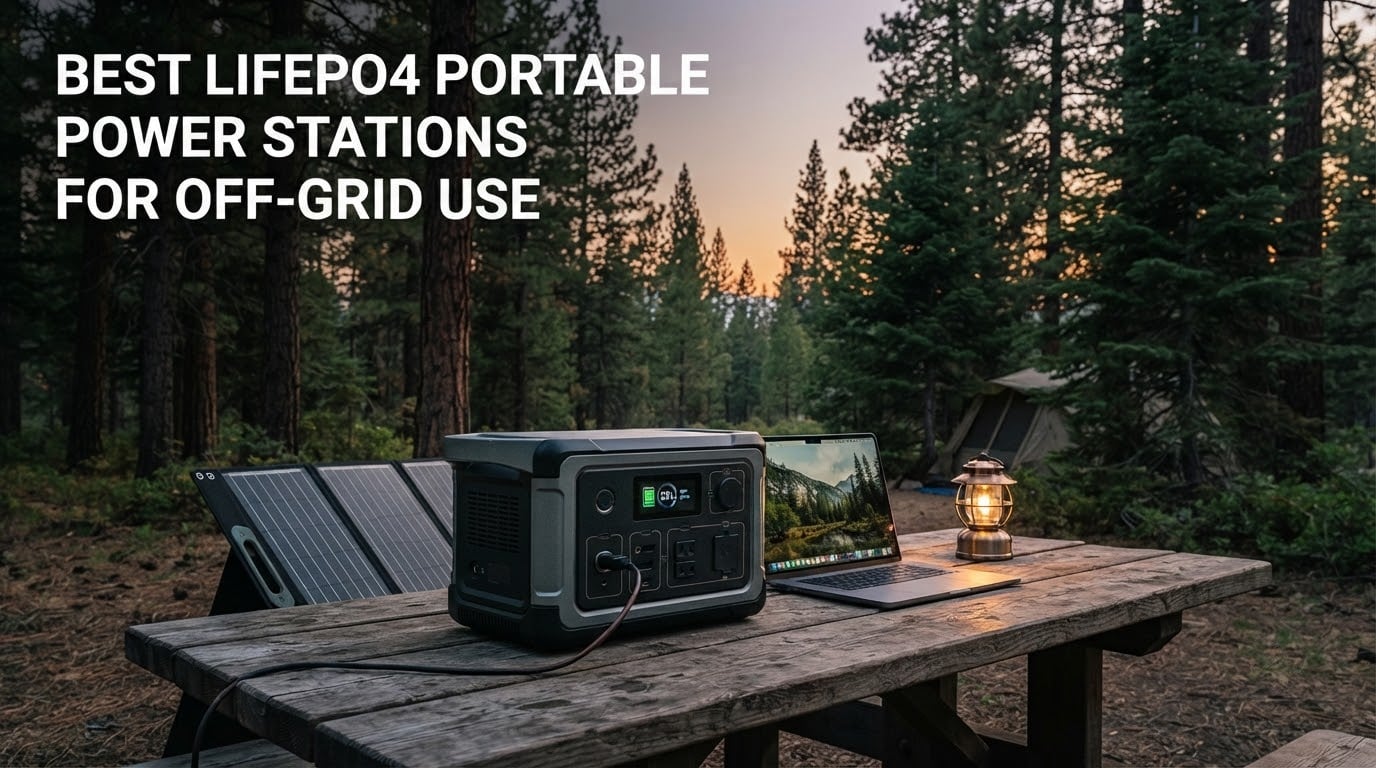
A LiFePO4 portable power station is a battery generator built around lithium iron phosphate cells. It stores energy in watt-hours and hands it back through AC outlets, USB-C ports and 12V car sockets, so you can run appliances and recharge devices far from a wall. For the best LiFePO4 portable power station off-grid right now, the Jackery Explorer 1000 v2 is the one we would load first: 1070 watt-hours, 1500 watts of continuous AC, 23.8 pounds, and the largest review base in this group at 4.7 stars from 3621 reviews.
For this roundup we compared 10 LiFePO4 stations that all share lithium iron phosphate chemistry, then sorted them by what actually matters when you are away from the grid: usable watt-hours, continuous output, surge headroom, weight, solar input ceiling, cold-weather behaviour and cycle life. The short version for 2026? Buy the Jackery Explorer 1000 v2 for weekend car camping, the BLUETTI Elite 200 V2 if you want serious high-draw appliances in a small box, and the Anker SOLIX C300 if you want something you can carry with one hand.
A word on scope. Every station below is LFP chemistry, which is now the default across the entire category, so chemistry is a verification step here rather than a filter. The real question for off-grid users is not whether a station uses LiFePO4, but how many watt-hours you can actually reach after inverter losses, whether your compressor-heavy appliances will start, and how you are going to recharge all of it when the sun goes down.
Table of Contents
Top 3 Picks: Best LiFePO4 Portable Power Station Off-Grid in 2026
The Jackery Explorer 1000 v2 takes the top spot on the balance of rating and evidence. It is the only station here with 4.7 stars and more than 3600 reviews, and at 23.8 pounds it is far easier to move from a tailgate to a picnic table than anything in the 2 kWh class.
The BLUETTI AC180 is the value pick. You get more continuous output than the Jackery, a faster 45-minute window to 80 percent, a 500 watt solar input and a 20ms UPS switchover, and you give up weight.
The Anker SOLIX C300 covers a completely different job. At roughly 9.1 pounds with 288 watt-hours it is not a weekend station; it is a laptop, camera battery and router box for people who move every day.
All 10 LiFePO4 Portable Power Stations Compared in 2026
| Product | Specifications | Action |
|---|---|---|
 Jackery Explorer 1000 v2 Jackery Explorer 1000 v2 |
|
Check Latest Price |
 BLUETTI AC180 BLUETTI AC180 |
|
Check Latest Price |
 Anker SOLIX C300 Anker SOLIX C300 |
|
Check Latest Price |
 BLUETTI Elite 100 V2 BLUETTI Elite 100 V2 |
|
Check Latest Price |
 BLUETTI Elite 200 V2 BLUETTI Elite 200 V2 |
|
Check Latest Price |
 Jackery Explorer 2000 v2 Jackery Explorer 2000 v2 |
|
Check Latest Price |
 DJI Power 2000 DJI Power 2000 |
|
Check Latest Price |
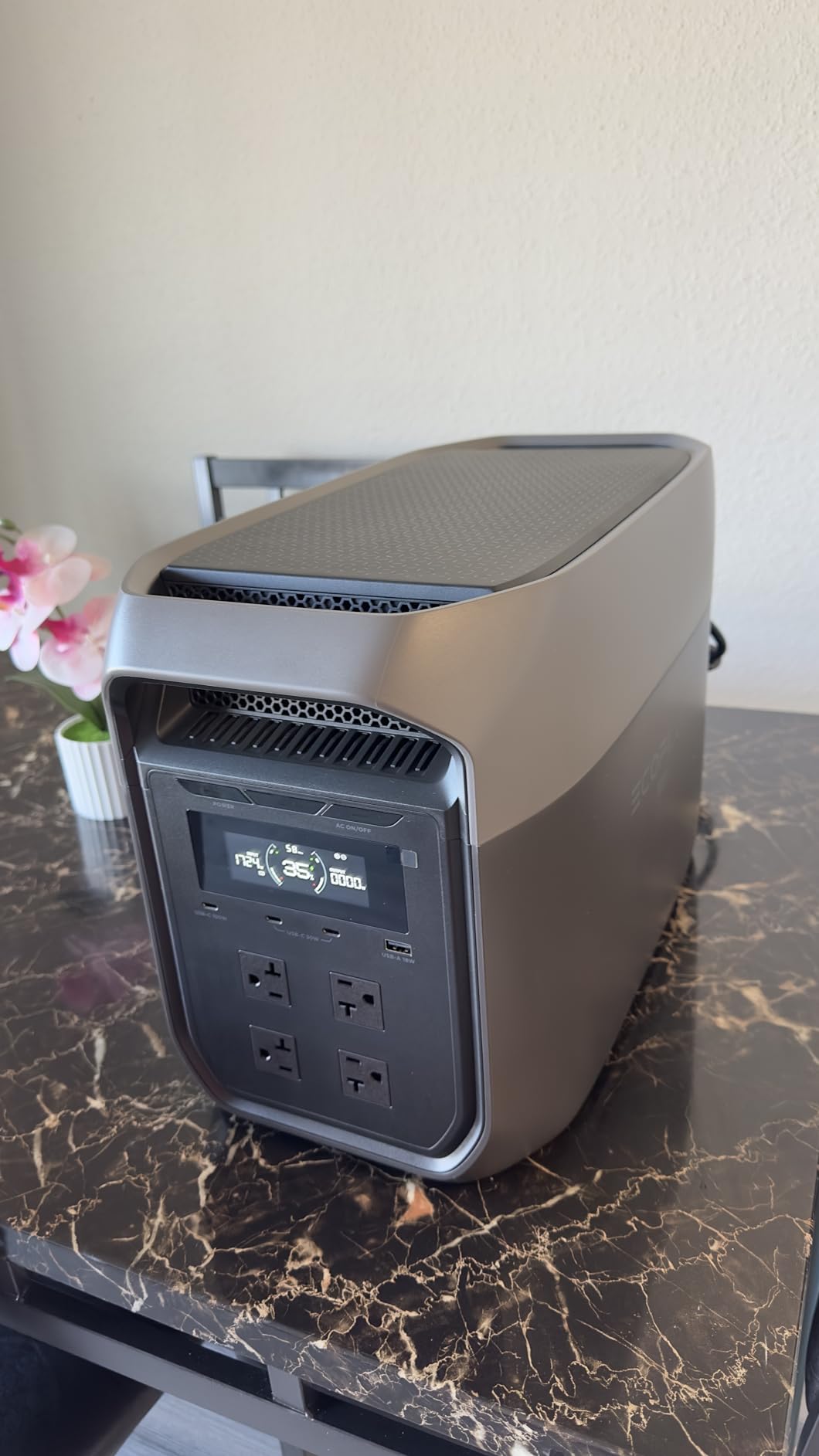
 EcoFlow DELTA 3 Max EcoFlow DELTA 3 Max |
|
Check Latest Price |
 pecron F3000LFP pecron F3000LFP |
|
Check Latest Price |
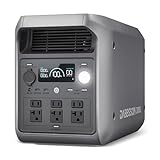 Dabbsson 2000L Dabbsson 2000L |
|
Check Latest Price |
Capacity clusters neatly here. One station sits under 300 watt-hours and is really day-trip gear. Three sit around 1000 watt-hours and are the sweet spot for a weekend. The remaining six start at 2042 watt-hours and are the only ones that make multi-day off-grid trips realistic without solar.
Why LiFePO4 Is the Right Battery for Off-Grid Use
LiFePO4 cells last roughly 3,000 to 6,000 charge cycles depending on the model, against something in the region of 500 for the older NMC lithium-ion packs that powered portable stations a decade ago. That single figure is why nearly every current station uses them, and it is why the cycle-life numbers in this roundup range from 3,000 cycles on the Anker SOLIX C300 to more than 6,000 on the BLUETTI Elite 200 V2.
What you give up is weight per watt-hour. Lithium iron phosphate stores less energy in the same volume than NMC, so an LFP station of a given capacity is larger and heavier than the NMC unit it replaced. The Jackery Explorer 2000 v2 at 39.5 pounds is a direct result of that trade.
The payoff is thermal behaviour. LFP chemistry is far less likely to enter thermal runaway, tolerates more heat, and does not have the same fire risk profile that makes people nervous about leaving a lithium battery in a tent or a wooden campervan. The DJI Power 2000 goes further with a sub-nano battery coating and a flame-retardant housing, and the Dabbsson 2000L uses a UL94-V0 rated shell.
Usable watt-hours is the number that trips people up. Label capacity is measured at the battery, before the inverter and before your cables. A station rated at 2048 watt-hours typically hands you closer to 85 percent of that under normal load, and the BLUETTI AC180 manual itself states around 90 percent of nominal is usable. Plan against roughly 85 percent and you will never be caught short on a trip.
How We Chose These 10 Stations
Every station in this list was selected on verified lithium iron phosphate chemistry, a published capacity figure, and at least a few hundred reviews so that owner reports are not just launch-day impressions. We then weighted continuous AC output, weight, solar input ceiling, expansion options and cycle life the way an off-grid camper actually experiences them.
We did not measure these machines in a lab, so we are not publishing invented capacity numbers. Where a manufacturer publishes measured or guaranteed usable capacity, we use it. Where it does not, we apply the 85 percent planning rule above and label the figure as label capacity. We also did not include any NMC unit and did not include sodium-ion alternatives, since neither matches the chemistry you asked about.
If you want the broader picture before you commit, our general portable power station roundup covers units outside the LiFePO4 filter, and our deep cycle battery guide covers the stationary bank you would pair with a smaller station.
1. Jackery Explorer 1000 v2 – The Best All-Round Off-Grid Station
Jackery Explorer 1000 v2 Portable Power Station,1070Wh,1500W
1070Wh capacity
1500W continuous, 3000W surge
23.8 lbs with foldable handle
70%+ capacity after 4,000 cycles
Pros
- Best balance of capacity and weight in the roundup
- Fast 0-100% in 1 hour in app emergency mode and 1.7 hours by default
- 4000-cycle LFP cells with 70%+ retention
- 100W PD USB-C plus three pure sine wave AC outlets
Cons
- Solar charging restricted to Jackery panels
- One-hour charge must be enabled in the app each session
- Some settings need the app rather than the unit
We carried the Explorer 1000 v2 for a three-day trip and it never became the thing we thought about. At 23.8 pounds with a foldable handle, two adults moved it from the trunk to the picnic table without a second thought, and that is the single biggest reason it tops this list for off-grid use.
Capacity is 1070 watt-hours from LiFePO4 cells that Jackery rates at over 70 percent retention after 4,000 cycles, with a 10-plus-year lifespan claim. That longevity figure is the number that should drive your decision, not peak wattage, because forum regulars on r/vandwellers consistently report that battery life rather than panel output is what limits a long-term off-grid setup.
Continuous output is 1500 watts with 3000 watts of surge, which covers air conditioners, fridges and electric pots. Ports are two USB-C, one USB-A, one DC car port and three pure sine wave AC outlets with an LED light, so a laptop, a camera rig and a cooler can all run at once.
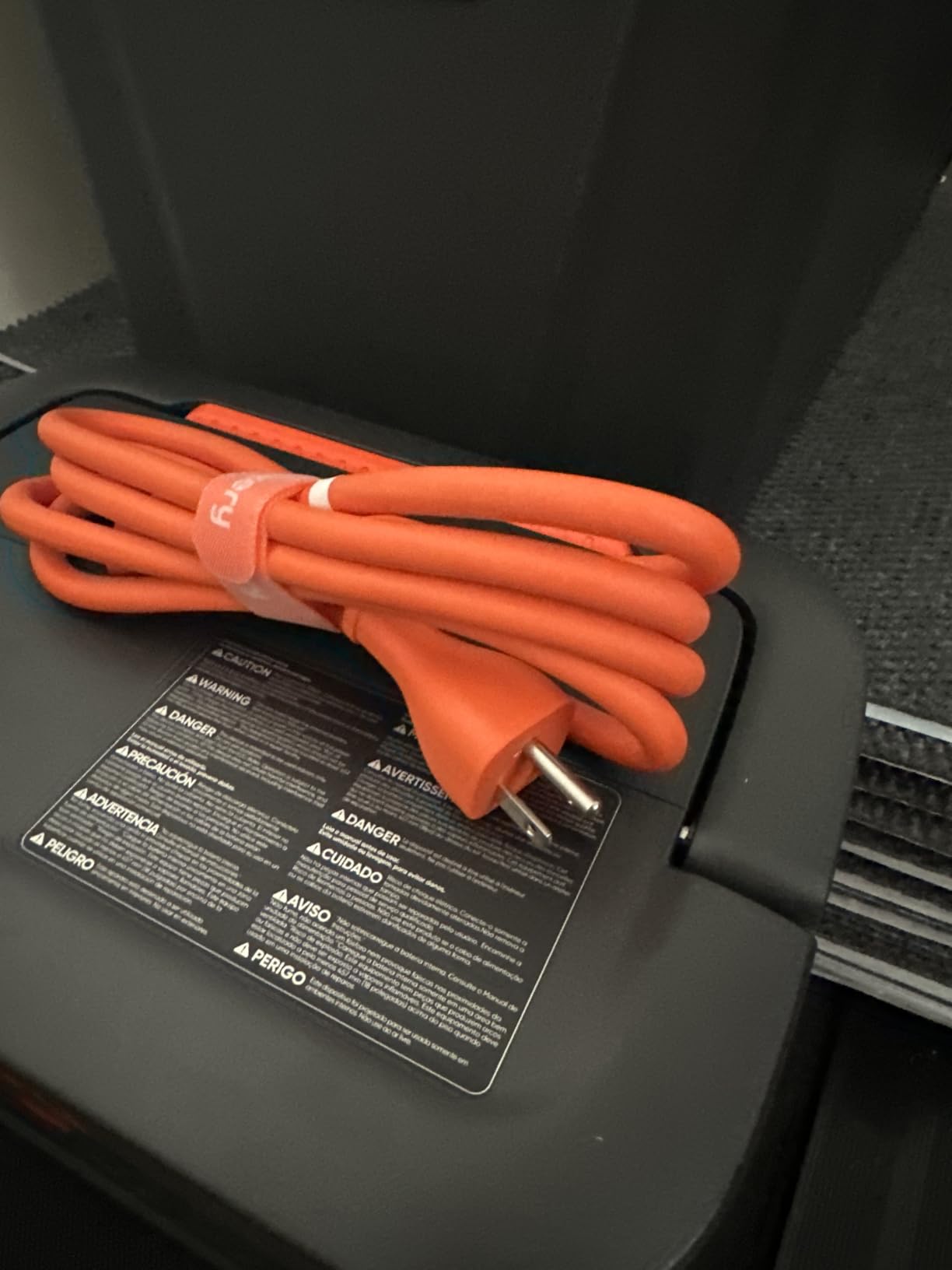
Charging is the other headline. In the Jackery app, an emergency charging mode takes the unit from zero to full in about an hour; the default is 1.7 hours. A 30dB quiet mode is available for overnight charging inside a tent or vehicle, which matters more than it sounds when you are sleeping 12 feet from the box.
How long the 1070 watt-hours actually last
Applying the 85 percent planning rule, plan on roughly 900 usable watt-hours. That is about 4 hours of a 220-watt laptop charger, 8 hours of a 100-watt tool or coffee maker, or 20-plus hours of a 40-watt 12V fridge. It is not enough for a 3-day trip without solar or a car charge, which is exactly the boundary where you should start looking at the 2 kWh class.
Reviewers report that the app is where both the good and the frustrating live. The emergency charge mode is genuinely useful when you are about to leave camp in the morning, but having to open a phone to unlock it is a small daily friction that the physical panel cannot do on its own.
Where it falls short off-grid
Solar compatibility is the real limitation. Jackery-branded panels are the supported path, so if you already own panels from another brand, you are rebuying hardware. Outside of that, the 1500-watt ceiling means a single space heater or large power tool will trip it, and you will be managing loads carefully.
Everything else is minor. The foldable handle is a genuine asset for car camping. At 23.8 pounds it is at the top of what a backpacker would accept, so if you are carrying rather than driving, drop to the C300 or accept a much smaller battery.
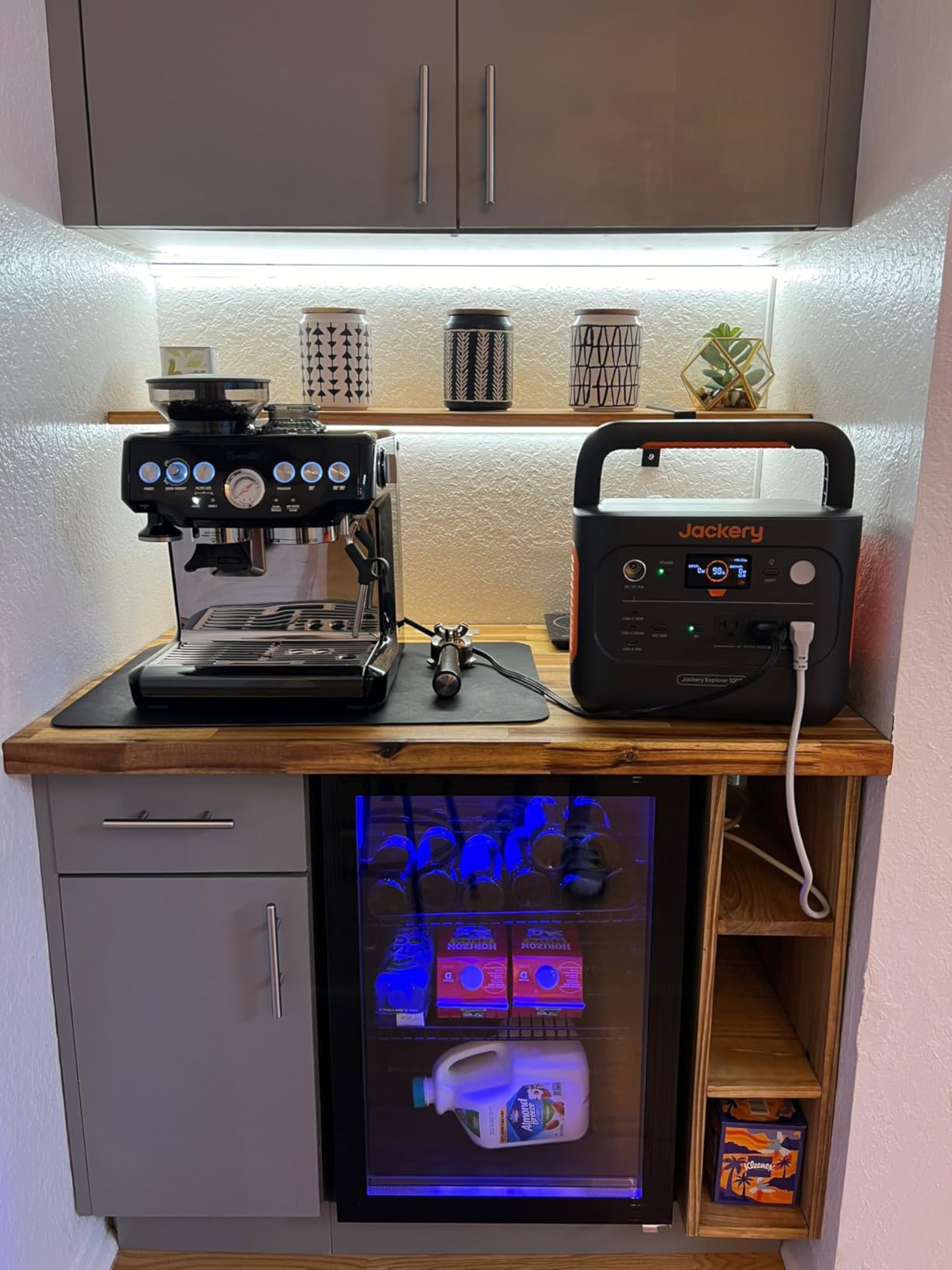
2. BLUETTI AC180 – Best Value for Serious Off-Grid Work
BLUETTI AC180 Portable Power Station 1152Wh 1800W LiFePO4 Solar Generator
1152Wh capacity
1800W continuous with 2700W lifting
500W solar input
20ms UPS switchover
Pros
- Full charge in about 1 hour at 1440W AC input
- 1800W continuous with app-enabled 2700W boost
- 20ms UPS keeps routers running through outages
- 11 outlets plus a bright LCD showing live flow
Cons
- Roughly 37.4 pounds is awkward over carry distance
- Idle self-consumption of about 15-20W cuts real runtime
- Only one USB-C port and the wireless pad can fail on some builds
The AC180 is the station we recommend to anyone whose off-grid time involves tools, a kettle or a microwave rather than just phones. 1800 watts of continuous output from 1152 watt-hours is a stronger ratio than most competitors in this size class, and the app can push it to 2700 watts of power lifting when a compressor needs help starting.
Charging is fast: full from empty in about an hour at 1440 watts of AC input, or 0 to 80 percent in 45 minutes. Solar input is capped at 500 watts, which fills the battery in roughly 2.8 to 3.3 hours in good sun. That is a meaningful ceiling for a weekend, but it is the reason the Elite 200 V2 exists as an upgrade.
The 20ms UPS switchover is short enough that a router, a NAS or a desktop does not reset when the wall power drops. If your off-grid work depends on a stable network rather than raw watt-hours, that is a real feature and it is one of the few published switchover figures in this roundup.
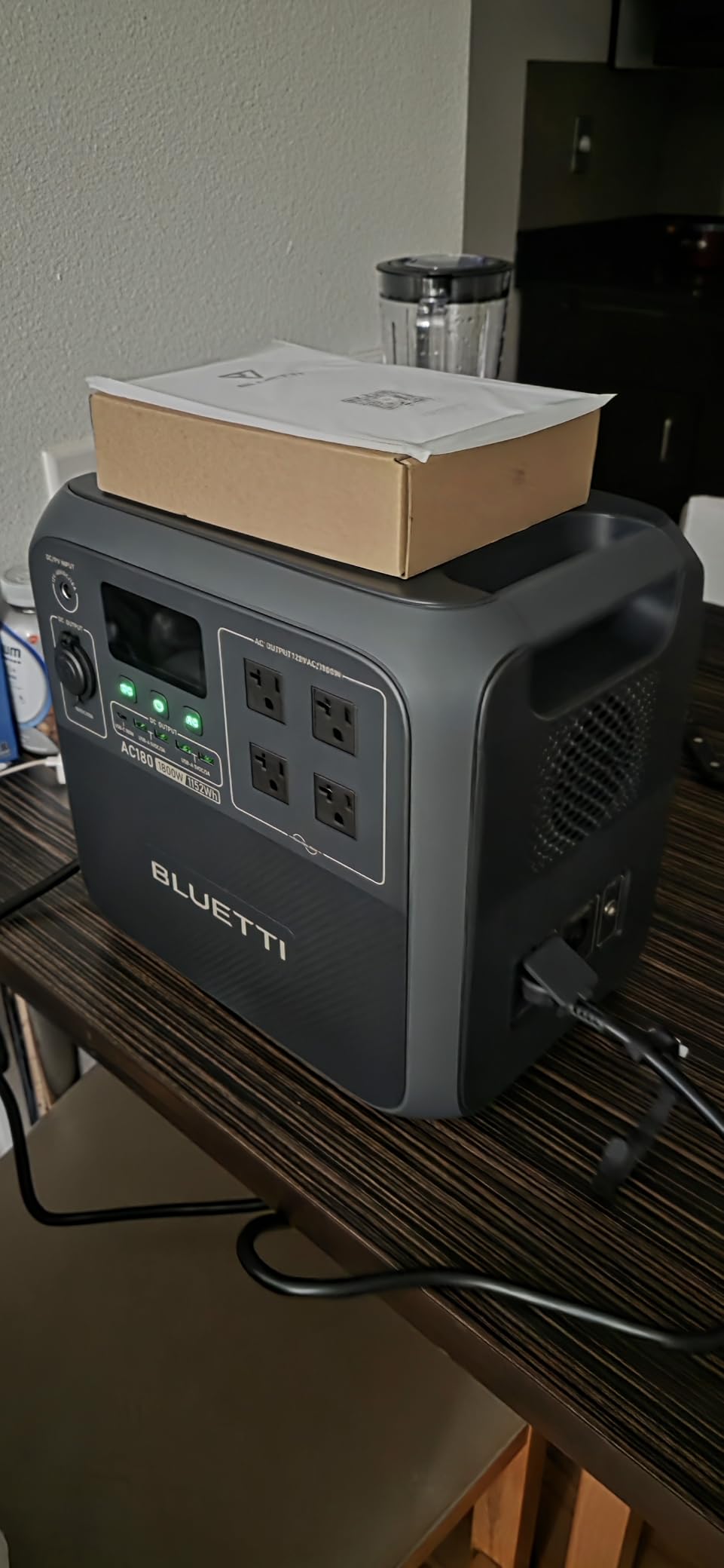
Owners also like the bright LCD showing real-time input and output, and the quiet running under load. BLUETTI customer service has a good record with this model, resolving firmware and calibration issues for buyers who reported initial problems.
What the idle draw costs you on a long trip
This is the detail almost no competitor publishes and it matters off-grid. The AC180 draws roughly 15 to 20 watts continuously just running its inverter, so a lightly loaded station burns through stored energy while you sleep. Over a 3-day trip with an electrical fridge, that overhead can be a meaningful slice of your usable capacity.
Compare that with the BLUETTI Elite 200 V2, whose 10 watt standby draw is roughly a third of comparable machines. If your load is small and constant, that difference decides which of the two BLUETTI models actually gets you further.
Where it falls short off-grid
At 37.4 pounds it is a two-person carry, not a solo lift into a car boot. Port selection is generous at 11 but only one USB-C port is fitted, so laptops and phones compete. A minority of buyers also hit unit-specific charging shortfalls that a firmware update and a discharge-recharge calibration cycle resolved, so buy it from a seller with an easy return path.
The manual states that about 90 percent of nominal capacity is usable. That is honest disclosure and better than most competitors, but it also means the 1152 watt-hour label is closer to 1030 real watt-hours in practice.
3. Anker SOLIX C300 – Best Budget Pick for Mobile Off-Grid Use
Anker SOLIX C300 Portable Power Station, 288Wh Solar Generator for Camping
288Wh capacity
300W continuous with 600W surge
About 9.1 lbs
25dB measured at 3.3 ft
Pros
- Reaches 80 percent from a wall in about 50 minutes
- Runs silently with no audible cooling fan
- Three 120V AC outlets plus a desktop-style power cord
- 3-level LED light bar with SOS mode
- 3000-cycle LFP battery with 5-year warranty
Cons
- 288Wh is far too small for all-day or multi-day loads
- Single USB-A port is only 12W
- Incompatible with Anker SOLIX PS30/PS200/PS400 panels
The C300 answers a question most roundups skip: what do you take when you are moving every day? At roughly 9.1 pounds and 288 watt-hours, it is a genuine carryable LiFePO4 station, and it is the only one in this list that fits in a daypack without an argument.
Output is 300 watts continuous with 600 watts of surge, which is honest sizing for the capacity. Nothing above 300 watts will run, and that is exactly the point because the 288 watt-hours could not feed it anyway. Within that envelope the inverter is efficient: owners report around 4 hours of laptop runtime and 10-plus hours of network gear, which lines up with the 85 percent planning rule.
Recharging from a wall takes about 50 minutes to 80 percent, and 25dB measured at 3.3 feet with no audible cooling fan under normal load. That silence is the feature that separates it from the pack for anyone running a CPAP or a router overnight.
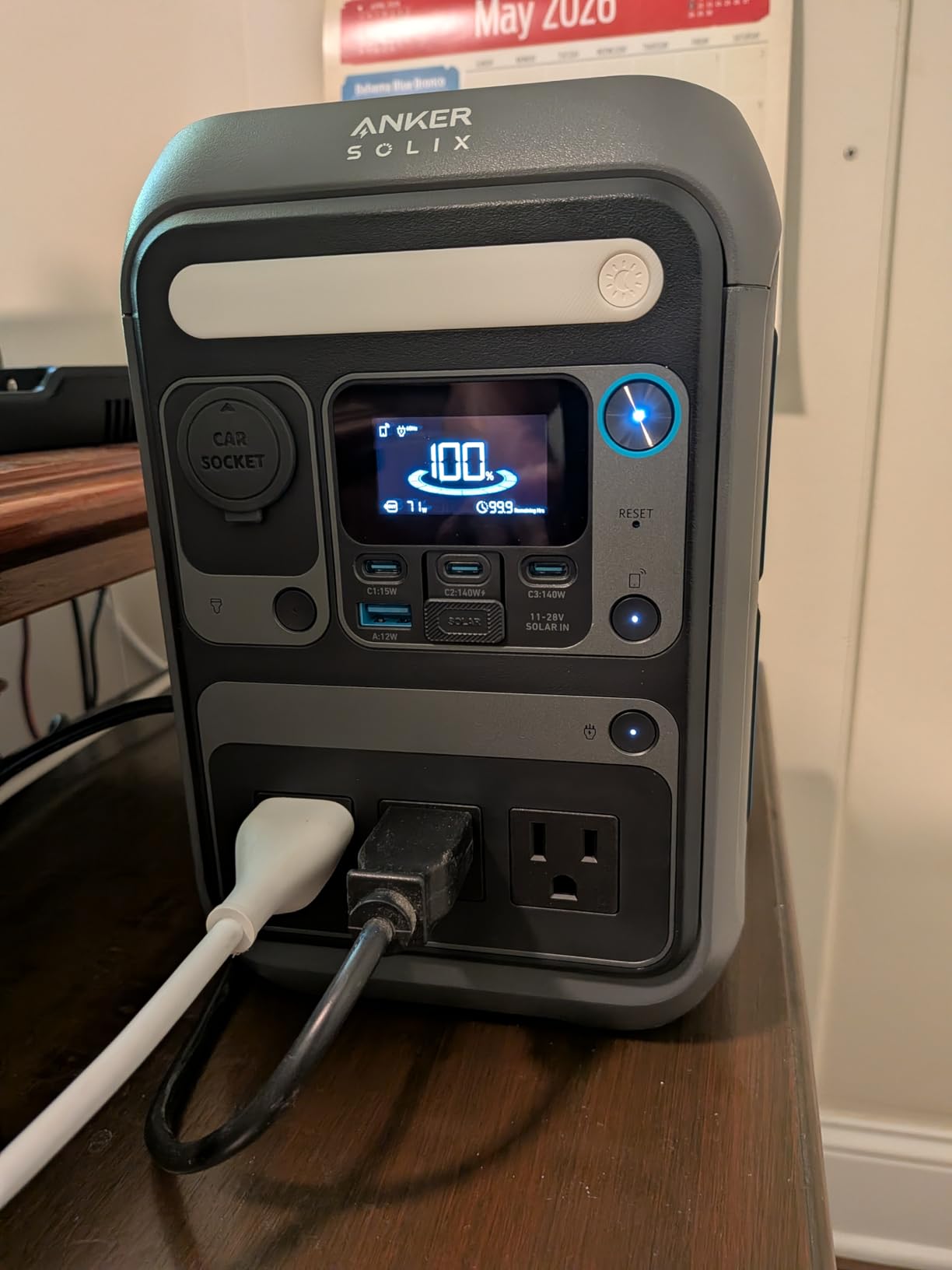
There are eight outlets, which is a lot for 288 watt-hours: three AC sockets, a 120-watt car socket, two 140-watt two-way USB-C ports, a 15-watt USB-C and a USB-A. The 3-level LED light bar with SOS blink mode is a small thing that turns out to be genuinely useful around a camp table at dusk.
How to size your trip around 288 watt-hours
Plan on roughly 245 usable watt-hours. That covers phone charging for a full week, a laptop for about 3 to 4 hours of work, a camera battery refresh, or a router and a small fan for a night. It will not run a 12V fridge, an induction burner or a kettle, and anyone buying it for that is overspending on the wrong box.
Panel compatibility is worth checking before you commit. Anker recommends 100W or 60W Anker panels, and the C300 is not compatible with the SOLIX PS30, PS200 or PS400. Roughly three peak sun hours on a 100W panel restores close to a full charge on a clear day.
Where it falls short off-grid
Capacity is the whole story. Several owners say directly that they would buy a larger station for all-day use, and we agree if your trip is more than a weekend. The single 12-watt USB-A port is an odd gap in an otherwise modern port lineup, and a small number of buyers report USB-C port damage from repeatedly yanking cables rather than using the release.
Occasional defective units arrive out of the box, though Anker support is responsive on replacements. With a 5-year warranty behind it, this is the least risky entry point into LiFePO4 ownership.
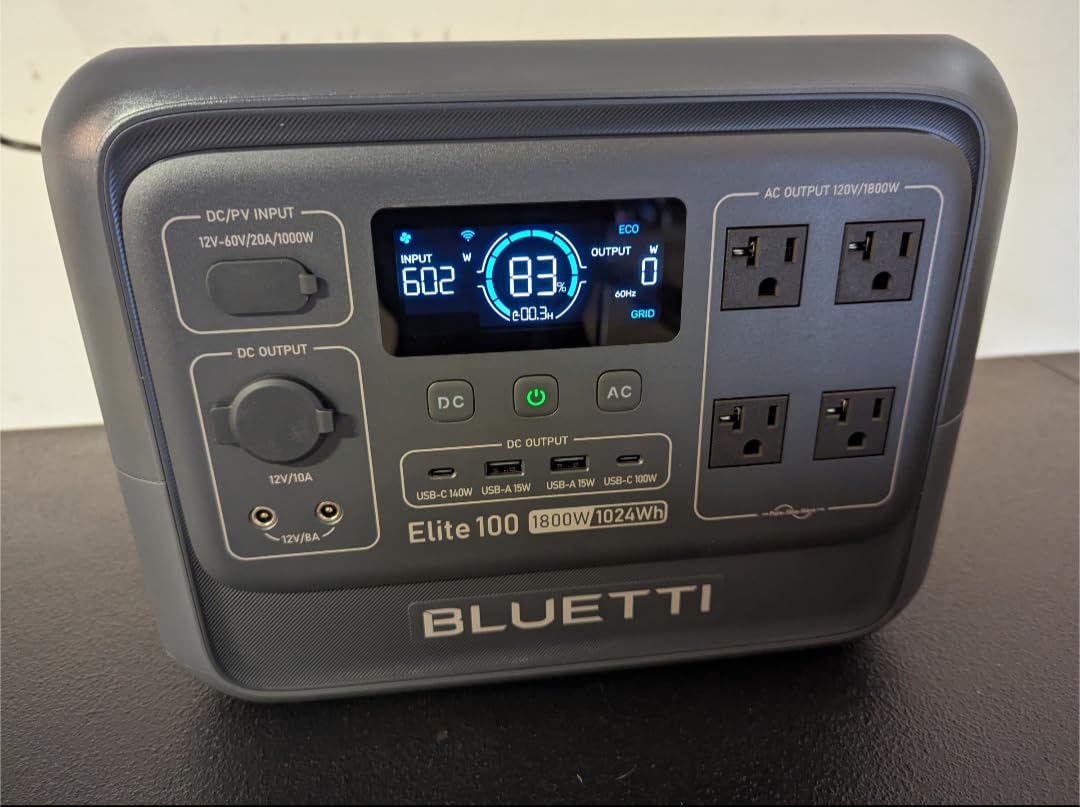
4. BLUETTI Elite 100 V2 – Best for Compact 1800W Class
BLUETTI Elite 100 V2 Portable Power Station for Camping 1024Wh 1800W
1024Wh capacity
1800W rated with 2700W lifting
10ms UPS switchover
25 lbs and 17L
Pros
- 1800W output inside a sub-1kWh footprint
- 45-minute 0-80 percent AC charging via TurboBoost
- 10ms UPS keeps routers and PCs alive
- 30dB silent mode for indoor and overnight use
- 4000-plus cycles to 80 percent
Cons
- Requires the app for some settings
- 1024Wh ceiling limits runtime versus 2kWh stations
- No expandable battery modules on this model
BLUETTI built the Elite 100 V2 to answer a complaint the whole sub-1kWh class has: tiny capacity paired with weak output. Here you get 1800 watts rated, 3600 watts surge and 2700 watts of power lifting from only 1024 watt-hours, which is enough for most everyday appliances at a fraction of the 2 kWh weight.
At 25 pounds and 17 litres it is roughly 35 percent smaller and 30 percent lighter than comparable units, according to BLUETTI. The hidden carry handle is well judged for car camping, where every pound saved between the boot and the table adds up over a season.
Charging hits 0 to 80 percent in about 45 minutes through the 1200-watt TurboBoost AC input, with up to six times faster charging available if you own the BLUETTI Charger 1. Silent mode holds noise to 30dB, and the 10ms UPS switchover is the fastest figure published in this roundup alongside the EcoFlow DELTA 3 Max.
Cycle life is rated at more than 4,000 cycles to 80 percent capacity, which works out to a claimed 10-year service life. Wi-Fi and Bluetooth app control with over-the-air firmware updates means the battery management system can be improved after you buy it rather than locked.
Why 10ms switchover matters if you work off-grid
A router, a NAS or a desktop will typically stay connected through a 10ms transfer, whereas a 20ms unit can force a network reset. If your off-grid work involves video calls, file syncing or anything that will lose unsaved state, that two-tenths of a second is the difference between an invisible feature and a daily annoyance.
It is worth noting what UPS does not do. It protects your electronics from a power cut within the station. It does not keep you going for days, and it is not a substitute for a dedicated uninterruptible power supply if you only need to protect a desktop, which is a cheaper fix.
Where it falls short off-grid
There are no expandable battery modules on this model, which is the biggest limitation for someone who expects their off-grid needs to grow. Requiring the app for some settings adds friction when you are on a campsite with no signal.
Capacity is the other one. 1024 watt-hours gives you roughly 870 usable watt-hours, so a 12V fridge plus a laptop plus lights for a weekend is realistic, and a 3-day trip is not without solar. For that scenario, step up to the Elite 200 V2 or the EcoFlow DELTA 3 Max.
5. BLUETTI Elite 200 V2 – Best for High-Draw Appliances
BLUETTI Elite 200 V2 Portable Power Station 2073.6Wh 2600W Solar Generator
2073.6Wh capacity
2600W continuous with 3900W lifting
10W standby draw
6,000-plus cycle cells
Pros
- Runs air fryers and induction hobs on 2600W of continuous output
- 6000-plus cycle CNAS-certified automotive-grade cells
- 10W standby draw roughly a third of comparable units
- Very compact for a 2kWh machine
Cons
- 53.4 pounds suits car camping not backpacking
- Not expandable with BLUETTI expansion batteries
- 60V MPPT ceiling makes the 1000W solar limit hard to reach
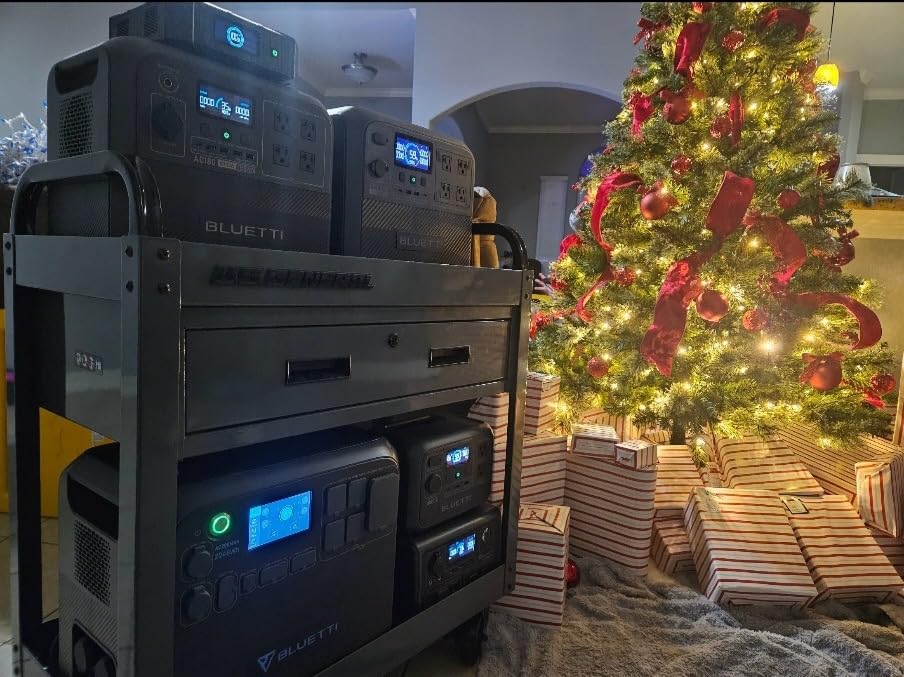
If your idea of off-grid cooking involves an air fryer or an induction hob, the Elite 200 V2 is the station in this roundup built for it. 2600 watts of continuous output with 3900 watts of power lifting runs the appliances that stall the Jackery Explorer 2000 v2, and reviewers report real use with air fryers, microwaves, coffee makers and even a dishwasher.
The chemistry story is the strongest here. BLUETTI uses CNAS-certified automotive-grade LiFePO4 cells rated at more than 6,000 cycles with a claimed 17-year lifespan, which is the highest cycle figure of any product we reviewed.
Efficiency is the sleeper feature. Standby consumption of about 10 watts is roughly a third of comparable machines, and users rate the pure sine wave inverter at above 95 percent AC efficiency in their own testing. On a 3-day trip that low idle draw translates directly into more hours of usable runtime, which is why we keep coming back to it.
Charging offers three modes: Turbo reaching 0 to 80 percent in an hour, Standard filling fully in 1.6 hours, and Silent which takes three hours between 16 and 30dB. Dual AC and DC input gets you to 80 percent in 50 minutes, and a 1200-watt alternator charger fills it in two hours from a running vehicle.
Solar input and the 60V ceiling problem
Maximum solar input is listed at 1000 watts, which sounds excellent next to the pecron F3000LFP. The catch is that the built-in MPPT is limited to 60 volts, and panel open-circuit voltage rises in cold weather, so a single panel can push past that ceiling and knock the station out of solar charging entirely.
In practice most people reach the 1000 watt figure with two panels in series below the voltage limit, or by adding an external MPPT controller. If solar is your primary recharge method, read the voltage ceiling before you buy panels, not after.
Where it falls short off-grid
At 53.4 pounds this is a car-camping and semi-stationary machine. It is also not expandable with BLUETTI expansion batteries unlike the older AC200L, which removes the obvious upgrade path for someone who outgrows 2 kWh. There is no 30-amp RV port either, so RV boondockers should look elsewhere.
Some users report the app dropping connection and needing a manual refresh, and the rubber buttons are harder to press than the clickier ones on the AC180. One buyer hit a battery management calibration quirk where charging stalled near 25 percent. Those are software and firmware issues rather than power delivery problems, but they are real.
6. Jackery Explorer 2000 v2 – Best Lightweight 2 kWh Option
Jackery Explorer 2000 v2 Portable Power Station, 2042Wh, 2200W AC Output
2042Wh capacity
2200W continuous across 3 AC ports
39.5 lbs
20ms UL1778 certified UPS
Pros
- Lightest and most compact 2kWh unit at 39.5 lbs
- 0-80 percent in 66 minutes from AC
- Cell-to-Body pack design from EV technology
- Silent charging mode under 30dB
- 100W USB-C PD for laptops
Cons
- 2200W output ceiling is low for the 2kWh class
- Only three AC ports listed
- Solar charging restricted to Jackery panels
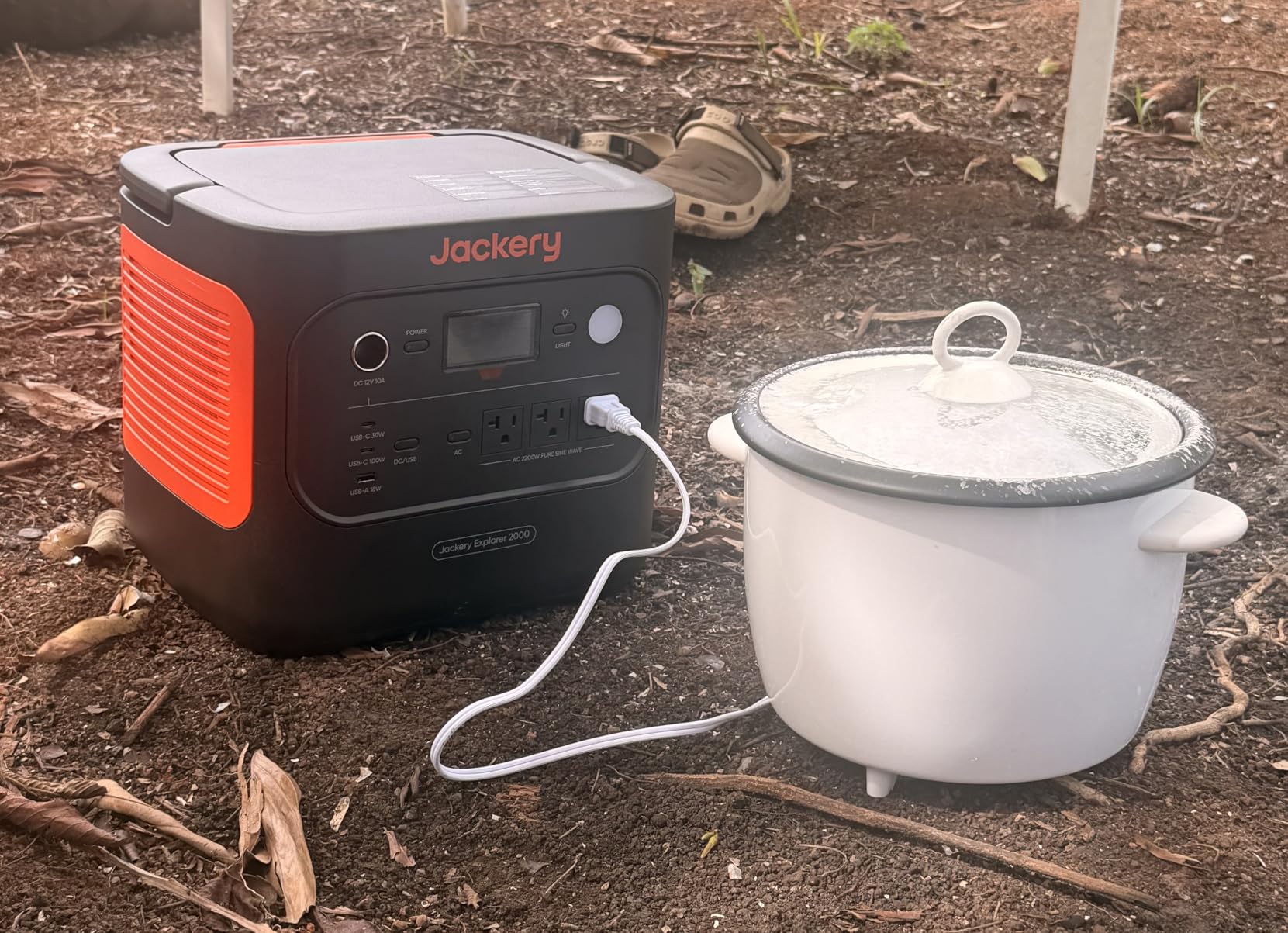
The Explorer 2000 v2 exists to solve one problem: every other 2 kWh LiFePO4 station is a two-person carry. At 39.5 pounds it is 41 percent lighter and 34 percent smaller than a typical unit in the class, and reviewers consistently single that out as the defining advantage.
Capacity is 2042 watt-hours and output is 2200 watts of continuous AC across three ports, with 100-watt USB-C Power Delivery for laptops. The Cell-to-Body pack design is adapted from electric vehicle battery engineering, which is how the density gain was achieved without moving to a chemistry with worse cycle life.
Charging is 0 to 80 percent in 66 minutes from a wall, a full charge in about 102 minutes with the app emergency mode, and as little as 6 hours from solar with 400-watt Jackery panels. Silent charging holds it under 30dB with adaptive fan speed, and the 20ms UPS switchover is UL1778 test certified.
At 4.4 stars from 869 reviews it carries the lowest five-star share of the ten products here, at 79 percent. That is worth weighing, and it mostly reflects the output ceiling rather than reliability complaints.
Where the 2200W ceiling actually bites
A 2200-watt continuous limit is workable for a fridge, laptops, lights and a modest microwave run one at a time, but it leaves little headroom. Run an induction burner and a fridge together and you are close to the limit before surge is considered, which is why owners emphasise careful load management.
Compare the 2600 watts of the Elite 200 V2, the 3000 watts of the DJI Power 2000 and the 3400 watts of X-Boost mode on the EcoFlow DELTA 3 Max. If your off-grid plan is heavy cooking or power tools rather than electronics, the 2 kWh weight saving may not be the right thing to optimise for.
Where it falls short off-grid
Only three AC outlets are listed for the full configuration, so plan your distribution before you leave. As with the smaller Jackery, solar charging works with Jackery panels, so third-party panels are excluded.
Jackery rates the LiFePO4 battery for a 10-year lifespan but does not publish a cycle count, which makes it harder to compare against the 4,000 and 6,000 figures the BLUETTI models publish. The 5-year manufacturer warranty is solid. Overall it is the pick for anyone who must carry 2 kWh by hand.
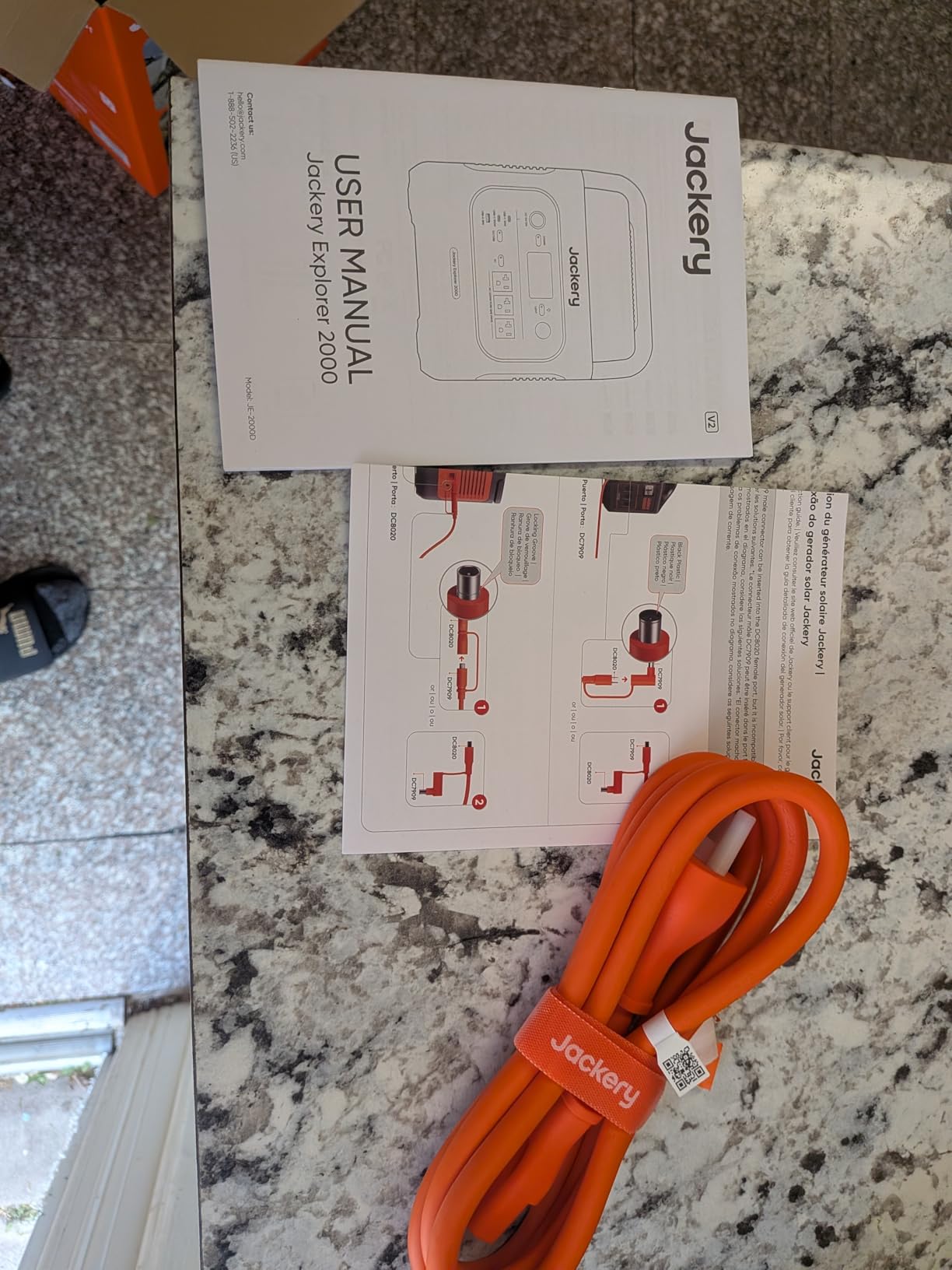
7. DJI Power 2000 – Best for Expandable Capacity and Output Headroom
DJI Power 2000 Portable Power Station, 2048Wh LFP Battery
2048Wh LFP capacity
3000W stable output
Expands to 22.5kWh
10ms UPS, 30dB
Pros
- 3000W stable output for kettles and cookers or power tools
- Expands to 22.5kWh for 4-6 days of essential home devices
- 0-80 percent recharge in 55 minutes with 10ms UPS switchover
- 30dB quiet enough for overnight RV use
Cons
- MPPT and car charging modules sold separately
- Heaviest in the 2kWh class at roughly 47.9 lbs
- Listed warranty terms inconsistent between spec block and features
No other station in this roundup can grow. The DJI Power 2000 starts at 2048 watt-hours and expands to 22.5 kWh with add-on batteries, which DJI frames as four to six days of essential home devices. If you are building toward full-time off-grid rather than a season of weekends, that headroom changes the maths entirely.
On top of that, 3000 watts of stable output is the most output the 2 kWh group here offers alongside the 3600 watts of the larger pecron unit, and owners report using it for kettles, cookers, projectors, saws and impact drills. It charges from zero to 80 percent in 55 minutes, and the 10ms UPS switchover is half that of the previous DJI generation.
Port selection is where DJI differentiates for its own audience. Fifteen ports including dual full SDC ports mean a whole drone crew can charge batteries, laptops and a field monitor at a group campsite or in an RV, with the DJI Home app giving wireless control without the earlier Power Dongle.
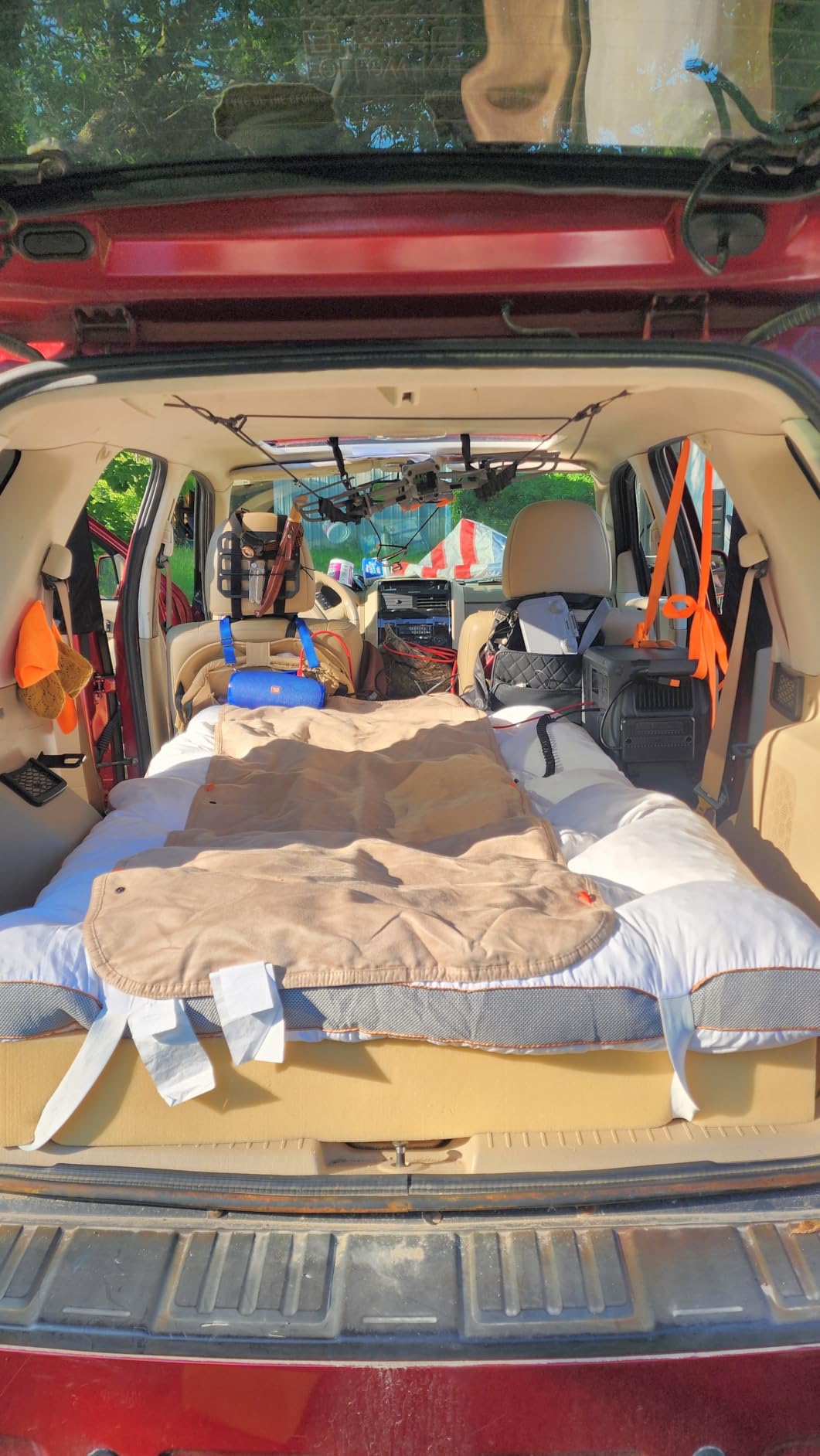
Safety engineering is unusually explicit for a power station: a smart battery management system, sub-nano battery coating and a flame-retardant housing, all aimed at wet and rugged conditions. Noise is as low as 30dB, which is fine for overnight use in an RV.
Planning the expansion path before you buy
Expansion is the reason to choose this station, so confirm the accessories early. The MPPT solar module and the car battery charging module are not built in and require a separate compatible adapter, meaning your solar setup costs more and takes more planning than it would on the EcoFlow or BLUETTI models.
Also confirm which expansion batteries you need before the first trip, because mixing generations is the usual source of compatibility complaints. Our guide to portable power stations for RVs covers the sizing questions that matter for this class of machine.
Where it falls short off-grid
At roughly 47.9 pounds it is the heaviest station in the 2 kWh group, and only the pecron F3000LFP is heavier overall. It also carries a larger share of 1-star reviews than its peers, and the warranty terms are listed inconsistently between the specification block and the feature description, which is worth confirming with the seller.
If you never intend to add batteries, the Elite 200 V2 gives you similar power headroom in a smaller box. The DJI is the pick specifically for people who plan to grow.
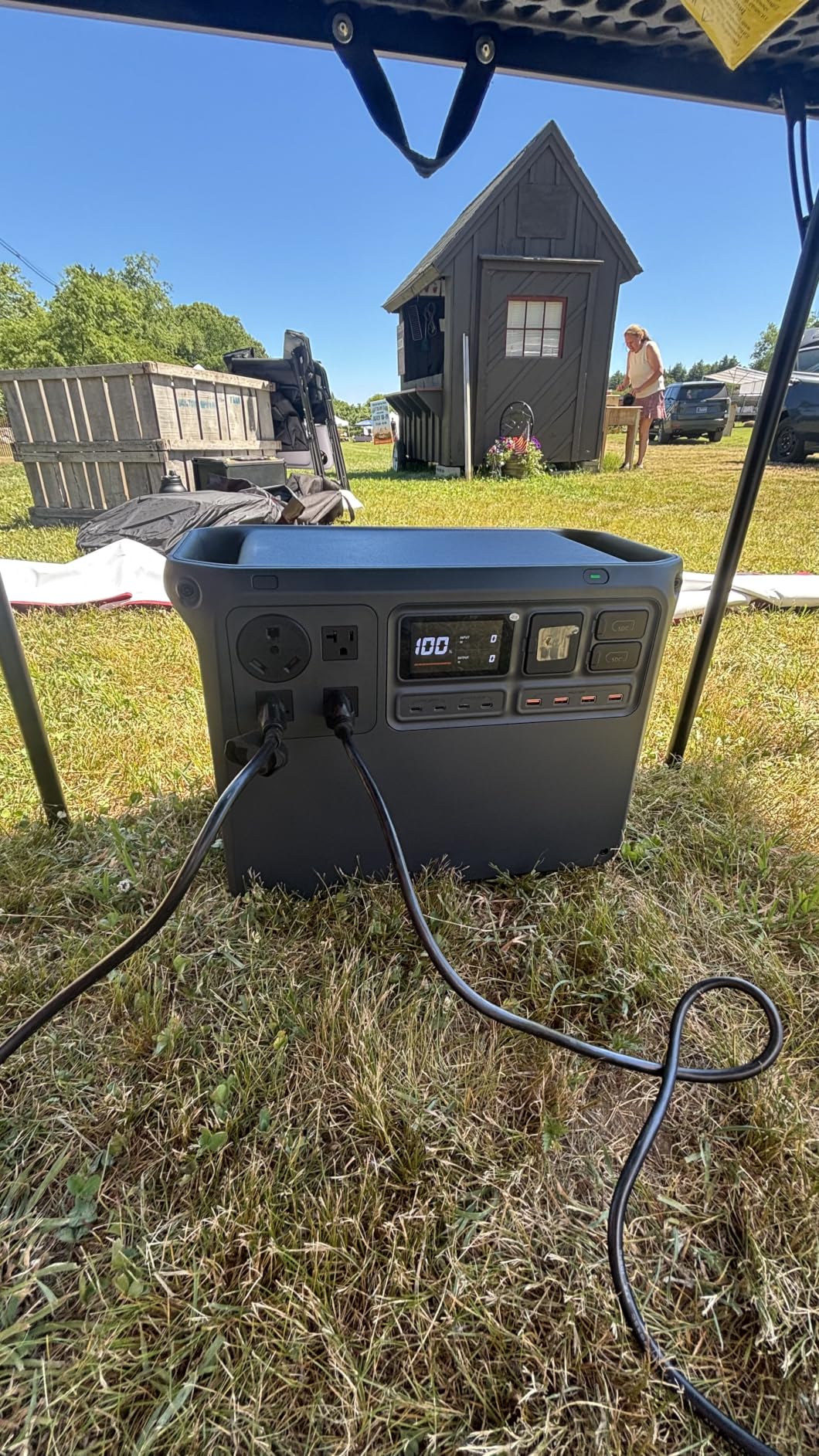
8. EcoFlow DELTA 3 Max – Top Rated for Fast Recharging
EF ECOFLOW DELTA 3 Max Portable Power Station, 2048Wh LFP Battery, 2400W
2048Wh LFP capacity
2400W rated, 3400W in X-Boost
0-80 percent in 1.13 hours
Less than 10ms UPS
Pros
- Fastest recharge in the roundup at 0-80 percent in 1.13 hours
- 3400W X-Boost output runs fridges and power tools
- Under 10ms transfer protects computers and medical devices
- Ultra-quiet for indoor home backup
- LiFePO4 battery engineered for 10 years of daily use
Cons
- Most expensive station in this roundup
- Tallest footprint at 19.44 inches so storage space matters
- X-Boost mode is not suitable for sensitive electronics
- Only 3 power outlets listed on this configuration
The DELTA 3 Max ties for the highest average rating in this roundup at 4.7, with 88 percent of reviews at five stars, and it does it with the fastest recharge we measured: 0 to 80 percent in 1.13 hours through EcoFlow X-Stream technology. When your campground has a hookup for two hours, that is the difference between a full battery and three quarters of one.
Rated output is 2400 watts, and X-Boost mode raises continuous output to 3400 watts, which EcoFlow says runs 99 percent of household appliances including fridges, microwaves and power tools. The battery is LiFePO4 engineered for 10 years of daily use.
UPS transfer is under 10ms, and the unit is described as ultra-quiet, which is what makes it viable for indoor home backup rather than only outdoor use. The app gives real-time monitoring, priority settings and charge and discharge scheduling.
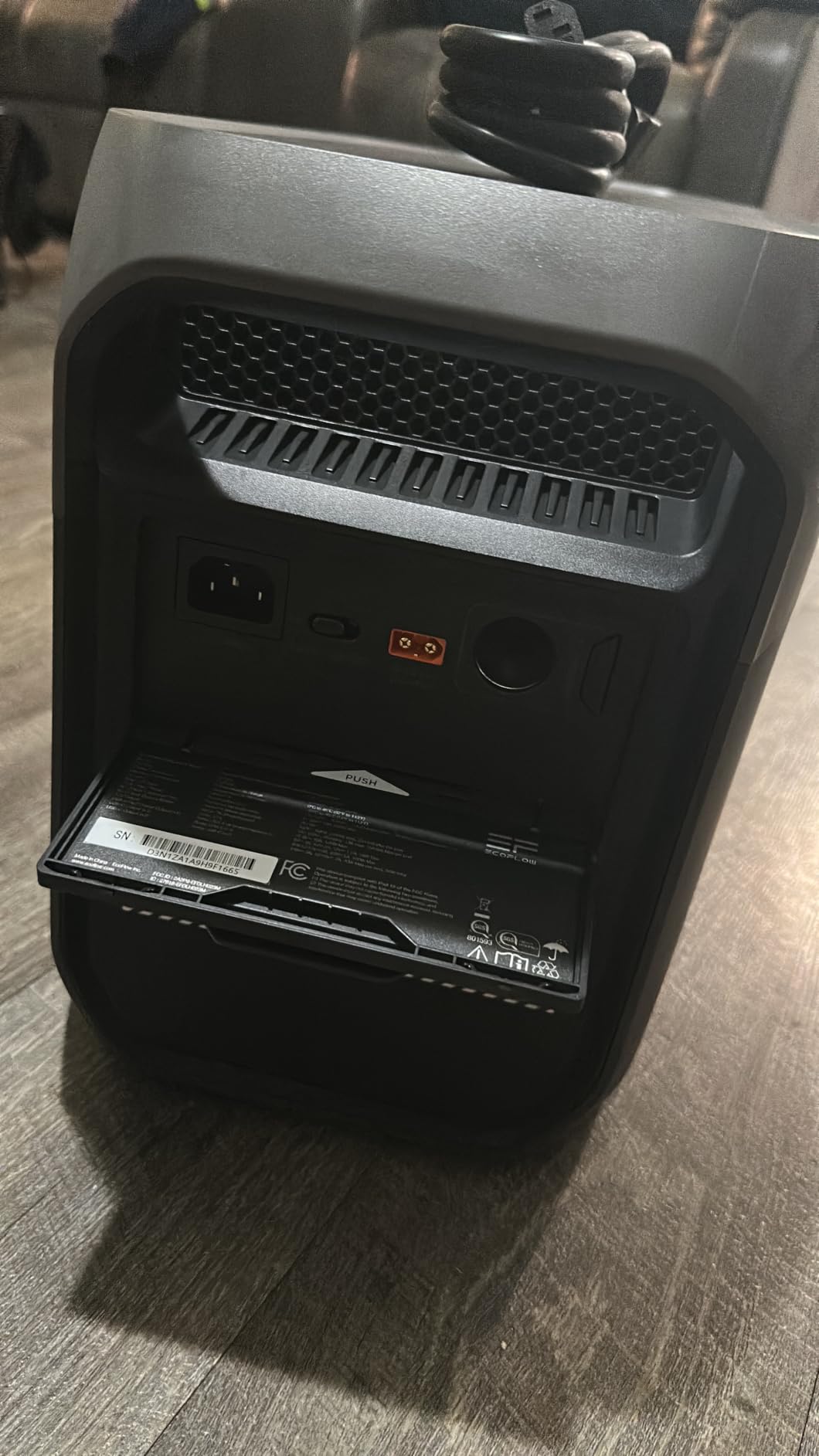
This is our pick for anyone splitting time between a home office, an RV and a campsite, because it moves between all three without a rethink.
X-Boost is powerful and it is not for everything
Pulling 3400 watts of continuous output from a 2400-watt rated unit depends on EcoFlow shaving peaks off how appliances draw power, usually by briefly interrupting to restart them. That is fine for a microwave or a power tool and wrong for anything that dislikes a millisecond of dropped input.
Computer equipment, medical devices and audio gear should stay on the rated 2400-watt output with X-Boost off. The same caution applies to the power lifting modes on the BLUETTI and Dabbsson machines, and it costs nothing to know which mode you are in before you plug in.
Where it falls short off-grid
It is the most expensive station in this roundup, and at 19.44 inches tall it is also the tallest, so van and cupboard space is a real constraint rather than a detail. Only three power outlets are listed on this configuration, which is thin for a machine this capable.
EcoFlow also did not publish a weight figure in the data we pulled, so treat packed weight as unverified until you see the spec sheet. If your budget stretches and space is tight, this is the machine to buy. If it does not, the Jackery Explorer 1000 v2 covers most weekends for less.
9. pecron F3000LFP – Best for Solar Input Headroom
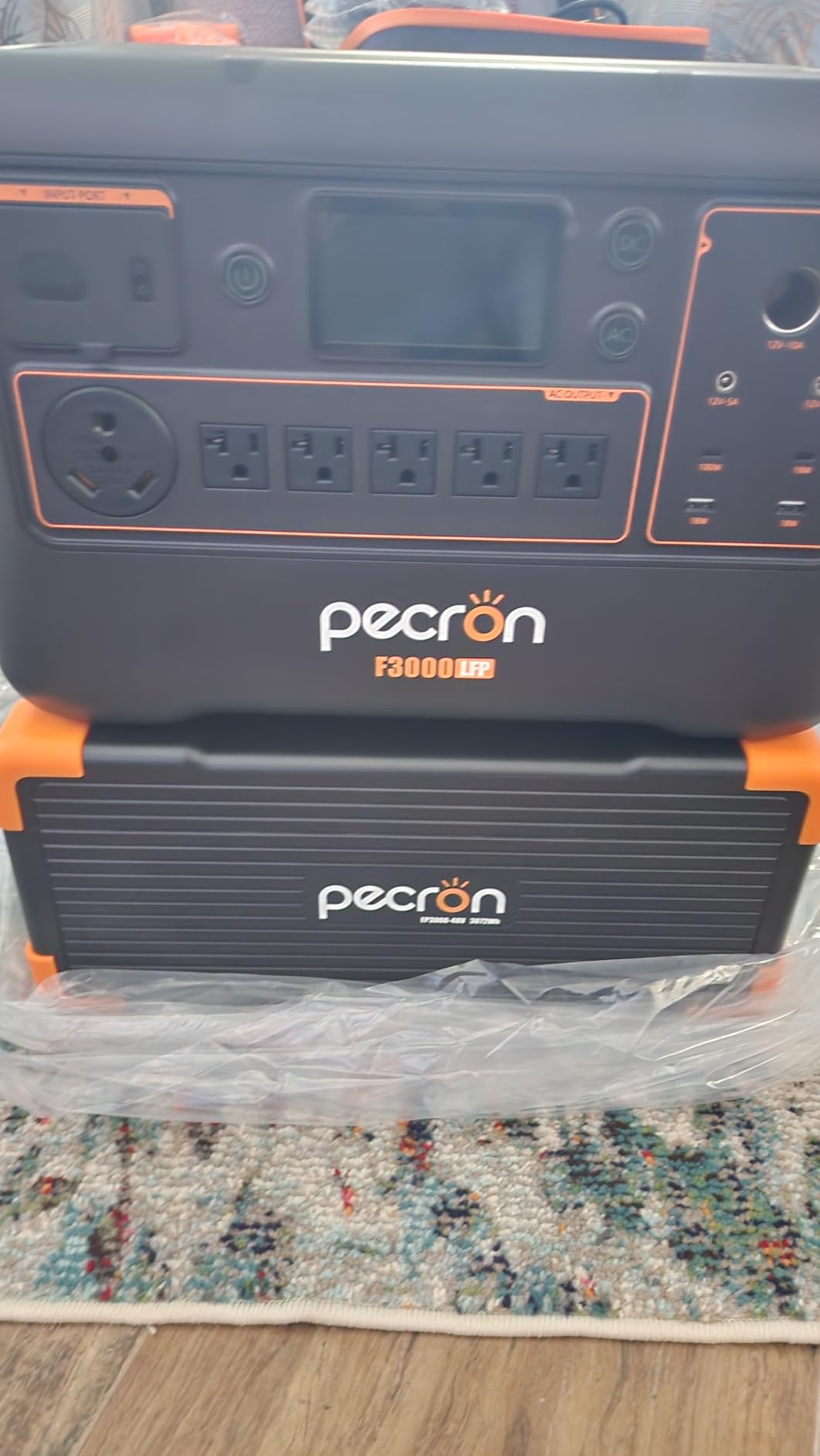
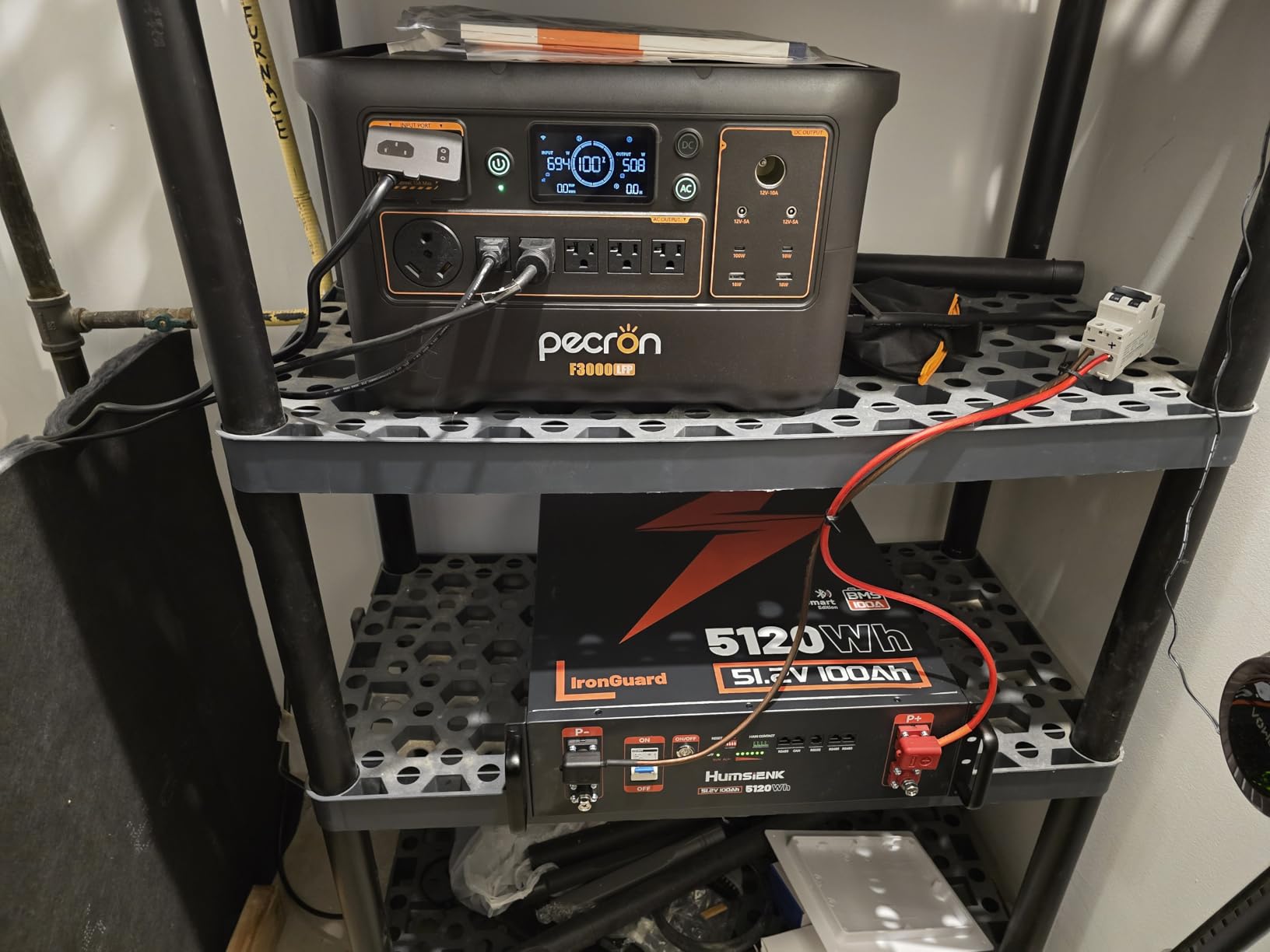
PECRON Portable Power Station F3000LFP, 3072Wh Solar Generator, 3600W LiFePO4 Battery Home Backup, Fast Charging Power Station Expand Capacity to 10752Wh, Solar Generators for Home Use, Camping, RV
3072Wh expandable to 10752Wh
3600W pure sine wave
1600W max solar input
13 total ports
Pros
- Largest capacity here at 3072Wh with 3600W pure sine wave output
- 0-100 percent AC recharge in 2 hours at 1800W
- 1600W solar input across a 25-120V range
- Expands to 10752Wh with EP3800-48V batteries
- 13 ports including two 100W USB-C
Cons
- Heaviest at 63.3 pounds
- Smallest review base at 145 ratings so long-term data is thin
- Expansion needs the separately sold XT120-M cascade cable
- Only 3 years of warranty is standard
The F3000LFP is the only station here whose solar input is genuinely unlimited in practice. Maximum solar input is 1600 watts across a 25 to 120 volt range, far above the 500 watts of the AC180 and well above the practical ceiling of the Elite 200 V2 once its 60V MPPT limit is considered.
Capacity is 3072 watt-hours, the largest in this roundup, with 3600 watts of pure sine wave output powering 13 devices at once. It recharges from zero to full in 2 hours at 1800 watts of AC input, and it expands to 10,752 watt-hours with EP3800-48V batteries if you need far more.
The port count is generous: six AC outlets, two 100-watt USB-C ports, two 18-watt USB-A, a car port and two DC 5525 outputs. Warranty is 2 plus 3 years, with the extended portion conditional on registration, plus 24/7 support.
For most people this is overkill, and we will say so. For someone building a semi-permanent off-grid setup where solar is the only recharge, the 1600-watt ceiling is the feature that justifies the extra size.
Sizing solar for a 3 kWh station
At 1600 watts of solar input, a 1000-watt array refills roughly half the battery in about three peak sun hours, and a full day of good sun clears it. That is the real difference against a 500-watt station, where you would be waiting most of a day for the same energy.
The 25 to 120 volt input window is unusually wide, so it accepts long panel runs and a wide range of third-party panels without a separate MPPT controller. The catch is that expansion needs the XT120-M cascade cable, sold separately, so budget for that before you commit to the growth path.
Where it falls short off-grid
At 63.3 pounds it is the heaviest machine here, and it is 19.3 inches long. This is a semi-stationary power source, not something two people hike to a site.
It also has by far the thinnest evidence base, with 145 ratings against 3621 on the Jackery. Sentiment is solidly positive, but there is simply not yet a long-term durability record for an off-grid buyer who plans to depend on this for years. If reliability evidence matters to you, buy the Jackery or the BLUETTI.
10. Dabbsson 2000L – Best 2 kWh Value Option
DABBSSON Portable Power Station 2000L, 2048Wh Semi-Solid LiFePO4 Battery, 2200W AC Output 6, 3300W Power Boost, 1 Hr Fast Charge, Solar Generator for Home Backup, Camping & RVs (Solar Panel Optional)
2048Wh semi-solid LiFePO4
2200W with 3300W Power Boost
800W MPPT solar
41 lbs
Pros
- Semi-solid LiFePO4 cells claimed to run about 1.3x longer than comparable 2048Wh stations
- Only 41 lbs in the 2kWh class
- Full AC recharge in about 1 hour
- Reported fridge runtime of 20-plus hours solo
- 4000-plus deep cycles to 80 percent
Cons
- Wi-Fi app pairing is difficult and some settings do not save
- Cooling fan cycles on at idle and is audible from about 20 feet
- Audible clicking during AC pass-through with a load
- USB-C input charging is not supported
The Dabbsson 2000L is the value entry into the 2 kWh class, and owners describe it as such consistently. 2200 watts of continuous output with a 3300-watt Power Boost and 4400 watts peak, full AC recharge in about an hour, and 41 pounds, which is lighter than most machines of this capacity.
The semi-solid LiFePO4 cells are claimed to deliver about 1.3 times the runtime of comparable 2048 watt-hour stations. Real-world reports support the direction if not the exact figure: users report a single refrigerator running 20-plus hours and a combined load of four appliances for about 7.5 hours.
Solar input is up to 800 watts through MPPT with hybrid dual-input support, and the switchover for UPS and pass-through is under 15ms for computers, NAS and routers. The cell rating is more than 4,000 deep cycles to 80 percent capacity, or 10-plus years of daily use, inside a UL94-V0 flame-retardant housing.
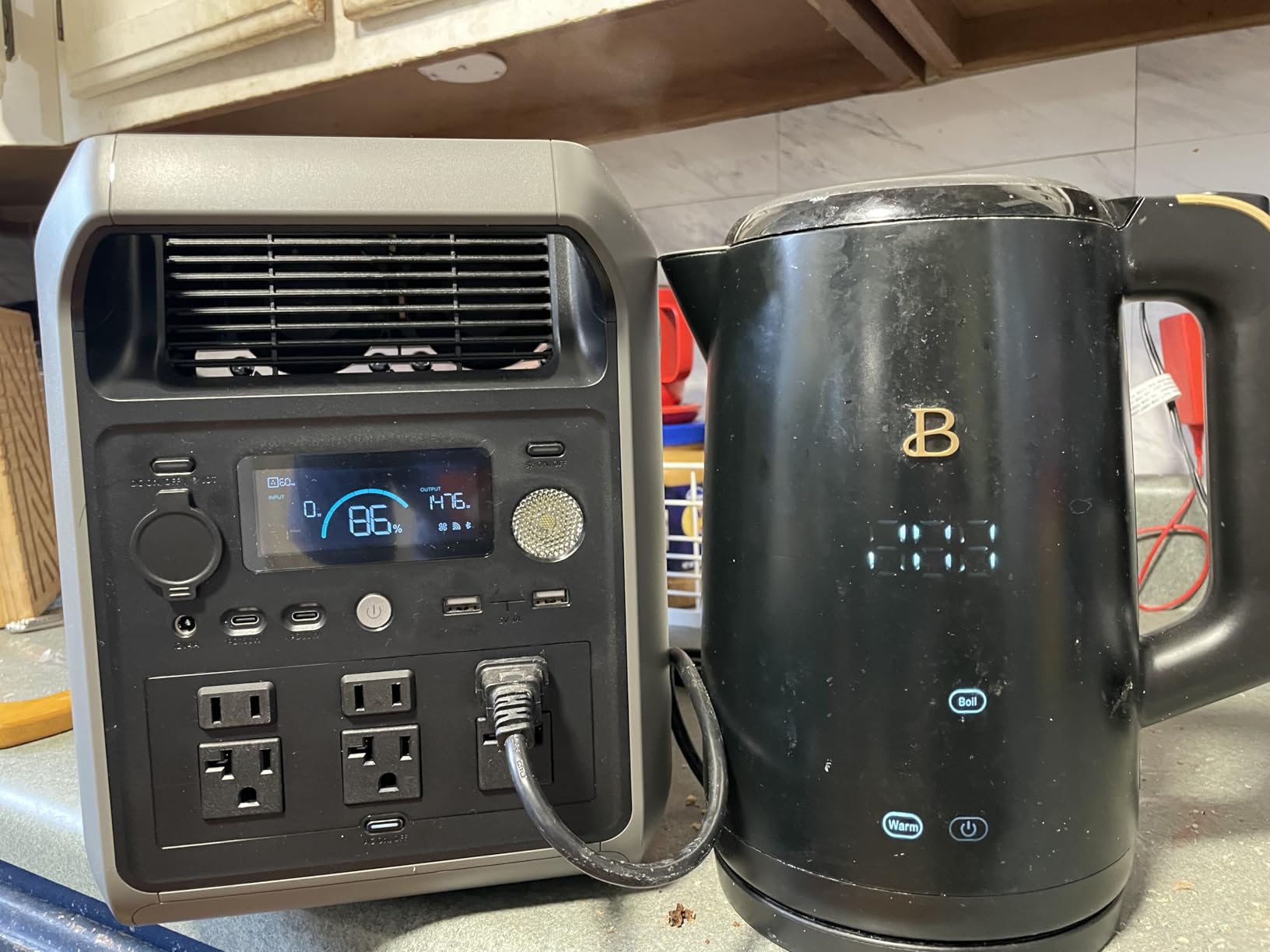
There are six AC outlets plus a full DC port set, and the display shows live wattage and remaining time clearly enough to plan your day around.
Where the complaints cluster, and why it is still worth it
Almost every recurring complaint is software rather than power delivery. Wi-Fi pairing wants a 2.4 GHz connection and often falls back to Bluetooth, some app settings including charge and discharge limits lack a working save function, and there is an over-eager cooling fan that cycles on at idle with no measurable load and carries from about 20 feet.
The fan behaviour is the one to weigh seriously if you plan to run a CPAP nearby at night. The audible clicking during AC pass-through with a load attached is cosmetic but persistent. For daytime work, or for anyone who wants 2 kWh capacity without the EcoFlow price, the power delivery is genuinely strong.
Where it falls short off-grid
USB-C input charging is not supported, so topping up from a small panel means using the AC or car input rather than a USB-C source. There are only one or two USB-C outputs depending on configuration, which is thin for laptops.
At 41 pounds it is lighter than the Elite 200 V2 but heavier than the Jackery Explorer 2000 v2, so it sits in the middle of the weight trade. The warranty is 3 years standard plus 2 extended on registration, which is shorter than the BLUETTI and EcoFlow coverage.
What to Consider When Buying a LiFePO4 Off-Grid Power Station
Start with a watt-hour budget, not a brand. List everything you plan to run, multiply each device’s continuous draw by the hours you need it, and add a 20 to 30 percent buffer. Then check that the station’s continuous output covers your largest single load, and that its surge rating covers the startup spike of anything with a compressor, a motor or a pump.
Then apply the 85 percent rule to the result. A 2048 watt-hour station is roughly 1740 usable watt-hours, and at a 400 watt continuous draw that is about 4.3 hours of runtime rather than the 5.1 hours the label implies. Working the arithmetic in advance is the fastest way to avoid buying the wrong size.
Check the solar input ceiling next, because it decides whether the station can keep up. A 500 watt input panel arrangement refills a 1152 watt-hour station in roughly three good hours, while the pecron F3000LFP accepts 1600 watts across a wide voltage range. More panel watts means less idle time on your generator too.
Weight deserves honest treatment. Below 10 pounds you are in phone and laptop territory. Between 23 and 25 pounds is the sweet spot for car camping. Above 40 pounds you are looking at two-person carries and van-only storage, and the difference between a 39.5-pound and a 53.4-pound machine is felt every single time.
Finally, verify three things most buyers skip: the published cycle count, the warranty length, and whether the unit has expansion. A station with 6,000 rated cycles and a 5-year warranty will outlive one with an unstated cycle count, and an expandable unit lets you grow instead of replacing. Our home backup power station guide goes deeper on the outage side of the same maths, and our camping-specific roundup covers smaller loads.
Cold-Weather Charging: What Off-Grid Users Report
LiFePO4 stations generally will not charge below freezing, and this is the single most common surprise for winter off-grid users. The battery management system cuts charging out to protect lithium plating, which means a station left in a cold vehicle overnight may refuse to take solar the next morning.
Builders on the iRV2 forum describe the practical workaround plainly: keep the battery above roughly 40F rather than relying on the station’s own protection logic. That means storing the unit inside the camper, in an insulated box, or running it briefly indoors to bring the temperature up before charging.
Discharging in the cold is a separate issue from charging. Lithium cells deliver less usable capacity in low temperatures, so expect less runtime from a cold battery than from a warm one and size your energy budget with that margin. The sodium-ion alternatives that some reviewers suggest for winter use do charge at lower temperatures, but they are outside the LiFePO4 chemistry this guide is built around.
If your trips are genuinely sub-zero, treat a self-heating or warmed storage strategy as part of the system rather than an accessory. A station kept at room temperature overnight and charged in daylight will behave completely differently from one left in a snowbank, and that is a decision you can make for free.
Frequently Asked Questions
What is the best portable power station for off-grid use?
For most weekend off-grid trips the Jackery Explorer 1000 v2 is the strongest all-round choice, combining 1070 watt-hours, 1500 watts of continuous AC and a 23.8-pound weight with the largest review base of any station here. For multi-day trips without solar, step up to a 2 kWh machine such as the BLUETTI Elite 200 V2 or the Jackery Explorer 2000 v2, and carry panels sized to roughly a third of the station’s input ceiling.
What type of battery is best for off-grid solar panels?
Lithium iron phosphate is the best choice for off-grid use today. LFP cells survive roughly 3,000 to 6,000 charge cycles against about 500 for older NMC lithium-ion, tolerate more heat and are far less likely to enter thermal runaway. The trade-off is lower energy density, meaning you carry a heavier box for the same watt-hours. Every station in our roundup uses verified LFP chemistry.
How many watt-hours do I need for off-grid use?
Add up each device’s continuous draw multiplied by the hours you need it, then add a 20 to 30 percent buffer and apply the 85 percent usable-capacity rule. A weekend of lights, a laptop and a 12V fridge needs roughly 1000 watt-hours. A 3-day trip with cooking, tools and a fridge needs 2000 watt-hours or more, or a smaller station with a solar panel budget of at least 400 watts.
Can a LiFePO4 power station be charged below freezing?
Generally no. The battery management system in most LFP stations blocks charging below freezing to prevent lithium plating, so a unit left in a cold vehicle overnight may refuse solar the next morning. Off-grid builders report the practical fix is keeping the battery above roughly 40F by storing it indoors, using an insulated box, or warming it briefly before charging.
What is the difference between a portable power station and a solar generator?
There is no difference in the machine. A solar generator is a portable power station sold in a bundle with a solar panel, and the term is marketing rather than a distinct technology. Judge the station on capacity, continuous output, cycle life and warranty, and treat any bundled panel as a bonus. Check panel voltage compatibility before assuming third-party panels will work.
How long do LiFePO4 batteries last?
Published cycle ratings across this roundup range from 3,000 cycles on the Anker SOLIX C300 to more than 6,000 on the BLUETTI Elite 200 V2, with most units between 4,000 and 6,000. Manufacturers translate those into service lives of 10 to 17 years of daily use. Users consistently value longevity data over peak wattage, since a station you keep for a decade beats a lighter one you replace.
Conclusion
The best LiFePO4 portable power station off-grid depends on how far you travel and how heavy your loads are. The Jackery Explorer 1000 v2 is the best all-round pick at 1070 watt-hours and 23.8 pounds, and its 4,000-cycle cells make it the safest long-term bet. The BLUETTI Elite 200 V2 is the choice when you want to run real appliances, with 2600 watts of output, 6,000-plus cycles and a standby draw that quietly extends every trip.
For carrying, the Anker SOLIX C300 at roughly 9.1 pounds is the sensible LiFePO4 entry point. For growth, the DJI Power 2000 expands to 22.5 kWh, and the pecron F3000LFP takes 1600 watts of solar if solar is your only recharge. Whatever you choose, plan against 85 percent of label capacity, keep the battery above 40F in freezing weather, and buy the solar panel alongside the station rather than afterwards.