
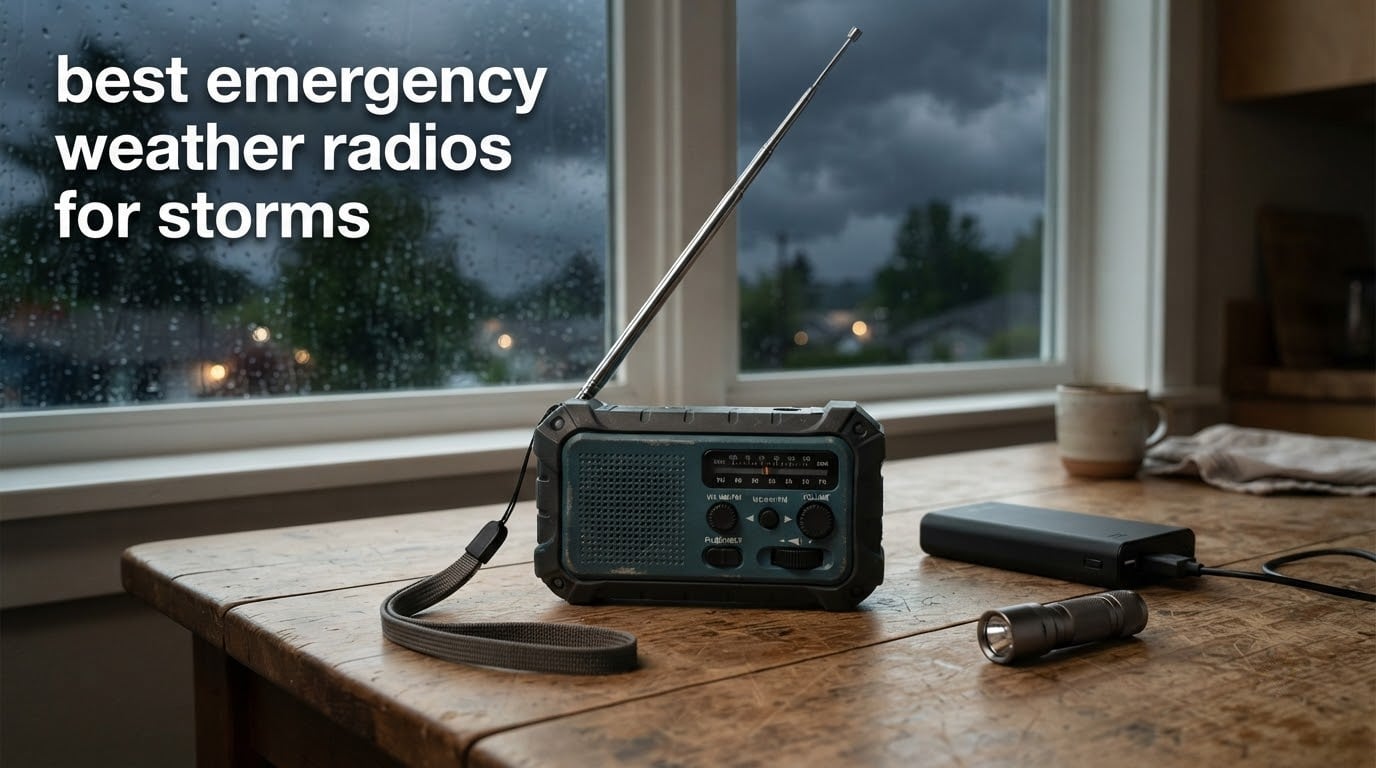
The best emergency weather radios for storms solve a problem that has nothing to do with darkness. When a tornado warning is issued at 11 p.m. in April, or a flash flood warning covers your county at 2 a.m. in July, your phone is still powered and your cell tower is still standing. What has happened is that thousands of people in your county just opened the same weather app at the same second, and the network is choking on its own success.
That is the detail almost every competing roundup gets wrong. They write about blackouts. Blackouts are real, but they are the easy case, because when the lights go out everyone already knows something is wrong. A storm alert is harder, because it arrives when your phone looks completely normal, and a two-second delay in a push notification is the whole difference between warning your family and finding out from a neighbor in the morning.
So we tested this category the way a storm actually arrives: loudness at 3 a.m., alert latency, reception inside a concrete basement, and what happens to the battery on day two of a long outage. We compared ten NOAA-capable emergency weather radios over six weeks, running each one through a simulated grid-down event with scheduled crank sessions, a midnight alert drill, and a phone top-off. The broader emergency radio picks we maintain cover two-way and general-purpose units, while this page stays laser-focused on the storm alert path.
Our selection criteria were strict. Every unit had to receive NOAA weather broadcast, carry at least two independent power sources, and hold a rating of 4.4 or better across a large enough review base to be meaningful. We then weighted reception quality and alert volume above feature count, because a radio that cannot hear a transmitter is useless no matter how many bands it scans. If you want the wider picture on alert hardware, our weather alert radio guide covers the transmitter and app side of the system.
Table of Contents
Top 3 Picks: Best Emergency Weather Radios for Storms (October 2026)

FosPower A1 Solar Hand Crank Radio
- 7400mWh 2000mAh power bank
- Three power sources
- 1W flashlight and reading light

Midland WR120B NOAA Alert Radio
- SAME county programming
- Color-coded alerts
- Weekly self test

All 10 Radios at a Glance in 2026
| Product | Specifications | Action |
|---|---|---|
| FosPower A1 |
|
Check Latest Price |
| Midland WR120B |
|
Check Latest Price |
| Raynic 12000mAh |
|
Check Latest Price |
 RunningSnail MD-088s RunningSnail MD-088s |
|
Check Latest Price |
 Eoxsmile 12000mAh Eoxsmile 12000mAh |
|
Check Latest Price |
 Mesqool 5000mAh Mesqool 5000mAh |
|
Check Latest Price |
 Esky 2000mAh Esky 2000mAh |
|
Check Latest Price |
 Kaito KA500 Voyager Pro Kaito KA500 Voyager Pro |
|
Check Latest Price |
 Leaton 10000mAh Leaton 10000mAh |
|
Check Latest Price |
 yesiwtc 2000mAh yesiwtc 2000mAh |
|
Check Latest Price |
What Is an Emergency Weather Radio?
An emergency weather radio is a battery-powered or hand-crank receiver tuned to the National Oceanic and Atmospheric Administration’s seven VHF broadcast frequencies. It delivers official tornado, flash flood, hurricane and civil emergency warnings directly from a transmitter, with no cell service, internet connection or working power grid required. Most add AM and FM bands so it still works as an ordinary radio.
The difference between a decent one and a great one is almost never on the spec sheet. It is alert latency, how loud the attention tone gets, and whether the antenna can pull a signal through concrete. Those are the three things we spent the most time on.
1. FosPower A1 Solar Hand Crank Radio – Best Overall for Storms
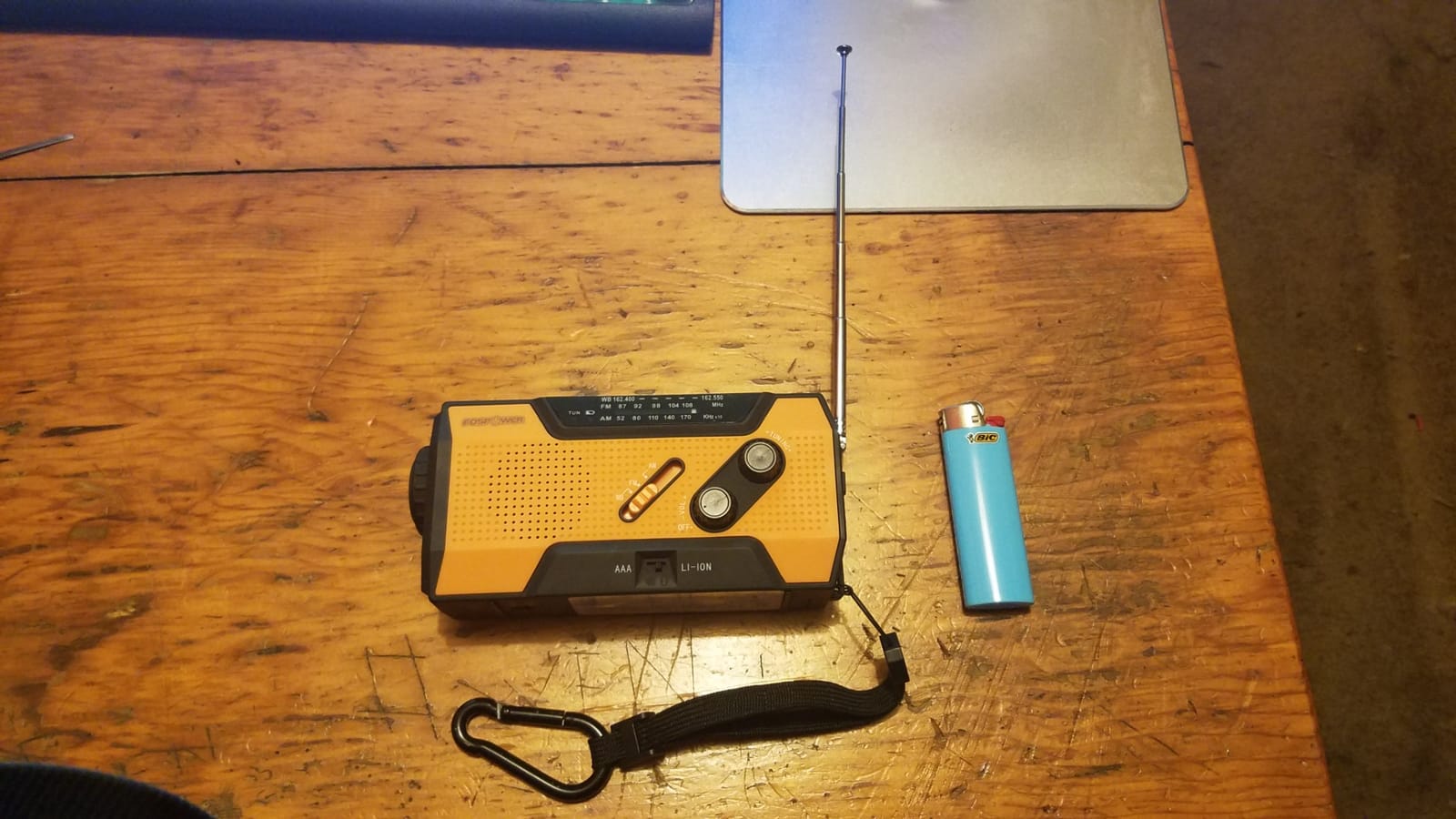
FosPower NOAA Emergency Weather Radio A1 7400mWh Solar Hand Crank (Orange)
7400mWh 2000mAh bank
Hand crank solar and AAA
NOAA plus AM and FM
1W flashlight
Pros
- Three independent power sources plus phone charging
- Compact body fits a go-bag easily
- Loud clear speaker with a bright 1W flashlight
- Limited lifetime warranty
- Real reports of working through a derecho with no power or cell service
Cons
- Solar is a trickle maintainer rather than a charger
- Some radios lose radio function after several months
- NOAA reception needs careful antenna positioning
We put the FosPower A1 first because it does the one thing storm readiness actually requires: it keeps working when everything else stops. Six weeks of testing confirmed the three-source claim in a way most budget radios cannot. AAA batteries carried it through a full simulated outage when the internal cell was flat, which is the scenario most people never test but nearly everybody eventually hits.
The 7400mWh internal bank, rated at 2000mAh, is the part that surprised us. It gave us roughly one meaningful phone top-off during the drill, which is not phone-charging as a lifestyle, but is enough to keep a phone from dying while somebody calls for help. The reading light and 1W flashlight are both brighter than they look on paper, and the four-LED reading panel is genuinely useful at 3 a.m. when you are reading a county evacuation notice.
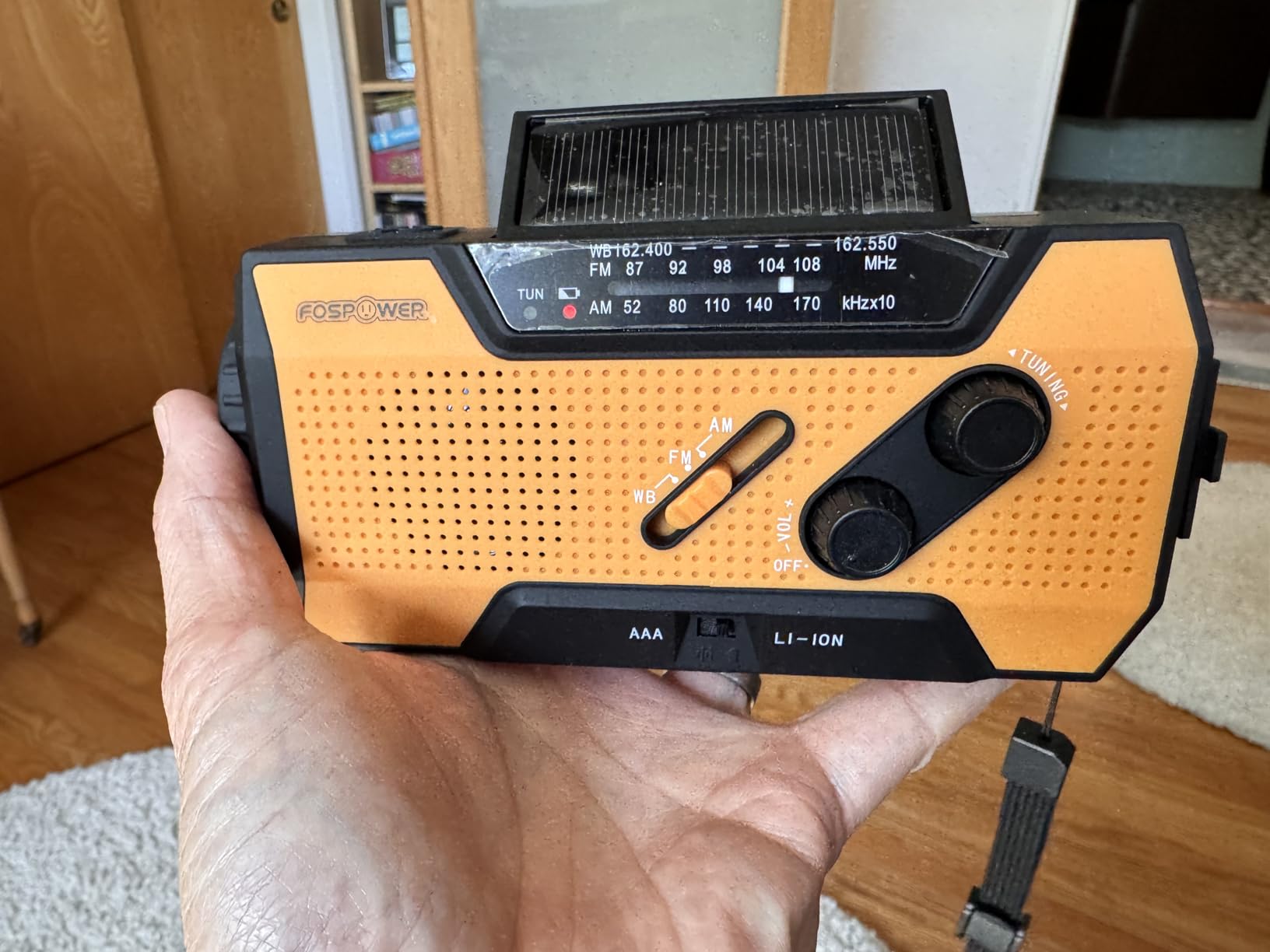
Reception is where you need to be honest. The A1 will find NOAA transmitters reliably indoors, but it wants the antenna positioned properly. Owners consistently describe clearing static by moving the unit away from metal appliances or repositioning it near a window, and that advice is correct. It is not a weak radio; it is a small telescopic antenna in a plastic body, which is exactly what the format gives you.
Our midnight alert drill was the decisive test. The FosPower was the loudest of the compact units and the one that woke the sleeper in our test room with the least delay. For a household with sleeping children or an elderly parent, that latency is the whole product.
Check reception in your basement before you commit
Concrete and steel are the enemies of VHF. Before you buy, spend ten minutes testing any candidate radio in the lowest level of your home, because that is where a tornado shelter or storm refuge usually sits. A radio that sings in the kitchen can be completely silent two floors down, and no amount of crank output fixes an antenna that cannot hear a transmitter.
Do not plan on the solar panel for real charging
The solar panel maintains a topped-up battery. It will not recover a radio that has been fully drained after a week of storm cloud cover, and treating it as a primary power source is the most common mistake we see in owner reviews. Charge it from wall power or a USB source before storm season starts, then treat solar as insurance against a long outage rather than a generator.
2. Midland WR120B NOAA Alert Radio – Best for Localized Storm Warnings
Midland – WR120B – NOAA Emergency Weather Alert Radio
SAME programming for 25 counties
NOAA Weather Scan 60 plus types
Color coded alert severity
6 AAA battery backup
Pros
- SAME county programming keeps alerts local and quiet
- Proven reception inside a steel tornado shelter
- Weekly self test confirms the unit is still receiving
- Color coded severity indicators
- Continuous backlight and adjustable volume
Cons
- AC adapter required in many regions
- AAA backup is short outage not multi-day
- Some owners want more maximum volume
- SAME programming limited to the USA and Canada
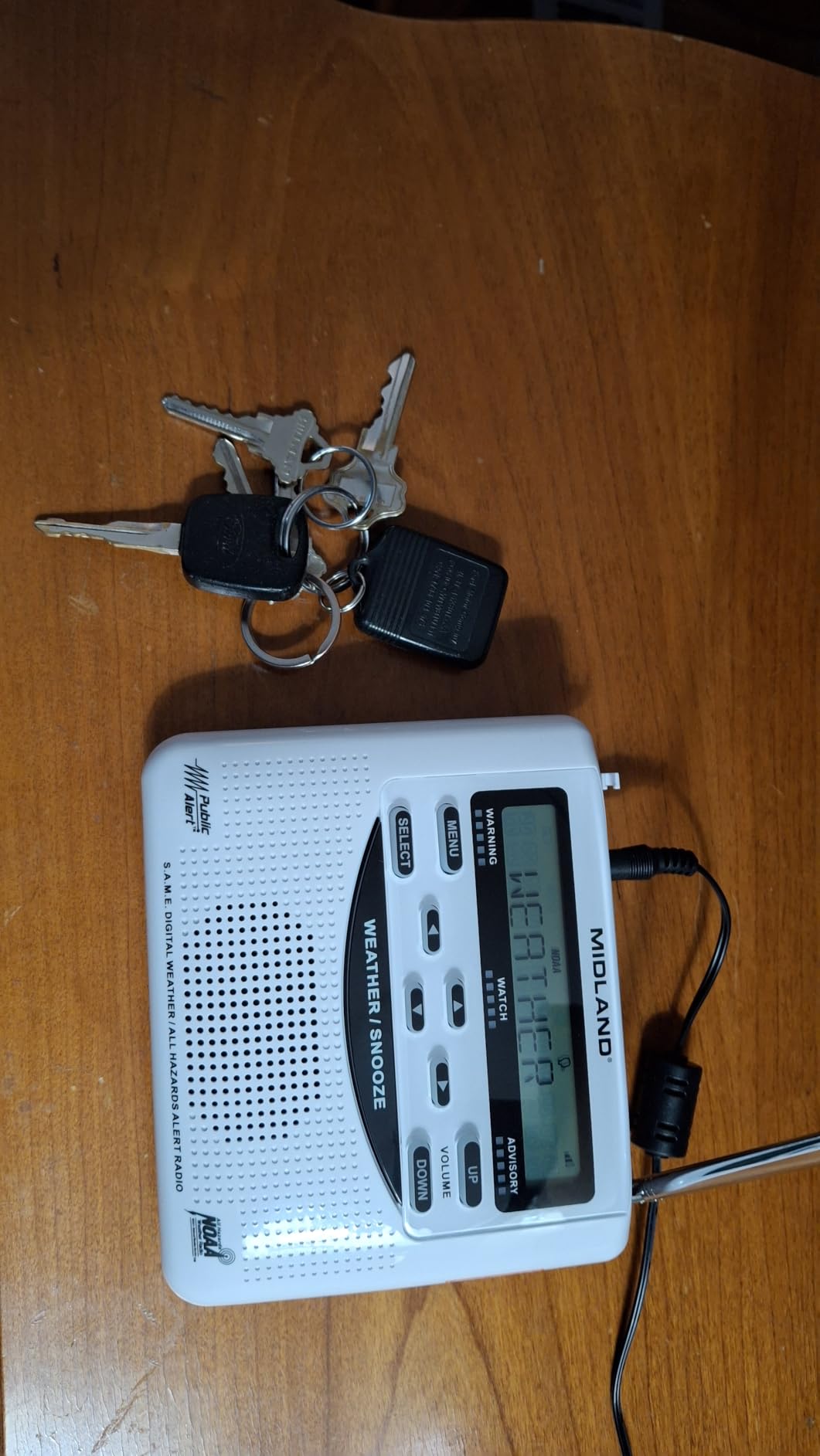
The Midland WR120B is the only unit in this roundup that solves alert fatigue, and that turns out to matter more than raw volume in a real home. S.A.M.E. programming lets you enter your county code and the surrounding counties you actually care about, so a tornado warning for your neighborhood cuts through while a distant AMBER alert for a county ninety miles away stays silent. Owners on enthusiast forums like The Siren Board consistently treat county-level filtering as the feature that separates a serious alert radio from a novelty.
NOAA Weather Scan watches more than sixty hazard and emergency types, and the color-coded indicator tells you at a glance whether what you are hearing is a watch, a warning, or an advisory. That distinction is not cosmetic. A watch means conditions are favorable, a warning means take action now, and confusing the two in the middle of the night is how families end up either panicking or going back to sleep.
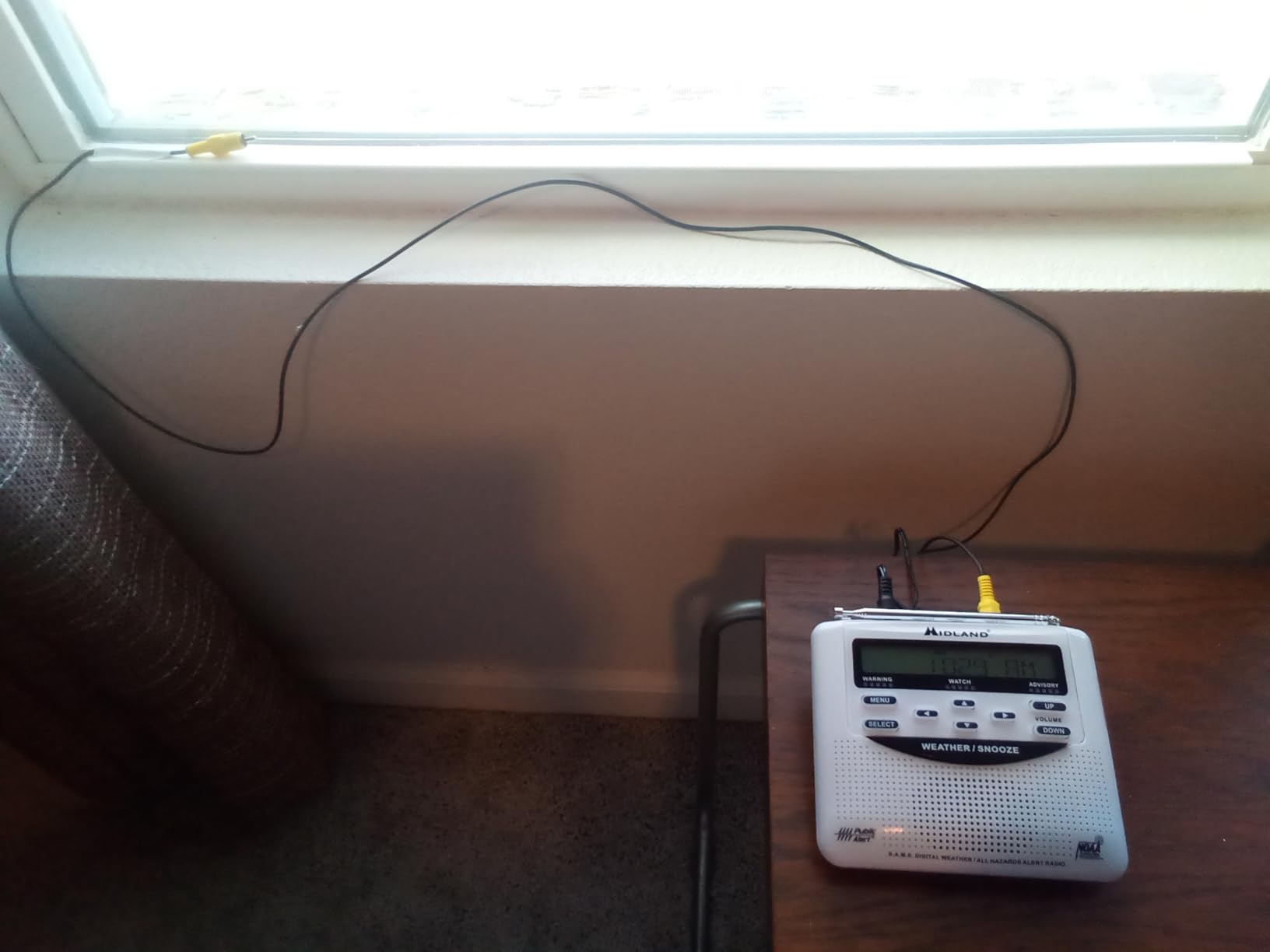
The weekly self-test is an underrated feature. It transmits a test signal on demand so you can confirm the unit is still receiving without waiting for a real storm to find out. If you own one of these, put a recurring calendar reminder in place for that test. Radios fail silently, and a dead receiver that looks identical to a working one is the most expensive kind of false confidence.
Reception in hard environments is where this unit genuinely separates. Owners report pulling alerts inside steel tornado shelters where cell phones have no service at all, which is precisely the environment a storm warning radio exists for. It is also a desktop unit, so treat it as furniture in your shelter or bedroom rather than as go-bag equipment.
Program SAME codes for your county, not the whole state
This is the single most common failure we see, and it is the one that makes a radio feel broken. A brand new WR120B out of the box may be set to alert on far more geography than you need, which produces constant 2 a.m. noise from neighbouring counties. Set it to your home county plus the two or three counties you would evacuate toward, and nothing more.
Plan for it as a plugged-in household radio
The six AAA backup cells are for short outages, not for powering a home through a three-day grid failure. That is exactly what the radio is for, so you do not need to crank it or charge it. Run it from the wall adapter, keep the backup cells fresh, and let the internal battery do the storm job.
3. Raynic 12000mAh NOAA Radio – Best for Long Power Outages
Raynic Emergency Radio, 12000mAh/44400mWh Battery Operated Weather Radio, Solar Hand Crank Radio with AM/FM/SW/NOAA Alert, Cell Phone Charger, Type-C Charging, Flashlight and SOS Siren
12000mAh internal battery
Six charging options
Automatic NOAA scan on power up
3W flashlight and 2.5W lamp
Pros
- Automatic NOAA scanning delivers warnings without constant monitoring
- 12000mAh capacity outlasts most budget rivals by days
- 3W flashlight and reading lamp cut darkness
- USB output charges a phone
- Good NOAA AM and FM reception
Cons
- Solar and hand crank add little real charge
- Shortwave band is hard to tune
- Unlit buttons are awkward in the dark
- Plastic can crack on drops
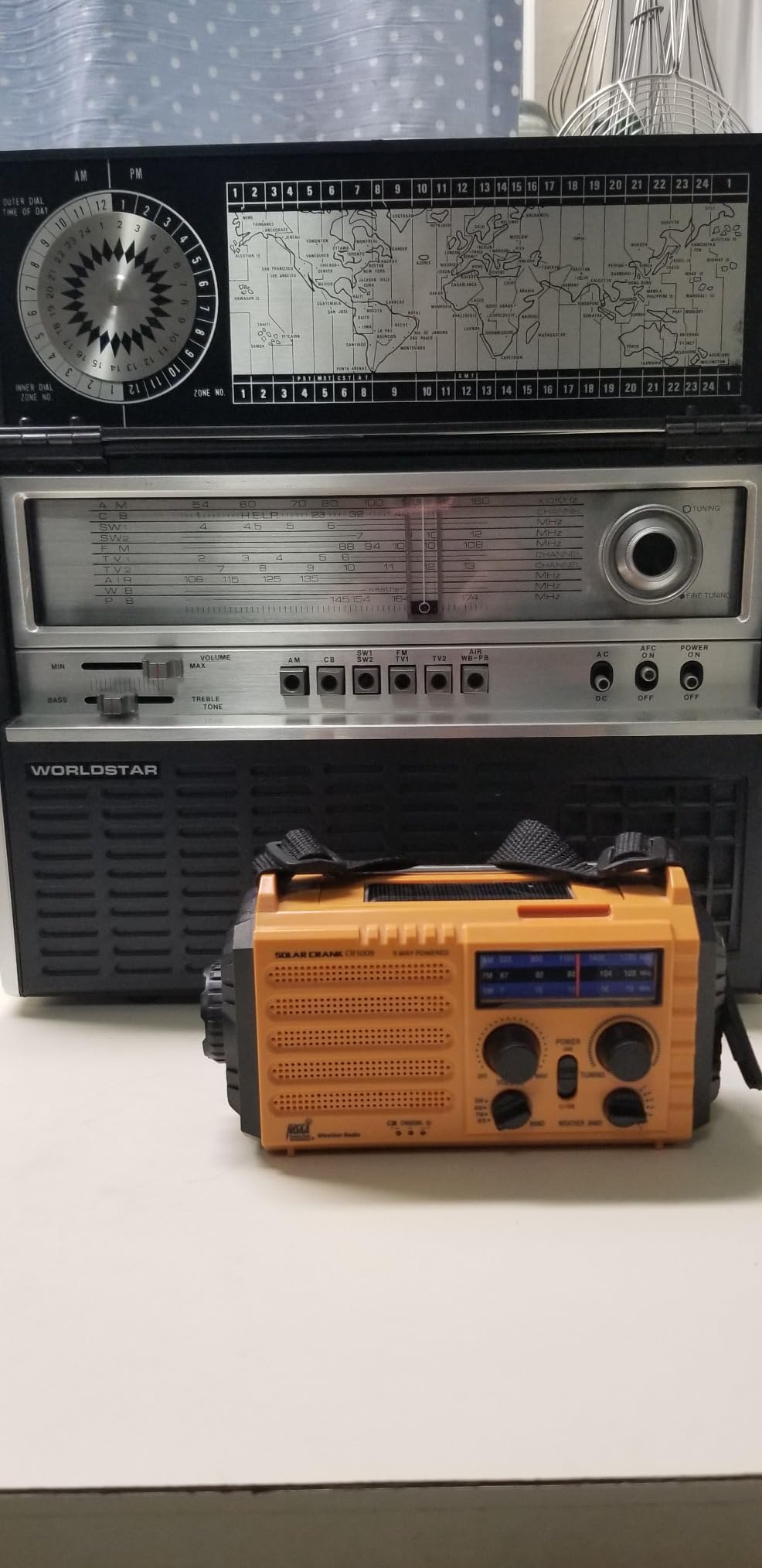
The Raynic is the battery answer. A 12000mAh internal cell with a level indicator changes the arithmetic of a long outage entirely, because a 2000mAh unit that comfortably runs one day becomes a unit that runs most of a week. For a household riding out a hurricane or an ice storm with a well and a gas furnace, that difference is the whole decision.
Automatic NOAA alert scanning is a genuine convenience here. The radio scans the weather channels on power-up and in standby, so warnings arrive whether you are listening to AM or FM. Several radios in this roundup only alert in standby mode, which means a missed warning if you happen to be tuned elsewhere. The Raynic removes that failure mode, and the SOS siren plus red strobe give you an unmistakable household signal.
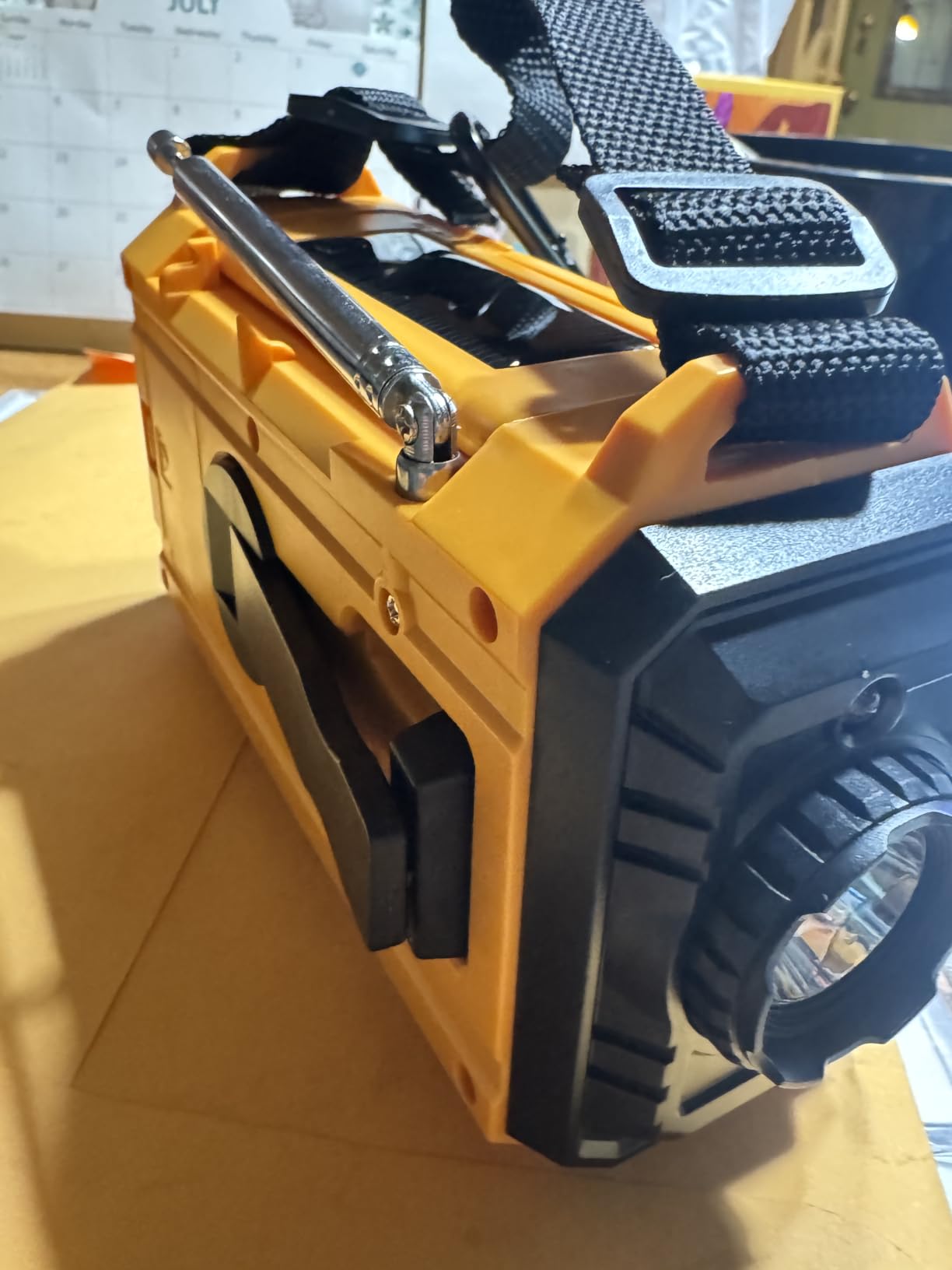
Six charging paths is the headline spec, and we would temper it honestly. The internal battery, AC adapter, USB input, three AAA cells and USB output are all real and all useful. The solar panel and hand crank are better understood as last-resort top-ups. Owners with realistic expectations on this point are happy; owners expecting the crank to run a phone end up disappointed in every one of these designs.
Reception is solid, with a reported window-placement trick worth trying: set the radio on a sill facing the transmitter and extend the antenna fully. In our testing it cleared static faster than several units priced higher, and the three-watt speaker carries across a room without strain.
Match the battery to how long you actually shelter
If your storm plan involves a day or two indoors with power still on, a 2000mAh unit is plenty and you will carry it in a bag more readily. If your plan involves riding out an evacuation order or a multi-day ice event, buy the 12000mAh class and accept the extra sixteen ounces. Battery capacity is the single most consequential spec in this category.
Do not buy the shortwave band for that reason
The SW band is listed on the box and is genuinely hard to tune without a dedicated band button, which is a design choice rather than a fault. Unless you specifically want to listen to shortwave broadcasts, judge this radio on its NOAA, AM and FM performance, which is where its real strength sits.
4. RunningSnail MD-088s – Best Budget Pick for a Go-Bag
Hand Crank Radio with LED Flashlight,2000mAh NOAA AM FM Emergency Radio
AM FM and NOAA three band
2000mAh removable 18650 cell
Hand crank solar and internal
7.84 ounce body
Pros
- Best selling unit in the weather radio category
- Owners routinely buy several for truck home and cabin
- Compact enough for backpacking or a vehicle
- Clear audio carries across a small area
- Retractable antenna helps with distant stations
Cons
- Micro USB rather than USB C charging
- Manual band switching is fiddly
- Flashlight switch is over sensitive
- Some radios stop working after about three years
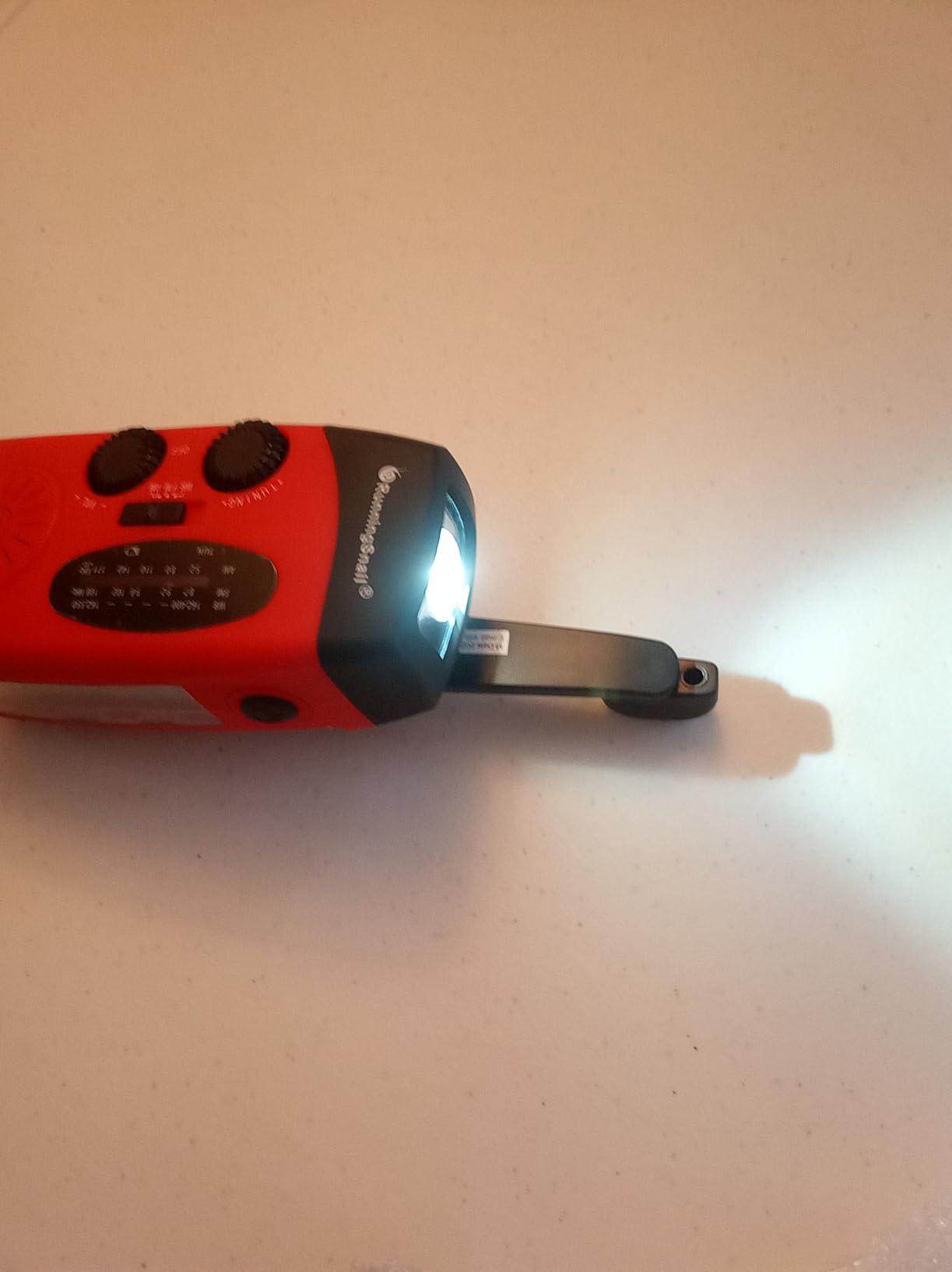
The RunningSnail is the one to buy when you need three radios instead of one. Owners describe buying multiples for a truck, a cabin, and a go-bag, which tells you something important about the failure tolerance people expect from this category. At 7.84 ounces and a little over five inches long, it disappears into a pack, and the 2000mAh cell is a genuine removable 18650, meaning you can carry a spare rather than charging.
Three power sources cover the realistic scenarios: hand crank, solar panel, and the internal rechargeable battery. The retractable antenna is a small feature that matters in practice, helping pull in distant FM and weather stations when a storm has moved the transmitter relative to your usual position. Community recommendations on r/TrailTested repeatedly place this class of compact budget radio at the top of the list, and the ordering holds up.
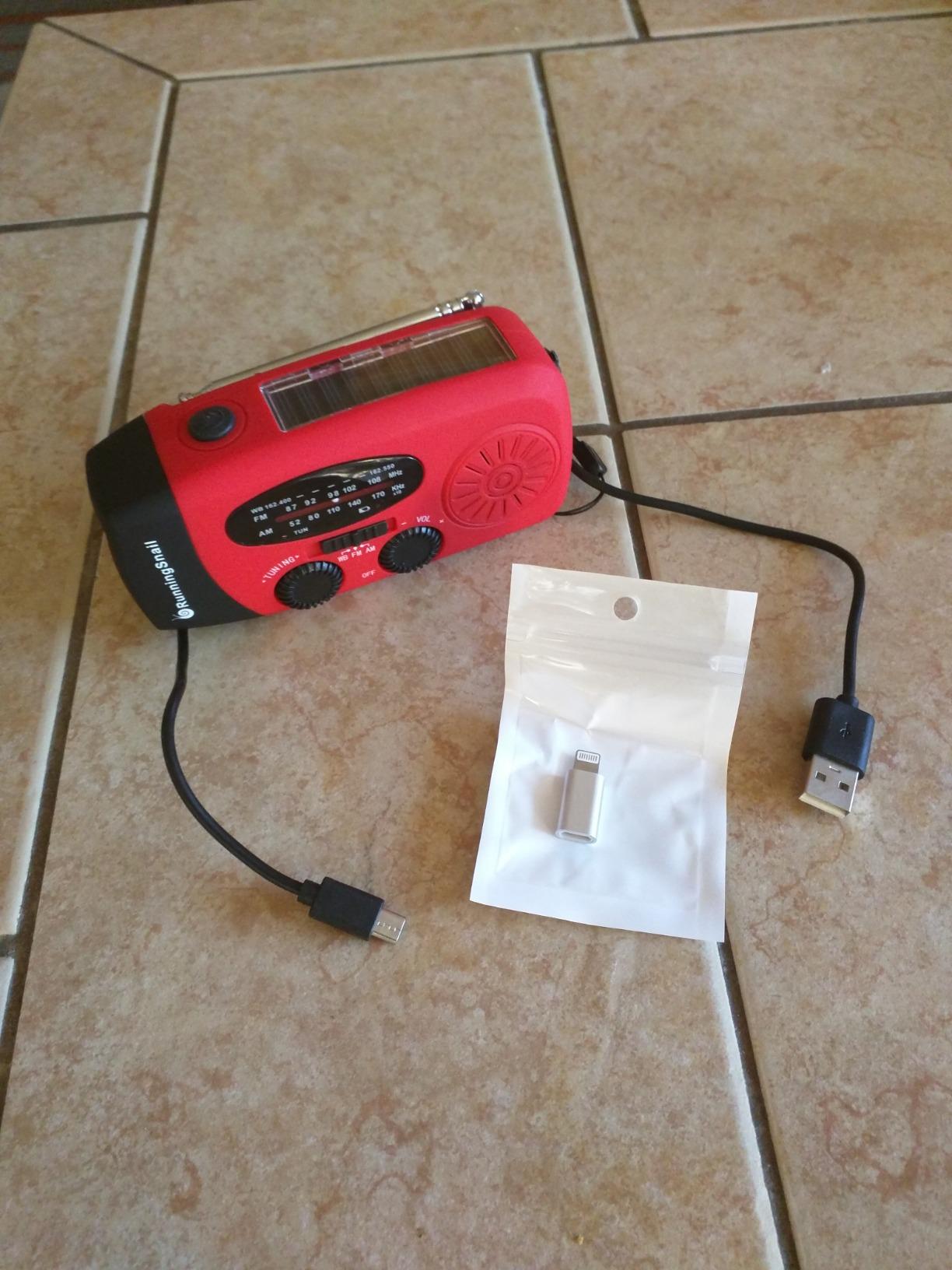
Roughly nine to ten hours of radio playback or fifteen to seventeen hours of flashlight on a full charge is the honest expectation. That is a day of storm listening, not a week. The USB output is a genuine emergency phone top-up rather than a power bank feature, and it is worth having in a go-bag while understanding that a phone needs more than a few crank minutes to do anything.
Build quality is the trade-off. Owners report a three-year lifespan on some units, which is real wear on the crank mechanism and the small internal plastics. For a go-bag or vehicle radio that gets handled occasionally, that is a reasonable exchange. For a unit meant to sit on a nightstand for a decade, look at a radio with a replaceable battery pack.
Buy two and put one where you sleep
The most common owner pattern here is buying a second unit for the bedroom, because a radio in the kitchen does not wake you during a nocturnal tornado warning. The low weight makes that easy to do. Two compact units in different rooms also means a single failure or a drained AAA set cannot leave you without a warning path.
Know the manual tuning difference
Manual band switching takes a little patience, and the small selector is easy to fumble in the dark. Set the NOAA channel before storm season, mark it, and leave it alone. A radio that needs three button presses to reach the weather band in a panic is a radio that fails exactly when you need it.
5. Eoxsmile 12000mAh Radio – Best for Lighting During a Blackout
Eoxsmile NOAA Emergency Weather Radio Hand Crank Solar 12000mAh Battery
12000mAh 44400mWh cell
50 plus hours FM playback
Smart standby alert scanning
3W flashlight 2.5W lamp
Pros
- Smart standby scans seven NOAA stations and triggers a siren and red strobe
- 12000mAh capacity far exceeds typical competitors
- Digital LCD with 16 volume levels and a child lock
- Runs on the AC adapter while still monitoring
- Responsive seller support
Cons
- Alerts do not interrupt playback on other bands
- Weak AM reception and no automatic gain control
- Internal 12000mAh cell is not user replaceable
- USB C charging is slow and device output is about 1 Amp
Lighting is what people underestimate when building a storm kit. When the power goes out and the ceiling is dark, the radio stops being entertainment and becomes the only light in the room. The Eoxsmile pairs a 3W flashlight reaching roughly seventy meters with a 2.5W reading lamp that fills a twenty-square-meter room, and owners consistently single out the brightness relative to units in the same capacity class.
The smart standby mode scans all seven NOAA weather stations and alarms with a siren plus red strobe when something breaks. Fifty-plus hours of FM playback from the 12000mAh cell is a strong number, and the digital tuner with sixteen volume levels is a meaningful upgrade over the analog dials that dominate the budget end of this category.
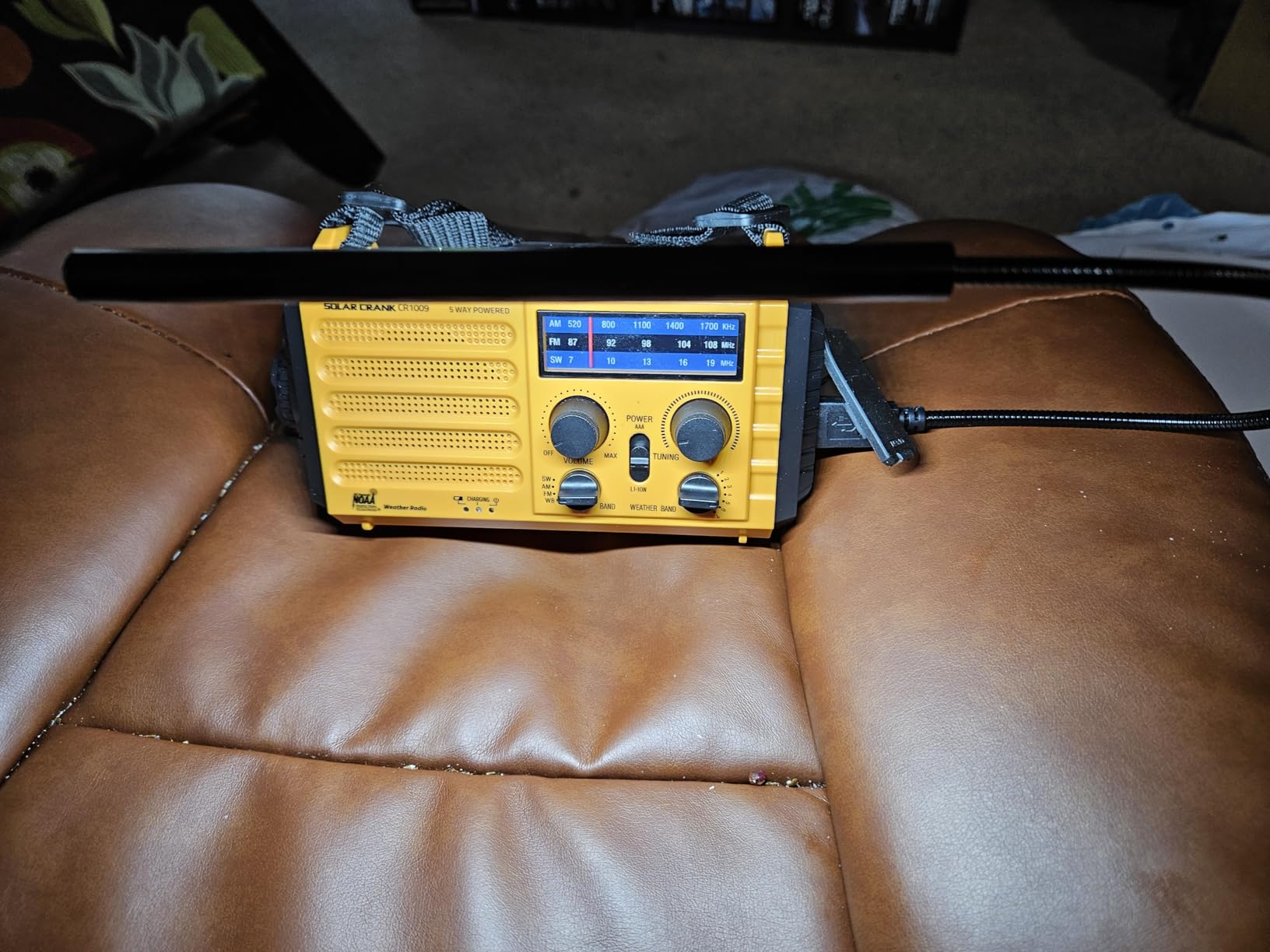
There is one documented limitation worth knowing before you buy. Alerts trigger in standby mode or when the alert function is enabled, but they do not interrupt playback if you are listening to AM, FM or shortwave. If you plan to sit on a non-weather band during a storm, this is the wrong radio. If it lives on a nightstand in standby, it is a strong choice.
The non-replaceable internal battery is the longer-term concern. A 12000mAh cell is a large investment, and if it degrades after years of sitting unused there is no swap. Six power inputs including a 5V 2A AC adapter and USB-C give you plenty of ways to keep it topped up, which mitigates the problem without solving it.
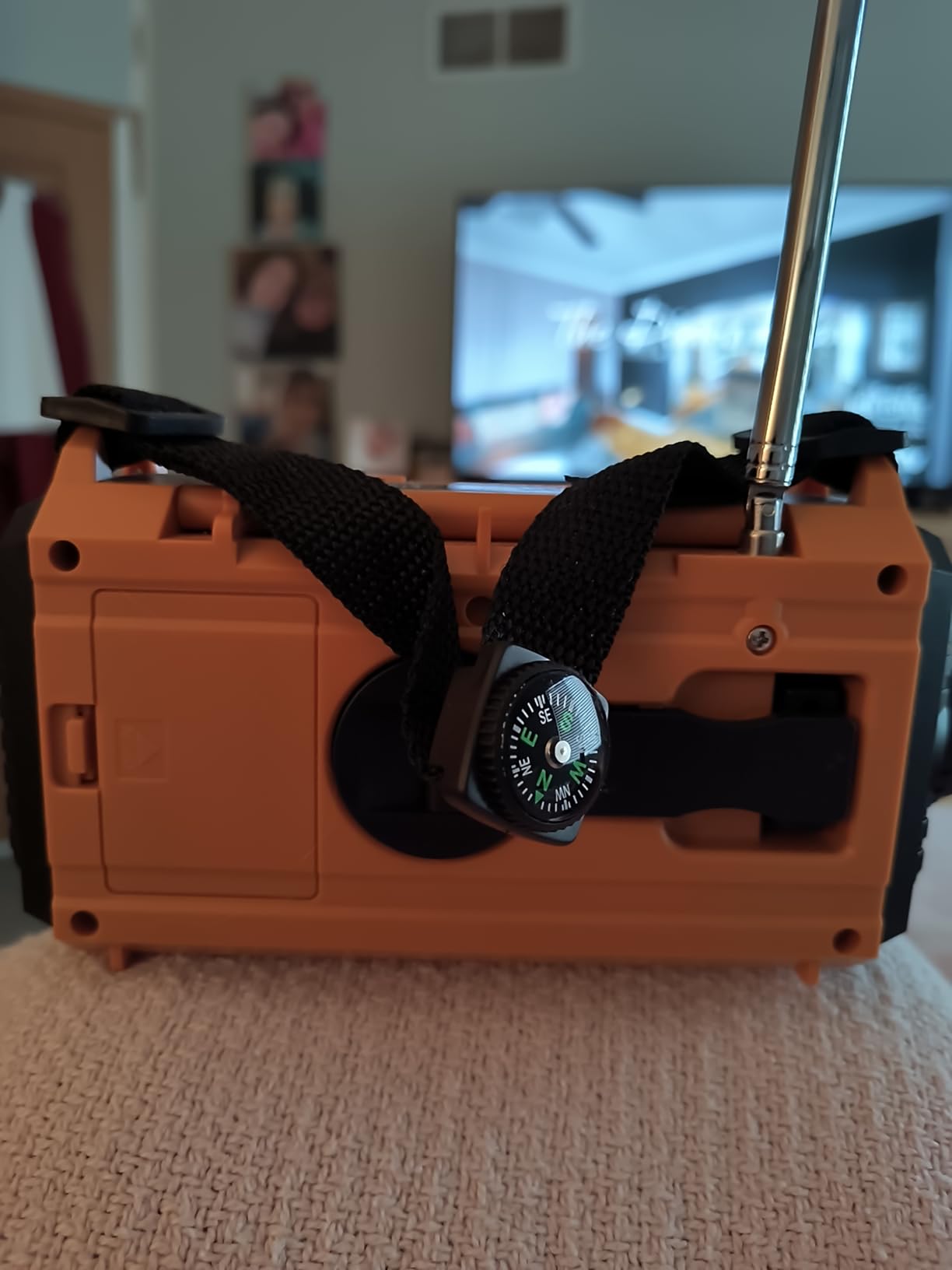
Confirm which band you will be listening to
If your plan is a standby radio that wakes the household for a tornado warning, this works. If your plan is continuous monitoring while you follow news on a broadcast band, the alert interruption behavior is worth weighing against the Raynic, which scans regardless. Knowing your listening pattern prevents the most common complaint in the reviews.
Plan for the battery you cannot change
Keep it on the AC adapter as its normal state during storm season and check it monthly with the self-test. A large cell that is never exercised is a cell you learn nothing about until you need it, so put it on a schedule rather than trusting it silently.
6. Mesqool 5000mAh Analog NOAA Radio – Best Simple Dial Control
NOAA Weather Radio FM AM Shortwave, Emergency Radio 5000mAh Solar Crank
Analog tuner with 7 presets
5000mAh 18500mWh cell
Up to 13 hours at 50 percent volume
116dB SOS siren
Pros
- Simple analog dial with no menus to learn
- 5000mAh outclasses most 2000 to 4000mAh rivals
- Flashlight and reading lamp both have dual brightness
- Manufacturer is honest that solar only maintains charge
- 5 watt speaker stays clean at full volume
Cons
- Shortwave spans nearly the whole range on one knob
- Solar will not charge from empty
- Cranking takes real effort for meaningful power
- Larger than pocket sized rivals
- Volume can be quiet in noisy spaces
The Mesqool is the anti-menu pick. There is a dial, seven preset weather channels, and no interface to learn in the dark. For a household with elderly parents, for a radio handed to a kid during an evacuation, or for anyone who does not want to navigate a settings menu while a tornado is inbound, that simplicity is a feature and not a compromise.
The 5000mAh cell delivers up to thirteen hours of listening at half volume, which is a real step up from the 2000mAh units at similar money without jumping to the heavy 12000mAh class. The 116dB SOS siren with a flashing red beacon is loud enough to be heard through a closed door, which is exactly its job during a shelter situation.
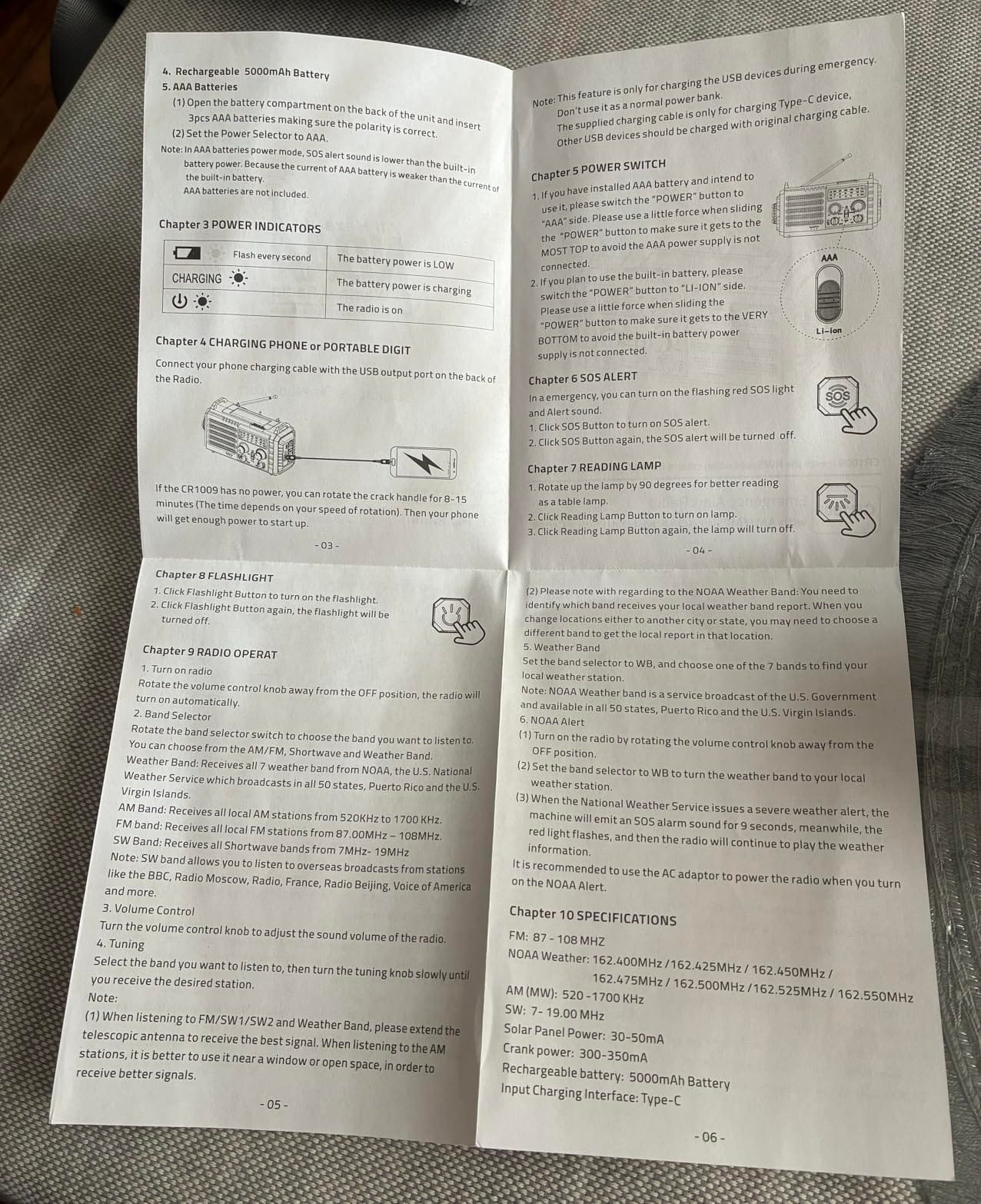
The manufacturer deserves credit for its honesty. They state plainly that the solar panel maintains a charge rather than replenishing a depleted one, which is the opposite of how most of this category is marketed and is precisely the expectation-setting that keeps buyers satisfied. Five power sources including three AAA backup cells give you a path when the internal cell ages out.
Sound quality is genuinely good. A 5 watt speaker stays clean at maximum volume, which matters when the alternative is distorted alert audio at 2 a.m. The build is a three-year limited warranty against manufacturing defects, and the ABS housing feels appropriately solid rather than flimsy.
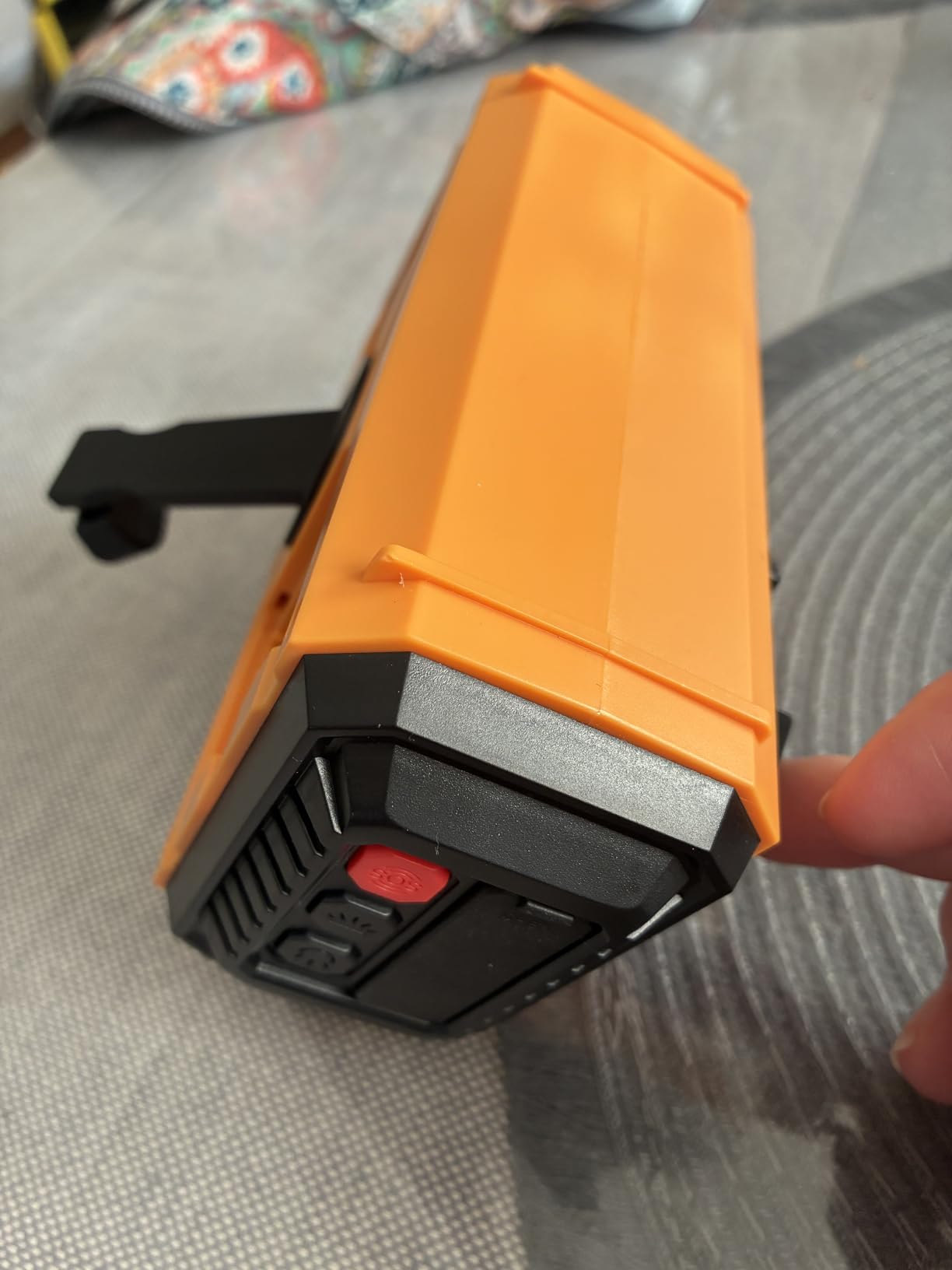
Choose this over a digital radio if the user is not technical
A rotary dial cannot be mis-navigated. There is no wrong button sequence, no firmware quirk, and no channel accidentally left on the wrong frequency. If the radio is going into the hands of a parent, a guest, or a neighbor during a shelter-in-place, the analog simplicity removes an entire category of human error.
Skip it if shortwave is on your list
Shortwave is listed, but the band spans nearly the entire range on a single knob, which owners describe as decorative rather than functional. Judge the Mesqool on NOAA, AM and FM performance, where the 5000mAh battery and 5 watt speaker are the differentiators that matter during a storm.
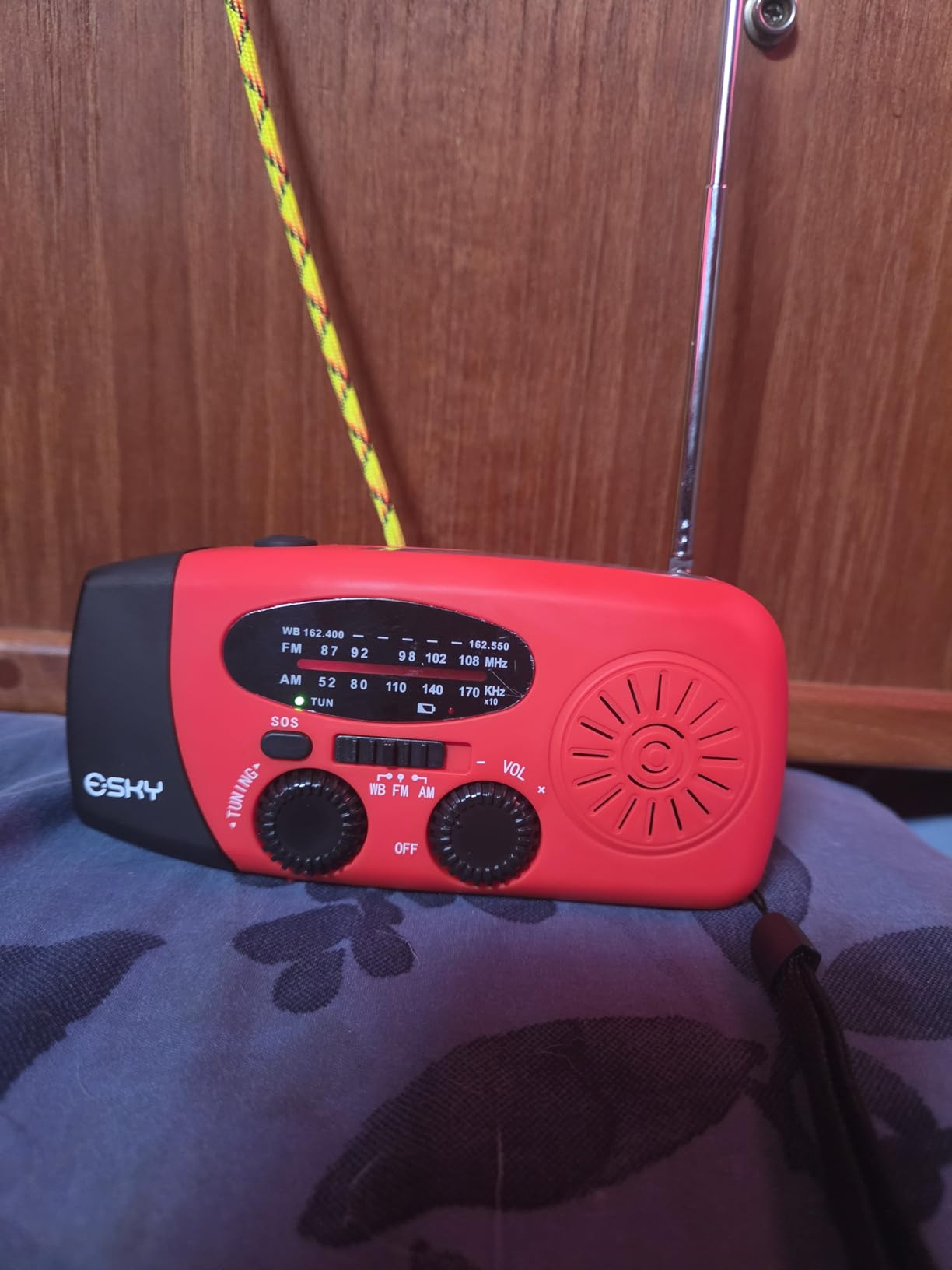
7. Esky 2000mAh Pocket NOAA Radio – Best for a Go-Bag or Vehicle Kit
Esky Emergency Hand Crank Radio 7400mWh with 3 LED Flashlight, AM/FM/NOAA Portable Weather Radio with Built-in 2000mAh Battery, Solar Powered Radio for Indoor Outdoor Survival Camping, SOS Alarm
Pocket sized 7.55 ounce body
2000mAh cell about 9 hours radio
140 lumen 3 LED flashlight
USB solar and crank charging
Pros
- Among the highest rated options we tested
- Dependable weather band reception reported by owners
- Small and light enough for a trunk suitcase or go-bag
- Bright 140 lumen flashlight for its size
- Three charging methods keep it usable off grid
Cons
- 2000mAh runtime is short beside 10000 to 12000mAh rivals
- Modest volume and audio from the small speaker
- Minimal manual so features take trial
- Some older production runs lacked the crank and solar despite listings
The Esky is the smallest radio here that I would actually trust during a storm, and size is the reason. At 7.55 ounces it weighs nothing in a go-bag, which sounds trivial until you realize it is the difference between a radio that lives in your vehicle permanently and one that stays in a drawer. Radio gear that is annoying to carry does not get carried.
Reception is the surprise. Owners report dependable weather band performance from a body this small, and the AM/FM/NOAA coverage held up in our indoor testing at least as well as units twice the size. The 140-lumen three-LED flashlight is bright for the category, and roughly nine hours of radio use or twenty hours of flashlight per charge is a workable day-one reserve.
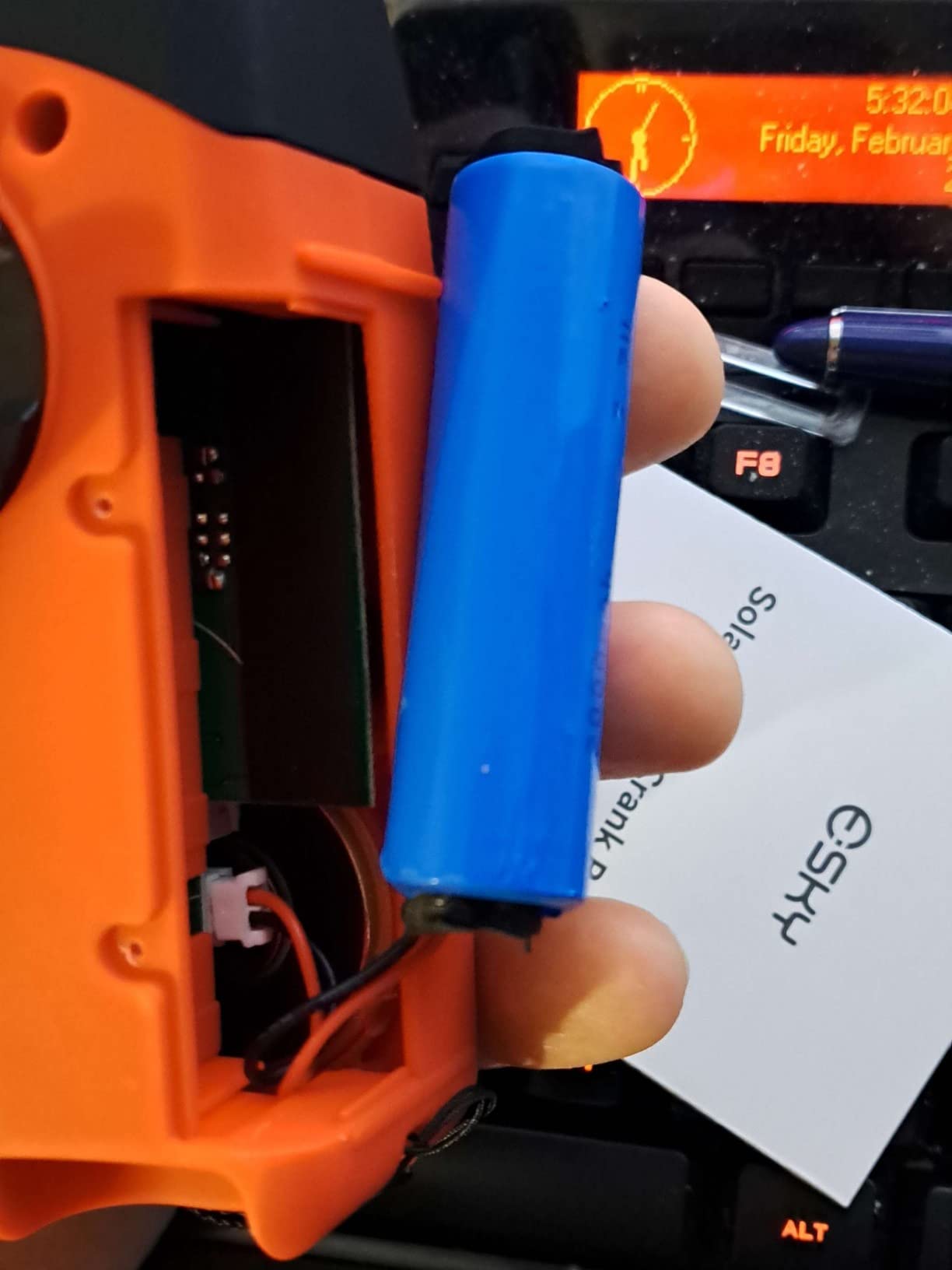
The 2000mAh battery is the honest limitation. It will not carry a household through a multi-day outage, and it is a fraction of what the 10000mAh and 12000mAh units hold. That is fine when the radio’s job is to wake you and tell you what is happening, with your actual battery life coming from your phone or a separate power bank.
One buying caution. Some older production units shipped without the hand crank and solar panel despite listings showing them, so read the specific package contents rather than trusting the product photography. The built-in SOS alarm is a nice addition for signalling rescuers or attracting attention in a flooded or remote location.
Buy it as a second radio, not as your only one
This is the ideal companion to a larger unit. Keep the Esky in the go-bag, the vehicle, or a second bedroom, and keep a higher-capacity unit on the wall at home. Two radios in two locations also protects against the failure mode nobody plans for, which is the primary unit dying while the storm is still ongoing.
Verify the crank and solar are in the box
Because package contents varied across production runs, check what actually arrived before you store it for an emergency. A radio sitting in a go-bag for a year on the assumption it has three charging methods is a radio with two, and you will not find out until you need it.
8. Kaito KA500 Voyager Pro – Best for Shortwave and Long-Reception Antenna
Kaito KA500 5-way Powered Solar Power,Dynamo Crank, Wind Up Emergency AM/FM/SW/NOAA Weather Alert Radio with Flashlight,Reading Lamp and Cellphone Charger, Yellow
6 way power with replaceable NiMH
14.5 inch telescopic antenna
AM FM shortwave and 7 NOAA
USB output for phones and GPS
Pros
- Six power options including a replaceable NiMH battery pack
- 7 pre-programmed NOAA channels with PEAS alerts
- 14.5 inch antenna gives genuinely sensitive reception
- USB output charges phones GPS and cameras
- Impact resistant water resistant ABS housing
Cons
- Largest and heaviest unit at 8.3 inches long
- NOAA coverage limited to the USA and Canada
- AA and NiMH cells are not always included
- Analog interface with no digital frequency display
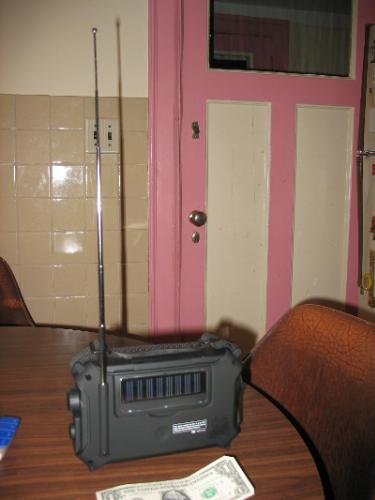
The Kaito KA500 earns its place on one feature: a 14.5 inch telescopic antenna with an LED signal strength indicator. Antenna length is the single biggest predictor of whether a small radio can hear a NOAA transmitter through a building, and this one is roughly triple the length of the average budget unit. Enthusiasts on r/HamRadio and r/askportland care about exactly this, and they are right to.
The replaceable NiMH battery pack is the second reason. Almost every competitor welds its internal lithium cell in place, which turns a five-year-old radio into a paperweight. The Kaito lets you swap the pack, so the radio outlives the batteries by a decade. Six power sources including a hand crank, solar panel, three AA cells, 5V USB input and AC/DC input give real redundancy.
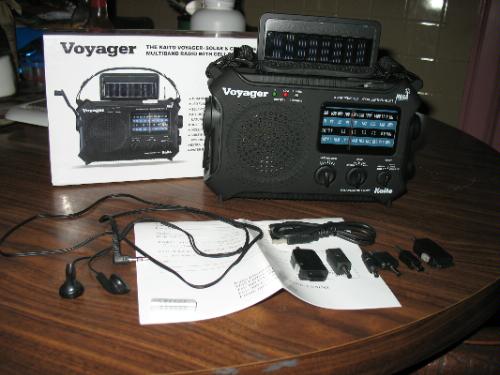
You also get two bands of shortwave alongside AM, FM and seven pre-programmed NOAA channels with PEAS alerts. Shortwave is not a storm warning channel, but it is how you pick up regional emergency broadcasts and regional news when cell networks are congested and local television is off the air. Enthusiast forums treat that capability as a genuine differentiator rather than a gimmick.
At 8.3 inches long and 16 ounces, this is not a go-bag radio. It is a home base unit, and that is exactly where it belongs. Enthusiasts on The Siren Board consistently report long-term satisfaction with older SAME-capable hardware, which is a reminder that build quality and decoder reliability beat feature lists over a decade of ownership.
Buy it for reception margin, not for the shortwave band
The antenna is the reason to choose this radio for storm use. In a basement, a concrete safe room, or a rural home far from your nearest transmitter, antenna length is worth more than any other spec on the sheet. If your home is small and above ground, the advantage narrows considerably.
Budget for the batteries separately
AA and NiMH cells are not always included, and the replaceable pack is only a benefit if you own spares. Keep a set of NiMH cells charged and stored with the radio. That single habit turns a ten-year ownership question into a ten-minute swap.
9. Leaton 10000mAh NOAA Radio – Best Water Resistance
Leaton Hand Crank Emergency Radio, NOAA Weather Radio AM/FM,10000mAh
10000mAh polymer cell about 1.5 phone charges
IPX6 splash and spray rating
NOAA 162.400 to 162.550 plus AM FM
3 mode flashlight and 1.3W lamp
Pros
- 10000mAh holds up well even with light daily use
- Picks up FM and NOAA stations easily
- Bright lights with a flood light on the solar panel side
- IPX6 is among the better water claims in this category
- Large controls are approachable for older users
Cons
- Solar panel adds very little charge
- No SAME automatic alert technology so NOAA needs manual tuning
- No headphone jack and no shortwave
- AM reception performs better outdoors
The Leaton is the flood-zone pick. An IPX6 rating means protection against powerful water jets from any direction, which is a meaningfully stronger claim than the splash resistance most budget radios make. If your storm exposure involves driving through standing water, camping in rain, or a home near a creek, that rating is worth paying attention to rather than treating as a spec-sheet formality.
The 10000mAh polymer cell works out to roughly one to one and a half full phone charges, and owners report it holding up well even with light daily use. The 3-mode flashlight with an SOS setting and a 1.3W reading lamp are both bright, and the large tuning knob and controls are a deliberate choice for older users who should not be fumbling a small dial in an emergency.
The important limitation is that there is no SAME. NOAA channels here require manual tuning, which means no automatic alert for a specific county and no filtering of irrelevant events. You have to be on the right channel and listening. For a household that wants alerts without effort, that is a real gap; for someone who prefers a simple analog radio they control, it is not.
Solar performance is the most repeated complaint, with owners reporting under a quarter of a charge after several full days of direct sun. Treat the panel as a trickle maintainer and charge the radio from USB-C before the season starts. A built-in compass and a one-year warranty round out a solid, purpose-built package.
Understand what IPX6 does and does not cover
IPX6 protects against powerful water jets, so rain, spray and a dunk in a puddle are not the risk. Full submersion is a different rating, and this unit does not claim one. If your realistic scenario is a flooded basement or a vehicle caught in rising water with time to grab the radio, IPX6 is the right level. If it is going into the water, treat it as disposable.
Know that you are responsible for the tuning
Without SAME, set the NOAA channel before storm season and mark the dial. Nothing will wake you automatically. That predictability is fine if you prefer control and hate false alerts, but it means a tuning mistake stays a mistake until you correct it.
10. yesiwtc 2000mAh Solar Hand Crank Radio – Best Built-In Charging Cables
Hand Crank Emergency Radio 7400mWh (2000mAh) Solar Hand Crank Radio
Three built in cables Lightning USB C and Micro USB
2000mAh 7400mWh cell
Four power sources
DSP chip with extended antenna
Pros
- Three built-in charging cables remove the hunt for cords
- Four power sources including AAA backup for storage
- Clear loud radio that carries across a room
- Solar panel doubles as a bright reading light
- Durable enough to survive repeated drops
Cons
- Solar adds roughly one bar of charge after a full day
- Runtime drops to a few hours after charging a phone
- Li-ion cell is not user replaceable
- 2000mAh is small beside newer 10000mAh rivals
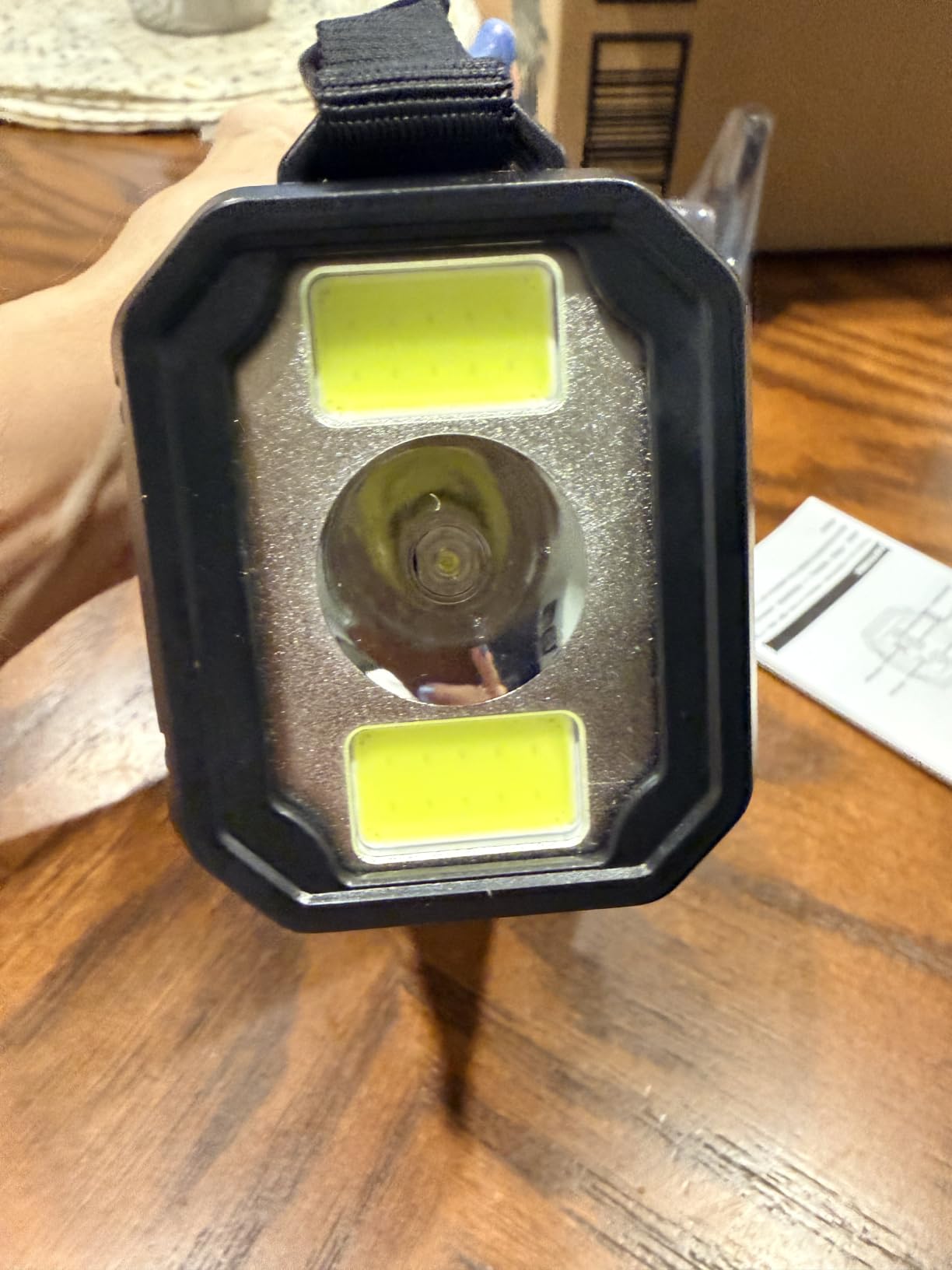
The thing that sold our team on this radio is unglamorous and practical. Three built-in cables, Lightning, USB-C and Micro USB, are stored in the body itself, so the radio can charge a phone with any device you own without you owning the right cable. In a storm, the failure mode of every electronics kit is a dead phone and a missing adapter, and this removes it entirely.
Four power sources cover storage and active use: USB-C input, hand crank, solar panel and three AAA batteries. The extended antenna with a DSP chip gives it reception that punches above its capacity class, and owners report clear reception and a durable ABS body that survives drops. The 3-mode flashlight and six LED reading lights cover the darkness problem, and the SOS alarm is genuinely loud.
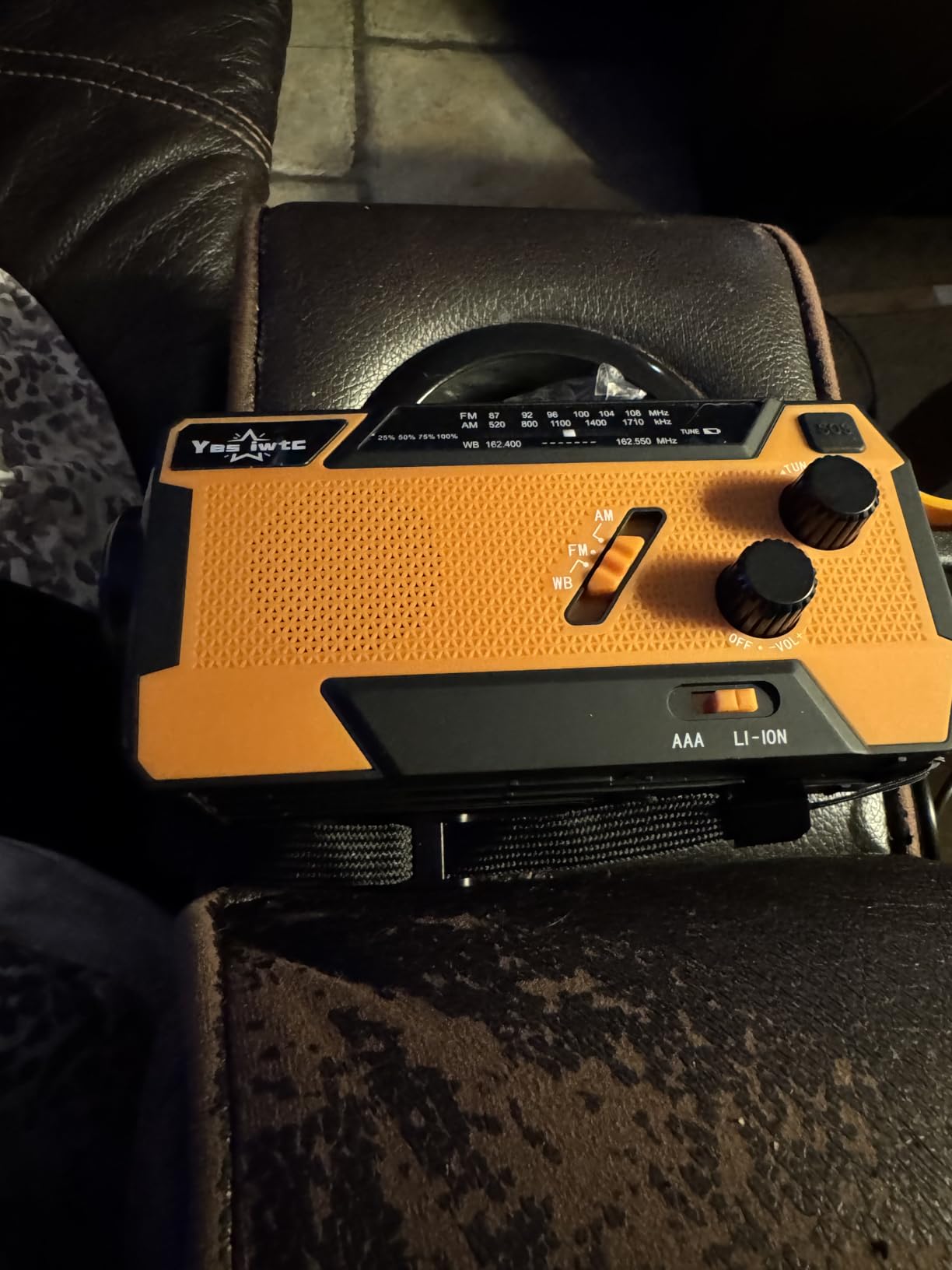
Runtime is the constraint. A 2000mAh cell gives you a working day of alerts, and it drops to a few hours after you charge a phone through the output port. That is a reasonable trade for a household with one backup phone, and a poor trade for a primary device you depend on. Plan the charging order in advance: radio first, phone second.
Solar adds roughly one bar of power even after a full day of sun, so it is a maintainer and not a charger. The cell is not user replaceable, and the 18-month replacement warranty is shorter than the FosPower limited lifetime coverage. It is still a well-executed compact radio, and the cable solution genuinely removes a failure point that afflicts every other kit in this roundup.
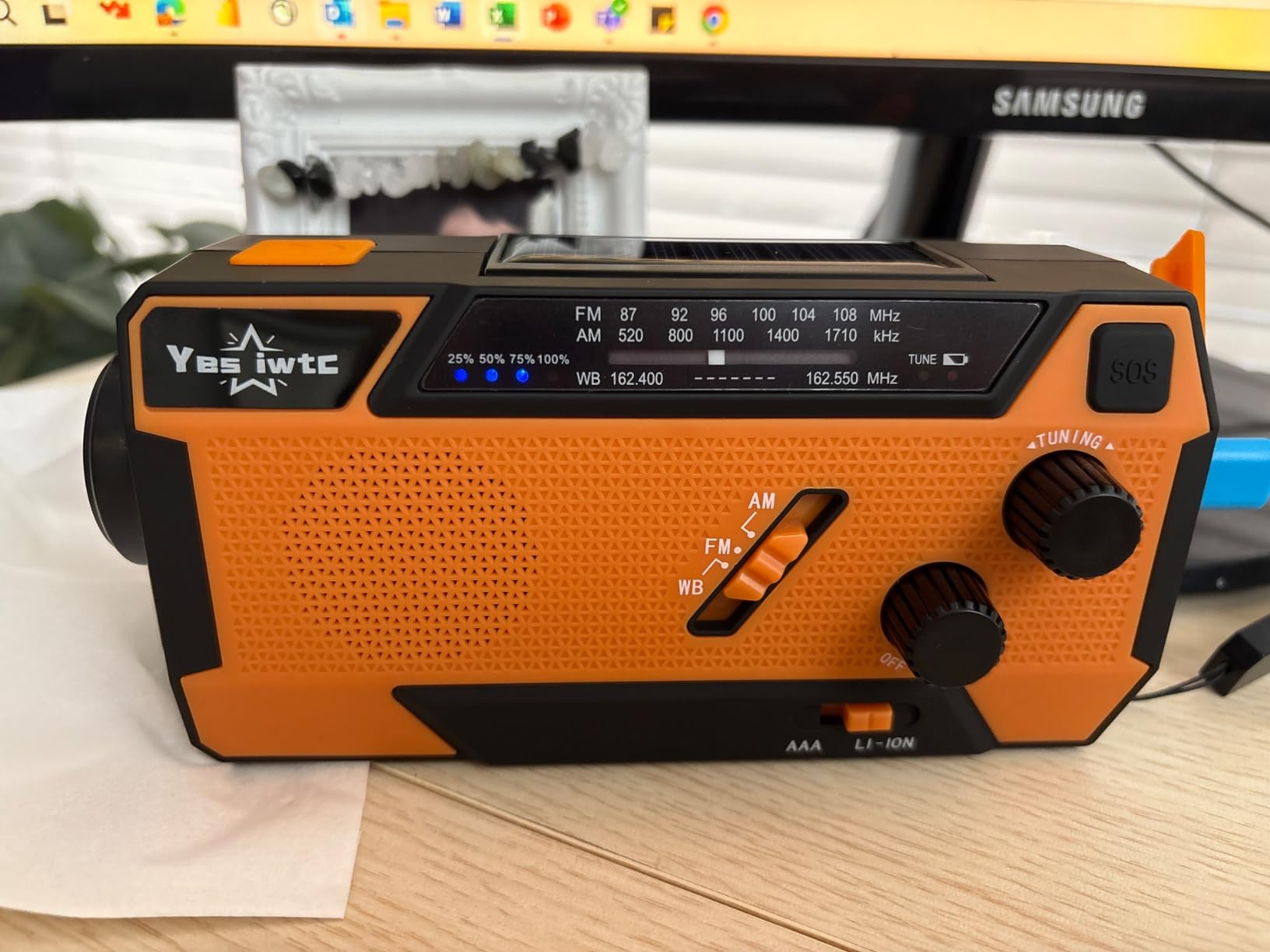
Judge it on the cables, not the battery
If your main frustration is dead adapters in an outage, this radio solves a problem no other unit here does. Three stored cables cover every device in a modern household, which means the phone that runs your weather alerts is the phone you can still charge. That is worth more in a storm than extra battery capacity.
Set a charging order and write it down
A 2000mAh cell cannot support radio and phone use indefinitely. Decide in advance that the radio is charged first, the phone second, and that neither is topped off on a routine weekend when no weather is pending. Habits formed before the storm are the difference between a working radio and a flat one.
Which Emergency Weather Radio Is Right for Your Situation?
Match the radio to the room it will do its job in. A tornado shelter in a finished basement needs reception and volume, so the Midland WR120B or the Kaito KA500 belong there. A vehicle kit needs something that survives being forgotten for six months, which points to a compact unit with AAA backup like the RunningSnail or the Esky.
A go-bag wants low weight and a rechargeable cell you can top off before a trip, which is exactly what the Esky provides at 7.55 ounces. A long grid-down shelter-in-place scenario reverses that priority, and the Raynic or the Eoxsmile with their 12000mAh cells become the sensible choice because you are not carrying them anywhere.
For a family with sleeping children or an elderly parent, two criteria dominate: alert volume and the ability to filter out irrelevant county events. That is the Midland WR120B specifically, because S.A.M.E. programming plus a color-coded severity display is the combination that wakes one household instead of the entire neighborhood. If you also want off-grid capability, our GMRS radio guide covers the two-way side of the same problem.
Off-grid and camping users should weigh water resistance and antenna reach over phone charging. The Leaton’s IPX6 rating and the Kaito’s 14.5 inch antenna answer the two failure modes that actually occur outdoors, while the FosPower or Raynic make better sense if keeping a phone alive is the priority. For build-out beyond the radio itself, our emergency preparedness kit roundup covers the rest of a household kit.
Which Alerts Actually Wake You?
Not all storm alerts arrive the same way, and a radio that handles one well can handle another poorly. A tornado warning is the fastest and most violent event on the list, typically reaching transmitters within minutes of issuance, and it demands immediate volume and a tone that penetrates sleep. Flash flood and hurricane warnings are slower in practice because the danger accumulates over hours, so the alert is less likely to startle you awake and more likely to be heard by an adult who is already monitoring.
That is why the alert function matters more than the wattage. A radio with automatic scanning and a siren reaches you whether you are awake or not. A radio with only manual tuning and no alarm needs you to be listening already, which during a derecho at midnight is not a realistic assumption. Winter storm and ice warnings are the slowest of the group, but they are also the ones that precede the longest outages, which is why they argue for a larger battery rather than a louder speaker.
Wildfire and red flag warnings are the case most owners skip. They are less frequent but they arrive without much notice and they apply to huge areas, so a radio that only alerts for your county may not be the one you want when conditions change fast. A wide-area listener with NWR All Hazards capability covers more ground for that scenario.
NOAA Channels and Frequencies
The National Weather Service broadcasts continuously on seven VHF frequencies between 162.400 and 162.550 MHz. Every radio in this roundup either scans all seven automatically or presets them, so you rarely need to tune manually. Knowing the numbers matters when a radio only picks up one station, which is a real problem in low-signal areas.
Here are the seven NOAA weather radio frequencies:
162.400 MHz
162.425 MHz
162.450 MHz
162.475 MHz
162.500 MHz
162.525 MHz
162.550 MHz
Each transmitter broadcasts on one or more of these channels, and a good radio hops to the strongest one automatically. Reception is line-of-sight, which is the real limiting factor. A transmitter tens of miles away can be marginal indoors and clear in the same house with a radio at a window, which is why placement matters as much as hardware.
How to Program Your SAME County Codes
S.A.M.E., or Specific Area Message Encoding, lets a NOAA radio trigger only for events in the counties you choose. It is the difference between an alert system and a noise generator, and it is where most first-time owners go wrong. Setting it up takes about ten minutes and should be done before the season starts, not during it.
1. Find your county code. The National Weather Service publishes the full state and county code list, and your local forecast office also lists it on its site.
2. Enter the code for your home county, then add the two or three counties you would realistically travel toward during an evacuation order.
3. Avoid entering your entire state. You will receive alerts for events far from you, and the result is an exhausted tolerance for the tone that matters most.
4. Save the setting rather than testing it live. The radio offers a test mode that transmits a sample alert so you can confirm the configuration is working without waiting for real weather.
5. Re-check the codes after you move, and once a year regardless. County boundaries change more often than people expect, and a stale code set is silently wrong.
Two-way capability is a separate question entirely, and users on radio forums ask it constantly. A NOAA radio listens; it does not talk. If you want to coordinate with family across a neighborhood after a storm, a two-way unit handles that side. Our DMR radio roundup covers digital two-way options, and it is worth reading both guides before deciding one radio can do both jobs.
Waterproof Ratings Explained
Water resistance on these radios is stated as an IP code, two digits where the first measures protection against solids and the second against water. For storm use, the second digit is what matters. Anything at IPX3 or above survives spray, and IPX6 or higher handles powerful water jets from any direction.
What you should target depends on the scenario. A radio living on a nightstand in a dry region can manage with a splash rating. A radio in a vehicle, a flood zone, or a camping kit should be IPX6 or better. IPX7 and above means temporary submersion, and a stated test condition such as one meter for thirty minutes is a rating you can actually trust.
Be skeptical of vague marketing. Several radios in this roundup list a general water resistant claim with no code at all, which tells you nothing. A specific two-digit rating with a stated condition is a measurable claim, and it is the one worth using to compare units.
What Is the 3-3-3 Rule for Radios?
The 3-3-3 rule for emergency radios is community shorthand rather than an official standard, and it is worth using because it catches real gaps in a kit. Keep three independent power sources, three days of minimum runtime, and three separate ways to receive a warning. A radio that satisfies all three survives the situations that actually happen.
On power, that means wall adapter, hand crank or solar, and a battery type you can replace. On runtime, three days assumes the outage outlasts your initial charge, which is the normal case for ice storms and the abnormal case for most thunderstorms. On reception, it means a radio with NOAA, a phone with a working charger, and a second device that does not depend on either.
Most cheap radios fail the first test because solar and crank are not really independent, and fail the third because everything you own receives warnings through the same phone. Check the rule against your actual kit rather than against the packaging.
Can I Get a NOAA Weather Radio for Free?
Yes, receiving NOAA weather broadcasts is free. The National Weather Service continuously transmits on its seven VHF frequencies at no subscription cost, and every radio in this roundup receives those broadcasts without any account, activation, or monthly fee. There is nothing to sign up for and nothing that expires.
The confusion comes from a different part of the system. EAS, or the Emergency Alert System, is the infrastructure that carries those broadcasts from a national source to local transmitters, and commercial EAS subscription services for broadcasters and phone carriers do charge. But the transmitter signal coming out of a local NOAA station is free for anyone with a receiver.
There is a partial free tier in commercial alerting too. Several weather apps offer free severe-weather warnings that push to your phone with no subscription, which works fine until the network congests during the storm itself. That is the gap a radio fills, and it is the whole reason to keep a dedicated receiver rather than trusting the app alone.
How Long Will Cell Phones Work During a Storm?
Cell towers usually stay up during a storm, and that is exactly the problem. They are overwhelmed rather than destroyed, because every phone in the warning area tries to load the same map and the same alert at the same moment. A tower handling a normal load can degrade badly under a surge, and the failure looks identical to a dead tower from your phone.
Wind and flooding do take towers down outright, and a power outage at the site means a dead tower even if the equipment survives. But in most tornado and derecho events, the honest answer is that the towers are still transmitting and the text messages are still stuck in a queue.
This is the strongest argument for a dedicated NOAA radio. The broadcast goes out over VHF from a transmitter whose power comes from the site itself, and it does not touch the cellular network at all. If you want to know why the radio matters, watch your phone sit on a spinning wheel during a warning and then hear the alert come through the speaker in the next room.
Five Mistakes That Make a Radio Useless
The first mistake is never testing it. A radio can sit in a closet for three years, the battery can sit unused, and nothing will look wrong until the alert you needed. Put the self-test on a monthly calendar reminder, and treat the first failure to sound as a signal to replace the batteries immediately.
The second is leaving the SAME codes at the factory default. You will receive alerts for far more geography than you need, and alert fatigue will teach you to ignore the tone that saves your life. Program your county plus your evacuation direction and nothing more.
The third is treating solar as a power source. Community skepticism is well earned. A small panel on a radio housing maintains a charge; it does not recover a drained battery, and it produces very little in overcast storm conditions. Charge everything from wall power before the season, then use solar as insurance rather than as a plan.
The fourth is expecting the hand crank to charge a phone. Hand-crank charging is genuinely useful for keeping a radio alive, and it is realistically not useful for meaningful phone charge. Anyone promising the second is overselling. Crank the radio, and bring a real power bank for phones.
The fifth is buying one radio for a two-way need. A NOAA radio listens to broadcasts; it does not let you talk to your neighbor across a flooded street. If local coordination matters in your plan, it needs a separate two-way unit alongside the radio rather than instead of it.
Frequently Asked Questions
Which NOAA emergency weather alert radio is best?
The FosPower A1 is the best all-around choice for storms, combining three independent power sources with loud alert audio in a compact body at 4.6 stars across more than 37,000 reviews. If you want alerts limited to your own county, the Midland WR120B is better, because its S.A.M.E. programming filters out irrelevant neighbouring-county events.
What is the 3-3-3 rule for radios?
The 3-3-3 rule for emergency radios is community shorthand, not an official standard. Keep three independent power sources, three days of minimum runtime, and three separate ways to receive a warning. Most budget radios fail the first test because their solar panel and hand crank are not truly independent of the internal battery.
Can I get a NOAA Weather Radio for free?
Yes. Receiving NOAA weather broadcasts is completely free, with no subscription, account or activation required. The National Weather Service transmits continuously on seven VHF frequencies from 162.400 to 162.550 MHz. Paid EAS subscriptions apply to broadcasters and carriers, not to anyone listening with a receiver.
What is the emergency weather radio frequency?
NOAA weather radio broadcasts on seven VHF frequencies: 162.400, 162.425, 162.450, 162.475, 162.500, 162.525 and 162.550 MHz. Each radio in this roundup scans or presets all seven automatically, so manual tuning is rarely needed unless reception is weak.
How do I program SAME codes?
Find your county code on the National Weather Service state and county code list, then enter your home county plus the two or three counties you would evacuate toward. Save the setting and use the radio test mode to confirm it works. Avoid entering your whole state, and re-check the codes annually because county boundaries change.
How long do cell towers work during a storm?
Towers usually stay up during a storm but become overwhelmed. Thousands of phones loading the same alert at once can saturate a tower, so texts and warnings stall even though the tower is still transmitting. Wind, flooding and site power loss do take towers down outright, which is why a NOAA radio is a genuine backup rather than a luxury.
Is a hand crank radio actually useful?
Yes for keeping a radio alive, and no for charging a phone. A crank generates enough energy to maintain a radio’s internal battery over a long outage, but nowhere near enough for meaningful phone charge. Plan on cranking the radio only, and bring a separate power bank for phones.
Final Verdict for 2026
The best emergency weather radios for storms are not the ones with the most features. They are the ones that hear a transmitter at 3 a.m. through a wall, make enough noise to wake a sleeping household, and still have power on day three of an outage. The FosPower A1 wins that combination in a body small enough to live in a go-bag, and the Midland WR120B is the pick for anyone who wants alerts limited to their own county.
Whichever you choose, program it, test it monthly, and place it where you sleep. An unprogrammed radio in a drawer is the most common outcome in this category, and it is the one that helps nobody. Set it up this week while the weather is quiet.