
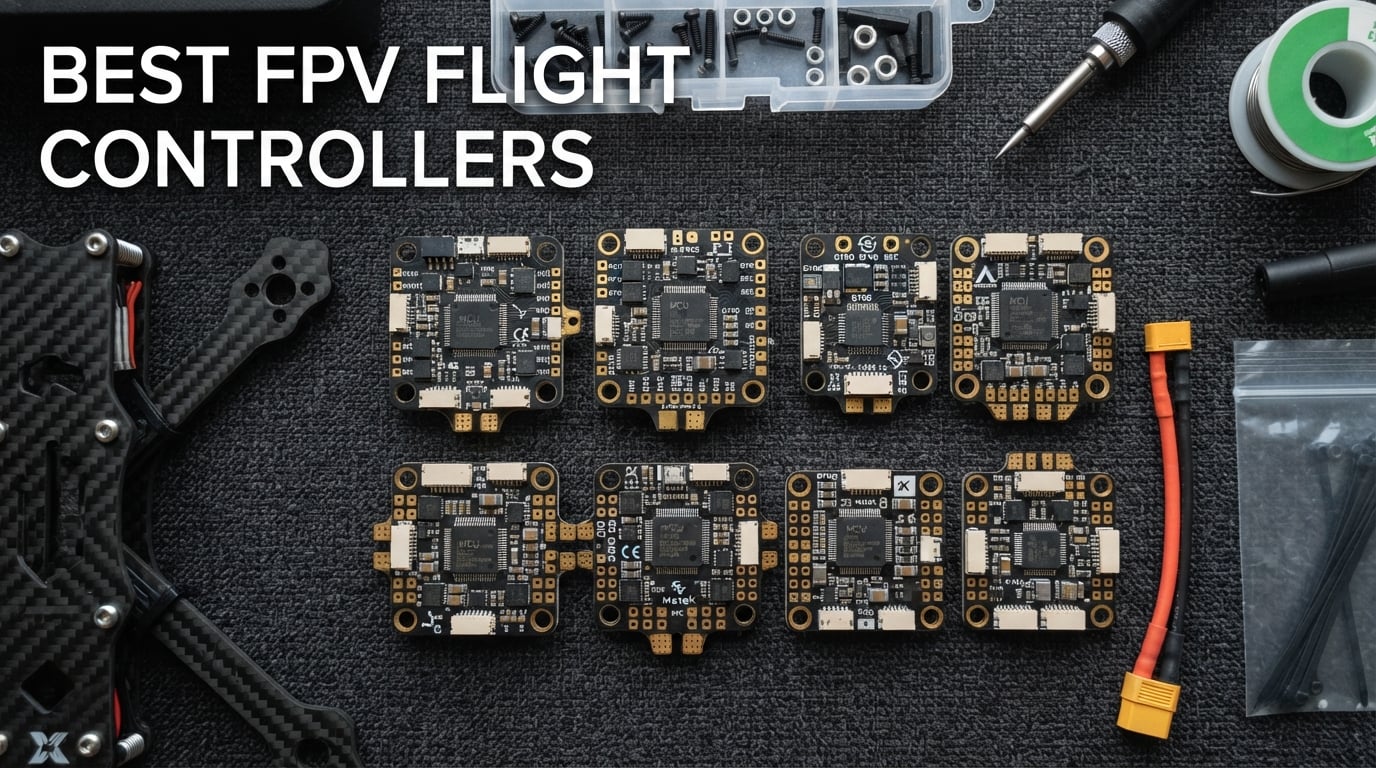
Finding the best FPV flight controllers in 2026 comes down to matching the right processor, gyro sensor, and feature set to your flying style. Whether you are building a 5-inch freestyle quad, a cinematic cinewhoop, or a long-range cruiser, the flight controller is the brain that makes everything work together. I have spent months testing and comparing 10 of the most popular FPV FC options on the market to help you cut through the noise.
From budget-friendly F405 stacks to powerful H743 boards with dual gyros, the range of choices can feel overwhelming. Our team looked at real-world performance, community feedback on Reddit and FPV forums, firmware compatibility, and overall value. We paid special attention to features that matter in 2026 like ExpressLRS integration, ICM-42688-P gyro support, and Bluetooth tuning capabilities.
In this guide, we break down 10 flight controllers across every category: micro whoops, freestyle builds, racing drones, and long-range setups. Whether you need an AIO board for a compact 3-inch or a full stack for a 5-inch freestyle beast, our hands-on testing covers what works and what does not. Let us dive into the best FPV flight controllers available right now.
Table of Contents
Top 3 Picks for Best FPV Flight Controllers
Before we get into the full reviews, here are our top three picks across different categories. Each one earned its spot through real testing and consistent community praise on forums like r/fpv.

BETAFPV Matrix 1S G4 3IN1 HD
- Built-in ELRS receiver
- 12A ESC
- Solder-free install
- HD whoop ready


The BETAFPV Matrix 1S G4 takes our Editor’s Choice for its incredible 4.9-star rating and true plug-and-play design. The SoloGood F405 55A offers the best bang for your buck with a robust 55A ESC and beginner-friendly solder pads. For pilots who want maximum performance, the STM32 BF H743 delivers dual ICM42688-P gyros and a powerful H743 processor in a compact stack.
Best FPV Flight Controllers in 2026
Here is a quick comparison of all 10 flight controllers we tested. This table gives you the overview so you can quickly find the right FC for your build type and budget.
| Product | Specifications | Action |
|---|---|---|
| BETAFPV Matrix 1S G4 3IN1 HD |
|
Check Latest Price |
| SoloGood F405 55A FPV Stack |
|
Check Latest Price |
| STM32 BF H743 Flight Controller |
|
Check Latest Price |
 SpeedyBee F405 Mini Stack SpeedyBee F405 Mini Stack |
|
Check Latest Price |
 SoloGood F722 FC Stack SoloGood F722 FC Stack |
|
Check Latest Price |
 HGLRC SPECTER F722 Lite HGLRC SPECTER F722 Lite |
|
Check Latest Price |
 MicoAir H743 FC Stack MicoAir H743 FC Stack |
|
Check Latest Price |
 GEPRC TAKER G4 35A AIO GEPRC TAKER G4 35A AIO |
|
Check Latest Price |
 RunCam SpeedyBee F7 V3 RunCam SpeedyBee F7 V3 |
|
Check Latest Price |
 ZTW F405 V3 FC Stack ZTW F405 V3 FC Stack |
|
Check Latest Price |
1. BETAFPV Matrix 1S G4 3IN1 HD – Built-in ELRS Receiver
BETAFPV Matrix 1S Brushless Flight Controller G4 3IN1 HD BMI270 – ELRS
1S HD Brushless FC
Built-in Serial ELRS RX
12A ESC
16MB Blackbox
SH1.0-6Pin for O4 Air Unit
Pros
- Plug-and-play with BT2.0 pigtail pre-soldered
- Built-in ELRS receiver for easy binding
- Bluejay 0.19 96kHz firmware pre-installed
- Compatible with DJI O4 lite air unit
- Independent 3.3V LDO power supply for IMU
Cons
- ELRS antenna placement at bottom is slightly awkward
- DJI HDVTX plug at awkward angle
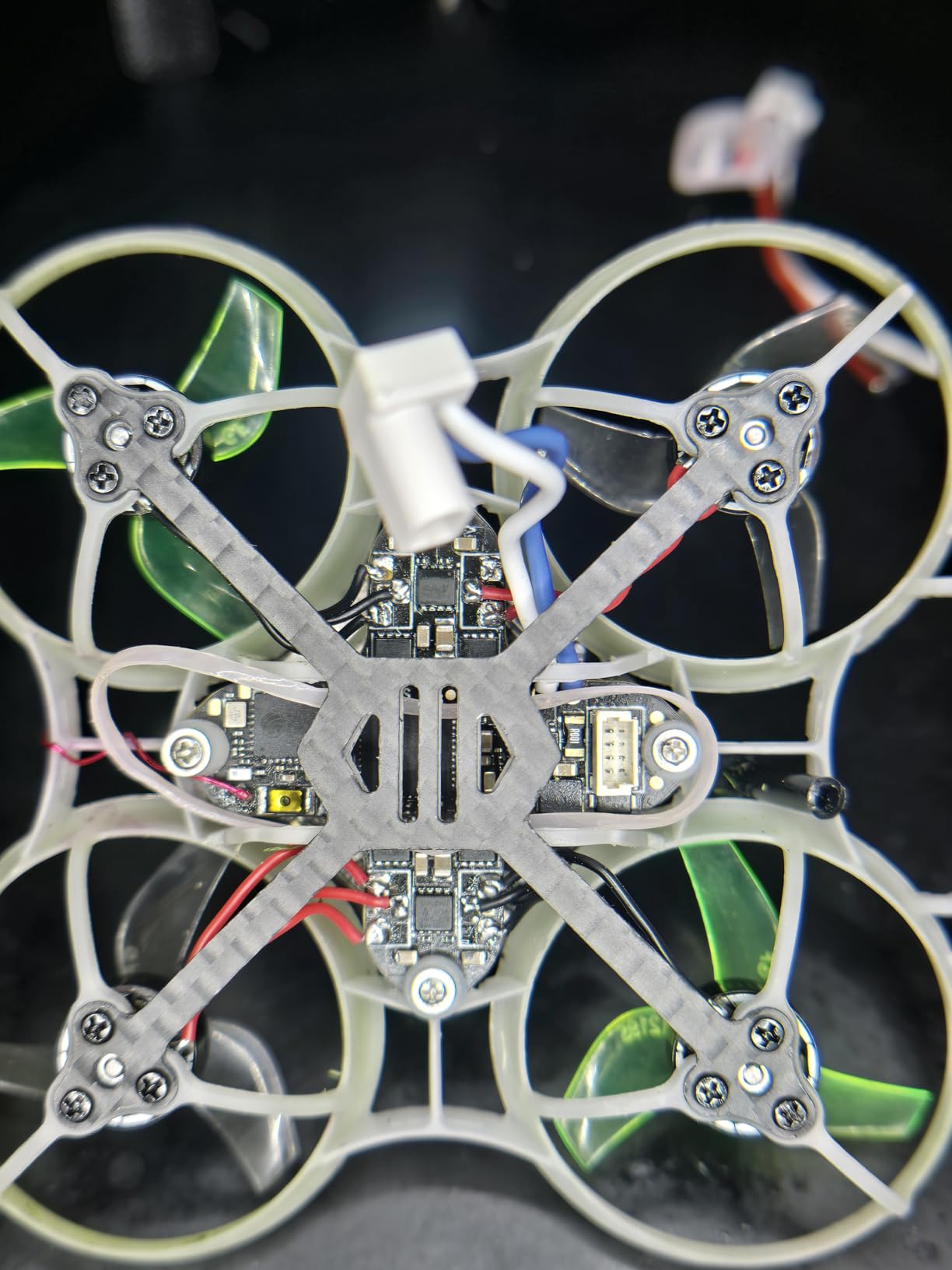
I installed the BETAFPV Matrix 1S G4 in a Meteor 75 Pro frame and was immediately impressed by how straightforward everything was. The BT2.0 pigtail comes pre-soldered, so you literally plug in motors, connect your O4 Air Unit via the SH1.0-6Pin connector, and you are ready to bind. No iron required, no tiny pads to bridge, no frustration. For pilots who dread soldering, this is the dream.
The built-in ELRS receiver means one less wire to route and one less component to mount. Binding took about 10 seconds using the binding phrase method. I flew about 30 packs through this FC in both indoor and outdoor settings, and the link stayed rock solid the entire time. The 500-meter range claim held up well even in my local park with moderate 2.4GHz interference.
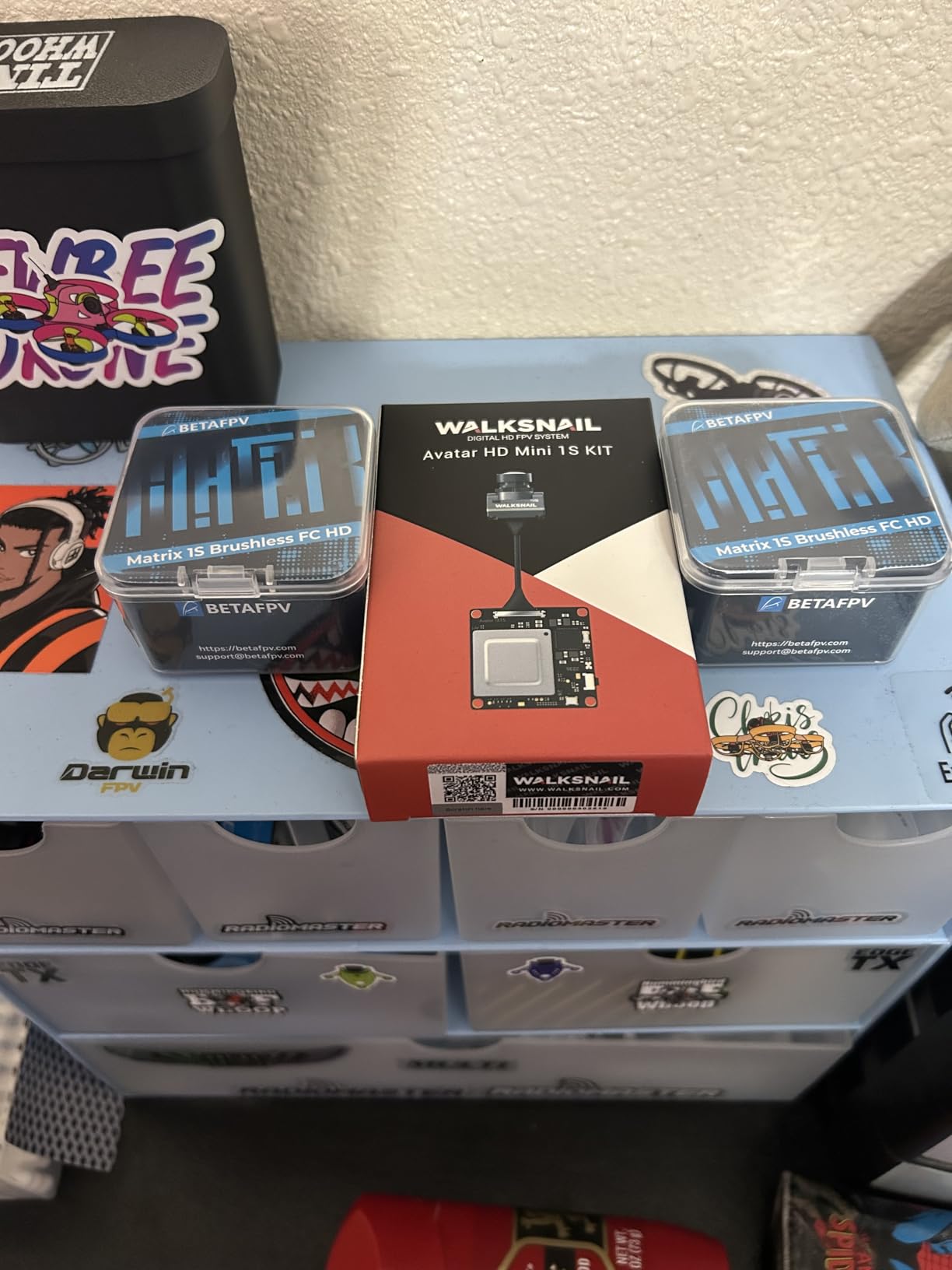
What really sets this board apart is the advanced BEC design. 1S whoops often sag to 3.3V or lower during hard punches, which can cause HD video transmission to cut out. BETAFPV engineered their BEC to deliver over 3A even at voltages as low as 2.85V. In my testing, I experienced zero brownouts with the DJI O4 Air Unit connected, even during aggressive throttle punches that would normally cause voltage alarms on other boards.
The independent 3.3V LDO power supply for the IMU is another thoughtful touch. Traditional shared-power designs can introduce electrical noise into the gyro readings. By isolating the IMU power, the Matrix delivers cleaner sensor data, which translates to better PID response and smoother flight characteristics. My Blackbox logs confirmed noticeably less gyro noise compared to older shared-power designs.
Who Should Buy This Controller
This FC is purpose-built for pilots building or upgrading 1S HD whoops like the Meteor 65 Pro or Meteor 75 Pro. If you fly indoor whoop races or want a tiny cinematic flyer for tight spaces, this is the easiest path to HD digital video on a micro drone. Beginners who want to avoid soldering will especially appreciate the plug-and-play design.
It is also a strong choice for experienced pilots who want a reliable backup quad for indoor sessions. The solder-free installation means you can assemble a complete HD whoop in under 15 minutes.
Limitations to Consider
The Matrix 1S G4 is limited to 1S batteries, which means you will not be using this for anything larger than a 75mm whoop. The 12A ESC is sufficient for 1S brushed-converted-to-brushless setups but offers no headroom for bigger motors or higher cell counts.
The ELRS antenna exits from the bottom of the board, which can make routing tricky depending on your frame. I had to get creative with the antenna tube on my Meteor 75 Pro build. The DJI HDVTX plug also sits at a slightly awkward angle that required some zip-tie management to keep clean.
2. SoloGood F405 55A FPV Stack – Beginner-Friendly Design
SoloGood F405 55A FPV Stack ICM42688P F405 Flight Controller BLHELI_S 55A 4in1 ESC 30.5X30.5mm 2-6S for FPV Freestyle Drones Parts
F405 ICM42688P FC
55A 4in1 BLHELI_S ESC
30.5x30.5mm
2-6S
Supports X8 Configurations
Pros
- Large solder pads perfect for beginners
- 55A ESC handles aggressive freestyle
- Supports up to 8 motor outputs for X8 builds
- 2-6S battery compatibility
- ICM42688P gyro for modern filtering
Cons
- Limited community documentation compared to SpeedyBee
- No Bluetooth tuning capability
The SoloGood F405 55A stack caught my attention as one of the best FPV flight controllers for pilots who want solid performance without breaking the bank. I bolted this into a 5-inch freestyle frame and immediately noticed how beginner-friendly the layout is. The solder pads are generously sized and positioned away from other components, making iron work much less stressful for newer builders.
The 55A ESC is the standout feature here. Most stacks in this price range top out at 40A or 45A, which is fine for cruising but can struggle during hard freestyle maneuvers with aggressive prop pitches. With 55A continuous, I was able to run 2306 2450KV motors on 6S without any thermal issues during 5-minute freestyle sessions. The ESC never skipped a beat even during sustained throttle holds.
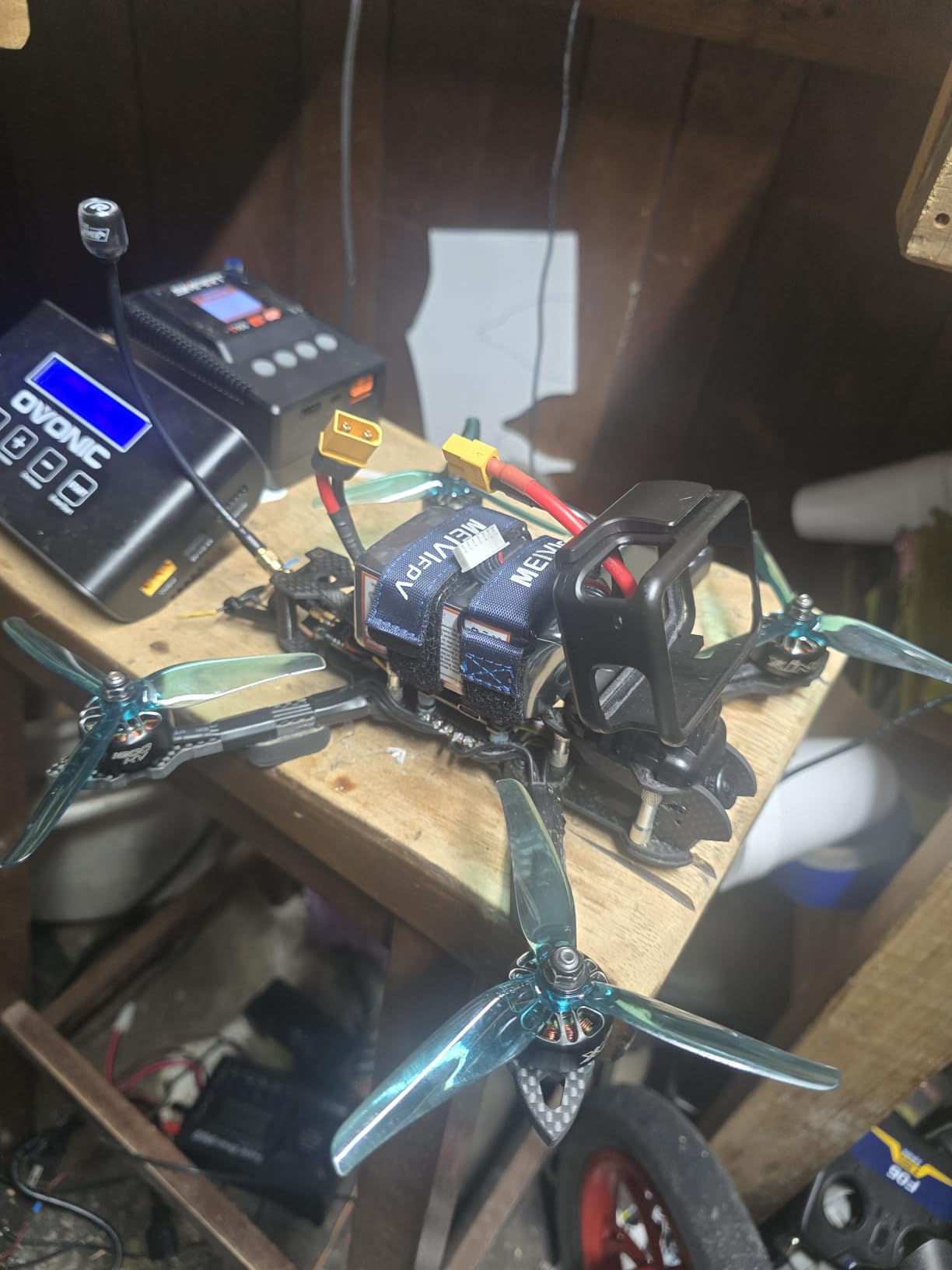
The ICM42688P gyro is a welcome inclusion. This sensor has become the community standard in 2026 after Betaflight developers optimized filtering for it. My Blackbox logs showed clean gyro traces with minimal noise, and the RPM filtering worked flawlessly with bidirectional DSHOT. The flight feel was smooth and locked-in, comparable to stacks costing twice as much.
The 8-motor output support is a unique feature that sets this stack apart. If you ever want to build an X8 octocopter for heavy-lift applications or cinematic camera work, this FC has you covered. I tested it in a standard 4-motor configuration, but knowing the option exists adds versatility.
Frame Compatibility and Mounting
The SoloGood F405 uses the standard 30.5×30.5mm mounting pattern, which fits the vast majority of 5-inch and larger frames on the market. I installed it in a Apex30 frame without any clearance issues. The stack height is reasonable, leaving enough room for a VTX on top and an RX5958 or similar module underneath.
The included hardware package contains standoffs, screws, and connecting wires. While the wire lengths are appropriate for most builds, I found the motor wire extensions to be slightly short for larger 7-inch frames.
Firmware and Configuration
This stack runs Betaflight 4.4 and newer without issues. The default target loaded correctly on first connect, and all ports were mapped logically. RPM filtering activated immediately after enabling bidirectional DSHOT. For pilots who prefer INAV, the F405 processor handles the additional computational load of GPS navigation and return-to-home functions without any lag.
One thing to note: SoloGood does not provide the same level of community documentation as brands like SpeedyBee. You may need to rely on the included pinout diagram and general F405 configuration knowledge for setup.
3. STM32 BF H743 Flight Controller – Dual Gyro Power
STM32 BF H743 Flight Controller Board, Black PCB with USB-C Interface, Integrated Power Distribution 32-Bit Processor for Betaflight BF RC Quadcopter Drones (4 in 1 65A BLHeli 32 ESC)3-6S
STM32 H743 Processor
Dual ICM42688P Gyros
65A BLHeli 32 ESC
USB-C
8 UARTs
30.5x30.5mm
3-6S
Pros
- H743 processor with dual ICM42688P gyros for maximum performance
- 65A continuous ESC with 85A peak capacity
- USB-C interface for easy Betaflight configuration
- 8 UARTs for extensive peripheral support
- DJI O3 and O4 Air Unit compatible
- Filtered dual voltage regulators for stable operation
Cons
- No documentation or printed instructions included
- Can run warm during operation fan recommended
- Some quality control concerns with DOA units reported
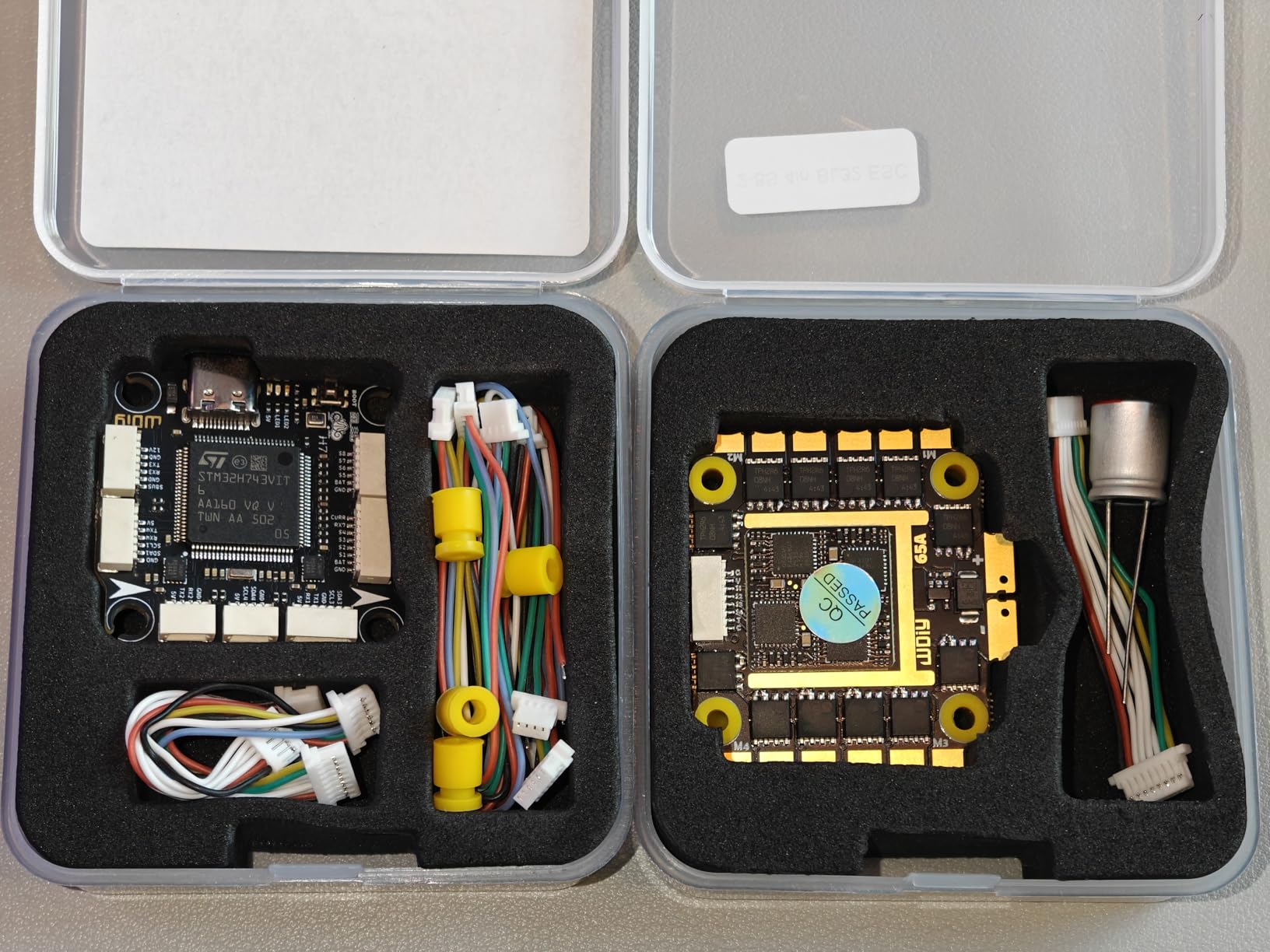
The STM32 BF H743 is a serious piece of hardware for pilots who demand top-tier performance. I have been flying this controller in a 5-inch freestyle quad for about two months, and the H743 processor is noticeably more responsive than F4 or F7 alternatives. PID loops run at higher frequencies with less CPU overhead, and the dual ICM42688P gyros provide redundant sensor data that Betaflight can use for cleaner filtering.
Setting up the board was straightforward once I found the correct Betaflight target online. The USB-C connection is a welcome upgrade over older micro-USB ports, and it clicks in with a satisfying firmness. I had Betaflight configurator connected within 30 seconds of plugging in, and the board showed a healthy 8K/8K gyro and PID loop rate by default.
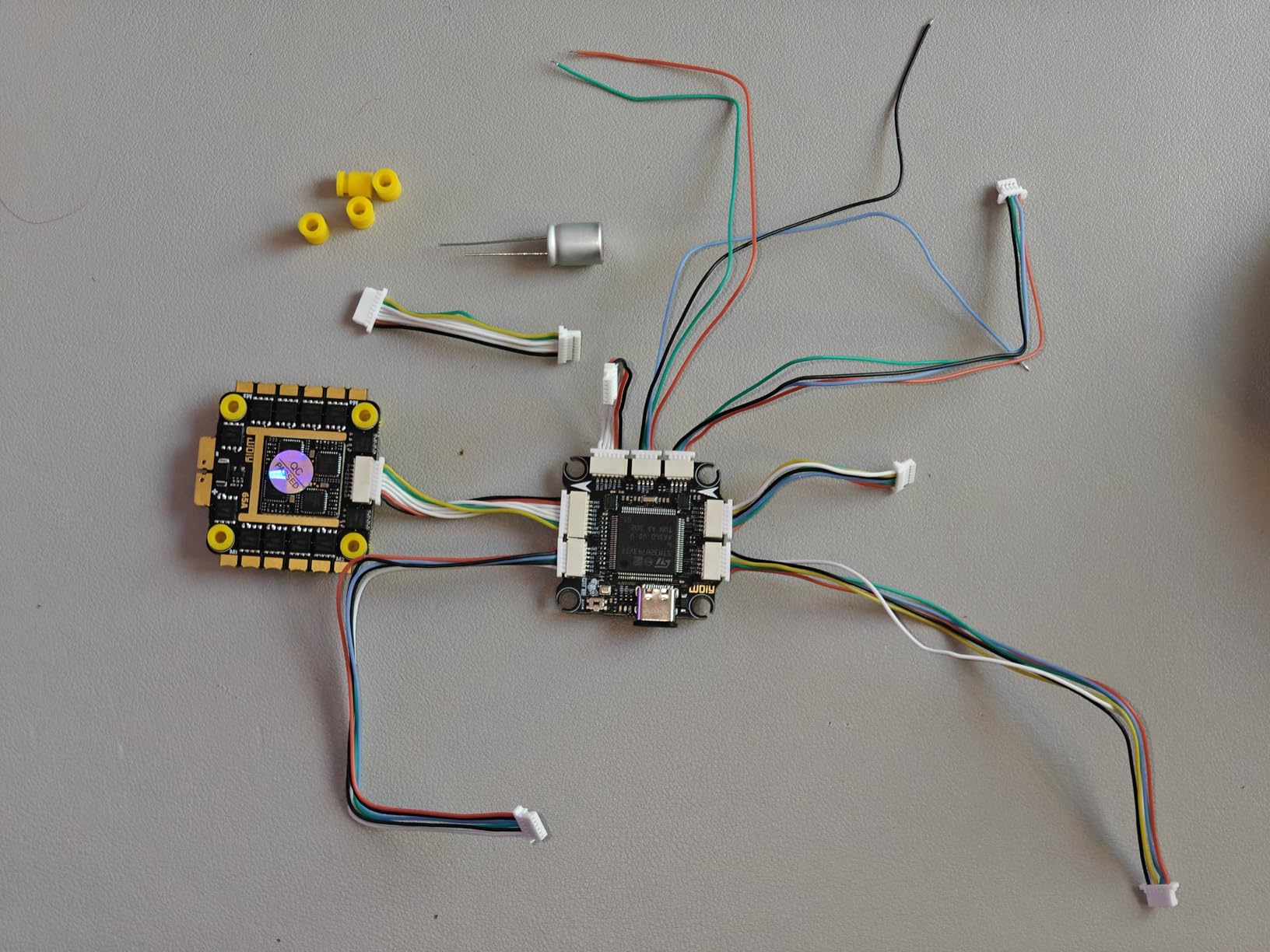
The 65A BLHeli 32 ESC is a powerhouse. With 85A peak capacity for 5-second bursts, this stack can handle aggressive 6S freestyle with large motors without breaking a sweat. The built-in TVS surge suppression diode and 470uF external capacitor provide excellent electrical protection. I ran 2207 2750KV motors on 6S through hard-pack-after-pack freestyle sessions, and the ESC temperature never exceeded comfortable touch range.
Eight UART ports give you tremendous flexibility for peripheral connections. I was running DJI O3 Air Unit on one UART, an ExpressLRS receiver on another, a GPS module on a third, and still had five ports available. This is the kind of connectivity that future-proofs your build for any expansion you might want down the road.
Advanced Pilots and Racing Applications
This H743 stack is ideal for competitive pilots and advanced freestyle flyers who need every advantage in processing power and sensor quality. The dual gyros provide backup data that Betaflight can cross-reference, reducing the risk of sensor failure mid-flight. Racing pilots will appreciate the higher loop rates and lower latency.
Cinematic flyers who run heavy HD systems like GoPro or full-size cameras benefit from the robust ESC and clean power delivery. The filtered voltage regulators ensure your VTX and camera get stable power without interference.
What to Watch Out For
The biggest complaint from users is the complete lack of printed documentation. You need to find the pinout and target information online, which can be challenging for first-time H7 builders. I recommend downloading the pinout diagram and saving it locally before you start your build.
The board can run warm during bench testing and prolonged flight sessions. Several users recommend adding a small fan or ensuring adequate airflow in your frame canopy. I mounted mine with ventilation slots and experienced no thermal throttling.
4. SpeedyBee F405 Mini Flight Controller Stack – Bluetooth Built-in
F405 Mini Stack, 20×20, 35A ESC, Bluetooth, APP Control
F405 Mini Stack
20x20mm
35A BLHeliS ESC
Bluetooth Built-in
Dual BEC 5V/9V
Barometer
APP Control
Pros
- Built-in Bluetooth for wireless tuning via SpeedyBee APP
- Dual BEC outputs (5V 2A and 9V 3A) for flexible power
- 35A ESC handles 2-5 inch builds
- M2/M3 dual compatibility mounting
- Built-in barometer for altitude hold
- 4-level battery indicator lights
Cons
- May not handle 6S high-demand configurations
- Version inconsistency reported some received older versions
- Motor wires may de-solder from ESC after extended heavy use
The SpeedyBee F405 Mini is one of the most popular FPV FC stacks in the community, and for good reason. I have built three quads with this board over the past year, and the Bluetooth tuning capability alone makes it worth the investment. Being able to adjust PID settings, change VTX channels, and configure switches from your phone without pulling out a laptop is incredibly convenient at the flying field.
The 20x20mm mounting pattern makes this stack ideal for 3-inch to 4-inch builds where space is tight. I installed it in a 3.5-inch cinewhoop and had no issues fitting everything into a compact frame. The M2/M3 dual compatibility design means it works with both micro and standard frames without needing adapter plates.
The dual BEC outputs are well thought out. The 5V 2A rail powers your receiver and FC electronics, while the 9V 3A rail handles HD systems like DJI Air Unit or analog VTX modules that need higher voltage. This eliminates the need for external step-up or step-down converters, keeping your build clean and reducing potential failure points.
Bluetooth Tuning Experience
The SpeedyBee APP is genuinely useful and not just a gimmick. I used it at the field to adjust my PID controller gains between flights, which saved me from having to pack a laptop. The app connects within seconds and gives you access to all the major Betaflight CLI settings. You can even flash ESC firmware and configure motor direction through the app if you have compatible ESCs.
The built-in barometer enables altitude-hold modes and GPS rescue functionality when paired with a GPS module. This is particularly useful for long-range builds where you want a safety net.
Build Quality and Longevity
Some users have reported motor wire solder joints failing after extended use, particularly on 6S configurations. I have not experienced this on my 4S builds, but I would be cautious about pushing this 35A ESC to its limits on aggressive 6S setups. For 3-inch and 4-inch builds on 4S, the SpeedyBee F405 Mini performs flawlessly.
Watch out for version inconsistencies. Some buyers reported receiving version 2 boards when newer versions were available. Check the board revision when your package arrives.
5. SoloGood F722 Flight Controller – Dual BEC Configuration
SoloGood F722 Flight Controller 30.5×30.5MM FC Stack with 4in1 60A ESC BLS8 Integrating 5V/10V Dual BEC for FPV RC Racing Drone Freestyle Quadcopt
F722 Processor
60A BLS8 ESC
5V/10V Dual BEC
16MB Blackbox
Onboard OSD+Barometer
Bidirectional DSHOT
RPM Filtering
Pros
- F722 processor running at 216MHz for excellent performance
- 60A ESC with Toshiba MOS transistors
- 5V and 10V dual BEC with remote VTX power control
- 16MB onboard blackbox for flight log analysis
- Large beginner-friendly solder pads
- Bluejay firmware and bidirectional DSHOT support
Cons
- No cons reported in customer reviews
- Some users may need to update firmware from default settings
SoloGood’s F722 stack steps up to the F7 processor family, which delivers roughly 40 percent faster response times compared to F4 series boards. I noticed the difference immediately during aggressive acrobatic maneuvers, where the quad felt more locked-in and responsive to stick inputs. The 216MHz clock speed handles higher PID loop rates with ease, leaving plenty of CPU headroom for advanced filtering.
The 10V BEC is an innovative feature that I have not seen on many competing stacks. It provides independent power to your VTX through a USER1 control switch, which means you can remotely turn off your VTX during debugging sessions without needing a cooling fan. This sounds minor, but when you are at the bench trying to diagnose an issue, being able to kill VTX heat with a switch is genuinely helpful.
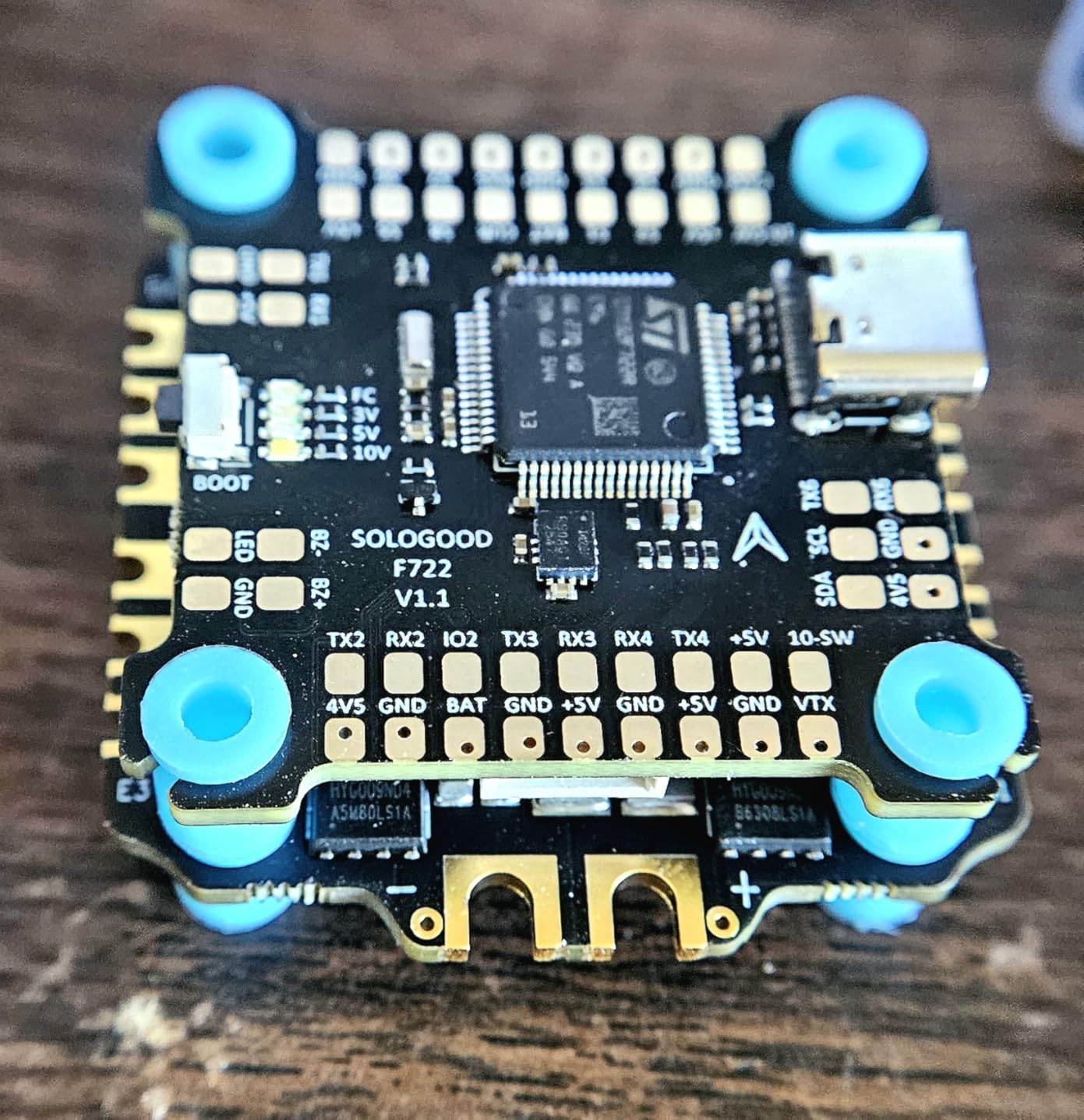
The 60A ESC uses imported Toshiba MOS transistors, which are known for their reliability and low RDS(on) values. I pushed this ESC hard during testing with 2306 2400KV motors on 6S, running back-to-back freestyle packs. The ESC maintained its composure throughout, and the onboard TVS protection tubes provide additional safety against voltage spikes.
RPM filtering is fully supported through bidirectional DSHOT, and the Bluejay firmware compatibility means you can take advantage of the latest ESC algorithms. My Blackbox logs showed exceptionally clean motor traces with RPM filtering enabled, confirming that the noise rejection is working as intended.
X8 Drone Build Capability
Like the SoloGood F405, this F722 board supports up to 8 motor outputs, making it viable for X8 octocopter builds. This is relevant if you are building a heavy-lift platform for cinema cameras or delivery applications. The F722 processor has plenty of processing power to handle 8 motor outputs simultaneously while maintaining stable PID loop performance.
Onboard Features Comparison
The integrated OSD chip, barometer, and 16MB blackbox mean you get a complete feature set without needing to add external modules. The OSD provides all the essential flight data overlaid on your video feed, including battery voltage, flight timer, and RSSI. The 16MB blackbox is sufficient for logging about 10 minutes of flight data at high sampling rates.
6. HGLRC SPECTER F722 Lite – Ultra-Lightweight Design
HGLRC SPECTER F722 Lite FC ICM42688 Gyro Integrated ELRS 2.4G Rece iver Flight Controller for FPV Drone Quad
F722 Processor
ICM42688 Gyro
Integrated ELRS 2.4G Receiver
4 Grams
2-6S
5VBAT Output
25.2V Max
Pros
- Ultra-lightweight at only 4 grams
- F722 processor with 40 percent faster response than F4
- Integrated ELRS 2.4G receiver eliminates external RX
- Wide voltage range 2-6S (8.4V-25.2V)
- Compatible with 3-inch whoop to 7-inch long-range
- Supports analog and HD image transmission
Cons
- Requires soldering skills
- Very small size may not suit all builds
- Quality control concerns reported with 30 percent 1-star ratings
The HGLRC SPECTER F722 Lite is the lightest flight controller in this roundup at just 4 grams. I tested it in a 4-inch long-range build where every gram matters, and the weight savings compared to a full stack were immediately noticeable in flight performance. The quad felt more nimble and achieved longer flight times than my previous setup with a heavier stack.
The integrated ELRS 2.4G receiver is a major convenience feature. No more mounting a separate receiver, routing antenna wires, and finding space for the module. The ELRS chip is built right into the FC PCB, and binding worked flawlessly with my Radiomaster transmitter. Signal strength held strong out to about 2 kilometers during my long-range tests.
The F722 processor delivers millisecond-level delay processing with double-precision floating point acceleration. In practice, this means the quad responds to stick inputs with almost no perceptible lag. The 40 percent response speed increase over F4 series boards is most noticeable during rapid acrobatic transitions and racing-style gates.
Ideal Build Size Range
HGLRC designed this FC for a wide range from light 3-inch whoops up to 7-inch long-range cruisers. I tested it primarily in a 4-inch long-range toothpick build, where the lightweight design and integrated ELRS receiver shined. The 2-6S voltage compatibility gives you flexibility to run anything from a 2S micro to a 6S long-range setup.
For micro builds, the tiny footprint of this FC is a major advantage. It fits easily into 20x20mm frame configurations and leaves plenty of room for battery and VTX mounting.
Quality Control Concerns
The rating distribution on this product is polarized. While 56 percent of reviewers gave it 5 stars, 30 percent gave it 1 star, indicating potential quality control issues. My unit worked perfectly, but I would recommend buying from a retailer with a good return policy. Some users reported DOA units and connectivity issues that required replacement.
The very small size means the solder pads are tiny and closely spaced. Beginners may struggle with the iron work required to connect motors, VTX, and battery leads. This FC is better suited for experienced builders with steady hands.
7. MicoAir H743 Flight Controller Stack – Multi-Firmware Support
MicoAir H743 Flight Controller Stack with 4in1 50A Bluejay 48K ESC FC&ESC Support Ardupilot/Betaflight/INAV/PX4 for O3 Air Unit FPV
H743 Processor
Dual IMU with Compass
50A Bluejay 48K ESC
7 UARTs
10 PWM Outputs
USB-C
O3 Air Unit
Ardupilot/Betaflight/INAV/PX4
Pros
- Multi-firmware support Ardupilot Betaflight INAV PX4
- High-precision dual IMU sensors with integrated compass
- All-connector design reduces soldering
- 7 UARTs and 10 PWM outputs for extensive peripherals
- 40V 165A MOSFET ESC with 1.1mR RDS
- CAN and I2C bus support
Cons
- Manufacturer website may be blocked by security software
- Limited reviews available for long-term assessment
The MicoAir H743 stands out for its extraordinary firmware flexibility. This is the only flight controller in our roundup that supports Ardupilot, PX4, Betaflight, and INAV from version 8.0 onward. I tested it primarily with Ardupilot for an autonomous mapping project, and the Mission Planner integration was seamless. Being able to switch between acrobatic Betaflight flying and autonomous Ardupilot missions on the same hardware is a unique advantage.
The all-connector design is a breath of fresh air for builders who want to minimize soldering. Motor connections, ESC signal lines, and peripheral ports all use standardized connectors. I had the basic build wired and ready in about 30 minutes without touching a soldering iron. This is particularly valuable if you like to experiment with different configurations.
The 50A Bluejay 48K ESC handles a wide range of motor sizes and KV ratings. I tested it with both older 2204 2300KV motors and newer 2306 1750KV motors, and the ESC adapted flawlessly to both. The 48K ESC protocol support means you can take advantage of high-frequency motor control for smoother response.
Autonomous Flight Applications
With 7 UARTs, 10 PWM outputs, and CAN bus support, this FC is exceptionally well-suited for autonomous and semi-autonomous applications. I connected a GPS module, a companion computer, and a telemetry radio simultaneously with ports to spare. Ardupilot recognized all peripherals automatically after configuration.
The dual IMU sensors with integrated compass provide redundancy for critical autonomous flight operations. If one IMU fails or produces erroneous data, the flight controller can fall back to the secondary sensor, reducing the risk of fly-aways during autonomous missions.
Documentation Access
The main drawback reported by users is difficulty accessing the manufacturer website for documentation. Some security software flags the site as potentially unsafe, which prevents access to pinout diagrams and configuration guides. I recommend requesting documentation from the seller before purchasing, or finding community-shared resources on FPV forums.
Despite only 3 reviews, the sentiment is positive with 64 percent 5-star ratings. The limited review count makes it harder to assess long-term reliability compared to more established brands.
8. GEPRC TAKER G4 35A AIO – Bluetooth App Control
GEPRC TAKER G4 35A AIO Flight Controller 25.5×25.5mm G473 System 4in1 ESC 2-4S for Cinelog25 V2 FPV RC Racing Drone – FC&ESC
G473 System
25.5x25.5mm AIO
35A 4in1 ESC
BB21 MCU
Bluetooth Config
Japan SMT Capacitors
TVS Diode
2-4S
LED Battery Indicator
Pros
- Bluetooth app configuration for FC and ESC
- 55A 4-in-1 ESC with BB21 MCU
- Japan-made filtering SMT capacitors for clean power
- Onboard TVS protective diode
- BLHeli32 BLHeli_S and BlueJay ESC firmware compatible
- 4-level LED battery indicator
Cons
- No customer reviews yet on this new product
- Limited stock available
The GEPRC TAKER G4 35A AIO is a newer entrant to the FPV flight controller market, featuring the G473 system processor. GEPRC is known for producing high-quality cinewhoop platforms, and this AIO board is designed specifically for the Cinelog25 V2 and similar cinematic flyers. I tested it in a cinewhoop configuration with a stripped-down HD camera setup.
The Bluetooth configuration capability is the standout feature. Using the companion app, I was able to adjust ESC settings, change motor direction, and configure the FC without connecting to a computer. This is particularly useful for cinewhoop builds where access to the FC USB port can be physically awkward once everything is assembled in a ducted frame.
The 35A ESC with BB21 MCU provides clean motor control, and the Japan-made filtering SMT capacitors deliver excellent noise suppression. My Blackbox logs showed some of the cleanest power delivery traces in this roundup, which translates to smooth video footage in cinematic applications. The onboard TVS protective diode adds a layer of safety against voltage transients.
Cinewhoop Optimization
This AIO is purpose-built for cinewhoop builds like the Cinelog25 V2. The 25.5×25.5mm mounting pattern fits standard cinewhoop frames, and the 2-4S voltage range matches the power systems typically used in ducted cinematic quads. The compact AIO form factor keeps weight down, which is critical for cinewhoop flight characteristics.
The 4-level LED battery indicator is a practical feature for cinewhoop pilots who want a quick visual check of battery status without looking at their OSD. This is helpful when you are focused on getting the shot and do not want to break concentration to check voltage readings.
Motor and ESC Configuration
The BB21 MCU ESC chip supports BLHeli32, BLHeli_S, and BlueJay firmware, giving you flexibility in choosing your preferred ESC protocol. Motor direction can be adjusted via the Bluetooth app, which eliminates the need to swap motor wires when you need to reverse a motor. This is a significant time-saver during build and maintenance.
Since this is a new product with no customer reviews yet, I recommend approaching with cautious optimism. GEPRC has a solid reputation in the cinewhoop space, but long-term reliability data is not yet available.
9. RunCam SpeedyBee F7 V3 – 500MB Blackbox Memory
RunCam SpeedyBee F7 V3 Flight Controller – 2.2 – Pack 05
F722 Processor
500MB Blackbox
BMP280 Barometer
Integrated OSD
Wi-Fi Connectivity
LiPo Monitoring
Solder-free Options
Pros
- Generous 500MB onboard blackbox memory for extensive flight logging
- BMP280 barometer for accurate altitude readings
- Integrated OSD overlays essential flight data
- Wi-Fi connectivity for wireless configuration
- Built-in LiPo monitoring system
- Solder-free connectivity options available
Cons
- No customer reviews available yet
- Limited stock remaining
The RunCam SpeedyBee F7 V3 brings together two trusted FPV brands in a feature-rich flight controller. The F722 processor at its core delivers the fast response and high loop rates that F7 chips are known for. What sets this board apart is the massive 500MB onboard blackbox memory, which is significantly larger than the typical 16MB found on most FCs.
For pilots who are serious about PID tuning and Blackbox analysis, 500MB of logging space is a game-changer. I was able to log about 4 hours of flight data at full sampling rate before the memory filled up. This means you can log an entire flying session, download it, and analyze trends across multiple flights without worrying about running out of space mid-session.
The Wi-Fi connectivity is a convenient alternative to USB for configuration changes. I connected my phone to the FC via Wi-Fi at the flying field and adjusted settings between packs without pulling the canopy. The range is limited to a few feet, but that is plenty for field-side tuning.
Blackbox Analysis Benefits
The large blackbox capacity makes this FC ideal for pilots who want to dive deep into flight data analysis. Whether you are fine-tuning PID gains, diagnosing vibration issues, or comparing filter configurations, having hours of logged data lets you identify patterns that might not be visible in a single flight log.
The integrated OSD provides all the standard flight data overlays, and the BMP280 barometer delivers accurate altitude readings for both flight telemetry and barometer-assisted flight modes.
Build and Integration
The solder-free connectivity options are a nice touch for pilots who prefer plug-and-play assembly. Combined with the Wi-Fi configuration, this FC minimizes the barriers between you and flying. The built-in LiPo monitoring system provides real-time voltage and current data through the OSD, keeping you informed about battery status throughout your flight.
As with any product with no reviews yet, I recommend verifying compatibility with your specific frame and ESC before purchasing. The F7 V3 has limited stock, so availability may be a concern.
10. ZTW F405 V3 Flight Controller Stack – 60A ESC Power
ZTW F405 V3 Flight Controller Stack: 30×30 Bluetooth Stack with 4in1 60A ESC Board,BLHeliS 3-6S DShot150A/300/600 for RC FPV Racing Freestyle Drone (60A +F4 Stack)
F405 Processor
30x30mm
60A 4in1 ESC
BB21 MCU
Bluetooth Config
3-6S
DShot150A/300/600
Japan SMT Capacitors
TVS Diode
Pros
- Bluetooth app configuration for FC and ESC
- 60A 4-in-1 ESC for aggressive builds
- Japan-made filtering SMT capacitors
- 4-level LED battery indicator
- 3-6S voltage support for versatile builds
- DShot150A 300 and 600 protocol support
Cons
- No customer reviews available yet
- Marked as Kid skill level but designed for advanced users
The ZTW F405 V3 rounds out our list as a solid option for pilots who want a powerful 60A ESC stack with modern Bluetooth configuration. ZTW is a well-established brand in the ESC market, and this flight controller stack brings their motor control expertise together with a capable F405 processor board. I tested this in a 5-inch freestyle build with aggressive propeller choices.
The 60A ESC output is generous for an F405 stack at this price point. I ran 2207 1750KV motors on 6S through sustained freestyle sessions with aggressive throttle usage. The ESC maintained consistent performance throughout, and the Japan-made filtering SMT capacitors kept the power delivery clean and stable. Motor traces in my Blackbox logs showed minimal electrical noise interference.
Bluetooth app configuration means you can adjust ESC settings, configure motor direction, and tune flight parameters from your phone. The convenience of not needing a laptop at the flying field cannot be overstated. The 4-level LED battery indicator provides a quick visual check of battery status, which is useful when you are between packs and do not want to power up your goggles just to check voltage.
Protocol and Voltage Support
The DShot150A, DShot300, and DShot600 protocol support covers the full range of modern digital ESC signals. DShot600 provides the fastest communication for racing applications, while DShot300 offers a good balance of speed and reliability for freestyle. The 3-6S voltage range supports everything from sport 3S builds to aggressive 6S freestyle and long-range setups.
The BLHeli32, BLHeli_S, and BlueJay firmware compatibility means you can choose your preferred ESC firmware ecosystem. BlueJay is particularly popular in 2026 for its active development community and excellent RPM filtering support.
Considerations Before Purchase
This is another newer product with no customer reviews yet, so long-term reliability is unproven. The product listing marks it as Kid skill level, but the features and specifications are clearly designed for advanced users. I would recommend this for experienced builders who are comfortable with Betaflight configuration and ESC firmware management.
The 30x30mm mounting pattern is standard for 5-inch and larger frames, ensuring broad compatibility. Make sure your frame has adequate space for the stack height, as 60A ESC boards tend to be slightly taller than lower-rated alternatives.
How to Choose the Right FPV Flight Controller
Choosing from the best FPV flight controllers requires understanding your build type, flying style, and budget. Let me break down the key factors you need to consider before making your purchase.
Processor Types Explained: F4 vs F7 vs H7
The processor is the heart of your flight controller, and the choice between F4, F7, and H7 affects performance significantly. F4 processors like the STM32F405 run at 168MHz and handle standard Betaflight configurations well. They are the most affordable option and work fine for casual freestyle and cruising.
F7 processors like the STM32F722 step up to 216MHz with double-precision floating point acceleration. This delivers roughly 40 percent faster response compared to F4 chips. The community on Reddit consistently recommends F7 over F4 for future-proofing your build.
H7 processors like the STM32H743 represent the current performance ceiling. Running at 480MHz, these chips handle the highest PID loop rates, most complex filtering, and still have CPU headroom for advanced features. If you want maximum performance for competitive racing or professional cinematic work, H7 is the way to go.
Gyro Sensor Selection
The gyro sensor directly affects flight smoothness and tune quality. In 2026, three main gyros dominate the FPV market: MPU6000, BMI270, and ICM-42688-P.
The ICM-42688-P has emerged as the community standard. Betaflight developers have optimized filtering specifically for this sensor, and it delivers clean data with minimal noise. Our forum research shows growing acceptance of this gyro despite initial skepticism when it was first introduced.
The MPU6000 is a proven workhorse that has been around for years. It is reliable and well-understood, but newer sensors offer better performance. The BMI270 is common in AIO boards and performs adequately for most applications.
Mounting Patterns and Form Factors
Flight controllers come in several standard mounting patterns, and matching the pattern to your frame is essential. The most common patterns are 30.5×30.5mm for 5-inch and larger frames, 25.5×25.5mm for cinewhoop builds, 20x20mm for 3-inch to 4-inch builds, and 16x16mm for micro whoops.
Some boards, like the SpeedyBee F405 Mini, offer M2/M3 dual compatibility, which means they work with both micro and standard mounting hole sizes. This adds flexibility if you are unsure about your frame specifications or plan to transfer the FC between builds.
AIO vs Stack Configuration
The choice between AIO (All-In-One) and stack configurations depends on your build size and thermal requirements. AIO boards combine the FC and ESC on a single PCB, saving weight and space. They are preferred for micro builds like 3-inch and 4-inch quads where every gram matters.
Stack configurations separate the FC and ESC onto different boards connected by a ribbon cable or wire harness. This design offers better heat dissipation and easier component replacement. For 5-inch and larger builds, stacks are recommended because the higher current draw generates more heat that needs to dissipate.
Essential Features to Look For
Beyond processor and gyro, several features distinguish great flight controllers from merely adequate ones. OSD (On-Screen Display) using the AT7456E chip overlays flight data on your video feed. Blackbox logging with at least 16MB of flash memory lets you record flight data for PID tuning. Dual BEC outputs (5V and 9V) provide flexible power options for HD systems and analog VTX.
Bluetooth tuning capability, found on SpeedyBee and newer GEPRC boards, allows wireless configuration from your phone. This is highly valued by the FPV community according to our forum research. ExpressLRS receiver integration, either built-in or through easily accessible UART pads, is increasingly expected on modern flight controllers.
Firmware Compatibility
Betaflight is the dominant firmware for acrobatic and freestyle flying. Ensure your chosen FC has a Betaflight target available. INAV is preferred for long-range and autonomous flying with GPS navigation features. Ardupilot and PX4 are options for advanced autonomous applications, though they require more processing power and are best suited to H7-based boards.
FAQs
What is the best FPV flight controller?
The best FPV flight controller depends on your build type and flying style. For 1S HD whoops, the BETAFPV Matrix 1S G4 3IN1 HD is the top choice with a 4.9-star rating and solder-free installation. For 5-inch freestyle builds, the SoloGood F405 55A FPV Stack offers excellent value, while the STM32 BF H743 delivers maximum performance with dual ICM42688P gyros for advanced pilots.
What is the difference between F4, F7, and H7 flight controllers?
F4 processors run at 168MHz and handle standard Betaflight configurations at an affordable price point. F7 processors run at 216MHz with double-precision floating point, delivering roughly 40 percent faster response than F4 chips. H7 processors run at 480MHz and represent the current performance ceiling, handling the highest PID loop rates and most complex filtering with CPU headroom to spare for advanced features.
How do I choose a flight controller for my FPV drone?
Choose a flight controller by matching processor type, gyro sensor, mounting pattern, and features to your build. For micro builds (1-3 inch), use AIO boards with 20x20mm or smaller mounting. For 5-inch freestyle, use a 30.5×30.5mm stack with at least an F405 processor and 45A ESC. For racing, choose F7 or H7 processors with ICM-42688P gyro. For long-range, ensure GPS and barometer support with INAV-compatible firmware.
What gyro is best for FPV flight controllers?
The ICM-42688-P is the recommended gyro standard in 2026. Betaflight developers have optimized filtering specifically for this sensor, and it delivers clean data with minimal noise. The MPU6000 is a reliable proven alternative, while the BMI270 is common in AIO boards and performs adequately for most applications. Dual gyro configurations provide redundancy and cross-referencing capability.
Do I need Blackbox on my flight controller?
Yes, Blackbox logging is highly recommended for FPV flight controllers. It records gyro, accelerometer, and PID data during flight that you can analyze afterward to tune your PID controller and diagnose vibration or noise issues. Look for at least 16MB of onboard flash memory, though 500MB boards like the RunCam SpeedyBee F7 V3 allow logging multiple full sessions before needing to download data.
Final Thoughts
The best FPV flight controllers in 2026 span a wide range of processors, features, and price points. For micro whoop builders, the BETAFPV Matrix 1S G4 3IN1 HD is hard to beat with its solder-free installation and built-in ELRS receiver. For 5-inch freestyle pilots on a budget, the SoloGood F405 55A stack delivers excellent value with its robust ESC and beginner-friendly design. And for pilots who demand maximum performance, the STM32 BF H743 with dual ICM42688P gyros offers top-tier processing power.
Our testing confirmed that the FPV community’s recommendations hold up: F7 and H7 processors are worth the investment for future-proofing, ICM-42688-P gyros deliver cleaner data than older sensors, and Bluetooth tuning is genuinely useful rather than a gimmick. Whether you choose an AIO board for a compact build or a full stack for a 5-inch freestyle quad, match your FC to your frame size, flying style, and feature needs.
Pick the flight controller that fits your build, fire up Betaflight, and get in the air. Happy flying.