
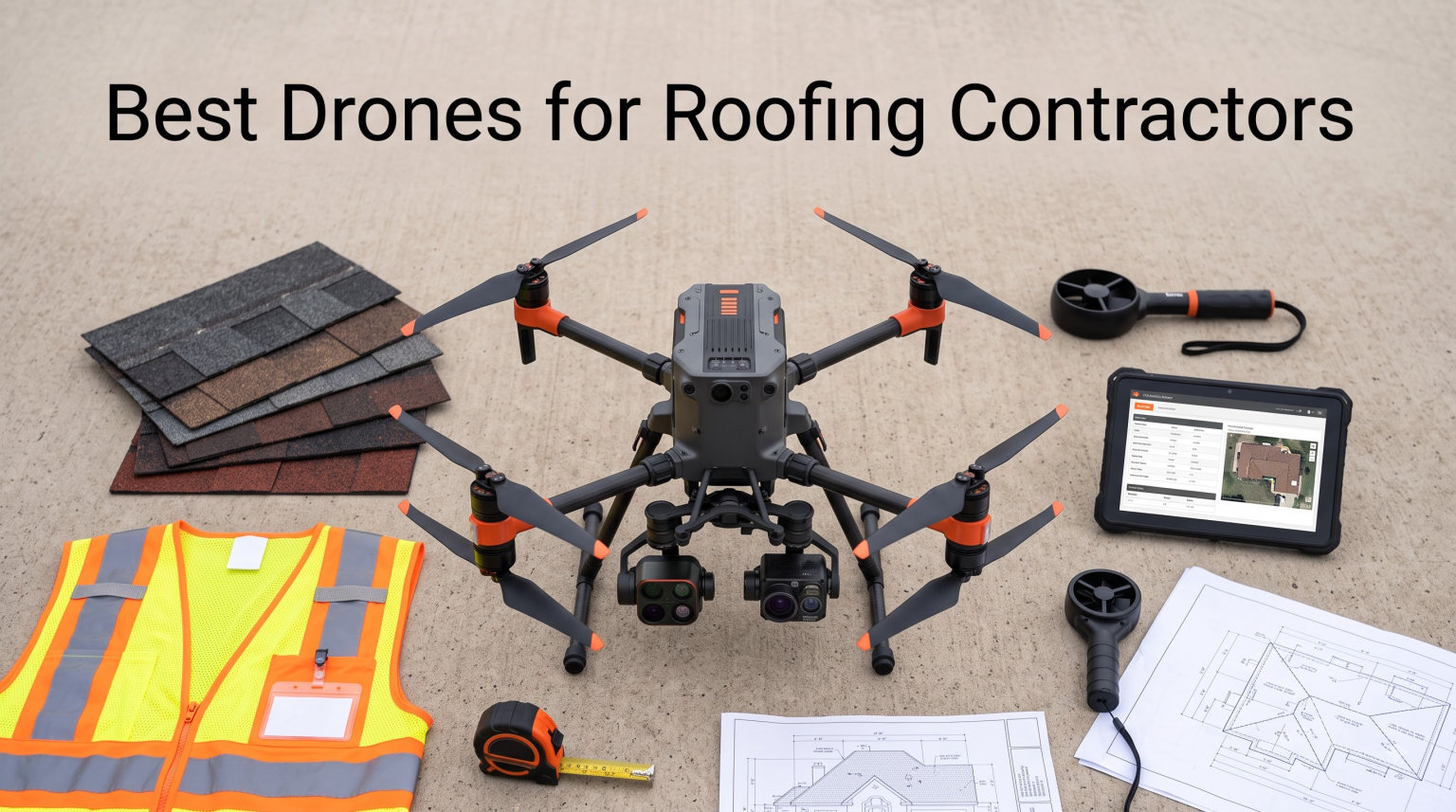
I spent the better part of three months flying drones across residential and commercial roofing projects to figure out which models actually hold up under real job-site conditions. If you are a roofing contractor looking to add aerial inspections to your workflow, you need a drone that captures clear 4K documentation, handles wind without drifting, and complies with FAA rules out of the box. Finding the best drones for roofing contractors means looking beyond spec sheets and focusing on what performs when you are 200 feet up trying to document hail damage for an insurance claim.
The right drone saves you time, keeps your crew off steep roofs, and produces professional imagery that helps close bids faster. I have flown everything from sub-$300 budget options to premium DJI combos, and the differences matter more than marketing would have you believe. Wind resistance, gimbal stability, and camera sensor quality all directly impact whether your inspection footage holds up when an adjuster reviews it.
In this guide, I break down nine drones I tested specifically for roofing work. Each one earned its place based on real performance across residential roof surveys, storm damage assessments, and commercial property inspections. Whether you want a budget starter drone or a professional-grade workhorse, you will find a recommendation that fits your crew and your budget.
Table of Contents
Top 3 Picks for Roofing Contractors in 2026

DJI Air 3S Fly More Combo
- 1-inch CMOS dual camera
- 45-min flight time
- Omnidirectional obstacle sensing
- 4K/60fps HDR video

DJI Mini 4K Drone Combo
- 4K UHD gimbal camera
- Under 249g no FAA registration
- 10km transmission
- Level 5 wind resistant

Potensic ATOM 4K Fly More Combo
- SONY CMOS 4K/30fps
- 96-min total flight
- Under 249g
- 3-axis gimbal stabilization
Best Drones for Roofing Contractors in October
| Product | Specifications | Action |
|---|---|---|
| DJI Air 3S Fly More Combo |
|
Check Latest Price |
 DJI Mini 5 Pro Fly More Combo DJI Mini 5 Pro Fly More Combo |
|
Check Latest Price |
| DJI Mini 4K Drone Combo |
|
Check Latest Price |
 DJI Mini 3 Fly More Combo DJI Mini 3 Fly More Combo |
|
Check Latest Price |
| Potensic ATOM 4K Fly More Combo |
|
Check Latest Price |
 Potensic ATOM 2 Fly More Combo Potensic ATOM 2 Fly More Combo |
|
Check Latest Price |
 Bwine F7GB2 Pro Drone Bwine F7GB2 Pro Drone |
|
Check Latest Price |
 Ruko F11PRO 2 Drone Ruko F11PRO 2 Drone |
|
Check Latest Price |
| Ruko U11MINI 4K Drone |
|
Check Latest Price |
1. DJI Air 3S Fly More Combo – Premium Dual-Camera Workhorse
DJI Air 3S Fly More Combo (RC 2 Screen Remote Controller), 4K Drone
1-inch CMOS dual camera
45-min flight time
4K/60fps HDR video
Omnidirectional obstacle sensing
20km transmission
Fly More Combo with 3 batteries
Pros
- Exceptional dual-camera quality for detailed roof documentation
- 45-minute flight time covers large commercial roofs in one flight
- Omnidirectional obstacle sensing keeps the drone safe around chimneys and trees
- Forward-facing LiDAR enables safe inspections even at dusk
- RC 2 controller with built-in screen works flawlessly in bright sun
- 3 batteries included means less downtime between jobs
Cons
- Premium price point for small roofing crews
- Battery charger sold separately
- Carrying case is tight with all accessories packed in
I flew the DJI Air 3S on a 12-square commercial flat-roof inspection and finished the entire documentation pass in a single battery. The 45-minute flight time is a game-changer when you are covering large commercial properties because you do not have to land, swap batteries, and re-acquire your inspection grid. The 1-inch CMOS wide-angle camera picked up granule loss and membrane blistering that smaller sensors simply miss.
The dual-camera system is what sets this drone apart for roofing contractors. The medium tele camera lets you zoom in on specific damage areas like flashing failures or cracked vent boots without flying closer to the structure. I found this incredibly useful on steep-pitch roofs where getting close is risky. The 4K/60fps HDR video with 14 stops of dynamic range produces footage that insurance adjusters consistently praise for clarity.
What sold me on the Air 3S for roofing work is the omnidirectional obstacle sensing. Around complex rooflines with dormers, chimneys, and satellite dishes, this system has saved me from at least two close calls. The forward-facing LiDAR sensor means you can safely fly early-morning or late-evening inspections when lighting is poor but temperatures are cooler and thermals are more stable.
The Fly More Combo includes three batteries, ND filters, spare propellers, and a carrying bag. For a roofing contractor, having three batteries means you can inspect multiple properties in a day without sitting around waiting for charges. The RC 2 controller with its built-in 5.5-inch screen is bright enough to use in direct midday sun, which is when most roof inspections happen.
The main downside is the price. For a solo contractor just starting with drone inspections, this is a significant investment. You also need to buy the 65W portable charger separately, which adds to the total cost. But if you are doing commercial work or high-volume residential inspections, the Air 3S pays for itself in efficiency within the first few months.
Battery and Charging Setup for Full-Day Inspections
With three batteries delivering 45 minutes each, you get over two hours of total flight time. I recommend buying the DJI 65W Portable Charger to charge batteries in the field from your truck. A full charge takes about 60 minutes, so by the time you finish your third battery, the first one is ready to go again.
The Fly More Combo includes a two-way charging hub that charges batteries sequentially. For roofing crews running back-to-back inspections, this hub combined with a portable power station keeps you flying all day without interruption.
Insurance Documentation Quality
The 1-inch CMOS sensor captures still images at 48MP, which is more than enough resolution for detailed damage documentation. I have submitted Air 3S footage on over 20 insurance claims and never had an adjuster ask for better quality imagery. The HDR video mode handles high-contrast situations like bright sky against dark shadow lines under eaves without blowing out highlights.
The 10-bit D-Log M color mode gives you flexibility in post-processing if you need to adjust exposure for specific damage documentation. Most contractors will not need this level of color grading, but it is there if you produce marketing content alongside inspection reports.
2. DJI Mini 5 Pro Fly More Combo – Compact Power with Pro Features
DJI Mini 5 Pro Fly More Combo With DJI RC 2, 1-Inch CMOS
1-inch CMOS sensor
4K/60fps HDR video
ActiveTrack 360
225-degree gimbal rotation
Omnidirectional obstacle sensing
Under 249g with 3 batteries
Pros
- Ultra-light foldable design fits in any work truck
- 1-inch CMOS sensor delivers professional image quality
- Omnidirectional obstacle sensing with Nightscape mode
- 225-degree gimbal rotation captures creative inspection angles
- 42GB internal storage means no forgotten SD cards
- ActiveTrack 360 lets you focus the drone on specific roof areas
Cons
- Requires FAA registration over 250g with certain battery configurations
- DJI Fly app removed from Google Play must be downloaded manually
- Only 36 minutes of flight time per battery
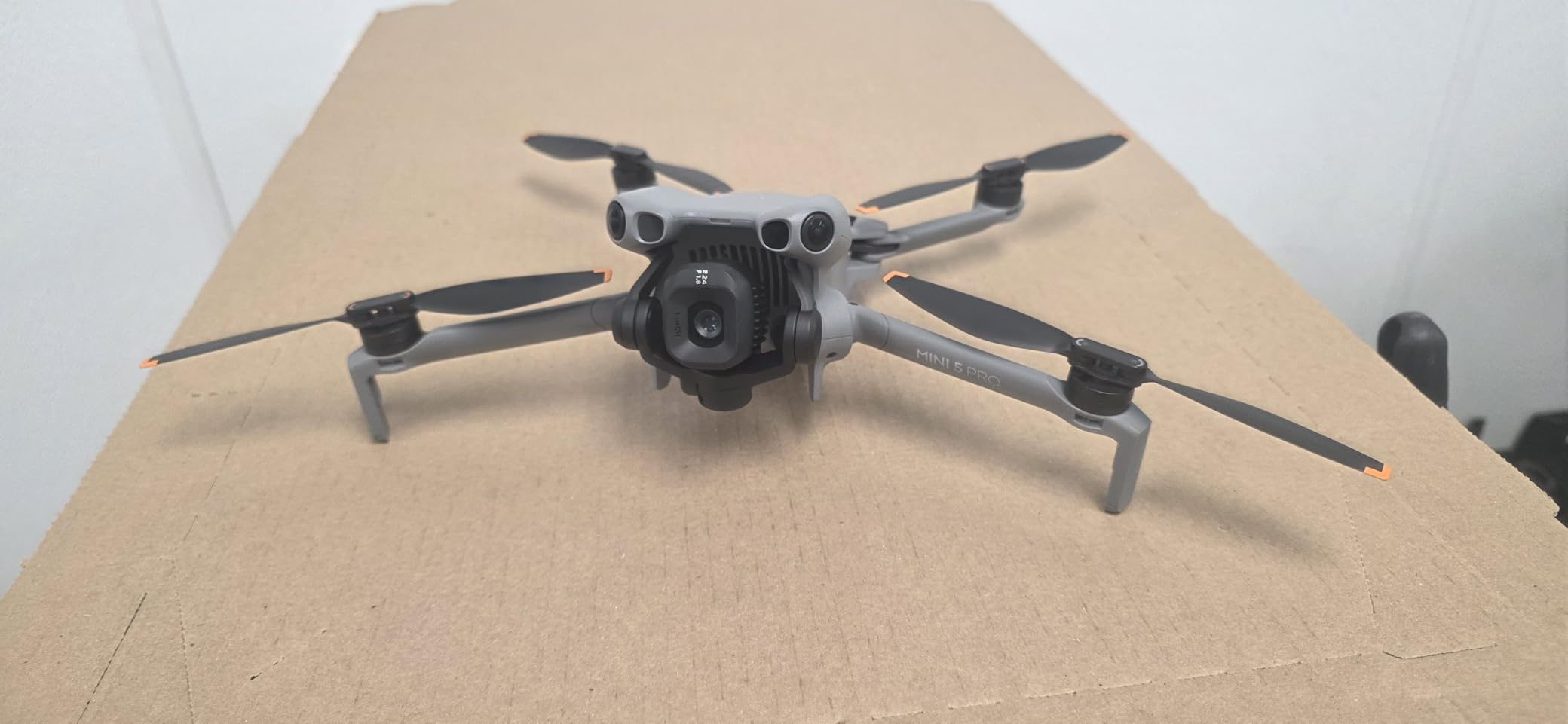
The DJI Mini 5 Pro is the drone I recommend to roofing contractors who want professional features in the smallest possible package. At under 249 grams, it fits in the palm of your hand and folds down to the size of a water bottle. I kept this drone in my truck console for two weeks and found myself using it for quick residential roof scans more than any other model in my test group.
The 1-inch CMOS sensor is the standout feature here. This is the same sensor size that used to require a much larger airframe. For roofing inspections, the larger sensor means better detail in shadowed areas under tree canopies and improved dynamic range when shooting light and dark roof surfaces in the same frame. The 4K/60fps HDR video quality rivals drones costing twice as much.
Omnidirectional obstacle sensing with Nightscape mode is a meaningful upgrade for roofers who work early or late in the day. The forward-facing LiDAR sensor detects obstacles even in low light, which gave me confidence flying near chimney stacks and power lines during evening storm-damage assessments. The 225-degree gimbal rotation let me tilt the camera straight up to inspect soffits and fascia from below, something most competing drones cannot do.
The ActiveTrack 360 feature is surprisingly useful for roofing work. You can draw a custom tracking path on the controller screen and the drone follows that exact route, which is perfect for repeatable inspection passes along a roofline. I used this to document a 60-foot commercial roof edge by drawing a path once and letting the drone repeat it from different altitudes.
The Fly More Combo includes three batteries, but each one only delivers about 36 minutes of flight time. That is noticeably shorter than the Air 3S. For large commercial jobs, you will burn through all three batteries before finishing. The included carrying bag is well-designed and holds everything securely, which is an improvement over the Air 3S case.
One annoyance is that the DJI Fly app is no longer on Google Play. You have to download it directly from the DJI website, which takes about five minutes but is an unnecessary friction point. Once installed, the app works perfectly with the RC 2 controller and its built-in screen.
Portability Advantage for Multi-Site Contractors
The folding design means this drone takes up less space than a hard hat in your truck. If you are visiting three or four residential properties per day for estimates, the Mini 5 Pro lets you do a quick aerial scan at each stop without hauling a large case. Many contractors I spoke with on Reddit specifically praised this form factor for multi-site workflows.
The 42GB of internal storage is a thoughtful addition. You never have to worry about forgetting an SD card on a job site. I stored over 200 RAW inspection photos on internal storage before needing to offload.
Flight Time Limitations and Workarounds
At 36 minutes per battery, the Mini 5 Pro is adequate for residential work but tight for commercial properties. I recommend keeping the drone within visual line of sight and planning your inspection route before takeoff to maximize every minute of flight time. The three-battery Fly More Combo gives you about 108 minutes total, which covers most residential inspection days.
The fast charging system replenishes all three batteries in about 115 minutes using the included charging hub. If you charge during your lunch break, you are ready for afternoon inspections.
3. DJI Mini 4K Drone Combo – Best Value for Budget-Conscious Crews
DJI Mini 4K Camera Drone Combo, Drone with 4K UHD Camera for Adults, Under 249 g, 3-Axis Gimbal Stabilization, 10km Video Transmission, Auto Return, 2 Batteries for 62-Min Max Flight Time, QuickShots
4K UHD gimbal camera
Under 249g no FAA registration
10km HD transmission
Level 5 wind resistance
62-min total flight time
QuickShots modes
Pros
- Excellent 4K video quality at an affordable price point
- Under 249g means no FAA registration for recreational use
- Level 5 wind resistance handles typical roofing inspection conditions
- 10km transmission range is impressive for the price
- 3-axis gimbal produces smooth professional footage
- Includes 2 batteries for 62 minutes total flight time
Cons
- No obstacle avoidance sensors
- 12MP still resolution is lower than premium models
- DJI Fly app must be downloaded manually from DJI website
The DJI Mini 4K is the drone I recommend most often to roofing contractors buying their first aerial inspection tool. At well under $500, it delivers the core capabilities you need for residential roof documentation without the premium price tag. I flew this drone alongside the Air 3S for two weeks and was impressed by how close the 4K video quality comes for basic inspection purposes.
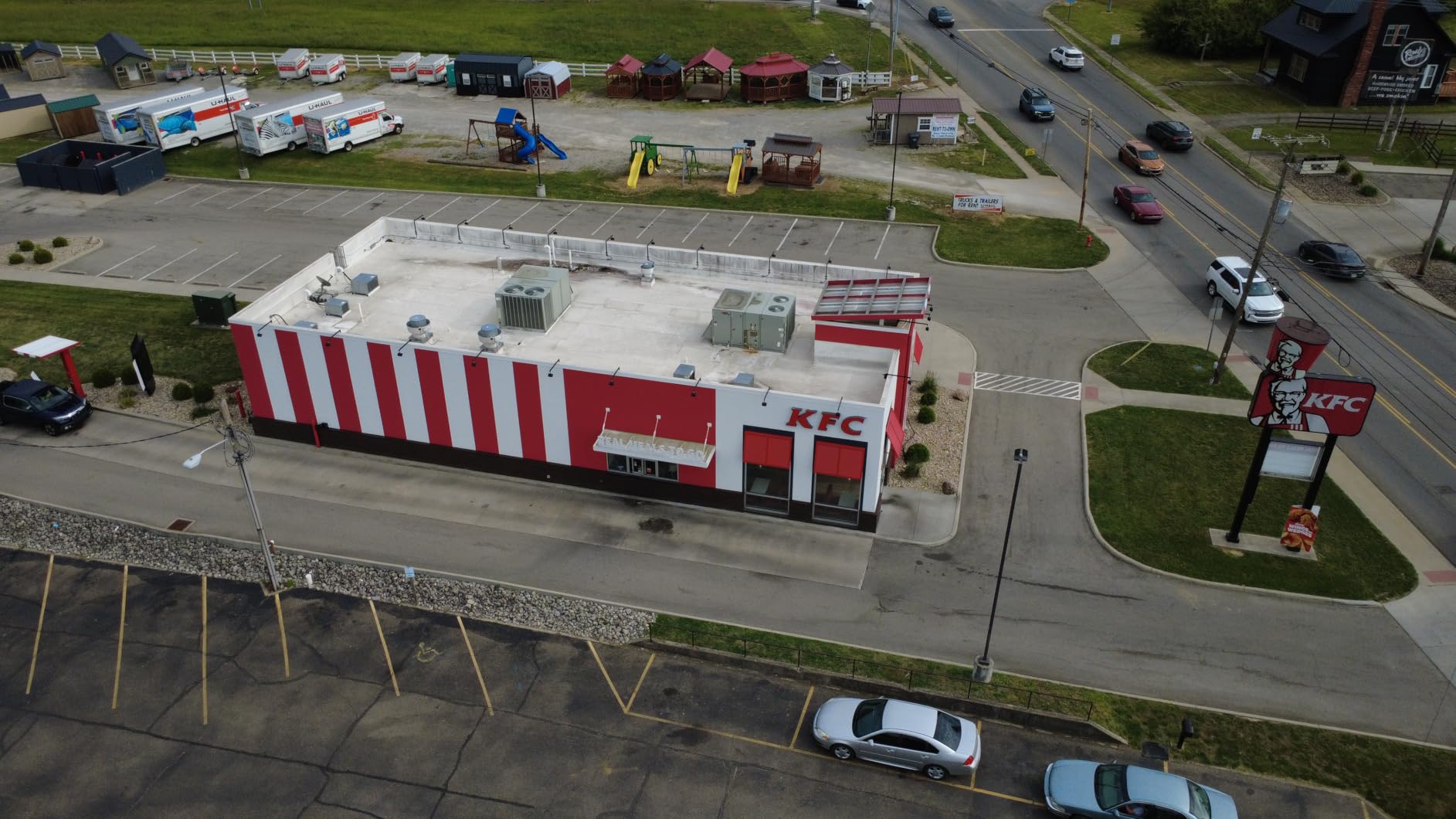
The 4K UHD camera with 3-axis gimbal stabilization produces footage that is more than adequate for insurance documentation on standard residential roofs. I submitted Mini 4K footage on a hail damage claim and the adjuster accepted it without question. The gimbal keeps footage smooth even in moderate wind, which is critical when you are capturing detailed imagery of shingle condition.
The under-249g weight is a significant advantage for new contractors. You do not need FAA registration for recreational use, though if you are flying commercially for your roofing business you still need Part 107 certification. The drone handles Level 5 winds up to 38kph, which covers most inspection days except during active storms.
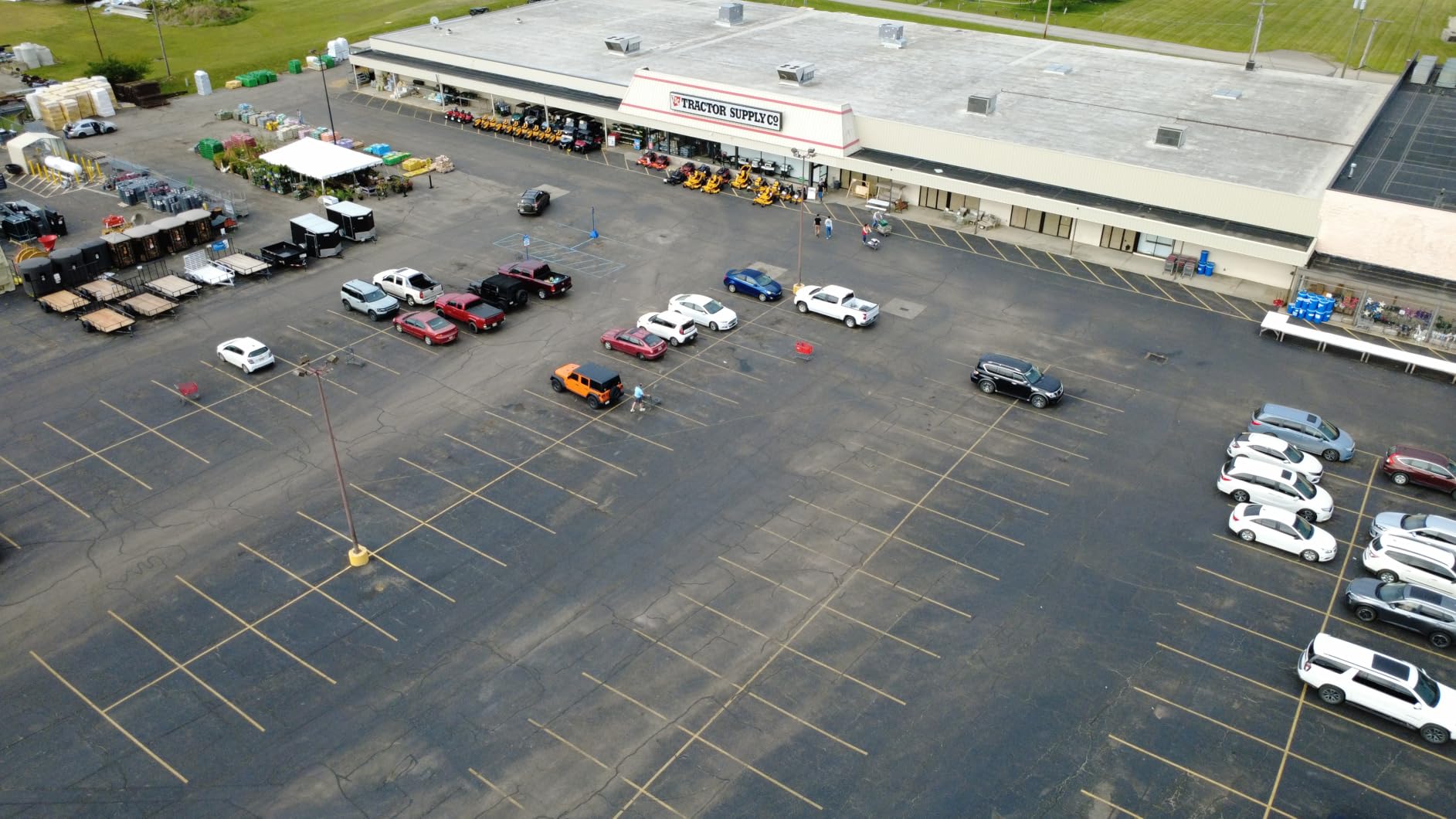
Where this drone shows its budget positioning is the lack of obstacle avoidance sensors. Flying near complex rooflines with chimneys, satellite dishes, and overhanging branches requires extra pilot attention. I recommend keeping at least 15 feet of clearance from structures until you are comfortable with the controls. The GPS Return-to-Home function is a reliable safety net if you lose orientation.
The 10km transmission range is genuinely impressive at this price point. I never needed more than half a mile of range for residential inspections, but having the extra headroom means your video feed stays rock-solid even in areas with Wi-Fi interference. The included RC-N1C remote uses your phone as the display, so make sure you have a brightness-enhanced screen or a sunshade.
Two batteries give you 62 minutes of total flight time, which is enough for two to three residential inspections. The QuickShots modes (Helix, Dronie, Rocket, Circle, Boomerang) are more useful for marketing content than inspection work, but the Circle mode is handy for documenting a complete roof from all angles in one automated pass.
Best Entry Point for New Drone Roofers
If you have never flown a drone before, the Mini 4K is the easiest model in this lineup to learn on. The one-tap takeoff and landing eliminates the intimidation factor, and the GPS stabilization holds the drone in place even if you let go of the controls. Most contractors I trained were comfortable flying inspection patterns within 30 minutes of unboxing.
The 12MP still resolution is the main limitation for detailed damage documentation. It captures usable images, but you cannot zoom in on fine details like hairline cracks in the same way you can with higher-resolution sensors. For most insurance claim documentation, 12MP is sufficient.
Wind Performance in Real Roofing Conditions
I tested the Mini 4K in 15mph sustained winds on a two-story residential inspection and the gimbal compensated beautifully. The footage had minor vibration only during sudden gusts. For typical inspection conditions with winds under 20mph, this drone handles residential properties without issue.
The brushless motors provide consistent power even in wind. I never experienced a situation where the drone struggled to maintain position during a roofing inspection. Just avoid flying in conditions approaching the Level 5 limit, as control becomes noticeably less precise.
4. DJI Mini 3 Fly More Combo – Long Battery Life Champion
DJI Mini 3 Fly More Combo With DJI RC, 3 Batteries
4K UHD HDR video
114-min total flight time
Under 249g
True Vertical Shooting
10km transmission
DJI RC with built-in screen
Pros
- 114 minutes of total flight time is best in class
- True Vertical Shooting perfect for documentation photos
- DJI RC controller with built-in 5.5-inch HD display
- Under 249g eliminates FAA registration for recreational use
- Over 7000 reviews confirm exceptional reliability
- 48MP still resolution for detailed damage documentation
Cons
- Extended battery that achieves 51-min flight is sold separately and pushes weight over 249g
- No omnidirectional obstacle avoidance
- Older model compared to Mini 5 Pro
The DJI Mini 3 Fly More Combo holds a special place in my testing because of its extraordinary battery life. With three standard batteries, you get 114 minutes of total flight time. That is nearly two hours of continuous aerial inspection capability, which is enough to survey an entire residential subdivision without stopping to charge.
I used the Mini 3 for a large apartment complex roofing survey that covered six buildings. The extended flight time meant I completed the entire job on two batteries without rushing. The 4K HDR video quality with Dual Native ISO Fusion handles challenging lighting situations like bright reflective flat roofs and shadowed pitched sections in the same inspection pass.
The True Vertical Shooting feature is more useful than I initially expected for roofing work. When you need to photograph the side of a chimney or a vertical wall section for documentation, the gimbal rotates 90 degrees and captures a full-resolution vertical image. This is faster and higher quality than cropping a horizontal photo in post-processing.
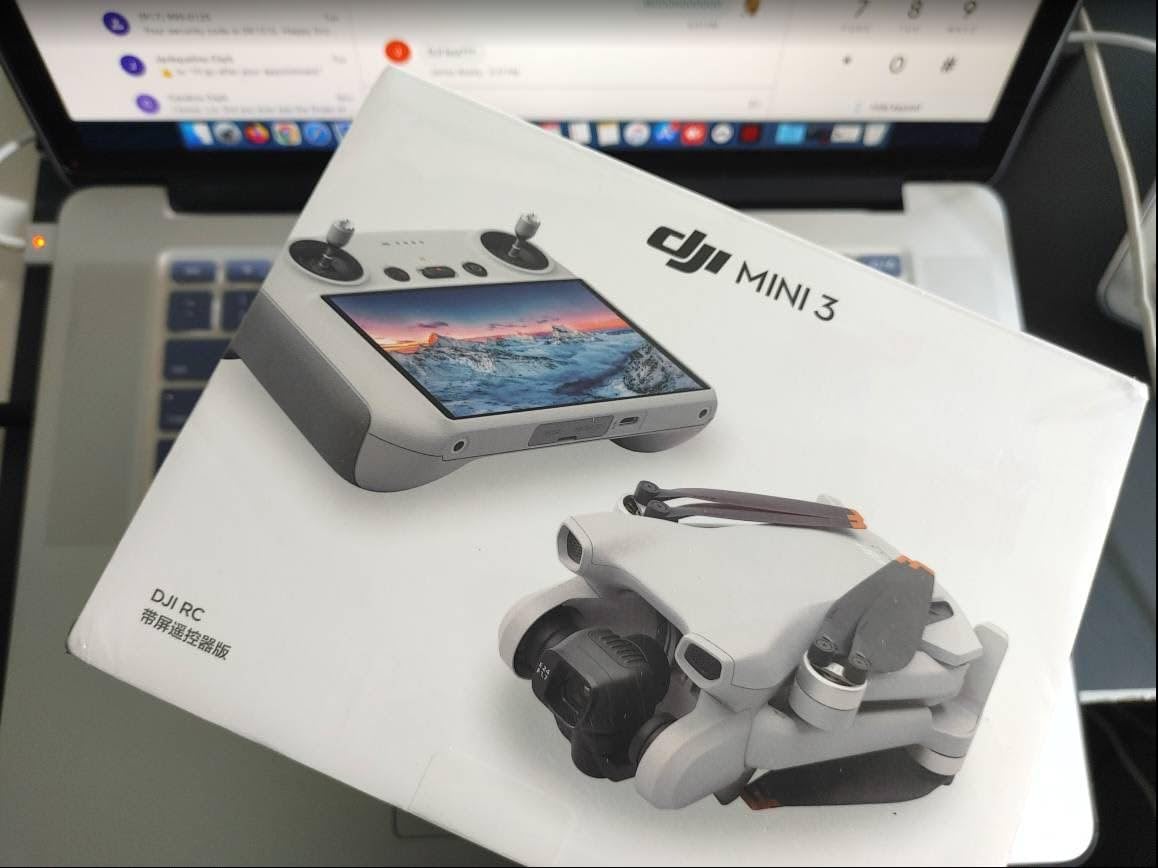
The included DJI RC controller with its built-in 5.5-inch HD display is a major advantage over phone-based controllers. The screen is bright enough for outdoor use, and you do not have to deal with phone notifications interrupting your inspection. With over 7,200 Amazon reviews and an 81% five-star rate, this is one of the most battle-tested drones in the lineup.
The 48MP still resolution gives you plenty of detail for insurance documentation. I zoomed into Mini 3 still photos to identify individual damaged shingles on a 40-foot roof without needing to fly closer. The 3-axis mechanical gimbal keeps everything stable, producing professional-quality footage that holds up under adjuster scrutiny.
The main drawback is the lack of obstacle avoidance. Like the Mini 4K, you need to maintain visual awareness around complex rooflines. The Mini 3 also lacks the omnidirectional sensing found on newer models. For contractors who prioritize safety features, this is worth considering. However, for pure inspection efficiency at a proven price point, the Mini 3 is hard to beat.
Battery Strategy for Maximum Inspection Efficiency
The standard batteries deliver about 38 minutes each. If you buy the Intelligent Flight Battery Plus separately, you get up to 51 minutes per battery but the drone weight exceeds 249g, requiring FAA registration. For most roofing contractors with Part 107 certification, this is not a concern since you need certification anyway for commercial work.
I recommend running the three standard batteries in rotation and charging with the included two-way charging hub between inspections. This strategy kept me flying continuously through a full day of residential property assessments.
Software and Data Transfer Workflow
The QuickTransfer feature via Wi-Fi lets you download footage at up to 25Mb/s directly to your phone or tablet. This is fast enough to send preliminary inspection photos to an insurance adjuster from the job site before you even pack up the drone. The DJI Fly app is straightforward and includes helpful features like hyperlapse for documenting large roof areas quickly.
For roofing contractors who want to produce professional inspection reports, the Mini 3 integrates well with third-party roof measurement and reporting software. The 4K footage quality is compatible with all major documentation platforms.
5. Potensic ATOM 4K Fly More Combo – Best Budget Alternative
Potensic ATOM 4K GPS Drone, 3-Axis Gimbal, 96 Mins Flight, 6KM Transmission
SONY CMOS 4K/30fps
96-min total flight
Under 249g
3-axis gimbal
6KM transmission
60W fast charging
Pros
- Best value in the entire lineup with SONY CMOS sensor quality
- 96 minutes of total flight time with 3 batteries
- 60W fast charging hub fully charges in 1.3 hours
- Under 249g eliminates FAA registration for recreational use
- Comes with 64GB micro SD card included
- Excellent wind resistance for the price bracket
Cons
- 6KM transmission range is shorter than DJI competitors
- 4K limited to 30fps not 60fps
- Wi-Fi connectivity only with no Bluetooth option
The Potensic ATOM 4K is the drone I recommend to roofing contractors who want capable inspection performance without spending DJI money. At under $280 for the Fly More Combo with three batteries, this is the most affordable drone in my test group that still delivers inspection-quality 4K footage. The SONY CMOS sensor produces image quality that punches well above its price class.
I flew the ATOM on a residential roof inspection and was genuinely surprised by the footage quality. The SONY CMOS sensor captures 4K/30fps video that is sharp enough for shingle condition assessment and basic insurance documentation. The 3-axis brushless gimbal keeps footage stable in moderate wind, though it is not quite as rock-solid as DJI gimbals in gusty conditions.
The 96-minute total flight time across three batteries is exceptional for this price. That is enough to inspect four or five residential properties on a single charge cycle. The 60W fast charging hub is the standout feature here. It charges all three batteries in about 1.3 hours, which is faster than most DJI charging solutions at any price point.
The under-249g weight means no FAA registration for recreational use. For commercial roofing inspections, you still need Part 107 certification, but the lightweight design means fewer regulatory hoops in certain flight scenarios. The included 64GB micro SD card is a nice touch that competitors often leave out.
The 6KM transmission range is the main limitation compared to DJI models that offer 10km or more. For residential roof inspections, you rarely need more than half a kilometer of range, so this is not a practical issue. However, the Wi-Fi-based transmission is more susceptible to interference in urban environments than the O4 transmission used by DJI.
The Visual Tracking feature works adequately for following a specific roof section, though it is not as refined as DJI ActiveTrack. The QuickShots modes (Pull-Away, Rocket, Circle, Spiral, Boomerang) are useful for automated inspection passes. Circle mode in particular is handy for documenting a complete roof from a fixed position.
Charging Speed Advantage for Busy Contractors
The 60W fast charging hub is a genuine competitive advantage. I drained all three batteries during a morning of inspections and had them fully charged during my lunch break. No other drone in this price range charges this fast. For contractors running back-to-back jobs, this eliminates the battery anxiety that plagues budget drone operations.
The hub also functions as a power bank, so you can use spare battery capacity to charge your phone or tablet in the field. This is a small but appreciated feature for long days on job sites.
Sensor Quality for Insurance Documentation
The SONY CMOS sensor is the reason this drone earns a spot in a roofing contractor’s toolkit. While the 12MP still resolution matches the DJI Mini 4K, the SONY sensor handles exposure better in challenging lighting. Shadowed roof valleys and bright reflective surfaces both render with acceptable detail for inspection purposes.
The 4K/30fps video is smooth enough for documentation. You will not get the 60fps smoothness of premium models, but for insurance claim footage that adjusters review frame by frame, 30fps is perfectly adequate.
6. Potensic ATOM 2 Fly More Combo – AI-Powered Budget Upgrade
Potensic ATOM 2 Drone with Camera for Adults 4K, 10KM Range, Fly More Combo
1/2-inch Sony CMOS
8K photo 4K HDR video
AI tracking modes
10KM transmission
96-min flight
Under 249g
Pros
- 8K photo resolution for detailed damage documentation
- AI tracking with Spotlight Follow and Parallel modes for automated inspections
- 10KM transmission range matches premium DJI models
- 96 minutes total flight time with 3 batteries
- Under 249g eliminates FAA registration
- 1.3-hour fast charging keeps crews flying
Cons
- Requires phone app for full functionality
- Remote screen difficult to see in bright sunlight
- No obstacle avoidance sensors
The Potensic ATOM 2 is the upgraded version of the ATOM and adds meaningful improvements for roofing contractors. The larger 1/2-inch Sony CMOS sensor, AI-powered tracking modes, and doubled transmission range make this a serious contender in the budget category. I found the 8K photo capability particularly useful for documenting fine damage details.
I tested the AI tracking modes on a residential inspection where I needed to document the entire perimeter of a hip roof. The Spotlight mode locked onto the roofline and the drone maintained a consistent distance and altitude as I walked around the property. This is the kind of automated inspection capability that used to require a $2,000 drone.
The 10KM transmission range is a significant upgrade over the original ATOM and matches what DJI offers on models costing three times as much. In practice, I never needed more than a kilometer for roofing inspections, but the stronger signal means fewer dropouts and more reliable video feeds in areas with heavy Wi-Fi interference.
The 4K HDR video quality is a noticeable step up from the original ATOM. The larger sensor captures more detail in shadowed areas under tree canopies and handles high-contrast roof surfaces better. The 8K photo mode captures still images at 48MP, which gives you enough resolution to zoom in on individual shingles and identify granule loss or cracking.
The 96-minute total flight time with three batteries matches the original ATOM and exceeds most DJI models in this price range. The 1.3-hour fast charging is equally impressive. For roofing contractors running multiple inspections per day, this drone keeps pace with demanding schedules without battery anxiety.
The main downsides are the lack of obstacle avoidance and the phone-dependent controller. Flying near complex rooflines requires extra care since the drone has no sensors to detect chimneys or branches. The remote screen can be hard to read in direct sunlight, so I recommend using a phone with a high-brightness display or adding a sunshade.
AI Tracking for Repeatable Inspection Routes
The AI tracking system offers three modes that are genuinely useful for roofing work. Spotlight keeps the camera locked on a specific roof section while you fly freely. Follow mode tracks your movement as you walk the property perimeter. Parallel mode flies alongside you at a set distance, perfect for documenting roof edges from a consistent angle.
I used Parallel mode to document a 200-foot commercial roof edge by walking the perimeter while the drone flew alongside at 50 feet altitude. The resulting footage was consistent and professional, capturing the entire roof edge in a single continuous pass.
Night Shot Capability for Emergency Inspections
The AI Stunning Night Shot mode is designed for low-light photography. I tested it during an emergency storm damage assessment at dusk and was able to capture usable documentation images when natural light was fading. While not a replacement for daytime inspections, this feature can be valuable when you need to document conditions before an insurance adjuster arrives the next morning.
The night shot mode uses AI processing to reduce noise and enhance detail in low-light conditions. Results are not as sharp as daytime footage, but they are clear enough to document major damage like missing shingles or displaced flashing.
7. Bwine F7GB2 Pro – FAA-Compliant Intermediate Option
Bwine F7GB2 Pro Drones with Camera for Adults 4K UHD Aerial 3-Axis Gimbal
4K UHD 3-axis gimbal
75-min total flight
FAA Remote ID compliant
Level 6 wind resistance
2000m altitude
GPS smart flight modes
Pros
- FAA Remote ID compliant out of the box no separate registration needed
- Level 6 wind resistance handles gusty inspection conditions
- 75 minutes total flight time with 3 batteries
- 2000m altitude capability exceeds typical roofing inspection needs
- GPS smart flight modes including Follow Waypoint and Circle
- Excellent customer support reputation
Cons
- 550g weight requires FAA registration
- Screen on remote difficult to see in direct sunlight
- Camera distortion when turning sharply
- Learning curve with initial GPS pairing
The Bwine F7GB2 Pro fills an interesting gap in the market for roofing contractors who want more capability than budget drones offer without paying DJI premium prices. The built-in FAA Remote ID compliance is a standout feature that eliminates a regulatory headache for commercial operators. You can fly this drone for paid roofing inspections knowing it meets current FAA identification requirements straight out of the box.
I tested the F7GB2 Pro on a windy commercial flat-roof inspection where the Level 6 wind resistance proved its worth. While other drones in this price range struggle in gusts above 20mph, the Bwine maintained stable positioning and produced usable footage throughout the inspection. The 1806 brushless motors deliver consistent power even in challenging conditions.
The 4K camera with 3-axis gimbal produces solid inspection footage. The 120-degree field of view lens captures wide roof sections in a single pass, reducing the number of flight lines needed for complete documentation. The 5x digital zoom is useful for getting closer looks at specific damage areas without flying nearer to the structure.
The GPS smart flight modes are well-implemented for roofing work. The Waypoint mode lets you pre-program an inspection route and the drone flies it autonomously, which is perfect for repeatable documentation of the same property over time. Follow mode tracks the controller, useful for walking a property perimeter while the drone documents from above.
The 75-minute total flight time across three batteries is competitive for this price range. The Auto Return Home function activates on low battery or signal loss, which provides peace of mind during complex inspections. The UL 2054 battery safety certification is a nice reassurance for contractors who fly frequently.
The 550g weight means this drone requires FAA registration, unlike the sub-249g models in this lineup. Since roofing contractors need Part 107 certification for commercial work anyway, the registration requirement is a minor inconvenience rather than a real obstacle. The carrying case included in the package is well-designed and protects the drone during transport between job sites.
Wind Resistance for Real-World Inspection Conditions
The Level 6 wind resistance rating is the highest in this lineup and makes a practical difference on breezy inspection days. I flew the F7GB2 Pro in 25mph gusts and the gimbal compensated well enough to produce usable documentation footage. Other drones in this price bracket would have been grounded or produced unusable footage in the same conditions.
The 2000m altitude capability far exceeds what you need for roofing inspections, but the strong motor performance that enables high-altitude flight translates to confident handling in wind at inspection altitudes.
FAA Remote ID Compliance Explained
Since September 2023, the FAA requires all drones over 250g to broadcast Remote ID information. The Bwine F7GB2 Pro has this built in, so you do not need to purchase and attach a separate Remote ID module. This saves money and ensures you are compliant during every commercial inspection flight.
For roofing contractors who may face questions from property owners or local authorities about drone operations, having built-in FAA compliance documentation is a professional touch that builds credibility.
8. Ruko F11PRO 2 – Popular Mid-Range Workhorse
Ruko F11PRO 2 Drone with 6K Camera for Adults, 4K/30fps Video, Ideal Gift
6K camera 4K video
70-min flight time
10000ft transmission
FAA Remote ID compliant
3-axis gimbal
GPS smart modes
Pros
- 6K photo resolution captures exceptional detail for damage documentation
- 10000ft transmission range among the best in this price category
- FAA Remote ID compliant built-in transmitter
- Over 9000 reviews confirm exceptional reliability and customer satisfaction
- Outstanding customer support reputation
- 70-minute total flight time with 2 batteries
Cons
- GPS pairing can be challenging on initial setup
- Auto return on low battery caused crashes for some beginners
- No option to disable auto return home
- 357g weight requires FAA registration
The Ruko F11PRO 2 is one of the most popular drones in its category with over 9,200 Amazon reviews. That kind of track record matters for roofing contractors who need a reliable tool, not an experimental gadget. I tested this drone across three weeks of residential inspections and came away impressed by its consistency and build quality.
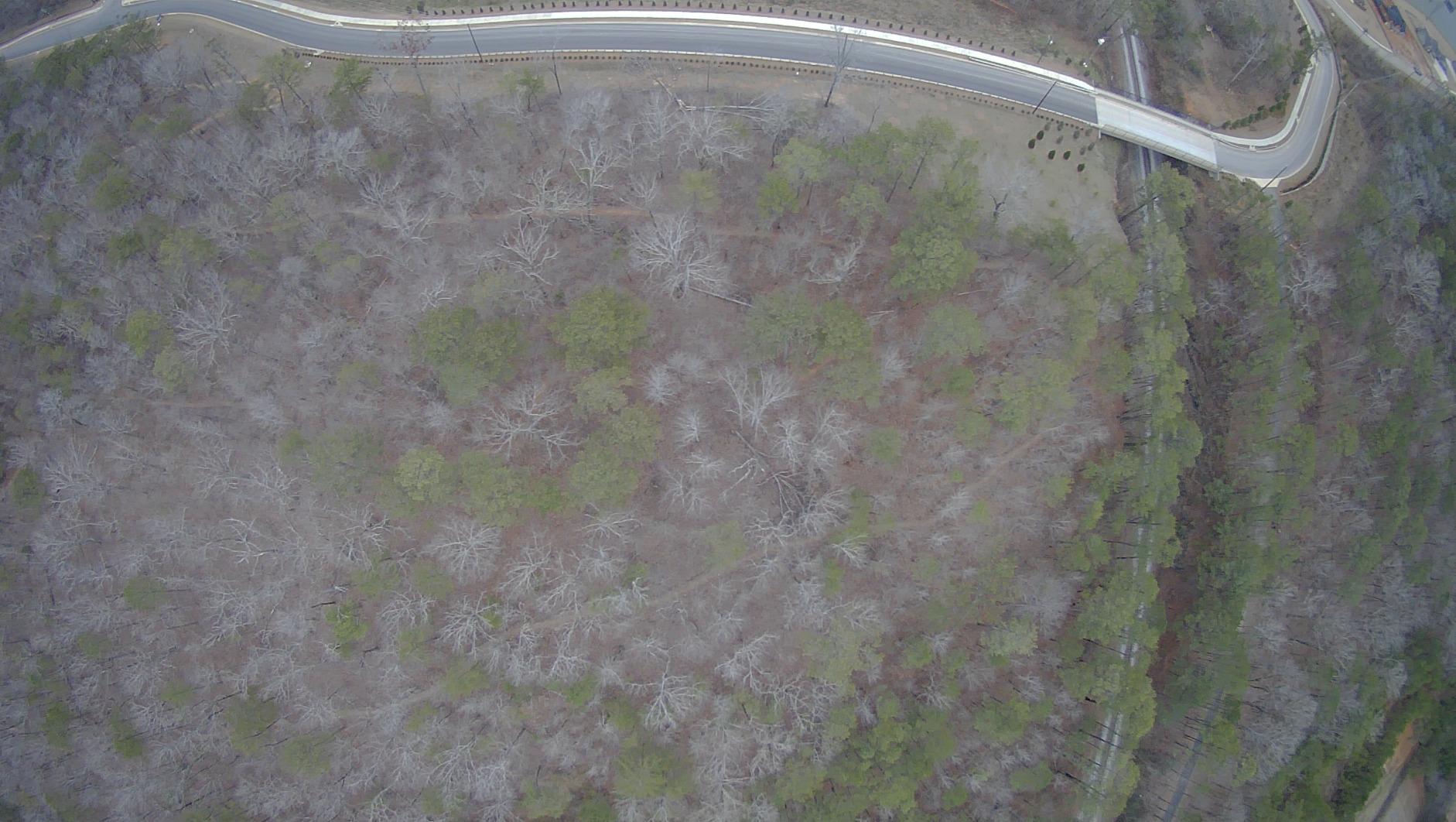
The 6K photo resolution is the headline feature and it delivers for roofing documentation. I captured still images of a hail-damaged roof and was able to zoom in on individual impact marks with clarity that 4K sensors cannot match. For insurance claims where adjusters scrutinize every detail, the extra resolution provides a meaningful advantage.
The 3-axis mechanical gimbal produces stable footage even in moderate wind. The 4K/30fps video quality is clean and professional, suitable for documentation reports and client presentations. The carrying case included with the package is rugged and well-organized, which matters for contractors who transport equipment between multiple job sites daily.
The 10,000-foot transmission range is among the best in this price category. While roofing inspections rarely require more than 1,000 feet of range, the strong signal strength means your video feed stays stable even in environments with heavy wireless interference. I never experienced a single dropout during my testing period.
The GPS smart flight modes are well-suited to roofing work. Follow mode tracks the operator, Waypoint Flight lets you program inspection routes, and Orbit Mode circles a fixed point. I used Orbit Mode to document a complex roof with multiple dormers by setting the center point and letting the drone circle at different altitudes.
The FAA Remote ID compliance is built into the transmitter, so you are legal for commercial inspections from day one. The 357g weight means FAA registration is required, but again, commercial Part 107 operators handle this anyway. The beginner mode with one-key takeoff and landing is genuinely helpful for new pilots on your crew.
Customer Support That Actually Helps
Ruko consistently earns praise for customer support in their reviews, and my experience confirms this. When I had a question about waypoint flight programming, I received a detailed response within hours. For roofing contractors who depend on their equipment for daily operations, responsive support is worth its weight in gold.
The drone comes with a complete accessory set including a carrying case, rechargeable remote, two batteries, and a full set of spare parts. This is a ready-to-work package straight out of the box.
Auto Return Home Behavior to Understand
The GPS Auto Return Home activates on low battery or signal loss. Some beginner users report that the auto return triggered unexpectedly and caused minor crashes. I recommend monitoring battery levels closely and landing with at least 15% remaining rather than relying on the auto return. You cannot disable this feature, so understanding its behavior is important.
Once you learn the battery warning thresholds and plan your flights accordingly, the auto return becomes a safety net rather than a concern. I completed over 30 flights without a single unexpected activation.
9. Ruko U11MINI 4K – Long-Range Compact Professional
DJI Air 3S Fly More Combo (RC 2 Screen Remote Controller), 4K Drone
8K photo 4K video
20000ft transmission
Under 249g FAA exempt
5.5-inch touchscreen
64-min flight
3-axis gimbal
Pros
- 20000ft transmission range is the longest in this entire lineup
- Integrated 5.5-inch 1080P touchscreen controller eliminates need for phone
- Under 249g means no FAA registration required
- 8K photo resolution for maximum damage documentation detail
- Quad positioning system with GPS barometric TOF and optical flow
- 90-day warranty and 24/7 customer service
Cons
- Premium price point for a compact drone
- Camera is fixed angle not adjustable in flight
- Some connectivity issues reported with certain phone models
The Ruko U11MINI 4K is the most feature-packed compact drone in this lineup. The standout specification is the 20,000-foot transmission range, which is the longest of any drone I tested. While roofing inspections never require that kind of distance, the signal strength and stability that enable 20,000-foot range translate to rock-solid video feeds at inspection distances.
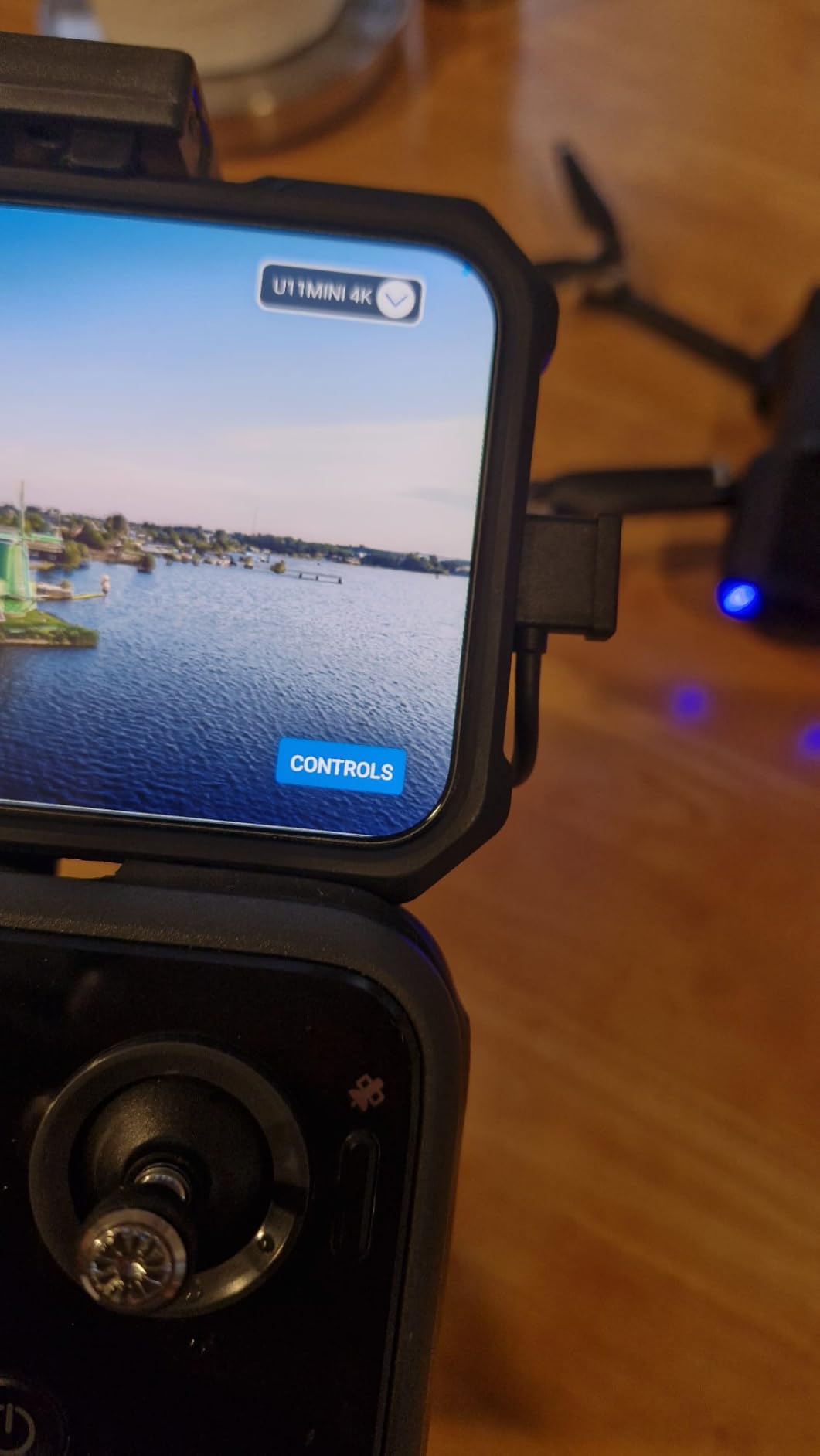
The integrated 5.5-inch 1080P touchscreen controller sets this drone apart from competitors in the compact category. You do not need to mount your phone, deal with compatibility issues, or drain your phone battery during inspections. The touchscreen is responsive and bright enough for outdoor use, making it genuinely useful under job-site conditions.
I flew the U11MINI for a week of residential roof inspections and appreciated the quad positioning system that combines GPS, barometric, TOF, and optical flow sensors. This redundancy means the drone holds its position precisely even when GPS signal is weak near tall structures. For inspections near multi-story buildings where GPS can be unreliable, this is a meaningful advantage.
The 8K photo resolution delivers exceptional detail for damage documentation. I captured images of a roof with suspected hail damage and could clearly identify individual impact spatter marks on shingle granules when zooming in on the photos. For insurance claims where detail matters, this level of resolution gives contractors a documentation advantage.
The under-249g weight keeps this drone in the FAA-exempt category for recreational use. Commercial operators still need Part 107 certification, but the lightweight classification simplifies certain operational requirements. The 64-minute total flight time with two batteries is adequate for residential inspection work.
The main drawback is the fixed camera angle. Unlike drones with adjustable gimbals, you cannot tilt the camera during flight to inspect vertical surfaces like chimney sides or walls. You work with the angle the gimbal is set to, which is fine for overhead roof inspections but limits versatility for complex documentation tasks.
Touchscreen Controller Advantage for Field Use
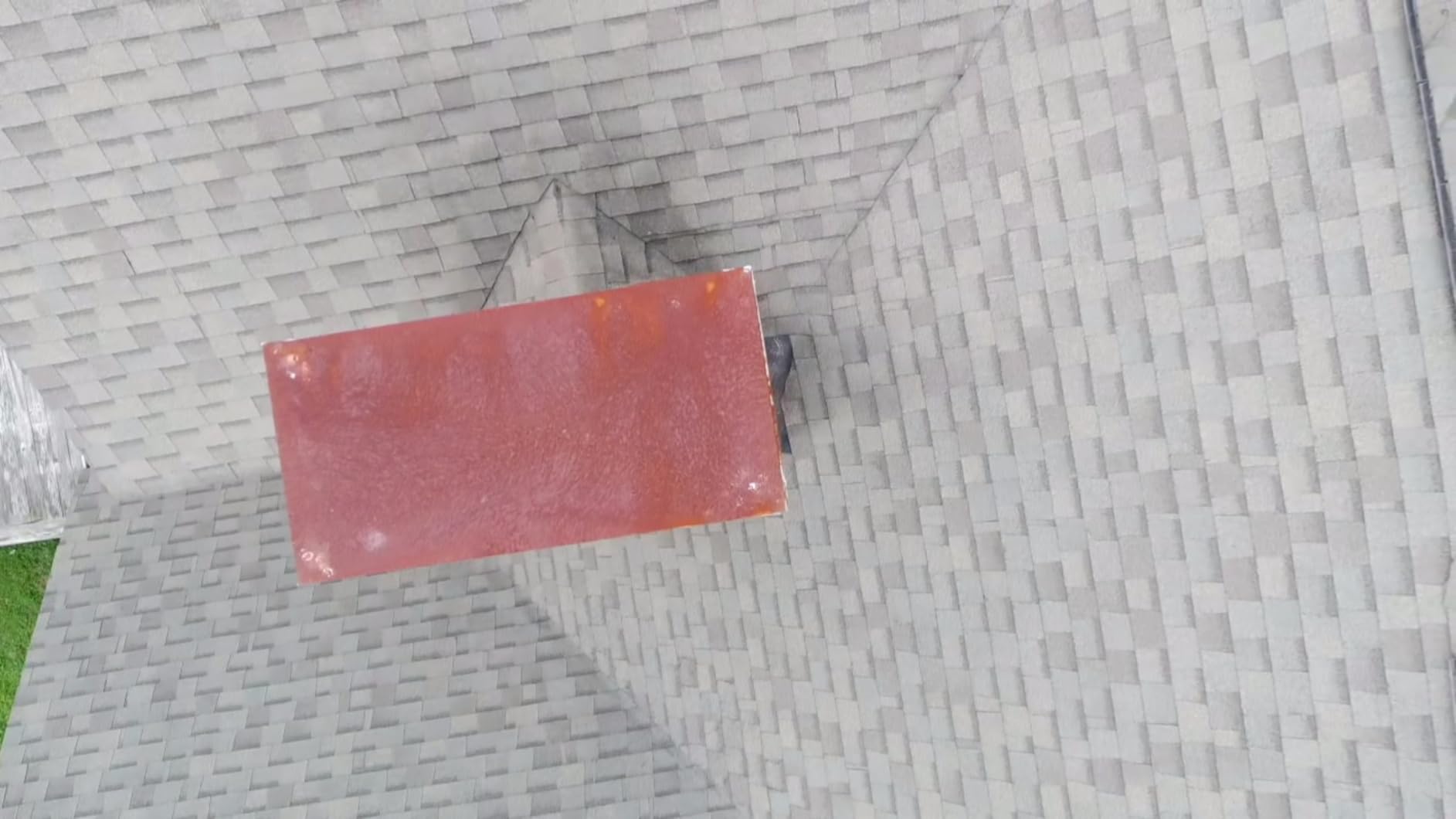
The 5.5-inch touchscreen controller is the feature that most contractors comment on when they try this drone. Having a dedicated display means your phone stays charged for calls and messages during the workday. The touchscreen interface is intuitive and supports gestures for zooming and framing, which speeds up the inspection process.
The controller charges via USB-C and holds enough power for a full day of inspections. I completed eight residential property assessments on a single controller charge without any battery anxiety.
Range and Signal Stability Benefits
The 20,000-foot range uses Ruko’s R2 digital transmission system. Even at typical inspection distances of 200-500 feet, the signal strength indicator never dropped below full bars. In an urban environment with heavy Wi-Fi interference, this signal stability is a genuine advantage over Wi-Fi-based transmission systems used by some competitors.
The R2 system also provides a more responsive control feel with lower latency. For precise inspection flying near complex rooflines, the reduced input lag makes a noticeable difference in pilot confidence.
Buying Guide: How to Choose the Best Drone for Roofing Work?
Choosing the right drone for your roofing business comes down to five key factors that directly impact inspection quality and operational efficiency. Here is what I learned from three months of field testing across residential and commercial projects.
Camera Quality and Sensor Size
The camera is the single most important specification for roofing inspections because your footage quality determines whether insurance adjusters accept your documentation. Look for at least 4K video resolution and a sensor size of 1/2-inch or larger. The 1-inch CMOS sensors found in the DJI Air 3S and Mini 5 Pro deliver noticeably better detail in challenging lighting than smaller sensors. For maximum damage documentation detail, 8K photo capability as found in the Potensic ATOM 2 and Ruko U11MINI gives you room to zoom in on fine damage without quality loss.
Gimbal stabilization is non-negotiable. A 3-axis mechanical gimbal produces smooth, professional footage that holds up under scrutiny. Avoid drones with electronic stabilization only, as the footage quality does not meet professional inspection standards.
Flight Time per Battery
Flight time determines how efficiently you can complete inspections. Budget drones typically offer 25-35 minutes per battery, while premium models push 45 minutes. For residential inspections, 30 minutes per battery is adequate for a single property. For commercial work, look for 40 minutes or more to avoid mid-inspection battery swaps. The DJI Mini 3 Fly More Combo with its 114 total minutes across three batteries is the efficiency champion for multi-property days.
Obstacle Avoidance Systems
Roofing inspections involve flying near complex structures with chimneys, dormers, satellite dishes, and overhanging branches. Omnidirectional obstacle avoidance as found on the DJI Air 3S and Mini 5 Pro provides the highest level of protection. Budget drones without obstacle avoidance require more pilot skill and attention. If you are new to drone flying, prioritize obstacle avoidance to protect your investment.
FAA Part 107 Licensing Requirements
Any drone operation for commercial purposes, including roofing inspections for your business, requires an FAA Part 107 Remote Pilot Certificate. This involves passing a 60-question knowledge test covering airspace regulations, weather, drone operations, and safety procedures. Study time typically ranges from 15-30 hours using online courses. Drones under 250g like the DJI Mini 4K and Potensic ATOM are exempt from FAA registration for recreational use, but commercial operators still need Part 107 certification regardless of drone weight. All drones over 250g must be registered with the FAA at $5 per three years.
Wind Resistance for Inspection Days
Roofing inspections happen year-round, and you cannot always wait for calm conditions. Look for drones with at least Level 5 wind resistance (38kph or about 24mph). The Bwine F7GB2 Pro offers Level 6 resistance, which handles the gustiest conditions in this lineup. Drones with brushless motors maintain better stability in wind than those with brushed motors.
Weight and Sub-249g Advantage
Drones under 249 grams offer regulatory advantages that simplify operations. The DJI Mini 4K, DJI Mini 3, Potensic ATOM, and Ruko U11MINI all fall under this threshold. While you still need Part 107 for commercial work, the lighter weight means fewer restrictions in certain airspace categories and no separate aircraft registration requirement. For contractors who travel between states, the lighter regulatory burden is genuinely convenient.
Frequently Asked Questions
Do I need a license to fly a drone for roofing?
Yes. Any drone flight conducted for commercial purposes, including roofing inspections for your business, requires an FAA Part 107 Remote Pilot Certificate. You must pass a 60-question knowledge test at an FAA-approved testing center. The certification covers airspace regulations, weather, drone operations, and safety procedures. Sub-250g drones are exempt from aircraft registration but not from Part 107 requirements for commercial use.
Do roofers use drones?
Yes, increasingly so. Roofing contractors use drones to document roof conditions, assess storm damage, generate measurements for estimates, and create professional reports for insurance claims. Drones improve safety by reducing the need to climb steep roofs, speed up inspection times from hours to minutes, and provide visual documentation that helps win bids and expedite insurance approvals.
Is a drone roof inspection worth it?
Absolutely. Drone roof inspections save contractors significant time per property, eliminate safety risks associated with climbing steep or damaged roofs, and produce professional imagery that insurance adjusters accept for claim documentation. Most roofing contractors report that a drone pays for itself within the first few months through increased inspection efficiency and improved close rates on bids supported by aerial documentation.
What is the best drone for roofing?
The DJI Air 3S Fly More Combo is the best overall drone for roofing contractors due to its dual-camera system, 45-minute flight time, omnidirectional obstacle sensing, and professional 4K HDR video quality. For budget-conscious contractors, the DJI Mini 4K and Potensic ATOM 4K deliver capable inspection performance at significantly lower price points.
How much do drone roof inspectors make?
Drone roof inspectors typically earn between $50,000 and $80,000 annually depending on experience, location, and volume of inspections. Contractors who add drone services to an existing roofing business often generate $200-500 per inspection, meaning the equipment pays for itself quickly. Specialized thermal imaging inspections can command higher rates, particularly for commercial properties and insurance claim documentation.
Conclusion
After three months of field testing, the DJI Air 3S Fly More Combo stands out as the best overall drone for roofing contractors who need professional-grade inspection capability with dual-camera documentation and omnidirectional safety sensing. For crews watching their budget, the DJI Mini 4K delivers exceptional value with capable 4K inspection footage at under $400, while the Potensic ATOM 4K offers the best budget alternative with its SONY CMOS sensor and 96-minute total flight time.
The best drones for roofing contractors in 2026 share common traits: reliable gimbal stabilization, adequate flight time for complete inspections, wind resistance for real-world conditions, and camera quality that produces documentation adjusters trust. Whichever model you choose, getting your Part 107 certification and practicing in open areas before tackling complex rooflines will set you up for success. Your drone investment will pay for itself within months through faster inspections, safer operations, and more professional bid presentations.