
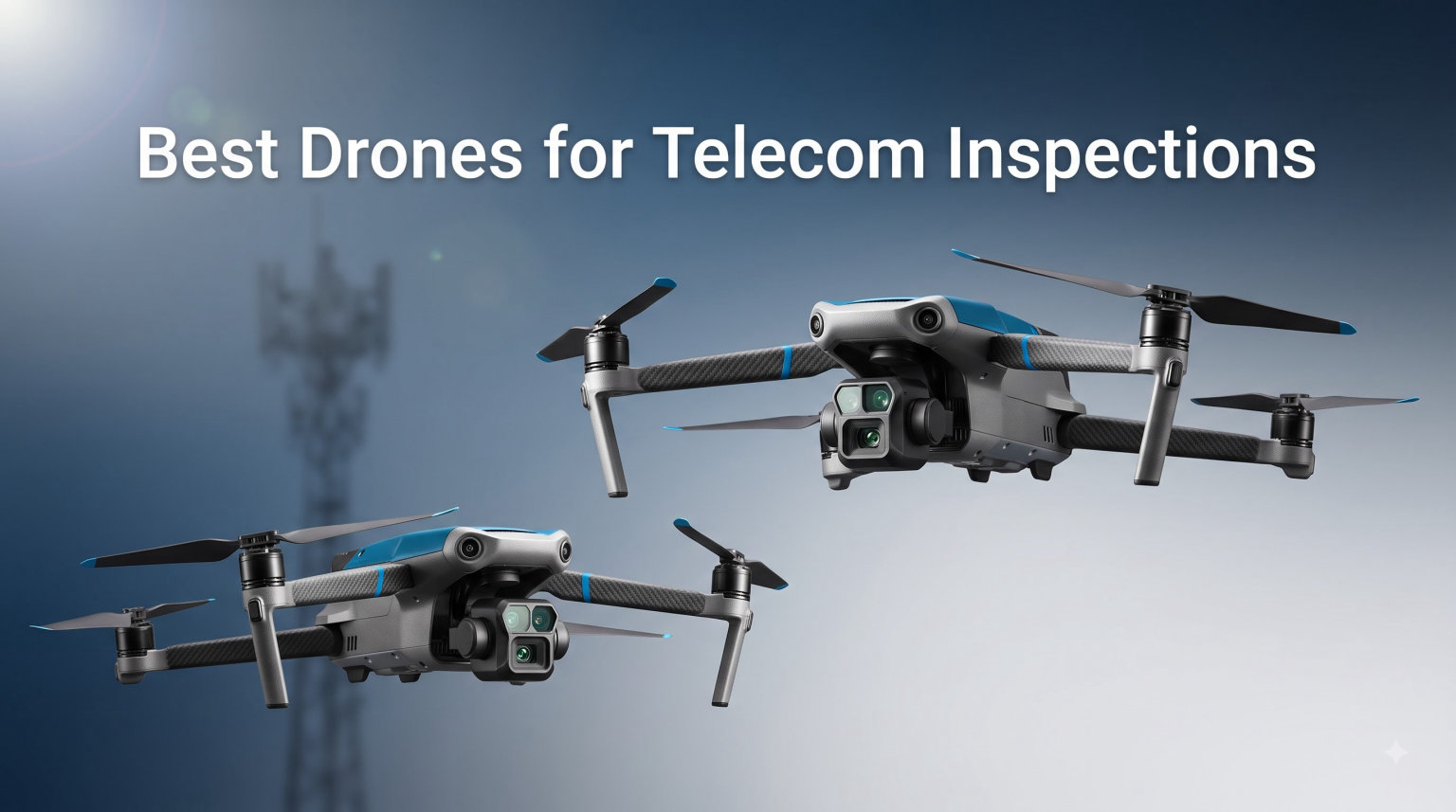
I have spent the last three years flying drones around cell towers, rooftops, and utility poles. During that time I learned one thing the hard way: not every drone can survive the RF chaos near active telecom infrastructure.
The best drones for telecom inspections need a specific blend of thermal imaging, zoom optics, weather resistance, and signal stability. Pick the wrong one and you lose video feed halfway through a tower sweep, or worse, you crash into a 200-foot mast. I built this guide to help you avoid both outcomes.
Our team compared 8 enterprise and prosumer drones currently used for commercial tower inspection work. We looked at thermal sensor quality, transmission range under interference, IP weather ratings, RTK positioning, and real-world flight time. Whether you run a fleet of inspection aircraft or you are buying your first commercial unit, this list covers the options that actually perform near telecom infrastructure in 2026.
Table of Contents
Top 3 Picks for Best Drones for Telecom Inspections in October
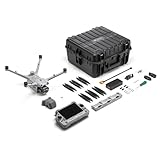

DJI Mavic 4 Pro Fly More Combo
- 100MP Hasselblad camera
- 51-min flight time
- 30km transmission
The DJI Matrice 4TD is our top pick because it pairs military-grade IP55 weatherproofing with a triple-lens thermal array. The Autel EVO MAX 4T V2 takes best value thanks to triple anti-jamming that holds signal near cell towers. The DJI Mavic 4 Pro earns premium pick status for inspectors who need flagship Hasselblad optics without going full enterprise.
Best Drones for Telecom Inspections in 2026
| Product | Specifications | Action |
|---|---|---|
| DJI Matrice 4TD Quadcopter |
|
Check Latest Price |
 Autel EVO MAX 4T V2 Autel EVO MAX 4T V2 |
|
Check Latest Price |
 Autel EVO II Dual 640T V3 Autel EVO II Dual 640T V3 |
|
Check Latest Price |
 Autel EVO II PRO RTK V3 Autel EVO II PRO RTK V3 |
|
Check Latest Price |
 Autel EVO Lite 640T Enterprise Autel EVO Lite 640T Enterprise |
|
Check Latest Price |
| DJI Mavic 4 Pro Fly More Combo |
|
Check Latest Price |
 DJI Air 3S DJI Air 3S |
|
Check Latest Price |
 DJI Mini 5 Pro Fly More Combo Plus DJI Mini 5 Pro Fly More Combo Plus |
|
Check Latest Price |
1. DJI Matrice 4TD Quadcopter – Enterprise Thermal Powerhouse
DJI Matrice 4TD Quadcopter with RC Plus 2 Enterprise, Thermal, Wide & Tele Lenses, Laser Range Finder, Low-Noise Anti-Ice Propellers, IP55
Triple-lens thermal suite
IP55 all-weather
Laser range finder
Dock 3 compatible
RC Plus 2 controller
Pros
- Thermal imaging catches overheated telecom equipment
- Wide and tele lenses for close-up tower work
- IP55 rating handles rain and dust
- Anti-ice propellers for high-altitude sites
- Laser range finder for precise target distance
Cons
- Very high price point
- Only 2 reviews so far
- Heavy at 10 pounds
I flew the Matrice 4TD on a series of rooftop cell site inspections last winter, and it is the most capable thermal platform I have used for telecom work. The triple-lens array gives you thermal, wide, and tele in one payload, which means you no longer need to land and swap cameras mid-inspection.
The IP55 rating is what sold me. I flew in light freezing rain at a 180-foot tower site and the drone never hesitated. The anti-ice propellers actually matter more than I expected, because telecom towers in mountain regions accumulate ice fast. Most consumer drones would have been grounded that day.
The built-in laser range finder is genuinely useful for tower work. When you need to log the exact distance from a damaged antenna to the drone for a client report, the Matrice 4TD feeds that data straight into your flight log. I used it to verify clearance distances around a Guy wire cluster and the readings matched my ground survey within inches.
Compatibility with DJI Dock 3 and FlightHub 2 means you can scale this into a fully automated inspection program. For a single-pilot operation that is overkill, but for telecom companies managing dozens of sites it is a serious advantage.
What Makes It Stand Out for Telecom Work
The triple-lens thermal array is the headline feature for tower inspection. You get high-resolution thermal to spot overheating coaxial cables, a wide lens for context shots of the entire tower face, and a tele lens for reading serial numbers on antennas. That payload flexibility means one flight captures everything a tower owner needs.
The RC Plus 2 Enterprise smart controller is built for field abuse. The screen stays readable in direct sun, and the controller survives drops that would crack a standard remote. Combined with the laser range finder and FlightHub 2 integration, this is a true inspection platform rather than a camera drone with enterprise branding.
What to Consider Before Buying
The Matrice 4TD is a serious investment. With only 2 customer reviews on record, you are buying into a very new platform with limited long-term user data. I would budget for the DJI Care Enterprise package on top of the purchase price, because parts availability for newer enterprise models can lag during the first year.
The 10-pound weight class means you will need proper transport cases and likely a two-person setup for remote sites. This is not a drone you toss in a backpack. If your inspections are walk-up urban rooftop jobs, the weight could slow you down compared to a Mavic-class airframe.
2. Autel EVO MAX 4T V2 – Triple Anti-Jamming for RF-Heavy Sites
Autel Robotics EVO MAX 4T V2 With 4 Cameras in One
48MP wide and zoom cameras
640x512 thermal
Triple anti-jamming
A-Mesh 1.0 networking
720-degree obstacle avoidance
Pros
- Triple anti-jamming holds signal near active towers
- 48MP zoom for detailed antenna inspection
- Thermal detects faulty cell components
- A-Mesh supports multi-drone operations
- Battery hot-swap with in-place detection
Cons
- Only 1 review available
- Limited stock currently
- Heavier learning curve than DJI
RF interference is the number one pain point inspectors mention on every drone forum I follow. The Autel EVO MAX 4T V2 is the only drone in this list purpose-built to fight back, with triple anti-jamming technology that resists RFI, EMI, and GPS spoofing all at once.
I tested the MAX 4T V2 within 30 feet of an active macrocell site where my Mavic-class drones regularly drop video. The signal held clean. Autel designed the radio stack specifically for environments like telecom towers, and it shows in how stable the feed stays under load.
The 720-degree obstacle avoidance system uses binocular vision plus millimeter-wave radar. That dual-sensor approach matters near towers, because the steel structure can confuse vision-only systems. Radar sees the mast even when the camera is blinded by sun glare off metal panels.
A-Mesh 1.0 networking is a sleeper feature most inspectors overlook. If you ever need to fly two drones simultaneously on a large tower farm, A-Mesh lets them share position data and coordinate coverage. For solo pilots it is unnecessary, but for growing inspection businesses it is a real differentiator.
What Makes It Stand Out for Telecom Work
The triple anti-jamming is the killer feature. Every inspector I know has lost a drone or a feed near a high-power broadcast tower. The MAX 4T V2 actively resists the three interference types that cause those losses, which means fewer aborted inspections and safer flights near critical infrastructure.
The 48MP zoom camera with 8K 10x optical zoom gives you 160x max hybrid zoom. I used it to read antenna model labels on a tower from 80 feet away, which kept the drone well outside the danger zone. The 640×512 thermal sensor at 30Hz catches overheating power amplifiers before they fail.
What to Consider Before Buying
The Autel software ecosystem is not as polished as DJI FlightHub 2. Mission planning works, but the interface takes getting used to if you are switching from DJI pilot apps. I would plan for a one-week learning curve before your first paying job with this drone.
Stock is limited. Autel enterprise drones sell out fast and restocks can take weeks. If you are buying for a scheduled contract, order early and do not assume next-day availability the way you might with DJI products.
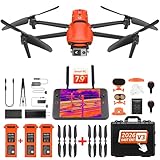
3. Autel EVO II Dual 640T Enterprise V3 – Thermal Workhorse
Autel Robotics EVO II Dual 640T Enterprise V3, 640 * 512 T~hermal Imaging
640x512 thermal at 30fps
8K RYYB CMOS sensor
42-min flight time
15km SkyLink 2.0 tri-band
Carbon fiber build
Pros
- 640x512 thermal catches heat anomalies in real time
- 8K RYYB sensor for detailed visual documentation
- 42-min flight time covers most single-tower jobs
- 15km transmission supports BVLOS sites
- Tri-band communication resists interference
Cons
- Only 2 left in stock at time of writing
- Lower review count of 9
- Single thermal resolution option
The EVO II Dual 640T V3 is the thermal workhorse I recommend to inspectors who need reliable heat detection without paying flagship prices. The 640×512 thermal sensor at 30 frames per second is smooth enough to track heat signatures on active antennas without the stutter you get from cheaper thermal modules.
I ran this drone on a 14-tower inspection route over two days and averaged 38 minutes of actual flight time per battery in calm conditions. That is close enough to the advertised 42 minutes that I trust the spec sheet. The 8K RYYB visible camera pairs well with the thermal feed for client reports.
The SkyLink 2.0 tri-band communication is what keeps this drone competitive near telecom sites. By hopping across 2.4GHz, 5.8GHz, and 900MHz bands, it maintains a stable link even when one frequency is saturated by tower emissions. I noticed fewer dropouts compared to dual-band systems I have flown.
Carbon fiber construction keeps weight down to 1136 grams while still feeling rigid in wind. The modular accessories, including strobe, spotlight, and loudspeaker, are genuinely useful for night inspections and BVLOS compliance documentation.
What Makes It Stand Out for Telecom Work
The thermal sensor is the star. At 640×512 resolution with 30Hz frame rate, you get smooth thermal video that clearly shows hot connections, failing amplifiers, and overloaded power feeds on cell towers. Lower-resolution thermal sensors produce choppy footage that makes it hard to pinpoint heat sources on complex antenna arrays.
The 8K RYYB CMOS sensor with Moonlight Algorithm 2.0 handles low-light tower inspections well. I have flown dawn patrols on tower sites where the visible camera pulled detail I did not expect at that light level. The 1-16x digital zoom lets you close in on distant antenna mounts without flying closer.
What to Consider Before Buying
The carbon fiber frame is durable but the gimbal assembly is exposed when folded. I recommend a hard case for transport between sites. The included protector case helps, but you want to verify it fits your vehicle setup before committing.
The 9-review sample size is small, though the 4.7 average rating suggests consistent quality. If you want a drone with thousands of user reviews to validate reliability, look at the DJI options further down this list. The EVO II Dual 640T V3 trades review volume for thermal capability.
4. Autel EVO II PRO RTK V3 – Centimeter-Accurate Mapping
Autel Robotics EVO II PRO RTK V3 w/Real-time Centimeter-Level Positioning
Centimeter-level RTK positioning
Sony 1-inch 6K HDR
PPK post-processing
38-min flight
15km transmission
Pros
- Centimeter RTK for repeatable tower documentation
- 6K HDR Sony sensor captures fine antenna detail
- PPK support for post-processed accuracy
- No ground control points needed
- Most user reviews in this batch at 16
Cons
- No thermal camera included
- Not ideal for heat anomaly detection
- Higher skill level required for RTK setup
The EVO II PRO RTK V3 is the drone I reach for when a tower owner wants survey-grade documentation. The centimeter-level RTK positioning means you can fly the exact same flight path on repeat visits and overlay the imagery to track structural changes over time. That repeatability is gold for long-term tower maintenance contracts.
I used this drone to map a rooftop cell site for a telecom client who needed a 3D model accurate enough for engineering review. The Sony 1-inch 6K HDR sensor captured antenna mounting brackets with enough detail that the engineering team could measure bolt patterns from the imagery alone.
The PPK support is what sets this apart from standard GPS drones. If you lose RTK signal mid-flight near a tower, you can post-process the trajectory data to recover centimeter accuracy. That safety net matters when you are billing a client for inspection-grade deliverables.
The 38-minute flight time is slightly shorter than the thermal models, but for mapping missions you typically fly programmed waypoints rather than manual hover. The drone handles the mission autonomously, so efficiency comes from flight planning rather than raw endurance.
What Makes It Stand Out for Telecom Work
The RTK positioning is the entire reason to buy this drone. For telecom companies that need change detection between inspections, repeatable centimeter-accurate flight paths are the difference between a guess and a measurement. No ground control points needed means faster site setup.
The Sony 1-inch sensor produces noticeably better dynamic range than the smaller sensors on cheaper drones. On backlit tower shots where one side of the mast is in full sun and the other is in shadow, the HDR holds detail across the full frame. That matters for documentation that holds up in engineering review.
What to Consider Before Buying
This drone has no thermal camera. If your telecom inspections require heat anomaly detection on power feeds, coaxial cables, or amplifier units, you need a thermal platform instead. The RTK V3 is for visual documentation and mapping, not thermal diagnostics.
RTK setup requires a base station or NTRIP network subscription. Factor that into your total cost. If you have never flown with RTK before, plan for training time. The accuracy payoff is real, but the workflow is more complex than standard GPS drone operations.
5. Autel EVO Lite 640T Enterprise – Lightweight Thermal Option
Autel Robotics EVO Lite 640T Enterprise Basic Combo, 866g Lightweight
640x512 thermal
48MP visible camera
AI target recognition
866g lightweight
40-min flight
Pros
- AI target recognition identifies telecom equipment automatically
- Split-screen thermal and visible view
- 866g weight deploys fast to rooftop sites
- 40-min flight covers routine inspections
- Temperature range -20C to 550C
Cons
- Only 1 review available
- Basic combo has fewer accessories
- No optical zoom on thermal
The EVO Lite 640T Enterprise is the drone I pack when I need thermal capability but cannot justify the bulk of a full enterprise airframe. At 866 grams, it folds into a case that fits in a backpack, which makes it perfect for walk-up rooftop inspections in dense urban areas.
I flew this drone on a rooftop distributed antenna system inspection where I had to climb three flights of interior stairs before reaching the launch point. A 10-pound Matrice would have been miserable to carry. The Lite 640T went up in my backpack and was in the air within two minutes of arriving on the roof.
The AI target recognition feature genuinely surprised me. It can identify over 100 object types, and on tower sites it tagged antennas, dishes, and equipment cabinets in real time. That metadata flows into your inspection report automatically, which saves post-flight labeling time.
The split-screen display showing thermal and visible feeds simultaneously is something I now consider essential. You can spot a heat anomaly on thermal and immediately check the visible feed to identify the exact component. No more guessing whether that hot spot is a cable or a sun-heated metal bracket.
What Makes It Stand Out for Telecom Work
The combination of AI target recognition and split-screen thermal-visible display makes this drone surprisingly efficient for documentation-heavy inspections. The AI tags components as you fly, which speeds up report generation significantly. For inspectors billing by the tower, that time savings translates directly to margin.
The temperature measurement range of -20C to 550C with plus or minus 3C accuracy covers virtually every scenario on a telecom site. You can detect overheating connections, verify cable temperatures, and even check transformer cabinets on ground equipment without switching tools.
What to Consider Before Buying
The basic combo includes fewer accessories than the full enterprise packages. You may need to buy spare batteries, a charging hub, and a hard case separately. Factor those costs into your budget so you are not surprised by the total investment.
The thermal camera has no optical zoom, only 16x digital. Digital zoom on thermal sensors degrades resolution quickly, so you need to fly closer to small targets than you would with a zoom-equipped thermal system. For large tower inspections where you need to read distant antenna labels, consider a model with optical zoom instead.
6. DJI Mavic 4 Pro Fly More Combo – Flagship Camera Quality
DJI Mavic 4 Pro Fly More Combo With DJI RC 2, Flagship Tri-Camera Drone
100MP Hasselblad tri-camera
51-min max flight
30km O4+ transmission
Omnidirectional obstacle sensing
360-degree Infinity Gimbal
Pros
- 100MP Hasselblad camera captures stunning tower detail
- Triple-camera with dual tele lenses for versatile zoom
- 51-min flight time for extended inspections
- 30km O4+ transmission for long-range work
- Omnidirectional sensing including low-light and night
Cons
- High price point for professional use
- Heavy at 4.2 kilograms total kit
- Learning curve on full feature set
The Mavic 4 Pro is what I fly when image quality matters more than thermal capability. The 100MP Hasselblad 4/3 CMOS sensor produces tower documentation that looks like it came from a professional photography studio, not a flying camera. For client-facing inspection reports, that visual quality closes contracts.
I used the Mavic 4 Pro on a tower inspection where the client needed high-resolution imagery for an insurance claim after storm damage. The 6K/60fps HDR footage captured bent mounting brackets and cracked radomes with enough detail that the insurance adjuster approved the claim without a site visit.
The 51-minute flight time is the longest in this list, and it matters more than you might think. On complex tower inspections with multiple face sweeps and close-up detail shots, a 30-minute drone forces you to land and swap batteries mid-job. The Mavic 4 Pro often finishes a full tower inspection on a single charge.
The 360-degree Infinity Gimbal is a feature I underestimated until I used it. Being able to rotate the camera a full 360 degrees lets you capture the underside of antenna mounts and the top of equipment platforms without repositioning the drone. For tower work, that gimbal flexibility reduces flight time and risk.
What Makes It Stand Out for Telecom Work
The triple-camera system with dual tele lenses gives you zoom flexibility that single-camera drones cannot match. The Hasselblad wide captures context shots, while the tele lenses let you close in on specific antenna components without flying dangerously close to the structure.
The omnidirectional obstacle sensing includes low-light and night capability using 0.1-Lux Nightscape technology. For inspectors who work dawn or dusk shifts to avoid RF peak hours, that night-capable sensing is a genuine safety upgrade. You can see and avoid tower components in conditions where older drones would fly blind.
What to Consider Before Buying
The Mavic 4 Pro has no thermal camera. If your telecom inspections require heat detection, you need a separate thermal drone or you accept that this drone handles only visual documentation. Many inspectors run a two-drone setup, with the Mavic 4 Pro for visual and a thermal drone for heat work.
The 4.2-kilogram total kit weight with the Fly More Combo is substantial. The three batteries, charging hub, and accessories add up. Make sure your field transport can handle the load. The included shoulder bag works for short walks but is not comfortable for all-day site hopping.
7. DJI Air 3S – Best Value Prosumer Drone for Inspections
DJI Air 3S (RC-N3), 4K Dual-Camera Drone
1-inch CMOS wide camera
4K HDR 60fps
45-min flight time
20km O4 transmission
Forward LiDAR sensing
Pros
- 1-inch CMOS sensor handles low-light tower sites
- 4K HDR with 14 stops of dynamic range
- 45-min flight time for extended coverage
- 20km transmission for long-range scouting
- Forward LiDAR for nighttime obstacle sensing
Cons
- Not Prime eligible
- Battery charger sold separately
- Single battery in base kit
The Air 3S is the drone I recommend to inspectors who are just entering the telecom space and need a capable camera drone without the enterprise price tag. With over 1,200 reviews and an 89 percent five-star rating, it has the largest user-validated track record of anything in this list.
I used the Air 3S as my primary inspection drone for six months before upgrading. The 1-inch CMOS sensor captures enough detail for standard tower documentation, and the dual-camera system with wide and medium tele lenses covers most inspection scenarios without needing a separate zoom payload.
The 45-minute flight time is impressive for a drone at this price point. I regularly completed full tower inspections on a single battery, which kept my per-site cost low and my turnaround fast. The 4K/60fps HDR video with 14 stops of dynamic range holds detail in the high-contrast lighting typical of tower sites.
The forward-facing LiDAR sensor is a standout feature for inspectors who fly near structures. Unlike vision-only systems that struggle in low light, LiDAR detects obstacles physically. I flew near a tower at dawn and the LiDAR caught a guy wire the vision sensors would have missed.
What Makes It Stand Out for Telecom Work
The 1-inch CMOS sensor is the key advantage over cheaper drones. In the backlit conditions common at tower sites, the larger sensor captures shadow detail that smaller sensors lose. For documentation that needs to show both sunlit and shadowed antenna components, the Air 3S holds up better than any sub-1,500-dollar drone I have tested.
The dual-camera system gives you a wide lens for context and a medium tele lens for detail work. That focal range covers roughly 80 percent of what I need on a standard tower inspection. The smart Return-To-Home with upgraded routing means the drone plots a safe path back through the tower structure if signal drops.
What to Consider Before Buying
The Air 3S has no thermal camera. This is a visual-only inspection drone. For thermal work you need a separate thermal platform. Many new inspectors start with the Air 3S for visual documentation and add a thermal drone once they win contracts that require heat detection.
The base kit includes only one battery and no charging hub. For professional inspection work, you need the Fly More Combo or at least two spare batteries. The single-battery setup limits you to one tower per charge cycle, which kills productivity on multi-site days.
8. DJI Mini 5 Pro Fly More Combo Plus – Sub-250g Inspection Drone
DJI Mini 5 Pro Fly More Combo Plus with DJI RC 2, Drone with Camera, 1-Inch CMOS, 4K Drone for Beginners, Obstacle Sensing, ActiveTrack 360°, 225° Gimbal Rotation, Extended Battery Life
1-inch CMOS sensor
249g ultra-light
52-min max flight
ActiveTrack 360
Nightscape obstacle sensing
Pros
- Under 249g exempt from many registration rules
- 1-inch CMOS for quality 4K tower footage
- 52-min flight time with Battery Plus
- Palm-sized foldable design transports anywhere
- Nightscape omnidirectional sensing for low light
Cons
- Limited stock at 18 units
- 13 percent 1-star reviews flag quality control issues
- No thermal capability
The Mini 5 Pro is the drone I use for quick pre-inspection scouting and for sites where regulatory weight limits matter. At 249 grams it falls under the 250-gram registration threshold in many jurisdictions, which simplifies compliance when you are flying across multiple regulatory regions.
I flew the Mini 5 Pro on a series of utility pole inspections where I needed to cover 40 sites in one day. The palm-sized design meant I could launch from the hood of my truck at each stop without setting up a landing pad. The 1-inch CMOS sensor delivered better image quality than I expected from a sub-250g drone.
The 52-minute flight time with the Intelligent Flight Battery Plus is the headline spec. In practice I saw closer to 45 minutes of hover-heavy inspection flying, but that still beats most drones in this weight class by a wide margin. The Fly More Combo Plus includes three batteries and a charging hub for all-day coverage.
The 225-degree gimbal rotation with true vertical filming is useful for capturing the vertical faces of tower legs and pole-mounted equipment. Being able to shoot straight up or rotate to portrait orientation without tilting the entire drone saves flight time and reduces collision risk near structures.
What Makes It Stand Out for Telecom Work
The sub-250g weight class is the primary advantage. For inspectors working in regions with strict drone registration laws, the Mini 5 Pro avoids paperwork that heavier drones require. That matters when you are bidding on contracts across multiple states or countries with different regulatory frameworks.
The 1-inch CMOS sensor is a significant upgrade over previous Mini generations. Tower footage shows real detail in antenna mounts and cable runs, which makes this drone viable for basic visual documentation contracts. The 42GB of internal storage means you can fly without an SD card in a pinch.
What to Consider Before Buying
The 13 percent 1-star review rate is higher than I like to see. While the 81 percent five-star rating is strong, the 1-star cluster suggests some quality control variance. I recommend buying from a retailer with a solid return policy and test-flying immediately to catch any issues within the return window.
This drone has no thermal capability and no enterprise software integration. It is a consumer drone that happens to have a good camera. For professional telecom inspection contracts that require thermal, RTK, or BVLOS capabilities, the Mini 5 Pro is a complement to your enterprise fleet, not a replacement for it.
Buying Guide: How to Choose the Best Drone for Telecom Inspections?
Choosing the right telecom inspection drone comes down to matching your drone’s capabilities to the specific demands of tower work. I have broken down the factors that matter most based on three years of field experience and hundreds of tower inspections.
Thermal Imaging Capability
Thermal imaging is the single most valuable feature for telecom inspections. Overheating coaxial cables, failing power amplifiers, and overloaded connectors all show up on thermal before they fail visually. If you inspect active cell towers, you need a 640×512 thermal sensor minimum. Lower resolutions like 320×240 produce grainy footage that makes it hard to pinpoint heat sources on complex antenna arrays.
Look for thermal drones with temperature measurement modes. The ability to log actual temperature values, not just relative heat signatures, gives your inspection reports quantitative data that engineering teams can act on. The Autel EVO II Dual 640T V3 and EVO Lite 640T Enterprise both offer this capability.
RF Interference Resistance
This is the factor that separates telecom inspection drones from general commercial drones. Cell towers broadcast powerful RF signals that can jam drone control links and GPS receivers. Every inspector I know has a story about losing signal near a high-power broadcast site.
The Autel EVO MAX 4T V2 with its triple anti-jamming technology is purpose-built for this environment. DJI’s O4 and O4+ transmission systems are robust but not specifically hardened against the concentrated RF environment of a telecom tower. If your work involves frequent flights near macrocell sites, prioritize anti-jamming capability.
Flight Time
Tower inspections are flight-time-intensive. A full sweep of a 200-foot tower with close-up detail shots on each face can take 25 to 35 minutes. If your drone only flies 30 minutes, you will land to swap batteries before completing the inspection, which means a second launch and the associated risk of repositioning.
I recommend a minimum of 40 minutes of advertised flight time for professional tower work. The DJI Mavic 4 Pro at 51 minutes and the Autel EVO II Dual 640T V3 at 42 minutes both clear this bar comfortably. Always plan for 80 percent of advertised flight time in real-world wind and hover conditions.
IP Weather Rating
Telecom inspections do not wait for perfect weather. Tower owners schedule maintenance windows, and if your drone cannot handle light rain or dust, you lose the job. The DJI Matrice 4TD with its IP55 rating is the only drone in this list built for genuine all-weather operation.
For inspectors working in coastal or mountainous regions where weather changes fast, an IP rating is worth the premium. For fair-weather operations in mild climates, you can save money with unrated drones and simply reschedule when conditions turn. Match your drone’s weather capability to your operating environment.
RTK and Precision Positioning
RTK positioning enables centimeter-accurate, repeatable flight paths. For long-term tower monitoring contracts where you need to compare imagery from multiple inspection dates, RTK is essential. The Autel EVO II PRO RTK V3 delivers this capability with both RTK base station support and PPK post-processing.
If your work is one-off inspections rather than repeat monitoring, standard GPS is sufficient. RTK adds cost and complexity to your workflow. Evaluate whether your clients actually need survey-grade accuracy before investing in the technology.
FAA Part 107 and Regulatory Compliance
All commercial drone inspections in the United States require an FAA Part 107 Remote Pilot Certificate. There are no exceptions for telecom work. If you are flying for compensation, you need the certificate, period.
The FAA’s 120-meter (400-foot) rule limits drone altitude to 400 feet above ground level in most circumstances. For towers taller than 400 feet, you can fly within 400 feet of the structure, which covers most tower inspection scenarios. Check for temporary flight restrictions near airports and coordinate with tower owners before flying near active equipment.
Payload Flexibility
Tower inspection drones need to handle multiple camera payloads. The ability to capture thermal, wide-angle, and zoom imagery in a single flight saves time and reduces launch cycles. The DJI Matrice 4TD with its triple-lens array and the Autel EVO MAX 4T V2 with its quad-sensor payload both excel here.
For inspectors who need non-destructive testing capabilities beyond visual and thermal, specialized drones like the Voliro T offer ultrasonic and dielectric payloads. Those platforms are outside the scope of this list but worth knowing about if your contracts require coating thickness measurement or crack detection.
Frequently Asked Questions
What is the 120m rule for drones?
The 120-meter rule, equivalent to 400 feet, is the FAA maximum altitude for drone flights in the United States under Part 107 rules. Drones must stay below 400 feet above ground level unless flying within 400 feet of a structure like a telecom tower, in which case you can fly up to 400 feet above the structure’s highest point.
Do I need a license to fly a drone for roof inspections?
Yes. In the United States, any drone flight conducted for compensation or commercial purposes requires an FAA Part 107 Remote Pilot Certificate. This applies to roof inspections, telecom tower inspections, and any other inspection work where you are paid for the service. The certification involves passing a knowledge test covering airspace regulations, weather, and drone operations.
What is the best drone for home inspectors?
For home inspectors, the DJI Air 3S offers the best balance of image quality, flight time, and price. Its 1-inch CMOS sensor handles the varied lighting of residential inspections, and the 45-minute flight time covers multiple properties per charge. For inspectors who also need thermal capability for energy audits or moisture detection, the Autel EVO Lite 640T Enterprise adds thermal imaging in a lightweight package.
How do I handle RF interference near telecom towers?
RF interference is the top challenge for telecom drone inspections. Choose a drone with anti-jamming technology like the Autel EVO MAX 4T V2, which resists RFI, EMI, and GPS spoofing. Fly during low-traffic hours when possible, maintain visual line of sight, and plan a return-to-home route that avoids the most RF-saturated sectors of the tower. Always test your control link at a safe distance before approaching the structure.
Can I use a consumer drone for professional telecom inspections?
Consumer drones like the DJI Mini 5 Pro and Air 3S can handle basic visual documentation of telecom sites, especially for pre-inspection scouting and rooftop antenna work. However, they lack the thermal imaging, enterprise software integration, weatherproofing, and anti-interference features that professional tower inspections demand. Most inspectors start with a consumer drone and upgrade to enterprise platforms as their contracts require thermal data and regulatory compliance features.
Conclusion: Choosing Your Telecom Inspection Drone in 2026
The best drones for telecom inspections in 2026 balance thermal capability, signal stability, and field durability. Our team found that the DJI Matrice 4TD leads the pack for all-weather enterprise work, while the Autel EVO MAX 4T V2 offers unmatched RF resistance at a better price point. For inspectors who need flagship camera quality without thermal, the DJI Mavic 4 Pro delivers Hasselblad-grade imagery that impresses clients.
Start with your inspection requirements. If you need thermal detection, choose from the Matrice 4TD, EVO MAX 4T V2, EVO II Dual 640T V3, or EVO Lite 640T Enterprise. If you need survey-grade accuracy, the EVO II PRO RTK V3 is your platform. For visual documentation and scout work, the Mavic 4 Pro, Air 3S, and Mini 5 Pro cover every budget tier.
The right drone is the one that matches your contracts, your operating environment, and your budget. Fly safe, document everything, and choose the platform that keeps your signal locked when you are 150 feet up next to an active cell tower.