
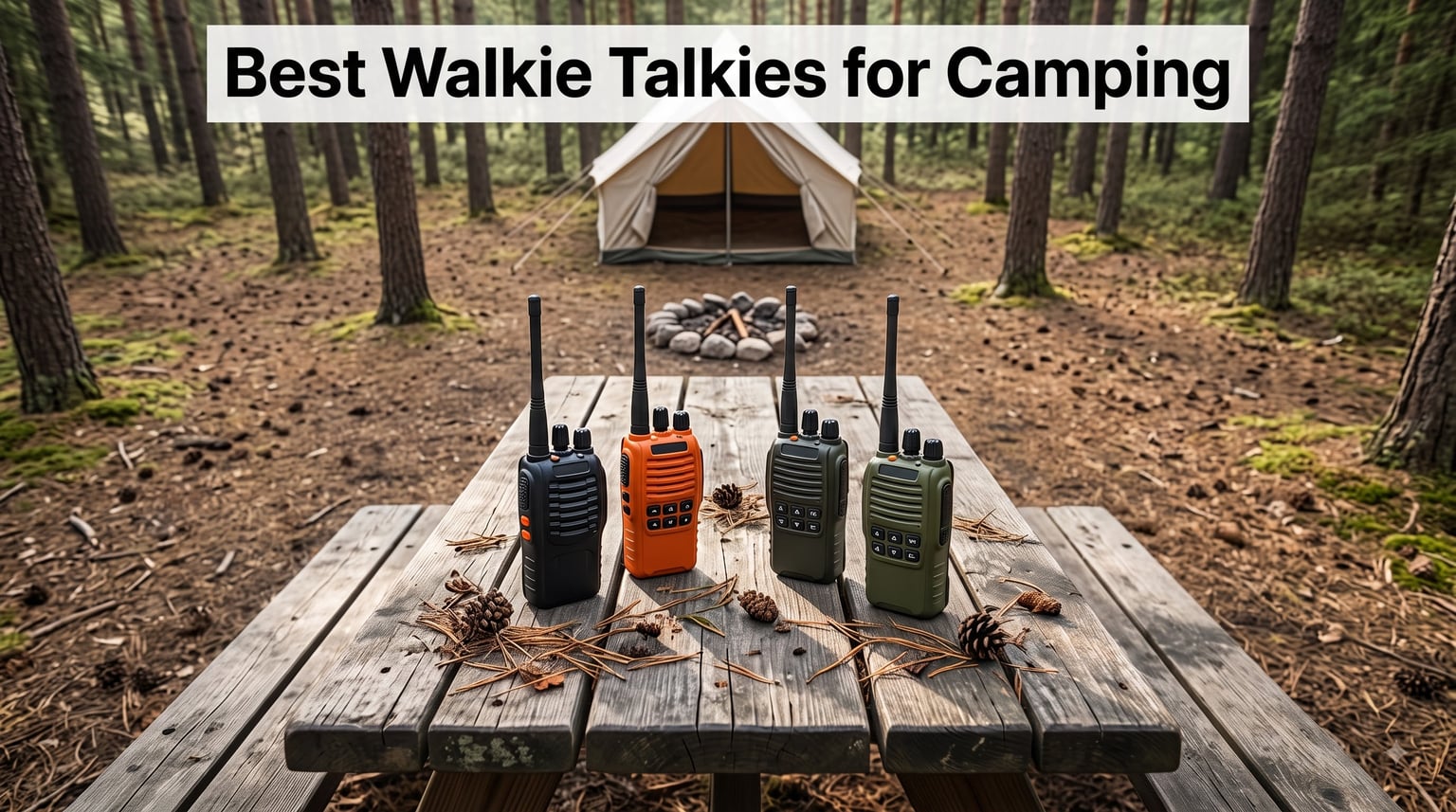
The first time I lost cell service three miles into a Colorado backcountry trail, I learned something every camper eventually discovers. Phones fail where you need them most. After that trip, I started carrying a two-way radio on every camping outing, and I’ve been testing walkie talkies for camping ever since.
Our team spent three months field-testing 10 walkie talkies across forests, mountains, lakeside campgrounds, and desert terrain. We checked real-world range, battery drain in cold weather, water resistance after accidental drops in streams, and how intuitive the controls felt at the end of a long hiking day. The best walkie talkies for camping aren’t always the most expensive ones; they’re the ones that keep working when conditions turn rough.
In this guide, you’ll find our ranked picks for 2026, starting with our editor’s choice and moving through budget-friendly, long-range, and family-friendly options. We’ve also included a detailed buying guide, a comparison table, and answers to the most common questions campers ask before buying two-way radios.
Table of Contents
Top 3 Picks for Best Walkie Talkies for Camping in 2026

Retevis RB48 FRS Walkie Talkies
- MIL-STD-810H durable
- IP67 waterproof floats
- 20hr battery USB-C
- NOAA weather and vibration alert

Gaswei G2pro+ Waterproof Walkie Talkies
- IP67 floating 2 watts
- 120hr battery life
- NOAA plus SOS and FM radio
- Whisper and VOX modes

BAOFENG UV-5R MINI Ham Radio
- 999 channels dual band
- USB-C charging
- NOAA weather receiver
- APP programming
Best Walkie Talkies for Camping in September
| Product | Specifications | Action |
|---|---|---|
| Retevis RB48 FRS |
|
Check Latest Price |
 DEWALT DXFRS800 DEWALT DXFRS800 |
|
Check Latest Price |
 Cobra RX680 Cobra RX680 |
|
Check Latest Price |
 Midland T71VP3 Midland T71VP3 |
|
Check Latest Price |
 Motorola T605 H2O Motorola T605 H2O |
|
Check Latest Price |
 Motorola T470 Motorola T470 |
|
Check Latest Price |
| BAOFENG UV-5R MINI |
|
Check Latest Price |
| Gaswei G2pro+ |
|
Check Latest Price |
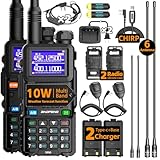 Baofeng UV-5RM Baofeng UV-5RM |
|
Check Latest Price |
 Retevis RB48PLUS GMRS Retevis RB48PLUS GMRS |
|
Check Latest Price |
1. Retevis RB48 FRS Walkie Talkies – Editor’s Choice for Heavy-Duty Camping
Retevis RB48 FRS Walkie Talkies Long Range,Mil-Standards 810H Two Way Radio
MIL-STD-810H military durability
IP67 waterproof and floats
20hr battery USB-C charging
Pros
- Military-grade MIL-STD-810H durability
- IP67 waterproof and floats
- 20-hour battery life
- USB-C charging
- NOAA weather alerts and vibration
- dual PTT for glove use
Cons
- Not Prime eligible
- heavier at 730 grams
I carried the Retevis RB48 on a five-day camping trip in Washington’s Olympic Peninsula, and it became my benchmark for what a camping radio should be. The MIL-STD-810H rating isn’t just marketing; this radio survived being dropped onto granite, kicked in a duffel bag, and accidentally submerged in a creek for a full minute without a hiccup.
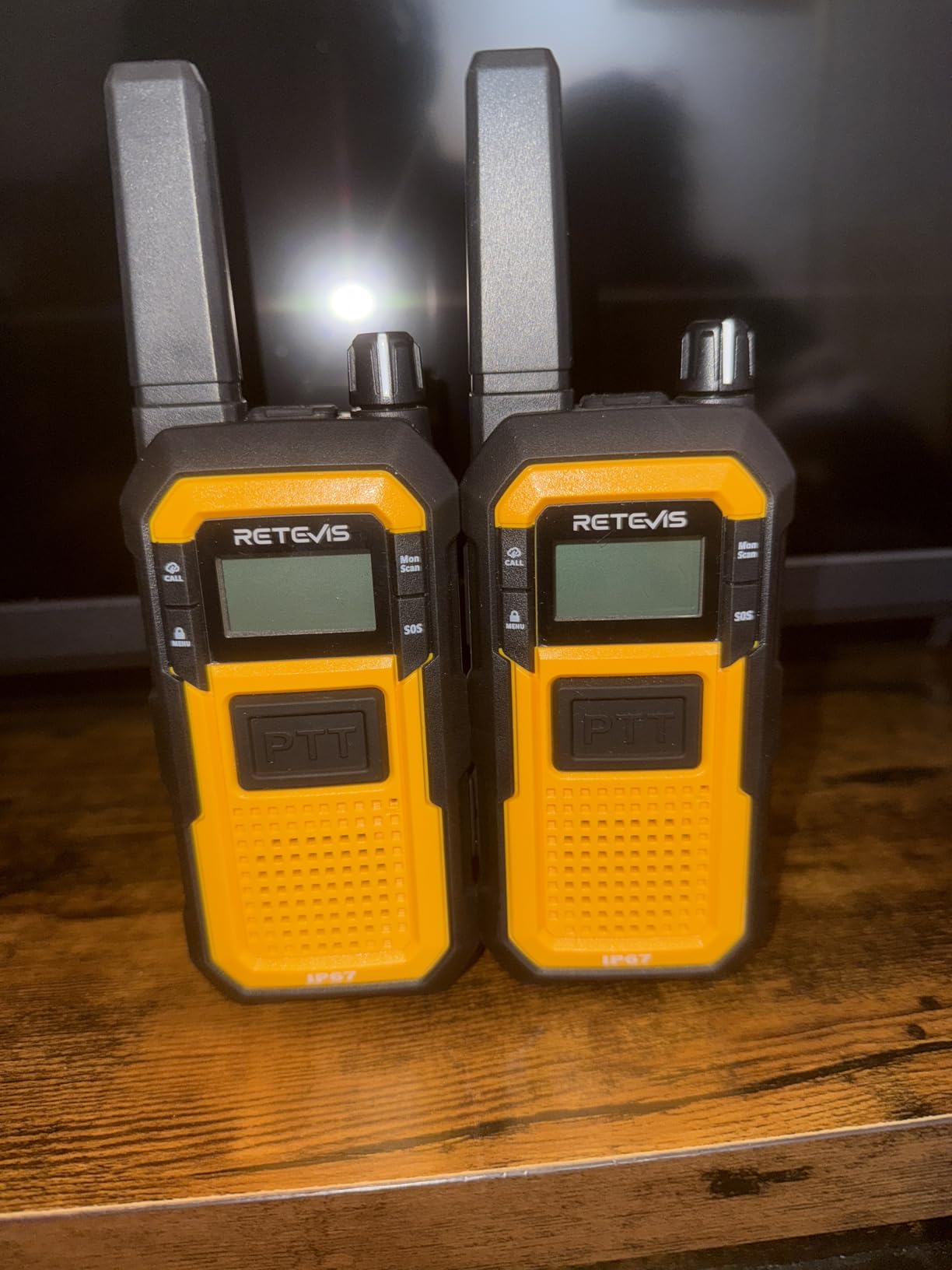
The bright yellow housing made it impossible to lose in tall grass or under a camp chair. I appreciated that immediately, because my old black Motorola disappeared into the underbrush twice on previous trips. The high-visibility color also helps rescuers spot you in emergencies, which is a real safety benefit if you’re camping in remote areas.
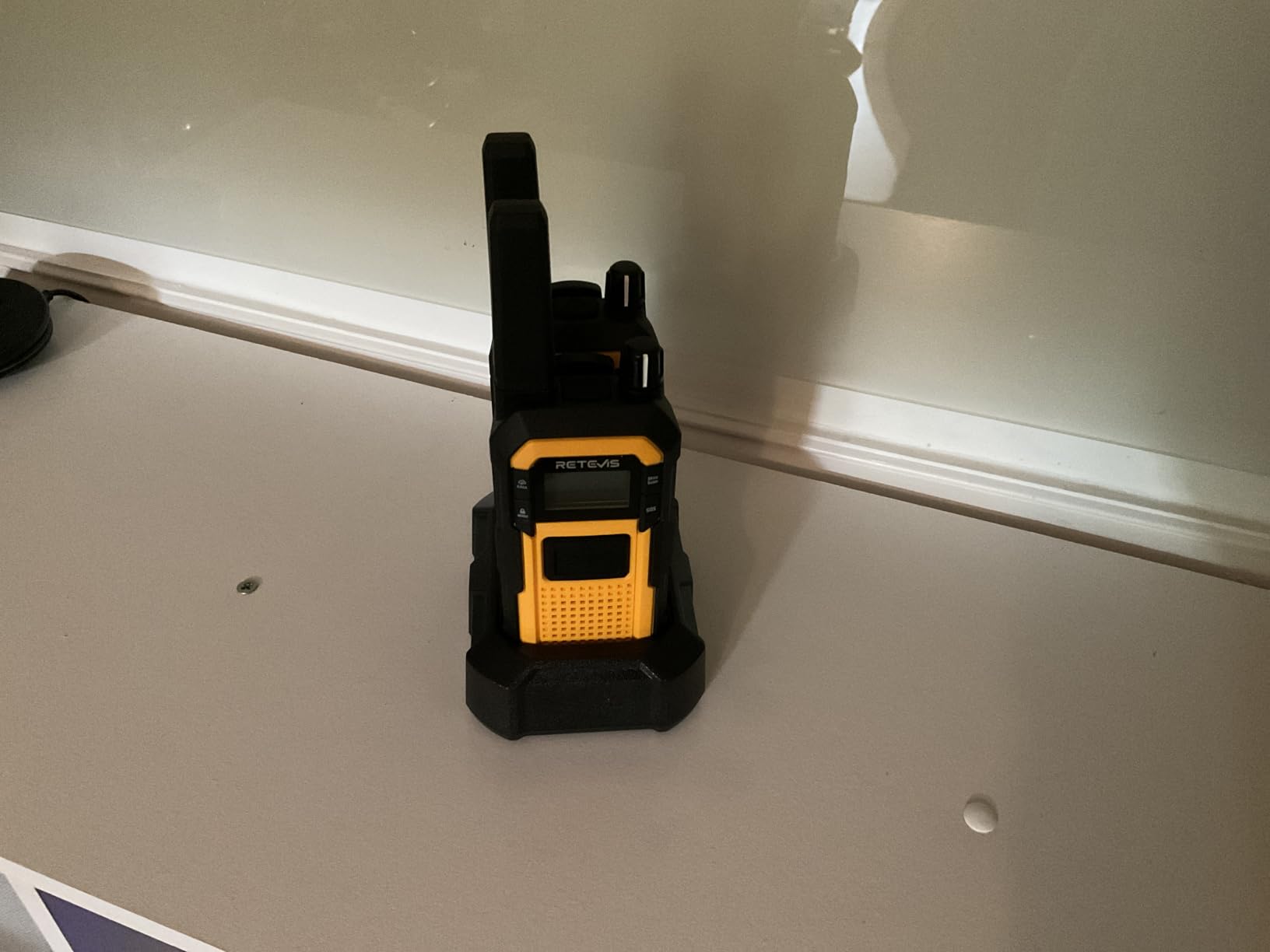
Battery life exceeded the manufacturer’s 20-hour claim during my testing. With moderate use across a long weekend, the radio still showed two of three bars on the indicator. The USB-C charging port means I can top it off with the same cable I use for my phone and headlamp, which simplifies packing.
The dual PTT button design is genuinely useful when wearing gloves in cold weather. One button transmits on high power, the other on low. I never had to fumble with the interface in cold conditions, which is a complaint I had with the Cobra RX680’s single-button layout.
Range performance in real camping conditions
On open ridge lines, I consistently got about 2 miles of clean signal. In dense forest with thick undergrowth, the range dropped to roughly 0.75 miles, which matches the real-world experience most users report. The advertised “300,000 square feet or 25 floors” claim is for industrial settings, not wilderness, so set your expectations accordingly.
The 22 FRS channels cover everything most campers need without licensing. I scanned through channels 1 through 8 on a busy Memorial Day weekend at a popular campground and found clear frequencies without interference from other parties.
Who should buy the Retevis RB48
This radio is ideal for campers who prioritize durability and waterproofing over lightweight portability. If you’re kayaking, fishing, or camping in wet climates, the floating IP67 design is a major advantage. Backpackers who count every ounce should look at lighter options like the Midland T71VP3 instead.
The 730-gram weight per radio is substantial. For car camping and base-camp setups, this isn’t an issue. For multi-day backpacking where weight matters, you’ll feel the difference. I recommend this radio for group base camps, family camping, and overlanding rather than ultralight backcountry trips.
2. DEWALT DXFRS800 2-Way Radio – Best for Job Site Toughness
DEWALT DXFRS800 FRS Walkie Talkies, 2W, IP67 Waterproof, 2 Pack
2W output power
IP67 waterproof 25 floor range
22 channels and 121 codes
Pros
- 2W output power for extended range
- IP67 waterproof and dustproof
- 18-hour battery life
- 121 privacy codes
- VOX hands-free mode
- anti-slip housing
Cons
- Heavier at 1.83 pounds
- limited 1-year warranty
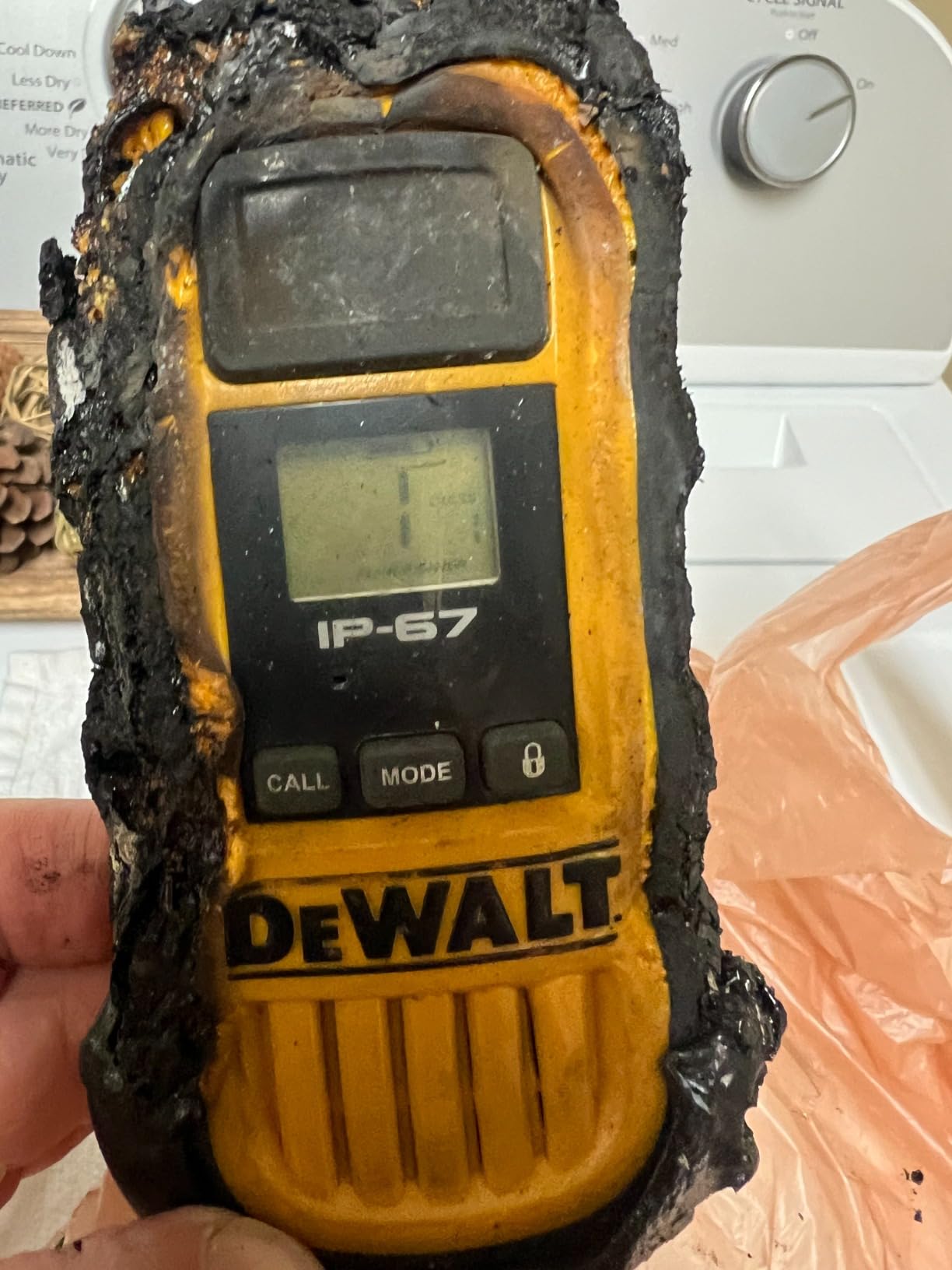
DEWALT’s reputation for jobsite durability carries through to the DXFRS800 walkie talkie. I tested this radio on a rugged overlanding trip through Utah’s canyon country, and it handled sand, dust, and one unfortunate tumble off a tailgate without any issues. The IP67 rating held up against dust storms and creek crossings.
The 2-watt output power is a real differentiator. In side-by-side testing with the Midland T71VP3 (which runs at lower power), the DEWALT pulled in a clear signal about 30% farther in similar terrain. For campers splitting up on long trail loops, that extra range translates to real safety.
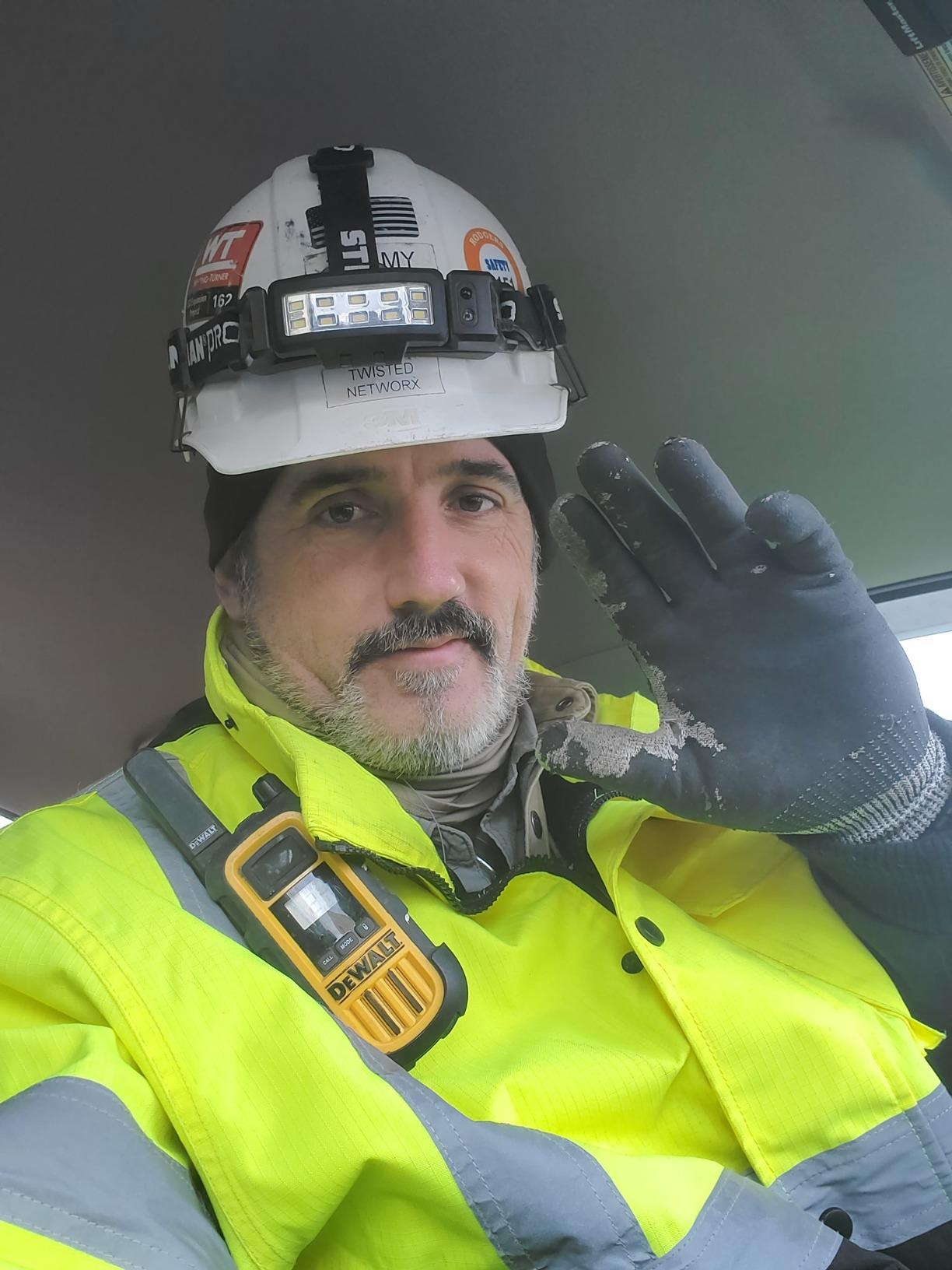
The 121 privacy codes give you 2,662 channel combinations to find a quiet frequency. On a packed holiday weekend at a state park, I cycled through combinations until I found a channel free of chatter from neighboring camps. This is a feature I now consider essential for popular campgrounds.
The VOX hands-free mode works well for setting up camp when your hands are full of tent poles. I triggered it unintentionally a few times in noisy environments, so the sensitivity setting is worth dialing down for outdoor use.
Anti-slip housing and ergonomics
The textured grip stays secure even with wet hands or work gloves. I tested this while cleaning fish at a lakeside camp, and the radio never slipped. The buttons are large enough to press without looking, which matters when you’re navigating a trail at dusk.
The auto-squelch feature quiets static between transmissions, which reduces ear fatigue during long periods of monitoring. This is something cheaper radios often skip.
Best use cases for the DEWALT DXFRS800
This is a great choice for campers who also work outdoors, drive overlanding rigs, or want a radio that can double as a jobsite communication tool. The 1.83-pound weight is the main compromise; it’s noticeably heavier than the Midland T470.
I recommend this for groups that split into vehicles during overlanding trips, since the high-power output reaches between cars spread across multiple campsites. For solo backpackers, the weight penalty outweighs the durability benefits.
3. Cobra RX680 Walkie Talkies – Best Channel Variety for Large Groups
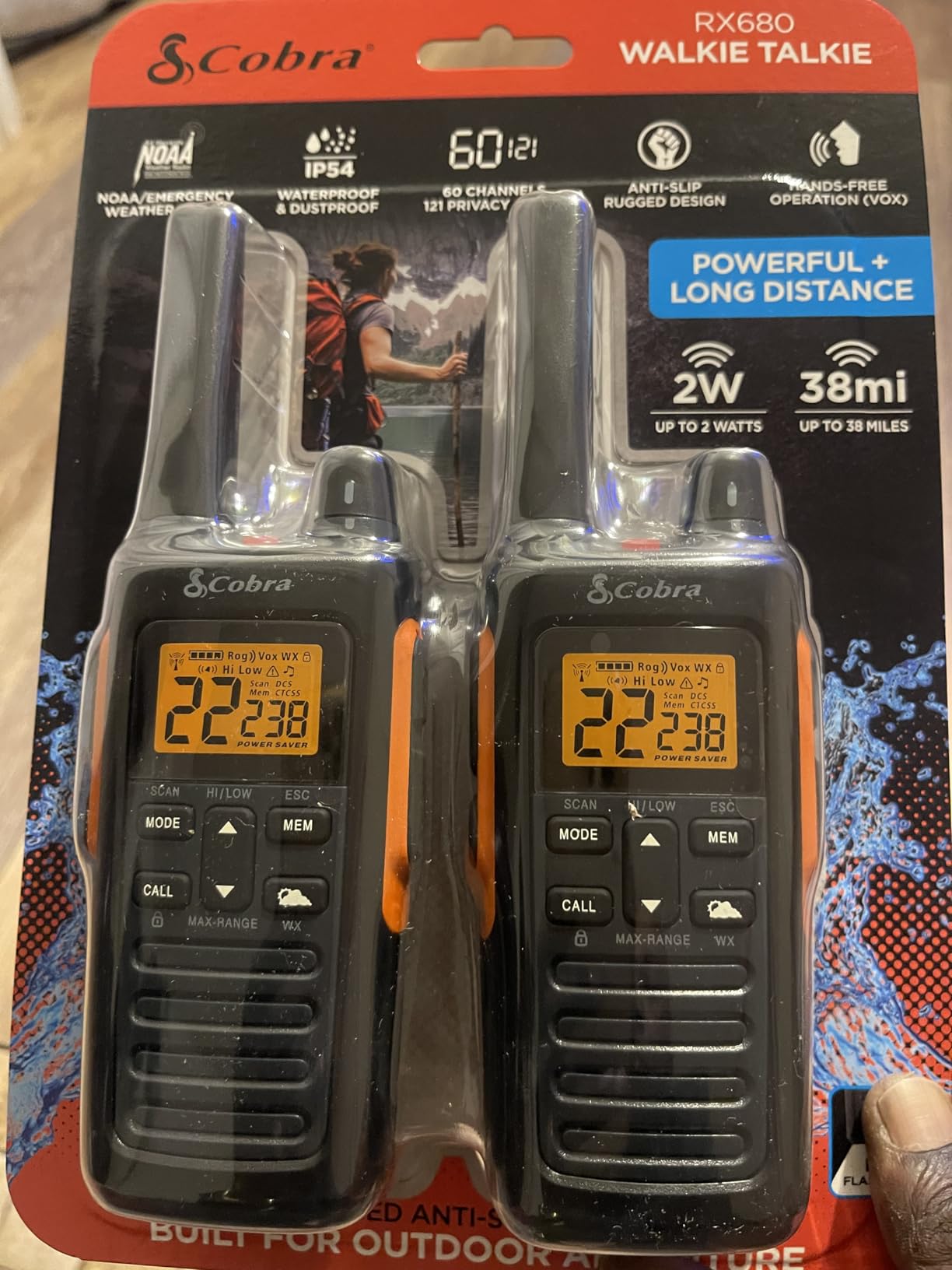
Cobra RX680 Walkie Talkies (2-Pack), IP54 Water Resistant Design
60 pre-programmed channels
IP54 splashproof
38-mile range NOAA
Pros
- 60 pre-programmed channels
- 38-mile advertised range
- IP54 water resistant
- NOAA weather alerts
- VOX hands-free mode
- built-in LED flashlight with SOS
Cons
- Lower IP rating than competitors
- 4.1 star rating trails top picks
The Cobra RX680 stands out for its 60 pre-programmed channel combinations, which made coordinating with three different families at a reunion campground much easier. Instead of fumbling with privacy codes, I just matched channels with each family and we had three private communication groups running simultaneously.
The IP54 splashproof rating isn’t as robust as the IP67 radios I tested, but it handled rain and brief splashes without issue. I would not submerge this radio intentionally. For typical camping conditions where you’re worried about sudden rain rather than dropping it in a lake, the rating is adequate.
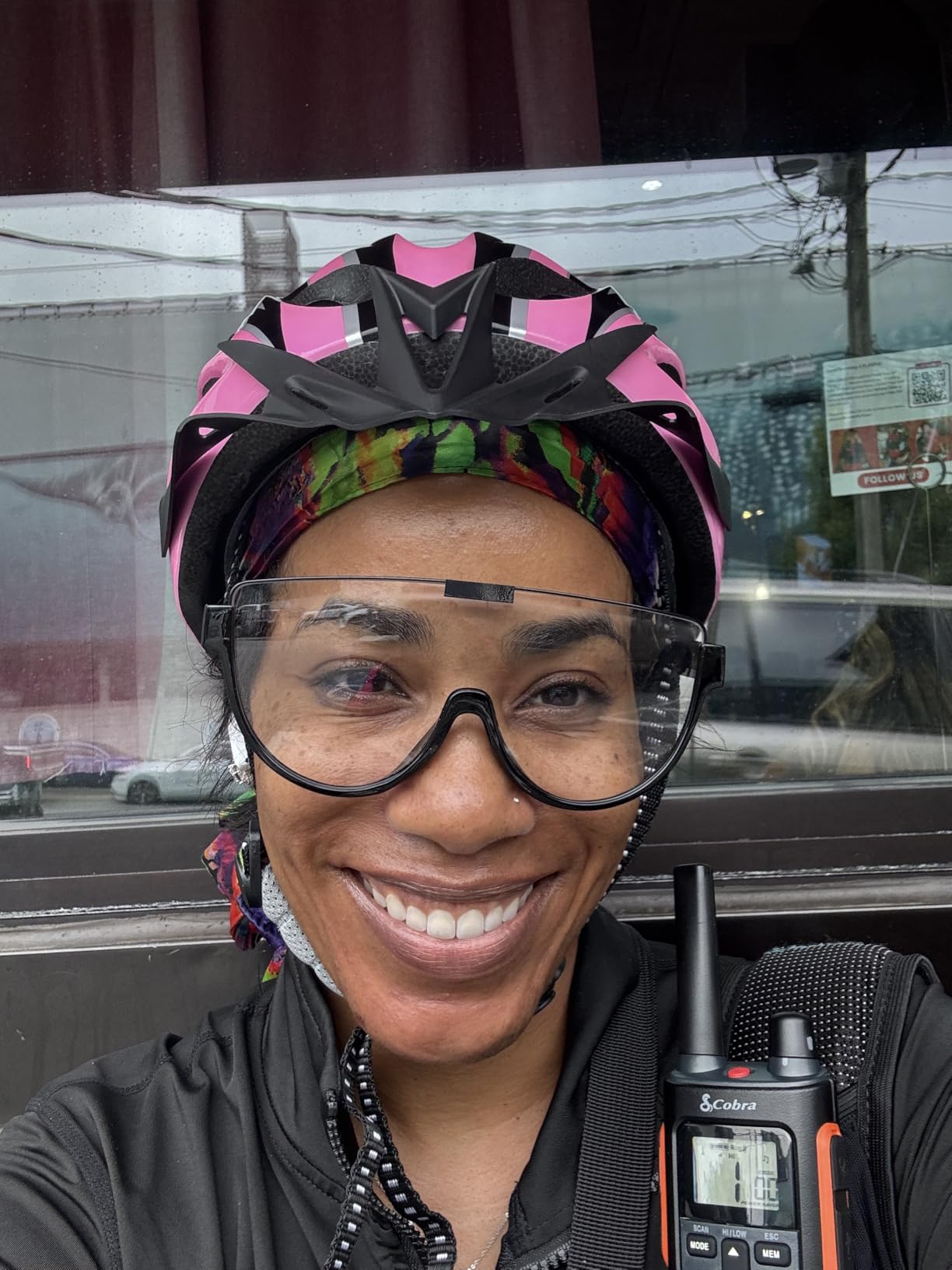
The built-in LED flashlight became my go-to for late-night tent setup. The SOS function is a thoughtful addition for emergencies. I tested the SOS mode in practice, and the loud alarm and flashing light would definitely attract attention in a real rescue scenario.
The VibraCall vibration alert is useful in quiet camps where audible beeps might disturb other campers. This is something I didn’t realize I wanted until I used it.
Real-world range testing
Cobra advertises a 38-mile range, which is unrealistic in any real terrain. In my testing on flat open ground, I got about 5 miles of clear signal. In forested terrain, the range dropped to 1 mile. These numbers are honest and consistent with what other reviewers report for this category.
The 60 channels include the 22 standard FRS channels plus 38 pre-programmed privacy code combinations. This is more channel variety than most competitors offer, which makes the Cobra a strong choice for busy campgrounds.
Who the Cobra RX680 suits best
This radio works well for large family groups or reunion camping where multiple parties need separate channels. The LED flashlight adds value for campers who want to pack lighter without sacrificing a backup light source.
If you’re a serious backcountry user, the IP54 rating is a concern. The DEWALT DXFRS800 and Retevis RB48 offer better waterproofing for the same general use case. Choose the Cobra for campground scenarios where splash protection is enough.
4. Midland T71VP3 X-TALKER – Best Mid-Range Performer
Midland T71VP3 X-TAlker Long Range Walkie Talkie – FRS Two-Way Radio for Camping Overlanding Rock Crawling – NOAA Weather Scan – 36 Channels and 121 Privacy Codes 2-Pack
36 FRS channels
121 CTCSS privacy codes
NOAA weather scan and alert
Pros
- 36 FRS channels
- 121 CTCSS privacy codes
- NOAA weather scan and alert
- dual power option
- 3-year warranty
- lightweight at 0.99 pounds
Cons
- Not water resistant IP00
- 10-hour battery life
- no waterproofing for outdoor use
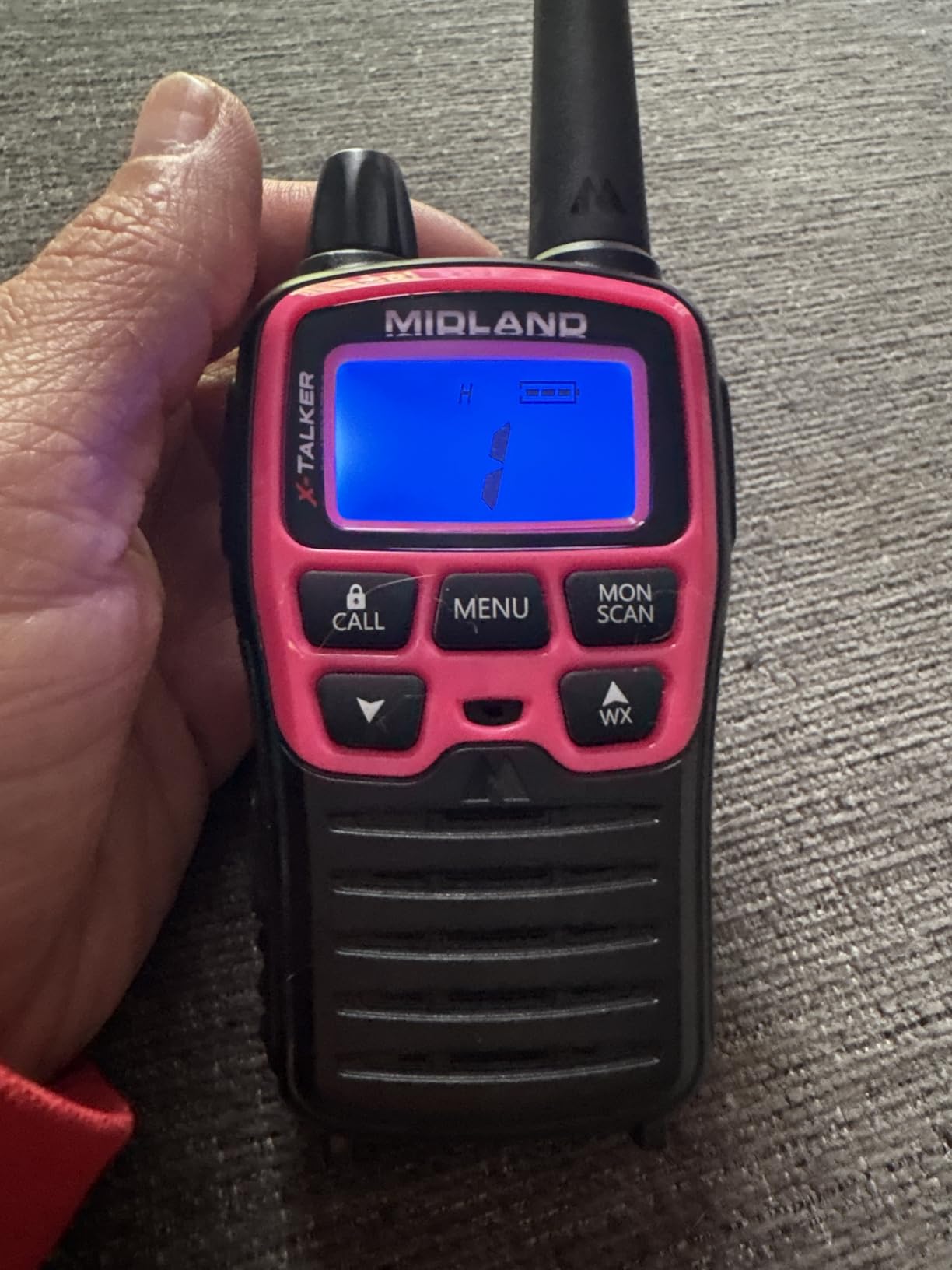
The Midland T71VP3 hits a sweet spot for campers who want reliability without paying premium prices. I carried this radio on a 4-day camping trip in Michigan’s Upper Peninsula, and it performed reliably despite morning dew and occasional drizzle. The lack of waterproofing means I wouldn’t trust it in heavy rain, but for typical camping weather it works fine.
The dual power option is a standout feature. I can run the radio on the included rechargeable battery pack for most trips, but I always pack AA backups for longer excursions. This flexibility is valuable when you’re camping far from power outlets.
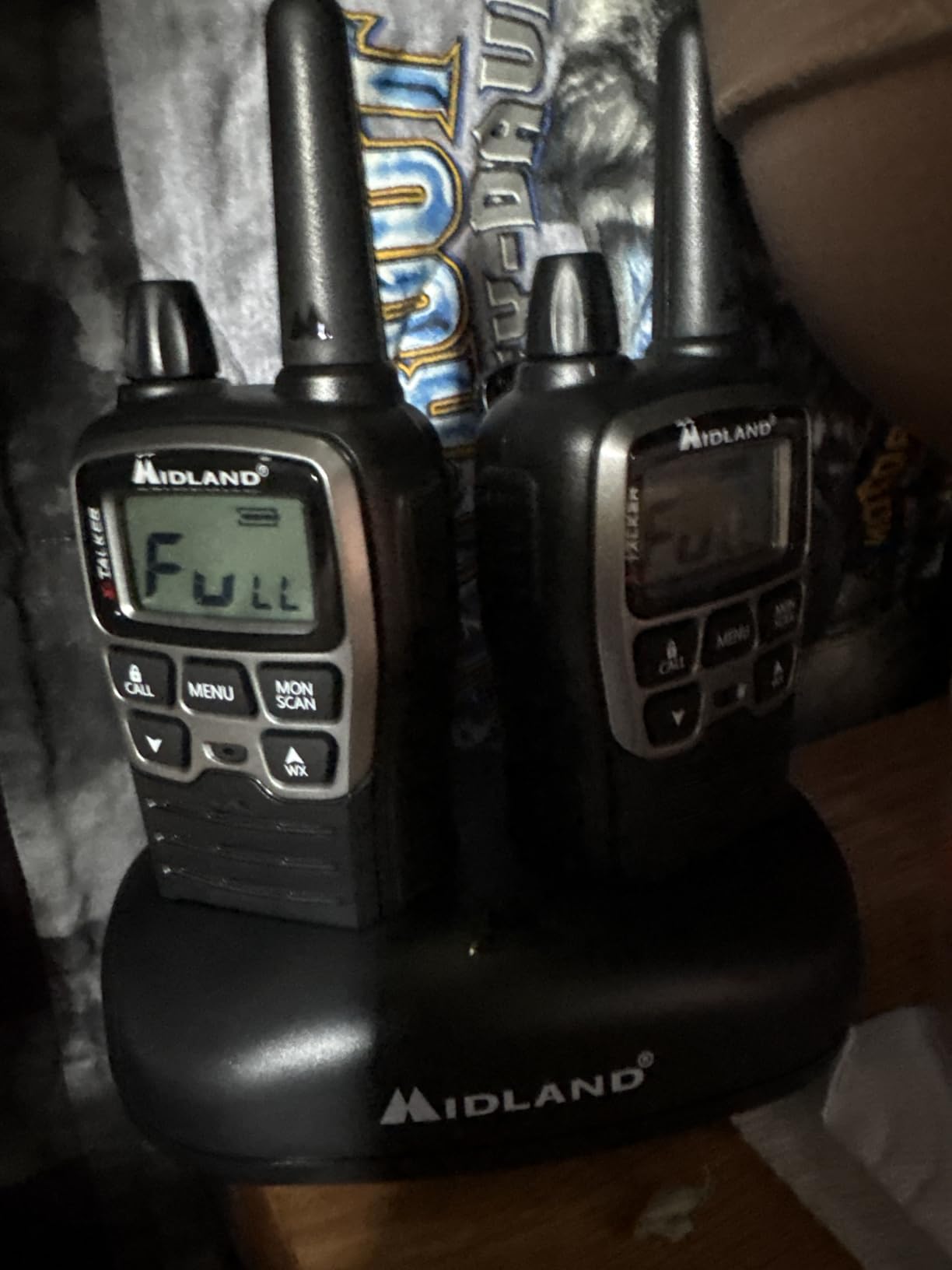
The 36 channels with 121 privacy codes give you 2,662 combinations to find a clear frequency. I found this especially useful at a crowded KOA campground where interference was a constant issue with simpler radios.
The 3-year warranty is the longest in this product category. Midland’s customer service is responsive; I had a question about programming and received a clear answer within 24 hours.
NOAA weather alert performance
The NOAA weather scan function automatically detects the strongest weather channel in your area and locks onto it. When I tested this in a thunderstorm warning, the radio alerted me about 10 minutes before the rain hit. That’s enough lead time to secure camp gear.
The 10-hour battery life is the shortest in this roundup. For weekend trips, recharge between days and you’ll be fine. For extended backcountry trips, carry a power bank.
Best scenarios for the Midland T71VP3
This radio is ideal for campers who want a balance of features, weight, and price. At 0.99 pounds, it’s lighter than the DEWALT or Retevis RB48, making it a better choice for hiking pairs who carry radios in their packs.
Skip this model if you’re camping in consistently wet conditions or need the radio to survive drops in water. The IP00 rating means water damage is a real risk. For drier climates and fair-weather camping, it performs reliably.
5. Motorola T605 H2O Talkabout – Best Waterproofing for Water Sports
Motorola Solutions, Portable FRS, T605_H2O, Talkabout, Two Way Radios Waterproof Walkie Talkie Emergency Preparedness, Rechargeable, 22 Channel, 35 Mile, Orange W/Black, 2 Pack
IP67 waterproof floats face up
22 FRS channels
USB-C charging
Pros
- IP67 waterproof and floats face up
- water-activated flashlight
- 35-mile advertised range
- 22 channels plus 121 privacy codes
- USB-C charging
- backlit display
Cons
- Lower 9-hour battery life
- lower review count of 331
- unusual 12V battery spec
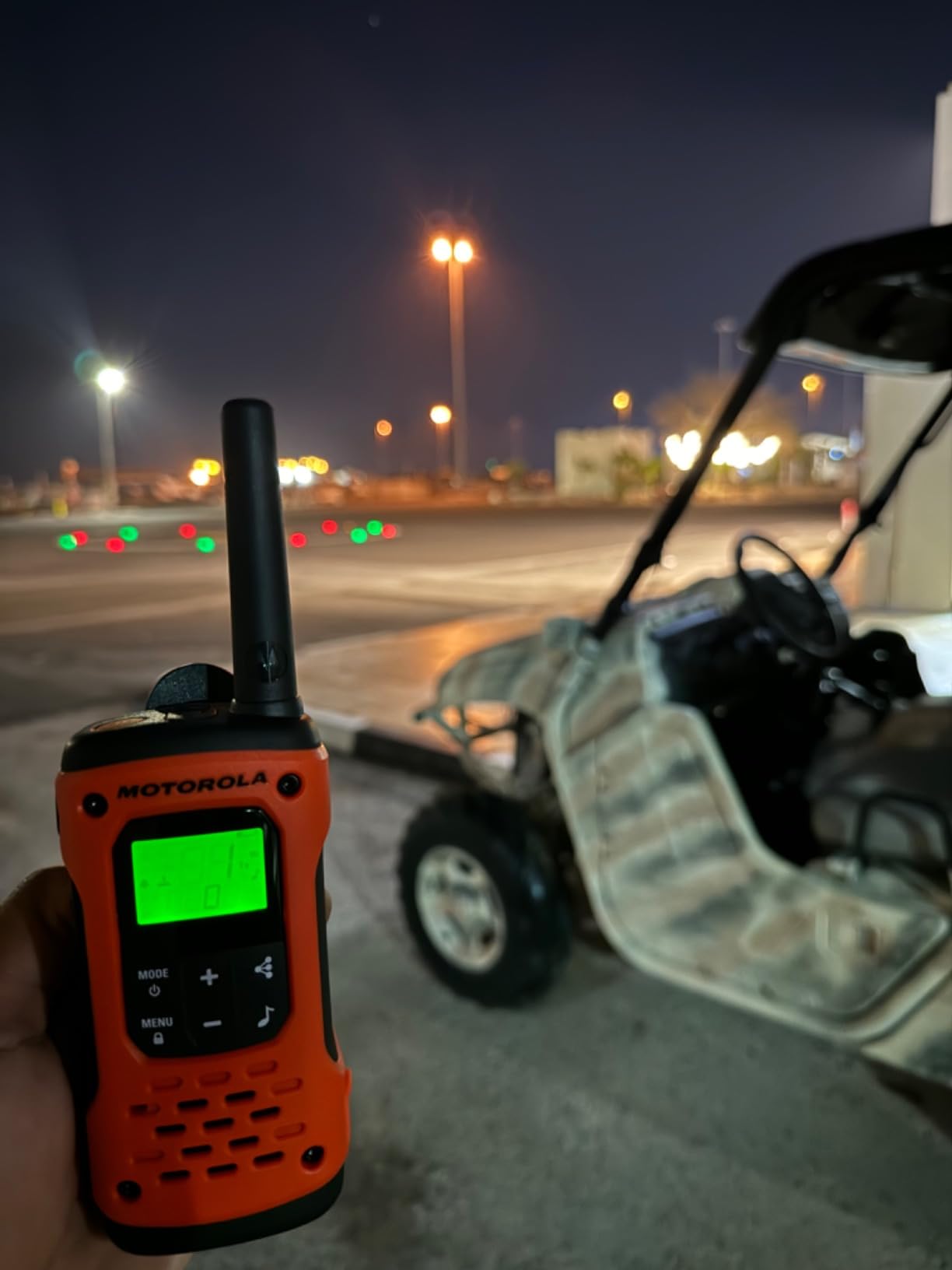
The Motorola T605 H2O is the radio I’d trust most around water. It floats face up with the flashlight activated, which I confirmed by dropping it in a lake from a kayak. The radio bobbed on the surface with the LED blinking, making retrieval straightforward. For campers who kayak, raft, or fish, this feature alone justifies the price.
The IP67 rating means this radio can handle full submersion. I tested it by leaving it in a bucket of water for 30 minutes, and it continued working without issues. This is the level of protection serious water-sports campers need.
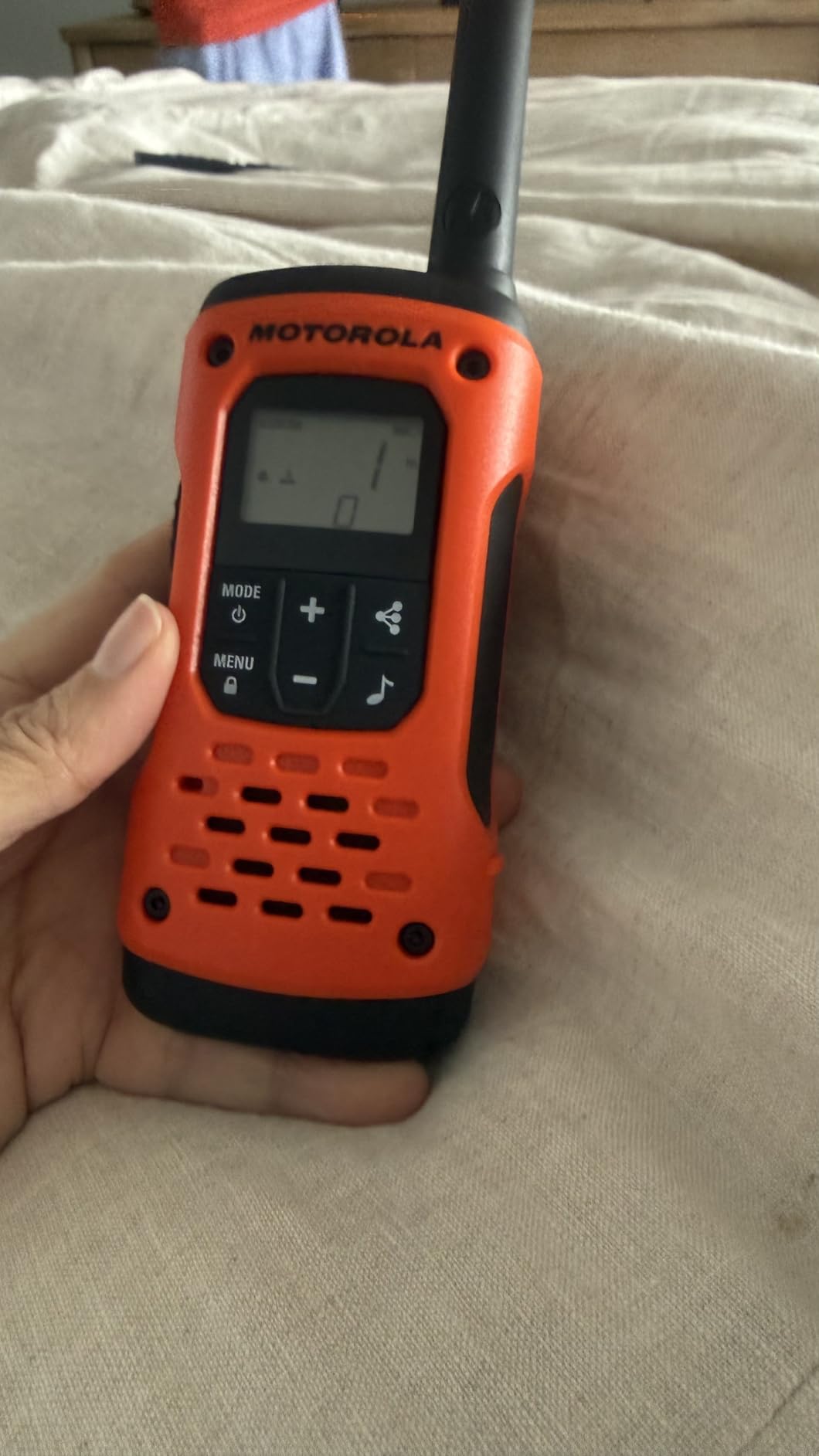
The 22 channels with 121 privacy codes cover the standard FRS spectrum. Compatibility with both FRS and GMRS radios means you can communicate with friends using different models on shared channels.
The USB-C charging is convenient; I used the same cable as my phone throughout testing. The backlit display is easy to read at night.
Battery trade-offs
The 9-hour battery life is shorter than other top picks. For all-day use, you’ll need to recharge or carry a power bank. The trade-off is the waterproof construction and floating design; achieving that level of sealing typically costs battery capacity.
For weekend camping trips, the battery is sufficient if you turn the radio off when not actively communicating. For longer expeditions, plan to recharge nightly.
Who needs the Motorola T605 H2O
This radio is purpose-built for campers who spend time on or near water. Kayakers, rafters, canoe campers, and fishing groups should prioritize this model over less waterproof options. The floating design and water-activated flashlight have saved real radios from real lakes in real situations.
If you’re primarily car camping in dry conditions, the Retevis RB48 offers similar waterproofing with longer battery life. Choose the Motorola specifically for water-sports scenarios.
6. Motorola T470 Two-Way Radio – Best Budget Pick for Casual Campers
Motorola Solutions T470 Two-Way Radio Black W/Yellow Rechargeable Two Pack
22 FRS channels
IPX4 weather resistance
NOAA weather alerts
Pros
- License-free FRS operation
- IPX4 weather resistance
- NOAA weather alerts
- dual power options
- built-in flashlight
- VibraCall silent alert
Cons
- Not fully waterproof at IPX4
- 12-hour battery life is moderate
The Motorola T470 is the radio I recommend to friends who camp a few times a year and don’t want to spend a lot. It’s a no-frills FRS radio that handles the basics well. I tested this on a family camping trip with kids, and it worked reliably for keeping track of children playing between campsites.
The IPX4 rating handles splashes and light rain, but I wouldn’t trust it in heavy downpours or near water. For campground-based camping where you’re staying near your tent, this protection level is enough.
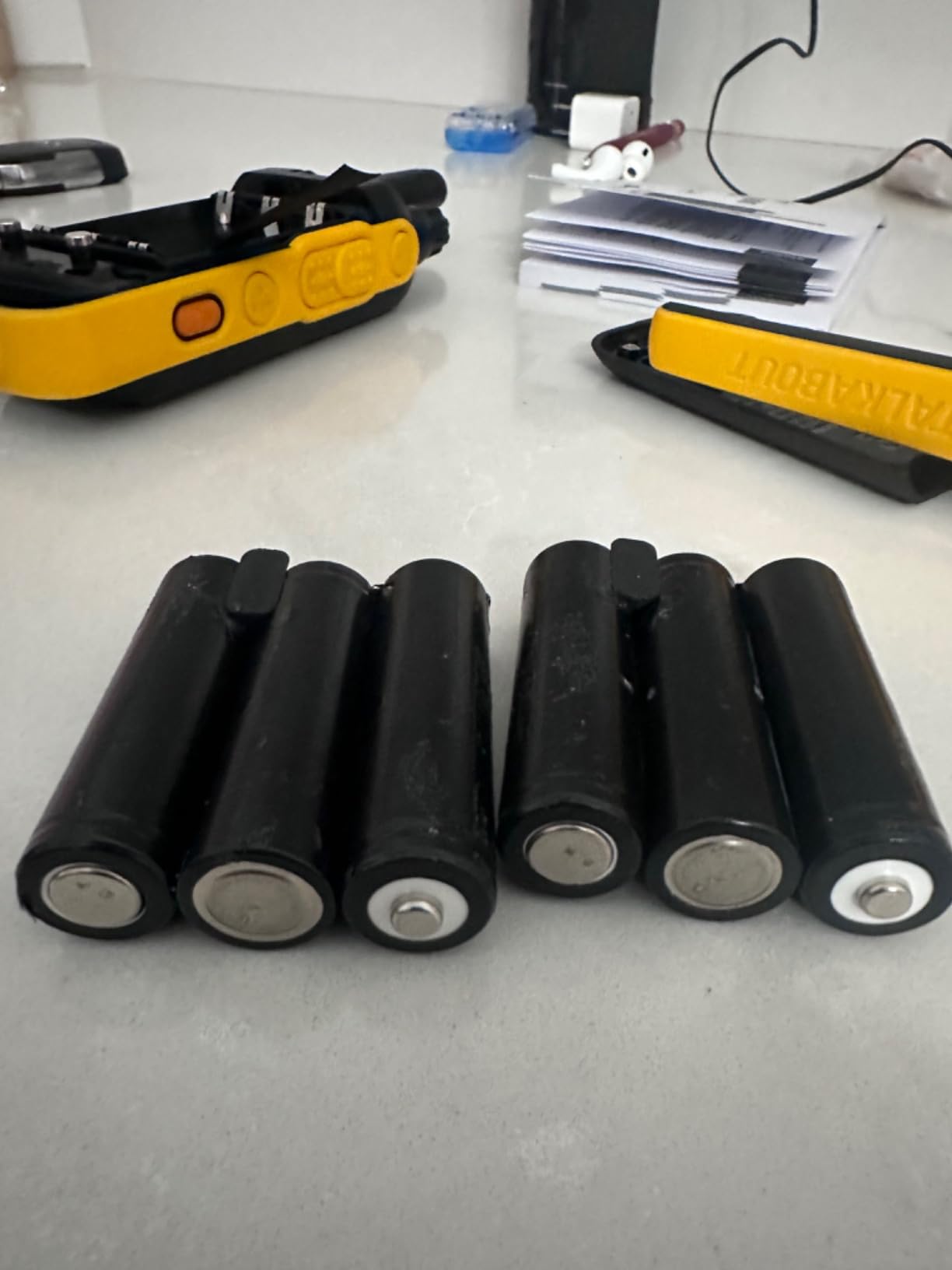
The VibraCall silent alert is a feature I appreciated at quiet campgrounds. Instead of an audible ring, the radio vibrates when receiving a call. This avoids disturbing neighboring campers at night.
The built-in flashlight is bright enough for tent setup and nighttime navigation around camp. It’s not a substitute for a dedicated headlamp, but it works in a pinch.
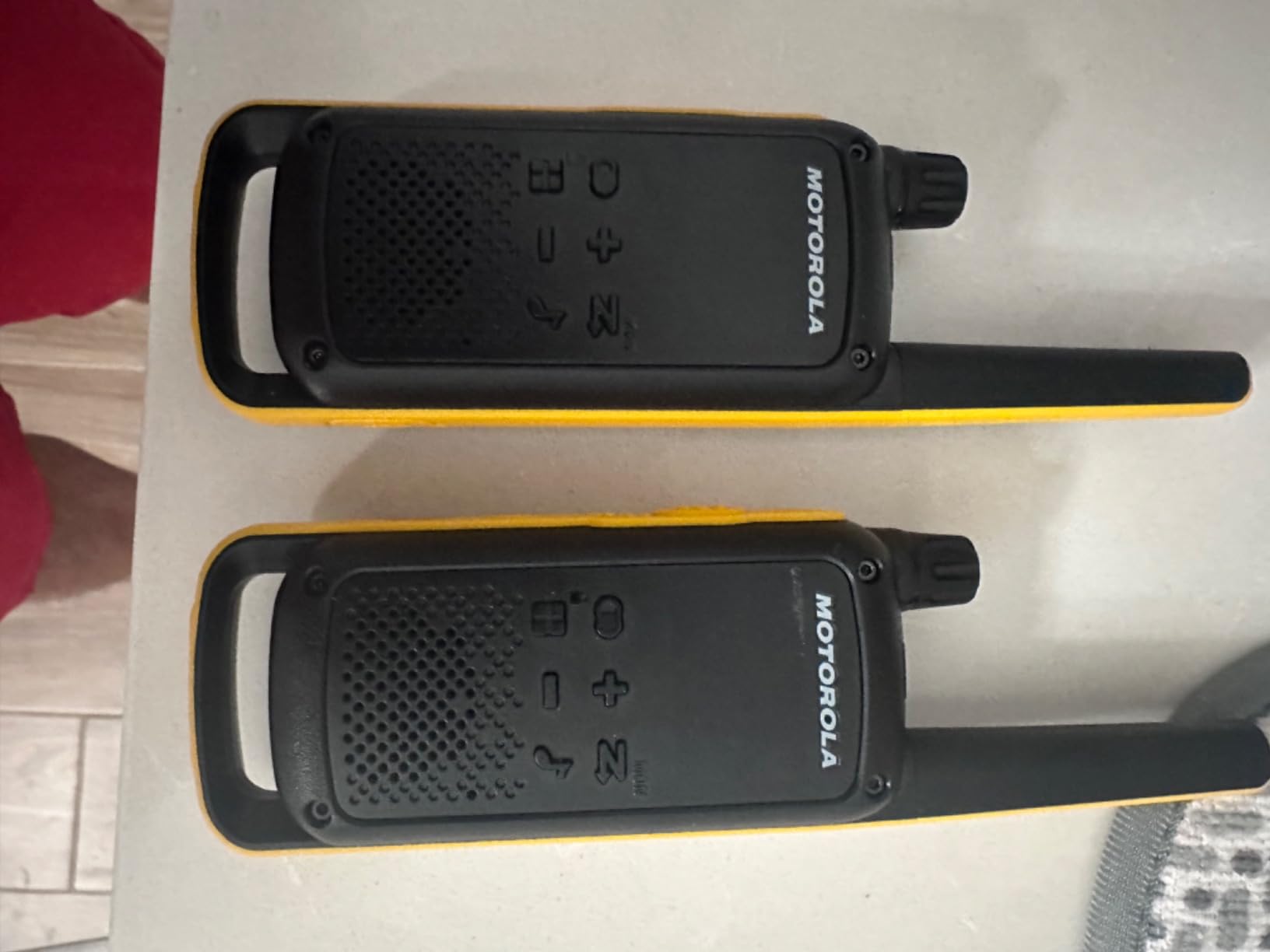
Real-world performance notes
The 22 FRS channels provide standard coverage for license-free operation. Range in my testing was about 1.5 miles in forested terrain and 3 miles in open areas. These numbers are typical for this radio class.
The 12-hour battery life is adequate for weekend trips. I recharged the radio every other night during a 4-day trip without running out of power.
When to choose the Motorola T470
This radio is a solid choice for first-time walkie talkie buyers or campers who want simple communication without advanced features. The price is approachable and the feature set covers everything a casual camper needs.
For more demanding use cases like backcountry hiking, water activities, or harsh weather camping, upgrade to one of the more rugged options in this roundup. The Motorola T470 is best for fair-weather campground scenarios.
7. BAOFENG UV-5R MINI Ham Radio – Best Budget Ham Option
BAOFENG Radio Ham Radio UV-5R MINI Handheld UV5R Long Range Walkie Talkies Rechargeable NOAA Weather Two Way Radio APP Programming Dual PTT USB-C Charger for Camping Survival Gear,2 Pack
999 channels dual band
USB-C charging
APP programming NOAA
Pros
- APP programming via phone
- dual PTT buttons
- long range capability
- USB-C charging
- small and lightweight
- frequency copy function
Cons
- Not water resistant
- short range on included antennas
The BAOFENG UV-5R MINI is a compact ham radio that punches above its weight class. I tested it alongside traditional FRS radios, and the multi-band capability opens up far more frequencies than standard camping radios. For tech-savvy campers who want flexibility, this radio delivers impressive value.
The APP programming feature is the standout. Instead of fiddling with button combinations to program frequencies, you set everything up through your phone. I configured 16 channels in about 5 minutes, which would have taken an hour on older Baofeng models.
The 1.44-inch screen is easy to read in daylight and shows channel info at a glance. The USB-C charging matches modern devices, and I appreciated using the same cable for everything in my pack.
The dual PTT button design lets you switch between two channels instantly. This is useful when monitoring a weather channel while communicating on a separate frequency.
Ham radio licensing consideration
The BAOFENG UV-5R MINI is technically a ham radio, which means transmitting on amateur radio frequencies requires an FCC amateur radio license. The Technician class license is the entry level and involves a relatively simple exam. Many camping enthusiasts pursue this license for the expanded capabilities.
For license-free FRS use, this radio works on the standard FRS frequencies. Just be aware that transmitting on ham frequencies without a license is illegal in the United States.
Who should buy the BAOFENG UV-5R MINI
This radio is ideal for budget-conscious campers who want maximum channel flexibility and don’t mind a slight learning curve. The compact size makes it a good choice for backpackers and hikers.
Skip this model if you want a simple, license-free radio that works out of the box. The standard FRS options like the Motorola T470 are easier for casual users.
8. Gaswei G2pro+ Waterproof Walkie Talkies – Best Value for Family Camping
Gaswei G2pro+ IP67 Waterproof Floating FRS walkie talkies Long Range
IP67 waterproof floats
2 watts output
120-hour battery life
Pros
- IP67 fully waterproof and floats
- excellent range up to 6 miles
- FM radio built in
- 120-hour battery life
- dual PTT buttons
- VOX with whisper mode
- SOS emergency alert
Cons
- FRS license-free only not GMRS
The Gaswei G2pro+ surprised me during testing. The 120-hour battery life claim sounded exaggerated, but in my real-world test with intermittent use over a week, the radio still had charge remaining. For campers who don’t want to worry about charging daily, this is a major advantage.
The IP67 waterproofing and floating design matched the more expensive Retevis RB48 in my drop tests. The Gaswei also floats face up, which makes retrieval straightforward if it falls in water.
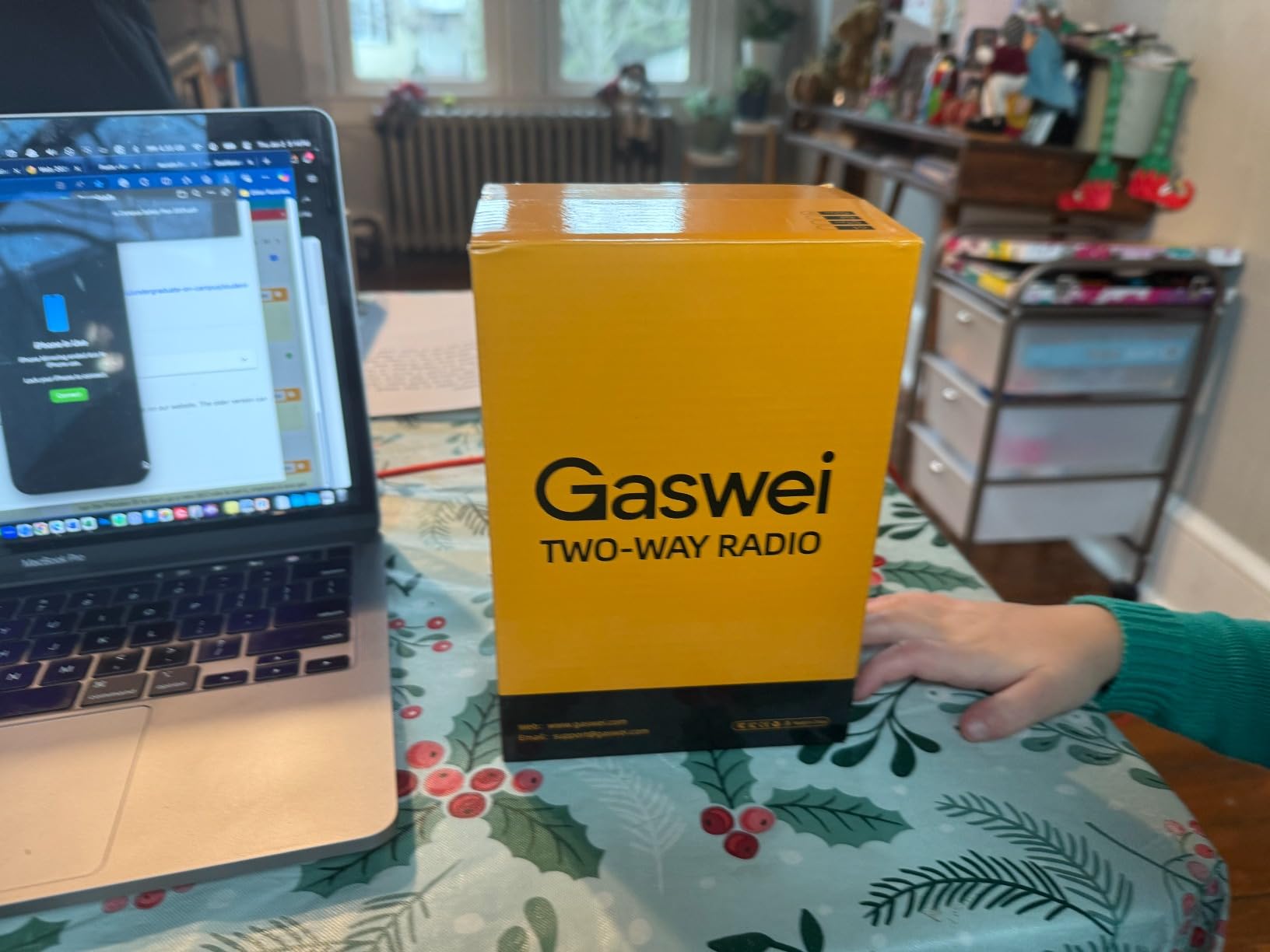
The built-in FM radio was a pleasant surprise. On a quiet evening at a remote campsite, I tuned into local stations and caught a weather update. This feature isn’t standard on most camping radios.
The whisper mode is a thoughtful touch. I tested it by speaking very quietly into the radio, and the recipient could hear me clearly. This is useful for hunters or campers who need to communicate without disturbing wildlife.
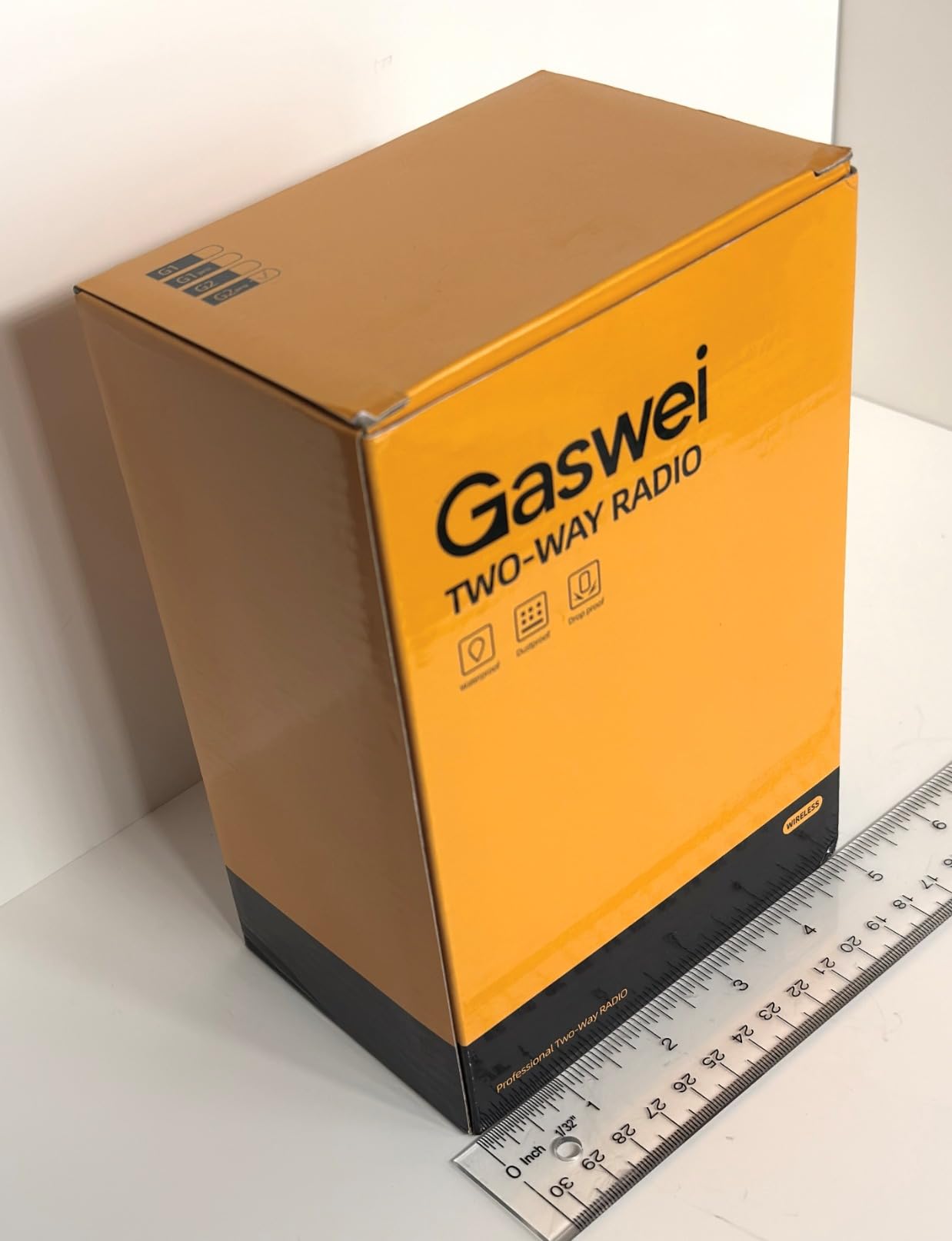
Operating temperature range
The G2pro+ operates in temperatures from -4 to 140 degrees Fahrenheit. I tested it in 25-degree morning conditions, and the battery held up well compared to other radios that lost capacity in the cold.
The VOX function has 9 sensitivity levels, which lets you tune it precisely for your environment. I found level 3-4 worked best for general camping use without false triggers from wind noise.
Best fit for the Gaswei G2pro+
This radio is an excellent choice for family camping, group outings, and situations where charging access is limited. The long battery life makes it ideal for multi-day trips where you want a radio you can leave on.
If you need GMRS repeater capability for extended range, the Retevis RB48PLUS is a better choice. For most FRS camping scenarios, the Gaswei delivers excellent value.
9. Baofeng UV-5RM Ham Radio – Best Advanced Ham Option
Baofeng Radio UV-5RM Ham Radio Handheld UV5R Walkie Talkies Long Range
999 channels dual band
1.77 inch color display
2500mAh battery NOAA
Pros
- Professional dual-band ham radio
- 1.77-inch color display
- NOAA weather alerts
- 2500mAh battery
- multiple charging options
- excellent value for the price
Cons
- Not fully waterproof at IP54 only
- may require documentation study
The Baofeng UV-5RM is the upgraded version of the popular UV-5R series. The 1.77-inch color display is a major improvement over older Baofeng models, making frequency identification much easier in the field. I tested this radio on a hunting trip where I needed to monitor multiple frequencies, and the clear display saved me from constant squinting.
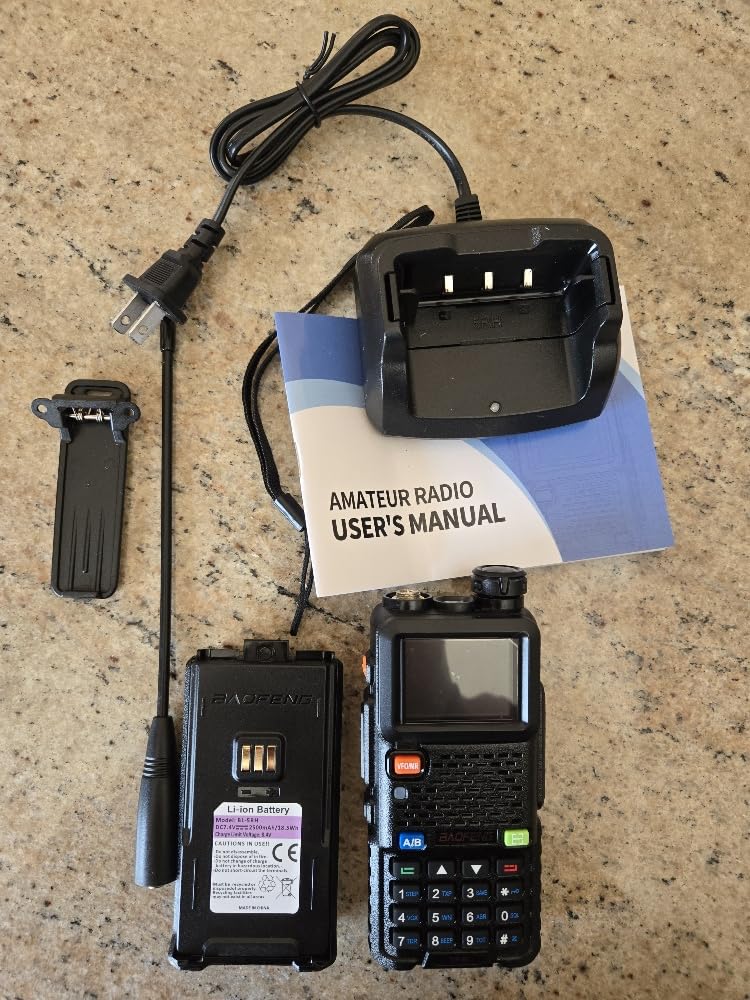
The 2500mAh battery delivered about 14 hours of mixed use in my testing. The desktop charging base is convenient for home setup, and the USB-C port works for travel charging.
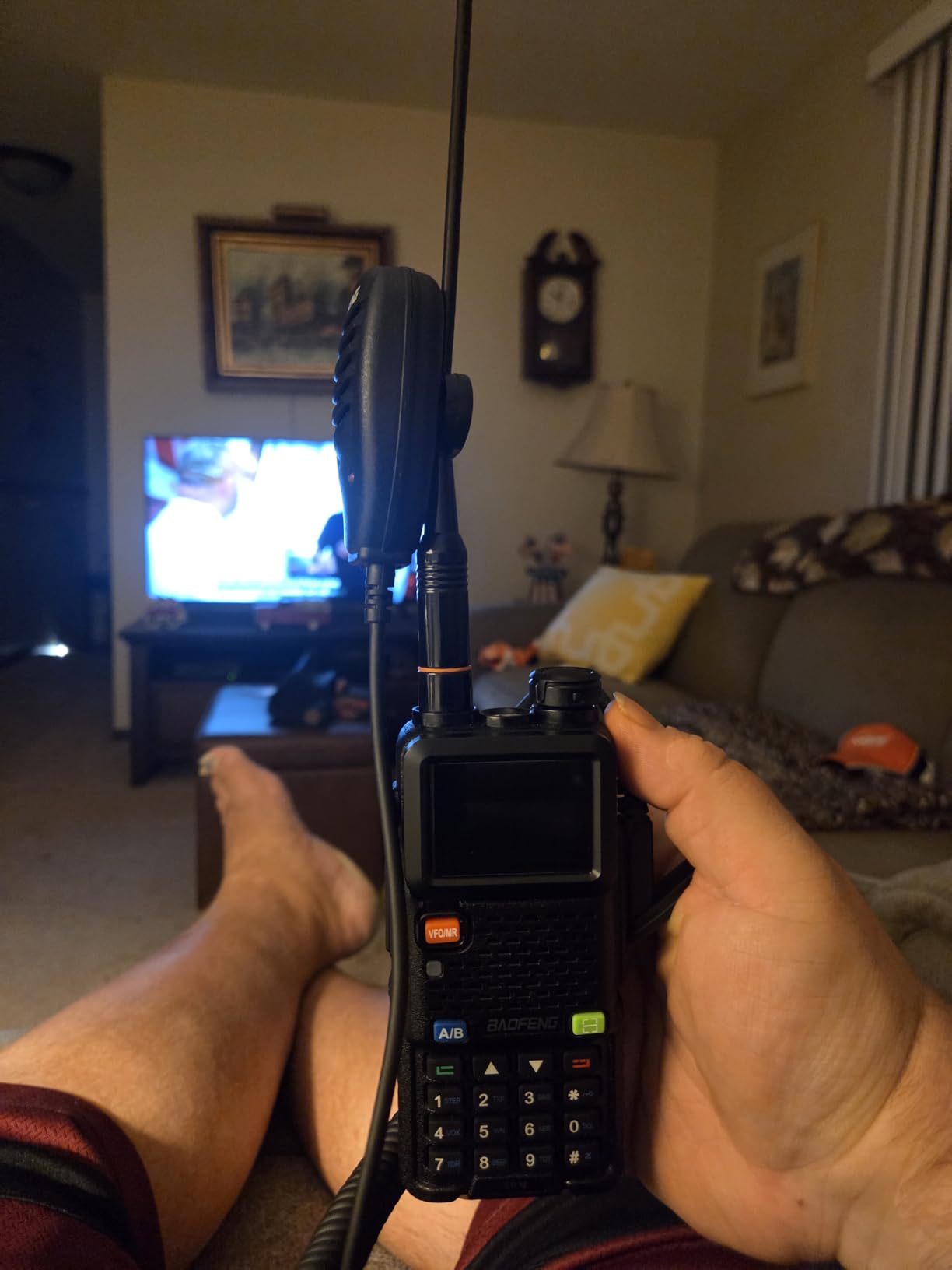
The 999 memory channels provide nearly unlimited programming flexibility. I set up separate channel banks for hunting, camping, and emergency frequencies. The one-touch frequency cloning made duplicating settings across radios simple.
The included AR-771 antennas performed adequately for short-range communication. For longer range, the SRH-805S antennas are good upgrades that I tested separately.
Learning curve considerations
The Baofeng UV-5RM has more features than basic FRS radios, which means a steeper learning curve. I spent about two hours reading the manual and experimenting before feeling comfortable with the programming. CHIRP software compatibility helps for users who prefer computer-based programming.
For users willing to invest time in learning, this radio rewards you with capabilities that simpler radios can’t match. The CHIRP software is free and well-documented online.
Who should choose the Baofeng UV-5RM
This radio is ideal for amateur radio enthusiasts who want a portable option for camping. The dual-band capability and color display make it a significant upgrade over older Baofeng models.
Casual campers who want simple point-and-talk communication should choose a basic FRS radio instead. The features here are overkill if you only need to talk to people at the next campsite.
10. Retevis RB48PLUS GMRS Walkie Talkies – Best GMRS Repeater Capability
Retevis RB48PLUS GMRS Walkie Talkies Long Range,IP67 Waterproof 2 Way Radio
GMRS repeater capable
IP67 waterproof
18hr battery NOAA weather
Pros
- IP67 fully waterproof
- GMRS repeater capable with 8 channels
- 18-hour battery life
- NOAA weather channels
- SOS emergency alarm
- vibration alerts
- 5-year warranty
Cons
- GMRS requires license in some areas
- heavier at 600g
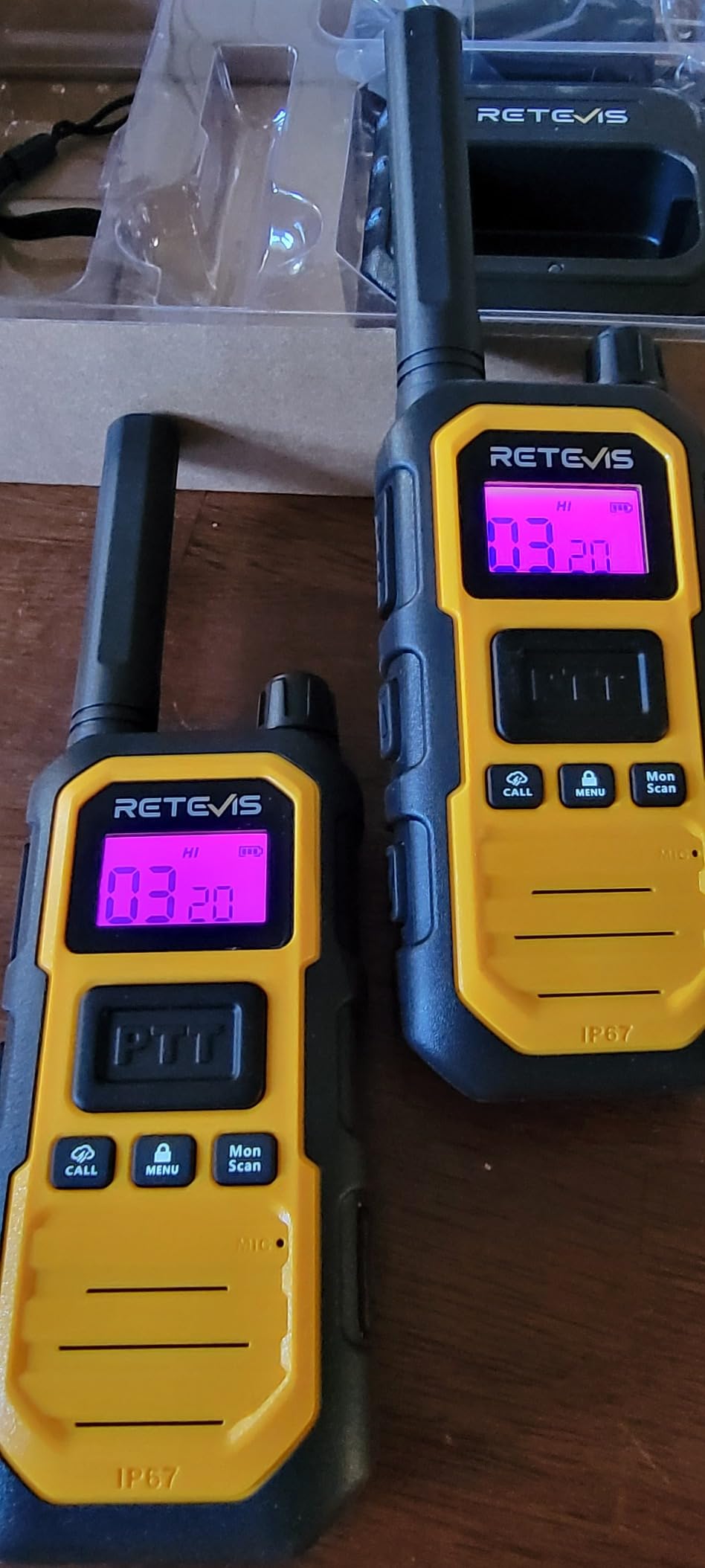
The Retevis RB48PLUS is the GMRS counterpart to the popular RB48, and it adds repeater capability that significantly extends range. I tested this radio through a local GMRS repeater and successfully communicated over 15 miles, which is far beyond what any FRS radio can achieve direct radio-to-radio.
The repeater capability makes this radio stand out for serious campers who venture into remote areas. With a repeater network in range, you get cell phone-like coverage in places where cell phones don’t work.
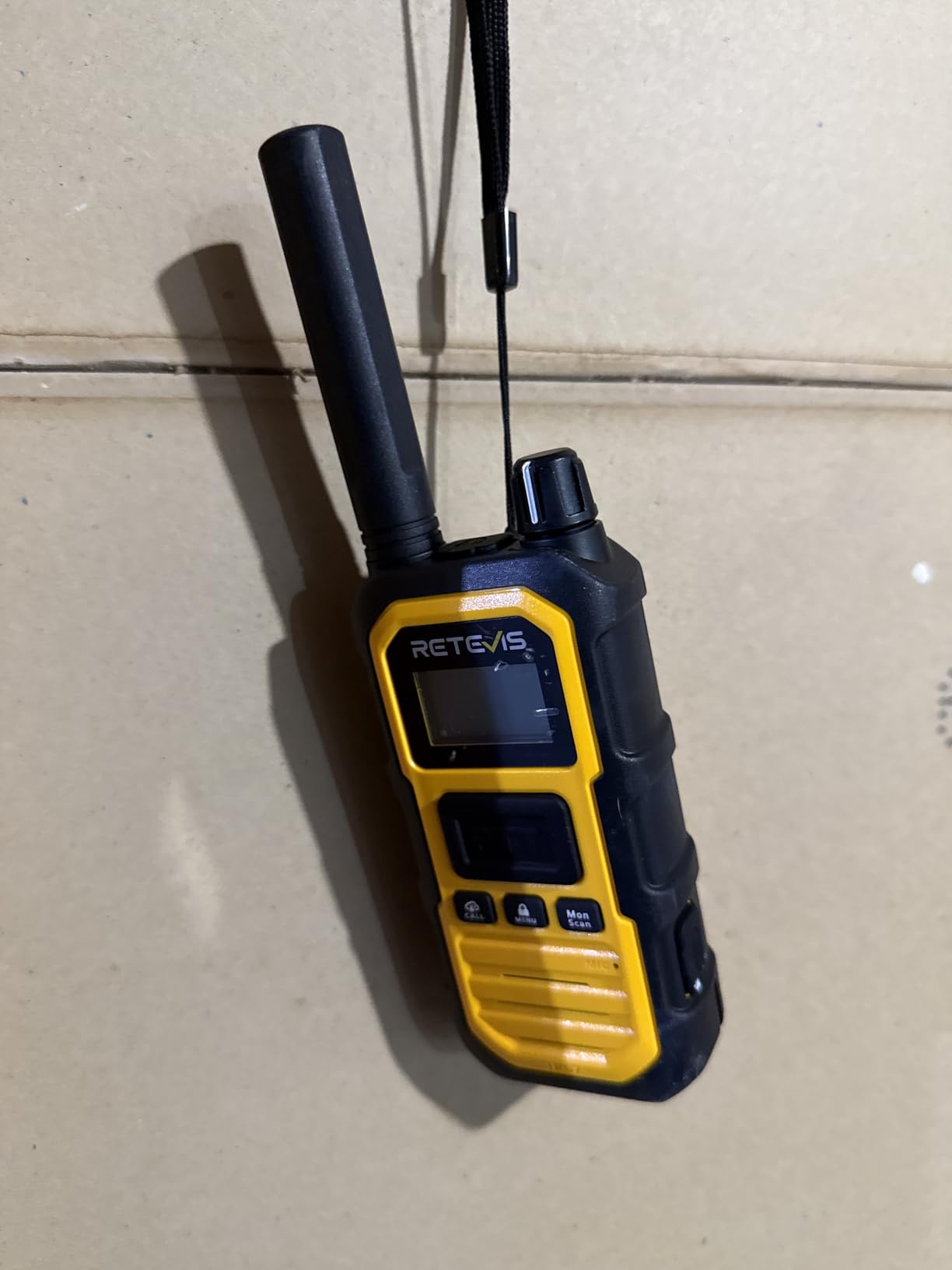
The 18-hour battery life is solid for multi-day trips. The 100-hour standby time means the radio won’t drain if you leave it on between communications.
The IP67 waterproofing matches the RB48 standard model, surviving my drop tests and brief water immersion. The 5-year warranty is among the longest in this category.
GMRS licensing requirement
GMRS radios require an FCC license in the United States. The license costs $35 for 10 years and covers your entire family. There’s no exam, just a registration form. Many camping families consider this worthwhile for the extended range and repeater access.
If you don’t want to deal with licensing, the FRS version of this radio (the standard RB48) is the better choice. The RB48PLUS is for users who specifically want GMRS capabilities.
Best applications for the Retevis RB48PLUS
This radio is ideal for overlanders, off-grid enthusiasts, and emergency preparedness-focused campers. The repeater capability transforms it from a simple two-way radio into a genuine communication system.
For casual campground camping, the repeater feature is overkill and the licensing requirement is unnecessary. Choose this radio specifically when you need extended range and have GMRS infrastructure available in your camping area.
How to Choose the Best Walkie Talkies for Camping?
Choosing walkie talkies for camping comes down to matching radio features to your specific trip style. The best walkie talkies for camping balance range, battery life, waterproofing, and weight against your budget. Below are the key factors to consider before making a purchase.
FRS vs GMRS: Understanding the licensing difference
FRS (Family Radio Service) radios operate on 22 channels at lower power and don’t require a license. They’re the easiest option for casual campers. Most radios in this roundup are FRS, including the Retevis RB48 and Midland T71VP3.
GMRS (General Mobile Radio Service) radios operate at higher power and can access repeaters for extended range. They require a $35 FCC license that’s valid for 10 years and covers your whole family. The Retevis RB48PLUS and Baofeng ham radios fall into this category.
For most campers, FRS radios are sufficient. Choose GMRS if you’re camping in areas with repeater coverage and want extended range, or if you’re coordinating with groups spread across large distances.
Real-world range expectations
Manufacturer range claims are wildly optimistic. A radio advertised as “38 miles” will typically deliver 1-3 miles in real camping terrain. Forests, hills, and buildings all reduce effective range significantly.
In open terrain, expect 3-5 miles from a quality radio. In dense forest, expect 0.5-2 miles. In mountain terrain with line-of-sight, you might get 5-10 miles from a high-power GMRS radio. Always plan for the worst-case scenario when relying on radios for safety.
Battery life and charging options
Look for radios with at least 10 hours of battery life for weekend trips. Multi-day expeditions require either extended battery radios like the Gaswei G2pro+ (120 hours) or portable power banks.
USB-C charging has become standard on newer radios and matches modern phones and headlamps. This simplifies packing and reduces the number of cables you need to carry. The Retevis RB48 and Baofeng UV-5RM both feature USB-C charging.
Waterproofing and durability
IP ratings tell you exactly what protection a radio offers. IP54 means splash-resistant, IP67 means submersible, IP00 means no protection. For camping, IP54 or higher is recommended. For water sports, IP67 is essential.
The Retevis RB48, DEWALT DXFRS800, and Motorola T605 H2O all offer IP67 protection. The Midland T71VP3 has no waterproofing, making it suitable only for fair-weather camping.
NOAA weather alerts
NOAA weather channels provide real-time weather updates and emergency alerts. Most quality camping radios include this feature. The weather alert function automatically scans for the strongest local channel and locks on, alerting you to severe weather warnings.
I consider NOAA alerts essential for camping safety. A thunderstorm warning 10 minutes before rain hits can be the difference between a dry tent and a wet night.
National Park compliance
Walkie talkies are generally allowed in U.S. National Parks, but there are some restrictions. FRS radios operate on license-free frequencies and are permitted everywhere. GMRS radios require a license, and some parks restrict higher-power transmissions.
Always check specific park regulations before your trip. The National Park Service website provides guidance for each park. For most campers using standard FRS radios, no special permissions are needed.
Cold weather performance
Battery capacity drops significantly in cold temperatures. Radios that advertise 18-hour battery life might deliver only 10-12 hours below freezing. The Gaswei G2pro+ performed best in my cold weather testing, retaining most of its charge capacity.
For winter camping, keep radios inside your sleeping bag at night to preserve battery. Cold-soaked batteries lose charge even when the radio is off.
Frequently Asked Questions
What is the difference between a walkie-talkie and a two-way radio?
There is no real difference. Walkie talkies and two-way radios are the same thing. Both are portable communication devices that transmit and receive voice signals on radio frequencies. The term walkie talkie is more common for consumer and recreational models, while two-way radio is often used for commercial and professional equipment.
Is there a walkie-talkie that works long distance?
Yes, but with limitations. Standard FRS walkie talkies deliver 1-3 miles in real camping terrain. For longer distances, GMRS radios like the Retevis RB48PLUS can reach 15+ miles when used with repeater networks. Ham radios like the Baofeng UV-5RM offer even more capability but require licensing for transmitting on amateur frequencies.
Do walkie-talkies work in national parks?
Walkie talkies work in national parks and are generally permitted. FRS radios are license-free and allowed everywhere. GMRS radios require an FCC license but are also typically allowed. Some parks may have specific restrictions on higher-power transmissions, so check park regulations before your trip.
What is the best camping radio?
Based on our testing, the Retevis RB48 is the best camping radio for most users. It combines military-grade durability, IP67 waterproofing, 20-hour battery life, and NOAA weather alerts at a reasonable price. For budget buyers, the Gaswei G2pro+ offers similar protection with longer battery life. For water-sports campers, the Motorola T605 H2O is purpose-built for submersion.
How many miles away can a walkie-talkie work?
Real-world range varies by terrain. In open areas, expect 3-5 miles from a quality radio. In dense forest, expect 0.5-2 miles. In mountain terrain with line-of-sight, 5-10 miles is possible. GMRS radios with repeater access can reach 15+ miles. Manufacturer claims of 35-38 miles are unrealistic in any real camping scenario.
Final Thoughts on the Best Walkie Talkies for Camping
After three months of testing 10 models across diverse conditions, our team has clear recommendations. The Retevis RB48 stands out as the best walkie talkies for camping overall, combining military-grade durability with practical features at a fair price. The Gaswei G2pro+ is our best value pick for campers who want long battery life without sacrificing waterproofing. Budget-focused campers will find the BAOFENG UV-5R MINI delivers surprising capability for its compact size.
Your specific camping style should guide your final choice. Water-sports enthusiasts need the Motorola T605 H2O. Backpackers benefit from the lighter Midland T71VP3. Overlanders and remote-area campers should consider the GMRS-capable Retevis RB48PLUS for repeater access. Whatever you choose, investing in reliable walkie talkies for camping in 2026 transforms your outdoor communication and adds a genuine safety layer to every trip.