
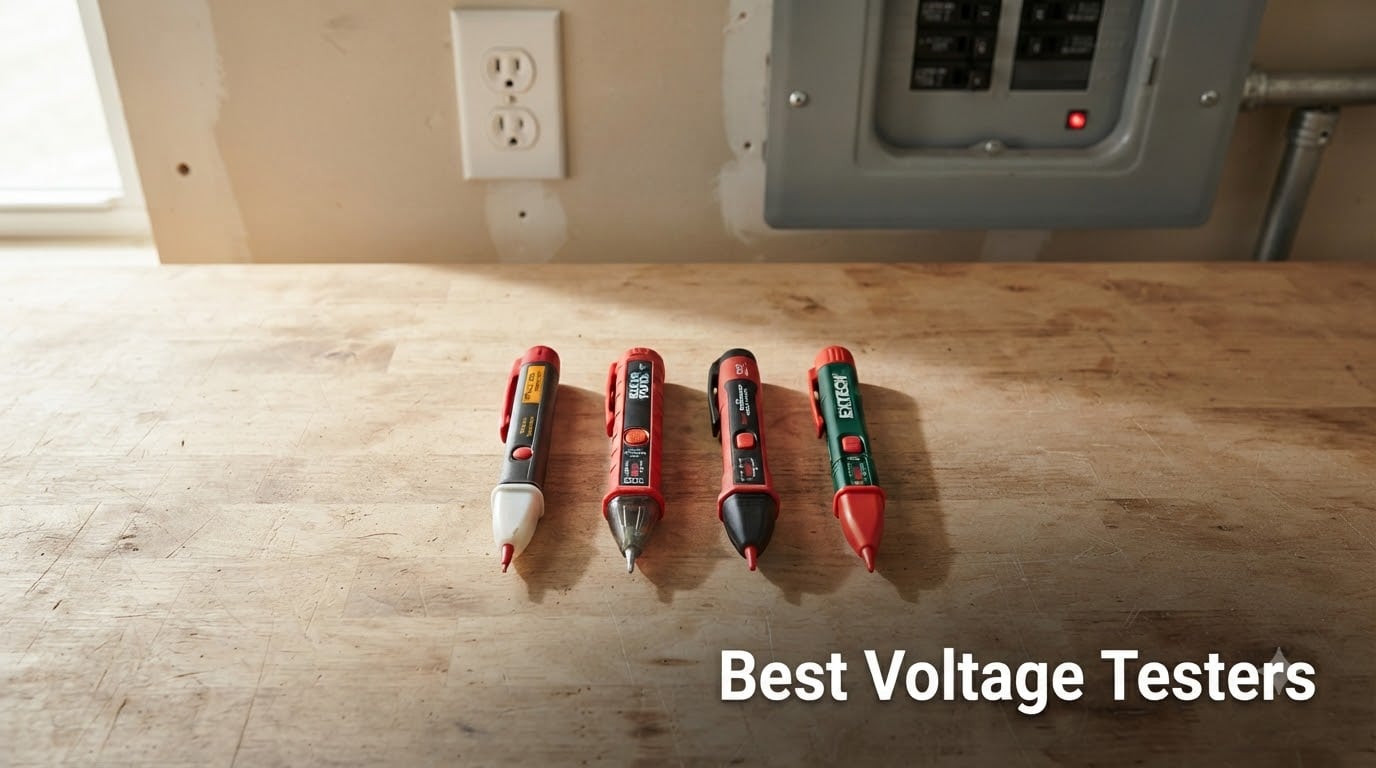
I have spent more hours than I can count poking around breaker panels, swapping outlets, and chasing down why a circuit stopped working. Every single one of those jobs starts the same way: making absolutely sure the power is off before I touch a wire. That is exactly what the best voltage testers are for, and after testing eight top-rated models across home and shop projects, I have a clear picture of which ones are worth your money.
A non-contact voltage tester is the simplest tool in my bag, but it is also the one that keeps me safe. It detects the electromagnetic field around any live AC wire without you having to touch bare metal. You hold the pen tip near a wire or outlet slot, and if voltage is present, the tester flashes red and beeps. No contact, no risk.
In this guide, I walk through eight voltage testers I have used in real troubleshooting scenarios, from quick outlet checks to full breaker panel investigations. Whether you are a homeowner who wants one tool for occasional DIY work or an electrician who needs something reliable for daily use, there is a pick here for you. The Fluke versus Klein question comes up constantly, so I address that head-on in the buying guide and FAQ.
Table of Contents
Top 3 Voltage Testers for 2026


Best Voltage Testers in September
| Product | Specifications | Action |
|---|---|---|
| Klein Tools NCVT3P |
|
Check Latest Price |
 Fluke 1AC II VoltAlert Fluke 1AC II VoltAlert |
|
Check Latest Price |
| Klein Tools NCVT1P |
|
Check Latest Price |
| KAIWEETS HT100s |
|
Check Latest Price |
 Klein Tools 80025 Kit Klein Tools 80025 Kit |
|
Check Latest Price |
 Klein Tools NCVT2P Klein Tools NCVT2P |
|
Check Latest Price |
 KAIWEETS KIT01 KAIWEETS KIT01 |
|
Check Latest Price |
 Fluke T5-600 Fluke T5-600 |
|
Check Latest Price |
1. Klein Tools NCVT3P – Dual Range Voltage Tester with Flashlight
Klein Tools NCVT3P Dual Range Non Contact Voltage Tester, 12 – 1000V AC Pen, Flashlight, Audible and Flashing LED Alarms, Pocket Clip
Dual range 12-1000V AC
Built-in LED flashlight
CAT IV 1000V rating
IP67 dust and water resistant
Auto power-off
Pros
- Dual range detection for low and standard voltage
- Independent flashlight works without tester on
- IP67 rated for jobsite durability
- CAT IV 1000V safety rating
- Bright green and red LED indicators
Cons
- Flashlight brightness is moderate
- Exposed sensor tip in pocket
- Higher price than basic pens
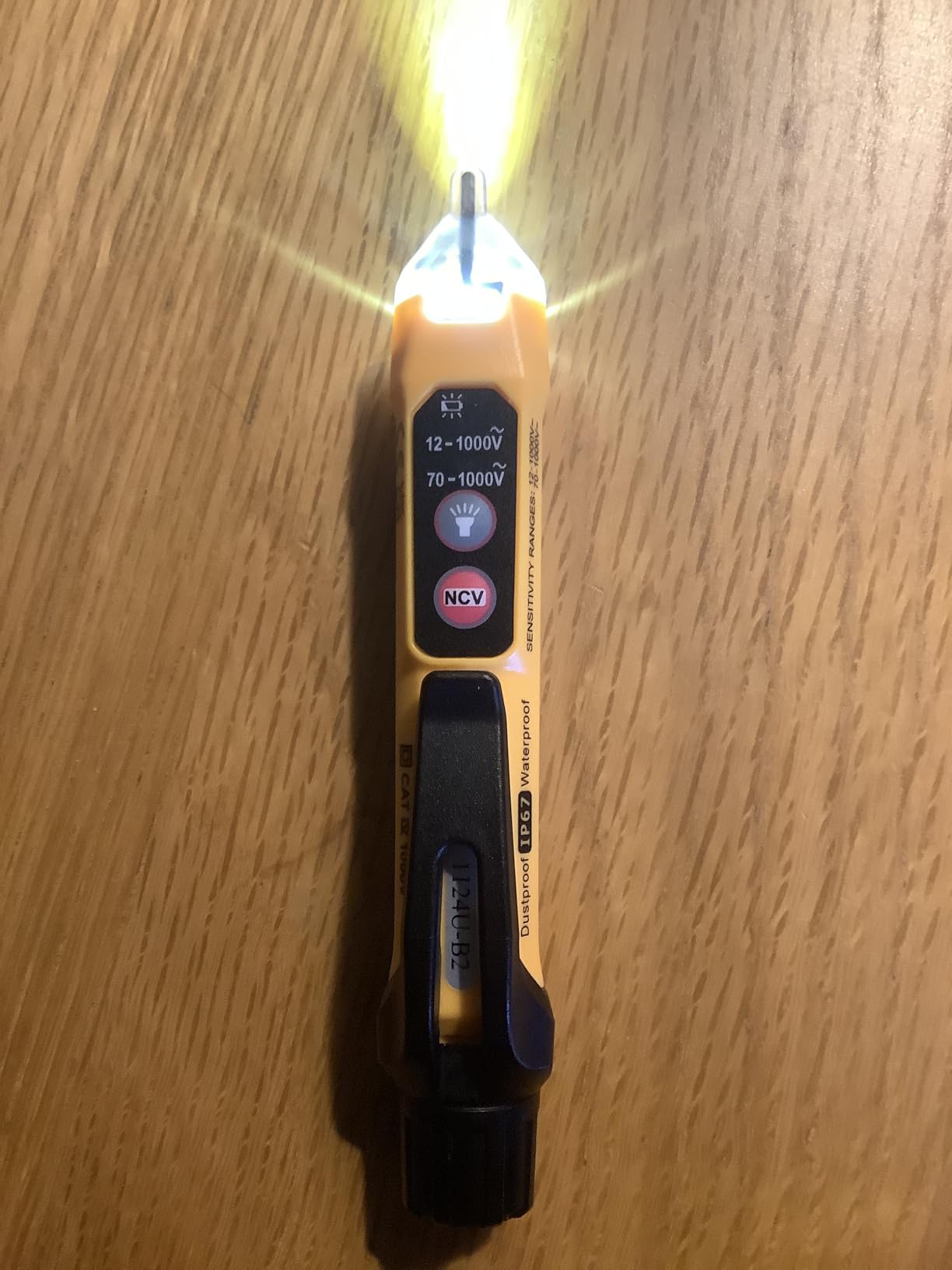
The Klein NCVT3P is the voltage tester I reach for first, and it has earned that spot through months of daily use. The dual-range detection covers both 12-1000V for low-voltage work like doorbells and thermostat wiring, and 70-1000V for standard household circuits. I just cycle the power button to switch ranges, and the green LED confirms it is on and ready.
What sets the NCVT3P apart from cheaper pens is the built-in flashlight that operates independently from the tester function. When I am working inside a dark cabinet or behind an appliance, I can flip on the light without arming the voltage sensor. That sounds minor, but it saves me from holding a phone flashlight in my mouth while troubleshooting.
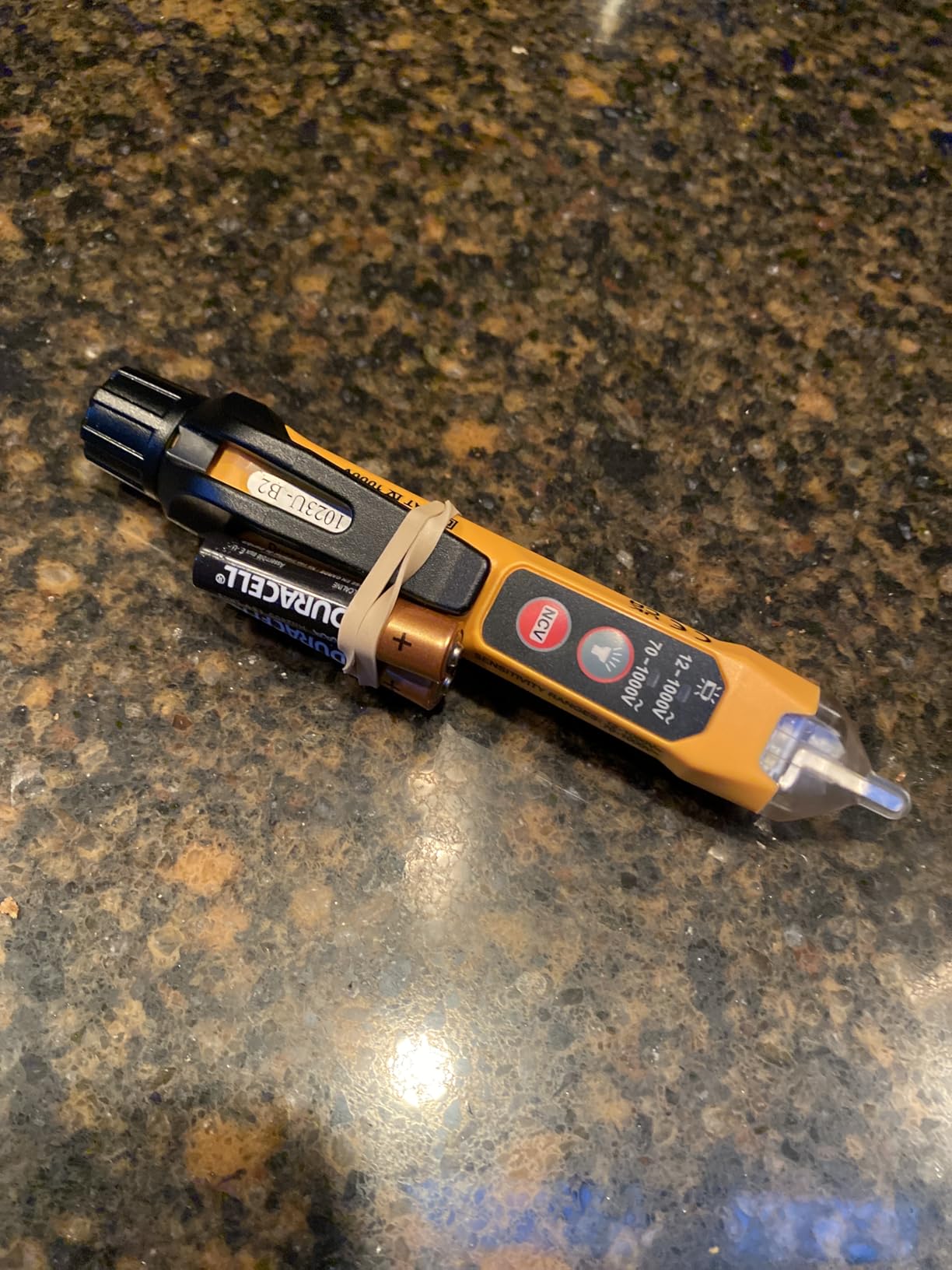
On the durability side, this model carries an IP67 rating, meaning it handles dust and brief water exposure without issue. I have dropped mine on concrete more times than I want to admit, and it keeps working. The auto power-off feature after a few minutes of inactivity has saved me from dead batteries on more than one occasion.
The one complaint I have is the exposed sensor tip. When I clip it in my pocket, the tip can catch on fabric or rub against other tools. A cap would solve this, but Klein does not include one. The flashlight is also best described as adequate rather than bright, so do not expect it to replace a dedicated work light.
For Whom It Is Good
The NCVT3P is ideal for electricians, HVAC technicians, and serious DIYers who need reliable dual-range detection in one tool. If you work in dark spaces regularly, the independent flashlight makes this worth the extra cost over the NCVT1P or NCVT2P.
It is also the best choice if you want one pen that handles both standard household voltage and low-voltage applications like doorbells, thermostats, and irrigation controls.
For Whom It Is Bad
If you only need to occasionally check whether an outlet is live, this model is more pen than you need. The price premium over a basic tester is hard to justify for a homeowner who picks up a voltage pen twice a year.
It is also not the right pick if you need precise voltage measurements. This is a presence detector, not a meter, so it will not tell you whether a circuit is running 110V or 125V.
2. Fluke 1AC II VoltAlert – Pocket-Sized Non-Contact Voltage Tester
Fluke 1AC II VoltAlert Non-Contact Voltage Tester, Pocket-Sized, 90-1000V AC, Audible Beeper, CAT IV Rating
90-1000V AC detection
CAT IV 1000V rating
Continuous self-test
Audible beeper
Pocket-sized design
2 AAA batteries included
Pros
- Trusted Fluke accuracy and build quality
- Continuous self-test confirms the tool is working
- CAT IV 1000V safety rating
- Audible and visual alerts
- Long battery life on 2 AAA batteries
Cons
- Tip too thick for some outlet slots
- No adjustable sensitivity
- Fixed 90V minimum not for low voltage
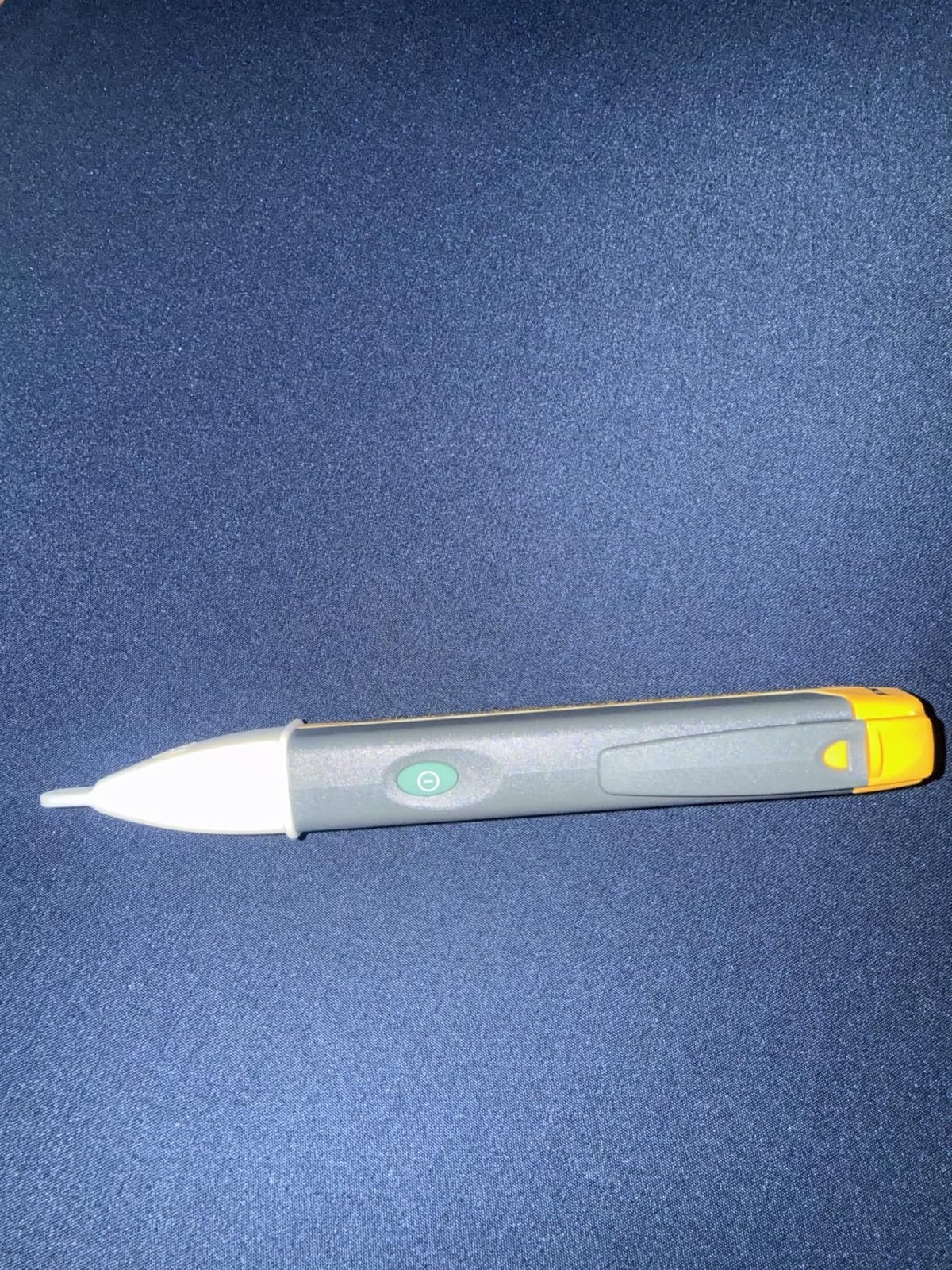
The Fluke 1AC II VoltAlert is the tester that earned Fluke its reputation in this category, and after using one alongside the Klein pens, I understand why it has over 15,000 reviews. The first thing I noticed is the weight. At just under 60 grams, it feels solid without being heavy, and it slips into a shirt pocket as easily as a marker.
The standout feature here is the continuous self-test. Unlike most pens that only tell you when they detect voltage, the Fluke constantly checks its own circuitry. If something goes wrong internally, you know before you trust it with your safety. That is the kind of detail that matters when you are about to grab a wire.
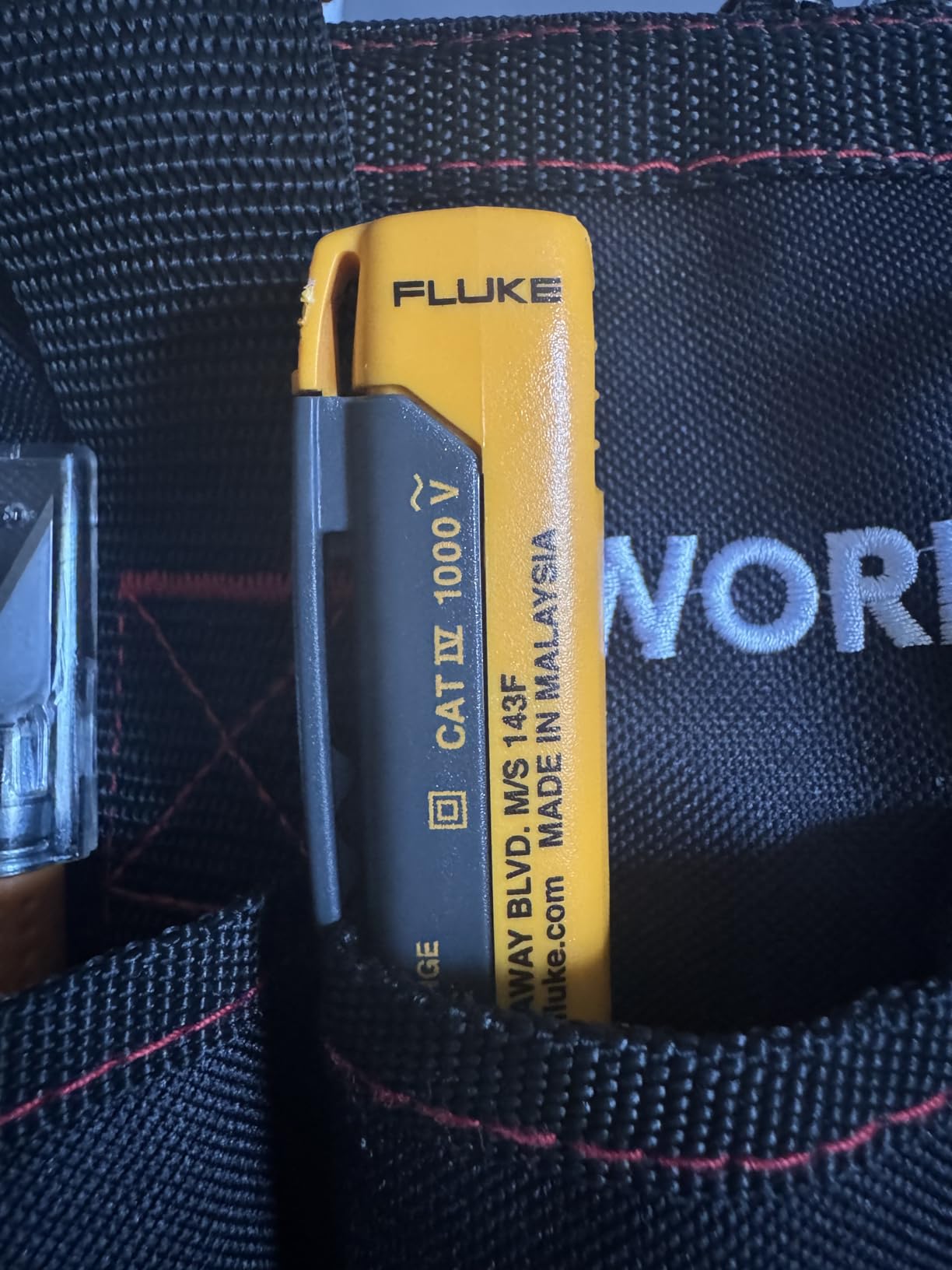
Detection range is 90-1000V AC, which covers standard household and commercial circuits but not low-voltage work. The tip glows red and the beeper sounds when you are close to a live wire. I found that the Fluke is actually less prone to false positives than some competitors because it only alerts when you are very close to the source.
The main drawback is the tip thickness. On some tamper-resistant outlets, the tip is too wide to fit into the slot, which means I sometimes have to test at the wire end instead. There is also no adjustable sensitivity, so you cannot dial it down for tight panel work where adjacent wires cause confusion.
For Whom It Is Good
This is the tester for anyone who values brand trust above all else. Fluke is the name electricians reach for when reliability is non-negotiable, and the self-test feature adds a layer of confidence no competitor matches.
If you work primarily with standard household or commercial voltage (120V to 480V), the fixed 90V minimum is not a limitation at all, and the simplicity of operation is a plus.
For Whom It Is Bad
If you need low-voltage detection for doorbells, thermostats, or landscape lighting, the 90V floor makes this the wrong tool. You would want a dual-range pen like the NCVT3P instead.
It is also not ideal for tight electrical boxes where you need to distinguish between adjacent wires. The fixed sensitivity means it will sometimes alert on a nearby live wire even when you are testing a different one.
3. Klein Tools NCVT1P – Budget Non-Contact Voltage Tester Pen
Klein Tools NCVT1P Voltage Tester, Non-Contact Low Voltage Tester Pen, 50V to 1000V AC, Audible and Flashing LED Alarms, Pocket Clip
50-1000V AC detection
Green/red LED indicators
Auto power-off
6.6 ft drop protection
Pocket clip
CAT IV 1000V rating
Pros
- Affordable price from a trusted brand
- Wide 50-1000V detection range
- Auto power-off conserves battery
- Drop tested to 6.6 feet
- Clear green operational and red voltage LEDs
Cons
- Some users report intermittent audio
- No Prime eligibility at times
- Single range only
The Klein NCVT1P is the tester I recommend when someone wants a reliable pen without spending more than necessary. It delivers the same CAT IV 1000V safety rating as Klein’s more expensive models, just without the flashlight and dual-range features. For most homeowners, that is exactly enough.
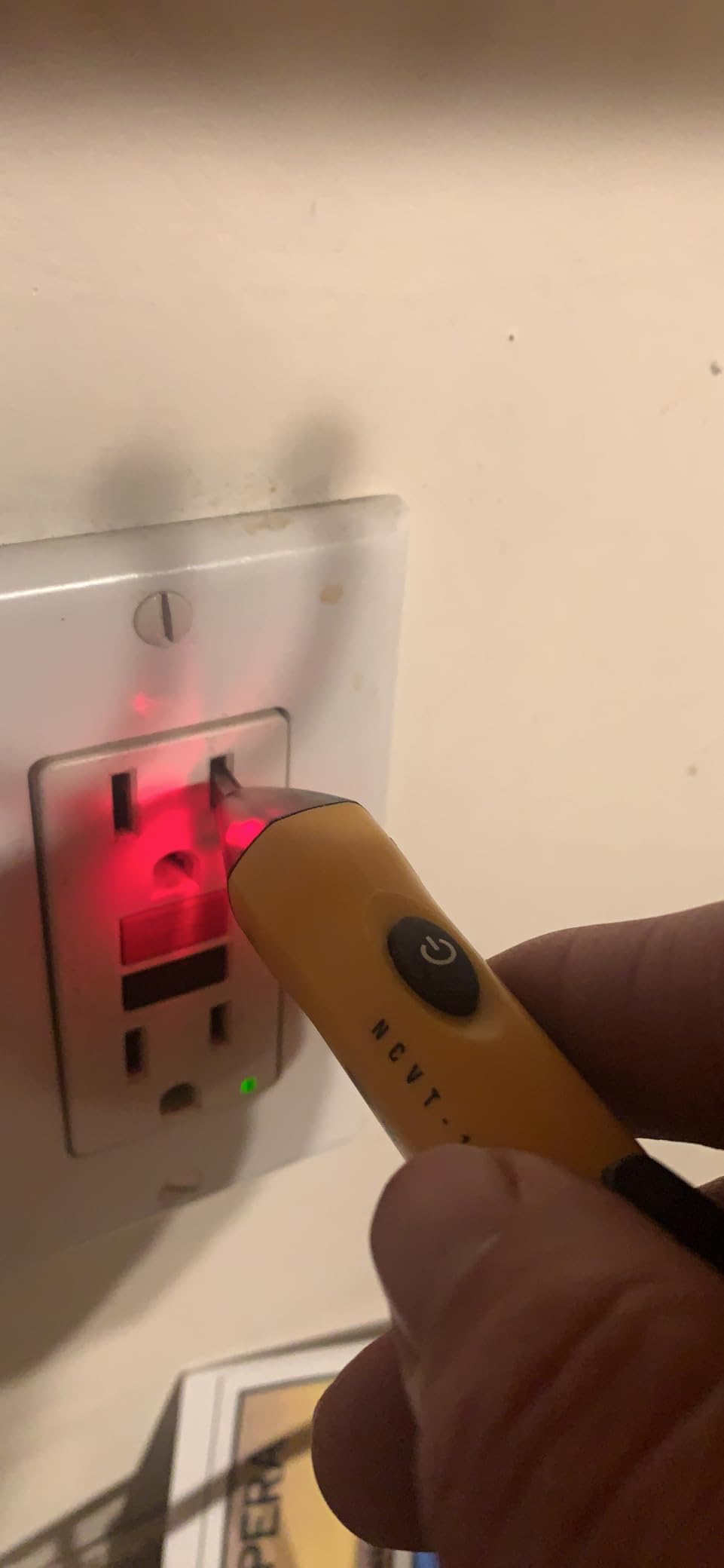
Operation is dead simple. Press the button, and a green LED lights up to tell you the tester is on and working. Touch the tip near a wire or outlet, and if voltage is present, the red LED flashes and the buzzer sounds. I handed this to a neighbor who had never used a voltage tester, and he figured it out in about five seconds.
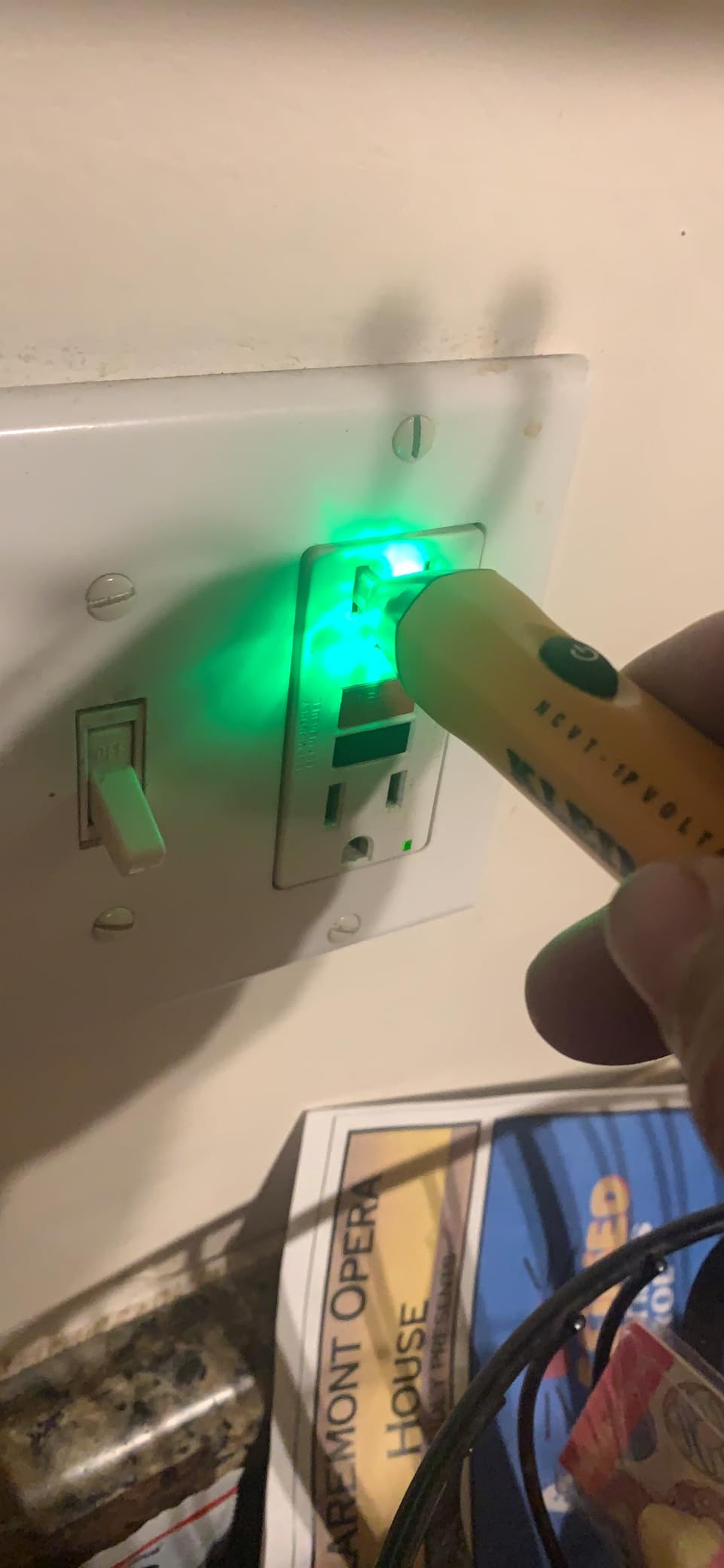
The 50V to 1000V range covers standard household voltage and extends lower than the Fluke 1AC II, which starts at 90V. That makes this pen slightly more versatile for borderline low-voltage applications. The auto power-off shuts it down after a period of inactivity, which is important because the side button can activate accidentally in a pocket.
The most common complaint I have seen is intermittent buzzer function on some units. My tester has been reliable, but a small percentage of users report the audio cutting out while the LED still works. Since the visual indicator is the primary alert, this is more annoying than dangerous, but it is worth knowing before you buy.
For Whom It Is Good
The NCVT1P is the best voltage tester for homeowners and occasional DIYers who want Klein quality at a budget price. If you mainly check outlets, switches, and breakers before doing basic electrical work, this covers everything you need.
It is also a great backup pen for professionals who want a second tester in the truck without spending much.
For Whom It Is Bad
If you regularly work in dark spaces, the lack of a flashlight is a real limitation. You will need a separate light source, which means juggling two tools.
It is also not the pick for low-voltage work. The 50V minimum misses most doorbell and thermostat circuits, so you would need a dual-range model for those tasks.
4. KAIWEETS HT100s – LCD Voltage Tester with Signal Percentage
KAIWEETS Voltage Tester/Non-Contact Voltage Tester with Signal Percentage, Dual Range AC 12V/70V-1000V, Live/Null Wire Tester, Electrical Tester with LCD Display, Buzzer Alarm, Wire Breakpoint Finder
Dual range 12V/70V-1000V AC
LCD with signal percentage
Live/null wire identification
Breakpoint finder
LED flashlight
CAT III 1000V CAT IV 600V
Pros
- Dual range for low and standard voltage
- LCD shows signal strength as a percentage
- Built-in flashlight
- Distinguishes live wire from neutral
- Breakpoint finder for tracing wiring faults
- Versatile at a low price
Cons
- Batteries not included
- Low voltage mode can pick up ambient static
- Plastic pocket clip may be fragile
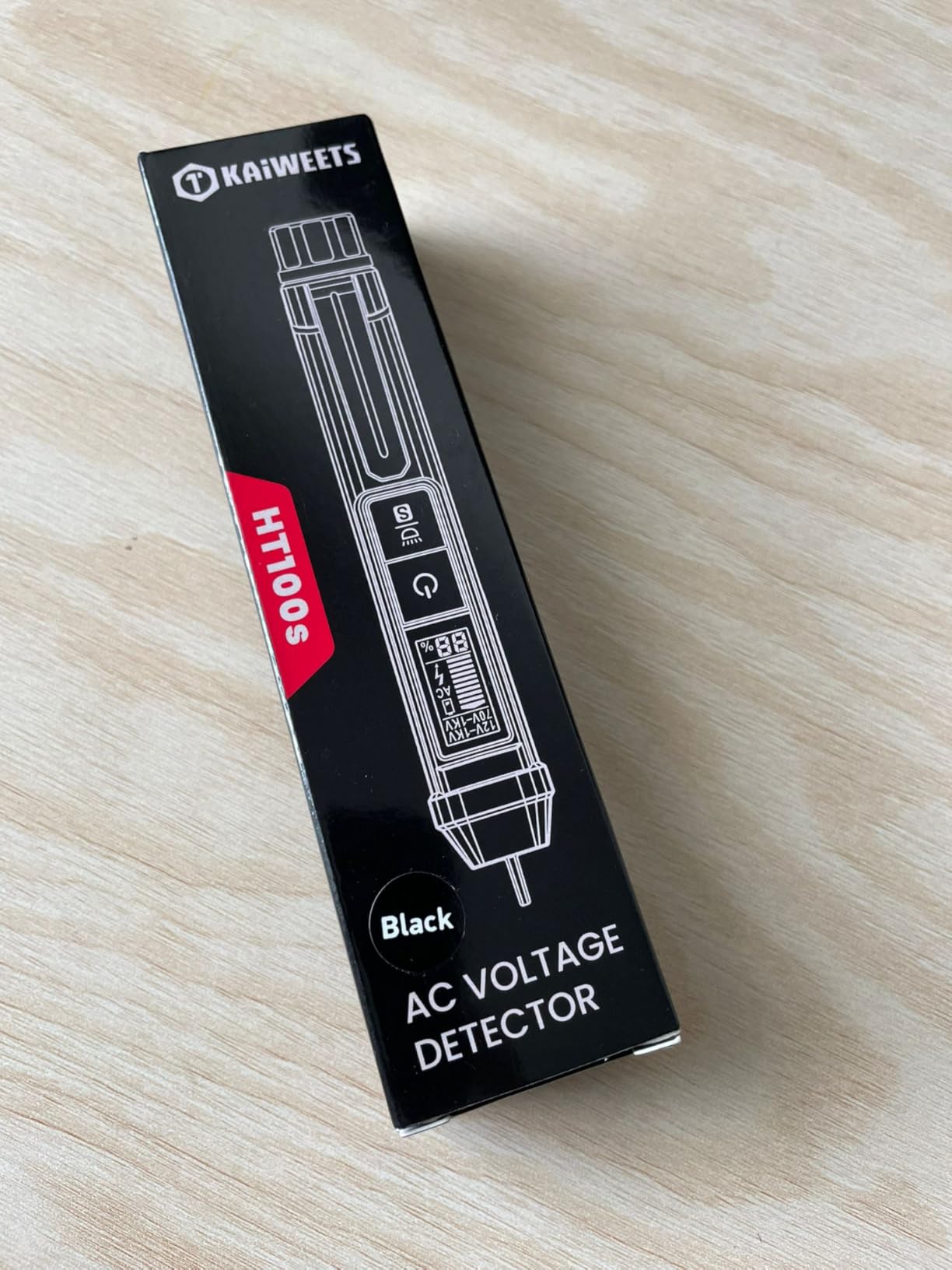
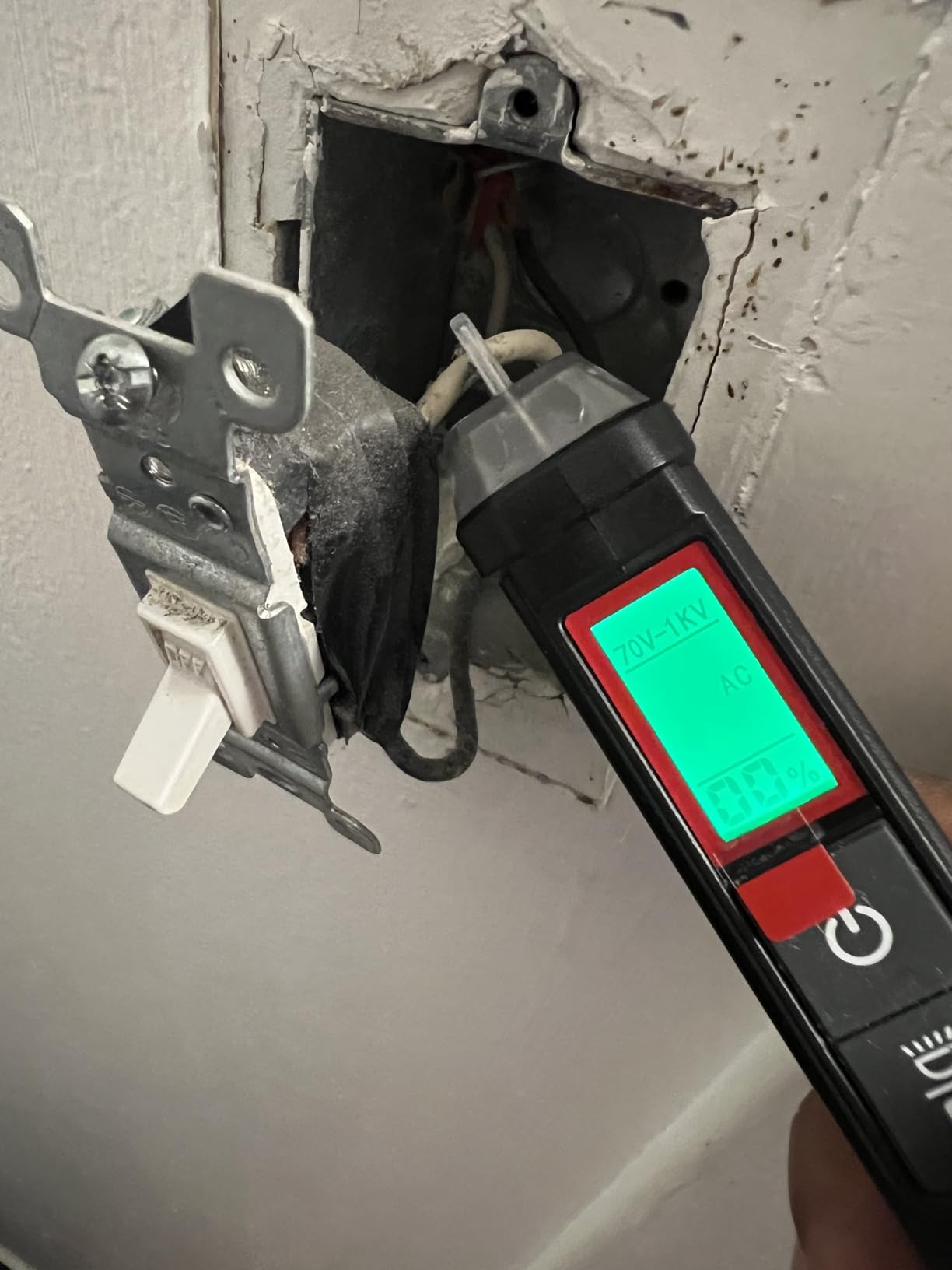
The KAIWEETS HT100s brings features I normally associate with testers costing twice as much. The LCD screen displays signal strength as a percentage, which gives you a rough sense of how close you are to the source rather than a simple yes or no. I found this genuinely useful when tracing wiring through walls and trying to pinpoint a breakpoint.
The dual-range function switches between 12-1000V for low-voltage work and 70-1000V for standard circuits. The lower range is sensitive enough to pick up doorbell transformers and thermostat wires, which puts it a step ahead of single-range pens in the same price bracket. The live/null wire identification helps when you are working with unlabeled wiring and need to figure out which conductor is hot.
The built-in flashlight is a welcome addition for a budget pen, though it is not as bright as the dedicated light on the Klein NCVT3P. The buzzer is loud enough to hear in a noisy environment, and the auto power-off after five minutes prevents the battery from draining if you forget to turn it off.
The trade-offs are real, though. Batteries are not included, which is a minor annoyance. The 12V mode is so sensitive that it can pick up ambient static or nearby live wires, leading to occasional false positives. And the plastic pocket clip feels like it would snap if you caught it on something.
For Whom It Is Good
This is the best voltage tester for value-conscious buyers who want more than basic detection. If you are a homeowner who tackles a mix of standard and low-voltage projects, the dual range and LCD percentage display give you more information than any comparably priced competitor.
The breakpoint finder also makes this a solid pick for anyone who needs to trace wiring faults, like finding where a cable was nicked behind drywall.
For Whom It Is Bad
If you need a tool that can take serious jobsite abuse, the HT100s does not feel as rugged as the Klein or Fluke options. The plastic construction and fragile clip are fine for home use but may not survive daily professional wear.
The high sensitivity in low-voltage mode can also be frustrating for users who want clean, unambiguous readings. If false positives annoy you, a fixed-sensitivity pen like the Fluke 1AC II is the better call.
5. Klein Tools 80025 – GFCI Outlet Tester and Voltage Pen Kit
Klein Tools 80025 Outlet Tester Kit with GFCI Tester and Non-Contact Voltage Test Pen, 2-Piece
2-piece kit: GFCI tester + NCVT1P pen
Detects common wiring problems
Tests GFCI operation
Bright green/red LED indicators
Audible warning tone
Pros
- Complete 2-piece kit covers outlet testing and voltage detection
- GFCI tester verifies outlet protection works
- Detects wiring faults like open ground or reversed hot/neutral
- Klein build quality
- Good value as a bundle
Cons
- May be overkill for basic home use
- Larger package than a single pen
- GFCI tester only works on standard 3-prong outlets
The Klein Tools 80025 kit pairs the NCVT1P voltage pen with the RT210 GFCI outlet tester, giving you two of the most common home electrical testing tools in one package. If you are setting up a basic home electrical kit, this is the most cost-effective way to get both.
The GFCI tester plugs into any standard 3-prong outlet and uses a row of LEDs to show whether the outlet is wired correctly. It catches problems like open grounds, reversed hot and neutral, and missing connections that you would never spot visually. Pressing the test button also trips a functioning GFCI outlet to verify that its built-in protection is working.
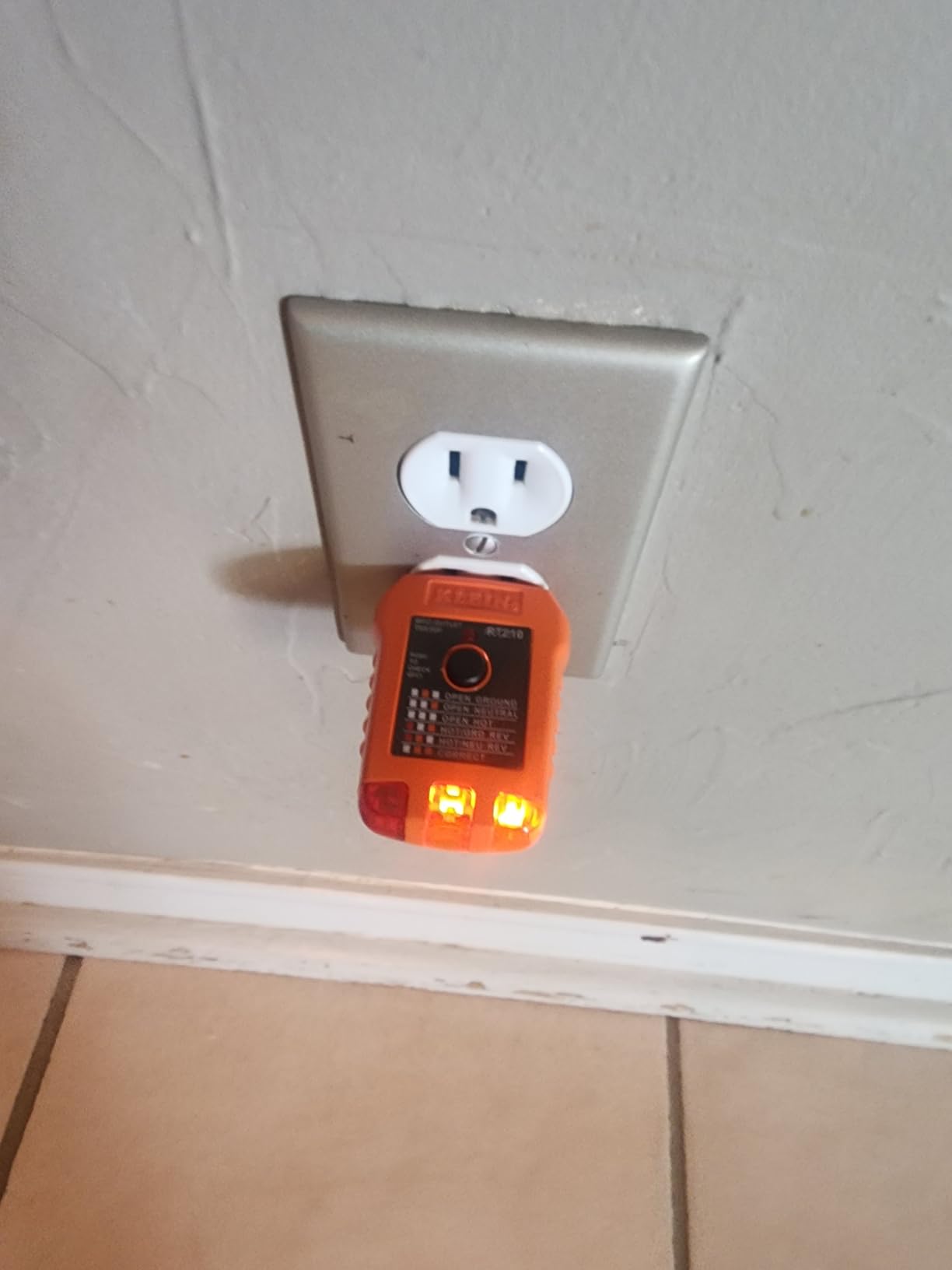
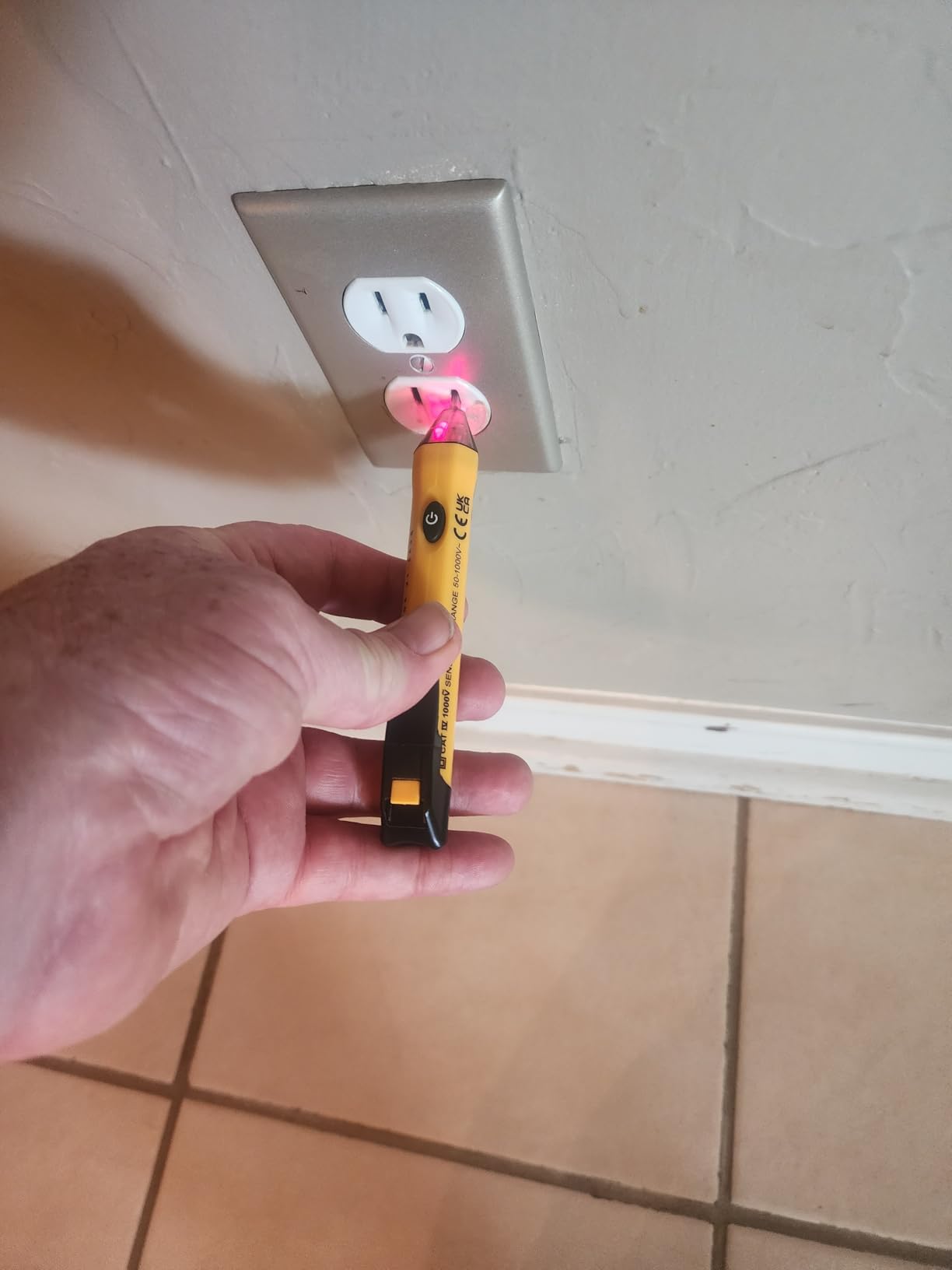
The included NCVT1P pen is the same model I reviewed above, with its 50-1000V detection range, CAT IV 1000V rating, and auto power-off. Having both tools means I can first check if an outlet is live with the pen, then plug in the GFCI tester to verify the wiring, all without switching between brands or battery types.
This kit is genuinely useful, but it is more than a casual homeowner needs. If all you want is to confirm a breaker is off before changing an outlet, the pen alone does that. The GFCI tester adds value if you are buying a house, renovating, or troubleshooting nuisance tripping on kitchen and bathroom circuits.
For Whom It Is Good
This kit is perfect for new homeowners, landlords, and anyone building a basic electrical toolkit. If you want to verify that every outlet in a new house is wired correctly and protected by working GFCI breakers, this is the fastest way to do it.
It is also ideal for RV owners who want to test campground pedestals before plugging in, since faulty wiring at pedestals is a common problem.
For Whom It Is Bad
If you already own a voltage pen, buying this kit duplicates a tool. You would be better off buying the RT210 GFCI tester separately.
The GFCI tester also only works on standard 3-prong 120V outlets. It will not test 2-prong outlets, 240V outlets, or any circuit without a ground connection, which limits its usefulness in older homes.
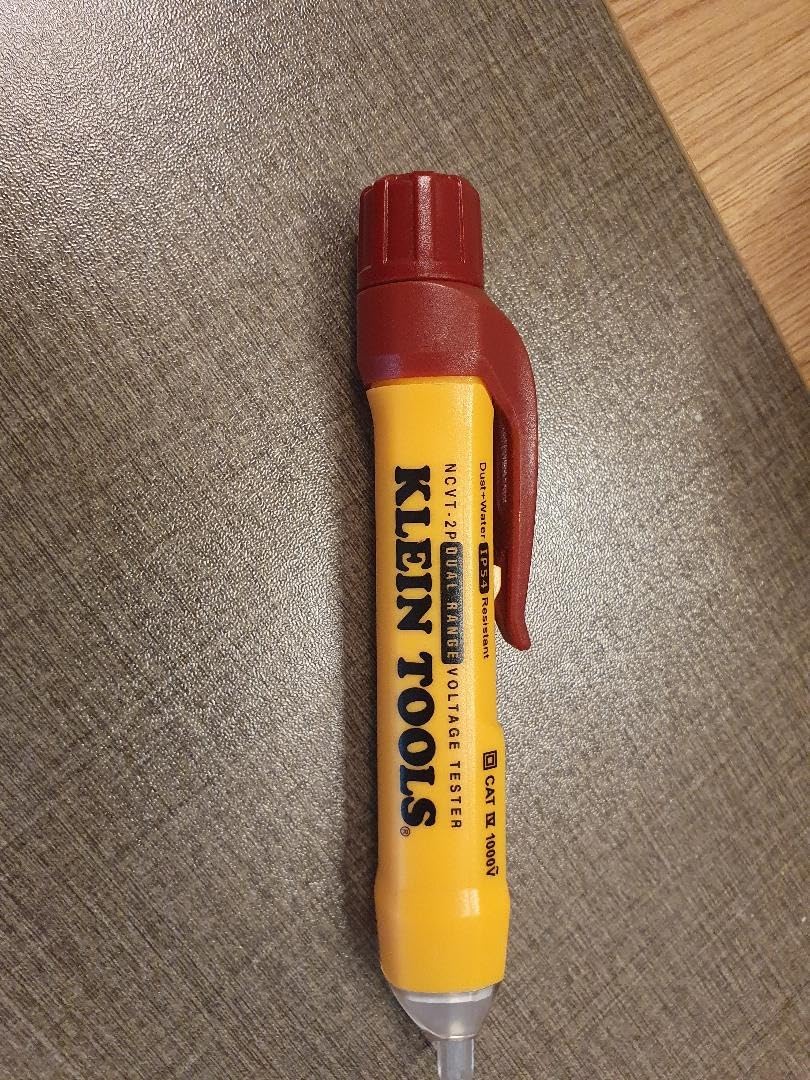
6. Klein Tools NCVT2P – Dual Range Compact Voltage Tester
Klein Tools NCVT2P Dual Range, Non-Contact Voltage Tester, 12-1000V AC, Visual and Audible Indicators, Auto Power Off
Dual range 12-1000V or 70-1000V AC
Visual and audible alerts
Green LED confirms no voltage
Auto power-off
CAT IV 1000V rating
Pocket clip
Pros
- Dual range for low and standard voltage
- Loud simultaneous audible and visual alerts
- CAT IV 1000V safety rating
- Compact and lightweight with pocket clip
- Green LED gives clear all-clear signal
- Good for RVers checking pedestals
Cons
- Can give false positives around bundled wires
- Should supplement not replace a multimeter
- Higher price than the NCVT1P
The Klein NCVT2P sits between the basic NCVT1P and the flashlight-equipped NCVT3P. It adds dual-range detection without the flashlight, making it a solid middle-ground choice if you need low-voltage capability but do not care about the built-in light. I have used it alongside the NCVT3P, and the detection performance is essentially identical.
Switching between the 12-1000V and 70-1000V ranges is a single button press, and the tester remembers your last setting when you turn it back on. The green LED that illuminates when no voltage is detected is a feature I appreciate more than I expected. Instead of just silence when a wire is dead, the green light gives you a positive confirmation that the tester is working and the circuit is safe.
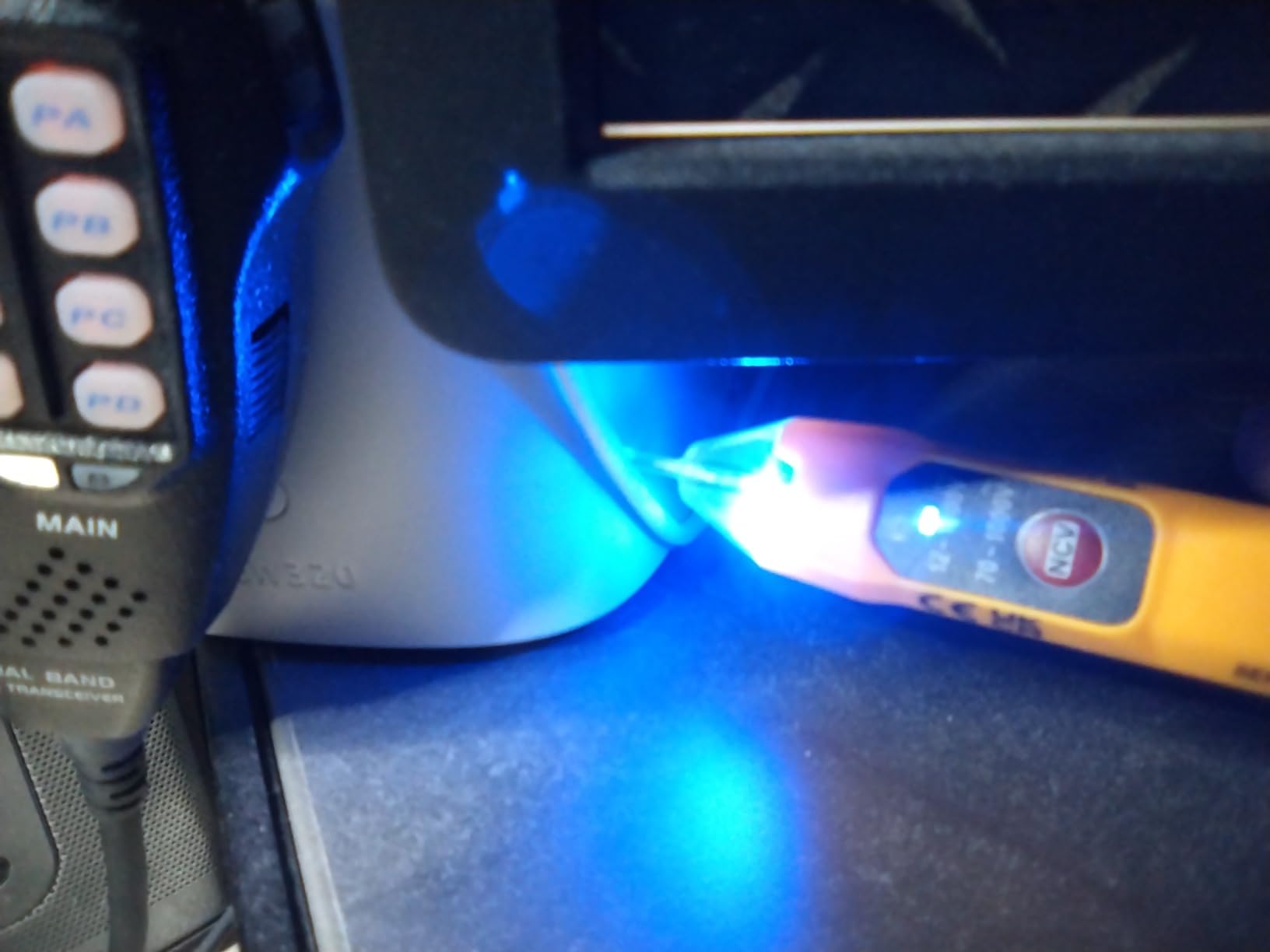
At just under 23 grams, this is one of the lightest dual-range pens available. It disappears into a pocket, and the clip keeps it secure. RV owners in particular praise this model for checking campground pedestals before plugging in, since a quick sweep of the pen tells you whether the pedestal is live without opening the box.
The weakness is the same one that affects all non-contact testers: false positives near bundled wires. In a crowded panel, the NCVT2P can pick up the field from an adjacent live wire even when you are testing the one you shut off. That is why every electrician I have talked to uses a non-contact pen as a first check, then confirms with a contact tester or multimeter.
For Whom It Is Good
The NCVT2P is ideal for users who need dual-range capability but do not want to pay extra for the flashlight on the NCVT3P. If you work on a mix of standard household and low-voltage circuits, this pen handles both without compromise.
RV and boat owners will find this especially useful for quick pedestal and shore power checks.
For Whom It Is Bad
If you regularly work in dark spaces like attics, crawlspaces, or behind appliances, the lack of a flashlight means you need a separate light. In that case, spending a bit more on the NCVT3P is worth it.
For professional panel work where false positives are a daily frustration, a contact tester like the Fluke T5-600 gives you more definitive readings.
7. KAIWEETS KIT01 – 3-in-1 Electrician Test Kit
KAIWEETS Electrical Test Kit KIT01, Digital Multimeter, Smart Non-Contact Voltage Tester & GFCI Outlet Tester with LCD, Complete Set with Carrying Case & Batteries for Electrician, DIY & HVAC
3 tools in 1 kit: multimeter + NCVT + GFCI tester
Digital multimeter measures AC/DC 600V
Smart NCVT with LCD live readouts
GFCI tester with LCD fault codes
Carrying case and batteries included
3-year warranty
Pros
- Complete kit covers nearly every home electrical test
- Digital multimeter handles AC/DC voltage current and resistance
- Smart NCVT shows live percentage on LCD
- GFCI tester displays fault codes in plain text on LCD
- Carrying case keeps everything organized
- 3-year warranty with 24/7 support
Cons
- Higher cost than individual tools
- Kit is bulkier than carrying a single pen
- GFCI tester only for 3-prong outlets
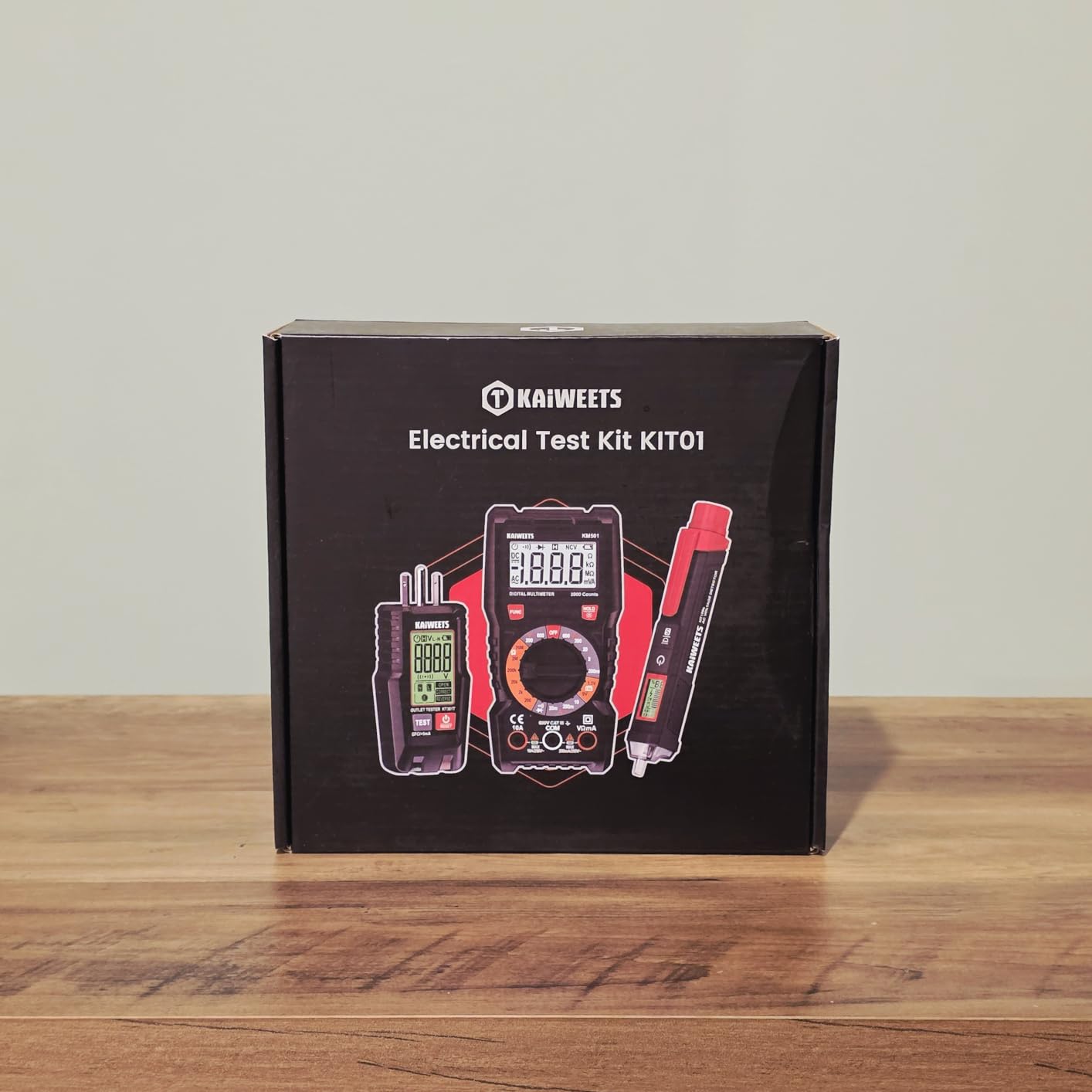
The KAIWEETS KIT01 bundles a digital multimeter, a smart non-contact voltage tester, and a GFCI outlet tester into one carrying case. If you are starting from scratch and want to cover every common home electrical test, this kit gets you there in one purchase. I have been impressed by how well the three tools complement each other.
The digital multimeter measures AC and DC voltage up to 600V, DC current to 10A, resistance to 20 megohms, and includes continuity and diode testing. The backlit LCD with data hold is a step above what I expected at this kit’s price. For HVAC work and appliance troubleshooting, having actual voltage and current numbers is invaluable.
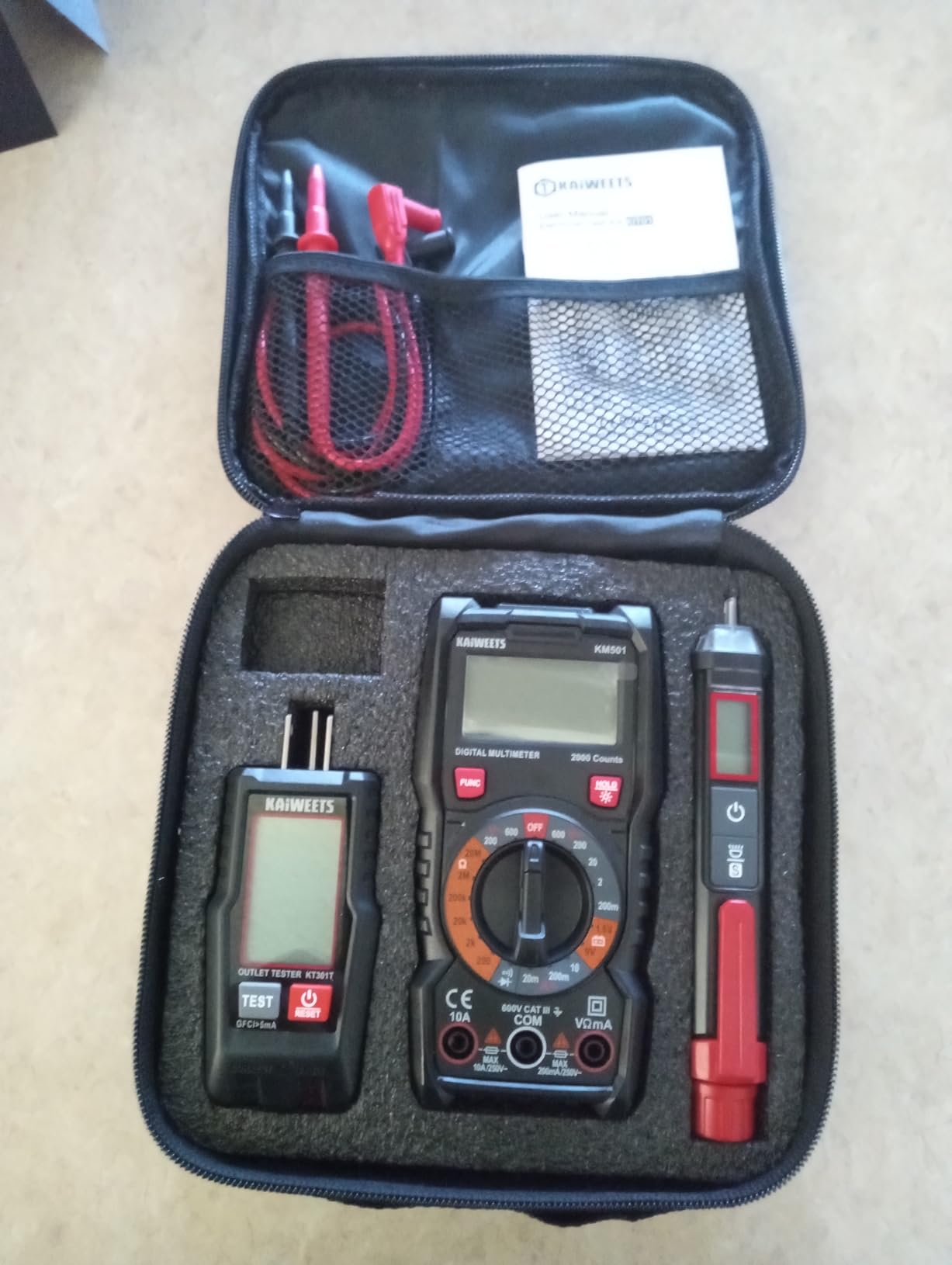
The smart NCVT in this kit is similar to the standalone KAIWEETS HT100s, with the LCD showing live percentage and dual-range detection from 12-1000V. The GFCI tester uses an LCD to display wiring fault codes in plain text, which is far easier to interpret than the LED pattern system on Klein’s GFCI tester.
Everything arrives in a zippered case with batteries included, which means you can start testing the day it arrives. The 3-year warranty and 24/7 after-sales support are unusual at this price and suggest KAIWEETS is serious about standing behind the product.
For Whom It Is Good
This kit is the best choice for someone building a complete electrical toolkit from scratch. If you are a new electrician apprentice, HVAC technician, or serious DIYer who needs a multimeter, voltage pen, and outlet tester, buying them together in this kit is more economical than purchasing each separately.
The plain-text LCD fault codes on the GFCI tester also make this a great pick for beginners who have not memorized LED pattern charts.
For Whom It Is Bad
If you already own a multimeter or voltage pen, you would be paying for duplicates. In that case, buying only the individual tool you need makes more sense.
The kit is also bulkier than carrying a single pen, so it is not the right choice if you want something that fits in a pocket for quick spot checks.
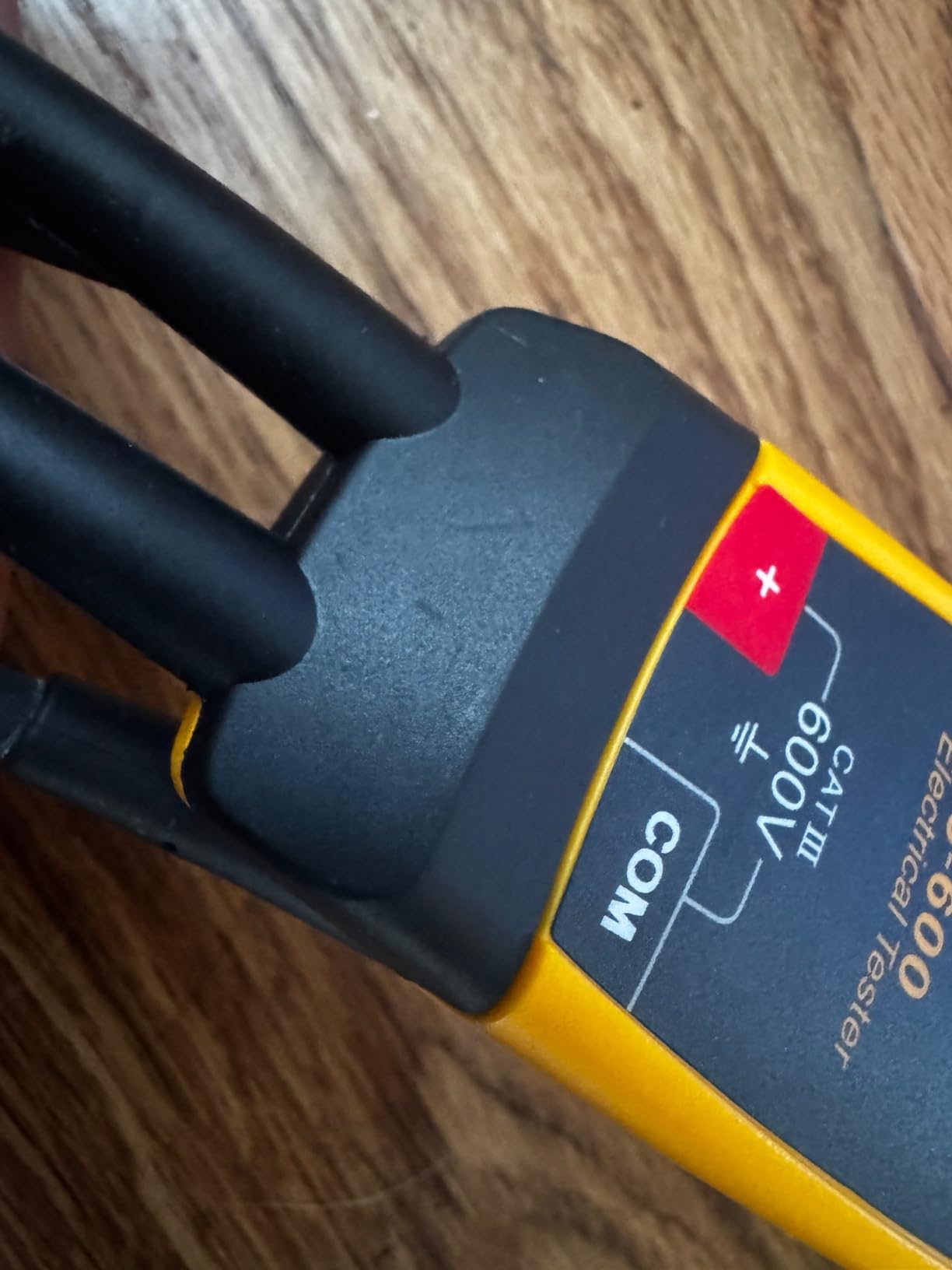
8. Fluke T5-600 – Professional Electrical Voltage Continuity and Current Tester
Fluke T5-600 Electrical Voltage, Continuity and Current Tester, Measures AC Current Up to 100 A Without Contact, Automatically Select AC/DC for Tests, Includes Detachable SlimReach Probe Tip
Measures AC/DC voltage to 600V
OpenJaw current to 100A without contact
Continuity and resistance to 1000 ohm
Detachable SlimReach probe tips
Withstands 10-foot drop
UL CSA VDE certified
Pros
- All-in-one voltage current and continuity tester
- OpenJaw measures AC current without breaking the circuit
- Detachable SlimReach tips for tight spaces
- Rugged enough to survive a 10-foot drop
- UL CSA and VDE safety certified
- Industry-trusted Fluke accuracy
Cons
- Higher price than non-contact pens
- Current claw works on individual conductors only
- DC voltage display lacks decimal point
The Fluke T5-600 is not a non-contact pen. It is a full electrical tester that measures voltage, current, and continuity with the kind of accuracy Fluke is known for. If you need actual numbers rather than a simple yes-or-no, this is the tool. I have used it for everything from checking battery voltage to measuring current draw on a circuit that kept tripping.
The OpenJaw feature is what makes the T5-600 special. You slide a single current-carrying wire into the jaw opening, and the tester measures AC current up to 100A without you having to break the circuit or use a clamp accessory. For diagnosing why a motor or heater is drawing too much current, this is faster than setting up a traditional multimeter with a shunt.
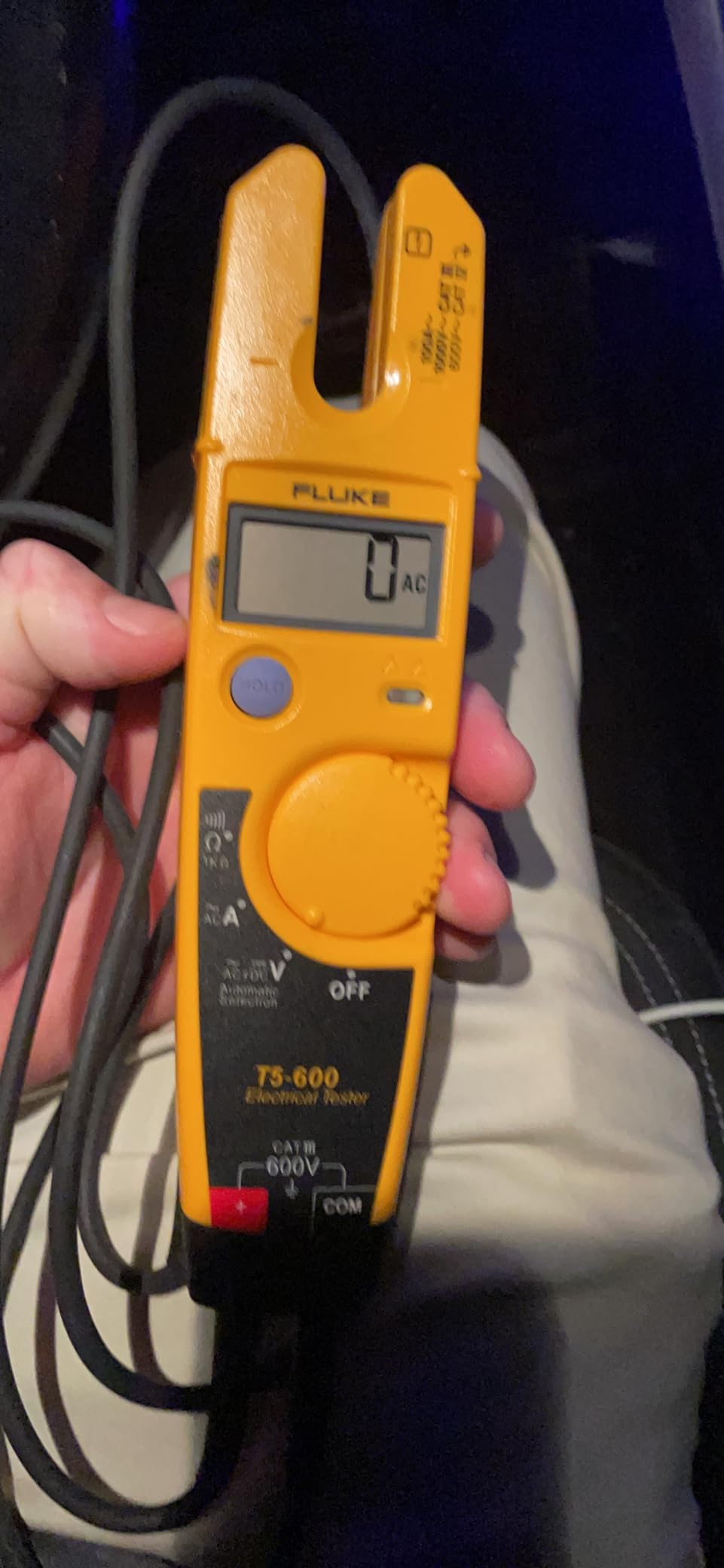
The detachable SlimReach probe tips let you work in tight spaces like recessed junction boxes where standard probes will not fit. The integrated protection circuit means you can leave the tester connected to a voltage source longer than a solenoid-type tester without damaging it. And the ruggedness is real: this thing survives drops that would destroy a cheaper tool.
The limitations are specific. The OpenJaw only works on individual conductors, so if your wires are bundled in a single sleeve, you cannot get a current reading. The DC voltage display omits a decimal point on some readings, which takes getting used to. And at this price, it is a serious investment aimed at people who use a tester every day.
For Whom It Is Good
The T5-600 is built for professional electricians, HVAC technicians, and facility maintenance staff who need accurate measurements, not just detection. If you troubleshoot electrical problems daily and need one tool that handles voltage, current, and continuity, this replaces carrying multiple devices.
It is also the right choice if your work requires safety certifications, since it carries UL, CSA, and VDE ratings.
For Whom It Is Bad
For a homeowner who just wants to confirm an outlet is dead before swapping it, this tool is massive overkill. A non-contact pen at a quarter of the price does that job perfectly.
The OpenJaw limitation also means it is not a replacement for a full clamp meter if you regularly measure current on bundled or large conductors.
How to Choose the Best Voltage Tester?
Choosing the right voltage tester comes down to what you plan to do with it. A homeowner checking outlets before replacing them has very different needs from an electrician diagnosing panel issues daily. Here are the factors I weigh when recommending a tester.
Detection type matters first. Non-contact voltage pens detect live wires through insulation without touching metal, making them the safest and quickest option for initial checks. Contact testers like the Fluke T5-600 give you precise voltage and current readings but require touching probes to live conductors. Most people need a non-contact pen; professionals often need both.
Voltage range determines versatility. Standard household circuits run at 120V, so any pen detecting 50-1000V covers them. If you also work on low-voltage systems like doorbells, thermostats, or landscape lighting, you need a dual-range tester that drops to 12V. Single-range pens like the Fluke 1AC II miss these circuits entirely.
CAT safety ratings are non-negotiable. Look for at least a CAT III 600V rating for home use and CAT IV 1000V for professional panel work. The category rating tells you how much transient voltage the tester can survive. Every model in this guide meets or exceeds these standards, but cheaper untested imports often do not.
Alert type affects usability. I prefer testers with both audible and visual alerts. In a noisy environment, the flashing LED is what you notice. In bright sunlight, the beeper saves you from squinting at the tip. The best testers, like the Klein models, use both simultaneously.
Battery life and power-off features prevent headaches. The most common complaint in electrician forums is pens dying because they turned on in a pocket. Auto power-off after a few minutes solves this, and every model I recommend except the Fluke 1AC II includes it. A low-battery indicator, like the one on the KAIWEETS HT100s, is a nice bonus.
Build quality determines longevity. A voltage tester will get dropped, knocked around in a tool bag, and exposed to dust. The Klein NCVT3P carries an IP67 rating for dust and water resistance, and the Fluke T5-600 survives 10-foot drops. Cheap plastic pens may work fine at first but tend to fail within a year of regular use.
Frequently Asked Questions
Which voltage tester is better, Fluke or Klein?
Both Fluke and Klein make excellent voltage testers, and the better choice depends on your needs. Fluke is known for unmatched accuracy and the continuous self-test feature on the 1AC II VoltAlert, which makes it the top pick when reliability is critical. Klein offers more features for the money, including dual-range detection and built-in flashlights, making their NCVT3P the better value for most users. Professionals often carry both.
What is the best tool to check voltage?
A non-contact voltage tester is the best tool for a quick safety check before working on a circuit. For measuring exact voltage levels, a digital multimeter like the Fluke T5-600 or the multimeter in the KAIWEETS KIT01 is the right choice. Most homeowners need only a non-contact pen, while professionals use both types.
What is the best electrical tester on the market?
The Klein Tools NCVT3P is the best overall electrical tester for most users, combining dual-range detection, a built-in flashlight, IP67 durability, and a CAT IV 1000V rating. For professional-grade measurement, the Fluke T5-600 is the top pick for its accuracy and multi-function capability.
What is the best voltage meter for home use?
For home use, a non-contact voltage tester like the Klein NCVT1P or the dual-range KAIWEETS HT100s covers most needs at a low price. Homeowners who want to also measure actual voltage and current should consider the KAIWEETS KIT01, which includes a digital multimeter and GFCI outlet tester alongside the voltage pen.
Final Verdict
After testing all eight models, the Klein Tools NCVT3P stands out as the best voltage tester for most people in 2026. Its dual-range detection, independent flashlight, IP67 durability, and CAT IV 1000V rating make it versatile enough for both home and professional use. The Fluke 1AC II VoltAlert is the pick if you prioritize brand trust and the self-test feature above all else.
For budget-conscious buyers, the Klein NCVT1P and KAIWEETS HT100s deliver capable detection at lower prices. And for users who need actual measurements rather than simple detection, the Fluke T5-600 and KAIWEETS KIT01 cover voltage, current, and continuity in professional-grade packages.
Whatever you choose, the most important thing is having a reliable tester in your hand before you touch a wire. Pick the one that matches your work, and stay safe out there.