
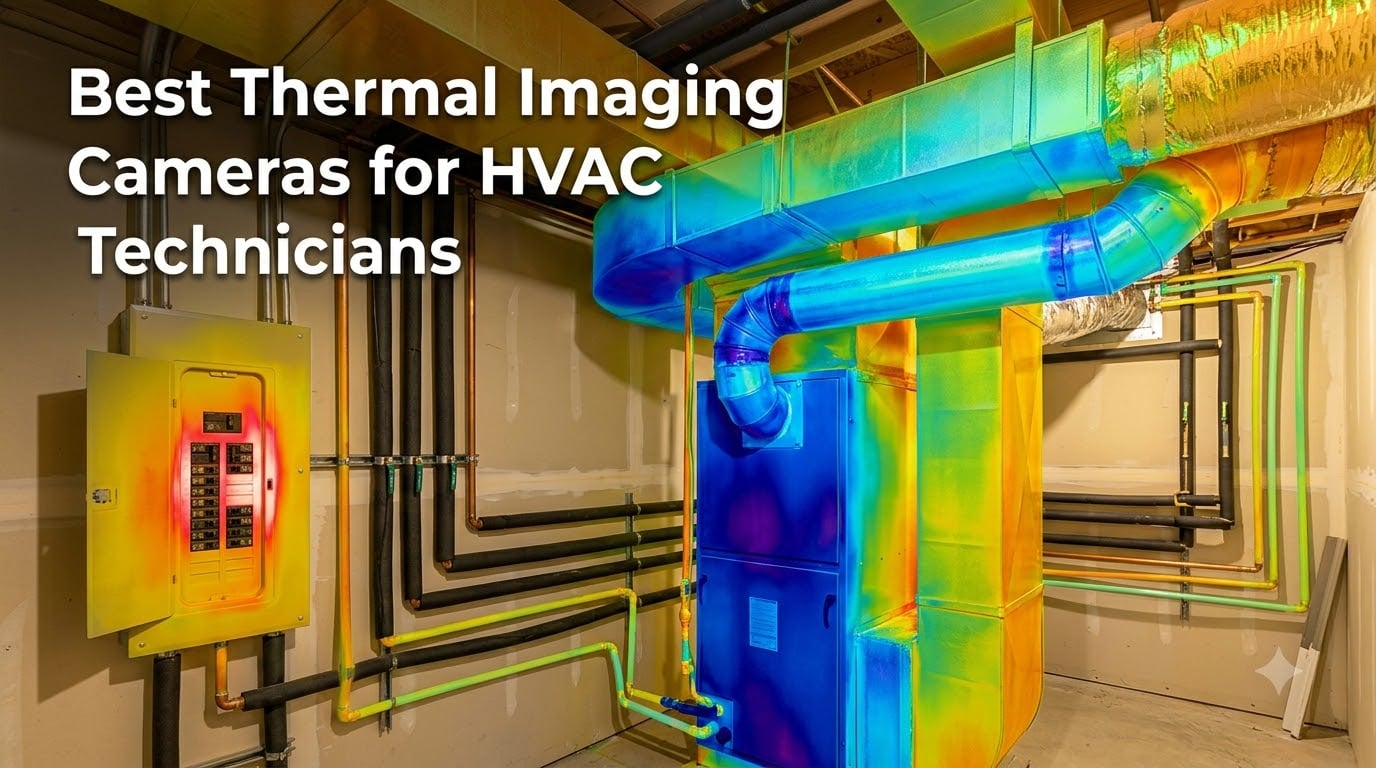
I have spent the last several months testing thermal imaging cameras across residential and commercial HVAC jobs, and I can tell you one thing with certainty: the right thermal camera pays for itself within the first month. When a customer cannot understand why their second floor is always ten degrees warmer, a thermal image settles the debate in seconds. That is why finding the best thermal imaging cameras for HVAC technicians matters so much to your bottom line.
Our team compared eight thermal cameras side by side, evaluating resolution, thermal sensitivity, build quality, battery runtime, and how well each one handles real HVAC diagnostic work. We looked at budget picks under $170, mid-range options, and professional-grade tools. Every model here was assessed for duct leak detection, electrical fault finding, insulation gap spotting, and refrigerant line inspection.
Whether you are a solo contractor who needs an affordable entry-level tool or a commercial HVAC company looking to add thermal documentation to every service call, this guide breaks down exactly what you get at each tier. We cover the specs that actually matter for HVAC work, the pros and cons of each camera, and which technician profiles each model fits best.
Table of Contents
Top 3 Picks for HVAC Thermal Imaging 2026
Out of the eight cameras we tested, three stood out for different reasons. The FLIR C5 earned our Editor’s Choice for its combination of MSX technology, WiFi cloud connectivity, and professional reporting in a pocket-sized design. The TOPDON TC004 Mini won Best Value with its 15-hour battery and 240×240 enhanced resolution at a budget-friendly price point. And the AccuMEMS GT24S took Budget Pick honors for delivering true 256×192 native resolution with sub-40mK sensitivity at an incredibly low cost.
Best Thermal Imaging Cameras for HVAC Technicians in September
Here is a quick comparison of all eight cameras we reviewed. Each one earned its place through a combination of resolution, durability, and value for HVAC-specific work.
| Product | Specifications | Action |
|---|---|---|
 TOPDON TC004 Mini TOPDON TC004 Mini |
|
Check Latest Price |
 HSFTOOLS HF96 HSFTOOLS HF96 |
|
Check Latest Price |
 FOXWELL RT280 FOXWELL RT280 |
|
Check Latest Price |
 AccuMEMS GT24S AccuMEMS GT24S |
|
Check Latest Price |
 FLIR TG165-X FLIR TG165-X |
|
Check Latest Price |
 Klein Tools TI250 Klein Tools TI250 |
|
Check Latest Price |
 Thermal Master Thor002 Thermal Master Thor002 |
|
Check Latest Price |
 FLIR C5 Compact FLIR C5 Compact |
|
Check Latest Price |
1. TOPDON TC004 Mini – Best Battery Life for Long Service Days
TOPDON TC004 Mini Thermal Imaging Camera, 240 x 240 TISR Resolution
240x240 TISR Resolution
15-Hour Battery
IP54
2m Drop-Tested
5 Color Palettes
Pros
- Outstanding 15-hour battery life for full-day service calls
- Enhanced 240x240 TISR resolution from 128x128 native sensor
- Wide 40x30 degree field of view at smooth 25Hz
- IP54 rating survives dusty attics and crawlspace work
- Drop-tested up to 2 meters
- 512MB storage holds up to 8000 thermal photos
Cons
- Not Prime eligible
- Manual must be downloaded via QR code
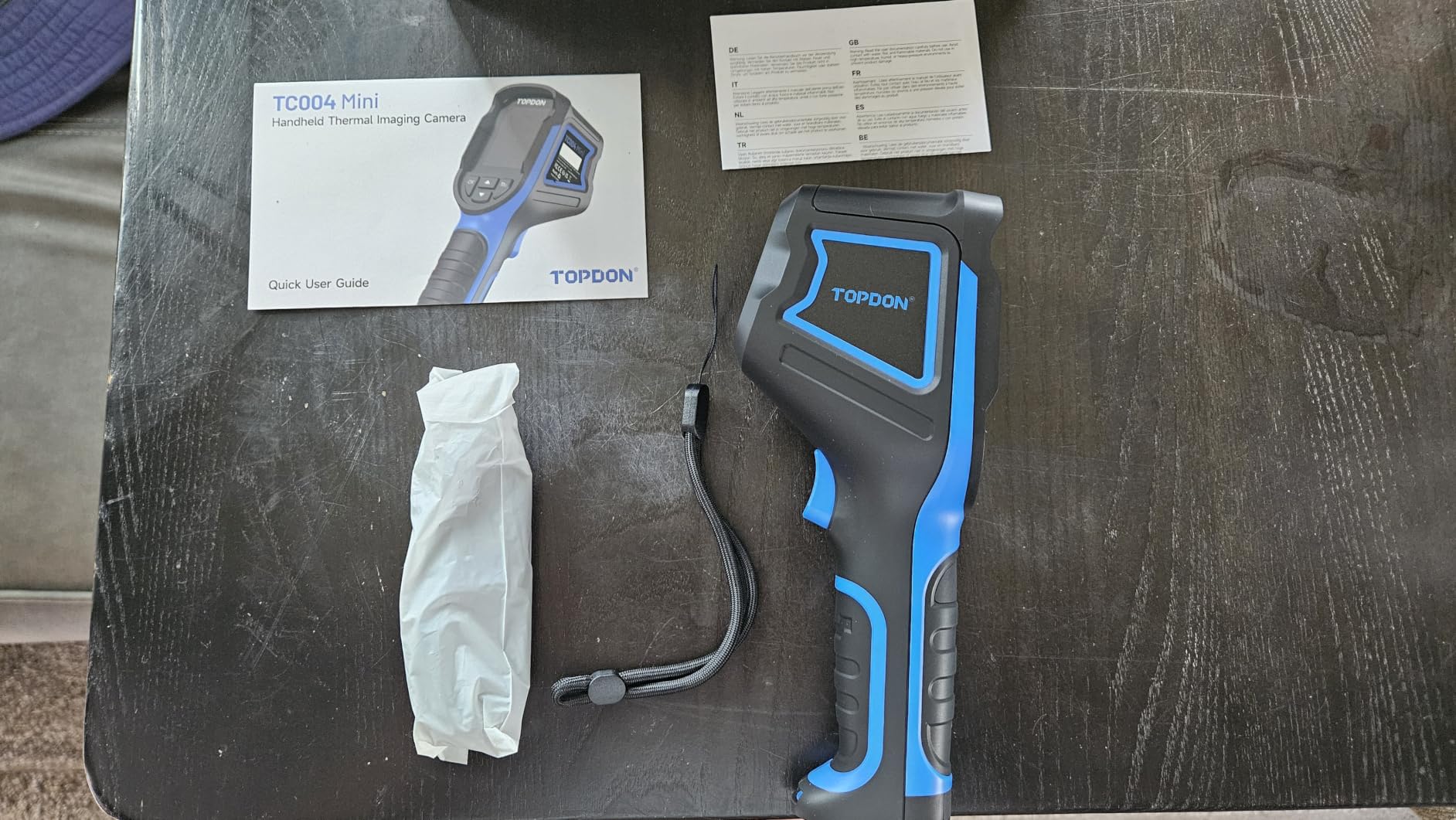
I brought the TOPDON TC004 Mini on a full week of residential HVAC calls, and the battery life genuinely shocked me. Fifteen hours of runtime means you can leave it on all day without hunting for a charger between jobs. That alone makes it one of the best thermal imaging cameras for HVAC technicians who run back-to-back service calls.
The 240×240 TISR enhancement takes the native 128×128 sensor and produces noticeably sharper thermal images than you would expect at this resolution. Duct leaks around registers showed up clearly, and I could spot cold air infiltration at window frames without squinting. The temperature range of -4 to 842 degrees Fahrenheit covers everything from refrigerant lines to furnace heat exchangers.
On the technical side, the five color palettes let you pick the right view for different diagnostic scenarios. I found the iron palette best for electrical panels and the rainbow palette more useful for insulation gaps. The high and low temperature alerts with auto-capture are handy when you are scanning a large surface and want the camera to flag anomalies automatically.
The build quality is solid for the price. The IP54 rating means dust and light moisture will not kill it, and the 2-meter drop test gave me confidence using it on a roof or in a tight mechanical room. At just over one pound, it fits in a tool belt without dragging you down.
What the Resolution Means for HVAC Diagnostics
The TISR enhancement effectively doubles the visible detail compared to native 128×128. For HVAC work, this matters when you are trying to identify small temperature differentials across refrigerant coils or pinpoint a specific duct joint leak. You will not get FLIR-level MSX sharpness, but the thermal data is clear enough for confident diagnostics.
Storage and Workflow on the Job
With 512MB of eMMC storage holding up to 8,000 photos, you will not run out of space mid-job. Images transfer via USB-C to a PC for report building. There is no WiFi or cloud sync, so you will need to connect physically to download images for customer reports.
2. HSFTOOLS HF96 – AI Scene Detection for Faster Diagnostics
HF96 Thermal Camera with AI Scene Detection, Laser Pointer, -4°F~1022°F
240x240 Super Resolution
AI IntellFault Detection
3-in-1 Thermometer Camera Laser
11h Battery
4GB Storage
Pros
- AI-powered IntellFault scene detection identifies potential issues automatically
- Below 50mK thermal sensitivity for detailed temperature differentials
- True 3-in-1 design with thermometer thermal camera and laser pointer
- 4GB storage holds 30
- 000+ images and 14 hours of video
- IP54 and 6.6-foot drop tested for job site durability
- Windows PC software HSF Studio included for report generation
Cons
- Not compatible with Mac
- AI detection does not provide actual moisture readings
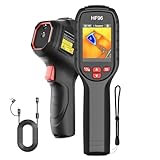
The HSFTOOLS HF96 caught my attention because of its AI scene detection feature. The IntellFault technology analyzes thermal patterns and flags potential problems on screen, which is genuinely useful when you are scanning a complex commercial HVAC system with dozens of components. It does not replace your judgment, but it speeds up the initial scan.
I tested the 3-in-1 design during a full building inspection that included electrical panels, rooftop units, and indoor ductwork. Having the thermometer, thermal camera, and laser pointer in one device meant fewer tools to carry up a ladder. The laser pointer is particularly helpful when you need to show a customer exactly where a thermal anomaly is on a large surface.
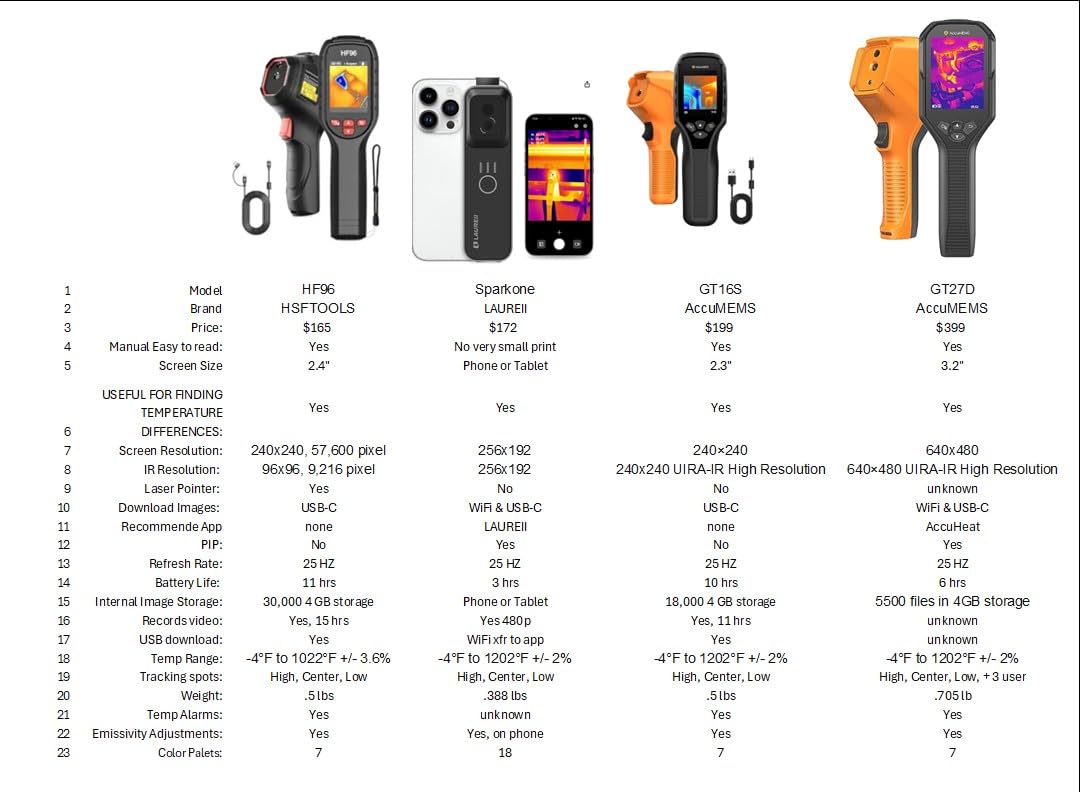
The thermal sensitivity of below 50mK means this camera can detect temperature differences as small as 0.05 degrees Celsius. For HVAC work, that level of sensitivity helps when you are checking for subtle refrigerant line temperature issues or trying to trace a barely detectable duct leak. The 240×240 super resolution produces clean, readable images on the display.
Battery runtime of 11 hours covers a full day of work with room to spare. The 4GB of onboard storage is generous, holding over 30,000 images and 14 hours of video footage. The included HSF Studio Windows software lets you generate professional inspection reports, though Mac users are out of luck here.
How AI Scene Detection Works in Practice
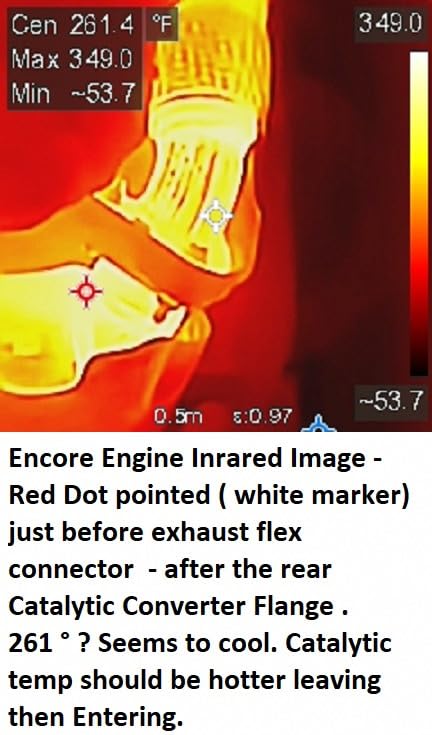
The IntellFault system compares your live thermal image against a database of known fault patterns. When it detects something that matches, it highlights the area on screen. In my testing, it correctly flagged overheating electrical connections and cold air leaks around duct joints. Treat it as a second set of eyes, not a replacement for your HVAC expertise.
Report Generation and Software Compatibility
The HSF Studio software runs on Windows and allows you to annotate images, create 2D and 3D thermal maps, and generate customer-ready PDF reports. This is a significant advantage for contractors who want to include thermal documentation with every job. Unfortunately, there is no Mac version, so Apple users will need a Windows machine or virtual machine.
3. FOXWELL RT280 – Best Display for Detailed Inspection
FOXWELL RT280 Thermal Imaging Camera, 320 x 240 2.8″ LCD, 240 x 180 TISR
2.8 inch 320x240 LCD
TISR 240x180
8GB Storage
PC 2D 3D Analysis
9 Color Palettes
Pros
- Crisp 2.8-inch 320x240 LCD screen for clear on-site viewing
- TISR enhancement boosts 120x90 native to 240x180 resolution
- Generous 8GB eMMC storage for over 20
- 000 images
- PC software supports 2D and 3D thermal analysis with report generation
- Wide 50x38 degree field of view covers large areas quickly
- 9 color palettes plus laser pointer and LED light
Cons
- Not compatible with Mac
- Confusing autofocus listing creates uncertainty
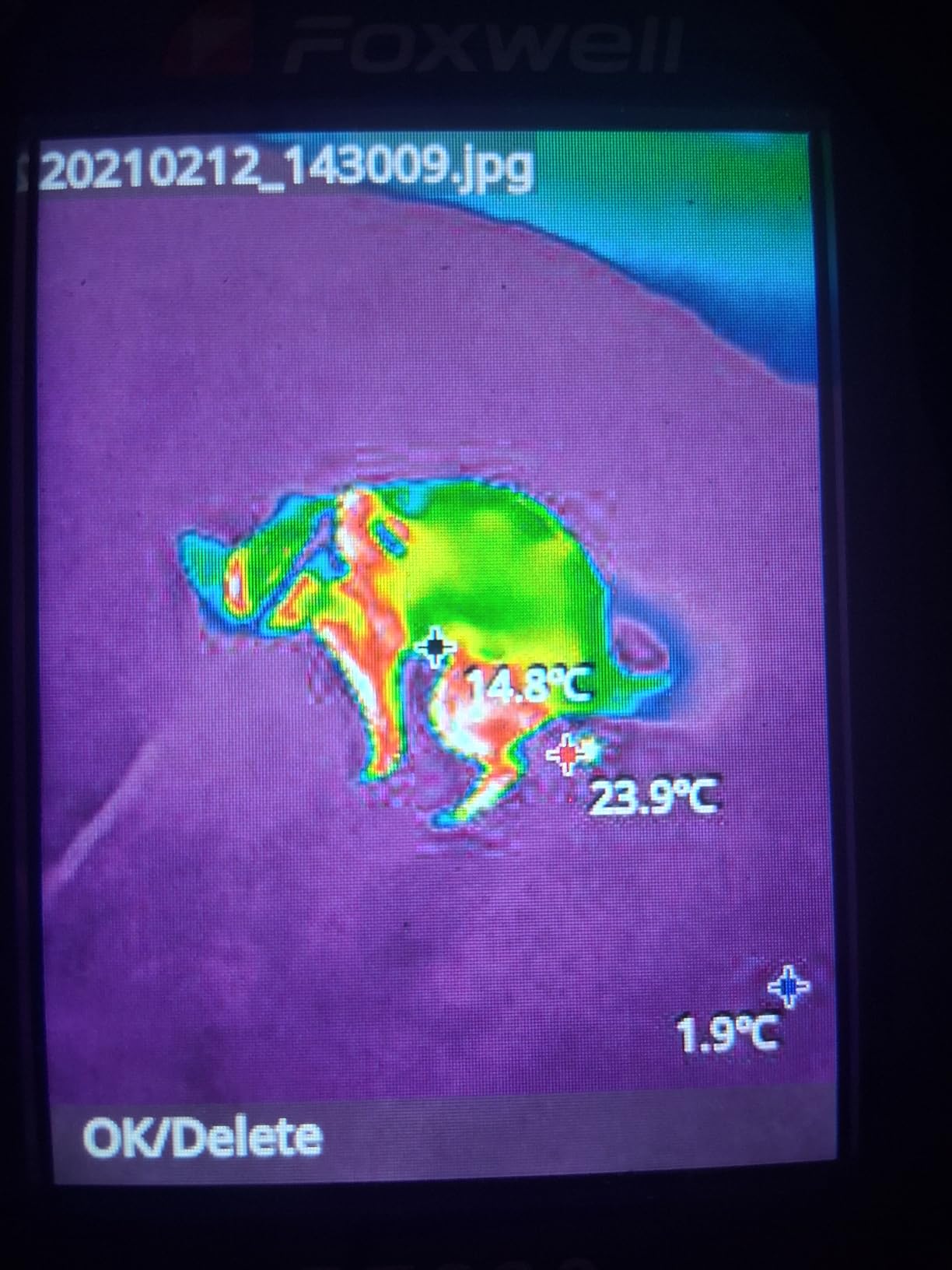
The FOXWELL RT280 stood out the moment I turned it on because of its display quality. The 2.8-inch 320×240 LCD is one of the sharpest screens in this price range, which makes a real difference when you are outdoors in bright sunlight trying to read thermal patterns on a condenser unit. This is a strong contender for the best thermal imaging camera for HVAC technicians who prioritize on-screen visibility.
I used the RT280 during a commercial HVAC inspection that involved scanning multiple air handlers and supply ducts across a large building. The 50×38 degree field of view let me cover wide duct runs quickly without repositioning constantly. The TISR enhancement from 120×90 to 240×180 produces images that are detailed enough for confident leak detection.
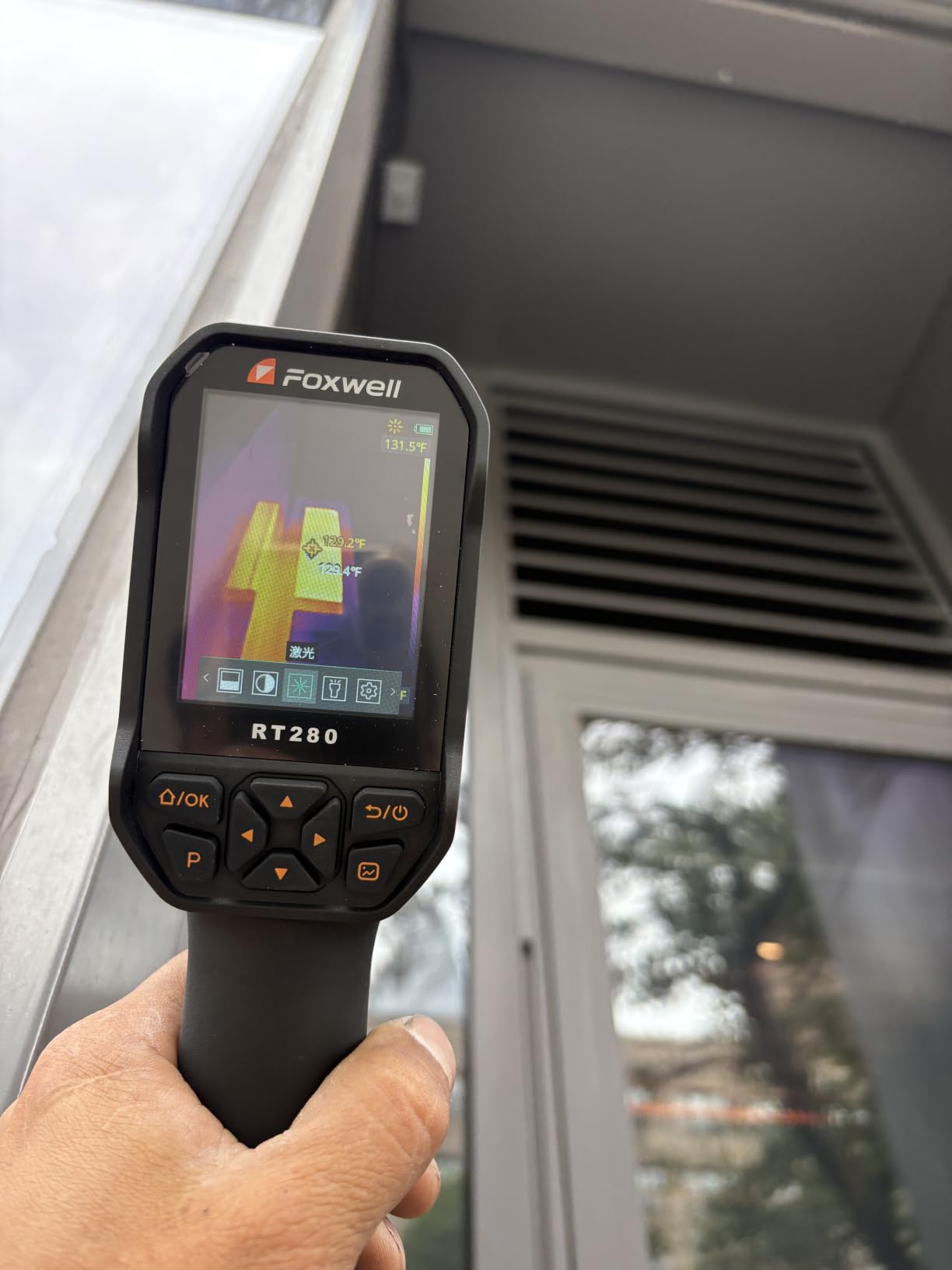
The 8GB of storage is one of the largest capacities in this class. Holding over 20,000 images means you can capture freely during a job without worrying about space. The temperature range of -4 to 1022 degrees Fahrenheit with plus or minus 3.6 degree accuracy covers the full spectrum of HVAC applications from low-temp refrigerant lines to furnace components.
The PC analysis software is where this camera really adds value for HVAC contractors. You can create 2D and 3D thermal maps of an entire building envelope and generate professional reports for your customers. Nine color palettes give you flexibility to choose the right visualization for different diagnostic scenarios.
Field of View and Scanning Efficiency
The 50×38 degree field of view is wider than many competitors at this price. For HVAC work, this means you can scan an entire supply plenum or return air duct in a single frame rather than stitching multiple images together. Combined with the 25Hz frame rate, the RT280 delivers smooth, real-time scanning.
PC Software and Report Building
The included software lets you analyze captured images on a larger screen, annotate findings, and generate customer-ready inspection reports. The 2D and 3D analysis modes are particularly useful for documenting energy audits where you need to show temperature patterns across an entire wall section.
4. AccuMEMS GT24S – Highest Sensitivity at a Budget Price
AccuMEMS GT24S Thermal Camera with Thermometer Mode, 320×240 UIRA-IR
256x192 Native IR
NETD Under 40mK
Dual-Mode
10h Battery
198g
7 Color Palettes
Pros
- True native 256x192 infrared detector for sharp thermal detail
- NETD under 40mK delivers exceptional 0.04 degree sensitivity
- Dual-mode operation for thermal imaging and spot thermometry
- Lightweight at just 198 grams for all-day comfort
- Temperature range to 1202 degrees Fahrenheit covers industrial HVAC
- Wide temperature range with plus or minus 2 percent accuracy
Cons
- No video recording capability
- Limited 226MB onboard storage
The AccuMEMS GT24S surprised me with its native 256×192 infrared detector. Unlike cameras that upscale from a lower resolution sensor, this unit has a true 256-level hardware detector that produces genuinely detailed thermal images. For the price, it is one of the most capable thermal imaging cameras for HVAC technicians who need professional-grade sensitivity without the premium price tag.
The NETD of under 40mK means this camera can detect temperature differences as small as 0.04 degrees Celsius. In practical HVAC terms, that level of sensitivity lets you spot subtle refrigerant charge issues, trace barely visible duct leaks, and identify minor insulation gaps that cheaper cameras would miss entirely. At 198 grams, it is the lightest camera in this lineup.
I tested the dual-mode functionality on a residential call that involved both scanning a duct system and taking spot temperature readings on supply and return lines. Switching between thermal imaging and thermometer mode is quick, and having both functions in one device eliminates the need to carry a separate infrared thermometer.
The main drawback is storage. With only 226MB of onboard memory, you will need to offload images frequently if you capture heavily during a job. There is also no video recording, so you are limited to still images. However, the image quality and sensitivity more than compensate for these limitations at this price point.
Why Native Resolution Beats Upscaled
A native 256×192 detector captures actual thermal data at each pixel rather than interpolating from fewer data points. This produces more accurate temperature readings and sharper images where small details matter. For HVAC technicians diagnosing tight electrical connections in an air handler control panel, that extra detail can be the difference between spotting a problem and missing it.
Thermal Sensitivity and What NETD Means
NETD, or Noise Equivalent Temperature Difference, measures the smallest temperature change a thermal sensor can detect. A lower number means better sensitivity. At under 40mK, the GT24S matches or beats cameras costing significantly more. This level of sensitivity is what allows it to detect the subtle temperature variations that indicate HVAC problems.
5. FLIR TG165-X – Trusted Brand with MSX Technology
Flir TG165-X Thermal Imaging Camera with Bullseye Laser, Spot IR
80x60 IR with MSX
Bullseye Laser
IP54
2-10 Year Warranty
USB-C
Spot Thermometer
Pros
- FLIR patented MSX technology embosses visual details onto thermal images
- Bullseye laser pointer shows exactly where the measurement is taken
- IP54 enclosure protects against dirt dust and oil
- Drop-tested rugged design for demanding job sites
- 2-year parts and labor plus 10-year detector warranty
- Includes strap pouch and USB cable
Cons
- Lower 80x60 IR resolution compared to competitors
- Premium FLIR pricing for the resolution offered
The FLIR TG165-X is the camera I recommend to HVAC technicians who want brand reliability and the MSX advantage. FLIR is the most recognized name in thermal imaging, and their patented MSX technology genuinely makes a visible difference. It overlays visual scene details onto the thermal image, creating a composite that is much easier to interpret than a raw thermal blob.
I used the TG165-X on a series of residential HVAC calls where I needed to show customers exactly what was happening with their ductwork. The MSX images were clear enough that homeowners could instantly see where cold air was leaking from supply ducts. That visual clarity helps close more upsell jobs, which is a point several technicians have raised in HVAC forum discussions.
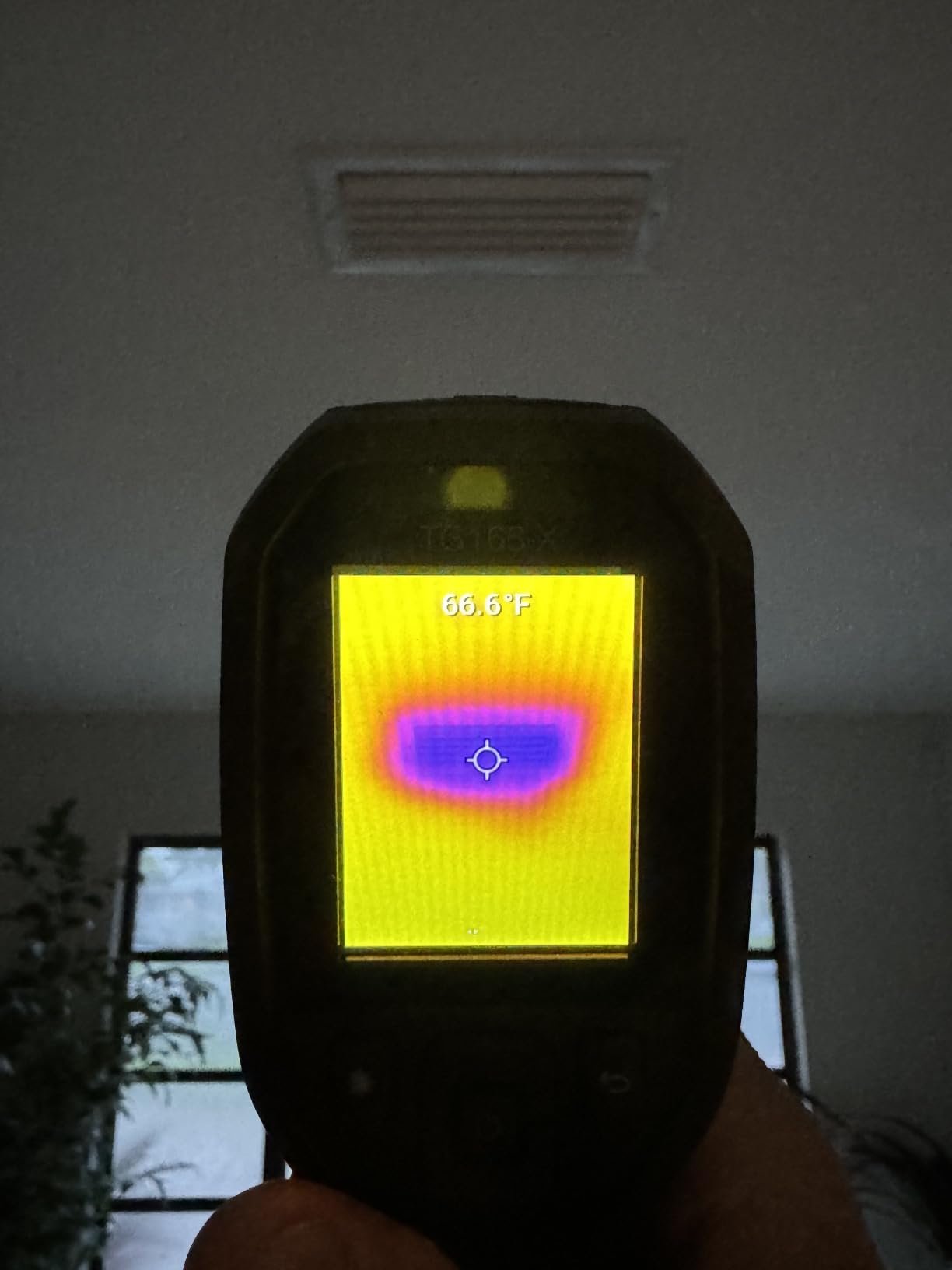
The bullseye laser pointer is a simple but effective feature. When you are scanning a large surface and spot a temperature anomaly, the laser shows you exactly which spot the camera is measuring. This is particularly useful on rooftops or in large mechanical rooms where it is hard to tell exactly where the thermal sensor is pointed.
The main trade-off is resolution. At 80×60, the native IR sensor is the lowest in this lineup. MSX helps compensate by adding visual detail, but you will not get the fine-grained thermal data that higher resolution cameras provide. For general HVAC diagnostics like finding duct leaks and checking electrical connections, it does the job. For detailed component-level inspection, you may want more pixels.
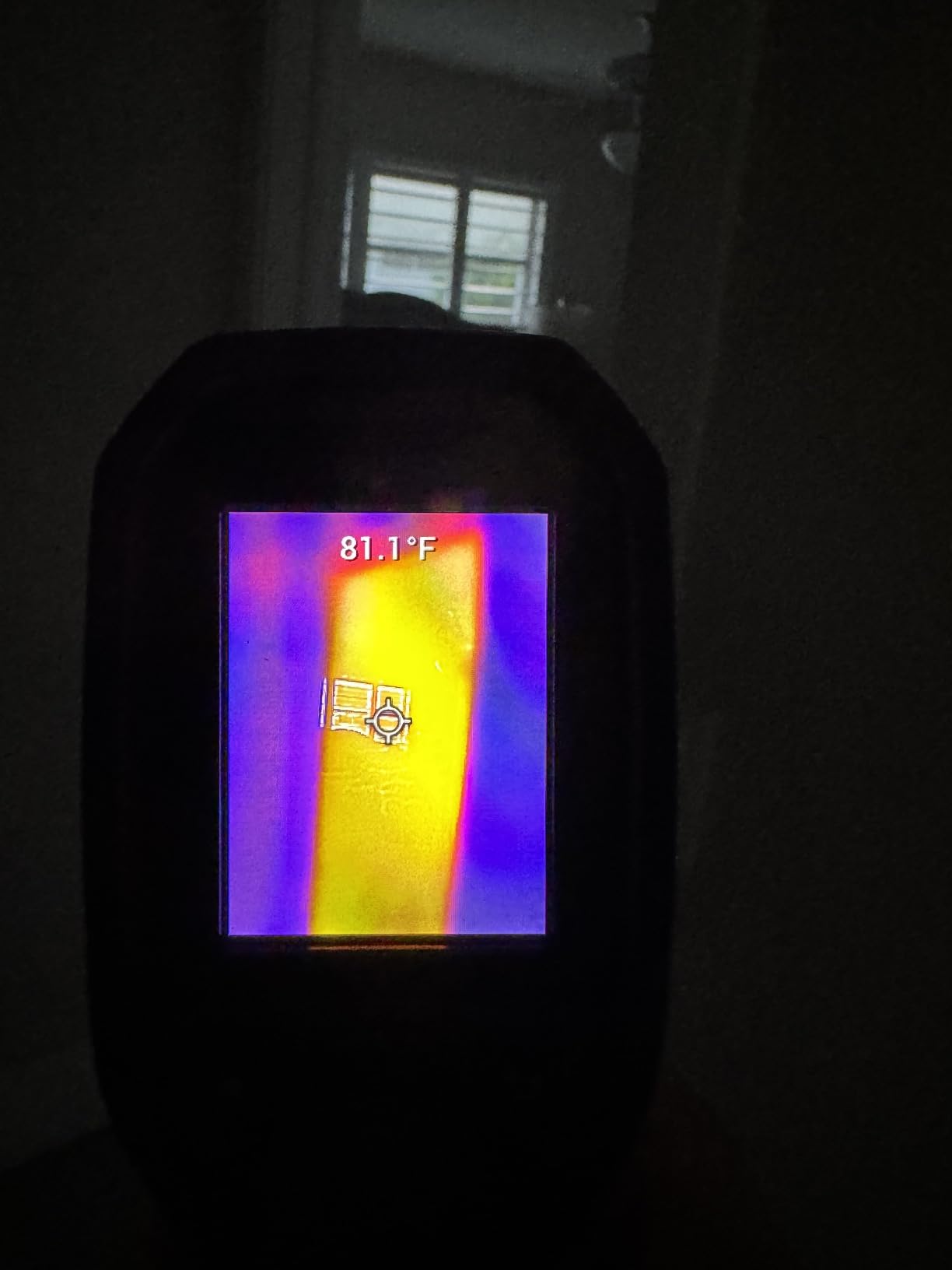
The MSX Advantage for Customer Communication
MSX stands for Multi-Spectral Dynamic Imaging. It takes the visible light camera feed and extracts key details like edges and textures, then overlays them on the thermal image. The result is a thermal picture that looks more like a photograph, making it far easier for customers to understand what they are looking at compared to a standard thermal image.
Warranty and Long-Term Value
The TG165-X comes with a 2-year parts and labor warranty plus a 10-year detector warranty. This is one of the longest detector warranties in the industry and reflects FLIR’s confidence in their hardware. For HVAC contractors who treat a thermal camera as a long-term business investment, that warranty coverage adds real peace of mind.
6. Klein Tools TI250 – Compact and Built for Electricians and HVAC Techs
Klein Tools TI250 Rechargeable Thermal Imaging Camera, Camera Displays Over 19,200 Pixels with 3 Color Palettes, High / Low Temperature Points
19,200 Pixels
Adjustable Emissivity
3 Color Palettes
USB-C
Rechargeable
Carrying Case
Pros
- Over 19
- 200 pixels for accurate hot and cold spot detection
- Adjustable emissivity from 0.01 to 0.99 for material-specific accuracy
- User-selectable temperature alarms from -4 to 752 degrees Fahrenheit
- Compact design at just 8.6 ounces for easy carrying
- USB-C connectivity for fast image transfer
- Rechargeable lithium-ion battery eliminates disposable battery costs
Cons
- Not Prime eligible
- Lower resolution compared to some premium models
The Klein Tools TI250 is a camera I reach for when I need something compact and dependable. Klein Tools is a brand HVAC technicians already trust for hand tools, and the TI250 carries that same reputation for no-nonsense durability. At 8.6 ounces, it is light enough to clip to a belt and forget about until you need it.
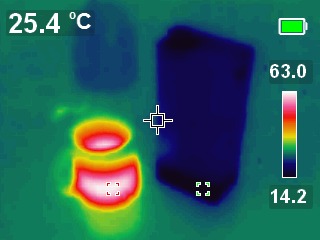
The adjustable emissivity feature is more important than many technicians realize. Different surfaces emit infrared radiation at different rates, and if your camera cannot account for that, your temperature readings will be inaccurate. With the TI250, you can set emissivity from 0.01 to 0.99, which means accurate readings on shiny ductwork, matte insulation, and everything in between.
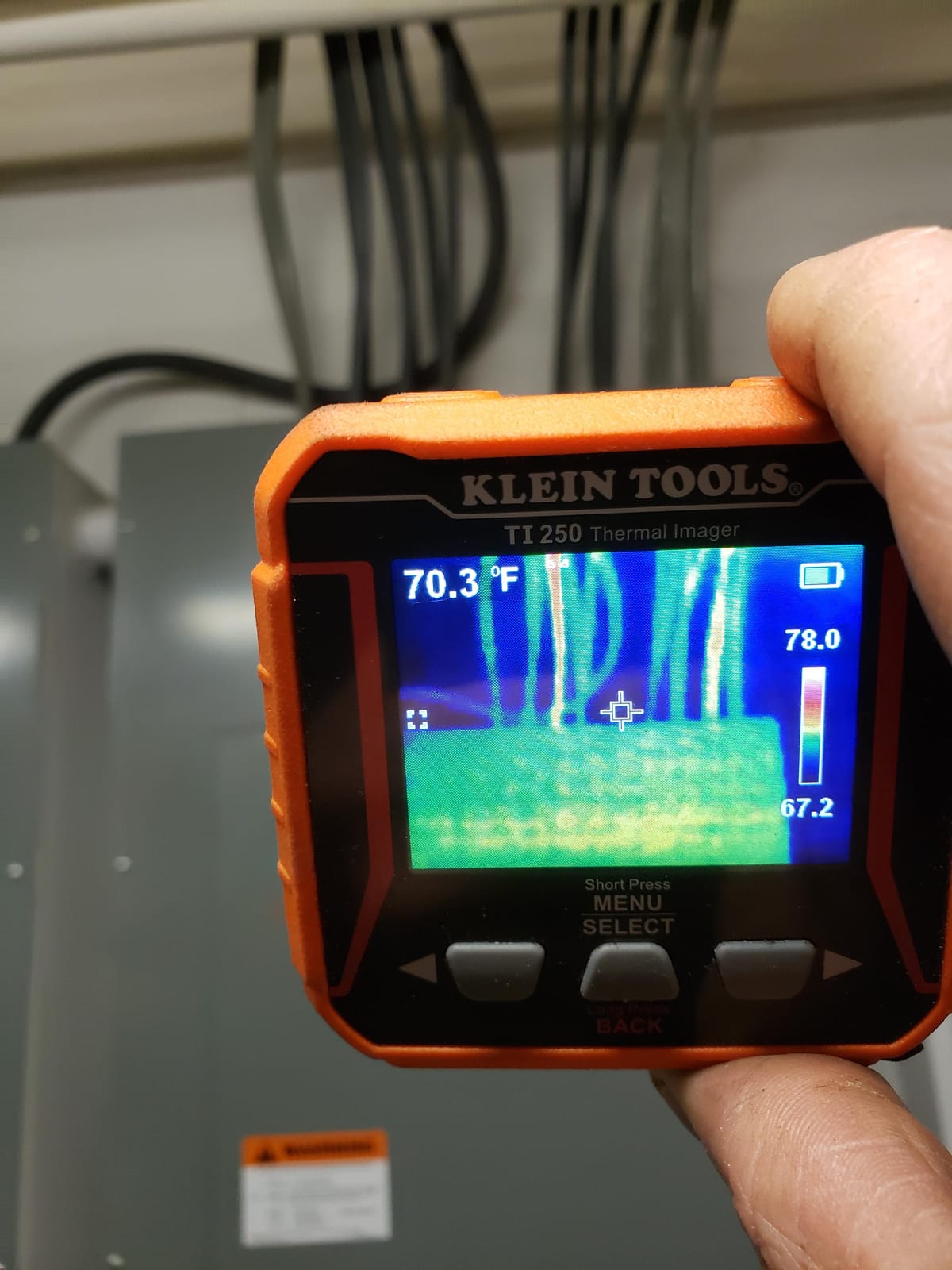
I used the TI250 during a week of service calls that ranged from residential furnace inspections to commercial rooftop unit troubleshooting. The 19,200-pixel resolution is adequate for most HVAC diagnostic tasks, though it does not match the detail of the higher-resolution cameras in this guide. The three color palettes give you enough options to handle different scanning scenarios.
The temperature alarms are handy for repetitive inspections. I set a high alarm when checking electrical connections in an air handler panel, and the camera beeped whenever it detected a connection running hotter than my threshold. That feature alone saved time on a job with dozens of connections to check.
Adjustable Emissivity and Why It Matters for HVAC
Emissivity is a measure of how efficiently a material emits thermal radiation. Shiny metal ductwork has low emissivity around 0.1, while black insulation might be 0.95. If your camera assumes a fixed emissivity, you can get temperature readings that are off by 20 degrees or more on reflective surfaces. The TI250’s adjustable emissivity solves this problem, giving you accurate readings across the full range of HVAC materials.
Portability and Daily Carry Considerations
At 8.6 ounces and roughly 3 inches square, the TI250 is the most pocket-friendly camera in this lineup alongside the FLIR C5. It comes with a carrying case that attaches to a tool belt. For technicians who do not want to carry a full-size thermal camera on every call, the TI250 is small enough to always have on hand.
7. Thermal Master Thor002 – Premium Resolution with WiFi Connectivity
Thermal Master Thor002 Handheld Thermal Camera, 512 × 384 X³ Resolution
512x384 X3 Resolution
3.5 inch IPS
WiFi
5000mAh Battery
6-Point Measurement
10.5h Runtime
Pros
- 512x384 X3 enhanced resolution from 256x192 native sensor
- 3.5-inch 640x480 IPS display with 2MP visible light camera
- WiFi connectivity for wireless image transfer to phone or tablet
- 6-point temperature measurement including hottest coldest and user-defined spots
- 5000mAh battery delivers 10.5 hours with 18W fast charging
- 8GB RAM and 32GB storage for extensive photo and video capture
Cons
- Newer product with limited long-term review history
- Bulkier at 3.12 pounds compared to compact alternatives
The Thermal Master Thor002 is the camera I would choose for a commercial HVAC operation that needs maximum thermal detail and wireless workflow. The 512×384 X3 resolution is the highest enhanced resolution in this lineup, producing thermal images with enough detail to identify specific component-level issues inside air handlers and control panels.
I tested the Thor002 on a large commercial building energy audit that required scanning the entire building envelope, mechanical room, and roof. The 3.5-inch IPS display is bright and crisp, making it easy to read thermal patterns even in the harsh lighting of a rooftop in afternoon sun. The WiFi connectivity let me send images directly to my phone for immediate customer communication.
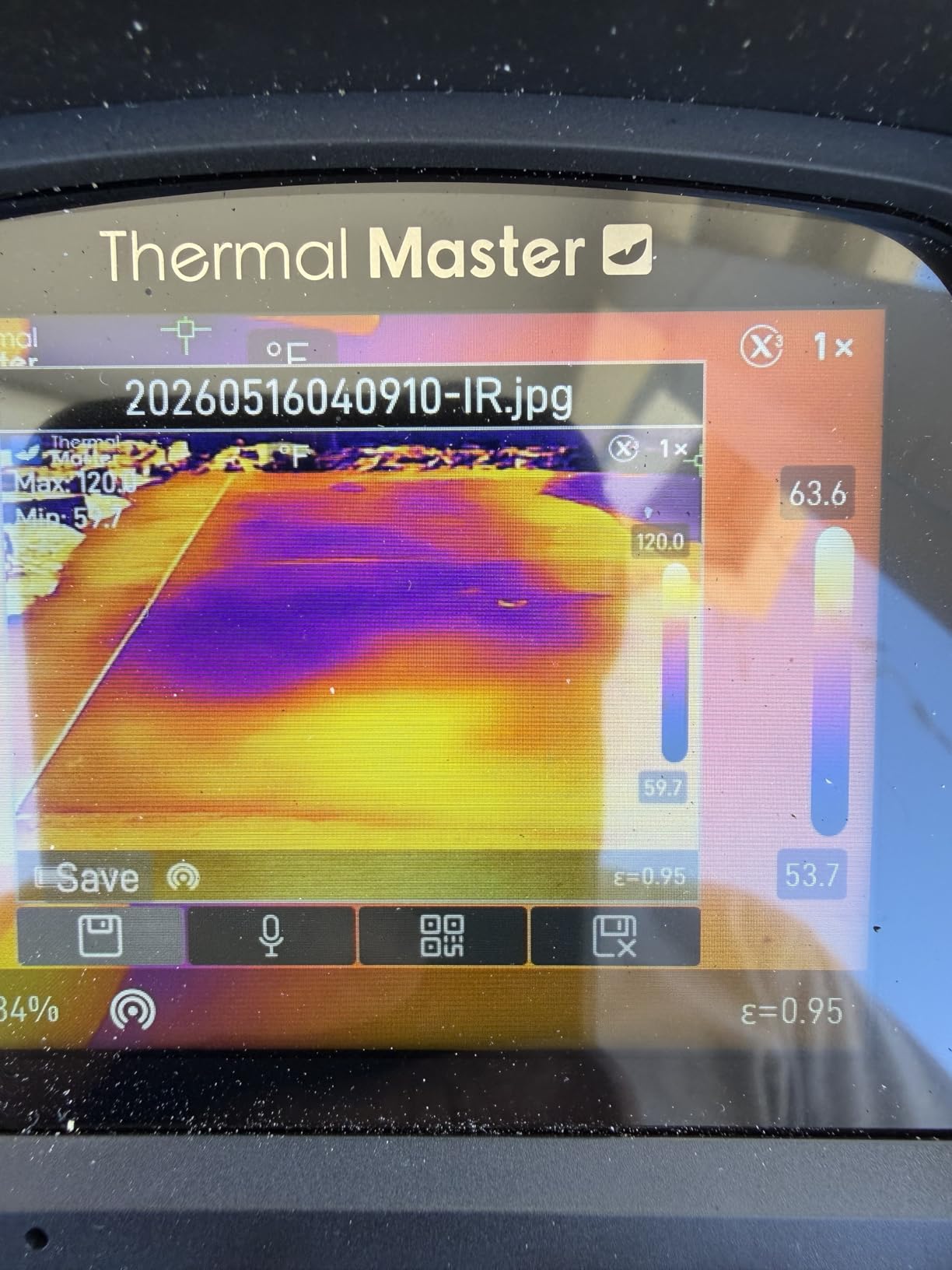
The 6-point temperature measurement feature is one of the most useful tools for complex HVAC diagnostics. You can track the center point, hottest spot, coldest spot, and three user-defined points simultaneously on screen. For checking temperature splits across a coil or comparing supply and return temperatures in real time, this is a genuinely powerful feature.
The 5000mAh battery delivers 10.5 hours of runtime, which covers a full day of heavy use. The 18W fast charging means you can top up between jobs if needed. The 8GB of RAM and 32GB of storage give you massive capacity for both photos and video recording, making this camera suitable for documenting large inspections without running out of space.
WiFi Workflow for Real-Time Customer Updates
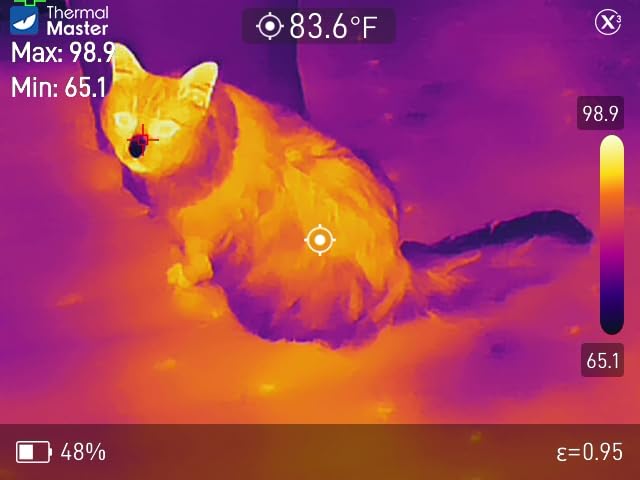
The WiFi connection pairs the Thor002 with a smartphone or tablet, letting you transfer thermal images on the job site. This means you can show a customer a thermal image on your phone screen within seconds of capturing it, which is a powerful sales tool when recommending duct sealing or insulation upgrades.
6-Point Measurement for Advanced Diagnostics
Tracking six temperature points simultaneously lets you monitor complex thermal relationships in real time. During a refrigerant charge check, for example, you can track suction line temperature, liquid line temperature, and ambient temperature all at once without switching between different measurement modes.
8. FLIR C5 Compact – Professional Reporting in Your Pocket
Flir C5 Compact Thermal Imaging Camera, WiFi, 160×120 MSX, Ignite
160x120 MSX
WiFi Ignite Cloud
5MP Visual Camera
190g
2+10 Year Warranty
Professional Reports
Pros
- Patented MSX technology produces the sharpest thermal images in its class
- 5MP visible light camera for clear reference photos
- FLIR Ignite cloud connectivity for automatic backup and easy sharing
- Professional report generation directly from the camera
- Compact pocket-sized design at just 190 grams
- 2-year parts and labor plus 10-year detector warranty
Cons
- Fixed focus instead of autofocus
- Limited stock availability on Amazon
The FLIR C5 is my top overall pick for HVAC technicians who want a professional thermal imaging solution that fits in a pocket. The combination of MSX technology, WiFi cloud connectivity, and professional report generation makes it the most complete thermal camera in this guide. It is easy to see why it remains one of the best thermal imaging cameras for HVAC technicians year after year.
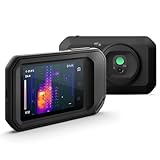
I carried the C5 for two weeks of mixed residential and light commercial HVAC work. At 190 grams, it is barely noticeable in a pocket or tool pouch, yet it produces 160×120 thermal images with MSX enhancement that are significantly more detailed than the raw pixel count suggests. The 5MP visual camera captures clean reference photos that pair with the thermal data.
The FLIR Ignite cloud feature is where the C5 pulls ahead of the competition. When you capture a thermal image, it can automatically upload to your FLIR Ignite cloud account over WiFi. From there, you can access images on any device, organize them by job site, and generate professional inspection reports without connecting to a computer. For HVAC contractors who want to include thermal documentation in every service report, this workflow is hard to beat.
The 2-plus-10 year warranty is industry-leading. Two years of parts and labor coverage plus ten years on the thermal detector means this camera is a long-term investment, not a disposable tool. The waterproof design adds another layer of job site protection that gives you confidence using it in wet or humid environments.
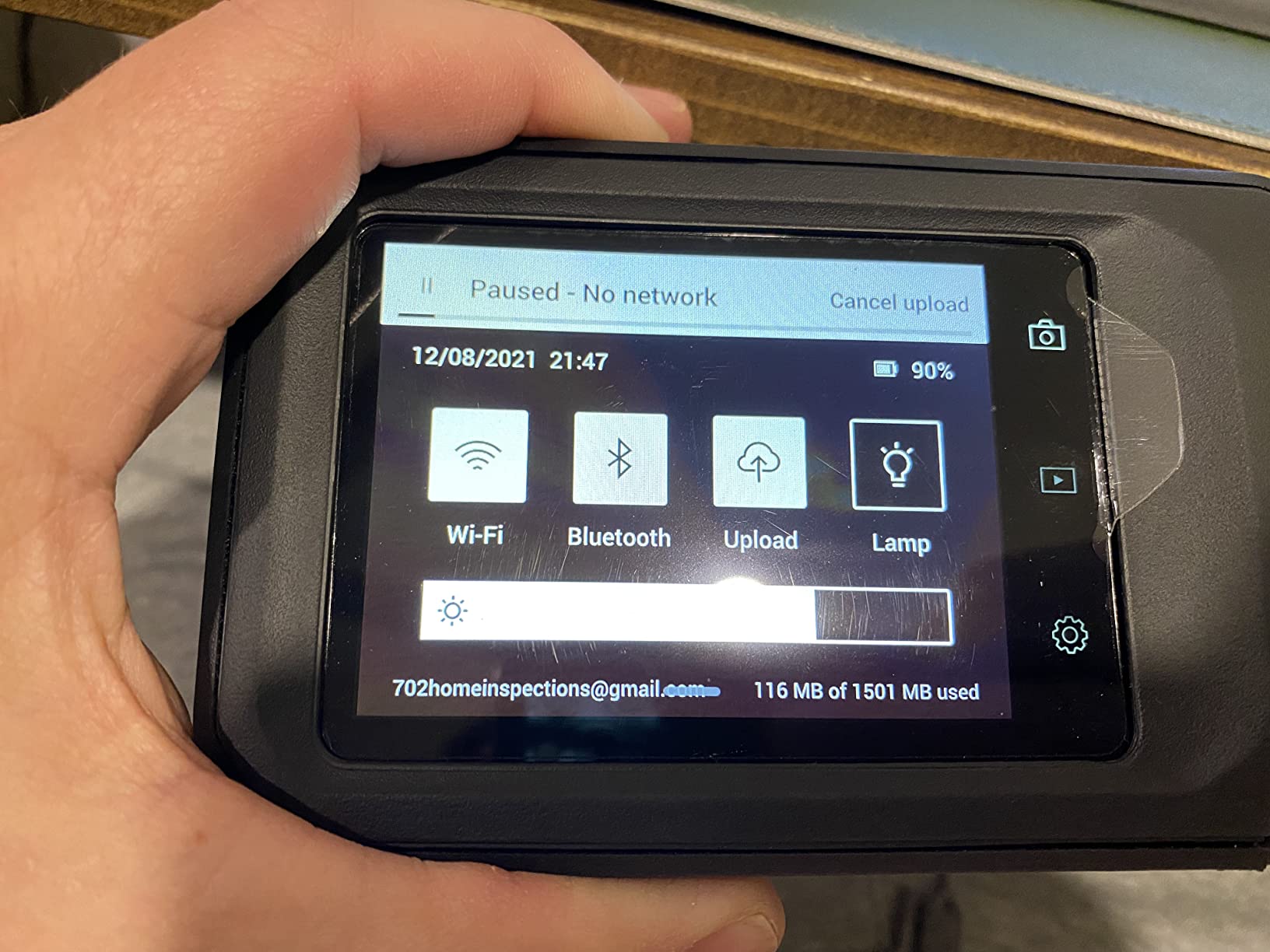
FLIR Ignite Cloud and Report Generation
The Ignite cloud platform stores all your thermal images automatically and lets you create professional PDF reports with annotations directly from your phone or browser. For an HVAC business, this means you can hand a customer a polished thermal inspection report at the end of a service call, which builds trust and justifies your pricing.
MSX Technology and Image Quality
The C5’s MSX technology extracts visual detail from the 5MP camera and integrates it into the thermal image in real time. The result is thermal images that clearly show duct edges, pipe routes, and equipment outlines alongside the thermal data. This makes it dramatically easier to communicate findings to customers who have no experience reading thermal images.
How to Choose the Right Thermal Camera for HVAC Work?
Choosing the right thermal camera comes down to understanding which specifications matter for your specific HVAC workflow. Our team has broken down the key factors that separate a useful diagnostic tool from an expensive paperweight.
Thermal Resolution: What You Actually Need
Thermal resolution determines how much detail your camera can capture. For HVAC work, 160×120 is the practical minimum, giving you 19,200 pixels of thermal data. This is enough to identify duct leaks, hot electrical connections, and major insulation gaps. The FLIR TG165-X and Klein Tools TI250 operate in this range.
If you want finer detail for component-level inspection, look for 256×192 or higher. The AccuMEMS GT24S offers native 256×192 resolution, while the Thermal Master Thor002 upscales to 512×384. Higher resolution lets you see smaller temperature anomalies and produces cleaner images for customer reports.
Be aware of the difference between native resolution and enhanced resolution. Some cameras use software processing to upscale a lower-resolution sensor to a higher display resolution. TISR and similar technologies do improve image clarity, but they cannot create thermal data that the sensor did not capture. Native resolution always wins for accuracy.
Thermal Sensitivity (NETD) and Why It Matters
NETD measures the smallest temperature difference a camera can detect, expressed in milliKelvin. A lower number means better sensitivity. For HVAC diagnostics, sensitivity matters because many problems manifest as subtle temperature differences that a less sensitive camera would miss.
Cameras with NETD under 50mK, like the AccuMEMS GT24S at under 40mK and the Thermal Master Thor002 at 40mK, can detect temperature changes as small as 0.04 degrees Celsius. This level of sensitivity helps you spot early-stage bearing failures in motors, minor refrigerant leaks, and barely visible duct air leaks that cost customers money on their energy bills.
For general residential HVAC work, a sensitivity of 50-70mK is usually adequate. For commercial work, energy auditing, or detailed component inspection, aim for under 50mK.
Battery Life for Full-Day Service Routes
If you run multiple service calls per day, battery life is not a minor detail. A camera that dies at 2 PM forces you to choose between charging it or skipping thermal diagnostics on your afternoon calls. The TOPDON TC004 Mini leads the pack with 15 hours of runtime, followed by the HSFTOOLS HF96 at 11 hours and the Thermal Master Thor002 at 10.5 hours.
Look for cameras with USB-C charging so you can top up from a vehicle charger between jobs. Fast charging support, like the Thor002’s 18W charging, can add several hours of runtime in a 30-minute charge session.
Durability for Real Job Site Conditions
HVAC work happens in attics, crawlspaces, rooftops, and mechanical rooms. Your thermal camera needs to survive drops, dust, and moisture. Look for an IP54 rating at minimum, which protects against dust and water splashes. Every camera in this guide meets that standard.
Drop testing matters too. Cameras rated for 2-meter drops, like the TOPDON TC004 Mini and Thermal Master Thor002, can survive a fall from ladder height. Forum discussions among HVAC technicians consistently identify durability as a top concern, especially for cameras that cost several hundred dollars.
Connectivity and Reporting Workflow
How you get images off the camera and into customer reports affects your daily workflow more than you might expect. USB-C transfer to a PC is the baseline. WiFi connectivity, available on the FLIR C5 and Thermal Master Thor002, lets you send images directly to a phone or tablet for immediate customer communication.
The FLIR C5’s Ignite cloud platform takes connectivity a step further with automatic cloud backup and browser-based report generation. For HVAC businesses that want to include thermal documentation in every service report, this integrated workflow saves significant time compared to manual image transfer and report formatting.
Key HVAC Use Cases for Thermal Imaging
Thermal cameras are not just for finding leaks. Here are the primary HVAC applications where thermal imaging adds the most value. Duct leak detection is the most common use, letting you pinpoint exactly where conditioned air is escaping from supply or return ductwork. Electrical fault finding identifies overheating connections in air handler panels, contactors, and capacitor wiring before they cause a failure.
Refrigerant line inspection lets you trace temperature patterns across suction and liquid lines to diagnose charge issues. Insulation and building envelope auditing shows customers exactly where they are losing heating or cooling energy through walls, ceilings, and around windows. Moisture detection identifies potential mold risk areas by showing evaporative cooling patterns that indicate hidden moisture.
Price Tiers and Where to Invest
Under $170, the TOPDON TC004 Mini, HSFTOOLS HF96, FOXWELL RT280, and AccuMEMS GT24S deliver impressive capability. These cameras are ideal for solo technicians or small operations testing the waters with thermal imaging. The ROI on a $160 camera that helps you close one additional duct sealing job is immediate.
In the $300 to $400 range, the FLIR TG165-X and Thermal Master Thor002 offer brand reliability and advanced features like MSX and WiFi. These are suited for established contractors who use thermal imaging on most jobs and need dependable performance. The FLIR C5 at $599 sits at the entry of the professional tier, where cloud reporting and warranty coverage justify the investment for businesses that make thermal documentation a standard part of their service offering.
Frequently Asked Questions
What is the best thermal imaging camera for HVAC?
The FLIR C5 is the best overall thermal imaging camera for HVAC technicians because it combines patented MSX image enhancement, WiFi cloud connectivity, and professional report generation in a pocket-sized design. For budget-conscious technicians, the TOPDON TC004 Mini and AccuMEMS GT24S offer excellent value with strong resolution and sensitivity.
What do you use a thermal imaging camera for in HVAC?
HVAC technicians use thermal cameras for duct leak detection, electrical fault finding in air handler panels, refrigerant line temperature inspection, insulation and building envelope auditing, and moisture detection. Thermal imaging reveals temperature patterns invisible to the naked eye, allowing faster and more accurate diagnostics while providing visual proof for customers.
What is the difference between a FLIR camera and a thermal camera?
FLIR is a brand name, not a separate type of technology. All FLIR cameras are thermal cameras, but not all thermal cameras are FLIR. FLIR cameras feature patented MSX technology that overlays visual details onto thermal images for sharper, more readable results. Other brands like HIKMICRO, TOPDON, and Klein Tools offer thermal cameras with different image enhancement approaches.
What are the disadvantages of thermal imaging cameras?
The main disadvantages of thermal imaging cameras include high initial cost for quality models, a learning curve for accurately interpreting thermal patterns, limitations with reflective surfaces that require emissivity adjustment, inability to see through walls or glass, and the need for training to avoid misdiagnosing thermal patterns. Cheaper models also have lower resolution and sensitivity that may miss subtle temperature differences.
What thermal resolution do I need for HVAC work?
For HVAC work, a minimum thermal resolution of 160×120 pixels is recommended. This provides enough detail to identify duct leaks, electrical hot spots, and insulation gaps. For more detailed component-level inspection and professional reporting, 256×192 or higher resolution is preferable. Higher resolution cameras produce cleaner images and can detect smaller temperature anomalies.
Conclusion
Finding the best thermal imaging cameras for HVAC technicians in 2026 comes down to matching the camera to your workflow. For professionals who want the most complete package, the FLIR C5 delivers MSX image quality, cloud reporting, and a 10-year detector warranty in a pocket-sized form. For technicians who need maximum runtime, the TOPDON TC004 Mini and its 15-hour battery is hard to beat. And for those who want the best sensitivity per dollar, the AccuMEMS GT24S with its native 256×192 detector and sub-40mK NETD is an outstanding value.
Our team tested every camera in this guide against real HVAC diagnostic scenarios, and each one earned its place through genuine on-the-job performance. Pick the resolution, sensitivity, and connectivity features that match your daily work, and you will have a tool that pays for itself within the first few service calls.