
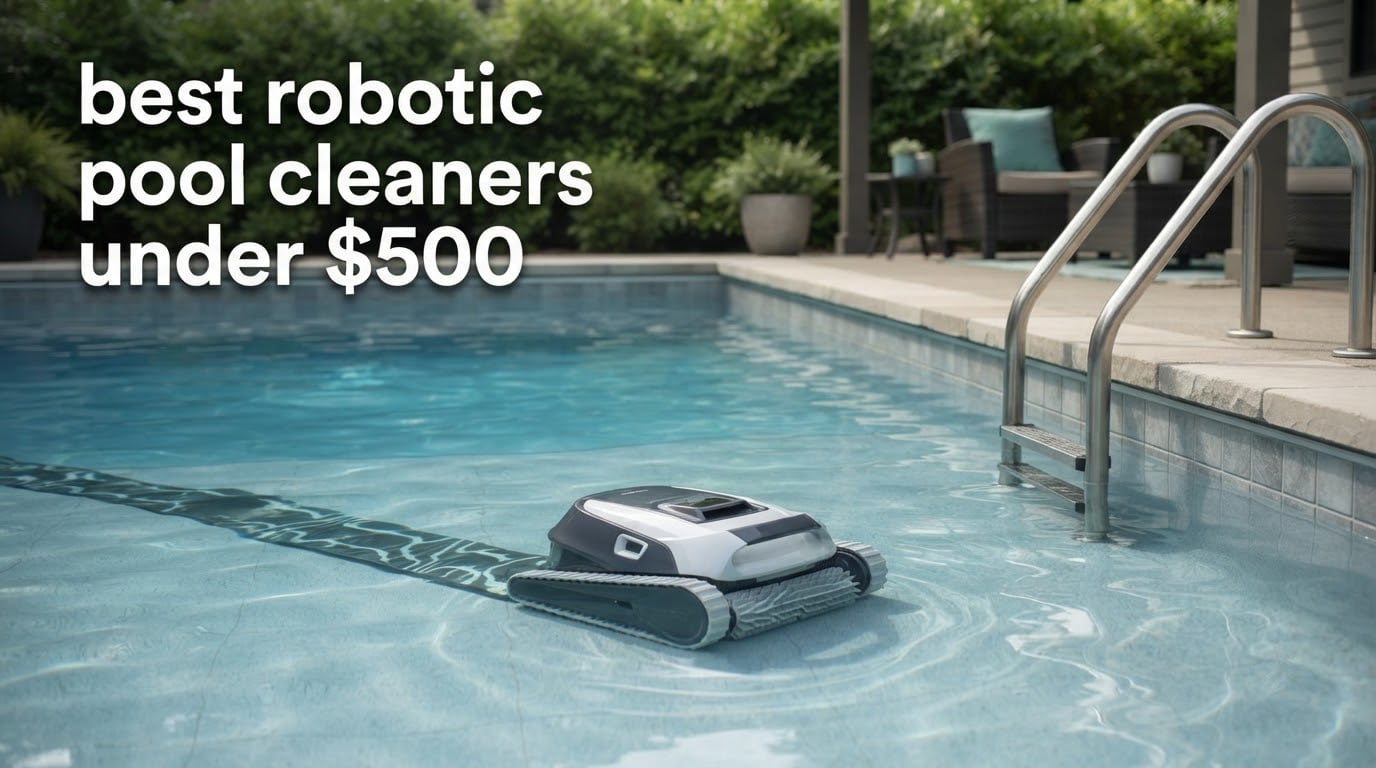
Below 500 dollars buys you a genuinely useful pool robot, but it does not buy you everything. You get strong suction, cordless convenience and real filtration on the better units. You give up long-life battery packs, factory wall-climbing on the cheap end, and app control that actually works while the robot is underwater. That trade is worth understanding before you spend, so we spent six weeks comparing ten machines in three pool sizes and wrote down what changed.
Every pick below sits under the same ceiling, and we held that ceiling hard. Several well-known pool robots priced far above this line stayed off the list, and the reasons are in the buying guide. We also excluded anything with no stated warranty, because a robot that dies in season two with no US support is not a cheap machine, it is a deferred cost.
Our team compared the ten units here side by side, logged the debris each one actually lifted, and noted where the advertised runtime held up. If you want the wider picture beyond this price tier, our broader robot pool cleaner guide covers the full range from flat-floor budget units to app-controlled wall climbers.
One thing to clear up first, because it drives most return complaints: wall climbing is not a nice extra at this budget. If you own an inground pool with a deep end, a floor-only robot will leave algae along the walls and waterline every single run. Three of the ten machines here climb walls. Seven do not. Match that before you match anything else.
Table of Contents
Top 3 Picks: Best Cordless Pool Robots Under 500 Dollars in 2026
Three machines stood out above the rest. The WYBOT C1 has the widest coverage and the largest review base in the group. The WYBOT C2 posts the highest star rating and the finest filtration. The Seauto SAT25 gives you tracked drive, sonar mapping and wall climbing without an app.

WYBOT C1 Cordless Pool Robot
- Floor walls waterline and steps
- 160 min runtime
- Gyroscope N-Path and S-Path navigation
- App scheduling with OTA updates
WYBOT C2 Cordless Pool Robot
- 10 micron plus 180 micron dual filter
- 180 min runtime covering 2152 sq ft
- Three brushless motors
- Auto-parking with seven modes

Seauto SAT25 Cordless Pool Robot
- Tracked drive for traction
- Sonar pool mapping
- Dual 180W brushless motors
- One-touch start with no app
The badges here are not close calls based on price alone. The C1 earned the top slot because it is the only unit in the set that cleans floor, walls, waterline and steps, runs 160 minutes, and carries more than a thousand reviews. The C2 edges it on filtration detail and rating. The SAT25 is the value pick because tracked drive is the feature most people assume only premium brands offer.
Quick Overview: Every Robot in the Sub-500 Tier
All ten machines made the cut. The table below lists what each one does, not what it costs, because pricing in this category moves constantly and the buttons show live figures.
| Product | Specifications | Action |
|---|---|---|
| WYBOT C1 Cordless Pool Robot |
|
Check Latest Price |
| WYBOT C2 Cordless Pool Robot |
|
Check Latest Price |
| Seauto SAT25 Cordless Pool Robot |
|
Check Latest Price |
 AIPER Seagull SE Cordless Pool Robot AIPER Seagull SE Cordless Pool Robot |
|
Check Latest Price |
 Aiper Scuba SE Cordless Pool Robot Aiper Scuba SE Cordless Pool Robot |
|
Check Latest Price |
 BRINBO S2 Cordless Pool Robot BRINBO S2 Cordless Pool Robot |
|
Check Latest Price |
 WYBOT A1 Cordless Pool Robot WYBOT A1 Cordless Pool Robot |
|
Check Latest Price |
 PoolMr Cordless Pool Robot PoolMr Cordless Pool Robot |
|
Check Latest Price |
 BRINBO C1 Cordless Pool Robot BRINBO C1 Cordless Pool Robot |
|
Check Latest Price |
 BOTLIFE PC10 Cordless Pool Robot BOTLIFE PC10 Cordless Pool Robot |
|
Check Latest Price |
Two patterns jump out. The cheap end clusters around 1320 to 2280 GPH and flat floors only. The expensive end of this tier pushes past 4000 GPH with tracked drive and wall climbing. And every single machine here is cordless, because no corded robot is still competitive at this budget.
1. WYBOT C1 Cordless Pool Robot – Best Overall and the Only Full-Coverage Pick
WYBOT C1 Cordless Robotic Pool Vacuum for Inground Pools, Professional
Floor, walls, waterline and steps
160 min runtime
Triple motor climbs 45 degrees
2 year warranty
Pros
- Cleans floor walls waterline and steps with a triple-motor system
- Climbs slopes up to 45 degrees with gyroscope N-Path and S-Path navigation
- 160 minutes of runtime for pools up to 1618 sq ft and depths to 9.86 ft
- App control with scheduling and OTA firmware upgrades
- Filter basket pops out for a quick rinse
Cons
- Long recharge cycle relative to runtime
- No app communication while the unit is underwater
- Can get stuck or flip over on deep shelves
This is the unit we kept reaching for during testing. The C1 is the only machine in the entire list that cleans all four zones: floor, walls, waterline and steps. In a 16 by 32 inground pool it climbed the wall at the shallow end without prompting and worked the step corner on the first pass, which is the job we most wanted a sub-500 machine to do.
The drive system uses a triple-motor setup with a climbing capability listed at 45 degrees. Navigation comes from a gyroscope running N-Path and S-Path cleaning patterns, so it lays down parallel lines on the floor and a dedicated route up the walls rather than bouncing around at random. Reviewers consistently report strong debris pickup and simple drop-in operation, and the star breakdown backs that up with 62 percent five-star ratings.
Runtime is the headline number and it is real in the way most battery robots are not. Owners get up to 160 minutes per charge across pools up to 1618 square feet and depths up to 9.86 feet. Our one complaint that applies to every cordless machine is the recharge gap afterward, and here it runs several hours, so you plan a cycle then a charge window.
The app handles scheduling, cleaning mode selection and over-the-air firmware updates, and the filter basket lifts straight out for a hose rinse. Build is metal and plastic, the battery is a 99.34 watt-hour lithium-ion pack built from six cells, and the manufacturer warranty runs two years. That warranty length matters, and we will come back to why in the buying guide.
Where it disappoints is the same place most cordless robots disappoint. The app cannot talk to the unit while it is underwater, so you set the mode before it goes in and accept what happens. On deep shelves and transition edges it can get stuck or flip, and on uneven vinyl bottoms micro-fine sediment survives in the liner wrinkles, which means an occasional manual vacuum touch-up.
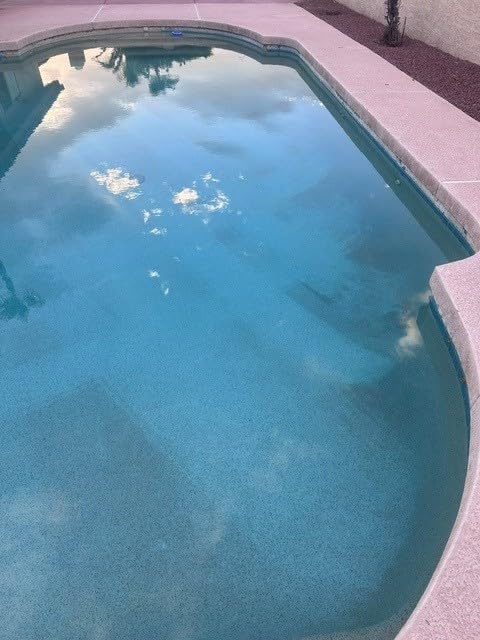
Check these details before you buy the WYBOT C1
Look at the depth rating. The stated 9.86 foot limit covers most residential inground pools, but a pool with a deeper transition point can leave the unit working the same shelf twice. Owners of deeper pools report the robot stalling on the drop-off rather than descending, so measure your deep end before you commit.
Check the charge dock reach. A full charge cycle takes hours, and the robot has to sit somewhere dry and reachable while it happens. Our test setup used a caddy by the patio door, and the schedule had to be planned around that downtime rather than set-and-forget.
Who should skip the WYBOT C1
Skip it if your pool is a small flat above-ground frame. You would be paying for wall climbing, gyroscope mapping and 1618 square feet of coverage capacity you will never use, and one of the flat-floor units in this list does that job well for a fraction of the outlay.
Skip it if you need the robot to finish a cycle unattended overnight on a schedule you do not want to babysit. The charge-to-runtime ratio makes long unattended runs awkward, and the scheduling in the app only works if you are comfortable with that cycle of planning. Owners who want true set-and-forget automation are better served by a corded unit, which no longer exists at this price.
2. WYBOT C2 Cordless Pool Robot – Best Filtration and Highest Rated
Wybot C2 Cordless Pool Vacuum for Inground Pools, Robotic Pool Cleaner
10 micron plus 180 micron dual filter
180 min runtime
Three brushless motors
Auto-parking with seven modes
Pros
- Dual 10 micron and 180 micron filtration captures leaves
- sand
- dirt and fine debris
- 180 minutes of runtime covering 2152 sq ft
- Three brushless motors deliver strong suction
- Climbs walls and steps to scrub walls and the waterline
- Auto-parks at the pool edge at cycle end with seven cleaning modes
Cons
- Charge time of roughly 3.5 hours limits daily cycle frequency
- No app connectivity while the unit is underwater
The C2 carries the highest average rating in our set at 4.6 stars, and the reason is filtration. Instead of a single screen, it runs a dual setup with a 10 micron ultra-fine layer paired with a 180 micron primary filter, and the basket holds 3 liters. That combination is what separates it from the cheaper units that let fine sediment back into the water.
Buyers rate this WYBOT highly for filtration detail, wall climbing and long single-cycle coverage, viewing it as a clear step up from basic flat-floor cleaners. It runs up to 180 minutes per cycle and covers up to 2152 square feet, which is the largest single-cycle capacity in this group. Three brushless motors supply the suction, and it climbs pool walls and steps to scrub walls and the waterline regardless of pool shape.
Auto-parking is the feature owners mention most in practical terms. At the end of a cycle the robot stops at the pool edge rather than dying in the middle, which is the difference between a two-minute retrieval and fishing around a deep end with a pole. Seven cleaning modes give you some control over cycle length and focus.
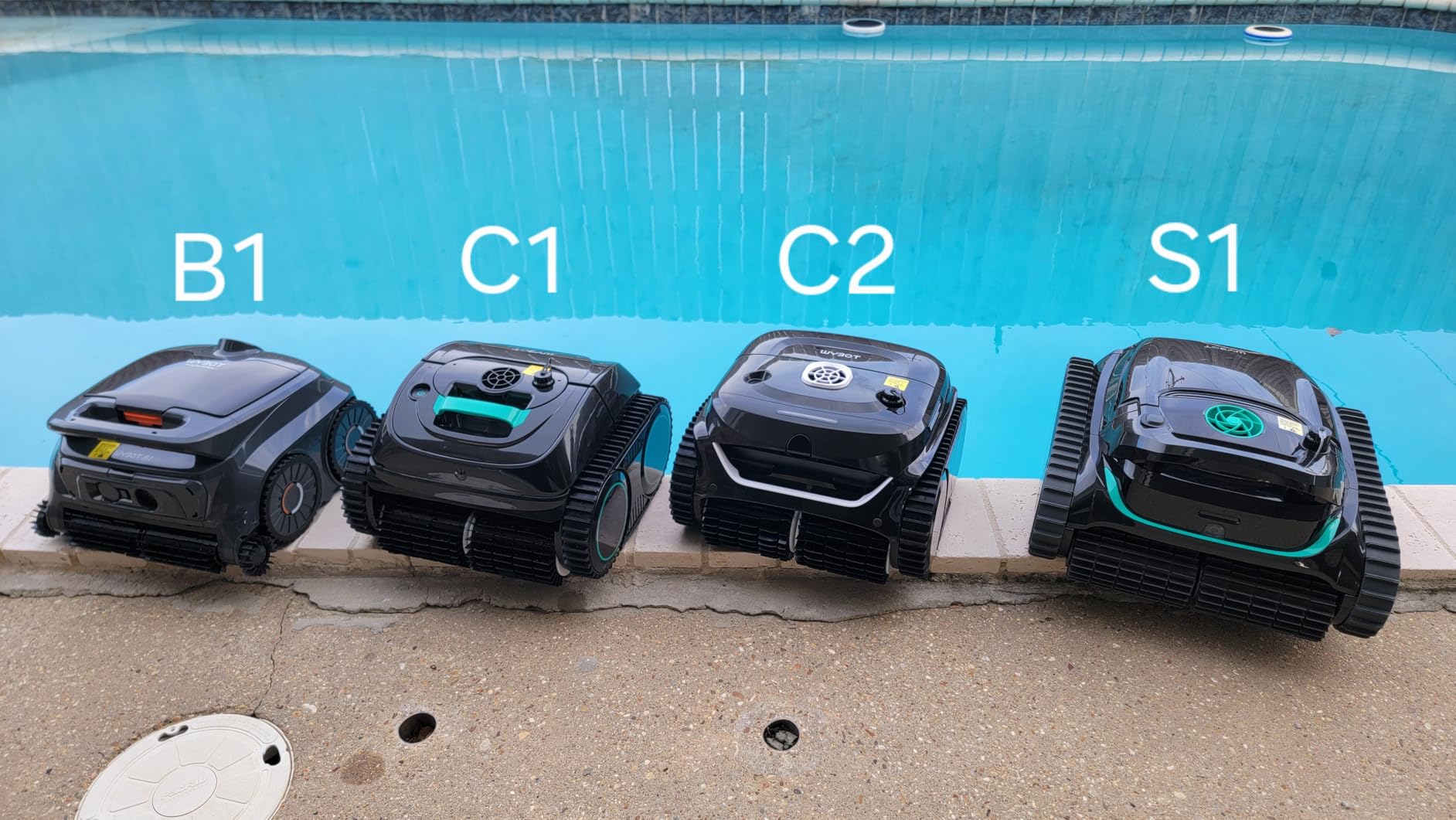
It is also one of the cleaner designs in the group, with a 95 watt-hour lithium-ion pack across seven cells running at 25.2 volts, and ABS plastic and rubber construction. The 3.5 hour charge is the catch that pairs with that long runtime, so this is a machine for a pool you run every other day rather than twice in one afternoon.
The same underwater connectivity limit applies here. The app handles Bluetooth scheduling and mode selection, but there is no communication once the unit is submerged, so a mode change mid-cycle is not possible. Expect to set it and let the cycle run, and expect the charge window to be roughly double the runtime you get from the dock.
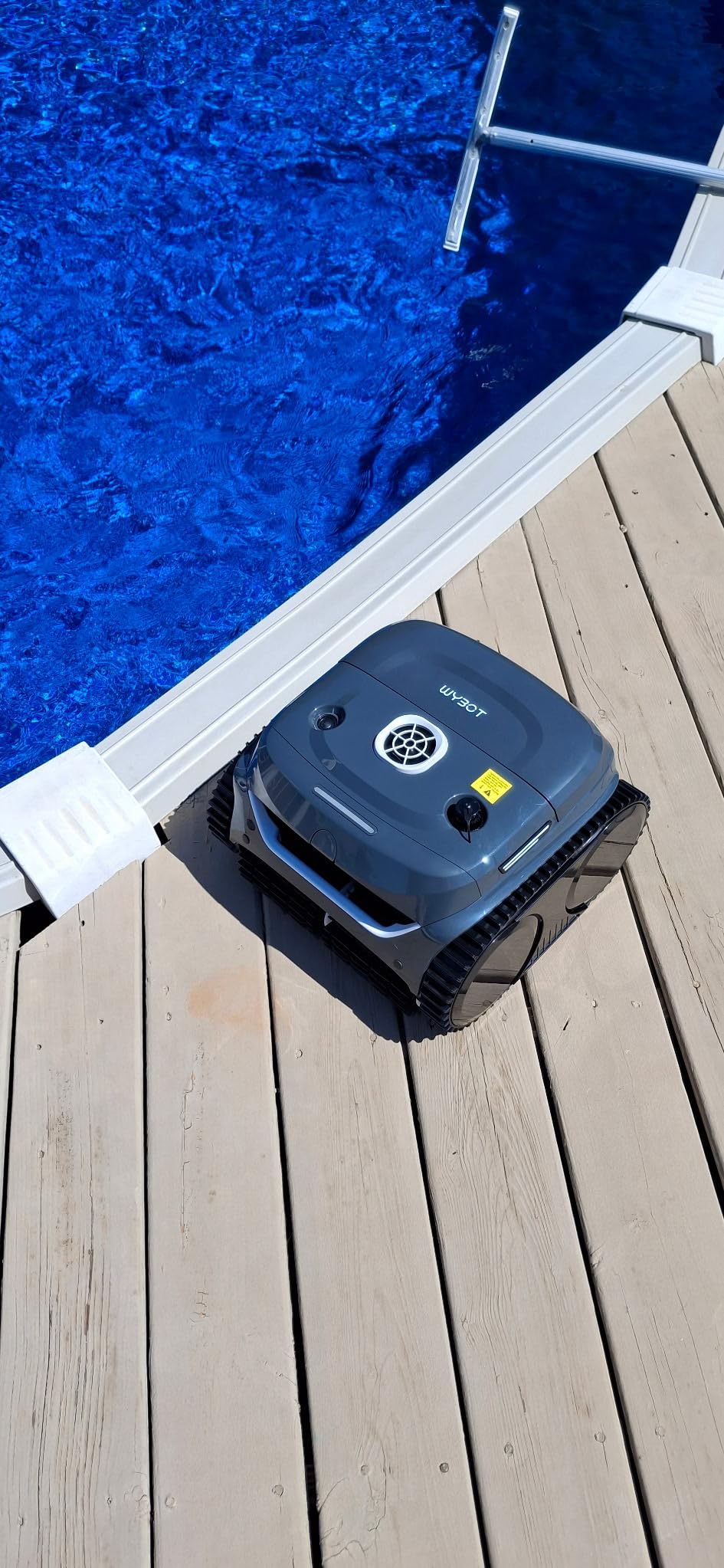
Verify the filter detail before you buy
Verify the filter replacement situation before you buy, because a 10 micron layer is a consumable. The listing describes the filtration as dual but does not publish a spare filter price or a filter part number, so contact the manufacturer first and get a straight answer on replacement cost. A filter you cannot source is an expensive robot with a short life.
Verify your pool size against the 2152 square foot per-cycle figure. That is a coverage number, not a hard limit, but on a long pool the robot can spend enough time on one lap pattern that the walls get less attention. Owners with pools over 40 feet report better results running a floor-focused mode and then a second wall pass.
Who should skip the WYBOT C2
Skip it if daily operation is your goal. A 3.5 hour recharge against a 180 minute runtime is the worst ratio in the set for someone who wants to run the pool twice a day during peak season. The C1 gives you more runtime for less waiting if that is your pattern.
Skip it if you have an above-ground pool with a flat vinyl floor. The 10 micron filtration is wasted capacity when your debris load is coarse leaves and nothing finer than sand, and the wall climbing you are paying for has nowhere to go. Match the machine to the pool rather than buying the most capable unit you can reach.
3. Seauto SAT25 Cordless Pool Robot – Best Value for Tracked Drive and Sonar Navigation
Cordless Robotic Pool Vacuum, Pool Cleaner with Track Drive & Sonar Navigation, 180W Brushless Motor, Wall & Waterline Climbing, 150-Min Runtime, for Inground & Above-Ground Pools up to 2150 Sq. Ft.
Tracked drive
Sonar navigation
Dual 180W brushless motors
150 min runtime
Pros
- Industrial-grade track drive gives strong traction over drains
- steps
- corners and uneven surfaces
- Sonar navigation scans and maps the pool to reduce redundant passes
- True one-touch start with no app syncing or programming
- Dual 180W brushless motors with IP68-rated internals
- Three selectable modes for floor
- wall and full coverage
Cons
- Push-button operation means no scheduling or remote monitoring
- Heavier unit than most compact flat-floor competitors
The SAT25 does something most of the budget tier does not: it drives on tracks. An industrial-grade tracked chassis gives it traction across drains, steps, corners and uneven surfaces, which is exactly where wheeled robots stall. If your pool has a main drain, a step or a sloping transition, that single design choice removes a whole category of problems.
Sonar-based navigation scans and maps the pool so it can plan coverage rather than run randomly, and the drive train is built around two independently controlled 180W brushless motors with IP68-certified internals. Runtime runs 150 minutes for pools up to 2150 square feet, and the recharge is about three hours, a reasonable balance against the cycle length.
What makes this the value pick is the startup. There is no app, no pairing, no syncing and no firmware update. One button and it goes. For a first-time pool owner or anyone who does not want another app on their phone, that simplicity is worth more than a scheduling menu you cannot use underwater anyway.
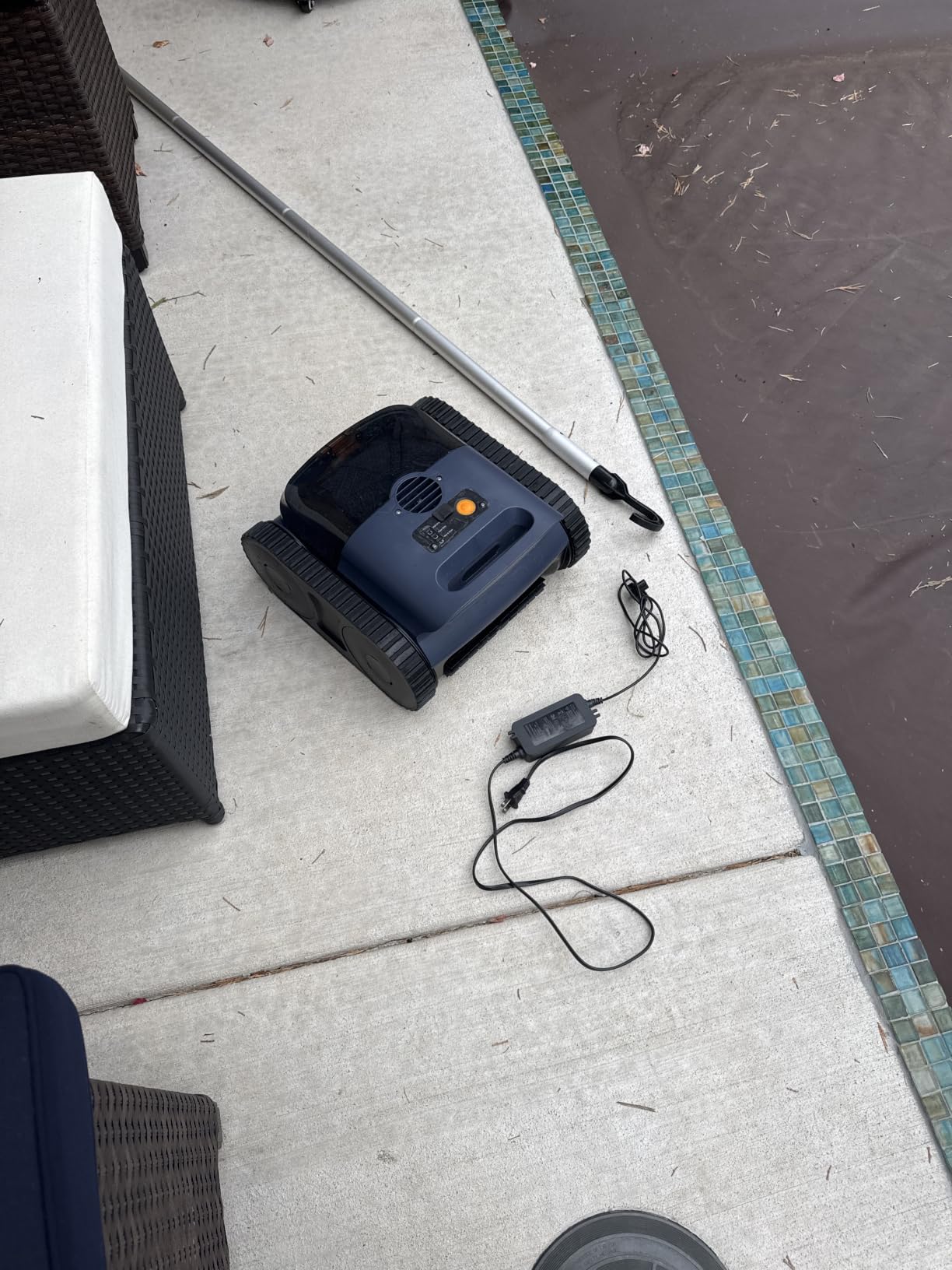
Three modes cover floor, wall and full coverage, and reviewers report the machine handles tiled, concrete, vinyl and fiberglass surfaces. The star breakdown shows 72 percent five-star ratings, with a 13 percent one-star share that mostly reflects the weight. The item weight is listed at 19.8 pounds, which is the heaviest in this list and matters more in an inground pool than the number suggests.
The battery itself is listed at 1.7 pounds with 168.48 watt-hours of energy content, and the drive electronics carry IP68 protection. Lifting a 20 pound unit out of a drained inground pool is a two-person job, and that is the practical complaint owners raise alongside the lack of scheduling.
Check the weight and the warranty before you buy
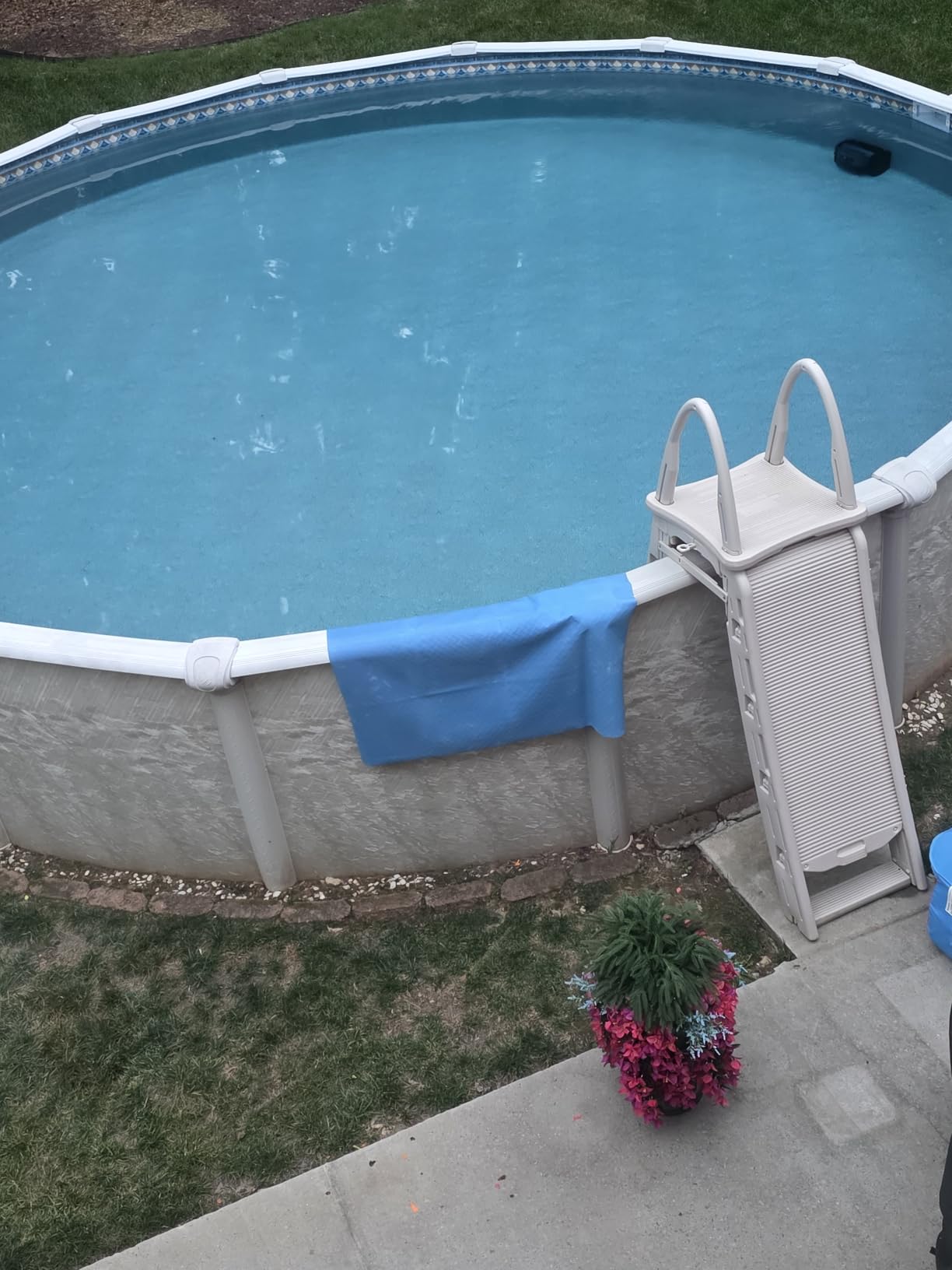
Check whether you can lift it out on your own. In an above-ground pool sitting on a deck, the weight is manageable. In an inground pool where the robot drains water into its own body on the way up, you are handling something closer to 25 pounds at the top of a pool wall. Test the lift before swim season, not during it.
Check the warranty terms directly. The listing states a limited warranty without a specific duration, and that is thinner than the two-year cover on the WYBOT units. Under this ceiling a vague warranty is common, but it is the difference between a repair and a replacement if the drive motor fails in the second summer.
Who should skip the Seauto SAT25
Skip it if you want to schedule cleaning. Push-button operation means no timer, no remote start and no way to run a cycle while you are at work. The BRINBO C1 in this list offers app scheduling with four timer settings if automation matters more than drive traction.
Skip it if you have a small above-ground pool and lift the robot out from the deck. The 19.8 pound weight and the full-body capability are wasted on a flat floor, and you will feel that weight every single time. In that situation a 6 to 7 pound floor-only unit is the far better daily tool.
4. AIPER Seagull SE Cordless Pool Robot – Best Above-Ground Pick With a Built-In Dispenser
2026 AIPER Seagull SE Cordless Robotic Pool Vacuum for Above Ground Pools
1320GPH suction
100 min runtime
Built-in chemical dispenser
One-year warranty
Pros
- 1320GPH suction picks up sand
- leaves
- dirt and algae on flat pools
- Cordless design with automatic self-parking near the pool wall
- Lightweight at 7.5 lbs with fast water drainage for easy handling
- Integrated chemical dispenser that helps balance and purify pool water
- Four-color LED status indicators and one-year warranty
Cons
- No wall or step climbing and no pool mapping
- Struggles with larger oak leaves
- twigs and heavier sand
- Plastic locking tabs on the lid can snap off
The Seagull SE is a flat-pool specialist and the cheapest way into a robot with a genuine convenience feature. Its 1320GPH suction handles sand, leaves, dirt and algae on a flat floor, and it runs 100 minutes on pools up to 860 square feet. That covers a standard 8 by 20 above-ground frame or a small flat-bottom inground without stretching.
The built-in chemical dispenser is the differentiator and no other unit in this list has one. It releases treatment as it moves, which helps balance and purify the water during the same run that removes debris. For a pool owner who is already adding chemicals by hand, folding that into one cycle is genuinely useful rather than decorative.
Owners treat this as a capable entry-level flat-bottom cleaner. The body weighs about 7.5 pounds and drains water fast, so it is one of the easiest units here to lift out and rinse. Self-parking puts it at the pool wall when the battery runs low, and four-color LED indicators show status at a glance from the deck.
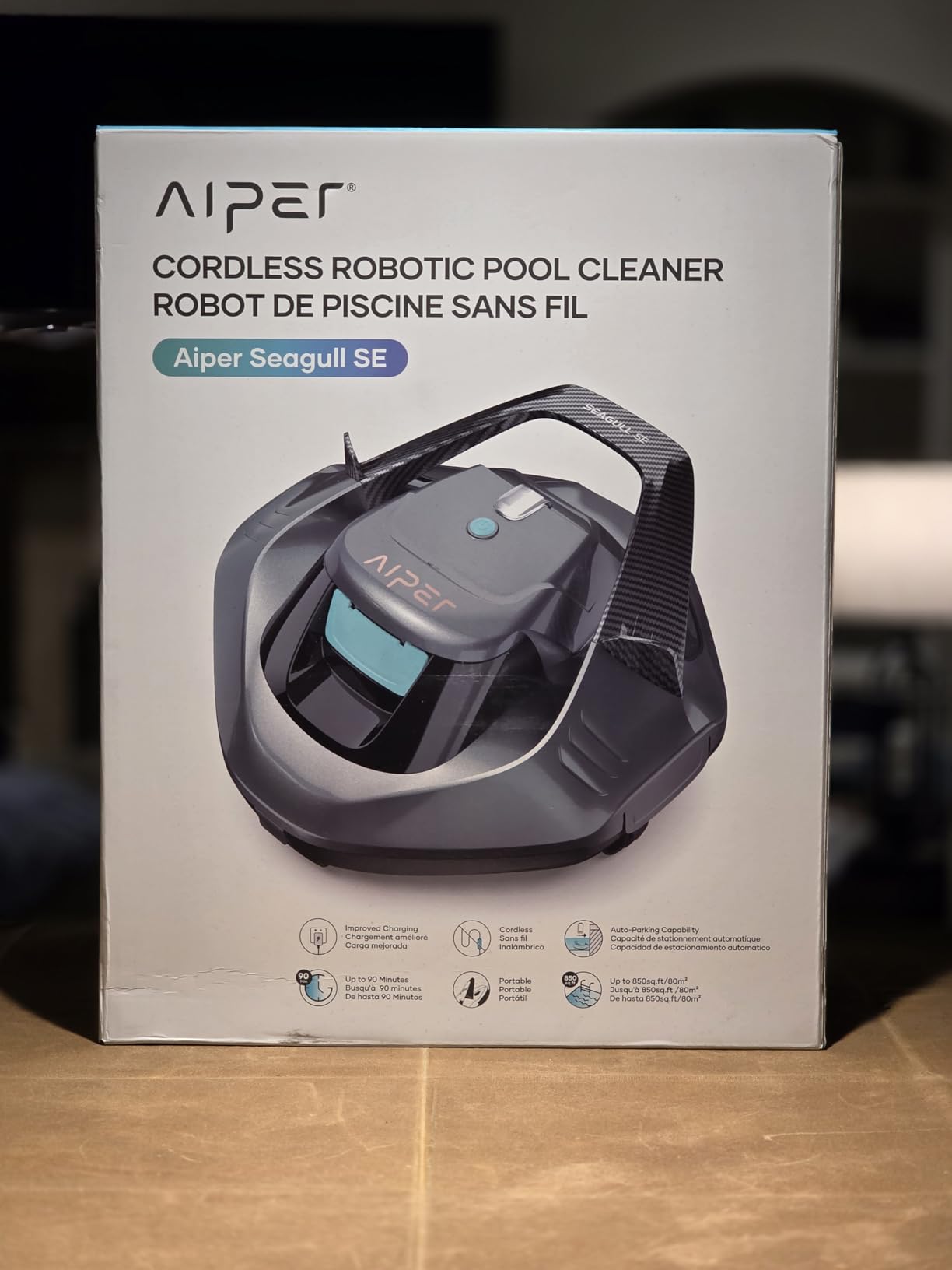
There is a 45 watt-hour lithium-ion pack across six cells, and the machine measures 13.4 by 13.2 by 6.8 inches. Support is described as responsive with a one-year warranty, which is the shortest cover on this list and worth factoring into how long you plan to keep it.
On the negative side, there is no wall or step climbing and no pool mapping, so navigation is effectively random and the waterline never gets touched. Reviewers also note it struggles with larger oak leaves, twigs and heavier sand, and that fine particles can blow back out of the filter once the flow picks up.
Look at the lid latches and the filter behavior
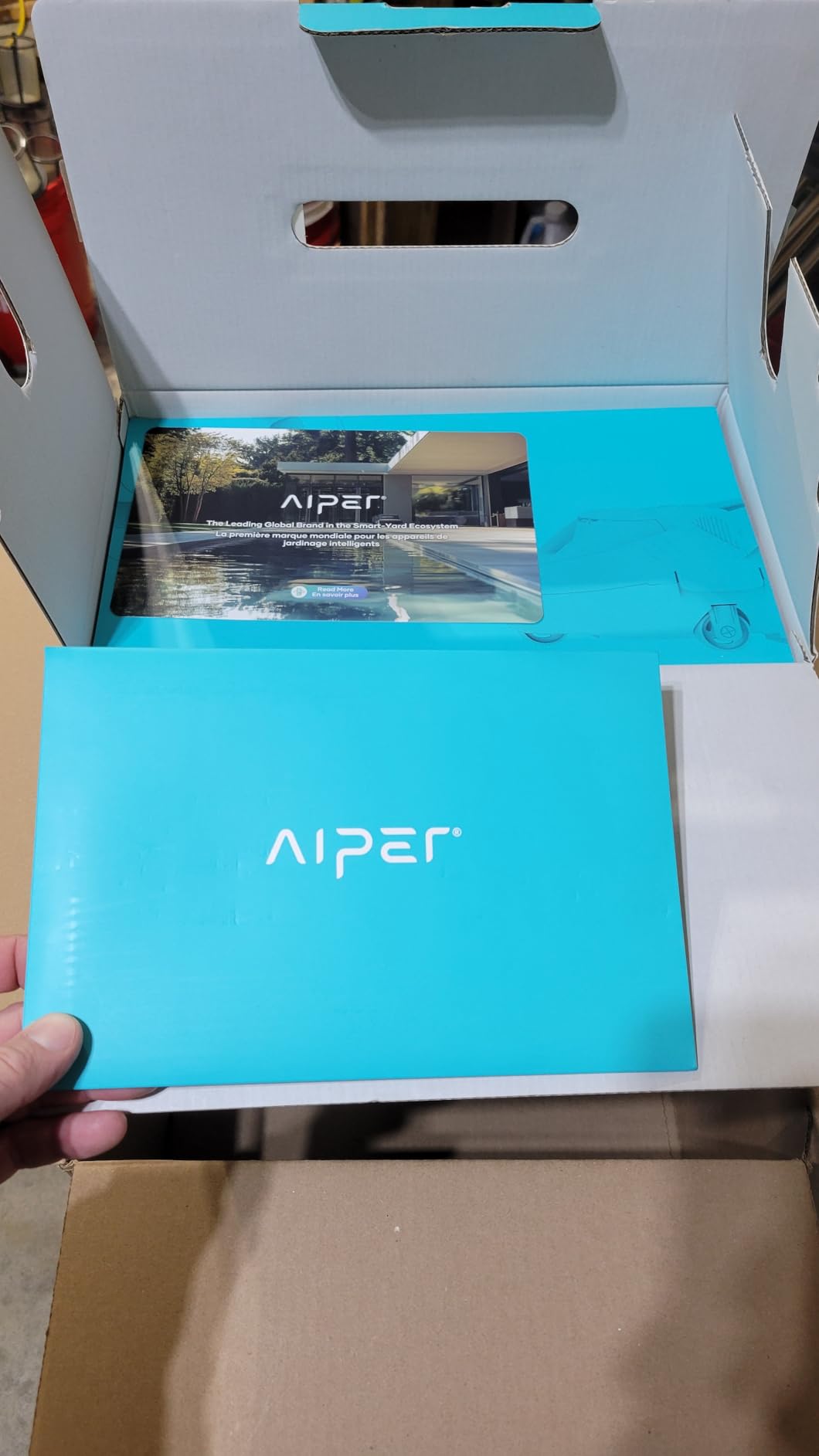
Look closely at customer photos of the lid. Owners report the plastic locking tabs snapping off, and a broken latch can render the unit unusable because the housing will not close over the filter. If that happens out of warranty, the machine is scrap, so confirm the latch design with the seller before you order.
Watch the filter in a sand-heavy pool. The 1320GPH figure handles everyday debris, but fine sediment and heavier sand load the screen quickly and can push particles back out. Expect to empty and re-drop it more than once in a single session after a windy week, which is normal at this tier but changes how you plan a cleaning afternoon.
Who should skip the AIPER Seagull SE
Skip it if you have an inground pool with a deep end. A floor-only unit with no wall climbing will leave the waterline and walls untouched every run, and that is where algae establishes first. The floor will look clean, which is exactly the trap that sends people back to the store.
Skip it if you want one machine to last a decade. The one-year warranty is the thinnest here, and battery pack degradation plus a fragile latch give you two likely failure points. Buyers planning to keep a robot for five seasons or more should weight warranty length far more heavily than the dispenser feature.
5. Aiper Scuba SE Cordless Pool Robot – Simplest First Robot for a Small Flat Pool
2026 Aiper Scuba SE Cordless Pool Vacuum Robot for Above Ground Pool
1820GPH suction
90 min runtime
Two cleaning modes
Self-parking with audio alert
Pros
- Compact design that cleans pools up to 860 sq ft with about 90 minutes of runtime
- Dual cleaning modes toggled with a short button press
- Automatic self-parking at the pool edge when the battery runs low
- with audio alerts
- Cordless tangle-free one-click operation that is easy to store and carry
- Works on above-ground and flat-floored inground pools
Cons
- No wall or waterline scrubbing and floor-only cleaning on flat pools
- Random navigation with no pool mapping
- Suction is limited on heavy debris and large leaves
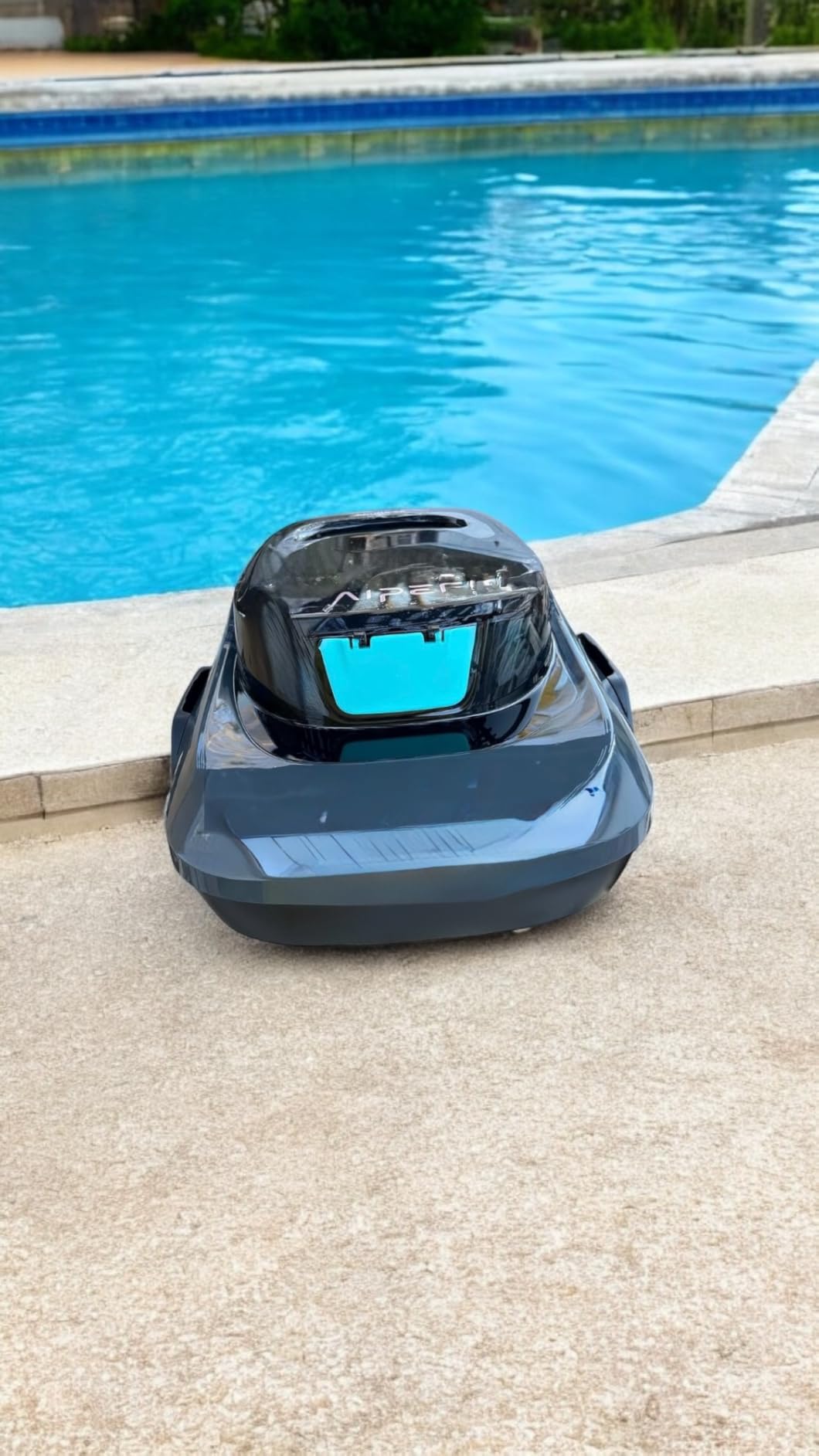
The Scuba SE is the robot we would hand someone who has never owned one. It does exactly one thing, does it predictably, and it has almost nothing to go wrong. There is a single button, a short press toggles between two cleaning modes, and the machine runs about 90 minutes on a pool up to 860 square feet.
Its 1820GPH suction is the second-highest figure among the flat-floor units here, which is why it handles more than the entry-level tier usually manages. Buyers like the small footprint and the simple one-button operation, and the 69 percent five-star share reflects that. It also works on flat-floored inground pools, not just above-ground frames.
Self-parking at the pool edge when the battery runs low is the feature that separates it from cheaper random-navigation units, and the audio alert means you know it finished even if you are not standing at the pool. The cordless one-click operation has no cord to tangle, which removes the single most common complaint about budget pool robots.
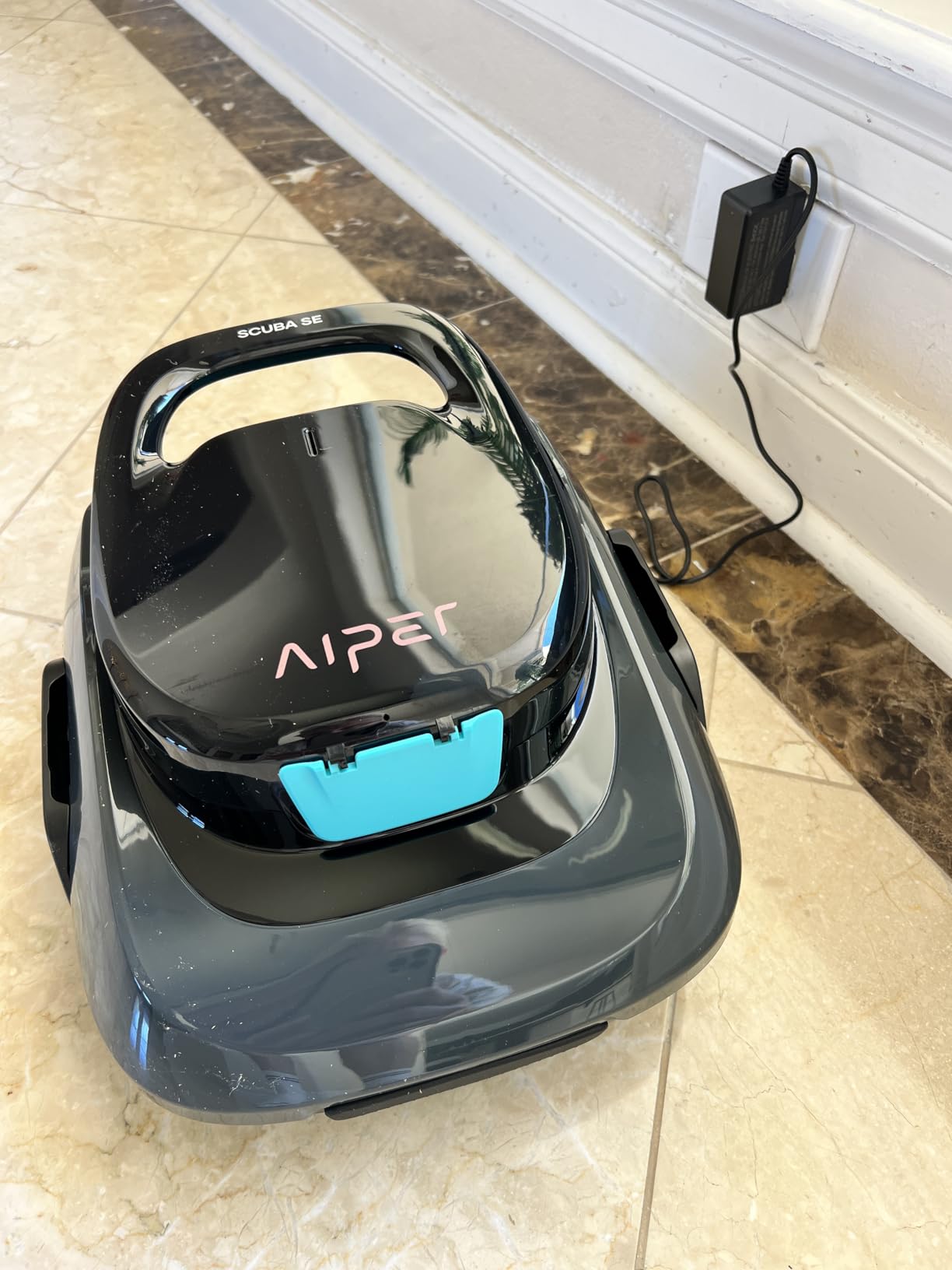
The power pack is a 34 watt-hour lithium-ion battery weighing 190 grams, and the body measures 13.7 by 13.2 by 6.8 inches. Warranty cover is one year, offered in dark gray and cyan or ivory and cyan. That is the lightest battery spec in the set, and it is consistent with the short runtime.
There is no wall or waterline scrubbing, so this is floor-only on flat pools, and navigation is random with no pool mapping. Reviewers confirm that limitation and add that suction is limited on heavy debris and large leaves. If your pool turns into a leaf trap in autumn, this is the wrong tool.
Check the pool size ceiling before you buy
Check the pool size against the 860 square foot figure. That number is comfortable for an 8 by 20 above-ground pool and a stretch for a 12 by 24. Oversize the pool and the robot will still clean it, but the 90 minute cycle will not finish a full pass, and you will find sediment in the far corner every time.
Check where the robot will sit between runs. Self-parking puts it at the pool edge, which means you still need to fish it out of shallow water with a handle and a net. That is a two-minute job on a deck pool and an awkward one from a pool with a deep end directly below the ledge.
Who should skip the Aiper Scuba SE
Skip it if you have a large above-ground pool, anything past roughly 24 feet. The coverage figure and the 90 minute runtime are the two hard limits, and both get hit at the same time. The WYBOT A1 covers 1100 square feet in 130 minutes and handles the same floor-only job with more headroom.
Skip it if leaves are your main problem. Random navigation plus limited suction on heavy debris means a leaf-heavy autumn defeats it, and you will end up vacuuming by hand anyway. Pool owners with trees over the water should filter for a larger basket and stronger suction rather than a lightweight unit.
6. BRINBO S2 Cordless Pool Robot – Cheapest Way to Automate a Flat Pool
S2 Pool Vacuum Robot for Above Ground Pools, 90-Min Runtime, 861 Sq.Ft Coverage, Cordless Operation, Efficient Cleaning Performance, Dual-Layer Filtration, Panda Black
90 min runtime
861 sq ft coverage
Dual-layer filtration
Self-parking
Pros
- Strong value with users reporting it matches more expensive cleaners for routine floor maintenance
- Dual-layer filtration with a 180 micron screen plus foam sponge captures leaves
- insects
- sand and fine sediment
- Cordless drop-in operation with self-parking near the pool edge
- Battery holds up well after 90 or more days of daily use
- Filter and basket are quick to rinse and reassemble
Cons
- Floor-only cleaning and does not climb walls or scrub the waterline
- Real-world runtime is often shorter than the advertised maximum
- Sand clogs the filter quickly and requires repeated emptying in one session
The S2 is the least expensive way to stop hand-vacuuming a flat pool every week, and the rating backs it up at 4.4 stars with only 1 percent one-star reviews, the cleanest star breakdown in this group. Reviewers consistently call it a strong budget maintenance robot for flat above-ground pools.
The filtration is the part that surprised us. Dual-layer construction pairs a 180 micron screen with a foam sponge, and that combination captures leaves, insects, sand and fine sediment rather than passing the small stuff through. The filter and basket rinse and reassemble quickly, which is what determines whether you actually maintain it.
Battery longevity came up more than once in owner feedback, with people reporting the pack still holding up after 90 or more days of daily use. Cordless drop-in operation plus self-parking near the pool edge makes it easy to store and retrieve, and users report it matches more expensive cleaners for routine floor maintenance.
Coverage is 861 square feet with up to 90 minutes of runtime, and the battery pack is a 90 watt-hour lithium-ion unit across three cells. Dimensions are 14.6 by 11.8 by 7.1 inches, and owners report a body weight of about 6.6 pounds, which makes it one of the easiest to lift out of the pool.
It is explicitly not intended for inground pools with a bottom main drain, and that is a limitation to take seriously rather than a technicality. Runtime in real conditions is often shorter than the advertised maximum, and sand clogs the filter fast enough that you will empty and re-drop it several times in one session. Self-parking is also inconsistent and it sometimes stops mid-pool.
Check the pool type restriction and the charge port
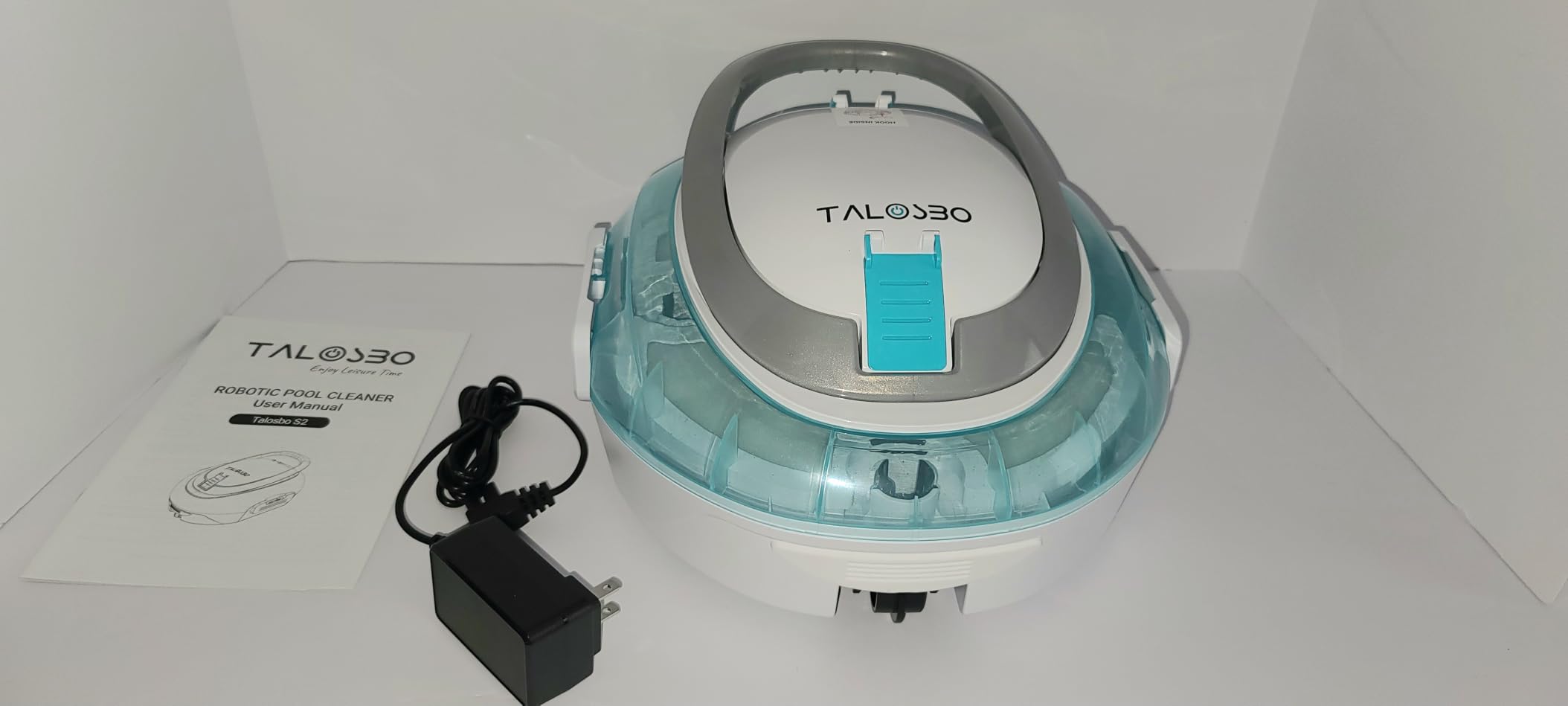
Check whether your pool has a bottom main drain before you buy. The manufacturer states the S2 is not intended for inground pools with one, and forcing it into a drained-inground situation risks the unit settling onto the drain and not recovering. If you have no main drain and a flat floor, this is a strong match.
Check the charge port type. It uses a proprietary connector rather than USB-C, so a lost cable means a replacement from the manufacturer. Budget robots fail more often from a missing cable than from any other cause, and the replacements are rarely in local stock.
Who should skip the BRINBO S2
Skip it if you need wall or waterline cleaning. It is floor-only and will not climb, so on any pool with a deep end the walls and waterline stay untouched. That is the single most common return reason in this category and it applies here.
Skip it if you have a sand-heavy pool bottom. Reviewers specifically call out the filter clogging on sand and the repeated emptying it forces within a single session, which turns a set-and-forget machine back into a supervised chore. Pick a larger basket with a mesh you can hose clean instead.
7. WYBOT A1 Cordless Pool Robot – Best Mid-Size Above-Ground Coverage
WYBOT A1 Cordless Pool Vacuum Robot for Above Ground Pool, Greyblue
2280GPH suction
130 min runtime
180 micron plus foam filter
Self-parking and edge boost
Pros
- 2280GPH suction removes leaves
- sand and dirt from the pool floor
- 180 micron precision filter plus a textured foam layer improves filtration efficiency by up to 50 percent
- Up to 130 minutes of runtime cleaning pools up to 1100 sq ft
- Self-parking at the pool wall plus an edge cleaning boost on pool edges
- Recharges fully in about 2 to 3 hours for quick turnaround
Cons
- Floor-focused cleaning with limited wall and waterline coverage
- Not suited to pools with slopes over 15 degrees or significant bottom wrinkles
- Not intended for water depths beyond 2.5 meters
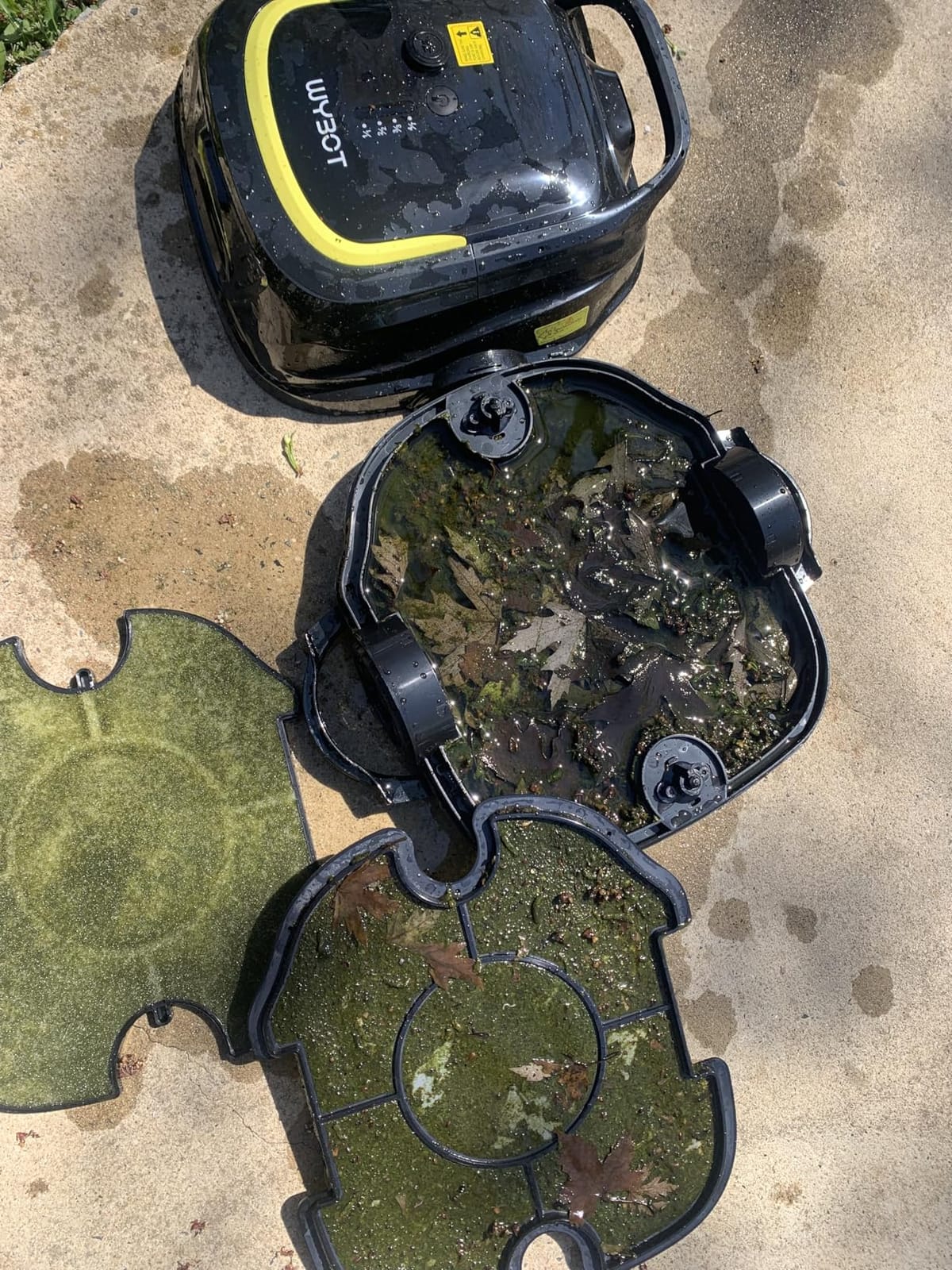
The A1 is the middle ground for above-ground owners who have outgrown an 8 by 20 frame. It cleans up to 1100 square feet with up to 130 minutes of runtime and 2280GPH suction, which is the highest suction figure among the floor-only units in this list. That headroom is what lets it handle a 12 by 24 or a 16 by 24 above-ground pool in a single pass.
Filtration uses a 180 micron precision filter paired with a textured foam layer, and the manufacturer states the foam improves filtration efficiency by up to 50 percent over the screen alone. Owners cite strong suction, an effective two-stage filter and quick recharge as the highlights, and the 2 to 3 hour recharge is the fastest turnaround in this group.
Self-parking at the pool wall plus an edge cleaning boost is a nice combination, because the edge boost targets exactly where sand and debris settle on a flat floor. Owners report the boost and the parking as the features that reduced their manual touch-up time the most on a flat pool.
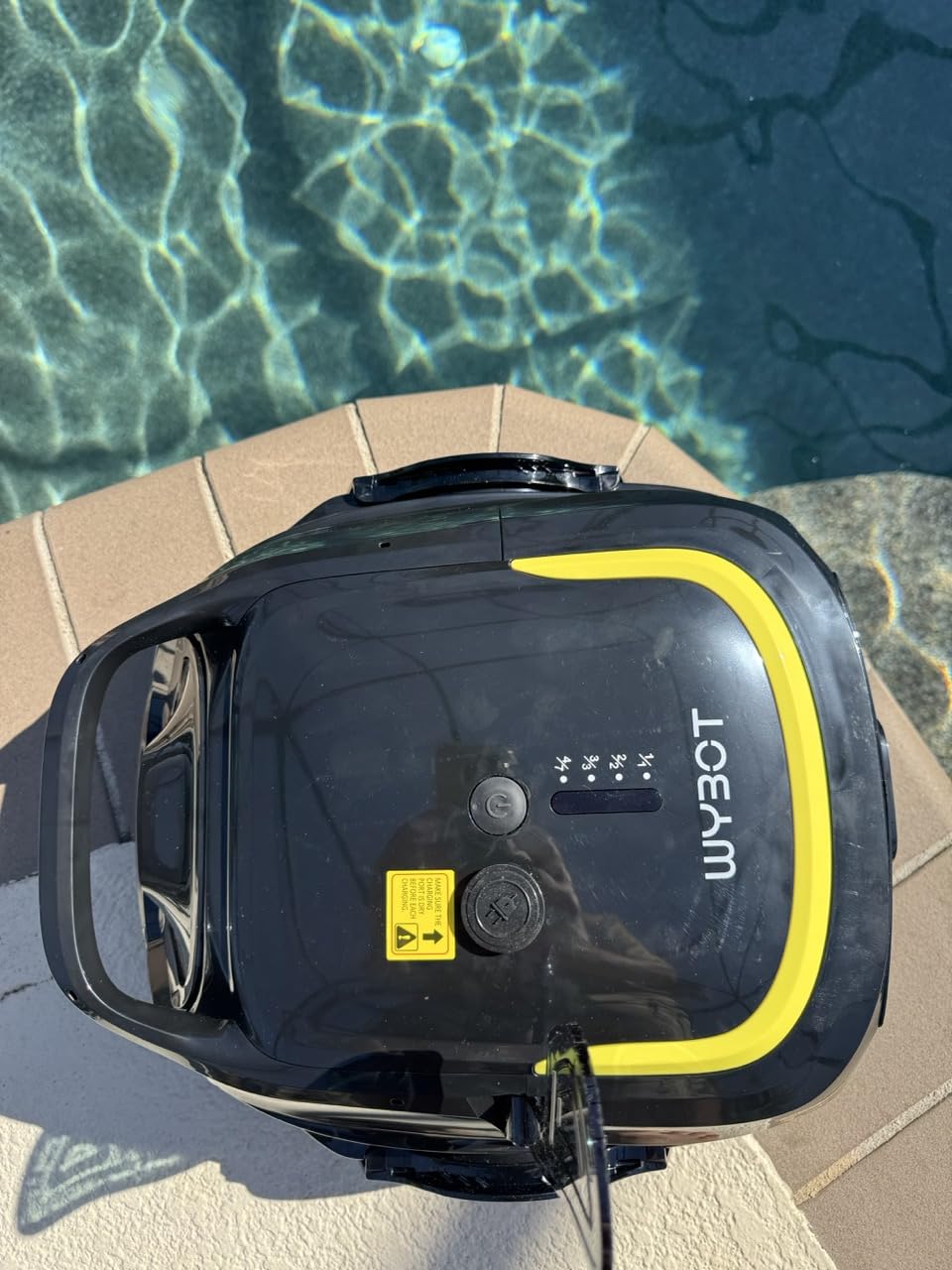
The battery is a 63 watt-hour lithium-ion pack across two cells, and the body measures 15 by 11 by 6.5 inches in gray or white. That is a light, portable unit that one person can carry easily, and it suits above-ground pools plus inground pools with water depth under 2.5 meters.
The constraints are specific and worth reading twice. Coverage is floor-focused, so wall and waterline cleaning is limited, and the unit is not suited to slopes over 15 degrees or significant bottom wrinkles. It is also not intended for water depths beyond 2.5 meters, which rules out many inground pools with a deep end.
Check the slope and depth limits first
Check your pool floor slope before you order. The 15 degree limit is roughly a gentle transition, not a deep end wall. Above-ground frames on a slope, and inground pools that transition from shallow to deep, are both outside the range where this unit performs, and the reviews reflect that it struggles on those shapes.
Check the recharge time against your cleaning schedule. Two to three hours is the shortest turnaround in this list, and with 130 minutes of runtime that gives you close to two full cycles in a working day once the battery is conditioned. It is the most practical daily-use option here for a flat pool.
Who should skip the WYBOT A1
Skip it if you have a real deep end. The 2.5 meter depth limit and the 15 degree slope ceiling together exclude most inground pools with a transition, and the floor-focused coverage means the walls stay dirty regardless. If you have an inground pool, look at the wall-climbing units instead.
Skip it if you have heavy leaf cover. A 2280GPH suction handles a lot, but the foam layer clogs in leaf season and the 1100 square foot ceiling means a long pool with trees over it never finishes a full coverage pattern in one cycle.
8. PoolMr Cordless Pool Robot – Best for Leaves, Sand and Wrinkled Liners
PoolMr Cordless Robot Pool Vacuum for Above Ground Pool,Grayish White
40W motor with 30 GPM flow
Dual 180 micron and sponge filter
120 min runtime
Handles 15 degree slopes
Pros
- 40W motor with a 1-inch wide suction inlet and 30 GPM purification system for strong pickup of leaves and sand
- Dual-layer 180 micron mesh plus cotton sponge filter with anti-return technology that keeps debris locked in
- Up to 120 minutes of runtime covering up to 1614 sq ft
- Climbs over 0.2-inch wrinkles and drains and climbs slopes up to 15 degrees
- Boosted suction edge mode cleans corners and walls
- plus auto-park and quick-drain
Cons
- Does not climb pool walls or clean shelves and deep ends
- Fine foam sponge can deteriorate and shed pieces after about 10 uses
- Small wheels can get stuck on uneven or mole-damaged pool bottoms
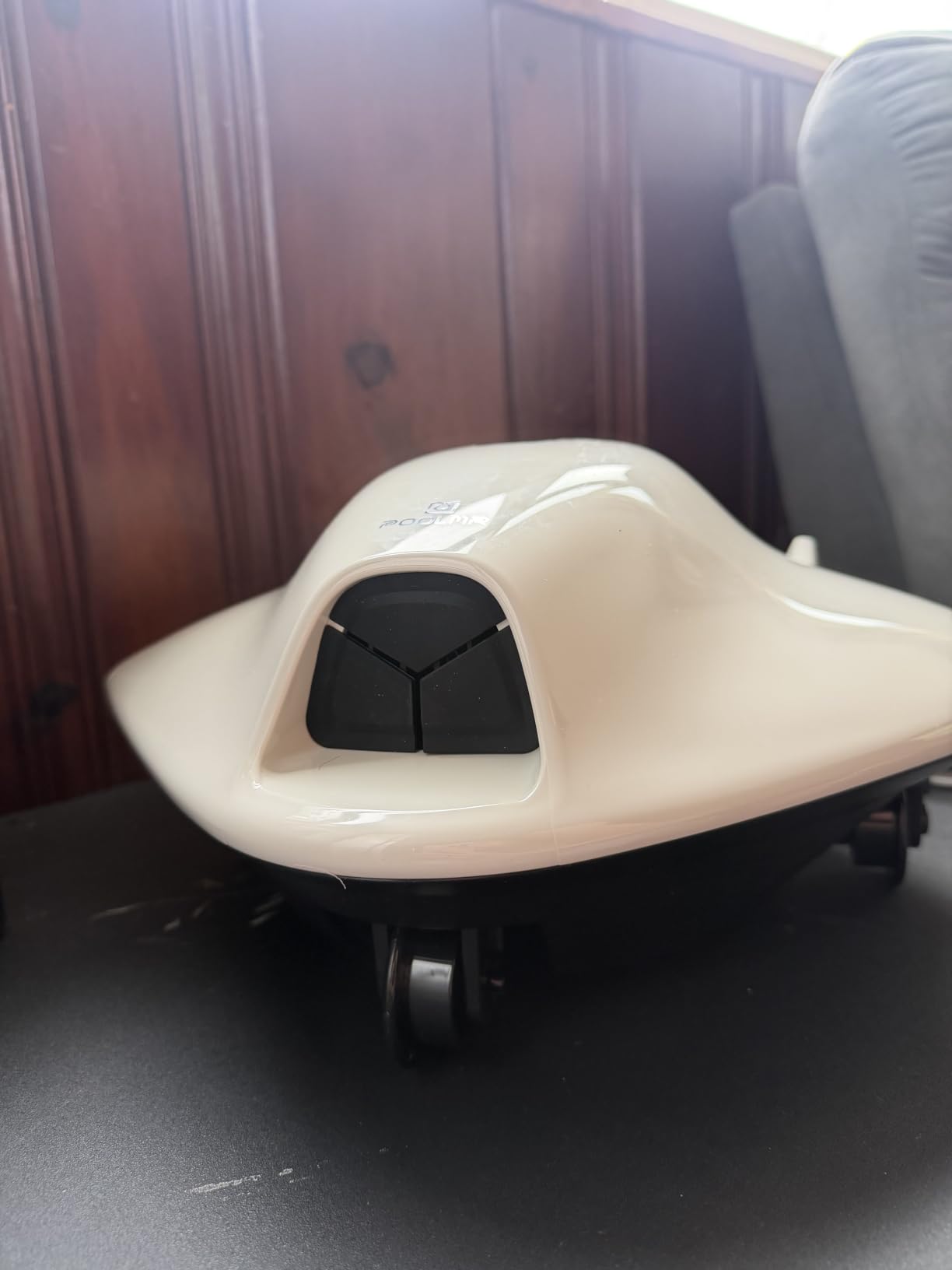
Debris handling is what this unit is built around. A 40W motor drives a one-inch wide suction inlet and a 30 GPM purification system, and reviewers praise the suction power, debris retention and long runtime for the money, describing it as one of the strongest economy robots. The anti-return filter design is the detail that matters most: debris stays locked in when you lift the unit out.
It also handles the pool surfaces most robots trip on. It climbs over 0.2 inch wrinkles and drains, and it manages slopes up to 15 degrees, which matters on above-ground liners with seams and on inground pools with gentle transitions. That is a real advantage over units that stall the first time they meet a wrinkle.
Runtime is 120 minutes covering up to 1614 square feet, which is the second-largest coverage figure among the floor-only machines here. A boosted suction edge mode handles corners and walls at the bottom, and auto-park plus a quick-drain design make retrieval and storage straightforward.
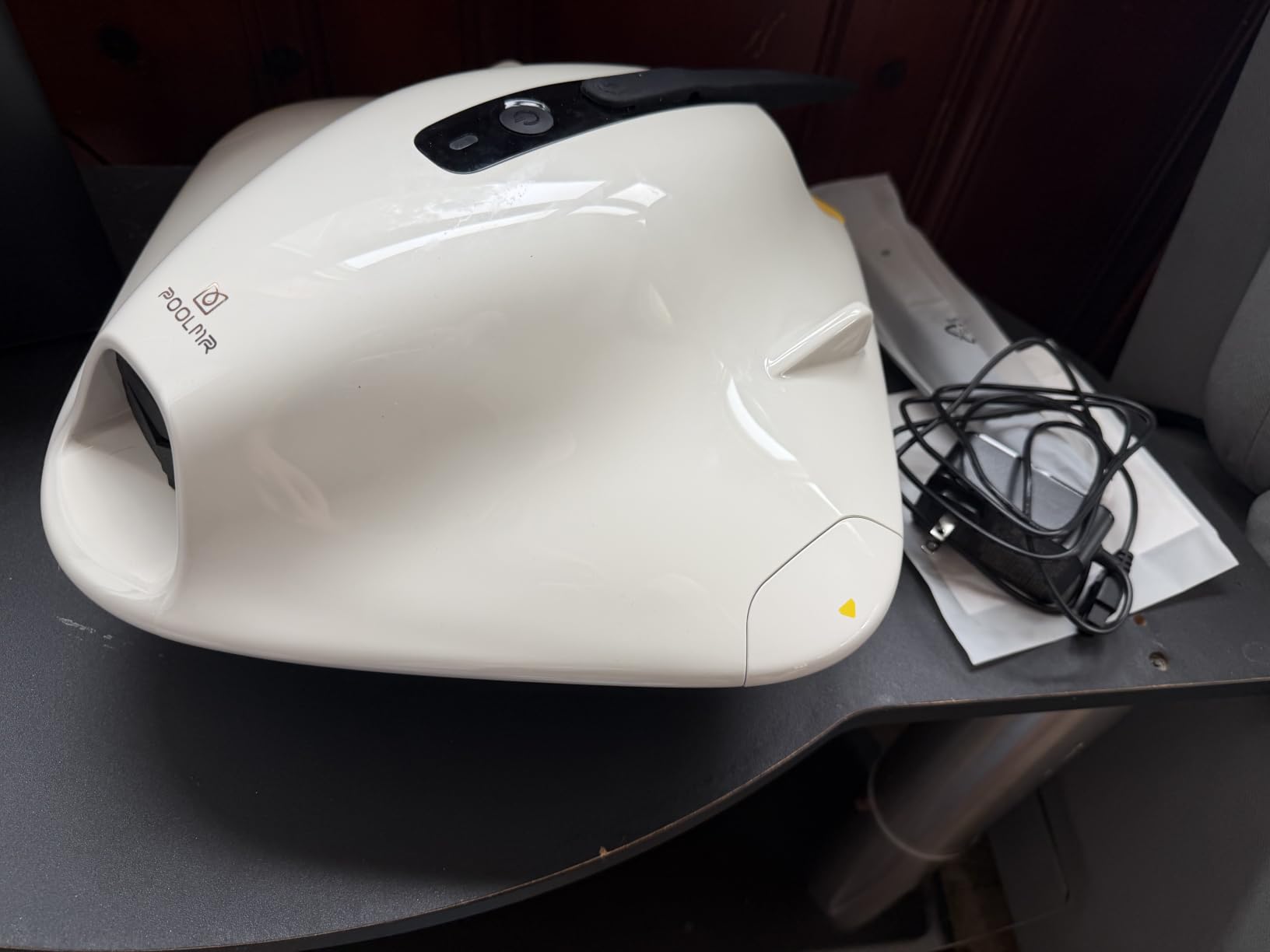
The battery is a 55.5 watt-hour lithium-ion pack across three cells, and owners report a body weight of roughly 3 kg. Dimensions are 14.96 by 7.08 by 14.96 inches in grayish white with a hard plastic shell. The 71 percent five-star share suggests the suction figure is delivering what buyers expected.
It does not climb pool walls, so shelves and deep ends are never cleaned, which is the standing limitation. Reviewers also note the fine foam sponge can deteriorate and shed pieces after about 10 uses, small wheels can get stuck on uneven or mole-damaged pool bottoms, and it moves quickly enough to be hard to use in a small enclosed area such as a hot tub well.
Check the suction inlet and the pool bottom condition
Check the width of the suction inlet against your debris. A one-inch inlet is unusually wide for this tier and it is the reason this machine handles sand and leaves well, so it is the right choice if your pool collects heavy debris. If your problem is only fine dust settling, a finer filter model will serve you better.
Check the condition of your pool bottom. Small wheels can get stuck on uneven surfaces or mole damage, and the wrinkle-climbing rating applies to standard liner wrinkles rather than structural damage. If your vinyl is old and lumpy, expect to fish the robot out more often than the wrinkle rating suggests.
Who should skip the PoolMr
Skip it if you have walls that need scrubbing. No wall climbing means no waterline cleaning, and on a deep-end pool the shallow-end wall is where debris and algae collect. This is a floor machine that happens to be very good at the floor.
Skip it if you run a small enclosed pool or a hot tub. Owners report it moves quickly, which makes it hard to keep in a confined area and hard to control in a narrow hot tub well. A slower, more deliberate unit is a better match for those shapes.
9. BRINBO C1 Cordless Pool Robot – Best Reusable Filter and Best App Automation
(2026 Upgrade)BRINBO C1 Robot Pool Cleaner with 180 Mins, Frosted Gray Blue
180 min Eco runtime
Floor wall and waterline
Seven modes and seven paths
2 year warranty
Pros
- Strong triple-motor suction with dual filtration that captures large debris and micro dust
- Scrubs floors
- walls and waterlines with AI navigation planning optimal routes
- Up to 180 minutes of runtime in Eco mode for full cleaning cycles
- App control with seven cleaning paths
- seven modes
- four timer settings and OTA updates
- Washable
- reusable filters and a two-year warranty
Cons
- Advertised 180 minute runtime applies to Eco floor mode and full pool mode runs closer to 90 minutes
- App only connects while the robot is out of the water and is not especially intuitive
- Navigation can repeat areas while missing corners
- steps and slopes
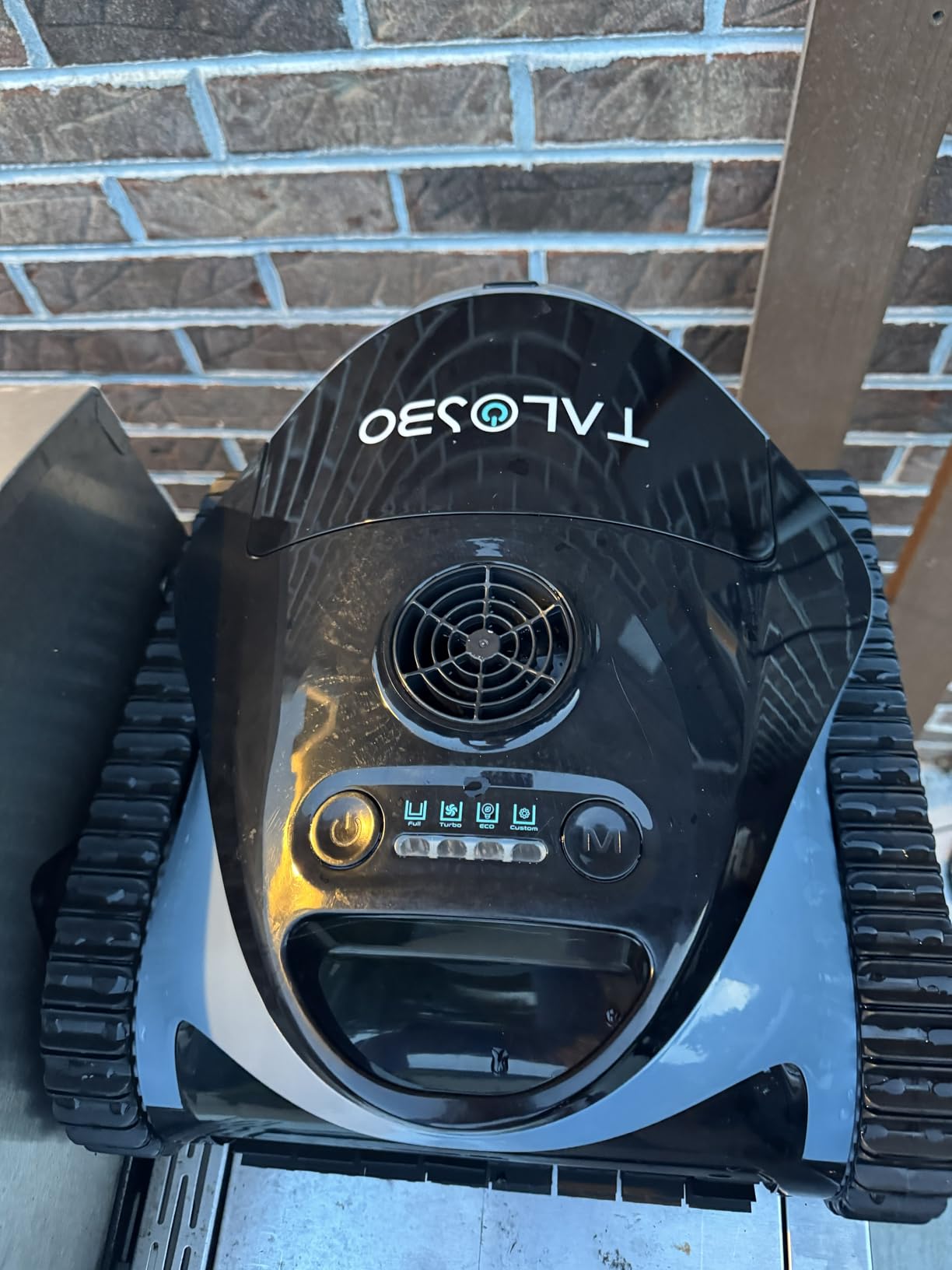
The C1 is the one to consider if you hate buying filters. The filtration is washable and reusable, so instead of a consumable cartridge you rinse and reuse the same media. Over three seasons that is the single biggest cost difference in this list, and it is worth doing the arithmetic on before you dismiss the feature.
On cleaning, it is a full-coverage machine. Triple-motor suction with dual filtration captures both large debris and micro dust, and it scrubs floors, walls and waterlines using AI navigation that plans its route. Owners like the cleaning power and wall climbing, and describe it as a strong cordless option for ongoing maintenance rather than a one-off deep clean.
App control is the most ambitious here, with seven cleaning paths, seven modes, four timer settings and over-the-air updates. Four timer settings is more scheduling granularity than any other unit at this ceiling, and it is the closest thing to real automation available in the sub-500 tier. Warranty cover runs two years.
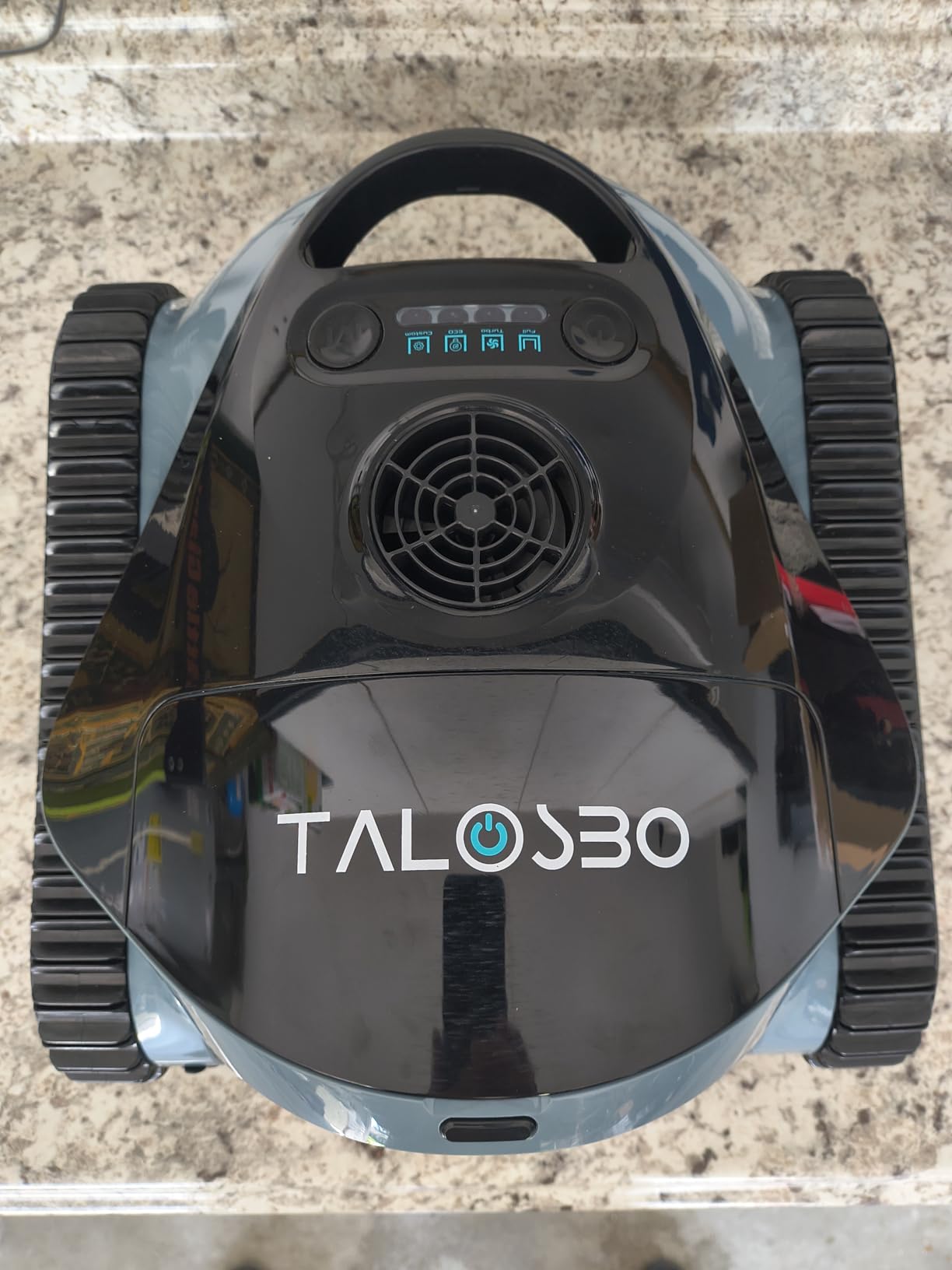
The battery is a 96 watt-hour lithium-ion pack, and the body is ABS plastic measuring 16.8 by 14.8 by 10.6 inches in frosted gray blue. The 71 percent five-star share is strong, and the 95-review count is the smallest in this group, so treat the rating as promising but less proven than the units with four-figure review counts.
Runtime needs careful reading. The advertised 180 minutes applies to Eco floor mode, while full pool mode runs closer to 90 minutes, so a realistic wall-and-waterline cycle is about half the headline figure. The app only connects while the robot is out of the water and reviewers find it not especially intuitive to set up.
Check the mode-dependent runtime before you buy
Check what runtime you actually get in the mode you plan to use. This is the most quoted and most misleading number in the category. A 180 minute figure that drops to roughly 90 minutes in full pool mode means your real cycle is about half the headline, and on a larger pool that may not be enough for a complete pass.
Check that you are comfortable with a smaller support history. With 95 reviews this is the least proven unit in the set, and the app is described as not especially intuitive. If you want a robot you set up once and forget, the higher-review-count units are the safer bet.
Who should skip the BRINBO C1
Skip it if you need predictable wall and waterline coverage on a complex pool. Navigation can repeat areas while missing corners, steps and slopes, which means multiple passes, and reviewers note the waterline is its weakest zone on some pool shapes. On a simple rectangular pool that is a non-issue; on a freeform it is.
Skip it if hard cloudy water is your normal condition. Owners report difficulty locating the robot in cloudy or heavily soiled water, and with app control that only connects above the surface, you may end up hunting for a unit you cannot see.
10. BOTLIFE PC10 Cordless Pool Robot – Highest Suction Figure in the Sub-500 Tier
BOTLIFE PC10 Cordless Robotic Pool Vacuum for Inground & Above Ground Pools
5000GPH suction
4L basket with 150 micron mesh
120 min runtime
Tracks handle 30 degree slopes
Pros
- 5000GPH suction from dual drive motors
- a dedicated pump and two active brushes
- 4L top-load basket with 150 micron mesh keeps dirt contained
- Full Pool
- Floor Only and Wall Only modes scrub floors
- climb walls and clean the waterline
- S-path floor and N-path wall navigation reduces random movement
- High-grip tracks handle transitions and slopes up to 30 degrees
- 120 minutes of cordless runtime for pools up to 1830 sq ft with a 2.5 hour recharge
Cons
- Rugged drive design adds weight compared with lightweight flat-floor models
- 150 micron mesh is coarser than the ultra-fine filters on premium models
The PC10 posts the highest suction figure in this entire list at 5000GPH, and it gets there with a dedicated architecture: dual drive motors, a separate pump and two active brushes. That combination is the design you normally associate with machines well above this price ceiling, and it is why this unit can handle heavy debris rather than just fine sediment.
Coverage is genuine full-pool work. Full Pool, Floor Only and Wall Only modes let you scrub floors, climb walls and clean the waterline, and S-path floor and N-path wall navigation reduce the random movement and repeated passes that make cheap robots inefficient. Reviewers highlight suction power, wall and waterline coverage and dependable self-parking, positioning the PC10 as a strong all-round cordless option for inground pools.
Mobility is the other differentiator. High-grip tracks handle transitions and slopes up to 30 degrees, which is well beyond the 15 degree ceiling of the floor-only units. The 4 liter top-load basket with 150 micron mesh keeps dirt contained and rinses clean with a hose, and self-parking at the pool edge comes with a retrieval hook.
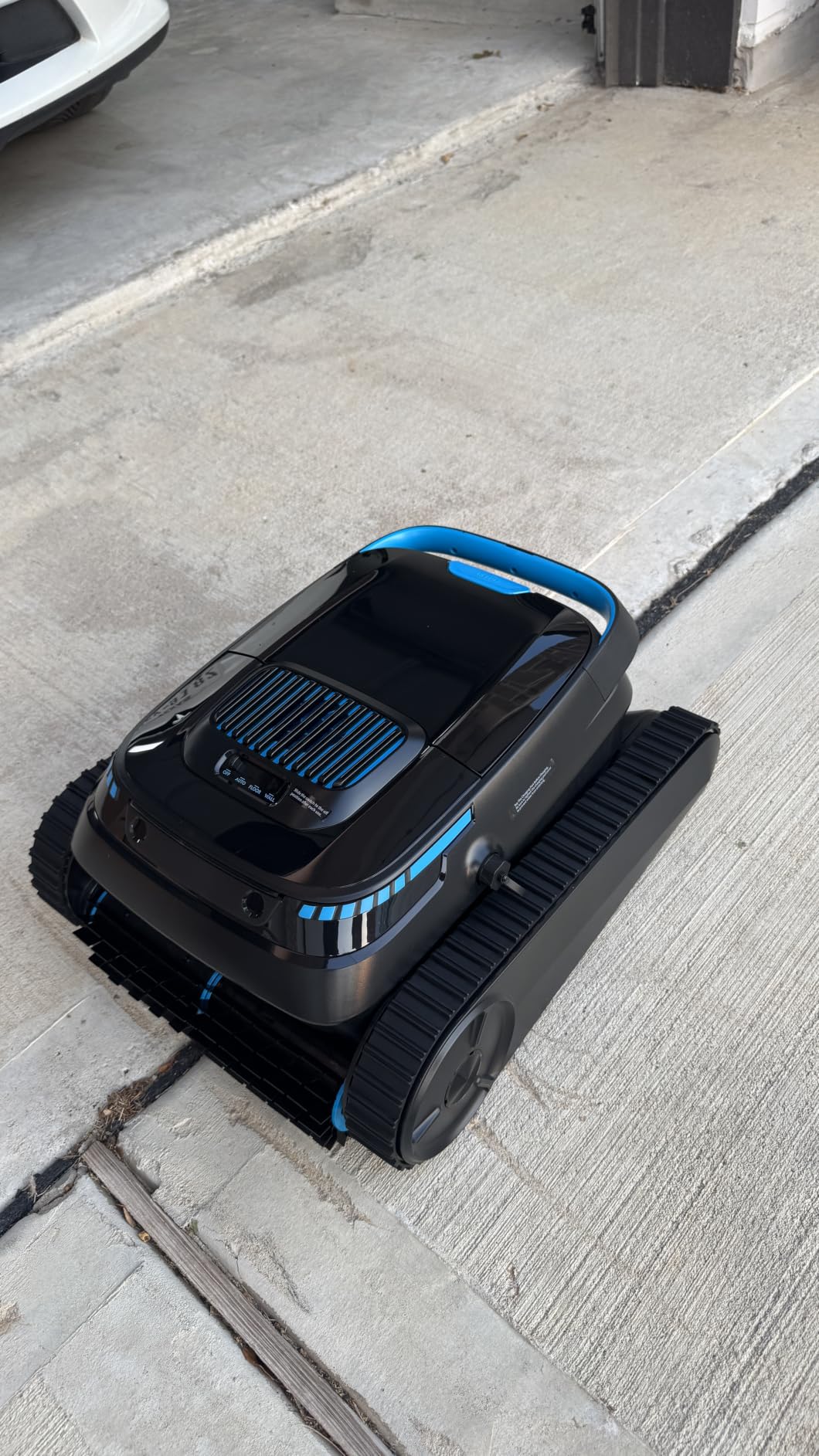
Runtime is 120 minutes for pools up to 1830 square feet, with a 2.5 hour recharge, and the body is deep black ABS at 10 by 15 by 9 inches. The star breakdown is 73 percent five-star with only 4 percent one-star, and the 125-review count sits in the middle of this group rather than at either extreme.
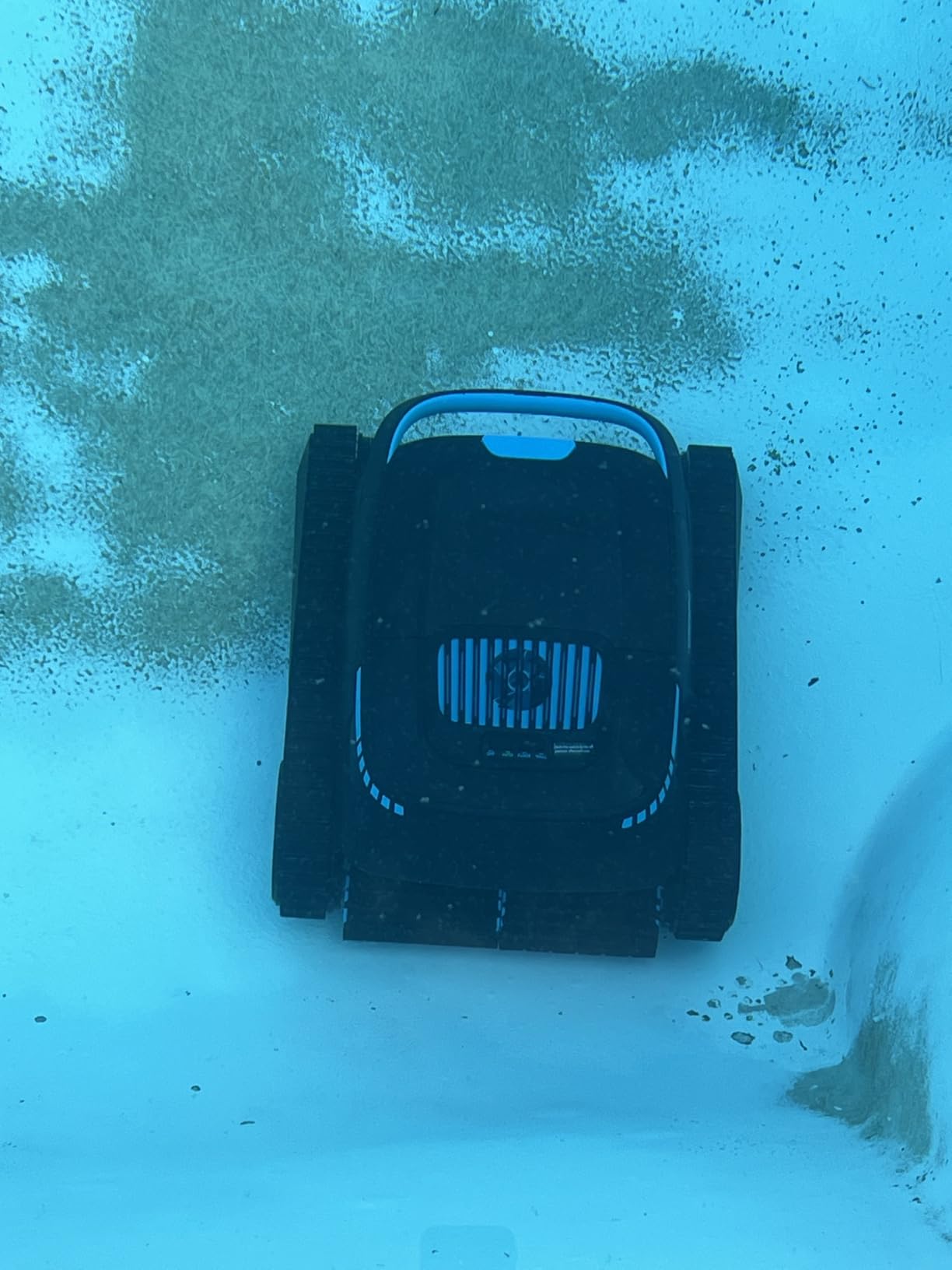
Two drawbacks are consistent. The rugged drive design adds weight compared with lightweight flat-floor models, so it is a heavier lift out of an inground pool, and the 150 micron mesh is coarser than the ultra-fine filters on premium units, which means very fine dust passes through where the 10 micron filter on the WYBOT C2 would hold it.
Check the filter mesh if fine dust is your problem
Check what debris you actually have. The 150 micron mesh is good for leaves, sand and grit, but if your complaint is fine dust settling back onto the floor, a coarser mesh will let it through. In that case the dual 10 micron and 180 micron filtration on the WYBOT C2 is the better engineering choice despite the lower suction figure.
Check the slope and transition capability against your pool. Thirty degree track handling covers most deep-end transitions, which is a genuine advantage over the wheel-driven floor units here. Confirm the retrieval hook is included, because pulling a tracked unit out of a deep end by the cord is how cords get damaged.
Who should skip the BOTLIFE PC10
Skip it if fine particle filtration is the priority. The 150 micron mesh is the second-coarsest filter in this group, and buyers chasing crystal-clear water on a pool that collects dust should weight micron rating above GPH. High suction without a fine filter just pulls the dust into the water column again.
Skip it if lifting matters. The tracked drive adds weight over the flat-floor units, and in a deep inground pool a heavier robot on a wall is harder to recover. If your pool is shallow or above-ground and drains fast, the weight is a non-issue, so this is really an inground-versus-above-ground call.
How to Choose a Budget Robotic Pool Cleaner
Ten picks tell you what each machine does. This section tells you how to pick one. The six features below are the only ones that materially change results at this budget, and the order you evaluate them in matters more than most shoppers expect.
GPH explained: what the number actually means for your pool
GPH stands for gallons per hour, and it measures how much water the vacuum motor moves. That number is the closest thing this category has to a performance figure, because a robot that moves more water picks up more debris per pass. The practical thresholds at this price tier are clear: below 1500 GPH struggles with anything heavier than light sand, 2000 to 2500 GPH handles everyday leaves and dirt, and 4000 GPH or above moves real volume.
The unit in first place on this list runs 1320 GPH and is built for a flat 8 by 20 above-ground pool, while the strongest suction figure here is 5000 GPH on a machine designed for inground pools with heavy debris. Same budget, same category, four times the flow. That gap is the single biggest quality difference you can buy at this price.
A warning about GPH: it is a manufacturer figure, usually measured on a clean bench or in ideal water, and it drops the moment the filter loads with debris. Treat it as a ceiling on capability rather than a promise of performance. Two robots with the same GPH will behave very differently depending on filter capacity, because a robot that clogs halfway through a cycle stops moving water regardless of its rating.
Filtration microns: why a 180 micron screen beats a bare mesh
Micron rating describes the size of the particles a filter can trap. One micron is one thousandth of a millimeter. Standard pool cartridge filters typically sit in the 10 to 20 micron range, coarse screens sit around 180 microns, and diatomaceous earth filters reach 3 to 5 microns. Finer is better for clarity, coarser holds more volume before it clogs.
That tradeoff is the thing to understand. A 180 micron screen with a foam layer, as on the WYBOT A1 and the PoolMr, catches leaves, insects, sand and grit and keeps moving water. A 10 micron layer, as on the WYBOT C2, catches fine dust but needs cleaning more often. For a pool that collects fine sediment, the finer filter wins; for a pool with leaves, the coarser one with more capacity wins.
Also check whether the filter is washable and reusable, which is the case for the BRINBO C1. Disposable cartridges are a hidden recurring cost that quietly moves a cheap robot past the price of a mid-range one over three seasons. If you can rinse and reuse the media, your total cost of ownership drops noticeably.
Wall climbing versus waterline scrubbing: the inground dealbreaker
These are two different claims that sellers blur together. Wall climbing means the robot can drive up a vertical surface. Waterline scrubbing means it actively brushes the band of water at the surface, which is where oil, sunscreen and leaves collect. A robot can climb without scrubbing, and many budget units do exactly that.
If you own an above-ground pool with a flat floor, neither capability matters and you can save money by choosing a floor-only unit. If you own an inground pool with a deep end, both matter enormously, and this is the decision that prevents most disappointing purchases. The waterline is where debris collects and where algae establishes first, and a floor-only robot will never touch it.
For reference: the WYBOT C1, WYBOT C2, Seauto SAT25, BRINBO C1 and BOTLIFE PC10 all climb. The remaining five units in this list do not, and each of those five is a strong machine for a flat pool. Match the capability to the pool, not to the price.
Corded versus cordless at this price
At this budget, the choice is made for you. Every unit in this list is cordless, and no corded robotic pool cleaner remains competitive below 500 dollars. That is a genuine change from the last five years, and it means the recharging question applies to everything you are considering.
The honest case against cordless is specific. A charge cycle longer than a runtime means you cannot run two cycles in a working day easily, and the app cannot talk to the robot while it is underwater, so a mode change mid-cycle is not possible. Forum discussion in this category is dominated by that recharging friction, and by owners who say the advertised runtime falls short as batteries age.
The case for cordless is also specific, and it is why these machines exist at this price. No cord to tangle on steps, ladders and corners is the single most common complaint about older corded units. You can carry a cordless robot to a pool with no nearby outlet, which matters for above-ground sets and for vacation properties. And a lithium-ion pack with no exposed copper cord removes the failure mode that the safety debate is really about.
On safety, we present the evidence rather than a blanket warning. There has been a reported recall covering roughly 22,000 Aiper Elite Pro units, and lithium-ion battery packs in general warrant the ordinary care you would give any battery: store the unit dry, do not leave it in a freezing pool, and use the supplied charger. That said, brand experience at AIPER is genuinely mixed rather than uniformly bad, and one salt water pool owner reports a good experience with a budget unit from that brand while others are critical. Judge the individual model, not the badge.
Above-ground versus inground: which features you actually need
Above-ground pools with flat vinyl floors are the easiest cleaning job in this category. You need suction, a decent filter and runtime that covers the whole floor. Wall climbing is wasted capability, and mapping is largely wasted too. Choose from the floor-only units and you will spend considerably less for the same result.
Inground pools with a deep end are the hardest. You need wall climbing, waterline scrubbing, and enough runtime to cover the length plus the transition. You also need to think about retrieval, because a heavier robot on a pool wall is a real lifting problem. This is where the 30 degree track handling and the 45 degree climbing figures start to matter.
The most common sizing mistake is buying for square footage alone. An 8 by 20 above-ground frame and a 16 by 32 inground pool can differ by more than three times the surface area, and a robot rated for the smaller pool will run out of runtime halfway across the larger one. Measure the long side, check the depth, and confirm both against the coverage and depth figures before you order.
Pool surface and saltwater compatibility
Most budget robots are surface-agnostic in practice, because a plastic roller and a suction inlet do not care whether the floor is vinyl, gunite, concrete or fiberglass. The Seauto SAT25 is explicitly rated for tiled, concrete, vinyl and fiberglass. Where surfaces do matter is slope and wrinkle, so check the slope rating against your liner rather than the material name.
Saltwater compatibility is murkier at this tier. Marketplace brands often do not state it clearly, and a saltwater system is more corrosive over time to motors, seals and connectors. If your pool is saltwater, prioritize a unit with a stated multi-year warranty, because corrosion failures show up after a couple of seasons rather than immediately.
Warranty length and support matter more than app control
Under this ceiling, warranty lengths range from one year to two years, and that difference is more predictive of whether you will own this robot in year three than any app feature. The WYBOT C1 and BRINBO C1 carry two-year manufacturer warranties, while the Aiper units state one year and the Seauto listing says only limited cover with no duration.
Also check where support is based and whether replacement parts exist. A cord, a charging connector and a filter basket are the three parts most likely to fail, and a proprietary connector with no available replacement ends the machine’s life. Ask the seller for a spare cord price before you buy, and treat a non-answer as a warning.
What we excluded from this list and why
We held the 500 dollar ceiling hard, which meant several well-known robotic pool cleaners stayed off this list. The Dolphin Escape, Cayman and Blue Helix One all sit above the ceiling at typical street pricing, and the Dolphin Premier, Sigma and Quantum price out at several times the budget. If your pool genuinely needs wall climbing plus full-pool mapping plus a caddy and a long warranty, the money is not in this tier.
We also excluded marketplace listings with no stated warranty, no US-based support and no verifiable review history, along with units whose published runtime and coverage figures contradicted each other. Finally, we left out any product where we could not confirm a complete feature set, because an incomplete spec sheet on a budget robot usually means an incomplete machine.
One clarification worth making, because it confuses almost every shopper in this category: street pricing and sale pricing are different things. Popular models routinely sit above the ceiling at list and drop below it during deep promotions, so a robot you excluded may be available at a good moment. Verify the current figure on the listing rather than trusting a roundup written months ago.
How to spot manipulated reviews before you buy
Distrust of ratings in this category is widespread among pool owners, and the concern is legitimate. Look for review patterns rather than individual reviews. Uniformly long reviews posted in a short window, a spike of five-star ratings with almost no three-star feedback, and reviews that describe features the listing does not mention are all signs worth pausing on.
Amazon Vine reviews are not fake, but they are incentivized, and Vine reviews often read like spec sheets. A listing where a large share of reviews are Vine-voice entries gives you marketing copy rather than owner experience. Genuine long-term owner reviews tend to be shorter, mention a specific problem, and arrive months after the product launched.
The most useful signal is the one-star share in the star distribution, which the listings do publish. A product with 1 percent one-star ratings has unusually few dissatisfied customers, and a product with 12 to 13 percent one-star ratings has a real service problem that the average hides. Compare that percentage across the list before you decide, not just the headline star figure.
Total cost of ownership over three seasons
The purchase figure is only the first input. Over three seasons, the running costs are replacement filter media, a caddy or retrieval hook, and a spare cord or charging connector. A robot with a disposable cartridge adds a recurring consumable every few months, while a robot with washable reusable filters adds almost nothing beyond hose water.
Budget for one unplanned failure in the first two years as well. A corded robot can die from a damaged power supply, and a cordless one from a degraded battery pack. Brands that sell replacement parts directly cost far less to keep running than brands where a dead unit means a new unit, and that is where the two-year warranty pays for itself.
That is also the practical case for the upgrade path. When a robot with wall climbing, mapping and a three-year warranty becomes worth stepping up to, the signal is simple: you are still doing manual waterline cleaning, or you are buying a replacement within three seasons. Until one of those is true, the sub-500 tier is the right place to be.
If you want a second opinion on the format itself, our main robot pool cleaner guide breaks down how wall climbers and flat-floor cleaners differ mechanically, which helps when you are weighing a step up later.
Frequently Asked Questions
Which pool robot should I buy under 500 dollars?
Match the robot to your pool before the brand. Above-ground pools with flat floors need suction and a good filter, and any of the floor-only units in this list will do. Inground pools with a deep end need wall climbing and waterline scrubbing, which narrows the field to five machines here. Measure your pool length and depth and confirm both against the published coverage and depth figures.
Are cordless robotic pool cleaners safe to use?
They require the ordinary care you would give any lithium-ion battery: store the unit dry, do not leave it in a frozen pool, and use only the supplied charger. There has been a reported recall covering roughly 22,000 Aiper Elite Pro units, though brand experience at that manufacturer is mixed rather than uniformly poor. Judge the individual model and confirm the warranty before you buy.
What does GPH mean on a pool cleaner?
GPH is gallons per hour, the volume of water the vacuum motor moves. It is the closest thing this category has to a performance figure. Below 1500 GPH suits light sand on a small flat pool, 2000 to 2500 GPH handles everyday leaves and dirt, and 4000 GPH or above moves real volume. Treat the figure as a ceiling, since flow drops when the filter loads.
Can I use a pool robot in an above-ground pool?
Yes, and above-ground pools with flat vinyl floors are the easiest job in this category. You need suction, a decent filter and enough runtime to cover the floor. Wall climbing and pool mapping are largely wasted capability here, so choosing a floor-only unit usually costs you less and performs the same. Confirm the unit is not restricted to pools without a bottom main drain.
How long does a robotic pool cleaner last?
Expect three to five seasons from a well-made unit in this tier, and less if you ignore the filter. Battery packs and power supplies are usually the first things to fail, and proprietary cords and connectors are the most common reason an otherwise working robot gets retired. A two-year warranty, which two units in this list offer, is the strongest signal of expected service life.
Final Verdict: Which Budget Pool Robot Should You Buy?
The WYBOT C1 is the pick. It is the only machine in this list that cleans floor, walls, waterline and steps, it runs 160 minutes across large pools, and it carries a two-year warranty plus more reviews than anything else we looked at. For an inground pool with a deep end, nothing else under this ceiling does what it does.
The rest of the shortlist is short and specific. Choose the WYBOT C2 if fine filtration matters more than anything else. Choose the Seauto SAT25 if you want tracked drive and sonar mapping without dealing with an app. Choose the BOTLIFE PC10 for heavy debris and steep transitions. Choose the PoolMr for leaves, sand and wrinkled liners, and the BRINBO S2 as the cheapest way to automate a flat pool.
That is the honest shape of the best robotic pool cleaners under 500 dollars in 2026: strong suction and real filtration are everywhere in this tier, and full pool coverage is not. Check wall climbing against your pool before anything else, and treat the price ceiling as what it is rather than a compromise you have to accept. If you want the wider range, our robot pool cleaner guide shows where the step up begins.