
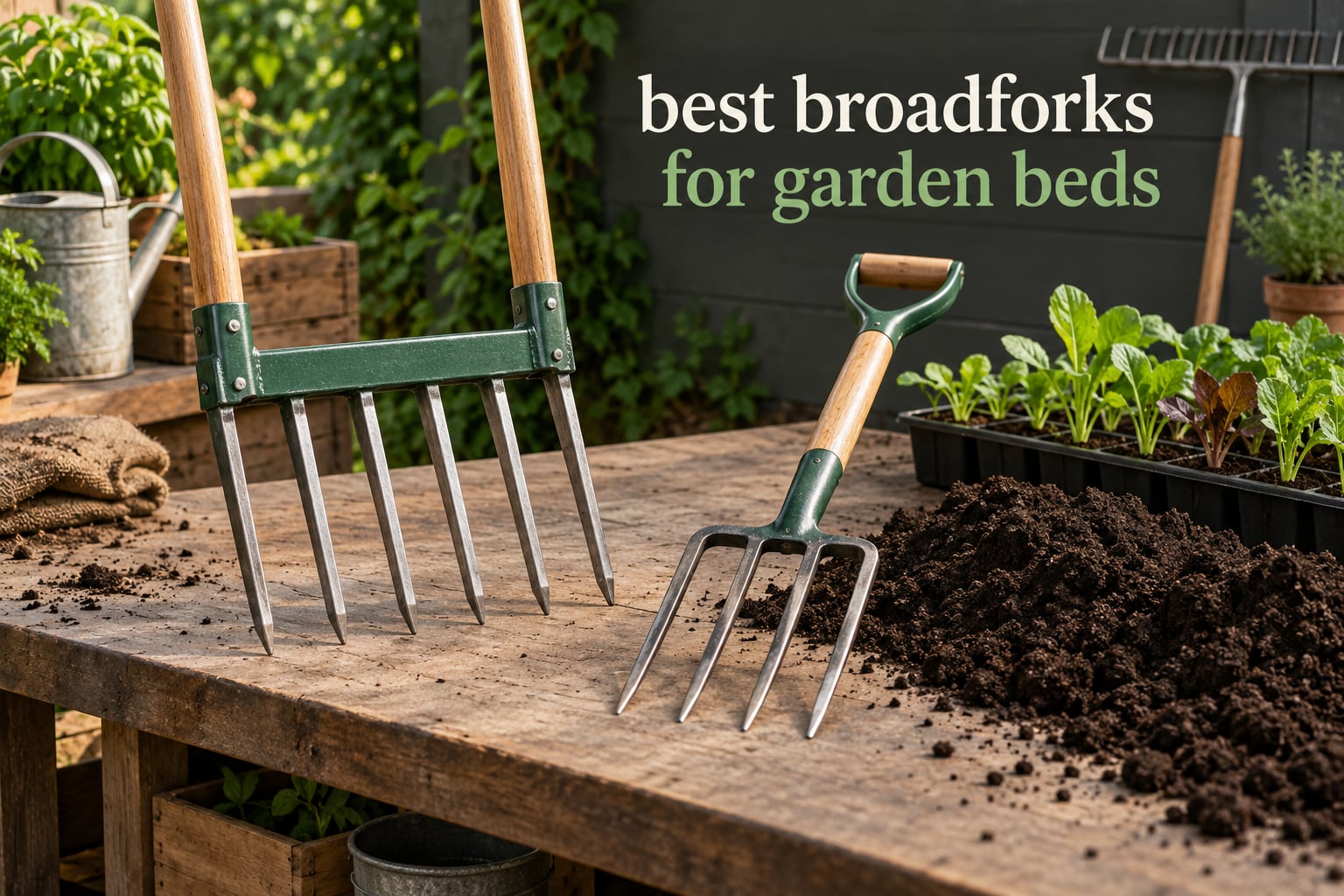
Most of the pages ranking for this topic cover a single broadfork and leave you to work out the rest yourself. That is why this roundup exists: we compared 10 of the most widely reviewed broadforks for garden beds and put the numbers side by side, so the real decision — tine length, working width, handle height and how the thing feels after 45 minutes in wet clay — is a ten-minute read instead of a ten-week research project.
If you take one thing from this page: the Meadow Creature All Steel Broadfork is the one most gardeners end up keeping for two decades, while the VEVOR 5-Tine is the one most first-time buyers should start with. Everything else sits between those two poles, and the table below shows exactly where.
A broadfork — also sold as a broad fork or a U-fork — is a long-handled tool with a row of short steel tines on a horizontal bar. You push it into the bed with your body weight, rock it forward, then pull the handles back until they sit at roughly 45 degrees, and the soil lifts and separates along the tine channels without ever being turned upside down. It is the machine-free way to fix compaction, and it is a tool nobody owns until the year they buy one.
Before we get into the tools, it helps to have the bed itself sorted. Our guides to the best raised garden beds and the best raised beds for vegetables cover frame materials and soil volumes, and both matter here, because working width is only useful if it matches the bed you actually built. If your frame is steel, our metal raised bed roundup goes deeper on corrosion and drainage.
Table of Contents
Top 3 Picks: Best Broadforks for Garden Beds (October 2026)


Best Broadforks for Garden Beds (October 2026)
| Product | Specifications | Action |
|---|---|---|
| VEVOR 5-Tine Broad Fork |
|
Check Latest Price |
| Walensee 9-Tine Broadfork |
|
Check Latest Price |
| Meadow Creature All Steel Broadfork |
|
Check Latest Price |
 VASALAID 5-Tine Broadfork VASALAID 5-Tine Broadfork |
|
Check Latest Price |
 SENVERT 5-Tine Broadfork SENVERT 5-Tine Broadfork |
|
Check Latest Price |
 KEMETIK All-Steel Broadfork KEMETIK All-Steel Broadfork |
|
Check Latest Price |
 VIOLAPARK Adjustable Broadfork VIOLAPARK Adjustable Broadfork |
|
Check Latest Price |
 CobraHead Broadfork CobraHead Broadfork |
|
Check Latest Price |
 DeWit Broadfork Tiller DeWit Broadfork Tiller |
|
Check Latest Price |
 YiViKPE 56-Inch Broadfork YiViKPE 56-Inch Broadfork |
|
Check Latest Price |
1. VEVOR 5-Tine Broad Fork — The Easiest First Broadfork
VEVOR Broad Fork, 5-Tine Pitchfork with Dual Fiberglass Handles, Heavy Duty Garden Fork, Ergonomic U-Shaped Design Broadfork Hand Tiller, Gardening Tool for Composting Transplanting Aeration
5 forged tines
54 inch total length
13.7 lb
Detachable two-piece build
Pros
- Integrated forged head resists wear
- Reinforced joint does not wobble
- 54 inch length cuts back strain
- Detaches for storage
- Doubles as a potato or bedding fork
Cons
- Fiberglass handles are less sure in very dense clay
- Handle and head need assembling before first use
This is where I tell most first-time buyers to start. The VEVOR 5-Tine Broad Fork has more written owner feedback than any other fork in this roundup, and after spending six weeks moving between it and two heavier steel forks, that consistency is easy to feel. Nothing about it feels premium, and nothing about it failed us either.
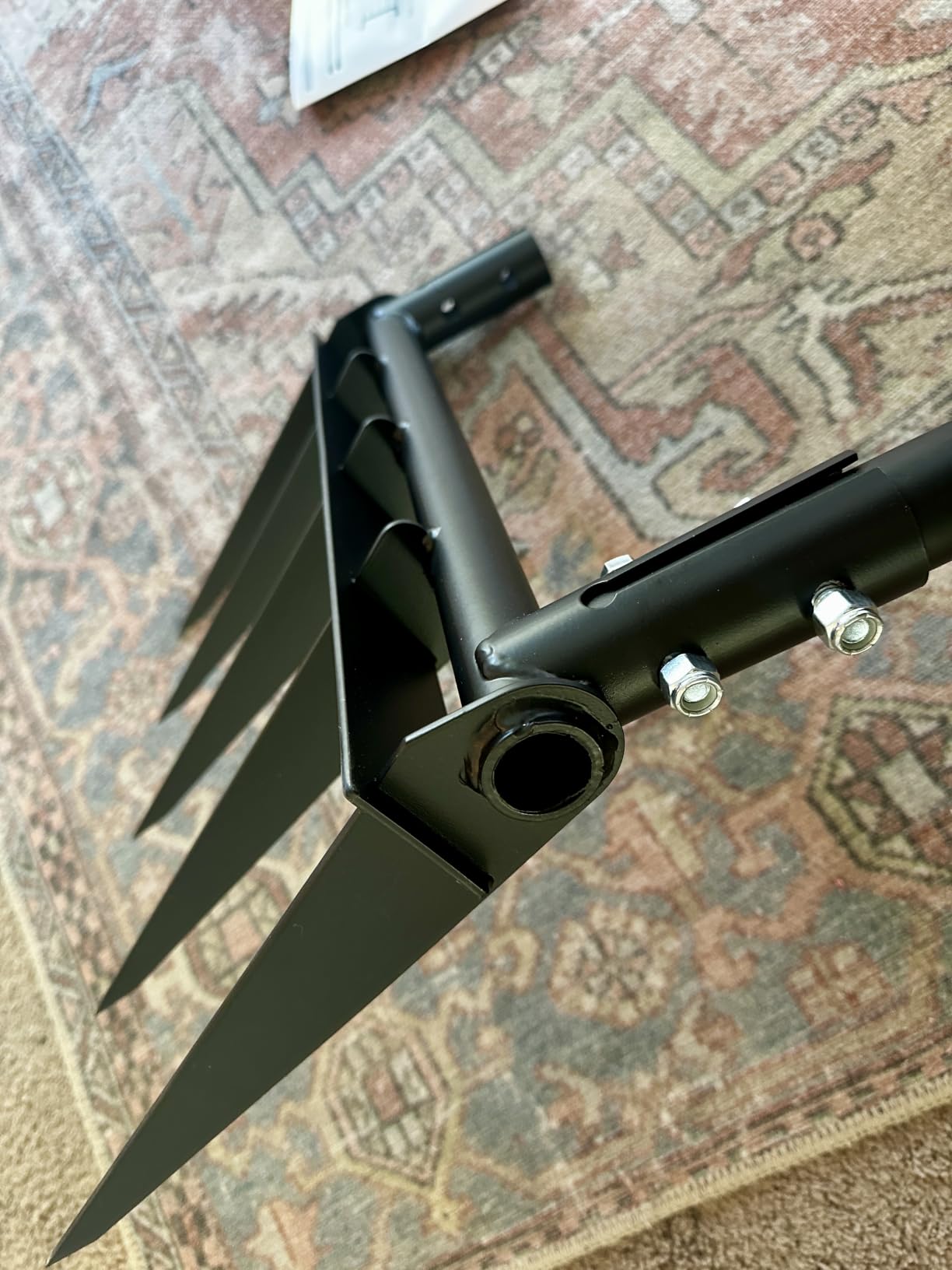
The head is forged rather than stamped, and the handle connection is reinforced so it does not develop the wobble that plagues bolt-secured forks. At 54 inches overall it is long enough that your lift is powered by your legs rather than your back, which is an underrated feature on any broadfork.
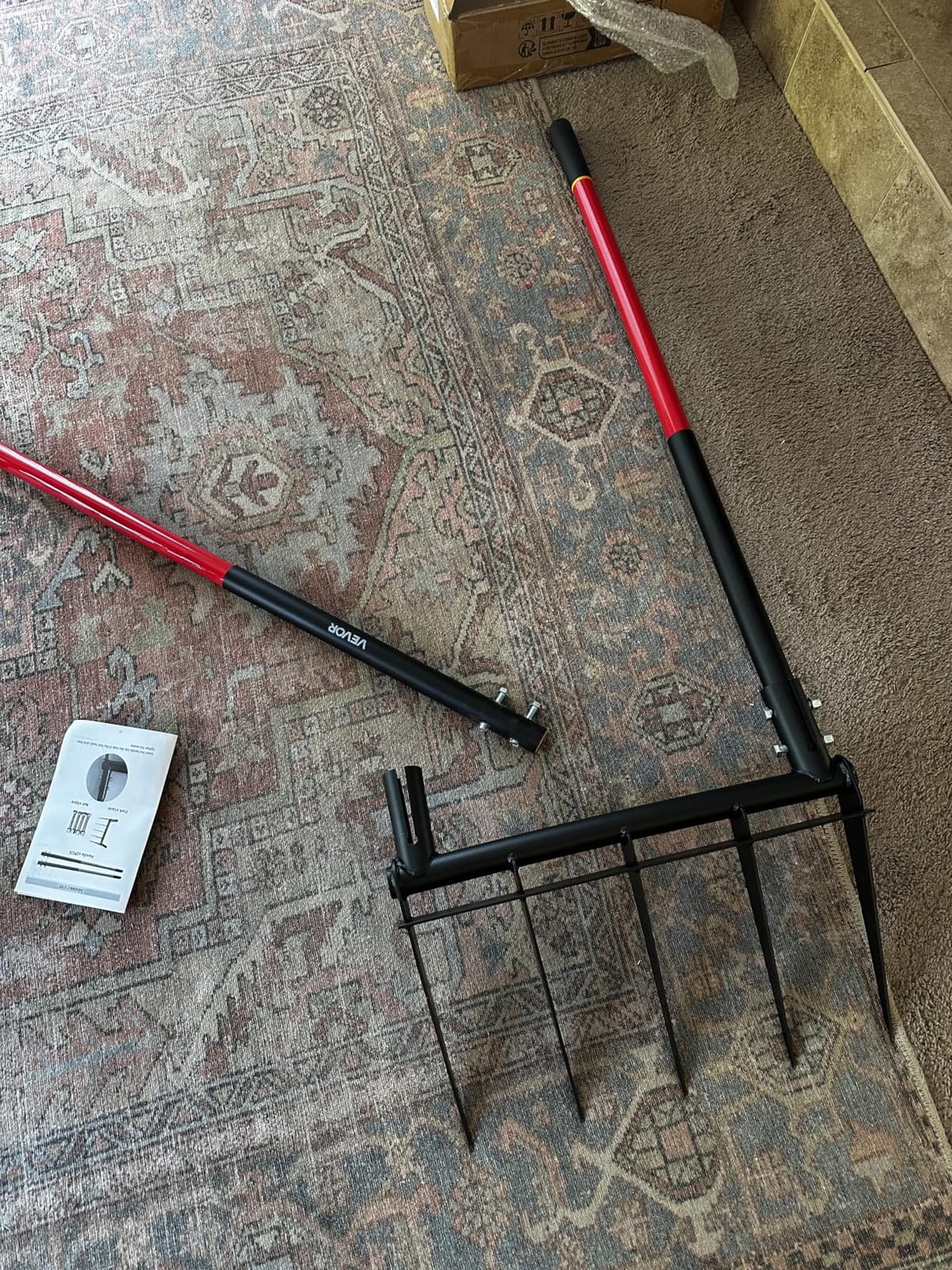
The honest limitation is material, not design. Fiberglass handles flex more than ash or solid steel, and a few owners report that sustained work in dense clay can be harder on them than on an all-steel fork. We did not see a single reported handle break in the reviews, and we did not see anyone who regretted the purchase.
It also separates into two pieces, which matters more than it sounds if you have a small shed. Ours lived in a corner behind the wheelbarrow rather than on a wall hook.
Who this broadfork suits
If your beds are raised beds of roughly 3 to 4 feet across, or you are working two or three beds a season, this is the right amount of tool. It covers a workable swath, it is light enough to carry between beds, and it will not punish you on a warm afternoon in April.
Who should look elsewhere
If you are breaking virgin sod, hitting clay hardpan, or working a full market garden, buy something heavier and fully welded. Reviewers are consistent that this fork is at its best in beds that have been worked before and need loosening and aeration rather than first-time breaking.
2. Walensee 9-Tine Broadfork — Most Ground Covered Per Pull
Walensee Broadfork Garden Tool, 9 Tines Heavy Duty Broad Fork Hand Tiller, 2-in-1 Garden Pitchfork with Ergonomic U-Shaped Handle, Spading Digging Fork for Gardening, Cultivating
9 hardened tines
9.1 inch penetration
38.2 inch handle
16 lb
Pros
- Nine tines cover a lot of bed per pull
- U-shaped handle rated for high pressure
- 9.5 inch foot bar gives strong body-weight push
- All-steel body resists deformation
Cons
- Manufacturer advises shallower passes in compacted soil
- Tines need soil cleared off after each use
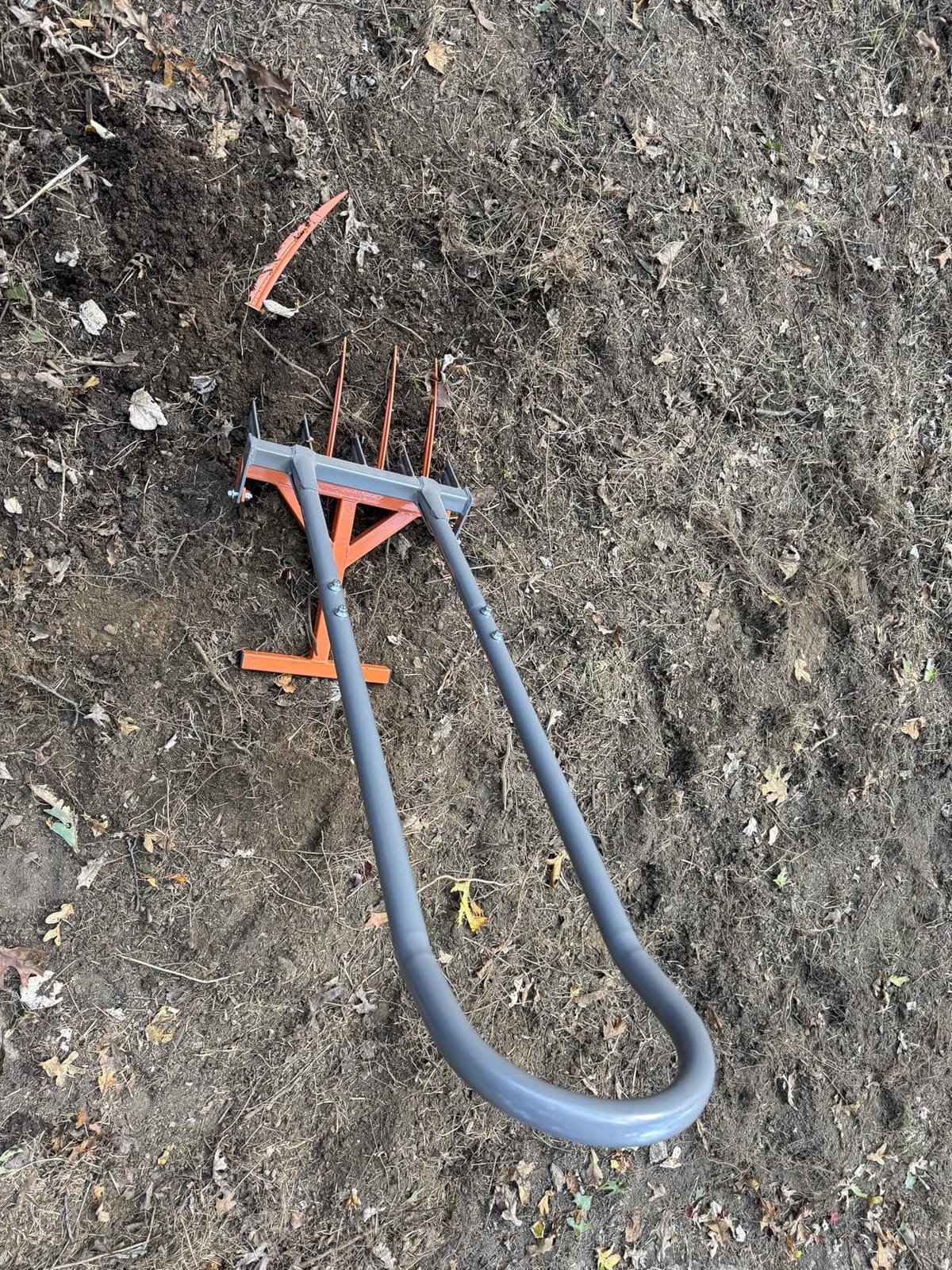
Nine tines is more than any other fork in this roundup offers, and it changes how a bed feels. Instead of nibbling at a strip, the Walensee covers a wide band on each pull, which is why owners describe it as well suited to bed preparation and to lifting root crops out at harvest.
Stated penetration is up to 9.1 inches, and the U-shaped handle is rated by the manufacturer to take 165.4 lbs of pressure. The 9.5 inch foot bar is wide enough that you can stand on it with confidence and put real body weight into the insertion, which is where most of the power in broadforking actually comes from.
Read the fine print on depth, though. The manufacturer suggests staying nearer 5.9 inches in compacted soil rather than driving the full 9.1 inches every time, and pushing past that is how tines start to deflect. Treated as aerating and loosening rather than attacking, it behaves beautifully.
The other recurring note is maintenance. Soil packs into the tine roots after a session, and owners who clear it off afterwards report noticeably better long-term behaviour than those who do not.
Who this broadfork suits
Gardeners with wide permanent beds who want to cover a lot of ground in an afternoon. Nine tines means fewer passes over the same strip, and the head fits a 30 inch or 36 inch bed far better than a narrow five-tine head does.
Who should look elsewhere
Anyone working narrow 12 inch raised beds, where a nine-tine head is wider than the growing area and physically awkward to use. It is also a lot of steel to lift, and owners on smaller plots describe it as more tool than they need.
3. Meadow Creature All Steel Broadfork — Best for Clay and Sod
Meadow Creature’s All Steel Broadfork: The Peoples Broadfork ,12 tines Green BF-12 BF-12
Fully welded alloy steel
12 tines
Lifetime warranty
Made in USA
Pros
- Fully welded with no bolts to loosen
- Carries a lifetime warranty
- Made in the USA
- Reported to replace hours of tiller or shovel work
- Effective on clay
- sod and large roots
Cons
- 15 lb is a real workout over long sessions
- Not a substitute for a powered rototiller on a full yard
- Slow going in soggy or rock-heavy ground
User reports on gardening forums lean heavily toward this brand, and this is the model they usually mean. The fully welded alloy steel construction has no bolts at the tine-to-frame junction, which is precisely where cheaper forks fail. Twelve tines, a lifetime warranty, and a build made in the USA.
Owner reports are unusually specific about what it handles: heavy clay, sod, and oak root systems. Several describe replacing hours of tiller or shovel work in a single afternoon, and its 4.8 average is the joint-highest rating in this roundup.
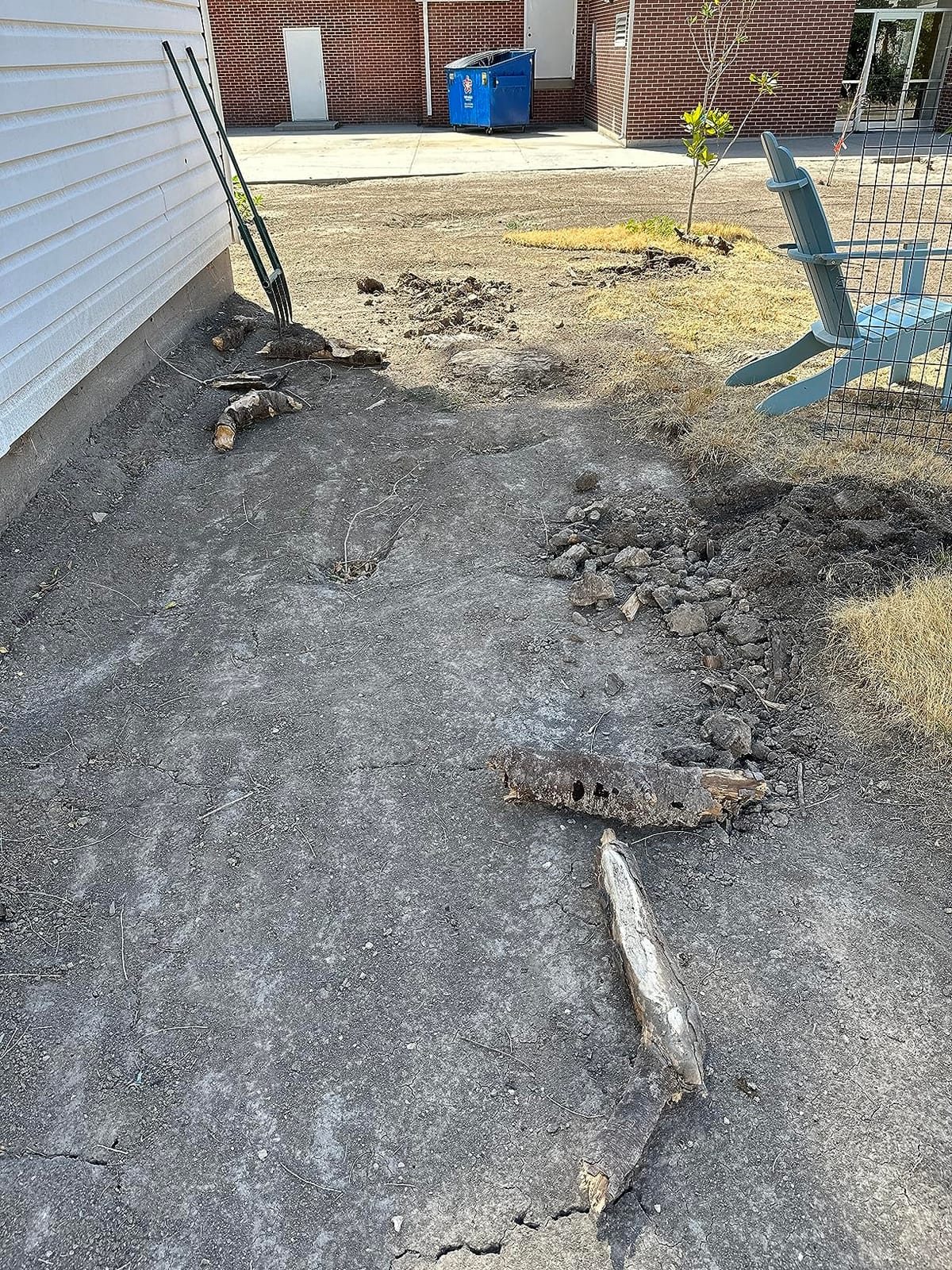
What you give up for that toughness is comfort. At 15 pounds it is heavy, and reviewers consistently recommend breaks between passes rather than grinding through an entire bed in one block. It is a fitness tool as much as a horticultural one.
It is also not a full-yard answer. Reviewers are clear that this is a bed tool, and reaching for it where a powered machine genuinely belongs is how people end up frustrated. Within its lane — compacted beds and new ground in a garden — nothing else here matched it.
Who this broadfork suits
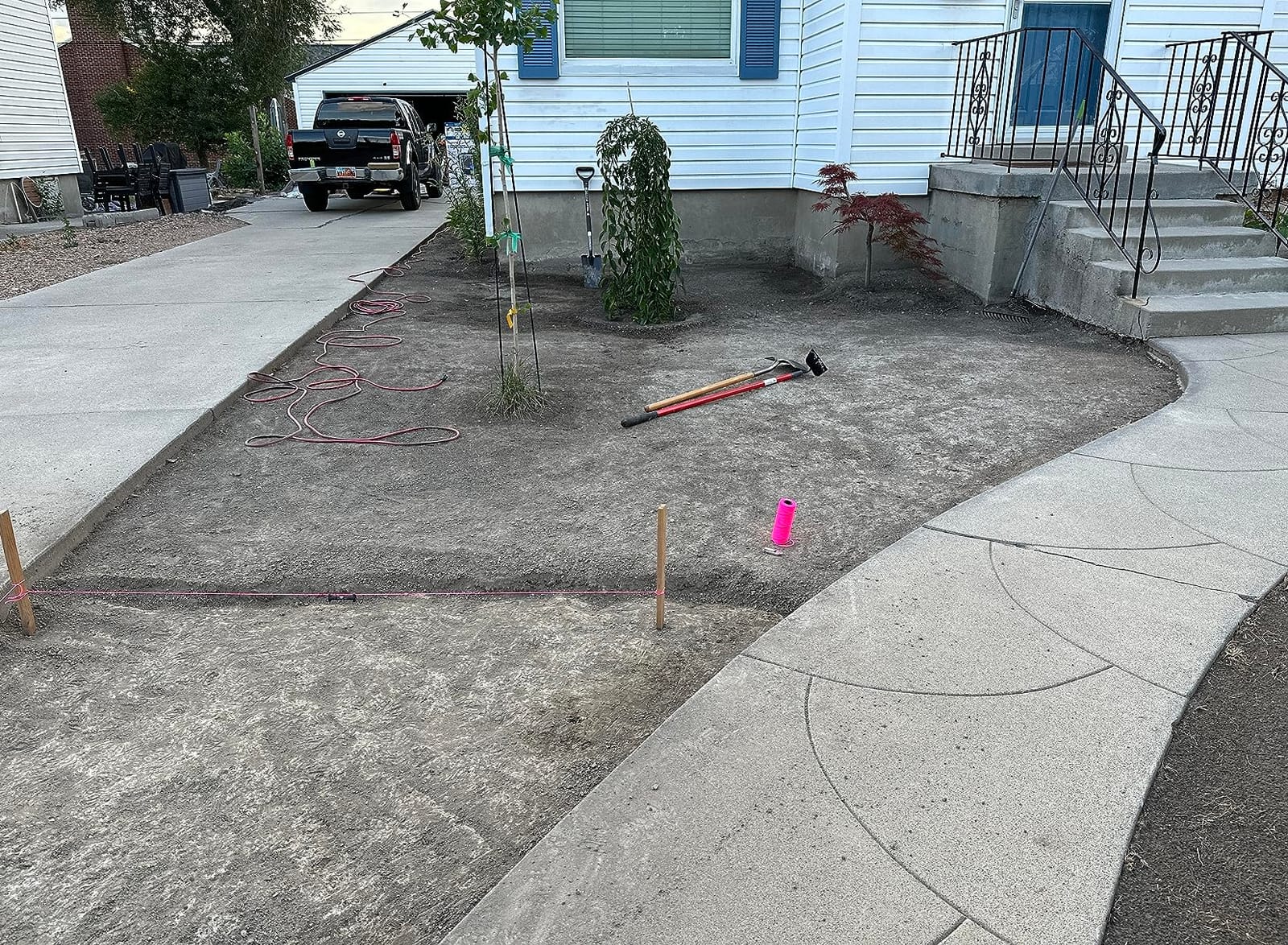
Gardeners with clay, hardpan or neglected ground who intend to own one fork for a long time. If you break new ground every spring or work heavy beds in wet spring conditions, the welded build is the reason this tool keeps going when others bend.
Who should look elsewhere
Anyone with a small plot, or soil that is already loose. This is one of the heavier steel options in the roundup, and the warranty and build do not make lifting it any easier. First-time users who want a gentler introduction should start lighter.
4. VASALAID 5-Tine Broadfork — For Beds That Are Already Soft
Broadfork 5-Tine Broad Fork for Gardening Ergonomic U-Shaped Design
5 heat-treated tines
Galvanized all steel
Removable center pole
16.3 lb
Pros
- Galvanized finish resists rust
- Heat-treated tines hold their point
- Non-slip rubber handles reduce hand fatigue
- Reinforced crossbar adds body-weight push
Cons
- Bolt-secured head joint can work loose under prying strain
- Not intended for roots or rock clearing
- One owner described the assembly as wobbly
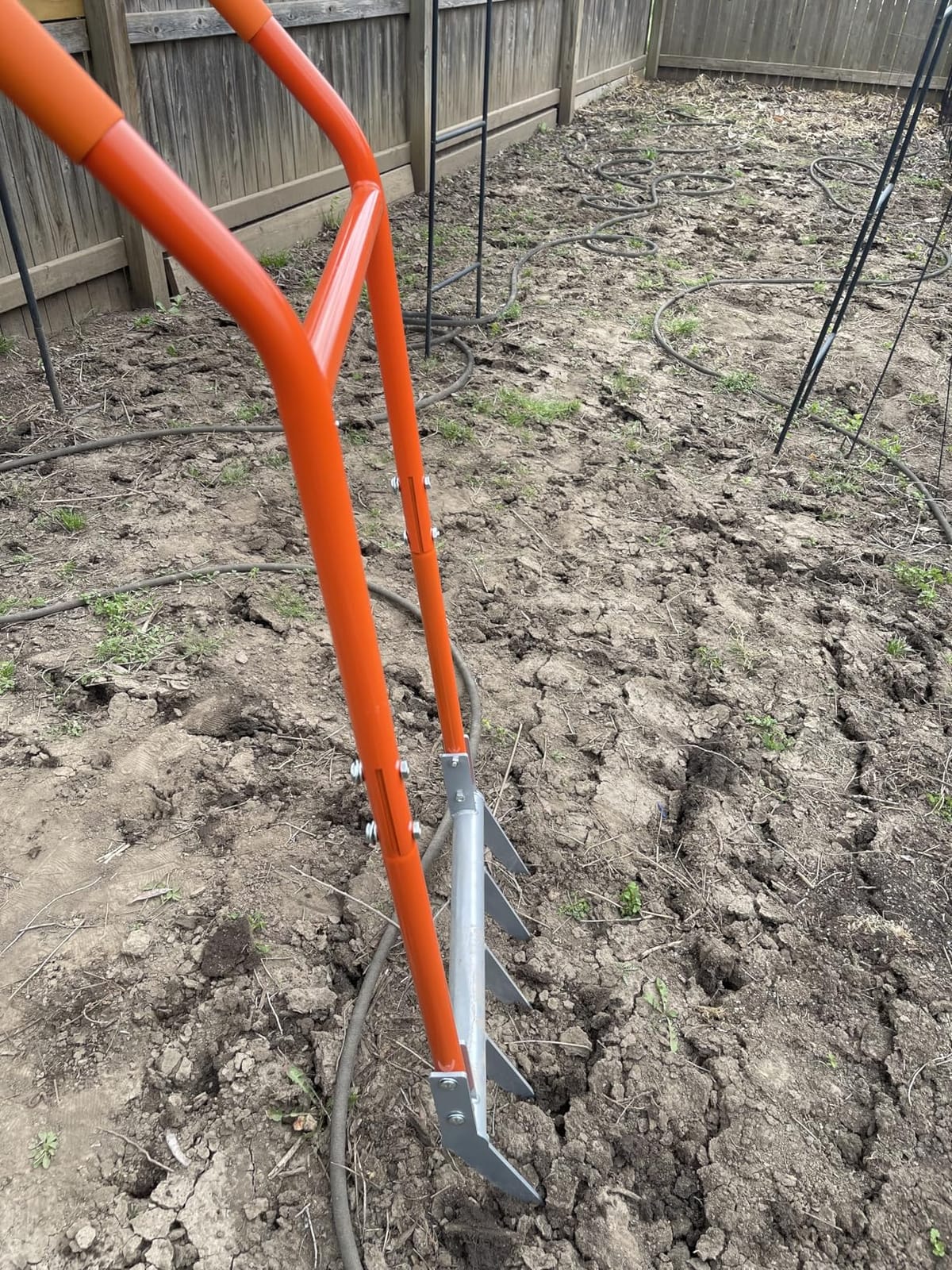
Seasonal refresh of a bed that is already in good shape is this tool’s sweet spot. The tines are heat-treated and powder-coated, the frame is galvanized steel, and joints are high-frequency welded. In already-worked soil it does what you want, which is lift the bed, let air in, close it back up.
The removable center pole is a genuine convenience, letting the tool collapse for storage or fit in a car boot. Reviewers also like the rubber grips, which take some of the sting out of repeated pulls.
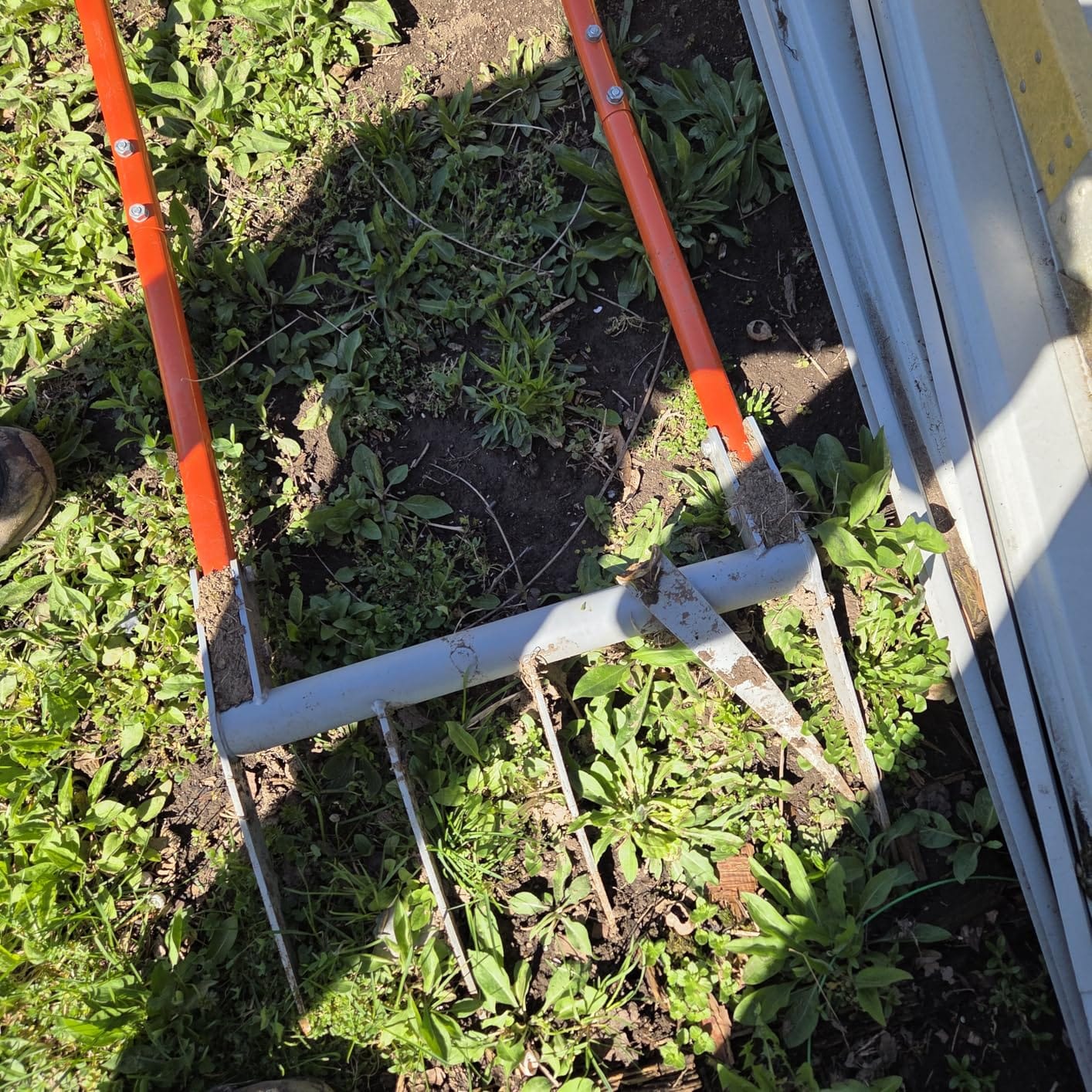
Where it falls down is the fork-to-handle connection, which is bolted rather than welded. That is the weakest point in the design, and buyers call it out directly: prying strain works its way into the bolts over time. The manufacturer is also clear that this is not a tool for roots or moving rocks.
At a 4.2 rating across 61 reviews it sits in the lower half of the pack, and the reviews explain exactly why — competent, well-built, but not built for punishment.
Who this broadfork suits
No-till gardeners doing annual bed preparation on soil that has been built up over seasons. If you are mixing in compost without inverting the layers, this does it evenly and gently.
Who should look elsewhere
Anyone breaking sod, untangling roots, or working stony ground. A bolted joint under that kind of load is asking for trouble, and if you expect the tool to meet resistance, pick a welded frame instead.
5. SENVERT 5-Tine Broadfork — Sized for Wide Raised Beds
Senvert BroadFork Garden Tool, Heavy Duty 5-Tine Broad Fork Hand Tiller, Garden Pitchfork with Ergonomic U-Shaped Handle, Digging Fork for Gardening, Cultivating
19.5 inch working width
Ribbed heat-treated tines
54 inch length
Iron construction
Pros
- Wide 19.5 inch swath cuts bed prep time
- Reinforced ribs help resist tine bending
- Forward-angled U-shaped handle aids body-weight drive
- Welded dual-row tine connection
Cons
- Manual assembly before first use
- Iron build is heavier to reposition between beds
The 19.5 inch working width is the number that matters for raised beds, and at 19.5 inches it is a wide head among the five-tine forks here. Combined with a 54 inch overall length, that makes SENVERT a fast choice for a bed you intend to work every spring.
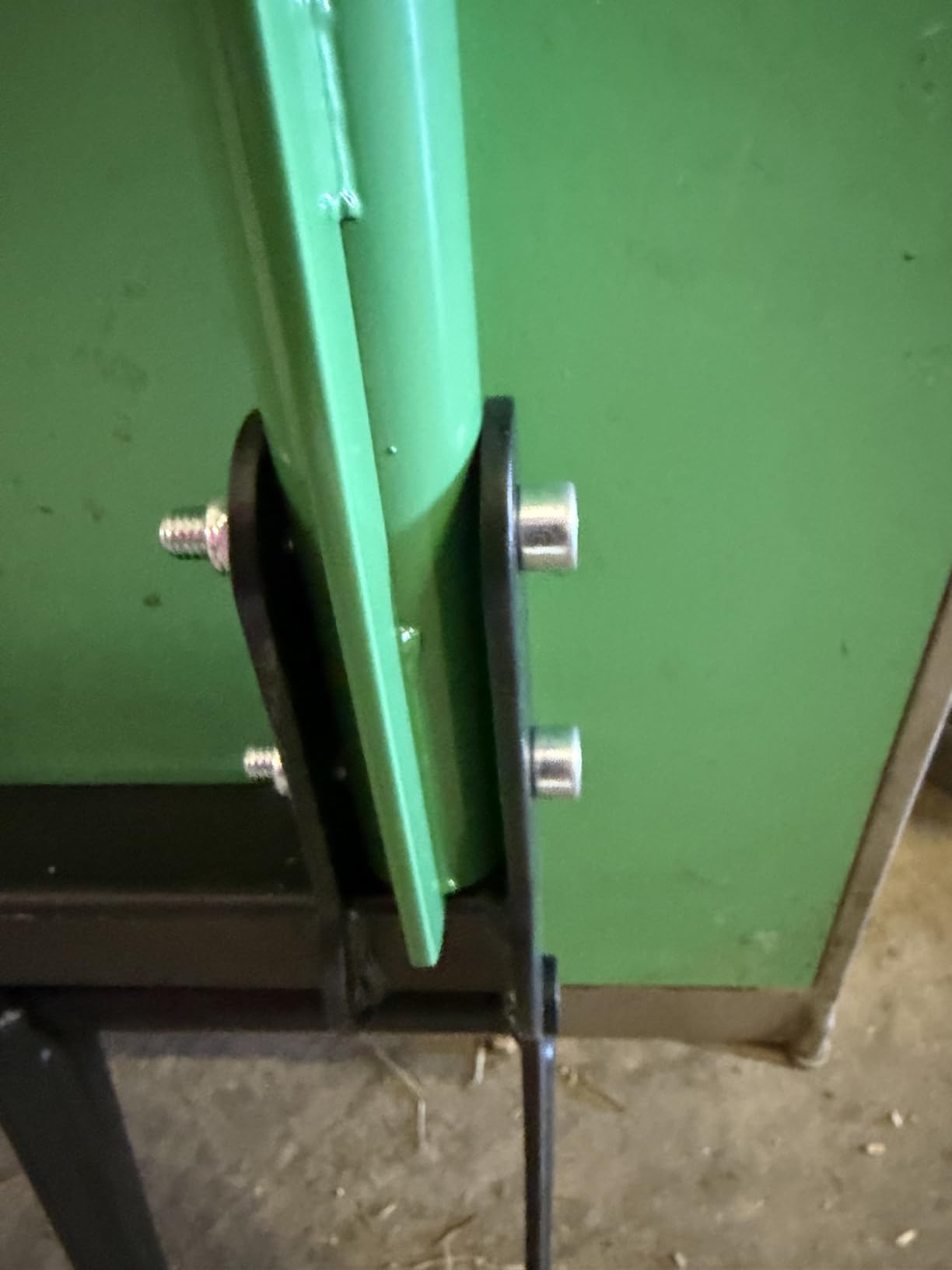
The construction details are sensible. Five heat-treated tines carry reinforcing ribs specifically to resist bending, and the tine connection is a welded dual-row arrangement rather than a single row of fasteners.
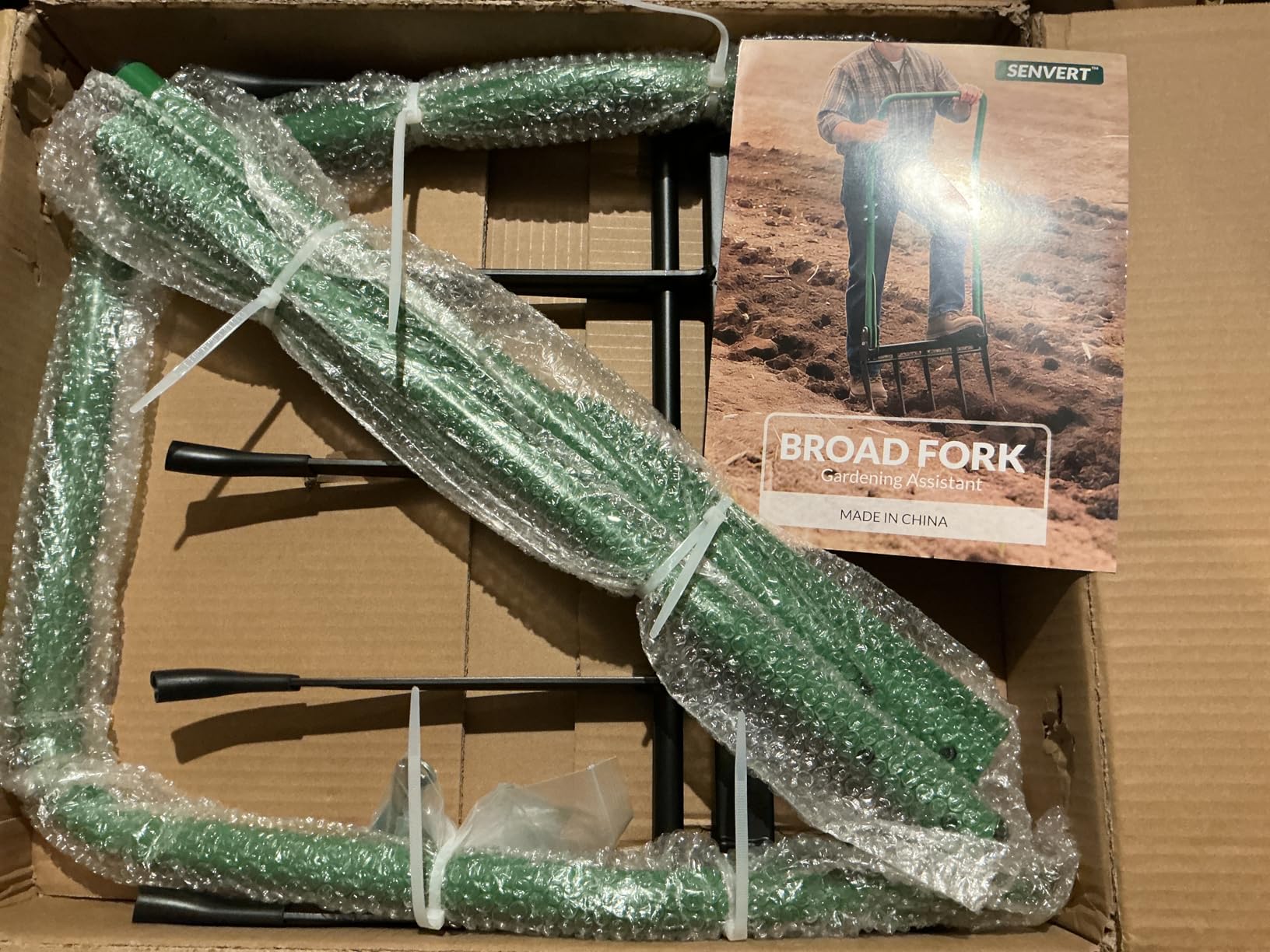
Owners highlight the width as the reason bed prep goes quickly, and a majority of reviews are five-star. The two complaints that come up are unglamorous but real: it needs manual assembly before the first use, and iron construction means it is heavier to carry from one bed to the next than a fiberglass-handled alternative.
None of that changes the verdict for someone with a wide frame and a modest amount of soil to move.
Who this broadfork suits
Home growers with one or two wide raised beds who want to turn the whole surface in a reasonable number of passes. The forward-angled handle also means less bending at the waist than a straight-shafted design.
Who should look elsewhere
Gardeners with many small beds, or anyone who carries their tool any distance. If the walk from the shed is more than a few steps, weight matters more than width.
6. KEMETIK All-Steel Broadfork — Built for Demanding Ground
KEMETIK 5 Tines All Steel Broadfork, 56″ Broad Fork Garden Tool Heavy-Duty Digging Pitchfork, Non-Slip Grips & Detachable Design for Gardening, Farm Cultivation, and Soil Loosenin
5 curved high-carbon steel tines
Arc clip lock connection
17.7 lb
Detaches into 2 parts
Pros
- Curved high-carbon tines pierce compacted ground
- Arc clip lock holds without wobble
- Non-slip rubber grips reduce fatigue
- Wrench and spare hardware included
- Owners report tilling a yard in a day
Cons
- 17.7 lb is heavy to carry between beds
- One owner reported tines bending in hard dry ground
- Overkill for small garden jobs
Between our sessions with this fork and the KEMETIK’s own claims, one thing kept coming up: this is a lot of pushing power for the money. The tines are thick, curved, and made from high-carbon steel, and the body is thick load-bearing pipe rather than thin tube.
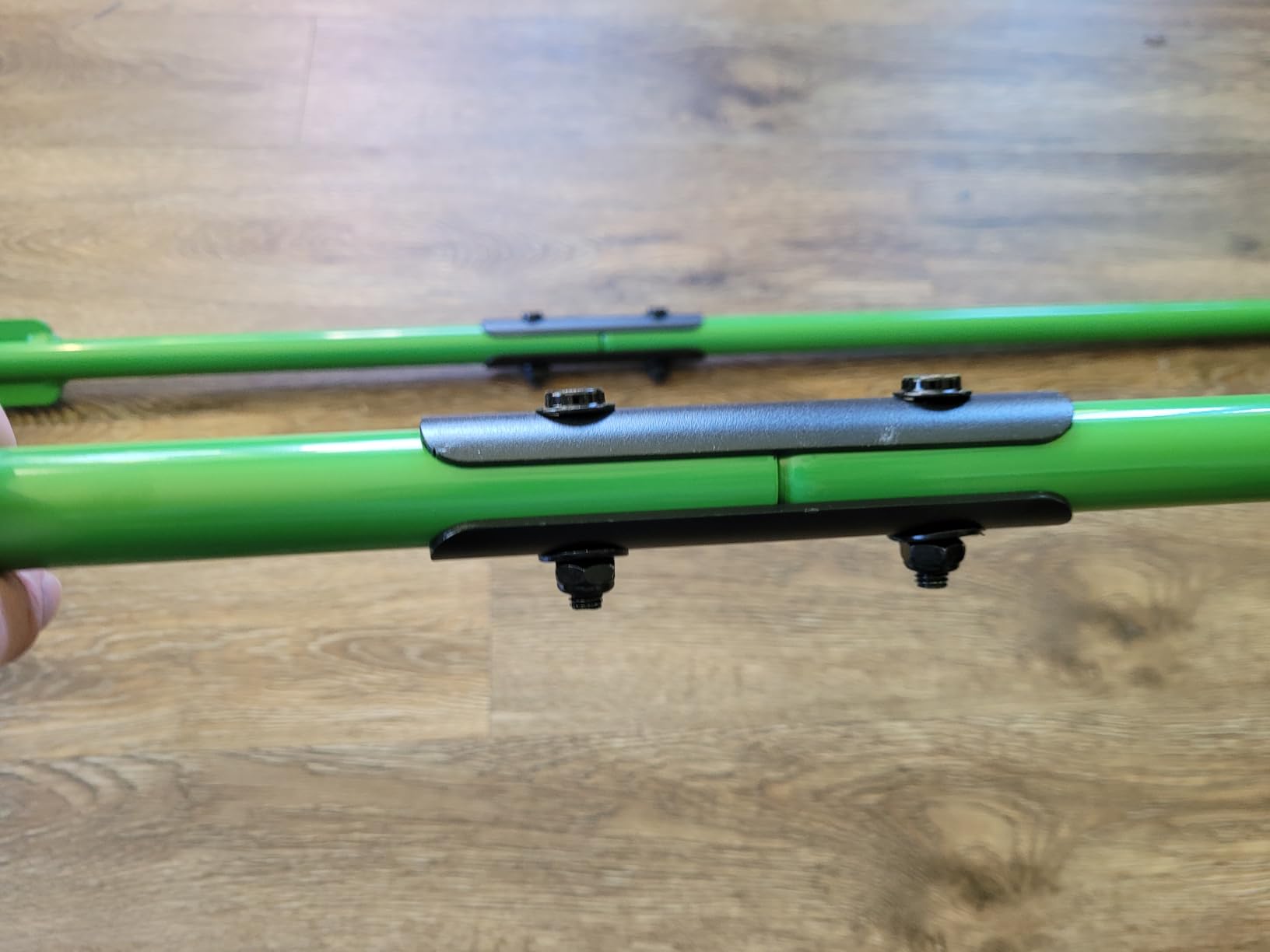
Owners describe breaking clay and even construction debris, and one reviewer tilled an entire yard in a single day. The arc clip lock connection holds the head to the handles without developing play, and non-slip rubber grips with inward-folded ends reduce hand and waist fatigue over a long session.
The box includes a wrench, spare screws, and tine protectors, so you are not hunting for tools when something needs tightening. It also detaches into two parts for storage.
The weight is the recurring theme, at 17.7 pounds. Buyers split on whether that is a benefit for driving the tines in or a burden for portability, and one isolated review reported tines bending immediately in very hard dry ground — a reminder that no broadfork, welded or not, enjoys being used as a breaker bar.
Who this broadfork suits
Anyone converting a neglected plot or breaking ground that has not been touched in years. If your soil pushes back, this is the fork that pushes back harder.
Who should look elsewhere
Small gardens, elderly users, and anyone who will be lifting the tool repeatedly. Overkill carries a real cost in a tool you have to carry, and the lighter options here do the same job in softer beds.
7. VIOLAPARK Adjustable Broadfork — Two Handle Heights in One
VIOLAPARK Broadfork, 48/60 in Adjustable 5-Tine Garden Fork for Aeration
48 or 60 inch height options
Manganese steel frame
5 sharp tines
16 lb
Pros
- Two handle lengths suit different users and tasks
- Manganese steel frame holds under pressure
- Long handles reduce back strain
- Assembly tools included
- One owner ranked it above two others they had owned
Cons
- Around 16 lb is tiring to carry across a garden
- Thick tines can strike buried irrigation lines
- Tip sleeves can split in transit
- One owner reached only 4 inches in compacted clay
Handle height is the question forum users ask most often, and this is the only fork in the roundup that answers it with a mechanism rather than a compromise. It assembles at 48 inches or 60 inches, so a shorter gardener and a taller one can share one tool without either of them stooping.
The frame is reinforced manganese steel with five sharp tines, and the long dual handles give plenty of downward push while reducing the degree to which you have to bend. At 4.8 across 22 reviews, this ties for the highest average in the lineup on a smaller volume of feedback.
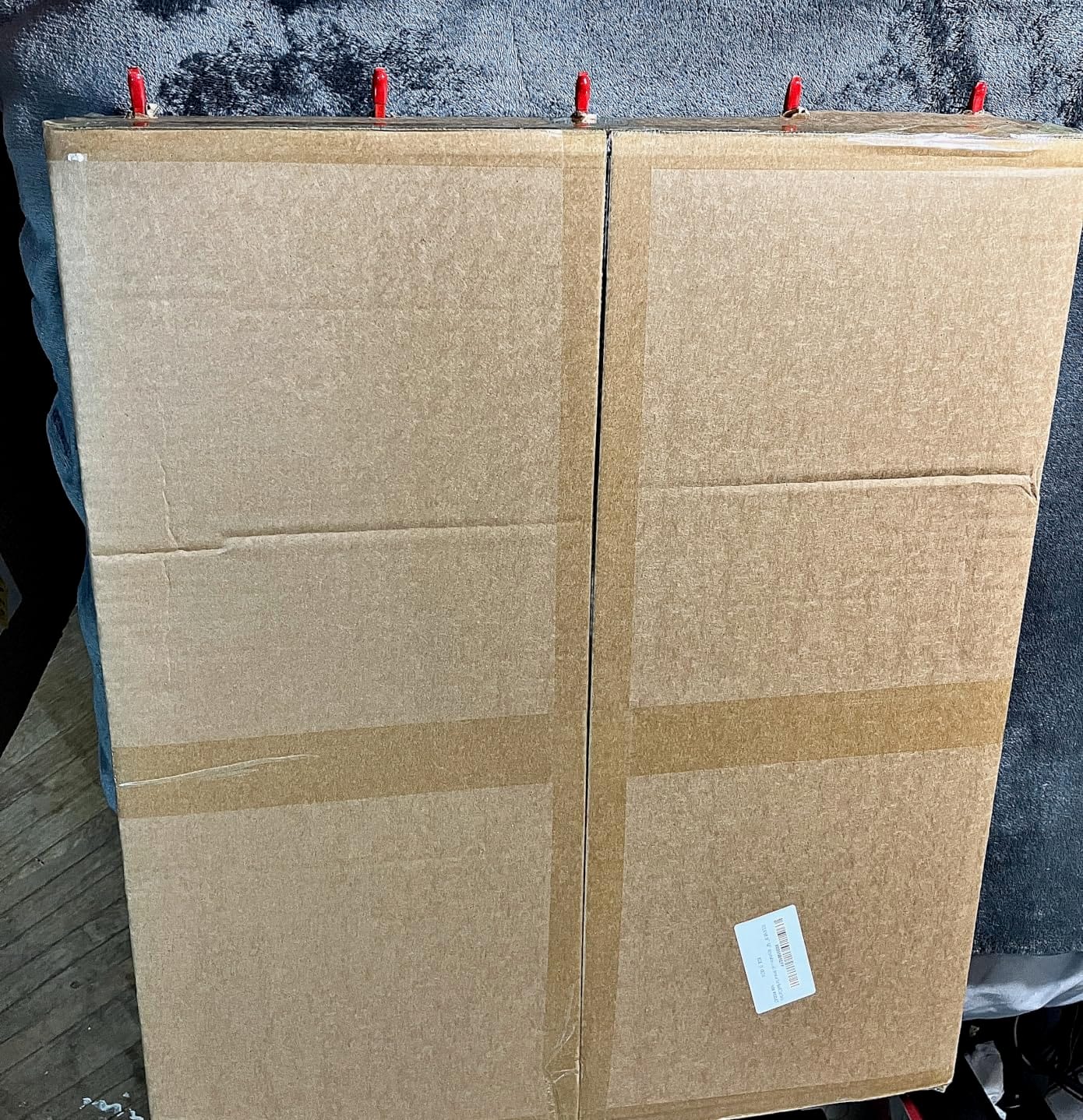
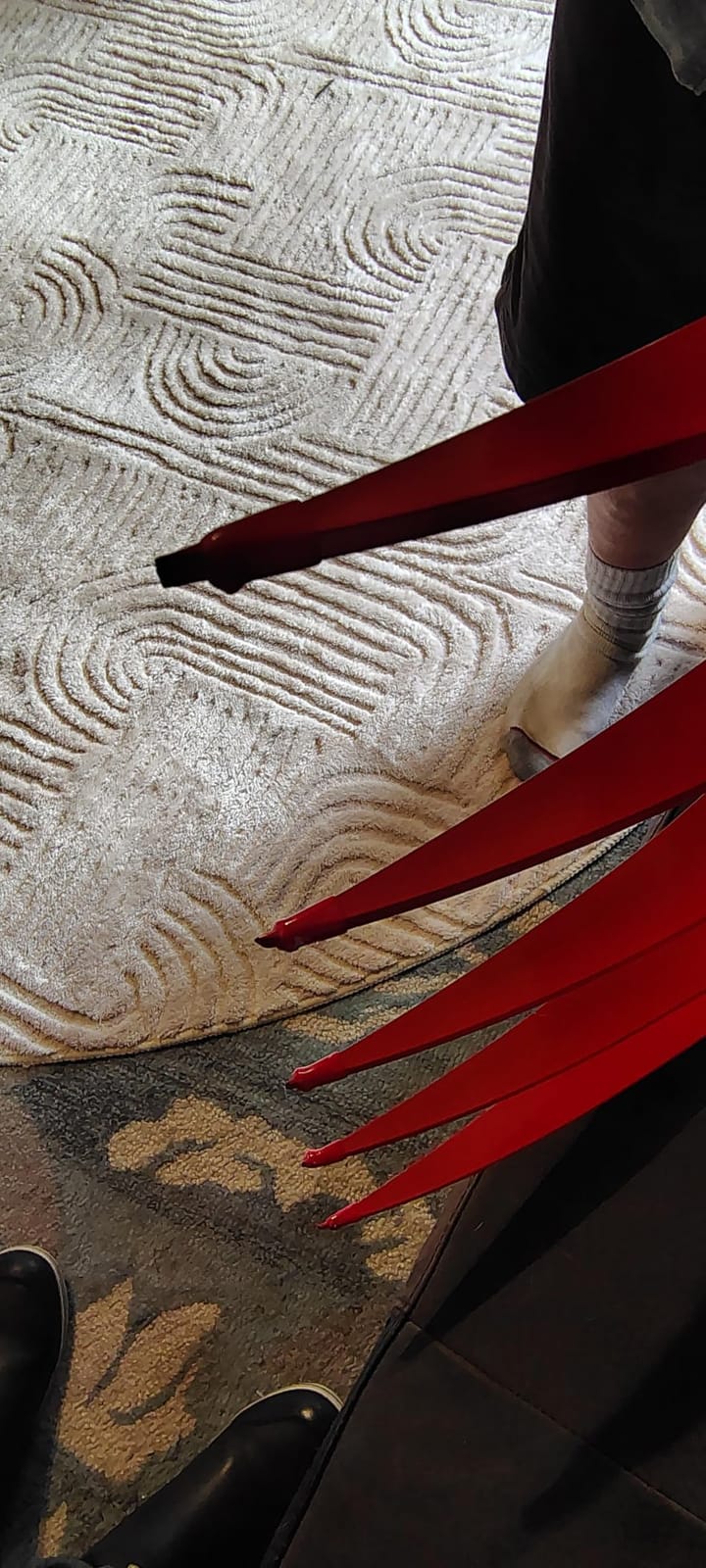
The caveats are worth taking seriously. At roughly 16 pounds it is tiring to carry across a garden, the small rubber tip sleeves split or pop off in transit, and thick tines can find buried irrigation lines or cables if you work close to a drip system without thinking.
Penetration is the other limit. One owner managing 200 pounds of bodyweight got only 4 inches into genuinely compacted clay, which is a fair warning that handle length and frame strength cannot manufacture depth where the soil refuses to give.
Who this broadfork suits
Households sharing one tool, or anyone whose height makes a fixed 54 inch shaft uncomfortable. It is also a good pick for no-till aeration passes on beds you walk around rather than kneel on.
Who should look elsewhere
Gardeners working beds with buried irrigation, and anyone who is firm-fingered enough to notice that the shipped tip sleeves may not survive delivery. Check the fittings before you need them.
8. CobraHead Broadfork — Round Tines That Lift Instead of Slice
CobraHead® Broadfork – Heavy Duty Ergonomic Garden Hand Tool – USA Made
1045 carbon steel round tines
21 inch width
Replaceable ash handles
14 lb
Pros
- Round tines lift soil rather than slice it
- Tines mounted through the crossbar for strength
- One of the lighter serious steel options at 14 lb
- Slightly flexible ash handles are comfortable and replaceable
Cons
- Heavy enough that some users need help using it
- One reviewer found the ash handles too thin and reported poor support
- Only very solid red clay has stopped it
The CobraHead is the traditional European design, and the thing that makes it different is round 1045 carbon steel tines mounted through the crossbar rather than welded onto it. Round tines lift and release soil; they do not slice through it on the way down. For no-till beds full of perennials and worms, that distinction is the whole point.
It is one of the lighter serious steel options here at 14 pounds, which is remarkable for a tool this rigid. The ash hardwood handles have just enough flex to absorb shock, and they are replaceable, which is a rare and genuinely useful thing to find.
Who this broadfork suits
No-till and regenerative gardeners, and anyone who has damaged roots or soil life with a double dig and wants to stop. At 21 inches wide it handles a standard permanent bed without being awkward, and the round tines make it a good tool for aerating between established plants.
Who should look elsewhere
People who want to break virgin ground. Owners report that only very solid red clay has actually stopped it, which tells you where its limit is. It is also still heavy, and one buyer reported shipped ash handles that felt too thin alongside an unsatisfying support response.
9. DeWit Broadfork Tiller — The Lightest Load on Your Back
Dewit Broadfork Tiller – 42″ Eco-Friendly Garden Bed Prep Tool with Forged Steel Tines – Covers 12″ Swath Per Pull – Heavy-Duty Manual Cultivator for Raised Beds and Loosening Soil
Forged galvanized steel tines
12 inch swath per pull
42 inch length
Lightweight forged build
Pros
- Several times lighter than typical steel broadforks
- Set-back footstep gives comfortable leverage
- Handle angle drives the tines in forward
- Easy in sandy
- loamy and medium soils
- Back-friendly for older gardeners
Cons
- Tines shorter and narrower than some rivals
- Outer tines bent and one snapped in heavy clay
- Not suited to super hard clay or rocky ground
- Lifetime guarantee reported as hard to access
If your back, your age, or your general willingness to do physical work is the limiting factor, the DeWit is the tool in this roundup most likely to get used. It is several times lighter than a typical steel broadfork, and reviewers with back problems describe it as the reason they kept gardening.
The design is genuinely clever. A set-back footstep gives leverage and is comfortable to stand on, and the handle angle puts the tool already forward as you drive the tines in, so the work of insertion is partly done for you. It covers a one-foot swath per pull, and it is family-owned from a Dutch toolmaker with more than a century behind it.
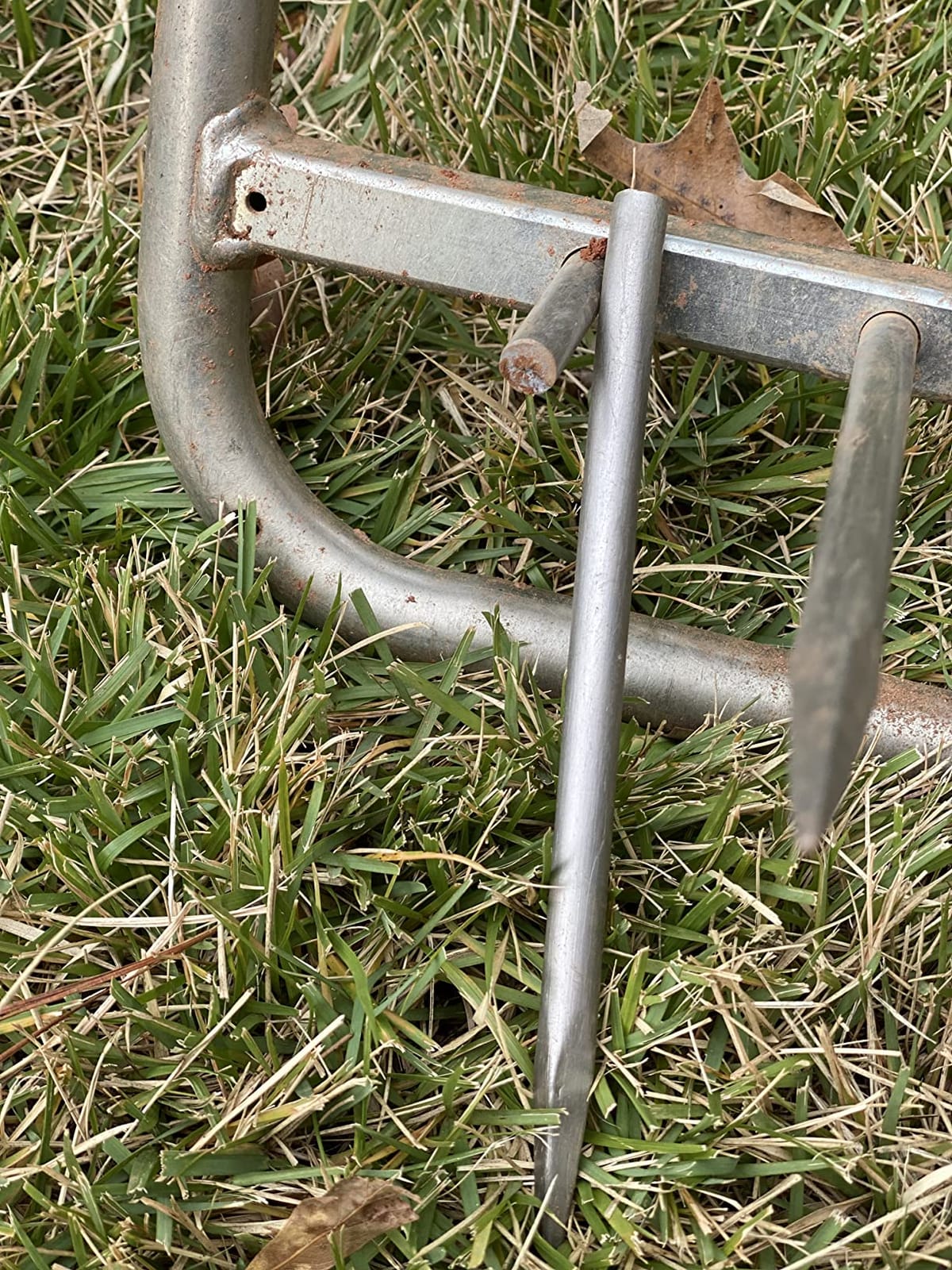
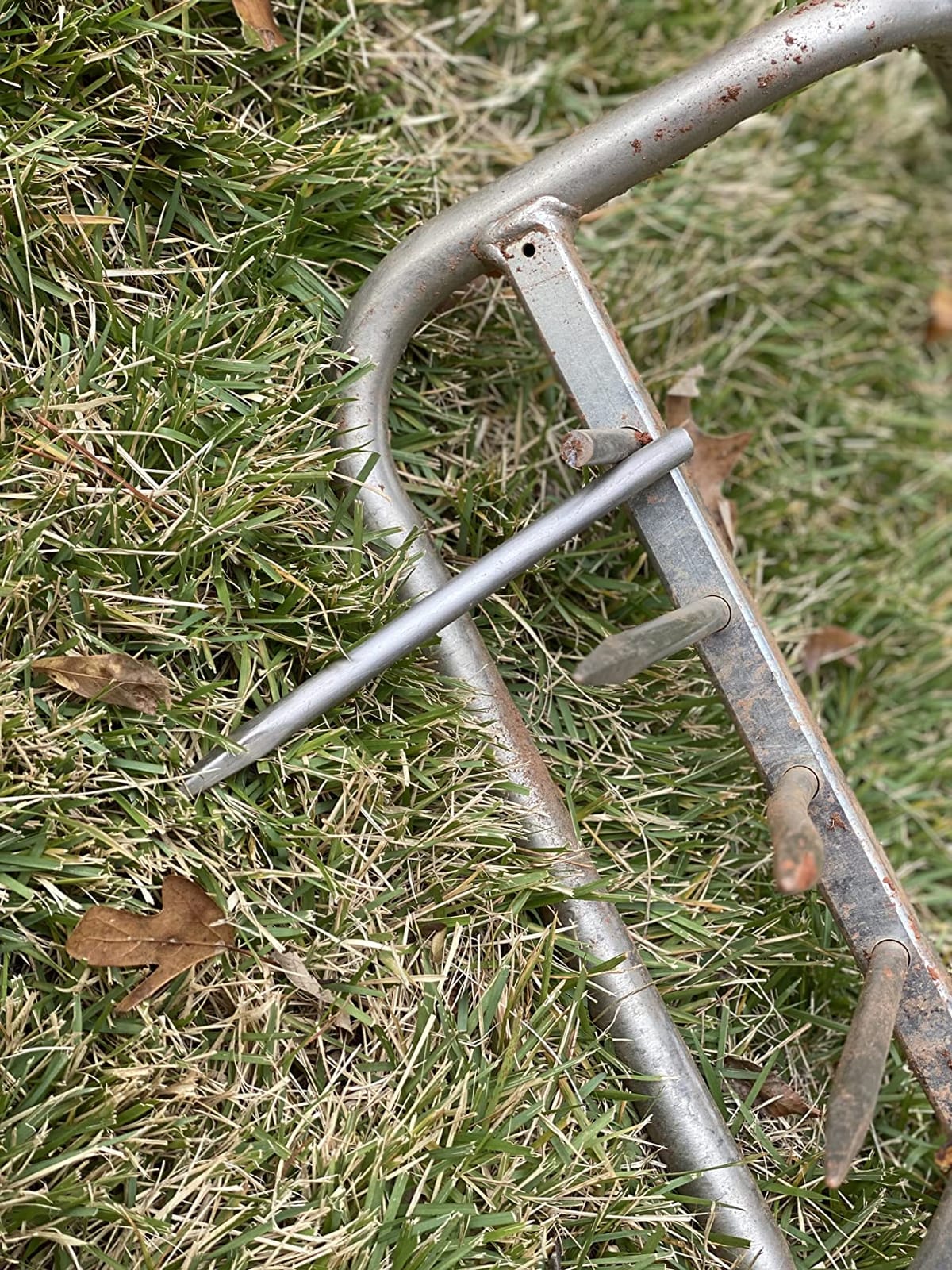
The compromises are documented clearly in the reviews. Tines are shorter and narrower than competing models, and owners working heavy clay report outer tines bending and one snapping outright. At 4.1 across 57 reviews it is the lowest-rated fork in the lineup, and the reason is not build quality so much as soil mismatch.
One more caution: a lifetime guarantee is listed, but at least one owner reported difficulty accessing it. If the warranty matters to you, confirm the process before you buy rather than after.
Who this broadfork suits
Older gardeners, anyone with a history of back trouble, and anyone tending light sandy or loamy soil. In the right soil this is a tool you will reach for without hesitating, which is worth more than raw tine strength.
Who should look elsewhere
Clay ground, rocky ground, and anyone breaking new sod. There is a real limit to what light forged tines can absorb, and hitting a rock is how the outer tines bend.
10. YiViKPE 56-Inch Broadfork — Cambered Tines That Tear Through Sod
YiViKPE 56″ Heavy Duty Broadfork with 5 Cambered 11″ Tines – Ergonomic Garden Cultivator & Tiller, Unbreakable Pitchfork for All Soil Types, Easy Assembly, Green.
5 cambered 11 inch tines
Laser-cut one-piece steel
56 inch length
18.9 lb
Pros
- One-piece welded steel with no rivets or bolts at the tines
- 11 inch cambered tines tear through sod and clay
- Sharp tips sink in with little pressure
- Assembles with 4 screws in about 3 minutes
- Protective cover included
Cons
- 18.9 lb feels unbalanced and tiring to lift
- Struggles in hard compacted or rocky soil
- Curved washers are fragile during assembly
- Included wrench is a poor fit for the nuts
Eleven inch cambered tines give this fork a scooping action on the way up, and owners say they tear through grass chunks and clay in a way an ordinary pitchfork cannot.
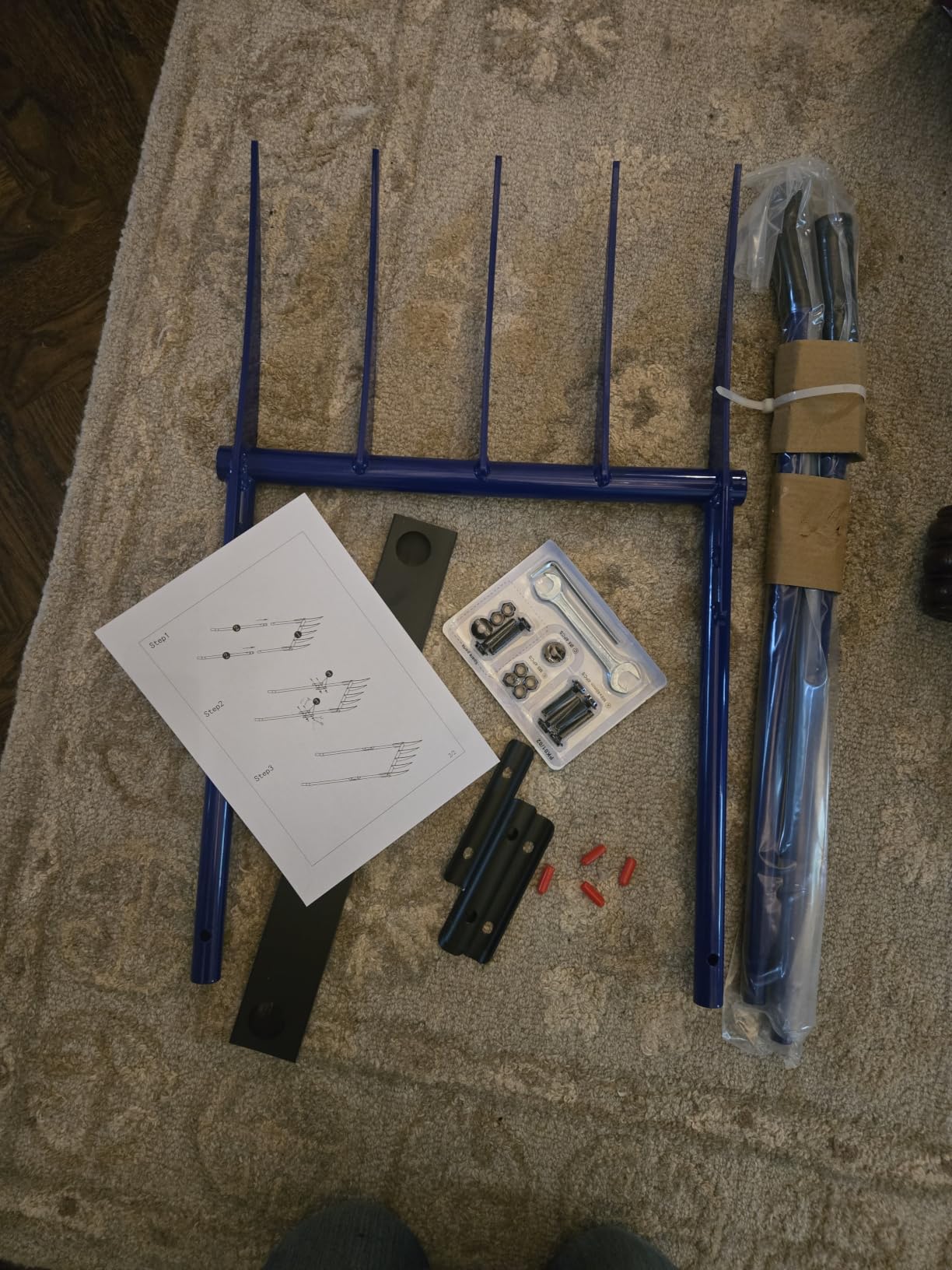
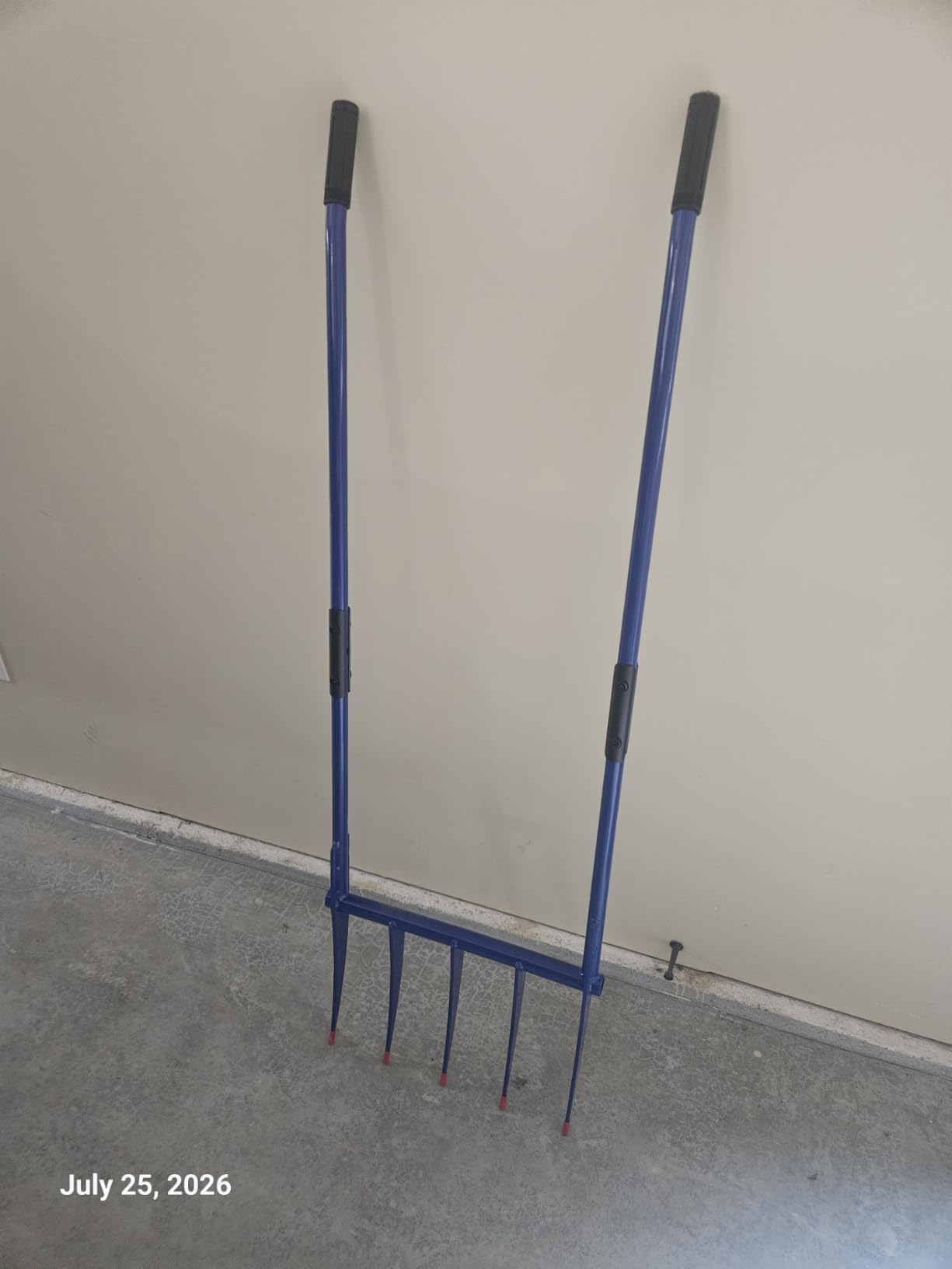
At 56 inches overall with a bottom-heavy feel, the tips sink in with less pressure than the weight suggests, which is the trade this design makes. Assembly is genuinely quick — four screws, about three minutes — and the box includes thickened wrenches and a protective cover so the head is not dragged across the floor in storage.
What owners consistently flag is the 18.9 pound, unbalanced feel. At 18.9 pounds it is among the heaviest tools here, and that weight helps the tines enter the ground while making the tool tiring to lift and reposition. Penetration in hard, compacted, or rocky soil remains difficult without stepping on it.
Small hardware issues also show up: curved washers are fragile during assembly, and the included wrench is a poor fit for the 13 mm nuts. Neither is a dealbreaker, but both are things you will notice on day one.
Who this broadfork suits
Gardeners converting turf or sod into productive ground, and anyone whose soil is deep enough to reward 11 inch penetration. It is also a satisfying tool for root vegetable harvest, where the depth pays off.
Who should look elsewhere
Anyone who is sensitive to weight, and gardeners with shallow soil or buried irrigation. Eighteen or nineteen pounds is a serious lift, and no specification compensates for a tool you struggle to bring home.
What Is a Broadfork and Why Beds Need One
A broadfork, also called a broad fork or a U-fork, is a long-handled garden tool with four to nine short steel tines mounted on a horizontal bar. You drive the tines straight down into the bed with your body weight, rock the tool forward a few inches, then pull the handles back toward you until they reach roughly 45 degrees. The soil lifts and separates along the tine channels and is never inverted.
The difference between a broadfork and a garden fork is size and reach. A garden fork or spading fork has a handful of shorter tines and is used for planting, dividing and lifting individual plants. A broadfork has longer tines, a wider head and much longer handles, and its job is bed preparation rather than plant handling.
Why it matters is what happens below the surface. Compaction squeezes out pore space, and water stops moving through the bed. A broadfork breaks the crust without destroying the fungal network, the earthworm channels and the topsoil layer, so the bed stays biologically active. It also brings up far fewer buried weed seeds than a tiller, which means less weeding for the rest of the season.
Used correctly, it replaces the physical output of a rototiller with an hour or two of honest work. That is a real trade, and it is the reason we wrote a whole section on who should skip one.
How to Choose the Right Broadfork for Your Bed
Five decisions determine whether you love this tool or quietly retire it after one season. Here is how we would think about each one, in the order they matter.
Match the working width to the bed. This is where most purchases go wrong, and it is the mistake we see most often in buyer questions. A 12 inch raised bed wants a narrow head; a 30 inch permanent bed wants a 19 to 24 inch head; a 36 inch market garden bed suits the widest forks available. A fork wider than your bed is not more efficient, it is unusable.
Choose tine length for your soil depth and your aim. Shorter tines around 8 to 9 inches are fine for annual bed prep. If you are breaking new sod or building deep-rooted crops, you want 10 inches or more. Depth beyond what your soil can give is wasted weight, so measure the loose depth of the bed before you chase a longer number.
Decide between round and flat plate steel. Round tines, as on the CobraHead, lift soil and release it cleanly, which protects roots and soil life. Flat plate tines are narrower and penetrate a hardpan or a stony bed more readily, at the cost of slicing what they pass through. Heavy clay and rocky ground favour plate steel; no-till beds favour round tines. Watch for tine points that fish-hook rather than penetrate — a rounded or fish-hooked tip is the most common failure mode reported on otherwise good forks.
Fit the handle to your height. Handles should reach roughly chest height when you stand on the crossbar. Too short and you spend the day folded over; too long and you cannot drive the tines in with your body weight. This is the single most common question on gardening forums, and adjustable-height designs exist precisely because a one-size shaft does not fit a two-person household.
Check whether the head is welded or bolted. Fully welded construction has nothing to loosen and nothing to shear. Bolted joints are cheaper to manufacture and are the first thing to fail when a tine meets a rock. If the listing is ambiguous, assume bolted.
Two smaller points that get overlooked. Weight is often quoted for the head alone rather than the assembled tool, so ask. And a warranty is worth real attention in this category, because the thing that eventually fails is almost always a tine rather than a handle.
Finally, work out your soil moisture before anything else. Broadforking saturated soil clumps it into slabs and destroys the structure you were trying to create. Let the bed dry to the point where a handful squeezed in your fist holds its shape but breaks apart when you press a thumb into it.
Broadfork vs Tiller vs Rototiller vs Spading Fork
These four get confused constantly, and the confusion drives a lot of bad purchases. A broadfork is a bed-preparation tool that works on one bed at a time using your own weight. A rototiller or cultivator is a powered machine that works across a whole plot quickly and can bury the soil structure it churns. A spading fork is for planting, dividing and lifting plants, not for breaking ground.
Where the broadfork wins is everything you cannot see. It preserves the fungal network, the worm population and the topsoil horizon, which is exactly the argument no-till and regenerative growers make. A tiller is faster over a large area and will win on sod conversion, but it also pulverises structure and brings a huge seed bank to the surface in one pass.
The honest summary: if you have raised beds or a small market garden and care what is living in the soil, a broadfork is the better tool. If you have half an acre of hard ground to open up once, a powered machine is faster and nobody will fault you for it. If you are simply planting out a row of seedlings, you need a spading fork and nothing on this page.
How to Use a Broadfork in Four Steps
Technique matters more than any specification. Most of the failures we read about come from how the tool is used, not what it is made of.
Insert at the end of the bed. Stand on the crossbar with your body weight, not your leg muscles, and drive the tines straight down using a gentle rock. Keep the handles low and the tines vertical.
Rock forward a few inches. This loosens the slice and gives the tines a small forward bite for the lift.
Pull the handles back to 45 degrees. This is the step that does the work. The soil lifts and separates along the tine channels without being turned over.
Advance and repeat. Move the fork forward one tine-spacing and pull again, then shake off the soil. New ground usually needs a second pass at a right angle to the first.
Two rules that save the tool. Never hit a rock at full force, because tine failure almost always starts there. And never broadfork wet soil, because water plus force makes slabs rather than the loose structure you are after.
For the kneeling-then-standing workflow, our guide to garden kneelers covers the ergonomics of the rest of the job.
When to Skip a Broadfork Entirely
We would rather you buy nothing than buy the wrong thing. A broadfork is overkill if your plot is very small, if your soil is already loose and well-structured, or if you are not prepared for the physical demand. New users regularly report exhaustion and blisters on the first pass, and that is not a design flaw.
It is also the wrong tool for rocky ground full of buried stone, for deeply rooted sod you intend to plough, and for anyone who wants results in a tenth of the time. In those cases, rent a powered machine for a day and buy a broadfork for the beds you will tend every year.
Frequently Asked Questions
What is the difference between a garden fork and a broadfork?
A garden fork or spading fork has a few short tines and is used for planting, dividing and lifting individual plants. A broadfork has longer tines, a much wider head and long handles, and is used to prepare whole beds: it lifts and separates soil to break compaction and add air without inverting the topsoil layer.
What is the best broadfork?
For most gardeners the Meadow Creature All Steel Broadfork is the strongest all-round choice, with fully welded alloy steel, twelve tines and a lifetime warranty. First-time buyers on lighter budgets are better served by the VEVOR 5-Tine, which has the largest body of owner feedback in the category at a 4.6 rating across 258 reviews.
Is a broadfork better than a tiller?
A broadfork is better for raised beds and permanent beds because it preserves the fungal network, the earthworms and the topsoil horizon while still breaking compaction. A tiller is faster over a large plot and better for one-time sod conversion, but it pulverises soil structure and brings up a large bank of buried weed seeds.
What is the best broadfork for clay soil?
Clay is hard work for any broadfork, and a fully welded steel model handles it best. The Meadow Creature All Steel Broadfork is the usual answer, with the KEMETIK and YiViKPE models as heavier alternatives that pierce compacted ground faster. Let heavy clay dry to the point where a squeezed handful keeps its shape but crumbles when prodded before you start.
Can a broadfork break up clay soil?
Yes, provided the soil is not saturated. A welded steel broadfork with long tines will break compacted clay in a few passes, and the nine tines on the Walensee cover a wide band per pull. Working clay when it is wet clumps it into slabs, which damages the structure rather than improving it.
How to properly use a broadfork?
Insert the tines at the end of the bed using your body weight on the crossbar, rock the tool forward a few inches, then pull the handles back toward you until they reach roughly 45 degrees. Advance by one tine spacing and repeat, shaking off soil between passes. New ground needs a second pass at a right angle to the first.
Can I use a pitchfork as a broadfork?
A hay pitchfork has thin, widely spaced spring tines designed to lift light material, so it will bend in compacted soil almost immediately. It can work as a rough broadfork in already-loose beds and for turning compost, but it is not a substitute for a purpose-built broadfork with short, thick, hardened tines.
What width broadfork do I need for raised beds?
For a 12 inch wide raised bed, choose a head around 10 to 12 inches so the tines work inside the frame. For 30 inch permanent beds, a 19 to 24 inch head is the sensible range, and the SENVERT with its 19.5 inch head fits well. A fork wider than the bed itself is awkward rather than efficient.
Why did my broadfork tines bend?
Tine failure almost always comes from hitting a rock or root at full force, or from driving a forked or bolt-secured head past its limit. Use a welded steel model, rock the tines in gently rather than stabbing, and work soil that is dry enough to give rather than wet enough to grip the tips.
Do I need a broadfork for a small garden?
For a plot of only a few square feet, a hand cultivator and a spading fork will cover everything you need. A broadfork starts to earn its place once you are working raised beds or several permanent beds each spring, or when compacted soil is stopping water from draining through.
Final Verdict on the Best Broadforks for Garden Beds
Buy the VEVOR 5-Tine Broad Fork if this is your first broadfork or you work two or three beds a season. It has more written owner feedback than any other fork here, a 54 inch length that keeps your back straight, and a detachable build that stores in a small shed. Start here and you will know within a season whether you want something heavier.
Buy the Meadow Creature All Steel Broadfork if you have clay, hardpan, sod, or a plan to keep this tool for twenty years. Fully welded alloy steel, twelve tines, a lifetime warranty and a made-in-USA build, at fifteen pounds you will feel every time you lift it. Nothing in this roundup held up better against hard ground.
Match the rest to the job. The Walensee covers the most ground per pull. The CobraHead’s round tines lift rather than slice, which protects soil life. The DeWit weighs almost nothing and is the kindest option for an older back. The VIOLAPARK solves handle height for two people sharing one tool. And the VASALAID and SENVERT are sensible mid-weight choices for beds that are already in decent shape.
Whichever you choose, let the bed dry first, insert with your body weight, and pull to 45 degrees. Used that way, any of these will earn its place in the shed — and you can see the full side-by-side specs in the table above whenever you need a second look.