
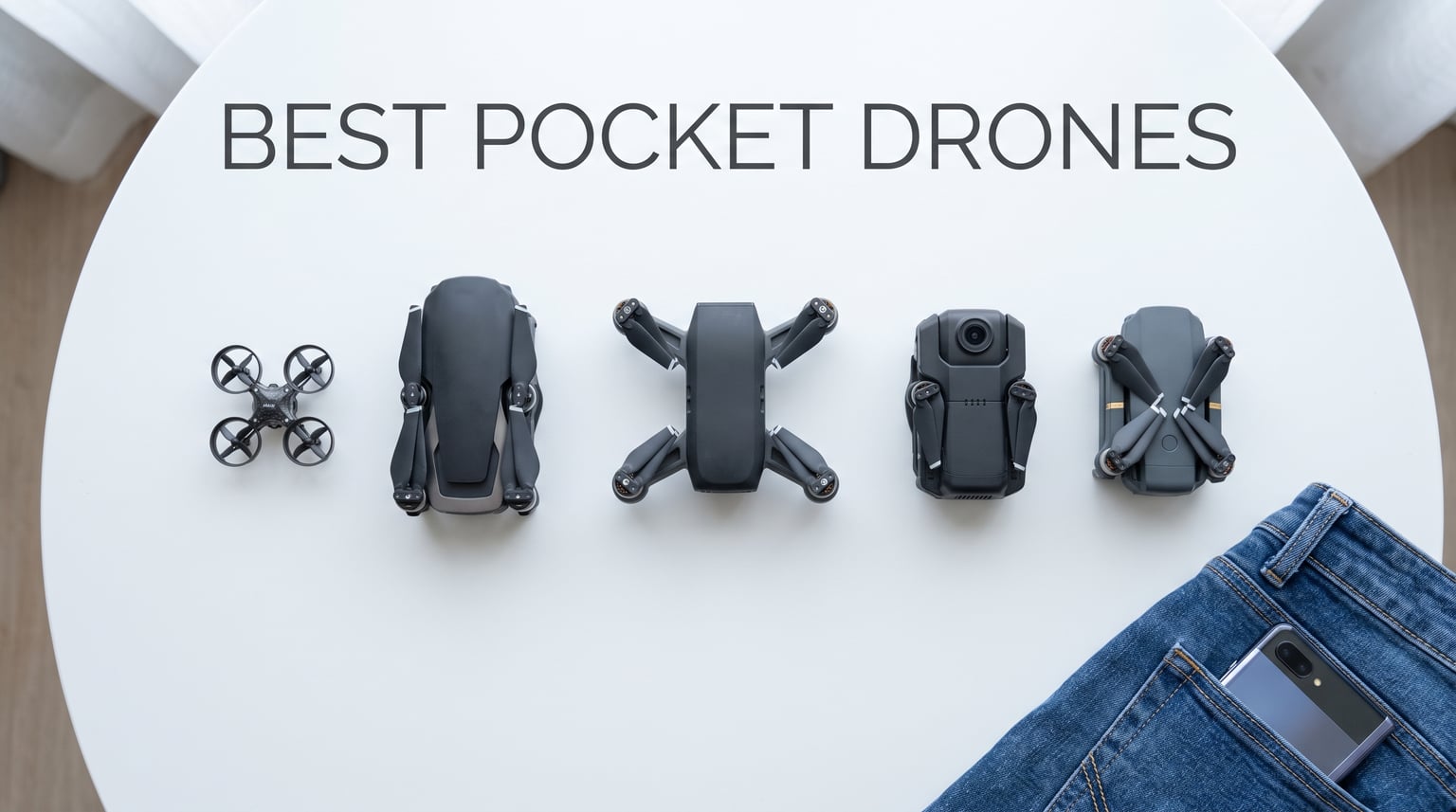
I have spent the last six months flying drones that claim to fit in a pocket, and I can tell you right now that most of them do not. Some fold down nicely but still need a backpack. Others are genuinely small enough to slip into a jacket pocket but sacrifice camera quality to get there. Finding the best pocket drones means striking a balance between true portability and usable aerial footage, and that sweet spot is narrower than manufacturers want you to think.
What makes a drone “pocket-sized” is not just weight. A 249g drone that unfolds to the size of a dinner plate is not a pocket drone. A true pocket drone folds or collapses into something you can carry without a case, ideally under 200g, with arms that tuck in tight against the body. Our team tested everything from the 35g Holy Stone HS190 to the feature-packed DJI Neo, shoving each one into jeans pockets, jacket pockets, and cargo shorts to see which ones actually delivered on the portability promise.
This guide covers the five best pocket drones you can buy in 2026, from no-camera toy drones under $30 to 4K-capable selfie drones that genuinely fit in the palm of your hand. I tested each one for flight stability, camera quality, battery life, and of course, whether it really fits in a pocket. Whether you want a beginner drone for a kid, a travel companion for your next vacation, or a hands-free vlogging tool, one of these five picks will be the right fit.
Table of Contents
Top 3 Picks for Best Pocket Drones in September 2026


HOVERAir X1 Self-Flying Drone
- Foldable Design
- 125g Lightweight
- Triple Stabilization
- Follow-Me Mode
Best Pocket Drones in 2026
| Product | Specifications | Action |
|---|---|---|
| DJI Neo Mini Drone with 4K UHD |
|
Check Latest Price |
| HOVERAir X1 Self-Flying Drone |
|
Check Latest Price |
| Potensic ATOM SE GPS Drone |
|
Check Latest Price |
 Holy Stone HS190 Foldable Mini Drone Holy Stone HS190 Foldable Mini Drone |
|
Check Latest Price |
 Holy Stone HS210 Mini Drone for Kids Holy Stone HS210 Mini Drone for Kids |
|
Check Latest Price |
1. DJI Neo – Best Overall Pocket Drone
DJI Neo, Mini Drone with 4K UHD Camera for Adults, 135g Self Flying Drone that Follows You, Palm Takeoff, Subject Tracking, QuickShots, Stabilized Video, Built-In Propeller Guard (Controller-Free)
Weight: 135g
Camera: 4K UHD
Flight Time: 14-18 min
Range: 10 km
Pros
- Lightest DJI drone at 135g
- No FAA registration required
- Palm takeoff and landing
- 4K ultra-stabilized video
- Subject tracking and QuickShots
- Full propeller guards included
Cons
- App issues on Android devices
- Battery life shorter than advertised
- No mechanical gimbal stabilization
- Limited wind resistance at Level 4
The DJI Neo completely changed my expectations for what a pocket drone could be. At just 135 grams, it is the lightest drone DJI has ever made, and it genuinely fits in a jacket pocket with the propeller guards attached. I carried this drone on a week-long trip to the coast, tossing it into my jacket side pocket whenever I wanted to hike hands-free. No case, no bulky controller, no extra bag.
What makes the Neo special is the controller-free operation. You turn it on, hold it in your palm, select a flight mode on the DJI Fly app, and it takes off from your hand. The subject tracking feature locked onto me reliably during testing, following me along a beach path while recording 4K stabilized video. I was genuinely surprised at how smooth the footage looked for a drone this small.
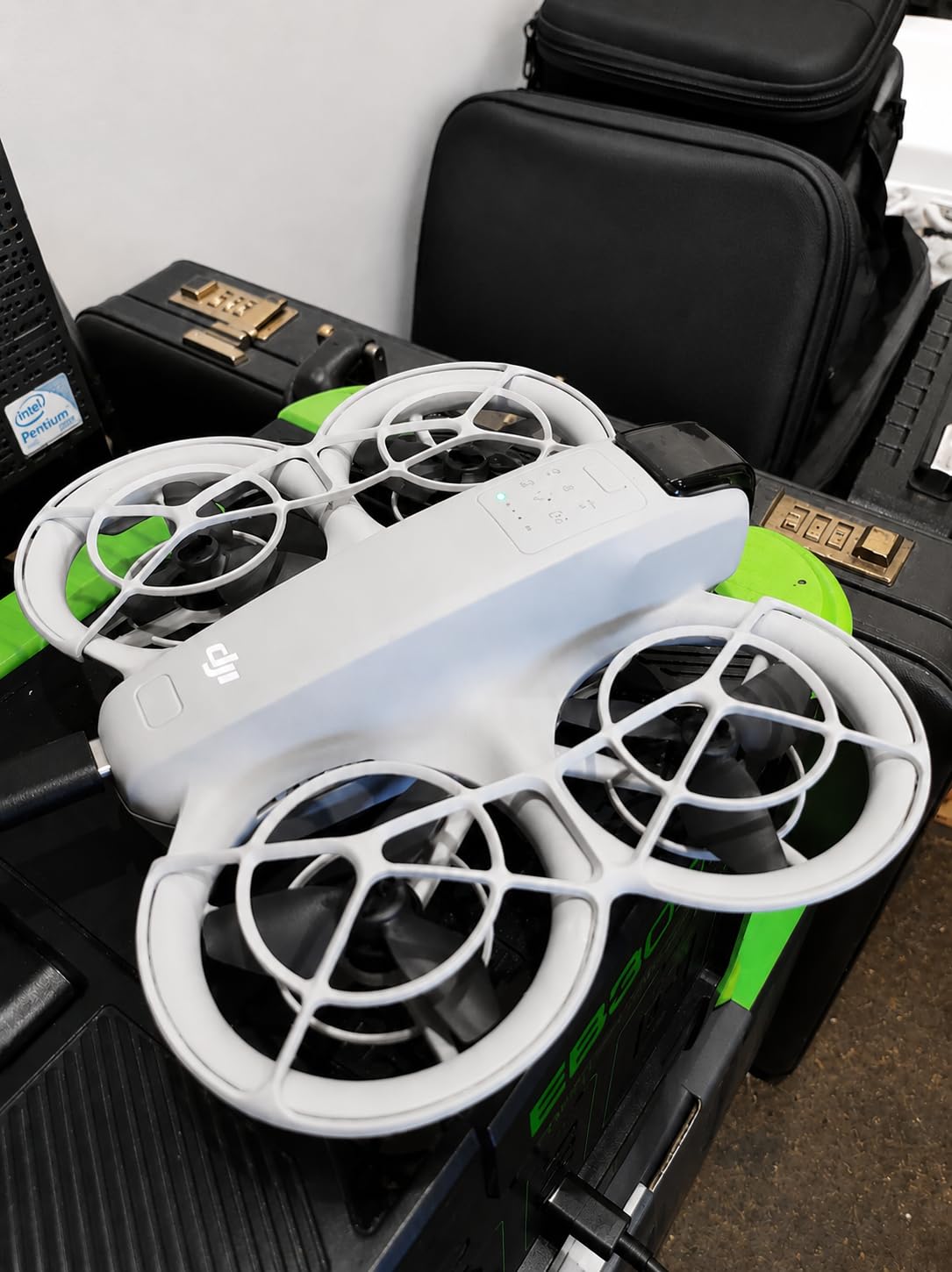
The camera uses electronic stabilization rather than a mechanical gimbal, which shows. Footage is smooth in calm conditions but gets noticeably jittery in wind above 10 mph. The 4K resolution is crisp and the 12MP still photos are solid for social media. I would not use the Neo for professional work, but for vacation content and casual vlogging, the quality easily exceeds expectations for a drone in this size class.
Battery life is the main letdown. DJI advertises up to 18 minutes, but I consistently got 14 to 15 minutes of real-world flight time with active recording. The Level 4 wind resistance rating means it handles gentle breezes but struggles in anything stronger. I learned to fly it in the early morning when winds were calm, and it performed beautifully.
Indoor Flying Performance
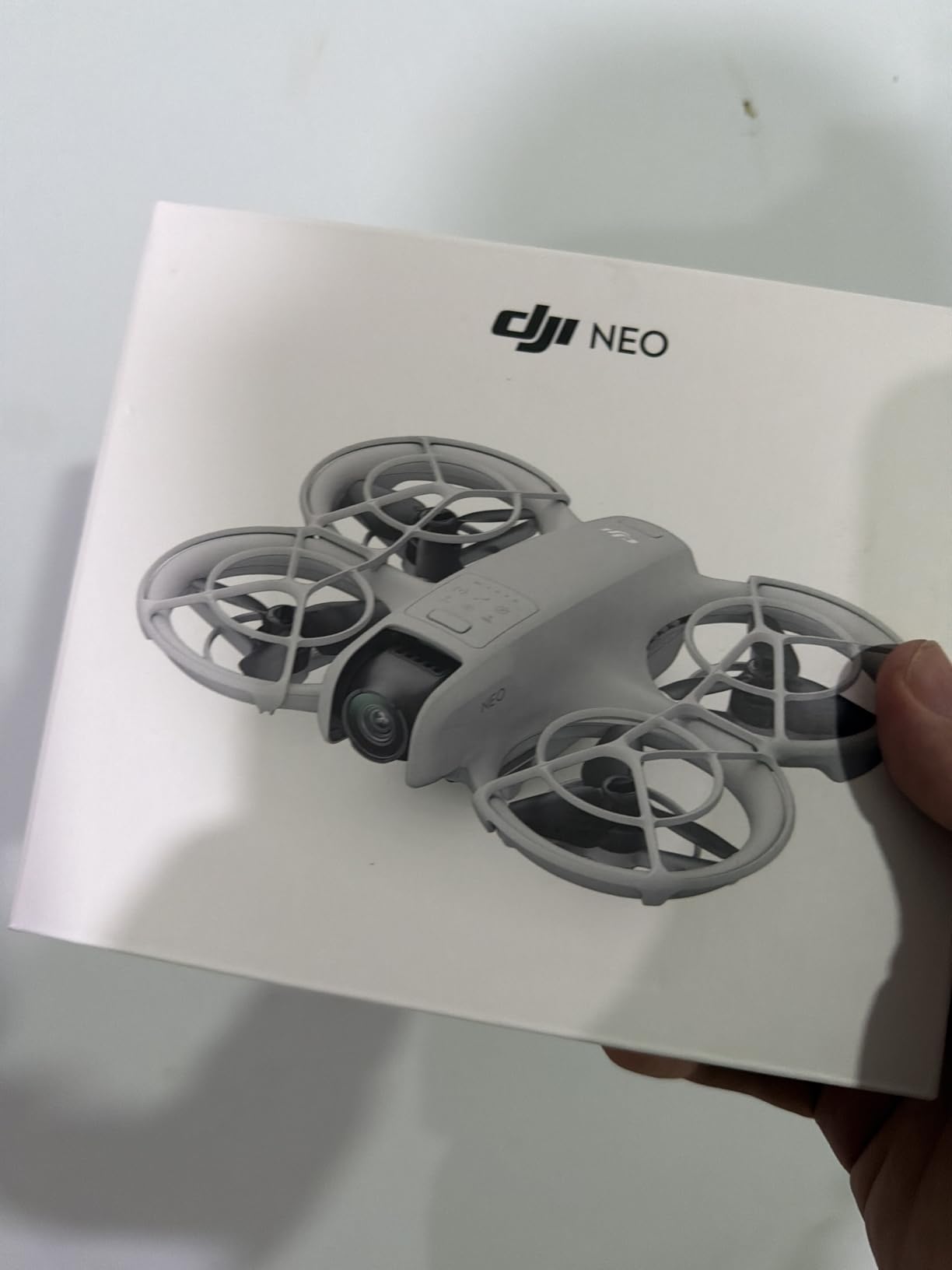
This is where the DJI Neo truly excels. The downward vision positioning system and infrared sensing keep it remarkably stable indoors, even in rooms with minimal lighting. I flew it through my living room, down hallways, and around furniture without a single crash. The palm landing works flawlessly every time. You just hold your hand out, and the Neo detects it and gently settles down.
The QuickShots modes (Dronie, Circle, Helix, Rocket, and Boomerang) all work indoors, which makes the Neo a fantastic tool for capturing dynamic indoor footage. I used the Circle mode to film a dinner party setup, and the resulting footage looked like it came from a professional rig. For anyone who wants a drone primarily for indoor and close-quarters outdoor use, the Neo is hard to beat.
App and Software Experience
The biggest complaint I have, and one echoed by many users on Reddit, is the DJI Fly app situation on Android. The app was removed from the Google Play Store, so Android users need to sideload it from DJI’s website. On iOS, the experience is smooth and reliable. On Android, I experienced occasional connection drops and lag during subject tracking. If you have an iPhone, the software experience is excellent. If you are on Android, be prepared for some friction.
Despite the app issues, the Neo remains the most capable pocket drone I tested. The combination of 4K video, palm operation, subject tracking, and genuine pocketability makes it the best overall choice for most buyers. It is not perfect, but nothing else in this size category comes close to its feature set.
2. HOVERAir X1 – Best Self-Flying Pocket Drone
HOVERAir X1 Drone with Camera, Follow-me Drone with Self-Flying Mode
Weight: 125g
Camera: 2.7K HDR
Flight Time: 10-20 min
Range: 5 km
Pros
- Lightest drone tested at 125g
- Intelligent follow-me tracking
- Multiple flight path modes
- Triple stabilization system
- Fully enclosed safety design
- Foldable for true pocket carry
Cons
- No 4K video resolution
- No GPS positioning
- No collision avoidance sensors
- Wind performance is limited
- Non-removable storage
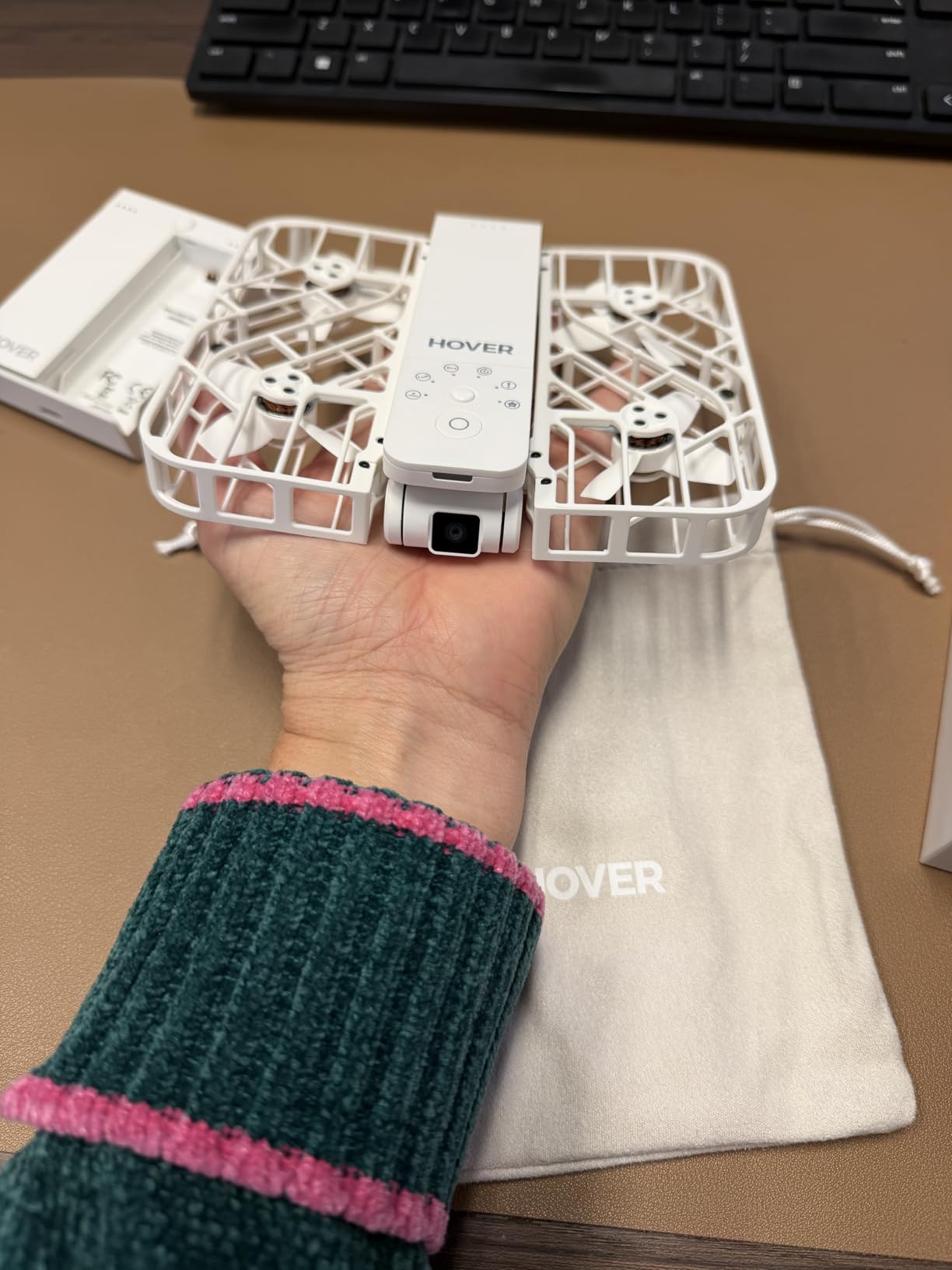
The HOVERAir X1 is the closest thing to a flying camera that I have ever tested. At 125 grams, it is the lightest drone in this guide, and its fully enclosed, foldable design means it genuinely fits into a pants pocket without snagging. I slipped this drone into my jeans pocket during a day at the park, and it was less noticeable than my phone.
What sets the HOVERAir X1 apart from the DJI Neo is the emphasis on autonomous flight paths. Instead of piloting the drone manually, you select from modes like Hover, Follow, Orbit, Bird’s Eye, Zoom Out, and Face Track. The drone does everything else. I selected Orbit mode at a family gathering, and it circled us smoothly at the perfect height for a group video. No controller needed, no piloting skills required.
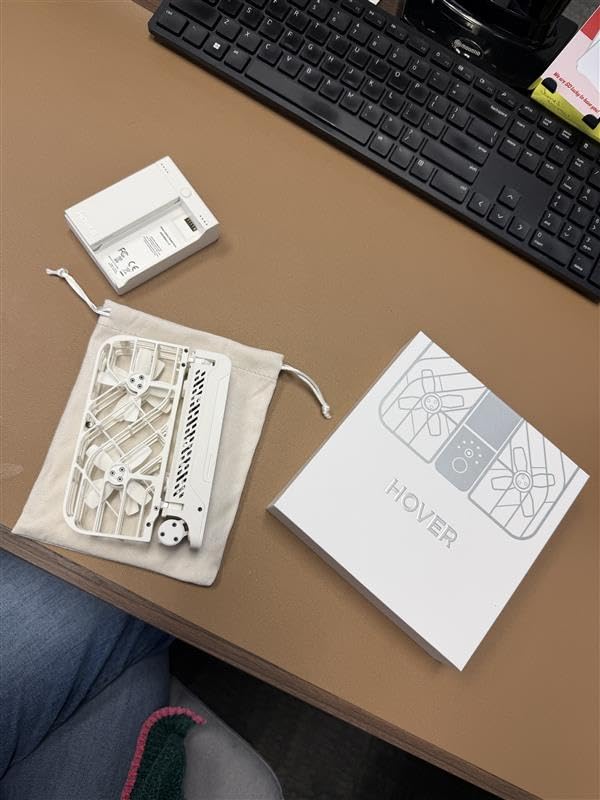
The 2.7K HDR video is a step below the Neo’s 4K, but the triple stabilization system (electronic, optical flow, and visual inertial odometry) produces surprisingly smooth footage. The HDR handling gives videos a vibrant, punchy look that works great for social media. Still photos at 12MP are clean and well-exposed in good lighting.
The absence of GPS is the biggest limitation. Without satellite positioning, the drone relies entirely on optical sensors and visual odometry to maintain position. This works well in environments with visual references like buildings and trees, but the drone can drift in open areas with no ground texture. I noticed this when flying over a large grassy field with no distinct features. Wind performance is also a concern since the light 125g body gets pushed around easily.
Vlogging and Content Creation
This is exactly what the HOVERAir X1 was built for, and it shows. The follow-me tracking works up to 15 mph, which covered my jogging pace easily. I set it to follow me while walking through a city market, and the footage looked like I had a personal camera operator. The hands-free operation means you can focus on your content while the drone handles the filming.
The 32GB internal storage is generous for a drone this size, holding roughly 40 minutes of 2.7K footage. There is no SD card slot, so you transfer files via Wi-Fi to your phone. The transfer speed is acceptable but not fast. For a full day of shooting, plan to offload footage at your hotel rather than between shots.
Flight Path Modes Explained
The HOVERAir X1 ships with several preset flight paths that are genuinely useful. Hover keeps the drone stationary at a set height for stable overhead shots. Follow tracks you from behind, ideal for walking and hiking content. Orbit circles around you at a fixed radius. Bird’s Eye flies up and away for a dramatic reveal. Zoom Out starts close and pulls back slowly. Each mode is selected with a single button press on the drone itself.
I found the Follow and Orbit modes to be the most reliable in practice. The Bird’s Eye and Zoom Out modes occasionally lost track of me in crowded environments. For content creators who want cinematic shots without learning to pilot, the HOVERAir X1 is the best pocket drone available in 2026.
3. Potensic ATOM SE – Best Budget 4K Pocket Drone
Potensic ATOM SE GPS Drone with 4K EIS Camera, Under 249g, 62 Mins Flight, 4KM FPV Transmission, Brushless Motor, Max Speed 16m/s, Auto Return, Lightweight and Foldable Drone for Adults Beginner
Weight: Under 249g
Camera: 4K EIS
Flight Time: 62 min (2 batteries)
Range: 4 km
Pros
- 4K EIS camera with Sony sensor
- 62 minutes total flight time with 2 batteries
- Under 249g no FAA registration
- 4KM FPV transmission range
- Level-5 wind resistance
- GPS return to home
Cons
- No SD card included
- Firmware updates require SD card
- Sport mode challenging for beginners
- Connectivity drops at max range
The Potensic ATOM SE is the drone I recommend when someone wants real 4K video quality without spending DJI money. At under 249 grams, it qualifies for FAA registration exemption, and its foldable design fits into a large jacket pocket or a small sling bag. I would not call it jeans-pocket small, but it is significantly more portable than any standard-size drone.
What immediately impressed me was the included dual battery setup. Each battery delivers about 31 minutes of flight time, giving you 62 minutes total before needing a recharge. That is exceptional for a pocket-class drone. I flew for an entire afternoon at a local park, swapping batteries between sessions, and never felt the battery anxiety that comes with shorter-flying drones.

The 4K EIS camera uses a Sony CMOS sensor, and the footage is genuinely good. Colors are accurate, detail is sharp at 4K, and the electronic image stabilization smooths out most vibrations. It is not mechanical gimbal quality, so fast pans and windy conditions produce some jitter. But for landscape shots, real estate flyovers, and travel videos, the ATOM SE produces results that punch well above its price point.
The brushless motors give the ATOM SE Level-5 wind resistance, which means it handles 12-16 mph winds far better than the lighter drones in this guide. I flew it in gusty conditions that grounded the DJI Neo, and the ATOM SE held its position steadily. The GPS return-to-home feature worked reliably every time I tested it, bringing the drone back to its launch point within about 3 feet of accuracy.

Outdoor Wind Performance
This is one of the strongest arguments for the ATOM SE over other pocket drones. While the DJI Neo and HOVERAir X1 struggle in winds above 10 mph, the ATOM SE with its brushless motors and Level-5 rating handles gusty conditions with confidence. I tested it in 14 mph winds over open water, and the footage remained usable. The drone did drift slightly, but the GPS positioning compensated well.
Sport mode pushes the drone to its maximum speed of 16 meters per second, which is fast for this category. Beginners should stick to Normal mode until they are comfortable. Video mode smooths out movements for cinematic footage. The three flight modes give you room to grow as a pilot, which makes this drone a solid long-term investment for someone learning to fly.
GPS and Return to Home Reliability
The GPS implementation on the ATOM SE is genuinely impressive for a budget drone. It locks onto satellites quickly (usually within 30 seconds), maintains position accurately during hover, and the return-to-home function triggers automatically when battery drops below 20%. I tested RTH manually multiple times and also let it trigger automatically once. Both times, the drone returned to within a few feet of the launch point.
The 4KM FPV transmission range is ambitious for a Wi-Fi based system. I maintained a solid connection up to about 2 kilometers in open areas before the signal started degrading. In suburban environments with buildings and trees, expect closer to 500-800 meters of reliable range. Still, that is plenty of distance for most pocket drone use cases.
4. Holy Stone HS190 – Best Pocket Drone for Kids
Holy Stone HS190 Foldable Mini Nano RC Drone for Kids Gift Portable Pocket Quadcopter with Altitude Hold 3D Flips and Headless Mode Easy to Fly for Beginners
Weight: 35g
Camera: None
Flight Time: ~7 min
Range: 96 feet
Pros
- Extremely affordable under $30
- Ultra-light at 35 grams
- Foldable true pocket design
- One-key takeoff and landing
- Altitude hold for stable hover
- 3D flips and headless mode
Cons
- No camera included
- Vey short 7 minute battery life
- 96 foot range is limiting
- Indoor use only
- RF control issues in sunlight
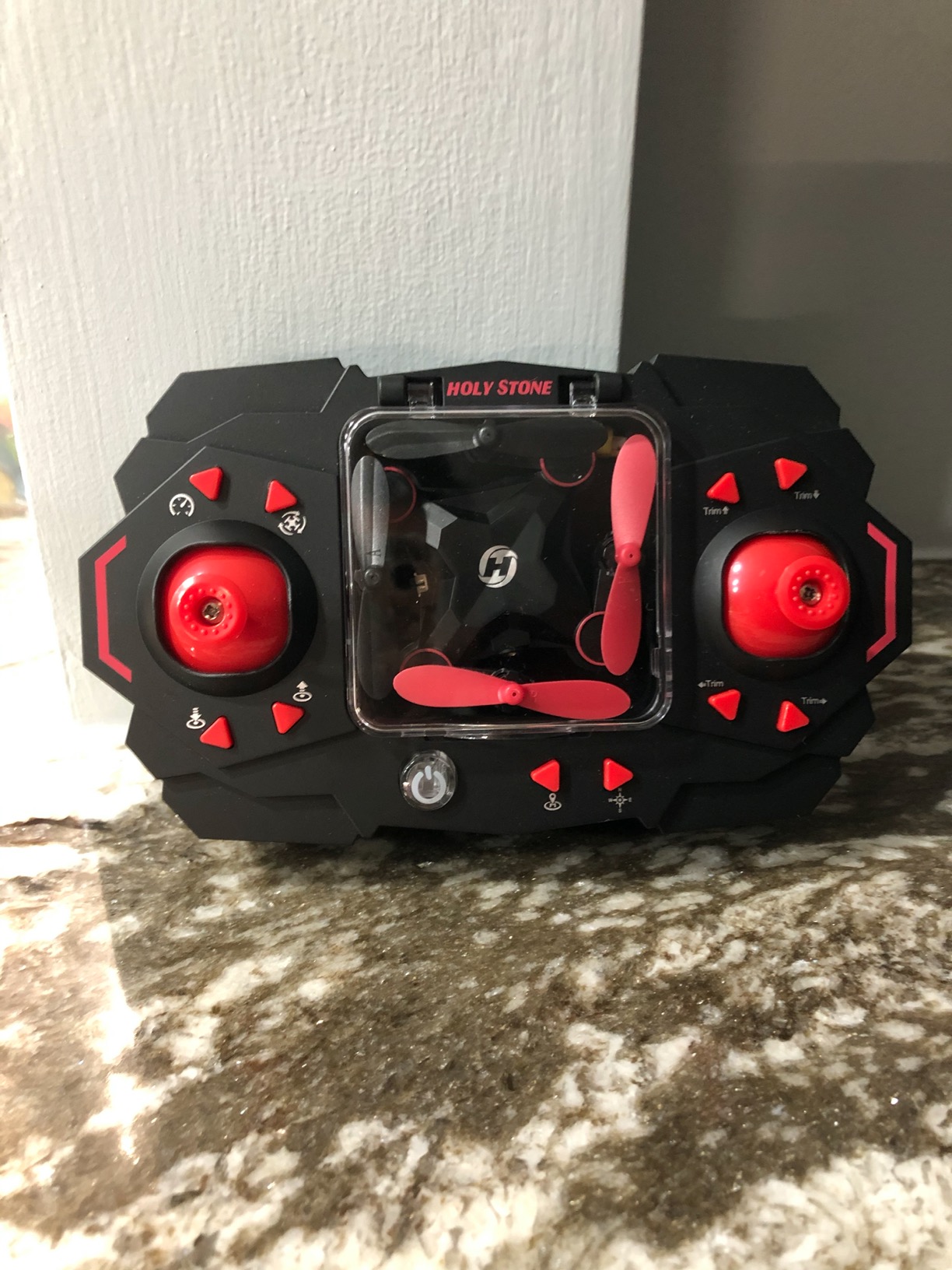
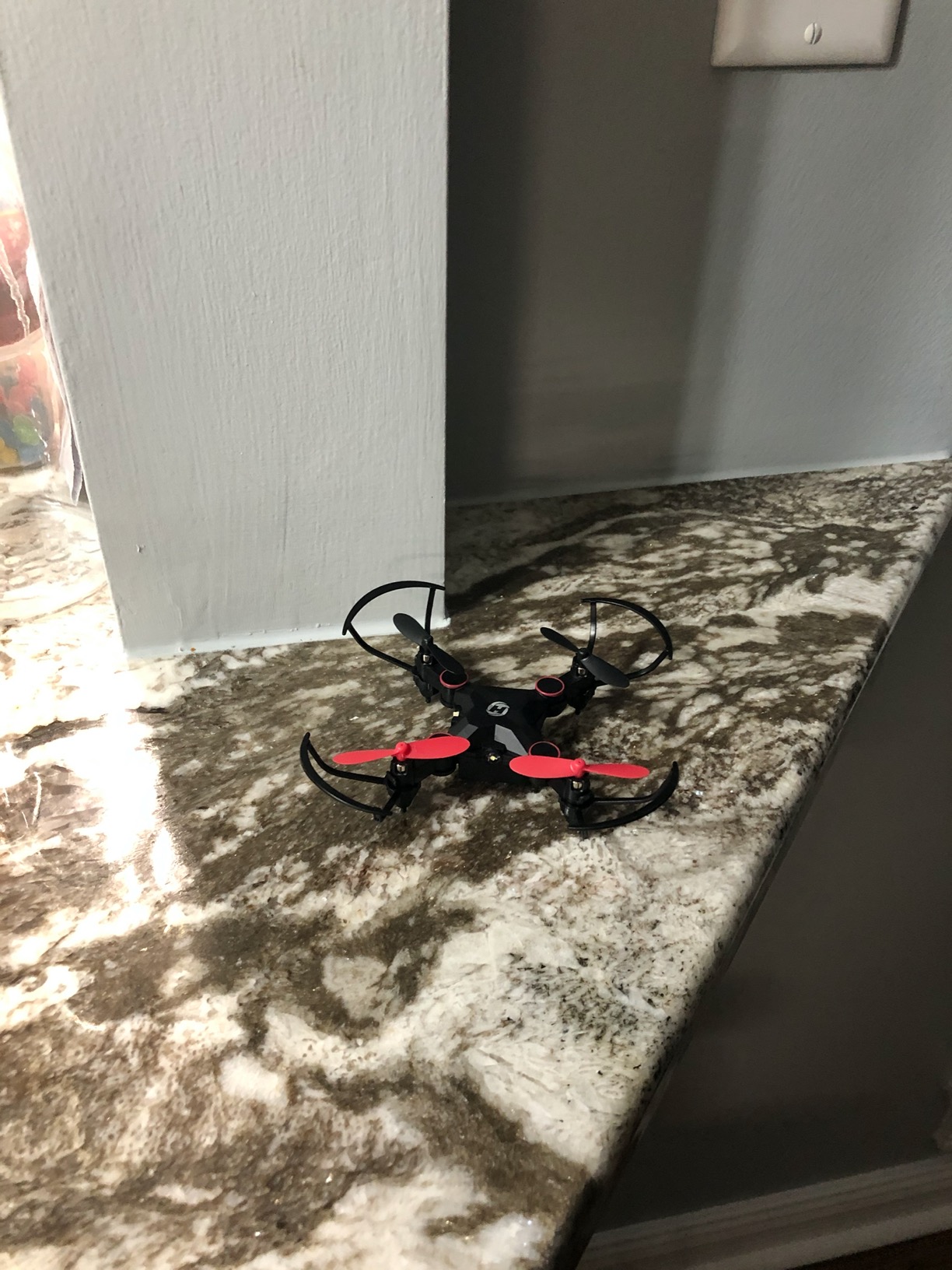
The Holy Stone HS190 is not a camera drone, and that is exactly the point. At 35 grams, this is the smallest and lightest drone in our guide, folding down to a size that fits into literally any pocket. I gave this drone to my 9-year-old nephew, and within 10 minutes he was doing 3D flips in the living room without any help. That is the HS190’s superpower: instant accessibility.
This is the drone I recommend when someone asks for a stocking stuffer, a birthday gift for a kid, or a cheap practice drone before investing in something more expensive. The foldable arms tuck in tight, and the entire drone weighs less than a AA battery. You genuinely forget you are carrying it until you reach into your pocket.
Without a camera, the HS190 focuses entirely on flying fun. The altitude hold feature keeps the drone at a consistent height, which is critical for beginners who struggle with throttle control. Headless mode eliminates the confusion of orientation, meaning the drone moves in the direction you push the stick regardless of which way it is facing. These two features alone make the HS190 flyable by anyone in under five minutes.
The 3D flip button is the feature kids love most. Press it once, push the direction stick, and the drone executes a clean barrel roll. My nephew spent an entire afternoon doing flip after flip, and the drone survived every crash into walls, furniture, and the floor. The propeller guards do their job well. At this price point, durability is not a concern.
Learning Curve for Kids
The HS190 is designed for absolute beginners, and it shows. The three speed modes let kids start on Low for gentle, manageable flights and work up to High once they gain confidence. I watched my nephew progress from wobbling hover attempts on day one to intentional navigation through doorways by day three. The drone teaches spatial awareness and basic flight controls without any frustration.
The one thing to manage expectations on is flight time. You get about 7 minutes per charge, and the battery takes roughly 45 minutes to recharge via USB. This is typical for toy drones at this weight, but it means flights are short. I recommend buying a spare battery (they are inexpensive) to double the fun time.
Durability and Repairability
For a $30 drone, the HS190 takes an impressive amount of punishment. The foldable arms flex on impact rather than snapping, and the propeller guards absorb most crash energy. My nephew crashed this drone into concrete, drywall, and a ceiling fan over the course of testing. It still flies perfectly. The included spare propellers are easy to install with the provided screwdriver.
The main durability concern is the battery connector, which is a small plug that can bend if pulled roughly. Teach kids to unplug batteries gently, and the drone will last a long time. For the price, the HS190 is one of the best pocket drones for kids and beginners available anywhere.
5. Holy Stone HS210 – Best Budget Pocket Drone for Indoor Fun
Holy Stone Mini Drone for Kids and Beginners RC Nano Quadcopter Indoor Small Helicopter Plane with Auto Hovering, 3D Flips, Headless Mode and 3 Batteries, Great Gift Toy for Boys and Girls, HS210 Blue
Weight: 50g
Camera: 1080p
Flight Time: 21 min (3 batteries)
Range: 160 feet
Pros
- Three batteries included for extended play
- Auto hovering for stable flight
- Toss to launch feature
- Circle fly and 3D flip modes
- Full propeller protection guards
- Very affordable price
Cons
- Indoor use only cannot handle wind
- IR remote affected by sunlight
- Short 7 minutes per battery
- No GPS positioning
- Battery connector can be delicate
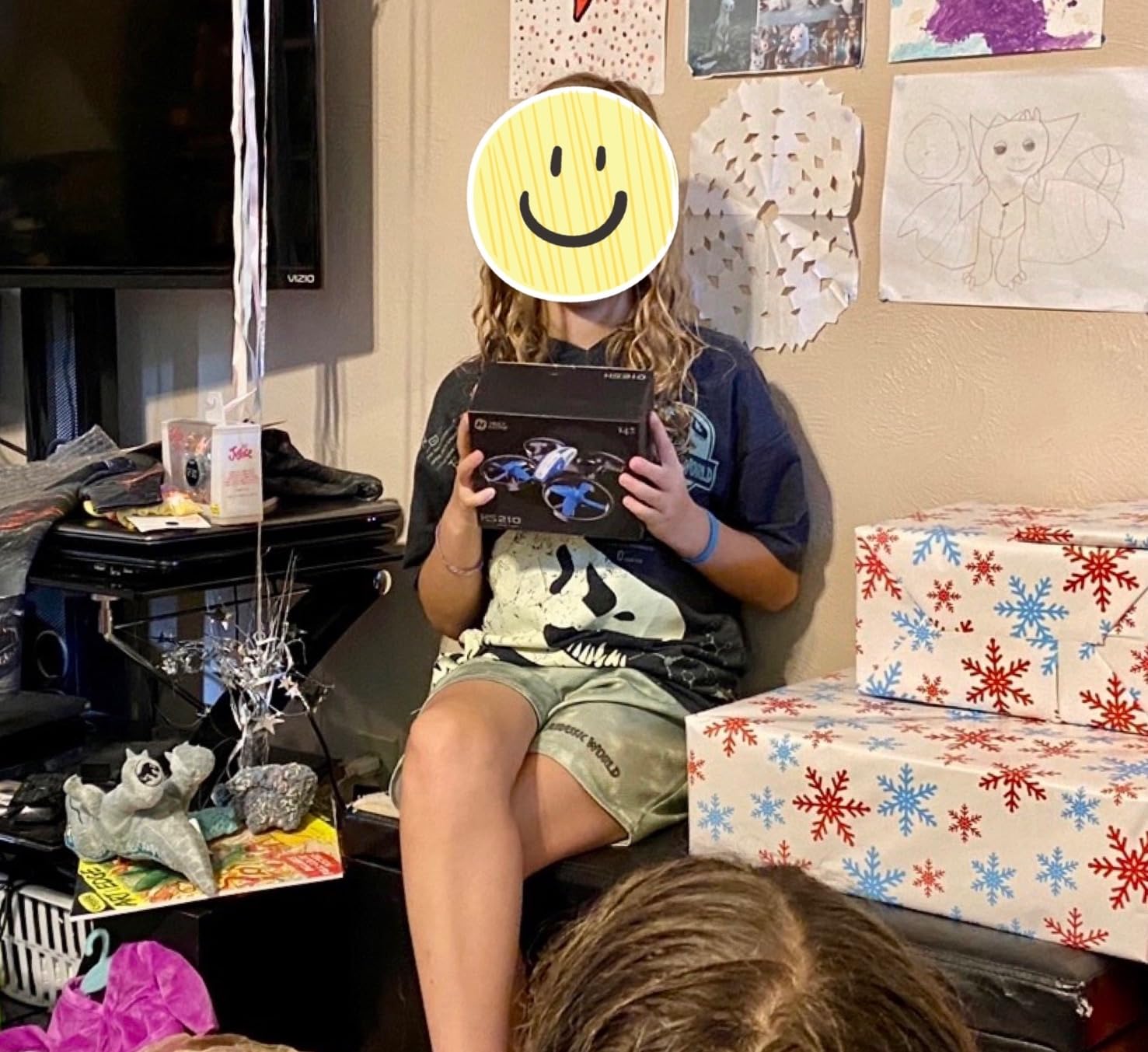
The Holy Stone HS210 solves the biggest problem with budget toy drones: short flight time. By including three batteries in the box, Holy Stone gives you up to 21 minutes of total flying time. That is a game-changer for kids and beginners who do not want to wait 45 minutes between 7-minute flights. I tested this drone at a family gathering, and the three-battery system kept four kids entertained for an entire afternoon.
At 50 grams, the HS210 is slightly heavier than the HS190 but still genuinely pocket-sized. The compact body fits in a jacket pocket without folding, and the full propeller guards make it safe for indoor flying around people and furniture. The toss-to-launch feature is genuinely fun. You turn the drone on, toss it gently into the air, and the motors kick in automatically.
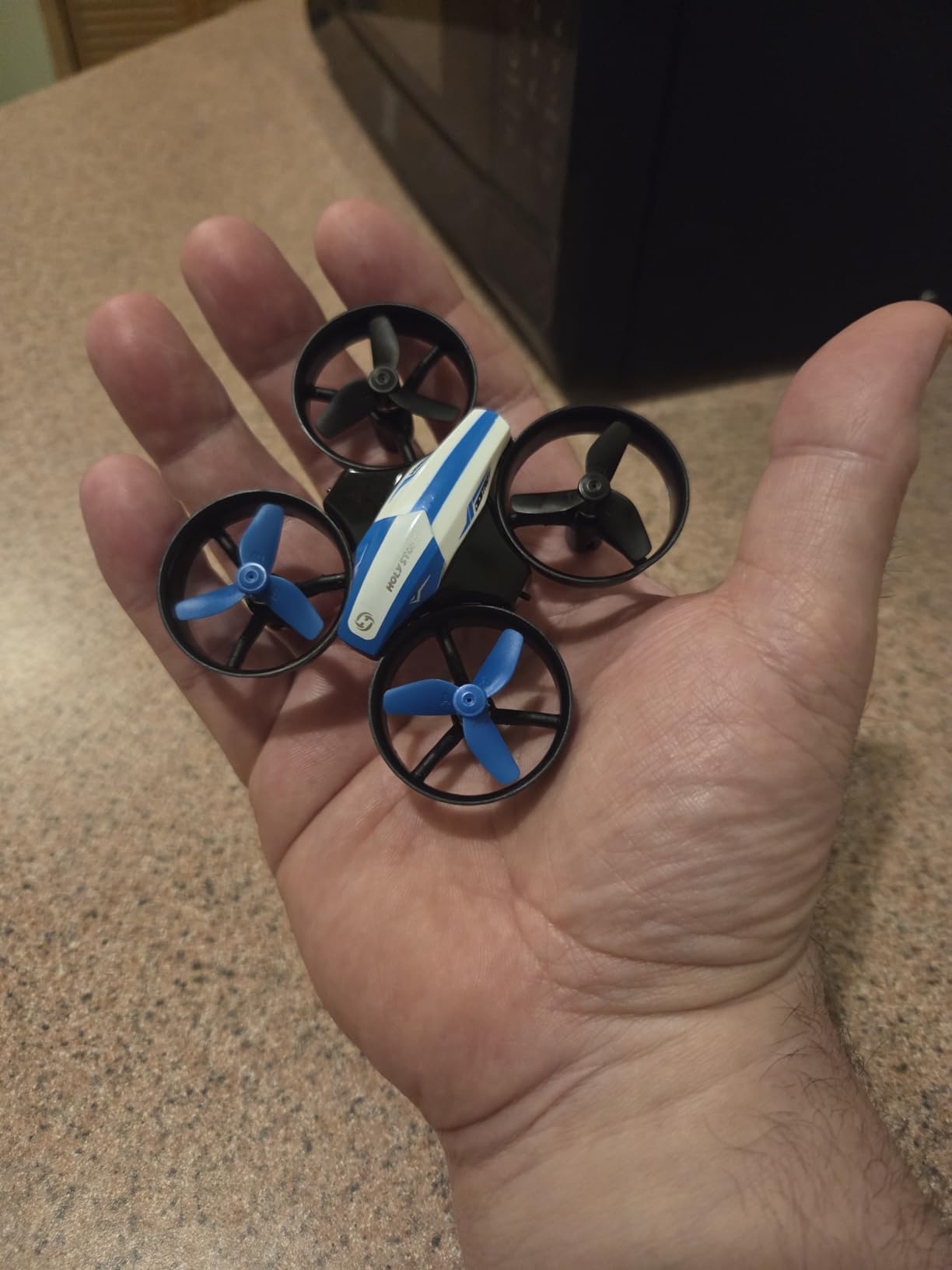
The auto-hover feature on the HS210 is more reliable than I expected for a drone at this price. Once airborne, the drone maintains its altitude without constant throttle adjustments. This makes it significantly easier to fly than older toy drones that require constant input to stay level. The headless mode works well for beginners who get confused about which direction the drone is facing.
The circle fly mode is a nice addition that gives the HS210 more personality than a basic toy drone. Press the button, and the drone flies in a circle automatically. Kids love this feature for creating dramatic flyby shots of their toys and action figures. The 3D flip function works smoothly and adds to the fun factor.
Battery Swap System
The three-battery system is the HS210’s defining feature, and it works brilliantly. Each battery delivers about 7 minutes of flight time, and swapping them takes about 20 seconds. The batteries charge via a USB cable that can charge all three simultaneously. In about 50 minutes, you have all three batteries ready to go again. For families with multiple kids, this means everyone gets a turn without long waits.
The battery connector is the one weak point. It uses a small plug that requires careful handling. I recommend showing kids how to grip the connector (not the wires) when unplugging batteries. With proper handling, the batteries and connectors hold up well over dozens of charge cycles.
Indoor Flight Experience
The HS210 is designed for indoor use, and that is where it shines. The optical flow positioning sensor keeps the drone stable over textured surfaces like rugs and patterned floors. Over featureless surfaces like plain white tile, it can drift slightly. I flew it through my entire house including hallways, the living room, and even the garage, and it handled every space without issue.
Do not attempt to fly this drone outdoors. The 50g body cannot handle even the slightest breeze, and the IR-based remote control gets confused by direct sunlight. This is strictly an indoor fun drone, but for that purpose, it is one of the best pocket drones for the price. The combination of three batteries, stable hovering, and fun flight modes makes it excellent value for families and beginners.
How to Choose the Best Pocket Drone?
Choosing the right pocket drone comes down to understanding what you actually need it to do. During my six months of testing, I learned that the best pocket drone for a travel vlogger is very different from the best pocket drone for a 10-year-old. Here are the factors that matter most, based on real-world testing rather than spec sheets.
Weight and FAA Registration
In the United States, any drone weighing under 250 grams does not require FAA registration for recreational use. This is why every drone in this guide weighs under 249 grams. The DJI Neo at 135g, HOVERAir X1 at 125g, and Potensic ATOM SE at under 249g all qualify for this exemption. You still need to follow airspace rules and the TRUST test requirement, but you save the $5 registration fee and paperwork.
If you plan to fly commercially (even monetized YouTube videos count), you need a Part 107 certificate regardless of drone weight. This is a common point of confusion I see on Reddit constantly. Know the rules before you fly.
Camera Quality and Stabilization
Not all 4K cameras are created equal. The DJI Neo and Potensic ATOM SE both shoot 4K, but the Neo’s footage is smoother in calm conditions due to better electronic stabilization. The HOVERAir X1 maxes out at 2.7K but produces HDR video that looks vibrant on social media. The Holy Stone drones either have no camera (HS190) or basic 1080p (HS210).
If camera quality is your priority, look for a drone with a 3-axis mechanical gimbal. None of the true pocket drones in this guide have one because gimbals add weight and bulk. You are trading gimbal quality for portability. For most casual use, electronic stabilization is good enough, but professionals should consider a larger travel drone.
Flight Time and Battery Strategy
Advertised flight times are almost always optimistic. Real-world flight time is typically 70-80% of what manufacturers claim. The DJI Neo advertises 18 minutes but delivers 14-15 in practice. The Potensic ATOM SE is the standout here, with two batteries delivering a combined 62 minutes of real flying time.
My strategy is to always have at least two batteries. One flies while the other charges. The Holy Stone HS210 ships with three batteries, which is ideal for families sharing the drone. For the DJI Neo and HOVERAir X1, I strongly recommend buying at least one spare battery as an accessory.
Folded Size and True Pocketability
Here is where marketing meets reality. Many drones are advertised as “compact” or “foldable” but are too large for an actual pocket. My pocket-fit test involves three pocket types: jeans front pocket, jacket side pocket, and cargo shorts side pocket. The Holy Stone HS190 passes all three. The DJI Neo fits comfortably in a jacket pocket. The HOVERAir X1 fits in larger jacket pockets. The Potensic ATOM SE fits in cargo pockets and sling bags. The Holy Stone HS210 fits in jacket pockets.
If true pocketability is your top priority, the HS190 and HS210 are the winners. If you want a camera drone that is genuinely pocket-sized, the DJI Neo is your best option. The HOVERAir X1 is a close second.
Wind Resistance and Outdoor Use
This is the most overlooked factor in pocket drone reviews. Light drones struggle in wind, period. The DJI Neo has Level 4 wind resistance (handles about 9 mph winds). The HOVERAir X1 struggles above 7 mph. The Potensic ATOM SE has Level 5 resistance (handles 12-16 mph), making it the best choice for outdoor flying. The Holy Stone drones are indoor-only.
If you live in a windy area or plan to fly at the beach, the Potensic ATOM SE is the clear winner. Its brushless motors and GPS positioning compensate for gusts far better than the lighter drones in this guide.
Controller vs Controller-Free Operation
The DJI Neo and HOVERAir X1 can both fly without a controller using just your smartphone. This is a massive advantage for pocket drone use since you do not need to carry extra equipment. The Potensic ATOM SE requires its included remote controller, which is compact but still an extra item to carry.
For spontaneous shooting, controller-free operation is hard to beat. You see a moment you want to capture, pull the drone from your pocket, launch from your palm, and start filming. The Holy Stone drones require their small RF controllers, which fit in a pocket alongside the drone.
Durability and Propeller Guards
Pocket drones crash. They crash into walls, furniture, trees, and the ground. Propeller guards are essential for indoor flying and highly recommended for beginners. The DJI Neo includes full-coverage guards. The HOVERAir X1 has an enclosed frame design. The Holy Stone drones both come with propeller guards included.
The Potensic ATOM SE does not include propeller guards in the standard package, which is worth noting if you plan to fly near obstacles. You can purchase them separately. For kids and beginners, guards are non-negotiable.
FAQs
What is the best mini drone in 2026?
The DJI Neo is the best mini drone in 2026, offering 4K UHD video, 135g ultralight design, palm takeoff, and subject tracking at an accessible price. It balances camera quality, portability, and ease of use better than any other mini drone currently available.
What is the best pocket size drone?
The DJI Neo is the best pocket-size drone with a camera, fitting easily into a jacket pocket at just 135 grams. For kids and pure flying fun without a camera, the Holy Stone HS190 at 35 grams is the smallest and most truly pocket-sized option.
Do pocket drones need FAA registration?
No, pocket drones weighing under 250 grams do not require FAA registration for recreational use in the United States. All five drones in this guide weigh under 249g. However, you must still pass the free TRUST test and follow recreational flying rules. Commercial use requires a Part 107 certificate regardless of weight.
Can you put a drone in your pocket?
Yes, drones like the Holy Stone HS190 (35g) and HS210 (50g) fit easily into any pocket. The DJI Neo (135g) fits into jacket pockets with propeller guards attached. The HOVERAir X1 (125g) folds down for pocket carry. Larger folding drones like the Potensic ATOM SE fit in cargo pockets or small bags but not standard pants pockets.
What is the lightest drone with a 4K camera?
The DJI Neo at 135 grams is the lightest drone with a 4K camera that we tested. It shoots true 4K UHD video with electronic stabilization. The Potensic ATOM SE at under 249g also shoots 4K EIS video with a Sony sensor, making it the second-lightest 4K option in this guide.
Final Thoughts on the Best Pocket Drones
After six months of testing, the DJI Neo stands out as the best pocket drone for most people. It delivers 4K video, palm-launched autonomous flight, and genuine jacket-pocket portability in a 135g package that requires no FAA registration. For content creators who want hands-free shooting, the HOVERAir X1 is an excellent alternative. The Potensic ATOM SE is the best budget 4K option with unmatched battery life, and the Holy Stone drones are perfect for kids and beginners learning to fly.
The best pocket drones in 2026 prove that you do not need to carry a bulky case to capture aerial footage. Whether you are a traveler, a vlogger, a parent, or just someone who wants to fly for fun, one of these five drones will give you everything you need in a package that fits in your pocket.
1 thought on “5 Best Pocket Drones (September 2026) Top Reviews”