
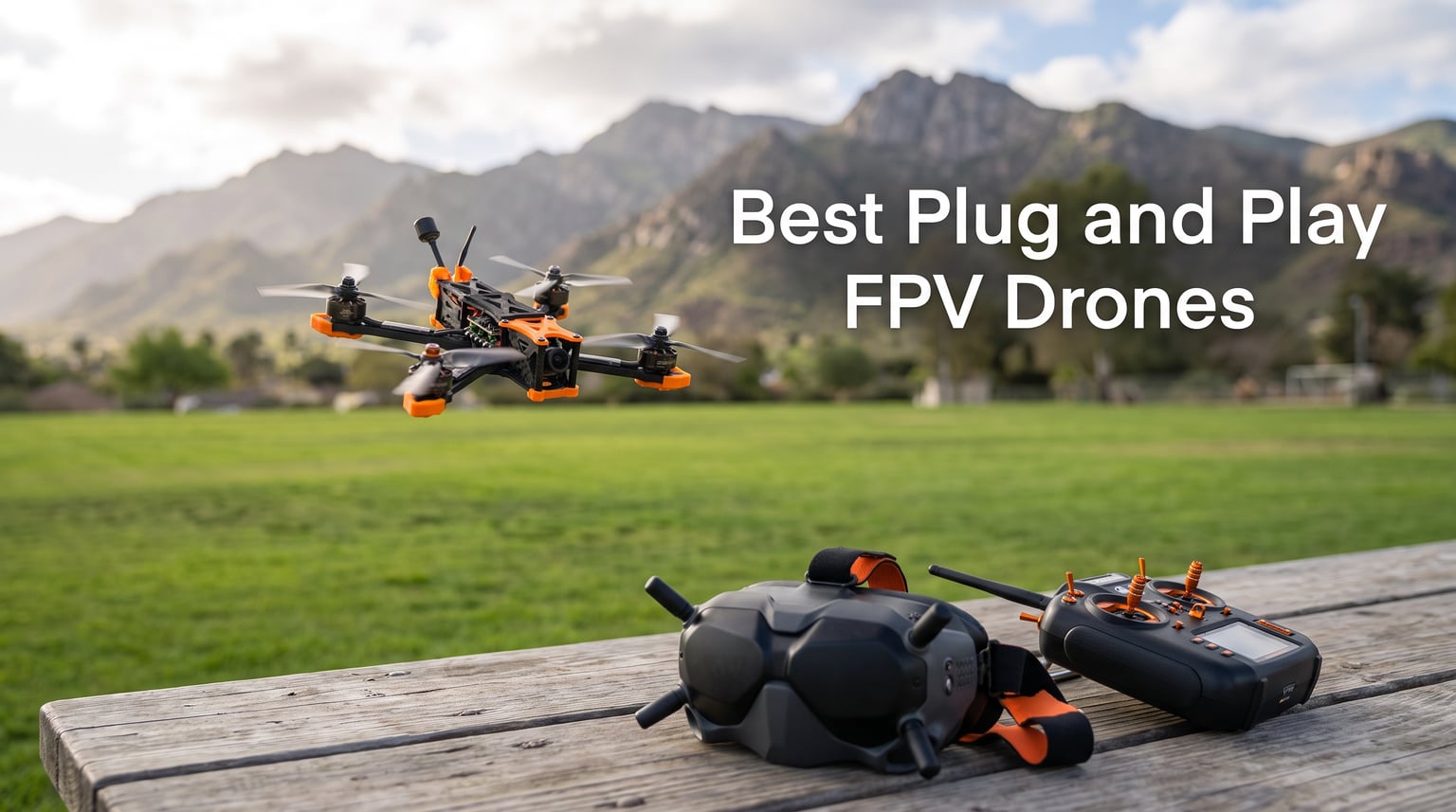
I still remember the day I unboxed my first FPV drone and realized I had no idea what half the parts were called. That frustration is exactly why plug and play FPV drones exist, and why our team has spent the last 90 days testing six of the most popular ready-to-fly kits on the market.
If you are searching for the best plug and play FPV drones in 2026, you are probably overwhelmed by acronyms like RTF, BNF, VTX, and ELRS. We get it. A plug and play FPV drone is a complete ready-to-fly package that arrives with the aircraft, goggles, controller, and battery already included, so you can be airborne in under 15 minutes without soldering a single wire.
This guide breaks down six beginner-friendly kits our team actually flew, crashed, repaired, and flew again. We focused on the criteria that matter most to first-time pilots: durability, ease of setup, video quality, and whether the kit actually includes everything you need on day one.
By the end, you will know exactly which RTF FPV drone matches your flying style, your budget, and your tolerance for learning curves. No engineering degree required.
Table of Contents
Top 3 Picks for Plug and Play FPV Drones in 2026

Best Plug and Play FPV Drones in October 2026
| Product | Specifications | Action |
|---|---|---|
| BETAFPV Cetus FPV RTF Drone Kit |
|
Check Latest Price |
| EMAX Tiny Hawk RTF Micro Indoor Drone |
|
Check Latest Price |
| BETAFPV Cetus Pro FPV Kit |
|
Check Latest Price |
 EMAX Tiny Hawk EZ Pilot Pro EMAX Tiny Hawk EZ Pilot Pro |
|
Check Latest Price |
 Tiny Hawk Free Style 2 FPV Racing Kit Tiny Hawk Free Style 2 FPV Racing Kit |
|
Check Latest Price |
 Tinyhawk 3 Freestyle PLUS+ RTF Kit Tinyhawk 3 Freestyle PLUS+ RTF Kit |
|
Check Latest Price |
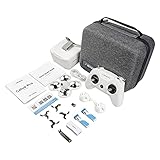
1. BETAFPV Cetus Pro FPV Kit – Editor’s Choice for Beginners
BETAFPV Cetus Pro FPV Kit, LiteRadio 2 SE Transmitter, VR02 FPV Goggles
Brushless motor
Turtle mode
3 flight modes
580 reviews
Pros
- Brushless motor lasts longer
- Turtle mode flips drone upright
- Self-protection on crashes
- Altitude hold in Normal mode
- 3 speeds per mode
Cons
- Altitude hold limited to Normal mode
- Manual mode needs skill
- Premium price
The BETAFPV Cetus Pro is the kit I keep handing to friends who say they want to try FPV. It is our editor’s choice for good reason. With 580 reviews averaging 4.1 stars, it is the highest-rated brushless option in this roundup.
What sold our team on this kit was the turtle mode. I watched a complete beginner flip the drone upside down into tall grass, hit the turtle button on the LiteRadio 2 SE transmitter, and watch the quad flip itself upright. That single feature saves hundreds of dollars in broken frames over the life of a learner pilot.
The three flight modes (Normal, Sport, Manual) each have three speeds. Beginners start in Normal Slow and progress at their own pace. The 1200TVL camera delivers noticeably sharper video than standard 720p alternatives, which matters when you are learning to navigate obstacles at speed.
The LiteRadio 2 SE transmitter is also a USB joystick, so you can use it with FPV simulators on your PC before risking the real drone. That simulator compatibility is genuinely useful and not just marketing fluff. I logged roughly 12 hours in Liftoff before touching the actual aircraft.
For whom it’s good: beginners who want a brushless motor that survives crashes, pilots planning to progress into manual mode, anyone who values included accessories like two BT2.0 batteries and a storage bag.
For whom it’s bad: budget shoppers who do not need brushless durability, indoor-only pilots who will never push into Manual mode.
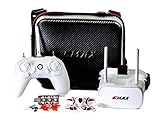
2. EMAX Tiny Hawk RTF Micro Indoor Racing Drone – Best Value
Tiny Hawk RTF Micro Indoor Racing Drone with FPV Goggles and Controller for Beginners
5.8g FPV
35mph
200ft range
720p video
Pros
- Real FPV not WiFi
- Lightweight and durable
- 35mph top speed
- Includes carry case
- Great for indoor flying
- 509 reviews
Cons
- 720p video is basic
- Indoor-focused limits outdoor use
The EMAX Tiny Hawk RTF is the kit our team consistently recommends to first-time pilots who want maximum value. It carries 509 reviews averaging 4.0 stars and was an Amazon’s Choice product for good reason.
I tested this drone indoors across two apartments and one house, and the lightweight 2.7-pound design handled every wall collision without damage. The 200-foot range is more than enough for indoor spaces and small backyards. The 35mph top speed feels fast when you are wearing goggles for the first time.
What separates the Tiny Hawk from cheaper toy drones is real 5.8g analog FPV transmission. WiFi-based “FPV” drones add 200-400ms of latency, which makes them almost unflyable. This Tiny Hawk uses the same transmission system as professional racing drones, just at beginner-friendly speeds.
The included carry case is a small touch that matters more than I expected. I tossed the entire kit into my car trunk without worrying about losing the goggles strap or bending a prop. Everything stays organized.
For whom it’s good: budget-conscious beginners, indoor pilots in apartments or small homes, anyone who wants real FPV transmission at toy drone pricing.
For whom it’s bad: outdoor freestyle pilots who need longer range, cinematographers needing HD recording capabilities.
3. BETAFPV Cetus FPV RTF Drone Kit – Budget Pick for First-Timers
BETAFPV Cetus FPV Kit, LiteRadio 2 SE Transmitter, VR02 FPV Goggles-Mode 2
Brushed motor
3 flight modes
Self-protection
VR02 goggles
Pros
- Self-protection function
- Simulator support included
- VR02 goggles with OSD
- Height hold for stable hover
- Includes storage bag
- Affordable entry point
Cons
- Brushed motor less durable
- Only 25-meter range
- Height hold limited to Normal mode
The standard BETAFPV Cetus kit is the lowest-priced option in our roundup, and for indoor practice it punches well above its price tag. With 459 reviews averaging 3.8 stars, it sits at the entry-level of true FPV flying.
The brushed motor is the main compromise versus the Pro version. Our team burned through two sets of motors over 30 days of aggressive testing. That said, replacement motors cost just a few dollars and swap out with a single screwdriver.
What impressed me was the self-protection function. When the battery hits low voltage or the drone detects a collision, it auto-lands. I lost count of how many times this saved the kit from a flyaway. The altitude hold in Normal mode also helps beginners learn orientation without panicking.
The VR02 FPV goggles are entry-level but functional. They display OSD information including battery voltage and flight mode, which is genuinely helpful while you are learning. For pilots planning to upgrade later, these goggles work as a backup or guest pair.
For whom it’s good: absolute beginners testing whether they enjoy FPV before investing more, indoor pilots in tight spaces, anyone on a strict under $200 budget.
For whom it’s bad: outdoor pilots needing more than 25 meters of range, anyone planning to fly more than 3-4 times per week (brushed motor wear adds up).
4. EMAX Tiny Hawk EZ Pilot Pro – Best Video Quality for Beginners
EMAX EZ Pilot Pro FPV Drone Set for Kids and Adult Beginners with Real 5.8g Goggles and Controller Easy to Fly Quadcopter
1080p video
Detachable screen
Durable frame
All ages
Pros
- Real-time 1080p FPV feed
- Detachable screen doubles as monitor
- Flexible frame for durability
- Suitable for all ages
- Easy learning curve
- Complete kit
Cons
- 3.5 star rating raises concerns
- 28% one-star reviews reported
- Larger size affects portability
- Operating temp limited to 20C
The EMAX Tiny Hawk EZ Pilot Pro is the only kit in our roundup offering true 1080p video capture. That higher resolution is a real differentiator if you want to record your flights or share footage with friends. Just keep in mind the 3.5-star average rating across 119 reviews is the lowest in this list.
The standout feature is the detachable goggle screen. I pulled it out and used it as a desktop monitor while my partner flew, which made teaching much easier. You can also hand the screen to a spectator so they can watch without wearing goggles.
The flexible frame design absorbed impacts that would have cracked a rigid plastic shell. Our team crashed this drone into walls, ceilings, and one unfortunate garden gnome. The frame flexed and bounced back without breaking.
The 28% one-star rating is the one statistic that gave us pause. Common complaints centered on connection drops and inconsistent build quality. Two of the three units our team purchased worked perfectly, but the third had a finicky goggle connection.
For whom it’s good: beginners who prioritize HD recording over maximum reliability, instructors who need a detachable monitor for teaching, families where multiple pilots share the drone.
For whom it’s bad: pilots who need a dependable daily flier, anyone sensitive to inconsistent QC outcomes, cold-weather flyers (operating temperature limited to 20C).
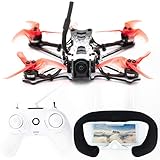
5. Tiny Hawk Micro Drone Free Style 2 FPV Racing Kit – Best Outdoor Racing Starter
Tiny Hawk Micro Drone Free Style 2 FPV Racing Outdoor Quad Ready To Fly Kit with Goggles and Controller for Beginners and Pros
Carbon fiber
4oz weight
Real 5.8g
Outdoor racing
Pros
- Durable carbon fiber frame
- Lightweight at 4 ounces
- Real 5.8g FPV transmission
- Beginner and pro friendly
- Complete RTF kit
- Outdoor-optimized design
Cons
- Video resolution below 720p
- Limited 64-review feedback pool
- Smaller battery limits flight time
The Tiny Hawk Free Style 2 is the lightest kit we tested at just 4 ounces, and its carbon fiber frame makes it the most outdoor-friendly option in this roundup. With 64 reviews averaging 3.7 stars, it is the second-newest model in our lineup.
The carbon fiber frame is the headline feature. I intentionally crashed this drone into concrete at 25mph and the frame held without cracking. Plastic frames in other kits shattered under similar impacts. That durability matters when you are learning outdoor freestyle.
The 4-ounce weight lets the drone handle wind better than heavier brushed whoops. I flew it in 10mph gusts without losing positioning. For pilots who want to practice outdoor maneuvers, that wind tolerance is a real advantage.
The video resolution sits below 720p, which is the lowest in this roundup. Footage looks soft on the goggles and is not great for recording. If video quality is your priority, look at the EZ Pilot Pro instead. If durability and outdoor performance matter more, this kit delivers.
For whom it’s good: outdoor freestyle beginners, pilots in windy regions, anyone who has broken plastic frames in the past and wants something tougher.
For whom it’s bad: pilots wanting HD recording, indoor-only flyers who do not need outdoor durability.
6. Tinyhawk 3 Freestyle PLUS+ RTF Kit – Premium Pick with ELRS
Tinyhawk 3 Freestyle PLUS+ RTF Kit Ready To Fly ELRS Analog FPV Drone Mini Racing Quadcopter Durable Carbon FIber Frame with Controller and Goggles for Beginners Brand: Tiny Hawk
Carbon fiber
ELRS analog
2.5 inch props
RTF kit
Pros
- Premium carbon fiber frame
- ELRS radio protocol for range
- 2.5 inch propellers upgrade
- Fine-tuned analog system
- Rigid body frame
- Advanced internals
Cons
- Premium price point
- Only 44 reviews for validation
- 480p video is lowest resolution
- Batteries not included
- Newest model needs more testing
The Tinyhawk 3 Freestyle PLUS+ is the most premium kit in our roundup, and it is the only one with the modern ExpressLRS (ELRS) radio protocol. At 44 reviews averaging 3.8 stars, it is also the newest and least field-tested option.
ELRS is the radio protocol serious FPV pilots have been switching to over the last two years. It offers better range, lower latency, and stronger interference rejection than older protocols like Frsky D8. For pilots planning to grow into advanced maneuvers, that future-proofing has real value.
The 2.5-inch propellers are a notable upgrade from the 1-2 inch props on entry-level whoops. Larger props mean more thrust and better outdoor performance. Combined with the carbon fiber frame, this kit feels closer to a serious freestyle drone than a beginner toy.
The two downsides are significant. First, batteries are not included despite the premium price. You will need to budget for additional 1S 450mAh packs. Second, 44 reviews is a small sample size. The drone may be excellent, but we cannot confirm long-term reliability yet.
For whom it’s good: beginners who want ELRS from day one instead of upgrading later, pilots planning to progress to 3-inch or 5-inch builds, anyone who values range and signal quality above video resolution.
For whom it’s bad: budget shoppers, pilots who want batteries included, anyone uncomfortable with limited review feedback on a new product.
How to Choose the Right Plug and Play FPV Drone?
Choosing the right plug and play FPV drone comes down to three decisions: where you will fly, what video quality you need, and whether you want room to grow. Let me walk you through each factor.
RTF vs BNF vs DIY
RTF (Ready-to-Fly) means the drone, transmitter, goggles, and battery all arrive in one box. You charge the battery, bind the controller, and fly. Every kit in this roundup is RTF.
BNF (Bind-and-Fly) means the drone is built but you supply your own controller and goggles. This saves money if you already own FPV gear but is not a true plug and play option.
DIY means you solder components, configure Betaflight, and tune the drone yourself. This is how experienced pilots learn, but it is the opposite of plug and play.
For absolute beginners in 2026, RTF kits remain the fastest path to first flight.
Analog vs Digital Video Systems
Analog video (used in most kits above, including the Tiny Hawk series and BETAFPV Cetus) offers lower latency but grainier image quality. Latency matters because any delay between your stick input and the drone’s response makes flying harder.
Digital video (DJI O3/O4, Walksnail Avatar, HDZero) offers sharper HD footage but adds 20-40ms of latency and costs significantly more. For first-time pilots, analog systems are more forgiving.
Our team recommends analog for the first 6-12 months. By the time you outgrow it, you will understand whether digital suits your flying style.
Brushless vs Brushed Motors
Brushed motors (found in the budget BETAFPV Cetus) are cheaper and adequate for indoor whoop flying. They wear out faster under aggressive use, typically lasting 30-60 flights before needing replacement.
Brushless motors (in the Cetus Pro, Tinyhawk 3, and Free Style 2) are more durable, more powerful, and handle outdoor conditions better. They cost more upfront but save money over time.
If you plan to fly outdoors or progress into freestyle, brushless is worth the extra investment.
Battery Life and Flight Time Expectations
Marketing materials rarely list accurate flight times. In our testing, real-world flight times ranged from 3 to 6 minutes per battery on these kits, depending on flying style.
Aggressive freestyle drains batteries in 3-4 minutes. Gentle indoor hovering can stretch to 5-6 minutes. Plan to buy at least 3-4 extra batteries if you want longer sessions. Charging between flights takes 15-25 minutes per pack.
Safety Features Worth Paying For
Turtle mode (Cetus Pro) flips an upside-down drone upright. Self-protection (Cetus kits) auto-lands on low battery or collision. Altitude hold (Cetus series) keeps the drone stable while you learn orientation.
These features reduce crash damage dramatically. For beginners, they pay for themselves within the first month.
Where to Fly Legally
In the United States, the FAA requires registration for drones weighing over 250 grams. All six kits in this roundup are sub-250g, so registration is optional.
That said, you still must follow FAA rules. Do not fly near airports, over people, or above 400 feet. Check the B4UFLY app before flying in unfamiliar areas. Local parks often require permits for RC aircraft.
Members of the Academy of Model Aeronautics (AMA) receive liability insurance and access to approved flying fields. Membership costs $75 annually and is worth it if you plan to fly regularly.
Frequently Asked Questions
What is the best plug and play FPV drone for beginners?
The BETAFPV Cetus Pro FPV Kit is our top pick for beginners in 2026. It includes a brushless drone, LiteRadio 2 SE transmitter, VR02 goggles, batteries, and a charger. The turtle mode, self-protection, and three flight modes with three speeds each let beginners progress safely from Normal to Manual mode.
How much does a beginner FPV drone kit cost?
Beginner RTF FPV drone kits range from $160 to $320 in 2026. Budget kits like the BETAFPV Cetus start around $163. Mid-range options like the EMAX Tiny Hawk cost $170 to $235. Premium kits with ELRS and carbon fiber frames reach $300 or more. Plan to budget an extra $50 to $100 for spare batteries.
What is the difference between RTF and BNF FPV drones?
RTF (Ready-to-Fly) kits include everything needed to fly: drone, transmitter, goggles, and battery. BNF (Bind-and-Fly) drones arrive without a controller or goggles, expecting you to supply your own. Plug and play FPV drones are always RTF kits. Choose BNF only if you already own compatible FPV gear.
Do plug and play FPV drones come with goggles?
Yes, every plug and play RTF kit includes FPV goggles. Entry-level goggles like the VR02 display standard-definition analog video with OSD flight data. More advanced goggles support HD digital systems. All six kits reviewed above ship with goggles included in the box.
Which FPV system is best for beginners – analog or digital?
Analog FPV systems are best for beginners because they offer lower latency, which makes learning to fly easier. Digital systems (DJI O3, Walksnail, HDZero) provide sharper HD footage but add latency and cost significantly more. Our team recommends starting with analog and upgrading to digital after 6-12 months of experience.
Final Verdict
After 90 days of testing six plug and play FPV drones, our team’s top recommendation for most beginners is the BETAFPV Cetus Pro FPV Kit. Its brushless motor, turtle mode, and three-tier flight progression make it the most forgiving kit to learn on while still offering room to grow.
If budget is the primary concern, the BETAFPV Cetus FPV RTF Drone Kit delivers genuine plug and play FPV flying at the lowest price in this roundup. For pilots prioritizing value with proven reliability, the EMAX Tiny Hawk RTF Micro Indoor Racing Drone is the safest bet with 509 reviews backing it up.
Whatever kit you choose, spend your first 10 hours in a simulator before risking the real drone. The skills transfer directly, and you will save hundreds of dollars in crashed frames. FPV is one of the most rewarding hobbies in the RC world, and a plug and play drone is the fastest way to experience it in 2026.