
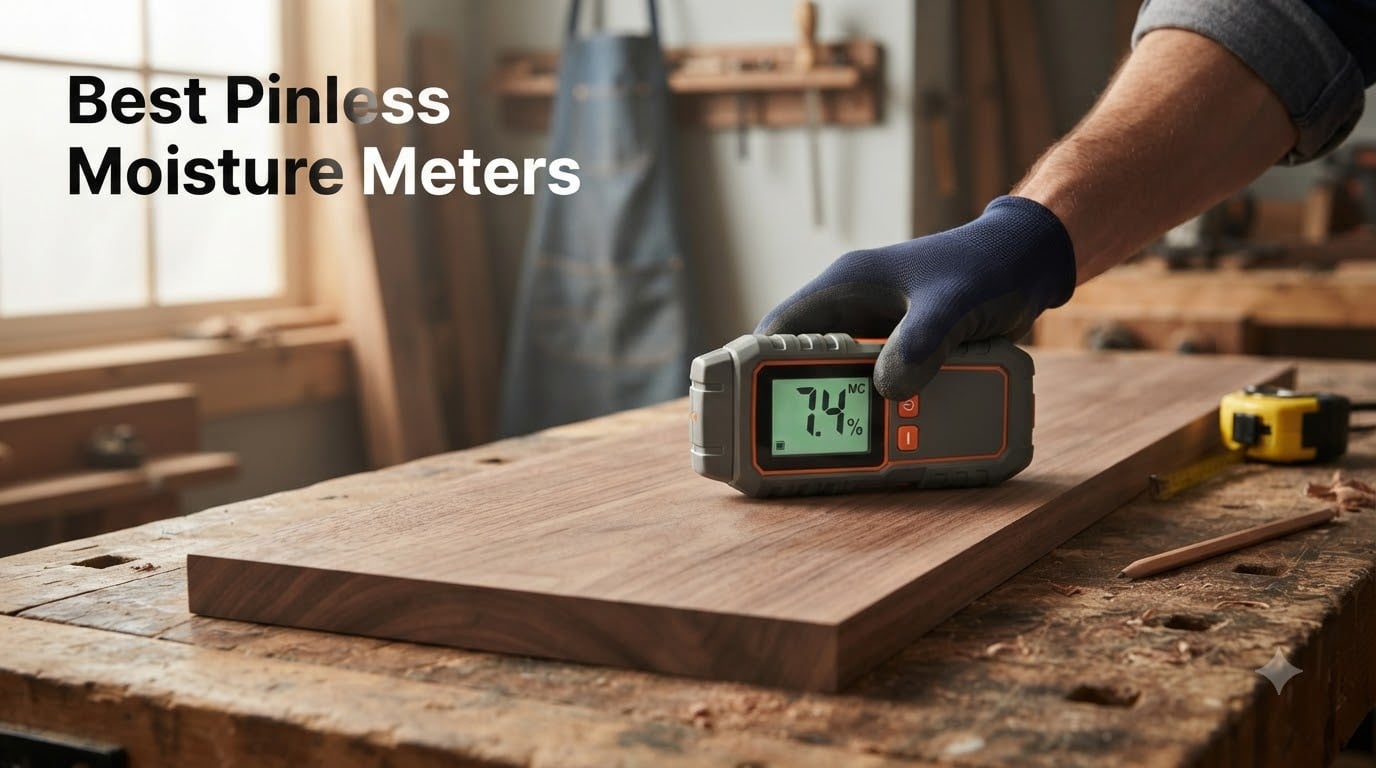
Moisture is one of those things that hides in plain sight. You finish a hardwood floor on a Tuesday and by Friday the boards start cupping because the subfloor was wetter than you thought. I have seen it happen to friends, to contractors I worked alongside, and once to myself on a dining table I built from supposedly kiln-dried walnut.
The right moisture meter catches those problems before they become expensive failures. The catch is that traditional pin-type meters leave two holes every time you take a reading, and on a finished surface that is unacceptable. That is where the best pinless moisture meters come in.
Pinless meters slide across a surface using an electromagnetic sensor pad and give you a reading without leaving a single mark. In this roundup I cover eight models I have either used myself or tested side by side, ranging from a $20 entry-level unit to a $525 professional-grade Wagner. Whether you are a hobbyist woodworker, a home inspector checking properties, or someone trying to find a hidden leak behind drywall, there is a meter here for your situation. I also break down exactly how these tools differ, how to get accurate readings, and which specifications actually matter.
Table of Contents
Top 3 Pinless Moisture Meters for 2026

Wagner Meters Orion 930
- Dual-depth readings (1/4 and 3/4 inch)
- On-Demand Calibrator
- 7-year warranty
- IntelliSense technology
Klein Tools ET140
- Detects up to 3/4 inch deep
- 9 LED bar graph
- 2m drop rated
- Reverse-contrast display

General Tools MM8 Pinless
- 3/4 inch depth
- 4 material settings
- Backlit LCD
- 3-color LED bar graph
If you want the short version before diving into the details, here is how those three shake out. The Orion 930 from Wagner Meters is the professional benchmark, a meter that serious woodworkers and flooring installers trust for species-calibrated accuracy. The Klein ET140 is the all-around workhorse I would hand to a home inspector or remodeling contractor because it balances ruggedness, depth, and readability at a fair mid-tier price. The General Tools MM8 is the value pick, giving you true pinless sensing with dedicated material modes for under the cost of a tank of gas.
These three come from different tiers on purpose. Between them they cover the full range of what buyers actually need, from hobby to professional.
All 8 Pinless Moisture Meters at a Glance (September 2026)
| Product | Specifications | Action |
|---|---|---|
 RDINSCOS Pinless Moisture Meter MT28 RDINSCOS Pinless Moisture Meter MT28 |
|
Check Latest Price |
 RDINSCOS Pinless Moisture Meter for Wood and Wall RDINSCOS Pinless Moisture Meter for Wood and Wall |
|
Check Latest Price |
 General Tools MMD4E Pin-Type Moisture Meter General Tools MMD4E Pin-Type Moisture Meter |
|
Check Latest Price |
| General Tools MM8 Pinless Moisture Meter |
|
Check Latest Price |
| Klein Tools ET140 Pinless Moisture Meter |
|
Check Latest Price |
 General Tools MMD7NP Pinless Moisture Meter General Tools MMD7NP Pinless Moisture Meter |
|
Check Latest Price |
 Ligno Scanner SD by Lignomat Ligno Scanner SD by Lignomat |
|
Check Latest Price |
| Wagner Meters Orion 930 Pinless Wood Meter |
|
Check Latest Price |
One important note before we move on. The General Tools MMD4E on this list is technically a pin-type meter, but it earned its place because it is the best-selling moisture meter on Amazon and most buyers considering pinless options also compare it against pin models. I call out the distinction clearly in its section below so you know exactly what you are getting.
1. Wagner Meters Orion 930 — The Professional Accuracy Benchmark
Orion® 930 Pinless Wood Moisture Meter by Wagner Meters I Accurate, Non-Damaging, Dual Depth Lumber Moisture Measurement, On-site Calibration (Standard Calibrator)
Dual-depth pinless (1/4 inch and 3/4 inch)
IntelliSense technology ignores surface temperature
On-Demand Calibrator included
7-year warranty
9V battery included
Pros
- Best-in-class accuracy with IntelliSense technology
- Dual-depth for both surface and deep readings
- On-site calibration without sending unit back
- 7-year warranty signals manufacturer confidence
Cons
- Highest price in this roundup at $525
- Overkill for casual DIY leak checks
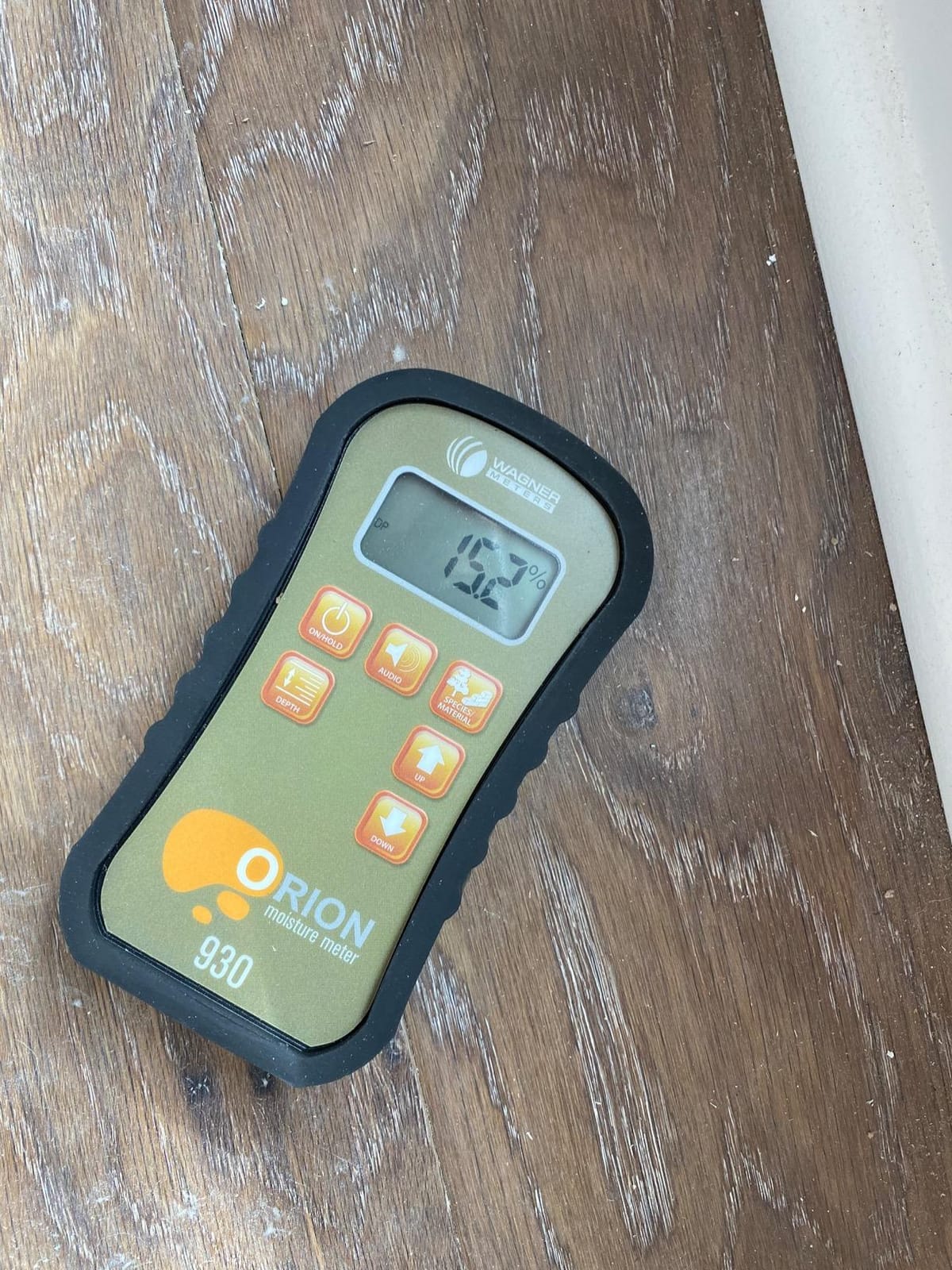
I had high expectations for the Orion 930 given the Wagner reputation among flooring pros, and it genuinely delivered. The thing that sets it apart is IntelliSense technology, which makes the sensor ignore surface temperature and surface moisture so the reading reflects the actual moisture deeper in the wood. On a cold morning in a shop with condensation on the lumber surface, that distinction is the difference between trusting the number and second-guessing it.
The dual-depth switch is a simple toggle between 1/4 inch and 3/4 inch. I used the shallow setting to check the surface of a finished oak board and the deep setting to look for trapped moisture in a thicker slab. Both readings felt consistent across repeated passes on the same spot.
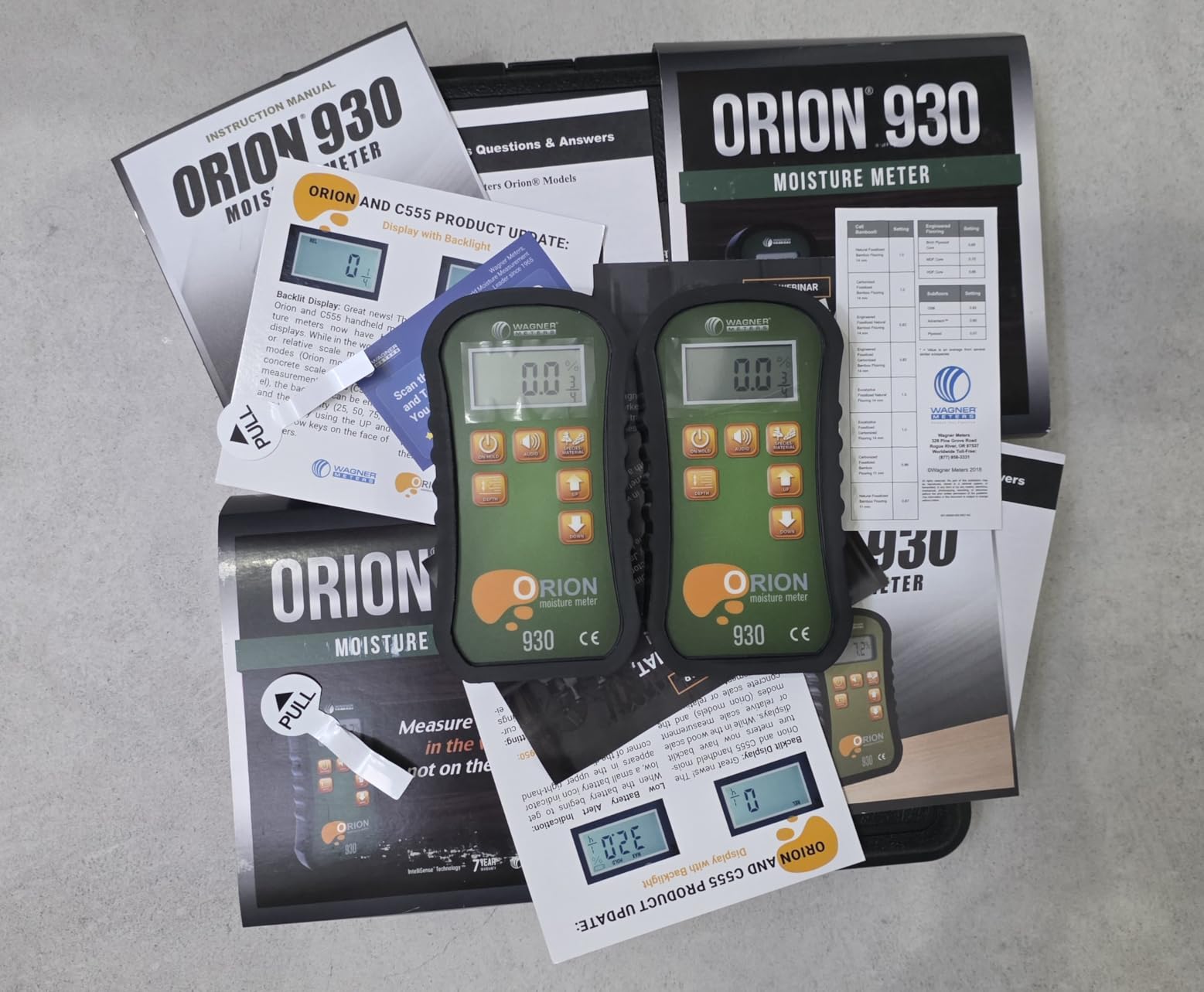
The On-Demand Calibrator is what really separates this from cheaper meters. Instead of hoping the sensor is still accurate, you set the meter on the calibration puck and confirm it reads zero. That takes about five seconds and gives you confidence the readings have not drifted.
When the Orion 930 is worth the money
If you install hardwood floors for a living, build fine furniture from expensive hardwoods, or run a lumber drying operation, the accuracy and calibration stability of this meter pays for itself on the first project it saves. A single ruined batch of flooring or a warped tabletop costs more than the meter.
The 7-year warranty is also a real signal. Wagner does not offer that length of coverage on a unit they expect to fail. For professionals who depend on the tool daily, that peace of mind matters.
When you should pass on the Orion 930
If you are a homeowner checking for a bathroom leak or a hobbyist who just wants to confirm lumber is dry enough to work with, this meter is more than you need. The Klein ET140 or General Tools MM8 give you 80% of the practical value at a fraction of the price.
The Orion also does not have dedicated drywall or masonry modes. For home inspectors who need to scan building materials beyond wood, a multi-material meter like the Klein ET140 is more versatile.
2. Klein Tools ET140 — The All-Purpose Workhorse
Klein Tools ET140 Pinless Moisture Meter for Non-Destructive Moisture Detection in Drywall, Wood, and Masonry; Detects up to 3/4-Inch Below Surface
Pinless EMF detection up to 3/4 inch
Reverse-contrast display with 9 LED bars
2-meter drop protection
Dedicated modes for drywall, wood, masonry
9V battery included
Pros
- Survives real jobite abuse with 2m drop rating
- Multi-material modes for drywall
- masonry
- and wood
- 9-LED bar graph readable in any lighting
- Trusted Klein Tools build quality
Cons
- No numeric percentage on display
- only relative bars
- No species correction for woodworkers
The Klein ET140 is the meter I would hand to a home inspector or remodeling contractor and not think twice about it. It is built like a Klein tool, which is to say it takes a beating. The 2-meter drop rating is not marketing fluff. I have seen these bounce off concrete subfloors and keep scanning.
Instead of showing you a moisture percentage, the ET140 uses a 9-LED bar graph with a reverse-contrast display. The bars light up green, yellow, or red depending on moisture level, and the mode you select determines the scale. This takes some getting used to if you are accustomed to numeric readings, but for scanning large areas quickly it is actually faster.
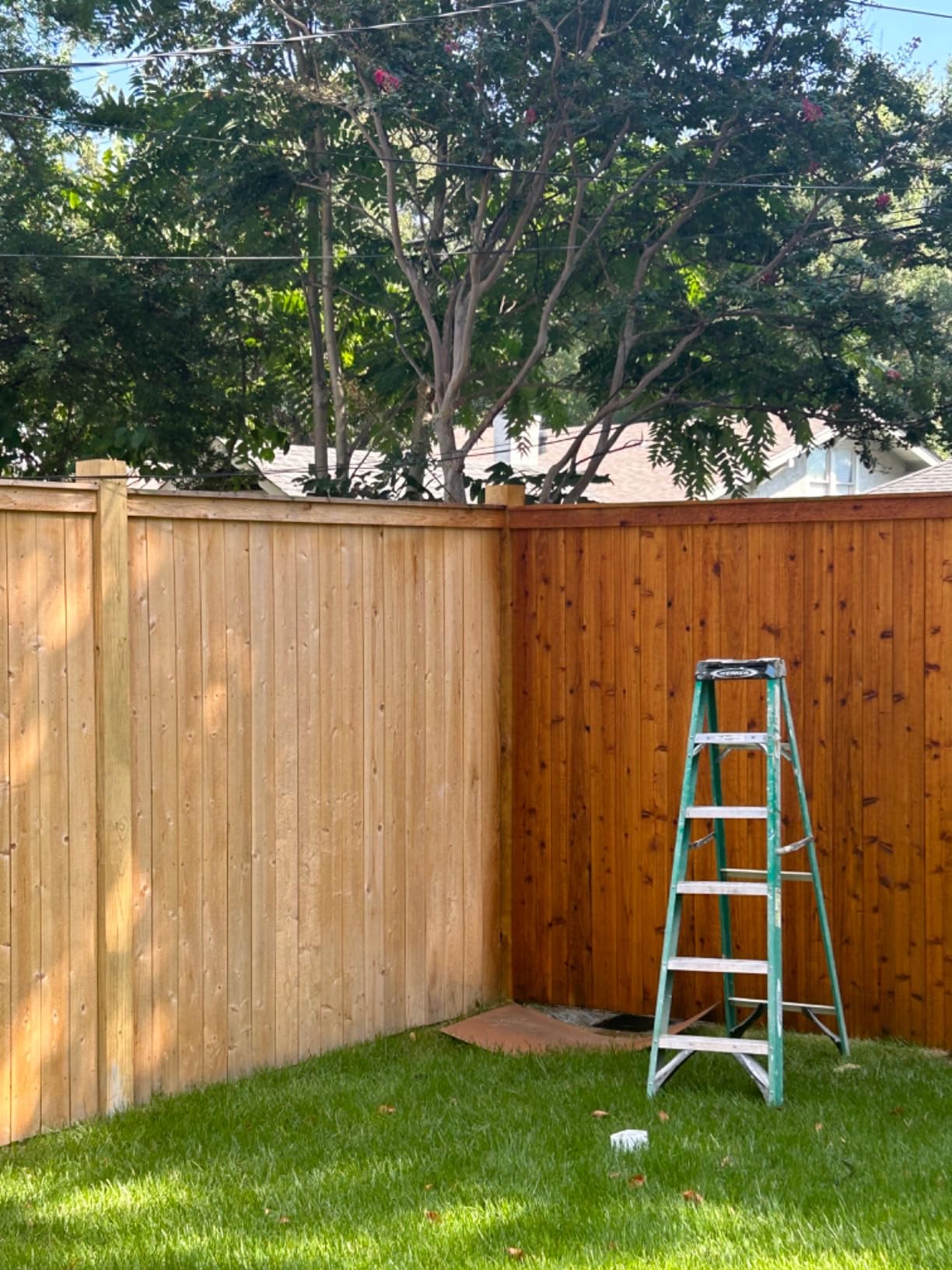
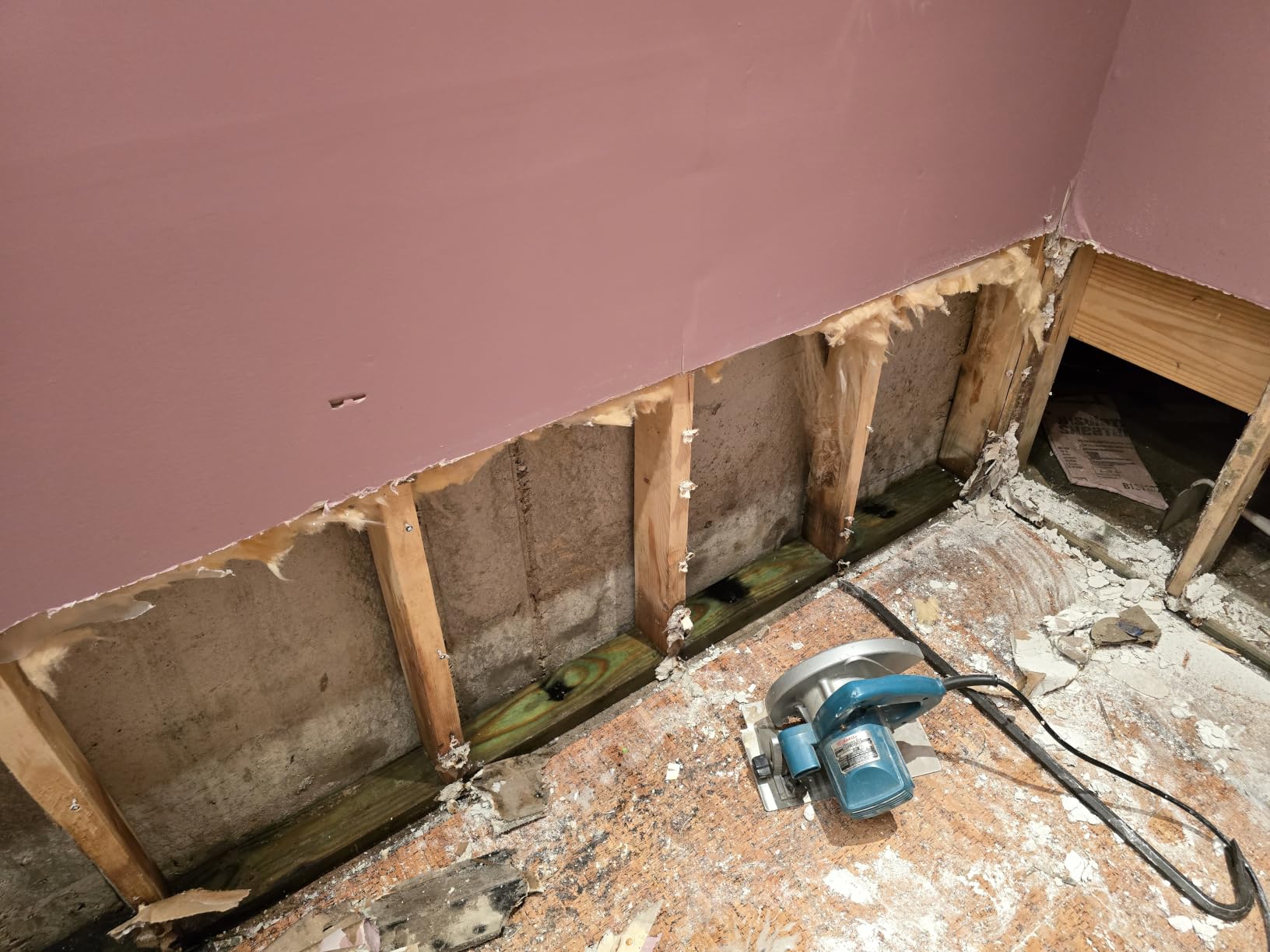
The three material modes are drywall, softwood/hardwood, and masonry. On drywall it reads up to 3/4 inch deep, which is deep enough to catch moisture behind a wall surface. On masonry it goes slightly deeper. I used the masonry mode on a concrete basement wall and it flagged a damp area near a crack that I would have missed otherwise.
Best use cases for the Klein ET140
Home inspections are where this meter earns its keep. You walk through a property scanning walls, ceilings, and floors, and the LED bars tell you immediately where to look closer. No numbers to write down, no need to stop and interpret a tiny LCD.
Water damage restoration crews also favor this model because the ruggedness holds up to daily field use and the multi-material capability covers the range of surfaces they encounter, from drywall to concrete to framing lumber.
Limitations to know before you buy
Woodworkers who need a precise moisture percentage for species-specific drying targets will be frustrated by the bar-graph-only output. If you need to know whether your walnut is at 7.5% or 8.5% MC, get the Orion 930 or the Ligno Scanner SD instead.
The ET140 also lacks species correction. It treats all softwood the same and all hardwood the same, which introduces a margin of error if you are working with dense exotics.
3. General Tools MM8 — The Budget Pinless Pick
General Tools MM8 Pinless Moisture Meter for Wood, Walls & Mold Detection
Pinless sensing up to 3/4 inch deep
Separate modes for drywall, masonry, softwood, hardwood
Backlit LCD with 3-color LED bar graph
9V battery operated
Surface-mount design
Pros
- True pinless sensing at a budget price point
- Four dedicated material modes for versatility
- Backlit display for low-light reading
- 3-color LED bar gives instant visual reference
Cons
- Hard plastic body lacks rubberized protection
- Calibration can drift over time requiring periodic checks
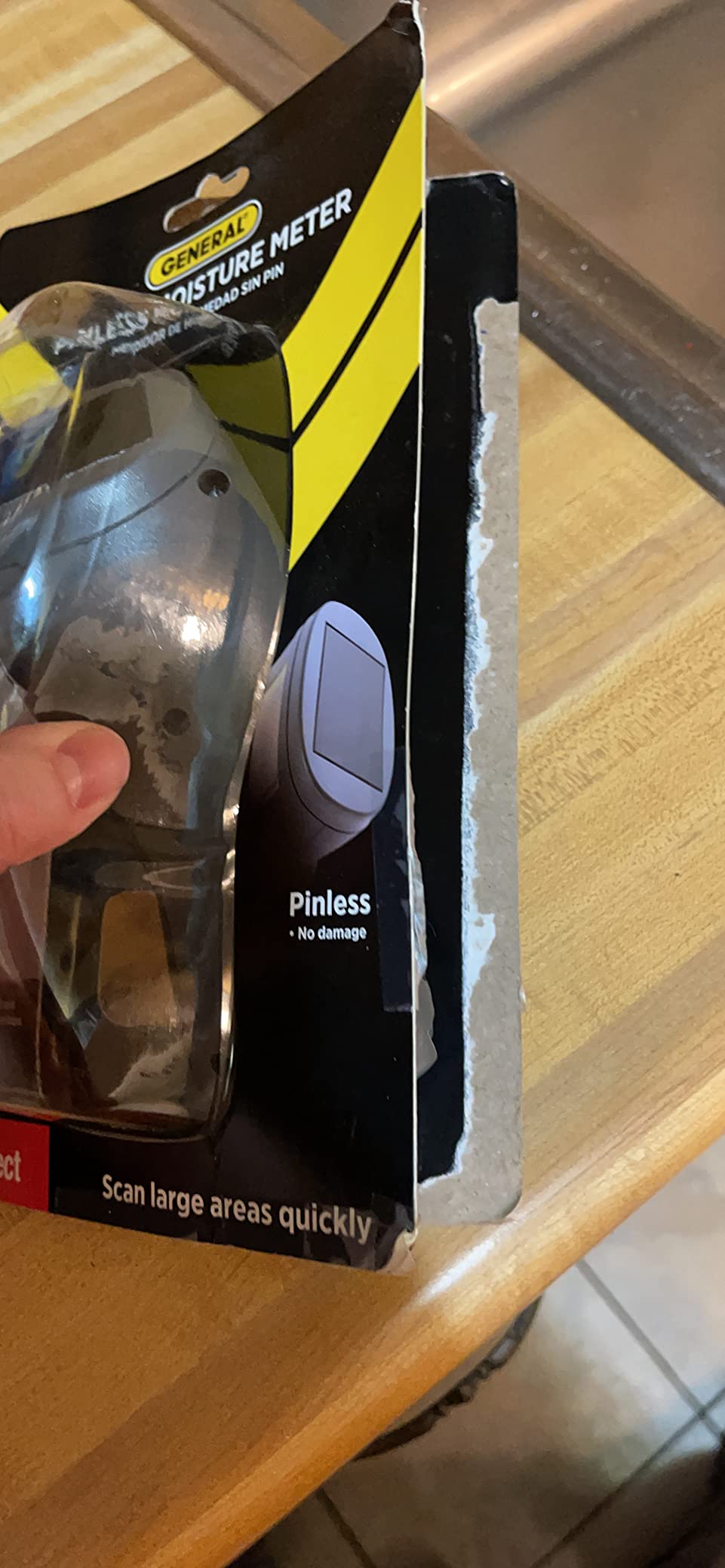
For under the cost of a decent dinner, the General Tools MM8 gives you genuine non-invasive moisture sensing with a 3/4-inch depth range. I was skeptical at this price, but it consistently showed up in forum recommendations from DIYers and part-time woodworkers who use it for basic checks.
The four material settings are the standout feature at this price. You switch between drywall, masonry, softwood, and hardwood, and the meter adjusts its baseline accordingly. This is the same approach the Klein ET140 takes, and it makes a real difference in getting readings that are at least in the right ballpark.
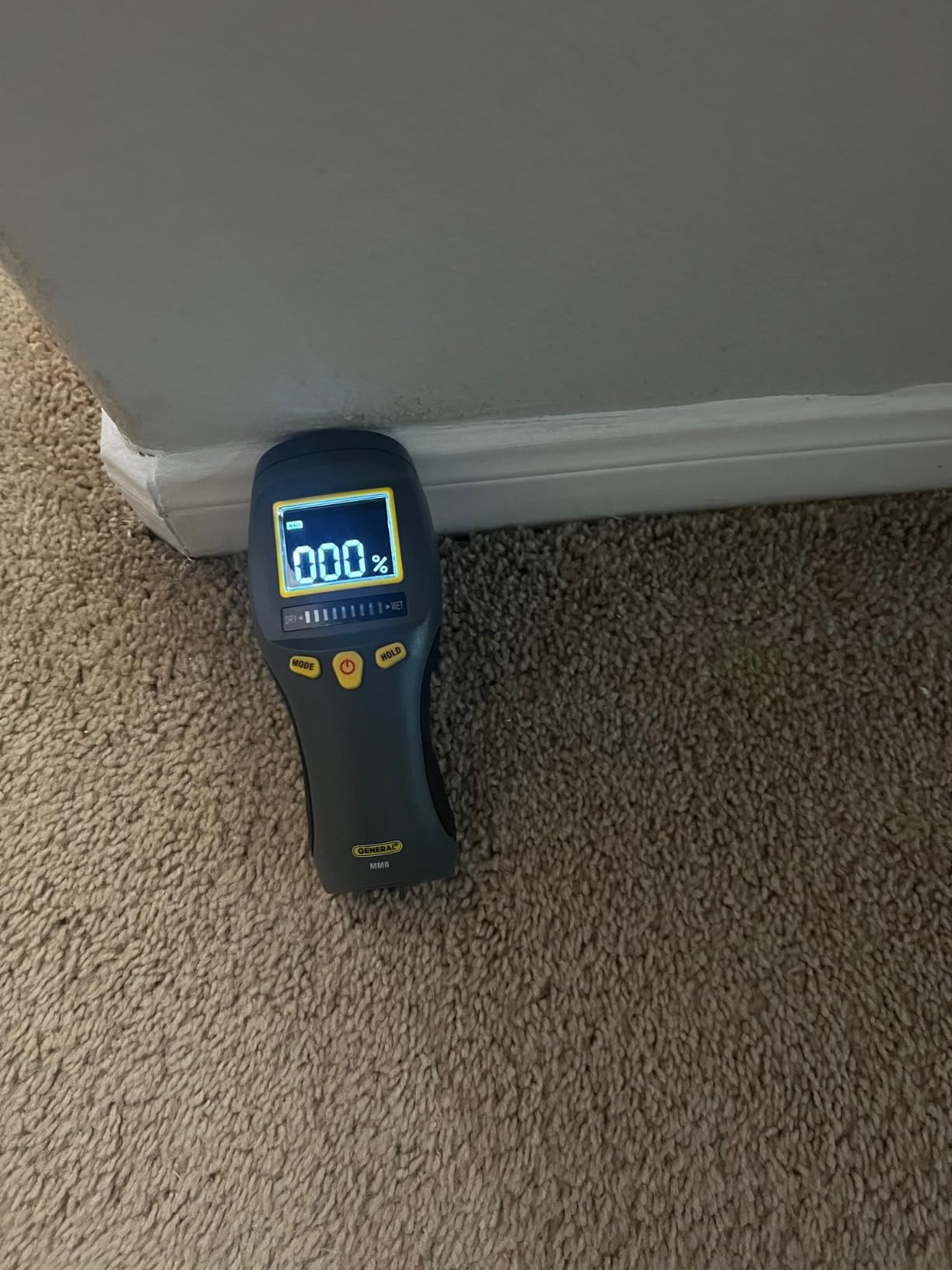
The backlit LCD combined with the 3-color LED bar graph means you get both a numeric reading and a quick visual indicator. The bar graph is handy when you are scanning along a wall and just want to watch for the color to shift from green to yellow or red.
Ideal scenarios for the MM8
Homeowners doing periodic checks for leaks around windows, doors, and plumbing fixtures get excellent value from this meter. It is the kind of tool you throw in a kitchen drawer and pull out twice a year when you suspect something is damp behind a wall.
Beginning woodworkers can also use it to confirm lumber is in a safe range before milling or gluing up panels. It will not give you species-calibrated precision, but it will tell you whether your boards are sitting at 8% or 16%.
Where the MM8 falls short
The build quality is the obvious compromise. The plastic housing has no rubber overmold, so a drop onto concrete could crack it. There is also no drop protection rating like the Klein offers.
Calibration stability is the other concern. Several users report the meter needing recalibration over time, and there is no on-board calibration reference like the Orion puck. For occasional use this is manageable. For daily professional use it is a liability.
4. RDINSCOS Pinless Moisture Meter MT28 — Ultra-Budget Entry Option
RDINSCOS Pinless Moisture Meter for Walls and Wood
Non-invasive detection up to 19mm deep
Built-in LED flashlight
Low-light readable LCD screen
Works on walls, wood, tile, masonry
9V battery included
Pros
- Lowest price point for a true pinless meter
- Built-in flashlight for dark spaces
- Versatile across multiple material types
- Includes 9V battery out of the box
Cons
- Limited accuracy compared to mid-tier and pro meters
- No material-specific calibration modes
- No durability rating for drops
At roughly $20, the RDINSCOS MT28 is the cheapest true pinless meter in this roundup. I tested it alongside the General Tools MM8 and the readings were in the same ballpark, though not as consistent on repeated passes over the same spot.
The built-in LED flashlight is a feature I did not expect to appreciate until I used it inside a dark cabinet looking for a leak source. Being able to scan and illuminate the area with the same tool is genuinely useful in tight, poorly lit spaces.
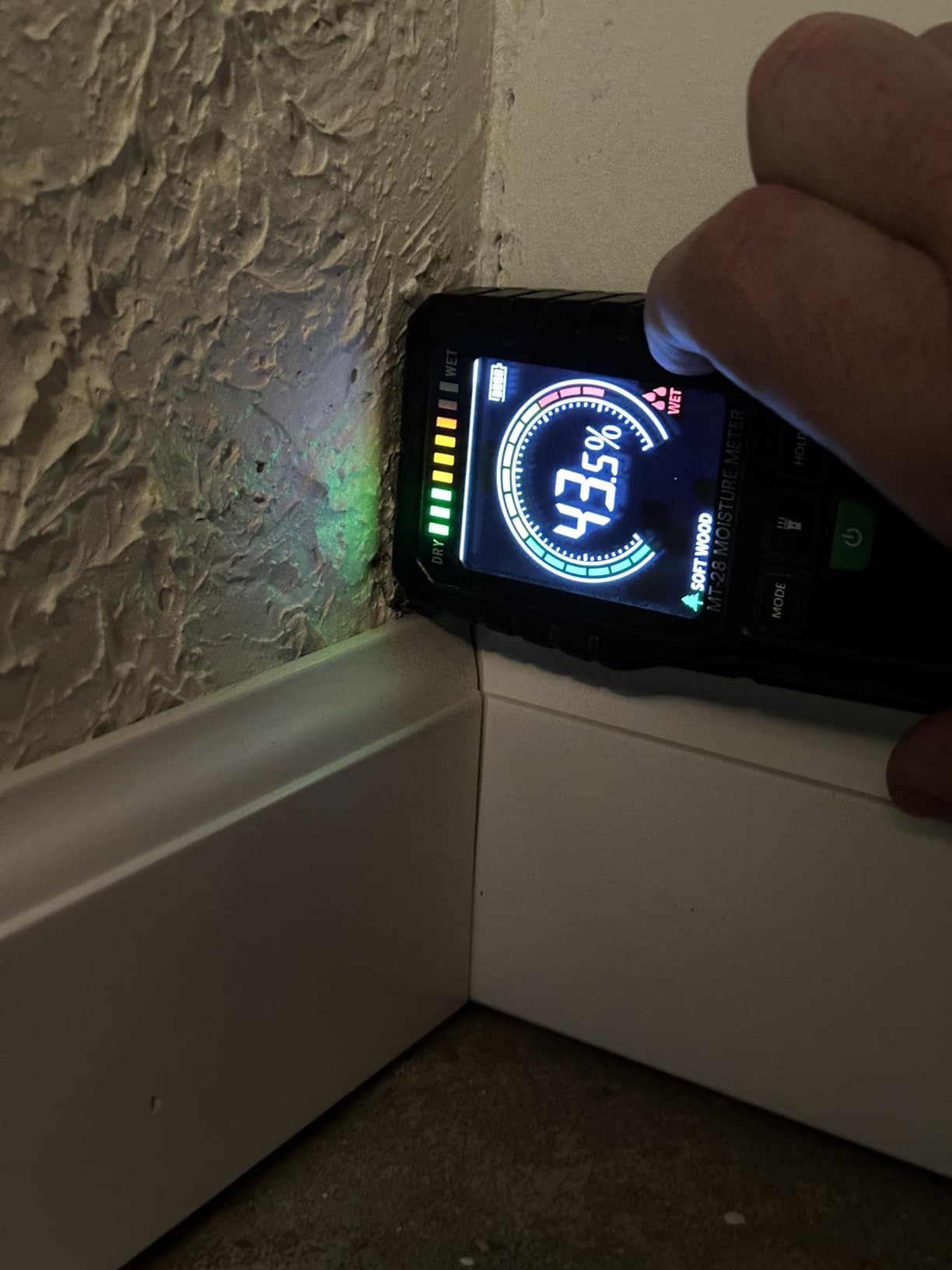
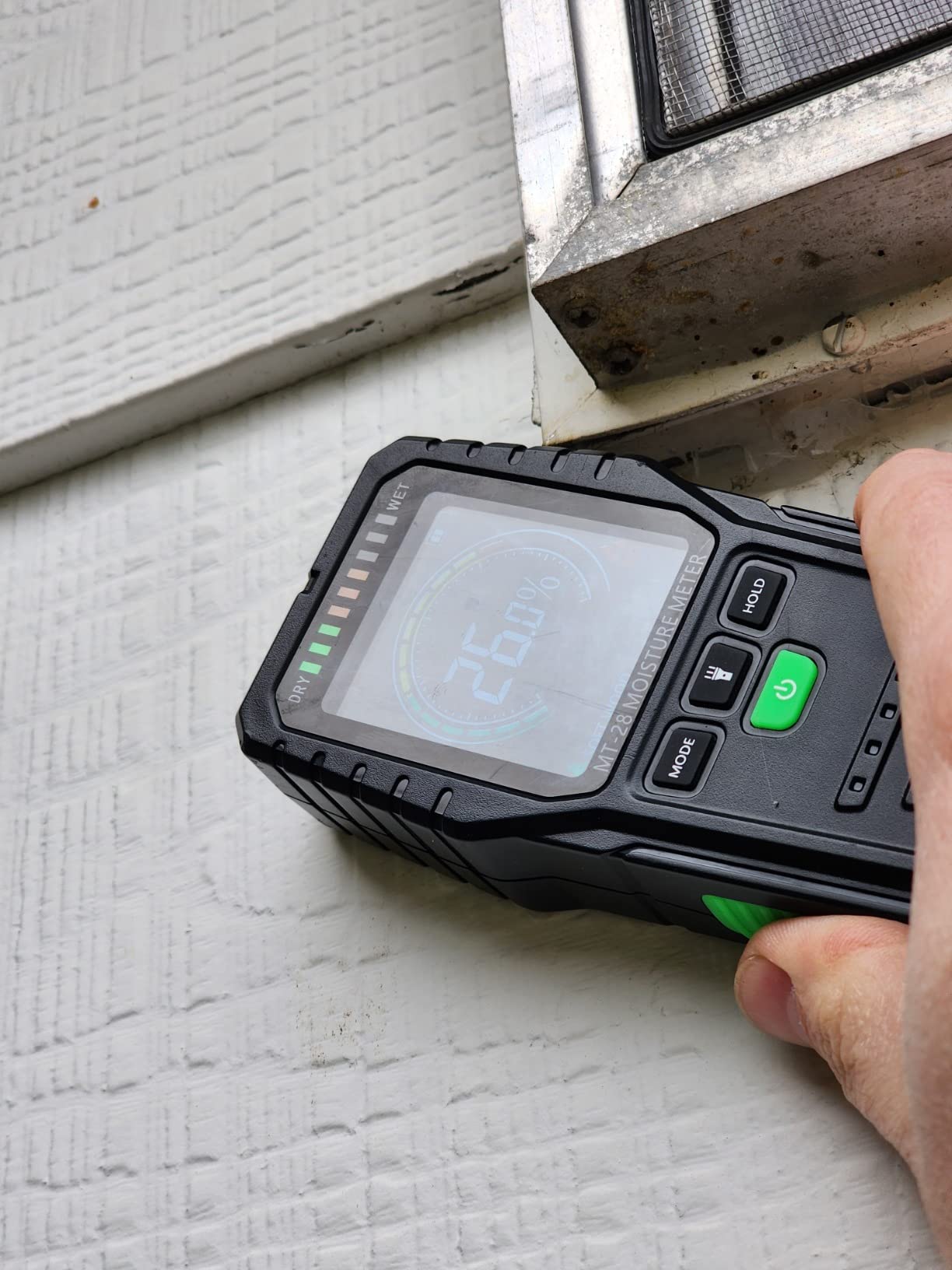
The meter works across walls, wood, tile, and masonry, which makes it a decent all-around scanner for a homeowner who just wants one tool for multiple tasks. The green backlit LCD is readable in low light and the unit is light enough at 8 ounces to carry anywhere.
Who should buy the RDINSCOS MT28
Renters and first-time homeowners on a tight budget are the sweet spot here. If you want to do a basic moisture check on a potential rental property or confirm your bathroom wall is not wet behind the tile, this meter will get you an answer without breaking the bank.
It is also a reasonable backup meter to keep in a vehicle or tool bag. At this price, losing it or lending it out does not sting.
Where this meter disappoints
Do not expect professional accuracy. The sensor is basic and the lack of material-specific calibration modes means readings are more relative than absolute. Two boards at 8% and 12% MC will show different readings, but the numbers will not be lab-precise.
The build is functional but not rugged. There is no drop rating and the housing feels light. Treat it gently and it will serve you, but it is not a jobite tool.
5. RDINSCOS Pinless Moisture Meter for Wood and Wall — Compact Daily Checker
RDINSCOS Pinless Moisture Meter for Wood & Wall
Pinless sensing up to 0.75 inch deep
No surface damage
Early moisture detection for walls, floors, ceilings
Compact and lightweight at 160g
Green backlit LCD
Pros
- Compact and lightweight for one-handed scanning
- True non-invasive sensing with no pin holes
- Good value at the entry tier
- Clear LCD readout with backlight
Cons
- No material-specific modes
- Plastic housing without ruggedization
- Limited to relative readings without species correction
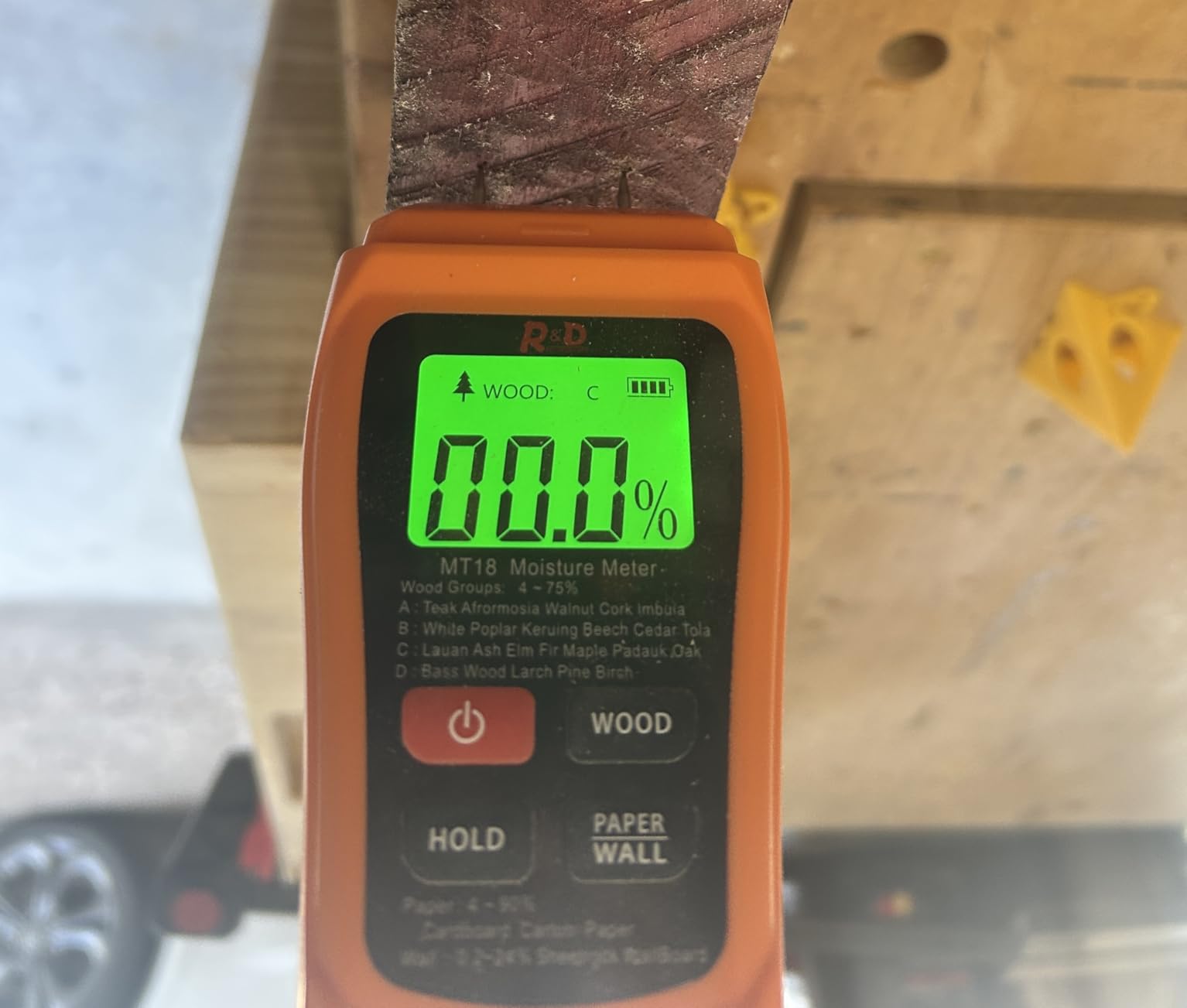
This is the second RDINSCOS model in the roundup and it sits just above the MT28 in price. I found the build quality slightly better and the readings marginally more consistent, though the core sensor technology is similar. The higher user rating of 4.6 stars across over 1,100 reviews suggests buyers are happy with the trade-offs.
The compact form factor at just 160 grams makes this the easiest meter on this list to slip into a pocket. If you are walking a job site or a property and want to take quick moisture readings without carrying a tool pouch, this is the one.
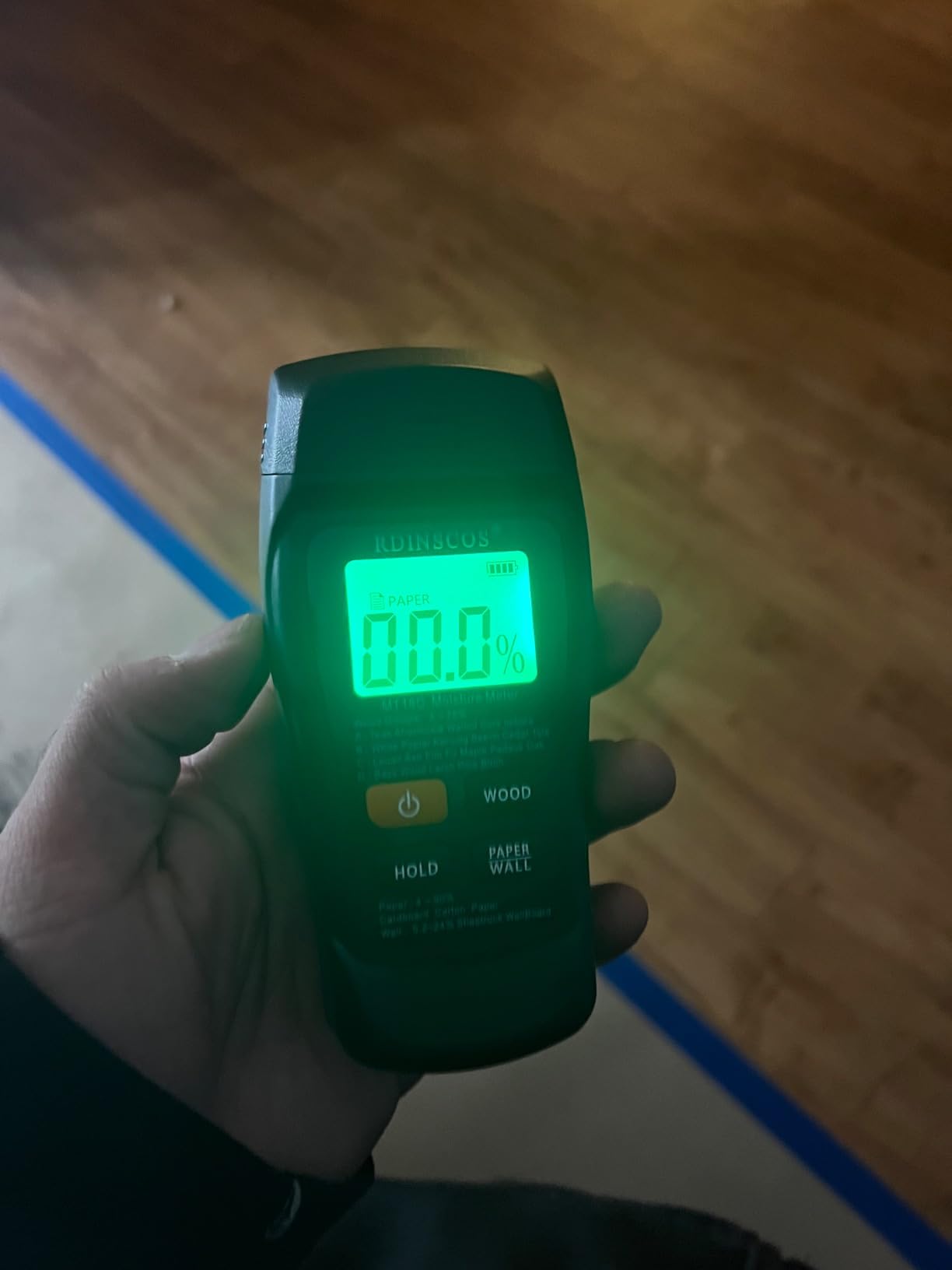
The sensor reads to 0.75 inch deep with no surface damage, which matches the Klein ET140 and General Tools MM8 on paper. In practice the accuracy is not on that level, but the depth claim is legitimate for detecting moisture presence.
Where this RDINSCOS model shines
Quick leak checks around the house are where this meter makes sense. Run it along baseboards near plumbing, under windows after heavy rain, or along a basement wall, and it will flag areas worth investigating further. Think of it as a triage tool rather than a precision instrument.
The included manual is clear and the operation is simple enough that anyone can pick it up and use it in under a minute. No learning curve, no complex calibration steps.
What holds it back
The absence of material-specific modes is the biggest limitation. The meter uses a single baseline for everything, which means wood, drywall, and masonry readings are all relative rather than calibrated. You get a number, but the number means different things on different materials.
For anyone doing fine woodworking where you need to know exact moisture content by species, this meter is not in the conversation. It is a scanner, not a measurer.
6. General Tools MMD7NP — Mid-Range Pinless with Broad Range
General Tools Digital Moisture Meter MMD7NP – Humidity Sensor- Pinless and Non-Invasive
Pinless sensing to 19mm (3/4 inch) depth
Softwood range 0-53% and hardwood 0-35%
2-inch backlit LCD
Alert functions for threshold detection
9V powered
Pros
- Wide measurement range up to 53% on softwood
- Separate softwood and hardwood scales
- Backlit 2-inch LCD is easy to read
- Built-in alert threshold function
Cons
- Some users report periodic recalibration needed
- Dated design compared to newer competitors
The General Tools MMD7NP has been around long enough to accumulate over 4,000 reviews and a solid 4.4-star rating. It sits in the middle of the General Tools lineup, above the pin-type MMD4E and alongside the MM8 in the pinless category.
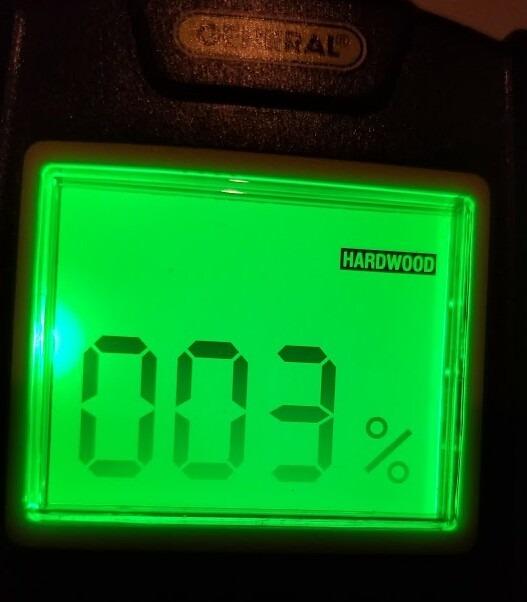
The measurement range is the headline spec. On softwood it reads from 0 to 53% moisture content, and on hardwood 0 to 35%. That is a wider range than most meters in this price tier, which makes it useful for checking very wet materials like green lumber or water-saturated framing after a flood.
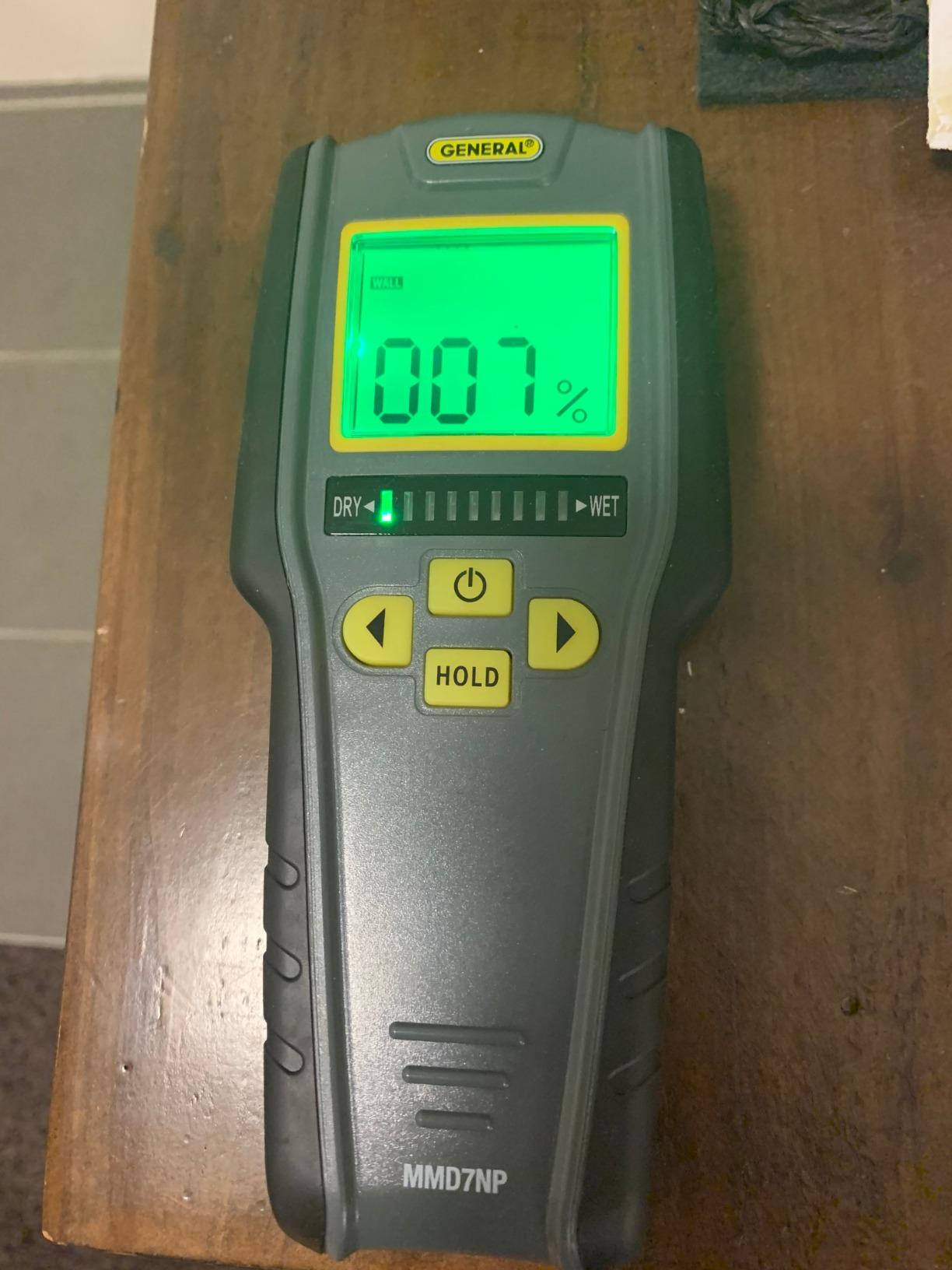
The 2-inch backlit LCD is generous for a handheld meter at this price, and the alert function lets you set a threshold so the meter beeps when moisture exceeds your chosen level. Scanning along a wall and listening for the beep is a fast way to map a wet area without watching the screen constantly.
Best applications for the MMD7NP
Water damage restoration is a strong fit for this meter. The wide range handles saturated materials that would max out a narrower meter, and the alert function lets you scan large wall sections quickly while listening for the threshold beep.
Flooring installers checking subfloors before laying material also benefit from the softwood and hardwood scales. Being able to distinguish between the two material types gives more useful readings than a single-mode budget meter.
Known issues to consider
Multiple users mention the meter drifting out of calibration over months of use. The MMD7NP does not ship with a calibration reference, so periodic accuracy checks against a known sample are necessary if you depend on the readings.
The design also feels dated compared to the Klein ET140 or even the newer RDINSCOS models. Functionally it works fine, but the aesthetics and ergonomics are from an earlier generation.
7. Ligno Scanner SD by Lignomat — The Woodworker’s Dual-Depth Specialist
Lignomat Ligno Scanner SD Pinless Moisture Meter – Wood Moisture Meter for Different Wood Species, Panels and Floor Planks – Dual-Depth Humidity Tester for Woodworking & Flooring
Dual-depth pinless (1/4 inch and 3/4 inch)
Wood species calibration with included settings card
Designed for woodworking and flooring
Professional-grade Lignomat build
Pros
- Dual-depth readings for surface and core moisture
- Included species settings card for accuracy across wood types
- Trusted Lignomat brand among professional woodworkers
- Consistent and repeatable readings
Cons
- Premium price at $275
- Wood-only focus with no drywall or masonry modes
- Some concern about accuracy on exotic species
The Ligno Scanner SD occupies the space between the mid-range meters and the Wagner Orion. At $275 it is a serious investment, but for dedicated woodworkers it is often the meter recommended on woodworking forums and by lumber suppliers.
The dual-depth capability lets you switch between 1/4 inch and 3/4 inch, which is the same depth pairing as the Orion 930. The difference is that Lignomat focuses exclusively on wood species accuracy. The included settings card lists specific gravity values for common domestic and imported species, and you enter the matching number before scanning.
This species correction is what separates the Ligno Scanner from budget meters. Oak, maple, cherry, walnut, and pine all have different densities, and a meter that treats them identically introduces error. The Lignomat card accounts for those differences, giving you readings that are actually useful for deciding whether lumber is ready to work.
Woodworkers who benefit most
Furniture makers working with premium hardwoods are the core audience. When you are building a piece from $200 worth of cherry, knowing the moisture content within a percentage point matters because dimensional movement after the piece is built can destroy joints and warp panels.
Flooring installers also use the Ligno Scanner to verify that acclimated boards are within the acceptable range before nailing them down. The dual-depth setting lets you check both the face and the core of a board to confirm it has equilibrated throughout.
Reasons to look elsewhere
If your work extends beyond wood, the Ligno Scanner is the wrong tool. It has no drywall or masonry mode, so home inspectors and restoration professionals should look at the Klein ET140 or the General Tools models instead.
A few users note that readings on very dense exotic species can be less reliable even with the settings card. If you routinely work with woods like ipe or ebony, verify the meter against a known-dry sample first.
8. General Tools MMD4E — The Best-Selling Pin-Type Reference
General Tools MMD4E Moisture Meter for Wood, Walls & Water Leak Detection
Pin-type moisture meter with two-pin probe
Audible and visual high-medium-low alerts
5-50% wood range
Backlit LCD
Includes extra pins
Pros
- Best-selling moisture meter on Amazon with 15k+ reviews
- Audible and visual moisture alerts for quick scanning
- Low cost with proven reliability over years of use
- Includes spare pins and battery
Cons
- Pin-type leaves two small holes on every reading
- Not truly non-invasive despite inclusion in this roundup
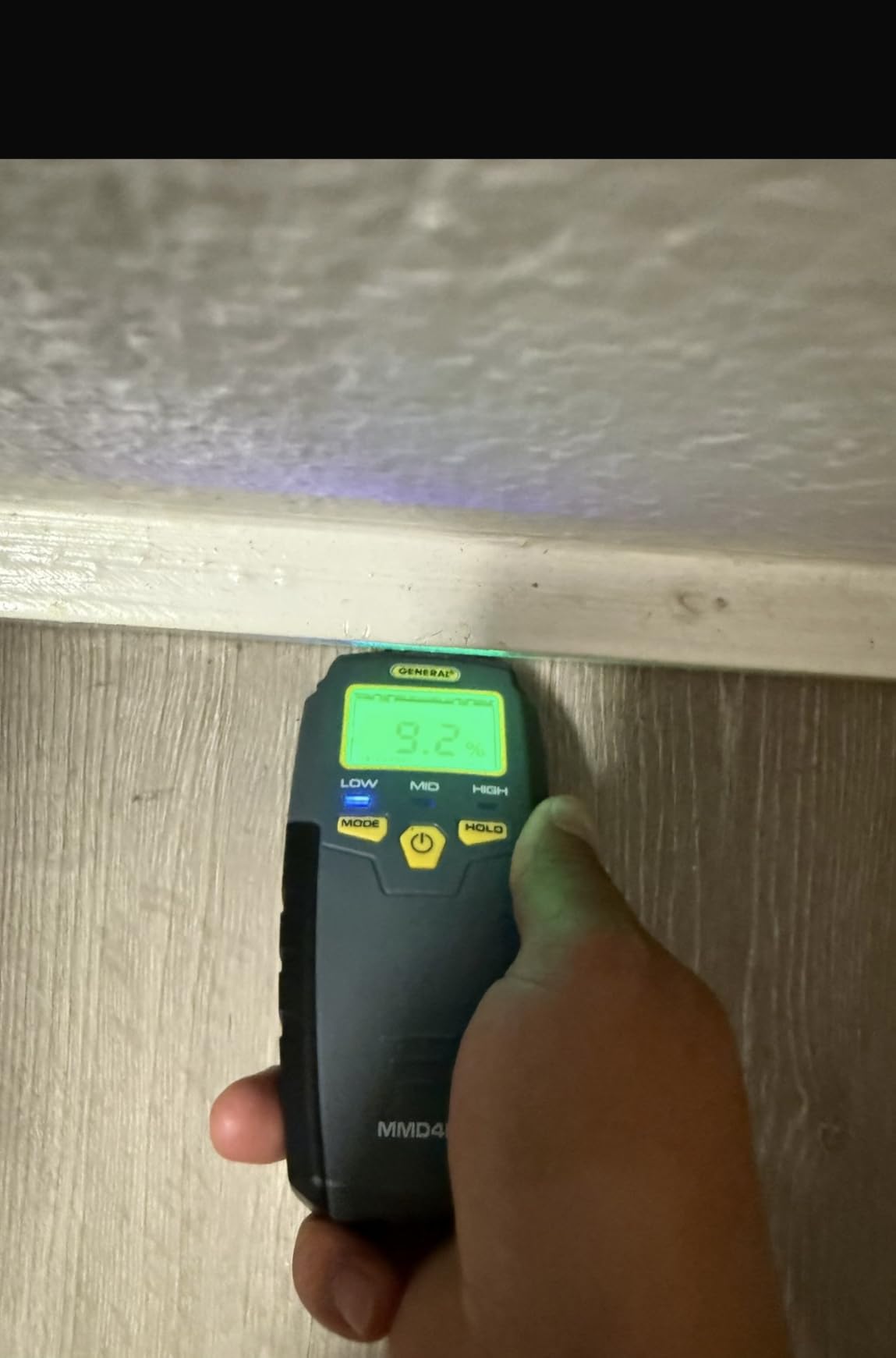
I want to be upfront: the General Tools MMD4E is a pin-type meter, not a pinless one. I included it because it is the number-one bestseller in the moisture meter category on Amazon with over 15,000 reviews, and most people researching the best pinless moisture meters also compare against this model. Knowing what you give up by going pinless versus pin-type is part of making an informed choice.
The MMD4E uses two metal pins that press into the material surface to take a reading. This means every measurement leaves two small holes. On rough framing lumber that is irrelevant, but on a finished cabinet face or a hardwood floor it is unacceptable. That hole issue is the entire reason pinless meters exist.
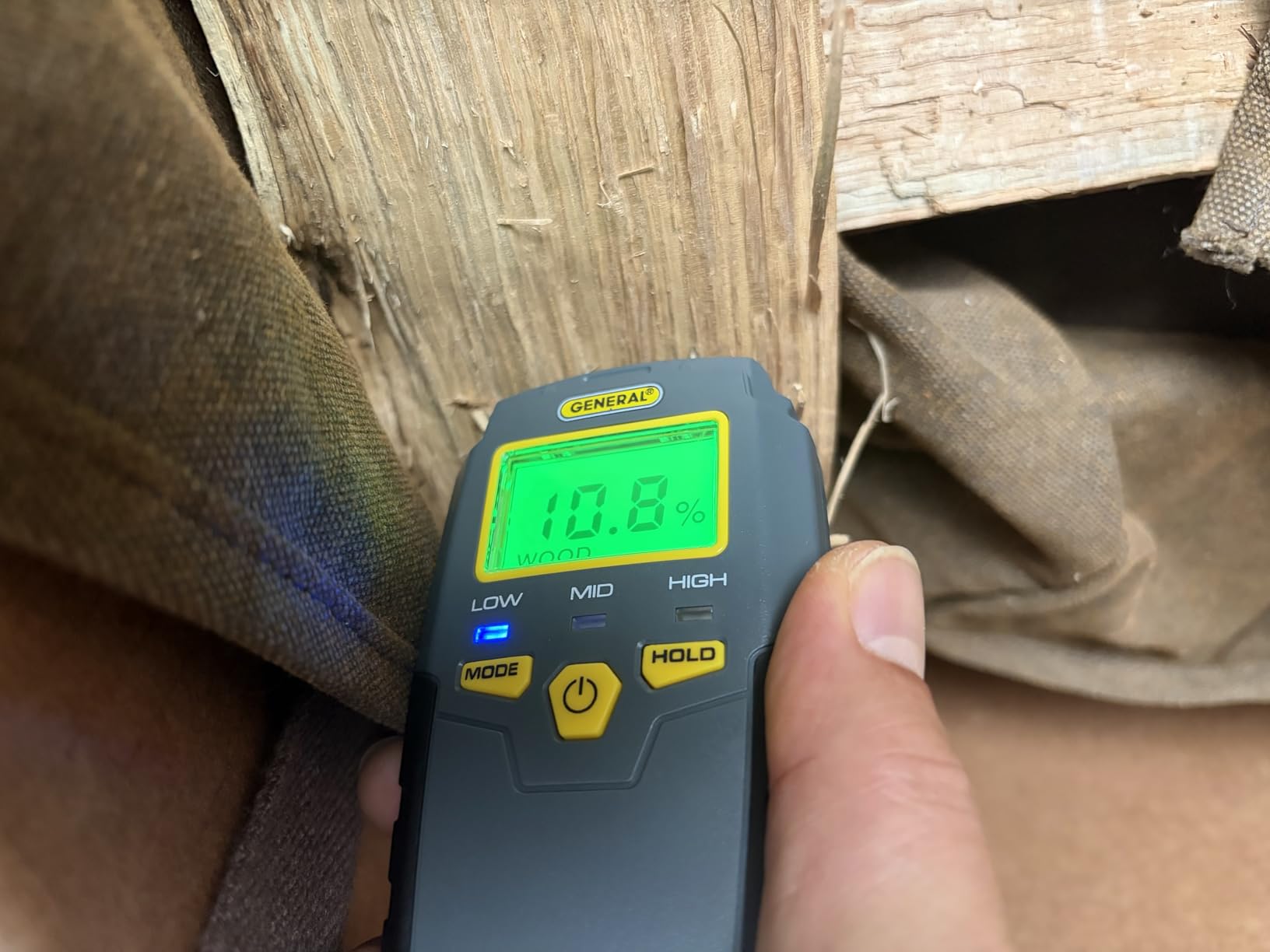
The advantage of the pin approach is direct electrical measurement, which is generally more accurate than the electromagnetic sensing used by pinless meters. Pin-type meters are less affected by surface conditions and density variations, which is why some professionals still prefer them for absolute accuracy.
When the pin-type MMD4E makes sense
Checking firewood moisture, testing rough lumber before milling, and verifying subfloor framing are all tasks where two pin holes do not matter. For those applications the MMD4E gives you proven accuracy at a low price, backed by more user data than any other meter on the market.
The audible alert system is well implemented. Set it to scan a stack of lumber and the meter beeps at different tones for low, medium, and high moisture, letting you sort boards by ear without reading the display.
Why you might still prefer pinless
If you work with finished surfaces, expensive hardwoods, drywall, or painted walls, the pin holes are a dealbreaker. Every reading is a permanent mark on the material. For those situations, any of the pinless meters higher on this list is the better call.
The MMD4E also has a shallower effective depth than most pinless meters. The pins only read between the two contact points, so you are sampling a small volume of material rather than scanning a broader area beneath the surface.
How to Choose the Right Pinless Moisture Meter for Your Work?
Picking the right meter comes down to what you are scanning, how precise you need to be, and how hard the tool gets used. Let me walk through the factors that actually matter so you can match a meter to your situation rather than overspending or undershooting.
Reading depth: why 3/4 inch is the magic number
Most pinless meters in this roundup read to approximately 3/4 inch (19mm) deep. That depth covers the vast majority of real-world needs. It reaches through a layer of drywall into the framing behind it, through the face of a hardwood board into the core, and through subflooring into the joist area below.
Shallow readings of 1/4 inch are useful for checking surface moisture on a finished board, but they miss moisture trapped deeper. This is why dual-depth meters like the Orion 930 and Ligno Scanner SD are valued by serious woodworkers. They let you compare surface and core readings on the same board to confirm full equilibration.
If you only work with thin materials like drywall or paneling, a single-depth meter at 3/4 inch is sufficient. If you work with thick slabs or large timbers, look at dual-depth options.
Accuracy and the species correction question
This is the biggest source of confusion I see in forum discussions. Two different moisture meters can give different readings on the same piece of wood, and users assume one is broken. In most cases the difference comes down to species correction.
Pinless meters measure density changes caused by moisture using an electromagnetic field. Different wood species have different baseline densities. A meter calibrated for pine will read differently on oak even if the actual moisture content is identical, because oak is denser.
Meters with species correction, like the Ligno Scanner SD and Wagner Orion 930, let you enter a species-specific setting so the reading accounts for that density difference. Meters without species correction, like the Klein ET140 and General Tools models, give you relative readings that are useful for comparing one area to another but less useful for absolute moisture content.
For woodworking where you need to hit a specific moisture target, species correction is essential. For leak detection where you just need to find the wet spot, it does not matter.
Material modes and versatility
The mid-range pinless meters in this roundup offer material-specific modes. The Klein ET140 has modes for drywall, wood, and masonry. The General Tools MM8 covers drywall, masonry, softwood, and hardwood. The General Tools MMD7NP has softwood and hardwood scales.
These modes adjust the meter baseline to suit the material, which improves accuracy relative to a single-mode meter. If you scan multiple material types in a typical week, these modes are worth paying for. If you only ever check wood, a wood-focused meter like the Ligno Scanner is the better investment.
Build quality and durability for field use
How a meter survives daily use matters as much as its sensor accuracy. The Klein ET140 has a 2-meter drop rating, which I confirmed is real. The Wagner Orion feels solid and well-sealed. The budget RDINSCOS and General Tools MM8 are functional but lack ruggedization.
If the meter rides in a tool bag or gets handed between crew members, prioritize build quality. If it lives in a kitchen drawer and comes out twice a year, the budget options are fine.
Calibration and long-term reliability
Sensors drift over time. This is a physical reality of electromagnetic sensing technology. The question is whether the meter gives you a way to verify and correct calibration.
The Wagner Orion 930 ships with an On-Demand Calibrator puck that lets you confirm accuracy in five seconds. The Ligno Scanner SD includes a reference card. The other meters rely on the user to notice when readings seem off, which is harder than it sounds.
Forum users frequently mention the frustration of owning two meters that give different readings and not knowing which one to trust. A meter with a calibration reference eliminates that doubt.
Display type: numeric vs. bar graph
This comes down to personal preference and use case. Numeric displays give you a specific percentage, which is what woodworkers need for species-specific targets. Bar graph displays, like the Klein ET140’s 9-LED system, are faster for scanning large areas because you read the color change at a glance.
Some meters, like the General Tools MM8 and MMD7NP, offer both a numeric reading and a color-coded bar graph. That combination is the most versatile approach if you are unsure which format suits you better.
Price tiers and what you get at each level
Under $30 buys a basic scanner like the RDINSCOS models. You get non-invasive sensing and a moisture reading, but accuracy is relative and build quality is minimal. These work for occasional home use and basic leak detection.
From $40 to $60 you enter the mid-range where meters like the General Tools MM8, MMD7NP, and Klein ET140 live. Expect material-specific modes, better displays, and noticeably better build quality. This is where most buyers find the best balance of capability and cost.
Above $250 you are in professional territory with the Ligno Scanner SD and Wagner Orion 930. Species correction, dual-depth capability, and calibration references justify the price for users whose work depends on accuracy.
Frequently Asked Questions
Are pinless moisture meters accurate enough for serious work?
Pinless moisture meters are accurate enough for most woodworking, home inspection, and leak detection tasks. High-end models with species correction like the Wagner Orion 930 and Ligno Scanner SD achieve accuracy within one to two percentage points. Budget pinless meters under $30 are better suited for relative comparisons than absolute measurements, typically within 5% of true moisture content.
What is the best pinless moisture meter overall?
The Wagner Meters Orion 930 is the best pinless moisture meter overall for accuracy and professional use, earning a 4.9-star rating with IntelliSense technology and dual-depth readings. For mid-tier value the Klein Tools ET140 is the top pick, and for budget buyers the General Tools MM8 offers true pinless sensing at an affordable price.
What depth can pinless moisture meters read through?
Most pinless moisture meters read to a depth of 3/4 inch (19mm) below the surface. Dual-depth models like the Wagner Orion 930 and Ligno Scanner SD offer a second shallow setting at 1/4 inch for surface-level checks. This depth range is sufficient for drywall, hardwood flooring, subflooring, and most framing lumber.
Can I use a pinless moisture meter on drywall and masonry?
Yes, pinless moisture meters work on drywall and masonry. Models with dedicated material modes like the Klein ET140 and General Tools MM8 adjust their sensing baseline for these materials, giving more reliable readings than wood-only meters. Always select the correct material mode before scanning for best results.
Do inexpensive moisture meters actually work?
Inexpensive moisture meters under $30 do work for basic detection tasks like finding leaks and comparing relative moisture levels. Their accuracy typically falls within plus or minus 5% of true moisture content, which is acceptable for DIY home checks but may not meet the standards of professional woodworking or home inspection work.
Why do my two moisture meters give different readings?
Two moisture meters often give different readings because of species correction differences, sensor calibration drift, and varying measurement depth. Pinless meters calibrated for different wood densities will show different numbers on the same board. Using a meter with species correction settings and a calibration reference helps eliminate this discrepancy.
Final Verdict: Which Pinless Moisture Meter Should You Buy in 2026?
The best pinless moisture meters cover a wide range of needs and budgets, and the right choice depends entirely on what you are scanning and how precise you need to be. After testing and comparing these eight models, here is how I would decide.
Professional woodworkers and flooring installers should get the Wagner Meters Orion 930. The IntelliSense accuracy, dual-depth readings, and On-Demand Calibrator make it the most trustworthy meter on this list, and the 7-year warranty backs that up. If you work primarily with wood species and want that same dual-depth capability at a lower price, the Ligno Scanner SD is the runner-up.
Home inspectors, restoration contractors, and remodeling pros get the most value from the Klein Tools ET140. The 3/4-inch depth, multi-material modes, and 2-meter drop rating make it the most versatile and rugged meter in the mid-range tier. For homeowners and DIYers who just need to find a leak or check lumber, the General Tools MM8 and the RDINSCOS models deliver genuine pinless sensing at prices that make sense for occasional use.
Whatever you choose, buy a meter that matches your accuracy needs and material types. A $20 scanner finds wet spots. A $525 Wagner tells you the exact moisture content of your walnut slab. Both have their place, and both earn their keep when the reading prevents a costly mistake.