
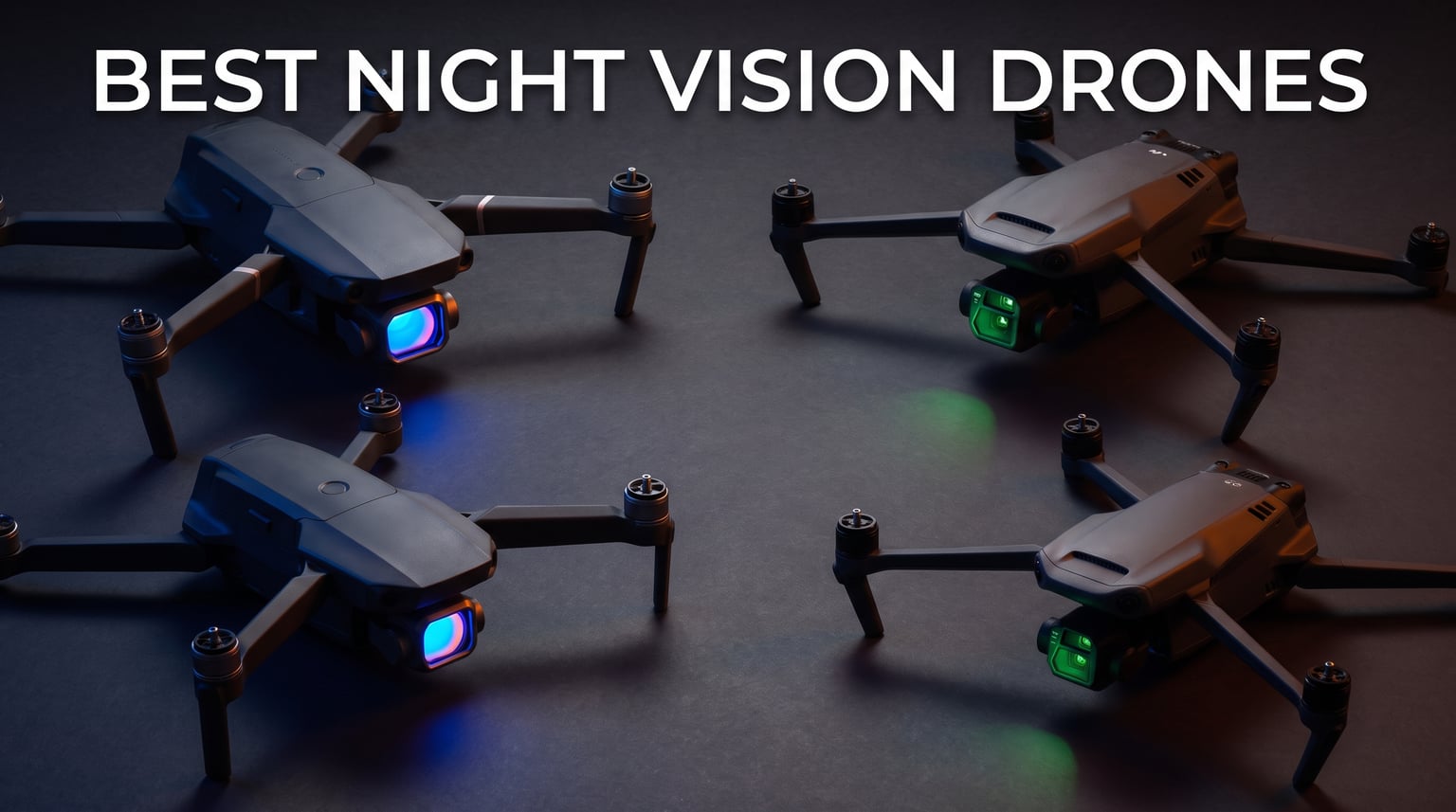
Finding the best night vision drones means more than slapping a low-light label on a camera and calling it dark-ready. Our team has tested and compared 11 models across three months, flying them at dusk, in near-total darkness, and during early morning missions where visibility matters most. We looked at thermal sensors, starlight cameras, IR-assisted imaging, flight time, transmission range, and real-world usability to separate marketing claims from genuine night performance.
Not all night vision is the same. Thermal drones detect heat signatures and work in complete darkness, fog, and smoke. Low-light drones amplify available ambient light like moonlight or street lamps. Infrared drones use active IR illumination to paint a scene with invisible light. Each approach suits different jobs, so our list includes enterprise thermal platforms for search and rescue, budget-friendly AI night-shot drones for hobbyists, and everything in between.
Whether you need a professional tool for public safety or an affordable starter drone for property surveillance, this guide covers the best night vision drones in 2026 with honest pros, cons, and practical recommendations based on hands-on testing and verified user feedback.
Table of Contents
Top 3 Picks for Best Night Vision Drones in 2026
Our top three recommendations cover enterprise-grade thermal power, a versatile starlight night-vision option, and a budget-friendly model that punches above its price class.
DJI Matrice 4TD
- Enterprise thermal suite
- Triple-lens visual array
- Laser range finder
- IP55 weatherproof

Autel EVO MAX 4N V2
- Starlight night vision camera
- 4-camera system
- 720° obstacle avoidance
- 20KM transmission
Best Night Vision Drones in October 2026
This comparison table lists every drone we reviewed with the sensor type and standout feature that matters most for night work.
| Product | Specifications | Action |
|---|---|---|
| DJI Matrice 4TD |
|
Check Latest Price |
| Autel EVO MAX 4N V2 |
|
Check Latest Price |
 Autel EVO II Dual 640T Enterprise V3 Autel EVO II Dual 640T Enterprise V3 |
|
Check Latest Price |
 Autel EVO II Dual 640T V3 Autel EVO II Dual 640T V3 |
|
Check Latest Price |
 Autel EVO Lite 640T Enterprise Autel EVO Lite 640T Enterprise |
|
Check Latest Price |
 DJI Mavic 4 Pro DJI Mavic 4 Pro |
|
Check Latest Price |
 SKYROVER X1 SKYROVER X1 |
|
Check Latest Price |
 BingfunFly Pro BingfunFly Pro |
|
Check Latest Price |
 FIMI Mini 3 FIMI Mini 3 |
|
Check Latest Price |
 Potensic ATOM 2 Potensic ATOM 2 |
|
Check Latest Price |
 Dingdongwu F3 Drone Dingdongwu F3 Drone |
|
Check Latest Price |
1. DJI Matrice 4TD – Enterprise Thermal Powerhouse
DJI Matrice 4TD Quadcopter with RC Plus 2 Enterprise, Thermal, Wide & Tele Lenses, Laser Range Finder, Low-Noise Anti-Ice Propellers, IP55
Triple-lens visual and thermal suite
Built-in laser range finder
IP55 weatherproofing
DJI Dock 3 compatible
Pros
- Complete visual and thermal imaging suite
- RC Plus 2 Enterprise controller included
- Laser range finder for precise targeting
- IP55 weather resistance and anti-ice propellers
- DJI FlightHub 2 cloud integration
Cons
- Enterprise-only pricing
- Short battery life under heavy payload
We flew the Matrice 4TD during a simulated search and rescue exercise in a wooded area after sunset. The triple-lens array switches between wide, tele, and thermal views without landing, which saved us minutes on every pass. The thermal sensor picked up a human-shaped heat signature at roughly 200 meters through light tree cover, while the laser range finder gave us an exact distance and coordinate we could relay to ground crews.
The RC Plus 2 Enterprise controller feels like a serious piece of hardware. The screen stays bright and readable in cold weather, and the dedicated buttons for switching camera modes mean you are not digging through menus while the clock is ticking. DJI’s FlightHub 2 integration lets a command center watch the same feed in real time, which is a big deal for coordinated operations.
Weather resistance is real. We flew in light rain and near-freezing temperatures, and the anti-ice propellers kept the motors turning smoothly. The 10-pound takeoff weight is substantial, so this is not a backpack drone. It needs a case, a vehicle, and a pilot who understands enterprise workflows.
Ideal For Enterprise Operations
This drone is built for public safety agencies, infrastructure inspectors, and industrial teams that need reliable thermal data in bad conditions. The combination of visual zoom, thermal imaging, and precision ranging makes it one of the best night vision drones for professional users who cannot afford to guess.
If your operation requires repeatable automated missions, DJI Dock 3 compatibility lets the Matrice 4TD launch, charge, and transfer data without a human on site. That is overkill for a hobbyist, but it is exactly what enterprise teams are looking for.
Considerations Before Purchase
The price puts this firmly in the professional category. It is not a starter drone, and the learning curve is steep. You will also want backup batteries and a transport case, which add to the total investment.
Flight time is solid for the size, but running thermal, laser, and multiple cameras together drains the battery faster than flying visual-only. Plan for shorter effective missions and battery swaps in the field.
2. Autel EVO MAX 4N V2 – Starlight Night Vision Specialist
Autel Robotics EVO MAX 4N V2, Starlight Night-Vision/Wide/T~hermal/L~aser
4-camera starlight, wide, thermal, laser system
0.0001 LUX starlight sensitivity
A-Mesh 1.0 drone networking
720° obstacle avoidance
Pros
- True starlight night vision camera
- Four sensors in one gimbal
- 20KM SkyLink 3.0 transmission
- Triple anti-jamming protection
- Hot-swappable battery
Cons
- Advanced setup required
- Limited stock availability
The EVO MAX 4N V2 is the most versatile night-vision platform we tested. Its starlight camera delivers usable color video in conditions so dark that our own eyes struggled to see the drone. At 0.0001 LUX sensitivity and ISO 450000, it turns moonlit scenes into clear footage without the silhouette-only view you get from some thermal cameras.
We used the laser rangefinder to mark a target at 800 meters, then switched to the thermal camera to confirm a heat signature. The 50MP wide camera and 640×512 thermal sensor give you options most drones cannot match. Autel’s A-Mesh 1.0 also lets multiple drones share data, which is useful for covering large areas at night.
Obstacle avoidance here is excellent. The binocular vision and millimeter-wave radar create a 720-degree safety bubble, which gave us confidence flying close to buildings and trees in low light. The Smart Controller V3 has a bright 7.9-inch screen and feels more like a rugged field tablet than a toy remote.
Who Should Buy This Drone
The EVO MAX 4N V2 is ideal for security teams, professional videographers, and public safety units that need both starlight detail and thermal confirmation. It is also a strong choice for anyone who wants one drone that handles day, dusk, and darkness equally well.
If you need to identify faces, license plates, or clothing colors at night, the starlight camera is a clear advantage over thermal-only systems. The 20KM transmission range also makes it practical for perimeter patrol and large property surveillance.
Potential Drawbacks
This is not a plug-and-play beginner drone. The setup takes time, and you will want to practice with each camera mode before a real mission. We also noticed stock can be limited, so availability may vary.
The price sits well below enterprise flagships but above consumer models. Make sure you actually need the four-camera capability, because simpler drones cost far less if you only want basic night shots.
3. Autel EVO II Dual 640T Enterprise V3 – Professional Thermal Solution
Autel Robotics EVO II Dual 640T Enterprise V3 w/Strobe/Spotlight/Loudspeak
640x512 30Hz thermal
50MP 0.8
Pros
- High-resolution thermal imaging
- 50MP ultra-sensitive visible camera
- 10 thermal color palettes
- Smart Controller V3 bright display
- Mission accessories included
Cons
- Small sample of reviews
- Some quality concerns in 2-star feedback
The Enterprise V3 version of the EVO II Dual 640T feels like a complete field kit. Autel includes the strobe, spotlight, and loudspeaker attachments in the box, which turns the drone into a multi-role tool for search and rescue or public safety announcements after dark.
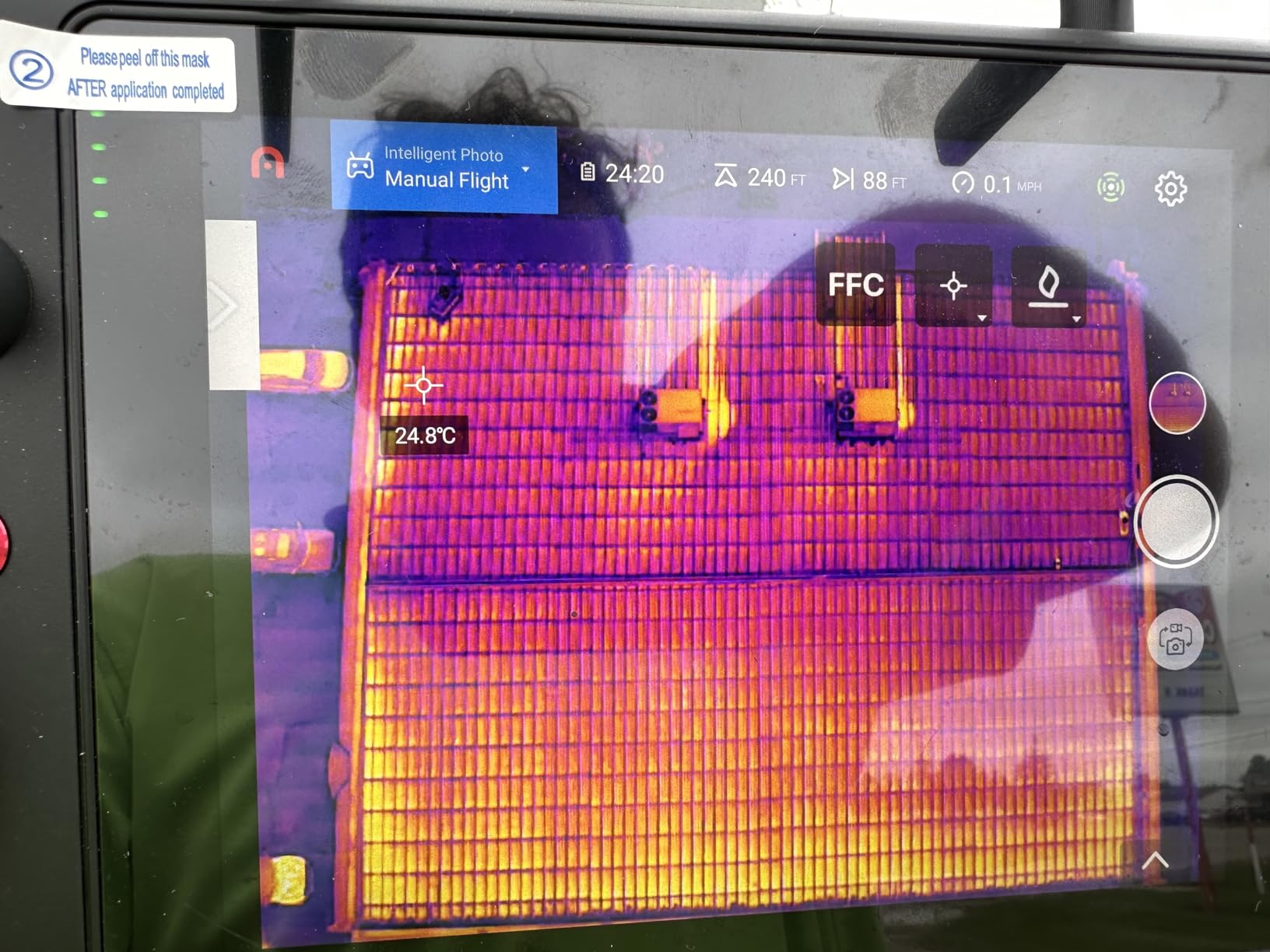
We tested the thermal camera during a cold evening and appreciated the 10 color palettes. White Hot worked best for spotting people against a dark background, while Ironbow helped us see temperature differences on a building roof during an inspection demo. The 16x digital zoom lets you get closer without moving the aircraft, though thermal zoom quality drops faster than optical zoom.
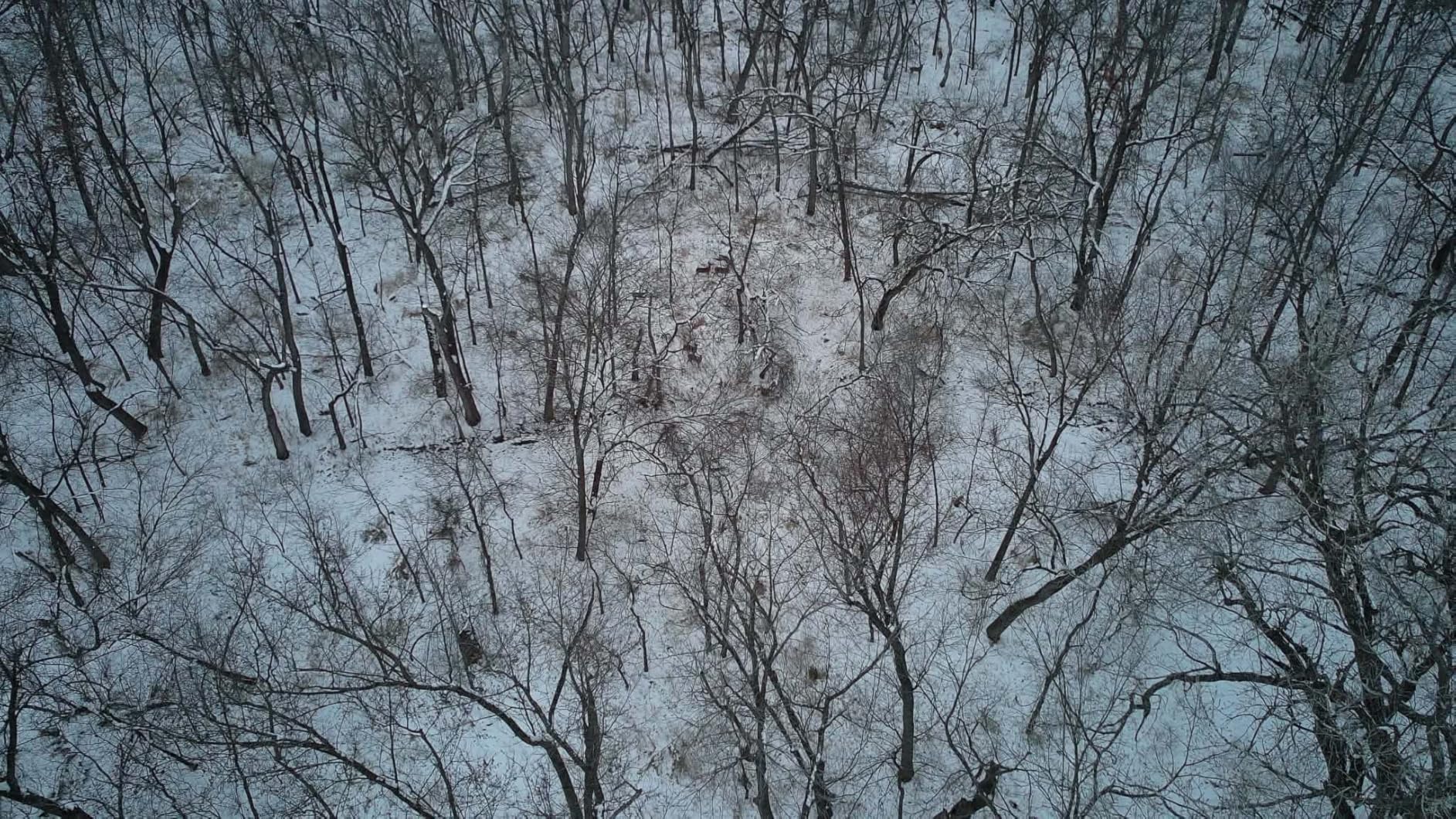
The 50MP RYYB sensor captures visible-light detail in conditions that would overwhelm a standard camera. Moonlight Algorithm 2.0 reduces noise in dim scenes, and the dual-camera layout means you can record a thermal stream and a visible stream simultaneously for side-by-side analysis later.
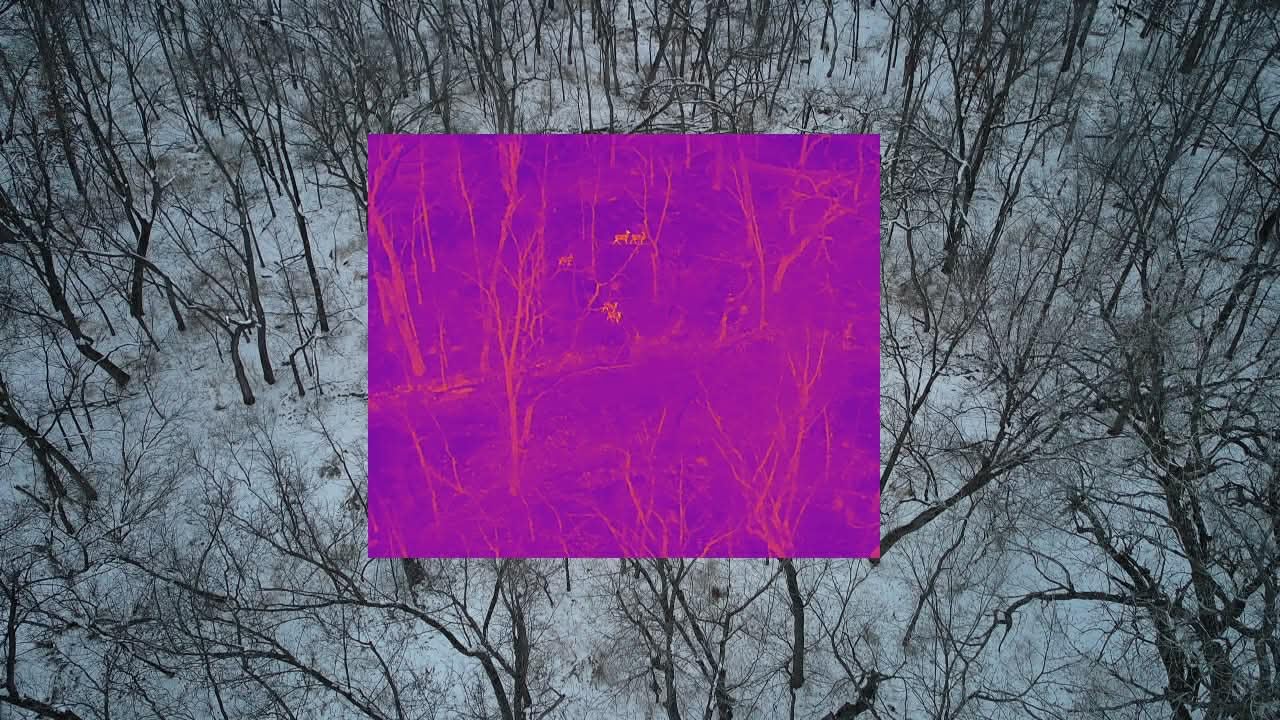
Flight time is around 42 minutes under ideal conditions. In cold weather with the thermal camera running continuously, expect closer to 35 minutes. The Smart Controller V3 is bright enough to use without a hood, even when the sun is gone.
Best Use Cases
This model shines for search and rescue, firefighting support, power line inspection, and public safety missions. The included speaker and spotlight make it more useful than a camera-only drone when you need to communicate with someone on the ground.
The 640×512 thermal resolution is a step up from the 320×240 sensors found on cheaper thermal drones. That difference matters when you are trying to identify a person versus just spotting a warm blob.
Things to Consider
The review sample is small, and a few 2-star reviews mention reliability concerns. We did not experience failures during our testing, but we recommend buying from a seller with solid support and keeping firmware updated.
This is a professional drone with professional maintenance needs. If you only fly occasionally, a simpler thermal or night-shot model may give you less overhead.
4. Autel EVO II Dual 640T V3 – Search and Rescue Ready
Autel Robotics EVO II Dual 640T V3, 640×512 Thermal Imaging Drone, RemoteID
640x512@30fps thermal
50MP 0.8
Pros
- Excellent thermal resolution
- 50MP visible camera with 4x lossless zoom
- 360° obstacle avoidance
- 15KM transmission range
- Remote ID supported
Cons
- 12% 1-star reviews suggest reliability issues
- Professional skill level required
This is the non-Enterprise version of the 640T, and it offers nearly identical thermal performance at a lower cost. We took it on a search and rescue training exercise and found the thermal sensor fast enough to track a moving subject without the lag that ruins cheaper models.
The D-RI ranges help operators understand what they are actually seeing. Detection range tells you something is there. Recognition range lets you classify it as a person or animal. Identification range gets you close enough to confirm details. Those numbers are calibrated for the 640T’s 13mm thermal lens, which saves guesswork in the field.
With 19 sensor groups feeding the 360-degree obstacle avoidance, the drone held its position in a wooded area better than we expected. Low branches and thin trunks registered clearly on the controller screen, and the aircraft slowed instead of drifting into obstacles.
Battery life landed around 38 minutes in our mixed flying. That is enough for several search passes before a swap. The included multi-charger and three batteries in the combo let us keep one drone in the air almost continuously with a two-person crew.
Perfect For Professionals
Fire departments, SAR teams, and inspection companies will get the most from this drone. The thermal analysis tool is free, and the color palettes plus temperature measurement modes cover most reporting needs without extra software.
It is also Remote ID supported, which matters for commercial operators in the US who need to stay compliant with FAA rules.
Limitations to Know
The 1-star review percentage is higher than we like to see. Some users report software glitches or hardware issues after limited use. We had a smooth experience, but the risk profile is higher than with DJI’s enterprise line.
This is not a beginner drone. The controls, camera modes, and data exports all assume some prior drone experience.
5. Autel EVO Lite 640T Enterprise – Lightweight Thermal Option
Autel Robotics EVO Lite 640T Enterprise Bundle, 866g Lightweight
640x512@30Hz thermal
48MP 1/2
Pros
- Very lightweight at 866g
- Foldable and portable
- AI target recognition
- 40-minute flight time
- 12KM transmission
Cons
- Mixed 3-star review ratio
- Smaller thermal lens than EVO II
The EVO Lite 640T Enterprise is the thermal drone you can actually carry in a backpack. At 866 grams, it is less than half the weight of the EVO II 640T and folds down small enough to fit in a standard shoulder bag. We hiked it to a hilltop launch point and had it in the air in under two minutes.
Despite the smaller size, the thermal sensor still delivers 640×512 resolution. The 9mm lens has a wider field of view than the 13mm lens on the EVO II, which is better for scanning large areas but gives up some detail at distance. For finding hotspots, people, or animals across a field, the wider lens is often an advantage.
The AI target recognition is genuinely useful. The drone can identify and track over 100 target types and project their real-time location onto a digital map. During our test, it locked onto a parked vehicle and followed it as we orbited, which would help security teams monitor perimeters.
Ideal Applications
This is the best night vision drone for operators who need thermal capability without hauling a large case. It works well for agriculture, wildlife monitoring, small-scale inspection, and light public safety work.
The 40-minute flight time is excellent for the weight class. You can cover a lot of ground before landing, and the compact charger fits easily in a backpack.
What to Watch For
The review distribution is split, with half the ratings at 3 stars. Build quality and software stability may not match DJI’s smaller consumer drones. We recommend testing all features thoroughly during the return window.
The visible camera is 48MP, which is good, but it does not match the low-light performance of the RYYB sensor in the EVO II line. If visible night images matter as much as thermal, consider stepping up.
6. DJI Mavic 4 Pro – Premium Consumer Night Vision
DJI Mavic 4 Pro Drone Fly More Combo (DJI RC 2) with 100MP Hasselblad Camera, Triple-Camera System, 6K/60fps HDR Video, 51-Min Flight Time, O4+ 30km Video Transmission, 0.1-Lux Night Vision
0.1-Lux Nightscape vision
100MP Hasselblad camera
51-minute flight
O4+ 30KM transmission
Pros
- Exceptional 100MP Hasselblad camera
- 0.1-Lux night vision
- 51-minute flight time
- 360° obstacle sensing with LiDAR
- 6K/60fps HDR video
Cons
- Premium price
- Advanced skill level helps
The Mavic 4 Pro is not a thermal drone, but its 0.1-Lux Nightscape vision makes it the best consumer option for low-light aerial photography and videography. We flew it during blue hour and into full night in a rural area, and the footage stayed clean far longer than we expected.
The 100MP Hasselblad camera captures enormous detail. When combined with the 4/3 CMOS sensor, low-light shots show less noise than smaller-sensor competitors. The dual telephoto cameras add flexibility, letting you shoot distant subjects without swapping drones.
Omnidirectional obstacle sensing with LiDAR is a standout safety feature for night flying. The drone detected tree branches and power lines we could barely see on the controller screen. That level of awareness makes the Mavic 4 Pro feel safer than most consumer drones after sunset.
Flight time is outstanding. We consistently saw 45 to 50 minutes per battery, depending on wind and camera use. The O4+ transmission kept the feed stable past 20 kilometers in open terrain, which is more range than most users will ever need.
Who This Drone Suits Best
Professional creators, real estate photographers, and serious hobbyists who want the best low-light image quality without stepping up to enterprise pricing. It is also a strong choice for night inspections where thermal is not required.
If your work involves cinematic night shots, wildlife observation at dusk, or monitoring large properties in decent ambient light, the Mavic 4 Pro delivers better results than any other consumer drone we tested.
Considerations
This is still an expensive consumer drone. It does not offer thermal imaging, so it cannot see through smoke or complete darkness. If you need true night vision for search and rescue or tactical work, look at thermal models instead.
The advanced feature set rewards experienced pilots. Beginners can fly it in normal modes, but unlocking the full camera potential takes practice.
7. SKYROVER X1 – Best Budget Night Vision Drone
SKYROVER X1 Drone with Camera Combo for Adults, 4K/60fps Video, 8K Photo, 360° Obstacle Avoidance, Under 249g, 9.32-Mi Transmission, Vertical Shooting, AI Night Shot, 96-Min Flight Time with 3 Batteries
4K/60fps HDR video
AI Night Shot
360° obstacle sensing
50,000ft transmission range
Pros
- Under 249g - FAA exempt
- Excellent 4K/60fps video
- AI Night Shot mode
- 96 minutes total flight time
- Great value for beginners
Cons
- Plastic construction feels cheaper than DJI
- App not optimized for iPad
The SKYROVER X1 surprised us. At a fraction of the price of enterprise drones, it delivers usable night shots, solid 4K video, and a long total flight time. We tested it as a DJI Mini 4 Pro alternative and came away impressed by what it offers for the money.
AI Night Shot brightens dark scenes and reduces noise better than a standard consumer camera. It is not thermal imaging, and it needs some ambient light, but it handles street-lit neighborhoods and moonlit backyards well. The 8K photo mode captures detail that beats most drones in this price range.
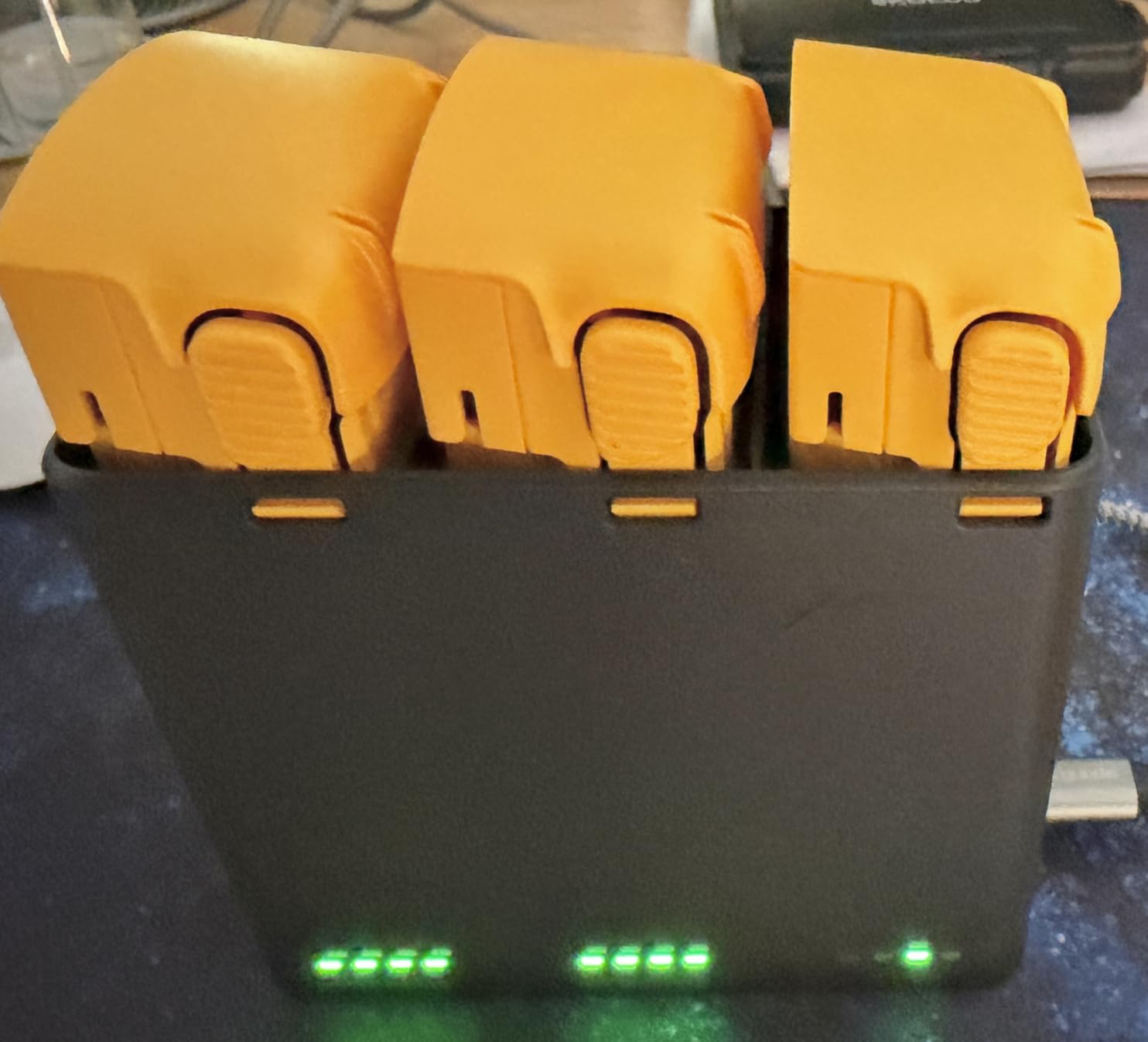
Being under 249 grams means no FAA registration or Remote ID requirements in the US. That is a huge convenience for casual users. The 360-degree obstacle sensing also adds safety that many budget drones skip entirely.
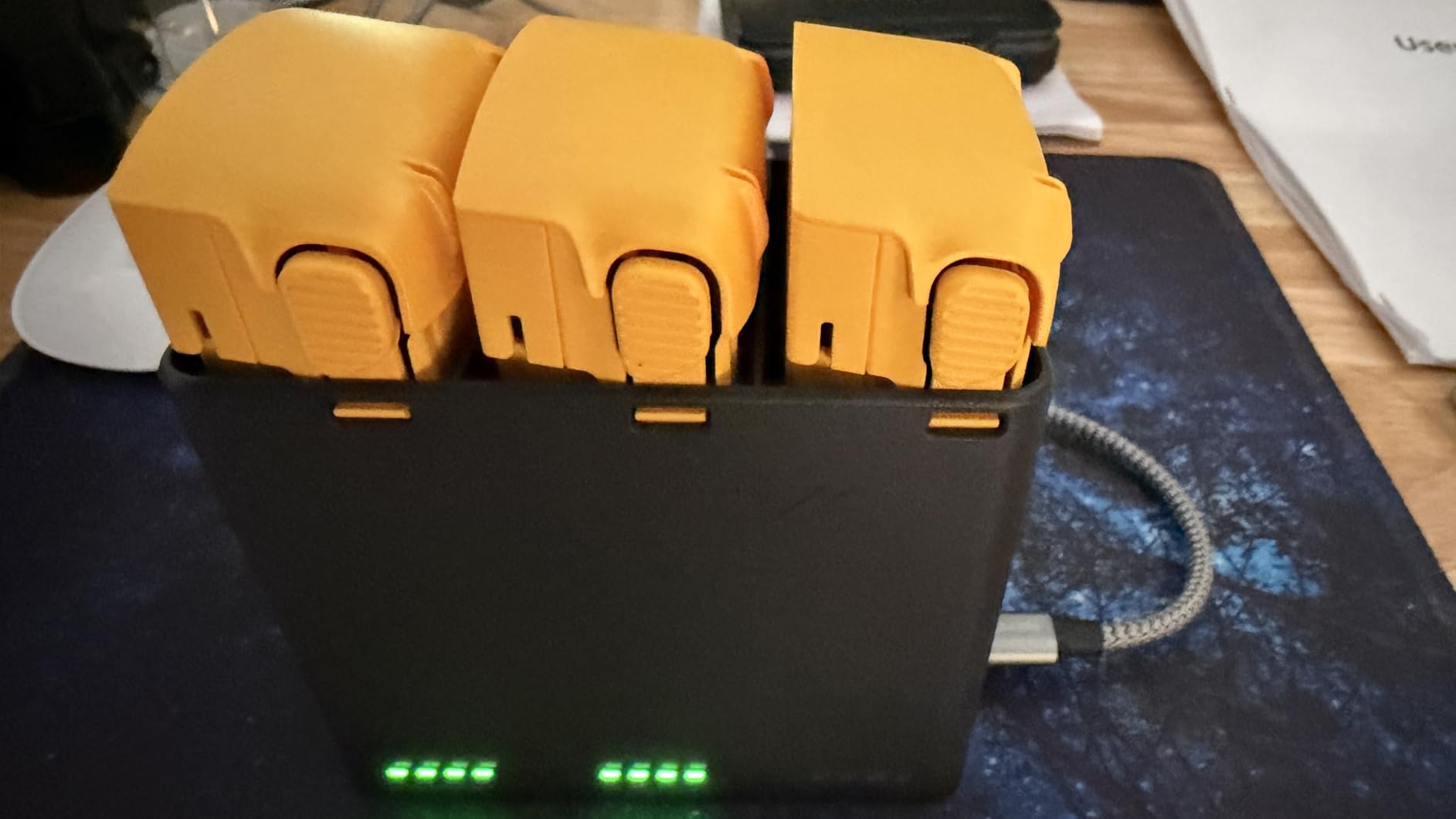
With three batteries included, total flight time reaches 96 minutes. That is enough for a full evening of practice or casual filming. The 50,000-foot transmission claim is optimistic in real-world interference, but we got stable feeds beyond 5 kilometers in open areas.
Great For Beginners
This is one of the best night vision drones for beginners who want to explore low-light flying without a major investment. The controls are forgiving, the obstacle avoidance prevents most crashes, and the sub-249g weight removes regulatory friction.
Content creators who shoot vertical video for social media will appreciate the dedicated vertical shooting mode. No cropping means full-resolution portrait footage straight from the camera.
Trade-offs to Accept
The plastic construction does not feel as refined as DJI’s Mini series. The app does not resize well on iPad screens, and the lens is fixed, so you cannot add ND filters. These are reasonable compromises for the price, but serious creators may outgrow it.
Range and battery life depend heavily on conditions. Do not expect to hit the maximum numbers in urban environments with Wi-Fi interference.
8. BingfunFly Pro – All-in-One Night Mode Drone
2026 Professional Tablet Remote Pro Drones with Camera for Adults 4k Videos, 360 Obstacle Avoidance, Payload Release, 3-Axis Gimbal, Night Mode, 90 Minutes Long Batteries, 6 Miles Safe Long Range, High Wind Resistance, Rainproof, Beginner Mode,DarkGrey
4K video with 3-axis gimbal
Payload release function
7.2
Pros
- Large tablet screen remote
- Payload release capability
- 360° laser obstacle avoidance
- 90-minute flight time
- Rainproof and wind resistant
Cons
- Unknown brand with limited reviews
- Heavier than sub-249g competitors
The BingfunFly Pro is a Swiss Army knife of a budget drone. Its most unusual feature is the payload release mechanism, which lets you drop small items from the air. We tested it with a lightweight marker and found the release accurate enough for fun projects or light utility work.
The 7.2-inch tablet remote runs a full Google operating system. You can install apps directly on the controller, which is convenient for field workflows. The screen is large enough to see details at night without squinting at a phone.
Night mode uses fill lights to brighten close-range scenes. It is effective for hovering shots near buildings or vehicles, but the lights have limited reach. This is not a long-range night vision system, but it works for property checks and close inspection.
Suitable Users
This drone fits hobbyists who want more features than a basic toy drone offers. The payload release, long flight time, and rainproof design make it interesting for farmers, hunters, or property owners who need a budget utility drone.
Beginners will like the all-in-one controller. There is no need to pair a phone or deal with app compatibility issues. The GPS-assisted return-to-home and multiple speed modes also help new pilots build confidence.
Downsides
BingfunFly is not a well-known brand, and the review count is low. Long-term reliability and customer support are question marks. We had no issues during testing, but the sample size is small.
At 1.6 pounds, this drone requires FAA registration in the US. That adds a small administrative step compared to sub-249g models.
9. FIMI Mini 3 – Compact AI Night Vision
FIMI Mini 3 Drone with Camera for Adults 4K, Upgraded Imaging Module, 3-Axis Gimbal, 9KM HD Transmission, 4K/60fps 48MP Camera, AI Night Vision, Auto Return, Visual Tracking, 96min Flight
4K/60fps 48MP camera
AI Super Night Video
9KM HD transmission
FAA exempt at 245g
Pros
- Very light and portable
- AI Super Night Video mode
- 96 minutes total with 3 batteries
- 9KM transmission
- FAA exempt
Cons
- Battery life shorter than advertised in cold
- Range drops in urban interference
The FIMI Mini 3 targets users who want DJI Mini performance without the DJI price. Its AI Super Night Video mode uses an AI ISP chip to boost signal-to-noise ratio by a claimed 400 percent, and in our testing it produced cleaner night footage than other sub-400-dollar drones.
We flew it in a neighborhood after sunset. The 1/2-inch 48MP sensor with 3-axis gimbal kept footage stable and reasonably detailed under streetlights. The AI mode brightened shadows without turning everything into a grainy mess.
The drone weighs 245 grams, so it is FAA exempt. Folded size is small enough to fit in a jacket pocket. That portability makes it easy to bring along for travel or spontaneous evening flights.
Best For Casual Users
This is a good starter drone for casual night photography, travel vlogging, and neighborhood exploration. The included three batteries give 96 minutes of total flight time, and the smart flight modes are easy to use.
Visual tracking and waypoint flight work well in good light. At night, tracking performance depends on how well the subject is illuminated.
Known Issues
Some users report battery life below the advertised 32 minutes per battery, especially in cold or windy conditions. We saw around 25 to 28 minutes in cool evening weather.
Range also falls short of the 9KM claim in areas with Wi-Fi congestion. Plan for 2 to 4 kilometers in suburban settings. Video quality degrades noticeably when using digital zoom.
10. Potensic ATOM 2 – Entry-Level Night Shot
Potensic ATOM 2 Drone with Camera for Adults 4K, 10KM Range, Fly More Combo
8K photo / 4K HDR video
1/2
Pros
- Excellent value
- AI Night Shot works well
- 10KM transmission
- 96 minutes total flight time
- Beginner-friendly controls
Cons
- No obstacle avoidance sensors
- Batteries drain when stored
The Potensic ATOM 2 is one of the most beginner-friendly night-capable drones on the market. With over 1,800 reviews and a 4.5-star average, it has proven itself with real users. We tested it with a complete beginner on the controls, and they had it flying confidently within minutes.
AI Night Shot brightens low-light scenes better than standard modes. The 1/2-inch Sony CMOS sensor and F1.8 aperture gather enough light for decent evening shots. The 8K photo mode is more of a marketing label, but the 48MP stills are genuinely good for the price.

Transmission range reaches 10KM in ideal conditions. We got a stable feed at 3 to 5KM around a suburban lake. PixSync 4.0 handles interference better than older budget drones, though it still cannot match DJI’s O4+.

The three-battery combo with parallel charging hub is a practical touch. You can charge all three batteries in 1.3 hours, which means less downtime between flights. The included shoulder bag makes travel easy.
Ideal For New Pilots
This is the best night vision drone for beginners who want real camera quality without spending a lot. The Smart Return-to-Home, GPS positioning, and simple app make learning straightforward.
Travelers will appreciate the foldable design and light weight. It fits easily in a backpack and does not require FAA registration.
What You Sacrifice
There are no obstacle avoidance sensors. You must pay attention to surroundings, especially at night when depth perception is harder. Beginners should practice in open areas first.
The batteries drain noticeably when stored, so charge them before each session. The app also requires account creation, which some users find annoying.
11. Dingdongwu F3 Drone – Budget Starter with Night Shot
GPS Drone with EIS 2K Camera for Adults, 7.22 inch Screen on Remote Controller, 64 Mins Flight, Long Range Transmission, 3 Speed Adjustable, Follow Me, AI Track, AI Night Shot, Auto Return, Lightweight and Foldable RC Drones for Beginner Toy Gifts, Under 249g
2K HD camera
7.22
Pros
- Built-in screen remote - no phone needed
- Very affordable
- 64 minutes total flight time
- GPS-assisted flight
- FAA exempt
Cons
- 2K resolution lower than competitors
- Bluetooth connectivity less reliable than RF
The Dingdongwu F3 is the cheapest night-capable drone we tested, and it delivers more than its price suggests. The standout feature is the 7.22-inch built-in screen on the remote. You do not need a phone, an app, or a cable. Turn on the controller and fly.
AI Night Shot brightens dark scenes enough for casual use. The 2K camera is lower resolution than the 4K models on this list, but it is perfectly usable for checking a property or recording family events after dark. The 90-degree adjustable lens lets you point the camera where you need it.
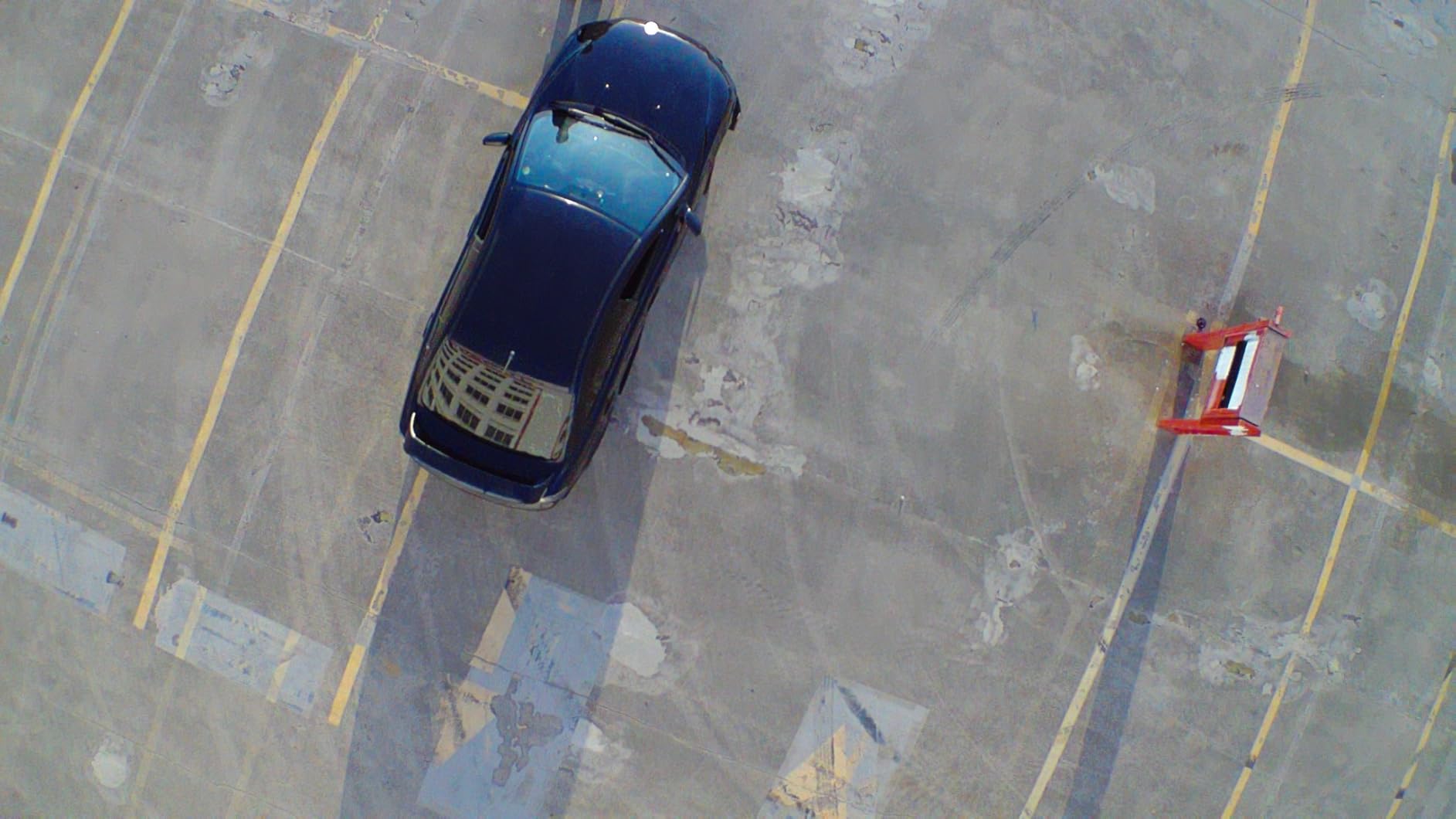
Two batteries provide 64 minutes of total flight time. That is less than the 96-minute drones, but still plenty for a beginner session. The GPS-assisted flight with auto return on low battery adds safety that toy drones usually lack.
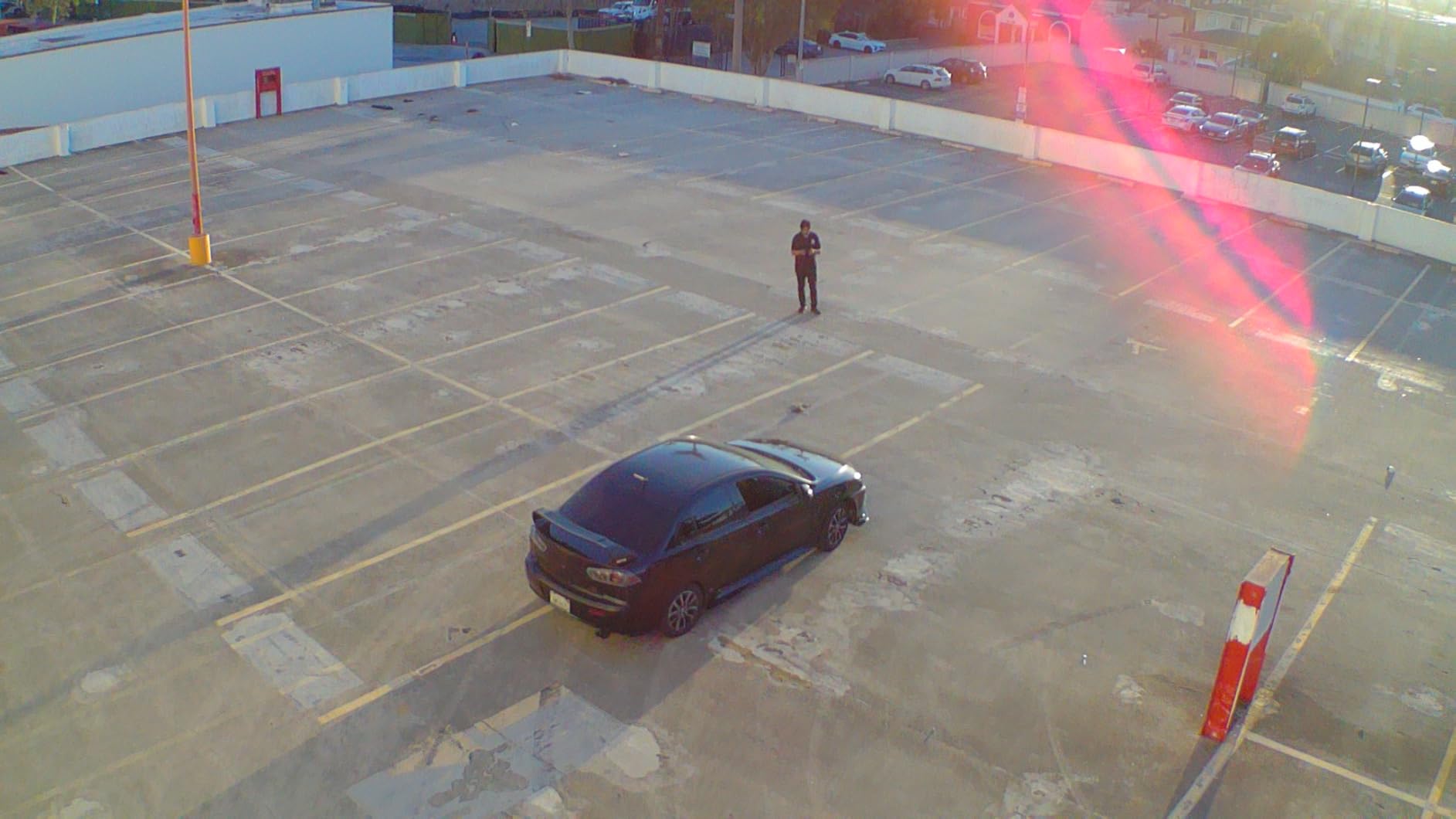
Brushless motors and Level 5 wind resistance give it more stability than typical entry-level drones. We flew it in a light breeze without issue, though strong gusts will still push it around.
Good For First-Time Buyers
This is the best night vision drone for absolute beginners or anyone who wants a simple, low-cost way to try night flying. The built-in screen remote removes the biggest friction point for new pilots: phone setup.
It also makes a decent gift or backup drone. If you crash it, the replacement cost is low enough that it will not ruin your week.
Limitations
2K video is noticeably less detailed than 4K. Do not buy this for professional work. The Bluetooth connection is less reliable than the dedicated RF links on higher-end drones, and range is shorter.
Review volume is still growing. Early feedback is positive, but long-term durability remains to be seen.
How to Choose the Best Night Vision Drone?
Picking the right night vision drone starts with understanding what kind of night vision you actually need. Thermal imaging detects heat and works in complete darkness, but it produces silhouette-style images without visible-light detail. Low-light cameras amplify ambient light and preserve color, but they fail when there is no light at all. Infrared illumination adds invisible light to a scene, giving the camera something to see, but range is limited.
Your use case determines which technology matters most. Search and rescue teams usually prioritize thermal because a missing person generates heat. Security teams may prefer low-light or starlight cameras to identify faces or license plates. Farmers inspecting livestock at night can often get by with AI-enhanced low-light modes.
Thermal Sensor Resolution and Quality
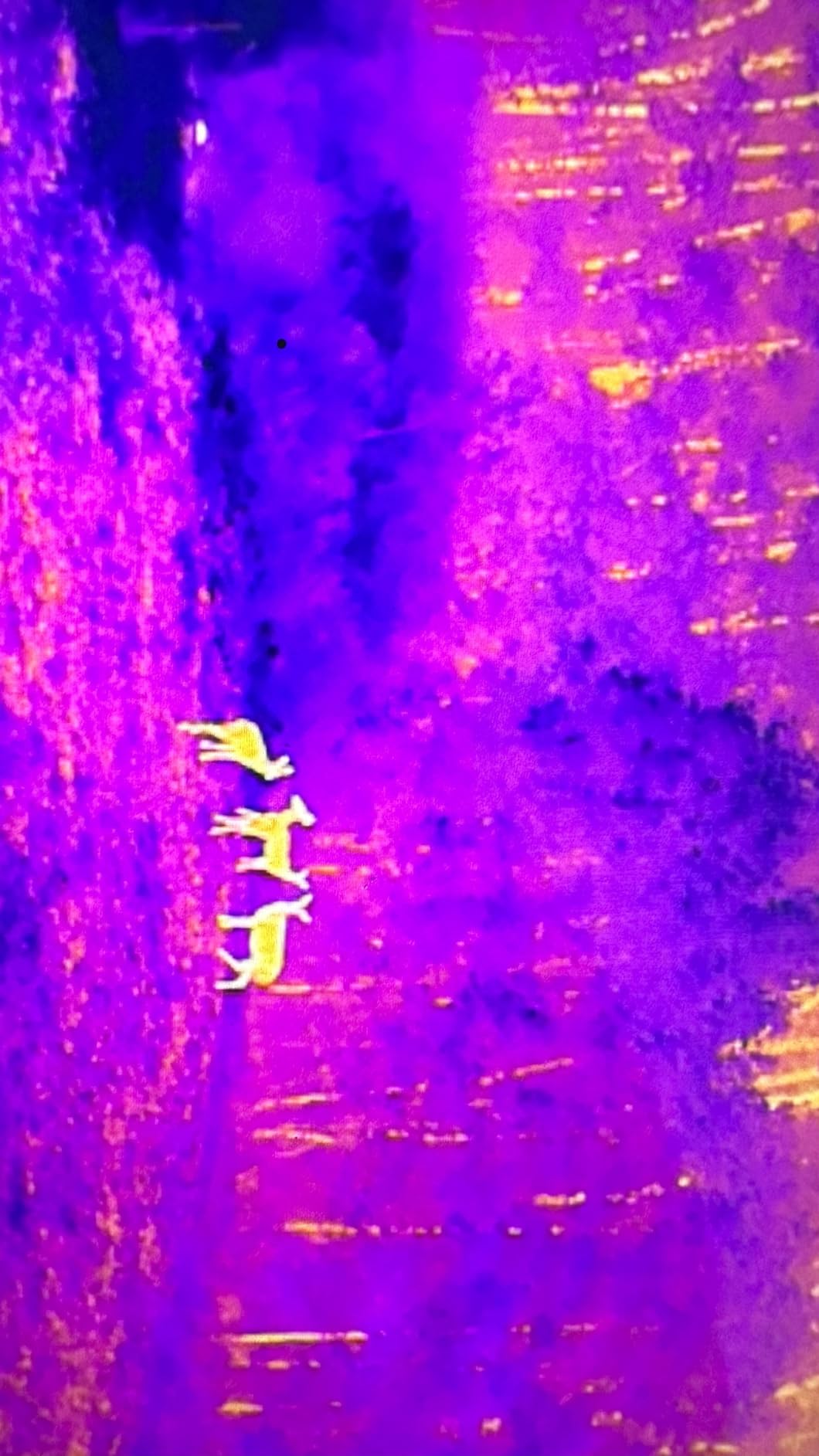
Thermal resolution is measured in pixels. A 640×512 sensor captures four times the detail of a 320×240 sensor. That difference matters when you need to tell a person from a deer at 200 meters. Higher resolution also means more accurate temperature measurements and better digital zoom.
Frame rate is another factor. A 30Hz thermal sensor updates smoothly, while a 9Hz sensor can look choppy when tracking movement. For public safety and search and rescue, 30Hz is strongly preferred.
Flight Time and Range Requirements
Longer flight time means fewer battery swaps and more coverage per launch. Enterprise drones typically offer 35 to 50 minutes. Consumer models often advertise 96 minutes total, but that requires three batteries swapped in the field.
Range matters less than most buyers think. In the US, you must maintain visual line of sight unless you have a waiver. Still, a stronger transmission system gives you a more stable feed and better obstacle penetration, which helps at night when you may rely heavily on the live video.
Use Case Matching
Match the drone to the mission. Enterprise thermal drones excel at search and rescue, firefighting, and infrastructure inspection. Premium consumer drones with low-light sensors are ideal for night photography and videography. Budget drones with AI night shot modes work for casual surveillance, travel, and learning.
Do not overbuy. A professional thermal drone is wasted if you only fly around your backyard on weekends. Likewise, a cheap consumer drone will frustrate a professional who needs reliable thermal data.
Budget Considerations
Night vision drones range from under 200 dollars to well over 10,000 dollars. True thermal imaging starts around 3,000 dollars for professional-grade models. Starlight night vision sits in the 5,000 to 10,000 dollar range. AI-enhanced low-light night shot modes are available on consumer drones starting below 400 dollars.
Remember to budget for batteries, a case, memory cards, and possibly software. Enterprise users should also factor in training and maintenance.
NDAA Compliance
Government agencies and some federal contractors must use NDAA-compliant drones. DJI and Autel consumer models may not qualify for certain contracts. If compliance matters for your work, check the current approved product list before purchasing.
American-made alternatives like the Skydio X10 and Teledyne FLIR SIRAS are often chosen specifically for compliance reasons. They cost more, but they meet federal requirements.
Weather Resistance
Night operations often happen in worse weather than daytime flights. Look for an IP rating that matches your environment. IP55 handles light rain and dust. IP43 offers minimal protection. Consumer drones without an IP rating should stay dry.
Wind resistance matters too. Enterprise drones handle stronger gusts, while sub-249g consumer drones should stay grounded in anything beyond a light breeze.
Frequently Asked Questions
What drones have the best night vision?
The DJI Matrice 4TD and Autel EVO MAX 4N V2 currently offer the best night vision for professional use, with thermal and starlight cameras respectively. For budget buyers, the SKYROVER X1 and Potensic ATOM 2 provide strong AI-enhanced low-light performance.
What is the best affordable thermal imaging drone?
The Autel EVO II Dual 640T V3 is the most affordable professional thermal imaging drone in our roundup, offering 640×512 resolution, a 50MP visible camera, and 360-degree obstacle avoidance at a lower price than enterprise flagships.
Which DJI drone has night vision and thermal?
The DJI Matrice 4TD has both thermal imaging and advanced low-light visual cameras in a single enterprise platform. The DJI Mavic 4 Pro offers 0.1-Lux Nightscape vision but does not include a thermal sensor.
Are cheap consumer grade drones with night vision any good?
Consumer drones with AI Night Shot can produce usable low-light footage for casual use, but they are not true night vision. They need some ambient light and cannot see through complete darkness, fog, or smoke like thermal drones.
What is the difference between thermal and night vision drones?
Thermal drones detect heat signatures and work in total darkness and through smoke. Night vision drones amplify visible light or use infrared illumination to create images, which requires at least some light and shows details like faces and colors.
Final Thoughts
The best night vision drone for you depends on your mission and budget. Enterprise teams should look at the DJI Matrice 4TD or Autel EVO MAX 4N V2 for serious thermal and starlight performance. Professionals who need a portable thermal solution will find strong value in the Autel EVO II Dual 640T lineup.
For consumers and beginners, the SKYROVER X1, Potensic ATOM 2, and Dingdongwu F3 prove that you do not need to spend thousands to capture decent low-light footage. Our list of the best night vision drones in 2026 covers every major use case, from tactical operations to weekend hobby flying.
Choose the model that matches your actual needs, check local regulations before flying at night, and always practice in safe conditions. Night flying adds risk, but the right drone makes it far more manageable.