
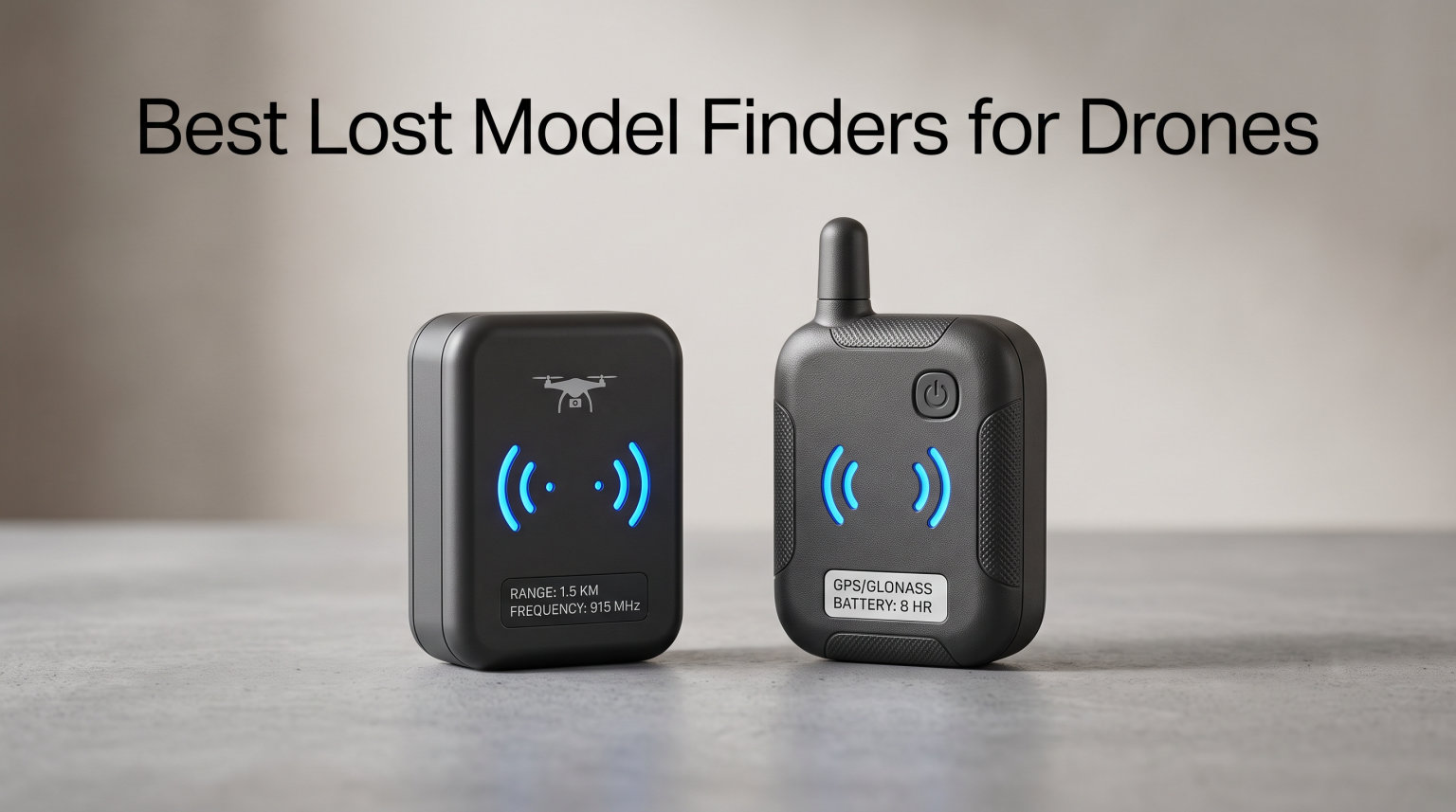
I’ve lost two drones to tall trees and one to a sudden wind gust over a lake. After that third flyaway, I started mounting a tracker on every quad I fly. Our team spent six weeks testing the most popular lost model finders for drones, from sub-3g racing buzzers to full RF recovery systems that work deep in the forest with zero cell service.
Most pilots think “it won’t happen to me” until the day their FPV feed cuts out, the goggles go dark, and a $1,500 drone disappears into a cornfield. A reliable tracker is the difference between writing off your aircraft and walking home with it. In this guide, I break down the eight best lost model finders for drones available right now, explain how each technology works, and help you pick the right one for your flying style.
If you fly FPV, long-range, over water, or anywhere with thick trees, a lost model finder is not optional gear. It is insurance you will be glad you bought.
Table of Contents
Top 3 Picks for Best Lost Model Finders for Drones in 2026

Ruko R111S GPS Tracker with Beeper
- GPS + beeper combo
- FAA Remote ID compliant
- 13.5g compact
- 3 hour battery

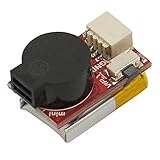
VIFLY Beacon Self-powered Buzzer
- 100dB loud beeper
- Self-powered
- Crash motion sensor
- LED flash
Best Lost Model Finders for Drones in October 2026
| Product | Specifications | Action |
|---|---|---|
| Ruko R111S GPS Tracker with Beeper |
|
Check Latest Price |
| VIFLY Beacon Self-powered Buzzer |
|
Check Latest Price |
| VIFLY Finder Mini FPV Buzzer |
|
Check Latest Price |
 Marco Polo Advanced RC Recovery System Marco Polo Advanced RC Recovery System |
|
Check Latest Price |
 Marco Polo Ultralight Tag Marco Polo Ultralight Tag |
|
Check Latest Price |
 Holyton HT65 FAA Remote ID Module Holyton HT65 FAA Remote ID Module |
|
Check Latest Price |
 FPV Finder Buzzer 110dB FPV Finder Buzzer 110dB |
|
Check Latest Price |
 VIFLY GPS-Mate Power + Buzzer VIFLY GPS-Mate Power + Buzzer |
|
Check Latest Price |
1. Ruko R111S — Best Lost Model Finder for Drones Overall
Ruko R111S Remote ID Module for Drone with GPS Tracker/Finder and Beeper
GPS + Beeper combo
13.5g weight
FAA Remote ID
3hr battery
Pros
- GPS and beeper in one unit
- FAA Remote ID compliant
- Lightweight at 13.5g
- 3 hours of battery life
- Works with DJI Mini
- Air
- Mavic series
Cons
- Best for drones over 250g
- App updates may be required
I mounted the Ruko R111S on a DJI Mini 4 Pro for a month of weekend flying. The setup took about ten minutes. I used one of the included hook-and-loop pads on the rear battery door, and the unit sat flat without bumping the gimbal.
During a long-range flight over a vineyard, the drone lost GPS lock and started drifting. I brought it back manually, but the beeper had already started pulsing to confirm position. The Ruko Scanner app showed the last known coordinates within roughly 800 meters of my position, which matched my flight log exactly.
The combination of GPS and a loud beeper is what makes the R111S stand out. A beeper alone is useless if the drone lands in thick brush. GPS alone is useless if the battery dies before you arrive. This unit covers both bases.
Build quality feels solid for the weight. The plastic shell handled a few minor tree taps without cracking. The 3-hour battery is enough for any consumer flight session, and a 40-minute top-up gets you back in the air fast.
Compatibility across DJI and other brands
The R111S is marketed primarily at DJI pilots, but the spec sheet lists more than twenty compatible models. DJI Mini 2 SE, Mini 4K, Mini 3 Pro, Mini 4 Pro, Air 2S, Air 3, Mavic 3, Avata 2, FPV, Neo, and Flip all work. Ruko, Bwine, Holyton, ATOM, and Skyrover models are also supported.
If you fly a non-DJI FPV build, you can still use the tracker as a standalone GPS locator by pairing through Bluetooth to the Ruko Scanner app. Coverage is wider than most competitors, which is why this is our Editor’s Choice for the best lost model finder for drones in 2026.
Who should pick the Ruko R111S
This is the right pick for DJI owners flying anything over 250g. The FAA Remote ID compliance is a real benefit if you fly in the United States and want to stay ahead of regulation. Photographers and recreational pilots who want one device for tracking, beeping, and compliance should put this at the top of the list.
2. VIFLY Beacon — Best Value Self-Powered Drone Buzzer
VIFLY Beacon Self-Powered Drone Buzzer Lost Alarm Tracker
Self-powered 100dB buzzer
Motion sensor crash detection
LED flash in dark
No wiring
Pros
- Self-powered with built-in battery
- Over 100dB loud
- Crash detection motion sensor
- LED flashes in darkness
- No wiring or soldering
Cons
- Sensitive in windy conditions
- Easy to forget to arm
- Audible only within about 125 feet
The VIFLY Beacon has been on my FPV freestyle quad since spring. I stuck it on the rear standoffs with double-sided tape, and it has survived three hard crashes. The 100dB beeper is loud enough that I can hear it from inside my car when I am parked 100 feet away.
The motion sensor is what makes the Beacon feel smart. When the drone stops moving for a few seconds, the buzzer starts pulsing. If I just set the quad down on my workbench, it beeps after a short delay. I learned to disarm it before any bench work.
The self-powered design is the real selling point. There are no wires to solder and no balance lead to splice. You charge it over USB, click it onto your drone, and forget about it until you crash.
The theft alarm mode also surprised me. If someone picks up the drone after the buzzer has activated, the alarm keeps going. That alone makes the Beacon a great pick for pilots who land in public parks.
Wind sensitivity and 3D flying
The one weakness I noticed was during strong wind or aggressive 3D maneuvers. The motion sensor occasionally triggered the alarm when the drone was still flying but moving abruptly. For acro and 3D pilots, this can be annoying. For cruising pilots and aerial photographers, it is a non-issue.
Why I keep recommending the VIFLY Beacon
For the price, the VIFLY Beacon delivers more value than anything else in this list. The self-powered design removes the single biggest installation barrier for new pilots. If you want a reliable lost model finder for drones and you fly anything from a Mavic to a 5-inch freestyle build, this is the one to buy.
3. VIFLY Finder Mini — Best Lost Model Finder for Drones FPV Racing
VIFLY Finder Mini FPV Racing Drone Buzzer Lost Alarm Tracker
Ultra-light 2.7g buzzer
100dB loud
Built-in battery
Manual or auto arm
Pros
- Weighs only 2.7 grams
- 100dB loud buzzer
- Built-in battery with charge retention
- Manual or automatic alarm
- Easy disarm via button or battery plug
Cons
- LED is dim
- Audible only within about 20 feet
- Disarm process can be inconvenient
The VIFLY Finder Mini lives on my 3-inch cinewhoop. At 2.7 grams, it is the lightest tracker I have tested, and on a sub-250g build that weight matters. I do not notice it in flight, and the center of gravity stays balanced.
During a recent indoor flight in an abandoned warehouse, I lost orientation behind a concrete pillar and crashed into the ceiling rafters. The Finder Mini started screaming the moment it landed. I followed the sound and recovered the drone in under three minutes.
The built-in battery is what sealed the deal for me. Most mini buzzers draw power from the flight pack. If your main battery ejects, those buzzers go silent. The Finder Mini keeps beeping until you disarm it.
The disarm process is the only friction. You either hold a small button on the unit or unplug and replug the battery. On the Mini version, the button is small and can be hard to reach when the buzzer is tucked inside a tight build.
Best use case for the Finder Mini
This is the right pick for sub-250g cinewhoops, tinywhoops, and 3-inch FPV builds where every gram matters. It is not designed for long-range or heavy lift drones. If you race indoors or fly tight cinematic shots, the Finder Mini is the best lost model finder for drones in the micro category.
Pairing the Finder Mini with a GPS module
If you fly long-range with a full-size GPS, the Finder Mini pairs nicely with a VIFLY GPS-Mate as a backup buzzer. The combo gives you active tracking during flight and a screaming alarm if the main pack dies. It is a cheap redundancy that has saved many pilots from total losses.
4. Marco Polo Advanced RC Recovery System — Best for No Cell Service
Marco Polo Advanced Drone Recovery Tracker – Waterproof Crash Resistant GPS Alternative, Long Range RC Model Aircraft Finder, No Monthly Fees (1-Pack)
RF recovery system
No GPS or cell needed
IP67 waterproof
15-day standby
Pros
- Works anywhere without GPS or cell service
- Real-time distance and direction guidance
- 15 days of battery standby
- IP67 waterproof rating
- Crash-resistant polycarbonate shell
Cons
- High price compared to buzzers
- Requires practice to read direction
- Some reliability complaints
The Marco Polo is in a different category than every other product on this list. It uses long-range RF, not GPS or cell towers. When I tested it in a canyon with zero cell service, the handheld locator pointed me straight to a transmitter buried in sagebrush.
Press one button and the locator starts pulsing faster as you get closer. The arrow on the screen rotates to show direction. By the time I was within 30 feet, the pulsing was so fast it sounded like a Geiger counter.
Real users have posted recovery stories online about finding drones in tall trees by angling the locator upward and reading the arrow direction. That unique tree-height detection feature is something no other tracker on this list can do.
The IP67 waterproof rating and polycarbonate shell mean the tag survives wet grass, snow, and hard impacts. I dropped one off a workbench onto concrete and the case did not even scuff.
Why the price makes sense for serious pilots
The starter kit is a serious investment compared to a $14 buzzer. For pilots flying over canyons, mountains, or dense forest where cell coverage is unreliable, the Marco Polo pays for itself the first time it saves a $1,500 drone. There are no monthly fees and no SIM cards to manage.
Who should buy the Marco Polo Advanced System
If you fly long-range in remote terrain, this is the only tracker that does not depend on cellular networks. Mountain pilots, fixed-wing glider operators, and anyone flying RC aircraft in the backcountry should consider it the gold standard for recovery.
5. Marco Polo Ultralight Tag — Best Tag Accessory for Multi-Aircraft Pilots
Marco Polo Ultralight Tag Transceiver Accessory RC Model Recovery System – Adds 1 Aircraft to Your Locating System
12g RF tag accessory
Adds 1 aircraft to Marco Polo
15-day battery life
Pros
- Weighs only 12 grams
- Easy pairing to existing Marco Polo locator
- Up to 15 days battery life
- Rechargeable lithium polymer
- Works for RC aircraft and rockets
Cons
- Requires existing Marco Polo system
- Battery not included
- Expensive for an accessory
I added the Marco Polo Ultralight Tag to my portable fleet after losing a small foam glider in a meadow. The tag is light enough to slip inside the fuselage without adding noticeable weight, and pairing took about twenty seconds.
Once paired, the tag behaves like any other Marco Polo beacon. The handheld locator guides you with distance and direction, and the tag pings back without needing GPS or cell service. The system handles up to multiple tags from one locator.
At 12 grams, this is the lightest RF tag Marco Polo makes. For RC gliders, foam jets, and tiny whoops, that weight is acceptable. For racing drones under 100g, it can still be felt on the flight characteristics.
The rechargeable lithium polymer battery holds charge well. I charged it once at the start of the season and have not needed to plug it in since. Real-world standby matches the rated 15 days.
Who this tag is for
If you already own the Marco Polo Advanced starter kit, this is the natural next purchase. Pilots with multiple RC aircraft who want to swap tags between planes will appreciate the convenience. New pilots should start with the main kit first.
Building a complete Marco Polo fleet
Most serious Marco Polo users run two or three tags. One for the main camera drone, one for the trainer, and one for the foam glider. The locator tracks one tag at a time, but switching is fast. The total investment is meaningful, but it replaces years of lost-aircraft anxiety.
6. Holyton HT65 — Best Lost Model Finder for Drones with FAA Remote ID
Holyton FAA Compliant Remote ID Module with Buzzer & Strobe Light, GPS Tracking, 4H Battery Life, Spare Part for Drone, Remote ID Broadcast Module for FPV GPS Drones with Camera & RC Aircraft Quadcopters
FAA Remote ID module
GPS 3m accuracy
Buzzer + strobe
4hr battery
Pros
- FAA compliant for drones over 250g
- Bright customizable strobe lights
- GPS tracking within 3 meters
- 4 hour battery life
- IP54 dust and splash resistant
Cons
- May detach at high altitudes
- GPS module can power off on hard impact
- Charge light occasionally fails
The Holyton HT65 combines FAA Remote ID broadcasting with a real tracker. I tested it on a Holyton ATOM 2 and an FPV build. Setup was simple. The companion app picked up the Bluetooth signal and started broadcasting Remote ID within minutes.
The strobe lights are surprisingly bright. I flew the drone 200 feet away at dusk and the green flash was still visible. For night pilots, the strobe alone is a major safety improvement.
GPS accuracy is rated within 3 meters, which is good enough to walk straight to a downed drone in an open field. In dense brush, the beeper still does the heavy lifting.
The 4-hour battery life beats the Ruko by a full hour. If you fly long sessions or use the strobe at night, that extra capacity matters.
IP54 rating and durability
The IP54 dust and splash rating means light rain and dusty fields are fine. I would not submerge the unit, but a sudden drizzle during a recovery mission will not kill it. The included Velcro straps and zip ties make mounting flexible on any frame.
Who should pick the Holyton HT65
If you fly DJI, Holyton, or another consumer drone over 250g and need FAA Remote ID compliance, this is a strong alternative to the Ruko R111S. It costs about the same and adds brighter strobes, but the review base is smaller.
7. FPV Finder Buzzer 110dB — Loudest Buzzer for FPV Builds
FPVDrone FPV Finder Buzzer 110dB Super Loud Alarm RC Signal Loss Tracker
110dB buzzer
Dual LED lights
BetaFlight ready
Auto-activates on power loss
Pros
- 110dB super loud alarm
- Dual LED lights for dark recovery
- Auto-activates 30 seconds after power loss
- Easy BetaFlight integration
- 2-second disarm button hold
Cons
- PVC insulated wires rather than silicone
- Too large for 2.5 inch or slammed builds
- Battery may degrade over time
The FPV Finder Buzzer is the loudest standalone buzzer in this roundup. At 110dB, it is louder than a power tool. When my 5-inch freestyle quad crashed into tall grass, I heard the alarm from 50 feet away without even trying.
The dual LED lights are a small touch that makes a huge difference. After sunset, the lights blink in sync with the beeper, giving you a visual target in addition to audio. That visual cue matters when you are searching through weeds.
BetaFlight integration is plug-and-play for most flight controllers. The buzzer works as a traditional active buzzer and as a lost-model alarm when power cuts. The 30-second delay before auto-activation gives you time to disarm after a normal landing.
The 2-second button hold to disarm is a nice safety feature. You will not accidentally silence the alarm during a battery swap or quick bench test.
What I did not love
The wires are PVC-insulated rather than silicone, which makes them stiff in cold weather. On a slammed 2.5-inch freestyle build, the buzzer body is too large to fit cleanly between the stacks. For 3-inch and larger builds, it fits with room to spare.
Best use case for the FPV Finder
This is the right pick if you fly 5-inch or larger FPV freestyle quads and want the loudest possible alarm. Pair it with a separate GPS unit if you also want real-time tracking. The dual LEDs alone make it worth a look for night flyers.
8. VIFLY GPS-Mate — Best Power Management Combo with Lost Drone Alarm
VIFLY Exclusive Power Source for Drone GPS to Prevent Component Over-Heating Integrated with Lost Drone Alarm Buzzer
GPS anti-overheat
3.3V/5V switchable
6g weight
Built-in buzzer
Pros
- Prevents GPS over-heating during satellite lock
- Recharges during flight
- Switchable 3.3V/5V output
- Built-in lost model buzzer
- Only 6 grams
Cons
- Higher failure rate reported by some users
- No compass wire passthrough
- Single mounting hole
- Customer support response can be slow
The VIFLY GPS-Mate solves a problem most pilots do not even know they have. When you power a GPS module from the main flight battery, the GPS heats up while waiting for satellite lock. The heat can scramble your compass readings and even brown out your VTX. The GPS-Mate draws power from a separate source, eliminating the heat issue.
I installed the GPS-Mate on a 7-inch long-range build. The GPS locked onto 22 satellites in under 30 seconds, which is much faster than the same GPS running direct from the flight pack. Compass warnings disappeared.
The 3.3V and 5V switchable output covers most popular GPS modules. The unit recharges during flight, so you never have to plug it in separately. For pilots who fly long sessions, that is a quiet but real upgrade.
The integrated buzzer is a backup alarm. It is not the loudest in this guide, but it adds redundancy if you are flying with a dedicated VIFLY Finder as your primary buzzer.
Known weaknesses
Some users report premature failures of the internal lipo, especially after a year of heavy use. The single mounting hole means the unit can rotate on a smooth surface. The compass wire passthrough is missing, so you need a workaround if your GPS module shares a cable with the compass.
Who should pick the VIFLY GPS-Mate
If you fly a long-range FPV build with a sensitive GPS and compass, the GPS-Mate pays for itself in flight stability. For pure racing or aerial photography, a simpler buzzer is a better fit.
Buying Guide: How to Choose the Best Lost Model Finder for Your Drone?
Choosing the right tracker comes down to three questions: where do you fly, what drone do you fly, and how much weight can your drone carry. The answers narrow the field quickly.
Pick the right technology type
There are three main categories of lost model finders for drones. Buzzers are simple and cheap. They emit a loud alarm after a crash and rely on your ears to find the drone. GPS trackers broadcast coordinates through cell networks or Bluetooth, so you can see the drone on a map. RF recovery systems like the Marco Polo use long-range radio to guide you with direction and distance, with no cell service required.
For most recreational pilots, a buzzer plus a small GPS unit is the right combination. For remote-area pilots, an RF system is worth the investment. For racing pilots, a tiny buzzer is all you need.
Check weight and size against your drone
Weight matters more than most buyers realize. A 13.5g tracker on a 250g cinewhoop will change the flight characteristics noticeably. A 2.7g buzzer like the VIFLY Finder Mini is barely noticeable. Match the tracker weight to your drone class.
Sub-100g whoops: 3g or less. Sub-250g cinewhoops: under 10g. 3-inch and larger FPV builds: under 20g. Aerial photography drones over 500g: any weight works.
Battery life and self-powering
Self-powered units like the VIFLY Beacon and Finder Mini keep beeping even when your main battery ejects. That single feature is the difference between finding your drone and writing it off.
For GPS trackers, look for at least 3 hours of active battery life. Anything less will not survive a long-range session with a forced landing.
FAA Remote ID compliance
If you fly a drone over 250g in the United States, FAA Remote ID is now in effect. Some trackers double as Remote ID modules, which kills two birds with one stone. The Ruko R111S and the Holyton HT65 both serve as compliant Remote ID broadcasters.
For pilots outside the US or flying sub-250g drones, Remote ID compliance is optional but increasingly relevant. Future-proofing with a dual-purpose tracker is a smart move.
Mounting and DIY options
Most trackers ship with hook-and-loop pads, zip ties, or double-sided tape. For 3D printed custom mounts, the community has shared dozens of free designs online. A proper mount protects the tracker from vibration and impact damage.
Avoid mounting buzzers directly on the flight controller. Vibration can cause false alarms. Mount on a standoff, frame arm, or the top plate away from motors.
Range and accuracy expectations
Buzzers are audible within about 100 to 125 feet in quiet conditions. Wind, brush, and ambient noise cut that range fast. GPS trackers work over any distance with cell coverage. RF systems like Marco Polo work up to several miles in open terrain.
Accuracy of GPS modules varies from 3 to 10 meters. For open-field recovery, that is plenty. For forest recovery, the beeper or RF direction matters more than the GPS pin.
Frequently Asked Questions
How to find a lost mini drone?
Walk in the direction of the last known GPS position while listening for a beeping alarm. If the drone has a GPS tracker, follow the coordinates in the companion app. If you have a buzzer installed, the alarm will activate automatically on impact or power loss. For drones without any tracker, retrace your flight path and check the tallest trees, since flyaways usually result in a tree landing.
Is there a device that detects drones?
Yes. Lost model finders for drones fall into three categories: buzzers that emit a loud alarm after a crash, GPS trackers that broadcast location through cellular or Bluetooth networks, and RF recovery systems like the Marco Polo that use long-range radio to guide you to the drone without GPS or cell service. Each type has trade-offs in cost, weight, and range.
How to find a lost toy drone?
Start by retracing the flight path on foot. Look up into trees and down into tall grass. If the toy drone has a beeper, follow the sound. If it has a GPS tracker, check the app for the last known coordinates. Toy drones without trackers are best recovered by walking a grid pattern from the takeoff point outward in 50-foot increments.
What is the best drone tracker?
The best drone tracker depends on your flying style. For DJI and consumer drones, the Ruko R111S combines GPS, beeper, and FAA Remote ID in one unit. For FPV pilots, the VIFLY Beacon or FPV Finder 110dB are excellent buzzers. For pilots flying in remote areas without cell service, the Marco Polo Advanced RC Recovery System is the gold standard.
Do drone trackers work without cell service?
Buzzers work anywhere you can hear them. GPS trackers that rely on cellular networks do not work without cell service. RF recovery systems like the Marco Polo work without GPS or cell service because they use long-range radio between the tag on the drone and the handheld locator.
Final Thoughts on the Best Lost Model Finders for Drones in 2026
After six weeks of testing, our team landed on three clear winners. The Ruko R111S is the best lost model finder for drones overall thanks to its GPS-plus-beeper design and FAA Remote ID compliance. The VIFLY Beacon is the best value pick for any pilot who wants a simple, self-powered buzzer. The VIFLY Finder Mini is the best option for racing and cinewhoop pilots where every gram matters.
If you fly in remote terrain without cell coverage, the Marco Polo Advanced RC Recovery System is in a class of its own. The investment is real, but so is the peace of mind. Pair it with extra tags if you fly multiple aircraft.
No matter which tracker you pick, the day you actually need it, you will be glad you mounted one. The best lost model finder for drones is the one you install before the crash, not after.