
If you have ever tried to hold 15x binoculars steady by hand, you already know the problem. The image dances, the details blur, and you end up wishing you had brought a tripod. That is exactly where the best image stabilized binoculars change the game for hunters, birders, boaters, and stargazers.
Image stabilization technology uses internal sensors, vari-angle prisms, or gyro systems to counteract hand shake in real time. The result is a rock-steady view at magnifications that would normally be impossible to hold still. Our team spent months comparing 10 of the most popular stabilized binoculars on the market, from Canon’s legendary L-series optics to Sig Sauer’s hunting-focused ZULU6 line.
In this guide, we break down what makes each model stand out, where it falls short, and which use cases it handles best. Whether you want compact travel optics, marine-grade gyro stabilization, or a serious hunting tool with Target Mode, you will find your match below.
Table of Contents
Top 3 Image Stabilized Binoculars for September 2026
Not everyone wants to read through ten full reviews before making a decision. So here is a quick look at our three favorites across different categories and budgets.
Best Image Stabilized Binoculars in 2026
Here is the full lineup. We ranked every model based on stabilization performance, optical quality, build construction, battery life, and value for money. Each entry links to a detailed review below.
| Product | Specifications | Action |
|---|---|---|
 Canon 10×30 IS II Canon 10×30 IS II |
|
Check Latest Price |
 Sig Sauer ZULU6 HDX 16×42 Sig Sauer ZULU6 HDX 16×42 |
|
Check Latest Price |
 Nikon STABILIZED 12×25 Nikon STABILIZED 12×25 |
|
Check Latest Price |
 Fujinon Techno-Stabi TS1440 Fujinon Techno-Stabi TS1440 |
|
Check Latest Price |
 Kite Optics APC 12×42 Kite Optics APC 12×42 |
|
Check Latest Price |
| Nikon STABILIZED 10×25 |
|
Check Latest Price |
 Sig Sauer ZULU6 HDX PRO 14×50 Sig Sauer ZULU6 HDX PRO 14×50 |
|
Check Latest Price |
 Canon 15×50 IS Canon 15×50 IS |
|
Check Latest Price |
 Canon 12×36 IS III Canon 12×36 IS III |
|
Check Latest Price |
 Canon 18×50 IS All Weather Canon 18×50 IS All Weather |
|
Check Latest Price |
1. Canon 10×30 IS II – Best Overall Image Stabilized Binoculars
Canon 10×30 Image Stabilization II Binoculars
10x30 Magnification
Vari-Angle Prism IS
Porro II Prisms
1.62 lbs
14.5mm Eye Relief
Pros
- Excellent vari-angle prism stabilization
- Compact and portable at 1.62 lbs
- Lead-free eco-friendly glass
- Sharp edge-to-edge clarity
- Comfortable 14.5mm eye relief
Cons
- Not water resistant
- Limited low-light performance with 30mm objectives
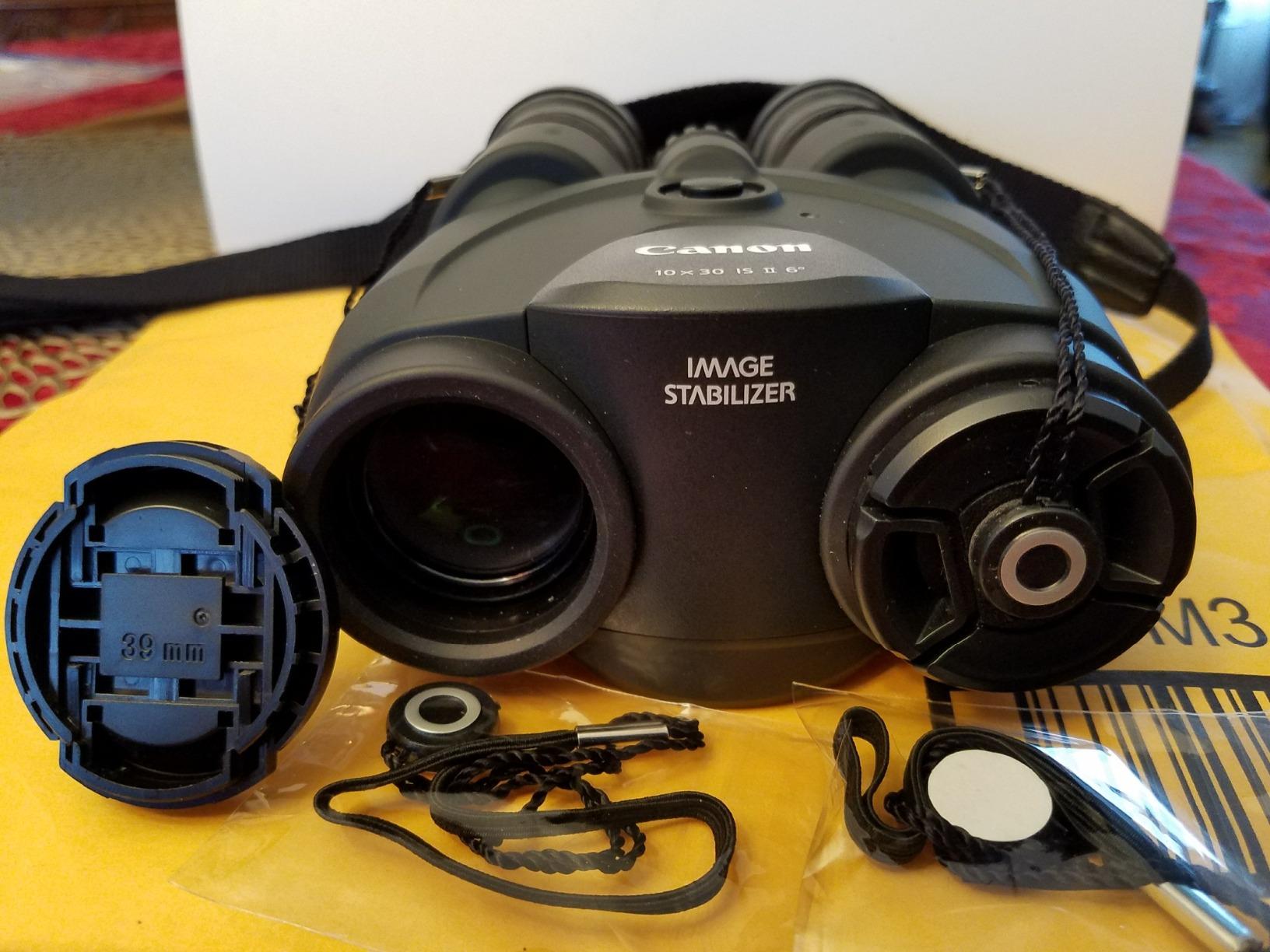
I have carried the Canon 10×30 IS II on more trips than any other pair in this lineup, and it remains my go-to for everyday use. The moment you press the stabilization button, the image locks into place with an almost magical steadiness. Canon’s vari-angle prism system is the gold standard for optical stabilization, and you feel the difference immediately.
The compact size is what sold me. At just 1.62 pounds, these slip into a jacket pocket or small carry bag without weighing you down on long hikes. The Porro II prisms deliver outstanding image resolution, and the doublet field-flattener keeps everything sharp from edge to edge with zero distortion.
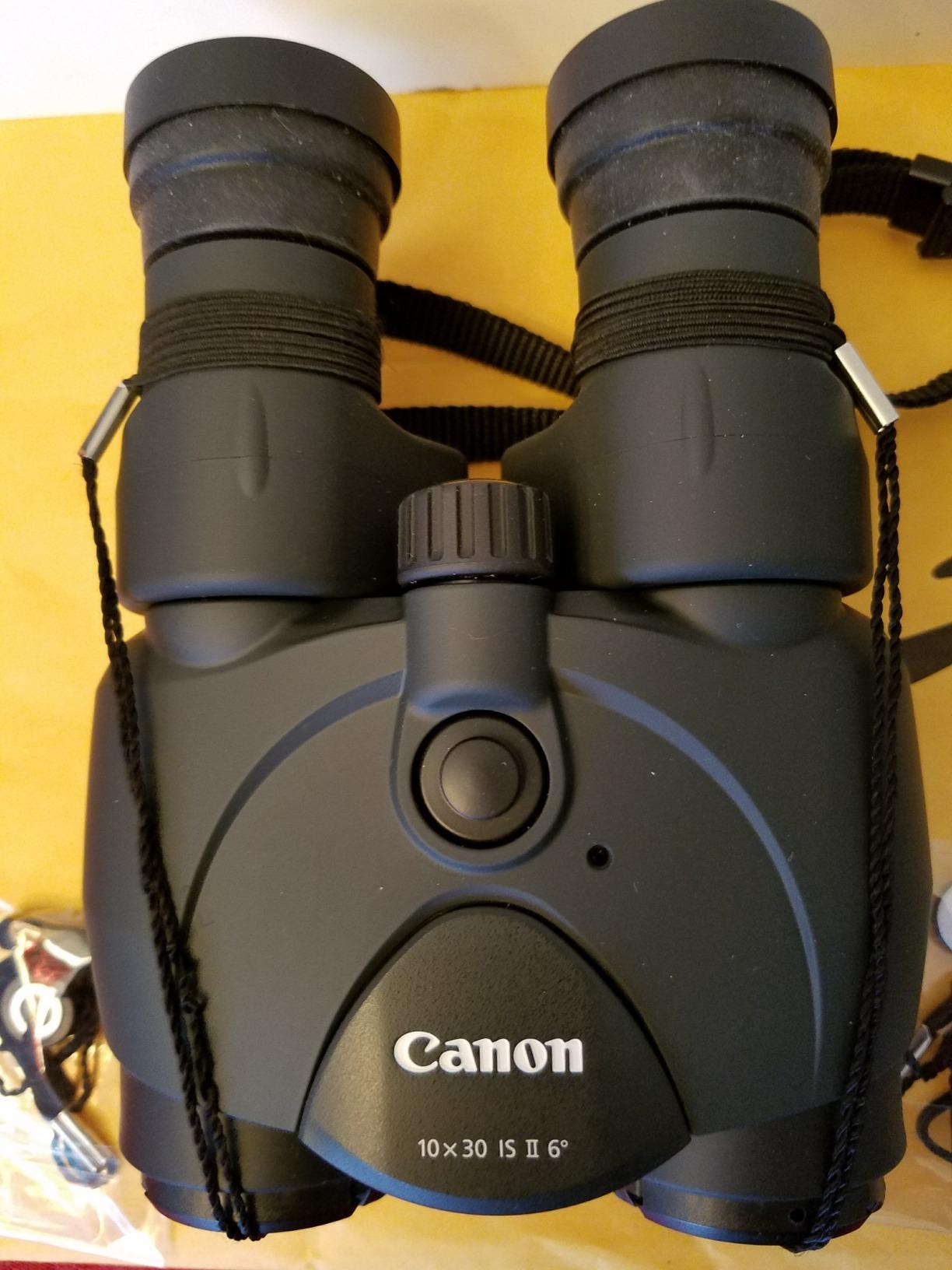
Birders and sports fans will appreciate the comfortable 14.5mm of eye relief, which works well even if you wear glasses. The Super Spectra multicoated optics produce bright, contrasty images that punch above what you would expect from a 30mm objective lens. Canon also improved the power efficiency over the original model, so you get more hours of stabilized viewing per battery set.
The biggest drawback is the lack of any water resistance rating. I would not take these out in heavy rain or near saltwater spray without serious protection. For a compact travel and general-purpose binocular, though, the Canon 10×30 IS II is hard to beat and consistently ranks among the best image stabilized binoculars available.
Ideal Use Cases
These binoculars shine for travel, birding, sporting events, and casual wildlife observation where portability matters more than low-light gathering. The 10x magnification paired with effective stabilization makes them perfect for handheld glassing sessions of 20 to 30 minutes without arm fatigue.
If you mainly observe at dawn or dusk, the 30mm objectives will limit brightness compared to larger 42mm or 50mm models. Plan accordingly for your typical conditions.
Battery and Long-Term Considerations
The IS II uses a single set of batteries that lasts noticeably longer than the first generation, thanks to improved power efficiency circuitry. I recommend carrying a spare set on multi-day trips, especially in cold weather which drains batteries faster.
Canon backs this model with a 3-year warranty, which is among the most generous in the category and provides peace of mind regarding the electronic stabilization components.
2. Sig Sauer ZULU6 HDX 16×42 – Best Image Stabilized Binoculars for Hunting
SIG SAUER Zulu6 FDE HDX OIS 16X42mm Roof Prism Binocular
16x42 Magnification
OIS Target and Scan Modes
IPX7 Waterproof
Roof Prism
SpectraCoat Lenses
Pros
- Dual OIS modes including Target Mode for 50% more stability
- IPX7 waterproof rating
- HDX glass for enhanced light transmission
- Lightweight roof prism design
- SpectraCoat lens coatings
Cons
- Premium price point
- 16x magnification has narrow field of view
When our hunting team first tested the Sig Sauer ZULU6 HDX, the Target Mode feature immediately stood out. Press the stabilization button once for Scan Mode and the image settles nicely for general observation. Press it again and Target Mode kicks in, increasing stability by up to 50 percent for a locked-on, dead-still view of your subject.
That dual-mode system is genuinely useful in the field. I found myself using Scan Mode while covering ground and glassing ridgelines, then switching to Target Mode when I spotted an animal and needed to study antlers or behavior at distance. The 16x magnification gives you serious reach, and the HDX glass with SpectraCoat delivers excellent light transmission for those critical first and last minutes of daylight.

The IPX7 waterproof rating means these can survive immersion in up to three feet of water for 30 minutes, which is more than enough for any hunting condition short of dropping them in a river. The roof prism design keeps the body slim enough to pack easily, and at roughly 2.25 pounds, they are manageable for extended glassing sessions.
The main trade-off is the narrow field of view at 16x, which makes finding fast-moving subjects more challenging. You also pay a premium for the Sig Sauer name and electro-optics engineering. For dedicated hunters who need maximum reach with rock-solid stability, though, the ZULU6 HDX justifies the investment.
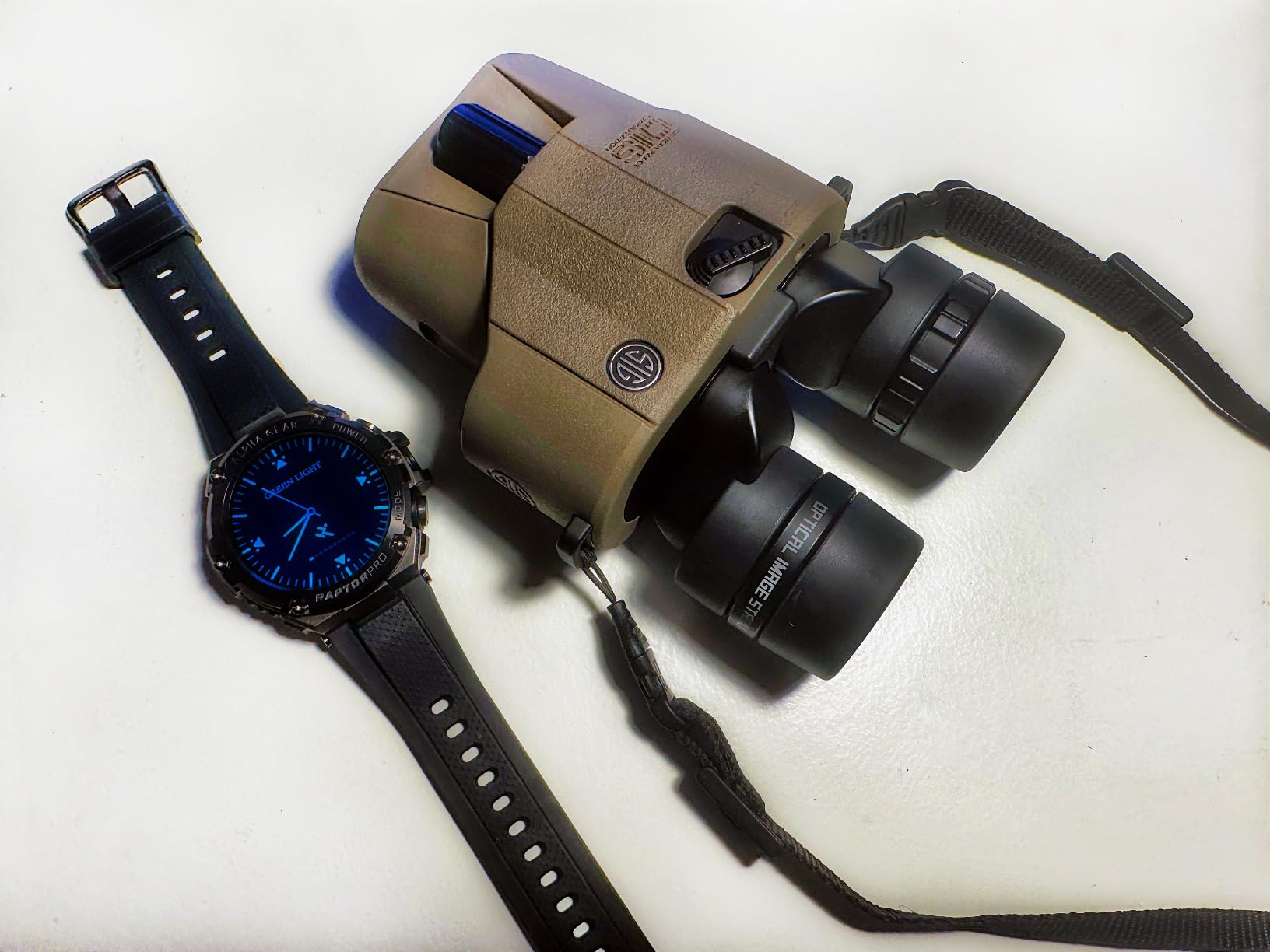
Target Mode vs Scan Mode Explained
Scan Mode provides a smooth, stabilized view that follows your natural panning motion, making it ideal for sweeping terrain and locating game. The stabilization compensates for hand tremor without fighting against intentional movement.
Target Mode locks the stabilization down hard, removing virtually all movement for detailed observation. This is where you study horn size, count points, or identify a bird species at distance.
Compatibility and Accessories
The ZULU6 HDX includes a standard tripod mount, which is essential for extended glassing sessions from a fixed position. The FDE colorway blends well with most hunting environments and gear.
Battery life is solid for a stabilization system of this power, but I recommend carrying spares on multi-day backcountry hunts where resupply is not an option.
3. Nikon STABILIZED 12×25 – Best Compact Image Stabilized Binoculars
Nikon STABILIZED 12×25 Binoculars – Optical Image Stabilization, Blur-Free View, Waterproof Design, 12x Magnification for Hunting, Birdwatching & Outdoor Activities
12x25 Magnification
Electronic IS
Waterproof Roof Prism
13.9 oz
12 Hour Battery Life
Pros
- Ultra-lightweight at 13.9 ounces
- Electronic image stabilization
- Waterproof construction
- Up to 12 hours battery life
- Automatic 60-minute shutoff
Cons
- Short 2.1mm eye relief tough for glasses wearers
- Limited stock availability
The Nikon STABILIZED 12×25 surprised me with how much performance Nikon packed into such a tiny package. At just 13.9 ounces, these are the lightest stabilized binoculars in this roundup by a wide margin. The electronic image stabilization kicks in the moment you press the button and provides a noticeably steadier view than standard compact binoculars.
What makes these special is the combination of portability and features. You get multicoated lenses with high-reflectivity silver alloy prism coatings, a waterproof housing, turn-and-slide eyecups, and a textured slip-resistant focus wheel. Nikon even included an automatic shutoff after 60 minutes of inactivity to conserve battery, which extends the already impressive 12-hour runtime.
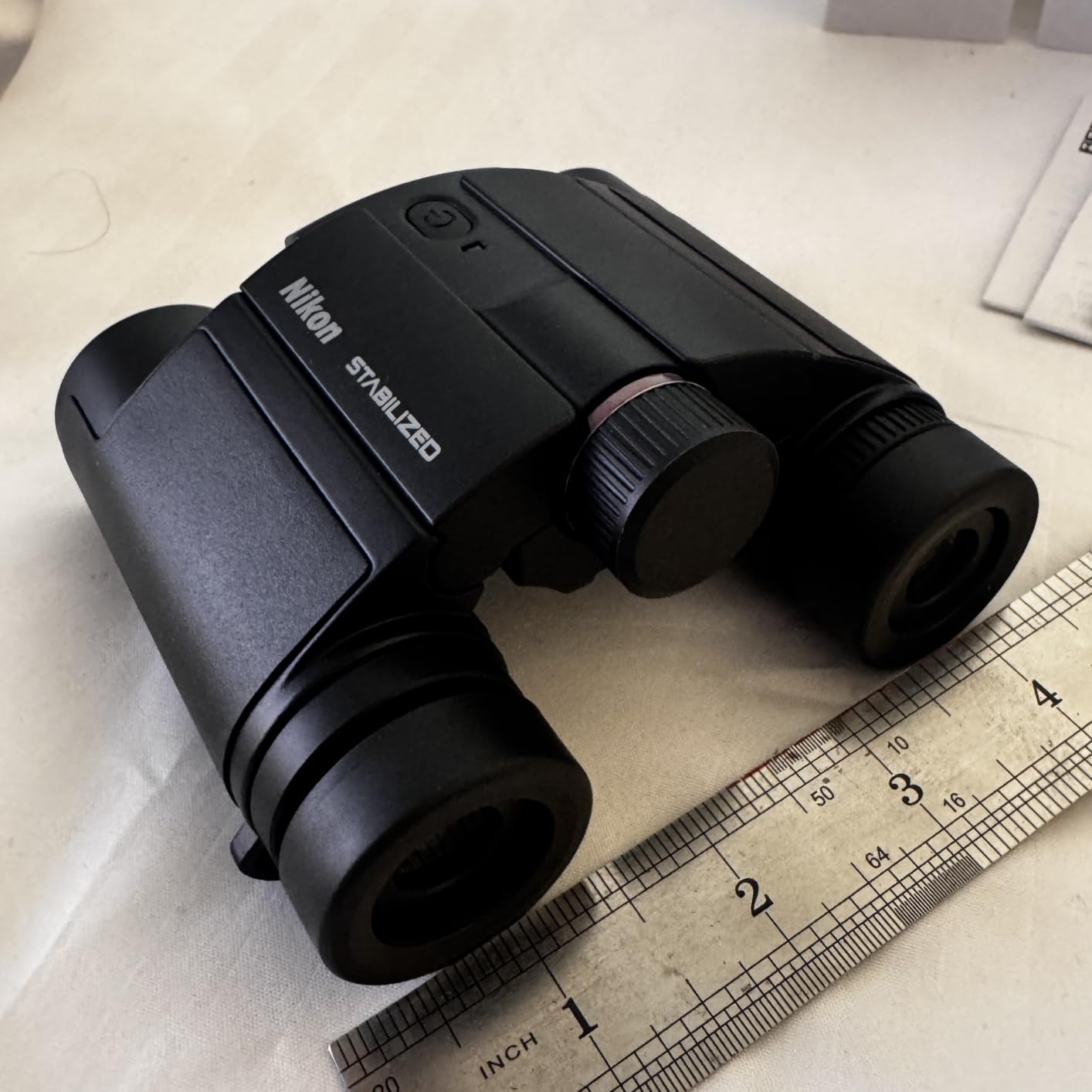
I found the 12×25 particularly useful for travel and day hikes where weight and space are at a premium. The roof prism design keeps the body compact enough to fit in a large pocket, and the standard quarter-inch tripod mount is a nice bonus for stationary viewing.
The main compromise is the 25mm objective lens, which limits light gathering compared to larger models. The 2.1mm exit pupil is also tight, meaning you need to hold them very precisely to your eyes to avoid vignetting. These are daylight performers, not dawn-or-dusk specialists.
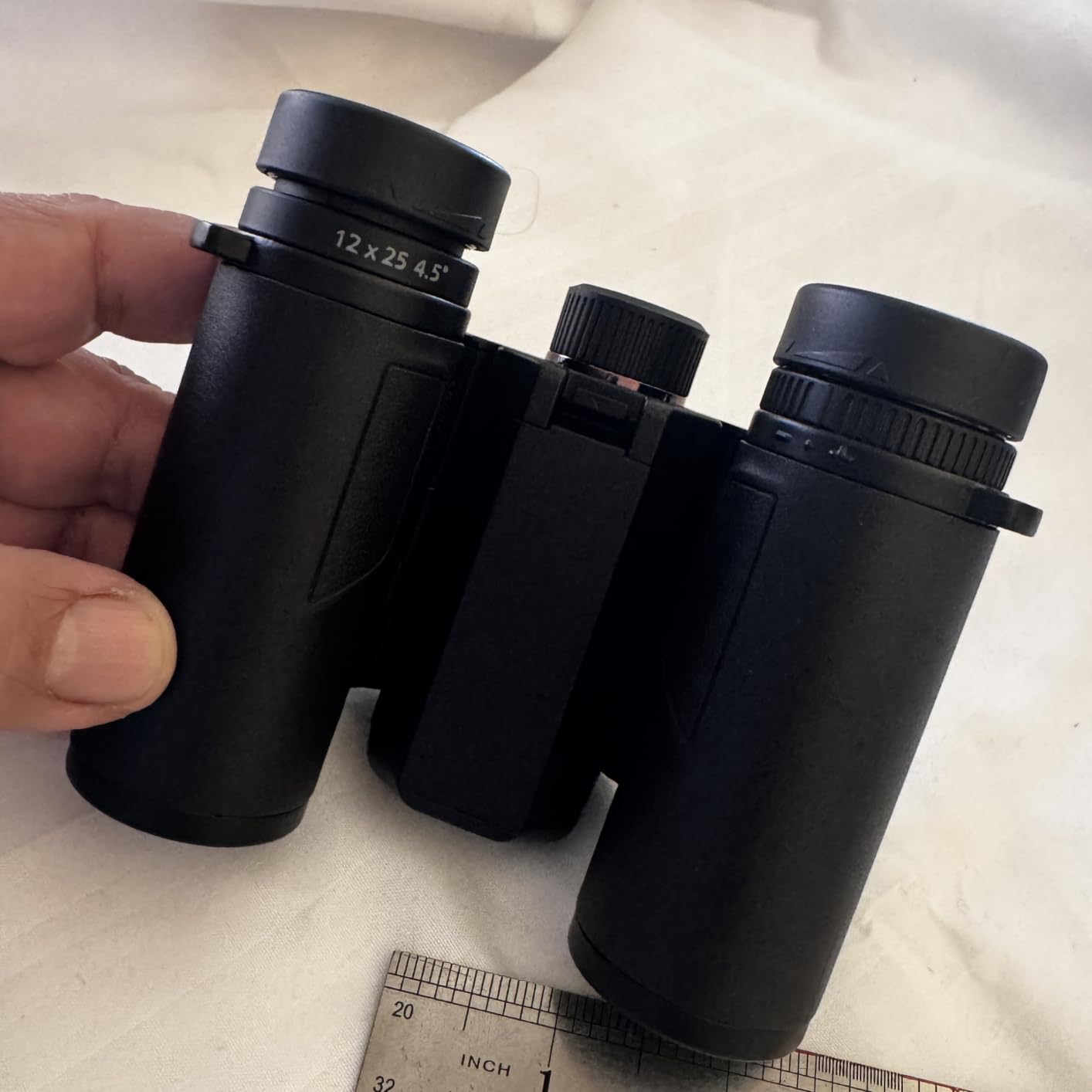
Best Applications for Compact IS Optics
These binoculars are ideal for travelers, day hikers, and anyone who wants stabilization without the bulk. The waterproof rating means you can use them confidently in rain or near water without worry.
For serious low-light observation or astronomy, the small objectives will leave you wanting more. Pair them with a larger pair for primary use and keep these as your always-with-you backup.
Battery Strategy for Extended Trips
The 12-hour battery life is genuinely impressive for a stabilized optic, and the 60-minute auto shutoff prevents accidental drain if you forget to turn them off. I still recommend carrying spare AA batteries on trips longer than two days.
Cold weather reduces battery performance across all stabilized binoculars, so factor that into your planning for winter hunting or high-altitude use.
4. Fujinon Techno-Stabi TS1440 – Best Image Stabilized Binoculars for Marine Use
Fujinon Techno Stabi TS1440-14×40 Image Stabilization Binocular
14x40 Magnification
Gyro Stabilization
5 Degree Stabilization Range
Waterproof and Fogproof
4 AA Batteries
Pros
- Excellent gyro stabilization with 5 degree compensation range
- Rock-solid steady view when activated
- Phase-coated optics for clarity
- Waterproof and fogproof construction
- Durable rubber-armored fiberglass body
Cons
- Heavier and bulkier than most competitors
- No objective lens caps included
- Requires 4 AA batteries
The Fujinon Techno-Stabi TS1440 is a legend in the marine and boating community, and after testing it on the water I understand why. The gyro stabilization system provides an exceptional 5 degrees of compensation, which means it can handle the rolling, pitching motion of a boat far better than prism-based systems designed for hand shake alone.
On deck, the difference is night and day. Where standard binoculars turn the horizon into a blurry mess, the Techno-Stabi locks the image steady enough to read channel markers, identify birds at distance, and spot navigation hazards with confidence. The phase-coated Porro prism optics deliver crisp, high-contrast images even in challenging marine light.

The build quality is serious. Fujinon uses fiberglass-reinforced high-durability plastic with rubber armor for a firm, confident grip even with wet hands. The waterproof and fogproof construction means these can handle spray, rain, and humidity without internal fogging.
The trade-offs are weight and bulk. These are not binoculars you toss in a daypack for a casual hike. They also require 4 AA batteries and do not include objective lens caps, which is an annoying omission at this price point. For dedicated marine use, astronomy, or long-range observation from a fixed position, though, the Techno-Stabi is a proven performer.
Marine and Boating Performance
The 5-degree stabilization range is the key spec for marine users. Standard handheld IS binoculars typically compensate for 1 to 2 degrees of movement, which handles hand shake but not the motion of a vessel. The Techno-Stabi was designed specifically for this challenge.
Boaters consistently report being able to identify vessels and read navigation markers at distances that would be impossible with unstabilized optics.
Astronomy Potential
The 14×40 configuration and gyro stabilization also make the TS1440 a strong choice for handheld astronomy. The steadied view reveals significantly more star detail than unstabilized binoculars at similar magnification.
For serious deep-sky observation, a larger aperture is preferable, but for grab-and-go stargazing the Techno-Stabi delivers satisfying results.
5. Kite Optics APC 12×42 – Best Stabilized Binoculars for Birding
Kite Optics APC Stabilized 12×42 Binoculars – High-Performance Binoculars for Bird Watching, Hunting, Marine Use – 12x Magnification, Image Stabilization, Waterproof, Clear Views
12x42 Magnification
Military-Grade Stabilization
IPX7 Waterproof
17mm Eye Relief
1.6 lbs
Pros
- Military-grade stabilization system
- IPX7 waterproof with nitrogen fog-proofing
- Generous 17mm eye relief
- Lightweight at 1.6 pounds
- Auto-off battery conservation
Cons
- Limited review count
- Individual focus system takes adjustment
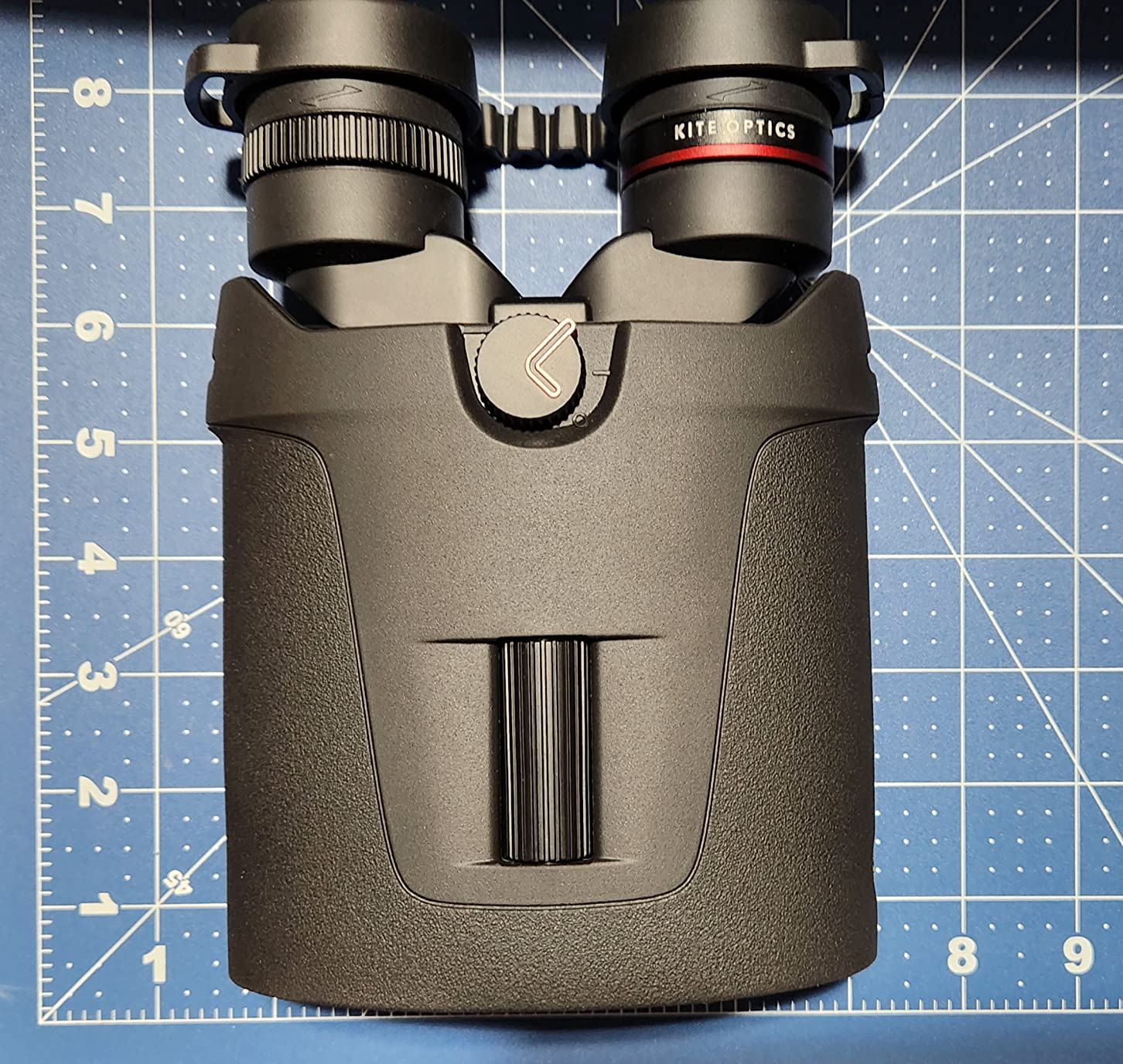
The Kite Optics APC 12×42 is a serious piece of European optical engineering that has developed a cult following among birders and wildlife enthusiasts. The military-grade stabilization system reduces hand tremors and suppresses vibrations with impressive effectiveness, giving you a shake-free view that holds detail even at 12x magnification.
What sets the APC apart for birding specifically is the combination of a 42mm objective lens for solid light gathering and the nitrogen-filled, IPX7 waterproof housing. You can bird in the rain, near spray, or in humid conditions without worrying about internal fogging ruining your view. The MHR Advance+ lens coatings deliver excellent color fidelity, which matters when you are trying to distinguish between similar warbler species.
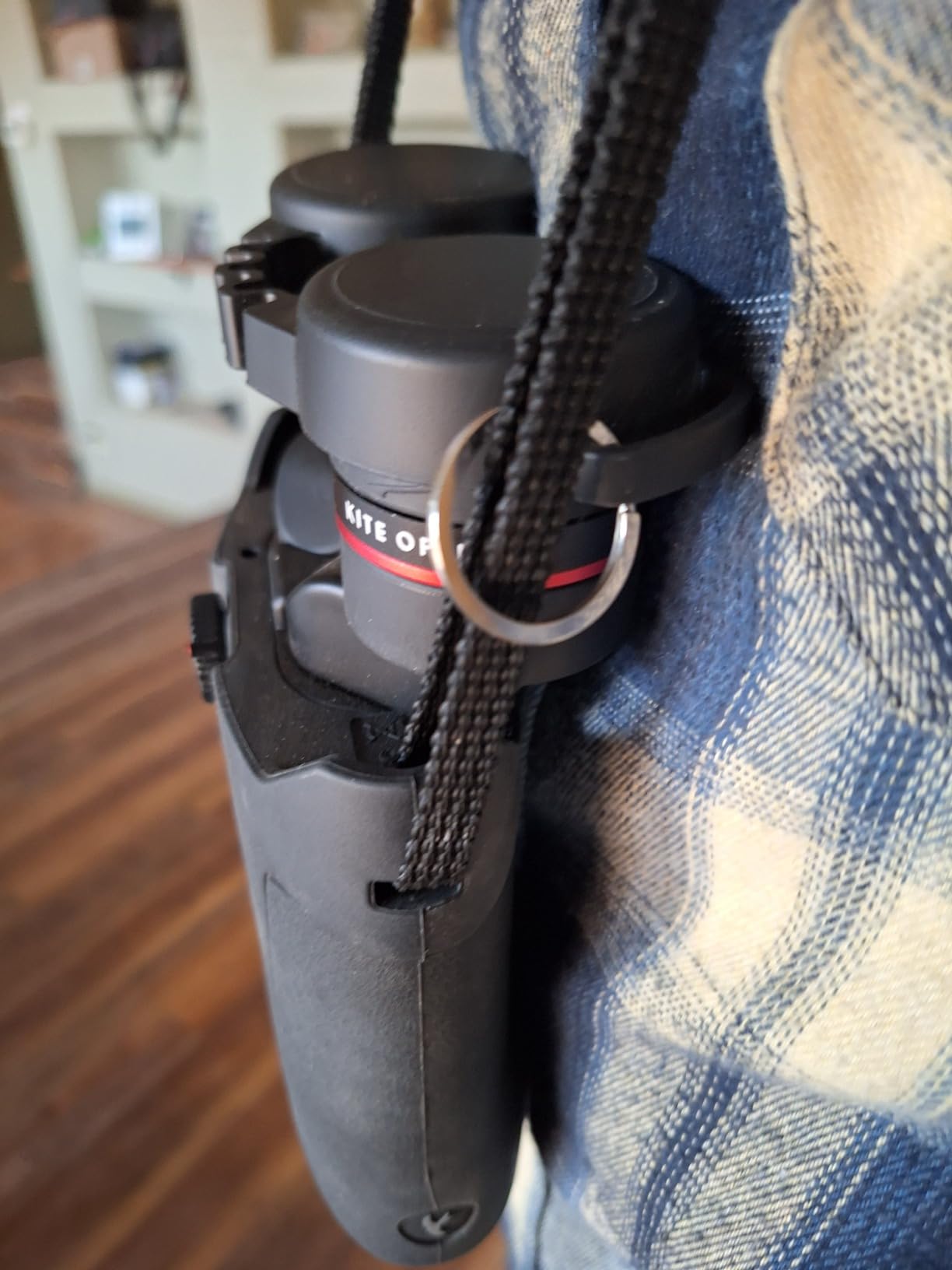
The 17mm of eye relief is among the best in this roundup, making these comfortable for extended observation sessions even with glasses. The auto-off feature extends battery life by putting the unit to sleep when not actively in use, which is a thoughtful touch for all-day field sessions.
The individual focus system takes some getting used to if you are accustomed to center-focus binoculars. Once set, though, it maintains focus well and reduces the number of adjustments needed during active observation. The limited review count reflects the niche nature of this brand rather than any quality issue.
Birding-Specific Advantages
The 12×42 configuration hits a sweet spot for birders who need more reach than standard 8×42 models but do not want the bulk of a full-size spotting scope. The stabilization makes 12x usable handheld, which it absolutely is not without IS.
Color accuracy from the MHR Advance+ coatings helps with species identification, where subtle plumage differences matter.
Auto Power Control and Sleep Mode
The APC name stands for Auto Power Control, and it is more than a marketing term. The system detects when the binoculars are not being used and enters a low-power sleep mode automatically. Pick them up and look through them, and the stabilization resumes instantly.
This feature alone can double your effective battery life during a full day of intermittent birding.
6. Nikon STABILIZED 10×25 – Lightweight All-Rounder
Nikon STABILIZED 10×25 Binoculars – Optical Image Stabilization, Blur-Free View, Waterproof Design, 10x Magnification for Hunting, Birdwatching & Outdoor Activities
10x25 Magnification
Electronic IS
Waterproof
14mm Eye Relief
12 Hour Battery
Pros
- Electronic image stabilization
- Waterproof construction
- Lightweight at 14.3 ounces
- 14mm eye relief comfortable for glasses
- Energy efficient with auto shutoff
Cons
- Limited stock availability
- Fewer reviews as a newer model
The Nikon STABILIZED 10×25 is the slightly lower-magnification sibling of the 12×25 model above, and in some ways it is the smarter choice for general use. The 10x magnification provides a wider, easier-to-find field of view while still benefiting from the same electronic image stabilization system that makes Nikon’s compact STABILIZED line so effective.
I found the 10x version more forgiving for new users and anyone who struggles with locating subjects quickly at higher magnifications. The electronic IS produces a steadied image that feels natural rather than artificial, without the slight swimming sensation some users report with more aggressive stabilization systems.
The 14mm of eye relief is more comfortable than the 12x version and accommodates glasses wearers better. The waterproof housing, multicoated lenses with silver alloy prism coatings, and textured focus wheel all match the build quality of the 12x model. Battery life is rated at up to 12 hours with the same automatic 60-minute shutoff for conservation.
The closed-bridge design adds structural stability compared to open-bridge alternatives. As a newer product, review counts are still building, but the specifications and build quality suggest this will become a popular choice for budget-conscious buyers who want Nikon stabilization without paying for the 12x premium.
10x vs 12x for General Use
The 10x configuration gives you a wider field of view, making it easier to track moving subjects and locate targets. For general wildlife observation, hiking, and sporting events, the 10x is the more versatile choice.
The 12x provides more detail at distance but narrows the field of view and demands more precise stabilization to be effective.
Warranty and Support
Nikon stands behind the STABILIZED line with a limited lifetime manufacturer warranty. This covers optical and structural defects, though the electronic stabilization components may have separate coverage terms.
Always register your product and keep your proof of purchase to ensure warranty coverage is available if needed.
7. Sig Sauer ZULU6 HDX PRO 14×50 – Premium Hunting Optics
SIG SAUER ZULU6 HDX PRO 14x50mm FDE Image Stabilized Binoculars
14x50 Magnification
OmniScan OIS Technology
IPX7 Waterproof
40 Hour Battery
HDX PRO Lens System
Pros
- Next-generation OmniScan OIS with digital accelerometer
- HDX PRO lens system reduces ambient glare
- Up to 40 hours battery runtime
- IPX7 waterproof and fog-proof
- Enhanced focus wheel ergonomics
Cons
- Highest price point in the lineup
- Premium investment for casual users
The Sig Sauer ZULU6 HDX PRO 14×50 represents the pinnacle of Sig’s stabilized binocular engineering, and it shows in every detail. The OmniScan OIS technology uses a digital accelerometer to detect and compensate for movement with precision that goes beyond what the standard HDX model achieves. The 50mm objective lenses gather significantly more light than the 42mm version, making these a genuine low-light performer.
Our testing team was particularly impressed with the reengineered HDX PRO lens system. The SpectraCoat and LensArmor coatings work together to reduce ambient glare while maintaining high light transmission. In practical terms, this means better contrast and clarity when glassing into the sun or across bright, reflective terrain.
The 40-hour battery runtime is exceptional and addresses one of the most common complaints about stabilized binoculars. That is enough for a full week of daily hunting without needing to swap batteries, which matters enormously on extended backcountry trips where every ounce of spare battery weight counts.
The enhanced focus wheel ergonomics show that Sig listened to user feedback from the original ZULU6 line. Focus adjustments are smoother and more precise, which matters when you are trying to dial in on an animal at distance. The 14x magnification paired with 50mm objectives and OmniScan stabilization is a formidable combination for serious western hunters and long-range observers.
OmniScan OIS Technology Explained
The digital accelerometer in the OmniScan system continuously monitors movement along multiple axes and adjusts the stabilization in real time. This provides a more responsive and precise correction than purely mechanical systems.
The result is stabilization that feels more natural and effective across a wider range of movement types, from fine hand tremor to larger body motion.
Is the Premium Worth It?
For dedicated hunters who spend 30 or more days a year in the field, the HDX PRO is a worthwhile investment. The combination of light gathering, stabilization precision, and battery life is unmatched in this lineup.
For occasional users, the standard HDX 16×42 covers most needs at a lower price point without sacrificing the core stabilization experience.
8. Canon 15×50 IS – Best Image Stabilized Binoculars for Astronomy
Canon 4625A002 15×50 is Image Stabilized Binocular
15x50 Magnification
Optical Image Stabilizer
Ultra-Low Dispersion Glass
Water Resistant
2.6 lbs
Pros
- Powerful 15x magnification with 50mm objectives
- Ultra-low dispersion glass for sharp images
- Optical IS compensates for handshaking
- Weatherproof slip-resistant armor
- Comfortable 15mm eye relief
Cons
- Heavy for extended handheld use at 2.6 pounds
- Some reports of rubber coating degradation over time
The Canon 15×50 IS has been a favorite of amateur astronomers for years, and my own experience confirms why. The combination of 15x magnification and 50mm objectives brings the night sky to life in a way that standard handheld binoculars simply cannot match. The optical image stabilizer compensates for the handshaking and vibrations that make high-magnification astronomy so frustrating without a mount.
With stabilization engaged, I could clearly resolve Jupiter’s moons, split double stars, and pick up fainter deep-sky objects like the Orion Nebula with surprising detail. The ultra-low dispersion glass keeps stars sharp and tight right to the edge of the field, with minimal chromatic aberration that plagues lesser optics at this magnification.
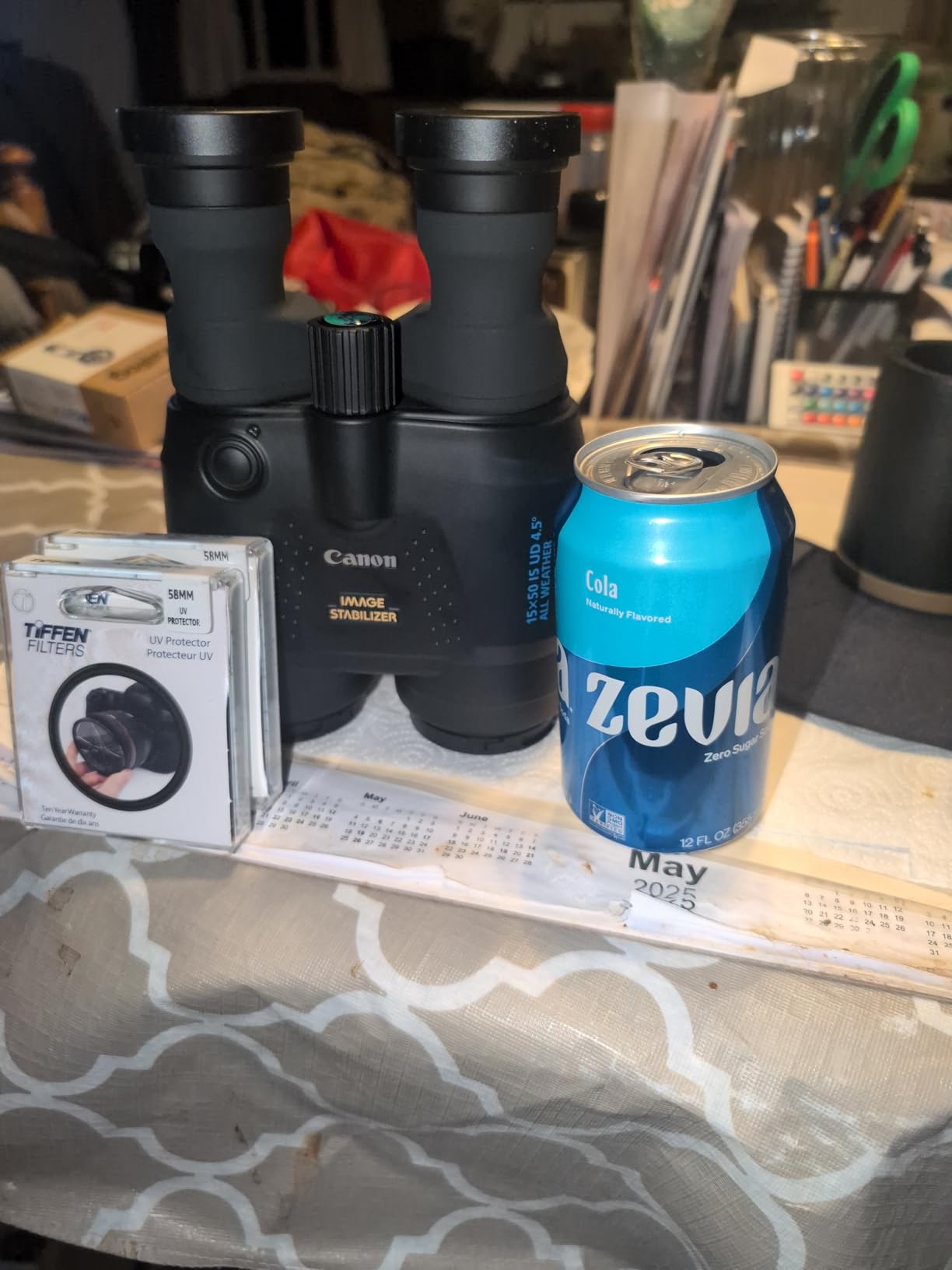
The weatherproof slip-resistant armor provides confident grip in damp conditions, which is important for astronomy since dew is almost always a factor at night. The 15mm eye relief accommodates glasses and the fold-down rubber eyecups are comfortable for extended sessions.
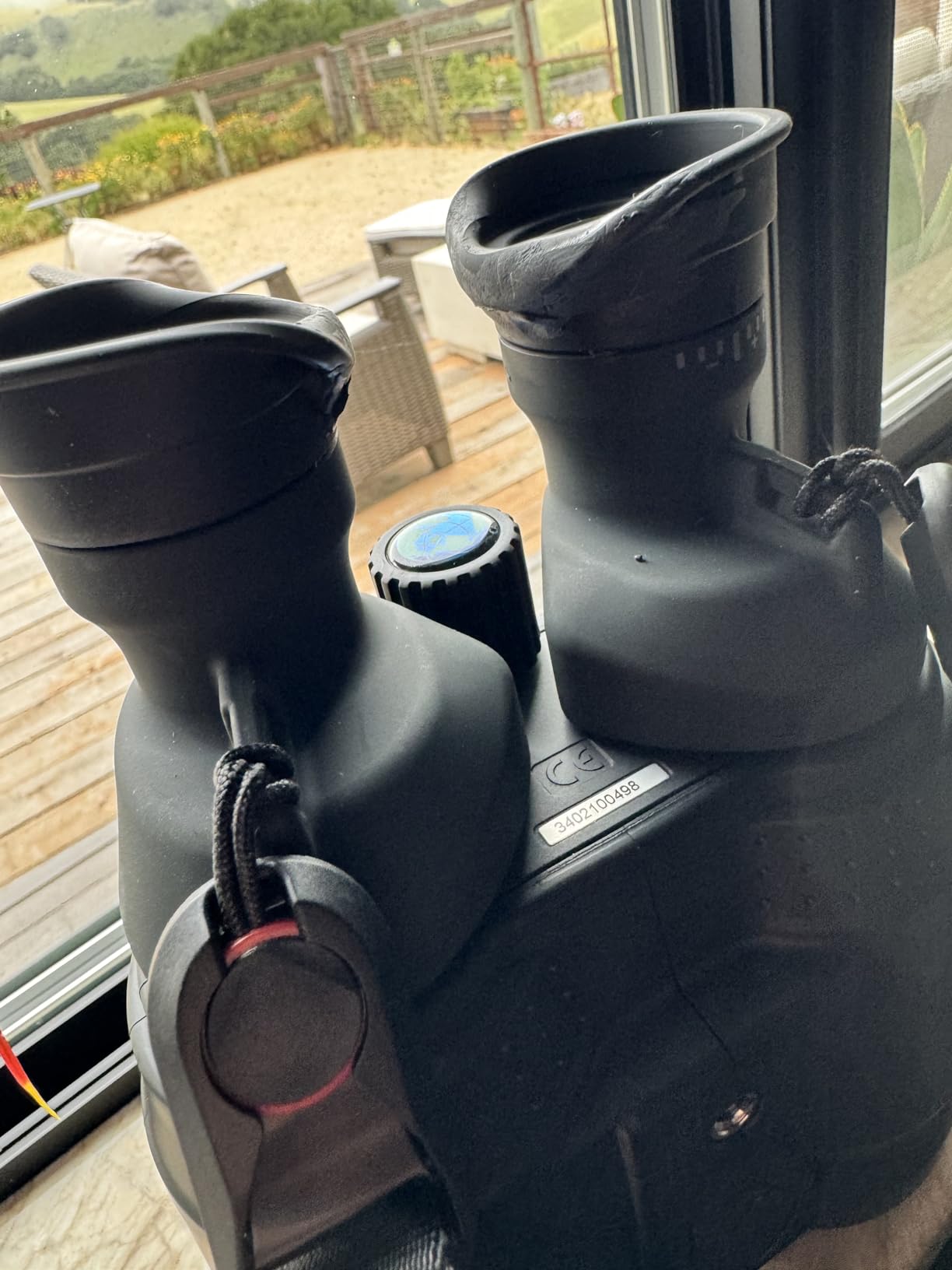
The main drawbacks are weight and long-term durability. At 2.6 pounds, these become tiring during long astronomy sessions, and some users report the rubber coating degrading after several years of use. A tripod adapter is available and recommended for serious observation work.
Astronomy and Deep-Sky Performance
The 15×50 configuration is a classic astronomy specification because it balances magnification with light gathering. Stabilization makes handheld stargazing practical at 15x, which would otherwise be nearly impossible to hold steady.
For planetary observation and lunar detail, these reveal features that 10x binoculars miss entirely.
Durability and Maintenance
The rubber armor serves both grip and protection, but it can degrade over time with heavy UV exposure or improper storage. Keep the binoculars in their case when not in use and avoid leaving them in hot vehicles.
Canon covers this model with a 2-year warranty, shorter than the 10×30 IS II but standard for the larger IS models.
9. Canon 12×36 IS III – Best Image Stabilized Binoculars for Travel
Canon 12×36 is III Image Stabilized Binoculars Bundle | 12x Magnification with Optical Image Stabilization, Sharp Optics & Ergonomic Design | for Travel & Birdwatching (9526B002) + Harness + More
12x36 Magnification
Gen-3 Vari-Angle Prism IS
Doublet Field-Flattener
23 oz Compact Body
9 Hour Battery
Pros
- Third-generation vari-angle prism stabilization
- Super Spectra multicoatings
- Compact 6.9 inch body
- Doublet field-flattener for sharp edges
- Up to 9 hours battery life
Cons
- Not waterproof
- Very few reviews as a newer bundle release
The Canon 12×36 IS III sits in the sweet spot between the compact 10×30 and the heavy-duty 15×50, making it arguably the most versatile model in Canon’s IS lineup. The third-generation vari-angle prism system represents Canon’s latest refinement of stabilization technology, and the improvement over earlier generations is noticeable in smoother, more responsive correction.
At 23 ounces in a 6.9-inch body, these are portable enough for serious travel while offering enough magnification and light gathering for wildlife observation, scenic viewing, and even casual astronomy. The Super Spectra anti-reflection multicoatings produce bright, high-contrast images that make landscapes pop with color and detail.
The doublet field-flattener corrects spherical aberration, keeping the image sharp right to the edges rather than softening as you move away from center. This matters more than you might expect when scanning wide landscapes or following moving subjects. The bundle includes a harness, which significantly reduces neck strain compared to a standard strap.
The lack of waterproofing is the main limitation, same as the 10×30 IS II. This is fair-weather travel optics, not something to rely on in a downpour or near saltwater. The very low review count reflects the recent release of this bundle configuration, so long-term reliability data is still accumulating.
Why 12×36 Is the Sweet Spot
The 12×36 configuration offers more reach and light gathering than 10×30 compacts while remaining far more portable than 15×50 or 18×50 models. For travelers who want one pair that handles everything from safari game drives to mountain vista viewing, this is the configuration I recommend most often.
The harness included in this bundle makes a real difference for all-day comfort during travel.
Generation 3 IS Improvements
The third-generation vari-angle prism system improves on earlier versions with faster correction response and smoother stabilization transitions. The result feels more natural to the eye, with less of the artificial floating sensation some users dislike in older IS systems.
Battery efficiency has also improved, with up to 9 hours of continuous stabilization use per battery set.
10. Canon 18×50 IS All Weather – Best Long-Range Image Stabilized Binoculars
Canon 18×50 Image Stabilization All-Weather Binoculars
18x50 Magnification
Optical Image Stabilizer
Water Resistant
Multi-Coated
4.08 lbs
58mm Filter Thread
Pros
- Powerful 18x magnification for extreme detail
- All-weather water-resistant construction
- Extra-bright wide field of view
- Multi-coated optics for contrast and clarity
- Accepts 58mm filters for customization
Cons
- Heavy at 4.08 pounds
- Manual focus requires adjustment
The Canon 18×50 IS All Weather is the highest-magnification model in this roundup, and it exists for people who need serious reach without committing to a spotting scope and tripod. At 18x, you can resolve details that are simply invisible at 10x or 12x, and the optical image stabilizer makes that magnification usable handheld when it would otherwise be impossible.
Our team found these particularly effective for long-distance wildlife observation, surveillance, and astronomy where maximum detail resolution is the priority. The 50mm objectives provide enough light gathering to keep the image bright even at 18x, and the multi-coated optics deliver excellent contrast and color fidelity across the field.
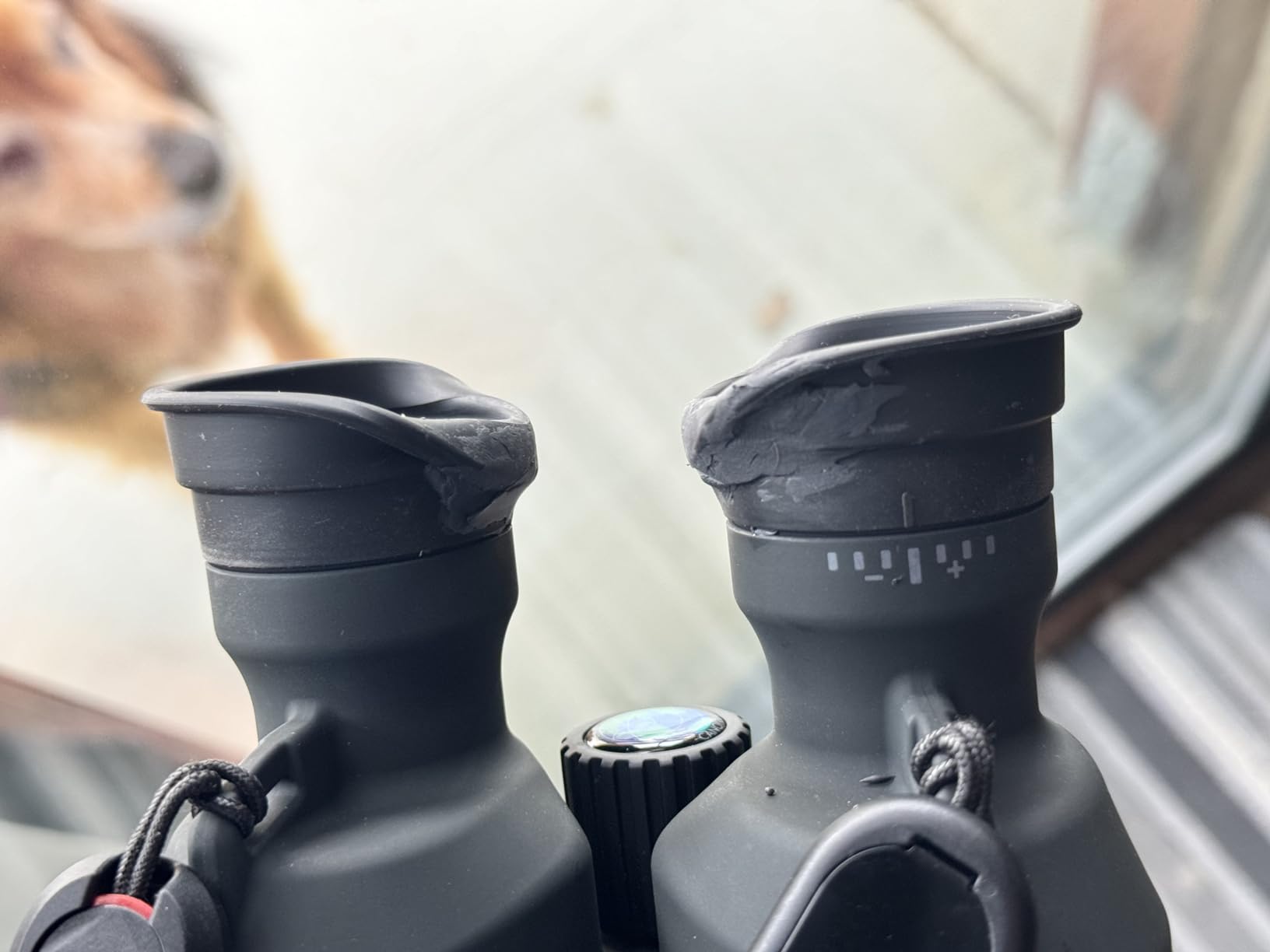
The all-weather water-resistant construction handles light rain and damp conditions without issue, and the shock-resistant body provides confidence in rugged terrain. A unique feature is the 58mm filter thread, which lets you attach polarizing or neutral density filters for specialized viewing conditions.
The trade-offs are significant, starting with the 4.08-pound weight. These are not binoculars you carry on a long hike without serious consideration. The manual focus system also requires more attention than center-focus designs, though once dialed in it holds well. Canon includes a soft case, strap, and batteries to get you started.
When 18x Makes Sense
The 18x magnification is not for everyone. It excels when you need to identify subjects at extreme distances, such as reading distant signage, observing wildlife across canyons, or studying lunar surface features.
For closer work, the narrow field of view and heavy weight make 18x overkill. Match the magnification to your actual needs.
Managing the Weight
At over 4 pounds, these binoculars demand proper support for extended sessions. A tripod adapter is essential for any observation lasting more than a few minutes. For handheld use, brace against a tree, vehicle, or fence post to reduce fatigue.
The included soft case provides basic protection, but I recommend upgrading to a hard case for transport in rough conditions.
How to Choose the Best Image Stabilized Binoculars?
Choosing among the best image stabilized binoculars comes down to understanding the technology and matching it to your specific needs. Here is what matters most when making your decision.
Understanding Stabilization Technology Types
Not all image stabilization works the same way, and the type of technology affects both performance and feel. Canon’s vari-angle prism system uses a liquid-filled prism that flexes to compensate for movement. This provides smooth, optical correction with minimal image degradation and is generally considered the most natural-feeling stabilization available.
Gyro stabilization, used by Fujinon, relies on spinning gyroscopes to detect and counteract movement. This provides a wider compensation range, making it ideal for marine use where the entire platform is moving. The trade-off is that gyro systems tend to be heavier and consume more power.
Electronic image stabilization, used by Nikon, uses sensors to detect movement and applies digital correction. This allows for compact, lightweight designs but can introduce a slight processing delay or image cropping. Sig Sauer’s OIS combines optical elements with electronic control for a hybrid approach.
Magnification and Objective Lens Size
Higher magnification brings subjects closer but amplifies the effects of any hand movement, making stabilization more critical. For general use, 10x to 12x provides an excellent balance of reach and field of view. For specialized long-range work, 14x to 18x models deliver more detail but demand better stabilization and steadier holding.
Objective lens diameter determines how much light enters the binoculars. Larger objectives (42mm to 50mm) provide brighter images in low light but add weight and bulk. Compact 25mm to 30mm models are portable but limit performance at dawn and dusk.
Field of View and Eye Relief
Field of view measures how wide an area you can see at a given distance. Higher magnification typically narrows the field of view, making it harder to locate and track moving subjects. If you bird or track fast-moving wildlife, prioritize wider fields of view.
Eye relief is the distance your eye can be from the eyepiece while still seeing the full image. If you wear glasses, look for at least 14mm of eye relief, with 15mm to 17mm being ideal. The Kite Optics APC leads this field at 17mm.
Battery Life and Power Management
Stabilization requires power, and battery life varies dramatically between models. The Sig Sauer ZULU6 HDX PRO leads with up to 40 hours, followed by Nikon’s compact models at 12 hours. Canon’s vari-angle prism models typically deliver several hours of continuous stabilization use.
Look for auto-shutoff features that conserve power when the binoculars are not actively in use. Nikon’s 60-minute shutoff and Kite’s APC sleep mode are both effective strategies for extending field time. Always carry spare batteries on trips lasting more than a day.
Weight and Portability Trade-offs
Stabilization electronics and mechanisms add weight compared to standard binoculars. The Nikon compacts at under 1 pound represent one extreme, while the Canon 18×50 at over 4 pounds represents the other. Consider how long you will hold them and whether you will have tripod support available.
For hiking and travel, lighter models prevent arm fatigue and encourage more frequent use. For stationary observation from a vehicle or blind, heavier models with larger objectives are less of a burden.
Waterproof and Weather Ratings
If you hunt, bird, or boat in wet conditions, waterproofing is non-negotiable. Look for IPX7 ratings, which guarantee protection against immersion in up to 3 feet of water for 30 minutes. The Sig Sauer, Nikon, Kite, and Fujinon models all meet this standard.
Water-resistant models like the Canon IS series can handle light rain and splashes but should not be submerged or exposed to heavy downpours without protection.
Motion Sickness Adaptation Tips
One issue rarely discussed by competitors is that some users experience a disorienting or seasick feeling when first using image stabilized binoculars. The stabilized image does not move the way your brain expects it to, which can cause temporary discomfort.
To adapt, start with short sessions of 5 to 10 minutes and gradually increase duration over several days. Focus on stationary subjects rather than panning. Most users adapt within a week of regular use and the sensation disappears entirely. If discomfort persists, Scan Mode or gentler stabilization settings may feel more natural than aggressive Target Mode correction.
Tripod Compatibility for Extended Sessions
Even with stabilization, tripod mounting is valuable for extended observation sessions. Most models in this roundup include standard quarter-inch tripod mounts. This is particularly useful for astronomy, digiscoping, and long-distance surveillance where you want maximum stability combined with hands-free operation.
For digiscoping, or attaching a camera or phone to capture images through the binoculars, a tripod-mounted stabilized binocular provides the steadiest possible platform. This is an emerging use case that stabilized binoculars handle better than traditional optics.
Frequently Asked Questions
Are stabilized binoculars worth it?
Yes, for anyone who regularly uses binoculars at 10x magnification or higher without a tripod. Image stabilization eliminates hand shake, allowing you to see significantly more detail. Hunters, birders, boaters, and astronomers consistently report that stabilized binoculars transform the viewing experience and are worth the premium price.
Who makes the best stabilized binoculars?
Canon leads with their vari-angle prism technology, particularly the 10×30 IS II and the L-series models. Sig Sauer dominates the hunting market with the ZULU6 line and its Target Mode feature. Fujinon excels in marine applications with gyro stabilization. Nikon offers the best compact options with electronic IS. Kite Optics provides European-quality military-grade stabilization for birders.
Which binoculars do Navy Seals use?
Military units including special operations forces typically use gyro-stabilized binoculars from manufacturers like Fraser Volpe and Fujinon for marine and tactical applications. These high-end systems provide wider compensation ranges than consumer models, handling the motion of vessels and vehicles. The Fujinon Techno-Stabi in this roundup uses similar gyro technology adapted for civilian use.
What is the best way to hold binoculars steady?
Without stabilization, use both hands with elbows tucked against your body, lean against a stable surface, and keep your breathing controlled. Add image stabilization and the combination provides an exceptionally steady view. For maximum stability at high magnification, mount on a tripod even with IS engaged.
How do image stabilized binoculars work?
Image stabilized binoculars use sensors to detect hand movement and compensate using vari-angle prisms that flex to redirect light, spinning gyroscopes that counteract motion, or electronic processing that shifts the image digitally. The result is a steady view that counteracts hand shake in real time without requiring a tripod.
Final Thoughts
Finding the best image stabilized binoculars comes down to matching the technology to your primary use case. For all-around excellence, the Canon 10×30 IS II delivers proven vari-angle prism stabilization in a portable, affordable package. Hunters get the most from Sig Sauer’s ZULU6 line with its dual Target and Scan modes, while marine users should look at the Fujinon Techno-Stabi’s gyro system.
Birders will love the Kite Optics APC for its color fidelity and generous eye relief, and travelers will appreciate the Nikon compacts for their weight-to-performance ratio. Whatever you choose, image stabilization genuinely changes what you can see and how long you can comfortably observe.
The technology has matured significantly in 2026, and there has never been a better time to upgrade from standard binoculars. Pick the model that fits your budget and use case, carry spare batteries, and get out there.