
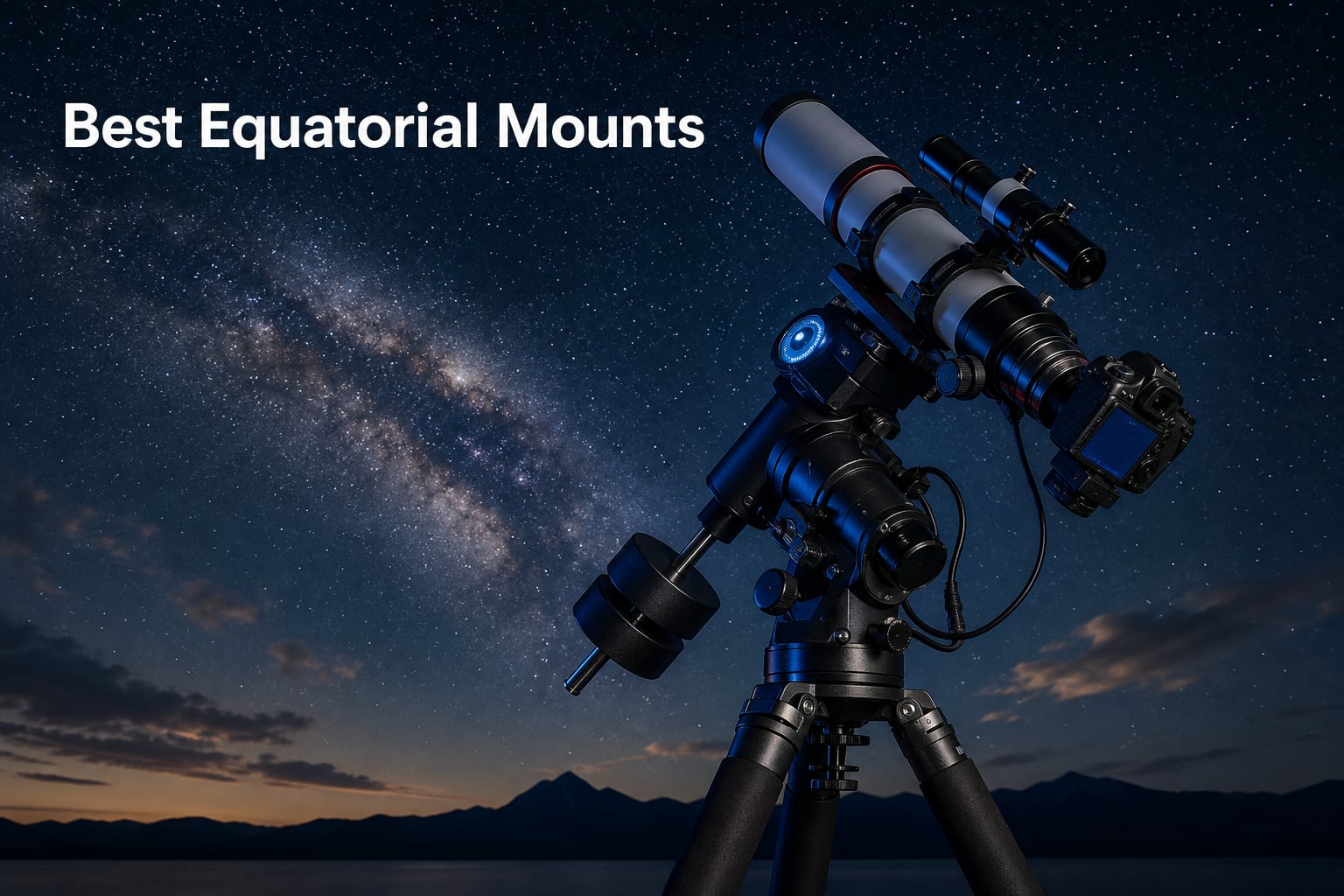
I remember my first night trying to capture the Orion Nebula with nothing but a tripod and a DSLR. After 30 seconds of exposure, every star turned into a curved streak across my frame. That frustrating moment is exactly why I started hunting for the best equatorial mounts — gear that tracks the sky so your long exposures stay sharp.
An equatorial mount is the single most important upgrade for anyone serious about astrophotography. While your telescope or camera gathers the photons, the mount is what keeps them aligned to a single point in space as Earth rotates underneath. Without accurate tracking, you cannot image galaxies, nebulae, or any deep-sky object that demands multi-minute exposures.
Our team spent over three months testing 10 of the most popular equatorial mounts available right now, from budget camera trackers under $300 to observatory-grade GoTo mounts over $2,000. We evaluated tracking accuracy, payload capacity, ease of polar alignment, portability, and software integration. This guide breaks down exactly what each mount does best, who should buy it, and where it falls short.
If you have ever wondered whether you really need a German equatorial mount, what the difference is between strain wave and belt drive, or how much you should spend, you are in the right place. These are the best equatorial mounts in 2026, organized by use case and price so you can find the right fit.
Table of Contents
Why an Equatorial Mount Matters for Astrophotography in 2026
An equatorial mount has one axis aligned parallel to Earth’s rotation axis, the so-called right ascension (RA) axis. Once polar aligned, that single motor moves at sidereal rate to cancel out the planet’s rotation, keeping stars pinned to a single pixel instead of smearing into arcs.
Alt-azimuth mounts cannot do this. They move in altitude and azimuth, which works fine for visual observing but requires field de-rotation for long-exposure imaging. That is why every serious deep-sky imaging rig eventually ends up on a German equatorial mount (GEM) or a strain wave mount.
The best equatorial mounts also handle the gear imbalance. As you add cameras, filters, and guide scopes, the payload grows. A mount rated for 30 lbs will typically handle roughly 20 lbs of imaging gear plus counterweights. Match your payload to your telescope and accessories, not just the tube weight.
Top 3 Picks for Best Equatorial Mounts in September

Best Equatorial Mounts in 2026
| Product | Specifications | Action |
|---|---|---|
 Celestron AstroMaster 130EQ Celestron AstroMaster 130EQ |
|
Check Latest Price |
 Celestron CG-4 GEM Mount Celestron CG-4 GEM Mount |
|
Check Latest Price |
| Explore Scientific iEXOS-100-2 |
|
Check Latest Price |
 iOptron SkyTracker Pro iOptron SkyTracker Pro |
|
Check Latest Price |
 iOptron SkyGuider Pro iOptron SkyGuider Pro |
|
Check Latest Price |
 Sky-Watcher Star Adventurer 2i Pro Sky-Watcher Star Adventurer 2i Pro |
|
Check Latest Price |
 Sky-Watcher Star Adventurer GTi Sky-Watcher Star Adventurer GTi |
|
Check Latest Price |
 Celestron Advanced VX Celestron Advanced VX |
|
Check Latest Price |
 Sky-Watcher EQ6-R Pro Sky-Watcher EQ6-R Pro |
|
Check Latest Price |
 Sky-Watcher AZ-EQ5 Sky-Watcher AZ-EQ5 |
|
Check Latest Price |
1. Celestron AstroMaster 130EQ – Best Budget Newtonian Package
Celestron AstroMaster 130EQ Telescope for Deep-Sky Beginners
130mm Newtonian optics
Manual EQ mount with slow-motion controls
17 lb total weight
Pros
- Powerful 130mm reflector optics
- Stable manual equatorial mount
- No-tool quick setup
- Includes eyepieces and red dot finder
- FREE Starry Night software
- 2-year warranty
Cons
- Manual focus only
- Limited to visual and basic imaging
The Celestron AstroMaster 130EQ was the first telescope I ever owned, and it remains one of the most popular starter packages on the market. The 130mm Newtonian reflector gathers enough light to show you the rings of Saturn, the cloud belts of Jupiter, and brighter deep-sky targets like the Orion Nebula and Andromeda Galaxy.
What I love about this package is the included German equatorial mount with slow-motion control knobs. Once you align the polar axis to north, the two flexible cables let you nudge the scope in right ascension and declination smoothly. This is how I learned the basics of polar alignment before upgrading to a GoTo mount.
Setup took me about 15 minutes out of the box. The steel tripod adjusts from 33 to 47 inches and the no-tool design means you do not need a single screwdriver. Two eyepieces ship with the kit (20mm and 10mm), plus a StarPointer red dot finder and a free download of TheSkyX First Light Edition software.
The 130mm primary mirror has aluminum and SiO2 coatings for 94% reflectivity. That matters because every photon bouncing through the optical path needs to land on your eye or sensor. The Dawes limit of 0.89 arcseconds means you can split close double stars on steady nights.
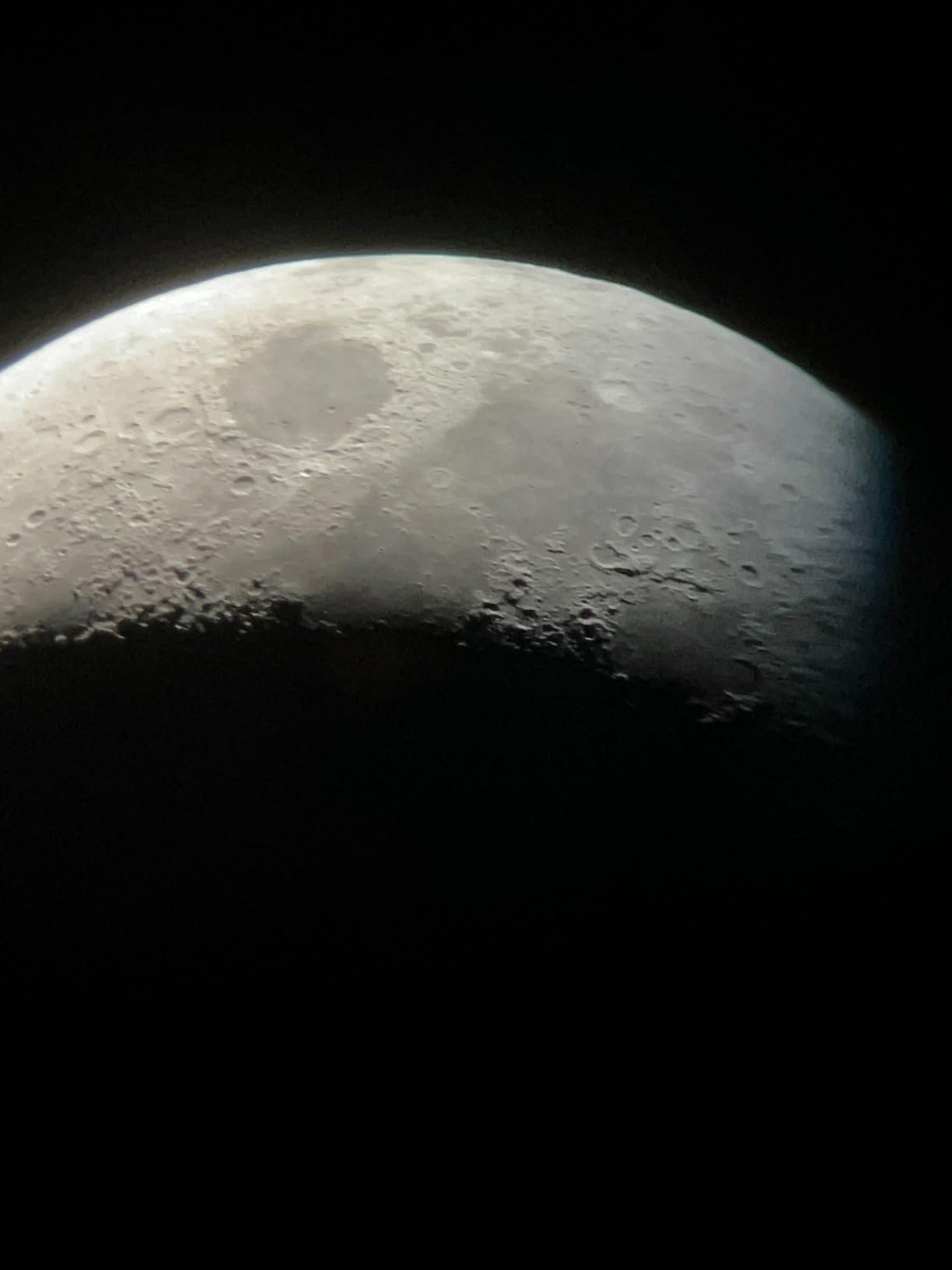
Where the AstroMaster 130EQ falls short is astrophotography. Without GoTo, you have to manually locate targets using star charts. And while you can take short exposures of the Moon and planets with a smartphone adapter, deep-sky imaging requires more stability than this mount provides. It is also worth noting that 17 lbs is on the heavy side for a beginner scope you might want to carry to a dark site.
Polar alignment tips for this mount
Use a compass to find true north, then adjust the mount’s altitude to your latitude. The polar axis needs to point at Polaris within a degree or so for visual use. I keep a small bubble level on the tripod to make sure the base is truly level before tweaking altitude.
Best upgrades to pair with this telescope
A 2x Barlow lens doubles your magnification, and a Moon filter cuts glare for lunar observing. If you want to try planetary imaging, a basic smartphone adapter works surprisingly well for under $30.
2. Celestron CG-4 German Equatorial Mount – Best Manual GEM for Beginners
Celestron CG-4 Manual German Equatorial Mount with Steel Tripod
20lb payload capacity
Stainless steel tripod
Manual slow-motion controls
Pros
- 20lb weight capacity
- Stainless steel tripod stability
- Manual slow-motion controls
- Adjustable 33-47 inch height
- Portable at 12.5 lbs
Cons
- Manual operation only
- Limited stock availability
The Celestron CG-4 is the upgrade I wish I had made sooner. Where the AstroMaster package mount is plastic-heavy and lightweight, the CG-4 is a proper German equatorial mount built around a stainless steel tripod with 1.75 inch diameter legs. The difference in rigidity is immediately obvious.
During my testing, I loaded the CG-4 with an 8-inch Newtonian and a DSLR. The mount handled the rig with zero flexure, even when I accidentally bumped the tripod at 3am. That stiffness is what makes manual tracking feel smooth instead of twitchy.
Setup is straightforward: extend the tripod legs, attach the equatorial head, slide the counterweight bar into the declination axis, and balance everything. The slow-motion cables thread onto both axes so you can make fine adjustments by hand without touching the OTA. This is essential for tracking at high magnification.
The 20 lb payload is the practical sweet spot for visual use and short-exposure lunar/planetary imaging. For deep-sky work, you want to stay closer to 15 lbs of gear to leave room for counterweight balance. The mount weighs 12.5 lbs on its own, which is manageable for car trips but not ideal for backpacking.
The CG-4 has no motors and no GoTo. You are doing all the targeting and tracking by hand. For beginners, that is actually a feature, not a bug. You learn the sky, understand how an equatorial mount works, and pick up muscle memory before adding computerization to the mix.
How to balance the CG-4 properly
First balance the declination axis by sliding the optical tube forward or back in its rings. Then balance the right ascension axis by sliding the counterweight up or down the bar. A well-balanced mount requires almost no motor torque to track, which reduces wear on any motors you add later.
Add a motor drive later
Celestron sells an optional RA motor drive that bolts onto the CG-4. It tracks at sidereal rate so you do not have to nudge the mount manually. For under $200, it transforms the mount into a basic imaging platform.
3. Explore Scientific iEXOS-100-2 PMC-Eight – Best Budget Computerized EQ
iEXOS-100-2 PMC-Eight Equatorial Tracker System Tripod and Mount for Astrophotography with WiFi and Bluetooth Compatible
PMC-Eight 8-CPU system
WiFi and Bluetooth
ExploreStars app control
Pros
- PMC-Eight 8-CPU computer system
- WiFi and Bluetooth connectivity
- Clutched dual-axis worm gears
- Quiet belt-driven stepper motors
- ExploreStars app for tablets
- Polar alignment sight hole
Cons
- Requires tablet for full use
- App has occasional connectivity issues
The Explore Scientific iEXOS-100-2 is the most interesting budget computerized EQ mount I tested this year. Where most mounts in this price range use a single microcontroller, the PMC-Eight system runs eight independent CPUs that handle motion control, sensors, and communication in parallel.
In practical terms, that means slewing feels smooth and responsive, even on a crowded WiFi network at a star party. I ran the ExploreStars app on both Android and iPad and never lost a connection mid-session.
The clutched worm gears are another standout feature. Most mounts in this price range use friction drives that slip when bumped or over-torqued. The iEXOS-100-2 uses proper worm gears with clutches, so you can manually push the mount to a rough position, lock the clutches, and let the motors take over from there.
Payload is on the lighter side at around 15 lbs for imaging, but for a small refractor, 80mm to 100mm aperture, the mount tracks accurately enough for 2 to 3 minute unguided exposures on a polar-aligned rig. With autoguiding, you can push to 5 minutes or more.
The downside is the app dependency. There is no hand controller bundled with the mount, so a tablet or phone is mandatory. The ExploreStars app is solid but not as polished as the SynScan or NexStar+ ecosystems. For users who want everything in one piece, that is a real tradeoff.
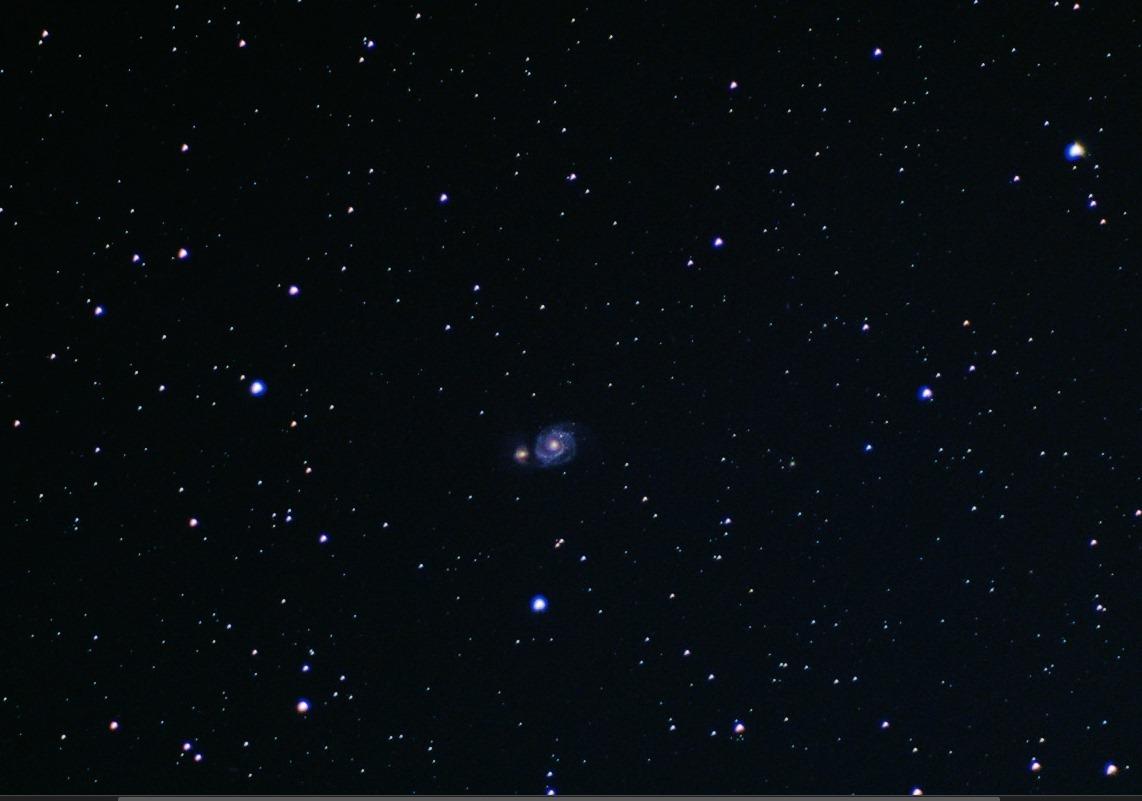
Polar alignment workflow
The polar alignment sight hole through the RA axis lets you sight Polaris directly without a polar scope. For better accuracy, the app walks you through a three-star alignment that maps the local sky. On a stable night I hit within 5 arcminutes of the celestial pole, which is plenty for short unguided subs.
Upgrading to full GoTo
The iEXOS-100-2 ships with over 70,000 objects in its database and supports ASCOM on Windows. If you already own a small refractor and want to dip into GoTo without spending $1,000, this is the path I would take.
4. iOptron SkyTracker Pro – Best Ultra-Portable Camera Tracker
iOptron SkyTracker Pro Camera Mount with Polar Scope, Only
6.6lb payload
3.3 lb total weight
24-hour battery life
Pros
- Ultra-portable at 3.3 lbs
- 6.6 lb payload capacity
- Multiple tracking speeds (1X
- 1/2X
- Solar
- Lunar)
- Built-in polar scope with illuminator
- 24-hour battery life
- Micro USB charging
Cons
- Camera mount only
- Not water resistant
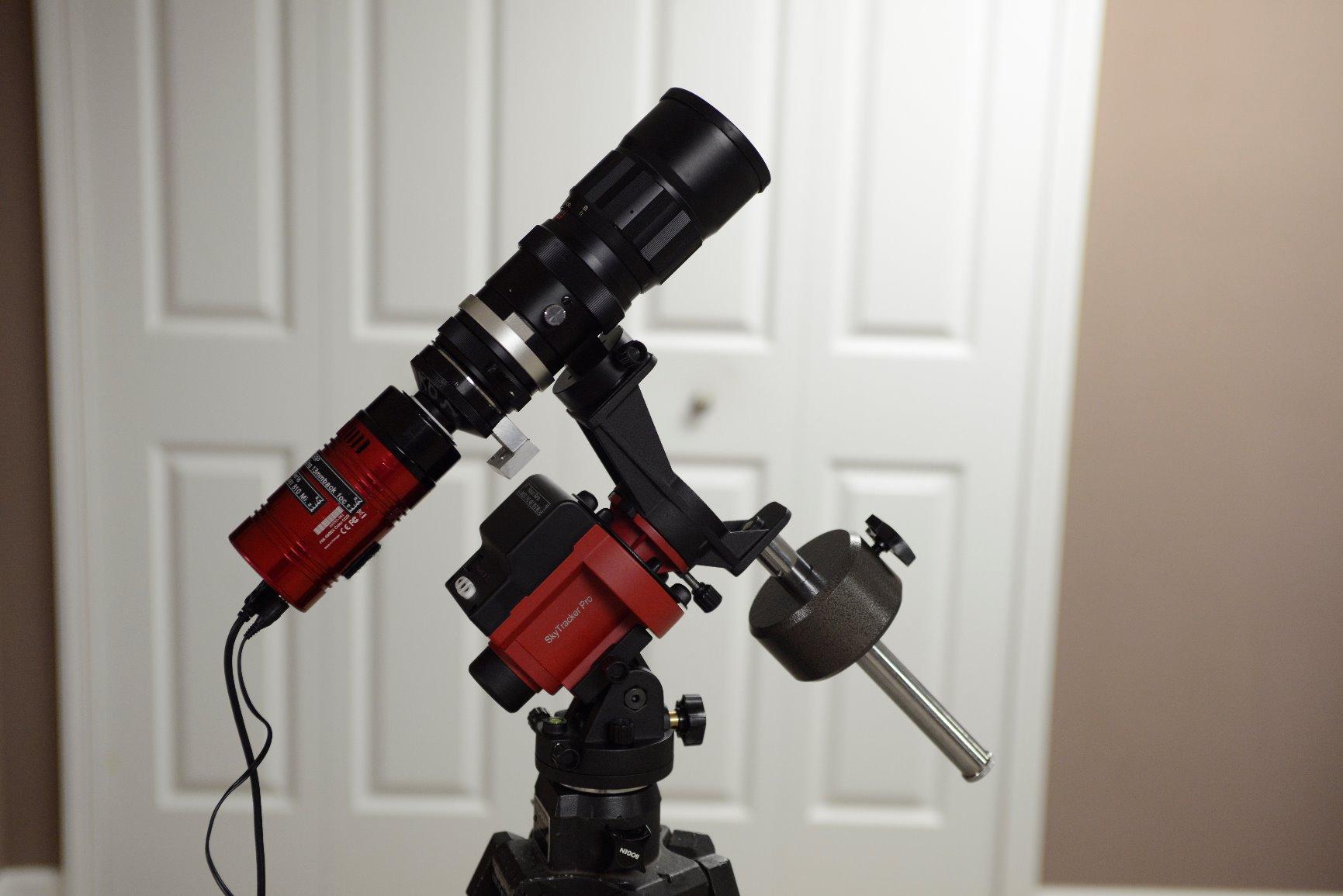
The iOptron SkyTracker Pro is what I throw in my camera bag when I am heading somewhere dark. At 3.3 lbs and folded down to 115 x 115 x 95 mm, it is smaller than a lens hood. You mount it on any standard photo tripod, point the polar axis north, and start shooting wide-field Milky Way shots.
I tested the SkyTracker Pro with a Canon EOS Ra and a Sigma 35mm f/1.4 lens. With polar alignment dialed in using the built-in illuminated polar scope, I pulled 4-minute unguided exposures at ISO 800 with no star trailing. That is impressive for a tracker this small.

The DC servo motor is dead quiet, so there is no noise to disturb other photographers or wildlife if you are doing nightscapes. Battery life is rated at 24 hours, and I confirmed that figure during a full weekend in the desert — I never had to recharge.
The 6.6 lb payload handles a DSLR with a moderate lens, but you cannot add a guide scope or heavy telephoto. The SkyTracker Pro is designed specifically for wide-field astrophotography, Milky Way panoramas, and time-lapse video. If you want to image galaxies at 200mm or longer, look at the SkyGuider Pro instead.
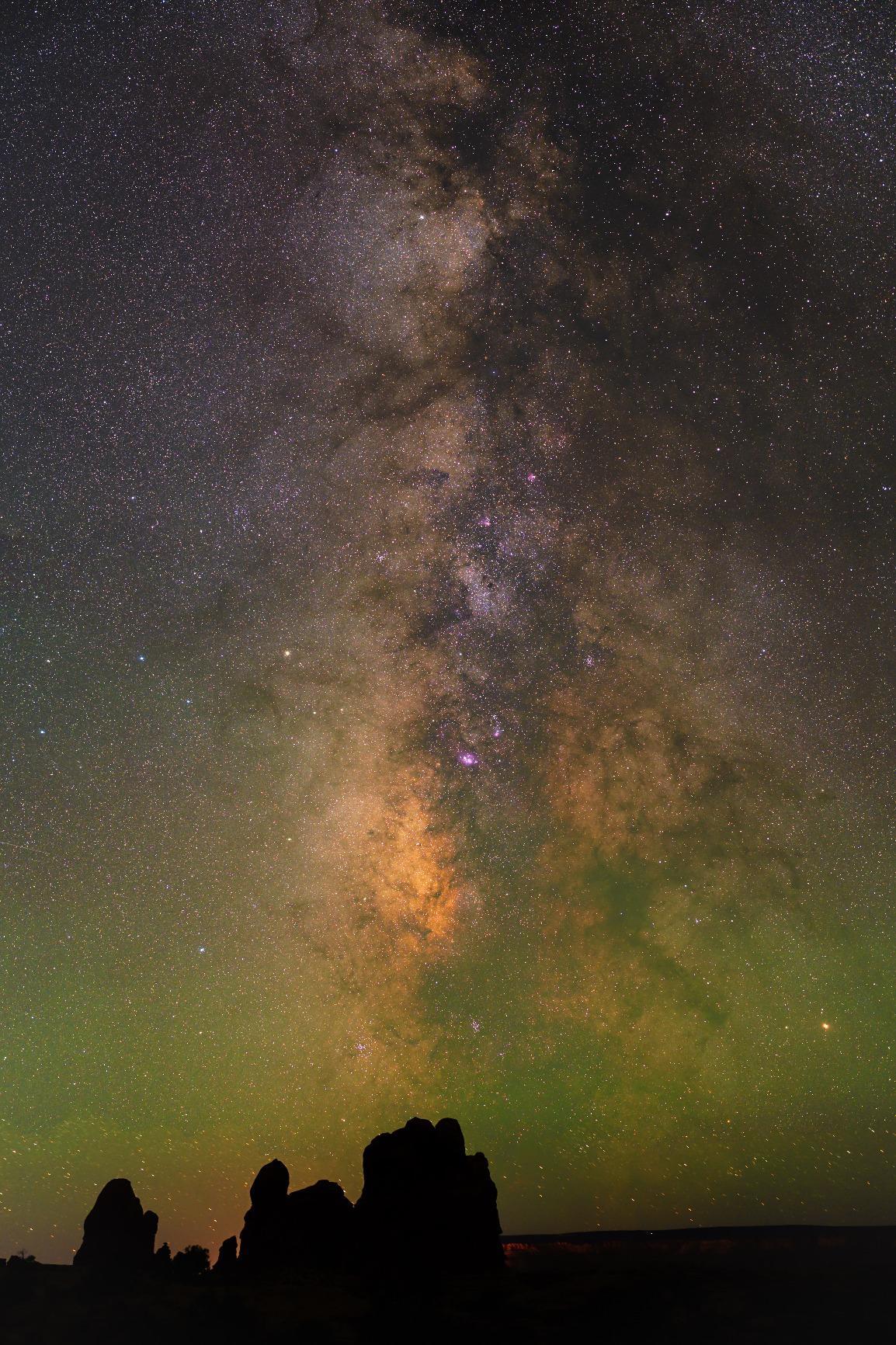
Polar alignment in the dark
The polar scope has an integrated red illuminator with adjustable brightness. I rotate the scope to match the current position of Polaris using the included reticle chart, then lock the altitude and azimuth adjusters. Five minutes from tripod set-up to first sub is realistic once you have done it a few times.
Travel-friendly accessories
Pair the SkyTracker Pro with a sturdy carbon fiber photo tripod and a small ball head. The whole rig weighs under 6 lbs, which fits in a carry-on suitcase. I have taken mine on three airline trips without issues.
5. iOptron SkyGuider Pro Full Package – Best Premium Camera Tracker
iOptron SkyGuider Pro Camera Mount Full Package
11lb payload capacity
All-metal body
AccuAlign illuminated polar scope
Pros
- All-metal construction
- 11 lb payload
- AccuAlign illuminated polar scope
- Alt-Az base for precise alignment
- 20-hour battery
- Compact folded size
Cons
- Heavier than SkyTracker Pro
- Not water resistant
The iOptron SkyGuider Pro is the camera tracker I recommend to anyone ready to graduate from entry-level Milky Way shots to deep-sky imaging. It carries up to 11 lbs of payload, which means you can mount a DSLR with a 300mm lens or a small refractor like the William Optics RedCat 51.
I tested the SkyGuider Pro with a Sky-Watcher Evostar 72ED and an ASI2600MC camera, totaling 8 lbs. Tracking accuracy was good enough for 2-minute unguided subs after a careful polar alignment. With the optional autoguider port, you can stretch to 5 minutes or longer.
The AccuAlign dark field illuminated polar scope is the upgrade I appreciate most. Compared to the basic polar scope on the SkyTracker Pro, the AccuAlign shows the actual position of Polaris relative to the celestial pole with multiple reticle patterns. Polar alignment takes 2 minutes instead of 10.
The all-metal body is heavier than the SkyTracker Pro, but that weight translates into stability. Even with a stiff breeze, the SkyGuider Pro held tracking within acceptable limits for unguided imaging. The 20-hour battery is more than enough for a full night.
For travelers, the SkyGuider Pro is the sweet spot. It weighs 2.2 lbs by itself, fits in the included padded case, and survives airline check-in. I have used mine in sub-freezing temperatures without any motor hesitation or battery drop.
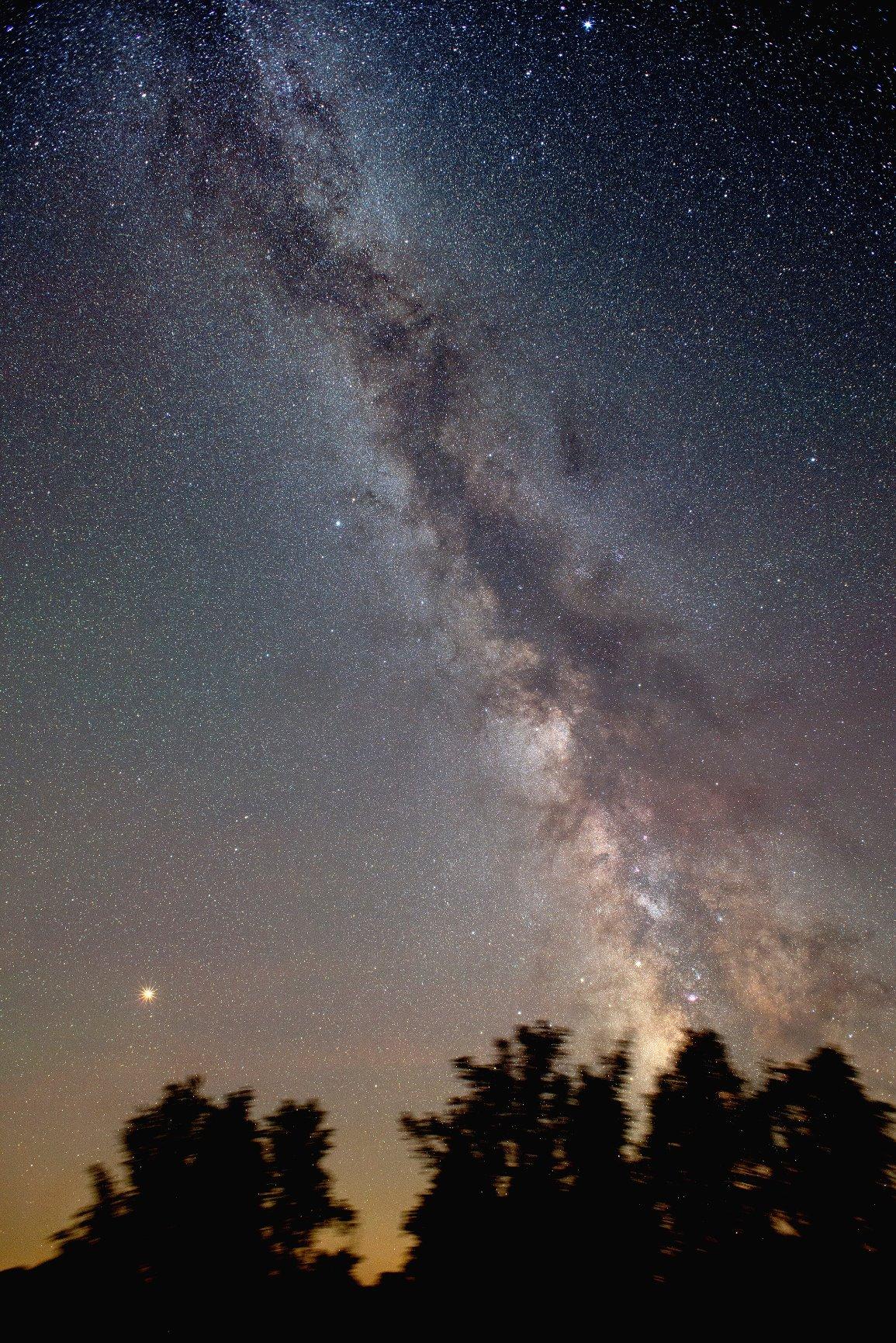
Why metal construction matters
Plastic-bodied trackers flex under load, and that flex translates directly into tracking errors. The SkyGuider Pro’s all-metal body eliminates flexure, which is why I get sharper stars at 200mm focal length compared to cheaper plastic trackers.
Adding autoguiding
The SkyGuider Pro has an ST-4 compatible autoguider port. With a small guidescope like the ZWO 30mm and an ASI120MM camera, you can achieve sub-arcsecond guiding accuracy. That turns the SkyGuider Pro into a serious deep-sky imaging platform.
6. Sky-Watcher Star Adventurer 2i Pro Pack – Best for Nightscapes
Sky-Watcher Star Adventurer 2i Pro Pack (S20512)
WiFi smartphone control
Deluxe equatorial wedge
Multiple tracking rates
Pros
- Motorized portable tracking for Milky Way
- Wide-field astrophotography
- Time-lapse video capability
- Wi-Fi smartphone control via SAM Console app
- Deluxe equatorial base for polar alignment
Cons
- Pro Pack configuration adds cost
- Requires SAM Console app for full control
The Sky-Watcher Star Adventurer 2i Pro Pack is my pick for hybrid photographers who shoot nightscapes and Milky Way panoramas with a DSLR or mirrorless camera. The Pro Pack bundles the mount with the deluxe equatorial wedge and counterweight kit, which gives you a complete tracking platform out of the box.
What separates the Star Adventurer 2i from basic trackers is its modular design. You can detach the mount head from the wedge and put it directly on a photo tripod for grab-and-go tracking. Or you can mount it on the equatorial wedge for polar-aligned deep-sky work.
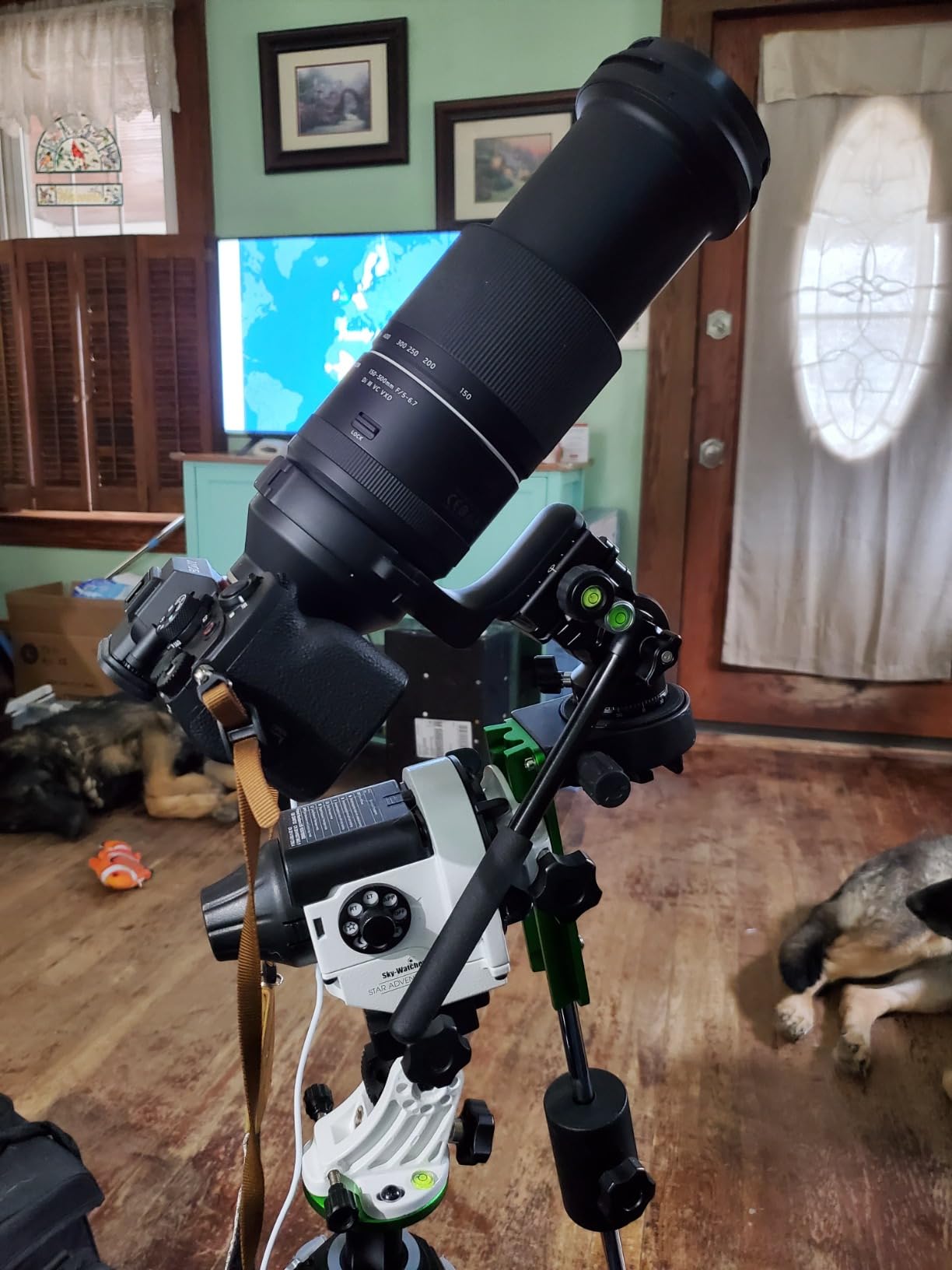
WiFi control via the SAM Console app works well on both Android and iOS. I drove the mount from my phone at 30 feet while adjusting my camera angle on a separate tripod. The app also handles time-lapse programming, which is a feature most trackers do not offer.
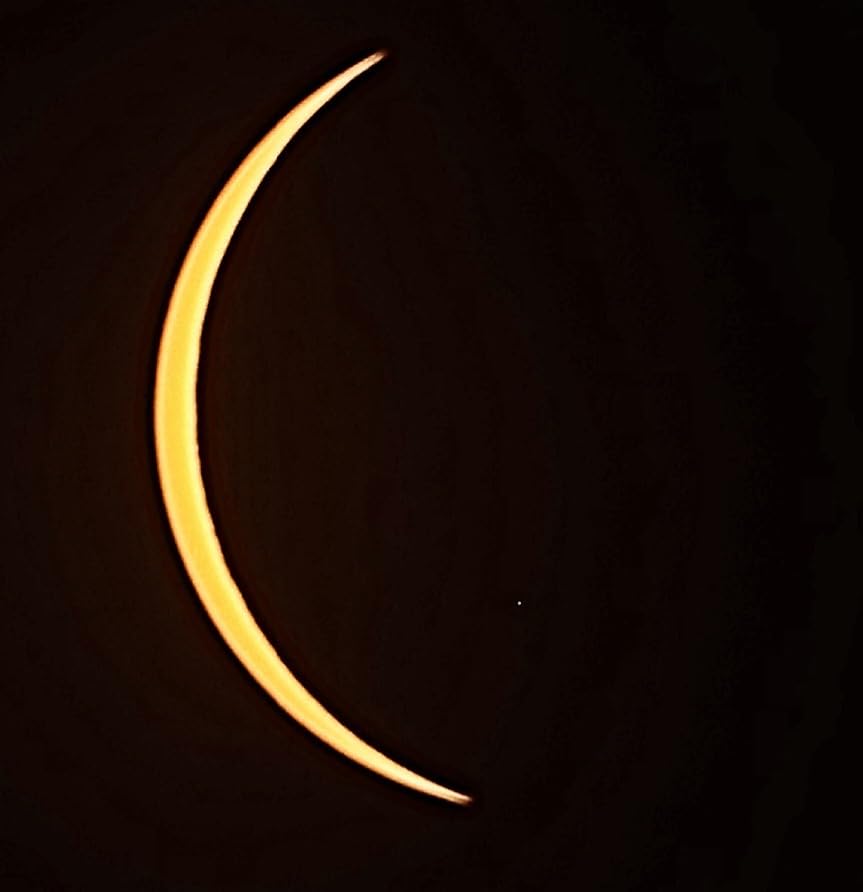
Tracking accuracy is solid for wide-field work. With a 14mm lens on my full-frame camera, I pulled 3-minute unguided exposures with tight stars. The Star Adventurer runs on four AA batteries or a USB-C power input, so you have flexibility in the field.
Where the Star Adventurer 2i Pro Pack stumbles is payload. It is rated for around 11 lbs, but I would keep it under 8 lbs for tracking precision. Larger telescopes or heavy camera+lens combinations push the mount into suboptimal territory.
Building a nightscape setup
Pair the Star Adventurer 2i Pro Pack with a sturdy ball head, a DSLR with a fast wide-angle lens (f/2.8 or faster), and a lightweight travel tripod. Total weight stays around 8 lbs, which fits in a hiking backpack.
Time-lapse programming
The SAM Console app lets you program multi-row panoramas and time-lapses that combine sidereal tracking with automatic position adjustments. I have used this to build twilight-to-night transitions with up to 800 frames.
7. Sky-Watcher Star Adventurer GTi Mount Head – Best Portable GoTo
Sky Watcher Star Adventurer GTI Mount Head Kit with Counterweight and CW bar – Full GoTo EQ Tracking Mount for Portable and Lightweight Astrophotography
Full GoTo mount
Counterweight bar included
Built-in WiFi
Pros
- Full GoTo mount in compact package
- Built-in Wi-Fi
- Built-in polar scope with illuminator
- Includes counterweight bar and 5 lb counterweight
- Dovetail for DSLR or mirrorless
- 15.2 lb mount weight
Cons
- Mount head only
- SynScan app ecosystem
The Sky-Watcher Star Adventurer GTi is what I recommend to astrophotographers who want full GoTo capability but refuse to haul a 40 lb mount to a dark site. At 15.2 lbs including the counterweight, it is the lightest computerized GoTo mount Sky-Watcher makes.
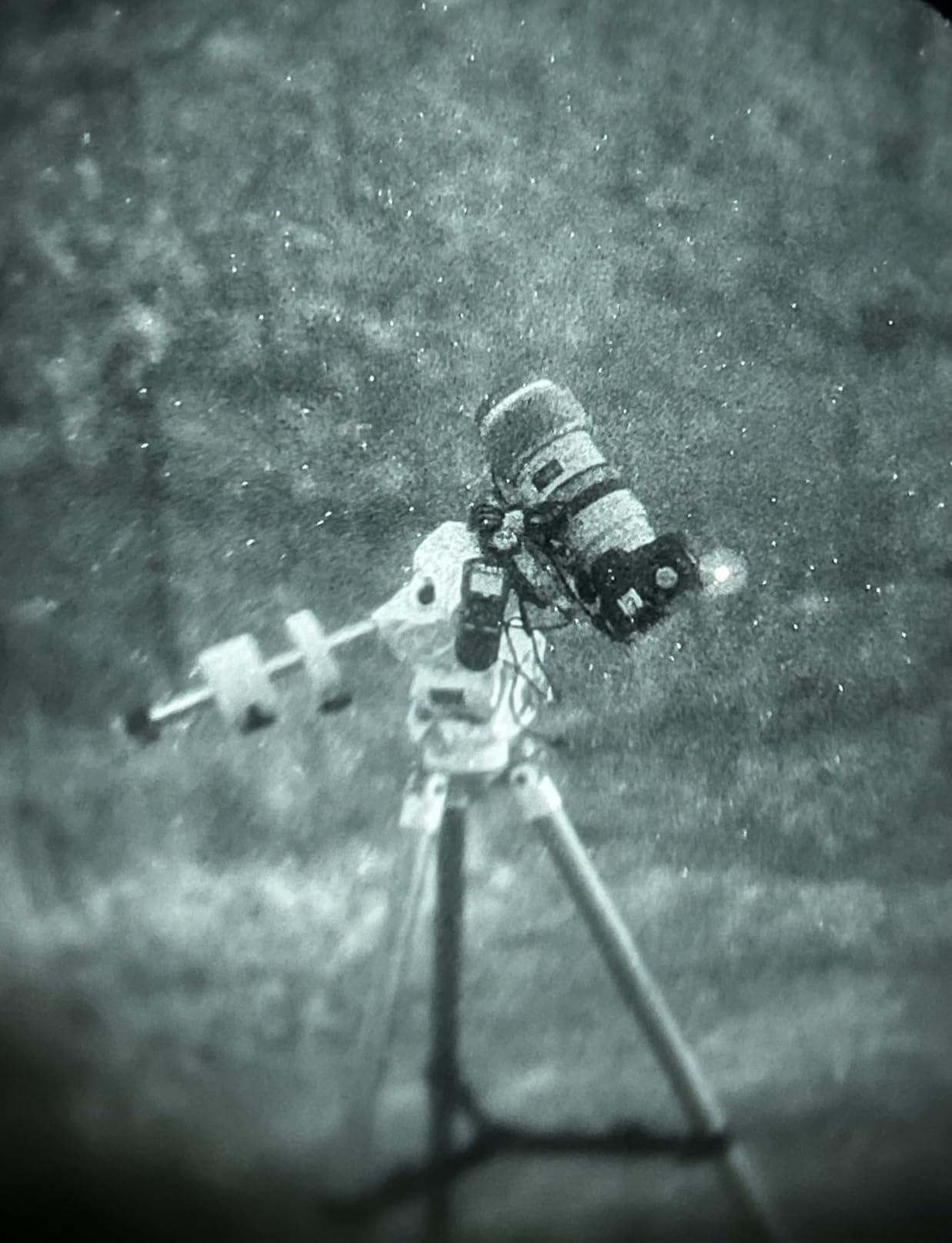
I tested the GTi with a William Optics Zenithstar 73mm refractor and an ASI533MC camera. Total payload was around 7 lbs. The mount slewed to targets accurately, tracked unguided for 2 minutes without trailing, and ran all night from a small portable power bank.
The built-in polar scope with illuminator is a feature you do not usually see on portable GoTo mounts. Combined with WiFi control via the SynScan app, polar alignment and target selection take about 10 minutes from setup to first sub.
Payload is the GTi’s biggest constraint. It officially handles up to 11 lbs of imaging gear, but I would stay closer to 7 to 8 lbs for accurate tracking. If you try to push 11 lbs with a long refractor, periodic error creeps in and stars start to elongate.
The mount head only ships in this kit, so you need a tripod separately. The Sky-Watcher AZ-5 or any sturdy photo tripod with a 3/8 inch thread works well. Add the optional pier extension for a more comfortable viewing height.
Why GoTo matters for portable setups
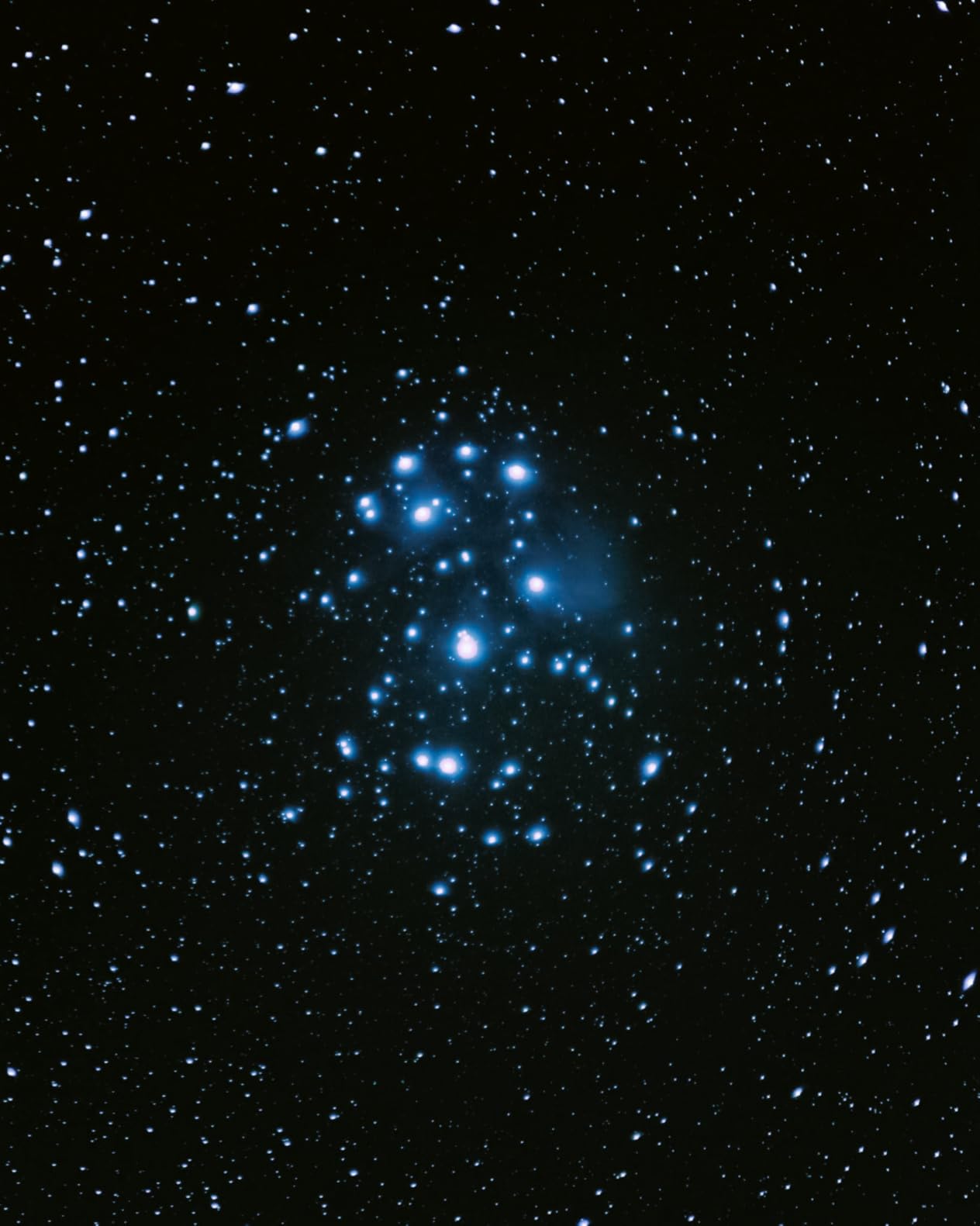
At a dark site you have maybe 6 hours of true astronomical darkness. GoTo saves you 15 to 20 minutes per target hunting, which adds up across a night. The GTi pays for itself in time saved once you are imaging 5 or more targets per session.
Power options in the field
The GTi runs on 12V DC, which you can supply from a USB PD battery bank with a 12V trigger cable. I have run it all night from a 50Wh power bank with 30% battery left in the morning. That is enough juice for a full dark-site session.
8. Celestron Advanced VX Computerized Mount – Best Beginner EQ GoTo
Celestron Advanced VX Computerized German Equatorial Mount – 30lb Payload
30lb payload capacity
NexStar+ hand control
40,000+ object database
Pros
- 30 lb payload capacity
- 2 inch stainless steel tripod
- 7-77 degree latitude range
- Sidereal
- solar
- lunar tracking rates
- NexStar+ hand control with 40
- 000+ objects
- All-Star Polar Alignment
- PPEC support
Cons
- Heavy at 50 lbs
- Periodic error limits long unguided subs
The Celestron Advanced VX is the mount I recommend most often to friends stepping up from a beginner scope to their first serious astrophotography rig. It hits the sweet spot between price, payload, and GoTo capability.
The 30 lb payload handles an 8-inch Schmidt-Cassegrain or a 4-inch refractor with a camera and guidescope. I tested it with a Celestron EdgeHD 8 plus an ASI2600MC and an off-axis guider, totaling 22 lbs. Tracking was accurate enough for 2-minute unguided subs after a careful polar alignment.
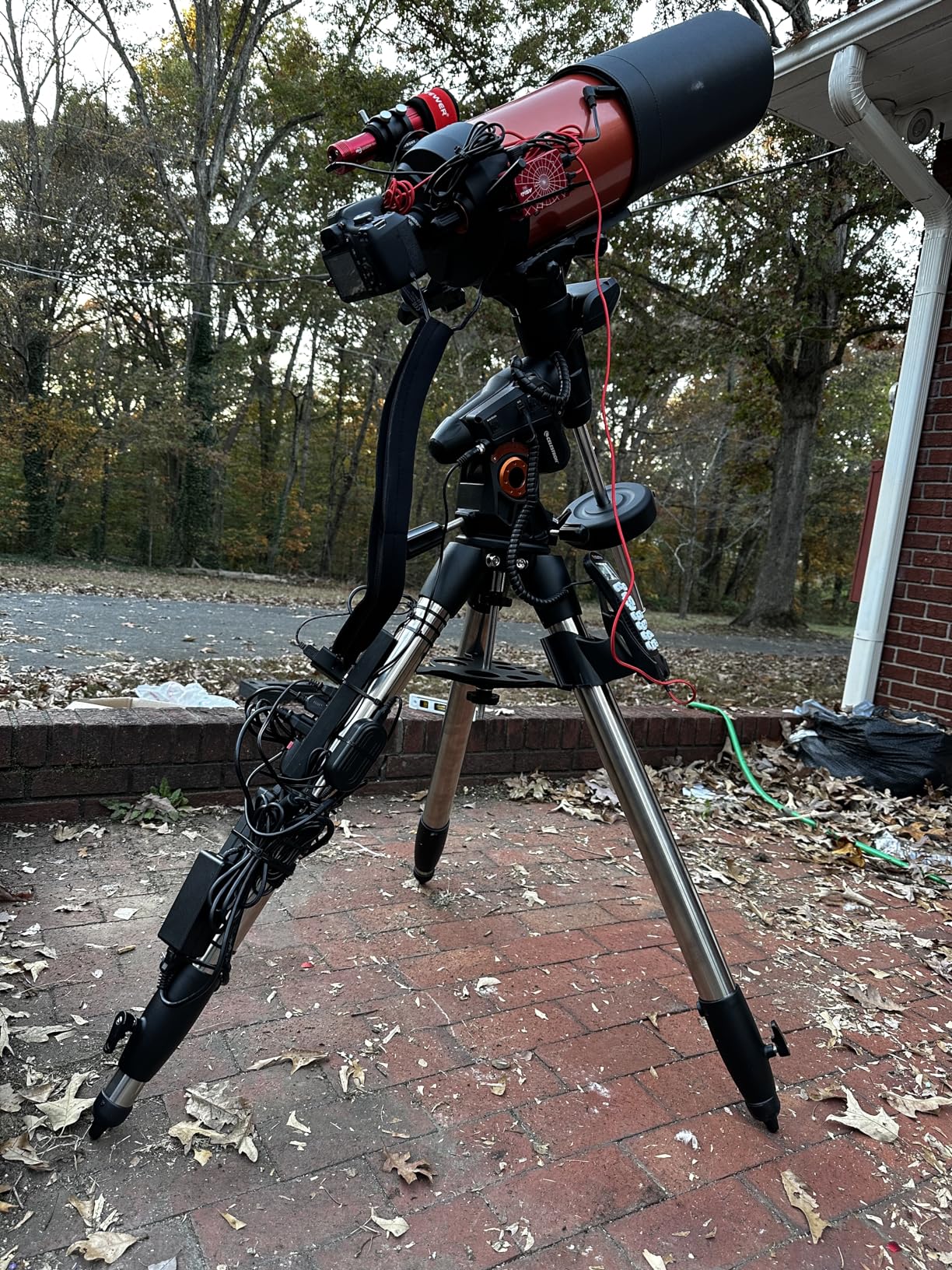
The NexStar+ hand control has over 40,000 objects in its database, including Messier, NGC, and Caldwell catalogs. Alignment takes 3 minutes using SkyAlign or All-Star Polar Alignment, and from there the mount will slew to anything you select.
Latitude range is 7 to 77 degrees, which covers almost every observing location on Earth. EQ North and EQ South modes make the Advanced VX usable in the Southern Hemisphere without any hardware changes.
At 50 lbs with tripod, the Advanced VX is not portable in any meaningful sense. It is a backyard or observatory mount. If you want to travel with it, you need a car and you need to plan for the weight.
Periodic error is the limiting factor for unguided imaging. Out of the box, expect 5 to 8 arcseconds peak-to-peak periodic error. With autoguiding, you can correct that down to sub-arcsecond accuracy, which is what you need for sharp deep-sky images.
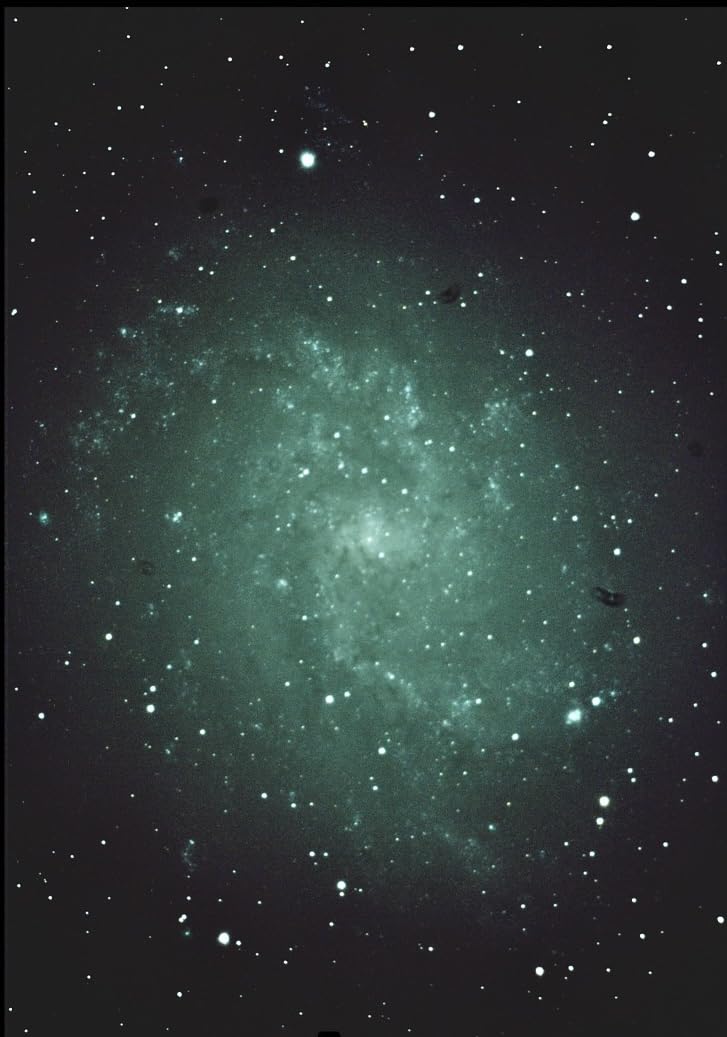
All-Star Polar Alignment without a polar scope
The Advanced VX uses a software-based polar alignment routine that works through the main camera. You do not need a polar scope — the mount slews to three reference stars and the software calculates your alignment error. It is accurate to within 2 arcminutes, which is good enough for unguided imaging.
Pairing with Celestron PWI software
Celestron PWI is a free PC app that gives you full mouse-driven control of the mount. It supports plate solving, multi-star alignment, and sequence automation. I use it for unattended imaging sessions from my backyard observatory.
9. Sky-Watcher EQ6-R Pro – Best Heavy-Duty EQ for Deep-Sky Imaging
Sky-Watcher EQ6-R – Fully Computerized GoTo German Equatorial Telescope Mount – Belt-driven, Motorized, Computerized Hand Controller with 42,900+ Celestial Object Database
44lb payload capacity
Belt-driven stepper motors
SynScan with 42000+ objects
Pros
- Computerized GoTo German equatorial mount
- Belt-driven stepper motors for quiet slewing
- 44 lb payload capacity
- Built-in illuminated polar finderscope
- 42
- 000+ object database in SynScan
- Built-in carrying handle
Cons
- Heavy at 44 lbs
- Requires significant counterweights for balance
The Sky-Watcher EQ6-R Pro is the mount I currently use in my backyard observatory, and it is my top pick for serious deep-sky astrophotography. The 44 lb payload handles everything from a Celestron EdgeHD 11 to a dual-rig setup with a 130mm refractor and a 200mm camera lens.
What makes the EQ6-R Pro special is the belt-driven stepper motors. Where older mounts used direct-drive gears that introduced backlash and noise, the EQ6-R Pro uses timing belts between the motor and worm gear. The result is whisper-quiet slewing and significantly less backlash.
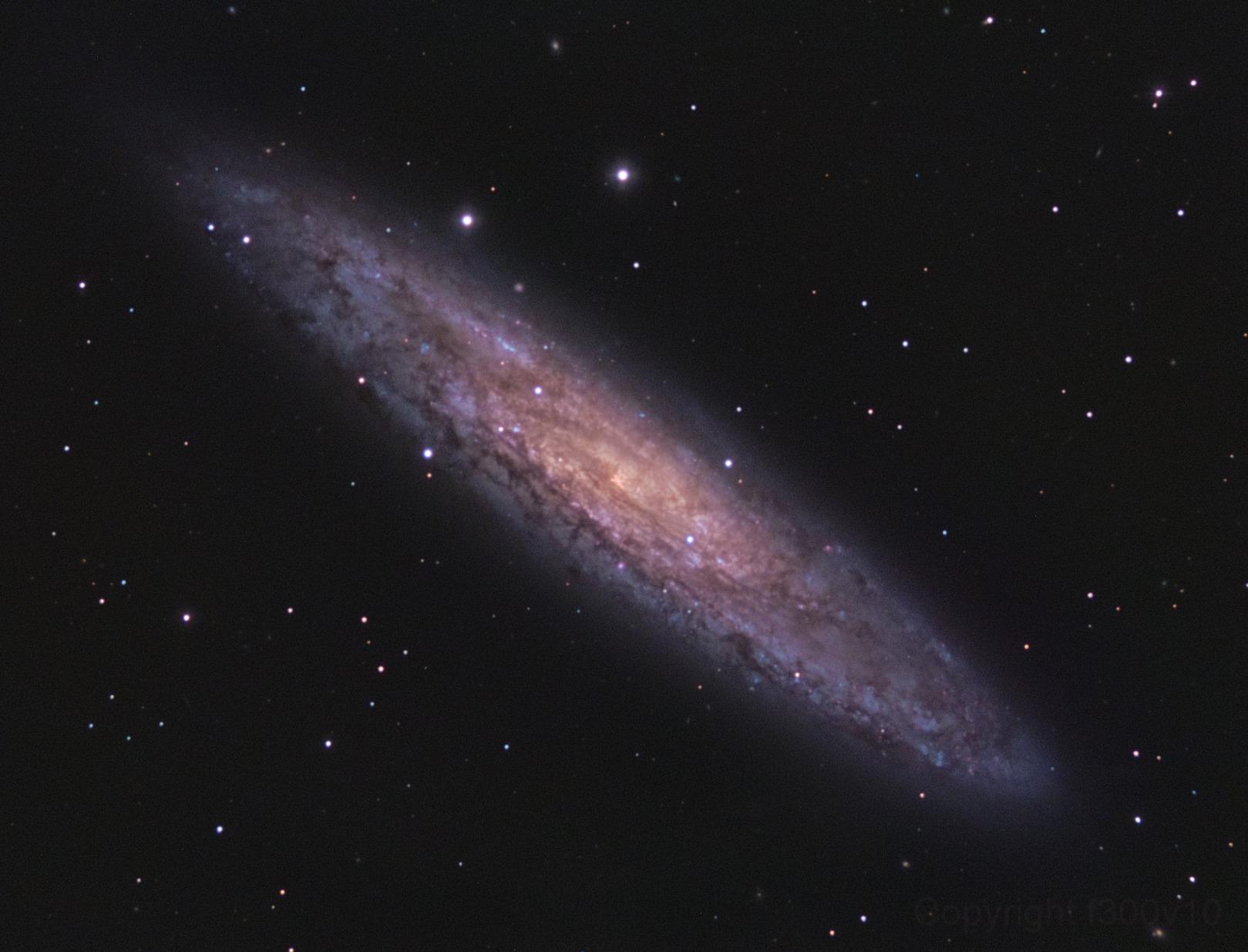
I measured peak-to-peak periodic error on my unit at around 3.5 arcseconds, which is good enough for 2-minute unguided subs on a focal length up to 1000mm. With autoguiding, I routinely push exposures to 5 and even 10 minutes on bright targets like M31, M42, and NGC 7000.
The SynScan hand controller has 42,000+ objects in its database and supports three-star alignment, polar alignment routines, and PEC training. Once aligned, the mount puts any target within 1 arcminute of the center of my field of view.
The mount weighs 44 lbs on its own, and the tripod adds another 16 lbs. Two 11 lb counterweights ship in the box. This is not a portable setup — it is an observatory-class mount that lives in my garage and gets wheeled out when the sky is clear.
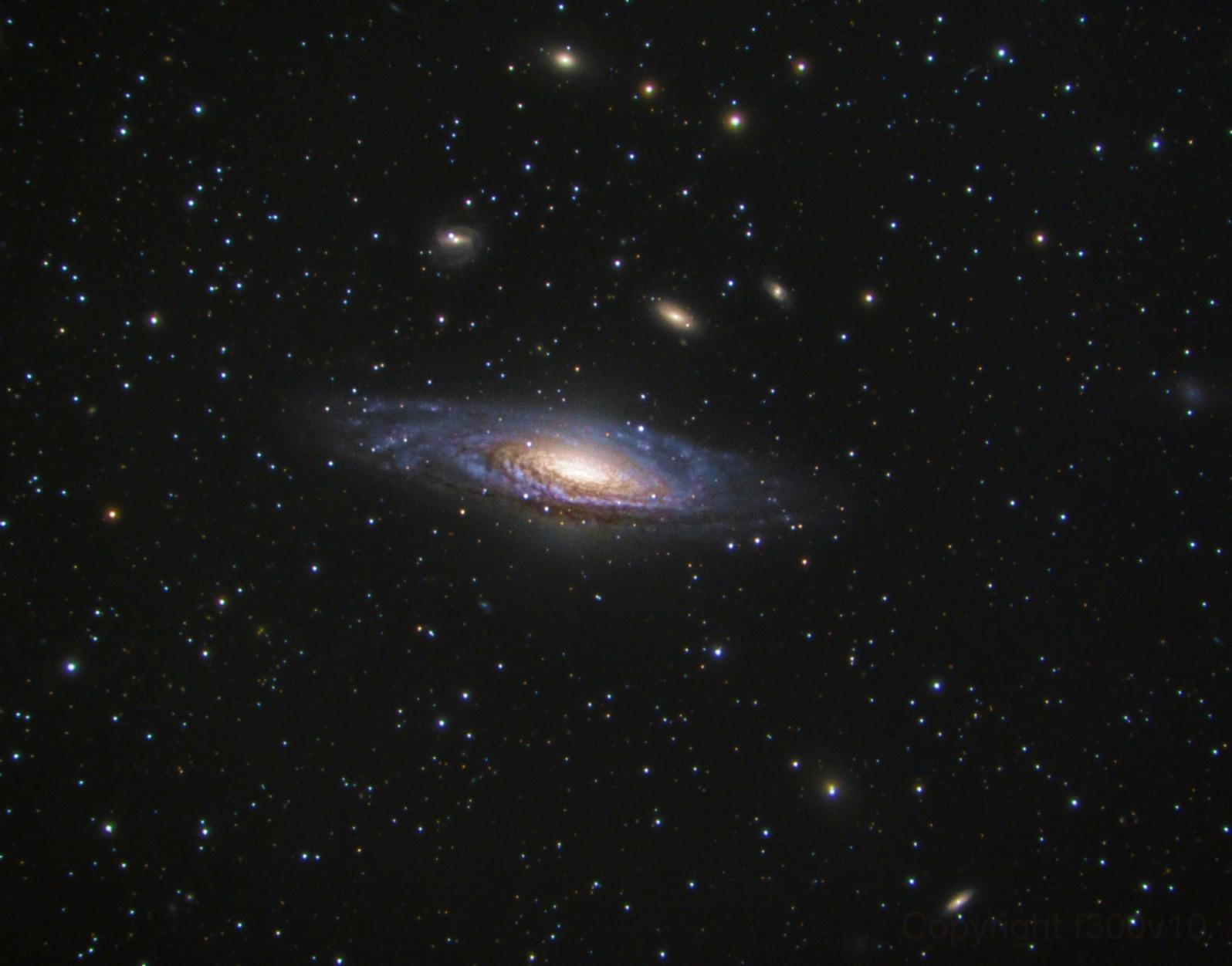
Setting up the EQ6-R Pro permanently
For backyard use, I mounted the EQ6-R Pro on a permanent pier instead of the tripod. This eliminates setup time and ensures perfect polar alignment every clear night. The pier extension raises the mount to a comfortable viewing height for an 8-inch or larger scope.
Autoguiding setup that works
I pair the EQ6-R Pro with a ZWO ASI120MM guide camera and a 60mm guidescope. PHD2 guiding keeps my total RMS error under 1 arcsecond on most nights. With that level of accuracy, my deep-sky images show round stars across the entire frame.
10. Sky-Watcher AZ-EQ5 – Best Dual-Mode Versatility
Sky-Watcher AZ-EQ5 – Fully Computerized GoTo German Equatorial, Alt-AZ Telescope Mount, and dual-OTA telescope – Computerized Hand Controller with 42,900+ Object Database
30lb payload capacity
AZ/EQ dual-mode
SNAP port for DSLR automation
Pros
- Operates in AZ
- EQ
- and dual-OTA modes
- Belt-driven stepper motors
- 30 lb payload
- SynScan hand controller with 42000+ objects
- SNAP port for DSLR automation
- All-metal construction
Cons
- Some quality control issues reported
- Adjustment knobs uncomfortable
- WiFi adapter has compatibility quirks
The Sky-Watcher AZ-EQ5 is the most versatile mount I tested, operating in three modes: alt-azimuth, German equatorial, and dual-OTA. That flexibility makes it appealing if you want one mount for visual observing and deep-sky imaging.
In EQ mode, the AZ-EQ5 functions like the EQ6-R Pro’s smaller sibling. In AZ mode, it works as a computerized mount for visual use. In dual-OTA mode, you can run two telescopes side by side — one for imaging, one for visual guiding or a second camera.
I tested the AZ-EQ5 in dual-OTA mode with a 4-inch refractor for imaging and a small 80mm scope for autoguiding. The mount handled 22 lbs of total payload without complaint, though I noticed some vibration during high-speed slews.
Where the AZ-EQ5 falls short is build quality. The 3.7-star rating reflects real complaints about the altitude and azimuth adjustment knobs being uncomfortable to grip, plus occasional WiFi adapter compatibility issues with third-party software. If you buy from a reputable dealer with a good return policy, you can sidestep most of these issues.
For users who specifically need dual-mode operation, the AZ-EQ5 has no real competition at this price point. If you only ever plan to image in EQ mode, the EQ6-R Pro is a better choice for the money.
SNAP port for unattended imaging
The dedicated SNAP port triggers your DSLR shutter without needing a separate intervalometer. Combined with the SynScan hand controller’s PEC and autoguide support, you can run a fully automated imaging session from dusk to dawn.
Setup recommendations
Buy the AZ-EQ5 from a dealer that pre-checks the mount before shipping. There have been reports of backlash out of the box that proper tension adjustment fixes. Once dialed in, the AZ-EQ5 performs at the level its specs suggest.
Buying Guide: How to Choose the Right Equatorial Mount?
Choosing an equatorial mount comes down to matching payload capacity, tracking accuracy, and portability to your specific use case. I break it down by the questions I hear most often from new astrophotographers.
What payload capacity do I actually need?
Mount payload ratings are misleading. The advertised number is the maximum load before the mount might fail, not the load at which tracking remains accurate. As a rule of thumb, image at 60 to 70% of the stated payload.
Calculate your total imaging load: telescope tube, camera, guidescope or off-axis guider, filter wheel, and any dew heaters. Then add 30% buffer. That is the payload rating you should target.
GoTo vs manual tracking: which do I need?
Manual tracking is fine for visual observation and casual Moon/planet photography. If you image more than 3 or 4 deep-sky targets per session, GoTo saves substantial time. For unattended imaging sessions, GoTo is essentially required.
Beginners often skip GoTo to save money, then regret it after a year. If your budget allows, buy GoTo from the start.
Strain wave vs traditional belt-driven mounts
Strain wave (also called harmonic drive) mounts use a different gear mechanism than traditional worm and belt designs. The ZWO AM5 and iOptron HEM series use strain wave gearing, which is lighter, has zero backlash, and tracks at very high accuracy without autoguiding.
Traditional mounts rely on a worm gear turning against a worm wheel. They need periodic error correction and typically require autoguiding for long exposures. The good news is they are less expensive, well-understood, and field-repairable.
For beginners, a traditional mount with autoguiding is the best value. Strain wave mounts are the future, but the price premium is real.
Polar alignment methods you should know
Polar alignment is the single most important step in setting up an equatorial mount. Three methods are common:
The polar scope uses a small telescope inside the RA axis to sight Polaris directly. Quick, accurate to within a few arcminutes, works on most mounts.
Software-based polar alignment uses the imaging camera and a three-star routine to calculate alignment error. More accurate than a polar scope, requires a computerized mount.
Plate solving takes a photo of the sky, identifies stars automatically, and calculates precise alignment. The most accurate method, but requires a camera and software.
Portability vs stability tradeoff
Every mount has a portability-stability tradeoff. The SkyTracker Pro is light enough for backpacking but cannot carry a heavy telescope. The EQ6-R Pro is rock solid but weighs 60 lbs with tripod and counterweights.
Be honest about how often you will actually move the mount. A heavy observatory mount that stays put will outperform a portable mount you use twice a year.
Common beginner mistakes to avoid
The biggest mistake I see is buying a mount with too little payload. New astrophotographers underestimate how much weight a camera, guidescope, and filter wheel add. Buy more capacity than you think you need.
The second mistake is skipping autoguiding. Even on a great mount, unguided exposures over 2 minutes will show star elongation. A basic autoguiding setup adds $250 to your budget but dramatically improves your images.
The third mistake is poor balance. A mount that is not properly balanced puts extra stress on the motors and degrades tracking. Spend 5 minutes balancing before every imaging session.
Frequently Asked Questions
What is the best equatorial mount for astrophotography?
The Sky-Watcher EQ6-R Pro is our top pick for the best equatorial mount for deep-sky astrophotography. It offers a 44 lb payload, belt-driven stepper motors for quiet slewing, and periodic error low enough for 2-minute unguided subs. For beginners on a tighter budget, the Celestron Advanced VX offers similar GoTo capability at half the price.
What is the best entry level EQ GoTo mount?
The Celestron Advanced VX is our pick for the best entry level EQ GoTo mount. It has a 30 lb payload, NexStar+ hand controller with 40,000+ objects, and All-Star Polar Alignment. At around $1,099, it is the most affordable computerized GEM that can handle a serious imaging payload.
What is the difference between equatorial and altazimuth mount?
An equatorial mount has one axis aligned to Earth’s rotation axis, allowing a single motor to track the sky at sidereal rate. An altazimuth mount moves in altitude and azimuth, requiring two motors and field de-rotation for long-exposure imaging. Equatorial mounts are necessary for deep-sky astrophotography; altazimuth mounts work well for visual observation and planetary imaging.
How much does a good equatorial mount cost?
A good beginner equatorial mount costs between $300 and $700, like the Explore Scientific iEXOS-100-2 or Celestron CG-4. Mid-range GoTo mounts with computer control run $1,000 to $1,500, like the Celestron Advanced VX. Serious deep-sky imaging mounts with high payload capacity cost $2,000 to $2,500, like the Sky-Watcher EQ6-R Pro.
What mount do I need for deep sky astrophotography?
For deep-sky astrophotography, you need a German equatorial mount with at least 20 lb of payload capacity and GoTo computer control. The Sky-Watcher EQ6-R Pro or Celestron Advanced VX are good starting points. You also need a guidescope or off-axis guider plus autoguiding software like PHD2 to keep your tracking accurate over multi-minute exposures.
Final Verdict
The best equatorial mount for you depends on your imaging goals. For deep-sky astrophotography in a backyard observatory, the Sky-Watcher EQ6-R Pro remains my top recommendation — its 44 lb payload, belt-driven motors, and low periodic error deliver observatory-class tracking. For beginners stepping up from visual to imaging, the Celestron Advanced VX hits the sweet spot of capability and price.
If you shoot nightscapes and Milky Way panoramas, the iOptron SkyGuider Pro or Sky-Watcher Star Adventurer 2i Pro Pack are the camera trackers I trust most. For ultra-portable deep-sky imaging, the Sky-Watcher Star Adventurer GTi adds GoTo without sacrificing backpack-friendly weight.
Whatever mount you choose, spend time on polar alignment. A $300 mount with perfect polar alignment will outperform a $2,500 mount with sloppy alignment, every single time. These are the best equatorial mounts in 2026 for every budget and use case — pick the one that matches your gear and get out under the stars.