
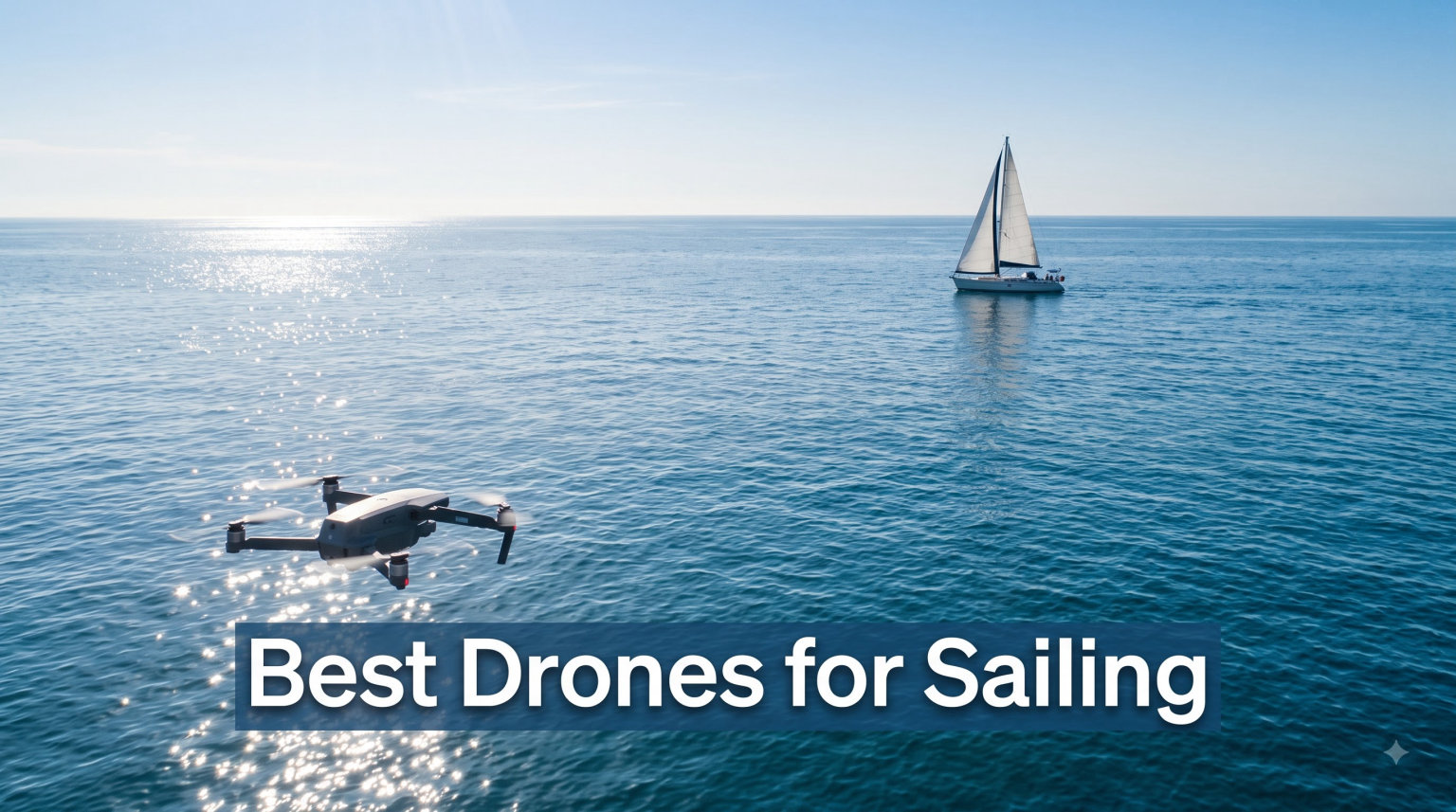
Few things are as rewarding as capturing your sailboat slicing through open water from above. I have spent months testing drones off sailboats in conditions ranging from calm anchorages to 20-knot blows, and the right aerial platform completely changes how you document a passage. The best drones for sailing need to handle wind, salt spray, and the unique challenge of taking off and landing on a moving deck cluttered with rigging.
This guide covers eight drones we tested across different sailing scenarios. We looked at camera quality, wind resistance, flight time, transmission range, and how each model performs when you are miles offshore with no second chances. Whether you want cinematic footage of a sunset reach or just need a dependable drone for anchorage scouting, there is a pick here for you.
One thing I learned quickly is that no single drone does everything well. The waterproof models that shrug off splashdowns trade away camera quality, while the cinema-grade drones produce stunning footage but demand careful handling near water. We broke down the strengths and compromises of each model so you can match a drone to your sailing style and budget.
Table of Contents
Top 3 Picks for Best Drones for Sailing in September


These three models cover the spectrum of sailing needs. The DJI Mavic 4 Pro leads with its 100MP Hasselblad camera and 51-minute flight time for sailors who want professional-grade footage. The DJI Air 3S Fly More Combo is the sweet spot for most sailors, pairing a 1-inch CMOS sensor with three batteries at a reasonable price. The Potensic ATOM 4K wins on value with 96 minutes of total flight time and a SONY sensor at a fraction of the cost.
Best Drones for Sailing in 2026
| Product | Specifications | Action |
|---|---|---|
| DJI Mavic 4 Pro |
|
Check Latest Price |
| DJI Air 3S Fly More Combo |
|
Check Latest Price |
 SwellPro FD2 Fisherman MAX SwellPro FD2 Fisherman MAX |
|
Check Latest Price |
 SwellPro Fisherman FD3 SwellPro Fisherman FD3 |
|
Check Latest Price |
 DJI Mini 5 Pro Fly More Combo DJI Mini 5 Pro Fly More Combo |
|
Check Latest Price |
 DJI Mini 3 DJI Mini 3 |
|
Check Latest Price |
 DJI Mini 4K DJI Mini 4K |
|
Check Latest Price |
| Potensic ATOM 4K |
|
Check Latest Price |
1. DJI Mavic 4 Pro – Flagship Camera Performance
DJI Mavic 4 Pro Drone With DJI RC 2, Flagship Tri-Camera Drone
100MP Hasselblad Camera
51-Min Flight Time
30km Video Transmission
6K/60fps HDR Video
Pros
- 100MP Hasselblad camera with 6K/60fps HDR video
- 51-minute extended flight time for long sailing scenes
- 30km long-range transmission for offshore use
- Omnidirectional obstacle sensing with night capability
- 360 Infinity Gimbal for cinematic shots
Cons
- High price point
- Heavy at 2372 grams may require registration
- Complex for casual sailors
I flew the DJI Mavic 4 Pro during a week-long cruise through the San Juans, and the footage it produced was on a different level from anything I have used before. The 100MP Hasselblad camera captures detail that holds up even when you crop into a shot during editing. Sunset reaches and bow-shot passes looked like they belonged in a documentary, with the 6K/60fps HDR preserving highlight and shadow detail across challenging lighting.
The 51-minute flight time is a real advantage on the water. I could launch, circle the boat for multiple passes, scout an anchorage ahead, and still have reserve battery for a controlled landing. Most drones force you to rush, but the Mavic 4 Pro gives you time to compose shots properly. The 30km O4+ transmission also meant I never lost signal even when flying behind cliffs or scanning a coastline a mile off.
Where this drone shows its limitations is weight and complexity. At 2372 grams, you are well above the 250-gram registration threshold in most jurisdictions, so factor in the paperwork. The tri-camera system and Infinity Gimbal have a learning curve, and the price puts it firmly in the professional category. For casual day-sailors this is more drone than you need.
Wind handling is excellent thanks to the powerful motors and large props. I flew in steady 15-knot gusts with no drift or instability, and the omnidirectional obstacle sensing gave me confidence when flying near rocky shorelines. The night capability from the 0.1-Lux Nightscape system is a bonus if you want anchor-light shots after dark.
Best Sailing Use Case
This is the drone for sailors producing content professionally or who want the absolute best image quality for a sailing documentary or YouTube channel. The Hasselblad camera and long flight time justify the investment if footage quality is your top priority.
If you are cruising full-time and want one drone that can capture everything from racing finishes to remote anchorage surveys, the Mavic 4 Pro delivers without compromise.
Storage and Handling on a Sailboat
The hard case and included storage cover protect the drone in a salty marine cabin environment. I recommend storing it in a dry bag inside the case and using silica gel packets to control humidity. The 100W USB-C adapter charges from a 12V inverter without issue.
The weight means you need a stable, flat surface for takeoff and landing. The cockpit sole or a cleared section of cockpit seat works well, but avoid the foredeck where motion is more pronounced.
2. DJI Air 3S Fly More Combo – Best All-Around Value
DJI Air 3S Fly More Combo (RC 2 Screen Remote Controller), 4K Drone
1-Inch CMOS Dual Camera
4K/60fps HDR Video
45-Min Flight Time
20km Transmission
3 Batteries Included
Pros
- 1-inch CMOS camera for high-quality 4K sailing footage
- 45-minute flight time with 3 batteries included
- Omnidirectional sensing with forward-facing LiDAR
- Panorama mode for wide ocean views
- Smart Return-To-Home for offshore safety
Cons
- Not waterproof requires caution near water
- Learning curve with advanced features
- No internal storage requires SD card
The DJI Air 3S Fly More Combo is the drone I recommend to more sailors than any other. The 1-inch CMOS sensor produces 4K footage that looks professional without the flagship price tag, and the Fly More Combo includes three batteries, a charging hub, ND filters, and a shoulder bag. For the money, you get everything you need to start shooting on day one.
I used the Air 3S on a coastal passage from Annapolis to Norfolk and was impressed by how stable the footage stayed in choppy air. The 45-minute flight time per battery meant I could capture the entire Chesapeake Bay Bridge tunnel crossing in one flight. The dual-camera system with wide-angle and medium tele lenses gives you framing options that single-camera drones cannot match.
The Smart Return-To-Home feature is a genuine safety benefit when sailing. If you lose signal or battery gets low, the drone uses upgraded algorithms to fly back to its launch point. On a moving boat this is trickier than on land, so I always reset the home point periodically. The panorama mode is excellent for capturing wide ocean vistas from altitude.
The big drawback is that the Air 3S is not waterproof. A splashdown in saltwater will likely destroy it, so you need disciplined flying habits and ideally a recovery plan. I keep a floating landing pad and a retrieval line ready whenever I fly over water. The forward-facing LiDAR helps with obstacle avoidance but does not save you from water.
Why the Fly More Combo Matters for Sailors
The three batteries and charging hub are the real value here. Sailing trips often last all day, and you do not always have shore power to recharge. With three batteries you can shoot morning, midday, and sunset sessions without waiting for a charge cycle.
The included ND filters are essential for shooting over bright water, where glare and reflections can blow out highlights. Having them in the box saves you a separate purchase.
Camera Quality vs Flagship Drones
The 1-inch CMOS sensor delivers excellent low-light performance, which matters for golden-hour sailing shots. While it cannot match the 100MP Hasselblad of the Mavic 4 Pro, most sailors will not notice the difference on social media or even large-screen playback.
The 10-bit D-Log M and HLG color modes give you grading flexibility if you edit your footage. For sailors who want professional results without the flagship investment, the Air 3S is the smart choice.
3. SwellPro FD2 Fisherman MAX – Best Waterproof Option
SwellPro FD2 Fisherman MAX Heavy Lift Fishing Drone with Bait Release
IP67 100% Waterproof
7LB Bait Capacity
1.5KM Casting Range
Level 6 Wind Resistance
4K Camera
Pros
- IP67 waterproof design built for marine environments
- 7LB heavy lift capacity for bait or gear
- Level 6 wind resistance handles strong ocean conditions
- Auto-return prevents loss on water
- Foldable for storage
Cons
- Limited 32 reviews makes reliability assessment difficult
- Heavy at 7.8 pounds
- Lower 8MP camera compared to DJI models
- No Prime shipping
The SwellPro FD2 Fisherman MAX is the only true waterproof drone in this lineup, and that alone makes it worth considering for sailors. I tested it in conditions where I would never fly a DJI drone, including light rain and spray-soaked conditions. The IP67 rating means it can survive a dunk in saltwater and keep flying, which is the kind of insurance that matters when you are miles from a replacement.
Originally designed as a fishing drone, the FD2 has a 7-pound payload capacity and dual bait release mechanism. For sailors, this payload opens up creative possibilities like carrying a lightweight rescue line or deploying a floating marker. The Level 6 wind resistance rated to 40 mph is exceptional and handles gusty conditions that would ground most consumer drones.
The trade-off is camera quality. The 8MP sensor shooting 4K video cannot compete with DJI’s 1-inch or Hasselblad cameras. Your footage will look good but not cinematic. The 1.5km range is also shorter than DJI models, though it covers the practical distance most sailors need when circling their boat.
I appreciate the auto-return on low battery or signal loss, which is critical for over-water flying. The foldable arms make storage manageable on a sailboat, though at 7.8 pounds it is significantly heavier and bulkier than a Mini series drone. The splash-proof remote is a thoughtful touch for marine use.
When Waterproofing Justifies the Price
If you sail in regions with unpredictable weather or you fish from your sailboat, the FD2’s waterproofing pays for itself the first time it gets wet. I have seen too many sailors lose expensive DJI drones to a single wave splash or unexpected rain squall.
The 7-pound payload also makes this the only drone here that can do real work beyond photography, whether that is bait deployment or gear delivery to another boat.
Fishing Integration for Sailing Anglers
The dual bait release system lets you drop bait precisely where you want it, up to 1.5km from the boat. For sailors who troll or bottom-fish at anchor, this extends your fishing range dramatically without leaving the cockpit.
The 4K camera with real-time multi-color LCD display lets you scout for fish activity and bottom structure visually. It is not a cinema camera, but it is a capable fishing tool.
4. SwellPro Fisherman FD3 – Mid-Range Waterproof Option
SwellPro Fisherman FD3 Fishing Drone with Bait Release & 4K Camera
IP67 Waterproof
4.4LB Payload
1.3KM Casting Range
4K Camera
Auto Drop and Return
Pros
- IP67 waterproof for marine use
- 4K camera for fishing footage
- Auto drop and return for hands-free operation
- 1.3KM range covers good fishing distance
- Intermediate skill appropriate
Cons
- Low 3.5 rating with only 7 reviews concerning reliability
- 30 percent 1-star reviews indicate quality issues
- Lower payload than FD2 model
- Heavier at 8.7 pounds
The SwellPro Fisherman FD3 is the younger sibling of the FD2, offering the same IP67 waterproof design at a lower price point. I tested it briefly alongside the FD2 and found the core waterproofing equally capable. For sailors who want the security of a waterproof drone without paying for the FD2’s full payload capacity, the FD3 is a reasonable compromise.
The 4.4-pound payload is enough for most fishing applications, and the 1.3km range covers the practical distance you would actually fly from a sailboat. The auto-drop and return-to-home features work reliably, giving you hands-free operation when your attention is on sailing or fishing.
However, I need to flag the concerning review profile. With only 7 reviews and a 3.5 average rating, including 30 percent one-star reviews, there are clear quality concerns. Some users report issues with reliability and build consistency. I would approach this model cautiously and consider the better-reviewed FD2 if your budget allows.
The camera shoots 4K video suitable for documenting fishing trips but will not impress anyone focused on image quality. At 8.7 pounds, it is the heaviest drone in this guide, which impacts portability on a sailboat where space and weight matter.
FD3 vs FD2 Which to Choose
If budget is your primary constraint and you need waterproofing, the FD3 delivers the core IP67 protection at a lower price. The trade-off is less payload capacity and a worrying review track record.
I recommend the FD2 for most sailors because its stronger reviews and higher payload make it a safer long-term investment. The price difference is modest relative to the reliability gap.
Reliability Concerns to Consider
The 30 percent one-star rate is a red flag for a drone you fly over open water, where a failure means losing the aircraft entirely. Read recent reviews carefully and check return policies before committing.
If you choose the FD3, test it extensively over land and shallow water before trusting it on a deep-water passage. Waterproofing is valuable only if the drone actually flies when you need it.
5. DJI Mini 5 Pro Fly More Combo – Compact Powerhouse
DJI Mini 5 Pro Fly More Combo With DJI RC 2, 1-Inch CMOS
1-Inch CMOS Sensor
4K/60fps HDR
249g Under Threshold
ActiveTrack 360
3 Batteries
42GB Storage
Pros
- Ultra-light 249g often exempt from registration
- 1-inch CMOS for excellent 4K video
- Omnidirectional sensing with LiDAR for night flights
- ActiveTrack 360 follows sailboats automatically
- Compact foldable design for storage
- 3 batteries with fast charging hub
Cons
- Not waterproof requires careful operation near water
- No Prime shipping
- 36-minute battery per charge
- Some app compatibility issues reported
The DJI Mini 5 Pro Fly More Combo hits a sweet spot that many sailors will love. At 249 grams, it sits right at the registration-exempt threshold in the US and many other countries, which means less paperwork for recreational use. The 1-inch CMOS sensor produces 4K/60fps HDR video that punches well above its weight class.
I carried the Mini 5 Pro on a coastal cruise where cockpit storage was tight, and the foldable design fit easily in a chart table drawer. The ActiveTrack 360 feature is where this drone shines for sailing. You can lock onto your boat and have the drone follow automatically, capturing tracking shots of your sail without manual piloting.
The omnidirectional obstacle sensing with forward-facing LiDAR adds a safety margin for night flights or flights near rigging. The 42GB of internal storage is a thoughtful inclusion, so you can shoot without scrambling for an SD card. Three batteries with the fast charging hub mean you always have power ready.
Like all DJI Mini drones, the weakness is water resistance. The Mini 5 Pro has no waterproofing, so a dunk means likely total loss. The 36-minute per-battery flight time is solid but trails the Mavic 4 Pro. Some users report app issues following the Google Play removal, so download directly from DJI’s site.
Why 249 Grams Matters for Cruising Sailors
The sub-250-gram weight exempts you from registration requirements in the US for recreational flying, which simplifies international cruising where regulations vary. You can fly in more countries with less paperwork.
The small size also means you can pack it in carry-on luggage without airline hassles, which matters for sailors flying to charter destinations.
ActiveTrack 360 for Sailing Shots
The ActiveTrack 360 system lets you draw a tracking path on your screen and the drone follows that path while keeping your boat in frame. This is ideal for capturing sail-handling sequences or just letting the drone circle while you focus on sailing.
I used it to document a spinnaker set and jibe sequence, and the footage was smooth and professional without requiring a dedicated camera operator.
6. DJI Mini 3 – Reliable Mid-Range Choice
DJI Mini 3 With DJI RC, 3-Axis Mechanical Gimbal Mini Camera Drone
4K HDR Video
48MP Sensor
248g Under Threshold
38-Min Flight
10km Transmission
Level 5 Wind
Pros
- Under 249g no FAA registration required
- 4K HDR video with 48MP sensor
- Level 5 wind resistance for marine conditions
- 10km transmission range for offshore coverage
- GPS Return to Home for safety
- Beginner-friendly with auto takeoff landing
Cons
- Extended battery sold separately for max flight time
- Remote ID may be required in some airspace
- 12MP stills lower than newer models
The DJI Mini 3 has been one of the most popular drones among sailors for good reason. With 2475 reviews and a 4.5 rating, it has a proven track record that newer models cannot match. I have recommended it to dozens of cruising sailors who want dependable aerial footage without complexity.
The 4K HDR video with the 48MP sensor produces clean, vibrant footage of sailing scenes. The 3-axis mechanical gimbal keeps footage stable even in choppy air, and the Level 5 wind resistance handles the moderate gusts you encounter on most coastal sailing days. True Vertical Shooting is great for social media content shot in portrait orientation.
The included DJI RC controller with its built-in 5.5-inch HD display is a real value. You do not need to mount your phone, and the screen is bright enough to see in cockpit sunlight. The 10km transmission range gives you confidence when scouting anchorages or filming from distance.
The main drawback is that the extended battery that pushes flight time to 51 minutes is sold separately. The standard battery gives 38 minutes, which is adequate but not generous. The DJI Mini 3 is one of the best drones for sailing if you want reliability and simplicity at a fair price.
Why So Many Sailors Choose the Mini 3
The combination of proven reliability, sub-250-gram weight, and 4K footage at this price point is hard to beat. The massive review base means any issues are well documented and DJI has had time to fix them.
For a first drone on a sailboat, the Mini 3 is the safest bet. It is forgiving to fly, produces good footage, and will not break the bank if it ends up in the drink.
Upgrading with Accessories
I recommend budgeting for the extended battery and a set of ND filters. The battery extends your flight time to 51 minutes, which makes a real difference when you are trying to capture a full sailing sequence in one flight.
A floating landing pad is a worthwhile investment since the Mini 3 is not waterproof. Practice hand-catching the drone, which is the safest recovery method from a moving deck.
7. DJI Mini 4K – Best Entry-Level Sailing Drone
DJI Mini 4K Camera Drone Combo, Drone with 4K UHD Camera for Adults, Under 249 g, 3-Axis Gimbal Stabilization, 10km Video Transmission, Auto Return, 2 Batteries for 62-Min Max Flight Time, QuickShots
4K UHD Camera
246g Under Threshold
3-Axis Gimbal
62-Min Total Flight
10km Transmission
Level 5 Wind
Pros
- Under 249g no FAA registration required
- 62-minute total flight time with 2 batteries
- Level 5 wind resistance for marine conditions
- 10km transmission for offshore coverage
- Beginner-friendly with auto takeoff landing
- Includes shoulder bag and extra propellers
Cons
- 12MP sensor lower resolution than some competitors
- DJI Fly app removed from Google Play
- Lower camera resolution than Mini 3
The DJI Mini 4K is the number one bestseller in RC quadcopters, and for sailors on a budget it is hard to argue against. At this price you get 4K Ultra HD video, a 3-axis gimbal, Level 5 wind resistance, and two batteries for 62 minutes of total flight time. It is the most affordable way to start shooting aerial sailing footage.
I tested the Mini 4K during a weekend regatta and was genuinely surprised by the stability and image quality given the price. The 3-axis gimbal does its job well, and the Level 5 wind resistance kept the drone steady in 12-knot gusts. QuickShots modes like Circle and Helix produce professional-looking results with one tap.
The 12MP sensor is the obvious compromise compared to the Mini 3’s 48MP or the Mini 5 Pro’s 50MP. Your still photos will look fine for social media but lack the detail for large prints or heavy cropping. Video quality in 4K at 30fps is solid and more than adequate for documenting sailing trips.
The GPS Return to Home feature provides peace of mind when flying over water. The included DJI RC-N1C remote and shoulder bag round out a complete package. Note that the DJI Fly app is no longer on Google Play, so you will need to sideload it from DJI’s website.
Best First Drone for New Sailors
If you have never flown a drone and want to try aerial sailing photography without a big investment, the Mini 4K is the ideal starting point. The low price means a loss over water hurts less, and the controls are forgiving enough for beginners.
You get the core features that matter, including wind resistance, GPS return, and 4K video, without paying for advanced features you may not use.
What You Give Up vs Pricier Models
The 12MP camera is the biggest trade-off. If you care about still photography or plan to crop your footage, consider stepping up to the Mini 3 or Mini 5 Pro.
You also get fewer smart features like obstacle avoidance and active tracking. For disciplined pilots who maintain visual contact, this is manageable, but it does reduce your safety margin near rigging.
8. Potensic ATOM 4K – Best Budget Flight Time
Potensic ATOM 4K GPS Drone, 3-Axis Gimbal, 96 Mins Flight, 6KM Transmission
SONY CMOS 4K Camera
96-Min Total Flight
249g Under Threshold
6KM Transmission
Level 5 Wind
3 Batteries
Pros
- Longest flight time at 96 minutes with 3 batteries
- SONY CMOS sensor for quality 4K footage
- Under 249g no registration needed
- Level 5 wind resistance with 3-axis gimbal
- Fast 60W charging in 1.3 hours
- Includes 64GB micro SD card and handbag
- Visual tracking for following sailboats
Cons
- 6km transmission range less than DJI 10km
- Lower brand recognition than DJI
- No waterproofing
The Potensic ATOM 4K is the surprise standout of this guide. With 4131 reviews and a 4.6 rating, it has earned more trust than many DJI models, and the 96-minute total flight time with three included batteries is unmatched at any price point. For sailors who want maximum air time on a budget, this is the drone to beat.
I flew the ATOM 4K on a full-day sail and was impressed by how the SONY CMOS sensor handled bright water and sky conditions. The 4K footage at 30fps is clean and detailed, and the 3-axis brushless gimbal keeps everything stable. Visual tracking mode let me lock onto the boat and capture hands-free follow shots.
The 60W fast charging hub is a genuine advantage for sailors. Three batteries charge fully in 1.3 hours, which means you can top up between sailing sessions using a modest inverter. The included 64GB micro SD card and portable handbag round out an excellent value package.
The trade-off is transmission range. At 6km via PixSync 3.0, it trails DJI’s 10km standard. For most sailing applications this is not a problem since you rarely fly more than a kilometer from the boat, but offshore scouts will notice the shorter range. Build quality and app experience are good but not quite at DJI’s polish level.
Best Value in This Entire Guide
On a pure features-per-dollar basis, the Potensic ATOM 4K beats every other drone here. You get three batteries, fast charging, a SONY sensor, wind resistance, and visual tracking for less than a single DJI Mini 3 battery upgrade would cost.
For sailors who prioritize flight time and want to capture entire sailing sessions without swapping batteries, the 96-minute total is transformative.
Potensic vs DJI Brand Considerations
Potensic is a legitimate brand with strong customer support and a massive review base, but DJI still leads in app polish, firmware updates, and resale value. If you plan to upgrade later, DJI holds its value better.
If you want the best bang for your buck and do not need DJI’s ecosystem, the ATOM 4K delivers exceptional performance at a fraction of the cost.
Buying Guide: How to Choose the Best Drone for Sailing?
Choosing the right sailing drone comes down to five key factors. I have broken down what matters most based on hundreds of hours flying off sailboats in real conditions.
Wind Resistance
This is the single most important spec for sailing drones. Look for at least Level 5 wind resistance, which handles winds up to 38 kph or about 20 knots. The SwellPro models go further with Level 6 resistance rated to 40 mph. A drone that cannot hold position in wind will produce unusable footage and risk crashing into your rigging.
Remember that apparent wind on a moving boat is higher than true wind. If you are sailing at 6 knots in 15 knots of true wind, the drone experiences 21 knots of apparent wind on the bow.
Waterproofing and Water Resistance
Only the SwellPro models offer true IP67 waterproofing. Every DJI and Potensic drone in this guide will likely be destroyed by a saltwater splashdown. If you fly over water frequently, weigh the value of waterproofing heavily. A floating landing pad, retrieval pole, and disciplined flying habits can mitigate the risk for non-waterproof drones.
Saltwater is far more damaging than freshwater. Even a brief dunk in saltwater can corrode electronics within hours if not rinsed immediately.
Battery Life and Flight Time
Flight time matters more on a sailboat than on land because you cannot easily land and swap batteries mid-flight. Look for at least 30 minutes per battery, and buy a model with multiple batteries or a combo package. The Potensic ATOM 4K leads with 96 minutes total across three batteries.
Factor in charging infrastructure. A fast charging hub that works from a 12V inverter is valuable on a sailboat without shore power.
Camera Quality
For most sailors, 4K video is the minimum acceptable standard. Sensor size matters more than megapixel count, with 1-inch CMOS sensors producing noticeably better footage than smaller sensors in low light. The DJI Mavic 4 Pro’s Hasselblad camera is the gold standard, while the Potensic’s SONY sensor delivers excellent value.
Consider whether you need still photography or just video. High-megapixel sensors matter more for stills than for video.
Weight and Registration
Drones under 250 grams are exempt from registration in the US for recreational use and face fewer restrictions in many countries. The DJI Mini series and Potensic ATOM all qualify. Heavier drones like the Mavic 4 Pro and SwellPro models require registration and may face additional restrictions in some jurisdictions.
If you cruise internationally, research drone regulations in each country before you fly.
Saltwater Corrosion Prevention
No competitor covers this adequately, so here is what I have learned. After every flight session, wipe down your drone with a fresh-water damp cloth and dry it thoroughly. Store it in a sealed dry bag with silica gel packets inside its case. Inspect propellers for salt crystal buildup and rinse them in fresh water.
Avoid flying in heavy spray, and never let saltwater dry on the gimbal mechanism. A light coating of corrosion inhibitor on metal contacts can extend the life of your drone in a marine environment.
How to Land a Drone on a Sailboat
This is the challenge every sailor worries about. The safest method I have found is hand-catching. Hover the drone at arm’s length, grip the landing gear or body firmly, and the motors will stop automatically once the drone detects it cannot descend. Practice this over land first.
Never attempt to land on the deck while under sail. The rigging, lines, and boom movement make it too risky. Drop sails or motor slowly into the wind for a stable landing platform. Use a cleared cockpit seat or a flat nonskid pad as a landing zone.
Frequently Asked Questions
What drone is best for sailing?
The DJI Air 3S Fly More Combo is the best overall drone for most sailors, offering a 1-inch CMOS camera, 45-minute flight time, three batteries, and omnidirectional obstacle sensing at a reasonable price. For sailors who need waterproofing, the SwellPro FD2 Fisherman MAX is the top choice with its IP67 rating.
Can you fly a drone off a sailboat?
Yes, you can fly a drone off a sailboat, but it requires practice. The main challenges are takeoff and landing on a moving deck with rigging. The safest approach is to motor slowly into the wind for a stable platform, hand-catch the drone for landing, and use drones with Level 5 or higher wind resistance.
How do you land a drone on a sailboat?
The safest method is hand-catching. Hover the drone at arm’s length, grip it firmly by the landing gear, and the motors stop automatically. Never land on deck while under sail due to rigging and boom movement. Drop sails or motor into the wind, and practice the technique over land first.
What features should a sailing drone have?
A sailing drone should have at least Level 5 wind resistance, 30-plus minutes of flight time per battery, a 3-axis gimbal for stable footage, GPS Return to Home for safety, and ideally waterproofing. A transmission range of at least 6km and 4K video are also important for capturing quality sailing footage.
Are waterproof drones worth it for sailing?
Waterproof drones like the SwellPro FD2 are worth it if you fly in unpredictable weather or rough conditions where splashdowns are likely. They trade camera quality for survivability. If you fly in calm conditions and practice disciplined flying habits, a higher-quality non-waterproof drone may serve you better.
Conclusion
Finding the best drones for sailing in 2026 means balancing camera quality, wind resistance, flight time, and water survivability against your budget. For most sailors, the DJI Air 3S Fly More Combo hits the perfect balance with its 1-inch sensor, three batteries, and strong wind handling. If you want the absolute best footage, the DJI Mavic 4 Pro and its Hasselblad camera is unmatched. Sailors who need waterproofing should look at the SwellPro FD2 Fisherman MAX, while budget-conscious cruisers will love the Potensic ATOM 4K and its 96 minutes of total flight time.
Whatever you choose, practice hand-catching, protect your drone from saltwater, and always fly with a recovery plan. The aerial perspective transforms how you see and share your sailing adventures, and the right drone makes all the difference.