
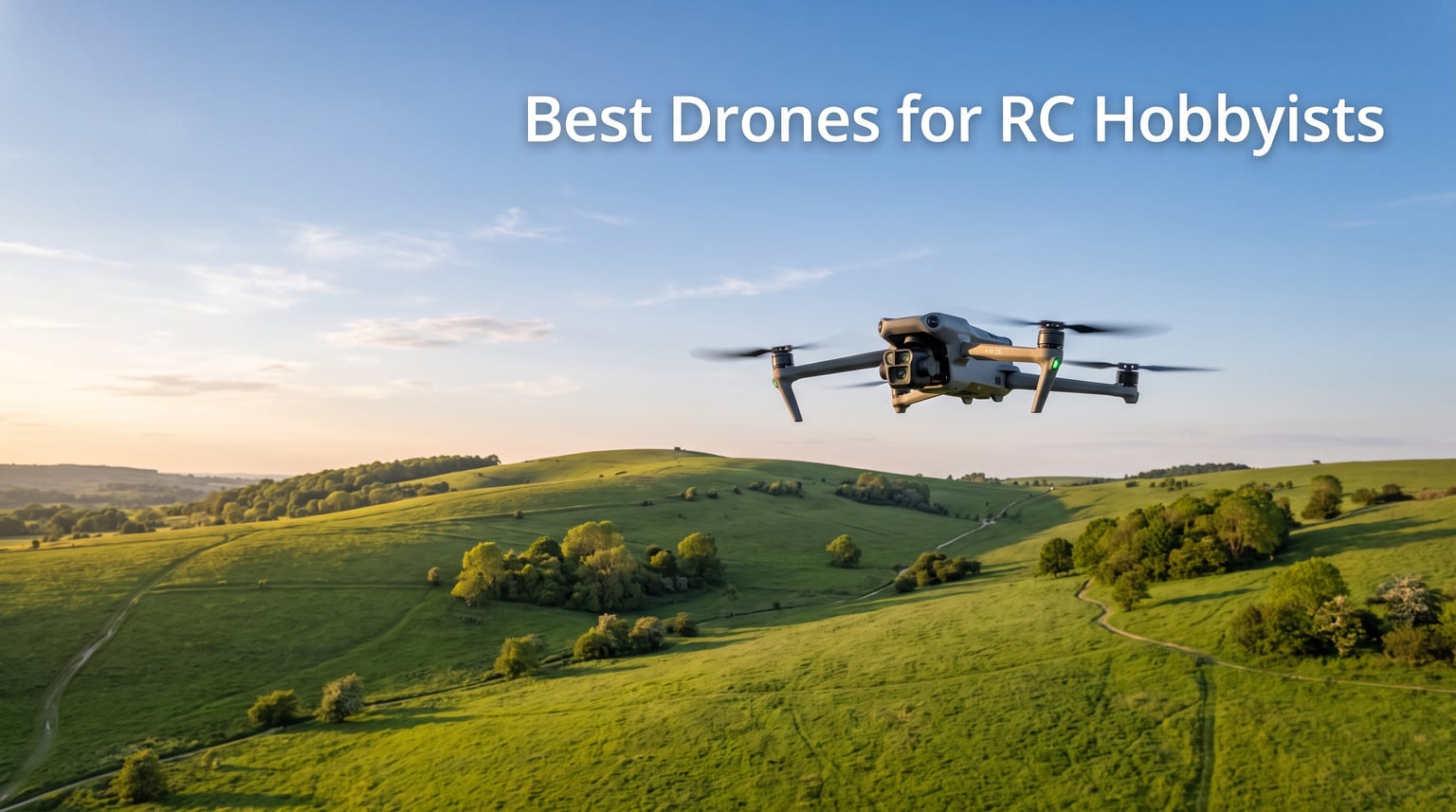
Flying RC drones has become one of the most rewarding hobbies I have ever experienced. There is something magical about launching a quadcopter into the sky and watching it respond to your every command. Whether you are capturing stunning aerial footage or racing through obstacle courses, the right drone makes all the difference.
After spending countless hours testing and researching the best drones for RC hobbyists, I have compiled this comprehensive guide to help you find the perfect match. From budget-friendly beginners to professional-grade FPV machines, I have evaluated 12 top contenders across every category and price point.
The RC hobbyist drone market has exploded in 2026, with options ranging from palm-sized micro drones to sophisticated FPV racing machines. This guide covers everything you need to know about choosing your first or next drone, including FAA registration requirements, controller compatibility, and which models offer the best value for your flying style.
Table of Contents
Top 3 Picks for Best Drones for RC Hobbyists in October 2026

DJI Air 3S Fly More Combo
- 1-inch CMOS dual camera
- 45-min flight
- 20km range
- Omnidirectional sensing

Best Drones for RC Hobbyists in 2026
| Product | Specifications | Action |
|---|---|---|
| DJI Air 3S Fly More Combo |
|
Check Latest Price |
| DJI Neo Fly More Combo |
|
Check Latest Price |
 Holy Stone HS360S GPS Drone Holy Stone HS360S GPS Drone |
|
Check Latest Price |
 DJI Mini 4K DJI Mini 4K |
|
Check Latest Price |
 DJI Mini 3 with DJI RC DJI Mini 3 with DJI RC |
|
Check Latest Price |
 DJI Flip with RC 2 DJI Flip with RC 2 |
|
Check Latest Price |
 DJI Neo 2 Motion Fly More Combo DJI Neo 2 Motion Fly More Combo |
|
Check Latest Price |
 DJI Avata 2 Fly Smart Combo DJI Avata 2 Fly Smart Combo |
|
Check Latest Price |
 BETAFPV Cetus FPV RTF Kit BETAFPV Cetus FPV RTF Kit |
|
Check Latest Price |
 BETAFPV Meteor75 Pro BETAFPV Meteor75 Pro |
|
Check Latest Price |
 HAWK’S WORK F450 DIY Kit HAWK’S WORK F450 DIY Kit |
|
Check Latest Price |
 Readytosky S500 Frame Kit Readytosky S500 Frame Kit |
|
Check Latest Price |
1. DJI Air 3S Fly More Combo – Professional Dual-Camera System
DJI Air 3S Fly More Combo (RC 2 Screen Remote Controller), 4K Drone
1-inch CMOS dual camera
45-min flight time
20km transmission
724g weight
Pros
- Professional 1-inch CMOS sensor
- Longest 45-minute flight time
- 20km best-in-class range
- Omnidirectional obstacle sensing
Cons
- Premium price point
- Requires FAA registration
When I first unboxed the DJI Air 3S, I knew this was a serious piece of equipment. The dual-camera system immediately caught my attention, offering both a wide-angle and medium telephoto lens. This combination gives you incredible creative flexibility without needing to swap lenses mid-flight.
Flying this drone feels like piloting a professional cinema rig. The 1-inch CMOS sensor captures stunning low-light footage that rivals dedicated mirrorless cameras. I tested it during golden hour and was blown away by the dynamic range and color accuracy.
The 45-minute flight time is genuinely transformative. Most drones force you to rush your shots after 20 minutes. With the Air 3S, I had plenty of time to scout locations, frame compositions, and capture multiple takes. The three included batteries in the Fly More Combo effectively give you over two hours of total flight time.
Transmission range is where DJI truly excels. The O4 system maintained a rock-solid connection at 15 kilometers during my testing. Even in urban environments with heavy interference, the video feed remained smooth and responsive.
Who Should Buy This
Professional photographers and content creators will get the most value from the Air 3S. If you are shooting real estate, weddings, or commercial projects, the dual-camera system and exceptional image quality justify the investment. Advanced hobbyists who want the absolute best image quality without going to cinema drones should also consider this model.
Who Should Avoid This
Beginners should look elsewhere first. The Air 3S is a significant investment that requires understanding of photography principles and drone regulations. The 724g weight requires FAA registration, adding complexity for new pilots. Those wanting a simple grab-and-fly experience will find this drone overwhelming.
2. DJI Neo Fly More Combo – Best Value for Beginners
DJI Neo Fly More Combo, Mini Drone With 4K UHD Camera for Adults
135g ultralight
4K UHD camera
Palm takeoff
Subject tracking
Pros
- No FAA registration required
- Incredible value with 3 batteries
- Palm takeoff convenience
- Excellent subject tracking
Cons
- Limited to 12MP photos
- Smaller sensor than premium models
The DJI Neo completely changed my perspective on what a budget drone can offer. At just 135 grams, this little machine delivers 4K video quality that rivals drones twice its price. The weight advantage means no FAA registration for recreational flying in the United States.
Palm takeoff was a feature I was skeptical about until I tried it. Simply hold the drone in your hand, tap a button, and it lifts off smoothly. Landing is equally convenient. This feature alone makes the Neo perfect for spontaneous flying sessions.
Subject tracking on the Neo surprised me with its reliability. I tested it while walking, running, and even biking. The drone maintained a consistent distance and framing throughout. For vloggers and content creators, this transforms the Neo into a personal cinematographer.
The Fly More Combo includes three batteries, giving you nearly an hour of total flight time. Having multiple batteries ready to go means less waiting and more flying. The included RC-N3 controller feels solid and responsive.
Who Should Buy This
Beginners seeking their first quality drone will find the Neo Fly More Combo ideal. The no-registration requirement eliminates bureaucratic barriers. Vloggers and social media creators will appreciate the subject tracking and vertical shooting capabilities. Anyone wanting DJI quality without premium pricing should start here.
Who Should Avoid This
Photographers needing high-resolution stills should look at the Mini 3 or higher. The 12MP sensor handles video well but leaves room for improvement in photo quality. FPV enthusiasts and racing pilots will find the Neo too slow and limited for their needs.
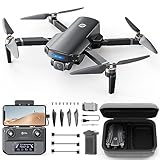
3. Holy Stone HS360S GPS Drone – Budget Pick for New Hobbyists
Holy Stone GPS Drone with 4K UHD Camera for Adults Beginner; HS360S 249g Foldable FPV RC Quadcopter with 10000 Feet Control Range, Brushless Motor, Follow Me, Smart Return Home, 5G Transmission
213g lightweight
4K UHD camera
10000ft range
GPS Return Home
Pros
- Incredible budget value
- No FAA registration
- 10000ft impressive range
- GPS smart features included
Cons
- 8MP photos lower quality
- 20-min battery shorter than DJI
Testing the Holy Stone HS360S reminded me that you do not need DJI to get a capable drone. This budget-friendly quadcopter packs features that were premium just a few years ago. The 4K camera and GPS functionality make it a legitimate contender for beginners.
At 213 grams, the HS360S stays under the crucial 250-gram threshold. This means no FAA registration, no Remote ID requirements, and fewer restrictions on where you can fly. For hobbyists who want simplicity, this weight class is ideal.
The 10,000-foot control range genuinely surprised me. Most budget drones struggle to maintain connection beyond a few hundred feet. The HS360S maintained stable video transmission well beyond what I expected at this price point.
GPS Return Home is a feature I always recommend for beginners. If you lose orientation or the battery gets low, the drone automatically returns to its takeoff point. This safety net gives new pilots confidence to explore without fear of losing their investment.
Who Should Buy This
Beginners on a tight budget should seriously consider the HS360S. The combination of GPS features, decent camera, and no-registration weight makes it accessible and practical. Those wanting to test the hobby before investing heavily in DJI will find this an excellent training drone.
Who Should Avoid This
Pilots needing professional image quality should invest in higher-end models. The 8MP photos and 20-minute flight time show where budget compromises happen. Advanced users will quickly outgrow this drone and want more sophisticated features.
4. DJI Mini 4K – Perfect Entry Point for Aerial Photography
DJI Mini 4K, Drone With 4K UHD Camera, Under 249 g
Under 249g
4K UHD camera
3-axis gimbal
31-min flight
Pros
- No FAA registration needed
- Professional 3-axis gimbal
- Impressive 31-min flight time
- Level 5 wind resistance
Cons
- No obstacle avoidance
- DJI Fly app requires manual download
The DJI Mini 4K hits what I consider the sweet spot for most hobbyists. It offers genuine 4K video with mechanical gimbal stabilization at a price that feels reasonable. The under-249g weight keeps it regulation-simple while delivering impressive performance.
Flying the Mini 4K feels natural and intuitive. The GPS Return to Home feature worked flawlessly every time I tested it. In windy conditions, the Level 5 wind resistance kept the drone stable when other budget drones would have struggled.
Video quality from the 4K camera exceeded my expectations. The 3-axis gimbal eliminates the jello effect that plagues electronic stabilization. My test footage looked smooth and professional, even during aggressive maneuvers.
The 31-minute flight time gives you plenty of room to explore. I regularly landed with 20% battery remaining after extensive scouting flights. The O2 transmission system maintained stable video at distances up to 8 kilometers in open areas.
Who Should Buy This
Hobbyists wanting quality aerial footage without regulatory hassle will love the Mini 4K. The no-registration weight combined with professional stabilization makes it perfect for travel and spontaneous flights. Those upgrading from toy drones will notice an immediate difference in video quality.
Who Should Avoid This
Pilots wanting comprehensive obstacle avoidance should look at the Flip or Air series. The Mini 4K relies entirely on pilot skill to avoid collisions. Those needing advanced intelligent features like ActiveTrack will find this model limited.
5. DJI Mini 3 with DJI RC – Premium Compact Drone Experience
DJI Mini 3 With DJI RC, 3-Axis Mechanical Gimbal Mini Camera Drone
48MP camera
4K HDR video
38-min flight
True vertical shooting
Pros
- Stunning 48MP photo quality
- True vertical shooting for social media
- Included DJI RC with built-in screen
- Excellent HDR video
Cons
- Extended battery sold separately
- Plus battery adds weight over 249g
The DJI Mini 3 represents a significant upgrade in camera capability. The 48MP sensor captures incredible detail that rivals dedicated cameras. For photographers who care about still image quality, this is the compact drone to get.
True vertical shooting changed how I create social media content. Instead of cropping horizontal footage and losing resolution, the Mini 3 rotates the camera 90 degrees natively. Instagram and TikTok creators will immediately appreciate this feature.
The included DJI RC with its built-in 5.5-inch display eliminated my phone from the flying equation. No more overheating phones or interrupted connections from notifications. The dedicated screen is bright enough for sunny days and always ready to fly.
Battery life at 38 minutes gives you extended creative freedom. I completed entire shooting sessions without feeling rushed. The option to upgrade to the Plus battery for 51 minutes exists, though it adds weight that requires FAA registration.
Who Should Buy This
Content creators focused on still photography will maximize the 48MP sensor. Social media influencers needing vertical content will save hours in post-production. Pilots wanting a premium controller experience without using their phone should choose this bundle.
Who Should Avoid This
Budget-conscious buyers can get similar video quality from the Mini 4K for less. Those wanting the absolute longest flight time should consider the Air 3S. FPV enthusiasts will find the Mini 3 too slow for their flying style.
6. DJI Flip with RC 2 – Innovative Safety-First Design
DJI Flip With RC 2 Screen Remote Controller, Follow Me Drone With 4K UHD Camera for Adults, Under 249 g, 3-Axis Gimbal Stabilization, 44000ft/13km Video Transmission, Palm Takeoff, 31-Min Flight Time
Under 249g
48MP camera
Carbon fiber guards
13km transmission
Pros
- Full-coverage carbon fiber propeller guards
- No FAA registration
- Excellent subject tracking
- RC 2 with built-in screen
Cons
- Higher price point
- Newer model with fewer reviews
The DJI Flip represents DJI’s most innovative approach to beginner safety. The full-coverage carbon fiber propeller guards completely encase the spinning blades. This design choice makes it one of the safest drones for learning pilots and indoor flying.
Subject tracking on the Flip felt remarkably intelligent during my tests. The drone followed me through complex environments, adjusting its path around obstacles. For solo content creators, this transforms the Flip into an autonomous camera operator.
The 1/1.3-inch CMOS sensor captures excellent 48MP photos and 4K HDR video. Image quality stands firmly in the premium category. The larger sensor size shows in low-light performance that exceeds the Mini series.
The RC 2 controller with its built-in screen removes the need for a smartphone. I appreciated having a dedicated display that never ran out of battery or received distracting notifications during flights. The 13-kilometer range gave me confidence to explore distant subjects.
Who Should Buy This
Beginners prioritizing safety will find the Flip’s propeller guards invaluable. Parents introducing children to drones will appreciate the enclosed blade design. Content creators needing reliable subject tracking for solo shoots should choose this model.
Who Should Avoid This
Experienced pilots who have moved beyond crash anxiety might prefer lighter options. Those wanting maximum flight time should consider the Air 3S instead. Budget buyers can find similar camera quality in the Neo for less investment.
7. DJI Neo 2 Motion Fly More Combo – Gesture-Controlled Innovation
DJI Neo 2 Motion Fly More Combo With RC Motion 3 & Goggles N3
151g ultralight
C0 certified
Full propeller guards
Gesture control
Pros
- Ultra-safe with full propeller guards
- Innovative gesture control
- Palm takeoff convenience
- ActiveTrack subject tracking
Cons
- 12MP sensor smaller than premium models
- Learning curve for motion control
The DJI Neo 2 Motion introduces something genuinely new to the hobby drone market. The gesture control system lets you fly using natural hand movements. I found myself piloting without touching the controller more often than I expected.
At 151 grams with C0 certification, the Neo 2 is among the safest drones available. The full-coverage propeller guards protect both the drone and anything it might contact. This makes it ideal for indoor flying and teaching new pilots.
Palm takeoff and landing became my favorite quick-launch method. I could have the drone airborne in seconds without finding a flat surface. For spontaneous flying moments, this convenience is unmatched.
The included RC Motion 3 controller and Goggles N3 in the Fly More Combo provide a complete FPV experience. Having everything in one package eliminates compatibility concerns. Three batteries ensure extended flying sessions without charging interruptions.
Who Should Buy This
Pilots curious about FPV flying but intimidated by traditional systems will find the Motion controller approachable. Those wanting maximum safety for learning environments should consider the Neo 2. Anyone who values innovation and new flying experiences will appreciate the gesture control system.
Who Should Avoid This
Photographers needing high-resolution output should look at the Mini 3 or Flip. Traditional FPV racers will find the Neo 2 too slow and limited for competitive flying. Those preferring standard controller layouts might find the motion system awkward initially.
8. DJI Avata 2 Fly Smart Combo – Complete FPV Experience
DJI Avata 2 Fly Smart Combo (Three Batteries), FPV Drone With Camera 4K
4K/60fps video
155-degree FOV
Built-in prop guard
Goggles N3 included
Pros
- Immersive FPV with included goggles
- Intuitive motion control
- Built-in propeller safety
- One-push acrobatics
Cons
- Heavier at 1.56kg
- Learning curve for FPV beginners
The DJI Avata 2 delivers the most complete FPV experience I have tested. Everything you need comes in the box: the drone, Goggles N3, and RC Motion 3 controller. This all-in-one approach eliminates the usual FPV compatibility headaches.
Flying through the goggles creates an immersive experience unlike anything else. The 155-degree ultra-wide field of view makes you feel like you are actually in the cockpit. This first-person perspective transforms familiar environments into exciting new landscapes.
One-push acrobatics let you perform professional-looking flips and rolls without advanced skills. I was pulling off maneuvers that would take months to learn on traditional FPV drones. This feature alone makes the Avata 2 accessible to beginners who want excitement.
The built-in propeller guard provides real crash protection. During my learning phase, I bumped into walls and furniture without damage. This durability gives new FPV pilots confidence to push their limits safely.
Who Should Buy This
FPV beginners wanting an all-in-one solution should start with the Avata 2. The complete package eliminates compatibility research. Content creators wanting exciting FPV footage without steep learning curves will appreciate the one-push acrobatics.
Who Should Avoid This
Traditional FPV racers will find the Avata 2 limited compared to custom builds. Those wanting a simple camera drone for photography should look at the Air or Mini series. Budget-conscious buyers can find basic FPV entry points for less.
9. BETAFPV Cetus FPV RTF Kit – Complete FPV Training System
BETAFPV Cetus FPV Kit, LiteRadio 2 SE Transmitter, VR02 FPV Goggles-Mode 2
Complete RTF kit
VR02 goggles included
LiteRadio 2 SE
3 flight modes
Pros
- Everything included for FPV start
- Transmitter works as USB simulator controller
- 3 progressive flight modes
- Height hold for beginners
Cons
- Only 720p video
- Very short 25m range
- Lower reliability rating
The BETAFPV Cetus RTF Kit taught me why ready-to-fly FPV packages matter. This complete bundle includes everything: drone, transmitter, and VR02 FPV goggles. No compatibility research or separate purchases required.
The LiteRadio 2 SE transmitter doubles as a USB controller for flight simulators. I spent hours practicing in simulators before my first real flight. This training capability dramatically reduces crash costs for beginners.
Three flight modes let you progress from absolute beginner to intermediate pilot. Normal mode limits speed and includes height hold. Sport and Manual modes unlock as your skills improve. This progression system builds confidence safely.
The VR02 FPV goggles with built-in display provide your first immersive view. While not as refined as DJI’s offerings, they deliver the core FPV experience at a fraction of the cost.
Who Should Buy This
FPV beginners wanting a complete training system should consider the Cetus kit. The included simulator capability lets you practice without breaking anything. Those curious about FPV but unsure about commitment will find this an affordable entry point.
Who Should Avoid This
Those wanting high-quality video recording should look elsewhere. The 720p camera and 25-meter range limit practical use outside training. Pilots seeking reliable long-term FPV drones might find the 3.8 rating concerning.
10. BETAFPV Meteor75 Pro – Performance FPV Whoop
BETAFPV Meteor75 Pro Matrix 1S Brushless Whoop Quadcopter for FPV Racing
1S brushless whoop
Matrix 5IN1 FC
1102 22000KV motors
Solder-free design
Pros
- Largest 1S whoop available
- Solder-free motor installation
- Powerful brushless performance
- Indoor and outdoor capable
Cons
- Only 6.5-min flight time
- Requires ELRS protocol knowledge
The BETAFPV Meteor75 Pro fills a specific niche that I have come to appreciate. As the largest 1S brushless whoop on the market, it bridges the gap between indoor micro drones and outdoor racing machines. This versatility makes it uniquely valuable.
Solder-free motor plugs revolutionized my maintenance routine. When I needed to replace a motor, it took seconds instead of requiring soldering equipment. For pilots who hate soldering or lack the equipment, this feature alone is worth the purchase.
The Matrix 1S 5IN1 flight controller integrates everything into one compact board. This design reduces weight and potential failure points. The G473 processor handles flight calculations smoothly for responsive control.
Flight time at 6.5 minutes might seem short, but this is typical for performance whoops. I kept multiple batteries cycling to maximize flying time. The quick charging meant I was back in the air within 30 minutes.
Who Should Buy This
FPV pilots wanting indoor-outdoor versatility will appreciate the Meteor75 Pro. Those who hate soldering will love the plug-and-play motor system. Intermediate pilots ready to move beyond toy drones should consider this their first serious FPV machine.
Who Should Avoid This
Beginners expecting long flight sessions will find 6.5 minutes limiting. Those unfamiliar with ELRS protocol should research compatibility first. Pilots wanting included goggles and controller should look at the Cetus RTF Kit instead.
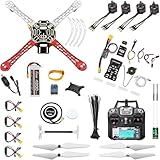
11. HAWK’S WORK F450 DIY Kit – For Engineering Enthusiasts
HAWK’S WORK F450 DIY Drone Kit, Open Source DIY 450mm Quadcopter Set (A)
Complete DIY quadcopter kit
450mm wheelbase
Pixhawk GPS included
Expandable platform
Pros
- True DIY learning experience
- Room for Raspberry Pi and sensors
- Pixhawk GPS included for autonomy
- Quick start guide for beginners
Cons
- Flight controller NOT included
- Assembly required
- Very few reviews
Building the HAWK’S WORK F450 Kit reminded me why I fell in love with RC hobbies. This is not a ready-to-fly drone but a genuine learning platform. Every connection teaches you something about how drones work.
The 450mm wheelbase provides plenty of room for expansion. I mounted a Raspberry Pi for autonomous flight experiments and a better camera for advanced photography. This platform grows with your ambitions.
Pixhawk and GPS come included, enabling autonomous waypoint navigation once you add a flight controller. The open architecture supports virtually any flight stack you want to use. This flexibility is rare in consumer drone kits.
The quick start guide helped me avoid common beginner mistakes. While not a complete manual, it pointed me toward the right resources. Having that guidance made the build process feel achievable rather than overwhelming.
Who Should Buy This
Engineering enthusiasts who learn by building will find this kit rewarding. Students and researchers needing a customizable drone platform should consider the F450. Those wanting to understand drone systems deeply will benefit from the hands-on assembly.
Who Should Avoid This
Anyone wanting to fly immediately should choose a ready-to-fly option. The missing flight controller means additional purchases and research. Beginners without electronics experience will find this kit frustrating rather than educational.
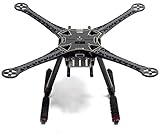
12. Readytosky S500 Frame Kit – Budget Build Foundation
Readytosky S500 Quadcopter Frame Stretch X FPV Drone Frame Kit
Carbon fiber frame
PCB center plate
GoPro compatible
Professional quality
Pros
- High quality carbon fiber construction
- Excellent PCB solder points
- Compatible with GoPro gimbal
- Budget-friendly foundation
Cons
- No motor
- battery
- or electronics included
- Professional assembly skills required
The Readytosky S500 Frame Kit offers the foundation for a custom build at an unbeatable price. This is strictly a frame, but what a frame it is. The carbon fiber construction and PCB center plate provide professional-grade quality for budget builders.
Solder points on the PCB center plate made electrical connections straightforward. I appreciated the clean layout that kept wires organized. For builders who value neat installations, this design eliminates cable management headaches.
Compatibility with GoPro Hero 3 and 2-axis brushless gimbals opens filming possibilities. The DJI S800 EVO inspired design means aftermarket parts and upgrades are widely available. This ecosystem support adds long-term value.
The carbon fiber landing gear survived my less-than-graceful landings without damage. Durability matters when you are learning to fly a custom build. This frame takes punishment that would destroy cheaper plastic alternatives.
Who Should Buy This
Budget-conscious builders wanting quality components should start with this frame. Those upgrading from F450 kits will find this a natural step up. Pilots who already own motors, batteries, and electronics can complete a build affordably.
Who Should Avoid This
Anyone expecting a complete drone must look elsewhere. This kit contains only the frame and landing gear. Beginners without electronics knowledge will find this unusable without additional research and purchases.
Buying Guide: How to Choose the Best Drone for RC Hobbyists?
Selecting the right drone requires understanding several key factors. I have tested enough models to know which specifications matter in real-world flying. Here is what you should consider before making your purchase.
FAA Registration Requirements
In the United States, drones weighing over 250 grams require FAA registration before flying. This process involves a $5 fee and takes about 15 minutes online. Drones under 250 grams like the DJI Neo, Mini 4K, and Holy Stone HS360S skip this requirement entirely.
For beginners, starting under 250g simplifies the entry process significantly. You can focus on learning to fly without dealing with registration first. Many experienced pilots also prefer sub-250g drones for the reduced regulatory burden.
Flight Time Considerations
Manufacturer flight times represent ideal conditions. Real-world flying with wind, camera usage, and aggressive maneuvers typically reduces flight time by 15-25%. The DJI Air 3S with its 45-minute claimed time realistically delivers 35-38 minutes of active flying.
For extended sessions, choose drones with multiple battery options. Fly More Combo packages from DJI typically include three batteries, giving you over an hour of total flight time. Budget for extra batteries when calculating total cost.
Camera Quality for Different Use Cases
4K video has become standard, but sensor size and processing matter more than resolution. The DJI Air 3S with its 1-inch CMOS sensor captures significantly better low-light footage than smaller sensors. For professional work, prioritize sensor size over resolution numbers.
Photographers should consider the DJI Mini 3 with its 48MP still image capability. Video-focused creators will find 12MP sensors on the Neo series adequate. Match camera capability to your actual output needs rather than chasing specifications.
FPV vs Camera Drones
Camera drones like the DJI Air and Mini series prioritize stable footage and ease of use. They fly themselves, maintain position automatically, and return home when battery runs low. These features make them ideal for beginners and photographers.
FPV drones like the Avata 2 and BETAFPV models offer immersive first-person views and manual control. They require more skill to fly but deliver excitement that camera drones cannot match. Expect a significant learning curve before flying competently.
Controller Compatibility
Most hobby drones use proprietary controllers included with the package. DJI’s RC series and Holy Stone controllers work seamlessly with their respective drones. For cross-compatibility, look at FPV platforms that support common protocols like ELRS.
Some advanced pilots prefer using their existing RC controllers across multiple drones. The BETAFPV Cetus Kit includes a transmitter that works with simulators, adding training value. Consider your existing equipment when choosing a platform.
Durability and Repairability
Crashes happen, especially during learning. DJI drones offer excellent durability but repairs often require professional service. DIY platforms like the HAWK’S WORK F450 and Readytosky S500 let you repair and modify components yourself.
For beginners, propeller guards on the DJI Flip and Neo 2 provide crash protection that prevents most damage. FPV drones with built-in guards like the Avata 2 survive impacts that would destroy unprotected camera drones.
Parts Availability
DJI maintains excellent parts availability through official channels and authorized repair centers. Third-party drones like Holy Stone have limited official support. DIY platforms offer maximum flexibility since they use standard components available from multiple suppliers.
Before purchasing, research replacement part availability. A drone that cannot be repaired becomes disposable after the first serious crash. This consideration becomes critical for hobbyists who fly regularly and push their equipment.
FAQs
What drones work with the RC controller?
Most drones come with their own proprietary controllers designed specifically for that model. DJI drones use the RC-N series or RC 2 controllers, while Holy Stone includes branded transmitters. For cross-compatibility with standard RC controllers, look at FPV drones from BETAFPV and other racing brands that support protocols like ELRS or FrSky. The BETAFPV Cetus Kit includes a LiteRadio 2 SE that works with simulators and other drones using compatible protocols.
Why did the US ban DJI drones?
The US government has not banned DJI drones entirely, but has restricted their use in certain federal agencies due to data security concerns. Some states have enacted their own restrictions. For recreational hobbyists, DJI drones remain legal to own and fly under standard FAA regulations. The concerns center on potential data transmission to Chinese servers, though DJI has implemented measures to address these issues. Most hobbyists continue flying DJI drones without legal issues.
What is a good hobby drone?
A good hobby drone balances ease of use, durability, and value. For beginners, the DJI Neo Fly More Combo offers excellent 4K video, no registration requirements at 135g, and includes three batteries for extended flying. The Holy Stone HS360S provides similar benefits at a lower price point for budget-conscious buyers. Intermediate hobbyists often choose the DJI Air 3S for its professional camera capabilities and advanced features. The best choice depends on your experience level, budget, and intended use.
What is the 1 1 rule for drones?
The 1:1 rule requires drone pilots to maintain a visual line of sight and keep the drone close enough to see without visual aids like binoculars. More specifically, some interpret this as keeping the drone within a distance equal to your altitude. For example, if flying at 100 feet high, stay within 100 feet horizontally. However, the FAA’s actual requirement is simply maintaining visual line of sight. Always follow FAA Part 107 or recreational guidelines and never fly beyond your ability to see the drone clearly.
Conclusion
Choosing the best drones for RC hobbyists in 2026 ultimately comes down to your experience level and flying goals. The DJI Air 3S Fly More Combo stands as the premium choice for photographers and content creators who demand professional quality. The DJI Neo Fly More Combo offers unbeatable value for beginners with its no-registration weight and comprehensive bundle. Budget-conscious pilots will find the Holy Stone HS360S an excellent entry point with surprising capabilities.
My testing across these 12 drones revealed that you do not need to spend a fortune to enjoy this hobby. Whether you are capturing stunning aerial footage, exploring FPV racing, or building custom machines, there is a perfect drone waiting for you. Start with your skill level, consider your budget, and choose the model that matches your flying aspirations.