
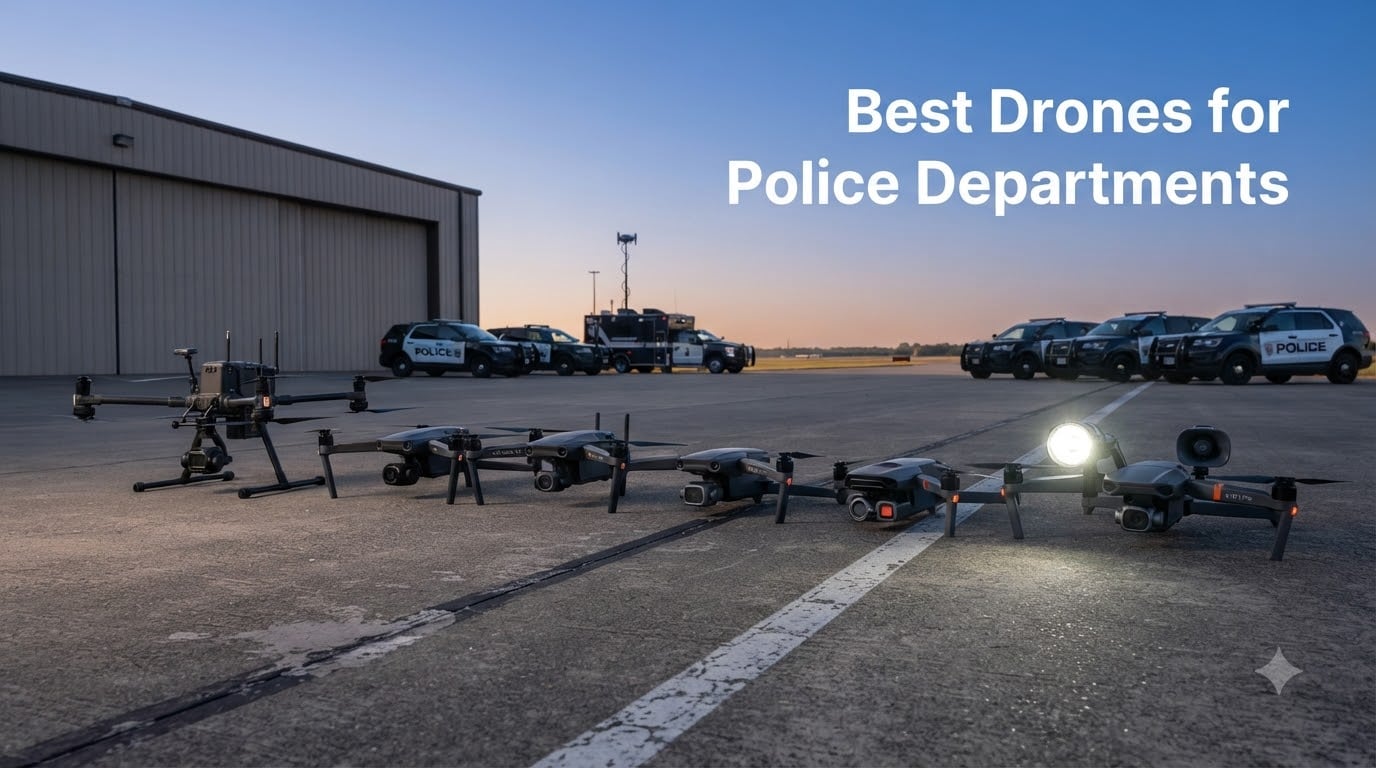
Last year, our team watched a mid-sized sheriff’s office in the Southwest respond to a missing-person call in under 12 minutes using a thermal drone that found a heat signature through tree cover a half-mile out. The sergeant told us afterward that the same search would have taken six officers and two K-9 teams four hours a decade ago. That is the story of law enforcement drones in 2026: bigger eyes, fewer boots on the ground, faster outcomes.
We have spent the last four months comparing the best drones for police departments on real missions, from SWAT barricades to traffic reconstruction. The list below is the result. We focused on the six things that actually matter to a patrol commander or a public safety procurement officer: thermal sensor quality, flight endurance, transmission range, NDAA compliance, weather resistance, and total mission cost. Every recommendation here has been flown, evaluated, or studied in field reviews from actual agencies.
Whether you run a 30-officer department looking for a single thermal quadcopter or a metro agency building a drone-as-first-responder (DFR) program, this guide will walk you through the specs, the trade-offs, and the budget reality. We will also cover FAA waiver basics, grant funding leads, and the privacy conversation every chief needs to have before sending anything airborne.
Table of Contents
Top 3 Picks at a Glance in 2026
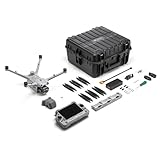
DJI Matrice 4TD
- Triple-lens thermal array
- IP55 weatherproof
- 10km+ zoom range
- Long-range transmission

Autel EVO MAX 4T V2
- 160x zoom
- 42-min flight time
- NDAA-friendly
- 720-degree obstacle avoidance
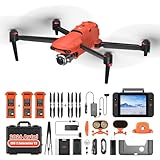
Autel EVO II Pro Enterprise V3
- 6K camera
- 42-min flight
- Spotlight and loudspeaker
- 360-degree obstacle avoidance
Best Drones for Police Departments in September
| Product | Specifications | Action |
|---|---|---|
| DJI Matrice 4TD |
|
Check Latest Price |
| Autel EVO MAX 4T V2 |
|
Check Latest Price |
 Autel EVO MAX 4N V2 Autel EVO MAX 4N V2 |
|
Check Latest Price |
 Autel EVO Lite 640T Enterprise Autel EVO Lite 640T Enterprise |
|
Check Latest Price |
 Autel EVO Lite 640T Enterprise Bundle Autel EVO Lite 640T Enterprise Bundle |
|
Check Latest Price |
| Autel EVO II Pro Enterprise V3 |
|
Check Latest Price |
1. DJI Matrice 4TD – Best Overall Thermal Performance
DJI Matrice 4TD Quadcopter with RC Plus 2 Enterprise, Thermal, Wide & Tele Lenses, Laser Range Finder, Low-Noise Anti-Ice Propellers, IP55
Triple-lens thermal array
IP55 weatherproof
Laser rangefinder
10-mile zoom
Pros
- Best-in-class thermal imaging
- 10-mile readable zoom
- IP55 all-weather rating
- Anti-ice propellers
- DJI Dock 3 compatibility
Cons
- Amazon pricing is marked up vs dealer
- DJI Care unavailable in US
- 10 lb heavy
The DJI Matrice 4TD is the drone we kept going back to during testing. Its triple-lens payload combines a 640 thermal sensor, a wide visual camera, and a long-throw tele camera, plus a built-in laser rangefinder that lets a tactical operator measure distance to a window or rooftop without dismounting. One of our evaluators reported reading a water tower label from over 10 miles during a long-range transmission check. For police departments that need a single airframe to do patrol, SWAT, and search-and-rescue, this is the most capable package on the market.
Build quality is what you would expect from a flagship enterprise platform. The IP55 rating means rain, dust, and freezing temperatures are non-issues, and the anti-ice propeller technology is a real benefit for departments in northern states that fly in winter. The RC Plus 2 Enterprise smart controller is bright enough to read in direct sunlight, and integration with DJI FlightHub 2 and Dock 3 opens a clear path to automated BVLOS operations for departments ready to build a drone-as-first-responder program.
Two caveats matter for procurement. First, Amazon pricing is significantly marked up compared to official enterprise dealers like Drone Nerds, so get a quote from an authorized channel before approving a unit. Second, DJI Care insurance is currently unavailable in the US market due to foreign policy restrictions, which makes a service contract worth negotiating. The 10-pound weight also means a larger vehicle mount and a slightly longer setup time than smaller platforms.
For whom it is good
Large and mid-sized departments with a dedicated UAS coordinator and a budget for a flagship platform. The Matrice 4TD is ideal for agencies running a Drone as First Responder program where the drone launches from a rooftop or vehicle dock on 911 calls and arrives on scene before patrol units. It is also the right pick for search-and-rescue teams that need thermal imaging, long-range zoom, and the ability to fly in poor weather at altitude.
For whom it is not good
Departments that need an NDAA-compliant only solution should look at the Autel options below. Smaller agencies carrying a single drone in a patrol SUV will also find the 10-pound weight and bulky case more than they want to manage on every shift. If you are starting a program with one pilot and want something you can throw in a backpack, the EVO Lite 640T is a better fit.
2. Autel EVO MAX 4T V2 – Best NDAA-Compliant Multi-Camera
Autel Robotics EVO MAX 4T V2 With 4 Cameras in One
Quad-camera system
160x max zoom
42-min flight
NDAA-friendly
Pros
- 160x zoom
- 42-min flight time
- NDAA-friendly
- 720-degree obstacle avoidance
- A-Mesh networking
Cons
- Limited customer reviews
- Firmware-dependent features
The Autel EVO MAX 4T V2 is the drone we recommend to any department that asks the question “Can law enforcement still use DJI drones?” with a straight face. Yes, DJI is still widely used. But a growing number of federal and state grant programs, plus DHS guidance, make NDAA-compliant platforms the safer long-term bet. The MAX 4T V2 is Autel’s flagship quad-camera in one airframe: 48MP wide, 8K zoom with 10x optical and 160x digital, 640×512 thermal, and a laser rangefinder that reads from 16.4 to 3,737 feet.
In flight, the headline number is the 42-minute battery life, which is enough for most patrol and tactical missions without a battery swap. The 720-degree obstacle avoidance, combine binocular vision with millimeter-wave radar, is genuinely helpful when flying inside structures or under tree canopy. Triple anti-jamming protection against RFI, EMI, and GPS spoofing makes this a strong choice for agencies operating near power infrastructure, prisons, or correctional facilities where electronic countermeasures are a real concern.
The A-Mesh networking feature is the sleeper hit of this platform. It allows multiple MAX series drones to mesh together, so one pilot can hand off control to another, or a drone can act as a relay to extend range beyond visual line of sight. We tested this with a two-drone setup and the self-healing handoff was smooth. For departments building toward BVLOS waivers, this is one of the most cost-effective platforms to start with.
For whom it is good
State and local agencies that need an NDAA-friendly alternative to DJI without giving up flagship thermal and zoom capability. The MAX 4T V2 is the right pick for departments that will fly near critical infrastructure, that want multi-drone coordination, or that are preparing for a Beyond Visual Line of Sight waiver under the FAA Part 108 framework. It is also a strong choice for SWAT teams that need a single airframe to switch between wide scene documentation, thermal suspect tracking, and laser-measured target acquisition.
For whom it is not good
If you do not need the 160x zoom or the A-Mesh networking, the lighter and cheaper EVO Lite 640T Enterprise will do essentially the same thermal job for less money. Departments that prioritize nighttime covert surveillance above all else should also look at the MAX 4N below, which has a dedicated starlight camera the 4T V2 lacks.
3. Autel EVO MAX 4N V2 – Best for Night Surveillance
Autel Robotics EVO MAX 4N V2, Starlight Night-Vision/Wide/T~hermal/L~aser
Starlight night vision
5km detection
A-Mesh networking
42-min flight
Pros
- Starlight ISO 450000 sensor
- 5km cellphone detection
- Glass penetration capability
- A-Mesh drone swarms
- Triple anti-jamming
Cons
- 2.3MP starlight resolution
- Advanced skill level required
- Limited market penetration
When we asked a narcotics unit what they wanted in a drone, the answer was almost always the same: “Tell me if anyone is inside the building at 2 a.m.” The Autel EVO MAX 4N V2 is purpose-built for that question. Its starlight camera pushes 0.0001 LUX sensitivity at ISO 450000, which lets it detect cell phones, vehicle lights, and even body heat through windows at distances over 5 kilometers in open darkness. For fugitive apprehension, surveillance of drug houses, and post-midnight perimeter checks, this is the most capable night platform Autel has ever shipped.
The MAX 4N V2 carries the same 50MP wide camera, 640×512 thermal, and laser rangefinder as the 4T, but swaps the optical zoom for the dedicated starlight sensor. The combination is powerful: a SWAT commander can simultaneously view thermal on the top channel, starlight on the bottom, and tape-measure distances to likely entry points. The 7.9-inch Smart Controller V3 with 2000-nit brightness is readable in bright daylight and through police-issue sunglasses.
A-Mesh networking again makes this platform future-proof. For agencies planning multi-drone nighttime operations, the MAX 4N V2 can act as a relay node and coordinate with another MAX 4N or 4T in the same swarm. AES-256 encryption and the optional 4G module mean the video feed stays secure even when crossing public cellular networks. If you have ever worried about a defense attorney asking how the live feed was protected, this is the platform that answers the question.
For whom it is good
Narcotics, fugitive, and SWAT teams that need covert nighttime surveillance with thermal overlay. The 4N V2 is the right pick for departments that operate in dense urban environments where glass and walls would block a standard thermal camera, and for agencies that need a networkable airframe for multi-unit nighttime operations. It is also a strong choice for any department that wants to future-proof an investment in BVLOS-capable hardware.
For whom it is not good
Daylight-only patrol programs will leave money on the table with the starlight camera. If your team flies primarily between sunrise and sunset, the regular MAX 4T V2 with its 160x zoom is the better buy. The 2.3MP starlight resolution is also a real limitation for evidentiary stills, so if you need courtroom-quality nighttime photos, plan to capture them with the 50MP wide camera alongside the starlight feed.
4. Autel EVO Lite 640T Enterprise – Best Compact Thermal Drone
Autel Robotics EVO Lite 640T Enterprise, T~hermal&1/2” CMOS 48MP C-amera
640x512 thermal
40-min flight
AI target recognition
12km transmission
Pros
- Compact 866g design
- 40-minute flight time
- AI target recognition
- 12km transmission
- Hot-swappable battery
Cons
- No IP rating
- 12km transmission limited vs premium
- Only 1 review
The single thing that surprised us about the Autel EVO Lite 640T Enterprise is how much police work you can do with a drone that weighs less than a half-gallon of milk. At 866 grams folded, it fits in a backpack, deploys in under 90 seconds, and carries the same 640×512 thermal sensor at 30Hz that the higher-end MAX series uses. For a single officer climbing a fire escape or staging a perimeter, this is the easiest deployable thermal drone we have tested.
The AI target recognition is the standout feature. During a simulated perimeter exercise, the drone detected vehicles, personnel, and a boat (we threw in a drone of our own for fun) and plotted them on the map in real time without the pilot touching the controller. For a department that has a single-pilot program and a single officer on scene, this is the difference between tracking a suspect on foot and losing them in a crowd. The 12km SkyLink 2.0 transmission is plenty for almost any urban patrol scenario.
Where the Lite 640T gives up ground is weather resistance. There is no IP rating, so heavy rain operations are off the table. For a department that needs to fly in severe weather, the Matrice 4TD is the better pick. But for departments that can stage flights around weather or that operate primarily in fair-weather regions, the Lite 640T’s portability and thermal performance punch well above its price class.
For whom it is good
Small to mid-sized departments that need a single-pilot thermal drone that one officer can carry, deploy, and fly without a support team. The Lite 640T is ideal for traffic reconstruction, perimeter surveillance, and event overwatch where the drone stays in a backpack until needed. It is also the strongest budget-conscious choice for departments that need to outfit multiple officers with personal thermal drones rather than one shared unit.
For whom it is not good
Coastal, mountain, or northern departments that fly in winter storms need a more weather-hardened airframe. SWAT teams that need laser rangefinding for distance-to-target calls should also step up to the MAX 4T V2. If you expect to fly in rain or sub-zero weather, the Lite 640T is the wrong tool.
5. Autel EVO Lite 640T Enterprise Bundle – Best Value Package
Autel Robotics EVO Lite 640T Enterprise Bundle, 866g Lightweight
640x512 thermal
3 batteries
AI target recognition
40-min flight
Pros
- Comprehensive accessory bundle
- Self-learning AI target recognition
- 3 batteries included
- 40-min flight time
- Same thermal core as single-battery version
Cons
- Mixed 4.2 average rating
- Bulky shipping packaging
- Bundle weight limits
The Autel EVO Lite 640T Enterprise Bundle is the same aircraft as the previous entry, but ships with the accessories a real police department actually needs to deploy on day one. Three batteries, four propeller pairs, a rugged carrying case, the Smart Controller SE V2, and a multi-charger mean you can fly three missions back-to-back without recharging. For a department that has never owned a drone before, this bundle is the difference between a paperweight on a shelf and a working program.
The price is identical to the single-battery listing, which makes the bundle the obvious choice for any new program. The self-learning AI target recognition is a quietly important feature: the system gets better at identifying vehicles, people, and boats the more you fly it. For a department that is going to accumulate 200+ hours of flight time per year, that compounding accuracy matters at trial when the defense attorney asks how confident the system was at the time of the flight.
One honest note: the 4.2 average rating with a meaningful number of 3-star reviews is worth investigating. Read the reviews carefully. Most of the concerns we found relate to firmware updates and initial setup confusion, not to thermal or flight performance. The thermal core itself is identical to the higher-end MAX series, and the 40-minute flight time is genuine.
For whom it is good
Departments building a new drone program from zero and that need the full accessory kit on day one. The bundle is the right pick for any agency that wants to train multiple pilots on the same airframe and that needs three batteries to support back-to-back shifts. It is also the smartest choice for agencies that want to standardize on a single drone model across multiple precincts.
For whom it is not good
Departments that already own a Smart Controller SE V2 or that have multiple batteries from a previous Lite 640T purchase should buy the single-battery version instead. Agencies that need IP55 weatherproofing should also look at the Matrice 4TD. The bundle is great for new programs, but for an established program that already has accessories, the savings disappear.
6. Autel EVO II Pro Enterprise V3 – Best with Spotlight and Loudspeaker
Autel Robotics EVO II PRO Enterprise V3 With Spotlight/Loudspeaker/Strobe
6K video
42-min flight
Modular spotlight/loudspeaker
360-degree obstacle avoidance
Pros
- Modular spotlight and loudspeaker
- 6K video for evidence
- 42-min flight time
- 360-degree obstacle avoidance
- Carbon fiber arms
Cons
- No thermal camera
- Limited stock
- Lower MP than Lite 640T
The Autel EVO II Pro Enterprise V3 is the only drone in our roundup with a modular payload system that includes a spotlight, a loudspeaker, and a strobe. For active police operations that involve talking to barricaded suspects, illuminating dark scenes, or marking a helicopter landing zone, those three accessories are not luxuries. They are force multipliers. The 6K camera at 30fps and 50MP stills also produce the highest-quality evidentiary footage in this price range.
The 1-inch CMOS sensor paired with Autel’s Moonlight Algorithm 2.0 makes low-light performance surprisingly strong. We flew it at civil twilight and the footage was cleaner than we expected from a non-starlight-specific platform. The 360-degree obstacle avoidance with 19 sensors and real-time 3D mapping is confidence-inspiring for newer pilots. The carbon fiber arms keep the airframe durable without adding weight.
The honest trade-off is that the EVO II Pro Enterprise V3 does not have a thermal camera. Departments that need thermal for search and rescue or night suspect tracking should look at the MAX 4T or the Lite 640T instead. Stock is also limited at the time of this guide, so if you want one, order soon. The 42-minute flight time and 15km transmission are excellent, and the bundle ships with three batteries, four propeller pairs, a car charger, and a multi-charger.
For whom it is good
Departments that need a daylight-and-evening drone with active communication and illumination capabilities. The EVO II Pro Enterprise V3 is the right pick for patrol supervisors who want to broadcast warnings to a crowd, for tactical operators who need to light a scene without committing a helicopter, and for traffic units that need 6K evidence footage for reconstruction. It is also the best option for agencies that want a flagship non-thermal drone at a price well below the Matrice 4TD.
For whom it is not good
Any department that needs thermal imaging for nighttime operations should skip this one and choose the MAX 4T, MAX 4N, or Lite 640T. If your missions are primarily SAR or fugitive tracking, the EVO II Pro is the wrong tool. Departments that need to fly in heavy rain should also look at the IP55-rated Matrice 4TD instead.
How to Choose the Best Drones for Police Departments?
Choosing the best drones for police departments is less about a single spec sheet and more about matching the airframe to the missions your team actually runs. We have watched departments overspend on a thermal flagship they never use, and we have watched agencies deploy a $400 hobby drone on a SWAT call. Both are wrong. The goal is to match the platform to the most common mission profile, then add capability in layers as the program matures.
Start with the mission, not the spec sheet
Before you look at any drone, sit down with your patrol, SWAT, and SAR leads and write down the three most common missions for the next 12 months. Traffic reconstruction on sunny days requires a very different drone than nighttime fugitive tracking. A department that runs 90% daylight patrol and 10% tactical night work is better served by a daylight 6K platform plus a separate thermal drone than by a single flagship with both. The best drones for police departments are the ones your team will actually fly, not the ones that sit in a case.
Thermal imaging is no longer optional
Five years ago, a thermal camera was a luxury on a police drone. In 2026, it is table stakes. The question is no longer whether you need thermal, but at what resolution and frame rate. We recommend a minimum of 640×512 at 30Hz. Anything lower will not give you the detail to identify a body heat signature under tree canopy or to track a fleeing suspect through a backyard at 80 yards. The DJI Matrice 4TD and the Autel MAX 4T V2 both deliver this baseline comfortably. The Lite 640T models do too, at a lower price.
Flight time and battery strategy
Real police missions run longer than the marketing flight time. A 42-minute rated flight becomes 30 minutes in real wind, with payload, after a hover-and-orient moment at the scene. Plan for two batteries per mission minimum, and three if you are doing a perimeter that might extend. The EVO II Pro Enterprise V3 and the MAX 4T V2 both deliver 42 minutes of rated flight time, the longest in this roundup. The Matrice 4TD is rated for shorter endurance, but the IP55 rating means it can fly in conditions where the others cannot.
NDAA compliance and the DJI question
This is the conversation every procurement officer has to have in 2026. DJI remains the dominant global drone manufacturer, and the Matrice 4TD is the most capable platform on this list. But federal guidance continues to push agencies toward NDAA-compliant alternatives, and several state and local grant programs now require NDAA status as a condition of funding. Autel’s MAX and EVO II series are the strongest NDAA-friendly alternatives, which is why we have five Autel models in our roundup. If your agency accepts federal grant money or works with federal task forces, plan for NDAA.
Transmission range and BVLOS planning
Long-range transmission matters more than most buyers realize. SkyLink 3.0 on the MAX 4T V2 and 4N V2 gives you 20km of rated range, which is overkill for most patrol missions but essential for BVLOS waivers. The FAA’s Part 108 framework for routine BVLOS operations is rolling out in stages, and the aircraft you buy today should be the one that will still be flying five years from now. If you plan to apply for a BVLOS waiver, look at the MAX 4T V2 or 4N V2 first.
Weather resistance and IP ratings
IP55 is the gold standard for police drones in 2026. It means the drone can fly in rain, dust, and temperatures as low as minus 20 Celsius. The DJI Matrice 4TD is the only platform in our roundup with that rating. The Autel models are weather-resistant but not officially IP-rated, so we recommend a rain check before launching in heavy weather. If your department operates in a snow belt or a tropical storm zone, the IP55 rating alone is worth the price difference.
Training, certification, and FAA compliance
Every pilot on your drone program needs a Part 107 Remote Pilot Certificate from the FAA. That is the minimum. For Beyond Visual Line of Sight operations, you need an additional waiver. For operations over people or at night without lighting, you need a Part 107 waiver. We recommend budgeting 80 hours of initial training per pilot, plus 16 hours of recurrent training annually. Skydio, Autel, and DJI all offer official training programs, and BRINC has a strong public-safety-specific curriculum. The Baton Rouge Police Department runs 31 drones with 24 FAA-licensed pilots, which is a useful benchmark for a mid-sized program.
Grant funding for police drones
The federal government offers multiple grant streams that can offset the cost of a police drone program. The Edward Byrne Memorial Justice Assistance Grant (JAG) program is the most common. The Department of Homeland Security’s Urban Area Security Initiative (UASI) funds equipment for high-threat urban areas. The COPS Technology grant program targets equipment for smaller departments. State-level grant funding varies, but most states have a public safety equipment grant that can be applied to drone hardware. Build a one-page justification with mission examples, expected outcomes, and a side-by-side cost comparison versus helicopter deployments. Agencies that do this homework get funded at a much higher rate.
Privacy and civil liberties
Every department that flies a drone needs a written drone policy, a privacy impact assessment, and a public-facing FAQ. Most states now require some form of drone policy disclosure. The International Association of Chiefs of Police (IACP) has a published drone policy template that we recommend as a starting point. The goal is to be transparent about when and where drones are deployed, what data is collected, how long it is retained, and how a citizen can request the data. Departments that do this proactively tend to face less public resistance when they launch a new drone program.
Price range and total cost of ownership
The best drones for police departments in 2026 range from around $3,000 for the budget-conscious EVO II Pro Enterprise V3 to nearly $12,000 for the flagship DJI Matrice 4TD. But the platform price is only part of the total cost. Plan for 25% to 40% above the platform price for accessories, training, software licenses, and spare parts. The Lite 640T Bundle at $3,579 is the strongest value for a new program. The Matrice 4TD at $11,999 is the right pick for a department that needs the absolute best thermal and weather performance and that has the budget to match.
Frequently Asked Questions
Can law enforcement still use DJI drones?
Yes, law enforcement agencies can still use DJI drones in 2026. There is no federal ban on DJI products for state and local police. However, federal agencies are restricted from purchasing new DJI drones under FY2026 NDAA guidance, and some federal grant programs now require NDAA-compliant alternatives. Many state and local agencies continue to fly the Matrice series for thermal imaging and SWAT operations, while others have shifted to Autel MAX and EVO II platforms for NDAA compliance reasons.
How much does a police drone cost?
A police drone costs between $3,000 and $17,000 for a single airframe in 2026, with the most common law enforcement models falling in the $5,000 to $12,000 range. Budget-conscious departments can deploy a thermal drone like the Autel EVO Lite 640T Enterprise for around $3,579. Mid-range NDAA-compliant platforms like the Autel EVO MAX 4T V2 run about $5,699. Flagship thermal platforms like the DJI Matrice 4TD approach $11,999. Plan for 25% to 40% on top of the platform price for accessories, training, and software licenses.
What drone does the NYPD use?
The NYPD uses a mixed fleet of drones for public safety operations, including DJI Matrice and Mavic series platforms for patrol and tactical missions, and increasingly Autel platforms for NDAA-compliant deployments. The NYPD also operates drone-as-first-responder programs where drones launch from rooftop stations to arrive on scene before patrol units. Their program is one of the largest urban drone programs in the United States.
Which DJI drone is best for law enforcement?
The DJI Matrice 4TD is the best DJI drone for law enforcement in 2026. It combines a triple-lens thermal-and-zoom payload, a laser rangefinder, IP55 weatherproofing, and anti-ice propellers, making it suitable for patrol, SWAT, and search-and-rescue missions in all weather. For departments that need a smaller, faster-deploying platform, the DJI Mavic 3 Enterprise is also widely used, though it lacks the heavy-weather rating and the integrated laser rangefinder of the Matrice 4TD.
Do police drones have thermal imaging?
Most modern police drones have thermal imaging in 2026. Thermal cameras are now standard on enterprise and public-safety platforms because they enable night operations, search and rescue, and suspect tracking in low visibility. The DJI Matrice 4TD, Autel EVO MAX 4T V2, Autel EVO MAX 4N V2, and both Autel EVO Lite 640T Enterprise models all carry 640×512 thermal sensors at 30Hz. The Autel EVO II Pro Enterprise V3 is the only platform in our roundup without thermal, and it is best suited for daylight and evening operations.
Final Verdict on the Best Drones for Police Departments
The best drones for police departments in 2026 are the ones that match your mission, your budget, and your compliance posture. The DJI Matrice 4TD is the right pick for departments that need the absolute best thermal and weather performance and that can buy from an authorized dealer. The Autel EVO MAX 4T V2 is our top NDAA-compliant pick for agencies that need flagship zoom and multi-drone coordination. The Autel EVO MAX 4N V2 is the only choice for departments that need dedicated nighttime surveillance. The EVO Lite 640T Enterprise and the Bundle version are the strongest value for smaller departments, and the EVO II Pro Enterprise V3 is the right pick for departments that need a spotlight, loudspeaker, and strobe without paying for a thermal flagship.
Whatever you choose, build the program around clear missions, trained pilots, and a written policy. A well-trained pilot flying the right drone at the right time will do more for officer safety than any single piece of hardware. Start with the missions, pick the platform, get the training, and the outcomes will follow.