
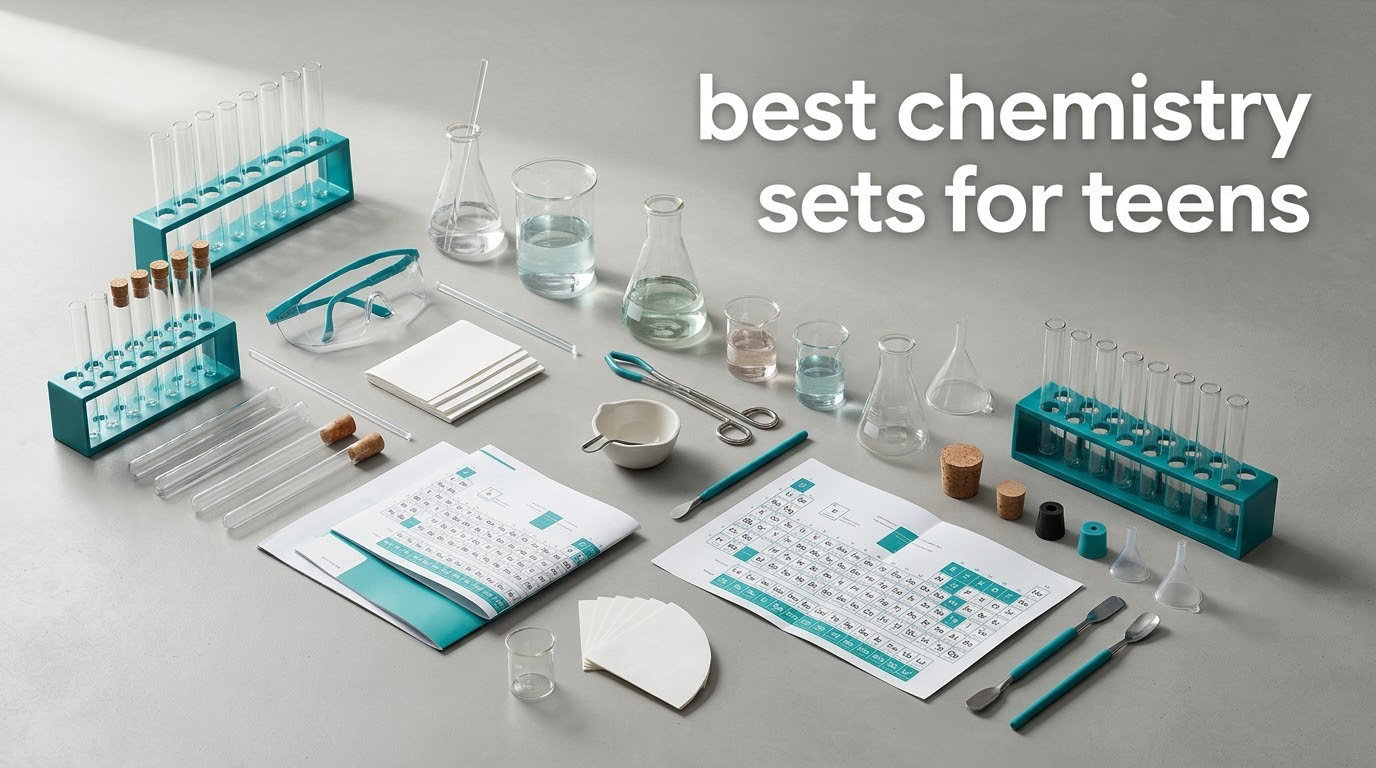
The best chemistry sets for teens are the LINKTOR 444-Piece Molecular Model Kit for structure work and the Thames & Kosmos Chem C1000 for hands-on reactions. Both give a 13-18 year old real chemistry concepts, real equipment and written procedures rather than colored water and baking soda. We grouped all ten picks below by what a teen actually does with them.
Most chemistry kit roundups we read while putting this together aimed at ages 3 to 12. That is a different buyer. A twelve-year-old wants a surprise. A fourteen-year-old wants a project, and a seventeen-year-old preparing for AP Chemistry wants to rehearse technique before the first lab period. The kits on this page were picked for that second group.
Two families show up again and again. Reagent kits come with sealed packets of real chemicals, glassware and a burner so a teen can watch an acid-base neutralization, grow copper sulfate crystals or separate a pigment by chromatography. Molecular model kits come with color-coded plastic atoms and bonds, which is a different kind of learning: no liquid, no flame, no cleanup, and a much lower supervision requirement.
A note on safety before we start, because it is the question parents ask first. Every kit we recommend ships with written safety guidance, and the reagent kits all call for adult supervision. Two of them include an alcohol burner, which means an open flame in your home. That is workable in a garage or basement with a fire extinguisher nearby. It is not workable on a kitchen table while you are making dinner. Our guide to the best drone gifts for teens covers a similar age group and hits the same supervision question from a different angle, if you want to compare how we think about gear for this cohort.
Below is a direct answer first, then the shortlist, then ten full reviews with the numbers that matter, then a buying guide covering age bands, supervision, refills and cleanup.
Table of Contents
Top 3 Picks for Best Chemistry Sets for Teens (October 2026)

LINKTOR 444-Piece Molecular Model Kit
- 136 atoms
- 158 bonds
- Full C60 fullerene model
- Grade 7 through graduate level

Thames and Kosmos Chem C1000
- 125 experiments
- 80-page color manual
- Seven real chemicals
- Includes Z87-rated safety goggles

Thames and Kosmos Chem C3000
- 333 experiments across 27 chapters
- 192-page full-color lab manual
- Alcohol burner and electrolysis equipment
The Best Chemistry Sets for Teens at a Glance in 2026
| Product | Specifications | Action |
|---|---|---|
| LINKTOR 444-Piece Molecular Model Kit |
|
Check Latest Price |
| Thames and Kosmos Chem C1000 |
|
Check Latest Price |
| Thames and Kosmos Chem C3000 |
|
Check Latest Price |
 Duluth Labs MM-003 Organic Chemistry Model Kit Duluth Labs MM-003 Organic Chemistry Model Kit |
|
Check Latest Price |
 RELIANCER 444-Piece Molecular Model Kit RELIANCER 444-Piece Molecular Model Kit |
|
Check Latest Price |
 Molymod MMS-008 Student Set Molymod MMS-008 Student Set |
|
Check Latest Price |
 Happy Atoms Magnetic Modeling Complete Set Happy Atoms Magnetic Modeling Complete Set |
|
Check Latest Price |
 Molymod MMS-009 Student Set Molymod MMS-009 Student Set |
|
Check Latest Price |
 Thames and Kosmos Chem C2000 Thames and Kosmos Chem C2000 |
|
Check Latest Price |
 Molecular Visions Model Kit Molecular Visions Model Kit |
|
Check Latest Price |
1. LINKTOR 444-Piece Molecular Model Kit: Best Overall Chemistry Set for Teens
LINKTOR Chemistry Molecular Model Kit (444 Pieces), Student or Teacher Set for Organic and Inorganic Chemistry Learning, Motivate Enthusiasm for Learning and Raising Space Imagination, A Fullerene Set
444 pieces
136 atoms, 158 bonds
Fullerene model
Grade 7 to graduate
Pros
- 444 pieces with 136 atoms and 158 bonds
- Full C60 fullerene model included
- Builds bond angles and stereochemistry in 3D
- Atoms separate with the supplied tool
Cons
- Documentation is thin
- so you rely on the parts chart
- Some pieces are tight to pull apart by hand
This is the kit I keep coming back to for teens. It has close to 2,400 ratings behind it, and that matters for a different reason than usual: a teen who pulls a kit out of a cupboard on a rainy Saturday in February will quit within a weekend if the parts feel flimsy or the instructions make no sense. This one survives that test, and it is the most-reviewed kit we found in this category.
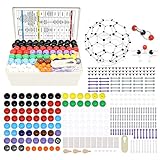
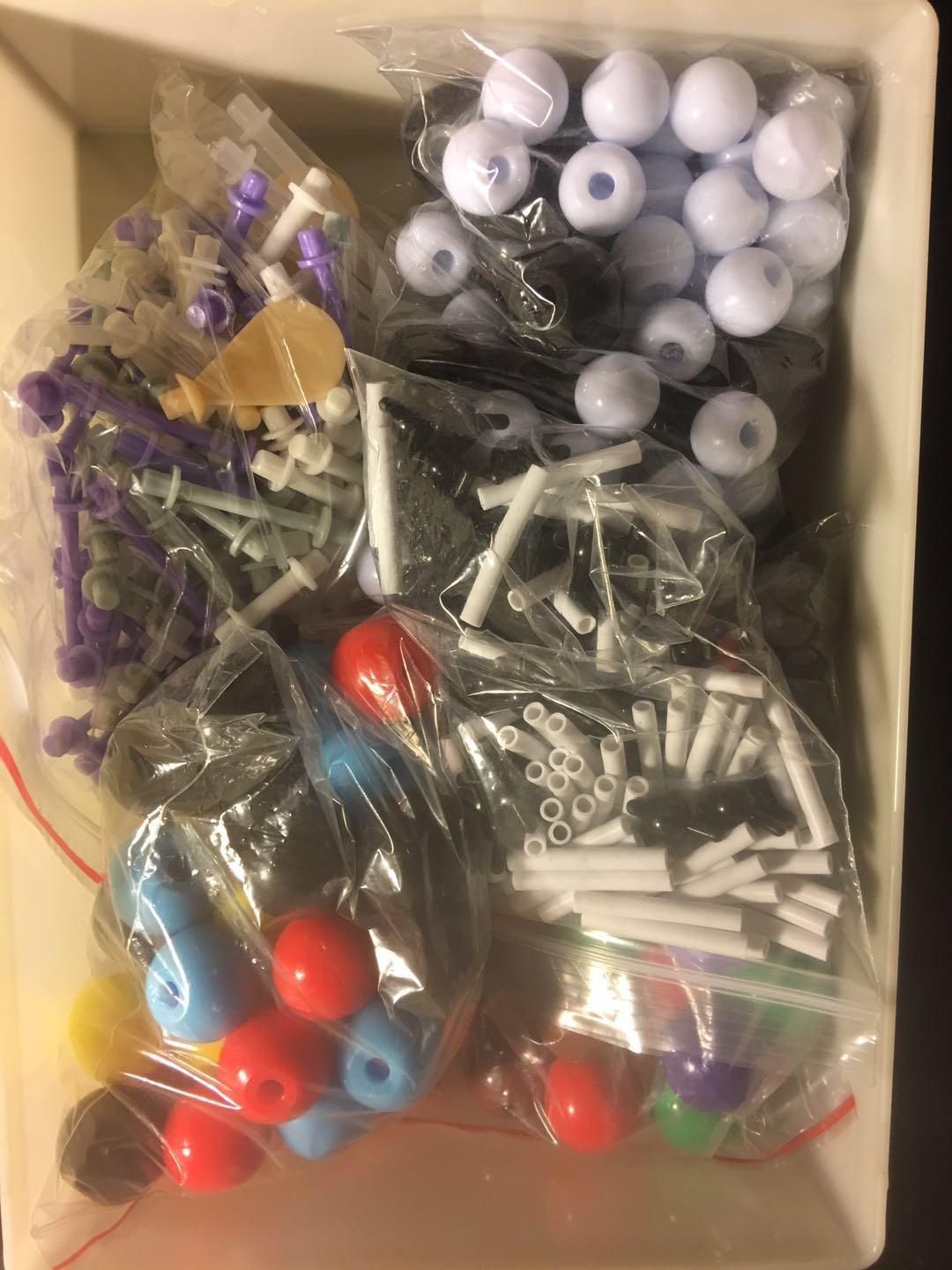
The contents are unusually complete for the money. You get 136 atom parts and 158 bonds, plus 150 separate pieces dedicated to building a Carbon-60 fullerene, the soccer-ball-shaped molecule. That fullerene is not a gimmick. It is one of the structures a teen will actually have to describe in an AP Chemistry class, and building it by hand teaches something a diagram does not.
There is no liquid, no flame and no reagent anywhere in the box. That single fact changes the supervision conversation completely, and it is why this is the easiest of the ten to hand to a 13-year-old without an adult sitting on the same sofa.
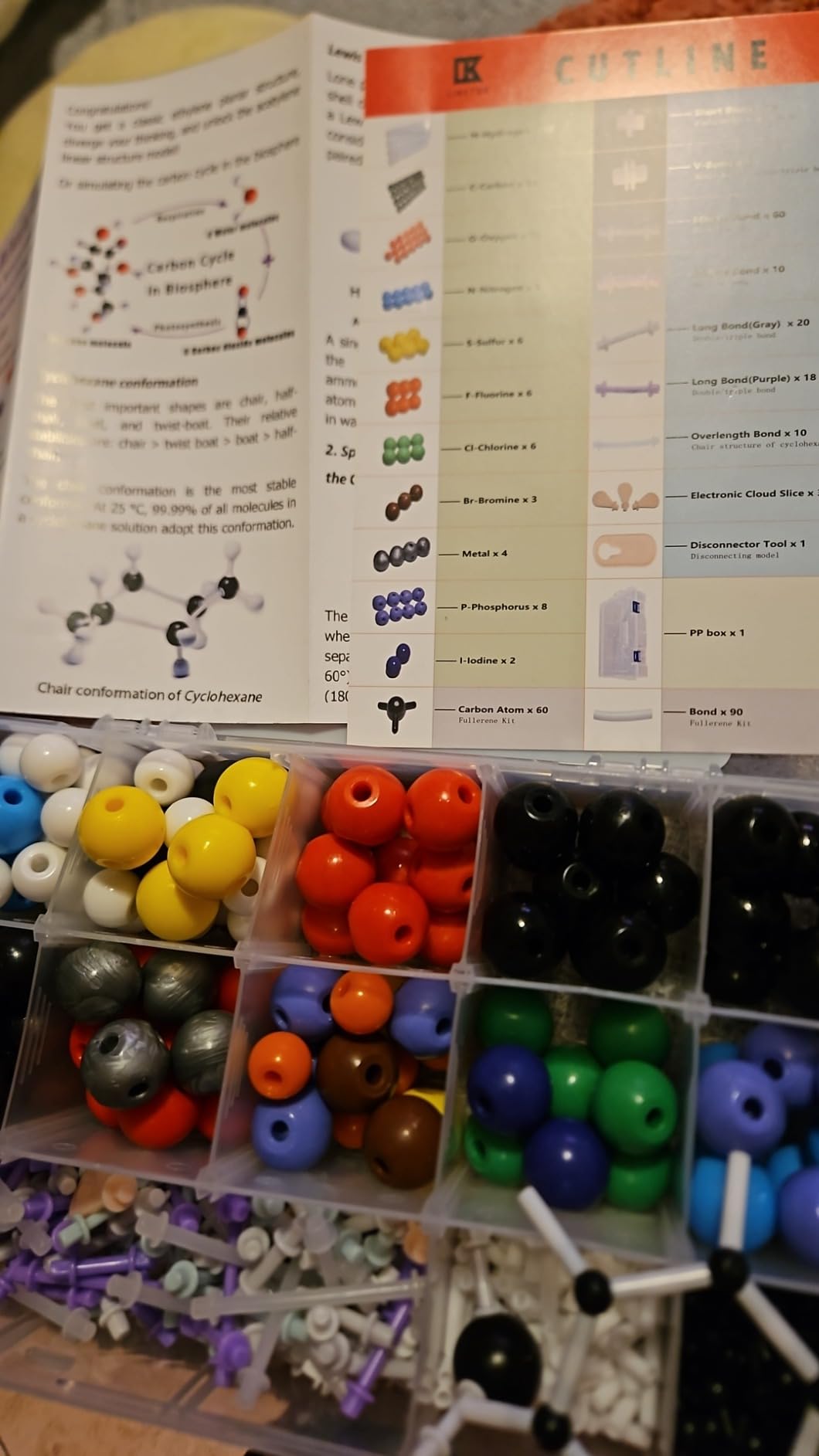
Two modeling styles are supported, which is more than most kits at this level manage. Ball-and-stick gives you bond angles you can measure and compare against what your textbook shows. Space-filling gives you the true relative size of atoms, which is the moment a lot of teens finally understand why a water molecule is bent instead of straight.
Atoms and bonds combine firmly and come apart with the small disconnection tool in the box. Reviewers report that some pieces resist being pulled by hand, so keep the tool within reach rather than letting anyone force a bond with fingers. Colors follow universal standards, so a model built here reads the same way as one in a school lab.
What a teen can actually build with it
Bond angles and stereochemistry are the strength of this kit, and they are exactly the ideas that fail when they are only read. A wedge-and-dash bond looks like a typographical error until you hold a tetrahedral carbon in three dimensions and can rotate it to see two different molecules from the same set of pieces.
The specification is honest about its range: grade 7 through graduate level. A ninth grader will use it for basic functional groups and get years of use out of it. A high school senior in AP Chemistry can build fullerene, model hydrogen bonding geometry and work through stereoisomers without buying anything else.
The two practical limits are documentation and reach. The included material is a parts chart rather than a course, so plan to pair it with a chapter of your teen’s actual textbook. And large molecules run into the usual wall with any single kit, so a second set is the answer if a project grows.
Where it falls short for a teen
This is a modeling kit, not a reaction kit. If your teen’s actual interest is watching a liquid change color, cracking a balloon with gas or growing a crystal, this box will feel like a chemistry-adjacent arts and crafts project. Check what your teen says when asked which of those they want, because that single answer should decide between this kit and one of the reagent kits below.
For a 17 or 18-year-old already running a real home lab, the part count can become a ceiling. Families pairing this with a first-year organic chemistry course often end up buying a second set within a term, so factor that into the decision if you are starting a homeschool sequence rather than buying a one-off birthday gift.
2. Thames & Kosmos Chem C1000: Best Value Chemistry Set for Teens
Thames & Kosmos Chem C1000 (V 2.0) Beginner Chemistry Set | 125 Experiments, 80-Page Full-Color Lab Manual, Real Lab Equipment & 7 Chemicals | Parents’ Choice Gold Award | STEM Science Kit Ages 10+
125 experiments
80-page color manual
Seven real chemicals
Z87-rated safety goggles
Pros
- Well-illustrated manual a teen can follow unaided
- Includes real glassware and seven genuine chemicals
- Z87-rated safety goggles in the box
- Strong foundation many users upgrade from
Cons
- Many experiments need household extras not supplied
- Opening experiment calls for sand most buyers lack
- Some activities require a full day of waiting
This is the most sensible first chemistry set for a 13 or 14-year-old, and with 641 ratings it is also the most proven entry point on this list. It was designed and manufactured in Germany to the EN 71-4 safety standard, which is a specific chemical-toy standard rather than a general toy certificate. That distinction matters more than most parents expect.
The manual runs 80 pages in full color with 125 experiments across 10 themed chapters. The activities are not just color changes. They cover invisible inks, paper chromatography, electrolysis and generating electricity from a chemical reaction, which is the same underlying idea behind a fuel cell.
Only seven chemicals come in the box, and the list is short enough to name: sodium carbonate, potassium hexacyanoferrate(II), calcium hydroxide, ammonium iron(III) sulfate, copper(II) sulfate, citric acid and litmus powder. Those seven are enough for real acid-base work with litmus and a genuine pH scale, not a pretend one.
The equipment is the part that often surprises people. You get glass test tubes, two graduated beakers with lids, a funnel, three dropper pipettes, copper wire, rubber stoppers, an angled glass tube, a measuring spoon, filter paper, a 9-volt battery clip and Z87-rated safety goggles. The goggles are the single most important line in that list, because a teen who skips them will not be doing the experiments you imagined.
Because there are no customer photos returned for this listing, we leaned on the written review record rather than owner images. The dominant theme across 641 reviews is a satisfied teen and good value for the number of experiments in the box.
What to read before you hand it over
The most common complaint is the extras list. Many experiments require household items that are not supplied, and reviewers are clear that the manual’s list of extras is incomplete. Read the first ten experiments the week before, write down what is missing, and gather it in one trip rather than letting your teen discover the gap mid-project on a Sunday.
Two smaller warnings. The very first experiment calls for sand, which almost nobody has on hand. And several activities need a full day of waiting, so a teen with a short attention span will lose interest if every result is instant. Pair the kit with something that takes a week, like a crystal project, and the pacing works much better.
Who should skip this kit
A 17-year-old already running through an organic chemistry textbook will find 125 experiments basic, and the manual measures liquids in centimeters rather than milliliters, which confuses some users. In that case step up to the Chem C3000 rather than buying this one and adding to it six months later.
The other group to consider is parents working in a small kitchen with no ventilation and no clear work surface. This kit has no flame, which is a real advantage, but it still stains, and it still produces liquid waste. Set it up on a tray, not on a table you care about.
3. Thames & Kosmos Chem C3000: Best for Advanced Teens Who Want a Real Lab
Thames & Kosmos 640132 Chem C3000, Chemistry Set, Includes Components From The Thames and Kosmos C2000 Plus Dozens of Additional Tools and Chemicals, 333 Experiments, 103 Pieces, Experiment Kit, 12+
333 experiments
192-page lab manual
Real glassware and burner
Ages 12 to 20
Pros
- Most complete home chemistry set we reviewed
- 192-page manual compared favorably to a college lab manual
- Real glassware
- electrodes and an alcohol burner
- Built in Germany to the EN 71-4 standard
Cons
- Some chemicals must be purchased separately to finish the list
- Includes empty labeled bottles for chemicals not provided
- Open flame and corrosive solutions need strict supervision
This is the only kit in the group that reviewers describe as a high school chemistry course in a box, and that description is closer to the truth than marketing usually gets. The manual is 192 pages of full color covering 333 experiments across 27 chapters, spanning inorganic, organic and electrochemistry work. Reviewers compare it favorably to the lab manuals their teenagers were handed at school.
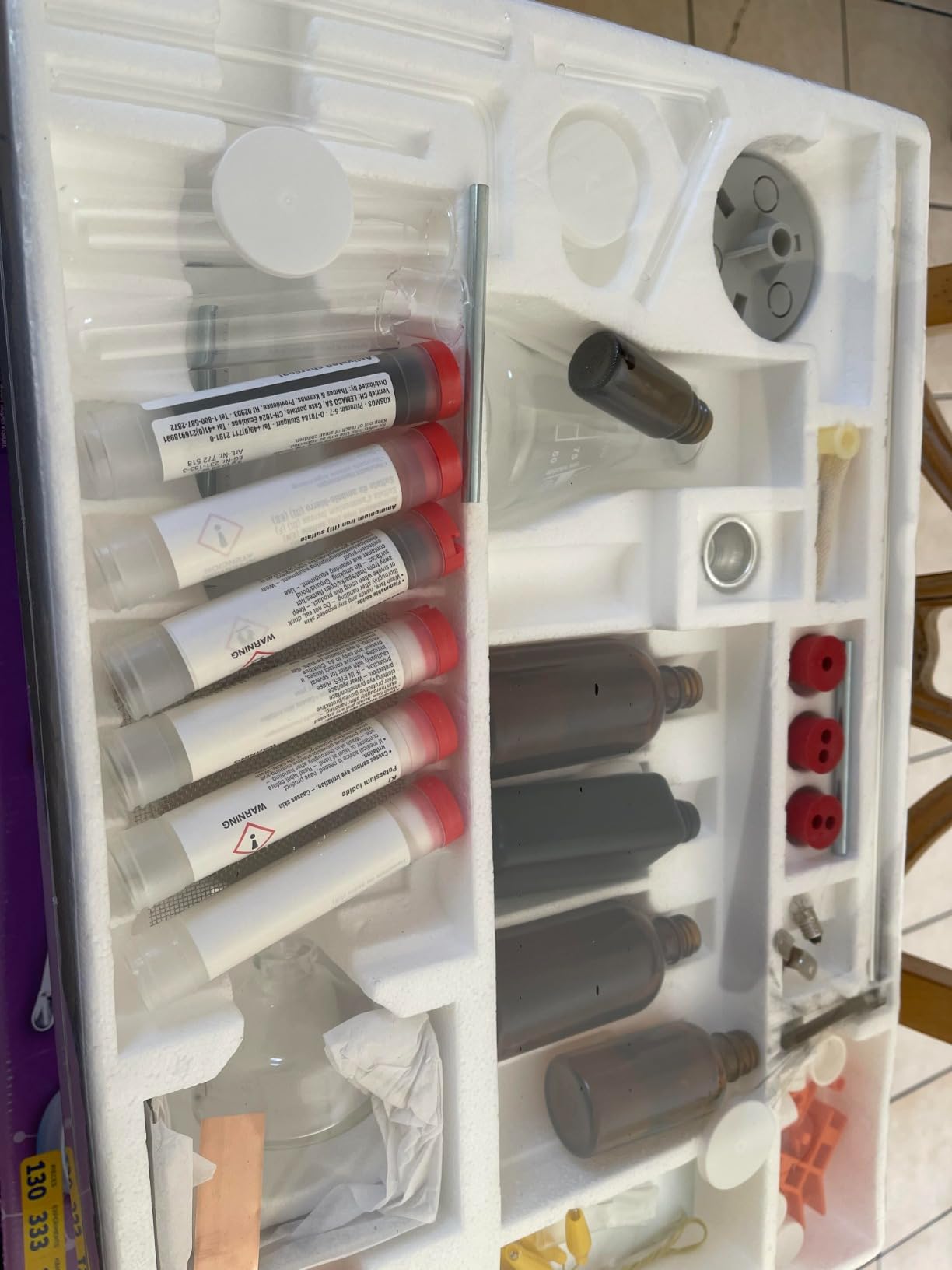
The equipment list is the serious version of a home kit. Glass test tubes, beakers, an Erlenmeyer flask, a tripod stand, an alcohol burner, dropper pipettes, a syringe, a funnel, filter paper, stoppers, glass and rubber tubing, a carbon electrode, copper and zinc sheets, alligator-clip wires and safety goggles. A teen who works through the electrochemistry chapters is practicing the same setup as a classroom demonstration.
Manufacturer recommended age is 12 to 20 years, which makes it the most age-appropriate pick here for a 16 or 17-year-old. It is also the heaviest commitment in terms of supervision, and we would not suggest it for a home without a clear work area.
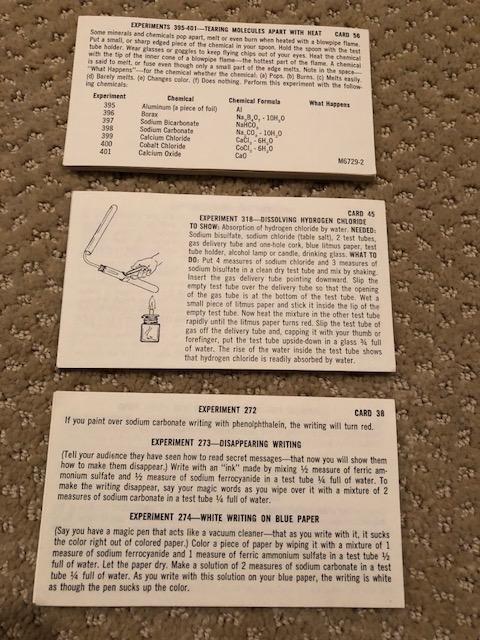
What the chemical inventory supports is worth spelling out, because it explains why 333 is a credible number. Redox reactions, electrolysis, acid-base work, paper chromatography and organic reactions all need reagents in the box, and the rating distribution shows 72 percent five-star and 15 percent four-star across 251 reviews.
The chapter structure also gives a homeschool family something to sequence. You can work straight through in order, or jump to the organic section if that is where the school year is heading. That flexibility is the practical advantage of a manual this size over a pile of loose experiment cards.
What to budget and prepare before opening it
Read the reagent list end to end before the first session. Reviewers report that a number of the chemicals needed for the full experiment count are not included and must be obtained separately, and that the kit contains empty labeled bottles for some of them. That is normal for a kit this size, but it is a surprise on day one if you are not ready for it.
Two more practical notes from the review record. Some components are reported as less sturdy than expected for a set that gets handled a lot, so supervise younger teens and check glassware before each session. And because an alcohol burner is included, plan the space: heat-resistant surface, ventilation, a fire extinguisher within reach, and an adult present for any heat-based experiment.
How to know if your teen is ready for it
The test is whether they have already finished a beginner kit and want more than a single dramatic result. If a 15-year-old is still excited by color-change foam, the Chem C2000 is a better bridge. If a 16-year-old asks what molar concentration means, or wants to see a reaction with a controlled variable they set themselves, this is the kit that will hold them.
It also serves as a genuine bridge to AP Chemistry practice. Students who rehearse titration technique, filtration and electrolysis at home arrive at the first lab period already comfortable with the equipment, which is the single biggest advantage home chemistry can offer.
4. Duluth Labs MM-003: Top Rated Model Kit for Organic Chemistry
Duluth Labs Organic Chemistry Model Student Kit – (125 Pieces) – MM-003
125 pieces
54 color-coded atoms
Ball-and-stick and space-filling
9.5 inch cube case
Pros
- Tied for the highest rating in this group
- Snug fit that stays assembled during use
- Models hybridization and bond rotation accurately
- Hard case survives a book bag
Cons
- Only 14 carbon atoms
- Weak on cyclohexane chair flips
- Bulky to carry to class
At 4.7 stars from 653 ratings, this is tied for the highest rating in this group, and owners studying organic chemistry call it the best value on the market. Several mention comparing it favorably to campus bookstore sets that cost several times more. The kit itself is 125 pieces with 54 color-coded atoms and connectors, and the case measures 9.5 inches on a side.
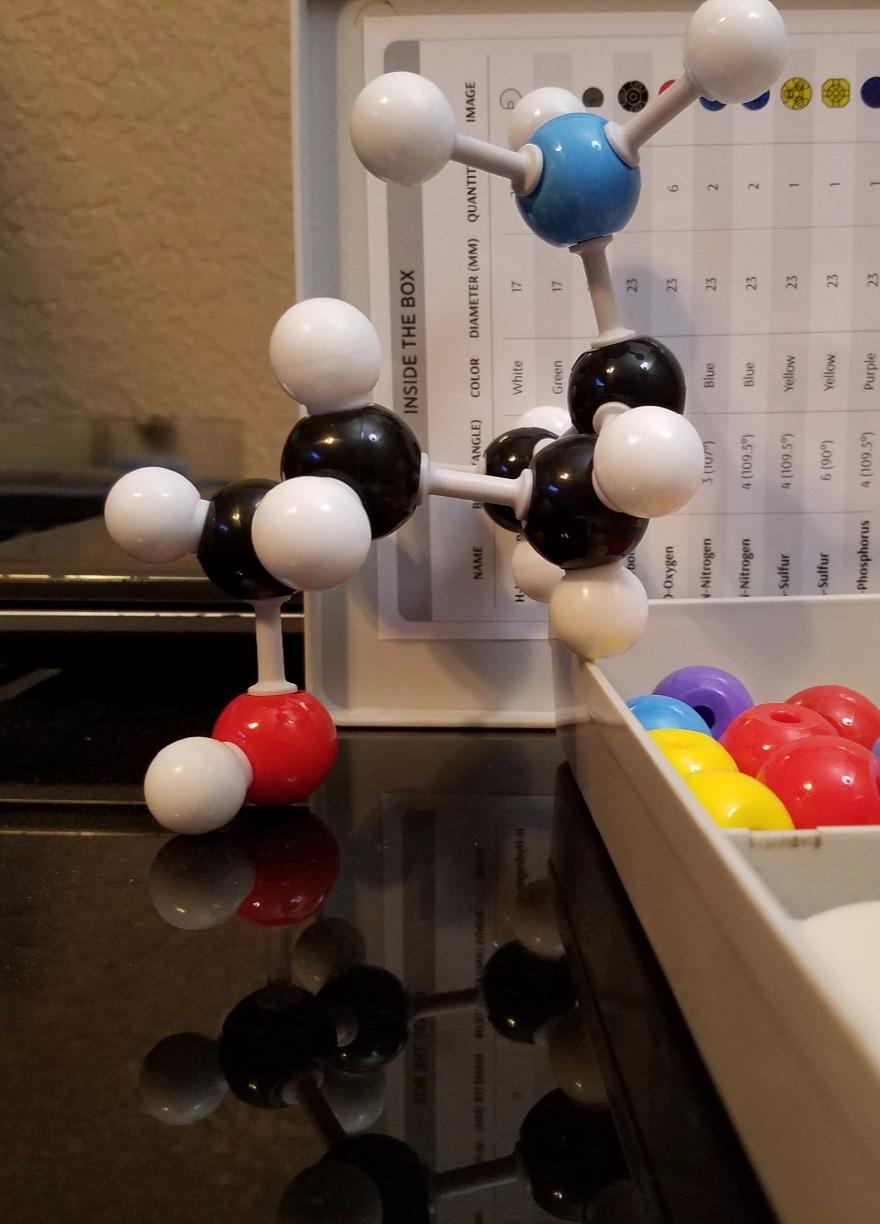
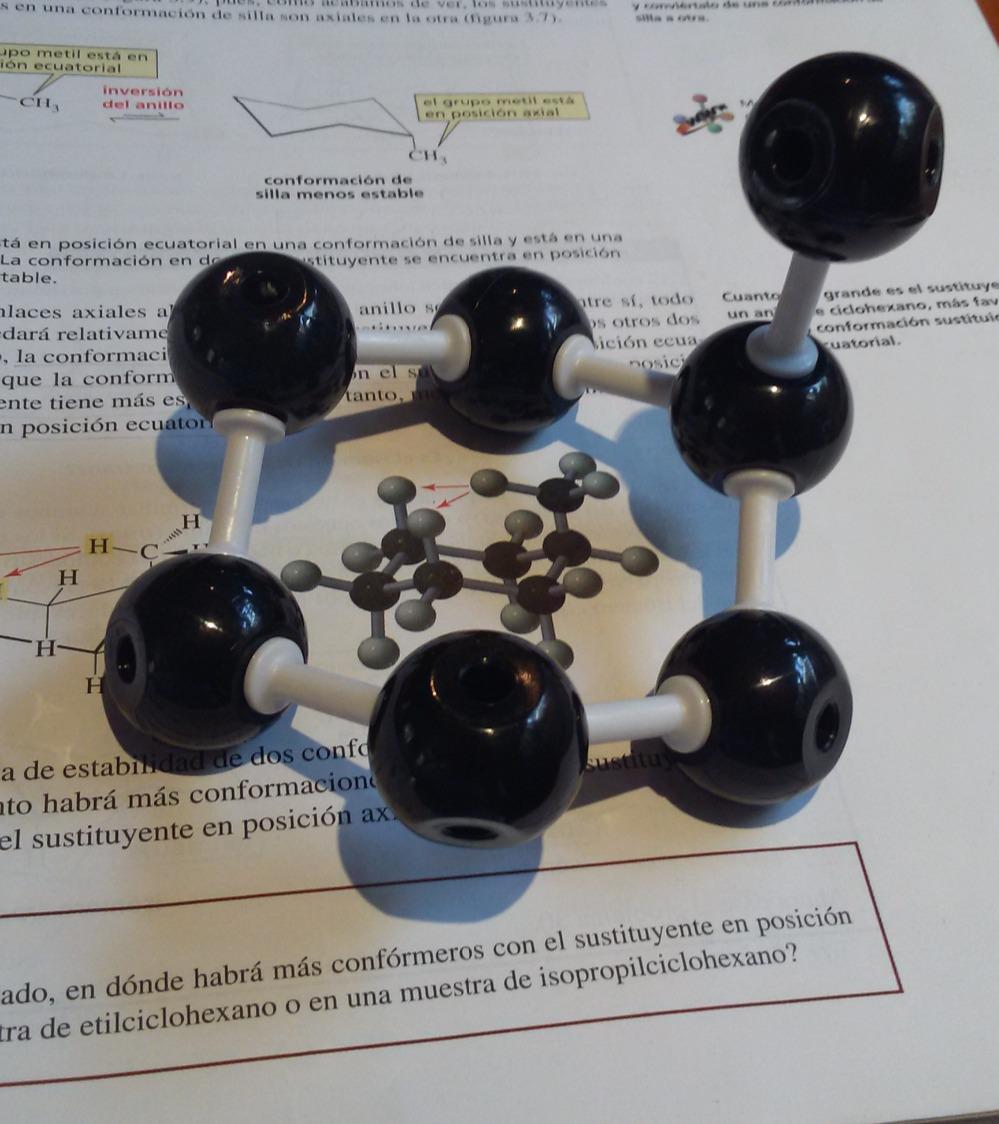
What sets it apart technically is accuracy on the point organic chemistry students struggle with most: rotation. This kit models orbital hybridization and the difference between free rotation and the restricted rotation imposed by a double bond. If your teen has ever drawn cis and trans structures without really seeing why the two forms differ, a physical model makes that click faster than any diagram.
It supports both ball-and-stick and space-filling styles, the atoms are color-coded to universal standards, and instructions printed on the inside cover identify every atom and connector. A small molecular tool for quick disassembly is included, and the pieces fit snugly while still releasing cleanly.
Why teachers keep coming back to it
Large, easy-to-see pieces are the reason classroom buyers like this one. A demonstration model needs to be readable from the back of a room, and the reported piece quality holds up to that use. Owners also note that the hard case stays closed in a book bag and keeps parts organized between sessions.
For a homeschool family, the inside-cover reference is quietly useful. When a chapter introduces a new functional group, the label for that atom is already in front of you, which removes a lot of friction that would otherwise stall an independent study.
Where the 14-carbon limit bites
Fourteen carbon atoms is the practical limit, and larger molecules require a second set. That is the most common complaint in the record. The kit is also not ideal for demonstrating cyclohexane chair flips or cyclic bond rotation, so if your teen’s course leans hard on conformational analysis, budget for a second set or pair it with a different kit.
Two smaller annoyances: the box dividers do not extend to the top, so connectors migrate between compartments, and the case is bulkier than some competing kits if it has to travel to class regularly. For a teen working at a kitchen table, neither matters much.
5. RELIANCER 444-Piece Molecular Model Kit: Best for Teachers and Homeschool Groups
RELIANCER Molecular Model Kit,444PCS Organic Molecular Chemistry Set w/C60,Atoms,Bonds,Molecular Structures Building Kit for Chemistry Learning,STEM Science Kits for Teachers,Students,Young Scientists
444 pieces
136 atoms, 154 bonds
Three electron cloud slices
Full C60 model
Pros
- Five bond types including V-bonds for space-filling
- Electron cloud slices are rarely included elsewhere
- Fullerene model holds together securely
- Supports grade 7 through university
Cons
- Instruction guide is mostly a parts list
- Storage box has no dividers
- No fullerene assembly instructions included
This is the kit to buy when more than one person is building at once. It holds 444 pieces: 136 atom parts, 154 bonds in five lengths and types, three electronic cloud slices, a complete fullerene model of 60 carbon atoms with 90 bonds, and a removal tool. The recommended age is 13 and up, and the stated range runs from grade 7 through university level.
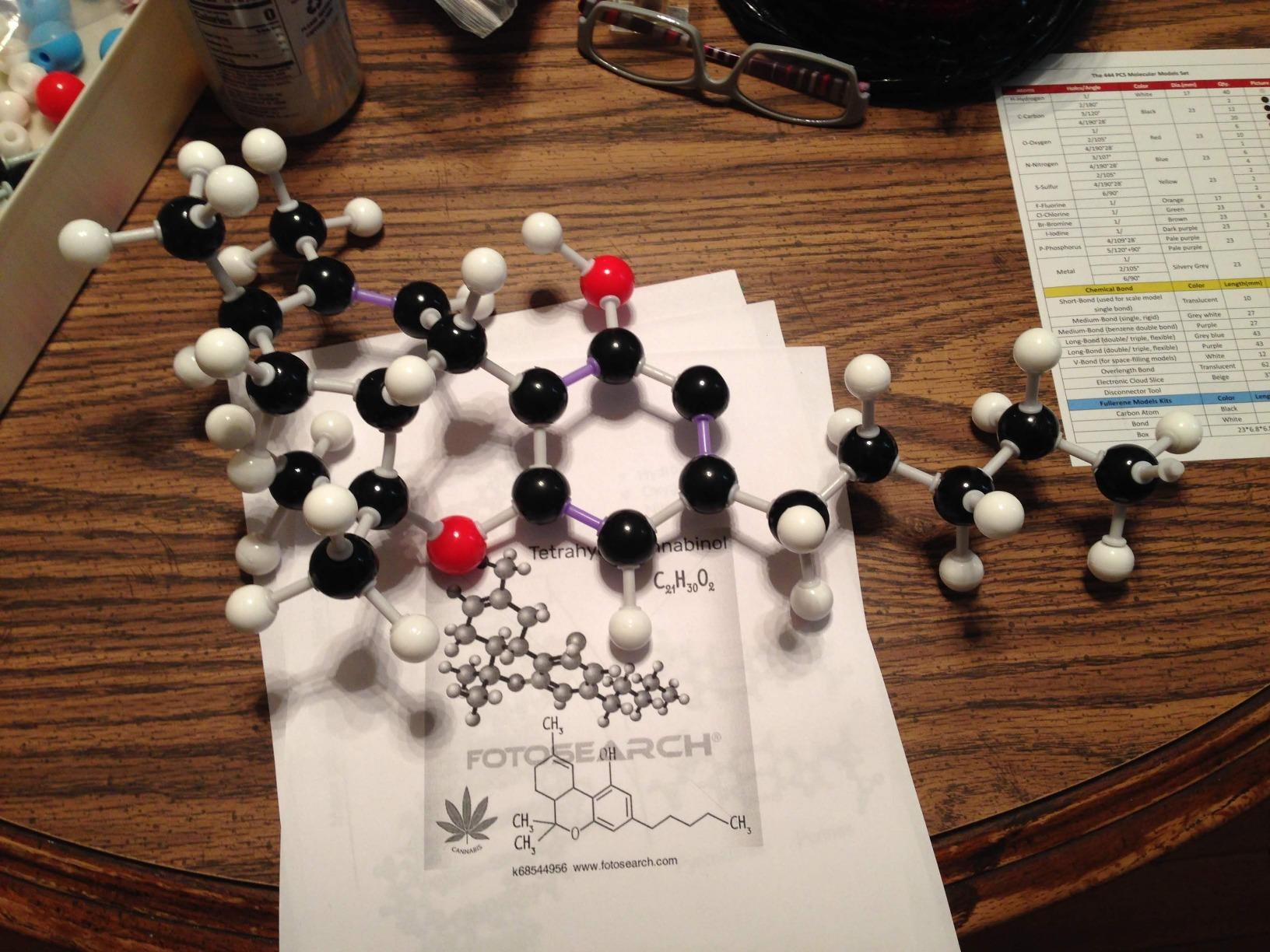
Those five bond types are the reason it is popular with teachers. Long flexible, medium hard, short scale, overlength and V-bonds give you genuine flexibility in modeling, and V-bonds specifically are what you need for space-filling representations. Few kits at this piece count offer that range of connector types.
The atoms are non-toxic polypropylene and the links are low-density polyethylene, and reviewers consistently praise the smoothness of the plastic and the fact that the connector holes are neither too tight nor too loose. That last detail sounds minor until you have built four hundred connections and your fingers hurt.
The parts you will not find in other kits
Three electronic cloud slices let you show electron density, which is central to how organic chemistry is actually taught. Two, three and four-hole carbons are included as well, so branched structures do not need improvised workarounds. These are small parts that make a disproportionate difference to the quality of a lesson.
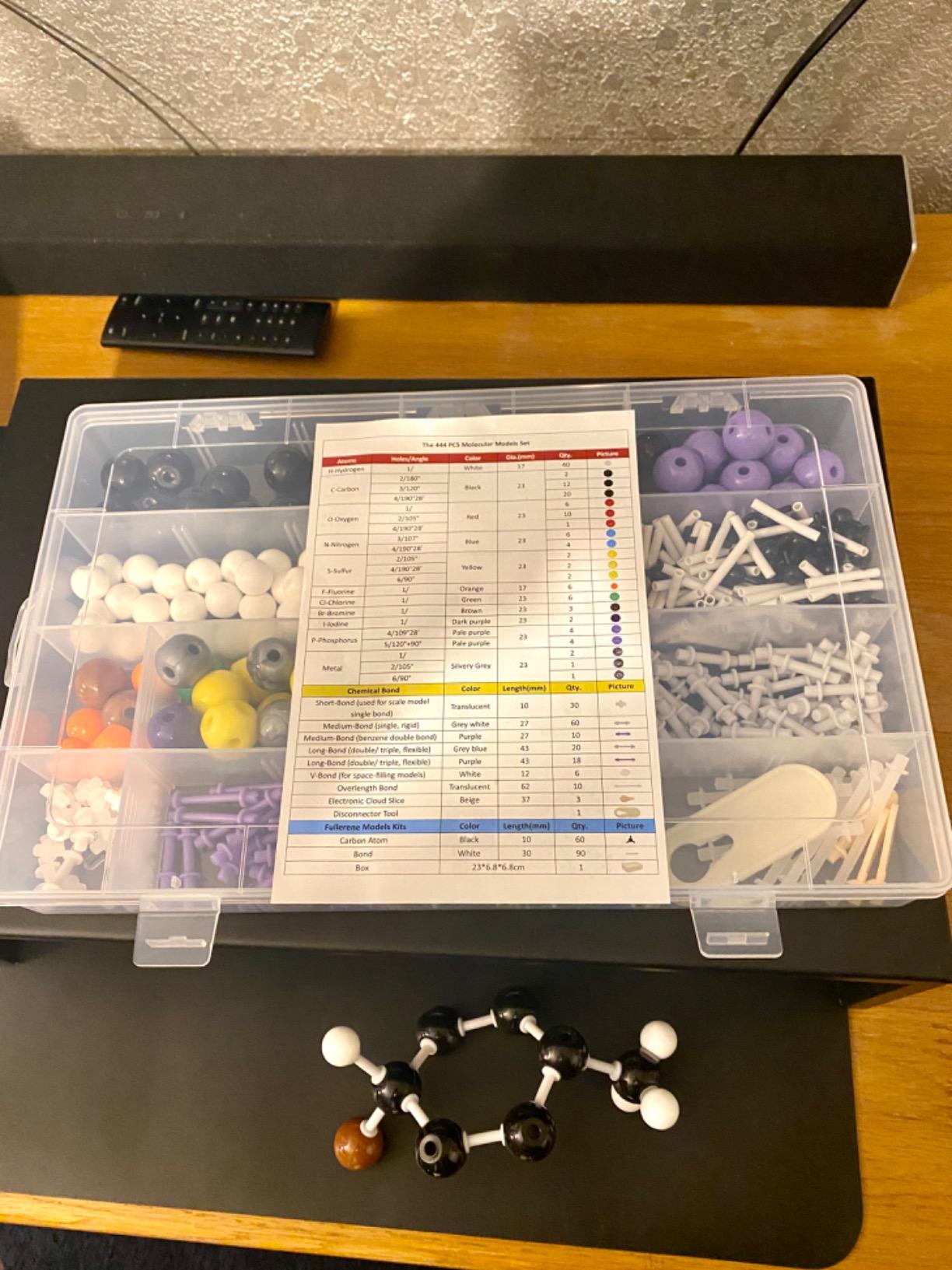
Reviewers single out the complete C60 fullerene as a standout feature. Building it takes patience and produces a model you can leave on a shelf as a genuine conversation piece. Teachers report that it works from seventh grade up to a first-year university course, which is rare for a single kit.
The documentation gap is the real limitation
The instruction guide is essentially a parts list with few worked examples, and there are no assembly instructions for the fullerene. If your teen or student works independently, this kit needs an adult or teacher who already knows molecular modeling to demonstrate the first few builds. Without that, the pieces can sit unused.
Storage is also a hassle. The box has no dividers, so plan on bagging parts by element if more than one person is building, otherwise a 444-piece kit becomes a search exercise every time. We also saw one reviewer note that the piece count feels smaller in practice because lone-pair parts are limited, which caps how large a structure you can finish.
6. Molymod MMS-008: Best for Durable Parts in a Shared Household
Molymod MMS-008 Organic Chemistry Molecular Model, Student Set (53 Atom Parts)
50 atom parts, 62 links
Grades 7 to 12
17 to 23mm atoms
Four-compartment box
Pros
- Piece counts match the advertised photos exactly
- Sturdy plastic that assembles and disassembles well
- Well below campus bookstore equivalents
- Standard color coding graduates recognize
Cons
- Stiff short links are hard to remove without the tool
- Limited to 12 carbon atoms
- Only one phosphorus atom
With 813 ratings at 4.6 stars, this Molymod student set is among the most established options on the list, and the first thing owners mention is that the piece count matches the advertised photos exactly. That sounds like a small thing until you have assembled a kit yourself and found three connectors missing.
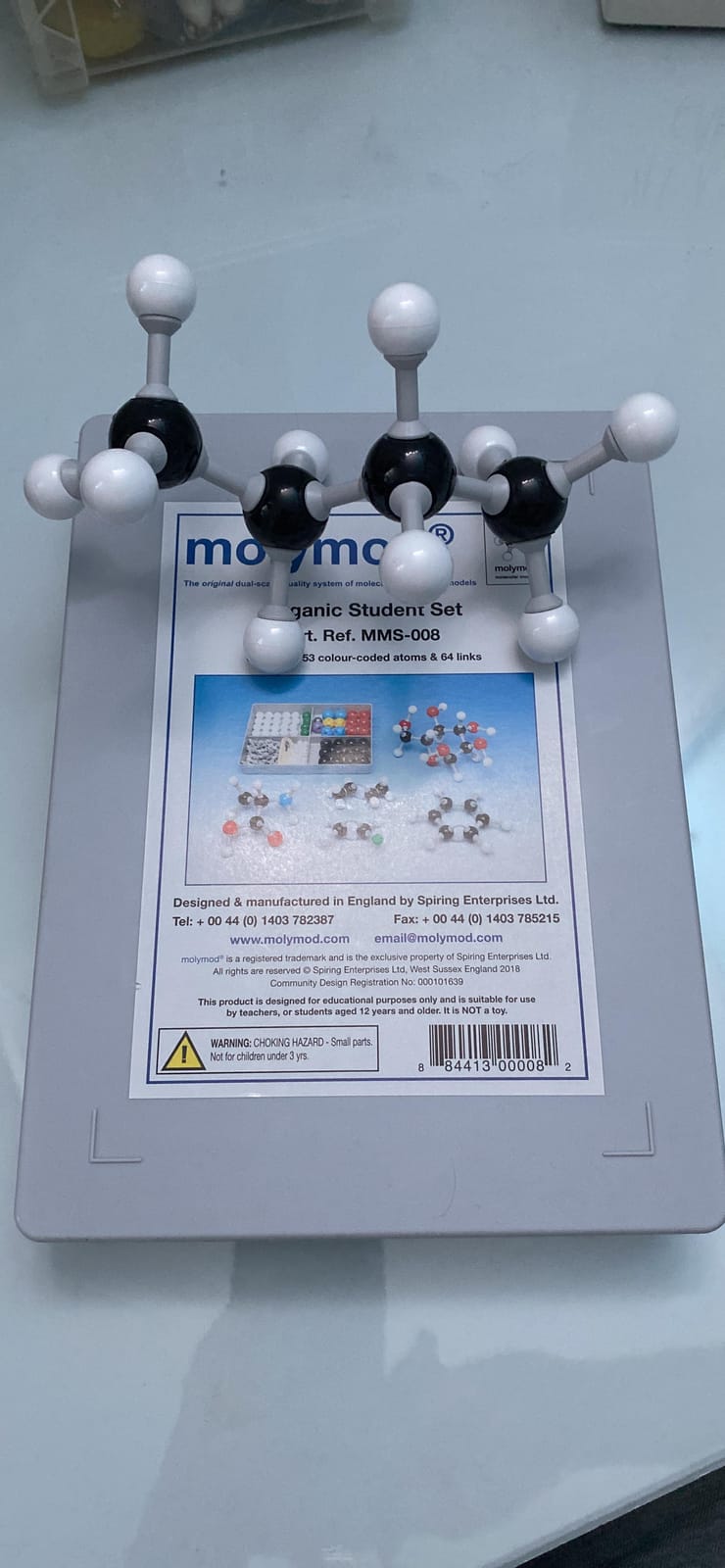
You get 50 atom parts and 62 links, sized from 17mm to 23mm in diameter and color-coded to national standards. Short, medium and long links cover single, double and triple bonds, which is the range needed for a full introductory organic chemistry course.
Many owners switched to this kit after disappointing experiences with bookstore models, and the reported quality is consistent: sturdy plastic, easy assembly, straightforward disassembly. The included plastic storage box has four compartments and a removal tool, so this is the tidier option for a household with two teens working on the same chapter.
Where the part count becomes a problem
Twelve carbon atoms is the ceiling. A senior working through larger molecules will hit the limit quickly, and the standard advice from owners is to buy a second set rather than work around it. If you already own one of the 444-piece kits on this list, this one adds less value for a home user.
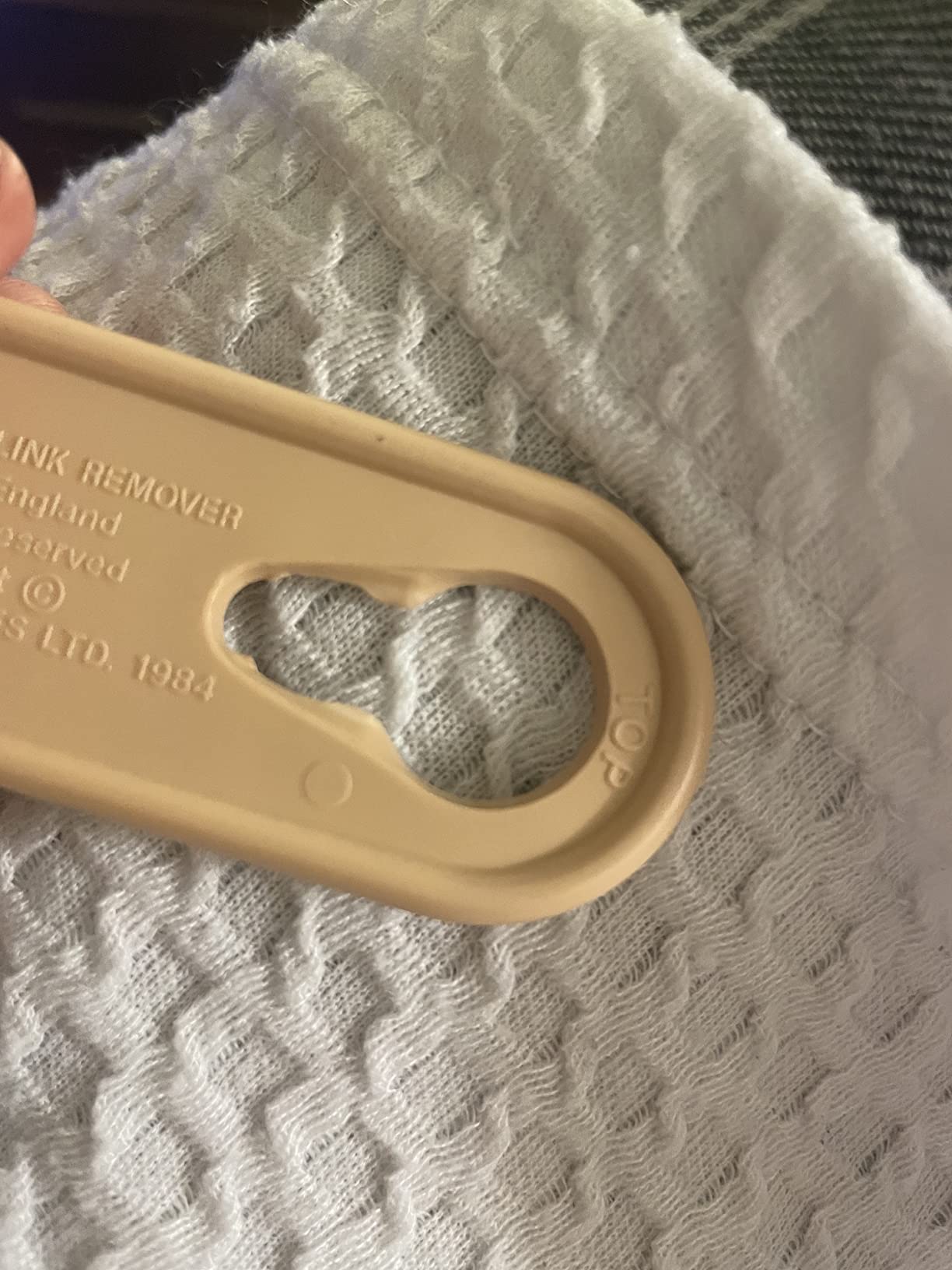
There is also only one phosphorus atom, which is limiting for biochemistry work, and the set cannot build trigonal bipyramidal geometry. Those are genuine gaps for a student heading into second-year chemistry, but for a 13 to 15-year-old working through first-year material they rarely come up.
The one thing to watch when assembling
Some atoms and short links are difficult to remove and can hurt hands without the removal tool. Train your teen on this in the first ten minutes, because a pinched finger ends the modeling session faster than anything else. Once the habit is set, the kit is genuinely durable for repeated use.
One more practical note: the storage box has no padding and rattles loudly when carried. For a kit living on a shelf at home that is irrelevant. For a teen taking it to a classroom or library, wrap it in something soft first.
7. Happy Atoms Magnetic Modeling Set: Best for Visual and Kinesthetic Learners
Happy Atoms Magnetic Molecular Modeling Complete Set | Intro to Atoms, Molecules, Bonding, Chemistry | Create Thousands of Molecules, 216 Activities, Plus Free Educational App for iOS, Android
50-atom set
216 activities
Free iOS and Android app
Includes scanning mat
Pros
- Makes electron transfer and bonding visible
- Magnets are durable and correctly strong
- Reported to hold interest for hours and last years
- Works for visual and kinesthetic learners
Cons
- App misidentifies atoms and molecules when scanning
- Some users report crashes on Android
- Triple bonds are difficult to construct
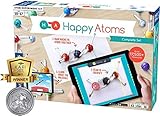
This set answers a specific question: how do you make a teen care about electron shells? The answer here is that the atoms are magnetic, so a sodium with one visible electron can actually be pulled toward an oxygen with six. A teen who has read the words for ionic bonding and then watched the transfer happen understands it differently, and 216 guided activities give that moment plenty of chances to repeat.
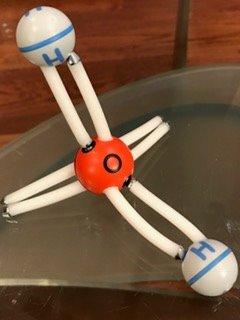
Manufacturer recommended age is 10 to 17 years. The 50-atom set covers the common elements of the periodic table, including 14 hydrogen, 6 carbon, 6 oxygen and 2 each of several others, and it comes with a scanning mat, a quick start manual and a drawstring storage bag.
Parents and teachers report children staying engaged for hours and using the set across multiple years, and it works well alongside other science curricula. For a teen who learns by touching and rearranging, that is often the difference between a kit used once and a kit used all year.
The software is the weak point
The companion app scans a built molecule and identifies it, showing bond types, room-temperature state, bonding and toxicity. Owners report the scanning recognition is frequently wrong and has to be corrected by hand, and that some users see crashes, particularly on Android. Several reviewers note later versions improved on this, so check the current version before assuming the earliest complaints still apply.
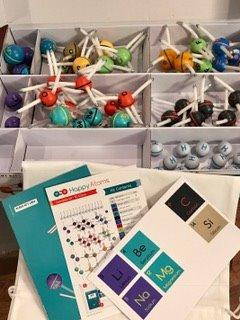
Two smaller limits worth knowing. Triple bonds are difficult to construct with the supplied pieces, and the app is not usable independently by early readers, so a younger teen still needs help. The full benefit also requires the Complete Set rather than the Introductory Set, so confirm which variant is in the box.
How to get the most out of it
Treat the app as a check rather than a teacher. The physical atoms are the product; the scan is a bonus. When it misreads a molecule, that correction moment is actually useful, because your teen has to go back and count electrons to see why the software was wrong.
For a homeschool family, this pairs naturally with a unit on atomic structure or bonding. The 216 activities are short enough to use as a daily warm-up, and the scanning mat makes the work feel like a task with a result rather than reading. For a 17-year-old in a first-year chemistry course, it is a genuine refresher for concepts that get assumed rather than retaught.
8. Molymod MMS-009: Best for Inorganic and Organic Structures Together
Molymod MMS-009 Inorganic/Organic Chemistry Molecular Model, Student Set (52 atom parts)
52 atom parts
Grades 7 to 12
17 to 23mm atoms
Four-compartment box
Pros
- Covers inorganic and organic structures in one set
- Durable color-coded plastic in a classroom format
- Four-compartment box keeps parts sorted
- Long-established Molymod line
Cons
- Limited atom count for larger molecules
- Listed age range description is inconsistent
This is the set to choose when a teen’s course covers inorganic chemistry alongside organic, because it demonstrates inorganic molecules and empirical formula representations as well as organic structures in the same box. It is the companion to the Molymod MMS-008 on this list, with 52 atom parts instead of 50 and a slightly wider brief.
The build is the standard classroom format that graduates recognize: durable plastic atom parts and links, color-coded to national standards, with atom parts ranging from 17mm to 23mm in diameter. A plastic storage box with four compartments is included, and the whole thing measures about 9.25 by 6.69 by 1.38 inches.
The 4.6 rating comes from 364 ratings. No written customer review excerpts were returned with the listing data we pulled, so our read on this kit rests on the specification, the established Molymod line and the format it shares with the better-reviewed MMS-008.
What a teen gains from having both in one set
Empirical formulas are the concept this kit handles that most others skip. A teenager who can build sodium chloride and then the lattice structure behind it understands why the formula is a ratio rather than a picture of the compound, and that idea quietly reappears throughout a first-year course.
Color coding matching what is used at school is worth more than it sounds. When a teacher draws a structure on a whiteboard, your teen is matching colors rather than translating between two systems, which removes a layer of friction that students rarely name but all feel.
Know the limits before you commit
Atom count is the constraint, as with any student set. Building larger molecules quickly becomes a question of whether you own a second kit, and a teen working toward a second year of chemistry will get there faster than expected.
One listing detail to check before you buy: the age range description on this product page is inconsistent, showing a range that does not match the stated 7 to 12 grade audience. Treat the grade level, not that field, as the guidance. This is a model kit with no chemicals, so supervision needs are low, but a parent should still set expectations about not taking it apart.
9. Thames & Kosmos Chem C2000: Best Chemistry Set for Ages 11 to 15
Thames & Kosmos Chem C2000 (V 2.0) Intermediate Chemistry Set | 250 Experiments, 128-Page Full-Color Lab Manual, Real Lab Equipment & Alcohol Burner | Parents’ Choice Silver Award | Ages 11+
250 experiments
128-page color manual
Alcohol burner included
Ages 11 to 15
Pros
- Good intermediate step up from beginner kits
- Manual includes disposal instructions
- Several children can work through it together
- Produces visible results like copper sulfate crystals
Cons
- Chemical supply runs out and needs restocking
- Household extras required beyond the supplied list
- Burner fuel not included
This is the middle rung on the Thames and Kosmos ladder, and it sits exactly where a 12 or 13-year-old outgrows the Chem C1000 but is not ready for 333 experiments. Manufacturer recommended age is 11 to 15 years, and the manual runs 128 pages in full color with 250 experiments across 18 themed chapters.
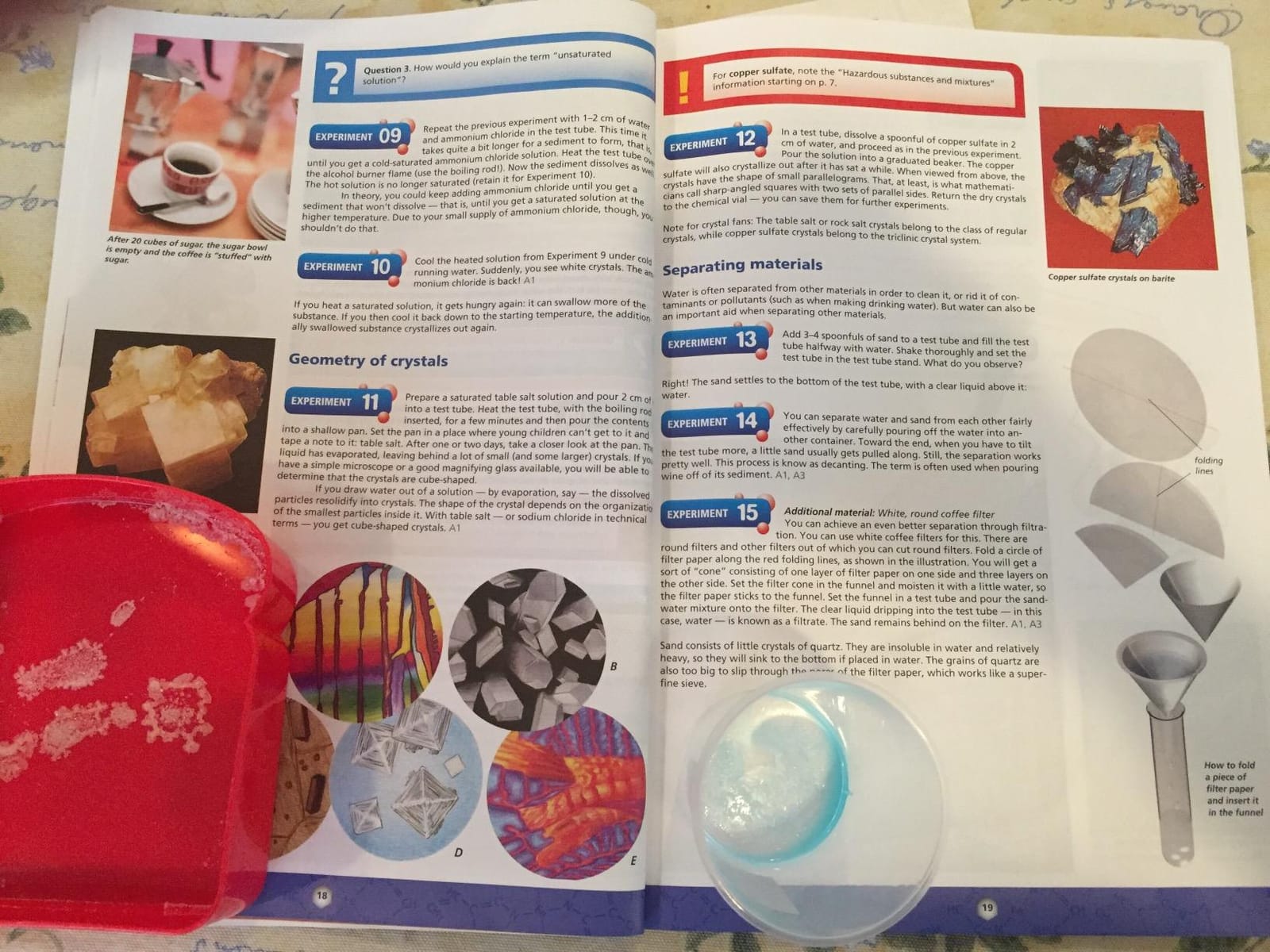
The topic list is the argument for it. It covers acids and bases, water chemistry, oxygen and air, carbon dioxide, sulfur dioxide and acid rain, chlorine, iron and copper, food chemistry, surfactants and soaps, paper chromatography and luminol. That is a genuine middle-school-plus syllabus rather than a set of party tricks.
Equipment includes an alcohol burner, tripod components, electrolysis equipment, glass test tubes and two graduated beakers, and 50 lab quality components in total. Like the other Thames and Kosmos reagent sets here, it is designed and manufactured in Germany to the EN 71-4 safety standard. A Parents’ Choice Silver Award is cited on the listing.
Two things to prepare before the first session
The chemical supply is limited and runs out, so the set eventually needs restocking. Owners also report that several extras are required beyond the supplied list, including denatured alcohol, iodine solution, steel wool and hydrogen peroxide, and that the manual’s list of extras is incomplete. Add burner fuel to that shopping list as well, because it is not included.
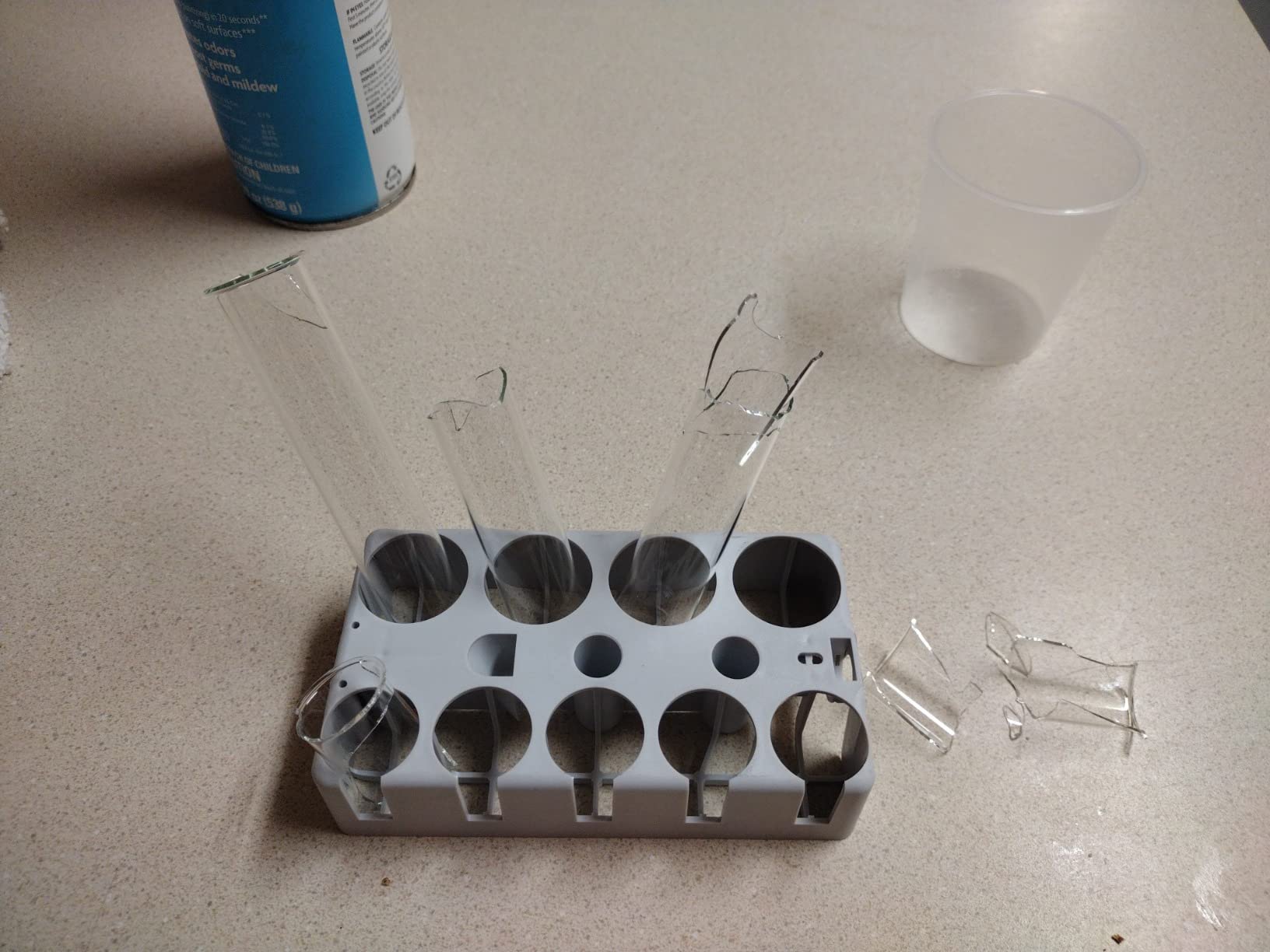
One more to know: the included safety goggles are reported by some reviewers to fit poorly. Have your teen try them on before the first experiment, and keep a backup pair of sealed safety glasses in the box. It is a small thing that is much easier to fix before the goggles are needed.
Who gets the most out of this kit
Multiple children in a family can work through the experiments together, which is the strongest argument for it. Two teens or a teen and a younger sibling can split chapters, and visible results like salt and copper sulfate crystals keep both engaged when one experiment is waiting overnight.
On the other hand, a 16 or 17-year-old with a real textbook will read this manual and find it pitched below them. The 4.2 rating across 186 reviews reflects a set that does its job well for its stated age band without reaching further. If the goal is AP Chemistry preparation, step up to the C3000 instead.
10. Molecular Visions Model Kit: Best as an Organic Chemistry Textbook Companion
Molecular Visions (Organic, Inorganic, Organometallic) Molecular Model Kit #1 by Darling Models to accompany Organic Chemistry
Organic, inorganic and organometallic
Built for a textbook
4.8 by 2 by 9.5 inches
Fourth edition
Pros
- Designed specifically to accompany a standard organic chemistry textbook
- Covers organic
- inorganic and organometallic structures
- Compact footprint stores with course materials
Cons
- Listing detail is thin and dated
- No written review excerpts available for this listing
This one is different from everything else on the list, and that is exactly why it is here. The Molecular Visions kit was built to accompany a standard organic chemistry textbook, and it is organized around the structures a course walks through rather than around a set count. It covers organic, inorganic and organometallic structures, and this is the fourth edition.
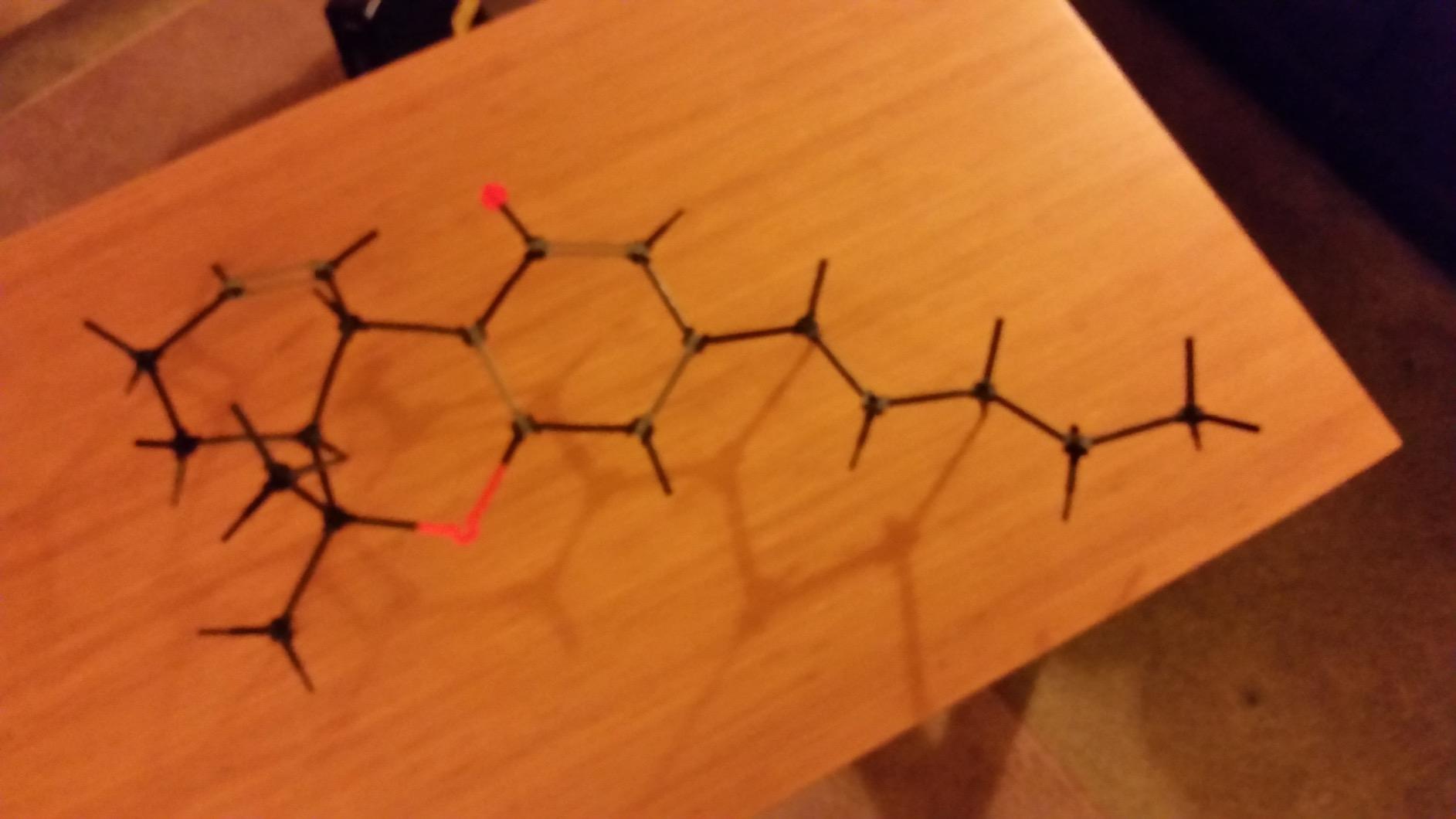
It carries a 4.3 rating across 350 ratings, which puts it solidly in the middle of this group. What we can say with confidence is the format advantage: at 4.8 by 2 by 9.5 inches, it stores flat against a textbook and takes almost no shelf space.
For a teen in a structured course, having the physical model match the chapter order is worth more than raw piece count. It removes the translation step that makes model kits frustrating, where a student is trying to figure out which piece corresponds to the structure in front of them.
The honest limitation here
The listing data for this product is dated and thin, with no bullet-point feature detail, and no written customer review excerpts were returned with it. We are not going to fill that gap with assumptions. What we can verify is the design intent, the fourth edition, the covered structure types and the size.
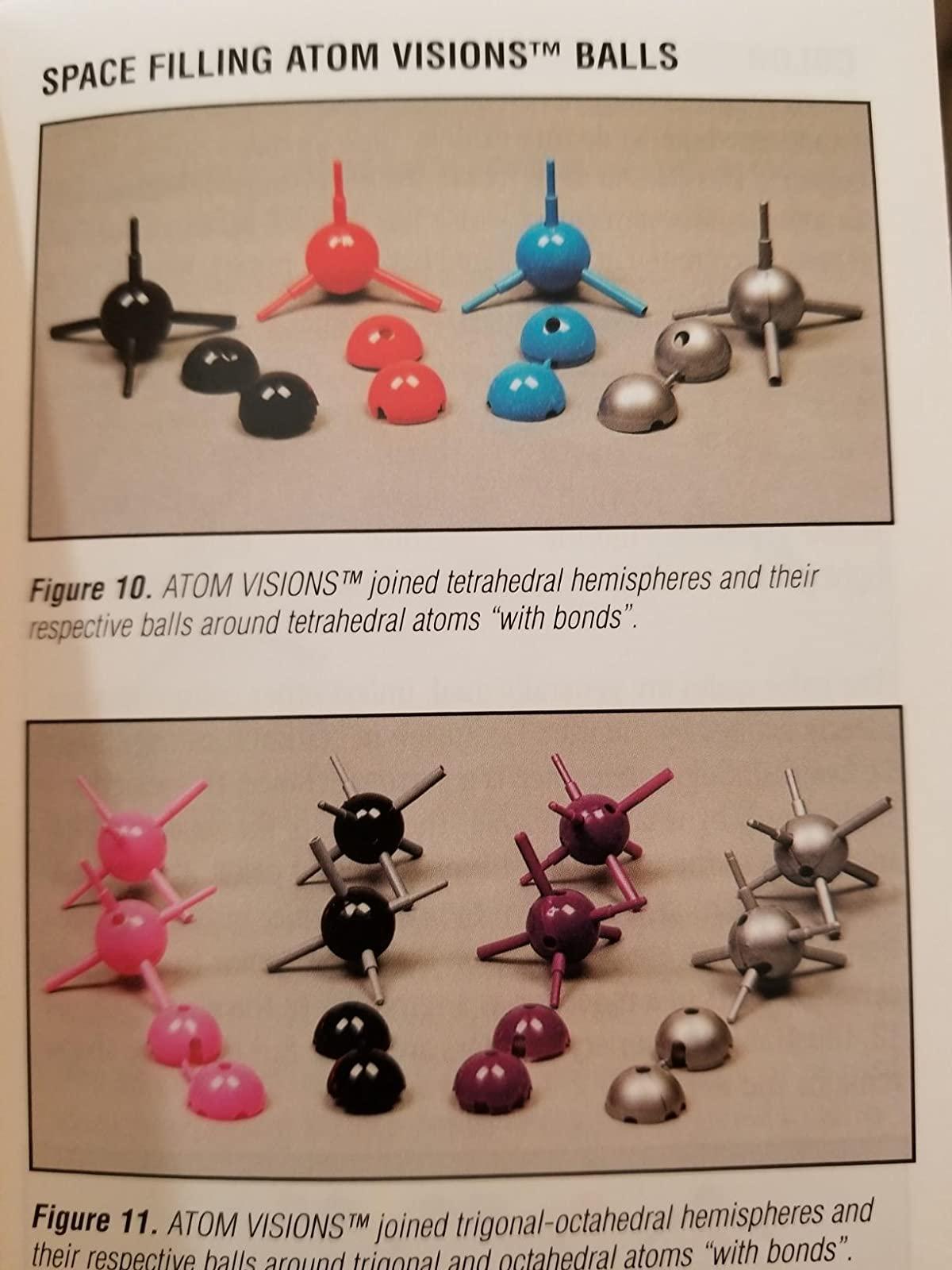
That means this is a purchase for a specific situation rather than a safe recommendation. If your teen is working through a recognized organic chemistry textbook and you know this kit is designed to pair with it, it is a sensible addition to a course library. If you are buying blind for a birthday, choose one of the kits with detailed specifications and a large review record instead.
How it fits with the rest of a home lab
As a companion, it works well alongside a reagent kit. Model kits teach what a molecule looks like; reaction kits teach what happens when it changes. A teen who owns both connects structure to reactivity, and that connection is where chemistry actually clicks.
It also pairs naturally with the other titles here for a homeschool sequence: the Duluth Labs kit for accurate rotation and bond geometry, the LINKTOR or RELIANCER kit for large structures and fullerene, and this one for textbook alignment. Just check that the edition matches the edition of the text in use.
How to Choose a Chemistry Set for Teens
Match the kit to the age band
Ages 13 to 14 is the sweet spot for a beginner reagent kit. The Chem C1000 fits well here: 125 experiments, no flame, and a manual an early teen can follow with occasional help. A model kit in the same band should have enough pieces to build functional groups, which rules out anything under 50 atoms.
Ages 15 to 16 is when intermediate reagent kits start making sense. The Chem C2000 covers 250 experiments across 18 chapters and includes an alcohol burner, which means supervision becomes a daily question rather than a weekend question. Model kits in this range should support double and triple bonds and at least a fullerene build.
Ages 17 to 18 shifts the goal from exploration to practice. Rehearsing titration, filtration and electrolysis before AP Chemistry starts is the highest-value use of a home lab we can think of. Choose the C3000, and plan the space for a burner properly before it arrives.
Decide how much adult supervision you can realistically provide
This is the question parents most often skip, and it is the one that decides whether a kit gets used. Model kits need almost none. A teen can build molecules at a kitchen table while you cook, which makes them the right default when supervision time is limited.
Reagent kits split into two tiers. The C1000 has no flame and works with a tray, gloves and a clear surface. The C2000 and C3000 include alcohol burners, which require an adult in the room for any heat-based experiment, ventilation, and a fire extinguisher you can reach. We see this in parent and home lab discussions repeatedly: the kits do not fail because the teen lost interest, they fail because the setup was never realistic.
Non-toxic labeling matters but is not the whole story. Parents on home education forums consistently rank four signals above brand reputation: honest age grading, included goggles, real reagents with published safety data, and available refills. Kits that skip one of those are where the problems start.
Reaction kits versus model kits
Reaction kits teach process. A teen measures, combines, observes and records, which is the skill a lab assessment actually tests. They also produce liquid waste, staining and odor, and they run out of reagents.
Model kits teach structure. A teen sees geometry, hybridization and bond angles in three dimensions, which is genuinely hard to convey on a whiteboard. They are clean, cheap to maintain and essentially unlimited, since no consumable ever runs out. The honest answer for most teens is that they teach different things and the strongest setups include both.
The baking soda and vinegar objection is worth addressing directly, because it comes up in every forum thread on this topic. A foam-and-color kit is not the same as a kit with copper sulfate, citric acid and potassium hexacyanoferrate(II). The first is fun for an afternoon. The second teaches titration, concentration and ion reactions, which is what a chemistry course will ask about.
What happens when the reagents run out
Ask this question before buying, not after. Of the reagent kits here, none includes every chemical required for its full experiment count, and reviewers on the C3000 specifically report substantial separate reagent purchases to complete the list. Budget for restocking as part of the cost rather than as an exception.
Some kits solve this with refill packs sold separately, and that is the model to look for. Where refills are not offered, the practical approach is to buy one kit and work through it deliberately rather than buying three and finishing none. Chemists on enthusiast forums make this point repeatedly: the value is in the manual you follow completely, not the number of kits on the shelf.
Subscription boxes solve the restocking problem differently by sending new material on a schedule. If your teen enjoys an ongoing ritual, that can work well. If they like to choose their own direction, a single complete kit is usually the better fit.
Setting up a home lab and disposing of what remains
Set up on a tray, on a surface you do not mind staining, near a sink with cold water access. Keep the manual, a notebook and a pen together, because the single biggest predictor of whether a kit gets used is whether results get written down. Lab-grade chemical storage is unnecessary at this age; a labeled box with a lid is enough to keep powders dry and away from pets.
Disposal is the part almost every brand under-explains, and it comes up constantly in parent forums. Read the disposal section in the manual before the first session. Many kits, including the C2000, include environmentally safe disposal instructions, and the general pattern is to dilute small quantities of acid and base solutions, neutralize them, and flush only what the manual explicitly permits. Never pour an unknown solution down the drain because the reaction looked harmless.
Solid waste matters more than most people expect. Filter paper, used litmus strips and crystal sludge get thrown away rather than rinsed, and the C3000 in particular includes some corrosive solutions, so read the specific safety data before disposal. If a kit does not tell you how to dispose of something, treat that as a reason to ask the manufacturer before proceeding.
One final check that parents appreciate: a chemistry set is a good complement to, not a replacement for, real equipment. For our broader thinking on age-appropriate technical gear, we covered the best drones for teens and the best watches for teens with the same supervision-first framework.
Frequently Asked Questions
Do they still sell chemistry sets for kids?
Yes. Chemistry sets are still widely manufactured and sold, and the teen category has grown with kits built for ages 12 and up. The Thames and Kosmos Chem C1000, C2000 and C3000 are all current models, along with a large market of molecular model kits used in high school and college chemistry. The category has also shifted toward kits with written lab manuals and published safety standards rather than the spectacle sets of previous decades.
Which chemistry set is the best?
The LINKTOR 444-Piece Molecular Model Kit is the best overall pick for teens because it carries close to 2,400 ratings, includes 136 atoms, 158 bonds and a full C60 fullerene model, and needs no chemicals and no supervision. For teens who want to run real reactions rather than build models, the Thames and Kosmos Chem C1000 is the better choice, with 125 experiments, seven real chemicals and included Z87-rated safety goggles.
What are some good chemistry sets for 13-year-olds?
For a 13-year-old, the Thames and Kosmos Chem C1000 is the strongest starting point, offering 125 experiments across 10 chapters with no open flame and Z87-rated goggles included. A 13-year-old who prefers building to mixing would do better with the LINKTOR 444-piece kit, which covers grade 7 through graduate level with no supervision required. The Molymod MMS-008 is a solid third option for a teen focused on organic structures.
What is a good science kit for a 14-year-old?
A 14-year-old can usually handle intermediate reagent work, which makes the Thames and Kosmos Chem C2000 a strong match with 250 experiments, an alcohol burner, electrolysis equipment and an 11 to 15 year age rating. The catch is supervision: the burner means an adult should be present for heat-based experiments, and the chemical supply runs out and needs restocking. A model kit is the lower-friction option if supervision time is limited.
What are some good science kits for high school students?
For high school students, the Thames and Kosmos Chem C3000 leads with 333 experiments across 27 chapters, a 192-page lab manual, real glassware and an alcohol burner, rated for ages 12 to 20. For structure work the Duluth Labs MM-003 kit models hybridization and bond rotation accurately, and the RELIANCER 444-piece set includes rare electron cloud slices and a complete fullerene model.
What supplies do you need for chemistry class in high school?
Most high school chemistry courses expect a calculator, a lab notebook, safety goggles, a lab apron or coat, and a ruler or measuring tool for volume readings. At home the equivalent setup is a tray, gloves, a clear work surface near cold water, and a notebook for recording results. Specialized equipment such as a burette, hot plate and balance is usually supplied by the school and is only worth buying if a course requires it.
Are chemistry sets safe for teens?
Most chemistry sets are safe when used as directed with adult supervision, and the sets recommended here are designed to the EN 71-4 chemical-toy safety standard or sold with non-toxic components and universal color coding. The real risks are flame from an alcohol burner, corrosive solutions and a teenager skipping goggles. No kit on this list is appropriate for unsupervised use, and the two with burners should never be used near food preparation.
Are cheap chemistry kits worth it?
Cheap kits that rely on baking soda, vinegar and food coloring are not worth much beyond a single afternoon, because they do not teach concentration, titration or ion reactions. Cheap molecular model kits are a different story and several strong options sit at the lower end of the price range, with the LINKTOR and RELIANCER 444-piece sets earning high ratings from large numbers of reviewers. Judge a kit on included parts and written materials rather than on price alone.
The Bottom Line on the Best Chemistry Sets for Teens
The best chemistry sets for teens split cleanly by interest. If your teen wants to build, the LINKTOR 444-Piece Molecular Model Kit is the pick: close to 2,400 ratings, a full C60 fullerene model, bond angles and stereochemistry in three dimensions, and no chemicals involved at all. If your teen wants to mix, the Thames and Kosmos Chem C1000 is where to start, and the C3000 is where a motivated older teen should end up.
Everything in between is a variation on those two ideas. Match the kit to the age band, be honest about how much supervision your household can provide, and read the extras list before the kit is opened. That last step alone prevents most of the frustration we found in reviews.