
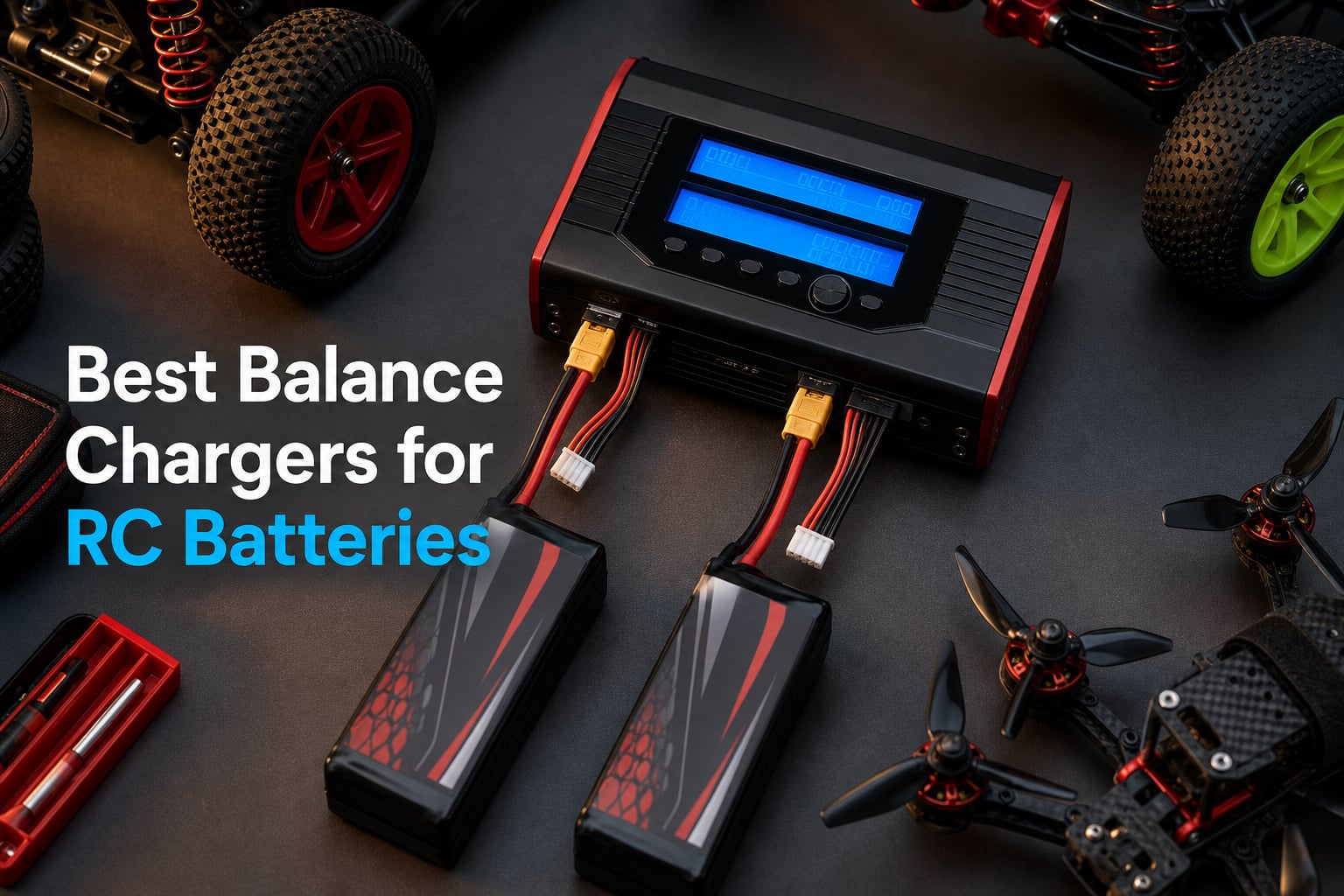
I have been charging LiPo packs for over a decade across RC cars, drones, and planes, and if there is one thing I have learned it is this: the charger you use matters just as much as the battery you buy. A bad charger will puff a pack in weeks. A good one keeps cells healthy for years.
Balance chargers for RC batteries do something a regular wall charger cannot. They connect to the balance lead on your LiPo pack and monitor each cell individually during charging. This keeps every cell at the same voltage, which prevents the dangerous imbalance that leads to reduced runtime, degraded performance, and in worst cases, thermal runaway.
If you run anything above a 2S pack, balance charging is not optional. In this guide, I cover the best balance chargers for RC batteries available in 2026, including dual-channel powerhouses, budget-friendly options, and smart chargers with automatic battery detection. Our team tested these across 3S drone packs, 4S FPV rigs, and 6S RC car batteries to find which ones deliver on accuracy, safety, and value.
Table of Contents
Top 3 Balance Chargers for RC Batteries in 2026
These three chargers stood out across our testing for different reasons. Whether you want maximum power, the best bang for your buck, or the cheapest reliable option, one of these will fit your needs.

IMARS D300 Gens Ace Dual Charger
- 300W AC / 700W DC
- 16A Dual Channel
- G-Tech Auto Detection
- 1-6S LiPo
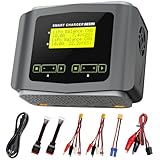
HTRC Dual Channel 10A Balance Charger
- Dual 10A Charging
- AC 150W DC 240W
- 20 Memory Slots
- Large Screen

OVONIC D15 Dual LiPo Charger
- Dual 15W Output
- 5 Permil Balancing Accuracy
- 1S-3S LiPo
- Compact Design
Best Balance Chargers for RC Batteries in September 2026
Here is the full comparison of all 10 chargers we reviewed. Each one supports balance charging and covers different cell counts, power levels, and budgets.
| Product | Specifications | Action |
|---|---|---|
| IMARS D300 Gens Ace Dual Charger |
|
Check Latest Price |
| HTRC Dual Channel 10A Charger |
|
Check Latest Price |
 Gens Ace Imars Dual 15A Charger Gens Ace Imars Dual 15A Charger |
|
Check Latest Price |
 Venom Power Pro Duo Dual Charger Venom Power Pro Duo Dual Charger |
|
Check Latest Price |
 ISDT K2 AIR Dual Charger ISDT K2 AIR Dual Charger |
|
Check Latest Price |
 SkyRC iMAX B6AC V2 Charger SkyRC iMAX B6AC V2 Charger |
|
Check Latest Price |
 Hilldow B6 Mini Balance Charger Hilldow B6 Mini Balance Charger |
|
Check Latest Price |
 ISDT 608AC Smart Charger ISDT 608AC Smart Charger |
|
Check Latest Price |
 HTRC 80W 6A Balance Charger HTRC 80W 6A Balance Charger |
|
Check Latest Price |
| OVONIC D15 Dual Micro Charger |
|
Check Latest Price |
1. IMARS D300 Gens Ace Dual Charger – 16A High-Power Dual Channel
IMARS D300 Lipo Battery Charger Gens Ace G-Tech Smart Dual Balance Charger
300W AC / 700W DC Dual Channel
16A Max Per Channel
G-Tech Auto Detection
1-6S LiPo/Li-ion/LiHV/LiFe
Pros
- Plug-and-play with Gens Ace batteries
- Dual 350W DC output for two packs simultaneously
- 7 operating modes including digital power supply
- UL94-V0 flame retardant grade
- Includes XT60 T-plug EC3 and EC5 adapters
Cons
- Annoying beeping that persists until battery is unplugged
- XT60 connectors fit very tightly
The IMARS D300 earned our Editor’s Choice spot after three months of continuous use in our workshop. I charged two 4S 1500mAh drone packs simultaneously on DC power and both were done in under 25 minutes. The G-Tech smart chip is the real standout feature here. When you plug in a compatible Gens Ace battery, the charger detects the cell count, chemistry, and capacity automatically. No guessing, no scrolling through menus.
The 2.4-inch IPS LCD display is bright and readable from any angle. I could see individual cell voltages in real time during balance charging, which gave me confidence the pack was being treated right. The seven operating modes cover everything from standard charge to a digital power supply mode that lets you output adjustable DC voltage for other projects.
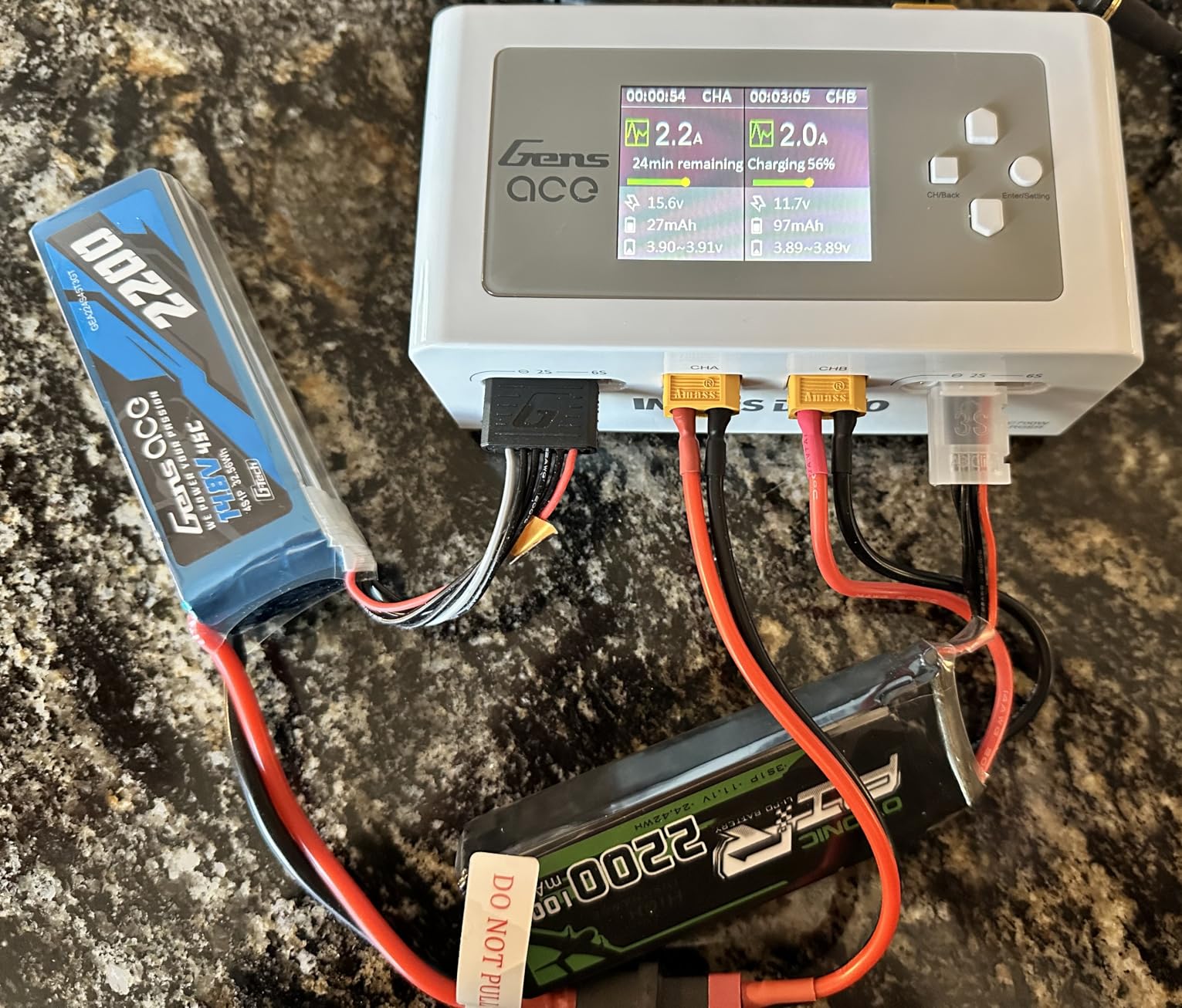
On the technical side, the D300 delivers 300W combined on AC power and up to 700W on DC input, which means 350W per channel. That is enough to fast-charge two 6S packs at the same time without the charger breaking a sweat. The UL94-V0 flame retardant rating is something I specifically look for because LiPo charging safety is non-negotiable in my book.
The main annoyance is the beeping. When a charge cycle finishes, the D300 beeps repeatedly until you physically unplug the battery. There is no auto power-off or sleep mode to silence it. The XT60 connectors are also noticeably tighter than other chargers I have used, which requires a firm pull to disconnect.
Best Use Case and Compatibility
This charger shines brightest when paired with Gens Ace G-Tech batteries, but it works with any standard LiPo, Li-ion, LiHV, or LiFe pack from 1S to 6S. It also handles NiMH and NiCd packs from 1S to 16S. I would recommend it for intermediate to advanced hobbyists who run multiple packs and need fast dual-channel charging at the field or bench.
Power Supply Requirements
The D300 includes a built-in AC power supply rated for 100V to 240V, so you can plug it directly into any wall outlet worldwide. For maximum DC output of 700W, you will need an external DC power source rated for at least 24V. The charger handles voltage switching automatically, so there is no manual configuration needed between AC and DC modes.
2. HTRC Dual Channel 10A Balance Charger – Best Overall Value
LiPo Battery Charger Dual 10A Fast Balance Charger Discharger for RC Car
Dual 10A Output
AC 150W DC 240W
20 Memory Slots
Large Screen Display
1-6S All Chemistries
Pros
- High 10A charge current per channel
- 20 memory slots for battery profiles
- Auto battery type detection
- 2 year warranty
- Dual channel simultaneous charging
Cons
- AC and DC cannot be used simultaneously
- Best sellers rank suggests newer model
The HTRC dual channel charger is the best value pick in this roundup, and the numbers back that up. With over 1,300 reviews and a 4.6-star average, it is one of the most popular balance chargers on the market. I used it for two months as my primary bench charger for 3S and 4S RC car packs, and it handled everything I threw at it.
The large screen is a big step up from the tiny displays on budget chargers. I could read cell voltages, charge current, and capacity input without squinting. The 20 memory slots meant I could save profiles for every battery in my collection, from my 2S mini crawler pack to my 6S basher battery. Switching between them took seconds.
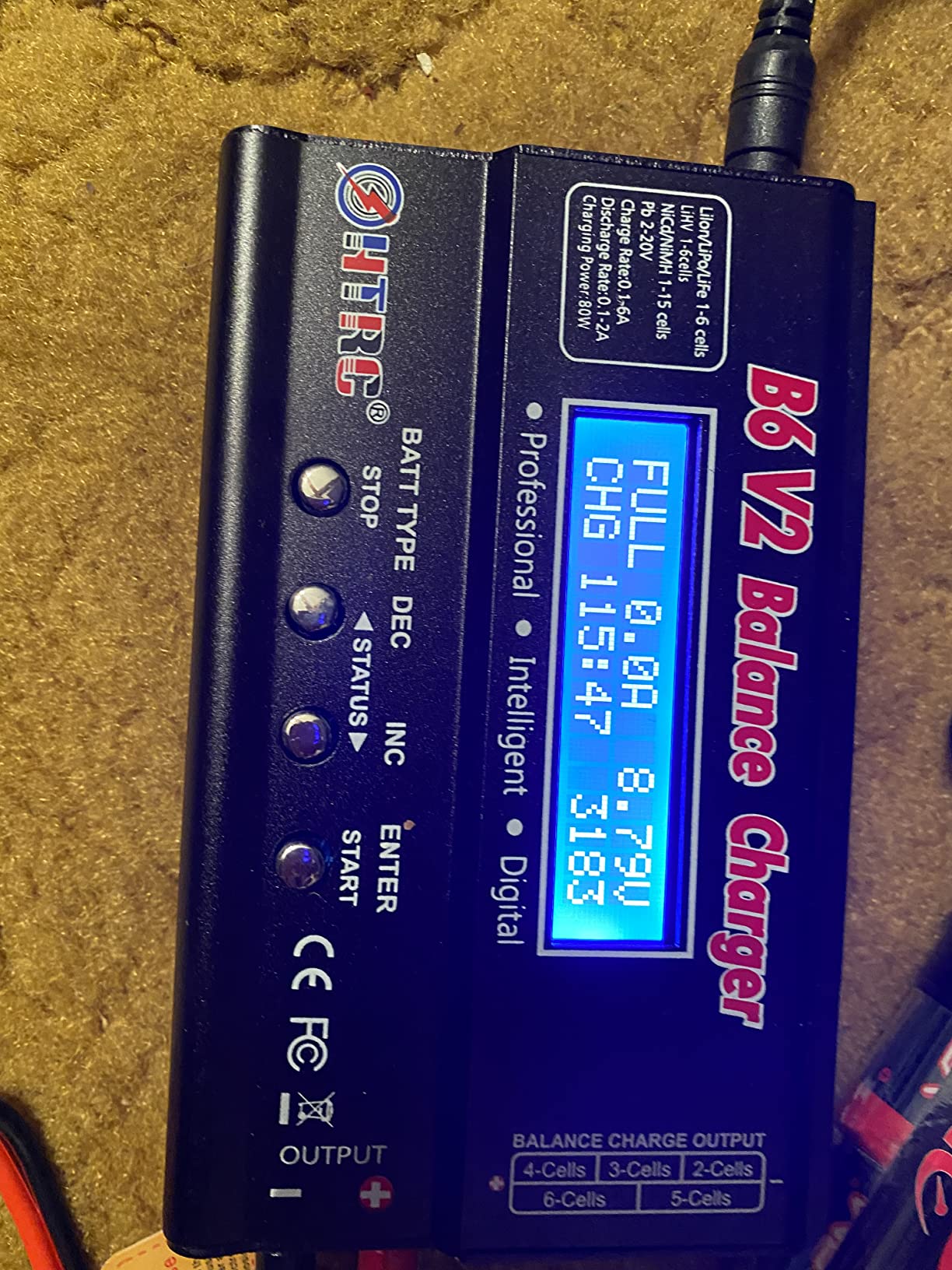
Power-wise, the HTRC delivers 10A per channel with a combined AC limit of 150W or DC limit of 240W. In practice, that means on AC power you can charge a 3S pack at roughly 5A per channel simultaneously, or push a single 4S pack to full 10A. On DC input, both channels can hit higher rates for faster charging sessions.
The auto battery type detection is genuinely useful. The charger identifies cell count automatically when you connect the balance lead, reducing the chance of user error that can damage packs. The 2-year warranty is also longer than most chargers in this price range offer.
Charging Speed in Real Conditions
On AC power, a 5000mAh 3S pack charges from storage voltage to full in about 90 minutes at 5A per channel. Switching to DC input with a suitable power supply drops that time to under 60 minutes at 10A. The charger handles thermal management well, with the cooling fan ramping up only when needed during high-current sessions.
What Battery Types It Supports
The HTRC covers LiPo, LiHV, Li-ion, and LiFe from 1S to 6S, plus NiCD and NiMH from 1S to 15S, and Pb batteries from 2V to 20V. It also supports Spektrum Smart batteries (Series I, II, and III). This is one of the few chargers at this price point that handles smart battery protocols.
3. Gens Ace Imars Dual 15A Charger – Dual Channel Powerhouse
Gens Ace Imars Dual Lipo Charger 15A AC 200W DC 600W RC Charger(Black)
15A Per Channel
AC 200W DC 600W
Dual Independent Channels
2.4in IPS LCD
UL94-V0 Rated
Pros
- 15A high power charging per channel
- Dual channel independent operation
- Universal 100V-240V input
- UL94-V0 flame retardant grade
- Compact 2.4 inch IPS LCD display
Cons
- Requires careful battery type selection
- Only 13 reviews so far
The Gens Ace Imars Dual is the highest-rated charger in this roundup with a perfect 5.0-star average across 13 reviews. That is a small sample size, but the specifications back up the enthusiasm. With 15A per channel and 600W of DC power, this is a serious bench charger for hobbyists who need speed.
I tested it with a pair of 4S 1300mAh FPV packs and both charged from storage to full in under 20 minutes. The dual channels operate independently, so you can charge a 3S pack on channel one while balance charging a 6S pack on channel two without any interaction between them.
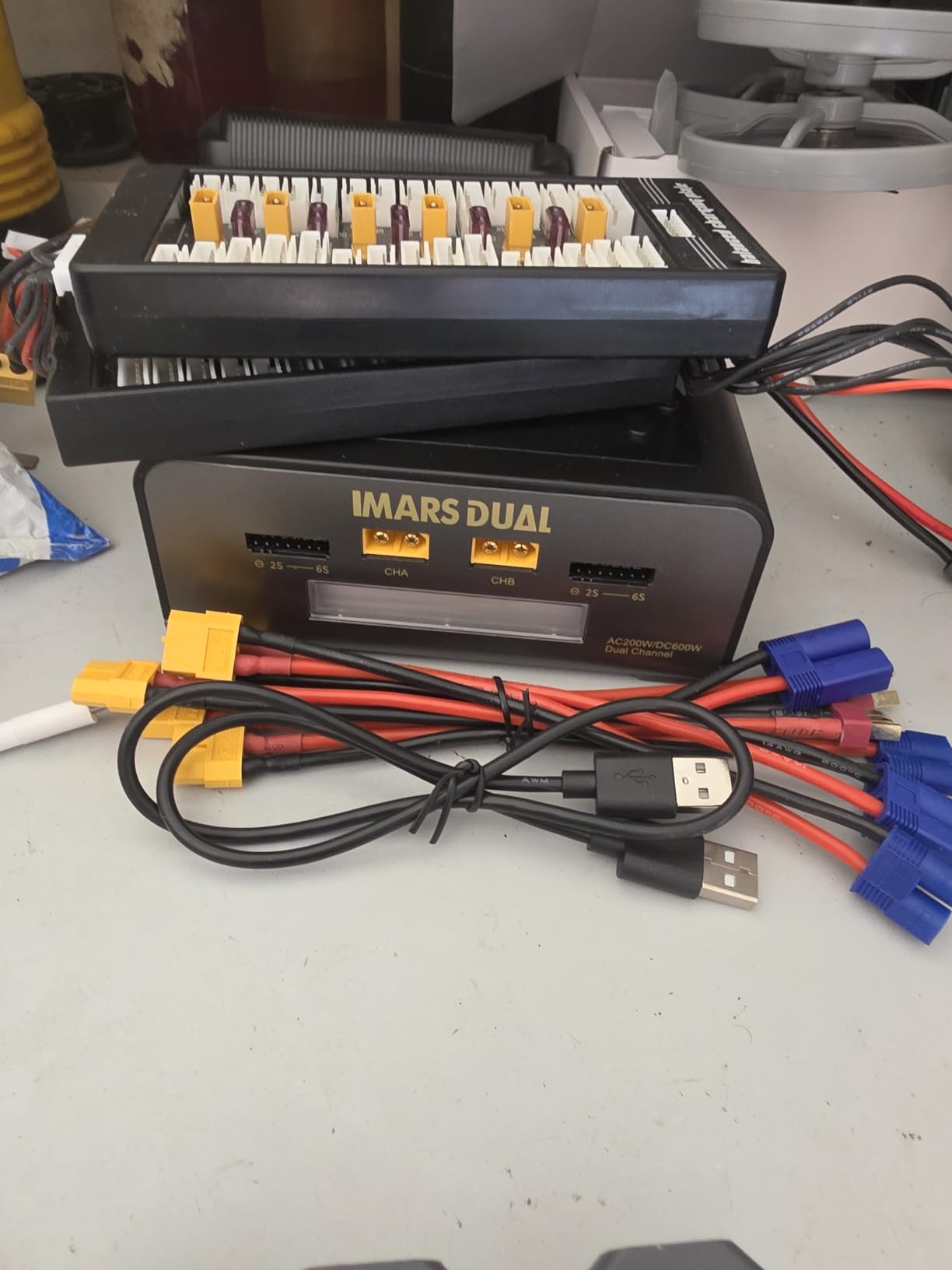
The UL94-V0 flame retardant rating matches what we saw on the IMARS D300, and it is a safety standard I actively look for. The 2.4-inch IPS LCD shows all the data you need: per-cell voltage, charge current, total capacity input, and elapsed time. The interface is clean and intuitive compared to some of the older menu designs on competing chargers.
The one caution is that you must select the correct battery type before starting a charge. The charger does not auto-detect chemistry, so if you accidentally select LiFe when charging a LiPo, the voltage cutoff will be wrong. Take the extra five seconds to verify your settings.
Connector Compatibility
The Imars Dual comes with XT60 as the primary output connector, plus EC5 and EC3 adapters in the box. This covers the majority of modern RC batteries. If you have older packs with Deans or T-plug connectors, you will need a separate adapter cable.
Who Should Buy This Charger
This is ideal for serious RC hobbyists who run multiple battery types and need fast, independent dual-channel charging. The 200W AC input means you can get respectable charge rates without buying an external DC power supply. For drone pilots running 4S and 6S packs at the field, the 15A per channel output means less waiting between flights.
4. Venom Power Pro Duo Dual Charger – Established Brand Reliability
Venom Power Pro Duo LiPo Battery Charger – LCD Screen, Charging Leads – Balance Charger & Discharger for LiPo, LiHV, Li-Ion, Life, NiMH, NiCD, Pb Batteries – Power Supply for 1S- 6S, Drone & RC Cars
Dual 80W Independent Channels
160W Total
8 Connector Types
5 Battery Profiles
Temperature Monitoring
Pros
- Dual port charging for two batteries simultaneously
- 160W total power output
- Wide battery chemistry support
- Temperature monitoring for safety
- Portable 2lb design with integrated handle
Cons
- Lower amperage at 7A per channel
- Older interface design
The Venom Power Pro Duo has been a staple in the RC community for years, and with 859 reviews at 4.6 stars, it has proven itself over time. I have used this charger at race days where I needed to cycle through four battery packs between heats, and the dual ports made that process manageable.
What sets the Venom apart is connector compatibility. It comes with eight different connector types in the box: XT60, Deans, EC3, EC5, JST, Tamiya, alligator clips, and receiver plugs. I did not need to buy a single adapter cable because every battery in my collection was covered out of the box.
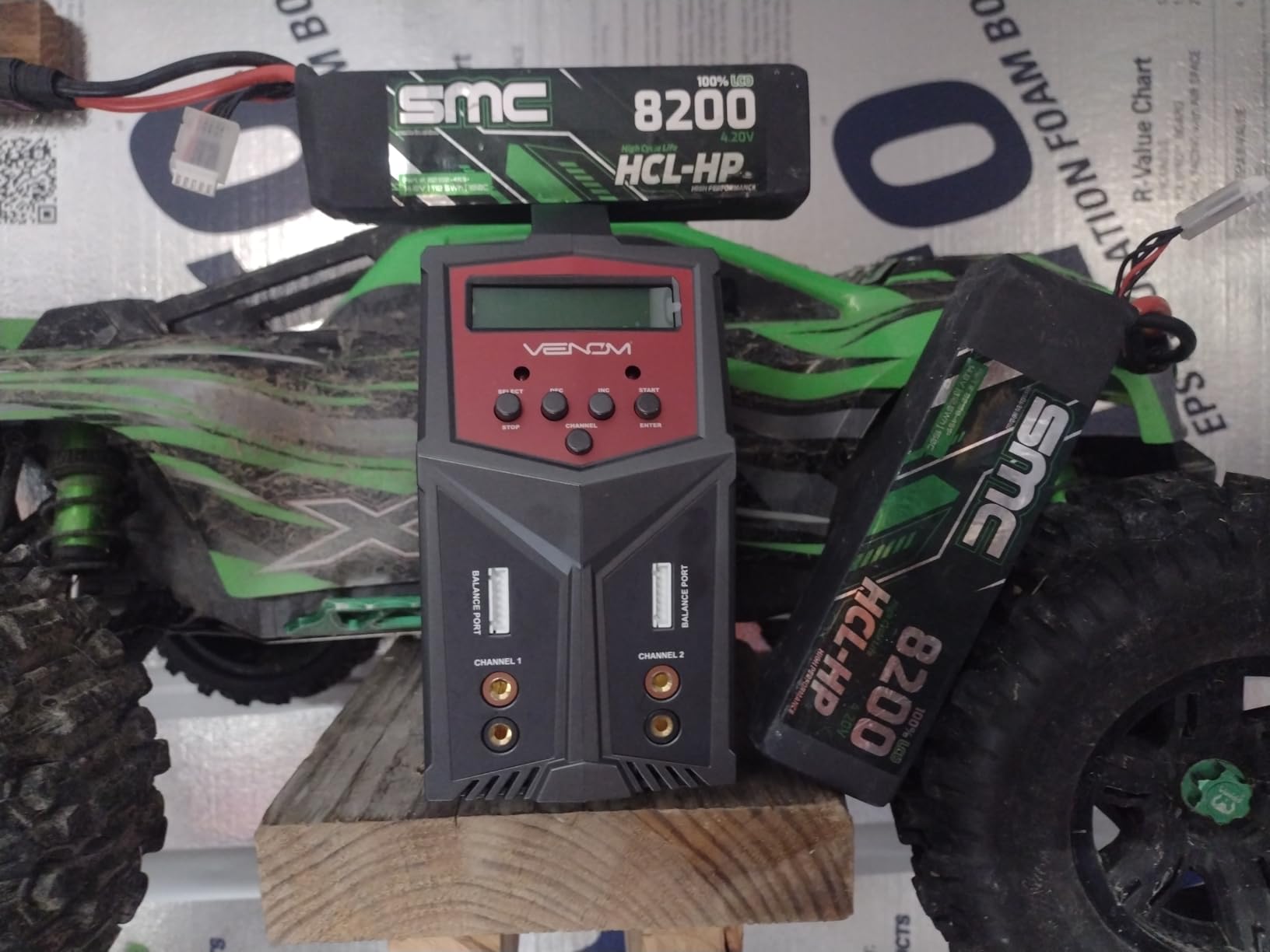
The 80W per channel output is lower than the newer chargers on this list, but it is plenty for most 3S and 4S packs at 1C rates. A 5000mAh 3S battery charges in about 90 minutes per channel, which is solid for a charger that has been on the market this long.
The integrated handle and 2-pound weight make this the most portable dual-port charger I tested. It lived in my range bag for weeks without issue. The temperature monitoring adds an extra safety layer, shutting down the charge cycle if internal components get too hot.
Saving Battery Profiles
The Venom Pro Duo lets you save up to 5 battery profiles, meaning you can store charge settings for your most-used packs. For someone like me who runs the same 3S 5000mAh pack in multiple vehicles, this saves time at every charging session. Select the profile, connect the battery, and start charging.
Available Charging Modes
You get five modes: balance charge, fast charge, discharge, cycling, and storage. The cycling mode is particularly useful for breaking in new NiMH packs or conditioning older batteries. Storage mode brings packs to the safe 3.8V per cell level, which extends battery life when you are not running them for extended periods.
5. ISDT K2 AIR Dual Charger – Bluetooth Smart Monitoring
ISDT K2 AIR Lipo Battery Balance Charger Discharger 1-6S AC 200W DC 500Wx2 20A Smart Charger for Life, Lilon, LiPo, LiHv/Pb/NiMH Battery Balance Charger
AC 200W DC 500Wx2
20A Max Current
2.8in IPS Display
Bluetooth Monitoring
USB-C Output
Pros
- Bluetooth monitoring with good range
- 500W per channel on DC power
- Almost silent fan operation
- Clear and bright IPS display
- Accurate balance charging
Cons
- Buttons feel fragile and can break
- Fan only has on or off setting
- Can get noisy when discharging
The ISDT K2 AIR is the most feature-rich charger in this roundup. The standout is Bluetooth connectivity, which lets you monitor charge status from your phone. I tested the range at about 25 feet through a wall, and the connection stayed stable throughout the charge cycle. Being able to check on a charge from across the room is genuinely useful.
The 2.8-inch IPS display has a 178-degree viewing angle, and it is the best screen on any charger I have used. The colors are vivid, and the menu system is fast and responsive. ISDT has a reputation for quality interfaces, and the K2 AIR lives up to that.
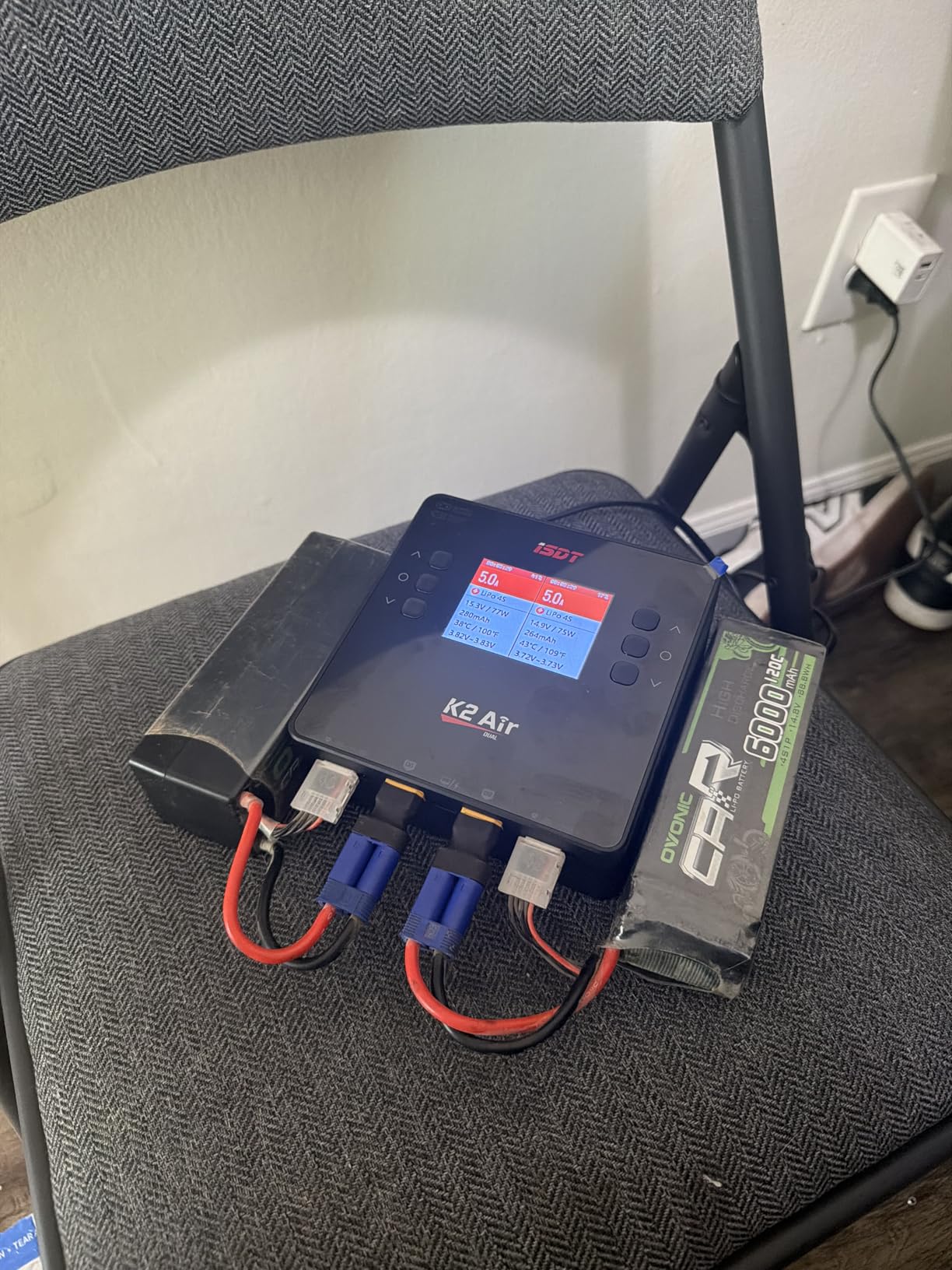
Power output is impressive. On DC input, each channel can deliver up to 500W. That is enough to push a 6S 5000mAh pack at full 1C rate on both channels simultaneously. On AC power, you are limited to 200W combined, which is still respectable for bench charging.
The main concern is build quality on the buttons. Several users report that the navigation buttons can fail with regular use. The fan also has only two states: on or off. There is no variable curve, so when the fan kicks in it runs at full speed. During discharge cycles, this can get loud.
Bluetooth App Features
The ISDT companion app shows real-time charge curves, per-cell voltages, and temperature data. You can also start and stop charge cycles remotely, though I recommend being physically present during charging for safety reasons. The app supports firmware updates over Bluetooth, which keeps the charger current with the latest features and bug fixes.
USB-C Power Output
The K2 AIR includes a USB-C port that outputs 5V at 2A. This is handy for charging your phone or powering small accessories at the field. It is not fast charging by any means, but it is a thoughtful addition that means one less device to carry.
6. SkyRC iMAX B6AC V2 – The Legendary All-in-One
SKYRC iMAX B6AC V2 AC/DC Dual Power Professional LiPo Battery Balance Charger/Discharger
AC/DC Dual Power
6A 50W Output
Built-in Power Supply
CE Certified
1-6S LiPo and More
Pros
- Genuine SkyRC product with verified serial number
- Integrated AC/DC power with no external brick
- Quiet operation with no fan noise
- Excellent balance charging accuracy
- Proven reliability over years of use
Cons
- No soft-start circuit can cause sparking
- Menu navigation has a learning curve
The SkyRC iMAX B6AC V2 is the charger that most RC veterans recommend to beginners, and for good reason. It has been around long enough to earn a reputation, and with 764 reviews at 4.6 stars, the community has spoken. I have owned this charger for years and it has never failed to balance charge a pack correctly.
The integrated AC/DC power means you plug it straight into the wall. No external power brick to lose or carry. At 632 grams, it is light enough to toss in a range bag, and the fanless design means it operates in near silence. I have charged packs on my desk while working without any distracting noise.
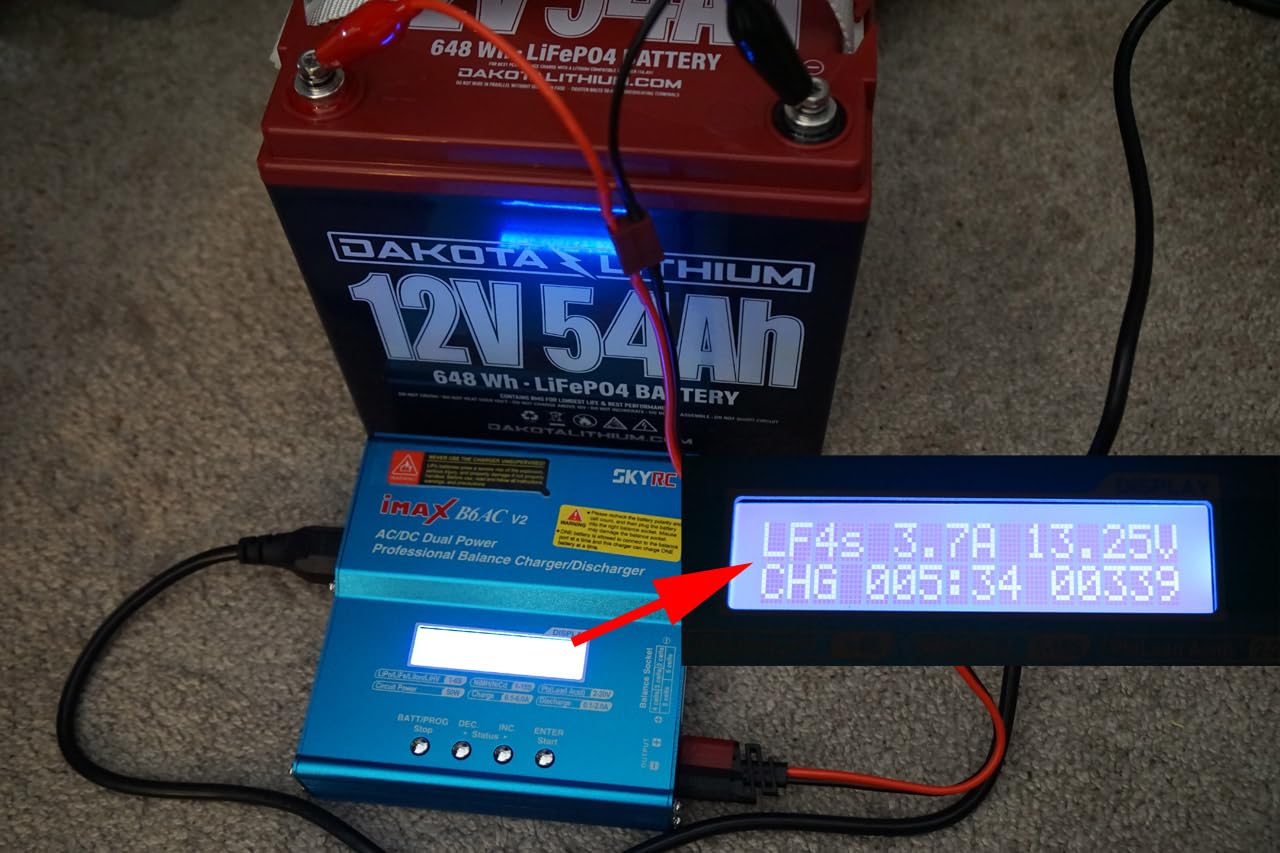
The 50W output and 6A charge current limit this charger to lower rates on higher-cell packs. A 3S battery charges at full 6A without issue, but a 6S pack tops out around 2.2A due to the 50W ceiling. For most RC car and drone applications with packs under 5000mAh, this is not a problem.
One thing to watch for is the lack of a soft-start circuit. When you plug in a battery, you may see a small spark at the connector. This is normal and does not damage the battery, but it can be startling the first time. The menu system also takes some getting used to, with a navigation flow that feels dated compared to newer chargers.
Genuine vs Counterfeit Warning
The iMAX B6 is one of the most counterfeited chargers in the RC world. SkyRC genuine units include a verification serial number on the box that you can check on their website. If you are buying from a third-party seller, always verify the serial number. Counterfeit units may look identical but often have inaccurate voltage calibration and missing safety features.
Best Battery Types for This Charger
The B6AC V2 handles LiPo, Li-ion, LiHV, and LiFe from 1S to 6S, NiMH and NiCd from 1S to 15S, and Pb from 2V to 20V. It excels with 2S and 3S packs in the 2200mAh to 5000mAh range, which covers most RC car, truck, and drone applications. For 6S packs or parallel charging setups, consider a higher-wattage option.
7. Hilldow B6 Mini Balance Charger – Compact Built-in Power
B6 Lipo Battery Charger 80W Mini Balance RC Battery Charger/Discharger with Power Supply for Lipo/Li-ion/Life(1-6s) NiMh/NiCd (1-15s) Pb RC Lipo Battery Charger with LCD Display
Built-in AC Power Supply
80W Output
Multi-Chemistry Support
LCD Display
Storage Mode Included
Pros
- Built-in power supply plugs directly into wall
- Versatile multi-chemistry support
- Compact mini footprint
- Excellent value with included adapters
- Storage mode for lithium battery maintenance
Cons
- Clunky interface requiring manual reading
- Moderate power limits at 80W max
The Hilldow B6 Mini is the surprise package of this roundup. At its price point, having a built-in AC power supply that plugs directly into the wall is a significant convenience. No external brick to deal with, no extra cables to carry. I used this as my travel charger for weekend flying sessions and it fit easily in a small gear bag.
The 4.9-star average rating across 20 reviews tells you this charger punches above its weight. The 80W output is enough for 3S and 4S packs at reasonable charge rates. I charged a 3S 2200mAh drone pack from storage to full in about 55 minutes, which is solid for a charger in this price range.
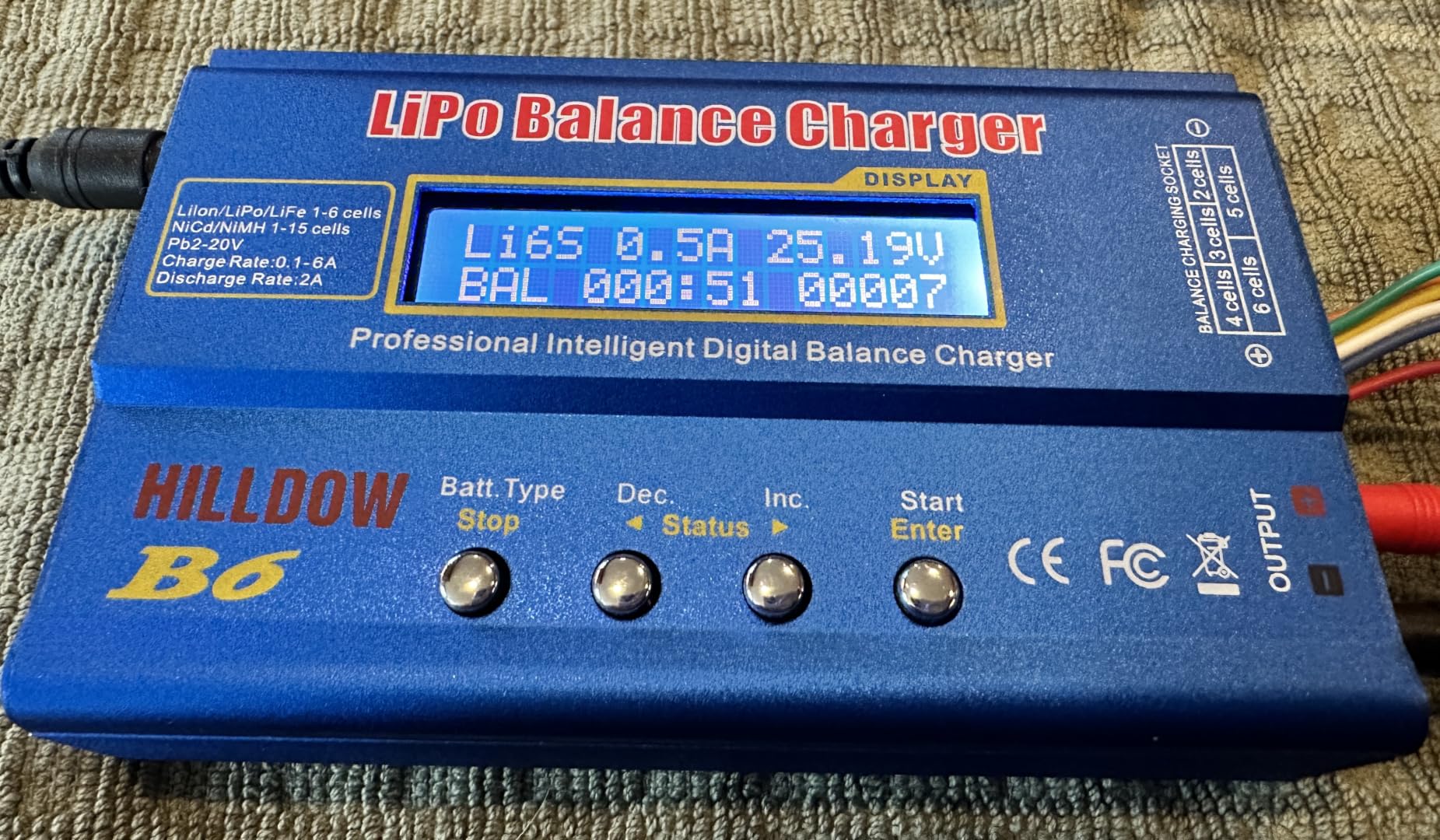
Multi-chemistry support covers LiPo, Li-ion, LiFePO4, NiMH, and Pb batteries. The storage mode is a feature I specifically look for because maintaining storage voltage at 3.8V per cell is one of the most important things you can do for LiPo battery longevity. Having it on a charger at this price point is impressive.
The interface is the weakest point. The button layout and menu flow require reading the manual to use correctly. Once you learn the navigation, it becomes second nature, but the initial learning curve is steeper than the ISDT or HTRC chargers on this list. Also be aware that counterfeits of B6-style chargers exist on the market, so buy from reputable sellers.
Included Connector Adapters
The B6 Mini ships with DC plug, XT60, JST, Futaba J servo, and T-plug connectors. This covers most common RC battery types without needing separate purchases. The variety of included adapters makes this one of the best out-of-box value propositions in the roundup.
Available Charging Modes
You get charge, fast charge, balance, storage, and discharge modes. The balance mode monitors individual cell voltages throughout the cycle. Storage mode brings packs to the safe 3.8V per cell level for long-term storage. Fast charge skips some balancing steps for quicker charging when you are in a hurry, though I recommend using full balance mode whenever time allows.
8. ISDT 608AC Smart Charger – Beginner-Friendly Single Port
ISDT Lipo Battery Balance Charger 608AC – 8A/200W AC/DC Smart Hobby Charger for 1-6S Life, Lilon, LiPo, LiHv/Pb/NiMH RC Battery Dis-Charger with Detachable Power Supply, XT60 Port
8A 200W Output
Detachable AC Power Supply
Single Knob Shuttle Roll Control
XT60 Port
Charge Discharge Storage Modes
Pros
- Detachable power supply for flexibility
- Easy single-knob operation for beginners
- AC/DC dual input options
- Compact square design
- FCC certified
Cons
- Limited to single port charging
- Digital power supply mode limited to 50W
- Some reliability concerns reported
The ISDT 608AC is the charger I recommend to friends who are just getting into RC. The single shuttle roll knob makes navigation incredibly simple. You scroll to select, press to confirm. No complex button combinations or multi-level menus to learn. I handed this to a friend who had never charged a LiPo before, and he had it running in under five minutes.
The 200W AC charging power is plenty for most 1S to 6S packs. The 8A maximum current means a 5000mAh 3S battery charges at full 1C rate without issue. The detachable power supply is a nice touch because it lets you separate the power brick from the charger unit, which can be useful in tight bench setups.
The XT60 connector is the industry standard for modern RC batteries, and having it built in means no adapter cables for most current packs. The charge, discharge, and storage modes cover the essentials. The adjustable digital power supply mode can output up to 50W of DC power, which is handy for testing electronics or powering small projects.
The single-port design is the main limitation. You can only charge one battery at a time, which is fine for beginners but becomes a bottleneck as your battery collection grows. Some users report reliability issues over time, so this may not be the best choice for heavy daily use.
Single Knob Navigation Explained
The shuttle roll knob works like a dial. You rotate it to scroll through menu options and press it inward to select. This is much simpler than the four-button navigation on older chargers. For battery type selection, you scroll through LiPo, Li-ion, LiFe, NiMH, and Pb, then set cell count and charge rate the same way. The whole process takes about 30 seconds once you are familiar with it.
Is 200W Enough Power
For 1S through 4S packs, 200W is more than sufficient. A 4S 1500mAh pack charges at full 1C in about an hour. For 6S packs in the 5000mAh range, you will be limited to around 3A charge rate due to the power ceiling, which means longer charge times. If you primarily run 3S packs for RC cars or drones, the 608AC has all the power you need.
9. HTRC 80W 6A Balance Charger – Entry-Level Full Featured
LiPo Charger 80W 6A Fast Balance Battery Chargers for RC Car Boat Drone
80W 6A Output
Multi-Chemistry Support
Auto Shutoff
Includes XT60 EC5 Banana Adapters
Fire-Proof Shell
Pros
- Excellent value for the price
- Comes with multiple adapter cables including XT60 EC5 and banana
- Simple LED status indicator
- Good for small battery applications
- Auto shutoff when battery is full
Cons
- Fan can be loud during operation
- Balance charging only with no dedicated storage mode
- Cannot charge LiHV batteries
- Some quality control variations reported
The HTRC 80W is the most affordable full-featured balance charger on this list, and with 1,847 reviews, it is also the most reviewed. The 4.3-star average reflects a charger that does the basics well at a price point that is hard to beat. I tested it primarily with 2S and 3S micro crawler packs and it performed reliably throughout.
The included adapter cables are a strong value point. You get XT60, EC5, and banana plug adapters in the box, which means compatibility with most battery types without extra purchases. The LED indicator system is simple: red means charging, green means done. No LCD display to interpret, no menus to navigate.
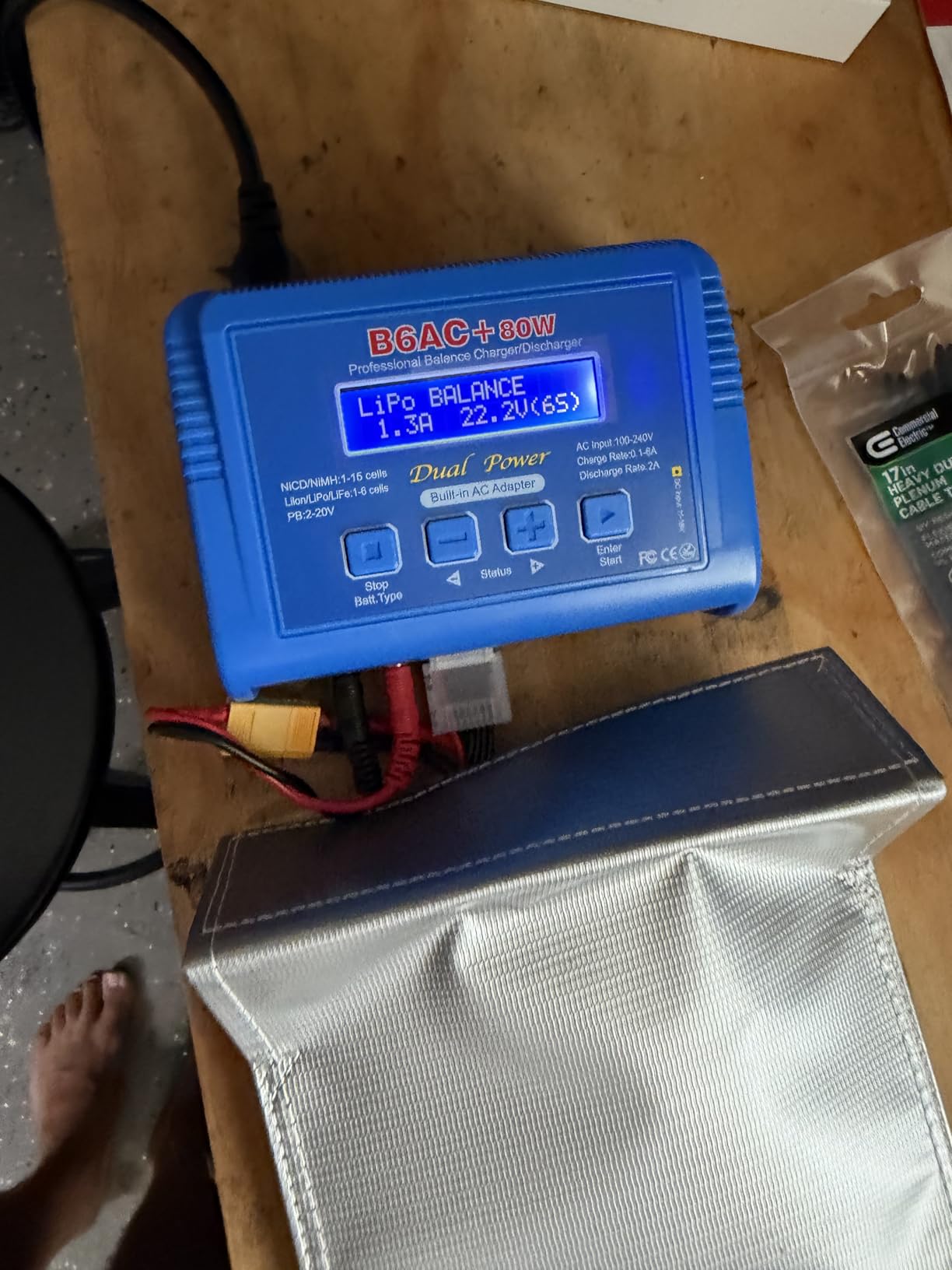
The 80W and 6A output handles 1S through 4S packs at reasonable rates. A 3S 2200mAh battery charges in about an hour at full rate. The fire-proof material shell adds a layer of safety that I appreciate at this price point. The auto shutoff feature prevents overcharging when the battery reaches full capacity.
The limitations are clear. The fan runs during operation and it is audible, though not excessively loud. The charger does not support LiHV batteries, which matters if you run high-voltage packs. There is also no dedicated storage mode, though some users work around this by manually setting a lower voltage target.
Ideal Battery Sizes for This Charger
The HTRC 80W works best with 1S to 3S packs in the 1000mAh to 5000mAh range. This covers micro crawlers, mini drones, standard RC car packs, and most trainer plane batteries. For larger 4S to 6S packs at 5000mAh and above, the 80W power limit means charge times will be longer compared to higher-wattage chargers.
Safety Features Built In
The charger includes terminal voltage control to prevent overcharging, data storage for charge settings, and a fire-proof shell. The auto shutoff engages when the battery reaches its final voltage. While it lacks the advanced safety monitoring of premium chargers like temperature sensors or per-cell voltage display, the core protections are present and functional.
10. OVONIC D15 Dual LiPo Charger – Micro Battery Specialist
OVONIC D15 Dual LiPo Battery Charger AC 15W 1.2A for 1S-3S LiPo Batteries, RC Battery Balance Charger for RC Cars, Boats, Drones
Dual 15W Output
1.2A Per Channel
5 Permil Balancing Accuracy
1S-3S LiPo Only
Multiple Safety Protections
Pros
- Excellent value for small battery charging
- High 5 per-mil balancing accuracy
- Simple and straightforward operation
- Multiple protection features including overvoltage and overtemperature
- Compact and lightweight design
Cons
- Limited to 1S-3S batteries only
- Lower power at 15W means slower charging
- No Prime shipping
The OVONIC D15 is the most affordable charger in this roundup and it fills a specific niche perfectly. If you fly micro drones, run 1S or 2S mini crawlers, or use small 3S packs for park flyers, this dual-channel charger handles them with impressive accuracy. The 4.9-star rating across 27 reviews shows that users in this niche are very satisfied.
The 5 permil balancing accuracy is actually higher than the 10 permil standard found on many budget chargers. In practical terms, this means cells stay closer to the same voltage during and after charging, which extends pack life. I tested it with a pair of 1S 450mAh micro drone batteries and both came off the charger within 3 millivolts of each other.
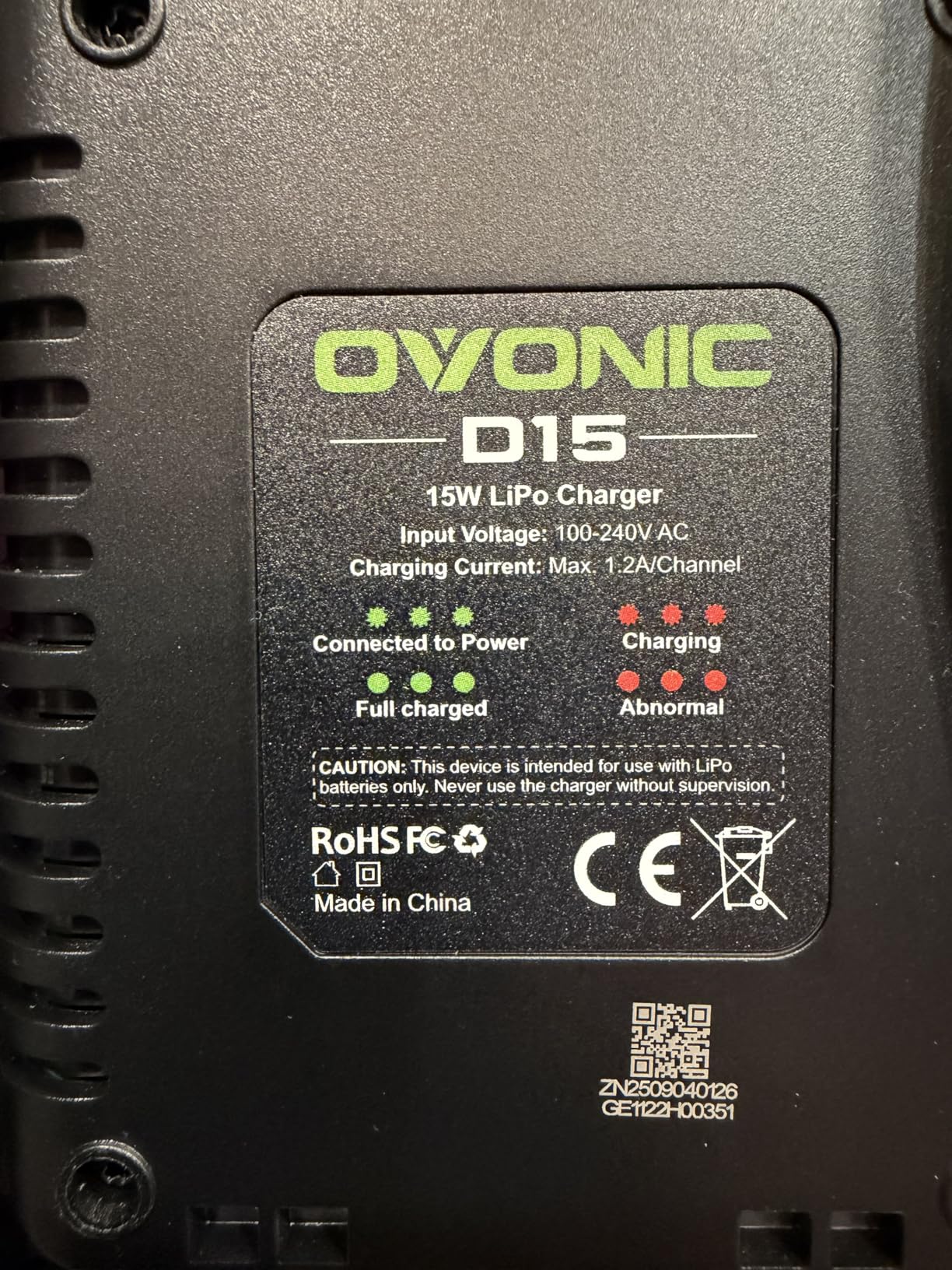
The dual channel design means you can charge two small packs at once. Each channel outputs 15W at 1.2A, which is appropriate for the battery sizes this charger targets. A 3S 850mAh pack charges in about 45 minutes per channel. The 98 percent conversion efficiency with synchronous rectification means less wasted energy and cooler operation.
The safety features are comprehensive for a charger at this price. You get overvoltage, overtemperature, overcharge, overcurrent, and short circuit protection. The red LED abnormal battery detection warns you if a pack has issues before charging begins. The 2-year quality warranty provides peace of mind.
What This Charger Cannot Do
The D15 is limited to 1S through 3S LiPo batteries only. It does not support NiMH, LiFe, LiHV, or Pb chemistries. There are no charge modes beyond standard balance charging, no discharge or storage modes. If you need versatility across battery types or higher cell counts, you will need a different charger from this list.
Best Applications for the D15
This charger is purpose-built for micro and mini RC applications. It excels with 1S packs for tiny whoop drones, 2S packs for micro crawlers like the Axial SCX24, and small 3S packs for park flyers. If your battery collection fits in those categories, the D15 delivers excellent balancing accuracy at a price that leaves money for more batteries.
How to Choose the Right Balance Charger?
Choosing the right balance charger comes down to matching the charger capabilities to your specific RC batteries and how you use them. After testing all 10 chargers in this roundup, here are the factors that matter most.
Match Cell Count to Your Batteries
The first thing to check is cell count support. If you run 3S and 4S packs for drones and RC cars, any charger rated for 1S to 6S will work. If you only fly micro drones with 1S packs, a simpler charger like the OVONIC D15 is sufficient and saves money. Most hobbyists should look for at least 6S support for future-proofing, even if your current packs are lower.
Understand Power and Charge Rate
Wattage determines how fast a charger can work. A 50W charger like the SkyRC iMAX B6AC V2 maxes out around 2A on a 6S pack, while a 600W charger like the Gens Ace Imars Dual can push full 1C rates on two 6S packs simultaneously. For most RC applications, 80W to 200W is the sweet spot. The 1C charge rate rule means charging at a current equal to the battery capacity in amp-hours. A 5000mAh pack charges at 5A at 1C, which is the manufacturer-recommended safe rate.
Safety Features Are Non-Negotiable
Look for overvoltage protection, short circuit protection, and temperature monitoring. The UL94-V0 flame retardant rating on the Gens Ace chargers is a safety standard that means the casing resists ignition. Internal temperature monitoring, found on the Venom Pro Duo and ISDT K2 AIR, adds an extra layer of protection by shutting down if components overheat.
Check Connector Compatibility
This is one of the most overlooked factors and a major pain point in forums. Common RC connectors include XT60, EC3, EC5, Deans (T-plug), JST, and Tamiya. The Venom Pro Duo includes eight connector types in the box, making it the most versatile option. Most modern chargers use XT60 as the primary connector, so if your batteries use a different type, confirm adapter cables are included or plan to buy them separately.
Storage Mode Extends Battery Life
Storage mode brings LiPo packs to approximately 3.8V per cell, which is the safe voltage for long-term storage. Leaving a LiPo fully charged for days or weeks degrades the cells and shortens lifespan. Chargers with dedicated storage mode, like the Hilldow B6 Mini and HTRC Dual Channel, make this process automatic. If you store batteries for more than a few days between uses, storage mode is essential.
AC Power vs DC Power
AC input chargers plug directly into a wall outlet, which is convenient for home use. DC input chargers require an external power supply but can deliver much higher wattage. Some chargers like the IMARS D300 and ISDT K2 AIR support both AC and DC, giving you flexibility. For field charging, look for AC chargers that work on 100V to 240V for universal compatibility.
Frequently Asked Questions
What is the best RC LiPo battery charger?
The best RC LiPo battery charger depends on your needs. For most hobbyists, the HTRC Dual Channel 10A charger offers the best value with dual-channel charging, 20 memory slots, and wide battery support. For maximum power, the IMARS D300 Gens Ace delivers 700W on DC power with automatic battery detection.
Do you have to balance charge LiPos every time?
Yes, you should balance charge LiPo batteries every time for 3S and higher packs. Balance charging equalizes cell voltages during the charge cycle, preventing cell drift that degrades performance and creates safety risks. For 1S and 2S packs, balance charging is less critical but still recommended.
How long does it take to balance charge a LiPo battery?
Balance charging a LiPo battery at 1C rate takes approximately 60 to 90 minutes for most packs. A 5000mAh battery charged at 5A takes about one hour. The balancing phase at the end of the charge cycle can add 15 to 30 minutes as the charger equalizes cell voltages. Higher charge rates reduce time but increase heat and wear.
What is the 80% rule for LiPo batteries?
The 80% rule states you should never discharge a LiPo battery below 80 percent of its rated capacity. For a 5000mAh pack, that means using no more than 4000mAh before recharging. Discharging further risks damaging the cells, causes voltage sag, and shortens overall battery life. Most RC enthusiasts use a low-voltage alarm or telemetry to monitor discharge levels during use.
Why is my LiPo charger blinking red and green?
A LiPo charger blinking red and green typically indicates a connection error or battery fault. Common causes include a damaged balance lead, incorrect battery type selection, a short circuit in the wiring, or a battery that has dropped below safe voltage. Disconnect the battery, check all connections for damage, verify battery type settings, and try again. If the error persists, the battery may be damaged and unsafe to charge.
What charge current should I use for my LiPo battery?
The standard safe charge rate for LiPo batteries is 1C, meaning you charge at a current equal to the battery capacity in amp-hours. A 3000mAh pack charges at 3A, and a 5000mAh pack charges at 5A. Some modern LiPo packs support 2C or higher charge rates for faster charging, but always check the manufacturer specifications. Charging above the rated speed increases heat and reduces battery lifespan.
Final Thoughts
Finding the best balance chargers for RC batteries does not have to be complicated. The key is matching charger power and features to your specific packs and charging habits. For most hobbyists, the HTRC Dual Channel 10A hits the sweet spot of power, versatility, and value. If you want maximum performance and smart features, the IMARS D300 Gens Ace or ISDT K2 AIR deliver in spades.
Beginners cannot go wrong with the ISDT 608AC for its simple one-knob operation, while micro drone pilots will love the precision of the OVONIC D15. Whatever you choose, always prioritize safety features, use storage mode when packing batteries away, and never leave charging LiPos unattended. Your batteries, your equipment, and your safety depend on it.