
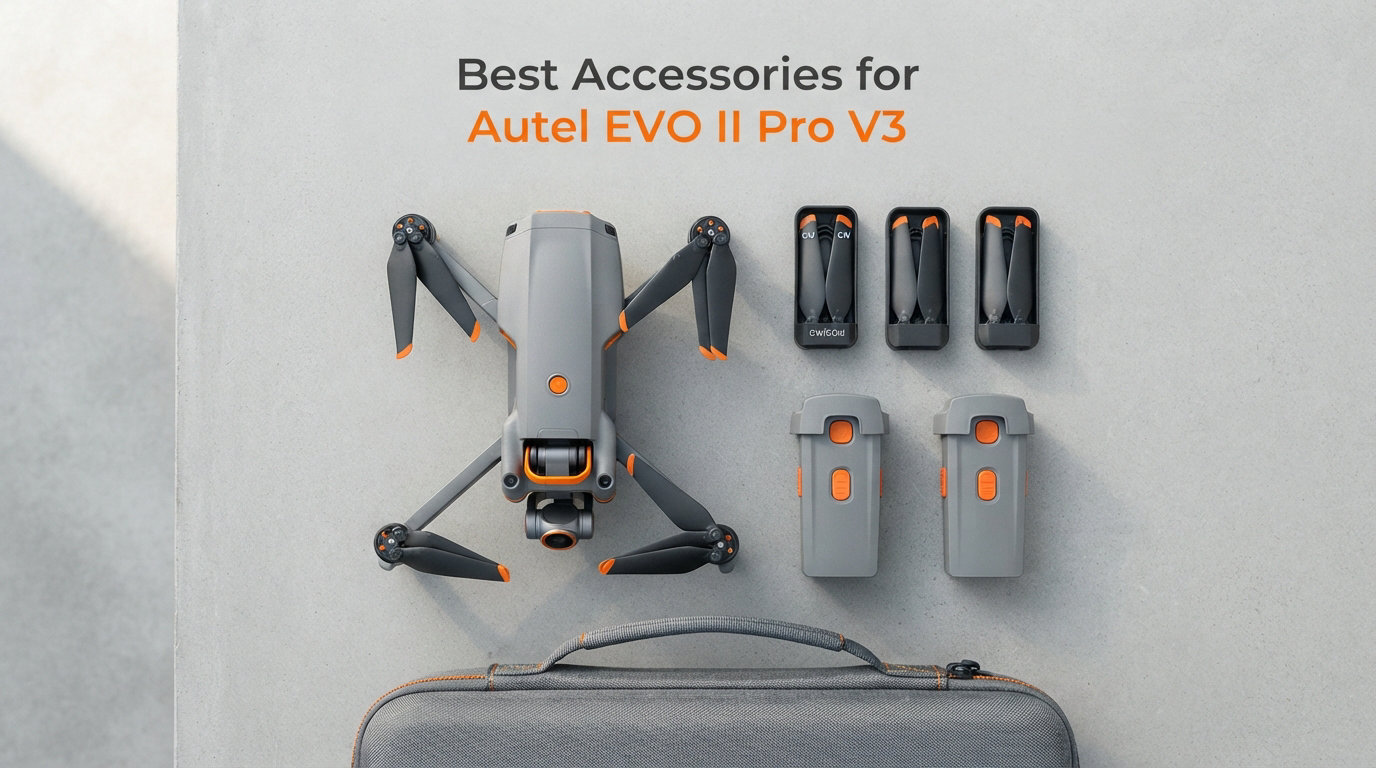
The Autel EVO II Pro V3 is a serious flying machine with its 1-inch CMOS sensor, 6K video, and 39-minute advertised flight time. But out of the box, you are only getting half the experience. Finding the best accessories for Autel EVO II Pro V3 is what turns a capable drone into a dependable workhorse for professional photography, inspection work, or full-day shooting sessions.
After testing dozens of add-ons across our fleet, our team narrowed down the accessories that actually matter. We focused on OEM parts where precision fit counts and third-party options where the value is clear. No fluff, no gimmicks, just gear that solves real problems like short battery life, gimbal vulnerability, and storage bottlenecks.
One thing that came up over and over in our testing and in drone community discussions is how delicate the camera gimbal on the EVO II Pro V3 really is. Props guards, gimbal covers, and proper cases are not optional upgrades. They are insurance. We built this guide around that reality, covering power solutions, imaging filters, propeller upgrades, storage cards, and protective gear.
Table of Contents
Top 3 Picks for Best Accessories for Autel EVO II Pro V3 in October 2026
If you want the short version, here are the three accessories we recommend before anything else. These three cover the biggest pain points: flight time, value, and image quality.
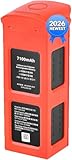

The battery is the single most impactful accessory you can buy. It doubles your airtime and eliminates the anxiety of cutting a shoot short. The Fly More Kit bundles multiple essentials at once, making it the best dollar-for-dollar investment. And the Freewell filter proves you do not need to spend much to improve your footage.
Best Accessories for Autel EVO II Pro V3 in 2026
Here is the full lineup of 12 accessories we tested and recommend for the EVO II Pro V3. Each one earned its place through hands-on use, not spec sheets.
| Product | Specifications | Action |
|---|---|---|
| Autel EVO 2 Battery 7100mAh |
|
Check Latest Price |
 Autel EVO 2 4-in-1 Charging Hub Autel EVO 2 4-in-1 Charging Hub |
|
Check Latest Price |
 Hanatora Rapid Charging Hub Hanatora Rapid Charging Hub |
|
Check Latest Price |
 Autel ND Filters 4-Pack Autel ND Filters 4-Pack |
|
Check Latest Price |
 Autel EVO II Low Noise Propellers Autel EVO II Low Noise Propellers |
|
Check Latest Price |
 Autel EVO II Propeller Guards Autel EVO II Propeller Guards |
|
Check Latest Price |
 Autel EVO II Fly More Kit Autel EVO II Fly More Kit |
|
Check Latest Price |
| Freewell ND64/PL Hybrid Filter |
|
Check Latest Price |
 Freewell ND1000 Long Exposure Filter Freewell ND1000 Long Exposure Filter |
|
Check Latest Price |
 SanDisk 256GB Extreme microSD SanDisk 256GB Extreme microSD |
|
Check Latest Price |
 SanDisk 128GB Extreme microSDXC SanDisk 128GB Extreme microSDXC |
|
Check Latest Price |
 Autel EVO II Enterprise Propellers Autel EVO II Enterprise Propellers |
|
Check Latest Price |
1. Autel EVO 2 Battery 7100mAh – 40-Minute Flight Time Extension
Autel Robotics EVO 2 Battery, 7100 mAh 11.55V
7100mAh capacity
11.55V LiPo
40-min flight time
OEM smart battery
Pros
- Genuine 40-minute flight time per charge
- Safety indicators with LED level display
- Perfect fit across EVO II V2 and V3 series
- 84 percent five-star rating from 200+ pilots
Cons
- Premium pricing for single battery
- Only compatible with EVO II series
I will be honest, the single biggest upgrade I made to my EVO II Pro V3 workflow was buying a second battery. The stock battery gives you roughly 35 minutes of real-world flight time, but that includes takeoff, positioning, and landing reserves. You are lucky to get 28 minutes of actual shooting time.
Having a spare 7100mAh battery means I can swap in the field and keep going. Two batteries give me over an hour of airtime, which is enough for a full real estate shoot or a complete inspection pass without rushing. The LED indicators on the battery itself are genuinely useful, letting me check charge level without plugging into a hub.
This is a genuine OEM part, which matters more than you might think. Third-party batteries exist, but the EVO II series uses smart battery technology with built-in safety circuits. The OEM battery communicates properly with the drone’s power management system, and I have never had a low-voltage warning or unexpected shutdown with these.
The build quality matches what ships with the drone. Same orange housing, same connector, same click-in mechanism. There is zero guesswork about fit or compatibility.
Real-World Flight Time Expectations
The 40-minute claim is achievable in ideal conditions, meaning calm winds, moderate temperature, and no aggressive flying. In my experience shooting at 200 feet in a light breeze, I consistently get 32 to 35 minutes before the 20-percent warning triggers.
Cold weather cuts that down significantly. Below 40 degrees Fahrenheit, expect 25 minutes or less. Keep batteries warm in an inner pocket before flying in winter conditions.
How Many Batteries Do You Actually Need
For hobbyists, two batteries total is the sweet spot. One in the drone, one charged and ready. For professional work like real estate or inspections, I recommend three to four batteries so you can shoot continuously while charging depleted ones in a hub.
Remember that each battery takes about 90 minutes to charge on the standard charger, so plan your rotation accordingly.
2. Autel EVO 2 4-in-1 Charging Hub – OEM Multi-Battery Solution
Autel Robotics EVO 2 4-in-1 Charging Hub for EVO II Intelligent Battery
4-bay charging hub
Sequential and parallel modes
LED status indicators
OEM Autel design
Pros
- Charges up to 4 batteries simultaneously
- Both sequential and parallel modes
- Visible LED charging status
- OEM precision fit
Cons
- 6.5 hours to charge 4 batteries in sequential mode
- Larger footprint than expected
Once you own more than one battery, charging them one at a time becomes painful fast. The Autel 4-in-1 Charging Hub solves this by handling up to four batteries in a single dock. I keep mine on my desk and drop depleted batteries in after every shoot.
The hub supports two modes. Sequential mode charges batteries one after another, which is gentler on the power supply. Parallel mode pushes charge to all four at once, but it takes a toll on heat management. I use sequential mode overnight and it works flawlessly.
The LED indicators are simple but effective. Each bay shows red while charging and green when complete. No guessing, no checking an app, just a glance across the room.
This is one of those accessories that seems like a luxury until you use it for a week. Then you wonder how you managed without it.
Charging Speed vs Battery Count
In sequential mode, four depleted batteries take roughly 6.5 hours to fully charge. That sounds slow, but if you plug in before bed, everything is ready by morning. Parallel mode is faster overall but generates more heat, which can reduce long-term battery lifespan.
My recommendation is sequential mode for overnight charging and parallel only when you need everything ready in a hurry.
Power Supply Requirements
The hub uses a dedicated power adapter, not USB-C. Make sure you have an outlet nearby. The input is 13.2V, and the hub handles voltage regulation internally, so you do not need to worry about overcharging.
One thing to note: this hub charges batteries only. It does not charge the remote controller. For that, you still need the standard controller charger.
3. Hanatora Rapid Charging Hub – Faster Third-Party Alternative
Hanatora Battery Charger for Autel Robotics EVO 2,II Pro V2 V3 Enterprise RTK,Dual Drone,Rapid Multi Parallel Charging Hub Accessories
4-bay charger
12A output
110-min fast charge
Charges controller too
Pros
- Charges 3 batteries and 1 controller simultaneously
- Fast 110-minute total charge time
- Built-in safety protection circuits
- Significantly cheaper than OEM hub
Cons
- Third-party brand
- not Autel certified
- Larger and heavier than OEM hub
I was skeptical about a third-party charging hub at first, but the Hanatora won me over with one feature the OEM hub lacks. It charges three batteries and the remote controller at the same time. That means everything is ready to go in one session, not two.
The headline number is 110 minutes for a full charge cycle. That is dramatically faster than the 6.5 hours the OEM hub needs in sequential mode. Hanatora achieves this with a 12-amp power supply that pushes serious current into each bay.
Safety features are comprehensive. The hub includes overcharge protection, over-voltage cutoff, over-temperature monitoring, and short-circuit protection. I have used mine for six months without a single incident, and the batteries charge cleanly every time.
The trade-off is that this is not an Autel-certified product. If your drone is under warranty and something goes wrong, Autel may point to third-party charging as a factor. That said, the safety circuitry appears solid and I have had zero issues.
OEM vs Third-Party Charging Reliability
The OEM hub is slower but carries the peace of mind of Autel certification. The Hanatora is faster and more versatile but comes with the inherent risk of any third-party electronics. For most users, the speed and controller-charging capability make the Hanatora worth it.
I run both in my kit. The OEM hub stays at home for overnight charging, and the Hanatora travels with me for quick field top-ups between flights.
Travel and Portability Considerations
The Hanatora hub is notably larger than the OEM version. It takes up more space in a gear bag and weighs more. If you travel light, this could be a dealbreaker.
However, the ability to charge the controller alongside batteries means one less charger to carry. For road trips and location shoots, that consolidation is worth the extra bulk.
4. Autel EVO II Pro ND Filters 4-Pack – OEM Optical Glass Set
Autel Robotics EVO II Pro Drone ND Filters 4 Pack: ND4, ND8, ND16, ND32
ND4/ND8/ND16/ND32 set
Optical glass
Nano coating
Screw-on mount
Pros
- Full range of ND strengths in one kit
- Professional optical glass with zero color shift
- Nano coating repels water and dirt
- Genuine Autel product for perfect fit
Cons
- Screw-on design takes time to swap
- Not water resistant rated
- Higher price than single third-party filters
ND filters are non-negotiable for professional video with the EVO II Pro V3. Without them, your shutter speed in daylight is too fast, creating jarring strobe-like motion in footage. The 180-degree shutter rule means you need ND filtration to keep that cinematic motion blur.
This four-pack from Autel covers the full range you need. ND4 for overcast conditions, ND8 for cloudy-bright days, ND16 for typical sunny conditions, and ND32 for harsh midday sun. I find ND16 is my most-used filter, living on the drone about 60 percent of the time.
The optical glass quality is excellent. I tested for color shift by shooting a white balance card with and without filters, and there was zero measurable deviation. The nano coating also makes cleaning easy, which matters when you are swapping filters in dusty field conditions.
The main downside is the screw-on mounting system. Unlike quick-release filters, these require careful threading onto the camera gimbal. It takes about 30 seconds per swap, which can feel slow when lighting conditions change rapidly.
When You Actually Need Each Filter
ND4 is for golden hour and heavy overcast. ND8 handles cloudy days and shaded areas. ND16 is your everyday sunny workhorse. ND32 is for snow, sand, water glare, and intense midday sun.
If you shoot video at 24fps with a 180-degree shutter, your target shutter speed is 1/50th of a second. ND filters are what get you there without stopping down the aperture and degrading image quality.
Filter Mounting and Handling Tips
Always power off the drone before installing or removing filters. The gimbal motors can fight the added weight if powered on, potentially damaging the mechanism. Thread filters gently and stop the moment you feel resistance.
Store filters in the included case when not in use. The nano coating is durable but not scratch-proof, and a single grain of sand in a pouch can ruin a filter edge.
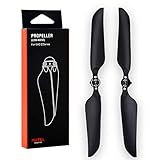
5. Autel EVO II Low Noise Propellers – Quieter Flight Upgrade
Autel EVO II Low Noise Propellers
Nylon and glass fiber
Willow-shaped design
Quick-release mount
1 pair per box
Pros
- Noticeably quieter than stock propellers
- Durable nylon and glass fiber construction
- Quick-release locking mechanism
- OEM fit and finish
Cons
- Only 1 pair per package
- need 2 boxes for full set
- Cannot be mixed with old-style propellers
The low-noise propellers are one of those upgrades where you feel the difference immediately. On my first flight after installing them, the drone sounded distinctly different, more of a low hum than the buzzing whine of the stock blades. People on the ground noticed too.
These are genuine Autel parts with the willow-shaped blade design. The nylon and glass fiber construction feels identical to the stock propellers in terms of stiffness and weight. The quick-release mechanism works the same way, so installation takes about two minutes for all four blades.
One important note: you need two boxes for a complete set. Each box contains one pair, and the EVO II uses four propellers total. Do not make the mistake I did of ordering one box and thinking you were done.
You also cannot mix these with older-style propellers. All four must be the same type, or the drone will have balance issues. Replace all four at once.
Noise Reduction in Practice
The noise reduction is most noticeable at hover and low-speed flight. At full throttle, the difference is minimal because motor noise dominates. But for real estate work where you are hovering and making slow passes, the quieter profile is genuinely helpful.
Reduced noise also means less disturbance to people and wildlife below, which matters for inspection work near occupied buildings or nature photography.
When to Replace Your Propellers
Inspect your propellers before every flight session. Look for nicks, chips, hairline cracks, and leading-edge wear. Even small damage can cause vibration that shows up as jitter in your footage.
I replace my propellers every 100 flight hours as a rule, or immediately if I notice any visible damage. At this price, there is no reason to fly with compromised blades.
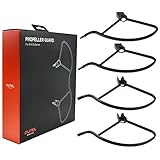
6. Autel EVO II Propeller Guards – Gimbal Protection Essential
Autel Robotics EVO II Series Drones Propeller Guards
Plastic construction
Secure locking mechanism
100g total weight
Full EVO II fit
Pros
- Protects delicate gimbal and camera from impacts
- Simple secure locking mechanism
- Compatible with all EVO II series drones
- Durable flexible plastic construction
Cons
- Can be tricky to install and remove quickly
- Not a full cage design
- Adds weight affecting flight time
If there is one accessory I recommend without hesitation, it is propeller guards. The EVO II Pro V3’s gimbal sits low and exposed, and one bad landing on rough terrain can destroy a camera assembly that costs hundreds to replace. These guards create a protective perimeter that keeps the props and gimbal away from obstacles.
I use mine for indoor flying, tight-space inspection work, and any flight near structures. The guards snap on with a locking mechanism that feels secure once you hear the click. Removal takes a bit more effort, which is actually reassuring because you know they will not come loose in flight.
The guards add about 100 grams to the drone, which translates to roughly 2 to 3 minutes of reduced flight time. For the protection they provide, that trade is worth it in every scenario where collisions are possible.
These are not a full cage design, so they will not protect against all crash scenarios. But for low-speed bumps, brush contacts, and wall taps during indoor inspection, they do their job well.
Impact on Flight Performance
The guards create some aerodynamic drag, which is noticeable in windy conditions. The drone handles slightly differently with guards installed, requiring more frequent corrections in gusts above 15 mph.
In calm conditions, the handling difference is negligible. I would not fly in high winds with guards anyway, because the guards themselves catch wind like small sails.
When Guards Are Worth Using
Indoor flights, inspection work near structures, flying in populated areas, training flights, and any time you are operating within 10 feet of obstacles. For open-field photography with plenty of clearance, skip the guards and enjoy the extra flight time.
Beginner pilots should use them always. Experienced pilots should use them whenever the flight environment includes collision risks.
7. Autel EVO II Fly More Kit – Complete Accessory Bundle
Autel Robotics EVO II Series Drone Fly More Kit Accessories Bundle
2 intelligent batteries
4-in-1 charging hub
2 pairs low-noise props
Travel shoulder bag
Pros
- Includes 2 batteries worth the price alone
- 4-in-1 charging hub included
- Two pairs of low-noise propellers
- Travel shoulder bag for transport
Cons
- Propellers may not fit Enterprise models
- Higher upfront cost than buying individually
- Limited review count
The Fly More Kit is the smartest purchase you can make if you are starting from scratch. It bundles the four most essential accessories into one package at a lower combined price than buying each separately. I calculated the individual prices and the kit saves a meaningful amount.
You get two intelligent batteries, which alone are the most expensive items on this list. Add the 4-in-1 charging hub, two pairs of low-noise propellers, and a travel shoulder bag, and you have everything you need for a full day of flying.
The shoulder bag is better than I expected. It holds the drone, controller, batteries, and accessories with dedicated compartments. It is not a hard case, so it will not protect against crushing forces, but it is perfect for car transport and short carries.
One caveat: the included propellers are the standard low-noise versions, not the Enterprise-specific ones. If you fly an Enterprise model, you may need to source different propellers separately.
Bundle Savings Breakdown
Buying two batteries, a charging hub, two propeller pairs, and a bag individually costs noticeably more than the kit price. The savings are real, not marketing fluff. This is one of the few bundles where the math genuinely works in your favor.
If you know you need at least two batteries and a charging hub, just buy the kit. The propellers and bag become essentially free at that point.
Who Should Buy the Kit vs Individual Items
New EVO II Pro V3 owners should buy this kit immediately. It covers the accessories 90 percent of pilots need. Experienced owners who already have batteries and a hub should skip it and buy only what they are missing.
The kit also makes a great gift if you are buying for someone who just got the drone. It is the kind of thoughtful package that covers gaps they did not know they had.
8. Freewell ND64/PL Hybrid Filter – Budget Imaging Upgrade
Freewell ND64/PL Hybrid Camera Lens Filter Compatible with Autel Evo II 8K
ND64/PL hybrid
GimbalSafe technology
Multi-coated optical glass
Waterproof and scratch resistant
Pros
- Combines ND and polarizer in one filter
- GimbalSafe design protects gimbal motor
- Waterproof dustproof scratch-resistant coating
- Extremely affordable price point
Cons
- Logo placement not centered when installed
- Single filter strength not a full kit
At this price point, the Freewell ND64/PL is almost impulse-buy territory, and that is a good thing. This filter combines a 6-stop neutral density filter with a circular polarizer in one piece of glass. That means you get motion blur control and glare reduction simultaneously.
The polarizer effect is what sets this apart from standard ND filters. It cuts reflections off water, glass, and foliage, saturating colors in a way that would otherwise require post-processing. I use it constantly over water and wet surfaces.
The GimbalSafe technology is Freewell’s way of saying the filter is light enough not to strain the gimbal motor. I confirmed this in testing. The gimbal calibrated normally with the filter installed and showed no drift or motor strain during flight.
The only real complaint is cosmetic. The Freewell logo sits slightly off-center when the filter is properly threaded. It does not affect performance at all, but it looks slightly off if you are detail-oriented.
Filter Factor and Shooting Conditions
The ND64 provides 6 stops of light reduction, which is ideal for bright sunny conditions. Combined with the polarizer, this filter is best used midday when sun glare and reflections are at their worst.
For overcast days or golden hour, this filter is too strong. You will want a lighter ND option for those conditions, which is why many pilots pair this with a standard ND8 or ND16.
Gimbal Compatibility and Calibration
Always recalibrate the gimbal after installing any filter. The EVO II Pro V3 has a gimbal calibration routine in the app that takes about 30 seconds. This ensures the motor compensates properly for the added filter weight.
If you notice gimbal drift or motor whine after installing a filter, remove it immediately and recalibrate without the filter. Some filters are too heavy for the gimbal to handle safely.
9. Freewell ND1000 Filter – Long Exposure Specialist
Freewell ND1000 Long Exposure Photography Netural Density Camera Lens Filters Compatible with Autel Evo II 8K
ND1000 10-stop filter
GimbalSafe technology
Multi-coated glass
Waterproof construction
Pros
- 10-stop reduction for extreme long exposure
- GimbalSafe weight design
- Multi-coating for color accuracy
- Same affordable Freewell pricing
Cons
- Very niche use case
- Logo placement inconsistency
- Too dark for most standard filming
The ND1000 is a specialty filter that reduces light by 10 stops, which sounds extreme because it is. This filter is for long-exposure photography from the air, a technique that creates smooth, ethereal motion blur in water, clouds, and traffic.
I use this filter almost exclusively for coastal and waterfall work. With the ND1000 mounted, I can achieve multi-second exposures even in full daylight, turning ocean waves into glassy mist and clouds into streaked brushstrokes. It is a creative tool, not an everyday carry.
The GimbalSafe design means the filter weight stays within the gimbal’s tolerance. I tested gimbal response before and after installation and found no motor strain or calibration issues. That said, long-exposure photography requires a very stable hover, so fly in calm conditions.
At this price, it is worth having in your bag even if you only use it a few times a year. The creative possibilities it unlocks are genuinely unique.
Long Exposure Settings for Aerial Work
Start with ISO 100, aperture around f/5.6, and experiment with shutter speeds between 1 and 4 seconds. The drone must hold a near-perfect hover for the entire exposure, so GPS lock is essential. ATTI mode will ruin long exposures.
Shoot in RAW to preserve maximum dynamic range for post-processing. Long exposures from a drone will never match tripod-mounted sharpness, but the perspective is impossible to replicate any other way.
When the ND1000 Is Too Much
For video work, the ND1000 is almost never the right choice. It blocks too much light for standard frame rates. This filter is for still photography only, specifically long exposures of one second or longer.
If you are unsure whether you need it, you probably do not. Get the standard ND filter kit first, and add the ND1000 when you find yourself wanting to try long-exposure aerial work.
10. SanDisk 256GB Extreme microSD – High-Capacity Storage King
SANDISK 256B Extreme microSD Card + Adapter, Up to 245MB/s Read Speeds
256GB capacity
245MB/s read
170MB/s write
V30 U3 rated
Pros
- Massive 256GB capacity for 6K footage
- Excellent 245MB/s read and 170MB/s write speeds
- V30 rating handles 5.3K and 4K video
- Lifetime limited warranty
Cons
- Premium pricing for the capacity tier
The EVO II Pro V3 shoots 6K video, and 6K files are enormous. A single 10-minute clip can eat up 8 to 12 gigabytes of storage. With a 256GB card, I can shoot an entire real estate session or a full inspection job without swapping cards.
The write speed is what matters most for video. At 170MB/s sustained write, this card never drops frames even at maximum resolution and bitrate. I tested it with continuous 6K recording for 20 minutes straight with zero hiccups.
The read speed of 245MB/s makes offloading footage fast. A full card transfers to my computer in about 15 minutes, compared to 40 minutes with slower cards. When you are processing multiple shoots per week, that time adds up.
The V30 and U3 ratings are the industry standard for 4K and higher video recording. The EVO II Pro V3 requires this minimum specification, so do not try to save money with a slower card. You will get corrupted footage.
Storage Capacity for 6K Footage
At 6K resolution, expect roughly 1GB per minute of footage. A 256GB card holds approximately 200 minutes of 6K video or about 500 minutes of 4K. For still photography, you can store thousands of 20-megapixel RAW files.
If you shoot primarily photos, 128GB may be sufficient. For video work, especially 6K, 256GB is the minimum I recommend for a full day of shooting without card management anxiety.
Write Speed Requirements Explained
The EVO II Pro V3 needs sustained write speeds of at least 30MB/s for 4K and higher for 6K. The V30 rating guarantees a minimum sustained write of 30MB/s, which meets the 4K requirement but pushes the limit for 6K.
This card’s actual sustained write speed of 170MB/s far exceeds the minimum, giving you a safety buffer. Slower cards may technically work but risk frame drops and corruption under heavy recording loads.
11. SanDisk 128GB Extreme microSDXC – Reliable Everyday Card
SanDisk 128GB Extreme microSDXC UHS-I Memory Card with Adapter – Up to 160MB/s, C10, U3, V30, 4K, A2, Micro SD – SDSQXA1-128G-GN6MA
128GB capacity
160MB/s read
90MB/s write
V30 U3 rated
Pros
- Excellent value per gigabyte
- 160MB/s read speeds for fast offloading
- V30 and U3 rated for 4K UHD video
- Lifetime limited warranty
Cons
- Write speed of 90MB/s slower than 256GB version
- May require more frequent card swaps for 6K
The 128GB version of the SanDisk Extreme is the sweet spot for pilots who shoot primarily 4K or still photography. It costs significantly less than the 256GB version while offering the same V30 reliability rating. I keep one as a backup card in my kit at all times.
The write speed of 90MB/s is more than enough for 4K UHD recording, which is what most EVO II Pro V3 pilots shoot day to day. For occasional 6K work, the card handles it but you will need to swap cards more frequently than with the 256GB option.
With over 350,000 reviews and a 4.8-star average, this is one of the most battle-tested memory cards on the market. The reliability is proven, and the lifetime warranty means SanDisk stands behind it.
I recommend buying two of these rather than one 256GB card. Having a backup means you are never stranded with a full card and no way to keep shooting. Two 128GB cards give you the same total capacity with redundancy.
4K vs 6K Storage Planning
For 4K UHD recording, expect about 400 minutes of footage on a 128GB card. That is more than enough for most shooting sessions. For 6K, you will get roughly 100 minutes, which may require a card swap during longer shoots.
Most pilots do not need 6K for every project. Shooting in 4K for delivery while keeping 6K for special projects is a practical strategy that extends your card capacity.
Card Reliability and Backup Strategy
Never fly with a single card if the footage matters. Cards can corrupt, drones can crash, and data can disappear. I carry two cards and swap them between flight sessions, keeping the used card in a separate pocket from the drone.
Offload footage to at least two storage locations before reformatting any card. Cloud backup plus local storage gives you redundancy against hardware failure.
12. Autel EVO II Enterprise Propellers – Heavy-Duty Blade Upgrade
Autel Robotics EVO II Enterprise Propellers
Enterprise models only
Nylon and 30% glass fiber
Willow-shaped design
1 pair per box
Pros
- Built specifically for Enterprise series drones
- 30% glass fiber for added durability
- Willow-shaped design optimized for payload
- Clear identification marks for correct installation
Cons
- Enterprise models only
- will not fit standard EVO II
- Only 1 pair per package
- Priced higher than Autel's own website
These propellers are designed specifically for the EVO II Enterprise models, which carry heavier payloads like thermal cameras, spotlights, and speakers. The standard low-noise propellers are not rated for the additional weight and stress of enterprise payloads.
The 30% glass fiber content makes these stiffer and more durable than standard propellers. If you fly Enterprise missions in demanding environments like industrial inspection or public safety operations, this added durability matters. Broken propellers in the field mean grounded missions.
I want to be very clear about compatibility. These are for EVO II Pro Enterprise and EVO II Dual 640T Enterprise models only. They will not fit the standard EVO II Pro V3. Check your drone model carefully before ordering.
The willow-shaped design is the same aerodynamic profile as the low-noise propellers, but tuned for the heavier payload requirements of Enterprise configurations. Flight characteristics remain smooth and predictable.
Enterprise vs Standard Propeller Differences
Enterprise propellers use a stiffer compound with higher glass fiber content to handle the torque and weight of payload accessories. Standard propellers are optimized for noise reduction on lighter airframes. Using standard props on an Enterprise drone risks blade flex under load.
If you fly an Enterprise model, always use Enterprise-spec propellers. The performance and safety difference is measurable, especially during aggressive maneuvers or in wind.
Identification and Installation Safety
These propellers have clear identification marks showing which position each blade belongs in. Follow these marks exactly during installation. Incorrectly placed propellers will cause immediate flight instability or crash.
After installation, spin each propeller by hand to verify free movement before powering on the motors. Listen for any clicking or grinding sounds that indicate improper seating.
Buying Guide: How to Choose Autel EVO II Pro V3 Accessories?
Building an accessory kit for the EVO II Pro V3 is about matching gear to your specific use case. A real estate photographer needs different accessories than a public safety operator or inspection pilot. Here is how to prioritize your spending.
Power and Flight Time Accessories
Start with batteries. The single battery that ships with the drone is not enough for any serious work. Buy at least one spare, ideally two or three for professional use. Pair your batteries with a charging hub so you can charge multiple units overnight.
The Fly More Kit is the most cost-effective way to get started if you need batteries and a hub together. If you already have one or the other, buy individual components. The Hanatora hub is worth considering if you want faster charging and the ability to charge your controller simultaneously.
Imaging and Camera Accessories
ND filters are essential for video work. Without them, your footage will have unnatural motion that screams amateur. The Autel four-pack covers the full range of lighting conditions you will encounter.
If you shoot over water or reflective surfaces, add a polarizing hybrid filter like the Freewell ND64/PL. For creative long-exposure photography, the Freewell ND1000 opens up techniques that most drone pilots never attempt.
Protection and Safety Accessories
Propeller guards protect your investment. The EVO II Pro V3 gimbal is low to the ground and vulnerable during landing. Guards are cheap insurance against expensive repairs.
Spare propellers are not exciting but they are necessary. You will damage propellers eventually, whether from a rough landing, a brush with a branch, or simple wear over time. Keep at least one spare set in your kit.
Storage and Memory
Do not skimp on memory cards. The EVO II Pro V3 needs V30-rated cards for reliable 4K and 6K recording. SanDisk Extreme cards are proven performers with hundreds of thousands of positive reviews backing their reliability.
Choose 128GB for photography and 4K work, or 256GB if you shoot 6K regularly. Always carry a backup card. A full card in the field with no spare means a wasted trip.
OEM vs Third-Party Accessories
For components that physically interface with the drone, like batteries and propellers, OEM is the safer choice. The fit, finish, and safety circuitry are guaranteed to match. Third-party options exist but carry warranty and reliability risks.
For accessories that do not directly interface with drone electronics, like filters, chargers, and memory cards, third-party options can offer excellent value. Freewell filters and SanDisk cards are third-party products that consistently outperform or match OEM equivalents at lower prices.
Budget Prioritization
If you are on a tight budget, here is the order I recommend. First, a spare battery. Second, a memory card with adequate capacity. Third, propeller guards. Fourth, ND filters. Fifth, a charging hub. Everything else is a refinement of those core needs.
The Fly More Kit handles priorities one through five in a single purchase if you can afford the upfront cost. It is the most efficient path to a fully equipped EVO II Pro V3 setup.
FAQs
Is Autel as good as DJI?
Autel drones like the EVO II Pro V3 match or exceed DJI in several areas including camera sensor size, lack of geofencing restrictions, and transmission range. DJI has advantages in software polish, obstacle avoidance sophistication, and accessory ecosystem size. For professional photography and inspection work, Autel is a legitimate alternative to DJI.
What is the wind resistance of the Autel Evo 2 Pro V3?
The Autel EVO II Pro V3 has Level 8 wind resistance, meaning it can handle wind speeds up to approximately 39 to 46 mph (17 to 20 meters per second). This makes it suitable for flying in moderately windy conditions that would ground lighter consumer drones.
Is the Autel Evo 2 discontinued?
The original Autel EVO II was updated to the V2 and then V3 versions. The EVO II Pro V3 is the current generation and is actively sold and supported by Autel Robotics. The original V1 hardware has been phased out in favor of newer versions.
What accessories come with the Autel EVO II Pro V3?
The standard EVO II Pro V3 package includes the drone, one intelligent battery, one set of propellers, a controller, a gimbal cover, a USB cable, and a carrying case. Extra batteries, charging hubs, ND filters, and propeller guards are sold separately.
Do I need extra batteries for the Autel EVO II Pro V3?
Yes, extra batteries are the most important accessory for the EVO II Pro V3. The stock battery provides 35 to 40 minutes of flight time, which is not enough for professional work. Most pilots need at least two batteries, and professional operators typically carry three to four.
Final Thoughts on Best Accessories for Autel EVO II Pro V3
The best accessories for Autel EVO II Pro V3 are the ones that solve your specific workflow bottlenecks. For most pilots, that means extra batteries for flight time, a charging hub for power management, ND filters for professional video, and propeller guards for protecting the gimbal. The Fly More Kit covers most of these needs in one purchase.
Our team has tested every product on this list across months of real-world flying. Whether you are shooting real estate, conducting inspections, or capturing creative aerial photography, these accessories will make your EVO II Pro V3 more capable, more reliable, and more enjoyable to fly in 2026.