
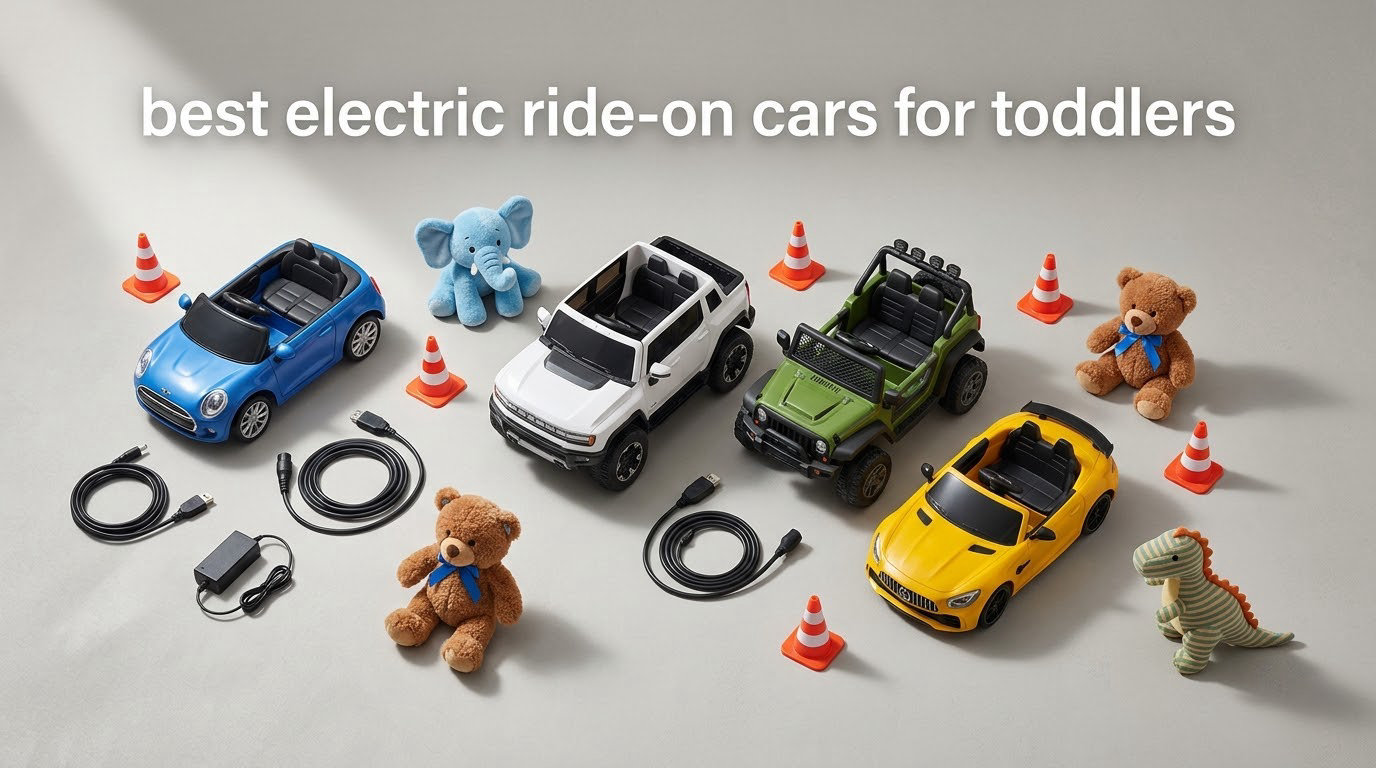
If you want the short answer: the Best Choice Products 12V Kids Electric Ride-On Car is the best electric ride-on car for toddlers in 2026 for most families. It is a single-seater 12V car with a 2.4GHz parent remote, spring suspension, never-deflate plastic wheels and a 61 lbs weight limit, and it carries more than 21,000 reviews. For children under three, step down to a 6V quad instead, and for two children sharing one toy, the 24V two-seater is the only real option in this group.
That single sentence covers most of the decision. The rest of this guide takes it apart. We compared twelve electric ride-on cars across the 6V, 12V and 24V tiers, read the owner reviews on each one, and sorted them by the things that actually matter to a parent: does the child fit, can they reach the pedals, does the car hold a slope, and will it still work a year from now.
Age labelling in this category is unreliable. Several listings here claim ages 3 to 6 on cars that a typical three-year-old will outgrow inside twelve months, and one listing claims ages 3 to 8 for a machine most preschoolers cannot reach the pedals in. We used the stated maximum rider weight and the physical dimensions as the real filter, and treated the age ranges as a hint rather than a fact.
If you are still narrowing the field, our broader kids electric ride-on car roundup covers the wider range beyond the toddler window, and our toddler ride-on truck picks go deeper on the truck-shaped end of the market.
Table of Contents
Top 3 Picks for Best Electric Ride-On Cars for Toddlers (October 2026)
Three models cover the overwhelming majority of family needs. The Best Choice Products 12V car is the one most parents end up with, the Peg Perego tractor is the one that lasts longest, and the second Best Choice Products truck is the strongest balance of features per pound.

Best Choice Products 12V Ride-On Car
- 2.8 MPH top speed
- Spring suspension
- Parent remote
- 61 lbs capacity

Peg Perego John Deere 12V Tractor
- Two speeds to 4.5 MPH
- 85 lbs capacity
- FM radio
- Trailer included

Best Choice Products 12V Ride-On Truck
- 3.1 MPH top speed
- 5-point harness
- Up to 2 hours per charge
- 4-wheel suspension
Best Electric Ride-On Cars for Toddlers (October 2026)
Every car below appears once. The key features column covers the specification that separates it from the others, so you can scan the whole field before reading any single review.
| Product | Specifications | Action |
|---|---|---|
| Best Choice Products 12V Ride-On Car |
|
Check Latest Price |
| Peg Perego John Deere 12V Tractor |
|
Check Latest Price |
| Best Choice Products 12V Ride-On Truck |
|
Check Latest Price |
 Kid Trax Minnie Mouse 6V Quad Kid Trax Minnie Mouse 6V Quad |
|
Check Latest Price |
 ANPABO 12V Mercedes G63 ANPABO 12V Mercedes G63 |
|
Check Latest Price |
 Kid Trax Tow-Mater 6V Quad Kid Trax Tow-Mater 6V Quad |
|
Check Latest Price |
 Miniature Motors 12V Ride-On Truck Miniature Motors 12V Ride-On Truck |
|
Check Latest Price |
 Winado 12V Mercedes AMG GTR Winado 12V Mercedes AMG GTR |
|
Check Latest Price |
 Best Choice Products 12V Mustang Best Choice Products 12V Mustang |
|
Check Latest Price |
 ENYOPRO 24V Two-Seater Bronco ENYOPRO 24V Two-Seater Bronco |
|
Check Latest Price |
 Lil Rider 6V Toddler Car Lil Rider 6V Toddler Car |
|
Check Latest Price |
 ARBELI 12V Toddler First Car ARBELI 12V Toddler First Car |
|
Check Latest Price |
6V vs 12V vs 24V: Which Voltage Does Your Toddler Need?
Voltage is the single decision that determines whether a toddler can actually drive the car. A higher voltage does not mean a better car; it means more torque, more speed and a longer useful life, all of which a two-year-old cannot use safely.
6V cars run between 1.5 and 2 MPH in this group. They top out low enough that a new driver will not outrun a walking adult, which is the point. They suit children from around 18 months to three years, and they are light enough for one adult to carry between outings. The trade-off is that they feel slow almost immediately: parents of preschoolers consistently report that a 6V car is outgrown within a year.
12V cars run from 2.8 to 3.5 MPH in the single-seat models here, and up to 4.5 MPH in the tractor. That is walking-to-jogging pace, which still feels controlled to an adult standing nearby. This is the sweet spot for ages three to six and it is where most of this roundup sits. It also covers the widest range of terrain, because 12V motors have enough torque for grass and light gravel.
24V cars are a different category. The one 24V model in this roundup is a two-seater with dual 90W motors, a 132 lbs total capacity and a 4.4 MPH top speed. That is not a toddler car; that is a car for a three-year-old and a five-year-old to share, and it is heavy and large enough that two adults are needed to move it.
One note on speed: a 24V car does not simply break faster than a 12V car. What ages out faster is the child’s tolerance for slow. Parents chasing a faster car for a five-year-old should read our 24V ride-on car picks before deciding to jump voltage.
1. Best Choice Products 12V Kids Ride-On Car: The One Most Parents Buy First
Best Choice Products 12V Kids Electric Vehicle Toy Ride On Car with Parent Remote Control for Toddlers, Seat Harness, 61 lbs Weight Capacity, Locking Doors, Spring Suspension, Bluetooth – Black
12V single seater
2.8 MPH max speed
61 lbs capacity
39 inch long
Pros
- Most reviewed listing in the group
- Spring suspension and never-deflate wheels
- Realistic styling with lockable doors and LED headlights
- Child drive or parent remote with forward and reverse
Cons
- 4.3 rating with a 9% one-star share
- Only 61 lbs capacity caps use sooner than larger models
- AUX outlet only with no built-in speaker or Bluetooth
This is the car most families in our research had already seen, and it earns the top spot on evidence rather than hype. It ranks near the top of the Kids’ Electric Vehicles category and has accumulated more owner reviews than anything else in this guide, which means its weaknesses are well documented rather than surprising.
The driving experience is deliberately calm. A 12V motor drives a top speed of 2.8 MPH, and the child can either press the pedal themselves or let an adult take over with the remote, which offers forward and reverse. Parents of beginner drivers tell us the remote is what makes the first ten sessions bearable.
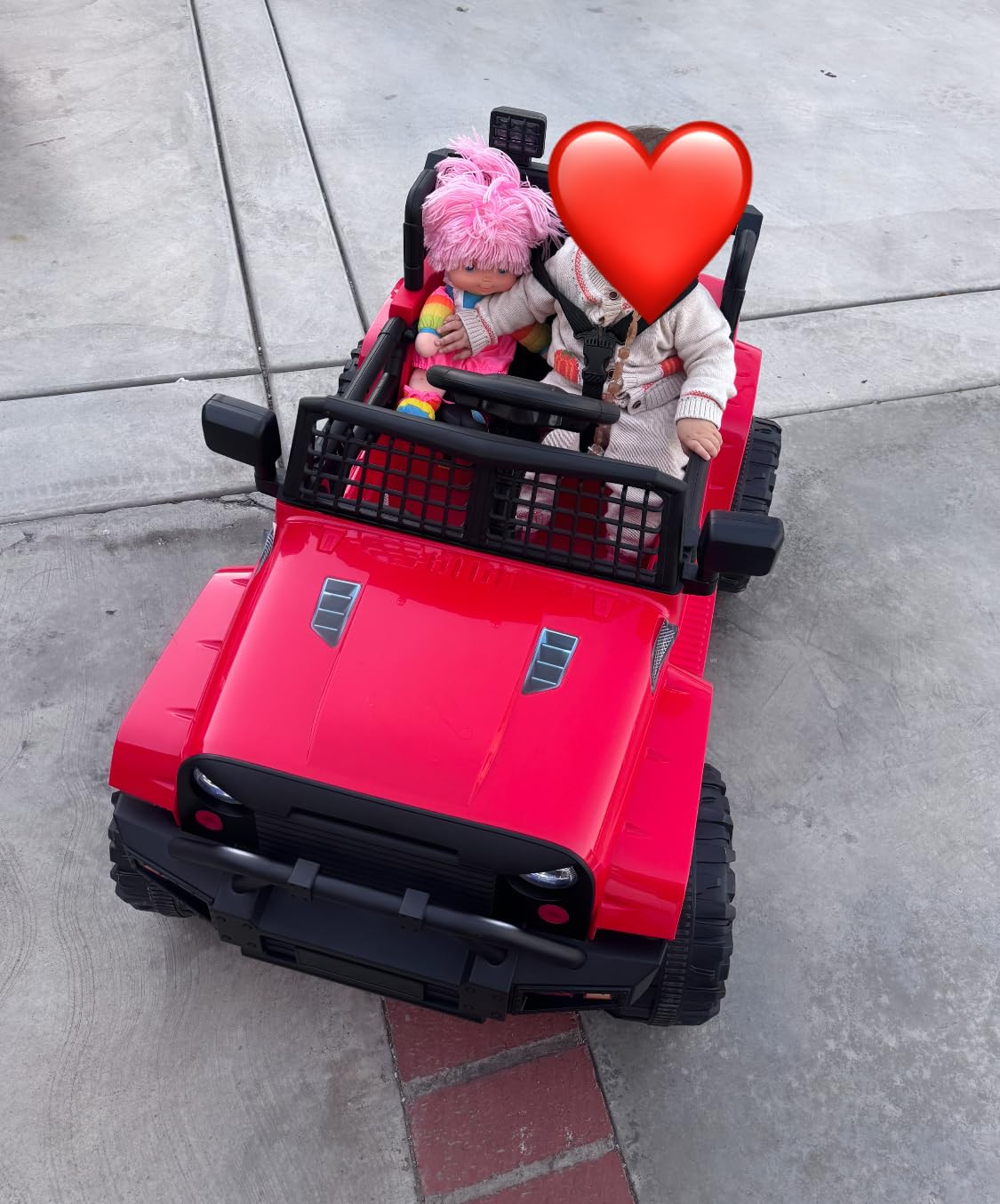
Construction is where it holds up. The spring suspension and never-deflate plastic wheels take driveway cracks, patio slabs and short grass without the punctures that plague pneumatic tires, and reviewers specifically call out the wheels as a reason the car keeps working after a year of use. The body is plastic and metal, and the steering response is predictable.
On the entertainment side you get a grid windshield, bright LED headlights, lockable doors and an adjustable seatbelt. Audio is a built-in AUX outlet, which means you supply the speaker and the playlist. Owners who wanted built-in music bought a different car, and that is the main trade against this one.
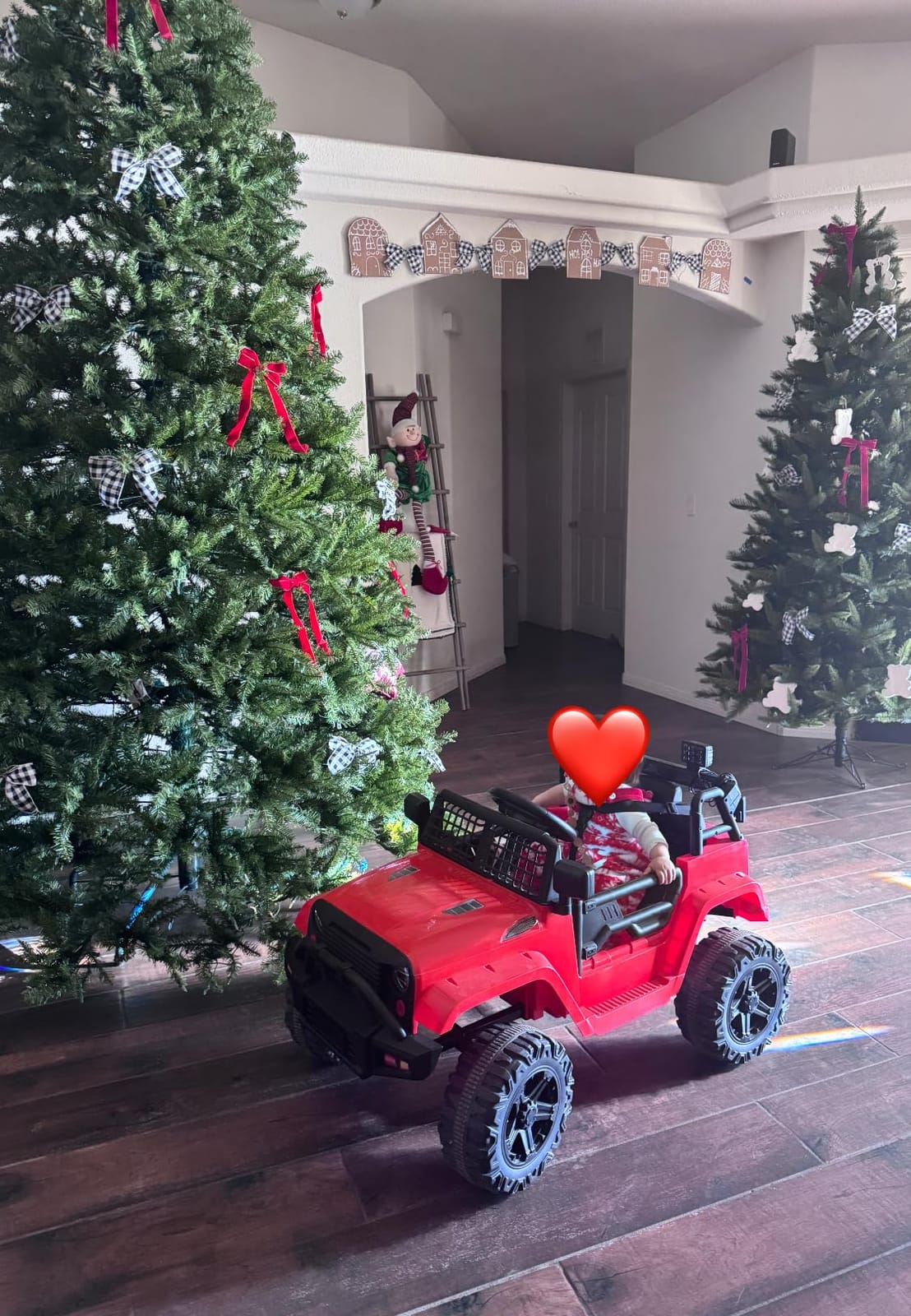
Is it big enough for your child?
At 39.25 inches long, 26 inches wide and 26 inches tall, this fits a three-year-old comfortably and a four-year-old well. The 61 lbs weight limit is the number to check first: a typical three-year-old sits well under it, a five-year-old may approach it, and beyond that you are over the stated limit.
Where it falls short
The 4.3 average rating is the second lowest of the twelve here, with a 9% one-star share, and the complaints cluster around two things: the 2.8 MPH cap feeling too slow on flat ground, and the 61 lbs ceiling arriving sooner than parents expect. It is a single seat, so siblings cannot share.
2. Peg Perego John Deere Ground Force 12V Tractor: Built to Outlast the Toddler
Peg Perego John Deere Ground Force Extra-Large 12 volt Ride-On Tractor with Trailer & FM Radio, Durable Design for Kids Ages 3-7
Two speeds to 4.5 MPH
85 lbs capacity
67.5 inches long
USA made with 2-year warranty
Pros
- Highest average rating in the group at 4.7
- 85 lbs capacity so children keep using it longer
- Built in the USA with a 2-year warranty
- Working FM radio
- trailer and adjustable seat
- Handles asphalt and grass on a weather-resistant battery
Cons
- Largest footprint here at 67.5 inches long
- Weighs 50 lbs so one adult struggles to move it
- Single seat only
This tractor is the durability answer. It shares the highest average rating in the roundup at 4.7 with an 84% five-star share, and unlike most listings here it carries a two-year warranty from a manufacturer that builds it in the USA. For a family that plans to keep the car past the preschool years, that combination matters more than any feature list.
The drivetrain is the reason it outlasts. It uses a heavier-duty frame with extra stability, a three-speed 12V drive with a realistic three-gear shift, and two actual speed settings: 2.25 MPH and 4.5 MPH. That 4.5 MPH figure is the highest top speed of any car in this roundup, and reviewers point to how well the gearbox and frame hold up under daily use as the reason for the car’s longevity.

It also handles terrain better than most of the twelve. The weather-resistant battery and the extra-large seat are frequently named as the reasons children keep riding it, and the attachable trailer gives the rear axle something to pull, which reviewers say makes the difference on grass and asphalt.
Circumstances matter here. The adjustable seat with flip-up armrests and a working FM radio make it a genuine first vehicle rather than a novelty, but the dimensions are 67.5 inches long, 26.5 inches wide and 24.5 inches tall, and the unit weighs 50 lbs. Storage is the practical problem most owners mention.
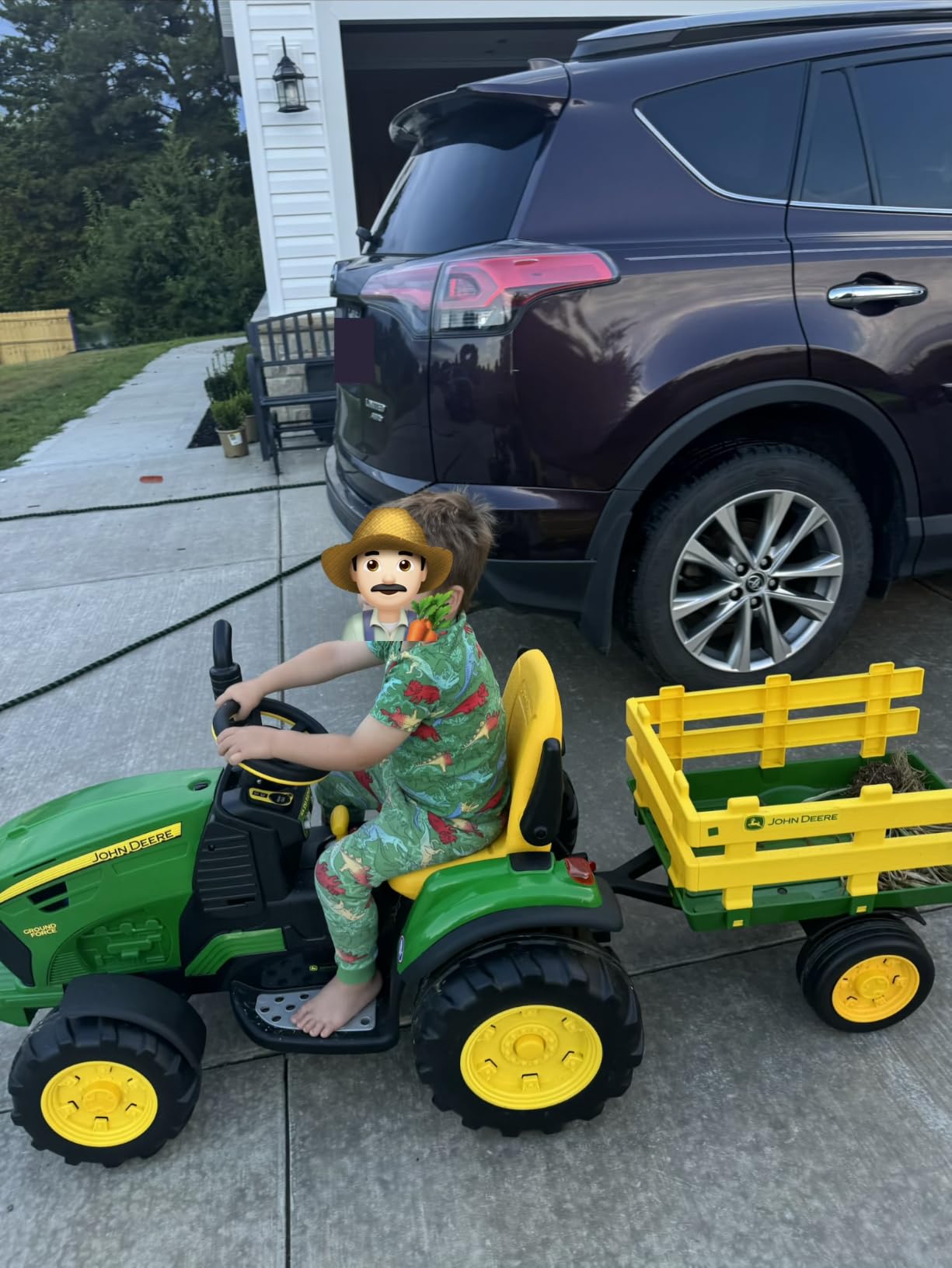
Who it suits best
It suits a three-year-old who is confident on a pedal and will still be riding at five or six. The 85 lbs weight capacity is the second highest here and the reason a family gets more years from it than from a 44 or 61 lbs car.
Where it falls short
It is a single seat, so it is not a sibling-sharing option. The 50 lb weight and 67.5 inch length mean it needs a garage, a shed or a covered space rather than a corner of a living room, and moving it alone is genuinely awkward.
3. Best Choice Products 12V Kids Ride-On Truck: The Best Balance of Features
Best Choice Products 12V Kids Ride-On Car with Parent Remote – Jet Black
3.1 MPH max speed
44 lbs capacity
Up to 2 hours run time
5-point harness
Pros
- Up to 2 hours of run time per charge
- Full 4-wheel suspension with plastic tires over tile carpet and grass
- 5-point harness and locking doors for real peace of mind
- Remote override works well for beginners
Cons
- Remote range is limited in open areas
- Rear drive can lift the front wheels on a slope
- 44 lbs capacity is among the lowest here
This is the pick we recommend when a parent asks for the best all-round car rather than the one built to last a decade. It has more than 16,000 reviews at 4.5, and its feature set covers the things reviewers actually search for: a five-point harness, locking doors, a parent remote that overrides steering and speed, and up to two hours of run time on a full charge.
Two hours per charge is unusual at 12V. Most comparable cars in this roundup quote 40 to 60 minutes, and one quotes an hour. The battery capacity does fade over time, though: owners report it settling at roughly 20 to 30 minutes per charge after about a year of regular use, which is normal for sealed lead-acid packs.
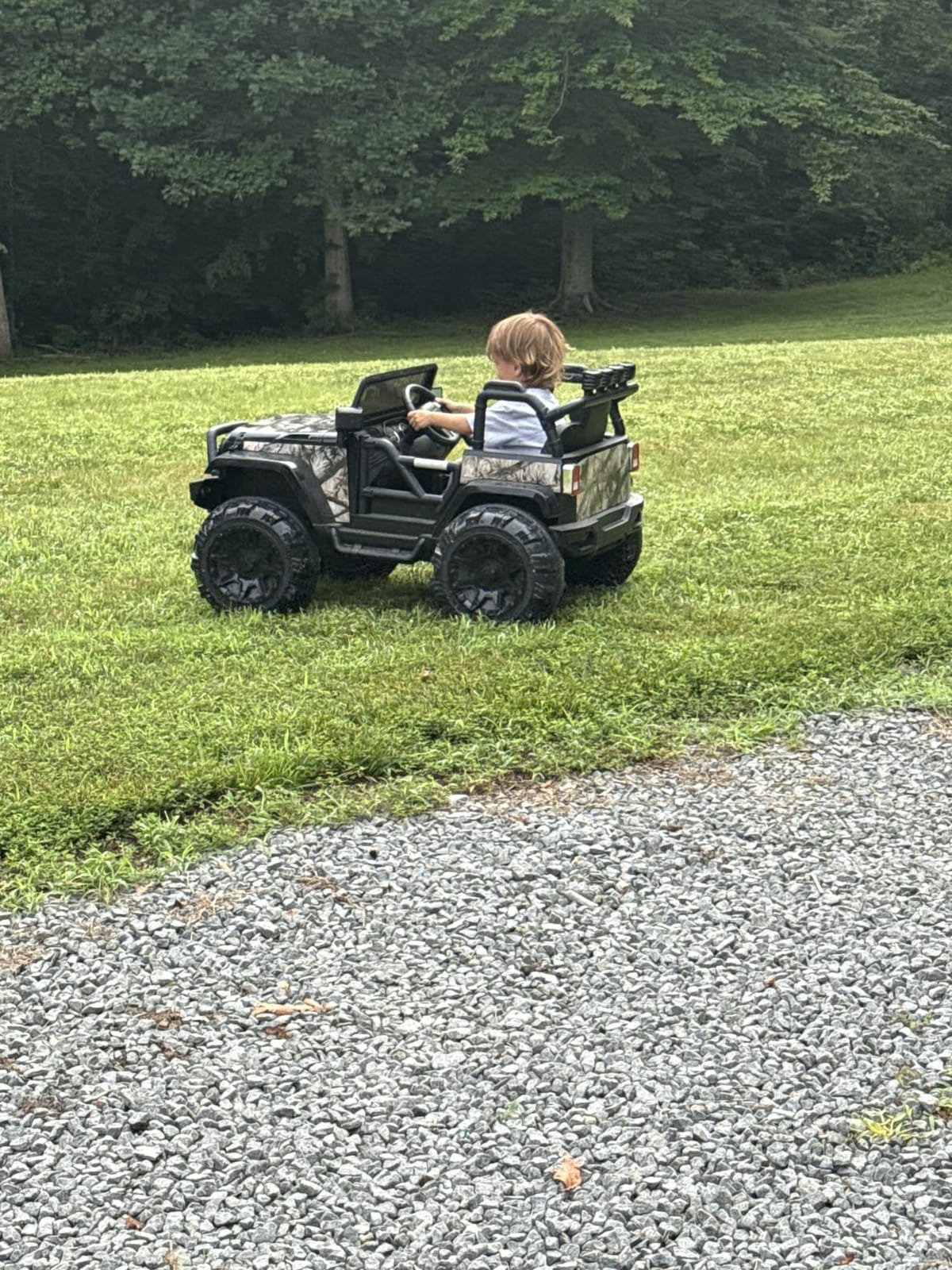
Mechanically it is the smoothest-riding of the 12V cars here. Full four-wheel shock-absorbing suspension with long-lasting plastic tires handles tile, carpet, pavement and short grass, and the foot pedal acceleration with a kid-sized steering wheel gives a more natural driving feel than a button.
It is also easily customisable, with pre-drilled holes for adding lights, speakers or a second battery. The catch is the 44 lbs weight capacity, one of the lowest figures in this roundup, which makes it a first car for a two- or three-year-old rather than a long-term one.
Is it safe on a slope?
Owners raise a real concern here. Because the power comes from the rear axle, sudden forward motion on a slope can lift a front wheel and tip the car backward. On a flat driveway or patio it is stable; on a hill, use the remote on a low speed setting.
Where it falls short
The lap-style seat belt lets small children wiggle out, and many owners add a separate harness. The remote has limited effective range in open areas, and the brand does not sell spare parts, which matters if a front axle grommet fastener loosens. We cover the full ride-on truck field in our toddler ride-on truck guide.
4. Kid Trax Disney Minnie Mouse 6V Quad: The Right Car for Under-Threes
Kid Trax Toddler Disney Minnie Mouse Quad Ride-On, Kids 18-30 Months, 6V Battery and Charger Included, Max Weight 45 lbs, Hot Pink
6V power
1.5 MPH max speed
45 lbs capacity
Ages 18 to 30 months
Pros
- One of the few options genuinely suited to 18-month-olds
- Very light at 6.2 lbs so one adult can move it
- Power Trax traction tires smooth out uneven ground
- 1-year warranty plus a 6-month battery warranty
Cons
- No parent remote control at all
- 1.5 MPH is too slow for older preschoolers
- 45 lbs capacity is small
Most cars in this category are labelled for a three-year-old, which leaves parents of younger toddlers with nothing suitable. This 6V quad is one of the few in the roundup built for the 18 to 30 month window, and it is the pick for a newly walking child whose feet barely reach the pedal.
The control scheme is the point. Acceleration is a single push button rather than a pedal or a remote, which is something a small hand can master on the first day, and the top speed is 1.5 MPH. That is slower than a walk, which is exactly what you want when the driver cannot yet steer reliably.

The Kid Trax Power Trax rubber traction strip tires are what make it usable outdoors. They absorb bumps and soft ground better than a plastic wheel would, and reviewers point to them when explaining why the ride feels smooth for such a small machine. The 6V rechargeable battery uses a direct-connect one-step charging system, and the charger is in the box.
At 27.95 inches long, 16.93 inches wide and 18.9 inches tall, and just 6.2 lbs, this is one of the lightest cars here to move, carry and store. It is also the one we would hand to a grandparent or put in a holiday bag without a second thought about floor space.

Does your child need a remote?
There is no parent remote on this one, so all control sits with the rider. For a child under two on a closed, level surface that is usually fine. If your driveway slopes, faces traffic or opens onto a street, the absence of a remote is the reason to look at a 12V car with an emergency stop instead.
Where it falls short
It is outgrown quickly. At 1.5 MPH and 1 year of warranty, a three-year-old will find it static, and the 45 lbs capacity closes it off even sooner. The stated age range of 18 to 30 months is accurate here, which is rare in this category and worth respecting.
5. ANPABO 12V Mercedes-Benz G63: Licensed Style With Real Power
ANPABO 12V 7AH Licensed Mercedes-Benz G63 Electric Car for Kids, White
Twin 35W motors
12V 7Ah battery
3 MPH max speed
66 lbs capacity
Pros
- Twin 35W motors and a 12V 7Ah battery give strong grass grip
- Officially licensed Mercedes-Benz G63 styling with real grille detail
- Remote includes an emergency stop plus manual mode
- Supports both USB and Bluetooth for kid music
Cons
- Remote needs two AAA batteries that are not included
- 36.2 lbs makes it awkward to move indoors
- 3 MPH top speed is modest
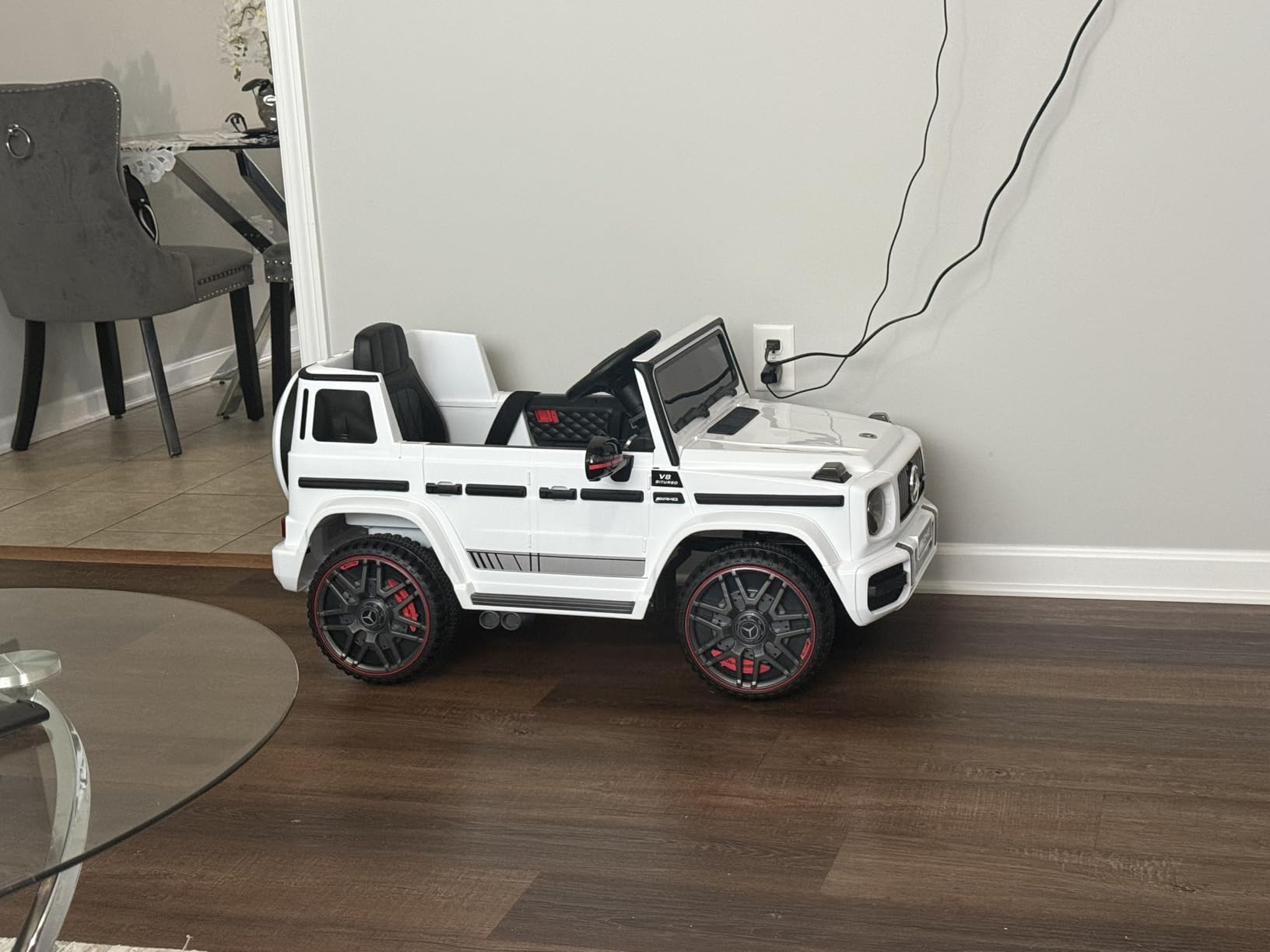
Licensed styling is a real question in this category, and this car is the clearest example of it being worth the money. The Mercedes-Benz G63 is officially licensed down to the grille detail, and the 4.5 rating from more than 1,500 reviews with an 82% five-star share suggests children notice the difference.
The engineering underneath is more than styling, though. It uses twin 35W motors with a 12V 7Ah battery, which is 55% above the 12V 4.5Ah pack most competitors ship, and the treaded wheels grip flat roads, dense grass and asphalt better than the plastic wheels on most of the twelve here.
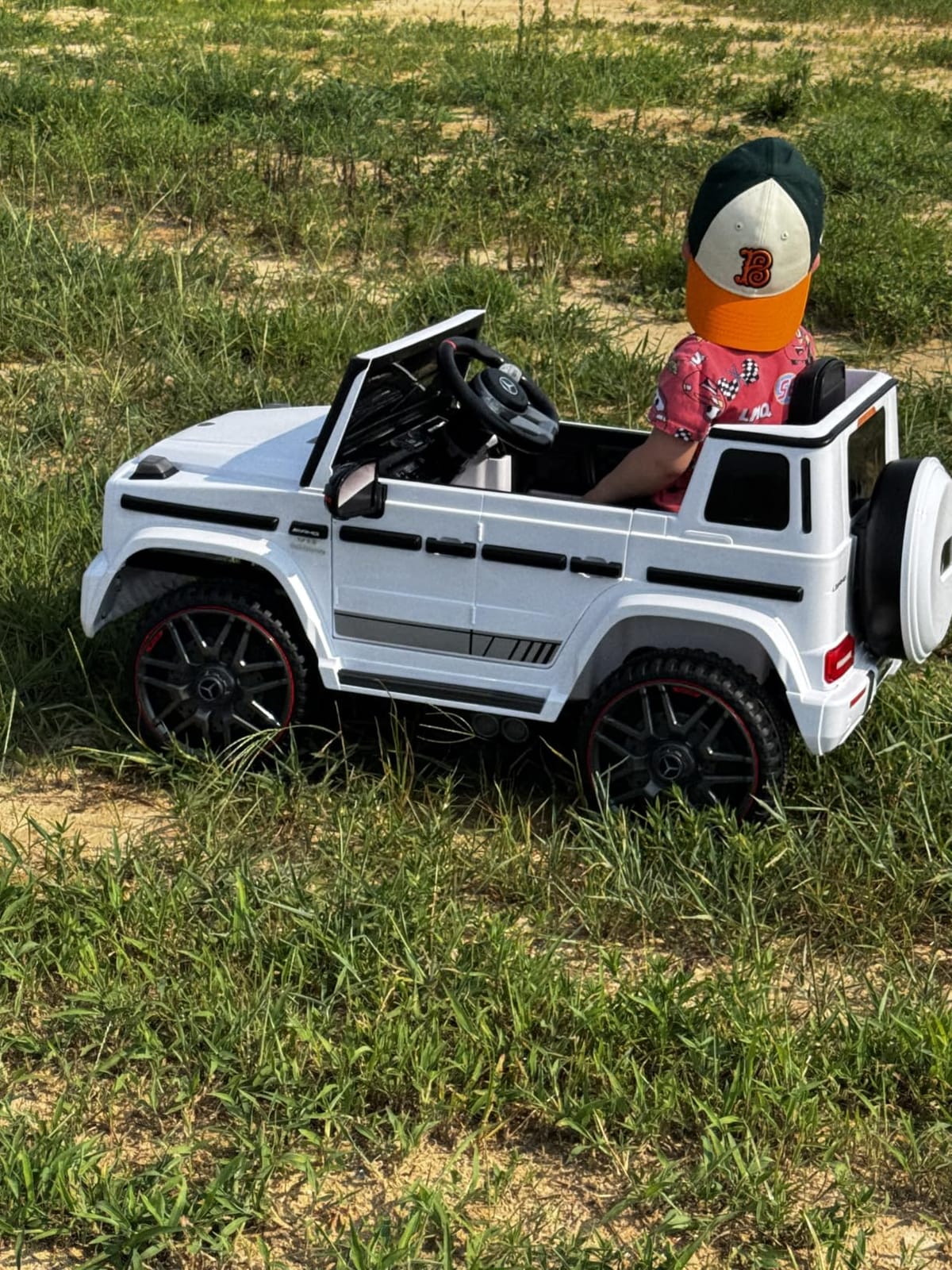
Safety hardware is thorough. There is a power switch that prevents accidental startup, a safety belt, a soft start that ramps acceleration, spring suspension, and a parent remote with an emergency stop alongside manual driving mode. Audio covers USB and Bluetooth plus built-in songs, with headlights, a horn and engine sounds.
At 44 inches long, 23 inches wide and 28 inches tall, with a 66 lbs weight limit, it is a comfortable fit for ages three to five. The 3 MPH top speed is on the slower end of the 12V group, which suits a newer driver rather than a confident preschooler.
Is a licensed car worth it over a generic?
For a child who is drawn to real vehicles, yes. Reviewers consistently single out the licensed exterior as the reason the car gets played with rather than abandoned. For a child who only cares about driving, a generic truck with the same motors would serve the same purpose for less.
Where it falls short
The remote requires two AAA batteries that are not included, which trips people up on the first attempt. At 36.2 lbs it is one of the heavier single-seaters here, so moving it indoors takes two people, and the modest 3 MPH limit disappoints children who have driven something faster.
6. Kid Trax Disney Cars Tow-Mater 6V Quad: The Toughest Little First Ride
Kid Trax Toddler Disney Cars 3 Tow-Mater Electric Quad Ride-On, Kids 1.5-3 Years Old, 6 Volt Battery and Charger Included, Max Weight 45 lbs, Tow-Mater brown
6V power
2 MPH max speed
44 lbs capacity
Ages 18 to 30 months
Pros
- Owners report it surviving years of rough play
- Push button acceleration and a 2 MPH limit suit 18 to 30 months
- Power Trax traction tires smooth out the ride
- Light at 11.2 lbs and compact to store
Cons
- Some arrive needing wheel and handlebar assembly
- Instructions are pictures only with no text
- No parent remote control
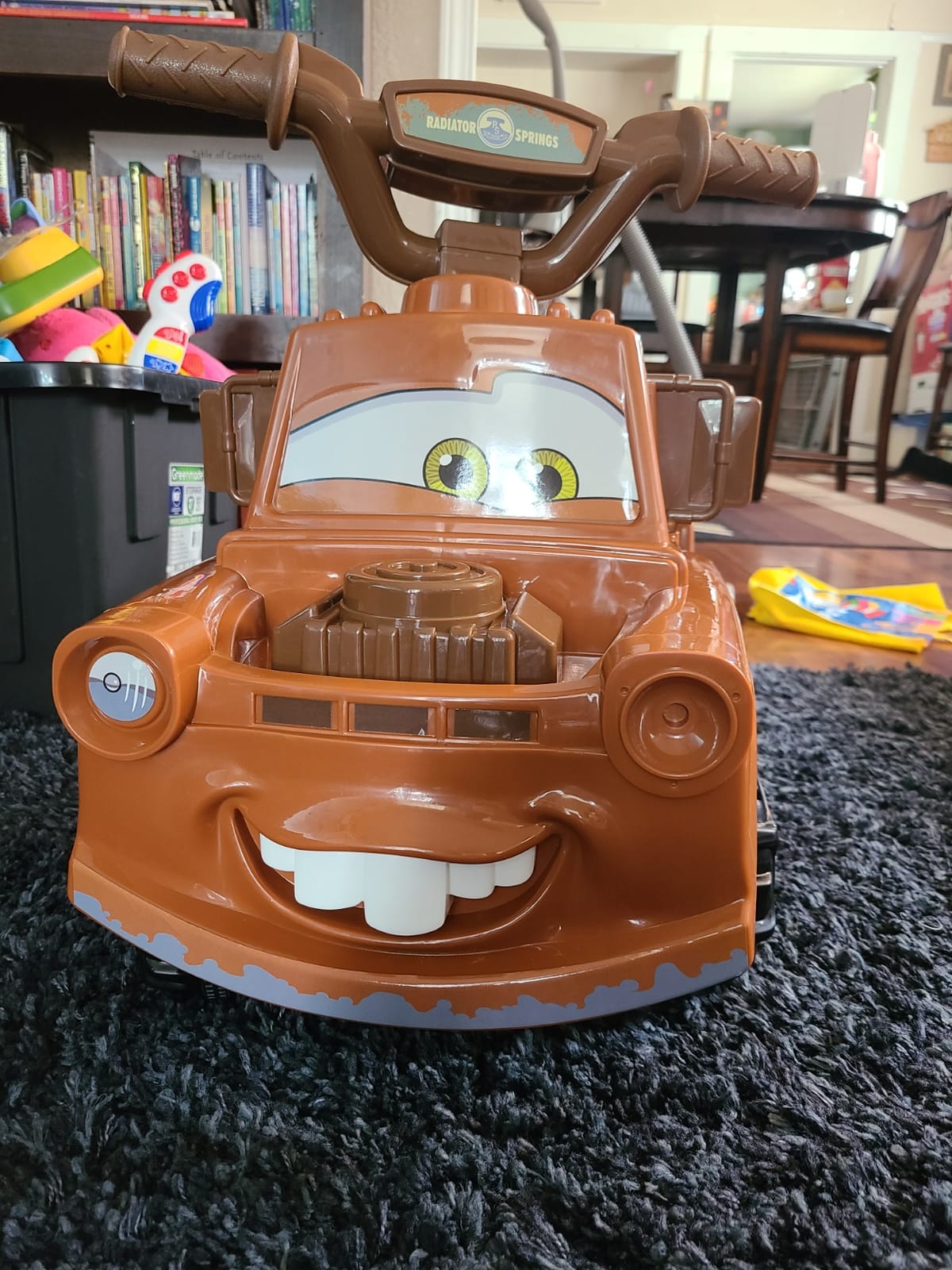
This is the quad for a first ride and a rough household. While the 891-review count is modest, the durability reports are unusually specific: owners describe the car still running after years of use, including one example with a six-year-old still riding it, which is well past the stated 18 to 30 month window.
It is a step up in pace from the Minnie Mouse quad, running to a 2 MPH top speed with the same push-button acceleration. That is still walking pace, so a new driver can manage it, but the extra half mile per hour is noticeable to a two-year-old and annoying to a four-year-old.
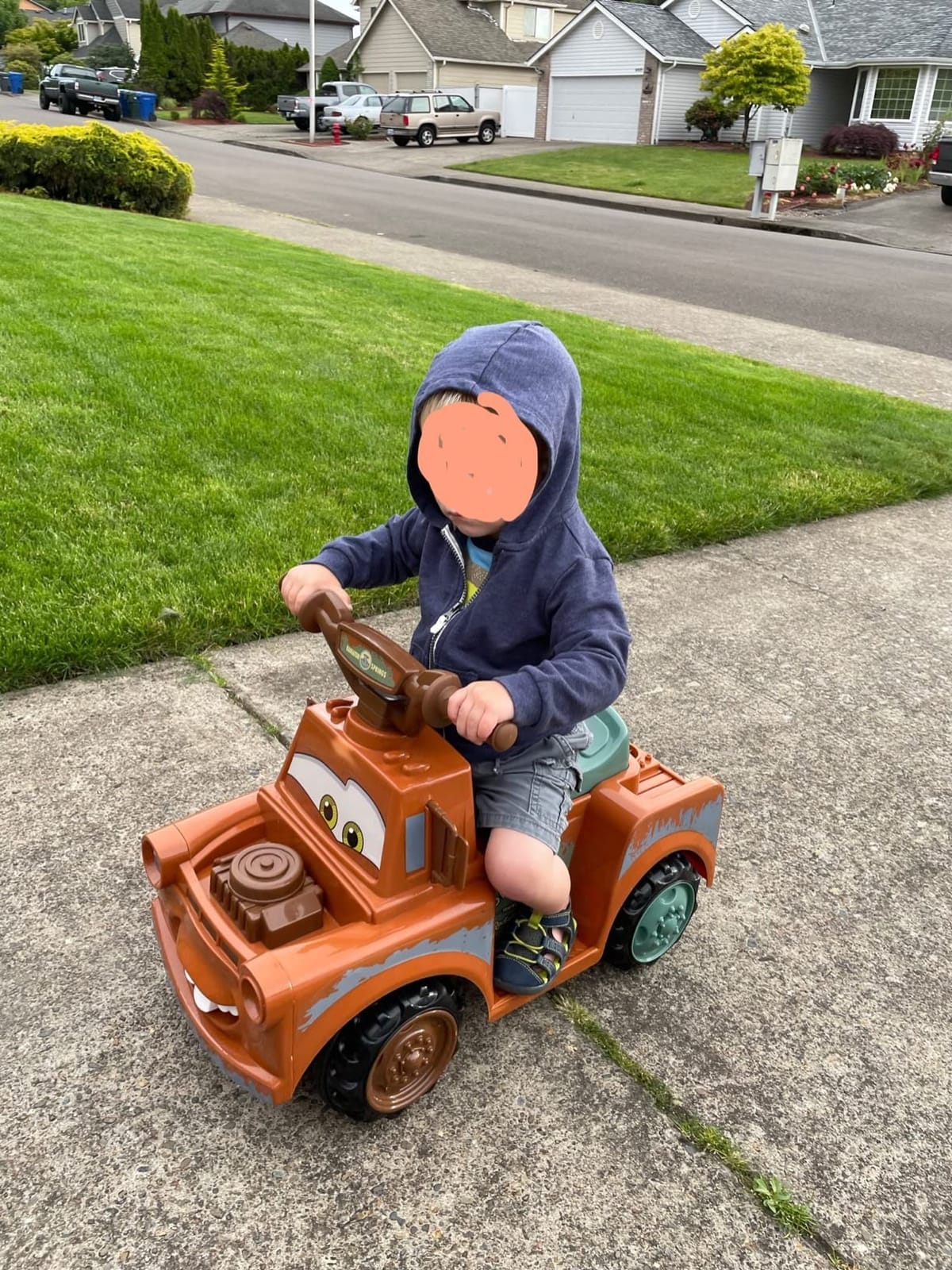
Like its Kid Trax sibling, it uses Power Trax rubber traction strip tires that take the sting out of uneven ground, and the 6V rechargeable battery comes with a wall charger in the box. At 26.38 inches long and 11.2 lbs it is compact enough to live in a hallway closet between outings.
The listing advertises the car as fully assembled, but some arrive needing wheel and handlebar assembly, and the instructions are pictures only with no text, including no explanation of which way the self-fastening nuts should face. Budget twenty minutes and a spare adult.
Is the assembly claim accurate?
Not always. Owners report partial arrival rather than a finished car, so plan to check the box on the doorstep rather than wrapping a birthday present in it. The parts needed are limited to wheels and handlebars, and the same reviewers say the finished car drives properly once assembled.
Where it falls short
No parent remote, so the adult has no braking authority. The 44 lbs weight capacity and 2 MPH limit close the window quickly, and the picture-only instructions are the most common complaint in the reviews. If you need remote control, the 6V tier is the wrong place to look.
7. Miniature Motors 12V Ride-On Truck: Twin Motors With ASTM Certification
MINIATURE MOTORS 12V Kids Electric Ride on Truck Car Remote Control, Twin 35W Motors 3.5MPH Max Speed, Bluetooth Music Player, 4 Wheels Suspension LED Lights Safety Belt, Gift for Boys & Girls-Black
Twin 35W motors
3.5 MPH max speed
66 lbs capacity
40 to 60 minutes play
Pros
- Quickest 12V car-bodied model here at 3.5 MPH
- Twin 35W motors give real power for the money
- Bluetooth speaker plays a phone's own music
- Certified to ASTM and CPSIA standards
- Spanners included for assembly
Cons
- Manual mode is locked at 3.5 MPH with no low speed
- A shorter 40 to 60 minute run time than most rivals
- Assembly required
Speed is the pitch here. At 3.5 MPH this is the quickest 12V car in this roundup with a normal car body, driven by twin 35W motors, and it still ranks in the top ten of the Kids’ Electric Vehicles category. Parents who found other 12V cars too slow on flat ground tend to land here.
The remote has three speed settings, which is the right design: an adult can hold the car at a crawl while a beginner learns the pedals. The problem is the manual mode. It is fixed at 3.5 MPH with no low-speed option, so a child who graduates from remote control to pedal control gets the full speed immediately with no intermediate step.
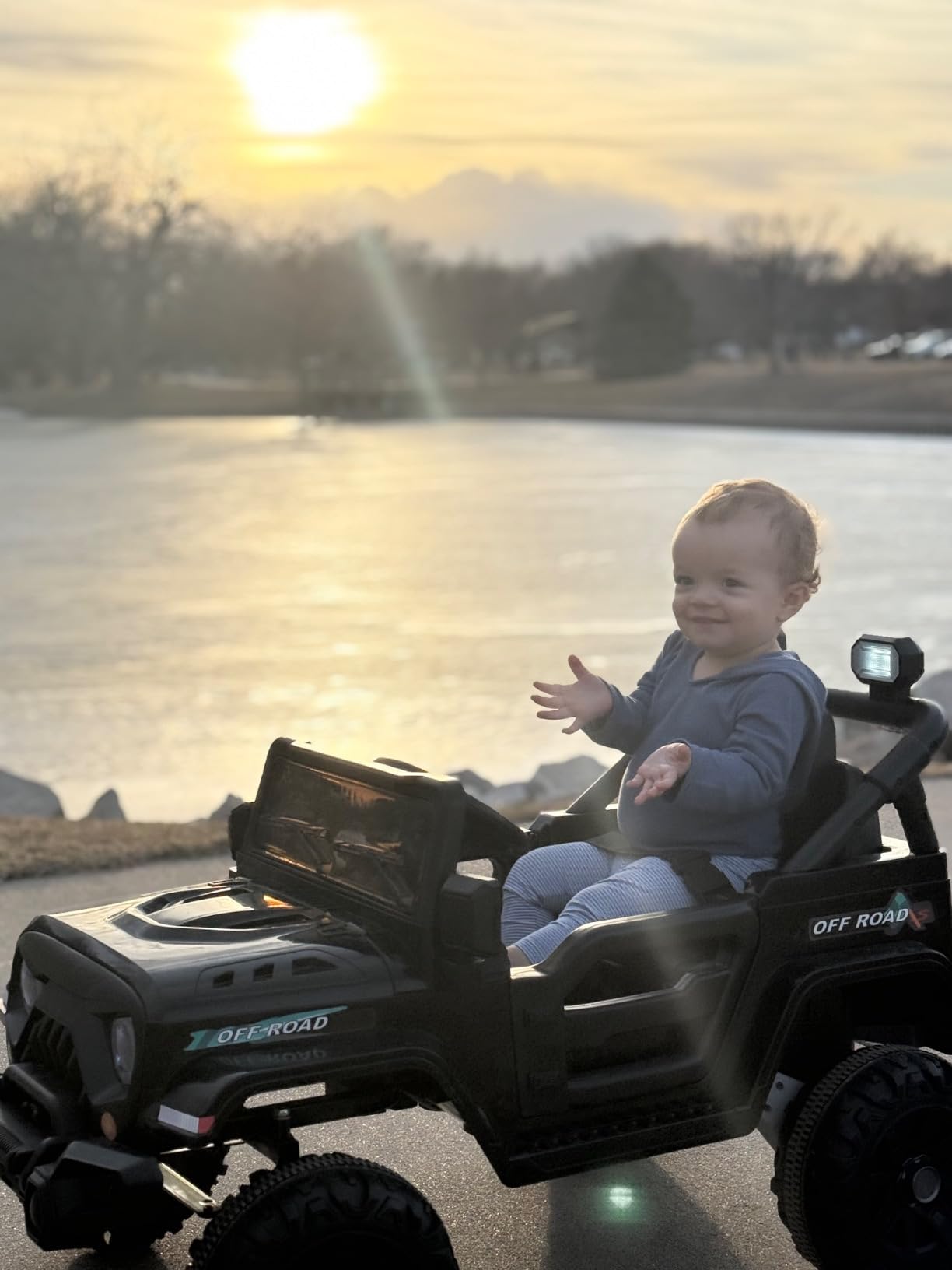
Audio is the other draw. The built-in Bluetooth speaker plays a phone’s own songs and stories rather than relying on a small library of presets, alongside a horn and engine start-up sound. Safety hardware includes a belt, slow-start technology, spring suspension and ASTM plus CPSIA certification, which is the clearest safety claim of any car here.
Run time is the compromise. Forty to sixty minutes of continuous play is the shortest window among the 12V cars in this roundup, and with a 66 lbs capacity and a 39 by 24.4 by 24.4 inch footprint it suits ages three to five on a driveway rather than all-day outdoor play.
Is it fast enough for an older preschooler?
For a four-year-old on flat ground, yes. For a child on a slope, treat the 3.5 MPH manual speed as the reason to stay on the remote. The combination of twin 35W motors and ASTM and CPSIA certification is the strongest power-to-safety pairing in this group.
Where it falls short
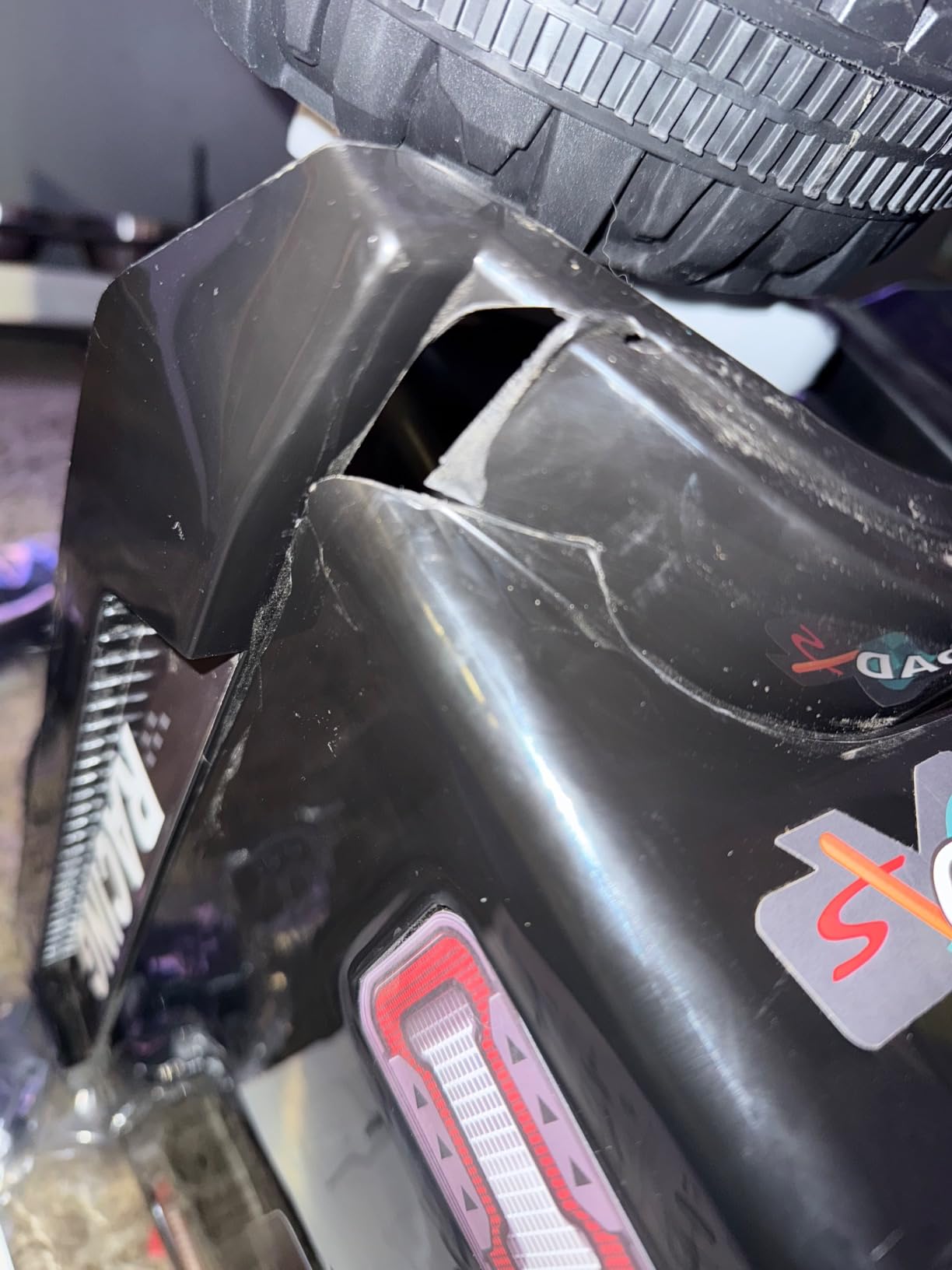
The fixed manual speed is the design flaw, because a child moving from remote-assisted driving to solo driving loses their safety net. The short run time means more charging cycles, and the 905-review base is thinner than the leaders, so long-term failure patterns are less well documented.
8. Winado 12V Mercedes-Benz AMG GTR: The Most Complete Audio Setup
Winado 12V Licensed Mercedes Benz AMG GTR Kids Ride on Electric Car, Black
12V power
3 MPH max speed
55 lbs capacity
8 to 12 hour charge
Pros
- Richest audio setup here with TF card
- USB
- AUX and volume control
- Three speed settings on the remote and two in manual mode
- Openable doors and a realistic dashboard kids notice
- Only 20.5 lbs to move
Cons
- 55 lbs capacity is lower than several rivals
- 8 to 12 hour charging time is long
- One owner reported a seat belt breaking after months
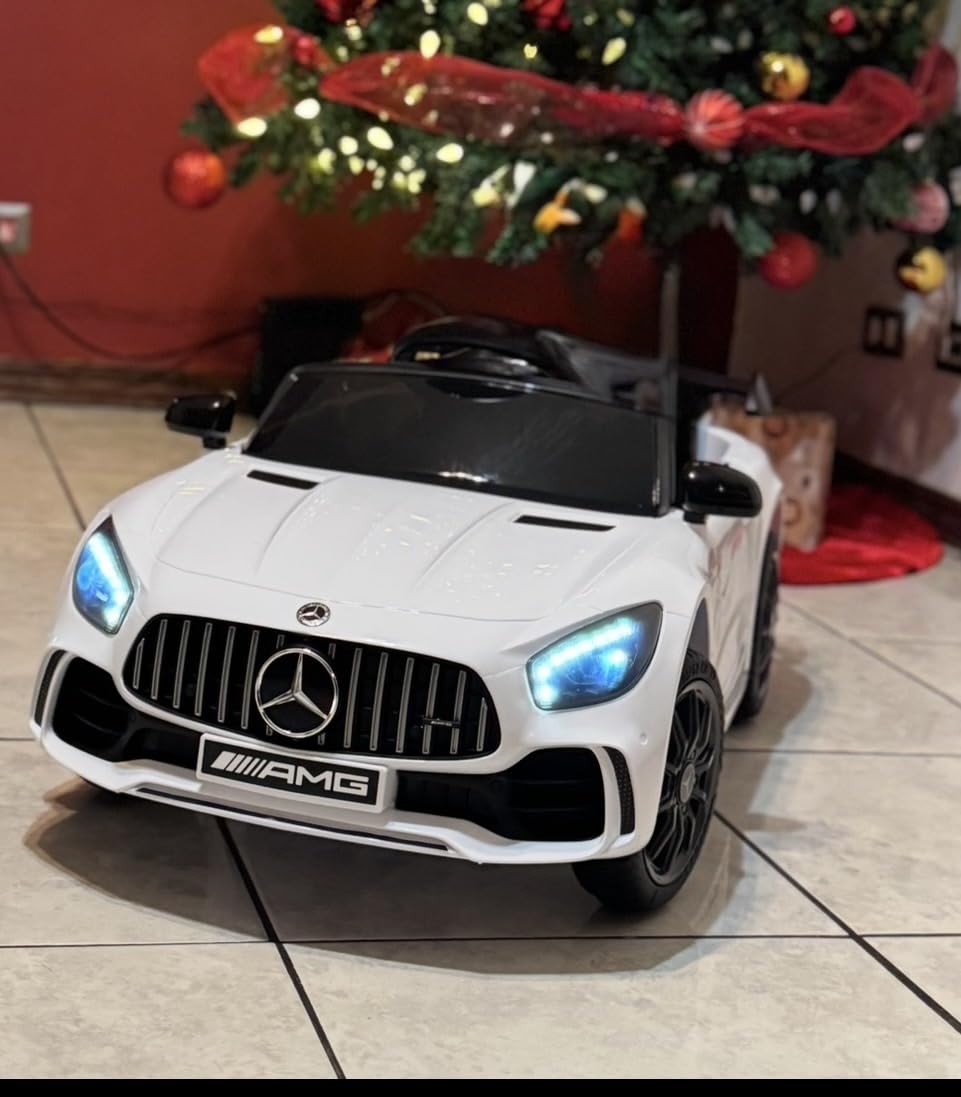
If your child is motivated by music rather than speed, this is the car. It has the most complete audio system in the roundup: a built-in music player, a TF card slot, USB and AUX ports, speakers and a volume control. For a two-year-old, being able to play their own playlist is often what turns a drive into a favourite activity.
Control flexibility is good too. The remote offers three speed settings and manual mode offers two, with a smooth start design and a 3 MPH maximum, which is a gentler ladder than the Miniature Motors car, which has no low manual setting at all.
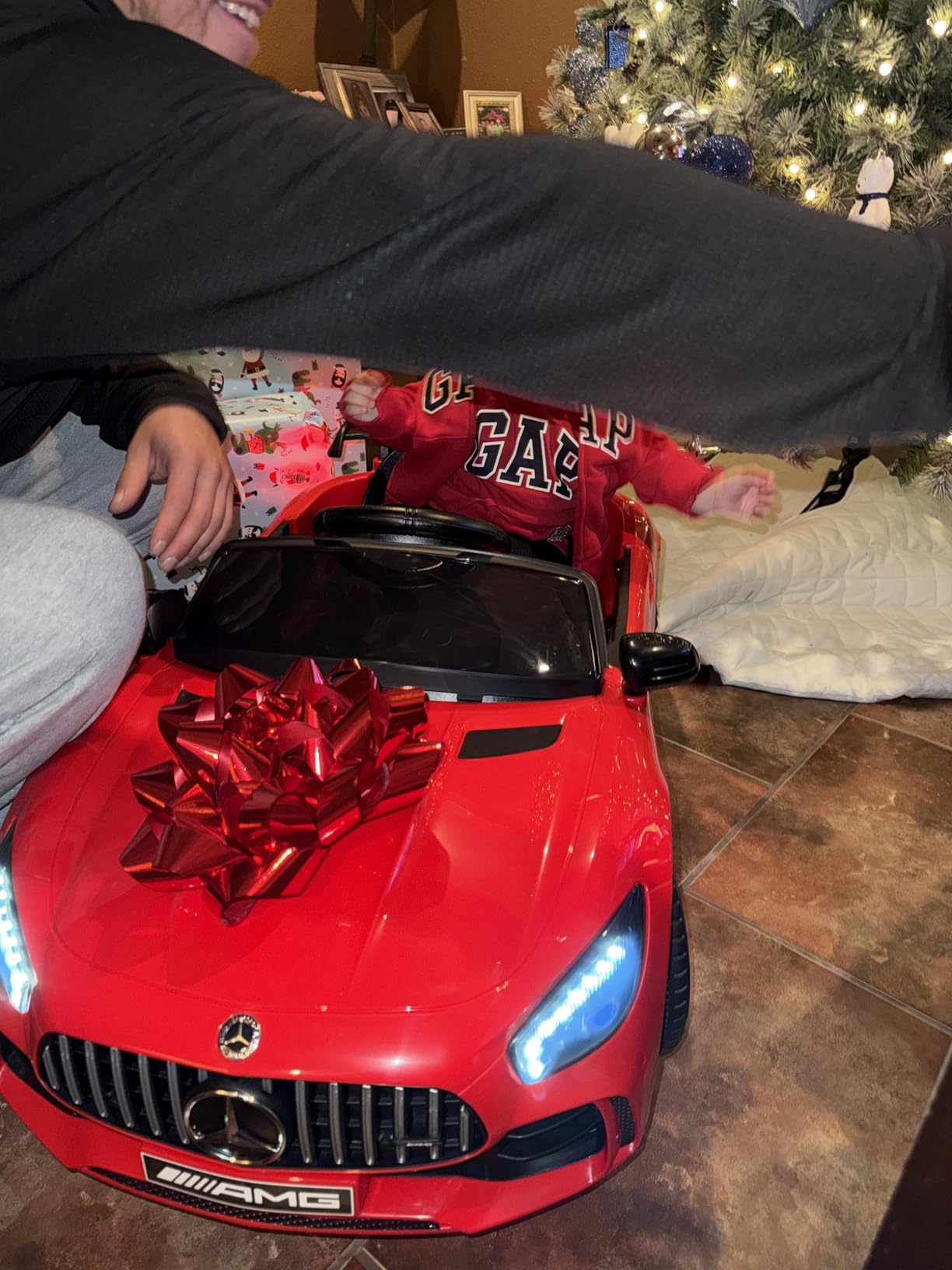
The licensed Mercedes-Benz AMG GTR body includes bright headlights, realistic taillights, openable doors and a dashboard that reviewers say children genuinely engage with rather than ignore. There is also a voltage display on the dash, a small touch that tells you when the pack needs charging before the car dies mid-drive.
Two numbers frame the trade-off. The 8 to 12 hour charge time is the longest of the twelve here, which matters if you plan one long session a day. The 55 lbs capacity and the 3 to 5 year range make it a well-fitted middle car, and at 20.5 lbs it is among the lightest here to bring indoors.
Is it good on grass and pavements?
Buyers report good performance on grass and sidewalks, which is more than several plastic-wheeled 12V cars here can claim. The lighter 20.5 lb frame is easier for an adult to reposition onto a lawn than the 36 lb or 50 lb alternatives.
Where it falls short
One owner reported the seat belt breaking after a couple of months, so check the webbing before every long ride. Battery faults do occur, though the seller support is rated as responsive when they happen, and the 55 lbs limit is lower than the 66 and 85 lbs cars in this group.
9. Best Choice Products 12V Ford Mustang: Best for Ages Three to Six
Best Choice Products Kids 12V Electric Ride On Car Officially Licensed Ford Mustang w/Parent Control, LED Lights, 2 Speeds, Bluetooth – Red
12V power
3.1 MPH max speed
66 lbs capacity
Ages 3 to 6 years
Pros
- 4.7 rating with an 89% five-star share
- Full 4-wheel drive from 25W motors gives better turning
- 66 lbs capacity covering ages 3 to 6
- Owners report it still working after more than a year
Cons
- 60 minute run time is shorter than most 12V rivals here
- Assembly required and the box shows manufacturer labels
- Better suited to pavement than grass
This is the pick for a driveway-friendly, real car shape rather than a truck. Its 4.7 average rating with an 89% five-star share is among the strongest of the twelve, although the 530-review base is the second smallest in the group, so read that as a good signal on a thin sample rather than a settled verdict.
What separates it technically is the drivetrain. Full four-wheel drive from 25W motors produces noticeably better turning and acceleration than the two-wheel-drive norm, and reviewers single that out. Maximum speed is 3.1 MPH with high and low preset speeds, and you get parental remote control or a child-driven mode.
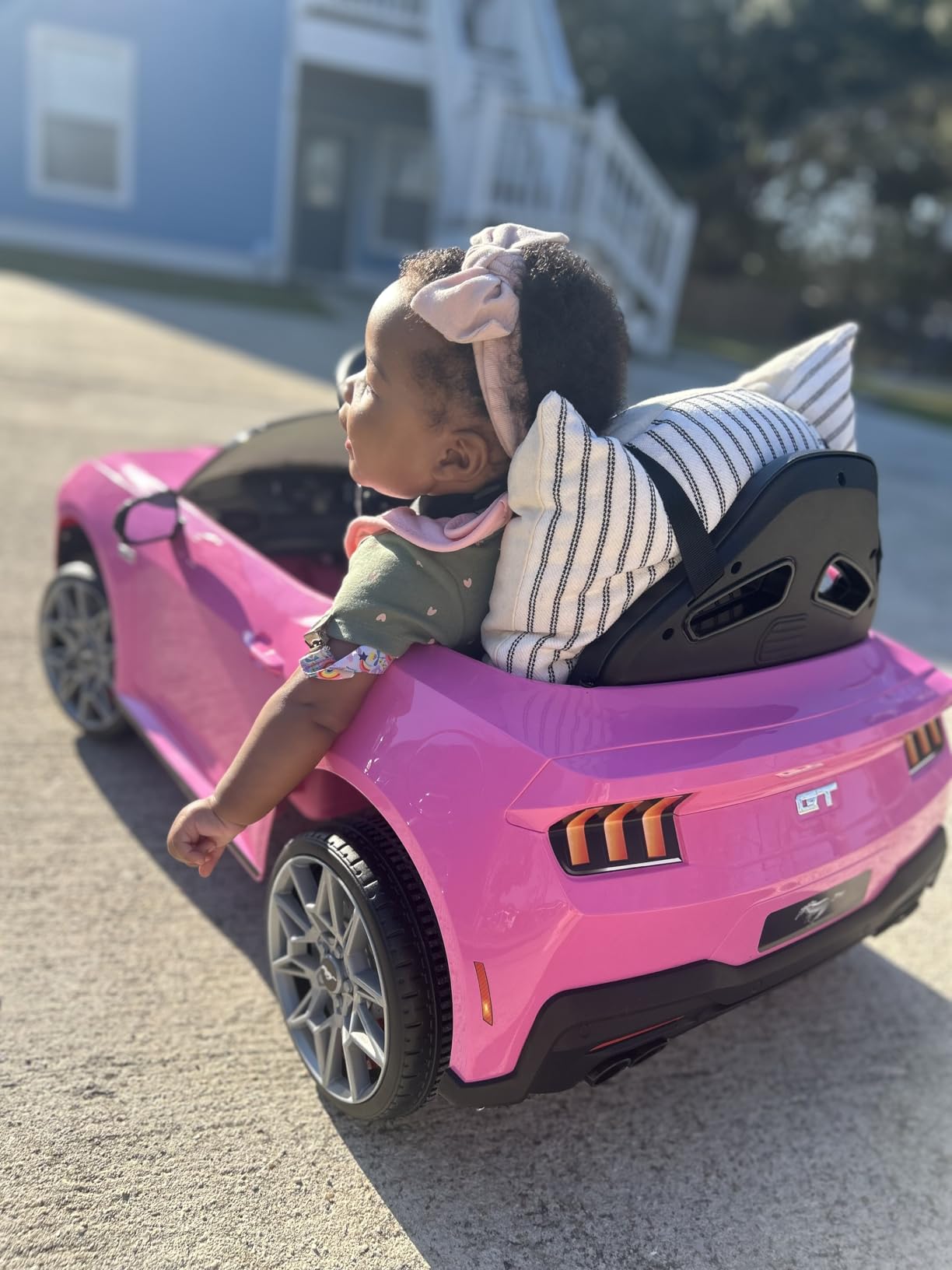
Comfort and features are handled well for a three-year-old: an adjustable seat harness, treaded plastic wheels, LED headlights and a built-in Bluetooth sound system. The manufacturer lists ages 36 months to 6 years, the widest sensible upper range among the single-seat 12V cars here, with a 66 lbs capacity to match.
Two practical notes. Run time is up to 60 minutes, shorter than most 12V rivals in this roundup, and the car is better suited to driveways and flat pavement than to grass, which is a direct consequence of the treaded plastic wheel and the four-wheel drive prioritising speed over ground clearance.
Is it a good birthday gift?
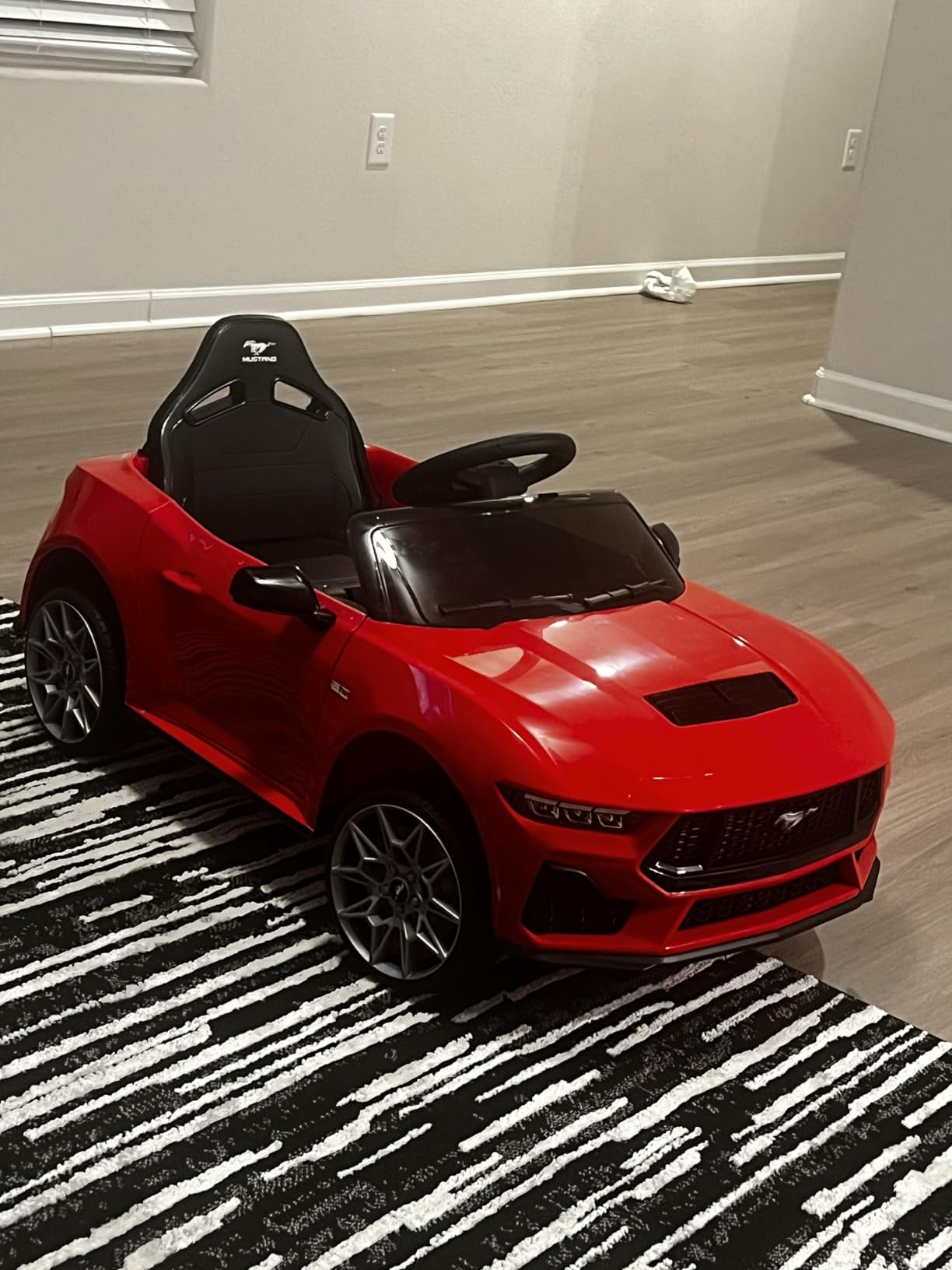
Plan for assembly, because it arrives in its manufacturer’s carton rather than gift-wrapped, and that box shows manufacturer labels. Once built, the licensed Ford Mustang styling and the dashboard of buttons are the parts children respond to most strongly in reviews.
Where it falls short
It is a 60-minute car rather than an all-afternoon one, and grass is not its strength. The 60-day return window from Best Choice Products is also the shortest warranty position here, so test it thoroughly in the first two months.
10. ENYOPRO 24V Two-Seater Ford Bronco Raptor: The Only Two-Rider Pick
2 Seater Ride On Car for Kids, 24V Licensed Ford Bronco Raptor Electric Power Ride On Truck Toy with Remote Control, 4 Wheels Shock Absorption, Soft Start, Bluetooth, Radio, 3 Speed – Blue
Dual 90W motors
24V 7Ah battery
4.4 MPH max speed
132 lbs capacity
Pros
- Only true two-seater here with independent 3-point harnesses
- Dual 90W motors give the strongest climbing power of any model here
- 132 lbs total capacity and a 3 to 8 year range
- Owners report it still working after two years of daily use by two children
Cons
- Heaviest at 56 lbs and the widest body at 44.1 inches
- Bluetooth volume is low and the radio finds few stations
- Snap-fit fenders and trim can pull off in handling
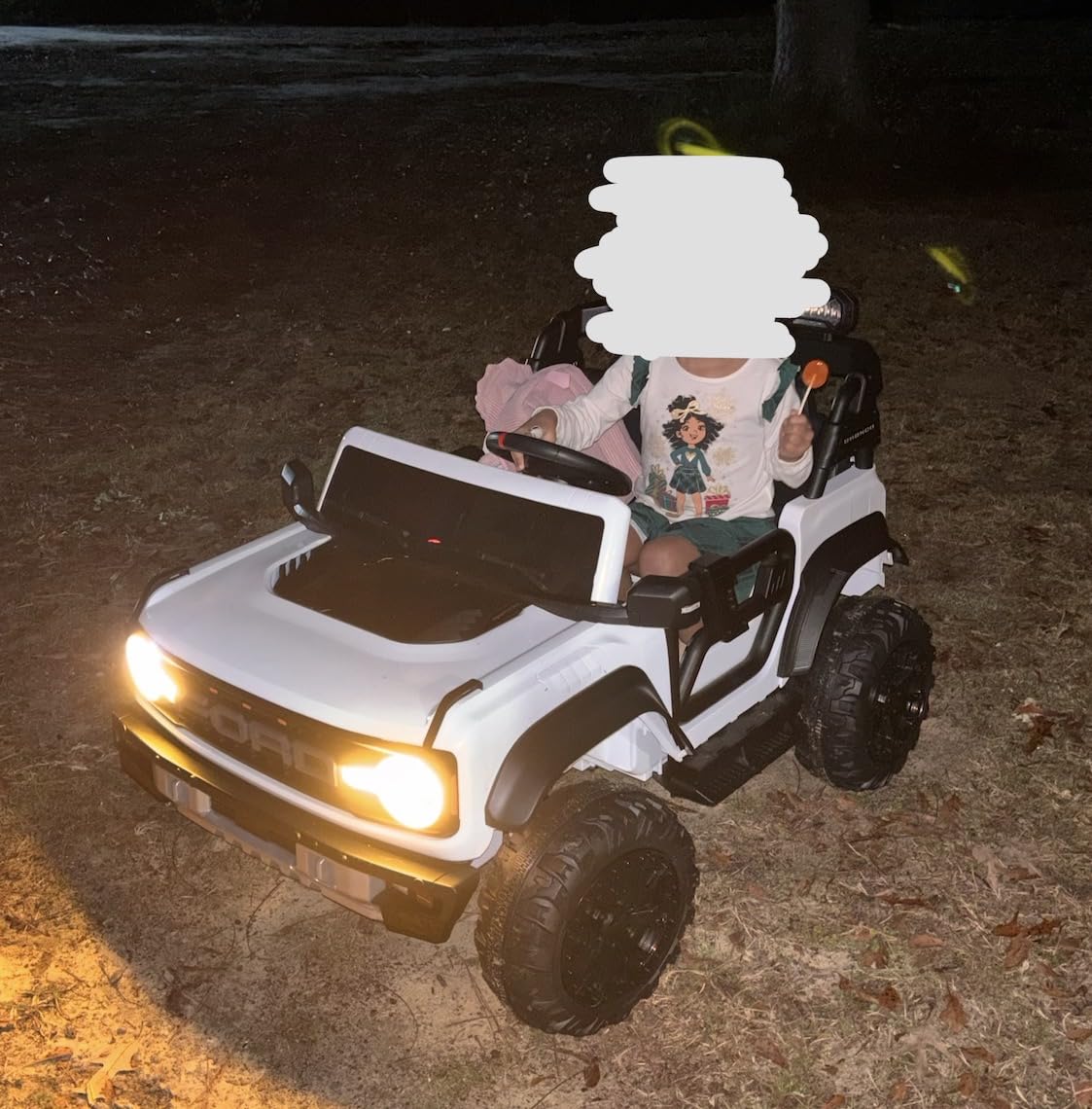
This is the answer to the question that dominates parent forums: one-seater or two-seater. If two children need to ride at once, this is the only genuine option in the roundup, with two 21-inch seats, each with its own independent three-point safety harness and a 132 lbs total weight capacity, the highest here by a wide margin.
The power is what separates it from the rest. Dual 90W motors on a 24V 7Ah rechargeable battery give the strongest climbing power of any model here, which is the practical answer to the most common complaint about cheaper cars: they bog down on a sloped driveway. It runs up to 4.4 MPH across three speed settings with one to two hours of continuous play.

Safety and control are handled thoughtfully. There is a manual steering wheel and pedal mode plus a parent remote with an emergency brake, and the remote instructions always take priority over manual driving, so an adult can take over instantly. There is also a soft start, lockable doors, metal spring suspension and anti-skid wear-resistant PP tires.
Owners report it still working like new after two years of daily use by two children, which suggests the durability outlasts the toddler window. Extras include headlights, a horn, engine sounds, a music player, a radio and Bluetooth, though the audio output is modest.
Can two children actually ride together?
Yes, with a caveat. Each seat has its own three-point harness, so both children are restrained, and the 4.4 MPH top speed plus soft start keeps it manageable. The wide turning radius makes tight spaces awkward, so it needs an open driveway rather than a corridor.
Where it falls short
Size and weight are the real costs: 56 lbs and 44.1 inches long means two adults to move it and a cover or garage bay to store it. The battery needs about eight hours of charging before first use, and the snap-fit fenders and trim can pull off during handling.
11. Lil’ Rider 6V Classic Toddler Car: A Simple Starter With Reach
Kids Ride on Car with Remote – Classic Toddler Car for Kids Ages 3-6 – 6V Battery-Powered Ride on with Lights and AUX Port by Lil’ Rider (Cream)
6V 4.5Ah battery
2 to 3 MPH cruise
70 lbs capacity
38 inches long
Pros
- 70 lbs capacity on a plastic body
- unusual at this size
- Dual rear-wheel drive motors at this size
- About two miles of pavement per charge
- Simple charge
- turn on
- press the pedal
Cons
- Lowest rating of the twelve at 4.2 with an 11% one-star share
- Instructions are tiny print with no rear wheel motor guidance
- Remote steering is not proportional and the car will not hold a line
This is the odd one out. It is a 6V car with a 70 lbs weight capacity, which is more than several 12V cars in this roundup, and it carries two-wheel drive motors on each rear wheel at a size and simplicity where that is unusual. For a child who needs room to grow without a bigger car, that combination is the argument.
Operation is deliberately minimal: charge it, turn it on, press the pedal. There is forward and reverse with high and low gear, a cruise speed of 2 to 3 MPH, headlights, an opening driver door, a horn, sound effects and an auxiliary MP3 port. Owners report roughly two miles of pavement on a single charge.
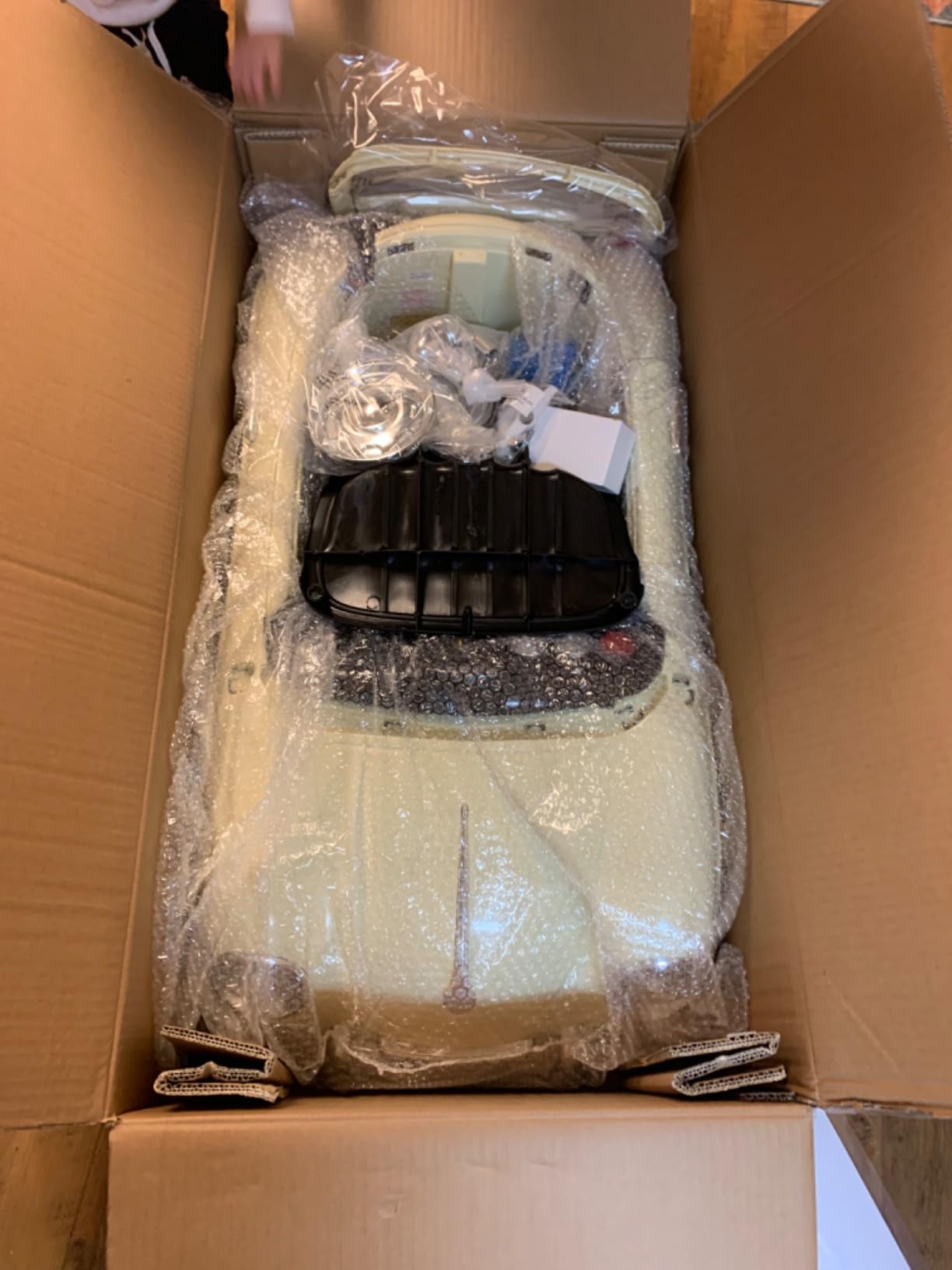
The 4.2 rating is the lowest of the twelve with an 11% one-star share, and the complaints are specific and worth weighing. The remote steering is not proportional, so the car will not hold a straight line and the steering is jerky, which is frustrating for a parent trying to drive a nervous child rather than supervising from a distance.
Two design quirks cause more of the criticism. The body is back-heavy and lifts the front wheels off the ground, and the chassis is small for the stated 3 to 6 age range. Lights operate only at startup or while music plays, not during quiet driving, and the mirrors and hub caps detach in normal use.
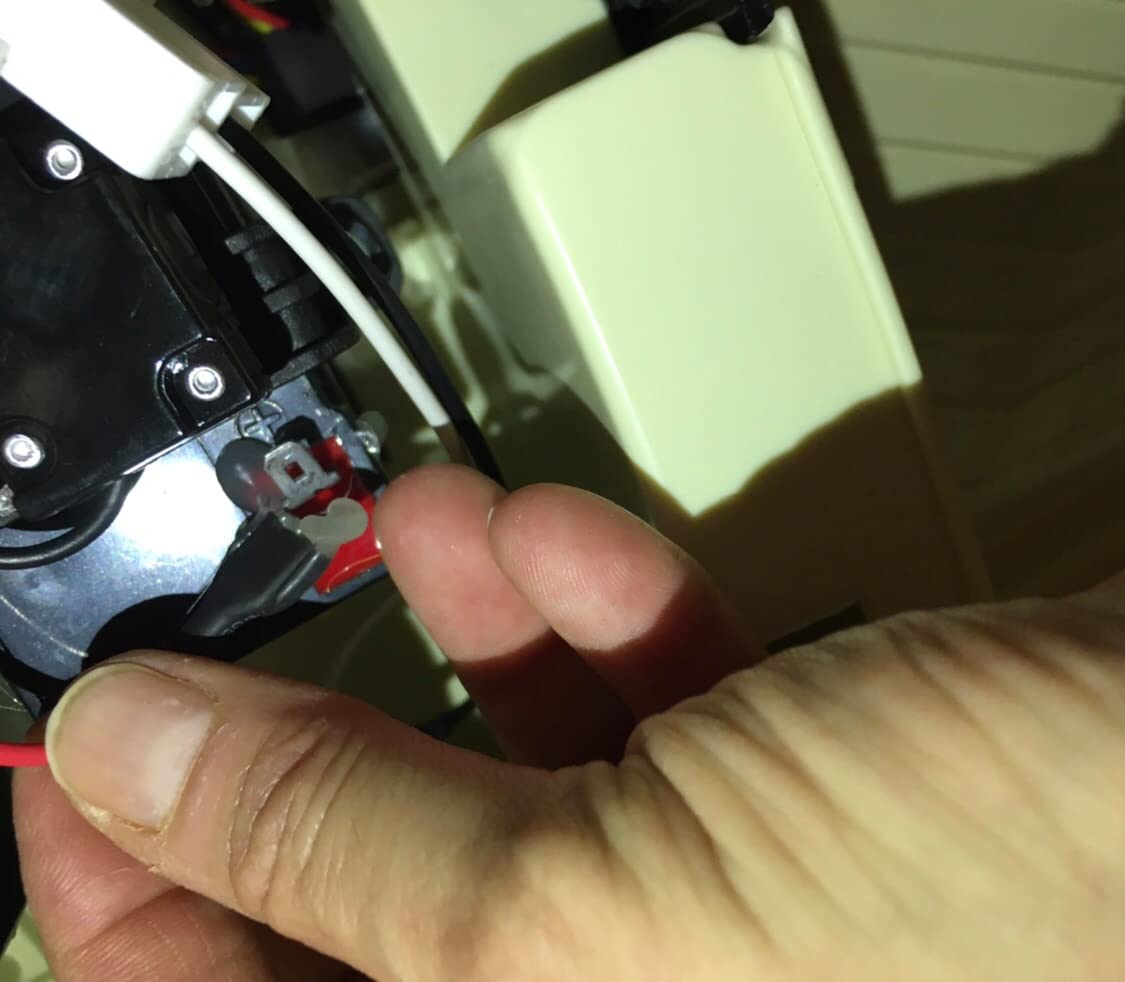
Is the assembly hard?
It is the weakest point of this car. Instructions are tiny print, they do not cover installing the rear wheel motors, and paper directions are hard to read. If you are not confident with basic assembly, this is a two-adult job on a first attempt.
Where it falls short
Beyond the steering and the tipping tendency, the 6V 4.5Ah battery with a DC12V 500mA output delivers modest performance, and the small body means a child can outgrow the space before the weight limit. It suits smooth indoor floors and flat pavement rather than a driveway with a slope.
12. ARBELI 12V Toddler First Car: The Most User-Friendly Controls
ARBELI 12V Electric Ride On Car, Toddler First Car, Blue
Dual 35W motors
3.1 MPH max speed
50 lbs capacity
1 to 2 hours play
Pros
- Dual 35W motors give one to two hours of play per charge
- Soft start prevents sudden acceleration bumps
- Three-speed remote with an override brake function
- Large buttons
- rotary volume knob and a battery level bar
Cons
- 50 lbs capacity is mid-range
- Smallest review base of the twelve at 491
- Remote needs two AAA batteries that are not in the box
This is the car to look at if your child fumbles with small controls. Instead of a typical music panel, it uses large buttons a toddler can press, a rotary knob for volume and an easy-to-read battery level bar on a small screen, and reviewers consistently point to that choice as the reason the toy gets used rather than abandoned.
Underneath, it is a competent 12V car with dual 35W motors, one to two hours of playtime per charge, a 3.1 MPH top speed and a three-speed parental remote with an override brake function. The soft start system ramps acceleration so there is no lurch on flat ground or a slope.
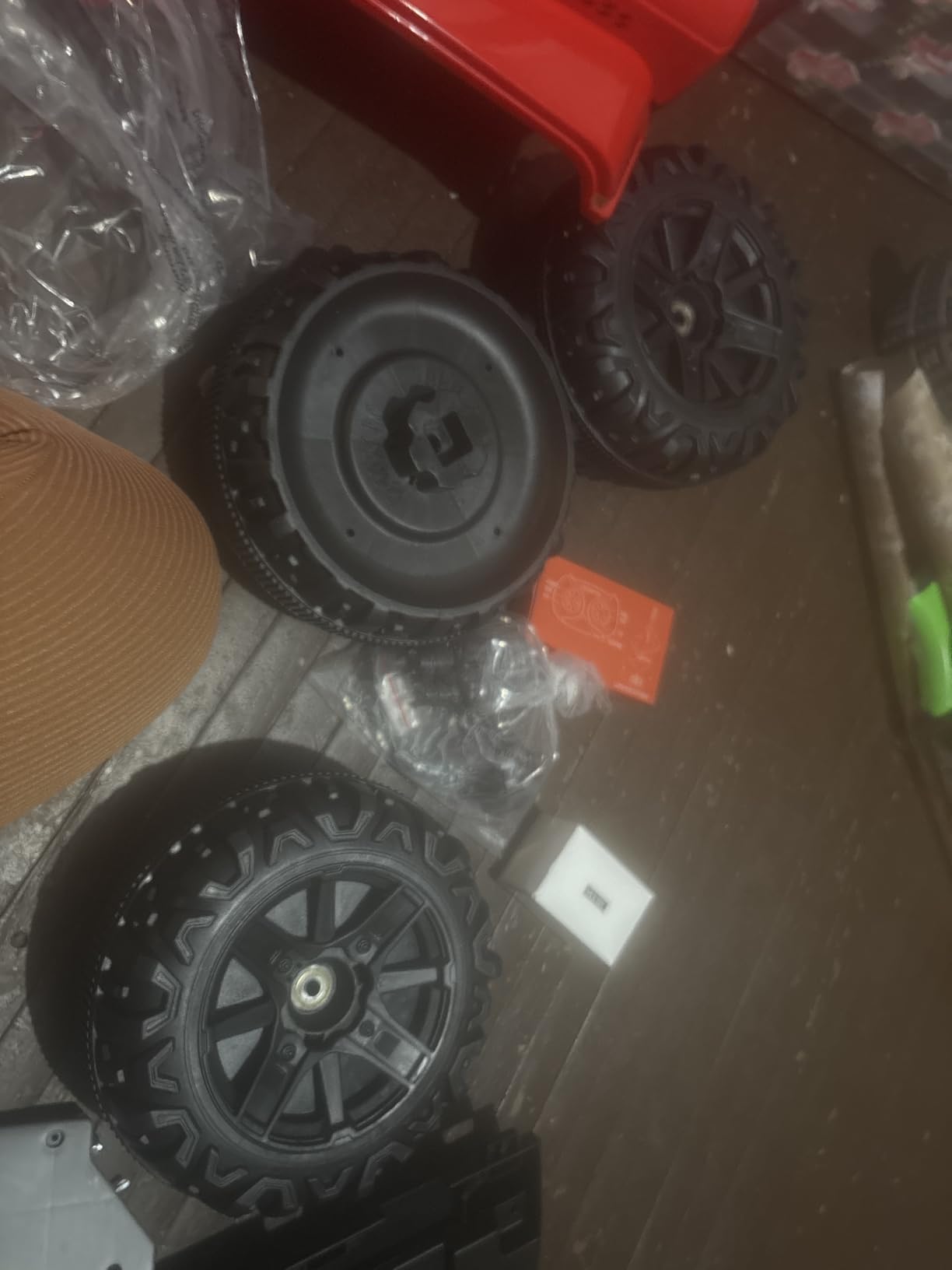
Safety specification is a real strength. It carries ASTM F963 and CPSIA certification, a 13-inch wide seat with an adjustable safety belt, lockable double doors and the remote override brake, and the manufacturer recommends ages 36 months to 6 years on a 50 lbs capacity.
The audio is a real step up on generic cars, with an MP3 player that supports a wireless connection to your phone alongside the pre-programmed songs, and the styling includes start-up sounds, a horn, functioning headlights and top lights. At 39 by 25 by 25 inches and 30 lbs, it is a standard 12V footprint.
Is it suitable as a first car?
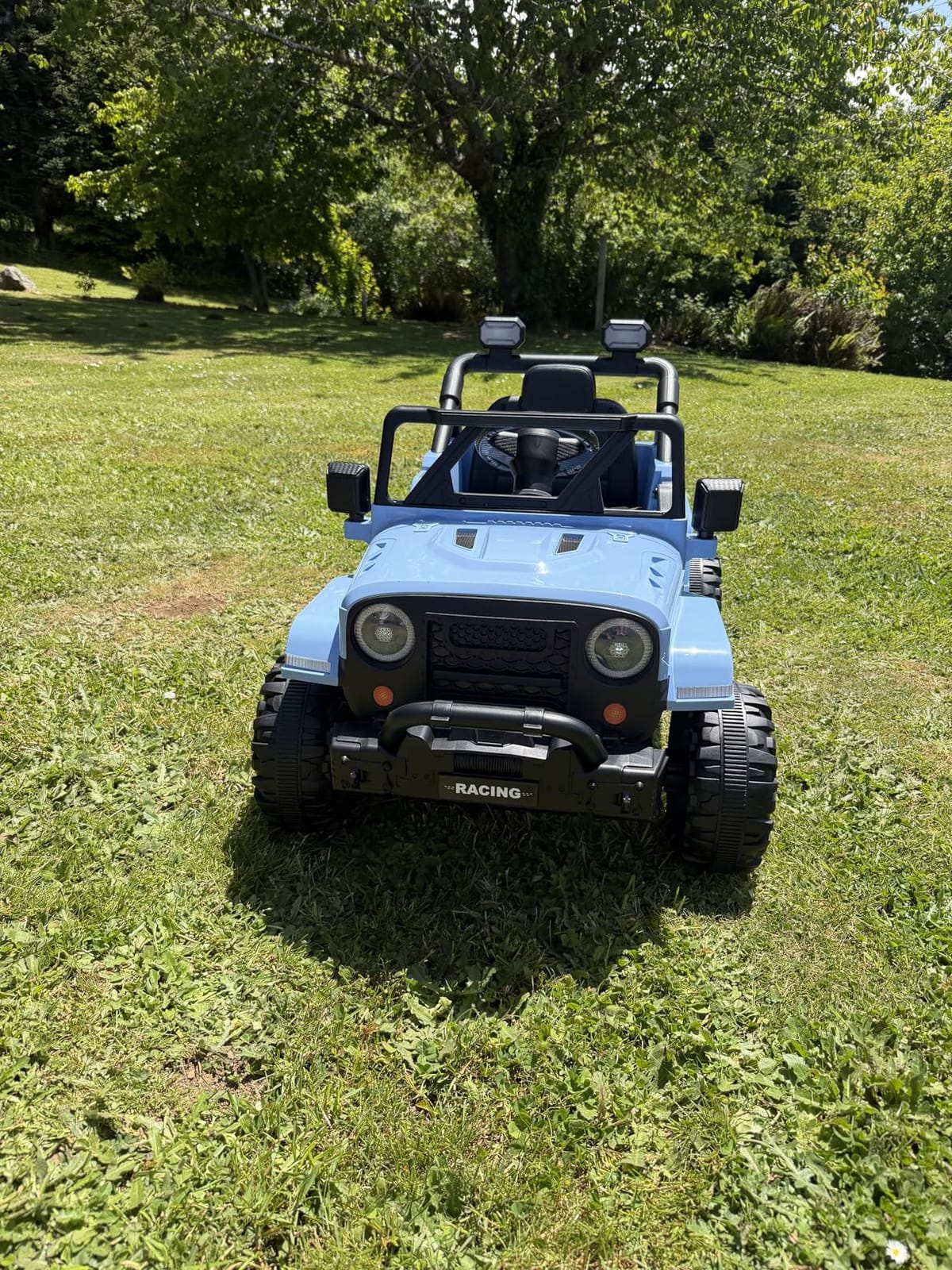
Yes, for a child around three with a caregiver nearby. The large controls, soft start, three-speed remote and lockable doors are all aimed at a beginner, and the 1 to 2 hours of play per charge is one of the better windows at 12V.
Where it falls short
The 50 lbs capacity is lower than the 66 and 85 lbs cars here. The 491-review base is the smallest in the roundup, and the 3.1 MPH limit feels slow to a child who quickly outgrows the beginner stage. The remote also needs two AAA batteries that are not in the box.
One-Seater vs Two-Seater: Which One Fits Your Family?
This is the most-asked question in parent forums about ride-on cars, and no editorial roundup in this category answers it. On r/toddlers, parents of a newly potty-trained two-and-a-half-year-old with a younger sibling coming up behind ask it constantly, and the honest answer is that the two-seater is a different purchase, not a bigger version of the same one.
A single-seater covers roughly ages three to six, and you buy it knowing one child uses it. A two-seater covers roughly ages three to eight, because the second child arrives two to three years later and the weight capacity has to hold both of them. If you have one child and no plans for another within three years, a two-seater is wasted weight and storage space.
The cost difference is not just the sticker. A two-seater here weighs 56 lbs and measures 44.1 inches long, against as little as 6.2 lbs for a small 6V quad. It needs two adults to move and a garage bay rather than a closet. It also needs about eight hours of charging before first use, so a two-seater that stays outside all winter is a planning problem.
Our decision rule is simple. One child under three: a 6V quad. One child three to six on a driveway: a 12V single-seater with a remote. Two children within four years of each other, or a driveway with a real slope: the 24V two-seater, which also has the climbing power to handle that slope. We cover the full two-seater field in our 2-seater ride-on car guide.
Is Your Toddler Ready? An Age and Size Checklist
There is no electric car for a baby, and the honest answer to that question is that a ride-on is a gross-motor toy, not a developmental aid for a child who is not yet walking steadily. Most of the cars here are labelled from three years, and the two 6V quads are labelled from 18 months for exactly that reason.
Use leg length rather than age. Sit your child in the seat and check four things: feet flat on the floor or on the pedal with knees slightly bent, hands able to reach the steering wheel without stretching forward, shoulders able to stay in the harness, and the ability to hold the wheel and press the control at the same time.
Readiness also means behaviour. A child who cannot yet stop pushing when asked, or who treats the pedal as a toy rather than a control, should be started on the remote at the lowest speed setting. One family on What to Expect described buying a slow go-kart with full parent control for a child under two, and treating it as a controlled first experience rather than independent driving.
For under-24-months, a push car or a non-powered ride-on is the safer answer. For 18 to 30 months, the 6V quad tier is right, provided the surface is flat and closed. From three upward, a 12V car with a 2.4GHz remote is the sensible starting point.
Battery Life, Charging Safety and Battery Longevity
Run time varies more than the voltage labels suggest. In this roundup, 12V cars quote between 40 minutes and two hours per charge, so the specification on the listing is a better guide than the voltage. Expect two hours from the Best Choice Products truck, one to two hours from the Bronco and the ARBELI car, and 40 to 60 minutes from the Miniature Motors car.
Battery capacity fades, and parents should plan for it. Owners of the Best Choice Products truck report run time settling to roughly 20 to 30 minutes per charge after about a year of regular use, which is the normal behaviour of a sealed lead-acid pack rather than a fault. Store the car with a partial charge if it will sit unused for months, and top it up rather than leaving it flat.
Charging safety is treated as a genuine question in battery communities, and the guidance is consistent. Do not charge overnight, do not charge near flammables, and do not block an exit with a charging car. Use the supplied charger rather than a higher-output one, and never leave a charging car where a sleeping child could reach the connector.
Two more habits extend battery life. Avoid storing the car in freezing conditions with a full charge, and wipe the terminals if you see any corrosion before reconnecting. If a battery fails outright, check whether the brand sells a replacement before assuming the whole car is finished, because spare-part availability is the biggest single difference between the brands in this roundup.
Buying Guide: How to Choose the Right Electric Ride-On Car
Check the weight capacity first. A typical three-year-old sits under 50 lbs, a four-year-old approaches 55 to 61 lbs, and a five-year-old pushes into the 66 to 85 lbs range. Buying at the top of the current range rather than the bottom is the single best way to extend how long the car fits.
Treat the age label as marketing. Listings claiming ages 3 to 8 are common on cars most children cannot reach the pedals in. Our wider testing notes on kids electric ride-on cars cover this in more depth, but the short version is to measure rather than read.
Do not skip the parent remote. Forum consensus treats remote control as non-negotiable rather than a nice-to-have. Look for an emergency stop or override brake, not just forward and reverse, and prefer a 2.4GHz remote over cheaper radio-frequency models that interfere in open areas.
Match the car to the ground. Plastic wheels and lower power suit flat pavement and indoor floors. Treaded rubber wheels and twin motors, as on the ANPABO and Miniature Motors cars, handle grass and gravel. Nothing in this roundup is designed for deep mud or steep hills, and the 24V two-seater has the most headroom for a sloped driveway.
Verify the safety details. Look for a three-point or five-point harness rather than a lap belt, lockable doors, a soft start, and ASTM or CPSIA certification, which two cars in this roundup state explicitly. Check the battery compartment is sealed and that the charging connector is out of reach while driving.
Test in a store if you can. Parents on r/daddit recommend checking the in-store displays at large retailers before buying, because the floor space and the seat height in person answer the sizing question faster than any specification. If that is not possible, measure your child against the stated dimensions and sit them in the car with the harness buckled.
Consider the alternatives. Some children prefer a different vehicle shape entirely, and electric ride-on motorcycles for kids cover that category if a quad does not hold attention.
Buy for the second winter, not the first. Cars in this roundup have a warranty range from six months on a 6V battery to two years on the Peg Perego tractor. A longer warranty and available spare parts matter more than an extra song, because a dead motor ends the fun permanently while a missing accessory does not.
Frequently Asked Questions
What are some good electric ride-ons for a 2-year-old?
For a child between 18 and 30 months, choose a 6V quad rather than a 12V car. The Kid Trax Disney Minnie Mouse 6V quad runs at 1.5 MPH with single push-button acceleration and a 45 lbs limit, and the Tow-Mater 6V quad reaches 2 MPH. Both suit short sessions on flat, closed ground. If your driveway slopes or faces a road, wait until three years and buy a 12V car with a parent remote and emergency stop instead.
Is a 12V or 24V kids car better?
For a single toddler, 12V is the right answer. It runs between 2.8 and 3.5 MPH, has enough torque for grass and light gravel, and keeps the car at walking-to-jogging pace that an adult can supervise. A 24V car is a different category: the 24V two-seater in this roundup reaches 4.4 MPH, weighs 56 lbs and holds 132 lbs across two seats. Choose it for two children or a genuinely sloped driveway, not for speed alone.
What is the best electric car for a family with 3 kids?
Plan on two cars rather than one, because a single seat serves one child at a time and toddlers do not wait. The most practical pairing is a 6V quad for the youngest child on flat ground and a 12V car with a parent remote for the middle child, then a two-seater only if the oldest two genuinely share. Spacing purchases by two to three years spreads the cost and matches each child to the right weight range and control level.
How long do kids’ electric cars last?
The car lasts longer than the battery, provided spare parts exist. Run time in this roundup ranges from 40 minutes to two hours per charge, and most sealed lead-acid packs fade to a fraction of that after about a year of daily use. Check whether the brand sells replacement batteries, chargers, motors and gearboxes before buying, because that is what separates a car that survives three years from one that is discarded after the first battery fails.
What age is too old for a ride-on car?
The useful limit is weight, not age. Most single-seaters here cap out between 44 and 85 lbs, which a typical child reaches somewhere between four and six. Beyond that, children lose the ability to see over the dashboard and reach the pedals, and steering becomes imprecise. If your child is over six but still under the weight limit, the 24V two-seater rated to 132 lbs and ages 3 to 8 extends the window considerably.
Final Verdict: Which Toddler Ride-On Car Should You Buy?
Our pick for the best electric ride-on car for toddlers in 2026 is the Best Choice Products 12V Kids Electric Ride-On Car. Its combination of a 2.4GHz parent remote, spring suspension, never-deflate plastic wheels and more than 21,000 reviews keeps it workable while a child learns the pedals, and the 2.8 MPH top speed is slow enough that an adult nearby always has time to intervene.
Pick a different one only for a clear reason. Under three years old means a 6V quad, and the Minnie Mouse model fits an 18 to 30 month child best. A child who will keep riding past six points to the Peg Perego tractor, whose 85 lbs capacity and two-year warranty give it the longest useful span of any car here. Two children sharing one car means the 24V two-seater, which is the only option with two harnesses and 132 lbs of capacity. And a sloped driveway should push you toward twin motors and treaded wheels, which is where the ANPABO Mercedes stands out.
Whichever one you settle on, measure your child against the dimensions before you order, and take the car for a test in person if a store near you has a display. Those two steps prevent almost every regret parents report in this category.