
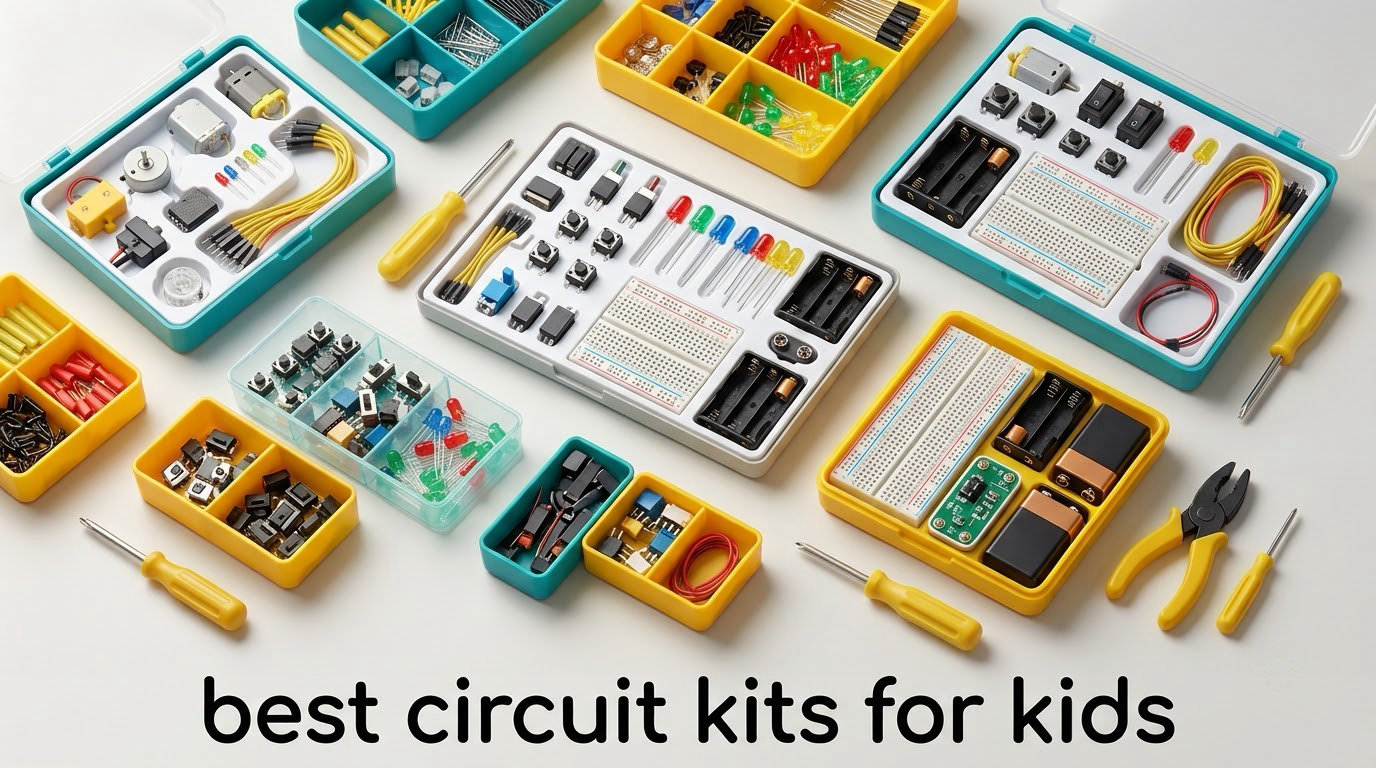
If you only read one thing in this guide, read this: the Snap Circuits Jr. SC-100 is the best circuit kit for kids overall, because it pairs 100+ guided projects with a four-colour manual that a child can follow without an adult sitting next to them. For a first-timer aged 5 to 7, the Snap Circuits Beginner SCB-20 is the safer starting point. And once a child outgrows flat grids, the Snap Circuits BRIC Structures kit turns ordinary building bricks into working three-dimensional circuits.
We compared ten of the highest-rated electronics kits on the market, read the manual structures, checked the age floors, and weighed the review data for durability and missing parts. Every kit below runs on low-voltage alkaline batteries and needs no mains power, so nothing in this list carries the risks of a soldering iron or a wall adapter.
That matters more than it sounds. Parents searching for circuit kits for kids usually have two fears in equal measure: that the child will be bored in a fortnight, and that the child will be hurt by a hot iron. Snap-together kits answer the first fear slowly and the second fear completely. The kits further down this list add bigger builds, more sensors or a working radio, and by the time you reach the teens in your household, the projects need a brain rather than a pair of hands.
We have written this guide for parents, grandparents, homeschool families and teachers, and we have tried to answer the questions that actually come up: which kit will not end up in a drawer by week two, which parts can be replaced when something breaks, and how much adult supervision each age group genuinely needs.
Table of Contents
Top 3 Picks: Best Circuit Kits for Kids (October 2026)

Snap Circuits Jr. SC-100
- 100+ guided projects
- Color-coded snap modules
- No tools or soldering needed
- Ages 8 and up

Snap Circuits Beginner SCB-20
- 21 guided projects
- Childproofed for small hands
- Color-changing fan included
- Ages 5 to 9
Playz Advanced Circuit Board
- 328+ experiments
- Working AM/FM radio
- Light and magnetic controls
- 64-page manual
Those three cover the widest range of children in this list. The SC-100 is the safe default for an 8-year-old. The SCB-20 is the one to buy if the birthday recipient is five. The Playz board is what you choose when a child finishes the guided projects quickly and asks what happens if you change one part.
Best Circuit Kits for Kids (October 2026)
| Product | Specifications | Action |
|---|---|---|
| Snap Circuits Jr. SC-100 |
|
Check Latest Price |
| Snap Circuits Beginner SCB-20 |
|
Check Latest Price |
| Playz Advanced Circuit Board |
|
Check Latest Price |
 Science Kidz 188 Experiments Science Kidz 188 Experiments |
|
Check Latest Price |
 National Geographic 120 Projects National Geographic 120 Projects |
|
Check Latest Price |
 SMILESSKIDDO 420+ Projects SMILESSKIDDO 420+ Projects |
|
Check Latest Price |
 Dr. STEM Toys Circuit Science Kit Dr. STEM Toys Circuit Science Kit |
|
Check Latest Price |
 Anyeve 448+ Project Kit Anyeve 448+ Project Kit |
|
Check Latest Price |
 ANNISOKA Wooden Radio Kit ANNISOKA Wooden Radio Kit |
|
Check Latest Price |
 Snap Circuits BRIC Structures Snap Circuits BRIC Structures |
|
Check Latest Price |
A few patterns jump out. Every kit here is battery powered, which means no mains adapters and no heat. Only one kit is not a multi-project circuit lab, and it earns its place by producing a genuinely finished device rather than a diagram.
How We Picked These Circuit Kits for Kids
Last tested in October 2026. We read the specifications, manuals and review data for all ten kits, then ranked them on five criteria: how many distinct builds the parts genuinely support, whether a child can work unassisted, whether the components are standard enough to replace, whether the manual teaches anything beyond assembly, and how consistent the ratings are once the five-star reviews are set aside.
The third criterion came directly from what parents complain about online. In the r/AskElectronics thread asking about a 10-year-old, the dominant recommendation was Snap Circuits, and the recurring secondary theme was distrust of no-name kits with thin manuals and missing parts. Over in r/ElectricalEngineering, the strongest endorsement we found was a reissued classic parts lab, valued specifically because individual components can be replaced cheaply when they break. That is a hardware signal, and we weighted it heavily.
So before ranking, we asked one question of every kit: if a wire snaps in month four, can the family fix it without buying the whole box again? The honest answer for most snap-together kits is no, because the components are proprietary, so we flag that trade-off in each review rather than hiding it.
1. Snap Circuits Jr. SC-100 – Best Overall for Ages 8 and Up
SNAP CIRCUITS Jr. SC-100 STEM Electronics Kit, 100+ Projects, Ages 8+
30+ snap modules
100+ projects
12 x 9.5 x 1.75 inch board
Ages 8 and up
Pros
- Highest rating in the group at 4.8 across a very large review base
- Colour-coded numbered parts that are easy for a child to sort
- No tools or soldering required at any stage
- Four-colour manual with clear project layouts
- Components are reusable across every project
Cons
- Batteries are required but not included
- Small snap modules are easy to misplace once the grid is full
- Age 8 floor means younger children need help
- Guided projects run out eventually
This is the kit we keep coming back to. The SC-100 ships with more than thirty snap modules that clip onto a numbered plastic grid, and the manual walks through more than a hundred builds in colour. Nothing needs to be cut, glued or soldered.
What sold us is the ratio of instruction to ambition. Most kits in this list give you a project list and some parts. This one gives you a manual dense enough that an 8-year-old can work through it alone, which matters enormously on a Saturday afternoon when the adult in the room has other things to do.
The teaching content is real rather than decorative. A child working through the sequence meets series and parallel arrangements, polarity in LEDs, switches and motors without ever being told the words, and learns by reversing a connection and watching the result disappear.
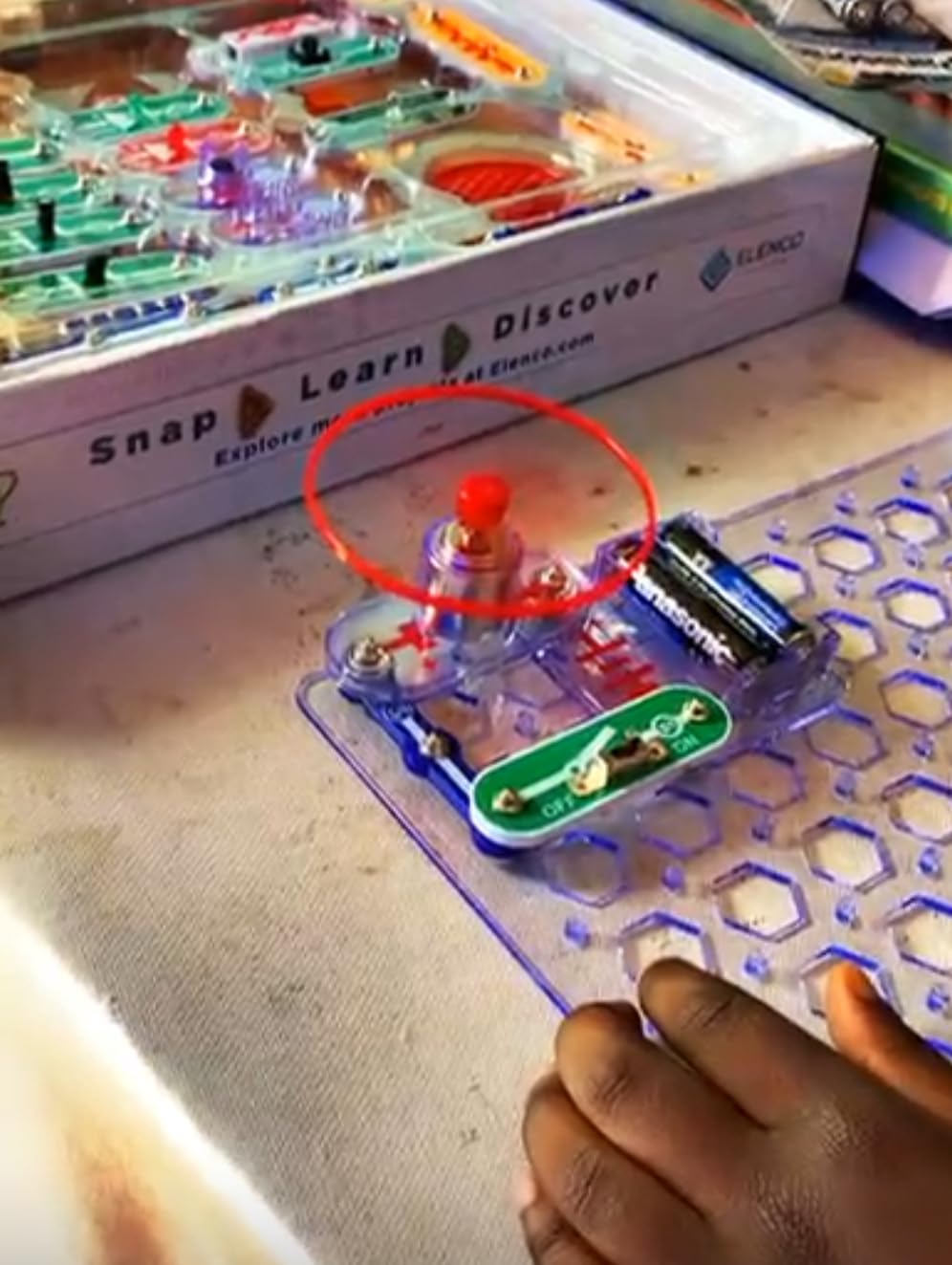
The build that gets the most attention in reviews is the one where a child explains to a parent why the light stopped working. That troubleshooting conversation, not the project itself, is the actual product.
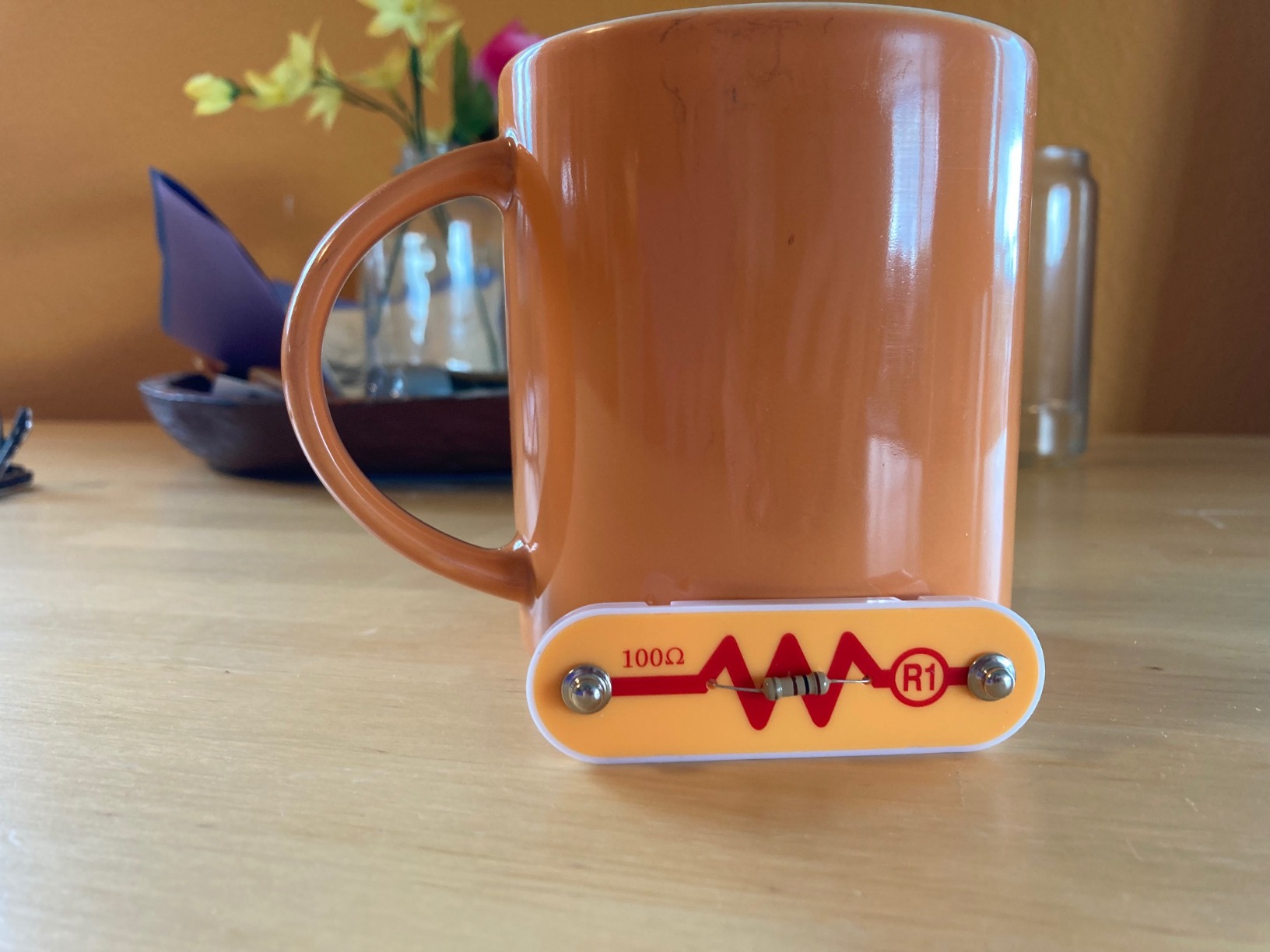
Two details matter more than they look. The parts are colour-coded and numbered, so a child sorting components by hand is quietly practising classification. And because every module snaps on and off, a half-finished circuit can be dismantled and rebuilt the next weekend without losing anything.
What to check before you buy
Measure your table. The board is 12 by 9.5 inches and needs a clear space, because a half-built circuit scattered across a kitchen table gets abandoned more often than it gets finished.
Buy alkaline batteries at the same time as the kit. They are not in the box, and a child who opens a birthday present and cannot find batteries often treats the whole thing as broken.
Set up a storage habit on day one. The parts are small and identical-looking from a distance, so a dedicated tray with compartments is worth more than the kit itself for keeping interest alive.
Who should skip it
A child under 7 will struggle with the smaller modules, and one over 11 will finish the hundred projects faster than you expect. The most-repeated community answer we found, in an r/AskElectronics thread about a 10-year-old, points the same way.
Anyone hoping the skills transfer to real circuit building should know upfront that these modules are proprietary. Nothing in this box teaches you to read a schematic or bend a resistor leg. It teaches intuition, which comes first, but it is not the whole journey.
2. Snap Circuits Beginner SCB-20 – Best First Kit for Ages 5 to 7
SNAP CIRCUITS Beginner SCB-20 STEM Electronics Toy for Kids Ages 5-9
21 guided projects
Extra childproofing
Color-changing fan
Ages 5 to 9
Pros
- Built specifically as a safe first introduction to electricity
- Childproofing features suit younger hands
- Simple colourful manual with age-appropriate language
- Lighted color-changing fan keeps early sessions engaging
- No tools required
Cons
- Only 21 projects so replay value is limited
- Simplified circuits teach less than the age 8+ models
- Older children quickly find it too easy
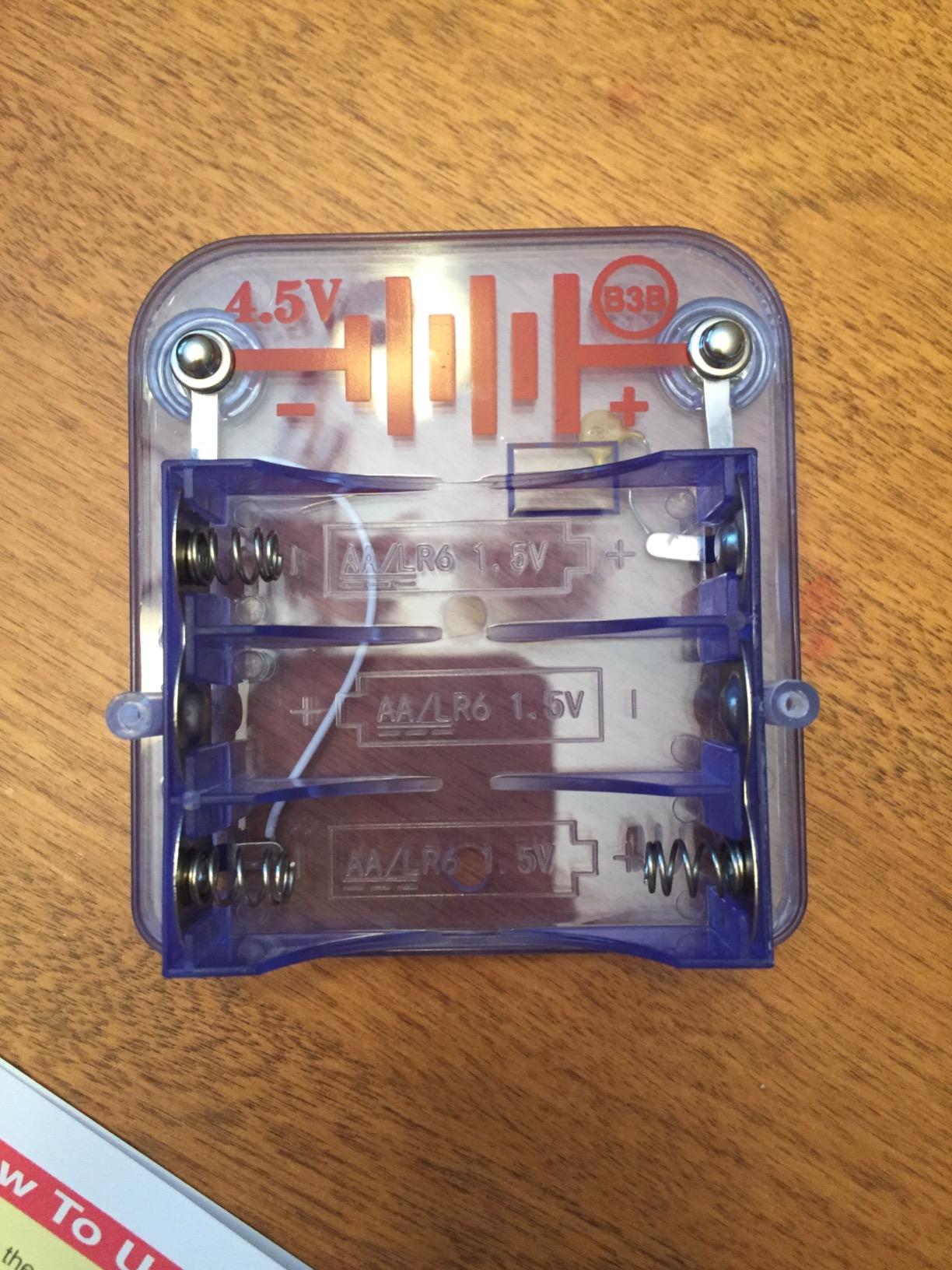
The SCB-20 exists because Snap Circuits noticed that its core product asks too much of a five-year-old. The parts here are chunkier, the manual uses simpler language and brighter colours, and the whole kit is pitched at the 5 to 9 band rather than 8 and up.
Twenty-one projects sounds low next to the hundred-project kits, and it is low. But a five-year-old who completes three projects and asks to do a fourth has learned something the longer lists cannot teach, because the longer lists depend on reading comprehension and fine-motor control that arrive later.
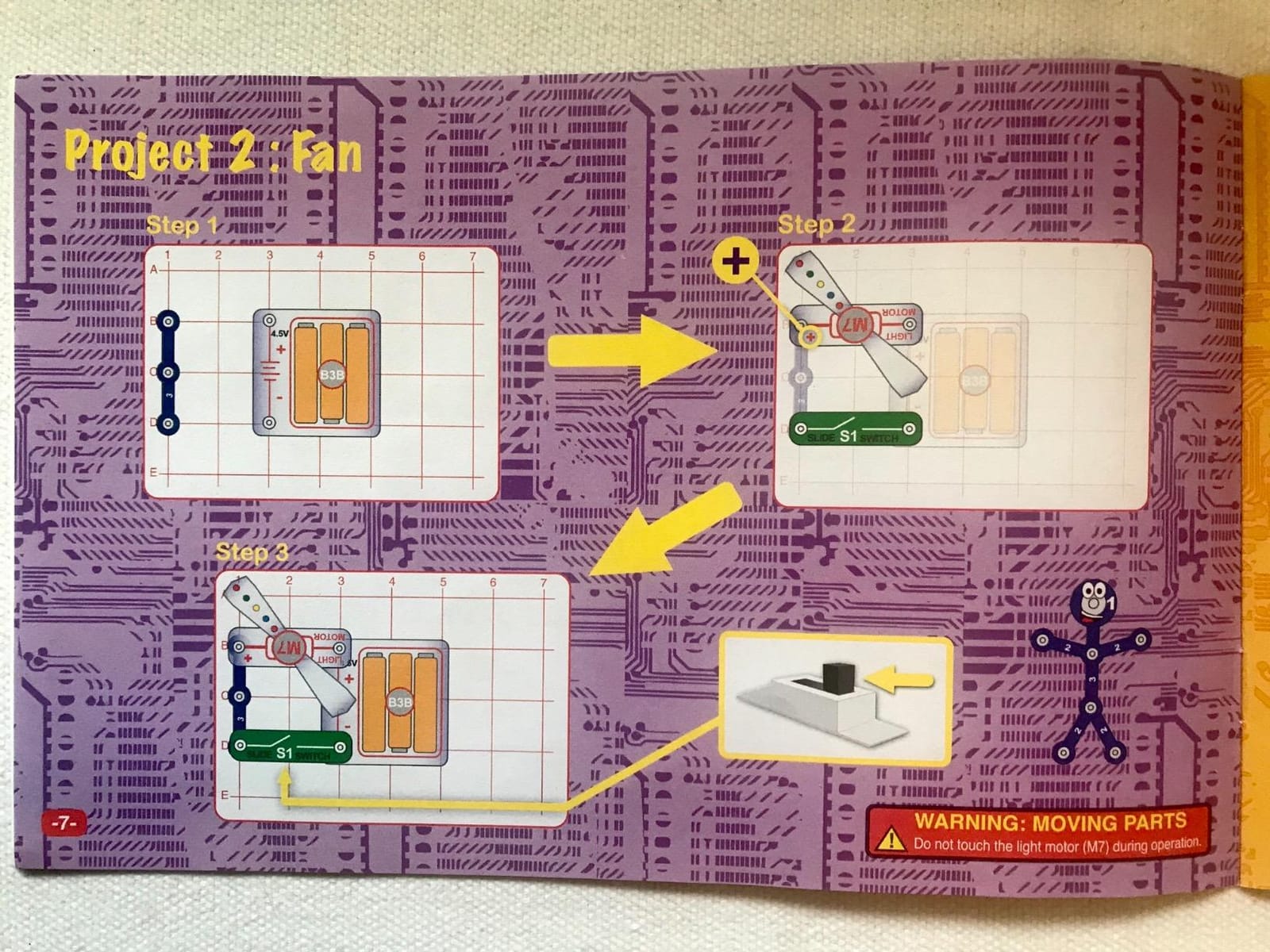
The color-changing fan is the part that consistently shows up in parent reviews as the moment of conversion. A moving, glowing, self-contained result is far more persuasive to a young child than another blinking light.
It is also a good sibling gift. Families with children four years apart often find that the older child has outgrown this set, which makes it a natural companion purchase rather than a duplicate.
When this is the right call
Buy this if the child is five, six, or seven, or if an eight-year-old has fine-motor delays and would be frustrated by tiny modules. The childproofing is not marketing language; it is visible in how the parts are shaped and how the board accepts connections.
It is also straightforward to give. The build is short enough to finish in one sitting, which matters when a birthday party is happening in the same room.
When to skip it
Do not buy this for a child who has already worked through a larger snap kit. The simplification is severe enough that a nine-year-old will declare it baby equipment, and a child who feels patronised stops opening the box.
Be aware of the ceiling too. Twenty-one projects is enough for a month of interest, not a year. Plan the handoff to a bigger kit as part of the purchase rather than discovering the limit in week five.
3. Playz Advanced Circuit Board – Best for the Highest Experiment Count
Playz Advanced Circuit Board for Kids, Science Kits for Kids Age 8-12
328+ experiments
21.7 x 15.6 inch board
4 lb
AM/FM radio included
Pros
- Over 300 named builds for a single board
- Includes a working AM/FM radio and motorized fan
- Light magnetic sound and touch controls add real variety
- 64-page illustrated manual supports solo building
- Sensory controls keep older children engaged
Cons
- Bulky and heavier than other snap kits at 4 lb
- Takes a large share of table space
- Harder builds need adult help
- Some builds need long wire runs across the board
The Playz Advanced Circuit Board is the one to buy when your child treats a project list as a challenge rather than a guide. It carries more than 328 experiments, and the label is closer to the truth here than in some of the higher-numbered kits in this roundup, where the count comes from rearranging the same components rather than from new circuits.
The headline builds are the reason. A working AM/FM radio, a flying fan, animal sounds, a doorbell and LED arrays are all on the list, and those are the projects children describe to their friends afterwards. Building something that receives a broadcast signal feels like a bigger deal than lighting another LED.
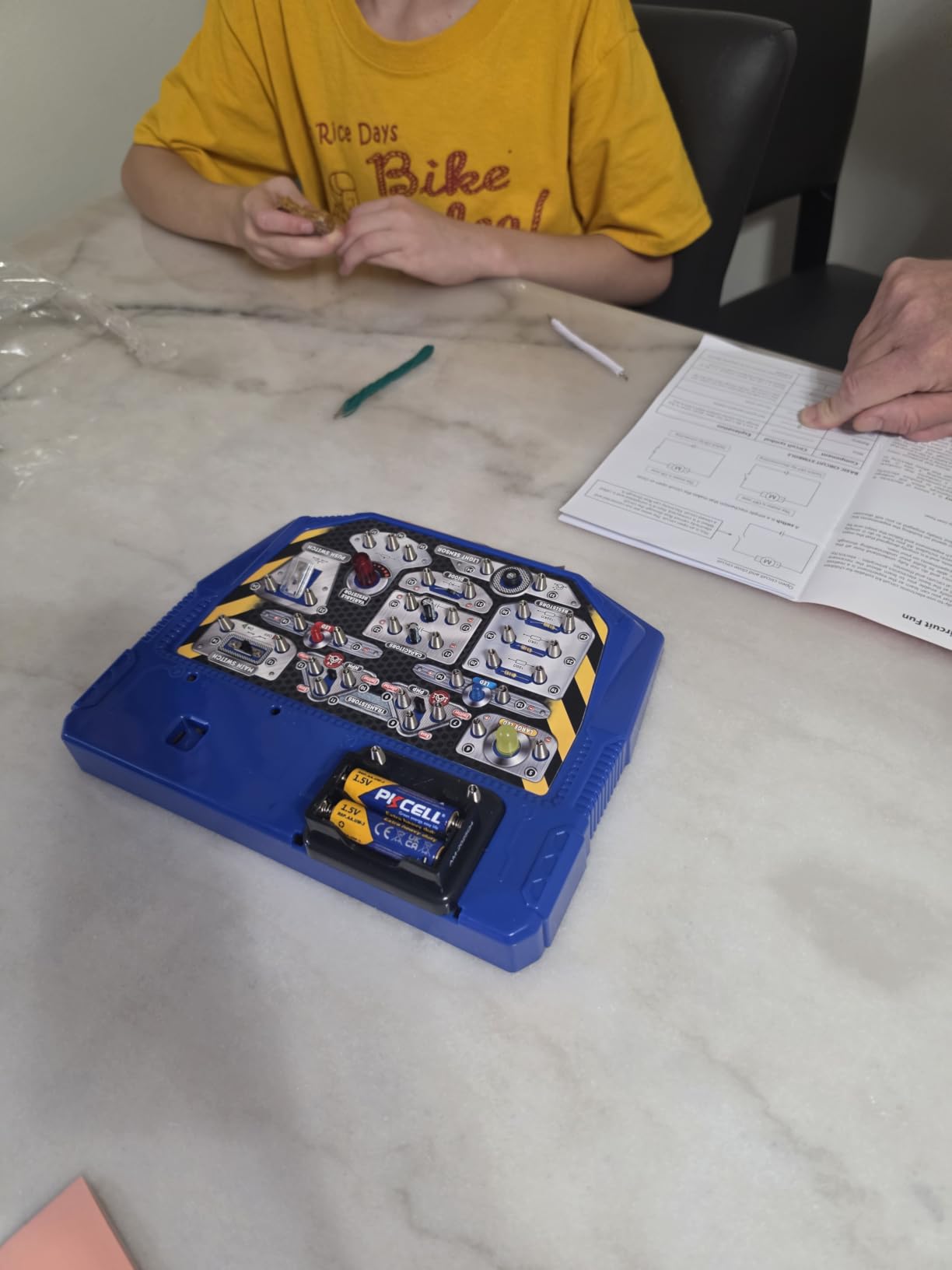
What we like most here is the control variety. Light-sensing, magnetic, sound-activated and touch-triggered modules mean the child is not just closing loops but designing triggers, which is a step closer to the input and output thinking that microcontrollers formalise later.
The 64-page manual is dense but well illustrated, and the reviews describe children working from it independently for long stretches, which is the behaviour you want from a kit that gets used rather than assembled once.
What to check before you buy
Find the floor space first. At 21.7 by 15.6 inches and 4 pounds, this is a substantial object, and the children who get the most from it are the ones with a dedicated work surface rather than a cleared dining table.
Ask your child whether they want a guided path or open exploration. The experiments range widely in difficulty, and the same kit that excites a confident 10-year-old will stall an 8-year-old without help on the harder pages.
Expect adult involvement on roughly a third of the builds. That is normal for a kit at this level rather than a defect, and it makes this a good joint weekend project for a parent and child.
Who should skip it
Children under 8 will find the board size and the number of loose modules frustrating. The fiddly connections are the usual sticking point, and small hands lose pieces.
If your household already owns a hundred-project snap kit, this overlaps heavily with it and adds little. In that case, a soldering or breadboard kit teaches something new rather than adding a hundredth snap circuit.
4. Science Kidz 188 Experiments – Best for Documented Safety Standards
Science Kidz Electronics Kit – 188 Science Experiments Set for Kids
188 projects
24.3 x 5.4 x 13.5 inch box
US and EU standards
Ages 0-12
Pros
- Components meet both US and EU toy safety standards
- 188 projects spanning simple to challenging circuits
- Snap-together parts need no tools or soldering
- Detailed colour manual with educational notes
- Builds include a flying UFO and sound effects
Cons
- Manual is largely picture-driven and takes practice to follow
- Some projects run ahead of the youngest builders
- A large number of small parts to organise
This is the kit to shortlist if your priority is documented component safety rather than brand recognition. The listing states the components meet both USA and EU toy safety standards, which is a specific verifiable claim rather than a general assurance of quality.
That matters for shared situations. If a kit is going into a classroom, a homeschool co-op, or a household with a child who puts things in their mouth, the compliance line is worth more to you than the project count is to a seven-year-old.
On the electronics side it is a conventional snap-together set with 188 projects, including a flying UFO, sound effects and light shows, scaling from two-part circuits up to multi-stage ones.
What to check before you buy
Sit with the manual before you buy. It is largely picture-driven, which many parents love and some find frustrating because there is less explanatory text explaining why a circuit behaves the way it does. Buy a little patience into the first session.
Plan the parts storage seriously. The box is 24 inches long and holds a lot of small components, and the storage trays that ship with kits of this size are rarely the reason kids quit. A divided craft box fixes it.
Test the age floor against your youngest. The listing covers a wide band, and some of the later projects assume reading and sequencing skills that a five-year-old does not have yet.
Who should skip it
Skip it for a child who wants a finished device rather than a demonstration. Everything here is a circuit you build to see a behaviour, not a thing you keep.
Skip it too if the child needs explaining. The picture-led manual keeps them moving, but the reasoning has to come from the adult, and parents who want a kit that teaches on its own will prefer one with longer written explanations.
5. National Geographic 120 Project Circuit Kit – Best for Video Instructions
National Geographic Circuit Kit for Kids with 120 Electrical Projects
120+ projects
12 x 3 x 14.75 inch box
2.7 lb
QR video guides
Ages 8+
Pros
- 120+ projects covering a wide electrical range
- Builds include light shows keyboard music and a voice amplifier
- Snap-on wiring needs no additional tools
- Blue Marble design won a Toy of the Year award
Cons
- Box is 2.7 lb so it is heavier than a basic snap set
- Video instructions need a screen which some parents avoid
- Small snap wires are fiddly for younger hands
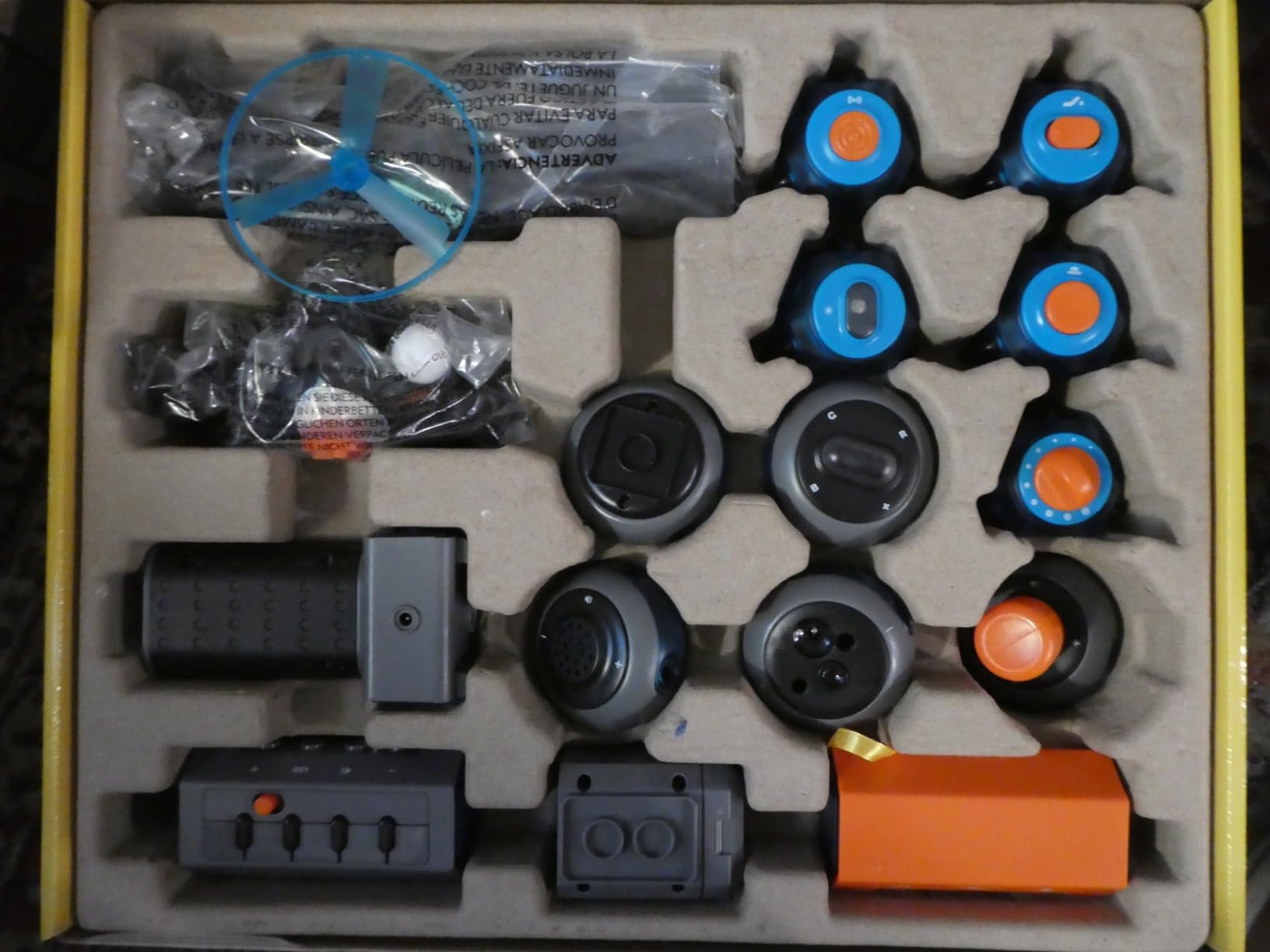
Video instructions are the reason this kit separates itself from the pack. A QR code on each project links to a demonstration, and reviews single out that support as the feature that lets children build without an adult reading diagrams aloud for an hour.
That is a genuine help for the projects with fiddly wiring. When a child can watch the connection being made once before attempting it, the failure rate drops, and fewer failures means more finished projects.

The project list is more varied than the count suggests. Alongside the usual lights and sounds, it includes keyboard music mode, a flying copter and a voice amplifier, which are the kinds of builds that survive past the birthday.
Most of the reviews are five-star, with the reservations concentrated on the two things we would also flag: a heavier box than a basic snap set, and the fact that video guidance reintroduces a screen into an activity many parents chose for being screen-free.
Is video guidance worth the screen time?
It depends on your rule and how you set it up. A parent with a strict no-screen rule can use the phone for the setup step only, then put it away, and the project itself remains physical for the rest of the session.
What to watch is the sequence. If the child is on a device for the whole build, the kit has quietly become a screen activity with wires attached. If the device is used to check a step and then closed, the balance stays where you want it.
Be realistic about the age floor. Small snap wires that need precise placement are a genuine frustration for younger hands, and this is an 8-and-up kit in practice even where the box is more permissive.
6. SMILESSKIDDO 420+ Project STEM Kit – Best for Teaching Series and Parallel
SMILESSKIDDO Science Kits Electronics STEM Kit 420+ Projects 35 Parts
420+ combinations
35 circuit parts
37-page manual
Ages 3 and up
Pros
- Rating above 4.5 on a solid review base
- 420+ combinations from 35 parts
- No soldering or extra tools required
- Colourful manual plus four indicator cards
- Includes spray RGB light and flying saucer modules
Cons
- Widest rating spread in the group with 11 percent three-star feedback
- Many listed projects recombine the same parts
- AA batteries not included
- Heavier box at just over 1 kg
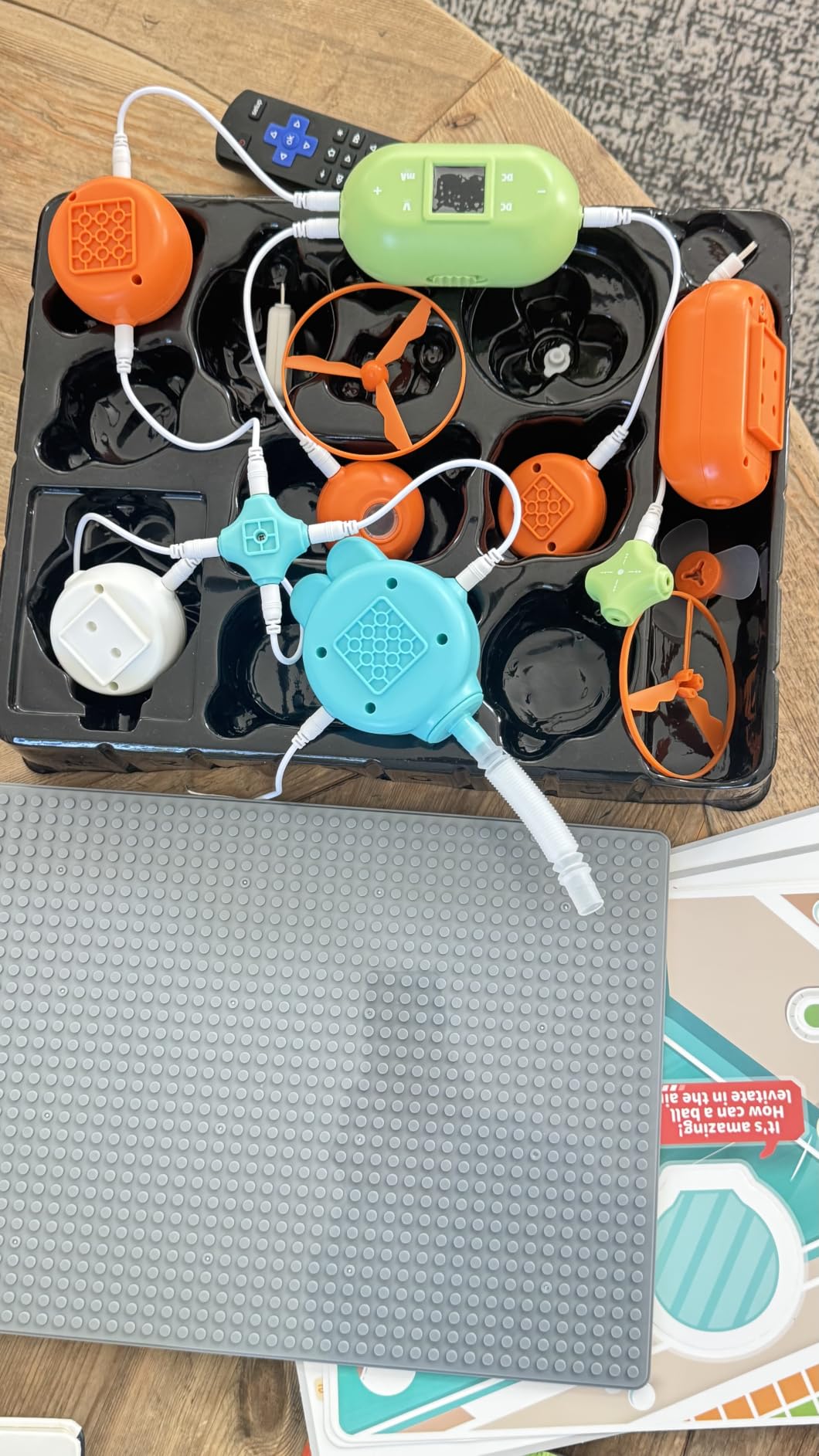
Two electrical arrangements are the foundation a child needs before anything else matters: series, where one component blocks another, and parallel, where they work independently. This kit is the clearest place in our list to see both taught directly.
With 35 snap-together parts producing hundreds of combinations, a child can build a circuit in series, then rebuild the same circuit in parallel and watch two LEDs behave differently. That comparison is the whole point, and the colour-coded manual plus indicator cards support it better than a plain project list would.
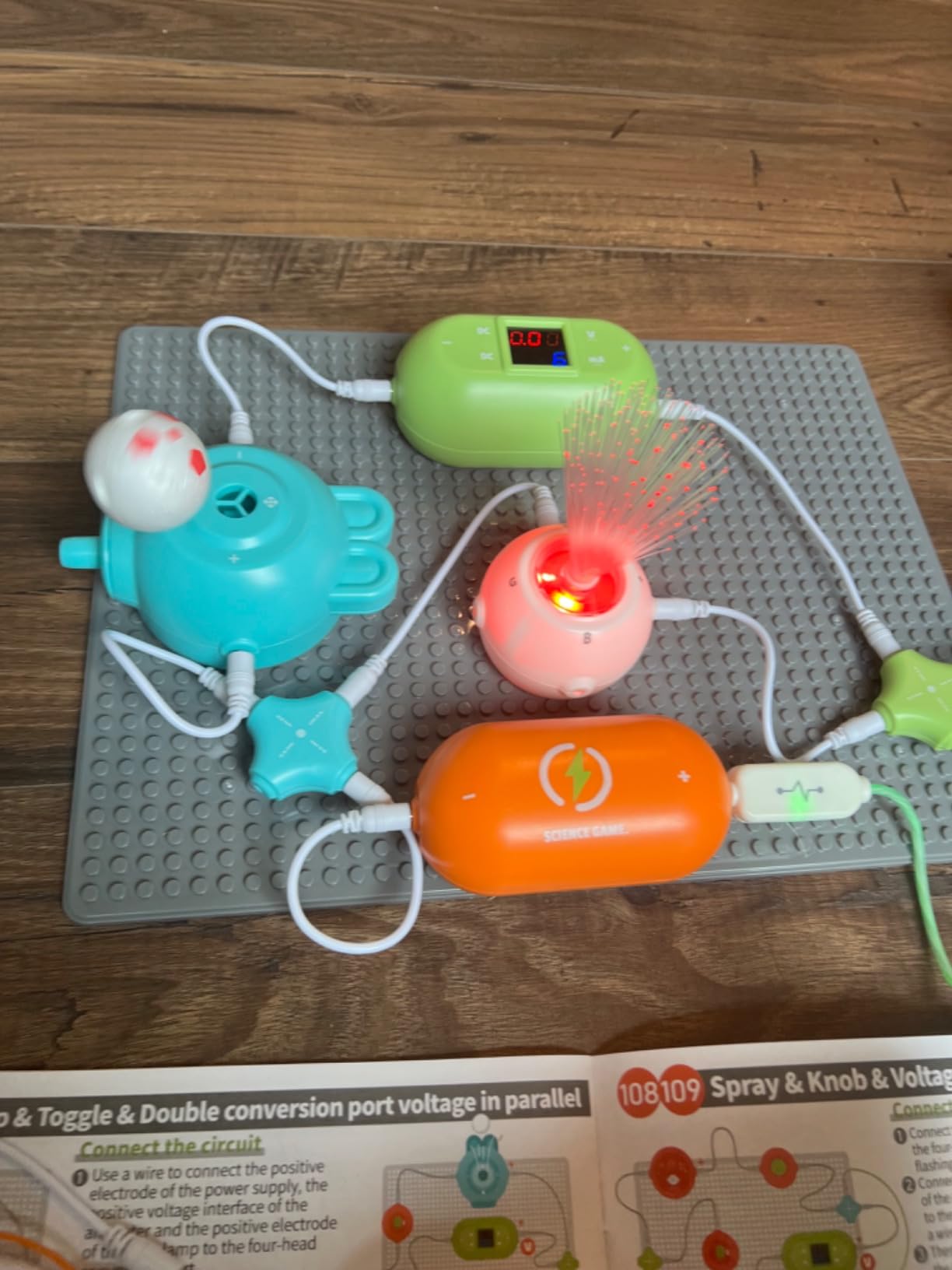
The accessories give it a bit more personality than a standard module set. A spray module, an RGB light module and a flying saucer are the pieces children reach for first, and they are the ones that keep a determined child coming back after the basic circuits are exhausted.
We want to be straight about one thing: the 420 figure comes from 35 parts, so the count includes many variations on a handful of arrangements. A parent expecting 420 genuinely distinct builds will be disappointed. A parent expecting a long stretch of recombination will be delighted.
What to check before you buy
Look at the rating spread. This kit has the widest distribution in our group, with 3-star feedback making up 11 percent of reviews, which suggests a meaningful slice of buyers had builds that did not work as described. That does not disqualify it, but you should expect some troubleshooting rather than a flawless first run.
Buy your own batteries. AA cells are required and not included, and this is a common reason a kit sits unopened on its birthday.
Expect a box that is just over a kilogram. That is fine to store but awkward to move, so keep it in the room where the child actually builds rather than carrying it around.
Who should skip it
Skip it if the child has a short attention span for repetitive builds. The variety here is depth of combination rather than novelty of project, which rewards persistence more than a kit with 20 wildly different builds.
Consider the Playz board or the Snap Circuits SC-100 instead if you want the most reliable ownership experience, since both carry larger and more consistent review volumes.
7. Dr. STEM Toys Circuit Science Kit – Best for Ages 8 to 16
Dr. STEM Toys Circuit Science Kit, Includes Over 100 Electrical Experiments with Lights, Sounds, and Action – for Boys and Girls Ages 8+
100+ experiments
17.5 inch kit
2.5 lb
Wired connections
Ages 8-16
Pros
- Wide stated age range from 8 to 16 works as a long-term kit
- Over 100 experiments covering lights sounds and motion
- Includes a working radio and a floating ball project
- Doubles as a home or classroom lab station
- 30-day manufacturer warranty
Cons
- 7 percent of reviews are one-star the highest negative share here
- Fewer named project types than several rivals
- Wired connections need more patience than snap parts
- Some experiments run ahead of eight-year-olds
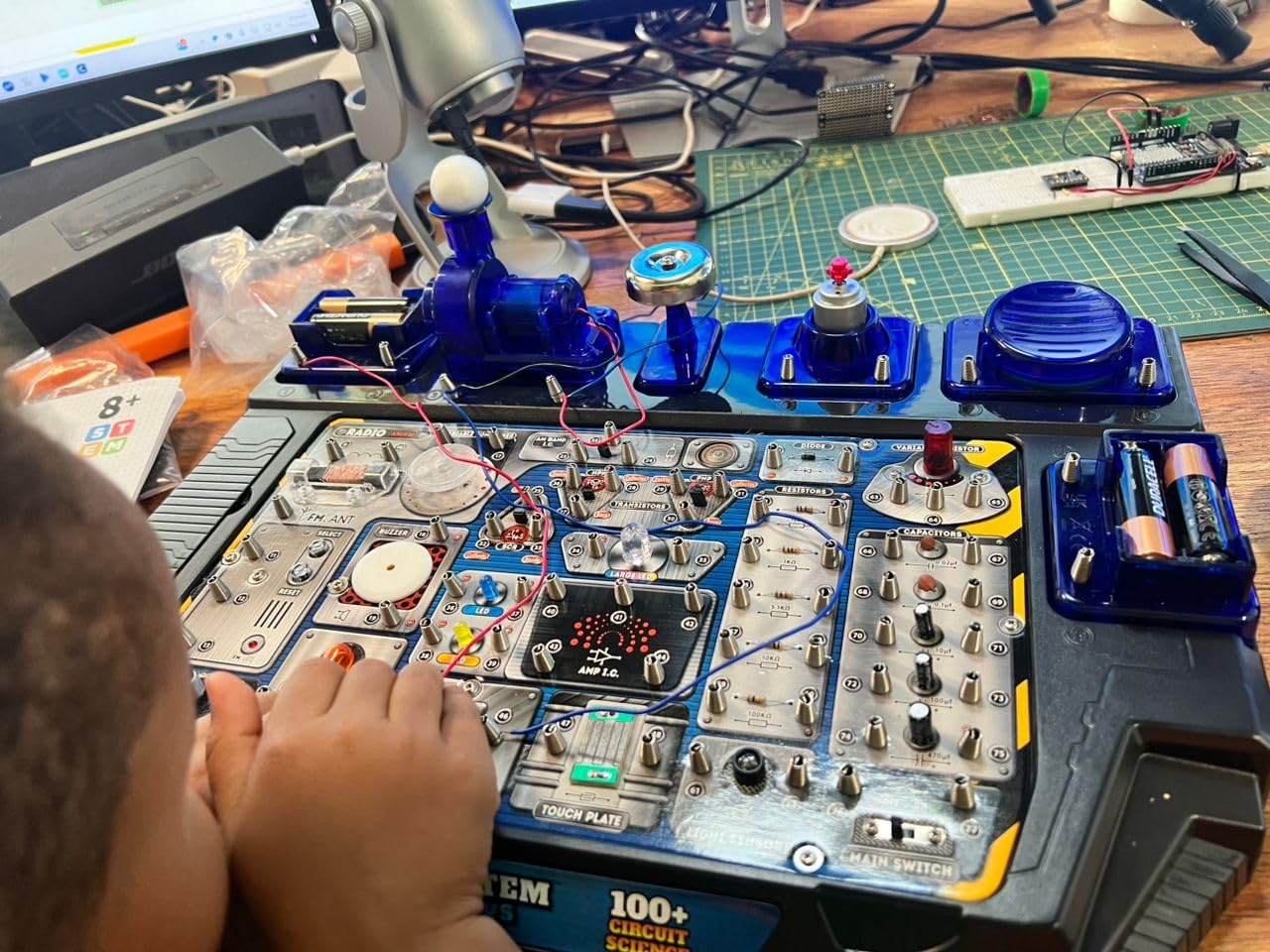
The Dr. STEM kit is the one we would hand to a child who will still be using electronics in four years. The stated range of 8 to 16 is unusually wide, and unlike kits that peak at ten, the motorized and radio projects have enough complexity to stay interesting as the child grows.
It uses wired connections rather than snap modules. That is slower and less forgiving, so we would not recommend it for hands under nine. For a motivated older child it is a feature, because routing real wires and closing real loops resembles actual circuit work more closely than clicking plastic pieces into a grid.
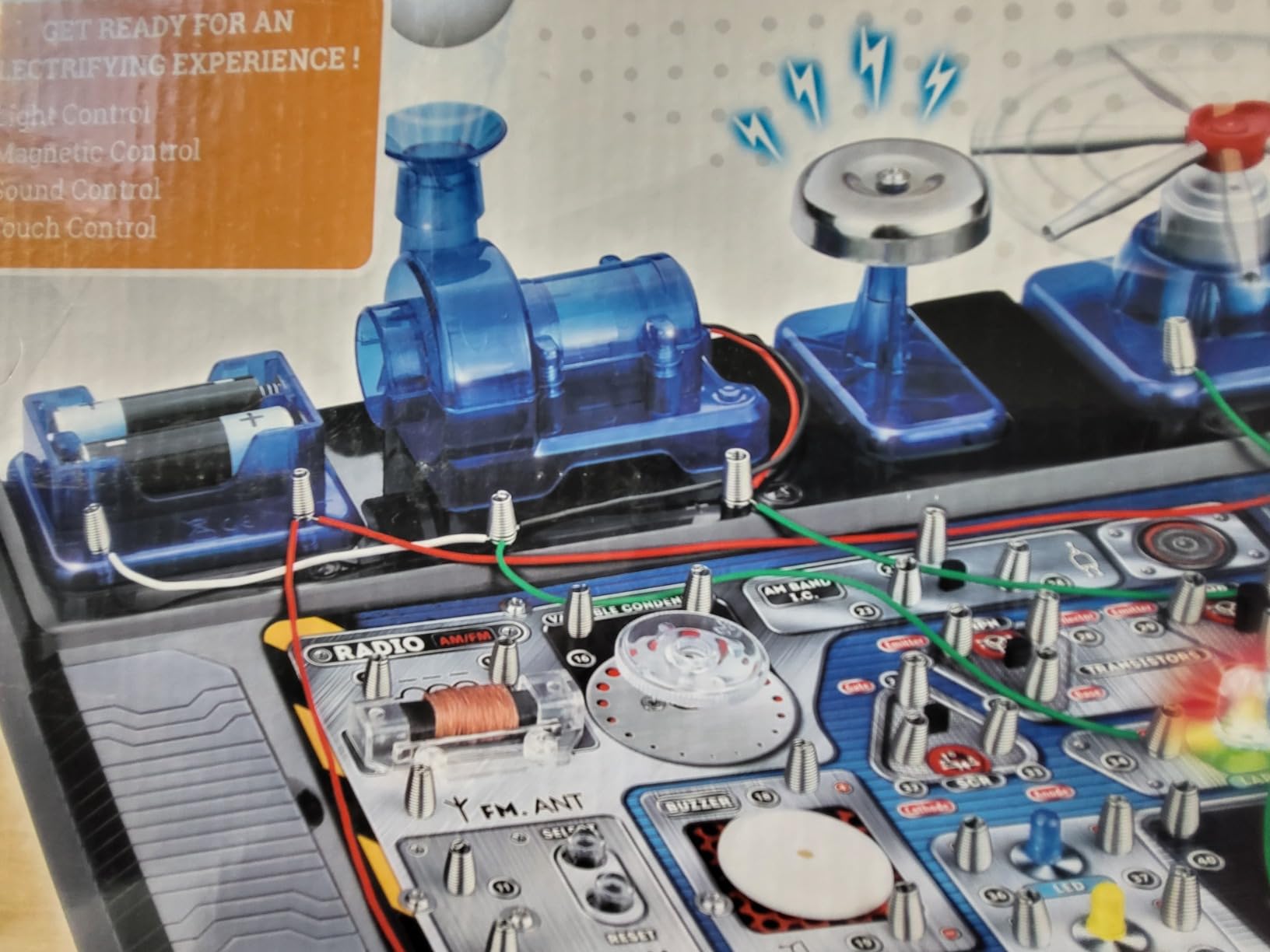
The floating ball, the ring-the-bell circuit and the working radio are the memorable builds, and a single kit can sit on one table and rotate between two or three children, which is exactly how a homeschool co-op would use it.
The 30-day manufacturer warranty gives some protection against early component failure, something the purely snap-together kits in this list do not offer because their modules are proprietary and cannot be swapped individually.
What to check before you buy
Read the one-star reviews. At 7 percent, they are the largest negative share in this roundup, and the complaints cluster around connection durability and a few builds that would not hold. That is a meaningful risk on a kit with more moving parts than its rivals.
Check the price against the named project types. You are paying for range and complexity rather than for a long list of individually named projects, and a parent who wants a catalogue of distinct gadgets will find better value elsewhere.
Watch the age floor honestly. The 8-year-old label is the start of the range, not the whole story, and the motorized builds assume patience with wiring.
Who should skip it
Skip it for a child who loses interest when a build takes more than half an hour. Wired connections reward patience and punish hurry, and a frustrated nine-year-old will not sit with it.
Skip it for a family that already has a Snap Circuits board and wants more of the same experience. This is a different method, and it is a genuine step up, but it is a step up rather than an addition.
8. Anyeve 448+ Project Electronics Kit – Best Value for Ages 5 to 12
Science Kits for Kids, 448+ Projects Circuit Exploration Kits Educational Electronics Toys for Boys & Girls Hands-On Engineering Toy, Birthday, Halloween, Christmas Gift for Ages 5 6 7 8 9 10 11 12
448+ combinations
32 parts on one grid
1.17 kg
Ages 5-12
Pros
- Very high project count for the money
- Step-by-step colour manual works for young readers
- Keeps children in 20-45 minute build sessions
- Sturdy snap parts rated for repeated use
- Teaches series and parallel through play
Cons
- Small pieces are easy to misplace
- Storage tray is not secure enough on its own
- Only one glowing cord limits troubleshooting visibility
- AA batteries not included
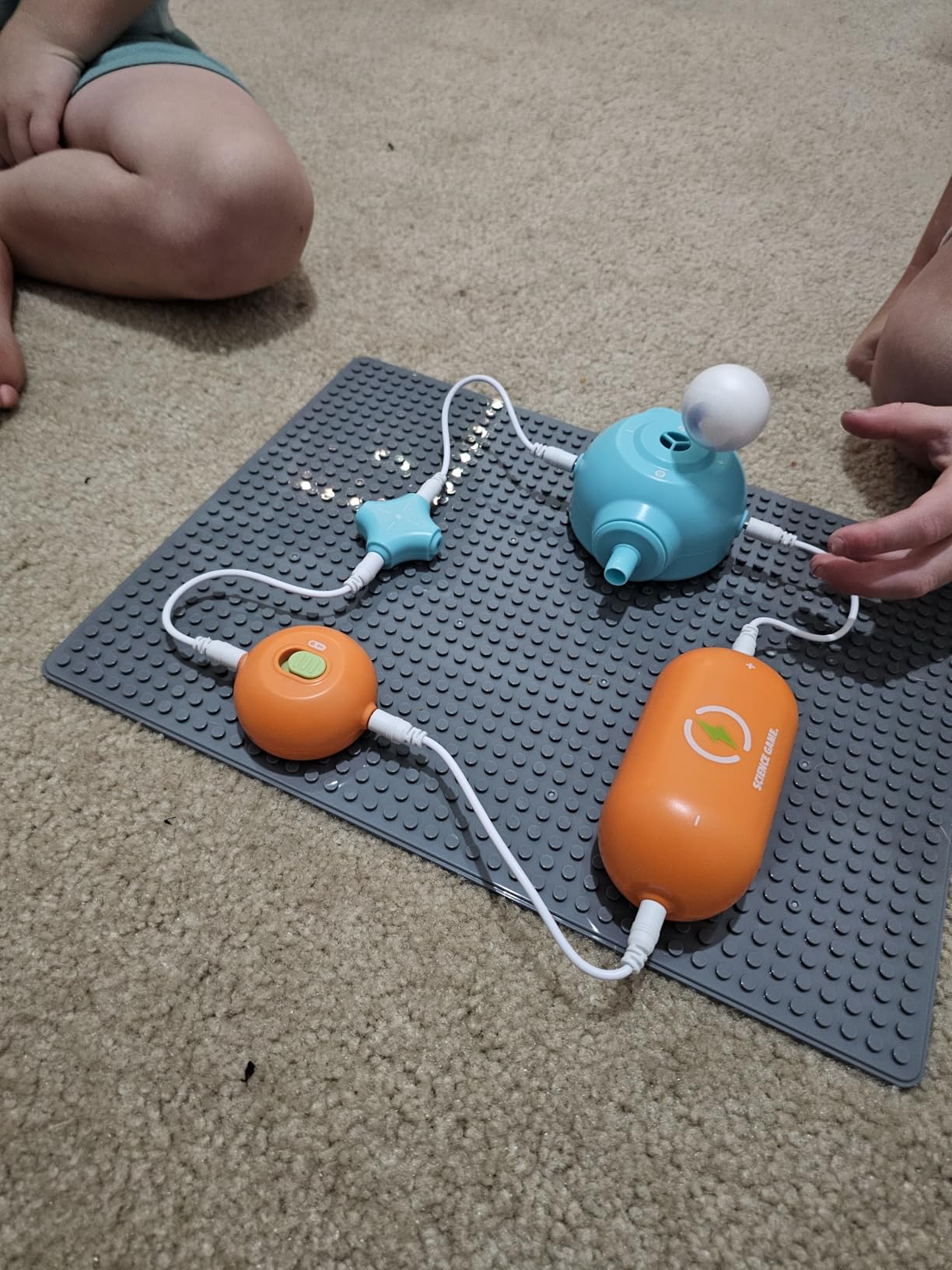
The Anyeve kit is our pick when project count per part matters most. It puts more than 440 combinations on a single 13.98 inch grid using 32 parts, and parent and grandparent reviews describe children working through builds independently and preferring it to other toys in the house.
The stated age range of 5 to 12 is broader than most kits here, and the step-by-step colour manual is the reason. Reviews mention young children following it without help, which is unusual for a kit this dense.
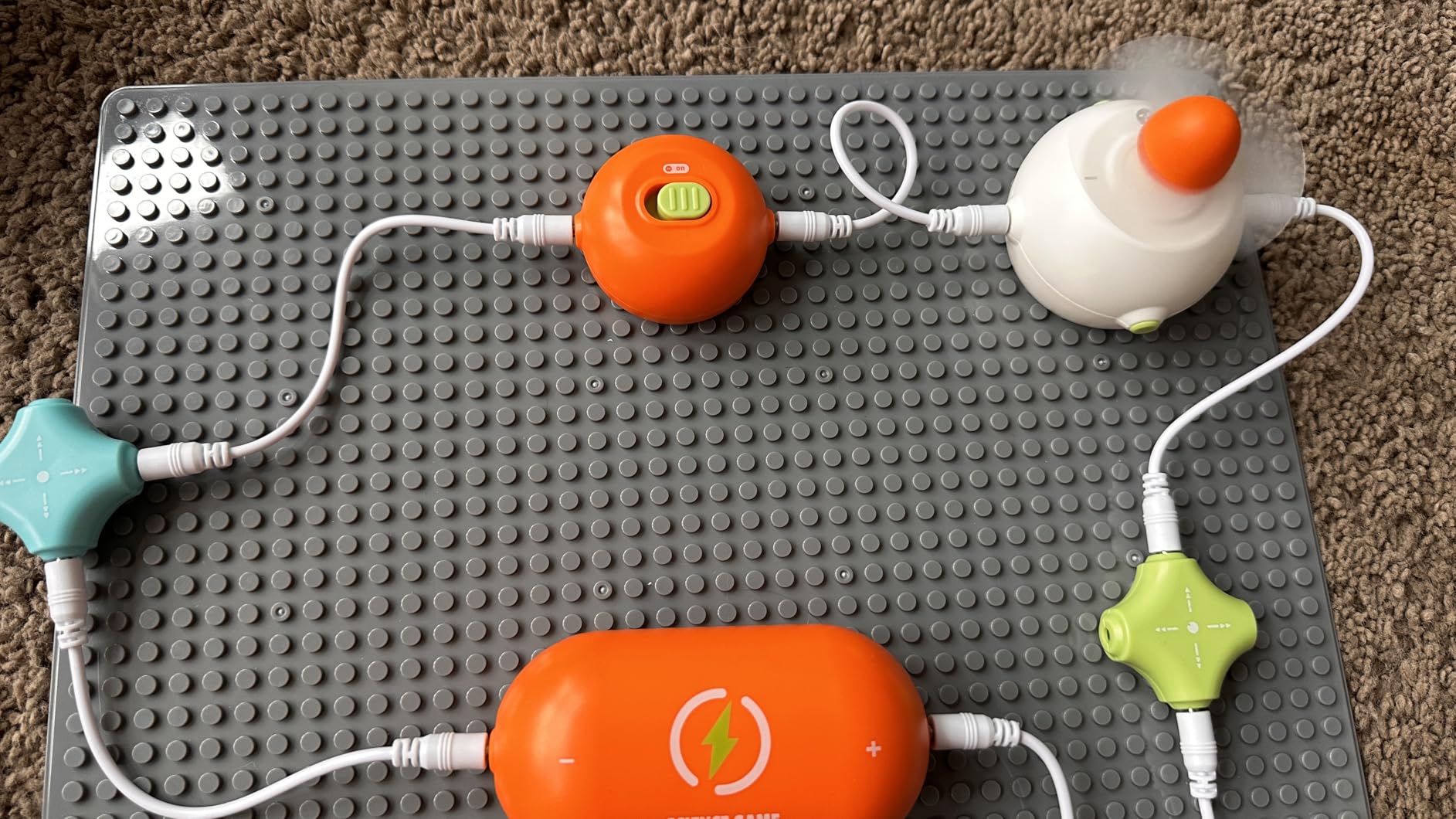
Session length is a good sign. Reviews describe 20 to 45 minute build sessions, which is roughly the right shape for this age group: long enough to lose concentration in something interesting, short enough to finish before enthusiasm collapses.
Comparing it with the larger kits here is instructive. The Playz board and the Snap Circuits SC-100 offer long lists of named, distinct projects, whereas this count is closer to the recombination figure we flagged earlier. Neither approach is wrong, but the two suit very different children.
What to check before you buy
Plan for the parts problem. Reviews flag small pieces being easy to misplace and the supplied storage tray as not secure enough on its own. A divided container with a lid solves this in about the time it takes to lose a wire otherwise.
Note the single glowing cord. Only one set of the wires glows, so when a circuit fails a child cannot see where the break is the way they could with an all-glowing set. It is a real limit for troubleshooting and worth knowing before you buy.
Get batteries in advance. AA cells are required and not included, and the same applies to several kits in this roundup.
Who should skip it
Skip it for a child who needs a specific finished object. Everything here is a demonstration, and none of the projects become a toy the child keeps using afterwards.
Consider a higher-rated option if you are buying for a child who tends to abandon things quickly. This kit has a good but small review base, so the long-run reliability picture is less certain than the Snap Circuits models with tens of thousands of reviews behind them.
9. ANNISOKA DIY Wooden Radio Kit – Budget Pick for a Finished Device
STEM Toys for Ages 6-8-13 Science Kits DIY Building Radio Cool Stuff for Kids Gadget Birthday Gifts for 7 9 11 12 14+ Year Old Boys Girls Teen Circuit Engineering Electronics Project Activities
One finished AM radio
3.9 x 4.3 x 1.8 inch
2 AA batteries
Ages 6 and up
Pros
- Finishes with a genuinely working AM radio
- Compact box that stores easily
- Completed radio has power indicator and volume control
- No soldering or tools required
- One sitting is enough to finish the build
Cons
- Only one build so no ongoing project value
- Assembly is a 3D puzzle rather than open experimentation
- 2 AA batteries required and not included
- Little replay value once built
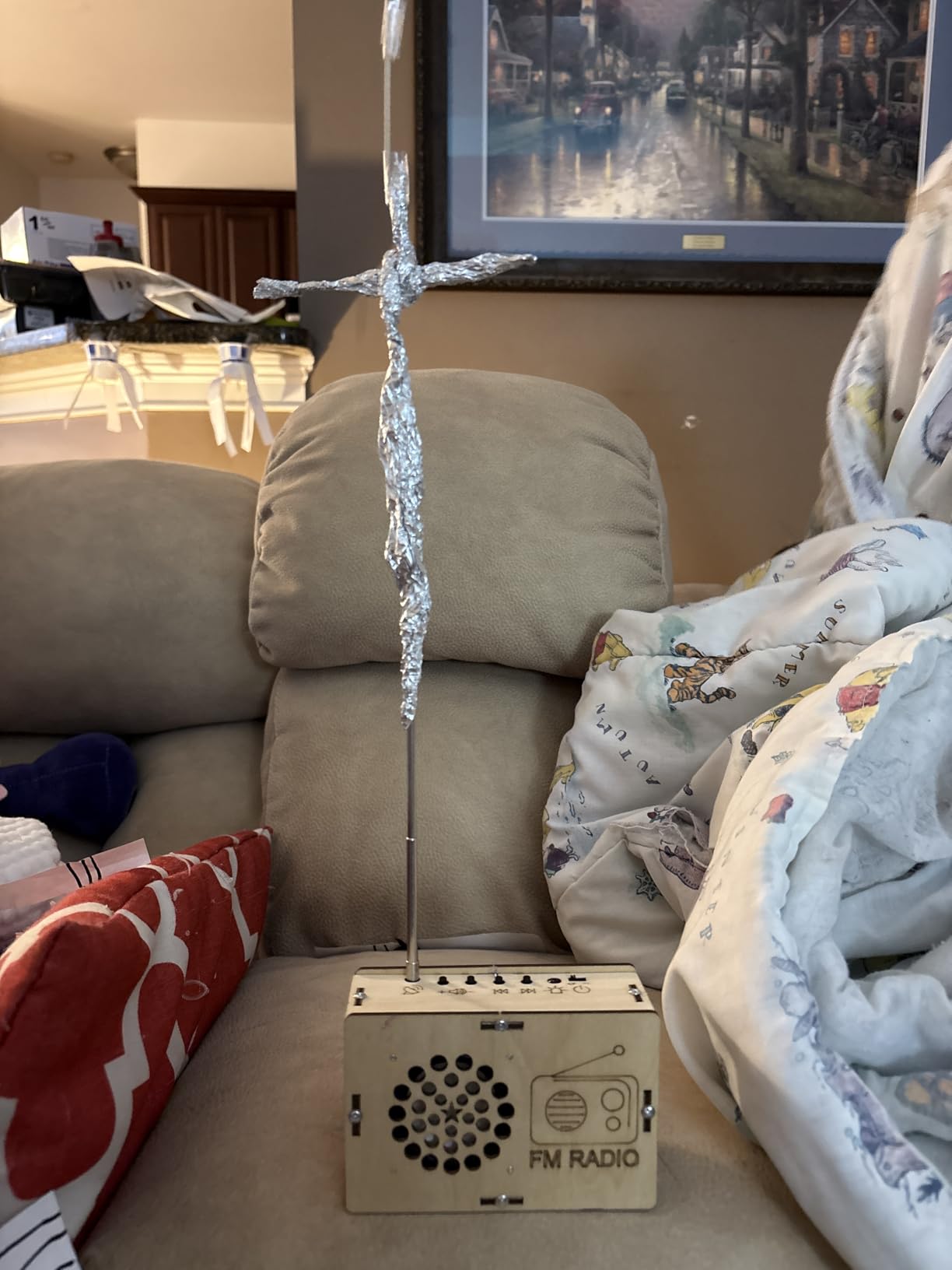
This is the odd one out, and we included it deliberately. Every other kit here teaches circuits by demonstrating them. The ANNISOKA kit produces an object: a wooden-cased AM radio with a power indicator, a retractable antenna and a volume control, built in a single sitting.
For a child whose interest is in the finished thing rather than the principles, that difference is decisive. Parents looking for a birthday gift on a specific budget often find that a single completed project lands better than a box of hundreds of promised circuits.
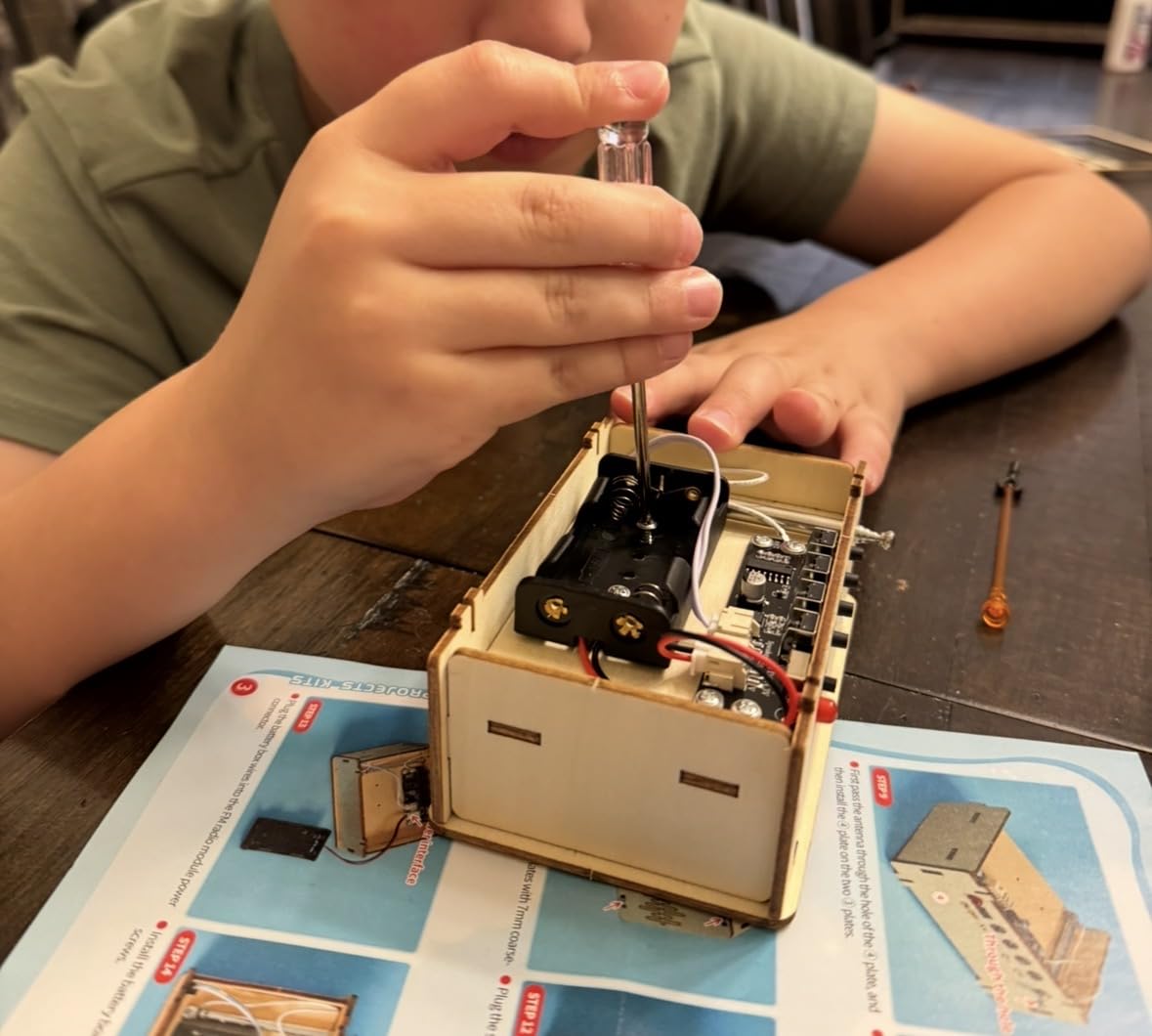
Reviews centre on a simple fact: the radio works. That is the whole satisfaction curve here. Once it is built, the child has a functioning receiver with a moving tuning dial, and the build itself functions as a puzzle rather than a lesson.
The trade-off is honest and unavoidable. One build means one session, and then the kit is done. If the child wants to keep making things, this pairs with a larger kit rather than replacing one.
How to use it well
Give it as an event. Sit with the child for the build, even if you do not touch the pieces. The assembly is short and the reveal matters more when an adult is present to hear the first station come through.
Pair it with a real project kit. Because it is inexpensive and quick, it works well as a companion to one of the larger sets, giving a younger or less patient child a first success alongside an older sibling or parent working on a longer build.
Set expectations on the mechanism. It is a straightforward AM radio rather than a multi-band receiver, and children who expect a modern radio will need a sentence of framing to avoid disappointment.
Who should skip it
Skip it for anyone who wants to learn electronics. There is one build and no open-ended experimentation, so the learning is incidental rather than designed.
Skip it for a child who has already built a snap kit and wants more circuits. This will feel like a step backwards, since it produces fewer outcomes than the project lists they have already worked through.
10. Snap Circuits BRIC Structures – Best for 3-D Building and Expanding Into Brick Sets
SNAP CIRCUITS BRIC Structures STEM Building & Electronics Kit, Ages 8+
139 bricks and 75 adapters
20 snap modules
20+ projects
Ages 8-15
Pros
- Unusual hybrid of building bricks and working circuits
- 75 snap-to-brick adapters enable real 3-D structures
- Works alongside other compatible brick collections
- Color-coded snap modules stay approachable
- Ages 8-15 range suits a long ownership period
Cons
- Fewer circuit projects than standard snap kits
- Adapter and remover tool add setup time
- 3 AA batteries required and not included
- More construction toy than circuit lab
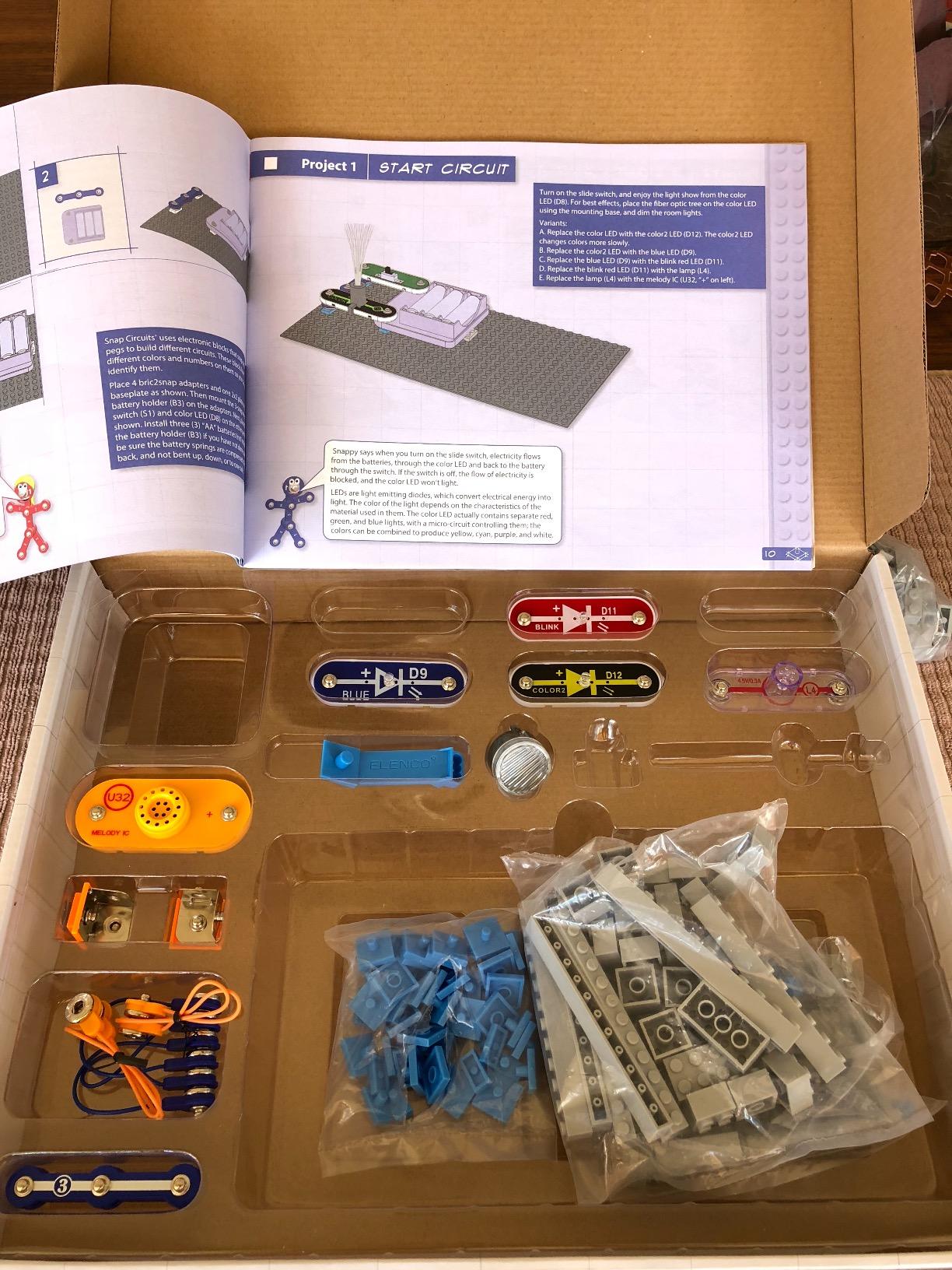
The BRIC Structures kit exists for a specific child: one who has already mastered flat snap grids and builds with bricks or similar construction sets in the same room. It ships with 139 bricks, 20 snap modules and 75 snap-to-brick adapters, so circuits can be mounted in three dimensions rather than on a single plane.
That dimensional change is genuinely new. A child can route a circuit up a wall, through a tower or around a moving arm, and the adapters make the modules sit securely in the brick grid rather than lying flat.
Reviews are enthusiastic about the 3-D possibilities and honest about the cost. Twenty-plus projects is far fewer than the hundred-plus available in a standard snap kit, and this is a construction toy with electronics attached rather than a broad circuit laboratory.
Setup takes longer, because a child who is new to it will spend as long learning the adapter system as building the circuit. Once that clicks, the combination format becomes the thing other children in the house want to copy.
What to check before you buy
Check whether the child already builds with bricks. If they do, this is an excellent bridge between two interests. If they do not, they will learn a construction system first and electronics second, and interest in the circuits may lag behind.
Confirm the child can handle small adapters. With 75 of them involved in a typical build, fine-motor control matters more here than in any other kit in this list.
Keep the remover tool. The included BRIC remover is the piece that makes dismantling safe and tidy, and it is easy to lose or to leave inside a construction set.
Who should skip it
Skip it for a first electronics purchase. The project count is low and the hybrid format adds a second thing to learn, which is a poor combination for a beginner who needs quick wins.
Skip it for a child who is not interested in building toys at all. For them, the Playz board or the Snap Circuits SC-100 delivers far more circuit learning per session with none of the construction overhead.
How to Choose a Circuit Kit for Kids
Match the kit to age and skill, not the box rating
Age ratings on these kits are optimistic at the lower end and pessimistic at the upper end. A labelled 5+ kit will frustrate most five-year-olds, and an 8+ kit will bore a confident eleven-year-old within a fortnight. Judge by what the child can already do, not by the number on the box.
The useful test is simple. If the child can follow a multi-step diagram without asking what to do next, start one band above the printed age. If they need to be told each step, start at the printed age or below.
Snap-together, breadboard or soldering: which route first
Snap-together kits teach cause and effect with zero risk and near-zero frustration. They are the right first step for almost every child under about eleven, and they are also the right last step if your child has attention or fine-motor challenges that make small parts hard work.
Breadboard and microcontroller kits, in the Arduino and micro:bit families, teach real prototyping because components push into a hole grid and stay there. They require reading instructions precisely, which is why most parents in our reading treat them as a teen purchase rather than a first kit.
Soldering kits teach permanence and component-level work. They need an adult, a work surface and a ventilation habit, and the iron reaches temperatures that make them a choice for a supervised older child rather than a gift for a seven-year-old.
Breadth versus depth: why project counts mislead
A project count is the least reliable number on any box. Several kits in this roundup claim several hundred projects by rearranging the same thirty parts, and one claims more than 400 combinations from 32 components. The number is arithmetically defensible and educationally hollow.
Count named, distinct builds instead. Look for how many genuinely different circuits the manual describes, and how many of those produce a result the child could not have predicted. Ten varied projects beat a hundred recombinations for learning, and they are also far more likely to be finished.
How to spot a well-made kit before you buy
Check whether the manual explains anything. A picture-only book is fine for a five-year-old and useless for a twelve-year-old. If the kit teaches, the writing should describe what the circuit does and why.
Check whether parts are replaceable. Standard resistors, LEDs and motors are cheap to replace individually. Proprietary snap modules are not, and a broken module usually means a new box. This was the strongest single quality signal we found across the parent communities we read.
Check the weight and the size of the storage. A kit that needs a dedicated drawer and a compartment box is a kit that will survive, and one that will not is a kit that ends up in a cupboard with loose parts in it.
Check the review distribution rather than the average. A 4.6 with a wide spread tells you more than a 4.6 built from uniform five-star feedback, and the one-star reviews are where the durability information lives.
Check whether batteries are included. It sounds trivial and it is the most common reason a kit is opened once and never again.
Safety, batteries and adult supervision
Every kit in this roundup runs on low-voltage alkaline batteries, which is the single most important safety fact in the article. There is no mains power and no exposed high voltage, so the realistic risks are coin cells, small parts and heat from a soldering iron, and only the third appears in soldering kits.
Watch for button and coin cells, which are not present in these ten kits but do appear in cheap electronics toys elsewhere. If a kit uses one, it needs a secure battery compartment and direct adult supervision.
For children under three, avoid kits with small detachable parts entirely, which rules out everything here. For children between three and six, treat any kit as a supervised activity and check the age marking for small parts warnings.
Soldering irons are the one genuine burn risk in this category. If your child is under 12, treat soldering as a shared activity where the adult does the heating and the child does the placing, and set up the work somewhere ventilated.
Screen time: where coding fits in
Only two of the ten kits in this roundup involve a screen, and in both cases it is optional. The National Geographic kit uses QR video instructions as a support, and micro:bit or Arduino kits would involve a computer, but nothing here requires one to finish a build.
A reasonable rule is to use the screen for setup and problem-solving only. Watch the wiring once, then put the device away. That keeps the majority of the session physical without pretending that coding kits do not need a computer.
For families looking for a fully screen-free activity that still teaches something, our craft kit roundup covers the non-electrical side of the same question, and a dedicated workspace matters more than the specific kit. Our guide to kids desks covers the surface and storage side that makes any kit easier to keep using.
Progression roadmap from age 5 to age 15
At 5 to 7, start with the Snap Circuits Beginner SCB-20 or a comparable childproofed set. The goal is closing a loop and seeing a result, and nothing else matters at this stage.
At 8 to 10, move to the Snap Circuits SC-100 or the Playz board. This is where series and parallel, polarity and sensors become available, and where a child can start working unassisted.
At 11 to 13, add a wired kit such as the Dr. STEM set, or a solder-free breadboard starter. Breadboards are the gateway to real prototyping because components stay where you put them and can be moved between circuits.
At 14 and up, a microcontroller kit with sensors and a coding environment is the natural next step. Teens who want robotics rather than circuits are better served by a robotics kit, and the r/arduino community view we read is that a bare Arduino board is often a steep first step for a child, which is why a guided robotics or starter kit usually works better.
If your child prefers making rather than programming, the sewn-circuits route is a genuine alternative to soldering. Our sewing machine guide for kids covers the equipment side if that is the direction you are heading.
Classroom and homeschool buying notes
Per-student economics reward the mid-range kits. A hundred-project snap kit covers a single term for one child and represents poor value across a class of twenty-five. Plan per child rather than per kit, and expect two or three kits to be in use at once.
Storage decides whether it works. Thirty small parts per child multiplied by twenty-five children needs compartment trays and a labelled system, and no manufacturer packaging solves that. Budget for organisation separately or the kits will not get opened.
For a single shared family set, the wired Dr. STEM kit works as a rotation station, and the Playz board is too large to share comfortably across a table. Choose the shared kit by table space as much as by project count.
If you are mixing ages, buy one beginner set and one mid-range set rather than two of the same. The SCB-20 and the SC-100 cover a four-year gap in one household for less than two mid-range kits.
Frequently Asked Questions
What are some good electronics kits for beginners?
For a child starting from zero, the Snap Circuits Jr. SC-100 is the strongest general choice because 100+ guided projects and a colour-coded manual let an 8-year-old build without an adult. Children aged 5 to 7 do better with the Snap Circuits Beginner SCB-20, which has larger childproofed parts and 21 simple projects. Both need no tools, no soldering and only alkaline batteries.
What is the best electronics kit for a 10 year old?
A 10-year-old is at the age where kit choice matters most, because the beginner sets are too easy and the microcontroller kits assume patience a child this age may not have. The Snap Circuits SC-100 or the Playz Advanced Circuit Board with 328+ experiments and a working AM/FM radio both hold attention well at this age. A child already bored by thirty snap circuits should move to wired or breadboard work instead.
What age can kids start learning electronics?
Around 5 or 6 with a childproofed snap-together kit, as long as an adult supervises. Independent building on a numbered grid usually becomes realistic at 8, which is why most kits label themselves 8 and up. Breadboards and microcontroller kits generally work from 11 or 12 because they require precise reading of instructions. Age labels are approximate, so judge by whether the child can follow a multi-step diagram unaided.
Are electronics kits safe for kids?
The kits in this guide are among the safest toys of their type. All ten run on low-voltage alkaline batteries, so there is no mains power, no heat and no exposed high voltage. The real risks are small detachable parts for children under three and burn risk from a soldering iron in kits for older children. Check each kit for small-parts warnings and treat any soldering kit as a supervised adult activity.
What are some simple electronic circuits for beginners?
Start with an LED and a battery, which teaches that a circuit needs a complete loop. Add a switch so the child can control that loop themselves. A second LED in series shows what happens when components are in one path, and the same two LEDs in parallel show components working independently. A motor or a buzzer in place of the light introduces converting electricity into movement or sound, and a touch or light sensor introduces input and output.
Should I get Snap Circuits or Arduino for my child?
Snap Circuits first for most children, and Arduino-style kits for teenagers. Snap parts need no precision and no coding, so a child can complete a working circuit in minutes and learn cause and effect. Microcontroller kits require following written instructions accurately, reading a breadboard layout and often writing code, which suits a motivated 12-year-old or older. A child who finishes a hundred snap circuits quickly is ready to move up, and one who is still enjoying the first ten is not.
What is the best robotics kit for kids?
Robotics is a different category from circuit kits, and it is worth naming honestly. A guided robotics or Arduino car kit is usually the better choice for a child under 14, because a finished vehicle provides a goal that pure circuit kits do not. For ages 8 to 12 look for block-based programming rather than text code, and confirm the kit includes the chassis, motor driver and controller together, since add-on parts are the usual hidden cost.
How long does a circuit kit last before parts break or projects run out?
Most children finish the guided projects in two to six weeks, and the part that ends the interest is usually running out of new builds rather than a break. Extend it by having the child rebuild familiar circuits in series and parallel arrangements, adding sensors, or mixing modules in combinations the manual does not list. For breakage, note that snap modules are proprietary and cannot be replaced individually, so a compartment storage box matters more than a spare-parts budget.
The Circuit Kit to Buy First
Start with the Snap Circuits Jr. SC-100 unless your child is under 8, in which case start with the Beginner SCB-20. It has the highest rating in this roundup across a very large review base, the manual is thorough enough to support solo building, and nothing in it requires a tool, a heat source or a screen.
Plan the second purchase now rather than later. A wired kit or a breadboard starter at 11 or 12 keeps a child moving forward instead of backtracking, and it is the step that turns circuit play into real prototyping. Buying both in 2026 saves a second round of research and two disappointed birthdays.