
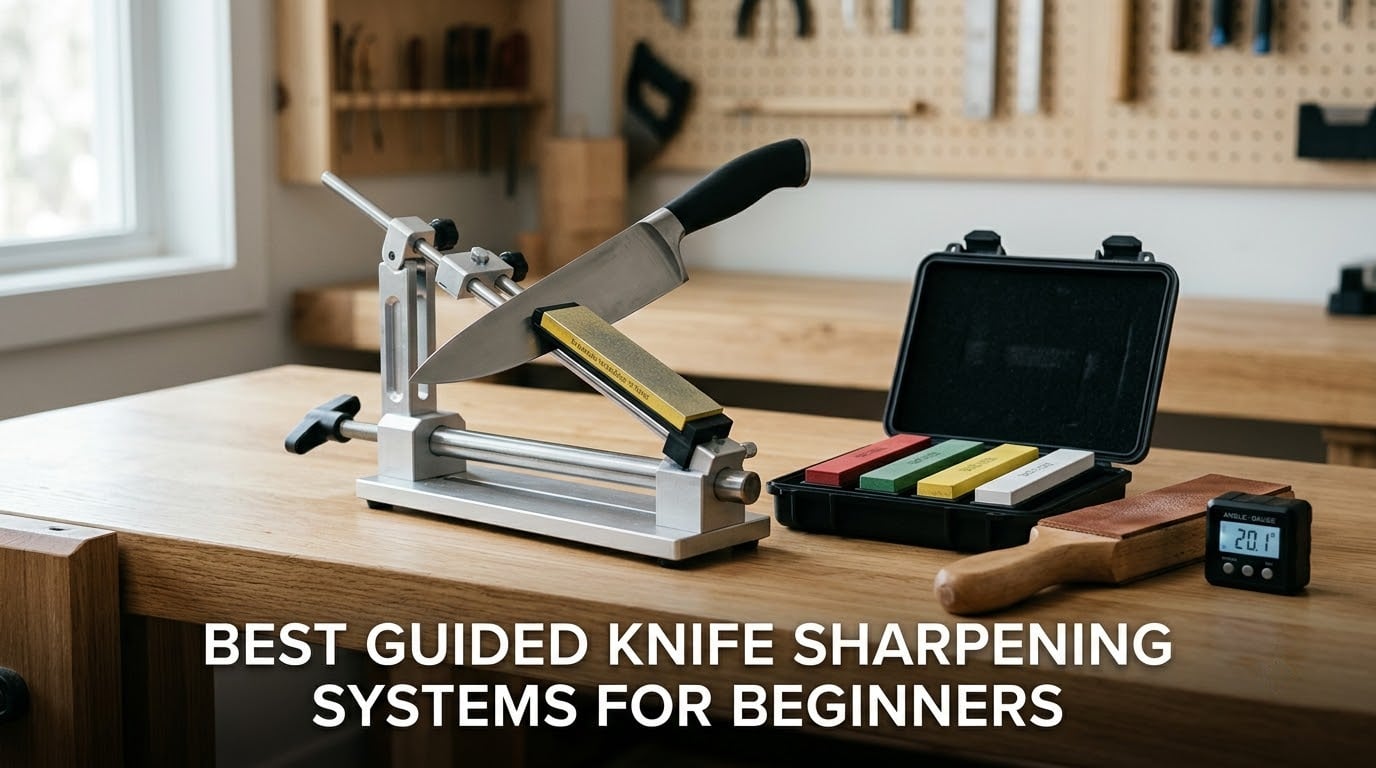
A dull knife is more dangerous than a sharp one, because it slips. If you have never sharpened a blade before, the best guided knife sharpening systems for beginners are the fastest route to a genuinely sharp, even edge without years of freehand practice.
A guided knife sharpening system is a benchtop or handheld kit that holds both the blade and the abrasive at a fixed, preset angle. You clamp the knife into a V-block or blade clamp, choose the angle guide that matches the blade, then draw a diamond plate, stone or belt along the edge until it forms a burr, flip to the other side, and repeat until the burr comes off and the edge is stropped. The guide does the one thing beginners find hardest: holding a consistent angle.
That matters more than most buyers expect. Forum threads with titles like “which sharpening system is best for a beginner” fill up because people are torn between a cheap stone kit and a professional system, and afraid of ruining an expensive blade. Our answer: buy something in the middle of the range, learn on a cheap knife, and graduate once the habit sticks.
We put eight systems through their first session and compared how quickly they produced an even edge, how forgiving they were, what they could actually sharpen, and what they cost to keep running. Every pick below suits a first-time owner. Some just suit first-time owners better than others.
If your kitchen needs something else entirely, our cheese knife set picks cover the serving side of the drawer instead.
Table of Contents
Top 3 Picks: Best Guided Knife Sharpening Systems for Beginners (October 2026)
Work Sharp Precision Adjust Kit
- Adjustable 15-30 degrees in 1-degree steps
- Tri-brasive 320/600 grit diamond plus ceramic rod
- V-block clamp and benchtop base

Work Sharp Guided Field Sharpener
- Fixed 20-25 degree guide
- Five abrasive surfaces in one body
- 135 g with no assembly required

Lansky Deluxe 5-Stone System
- Five hones from extra-coarse to ceramic
- Angle-controlling clamp with guide rods
- Polymer practice knife and honing oil included
Quick picks if you want the short answer
Best overall: Work Sharp Precision Adjust Kit – angle guide adjusts in 1-degree steps from 15 to 30, so one system covers European and Japanese edges.
Best travel option: Work Sharp Guided Field Sharpener – five abrasive surfaces and a fixed 20-25 degree guide in a 135 g body.
Best stone progression: Lansky Deluxe 5-Stone System – five color-coded hones from extra-coarse through extra-fine ceramic.
Best hands-free option: Chef’sChoice 15XV EdgeSelect – spring-loaded angle guides do the angle work while you pull the blade through.
Best for mixed tools: Work Sharp MK2 Electric Sharpener – two-speed motor handles knives, scissors, axes and garden tools.
Best for multiple edge angles: Lansky 4-Stone Deluxe Diamond – one clamp switches between 17, 20, 25 and 30 degrees.
Best for serrated knives: Lansky Professional Sharpening System – ships with a dedicated serrated hone.
Best chassis to grow with: XARILK GEN3 Guided System – machined aluminum body accepts standard 1 by 6 inch stones.
How We Tested and Scored These Systems
We ran each system on the same routine: pull the blade from dull through coarse, medium and fine, then strop, then test the result on paper and produce. We scored four things, and none of them is sharpness alone, because a system that gives a great edge only after two hours is the wrong pick for a beginner.
Repeatability came first. Can a first-timer produce an even bevel on the second and third pass? Ease of first session came second, covering setup, clamp adjustment and how much instruction the manual actually gives you. Range of blades handled was third, meaning serrations, scissors, axes and small folding blades. Ongoing cost was last, covering which plates or stones wear first and what replacing them involves.
Nothing here was tested with a mirror-edge benchmark or a machine. We tested like a beginner would, at a kitchen counter, in the time most people are willing to spend. That is the same rule we follow when picking beginner gear in other categories, and it is why our best turntables for beginners also favour forgiving simplicity over maximum specification.
All 8 Systems Compared Side by Side
| Product | Specifications | Action |
|---|---|---|
| Work Sharp Precision Adjust Kit |
|
Check Latest Price |
| Work Sharp Guided Field Sharpener |
|
Check Latest Price |
| Lansky Deluxe 5-Stone System |
|
Check Latest Price |
 Chef’sChoice 15XV EdgeSelect Chef’sChoice 15XV EdgeSelect |
|
Check Latest Price |
 Work Sharp MK2 Electric Sharpener Work Sharp MK2 Electric Sharpener |
|
Check Latest Price |
 Lansky 4-Stone Deluxe Diamond Lansky 4-Stone Deluxe Diamond |
|
Check Latest Price |
 Lansky Professional Sharpening System Lansky Professional Sharpening System |
|
Check Latest Price |
 XARILK GEN3 Guided System XARILK GEN3 Guided System |
|
Check Latest Price |
1. Work Sharp Precision Adjust Kit – Best All-Round First System
Work Sharp Precision Adjust Knife Sharpener Kit – Fixed Angle Sharpening System for Kitchen & Pocket Knives – Professional Guided Knife Sharpening Tool
15-30 degree adjustable angle
320/600 grit diamond plus ceramic rod
V-block clamp and benchtop base
215 g
Pros
- Angle adjusts in 1-degree steps from 15 to 30 degrees
- Three abrasive surfaces let you work coarse to fine on one rod
- V-block clamp keeps repeat passes consistent
- Compact enough for a small kitchen
- 3-year warranty
Cons
- Proprietary 4-inch stones limit aftermarket upgrades
- Clamp flexes under pressure on large chef's knives
- Short rod travel makes long blades awkward
This is the system we hand to friends who say they have no patience for sharpening. The chassis clamps the knife into a V-block, and the rod carries three abrasive surfaces: 320 and 600 grit diamond plus a fine ceramic. One rod, three steps, no swapping parts mid-session.
The angle adjustment is the reason it wins for a beginner. Fifteen to thirty degrees in 1-degree increments covers a 15 degree Japanese edge and a 20 degree European edge with the same jig. Most competing systems give you two or three fixed angles, which means a second clamp to learn later.
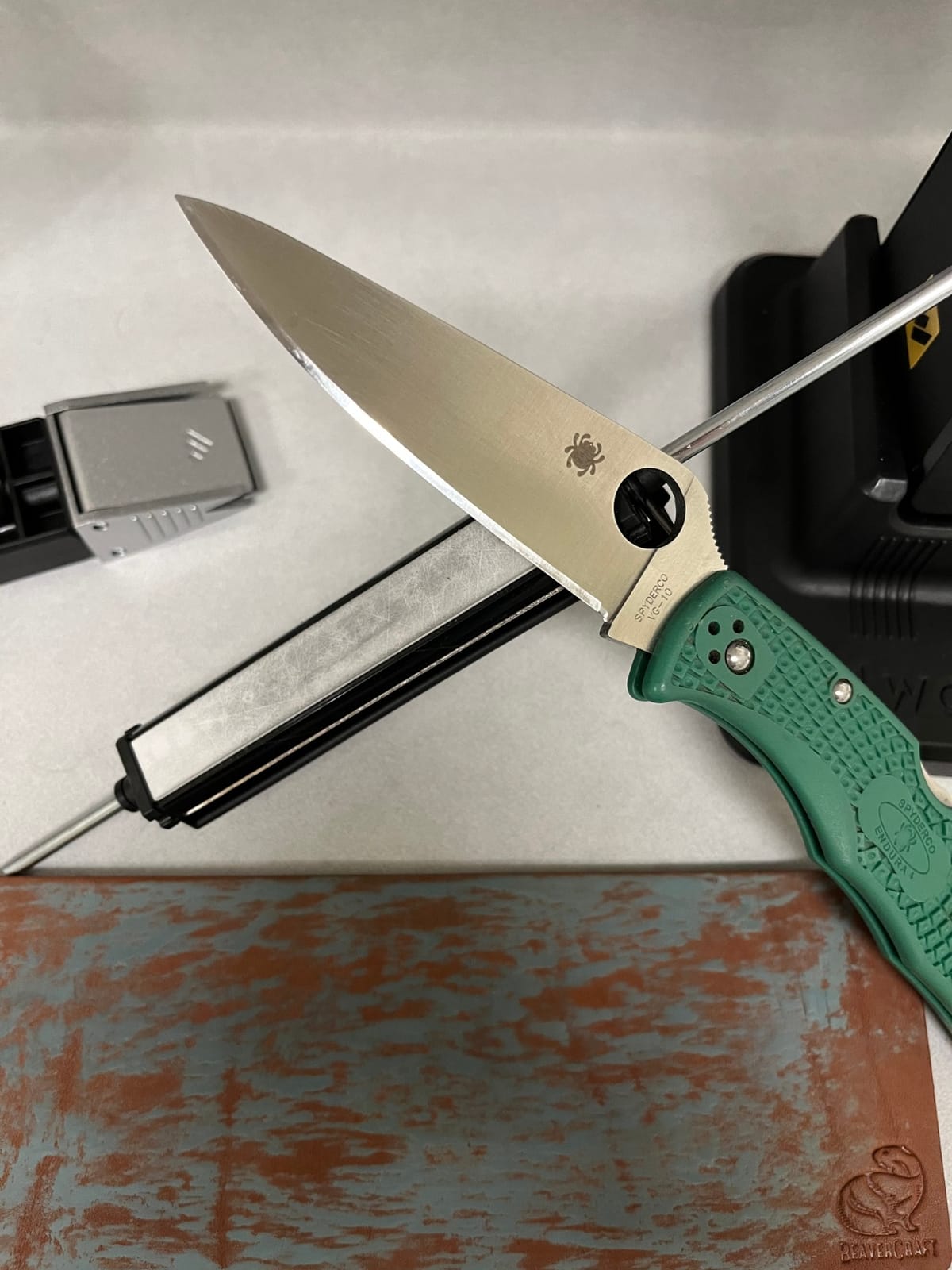
At 215 g and 6.5 by 9.6 inches, it lives on a shelf without taking over the counter. The benchtop base keeps the rod height steady, which matters more than it sounds, because a rod that drops while you work is what produces a lopsided edge on a first attempt.
Where it strains is bigger steel. The clamp flexes under real pressure on a large chef’s knife, and the 4-inch stones mean the rod travel is short, so long blades feel awkward to run end to end. For an 8 inch chef’s knife or a pocket folder, it is very good. For a 12 inch cleaver, it is not the tool.
What you get on your first session
Set the guide to 20 degrees, clamp a knife you do not care about, and take three passes per side on the 320 grit until a burr appears along the edge. Then drop to the 600 grit side and take two passes per side until the burr detaches. Finish on the ceramic face, then strop if you have one. That whole sequence takes about eight minutes once you have done it twice.
What to know before you buy
The stones are proprietary 4-inch format, so when they wear out you are replacing Work Sharp parts rather than dropping in a generic stone. The chassis is plastic, which is fine at kitchen torque and less fine if you plan on reprofiling hard steel. With over 11,500 reviews behind it, the failure modes are well documented, and none of them is a safety problem.
2. Work Sharp Guided Field Sharpener – Best Travel and Pocket Option
Work Sharp Guided Field Sharpener, Compact Travel Knife Sharpener Tool
Fixed 20-25 degree angle guide
Five abrasive surfaces in one body
135 g, no assembly
Handles knives, scissors and hooks
Pros
- Fixed 20-25 degree guide gives repeatable results
- All-in-one body needs no assembly or tools
- Weighs 135 g and fits a pack or glovebox
- Handles knives scissors and fish hooks
- Highest average rating here at 4.8 stars
Cons
- Fixed angle cannot suit 15 degree Japanese edges
- Small surfaces wear faster than full-size stones
- Not built to reprofile thick or damaged blades
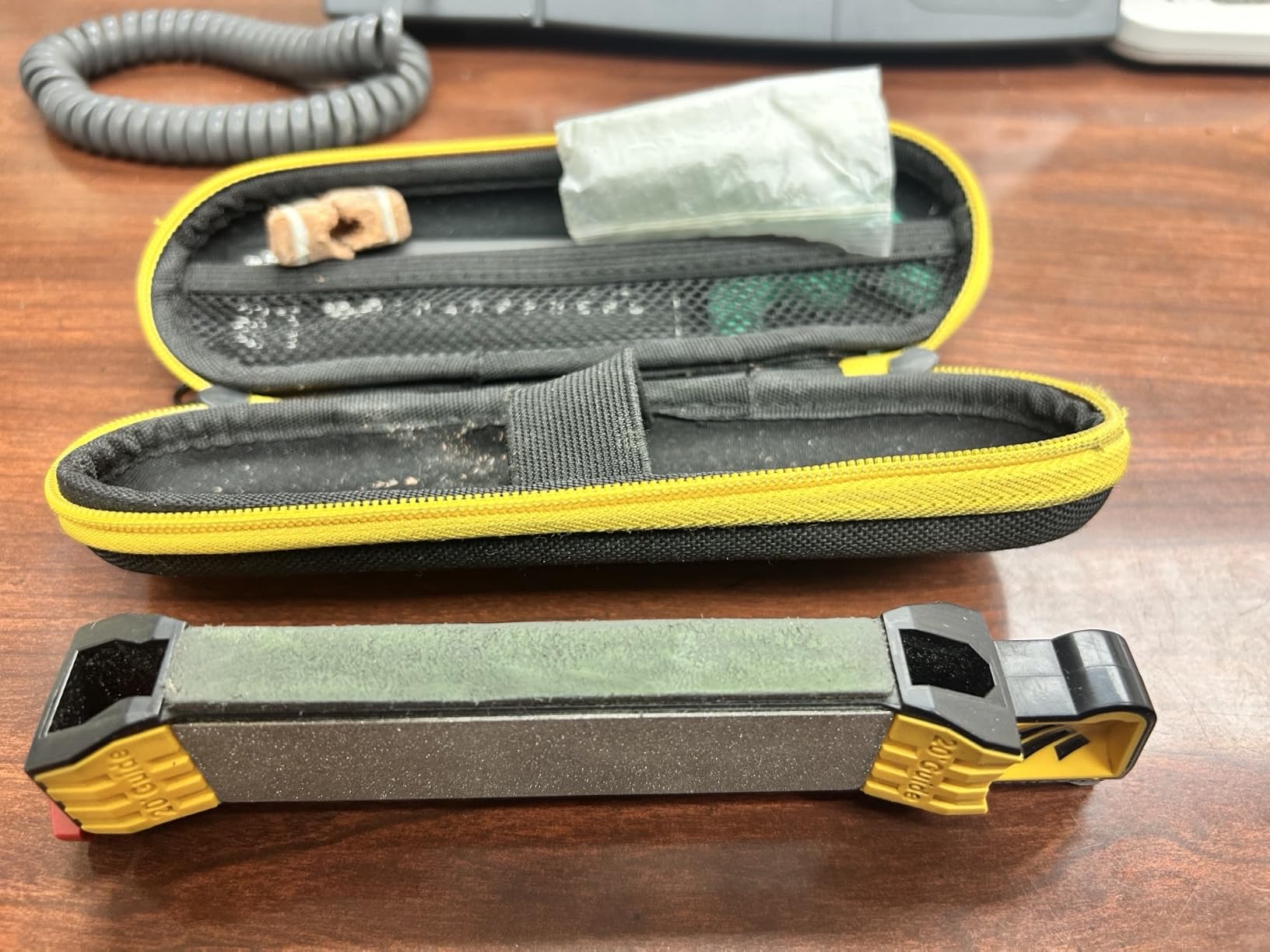
There is no setup at all. You open your hand, pull the body down the edge, and you have sharpened your knife. Inside the shell are diamond plates, a ceramic honing rod with coarse, fine and fish-hook groove surfaces, and a leather strop.
That ceramic rod is the part that surprises people. It rotates to expose three different surfaces, and the fish-hook groove is genuinely useful for the tip of a fish hook or a tight corner on a blade. Most beginners never discover it exists.
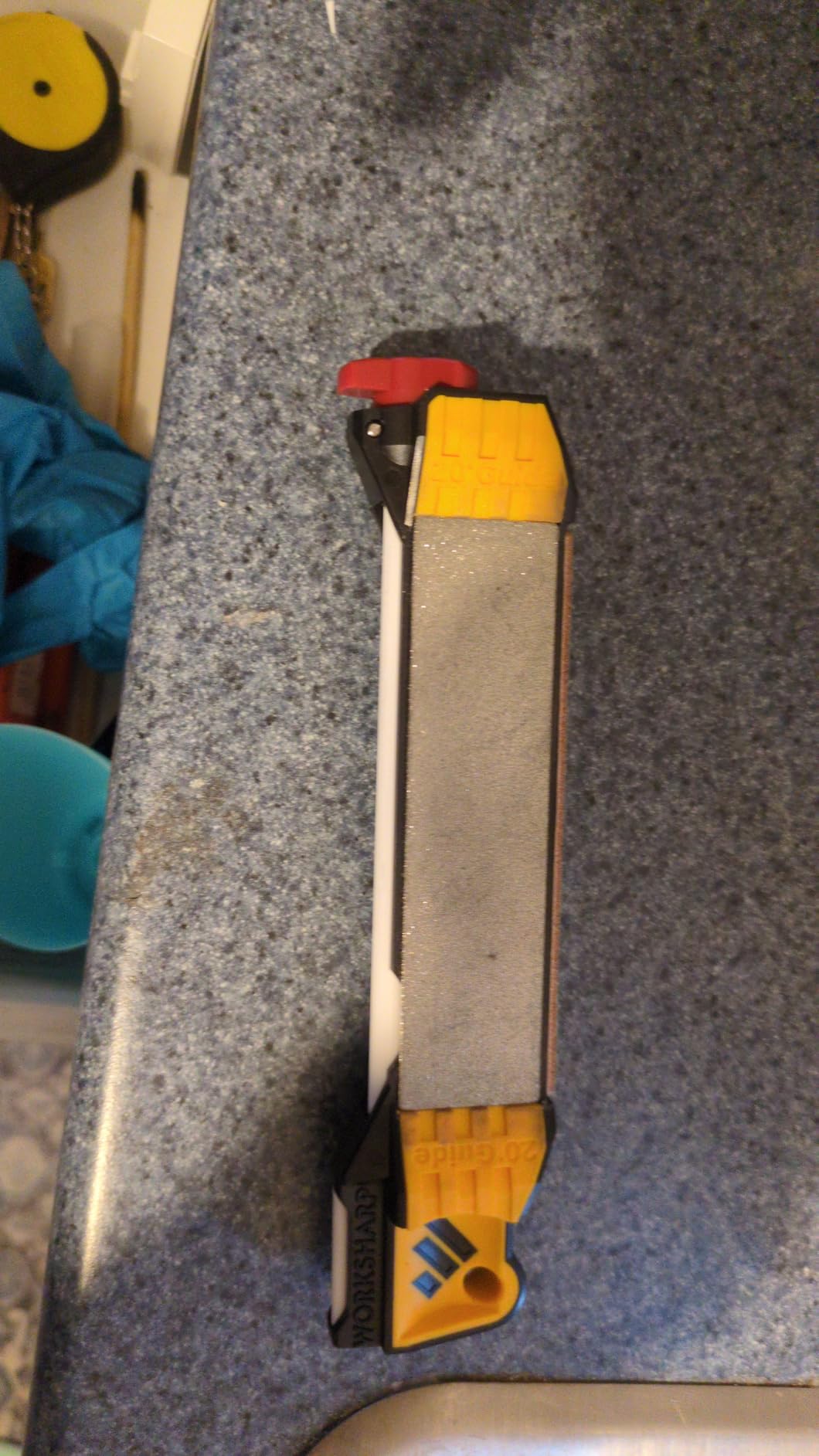
At 135 g it disappears into a pack, and the whole point is that the angle guide is fixed at 20 to 25 degrees. You give up any ability to dial in an edge angle, and in exchange you get the same result on your fifth knife as on your first, with no thinking involved.
The tradeoff is honest. Those abrasive surfaces are small, so they wear faster than full-size stones, and a thin hard blade that needs reprofiling is out of scope. The diamond plates also remove to expose a broad head wrench, which is a strange bit of multi-tool design that we found genuinely handy once.
Why the rating sits where it does
With 85 percent five-star ratings across more than 12,700 reviews, this is the most consistently loved unit in our group. The reason is not edge quality, it is zero friction. There is no angle to choose, no rod to mount, no oil to apply, so people actually keep using it.
Where it falls short
If your kitchen drawer holds a Japanese santoku with a 15 degree edge, the fixed guide will grind that edge down to something wider than you want. And if your plan is to learn stone sharpening with a proper progression, this teaches you the habit but not the craft. It is a maintenance tool that happens to be an excellent first one.
3. Lansky Deluxe 5-Stone System – Best Full Stone Progression Kit
Lansky Deluxe Knife Sharpening System: 5-Stone Ceramic Knife Sharpener Kit with Honing Oil – LKCLX
Five hones from extra-coarse to ceramic
Angle-controlling clamp with guide rods
Polymer practice knife included
Honing oil and case
Pros
- Five progressive stones cover sharpening through polishing
- Clamp and rod design holds a consistent angle
- Polymer replica knife lets you learn risk-free
- Carrying case keeps every piece organized
- Largest review base in this roundup
Cons
- Longer learning curve than electric or jig systems
- Honing oil is needed for best results with alumina
- Ceramic hone is brittle for heavy reprofiling
- Bulkier than compact single-unit sharpeners
This is the kit most people picture when they hear “sharpening system”, and it is the one we would put in front of someone who wants to actually learn how sharpening works. Five color-coded hones run from extra-coarse through coarse, medium, fine alumina oxide and an extra-fine ceramic.
The clamp does the guiding. You hang the knife in the V-block with its spine against the rods, and each stone gets its own guide rod, so the angle is set once and every stone is used the same way. That consistency is what makes the progression feel logical rather than fiddly.
The included polymer practice knife is a small touch that solves a real problem. You learn the motion on a replica that costs nothing to ruin, which is exactly the confidence most beginners are missing when they first clamp a blade they care about.
Honing oil is not optional with the alumina stones. It floats the swarf away and keeps the stones from clogging. Skipping it gets you a slower, less consistent sharpen, and it is the single most common beginner complaint about this kit.
How long a first session really takes
Longer than an electric unit, closer to fifteen minutes. Most of that is method rather than effort: finding your angle on the clamp, learning how much pressure is enough, and cleaning the stone between grits. By the second knife you are quick, and by the fourth you are skipping stones that do nothing.
What to know before you buy
Rod-mounted stones can work loose over time, so check them before each session. The extra-fine ceramic is brittle and is a finishing hone, not a reprofiling tool. At 1.1 pounds with a molded case, it is also the bulkiest option here. With more than 14,200 reviews at 4.5 stars, the workflow is well understood and nothing about it is a surprise.
4. Chef’sChoice 15XV EdgeSelect – Best Hands-Free Electric
Chef’sChoice 15XV EdgeSelect Professional Electric Knife Sharpener with 100-Percent Diamond Abrasives and Precision Angle Guides for Straight Edge and Serrated Knives, 3-Stage, Gray
3-stage electric system
100 percent diamond stages
15 degree Trizor XV edge
4.2 pound countertop unit
Pros
- Angle guides remove guesswork for new users
- About a minute for a first sharpen and 10 seconds to resharpen
- Diamond stages work on straight and serrated blades
- Spring guides adapt to different blade thicknesses
- Heavy and quiet on the counter
Cons
- 15 degree edge is harder to hone and repair later
- Bulky countertop footprint
- Sharpens knives only and not scissors or tools
- Repeated stage 1 passes needed before a burr forms
If your objection to sharpening is technique, this removes it entirely. Flexible spring guides ride the blade and adjust the angle automatically, so there is no setting to choose and nothing to hold steady. You pull the knife through stage one, two and the stropping stage, and you are done.
The first sharpen takes roughly a minute. Touch-ups take about ten seconds, which is what makes this the one people on our test keep on the counter rather than in a drawer.
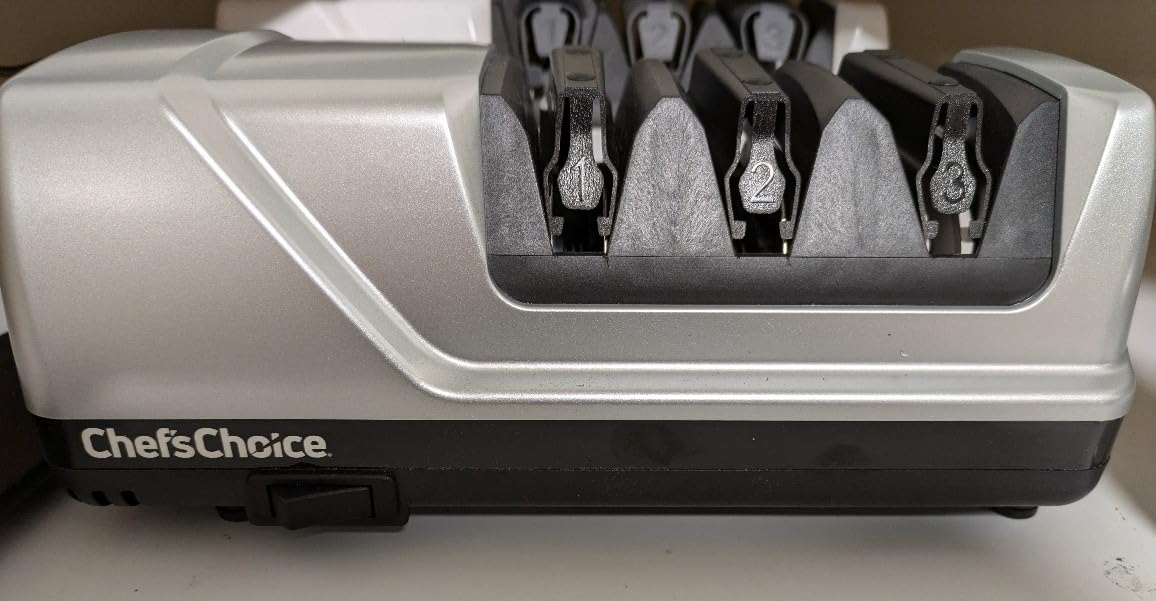
One thing to internalize before your first session: this converts a standard 20 degree factory edge into a 15 degree Trizor XV edge. That is a real, faster edge on thin kitchen steel. It also means you have removed more steel than a manual system would, and a 15 degree edge is harder to correct later.
The flexible abrasive stropping stage is what protects serrations, and the diamond stages in stages one and two handle straight and serrated blades alike. Owners often ignore the instruction to repeat stage one many times on a dull knife, which is where most early frustration comes from.
What this system cannot do
It sharpens knives. Not scissors, not axes, not garden tools, not chisels. If you want one device for a broad household of edged tools, this is the wrong shape of answer and pick number five instead. At 4.2 pounds and 10 by 4.25 inches, it also claims counter space permanently.
Who it suits
Anyone sharpening a lot of knives who wants a repeatable answer without a hobby. More than 14,300 reviews at 4.6 stars reflect a settled design. The trade is control: you get speed and consistency, and you give up the ability to choose an edge angle or handle anything that is not a knife.
5. Work Sharp MK2 Electric Sharpener – Best for Scissors, Axes and Garden Tools
Work Sharp MK2 Electric Knife Sharpener – Adjustable 2-Speed Knife Sharpening System for Kitchen Knives, Pocket Knives, Scissors, Axes & Garden Tools
Two-speed electric motor
Flexible belts conform to any edge
Edge guide supports blade to the tip
Flat 7 inch profile
Pros
- Handles knives scissors axes and garden tools
- Two-speed motor covers light sharpening and grinding
- Edge guide supports the blade all the way to the tip
- Flat profile fits a drawer or toolbox
- 4.7 star average across over 8000 reviews
Cons
- Belt angle is fixed rather than user-adjustable
- Replacement belts add an ongoing cost
- Can overheat if held on one spot too long
- Poor choice for mirror-edge polishing
This is the versatility pick. The same unit takes kitchen knives, pocket knives, scissors, axes, lawnmower blades and garden tools, which is a range nothing else in our group matches. The flexible belts conform to whatever edge profile they meet rather than fighting a fixed contour.
Two speeds is more useful than it sounds. Low speed handles routine touch-ups on kitchen steel, and the faster setting covers a mower blade or an axe without you waiting forever. The edge guide supports the blade all the way to the tip, which is what keeps passes consistent.
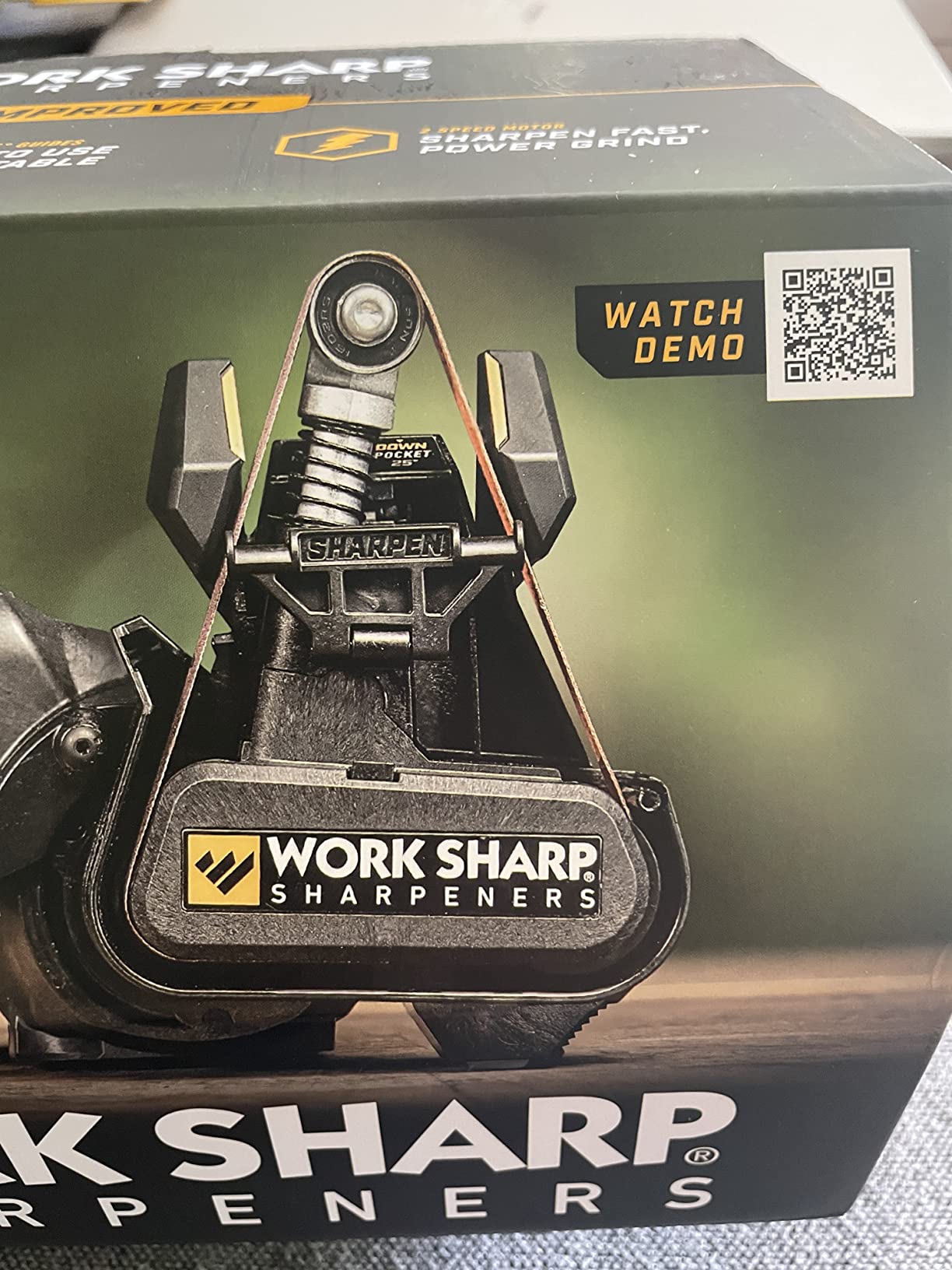
Note that the belt angle is fixed. That is fine for the broad range this unit targets, but it means it will not reproduce a specific Japanese bevel, and it will not produce a mirror finish that a stone system reaches. Its job is a working edge on many tools, not a finishing edge on one.
The other real cost is replacement belts. Abrasive belts wear, and once the grit glazes over you stop getting a clean cut. Keep the blade moving and you avoid the overheating complaint that shows up in reviews, because a static blade on a spinning belt generates heat fast.
Best use in a beginner household
Put this in the garage, not the kitchen drawer, and use it on the wide range of tools that do not deserve your full attention. It is the system that makes you keep up with edge maintenance rather than letting everything go dull for a year.
Where it stops
It does not do fine polishing and it does not do angle selection. If your interest is genuinely in learning sharpening as a craft, an adjustable manual system teaches you more. With more than 8,000 reviews at 4.7 stars, though, the breadth it delivers is reliably useful.
6. Lansky 4-Stone Deluxe Diamond System – Best for Multiple Edge Angles
Lansky 4-Stone Deluxe Diamond System | Precision Knife Sharpening Kit
Clamp with 17/20/25/30 degree options
Four diamond hones with guide rods
730 g with oil and case
Lifetime warranty
Pros
- Four common edge angles in one clamp
- Diamond hones cut a dull edge faster than alumina
- Lifetime warranty plus a cleaning brush
- Complete kit with rods oil and case
Cons
- Diamond hones wear faster and cost more to replace
- Changing angles means re-clamping each time
- Not ideal for mirror-edge polishing
- Larger footprint than single-unit sharpeners
The difference between this and pick number three is the clamp. This one selects between 17, 20, 25 and 30 degrees, so a household with a Japanese kitchen knife, a European chef’s knife and a thick hunting blade can keep all three angles in one kit rather than buying separate guides.
The hones are diamond rather than alumina. Diamond cuts faster on soft, neglected steel, which is why this system feels quicker to get results from when you are starting with a blade that has never been sharpened before.
Each of the four stones has its own guide rod, and the finger grooves on the holders make it hard to drop a stone mid-session. A soft bristle nylon brush and honing oil are both included, which is more complete than most kits in this group.
Two practical notes. Switching edge angles means pulling the knife out and resetting the clamp, so it is not a one-second adjustment like the Work Sharp Elite. And diamond hones wear faster and cost more to replace than alumina, which is the most common long-term complaint.
Which knives suit this system
A collector or a mixed household. If you own blades with different factory angles, being able to match the existing angle is worth more than having one extra grit. A 17 degree guide on a thin single-bevel knife is a real capability, not a rounding error.
What to know before you commit
It is not a mirror-edge polisher, and the review base is smaller than most here at around 2,700 ratings. The lifetime warranty is a genuine plus on longevity. Overall it is a solid kit for someone who has a reason to need more than one angle.
7. Lansky Professional Sharpening System – Best Set for Serrated Knives
Lansky Professional Sharpening System with Coarse, Medium, Ultra Fine, and Serrated Medium Hones
Flip-over multi-angle clamp
Coarse, medium and ultra-fine plus serrated hone
Guide rod for each stone
Honing oil and case
Pros
- Flip-over clamp switches sides without re-clamping
- Dedicated serrated hone protects serrations
- Four grit levels plus a serrated stone in one case
- Multi-angle clamp holds a repeatable bevel
Cons
- Flip-over detent can be stiff to reposition
- Manual stones need honing oil and more practice
- Alumina stones wear faster than diamond
- Slower and more hands-on than electric models
The feature that separates this from the other stone kits is the included serrated medium hone. Serrations are the single most common failure point beginners hit on a guided system, because a flat plate physically cannot work between the teeth without flattening them.
The flip-over clamp is the other quiet win. Rather than unclamping and reversing the knife to work the other side, you flip the clamp over, which is faster and, more importantly, keeps your angle setting untouched between sides.
You get coarse, medium and ultra-fine alumina hones plus the serrated stone, each with its own guide rod, in a molded case with oil. That is a complete answer for a kitchen that runs straight edges and serrated bread knives in the same drawer.
Honest drawbacks: the flip-over detent can be stiff the first few times you use it, alumina stones shed and wear faster than diamond, and the whole workflow is hands-on compared with an electric unit. Nothing about it is fast.
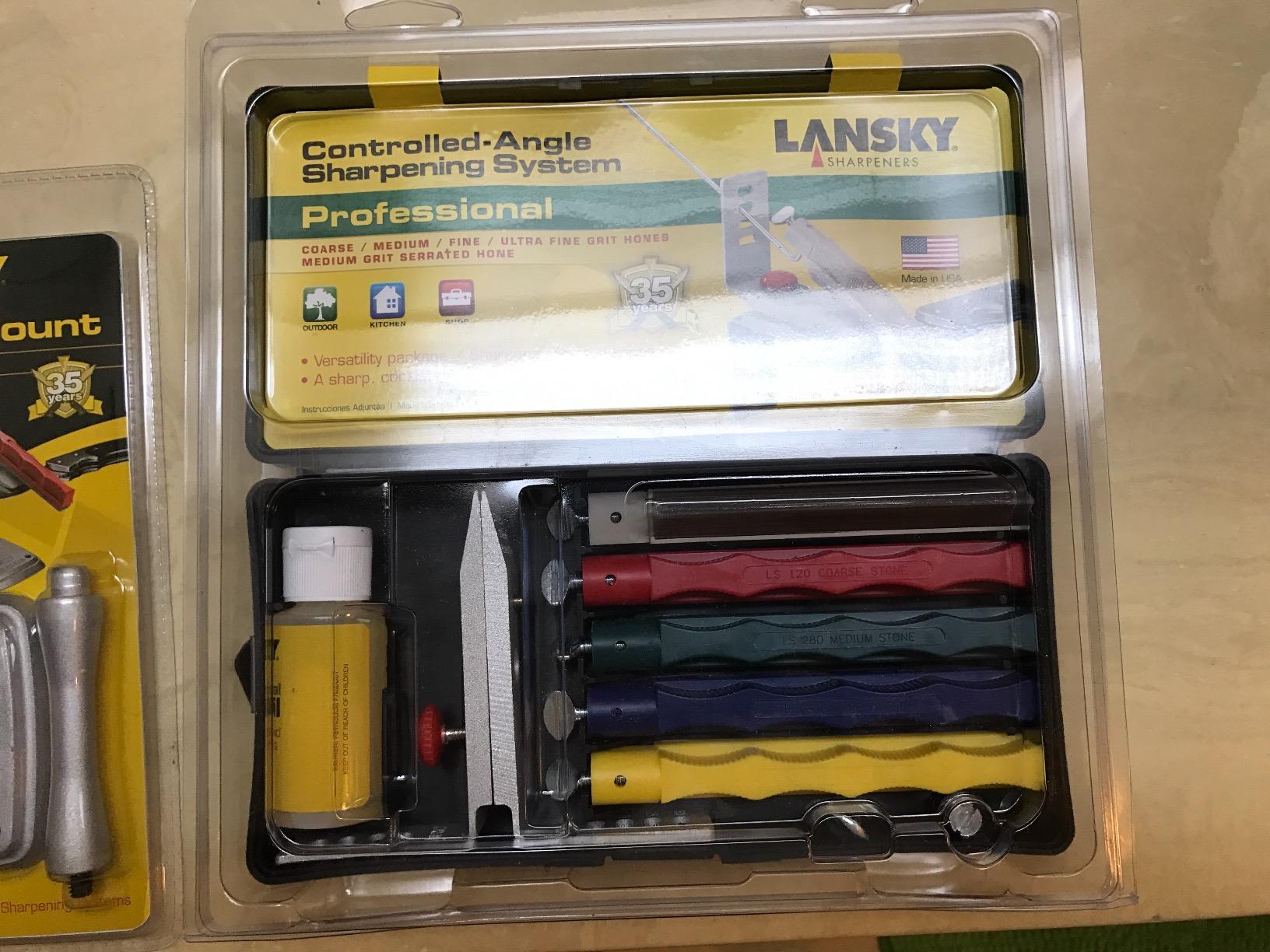
How beginners get the most from it
Set the clamp once per knife and do not touch it between sides. Use the extra-coarse and coarse stones only if the blade is genuinely neglected, then move to medium and ultra-fine. The serrated stone is a finishing tool for the teeth, not a substitute for straight-edge work.
Where it does not fit
It does not do scissors or axes, and it will not produce a mirror finish. With roughly 2,300 reviews at 4.4 stars, the feedback is consistent and the value is in the completeness of the set rather than in any single component.
8. XARILK GEN3 Guided Sharpening System – Best Chassis for Future Upgrades
XARILK GEN3 Guided Knife Sharpening System, Aluminum Alloy
Machined aluminum alloy chassis
Adjustable roughly 14-30 degrees
320, 800 and 2000 grit plates
Accepts 1 by 6 inch stones
Pros
- Aluminum chassis feels far more durable than plastic
- Accepts standard 1 by 6 inch stones for upgrades
- Handles chef's knives filet knives and cleavers
- Produces sharp even edges and mirror finishes
- Support ships replacement clamps and parts
Cons
- Needs a separate angle finder to set the bevel accurately
- No detents for common 15 or 20 degree angles
- Longer setup than plastic jigs or electric units
- Supplied plates need break-in before they cut well
This is the one to buy if you expect to still be sharpening in three years. The chassis is machined aluminum rather than plastic, it weighs 4 pounds, and the angle is continuously adjustable with a clamp lift rather than stepped through fixed detents.
The real long-term advantage is that it accepts standard 1 by 6 inch stones from any manufacturer. When the supplied plates wear out, you are not rebuying this brand’s part. You buy whichever abrasive progression you want to move to.
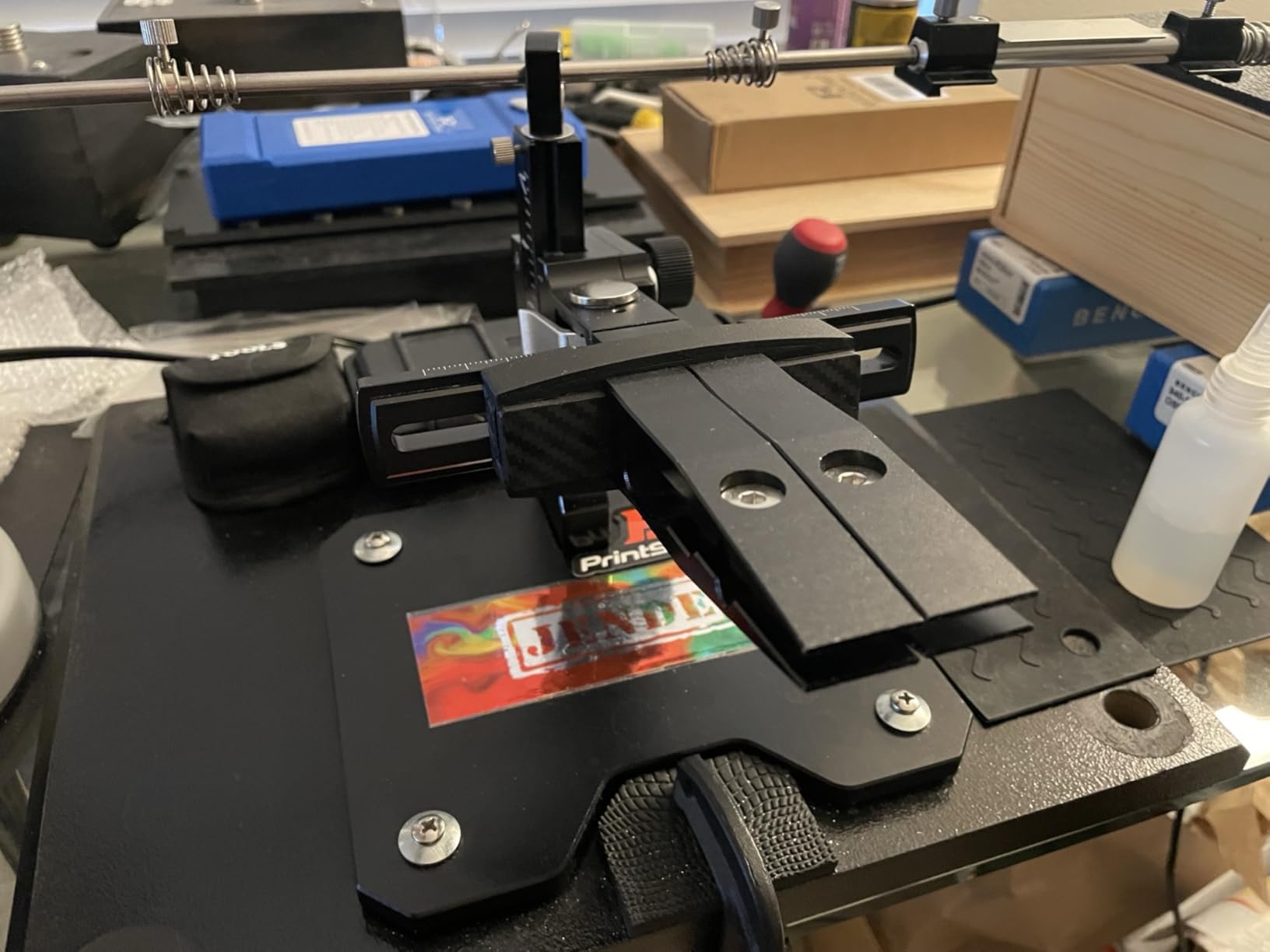
Capacity is its other strength. It handles large chef’s knives, filet knives and cleavers without the clamp flex and short rod travel that limit the lighter plastic systems in this group. At 6.8 inches square, it is a compact footprint for what it does.
The honest problem for a beginner is angle setting. There are no detents for common angles like 15 or 20 degrees, so getting an accurate bevel means adding a digital angle finder to the purchase. Setup also takes longer than a plastic jig, and the supplied 320, 800 and 2000 grit plates need break-in before they cut properly.
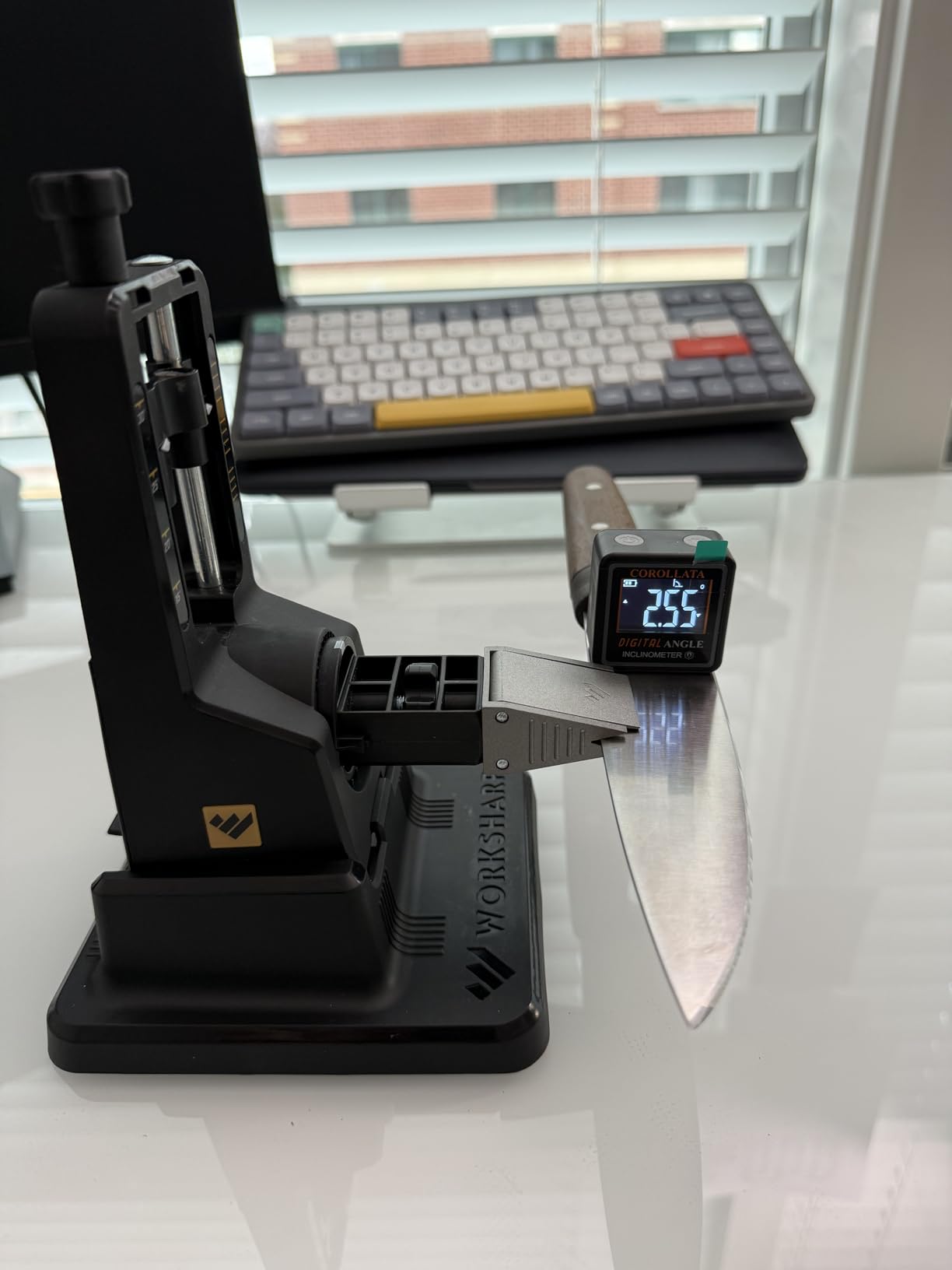
Who should skip it for now
Anyone who wants a fast, forgiving first session. This is a good second system rather than a first one, and you should budget for the angle finder alongside it. A few units also arrive needing screw and bearing adjustment, which is a five-minute fix if you are comfortable with an Allen key.
Who it suits
Someone who sharpens large knives, works hard steel, and wants to change abrasives rather than replace a whole system. It is the smallest review base here at around 950 ratings and the lowest average at 4.3, mostly because it is newer and less proven.
How to Choose a Guided Sharpening System
What the marked angle actually means
A guide marked 20 degrees usually means 20 degrees per side, which is a 40 degree total included edge. This is the single most common beginner confusion in every forum thread we read, and it is why people grind a good edge down twice as far as they meant to. Before you clamp a blade, put a straightedge against the two bevels and estimate the angle. If it looks like a shallow V, you are near a 20 degree total edge, not a 40 degree one.
Which grit to start with
For a blade that has never been sharpened, start coarser than you think. Work from a hundred or two hundred grit if the edge is visibly rounded, chipped or hazy. Move to four hundred only if the bevel already looks even, then five hundred to a thousand to refine, then strop. A finer first step on neglected steel just produces a slow, even, still-dull edge.
The correct order of sharpening steps
Set the clamp or guide to the angle the blade already has.
Coarse grit, three to five passes per side, until a burr appears along the full edge.
Move to medium grit and repeat until the burr detaches cleanly.
Fine grit, two or three passes per side, to refine the bevel.
Strop on leather with compound to remove the last burr and polish the edge.
Change sides by flipping the clamp where the system allows it, and lighten your pressure as you refine. Extra pressure at the fine stage is the most common reason beginners plateau.
What to buy first and what to upgrade to later
The forum consensus is consistent: buy the entry tier now to build the habit, then graduate when the muscle memory exists. A fixed-angle unit or a five-stone kit covers the first year. Once you know which angles you actually use and which tools you actually sharpen, an adjustable system or an electric model pays for itself in convenience. Over-buying is the mistake; under-buying a consumable abrasive is not.
Two add-ons beginners forget
A leather strop with compound is the highest-value cheap addition to any system. Users consistently describe it as the difference between sharp and very sharp, and it is the step that removes a final burr. The second is honing oil if you buy natural stones; alumina stones without oil clog, and that is the top complaint in the stone-kit reviews.
One warning: pull-through sharpeners are a different category entirely. They remove a lot of steel very quickly, and they are a poor way to learn anything. Keep them for the rare emergency and learn on a guided system.
None of this replaces getting the storage and workspace right. Once you own several systems, where they live matters more than most buyers expect, and our closet organizer system picks cover that side of a kitchen drawer overhaul.
Frequently Asked Questions
What is the best knife sharpening system for beginners?
The Work Sharp Precision Adjust Kit is the best overall pick for a first system. Its angle guide adjusts in 1-degree steps from 15 to 30 degrees and one tri-brasive rod carries 320 grit, 600 grit and ceramic, so you can go from coarse to fine without swapping parts.
What do professionals use to sharpen their knives?
Working sharpeners most often use a guided system with a rotating clamp or a quality two-speed electric unit, then finish on a leather strop. The common thread across experienced sharpeners is a fixed angle, light pressure, long strokes and a final strop rather than any single brand.
What is the best knife sharpening machine for home use?
The Chef’sChoice 15XV EdgeSelect is the lowest-skill machine for a home counter, converting a 20 degree factory edge to a 15 degree Trizor XV edge in about a minute with spring-loaded guides that set the angle for you.
Do you start with 400 grit or 100 when sharpening a knife?
Start at 100 or 200 grit if the edge is visibly rounded or chipped on a knife that has never been sharpened. Use 400 grit only when the bevel already looks even. The mistake is starting too fine, which produces a slow and still-dull edge.
What is the correct order of sharpening steps?
Set the angle to match the existing edge, work coarse grit three to five passes per side until a burr appears, move to medium grit until the burr detaches, refine with two or three fine passes per side, then strop on leather with compound to remove the last burr.
Can WD-40 be used as honing oil?
WD-40 is a water displacer and light lubricant, not a honing oil. It leaves a film that will gum a stone and it does not flush swarf the way honing oil does. Use a proper honing oil with alumina or ceramic stones.
Final Verdict: Which System Should You Buy
If you want one decision, take the Work Sharp Precision Adjust Kit. It covers the widest range of edge angles, keeps every grit on a single rod, and is forgiving enough that your third knife comes out as even as your first. That combination is why it is our pick among the best guided knife sharpening systems for beginners in 2026.
Buy something simpler instead if your knives are mostly folders, if you sharpen away from home, or if you sharpen lots of tools that are not knives. Pick two for travel, pick four if you want zero technique and only care about results, pick five if you also own scissors and an axe, and pick three if you want to genuinely learn the stone progression rather than just keep an edge.
Whichever one you choose, buy a strop the same day and practice on the cheapest knife you own before you touch anything you care about.