
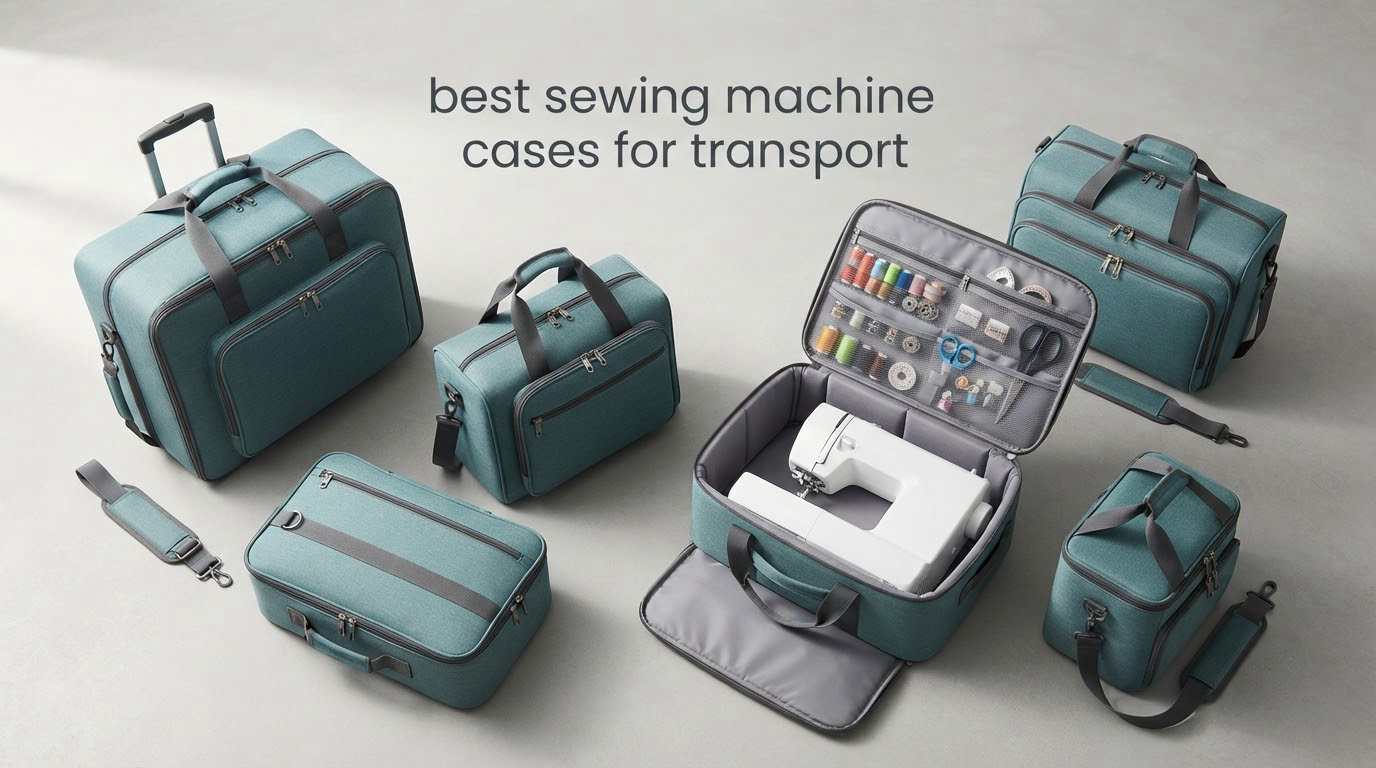
Finding the best sewing machine cases for transport comes down to one number nobody lists on the box: interior height. A machine that looks small on a table can be 13 inches tall with the handwheel and a thread stand, and most soft totes are already sagging by the time you get to the zip. We compared ten cases that cover the whole range, from featherweight totes to wheeled carriers built for Bernina-class machines.
Here is the short answer. The HOMEST Deluxe Rolling Tote takes the overall spot for its roomy interior, three carry options and a 13.3 pound capacity. The SINGER Universal Hard Case is the pick if you want the strongest impact and dust protection. For the best value in a soft tote, the LUXJA case with the removable bottom pad organizes better than anything else in the group. And the CAB55 rolling case is the one to look at if your machine flies.
How did we choose? We read the interior dimensions, padding structure, wheel and handle design, pocket layout and customer feedback for all ten, then ranked them for real use cases: weekly classes, quilt guild nights, retreats, dealer servicing and air travel. We did not physically drop ten bags off a parking garage, so treat our usage notes as spec-driven rather than lab-driven. Everything we state about a product comes from its published specifications and buyer reports.
One more thing before you read on. Your machine’s model number matters more than any brand on the case. Sewing forum users repeat the same advice in every thread we read: measure your machine before you measure your budget, and check the interior width against the widest point of the machine body, not the base plate.
Table of Contents
Top 3 Picks: Best Sewing Machine Cases for Transport (October 2026)

HOMEST Deluxe Rolling Tote
- Holds machines up to 17 x 8 x 12 inches
- Thread spool holders and clear pockets
- Telescopic handle with two casters
SINGER Universal Hard Case
- Rigid plastic shell with metal lock clasps
- Non-slip inner tray
- Inside 18 x 9 x 12.5 inches

LUXJA Case with Removable Pad
- Six compartments for notions
- Removable bottom padding pad
- Trolley sleeve and detachable shoulder strap
Two of these three are soft-sided and one is a hard shell, and that split is the single most important decision on this page. If your machine spends its life on a sewing table and only travels twice a year, the hard shell adds weight you do not need. If it lives in a car, a closet shared with a cat, or a stack under a quilt, rigidity wins.
All Ten Cases Compared for Transport
| Product | Specifications | Action |
|---|---|---|
| HOMEST Deluxe Sewing Machine Case with Wheels |
|
Check Latest Price |
| SINGER Universal Hard Carrying Case |
|
Check Latest Price |
| LUXJA Case with Removable Padding Pad |
|
Check Latest Price |
 SINGER Machine Carrying Tote Bag SINGER Machine Carrying Tote Bag |
|
Check Latest Price |
 CAB55 Carrying Bag with Removable Padding CAB55 Carrying Bag with Removable Padding |
|
Check Latest Price |
 TLBTEK Universal Canvas Carry Tote TLBTEK Universal Canvas Carry Tote |
|
Check Latest Price |
 Teamoy Carrying Case with Wooden Board Pad Teamoy Carrying Case with Wooden Board Pad |
|
Check Latest Price |
 Golkcurx Carrying Case with Bottom Pad Golkcurx Carrying Case with Bottom Pad |
|
Check Latest Price |
 CAB55 Rolling Case on Detachable Wheels CAB55 Rolling Case on Detachable Wheels |
|
Check Latest Price |
 Everything Mary XXL Rolling Case Everything Mary XXL Rolling Case |
|
Check Latest Price |
Read that table by interior size first. The spread is narrower than the price spread: nine of these ten accept machines in the 16 to 18 inch range, and only the Everything Mary XXL is built for the 21 inch machines at the top of the domestic market.
1. HOMEST Deluxe Rolling Tote: Best Overall for Transport
HOMEST Deluxe Sewing Machine Case with Wheels, Rolling Trolley Tote
Stores machines up to 17 x 8 x 12 inches
13.3 pound capacity
Telescopic handle and casters
Pros
- Roomy main bay that fits SINGER Brother and Janome models
- Thread spool holders and multiple see-through pockets
- Three carry options including an adjustable shoulder strap
- Padded sidewalls and a cushioned bottom
- Highest rated case in our group
Cons
- Soft structure gives less crush protection than a rigid shell
- The wheels and telescopic handle add weight when carried by hand
This is the bag we keep coming back to for weekly classes. The listed capacity is 13.3 pounds, which covers a mid-weight domestic machine with a foot pedal, a cord and a couple of spares in the main bay, and buyers report fitting SINGER, Brother and Janome models without the zipper fighting them on the way closed.
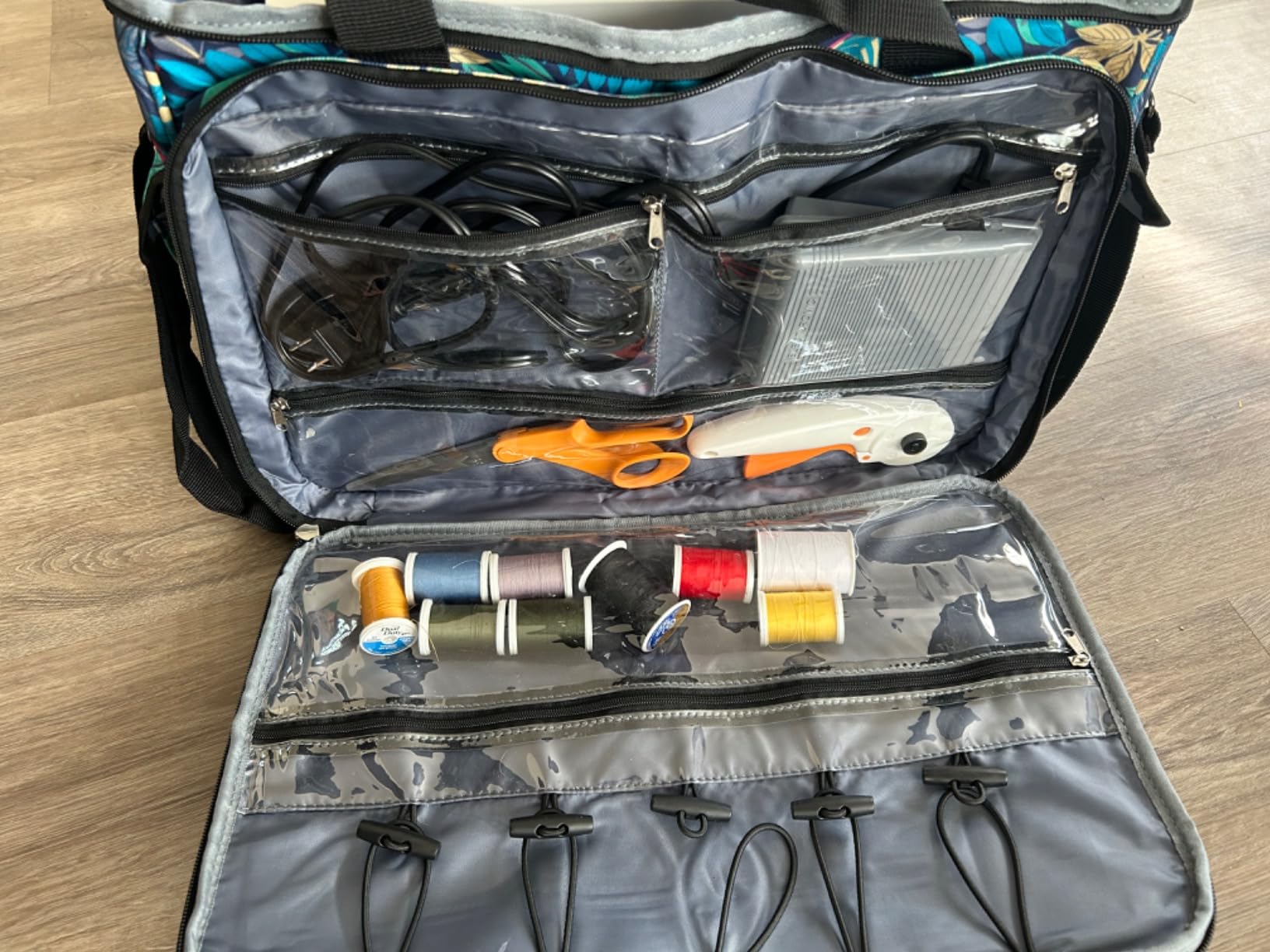
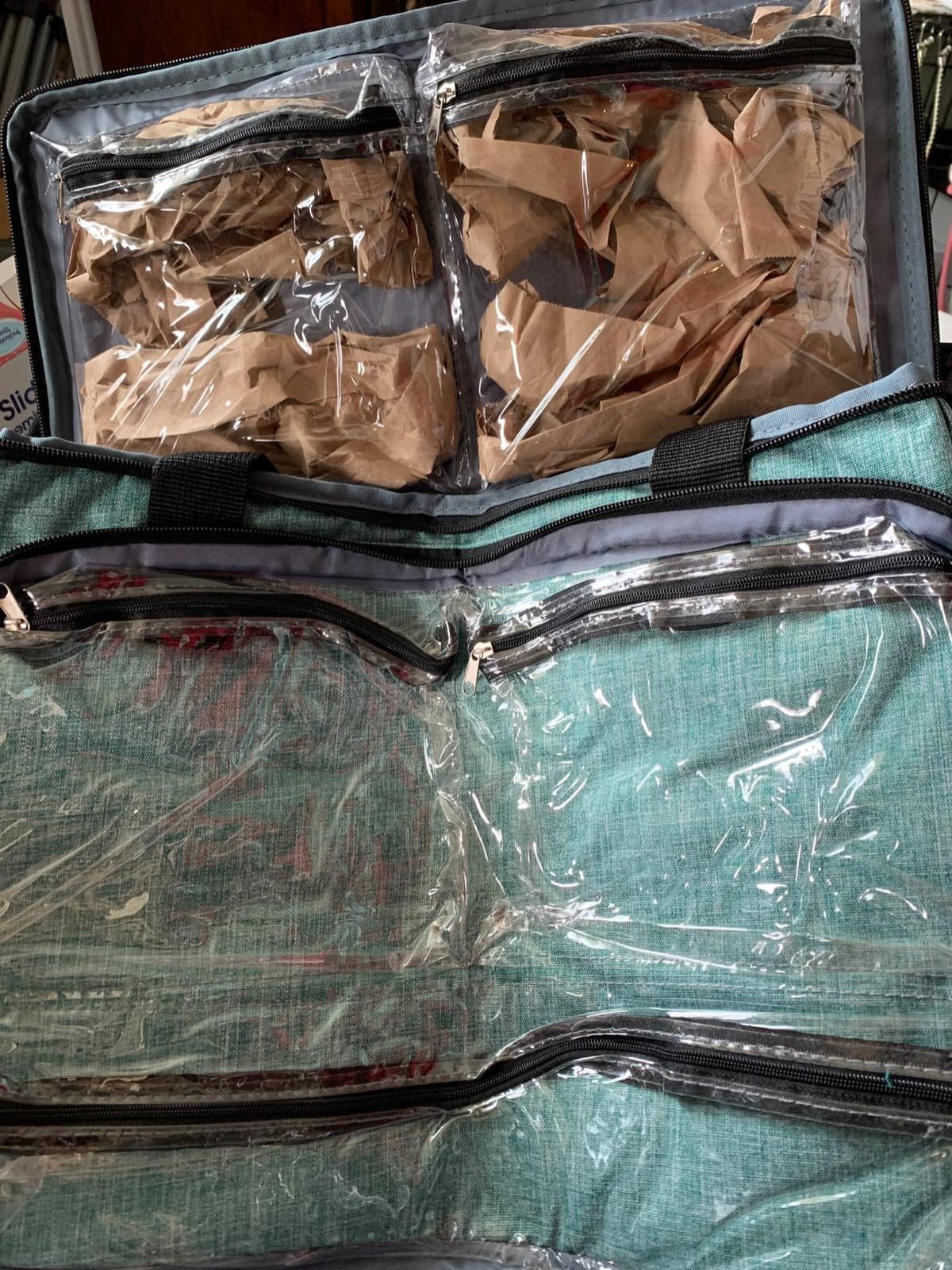
The organization is the quiet strength. Thread spool holders along the inside wall and multiple clear pockets mean you stop digging for bobbins and small scissors at the back of a bag at nine in the evening before a class. The zip runs the full perimeter, and the shoulder strap is detachable rather than stitched in, so you can drop the strap when the bag rides on a cart.
Build quality is heavy duty nylon with a solid pattern and cushioned bottom padding, and at 17 by 8 by 12 inches the interior is not enormous, so an extension table has to come off. It ranks as the top seller in the sewing machine carrying case category, and buyer feedback lands around a 4.8 with a large volume of reviews, which is the strongest combination of rating and feedback in this group.
When the HOMEST rolling tote earns its slot
Pick it when you carry a full machine plus notions twice a week and want one bag that does everything. The wheeled base means you are not lifting 20 pounds from a car trunk onto a classroom table, and the telescopic handle plus casters let you move it across a parking lot without tilting the whole bag forward.
It also works as a dust cover between projects, which matters in a house with pets. Just remember the wheels are the part most likely to need replacing, and no soft bag is going to stop a heavy machine landing on its side.
When to look elsewhere
Skip it if your machine is a tall embroidery or quilting machine with an upright thread stand that does not fold, or if you need a full extension table to travel with the machine. The 8 inch interior depth is the tightest here, so a wide Bernina or a Singer with the table attached will not go in.
Also pass if your route involves stairs with no lift. Carrying a wheeled bag up steps means you are carrying the bag and the wheels, and the telescopic handle is not a load-bearing feature.
2. SINGER Universal Hard Case: Best Protection for Moving and Storage
SINGER® Universal Hard Carrying Case for Sewing Machine, White
Rigid plastic shell with metal lock clasps
Inside 18 x 9 x 12.5 inches
Item weight 3 kg
Pros
- Strongest impact and dust protection in the group
- Non-slip inner tray stops the machine shifting
- Lock clasps stop the case opening in transit
- Fits heavy models and vintage metal machines
Cons
- The machine has to be lifted out to use
- Only one compartment so notions space is tight
- Bulkier and heavier than soft totes
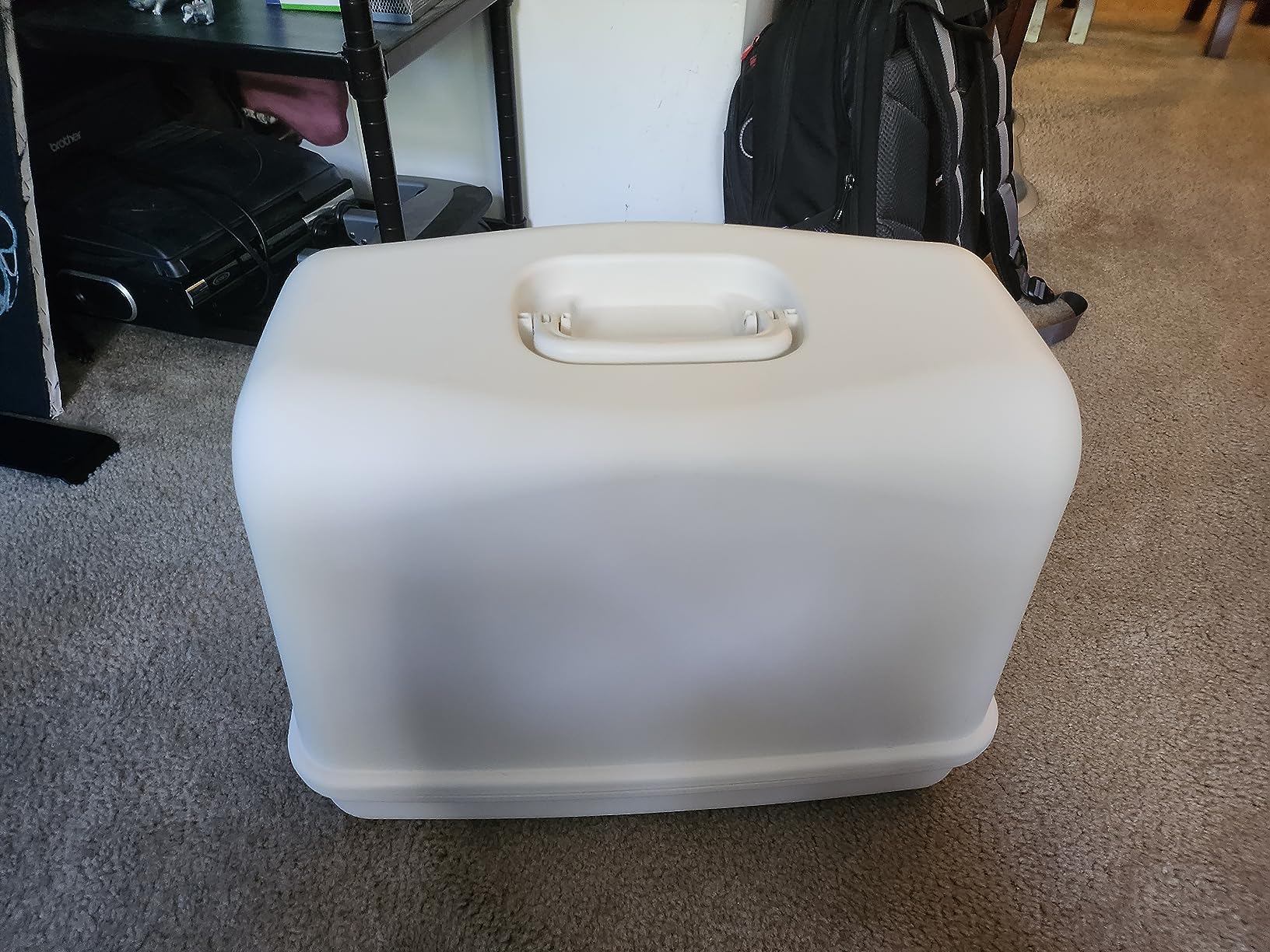
A rigid shell changes the conversation entirely. Inside dimensions of 18 by 9 by 12.5 inches, or 51 by 28 by 37 cm, give you the deepest protective interior per cubic inch of the group, and the plastic body shrugs off a stack of totes in a closet or the bottom of a car trunk.
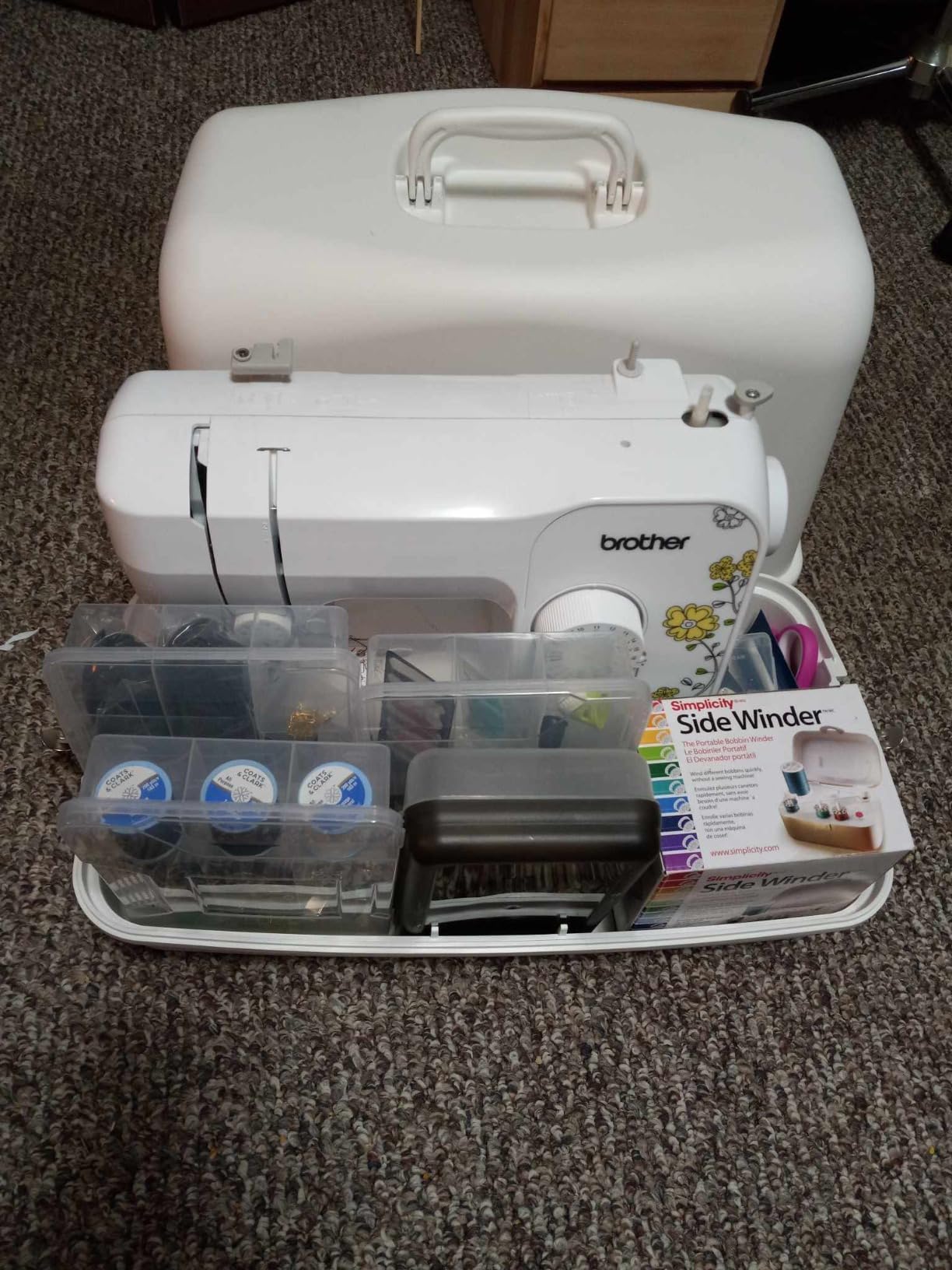
The non-slip inner tray is the detail we would not trade. A machine that slides a few centimeters in transit can end up with a bent presser bar or a shifted handwheel, and reviewers specifically call out how the tray holds position. The metal safety lock clasps also mean the case cannot spring open when you set it down hard.
Buyers mention fitting heavy models such as the Singer Heavy Duty 4452 and even old solid metal machines like a 1960s Kenmore, which tells you the shell and clasps handle real weight. It also carries the largest review count of any case we researched, with feedback around 4.7 and 6600 reviews.
Who the hard case works for
This is the case to buy if the machine lives somewhere hostile: a garage, an RV, a shared studio, a car boot in winter. It doubles as a secure storage box, and vintage machine owners moving a metal-bodied machine should treat the rigid shell as insurance rather than a luxury.
Because the shell is dust proof, it also solves the constant problem of a machine collecting fibre and fluff in an uncovered room. Ten minutes of sewing, lid shut, no dust film on the needle plate.
Who should not buy the hard case
Do not buy it as your only case if you sew at a class. You have to lift the machine out, find somewhere to set it, and pack it back in afterward, which defeats the point of a rolling bag. The single compartment also means loose notions travel loose, so they rattle against the shell.
At nearly 21 inches on the outside and 3 kg empty, it is a two-handed carry. If you have to cross a car park to a bus stop, wheels from a different case may serve you better.
3. LUXJA Case with Removable Padding Pad: Best Value
LUXJA Sewing Machine Case with Removable Padding Pad, Gray Dots
Six compartments including a front pouch pocket
Removable bottom padding pad
Item weight 0.1 kg
Pros
- Best pocket layout per dollar in this roundup
- Removable bottom pad that can be swapped or stiffened
- Water repellent nylon that shrugs off drizzle
- Three carry modes including a trolley sleeve
Cons
- Padding is moderate so tall machines can sit proud of the lid
- Lid will not zip if the top pockets are overfilled
- No wheels on this version
At 0.1 kg the empty bag weighs almost nothing, and that is the reason this one wins on value. You can carry it on a shoulder strap for a bus ride or a walk from a station without the weight telling you to take a different route, and buyers still rate it around 4.8 across 3100 reviews.
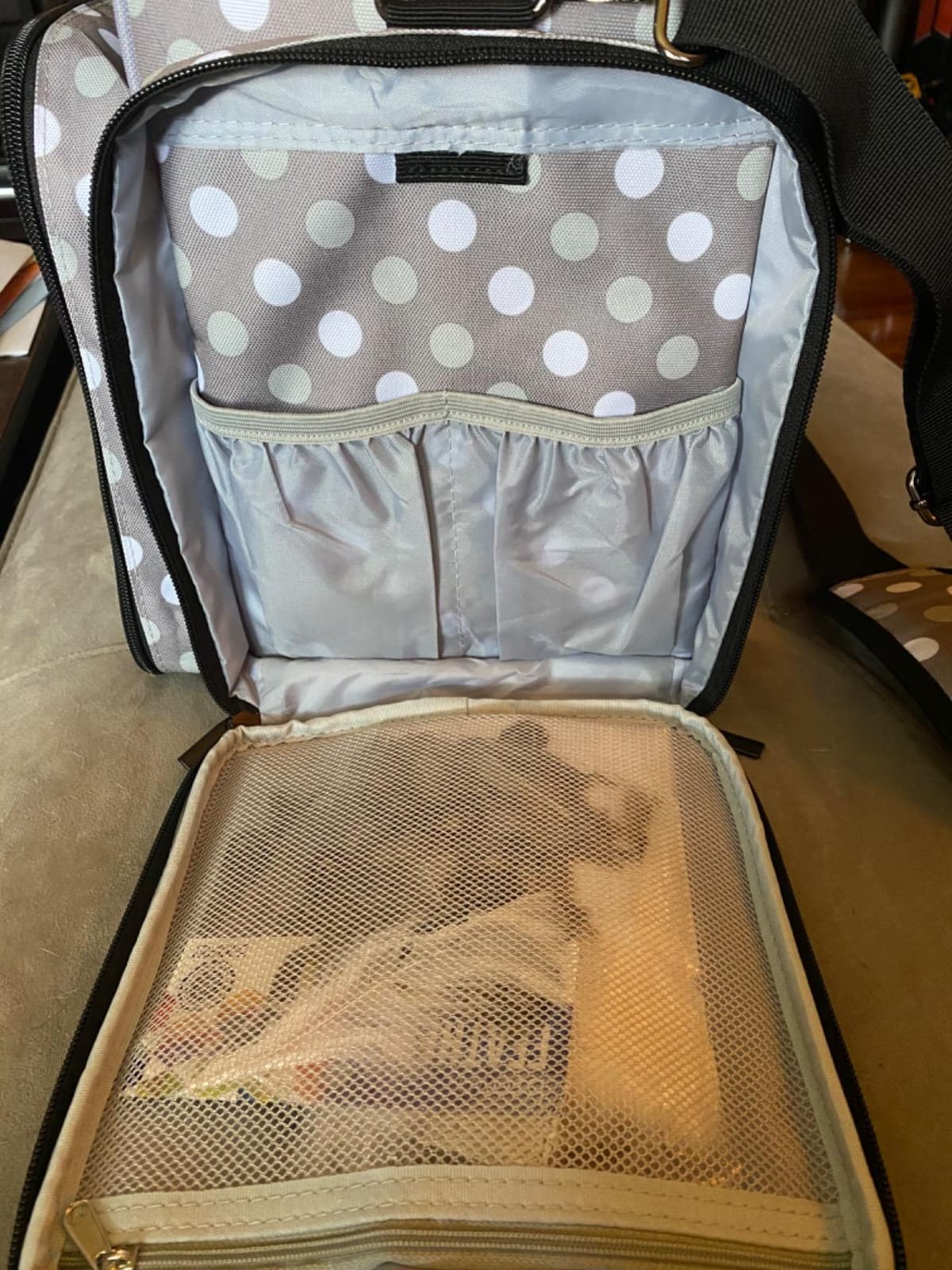
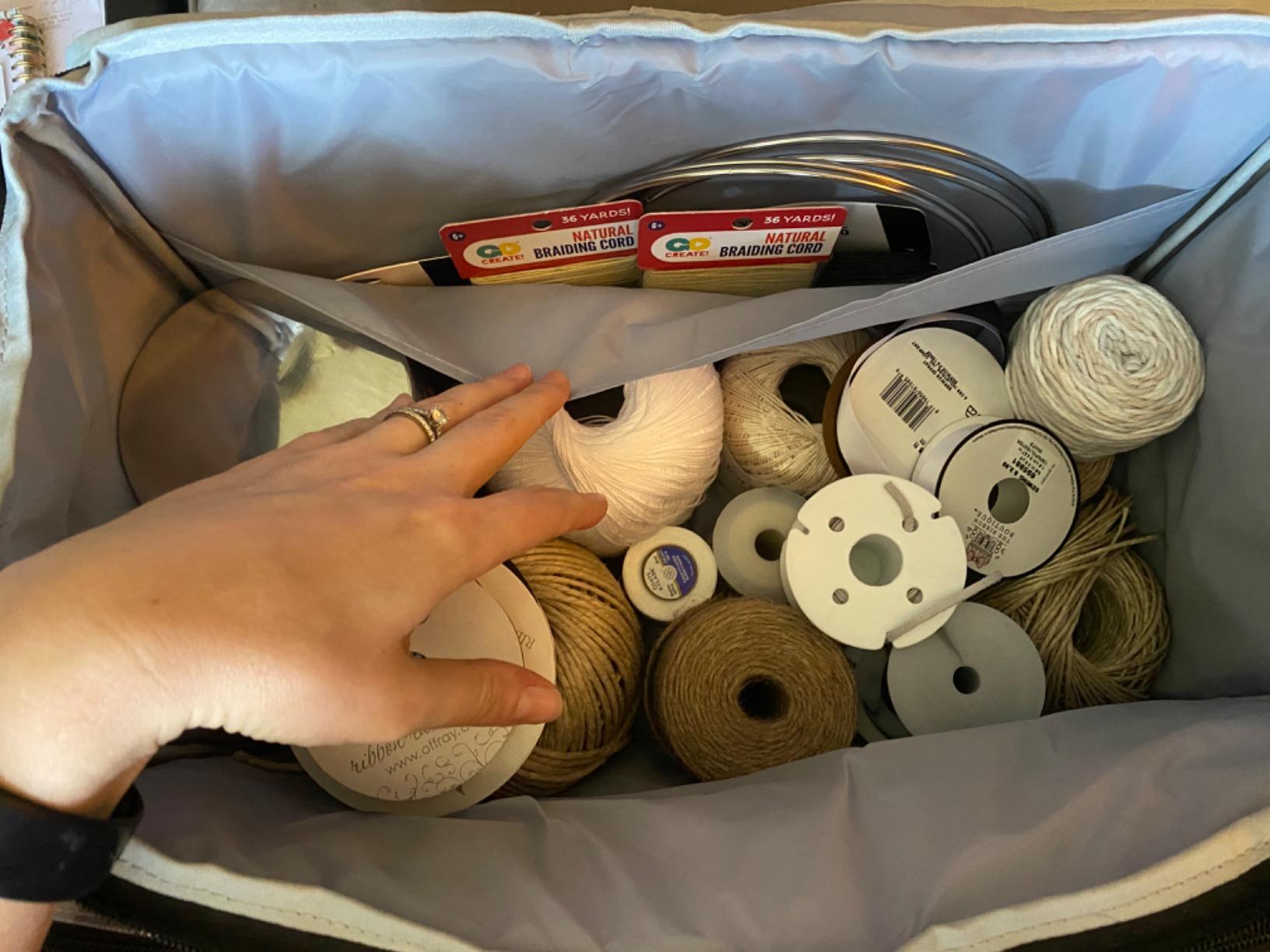
The compartment count is what separates it. Six of them, including a front pocket with pouches and two side pockets, plus two translucent zip pockets for small accessories, and reviewers repeatedly describe loading thread, notions, scissors and the manual without any of it going missing at the bottom.
The removable bottom padding pad is a smarter design than fixed foam because you can take it out, flip it, or slide a stiffener behind it. Reviewers note it fits an oversized machine such as the Singer Heavy Duty with the foot pedal inside, which surprises people given the low empty weight.
Where the LUXJA case makes sense
This is our pick for a car commuter, a student carrying a machine across campus, and anyone who packs notions rather than just a machine. The trolley sleeve on the back lets it ride on a rolling suitcase, so at an airport it moves as one system instead of a bag and a separate case.
It is also a sensible secondary bag. Keep the SINGER hard case for storage and the machine in it, and use this one for the class run so you are not unzipping a rigid shell in a car park.
Where it falls short
The interior is 16.5 by 7.5 by 11 inches, so the height is the limit. A machine with a tall vertical thread stand or an embroidery arm will sit above the lid line, and packing the top pockets full of bulky notions can stop the zipper closing at all.
This version has no wheels, and that is deliberate rather than a flaw, since the same maker sells a trolley version for buyers who want them. Treat it as a carry bag, not a trolley.
4. SINGER Machine Carrying Tote: Best for Serrers and Universal Fit
SINGER® Machine Carrying Tote Bag for Sewing Machines & Sergers, Cream/Red
Universal fit for standard SINGER machines and sergers
18 x 10 x 13 inches
Padded canvas
Pros
- First party SINGER branding without the hard case price
- Generous 18 x 10 x 13 inch body
- Handles sergers as well as sewing machines
- Spot cleanable with a damp cloth
Cons
- Soft sided with no rigid base board
- Only two compartments for organization
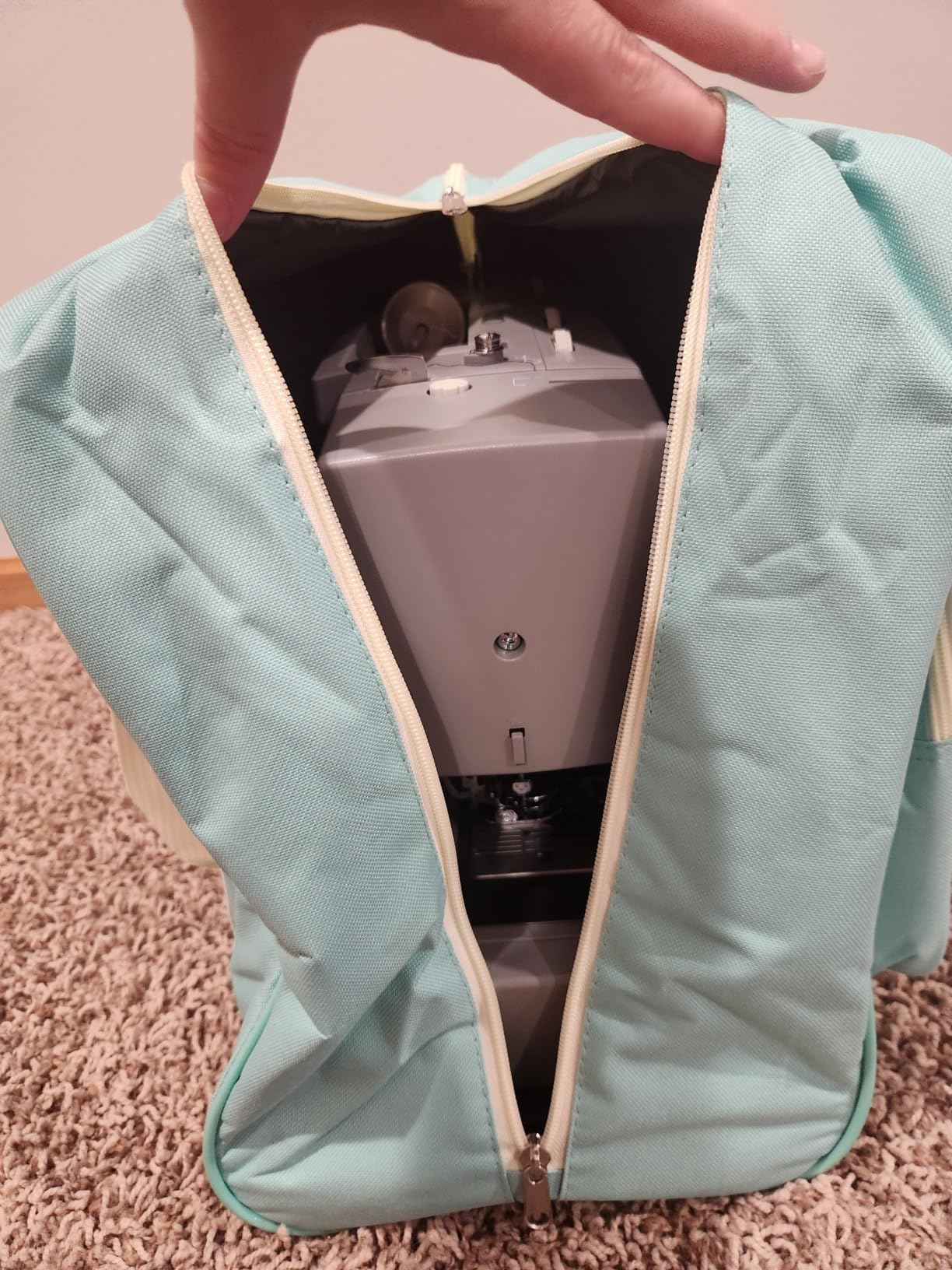
The headline here is fit, and it is unusual. At 18 by 10 by 13 inches this is one of the taller soft totes in the group, and the width is generous enough for a serger with its bulky front extension, which is the machine most soft cases refuse.
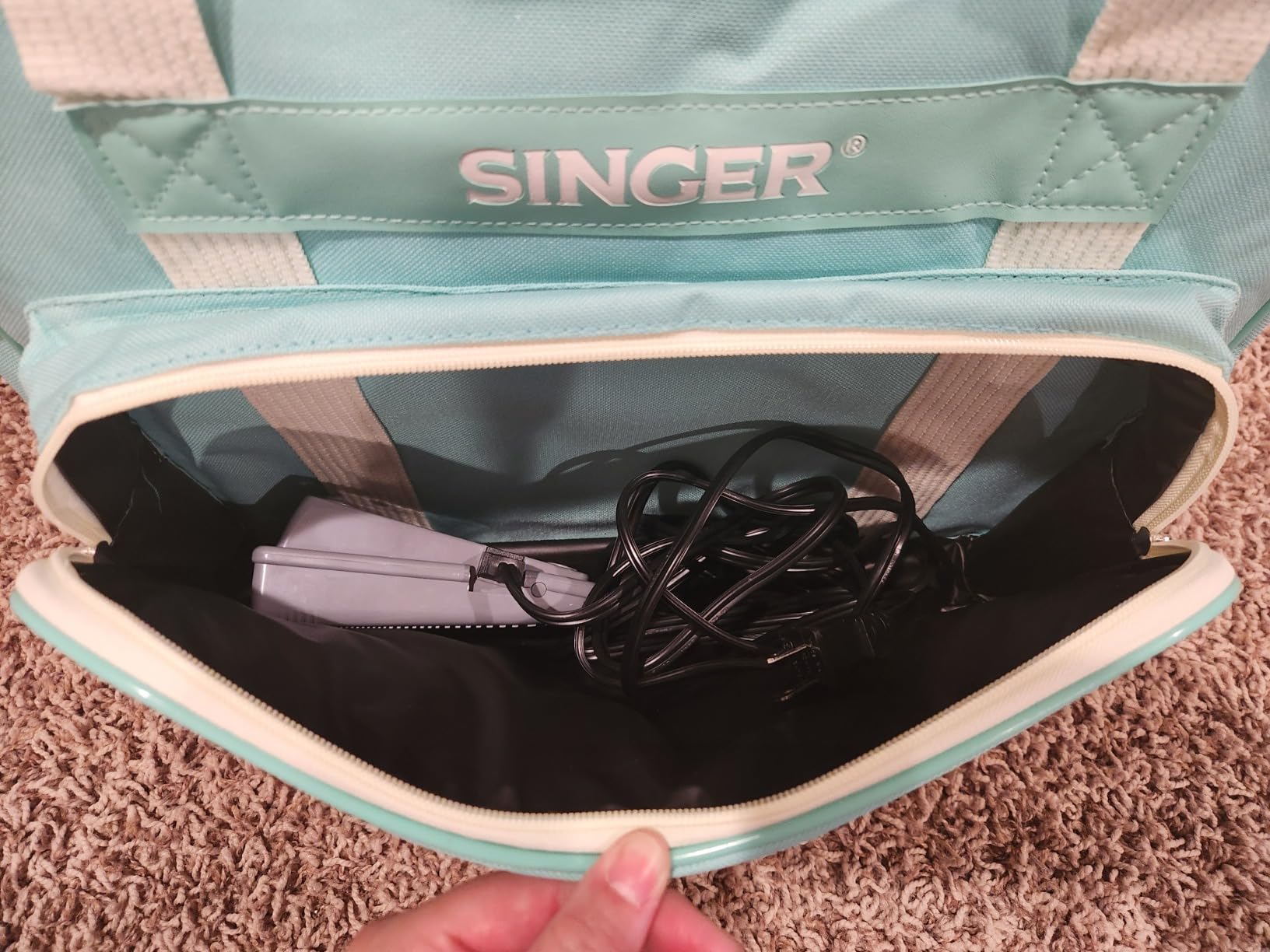
Padded canvas on all sides does two jobs: it takes the sting out of a drop and it keeps hallway dust off the machine between sessions. The bag weighs 2.4 pounds empty, so it is still comfortable on a shoulder strap across a car park even with a full machine inside.
The large zippered front pocket is the one organizing feature, and it is a good one, sized for thread, bobbins, scissors and a folded pattern. Buyers put the value on the brand name and the padded build rather than on the styling, and feedback lands around 4.7 across more than 3100 reviews.
Best for serger owners
Choose this if your machine is a serger or a heavy duty machine with a long arm, because the 13 inch height and 10 inch width are among the most generous in the roundup. It also suits anyone who wants a first-party SINGER case without the shell and clasps of the hard model.
For a sewing room that doubles as a classroom, the wipe-clean canvas is a practical bonus. A damp cloth handles spilled tea and thread clippings without a special cleaner.
Limits worth knowing
There is no rigid base, so if the bag ends up under a stack of boxes the machine takes the load. Two compartments also means a long class session with a busy project leaves notions loose inside the main bay.
If you carry more than one machine or a large extension table, step up to the Everything Mary XXL rather than forcing it in here.
5. CAB55 Carrying Bag with Removable Padding: Best for Big Machines in a Soft Bag
CAB55 Sewing Machine Case, Sewing Machine Carrying Bag with Removable Padding Pad, Tote Bag for Sewing Machine and Extra Sewing Accessories (Gray)
Fits machines up to 17 x 10.25 x 13.25 inches
Padded sidewalls and cushioned bottom
Pros
- Roomy enough for a Singer C5200 with the extension table
- Side pockets fit the foot and presser pedal
- Trolley sleeve for airport and class runs
- Folds flat and weighs little empty
Cons
- Padded bottom is not a firm rigid base
- Sides lose shape over years of use
- Shoulder strap rings are not rated for heavy loads
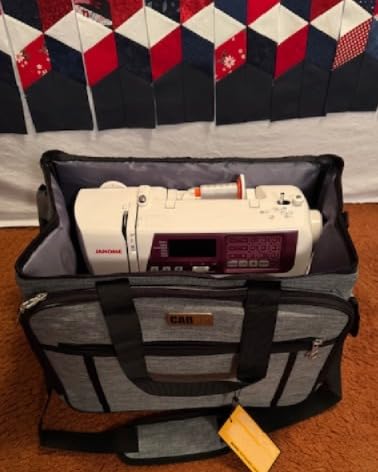
Buyers of this one talk about size more than anything else, and the numbers back it up. It fits machines up to 17 by 10.25 by 13.25 inches, which is one of the largest soft interiors here, and one owner reports a Singer C5200 plus its extension table fitting where a previous extra large bag had failed.
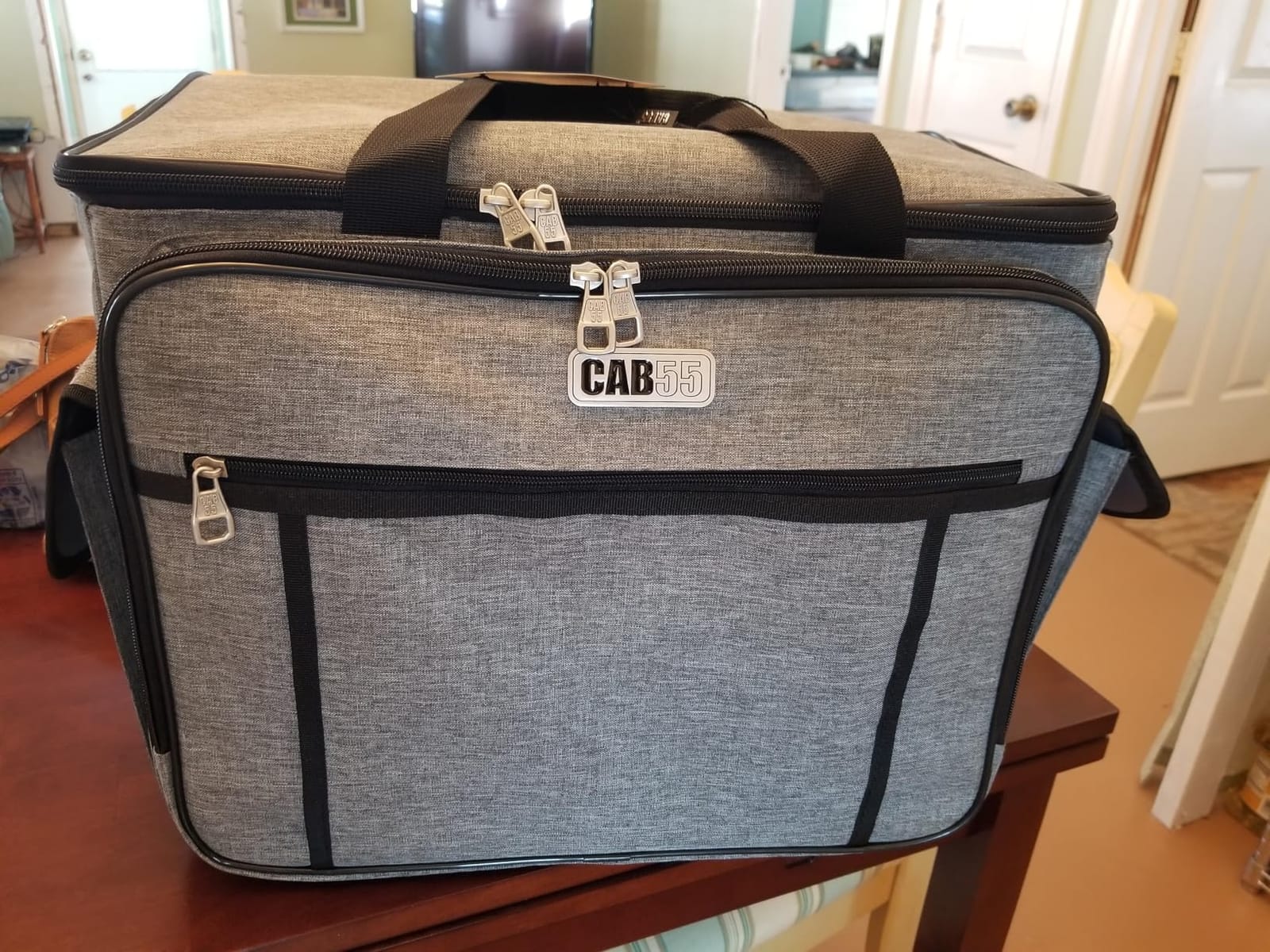
The same owner notes the side pockets take the foot pedal and presser pedal with room to spare, which is a small thing that decides whether a bag works. Thread spool holders and clear see-through pockets handle the rest, and the trolley sleeve lets the whole thing ride on a suitcase.
Feedback sits around 4.8 from just over 2000 reviews, and it holds a high ranking in the category, which suggests the fit claims are not just listing copy. The foldable soft construction also means it disappears into a closet when it is not in use.
Who this suits
Pick it for a large domestic machine that still needs to come to class, or for someone who carries a lot of hardware and wants each piece to have a named pocket. The two year warranty is also the longest explicit one in this roundup.
It is a good pick for anyone moving between two homes, where the bag spends its life in a car and the machine does not need to be unpacked the second it arrives.
What to watch
The padded bottom is cushioning, not a board, and several buyers slide in cardboard or a cutting mat to firm it up. Over years the soft sides can lose their shape, so do not stack heavy items on top of this bag.
And if your machine is genuinely heavy, treat the shoulder strap as a convenience for the lighter trip only. The strap rings are not the strongest point on the bag.
6. TLBTEK Universal Canvas Tote: Budget Pick
TLBTEK Black Sewing Machine Carrying Case,Universal Canvas Carry Tote Bag,Portable Padded Storage Dust Cover with Pockets for Sewing Machine
Internal dimensions 18 x 13 x 8.9 inches
Canvas with removable bottom pad
Pros
- The least expensive case in the group
- Internal 18 x 13 x 8.9 inch bay fits Singer Brother Pfaff and Viking machines
- Canvas resists dust dirt and moisture
- Generous front pocket for feet cords and pin boxes
Cons
- Thin flexible bottom that many buyers stiffen with cardboard
- Zipper will not fully close if the carry handle is upright
- Only two compartments
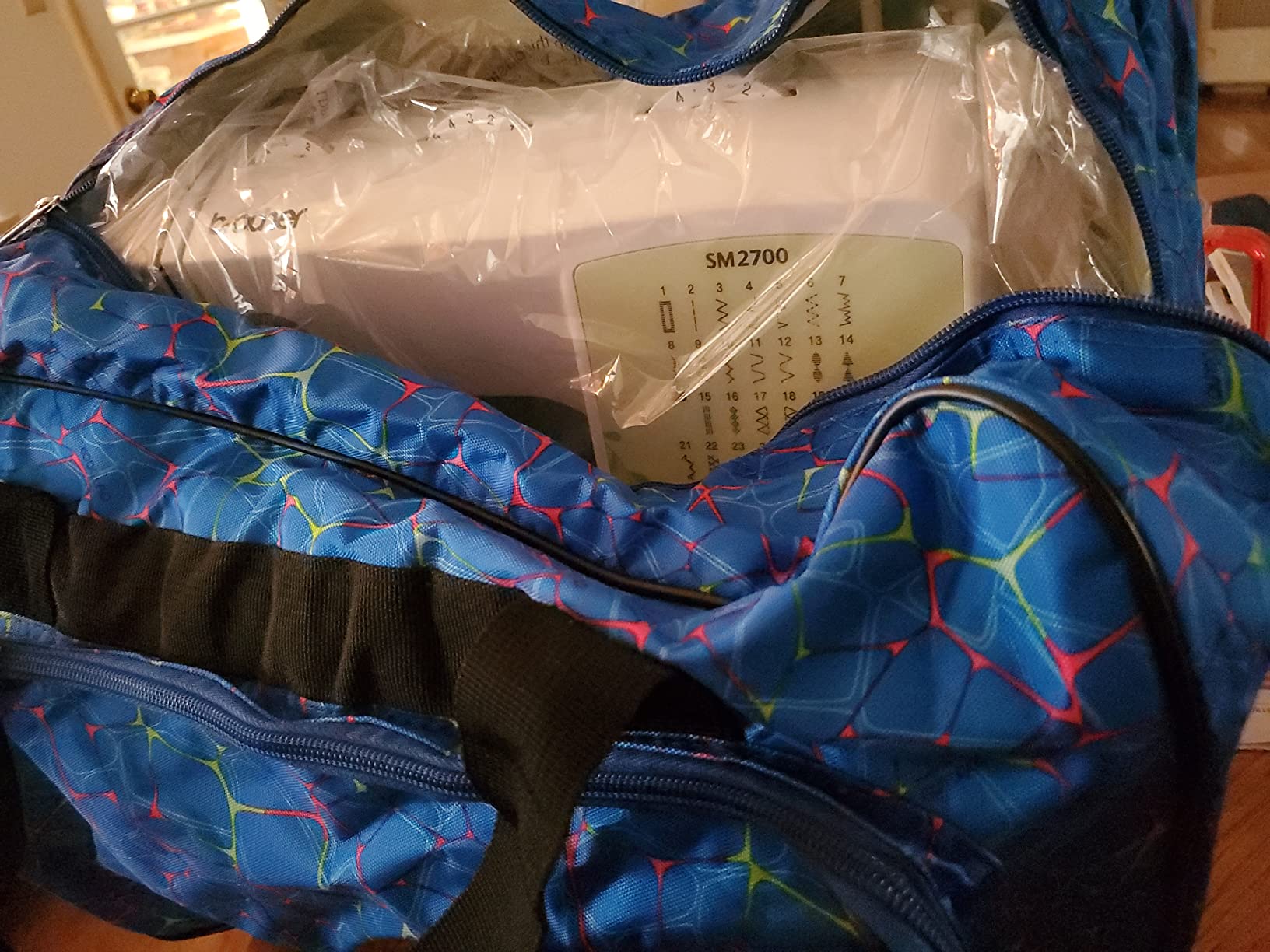
This is the case to buy when the machine is an older domestic model that you move a few times a year, and the budget matters more than the finish. The internal bay is listed at 18 by 13 by 8.9 inches and the capacity is 18 liters, so the footprint is bigger than the price suggests.
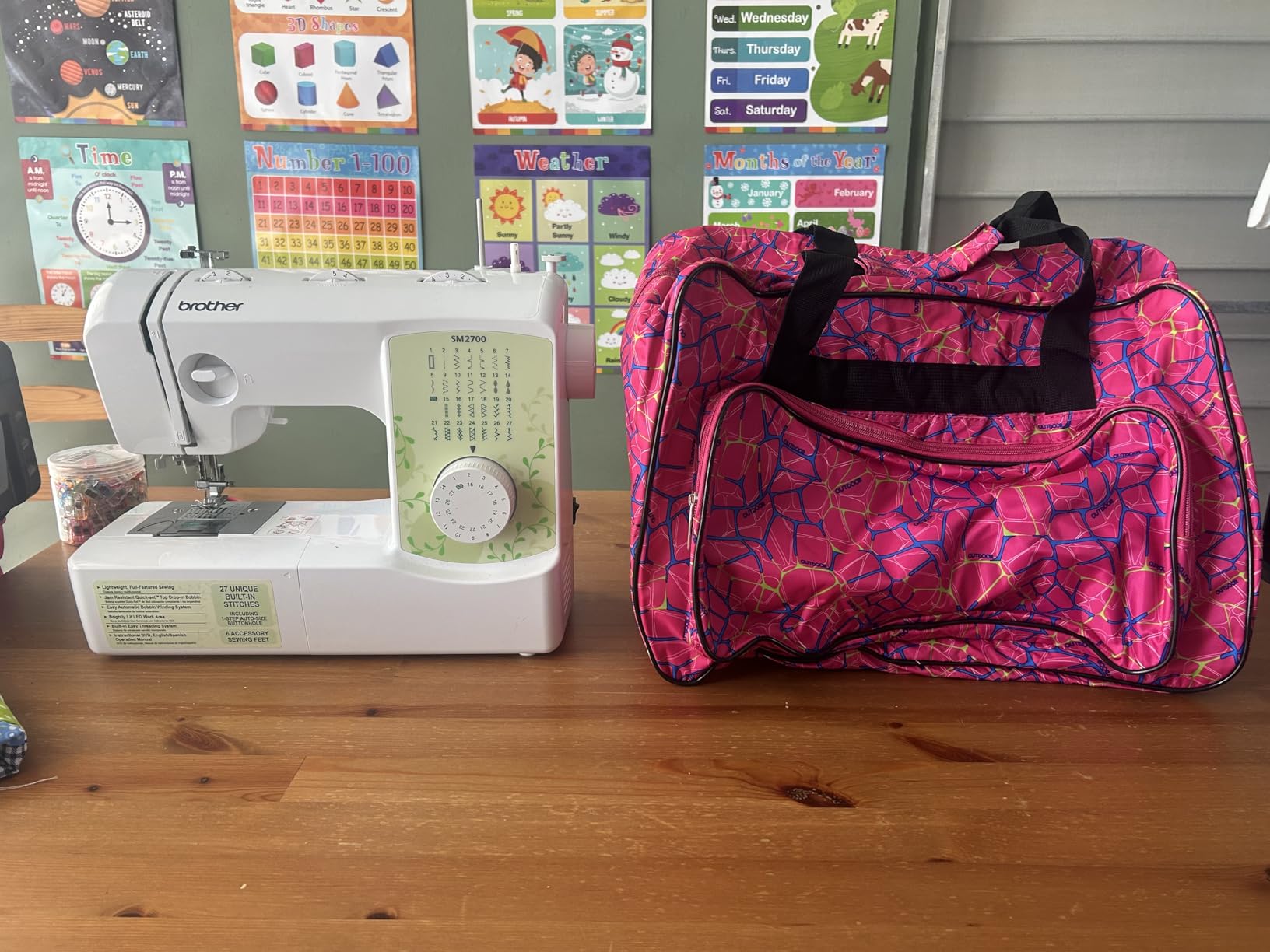
Canvas is a good material for this job because it holds its shape under a light load, resists dust and dirt, and wipes clean. Buyers use it for knitting and embroidery machines as often as for sewing machines, which tells you the interior is not built to one narrow shape.
Cushioned carry strap, removable shoulder strap and a trolley sleeve give you three ways to move it. Feedback comes in around 4.7 across roughly 1900 reviews, and the most repeated tip in those reviews is not about the bag at all, it is about adding a cardboard base.
Where the budget tote makes sense
It suits a featherweight, an old domestic machine or a serger that stays in the car between outings. It also works as a dust cover for a machine that sits exposed on a craft table, since canvas blocks airborne fibre better than an open frame.
If you sew mostly at home and only take the machine to a guild night once a month, this does the job without a second purchase.
Where it is the wrong choice
Do not rely on the supplied bottom padding for rough transport. Owners routinely insert a piece of cardboard for rigidity, and that extra step tells you the base is cushioning, not structure.
Two other things to plan around: the zipper can refuse to close fully if the top carry handle is left upright, and with only two compartments your notions end up loose in the main bay.
7. Teamoy Carrying Case with Wooden Board Pad: Best for a Rigid Base
Teamoy Sewing Machine Carrying Case with Bottom Wooden Board Pad, Dandelion
Inner size 16.3 x 8.5 x 13 inches
Detachable bottom wooden board
Five compartments
Pros
- A detachable wooden board gives a firmer base than most soft totes
- Two way full zipper opens the bag wide
- Five compartments for thread needles and scissors
- Suitcase handle band for airport trips
Cons
- Tightest interior in the group at 16.3 inches long
- No wheels
- Machine and accessories are not included
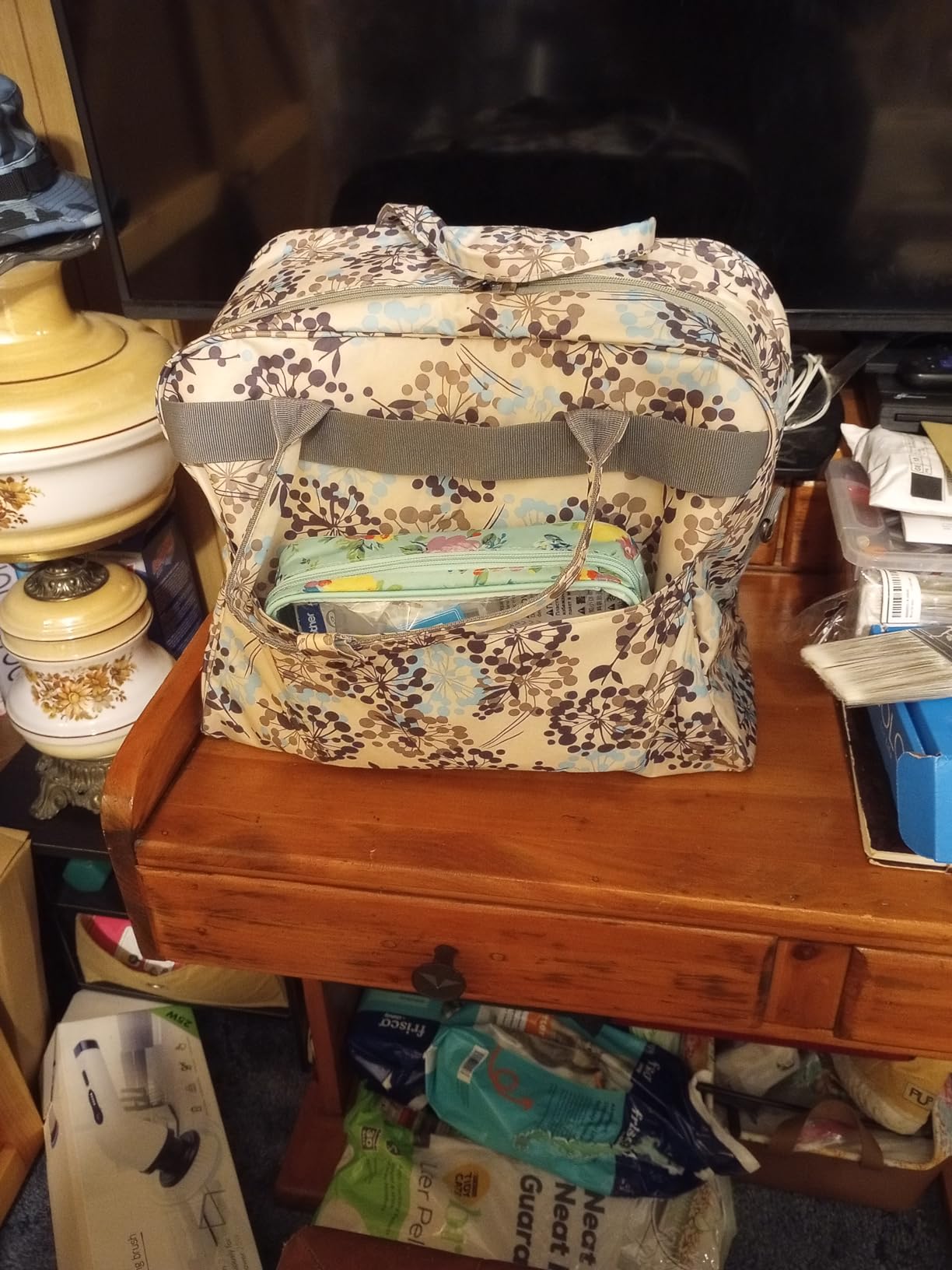
This is the case that answers the question we hear most: what is the difference between foam padding and a board? The detachable bottom wooden board pad is a rigid platform, and on this bag it is the reason buyers describe the tote as more substantial than similarly priced soft cases.
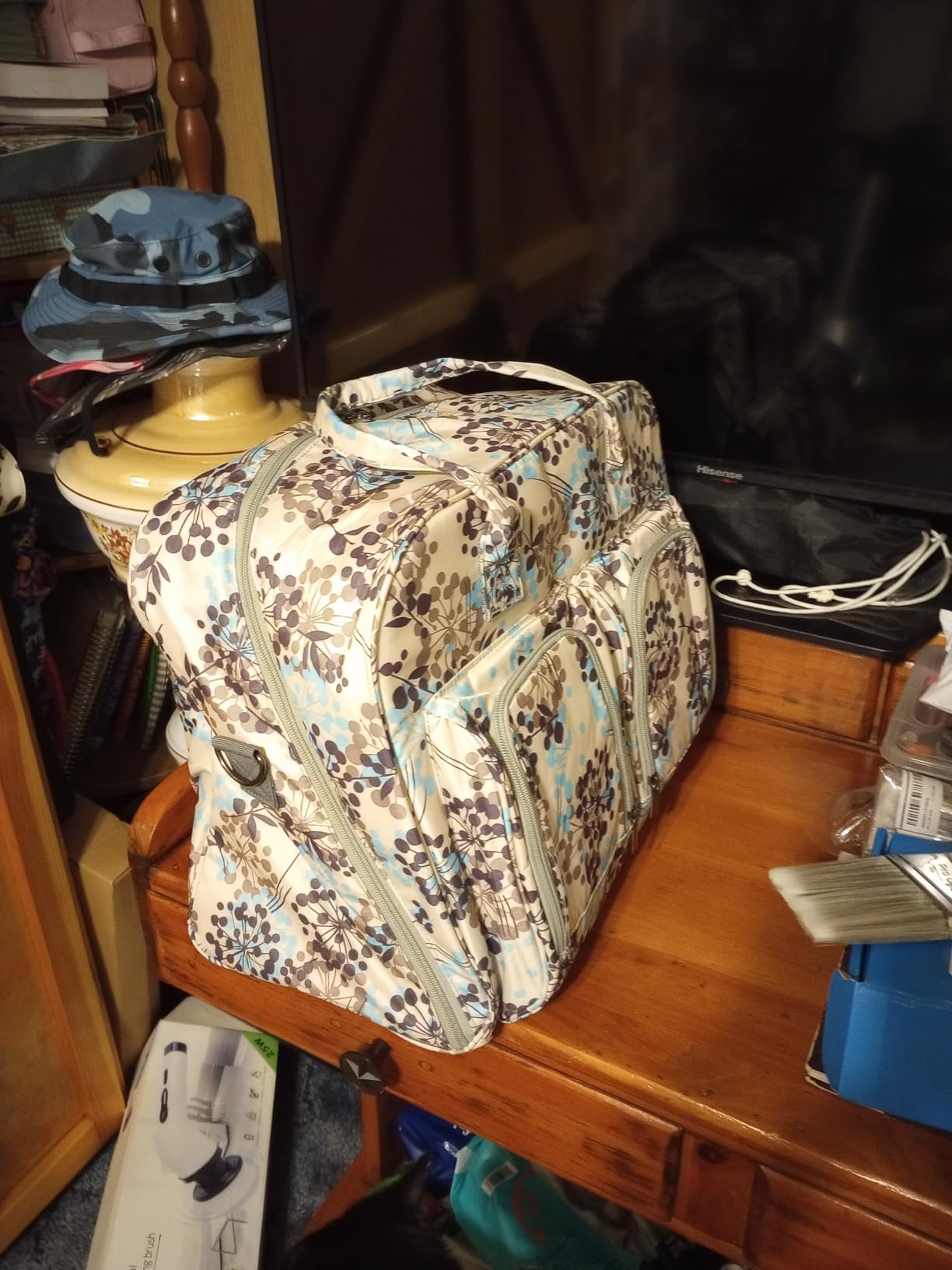
A base board matters on stairs, in a car boot and at a retreat where your bag ends up on a hard floor. Foam cushions a bump, a board resists a load, and for a machine that weighs 20 pounds or more that is a meaningful difference on the way up a curb.
The other detail is the two way full zipper, which lets the bag open wide like a suitcase. That matters more than it sounds when you are wrestling a heavy machine in and out, and it is the usability complaint that comes up most often with cases that only unzip around three sides.
Who should buy it
Buy it if your route includes steps, a station platform, or a retreat room with hard floors, and if you want a base you do not have to build yourself. The suitcase handle band lets it ride on your roller while you walk to a gate.
It is also a good match for anyone with a domestic Brother, Singer or Janome who wants pockets for real hardware rather than one big front cavity.
Know the limit before you order
The interior is 16.3 by 8.5 by 13 inches, the smallest long dimension in this roundup, so very large machines are a tight squeeze. Measure first, because the depth of 8.5 inches is the constraint on a wide machine body.
There are no wheels, so a loaded bag stays a two hand carry over distance. Nothing else is included in the box, so budget separately for the machine.
8. Golkcurx Carrying Case with Removable Bottom Pad: Best for Thick Padding
Golkcurx Sewing Machine Carrying Case with Removable Bottom Pad
Pearl cotton padding on every wall
Removable bottom pad
Reinforced stitching
Pros
- Dense wall padding on all sides rather than a thin liner
- Removable bottom pad for drops and bumps
- Clear pockets let you check packing at a glance
- High ranking in the carrying case category
Cons
- Height is tight for some machines
- Listed height differs between sources so measure first
- Soft sided with no rigid base
The selling point here is the pearl cotton padding on every wall, not just the base. That is a noticeably denser cushion than the thin foam liners common at this tier, and it is why owners describe the bag as feeling like a small suitcase rather than a fabric tote.
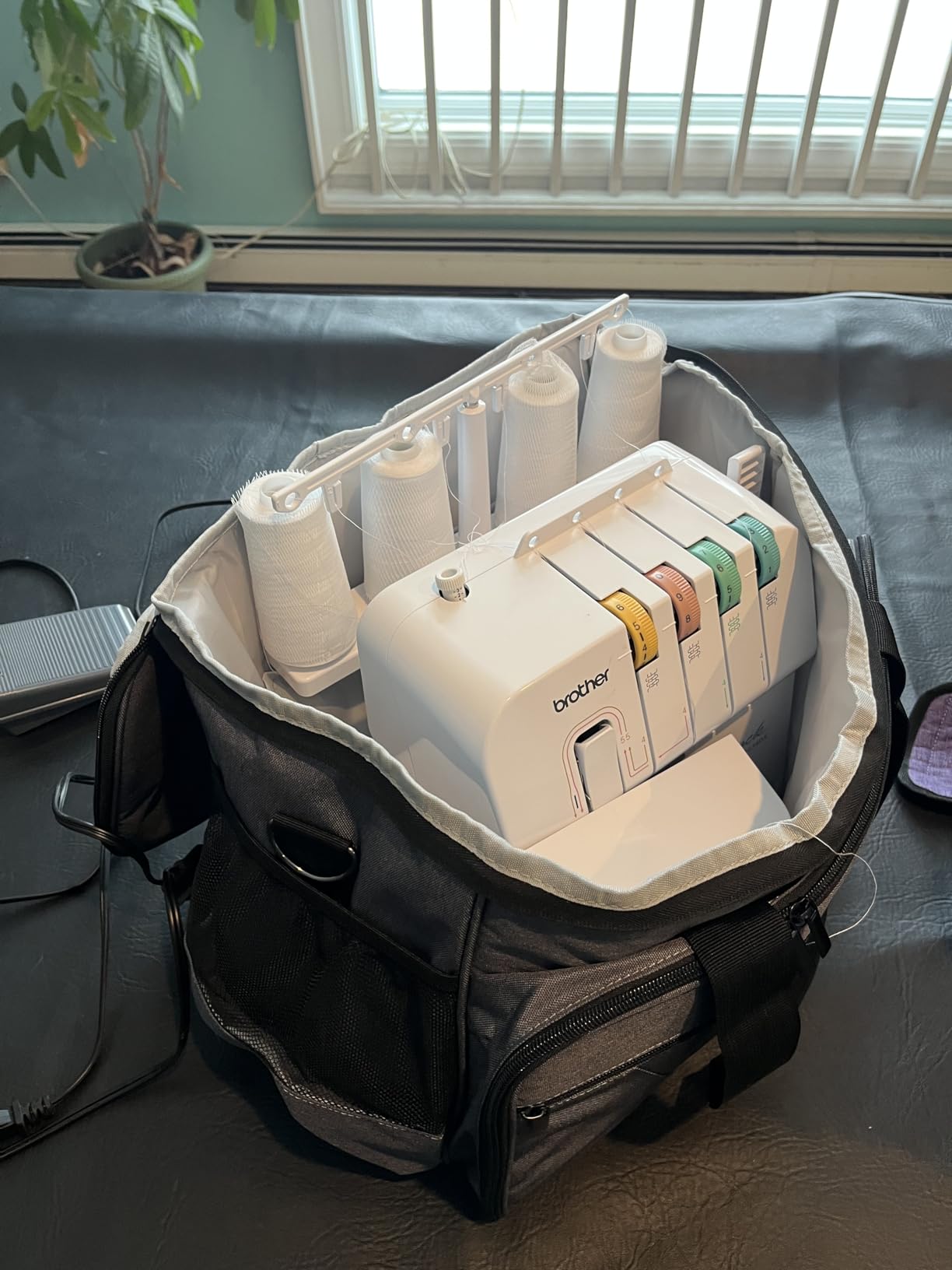
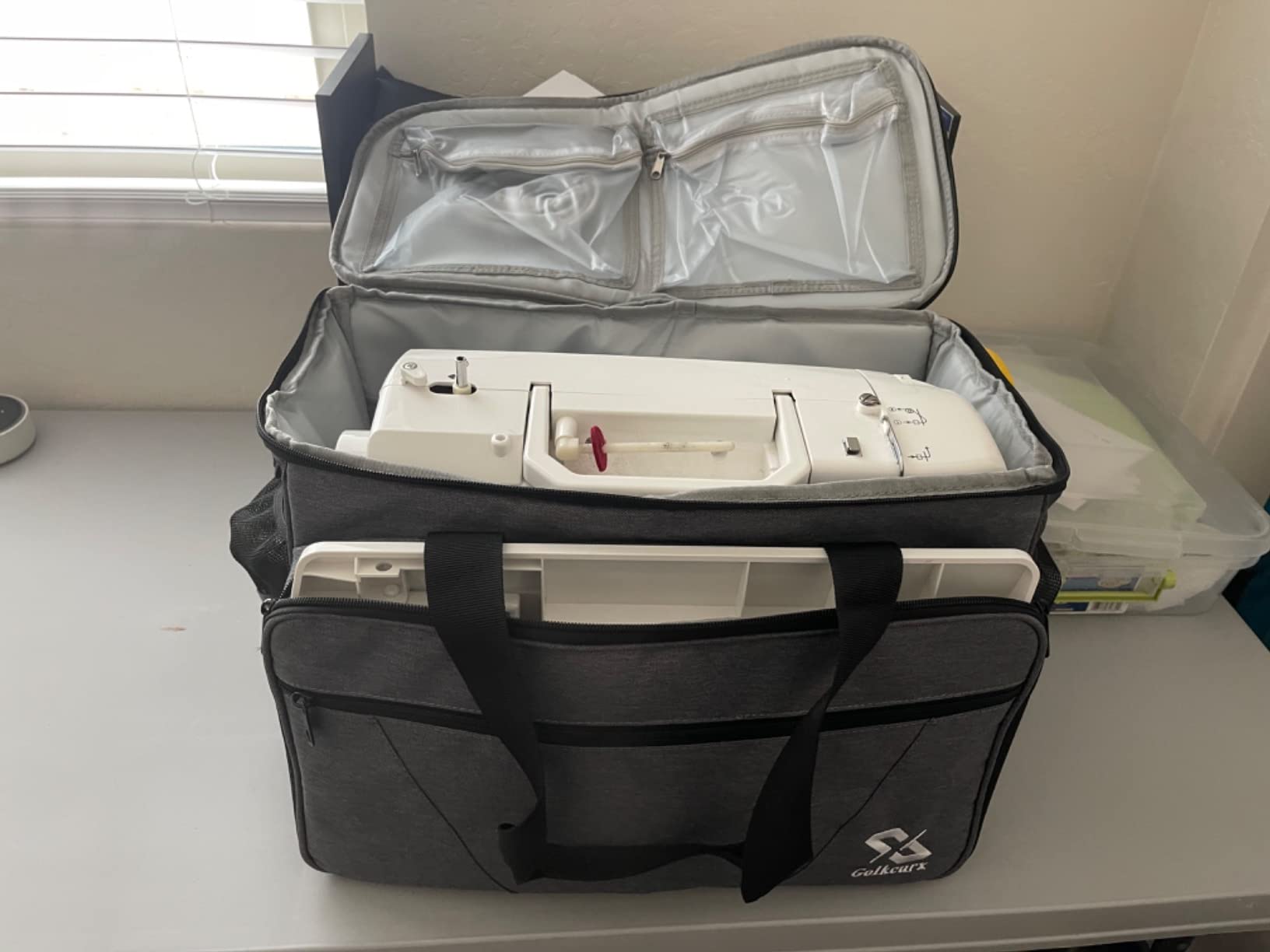
Clear PVC pockets are more useful than they sound. You can see your spare feet, bobbins and small tools without unpacking the main compartment, and the mesh side pockets take a water bottle or a travel iron at a guild night.
Buyers fit a Singer 3337, a Brother LS2125 and sergers into it, and the case ranks near the top of its category with feedback around 4.8 from just over 1100 reviews. Construction is polyester with reinforced stitching and a removable padded shoulder strap plus a trolley sleeve.
When the extra padding earns its place
It suits a machine that gets carried across cobbles, a shared studio floor, or a retreat venue with no table of your own. If you tend to drop the bag rather than set it down, the wall padding takes the edge off a fall of a sewing machine.
The see-through pockets also make it a good fit for someone who works in time limited sessions and cannot afford to dig for a rotary cutter at the end of a class.
The measurement warning
Height is the problem, and the published figures are not consistent, listing both 12.5 inches and 21.5 inches in different places. Some owners report an intro level Brother LS2125 fitting only just, with nothing left in the pockets underneath.
So measure your machine, then check the interior height of the specific unit you are buying. This is not a bag to choose by brand name alone.
9. CAB55 Rolling Case on Detachable Wheels: Best for Carry-On Travel
CAB55 Rolling Sewing Machine Case, Detachable Rolling Sewing Machine Carrying Case on Wheels, Trolley Tote Bag with Removable Bottom Wooden Board for Most Standard Sewing Machine -Purple
Detachable two-wheel trolley on an aluminum frame
13.25 inch depth for carry-on
Pros
- Wheels take the load off your arms at the airport
- Fits wide machines a normal tote would refuse
- Detachable frame folds away and carries on stairs
- Removable hard base adds real structure
Cons
- Two wheel base can feel wobbly when heavily loaded
- Some recent versions have a thinner non removable plastic base
- No internal strap to hold the machine
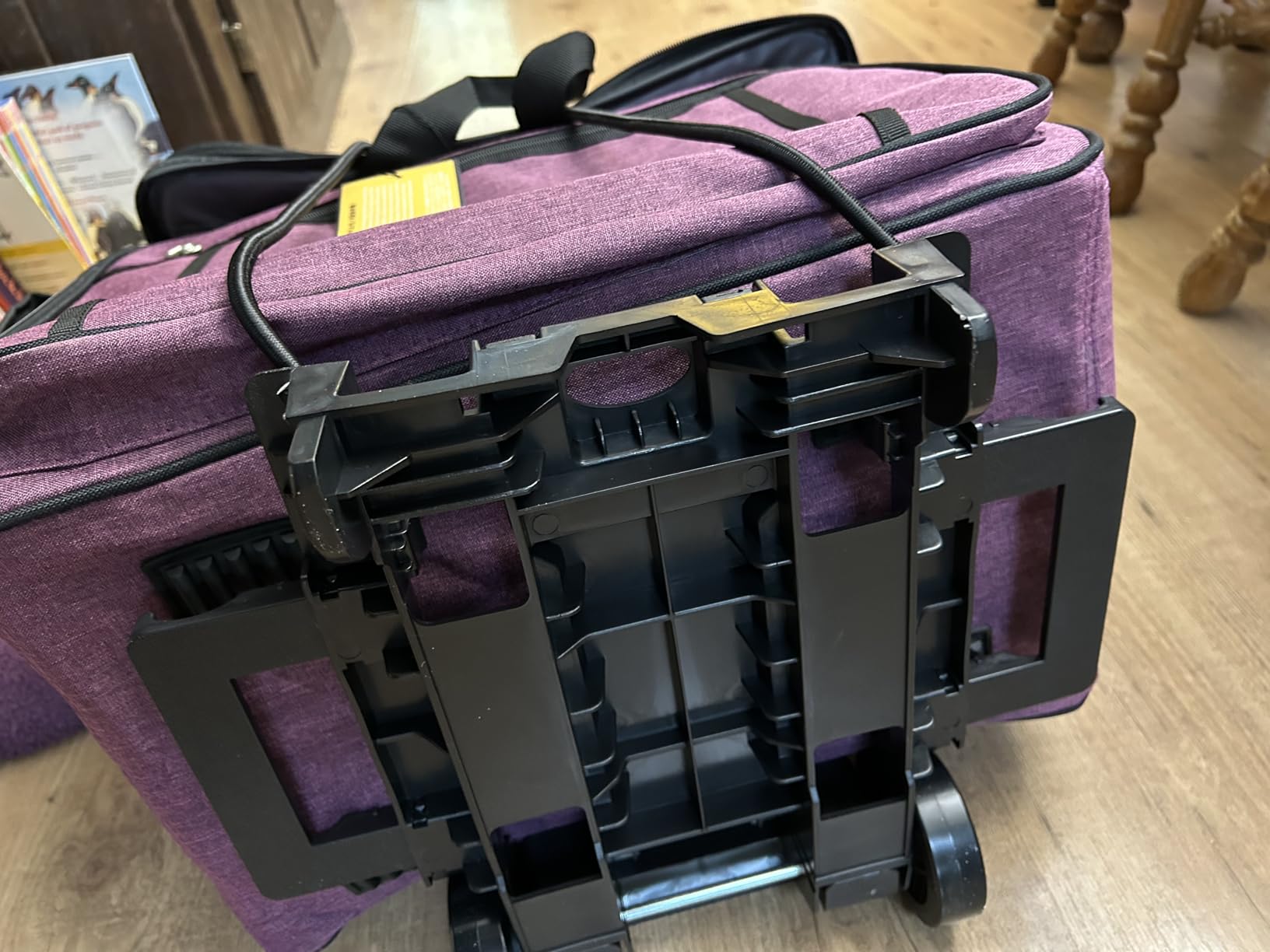
This is the one to look at if your machine flies. The case measures 13.25 inches deep, which the manufacturer states is accepted as carry-on by most international airlines, and the two wheels on a lightweight aluminum frame mean you walk to the gate instead of carrying 20 pounds down it.
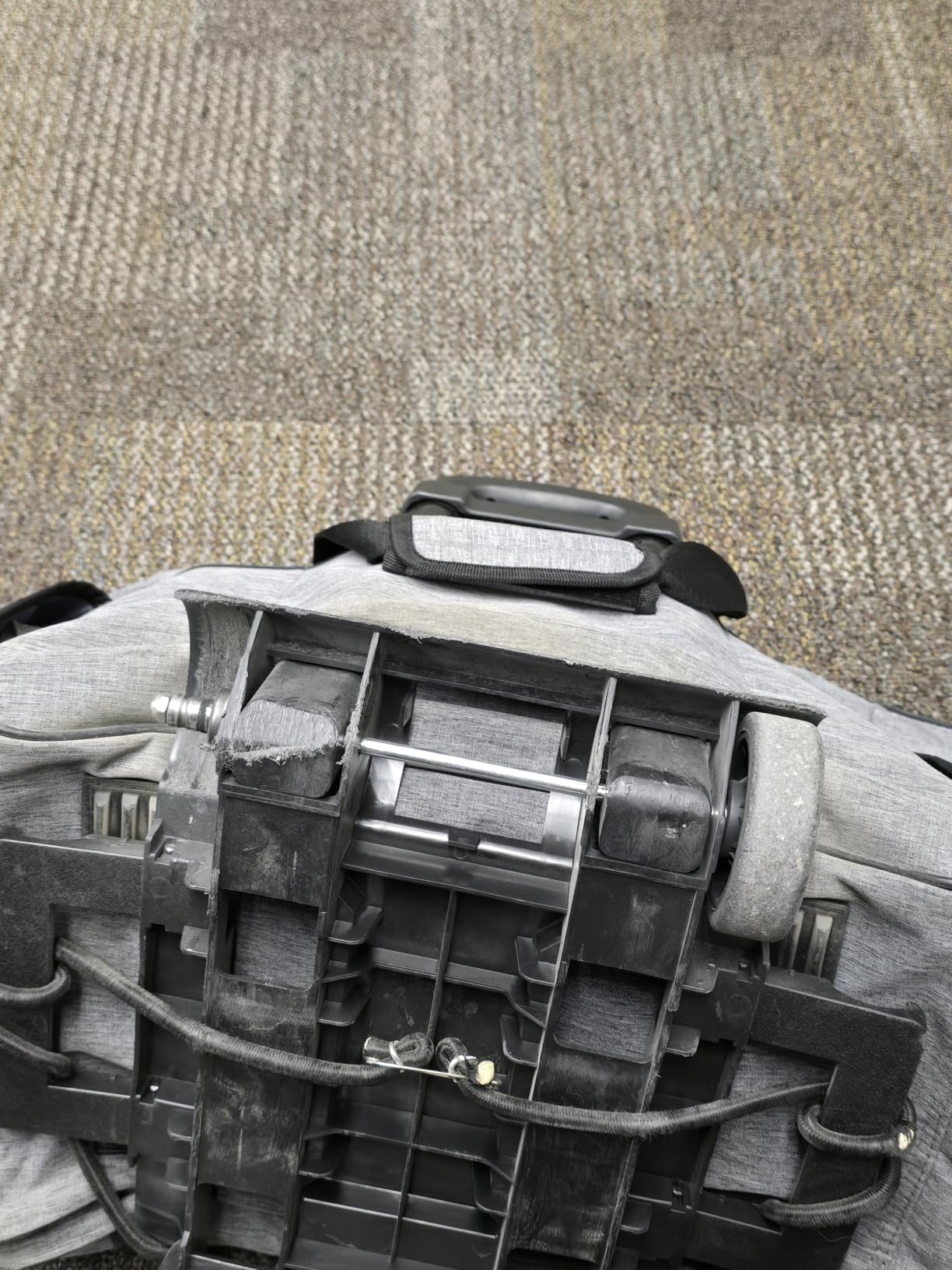
The detachable frame is the smart part. Clip the wheels off at a stairwell, carry it the rest of the way, and clip them back on at the gate, which is exactly what a fixed wheel base prevents you from doing. The bag also folds flat for storage between trips.
It fits machines up to 17 by 10.2 by 13.3 inches and owners report getting a Bernina 440QE and a Singer Confidence 7470 with its extension inside, so the width is the reason to buy it. Feedback is lower than the soft totes here at around 4.3 from 880 reviews, and the complaints are specific rather than general.
Best for air travel
For a cabin bag, the depth is the number that matters, and this is the only case in the group built around it. Board the plane, lift it into the overhead bin, gate check it if the bin is full and you are still rolling it rather than carrying it.
Remember that most full size domestic machines with a hard case attached will exceed cabin limits, so confirm your machine plus case measures within your airline allowance before you travel.
Known weaknesses
Two wheels on a base narrower than the bag can feel wobbly and may tip forward when heavily loaded, and there is no internal strap to hold the machine in position. Some recent production runs ship with a thinner plastic base rather than the removable wooden board shown.
Fewer internal pockets than the non wheeled version is another compromise, so plan on a separate notions pouch.
10. Everything Mary XXL Rolling Case: Best for Top of the Line Machines
Everything Mary XXL Rolling Sewing Machine Case – Black Quilted Craft Bag with 4 Wheels – Spacious Storage Organizer with Pockets for Sewing & Craft Supplies
Interior 21.5 x 13 x 15 inches
Four 360 degree spinner wheels
Interior velcro strap
Pros
- The only case here that fits Bernina 770QE B79 and 780 class machines
- Four spinner wheels roll in any direction without tipping
- Velcro interior strap and clear lid pockets
- Collapses flat when empty
Cons
- Handle and wheelbase feel less rigid than ideal
- Assembly of base and handle is fiddly
- Heaviest and most expensive option here
An interior of 21.5 by 13 by 15 inches is the reason this case exists. Nothing else in this roundup comes close, and owners with Bernina 770QE, B79 and 780 class machines say that is precisely the machine they needed it for.
Four 360 degree spinner wheels are the practical upgrade over a two-wheel design, because they roll in any direction without the case tipping forward when you change direction. Reinforced grab handles on the long edges and sides are needed at this size, and you will appreciate them in a car park.
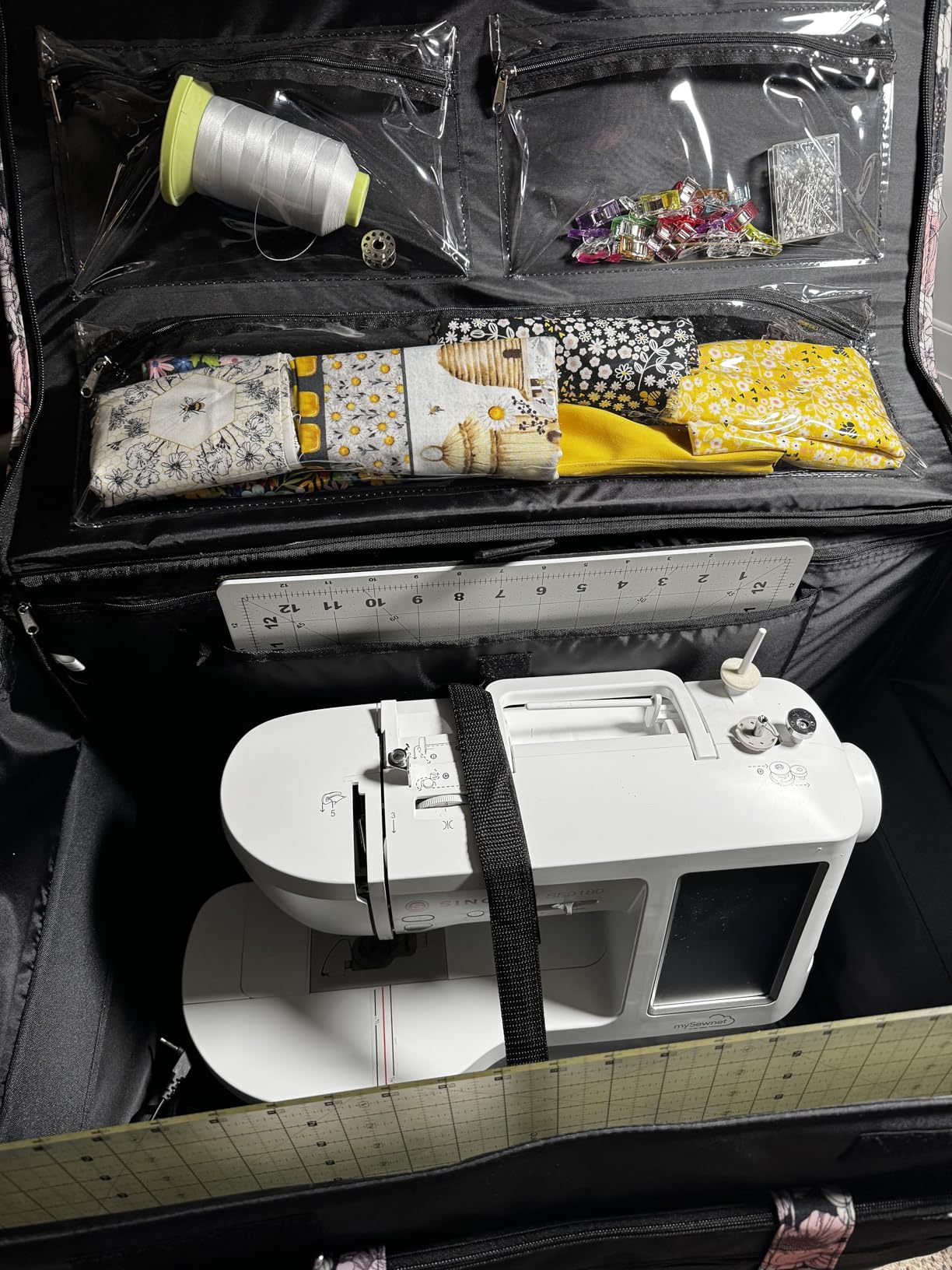
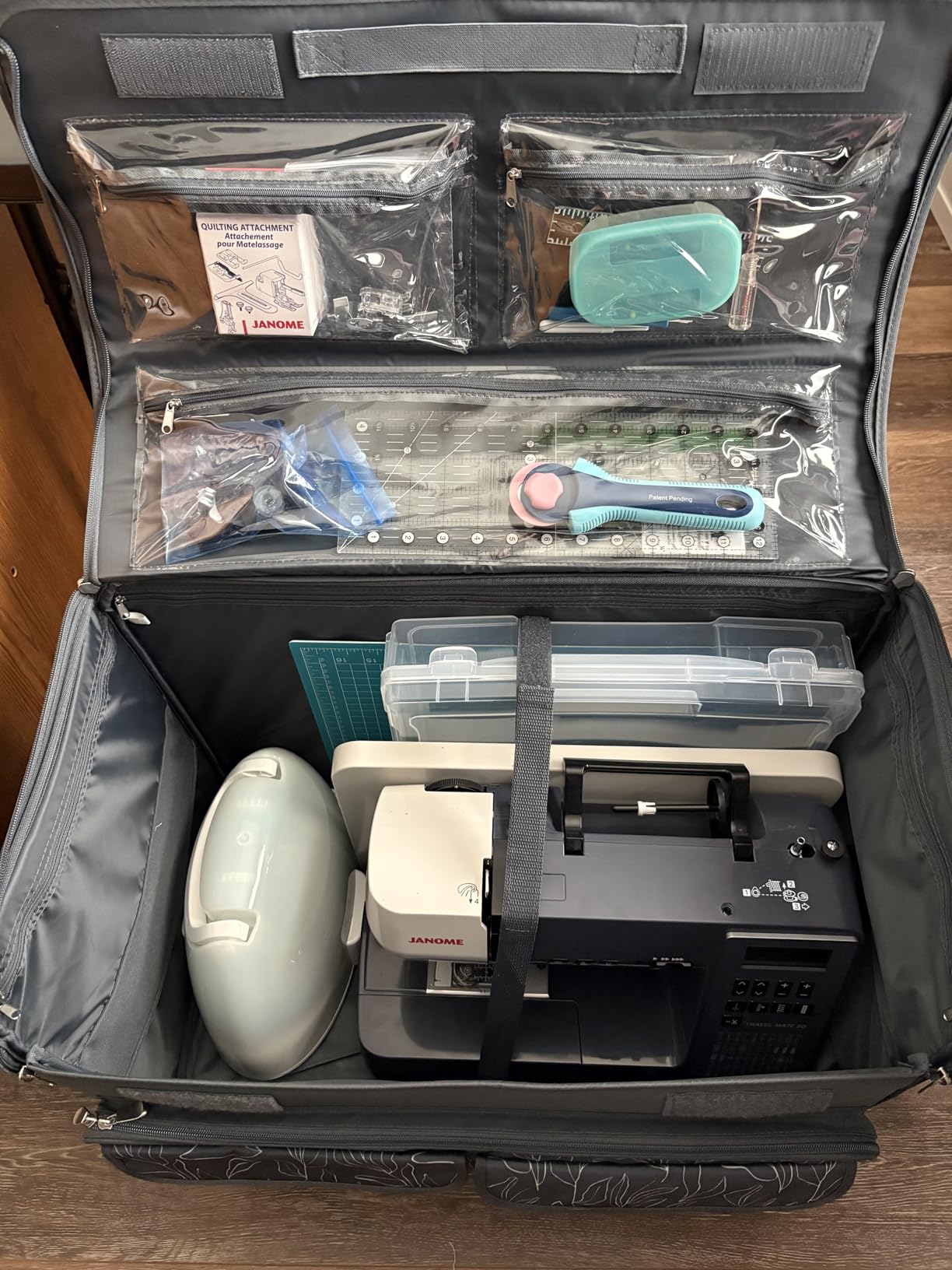
The interior velcro strap holds the machine in place, and clear vinyl pockets in the lid let you confirm the packing without opening the main compartment. It also collapses flat when empty, which matters given the exterior size of 26 by 16 by 19 inches.
Who needs a case this large
If you own an embroidery or quilting machine with an arm tall enough to need clearance above it, this is the honest answer. Owners of these machines treat it as a car case rather than a flight case, and the majority report genuine relief at not needing to detach a machine arm before every trip.
It also works for anyone who carries fabric with the machine, since the extra width and height take batting and a quilt roll alongside the machine.
What you trade for the size
At 5.38 kg empty, the bag itself is heavy before the machine goes in, and reviewers report the handle and wheelbase feel less rigid than they would like with the heaviest machines. Buyers also mention fiddly assembly of the base and handle, and a small number of units arriving with missing parts or wheels that would not clip on.
Check the interior height against your machine before you commit, and allow more storage space than you think for something this size in a closet.
How to Transport a Sewing Machine by Car and by Air
Transporting a sewing machine well is a five step job whether the trip is to a guild night or across a continent. The case matters, but how you pack and handle the bag matters just as much.
First, lower the presser foot and the feed dogs, retract the thread stand if it folds, and wind the thread path loosely. A needle left mid-stroke and a machine that lands on its side is the classic way to bend a presser bar or knock a bobbin case out of alignment.
Second, coil the power cord and the foot pedal cable and put them in a pocket rather than letting them lie against the machine body. Third, use the internal strap, the non slip tray or the velcro band if your case has one, so the machine cannot slide when the bag tips.
Fourth, put the heavy items low and close to the wheels. A loaded bag with a sewing machine and a case of fabric on top of it is stable; the same bag with fabric on top of a two wheel frame is not.
Fifth, lift rather than drag. On stairs, remove the machine and carry it separately if you can, or use a case with a detachable wheel frame. A dropped machine can cost far more to repair than the case ever cost to buy, and misalignment shows up as skipped stitches weeks later.
Taking a sewing machine on a plane
A sewing machine is allowed through security as carry-on, but almost none will fit within a standard 22 by 14 by 9 inch cabin allowance with the case on. The CAB55 rolling case is the closest in this group at 13.25 inches deep, and even that only clears the limit on airlines with generous sizers.
Scissors are the item most people get wrong. TSA rules allow sewing scissors in carry-on as long as the blades are under 4 inches, and larger shears must go in checked baggage, so pack your good fabric shears accordingly. Straight pins and sewing needles are permitted but screening officers can flag them, so keeping them in a labelled container speeds things up.
If you check the bag, notify the airline that it is fragile, wrap the case in foam or bubble wrap, and understand that no carrier covers damage inside a bag that looks like ordinary luggage. Carrying it on is the safer route whenever the machine is small enough.
Before any of this, it is worth checking that you have the right machine to begin with. If you are still choosing, our guide to the best sewing machines covers the sizes these cases are built around.
What Size Sewing Machine Case Do You Need?
Answer the size question with three measurements taken from your machine, not from the product photo. Lift the machine without the table attached, and measure the widest point of the body, the full height including the handwheel and thread stand, and the depth from the front of the arm to the back of the base.
Then compare those numbers against the interior dimensions of the case, and remember that every figure in this roundup is an interior figure unless we say otherwise. A 17 by 8 by 12 inch case is the working space your machine has to fit into, not the space you wish you had.
Which case size fits which machine
Featherweight and compact machines, and most portable domestic models, need an interior around 12 to 16 inches long with roughly 7 to 8 inches of height. A featherweight will fit in a smaller tote than you expect, so you can spend the space difference on pockets instead.
Standard domestic machines from Brother, Singer and Janome generally need 16 to 18 inches of length and 11 to 13 inches of height, which covers the HOMEST, CAB55, SINGER tote, TLBTEK and Golkcurx bags in this group. Wide machines such as a Bernina 440QE or a Singer Confidence with an extension table push you toward the 10 inch width bags, which is the CAB55 rolling case and the SINGER tote.
Quilting and embroidery machines with upright thread arms need the 13 inch or greater interior height, and top of the line machines with tall arms need the Everything Mary XXL at 15 inches. Vintage and heavy metal machines are not a size problem, they are a rigidity problem, so pair any dimension that fits with the SINGER hard case.
Industrial machines are a separate category and none of these ten is built for them. They need a purpose made metal reinforced case, and the search term for those is a machine case by model number rather than a universal sewing machine tote.
Soft Tote, Rolling Tote or Hard Case: Which One Suits Your Route
Soft totes win on weight and price. A bag like the LUXJA or TLBTEK weighs almost nothing empty, folds into a drawer, and holds a machine, a foot pedal and a project. They are the right answer for a car commuter, a student and anyone who moves a machine a few times a month rather than weekly.
Rolling totes win when your route is long and flat. A wheeled case such as the HOMEST or the CAB55 rolling model means you are not lifting a machine from a trunk to a table in a car park, and for a 20 pound machine that difference decides whether you keep sewing or stop going. The CAB55 rolling case adds a detachable frame, which solves the stairs problem that fixed wheels create.
Hard cases win when the machine is being stored, moved between homes, or carried through somewhere rough. The SINGER hard shell blocks dust, resists crushing and locks shut, and it is the only option here that doubles as a secure storage box between sessions. That rigid-versus-soft trade-off is the same one we map out in our guitar case roundup, where the instrument is just as expensive to repair after a bad landing.
How much lift weight are you signing up for?
A full soft tote is a 20 pound lift every single time you pick it up, and a rolling case turns that into a pull. Before buying wheels, work out how many steps and how many car parks are between you and the machine, because a wheeled bag carried up stairs is heavier than the same bag without wheels.
The machine matters too. Buyers of mid-weight domestic machines move them comfortably in a wheeled tote, and long term owners of wheeled cases report the same, but nothing in this group is designed to roll a full industrial head on a stair.
What to actually put in the pockets
The pockets on these cases are sized for real sewing kit contents, so use them that way. Spare feet and the presser foot pedal belong in the side or front pockets, thread and bobbins go in the see through compartments, and the cord and pedal cable coil into whichever pocket will close last.
Long term owners describe a packing model that is worth copying: the machine, the current project, the mat and iron, and lunch in one bag for a day long guild or retreat. If your case cannot take that load, it is a two trip bag, and that is a design problem rather than a discipline problem.
Once you have the case sorted, the machine itself is the other half of the equation. Our sewing machine roundup breaks down the model classes these cases are sized for.
What to Avoid in a Sewing Machine Case
Thin quilted fabric with no structure is the first thing to rule out. A bag with a decorative quilted exterior and no sidewall padding protects against a scratch, not a drop, and it will not stop the machine sliding if the bag tips.
A soft bottom with no removable pad is the second. Plenty of buyers solve this with a piece of cardboard or a cutting mat, but you should know that you are adding the structure yourself. If you would rather not, choose a bag with a detachable wooden board, and note the difference between a board that resists a load and foam that cushions a bump.
Wheels that cannot be detached are the third, and the reason is stairs. A fixed wheel base means you carry the whole loaded bag plus the wheels, which is exactly the situation a detachable trolley frame was designed to solve.
An interior that is too shallow for your handwheel is the fourth, and it is the most common return reason. Machine depth is often underestimated because the base plate looks narrow, while the body above it is wider, so measure at the widest point and add a margin.
A zipper that only runs around three sides is a fifth, less common annoyance. Loading a heavy machine into a bag you cannot open flat is a two person job, and the two way full zippers on the larger totes exist for a reason.
How We Chose and What We Did Not Test
We ranked all ten cases on published interior dimensions, padding and base construction, wheel and handle design, pocket count, weight empty, carry options and the volume of buyer feedback behind each one. Ratings and review counts are reported exactly as listed by the retailer at the time of writing.
We did not drop test these bags, cut them open, or weigh them on a calibrated scale, and we do not claim to have. Every size, weight and material in this article comes from the manufacturer listing or the aggregated buyer feedback attached to it, and every performance statement is a spec reading rather than a lab result.
What we can tell you is where buyers and owners agree. Wheels are the first failure point on cheap totes, base boards are what make a soft bag feel substantial, wider interiors solve the fit anxiety that dominates sewing forums, and cases bought for occasional transport routinely stay in service for a decade rather than falling apart in a year.
One more trust note: we may earn a commission when you buy through the links on this page, at no extra cost to you. It does not change which cases we rank or the order we rank them in.
Frequently Asked Questions
What is the best rolling sewing machine case?
For most people moving a domestic machine to class or guild, the HOMEST Deluxe Rolling Tote is the strongest all-round choice, with a 17 x 8 x 12 inch interior and a telescopic handle on two casters. If you fly, the CAB55 rolling case is the better fit because its 13.25 inch depth suits most international carry-on limits and the wheel frame detaches for stairs.
What is the best sewing machine carrying case?
The SINGER Universal Hard Carrying Case gives the best protection, with a rigid plastic shell, metal safety lock clasps, a non-slip inner tray and an 18 x 9 x 12.5 inch interior. For a soft bag, the LUXJA case with the removable bottom padding pad organizes the best and stays close to nothing to carry empty.
How do I transport my sewing machine?
Lower the presser foot and feed dogs, retract a folding thread stand, coil the power cord and pedal cable into a pocket and secure the machine with an internal strap or velcro band. Pack heavy items low and close to the wheels, lift rather than drag on stairs, and use a case with a detachable wheel frame when steps are unavoidable.
Do sewing machine cases fit under an airline seat?
Almost none do once the machine is inside, because a standard cabin allowance is roughly 22 x 14 x 9 inches and most domestic machines need more depth than that. The CAB55 rolling case is the closest in this group at 13.25 inches deep, and even that only clears the limit on airlines with generous sizers, so check your carrier’s sizing before you travel.
Are hard cases better than soft sewing machine bags?
Hard cases win on protection, dust proofing and storage, and they are the right choice for a machine kept in a garage, an RV or a shared studio. Soft totes win on weight, flexibility and price, and they are easier to carry to class. Many owners use both: a hard shell for storage and transport, and a soft tote for the weekly run.
How do I know what size case fits my machine?
Measure the widest point of the machine body, the full height including the handwheel and thread stand, and the depth from the front of the arm to the back of the base. Compare those numbers with the interior dimensions of the case rather than its exterior size, and leave a small margin at the width, since that is where most fit problems happen.
Final Verdict on the Best Sewing Machine Cases for Transport
So there you have it, our full take on the best sewing machine cases for transport in 2026. The HOMEST Deluxe Rolling Tote takes the overall spot for room, organization and a genuine 13.3 pound capacity. The SINGER Universal Hard Case is the protection pick for storage and rough handling. The LUXJA case is the value pick for anyone who carries notions more often than a machine.
For the flight, the CAB55 rolling case at 13.25 inches deep and with a detachable wheel frame is the only one here built around a cabin limit. For a Bernina or embroidery machine with a tall arm, the Everything Mary XXL is the honest answer, and you accept 5.38 kg of empty weight for it.
Whatever you choose, measure your machine first, and check the interior width at the widest point of the body. That single measurement prevents most of the disappointment we see in sewing forums, where the bag looks right in a photo and then will not close over the handwheel. Updated for 2026, and we may earn a commission on links without any extra cost to you.
Last updated: October 2026