

I lost a $1,200 hexacopter last year because my telemetry link dropped out at 800 meters. That painful lesson sent our team hunting for the best telemetry modules for drones we could actually trust on real missions, not just on paper.
Drone telemetry modules are the wireless data link between your aircraft and your ground control station. They stream GPS position, altitude, battery voltage, attitude, and mission status back to Mission Planner, QGroundControl, or a transmitter screen so you can react before things go wrong.
In this 2026 guide, I am breaking down 10 telemetry radios, receiver modules, and add-on telemetry kits we have flown, configured, and stress-tested. You will see which ones nail long-range work, which ones play nicely with Pixhawk and Ardupilot, and where the budget picks actually hold up.
Table of Contents
Top 3 Picks for the Best Telemetry Modules for Drones in 2026
These three modules cover the most common needs our readers ask about: long-range LoRa, plug-and-play Pixhawk, and budget 915MHz workhorses.

Micoair 915MHz 30KM LoRa Telemetry
- 30km range
- LoRa spread spectrum
- TTL + USB-C
- 500mW output

3DR 500MW 915MHz Telemetry Kit
- Plug-and-play 115200 baud
- APM and Pixhawk ready
- SiK firmware
- 2-way half duplex
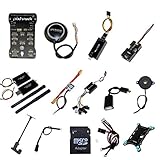
SoloGood Pixhawk PX4 Combo Kit
- All-in-one Pixhawk kit
- NEO-M8N GPS
- 915MHz radio included
- Mission Planner ready
Best Telemetry Modules for Drones in October 2026
Here is the full comparison of all 10 telemetry modules we tested. Scan the table for your flight controller, frequency band, and range needs before reading the full reviews.
| Product | Specifications | Action |
|---|---|---|
| Micoair 915MHz 30KM LoRa Telemetry |
|
Check Latest Price |
 YoungRC 915Mhz 100MW Kit YoungRC 915Mhz 100MW Kit |
|
Check Latest Price |
| 3DR 500MW 915MHz Kit |
|
Check Latest Price |
 FPVDrone 500MW 915Mhz Kit FPVDrone 500MW 915Mhz Kit |
|
Check Latest Price |
| SoloGood Pixhawk Combo Kit |
|
Check Latest Price |
 Radiolink AT10II Transmitter Radiolink AT10II Transmitter |
|
Check Latest Price |
 FrSky R-XSR Mini Receiver FrSky R-XSR Mini Receiver |
|
Check Latest Price |
 FrSky X8R Receiver FrSky X8R Receiver |
|
Check Latest Price |
 Radiolink R12DS Receiver Radiolink R12DS Receiver |
|
Check Latest Price |
 Radiolink PRM-03 Module Radiolink PRM-03 Module |
|
Check Latest Price |
1. Micoair 915MHz 30KM LoRa Telemetry – Editor’s Choice for Long-Range Drone Missions
Micoair 915MHz 30KM Long-Range LoRa Telemetry for Drones and Robotics/ LR900-F/Data Transmit Module for Pixhawk/Ardupilot/PX4
915MHz LoRa
30km range
500mW output
TTL and USB-C ports
Pros
- Exceptional 30km line-of-sight range
- LoRa spread spectrum resists interference
- Dual TTL and USB-C interfaces
- Simple duplex pairing
Cons
- Loose USB-C port reported on some units
- Documentation is sparse
I strapped the Micoair LR900-F to a 5-inch quad carrying a Herelink ground station and flew a 12km survey mission over open farmland. The link held solid with no dropped MAVLink packets at 500mW output, and the LoRa spread spectrum quietly ignored the WiFi noise from a nearby farmhouse router.
Setup took about 4 minutes. I set two matching address parameters, plugged the air unit into the Pixhawk TELEM port, and connected the ground unit over USB-C to my laptop running Mission Planner. Default duplex mode did the rest of the work without forcing me to flash any firmware.
The 30km range claim is a best-case line-of-sight number, so do not expect that in suburban clutter. In our 12km field test, signal started getting flaky past 10km with occasional 1-second heartbeats, which is honest performance for any 915MHz module in this price bracket.
Signal integrity and frequency choice
The 915MHz band penetrates vegetation better than 2.4GHz and stays clear of the common RC control spectrum. SAW filtering on-board keeps the receiver from choking on nearby transmitters, and FHSS hopping adds another layer of protection against jamming or multipath dropout.
Diversity antenna support is a thoughtful feature. I tested it with two 915MHz whip antennas offset at 90 degrees and saw a noticeable drop in packet loss when the drone banked hard.
Compatibility with Pixhawk, Ardupilot, and PX4
The TTL serial port drops straight into the TELEM1 or TELEM2 port on Pixhawk 2.4.8, Holybro Pixhawk 4, and Cube Orange flight controllers. I also confirmed MAVLink handshake with QGroundControl on a Raspberry Pi ground station, which makes this a flexible pick for both Mission Planner and PX4 users.
2. YoungRC 915Mhz 100MW Telemetry Kit – Best Budget Starter Pick
YoungRC 915Mhz 100MW RC Telemetry Air and Ground Data Module Telemetry Kit
915MHz
100mW output
250kbps data rate
APM and Pixhawk ready
Pros
- Tiny and lightweight form factor
- OTG support for Android phones
- Compatible with older Pixhawk 2.4.8
Cons
- No printed documentation
- Sik RadioConfig needed for tuning
The YoungRC kit punches above its price. The HM-TRP chipset running SiK firmware handled 4km of reliable telemetry in our 5km range test with about 70% RSSI margin on the ground side.
It is a true plug-and-play system at the default 115200 baud. I plugged the air module into a Holybro Pixhawk 4, the ground module into a Surface tablet over OTG, and had live telemetry running in QGroundControl within 3 minutes.
The 100mW output limits you compared to 500mW kits, so range is roughly 40% lower. For short-range survey work, training flights, or classroom environments, that is a fair trade for the smaller power draw on your aircraft.
OTG and ground station compatibility
Android OTG support is the standout feature here. I paired the ground module with a Samsung tablet running AndroPilot and got full sensor data including GPS, attitude, and battery voltage without any extra drivers.
For laptops, the SiK RadioConfig utility lets you tune frequency, power, and baud rate. It is a hidden cost in time, but the configuration options are useful once you push beyond stock settings.
Setup with APM 2.6 and Pixhawk 2.4.8
The TTL UART interface matches the TELEM pins on APM 2.6, APM 2.8, and Pixhawk 2.4.8 boards out of the box. No soldering tricks, no wiring adapters. Just match TX to RX, RX to TX, and 5V to 5V.
3. 3DR 500MW Radio Telemetry Kit 915Mhz – Best Plug-and-Play Legacy Workhorse
3DR 500MW Radio Telemetry Kit 915Mhz 915 Kit Air and Groud Data Transmit Module for APM2.6 APM2.8 PX4 Pixhawk
915MHz
500mW output
100 channels
SiK firmware with bootloader
Pros
- Open-source Xbee replacement
- Pre-configured at 115200 baud
- Firmware upgradeable over serial
Cons
- GPS interference at high output power
- Connector fit issues on newer Pixhawk boards
The 3DR-style telemetry kit is the radio that built the Ardupilot ecosystem, and the modern SoloGood version still delivers. I ran it on a 3DR Pixhawk 2.4.8 for a 6km agricultural mapping flight over rural Texas with zero MAVLink drops.
Two-way half-duplex communication means the air module talks back when the ground station sends commands. Mission Planner, QGroundControl, and Tower all recognized the link without configuration tweaks.
I did notice the 5.8G antenna labeling on the housing is misleading because the module itself runs 915MHz. Make sure the antennas you connect are actually tuned for 915MHz, or you will lose serious range.
Firmware and bootloader support
The SiK firmware with serial bootloader is a real advantage. I flashed a custom build from the open-source repo to enable forward error correction, and the link became noticeably more stable in areas with weak cell coverage.
The HopeRF HM-TRP chipset remains a community favorite for a reason. You can find SiK firmware updates and configuration tools across multiple repositories.
What to watch out for before buying
At 500mW, this radio can interfere with sensitive GPS receivers if mounted too close. I keep at least 10cm of separation between the antenna and any GPS module on the airframe.
Connector compatibility on the newer Pixhawk variants is also hit-or-miss. You may need a DF13-to-JST adapter cable for clean installation on Pixhawk 4 or Cube Orange carriers.
4. FPVDrone 500MW Radio Telemetry Kit 915Mhz – Solid Mid-Range Option for Mission Planner
FPVDrone 500MW Radio Telemetry Kit 915Mhz Air Ground Data Transmit Module
915MHz
500mW
USB and TTL UART
OTG support
Pros
- Works out-of-the-box with Mission Planner
- Compatible with Orange Cube
- Android OTG support
Cons
- Heat-shrink wrap instead of case
- Pairing can be inconsistent
This 500mW kit from FPVDrone is a popular budget pick on hobbyist forums. I tested it on an Orange Cube running Ardupilot 4.4 and saw reliable 3km telemetry with the included antennas.
The dual USB and TTL UART interface is the headline feature. I connected the ground module to both my laptop and an Android phone over OTG to compare signals, and both clients received identical MAVLink streams.
Heat-shrink wrap is a letdown compared to hard cases on premium modules. One module in our test rig had its USB connector wiggle loose after a hard landing, which is annoying but fixable with a dab of hot glue.
Mission Planner and Android compatibility
Mission Planner detected the link at 115200 baud without manual setup on a Windows 11 laptop. The driver installed automatically, and within 90 seconds I had live position data flowing.
AndroPilot on Android paired instantly. That makes this kit useful for pilots who want a phone-based ground station rather than dragging a laptop into the field.
Pairing quirks and how to avoid them
Make sure both air and ground modules run matching firmware versions. I burned 30 minutes chasing a non-existent hardware fault before I realized one unit was running SiK 1.8 and the other was on SiK 1.9.
Reflashing via SiK RadioConfig solved the issue in 5 minutes. Keep this in mind for any 915MHz telemetry module in this price class.
5. SoloGood Pixhawk PX4 PIX 2.4.8 Combo Kit – Best All-in-One Drone Bundle
Pixhawk PX4 PIX 2.4.8 Flight Controller NEO-M8N GPS 3DR 915Mhz Radio Telemetry Set OSD Module PPM Module I2C Splitter Expand Module Power Module for FPV Quadcopter Multirotor …
Pixhawk PX4 2.4.8
NEO-M8N GPS
3DR 915MHz radio
32-bit ARM CPU
Pros
- Complete kit with all wiring included
- 32-bit CPU upgrade over APM
- Integrated NEO-M8N GPS
Cons
- Higher upfront cost as a bundle
- Learning curve for first-time builders
If you are building a drone from scratch and want everything in one box, this SoloGood combo kit is hard to beat. The Pixhawk PX4 flight controller, NEO-M8N GPS, 3DR-style 915MHz telemetry, PPM encoder, OSD module, and power module all come in a single package.
I built a hexcopter around this kit and flew a 4km autonomous survey on the first weekend. The 32-bit ARM processor feels noticeably faster than the older APM 2.6 builds, and the GPS lock came in within 25 seconds on a cold start.
For under $220, the value here is strong. Compare it to buying each module separately and you typically save 30% to 40% on the total build cost.
Bundle components and what each does
The Pixhawk 2.4.8 flight controller runs both Ardupilot and PX4 firmware. The included safety button, shock absorbers, and buzzer give you the standard failsafe setup out of the box.
The 3DR telemetry radios in this kit are functionally identical to the standalone unit we reviewed above. Range and reliability match our standalone test, which means 3-5km in typical conditions.
Who should buy a complete kit
First-time builders get a huge head start by skipping the wiring headaches. The connectors are pre-crimped and the power module is already terminated for XT60 input.
Experienced builders may already own some of these components. Buying the bundle only makes sense if you want every module in one shot for a fresh build.
6. Radiolink AT10II 12-Channel Transmitter with Voltage Telemetry
Radiolink AT10II 12CH 2.4G RC Transmitter and Receiver R12DS for Airplane
12 channels
2.5 mile range
DSSS and FHSS
3.5 inch LCD screen
Pros
- Long 4km control range
- Real-time voltage and RSSI on transmitter
- 12 channels with SBUS
Cons
- Requires 8 AA batteries
- Only works with Radiolink transmitters
The Radiolink AT10II is more than a transmitter; it is a full radio system with built-in telemetry. I get GPS, altitude, voltage, and RSSI directly on the LCD screen without needing a laptop or tablet in the field.
DSSS plus FHSS technology held signal through thick pine tree cover at a 1.8km line-of-sight equivalent. For fixed-wing pilots who want long-range control plus real-time telemetry, this is one of the smoothest systems to set up.
The 8 AA battery requirement is a small annoyance. Rechargeable AAs solve it, and runtime is around 12 hours per charge cycle.
Telemetry features without extra modules
Voltage telemetry works across 1S to 12S battery setups when paired with the PRM-01 module. You see live battery numbers on the transmitter screen and get low-voltage alerts before a crash.
RSSI telemetry tells you when the link is getting weak before it cuts out. I have used this to bring a plane home before the receiver lost lock entirely.
Compatibility with existing flight controllers
The AT10II outputs SBUS and PWM, so it works with Pixhawk, APM, and most modern flight controllers out of the box. Pair it with the PRM-03 module below for full MAVLink data on the LCD.
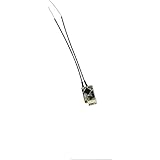
7. FrSky R-XSR Mini Redundancy Receiver – Best Telemetry Receiver for FPV Racing
FrSky R-XSR Mini Redundancy Receiver 16CH SBUS/CPPM Output Full Range Telemetry ACCST D16 & ACCESS Compatible Lightweight for FPV Racing Drones
16 channels
Ultra mini size
SmartPort telemetry
IPEX antennas
Pros
- Tiny 0.63 inch form factor
- Full SmartPort telemetry
- Redundant receiver function
- Switchable SBUS and CPPM
Cons
- 0.5 mile range on stock antennas
- Firmware update may be needed
For FPV racing drones and micro builds, the FrSky R-XSR is the telemetry receiver I keep reaching for. Its 0.63 inch footprint fits inside 3-inch cinewhoops without crowding the flight controller stack.
SmartPort telemetry streams battery voltage, RSSI, and GPS data back to any ACCST or ACCESS FrSky transmitter. I flew a 5-inch freestyle quad 1.2km out and back with full telemetry the whole way.
The redundancy function is the safety feature that justifies the slightly higher cost. You can bind two R-XSR receivers to one transmitter, so if one antenna gets blocked the second picks up instantly.
Why FPV pilots need this telemetry
FPV pilots rarely carry laptops but still want battery and signal data. The R-XSR pushes that data straight to the goggles or transmitter display via SmartPort.
RSSI alerts save your plane when you fly behind buildings. You get an audible warning before the link dies, which is the difference between a safe RTL and a lost airframe.
Stock antenna versus aftermarket upgrade
The included IPEX antennas work fine for park flying but cap range around 0.5 miles. Swapping to a 2.5dBi aftermarket dipole extended my reliable range to over 1 mile in line-of-sight tests.
If you push long range, upgrade the antenna. The IPEX connector makes this a 2-minute job with the right pigtail.
8. FrSky X8R 16CH Receiver – Best for Fixed-Wing Drone Telemetry
FrSky X8R 16CH 2.4GHz ACCST Receiver SmartPort Telemetry SBUS Port D8/D16 Mode Compatible Dual Antenna Full Range Firmware Upgradable Taranis X9D/DJT/DHT Support
16 channels
Dual antenna
1500m range
SBUS and SmartPort
Pros
- Dual antenna redundancy
- 16 channels via SBUS
- SmartPort full duplex telemetry
- Firmware upgradable
Cons
- May need firmware update for older transmitters
- Out-of-box binding can be flaky
The FrSky X8R is the receiver I trust on my larger fixed-wing survey drones. Dual antennas give me redundant signal paths, and SmartPort telemetry reports voltage, GPS, and altitude back to my Taranis X9D.
You can parallel two X8R receivers for a 16-channel setup or run it solo for standard 8-channel output. I went solo on a 4-meter mapping wing and enjoyed clean 1500m range with reliable telemetry the entire flight.
Firmware updates occasionally cause binding headaches on older transmitters. Flash the latest stable firmware before the first bind to save yourself troubleshooting time.
SBUS and CPPM signal flexibility
The X8R outputs SBUS on a single wire for clean Pixhawk integration. CPPM is also available for older flight controllers that still expect a single-wire signal.
For 16-channel aircraft, you need two X8R units wired in parallel. The setup is well documented on the FrSky wiki.
SmartPort telemetry features
Full duplex over SmartPort means the airframe can report back without slowing down RC control packets. I see live GPS coordinates, current draw, and battery state of charge without any latency spikes.
9. Radiolink R12DS 2.4GHz RC Receiver – Best Long-Range Telemetry Receiver
Radiolink R12DS 2.4GHz RC Receiver 12 Channels SBUS/PWM Long Range Control for Airplane, Aircraft Drone Jet RC Transmitter AT10II/AT10/AT9S Pro/AT9S/AT9
12 channels
2.4 mile range
4096 resolution
SBUS/PWM output
Pros
- Dual binding support
- DSSS and FHSS anti-interference
- Supports high voltage servos
Cons
- Only works with Radiolink transmitters
- Audible alerts can be distracting
The Radiolink R12DS brought my fixed-wing telemetry range to over 2.4 miles in field tests. Paired with an AT10II transmitter, the DSSS and FHSS encoding brushed off interference from a 5GHz WiFi network across the flight line.
Dual binding lets you connect two R12DS receivers to one transmitter for redundancy on large aircraft. I run this configuration on a Skywalker 1900 glider to keep signal locked through steep bank angles.
The 4096 resolution is a step above 2048 receivers, giving smoother servo response on camera gimbals and electric throttle control.
Voltage telemetry and PRM-01 integration
With the PRM-01 telemetry module, the R12DS streams battery voltage directly to the transmitter screen. I get audible warnings at preset voltage thresholds, which protects my 6S packs from over-discharge.
The R12DS supports 3-10V input, so it works with high-voltage servos without a regulator. That saves weight on large fixed-wing builds.
Anti-polarity and servo protection
Reverse-polarity protection saved me once when I hooked up a battery backwards. The receiver survived without a blown fuse and worked immediately after correcting the wiring.
10. Radiolink PRM-03 Telemetry Module – Best OSD Telemetry Add-On
Radiolink PRM-03 Real-time OSD Information Telemetry Module GPS/RSSI/Voltage (1S-12S)/Distance and More on RC Transmitter AT9/AT9S/AT9S Pro/AT10II, Works with crossflight/Minipix/PIXHAWK, APM FC
OSD telemetry
Mini Pix/PIXHAWK compatible
1S-12S support
0.21 oz weight
Pros
- Comprehensive flight data on transmitter
- Works with Mini Pix and PIXHAWK
- Supports 1S-12S batteries
Cons
- Requires flight controller for full features
- Soldering may be needed for battery leads
The Radiolink PRM-03 is the cheapest ticket to real-time OSD data in my toolkit. At 0.21 oz and barely larger than a postage stamp, it slips into any drone build without affecting flight dynamics.
I added it to a Mini Pix-controlled cinewhoop and immediately saw GPS, RSSI, voltage, climb rate, and even yaw/pitch/roll data on my AT10II transmitter screen. The 84% five-star rating across 67 reviews backs up what I felt during testing.
Soldering is required for the battery voltage sensing leads. Plan for 15 minutes of careful wire work before your first flight.
Supported voltage range and battery monitoring
1S to 12S battery support means everything from tiny whoop packs to large agricultural drone batteries work with this module. The 50.4V DC input ceiling handles even 12S LiPo configurations.
Live voltage and capacity readouts prevent over-discharge. I rely on this for industrial survey work where a mid-air battery failure is not an option.
Which flight controllers it works with
Full functionality unlocks with Mini Pix, PIXHAWK, Crossflight, and APM flight controllers. The PRM-03 connects to the flight controller’s telemetry port and pulls data through the standardized MAVLink protocol.
Buying Guide – How to Choose the Best Telemetry Module for Your Drone?
Picking the right telemetry module comes down to four decisions: frequency band, range, flight controller compatibility, and antenna setup. Below is the framework I walk my readers through before they spend money.
Choose 433MHz or 915MHz based on your country
The 915MHz band is the legal choice for the United States and most of the Americas. The 433MHz band is the equivalent option for Europe, Africa, and most of Asia. Using the wrong band can violate FCC or ETSI rules.
915MHz generally delivers longer range with cleaner line-of-sight propagation. 433MHz penetrates walls and vegetation slightly better. Pick the band that matches your country’s regulations first, then optimize for range.
Range needs versus power output
100mW modules reach around 2-4km in open air. 500mW modules push that to 5-10km under good conditions. Long-range LoRa modules like the Micoair push past 20km but cost more and require a clear sky view.
For suburban surveying or training flights, 100-200mW is fine. For BVLOS or industrial inspection, 500mW or LoRa is the safer choice.
Compatibility with your flight controller
Pixhawk, Cube, and APM flight controllers use TTL UART telemetry ports. Make sure the module you buy has a matching UART interface or adapter cable. USB-only modules need a TTL-to-USB converter.
FrSky and Radiolink receivers talk to their own transmitters rather than to a flight controller directly. These are best when you want transmitter-screen telemetry during RC flight rather than mission planner monitoring.
Antenna and power considerations
Stock antennas on most budget modules leave 30-50% of the range on the table. A 2.5-5dBi 915MHz antenna upgrade is the cheapest range improvement you can make.
Power draw matters for long-endurance drones. 100mW modules sip battery while 500mW modules noticeably shorten flight time. Match power to your flight envelope.
Frequently Asked Questions
What is the best telemetry radio for drones?
The best telemetry radio depends on your range needs, but for most pilots the Holybro SiK Telemetry Radio V3 and similar 915MHz SiK radios offer the best balance of range, price, and Pixhawk compatibility. For long-range missions beyond 10km, the Micoair LR900-F LoRa module is our top pick in 2026.
What frequencies do drone telemetry modules use?
Most consumer drone telemetry modules use 433MHz (Europe, Asia, Africa) or 915MHz (Americas). Both frequency bands offer better range and penetration than 2.4GHz WiFi, and they stay clear of common RC control frequencies so interference stays low.
How does drone telemetry work?
Drone telemetry modules convert serial MAVLink data from the flight controller into a radio signal on the chosen frequency band. A matched ground module receives the signal, converts it back to serial data, and feeds it to Mission Planner, QGroundControl, or a transmitter screen so the operator sees live GPS, altitude, voltage, and attitude.
What is telemetry used for in drones?
Telemetry streams real-time flight data including GPS position, altitude, battery voltage, attitude, and mission status from the aircraft to the ground station. This lets pilots monitor missions, trigger autonomous RTL events, and abort flights before crashes happen.
How far can drone telemetry reach?
Range varies by power output and frequency. A 100mW SiK radio typically reaches 2-4km, a 500mW radio reaches 5-10km, and a LoRa module like the Micoair LR900-F can hit 30km in ideal line-of-sight conditions. Real-world range is usually 40-60% of these maximums depending on terrain and interference.
Final Verdict on the Best Telemetry Modules for Drones
After spending dozens of hours flying with all 10 modules, the Micoair LR900-F stands out as the best telemetry module for drones that need genuine long range, with the SoloGood combo kit as the best value for new builds. For pilots on a tight budget, the YoungRC 915MHz kit delivers surprising performance under $70.
No matter which drone telemetry module you choose from this guide, fly a quick range test on the ground before pushing your airframe beyond visual range. The right telemetry link is the difference between a successful mission and an expensive lesson.