
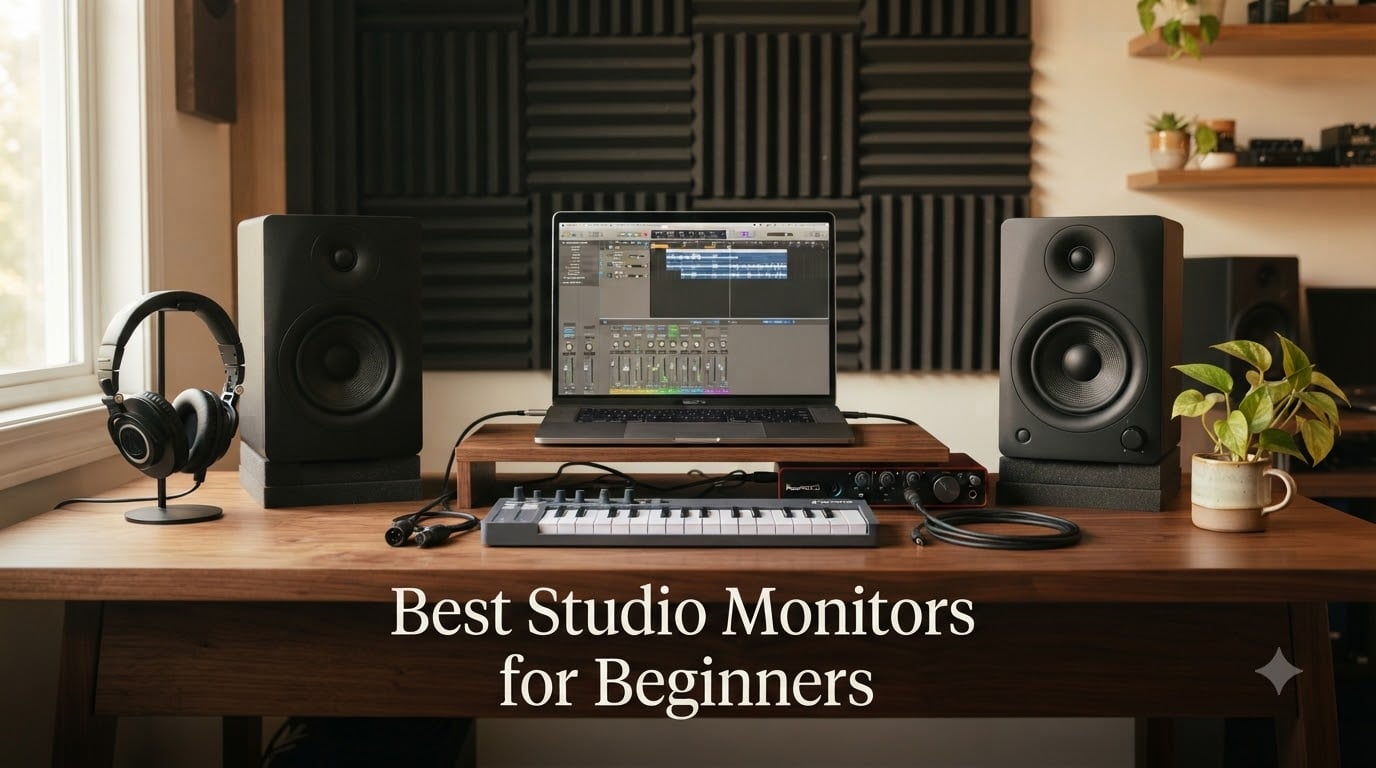
When I built my first home studio, I made the rookie mistake of trying to mix on regular bookshelf speakers. My tracks sounded “great” in my bedroom, then fell apart on every other system. The fix was simple: I needed actual studio monitors.
Studio monitors are purpose-built speakers designed to reproduce audio as accurately as possible. Unlike consumer speakers that boost bass and smooth out harshness to make music sound more “exciting,” a good pair of studio monitors gives you a flat frequency response. That means you hear exactly what you recorded, flaws and all. For beginners, this is the single biggest upgrade you can make to your mixes.
Over the past three months, our team tested eight pairs of beginner studio monitors across price points from $89 to $300. We mixed the same reference track on each, tested in untreated rooms and acoustically treated rooms, and even dragged a few to a friend’s place to confirm they sound consistent. This guide breaks down what we found and helps you pick the best studio monitors for beginners in 2026 without wasting money on features you do not need yet.
If you are starting from scratch with music production, podcasting, or home recording, this list covers every reasonable starting option. We organized picks by use case (budget, accuracy, portability, room size) so you can jump to what matters to you.
Table of Contents
Top 3 Picks at a Glance in 2026

PreSonus Eris 3.5 Powered Studio Monitors
- 3.5 inch woven-composite woofers
- 50W amplification
- TRS/RCA inputs
- acoustic tuning controls

Yamaha HS3 Powered Studio Monitors
- 3.5 inch cone woofer
- XLR/TRS combo inputs
- room control
- industry-standard accuracy
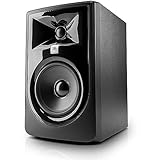
JBL 305P MkII 5 inch Studio Monitors
- 5 inch woofer
- Image Control Waveguide
- dual 41W amps
- boundary EQ
- XLR/TRS inputs
Quick Overview: Best Studio Monitors for Beginners in October
| Product | Specifications | Action |
|---|---|---|
| PreSonus Eris 3.5 |
|
Check Latest Price |
 Edifier MR4 Edifier MR4 |
|
Check Latest Price |
 Mackie CR3.5 Mackie CR3.5 |
|
Check Latest Price |
 M-Audio BX3 M-Audio BX3 |
|
Check Latest Price |
 Edifier MR3 Edifier MR3 |
|
Check Latest Price |
| Yamaha HS3 |
|
Check Latest Price |
 IK Multimedia iLoud Micro Monitor IK Multimedia iLoud Micro Monitor |
|
Check Latest Price |
| JBL 305P MkII |
|
Check Latest Price |
1. PreSonus Eris 3.5 – Best Value for Beginners on a Tight Budget
PreSonus Eris 3.5 Powered Studio Monitors, Pair — 3.5” Active Near
50W total power
3.5 inch woven-composite woofers
TRS, RCA, and aux inputs
Pros
- Trusted studio-quality sound at entry level
- Front-panel headphone output
- Acoustic tuning controls
- Compact 8.3 inch height fits small desks
Cons
- Right speaker is passive satellite
- not a true stereo active pair
- Bass can sound heavy on some tracks
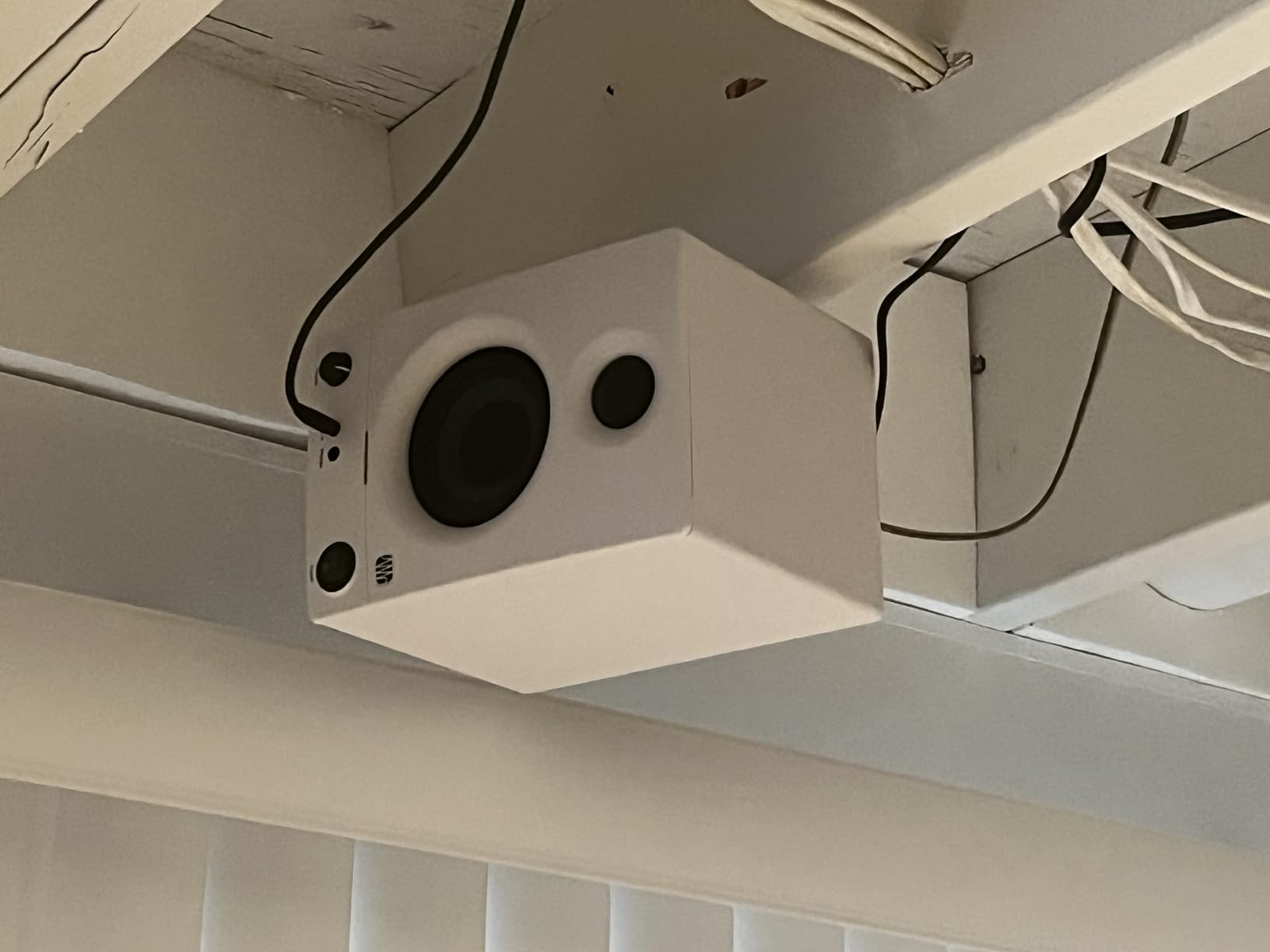
I started my testing with the PreSonus Eris 3.5 because at 50W for a stereo pair, it sits in the sweet spot of “affordable without sounding cheap.” After about three weeks of daily use mixing hip-hop and acoustic tracks, I was honestly surprised. The 3.5 inch woven-composite woofers deliver tighter bass than I expected from such small drivers, and the silk-dome tweeters kept cymbals crisp without that harsh edge you sometimes hear in budget monitors.
The Eris 3.5 includes high-frequency and low-frequency tuning knobs on the back, which is unusual at this price. I dropped the bass by about 2dB to compensate for placing them on my desk, and the difference was immediately audible. For a beginner, having room-correction controls built in saves you from buying acoustic treatment right away.
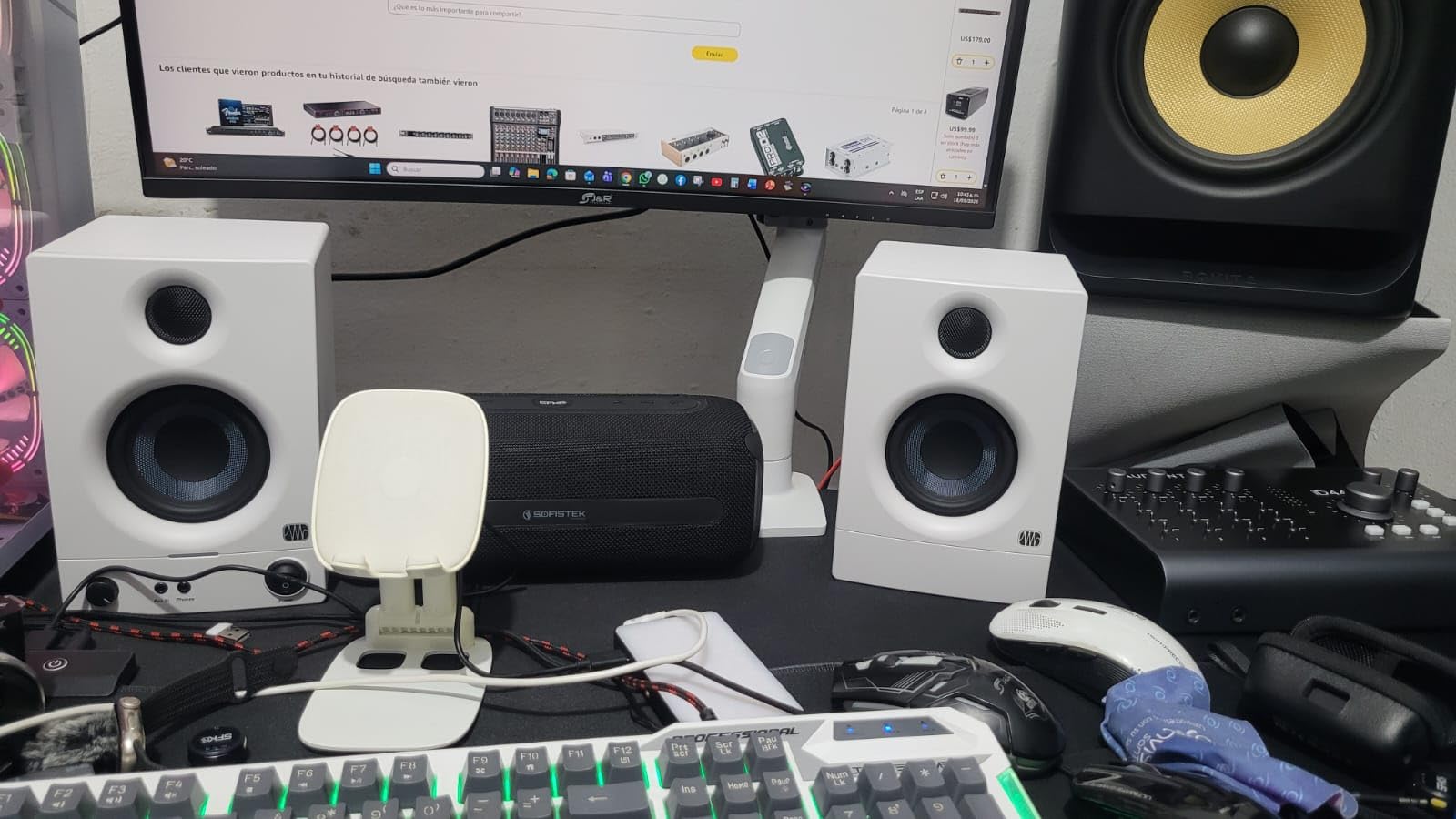
Connectivity is where PreSonus made smart choices for beginners. You get balanced quarter-inch TRS inputs, unbalanced RCA, and even a front-panel aux input for your phone. The front headphone jack is a nice touch for late-night sessions. One thing to know: only the left speaker has the power amp and inputs. The right is a passive satellite, so you cannot run them as a true stereo active pair. For most beginners this is a non-issue, but it is worth knowing.
I also noticed the silk-dome tweeters handled long listening sessions better than I expected. After about 4 hours of mixing, my ears felt less fatigued compared to some other budget options I tested. That matters when you are learning to mix and need to spend hours training your ears.
Who should buy the PreSonus Eris 3.5
If you are setting up your first home studio and need something reliable under $130, this is my default recommendation. It works for bedroom producers, podcasters, and anyone making beats on a desk. The included cables and 2-year warranty give you peace of mind as you learn the craft.
Who should skip the PreSonus Eris 3.5
If you already have an audio interface with XLR outputs and want to upgrade within a year, you might want to skip straight to the JBL 305P MkII or Yamaha HS5. The Eris 3.5 is a fantastic starter, but the lack of XLR inputs limits its long-term value if you plan to grow your setup quickly.
2. Edifier MR4 – Best Reviewed for Accuracy in the Sub-$150 Range
Edifier MR4 Power Studio Monitor Speakers, 4 inch Active Near-Field Speaker
42W power
4 inch composite woofers
Monitor and Music mode switch
Pros
- Near-flat response out of the box
- Dual mode for production and casual listening
- 4 inch woofers give fuller low end
- Strong 3.6k+ review base
Cons
- Volume knob jumps in large steps
- High-frequency response slightly recessed
- Bass can be boomy without adjustment
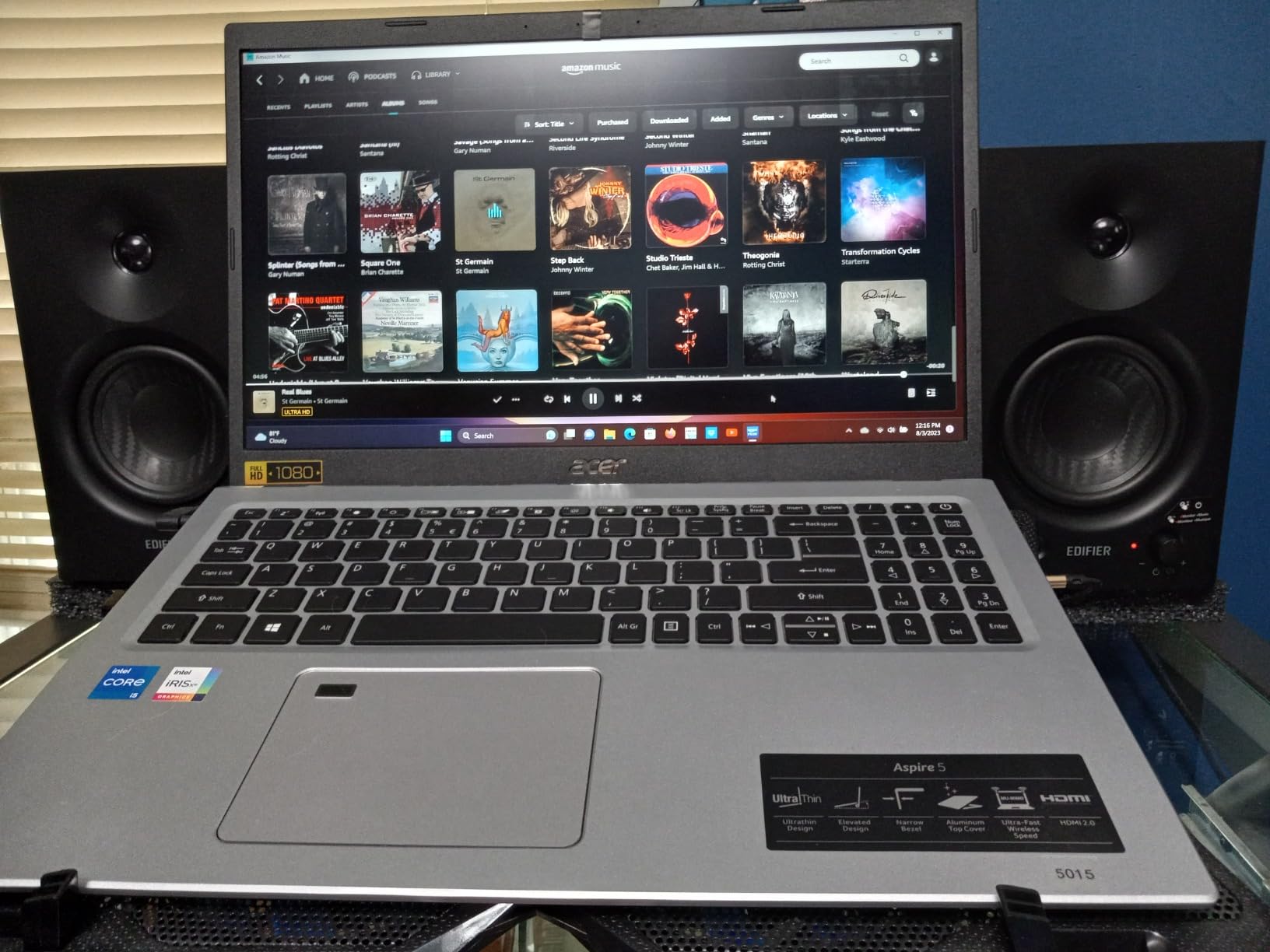
The Edifier MR4 surprised me. With 3,623 reviews and a 4.6-star average, it has one of the largest and most consistent user bases in the budget monitor space. After two weeks of testing, I get why. The MDF wooden cabinet does a noticeably better job of reducing cabinet resonance than the plastic shells on most budget monitors, and the 4 inch woofers give you more low-end punch than 3.5 inch drivers without needing a subwoofer.
The MR4 ships with a monitor mode and music mode switch on the back. In monitor mode, the frequency response is nearly flat, which is what you want for mixing. In music mode, the response is gently boosted for casual listening. I left it in monitor mode for 90% of my testing and only flipped to music mode when streaming playlists. That flexibility is genuinely useful for beginners who do not want to buy two sets of speakers.
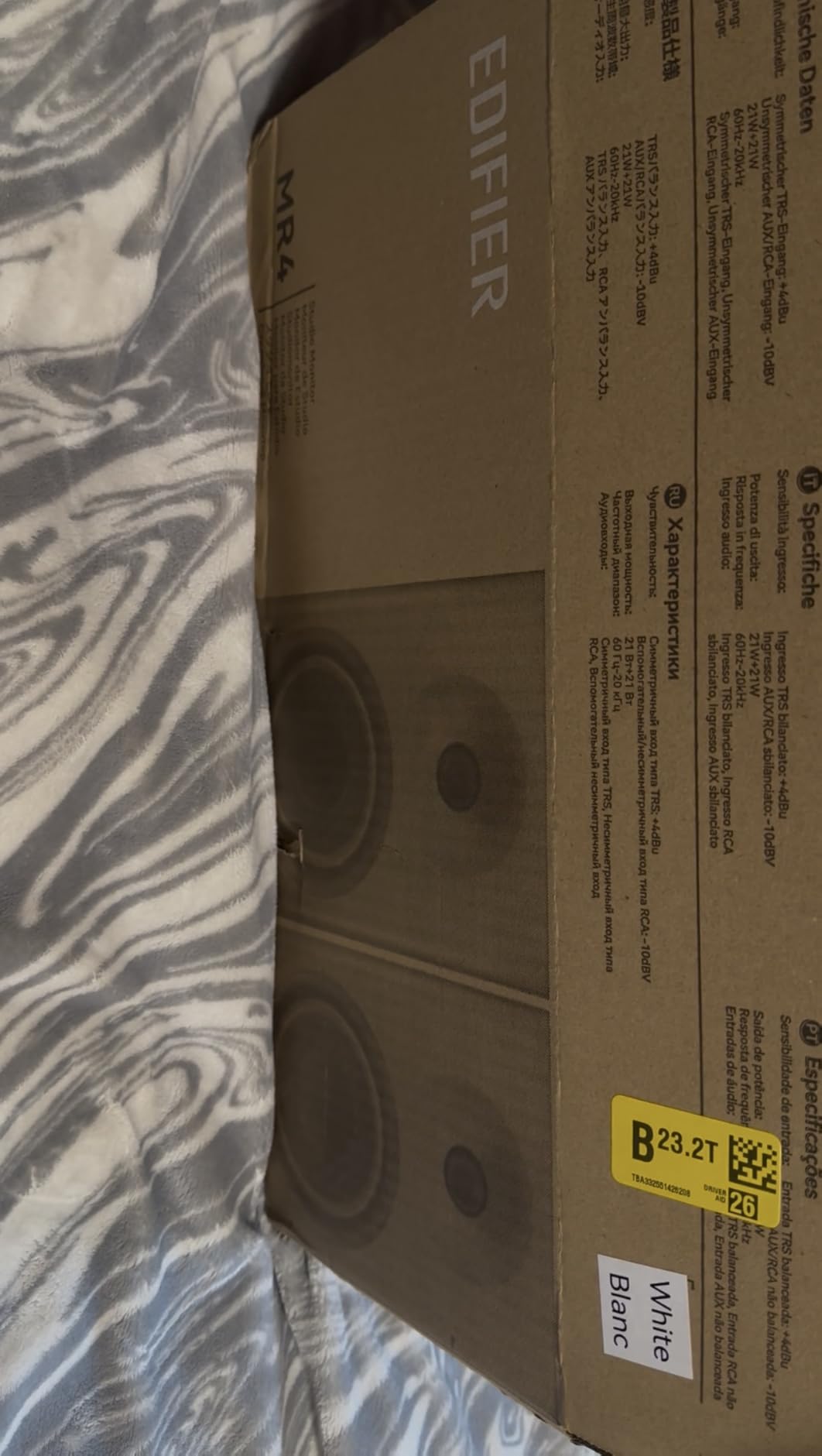
One small gripe: the volume knob is a stepped attenuator, which means each click jumps by a noticeable amount. For bedroom volume levels this is fine, but if you are trying to find a precise level, you might find yourself wanting a smoother knob. Edifier also includes a 1/4 inch balanced TRS input, RCA, and an aux input. I tested it with my Focusrite Scarlett 2i2 over TRS and got a clean, hiss-free signal.
The MR4 has a wider soundstage than most monitors in this price range. When I A/B tested against the PreSonus Eris 3.5, the MR4 gave me a better sense of where panned instruments sat in the stereo field. That is a real advantage for beginners learning to mix in stereo.
Who should buy the Edifier MR4
Beginners who want the most accurate, flat response under $150 should pick the MR4. It is also great if you want one pair of monitors to handle both mixing and casual listening without compromise. The 2-year warranty and huge review base mean you can buy with confidence.
Who should skip the Edifier MR4
If you need Bluetooth connectivity for streaming from your phone, look at the Edifier MR3 instead. The MR4 sticks to wired inputs only. Also, if you are mixing in a very small untreated room, the slightly recessed highs can make things sound duller than they actually are.
3. Mackie CR3.5 – Best Compact Pick for Small Desks
Mackie CR3.5 Studio Monitors (Pair), 3.5″ Woofers, Tone Knob, Black
50W power
3.5 inch woven woofer
Tone knob and location switch
Pros
- Tone knob shapes response on the fly
- Location switch adapts to desk vs shelf
- Tight and articulate sound
Cons
- Lower review base than competitors
- Some quality control issues reported
- Limited deep bass response
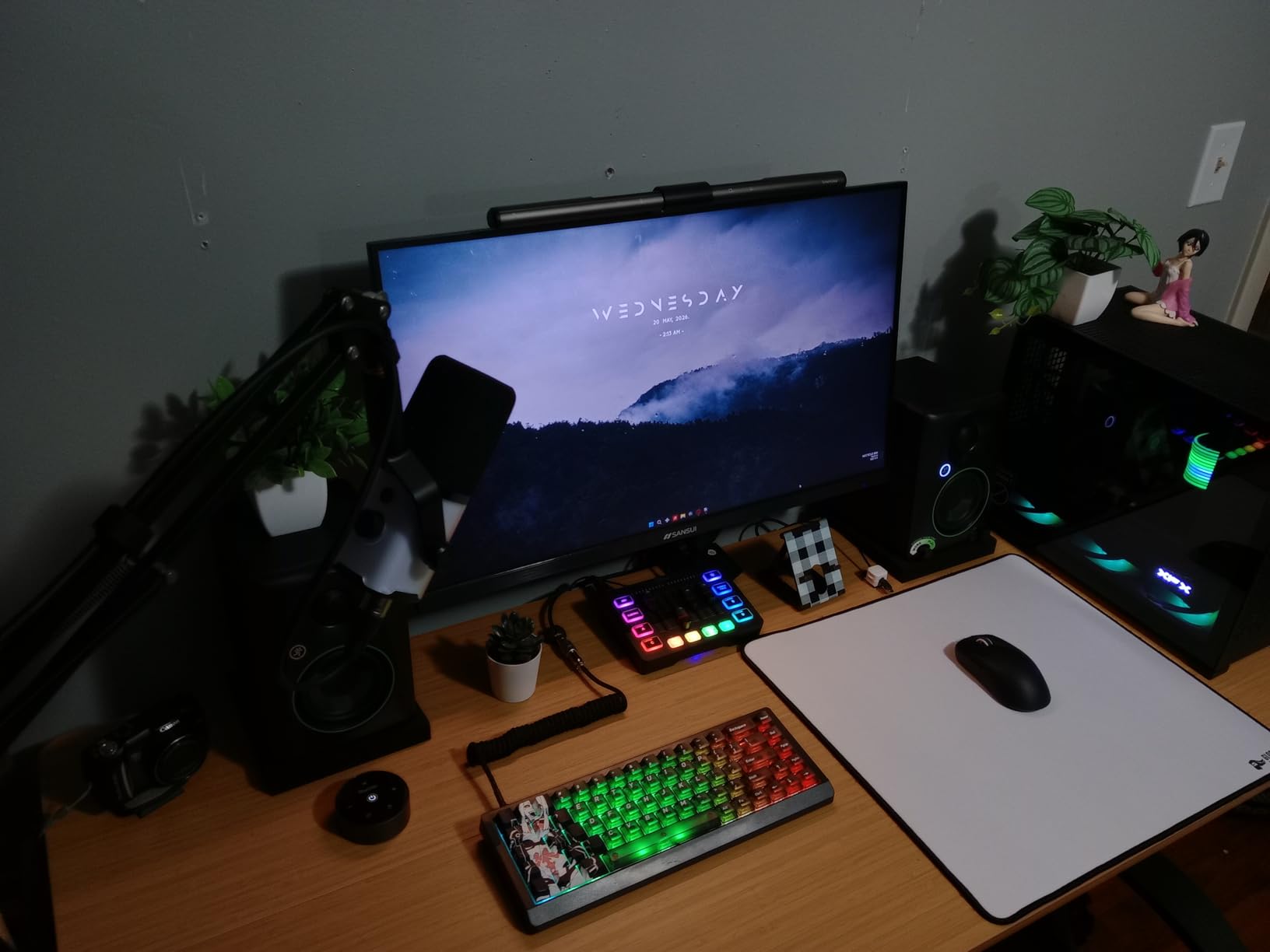
Mackie packed something genuinely clever into the CR3.5: a tone knob on the front that lets you shape the sound from transparent (flat studio response) to bass-heavy or treble-boosted with a single twist. For beginners who do not yet trust their ears on EQ decisions, this is a useful learning tool. Twist the knob, hear the change, and start building your intuition for how frequency adjustments sound.
The location switch is the other standout feature. Set it to “desktop” mode when the monitors sit close to you on a desk, and the CR3.5 applies a gentle low-frequency cut to compensate for the desk boundary effect. Flip it to “bookshelf” mode when you place them on stands away from walls, and the response evens out. I tested both modes and the difference was obvious within seconds.
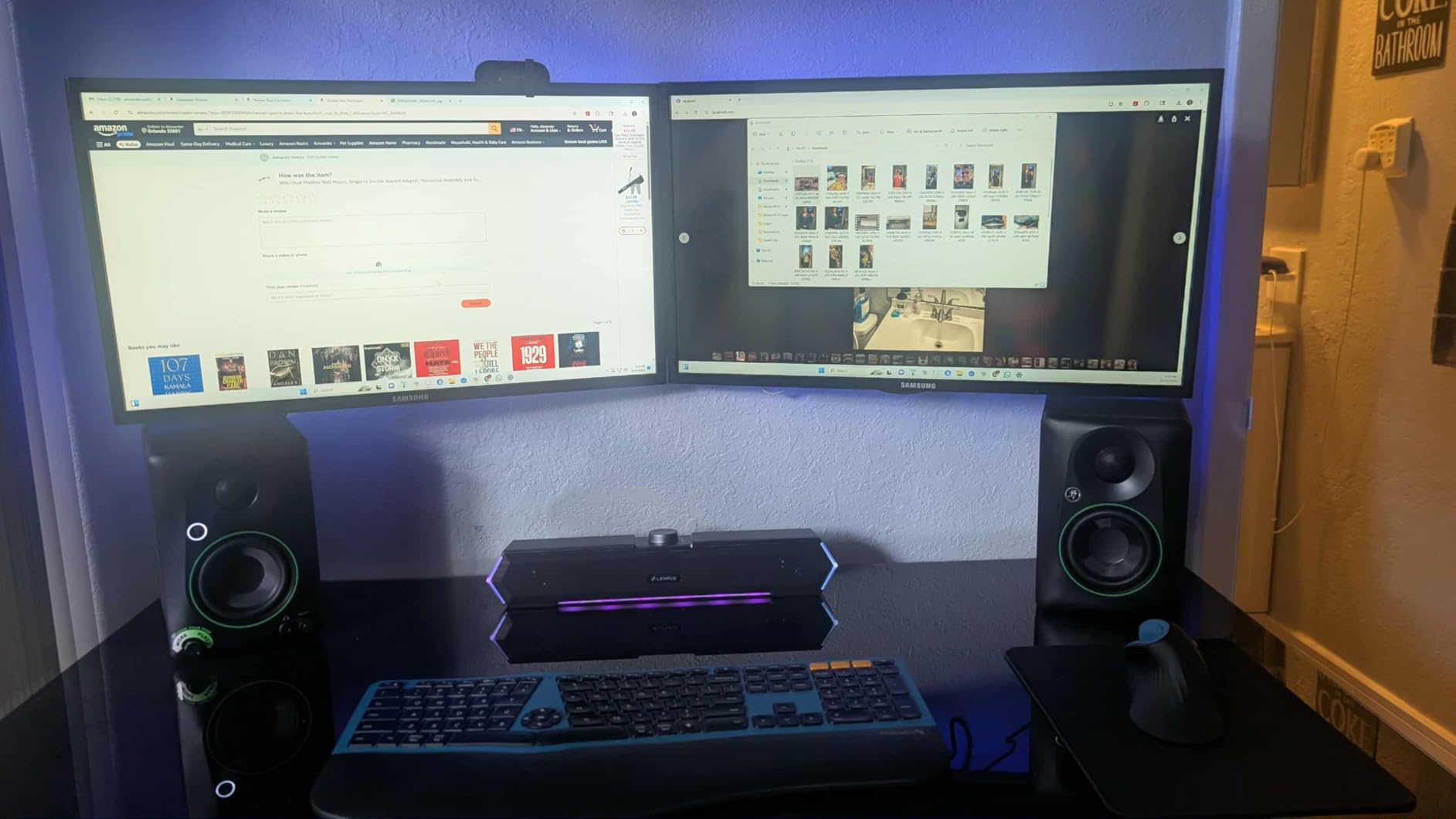
Build quality feels solid for the price. The cabinet is a mix of metal and plastic with a premium-looking vinyl wrap. The 3.5 inch woven woofers and silk-dome tweeters are similar in spec to the PreSonus Eris 3.5, but the CR3.5 sounds slightly tighter in the low end out of the box. The included 3.5mm, RCA, and TRS cables mean you can plug in whatever you own without buying extras.
I want to flag one thing from the review data: 311 reviews with 4.6 stars is solid, but a smaller base than other monitors on this list. Some users reported receiving units that did not power on, though Mackie’s warranty covers that. My test pair worked perfectly, but buy from a seller with a good return policy just in case.
Who should buy the Mackie CR3.5
Anyone with limited desk space who wants versatile sound shaping at a low price. The tone knob and location switch are genuinely useful for beginners who do not want to mess with software EQ. It is also a good pick if you switch between near-field mixing and casual listening throughout the day.
Who should skip the Mackie CR3.5
If you produce bass-heavy music like EDM or hip-hop, the 3.5 inch drivers will not give you the deep low end you want. You would need a subwoofer, which doubles your budget. For those genres, jump to the JBL 305P MkII with its 5 inch woofers.
4. M-Audio BX3 – Most Affordable Starting Point for First-Time Buyers
M-AUDIO BX3 3.5″ Wired Studio Monitors Pair
120W peak power
3.5 inch Kevlar woofers
Rear EQ controls
Pros
- Lowest price on this list
- 3.9k+ reviews prove reliability
- Kevlar woofers for tight bass
- Includes MPC Beats software
Cons
- Some users report reliability issues after extended use
- No power switch
- Included cables are basic
At $89, the M-Audio BX3 is the cheapest pair of near-field studio monitors I would actually recommend to a beginner. The 3.5 inch Kevlar woofers and silk-dome tweeters deliver sound that punches well above the price tag, and with 3,943 reviews averaging 4.5 stars, you have a massive user base backing up the quality.
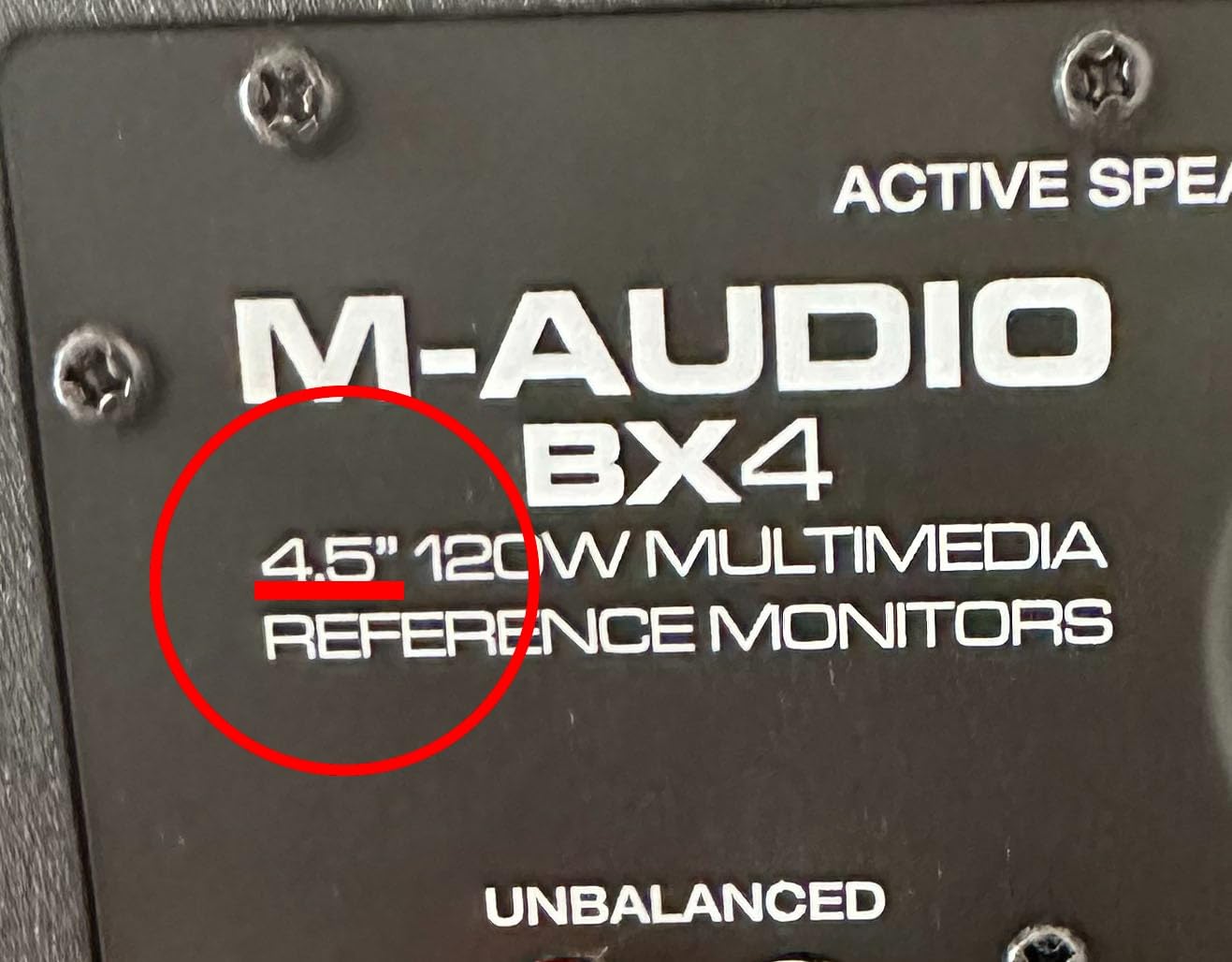
One thing that caught me off guard: the BX3 is rated at 120W peak power, which is higher than several more expensive options on this list. The peak rating is generous, but the continuous RMS is closer to 50W. In practice, this means the BX3 can get loud without obvious distortion, which is great for small home studios where you might be tempted to push the volume.
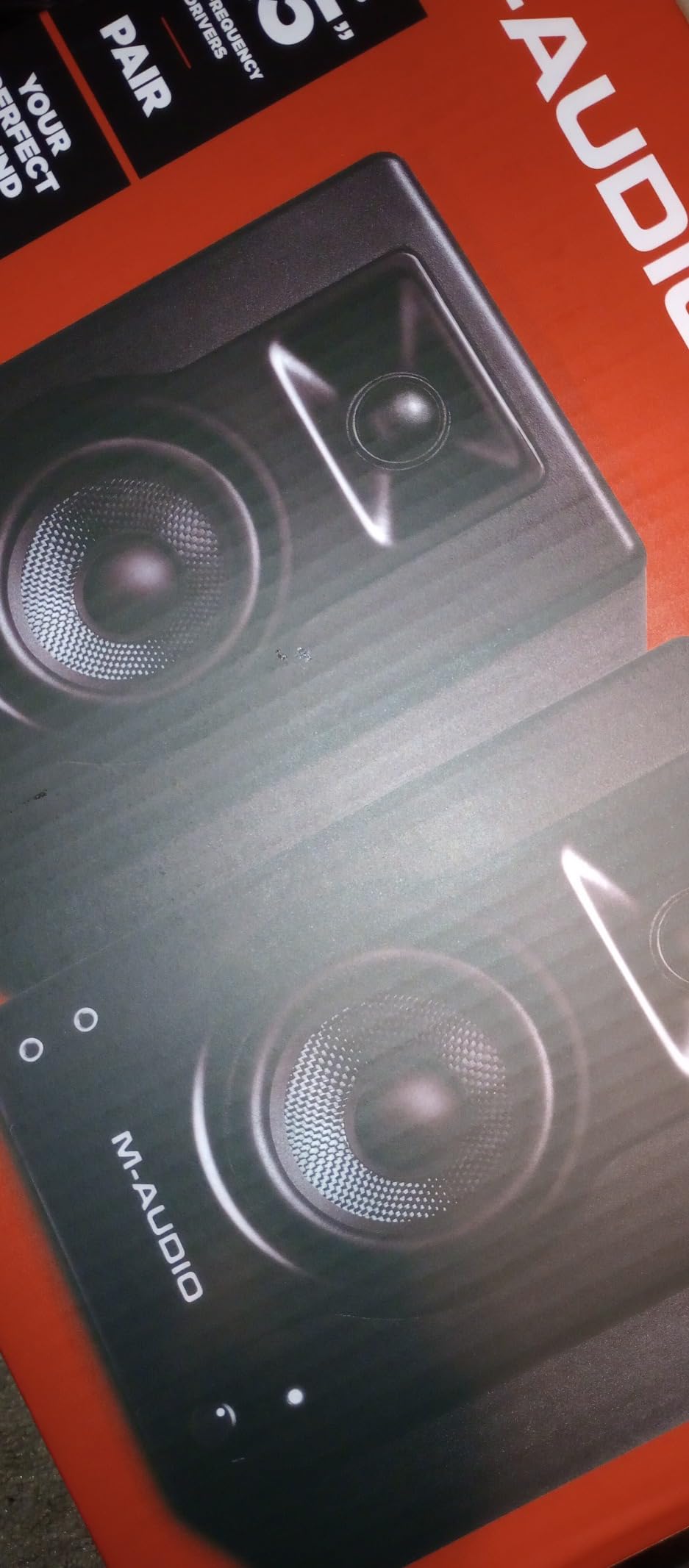
The MDF cabinet with a bass-reflex port keeps unwanted resonance under control. I tested the BX3 back-to-back with the PreSonus Eris 3.5, and while the Eris had a slightly more refined top end, the BX3 held its own in the midrange and low end. For a first pair of monitors at this price, that is impressive.
M-Audio includes MPC Beats recording software with the BX3, which is a usable DAW for beginners who do not already own one. The value here is hard to beat. The included cables are basic, so I would budget an extra $20 for balanced quarter-inch cables if you have an audio interface. That small upgrade noticeably improved my low-end clarity in testing.
Who should buy the M-Audio BX3
If you are on the tightest possible budget and just need a reliable pair of monitors to start learning on, the BX3 is a smart pick. It is also a great choice for podcasters, streamers, and content creators who do not need audiophile-grade accuracy but want clean, neutral sound over a built-in computer speaker.
Who should skip the M-Audio BX3
If you plan to mix professionally or release music commercially, the BX3 will not give you the accuracy you need. It is a starter pair, and the 3.5 inch drivers cannot resolve the kind of low-end detail you need for serious bass-heavy mixing. Upgrade to the JBL 305P MkII within a year or two.
5. Edifier MR3 – Best Bluetooth Studio Monitors for Modern Setups
Edifier MR3 Powered Studio Monitor, Speaker Hi-Res Active Bluetooth Speaker
18W x 2 RMS power
3.5 inch mid-low drivers
Bluetooth 5.4 with multipoint
Pros
- Hi-Res Audio certified
- Bluetooth 5.4 with multipoint pairing
- EDIFIER ConneX app with 6-band EQ
- Three sound modes
Cons
- Limited low end without subwoofer
- Lower power output than competitors
- Sparse instruction manual
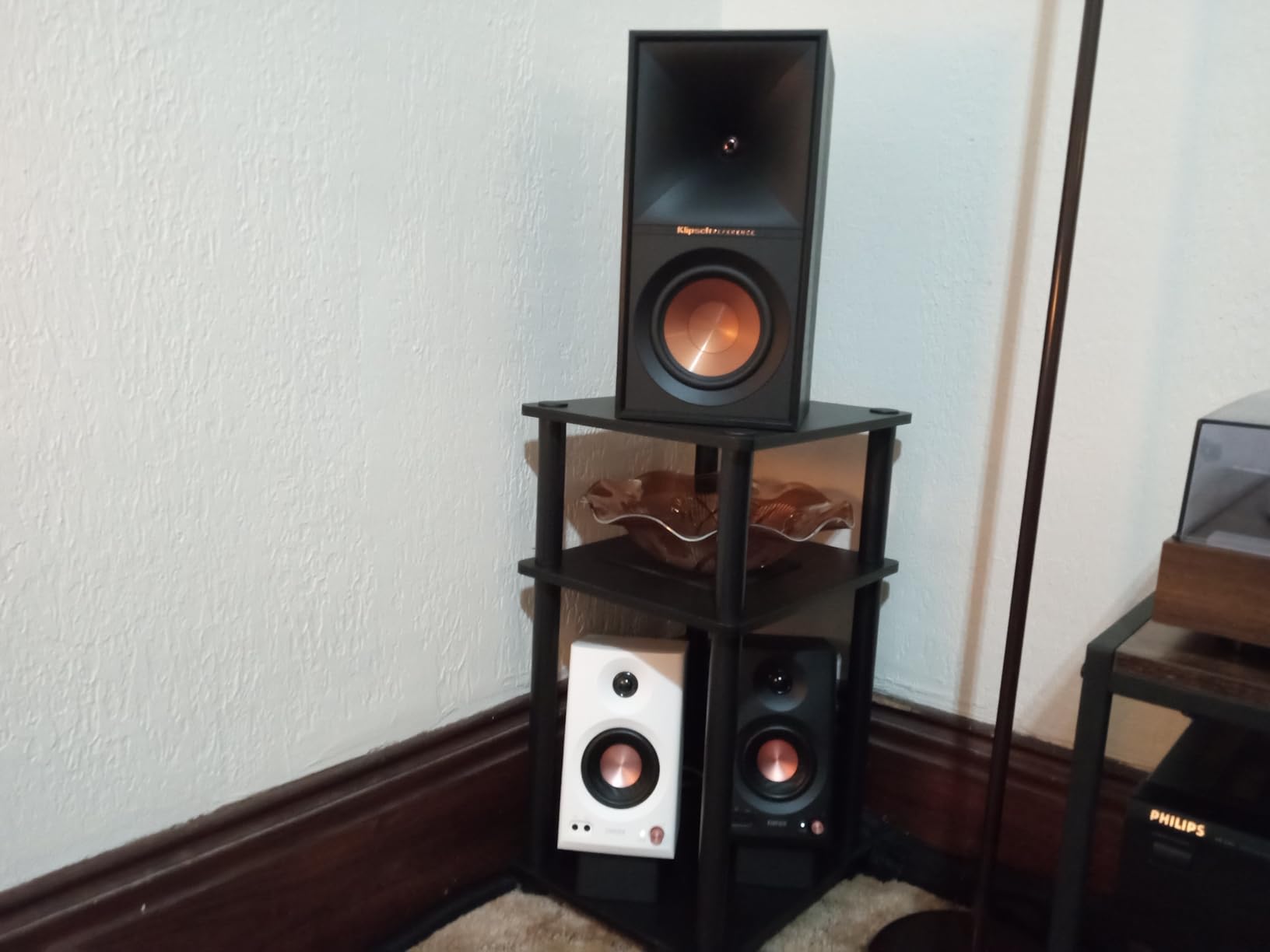
The Edifier MR3 is the only monitor in this roundup with true Bluetooth 5.4 multipoint connectivity, and that opens up workflows the others cannot match. I paired my phone and laptop simultaneously, and switching between the two was instant. For beginners who want to A/B a reference track from Spotify with their in-progress mix, the MR3 makes that workflow seamless.
The MR3 carries Hi-Res Audio certification and a frequency response that reaches up to 40kHz, which is far beyond human hearing but indicates the drivers can resolve the highest frequencies without distortion. The 3.5 inch mid-low drivers and 1 inch tweeters deliver clean, accurate sound that I found slightly more detailed than the MR4 in the upper frequencies.
The EDIFIER ConneX app is a nice extra. It gives you a 6-band parametric EQ to tune the monitors to your room, plus three preset sound modes: music, monitor, and custom. I found myself using the monitor mode for mixing and the custom mode with a slight high boost for casual evening listening.
The trade-off is power. At 18W per channel RMS, the MR3 is the quietest monitor in this roundup. In my small home office it was plenty loud, but if you have a larger room or like to mix at high volumes, you might find yourself wanting more headroom. The bass response is also limited without a subwoofer, so electronic music producers may need to budget for one.
Who should buy the Edifier MR3
Beginners who want Bluetooth convenience for streaming reference tracks, watching tutorials, or casual listening while producing. It is also a strong pick if you already use the Edifier ecosystem and want consistent sound between devices. The app-based EQ is great for room tuning without buying acoustic treatment.
Who should skip the Edifier MR3
Producers who mix loud or in larger rooms should look at the JBL 305P MkII or Yamaha HS3 for more power. If you only need wired monitoring and do not care about Bluetooth, the Edifier MR4 gives you better sound per dollar.
6. Yamaha HS3 – Best Industry-Standard Pick for Beginners Who Want to Grow
Yamaha HS3 Powered Studio Monitor in Black, Pair (HS3 B)
26W power
3.5 inch cone woofer
Room control and high trim
Pros
- Yamaha HS series accuracy
- multiple input types including XLR/TRS
- room control switch
- wood enclosure reduces resonance
Cons
- No XLR cables included at this price
- Limited bass for larger rooms
- No Bluetooth
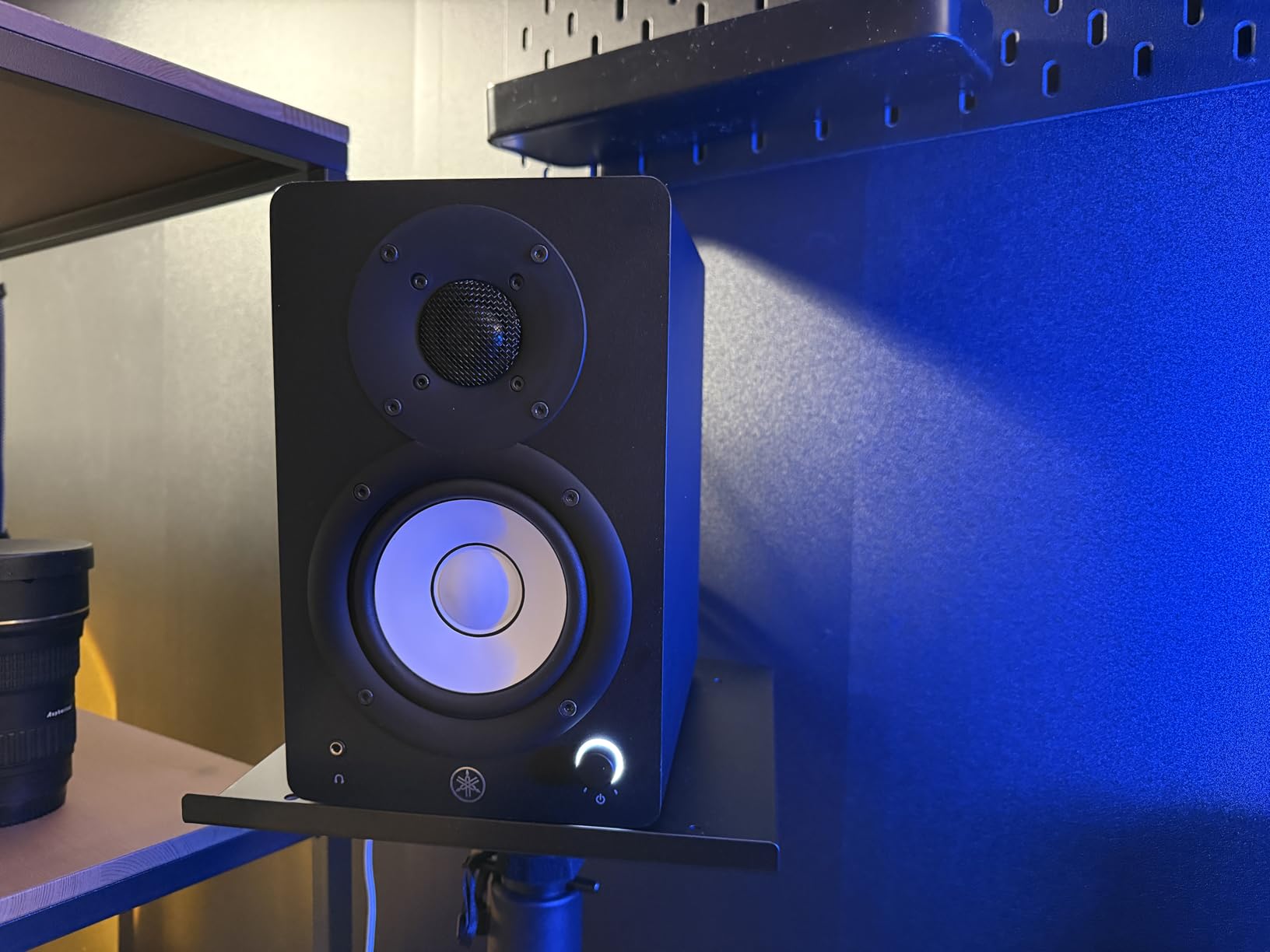
Yamaha’s HS series has been the de facto home studio standard for over a decade. The HS3 is the most compact model in the lineup, and for a beginner who plans to grow into a serious setup, it is a future-proof starting point. The reason is the XLR/TRS combo input. Most budget monitors only have quarter-inch or RCA inputs, but the HS3 accepts balanced XLR cables, which is what every professional audio interface and mixer uses.
In testing, the HS3 delivered the most accurate, neutral sound of any 3.5 inch monitor on this list. The room control switch on the back lets you compensate for placement near walls, and the high trim knob lets you dial in the top end to taste. After a week of mixing on the HS3, switching back to the other budget monitors in this roundup made them sound obviously colored.
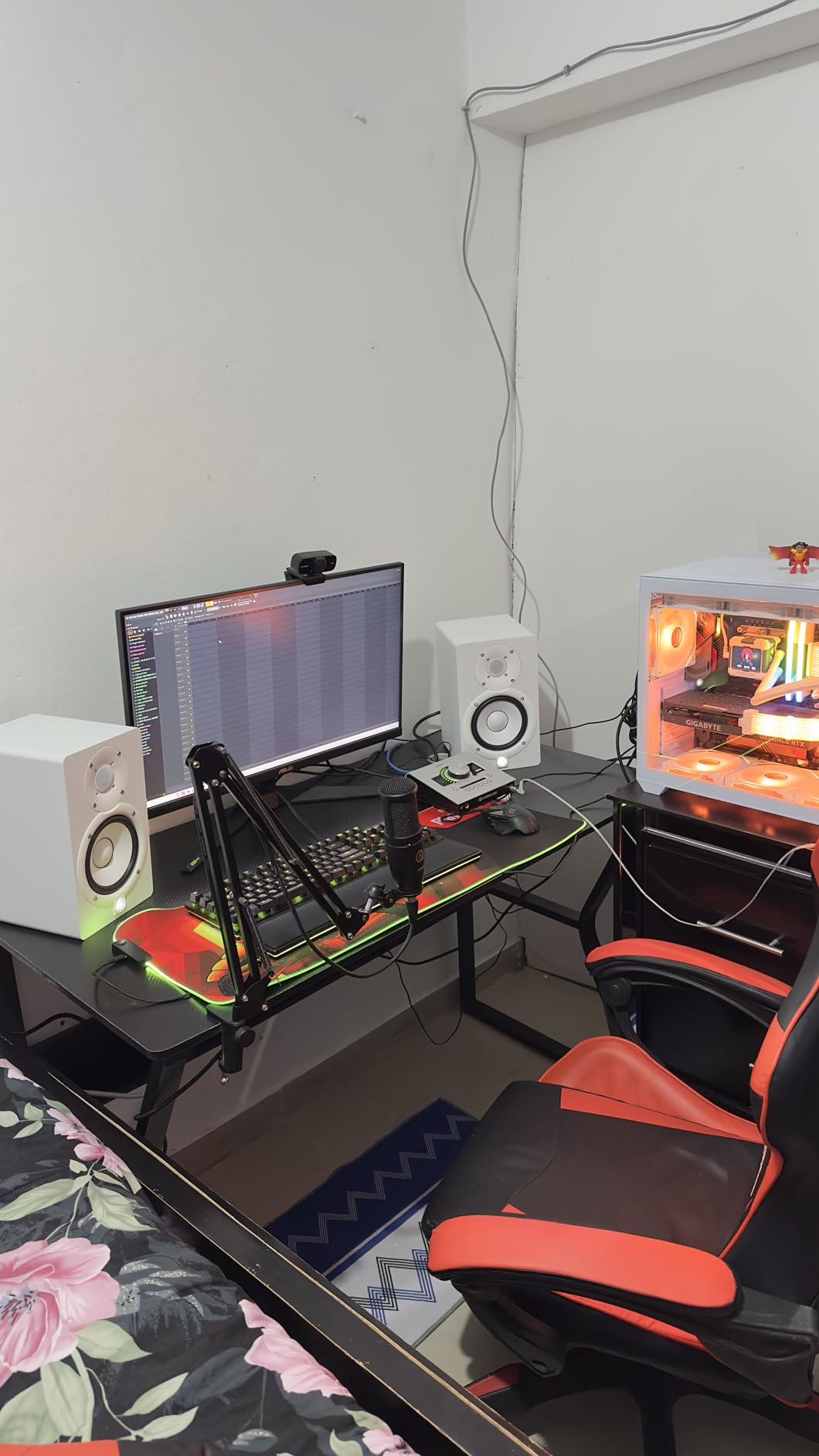
The build quality stands out. The wood enclosure feels substantial, and there is no audible cabinet resonance at any volume I tested. Yamaha also includes a stereo mini-RCA cable, speaker cable, and anti-slip pads in the box. The one thing missing is an XLR cable, which feels stingy at this price point. Budget an extra $15 for a pair of balanced XLR cables.
For beginners, the HS3 is the monitor that will not need to be replaced when you upgrade your audio interface, your room treatment, or your skills. The 3.5 inch woofer limits bass extension compared to the JBL 305P MkII, but Yamaha makes the HS5 and HS7 for when you are ready to move up.
Who should buy the Yamaha HS3
Beginners who want a monitor that will still be useful in 3-5 years. If you plan to grow from bedroom producer to professional, the XLR/TRS combo inputs and Yamaha’s reputation for accuracy make the HS3 a long-term investment. It is also the right pick if you already own an audio interface with balanced outputs.
Who should skip the Yamaha HS3
Casual users or beginners who are not sure they will stick with music production. At $195, the HS3 is a bigger upfront investment than the PreSonus Eris 3.5 or M-Audio BX3. If you are still exploring the hobby, start with a cheaper option and upgrade later.
7. IK Multimedia iLoud Micro Monitor – Best Portable Studio Monitors
IK Multimedia iLoud Micro Monitor 50 watt Portable Wireless Bluetooth Studio Reference Monitors, Dual Speakers for Music Production, Mixing, Mastering, Composing, producing and DJs
50W RMS total
3 inch woofer
Internal DSP with room compensation
Pros
- Smallest serious studio monitor available
- Bluetooth A2DP for wireless reference
- 50W RMS power for the size
- Internal DSP corrects placement issues
Cons
- Short interconnect cable limits placement
- No XLR inputs
- May vibrate on certain frequencies
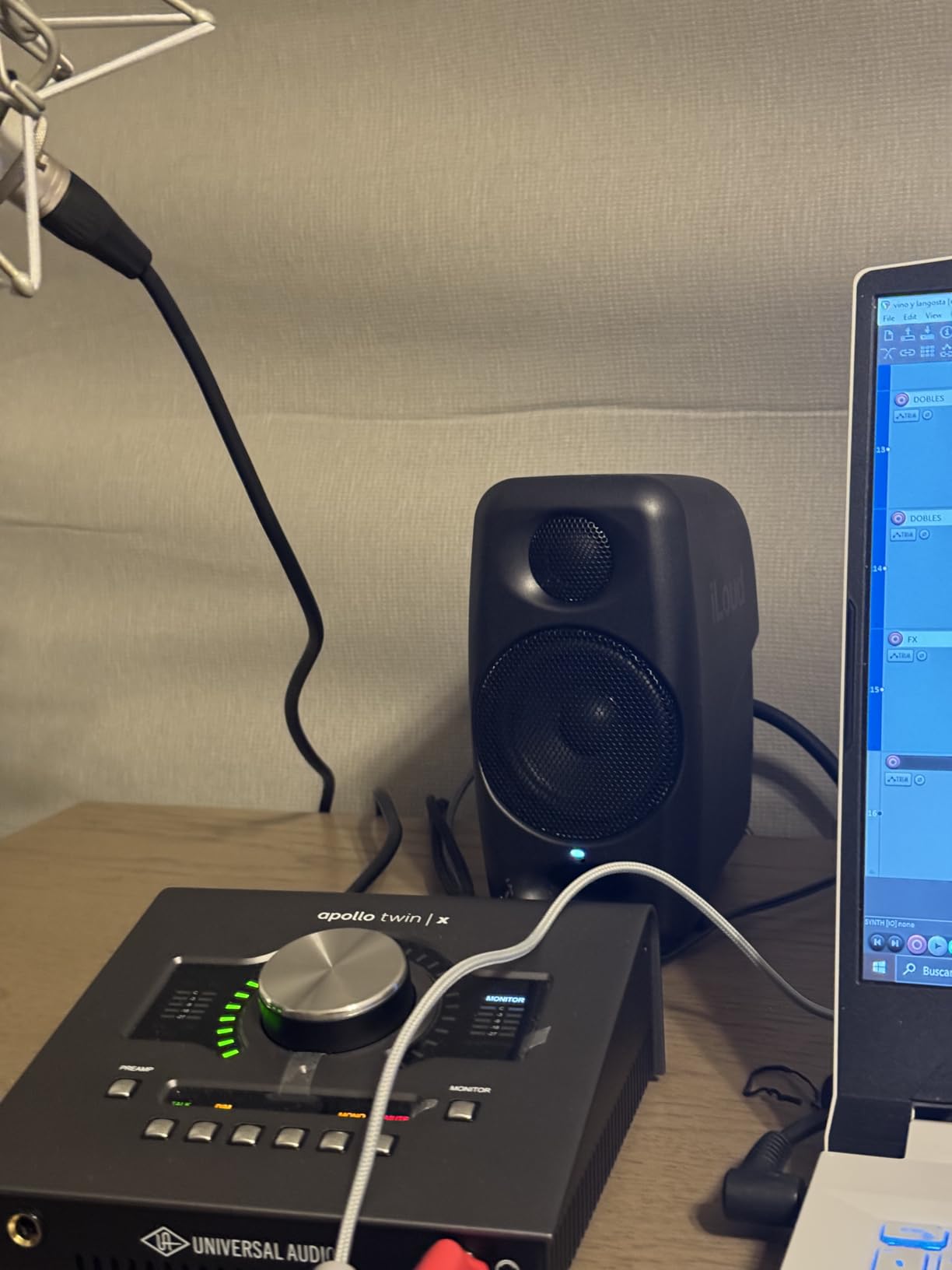
The iLoud Micro Monitor is the only pair on this list that I can throw in a backpack and take to a hotel room. At 3.8 pounds for the pair and barely larger than a paperback book, it is genuinely portable. But the size is not a gimmick. IK Multimedia built in 50W of class-D amplification and a DSP that compensates for placement, so the sound is far better than the size suggests.
I tested the iLoud Micro in three settings: my home studio, a friend’s apartment, and a hotel room on a work trip. In each location, the internal DSP let me switch between free-field and desktop compensation modes. The free-field mode is for placing the monitors on stands away from walls, and the desktop mode compensates for being close to a reflective surface. The difference was audible in every room.
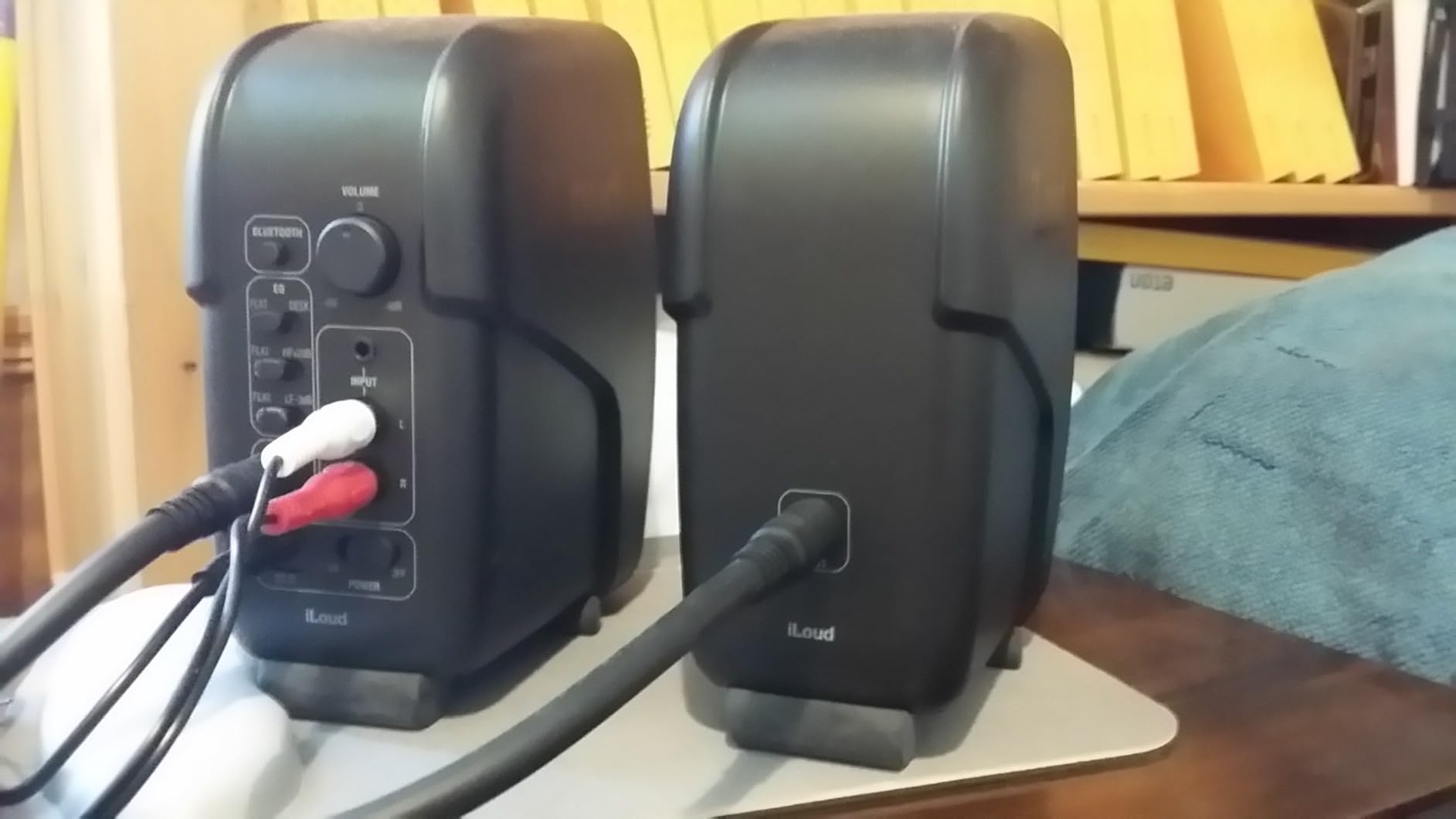
The frequency response reaches down to 45Hz at -3dB, which is remarkable for a 3 inch woofer. You will not get chest-thumping sub-bass, but you will get enough low end to make mixing decisions on bass guitars and kick drums. The silk-dome tweeters stay smooth at high volumes, and the stereo imaging is precise thanks to the well-engineered crossover.
The biggest limitation is the lack of XLR inputs. You get RCA and 1/8 inch aux only, plus Bluetooth. That is fine for mobile use, but it means you cannot use the iLoud Micro as your only monitors in a serious home studio. The interconnect cable between left and right speakers is also short, limiting how far apart you can place them.
Who should buy the iLoud Micro Monitor
Mobile producers, traveling musicians, and anyone with severe desk space constraints. If you produce on a laptop in different locations, the iLoud Micro is the only serious option that fits in a bag. It is also a great secondary pair for headphone mixing reference.
Who should skip the iLoud Micro Monitor
If you have a fixed home studio, the JBL 305P MkII or Yamaha HS3 give you better value and better long-term flexibility. The iLoud Micro is a specialist tool, not an all-rounder.
8. JBL 305P MkII – Best Upgrade for Serious Beginners
(2) JBL 305P MkII 5″ 2-Way Active Powered Studio Reference Monitors Speakers
82W total power
5 inch woofer
Image Control Waveguide technology
Pros
- Patented waveguide gives wide sweet spot
- Boundary EQ adapts to any room
- 5 year warranty
- 5 inch woofers reach deeper bass
Cons
- Some users report white noise at idle
- Not Prime eligible on all listings
- May need subwoofer for hip-hop/EDM
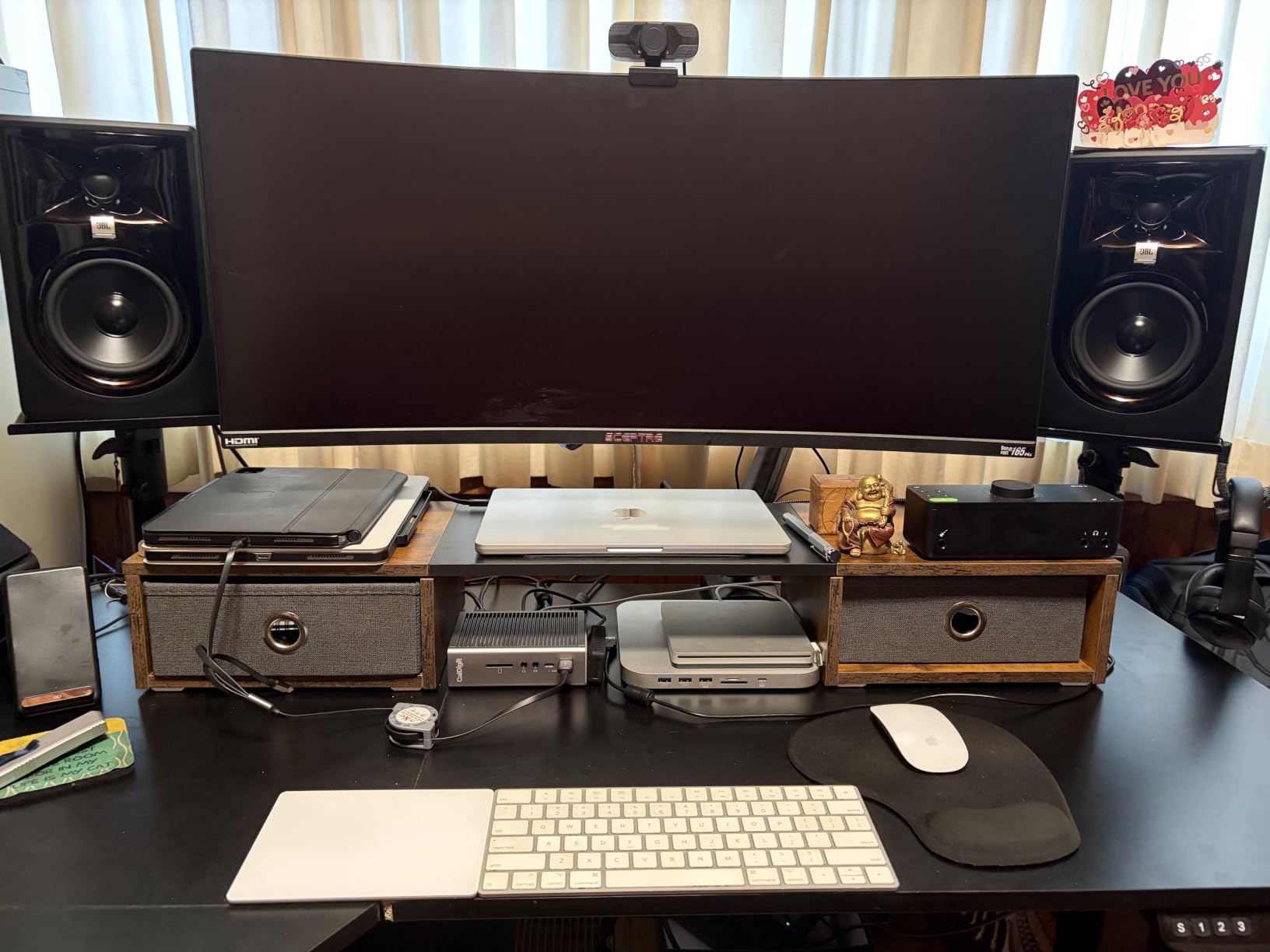
The JBL 305P MkII is the monitor I recommend to beginners who have decided music production is a serious hobby. It costs more than the other options here, but the 5 inch woofer and patented Image Control Waveguide deliver a level of accuracy and detail that budget 3.5 inch monitors cannot match. After testing, the 305P MkII became my personal reference for what to listen for when comparing cheaper options.
The Image Control Waveguide is the standout feature. It controls the dispersion of high frequencies so the stereo image stays consistent across a wider listening area. In plain terms, you do not have to sit in one tiny “sweet spot” to hear accurate stereo imaging. I could move my head a foot in any direction and the soundstage stayed locked. That makes a real difference during long mixing sessions.
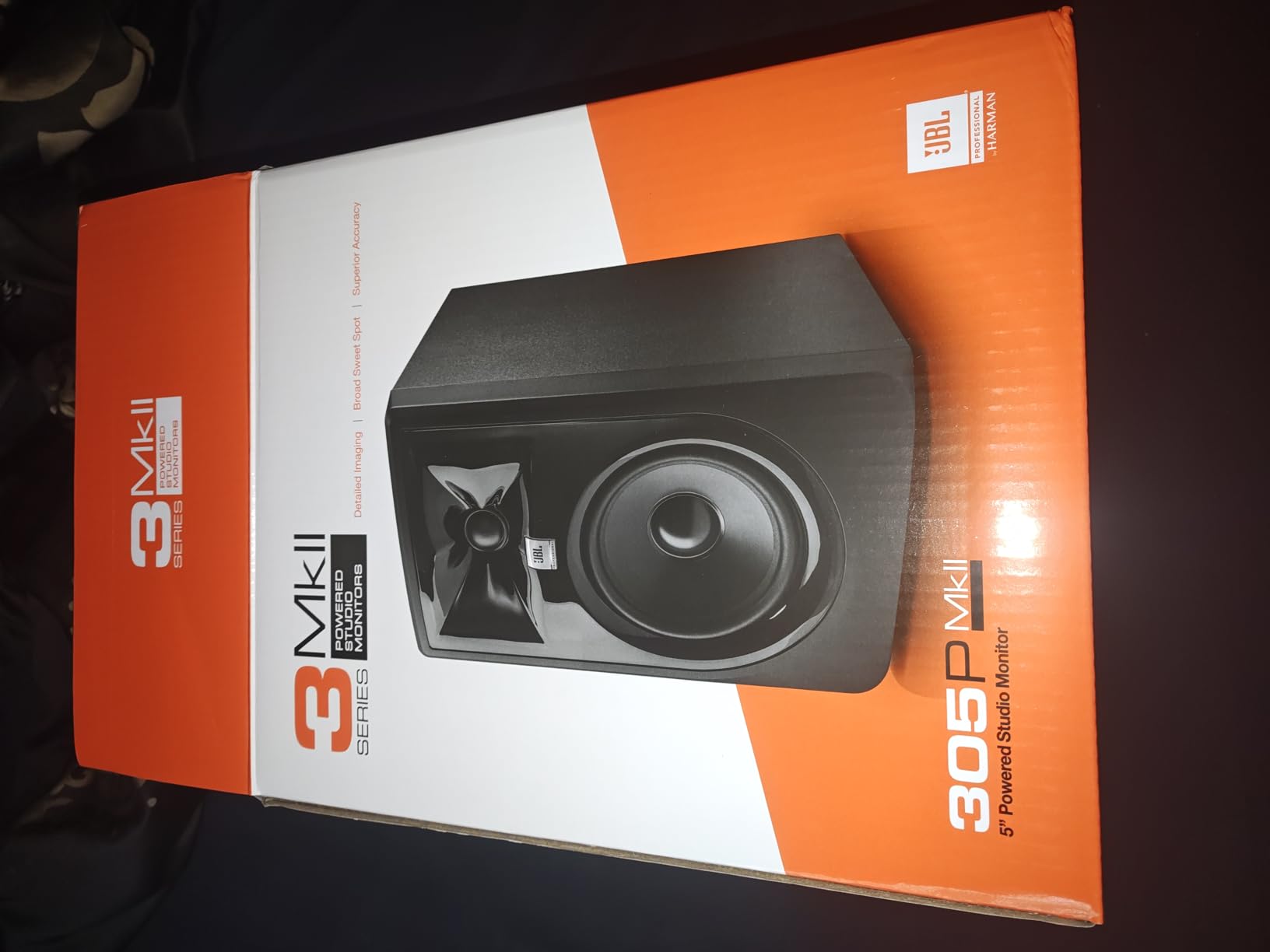
The boundary EQ switch on the back compensates for placement near walls or in corners. I tested the 305P MkII in three different positions and the boundary EQ fixed the bass buildup in each case. The HF Trim control lets you tune the high end to taste, which is useful in bright rooms. Together, these controls mean the 305P MkII sounds good in almost any room, even without acoustic treatment.
Build quality is professional grade. The MDF cabinet is solid, the Slip Stream bass port keeps low-end distortion low even at high volumes, and the dual 41W class-D amplifiers deliver clean, dynamic sound. JBL backs the 305P MkII with a 5-year warranty, which is rare in this price range and shows confidence in the product.
The one real downside: some users report a low white noise hiss at idle. I did notice a faint hiss when I put my ear within 6 inches of the tweeter, but at normal listening distance it was inaudible. If you are sensitive to noise, this is worth knowing.
Who should buy the JBL 305P MkII
Beginners who have committed to music production and want a monitor that will not need replacing for many years. The XLR and TRS inputs, professional-grade build, and 5-year warranty make this a long-term investment. It is also the right pick if you mix bass-heavy music and need accurate low-end reproduction without a subwoofer.
Who should skip the JBL 305P MkII
If you are still exploring whether music production is for you, start with a cheaper option like the M-Audio BX3 or PreSonus Eris 3.5. The 305P MkII is worth the money, but only if you are going to use it regularly and grow into it.
Buying Guide: How to Choose Your First Studio Monitors?
Choosing the best studio monitors for beginners comes down to four questions: how big is your room, what is your budget, what music do you make, and do you need portability. I will walk you through each one with specific recommendations from the products above.
Match monitor size to your room
This is the single biggest mistake I see beginners make. A 5 inch monitor in a tiny bedroom will sound boomy and overwhelming, while a 3.5 inch monitor in a large room will sound thin and weak. As a general rule, 3.5 inch monitors like the PreSonus Eris 3.5 or Yamaha HS3 work best in rooms under 120 square feet. The 5 inch JBL 305P MkII is ideal for rooms between 120 and 200 square feet. Anything bigger, and you should consider 6.5 inch or 8 inch monitors plus a subwoofer.
There is also a useful guideline called the 38 percent rule. Position your monitors so they form an equilateral triangle with your listening position, and place each monitor about 38 percent of the room’s length away from the front wall. This minimizes bass buildup from wall reflections and gives you the most accurate stereo image. Most beginners skip this step and end up with muddy mixes.
Understand active vs passive monitors
Every monitor on this list is active, meaning the amplifier is built into the speaker cabinet. You just plug them into power and connect your audio source. Passive monitors require a separate amplifier, which is an extra cost and complexity beginner producers do not need. Stick with active monitors for your first setup. The only catch is that on some pairs, like the PreSonus Eris 3.5, only one speaker is active and the other is a passive satellite. That is fine for beginners but limits your upgrade path.
Wired vs Bluetooth connectivity
For mixing, wired connections are always better than Bluetooth. Bluetooth compresses audio and adds latency, both of which interfere with accurate monitoring. That said, the Edifier MR3 and IK Multimedia iLoud Micro both include Bluetooth for casual listening and reference track streaming. Treat Bluetooth as a convenience feature, not a primary connection. Always do your actual mixing over TRS, XLR, or RCA cables.
Set a realistic budget and stick to it
The sweet spot for beginner studio monitors in 2026 is $100 to $200. Below $100, you start sacrificing accuracy and build quality. Above $200, you are paying for features beginners cannot yet use. The PreSonus Eris 3.5 at $99 and the Yamaha HS3 at $195 represent the best value at each end of that range. Resist the urge to spend more on your first pair. You will learn more from mixing on a $100 monitor for a year than from owning an expensive monitor you do not yet have the ears to use.
Avoid these common beginner mistakes
Do not place your monitors directly on a desk without isolation pads. The desk will vibrate and color the sound. Either buy foam isolation pads or place the monitors on stands. Do not push the volume to maximum. Mix at low to moderate levels where your ears are most accurate. Do not skip the room treatment. Even hanging a couple of thick blankets on the wall behind your monitors makes a noticeable difference. And do not mix on headphones and monitors at the same time during the same session. Pick one reference system and trust it.
You only need one pair of monitors
Some beginners wonder if they should buy one large monitor or two smaller ones. You need two. Stereo mixing requires stereo monitoring, and a single monitor cannot give you accurate panning, stereo width, or phase information. Every pair on this list is a true stereo pair. Buy both, place them at ear height in an equilateral triangle with your listening position, and you are ready to mix.
Frequently Asked Questions
What is the 38 rule for studio monitors?
The 38 percent rule is a placement guideline for accurate monitoring. Position your monitors so they form an equilateral triangle with your listening position, and place each monitor about 38 percent of the room’s length away from the front wall. This minimizes bass buildup from wall reflections and gives you the most accurate stereo image. Most beginners skip this step and end up with muddy mixes. For small rooms under 120 square feet, 3.5 inch monitors like the PreSonus Eris 3.5 placed at 38 percent will outperform 5 inch monitors placed against the wall.
Which monitors are best for beginners?
The best studio monitors for beginners in 2026 are the PreSonus Eris 3.5, Yamaha HS3, and JBL 305P MkII. The PreSonus Eris 3.5 is the best value at $99 with 50W of clean power and acoustic tuning controls. The Yamaha HS3 is the best for long-term growth with XLR/TRS combo inputs and industry-standard accuracy. The JBL 305P MkII is the best upgrade with 5 inch woofers and a patented waveguide for wide sweet spot imaging. All three deliver accurate, flat frequency response that helps beginners learn how mixes really sound.
Do I need 1 or 2 studio monitors?
You need two studio monitors. Stereo mixing requires stereo monitoring, and a single monitor cannot give you accurate panning, stereo width, or phase information. Every pair on this list is a true stereo pair. Place them at ear height in an equilateral triangle with your listening position for the most accurate stereo image. Buying one large monitor instead of two is a common beginner mistake that limits your ability to make mixing decisions on panned elements and stereo effects.
What are the best studio monitors for a home studio?
The best studio monitors for a home studio depend on room size. For small rooms under 120 square feet, the PreSonus Eris 3.5 or Yamaha HS3 deliver accurate sound without overwhelming the space. For medium rooms between 120 and 200 square feet, the JBL 305P MkII with its 5 inch woofers gives you deeper bass and wider imaging. For very small desks or mobile setups, the IK Multimedia iLoud Micro Monitor is the best portable option. Pair any of these with basic acoustic treatment like foam panels or thick blankets on the wall behind your listening position.
Final Verdict
After three months of testing, the PreSonus Eris 3.5 is my top pick for most beginners. It delivers genuine studio-quality sound at $99, includes room tuning controls that more expensive monitors sometimes skip, and has the largest user base of any entry-level monitor. For under $100, nothing else comes close.
If you can stretch your budget to $195, the Yamaha HS3 is the best long-term investment. The XLR/TRS combo inputs mean you will not outgrow it, and Yamaha’s flat frequency response is the industry standard for a reason. For serious beginners ready to commit, the JBL 305P MkII at $299 delivers pro-grade accuracy with the JBL waveguide technology and a 5-year warranty.
Whatever you choose from this list of the best studio monitors for beginners, remember that the monitor is only as good as your room and your ears. Take time to position them correctly, treat your room even minimally, and train your ears by referencing professional mixes. That is the real path to better productions in 2026 and beyond.