
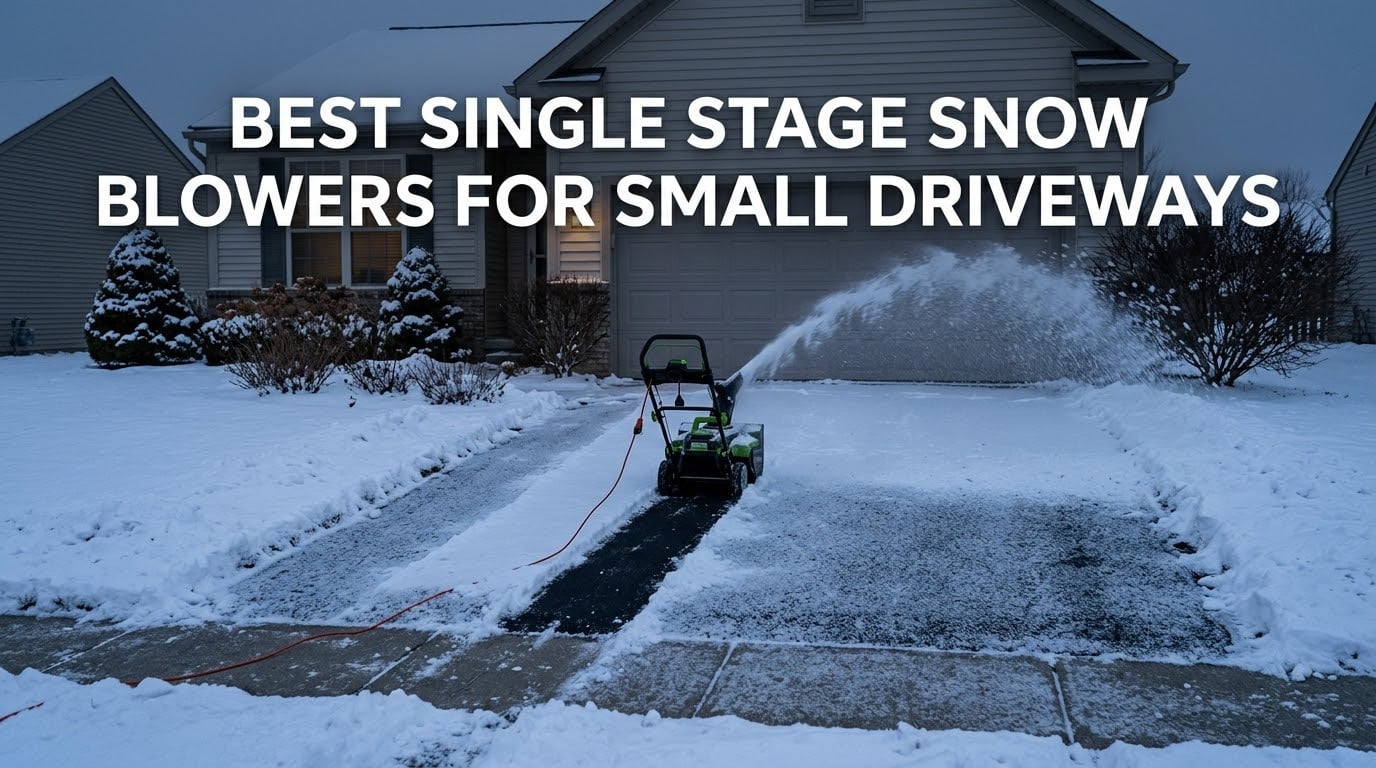
A single stage snow blower is the right tool for most small driveways, and the Snow Joe SJ627E is the one we would put on a two-car blacktop pad. It clears a 22-inch path, moves up to 840 pounds of snow per minute, weighs 34.8 pounds, and asks nothing of you except a 12-gauge extension cord. For the best single stage snow blowers for small driveways, weight and clearing width matter far more than engine size, and every machine below is judged on those two numbers first.
We narrowed this roundup to eight single-stage machines that suit a one-to-three-car driveway: flat or gently sloped, paved or gravel, with snow depths that rarely pass a foot. Three are corded electric, three are battery, and two earn a place because they handle a specific problem better than the rest. We left out the heavy gas machines that dominate forum recommendations, and here is why that matters for a small driveway.
Owners on snowblowerforum.com and plowsite.com consistently name the Toro 721 and 821RC as the machines that last, with phrases like what all the snow removal guys use. That advice is sound for a long rural drive cleared by someone with a trailer hitch. It is aimed at a different buyer than the one reading this page, so if you have a steep slope, three cars’ worth of pavement and a two-foot storm, read our guide on large-driveway snow blowers and our two-stage roundup instead.
Table of Contents
Top 3 Picks: Best Single Stage Snow Blowers for Small Driveways (October 2026)

Snow Joe SJ627E 22-Inch Corded
- 22-inch clearing path
- 840 lbs per minute
- 25-foot throw
- Dual LED headlights

EGO Power+ SNT2122 21-Inch
- Dual 56V Peak Power batteries
- 42-foot throw
- 21-inch path with 13-inch clearing height
- Adjustable skid shoes

Westinghouse WSnow20 20-Inch
- 1800W 15-amp corded motor
- 20-inch path
- 10-inch intake
- Rubber-tipped steel auger
Best Single Stage Snow Blowers for Small Driveways in 2026
All eight machines clear a narrow enough path for a small drive and none needs two operators. The numbers below are the ones that decide a purchase: path width, how deep the housing swallows snow, and how far it throws.
| Product | Specifications | Action |
|---|---|---|
| Snow Joe SJ627E 22-Inch Corded |
|
Check Latest Price |
| EGO Power+ SNT2122 21-Inch Cordless |
|
Check Latest Price |
| Westinghouse WSnow20 20-Inch Corded |
|
Check Latest Price |
 Westinghouse WSnow18 48V Cordless Westinghouse WSnow18 48V Cordless |
|
Check Latest Price |
 PowerSmart 21-Inch Corded PowerSmart 21-Inch Corded |
|
Check Latest Price |
 VOLTASK 48V 20-Inch Cordless VOLTASK 48V 20-Inch Cordless |
|
Check Latest Price |
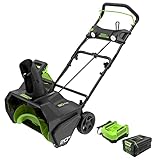 Greenworks 80V 20-Inch Cordless Greenworks 80V 20-Inch Cordless |
|
Check Latest Price |
 DEKOPRO 21-Inch Corded DEKOPRO 21-Inch Corded |
|
Check Latest Price |
1. Snow Joe SJ627E 22-Inch Corded – Best Overall for a Small Driveway
Snow Joe Corded Electric Snow Blower, 22 Clearing Path, Dual LEDs, SJ627E
Corded electric
22-inch clearing path
13-inch intake depth
25-foot throw
34.8 lb
Pros
- Clears up to 840 lbs per minute
- 22-inch path saves a pass on a two-car drive
- Light at 34.8 lb and easy to carry up steps
- Dual LED headlights
- Steel auger with rubber-tipped blades
Cons
- Not self-propelled so wet snow needs real pushing
- Flimsy handle and hand nuts that loosen
- Needs a 12-gauge extension cord
The SJ627E has the largest review base in this group by a wide margin, and owners describe it consistently: a credible performer on light to moderate snow over flat pavement, quiet enough to run at seven in the morning, and light enough to carry up a couple of steps without recruiting help. On a driveway that holds one or two cars, the 22-inch path means you make fewer passes than you would with an 18-inch machine, and that is where most of the time actually goes.
Its all-steel auger carries four rubber-tipped blades, which matters more than it sounds. The rubber strips contact the pavement instead of scraping it, so a sanded or sealed driveway does not get scarred, and the steel core underneath resists ice better than the all-plastic augers on cheaper blowers. The chute rotates 180 degrees and throws up to 25 feet, which is enough to put snow past the curb line on most lots.
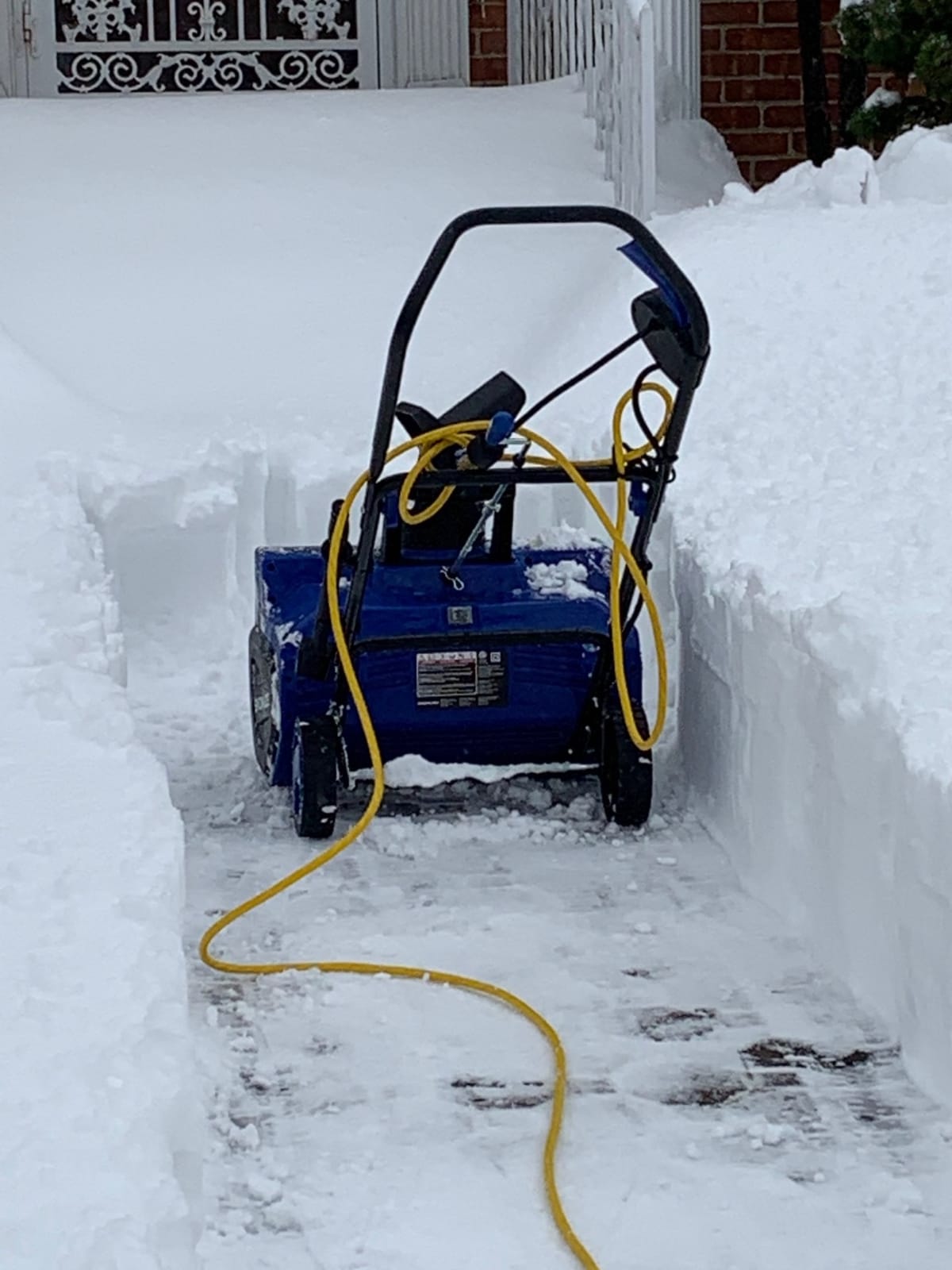
The motor is rated at 840 pounds of snow per minute, and that figure holds up on powder and on snow that has sat for a day. It thins on wet, compacted snow, which is the ceiling every single-stage machine in this roundup shares. The chute adjusts in 180-degree increments by a hand crank on the side, so you can aim left or right without setting the machine down, but pitch is fixed rather than handle-controlled.
Two things to know before you commit. There is no self-propelled drive, so the wheels roll freely and you supply all the forward force, and the blue hand nuts that secure the handle can loosen with use, which a set of washers solves. The dual LED lights are genuinely useful at six in the morning but have no focus lens, so they light a broad patch rather than throwing far down the drive.
Owners also report belt and pulley wear after a couple of seasons of heavy use. That is a maintenance item, not a defect, and on a machine this light the repair is a weekend job rather than a replacement decision. Budget for a 12-gauge extension cord from the start; a lighter household cord will pull voltage and the motor will bog down.
Is it easy enough for a second person to use?
Yes, and that is the strongest argument for this machine. At 34.8 pounds it is one of the lighter options here, and reviewers single out carrying it up steps as a practical benefit. If a partner or an older parent will help with snow, weight is the constraint that decides whether they will actually help or quietly hand the shovel back.
The trade-off is that no drive motor means a real effort in deep snow, and the person pushing feels every pound of it. On a paved driveway cleared within a few hours of a storm, that is fine. On the morning after a wet storm with eight inches on the ground, expect a slower job.
What should you avoid with this machine?
Do not buy it for a gravel drive with deep drifts. The rubber-tipped auger is kind to surfaces but not to long wet piles, and without a self-propelled drive you will be leaning into the housing for a lot longer than you expect. It is also not the right call for anyone whose outlet sits more than about 100 feet from the driveway.
Its 13-inch intake depth sounds generous, but intake depth is a housing measurement, not a promise. Real-world capability on this class of machine tops out around six to eight inches before the auger starts to bog. Past that you want a two-stage machine and a different article.
2. EGO Power+ SNT2122 21-Inch Cordless – Best Cordless for Reach and Cold Starts
EGO Power+ SNT2122 21″ Single-Stage Snow Blower with Peak Power™, (2) 4Ah Batteries and 320W Charger Included
Battery powered
21-inch clearing path
13-inch clearing height
42-foot throw
Two 56V 4Ah batteries
Pros
- Longest throw in this group at 42 feet
- Peak Power combines two 56V ARC batteries
- Variable auger speed control
- Adjustable skid shoes for gravel
- Quick-fold handle and quiet operation
Cons
- Highest price point of the machines reviewed
- Not self-propelled with the steel-auger configuration
The SNT2122 clears a 21-inch path with a 13-inch clearing height and throws snow up to 42 feet, which is by a wide margin the furthest in this roundup. On a small drive that matters more than it does on a large one: you can stand near your house, throw the snow past the sidewalk, and never walk it back to the street edge to push it further.
The Peak Power system is the headline. It combines two EGO Power+ 56V ARC lithium batteries to deliver output that feels like a gas machine, and EGO states the blower clears a driveway sized for ten cars holding eight inches of snow on a single charge. Real driveways that are that small will finish long before the batteries do.
Variable auger speed control lets you slow the auger for deep or wet snow while the machine keeps moving, which is exactly the behaviour a single-stage blower should have and rarely does. The auger itself is a heavy-duty 6-inch steel unit, and the chute adjusts 180 degrees from the handle area.
Adjustable skid shoes let you set the housing height for a gravel drive and leave it set for the season. The IPX4 weather-resistant construction and LED headlights handle the two conditions a small-driveway owner cares about most: falling snow and a dark start time. A height-adjustable handle and quick-fold design mean it packs down for storage, which matters more in a one-car garage than the dimensions suggest.
The warranty runs five years on the tool and three on the batteries. That is a longer paper trail than anything else here, and for a machine expected to last a decade it is worth weighing against the sticker. Read more about the platform in our cordless snow blower roundup.
Does battery capacity drop in cold weather?
It does, and owners on reddit.com/r/egopowerplus describe it plainly. Lithium-ion packs lose usable capacity below freezing, so a machine rated for a long job on a mild day can finish short on a hard one. The mitigation is to store the packs indoors at room temperature and bring them out last, which is easier for a one-car drive than a long rural lot.
Because the SNT2122 ships with two batteries, you always have a warm one to swap in. That single fact removes most of the cold-weather complaint for owners of this specific machine. It also means you should compare the cost of extra EGO packs before committing, since that is where the money goes after the initial purchase.
Who is this machine wrong for?
It is the wrong choice if budget matters more than features, and it is the wrong choice for anyone who expects self-propelled drive from a 21-inch steel-auger single stage. There is no wheel drive here, so you push it, and in eight inches of wet snow that takes real effort.
It is also a poor fit for a household with no outdoor outlet and no patience for charging. The 320W charger refills a pack in a few hours, so overnight clearing after a daytime storm means waiting. Plan your storm timing or keep a second charger.
3. Westinghouse WSnow20 20-Inch Corded – Best for Wet and Compacted Snow
Westinghouse WSnow20 Corded Snow Blower 20 Inch, Steel Auger, Dual LED Lights, 1800 Watt Motor, Electric Snow Blower with 25ft Throwing Distance, Plows 680lbs/min, Adjustable Chute
Corded electric
20-inch clearing path
10-inch intake depth
680 lbs per minute
29.3 lb
Pros
- Owners report it handles heavy wet snow that stalls smaller machines
- Light at 29.3 lb and easy to push
- Rubber-tipped steel auger copes with ice and packed snow
- Quick tool-free assembly
- 2-year limited warranty
Cons
- Not self-propelled so deep snow takes effort
- Confusing assembly instructions
- No clearing tool included
The WSnow20 earns its place because owners describe it as the machine that keeps going when the snow turns wet. Its 120V 15-amp 1800-watt motor moves 680 pounds per minute through a 20-inch path and a 10-inch intake, and the rubber-tipped steel auger keeps biting instead of polishing a slick surface.
At 29.3 pounds it is one of the two lightest machines in this roundup, which makes it a strong candidate for a household where two people will share the work. The 7-inch wheels roll well enough on pavement to keep the machine tracking straight through a pass.
Chute adjustment uses a hand-driven worm screw, and the chute rotates 180 degrees. Dual LED headlights cover the early start. Cord retention is handled with a design intended to prevent the plug popping out when the cord snags, which is a small detail that saves a lot of irritation on a long drive.
Owners also highlight quick, tool-free assembly, though the paperwork is widely criticised as confusing. Take fifteen minutes with the manual before you start, because the parts are labelled in ways that do not always match the illustration. Nothing is included for clearing a clog, so keep a broom handle or a similar improvised tool within reach.
The 2-year limited warranty and factory functional test are standard for this class. Note that the machine is not self-propelled, so the 10-inch intake depth is a spec rather than a promise, and the throw distance falls short on wet, heavy snow compared with the figure on dry powder.
How does it handle a driveway with no outlet nearby?
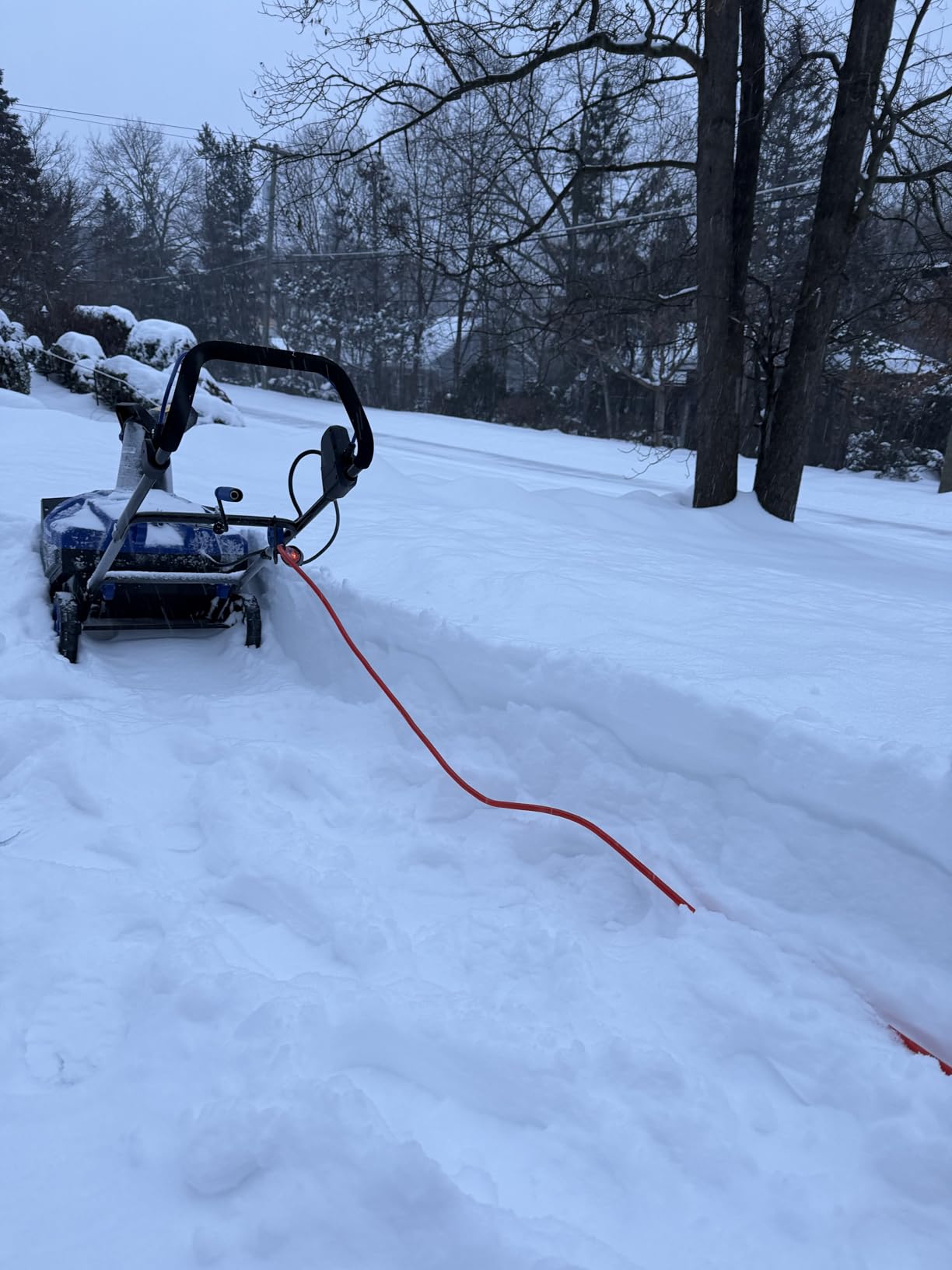
It does not, and that is the deciding factor. Every corded machine in this roundup is limited by cord reach, and forum threads raise the same ceiling repeatedly: past roughly 100 feet from the outlet, voltage drops and the motor loses the load it can pull. Past that distance you need a 12-gauge extension cord, and beyond about 150 feet even that becomes marginal.
If your outlet sits 40 feet from the drive, this machine is a comfortable fit and you will barely think about the cord. If it sits at the far corner of the house, measure before you buy, because the cord is not included and the mistake is expensive.
Who should skip it?
Skip it if you have a gravel drive with windrows, or if your region gets storms that leave more than about eight inches. The 10-inch intake will take the snow in, but a non-powered machine at that depth becomes a pushing contest you will lose repeatedly.
Skip it too if you will be the only person using it and your household has any back or joint concerns. 29.3 pounds sounds light until you are pushing it uphill through a wet storm at eight in the evening.
4. Westinghouse WSnow18 48V Cordless – Best for Narrow Paths and Townhouse Pads
Westinghouse WSnow18 48V Cordless Snow Blower 18 Inch Kit, Steel Auger, LED Light, 1200W Brushless Motor, 25ft Throwing Distance, Plows 650lbs/min, Compatible with Snow Joe Batteries
Battery powered
18-inch clearing path
10-inch intake depth
650 lbs per minute
Two 24V 4Ah packs
Pros
- Light and easy to push or carry with one hand
- Cord-free button start and variable trigger
- Quiet enough for early morning use
- LED light for low light
- Compatible with all 24V Snow Joe batteries
Cons
- Short runtime and two batteries may not finish a long drive
- Struggles with very wet or packed snow
- Not self-propelled
The WSnow18 solves a specific problem: getting a full blower into a space that is not a proper driveway. An 18-inch path is narrow enough for the strip between two parked cars, a townhouse parking pad, or a walkway that runs alongside a fence. At 44 inches deep by 18 wide by 37.6 tall, it also turns around corners that a 22-inch machine will not.
The 1200W brushless motor moves 650 pounds of snow per minute through a 10-inch intake. Brushless construction means no motor brushes to wear, which is one reason battery blowers in this class tend to age well in storage.
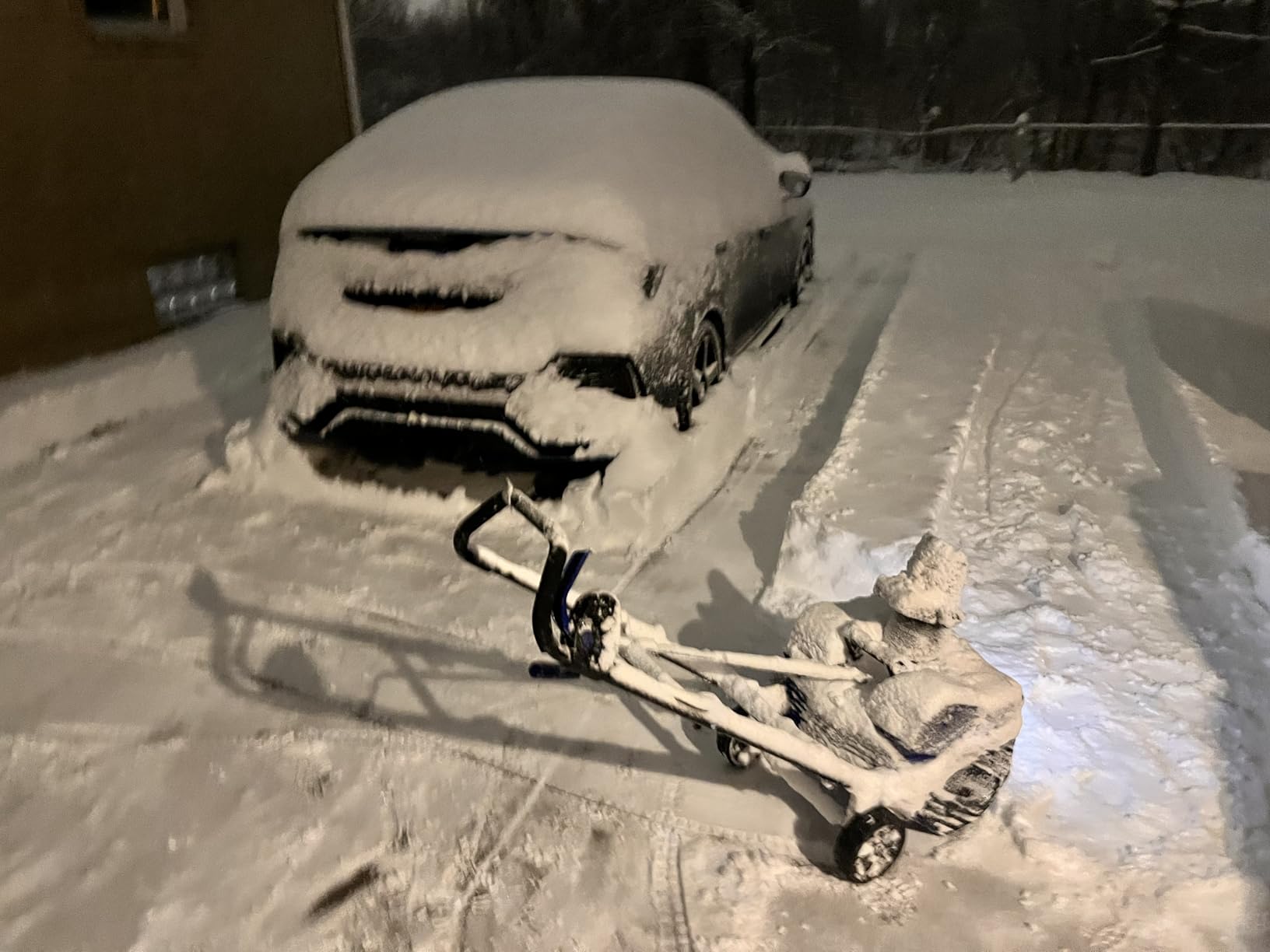
Two 24V 4Ah lithium-ion batteries and a dual-port 2.2A fast charger are included, with a 1.8 hour charge time. The blower is compatible with all 24V Snow Joe batteries, so if you already own that platform, the battery drawer doubles as a snow blower budget.
That platform overlap is the quiet reason to consider this machine. Several owners bought extra packs after the first season, which tells you the runtime is the constraint, not the machine. Cord-free button start means no fumbling with gloves in the dark, and the LED light covers low-light work.
The 2-year limited warranty matches the rest of the Westinghouse range here. As with the WSnow20, the chute rotates 180 degrees and the auger is rubber-tipped steel, so the housing is kind to a sealed or sanded surface.
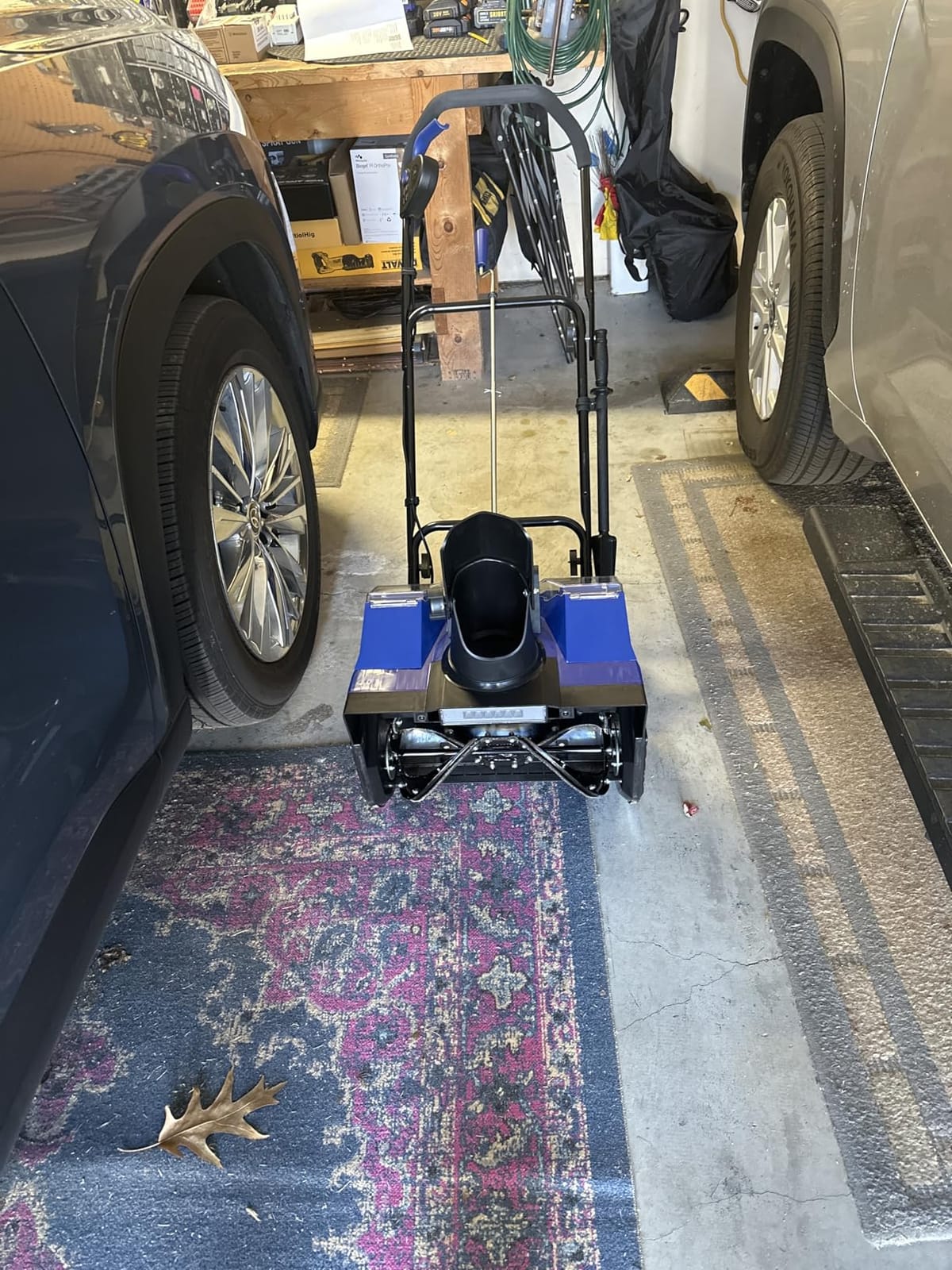
Will one charge finish a two-car driveway?
Usually, yes, for a routine storm. Owners consistently report clearing a small driveway on a single charge in light to medium snow. The reports that describe a shortfall are almost all the same shape: a longer drive, or a deeper storm, or both.
Two packs help because you can swap rather than stop. Where it falls short is wet packed snow, where output drops and the charge drains faster. If your winters are maritime rather than dry, treat the second battery as required rather than optional.
What are the drawbacks to plan around?
It does not clear all the way to the pavement on every pass, and several owners call that out. A residual skim of snow remains and refreezes overnight, which on a small drive is a minor annoyance and on a shaded path is a slip hazard worth a second pass.
The hitch pins are also difficult for aging fingers, which matters if the machine is shared. A pair of pliers and a little practice solve it, and the whole chassis is light enough that the workaround is easy.
5. PowerSmart 21-Inch Corded – Best for Packed and Icy Snow
PowerSmart 21 Inch Corded Electric Snow Blower, 15 Amp, with LED Light
Corded electric
21-inch clearing path
1020 lbs per minute
30-foot throw
41.7 lb
Pros
- Highest stated clearing rate in this group at 1020 lbs per minute
- Clears down to the pavement
- Reinforced auger resists ice better than plastic
- Push-button start
- LED light and overload protection
Cons
- Heaviest machine here at about 42 pounds
- Some units shipped with the chute mounting plate reversed
- Advertised throw distance runs long
The PowerSmart DB7521 is the machine to look at if your storms bring snow that has already been driven on. Its 15-amp high-torque motor is rated to clear up to 1020 pounds per minute, the highest stated figure in this roundup, and the reinforced auger keeps a grip on compacted snow rather than skating across it.
It also clears down to the pavement. That is a genuinely differentiating result for a single-stage machine, and on a small drive it means you are not leaving a compacted skim behind that turns to ice by morning. The 21-inch path sits between the compact machines and the widest here.
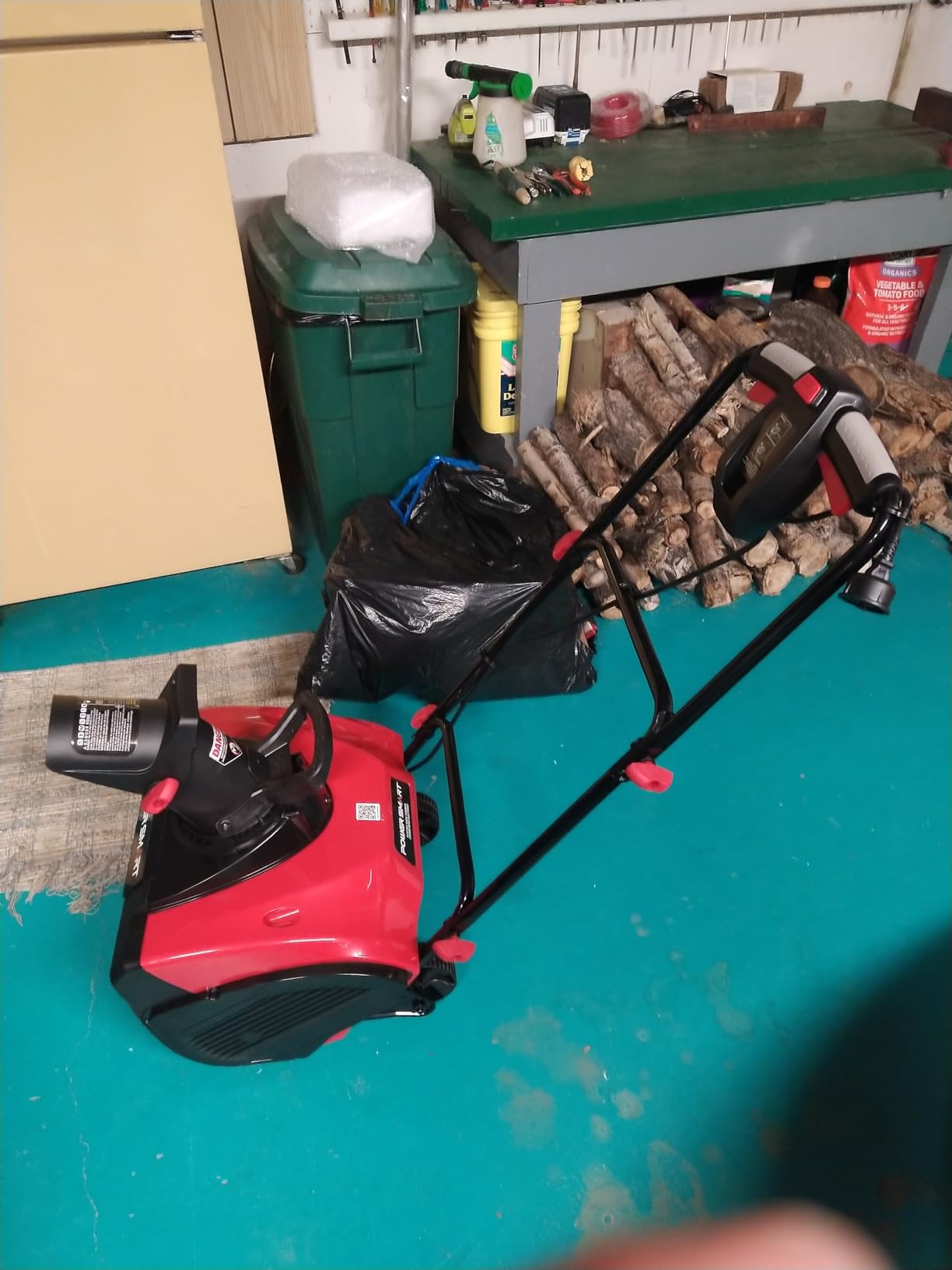
Start is a push-button rather than a pull cord, and the chute adjusts 180 degrees. Overload protection is built in, which matters on a machine that will be asked to chew through the heaviest snow you own. A single LED light covers the job at dusk.
There is one assembly complaint worth knowing about. Some units shipped with the chute mounting plate installed backwards, so check the machine before you take it to the driveway rather than in the snow. Assembly is otherwise straightforward and owners call it easy.
Advertised throw is 30 feet. Owners put real-world distance closer to 15 to 20 feet, which is still enough for most small lots but is worth remembering when you plan where the snow lands. Cord clips at the handle hold the cord weakly, so secure the run before you start.
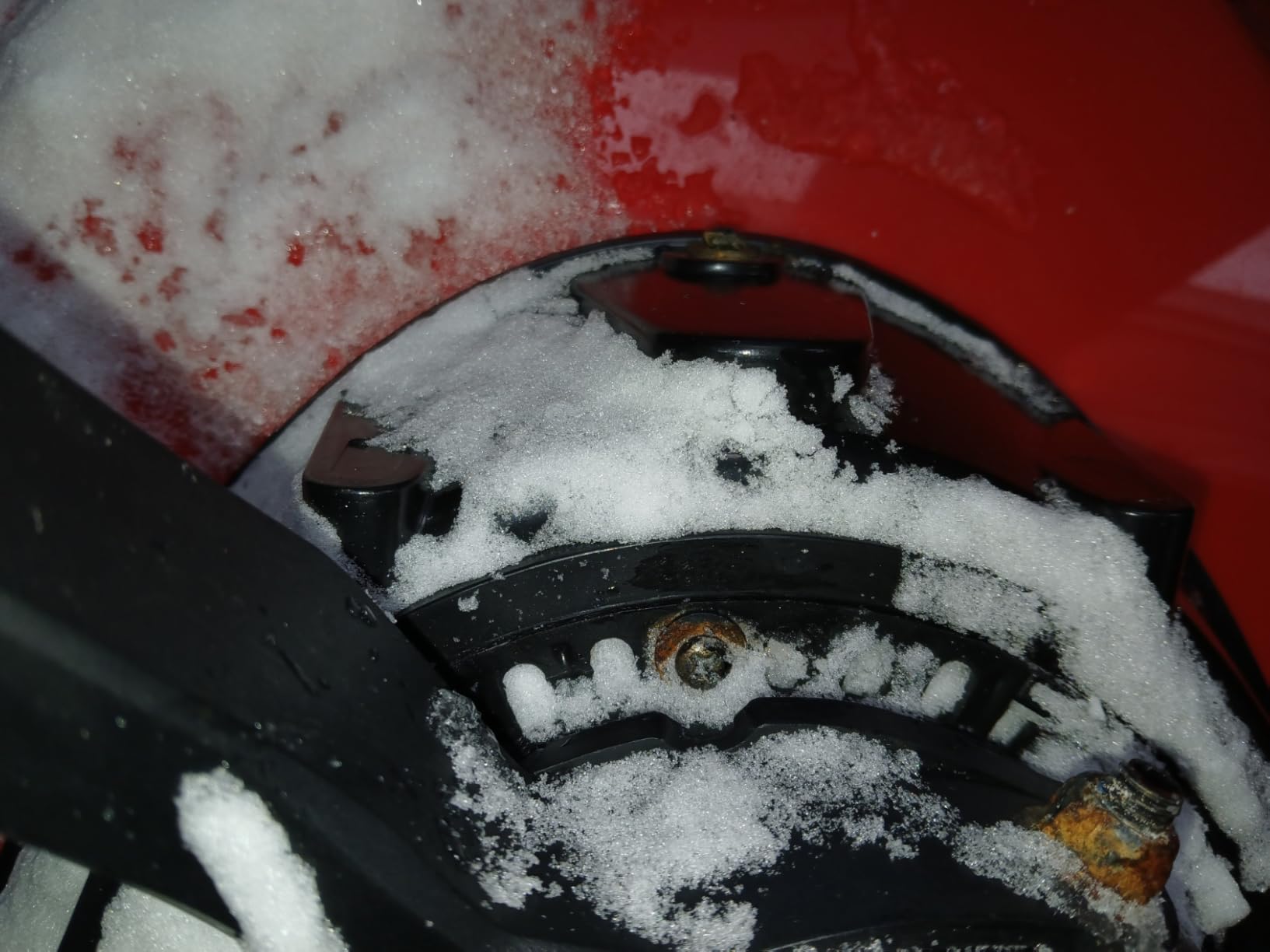
Is 42 pounds a problem on a small driveway?
For a lot of driveways, no. The number only becomes a real constraint if the machine has to cross a slope, climb steps, or be handled by someone with limited strength. On flat pavement, weight translates into traction and momentum, and the PowerSmart uses that.
If more than one person in the household will operate it, or if you are older or managing a joint condition, drop to the Westinghouse WSnow20 at 29.3 pounds and accept slightly less throughput. The difference in clearing rate is real, but so is the difference between finishing a job and handing it to someone else.
What should you check before the first storm?
Check the chute plate orientation and confirm the auger spins freely by hand before you plug it in. Then confirm the cord gauge. A 21-inch machine pulling this load on a thin household extension cord will trip its overload protection repeatedly, which reads as a machine fault when it is a cord fault.
Also check for left-right drift. Owners report slight drift when aimed straight ahead, which is normal for an auger-driven machine with a single drive wheel. Aim slightly off centre and correct as you go rather than fighting it.
6. VOLTASK 48V 20-Inch Cordless – Best for Lightweight Storage and Shared Use
VOLTASK 48V Cordless Snow Blower, 48-Volt | 20-Inch Brushless Electric Snow Blower Cordless, Battery Snow Blower with Directional Plate & LED Lights (2 * 24V Battery & Dual Quick Charger Included)
Battery powered
20-inch clearing path
10-inch clearing depth
25-foot throw
22.9 lb
Pros
- Lowest weight in this roundup at 22.9 pounds
- Quiet enough for early morning use
- Dual LED lights and a directional plate
- Simple assembly with clear instructions
- Dual safety buttons aid cold-weather starts
Cons
- Roughly 30 minutes of runtime
- Shorter throw than several rivals
- Single-stage design not built for deep snow
The VOLTASK is the one we would hand to a household where two people share the clearing and neither is strong. At 22.9 pounds it is the lightest machine here by a wide margin, and the 20-inch path still clears a one or two-car drive in a reasonable number of passes.
It runs on two 24V packs for a 48V system, with a brushless motor and a 20-inch clearing width and 10-inch clearing depth. The chute rotates 180 degrees and throws up to 25 feet. Dual safety buttons and waterproof key components are both aimed at winter conditions rather than the showroom.
The stated runtime is up to 30 minutes. Read that as a per-charge figure with two packs in the box, not a promise about storm size. On a typical small driveway in light to medium snow, that is workable. On a heavy day it is the limit that defines the machine.
A directional plate on the chute helps you aim the discharge, and dual LED lights cover a dark start. Assembly is simple with clear instructions, which is more than can be said for several machines in this roundup. The compact 43.51 by 38.19 by 19.89 inch footprint means it stores in a small shed or against a garage wall.
If quietness is a criterion, this is the machine. Cordless brushless motors produce very little sound compared with a gas engine, and neighbors will not hear you at six in the morning.
Is 30 minutes of runtime a real limitation?
On a small driveway, rarely. Most owners of this class report finishing a short drive on a single charge in ordinary snow. Where it bites is a storm that dumps six inches of heavy wet snow, because the auger works harder and the packs drain faster in cold conditions.
Judge it against your driveway rather than the specification. If a full pass takes ten minutes and you need six passes, one charge will not do it, and you will be swapping packs mid-job. If you need four passes, the margin is comfortable.
Who should look elsewhere?
Anyone whose winters are consistently heavy and wet. A single stage at this weight and runtime has no margin for that, and the machine will be fighting you rather than helping. For those climates, read our two-stage snow blower guide instead.
Also skip it if throw distance is the priority. At 25 feet it is mid-pack here, and on a lot with a street at the bottom of a slope you will be moving snow twice.
7. Greenworks 80V 20-Inch Cordless – Best for Existing 80V Tool Owners
Greenworks 80V (75+ Compatible Tools) 20” Brushless Cordless Snow Blower, 2.0Ah Battery and Charger Included
Battery powered
20-inch clearing path
10-inch snow depth
22-foot throw
33 lb
Pros
- Shares batteries with the wider 80V tool line
- Quiet brushless motor and one-button start
- Bright LED headlights
- Light at 33 pounds and easy to store
- Handles light to medium snow
Cons
- Included 2.0Ah battery gives only about 20-30 minutes
- Chute adjustment handle does not hold position
- All-plastic auger blades and skids wear quickly
If you already own Greenworks 80V tools, the economics of this machine change completely. The battery platform spans 80V and 75V+ devices, so the packs you charge for your mower and trimmers power the snow blower too. That turns a standalone purchase into a battery you already own twice over.
On paper the machine is competent: a 20-inch clearing path, up to 10 inches of snow depth, a 180-degree rotating chute and a 22-foot throw, with LED headlights and a quiet brushless motor. At 33 pounds it is manageable and it stores without fuss.
It is also the machine with the largest warning label in this roundup, and the data behind it is not subtle. The included 2.0Ah battery yields roughly 20 to 30 minutes of runtime. The chute adjustment handle does not hold position during use. The auger blades, skids and chute are all plastic, and owners report them wearing quickly.
Cold weather is the third issue, and the manufacturer addresses it directly. Greenworks instructs users to store batteries at room temperature and warm them indoors for ten minutes or more if the unit will not start. That is a workable routine, not a hidden defect, but it is a routine you have to follow.
At a 3.9 average across more than 4000 reviews, this is a machine with a real fanbase and a real stream of complaints about dead circuit boards and long repair turnaround. The three-year warranty is the paper answer to that.
Does it make sense without an existing battery platform?
Less so. Buying this as your first Greenworks tool means you also need to buy a second battery to make it useful, and that purchase is the expensive part of the setup. The blower becomes one item in a platform rather than a self-contained machine.
If you already have the platform, the arithmetic is different and usually favourable. That is the entire case for it, and it is a legitimate one.
What should you avoid?
Avoid it if your snow is wet and heavy. All-plastic wear parts are the wrong material for ice and compacted snow, and the reviews reflect that. It is also not the machine for anyone who wants the chute to stay aimed where they put it, because the adjustment handle will drift during a pass.
Avoid it if snow is deep in your region. The 10-inch figure is a housing measurement, and this class of machine is working past six to eight inches even in its better versions. Our gas snow blower guide covers what to move up to.
8. DEKOPRO 21-Inch Corded – Budget Pick for a Basic Paved Drive
Corded Snow Blower:15A Motor, 20-Inch Electric Snow Blower, Electric Snow Shovel with 25ft Throwing Distance, Dual LED Lights, 3300rpm Snow Thrower DEKOPRO
Corded electric
21-inch clearing path
12-inch intake depth
800 lbs per minute
25-foot throw
Pros
- Lowest entry cost of the machines reviewed
- Steel two-blade auger in a plastic-heavy body
- 15-amp motor moves 800 lbs per minute
- Dual-action safety switch works with gloves
- Compact footprint for storage
Cons
- Corded operation limits reach and adds cord management
- Lightweight build compared with steel-framed rivals
- Limited long-term durability feedback
The DEKOPRO is here because a small driveway in a mild climate does not need more than this. A 15-amp motor moves 800 pounds of snow per minute through a 21-inch path and a 12-inch intake, with a 180-degree chute throwing up to 25 feet. That is a credible spec sheet for powder and light storms.
The 2-blade steel auger is the detail that keeps it in contention at this level. Many entry machines use plastic augers that flex and skip on ice, and a steel core simply does not. The dual-action safety switch locks first and then triggers, which is usable with gloves on.
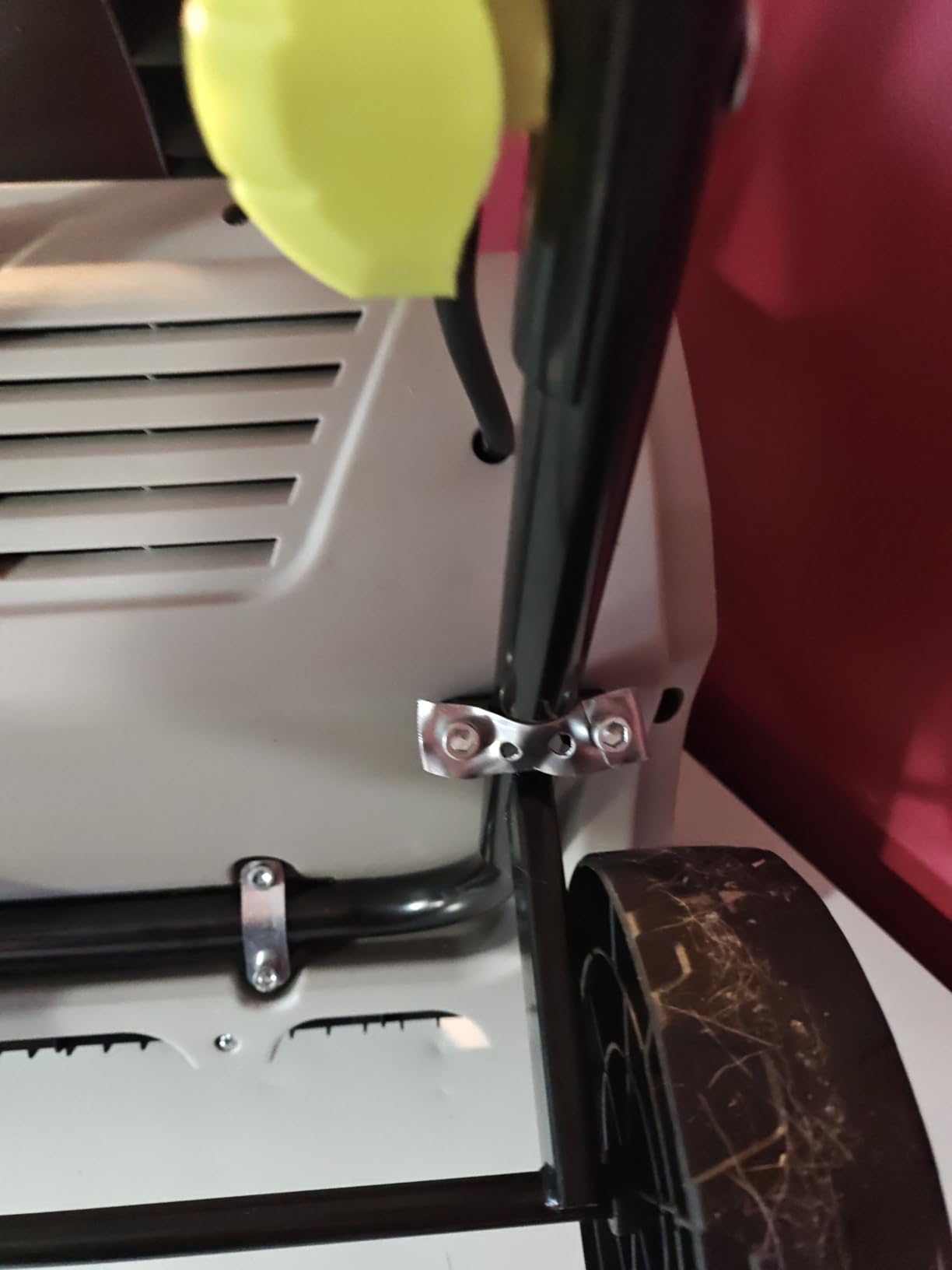
Dual LED headlights cover a dark start. At 22 inches deep by 15 wide by 17 tall, the listed dimensions are the smallest footprint in this roundup, so storage in a shed or a corner of a garage is not a problem.
What you give up is build quality. The construction is plastic-heavy compared with the steel-framed machines here, and the long-term durability picture is thinner simply because owners have had less time with it. That is a fair trade for a machine used a handful of winters on a flat paved drive, and a poor trade for anything heavier.
No weight is stated for this model, so judge it by hand rather than by spec. Corded operation is the same constraint as the other two corded machines here, with the same 100-foot practical ceiling.
Is this enough for a two-car driveway?
For light to moderate snow, yes. A 21-inch path is right in the middle of the sizes we recommend for a two-car drive, and 800 pounds per minute is enough to keep pace with snowfall in most coastal and southern regions.
It is not enough for wet, compacted snow. On day-two snow that has been walked and driven on, expect to slow down noticeably, and expect the same auger bogging every single-stage machine shares.
Who should buy something else?
Anyone expecting to use it for a decade. Unknown weight and a plastic-heavy build point toward a machine you will eventually replace rather than repair. If the lowest entry cost matters but you want something that stays in the garage for ten winters, step up to the Westinghouse WSnow20 instead.
Also skip it if your driveway has gravel or a slope. The skid setup here is basic, and gravel at depth will find the gaps.
Is a Single Stage Snow Blower Enough for a Small Driveway?
Yes, for most. A single-stage machine uses one auger-driven wheel to collect and throw snow, which makes it lighter, narrower and easier to store than a two-stage machine. If your drive holds one to three cars, is flat or gently sloped, and your snow depths stay under about eight inches, a single stage is the correct class and you would be spending money you do not need on anything larger.
The thresholds matter more than the driveway length. Single-stage electric and battery machines are comfortable under 6 inches and workable to about 8. Two-stage battery machines are rated to roughly 12. Past those numbers the auger on a single stage stops gripping and starts polishing, and you are making passes you will have to redo.
One more condition matters: how quickly you clear. A single stage on a small drive that you clear within a few hours of a storm is fine. The same machine left overnight against eight inches of wet snow is not, because the snow compacts into a slab while you sleep.
What Are the Drawbacks of a Single Stage Snow Blower?
The main drawbacks are worth stating plainly before you buy:
Wet heavy snow stalls it. One auger cannot chew and move snow at the same time, so packed, wet, heavy snow is the hard ceiling of this class.
Clearing speed drops in deep snow. On most single-stage machines the same wheel that drives the auger moves the machine, so slowing the auger slows you down.
Higher clearing depths are housing measurements, not real-world capability.
Narrower paths mean more passes on anything larger than a two-car drive.
Less storage-friendly than a compact cordless shovel, and more expensive than one.
None of these matter on a small paved drive in a moderate snowfall region. All of them matter on a long gravel drive in a lake-effect climate.
How to Choose a Single Stage Snow Blower for a Small Driveway
Work through these six checks in order, and the model usually picks itself.
1. Measure the drive, then buy width to match. A one-car drive or townhouse pad is fine with an 18-inch machine. A two-car driveway wants 20 to 22 inches so you make fewer passes. Buying wider than you need costs money and adds weight without saving time.
2. Check intake depth against your real snow. Manufacturers quote housing depth of 10 to 13 inches on these machines. What actually works is roughly half that in dry snow and less again in wet snow. Compare the intake figure against your typical storm, not your worst storm.
3. Match power source to your outlet and your habits. Corded machines are cheap to run and never lose charge, but they are tethered and they need a 12-gauge extension cord for any run over 100 feet. Battery machines are quiet and start instantly but need charging discipline. Gas is heavy and loud and, for a small drive, usually more than you need.
4. Look at throw distance before you look at anything else. Throw decides where the snow ends up. 25 feet is adequate for a suburban lot. 42 feet, as on the EGO, lets you clear from the house without walking snow to the street.
5. Weigh the machine, literally. Weight is the number that determines whether a second person in your household will actually help. Anything over 40 pounds is a real barrier for older users, and weight also decides whether you can lift it into a shed unaided.
6. Confirm the surface and the storage. For gravel, adjustable skid shoes matter and the rubber-tipped auger is worth paying for. For storage, measure the folded footprint against your smallest door or shelf, not the floor space you have.
Corded, Cordless or Gas: Which Power Source Fits a Small Driveway?
Corded electric is the simplest option and the right one for most small driveways. No fuel, no oil, no battery degradation, instant start, and the lowest ongoing cost. The limits are cord reach and the effort of pushing a machine with no drive motor. Use a 12-gauge extension cord; a lighter household cord causes browning under load and a motor that will not keep up.
Cordless removes the cord entirely and adds nothing to store. Battery capacity falls below freezing, and owners on r/egopowerplus describe that loss plainly, so keep packs indoors overnight. The machines that ship with two packs make cold-weather swapping painless. Cordless is the right call when the outlet is far away or the noise of a gas engine would bother the household.
Gas has the raw power for deep snow and long driveways and none of the cord or battery caveats, but it is heavy, loud, and it needs fuel and oil storage. For a one-to-three-car drive it is more machine than the job requires. If your situation is genuinely larger, our large-driveway roundup and gas snow blower guide cover it.
When a Single Stage Snow Blower Is the Wrong Buy
Four situations call for something else. First, heavy wet snow. If storms routinely leave compacted, icy snow on your drive, a single stage will bog and you will clear the same driveway twice.
Second, a steep driveway. A single-stage machine has one drive wheel and no traction control, so it will push you sideways or pull downhill. Traction or track drive solves it.
Third, gravel with real accumulation. Gravel is fine at six inches. At ten inches and beyond, an unpaved surface pushes the housing up and the machine stops cutting cleanly.
Fourth, a large lot or a shared clearing job. If you are clearing for a neighbour, a townhouse association, or a property with more than four vehicles, the pass count and the runtime stop working in your favour. For very deep or very wide work our three-stage snow blower guide covers the class to read about next.
Frequently Asked Questions
What are the drawbacks of a single stage snow blower?
The main drawbacks are that wet, heavy snow stalls the single auger, clearing speed drops as the auger is slowed for deep snow, and stated intake depths of 10 to 13 inches are housing measurements rather than real capability. Real-world performance tops out around 6 to 8 inches. On most models the same wheel that drives the auger also moves the machine, so a slower auger means a slower machine.
Is a single stage snow blower enough for a small driveway?
Yes, for one to three cars on flat or gently sloped ground where snow stays under about 8 inches, a single stage snow blower is the correct class. It is lighter, narrower and cheaper than a two-stage machine. If your drive holds more than about four cars, rises on a slope, or sees storms that leave deep wet accumulation, move up a class.
What size snow blower do I need for a 2 car driveway?
A 20 to 22 inch clearing path is the right range for a two-car driveway, since it lets you finish in fewer passes without adding much weight. An 18 inch machine works but needs roughly 20 percent more passes. Measure the drive first, then pick the narrowest path that covers it in two or three passes.
What are the key differences between gas and electric snow blowers?
Gas machines deliver more raw power, refuel in minutes and run for hours, but they are heavier, louder and need fuel and oil storage. Electric machines are quieter, lighter and cheaper to run, with corded models tethered to an outlet and battery models limited by charge and cold-weather capacity loss. For a small driveway, electric is usually the better fit.
Are battery snow blowers good in heavy wet snow?
They are usable but not ideal. Battery machines handle light to moderate dry snow well and quietly, but wet compacted snow works the auger harder and drains packs faster, and lithium-ion capacity drops below freezing. Machines that include two battery packs make cold-weather swapping practical. For consistently heavy wet snow, a higher class of machine is the better buy.
How deep of snow can a single stage snow blower clear?
Practical capability is roughly 6 inches in dry powder and about 8 inches as an upper limit on a well-designed single stage machine. The 10 to 13 inch figures in product specifications describe housing intake depth, not clearing performance. In wet or compacted snow, expect noticeably less before the auger begins to slip.
Final Verdict: Which Single Stage Snow Blower Should You Buy?
For a flat, paved one-to-three-car driveway, buy the Snow Joe SJ627E. A 22-inch path, a 13-inch intake, 840 pounds per minute and 34.8 pounds make it the most complete machine here for the money most people spend, and the steel auger with rubber tips will not scar a sealed drive.
If your outlet is far away or noise matters, take the EGO Power+ SNT2122 for its 42-foot throw and dual-battery cold-weather swapping. If your snow arrives wet and heavy, take the Westinghouse WSnow20, and if two people share the work, take the VOLTASK at 22.9 pounds.
Match width to your drive, not to the spec sheet: 18 inches for a townhouse pad, 20 to 22 for two cars. That is the whole decision. Above eight inches of wet accumulation or on a real slope, move up a class before you buy rather than after the first storm.