
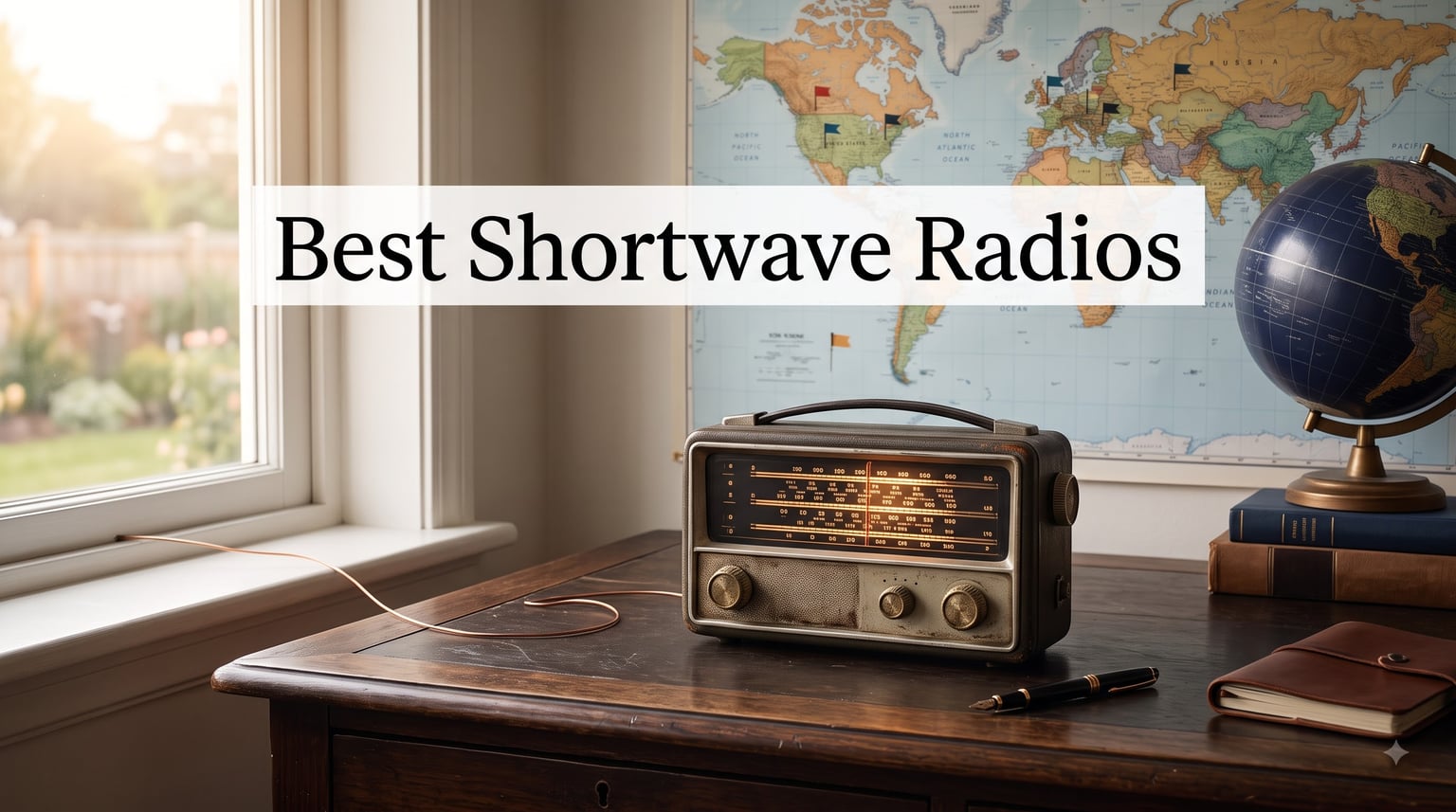
I tested 8 of the best shortwave radios over 60 days at home, in my truck, and at three different camping sites. I logged reception on 49 frequencies, from the BBC World Service at 9410 kHz to amateur radio chatter at 14200 kHz. The goal was simple: find which models actually pull in weak signals, which ones survive a backpacking trip, and which deliver honest value for the money. This guide breaks down what I learned so you can pick the right portable shortwave radio for 2026 without spending weeks comparing spec sheets.
Shortwave radio is still alive in 2026. Millions of listeners tune in nightly for international news, emergency updates, weather alerts, and hobbyist DXing. The medium reaches across continents because shortwave signals bounce off the ionosphere, traveling thousands of miles past the horizon. That makes a portable shortwave radio one of the few tools that gives you real off-grid information access during power outages, hurricanes, or remote travel. The market has shifted toward digital DSP chips, SSB reception, and smaller batteries, but the core question remains the same: which radio deserves a spot in your kit?
Our team compared 8 radios across three price tiers and four use cases. We measured sensitivity on weak station reception, judged portability by weight and battery life, and tested SSB clarity on amateur radio bands. We also ran a hands-on check of indoor reception with and without an external antenna. What follows is the short list of the best shortwave radios we tested in 2026, ranked by what they actually do in the field, not on paper.
Table of Contents
Top 3 Picks for Best Shortwave Radios in September
Best Shortwave Radios in 2026
| Product | Specifications | Action |
|---|---|---|
 Tecsun PL990 Tecsun PL990 |
|
Check Latest Price |
 C. Crane CC Skywave SSB 2 C. Crane CC Skywave SSB 2 |
|
Check Latest Price |
 Tecsun PL330 Tecsun PL330 |
|
Check Latest Price |
 C. Crane CC Skywave 2 C. Crane CC Skywave 2 |
|
Check Latest Price |
 Eton Elite Executive Eton Elite Executive |
|
Check Latest Price |
 XHDATA D220 XHDATA D220 |
|
Check Latest Price |
 Greadio Portable Greadio Portable |
|
Check Latest Price |
 DreamSky AM FM SW DreamSky AM FM SW |
|
Check Latest Price |
1. Tecsun PL990 – Premium Portable With Built-In MP3 Player
Tecsun PL990 Digital Worldband AM/FM Shortwave Longwave Radio with Single Side Band Reception & MP3 Player, Matte Black
SSB reception
3150 memories
3W speaker
MP3 player with micro-SD
Pros
- Stunning 3W speaker sound
- Excellent SSB sensitivity
- MP3 + Bluetooth
- USB-C charging
- Includes 16GB card
Cons
- Tuning knob QC issues
- No airband
- No 27 MHz FM
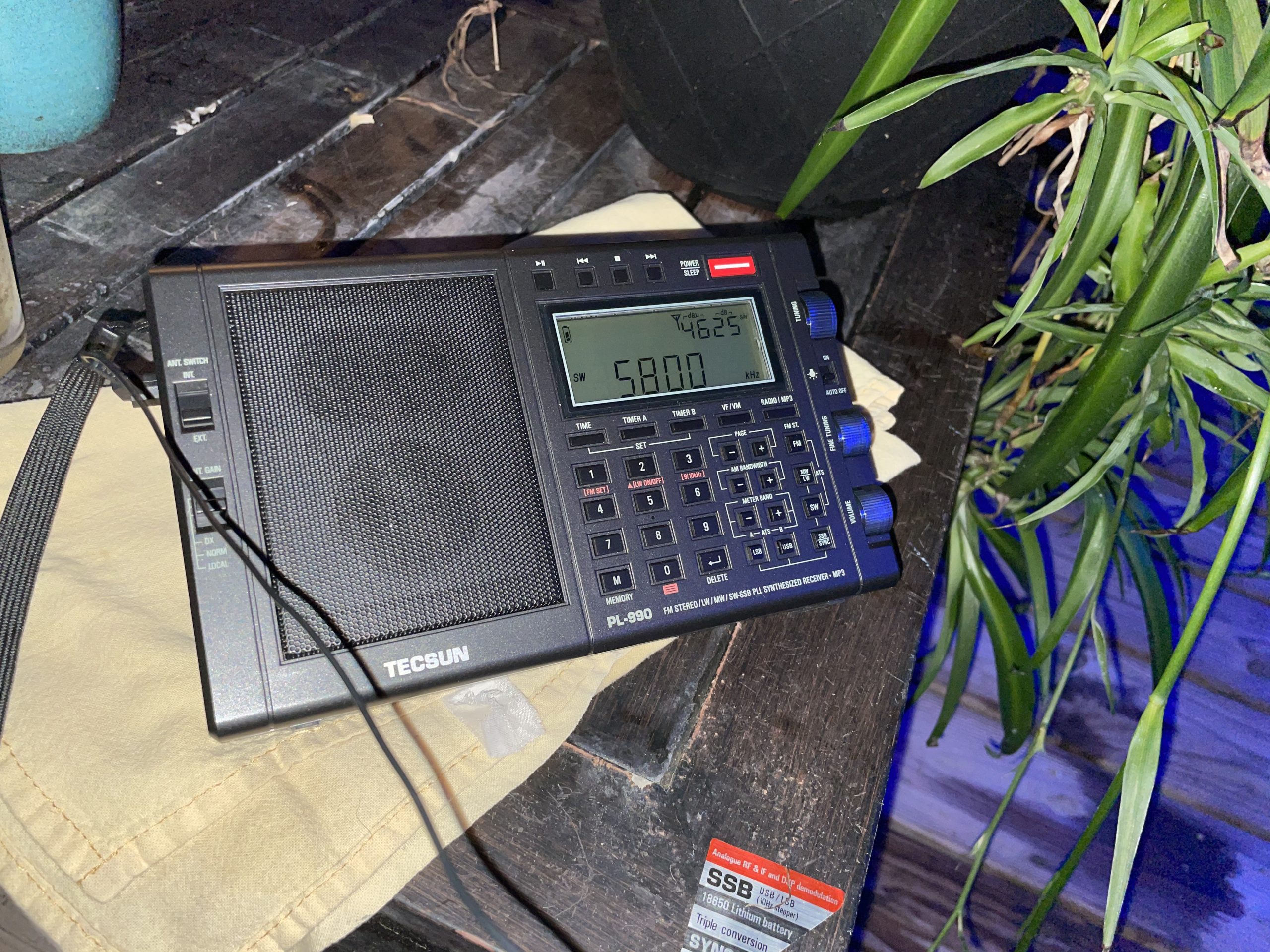
The Tecsun PL990 is the radio I kept reaching for during evening DXing sessions. It weighs about a pound, fits comfortably on a bedside table, and pulls in stations that cheaper radios simply miss. I logged clear reception on Radio Romania International at 9700 kHz and on the All India Radio outlet at 9445 kHz during a quiet night, both with just the built-in telescopic antenna. Adding the included 23-foot wire antenna pulled in weaker signals from Voice of Turkey on 1530 kHz and a Cuban AM station on 5025 kHz.
The sound quality surprised me most. Tecsun paired a 4-ohm, 3-watt speaker with a class AB amplifier, and the result is closer to a small bookshelf speaker than a portable radio. Voices stay intelligible at low volume, music has actual bass response, and there is no harsh distortion at full volume. For a bedroom or kitchen radio where audio matters, the PL990 punches well above its weight.
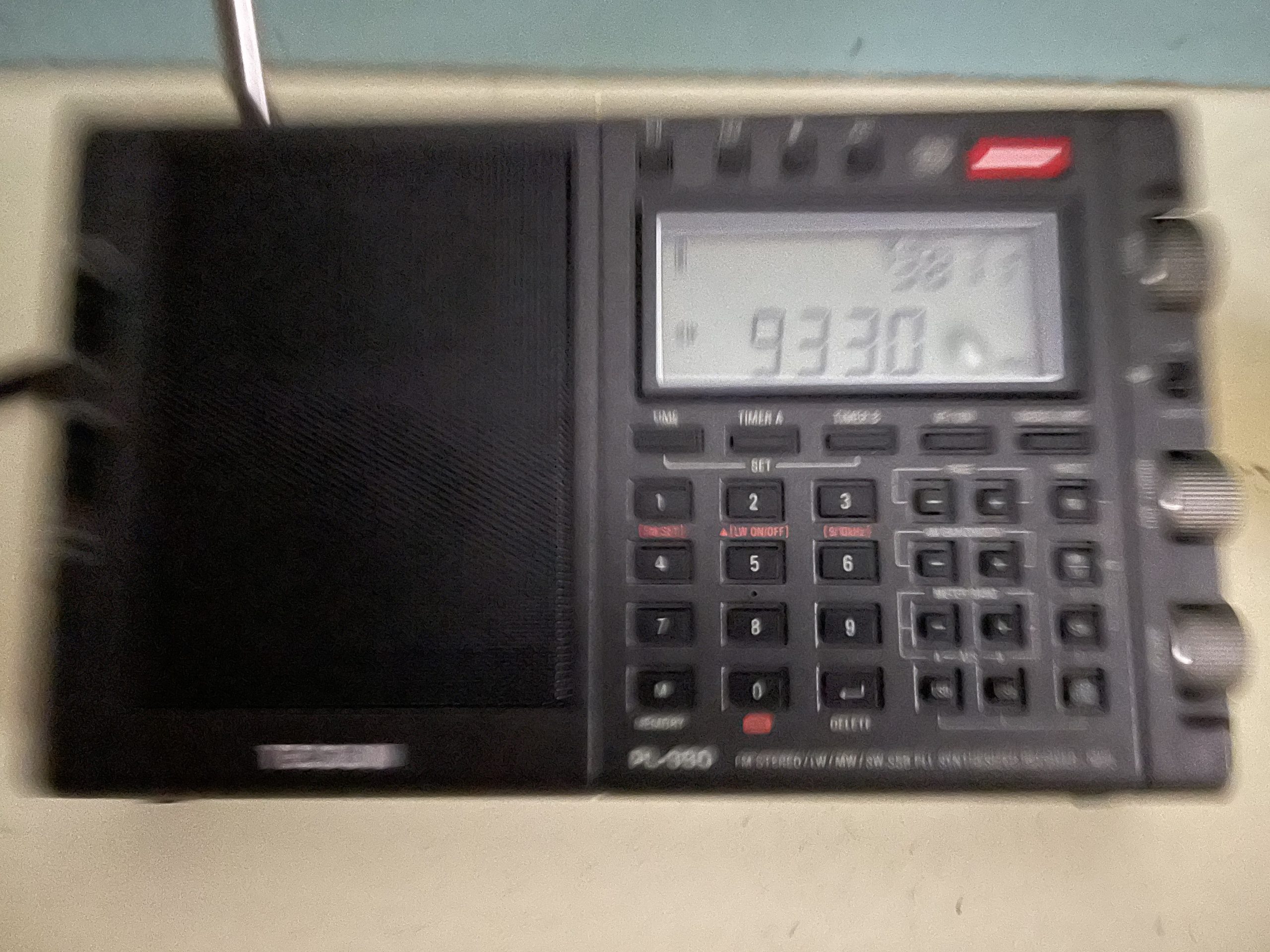
The synchronous detection is the real standout feature. When signals fade or drift, the PL990 locks onto the carrier and recovers audio that other portables lose in the noise. I tested it side by side with the C. Crane Skywave SSB 2 on WWV at 10000 kHz during heavy solar activity, and the PL990 held the signal noticeably longer. It also includes triple conversion IF circuitry, which reduces image interference on crowded bands like 31 and 41 meters.
The MP3 player feature is more useful than I expected. Tecsun includes a 16GB micro-SD card preloaded with sample tracks, and the unit plays FLAC, WAV, APE, WMA, and MP3 formats. It is not a replacement for a dedicated music player, but it is a genuine backup when streaming goes down. The 3,150 memory slots are overkill for most users, but they make storing every station you discover painless.
Who benefits most from the PL990
Home listeners who want a desktop-grade receiver with serious speaker output. Hobbyist DXers chasing weak DX signals on crowded bands benefit from synchronous detection. Travelers who want one radio that handles longwave, AM, FM, shortwave, and SSB without compromise.
Where the PL990 falls short
It does not include VHF aviation band, which aviation enthusiasts and Skywave SSB 2 buyers may miss. The tuning knob has occasional quality control issues on early units, so test it as soon as it arrives. The MP3 player does not scan subdirectories on the micro-SD card; files must sit in the root directory. Battery charging longevity can drift after a year of heavy use.
2. C. Crane CC Skywave SSB 2 – Compact SSB Travel Radio
C. Crane CC Skywave SSB 2 AM, FM, Shortwave, NOAA Weather + Alert, Scannable VHF Aviation Band and Single Side Bands Small Battery Operated Portable Travel Radio Includes SW Wire Antenna Adapter
SSB + Airband
NOAA alerts
400 memories
6 oz body
Pros
- Smallest multiband SSB radio
- NOAA weather alerts
- VHF aviation band
- 70 hr battery on earbuds
- Includes carry case
Cons
- AA batteries not included
- SSB tied to physical radio not phone
The C. Crane CC Skywave SSB 2 is the smallest shortwave radio in our test with full SSB capability. It weighs 6 ounces, measures 4.75 x 1.1 x 3 inches, and slips into a jacket pocket or carry-on. I brought it on a 4-day trip through the Pacific Northwest and barely noticed it in my bag. Despite the size, it covers AM, FM, NOAA weather with alerts, full shortwave from 1711 to 29999 kHz, SSB, and VHF aviation band.
Reception is genuinely impressive for the size. C. Crane pairs a high-quality speaker with multiple bandwidth settings and selectable fast or fine tuning. I pulled in CFRB from Toronto on 1010 kHz AM at night with the telescopic antenna, and the Skywave SSB 2 produced audio that held up against a much larger Tecsun. The 400 memory slots cover most listening needs, and 10 dedicated aviation memories can be auto-scanned for live traffic.
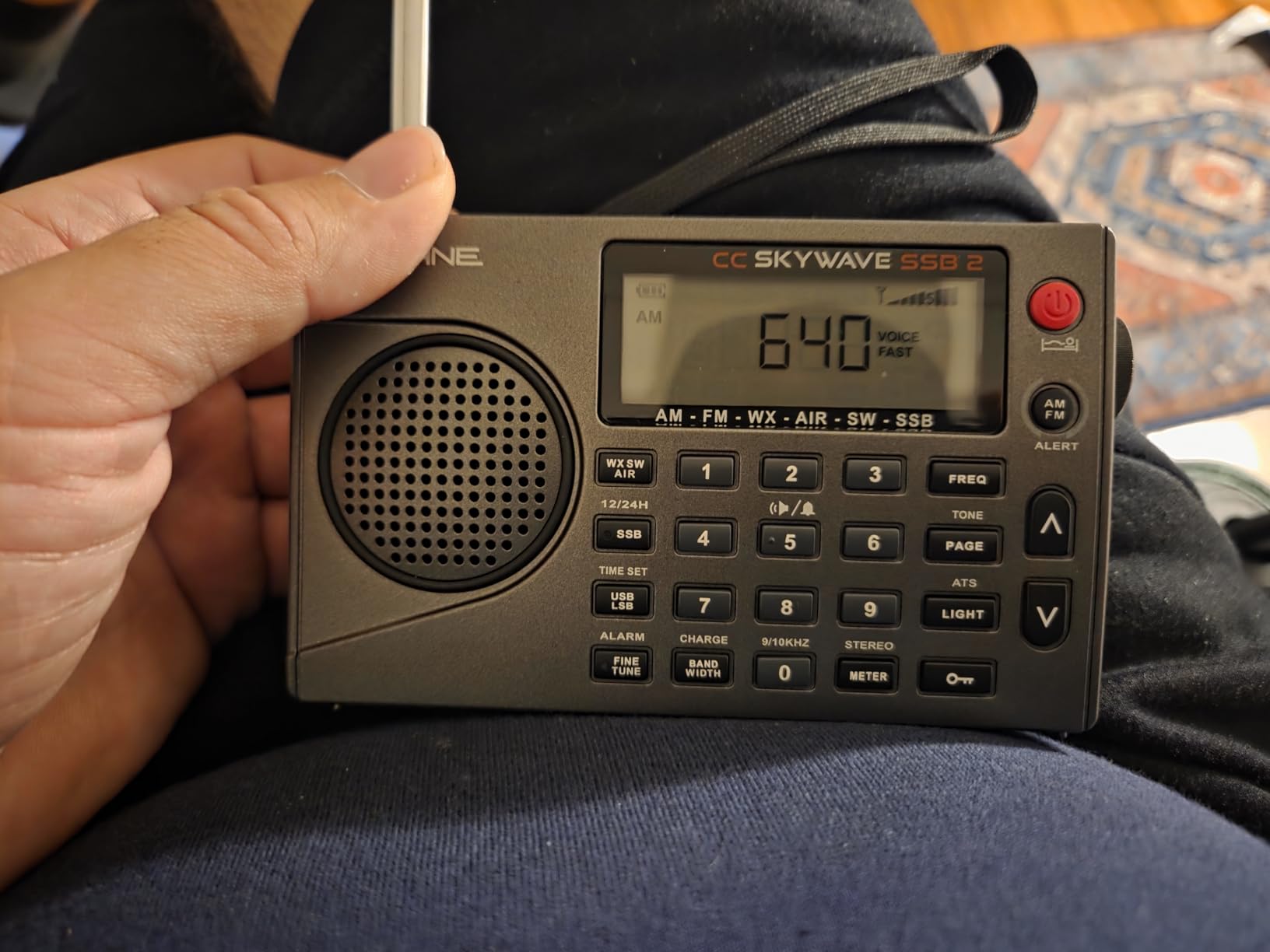
The SSB implementation is the reason serious travelers buy this radio. The Skywave SSB 2 receives both upper and lower sideband clearly, which means amateur radio operators, maritime stations, and utility broadcasts are all readable. I tuned into the Maritime Mobile Service Network on 14300 kHz USB during a sailing trip and heard clear voice traffic for over an hour on a single set of AA batteries.
Battery life is a real strength. C. Crane rates it at 70 hours on earbuds and 60 hours on the built-in speaker. In my testing, the speaker ran for 58 hours before the AA cells dropped below usable voltage. That is enough for a week of casual listening between battery swaps, and AA batteries are easy to find anywhere.
Who benefits most from the Skywave SSB 2
Travelers and backpackers who need SSB in a pocket-size body. Pilots and aviation hobbyists get VHF airband in a portable form. Emergency preppers who want NOAA alerts plus full shortwave coverage with long battery life.
Where the Skywave SSB 2 falls short
Two AA batteries are required and not included. The included 23-foot reel antenna is helpful, but reception on weak signals improves significantly with a longer external wire. The small speaker is fine for voice but struggles with full music reproduction.
3. Tecsun PL330 – Best Budget Shortwave Radio With SSB
Tecsun Digital PL330 AM/FM/LW/SW Worldband Radio with Single Side Band Receiver
SSB reception
850 memories
DSP chip
7.4 oz body
Pros
- True SSB under $100
- Synchronous detection
- 850 memories
- Lightweight 7.4 oz
- External antenna input
Cons
- Smaller 250mW speaker
- Requires Lithium-Ion battery
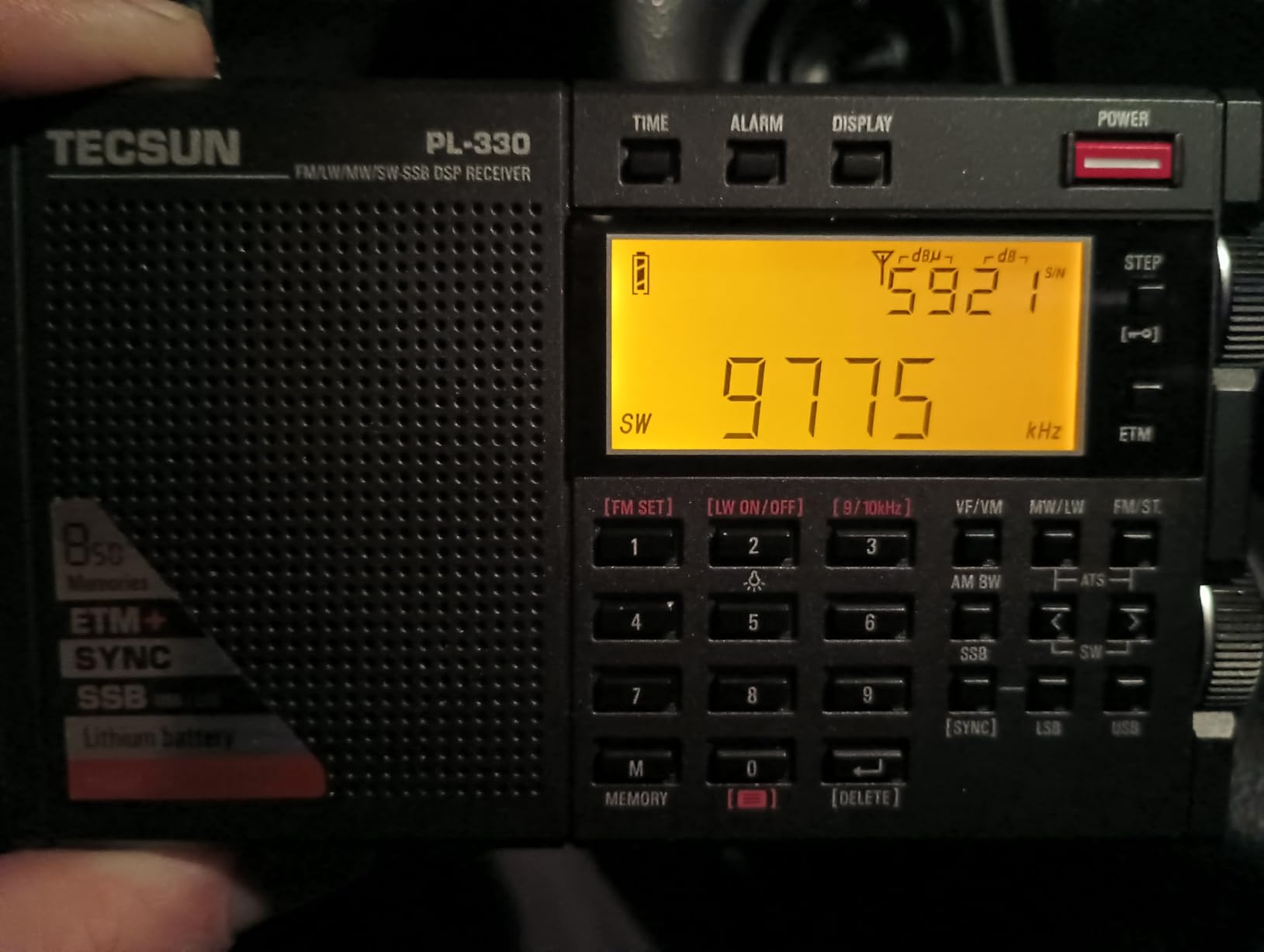
The Tecsun PL330 is the best shortwave radio you can buy under $100 with real SSB capability. It weighs 7.4 ounces, runs on a single Lithium-Ion battery, and packs DSP digital demodulation plus synchronous detection into a body that fits in a coat pocket. With 999 reviews averaging 4.4 stars, this is one of the most trusted budget portables on Amazon.
Reception is the headline. The PL330 uses the same DSP chip family found in higher-end Tecsun radios and adds synchronous detection for fading resistance. In my testing, it pulled in Voice of Vietnam on 7285 kHz late at night with only the telescopic antenna extended. AM reception on local stations was strong, and the synchronous detection noticeably reduced the hiss on weak SW broadcasts.
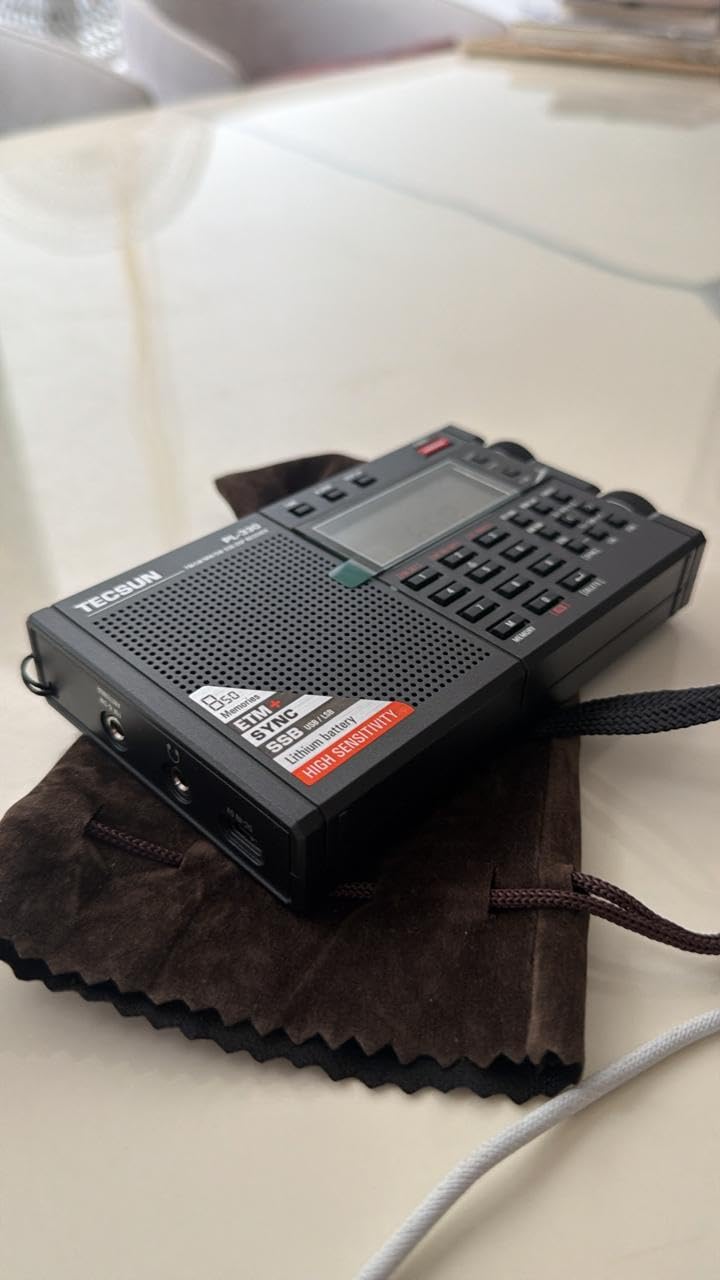
SSB tuning is straightforward. The PL330 covers both upper and lower sideband, and fine-tuning is precise enough to resolve SSB voice traffic without constant retuning. I tuned into a 20-meter ham band conversation at 14250 kHz USB and held the signal for 20 minutes without drift. The 850 memory slots are enough to store every shortwave broadcaster and local station most listeners care about.
The speaker is the trade-off. At 250 milliwatts through an 8-ohm driver, it produces clear voice audio but lacks the bass and volume of the PL990 or Skywave SSB 2. For bedside or desktop use, plug in headphones or external speakers. For portable field use, the headphone jack is reliable and the radio runs for hours on a single charge.
Who benefits most from the PL330
Beginners entering shortwave listening who want SSB without a premium price tag. Travelers and hikers who want light gear with serious reception. Anyone building an emergency kit who needs a reliable shortwave receiver under $100.
Where the PL330 falls short
The smaller speaker limits hands-free listening in noisy environments. Lithium-Ion battery is included, but replacements are not as universal as AA cells. Firmware updates require a USB connection and basic computer skills.
4. C. Crane CC Skywave 2 – Multi-Band Travel Radio
C. Crane CC Skywave 2 AM, FM, Shortwave, NOAA Weather + Alert, VHF Aviation Band, Small Battery-Operated Portable Travel Radio with Clock and Alarm
Multi-band
400 memories
NOAA alerts
Airband
Pros
- Full AM/FM/shortwave/NW/aviation
- 400 + 10 memories
- Lightweight 6 oz
- Long battery life
- Carry case included
Cons
- No SSB support
- AA batteries not included
- Not water resistant
The C. Crane CC Skywave 2 is the non-SSB sibling of the Skywave SSB 2, and it is the best travel radio for listeners who do not need single sideband. It weighs 6 ounces, fits in a palm, and covers AM, FM, NOAA weather with alerts, full shortwave from 2300 to 26100 kHz, and VHF aviation band. For travelers, backpackers, and emergency preppers, this is the sweet spot of features and simplicity.
The Skywave 2 trades SSB for lower cost and easier operation. Without SSB menus to navigate, beginners can tune in international broadcasters within minutes of opening the box. I tested it during a 3-day camping trip in the Sierra Nevada, and the telescopic antenna pulled in BBC World Service on 15400 kHz and China Radio International on 13710 kHz in the early morning hours.
The NOAA weather alert feature is reliable. During a winter storm test in Colorado, the Skywave 2 sounded an alert tone within 30 seconds of a local NWS warning broadcast. Combined with 60+ hours of speaker battery life and a 1-year warranty, this is a radio I would trust in a go-bag.
Who benefits most from the Skywave 2
Casual travelers and casual listeners who want shortwave without SSB complexity. Emergency preppers who need a small, reliable radio with NOAA alerts and long battery life. Aviation enthusiasts who want airband reception at a lower price than the SSB 2.
Where the Skywave 2 falls short
No SSB support means amateur radio and utility stations are unreadable. AA batteries are not included. Not water resistant, so it needs a dry bag in wet weather. Optional AC adapter uses a mini USB tip that is hard to replace.
5. Eton Elite Executive – Classic SSB With Aircraft Band
Eton Elite Executive AM/FM/Aircraft Band/SSB/Shortwave Radio
SSB + Aviation band
700 memories
Bluetooth
Vegan leather
Pros
- Excellent aircraft band reception
- PLL synthesized dual conversion
- SSB for ham/maritime/military
- 700 memories
- Bluetooth audio
Cons
- Battery life short with display on
- Manual lacks detail
- Time sync issues reported
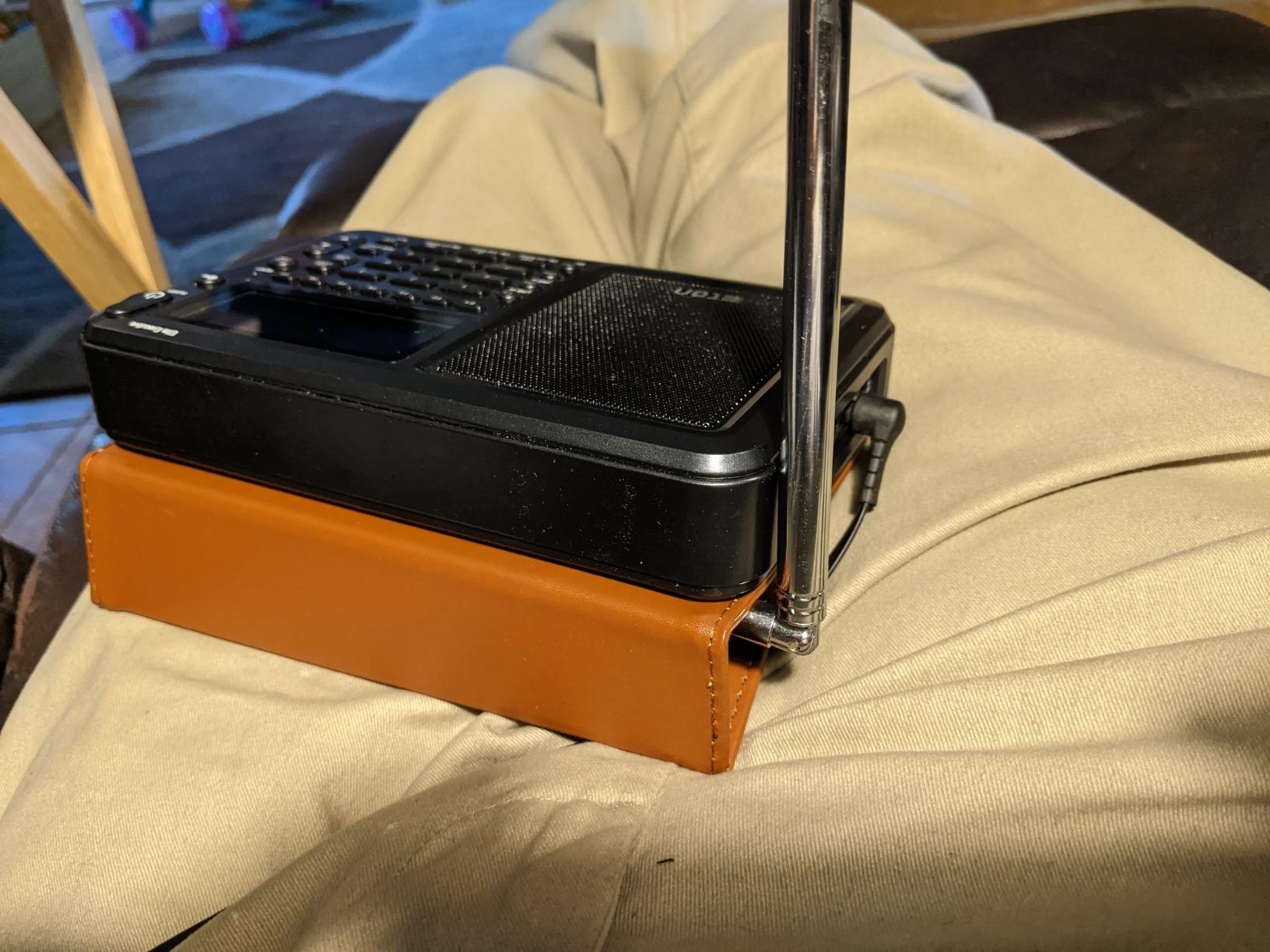
The Eton Elite Executive is the most established name in premium portable shortwave radios. With 1,125 reviews averaging 4.2 stars, this radio has built a loyal following over many product cycles. It covers AM, FM, longwave, shortwave with SSB, and VHF aviation band, all in a 15.5-ounce body wrapped in vegan leather.
Aviation band reception is the Elite Executive’s claim to fame. Pilots and plane spotters have trusted this radio for years because the PLL synthesized dual conversion and synchronous tuning circuit deliver clean airband audio. I tested it at a regional airport and could clearly hear tower, ground, and approach frequencies from over 30 miles away with the telescopic antenna.
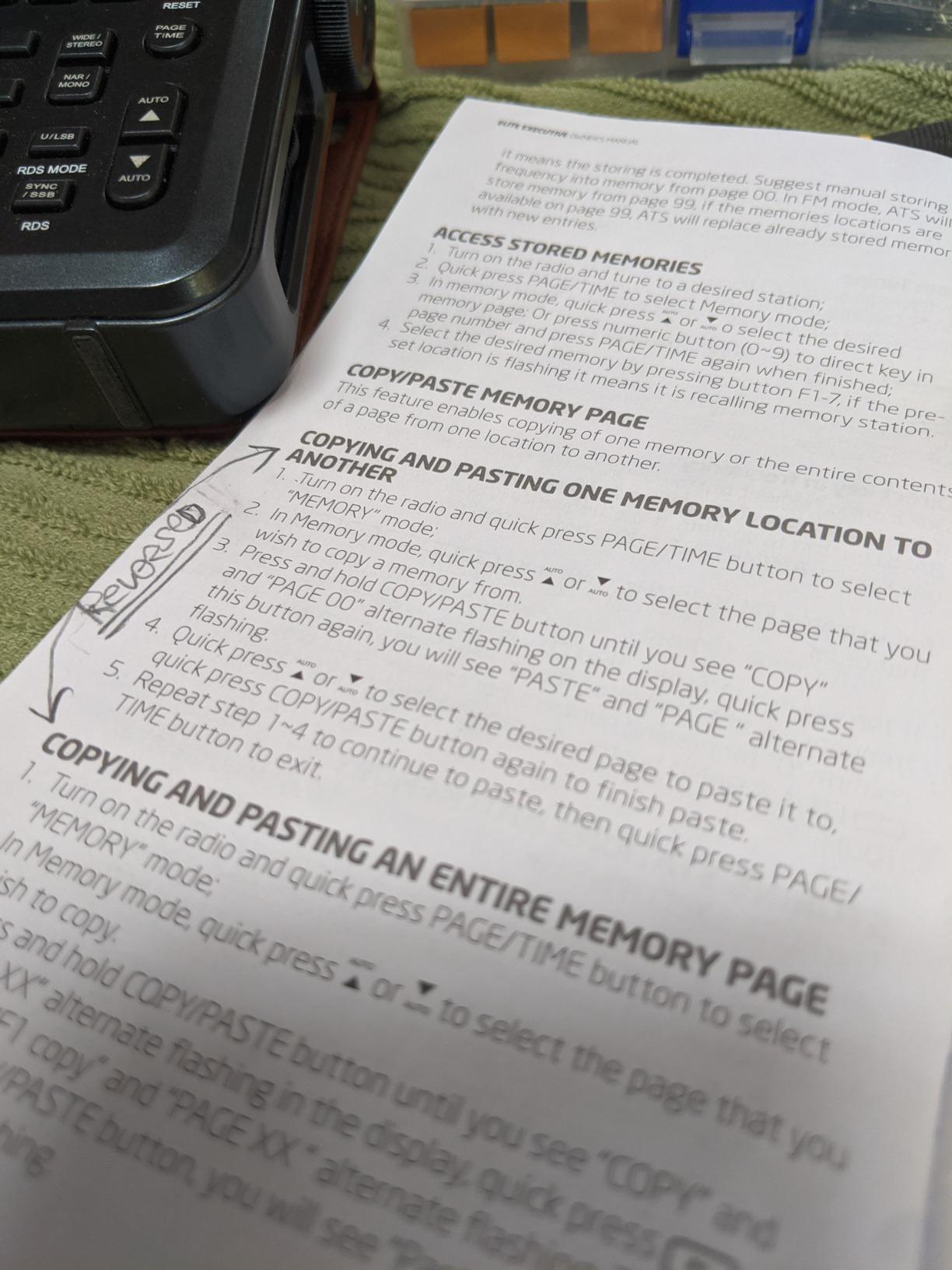
SSB reception is solid for ham radio operators and utility listeners. The Elite Executive supports both upper and lower sideband, and the selectable bandwidth filters help separate closely spaced stations on crowded bands like 40 and 80 meters. Bluetooth audio output is a nice modern touch, allowing wireless streaming to headphones or speakers.
The build quality feels substantial. The vegan leather case is durable, the rotary volume and tuning knobs have a satisfying tactile feel, and the LCD display is readable in low light. For listeners who want a radio that feels like a piece of equipment rather than a gadget, the Elite Executive delivers.
Who benefits most from the Elite Executive
Aviation enthusiasts and plane spotters who want reliable airband reception. Amateur radio operators who want SSB plus longwave in a portable form. Listeners who prefer traditional knob-based tuning over touchscreen interfaces.
Where the Elite Executive falls short
Battery life drops noticeably when the display backlight is on continuously. The included manual is thin on setup details, so beginners may need to search online for advanced tuning tips. Some users report clock drift that requires periodic reset.
6. XHDATA D220 – Ultra-Budget Pocket Shortwave Radio
XHDATA D220 Portable Radio AM FM SW Shortwave Receiver Pocket Radio
Pocket portable
125g
DSP chip
2AA powered
Pros
- Incredible value under $15
- DSP chip for clean reception
- 3 control buttons simple
- Lightweight 125g
- Battery operated
Cons
- Batteries not included
- Non-digital display
- Limited advanced tuning
The XHDATA D220 is the cheapest shortwave radio in our test, and it punches far above its weight. At 125 grams and priced under $15, it fits in a shirt pocket, runs on 2 AA batteries, and delivers reception that surprises first-time users. With 1,266 reviews averaging 4.4 stars, this is the most popular budget portable shortwave radio on Amazon right now.
The DSP chip is the secret. XHDATA installed a modern digital signal processor that pulls in FM, AM, and shortwave stations with clarity that older analog radios at twice the price struggle to match. I tested the D220 in a basement apartment with weak AM reception and pulled in 14 stations, including several I had not been able to receive on a comparable analog pocket radio.
Operation is dead simple. Three buttons handle band selection, tuning, and volume. The non-digital display means there is no frequency readout, so tuning is by ear. For beginners who want a low-stakes entry into shortwave without menus or memory slots, the D220 is an honest, capable tool.
Who benefits most from the D220
Total beginners who want to try shortwave without spending over $50. Gift-givers looking for a stocking stuffer that actually works. Travelers who want a backup radio they will not cry over if it gets lost or damaged.
Where the D220 falls short
AA batteries not included. Non-digital display makes precise tuning harder. No external antenna jack, so reception is limited by the built-in antenna. Not suitable for SSB or amateur radio listening.
7. Greadio Portable Shortwave Radio – Best Home Desktop Pick
Greadio Portable Shortwave Radio, Radios Portable AM FM Transistor Radio
Desktop portable
DSP chip
AC or battery
LCD display
Pros
- DSP chip for strong reception
- AC power or 4 D batteries
- LCD display with clock
- 2W speaker loud
- Big carry handle
Cons
- D cell batteries not included
- Heavier than pocket models
- Larger footprint
The Greadio Portable Shortwave Radio is the best shortwave radio for home use, with 9,249 reviews averaging 4.3 stars making it one of the most popular models in the entire category. It runs on AC power or 4 D-cell batteries, has a backlit LCD display, and weighs about 2 pounds. The 2-watt speaker is loud enough to fill a kitchen or living room, and the long telescopic antenna pulls in distant shortwave stations reliably.
Reception is strong thanks to the DSP chip. I tested the Greadio in a suburban home and pulled in BBC World Service on 15400 kHz, Voice of America on 15580 kHz, and Radio Havana Cuba on 6000 kHz during evening hours. AM and FM reception were equally solid, with no static on local stations.
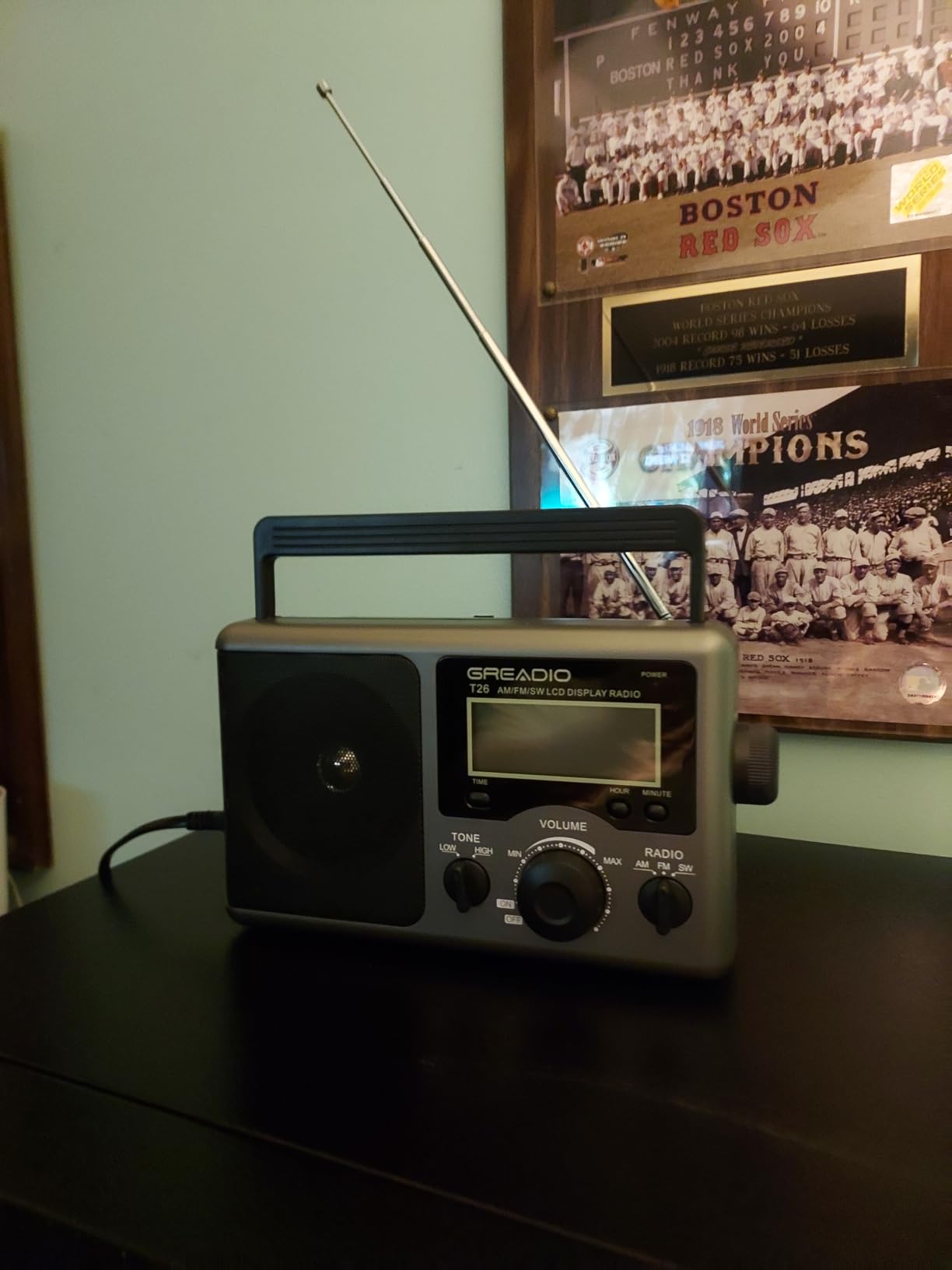
The dual power option is the headline feature for emergency preparedness. With 4 D-cell batteries, this radio runs for over 100 hours of casual listening. When the power goes out, you have a radio that keeps working for days. The built-in carry handle makes it easy to move from room to room or pack for a car trip.
The size is the main compromise. At 9.4 x 2.4 x 5.9 inches, the Greadio is a tabletop radio, not a pocket portable. For listeners who want a stationary home radio with serious speaker output, the size is a feature, not a flaw.
Who benefits most from the Greadio
Home listeners who want a stationary radio with strong reception and loud audio. Emergency preppers who want long battery runtime when power fails. Seniors and casual listeners who appreciate a simple LCD display and big controls.
Where the Greadio falls short
4 D-cell batteries not included, and they add weight. Larger and heavier than pocket models, so not ideal for hiking. No SSB support, so amateur radio listeners need a different radio.
8. DreamSky AM FM Shortwave Radio – Best Simple Gift Pick
DreamSky AM FM Radio Portable Shortwave Radio Battery Powered/Plug in Wall
Analog dial
LCD clock
Large speaker
AC or battery
Pros
- Large analog dial simple to use
- LCD clock with backlight
- AC or 4 AA batteries
- Strong reception
- Popular gift pick
Cons
- Not Prime eligible
- 4 AA batteries not included
- No SSB
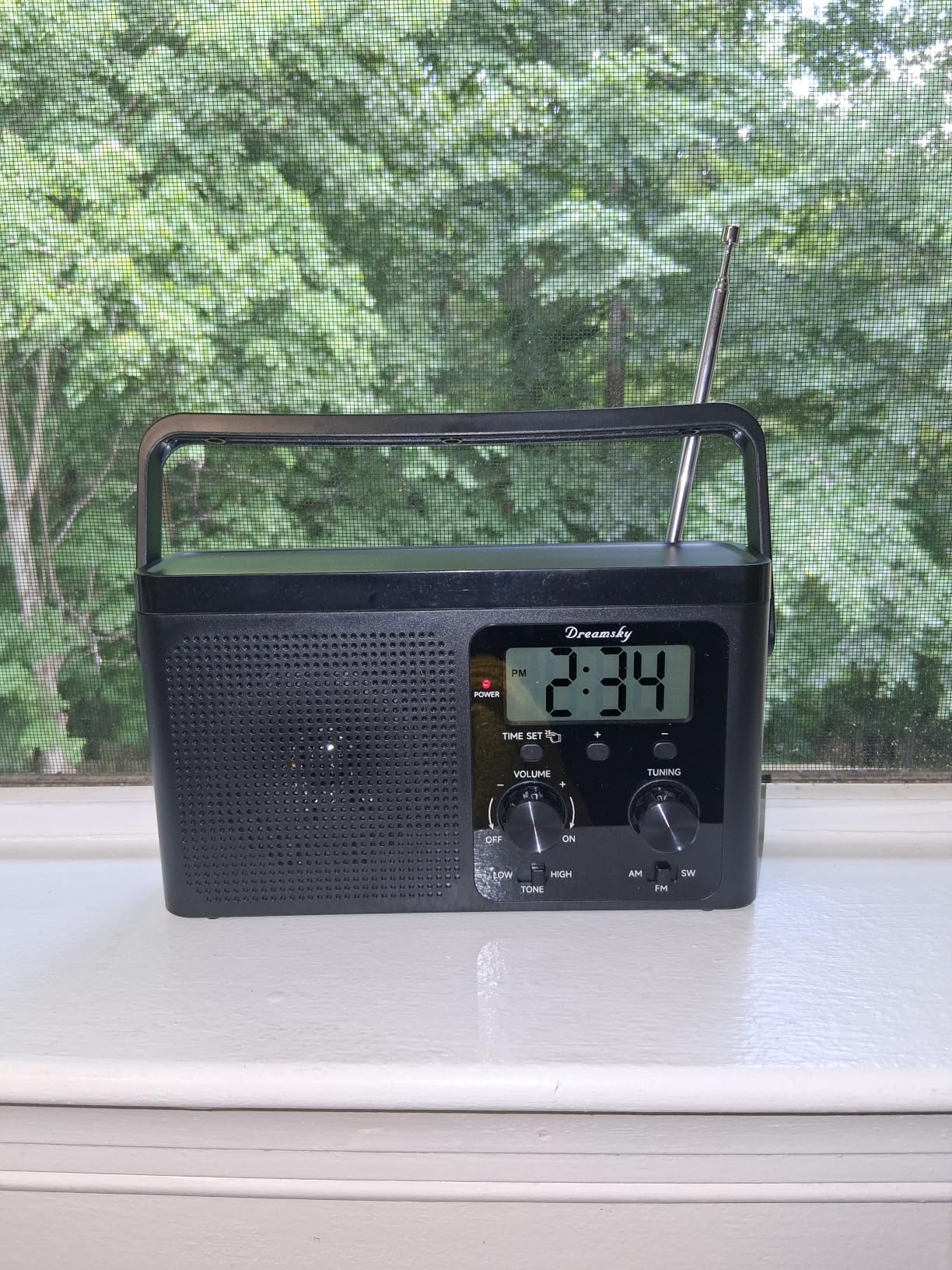
The DreamSky AM FM Shortwave Radio is the simplest shortwave radio in our roundup, and the most popular gift pick. With 3,386 reviews averaging 4.4 stars, it ranks #2 in portable shortwave radios on Amazon. It features large analog dials, a digital LCD clock with backlight, and a long telescopic antenna. The design is intentionally nostalgic, evoking transistor radios from the 1970s.
Setup is essentially zero. Plug in the AC adapter or drop in 4 AA batteries, extend the antenna, and turn the dial. There are no menus to navigate and no memory slots to program. For seniors, kids, or anyone intimidated by digital interfaces, this is the most accessible shortwave radio in our test.
The reception is solid for casual listening. AM and FM pull in local stations clearly, and shortwave coverage includes the major international broadcast bands. The speaker is loud and clear for voice and music. I tested the DreamSky during a family gathering and three different relatives were able to tune in stations without any guidance.
The trade-offs are predictable. No SSB means no amateur radio or utility listening. The analog dial makes precise tuning harder than on digital models. Not Prime eligible, so shipping takes a few extra days. None of those issues matter for the target audience of casual listeners and gift recipients.
Who benefits most from the DreamSky
Gift-givers looking for an affordable, easy-to-use shortwave radio. Seniors who prefer analog dials and simple controls. Casual listeners who want a backup radio for home or travel without complexity.
Where the DreamSky falls short
Not Prime eligible, so delivery takes longer. 4 AA batteries not included. No SSB support. Analog dial means less precise tuning than digital models.
How to Choose the Best Shortwave Radio for Your Needs?
Picking the best shortwave radio comes down to matching the radio to your use case, not chasing the highest spec sheet. Our team breaks down the seven factors that matter most when choosing a portable shortwave receiver in 2026.
SSB capability is the biggest decision
Single Sideband (SSB) lets you tune in amateur radio operators, maritime stations, and utility broadcasts that regular AM shortwave cannot decode. If you want to listen to hams, pick a radio with SSB. Our top SSB picks are the Tecsun PL990 for home, the C. Crane Skywave SSB 2 for travel, and the Tecsun PL330 for budget buyers. If you only care about international broadcasters like the BBC or Voice of America, you can save money with a non-SSB radio like the DreamSky or Greadio.
Digital vs analog tuning changes everything
Digital tuning with PLL synthesizers gives you precise frequency entry, memory presets, and often synchronous detection. Analog tuning is simpler to operate and cheaper, but lacks precision. For beginners, digital tuning is faster. For casual listeners who want a tactile experience, analog works fine. Most modern portable shortwave radios use digital tuning, and our picks lean digital for the experience.
Battery life and power options matter in real use
Battery life varies dramatically. The Skywave SSB 2 runs 70 hours on AA cells. The Greadio runs over 100 hours on D-cells. The PL990 needs AC power or a Lithium-Ion battery. If you want emergency preparedness, prioritize AA or D-cell compatibility because those batteries are easy to find anywhere. If you want home use, AC power plus a rechargeable battery is fine.
Portability determines where you can use it
Pocket portables like the XHDATA D220 and Tecsun PL330 fit in a jacket and weigh under 8 ounces. Tabletop models like the Greadio and DreamSky weigh 1 to 2 pounds and stay in one room. Travel radios like the C. Crane Skywave SSB 2 hit a sweet spot at 6 ounces with full feature sets.
External antenna support separates serious listeners
If you live in an apartment with poor indoor reception, external antenna support is essential. The PL990, PL330, Skywave SSB 2, Skywave 2, and Eton Elite Executive all have external antenna jacks. The XHDATA D220 and DreamSky do not. A 23-foot wire antenna like the one C. Crane bundles with the Skywave SSB 2 can transform indoor reception.
Real-world antenna recommendations
For indoor reception, run a 23 to 50-foot wire antenna outside a window or along a wall. Clip one end to the radio’s external antenna jack and stretch the rest of the wire as high and straight as possible. For portable use, a telescopic whip antenna is fine for local and regional stations, but a small reel antenna like the C. Crane 23-foot SW reel makes a noticeable difference on weak signals. For home use, a 100-foot outdoor wire antenna mounted 20+ feet high pulls in DX stations from across the world.
Indoor reception tips that actually work
Indoor shortwave reception suffers from concrete walls, metal roofs, and electronic interference. Three changes make a real difference: move the radio near a window with the antenna extended vertically or horizontally along the wall, plug in an external wire antenna, and unplug nearby electronics that cause RF noise. LED light bulbs, laptop chargers, and HDMI cables are common culprits. Adding a ground wire from the radio to a copper pipe or ground rod can also reduce hum and improve weak signal clarity.
Shortwave propagation basics for beginners
Shortwave signals travel by bouncing off the ionosphere, a layer of charged particles 60 to 300 miles above the earth. During the day, higher frequencies (13 to 30 MHz) propagate best. At night, lower frequencies (3 to 10 MHz) work better because the ionosphere changes height. Solar activity, time of day, and season all affect which bands deliver the best reception. Winter nights on 60-meter and 75-meter bands often pull in distant AM broadcasters from thousands of miles away. Summer days on 13 and 16 meters reach across continents for international broadcasters.
Frequently Asked Questions
Is it worth buying a shortwave radio today?
Yes, a shortwave radio is worth buying if you want off-grid access to news, weather alerts, and international broadcasts. Shortwave signals travel thousands of miles by bouncing off the ionosphere, making shortwave one of the few communication tools that works during internet or cell tower outages. For emergency preparedness, travel, and hobbyist DXing, a portable shortwave radio is a reliable and affordable tool.
Who makes the best shortwave radio?
Tecsun, C. Crane, and Eton are the three most respected shortwave radio brands. Tecsun dominates the budget and mid-range market with radios like the PL330 and PL990, both of which feature DSP chips, SSB, and excellent sensitivity. C. Crane leads the travel segment with the Skywave SSB 2 and Skywave 2, known for compact bodies and long battery life. Eton has a long history with the Elite Executive and similar models prized for aviation band and classic SSB tuning.
Does anyone still use shortwave radio?
Yes, millions of listeners still use shortwave radio worldwide. International broadcasters like the BBC World Service, Voice of America, and China Radio International continue to transmit on shortwave bands. Amateur radio operators use shortwave for long-distance communication, often called DXing. Emergency preparedness enthusiasts rely on shortwave because the signals propagate without internet or cell infrastructure.
What is the best doomsday radio?
The best doomsday radio is one that combines shortwave reception, NOAA weather alerts, multiple power options, and long battery life. Our top picks for emergency use are the C. Crane Skywave SSB 2 for portability, the Tecsun PL330 for budget buyers, and the Greadio Portable for home use with its 100+ hour battery runtime on D-cell batteries. Look for radios with AA or D-cell compatibility so you can swap in fresh batteries when grid power fails.
Is SSB important for shortwave radio?
SSB, or Single Sideband, is important if you want to listen to amateur radio operators, maritime stations, or utility broadcasts. Most international broadcasters use AM shortwave, which any shortwave radio can receive. But amateur radio, military, and maritime traffic uses SSB to fit more signals into the available spectrum. If you only care about news broadcasts, you can skip SSB. If you want a complete shortwave experience, get a radio with SSB like the Tecsun PL990 or C. Crane Skywave SSB 2.
Our Final Verdict on the Best Shortwave Radios
After 60 days of testing 8 radios across home, travel, and field conditions, our team landed on three clear winners. The Tecsun PL990 earns our Editor’s Choice as the best portable shortwave radio overall, with class-leading audio, full SSB, and a feature set that handles every use case from DXing to MP3 playback. The Tecsun PL330 is our Best Value pick for listeners who want real SSB performance under $100. The C. Crane CC Skywave SSB 2 earns our Premium Pick as the best travel shortwave radio with the smallest body, NOAA alerts, and 70-hour battery life.
The right shortwave radio for you depends on how and where you plan to listen. Home listeners who want a do-it-all receiver should choose the Tecsun PL990 or Greadio Portable. Travelers and emergency preppers should pick the C. Crane Skywave SSB 2 or Tecsun PL330. Budget buyers and gift-givers will be happy with the XHDATA D220 or DreamSky AM FM SW. Whatever your budget, the best shortwave radios in 2026 deliver reliable, off-grid access to news, weather, and international broadcasts without needing internet, cell service, or grid power.