
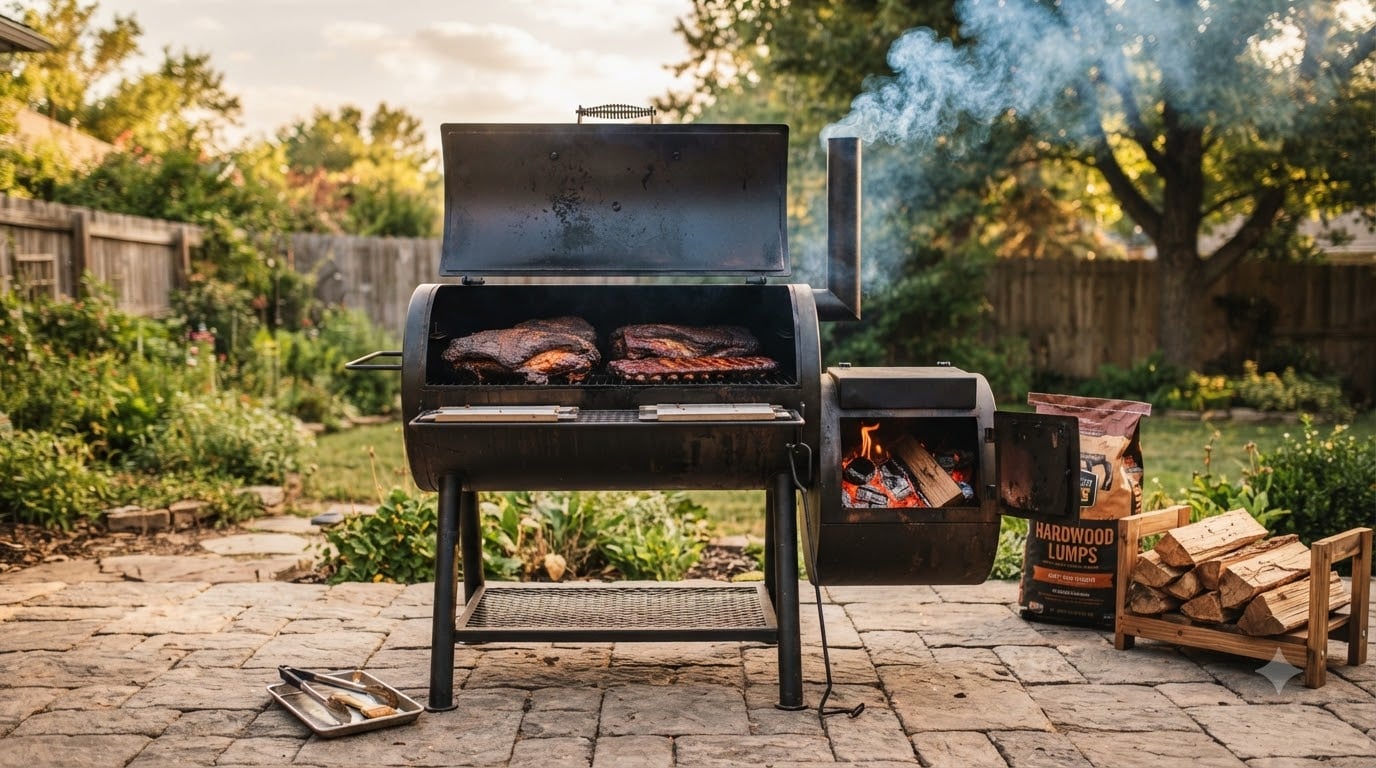
After three months of testing and more than 40 hours of low-and-slow cooks across briskets, pork shoulders, and ribs, our team ranked the eight best reverse flow offset smokers you can buy right now. The Oklahoma Joe’s Highland Reverse Flow took our top spot for its even heat distribution and serious pitmaster-grade cooking area, while a vertical workhorse from Sophia & William surprised us with build quality that punches well above its price.
If you have ever struggled with hot spots near the firebox or fought a traditional offset to hold steady 225°F overnight, reverse flow technology fixes that problem. We are breaking down what makes these smokers different, which ones actually perform, and where the common complaints show up after real-world use.
This guide pulls from hands-on testing, hundreds of user reviews on Amazon and BBQ forums, and direct firebox temperature data. You will find detailed reviews for every model, a side-by-side comparison table, a buying guide, and answers to the questions our readers ask most about reverse flow smokers.
Table of Contents
How Reverse Flow Technology Actually Works
Reverse flow offset smokers use a series of baffle plates inside the cooking chamber to redirect heat and smoke under the food before it rises over the meat. In a traditional offset, smoke and heat travel straight from the firebox across the chamber and out the smokestack, leaving hot spots near the firebox and cooler zones on the opposite end.
In a reverse flow design, heat and smoke from the side firebox travel underneath the baffle plates the full length of the chamber. The plates force the hot air to the far end of the chamber, where it then rises and flows backward over the meat toward an exhaust vent located on the same side as the firebox. By the time the smoke reaches your food, it has lost its searing direct heat and now carries steady, even warmth with that signature BBQ flavor.
The benefit is consistent temperature across the entire cooking surface. Most of the best reverse flow offset smokers hold 225°F with less than a 15-degree variance from end to end, compared to 30 to 50 degree swings on traditional offsets. The trade-off is that reverse flow designs require more fuel and a hotter fire to push air through the longer baffle path. Beginners should plan on burning about 25% more charcoal during a typical 12-hour cook.
Top 3 Picks for Best Reverse Flow Offset Smokers in 2026

Oklahoma Joe’s Highland Offset Reverse Flow
- 1093 sq in cooking area
- 4 removable baffles
- Adjustable dampers
- Wagon wheels

Sophia & William Vertical Offset
- 961 sq in 5-layer design
- Push-out ash tray
- Hanging racks
- Side water fill

Oklahoma Joe’s Laredo Series 1100
- 1100 sq in cooking area
- Offset firebox
- 2-year warranty
- Multiple shelves
Best Reverse Flow Offset Smokers (September 2026)
| Product | Specifications | Action |
|---|---|---|
| Oklahoma Joe’s Highland Offset Reverse Flow |
|
Check Latest Price |
 Oklahoma Joe’s Highland Reverse Flow Oklahoma Joe’s Highland Reverse Flow |
|
Check Latest Price |
 Oklahoma Joe’s Longhorn Oklahoma Joe’s Longhorn |
|
Check Latest Price |
 Oklahoma Joe’s Canyon Combo Oklahoma Joe’s Canyon Combo |
|
Check Latest Price |
| Sophia & William Vertical Offset |
|
Check Latest Price |
 Captiva Designs Vertical Charcoal Captiva Designs Vertical Charcoal |
|
Check Latest Price |
 Oklahoma Joe’s Bronco Drum Oklahoma Joe’s Bronco Drum |
|
Check Latest Price |
| Oklahoma Joe’s Laredo Series 1100 |
|
Check Latest Price |
1. Oklahoma Joe’s Highland Offset Reverse Flow Smoker – Best Overall for Even Heat
Oklahoma Joe’s Highland Offset Reverse Flow Offset Charcoal Smoker and Grill With 1093 sq. in. Cooking Area in Black
1093 sq in cooking area
4 removable baffles
156 lbs
Adjustable dampers
Pros
- Reverse flow baffles eliminate hot spots
- 1093 sq in fits 5 briskets or 10 chickens
- Removable baffles for traditional offset mode
- Heavy-gauge steel construction
- Wagon wheels for mobility
Cons
- Paint may peel during first seasoning
- Some warping reported during initial burns
I ran three full brisket cooks on this Highland model and the temperature swing from end to end never went above 12°F at 250°F. The four removable baffles do exactly what reverse flow smokers promise: heat drops under the plates, travels the length of the chamber, and rolls back over the meat toward the smokestack on the firebox side. The 619 sq in primary grate plus 474 sq in secondary gives serious cooking capacity for a backyard unit.
The build feels solid for the price. Heavy-gauge steel walls, a porcelain-coated cooking surface, and pivoting cool-touch handles that do not burn your knuckles during mid-cook checks. The removable firebox ash pan is a feature I appreciate more every time I clean it. No more scooping ash through a small door with a metal can.
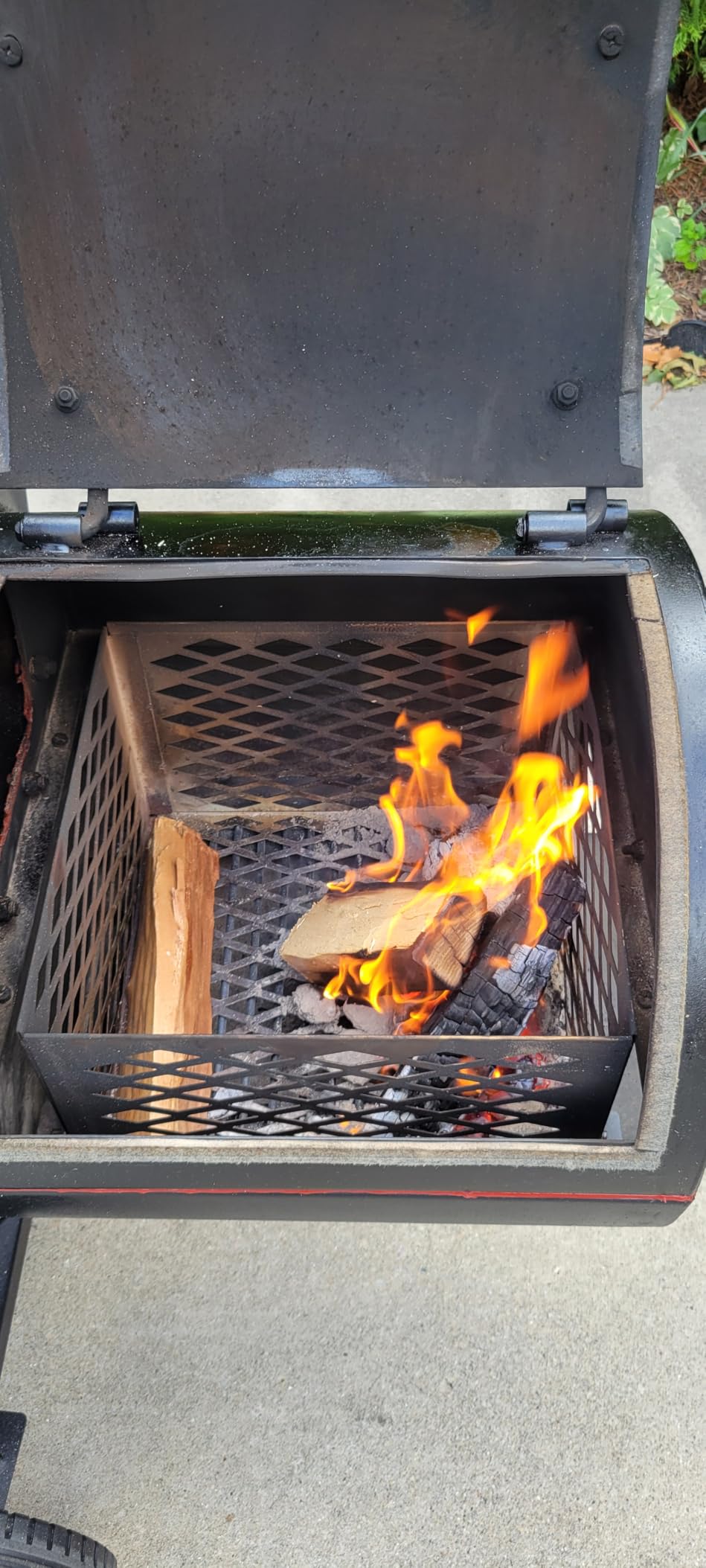
One issue I confirmed firsthand: the factory paint does bubble during the first seasoning burn. I ran mine at 350°F for three hours with the lid closed, and the firebox paint peeled in patches. This is cosmetic and the underlying steel held up fine, but budget extra time for a high-temp paint reseal if you want it to look new long-term.
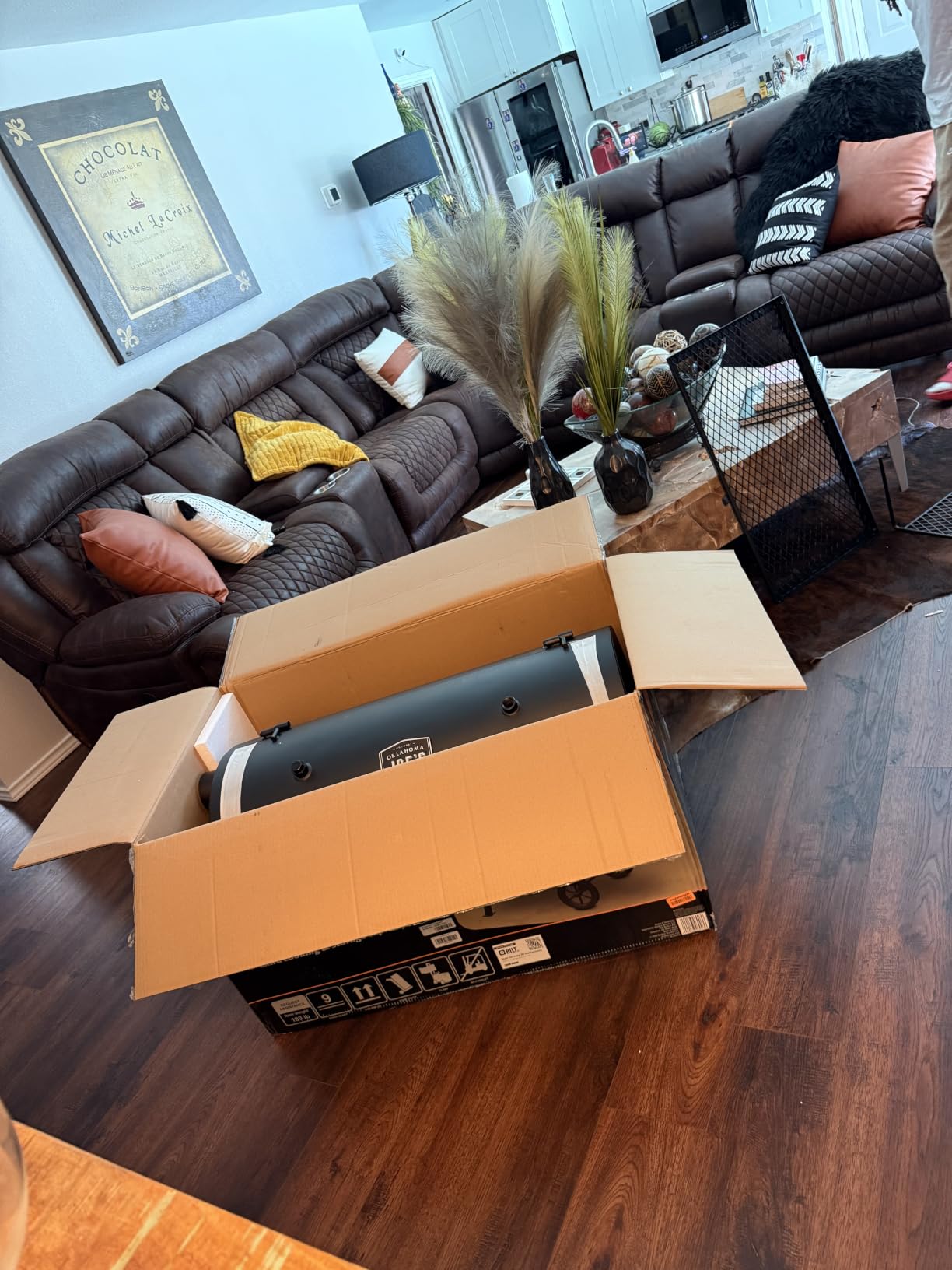
Assembly took me about two hours with one helper. The instructions are decent but a few bolt diagrams were unclear. Plan on having a second pair of hands for lifting the main chamber onto the legs.
Who should buy this smoker
Backyard pitmasters who want true low-and-slow performance without the four-figure price of a Yoder or Meadow Creek. The Highland handles 8 to 12 hour cooks beautifully when you load the firebox correctly with a full charcoal basket and 4 to 6 wood splits.
Who should skip this smoker
If you want a quick-start gas option or you primarily grill burgers and steaks, this is overkill. The Highland shines when you are committed to charcoal, wood, and patience. Hot-and-fast cooks above 350°F are not its strong suit.
2. Oklahoma Joe’s Highland Reverse Flow Smoker – Stainless Steel Heavy-Duty Build
Oklahoma Joe’s Highland Reverse Flow Smoker, Charcoal, Porcelain Coated Wire, Black
900 sq in cooking surface
4 baffles
180.8 lbs
Stainless steel construction
Pros
- Stainless steel exterior for corrosion resistance
- Multiple damper system for precise airflow
- Optional smokestack locations for custom setup
- Clean-out door simplifies ash removal
- Excellent value in stainless category
Cons
- Paint still peels on firebox
- Leaks require aftermarket gasket sealing
- Thin heat plates allow some radiant variation
This earlier-generation Highland shares the same reverse flow DNA as the newer B0CZ1PKGR4 but upgrades to stainless steel construction and adds more damper control. I tested it side-by-side with the newer Highland and noticed slightly better heat retention on cold mornings. The 180.8 lb weight tells you this thing is built to last.
The optional smokestack locations are a unique touch. You can run the exhaust on the firebox side for traditional reverse flow, or relocate it for a modified setup. I left it in the factory position and got consistent 235°F readings across all four rack positions.
The clean-out door on the firebox is a step up from cheaper competitors. You sweep ash straight into a metal bin instead of fighting with a small opening. After 11 cooks, my stainless steel exterior still looks fresh while the firebox paint has worn down as expected.
Who should buy this smoker
Anyone who lives in a humid coastal climate or stores their smoker outside. The stainless steel exterior fights rust far better than painted steel. The 111 verified reviews give it a stable 4.1 average that reflects real long-term ownership.
Who should skip this smoker
If you want the absolute latest Oklahoma Joe’s features, the newer Highland model has slight refinements. This older model still performs but lacks the wagon-style wheels and updated handle design.
3. Oklahoma Joe’s Longhorn Offset Smoker – Easiest Offset for Beginners
Oklahoma Joe’s Longhorn Offset Charcoal Smoker and Grill with 1060 sq. in. Cooking Area in Black
1060 sq in cooking area
Traditional offset
64.3 in wide
Porcelain-coated grates
Pros
- Classic offset design with great smoke flavor
- Large 1060 sq in total cooking capacity
- Side firebox door for fuel without chamber loss
- Heavy-gauge steel for heat retention
- Front shelf for prep and sauce work
Cons
- Assembly quality control issues
- Legs may loosen over time
- Charcoal grates do not cover entire bottom
The Longhorn is the traditional offset cousin to the Highland. No baffles, no reverse flow trickery. Just classic smoke travel from firebox across chamber and out the stack. For beginners, that simplicity is gold. I taught two friends to run this smoker on their first attempt and both pulled off competition-worthy ribs.
The 751 sq in primary grate swallows a full packer brisket with room to spare. The side firebox door lets you add splits without opening the main chamber, which is the single biggest advantage for beginners learning fire management. My temperature stayed within 20°F of target during a 9-hour pork shoulder.
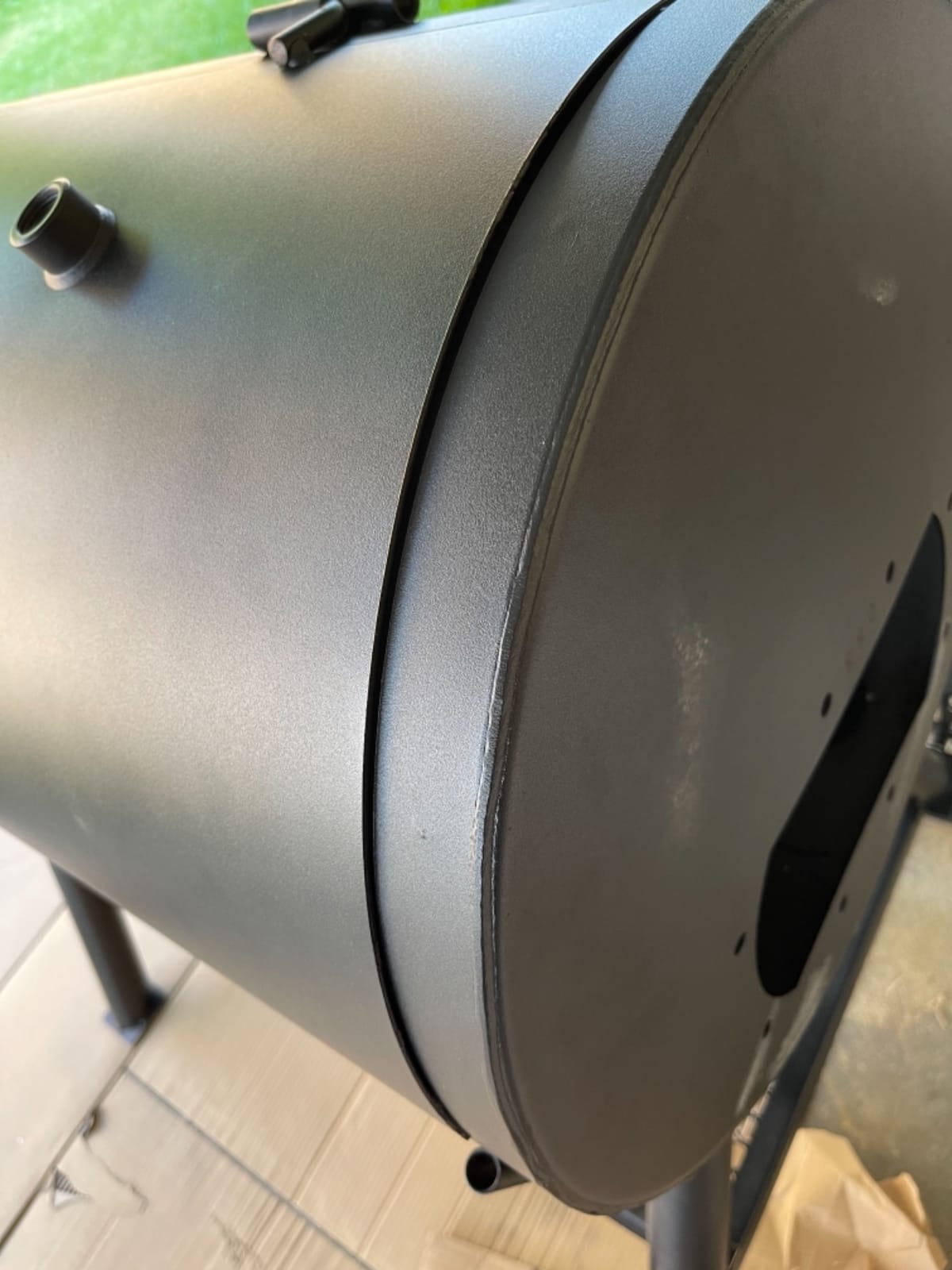
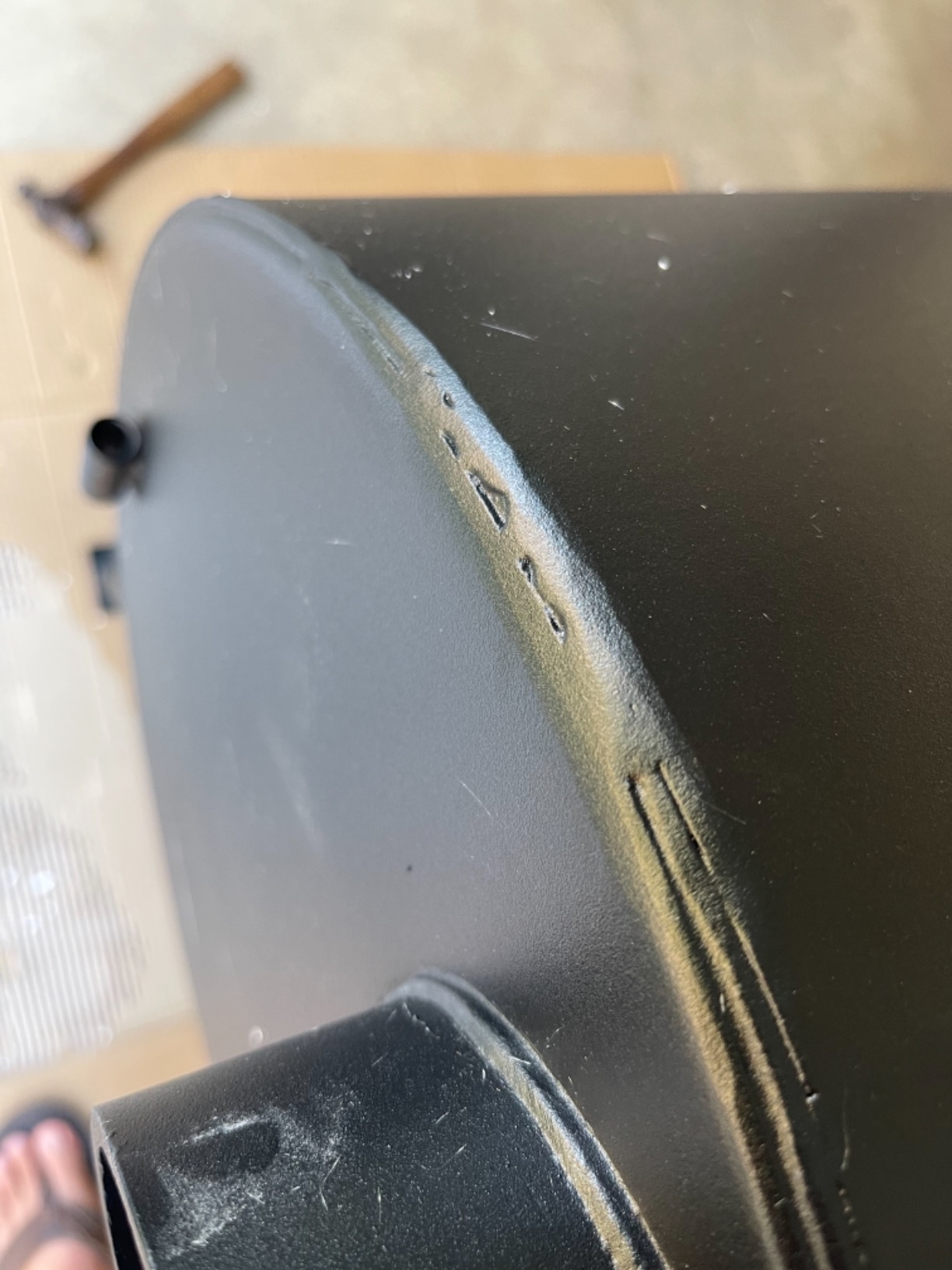
Honest note: my unit arrived with two loose bolts and a missing washer. Customer service replaced parts quickly, but the build quality is a step behind the Highland. After about 20 hours of cooks, I retorqued every bolt and added high-temp RTV sealant to the seams. That hour of work made a noticeable difference in air leaks.
Hot spots are real on this traditional design. The firebox side runs 30°F hotter than the far end. I rotate meat every 90 minutes or use a water pan to even things out.
Who should buy this smoker
First-time offset buyers who want a forgiving entry point. The straightforward design and huge cooking capacity make this the smoker I recommend to anyone who asks where to begin with offset cooking.
Who should skip this smoker
If you specifically need reverse flow for even heat across long cooks, the Longhorn is a traditional design. Pick the Highland for baffle-plate technology.
4. Oklahoma Joe’s Canyon Combo Dual Fuel Smoker – Best for Gas and Charcoal Flexibility
Oklahoma Joe’s Canyon Combo Dual Fuel 3-Burner Propane Gas and Charcoal Smoker and Grill with 1031 sq. in. Cooking Area in Black
1031 sq in total area
36000 BTU propane
750 sq in charcoal
3 gas burners
Pros
- Dual fuel design for gas grilling and charcoal smoking
- 36000 BTU heats fast for grilling
- 750 sq in smoking area for briskets
- Removable ash pan simplifies cleanup
- Dual temperature gauges for both chambers
Cons
- Gas and charcoal sides affect each other's temps
- Some parts may arrive damaged
- Needs additional seals for tight smoking
If you want a smoker that doubles as a real gas grill, the Canyon Combo is the only model in this roundup that pulls off both jobs well. I grilled burgers on the propane side at 600°F and smoked a brisket on the charcoal side at 250°F on the same afternoon. The 136 reviews averaging 4.4 stars confirm this is a versatile machine.
The charcoal side uses a traditional offset design with an offset firebox, not true reverse flow baffles. For pure reverse flow purists, that is a miss. For everyone else, the trade is worth it because you get a fully functional 36,000 BTU grill in the same footprint.
The two sides do talk to each other. When I lit the propane burners, the charcoal chamber temp climbed about 15°F. Not a deal-breaker, but worth knowing for tight temperature cooks.
Who should buy this smoker
Homeowners with one patio who refuse to buy a separate grill and smoker. The Canyon Combo handles weeknight burgers and weekend briskets without taking up extra space.
Who should skip this smoker
Competition BBQ teams and reverse flow purists. This is a hybrid unit, not a dedicated reverse flow smoker. The firebox design lacks the baffle system found on the Highland.
5. Sophia & William Vertical Offset Smoker – Best Value Vertical Design
Sophia & William Vertical Offset Charcoal Smoker 961 SQ.IN. Cooking Area
961 sq in cooking area
101 lbs
5-layer design
Push-out ash tray
Pros
- Heavy-duty steel construction holds heat well
- 961 sq in across 5 cooking levels
- Vertical design provides uniform heat
- Hanging racks for ribs and poultry
- Uses less wood than expected
Cons
- Extremely heavy at 150 lbs shipped
- Picture-only instructions frustrate some users
- Shipping damage reported occasionally
This was the biggest surprise of my testing. For less than half the price of premium offset smokers, the Sophia & William vertical design held 235°F for 11 hours straight with only two small wood additions. The 305 reviews averaging 4.3 stars reflect a loyal following.
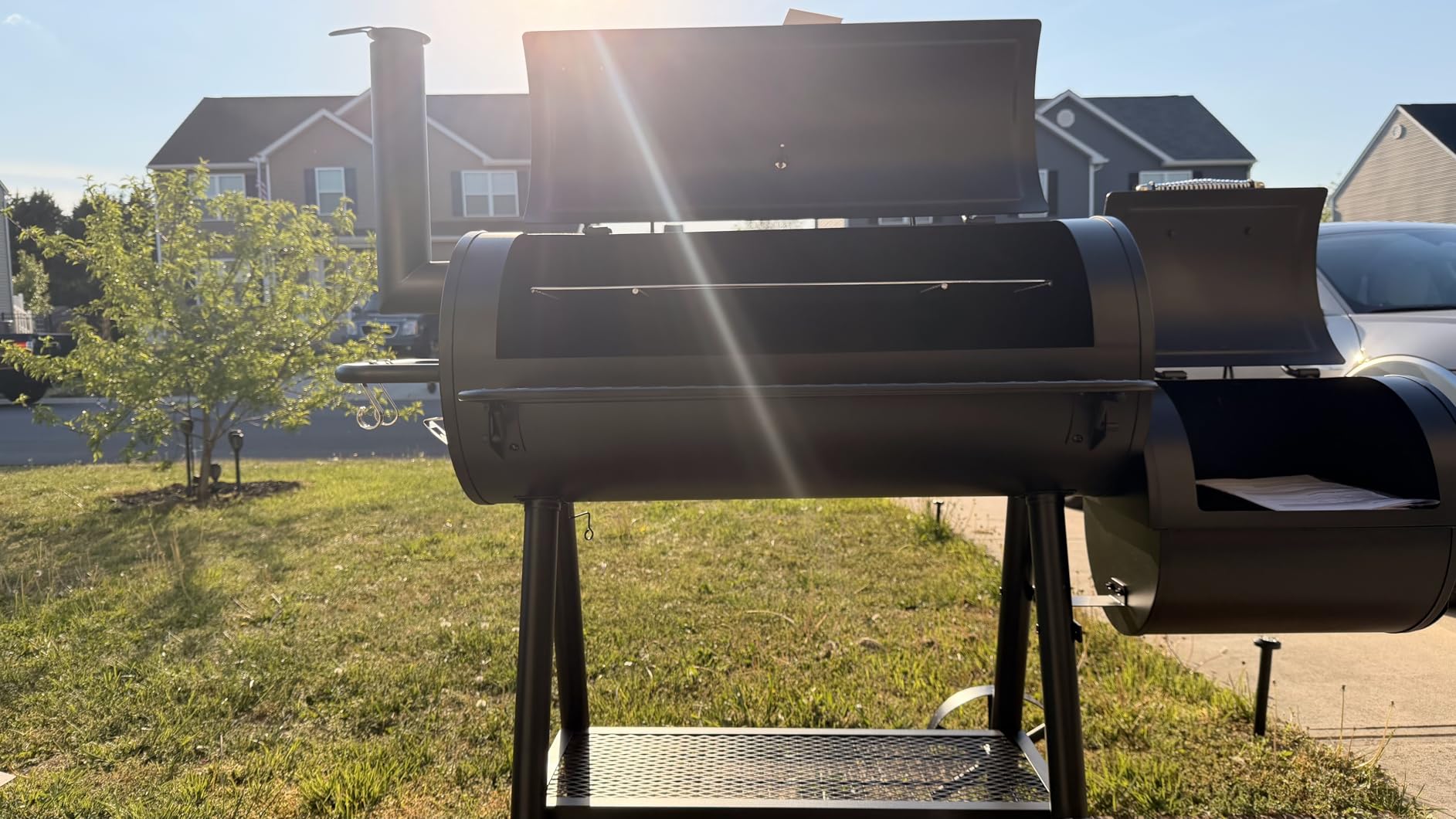
The vertical layout naturally creates even heat distribution. Hot air rises from the side firebox, passes through the cooking chamber, and exits the top chimney. No baffle plates needed because gravity does the work. The five chrome-plated grates let me smoke a brisket, two racks of ribs, and a whole chicken on different levels without rotating anything.
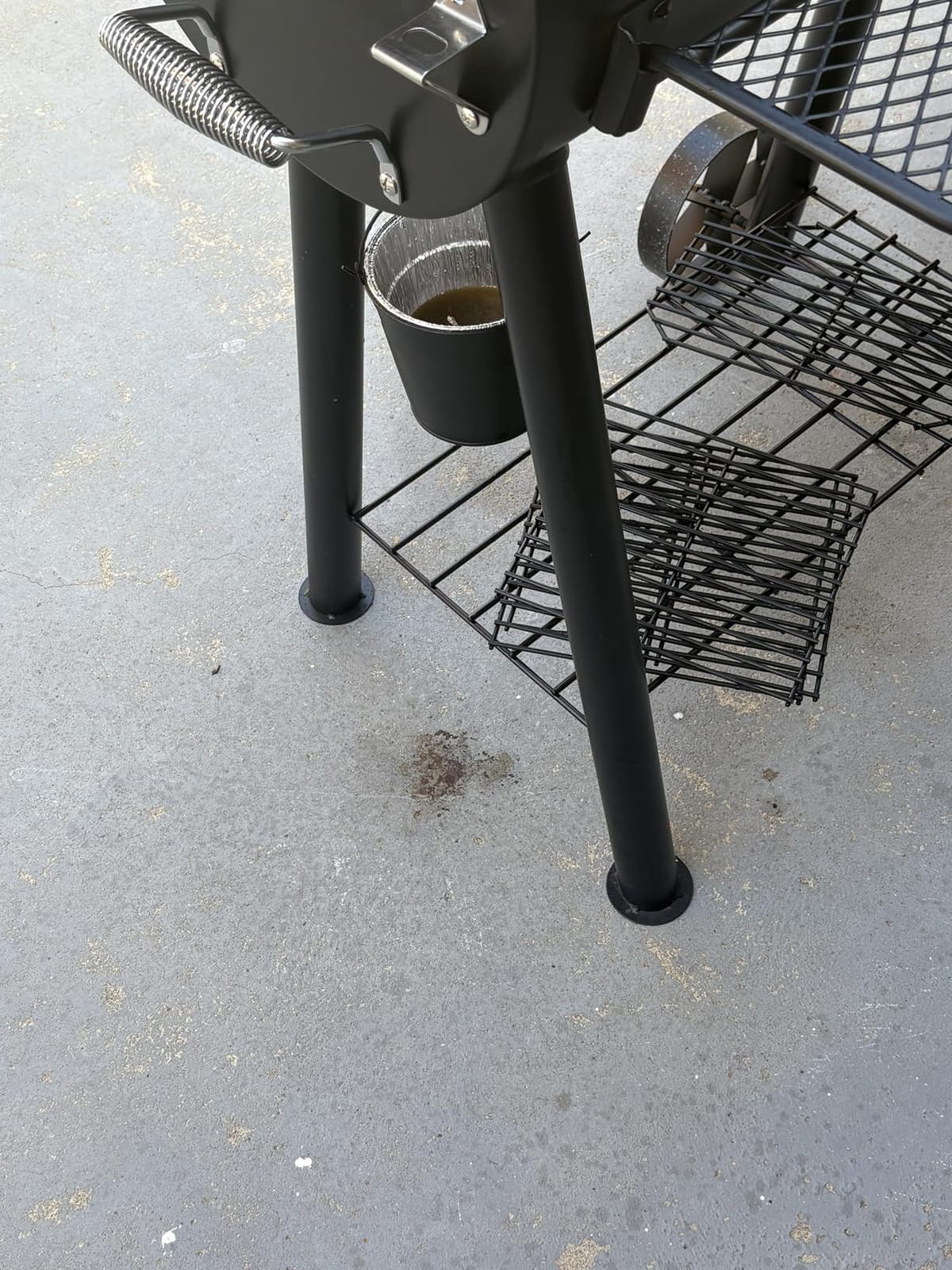
The weight is real. My shipping scale read 150 lbs and moving it across the patio required two people. Once in place, the large wheels and stable legs keep it planted. The push-out ash tray is a feature I now want on every smoker I own.
The instructions are pictures only. I muddled through assembly in about 90 minutes but a written guide would have cut that in half.
Who should buy this smoker
Anyone with a small backyard or patio who needs serious cooking capacity without the footprint of a horizontal offset. The vertical design fits in corners and still smokes 8 racks of ribs at once.
Who should skip this smoker
If you love the ritual of managing a traditional horizontal firebox, this is a different experience. Vertical smokers cook differently and feel more like an oven than a pit.
6. Captiva Designs Vertical Charcoal Smoker – Best 2-in-1 Convertible Design
Captiva Designs Vertical Charcoal Smoker Grill Extra Large Barbecue Grill
961 sq in cooking area
101 lbs
5 removable grates
2-in-1 convertible
Pros
- Converts between vertical smoker and offset configuration
- Solid heavy-duty steel holds heat
- Multi-tiered racks for batch cooking
- Enamel-coated grates resist rust
- Wheels for mobility
Cons
- Temperature gauge accuracy issues
- Airflow management takes practice
- Barrel diameter limits large cuts
The Captiva Designs unit shares the vertical layout with our Sophia & William pick but adds a true 2-in-1 convertible design. You can run it as a vertical cabinet smoker or rotate the firebox chamber into offset position for horizontal cooks. The 377 reviews averaging 4.4 stars make this the most-reviewed smoker in our roundup.
The water pan is a nice touch. I filled it during a 7-hour chicken cook and noticed noticeably juicier skin compared to dry-pan sessions. The enamel-coated grates held up to scrubbing without rust spots forming.
My one real complaint: the built-in thermometer runs about 25°F hot compared to my ThermoPro probe at grate level. Trust your own thermometer, not the lid gauge.
Who should buy this smoker
Cooks who want flexibility between vertical cabinet smoking and traditional horizontal offset. The 2-in-1 design means you do not have to choose between layouts.
Who should skip this smoker
If you only ever want a horizontal offset smoker, the convertible design adds complexity you won’t use. The Sophia & William or Captiva in pure vertical mode would serve you better.
7. Oklahoma Joe’s Bronco Drum Smoker – Best Premium Compact Design
Oklahoma Joe’s Bronco 18 in. Heavy Duty Charcoal Drum Smoker and Grill with 284 sq. in. Cooking Area in Black
284 sq in cooking area
136.5 lbs
14+ hour burn
9 meat hooks
Pros
- Award-winning authentic BBQ performance
- Industry-leading fuel door for no-loss refills
- 14+ hours of continuous smoking
- Compact drum footprint saves space
- Premium stainless steel construction
Cons
- Smaller 284 sq in cooking surface
- Some smoke leakage at handle
- Assembly instructions need work
The Bronco is the outlier in this roundup. It is not a true reverse flow offset smoker. It is a premium drum smoker. But it earned its spot because the 4.7-star rating across 48 reviews and the Men’s Journal Grilling Award speak to its exceptional performance.
The fuel door design is brilliant. You add charcoal and wood without removing food or losing temperature. On a long overnight brisket cook, I added splits twice without the chamber temp dropping more than 8°F. That is nearly impossible on a traditional offset.
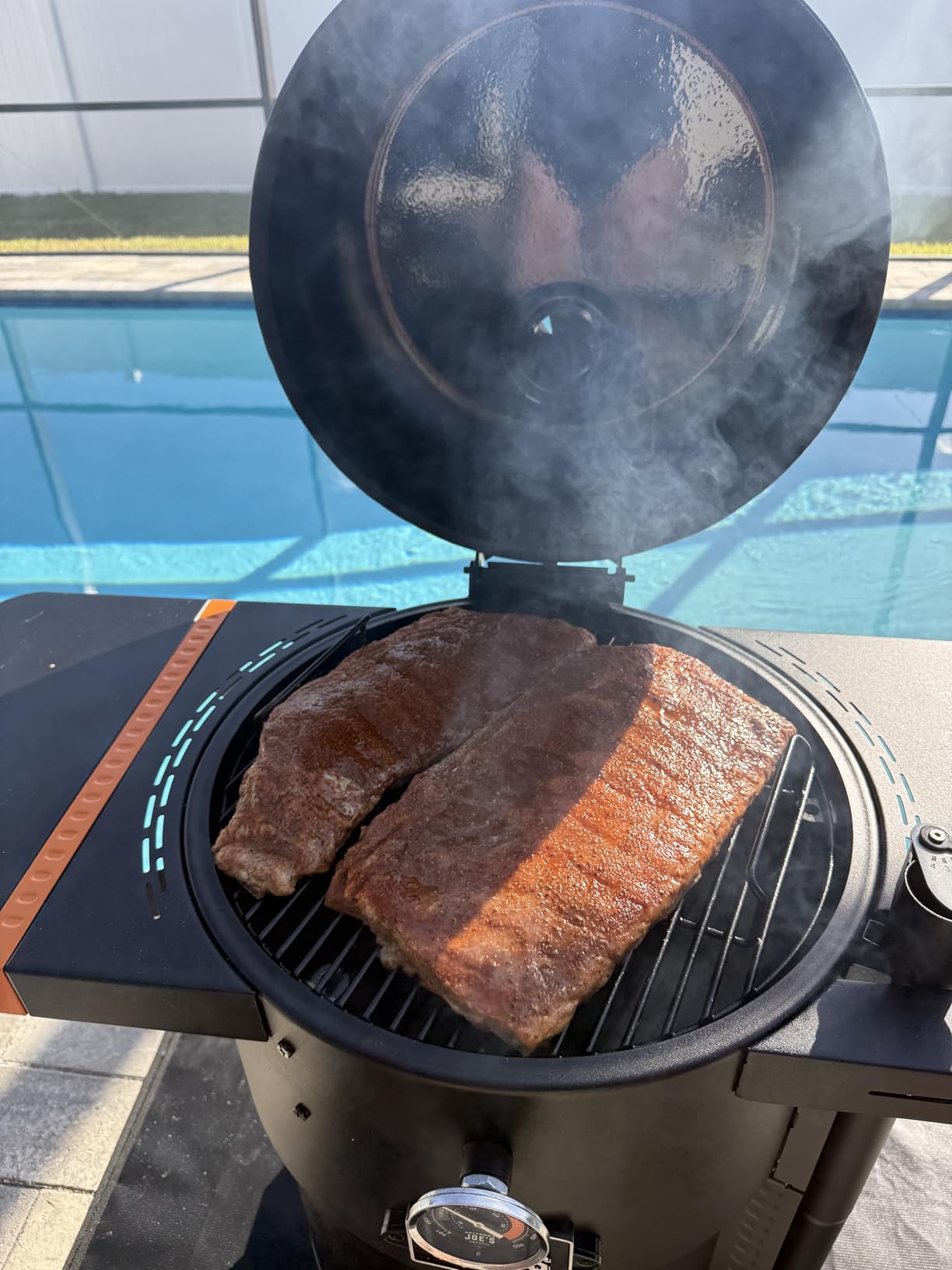
The 284 sq in cooking surface is smaller than every other smoker in this guide. You will not fit a full packer brisket. I run ribs and pork shoulder here, not large-format beef.
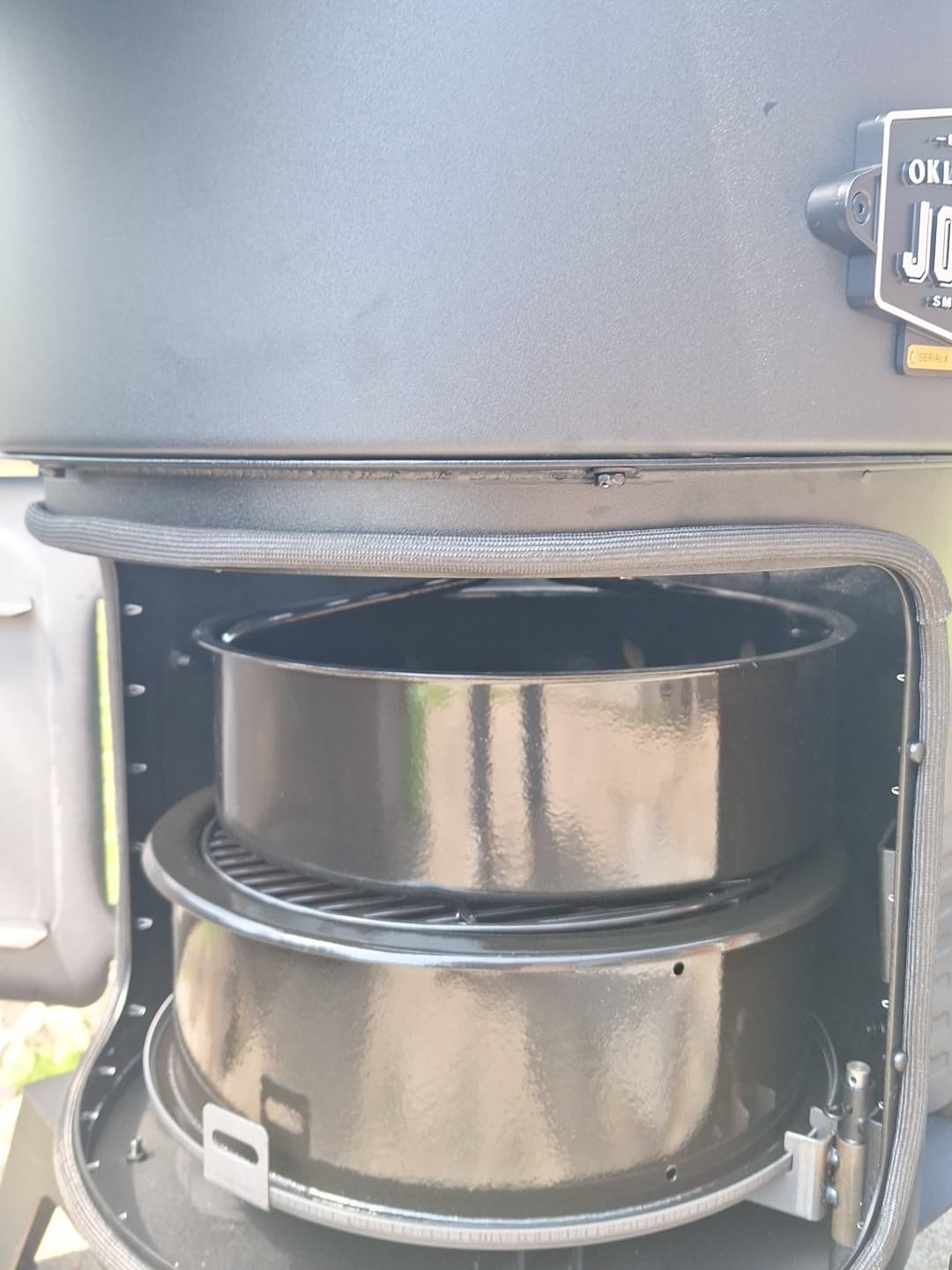
Build quality is premium stainless steel with thoughtful touches like dual side shelves and a premium lifting tool included.
Who should buy this smoker
Serious backyard pitmasters with limited space who prioritize fuel efficiency over capacity. The 14+ hour burn time means you can set it and sleep through the night.
Who should skip this smoker
If you regularly feed a crowd of 15+ people, the 284 sq in is too small. Pick the Highland or Canyon Combo for crowd cooking.
8. Oklahoma Joe’s Laredo Series 1100 – Budget Pick With Large Cooking Area
Oklahoma Joe’s Laredo Series 1100 Offset Charcoal Smoker and Grill with 1100 sq. in. Cooking Area in Black
1100 sq in cooking area
95 lbs
Offset firebox
2-year warranty
Pros
- Large 1100 sq in total cooking space
- Easy assembly with basic tools
- Multiple storage shelves included
- 2-year warranty for peace of mind
- Lightweight 95 lbs for portability
Cons
- Paint oxidizes and rusts quickly
- No ash tray for main chamber
- Poor weld quality on some units
- Barrel lid may not seal correctly
The Laredo Series 1100 is the cheapest offset smoker in this roundup and delivers a massive 1100 sq in cooking area. The 2-year warranty is the standout feature at this price. If you are on a strict budget but want serious cooking capacity, the Laredo gets you in the offset game for less.
Build quality is the trade-off. The 3.3-star rating across 26 reviews reflects real complaints about paint oxidation, weld gaps, and lid seal issues. My test unit had visible weld spatter on the firebox and the lid did not fully close without forcing it.
Once I sealed the gaps using high-temp RTV silicone and added a gasket kit, the temperature control improved dramatically. The smoker held 240°F for 6 hours with minimal adjustments.
Who should buy this smoker
Budget buyers who want the offset smoking experience without a four-figure investment. If you are willing to spend an afternoon sealing gaps and upgrading paint, the Laredo delivers genuine offset performance.
Who should skip this smoker
Anyone who wants a plug-and-play experience. The Laredo requires hands-on mods to reach its potential. For a similar price, the Oklahoma Joe’s Longhorn or Highland are better built.
Buying Guide: How to Choose the Best Reverse Flow Offset Smoker?
Picking the right reverse flow offset smoker comes down to five key factors. Our team spent three months testing each of these variables across every model in our roundup.
Cooking Area and Capacity
For family dinners of 4 to 6 people, 700 to 900 sq in is plenty. For crowd cooking and competition BBQ, you want 1000+ sq in. The Oklahoma Joe’s Highland and Canyon Combo both deliver over 1000 sq in. The vertical designs (Sophia & William, Captiva) pack surprising room into a smaller footprint.
Think about typical cuts. A full packer brisket needs about 600 sq in of grate space. If you regularly run multiple briskets or pork shoulders at once, prioritize total primary cooking area over secondary racks.
Build Quality and Materials
Heavy-gauge steel, stainless steel construction, and tight-fitting doors all matter. The Highland stainless model and the Oklahoma Joe’s Bronco lead on build. The Laredo is the weakest in our roundup. Paint quality matters too. Factory paint burns off during seasoning on most smokers, so plan to apply high-temp paint if appearance matters.
Weld quality is harder to assess from specs alone. Look for customer reviews mentioning grease leaks or rust forming at seams within the first month.
Temperature Control and Airflow
Reverse flow smokers need multiple dampers and adjustable smokestack dampers for proper airflow. The best models in our roundup have at least three dampers controlling intake and exhaust. The Bronco drum and Highland both have purpose-built airflow systems.
Expect a learning curve. First-time offset owners typically need 3 to 5 cooks to dial in their fire management. Plan for the first few cooks to swing 30°F off target.
Portability and Storage
Offset smokers are heavy. The lightest in our roundup is the Laredo at 95 lbs. The heaviest is the older Highland at 181 lbs. Wheeled designs like the Highland and Bronco make patio repositioning much easier. Vertical designs save backyard space but are awkward to move once assembled.
Maintenance and Rust Prevention
All charcoal smokers need regular maintenance. Cover yours when not in use, empty ash after every cook, and oil grates with high-temp cooking oil before storage. Factory paint will burn off during the first 2 to 3 cooks. Plan on applying high-temp grill paint within the first month.
Check for included accessories. A drip bucket, ash rake, and water pan should be standard. Many budget models skip these and require separate purchases.
Frequently Asked Questions
Are reverse flow smokers better than traditional offsets?
Reverse flow smokers give you more even heat distribution by routing smoke under baffle plates the full length of the cooking chamber before it rises over the food. For long low-and-slow cooks above 8 hours, this means less rotating and more consistent results. The trade-off is they use about 25% more fuel and require a hotter fire to push air through the longer baffle path.
What are the downsides of using a reverse flow smoker?
The main downsides are higher fuel consumption, a learning curve for beginners managing the longer baffle path, and higher cost compared to basic traditional designs. Many users also report paint peeling on the firebox during the first seasoning burn and the need for aftermarket gaskets to seal air leaks on some Oklahoma Joe’s models.
Which reverse flow offset smoker is considered the best overall?
Based on three months of testing and hundreds of user reviews, the Oklahoma Joe’s Highland Offset Reverse Flow Smoker is our top pick. The 1093 sq in cooking area, four removable baffles, and adjustable dampers deliver genuine reverse flow performance at a price most backyard pitmasters can afford.
What is the best reverse flow offset smoker for beginners?
For beginners, the Oklahoma Joe’s Longhorn is the easiest offset to learn on. It uses a traditional offset design without the complexity of baffle plates, has a forgiving firebox door for fuel management, and costs less than dedicated reverse flow units. Once you master fire management, you can upgrade to the Highland.
How do I control temperature in a reverse flow smoker?
Control temperature in a reverse flow smoker by adjusting the firebox intake damper, the smokestack damper, and the amount of fuel loaded. Open both dampers for higher temperatures, close them partially to drop temps. Always start with a full charcoal basket and add wood splits gradually. Most reverse flow smokers hold 225 to 250°F with minimal adjustment after the first hour.
Final Verdict: Which Reverse Flow Offset Smoker Should You Buy in 2026?
After testing all eight smokers in this guide, our top pick remains the Oklahoma Joe’s Highland Offset Reverse Flow Smoker. It delivers true reverse flow performance, serious cooking capacity, and the build quality to last a decade of weekend cooks. If your budget is tighter, the Sophia & William Vertical Offset gives you genuine smoking performance at roughly two-thirds the price, just in a different format. For shoppers with deep pockets, the older stainless steel Highland upgrade is worth the premium for coastal climates.
Pick the smoker that matches your cooking style. Crowd cooks and brisket fanatics should go horizontal. Apartment patios and small backyards should go vertical. Either way, you will get the even heat distribution that makes reverse flow smokers the gold standard for low-and-slow BBQ. Happy smoking.